EP1849833A1 - Process for producing polylactic acid - Google Patents
Process for producing polylactic acid Download PDFInfo
- Publication number
- EP1849833A1 EP1849833A1 EP06714487A EP06714487A EP1849833A1 EP 1849833 A1 EP1849833 A1 EP 1849833A1 EP 06714487 A EP06714487 A EP 06714487A EP 06714487 A EP06714487 A EP 06714487A EP 1849833 A1 EP1849833 A1 EP 1849833A1
- Authority
- EP
- European Patent Office
- Prior art keywords
- lactic acid
- poly
- weight
- emulsion
- aqueous emulsion
- Prior art date
- Legal status (The legal status is an assumption and is not a legal conclusion. Google has not performed a legal analysis and makes no representation as to the accuracy of the status listed.)
- Withdrawn
Links
Images

Classifications
-
- C—CHEMISTRY; METALLURGY
- C08—ORGANIC MACROMOLECULAR COMPOUNDS; THEIR PREPARATION OR CHEMICAL WORKING-UP; COMPOSITIONS BASED THEREON
- C08L—COMPOSITIONS OF MACROMOLECULAR COMPOUNDS
- C08L67/00—Compositions of polyesters obtained by reactions forming a carboxylic ester link in the main chain; Compositions of derivatives of such polymers
- C08L67/04—Polyesters derived from hydroxycarboxylic acids, e.g. lactones
-
- C—CHEMISTRY; METALLURGY
- C08—ORGANIC MACROMOLECULAR COMPOUNDS; THEIR PREPARATION OR CHEMICAL WORKING-UP; COMPOSITIONS BASED THEREON
- C08J—WORKING-UP; GENERAL PROCESSES OF COMPOUNDING; AFTER-TREATMENT NOT COVERED BY SUBCLASSES C08B, C08C, C08F, C08G or C08H
- C08J3/00—Processes of treating or compounding macromolecular substances
- C08J3/02—Making solutions, dispersions, lattices or gels by other methods than by solution, emulsion or suspension polymerisation techniques
- C08J3/03—Making solutions, dispersions, lattices or gels by other methods than by solution, emulsion or suspension polymerisation techniques in aqueous media
-
- C—CHEMISTRY; METALLURGY
- C08—ORGANIC MACROMOLECULAR COMPOUNDS; THEIR PREPARATION OR CHEMICAL WORKING-UP; COMPOSITIONS BASED THEREON
- C08J—WORKING-UP; GENERAL PROCESSES OF COMPOUNDING; AFTER-TREATMENT NOT COVERED BY SUBCLASSES C08B, C08C, C08F, C08G or C08H
- C08J5/00—Manufacture of articles or shaped materials containing macromolecular substances
- C08J5/18—Manufacture of films or sheets
-
- C—CHEMISTRY; METALLURGY
- C09—DYES; PAINTS; POLISHES; NATURAL RESINS; ADHESIVES; COMPOSITIONS NOT OTHERWISE PROVIDED FOR; APPLICATIONS OF MATERIALS NOT OTHERWISE PROVIDED FOR
- C09D—COATING COMPOSITIONS, e.g. PAINTS, VARNISHES OR LACQUERS; FILLING PASTES; CHEMICAL PAINT OR INK REMOVERS; INKS; CORRECTING FLUIDS; WOODSTAINS; PASTES OR SOLIDS FOR COLOURING OR PRINTING; USE OF MATERIALS THEREFOR
- C09D167/00—Coating compositions based on polyesters obtained by reactions forming a carboxylic ester link in the main chain; Coating compositions based on derivatives of such polymers
- C09D167/04—Polyesters derived from hydroxycarboxylic acids, e.g. lactones
-
- C—CHEMISTRY; METALLURGY
- C08—ORGANIC MACROMOLECULAR COMPOUNDS; THEIR PREPARATION OR CHEMICAL WORKING-UP; COMPOSITIONS BASED THEREON
- C08J—WORKING-UP; GENERAL PROCESSES OF COMPOUNDING; AFTER-TREATMENT NOT COVERED BY SUBCLASSES C08B, C08C, C08F, C08G or C08H
- C08J2367/00—Characterised by the use of polyesters obtained by reactions forming a carboxylic ester link in the main chain; Derivatives of such polymers
- C08J2367/04—Polyesters derived from hydroxy carboxylic acids, e.g. lactones
-
- D—TEXTILES; PAPER
- D21—PAPER-MAKING; PRODUCTION OF CELLULOSE
- D21H—PULP COMPOSITIONS; PREPARATION THEREOF NOT COVERED BY SUBCLASSES D21C OR D21D; IMPREGNATING OR COATING OF PAPER; TREATMENT OF FINISHED PAPER NOT COVERED BY CLASS B31 OR SUBCLASS D21G; PAPER NOT OTHERWISE PROVIDED FOR
- D21H19/00—Coated paper; Coating material
- D21H19/10—Coatings without pigments
- D21H19/14—Coatings without pigments applied in a form other than the aqueous solution defined in group D21H19/12
- D21H19/20—Coatings without pigments applied in a form other than the aqueous solution defined in group D21H19/12 comprising macromolecular compounds obtained by reactions only involving carbon-to-carbon unsaturated bonds
Definitions
- the present invention relates to methods of manufacturing polylactic acid and a film thereof.
- biodegradable polymers such as aliphatic polyesters which degrade in natural environment are now under way energetically from the viewpoint of the protection of natural environment. Since polylactic acid has a high melting point of 130 to 180°C and excellent transparency, it is used as a package material or the like. Lactic acid which is a raw material for polylactic acid is obtained from renewable resources such as vegetables and is highly expected because exhaustible resources such as petroleum are not used.
- a biodegradable material is also preferably used as a coating agent for coating the surface of a molded product of polylactic acid, and a coating agent containing an aqueous emulsion of polylactic acid is proposed (patent documents 1 and 2).
- stereocomplex polylactic acid having a high melting point is obtained by mixing together poly-L-lactic acid and poly-D-lactic acid.
- a method in which the stereocomplex polylactic acid is formed by dissolving poly-L-lactic acid and poly-D-lactic acid in a solvent such as chloroform is proposed.
- Patent document 1 JP-A 2003-321600 (Patent Document 2) JP 3616465 (Non-patent Document 1) "Polylactic acid-for medical care, preparations and environment" written by Hideto Tsuji and Yoshito Ikada and published by Koubunshi Kankoukai, 1997
- the inventors of the present invention have studied a method of forming a stereocomplex by mixing together poly-L-lactic acid and poly-D-lactic acid under very mild conditions without using a solvent. As a result, they have found that when an aqueous emulsion of poly-L-lactic acid and an aqueous emulsion of poly-D-lactic acid are mixed together, a stable mixed emulsion is obtained. Further, they have found that a stereocomplex is formed in the step of drying the mixed emulsion and have accomplished the present invention.
- the present invention is a method of manufacturing polylactic acid, comprising the steps of:
- the present invention is a method of manufacturing a film, comprising the steps of;
- the present invention includes a mixed emulsion containing an aqueous emulsion of poly-L-lactic acid and an aqueous emulsion of poly-D-lactic acid and a coating agent containing the mixed emulsion.
- polylactic acid manufactured by the method of the present invention When polylactic acid manufactured by the method of the present invention is measured by DSC, it has a melting point peak at 200°C or higher which is much higher than that of ordinary polylactic acid. That is, according to the method of the present invention, there is provided polylactic acid having much higher heat resistance than that of poly-L-lactic acid (or poly-D-lactic acid).
- a film formed from an aqueous emulsion of poly-L-lactic acid (or poly-D-lactic acid) alone has low strength and is apt to fall off from the surface of a substrate in a powdery form whereas a film manufactured by the method of the present invention has high strength and can be removed while it maintains its film form.
- poly-L-lactic acid and poly-D-lactic acid are rarely miscible with each other in the mixed emulsion due to the function of an emulsifier.
- they become miscible with each other in the step of drying and heating the coating film to form a stereocomplex. Since the stereocomplex has a higher melting point than that of poly-L-lactic acid (or poly-D-lactic acid), it is considered that the stereocomplex can raise the melting point of polylactic acid and can improve the heat resistance and strength of polylactic acid.
- the polylactic acid manufacturing method of the present invention comprises the steps of:
- the step (1) is to prepare an aqueous emulsion of poly-L-lactic acid and an aqueous emulsion of poly-D-lactic acid.
- Poly-L-lactic acid and poly-D-lactic acid are essentially composed of an L-lactic acid unit and a D-lactic acid unit represented by the following formula, respectively.
- Poly-L-lactic acid comprises preferably 90 to 100 mol%, more preferably 95 to 100 mol%, much more preferably 98 to 100 mol% of the L-lactic acid unit.
- the other units are a D-lactic acid unit and a comonomer unit other than lactic acid.
- the total amount of the D-lactic acid unit and the comonomer unit other than lactic acid is preferably 0 to 10 mol%, more preferably 0 to 5 mol%, much more preferably 0 to 2 mol%.
- Poly-D-lactic acid comprises 90 to 100 mol%, preferably 95 to 100 mol%, more preferably 98 to 100 mol% of a D-lacic acid unit.
- the other units are an L-lactic acid unit and a comonomer unit other than lactic acid.
- the total amount of the L-lactic acid unit and the comonomer unit other than lactic acid is 0 to 10 mol%, preferably 0 to 5 mol%, more preferably 0 to 2 mol%.
- the comonomer unit is a unit derived from a dicarboxylic acid, polyhydric alcohol, hydroxycarboxylic acid or lactone having a functional group capable of forming two or more ester bonds, or a unit derived from a polyester, polyether or polycarbonate which comprises the above constituent components.
- dicarboxylic acid examples include succinic acid, adipic acid, azelaic acid, sebacic acid, terephthalic acid and isophthalic acid.
- polyhydric alcohol examples include aliphatic polyhydric alcohols such as ethylene glycol, propylene glycol, butanediol, pentanediol, hexanediol, octanediol, glycerin, sorbitan, neopentyl glycol, diethylene glycol, triethylene glycol, polyethylene glycol and polypropylene glycol, and aromatic polyhydric alcohols such as adduct of bisphenol with ethylene oxide.
- Examples of the hydroxycarboxylic acid include glycolic acid and hydroxybutyric acid.
- Examples of the lactone include glycolide, ⁇ -caprolactone glycolide, ⁇ -caprolactone, ⁇ -propiolactone, ⁇ -butyrolactone, ⁇ - or ⁇ -butyrolactone, pivalolactone and ⁇ -valerolactone.
- the weight average molecular weights (Mw) of poly-L-lactic acid and poly-D-lactic acid are each preferably 5,000 to 1,000,000, more preferably 10,000 to 200, 000.
- the molecular weight distribution is in the range of preferably 1.5 to 2.5, more preferably 1.5 to 1.8.
- the weight average molecular weight is a weight average molecular weight value in terms of standard polystyrene measured by gel permeation chromatography (GPC) using chloroform as an eluent.
- Poly-L-lactic acid and poly-D-lactic acid can be manufactured by known methods. For example, they can be manufactured by heating L-lactide and D-lactide in the presence of a metal polymerization catalyst for ring-opening polymerization, respectively. Alternatively, they can be manufactured by crystallizing low molecular weight polylactic acid containing a metal polymerization catalyst and heating it under reduced pressure or in an inert gas stream for solid-phase polymerization. Further, they can be manufactured by a direct polymerization method in which lactic acid is dehydrated and condensed in the presence or absence of an organic solvent.
- the polymerization reaction can be carried out in a conventionally known reactor.
- vertical reactors having high-viscosity agitating elements such as helical ribbon elements can be used alone or in combination.
- An alcohol may be used as a polymerization initiator.
- the alcohol does not impede the polymerization of polylactic acid and is nonvolatile.
- Preferred examples of the alcohol include decanol, dodecanol, tetradecanol, hexadecanol and octadecanol.
- a lactic acid polyester having a relatively low molecular weight obtained by the above ring-opening polymerization method or the above lactic acid direct polymerization method is used as a prepolymer. It is preferred from the viewpoint of preventing fusion that the prepolymer should be crystallized at a temperature range of its glass transition temperature (Tg) or higher and lower than its melting point (Tm) in advance.
- the crystallized prepolymer is filled into a fixed vertical reactor or a rotary reactor, such as a tumbler or kiln, and heated at a temperature of the glass transition temperature (Tg) of the prepolymer or higher and lower than the melting point (Tm).
- the inside pressure of the above reactor should be reduced or a heated inert gas stream should be circulated to remove water generated during solid-phase polymerization efficiently.
- an aqueous emulsion of poly-L-lactic acid and an aqueous emulsion of poly-D-lactic acid are prepared.
- the aqueous emulsion of poly-L-lactic acid can be prepared by dissolving poly-L-lactic acid in an organic solvent, adding and mixing an emulsifier and water with the resulting solution and removing the organic solvent.
- Any organic solvent may be used if it can dissolve and swell poly-L-lactic acid and poly-D-lactic acid.
- the organic solvent include toluene, chloroform, methylene chloride, dichloroethane, tetrachloroethane, ethyl acetate and hexafluoroisopropanol which may be used alone or in combination of two or more.
- the organic solvent is used in an amount of preferably 80 to 1,000 parts by weight, more preferably 100 to 500 parts by weight based on 100 parts by weight of poly-L-lactic acid.
- the emulsifier may be used a nonionic surfactant or ionic surfactant.
- the ionic surfactant include anionic emulsifiers such as fatty acid salts, ether carboxylates, alkenyl succinates, alkyl sulfates, alkyl polyoxyethylene phosphates, (meth)acrylic acid polymers, maleic acid polymers, formalin condensates of naphthalene sulfonates, salts of formaldehyde condensates of naphthalene sulfonic acid, half esters of polyoxyethylene alkyl ether sulfosuccinic acid, ⁇ -olefinsulfonic acid, alkyl sulfates, alkylphenyl sulfates and polyoxyethylene alkyl ether sulfates, cationic acrylic monomers such as dimethylaminoethyl methacrylate, diethylaminoethyl methacrylate,
- nonionic surfactants such as polyoxyethylene lauryl ethers and polyoxyethylene sorbitan fatty acid esters and other known emulsifiers may be used.
- Anionic emulsifiers and nonionic emulsifiers are preferred, and anionic emulsifiers are more preferred.
- the amount of the emulsifier is preferably 0.1 to 40 parts by weight, more preferably 1 to 30 parts by weight based on 100 parts by weight of poly-L-lactic acid.
- Water is used in an amount of preferably 50 to 10,000 parts by weight, more preferably 100 to 1,500 parts by weight based on 100 parts by weight of poly-L-lactic acid.
- a commonly used method may be used. For instance, after polylactic acid, an emulsifier and a solvent are mixed together, the resulting mixture is mixed with water by means of a suitable mixer under agitation.
- the aqueous emulsion of poly-D-lactic acid may be prepared in the same manner as the aqueous emulsion of poly-L-lactic acid.
- the obtained aqueous emulsion has an average particle diameter of preferably 0.05 to 2 ⁇ m, more preferably 0.07 to 0.5 ⁇ m in an o/w form.
- the step (2) is to mix together the aqueous emulsion of poly-L-lactic acid and the aqueous emulsion of poly-D-lactic acid so as to prepare a mixed emulsion.
- the ratio (L/D) of the weight of poly-L-lactic acid contained in the former to the weight of poly-D-lactic acid contained in the latter is preferably 40/60 to 60/40, more preferably 45/55 to 55/45.
- the obtained aqueous emulsion has an average particle diameter of preferably 0.05 to 2 ⁇ m, more preferably 0.07 to 0.5 ⁇ m in an o/w form.
- the step (3) is to dry the mixed emulsion.
- the mixed emulsion may be dried from any state. For example, when it is used as a coating film, the mixed emulsion may be dried after it is applied. In other cases, it may be dried in a mold or a vessel capable retaining its form according to its application purpose. Although drying may be carried out under the condition that the solvent and water as a dispersion medium can be removed, it may be carried out at room temperature or under atmospheric pressure. It may be heated at a temperature higher than the glass transition temperature of the particle. In this case, stereocomplex polylactic acid having a stronger surface can be obtained.
- stereocomplex means a crystal structure that poly-L-lactic acid and poly-D-lactic acid form alternating helices.
- the stereocomplex is formed by interaction between poly-L-lactic acid and poly-D-lactic acid which is stronger than interaction between L units or interaction between D units.
- the content of the stereocomplex in the obtained polylactic acid is preferably 50 % or more, more preferably 70 % or more.
- Melting peaks at 195 °C or higher of the obtained polylactic acid account for preferably 50 % or more, more preferably 70 % or more of the total of all the melting peaks measured by a differential scanning calorimeter (DSC) in the temperature elevation step.
- DSC differential scanning calorimeter
- the melting point is in the range of preferably 195 to 250°C, more preferably 200 to 220°C.
- the melting enthalpy is 20 J/g or more, preferably 30 J/g or more. More specifically, in the measurement by the differential scanning calorimeter (DSC), preferably, melting peaks at 195°C or higher account for 50 % or more of the total of all the melting peaks in the temperature elevation step, the melting point is in the range of 195 to 250°C, and the melting enthalpy is 20 J/g or more.
- the weight average molecular weight of the obtained polylactic acid is preferably 5,000 to 1,000,000, more preferably 10,000 to 200,000.
- the weight average molecular weight is a weight average molecular weight value in terms of standard polystyrene measured by gel permeation chromatography (GPC) using chloroform as an eluent.
- the film manufacturing method of the present invention comprises the steps of:
- the steps (1) and (2) are the same as in the above polylactic acid manufacturing method.
- the film manufacturing method of the present invention includes the step (3-i) of applying the mixed emulsion to the substrate and the step (3-ii) of drying the coating film of the mixed emulsion.
- the application step (3-i) can be carried out by casting the mixed emulsion over the substrate.
- the mixed emulsion may be cast by extruding it from a die or by doctor blade coating or spin coating.
- the substrate include glass plates, metal plates and synthetic resin plates.
- the drying step (3-ii) may be carried out at room temperature under atmospheric pressure.
- the thickness of the film obtained by this method is preferably 5 to 200 ⁇ m, more preferably 10 to 100 ⁇ m. Therefore, the thickness of the mixed emulsion to be applied to the substrate can be adjusted in consideration of the amount of polylactic acid contained in the mixed emulsion.
- the film contains stereocomplex polylactic acid like the above polylactic acid and has the same weight average molecular weight and thermal properties measured by DSC as the polylactic acid.
- the mixed emulsion of the present invention contains an aqueous emulsion of poly-L-lactic acid and an aqueous emulsion of poly-D-lactic acid.
- Each of the aqueous emulsions contains poly-L-lactic acid (or poly-D-lactic acid), an emulsifier and water.
- Poly-L-lactic acid (or poly-D-lactic acid) and the emulsifier have already been described in the section for the polylactic acid manufacturing method.
- the emulsifier is contained in an amount of preferably 0.1 to 40 parts by weight, more preferably 1 to 30 parts by weight based on 100 parts by weight of polylactic acid.
- Water is contained in an amount of preferably 50 to 10,000 parts by weight, more preferably 100 to 1,500 parts by weight based on 100 parts by weight of poly-L-lactic acid (or poly-D-lactic acid).
- the weight ratio (L/D) of poly-L-lactic acid to poly-D-lactic acid in the mixed emulsion is preferably 40/60 to 60/40, more preferably 45/55 to 55/45.
- the mixed emulsion has an average particle diameter of preferably 0.05 to 2 ⁇ m, more preferably 0.07 to 0.5 ⁇ m in an o/w form.
- the mixed emulsion can be manufactured by the step (1) of preparing an aqueous emulsion of poly-L-lactic acid and an aqueous emulsion of poly-D-lactic acid and the step (2) of mixing them together to manufacture mixed emulsion.
- the step (1) and the step (2) have already been described in the section for the polylactic acid manufacturing method.
- the coating agent of the present invention contains the above mixed emulsion.
- the mixed emulsion contains an aqueous emulsion of poly-L-lactic acid and an aqueous emulsion of poly-D-lactic acid.
- the coating agent of the present invention has a feature that a stereocomplex is formed not at the time of application but at the time of drying after application. That is, a stereocomplex can be formed in situ. Therefore, the coating agent has an advantage that it can be easily applied and can be kept well.
- the coating agent may contain a polymer emulsion, a resin emulsion and a rubber-based latex. These components are contained in a total amount of preferably 5 to 200 parts by weight based on 100 parts by weight of the mixed emulsion. Besides these, the coating agent may optionally contain known additives such as a thickener, anti-foaming agent, antioxidant, ultraviolet light absorber, water resistant additive, antiseptic agent, antirust, pigment and dye. The total amount of these components is preferably 0.1 to 20 parts by weight based on 100 parts by weight of the mixed emulsion.
- the toluene contained in the emulsified product was distilled off under reduced pressure by using an evaporator to obtain an aqueous emulsion of poly-L-lactic acid having a solid content of 10 % and an average particle diameter of 0.3 ⁇ m (to be referred to as "solution (L1)" hereinafter).
- solution (D1) aqueous emulsion of poly-D-lactic acid having a solid content of 10 % and an average particle diameter of 0.3 ⁇ m
- the mixed emulsion was cast over a substrate and dried at room temperature to obtain a 35 ⁇ m-thick film (E1). Mw of the film (E1) was 21,000.
- the results of the DSC measurement are shown in Fig. 1.
- the solid line in Fig. 1 is a DSC chart of the film (E1).
- the dotted line in Fig. 1 is a DSC chart of a film (C1) obtained in Comparative Example 1.
- the melting point of the film (C1) was about 170°C whereas the melting point of the film (E1) was 209.4°C. It is understood that a film having high heat resistance can be obtained by the present invention.
- the stereocomplex content of the film (E1) was 76.1 % and the ratio of melting peaks at 195°C or higher of the film (E1) was 69.1 %.
- the AFM measurement result of the surface of the film (E1) is shown in Fig. 2. It is understood that the film (E1) had a smooth surface structure.
- solution (L2) a poly-L-lactic acid emulsion having a solid content of 10 % and an average particle diameter of 0.3 ⁇ m (to be referred to as "solution (L2)" hereinafter).
- the mixed emulsion was cast over a substrate and dried to obtain a film (E2).
- Mw of the film (E2) was 73,000.
- the stereocomplex content of the film (E2) was 73.2 %, and the ratio of melting peaks at 195°C or higher of the film (E2) was 66.3 %.
- Example 1 Only the solution L obtained in Example 1 was cast over a substrate and dried to obtain a poly-L-lactic acid film (C1).
- the DSC measurement result of the film (C1) is shown in Fig. 1 (dotted line).
- the melting point of the film (C1) was 172.3°C.
- polylactic acid and a film thereof are obtained without using a harmful solvent. According to the method of the present invention, polylactic acid and a film thereof having excellent heat resistance and strength are obtained.
- a coating film of polylactic acid containing a stereocomplex and having high heat resistance can be formed from the mixed emulsion of the present invention or a coating agent containing the same. Since the coating agent of the present invention has excellent biodegradability, it can be applied to a biodegradable molded product and has an environmental effect that a coating film thereof is degraded at the same time as the biodegradable molded product.
- the method and coating agent of the present invention can be used to coat paper materials such as paper packs, corrugated cardboards and paper bags and molded articles of biodegradable plastics.
- the polylactic acid containing a stereocomplex of the present invention can be advantageously used in films, coatings, adhesives, paints, binders and protective films.
Landscapes
- Chemical & Material Sciences (AREA)
- Organic Chemistry (AREA)
- Chemical Kinetics & Catalysis (AREA)
- Engineering & Computer Science (AREA)
- Health & Medical Sciences (AREA)
- Medicinal Chemistry (AREA)
- Polymers & Plastics (AREA)
- Materials Engineering (AREA)
- Manufacturing & Machinery (AREA)
- Life Sciences & Earth Sciences (AREA)
- Wood Science & Technology (AREA)
- Dispersion Chemistry (AREA)
- Biological Depolymerization Polymers (AREA)
- Paints Or Removers (AREA)
- Compositions Of Macromolecular Compounds (AREA)
- Processes Of Treating Macromolecular Substances (AREA)
Abstract
A method of manufacturing polylactic acid having excellent heat resistance and strength without using a harmful solvent and a method of manufacturing a film thereof. An aqueous emulsion of polylactic acid which is suitable for the manufacture of polylactic acid and does not contain a harmful solvent, and a coating agent containing the same.
The method of manufacturing polylactic acid, comprising the steps of:
(1) preparing an aqueous emulsion of poly-L-lactic acid and an aqueous emulsion of poly-D-lactic acid;
(2) mixing them together to prepare a mixed emulsion; and
(3) drying the mixed emulsion.
(1) preparing an aqueous emulsion of poly-L-lactic acid and an aqueous emulsion of poly-D-lactic acid;
(2) mixing them together to prepare a mixed emulsion; and
(3) drying the mixed emulsion.
Description
- The present invention relates to methods of manufacturing polylactic acid and a film thereof.
- Researches into biodegradable polymers such as aliphatic polyesters which degrade in natural environment are now under way energetically from the viewpoint of the protection of natural environment. Since polylactic acid has a high melting point of 130 to 180°C and excellent transparency, it is used as a package material or the like. Lactic acid which is a raw material for polylactic acid is obtained from renewable resources such as vegetables and is highly expected because exhaustible resources such as petroleum are not used.
- A biodegradable material is also preferably used as a coating agent for coating the surface of a molded product of polylactic acid, and a coating agent containing an aqueous emulsion of polylactic acid is proposed (patent documents 1 and 2).
- Meanwhile, it is known that stereocomplex polylactic acid having a high melting point is obtained by mixing together poly-L-lactic acid and poly-D-lactic acid. As means of manufacturing this stereocomplex polylactic acid, there is proposed a method in which the stereocomplex polylactic acid is formed by dissolving poly-L-lactic acid and poly-D-lactic acid in a solvent such as chloroform (non-patent document 1).
- However, as the stereocomplex polylactic acid formed by the above method is hardly soluble in most kinds of solvents, it is difficult to manufacture a coating agent. It is also difficult to coat a molded product surface with this coating agent because the stereocomplex polylactic acid is apt to precipitate. Further, use of a solvent such as chloroform has safety and environmental problems.
(Patent document 1)JP-A 2003-321600
(Patent Document 2)JP 3616465
(Non-patent Document 1) "Polylactic acid-for medical care, preparations and environment" written by Hideto Tsuji and Yoshito Ikada and published by Koubunshi Kankoukai, 1997 - It is an object of the present invention to provide a method of manufacturing polylactic acid containing a stereocomplex, which has excellent heat resistance and strength, without using a harmful solvent.
- It is another object of the present invention to provide a method of manufacturing a film having excellent heat resistance and strength without using a harmful solvent. It is still another object of the present invention to provide an aqueous emulsion of polylactic acid which does not contain a harmful solvent and is suitable for the manufacture of polylactic acid containing a stereocomplex as well as a coating agent containing the same.
- The inventors of the present invention have studied a method of forming a stereocomplex by mixing together poly-L-lactic acid and poly-D-lactic acid under very mild conditions without using a solvent. As a result, they have found that when an aqueous emulsion of poly-L-lactic acid and an aqueous emulsion of poly-D-lactic acid are mixed together, a stable mixed emulsion is obtained. Further, they have found that a stereocomplex is formed in the step of drying the mixed emulsion and have accomplished the present invention.
- That is, the present invention is a method of manufacturing polylactic acid, comprising the steps of:
- (1) preparing an aqueous emulsion of poly-L-lactic acid and an aqueous emulsion of poly-D-lactic acid;
- (2) mixing them together to prepare a mixed emulsion; and
- (3) drying the mixed emulsion.
- Further, the present invention is a method of manufacturing a film, comprising the steps of;
- (1) preparing an aqueous emulsion of poly-L-lactic acid and an aqueous emulsion of poly-D-lactic acid;
- (2) mixing them together to prepare a mixed emulsion;
- (3-i) applying the mixed emulsion to a substrate; and
- (3-ii) drying the coating film of the mixed emulsion.
- Further, the present invention includes a mixed emulsion containing an aqueous emulsion of poly-L-lactic acid and an aqueous emulsion of poly-D-lactic acid and a coating agent containing the mixed emulsion.
- When polylactic acid manufactured by the method of the present invention is measured by DSC, it has a melting point peak at 200°C or higher which is much higher than that of ordinary polylactic acid. That is, according to the method of the present invention, there is provided polylactic acid having much higher heat resistance than that of poly-L-lactic acid (or poly-D-lactic acid).
- A film formed from an aqueous emulsion of poly-L-lactic acid (or poly-D-lactic acid) alone has low strength and is apt to fall off from the surface of a substrate in a powdery form whereas a film manufactured by the method of the present invention has high strength and can be removed while it maintains its film form.
- In the manufacturing method of the present invention, poly-L-lactic acid and poly-D-lactic acid are rarely miscible with each other in the mixed emulsion due to the function of an emulsifier. However, after the mixed emulsion is applied to a substrate, they become miscible with each other in the step of drying and heating the coating film to form a stereocomplex. Since the stereocomplex has a higher melting point than that of poly-L-lactic acid (or poly-D-lactic acid), it is considered that the stereocomplex can raise the melting point of polylactic acid and can improve the heat resistance and strength of polylactic acid.
-
- Fig. 1 is a graph showing the DSC analytical results of a film obtained in Example 1; and
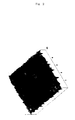
- Fig. 2 is an AFM photomicrograph of the film obtained in Example 1.
- An embodiment of the present invention will be described hereinunder.
- The polylactic acid manufacturing method of the present invention comprises the steps of:
- (1) preparing an aqueous emulsion of poly-L-lactic acid and an aqueous emulsion of poly-D-lactic acid;
- (2) mixing them together to prepare a mixed emulsion; and
- (3) drying the mixed emulsion.
- The step (1) is to prepare an aqueous emulsion of poly-L-lactic acid and an aqueous emulsion of poly-D-lactic acid.
- Poly-L-lactic acid and poly-D-lactic acid are essentially composed of an L-lactic acid unit and a D-lactic acid unit represented by the following formula, respectively.

- Poly-L-lactic acid comprises preferably 90 to 100 mol%, more preferably 95 to 100 mol%, much more preferably 98 to 100 mol% of the L-lactic acid unit. The other units are a D-lactic acid unit and a comonomer unit other than lactic acid. The total amount of the D-lactic acid unit and the comonomer unit other than lactic acid is preferably 0 to 10 mol%, more preferably 0 to 5 mol%, much more preferably 0 to 2 mol%.
- Poly-D-lactic acid comprises 90 to 100 mol%, preferably 95 to 100 mol%, more preferably 98 to 100 mol% of a D-lacic acid unit. The other units are an L-lactic acid unit and a comonomer unit other than lactic acid. The total amount of the L-lactic acid unit and the comonomer unit other than lactic acid is 0 to 10 mol%, preferably 0 to 5 mol%, more preferably 0 to 2 mol%.
- The comonomer unit is a unit derived from a dicarboxylic acid, polyhydric alcohol, hydroxycarboxylic acid or lactone having a functional group capable of forming two or more ester bonds, or a unit derived from a polyester, polyether or polycarbonate which comprises the above constituent components.
- Examples of the dicarboxylic acid include succinic acid, adipic acid, azelaic acid, sebacic acid, terephthalic acid and isophthalic acid. Examples of the polyhydric alcohol include aliphatic polyhydric alcohols such as ethylene glycol, propylene glycol, butanediol, pentanediol, hexanediol, octanediol, glycerin, sorbitan, neopentyl glycol, diethylene glycol, triethylene glycol, polyethylene glycol and polypropylene glycol, and aromatic polyhydric alcohols such as adduct of bisphenol with ethylene oxide. Examples of the hydroxycarboxylic acid include glycolic acid and hydroxybutyric acid. Examples of the lactone include glycolide, ε-caprolactone glycolide, ε-caprolactone, β-propiolactone, δ-butyrolactone, β- or γ-butyrolactone, pivalolactone and δ-valerolactone.
- The weight average molecular weights (Mw) of poly-L-lactic acid and poly-D-lactic acid are each preferably 5,000 to 1,000,000, more preferably 10,000 to 200, 000. The molecular weight distribution is in the range of preferably 1.5 to 2.5, more preferably 1.5 to 1.8. The weight average molecular weight is a weight average molecular weight value in terms of standard polystyrene measured by gel permeation chromatography (GPC) using chloroform as an eluent.
- Poly-L-lactic acid and poly-D-lactic acid can be manufactured by known methods. For example, they can be manufactured by heating L-lactide and D-lactide in the presence of a metal polymerization catalyst for ring-opening polymerization, respectively. Alternatively, they can be manufactured by crystallizing low molecular weight polylactic acid containing a metal polymerization catalyst and heating it under reduced pressure or in an inert gas stream for solid-phase polymerization. Further, they can be manufactured by a direct polymerization method in which lactic acid is dehydrated and condensed in the presence or absence of an organic solvent.
- The polymerization reaction can be carried out in a conventionally known reactor. For example, vertical reactors having high-viscosity agitating elements such as helical ribbon elements can be used alone or in combination.
- An alcohol may be used as a polymerization initiator. Preferably, the alcohol does not impede the polymerization of polylactic acid and is nonvolatile. Preferred examples of the alcohol include decanol, dodecanol, tetradecanol, hexadecanol and octadecanol.
- In the solid-phase polymerization method, a lactic acid polyester having a relatively low molecular weight obtained by the above ring-opening polymerization method or the above lactic acid direct polymerization method is used as a prepolymer. It is preferred from the viewpoint of preventing fusion that the prepolymer should be crystallized at a temperature range of its glass transition temperature (Tg) or higher and lower than its melting point (Tm) in advance. The crystallized prepolymer is filled into a fixed vertical reactor or a rotary reactor, such as a tumbler or kiln, and heated at a temperature of the glass transition temperature (Tg) of the prepolymer or higher and lower than the melting point (Tm). If the polymerization temperature is raised stepwise along with the proceeding of polymerization, there will be no problem. It is also preferred that the inside pressure of the above reactor should be reduced or a heated inert gas stream should be circulated to remove water generated during solid-phase polymerization efficiently.
- In the step (1), an aqueous emulsion of poly-L-lactic acid and an aqueous emulsion of poly-D-lactic acid are prepared. The aqueous emulsion of poly-L-lactic acid can be prepared by dissolving poly-L-lactic acid in an organic solvent, adding and mixing an emulsifier and water with the resulting solution and removing the organic solvent.
- Any organic solvent may be used if it can dissolve and swell poly-L-lactic acid and poly-D-lactic acid. Examples of the organic solvent include toluene, chloroform, methylene chloride, dichloroethane, tetrachloroethane, ethyl acetate and hexafluoroisopropanol which may be used alone or in combination of two or more. The organic solvent is used in an amount of preferably 80 to 1,000 parts by weight, more preferably 100 to 500 parts by weight based on 100 parts by weight of poly-L-lactic acid.
- As the emulsifier may be used a nonionic surfactant or ionic surfactant. Examples of the ionic surfactant include anionic emulsifiers such as fatty acid salts, ether carboxylates, alkenyl succinates, alkyl sulfates, alkyl polyoxyethylene phosphates, (meth)acrylic acid polymers, maleic acid polymers, formalin condensates of naphthalene sulfonates, salts of formaldehyde condensates of naphthalene sulfonic acid, half esters of polyoxyethylene alkyl ether sulfosuccinic acid, α-olefinsulfonic acid, alkyl sulfates, alkylphenyl sulfates and polyoxyethylene alkyl ether sulfates, cationic acrylic monomers such as dimethylaminoethyl methacrylate, diethylaminoethyl methacrylate, dimethylaminopropyl methacrylate, dimethylaminoethyl acrylate, diethylaminoethyl acrylate, dimethyalminopropyl acrylate, dimethylaminomethyl methacrylamide, dimethylaminoethyl methacrylamide, dimethylaminopropyl methacrylamide, dimethylaminomethyl acrylamide, dimethylaminoethyl acrylamide and dimethylaminopropyl acrylamide, cationic emulsifiers such as quaternary ammonium salts including dimethylaminoethyl methyl chloride methacrylate, diethylaminoethyl dimethylsulfuric acid methacrylate and dimethylaminopropyl chloroacetic acid methacrylate obtained by reacting an alkyl halide, dialkylsulfuric acid and monochloroacetic acid with these cationic acrylic monomers, and polyoxyethylene alkyl ethers, polyoxyethylene alkylphenyl ethers, polyoxyethylene alkylamine ethers, polyoxyethylene fatty acid esters, sorbitan fatty acid esters, polyoxyethylene sorbitan fatty acid esters and cane sugar fatty acid esters. Out of these, nonionic surfactants such as polyoxyethylene lauryl ethers and polyoxyethylene sorbitan fatty acid esters and other known emulsifiers may be used. Anionic emulsifiers and nonionic emulsifiers are preferred, and anionic emulsifiers are more preferred. The amount of the emulsifier is preferably 0.1 to 40 parts by weight, more preferably 1 to 30 parts by weight based on 100 parts by weight of poly-L-lactic acid.
- Water is used in an amount of preferably 50 to 10,000 parts by weight, more preferably 100 to 1,500 parts by weight based on 100 parts by weight of poly-L-lactic acid. To prepare the aqueous emulsion, a commonly used method may be used. For instance, after polylactic acid, an emulsifier and a solvent are mixed together, the resulting mixture is mixed with water by means of a suitable mixer under agitation.
- Mixing is preferably carried out by means of a homogenizer or ultrasonic stirrer after they are mixed together by means of a stirrer. The organic solvent can be removed under reduced pressure. The aqueous emulsion of poly-D-lactic acid may be prepared in the same manner as the aqueous emulsion of poly-L-lactic acid. The obtained aqueous emulsion has an average particle diameter of preferably 0.05 to 2 µm, more preferably 0.07 to 0.5 µm in an o/w form.
- The step (2) is to mix together the aqueous emulsion of poly-L-lactic acid and the aqueous emulsion of poly-D-lactic acid so as to prepare a mixed emulsion. As for the weight ratio of the former to the latter, the ratio (L/D) of the weight of poly-L-lactic acid contained in the former to the weight of poly-D-lactic acid contained in the latter is preferably 40/60 to 60/40, more preferably 45/55 to 55/45. The obtained aqueous emulsion has an average particle diameter of preferably 0.05 to 2 µm, more preferably 0.07 to 0.5 µm in an o/w form.
- The step (3) is to dry the mixed emulsion. The mixed emulsion may be dried from any state. For example, when it is used as a coating film, the mixed emulsion may be dried after it is applied. In other cases, it may be dried in a mold or a vessel capable retaining its form according to its application purpose. Although drying may be carried out under the condition that the solvent and water as a dispersion medium can be removed, it may be carried out at room temperature or under atmospheric pressure. It may be heated at a temperature higher than the glass transition temperature of the particle. In this case, stereocomplex polylactic acid having a stronger surface can be obtained.
- It is considered that poly-L-lactic acid and poly-D-lactic acid are existent in the mixed emulsion and a stereocomplex is formed in the drying step for removing water. The term "stereocomplex" means a crystal structure that poly-L-lactic acid and poly-D-lactic acid form alternating helices. The stereocomplex is formed by interaction between poly-L-lactic acid and poly-D-lactic acid which is stronger than interaction between L units or interaction between D units. It is considered that while poly-L-lactic acid and poly-D-lactic acid are separated from each other by the function of the emulsifier in the state of the mixed emulsion to form micells which are rarely miscible with each other, when the mixed emulsion is dried, the helices of poly-L-lactic acid and poly-D-lactic acid are interacted with each other by the function of the residual emulsifier to form a stereocomplex when they approach each other.
- The content of the stereocomplex in the obtained polylactic acid is preferably 50 % or more, more preferably 70 % or more. Melting peaks at 195 °C or higher of the obtained polylactic acid account for preferably 50 % or more, more preferably 70 % or more of the total of all the melting peaks measured by a differential scanning calorimeter (DSC) in the temperature elevation step.
- The melting point is in the range of preferably 195 to 250°C, more preferably 200 to 220°C. The melting enthalpy is 20 J/g or more, preferably 30 J/g or more. More specifically, in the measurement by the differential scanning calorimeter (DSC), preferably, melting peaks at 195°C or higher account for 50 % or more of the total of all the melting peaks in the temperature elevation step, the melting point is in the range of 195 to 250°C, and the melting enthalpy is 20 J/g or more.
- The weight average molecular weight of the obtained polylactic acid is preferably 5,000 to 1,000,000, more preferably 10,000 to 200,000. The weight average molecular weight is a weight average molecular weight value in terms of standard polystyrene measured by gel permeation chromatography (GPC) using chloroform as an eluent.
- The film manufacturing method of the present invention comprises the steps of:
- (1) preparing an aqueous emulsion of poly-L-lactic acid and an aqueous emulsion of poly-D-lactic acid;
- (2) mixing them together to prepare a mixed emulsion;
- (3-i) applying the mixed emulsion to a substrate; and
- (3-ii) drying the coating film of the mixed emulsion.
- In the film manufacturing method of the present invention, the steps (1) and (2) are the same as in the above polylactic acid manufacturing method. The film manufacturing method of the present invention includes the step (3-i) of applying the mixed emulsion to the substrate and the step (3-ii) of drying the coating film of the mixed emulsion.
- The application step (3-i) can be carried out by casting the mixed emulsion over the substrate. The mixed emulsion may be cast by extruding it from a die or by doctor blade coating or spin coating. Examples of the substrate include glass plates, metal plates and synthetic resin plates. The drying step (3-ii) may be carried out at room temperature under atmospheric pressure.
- The thickness of the film obtained by this method is preferably 5 to 200 µm, more preferably 10 to 100 µm. Therefore, the thickness of the mixed emulsion to be applied to the substrate can be adjusted in consideration of the amount of polylactic acid contained in the mixed emulsion. The film contains stereocomplex polylactic acid like the above polylactic acid and has the same weight average molecular weight and thermal properties measured by DSC as the polylactic acid.
- The mixed emulsion of the present invention contains an aqueous emulsion of poly-L-lactic acid and an aqueous emulsion of poly-D-lactic acid. Each of the aqueous emulsions contains poly-L-lactic acid (or poly-D-lactic acid), an emulsifier and water. Poly-L-lactic acid (or poly-D-lactic acid) and the emulsifier have already been described in the section for the polylactic acid manufacturing method. The emulsifier is contained in an amount of preferably 0.1 to 40 parts by weight, more preferably 1 to 30 parts by weight based on 100 parts by weight of polylactic acid. Water is contained in an amount of preferably 50 to 10,000 parts by weight, more preferably 100 to 1,500 parts by weight based on 100 parts by weight of poly-L-lactic acid (or poly-D-lactic acid).
- The weight ratio (L/D) of poly-L-lactic acid to poly-D-lactic acid in the mixed emulsion is preferably 40/60 to 60/40, more preferably 45/55 to 55/45. The mixed emulsion has an average particle diameter of preferably 0.05 to 2 µm, more preferably 0.07 to 0.5 µm in an o/w form.
- The mixed emulsion can be manufactured by the step (1) of preparing an aqueous emulsion of poly-L-lactic acid and an aqueous emulsion of poly-D-lactic acid and the step (2) of mixing them together to manufacture mixed emulsion. The step (1) and the step (2) have already been described in the section for the polylactic acid manufacturing method.
- The coating agent of the present invention contains the above mixed emulsion. The mixed emulsion contains an aqueous emulsion of poly-L-lactic acid and an aqueous emulsion of poly-D-lactic acid. The coating agent of the present invention has a feature that a stereocomplex is formed not at the time of application but at the time of drying after application. That is, a stereocomplex can be formed in situ. Therefore, the coating agent has an advantage that it can be easily applied and can be kept well.
- The coating agent may contain a polymer emulsion, a resin emulsion and a rubber-based latex. These components are contained in a total amount of preferably 5 to 200 parts by weight based on 100 parts by weight of the mixed emulsion. Besides these, the coating agent may optionally contain known additives such as a thickener, anti-foaming agent, antioxidant, ultraviolet light absorber, water resistant additive, antiseptic agent, antirust, pigment and dye. The total amount of these components is preferably 0.1 to 20 parts by weight based on 100 parts by weight of the mixed emulsion.
- The following examples are given to further illustrate the present invention. In the following examples, physical properties were measured by the following methods.
- (1) Measurement of weight average molecular weight (Mw)
50 mg of the sample was dissolved in 5 ml of chloroform, and chloroform heated at 40°C was used as a carrier to obtain the weight average molecular weight (Mw) of the sample by using the GPC-11 of Showdex Co., Ltd. The weight average molecular weight (Mw) was calculated as a value in terms of polystyrene. - (2) Thermal properties
The thermal properties were measured by using the DSC-60 differential scanning calorimeter of Shimadzu Corporation. 10 mg of the sample was heated from room temperature up to 250°C at a temperature elevation rate of 10 °C/min in a nitrogen atmosphere. For the first scan, the homocrystal melting temperature (Tmh), homocrystal melting heat (ΔHmh), stereocomplex crystal melting temperature (Tms) and stereocomplex crystal melting heat (ΔHms) were measured. - (3) The stereocomplex content (χc(SC)) was obtained as follows. When the homocrystal melting heat (ΔHmh0) of 100 % crystallized polylactic acid was -203.4 J/g and the stereocomplex crystal melting heat (ΔHms0) of 100 % crystallized polylactic acid was -142 J/g, the stereocomplex content was calculated from the homocrystal melting heat (Δ Hmh) obtained substantially from DSC and the stereocomplex crystal melting heat (ΔHms) based on the following equation.

- (4) ratio of melting peaks at 195°C or higher (R195 or more)
The ratio (%) of melting peaks at 195°C or higher was calculated from the area of the melting peaks at 195°C or higher (high temperature) and the area of melting peaks at 140 to 180°C (low temperature) based on the following equation.
- R195 or more: ratio of melting peaks at 195°C or higher
- A195 or more: area of melting peaks at 195°C or higher
- A140-180: area of melting peaks at 140 to 180°C
- (5) Optical purity (%)
The optical purity was obtained from the ratio of L-lactic acid and D-lactic acid constituting poly-L-lactic acid and poly-D-lactic acid. 5 ml of 5M sodium hydroxide and 2.5 ml of isopropanol were added to 1 g of the sample to hydrolyze it while they were heated at 40°C under agitation, and the resulting reaction solution was neutralized with 1 M sulfuric acid. The concentration of the solution was adjusted by diluting 1 ml of the neutralized solution to 25 times. The detection peak areas of L-lactic acid and D-lactic acid were measured with ultraviolet light having a wavelength of 254 nm by HPLC to calculate the optical purity (%) from the weight ratio [L] (%) of L-lactic acid and the weight ratio [D] (%) of D-lactic acid constituting a polylactic acid polymer based on the following equation.
The LC-6A pump of Shimadzu Corporation, the SPD-6AV UV detector of Shimadzu Corporation and the SUMICHIRAL OA-5000 column of Sumika Bunseki Center Co., Ltd. were used as an HPLC apparatus and a 1mM aqueous solution of copper sulfate was used as an eluent to measure the optical purity at a flow rate of 1.0 ml/min and 40°C.
- (6) Measurement of wide-angle X-ray diffraction (WAXS)
Wide-angle X-ray diffraction (WAXS) was carried out with Cu-K α-line (wavelength: 0.1542 nm) which was filtered with Ni at a 2θ angle of 6 to 40° at a rate of 2°/min by using the RINT-2100 FSL X-ray diffraction apparatus and the RINT2000 X-ray generator (generating X-rays at 40 kV and 30 mA) of Rigaku Co., Ltd. - (7) AFM measurement
An image of the surface profile of the film was measured in a tapping mode by using the AFM of Shimadzu Corporation. - 100 parts of poly-L-lactic acid (PLLA: molecular weight of 20,100) was heated at 100°C in 400 parts of toluene, dissolved in the toluene for about 1 hour and cooled to 80°C. Then, 20 parts in terms of solid of a disodium salt of polyoxyethylene alkylether sulfosuccinic acid as an emulsifier and 1, 000 parts of water were added and violently stirred at 75°C for 1 hour to carry out pre-emulsification. Ultrasonic waves were applied to the obtained pre-emulsified product for 1 hour or more to obtain an emulsified product. The toluene contained in the emulsified product was distilled off under reduced pressure by using an evaporator to obtain an aqueous emulsion of poly-L-lactic acid having a solid content of 10 % and an average particle diameter of 0.3 µm (to be referred to as "solution (L1)" hereinafter).
- The same operation as above was repeated except that poly-D-lactic acid was used (PDLA: molecular weight of 22,200) to obtain an aqueous emulsion of poly-D-lactic acid having a solid content of 10 % and an average particle diameter of 0.3 µm (to be referred to as "solution (D1)" hereinafter).
- The obtained solutions (L1) and (D1) were mixed together in a weight ratio of 1:1 to obtain a mixed emulsion.
- The mixed emulsion was cast over a substrate and dried at room temperature to obtain a 35 µm-thick film (E1). Mw of the film (E1) was 21,000.
- DSC, wide-angle X-ray diffraction (WAXS) and AFM measurements were made on the film (E1).
- The results of the DSC measurement are shown in Fig. 1. The solid line in Fig. 1 is a DSC chart of the film (E1). The dotted line in Fig. 1 is a DSC chart of a film (C1) obtained in Comparative Example 1. The melting point of the film (C1) was about 170°C whereas the melting point of the film (E1) was 209.4°C. It is understood that a film having high heat resistance can be obtained by the present invention. The stereocomplex content of the film (E1) was 76.1 % and the ratio of melting peaks at 195°C or higher of the film (E1) was 69.1 %. In the WAXS measurement of the film (E1), a diffraction peak was seen at 2θ angles of 12°, 21° and 24° and differed from the crystal diffraction peaks of poly-L-lactic acid which appeared at 18.5° and 22.5°. It was confirmed that a stereocomplex was formed.
- The AFM measurement result of the surface of the film (E1) is shown in Fig. 2. It is understood that the film (E1) had a smooth surface structure.
- 100 parts of poly-L-lactic acid (PLLA: molecular weight of 71, 000) was dissolved in toluene (460 parts) at 100°C and then cooled to 80°C, and an emulsifier (20 parts of polyoxyethylene alkylether sulfosuccinic acid) and distilled water (1,000 parts) were added to the resulting solution. After the solution was stirred at 75°C for 1 hour to carry out pre-emulsification, ultrasonic waves were applied to the pre-emulsion for 1 hour or more to emulsify the pre-emulsion. Thereafter, vacuum distillation was carried out by an evaporator to obtain a poly-L-lactic acid emulsion having a solid content of 10 % and an average particle diameter of 0.3 µm (to be referred to as "solution (L2)" hereinafter).
- The same operation as above was repeated except that poly-D-lactic acid (PDLA: molecular weight of 75,000) was used to obtain an aqueous emulsion of poly-D-lactic acid having a solid content of 10 % and an average particle diameter of 0.3 µm (to be referred to as "solution (D2)" hereinafter).
- The obtained solutions (L2) and (D2) were mixed together in a weight ratio of 1:1 to obtain a mixed emulsion.
- The mixed emulsion was cast over a substrate and dried to obtain a film (E2). Mw of the film (E2) was 73,000. The stereocomplex content of the film (E2) was 73.2 %, and the ratio of melting peaks at 195°C or higher of the film (E2) was 66.3 %.
- Only the solution L obtained in Example 1 was cast over a substrate and dried to obtain a poly-L-lactic acid film (C1). The DSC measurement result of the film (C1) is shown in Fig. 1 (dotted line). The melting point of the film (C1) was 172.3°C.
- When the film (E1) obtained in Example 1 and the film (C1) obtained in Comparative Example 1 were left in water, the film (C1) fell off in a powdery form and the film (E1) did not change in shape. It is thereby understood that the strength of the polylactic acid film was improved by the formation of a stereocomplex.
- According to the method of the present invention, polylactic acid and a film thereof are obtained without using a harmful solvent. According to the method of the present invention, polylactic acid and a film thereof having excellent heat resistance and strength are obtained.
- A coating film of polylactic acid containing a stereocomplex and having high heat resistance can be formed from the mixed emulsion of the present invention or a coating agent containing the same. Since the coating agent of the present invention has excellent biodegradability, it can be applied to a biodegradable molded product and has an environmental effect that a coating film thereof is degraded at the same time as the biodegradable molded product.
- The method and coating agent of the present invention can be used to coat paper materials such as paper packs, corrugated cardboards and paper bags and molded articles of biodegradable plastics. The polylactic acid containing a stereocomplex of the present invention can be advantageously used in films, coatings, adhesives, paints, binders and protective films.
Claims (12)
- A method of manufacturing polylactic acid, comprising the steps of:(1) preparing an aqueous emulsion of poly-L-lactic acid and an aqueous emulsion of poly-D-lactic acid;(2) mixing them together to prepare a mixed emulsion; and(3) drying the mixed emulsion.
- The method according to claim 1, wherein the aqueous emulsion of poly-L-lactic acid contains 50 to 10,000 parts by weight of water based on 100 parts by weight of poly-L-lactic acid and the aqueous emulsion of poly-D-lactic acid contains 50 to 10,000 parts by weight of water based on 100 parts by weight of poly-D-lactic acid.
- The method according to claim 1, wherein the weight average molecular weights of poly-L-lactic acid and poly-D-lactic acid are each 5,000 to 1,000,000.
- The method according to claim 1, wherein the melting point measured by a differential scanning calorimeter (DSC) of the obtained polylactic acid is 195 to 250°C.
- A method of manufacturing a film, comprising the steps of;(1) preparing an aqueous emulsion of poly-L-lactic acid and an aqueous emulsion of poly-D-lactic acid;(2) mixing them together to prepare a mixed emulsion;(3-i) applying the mixed emulsion to a substrate; and(3-ii) drying the coating film of the mixed emulsion.
- The method according to claim 5, wherein the aqueous emulsion of poly-L-lactic acid contains 50 to 10,000 parts by weight of water based on 100 parts by weight of poly-L-lactic acid and the aqueous emulsion of poly-D-lactic acid contains 50 to 10,000 parts by weight of water based on 100 parts by weight of poly-D-lactic acid.
- The method according to claim 5, wherein the weight average molecular weights of poly-L-lactic acid and poly-D-lactic acid are each 5;000 to 1,000,000.
- The method according to claim 5, wherein the melting point measured by a differential scanning calorimeter (DSC) of the film is 195 to 250°C.
- A mixed emulsion containing an aqueous emulsion of poly-L-lactic acid and an aqueous emulsion of poly-D-lactic acid.
- The mixed emulsion according to claim 9, wherein the aqueous emulsion of poly-L-lactic acid contains 50 to 10, 000 parts by weight of water based on 100 parts by weight of poly-L-lactic acid and the aqueous emulsion of poly-D-lactic acid contains 50 to 10,000 parts by weight of water based on 100 parts by weight of poly-D-lactic acid.
- The mixed emulsion according to claim 9, wherein the weight average molecular weights of poly-L-lactic acid and poly-D-lactic acid are each 5,000 to 1,000,000.
- A coating agent containing the mixed emulsion of claim 9.
Applications Claiming Priority (2)
| Application Number | Priority Date | Filing Date | Title |
|---|---|---|---|
| JP2005080382 | 2005-02-20 | ||
| PCT/JP2006/303347 WO2006088241A1 (en) | 2005-02-20 | 2006-02-17 | Process for producing polylactic acid |
Publications (2)
| Publication Number | Publication Date |
|---|---|
| EP1849833A1 true EP1849833A1 (en) | 2007-10-31 |
| EP1849833A4 EP1849833A4 (en) | 2010-08-11 |
Family
ID=36916627
Family Applications (1)
| Application Number | Title | Priority Date | Filing Date |
|---|---|---|---|
| EP06714487A Withdrawn EP1849833A4 (en) | 2005-02-20 | 2006-02-17 | METHOD FOR MANUFACTURING POLYLACTIC ACID |
Country Status (7)
| Country | Link |
|---|---|
| US (1) | US20080161505A1 (en) |
| EP (1) | EP1849833A4 (en) |
| JP (1) | JPWO2006088241A1 (en) |
| KR (1) | KR20070105990A (en) |
| CN (1) | CN101124280A (en) |
| CA (1) | CA2598470A1 (en) |
| WO (1) | WO2006088241A1 (en) |
Cited By (2)
| Publication number | Priority date | Publication date | Assignee | Title |
|---|---|---|---|---|
| WO2016190741A1 (en) | 2015-05-27 | 2016-12-01 | Csk Food Enrichment B.V. | Cheese coating |
| WO2016190740A1 (en) | 2015-05-27 | 2016-12-01 | Csk Food Enrichment B.V. | Cheese coating |
Families Citing this family (10)
| Publication number | Priority date | Publication date | Assignee | Title |
|---|---|---|---|---|
| JP2006307195A (en) * | 2005-03-31 | 2006-11-09 | Sanyo Chem Ind Ltd | Resin particle |
| JP2008062589A (en) * | 2006-09-09 | 2008-03-21 | Tohcello Co Ltd | Polylactic acid release film |
| JP2008062588A (en) * | 2006-09-09 | 2008-03-21 | Tohcello Co Ltd | Polylactic acid laminate |
| JP5016319B2 (en) * | 2007-02-14 | 2012-09-05 | 株式会社武蔵野化学研究所 | A method for producing a crosslinked polylactic acid film and a coating agent. |
| GB0703761D0 (en) | 2007-02-27 | 2007-04-04 | Tate & Lyle Plc | Polylactic acid stereocomplex |
| WO2011142283A1 (en) * | 2010-05-10 | 2011-11-17 | 国立大学法人群馬大学 | Method for producing polylactic acid microparticles, polylactic acid microparticles, and crystal nucleation agent, molded article, and surface modifier using the same |
| KR101241014B1 (en) | 2011-07-29 | 2013-03-11 | 한국기술교육대학교 산학협력단 | Manufacturing Method of Poly Lactic Acid Stereocomplex using Solvent Casting Method |
| JP6089178B2 (en) * | 2012-01-20 | 2017-03-08 | 国立大学法人 奈良先端科学技術大学院大学 | Method for producing complex polymer |
| IT202000028640A1 (en) | 2020-11-26 | 2022-05-26 | Consiglio Nazionale Ricerche | WATER DISPERSIONS OF HALOGEN-FREE BIODEGRADABLE POLYMERS AND PROCESS FOR THEIR PREPARATION |
| CN113956505B (en) * | 2021-11-03 | 2023-05-16 | 海南赛诺实业有限公司 | Polylactic acid emulsion, and preparation method and application thereof |
Family Cites Families (8)
| Publication number | Priority date | Publication date | Assignee | Title |
|---|---|---|---|---|
| US4981696A (en) * | 1986-12-22 | 1991-01-01 | E. I. Du Pont De Nemours And Company | Polylactide compositions |
| JP3616465B2 (en) * | 1996-10-01 | 2005-02-02 | ミヨシ油脂株式会社 | Biodegradable emulsion |
| US6143276A (en) * | 1997-03-21 | 2000-11-07 | Imarx Pharmaceutical Corp. | Methods for delivering bioactive agents to regions of elevated temperatures |
| JP4382909B2 (en) * | 1999-07-02 | 2009-12-16 | ミヨシ油脂株式会社 | Biodegradable resin aqueous dispersion and biodegradable composite material |
| JP5157035B2 (en) * | 2001-09-27 | 2013-03-06 | 東レ株式会社 | POLYLACTIC ACID RESIN COMPOSITION, PROCESS FOR PRODUCING THE SAME, AND MOLDED ARTICLE |
| JP3775668B2 (en) * | 2002-04-30 | 2006-05-17 | 荒川化学工業株式会社 | Polylactic acid aqueous emulsion, process for producing the same and coating agent containing the polylactic acid aqueous emulsion |
| JP2004026876A (en) * | 2002-06-21 | 2004-01-29 | Mitsui Chemicals Inc | Block-copolymeric polylactic acid and its production method |
| JP4266323B2 (en) * | 2003-04-23 | 2009-05-20 | 住友精化株式会社 | Method for producing polylactic acid aqueous dispersion |
-
2006
- 2006-02-17 JP JP2007503801A patent/JPWO2006088241A1/en not_active Ceased
- 2006-02-17 KR KR1020077018268A patent/KR20070105990A/en not_active Withdrawn
- 2006-02-17 CN CNA2006800055084A patent/CN101124280A/en active Pending
- 2006-02-17 CA CA002598470A patent/CA2598470A1/en not_active Abandoned
- 2006-02-17 EP EP06714487A patent/EP1849833A4/en not_active Withdrawn
- 2006-02-17 US US11/884,267 patent/US20080161505A1/en not_active Abandoned
- 2006-02-17 WO PCT/JP2006/303347 patent/WO2006088241A1/en not_active Ceased
Non-Patent Citations (4)
| Title |
|---|
| DATABASE WPI Week 199826 Thomson Scientific, London, GB; AN 1998-292295 XP002588390 & JP 10 101911 A (MIYOSHI YUSHI KK) 21 April 1998 (1998-04-21) * |
| DATABASE WPI Week 200424 Thomson Scientific, London, GB; AN 2004-250162 XP002588391 & JP 2003 321600 A (ARAKAWA CHEM IND LTD) 14 November 2003 (2003-11-14) * |
| HIDETO TSUJI, SUONG-HYU HYON, YOSHITO IKADA: "Stereocomplex Formation between Enantiomeric Poly(lactic acid)s" MACROMOLECULES, vol. 24, 1991, pages 5651-5656, XP002588389 * |
| See also references of WO2006088241A1 * |
Cited By (3)
| Publication number | Priority date | Publication date | Assignee | Title |
|---|---|---|---|---|
| WO2016190741A1 (en) | 2015-05-27 | 2016-12-01 | Csk Food Enrichment B.V. | Cheese coating |
| WO2016190740A1 (en) | 2015-05-27 | 2016-12-01 | Csk Food Enrichment B.V. | Cheese coating |
| NL2014860A (en) * | 2015-05-27 | 2016-12-07 | Csk Food Enrichment Bv | Cheese coating. |
Also Published As
| Publication number | Publication date |
|---|---|
| JPWO2006088241A1 (en) | 2008-07-10 |
| US20080161505A1 (en) | 2008-07-03 |
| CA2598470A1 (en) | 2006-08-24 |
| WO2006088241A1 (en) | 2006-08-24 |
| CN101124280A (en) | 2008-02-13 |
| KR20070105990A (en) | 2007-10-31 |
| EP1849833A4 (en) | 2010-08-11 |
Similar Documents
| Publication | Publication Date | Title |
|---|---|---|
| US20080161505A1 (en) | Method of Manufacturing Polyactic Acid | |
| EP1302502B1 (en) | Process for producing aqueous dispersion of biodegradable polyester | |
| Nam et al. | Morphology and crystallization kinetics in a mixture of low-molecular weight aliphatic amide and polylactide | |
| CA2669283C (en) | Method for producing polylactic acid block copolymer | |
| Coativy et al. | Microwave synthesis and melt blending of glycerol based toughening agent with poly (lactic acid) | |
| JP2003096285A (en) | Polylactic acid resin composition, method for producing the same, and molded article | |
| Andersson et al. | Stereocomplexation between PLA-like substituted oligomers and the influence on the hydrolytic degradation | |
| Shi et al. | Synthesis and properties of a temperature-sensitive hydrogel based on physical crosslinking via stereocomplexation of PLLA-PDLA | |
| Vilay et al. | Improvement of microstructures and properties of biodegradable PLLA and PCL blends compatibilized with a triblock copolymer | |
| Lv et al. | Effects of molecular weight on stereocomplex and crystallization of PLLA/PDLA blends | |
| Pollet et al. | Transesterification catalysts to improve clay exfoliation in synthetic biodegradable polyester nanocomposites | |
| Kuang et al. | Effects and mechanism of cellulose acetate butyrate on the crystallization of polylactic acid | |
| Yang et al. | Using a self-assemblable nucleating agent to tailor crystallization behavior, crystal morphology, polymorphic crystalline structure, and biodegradability of poly (1, 4-butylene adipate) | |
| JP4570855B2 (en) | Biodegradable polyester resin fine particles and method for producing the same | |
| Keridou et al. | Biphasic polylactide/polyamide 6, 10 blends: Influence of composition on polyamide structure and polyester crystallization | |
| US20150031827A1 (en) | Polymer, clathrate using the polymer, and aqueous dispersion of sheet of the polymer | |
| Mincheva et al. | Preparation of narrowly dispersed stereocomplex nanocrystals: a step towards all-poly (lactic acid) nanocomposites | |
| EP3239208A1 (en) | Polyoxalate copolymer | |
| Bibi et al. | Novel strategy of lactide polymerization leading to stereocomplex polylactide nanoparticles using supercritical fluid technology | |
| EP2130871A1 (en) | Polylactic acid composition | |
| Yuan et al. | Synthesis and characterization of star polylactide by ring-opening polymerization of L-lactic acid O-carboxyanhydride | |
| WO2007043547A1 (en) | Polylactic acid composition | |
| Chen et al. | Facile fabrication of polylactic acid stereocomplex microspheres | |
| WO2022113011A1 (en) | Halogen-free aqueous dispersions of biodegradable polymers and process for preparing the same | |
| Louisy et al. | Comparative studies of thermal and mechanical properties of macrocyclic versus linear polylactide |
Legal Events
| Date | Code | Title | Description |
|---|---|---|---|
| PUAI | Public reference made under article 153(3) epc to a published international application that has entered the european phase |
Free format text: ORIGINAL CODE: 0009012 |
|
| 17P | Request for examination filed |
Effective date: 20070817 |
|
| AK | Designated contracting states |
Kind code of ref document: A1 Designated state(s): AT BE BG CH CY CZ DE DK EE ES FI FR GB GR HU IE IS IT LI LT LU LV MC NL PL PT RO SE SI SK TR |
|
| DAX | Request for extension of the european patent (deleted) | ||
| A4 | Supplementary search report drawn up and despatched |
Effective date: 20100712 |
|
| STAA | Information on the status of an ep patent application or granted ep patent |
Free format text: STATUS: THE APPLICATION IS DEEMED TO BE WITHDRAWN |
|
| 18D | Application deemed to be withdrawn |
Effective date: 20110209 |