EP1839416B1 - Verarbeitung von über kommunikationsnetze zu übertragenden nachrichten - Google Patents
Verarbeitung von über kommunikationsnetze zu übertragenden nachrichten Download PDFInfo
- Publication number
- EP1839416B1 EP1839416B1 EP05812718.4A EP05812718A EP1839416B1 EP 1839416 B1 EP1839416 B1 EP 1839416B1 EP 05812718 A EP05812718 A EP 05812718A EP 1839416 B1 EP1839416 B1 EP 1839416B1
- Authority
- EP
- European Patent Office
- Prior art keywords
- attachment
- message
- attachments
- messages
- Prior art date
- Legal status (The legal status is an assumption and is not a legal conclusion. Google has not performed a legal analysis and makes no representation as to the accuracy of the status listed.)
- Expired - Lifetime
Links
Images



Classifications
-
- H—ELECTRICITY
- H04—ELECTRIC COMMUNICATION TECHNIQUE
- H04L—TRANSMISSION OF DIGITAL INFORMATION, e.g. TELEGRAPHIC COMMUNICATION
- H04L51/00—User-to-user messaging in packet-switching networks, transmitted according to store-and-forward or real-time protocols, e.g. e-mail
- H04L51/06—Message adaptation to terminal or network requirements
- H04L51/063—Content adaptation, e.g. replacement of unsuitable content
-
- H—ELECTRICITY
- H04—ELECTRIC COMMUNICATION TECHNIQUE
- H04L—TRANSMISSION OF DIGITAL INFORMATION, e.g. TELEGRAPHIC COMMUNICATION
- H04L51/00—User-to-user messaging in packet-switching networks, transmitted according to store-and-forward or real-time protocols, e.g. e-mail
- H04L51/58—Message adaptation for wireless communication
Definitions
- the invention relates to processing of messages that are to be transmitted over communication networks and particularly to such processing of e-mails.
- E-mail traffic is one of the rapidly growing applications in mobile/radio communication networks. E-mails are downloaded to laptops or mobile terminals or other radio/wireless communication devices through mobile communication networks.
- optimisation is used only for downloading e-mails, whereas in sending of e-mails only compression is currently used. Compression may be, and often is, used also for downloading e-mails in addition to (or instead of) optimisation.
- FIGS 1A-1C show diagrams illustrating different e-mail setups in mobile networks. All setups are shown in a system comprising a mobile terminal that is connected to Internet/operator's GPRS (General Packet Radio Service) intranet via a mobile/radio network.
- GPRS General Packet Radio Service
- Figure 1A shows a basic setup, wherein the mobile terminal comprises an e-mail client 101 and Internet/operator's GPRS network comprises an e-mail server 102.
- the e-mail client 101 in the mobile terminal and the e-mail server 102 in the Internet/operator's GPRS intranet may communicate by using POP (Post Office Protocol), IMAP (Internet Message Access Protocol) or SMTP (Simple Mail Transfer Protocol) protocols, which are commonly known e-mail protocols.
- POP Post Office Protocol
- IMAP Internet Message Access Protocol
- SMTP Simple Mail Transfer Protocol
- Figure 1B shows an optimised setup.
- the Internet/operator's GPRS intranet comprises an e-mail server 112 and an (optimising) e-mail proxy 113 that is connected to the e-mail server 112 and communicates with the e-mail server by using POP, IMAP or SMTP protocol.
- the mobile terminal comprises an e-mail client 110 and an e-mail proxy client 111 that is connected to the e-mail server 112 and communicates with the e-mail server by using POP, IMAP or SMTP protocol.
- the e-mail proxy 113 and the e-mail proxy client 111 communicate with each other over the mobile/radio network by using a proprietary e-mail proxy protocol, which protocol is configured to optimise the transfer of e-mails to the e-mail proxy client.
- the e-mail proxy 113 compresses e-mail messages and the e-mail proxy client 111 decompresses them in the mobile terminal and provides them onwards to the e-mail client 110.
- the e-mail proxy 113 may optimise the emails to be downloaded by removing attachments from the e-mails or replacing them with HTTP URIs (HyperTexts Transfer Protocol, Uniform Resource Identifier) for allowing the user of the mobile terminal to download the attachments later.
- HTTP URIs HyperTexts Transfer Protocol, Uniform Resource Identifier
- E-mails are sent from the mobile terminal through the e-mail proxy client.
- the e-mail proxy client compresses the messages and sends them (in compressed form) to the e-mail proxy, which decompresses them and sends them onwards to the email server in decompressed form.
- the mobile terminal comprises only an e-mail client 114.
- the e-mail client 114 communicates directly with the e-mail proxy 113 by using POP, IMAP or SMTP protocol.
- Figure 1C shows a web interface setup.
- the setup of the Internet/operator's GPRS intranet corresponds to the setup of Figure 1B .
- the mobile terminal comprises a www browser, which communicates with the e-mail proxy 113 in Internet/operator's GPRS intranet over a HTTP (HyperText Transfer Protocol) or HT-TPS (Secure HTTP) connection.
- HTTP HyperText Transfer Protocol
- HT-TPS Secure HTTP
- Patent application FR-2847752 describes a method for managing the exchange of files attached to emails by bypassing file-size limitations set to attachments.
- a sender forwards the original file corresponding to a file to be sent as an attachment to a file server.
- the file server builds a substitute file including at least data identifying the original file and sends it back to the sender.
- the substitute file is attached to the email before the sender sends the email to the receiver.
- the original file is not sent, but the receiver can get it, at anytime, from the file server by providing the file server with the parameters of the substitute file.
- the recipient retrieves, using FTP or HTTP protocol, the original file.
- the sender's workstation can also build the substitute file, but the ID of the substitute file which is unique within the file server and the way to retrieve the original file have to be provided by the file server.
- a drawback of the method above is that the recipient does not receive the original attachment along with the email, but instead receives a link to the original attachment for retrieval from the file server. Removal and re-insertion of the attachment require actions to be taken both by the sender and the recipient. In addition, although the email is transmitted without the attachment, the attachment is nonetheless transmitted but via a different route, which may be costly if usable bandwidth is limited.
- Patent application US-2002/0059384 describes a method for reducing bandwidth usage in "viral distribution” that means a mechanism wherein an attachment is propagating and spreading into a community of end-users.
- the e-mail's attachment is reviewed by the mail server or a dedicated email program on the sender's PC, before it is being sent to the addressee.
- the purpose of the review is to determine whether or not the attachment is a well-known piece of content that is available from many sources, e.g., from a server much closer to the recipient (addressee). If so, the attachment is replaced by a much smaller pointer.
- the server of the target user recognizes the pointer and attaches a local copy of the relevant media file before delivering it to the recipient.
- the attachment is replaced automatically by the pointer altogether, and the recipient is to retrieve the file using this pointer.
- the method described above functions well provided in that the local copy is available from a source near the recipient. But if it is not or the local copy is not exactly the same as the original attachment, the original attachment must be transmitted over the communication network, wherein bandwidth reduction is not realized.
- An object of the present invention is to provide a new solution for processing of messages that are to be transmitted between a transmitting entity and a receiving entity at least partially over communication networks.
- One of the basic ideas of the invention is to replace parts of messages by substantially unique identifiers before transferring the messages over a communication network or a part of a communication network, wherein may be a mobile network or a fixed line network. Thereby the amount of data to be transferred over the communication network can be reduced. This substantially unique identifier can then be used for retrieving the omitted part of the message in the receiving end.
- a transmitting entity and a receiving entity at least partially over a communication network, wherein the method comprises:
- a transmitting entity and a receiving entity at least partially over a communication network, wherein the method comprises:
- the invention suits well for accelerating e-mail transmission, but it can be used also in connection with transferring any other messages or content that can be divided into more than one part, such as messages comprising distinctive files and/or distinctively viewable content.
- Such other messages may be for example Multimedia Messaging Service (MMS) messages or other downloadable content such as mobile Java games.
- MMS Multimedia Messaging Service
- the invention can be used for optimising sending of e-mails or other messages from a mobile terminal.
- the methods of the invention may be used even though there would not be a specific need to accelerate the data transmission. For example, if the user is billed by the amount of transferred data, the user is most likely happy if the amount of transferred data is reduced.
- a solution according to an embodiment of the invention provides extra benefits in situations, wherein
- a solution according to another embodiment of the invention provides extra benefits in situations, wherein
- the functionality provided by the invention resides for example in any suitable location/system between any suitable receiving entity and transmitting entity.
- the receiving entity and transmitting entity may be for example an e-mail client and an e-mail server, respectively.
- the receiving entity may be an e-mail server, while the transmitting entity is an e-mail client.
- the receiving and transmitting entities may be some other communicating parties, such as for example a mobile terminal and an MMSC (Multimedia Messaging Service Center).
- MMSC Multimedia Messaging Service Center
- the path between the receiving entity and the transmitting entity may comprise one or more slow speed links (a low bandwidth network).
- slow means that the link causes (significant) delays to the message transfer, that is, the message content size divided by the link speed is large, for example over 20 seconds, and the user must wait for the content to be delivered. Nevertheless, the invention is not restricted only to such low bandwidth networks.
- the implementation of the invention may be an e-mail proxy arrangement comprising an e-mail proxy in the network side and an e-mail proxy client residing in the user's device. That is, the setup may correspond to the setup shown in Figure 1B , only the functionality of the e-mail proxy and the e-mail proxy client need to be modified according to the invention.
- the Internet/operator's intranet shown in Figure 1B may be also some other network, such as for example a corporate LAN (Local Area Network) or some other setting.
- the optimisation provided by the invention is based on defining substantially unique identifiers, such as hash values, checksums calculated by means of for example cyclical checksum algorithm or differences in relation certain auxiliary data, for some parts of messages that are to be sent over a communication network.
- the auxiliary data may be for example a base attachment or a base message that is presumably available in the receiving end. Further, the auxiliary data may be selected such that it is at least partially similar with the message part relating to which the difference is calculated. In order to reduce the amount of data whose suitability for difference calculation is tested, the auxiliary data may be selected among a limited set of data, such as data stored in cache.
- Still another alternative is to define the substantially unique identifier on the basis of name, size, type, time stamp, or specific information in the files, for example headers, file author, meta data described in a metadata identifier of the message part or on the basis of some suitable combination of these.
- the substantially unique identifier is such that it identifies a message part or content reasonably accurately. That is, there is no need to have 100 % accuracy, if the identifier is accurate enough for the purposes of the application domain.
- substantially unique identifiers can be used to replace some parts of messages (for example e-mail or MMS messages) that the user of a mobile terminal is sending.
- This optimised message is then sent over the communication network, which may be for example a mobile network or some other low bandwidth network.
- the omitted parts of the message may be retrieved on the basis of the substantially unique identifiers and messages with contents corresponding to the original parts are forwarded to the recipients of the messages.
- replacing the message parts with the substantially unique identifier is conditional. For example if the use of the substantially unique identifier would result in a larger amount of data than the original message part, then there may be no reason to conduct the replacing.
- the parts of the message for which the substantially unique identifiers are defined may be for example MIME parts of MIME multipart message.
- MIME multipart is specified in Network Working Group standard RFC 2387 - The MIME Multipart/Related Content-type, August 1998 .
- the optimisation according to the invention can be used equably for optimising messages that are downloaded to mobile terminals or some other user devices. It must be noted that the invention may be used in connection with other optimisation mechanisms or on it's own.
- the system is configured to select the parts of message, which are optimised (by means of a hash value or some other identifier), on the basis of the type or size of the parts of message. It is possible for example that parts that are smaller than certain size limit are not optimised. In an alternative setting, parts of a type, which can be easily compressed, are not optimised, whereas parts of a type, which cannot be significantly compressed, are optimised and then possibly compressed. As an example, text files can be easily compressed, but JPEG and MP3 files cannot be compressed significantly.
- a system comprising an e-mail client and an e-mail proxy client in a user's device and an e-mail proxy and an e-mail server in the fixed line network.
- the e-mail proxy client and the e-mail proxy communicate with each other at least partially over a communication network, which may be a network having limited bandwidth, such as a mobile network.
- a communication network which may be a network having limited bandwidth, such as a mobile network.
- these examples may be adapted also to other types of messages.
- Figure 2 shows a messaging diagram illustrating downloading e-mails according to an embodiment of the invention.
- a download request 2-1 destined to the e-mail server is sent form the e-mail client. This request goes through the e-mail proxy client and the e-mail proxy. The e-mail server responds to the download request with the e-mail messages 2-2.
- the e-mail proxy calculates MD5 hash (or similar) for each attachment and stores them with reference to the original attachment. These hashes and respective references to the original documents are then maintained in the e-mail proxy for future use. The e-mail proxy also compares the calculated hash(es) to the ones that have been stored for the e-mail client or e-mail proxy client in question.
- the e-mail proxy conditionally attaches the hashes to the e-mail messages before sending them to the e-mail proxy client.
- the e-mail proxy is "lazy" and does not compare the calculated hash to the previous hashes but always replaces the attachments with respective hashes before sending the messages to the e-mail proxy client.
- the e-mail proxy sends the message accompanied with attachments and related hashes 2-4 to the e-mail proxy client.
- the e-mail proxy client stores new hashes (and optionally new attachments) received from the e-mail proxy. Then the e-mail proxy client retrieves the substituted attachments on the basis of the hashes in step 206.
- the e-mail proxy client reconstructs the original e-mail message(s) on the basis of the retrieved attachments in step 209. After the reconstruction the email proxy client sends the reconstructed e-mail message(s) 2-10 to the e-mail client.
- the e-mail proxy and the e-mail proxy client communicate with each other by using a proprietary protocol.
- Another option for notifying the receiving entity of the replaced message parts is to define a new MIME part. This new MIME part is used for replacing the omitted MIME part.
- the hash may be conveyed in the new MIME part or alternatively the hash may be included in the headers of the new MIME part, whereby the actual MIME part may be empty. Other substantially unique identifiers may be conveyed in the same way.
- a still further possibility is to include the information about replaced message parts into an HTTP header.
- Figure 3 shows a messaging diagram illustrating sending e-mails according to an embodiment of the invention.
- an email message with attachments 3-1 is sent from the e-mail client.
- the e-mail proxy client residing in the user's device captures the e-mail and calculates MD5 hash (or similar) for each attachment and stores them with reference to the original attachment in step 302. These hashes and respective references to the original documents are then maintained in the e-mail proxy client for future use.
- the e-mail proxy client may also compare the calculated hash(es) to the ones that have been stored before. On the basis of this comparing the e-mail proxy conditionally attaches the hashes to the e-mail messages before sending them onwards over the mobile network to the e-mail proxy.
- the e-mail proxy client is "lazy" and does not compare the calculated hash to the previous hashes but always replaces the attachments with respective hashes before sending the messages to the e-mail proxy.
- the e-mail proxy client sends the optimised message 3-3 possibly accompanied with attachments and related hashes to the e-mail proxy.
- the e-mail proxy retrieves the substituted attachments on the basis of the hashes.
- the e-mail proxy reconstructs the original e-mail message on the basis of the retrieved attachments in step 308. After the reconstruction the email proxy sends the reconstructed e-mail message 3-9 to the recipient.
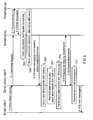
- Figure 4 shows a messaging diagram illustrating sending e-mails according to another embodiment of the invention. Until the step 304 of retrieving the attachments in the e-mail proxy and the message 3-5 for fetching the attachments from the e-mail server the operation in Figure 4 is equal to Figure 3 .
- the e-mail proxy sends a request for missing attachments or differences 4-6 to the e-mail proxy client.
- the e-mail proxy client selects a base attachment (based on name, type, date, size, etc.) that is presumably found in the e-mail proxy or e-mail server and calculates a bytewise difference between the base attachment and the original attachment. (This process may be executed several times in order to gain the minimum difference.)
- the e-mail proxy client sends the hash of the base attachment and the difference between the base attachment and the original attachment 4-8 to the e-mail proxy.
- the recipient may for example try to build the original attachment by combining the difference with a predefined set of files (for example files stored in cache) and see if any of the combinations results in sensible file.
- the e-mail proxy may also compress the difference before sending the message to the e-mail proxy client. If a suitable base attachment is not found, the e-mail proxy client may send the original attachment.
- the e-mail proxy retrieves the base attachment on the basis of the hash sent by the e-mail proxy client. (The attachment may be fetched 4-10 from the e-mail server.) Then, the base attachment is patched with the difference in order to create the original attachment in step 411. After this the original e-mail message is reconstructed on the basis of the patched attachment, in step 412, and the email proxy sends the reconstructed e-mail message 4-13 to the recipient.
- Figure 5 shows a messaging diagram illustrating downloading e-mails according to another embodiment of the invention. Until the step 203 of calculating, storing and comparing hash values the operation in Figure 5 is equal to Figure 2 .
- the e-mail proxy tries to find a suitable base attachment for calculating a difference between the base attachment and the original attachment in step 504.
- the base attachments should be such that it is available for the e-mail proxy client. If a suitable base attachment is found, the e-mail proxy calculates the difference between the base attachment and the original attachment.
- the e-mail proxy sends the e-mail message(s) accompanied with attachments/differences and related hashes 5-5 to the email proxy client. If a difference is used, a hash value relating to the base attachment is sent to the e-mail proxy client.
- step 506 the e-mail proxy client stores new hashes (and optionally new attachments) received from the e-mail proxy. Then the e-mail proxy client retrieves the substituted attachments or base attachments on the basis of the hashes in step 507.
- the e-mail proxy client reconstructs the original e-mail message(s) on the basis of the retrieved attachments and patched base attachments in step 511. After the reconstruction the email proxy client sends the reconstructed e-mail message(s) 5-12 to the e-mail client.
- any hash algorithm that produces substantially unique hash values may be used in connection with the invention. Nevertheless, also other substantially unique identifiers may be used.
- the algorithm may work as follows: the transmitting end calculates the cyclical checksum for a file to be transferred so that first a checksum is calculated for a window of width w (w is smaller than the file size). Then the window is moved forward by a delta d and the checksum is again calculated from for a window of width w. This is continued until the end of the file and thereby a set of checksums is obtained.
- This set of checksums is then sent to the receiving end instead of the original file and the receiving end compares the checksums it received with cyclical checksums calculated for various files available in the receiving end. If a large number of checksums are identical for two files it may be concluded that the files are similar (or similar enough for the purposes of the embodiment of the invention).
- any e-mail protocol such as POP, IMAP, SMTP and MAPI (Messaging Application Programming Interface) may be employed in connection with between an e-mail client and an e-mail proxy client, and between an e-mail proxy and an e-mail server.
- the protocols that are used may be different in the terminal and in the server network.
- the functionality of a system according to the invention may be configurable for example based on attachment type, size, user preferences, mobile terminal processing power, network conditions, etc.
- text contained in messages can be handled in the same way as the handling of attachments discussed above.
- the implementations employing differentiation are beneficial for example in cases where e-mail messages are replied to, forwarded or bounced.
- Figure 6 shows a simplified block diagram of a system comprising a user device 600 and a network entity 610 according to an embodiment of the invention.
- the user device may be for example a mobile terminal or some other corresponding device and the network entity may be for example a server.
- the user device 600 comprises a processing unit 601 and a memory 601 coupled to the processing unit 601.
- the memory comprises an e-mail client software 604 and an e-mail proxy client software 605 executable in the processing unit 601.
- the network entity 610 comprises a processing unit 611 and a memory 611 coupled to the processing unit 611.
- the memory comprises an e-mail proxy software 615 executable in the processing unit 611.
- the user device 600 and the network entity 610 are connected to each other at least partially over mobile network.
- the network entity is further connected to an e-mail server 620 over a fixed line network.
- the processing unit 601 controls, in accordance with the e-mail proxy client software 605, the user device to process a message, which is generated by means of the e-mail client software 604 and which is intended to be transferred to the e-mail server 620 over the mobile network, and/or a message, which has been transferred from the network entity 610 over the mobile network.
- the processing unit 611 controls, in accordance with the e-mail proxy software 615, the network entity to process a message, which is received from the e-mail server 620 and which is intended to be transferred to the user device 600 over the mobile network, and/or a message, which has been transferred from the user device 600 over the mobile network and which is destined to the e-mail server 620.
- the email proxy client having functionality according to the invention may be bundled with an e-mail program for example by using an (separately installed) extension API (Application Programming Interface) or through integration.
- the email proxy client may be bundled also with other network related software, such as VPN clients, diallers, personal firewalls, etc.
- the e-mail proxy having functionality according to the invention can be bundled with any other performance enhancing proxy, for example with an optimising HTTP proxy.
- the e-mail proxy client can be bundled with any other performance enhancing proxy client. It is also possible to implement the e-mail proxy in connection with an e-mail server.
- the e-mail proxy (or some other network entity according to the invention) may be configured to remove a hash (or some other substantially unique identifier) from the maintained previous identifiers, if the respective attachment (or some other part of a message) is not anymore available to the e-mail proxy for example because it has disappeared from the e-mail server.
- Messages in the e-mail server are usually deleted through the e-mail proxy.
- the e-mail proxy may be set to delete a hash when respective message is deleted from the e-mail server. Nevertheless, the user may delete attachments or messages from the e-mail server also through some other interface. In order to cope with such a situation, the e-mail proxy may be set to synchronise the hashes it maintains with the data in the e-mail server for example during idle times.
- the information the e-mail proxy and/or e-mail proxy client maintain in relation to the parts of previous messages may be a reference to the respective data stored into some other location.
- the e-mail proxy and/or e-mail proxy client may store copies of the attachments or other parts of messages themselves.
- the e-mail proxy may be set to employ attachments stored in a plurality of e-mail boxes in the e-mail server instead of just the attachments that are stored in the e-mail box of the respective user.
- the e-mail proxy may be configured to store user credentials for the users earlier or to pick them up and store them when e-mails of a particular user are retrieved. Credentials may be stored per user or per attachment.
- Figure 7 shows a simplified block diagram of a system comprising a user device and a network entity according to an embodiment of the invention.
- the user device is a mobile terminal 710 and the network entity is an MMSC element 714.
- the mobile terminal 710 communicates with the MMSC element 714 at least partially over an air interface via a base station subsystem (not shown).
- Figure 7 shows also two other mobile terminals 712 and 713 that communicate with the MMSC element 714.
- the MMSC element is connected to a database 715.
- the database may be integral part of the MMSC element, such as the storage in which the MMSC temporarily stores MMS messages that are transferred between transmitting and receiving mobile terminals. (As is well known to persons skilled in the art the operation of the MMSC is based on a store-and-forward principle.)
- the database 715 may be a separate element.
- the mobile terminal 710 first sends an MMS message including an attachment, such as a photograph, to the mobile terminal 712.
- the mobile terminal 710 sends to the MMSC an MMS message 7-1 comprising the attachment and an id, which is a substantially unique identifier of the attachment.
- MMSC element stores the attachment 7-2 together with the id into the database 715 and forwards the MMS message 7-3 including the attachment to the recipient mobile terminal 712.
- the mobile terminal 710 sends another MMS message to the mobile terminal 713.
- This MMS message includes the same attachment as the MMS message 7-1 sent to the mobile terminal 712.
- the mobile terminal 710 is controlled to notice that attachment has already been sent to the MMSC element. Therefore the mobile terminal 710 sends to the MMSC_element an MMS message 7-5, wherein the attachment has been replaced by the respective id.
- MMSC element then retrieves the attachment 7-6 from the database 715 on the basis of the id and forwards the MMS message 7-7 including the attachment to the recipient mobile terminal 713.
- This example suits well for example to situations in which a user sends the same MMS message to multiple recipients.
- the attachments needs to be sent to the MMSC element only once even though multiple messages comprising the attachment are transferred though the MMSC element.
Landscapes
- Engineering & Computer Science (AREA)
- Computer Networks & Wireless Communication (AREA)
- Signal Processing (AREA)
- Information Transfer Between Computers (AREA)
Claims (14)
- Verfahren zur Verarbeitung von Nachrichten, die zwischen einer Sendereinheit und einer Empfängereinheit mindestens teilweise über ein Kommunikationsnetzwerk übertragen werden sollen, in dem die Sendereinheit eine mehrteilige Nachricht erhält, die Text und Anhänge enthält, die an einen Empfänger adressiert sind, und die eine im Wesentlichen eindeutige Kennung (302) mindestens für einen zu übertragenden Anhang festlegt,
gekennzeichnet durch,
Vergleich der im Wesentlichen einzigartigen Kennung mit einer zuvor im Speicher abgelegten Kennung in der Sendereinheit,
Folgerung, dass der Anhang nicht zuvor an die Empfängereinheit übertragen wurde, wenn die im Wesentlichen einzigartige Kennung bei den gespeicherten Kennungen fehlt,
Auswahl (407) eines Basisanhangs mit der jeweiligen Kennung, die als verfügbar für die Empfängereinheit bekannt sind,
Berechnung (407) eines Unterschieds zwischen dem Anhang und dem Basisanhang,
Ersatz besagten Anhangs durch besagte basisanhang-bezogene Kennung und den Unterschied,
Weiterleitung (4-8) der Nachricht zur Übertragung an die Empfängereinheit, Reaktion auf den Empfang der Nachricht in der Empfängereinheit, Abruf (409) des Basisanhangs aus einem Speicher in Reaktion auf die basisanhang-bezogene Kennung,
Erstellung (411) des Anhangs durch Verbindung des besagten Unterschieds mit dem Basisanhang,
Wiederherstellung (412) der ursprünglichen mehrteiligen Nachricht durch Ersatz der Kennung und des Unterschieds durch den Anhang zur erhaltenen Nachricht, Absendung der wiederhergestellten ursprünglichen mehrteiligen Nachricht an den Empfänger. - Verfahren gemäß Anspruch 1, weiter gekennzeichnet durch
Erhaltung früherer Kennungen, die für Anhänge früherer mehrteiliger Nachrichten erhalten wurden, die an besagte Empfänger übertragen wurden und mit dieser verknüpft sind, und Informationen über die Anhänge der früheren mehrteiligen Nachrichten. - Verfahren gemäß Anspruch 1, dadurch gekennzeichnet ist, dass die im Wesentlichen einzigartige Kennung für den besagten Anhang der Nachricht ein Hash-Wert oder eine zyklische Prüfsumme ist.
- Verfahren gemäß Anspruch 1, dadurch gekennzeichnet, dass die im Wesentlichen einzigartige Kennung für den besagten Anhang der Nachricht einen Unterschied zwischen dem besagten Anhang der Nachricht und bestimmten Hilfsdaten umfasst.
- Verfahren gemäß Anspruch 4, dadurch gekennzeichnet, dass die im Wesentlichen einzigartige Kennung für den besagten Anhang der Nachricht weiterhin eine Kennung für bestimmte Hilfsdaten umfasst.
- Verfahren gemäß Anspruch 4, weiter gekennzeichnet durch
die Auswahl von Daten, die mindestens teilweise dem Anhang ähnlich sind, zur Verwendung als Basisanhang. - Verfahren gemäß Anspruch 4,weiter gekennzeichnet durch
die Auswahl von Daten, die wahrscheinlich für die Empfängereinheit verfügbar sind, zur Verwendung als Basisanhang. - Verfahren gemäß Anspruch 6, dadurch gekennzeichnet, dass die Auswahl von Daten auf Daten abzielt, die in einem Zwischenspeicher abgelegt sind.
- Verfahren gemäß Anspruch 7, dadurch gekennzeichnet ist, dass die Auswahl von Daten auf Daten abzielt, die in einem Zwischenspeicher abgelegt sind.
- Verfahren gemäß Anspruch 2, dadurch gekennzeichnet, dass die Informationen über die Anhänge der früheren Nachrichten Verweise auf besagte Anhänge umfassen, die in einem Speicher abgelegt sind.
- Verfahren gemäß Anspruch 2, dadurch gekennzeichnet, dass die Informationen über die Anhänge der früheren Nachrichten die Anhänge umfassen.
- Verfahren gemäß Anspruch 1, dadurch gekennzeichnet, dass die Nachricht eine der folgenden ist: eine E-Mail, eine MMS-(Multimedia Messaging Service)-Nachricht, ein Handy-Java-Spiel und herunterladbare Inhalte.
- Verfahren gemäß Anspruch 1, dadurch gekennzeichnet, dass der Schritt zum Abruf des Basisanhangs der Nachricht einen Unterschritt der Abfrage des Anhangs aus der Sendereinheit umfasst, wenn die Anhang bezogene Kennung bei den besagten früheren Kennungen fehlt.
- Verfahren gemäß Anspruch 2, dadurch gekennzeichnet, dass die Informationen über die Anhänge der früheren Nachrichten besagte Anhänge oder Verweise auf besagte Anhänge umfassen, die in einem Speicher abgelegt sind.
Applications Claiming Priority (2)
| Application Number | Priority Date | Filing Date | Title |
|---|---|---|---|
| FI20041499A FI123195B (fi) | 2004-11-22 | 2004-11-22 | Tietoliikenneverkkojen yli lähetettävien sanomien käsittely |
| PCT/FI2005/050421 WO2006053950A1 (en) | 2004-11-22 | 2005-11-18 | Processing of messages to be transmitted over communication networks |
Publications (3)
| Publication Number | Publication Date |
|---|---|
| EP1839416A1 EP1839416A1 (de) | 2007-10-03 |
| EP1839416A4 EP1839416A4 (de) | 2013-03-06 |
| EP1839416B1 true EP1839416B1 (de) | 2015-01-21 |
Family
ID=33515253
Family Applications (1)
| Application Number | Title | Priority Date | Filing Date |
|---|---|---|---|
| EP05812718.4A Expired - Lifetime EP1839416B1 (de) | 2004-11-22 | 2005-11-18 | Verarbeitung von über kommunikationsnetze zu übertragenden nachrichten |
Country Status (5)
| Country | Link |
|---|---|
| US (1) | US8150927B2 (de) |
| EP (1) | EP1839416B1 (de) |
| ES (1) | ES2535825T3 (de) |
| FI (1) | FI123195B (de) |
| WO (1) | WO2006053950A1 (de) |
Families Citing this family (45)
| Publication number | Priority date | Publication date | Assignee | Title |
|---|---|---|---|---|
| US9106626B2 (en) * | 2000-03-30 | 2015-08-11 | Nokia Solutions And Networks Oy | Method, apparatus and computer program product for copying content between servers |
| JP5312730B2 (ja) * | 2005-08-30 | 2013-10-09 | コルタド アーゲー | 移動端末でファイルを操作するための方法およびシステムならびに対応するコンピュータプログラムおよび対応するコンピュータ読取り可能な記憶媒体 |
| US7715826B2 (en) * | 2005-12-08 | 2010-05-11 | Research In Motion Limited | Method and apparatus for electronic mailing of data utilizing a data reference |
| KR100763237B1 (ko) * | 2006-05-11 | 2007-10-04 | 삼성전자주식회사 | 디지털 컨텐츠를 송수신하는 장치 및 방법 |
| US7882185B2 (en) * | 2006-09-26 | 2011-02-01 | International Business Machines Corporation | Method and apparatus for managing e-mail attachments |
| US8499044B2 (en) * | 2006-12-07 | 2013-07-30 | Microsoft Corporation | Formatted message processing utilizing a message map |
| KR101351751B1 (ko) * | 2007-01-16 | 2014-01-15 | 엘지전자 주식회사 | 이동통신단말기의 첨부파일 리스트 디스플레이 방법,이메일 프로토콜을 이용한 첨부파일의 다운로드 및 업로드방법, 및 이를 수행하기 위한 이동통신단말기 |
| US20090019119A1 (en) * | 2007-07-13 | 2009-01-15 | Scheffler Lee J | System and method for detecting one or more missing attachments or external references in collaboration programs |
| US9270682B2 (en) * | 2007-07-27 | 2016-02-23 | Blackberry Limited | Administration of policies for wireless devices in a wireless communication system |
| EP2031911B1 (de) * | 2007-07-27 | 2017-03-01 | BlackBerry Limited | Verfahren und System zur gemeinsamen Ressourcennutzung |
| US8086677B2 (en) * | 2007-07-27 | 2011-12-27 | Research In Motion Limited | Information exchange in wireless servers |
| US20090031250A1 (en) * | 2007-07-27 | 2009-01-29 | Jesse Boudreau | Administration of wireless devices in a wireless communication system |
| ATE469499T1 (de) | 2007-07-27 | 2010-06-15 | Research In Motion Ltd | Vorrichtung und verfahren zum betrieb eines drahtlosen servers |
| EP2034776B1 (de) * | 2007-07-27 | 2013-02-13 | Research In Motion Limited | Drahtlose Kommunikationssysteminstallation |
| DE602008004805D1 (de) * | 2007-07-27 | 2011-03-17 | Research In Motion Ltd | Verwaltung von drahtlosen Systemen |
| EP2031912B1 (de) | 2007-07-27 | 2013-01-09 | Research In Motion Limited | Drahtlose Kommunikationssysteme |
| US8965992B2 (en) * | 2007-07-27 | 2015-02-24 | Blackberry Limited | Apparatus and methods for coordination of wireless systems |
| US8516095B2 (en) * | 2008-05-23 | 2013-08-20 | Research In Motion Limited | Remote administration of mobile wireless devices |
| US8661082B2 (en) * | 2008-06-20 | 2014-02-25 | Microsoft Corporation | Extracting previous messages from a later message |
| US9894020B2 (en) | 2008-07-09 | 2018-02-13 | Blackberry Limited | Delivery of email messages with repetitive attachments |
| US8032611B2 (en) * | 2008-12-19 | 2011-10-04 | Research In Motion Limited | Method and communication device for processing data for transmission from the communication device to a second communication device |
| EP2858311B1 (de) * | 2008-12-19 | 2016-10-26 | BlackBerry Limited | Verfahren und Kommunikationsvorrichtung zur Verarbeitung von Daten zur Übertragung von der Kommunikationsvorrichtung auf eine zweite Kommunikationsvorrichtung |
| US8065361B2 (en) | 2009-02-27 | 2011-11-22 | Research In Motion Limited | Apparatus and methods using a data hub server with servers to source and access informational content |
| US9407686B2 (en) * | 2009-02-27 | 2016-08-02 | Blackberry Limited | Device to-device transfer |
| EP2234348A1 (de) | 2009-03-27 | 2010-09-29 | Research In Motion Limited | Verfahren, Vorrichtung und System zur Reduzierung des Herunterladens von redundanten Anhängen |
| US8527608B2 (en) | 2009-03-27 | 2013-09-03 | Blackberry Limited | Method, apparatus and system for reducing download of redundant attachments |
| US9703791B2 (en) * | 2010-03-23 | 2017-07-11 | Nokia Technologies Oy | Method and apparatus for managing files in an online account |
| US9674318B2 (en) | 2010-12-09 | 2017-06-06 | Solarflare Communications, Inc. | TCP processing for devices |
| US9258390B2 (en) * | 2011-07-29 | 2016-02-09 | Solarflare Communications, Inc. | Reducing network latency |
| US8996644B2 (en) | 2010-12-09 | 2015-03-31 | Solarflare Communications, Inc. | Encapsulated accelerator |
| US10873613B2 (en) | 2010-12-09 | 2020-12-22 | Xilinx, Inc. | TCP processing for devices |
| US9600429B2 (en) | 2010-12-09 | 2017-03-21 | Solarflare Communications, Inc. | Encapsulated accelerator |
| US10505747B2 (en) | 2012-10-16 | 2019-12-10 | Solarflare Communications, Inc. | Feed processing |
| US9705829B2 (en) | 2012-12-07 | 2017-07-11 | Linkedin Corporation | Communication systems and methods |
| KR102058635B1 (ko) * | 2012-12-24 | 2019-12-24 | 삼성전자주식회사 | 파일 이름 제어 방법 및 그 전자 장치 |
| CN105491078B (zh) * | 2014-09-15 | 2019-01-22 | 阿里巴巴集团控股有限公司 | Soa系统中的数据处理方法及装置、soa系统 |
| US20170048302A1 (en) * | 2015-08-10 | 2017-02-16 | TransferSoft, Inc. | Static statistical delta differencing engine |
| US20170048303A1 (en) * | 2015-08-10 | 2017-02-16 | TransferSoft, Inc. | On the fly statistical delta differencing engine |
| US9762521B2 (en) * | 2016-01-15 | 2017-09-12 | International Business Machines Corporation | Semantic analysis and delivery of alternative content |
| US11165720B2 (en) | 2017-12-19 | 2021-11-02 | Xilinx, Inc. | Network interface device |
| US10686731B2 (en) | 2017-12-19 | 2020-06-16 | Xilinx, Inc. | Network interface device |
| US10686872B2 (en) | 2017-12-19 | 2020-06-16 | Xilinx, Inc. | Network interface device |
| US10838763B2 (en) | 2018-07-17 | 2020-11-17 | Xilinx, Inc. | Network interface device and host processing device |
| US10659555B2 (en) | 2018-07-17 | 2020-05-19 | Xilinx, Inc. | Network interface device and host processing device |
| US10721193B1 (en) * | 2019-04-15 | 2020-07-21 | Microsoft Technology Licensing, Llc | Reducing avoidable transmission of an attachment to a message by comparing the fingerprint of the attachment to be sent to that of an attachment that was previously sent or received by the user and indicating to the user when a match occurs that the attachment is redundant |
Family Cites Families (14)
| Publication number | Priority date | Publication date | Assignee | Title |
|---|---|---|---|---|
| US5999967A (en) * | 1997-08-17 | 1999-12-07 | Sundsted; Todd | Electronic mail filtering by electronic stamp |
| US6460050B1 (en) * | 1999-12-22 | 2002-10-01 | Mark Raymond Pace | Distributed content identification system |
| US7054905B1 (en) * | 2000-03-30 | 2006-05-30 | Sun Microsystems, Inc. | Replacing an email attachment with an address specifying where the attachment is stored |
| US20020059384A1 (en) * | 2000-07-13 | 2002-05-16 | Koninklijke Philips Electronics N.V. | Substituting URL for attachment in forwarding electronic content |
| US6772196B1 (en) | 2000-07-27 | 2004-08-03 | Propel Software Corp. | Electronic mail filtering system and methods |
| GB2366706B (en) | 2000-08-31 | 2004-11-03 | Content Technologies Ltd | Monitoring electronic mail messages digests |
| US7191252B2 (en) * | 2000-11-13 | 2007-03-13 | Digital Doors, Inc. | Data security system and method adjunct to e-mail, browser or telecom program |
| US20090144382A1 (en) * | 2001-01-09 | 2009-06-04 | Benninghoff Iii Charles F | Method for certifying and unifying delivery of electronic packages |
| US7496604B2 (en) * | 2001-12-03 | 2009-02-24 | Aol Llc | Reducing duplication of files on a network |
| US7376702B2 (en) * | 2002-05-02 | 2008-05-20 | Danger, Inc. | System and method for processing message attachments |
| FI113516B (fi) | 2002-06-12 | 2004-04-30 | Kuopion Puhelin Oyj | Menetelmä ja järjestelmä multimediaviestipalvelun toteuttamiseksi |
| FR2847752B1 (fr) * | 2002-11-27 | 2006-01-13 | At & T Corp | Methode et systeme pour gerer l'echange de fichiers joints a des courriers electroniques |
| WO2004081734A2 (en) * | 2003-03-07 | 2004-09-23 | Propel Software Corporation | Method for filtering e-mail messages |
| US9503280B2 (en) * | 2003-03-17 | 2016-11-22 | Accellion Pte Ltd. | Methods and systems for email integrated file delivery |
-
2004
- 2004-11-22 FI FI20041499A patent/FI123195B/fi active IP Right Grant
-
2005
- 2005-11-18 ES ES05812718.4T patent/ES2535825T3/es not_active Expired - Lifetime
- 2005-11-18 US US11/719,515 patent/US8150927B2/en active Active
- 2005-11-18 EP EP05812718.4A patent/EP1839416B1/de not_active Expired - Lifetime
- 2005-11-18 WO PCT/FI2005/050421 patent/WO2006053950A1/en not_active Ceased
Also Published As
| Publication number | Publication date |
|---|---|
| EP1839416A1 (de) | 2007-10-03 |
| FI20041499L (fi) | 2006-05-23 |
| FI20041499A0 (fi) | 2004-11-22 |
| US20080189373A1 (en) | 2008-08-07 |
| ES2535825T3 (es) | 2015-05-18 |
| FI123195B (fi) | 2012-12-14 |
| WO2006053950A1 (en) | 2006-05-26 |
| US8150927B2 (en) | 2012-04-03 |
| EP1839416A4 (de) | 2013-03-06 |
Similar Documents
| Publication | Publication Date | Title |
|---|---|---|
| US8150927B2 (en) | Processing of messages to be transmitted over communication networks | |
| CN101395838B (zh) | 数据同步方法、系统和装置 | |
| EP2144406B1 (de) | Lieferung von e-mail Nachrichten mit wiederholenden Anhänge | |
| US7979499B2 (en) | Composing, browsing, replying, forwarding e-mail | |
| JP4959732B2 (ja) | 無線データ処理機器に電子メッセージを配信する装置及び方法 | |
| US20030055907A1 (en) | Clientless electronic mail MIME attachment re-delivery system via the web to reduce network bandwidth usage | |
| US20010042099A1 (en) | Apparatus and methods for optimizing traffic volume in wireless email communications | |
| US20070180035A1 (en) | E-mail attachment selectable download | |
| US20130013703A1 (en) | Method and apparatus for efficiently managing "messages sent" file and resending of messages from mobile wireless communication device | |
| US20080294729A1 (en) | Email object for open mobile alliance data synchronization usage | |
| CA2461075C (en) | System and method for managing data items | |
| US20090300121A1 (en) | Method, system, and apparatus for truncating markup language email messages | |
| WO2011103748A1 (zh) | 管理电子邮件的方法和移动通信终端 | |
| CN101167065A (zh) | 检索电子邮件的系统及方法 | |
| GB2349044A (en) | Transfer of data to a PDA | |
| JP2007213338A (ja) | メールサーバおよび電子メール通信システム | |
| CN101273591B (zh) | 协调无线通信设备与电子邮箱的电子邮件的系统及方法 | |
| KR100539785B1 (ko) | 이동 통신 단말기의 전자 메일 수신 방법 | |
| EP1929724B1 (de) | Email-server mit proxy-caching von nachrichtenkennungen und diesbezügliche verfahren | |
| CA2621649C (en) | Email server with proxy caching of unique identifiers | |
| CN101288280B (zh) | 用于显示账户或设备的特定特性的系统及方法 | |
| EP2353267B1 (de) | Verfahren, vorrichtung und computerprogrammprodukt zum kopieren von inhalt zwischen servern | |
| CN105744492A (zh) | 移动通信终端管理电子邮件的方法和终端 | |
| HK1063118B (en) | System and method for managing data items | |
| HK1119879B (en) | Email server with proxy caching of message identifiers and related methods |
Legal Events
| Date | Code | Title | Description |
|---|---|---|---|
| PUAI | Public reference made under article 153(3) epc to a published international application that has entered the european phase |
Free format text: ORIGINAL CODE: 0009012 |
|
| 17P | Request for examination filed |
Effective date: 20070813 |
|
| AK | Designated contracting states |
Kind code of ref document: A1 Designated state(s): AT BE BG CH CY CZ DE DK EE ES FI FR GB GR HU IE IS IT LI LT LU LV MC NL PL PT RO SE SI SK TR |
|
| DAX | Request for extension of the european patent (deleted) | ||
| R17P | Request for examination filed (corrected) |
Effective date: 20070813 |
|
| A4 | Supplementary search report drawn up and despatched |
Effective date: 20130206 |
|
| RIC1 | Information provided on ipc code assigned before grant |
Ipc: H04L 12/58 20060101AFI20130131BHEP |
|
| 17Q | First examination report despatched |
Effective date: 20131011 |
|
| GRAP | Despatch of communication of intention to grant a patent |
Free format text: ORIGINAL CODE: EPIDOSNIGR1 |
|
| INTG | Intention to grant announced |
Effective date: 20140321 |
|
| GRAS | Grant fee paid |
Free format text: ORIGINAL CODE: EPIDOSNIGR3 |
|
| RAP1 | Party data changed (applicant data changed or rights of an application transferred) |
Owner name: MAVENIR SYSTEMS IP HOLDINGS, LLC |
|
| GRAA | (expected) grant |
Free format text: ORIGINAL CODE: 0009210 |
|
| AK | Designated contracting states |
Kind code of ref document: B1 Designated state(s): AT BE BG CH CY CZ DE DK EE ES FI FR GB GR HU IE IS IT LI LT LU LV MC NL PL PT RO SE SI SK TR |
|
| REG | Reference to a national code |
Ref country code: GB Ref legal event code: FG4D |
|
| REG | Reference to a national code |
Ref country code: DE Ref legal event code: R081 Ref document number: 602005045738 Country of ref document: DE Owner name: MITEL MOBILITY INC., WILMINGTON, US Free format text: FORMER OWNER: FIRST HOP LTD., HELSINKI, FI Ref country code: DE Ref legal event code: R081 Ref document number: 602005045738 Country of ref document: DE Owner name: MAVENIR SYSTEMS, INC., WILMINGTON, US Free format text: FORMER OWNER: FIRST HOP LTD., HELSINKI, FI |
|
| REG | Reference to a national code |
Ref country code: CH Ref legal event code: EP |
|
| REG | Reference to a national code |
Ref country code: IE Ref legal event code: FG4D |
|
| REG | Reference to a national code |
Ref country code: AT Ref legal event code: REF Ref document number: 707787 Country of ref document: AT Kind code of ref document: T Effective date: 20150215 |
|
| REG | Reference to a national code |
Ref country code: DE Ref legal event code: R096 Ref document number: 602005045738 Country of ref document: DE Effective date: 20150305 |
|
| REG | Reference to a national code |
Ref country code: ES Ref legal event code: FG2A Ref document number: 2535825 Country of ref document: ES Kind code of ref document: T3 Effective date: 20150518 |
|
| REG | Reference to a national code |
Ref country code: AT Ref legal event code: MK05 Ref document number: 707787 Country of ref document: AT Kind code of ref document: T Effective date: 20150121 |
|
| REG | Reference to a national code |
Ref country code: LT Ref legal event code: MG4D |
|
| PG25 | Lapsed in a contracting state [announced via postgrant information from national office to epo] |
Ref country code: FI Free format text: LAPSE BECAUSE OF FAILURE TO SUBMIT A TRANSLATION OF THE DESCRIPTION OR TO PAY THE FEE WITHIN THE PRESCRIBED TIME-LIMIT Effective date: 20150121 Ref country code: BG Free format text: LAPSE BECAUSE OF FAILURE TO SUBMIT A TRANSLATION OF THE DESCRIPTION OR TO PAY THE FEE WITHIN THE PRESCRIBED TIME-LIMIT Effective date: 20150421 Ref country code: SE Free format text: LAPSE BECAUSE OF FAILURE TO SUBMIT A TRANSLATION OF THE DESCRIPTION OR TO PAY THE FEE WITHIN THE PRESCRIBED TIME-LIMIT Effective date: 20150121 Ref country code: LT Free format text: LAPSE BECAUSE OF FAILURE TO SUBMIT A TRANSLATION OF THE DESCRIPTION OR TO PAY THE FEE WITHIN THE PRESCRIBED TIME-LIMIT Effective date: 20150121 |
|
| PG25 | Lapsed in a contracting state [announced via postgrant information from national office to epo] |
Ref country code: LV Free format text: LAPSE BECAUSE OF FAILURE TO SUBMIT A TRANSLATION OF THE DESCRIPTION OR TO PAY THE FEE WITHIN THE PRESCRIBED TIME-LIMIT Effective date: 20150121 Ref country code: IS Free format text: LAPSE BECAUSE OF FAILURE TO SUBMIT A TRANSLATION OF THE DESCRIPTION OR TO PAY THE FEE WITHIN THE PRESCRIBED TIME-LIMIT Effective date: 20150521 Ref country code: AT Free format text: LAPSE BECAUSE OF FAILURE TO SUBMIT A TRANSLATION OF THE DESCRIPTION OR TO PAY THE FEE WITHIN THE PRESCRIBED TIME-LIMIT Effective date: 20150121 Ref country code: PL Free format text: LAPSE BECAUSE OF FAILURE TO SUBMIT A TRANSLATION OF THE DESCRIPTION OR TO PAY THE FEE WITHIN THE PRESCRIBED TIME-LIMIT Effective date: 20150121 Ref country code: GR Free format text: LAPSE BECAUSE OF FAILURE TO SUBMIT A TRANSLATION OF THE DESCRIPTION OR TO PAY THE FEE WITHIN THE PRESCRIBED TIME-LIMIT Effective date: 20150422 |
|
| REG | Reference to a national code |
Ref country code: DE Ref legal event code: R097 Ref document number: 602005045738 Country of ref document: DE |
|
| PG25 | Lapsed in a contracting state [announced via postgrant information from national office to epo] |
Ref country code: CZ Free format text: LAPSE BECAUSE OF FAILURE TO SUBMIT A TRANSLATION OF THE DESCRIPTION OR TO PAY THE FEE WITHIN THE PRESCRIBED TIME-LIMIT Effective date: 20150121 Ref country code: DK Free format text: LAPSE BECAUSE OF FAILURE TO SUBMIT A TRANSLATION OF THE DESCRIPTION OR TO PAY THE FEE WITHIN THE PRESCRIBED TIME-LIMIT Effective date: 20150121 Ref country code: RO Free format text: LAPSE BECAUSE OF FAILURE TO SUBMIT A TRANSLATION OF THE DESCRIPTION OR TO PAY THE FEE WITHIN THE PRESCRIBED TIME-LIMIT Effective date: 20150121 Ref country code: SK Free format text: LAPSE BECAUSE OF FAILURE TO SUBMIT A TRANSLATION OF THE DESCRIPTION OR TO PAY THE FEE WITHIN THE PRESCRIBED TIME-LIMIT Effective date: 20150121 Ref country code: EE Free format text: LAPSE BECAUSE OF FAILURE TO SUBMIT A TRANSLATION OF THE DESCRIPTION OR TO PAY THE FEE WITHIN THE PRESCRIBED TIME-LIMIT Effective date: 20150121 |
|
| PLBE | No opposition filed within time limit |
Free format text: ORIGINAL CODE: 0009261 |
|
| STAA | Information on the status of an ep patent application or granted ep patent |
Free format text: STATUS: NO OPPOSITION FILED WITHIN TIME LIMIT |
|
| REG | Reference to a national code |
Ref country code: FR Ref legal event code: PLFP Year of fee payment: 11 |
|
| 26N | No opposition filed |
Effective date: 20151022 |
|
| REG | Reference to a national code |
Ref country code: DE Ref legal event code: R082 Ref document number: 602005045738 Country of ref document: DE Representative=s name: BECK & ROESSIG - EUROPEAN PATENT ATTORNEYS, DE Ref country code: DE Ref legal event code: R081 Ref document number: 602005045738 Country of ref document: DE Owner name: MITEL MOBILITY INC., WILMINGTON, US Free format text: FORMER OWNER: MAVENIR SYSTEMS IP HOLDINGS, LLC, RICHARDSON, TEX., US Ref country code: DE Ref legal event code: R081 Ref document number: 602005045738 Country of ref document: DE Owner name: MAVENIR SYSTEMS, INC., WILMINGTON, US Free format text: FORMER OWNER: MAVENIR SYSTEMS IP HOLDINGS, LLC, RICHARDSON, TEX., US |
|
| PG25 | Lapsed in a contracting state [announced via postgrant information from national office to epo] |
Ref country code: SI Free format text: LAPSE BECAUSE OF FAILURE TO SUBMIT A TRANSLATION OF THE DESCRIPTION OR TO PAY THE FEE WITHIN THE PRESCRIBED TIME-LIMIT Effective date: 20150121 |
|
| PG25 | Lapsed in a contracting state [announced via postgrant information from national office to epo] |
Ref country code: BE Free format text: LAPSE BECAUSE OF FAILURE TO SUBMIT A TRANSLATION OF THE DESCRIPTION OR TO PAY THE FEE WITHIN THE PRESCRIBED TIME-LIMIT Effective date: 20150121 |
|
| PG25 | Lapsed in a contracting state [announced via postgrant information from national office to epo] |
Ref country code: MC Free format text: LAPSE BECAUSE OF FAILURE TO SUBMIT A TRANSLATION OF THE DESCRIPTION OR TO PAY THE FEE WITHIN THE PRESCRIBED TIME-LIMIT Effective date: 20150121 Ref country code: LU Free format text: LAPSE BECAUSE OF FAILURE TO SUBMIT A TRANSLATION OF THE DESCRIPTION OR TO PAY THE FEE WITHIN THE PRESCRIBED TIME-LIMIT Effective date: 20151118 |
|
| REG | Reference to a national code |
Ref country code: CH Ref legal event code: PL |
|
| PG25 | Lapsed in a contracting state [announced via postgrant information from national office to epo] |
Ref country code: LI Free format text: LAPSE BECAUSE OF NON-PAYMENT OF DUE FEES Effective date: 20151130 Ref country code: CH Free format text: LAPSE BECAUSE OF NON-PAYMENT OF DUE FEES Effective date: 20151130 |
|
| REG | Reference to a national code |
Ref country code: IE Ref legal event code: MM4A |
|
| REG | Reference to a national code |
Ref country code: GB Ref legal event code: 732E Free format text: REGISTERED BETWEEN 20160901 AND 20160907 Ref country code: NL Ref legal event code: PD Owner name: MITEL MOBILITY INC.; US Free format text: DETAILS ASSIGNMENT: VERANDERING VAN EIGENAAR(S), SAMENVOEGEN; FORMER OWNER NAME: MAVENIR SYSTEMS IP HOLDINGS, LLC Effective date: 20160713 |
|
| REG | Reference to a national code |
Ref country code: FR Ref legal event code: PLFP Year of fee payment: 12 |
|
| PG25 | Lapsed in a contracting state [announced via postgrant information from national office to epo] |
Ref country code: IE Free format text: LAPSE BECAUSE OF NON-PAYMENT OF DUE FEES Effective date: 20151118 |
|
| REG | Reference to a national code |
Ref country code: ES Ref legal event code: PC2A Owner name: MITEL MOBILITY INC. Effective date: 20161220 |
|
| PG25 | Lapsed in a contracting state [announced via postgrant information from national office to epo] |
Ref country code: HU Free format text: LAPSE BECAUSE OF FAILURE TO SUBMIT A TRANSLATION OF THE DESCRIPTION OR TO PAY THE FEE WITHIN THE PRESCRIBED TIME-LIMIT; INVALID AB INITIO Effective date: 20051118 |
|
| PG25 | Lapsed in a contracting state [announced via postgrant information from national office to epo] |
Ref country code: CY Free format text: LAPSE BECAUSE OF FAILURE TO SUBMIT A TRANSLATION OF THE DESCRIPTION OR TO PAY THE FEE WITHIN THE PRESCRIBED TIME-LIMIT Effective date: 20150121 |
|
| REG | Reference to a national code |
Ref country code: FR Ref legal event code: TP Owner name: MITEL MOBILITY INC., US Effective date: 20170710 |
|
| PG25 | Lapsed in a contracting state [announced via postgrant information from national office to epo] |
Ref country code: TR Free format text: LAPSE BECAUSE OF FAILURE TO SUBMIT A TRANSLATION OF THE DESCRIPTION OR TO PAY THE FEE WITHIN THE PRESCRIBED TIME-LIMIT Effective date: 20150121 |
|
| REG | Reference to a national code |
Ref country code: FR Ref legal event code: PLFP Year of fee payment: 13 |
|
| REG | Reference to a national code |
Ref country code: DE Ref legal event code: R082 Ref document number: 602005045738 Country of ref document: DE Representative=s name: BECK & ROESSIG - EUROPEAN PATENT ATTORNEYS, DE Ref country code: DE Ref legal event code: R081 Ref document number: 602005045738 Country of ref document: DE Owner name: MAVENIR SYSTEMS, INC., WILMINGTON, US Free format text: FORMER OWNER: MITEL MOBILITY INC., WILMINGTON, DEL., US |
|
| REG | Reference to a national code |
Ref country code: NL Ref legal event code: HC Owner name: MAVENIR SYSTEMS INC.; US Free format text: DETAILS ASSIGNMENT: CHANGE OF OWNER(S), CHANGE OF OWNER(S) NAME; FORMER OWNER NAME: MITEL MOBILITY INC. Effective date: 20180305 |
|
| REG | Reference to a national code |
Ref country code: FR Ref legal event code: CA Effective date: 20180406 Ref country code: FR Ref legal event code: CD Owner name: MAVENIR SYSTEMS INC, US Effective date: 20180406 |
|
| REG | Reference to a national code |
Ref country code: ES Ref legal event code: PC2A Effective date: 20180607 Ref country code: ES Ref legal event code: PC2A Owner name: MAVENIR SYSTEMS INC. Effective date: 20180607 |
|
| PG25 | Lapsed in a contracting state [announced via postgrant information from national office to epo] |
Ref country code: PT Free format text: LAPSE BECAUSE OF FAILURE TO SUBMIT A TRANSLATION OF THE DESCRIPTION OR TO PAY THE FEE WITHIN THE PRESCRIBED TIME-LIMIT Effective date: 20150121 |
|
| REG | Reference to a national code |
Ref country code: DE Ref legal event code: R079 Ref document number: 602005045738 Country of ref document: DE Free format text: PREVIOUS MAIN CLASS: H04L0012580000 Ipc: H04L0051000000 |
|
| P01 | Opt-out of the competence of the unified patent court (upc) registered |
Effective date: 20230601 |
|
| PGFP | Annual fee paid to national office [announced via postgrant information from national office to epo] |
Ref country code: NL Payment date: 20241126 Year of fee payment: 20 |
|
| PGFP | Annual fee paid to national office [announced via postgrant information from national office to epo] |
Ref country code: DE Payment date: 20241127 Year of fee payment: 20 |
|
| PGFP | Annual fee paid to national office [announced via postgrant information from national office to epo] |
Ref country code: GB Payment date: 20241127 Year of fee payment: 20 |
|
| PGFP | Annual fee paid to national office [announced via postgrant information from national office to epo] |
Ref country code: FR Payment date: 20241128 Year of fee payment: 20 |
|
| PGFP | Annual fee paid to national office [announced via postgrant information from national office to epo] |
Ref country code: IT Payment date: 20241122 Year of fee payment: 20 Ref country code: ES Payment date: 20241202 Year of fee payment: 20 |
|
| REG | Reference to a national code |
Ref country code: DE Ref legal event code: R071 Ref document number: 602005045738 Country of ref document: DE |
|
| REG | Reference to a national code |
Ref country code: NL Ref legal event code: MK Effective date: 20251117 |
|
| REG | Reference to a national code |
Ref country code: ES Ref legal event code: FD2A Effective date: 20251204 |
|
| REG | Reference to a national code |
Ref country code: GB Ref legal event code: PE20 Expiry date: 20251117 |
|
| PG25 | Lapsed in a contracting state [announced via postgrant information from national office to epo] |
Ref country code: ES Free format text: LAPSE BECAUSE OF EXPIRATION OF PROTECTION Effective date: 20251119 |