EP1838392B1 - Selen-haltige medikamente gegen endotheliale gefässerkrankungen - Google Patents
Selen-haltige medikamente gegen endotheliale gefässerkrankungen Download PDFInfo
- Publication number
- EP1838392B1 EP1838392B1 EP06700374A EP06700374A EP1838392B1 EP 1838392 B1 EP1838392 B1 EP 1838392B1 EP 06700374 A EP06700374 A EP 06700374A EP 06700374 A EP06700374 A EP 06700374A EP 1838392 B1 EP1838392 B1 EP 1838392B1
- Authority
- EP
- European Patent Office
- Prior art keywords
- selenium
- containing compound
- endothelial vascular
- administered
- vascular disease
- Prior art date
- Legal status (The legal status is an assumption and is not a legal conclusion. Google has not performed a legal analysis and makes no representation as to the accuracy of the status listed.)
- Expired - Lifetime
Links
Images


Classifications
-
- A—HUMAN NECESSITIES
- A61—MEDICAL OR VETERINARY SCIENCE; HYGIENE
- A61K—PREPARATIONS FOR MEDICAL, DENTAL OR TOILETRY PURPOSES
- A61K31/00—Medicinal preparations containing organic active ingredients
- A61K31/095—Sulfur, selenium, or tellurium compounds, e.g. thiols
-
- A—HUMAN NECESSITIES
- A61—MEDICAL OR VETERINARY SCIENCE; HYGIENE
- A61P—SPECIFIC THERAPEUTIC ACTIVITY OF CHEMICAL COMPOUNDS OR MEDICINAL PREPARATIONS
- A61P9/00—Drugs for disorders of the cardiovascular system
Definitions
- the present invention relates to the use of a selenium-containing compound for the manufacture of a medicament for the prophylaxis or therapy of endothelial vascular diseases, where the flow-dependent dilatation is increased.
- Cellular anti-oxidative enzymes such as glutathione peroxidase 1 and superoxide dismutase play a central role in the control of reactive oxygen species. In vitro data and studies in animal models suggest that such enzymes may have a protective effect on arteriosclerosis. However, the relevance of these enzymes in human diseases is questionable and controversial.
- Selenium is an essential trace element that is an integral part of various proteins with catalytic functions such. As glutathione peroxidase, is. In animal studies, selenium deficiency has been associated with cardiomyopathy and sudden infant death syndrome as well as decreased T cell counts and impaired lymphocyte proliferation or response.
- the vascular endothelium has a key role in vascular homeostasis, which is determined by the release of autocrine and paracrine substances.
- the malfunction of endothelial cells is a systemic process and probably the starting point of arteriosclerosis.
- the present invention is based on the technical problem of providing new ways for the prophylaxis and / or therapy of endothelial vascular diseases.
- the agent according to the invention increases the flow-dependent dilatation and reduces the oxidative stress as a result of an endothelial vascular disease.
- the present invention encompasses the use of selenium-containing compounds for administration to a mammal, preferably a human, whereby flow-dependent dilation is increased and, optionally, oxidative stress is reduced as a result of endothelial vascular disease.
- the present invention relates to the use of selenium-containing compounds for increasing the flow-dependent dilatation for the treatment of endothelial vascular diseases, as are commonly known to the vascularist, preferably for the treatment of arteriosclerosis, myocardial infarction, and / or stroke.
- selenium-containing compounds for use in the present invention, all physiologically acceptable organic and inorganic selenium-containing compounds can be used as long as they provide physiologically compatible selenium in the patient, in particular for inclusion in selenium-containing enzymes.
- these compounds are selected from the group consisting of the organic selenium compounds and selenite given below.
- Preferred organic selenium compounds can be defined as follows: R 1 - (Se) n -R 2 , where n is an integer from 2 to 8, and either
- R 1 and R 2 are the same or different and represent straight-chain or branched alkyl radicals having 2 to 36 carbon atoms (preferably having 6 to 12 carbon atoms), where the alkyl radicals on the terminal carbon atom may be substituted by a COOH group, or
- R 1 is a hydrogen atom and R 2 is a straight-chain or branched alkyl radical having 2 to 36 carbon atoms (preferably having 6 to 12 carbon atoms), said alkyl radical may be substituted on the terminal carbon atom with a COOH group.
- transition element and / or alkali and / or Erdalkaliselenit and / or selenate and / or selenous acid are preferred.
- the selenium-containing compound is sodium selenite.
- the medicaments according to the invention may be in the form of liquid, semisolid or solid dosage forms, for example in the form of injection solutions, drops, juices, syrups, sprays, suspensions, tablets, capsules, plasters, suppositories, ointments, creams, lotions, gels, emulsions, aerosols or in multiparticulate Form, for example in the form of pellets or granules, are present and administered as such.
- the pharmaceutical compositions according to the invention usually comprise further physiologically tolerated pharmaceutical excipients which are preferably selected from the group consisting of carrier materials, fillers, solvents, diluents, surface-active substances, dyes, preservatives, disintegrants, lubricants, lubricants, Flavors and binders.
- physiologically acceptable excipients depend on whether the drug is administered orally, sublingually, subcutaneously, parenterally, intravenously, intraperitoneally, intradermally, intramuscularly, intranasally, buccally, rectally or locally, for example for infections on the skin. the mucous membranes and the eyes, should be applied. Preparations in the form of tablets, dragees, capsules, granules, pellets, drops, juices and syrups are preferred for oral administration, solutions, suspensions, readily reconstitutable dry preparations and sprays for parenteral, topical and inhalative administration.
- Selenium-containing compounds according to the invention in a depot in dissolved form or in A patch, optionally with the addition of skin penetration promoting agents, are suitable percutaneous administration preparations. Orally or percutaneously applicable preparation forms can also release the selenium-containing compounds used according to the invention in a delayed manner.
- the amount of the particular selenium-containing compound to be administered to the patient may vary and depends, for example, on the weight or age of the patient as well as the mode of administration, the indication and the severity of the disease. Usually, at least one selenium-containing compound in amounts corresponding to 100 to 2000 ⁇ g of selenium is administered per day and patient.
- At least one selenium-containing compound is administered in a dosage of 100 to 1000 ⁇ g, preferably 200 to 600 ⁇ g, more preferably 300 to 500 ⁇ g per day and patient.
- the selenium-containing compound is preferably administered for a period of 1 to 12 months.
- selenium-containing compound (s) can be used together with cardiologically relevant active substances, preferably nitro compounds, ⁇ -receptor blockers, calcium antagonists, acetylsalicylic acid, statins or cholesterol-lowering agents for the preparation of a combination medicament for the treatment of endothelial vascular diseases and other cardiovascular diseases.
- cardiologically relevant active substances preferably nitro compounds, ⁇ -receptor blockers, calcium antagonists, acetylsalicylic acid, statins or cholesterol-lowering agents
- the effects of the drug combinations may be synergistic or accumulative.
- the selenium-containing active ingredient and the other active ingredient may be administered simultaneously or separately.
- Table 2 variable Time 0 After 4 weeks selenium difference p-value epidemiological Characteristics : Age in years 59.7 ⁇ 15.1 - - - male Gender (%) 42.9 - - - Laboratory parameters : Selenium in the serum 83.5 ⁇ 24.9 101.8 ⁇ 27.3 18.3 12:18 (Ng / ml) Factor 1.2 GPx (U / g Hb) 31.2 ⁇ 8.6 34.8 ⁇ 9.8 3.6 12:06 Factor 1.1 Liver function tests: GOT (U / l) 22.0 ⁇ 4.0 24.7 ⁇ 8.0 1.7 0.3 GPT (U / l) 24.0 ⁇ 11.1 24.6 ⁇ 15.9 0.7 0.9 Renal function: Creatinine (mg / dl) 1.0 ⁇ 0.2 1.0
- Table 3 variable Time 0 After 4 weeks selenium difference p-value epidemiological Characteristics : Age in years 68.0 ⁇ 7.8 - - - male Gender (%) 60 - - - Laboratory parameters : Selenium in the serum 84.3 ⁇ 28.7 132.5 ⁇ 19.2 48.2 12:01 (Ng / ml) Factor 1.6 GPx (U / g Hb) 27.9 ⁇ 8.1 34.9 ⁇ 8.5 7.0 0007 Factor 1.3 Liver function tests: GOT (U / l) 22.7 ⁇ 7.1 18.9 ⁇ 7.1 -3.8 0.2 GPT (U / l) 23.0 ⁇ 10.7 21.5 ⁇ 7.2 -1.5 0.5 Kidney function : Creatinine (mg / dl) 1.0
- Table 4 tabulates the change in serum selenium content and erythrocyte GPx activity with daily selenium substitution of subjects at 200 or 500 ⁇ g.
- Table 4 variable Total Group Time 0 Total group after 4 weeks p-value epidemiological characteristics: Age in years 64.2 ⁇ 11.5 - male Gender (%) 55.6 - Laboratory parameters: Selenium in the serum (Ng / ml) 84.0 ⁇ 26.3 119.8 ⁇ 27.0 12:04 GPx (U / g Hb) 29.4 ⁇ 8.3 34.9 ⁇ 8.8 0001 Difference selenium Difference selenium p-value * 500 ⁇ g 200 ug ( ⁇ Zeit Vietnamese ( ⁇ Zeit Vietnamese 0/4 weeks) 0/4 weeks) Selenium in the serum 18.3 48.2 12:07 (Ng / ml) GPx (U / g Hb) 7 3.6 12:38 Liver function tests: GOT (U / l) -3.8 1.7 12:19 GPT (U
- GPx-1 activity can be used as an indicator of the cardioprotective effect of selenium therapy.
- FMD flow-mediated vasodilation
- the changes in the vessel diameter of the subjects were determined as follows.
- the diameter determinations of the brachial artery are determined on the right arm using an Acuson (Acuson 128 XP / 4) sonography device (Acuson, Mountain View, California, USA) with a 7.5 MHz linear transducer carried out: Sternitzky R, Blümel T, Jung F, Park J.-W., student S. Endothelial dysfunction after heart transplantation. VASA 2000; 26: 48 ,
- B-scan sonography of the right brachial artery The adjustment is made in longitudinal section and switching on the PW mode (angle correction 60 degrees).
- the device function vascular calculation is used to calculate the vessel diameter
- Step 4 After 15 minutes rest, the medication is applied with a repetition of steps 1 to 3.
- the diameter of the brachial artery is 4.14 ⁇ 0.44 mm in the patients with PAD.
- the diameter increased to 4.65 ⁇ 0.45 mm on average by 0.51 mm or 12.25% (t-test, unconnected samples, two-sided question: p ⁇ 0.0001). This shows a significant effect of selenium on the diameter of the brachial artery in this clinical study under rest conditions.
- the diameter of the brachial artery is significantly 0.418 mm larger after selenium administration than without selenium (p ⁇ 0.0001). It is similar 30 seconds after the jams have been resolved: here the mean value is also 0.42 greater than previously without selenium (p ⁇ 0.0001).
- vasodilation under rest conditions postischemic reactive hyperemia is not adversely affected.
- the selenium-mediated vasodilation is as pronounced in the phase of reactive hyperemia as it is under rest conditions.
- the vessel diameter or its change is a measure of the flow-mediated vasodilation. This in turn describes the extent of peripheral arterial disease.
- selenium significantly increases the diameter of the vessels at rest and after stasis, so that the flow-mediated vasodilation is improved and thus suitable for the treatment of patients with endothelial dysfunction.
Landscapes
- Health & Medical Sciences (AREA)
- Public Health (AREA)
- Animal Behavior & Ethology (AREA)
- Veterinary Medicine (AREA)
- General Health & Medical Sciences (AREA)
- Chemical & Material Sciences (AREA)
- Pharmacology & Pharmacy (AREA)
- Life Sciences & Earth Sciences (AREA)
- Medicinal Chemistry (AREA)
- Chemical Kinetics & Catalysis (AREA)
- Bioinformatics & Cheminformatics (AREA)
- Organic Chemistry (AREA)
- General Chemical & Material Sciences (AREA)
- Nuclear Medicine, Radiotherapy & Molecular Imaging (AREA)
- Heart & Thoracic Surgery (AREA)
- Engineering & Computer Science (AREA)
- Cardiology (AREA)
- Epidemiology (AREA)
- Pharmaceuticals Containing Other Organic And Inorganic Compounds (AREA)
- Acyclic And Carbocyclic Compounds In Medicinal Compositions (AREA)
- Medicines That Contain Protein Lipid Enzymes And Other Medicines (AREA)
Description
- Die vorliegende Erfindung betrifft die Verwendung einer Selen-haltigen Verbindung zur Herstellung eines Medikaments zur Prophylaxe oder Therapie von endothelialen Gefäßerkrankungen, wo die flussabhängige Dilatation gesteigert wird.
- Zelluläre anti-oxidative Enzyme wie Glutathionperoxidase 1 und Superoxiddismutase spielen eine zentrale Rolle in der Kontrolle reaktiver Sauerstoffspezies. In vitro erhobene Daten sowie Studien in Tiermodellen deuten an, dass derartige Enzyme eine schützende Wirkung bei Arteriosklerose haben könnten. Die Relevanz dieser Enzyme bei Erkrankungen beim Menschen ist jedoch fraglich und umstritten.
- Selen ist ein essentielles Spurenelement, das integraler Bestandteil verschiedener Proteine mit katalytischen Funktionen, wie z. B. Glutathionperoxidase, ist. In Tierstudien wird Selenmangel mit Kardiomyopathie und plötzlichem Kindstod sowie verringerten T-Zellzahlen und eingeschränkter Lymphozytenproliferation bzw. -reaktion in Verbindung gebracht.
- Das vaskuläre Endothel hat eine Schlüsselrolle in der vaskulären Homeostase, die durch die Freisetzung autokriner und parakriner Substanzen bestimmt wird. Die Fehlfunktion von Endothelzellen ist ein systemischer Prozess und wahrscheinlich der Ausgangspunkt einer Arteriosklerose.
- Erkrankungen des endothelialen Gefäßsystems zählen zu den wichtigsten Leiden in der Bevölkerung der Industriestaaten. Es gibt zahlreiche Ansätze für die Therapie dieser Erkrankungen, wobei jedoch immer noch der Bedarf nach alternativen bzw. verbesserten Behandlungsmethoden besteht. Selen-haltige Verbindungen waren schon als Antioxidationsmittel zur Behandlung von endothelialen Gefässerkrankungen bekannt: Siehe
WO 200 5023274 ,DE 4335441 . - Der vorliegenden Erfindung liegt das technische Problem zugrunde, neue Wege zur Prophylaxe und/oder Therapie von endothelialen Gefäßerkrankungen zur Verfügung zu stellen.
- Dieses Problem wird durch die Verwendung einer Selen-haltigen Verbindung zur Prophylaxe bzw. Therapie von endothelialen Gefäßerkrankungen gelöst.
- Es wurde in klinischen Studien überraschender Weise herausgefunden, dass die Verabreichung Selen-haltiger Verbindungen als Medikament zur Prophylaxe und/oder Therapie von endothelialen Gefäßerkrankungen in einem Säugetier, vorzugsweise einem Menschen, geeignet ist.
- Es konnte insbesondere gezeigt werden, dass das erfindungsgemäße Mittel die flussabhängige Dilatation steigert sowie die oxidative Belastung als Folge einer endothelialen Gefäßerkrankung verringert.
- Somit umfasst die vorliegende Erfindung die Verwendung Selen-haltiger Verbindungen zur Verabreichung an ein Säugetier, vorzugsweise einen Menschen, wobei die flussabhängige Dilatation gesteigert und optional die oxidative Belastung als Folge einer endothelialen Gefäßerkrankung verringert wird.
- Des Weiteren betrifft die vorliegende Erfindung die Verwendung Selen-haltiger Verbindungen zur Steigerung der flussabhängigen Dilatation zur Behandlung endothelialer Gefäßerkrankungen, wie sie dem Facharzt für Gefäßerkrankungen üblicherweise bekannt sind, vorzugsweise zur Behandlung von Arteriosklerose, Herzinfarkt, und/oder Schlaganfall.
- Als Selen-haltige Verbindungen zur Verwendung in der vorliegenden Erfindung können alle physiologisch verträglichen organischen und anorganischen Selen-haltigen Verbindungen zum Einsatz kommen, solange diese im Patienten physiologisch verträglich Selen insbesondere zur Aufnahme in Selen-haltige Enzyme bereitstellen. Vorzugsweise sind diese Verbindungen aus der Gruppe ausgewählt, die aus den unten angegebenen organischen Selenverbindungen und Selenit besteht.
- Bevorzugte organische Selenverbindungen können wie folgt definiert werden:
R1-(Se)n-R2,
wobei n eine ganze Zahl von 2 bis 8 bedeutet, und entweder - R1 und R2 gleich oder verschieden sind und geradkettige oder verzweigte Alkylreste mit 2 bis 36 Kohlenstoffatomen (bevorzugt mit 6 bis 12 Kohlenstoffatomen) bedeuten, wobei die Alkylreste am endständigen Kohlenstoffatom mit einer COOH-Gruppe substituiert sein können, oder
- R1 ein Wasserstoffatom und R2 ein geradkettiger oder verzweigter Alkylrest mit 2 bis 36 Kohlenstoffatomen (bevorzugt mit 6 bis 12 Kohlenstoffatomen) bedeutet, wobei dieser Alkylrest am endständigen Kohlenstoffatom mit einer COOH-Gruppe substituiert sein kann.
- Weiterhin sind Übergangselement und/oder Alkali- und/oder Erdalkaliselenit und/oder -selenat und/oder Selenige Säure bevorzugt.
- In einer besonders bevorzugten Ausführungsform der vorliegenden Erfindung ist die Selen-haltige Verbindung Natriumselenit.
- Die erfindungsgemäßen Arzneimittel können als flüssige, halbfeste oder feste Arzneiformen, beispielsweise in Form von Injektionslösungen, Tropfen, Säften, Sirupen, Sprays, Suspensionen, Tabletten, Kapseln, Pflaster, Zäpfchen, Salben, Cremes, Lotionen, Gelen, Emulsionen, Aerosolen oder in multipartikulärer Form, beispielsweise in Form von Pellets oder Granulaten, vorliegen und als solche auch verabreicht werden.
- Neben wenigstens einer erfindungsgemäßen Selen-haltigen Verbindung enthalten die erfindungsgemäßen Arzneimittel üblicherweise weitere physiologisch verträgliche pharmazeutische Hilfsstoffe, die aus der Gruppe bevorzugt ausgewählt sind, die aus Trägermaterialien, Füllstoffen, Lösungsmitteln, Verdünnungsmitteln, oberflächenaktiven Stoffen, Farbstoffen, Konservierungsstoffen, Sprengmitteln, Gleitmitteln, Schmiermitteln, Aromen und Bindemitteln besteht.
- Die Auswahl der physiologisch verträglichen Hilfsstoffe sowie die einzusetzenden Mengen derselben hängt davon ab, ob das Arzneimittel oral, sublingual, subkutan, parenteral, intravenös, intraperitoneal, intradermal, intramuskulär, intranasal, buccal, rectal oder örtlich, zum Beispiel auf Infektionen an der Haut, der Schleimhäute und an den Augen, appliziert werden soll. Für die orale Applikation eignen sich bevorzugt Zubereitungen in Form von Tabletten, Dragees, Kapseln, Granulaten, Pellets, Tropfen, Säften und Sirupen, für die parenterale, topische und inhalative Applikation Lösungen, Suspensionen, leicht rekonstituierbare Trockenzubereitungen sowie Sprays. Erfindungsgemäße Selen-haltige Verbindungen in einem Depot in gelöster Form oder in einem Pflaster, gegebenenfalls unter Zusatz von die Hautpenetration fördernden Mitteln, sind geeignete perkutane Applikationszubereitungen. Oral oder perkutan anwendbare Zubereitungsformen können die erfindungsgemäß verwendeten Selen-haltigen Verbindungen auch verzögert freisetzen.
- Die Herstellung der erfindungsgemäßen Arzneimittel erfolgt mit Hilfe von üblichen, dem Fachmann bekannten Mitteln, Vorrichtungen, Methoden und Verfahren, wie sie beispielsweise in A. R. Gennaro (Hrsg.), Remington's Pharmaceutical Sciences, 17. Edition, Mack Publishing Company, Easton, Pa. (1985), insbesondere in Teil 8, Kapitel 76 bis 93, beschrieben sind. Die entsprechende Literaturbeschreibung wird hiermit als Referenz eingeführt.
- Die an den Patienten zu verabreichende Menge der jeweiligen Selen-haltigen Verbindung kann variieren und ist beispielsweise vom Gewicht oder Alter des Patienten sowie von der Applikationsart, der Indikation und dem Schweregrad der Erkrankung abhängig. Üblicherweise werden mindestens eine Selen-haltige Verbindung in Mengen, die 100 bis 2000 µg Selen entspricht, pro Tag und Patient appliziert.
- Vorzugsweise wird erfindungsgemäß mindestens eine Selen-haltige Verbindung in einer Dosierung von 100 bis 1000 µg, vorzugsweise 200 bis 600 µg, besonders bevorzugt 300 bis 500 µg pro Tag und Patient verabreicht.
- Die Selen-haltige Verbindung wird vorzugsweise über einen Zeitraum von 1 bis 12 Monaten verabreicht.
- Bevorzugt sind erfindungsgemäße Verwendungen zur Herstellung von Medikamenten zur oralen, vorzugsweise sublingualen oder parenteralen, vorzugsweise intravenösen Verabreichung der Selen-haltigen Verbindung.
- Besonders bevorzugt sind erfindungsgemäße Verwendungen zur Herstellung von Medikamenten zur intravenösen Verabreichung.
- Ganz besonders bevorzugt sind erfindungsgemäße Verwendungen zur Herstellung von Medikamenten zur oralen, vorzugsweise sublingualer Verabreichung, bei denen die Selen-haltige Verbindung bereits in der Mundschleimhaut resorbiert wird.
- In einer weiteren Ausführungsform können Selen-haltige Verbindung(en) zusammen mit kardiologisch relevanten Wirkstoffen, vorzugsweise Nitroverbindungen, ß-Rezeptorblockern, Calciumantagonisten, Acetylsalicylsäure, Statinen oder Cholesterinsenkern, zur Herstellung eines Kombinationsmedikaments zur Behandlung von endothelialen Gefäßerkrankungen sowie weiteren kardiovaskulären Erkrankungen verwendet werden. Die Wirkungen der Arzneimittelkombinationen können synergistisch oder akkumulativ sein. Der Selen-haltige Wirkstoff und der weitere Wirkstoff können gleichzeitig oder getrennt verabreicht werden.
-
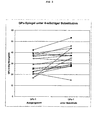
- Fig. 1
- zeigt grafisch die Veränderung des GPx-Spiegels im Blut einzelner Probanden über den Verlauf einer vierwöchigen Substitutionstherapie mit 200 oder 500 µg Se/Tag.
- Fig. 2
- zeigt grafisch die Veränderung des Selen-Spiegels im Blut einzelner Probanden über den Verlauf einer vierwöchigen Substitutionstherapie mit 200 oder 500 µg Se/Tag und Patient.
- Fig. 3
- zeigt grafisch die Veränderung des GPx-Spiegels im Blut einzelner Probanden über den Verlauf einer vierwöchigen Substitutionstherapie mit 500 µg Se/Tag und Patient.
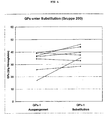
- Fig. 4
- zeigt grafisch die Veränderung des GPx-Spiegels im Blut einer Probanden über den Verlauf einer vierwöchigen Substitutionstherapie mit 200 µg Se/Tag und Patient.
- 17 Patienten im Alter von 50 bis 65 Jahren mit dokumentierter Koronarer Herzerkrankung (periphere arterielle Verschlusskrankheit mit Stadium II nach Fontaine) und einer dokumentierten flussabhängigen Dilatation von weniger als 5 % wurden randomisiert in zwei Gruppen: die erste Gruppe (n=7) erhielt über 4 Wochen täglich 200 µg Selen als Natriumselenit-haltige Trinklösung , die zweite Gruppe erhielt über 4 Wochen täglich 500 µg Selen als Natriumselenit-haltige Trinklösung. Vor Therapie und nach 4-wöchiger Therapie wurden funktionelle Tests durchgeführt und Blutproben genommen zur Bestimmung des Einflusses der unterschiedlichen Selengaben auf die Serum-Selenwerte, erythrozytäre Glutathionperoxidase (GPx-1) und andere für dieses Krankheitsbild relevante Laborparameter.
-
- 500 µg Selen als Natriumselenit n=10
- 200 µg Selen als Natriumselenit n=7
-
- 4 Wochen
-
Tabelle 1 Variable Selen 200 Selen 500 p-Wert Epidemiologische Charakteristika: Alter in Jahren 59.7±15.1 68.0±7.8 0.52 Männliches Geschlecht (%) 42.9 60 0.22 Klassische Risikofaktoren: X2 Diabetes 2 (28.6%) 4 (40%) 0.39 Hypertonie 5 (71.4%) 7 (70%) 0.68 Hyperlipidämie 2 (28.6%) 7 (70%) 0.09 Adipositas 4 (57.1%) 5 (50%) 0.77 Nikotinabusus 6 (85.7%) 8 (80%) 0.88 Klinische Parameter: MI in der Anamnese 4 (57.1 %) 8 (80%) 0.31 Mehrgefäßerkrankung 6 (85.7%) 7 (70%) 0.81 CCS II 4 (57.1%) 6 (60%) 0.91 Minimum CCS I; Maximum CCS II Kardiale Medikation: Betablocker 4 (57.1%) 7 (70%) 0.59 ACE-Hemmer 1 (14.3%) 7 (70%) 0.025 Statin 3 (42.9%) 6 (60%) 0.49 Mittelwert ± SD oder Anzahl (Prozent)
Mittelwertvergleich über ANOVA-Test, Vergleich kategorialer Variablen im Chi-Quadrat-Test nach Pearson - In der folgenden Tabelle 2 wird der Einfluss von 200 µg Selen pro Tag und Proband (n=7) auf den Selengehalt im Serum und die erythrozytäre GPx-1 Aktivität im Vergleich zu anderen physiologischen Parametern gezeigt.
Tabelle 2 Variable Zeitpunkt 0 Nach 4 Wochen Selen Differenz p-Wert Epidemiologische Charakteristika: Alter in Jahren 59.7±15.1 - - - Männliches Geschlecht (%) 42.9 - - - Laborparameter: Selen im Serum 83.5±24.9 101.8±27.3 18.3 0.18 (ng/ml) Faktor 1.2 GPx (U/g Hb) 31.2±8.6 34.8±9.8 3.6 0.06 Faktor 1.1 Leberwerte: GOT (U/l) 22.0±4.0 24.7±8.0 1.7 0.3 GPT (U/l) 24.0±11.1 24.6±15.9 0.7 0.9 Nierenfunktion: Kreatinin (mg/dl) 1.0±0.2 1.0±0.2 0 0.12 Inflammation: CRP (mg/l) 7.8±7.6 6.2±6.9 -1.6 0.05 Kreatinkinase (CK) (U/l) 122.5±79.0 148.1±10.3 25.6 0.09 Alpha-Amylase (U/l) 53.6±21.2 53.6±21.1 0 0.5 Blutfette: HDL-Cholesterin (mg/dl) 61.4±13.11 61.0±11.9 -0.4 0.8 Lp (a) mg/dl 27.3±10.8 39.9±33.5 12.6 0.8 Blutgerinnung: Quick (%) 97.8±33.9 99.7±32.7 1.9 0.9 Hb (g/dl) 11.5±2.4 13.1±2.2 1.6 0.3 Mittelwert ± SD oder Prozent
Mittelwertvergleich über ANOVA-Test, bzw. Wilcoxon-Test für verbundene Stichproben zum Konzentrationsvergleich Ausgangswert vs. 4-Wochen-Wert nach Substitution mit Natriumselenit. - In Tabelle 3 wird der Einfluss von 500 µg Selen pro Tag und Proband (n=10) auf den Selengehalt im Serum und die erythrozytäre GPx-1 Aktivität im Vergleich zu anderen physiologischen Parametern gezeigt.
Tabelle 3 Variable Zeitpunkt 0 Nach 4 Wochen Selen Differenz p-Wert Epidemiologische Charakteristika: Alter in Jahren 68.0±7.8 - - - Männliches Geschlecht (%) 60 - - - Laborparameter: Selen im Serum 84.3±28.7 132.5±19.2 48.2 0.01 (ng/ml) Faktor 1.6 GPx (U/g Hb) 27.9±8.1 34.9±8.5 7.0 0.007 Faktor 1.3 Leberwerte: GOT (U/l) 22.7±7.1 18.9±7.1 -3.8 0.2 GPT (U/l) 23.0±10.7 21.5±7.2 -1.5 0.5 Nierenfunktion: Kreatinin (mg/dl) 1.0±0.2 1.0±0.2 0 0.3 Inflammation: CRP (mg/l) 2.7±2.6 3.0±2.4 0.3 0.4 Kreatinkinase (CK) (U/l) 107.2±55.6 88.6±39.8 -18.6 0.3 Alpha-Amylase (U/l) 64.0±36.6 70.7±17.8 6.7 0.5 Blutfette: HDL-Cholesterin (mg/dl) 60.2±18.4 56.9±18.7 -3.3 0.6 Lp (a) mg/dl 71.4±61.8 94.9±62.3 23.5 0.04 Blutgerinnung: Quick (%) 97.6±41.6 105.1±29.1 7.5 0.9 Hb (g/dl) 13.0±1.6 13.9±0.3 0.9 0.2 Mittelwert ± SD oder Prozent
Mittelwertvergleich über ANOVA-Test, bzw. Wilcoxon-Test für verbundene Stichproben zum Konzentrationsvergleich Ausgangswert vs. 4-Wochen-Wert nach Substitution mit Natriumselenit. - In Tabelle 4 wird tabellarisch die Veränderung des Selengehalts im Serum und erythroztäre GPx-Aktivität bei täglicher Selensubstitution der Probanden mit 200 oder 500 µg summarisch gezeigt.
Tabelle 4 Variable Gesamtgruppe Zeitpunkt 0 Gesamtgruppe nach 4 Wochen p-Wert Epidemiologische Charakteristika: Alter in Jahren 64.2±11.5 - Männliches Geschlecht (%) 55.6 - Laborparameter: Selen im Serum (ng/ml) 84.0±26.3 119.8±27.0 0.04 GPx (U/g Hb) 29.4±8.3 34.9±8.8 0.001 Differenz Selen Differenz Selen p-Wert* 500µg 200µg (ΔZeitpunkt (ΔZeitpunkt 0/4Wochen) 0/4Wochen) Selen im Serum 18.3 48.2 0.07 (ng/ml) GPx (U/g Hb) 7 3.6 0.38 Leberwerte: GOT (U/l) -3.8 1.7 0.19 GPT (U/l) -1.5 0.7 0.96 Nierenfunktion: Kreatinin (mg/dl) 0 0 0.81 Inflammation CRP (mg/l) 0.3 -1.6 0.23 Kreatinkinase (CK) (U/l) -18.6 25.6 0.25 Alpha-Amylase (U/l) 0 0 0.6 Blutfette: HDL-Cholesterin (mg/dl) -3.3 -0.4 0.4 Lp (a) mg/dl 23.5 12.6 0.2 Gerinnung: Quick (%) 7.5 1.9 0.5 Hb (g/dl) 0.9 1.6 0.96 P-Wert für Ausgangs-Selen-Serumkonzentrationen bzw. Ausgangs-GPx-Konzentrationen im Vergleich der Subgruppen: P= 0.9, für GPx-Konzentrationen: P= 0.4
*P - Wert zur Analyse des Unterschiedes der Differenzen in den Subgruppen 200 und 500 µg Selen als Natriumselenit. - Diese Ergebnisse sind auch graphisch in den
Figuren 1 bis 4 dargestellt. - Es wurden keine relevanten Veränderungen von Blutbild, Leberwerten oder hampflichtigen Substanzen beobachtet.
- In der Gruppe mit 200 µg ist ein signifikanter Abfall von CRP nach 4 Wochen Therapie zu beobachten, in der Gruppe mit 500 µg Selen als Natriumselenit nicht. Das bedeutet, dass die höhere Dosis einen signifikanten antiinflammatorischen Effekt hat, der bei diesen Erkrankungen sehr wichtig ist.
- Natriumselenit hat einen Dosis-abhängigen Effekt auf die Aktivitätssteigerung der GPx-1. Während in der Gruppe mit 200 µg Natriumselenit ein nicht signifikanter Anstieg von 3.6 U/g Hb zu beobachten ist (31.2 auf 34.8 U/gHb), besteht in der 500 µg Therapiegruppe ein signifikanter Anstieg der GPx-1 um 7 U/gHb (27.9 auf 34.9 U/gHb, P=0.007).
- Zusammenfassend besteht bei Patienten mit niedriger GPx-1 Aktivität ein relevanter und signifikanter Einfluss von Natriumselenit auf die Steigerung der GPx-1 Aktivität. Da niedrige GPx-1 Aktivität einen starken Prädiktor des kardiovaskulären Risikos darstellt und Natriumselenit die GPx-1 Aktivität steigert, kann die GPx-1 Aktivität als Indikator für die kardioprotektive Wirkung der Selentherapie herangezogen werden.
- Bei einer weiteren Untersuchung wurde die fluß-mediierte Vasodilatation (FMD) bei Patienten mit hohen und niedrigen GPx-Werten gemessen.
Geschlecht/Alter GPx(U/gHb) FMD Weiblich 176 16,8 1,74 Männlich / 65 20,2 1,33 Männlich / 70 80,77 6,62 Männlich / 74 76,66 5,81 - Die Messwerte belegen, dass die Gabe von Selen sowohl die GPx-Aktivität, wie auch die FMD erhöht, wobei diese beiden Parameter bekanntermaßen den Verlauf endothelialer Gefäßerkrankungen maßgeblich bestimmen.
- In dieser prospektiven Phase IV-Pilotstudie wurde bei Patienten mit peripherer arterieller Verschlusskrankheit im Stadium II nach Fontaine und nachgewiesenem Selenmangel die Wirkung von Selen (500 µg als Natriumselenit intravenös als Bolus) auf den Durchmesser der A. brachialis unter Ruhebedingungen sowie 5 und 30 Sekunden nach Lösen eines Staus (dreiminütiger Stau mittels Blutdruckmanschette am Oberarm) untersucht. Dazu wurde 30 Minuten nach einer Quantifizierung der flussvermittelten Vasodilatation (Kontrollphase) einmalig 500 µg Selen injiziert und die genannten Messgrößen erneut bestimmt.
- Die Änderung im Gefäßdurchmesser der Probanden wurde wie folgt bestimmt Die Durchmesserbestimmungen der A. brachialis werden jeweils am rechten Arm mit Hilfe eines Acuson (Acuson 128 XP/4) Sonographiegerätes (Acuson, Mountain View, Kalifornien, USA) mit 7,5 MHz-Linearschallkopf durchgeführt: Sternitzky R, Blümel T, Jung F, Park J.-W., Schüler S. Endotheliale Dysfunktion nach Herztransplantation. VASA 2000; 26: 48.
- Die Messungen erfolgen in standardisiertem Ablauf in der Methodik nach Mannion TC, Vita JA, Keaney JF, Benjamin EJ, Hunter L, Polak JF. Non-invasive assessment of brachial artery endothelial vasomotor function: the effect of cuff position on level of discomfort and vasomotor responses. Vascular medicine 1998; 3, 263-267.
- B-Bild-Sonographie der A. brachialis rechts. Die Einstellung erfolgt im Längsschnitt und Hinzuschalten des PW-Mode (Winkelkorrektur 60 Grad). Über die Gerätefunktion vaskuläre Berechnung erfolgt die Berechnung des Gefäßdurchmessers
- Nach dreiminütiger Blutsperre (20 mmHg über dem systolischen Blutdruck) öffnen der Staumanschette und Messung des Durchmesser zu den Zeitpunkten 5 Sekunden und 30 Sekunden nach Öffnen des Staus.
-


mit: - DR: Durchmesser der A.b. unter Ruhebedingungen
- D5 : Durchmesser der A.b. 5 s nach Stauende
- D30: Durchmesser der A.b. 30 s nach Stauende
- Unter Ruhebedingungen beträgt der Durchmesser der A. brachialis bei den Patienten mit pAVK 4,14±0,44 mm. Unmittelbar nach der Injektion von Selen steigt der Durchmesser auf 4,65±0,45 mm also um im Mittel 0,51 mm oder 12,25% an (t-Test, unverbundene Stichproben, zweiseitige Fragestellung: p<0,0001). Damit zeigt sich in dieser klinischen Untersuchung unter Ruhebedingungen ein erheblicher Effekt von Selen auf den Durchmesser der A. brachialis.
- Fünf Sekunden nach Lösen des Staus ist der Durchmesser der A. brachialis nach der Selengabe deutlich um 0,418 mm größer als ohne Selen (p<0,0001). Ähnlich ist es 30 Sekunden nach Lösen der Staus: hier ist der Mittelwert ebenfalls um 0,42 größer als vorher ohne Selen (p<0,0001).
- Trotz der Vasodilatation unter Ruhebedingungen wird also die postischämische reaktive Hyperämie nicht negativ beeinflusst. Die durch Selen vermittelte Vasodilatation ist in der Phase der reaktiven Hyperämie genauso ausgeprägt wie unter Ruhebedingungen.
- Die Durchmesser der A. brachialis waren vor beiden Prüfphasen identisch (p=0,945); eine Homogenität der Ausgangslage war vorhanden, ein carry-over-Effekt lag nicht vor.
- Die Gefäßdurchmesser bzw. deren Veränderung sind ein Maß für die flussvermittelte Vasodilatation. Diese wiederum beschreibt das Ausmaß der peripheren arteriellen Verschlusskrankheit. Es konnte in dieser Studie der Nachweis geführt werden, dass Selen signifikant den Durchmesser der Gefäße im Ruhezustand und nach Stauung erweitert, damit die flussvermittelte Vasodilatation verbessert und damit zur Therapie von Patienten mit endothelialer Dysfunktion geeignet ist.
Claims (15)
- Verwendung einer Selen-haltigen Verbindung zur Herstellung eines Medikaments zur Steigerung der flussabhängigen Dilatation bei einer endothelialen Gefäßerkrankung.
- Die Verwendung gemäß Anspruch 1, dadurch gekennzeichnet, dass das Medikament zur Verabreichung an ein Säugetier, vorzugsweise einen Menschen, formuliert ist.
- Die Verwendung gemäß einem der Ansprüche 1 oder 2, dadurch gekennzeichnet, dass zusätzlich die oxidative Belastung als Folge einer endothelialen Gefäßerkrankung verringert wird.
- Die Verwendung gemäß einem der Ansprüche 1 bis 3, dadurch gekennzeichnet, dass die endotheliale Gefäßerkrankung ausgewählt ist aus Arteriosklerose, Herzinfarkt, und Schlaganfall.
- Die Verwendung gemäß einem der Ansprüche 1 bis 4, dadurch gekennzeichnet, dass die Selen-haltige Verbindung ausgewählt ist aus organischen Selenverbindungen und Selenit.
- Die Verwendung nach Anspruch 5, dadurch gekennzeichnet, dass die Selen-haltige Verbindung Natriumselenit ist.
- Die Verwendung gemäß einem der Ansprüche 1 bis 6, dadurch gekennzeichnet, dass die Selen-haltige Verbindung in einer Dosierung von 100 bis 2000 µg, vorzugsweise 200 bis 600 µg, besonders bevorzugt 300 bis 500 µg Se/ Tag und Patient zu verabreichen ist.
- Die Verwendung gemäß einem der Ansprüche 1 bis 7, dadurch gekennzeichnet, dass das die Selen-haltige Verbindung oral, vorzugsweise sublingual, oder parenteral, vorzugsweise intravenös, zu verabreichen ist.
- Die Verwendung nach Anspruch 7, dadurch gekennzeichnet, dass die Selen-haltige Verbindung intravenös zu verabreichen ist .
- Die Verwendung nach Anspruch 7, dadurch gekennzeichnet, dass die Selen-haltige Verbindung oral, vorzugsweise sublingual, zu verabreichen ist , so dass es bereits durch die Mundschleimhaut resorbiert wird.
- Die Verwendung gemäß einem der Ansprüche 1 bis 10, dadurch gekennzeichnet, dass die Selen-haltige Verbindung zusammen mit kardiologischen Arzneimitteln, vorzugsweise Nitroverbindungen, beta-Rezeptorenblockern, Calciumantagonisten, Acetylsalicylsäure, Statinen oder Cholesterinsenkern zu verabreichen ist .
- Eine Selen-haltige Verbindung zur Verwendung in der Steigerung der flussabhängigen Dilatation bei einer endothelialen Gefäßerkrankung.
- Die Selen-haltige Verbindung zur Verwendung gemäß Anspruch 12, dadurch gekennzeichnet, dass die endotheliale Gefäßerkrankung ausgewählt ist aus Arteriosklerose, Herzinfarkt, und Schlaganfall.
- Die Selen-haltige Verbindung zur Verwendung gemäß Anspruch 12 oder 13, dadurch gekennzeichnet dass die Selen-haltige Verbindung ausgewählt ist aus organischen Selenverbindungen und Selenit, vorzugsweise Natriumselenit.
- Die Selen-haltige Verbindung zur Verwendung gemäß einem der Ansprüche 12 bis 14, dadurch gekennzeichnet, dass(i) die Selen-haltige Verbindung in einer Dosierung von 100 bis 2000 µg, vorzugsweise 200 bis 600 µg, besonders bevorzugt 300 bis 500 µg Se/ Tag und Patient zu verabreichen ist; und/oder(ii) die Selen-haltige Verbindung oral, vorzugsweise sublingual, oder parenteral, vorzugsweise intravenös, zu verabreichen ist.
Priority Applications (1)
| Application Number | Priority Date | Filing Date | Title |
|---|---|---|---|
| PL06700374T PL1838392T3 (pl) | 2004-12-31 | 2006-01-02 | Leki zawierające selen na śródbłonkowe choroby układu naczyniowego |
Applications Claiming Priority (2)
| Application Number | Priority Date | Filing Date | Title |
|---|---|---|---|
| DE102004063638A DE102004063638A1 (de) | 2004-12-31 | 2004-12-31 | Selen-haltige Medikamente zur Prophylaxe oder Therapie von endothelialen Gefäßerkrankungen |
| PCT/EP2006/000007 WO2006070022A2 (de) | 2004-12-31 | 2006-01-02 | Selen-haltige medikamente gegen endotheliale gefasserkrankungen |
Publications (2)
| Publication Number | Publication Date |
|---|---|
| EP1838392A2 EP1838392A2 (de) | 2007-10-03 |
| EP1838392B1 true EP1838392B1 (de) | 2011-03-30 |
Family
ID=36129753
Family Applications (1)
| Application Number | Title | Priority Date | Filing Date |
|---|---|---|---|
| EP06700374A Expired - Lifetime EP1838392B1 (de) | 2004-12-31 | 2006-01-02 | Selen-haltige medikamente gegen endotheliale gefässerkrankungen |
Country Status (8)
| Country | Link |
|---|---|
| EP (1) | EP1838392B1 (de) |
| AT (1) | ATE503527T1 (de) |
| DE (2) | DE102004063638A1 (de) |
| DK (1) | DK1838392T3 (de) |
| ES (1) | ES2360886T3 (de) |
| PL (1) | PL1838392T3 (de) |
| PT (1) | PT1838392E (de) |
| WO (1) | WO2006070022A2 (de) |
Family Cites Families (12)
| Publication number | Priority date | Publication date | Assignee | Title |
|---|---|---|---|---|
| CA1112164A (en) * | 1977-08-02 | 1981-11-10 | Joseph R. Levitt | Therapeutic selenium compositions and the use thereof |
| DE4335441A1 (de) * | 1993-10-18 | 1995-04-20 | Hans Dipl Chem Heide | Mittel zur Gesundheitsvorsorge im Herz- Kreislaufsystem beim Menschen |
| WO1995029684A1 (en) * | 1994-05-02 | 1995-11-09 | Abbott Laboratories | Inhibition of atherosclerosis by antioxidants |
| US5929063A (en) * | 1995-03-24 | 1999-07-27 | Children's Hospital Medical Center | Mercapto and seleno derivatives as inhibitors of nitric oxide synthase |
| MXPA02011528A (es) * | 2000-05-25 | 2003-04-25 | Pharmaton Sa | Metodo para mejorar la proteccion celular. |
| WO2002067853A2 (en) * | 2000-10-06 | 2002-09-06 | Probiochem, Llc | A combination and method of treatment of hiv and viral diseases, vascular disease and cancer utilizing a cox-2 inhibitor and cystine |
| US20020182585A1 (en) * | 2001-01-10 | 2002-12-05 | George Kindness | Combination and method using EDTA, cystine, zinc and selenium for anti-thrombin effect and for anti-platelet aggregation and measurement of efficacy |
| DE10321029A1 (de) * | 2003-05-10 | 2004-12-02 | Sigrid Heide | Arzneimittel mit Selenit |
| CA2530634A1 (en) * | 2003-06-12 | 2004-12-23 | Menachem Rubinstein | Methods of treating obesity and related disorders using tellurium and selenium compounds |
| WO2005023274A1 (en) * | 2003-09-05 | 2005-03-17 | Yissum Research Development Company Of The Hebrew University Of Jerusalem | Treatment and prevention of inflammatory disease and mitochondrial dysfunction with high dose selenium |
| ITRM20040395A1 (it) * | 2004-08-03 | 2004-11-03 | Sigma Tau Ind Farmaceuti | Composizione comprendente statine e acidi grassi omega 3. |
| DE102004040006A1 (de) * | 2004-08-18 | 2006-03-09 | Kurt Mosetter | Pharmazeutische Zusammensetzung, umfassend Galaktose, Selen, Vitamin E und/oder Phosphatidylcholin und pharmazeutische Verwendung von Galaktose |
-
2004
- 2004-12-31 DE DE102004063638A patent/DE102004063638A1/de not_active Ceased
-
2006
- 2006-01-02 EP EP06700374A patent/EP1838392B1/de not_active Expired - Lifetime
- 2006-01-02 PL PL06700374T patent/PL1838392T3/pl unknown
- 2006-01-02 ES ES06700374T patent/ES2360886T3/es not_active Expired - Lifetime
- 2006-01-02 DE DE502006009204T patent/DE502006009204D1/de not_active Expired - Lifetime
- 2006-01-02 PT PT06700374T patent/PT1838392E/pt unknown
- 2006-01-02 AT AT06700374T patent/ATE503527T1/de active
- 2006-01-02 DK DK06700374.9T patent/DK1838392T3/da active
- 2006-01-02 WO PCT/EP2006/000007 patent/WO2006070022A2/de not_active Ceased
Also Published As
| Publication number | Publication date |
|---|---|
| DE102004063638A1 (de) | 2006-07-13 |
| PT1838392E (pt) | 2011-04-29 |
| EP1838392A2 (de) | 2007-10-03 |
| PL1838392T3 (pl) | 2011-09-30 |
| DK1838392T3 (da) | 2011-06-27 |
| WO2006070022A2 (de) | 2006-07-06 |
| DE502006009204D1 (de) | 2011-05-12 |
| ES2360886T3 (es) | 2011-06-10 |
| WO2006070022A3 (de) | 2007-04-19 |
| ATE503527T1 (de) | 2011-04-15 |
Similar Documents
| Publication | Publication Date | Title |
|---|---|---|
| DE69621756T2 (de) | Betahydroxybuttersäure oder Acetoessigsäure oder deren Salze oder Ester zur Verwendung zur Verbesserung der Gehirnfunktion | |
| DE69930243T2 (de) | Behandlung iatrogenen und altersbedingten bluthochdruck mit vitamin b6-derivative, und pharmazeutische zusammensetzungen verwendbar dazu | |
| DE69113938T2 (de) | Zusammensetzungen von Maillard-Reaktion inhibitoren. | |
| DE60117046T2 (de) | Kombination von fenofibrat und von coenzym q10 für die behandlung der endothelial- missfunktion | |
| US20100292178A1 (en) | Method of treating non-insulin dependent diabetes mellitus and related complications | |
| AT506095A1 (de) | Verwendung von proteasen | |
| DE3115383A1 (de) | Antiallergisches mittel | |
| JP2010536806A (ja) | 糖尿病患者における血糖値をコントロールするための薬草製剤 | |
| Malalavidhane et al. | An aqueous extract of the green leafy vegetable Ipomoea aquatica is as effective as the oral hypoglycaemic drug tolbutamide in reducing the blood sugar levels of Wistar rats | |
| US20080319038A1 (en) | Preventative or therapeutic agent for acute renal failure | |
| US12257240B2 (en) | Combination of berberine and derivatives thereof, and vitamin B12 | |
| Kappelle et al. | Amelioration by the Ca2+ antagonist, nimodipine of an existing neuropathy in the streptozotocin-induced, diabetic rat | |
| DE69501421T2 (de) | Hematetrenome Derivat als antiarteriosklerotisches Mittel | |
| US20230285468A1 (en) | Effects of cell-free fat liquid extract on macrophage polarization modulation and disease treatment | |
| Olagbende-Dada et al. | Blood glucose lowering effect of aqueous extract of Graptophyllum pictum (Linn) Griff. on alloxan-induced diabetic rats and its acute toxicity in mice | |
| KR101011333B1 (ko) | 생약 추출물을 함유하는 신장질환 치료용 약학 조성물 및건강기능식품 | |
| KR20220063762A (ko) | 배암차즈기 추출물을 포함하는 스트레스 개선용 건강기능식품 | |
| EP1838392A2 (de) | Selen-haltige medikamente gegen endotheliale gefässerkrankungen | |
| DE1950403C3 (de) | Pharmazeutische Zusammensetzung auf der Basis von Formaldehyd-Casein | |
| EP3378481A1 (de) | Zusammensetzung zur prävention oder behandlung von bauchspeichelfettinfiltration und zur entlastung von bauchspeichelläsionen, diabetes oder anderen verwandten symptomen, die durch bauchspeichelfettinfiltration verursacht werden, und verfahren | |
| Esievo et al. | Effect of extract (interface) from stem bark of antidiabetic Anogeissus leiocarpus (African Birch Tree) on random blood glucose levels of adult female Wistar rats: Optimisation for therapeutic hypoglycaemic dose | |
| US20160015740A1 (en) | Chromium-containing compositions for improving endothelial function and cardiovascular health | |
| LU601121B1 (de) | Die Anwendung von β-roten Myrcen in Arzneimitteln zur Vorbeugung und Verbesserung von akuten Leberschäden | |
| CN114848639B (zh) | 玫瑰啶碱a在制备预防脑缺血药物或保健品中的应用 | |
| JP2022536223A (ja) | ニーム抽出物並びにウロリチンa及びbの相乗作用組み合わせの抗糖尿病活性 |
Legal Events
| Date | Code | Title | Description |
|---|---|---|---|
| PUAI | Public reference made under article 153(3) epc to a published international application that has entered the european phase |
Free format text: ORIGINAL CODE: 0009012 |
|
| 17P | Request for examination filed |
Effective date: 20070730 |
|
| AK | Designated contracting states |
Kind code of ref document: A2 Designated state(s): AT BE BG CH CY CZ DE DK EE ES FI FR GB GR HU IE IS IT LI LT LU LV MC NL PL PT RO SE SI SK TR |
|
| AX | Request for extension of the european patent |
Extension state: AL BA HR MK YU |
|
| DAX | Request for extension of the european patent (deleted) | ||
| 17Q | First examination report despatched |
Effective date: 20071106 |
|
| GRAP | Despatch of communication of intention to grant a patent |
Free format text: ORIGINAL CODE: EPIDOSNIGR1 |
|
| RIC1 | Information provided on ipc code assigned before grant |
Ipc: A61K 31/095 20060101ALI20100308BHEP Ipc: A61P 9/00 20060101AFI20100308BHEP Ipc: A61K 33/04 20060101ALI20100308BHEP Ipc: A61K 45/06 20060101ALI20100308BHEP |
|
| GRAS | Grant fee paid |
Free format text: ORIGINAL CODE: EPIDOSNIGR3 |
|
| GRAA | (expected) grant |
Free format text: ORIGINAL CODE: 0009210 |
|
| AK | Designated contracting states |
Kind code of ref document: B1 Designated state(s): AT BE BG CH CY CZ DE DK EE ES FI FR GB GR HU IE IS IT LI LT LU LV MC NL PL PT RO SE SI SK TR |
|
| REG | Reference to a national code |
Ref country code: GB Ref legal event code: FG4D Free format text: NOT ENGLISH |
|
| REG | Reference to a national code |
Ref country code: CH Ref legal event code: NV Representative=s name: BOVARD AG Ref country code: CH Ref legal event code: EP |
|
| REG | Reference to a national code |
Ref country code: IE Ref legal event code: FG4D |
|
| REG | Reference to a national code |
Ref country code: PT Ref legal event code: SC4A Free format text: AVAILABILITY OF NATIONAL TRANSLATION Effective date: 20110418 |
|
| REF | Corresponds to: |
Ref document number: 502006009204 Country of ref document: DE Date of ref document: 20110512 Kind code of ref document: P |
|
| REG | Reference to a national code |
Ref country code: DE Ref legal event code: R096 Ref document number: 502006009204 Country of ref document: DE Effective date: 20110512 |
|
| REG | Reference to a national code |
Ref country code: ES Ref legal event code: FG2A Ref document number: 2360886 Country of ref document: ES Kind code of ref document: T3 Effective date: 20110610 |
|
| REG | Reference to a national code |
Ref country code: DK Ref legal event code: T3 |
|
| REG | Reference to a national code |
Ref country code: NL Ref legal event code: T3 |
|
| REG | Reference to a national code |
Ref country code: SE Ref legal event code: TRGR |
|
| REG | Reference to a national code |
Ref country code: GR Ref legal event code: EP Ref document number: 20110401145 Country of ref document: GR Effective date: 20110614 |
|
| PG25 | Lapsed in a contracting state [announced via postgrant information from national office to epo] |
Ref country code: LT Free format text: LAPSE BECAUSE OF FAILURE TO SUBMIT A TRANSLATION OF THE DESCRIPTION OR TO PAY THE FEE WITHIN THE PRESCRIBED TIME-LIMIT Effective date: 20110330 Ref country code: LV Free format text: LAPSE BECAUSE OF FAILURE TO SUBMIT A TRANSLATION OF THE DESCRIPTION OR TO PAY THE FEE WITHIN THE PRESCRIBED TIME-LIMIT Effective date: 20110330 |
|
| LTIE | Lt: invalidation of european patent or patent extension |
Effective date: 20110330 |
|
| PG25 | Lapsed in a contracting state [announced via postgrant information from national office to epo] |
Ref country code: CY Free format text: LAPSE BECAUSE OF FAILURE TO SUBMIT A TRANSLATION OF THE DESCRIPTION OR TO PAY THE FEE WITHIN THE PRESCRIBED TIME-LIMIT Effective date: 20110330 Ref country code: SI Free format text: LAPSE BECAUSE OF FAILURE TO SUBMIT A TRANSLATION OF THE DESCRIPTION OR TO PAY THE FEE WITHIN THE PRESCRIBED TIME-LIMIT Effective date: 20110330 |
|
| REG | Reference to a national code |
Ref country code: SK Ref legal event code: T3 Ref document number: E 9573 Country of ref document: SK |
|
| REG | Reference to a national code |
Ref country code: PL Ref legal event code: T3 |
|
| PG25 | Lapsed in a contracting state [announced via postgrant information from national office to epo] |
Ref country code: EE Free format text: LAPSE BECAUSE OF FAILURE TO SUBMIT A TRANSLATION OF THE DESCRIPTION OR TO PAY THE FEE WITHIN THE PRESCRIBED TIME-LIMIT Effective date: 20110330 |
|
| REG | Reference to a national code |
Ref country code: HU Ref legal event code: AG4A Ref document number: E011601 Country of ref document: HU |
|
| PG25 | Lapsed in a contracting state [announced via postgrant information from national office to epo] |
Ref country code: IS Free format text: LAPSE BECAUSE OF FAILURE TO SUBMIT A TRANSLATION OF THE DESCRIPTION OR TO PAY THE FEE WITHIN THE PRESCRIBED TIME-LIMIT Effective date: 20110730 Ref country code: RO Free format text: LAPSE BECAUSE OF FAILURE TO SUBMIT A TRANSLATION OF THE DESCRIPTION OR TO PAY THE FEE WITHIN THE PRESCRIBED TIME-LIMIT Effective date: 20110330 |
|
| PLBE | No opposition filed within time limit |
Free format text: ORIGINAL CODE: 0009261 |
|
| STAA | Information on the status of an ep patent application or granted ep patent |
Free format text: STATUS: NO OPPOSITION FILED WITHIN TIME LIMIT |
|
| 26N | No opposition filed |
Effective date: 20120102 |
|
| REG | Reference to a national code |
Ref country code: DE Ref legal event code: R097 Ref document number: 502006009204 Country of ref document: DE Effective date: 20120102 |
|
| PGFP | Annual fee paid to national office [announced via postgrant information from national office to epo] |
Ref country code: IT Payment date: 20120120 Year of fee payment: 7 |
|
| PG25 | Lapsed in a contracting state [announced via postgrant information from national office to epo] |
Ref country code: MC Free format text: LAPSE BECAUSE OF NON-PAYMENT OF DUE FEES Effective date: 20120131 |
|
| PG25 | Lapsed in a contracting state [announced via postgrant information from national office to epo] |
Ref country code: BG Free format text: LAPSE BECAUSE OF FAILURE TO SUBMIT A TRANSLATION OF THE DESCRIPTION OR TO PAY THE FEE WITHIN THE PRESCRIBED TIME-LIMIT Effective date: 20110630 |
|
| PG25 | Lapsed in a contracting state [announced via postgrant information from national office to epo] |
Ref country code: IT Free format text: LAPSE BECAUSE OF NON-PAYMENT OF DUE FEES Effective date: 20130102 |
|
| REG | Reference to a national code |
Ref country code: FR Ref legal event code: PLFP Year of fee payment: 11 |
|
| REG | Reference to a national code |
Ref country code: FR Ref legal event code: PLFP Year of fee payment: 12 |
|
| REG | Reference to a national code |
Ref country code: FR Ref legal event code: PLFP Year of fee payment: 13 |
|
| PGFP | Annual fee paid to national office [announced via postgrant information from national office to epo] |
Ref country code: CZ Payment date: 20211229 Year of fee payment: 17 Ref country code: PT Payment date: 20211217 Year of fee payment: 17 Ref country code: SK Payment date: 20211229 Year of fee payment: 17 |
|
| PGFP | Annual fee paid to national office [announced via postgrant information from national office to epo] |
Ref country code: PL Payment date: 20211221 Year of fee payment: 17 Ref country code: LU Payment date: 20220122 Year of fee payment: 17 |
|
| PGFP | Annual fee paid to national office [announced via postgrant information from national office to epo] |
Ref country code: IE Payment date: 20220121 Year of fee payment: 17 Ref country code: HU Payment date: 20211221 Year of fee payment: 17 Ref country code: GB Payment date: 20220122 Year of fee payment: 17 Ref country code: FI Payment date: 20220124 Year of fee payment: 17 Ref country code: DK Payment date: 20220122 Year of fee payment: 17 Ref country code: DE Payment date: 20220127 Year of fee payment: 17 Ref country code: CH Payment date: 20220121 Year of fee payment: 17 Ref country code: AT Payment date: 20220125 Year of fee payment: 17 |
|
| PGFP | Annual fee paid to national office [announced via postgrant information from national office to epo] |
Ref country code: TR Payment date: 20220103 Year of fee payment: 17 Ref country code: SE Payment date: 20220122 Year of fee payment: 17 Ref country code: NL Payment date: 20220122 Year of fee payment: 17 Ref country code: GR Payment date: 20220127 Year of fee payment: 17 Ref country code: FR Payment date: 20220124 Year of fee payment: 17 Ref country code: ES Payment date: 20220201 Year of fee payment: 17 Ref country code: BE Payment date: 20220122 Year of fee payment: 17 |
|
| PG25 | Lapsed in a contracting state [announced via postgrant information from national office to epo] |
Ref country code: CZ Free format text: LAPSE BECAUSE OF NON-PAYMENT OF DUE FEES Effective date: 20230102 |
|
| REG | Reference to a national code |
Ref country code: DE Ref legal event code: R119 Ref document number: 502006009204 Country of ref document: DE |
|
| REG | Reference to a national code |
Ref country code: DK Ref legal event code: EBP Effective date: 20230131 |
|
| REG | Reference to a national code |
Ref country code: SK Ref legal event code: MM4A Ref document number: E 9573 Country of ref document: SK Effective date: 20230102 |
|
| REG | Reference to a national code |
Ref country code: SE Ref legal event code: EUG |
|
| REG | Reference to a national code |
Ref country code: CH Ref legal event code: PL |
|
| REG | Reference to a national code |
Ref country code: NL Ref legal event code: MM Effective date: 20230201 |
|
| REG | Reference to a national code |
Ref country code: AT Ref legal event code: MM01 Ref document number: 503527 Country of ref document: AT Kind code of ref document: T Effective date: 20230102 |
|
| GBPC | Gb: european patent ceased through non-payment of renewal fee |
Effective date: 20230102 |
|
| PG25 | Lapsed in a contracting state [announced via postgrant information from national office to epo] |
Ref country code: LU Free format text: LAPSE BECAUSE OF NON-PAYMENT OF DUE FEES Effective date: 20230102 |
|
| REG | Reference to a national code |
Ref country code: BE Ref legal event code: MM Effective date: 20230131 |
|
| PG25 | Lapsed in a contracting state [announced via postgrant information from national office to epo] |
Ref country code: SE Free format text: LAPSE BECAUSE OF NON-PAYMENT OF DUE FEES Effective date: 20230103 Ref country code: PT Free format text: LAPSE BECAUSE OF NON-PAYMENT OF DUE FEES Effective date: 20230703 Ref country code: NL Free format text: LAPSE BECAUSE OF NON-PAYMENT OF DUE FEES Effective date: 20230201 Ref country code: LI Free format text: LAPSE BECAUSE OF NON-PAYMENT OF DUE FEES Effective date: 20230131 Ref country code: GB Free format text: LAPSE BECAUSE OF NON-PAYMENT OF DUE FEES Effective date: 20230102 Ref country code: FI Free format text: LAPSE BECAUSE OF NON-PAYMENT OF DUE FEES Effective date: 20230102 Ref country code: DE Free format text: LAPSE BECAUSE OF NON-PAYMENT OF DUE FEES Effective date: 20230801 Ref country code: CH Free format text: LAPSE BECAUSE OF NON-PAYMENT OF DUE FEES Effective date: 20230131 Ref country code: AT Free format text: LAPSE BECAUSE OF NON-PAYMENT OF DUE FEES Effective date: 20230102 |
|
| PG25 | Lapsed in a contracting state [announced via postgrant information from national office to epo] |
Ref country code: SK Free format text: LAPSE BECAUSE OF NON-PAYMENT OF DUE FEES Effective date: 20230102 Ref country code: HU Free format text: LAPSE BECAUSE OF NON-PAYMENT OF DUE FEES Effective date: 20230103 Ref country code: GR Free format text: LAPSE BECAUSE OF NON-PAYMENT OF DUE FEES Effective date: 20230804 Ref country code: FR Free format text: LAPSE BECAUSE OF NON-PAYMENT OF DUE FEES Effective date: 20230131 Ref country code: BE Free format text: LAPSE BECAUSE OF NON-PAYMENT OF DUE FEES Effective date: 20230131 |
|
| PG25 | Lapsed in a contracting state [announced via postgrant information from national office to epo] |
Ref country code: IE Free format text: LAPSE BECAUSE OF NON-PAYMENT OF DUE FEES Effective date: 20230102 Ref country code: DK Free format text: LAPSE BECAUSE OF NON-PAYMENT OF DUE FEES Effective date: 20230131 |
|
| REG | Reference to a national code |
Ref country code: ES Ref legal event code: FD2A Effective date: 20240326 |
|
| PG25 | Lapsed in a contracting state [announced via postgrant information from national office to epo] |
Ref country code: ES Free format text: LAPSE BECAUSE OF NON-PAYMENT OF DUE FEES Effective date: 20230103 |
|
| PG25 | Lapsed in a contracting state [announced via postgrant information from national office to epo] |
Ref country code: ES Free format text: LAPSE BECAUSE OF NON-PAYMENT OF DUE FEES Effective date: 20230103 |
|
| PG25 | Lapsed in a contracting state [announced via postgrant information from national office to epo] |
Ref country code: PL Free format text: LAPSE BECAUSE OF NON-PAYMENT OF DUE FEES Effective date: 20230102 |