EP1807697B1 - Doppeltes hybridsystem auf der basis von gen-silencing durch transkriptionelle interferenz - Google Patents
Doppeltes hybridsystem auf der basis von gen-silencing durch transkriptionelle interferenz Download PDFInfo
- Publication number
- EP1807697B1 EP1807697B1 EP05812049A EP05812049A EP1807697B1 EP 1807697 B1 EP1807697 B1 EP 1807697B1 EP 05812049 A EP05812049 A EP 05812049A EP 05812049 A EP05812049 A EP 05812049A EP 1807697 B1 EP1807697 B1 EP 1807697B1
- Authority
- EP
- European Patent Office
- Prior art keywords
- protein
- promoter
- interference
- dbd
- reporter gene
- Prior art date
- Legal status (The legal status is an assumption and is not a legal conclusion. Google has not performed a legal analysis and makes no representation as to the accuracy of the status listed.)
- Expired - Lifetime
Links
Images




Classifications
-
- C—CHEMISTRY; METALLURGY
- C12—BIOCHEMISTRY; BEER; SPIRITS; WINE; VINEGAR; MICROBIOLOGY; ENZYMOLOGY; MUTATION OR GENETIC ENGINEERING
- C12N—MICROORGANISMS OR ENZYMES; COMPOSITIONS THEREOF; PROPAGATING, PRESERVING, OR MAINTAINING MICROORGANISMS; MUTATION OR GENETIC ENGINEERING; CULTURE MEDIA
- C12N15/00—Mutation or genetic engineering; DNA or RNA concerning genetic engineering, vectors, e.g. plasmids, or their isolation, preparation or purification; Use of hosts therefor
- C12N15/09—Recombinant DNA-technology
- C12N15/10—Processes for the isolation, preparation or purification of DNA or RNA
-
- C—CHEMISTRY; METALLURGY
- C12—BIOCHEMISTRY; BEER; SPIRITS; WINE; VINEGAR; MICROBIOLOGY; ENZYMOLOGY; MUTATION OR GENETIC ENGINEERING
- C12N—MICROORGANISMS OR ENZYMES; COMPOSITIONS THEREOF; PROPAGATING, PRESERVING, OR MAINTAINING MICROORGANISMS; MUTATION OR GENETIC ENGINEERING; CULTURE MEDIA
- C12N15/00—Mutation or genetic engineering; DNA or RNA concerning genetic engineering, vectors, e.g. plasmids, or their isolation, preparation or purification; Use of hosts therefor
- C12N15/09—Recombinant DNA-technology
- C12N15/10—Processes for the isolation, preparation or purification of DNA or RNA
- C12N15/1034—Isolating an individual clone by screening libraries
- C12N15/1055—Protein x Protein interaction, e.g. two hybrid selection
-
- C—CHEMISTRY; METALLURGY
- C12—BIOCHEMISTRY; BEER; SPIRITS; WINE; VINEGAR; MICROBIOLOGY; ENZYMOLOGY; MUTATION OR GENETIC ENGINEERING
- C12N—MICROORGANISMS OR ENZYMES; COMPOSITIONS THEREOF; PROPAGATING, PRESERVING, OR MAINTAINING MICROORGANISMS; MUTATION OR GENETIC ENGINEERING; CULTURE MEDIA
- C12N15/00—Mutation or genetic engineering; DNA or RNA concerning genetic engineering, vectors, e.g. plasmids, or their isolation, preparation or purification; Use of hosts therefor
- C12N15/09—Recombinant DNA-technology
- C12N15/11—DNA or RNA fragments; Modified forms thereof; Non-coding nucleic acids having a biological activity
-
- C—CHEMISTRY; METALLURGY
- C12—BIOCHEMISTRY; BEER; SPIRITS; WINE; VINEGAR; MICROBIOLOGY; ENZYMOLOGY; MUTATION OR GENETIC ENGINEERING
- C12N—MICROORGANISMS OR ENZYMES; COMPOSITIONS THEREOF; PROPAGATING, PRESERVING, OR MAINTAINING MICROORGANISMS; MUTATION OR GENETIC ENGINEERING; CULTURE MEDIA
- C12N15/00—Mutation or genetic engineering; DNA or RNA concerning genetic engineering, vectors, e.g. plasmids, or their isolation, preparation or purification; Use of hosts therefor
- C12N15/09—Recombinant DNA-technology
- C12N15/63—Introduction of foreign genetic material using vectors; Vectors; Use of hosts therefor; Regulation of expression
- C12N15/79—Vectors or expression systems specially adapted for eukaryotic hosts
- C12N15/80—Vectors or expression systems specially adapted for eukaryotic hosts for fungi
- C12N15/81—Vectors or expression systems specially adapted for eukaryotic hosts for fungi for yeasts
-
- G—PHYSICS
- G01—MEASURING; TESTING
- G01N—INVESTIGATING OR ANALYSING MATERIALS BY DETERMINING THEIR CHEMICAL OR PHYSICAL PROPERTIES
- G01N33/00—Investigating or analysing materials by specific methods not covered by groups G01N1/00 - G01N31/00
- G01N33/48—Biological material, e.g. blood, urine; Haemocytometers
- G01N33/50—Chemical analysis of biological material, e.g. blood, urine; Testing involving biospecific ligand binding methods; Immunological testing
- G01N33/53—Immunoassay; Biospecific binding assay; Materials therefor
Definitions
- the present invention relates to a novel dual-hybrid system based on gene silencing by transcriptional interference. It also relates to the use of this system for the identification of biologically active compounds acting on the protein-protein interaction.
- Y2H "Yeast Two hybrid system”
- yeast Two hybrid system has been used extensively in yeast for the identification of protein-protein interactions (see, in particular: Chien, CT et al., 1991, Fields, S., and O. Song, 1989, Cagney, G. et al., 2000, 6. Causier, B., and B. Davies, 2002, Coates, PJ, and PA Hall, 2003).
- the double-hybrid technique relies on the fact that an DNA binding domain and a transcription activation domain contained in distinct chimeric proteins can activate the transcription of a gene when these two domains are sufficiently close together. one of the other.
- a commonly used version of the yeast dual-hybrid system takes advantage of the properties of the GAL4p protein of the yeast Saccharomyces cerevisiae (Fields, S., and O. Song, 1989).
- the GAL4p protein inter alia activates the transcription of the GAL1 gene necessary for the use of galactose by yeast and consists of two domains: an N-terminal domain that specifically binds a DNA sequence (UAS G for upstream activated sequence for the yeast GAL genes) and a C-terminal domain containing an acid region for transcriptional activation.
- This first double-hybrid system involves three actors: two fusion proteins and one in which a reporter gene is placed under the control of the GAL1 gene promoter (Pgal1).
- a first protein fused to the DNA binding domain (DBD) of the GAL4p protein is expressed in S. cerevisiae yeast bearing the construction described above.
- a second protein fused to the activation domain of transcription (AD for activation domain) of GAL4p is coexpressed in this same yeast.
- a second protein fused to the activation domain of transcription (AD for activation domain) of GAL4p is coexpressed in this same yeast.
- the approximation of the GAL4-AD transcription activation domain and the DNA binding domain allows the reconstitution of a functional GAL4p transcription factor, which allows the induction of expression of the reporter gene placed under the control of Pgall.
- reporter gene of a gene essential for the viability of the yeast makes it easy to screen the strains for which the reporter gene is expressed and therefore for which an interaction between the two hybrid proteins takes place. . Strains for which such an interaction does not occur can not activate Pgal1 and can not grow if the reporter gene is a gene essential to the viability of the yeast.
- rY2H reverse hybrid dual system
- Young et al thus developed a high-throughput screening assay based on a reverse double-hybrid system to identify calcium channel modulators (Young, K. et al., 1998).
- This rY2H system exploits the properties of the CYH2 gene .
- the CYH2 gene encodes a ribosomal protein L29, a component of the 60S ribosomal subunit, which confers cycloheximide sensitivity to cells (Kaufer, NF et al., 1983).
- a Pgal1- CYH2 reporter cassette is introduced into a cycloheximide resistant yeast strain exhibiting a mutated endogenous CYH2 gene.
- 5-fluoroorotic acid has also been described (Huang, J., and SL Schreiber, 1997). , Vidal, M., et al., 1996, WO9632503 ). In this system, induction of URA3p protein expression inhibits cell growth as 5-FOA is then converted to its toxic analogue, 5-fluoro-UTP. Inactivation of URA3 on the contrary allows cell growth because 5-FOA is then no longer metabolized and the cells use the uracil provided in the medium.
- This system also has the disadvantage of using 5-FOA which is a relatively expensive chemical agent.
- a relay system comprising a cascade of two reporter genes and called “Split-Hybrid” has also been described ( WO9526400 and WO9813502 ).
- This rY2H system has been used to identify mutations in the CREB protein that interrupt its association with CBP (Crispino, JD et al ., 1999).
- a double-hybrid interaction activates the expression of a first reporter protein which in turn controls the expression of a second reporter gene used for growth selection.
- This system is however complex to use and not very sensitive for the detection of inverse Y2H interactions.
- the systems described above therefore depend on the activity of several molecules (two reporter genes, a reporter gene and a toxic substance, a wild-type reporter gene and a mutated). This increases their complexity of implementation especially when maximum sensitivity is sought. It would be desirable to have a system that is both simpler, more economical and has good sensitivity.
- the present invention relates to a novel dual-hybrid system based on gene silencing by transcriptional interference.
- the double-hybrid system according to the present invention is simple, does not require addition to the medium of toxic substances and can be used without integration into the genome is necessary.
- the subject of the present invention is a cell as described above, the promoter regulating the expression of the reporter gene of which is an inducible promoter, the protein Y of which is capable of interacting with two partner proteins X and Z, the cell further expressing a third chimeric protein (Z-DBD) consisting of a DNA binding domain (DBD) fused to a second domain constituted by a Z protein capable of interacting with the protein Y, the interaction of the two chimeric proteins Z-DBD and Y-AD resulting in the constitution of a functional transcription factor activating the expression of the reporter gene.
- Z-DBD chimeric protein
- DBD DNA binding domain
- the subject of the present invention is a cell as defined above, the inducible promoter regulating the expression of the reporter gene comprising a sequence capable of interacting with the DNA-binding domain (DBD ) of the chimeric protein (Z-DBD).
- the inducible promoter regulating the expression of the reporter gene comprising a sequence capable of interacting with the DNA-binding domain (DBD ) of the chimeric protein (Z-DBD).
- the invention also relates to a cell as defined above, the promoter of which regulates the expression of the reporter gene is a constitutive promoter.
- the invention also relates to a cell as described above characterized in that it is a host cell transformed or transfected by the interference DNA construct and by DNA constructs encoding the proteins. chimeras, all of these constructs being carried by one or more non-integrative vectors.
- Another aspect of the invention relates to a cell as defined above characterized in that it is a host cell transformed or transfected with DNA constructs coding for the chimeric proteins, these constructions being borne by one or more non-integrative vectors, and in that the interference DNA construct is integrated into the genome of the cell.
- the invention also relates to a cell as defined above wherein the DNA interference construct and the DNA constructs encoding the chimeric proteins are integrated into the genome of the cell.
- the present invention relates to a cell as described above wherein the interference DNA construct is integrated into a locus free of disruptive genomic transcriptional activities.
- the invention also relates to a cell as defined above characterized in that it is selected from the group consisting of mammalian, insect, plant and yeast cells.
- the invention also relates to a cell as described above characterized in that it is yeast cells.
- the invention relates to a cell as defined above, characterized in that it concerns yeasts of the species Saccharomyces cerevisiae, Schizosaccharomyces pombe, Kluyveromyces lactis, Pichia pastoris, Saccharomyces carlsbergensis or Candida albicans.
- the invention also relates to a cell as defined above with at least one interference promoter positioned downstream of the reporter gene and the first promoter and in an orientation opposite to the latter (DI).
- the invention further relates to a cell as described above with at least one interference promoter positioned downstream of the reporter gene and the first promoter and in the same orientation as the latter (nDI).
- the invention also relates to a cell as defined above with at least one interference promoter positioned upstream of the reporter gene and the first promoter and in the same orientation as the latter (UI).
- Another aspect of the invention relates to a cell as described above with at least one interference promoter positioned on either side of the first promoter and the reporter gene, the interference promoter or promoters located downstream of the first promoter and the reporter gene having a convergent orientation with respect to the first promoter and the interference promoter or promoters positioned upstream of the first promoter and the reporter gene having an orientation identical to that of the first promoter (UDI).
- UMI first promoter
- the invention further relates to a cell as described above with at least one interference promoter positioned on either side of the first promoter and the reporter gene, the interference promoter or promoters located downstream of the first promoter. and the reporter gene having a tandem orientation with respect to first promoter and the interference promoter or promoters positioned upstream of the first promoter and the reporter gene having an orientation identical to that of the first promoter (nUDI).
- the invention relates to a cell as defined above and whose reporter gene is a gene essential for the survival of the cell.
- the invention also relates to a cell as described above and whose reporter gene is a gene essential for primary metabolism, cell division, protein synthesis, DNA synthesis or RNA synthesis. .
- the subject of the invention is also a cell as defined above, the reporter gene of which is not essential for the survival of the cell, but is essential for the survival of the cell when its transcription is inhibited in combination. with one or more reporter genes of the same type, whose expression is controlled or not by the transcriptional interference system.
- the invention relates to a cell as described above, in which the inducible interference promoter or promoters comprise a sequence capable of interacting with the DNA binding domain (DBD) of the protein. chimera (X-DBD).
- the invention also relates to a cell as defined above, whose inducible interference promoter or promoters comprise a sequence capable of interacting with a protein having a DNA binding domain (DBD) selected from the group consisting of : GAL4 UAS, LexAop, cIop and TetRop and that the DNA binding domain of the X-DBD chimeric protein is the corresponding DBD (respectively GAL4, LexA, cI or TetR).
- DBD DNA binding domain
- Another aspect of the invention relates to a cell as described above whose transcriptional activation domain (AD) of the chimeric protein Y-AD is selected from the group consisting of transcription activation domains. following proteins: B42, VP16 and GAL4p.
- the subject of the invention is a cell as defined above, the DNA interference construct of which is bordered at its ends by one or more unidirectional or bidirectional transcription terminators.
- the invention further relates to the use of cells as defined above for the identification of compounds inhibiting protein-protein interaction.
- the invention also relates to the use of cells as described above for the screening of cDNA libraries or peptide libraries to identify peptides or protein factors specifically abrogating a protein-protein interaction.
- the invention also relates to a kit as defined above characterized in that the promoter regulating the expression of the reporter gene is an inducible promoter, in that the protein Y is capable of interacting with two partner proteins X and Z, and in that said kit comprises a fourth DNA construct encoding a third chimeric protein (Z-DBD) consisting of a DNA binding domain (DBD), fused to a second domain consisting of a Z protein capable of interact with the protein Y, the interaction of the two chimeric Z-DBD and Y-AD proteins resulting in the constitution of a functional transcription factor activating the expression of the reporter gene.
- Z-DBD third chimeric protein
- DBD DNA binding domain
- the invention finally relates to a yeast integration vector containing two fragments homologous to the upstream and downstream regions, of the open reading phase of the URA3 gene S. cerevisiae and allowing integration by homologous recombination at the locus URA3 of a sequence inserted between these two fragments.
- the present invention relates to a novel dual-hybrid system based on gene silencing by transcriptional interference.
- the double-hybrid system according to the present invention is simple, does not require addition to the medium of toxic substances and can be used without integration into the genome is necessary.
- Transcriptional interference is defined as the disruption of the activity of a first promoter when a second promoter is activated. Thus, the transcriptional activity of a promoter reduces transcription initiated at another promoter. Transcription interference has been described, for example, in yeast (Greger, IH, and NJ Proudfoot, 1998, Springer, CO et al., 1997, Peterson, JA, and AM Myers, 1993, Puig, S. et al. , 1999, Martens et al ., 2004).
- a first subject of the invention relates to cells carrying one or more constructs allowing the expression of a reporter gene in the absence of a particular protein-protein interaction, whereas when this interaction takes place, it is found that detectable decrease in expression of said reporter gene.
- the cells according to the present invention are host cells transformed or transfected by the DNA construct comprising the reporter gene (interference construct) and they are also transformed or transfected by two constructs. DNA encoding each of the two chimeric proteins.
- the three constructs can be carried by the same DNA vector or be on two or three different vectors. All combinations are conceivable: the three constructs on the same vector, the three constructs on three different vectors, the two constructs coding for the two chimeric proteins on the same vector while the third construct is on a second vector, a coding construct for one of the two chimeric proteins and construction of interference on the same vector while the construct encoding the second chimeric protein found on a second vector.
- the vectors are non-integrative vectors.
- the interference construct is integrated into the genome of the cells and the cells are transformed or transfected with two DNA constructs coding for each of the two chimeric proteins.
- the DNA constructs coding for the chimeric proteins can be carried by the same DNA vector or be on two different vectors, this or these vectors being non-integrative vectors.
- the interference construct as well as the DNA constructs coding for each of the two chimeric proteins are integrated into the genome of the cells. It is also possible that only one of the two constructs coding for one of the two chimeric proteins is integrated into the genome and that the second construct is carried by a non-integrative vector. Finally, in a last embodiment, the interference construct and one of the two constructs coding for one of the two chimeric proteins are carried by non-integrative vectors while the construct coding for the second chimeric proteins is integrated into the genome of the constructs. cells.
- a reporter gene is usually defined as a gene encoding a readily detectable product.
- the reporter gene used in the context of the present invention is a gene whose expression is essential for the survival of the cell. It may be for example a gene essential for primary metabolism, cell division, protein synthesis (like ribosomes), DNA synthesis or RNA synthesis etc.
- Examples of such gene include all the genes described as essential for the survival of the yeast, ie approximately 1/6 of the genes which form its genome (Winzeler E. A et al. , 1999).
- the gene involved in the primary metabolism and essential to the latter may be a gene essential for cell division. More particularly, it is a gene coding for an enzyme involved in the biosynthesis of an essential metabolite that can be added or removed from the culture medium.
- HIS3, URA3, LEU2, LYS2, TRP1, ADE2, MET15 and ARG4 genes widely used in S. cerevisiae yeast because it is easily complemented by the addition of the amino acid or the corresponding nucleic acid base in the yeast culture medium.
- Other markers based on the metabolism can be used, for example the gene HIS5 (genes of the yeast S. pombe ), the genes URA3 and LEU2 (genes yeast K. lactis ), URA3 (gene yeast C. albicans ), LEU2 ( A. gossypii yeast gene).
- genes involved in the primary metabolism and not essential to the latter may also be genes involved in the primary metabolism and not essential to the latter, or genes not essential to cell division when used alone.
- genes not essential to the latter if their transcription is inhibited in association with one or more reporter genes of the same type, the combination of the effects can lead to the inhibition of a function essential to the survival of the yeast. It may be for example a set of genes whose associated roles lead to a function essential to primary metabolism, cell division, protein synthesis (like ribosomes), DNA synthesis or synthesis. of RNA etc ...
- reporter genes can also be used in the context of the present invention. It may be mentioned by way of example, the gene coding for the enzyme CAT (chloramphenicol acetyltransferase), the luc gene coding for luciferase, the genes coding for a fluorescent protein such as GFP (for "Green Flourescent Protein”), CFP (for "Cyan Flourescent Protein”), YFP (for "Yellow Flourescent Protein”) or RFP ("Red Fluorescent Protein”), beta-galactosidase, beta-lactamase, beta-glucuronidase.
- CAT chloramphenicol acetyltransferase
- kan gene of transposon Tn903 (conferring resistance to geneticin (G418)
- the ble gene of transposon Tn5 (conferring resistance to phleomycin)
- the CYHr gene conferring resistance to cycloheximide
- pat S. viridochromogenes gene conferring resistance to bialaphos
- nat1 S. noursei gene conferring resistance to nurseothricin
- hph E.coli gene , conferring resistance with hygromycin B. All these genes are functional especially in yeast (Gutherie and Fink, 2002).
- the reporter gene is placed under the control of a first promoter.
- this first promoter is a constitutive promoter.
- a constitutive promoter as is commonly accepted, is a promoter allowing expression relatively independent of surrounding conditions.
- the reporter gene in yeast the reporter gene can be expressed under the control of the constitutive mutant promoter ADH1 (700) (promoter of the mutated ADH1 (Padh1) gene) (Ruohonen et al., 1995).
- constitutive promoters can also be used in yeast in the context of the present invention.
- the TPI promoter Alber and Kawasaki, 1982
- TEF1, TDH3, KEX2 Nacken et al., 1996)
- ACT1 Ernst, 1986
- the promoter or promoters known as "interference promoter” are inducible promoters. This or these are chosen and positioned so that their activation leads to a transcriptional interference of the first promoter, leading to a detectable decrease in the expression of the reporter gene.
- the interfering promoters that can be used in the context of the present invention are the inducible promoters whose activation is induced by a transcription factor interacting via a DNA binding domain (DBD) with a sequence of said promoter. (DBD-linked DNA sequence), said transcription factor being capable of initiating transcription driven by the promoter.
- DBD DNA binding domain
- the interference promoters that can be implemented in the context of the present invention are all promoters suitable for the implementation of a dual-hybrid system in the organism considered.
- the interference promoters according to the present invention comprise a sequence capable of interacting with a protein having a DNA binding domain (DBD) (DBD-linked DNA sequence (UAS)). More particularly, the inducible interference promoter or promoters comprise a sequence capable of interacting with the DNA-binding domain (DBD) of the chimeric protein (X-DBD).
- DBD DNA binding domain
- UAS DNA sequence
- the inducible interference promoter or promoters comprise a sequence capable of interacting with the DNA-binding domain (DBD) of the chimeric protein (X-DBD).
- Pgal1, Pgal10, Pga15 Pga180, Pmel1, Pga12, Pgal7, Pgal3, Pgcy1, Plth1, Ppcl10 and Pfur4 promoters (Ren et al., 2000, Svetlov and Cooper, 1995), which are inducible by the GAL4p transcription (in a wild-type cell, the transcription factor GAL4p is involved in particular in the expression of genes induced by galactose).
- the inducible promoter used is the Pgal1 promoter.
- Table 1 shows a number of inducible systems already used in dual-hybrid systems.
- the inducible promoters of these systems described in the literature also constitute interference promoters within the meaning of the present invention.
- all the possible combinations between the DBDs and the ADs in the table 1 are conceivable.
- the inducible interference promoter (s) are positioned such that their activation results in transcriptional interference of the first promoter, leading to a detectable decrease in reporter gene expression.
- the interference promoter or promoters can thus be positioned downstream of the first promoter and the reporter gene, it is then a downstream interference because the activation of the downstream interference promoter interferes with the activity of the first promoter. located further upstream.
- the interference promoter may however have two possible orientations.
- a first orientation corresponds to a convergent orientation with respect to the first promoter, this configuration has been called downstream interference (or DI for "Downstream Interference").
- the interference promoter may also present a tandem orientation with respect to the first promoter, this second configuration has been referred to as nonsense downstream interference (nDI), which also shows inhibition of expression. of the reporter gene (cf the example part).
- the interference promoter or promoters can also be positioned upstream of the first promoter and the reporter gene, it is then upstream interference because the activation of the upstream interference promoter interferes with the activity of the first promoter. located further downstream.
- the interference promoter then has an orientation identical to that of the first promoter (the two promoters therefore have a tandem configuration), this configuration has been referred to as Upstream Interference (or UI).
- Another possible configuration is the combination of the two configurations described above (system UI and DI).
- at least one inducible interference promoter is positioned on either side of the first promoter and the reporter gene. It is then upstream-downstream interference because the activation of the interfering promoter (s) situated upstream interferes (nt) with the activity of the first promoter located further downstream and the activation. the downstream interference promoter (s) interferes with the activity of the first promoter located upstream.
- the interference promoter or promoters situated downstream of the first promoter and the reporter gene have a convergent orientation with respect to the first promoter (see the DI system above).
- the interference promoter or promoters positioned upstream of the first promoter and the reporter gene have an identical orientation to that of the first promoter (the two promoters therefore have a tandem configuration) (see UI system above).
- Upstream-Downstream Interference UDI
- Another possible configuration is the combination of two configurations described above (UI system and nDI).
- at least one inducible interference promoter is positioned on either side of the first promoter and the reporter gene. It is then upstream-downstream interference because the activation of the interfering promoter (s) situated upstream interferes (nt) with the activity of the first promoter located further downstream and the activation. the downstream interference promoter (s) interferes with the activity of the first promoter located upstream.
- the interference promoter (s) located downstream of the first promoter and the reporter gene have a tandem orientation with respect to the first promoter (see the nDI system above).
- the interference promoter (s) positioned (s) upstream of the first promoter and the reporter gene has an identical orientation to that of the first promoter (see UI system above), the three promoters therefore have a tandem configuration. This configuration has been referred to as nonsense upstream-downstream interference (or nUDI for "nonsense Upstream-Downstream Interference").
- activation of the interference promoter will lead to a reduction in the activity of the first promoter due to transcription interference.
- the activity of the upstream interference promoter could, however, still make it possible to produce a transcript sense of the reporter gene.
- a short open reading phase followed by one or more (for example 2 or 3) stop codons is preferentially inserted between the interference promoter and the first promoter. Transcription interference in a UI system then produces a bicistronic messenger from which only the first short open reading phase is translated.
- a short open reading phase followed by one or more stop codons is preferentially inserted between the interference promoter and the first promoter. Transcription interference in a UDI or nUDI system then produces a bicistronic messenger from which only the first short open reading phase is translated.
- the interference constructs described above are bordered at their ends by bidirectional transcription terminators.
- Any functional and bidirectional transcription terminator can be used to border the constructs according to the invention.
- Bidirectional transcription terminators stop transcription in a bidirectional manner. This prevents extension of the directed transcription by the first promoter or the interference promoter (s) beyond the construct and also protects the system from the possible influence of transcription activities outside of construction.
- unidirectional terminators in a configuration that blocks two-way transcription (by combining two unidirectional terminators blocking transcription in a divergent or convergent orientation to obtain a bidirectional terminator).
- the following terminators can be cited as an example of unidirectional terminators: Tpgk1 (Picard et al., 1990), Ttef (of A. gossypii ) (Steiner and Philippsen, 1994), This3 (of S. kluyveri ) (Weinstock) and Strathern, 1993).
- the interference promoter according to the present invention is an inducible promoter and is selected and positioned such that its activation results in transcriptional interference of the first promoter, leading to a detectable decrease in reporter gene expression.
- the DNA binding domain (DBD) of the second X-DBD chimeric protein is therefore selected according to the inducible promoter so as to bind the DNA at said promoter.
- the DNA binding domain (DBD) of this protein is selected to interact with a sequence present in said promoter (DBD linked DNA sequence (UAS) (upstream activating sequence)).
- the transcriptional activation domain of the first Y-AD chimeric protein makes it possible to activate the transcription of the inducible promoter in the cell.
- the interfering promoter or promoters are induced by the functional transcription factor constituted by all the two chimeric Y-AD and X-DBD proteins (interacting with each other), this functional transcription factor interacting via its DNA binding domain (DBD) with a promoter sequence and being capable of initiating promoter-driven transcription via its transcriptional activation domain (AD).
- yeast dual-hybrid system takes advantage of the properties of the GAL4p protein of the yeast Saccharomyces cerevisiae (Fields, S., and O. Song, 1989) and the Pgal1 promoter.
- yeast Saccharomyces cerevisiae yeast Saccharomyces cerevisiae
- Pgal1 promoter the Pgal1 promoter
- the X and Y partner proteins fused to the DNA binding domain (DBD) and the transcriptional activation domain (AD) respectively can be defined as any pair of proteins that are fused to DBD and AD respectively, interact in the cell (even if this is not the case in their original organism) to result in the constitution of a functional transcription factor (X-DBD / Y-AD) activating the inducible promoter (s) as described above. It can be complete proteins or fragments thereof. Thus, can be used in the context of the present invention, the chimeric proteins generating a double-hybrid signal.
- the chimeric proteins whose two partner proteins (or fragment of the partner proteins) interact with each other with sufficient affinity in the cell used, to constitute a functional transcription factor activating the inducible promoter (s), said transcription factor binding the DNA via the binding domain to the first chimeric protein and activating the promoter (s) by the transcriptional activation domain (AD) of the second chimeric protein.
- the cells according to the invention may carry the DNA construct and the constructs coding for the chimeric proteins either in an integrated manner or on a non-integrated vector. It has been found that the best results are obtained with an integrated interference DNA construct.
- the interference DNA construct is integrated into the genome of the host cell.
- the interference constructs are advantageously targeted to a locus free of potentially disruptive genomic transcription activities, in order to protect the interference systems from the possible influence of transcriptional activities initiated outside the reporter cassette.
- a new yeast integration vector pRB2 was constructed. This integration vector targets the interference constructs to a locus free of potentially disruptive genomic transcription activities (cf. figure 3 ).
- the cells that can be used for the implementation of the double-hybrid system that is the subject of the present invention consists of any cell capable of expressing the required chimeric proteins to said double-hybrid system described above and capable of being transformed or transfected with the construct of interference DNA described above.
- These cell hosts are eukaryotic or prokaryotic hosts, they may be mammalian cells, insects, plants or more preferably yeasts.
- the cells according to the present invention are chosen in the Fungi kingdom .
- the organisms of the Fungi kingdom are chosen from the phylum Ascomycetes , more preferably they are chosen from the subphylum Saccharomycotina , even more preferably they are chosen from the class Saccharomycetes or Schizosaccharomycetes , even more preferably they are selected in the order of Saccharomycetales or Schizosaccharomycetales , even more preferably they are selected from the family of Saccharomycetaceae or Schizosaccharomycetaceae , even more preferably they are selected from the genus Saccharomyces or Schizosaccharomyces , of most preferably, the organisms of the Fungi kingdom according to the invention belong to the species Saccharomyces cerevisiae or Schizosaccharomyces pombe .
- the yeasts of the Kluyveromyces lactis, Pichia pastoris belong to the species Sacchar
- dual hybrid systems according to the present invention do not require the addition of toxic or non-toxic substances. This is an advantage because they probably have additional effects on cellular physiology and they may interfere with the detection of some inverse Y2H interactions.
- the use of a toxic substance or not remains possible.
- it may be advantageous to use a substance that inhibits the product of the reporter gene in the case of the use of a reporter gene that is essential for survival for example a gene essential for primary metabolism, for cell division, protein synthesis (such as ribosomes), DNA synthesis or RNA synthesis, etc.
- a substance inhibiting the product of such a reporter gene can be used to increase the sensitivity of the dual-hybrid system.
- the reporter gene is the HIS3 gene
- the cell growth of yeast strains of interference eg S. cerevisiae
- a competitive inhibitor of the HIS3p protein (3-amino-1,2,4-triazole (3-AT)) may optionally be added to the culture medium to observe differences in the level of activity of the reporter gene HIS3 . This can make it possible to achieve greater sensitivity and to calibrate the system (see Example 6).
- the reporter gene is still sufficiently expressed despite the transcription interference and a total absence of cell growth is sought, one possibility is to use in association other reporter genes controlled or not by the interference systems. described above (UI, DI, nDI, UDI and nUDI) which has the effect of increasing the sensitivity of the dual-hybrid system. Even partial inhibition of the expression of these reporter genes leads, by the addition of effects, to a complete inhibition of growth. So for example, if one of the reporter genes is the HIS3 gene and one of the others is the URA3 gene , both Controlled by the interference system, the growth of the interference yeast (for example S. cerevisiae ) can be evaluated on media lacking histidine and uracil. Whereas in a medium lacking only histidine or uracil, there could still be growth of the yeast having a partial transcription interference of the reporter genes, on a medium lacking both uracil and histidine, the growth can be completely abolished.
- the interference yeast for example S. cerevisiae
- the dual-hybrid system according to the present invention can have many applications. Thus, it is particularly suitable for the screening of molecules exhibiting an activity of inhibition of a protein-protein interaction.
- the dual-hybrid systems of the present invention provide simple genetic systems for inhibitor screening of a given protein-protein interaction.
- the molecules dissociating the protein-protein interaction cause the expression of the reporter gene which allows their identification.
- the inhibitory screening of the desired protein-protein interaction can be performed, for example, in high-throughput agar diffusion assays (Young, K. et al., 1998), which allow for the evaluation of interactions in the blood. to a concentration gradient of each inhibitory candidate.
- Another application of the interference system according to the present invention is the screening of cDNA libraries and peptide libraries to identify peptides or protein factors that specifically abrogate a protein-protein interaction under study (Zutshi, R. et al. , 1998).
- Mutagenized interaction partner libraries must be generated and can be screened in a high throughput format for cell growth recovery (Gutherie, C., and GR Fink (ed.), 2002).
- a high throughput format for cell growth recovery (Gutherie, C., and GR Fink (ed.), 2002).
- the set of mutants can also help define the protein surfaces involved in the protein-protein interaction and help a structural biologist improve the structure of inhibitory candidates in structure-affinity relationship studies.
- the present invention thus provides a set of simple genetic systems for the identification of mutations and molecules that induce the interruption of protein-protein interactions.
- the present invention is a useful tool for the characterization of protein-protein interactions and also for the development of new drugs.
- the present invention can also prove very useful in the case of interaction of a protein Y with two other proteins X and Z and that it is desired to identify molecules that inhibit the interaction between Y and X but do not inhibit the interaction between Y and Z.
- Cells allowing such a selection carry for example the genetic construct presented to the figure 7 and further expressing at least three chimeric proteins as represented in figure 7 . These cells make it possible to identify specific inhibitors of an interaction between a protein X and a protein Y, if the protein Y also interacts with another protein Z.
- the cells according to the present invention are host cells transformed or transfected by the DNA construct comprising the reporter gene (interference construct) and they are also transformed or transfected by three constructs.
- DNA encoding each of the three chimeric proteins.
- the four constructs can be carried by the same DNA vector or be on two or three different vectors. All combinations are conceivable: the four constructs on the same vector, the four constructs on four different vectors, the three constructs coding for the three chimeric proteins on the same vector while the fourth construct (construction of interference) is on a second vector, a construct coding for one of the three chimeric proteins and the construction of interference on the same vector while the construct coding for the other two chimeric proteins is on a second vector etc.
- the vectors are non-integrative vectors.
- the interference construct is integrated into the genome of the cells and the cells are transformed or transfected with three DNA constructs encoding each of the three chimeric proteins.
- the DNA constructs encoding the chimeric proteins may be carried by the same DNA vector or be on different vectors, or these vectors being non-integrative vectors.
- the interference construct as well as the DNA constructs encoding the chimeric proteins are integrated into the genome of the cells. It is also possible that only one or two of the three constructs coding for one or both of the three chimeric proteins are integrated into the genome and that the construct or constructs are carried by a non-integrative vector while the interference construct is integrated into the genome. Finally, in a last embodiment, the interference construct and one or two of the constructs coding for one or two of the three chimeric proteins are carried by nonintegrative vectors while the construct coding for the third chimeric protein is integrated. to the genome of the cells.
- the reporter gene is as defined above.
- the reporter gene is under the control of an inducible promoter.
- the inducible promoter regulating the expression of the reporter gene comprises a sequence capable of interacting with a protein having a DNA binding domain (DBD) (DBD-linked DNA sequence (UAS)).
- the inducible promoter regulating the expression of the reporter gene comprises a sequence capable of interacting with the DNA-binding domain (DBD) of the chimeric protein (Z-DBD).
- interference promoters are also inducible promoters. This or these are chosen and positioned so that their activation leads to a transcriptional interference of the first promoter, leading to a detectable decrease in the expression of the reporter gene when the expression of the latter is induced.
- the interference promoters that can be implemented are the inducible promoters as defined above.
- the interference promoters that may be implemented comprise a sequence capable of interacting with a protein having a DNA binding domain (DBD) (DBD-linked DNA sequence (UAS)).
- the inducible interference promoters comprise a sequence capable of interacting with the DNA-binding domain (DBD) of the chimeric protein (X-DBD).
- the interference promoter (s) may be positioned as described above. Thus, they can be positioned downstream of the first promoter and the reporter gene, it is then downstream interference.
- the interference promoter or promoters may also be positioned upstream of the first promoter and the reporter gene, it is then upstream interference.
- the interference promoter may however have two possible orientations.
- a first orientation corresponds to a convergent orientation with respect to the first promoter, this configuration is called downstream interference (or DI for "Downstream Interference").
- the interference promoter may also have a tandem orientation with respect to the first promoter, this second configuration has been referred to as nonsense downstream interference (or nDI).
- the interference promoter or promoters may also be positioned upstream of the first promoter and the reporter gene.
- the interference promoter then has an orientation identical to that of the first promoter (the two promoters therefore have a tandem configuration), this configuration has been called Upstream Interference (or UI).
- Another possible configuration is the combination of the two configurations described above (system UI and DI).
- at least one interference promoter inducible is positioned on either side of the first inducible promoter and the reporter gene. It is then upstream-downstream interference because the activation of the interfering promoter (s) situated upstream interferes (nt) with the activity of the first promoter located further downstream and the activation. the downstream interference promoter (s) interferes with the activity of the first promoter located upstream.
- the interference promoter or promoters situated downstream of the first promoter and the reporter gene have a convergent orientation with respect to the first promoter (see the DI system above).
- the interference promoter or promoters positioned upstream of the first promoter and the reporter gene have an orientation identical to that of the first promoter (the two promoters therefore have a tandem configuration) (see UI system above).
- Upstream-Downstream Interference UDI
- Another possible configuration is the combination of two configurations described above (UI system and nDI).
- at least one inducible interference promoter is positioned on either side of the first inducible promoter and the reporter gene. It is then upstream-downstream interference because the activation of the interfering promoter (s) situated upstream interferes (nt) with the activity of the first promoter located further downstream and the activation. the downstream interference promoter (s) interferes with the activity of the first promoter located upstream.
- the interference promoter (s) located downstream of the first promoter and the reporter gene have a tandem orientation with respect to the first promoter (see the nDI system above).
- the interference promoter or promoters positioned upstream of the first promoter and the reporter gene have an orientation identical to that of the first promoter (see UI system above), the three promoters therefore have a tandem configuration. This configuration has been referred to as nonsense upstream-downstream interference (or nUDI for "non-sense Upstream-Downstream Interference").
- a short open reading phase followed by one or more (for example 2 or 3) stop codons is preferentially inserted between the interference promoter and the first promoter. as described above.
- the interference constructs are bordered at their ends by bidirectional transcription terminators as described above.
- the interference promoter is an inducible promoter that is conditionally activated. In the context of the present invention, it is activated by a transcription factor when it is active.
- the factor transcription promoter activating the inducible promoter consists of a set of two chimeric proteins (X-DBD and Y-AD) reconstituting an active transcription factor capable of activating the inducible promoter when an interaction takes place between the two chimeric proteins X- DBD and Y-AD.
- the DNA binding domain (DBD) of the second chimeric protein is selected according to the interference promoter so as to bind the DNA at said promoter.
- the DNA binding domain (DBD) of the second chimeric protein is selected to interact with a sequence present in said promoter (DBD-linked DNA sequence (UAS) (upstream activating sequence)).
- the inducible interference promoter or promoters comprise a sequence capable of interacting with the DNA-binding domain (DBD) of the chimeric protein (X-DBD).
- the transcriptional activation domain of the first chimeric protein makes it possible to activate the transcription of the interference promoter in the cell.
- the interfering promoter or promoters are induced by the functional transcription factor consisting of the two X-DBD and Y-AD chimeric proteins interacting with one another.
- This functional transcription factor interacts via its DNA binding domain (DBD) with a sequence of interference promoter and is capable of initiating transcription driven by this promoter via its transcriptional activation domain (AD).
- the DNA binding domain (DBD) of the third chimeric protein (Z-DBD) is chosen according to the inducible promoter regulating the expression of the reporter gene, so as to bind the DNA at the level of said promoter.
- the DNA-binding domain (DBD) of the Z-DBD chimeric protein is chosen to interact with a sequence present in the promoter regulating the expression of the reporter gene (DNA sequence bound by DBD ( UAS) (upstream activating sequence).
- the inducible promoter regulating the expression of the reporter gene and the interfering promoter (s) are different promoters.
- the inducible promoter regulating the expression of the reporter gene is chosen in such a way as not to bind the chimeric X-DBD protein (this promoter therefore does not comprise a DBD-linked DNA sequence (UAS) (upstream activating sequence). of X-DBD)).
- the inducible promoter or promoters of interference are chosen so that they do not bind the Z-DBD chimeric protein (this promoter therefore does not comprise a DBD-linked DNA sequence (UAS) (upstream activating sequence) of Z-DBD)).
- the activation domain of the transcription of the first chimeric protein makes it possible to activate the transcription of the promoter regulating the expression of the reporter gene in the cell.
- the promoter regulating the expression of the reporter gene is induced by the functional transcription factor consisting of the two chimeric proteins Z-DBD and Y-AD interacting with each other.
- This functional transcription factor interacts via its DNA binding domain (DBD) with a promoter sequence regulating the expression of the reporter gene and is capable of initiating transcription governed by this promoter via its activation domain. transcription (AD).
- the interference promoter is activated, which leads to interference in the transcription of the reporter gene. Yes the interaction between Y and X is disturbed (for example by the action of a chemical inhibitor inhibiting the interaction between Y and X), the interference promoter will be less or not activated, thus leading to an increased expression of the reporter gene .
- the X, Y and Z fusion proteins fused to the DNA binding domain (DBD) and to a transcriptional activation domain (AD) can be defined as any group of proteins for which there is an interaction between Y and X and between Z and Y and that when Y is fused to AD and Z and X are merged to different DBDs, interact in the cell (even if this is not the case in their original organisms) to arrive at the constitution of two functional transcription factors (X-DBD / Y-AD and Z-DBD / Y-AD respectively) activating the inducible promoters as described above. It can be complete proteins or fragments thereof. Thus, can be used in the context of the present invention, the chimeric proteins generating a double-hybrid signal.
- the chimeric proteins whose two partner proteins (or fragment of the partner proteins) interact with each other with sufficient affinity in the cell used, to constitute a functional transcription factor activating the inducible promoter (s), said transcription factor binding the DNA via the binding domain to the first chimeric protein and activating the promoter (s) by the transcriptional activation domain (AD) of the second chimeric protein.
- this construct is advantageously targeted to a locus free of potentially disruptive genomic transcription activities, as described above.
- the cells that can be used in the context of this embodiment of the invention are those described above.
- the dual hybrid system of the present invention can have many applications.
- it is particularly suitable for the screening of molecules exhibiting an activity of inhibition of a protein-protein interaction.
- the cells described above are particularly interesting with regard to the identification of the molecules that inhibit the interaction between the proteins Y and X but do not inhibit the interaction between Y and Z. So in these cells, the molecules dissociating the protein-protein interaction between Y and X cause the expression of the reporter gene which allows their identification.
- Another application of the three chimeric protein interference system is the screening of cDNA libraries and peptide libraries to identify peptides or protein factors that specifically abrogate the interaction between protein X and protein Y being studied (Zutshi , R. et al., 1998), but which does not affect the interaction between protein X and protein Z.
- Another application is the identification of mutations in protein Y, which interrupt the interaction between protein Y and protein X, but which does not affect the interaction between protein Y and protein Z. This is useful not only to search for the structural components of a particular interaction, but also as a means of generating genetic tools such as transdominant negative mutants for the characterization of in vivo function (Serebriiskii, IG, et al., 2001) (see above ).
- the present invention is a useful tool for the characterization of protein-protein interactions and also for the development of new drugs.
- a fragment of 761 bp corresponding to the complete constitutive promoter of the ADH1 gene is generated by PCR using as primers the following oligonucleotides: RB43 5'-AAAA TCTAGA GGCGCCATATCCTTTTGTTGTTTCCGG-3 '(SEQ ID NO: 1) and RB44 5'-AAAA ACGCGT GGCGCCCATCTTTCAGGAGGCTTGC -3 '(SEQ ID NO: 2) (the Xba I and Mlu I restriction sites are underlined) and as a template of the genomic DNA of S. cerevisiae strain FL100 (accessible in particular from the American Type Culture Collection (ATCC) (Manassas, Virginia, USA), under number 28383).
- ATCC American Type Culture Collection
- Two phosphorylated single-stranded oligonucleotides RB75 of sequence 5'-CGCGTGGGGGGTTAATTAAAAAAAAGC-3 '(SEQ ID NO: 3) and RB76 of sequence 5'-GGCCGCTTTTTTTTAATTAACCCCCCA-3' (SEQ ID NO: 4) are hybridized in order to obtain a control arm.
- double-stranded linker having at the ends compatible cohesive ends Mlu I and Not I, respectively.
- the two single-stranded oligonucleotides are mixed at equimolar concentrations in water. The mixture is heated at 90 ° C for 5 min in a heat block and then the block is allowed to cool to room temperature (about 2 hours).
- the 761 bp fragment obtained by PCR (Padh1 fragment) is first digested with the restriction enzymes Xba I and Mlu I. The fragment thus digested is then inserted together with the linker into the vector.
- pBluescript KS + (marketed by Stratagene (LaJolla, California, USA)) previously digested with Xba I- Not I. The plasmid thus obtained is named pRB3.
- a fragment of 660 bp corresponding to the open reading phase of the HIS3 gene is then amplified by PCR using as template of the genomic DNA of S. cerevisiae strain FL100 and as primers the following oligonucleotides: RB45 5'-AAAA ACGCGT ACAGAGCAGAAAGCCCTAG-3 '(SEQ ID NO: 5) and RB46 5'-AAAAAA GCGGCCGCGGCGCGCC TTAATTAACTACATAAGAACACCTTTG GTG -3' (SEQ ID NO: 6) ( Mlu I, Not I and Asc I sites are underlined) .
- This fragment was digested with the restriction enzymes Mlu I and Not I and cloned into the vector pRB3 previously linearized with the restriction enzymes Mlu I and Not I.
- the vector thus obtained was named pRB4.
- a 203 bp PCR fragment coding for the terminator of the ADH1 gene (Tadh1) is then amplified by PCR using the genomic DNA of S. cerevisiae strain FL100 and as primers the following oligonucleotides: RB51 5'- AAAA GGCGCGCC TAATTCCGGGCGAATTTCT -3 '(SEQ ID NO: 7) and RB52 5'-AAAA GAGCTC TGCATGCCGGTAGAGGTG-3' (SEQ ID NO: 8) (the Asc I and Sac I sites are underlined).
- the fragment obtained is digested with the restriction enzymes Asc I and Sac I and is inserted into the vector pRB4 previously digested with the enzymes Asc I and Sac I.
- the plasmid thus obtained is called pRB5.
- An 88 bp fragment coding for the terminator of the CYC1 gene (Tcyc1) is obtained by hybridization of two phosphorylated single-stranded oligonucleotides RB98 of sequence: and RB99 sequence:
- the two single-stranded oligonucleotides are mixed at equimolar concentrations in water.
- the mixture is heated at 90 ° C for 5 min in a heat block and then the block is allowed to cool to room temperature (about 2 hours).
- the double-stranded fragment thus obtained has at its ends compatible cohesive ends EcoR I and Cla I respectively. This allows the insertion of this double-stranded fragment (corresponding to the terminator Tcycl) into the vector pRB5 described above previously digested with the enzymes EcoR I and Cla I.
- the vector thus obtained is called pRBV.
- the downstream interference vector pRB17 (also called DI for "Dowstream Interference") and the nonsense downstream interference vector pRB16 (also called nDI for "nonsense Dowstream Interference”) are obtained by inserting a 549 bp PCR fragment. corresponding to the Pgal1 promoter in the pRBV vector (see Example 1).
- This PCR fragment is obtained by using as template for the genomic DNA of S. cerevisiae strain FL100 and as primers the following oligonucleotides: RB49 5'-AAAA GGCGCGCC GTAAAGAGCCCCATTATCTTAG-3 '(SEQ ID NO: 11) and RB50 5 -AAAA GGCGCGCC TTTGAGATCCGGGTTTTTTCT-3 '(SEQ ID NO: 12) ( Asc I restriction sites are underlined). This PCR fragment is then digested with the enzyme Asc I and inserted into the vector pRBV linearly rendered with the enzyme Asc I.
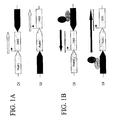
- the fragment can be inserted in both directions, which makes it possible to obtain the two constructs: the vector downstream interference pRB17 (also referred to as DI and in which Padh1 and Pgall are oriented in opposite directions) (cf. Figure 2A ) and the nonsense downstream interference vector pRB16 (also called nDI and in which Padh1 and Pgal1 are in the same orientation) (cf. 2D figure ).
- the Pgal1 unidirectional promoter used originates from the bidirectional divergent promoter GAL1-10 (described by Johnston, M., and RW Davis, 1984), and contains four consensus sites "GAL4p-responsive DNA enhancer elements" as well as the basic promoter of the gene. GAL1 , but does not present the TATA box of the promoter of the GAL10 gene .
- the GAL1 promoter is regulated by the transcription factor GAL4p for which a double-hybrid pair (Y2H) is available (separate AD and DBD domains). This promoter is well characterized and has been used successfully in applications requiring the inducible expression of a protein, such as for the purification of proteins, the study of the function of an essential gene, etc.
- upstream interference vector pRB 18 also referred to as UI for Upstream Interference
- upstream nonsense interference vector pRB19 also called nUI for nonsense Upstream Interference
- the two single-stranded oligonucleotides are mixed at equimolar concentrations in water.
- the mixture is heated at 90 ° C for 5 min in a heat block and then the block is allowed to cool to room temperature (about 2 hours).
- the double-stranded fragment thus obtained has Xma I and Xba I compatible cohesive ends at the ends, respectively.
- a fragment of 552 bp corresponding to the promoter of the GAL1 gene (it is the same promoter as that used for the construction of the downstream interference vector pRB17, however the fragment is 3pb longer than that used for the downstream construction since it contains a start codon ATG to initiate the translation of the short open reading phase) was then amplified by PCR.
- This fragment is obtained by using as template the genomic DNA of S.
- oligonucleotides RB55 5'-AAAA CCCGGG GTAAAGAGCCCCATTATCTTAG -3 '(SEQ ID NO: 15) and RB56 5'- AAAA CCCGGG CATTTTGAGATCCGGGTTTTTTC-3 '(SEQ ID NO: 16) (the Xma I sites are underlined). This fragment is then digested with the enzyme Xma I.
- a three-fragment ligation is then performed (the two fragments obtained above + the pRBV vector).
- This ligation consists of the insertion of the fragment Pgal1 digested with the enzyme Xma I and the short open reading phase C-ter GST (cohesive compatible ends Xma I and Xba I) into the vector pRBV (previously digested with Xma I- Xba I).
- the Pgal1 fragment can be inserted in both directions.
- two constructions are obtained: the upstream interference vector pRB18 (also called UI and in which Padh1 and Pgal1 are in the same orientation) (cf. Figure 2B ) and the nonsense upstream interference vector pRB19 (also called nUI and in which Padh1 and Pgal1 are oriented in opposite directions) (cf. figure 2E ).
- the upstream-downstream interference plasmid pRB27 (also called UDI for Upstream-Downstream Interference) is constructed by inserting the same 549 bp PCR fragment corresponding to the Pgal1 promoter as that used for the construction of pRB16 and pRB17 (cf. Example 2: This PCR fragment is obtained using genomic DNA of S. cerevisiae strain FL100 as the template and oligonucleotides RB49 and RB50) as primers in the vector pRB18. For this, the PCR fragment is digested with the enzyme Asc I and inserted into the linear vector pRB18 by digestion with the enzyme Asc I.
- the fragment can be inserted in both directions, a plasmid with the insert in the desired orientation (in which the two Pgall promoters are oriented in opposite directions) is more particularly selected (by restriction profile) (cf. Figure 2C ).
- the vector thus obtained is named pRB27.
- the sequence of this construct is verified by sequencing using the Big Dye Terminator kit (Perkin-Elmer, Wellesley, Massachusetts, USA).
- the Applicant has devised two types of rY2H systems (reverse double-hybrid) which are both based on gene silencing by transcription interference.
- Pgal1 is located downstream of the HIS3 gene, and Padh1 and Pgall have a convergent orientation.
- This configuration is called downstream interference (DI) because the downstream activation of Pgal1 interferes with the transcription of the HIS3 gene.
- DI downstream interference
- Pgal1 is located upstream of Padh1 and the two promoters have a tandem orientation. Therefore, this configuration is called Upstream Interference (UI) because activation of Pgal1 upstream interferes with the activity of the Padh1 promoter.
- UI Upstream Interference
- upstream-downstream (UDI) interference system Pgal1 is inserted upstream and in tandem with respect to Padh1- HIS3 , and an additional copy of Pgal1 is placed downstream of the open reading phase of HIS3 and this in a convergent orientation with respect to Padh1 (cf. Figure 2C ).
- a nonsense upstream (nUI) and nonsense downstream (nDI) interference system were constructed. In these two control constructs, the orientation of Pgal1 is inverted with respect to the constructions UI and DI, respectively. No transcriptional interference should be observed when using these control constructs, even in the presence of a valid Y2H interaction.
- the five constructs described above are bordered at their ends by bidirectional transcription terminators (see Example 1).
- the transcription terminator of the CYC1 gene (Tcyc1) (described by Osborne, BI, and L. Guarente, 1989) and on the other side a fragment coding for the terminator of the gene.
- ADH1 (Tadh1) (described by Irniger, S. et al ., 1991.).
- the vector pRB2 contains two fragments homologous to the upstream and downstream regions, respectively, of the open reading phase of the S. cerevisiae URA3 gene. A sequence inserted between these two fragments targets an integration at the URA3 locus, its genomic integration producing a deletion of 1104 bp, which eliminates the open reading phase of URA3 (cf. figure 3 ). This deletion of URA3 is close to the deletion published in the ura3D0 model (3), the difference compared to ura3D0 being that 22 bp less is removed from the downstream region of URA3 during the integration of pRB2.
- the GEA2 gene is located upstream of URA3 and it has been shown previously that the level of transcription and the size of the transcripts of the GEA2 gene are not affected by the deletion of ura3D0 (Brachmann, CB, et al ., 1998).
- the TIM9 gene is located downstream of URA3 and is an essential gene for yeast S. cerevisiae . There has been no reported reduced survival rate for ura3D0 strains, TIM9 appears to remain fully functional in ura3D0 strains. Therefore, the ura3D0 deletion is found not to affect the transcription of adjacent genes. Therefore, interference systems integrated with pRB2 will not likely affect or be affected by the transcription of GEA2 and TIM9 .
- An advantage of the pRB2 vectors is that they can also be used with mutant URA3 strains such as ura3-52 and ura3D0.
- the HIS3 reporter gene is in tandem with the GEA2 and TIM9 genes .
- Table 2 ⁇ / b> Vectors and Strains of Interference. constructions In the vector pBluescript KS + In pLac33 In pRB2 Name of the strain once integrated construction nDI pRB16 - pRB31 yRB82 DI pRB17 pRB20 pRB23 yRB48 IU pRB18 pRB21 pRB24 yRB49 nUI pRBV19 - pRB25 yRB50 UDI pRB27 pRBV28 pRB29 yRB83 Abbreviations: nDI: nonsense downstream interference; DI: downstream interference; UI: upstream interference; nUI: upstream interference nonsense; UDI: upstream-downstream interference.
- the culture media used are as described by Gutherie, C. and GR Fink, 2002.
- the cells are grown in a defined minimal medium YNB (Difco Laboratories, Detroit, USA) + 2% glucose ( Sigma-Aldrich, Lyon, France) at 30 ° C.
- YNB minimal medium
- glucose Sigma-Aldrich, Lyon, France
- amino acids Sigma-Aldrich, Lyon, France
- the yCM15 strain ( MAT has ⁇ gal4 ⁇ gal80 ura3-52 lys2-801 his3 ⁇ 200 trp1- ⁇ 63 leu2 ade2-101 ) is used for genomically integrated strains constructs.
- Strain yCM15 was constructed from strain PCY2 (described by Chevray PM and Nathans D., 1992), in which the reporter cassette was removed.
- the PCY2 strain results from a cross between the strain YPH499 ( MAT a ura3-52 lys2- 801 ade2-101 trp1- ⁇ ⁇ 63 his3- 200 leu2- ⁇ 1; ATCC 76625, 204679, (Sikorski and Hieter, 1989)) (accessible especially from the American Type Culture Collection (ATCC) (Manassas, Virginia, USA ), under the number 204679) with the GGY1 :: 171 strain ( MAT ⁇ ⁇ gal4 ⁇ gal80 leu2 his3 URA3 :: GAL1-lacZ ) (Gill and Ptashne, 1987).
- ATCC American Type Culture Collection
- Strain GGY1: 171 was constructed by integration of the URA3 :: GAL1-ZacZ cassette (Yocum et al, 1984), which carries the lacZ reporter gene under the control of the UAS G- activated GAL1 gene promoter, into the strain GGY1 ( MAT ⁇ ⁇ gal4 ⁇ gal80 leu2 his3 (Gill and Ptashne, 1987)).
- the GGY1 strain is itself the result of a cross between the DBY745 strain ( MAT ⁇ ⁇ gal4 ⁇ gal80 leu2-3,112 ade1-100 ura3-52 ; (Graham and Chambers, 1996; Ferreiro et al., 2004; Nagarajan and Storms, 1997, Dormer et al., 2000) and strain YM709 (Pearlberg, J., 1995).
- any S. cerevisiae yeast strain having the genotype can be used.
- the strain PCY2 strain Y187 (described by Harper, JW et al ., 1993 and available in particular from the American Type Culture Collection (ATCC) (Manassas, Virginia, USA), under the number of reference 96399).
- Table 3 presents other examples of strains that can be substituted for the strain PCY2.
- Their names, a short description of these strains and their reference numbers are available from the American Type Culture Collection (ATCC) (Manassas, Virginia, USA), an organism from which these strains are accessible.
- yCM15 strain 10 6 to 10 7 cells of a clone of the PCY2 strain are suspended in sterile water and plated on an agar plate of YNB medium + 2% glucose supplemented with the amino acids lys + ade + his + ura + trp + leu.
- the agar plate also contains 5-fluoroorotic acid (5-FOA) at a concentration of 1 mg / ml, 5-FOA is toxic for cells expressing the URA3 gene. Therefore, with these 5-FOA containing dishes, PCY2 strain mutants were selected which lost the URA3 :: GAL1-lacZ reporter cassette (Boeke et al., 1987).
- mutants obtained by testing the lacZ reporter activity .
- the mutants are then transformed with the plasmid pCL1 (Fields, S., and O. Song, 1989) coding for the transcription factor GAL4p which is a very strong activator of the GAL1 promoter and the lacZ activity is measured (Breeden, L. and K. Nasmyth, 1985).
- GAL4p transcription factor 4p which is a very strong activator of the GAL1 promoter and the lacZ activity is measured (Breeden, L. and K. Nasmyth, 1985).
- yCM15 A mutant resistant to 5-FOA and no lacZ activity is selected and named
- the integration vectors pRB31, pRB23, pRB24, pRB25 and pRB29 are linearized by digestion with the enzyme Drd I.
- the yCM15 strain is independently transformed with 1 ⁇ g of linearized DNA of each of the integration vectors using the method of lithium acetate transformation (as described by Gietz, RD and A.
- strains obtained by the independent transformation of the yCM15 strain by each of the integration vectors pRBV31, pRB23, pRB24, pRB25, pRBV29, and of which the integration of each of the reporting cassettes at the URA3 locus has been demonstrated have been called yRB82, yRB48, yRB49, yRB50, yRB83 respectively (see table 2).
- the reporter strains obtained in Example 5.1 are transformed with two pairs of plasmids.
- the first pair is used to study the response of interference systems to potent activation of Pgal1 due to the expression of the full-length GAL4p transcription factor (Fields, S. and O. Song , 1989).
- the second pair of plasmids allows the expression of the activation domain (AD) and the DNA binding domain (DBD) of GAL4p separately and serves as a negative control because the distinct domains alone can not activate Pgal1.
- strains obtained in Example 5.1 are co-transformed with the centromeric plasmid pCL1 coding for the transcription factor of GAL4p (described by Fields, S., and O. Song 1989) and the plasmid without centromeric insert pFL39 (described by Bonneaud N, et al ., 1991).
- These plasmids replicating in yeast carry the LEU2 or TRP1 gene as a selection marker.
- transformants are selected on a YNB medium (Difco Laboratories, Detroit, USA) + 2% glucose (Sigma-Aldrich, Lyon, France) supplemented by the amino acids lys + ade + his and uracil (Sigma-Aldrich, Lyon , France).
- the transformants obtained are called respectively nDI +, DI +, UI +, nUI + and UDI +.
- the negative controls are obtained by co-transforming the strains described in Example 5.1 (strains yRB82, yRB48, yRB49, yRB50, yRB83) with the vectors pTAL20 and pDBT.
- the vectors pTAL20 and pDBT allow the expression of the activation domain (AD) of GAL4p and of the DNA binding domain (DBD) of GAL4p (these vectors are described by Navarro, P., et al ., 1997). .
- the transformants thus obtained are respectively called nDI-, DI-, UI-, nUI- and UDI-.
- the cell growth of the transformants is studied by a method of evaluation in drop. For this, the cells are plated on agar plates containing histidine and incubated overnight at 30 ° C. Then, the cells are suspended in water at approximately 10 6 cells / ml and dilutions are prepared by a factor of 10. 5 ⁇ l drops of each dilution are pipetted off and deposited on pre-dried agar plates comprising the desired medium. The dishes are incubated at 30 ° C.
- the cell growth of the interference transformants is thus evaluated on medium lacking histidine.
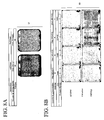
- a competitive inhibitor of the HIS3p protein (3-amino-1,2,4-triazole (3-AT)) is optionally added to the culture medium at increasing concentrations to observe differences in the level of activity. of the HIS3 reporter gene between the different strains of interference ( Fig. 4 ).
- the media containing the inhibitor is prepared from a stock solution at a concentration of 1M of the competitive inhibitor 3-amino-1,2,4-triazole (3-AT, Sigma) in water of quality Millipore.
- the agar is cooled to 60 ° C prior to the addition of 3-AT at the desired concentrations.
- the different culture media tested are a minimum medium (YNBG (Difco Laboratories, Detroit, USA) + 2% glucose (Sigma-Aldrich, Lyon, France) supplemented by the amino acids lys + ade and uracil (Sigma- Aldrich, Lyon, France) without 3-AT or with 3-AT at concentrations of 8, 16, 22, 32 mM
- a positive control is also performed (culture medium with histidine and without 3-AT). incubated at 30 ° C for 48 to 72 hours, some of the results are presented in Figure 4A to 4E .
- UI + transformants In the presence of GAL4p (+ strains), one observes the strongest reduction in cell growth for UI + transformants.
- UI cells expressing GAL4p can not grow in the absence of histidine while cells carrying the AD / DBD control (UI- transformants) normally grow at 3-AT concentrations greater than 32 mM.
- Neither GAL4p nor the AD / DBD control inhibited cell growth of the nUI + and nUI- control transformants, showing that growth inhibition of UI + cells expressing GAL4p is due to activation of Pgal1 transcription directed to Padh1.
- GAL4p also inhibits cell growth in nDI + transformants (growth is inhibited when 3-AT is present at 8 mM or at higher concentrations (cf. Figure 4C to 4E ).
- the transcription directed by Pgal1 is directed towards Tadh1 (cf. 2D figure ), it is not expected to interfere with the expression of HIS3 .
- Growth inhibition is due to specific activation of Pgal1 because growth inhibition is not observed when AD / DBD control is present in nDI- cells (cf. figure 4B to 4E ).
- the UDI + transformants show a level of growth inhibition similar to that of DI + cells.
- DBD / AD control does not affect the growth of UDI-cells (cf. figure 4B to 4E ).
- Induced reduction GAL4p activity HIS3 thus significantly slows cell growth; however, it does not completely inhibit it. While under interference conditions colonies are not detected on the dishes during the first 6-7 days of incubation, minute colonies become visible after longer incubation times.
- upstream promoter activation reduces downstream promoter activity by removing activation factors from their binding sites at the level of the downstream promoter.
- downstream promoter Gibger, IH et al ., 2000, Greger, IH et al ., 1998, Valerius, OC et al ., 2002, Callen BP et al ., 2004. Since the interference generating promoter is closer to the reporter gene promoter in the UI construct, the interference may be more effective in the UI construct than in the DI.
- RNA polymerases can collide and this can lead to a stop of transcription and silencing of the HIS3 gene.
- a frontal collision of RNA polymerases could be a less effective means of silencing HIS3 than removal of Padh1 transcriptional activation factors.
- activation of Padh1 inactivates Pgal1 by transcription interference, which may also explain why the UDI system is superior to either the UI system or the DI system.
- downstream transcription interference also exists when Pgall is inserted in tandem and downstream from the HIS3 reporter cassette (nDI construct).
- the level of transcription of a gene depends on the power of the promoter as well as the quality of the transcription stop signal (Wahle, E., and U. Ruegsegger, 1999). Since Pgal1 is inserted between the HIS3 ORF and its Tadh1 transcription terminator, activation of Pgal1 could interfere with proper stopping of the HIS3 transcript in the nDI construct, thereby reducing the HIS3p activity in the cells.
- the various interference systems (DI, UI, and UDI) described in Example 2 (cf. Figure 2A to 2E ) on pBluescript vectors are subcloned as Sal I- Sac I fragments into the pLac33 integration vector.
- This vector contains the yeast URA3 gene as a selection marker and has been described by Gietz, RD, and A. Sugino. 1988.
- the different plasmids pRB27, pRB17, pRB18 are digested with Sal I- Sac I enzymes and the insert is subcloned into the replicative vector pLac33 previously digested with SalI-Sac I enzymes. have been called pRB28, pRB20, pRB21 respectively.
- the yCM15 strain is independently co-transformed with 0.3 ⁇ g of DNA of each of the vectors pRB28, pRBV20 or pRB21 (see Example 7) associated with the vectors pCL1 and pFL39.
- the yCM15 strain is therefore independently transformed by three groups of three plasmids (pRB28 + pCL1 + pFL39 or pRB20 + pCL1 + pFL39 or pRB21 + pCL1 + pFL39).
- Centromeric plasmid pCL1 encodes the GAL4p transcription factor (described by Fields, S., and O.
- plasmid pFL39 is a plasmid without centromeric insert (described by Bonneaud N, et al., 1991).
- yeast replication plasmids carry the LEU2 or TRP1 gene as a selection marker.
- the yCM15 strain is also independently co-transformed with 0.3 ⁇ g of DNA of each of the pRB28, pRB20 or pRB21 vectors (see Example 7) associated with the pTAL20 and pDBT vectors (allowing the expression of the activation domain (AD) of GAL4p and the DNA binding domain (DBD) of GAL4p (these vectors are described by Navarro, P., et al ., 1997)).
- the yCM15 strain is therefore independently transformed by three groups of three plasmids (pRB28 + pTAL20 + pDBT, or pRB20 + pTAL20 + pDBT or pRB21 + pTAL20 + pDBT).
- the results obtained with the interference constructs based on non-integrated plasmids are similar to those obtained for the integrated interference constructions (cf. FIGS. 5A to 5D ).
- the UI cells expressing GAL4p show a very greatly reduced growth compared to UI cells not expressing active GAL4p (triple transformants pRB21 + pTAL20 + pDBT).
- the level of growth inhibition of UI is not as powerful as that observed with the integrated version of the UI construct (see Example 6).
- DI cells triple transformants pRB20 + pCL1 + pFL39 (expressing active GAL4p) or pRB20 + pTAL20 + pDBT (not expressing active GAL4p)
- UDI triple transformants pRB28 + pCL1 + pFL39 (expressing active GAL4p) or pRB28 + pTAL20 + pDBT (not expressing an active GAL4p) grow almost normally as they express or not active GAL4p.
- plasmid-based constructs (as described in Example 7) have also been evaluated.
- a second strain of yeast the strain yRB31.
- the strain yRB31 ( MAT ⁇ ura3-52 his3 - ⁇ 200 ade2-101 trp1-901 leu2-3,112 met- ⁇ gal4 ⁇ gal80 ) is constructed by eliminating the cassette URA3 :: GAL1 (UAS) -GAL1 (TATA) -lacZ from strain Y187 (strain Y187 has been described by Harper, JW et al ., 1993 and is available from, among others, the American Type Culture Collection (ATCC) (Manassas, Virginia, USA) under reference number 96399).
- ATCC American Type Culture Collection
- the absence of the reporter cassette in the mutants obtained is verified by testing the lacZ reporter activity .
- the mutants are transformed with the plasmid pCL1 (Fields S. and O. Song, 1989) coding for the transcription factor GAL4p which is a very strong promoter of the GAL1 promoter and the lacZ activity is measured (Breeden L. and K. Nasmyth , 1985).
- a mutant resistant to 5-FOA and no lacZ activity is selected and named yRB31.
- the yRB31 strain was transformed in the same manner as described in Example 8 for the strain yCM15.
- the transformants obtained were studied with regard to their cell growth in the same manner as described in Example 8. No difference was observed between the yCM15 and yRB31 strains with respect to the activity of the plasmids. 'interference.
- AD-Fe65 and DBD-AppCt fusion proteins are expressed under the control of the highly active truncated ADH1 promoter (promoter described by Ruohonen L, et al ., 1995).
- Plasmid pRB34 allows expression of the AD-Fe65 fusion protein under the control of a highly active truncated ADH1 promoter.
- a second step partial digestion of the plasmid pRBSG11 is carried out with the Sph I enzyme and the fragment encoding the weakly active truncated ADH1 promoter, the AD-Fe65 fusion protein and the ADH1 terminator is inserted into the Sph I site.
- Centromeric plasmid pFL36 (described by Bonneaud N, et al ., 1991), this makes it possible to obtain the plasmid pRBIM54. Obtaining the right construction is verified by restriction analysis.
- the fragment can be inserted in both directions and a clone having the desired orientation, in which the ADH1 promoter is close to the unique Sac I site of plasmid pFL36, is selected.
- a fragment coding for the highly active truncated ADH1 promoter is amplified by PCR from genomic DNA of strain FL100 with primers RB136 (5'-TTGTAAAACGACGGCCAGTGAATTCCGTACGATATCCTTTTGTTGTTTCCGG GTG-3 ') (SEQ ID NO: 29 and RB137 (5'-AGTTGATTGTATGCTTGGTATAGC-3 ') (SEQ ID NO: 30).
- GAP repair homologous recombination cloning method
- the PCR fragment is used to replace the ADH1 promoter truncated weakly active by the truncated ADH1 promoter highly active in the pRBIM54 plasmid previously digested with the enzyme Sac I.
- the homologous recombination is carried out in the yCM15 strain.
- the newly constructed plasmid is verified by restriction analysis and is named pRB34.
- the sequence of this plasmid is presented in SEQ ID No. 31.
- Plasmid pRB35 allows expression of the DBD-AppCt fusion protein under the control of a highly active truncated ADH1 promoter.
- the construction of plasmid pRB35 was carried out in several steps.
- the plasmid pSG14 is partially digested with the enzyme Sph I. Then the fragment encoding the weakly active truncated ADH1 promoter, the DBD-AppCt fusion and the ADH1 terminator is inserted into the vector pFL39 (described by Bonneaud N , et al ., 1991) previously digested with the enzyme Sph I. The resulting plasmid is named pIM55. Obtaining the right construction is verified by restriction analysis. The fragment can be inserted in both directions and a clone having the desired orientation, in which the ADH1 promoter is close to the unique Sac I site of plasmid pFL36, was selected.
- Plasmid pRB35 is then obtained by exchanging the weakly active truncated ADH1 promoter of pIM55 with a highly active truncated ADH1 promoter.
- the same PCR fragment as that used for the construction of pRB34 is introduced into pIM55 previously digested with the Sph I enzyme using the same GAP method. repair.
- the plasmid construct is verified by restriction analysis and is referred to as pRB35.
- the sequence of this plasmid is presented in SEQ ID No. 34.
- reporter strain Y187 (strain Y187 possesses the URA3 gene placed under the control of the Pgall promoter and has been described by Harper, JW et al ., 1993 and is accessible, in particular, from the American Type Culture Collection (ATCC). (Manassas, Virginia, USA), under reference number 96399) is transformed by three pairs of plasmids. These pairs are: pRB34 + pRB35, pRB34 + pDBT and pTAL20 + pRB35. Two clones co-transformed with each of these pairs of plasmids are selected. Their ability to grow on minimal medium with and without uracil is studied.
- Strains yRB48 (DI system) and yRB49 (UI system) are then co-transformed each by the pair of plasmids pRB34 and pRB35 allowing the expression of the two hybrid proteins AD-Fe65 and DBD-AppCt.
- Strains yRB48 (DI system) and yRB49 (UI system) are also co-transformed each by the pairs of plasmids pRB34 + pDBT and pTAL20 + pRB35 as controls. Two clones co-transformed with each of these pairs of plasmids are selected. The cell growth of each of the two clones of these double transformants is studied on agar plates with and without histidine and on plates without histidine and with or without increasing concentrations of 3-AT, as described in Example 6.
- the open reading phase coding for the 55 amino acids of the amino terminus of the human p53 protein (reference genebank: BC003596) is generated by hybridization of two phosphorylated single-stranded oligonucleotides: (The Nol I and Bam HI sites are underlined).
- the two complementary single-strand oligonucleotides are mixed at equimolar concentrations in water. The mixture is heated at 90 ° C for 5 min in a heat block and then the block is allowed to cool to room temperature (about 2 hours).
- the double-stranded fragment thus obtained has at the ends compatible cohesive ends Not I and Bam H1, respectively.
- reporter strain Y187 (strain Y187 possesses the URA3 gene placed under the control of the Pgal1 promoter and has been described by Harper, JW et al ., 1993 and is accessible, in particular, from the American Type Culture Collection (ATCC). (Manassas, Virginia, USA), under reference number 96399) is transformed by three pairs of plasmids. These pairs are: pDBT-mdm2 + pVP16-p53Nt, pVP16-p53Nt + pDBT and pTAL20 + pDBT-mdm2. Two clones co-transformed by the two plasmids are selected for each of these pairs of plasmids.
- the yRB49 strain (UI system) is then co-transformed by the pair of plasmids pDBT-mdm2 + pVP16-p53Nt allowing expression of the two hybrid proteins DBD-mdm2 and VP16-p53 (1-55).
- the strain yRB49 (UI system) is also co-transformed by the pair of plasmids pDBT-mdm2 + pTAL20 as controls. Two clones co-transformed with the two plasmids are selected for each of these two pairs of plasmids.
- a yeast strain containing a transcriptional interference system rY2H IU integrated into its genome was used to isolate inhibitors of protein-protein interactions by a growth restoration test.
- a yeast strain containing the rY2H UI transcriptional interference system, coupled to a specific protein-protein interaction is spread on a solid medium containing 3-AT. Drops of solutions of chemical compounds are deposited on the seeded can. Diffusion of the chemical compounds in the agar creates a concentration gradient around the deposition zone. Products capable of inhibiting protein-protein interaction allow cell growth, resulting in a growth restoration halo surrounding the deposition zone.
- OD optical density
- the strain yRB49 was transformed as previously by the plasmids pRB34 and pRB35 (Fe65 / App) or by the control plasmids pTAL20 / pDBT (not expressing protein-protein interactions). Both strains transformed were plated on media, either containing histidine, or lacking histidine and supplemented with 0, 0.5 or 1 mM 3-AT. As shown in Figure 8B the strain carrying the Fe65 / App interaction shows very slow growth on medium containing 1 mM 3-AT, compared to that containing the control plasmids, the growth of which is not affected under the same conditions.
- Histidine addition in the medium corrects the strain deficiency for histidine synthesis by freeing it from the transcriptional interference system.
- the yRB49 strain co-transformed by the pair of plasmids pRB34 and pRB35 was spread on the previous medium lacking of histidine and supplemented with 1 mM 3-AT, then increasing amounts of uracil, adenine, leucine or histidine, were deposited in the center of each box.
- histidine is capable of restoring yeast growth around the deposit and in a manner dependent on its concentration.
- the yRB49 strain was then transformed by the pair of plasmids pRB34 and pRB35 leading to the expression of the Fe65 / App interaction or the pair pDBT-mdm2 and pVP16-p53Nt leading to the expression of the p53 / mdm2 interaction.
- Both Fe65 / App and p53 / mdm2 strains were each plated on histidine-free medium and supplemented with 1 mM and 20 mM 3-AT, respectively.
- three drops of 1 ⁇ l of 0.1, 1 and 10 mM solutions in DMSO per box were deposited.
- 1 ⁇ l of histidine (0.125% w / v) was deposited in the center of another box, as a positive growth restoration control.
- a product randomly selected from the collection and used at the same concentrations as the three test molecules was used as a negative control.
Landscapes
- Life Sciences & Earth Sciences (AREA)
- Health & Medical Sciences (AREA)
- Engineering & Computer Science (AREA)
- Genetics & Genomics (AREA)
- Chemical & Material Sciences (AREA)
- Biomedical Technology (AREA)
- Biotechnology (AREA)
- Bioinformatics & Cheminformatics (AREA)
- Zoology (AREA)
- General Engineering & Computer Science (AREA)
- Organic Chemistry (AREA)
- Wood Science & Technology (AREA)
- Molecular Biology (AREA)
- General Health & Medical Sciences (AREA)
- Microbiology (AREA)
- Biochemistry (AREA)
- Physics & Mathematics (AREA)
- Plant Pathology (AREA)
- Biophysics (AREA)
- Crystallography & Structural Chemistry (AREA)
- Immunology (AREA)
- Mycology (AREA)
- Hematology (AREA)
- Urology & Nephrology (AREA)
- Bioinformatics & Computational Biology (AREA)
- Analytical Chemistry (AREA)
- Medicinal Chemistry (AREA)
- General Physics & Mathematics (AREA)
- Pathology (AREA)
- Food Science & Technology (AREA)
- Cell Biology (AREA)
- Micro-Organisms Or Cultivation Processes Thereof (AREA)
- Measuring Or Testing Involving Enzymes Or Micro-Organisms (AREA)
- Preparation Of Compounds By Using Micro-Organisms (AREA)
- Investigating Or Analysing Biological Materials (AREA)
- Optical Integrated Circuits (AREA)
- Optical Fibers, Optical Fiber Cores, And Optical Fiber Bundles (AREA)
- Curing Cements, Concrete, And Artificial Stone (AREA)
Claims (29)
- Zelle, die ein Interferenz-DNA-Konstrukt enthält, wobei das Konstrukt Folgendes umfasst:- ein Reportergen, das unter die Kontrolle eines ersten Promotors gestellt ist,- einen oder mehrere induzierbare Promotor(en), der/die als Interferenz-Promotor bezeichnet wird/werden und derart ausgewählt und positioniert ist/sind, dass seine (ihre) Aktivierung eine Interferenz der Transkription von dem ersten Promotor bewirkt, die zu einer nachweisbaren Verringerung der Expression des Reportergens führt,wobei die Zelle außerdem Folgendes exprimiert:- ein erstes chimäres Protein (Y-AD), bestehend aus einer Transkriptionsaktivierungsdomäne (AD), fusioniert an ein Protein Y, das mit einem Partnerprotein X wechselwirken kann,- ein zweites chimäres Protein (X-DBD), bestehend aus einer ersten, DNA-bindenden Domäne (DBD), fusioniert an eine zweite Domäne, die aus einem Protein X besteht, das mit dem Protein Y wechselwirken kann, wobei die Wechselwirkung der beiden chimären Proteine X-DBD und Y-AD zur Bildung eines funktionellen Transkriptionsfaktors führt, der den oder die Interferenz-Promotor(en) aktiviert.
- Zellen nach Anspruch 1, dadurch gekennzeichnet, dass der Promotor, der die Expression des Reportergens reguliert, ein induzierbarer Promotor ist, das Protein Y mit zwei Partnerproteinen X und Z wechselwirken kann, und dadurch, dass die Zelle ein drittes chimäres Protein (Z-DBD) exprimiert, bestehend aus einer DNA-bindenden Domäne (DBD), fusioniert an eine zweite Domäne, die aus einem Protein Z besteht, das mit dem Protein Y wechselwirken kann, wobei die Wechselwirkung der beiden chimären Proteine Z-DBD und Y-AD zur Bildung eines funktionellen Transkriptionsfaktors führt, der die Expression des Reportergens aktiviert.
- Zelle nach Anspruch 2, dadurch gekennzeichnet, dass der induzierbare Promotor, der die Expression des Reportergens reguliert, eine Sequenz umfasst, die mit der DNA-bindenden Domäne (DBD) des chimären Proteins (Z-DBD) wechselwirken kann.
- Zelle nach Anspruch 1, dadurch gekennzeichnet, dass der Promotor, der die Expression des Reportergens reguliert, ein konstitutiver Promotor ist.
- Zelle nach einem der Ansprüche 1 bis 4, dadurch gekennzeichnet, dass es sich um eine Wirtszelle handelt, die mit dem Interferenz-DNA-Konstrukt und mit den DNA-Konstrukten, die für die chimären Proteine codieren, transformiert oder transfiziert ist, wobei sich diese sämtlichen Konstrukte auf einem oder mehreren nicht-integrierenden Vektor(en) befinden.
- Zelle nach einem der Ansprüche 1 bis 4, dadurch gekennzeichnet, dass es sich um eine Wirtszelle handelt, die mit den DNA-Konstrukten, die für die chimären Proteine codieren, transformiert oder transfiziert ist, wobei sich diese Konstrukte auf einem oder mehreren nicht-integrierenden Vektor(en) befinden, und dadurch, dass das Interferenz-DNA-Konstrukt in das Genom der Zelle integriert worden ist.
- Zelle nach einem der Ansprüche 1 bis 4, dadurch gekennzeichnet, dass das Interferenz-DNA-Konstrukt und die DNA-Konstrukte, die für die chimären Proteine codieren, in das Genom der Zelle integriert worden sind.
- Zelle nach Anspruch 6 oder 7, dadurch gekennzeichnet, dass das Interferenz-DNA-Konstrukt an einem Locus integriert worden ist, der keine störenden genomischen Transkriptionsaktivitäten besitzt.
- Zelle nach einem der Ansprüche 1 bis 8, dadurch gekennzeichnet, dass sie aus der Gruppe ausgewählt ist, die aus Säuger-, Insekten-, Pflanzen- und Hefezellen besteht.
- Zelle nach einem der Ansprüche 1 bis 9, dadurch gekennzeichnet, dass es sich um Hefezellen handelt.
- Zelle nach einem der Ansprüche 1 bis 10, dadurch gekennzeichnet, dass es sich um Hefen der Spezies Saccharomyces cerevisiae, Schizosaccharomyces pombe, Kluyveromyces lactis, Pichia pastoris, Saccharomyces carlsbergensis oder Candida albicans handelt.
- Zelle nach einem der Ansprüche 1 bis 11, dadurch gekennzeichnet, dass mindestens ein Interferenz-Promotor stromabwärts des Reportergens und des ersten Promotors und in einer zu Letzterem entgegengesetzten Orientierung (DI) positioniert ist.
- Zelle nach einem der Ansprüche 1 bis 11, dadurch gekennzeichnet, dass mindestens ein Interferenz-Promotor stromabwärts des Reportergens und des ersten Promotors und in derselben Orientierung wie Letzterer (nDI) positioniert ist.
- Zelle nach einem der Ansprüche 1 bis 11, dadurch gekennzeichnet, dass mindestens ein Interferenz-Promotor stromaufwärts des Reportergens und des ersten Promotors und in derselben Orientierung wie Letzterer (UI) positioniert ist.
- Zelle nach einem der Ansprüche 1 bis 11, dadurch gekennzeichnet, dass mindestens ein Interferenz-Promotor auf beiden Seiten des ersten Promotors und des Reportergens positioniert ist, wobei der oder die stromabwärts des ersten Promotors und des Reportergens befindliche(n) Interferenz-Promotor(en) eine in Bezug auf den ersten Promotor konvergente Orientierung aufweis(t/en) und der oder die stromaufwärts des ersten Promotors und des Reportergens befindliche(n) Interferenz-Promotor(en) eine zu derjenigen des ersten Promotors identische Orientierung aufweis(t/en) (UDI).
- Zelle nach einem der Ansprüche 1 bis 11, dadurch gekennzeichnet, dass mindestens ein Interferenz-Promotor auf beiden Seiten des ersten Promotors und des Reportergens positioniert ist, wobei der oder die stromabwärts des ersten Promotors und des Reportergens befindliche(n) Interferenz-Promotor(en) eine Tandem-Orientierung in Bezug auf den ersten Promotor aufweis(t/en) und der oder die stromaufwärts des ersten Promotors und des Reportergens befindliche(n) Interferenz-Promotor(en) eine zu derjenigen des ersten Promotors identische Orientierung aufweis(t/en) (nUDI).
- Zelle nach einem der Ansprüche 1 bis 16, dadurch gekennzeichnet, dass das Reportergen ein für das Überleben der Zelle essenzielles Gen ist.
- Zelle nach Anspruch 17, dadurch gekennzeichnet, dass das Reportergen ein Gen ist, das für den Primärstoffwechsel, die Zellteilung, die Proteinsynthese, die DNA-Synthese oder die RNA-Synthese unverzichtbar ist.
- Zelle nach einem der Ansprüche 1 bis 16, dadurch gekennzeichnet, dass das Reportergen selbst nicht allein für das Überleben der Zelle essenziell ist, sondern für das Überleben der Zelle essenziell ist, wenn seine Transkription gehemmt wird, in Verbindung mit einem oder mehreren Reporter-genen desselben Typs, deren Expression durch das Transkriptions-Interferenz-System gesteuert wird oder nicht.
- Zelle nach einem der Ansprüche 1 bis 19, dadurch gekennzeichnet, dass der oder die induzierbare(n) Interferenz-Promotor(en) eine Sequenz umfass(t/en), die mit der DNA-bindenden Domäne (DBD) des chimären Proteins (X-DBD) wechselwirken kann.
- Zelle nach einem der Ansprüche 1 bis 20, dadurch gekennzeichnet, dass der oder die induzierbare(n) Interferenz-Promotor(en) eine Sequenz umfass(t/en), die mit einem Protein wechselwirken kann, das eine DNA-bindende Domäne (DBD) besitzt und aus der Gruppe, bestehend aus: GAL4-UAS, LexAop, cIop und TetRop, ausgewählt ist, und dass die DNA-bindende Domäne des chimären Proteins X-DBD die entsprechende DBD (GAL4, LexA, cI beziehungsweise TetR) ist.
- Zelle nach einem der Ansprüche 1 bis 21, dadurch gekennzeichnet, dass die Transkriptionsaktivierungsdomäne (AD) des chimären Proteins Y-AD aus der Gruppe ausgewählt ist, die aus den Transkriptionsaktivierungsdomänen der folgenden Proteine besteht: B42, VP16 und GAL4p.
- Zelle nach einem der Ansprüche 1 bis 22, dadurch gekennzeichnet, dass das Interferenz-DNA-Konstrukt an seinen Enden von einem oder mehreren uni- oder bidirektionalen Transkriptionsterminatoren flankiert ist.
- Verfahren zur Identifikation einer Verbindung, welche die Wechselwirkung zwischen einem ersten Protein X und einem zweiten Protein Y hemmt, das folgende Schritte umfasst:a) Züchten der Zellen nach einem der Ansprüche 1 bis 23,b) Inkubieren dieser Zellen in Gegenwart einer zu testenden Verbindung,c) Vergleichen der Expression des Reportergens in Gegenwart und in Abwesenheit der Verbindung, wobei eine Erhöhung der Expression des Reportergens ein Anzeichen dafür ist, dass die zu testende Verbindung ein Inhibitor der Wechselwirkung zwischen dem Protein X und dem Partnerprotein Y ist, die durch die gezüchteten Zellen exprimiert werden.
- Verwendung von Zellen nach einem der Ansprüche 1 bis 23 zur Identifikation von Verbindungen, welche die Protein-Protein-Wechselwirkung hemmen.
- Verwendung von Zellen nach einem der Ansprüche 1 bis 23 für das Screening von cDNA-Banken oder Peptidbanken, um Peptide oder Proteinfaktoren zu identifizieren, die spezifisch eine Protein-Protein-Wechselwirkung unterbinden.
- Kit zur Einrichtung eines Doppel-Hybrid-Systems, umfassend:- ein erstes DNA-Konstrukt, umfassend:- ein Reportergen, das unter die Kontrolle eines ersten Promotors gestellt ist,- einen oder mehrere induzierbare Promotor(en), der/die derart ausgewählt und positioniert ist/sind, dass seine (ihre) Aktivierung eine Interferenz der Transkription von dem ersten Promotor bewirkt, die zu einer nachweisbaren Verringerung der Expression des Reportergens führt,- ein zweites DNA-Konstrukt, das für Folgendes codiert:- ein erstes chimäres Protein (Y-AD), bestehend aus einer Transkriptionsaktivierungsdomäne (AD), fusioniert an ein Partnerprotein Y, das mit einem Partnerprotein X wechselwirken kann,- ein drittes DNA-Konstrukt, das für Folgendes codiert:- ein zweites chimäres Protein (X-DBD), bestehend aus einer ersten, DNA-bindenden Domäne (DBD), fusioniert an eine zweite Domäne, die aus einem Protein X besteht, das mit dem Protein Y wechselwirken kann, wobei die Wechselwirkung der beiden chimären Proteine X-DBD und Y-AD zur Bildung eines funktionellen Transkriptionsfaktors führt, der den oder die Interferenz-Promotor(en) aktiviert, wenn die beiden chimären Proteine in einer Wirtszelle exprimiert werden.
- Kit nach Anspruch 27, dadurch gekennzeichnet, dass der Promotor, der die Expression des Reportergens reguliert, ein induzierbarer Promotor ist, dadurch, dass das Protein Y mit zwei Partnerproteinen X und Z wechselwirken kann, und dadurch, dass das Kit ein viertes DNA-Konstrukt umfasst, das für ein drittes chimäres Protein (Z-DBD) codiert, bestehend aus einer DNA-bindenden Domäne (DBD), fusioniert an eine zweite Domäne, die aus einem Protein Z besteht, das mit dem Protein Y wechselwirken kann, wobei die Wechselwirkung der beiden chimären Proteine Z-DBD und Y-AD zur Bildung eines funktionellen Transkriptionsfaktors führt, der die Expression des Reportergens aktiviert.
- Verfahren zur Identifikation einer Verbindung, welche die Wechselwirkung zwischen einem ersten Protein X und einem zweiten Protein Y hemmt, welche aber die Wechselwirkung zwischen dem Protein Y und einem dritten Protein Z nicht oder weniger hemmt, das folgende Schritte umfasst:a) Züchten der Zellen nach Anspruch 2 oder 3,b) Inkubieren dieser Zellen in Gegenwart der zu testenden Verbindung,c) Vergleichen der Expression des Reportergens in Gegenwart und in Abwesenheit der Verbindung, wobei eine Erhöhung der Expression des Reportergens ein Anzeichen dafür ist, dass die zu testende Verbindung ein Inhibitor der Wechselwirkung zwischen dem Protein X und dem Partnerprotein Y ist, aber dass dieses Produkt die Wechselwirkung zwischen dem Protein Y und dem Protein Z nicht oder weniger hemmt.
Applications Claiming Priority (2)
| Application Number | Priority Date | Filing Date | Title |
|---|---|---|---|
| FR0411372A FR2877010B1 (fr) | 2004-10-25 | 2004-10-25 | Systeme double-hybride base sur la mise sous silence de genes par interference transcriptionnelle |
| PCT/FR2005/002646 WO2006045941A1 (fr) | 2004-10-25 | 2005-10-24 | Systeme double-hybride base sur la mise sous silence de genes par interference transcriptionnelle. |
Publications (2)
| Publication Number | Publication Date |
|---|---|
| EP1807697A1 EP1807697A1 (de) | 2007-07-18 |
| EP1807697B1 true EP1807697B1 (de) | 2009-10-21 |
Family
ID=34950754
Family Applications (1)
| Application Number | Title | Priority Date | Filing Date |
|---|---|---|---|
| EP05812049A Expired - Lifetime EP1807697B1 (de) | 2004-10-25 | 2005-10-24 | Doppeltes hybridsystem auf der basis von gen-silencing durch transkriptionelle interferenz |
Country Status (16)
| Country | Link |
|---|---|
| US (1) | US20090005253A1 (de) |
| EP (1) | EP1807697B1 (de) |
| JP (1) | JP2008517591A (de) |
| KR (1) | KR20070084523A (de) |
| CN (1) | CN101065668A (de) |
| AT (1) | ATE446512T1 (de) |
| AU (1) | AU2005298499A1 (de) |
| BR (1) | BRPI0516765A (de) |
| CA (1) | CA2583193A1 (de) |
| DE (1) | DE602005017296D1 (de) |
| DK (1) | DK1807697T3 (de) |
| FR (1) | FR2877010B1 (de) |
| IL (1) | IL182383A (de) |
| MX (1) | MX2007004970A (de) |
| RU (1) | RU2403287C2 (de) |
| WO (1) | WO2006045941A1 (de) |
Families Citing this family (5)
| Publication number | Priority date | Publication date | Assignee | Title |
|---|---|---|---|---|
| RU2529356C2 (ru) * | 2012-09-27 | 2014-09-27 | Федеральное государственное бюджетное учреждение науки Институт биологии гена Российской академии наук | Модифицированная дрожжевая двугибридная система для эффективного исследования взаимодействия между белками и их доменами. |
| SG11202103917VA (en) | 2018-10-16 | 2021-05-28 | Blueallele Llc | Methods for targeted insertion of dna in genes |
| RU2762410C1 (ru) * | 2021-02-25 | 2021-12-21 | Федеральное государственное бюджетное учреждение науки Институт биологии гена Российской академии наук (ИБГ РАН) | Модификация дрожжевой двугибридной системы, которая позволяет тестировать взаимодействия между белками внутри многокомпонентных белковых комплексов |
| CN115992165A (zh) * | 2022-03-14 | 2023-04-21 | 武汉合生科技有限公司 | 一种提升目标产物合成菌株生产性能的方法 |
| WO2024137857A1 (en) * | 2022-12-22 | 2024-06-27 | Tevard Biosciences, Inc. | Conditional expression of a gene of interest by convergent promoters and uses thereof |
Family Cites Families (4)
| Publication number | Priority date | Publication date | Assignee | Title |
|---|---|---|---|---|
| NZ306767A (en) * | 1995-04-11 | 2000-03-27 | Univ Johns Hopkins | Method of identifying molecular interactions employing counterselection and at least two hybrid molecules or two hybrid systems |
| US5948620A (en) * | 1996-08-05 | 1999-09-07 | Amersham International Plc | Reverse two-hybrid system employing post-translation signal modulation |
| US5885779A (en) * | 1997-09-09 | 1999-03-23 | University Of British Columbia | Repressed trans-activator system for characterization of protein-protein interactions |
| WO2002101011A2 (en) * | 2001-06-08 | 2002-12-19 | The Penn State Research Foundation | Reagents and methods for detection and characterization of protein-protein interactions |
-
2004
- 2004-10-25 FR FR0411372A patent/FR2877010B1/fr not_active Expired - Fee Related
-
2005
- 2005-10-24 WO PCT/FR2005/002646 patent/WO2006045941A1/fr not_active Ceased
- 2005-10-24 EP EP05812049A patent/EP1807697B1/de not_active Expired - Lifetime
- 2005-10-24 DE DE602005017296T patent/DE602005017296D1/de not_active Expired - Lifetime
- 2005-10-24 KR KR1020077011739A patent/KR20070084523A/ko not_active Ceased
- 2005-10-24 JP JP2007537343A patent/JP2008517591A/ja active Pending
- 2005-10-24 MX MX2007004970A patent/MX2007004970A/es active IP Right Grant
- 2005-10-24 CN CNA2005800403092A patent/CN101065668A/zh active Pending
- 2005-10-24 CA CA002583193A patent/CA2583193A1/fr not_active Abandoned
- 2005-10-24 AT AT05812049T patent/ATE446512T1/de not_active IP Right Cessation
- 2005-10-24 AU AU2005298499A patent/AU2005298499A1/en not_active Abandoned
- 2005-10-24 DK DK05812049.4T patent/DK1807697T3/da active
- 2005-10-24 US US11/577,411 patent/US20090005253A1/en not_active Abandoned
- 2005-10-24 RU RU2007119387/13A patent/RU2403287C2/ru not_active IP Right Cessation
- 2005-10-24 BR BRPI0516765-5A patent/BRPI0516765A/pt not_active IP Right Cessation
-
2007
- 2007-04-01 IL IL182383A patent/IL182383A/en not_active IP Right Cessation
Also Published As
| Publication number | Publication date |
|---|---|
| FR2877010B1 (fr) | 2007-03-16 |
| CA2583193A1 (fr) | 2006-05-04 |
| IL182383A (en) | 2010-12-30 |
| BRPI0516765A (pt) | 2008-09-16 |
| RU2007119387A (ru) | 2008-11-27 |
| JP2008517591A (ja) | 2008-05-29 |
| KR20070084523A (ko) | 2007-08-24 |
| AU2005298499A1 (en) | 2006-05-04 |
| MX2007004970A (es) | 2007-06-14 |
| DE602005017296D1 (de) | 2009-12-03 |
| IL182383A0 (en) | 2007-07-24 |
| ATE446512T1 (de) | 2009-11-15 |
| CN101065668A (zh) | 2007-10-31 |
| US20090005253A1 (en) | 2009-01-01 |
| FR2877010A1 (fr) | 2006-04-28 |
| WO2006045941A1 (fr) | 2006-05-04 |
| RU2403287C2 (ru) | 2010-11-10 |
| EP1807697A1 (de) | 2007-07-18 |
| DK1807697T3 (da) | 2010-03-08 |
Similar Documents
| Publication | Publication Date | Title |
|---|---|---|
| Cooper et al. | Stress and developmental regulation of the yeast C‐type cyclin Ume3p (Srb11p/Ssn8p) | |
| Meneau et al. | Identification of Aspergillus fumigatus multidrug transporter genes and their potential involvement in antifungal resistance | |
| Rodriguez-Peña et al. | Mechanisms for targeting of the Saccharomyces cerevisiae GPI-anchored cell wall protein Crh2p to polarised growth sites | |
| Giesbert et al. | Functional analysis of BcBem1 and its interaction partners in Botrytis cinerea: impact on differentiation and virulence | |
| Lycan et al. | Differential effects of Cdc68 on cell cycle-regulated promoters in Saccharomyces cerevisiae | |
| EP0994192B1 (de) | Transformationskassetten für Hefe | |
| EP1807697B1 (de) | Doppeltes hybridsystem auf der basis von gen-silencing durch transkriptionelle interferenz | |
| Chen et al. | DNA damage repair factor Rad18 controls virulence partially via transcriptional suppression of genes HWP1 and ECE1 in Candida albicans | |
| CA2268018A1 (fr) | Peptides capables d'inhiber l'endocytose de l'app et sequences nucleotidiques correspondantes | |
| Lu | Use of the yeast two-hybrid system to identify targets of fungal effectors | |
| Yeager | Regulation of Mating-type Specification in S. cerevisiae Yeast Spores | |
| EP0977840A2 (de) | Verfahren zur ermittlung von wechselwirkungen verschiedener proteine | |
| Park | It Takes Two to Tetrad: Dissecting the Role of Kar4 and Vir1 in Meiosis and mRNA m6 A Methylation | |
| Conrad | Yeast RNA-binding protein NRD1 associates with RNA polymerase II and regulates elongation efficiency | |
| Brothers | Recruitment and Spread of Heterochromatin in the Budding Yeast Saccharomyces cerevisiae | |
| Maria | Role of a Non-Duplicated DNA Replication Protein in Origin Specification and Epigenetic Gene Silencing in Budding Yeast Species | |
| Makarian | The role of eukaryotic initiation factor eIF3h in translation reinitiation and viral pathogenesis | |
| EP1135497A1 (de) | Polypeptide die fähig sind mit menschlichen topisomerase iii alpha zu interagieren | |
| Brothers et al. | POL30 alleles in Saccharomyces cerevisiae reveal complexities of the cell cycle and ploidy on heterochromatin assembly | |
| West | Nmd3p, the nuclear export adapter for the 60S ribosomal subunit: characterization of its recycling mechanism and novel interaction with the nuclear pore complex in yeast | |
| Alexander | Saccharomyces cerevisiae telomere-binding proteins: Roles in telomere structure and function | |
| Wheatley et al. | Genetic selection for modulators of the MAP kinase and β-catenin growth-control pathways in mammalian cells | |
| Wijnen | Transcriptional regulation of the G1-S cell cycle transition in Saccharomyces cerevisiae | |
| Stevens | O Copyright by Jennifer Rae Stevens, 2007 | |
| WO2005064007A2 (fr) | MOYENS DE CRIBLAGE POUR L’IDENTIFICATION DE REGULATEURS DE L’ACTIVITE GTPase |
Legal Events
| Date | Code | Title | Description |
|---|---|---|---|
| PUAI | Public reference made under article 153(3) epc to a published international application that has entered the european phase |
Free format text: ORIGINAL CODE: 0009012 |
|
| 17P | Request for examination filed |
Effective date: 20070525 |
|
| AK | Designated contracting states |
Kind code of ref document: A1 Designated state(s): AT BE BG CH CY CZ DE DK EE ES FI FR GB GR HU IE IS IT LI LT LU LV MC NL PL PT RO SE SI SK TR |
|
| AX | Request for extension of the european patent |
Extension state: AL BA HR MK YU |
|
| 17Q | First examination report despatched |
Effective date: 20080111 |
|
| GRAP | Despatch of communication of intention to grant a patent |
Free format text: ORIGINAL CODE: EPIDOSNIGR1 |
|
| GRAS | Grant fee paid |
Free format text: ORIGINAL CODE: EPIDOSNIGR3 |
|
| GRAA | (expected) grant |
Free format text: ORIGINAL CODE: 0009210 |
|
| AK | Designated contracting states |
Kind code of ref document: B1 Designated state(s): AT BE BG CH CY CZ DE DK EE ES FI FR GB GR HU IE IS IT LI LT LU LV MC NL PL PT RO SE SI SK TR |
|
| AX | Request for extension of the european patent |
Extension state: AL BA HR MK YU |
|
| REG | Reference to a national code |
Ref country code: GB Ref legal event code: FG4D Free format text: NOT ENGLISH |
|
| REG | Reference to a national code |
Ref country code: CH Ref legal event code: EP |
|
| REG | Reference to a national code |
Ref country code: IE Ref legal event code: FG4D |
|
| REF | Corresponds to: |
Ref document number: 602005017296 Country of ref document: DE Date of ref document: 20091203 Kind code of ref document: P |
|
| REG | Reference to a national code |
Ref country code: DK Ref legal event code: T3 |
|
| LTIE | Lt: invalidation of european patent or patent extension |
Effective date: 20091021 |
|
| NLV1 | Nl: lapsed or annulled due to failure to fulfill the requirements of art. 29p and 29m of the patents act | ||
| BERE | Be: lapsed |
Owner name: AVENTIS PHARMA S.A. Effective date: 20091031 |
|
| PG25 | Lapsed in a contracting state [announced via postgrant information from national office to epo] |
Ref country code: ES Free format text: LAPSE BECAUSE OF FAILURE TO SUBMIT A TRANSLATION OF THE DESCRIPTION OR TO PAY THE FEE WITHIN THE PRESCRIBED TIME-LIMIT Effective date: 20100201 Ref country code: PT Free format text: LAPSE BECAUSE OF FAILURE TO SUBMIT A TRANSLATION OF THE DESCRIPTION OR TO PAY THE FEE WITHIN THE PRESCRIBED TIME-LIMIT Effective date: 20100222 Ref country code: LT Free format text: LAPSE BECAUSE OF FAILURE TO SUBMIT A TRANSLATION OF THE DESCRIPTION OR TO PAY THE FEE WITHIN THE PRESCRIBED TIME-LIMIT Effective date: 20091021 Ref country code: FI Free format text: LAPSE BECAUSE OF FAILURE TO SUBMIT A TRANSLATION OF THE DESCRIPTION OR TO PAY THE FEE WITHIN THE PRESCRIBED TIME-LIMIT Effective date: 20091021 Ref country code: SE Free format text: LAPSE BECAUSE OF FAILURE TO SUBMIT A TRANSLATION OF THE DESCRIPTION OR TO PAY THE FEE WITHIN THE PRESCRIBED TIME-LIMIT Effective date: 20091021 Ref country code: IS Free format text: LAPSE BECAUSE OF FAILURE TO SUBMIT A TRANSLATION OF THE DESCRIPTION OR TO PAY THE FEE WITHIN THE PRESCRIBED TIME-LIMIT Effective date: 20100221 |
|
| REG | Reference to a national code |
Ref country code: IE Ref legal event code: FD4D |
|
| PG25 | Lapsed in a contracting state [announced via postgrant information from national office to epo] |
Ref country code: PL Free format text: LAPSE BECAUSE OF FAILURE TO SUBMIT A TRANSLATION OF THE DESCRIPTION OR TO PAY THE FEE WITHIN THE PRESCRIBED TIME-LIMIT Effective date: 20091021 Ref country code: LV Free format text: LAPSE BECAUSE OF FAILURE TO SUBMIT A TRANSLATION OF THE DESCRIPTION OR TO PAY THE FEE WITHIN THE PRESCRIBED TIME-LIMIT Effective date: 20091021 Ref country code: SI Free format text: LAPSE BECAUSE OF FAILURE TO SUBMIT A TRANSLATION OF THE DESCRIPTION OR TO PAY THE FEE WITHIN THE PRESCRIBED TIME-LIMIT Effective date: 20091021 Ref country code: MC Free format text: LAPSE BECAUSE OF NON-PAYMENT OF DUE FEES Effective date: 20091031 |
|
| PG25 | Lapsed in a contracting state [announced via postgrant information from national office to epo] |
Ref country code: AT Free format text: LAPSE BECAUSE OF FAILURE TO SUBMIT A TRANSLATION OF THE DESCRIPTION OR TO PAY THE FEE WITHIN THE PRESCRIBED TIME-LIMIT Effective date: 20091021 |
|
| PG25 | Lapsed in a contracting state [announced via postgrant information from national office to epo] |
Ref country code: RO Free format text: LAPSE BECAUSE OF FAILURE TO SUBMIT A TRANSLATION OF THE DESCRIPTION OR TO PAY THE FEE WITHIN THE PRESCRIBED TIME-LIMIT Effective date: 20091021 Ref country code: IE Free format text: LAPSE BECAUSE OF FAILURE TO SUBMIT A TRANSLATION OF THE DESCRIPTION OR TO PAY THE FEE WITHIN THE PRESCRIBED TIME-LIMIT Effective date: 20091021 Ref country code: BG Free format text: LAPSE BECAUSE OF FAILURE TO SUBMIT A TRANSLATION OF THE DESCRIPTION OR TO PAY THE FEE WITHIN THE PRESCRIBED TIME-LIMIT Effective date: 20100121 Ref country code: EE Free format text: LAPSE BECAUSE OF FAILURE TO SUBMIT A TRANSLATION OF THE DESCRIPTION OR TO PAY THE FEE WITHIN THE PRESCRIBED TIME-LIMIT Effective date: 20091021 |
|
| PLBE | No opposition filed within time limit |
Free format text: ORIGINAL CODE: 0009261 |
|
| STAA | Information on the status of an ep patent application or granted ep patent |
Free format text: STATUS: NO OPPOSITION FILED WITHIN TIME LIMIT |
|
| PG25 | Lapsed in a contracting state [announced via postgrant information from national office to epo] |
Ref country code: CZ Free format text: LAPSE BECAUSE OF FAILURE TO SUBMIT A TRANSLATION OF THE DESCRIPTION OR TO PAY THE FEE WITHIN THE PRESCRIBED TIME-LIMIT Effective date: 20091021 Ref country code: SK Free format text: LAPSE BECAUSE OF FAILURE TO SUBMIT A TRANSLATION OF THE DESCRIPTION OR TO PAY THE FEE WITHIN THE PRESCRIBED TIME-LIMIT Effective date: 20091021 |
|
| 26N | No opposition filed |
Effective date: 20100722 |
|
| PG25 | Lapsed in a contracting state [announced via postgrant information from national office to epo] |
Ref country code: BE Free format text: LAPSE BECAUSE OF NON-PAYMENT OF DUE FEES Effective date: 20091031 Ref country code: GR Free format text: LAPSE BECAUSE OF FAILURE TO SUBMIT A TRANSLATION OF THE DESCRIPTION OR TO PAY THE FEE WITHIN THE PRESCRIBED TIME-LIMIT Effective date: 20100122 |
|
| PGFP | Annual fee paid to national office [announced via postgrant information from national office to epo] |
Ref country code: DE Payment date: 20101020 Year of fee payment: 6 |
|
| PG25 | Lapsed in a contracting state [announced via postgrant information from national office to epo] |
Ref country code: IT Free format text: LAPSE BECAUSE OF FAILURE TO SUBMIT A TRANSLATION OF THE DESCRIPTION OR TO PAY THE FEE WITHIN THE PRESCRIBED TIME-LIMIT Effective date: 20091021 |
|
| PGFP | Annual fee paid to national office [announced via postgrant information from national office to epo] |
Ref country code: GB Payment date: 20101020 Year of fee payment: 6 |
|
| PG25 | Lapsed in a contracting state [announced via postgrant information from national office to epo] |
Ref country code: LU Free format text: LAPSE BECAUSE OF NON-PAYMENT OF DUE FEES Effective date: 20091024 |
|
| PG25 | Lapsed in a contracting state [announced via postgrant information from national office to epo] |
Ref country code: HU Free format text: LAPSE BECAUSE OF FAILURE TO SUBMIT A TRANSLATION OF THE DESCRIPTION OR TO PAY THE FEE WITHIN THE PRESCRIBED TIME-LIMIT Effective date: 20100422 |
|
| PG25 | Lapsed in a contracting state [announced via postgrant information from national office to epo] |
Ref country code: TR Free format text: LAPSE BECAUSE OF FAILURE TO SUBMIT A TRANSLATION OF THE DESCRIPTION OR TO PAY THE FEE WITHIN THE PRESCRIBED TIME-LIMIT Effective date: 20091021 |
|
| PG25 | Lapsed in a contracting state [announced via postgrant information from national office to epo] |
Ref country code: CY Free format text: LAPSE BECAUSE OF FAILURE TO SUBMIT A TRANSLATION OF THE DESCRIPTION OR TO PAY THE FEE WITHIN THE PRESCRIBED TIME-LIMIT Effective date: 20091021 |
|
| PGFP | Annual fee paid to national office [announced via postgrant information from national office to epo] |
Ref country code: CH Payment date: 20111012 Year of fee payment: 7 Ref country code: DK Payment date: 20111011 Year of fee payment: 7 Ref country code: FR Payment date: 20111103 Year of fee payment: 7 |
|
| PG25 | Lapsed in a contracting state [announced via postgrant information from national office to epo] |
Ref country code: NL Free format text: LAPSE BECAUSE OF FAILURE TO SUBMIT A TRANSLATION OF THE DESCRIPTION OR TO PAY THE FEE WITHIN THE PRESCRIBED TIME-LIMIT Effective date: 20091021 |
|
| REG | Reference to a national code |
Ref country code: CH Ref legal event code: PL |
|
| REG | Reference to a national code |
Ref country code: DK Ref legal event code: EBP |
|
| GBPC | Gb: european patent ceased through non-payment of renewal fee |
Effective date: 20121024 |
|
| REG | Reference to a national code |
Ref country code: FR Ref legal event code: ST Effective date: 20130628 |
|
| PG25 | Lapsed in a contracting state [announced via postgrant information from national office to epo] |
Ref country code: GB Free format text: LAPSE BECAUSE OF NON-PAYMENT OF DUE FEES Effective date: 20121024 Ref country code: LI Free format text: LAPSE BECAUSE OF NON-PAYMENT OF DUE FEES Effective date: 20121031 Ref country code: DE Free format text: LAPSE BECAUSE OF NON-PAYMENT OF DUE FEES Effective date: 20130501 Ref country code: CH Free format text: LAPSE BECAUSE OF NON-PAYMENT OF DUE FEES Effective date: 20121031 |
|
| REG | Reference to a national code |
Ref country code: DE Ref legal event code: R119 Ref document number: 602005017296 Country of ref document: DE Effective date: 20130501 |
|
| PG25 | Lapsed in a contracting state [announced via postgrant information from national office to epo] |
Ref country code: FR Free format text: LAPSE BECAUSE OF NON-PAYMENT OF DUE FEES Effective date: 20121031 |
|
| PG25 | Lapsed in a contracting state [announced via postgrant information from national office to epo] |
Ref country code: DK Free format text: LAPSE BECAUSE OF NON-PAYMENT OF DUE FEES Effective date: 20121031 |