EP1804646B1 - Hornhautbiometrie - Google Patents
Hornhautbiometrie Download PDFInfo
- Publication number
- EP1804646B1 EP1804646B1 EP05779013A EP05779013A EP1804646B1 EP 1804646 B1 EP1804646 B1 EP 1804646B1 EP 05779013 A EP05779013 A EP 05779013A EP 05779013 A EP05779013 A EP 05779013A EP 1804646 B1 EP1804646 B1 EP 1804646B1
- Authority
- EP
- European Patent Office
- Prior art keywords
- person
- identity
- validating
- corneal
- cornea
- Prior art date
- Legal status (The legal status is an assumption and is not a legal conclusion. Google has not performed a legal analysis and makes no representation as to the accuracy of the status listed.)
- Expired - Lifetime
Links
Images






Classifications
-
- A—HUMAN NECESSITIES
- A61—MEDICAL OR VETERINARY SCIENCE; HYGIENE
- A61B—DIAGNOSIS; SURGERY; IDENTIFICATION
- A61B5/00—Measuring for diagnostic purposes; Identification of persons
- A61B5/117—Identification of persons
- A61B5/1171—Identification of persons based on the shapes or appearances of their bodies or parts thereof
-
- A—HUMAN NECESSITIES
- A61—MEDICAL OR VETERINARY SCIENCE; HYGIENE
- A61B—DIAGNOSIS; SURGERY; IDENTIFICATION
- A61B5/00—Measuring for diagnostic purposes; Identification of persons
- A61B5/117—Identification of persons
-
- G—PHYSICS
- G06—COMPUTING OR CALCULATING; COUNTING
- G06F—ELECTRIC DIGITAL DATA PROCESSING
- G06F18/00—Pattern recognition
-
- G—PHYSICS
- G06—COMPUTING OR CALCULATING; COUNTING
- G06V—IMAGE OR VIDEO RECOGNITION OR UNDERSTANDING
- G06V40/00—Recognition of biometric, human-related or animal-related patterns in image or video data
- G06V40/10—Human or animal bodies, e.g. vehicle occupants or pedestrians; Body parts, e.g. hands
- G06V40/18—Eye characteristics, e.g. of the iris
- G06V40/197—Matching; Classification
-
- A—HUMAN NECESSITIES
- A61—MEDICAL OR VETERINARY SCIENCE; HYGIENE
- A61B—DIAGNOSIS; SURGERY; IDENTIFICATION
- A61B3/00—Apparatus for testing the eyes; Instruments for examining the eyes
- A61B3/10—Objective types, i.e. instruments for examining the eyes independent of the patients' perceptions or reactions
- A61B3/107—Objective types, i.e. instruments for examining the eyes independent of the patients' perceptions or reactions for determining the shape or measuring the curvature of the cornea
Definitions
- the present invention relates broadly to a method and apparatus for validating the identity of a person by corneal imaging.
- the invention relates particularly, though not exclusively, to corneal topography for biometrics.
- Facial recognition and fingerprint technology are generally well recognised in biometry but have inherent inaccuracies.
- facial recognition key indices of facial morphology are recorded digitally and stored on a database for future comparison.
- Weight loss or gain changes in facial hair, cosmetic surgery or particular clothing worn for religious reasons that may cover part of the face, can render the technology unreliable.
- Facial recognition has at best a 95% reliability for identifying uniqueness.
- Fingerprint technology has a long history in assisting with the solving of crime.
- Digital recording of fingerprint data relies on recording the miniature of fingerprints of subjects that may be kept on a database for later comparison. Fingerprint recognition becomes unreliable with five percent of the population having either congenitally blurred fingerprints or worn finger pads resulting from manual labour. These factors make fingerprint scanning potentially unreliable for a significant number of subjects when dealing with a large population. Civil libertarians are resistant to the holding and possible sharing of a database that can incriminate. Fingerprints can be obtained without consent and reproduced without the knowledge of the "owner" of the data.
- Iris scanning has been available for around ten (10) years and involves - recording by means of photography some 250 or so features from the iris of the eye.
- the iris of the eye surrounds the central pupil, designed to expand and contract with variation in the light entering the pupil.
- the pupil expands and contracts with variation in light levels or drugs of a class that may have a parasympathomimetic, parasympatholytic or sympathomimetic activity on the iris sphincter pupillae or dilator fibres, so then will the data change for the iris features.
- Iris data will also change as the pupil expands or contracts with variation in circulating adrenalin.
- iris recognition systems This has limitations in the use of iris recognition systems, particularly out-doors in photopic conditions or in-doors in scotopic conditions. Iris recognition performs reliably only in controlled illumination. Further, some racial groups have a perfectly smooth pigmented surface to the anterior iris surface lacking the Crypts of Fuch or iris naevi. Examples include a significant number of the indigenous Australians, New Zealand Maoris and Hawaiians. This causes an iris recognition system to be less reliable when screening such irides. The most optimistic of claims for iris recognition systems are around 94 to 99 per cent accuracy - so for every 100 scans there will be at least one false match.
- retinal scanning With retinal scanning, the features of the optic nerve and retinal blood vessels are imaged to provide an excellent marker of uniqueness.
- acquiring this image requires clear media of the eye namely the cornea, lens and vitreous and a reasonable pupil size, typically at least 2.75 mm.
- retinal scanning has high accuracy, capturing the data reliably poses a problem particularly in older age groups.
- a method of validating the identity of a person in which data is derived from corneal imaging of the person and validation of identity of the person is dependent on comparison of the derived data with correspondingly-derived reference data, characterised in that the data derived from the imaging is derived from measurements of one or more geometric parameters at a plurality of points or areas across a part at least of the person's cornea, and that the comparison is with reference data for that person which is dependent on measurements of those one or more geometric parameters at corresponding points or areas of the cornea.
- the step of validating the identity of the person involves setting a cumulative maximum value for the difference in each of the geometric parameters on one occasion to another (or relative to the respective reference geometric parameter), and only validating the identity of the person when the sum of the difference of the parameter comparison for each of said points or areas is less than or equal to said maximum value.
- the step of validating the identity of the person involves excluding potential matches when the cumulative maximum value for the difference in the geometric parameter is greater than a minimum value being the difference in the geometric parameters measured between the person on two temporally disparate occasions.
- the step of capturing the image includes an arc step method wherein the vertex of the cornea is located from which a plurality of meridians are developed together with concentric rings, the plurality of points from which each of the geometric parameters is derived being defined by intersections of the meridians and rings.
- the concentric rings are at least in part a mire image of an illuminated and calibrated placido disc source and the concentric or mire rings are created by a mire image on the cornea utilizing the arc step method.
- the arc step method involves directing an infrared detector at the eye for accurate positioning of the corneal veckex or apex with respect to the placido or mire rings. The optical axis of said detector is aligned with the visual axis of the eye as the eye of the subject is fixed on a centrally located target geometrically coincident with the central locus of the placido or mire rings.
- the step of capturing the image involves developing a plurality of cross-sections of the cornea corresponding to a plurality of areas of the cornea, and deriving the measurements of geometric parameter from each of the plurality of cornea cross-sections.
- the cross-sections are developed by directing a laser slit beam at the eye. Alignment of the optic axis of the image capture device and the visual axis of the eye may be facilitated by digital recording of the positioning of the anatomy of the iris and/or pupil with the subject eye fixated on a centrally located target with reference to the optic axis of the measuring device. Alignment may be maintained by means of software superimposition of a pre-recorded image.
- the method also comprises the step of grouping the plurality of points or areas into a plurality of zones together covering the imaged portion of the cornea. More preferably the step of comparing the geometric parameter includes the step of calculating the absolute differences between the geometric parameter derived and the corresponding reference geometric parameter for each of the plurality of points or areas for each of the zones, and summing the absolute differences for each of the zones wherein the summed absolute difference for the specified geometric parameter is compared with the cumulative maximum value for validation of the person.
- the geometric parameter for the cornea includes axial radii (the curvature with respect to the axis of the keratoscope), tangential radii (the local curvature of the surface with reference to a tangential plane at that specified locution), corneal height (the distance from the corneal surface to a given reference commonly a tangential plane normal to the corneal apex), refractive power (the power according to Snell's Law of a defined point on the corneal surface), corneal elevation (the distance from the corneal surface to a defined best fit sphere or curve), corneal slope (the angle in radians or degrees between the corneal surface and a tangential plane), corneal diameter (the length of a line from nasal limbus to temporal limbus where the line passes through the geometric centre of the cornea), a corneal chord (the length of a line from limbus to limbus but not passing through the geometric centre of the cornea) axial power (the power in dioptres calculated from the axial radius), tangential
- the cumulative maximum value for comparison with the summed absolute difference for the geometric parameter of:
- these cumulative maximum values are used when data is captured from a topographical image of the cornea using the arc-step method and up to 9,000 points on the cornea.
- the method also comprises the step of weighting or factoring the parameter comparison prior to validation of the identity of the person. More preferably the step of comparing the derived data with the reference data involves filtering of the one or more geometric parameters for each of the points or areas to retain only those geometric parameters within a preselected range. Even more preferably this weighting or factoring involves multiplying the summed absolute difference for the specified geometric parameter by the percentage of the plurality of points or areas retained.
- the step of validating the identity of the person involves taking a selection of the plurality of geometric parameters for comparison, and only validating the identity of the person when the sum of the parameter comparison for each of said points or areas is less than respective of cumulative maximum values for all of said parameters.
- the step of validating the identity of the person involves awarding a predetermined highest score to a least weighted sum difference based on corneal points, areas and/or the total area of imaged cornea, and confirming a matching identity when a comparison of corneal dataset and name or personal identification number with a database of same matches the predetermined highest score with same name or personal identification number.
- an apparatus for validating the identity of a person in which imaging means provides corneal imaging of the person, and validation means validates the identity of the person in dependence upon comparison between data derived from the corneal imaging and correspondingly-derived reference data, characterised in that the derived data is derived by processing means from measurements of one or more geometric parameters at a plurality of points or areas across a part at least of the person's cornea, and that the validation means compares the derived data with reference data dependent on measurements of those one or more geometric parameters at corresponding points or areas of the cornea.
- said imaging means includes a video-imaging device servicing a video capture card of a central processing unit. More preferably said imaging means is a digital camera able to capture one or multiple digital images servicing the central processing unit, which includes a processor.
- the imaging means includes an infra-red detector for alignment of the corneal vertex with said imaging means and visible light being adapted to be directed at the eye in the form of a placido disc illuminated and calibrated and according to an arc step method develop a plurality of meridians together with concentric rings or part thereof which when coincident create multiple points.
- the imaging means is a handheld device.
- the imaging means includes a laser being adapted to be directed at the eye to develop a plurality of cross-sections from which the geometric parameter is derived.
- the validation means includes a reference database having the corresponding reference geometric parameter with which each of the geometric parameters is compared for each of the plurality of points or areas across the cornea.
- the validation means includes a validation database having a cumulative maximum value for each of the geometric parameters, the validation means being configured to only validate the person when the sum of the parameter comparison for each of the points or areas is less than said maximum value.
- the validation means includes scoring means being configured to award a predetermined highest score to a least weighted sum difference based on corneal points, areas and/or the total area of imaged cornea, the validation means confirming a matching identity when a comparison of corneal dataset and name or personal identification number with a database of same, matches the predetermined highest score with same name or personal identification number.
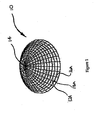
- a method for validating the identity of a person using corneal imaging techniques involves capturing an image of a person's cornea and where as illustrated in figure 1 the cornea is divided into a grid or map 10.
- the cornea grid or map 10 includes a plurality of meridians such as 12A extending from a vertex 14 of the cornea and being angularly equally separated.
- the grid or map 10 also includes a plurality of concentric rings such as 16A which are equally spaced and circumferentially separated intersecting with the meridians such as 12A at a plurality of points such as 18A.
- This method of corneal reconstruction is based on the arc step method and utilises an infrared vertex detector (not shown).
- the cornea image is captured using laser technology taking a cross-section of the cornea utilizing a slit beam.
- This form of corneal topography is used in ophthalmology to measure the eye prior to refractive surgery.
- US patent numbers 6079831 , 6120150 and 6257723 each by Sarver et al disclose a device and method for this type of corneal topography using slit beam diffuse reflection system such as the Bausch & Lomb ORBSCAN topographer.
- the preferred methodology then involves deriving one or more geometric parameters from the plurality of points mapped across the cornea.
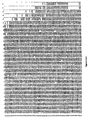
- the cornea map 10 includes around 300 meridians such as 12A and 30 rings such as 16A providing about 9,000 data points from which each of the geometric parameters is derived.
- the table of figure 2 illustrates raw data for these data points for the geometric parameter of axial radius with the rows 1 to 300 and columns F1 to F30 corresponding to the respective meridians such as 12A and concentric circles such as 16A of the corneal map of for example figure 1 .
- the drop down flag of "Data Type" provides data for other geometric parameters including tangential radius and corneal height.
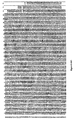
- Figure 3 is a table illustrating comparison of the geometric parameters derived from the person's cornea of figure 2 , in this example "113A" with "113B".
- This preferred methodology involves grouping the plurality of points of the cornea into a plurality of zones. In this example there are five (5) zones each consisting of six (6) concentric rings such as F1 to F6 of the table of figure 2 .
- the table of figure 3 shows corresponding numbers for other geometric parameters of the cornea including distance of each point from the visual axis "DST", corneal height "HGT", slope taken as tangent for each point "SLP” and tangential radius "TGL”.
- the methodology also involves weighting or factoring of the comparison dependent on the percentage or number of data points retained. For example, as shown in the table of figure 3 , the geometric parameter of axial radius "AXL” retained 8,283 data points of a total of 9,568 data points as shown in row 3 headed "Valid". As a percentage this represents 86.6% which in row 4 of the table is shown as the "Valid (%)".
- this comparison of the geometric parameter allows for validation of the identity of the person.
- the corneal comparison of for example the geometric parameters of the table of figure 3 associates like with like when the sum of the parameter comparison, such as the "Abs. Diff (All)", is less than a cumulative maximum value.
- a cumulative maximum value for axial radii of around 400 mm is effective in identifying like with like.
- the parameter comparison data of figure 3 is merely illustrative, it has also been revealed that cumulative maximum values for tangential radii and corneal height of about 2,000 mm and 45 microns, respectively, are similarly effective in identifying like with like.
- the table of figure 4 shows the results when "113A" is compared with another person in this case "114".
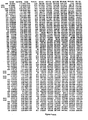
- Figure 5 is a table comparing the geometric parameter of the axial radii for "113A" with corresponding data for cornea of other persons. It is significant to note that in the final column headed "Dif-All" representing the sum of the absolute differences for each of the zones, no value is less than the cumulative maximum value of 400 except for the other data for "113B" and "113C” in rows 17 and 18 respectively of this table. This confirms that the chosen cumulative maximum value for the axial radii of 400 mm is effective in validating or identifying like with like. Similarly, the applicant has empirically derived from a large number of comparisons that the chosen cumulative maximum values for the geometric parameters of tangential radii and corneal height are effective in identifying like with like.
- the sensitivity may be improved by weighting data from certain parts/areas of the cornea. For example, “additional” weighting may be given to the mid-peripheral nasal region of the cornea. Where data across the cornea is not weighted there is a difference of the like to unlike of around 400%, weighting may increase the difference from like to unlike of around 1600% (or an increase in sensitivity of 4 times). This weighting may reduce the number of recognised data points from around 9,000 points to 200-300 points.
- the accuracy of this methodology may also be improved by relying upon a combination of the geometric parameters before validating the identify of a person.
- the method may require that the corneal comparison for the parameters of axial radii, tangential radii and corneal height are all less than the respective cumulative maximum value of 400 mm, 2,000 mm and 45 microns.
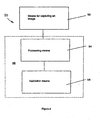
- FIG. 6 is a schematic representation of an embodiment of an apparatus for validating the identity of a person.
- the apparatus depicted generally as 50 includes means for capturing an image 52 in communication with processing means 54 and validation means 56.
- the imaging means 52 may be in the form of a corneal topographer such as that relying upon arc step corneal reconstruction or the ORBSCAN device disclosed earlier.
- the imaging means includes a video camera configured to record slit light beam images which are processed in a digital format to produce a corneal curvature profile and corneal thickness profile.
- the imaging means may also be in the form of a digital camera, mobile or cell phone, or Personal Digital Assistant (PDA) or a dedicated wall or desk mounted device for mass processing of subjects exiting or entering a building.
- PDA Personal Digital Assistant
- the processing means and validation means of this embodiment may be in the form of a microprocessor or processor 58 configured to compare the geometric parameters and validate the person based on a cumulative maximum value for one or more types of geometric parameters.
- the processor 58 includes a reference database having corresponding reference geometric parameters with which the comparison is made as described in the preferred methodology of the invention.
- the processor 58 may also include a validation database having the cumulative maximum value for each of the geometric parameters.
- An alternative embodiment of the invention utilises two thousand five hundred points representing discrete data points derived from the corneal map generated by the mire image of the placido disc illuminated and calibrated and combined with the arc step method thus rendering an array of points which are evenly and uniformly distributed across the corneal surface.
- the data points can be arranged in an array or matrix of cells being fifty cells wide by fifty cells high.
- the absolute difference is calculated for corresponding cells in each array.
- the cornea is divided into three zones corresponding to lines one to fifteen in the matrix thence lines sixteen to thirty five and thence lines thirty-six to fifty. The absolute sum difference between corresponding zones for the corneae is calculated.
- null or zero value occurs within the boundaries of the number matrix of an array a value is attributed to that cell as a calculated value dependent on the value of immediately surrounding cells in the array. Further, when a real value occurs in the number matrix of one array and a zero or null value occurs in the corresponding cell of the compared array the - value for both cells is recorded as zero. This may occur with lid interference or shadows from the cilia of the eye occurring more in one array than the other thus interfering with the mire image of the placido rings. The percentage of cells in each array returning a null or zero value is recorded and the value of cells returning real values is calculated.
- the absolute sum difference for each zone is given weighting by dividing the absolute sum difference by the percentage of cells with real values expressed as a decimal number (where for example 81% becomes 0.81). If using corneal height the absolute sum difference between corresponding zones of two corneae being compared is 25.04030650 microns and 81.2% of cells in corresponding arrays returned real values then the weighted (or corrected) difference is 30.83781589.
- the corneal data consisting of two thousand five hundred discrete data points is divided into three zones being lines one to fifteen and lines sixteen to thirty five and lines thirty six to fifty.
- one corneal data set (the subject having a name or personal identification number) is compared to a large database of many client eyes the client eye from the database with the least weighted sum difference for each zone of the cornea is recorded. That client eye with the least weighted sum difference is awarded a score of 'four' (4) for zones corresponding to lines one to fifteen and sixteen to thirty five and for least weighted sum difference for all three zones (one to fifteen, sixteen to thirty five and thirty six to fifty).
- That client eye with next least weighted sum difference is awarded a score of three (3) in the same manner as above, the next client eye with the least weighted sum difference is awarded a score of two (2) in the same manner as above and the next client eye with the least weighted sum difference is awarded a score of one (1) in the same manner as above.
- the scores are summed whereby two parameters are used for comparison being corneal height and axial radius.
- a subject's corneal data can be compared to a database whereby the subject has a pre-recorded dataset and when compared to that database of many different corneal datasets the dataset belonging to the subject on the database should result in having the least difference to the subject's dataset and therefore the highest score.
- the scores are ranked highest to lowest. The highest score when making a match also for name confirms the subject is recognised as belonging to the database and therefore as a match for the subject eye.
- the corneal data of a subject can be recorded on a card capable of retention of digital data by means of a computer chip or magnetic strip.
- Imaging means such as a topographic device can be used to capture the subject's corneal data for comparison from one occasion to another against their recorded corneal data on the card.
- the subject's card is scanned by a scanning device which communicates with the topographic device to allow for corneal data comparison.
- the topographic device (or other imaging means) or an associated device includes a processor which confirms ownership of the card and access can be granted or with-held subject to confirmation that the data recorded on the card passes the necessary criteria to be a match to the corneal data of the subject as captured by the imaging means.
- the imaging means or data capture device communicates with a remote database which holds a dataset of corneal geometric parameters for various individuals.
- the data capture device or an associated device may include or communicate with switching means which on verification of the subject provides access for that person. Access can be granted or denied to secure areas of the built environment, access to a mobile phone or Personal Digital Assistant (PDA) device, access to a personal computer or computer network, access to a banking network by way of an automatic teller machine, access to a motor vehicle or access to any device, area, computer terminal, or machine requiring a secure application to defend against unwanted intrusion or unauthorised use.
- PDA Personal Digital Assistant
- corneal data may be recorded on a credit card or smart card. Ownership of the credit card or smart card can be confirmed by instantaneous comparison of the credit card or smart card corneal data with captured corneal data (using imaging means) of the holder of the credit card or smart card.
- the method and apparatus of the preferred embodiment may have other various biometric applications including limited access when secure borders are required in the workplace or built environment, verification of credit card users, and other security or for example military related applications.
- passports may be embedded with corneal data against which scanned or imaged corresponding data is compared for validation.
- the method and apparatus may be utilised in the securing of military hardware, or in providing limited and secure access to for example digital files such as those attached to emails.
Landscapes
- Health & Medical Sciences (AREA)
- Engineering & Computer Science (AREA)
- Life Sciences & Earth Sciences (AREA)
- Physics & Mathematics (AREA)
- General Health & Medical Sciences (AREA)
- Medical Informatics (AREA)
- Biophysics (AREA)
- Veterinary Medicine (AREA)
- Public Health (AREA)
- Animal Behavior & Ethology (AREA)
- Surgery (AREA)
- Molecular Biology (AREA)
- Theoretical Computer Science (AREA)
- Heart & Thoracic Surgery (AREA)
- Biomedical Technology (AREA)
- Ophthalmology & Optometry (AREA)
- Pathology (AREA)
- General Physics & Mathematics (AREA)
- Human Computer Interaction (AREA)
- Multimedia (AREA)
- Artificial Intelligence (AREA)
- Bioinformatics & Computational Biology (AREA)
- Bioinformatics & Cheminformatics (AREA)
- General Engineering & Computer Science (AREA)
- Computer Vision & Pattern Recognition (AREA)
- Evolutionary Computation (AREA)
- Evolutionary Biology (AREA)
- Data Mining & Analysis (AREA)
- Measurement Of The Respiration, Hearing Ability, Form, And Blood Characteristics Of Living Organisms (AREA)
- Collating Specific Patterns (AREA)
Claims (24)
- Verfahren zum Validieren der Identität einer Person, in dem Daten aus einer Korneaabbildung der Person abgeleitet werden und die Validierung der Identität der Person von einem Vergleich der abgeleiteten Daten mit entsprechend abgeleiteten Bezugsdaten abhängig ist, dadurch gekennzeichnet, daß die aus der Abbildung abgeleiteten Daten aus Messungen von einem oder mehreren Geometrieparametern an mehreren Punkten oder Bereichen über einen Teil mindestens der Kornea der Person abgeleitet werden, und daß der Vergleich mit Bezugsdaten für jene Person stattfindet, die von Messungen jenes einen oder jener mehreren Geometrieparameter an entsprechenden Punkten oder Bereichen der Kornea abhängig sind.
- Verfahren zum Validieren der Identität einer Person nach Anspruch 1, wobei der Schritt des Validierens der Identität der Person das Setzen eines kumulierten Maximalwerts für die Differenz jedes der Geometrieparameter von einer Gelegenheit zu einer anderen umfaßt, und wobei die Identität der Person nur validiert wird, wenn die Summe der Differenz des Parametervergleichs für jeden der Punkte oder Bereiche kleiner oder gleich dem Maximalwert ist.
- Verfahren zum Validieren der Identität einer Person nach einem der Ansprüche 1 und 2, wobei die Korneaabbildung ein Bogenschrittverfahren umfaßt, wobei ein Vertex (14) der Kornea lokalisiert wird, aus dem mehrere Meridiane (12A) zusammen mit konzentrischen Ringen (16A) entwickelt werden, wobei mehrere Punkte (18A), aus den jede der Geometrieparametermessungen abgeleitet wird, durch Schnittpunkte der Meridiane (12A) und Ringe (16A) definiert werden.
- Verfahren zum Validieren der Identität einer Person nach Anspruch 3, wobei die Korneaabbildung das Richten eines Infrarotdetektors auf das Auge zur Ausrichtung des Vertexabstands des Detektors mit dem Korneascheitelpunkt und einen Mechanismus zur Ausrichtung der optischen Achse der Vorrichtung mit der Sehachse des Auges umfaßt.
- Verfahren zum Validieren der Identität einer Person nach einem der Ansprüche 1 und 2, wobei die Korneaabbildung das Entwickeln mehrerer Querschnitte der Kornea, die mehreren Bereichen der Kornea entsprechen, und das Ableiten der Geometrieparametermessungen aus jedem der mehreren Korneaquerschnitte umfaßt.
- Verfahren zum Validieren der Identität einer Person nach Anspruch 5, wobei die Querschnitte durch Richten eines Lasers auf das Auge entwickelt werden.
- Verfahren zum Validieren der Identität einer Person nach einem der Ansprüche 1 bis 4, das außerdem den Schritt des Gruppierens der mehreren Punkte oder Bereiche zu mehreren Zonen aufweist, die zusammen den abgebildeten Abschnitt der Kornea abdecken.
- Verfahren zum Validieren der Identität einer Person nach Anspruch 7, wobei der Vergleich der abgeleiteten Daten mit den Bezugsdaten den Schritt des Berechnens der absoluten Differenzen zwischen den abgeleiteten Daten und den entsprechenden Bezugsdaten für jeden der mehreren Punkte oder Bereiche für jede der Zonen und das Summieren der absoluten Differenzen für jede der Zonen umfaßt, wobei die summierte absolute Differenz für den relevanten Geometrieparameter mit dem kumulierten Maximalwert zur Validierung der Identität der Person verglichen wird.
- Verfahren zum Validieren der Identität einer Person nach einem der Ansprüche 1 bis 8, wobei der eine oder die mehreren Geometrieparametern einer oder mehrere sind aus: axialen Radien, tangentialen Radien, Korneahöhe, Korneaelevation, Brechkraft, axiale Brechkraft, tangentiale Brechkraft, Korneadicke, Korneadurchmesser und Korneasehne.
- Verfahren zum Validieren der Identität einer Person nach Anspruch 9, wobei der kumulierte Maximalwert zum Vergleich mit der summierten absoluten Differenz für den Geometrieparameter der:(i) axialen Radien 400 mm beträgt;(ii) tangentialen Radien 2000 mm beträgt; und/oder(iii) Korneahöhe 45 Mikrometer beträgt.
- Verfahren zum Validieren der Identität einer Person nach Anspruch 10, wobei der kumulierte Maximalwert verwendet wird, wenn Daten aus einem topographischen Bild der Kornea erfaßt werden, wobei das Bogenschrittverfahren und bis zu 9000 Punkte auf der Kornea verwendet werden.
- Verfahren zum Validieren der Identität einer Person nach einem der Ansprüche 1 bis 11, das außerdem den Schritt des Gewichtens oder Faktorisierens des Geometrieparametervergleichs vor der Validierung der Identität der Person aufweist.
- Verfahren zum Validieren der Identität einer Person nach Anspruch 12, wobei der Schritt des Vergleichens der abgeleiteten Daten mit den Bezugsdaten das Filtern des einen oder der mehreren Geometrieparameter für jeden der Punkte oder Bereiche umfaßt, um nur jene Geometrieparameter innerhalb eines vorgewählten Bereichs zu halten.
- Verfahren zum Validieren der Identität einer Person nach Anspruch 13, wobei das Gewichten oder Faktorisieren das Multiplizieren der summierten absoluten Differenz für den spezifizierten Geometrieparameter mit dem Prozentsatz der gehaltenen mehreren Punkte oder Bereiche umfaßt.
- Verfahren zum Validieren der Identität einer Person nach Anspruch 2, wobei der Schritt des Validierens der Identität der Person das Vornehmen einer Auswahl der Geometrieparameter zum Vergleich umfaßt, und die Identität der Person nur validiert wird, wenn die Summe des Parametervergleichs für jeden der Punkte oder Bereiche kleiner als jeweilige der kumulierten Maximalwerte für alle der Parameter ist.
- Vorrichtung zur Validierung der Identität einer Person, in der eine Abbildungseinrichtung (52) eine Korneaabbildung der Person bereitstellt und eine Validierungseinrichtung (56) die Identität der Person in Abhängigkeit von einem Vergleich zwischen aus der Korneaabbildung abgeleiteten Daten und entsprechend abgeleiteten Bezugsdaten validiert, dadurch gekennzeichnet, daß die abgeleiteten Daten durch eine Verarbeitungseinrichtung (54) aus Messungen von einem oder mehreren Geometrieparametern an mehreren Punkten oder Bereichen über einen Teil mindestens der Kornea der Person abgeleitet werden, und daß die Validierungseinrichtung (56) die abgeleiteten Daten mit Bezugsdaten vergleicht, die von Messungen jenes einen oder jener mehreren Geometrieparameter an entsprechenden Punkten oder Bereichen der Kornea abhängig sind.
- Vorrichtung zur Validierung der Identität einer Person nach Anspruch 16, wobei die Abbildungseinrichtung eine Videoabbildungsvorrichtung umfaßt, die eine Videoerfassungskarte einer Zentraleinheit versorgt.
- Vorrichtung zur Validierung der Identität einer Person nach Anspruch 17, wobei die Abbildungseinrichtung eine Digitalkamera ist, die imstande ist, ein oder mehrere Digitalbilder zu erfassen, die die Zentraleinheit versorgt, die einen Prozessor umfaßt.
- Vorrichtung zur Validierung der Identität einer Person nach Anspruch 16, wobei die Abbildungseinrichtung einen Infrarotdetektor zur Vertexausrichtung der Abbildungseinrichtung und sichtbares Licht umfaßt, das eingerichtet ist, auf das Auge gerichtet zu werden, und gemäß eines Bogenschrittverfahrens mehrere Meridiane (12A) zusammen mit konzentrischen Ringen (16A) oder einem Teil davon entwickelt.
- Vorrichtung zur Validierung der Identität einer Person nach einem der Ansprüche 16 bis 19, wobei die Abbildungseinrichtung eine in der Hand gehaltene Vorrichtung ist.
- Vorrichtung zur Validierung der Identität einer Person nach einem der Ansprüche 16 bis 20, wobei die Abbildungseinrichtung einen Laser umfaßt, der eingerichtet ist, auf das Auge gerichtet zu werden, um mehrere Querschnitte zu entwickeln, aus denen der Geometrieparameter abgeleitet wird.
- Vorrichtung zur Validierung der Identität einer Person nach einem der Ansprüche 16 bis 21, wobei die Validierungseinrichtung (56) eine Bezugsdatenbank umfaßt, die den entsprechenden Bezugsgeometrieparameter aufweist, mit dem jeder der Geometrieparameter für jeden der mehreren Punkte oder Bereiche über der Kornea verglichen wird.
- Vorrichtung zur Validierung der Identität einer Person nach einem der Ansprüche 16 bis 22, wobei die Validierungseinrichtung (56) eine Validierungsdatenbank umfaßt, die einen kumulierten Maximalwert für jedem der Geometrieparameter aufweist, wobei die Validierungseinrichtung (56) konfiguriert ist, die Person nur zu validieren, wenn die Summe des Parametervergleichs für jeden der Punkte oder Bereiche kleiner oder gleich dem Maximalwert ist.
- Vorrichtung zur Validierung der Identität einer Person nach einem der Ansprüche 16 bis 21, wobei die Validierungseinrichtung (56) ein Bewertungssystem ist, das die höchste Bewertung an die kleinste gewichtete Summendifferenz beruhend auf Korneapunkten, -Bereichen und oder dem Gesamtbereich der abgebildeten Kornea vergibt, und eine passende Identität bestätigt, wenn ein Vergleich eines Korneadatensatzes und Namen oder persönliche Identifikationsnummer mit einer Datenbank desselben zur höchsten Bewertung mit demselben Namen oder derselben persönlichen Identifikationsnummer paßt.
Applications Claiming Priority (3)
| Application Number | Priority Date | Filing Date | Title |
|---|---|---|---|
| AU2004905635A AU2004905635A0 (en) | 2004-09-29 | Corneal Biometry | |
| US68548405P | 2005-05-31 | 2005-05-31 | |
| PCT/AU2005/001386 WO2006034527A1 (en) | 2004-09-29 | 2005-09-12 | Corneal biometry |
Publications (3)
| Publication Number | Publication Date |
|---|---|
| EP1804646A1 EP1804646A1 (de) | 2007-07-11 |
| EP1804646A4 EP1804646A4 (de) | 2008-02-20 |
| EP1804646B1 true EP1804646B1 (de) | 2009-09-09 |
Family
ID=36118493
Family Applications (1)
| Application Number | Title | Priority Date | Filing Date |
|---|---|---|---|
| EP05779013A Expired - Lifetime EP1804646B1 (de) | 2004-09-29 | 2005-09-12 | Hornhautbiometrie |
Country Status (8)
| Country | Link |
|---|---|
| US (1) | US7881503B2 (de) |
| EP (1) | EP1804646B1 (de) |
| KR (1) | KR20070072904A (de) |
| CN (1) | CN101262811A (de) |
| AU (1) | AU2005289354B2 (de) |
| BR (1) | BRPI0515762A (de) |
| CA (1) | CA2581570A1 (de) |
| WO (1) | WO2006034527A1 (de) |
Families Citing this family (10)
| Publication number | Priority date | Publication date | Assignee | Title |
|---|---|---|---|---|
| US9582639B2 (en) | 2006-08-11 | 2017-02-28 | University Of Tennessee Research Foundation | Method and apparatus for mobile disaster victim identification |
| US9235733B2 (en) | 2006-08-11 | 2016-01-12 | J. Douglas Birdwell | Mobile biometrics information collection and identification |
| US8718335B2 (en) * | 2007-11-29 | 2014-05-06 | Wavefront Biometric Technologies Pty Limited | Biometric authentication using the eye |
| US8600120B2 (en) | 2008-01-03 | 2013-12-03 | Apple Inc. | Personal computing device control using face detection and recognition |
| ES2337866B2 (es) * | 2008-07-24 | 2011-02-14 | Universidad Complutense De Madrid | Reconocimiento biometrico mediante estudio del mapa de superficie delsegundo dioptrio ocular. |
| KR102185854B1 (ko) | 2017-09-09 | 2020-12-02 | 애플 인크. | 생체측정 인증의 구현 |
| US10860096B2 (en) | 2018-09-28 | 2020-12-08 | Apple Inc. | Device control using gaze information |
| CN112232255B (zh) * | 2020-10-26 | 2022-11-01 | 北京鹰瞳科技发展股份有限公司 | 基于多模态数据的身份认证方法及设备 |
| US12216754B2 (en) | 2021-05-10 | 2025-02-04 | Apple Inc. | User interfaces for authenticating to perform secure operations |
| CN113712506A (zh) * | 2021-09-08 | 2021-11-30 | 无锡市第二人民医院 | 基于摩尔纹的眼压传感系统及眼压测量方法 |
Family Cites Families (15)
| Publication number | Priority date | Publication date | Assignee | Title |
|---|---|---|---|---|
| AU716040B2 (en) * | 1993-06-24 | 2000-02-17 | Bausch & Lomb Incorporated | Ophthalmic pachymeter and method of making ophthalmic determinations |
| US5557351A (en) * | 1993-09-22 | 1996-09-17 | Konan Inc. | Apparatus for obtaining visual images of cornea cells and method for displaying imaging-position around cornea for the apparatus |
| US5644642A (en) * | 1995-04-03 | 1997-07-01 | Carl Zeiss, Inc. | Gaze tracking using optical coherence tomography |
| DE69712484T2 (de) * | 1996-06-06 | 2002-12-19 | British Telecommunications P.L.C., London | Identifizierung von personen |
| US6271914B1 (en) * | 1996-11-25 | 2001-08-07 | Autonomous Technologies Corporation | Objective measurement and correction of optical systems using wavefront analysis |
| US6079831A (en) * | 1997-04-24 | 2000-06-27 | Orbtek, Inc. | Device and method for mapping the topography of an eye using elevation measurements in combination with slope measurements |
| DE69906779T2 (de) * | 1998-11-13 | 2004-01-29 | Jean Benedikt | Verfahren und vorrichtung zur gleichzeitigen erfassung der oberflächentopographie und der biometrie eines auges |
| WO2001077739A2 (en) * | 2000-04-11 | 2001-10-18 | Benedikt Jean | Selective corneal aberrometry |
| JP4554771B2 (ja) * | 2000-06-20 | 2010-09-29 | パナソニック株式会社 | 正当性認証システム、個人証発行システム及び個人証 |
| EP1357831A2 (de) * | 2001-02-09 | 2003-11-05 | Sensomotoric Instruments GmbH | Vorrichtung zur multidimensionalen augenverfolgung und positionsbestimmung |
| US6575573B2 (en) * | 2001-10-17 | 2003-06-10 | Carl Zeiss Ophthalmic Systems, Inc. | Method and apparatus for measuring a corneal profile of an eye |
| US6666857B2 (en) * | 2002-01-29 | 2003-12-23 | Robert F. Smith | Integrated wavefront-directed topography-controlled photoablation |
| US7199767B2 (en) * | 2002-03-07 | 2007-04-03 | Yechezkal Evan Spero | Enhanced vision for driving |
| JP2005211631A (ja) | 2004-01-29 | 2005-08-11 | Tomey Corporation | 眼科装置における計測開始タイミング |
| WO2006101943A2 (en) * | 2005-03-16 | 2006-09-28 | Lc Technologies, Inc. | System and method for eyeball surface topography as a biometric discriminator |
-
2005
- 2005-09-12 EP EP05779013A patent/EP1804646B1/de not_active Expired - Lifetime
- 2005-09-12 BR BRPI0515762-5A patent/BRPI0515762A/pt not_active Application Discontinuation
- 2005-09-12 CN CNA2005800404165A patent/CN101262811A/zh active Pending
- 2005-09-12 CA CA 2581570 patent/CA2581570A1/en not_active Abandoned
- 2005-09-12 WO PCT/AU2005/001386 patent/WO2006034527A1/en not_active Ceased
- 2005-09-12 US US11/576,031 patent/US7881503B2/en not_active Expired - Fee Related
- 2005-09-12 AU AU2005289354A patent/AU2005289354B2/en not_active Ceased
- 2005-09-12 KR KR1020077009843A patent/KR20070072904A/ko not_active Withdrawn
Also Published As
| Publication number | Publication date |
|---|---|
| BRPI0515762A (pt) | 2008-07-29 |
| AU2005289354A1 (en) | 2006-04-06 |
| CA2581570A1 (en) | 2006-04-06 |
| WO2006034527A1 (en) | 2006-04-06 |
| AU2005289354B2 (en) | 2010-07-29 |
| EP1804646A1 (de) | 2007-07-11 |
| KR20070072904A (ko) | 2007-07-06 |
| CN101262811A (zh) | 2008-09-10 |
| US7881503B2 (en) | 2011-02-01 |
| US20070291997A1 (en) | 2007-12-20 |
| EP1804646A4 (de) | 2008-02-20 |
Similar Documents
| Publication | Publication Date | Title |
|---|---|---|
| US8317327B2 (en) | System and method for eyeball surface topography as a biometric discriminator | |
| Hill | Retina identification | |
| US8718335B2 (en) | Biometric authentication using the eye | |
| EP2319392B1 (de) | Biometrische erkennung mittels untersuchung der oberflächenkarte der hinteren fläche der hornhaut | |
| US20220198831A1 (en) | System for determining one or more characteristics of a user based on an image of their eye using an ar/vr headset | |
| Boyd et al. | Post-mortem iris recognition—a survey and assessment of the state of the art | |
| Roizenblatt et al. | Iris recognition as a biometric method after cataract surgery | |
| AU2005289354B2 (en) | Corneal biometry | |
| US9704039B2 (en) | Biometric authentication using the eye | |
| Sansola | Postmortem iris recognition and its application in human identification | |
| JP2001195594A (ja) | 虹彩同定システム及び虹彩認識によって人を同定する方法 | |
| NZ554604A (en) | Corneal Biometry | |
| Semerád et al. | Retina recognition using crossings and bifurcations | |
| US6665426B1 (en) | Method of biometric identification of an individual and associated apparatus | |
| Drahanský et al. | Recognition of Eye Characteristics | |
| ur Rab | ADVANTAGES OF IRIS AS A BIOMETRIC TOOL OVER OTHER BIOMETRIC SYSTEMS | |
| AU2014280908B2 (en) | Biometric Authentication using the Eye | |
| Kotkova et al. | The identification of persons using eye biometrics in a society with high security demands | |
| Bastan | Biometrie algorithms for iris recognition | |
| McPherson | A study of a personal iris recognition system for biometric identification | |
| HK1159456A (en) | Biometric recognition through examination of the surface map of the second ocular dioptric |
Legal Events
| Date | Code | Title | Description |
|---|---|---|---|
| PUAI | Public reference made under article 153(3) epc to a published international application that has entered the european phase |
Free format text: ORIGINAL CODE: 0009012 |
|
| 17P | Request for examination filed |
Effective date: 20070425 |
|
| AK | Designated contracting states |
Kind code of ref document: A1 Designated state(s): AT BE BG CH CY CZ DE DK EE ES FI FR GB GR HU IE IS IT LI LT LU LV MC NL PL PT RO SE SI SK TR |
|
| DAX | Request for extension of the european patent (deleted) | ||
| A4 | Supplementary search report drawn up and despatched |
Effective date: 20080122 |
|
| 17Q | First examination report despatched |
Effective date: 20080617 |
|
| GRAP | Despatch of communication of intention to grant a patent |
Free format text: ORIGINAL CODE: EPIDOSNIGR1 |
|
| GRAS | Grant fee paid |
Free format text: ORIGINAL CODE: EPIDOSNIGR3 |
|
| GRAA | (expected) grant |
Free format text: ORIGINAL CODE: 0009210 |
|
| AK | Designated contracting states |
Kind code of ref document: B1 Designated state(s): AT BE BG CH CY CZ DE DK EE ES FI FR GB GR HU IE IS IT LI LT LU LV MC NL PL PT RO SE SI SK TR |
|
| REG | Reference to a national code |
Ref country code: GB Ref legal event code: FG4D |
|
| REG | Reference to a national code |
Ref country code: CH Ref legal event code: EP |
|
| REG | Reference to a national code |
Ref country code: IE Ref legal event code: FG4D |
|
| REF | Corresponds to: |
Ref document number: 602005016584 Country of ref document: DE Date of ref document: 20091022 Kind code of ref document: P |
|
| REG | Reference to a national code |
Ref country code: CH Ref legal event code: NV Representative=s name: VOSSIUS & PARTNER |
|
| PG25 | Lapsed in a contracting state [announced via postgrant information from national office to epo] |
Ref country code: FI Free format text: LAPSE BECAUSE OF FAILURE TO SUBMIT A TRANSLATION OF THE DESCRIPTION OR TO PAY THE FEE WITHIN THE PRESCRIBED TIME-LIMIT Effective date: 20090909 Ref country code: LT Free format text: LAPSE BECAUSE OF FAILURE TO SUBMIT A TRANSLATION OF THE DESCRIPTION OR TO PAY THE FEE WITHIN THE PRESCRIBED TIME-LIMIT Effective date: 20090909 Ref country code: SE Free format text: LAPSE BECAUSE OF FAILURE TO SUBMIT A TRANSLATION OF THE DESCRIPTION OR TO PAY THE FEE WITHIN THE PRESCRIBED TIME-LIMIT Effective date: 20090909 |
|
| NLV1 | Nl: lapsed or annulled due to failure to fulfill the requirements of art. 29p and 29m of the patents act | ||
| LTIE | Lt: invalidation of european patent or patent extension |
Effective date: 20090909 |
|
| PG25 | Lapsed in a contracting state [announced via postgrant information from national office to epo] |
Ref country code: PL Free format text: LAPSE BECAUSE OF FAILURE TO SUBMIT A TRANSLATION OF THE DESCRIPTION OR TO PAY THE FEE WITHIN THE PRESCRIBED TIME-LIMIT Effective date: 20090909 Ref country code: NL Free format text: LAPSE BECAUSE OF FAILURE TO SUBMIT A TRANSLATION OF THE DESCRIPTION OR TO PAY THE FEE WITHIN THE PRESCRIBED TIME-LIMIT Effective date: 20090909 Ref country code: LV Free format text: LAPSE BECAUSE OF FAILURE TO SUBMIT A TRANSLATION OF THE DESCRIPTION OR TO PAY THE FEE WITHIN THE PRESCRIBED TIME-LIMIT Effective date: 20090909 Ref country code: SI Free format text: LAPSE BECAUSE OF FAILURE TO SUBMIT A TRANSLATION OF THE DESCRIPTION OR TO PAY THE FEE WITHIN THE PRESCRIBED TIME-LIMIT Effective date: 20090909 |
|
| PG25 | Lapsed in a contracting state [announced via postgrant information from national office to epo] |
Ref country code: CY Free format text: LAPSE BECAUSE OF FAILURE TO SUBMIT A TRANSLATION OF THE DESCRIPTION OR TO PAY THE FEE WITHIN THE PRESCRIBED TIME-LIMIT Effective date: 20090909 |
|
| PG25 | Lapsed in a contracting state [announced via postgrant information from national office to epo] |
Ref country code: PT Free format text: LAPSE BECAUSE OF FAILURE TO SUBMIT A TRANSLATION OF THE DESCRIPTION OR TO PAY THE FEE WITHIN THE PRESCRIBED TIME-LIMIT Effective date: 20100111 Ref country code: RO Free format text: LAPSE BECAUSE OF FAILURE TO SUBMIT A TRANSLATION OF THE DESCRIPTION OR TO PAY THE FEE WITHIN THE PRESCRIBED TIME-LIMIT Effective date: 20090909 Ref country code: IS Free format text: LAPSE BECAUSE OF FAILURE TO SUBMIT A TRANSLATION OF THE DESCRIPTION OR TO PAY THE FEE WITHIN THE PRESCRIBED TIME-LIMIT Effective date: 20100109 Ref country code: ES Free format text: LAPSE BECAUSE OF FAILURE TO SUBMIT A TRANSLATION OF THE DESCRIPTION OR TO PAY THE FEE WITHIN THE PRESCRIBED TIME-LIMIT Effective date: 20091220 Ref country code: EE Free format text: LAPSE BECAUSE OF FAILURE TO SUBMIT A TRANSLATION OF THE DESCRIPTION OR TO PAY THE FEE WITHIN THE PRESCRIBED TIME-LIMIT Effective date: 20090909 Ref country code: CZ Free format text: LAPSE BECAUSE OF FAILURE TO SUBMIT A TRANSLATION OF THE DESCRIPTION OR TO PAY THE FEE WITHIN THE PRESCRIBED TIME-LIMIT Effective date: 20090909 |
|
| PG25 | Lapsed in a contracting state [announced via postgrant information from national office to epo] |
Ref country code: SK Free format text: LAPSE BECAUSE OF FAILURE TO SUBMIT A TRANSLATION OF THE DESCRIPTION OR TO PAY THE FEE WITHIN THE PRESCRIBED TIME-LIMIT Effective date: 20090909 |
|
| PG25 | Lapsed in a contracting state [announced via postgrant information from national office to epo] |
Ref country code: BE Free format text: LAPSE BECAUSE OF FAILURE TO SUBMIT A TRANSLATION OF THE DESCRIPTION OR TO PAY THE FEE WITHIN THE PRESCRIBED TIME-LIMIT Effective date: 20090909 Ref country code: AT Free format text: LAPSE BECAUSE OF FAILURE TO SUBMIT A TRANSLATION OF THE DESCRIPTION OR TO PAY THE FEE WITHIN THE PRESCRIBED TIME-LIMIT Effective date: 20090909 |
|
| PLBE | No opposition filed within time limit |
Free format text: ORIGINAL CODE: 0009261 |
|
| STAA | Information on the status of an ep patent application or granted ep patent |
Free format text: STATUS: NO OPPOSITION FILED WITHIN TIME LIMIT |
|
| PG25 | Lapsed in a contracting state [announced via postgrant information from national office to epo] |
Ref country code: DK Free format text: LAPSE BECAUSE OF FAILURE TO SUBMIT A TRANSLATION OF THE DESCRIPTION OR TO PAY THE FEE WITHIN THE PRESCRIBED TIME-LIMIT Effective date: 20090909 |
|
| 26N | No opposition filed |
Effective date: 20100610 |
|
| PG25 | Lapsed in a contracting state [announced via postgrant information from national office to epo] |
Ref country code: GR Free format text: LAPSE BECAUSE OF FAILURE TO SUBMIT A TRANSLATION OF THE DESCRIPTION OR TO PAY THE FEE WITHIN THE PRESCRIBED TIME-LIMIT Effective date: 20091210 |
|
| PGFP | Annual fee paid to national office [announced via postgrant information from national office to epo] |
Ref country code: IE Payment date: 20100913 Year of fee payment: 6 Ref country code: MC Payment date: 20100916 Year of fee payment: 6 |
|
| PGFP | Annual fee paid to national office [announced via postgrant information from national office to epo] |
Ref country code: FR Payment date: 20100923 Year of fee payment: 6 Ref country code: LU Payment date: 20100922 Year of fee payment: 6 |
|
| PGFP | Annual fee paid to national office [announced via postgrant information from national office to epo] |
Ref country code: GB Payment date: 20100929 Year of fee payment: 6 |
|
| PGFP | Annual fee paid to national office [announced via postgrant information from national office to epo] |
Ref country code: CH Payment date: 20101015 Year of fee payment: 6 Ref country code: DE Payment date: 20101029 Year of fee payment: 6 |
|
| PG25 | Lapsed in a contracting state [announced via postgrant information from national office to epo] |
Ref country code: IT Free format text: LAPSE BECAUSE OF FAILURE TO SUBMIT A TRANSLATION OF THE DESCRIPTION OR TO PAY THE FEE WITHIN THE PRESCRIBED TIME-LIMIT Effective date: 20090909 Ref country code: BG Free format text: LAPSE BECAUSE OF FAILURE TO SUBMIT A TRANSLATION OF THE DESCRIPTION OR TO PAY THE FEE WITHIN THE PRESCRIBED TIME-LIMIT Effective date: 20090930 |
|
| PG25 | Lapsed in a contracting state [announced via postgrant information from national office to epo] |
Ref country code: HU Free format text: LAPSE BECAUSE OF FAILURE TO SUBMIT A TRANSLATION OF THE DESCRIPTION OR TO PAY THE FEE WITHIN THE PRESCRIBED TIME-LIMIT Effective date: 20100310 |
|
| PG25 | Lapsed in a contracting state [announced via postgrant information from national office to epo] |
Ref country code: TR Free format text: LAPSE BECAUSE OF FAILURE TO SUBMIT A TRANSLATION OF THE DESCRIPTION OR TO PAY THE FEE WITHIN THE PRESCRIBED TIME-LIMIT Effective date: 20090909 |
|
| PG25 | Lapsed in a contracting state [announced via postgrant information from national office to epo] |
Ref country code: MC Free format text: LAPSE BECAUSE OF NON-PAYMENT OF DUE FEES Effective date: 20110930 |
|
| REG | Reference to a national code |
Ref country code: CH Ref legal event code: PL |
|
| GBPC | Gb: european patent ceased through non-payment of renewal fee |
Effective date: 20110912 |
|
| REG | Reference to a national code |
Ref country code: IE Ref legal event code: MM4A |
|
| REG | Reference to a national code |
Ref country code: FR Ref legal event code: ST Effective date: 20120531 |
|
| REG | Reference to a national code |
Ref country code: DE Ref legal event code: R119 Ref document number: 602005016584 Country of ref document: DE Effective date: 20120403 |
|
| PG25 | Lapsed in a contracting state [announced via postgrant information from national office to epo] |
Ref country code: IE Free format text: LAPSE BECAUSE OF NON-PAYMENT OF DUE FEES Effective date: 20110912 Ref country code: CH Free format text: LAPSE BECAUSE OF NON-PAYMENT OF DUE FEES Effective date: 20110930 Ref country code: LI Free format text: LAPSE BECAUSE OF NON-PAYMENT OF DUE FEES Effective date: 20110930 Ref country code: DE Free format text: LAPSE BECAUSE OF NON-PAYMENT OF DUE FEES Effective date: 20120403 |
|
| PG25 | Lapsed in a contracting state [announced via postgrant information from national office to epo] |
Ref country code: FR Free format text: LAPSE BECAUSE OF NON-PAYMENT OF DUE FEES Effective date: 20110930 Ref country code: GB Free format text: LAPSE BECAUSE OF NON-PAYMENT OF DUE FEES Effective date: 20110912 |
|
| PG25 | Lapsed in a contracting state [announced via postgrant information from national office to epo] |
Ref country code: LU Free format text: LAPSE BECAUSE OF NON-PAYMENT OF DUE FEES Effective date: 20110912 |