EP1779406B1 - Mass spectrometer - Google Patents
Mass spectrometer Download PDFInfo
- Publication number
- EP1779406B1 EP1779406B1 EP05757459.2A EP05757459A EP1779406B1 EP 1779406 B1 EP1779406 B1 EP 1779406B1 EP 05757459 A EP05757459 A EP 05757459A EP 1779406 B1 EP1779406 B1 EP 1779406B1
- Authority
- EP
- European Patent Office
- Prior art keywords
- mass
- charge ratio
- decimal
- ion
- ions
- Prior art date
- Legal status (The legal status is an assumption and is not a legal conclusion. Google has not performed a legal analysis and makes no representation as to the accuracy of the status listed.)
- Expired - Lifetime
Links
- CAIVRMLPYVQFRH-UHFFFAOYSA-N Cc1nc(O)c2[n]1-c(ccc(Cl)c1)c1C(c(cccc1)c1F)=NC2 Chemical compound Cc1nc(O)c2[n]1-c(ccc(Cl)c1)c1C(c(cccc1)c1F)=NC2 CAIVRMLPYVQFRH-UHFFFAOYSA-N 0.000 description 1
- DDLIGBOFAVUZHB-UHFFFAOYSA-N Cc1ncc2[n]1-c(ccc(Cl)c1)c1C(c(cccc1)c1F)=NC2 Chemical compound Cc1ncc2[n]1-c(ccc(Cl)c1)c1C(c(cccc1)c1F)=NC2 DDLIGBOFAVUZHB-UHFFFAOYSA-N 0.000 description 1
Images



Classifications
-
- H—ELECTRICITY
- H01—ELECTRIC ELEMENTS
- H01J—ELECTRIC DISCHARGE TUBES OR DISCHARGE LAMPS
- H01J49/00—Particle spectrometers or separator tubes
- H01J49/0027—Methods for using particle spectrometers
- H01J49/0031—Step by step routines describing the use of the apparatus
-
- G—PHYSICS
- G01—MEASURING; TESTING
- G01N—INVESTIGATING OR ANALYSING MATERIALS BY DETERMINING THEIR CHEMICAL OR PHYSICAL PROPERTIES
- G01N33/00—Investigating or analysing materials by specific methods not covered by groups G01N1/00 - G01N31/00
- G01N33/15—Medicinal preparations ; Physical properties thereof, e.g. dissolubility
-
- G—PHYSICS
- G16—INFORMATION AND COMMUNICATION TECHNOLOGY [ICT] SPECIALLY ADAPTED FOR SPECIFIC APPLICATION FIELDS
- G16C—COMPUTATIONAL CHEMISTRY; CHEMOINFORMATICS; COMPUTATIONAL MATERIALS SCIENCE
- G16C20/00—Chemoinformatics, i.e. ICT specially adapted for the handling of physicochemical or structural data of chemical particles, elements, compounds or mixtures
- G16C20/20—Identification of molecular entities, parts thereof or of chemical compositions
-
- H—ELECTRICITY
- H01—ELECTRIC ELEMENTS
- H01J—ELECTRIC DISCHARGE TUBES OR DISCHARGE LAMPS
- H01J49/00—Particle spectrometers or separator tubes
- H01J49/004—Combinations of spectrometers, tandem spectrometers, e.g. MS/MS, MSn
-
- H—ELECTRICITY
- H01—ELECTRIC ELEMENTS
- H01J—ELECTRIC DISCHARGE TUBES OR DISCHARGE LAMPS
- H01J49/00—Particle spectrometers or separator tubes
- H01J49/26—Mass spectrometers or separator tubes
-
- Y—GENERAL TAGGING OF NEW TECHNOLOGICAL DEVELOPMENTS; GENERAL TAGGING OF CROSS-SECTIONAL TECHNOLOGIES SPANNING OVER SEVERAL SECTIONS OF THE IPC; TECHNICAL SUBJECTS COVERED BY FORMER USPC CROSS-REFERENCE ART COLLECTIONS [XRACs] AND DIGESTS
- Y10—TECHNICAL SUBJECTS COVERED BY FORMER USPC
- Y10T—TECHNICAL SUBJECTS COVERED BY FORMER US CLASSIFICATION
- Y10T436/00—Chemistry: analytical and immunological testing
- Y10T436/24—Nuclear magnetic resonance, electron spin resonance or other spin effects or mass spectrometry
Definitions
- the present invention relates to a mass spectrometer and a method of mass spectrometry.
- metabolites of interest cannot usually be predicted. This is because the formation of metabolites may be determined by novel enzymatic reactions and by factors which are difficult to predict in advance such as bio-availability.
- Ions which are determined as having a mass to charge ratio which indicates that they may relate to a metabolite of interest are,then fragmented in a collision cell. The resulting fragment products are then mass analysed enabling the structure of each possible metabolite to be predicted.
- An advantage of the conventional automated mode of data acquisition is that a fair degree of data may be acquired from a single HPLC injection.
- a disadvantage of the conventional approach is that only those peaks which have an intensity which exceeds a pre-defined intensity threshold are normally selected for subsequent MS/MS analysis (i.e. fragmentation analysis).
- MS/MS analysis i.e. fragmentation analysis
- Another particular problem with the conventional approach is that since the mass or mass to charge ratios of potential metabolites is not generally known in advance, then time can be wasted analysing a large number of peaks all or many of which subsequently turn out to be of little or no interest. This can also mean that actual peaks of potential interest which could have been analysed if only they had been recognised fail to be analysed at all because the mass spectrometer is busy analysing other ions.
- the step of searching for one or more second substances or ions preferably comprises searching solely on the basis of the decimal mass or mass to charge ratio component of the one or more second substances or ions and not on the basis of the integer nominal mass or mass to charge ratio component of the one or more second substances or ions.
- the step of searching for one or more second substances or ions preferably comprises searching some or all second substances or ions which have an integer nominal mass or mass to charge ratio component which is different from the first integer nominal mass or mass to charge ratio component.
- x 1 falls within a range selected from the group consisting of: (i) ⁇ 1; (ii) 1-5; (iii) 5-10; (iv) 10-15; (v) 15-20; (vi) 20-25; (vii) 25-30; (viii) 30-35; (ix) 35-40; (x) 40-45; (xi) 45-50; (xii) 50-55; (xiii) 55-60; (xiv) 60-65; (xv) 65-70; (xvi) 70-75; (xvii) 75-80; (xviii) 80-85; (xix) 85-90; (xx) 90-95; (xxi) 95-100; and (xxii) > 100.
- x 2 preferably falls within a range selected from the group consisting of: (i) ⁇ 1; (ii) 1-5; (iii) 5-10; (iv) 10-15; (v) 15-20; (vi) 20-25; (vii) 25-30; (viii) 30-35; (ix) 35-40; (x) 40-45; (xi) 45-50; (xii) 50-55; (xiii) 55-60; (xiv) 60-65; (xv) 65-70; (xvi) 70-75; (xvii) 75-80; (xviii) 80-85; (xix) 85-90; (xx) 90-95; (xxi) 95-100; and (xxii) > 100.
- the first substance or ion comprises or relates to a pharmaceutical compound, drug or active component.
- the one or more second substances or ions comprise or relate to one or more metabolites or derivatives of the first substance or ion.
- the first substance or ion comprises a biopolymer, protein, peptide, polypeptide, oligionucleotide, oligionucleoside, amino acid, carbohydrate, sugar, lipid, fatty acid, vitamin, hormone, portion or fragment of DNA, portion or fragment of cDNA, portion or fragment of RNA, portion or fragment of mRNA, portion or fragment of tRNA, polyclonal antibody, monoclonal antibody, ribonuclease, enzyme, metabolite, polysaccharide, phosphorolated peptide, phosphorolated protein, glycopeptide, glycoprotein or steroid.
- the one or more second substance or ion comprises a biopolymer, protein, peptide, polypeptide, oligionucleotide, oligionucleoside, amino acid, carbohydrate, sugar, lipid, fatty acid, vitamin, hormone, portion or fragment of DNA, portion or fragment of cDNA, portion or fragment of RNA, portion or fragment of mRNA, portion or fragment of tRNA, polyclonal antibody, monoclonal antibody, ribonuclease, enzyme, metabolite, polysaccharide, phosphorolated peptide, phosphorolated protein, glycopeptide, glycoprotein or steroid.
- the sample to be analysed preferably comprises at least 2, 5, 10, 20, 30, 40, 50, 60, 70, 80, 90, 100, 200, 300, 400, 500, 600, 700, 800, 900, 1000, 1500, 2000, 2500, 3000, 3500, 4000, 4500, or 5000 components, molecules or analytes having different identities or comprising different species.
- the step of searching for one or more second substances or ions comprises applying a decimal mass or mass to charge ratio window to mass spectral data or a mass spectrum.
- the decimal mass or mass to charge ratio window preferably filters out, removes, attenuates or at least reduces the significance of second substances or ions having a decimal mass or mass to charge ratio component which falls outside of the decimal mass or mass to charge ratio window.
- the accurate or exact mass or mass to charge ratio of the first substance or ion minus the accurate or exact mass or mass to charge ratio of a second substance or ion has a value of ⁇ M Daltons or mass to charge ratio units.
- the value of x 1 and/or x 2 may vary as a function of ⁇ M in a symmetrical manner.
- x 1 and/or x 2 may vary as a function of ⁇ M in a symmetrical manner about a value of ⁇ M selected from the group consisting of: (i) 0; (ii) ⁇ 0-5; (iii) ⁇ 5-10; (iv) ⁇ 10-15; (v) ⁇ 15-20; (vi) ⁇ 20-25; (vii) ⁇ 25-30; (viii) ⁇ 30-35; (ix) ⁇ 35-40; (x) ⁇ 40-45; (xi) ⁇ 45-50; (xii) ⁇ 50-55; (xiii) ⁇ 55-60; (xiv) ⁇ 60-65; (xv) ⁇ 65-70; (xvi) ⁇ 70-75; (xvii) ⁇ 75-80; (xviii) ⁇ 80-85; (xix) ⁇ 85-90; (xx) ⁇ 90-95; (xxi) ⁇ 95-100; (xxii) > 100; and (xxiii)
- the value of x 1 and/or x 2 may vary as a function of ⁇ M in an asymmetrical manner.
- M lower ⁇ ⁇ M and/or ⁇ M ⁇ M upper then x 1 and/or x 2 has a substantially constant value.
- M lower > ⁇ M and/or ⁇ M > M upper then x 1 and/or x 2 has a substantially non-constant value as a function of ⁇ M.
- M lower > ⁇ M and/or ⁇ M > M upper preferably varies in a substantially linear manner as a function of ⁇ M.
- x 1 and/or x 2 preferably increases or decreases at a rate of y%* ⁇ M, wherein y is selected from the group consisting of: (i) ⁇ 0.01; (ii) 0.01-0.02; (iii) 0.02-0.03; (iv) 0.03-0.04; (v) 0.04-0.05; (vi) 0.05-0.06; (viii) 0.06-0.07; (ix) 0.07-0.08; (x) 0.08-0.09; (xi) 0.09-0.10; (xii) 0.10-0.11; (xiii) 0.11-0.12; (xiv) 0.12-0.13; (xv) 0.13-0.14; (xvi) 0.14-0.15; (xvii) 0.15-0.16; (xviii) 0.16-0.17; (xix) 0.17-0.18; (xx) 0.18-0.19; (xxi) 0.19-0.20; and
- x 1 and/or x 2 varies in a substantially curved, stepped or non-linear manner as a function of ⁇ M.
- M upper is a value in Daltons or mass to charge ratio units and falls within a range selected from the group consisting of: (i) ⁇ 1; (ii) 1-5; (iii) 5-10; (iv) 10-15; (v) 15-20; (vi) 20-25; (vii) 25-30; (viii) 30-35; (ix) 35-40; (x) 40-45; (xi) 45-50; (xii) 50-55; (xiii) 55-60; (xiv) 60-65; (xv) 65-70; (xvi) 70-75; (xvii) 75-80; (xviii) 80-85; (xix) 85-90; (xx) 90-95; (xxi) 95-100; and (xxii) > 100.
- M lower is preferably a value in Daltons or mass to charge ratio units and falls within a range selected from the group consisting of: (i) ⁇ -100; (ii) -100 to -95; (iii) -95 to -90; (iv) -90 to -85; (v) -85 to -80; (vi) -80 to -75; (vii) -75 to -70; (viii) -70 to -65; (ix) -65 to -60; (x) -60 to -55; (xi) -55 to -50; (xii) -50 to -45; (xiii) -45 to -40; (xiv) -40 to -35; (xv) -35 to -30; (xvi) -30 to -25; (xvii) -25 to -20; (xviii) -20 to -15; (xix) -15 to -10; (xx) -10 to -5; (
- the method further comprises selecting for further analysis one or more second substances or ions which have a decimal mass or mass to charge ratio component which is between 0 to x 1 mDa or milli-mass to charge ratio units greater than the first decimal mass or mass to charge ratio component and/or between 0 to x 2 mDa or milli-mass to charge ratio units lesser than the first decimal mass or mass to charge ratio component.
- the step of selecting for further analysis comprises fragmenting the one or more second substances or ions.
- the step of selecting for further analysis preferably comprises onwardly transmitting one or more second substances or ions which have a decimal mass or mass to charge ratio component which is between 0 to x 1 mDa or milli-mass to charge ratio units greater than the first decimal mass or mass to charge ratio component and/or between 0 to x 2 mDa or milli-mass to charge ratio units lesser than the first decimal mass or mass to charge ratio component to a collision or fragmentation cell.
- the method further comprises mass analysing the fragment products or ions which result from fragmenting the one or more second substances or ions.
- the method further comprises separating components, analytes or molecules in a sample to be analysed by means of a separation process.
- the separation process comprises liquid chromatography.
- the separation process may comprise: (i) High Performance Liquid Chromatography ("HPLC”); (ii) anion exchange; (iii) anion exchange chromatography; (iv) cation exchange; (v) cation exchange chromatography; (vi) ion pair reversed-phase chromatography; (vii) chromatography; (viii) single dimensional electrophoresis; (ix) multi-dimensional electrophoresis; (x) size exclusion; (xi) affinity; (xii) reverse phase chromatography; (xiii) Capillary Electrophoresis Chromatography (“CEC”); (xiv) electrophoresis; (xv) ion mobility separation; (xvi) Field Asymmetric Ion Mobility Separation or Spectrometry (“FAIMS”); (xvii
- the method preferably further comprises ionising components, analytes or molecules in a sample to be analysed.
- the ion source may comprise a pulsed ion source or a continuous ion source.
- the ion source may be selected from the group consisting of: (i) an Electrospray ionisation ("ESI") ion source; (ii) an Atmospheric Pressure Photo Ionisation (“APPI”) ion source; (iii) an Atmospheric Pressure Chemical Ionisation (“APCI”) ion source; (iv) a Matrix Assisted Laser Desorption Ionisation (“MALDI”) ion source; (v) a Laser Desorption Ionisation (“LDI”) ion source; (vi) an Atmospheric Pressure Ionisation (“API”) ion source; (vii) a Desorption Ionisation on Silicon (“DIOS”) ion source; (viii) an Electron Impact (“EI”) ion source; (ix)
- the method further comprises mass analysing the first substance or ion and/or the one or more second substances or ions and/or fragment products or ions using a mass analyser.
- the mass analyser preferably comprises a quadrupole mass analyser.
- the mass analyser may comprise a mass analyser selected from the group consisting of: (i) a Fourier Transform ("FT") mass analyser; (ii) a Fourier Transform Ion Cyclotron Resonance (“FTICR”) mass analyser; (iii) a Time of Flight (“TOF”) mass analyser; (iv) an orthogonal acceleration Time of Flight (“oaTOF”) mass analyser; (v) an axial acceleration Time of Flight mass analyser; (vi) a magnetic sector mass spectrometer; (vii) a Paul or 3D quadrupole mass analyser; (viii) a 2D or linear quadrupole mass analyser; (ix) a Penning trap mass analyser; (x) an ion trap mass analyser;
- FT
- the exact or accurate mass or mass to charge ratio of the first substance or ion and/or the one or more second substances or ions is preferably determined to within 20 ppm, 19 ppm, 18 ppm, 17 ppm, 16 ppm, 15 ppm, 14 ppm, 13 ppm, 12 ppm, 11 ppm, 10 ppm, 9 ppm, 8 ppm, 7 ppm, 6 ppm, 5 ppm, 4 ppm, 3 ppm, 2 ppm, 1 ppm or ⁇ 1 ppm.
- the exact or accurate mass or mass to charge ratio of the first substance or ion and/or the one or more second substances or ions is preferably determined to within 0.01 mass units, 0.009 mass units, 0.008 mass units, 0.007 mass units, 0.006 mass units, 0.005 mass units, 0.004 mass units, 0.003 mass units, 0.002 mass units, 0.001 mass units or ⁇ 0.001 mass units.
- the sample which is analysed according to the preferred embodiment is preferably taken from a diseased organism, a non-diseased organism, a treated organism, a non-treated organism, a mutant organism or a wild type organism.
- the method preferably further comprises identifying or determining the composition of one or more of the second substances or ions.
- the method further comprises quantifying or determining the intensity, concentration or expression level of the first substance or ions.
- the method further comprises quantifying or determining the intensity, concentration or expression level of one or more of the second substances or ions.
- the method preferably further comprises determining or quantifying the relative intensity, concentration or expression level of one or more of the first substances or ions.
- the method further comprises determining or quantifying the relative intensity, concentration or expression level of one or more of the second substances or ions.
- a method of mass spectrometry comprising:
- the first substance or ion preferably comprises a pharmaceutical compound and the second substance or ion comprises a metabolite of the first substance or ion.
- An advantage of the preferred embodiment is that potentially only drug related metabolite peaks are selected for subsequent analysis by MS/MS and that all or at least a majority of the endogenous peaks are effectively ignored from further consideration.
- the preferred embodiment therefore significantly improves the process of searching for and mass analysing ions relating to metabolites of interest.
- the preferred embodiment also enables metabolites of interest to be selected for further analysis by, for example, fragmenting them within the inherent short timescales of liquid chromatography.
- the preferred embodiment in effect, filters out or substantially removes from consideration a number of possible precursor ions for subsequent analysis by MS/MS in drug metabolism studies by selecting only those ions which have a mass or mass to charge ratio wherein the decimal part of the mass or mass to charge ratio falls within a pre-defined and preferably relatively narrow decimal mass or mass to charge ratio window.
- Fig. 1 shows the elemental composition of a parent drug called Midazolam (C18 H13 Cl F N3) which has a monoisotopic protonated mass of 326.0860 Da.
- a common metabolic route for the drug is the addition of oxygen. Accordingly, if an oxygen is added to Midazolem then the mass will be increased by +15.9949 Da so that the monoisotopic mass of the new compound (i.e. the hydroxylated metabolite of Midazolem) will be 342.0809 Da.
- an ion may be assigned either an integer nominal mass or mass to charge ratio (e.g. 326 in the case of Midazolam) or an accurate or exact mass or mass to charge ratio (e.g. 326.0860 in the case of Midazolam).
- Accurate or exact masses or mass to charge ratios can be considered as comprising an integer component or value and a decimal component or value. This largely stems from the fact that all the elements (with the exception of Carbon) have approximately but not exactly integer masses.
- the most abundant isotope of carbon is assigned an exact atomic mass of 12.0000 Dalton (Da).
- the accurate atomic masses of the most abundant isotopes of the most abundant elements in biological systems are Hydrogen (H) 1.0078 Da, Nitrogen (N) 14.0031 Da and Oxygen (O) 15.9949 Da.
- Accurate or exact (i.e. non-integer) masses or mass to charge ratios can be represented as an integer nominal mass or mass to charge ratio value or component together with a corresponding mass sufficiency or deficiency value or component.
- the mass sufficiency or deficiency may be considered to represent the deviation from an integer value and may be expressed in milli-dalton (mDa).
- Hydrogen (H) can be expressed as having an integer nominal mass of 1 and a mass sufficiency of 7.8 mDa
- Nitrogen (N) can be expressed as having an integer nominal mass of 14 and a mass sufficiency of 3.1 mDa
- Oxygen (O) can be expressed as having an integer nominal mass of 16 and a mass deficiency of 5.1 mDa.
- the mass or mass to charge ratio of an ion of an organic molecule can be assigned an integer nominal mass or mass to charge ratio together with a corresponding mass sufficiency or deficiency from that integer value.
- the method of ionisation is also preferably taken into consideration as this allows the ionic elemental composition to be determined and hence also the ionic mass or mass to charge ratio to be calculated.
- the analyte molecules may be protonated to form positively charged ions.
- Metabolites are the result of bio-transformations to a parent drug.
- An aspect of the preferred embodiment is the recognition and exploitation of the fact that the mass sufficiency or mass deficiency of a potential metabolite of interest will be substantially similar to the mass sufficiency or mass deficiency of the corresponding parent drug.
- An aspect of the preferred embodiment is the recognition that the potential similarity between the mass sufficiency or mass deficiency of the parent ion and potential metabolites can be used to search more strategically for potential metabolites of interest.
- the preferred embodiment searches for metabolites on the basis that the decimal part of the accurate or exact mass or mass to charge ratio of a parent drug will be substantially similar to the decimal part of the accurate or exact mass or mass to charge ratio of a metabolite of the parent drug.
- the decimal part of the accurate mass or mass to charge ratio of a precursor ion of a parent drug is calculated.
- a decimal mass or mass to charge ratio window is then preferably set about the precise decimal mass or mass to charge ratio of the parent drug.
- an upper limit and a lower limit to the decimal mass window may be set.
- only an upper limit or only a lower limit to the decimal mass window may be set.
- the upper and lower limits may have the same magnitude or width, or alternatively the upper and lower limits may differ in magnitude or width.
- a precursor or parent ion mass spectrum of a sample believed to contain one or more metabolites of interest is preferably obtained.
- the parent ion mass spectrum is then preferably automatically searched for some or all mass peaks which meet the criteria that the decimal part of the accurate mass or mass to charge ratio of an ion must be very close to the decimal mass part of the accurate mass or mass to charge ratio of the known parent compound or ion.
- ions of potential interest (which preferably relate to one or more metabolites of the parent compound) are recognised, identified or otherwise selected for further analysis by virtue of the fact that the decimal mass or mass to charge ratio of the ion is determined as falling within a relatively narrow band or range of masses or mass to charge ratios about the decimal mass or mass to charge ratio of the parent compound or ion.
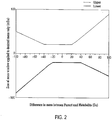
- decimal mass or mass to charge ratio window which is preferably used in the process of searching for metabolites of interest will now be described in more detail with reference to Fig. 2 .
- Fig. 2 indicates the width of a decimal mass or mass to charge ratio window which may be used or applied according to the preferred embodiment.
- the width of the decimal mass or mass to charge ratio window (in mDa) is shown as a function of the difference in the absolute mass (in Da) or mass to charge ratio between that of the parent ion or compound and ions or compounds being searched for which may include metabolite ions or compounds.
- the difference in absolute mass or mass to charge ratio between the parent compound or ion and the ions or compounds being searched for, which may include metabolite ions or compounds of interest, may be referred to as ⁇ M.
- the upper and lower limits of the decimal mass or mass to charge ratio window may be referred to as having a value ⁇ m.
- a decimal mass or mass to charge ratio window having an upper limit + 20 mDa greater than the precise decimal mass or mass to charge ratio of the parent ion and a lower limit 20 mDa below the precise decimal mass or mass to charge ratio of the parent ion may be set.
- the upper and lower limits of the decimal mass or,mass to charge ratio window vary as a function of the absolute difference ⁇ M in the mass or mass to charge ratio of the parent ion to that of a possible metabolite ion. Therefore, as also shown in Fig. 2 , if the absolute difference in mass or mass to charge ratio between the parent ion and a potential ion of interest is say 100 Da, then according to the embodiment shown and described with reference to Fig. 2 the upper and lower limits of the decimal mass or mass to charge ratio window are asymmetric. According to the particular embodiment shown in Fig.
- the mass or mass to charge ratio window has an upper limit + 92 mDa greater than the precise decimal mass or mass to charge ratio of the parent ion and a lower limit only 50 mDa lesser than the precise decimal mass or mass to charge ratio of the parent ion.
- the size of the upper and lower limits of the decimal mass or mass to charge ratio window may also be relatively small (e.g. in the region of 20-30 mDa).
- the absolute difference ⁇ M in the mass or mass to charge ratio between the parent ion or compound and a possible metabolite ion or compound of interest increases, then so the size of the upper and lower limits of the decimal mass or mass to charge ratio window also preferably increases.
- the upper limit of the decimal mass or mass to charge ratio window is preferably set to a constant value of 20 mDa. If the mass or mass to charge ratio difference between the parent ion or compound and the metabolite ion or compound of interest is > 20 Da, then the upper limit of the decimal mass or mass to charge ratio window preferably increases at a rate of +0.09% times ⁇ M above 20 Da (i.e.
- the lower limit of the decimal mass or mass to charge ratio window is preferably set to a constant value of - 20 mDa. If the mass or mass to charge ratio difference between the parent ion or compound and the metabolite ion or compound of interest is > 40 Da, then the lower limit of the decimal mass or mass to charge ratio window preferably increases negatively at a rate of -0.05% times ⁇ M above 40 Da (i.e.
- each different parent drug will have a specific known mass or mass to charge ratio.
- the approach according to the preferred embodiment assumes that metabolites of the parent drug will have a similar structure to that of the parent drug and that the decimal part of the accurate mass or mass to charge ratio of each metabolite will be similar to the decimal part of the accurate mass or mass to charge ratio of the parent drug.
- Ions which according to the preferred embodiment are determined as having an accurate mass or mass to charge ratio with a decimal part which falls within the decimal mass or mass to charge ratio window as determined by the preferred embodiment are then preferably selected for further analysis by, for example, MS/MS.
- a mass filter such as a quadrupole mass filter may be used to select specific ions which are considered to be potentially metabolite ions of interest having a specific mass to charge ratio to be onwardly transmitted to a collision or fragmentation cell. The ions are then fragmented within the collision or fragmentation cell and the resulting fragment product ions are mass analysed.
- the preferred embodiment enables a large number of endogenous ion peaks that would otherwise have been selected for analysis by MS/MS according to the conventional approach to be automatically eliminated from consideration. This is particularly advantageous and as a result the preferred embodiment relates to a significantly improved method of recognising potential metabolites.
- the decimal mass or mass to charge ratio window within which the decimal part of the accurate mass or mass to charge ratio of a metabolite should fall may be defined prior to proceeding with LC-MS and/or LC-MS-MS experiments.
- the value or size of the decimal mass or mass to charge ratio window may be set to accommodate the mass errors likely to occur during an experimental run.
- the value or size may also be set according to the elemental composition of the parent drug. For example, if the parent drug does not contain elements other than carbon, hydrogen, nitrogen, oxygen and fluorine, then the upper and/or lower limits of the decimal mass or mass to charge ratio window may be set to a lower (smaller) value than if the parent drug contains any or all of the elements phosphorous, sulphur and chlorine. This is because phosphorous, sulphur and chlorine all have larger mass deficiencies than carbon, hydrogen, nitrogen, oxygen and fluorine.
- an asymmetric decimal mass or mass to charge ratio window may be used similar, for example, to the asymmetric decimal mass or mass to charge ratio window shown and described in relation to the embodiment depicted in Fig. 2 .
- a simple symmetrical decimal mass or mass to charge ratio window may be used.
- a decimal mass or mass to charge ratio window having upper and lower limits of ⁇ 20 mDa may be used. If the mass or mass to charge ratio difference between that of the parent drug and the ions of interest is ⁇ -20 Da or > 20 Da then the upper and lower limits of the decimal mass or mass to charge ratio window may increase at a rate of 0.1% for mass or mass to charge ratio differences ⁇ -20 Da or > 20 Da.
- the decimal mass or mass to charge ratio window may have multiple values of decimal mass or mass to charge ratio difference ⁇ m for a mass or mass to charge ratio difference ⁇ M between that of the parent drug ions of interest.
- the values of ⁇ m and ⁇ M may preferably be defined independently for each polarity of ⁇ m and ⁇ M.
- the mass spectrometer is preferably capable of recording parent ion mass spectra and fragment ion mass spectra from selected precursor or parent ions that are induced to fragment.
- the mass spectrometer may, for example, comprise a magnetic sector, a Time of Flight, an orthogonal Time of Flight, a quadrupole mass filter, a 3D quadrupole ion trap, a linear quadrupole ion trap or an FT-ICR mass analyser, or any combination thereof.
- the mass spectrometer may comprise either a magnetic sector, a Time of Flight, an orthogonal Time of Flight or an FT-ICR mass analyser.
- the mass spectrometer may according to an embodiment be arranged to default to the acquisition of full parent ion mass spectra unless and until a mass peak is detected wherein the decimal part of the accurate mass or mass to charge ratio of the detected ion falls within a preferably pre-defined decimal mass or mass to charge ratio window. Once such a mass peak is detected then the mass spectrometer and related control software may then preferably switch the instrument so that parent ions having a specific decimal mass or mass to charge ratio or interest are selected and transmitted by a mass filter whilst other ions having decimal masses or mass to charge ratios falling outside the decimal mass or mass to charge ratio window are preferably substantially attenuated or lost to the system.
- Selected parent ions of interest are then preferably passed to a fragmentation or collision cell which preferably comprises an ion guide and a collision gas maintained at a pressure preferably > 10 -3 mbar.
- the ions are preferably accelerated into the collision or fragmentation cell at energies such that upon colliding with the collision gas present in the collision or fragmentation cell, the ions are preferably caused to fragment into fragment product ions.
- the fragment product ions are then preferably mass analysed and a full mass spectrum of the fragment product ions is then preferably obtained.
- the size of the decimal mass or mass to charge ratio window is preferably pre-defined, according to other less preferred embodiments the size of the decimal mass or mass to charge ratio window may be altered in response to experimental data or on the basis of another parameter. According to an embodiment, for example, a first experimental run may be performed wherein a decimal mass or mass to charge ratio window having a first profile or size as a function of ⁇ M may be applied and then in a second subsequent experimental run a decimal mass or mass to charge ratio window having a second different profile or size as a function of ⁇ M may be applied.
- control software may select or determine other parameters including the optimum fragmentation collision energy appropriate for a selected precursor or parent ion.
- An important advantage of the preferred embodiment is that it enables more useful MS/MS spectra to be acquired within the limited timescale of a single LC-MS experiment. This reduces the time taken to get the required data.
- Another important advantage of the preferred embodiment is that the preferred method facilitates the detection of low level metabolites that might otherwise be missed, if the conventional approach were adopted, due to the presence of a large number of relatively intense endogenous mass peaks.
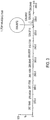
- Fig. 3 shows a parent ion mass spectrum of the drug Midazolem as recorded using a hybrid quadrupole Time of Flight mass spectrometer.
- the measured mass to charge ratio for the major isotope was determined as being 326.0872 (cf. a theoretical value of 326.0860).
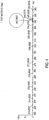
- Fig. 4 shows a parent ion mass spectrum of the hydroxylated metabolite of Midazolam as recorded using the same hybrid quadrupole Time of Flight mass spectrometer.
- the measured mass to charge ratio for the major isotope was determined as being 342.0822 (cf. a theoretical value of 342.0809).
- the method according to the preferred embodiment provides an effective way of being able to detect efficiently mass peaks likely to be (or at least include) metabolites of interest with no (or relatively few) ions relating to endogenous components also being analysed.
- the preferred method therefore advantageously effectively filters out or removes from further consideration numerous endogenous mass peaks which would otherwise have been included for consideration according to the conventional techniques.
- the preferred embodiment advantageously enables a mass spectrometer to switch to record the fragment ion spectrum of ions which are likely to relate to metabolites of interest within the time scales during which a typical liquid chromatography mass peak is observed without wasting time analysing a large number of ions which turn out not to be metabolites of interest.
- an intelligent exact mass deficiency algorithm may be used together with in silico metabolite prediction to predetermine DDA experiments for metabolism studies preferably using a hybrid quadrupole Time of Flight mass spectrometer.
- specific metabolites may be predicted in advance by computer and an appropriate exact decimal mass or mass to charge ratio data filter window may be set.
- the metabolites from a given new chemical entity or a standard compound are therefore predicted and then searched for.
- an exact decimal mass window may be set so as to only switch to perform a DDA experiment when ions having decimal masses or mass to charge ratios within the set decimal mass or mass to charge ratio window (which may, for example, have an upper and/or lower limit of 10-20 mDa) are observed as being present.
- a user may, for example, select or set an exact decimal mass or mass to charge ratio window to detect metabolites already predicted on the basis of their exact decimal mass or mass to charge ratio so that MS/MS experiments maybe carried out.
- an exact mass deficiency based upon the exact mass or mass to charge ratio of the parent compound can be determined.
- This particular data filter may be considered more specific than the data filter according to the previously described embodiment since there may be cases where not all of the metabolites will be predicted. Therefore, metabolites which are not predicted will be detected in the DDA experiments with an exact mass or mass to charge ratio data filter.
- An exact mass or mass to charge ratio deficiency filter may operate in the following mode.
- An exact mass or mass to charge ratio deficiency filter based upon the decimal places of the mass or mass to charge ratio of the parent drug under analysis may be used.
- a post processing filter may be used that allows the removal of unexpected metabolite entries in a MetaboLynx browser which do not agree with user-defined criteria.
- the use of this filter can dramatically reduce the number of false entries in an unexpected metabolite table by filtering out the vast majority of matrix-related entries which may share the same nominal mass as potential metabolites. This allows users to use low threshold values during data processing so that very low metabolite levels are identified without going through the tedious task of manually excluding false positives.
- the filter is preferably an accurate and specific filter since it is based on exact mass and mass deficiencies which are specific to each parent drug of interest.
- Each parent drug is comprised of a specific number of elements (C, H, N, O etc.). Depending upon the number of each one of the elements mentioned, the decimal mass or mass to charge ratio of the drug will be very specific.
- Verapamil contains the following elements: C27 H38 N2 04. This equates to a monoisotopic protonated mass of 455.2910 Da. If an alkyl group is taken away (N-dealkylation, a common metabolic route) and a glucuronide is added, then the mass is shifted by precisely + 162.0164 Da. The metabolite therefore has a monoisotopic mass of 617.3074 Da.
- phase II biotransformation glutathione conjugation
- mass defect difference 68 mDa compared to the parent drug
- most metabolites will fall within a 180 mDa decimal mass or mass to charge ratio window of the parent compound even if certain cleavages take place in the structure to yield smaller fragments.
- Figs. 5A and 5B show a metabolite of Ketotifen, Verapamil and Indinavir and include cleavages.
- the maximum decimal mass or mass to charge ratio deficiency is in the case of Indinavir ( Fig. 5B ) wherein the metabolite has a decimal mass or mass to charge ratio which is 167.7 mDa different from the decimal mass or mass to charge ratio of the parent compound.
- Mass deficiency shifts are very specific for each metabolite and parent drug.
- the various embodiments of the present invention may be implemented not only on hybrid quadrupole orthogonal Time of Flight instruments as according to the preferred embodiment, but also using nominal mass instruments such as triple quadrupoles, linear and 3D ion traps and exact mass instruments such as MALDI/Quadrupole Time of Flight and FTMS.
Landscapes
- Chemical & Material Sciences (AREA)
- Analytical Chemistry (AREA)
- Life Sciences & Earth Sciences (AREA)
- Engineering & Computer Science (AREA)
- Health & Medical Sciences (AREA)
- Bioinformatics & Cheminformatics (AREA)
- Physics & Mathematics (AREA)
- Spectroscopy & Molecular Physics (AREA)
- Theoretical Computer Science (AREA)
- Computing Systems (AREA)
- Bioinformatics & Computational Biology (AREA)
- Crystallography & Structural Chemistry (AREA)
- Molecular Biology (AREA)
- General Health & Medical Sciences (AREA)
- General Physics & Mathematics (AREA)
- Immunology (AREA)
- Pathology (AREA)
- Biochemistry (AREA)
- Medicinal Chemistry (AREA)
- Food Science & Technology (AREA)
- Pharmacology & Pharmacy (AREA)
- Biophysics (AREA)
- Other Investigation Or Analysis Of Materials By Electrical Means (AREA)
Applications Claiming Priority (3)
| Application Number | Priority Date | Filing Date | Title |
|---|---|---|---|
| US58413904P | 2004-07-01 | 2004-07-01 | |
| GBGB0415046.2A GB0415046D0 (en) | 2004-07-05 | 2004-07-05 | Mass spectrometer |
| PCT/GB2005/002610 WO2006003429A2 (en) | 2004-07-01 | 2005-07-01 | Mass spectrometer |
Publications (2)
| Publication Number | Publication Date |
|---|---|
| EP1779406A2 EP1779406A2 (en) | 2007-05-02 |
| EP1779406B1 true EP1779406B1 (en) | 2017-03-22 |
Family
ID=32843596
Family Applications (1)
| Application Number | Title | Priority Date | Filing Date |
|---|---|---|---|
| EP05757459.2A Expired - Lifetime EP1779406B1 (en) | 2004-07-01 | 2005-07-01 | Mass spectrometer |
Country Status (6)
| Country | Link |
|---|---|
| US (3) | US8063357B2 (enExample) |
| EP (1) | EP1779406B1 (enExample) |
| JP (1) | JP4852541B2 (enExample) |
| CA (2) | CA2851908C (enExample) |
| GB (2) | GB0415046D0 (enExample) |
| WO (1) | WO2006003429A2 (enExample) |
Families Citing this family (19)
| Publication number | Priority date | Publication date | Assignee | Title |
|---|---|---|---|---|
| US20020115056A1 (en) | 2000-12-26 | 2002-08-22 | Goodlett David R. | Rapid and quantitative proteome analysis and related methods |
| GB0305796D0 (en) | 2002-07-24 | 2003-04-16 | Micromass Ltd | Method of mass spectrometry and a mass spectrometer |
| GB0609253D0 (en) * | 2006-05-10 | 2006-06-21 | Micromass Ltd | Mass spectrometer |
| US20100312487A1 (en) * | 2006-11-15 | 2010-12-09 | Shimadzu Corporation | Mass analysis data analyzing method and apparatus thereof |
| DE102008023694B4 (de) * | 2008-05-15 | 2010-12-30 | Bruker Daltonik Gmbh | Fragmentierung von Analytionen durch Ionenstoß in HF-Ionenfallen |
| US9174046B2 (en) | 2011-01-25 | 2015-11-03 | Cedric Francois | Apparatus and methods for assisting breathing |
| GB201108082D0 (en) * | 2011-05-16 | 2011-06-29 | Micromass Ltd | Segmented planar calibration for correction of errors in time of flight mass spectrometers |
| JP5660218B2 (ja) * | 2011-08-03 | 2015-01-28 | 株式会社島津製作所 | 質量分析データ解析方法及び装置 |
| GB2514836B (en) | 2013-06-07 | 2020-04-22 | Thermo Fisher Scient Bremen Gmbh | Isotopic Pattern Recognition |
| US10244348B2 (en) | 2013-08-19 | 2019-03-26 | Estimote Polska Sp z o.o. | Methods for authenticating communication between a mobile device and wireless beacon at a remote domain name system, projecting a level of interest in a nearby product, and providing and ordering option or product data |
| US9998863B2 (en) | 2013-08-19 | 2018-06-12 | Estimote Polska Sp. Z O. O. | System and method for providing content using beacon systems |
| JP6079587B2 (ja) * | 2013-11-27 | 2017-02-15 | 株式会社島津製作所 | 糖ペプチド解析装置 |
| US10395909B2 (en) * | 2014-01-16 | 2019-08-27 | Shimadzu Corporation | Mass spectrometer |
| GB201407814D0 (en) * | 2014-05-02 | 2014-06-18 | Pilkington Group Ltd | Glazed solar collectors |
| WO2016145390A1 (en) | 2015-03-12 | 2016-09-15 | Mars, Incorporated | Ultra high resolution mass spectrometry and methods of using the same |
| US10136250B2 (en) | 2015-09-02 | 2018-11-20 | Estimote Polska Sp. Z O. O. | System and method for lower power data routing |
| WO2020039252A1 (en) | 2018-08-22 | 2020-02-27 | Estimote Polska Sp Z.O.O. | System and method for verifying device security |
| EP3841765A2 (en) | 2018-08-24 | 2021-06-30 | Estimote Polska Sp. Z O.O. | A method and system for asset management |
| US11239068B2 (en) * | 2018-11-02 | 2022-02-01 | Agilent Technologies, Inc. | Inductively coupled plasma mass spectrometer with mass correction |
Family Cites Families (20)
| Publication number | Priority date | Publication date | Assignee | Title |
|---|---|---|---|---|
| GB1193255A (en) * | 1966-05-27 | 1970-05-28 | Ass Elect Ind | Improvements relating to Mass Spectrometry |
| US4008388A (en) * | 1974-05-16 | 1977-02-15 | Universal Monitor Corporation | Mass spectrometric system for rapid, automatic and specific identification and quantitation of compounds |
| US5072115A (en) * | 1990-12-14 | 1991-12-10 | Finnigan Corporation | Interpretation of mass spectra of multiply charged ions of mixtures |
| US5453613A (en) * | 1994-10-21 | 1995-09-26 | Hewlett Packard Company | Mass spectra interpretation system including spectra extraction |
| US6147348A (en) * | 1997-04-11 | 2000-11-14 | University Of Florida | Method for performing a scan function on quadrupole ion trap mass spectrometers |
| US6147344A (en) * | 1998-10-15 | 2000-11-14 | Neogenesis, Inc | Method for identifying compounds in a chemical mixture |
| US6289287B1 (en) * | 1999-01-29 | 2001-09-11 | Agilent Technologies, Inc. | Identification of sample component using a mass sensor system |
| US6455321B1 (en) * | 1999-01-30 | 2002-09-24 | Neo Gen Screening, Inc. | Method for interpreting tandem mass spectrometry data for clinical diagnosis |
| US6258605B1 (en) * | 1999-03-26 | 2001-07-10 | Neo Gen Screening, Inc. | Clinical method for the genetic screening of newborns using tandem mass spectrometry |
| AU2001280701A1 (en) | 2000-07-20 | 2002-02-05 | Beth Blakeslee | Nucleic acids compositions conferring dwarfing phenotype |
| WO2002037121A2 (en) * | 2000-10-25 | 2002-05-10 | Mds Proteomics, Inc. | Detection of modified amino acids by mass spectrometry |
| US6787761B2 (en) * | 2000-11-27 | 2004-09-07 | Surromed, Inc. | Median filter for liquid chromatography-mass spectrometry data |
| AU2002233310A1 (en) * | 2001-01-18 | 2002-07-30 | Basf Aktiengesellschaft | Method for metabolic profiling |
| DE10145904A1 (de) * | 2001-09-18 | 2003-04-10 | Bruker Daltonik Gmbh | Verfahren zur Aufklärung des Metabolismus |
| EP1481356A1 (en) * | 2001-11-21 | 2004-12-01 | Paradigm Genetics Inc. | Methods and systems for analyzing complex biological systems |
| GB2394545B (en) * | 2001-12-08 | 2005-03-16 | Micromass Ltd | Method of mass spectrometry |
| WO2003054549A2 (en) | 2001-12-08 | 2003-07-03 | Micromass Uk Limited | Method of mass spectrometry |
| GB0322356D0 (en) | 2003-09-24 | 2003-10-22 | Micromass Ltd | Mass spectrometer |
| US20050164325A1 (en) | 2003-09-24 | 2005-07-28 | Micromass Uk Limited | Method of mass spectrometry |
| US7381568B2 (en) * | 2004-06-02 | 2008-06-03 | Bristol-Myers Squibb Company | Mass defect filter |
-
2004
- 2004-07-05 GB GBGB0415046.2A patent/GB0415046D0/en not_active Ceased
-
2005
- 2005-07-01 GB GB0513577A patent/GB2417363B/en not_active Expired - Lifetime
- 2005-07-01 EP EP05757459.2A patent/EP1779406B1/en not_active Expired - Lifetime
- 2005-07-01 CA CA2851908A patent/CA2851908C/en not_active Expired - Fee Related
- 2005-07-01 CA CA2570174A patent/CA2570174C/en not_active Expired - Fee Related
- 2005-07-01 US US11/571,338 patent/US8063357B2/en active Active
- 2005-07-01 JP JP2007519869A patent/JP4852541B2/ja not_active Expired - Fee Related
- 2005-07-01 WO PCT/GB2005/002610 patent/WO2006003429A2/en not_active Ceased
-
2011
- 2011-10-05 US US13/253,312 patent/US8841606B2/en active Active
-
2014
- 2014-09-22 US US14/492,216 patent/US9390897B2/en not_active Expired - Lifetime
Non-Patent Citations (1)
| Title |
|---|
| None * |
Also Published As
| Publication number | Publication date |
|---|---|
| CA2570174A1 (en) | 2006-01-12 |
| JP2008505339A (ja) | 2008-02-21 |
| CA2851908C (en) | 2017-01-03 |
| WO2006003429A3 (en) | 2006-12-21 |
| US20120112055A1 (en) | 2012-05-10 |
| US20110095176A1 (en) | 2011-04-28 |
| US20150008319A1 (en) | 2015-01-08 |
| CA2851908A1 (en) | 2006-01-12 |
| WO2006003429A2 (en) | 2006-01-12 |
| JP4852541B2 (ja) | 2012-01-11 |
| GB2417363A (en) | 2006-02-22 |
| GB0513577D0 (en) | 2005-08-10 |
| EP1779406A2 (en) | 2007-05-02 |
| GB2417363B (en) | 2007-02-07 |
| US9390897B2 (en) | 2016-07-12 |
| US8063357B2 (en) | 2011-11-22 |
| US8841606B2 (en) | 2014-09-23 |
| GB0415046D0 (en) | 2004-08-04 |
| CA2570174C (en) | 2014-06-10 |
Similar Documents
| Publication | Publication Date | Title |
|---|---|---|
| US9390897B2 (en) | Mass spectrometry | |
| CA2650908C (en) | Mass spectrometer | |
| EP1766394B1 (en) | System and method for grouping precursor and fragment ions using selected ion chromatograms | |
| US9196466B2 (en) | Mass spectrometer with bypass of a fragmentation device | |
| JP2008505339A5 (enExample) | ||
| JP4959712B2 (ja) | 質量分析計 | |
| JP2007535673A (ja) | 質量分析計 | |
| JP4959713B2 (ja) | 質量分析計 | |
| Prenni et al. | Proteomics: a review and an example using the reticulocyte membrane proteome |
Legal Events
| Date | Code | Title | Description |
|---|---|---|---|
| PUAI | Public reference made under article 153(3) epc to a published international application that has entered the european phase |
Free format text: ORIGINAL CODE: 0009012 |
|
| 17P | Request for examination filed |
Effective date: 20070115 |
|
| AK | Designated contracting states |
Kind code of ref document: A2 Designated state(s): AT BE BG CH CY CZ DE DK EE ES FI FR GB GR HU IE IS IT LI LT LU MC NL PL PT RO SE SI SK TR |
|
| AX | Request for extension of the european patent |
Extension state: AL BA HR MK YU |
|
| RIN1 | Information on inventor provided before grant (corrected) |
Inventor name: PLUMB, ROBERT Inventor name: MILLAR, ALAN Inventor name: CASTRO-PEREZ, JOSE |
|
| DAX | Request for extension of the european patent (deleted) | ||
| 17Q | First examination report despatched |
Effective date: 20120321 |
|
| RAP1 | Party data changed (applicant data changed or rights of an application transferred) |
Owner name: MICROMASS UK LIMITED |
|
| GRAP | Despatch of communication of intention to grant a patent |
Free format text: ORIGINAL CODE: EPIDOSNIGR1 |
|
| RIC1 | Information provided on ipc code assigned before grant |
Ipc: G06F 19/00 20110101ALI20160926BHEP Ipc: H01J 49/00 20060101AFI20160926BHEP Ipc: G01N 33/15 20060101ALI20160926BHEP |
|
| INTG | Intention to grant announced |
Effective date: 20161018 |
|
| RBV | Designated contracting states (corrected) |
Designated state(s): AT BE BG CH CY CZ DE DK EE ES FI FR GR HU IE IS IT LI LT LU MC NL PL PT RO SE SI SK TR |
|
| GRAS | Grant fee paid |
Free format text: ORIGINAL CODE: EPIDOSNIGR3 |
|
| GRAA | (expected) grant |
Free format text: ORIGINAL CODE: 0009210 |
|
| AK | Designated contracting states |
Kind code of ref document: B1 Designated state(s): AT BE BG CH CY CZ DE DK EE ES FI FR GR HU IE IS IT LI LT LU MC NL PL PT RO SE SI SK TR |
|
| REG | Reference to a national code |
Ref country code: CH Ref legal event code: EP |
|
| REG | Reference to a national code |
Ref country code: AT Ref legal event code: REF Ref document number: 878523 Country of ref document: AT Kind code of ref document: T Effective date: 20170415 |
|
| REG | Reference to a national code |
Ref country code: IE Ref legal event code: FG4D |
|
| REG | Reference to a national code |
Ref country code: DE Ref legal event code: R096 Ref document number: 602005051580 Country of ref document: DE |
|
| REG | Reference to a national code |
Ref country code: NL Ref legal event code: MP Effective date: 20170322 Ref country code: FR Ref legal event code: PLFP Year of fee payment: 13 |
|
| PG25 | Lapsed in a contracting state [announced via postgrant information from national office to epo] |
Ref country code: LT Free format text: LAPSE BECAUSE OF FAILURE TO SUBMIT A TRANSLATION OF THE DESCRIPTION OR TO PAY THE FEE WITHIN THE PRESCRIBED TIME-LIMIT Effective date: 20170322 Ref country code: GR Free format text: LAPSE BECAUSE OF FAILURE TO SUBMIT A TRANSLATION OF THE DESCRIPTION OR TO PAY THE FEE WITHIN THE PRESCRIBED TIME-LIMIT Effective date: 20170623 Ref country code: FI Free format text: LAPSE BECAUSE OF FAILURE TO SUBMIT A TRANSLATION OF THE DESCRIPTION OR TO PAY THE FEE WITHIN THE PRESCRIBED TIME-LIMIT Effective date: 20170322 |
|
| REG | Reference to a national code |
Ref country code: LT Ref legal event code: MG4D |
|
| REG | Reference to a national code |
Ref country code: AT Ref legal event code: MK05 Ref document number: 878523 Country of ref document: AT Kind code of ref document: T Effective date: 20170322 |
|
| PG25 | Lapsed in a contracting state [announced via postgrant information from national office to epo] |
Ref country code: SE Free format text: LAPSE BECAUSE OF FAILURE TO SUBMIT A TRANSLATION OF THE DESCRIPTION OR TO PAY THE FEE WITHIN THE PRESCRIBED TIME-LIMIT Effective date: 20170322 Ref country code: BG Free format text: LAPSE BECAUSE OF FAILURE TO SUBMIT A TRANSLATION OF THE DESCRIPTION OR TO PAY THE FEE WITHIN THE PRESCRIBED TIME-LIMIT Effective date: 20170622 |
|
| PG25 | Lapsed in a contracting state [announced via postgrant information from national office to epo] |
Ref country code: NL Free format text: LAPSE BECAUSE OF FAILURE TO SUBMIT A TRANSLATION OF THE DESCRIPTION OR TO PAY THE FEE WITHIN THE PRESCRIBED TIME-LIMIT Effective date: 20170322 |
|
| PG25 | Lapsed in a contracting state [announced via postgrant information from national office to epo] |
Ref country code: AT Free format text: LAPSE BECAUSE OF FAILURE TO SUBMIT A TRANSLATION OF THE DESCRIPTION OR TO PAY THE FEE WITHIN THE PRESCRIBED TIME-LIMIT Effective date: 20170322 Ref country code: ES Free format text: LAPSE BECAUSE OF FAILURE TO SUBMIT A TRANSLATION OF THE DESCRIPTION OR TO PAY THE FEE WITHIN THE PRESCRIBED TIME-LIMIT Effective date: 20170322 Ref country code: EE Free format text: LAPSE BECAUSE OF FAILURE TO SUBMIT A TRANSLATION OF THE DESCRIPTION OR TO PAY THE FEE WITHIN THE PRESCRIBED TIME-LIMIT Effective date: 20170322 Ref country code: IT Free format text: LAPSE BECAUSE OF FAILURE TO SUBMIT A TRANSLATION OF THE DESCRIPTION OR TO PAY THE FEE WITHIN THE PRESCRIBED TIME-LIMIT Effective date: 20170322 Ref country code: RO Free format text: LAPSE BECAUSE OF FAILURE TO SUBMIT A TRANSLATION OF THE DESCRIPTION OR TO PAY THE FEE WITHIN THE PRESCRIBED TIME-LIMIT Effective date: 20170322 Ref country code: CZ Free format text: LAPSE BECAUSE OF FAILURE TO SUBMIT A TRANSLATION OF THE DESCRIPTION OR TO PAY THE FEE WITHIN THE PRESCRIBED TIME-LIMIT Effective date: 20170322 Ref country code: SK Free format text: LAPSE BECAUSE OF FAILURE TO SUBMIT A TRANSLATION OF THE DESCRIPTION OR TO PAY THE FEE WITHIN THE PRESCRIBED TIME-LIMIT Effective date: 20170322 |
|
| PG25 | Lapsed in a contracting state [announced via postgrant information from national office to epo] |
Ref country code: PL Free format text: LAPSE BECAUSE OF FAILURE TO SUBMIT A TRANSLATION OF THE DESCRIPTION OR TO PAY THE FEE WITHIN THE PRESCRIBED TIME-LIMIT Effective date: 20170322 Ref country code: PT Free format text: LAPSE BECAUSE OF FAILURE TO SUBMIT A TRANSLATION OF THE DESCRIPTION OR TO PAY THE FEE WITHIN THE PRESCRIBED TIME-LIMIT Effective date: 20170724 Ref country code: IS Free format text: LAPSE BECAUSE OF FAILURE TO SUBMIT A TRANSLATION OF THE DESCRIPTION OR TO PAY THE FEE WITHIN THE PRESCRIBED TIME-LIMIT Effective date: 20170722 |
|
| REG | Reference to a national code |
Ref country code: DE Ref legal event code: R097 Ref document number: 602005051580 Country of ref document: DE |
|
| PLBE | No opposition filed within time limit |
Free format text: ORIGINAL CODE: 0009261 |
|
| STAA | Information on the status of an ep patent application or granted ep patent |
Free format text: STATUS: NO OPPOSITION FILED WITHIN TIME LIMIT |
|
| PG25 | Lapsed in a contracting state [announced via postgrant information from national office to epo] |
Ref country code: DK Free format text: LAPSE BECAUSE OF FAILURE TO SUBMIT A TRANSLATION OF THE DESCRIPTION OR TO PAY THE FEE WITHIN THE PRESCRIBED TIME-LIMIT Effective date: 20170322 |
|
| 26N | No opposition filed |
Effective date: 20180102 |
|
| PG25 | Lapsed in a contracting state [announced via postgrant information from national office to epo] |
Ref country code: SI Free format text: LAPSE BECAUSE OF FAILURE TO SUBMIT A TRANSLATION OF THE DESCRIPTION OR TO PAY THE FEE WITHIN THE PRESCRIBED TIME-LIMIT Effective date: 20170322 |
|
| REG | Reference to a national code |
Ref country code: CH Ref legal event code: PL |
|
| REG | Reference to a national code |
Ref country code: IE Ref legal event code: MM4A |
|
| PG25 | Lapsed in a contracting state [announced via postgrant information from national office to epo] |
Ref country code: IE Free format text: LAPSE BECAUSE OF NON-PAYMENT OF DUE FEES Effective date: 20170701 Ref country code: CH Free format text: LAPSE BECAUSE OF NON-PAYMENT OF DUE FEES Effective date: 20170731 Ref country code: LI Free format text: LAPSE BECAUSE OF NON-PAYMENT OF DUE FEES Effective date: 20170731 |
|
| REG | Reference to a national code |
Ref country code: BE Ref legal event code: MM Effective date: 20170731 |
|
| REG | Reference to a national code |
Ref country code: FR Ref legal event code: PLFP Year of fee payment: 14 |
|
| PG25 | Lapsed in a contracting state [announced via postgrant information from national office to epo] |
Ref country code: LU Free format text: LAPSE BECAUSE OF NON-PAYMENT OF DUE FEES Effective date: 20170701 |
|
| PG25 | Lapsed in a contracting state [announced via postgrant information from national office to epo] |
Ref country code: BE Free format text: LAPSE BECAUSE OF NON-PAYMENT OF DUE FEES Effective date: 20170731 |
|
| PG25 | Lapsed in a contracting state [announced via postgrant information from national office to epo] |
Ref country code: HU Free format text: LAPSE BECAUSE OF FAILURE TO SUBMIT A TRANSLATION OF THE DESCRIPTION OR TO PAY THE FEE WITHIN THE PRESCRIBED TIME-LIMIT; INVALID AB INITIO Effective date: 20050701 Ref country code: MC Free format text: LAPSE BECAUSE OF FAILURE TO SUBMIT A TRANSLATION OF THE DESCRIPTION OR TO PAY THE FEE WITHIN THE PRESCRIBED TIME-LIMIT Effective date: 20170322 |
|
| PG25 | Lapsed in a contracting state [announced via postgrant information from national office to epo] |
Ref country code: CY Free format text: LAPSE BECAUSE OF NON-PAYMENT OF DUE FEES Effective date: 20170322 |
|
| PG25 | Lapsed in a contracting state [announced via postgrant information from national office to epo] |
Ref country code: TR Free format text: LAPSE BECAUSE OF FAILURE TO SUBMIT A TRANSLATION OF THE DESCRIPTION OR TO PAY THE FEE WITHIN THE PRESCRIBED TIME-LIMIT Effective date: 20170322 |
|
| REG | Reference to a national code |
Ref country code: DE Ref legal event code: R082 Ref document number: 602005051580 Country of ref document: DE |
|
| P01 | Opt-out of the competence of the unified patent court (upc) registered |
Effective date: 20230506 |
|
| PGFP | Annual fee paid to national office [announced via postgrant information from national office to epo] |
Ref country code: FR Payment date: 20240619 Year of fee payment: 20 |
|
| PGFP | Annual fee paid to national office [announced via postgrant information from national office to epo] |
Ref country code: DE Payment date: 20240619 Year of fee payment: 20 |
|
| REG | Reference to a national code |
Ref country code: DE Ref legal event code: R071 Ref document number: 602005051580 Country of ref document: DE |