EP1772447A1 - Aldimine mit aktivem Wasserstoff aufweisenden Reaktivgruppen sowie deren Verwendung - Google Patents
Aldimine mit aktivem Wasserstoff aufweisenden Reaktivgruppen sowie deren Verwendung Download PDFInfo
- Publication number
- EP1772447A1 EP1772447A1 EP05109110A EP05109110A EP1772447A1 EP 1772447 A1 EP1772447 A1 EP 1772447A1 EP 05109110 A EP05109110 A EP 05109110A EP 05109110 A EP05109110 A EP 05109110A EP 1772447 A1 EP1772447 A1 EP 1772447A1
- Authority
- EP
- European Patent Office
- Prior art keywords
- aldimine
- formula
- oder
- und
- groups
- Prior art date
- Legal status (The legal status is an assumption and is not a legal conclusion. Google has not performed a legal analysis and makes no representation as to the accuracy of the status listed.)
- Withdrawn
Links
- 150000004705 aldimines Chemical class 0.000 title claims abstract description 260
- 229910052739 hydrogen Inorganic materials 0.000 title claims abstract description 61
- 239000001257 hydrogen Substances 0.000 title claims abstract description 26
- 125000004435 hydrogen atom Chemical class [H]* 0.000 title claims description 11
- 150000001875 compounds Chemical class 0.000 claims abstract description 122
- 150000001412 amines Chemical class 0.000 claims abstract description 84
- 150000001299 aldehydes Chemical class 0.000 claims abstract description 35
- 239000004215 Carbon black (E152) Substances 0.000 claims abstract description 29
- 229930195733 hydrocarbon Natural products 0.000 claims abstract description 24
- 229910052757 nitrogen Inorganic materials 0.000 claims abstract description 23
- UFHFLCQGNIYNRP-UHFFFAOYSA-N Hydrogen Chemical compound [H][H] UFHFLCQGNIYNRP-UHFFFAOYSA-N 0.000 claims abstract description 22
- 125000002887 hydroxy group Chemical group [H]O* 0.000 claims abstract description 19
- IJGRMHOSHXDMSA-UHFFFAOYSA-N nitrogen Substances N#N IJGRMHOSHXDMSA-UHFFFAOYSA-N 0.000 claims abstract description 19
- 229910052760 oxygen Inorganic materials 0.000 claims abstract description 17
- 125000000467 secondary amino group Chemical group [H]N([*:1])[*:2] 0.000 claims abstract description 15
- 239000001301 oxygen Substances 0.000 claims abstract description 13
- 125000005842 heteroatom Chemical group 0.000 claims abstract description 12
- 238000000034 method Methods 0.000 claims abstract description 12
- 238000007259 addition reaction Methods 0.000 claims abstract description 11
- 125000003396 thiol group Chemical group [H]S* 0.000 claims abstract description 10
- 229910052717 sulfur Inorganic materials 0.000 claims abstract description 5
- 150000001733 carboxylic acid esters Chemical group 0.000 claims abstract description 3
- 150000002825 nitriles Chemical group 0.000 claims abstract description 3
- 239000000203 mixture Substances 0.000 claims description 103
- 229920003023 plastic Polymers 0.000 claims description 72
- 239000004033 plastic Substances 0.000 claims description 72
- 239000002243 precursor Substances 0.000 claims description 64
- 238000006243 chemical reaction Methods 0.000 claims description 39
- 229920001228 polyisocyanate Polymers 0.000 claims description 38
- 239000005056 polyisocyanate Substances 0.000 claims description 37
- RTZKZFJDLAIYFH-UHFFFAOYSA-N Diethyl ether Chemical compound CCOCC RTZKZFJDLAIYFH-UHFFFAOYSA-N 0.000 claims description 31
- 125000004432 carbon atom Chemical group C* 0.000 claims description 19
- 150000002148 esters Chemical class 0.000 claims description 11
- 125000001424 substituent group Chemical group 0.000 claims description 11
- QVGXLLKOCUKJST-UHFFFAOYSA-N atomic oxygen Chemical compound [O] QVGXLLKOCUKJST-UHFFFAOYSA-N 0.000 claims description 8
- 230000003301 hydrolyzing effect Effects 0.000 claims description 6
- 150000003512 tertiary amines Chemical class 0.000 claims description 6
- 239000004971 Cross linker Substances 0.000 claims description 5
- XEEYBQQBJWHFJM-UHFFFAOYSA-N Iron Chemical compound [Fe] XEEYBQQBJWHFJM-UHFFFAOYSA-N 0.000 claims description 5
- 125000002496 methyl group Chemical group [H]C([H])([H])* 0.000 claims description 4
- 230000008569 process Effects 0.000 claims description 4
- 125000002837 carbocyclic group Chemical group 0.000 claims description 3
- 229920000647 polyepoxide Polymers 0.000 claims description 3
- 125000000449 nitro group Chemical group [O-][N+](*)=O 0.000 claims description 2
- 238000007363 ring formation reaction Methods 0.000 claims description 2
- 125000002130 sulfonic acid ester group Chemical group 0.000 claims description 2
- -1 Aldimine compound Chemical class 0.000 abstract description 132
- 238000006460 hydrolysis reaction Methods 0.000 abstract description 12
- 230000007062 hydrolysis Effects 0.000 abstract description 8
- ALJYEHUPOPFBCG-UHFFFAOYSA-N nitrophosphonic acid Chemical group OP(O)(=O)[N+]([O-])=O ALJYEHUPOPFBCG-UHFFFAOYSA-N 0.000 abstract description 2
- 150000003459 sulfonic acid esters Chemical class 0.000 abstract description 2
- 150000002430 hydrocarbons Chemical class 0.000 abstract 3
- 150000003457 sulfones Chemical class 0.000 abstract 1
- 239000012948 isocyanate Substances 0.000 description 69
- 150000002513 isocyanates Chemical class 0.000 description 65
- 239000007788 liquid Substances 0.000 description 52
- 229920005862 polyol Polymers 0.000 description 49
- 229920000642 polymer Polymers 0.000 description 48
- 150000003077 polyols Chemical class 0.000 description 48
- 230000009965 odorless effect Effects 0.000 description 47
- 229920000768 polyamine Polymers 0.000 description 45
- UPMLOUAZCHDJJD-UHFFFAOYSA-N 4,4'-Diphenylmethane Diisocyanate Chemical compound C1=CC(N=C=O)=CC=C1CC1=CC=C(N=C=O)C=C1 UPMLOUAZCHDJJD-UHFFFAOYSA-N 0.000 description 43
- 229920002635 polyurethane Polymers 0.000 description 42
- 239000004814 polyurethane Substances 0.000 description 41
- 239000000047 product Substances 0.000 description 41
- 125000002924 primary amino group Chemical group [H]N([H])* 0.000 description 39
- 239000000126 substance Substances 0.000 description 37
- KWYUFKZDYYNOTN-UHFFFAOYSA-M Potassium hydroxide Chemical compound [OH-].[K+] KWYUFKZDYYNOTN-UHFFFAOYSA-M 0.000 description 34
- 229910052799 carbon Inorganic materials 0.000 description 32
- IQPQWNKOIGAROB-UHFFFAOYSA-N isocyanate group Chemical group [N-]=C=O IQPQWNKOIGAROB-UHFFFAOYSA-N 0.000 description 32
- 239000012299 nitrogen atmosphere Substances 0.000 description 32
- 238000003756 stirring Methods 0.000 description 32
- NIXOWILDQLNWCW-UHFFFAOYSA-M Acrylate Chemical compound [O-]C(=O)C=C NIXOWILDQLNWCW-UHFFFAOYSA-M 0.000 description 27
- 239000003039 volatile agent Substances 0.000 description 25
- YRDQAIWXWUHXPQ-UHFFFAOYSA-N (2,2-dimethyl-3-oxopropyl) dodecanoate Chemical compound CCCCCCCCCCCC(=O)OCC(C)(C)C=O YRDQAIWXWUHXPQ-UHFFFAOYSA-N 0.000 description 23
- 239000003054 catalyst Substances 0.000 description 23
- XLYOFNOQVPJJNP-UHFFFAOYSA-N water Substances O XLYOFNOQVPJJNP-UHFFFAOYSA-N 0.000 description 20
- MTHSVFCYNBDYFN-UHFFFAOYSA-N diethylene glycol Chemical compound OCCOCCO MTHSVFCYNBDYFN-UHFFFAOYSA-N 0.000 description 19
- 238000007792 addition Methods 0.000 description 18
- 238000003860 storage Methods 0.000 description 18
- WSFSSNUMVMOOMR-UHFFFAOYSA-N Formaldehyde Chemical compound O=C WSFSSNUMVMOOMR-UHFFFAOYSA-N 0.000 description 16
- 238000002360 preparation method Methods 0.000 description 16
- PEDCQBHIVMGVHV-UHFFFAOYSA-N Glycerine Chemical compound OCC(O)CO PEDCQBHIVMGVHV-UHFFFAOYSA-N 0.000 description 15
- 125000001931 aliphatic group Chemical group 0.000 description 15
- 125000003277 amino group Chemical group 0.000 description 15
- 238000005160 1H NMR spectroscopy Methods 0.000 description 14
- 150000001298 alcohols Chemical class 0.000 description 14
- 150000002118 epoxides Chemical class 0.000 description 14
- LYCAIKOWRPUZTN-UHFFFAOYSA-N Ethylene glycol Chemical compound OCCO LYCAIKOWRPUZTN-UHFFFAOYSA-N 0.000 description 13
- 239000007795 chemical reaction product Substances 0.000 description 13
- 229920001451 polypropylene glycol Polymers 0.000 description 13
- 239000011541 reaction mixture Substances 0.000 description 13
- 229920002873 Polyethylenimine Polymers 0.000 description 12
- 150000001735 carboxylic acids Chemical class 0.000 description 12
- 150000005690 diesters Chemical class 0.000 description 12
- ZVFDTKUVRCTHQE-UHFFFAOYSA-N Diisodecyl phthalate Chemical compound CC(C)CCCCCCCOC(=O)C1=CC=CC=C1C(=O)OCCCCCCCC(C)C ZVFDTKUVRCTHQE-UHFFFAOYSA-N 0.000 description 11
- 239000000470 constituent Substances 0.000 description 11
- 201000006747 infectious mononucleosis Diseases 0.000 description 11
- 239000002904 solvent Substances 0.000 description 11
- NLHHRLWOUZZQLW-UHFFFAOYSA-N Acrylonitrile Chemical compound C=CC#N NLHHRLWOUZZQLW-UHFFFAOYSA-N 0.000 description 10
- KAKZBPTYRLMSJV-UHFFFAOYSA-N Butadiene Chemical compound C=CC=C KAKZBPTYRLMSJV-UHFFFAOYSA-N 0.000 description 10
- WERYXYBDKMZEQL-UHFFFAOYSA-N butane-1,4-diol Chemical compound OCCCCO WERYXYBDKMZEQL-UHFFFAOYSA-N 0.000 description 10
- NIMLQBUJDJZYEJ-UHFFFAOYSA-N isophorone diisocyanate Chemical compound CC1(C)CC(N=C=O)CC(C)(CN=C=O)C1 NIMLQBUJDJZYEJ-UHFFFAOYSA-N 0.000 description 10
- XSQUKJJJFZCRTK-UHFFFAOYSA-N urea group Chemical group NC(=O)N XSQUKJJJFZCRTK-UHFFFAOYSA-N 0.000 description 10
- RNLHGQLZWXBQNY-UHFFFAOYSA-N 3-(aminomethyl)-3,5,5-trimethylcyclohexan-1-amine Chemical compound CC1(C)CC(N)CC(C)(CN)C1 RNLHGQLZWXBQNY-UHFFFAOYSA-N 0.000 description 9
- IISBACLAFKSPIT-UHFFFAOYSA-N Bisphenol A Natural products C=1C=C(O)C=CC=1C(C)(C)C1=CC=C(O)C=C1 IISBACLAFKSPIT-UHFFFAOYSA-N 0.000 description 9
- NIXOWILDQLNWCW-UHFFFAOYSA-N acrylic acid group Chemical group C(C=C)(=O)O NIXOWILDQLNWCW-UHFFFAOYSA-N 0.000 description 9
- XXROGKLTLUQVRX-UHFFFAOYSA-N allyl alcohol Chemical compound OCC=C XXROGKLTLUQVRX-UHFFFAOYSA-N 0.000 description 9
- CMCJNODIWQEOAI-UHFFFAOYSA-N bis(2-butoxyethyl)phthalate Chemical compound CCCCOCCOC(=O)C1=CC=CC=C1C(=O)OCCOCCCC CMCJNODIWQEOAI-UHFFFAOYSA-N 0.000 description 9
- 125000004122 cyclic group Chemical group 0.000 description 9
- 150000002009 diols Chemical class 0.000 description 9
- 239000000543 intermediate Substances 0.000 description 9
- 239000004849 latent hardener Substances 0.000 description 9
- 238000002156 mixing Methods 0.000 description 9
- 229960000834 vinyl ether Drugs 0.000 description 9
- BKUSIKGSPSFQAC-RRKCRQDMSA-N 2'-deoxyinosine-5'-diphosphate Chemical compound O1[C@H](CO[P@@](O)(=O)OP(O)(O)=O)[C@@H](O)C[C@@H]1N1C(NC=NC2=O)=C2N=C1 BKUSIKGSPSFQAC-RRKCRQDMSA-N 0.000 description 8
- 238000001157 Fourier transform infrared spectrum Methods 0.000 description 8
- 239000005058 Isophorone diisocyanate Substances 0.000 description 8
- 239000002253 acid Substances 0.000 description 8
- 150000007513 acids Chemical class 0.000 description 8
- NAQMVNRVTILPCV-UHFFFAOYSA-N hexane-1,6-diamine Chemical compound NCCCCCCN NAQMVNRVTILPCV-UHFFFAOYSA-N 0.000 description 8
- 229920000570 polyether Polymers 0.000 description 8
- YGSDEFSMJLZEOE-UHFFFAOYSA-N salicylic acid Chemical compound OC(=O)C1=CC=CC=C1O YGSDEFSMJLZEOE-UHFFFAOYSA-N 0.000 description 8
- RSPCKAHMRANGJZ-UHFFFAOYSA-N thiohydroxylamine Chemical compound SN RSPCKAHMRANGJZ-UHFFFAOYSA-N 0.000 description 8
- 229920002554 vinyl polymer Polymers 0.000 description 8
- GIAFURWZWWWBQT-UHFFFAOYSA-N 2-(2-aminoethoxy)ethanol Chemical compound NCCOCCO GIAFURWZWWWBQT-UHFFFAOYSA-N 0.000 description 7
- 125000003903 2-propenyl group Chemical group [H]C([*])([H])C([H])=C([H])[H] 0.000 description 7
- VTYYLEPIZMXCLO-UHFFFAOYSA-L Calcium carbonate Chemical compound [Ca+2].[O-]C([O-])=O VTYYLEPIZMXCLO-UHFFFAOYSA-L 0.000 description 7
- VGGSQFUCUMXWEO-UHFFFAOYSA-N Ethene Chemical compound C=C VGGSQFUCUMXWEO-UHFFFAOYSA-N 0.000 description 7
- XEKOWRVHYACXOJ-UHFFFAOYSA-N Ethyl acetate Chemical compound CCOC(C)=O XEKOWRVHYACXOJ-UHFFFAOYSA-N 0.000 description 7
- 229920000538 Poly[(phenyl isocyanate)-co-formaldehyde] Polymers 0.000 description 7
- ZJCCRDAZUWHFQH-UHFFFAOYSA-N Trimethylolpropane Chemical compound CCC(CO)(CO)CO ZJCCRDAZUWHFQH-UHFFFAOYSA-N 0.000 description 7
- 230000015572 biosynthetic process Effects 0.000 description 7
- PXKLMJQFEQBVLD-UHFFFAOYSA-N bisphenol F Chemical compound C1=CC(O)=CC=C1CC1=CC=C(O)C=C1 PXKLMJQFEQBVLD-UHFFFAOYSA-N 0.000 description 7
- 229920001577 copolymer Polymers 0.000 description 7
- 229940052303 ethers for general anesthesia Drugs 0.000 description 7
- 150000002334 glycols Chemical class 0.000 description 7
- 238000011065 in-situ storage Methods 0.000 description 7
- 239000011133 lead Substances 0.000 description 7
- 229910052751 metal Inorganic materials 0.000 description 7
- 239000002184 metal Substances 0.000 description 7
- 150000003254 radicals Chemical class 0.000 description 7
- GQHTUMJGOHRCHB-UHFFFAOYSA-N 2,3,4,6,7,8,9,10-octahydropyrimido[1,2-a]azepine Chemical compound C1CCCCN2CCCN=C21 GQHTUMJGOHRCHB-UHFFFAOYSA-N 0.000 description 6
- 239000005057 Hexamethylene diisocyanate Substances 0.000 description 6
- PEEHTFAAVSWFBL-UHFFFAOYSA-N Maleimide Chemical compound O=C1NC(=O)C=C1 PEEHTFAAVSWFBL-UHFFFAOYSA-N 0.000 description 6
- CERQOIWHTDAKMF-UHFFFAOYSA-N Methacrylic acid Chemical compound CC(=C)C(O)=O CERQOIWHTDAKMF-UHFFFAOYSA-N 0.000 description 6
- HEMHJVSKTPXQMS-UHFFFAOYSA-M Sodium hydroxide Chemical compound [OH-].[Na+] HEMHJVSKTPXQMS-UHFFFAOYSA-M 0.000 description 6
- DAKWPKUUDNSNPN-UHFFFAOYSA-N Trimethylolpropane triacrylate Chemical compound C=CC(=O)OCC(CC)(COC(=O)C=C)COC(=O)C=C DAKWPKUUDNSNPN-UHFFFAOYSA-N 0.000 description 6
- WPYMKLBDIGXBTP-UHFFFAOYSA-N benzoic acid Chemical compound OC(=O)C1=CC=CC=C1 WPYMKLBDIGXBTP-UHFFFAOYSA-N 0.000 description 6
- 235000014113 dietary fatty acids Nutrition 0.000 description 6
- POULHZVOKOAJMA-UHFFFAOYSA-N dodecanoic acid Chemical compound CCCCCCCCCCCC(O)=O POULHZVOKOAJMA-UHFFFAOYSA-N 0.000 description 6
- 238000005886 esterification reaction Methods 0.000 description 6
- 229930195729 fatty acid Natural products 0.000 description 6
- 239000000194 fatty acid Substances 0.000 description 6
- 125000000524 functional group Chemical group 0.000 description 6
- 235000011187 glycerol Nutrition 0.000 description 6
- 239000004014 plasticizer Substances 0.000 description 6
- FAGUFWYHJQFNRV-UHFFFAOYSA-N tetraethylenepentamine Chemical compound NCCNCCNCCNCCN FAGUFWYHJQFNRV-UHFFFAOYSA-N 0.000 description 6
- 125000000391 vinyl group Chemical group [H]C([*])=C([H])[H] 0.000 description 6
- SQFCBBLSKSECMB-UHFFFAOYSA-N 2-(3-aminopropoxy)ethanol Chemical compound NCCCOCCO SQFCBBLSKSECMB-UHFFFAOYSA-N 0.000 description 5
- DCZMLYRQHBZWLZ-UHFFFAOYSA-N 2-[2-(3-aminopropoxy)ethoxy]ethanol Chemical compound NCCCOCCOCCO DCZMLYRQHBZWLZ-UHFFFAOYSA-N 0.000 description 5
- SWESRARCMPPTGM-UHFFFAOYSA-N 2-[4-(2-aminoethyl)phenyl]ethanol Chemical compound NCCC1=CC=C(CCO)C=C1 SWESRARCMPPTGM-UHFFFAOYSA-N 0.000 description 5
- RXFCIXRFAJRBSG-UHFFFAOYSA-N 3,2,3-tetramine Chemical compound NCCCNCCNCCCN RXFCIXRFAJRBSG-UHFFFAOYSA-N 0.000 description 5
- YFEAYNIMJBHJCM-UHFFFAOYSA-N 3-(aminomethyl)-3,5,5-trimethylcyclohexan-1-ol Chemical compound CC1(C)CC(O)CC(C)(CN)C1 YFEAYNIMJBHJCM-UHFFFAOYSA-N 0.000 description 5
- CNPURSDMOWDNOQ-UHFFFAOYSA-N 4-methoxy-7h-pyrrolo[2,3-d]pyrimidin-2-amine Chemical compound COC1=NC(N)=NC2=C1C=CN2 CNPURSDMOWDNOQ-UHFFFAOYSA-N 0.000 description 5
- LQGKDMHENBFVRC-UHFFFAOYSA-N 5-aminopentan-1-ol Chemical compound NCCCCCO LQGKDMHENBFVRC-UHFFFAOYSA-N 0.000 description 5
- GSLKMTUWTDRKOT-UHFFFAOYSA-N 6-(3-aminopropoxy)hexan-1-ol Chemical compound NCCCOCCCCCCO GSLKMTUWTDRKOT-UHFFFAOYSA-N 0.000 description 5
- SUTWPJHCRAITLU-UHFFFAOYSA-N 6-aminohexan-1-ol Chemical compound NCCCCCCO SUTWPJHCRAITLU-UHFFFAOYSA-N 0.000 description 5
- IKHGUXGNUITLKF-UHFFFAOYSA-N Acetaldehyde Chemical compound CC=O IKHGUXGNUITLKF-UHFFFAOYSA-N 0.000 description 5
- QTBSBXVTEAMEQO-UHFFFAOYSA-N Acetic acid Chemical compound CC(O)=O QTBSBXVTEAMEQO-UHFFFAOYSA-N 0.000 description 5
- PAYRUJLWNCNPSJ-UHFFFAOYSA-N Aniline Chemical compound NC1=CC=CC=C1 PAYRUJLWNCNPSJ-UHFFFAOYSA-N 0.000 description 5
- YMWUJEATGCHHMB-UHFFFAOYSA-N Dichloromethane Chemical compound ClCCl YMWUJEATGCHHMB-UHFFFAOYSA-N 0.000 description 5
- 239000005977 Ethylene Substances 0.000 description 5
- IMNFDUFMRHMDMM-UHFFFAOYSA-N N-Heptane Chemical compound CCCCCCC IMNFDUFMRHMDMM-UHFFFAOYSA-N 0.000 description 5
- 239000004721 Polyphenylene oxide Substances 0.000 description 5
- DNIAPMSPPWPWGF-UHFFFAOYSA-N Propylene glycol Chemical compound CC(O)CO DNIAPMSPPWPWGF-UHFFFAOYSA-N 0.000 description 5
- YXFVVABEGXRONW-UHFFFAOYSA-N Toluene Chemical compound CC1=CC=CC=C1 YXFVVABEGXRONW-UHFFFAOYSA-N 0.000 description 5
- ISKQADXMHQSTHK-UHFFFAOYSA-N [4-(aminomethyl)phenyl]methanamine Chemical compound NCC1=CC=C(CN)C=C1 ISKQADXMHQSTHK-UHFFFAOYSA-N 0.000 description 5
- 239000000370 acceptor Substances 0.000 description 5
- 125000004429 atom Chemical group 0.000 description 5
- HUMNYLRZRPPJDN-UHFFFAOYSA-N benzaldehyde Chemical compound O=CC1=CC=CC=C1 HUMNYLRZRPPJDN-UHFFFAOYSA-N 0.000 description 5
- 238000000576 coating method Methods 0.000 description 5
- 230000000052 comparative effect Effects 0.000 description 5
- ZBCBWPMODOFKDW-UHFFFAOYSA-N diethanolamine Chemical compound OCCNCCO ZBCBWPMODOFKDW-UHFFFAOYSA-N 0.000 description 5
- 239000000539 dimer Substances 0.000 description 5
- 238000004519 manufacturing process Methods 0.000 description 5
- 239000000178 monomer Substances 0.000 description 5
- ITZPOSYADVYECJ-UHFFFAOYSA-N n'-cyclohexylpropane-1,3-diamine Chemical compound NCCCNC1CCCCC1 ITZPOSYADVYECJ-UHFFFAOYSA-N 0.000 description 5
- QHJABUZHRJTCAR-UHFFFAOYSA-N n'-methylpropane-1,3-diamine Chemical compound CNCCCN QHJABUZHRJTCAR-UHFFFAOYSA-N 0.000 description 5
- 230000007935 neutral effect Effects 0.000 description 5
- 239000000123 paper Substances 0.000 description 5
- 150000002989 phenols Chemical class 0.000 description 5
- 229920002857 polybutadiene Polymers 0.000 description 5
- 229920005906 polyester polyol Polymers 0.000 description 5
- 238000006116 polymerization reaction Methods 0.000 description 5
- 230000000630 rising effect Effects 0.000 description 5
- 150000005846 sugar alcohols Polymers 0.000 description 5
- XFNJVJPLKCPIBV-UHFFFAOYSA-N trimethylenediamine Chemical compound NCCCN XFNJVJPLKCPIBV-UHFFFAOYSA-N 0.000 description 5
- AXTADRUCVAUCRS-UHFFFAOYSA-N 1-(2-hydroxyethyl)pyrrole-2,5-dione Chemical compound OCCN1C(=O)C=CC1=O AXTADRUCVAUCRS-UHFFFAOYSA-N 0.000 description 4
- SWVSKCPPMNGBGL-UHFFFAOYSA-N 10-aminodecan-1-ol Chemical compound NCCCCCCCCCCO SWVSKCPPMNGBGL-UHFFFAOYSA-N 0.000 description 4
- JMKBPENVULMVDP-UHFFFAOYSA-N 10-aminodecane-1-thiol Chemical compound NCCCCCCCCCCS JMKBPENVULMVDP-UHFFFAOYSA-N 0.000 description 4
- IIWXYWWVCBRBCJ-UHFFFAOYSA-N 12-aminododecan-1-ol Chemical compound NCCCCCCCCCCCCO IIWXYWWVCBRBCJ-UHFFFAOYSA-N 0.000 description 4
- ABTIMEICYOAQFA-UHFFFAOYSA-N 12-aminododecane-1-thiol Chemical compound NCCCCCCCCCCCCS ABTIMEICYOAQFA-UHFFFAOYSA-N 0.000 description 4
- VILCJCGEZXAXTO-UHFFFAOYSA-N 2,2,2-tetramine Chemical compound NCCNCCNCCN VILCJCGEZXAXTO-UHFFFAOYSA-N 0.000 description 4
- VGKUQBORKKSJMG-UHFFFAOYSA-N 2,2,6-trimethylcyclohexane-1,4-diamine Chemical compound CC1CC(N)CC(C)(C)C1N VGKUQBORKKSJMG-UHFFFAOYSA-N 0.000 description 4
- DPQHRXRAZHNGRU-UHFFFAOYSA-N 2,4,4-trimethylhexane-1,6-diamine Chemical compound NCC(C)CC(C)(C)CCN DPQHRXRAZHNGRU-UHFFFAOYSA-N 0.000 description 4
- HZAXFHJVJLSVMW-UHFFFAOYSA-N 2-Aminoethan-1-ol Chemical compound NCCO HZAXFHJVJLSVMW-UHFFFAOYSA-N 0.000 description 4
- ZWEHNKRNPOVVGH-UHFFFAOYSA-N 2-Butanone Chemical compound CCC(C)=O ZWEHNKRNPOVVGH-UHFFFAOYSA-N 0.000 description 4
- ASDQMECUMYIVBG-UHFFFAOYSA-N 2-[2-(2-aminoethoxy)ethoxy]ethanol Chemical compound NCCOCCOCCO ASDQMECUMYIVBG-UHFFFAOYSA-N 0.000 description 4
- JZUHIOJYCPIVLQ-UHFFFAOYSA-N 2-methylpentane-1,5-diamine Chemical compound NCC(C)CCCN JZUHIOJYCPIVLQ-UHFFFAOYSA-N 0.000 description 4
- ANOPCGQVRXJHHD-UHFFFAOYSA-N 3-[3-(3-aminopropyl)-2,4,8,10-tetraoxaspiro[5.5]undecan-9-yl]propan-1-amine Chemical compound C1OC(CCCN)OCC21COC(CCCN)OC2 ANOPCGQVRXJHHD-UHFFFAOYSA-N 0.000 description 4
- ZLPORNPZJNRGCO-UHFFFAOYSA-N 3-methylpyrrole-2,5-dione Chemical compound CC1=CC(=O)NC1=O ZLPORNPZJNRGCO-UHFFFAOYSA-N 0.000 description 4
- IGSBHTZEJMPDSZ-UHFFFAOYSA-N 4-[(4-amino-3-methylcyclohexyl)methyl]-2-methylcyclohexan-1-amine Chemical compound C1CC(N)C(C)CC1CC1CC(C)C(N)CC1 IGSBHTZEJMPDSZ-UHFFFAOYSA-N 0.000 description 4
- DZIHTWJGPDVSGE-UHFFFAOYSA-N 4-[(4-aminocyclohexyl)methyl]cyclohexan-1-amine Chemical compound C1CC(N)CCC1CC1CCC(N)CC1 DZIHTWJGPDVSGE-UHFFFAOYSA-N 0.000 description 4
- WYYXDSQOPIGZPU-UHFFFAOYSA-N 6-aminohexane-1-thiol Chemical compound NCCCCCCS WYYXDSQOPIGZPU-UHFFFAOYSA-N 0.000 description 4
- KYJSXYQQYWMITG-UHFFFAOYSA-N 7-aminoheptan-1-ol Chemical compound NCCCCCCCO KYJSXYQQYWMITG-UHFFFAOYSA-N 0.000 description 4
- WDCOJSGXSPGNFK-UHFFFAOYSA-N 8-aminooctan-1-ol Chemical compound NCCCCCCCCO WDCOJSGXSPGNFK-UHFFFAOYSA-N 0.000 description 4
- BWUPKMHSAHUZGN-UHFFFAOYSA-N 8-aminooctane-1-thiol Chemical compound NCCCCCCCCS BWUPKMHSAHUZGN-UHFFFAOYSA-N 0.000 description 4
- CSCPPACGZOOCGX-UHFFFAOYSA-N Acetone Chemical compound CC(C)=O CSCPPACGZOOCGX-UHFFFAOYSA-N 0.000 description 4
- PNEYBMLMFCGWSK-UHFFFAOYSA-N Alumina Chemical compound [O-2].[O-2].[O-2].[Al+3].[Al+3] PNEYBMLMFCGWSK-UHFFFAOYSA-N 0.000 description 4
- 101100313653 Caenorhabditis elegans kat-1 gene Proteins 0.000 description 4
- IAYPIBMASNFSPL-UHFFFAOYSA-N Ethylene oxide Chemical compound C1CO1 IAYPIBMASNFSPL-UHFFFAOYSA-N 0.000 description 4
- CTKINSOISVBQLD-UHFFFAOYSA-N Glycidol Chemical compound OCC1CO1 CTKINSOISVBQLD-UHFFFAOYSA-N 0.000 description 4
- 229920013646 Hycar Polymers 0.000 description 4
- AVXURJPOCDRRFD-UHFFFAOYSA-N Hydroxylamine Chemical compound ON AVXURJPOCDRRFD-UHFFFAOYSA-N 0.000 description 4
- AMIMRNSIRUDHCM-UHFFFAOYSA-N Isopropylaldehyde Chemical compound CC(C)C=O AMIMRNSIRUDHCM-UHFFFAOYSA-N 0.000 description 4
- AFVFQIVMOAPDHO-UHFFFAOYSA-N Methanesulfonic acid Chemical compound CS(O)(=O)=O AFVFQIVMOAPDHO-UHFFFAOYSA-N 0.000 description 4
- OPKOKAMJFNKNAS-UHFFFAOYSA-N N-methylethanolamine Chemical compound CNCCO OPKOKAMJFNKNAS-UHFFFAOYSA-N 0.000 description 4
- 239000005062 Polybutadiene Substances 0.000 description 4
- BLRPTPMANUNPDV-UHFFFAOYSA-N Silane Chemical compound [SiH4] BLRPTPMANUNPDV-UHFFFAOYSA-N 0.000 description 4
- WYURNTSHIVDZCO-UHFFFAOYSA-N Tetrahydrofuran Chemical compound C1CCOC1 WYURNTSHIVDZCO-UHFFFAOYSA-N 0.000 description 4
- FDLQZKYLHJJBHD-UHFFFAOYSA-N [3-(aminomethyl)phenyl]methanamine Chemical compound NCC1=CC=CC(CN)=C1 FDLQZKYLHJJBHD-UHFFFAOYSA-N 0.000 description 4
- OXIKYYJDTWKERT-UHFFFAOYSA-N [4-(aminomethyl)cyclohexyl]methanamine Chemical compound NCC1CCC(CN)CC1 OXIKYYJDTWKERT-UHFFFAOYSA-N 0.000 description 4
- 239000000853 adhesive Substances 0.000 description 4
- 230000001070 adhesive effect Effects 0.000 description 4
- 150000008064 anhydrides Chemical class 0.000 description 4
- 239000007864 aqueous solution Substances 0.000 description 4
- OTBHHUPVCYLGQO-UHFFFAOYSA-N bis(3-aminopropyl)amine Chemical compound NCCCNCCCN OTBHHUPVCYLGQO-UHFFFAOYSA-N 0.000 description 4
- HUCVOHYBFXVBRW-UHFFFAOYSA-M caesium hydroxide Chemical compound [OH-].[Cs+] HUCVOHYBFXVBRW-UHFFFAOYSA-M 0.000 description 4
- 235000010216 calcium carbonate Nutrition 0.000 description 4
- 235000013877 carbamide Nutrition 0.000 description 4
- 239000012230 colorless oil Substances 0.000 description 4
- 239000007859 condensation product Substances 0.000 description 4
- 238000006482 condensation reaction Methods 0.000 description 4
- VKIRRGRTJUUZHS-UHFFFAOYSA-N cyclohexane-1,4-diamine Chemical compound NC1CCC(N)CC1 VKIRRGRTJUUZHS-UHFFFAOYSA-N 0.000 description 4
- UFULAYFCSOUIOV-UHFFFAOYSA-N cysteamine Chemical compound NCCS UFULAYFCSOUIOV-UHFFFAOYSA-N 0.000 description 4
- YQLZOAVZWJBZSY-UHFFFAOYSA-N decane-1,10-diamine Chemical compound NCCCCCCCCCCN YQLZOAVZWJBZSY-UHFFFAOYSA-N 0.000 description 4
- GHVNFZFCNZKVNT-UHFFFAOYSA-N decanoic acid Chemical compound CCCCCCCCCC(O)=O GHVNFZFCNZKVNT-UHFFFAOYSA-N 0.000 description 4
- 239000002274 desiccant Substances 0.000 description 4
- 150000004985 diamines Chemical class 0.000 description 4
- AFOSIXZFDONLBT-UHFFFAOYSA-N divinyl sulfone Chemical compound C=CS(=O)(=O)C=C AFOSIXZFDONLBT-UHFFFAOYSA-N 0.000 description 4
- QFTYSVGGYOXFRQ-UHFFFAOYSA-N dodecane-1,12-diamine Chemical compound NCCCCCCCCCCCCN QFTYSVGGYOXFRQ-UHFFFAOYSA-N 0.000 description 4
- 230000032050 esterification Effects 0.000 description 4
- 150000002170 ethers Chemical class 0.000 description 4
- 150000004665 fatty acids Chemical class 0.000 description 4
- IPCSVZSSVZVIGE-UHFFFAOYSA-N hexadecanoic acid Chemical compound CCCCCCCCCCCCCCCC(O)=O IPCSVZSSVZVIGE-UHFFFAOYSA-N 0.000 description 4
- XXMIOPMDWAUFGU-UHFFFAOYSA-N hexane-1,6-diol Chemical compound OCCCCCCO XXMIOPMDWAUFGU-UHFFFAOYSA-N 0.000 description 4
- 150000002431 hydrogen Chemical class 0.000 description 4
- 125000000555 isopropenyl group Chemical group [H]\C([H])=C(\*)C([H])([H])[H] 0.000 description 4
- TUFJPPAQOXUHRI-KTKRTIGZSA-N n'-[(z)-octadec-9-enyl]propane-1,3-diamine Chemical compound CCCCCCCC\C=C/CCCCCCCCNCCCN TUFJPPAQOXUHRI-KTKRTIGZSA-N 0.000 description 4
- LSHROXHEILXKHM-UHFFFAOYSA-N n'-[2-[2-[2-(2-aminoethylamino)ethylamino]ethylamino]ethyl]ethane-1,2-diamine Chemical compound NCCNCCNCCNCCNCCN LSHROXHEILXKHM-UHFFFAOYSA-N 0.000 description 4
- SLCVBVWXLSEKPL-UHFFFAOYSA-N neopentyl glycol Chemical compound OCC(C)(C)CO SLCVBVWXLSEKPL-UHFFFAOYSA-N 0.000 description 4
- WWZKQHOCKIZLMA-UHFFFAOYSA-N octanoic acid Chemical compound CCCCCCCC(O)=O WWZKQHOCKIZLMA-UHFFFAOYSA-N 0.000 description 4
- ZQPPMHVWECSIRJ-KTKRTIGZSA-N oleic acid Chemical compound CCCCCCCC\C=C/CCCCCCCC(O)=O ZQPPMHVWECSIRJ-KTKRTIGZSA-N 0.000 description 4
- FJKROLUGYXJWQN-UHFFFAOYSA-N papa-hydroxy-benzoic acid Natural products OC(=O)C1=CC=C(O)C=C1 FJKROLUGYXJWQN-UHFFFAOYSA-N 0.000 description 4
- 239000004417 polycarbonate Substances 0.000 description 4
- 230000005855 radiation Effects 0.000 description 4
- GHMLBKRAJCXXBS-UHFFFAOYSA-N resorcinol Chemical compound OC1=CC=CC(O)=C1 GHMLBKRAJCXXBS-UHFFFAOYSA-N 0.000 description 4
- 229960004889 salicylic acid Drugs 0.000 description 4
- 239000000565 sealant Substances 0.000 description 4
- 239000003381 stabilizer Substances 0.000 description 4
- JOXIMZWYDAKGHI-UHFFFAOYSA-N toluene-4-sulfonic acid Chemical compound CC1=CC=C(S(O)(=O)=O)C=C1 JOXIMZWYDAKGHI-UHFFFAOYSA-N 0.000 description 4
- ZIBGPFATKBEMQZ-UHFFFAOYSA-N triethylene glycol Chemical compound OCCOCCOCCO ZIBGPFATKBEMQZ-UHFFFAOYSA-N 0.000 description 4
- OHLKMGYGBHFODF-UHFFFAOYSA-N 1,4-bis(isocyanatomethyl)benzene Chemical compound O=C=NCC1=CC=C(CN=C=O)C=C1 OHLKMGYGBHFODF-UHFFFAOYSA-N 0.000 description 3
- OJVAMHKKJGICOG-UHFFFAOYSA-N 2,5-hexanedione Chemical compound CC(=O)CCC(C)=O OJVAMHKKJGICOG-UHFFFAOYSA-N 0.000 description 3
- SMZOUWXMTYCWNB-UHFFFAOYSA-N 2-(2-methoxy-5-methylphenyl)ethanamine Chemical compound COC1=CC=C(C)C=C1CCN SMZOUWXMTYCWNB-UHFFFAOYSA-N 0.000 description 3
- LCZVSXRMYJUNFX-UHFFFAOYSA-N 2-[2-(2-hydroxypropoxy)propoxy]propan-1-ol Chemical compound CC(O)COC(C)COC(C)CO LCZVSXRMYJUNFX-UHFFFAOYSA-N 0.000 description 3
- TXBCBTDQIULDIA-UHFFFAOYSA-N 2-[[3-hydroxy-2,2-bis(hydroxymethyl)propoxy]methyl]-2-(hydroxymethyl)propane-1,3-diol Chemical compound OCC(CO)(CO)COCC(CO)(CO)CO TXBCBTDQIULDIA-UHFFFAOYSA-N 0.000 description 3
- PUQRJGODUZWXMF-UHFFFAOYSA-N 4-[2-(4-hydroxy-2-prop-2-enylphenyl)propan-2-yl]-3-prop-2-enylphenol Chemical compound C=1C=C(O)C=C(CC=C)C=1C(C)(C)C1=CC=C(O)C=C1CC=C PUQRJGODUZWXMF-UHFFFAOYSA-N 0.000 description 3
- HVCYXOVITCKDCK-UHFFFAOYSA-N 4-piperidin-3-ylbutan-1-amine Chemical compound NCCCCC1CCCNC1 HVCYXOVITCKDCK-UHFFFAOYSA-N 0.000 description 3
- PJMDLNIAGSYXLA-UHFFFAOYSA-N 6-iminooxadiazine-4,5-dione Chemical group N=C1ON=NC(=O)C1=O PJMDLNIAGSYXLA-UHFFFAOYSA-N 0.000 description 3
- HRPVXLWXLXDGHG-UHFFFAOYSA-N Acrylamide Chemical compound NC(=O)C=C HRPVXLWXLXDGHG-UHFFFAOYSA-N 0.000 description 3
- QGZKDVFQNNGYKY-UHFFFAOYSA-N Ammonia Chemical compound N QGZKDVFQNNGYKY-UHFFFAOYSA-N 0.000 description 3
- NOWKCMXCCJGMRR-UHFFFAOYSA-N Aziridine Chemical compound C1CN1 NOWKCMXCCJGMRR-UHFFFAOYSA-N 0.000 description 3
- 239000005711 Benzoic acid Substances 0.000 description 3
- OKTJSMMVPCPJKN-UHFFFAOYSA-N Carbon Chemical compound [C] OKTJSMMVPCPJKN-UHFFFAOYSA-N 0.000 description 3
- IEPRKVQEAMIZSS-UHFFFAOYSA-N Di-Et ester-Fumaric acid Natural products CCOC(=O)C=CC(=O)OCC IEPRKVQEAMIZSS-UHFFFAOYSA-N 0.000 description 3
- IEPRKVQEAMIZSS-WAYWQWQTSA-N Diethyl maleate Chemical compound CCOC(=O)\C=C/C(=O)OCC IEPRKVQEAMIZSS-WAYWQWQTSA-N 0.000 description 3
- RPNUMPOLZDHAAY-UHFFFAOYSA-N Diethylenetriamine Chemical compound NCCNCCN RPNUMPOLZDHAAY-UHFFFAOYSA-N 0.000 description 3
- LFQSCWFLJHTTHZ-UHFFFAOYSA-N Ethanol Chemical compound CCO LFQSCWFLJHTTHZ-UHFFFAOYSA-N 0.000 description 3
- JOYRKODLDBILNP-UHFFFAOYSA-N Ethyl urethane Chemical compound CCOC(N)=O JOYRKODLDBILNP-UHFFFAOYSA-N 0.000 description 3
- PIICEJLVQHRZGT-UHFFFAOYSA-N Ethylenediamine Chemical compound NCCN PIICEJLVQHRZGT-UHFFFAOYSA-N 0.000 description 3
- WOBHKFSMXKNTIM-UHFFFAOYSA-N Hydroxyethyl methacrylate Chemical compound CC(=C)C(=O)OCCO WOBHKFSMXKNTIM-UHFFFAOYSA-N 0.000 description 3
- 239000005639 Lauric acid Substances 0.000 description 3
- OFOBLEOULBTSOW-UHFFFAOYSA-N Malonic acid Chemical compound OC(=O)CC(O)=O OFOBLEOULBTSOW-UHFFFAOYSA-N 0.000 description 3
- OKKJLVBELUTLKV-UHFFFAOYSA-N Methanol Chemical compound OC OKKJLVBELUTLKV-UHFFFAOYSA-N 0.000 description 3
- SJRJJKPEHAURKC-UHFFFAOYSA-N N-Methylmorpholine Chemical compound CN1CCOCC1 SJRJJKPEHAURKC-UHFFFAOYSA-N 0.000 description 3
- 229920002396 Polyurea Polymers 0.000 description 3
- WUGQZFFCHPXWKQ-UHFFFAOYSA-N Propanolamine Chemical compound NCCCO WUGQZFFCHPXWKQ-UHFFFAOYSA-N 0.000 description 3
- FAPWRFPIFSIZLT-UHFFFAOYSA-M Sodium chloride Chemical compound [Na+].[Cl-] FAPWRFPIFSIZLT-UHFFFAOYSA-M 0.000 description 3
- PPBRXRYQALVLMV-UHFFFAOYSA-N Styrene Chemical compound C=CC1=CC=CC=C1 PPBRXRYQALVLMV-UHFFFAOYSA-N 0.000 description 3
- XSTXAVWGXDQKEL-UHFFFAOYSA-N Trichloroethylene Chemical compound ClC=C(Cl)Cl XSTXAVWGXDQKEL-UHFFFAOYSA-N 0.000 description 3
- ZMANZCXQSJIPKH-UHFFFAOYSA-N Triethylamine Chemical compound CCN(CC)CC ZMANZCXQSJIPKH-UHFFFAOYSA-N 0.000 description 3
- QYKIQEUNHZKYBP-UHFFFAOYSA-N Vinyl ether Chemical compound C=COC=C QYKIQEUNHZKYBP-UHFFFAOYSA-N 0.000 description 3
- IDWDEHYPSCTKFU-UHFFFAOYSA-N [3,5-bis(aminomethyl)phenyl]methanamine Chemical compound NCC1=CC(CN)=CC(CN)=C1 IDWDEHYPSCTKFU-UHFFFAOYSA-N 0.000 description 3
- YIMQCDZDWXUDCA-UHFFFAOYSA-N [4-(hydroxymethyl)cyclohexyl]methanol Chemical compound OCC1CCC(CO)CC1 YIMQCDZDWXUDCA-UHFFFAOYSA-N 0.000 description 3
- 239000002318 adhesion promoter Substances 0.000 description 3
- 150000007933 aliphatic carboxylic acids Chemical class 0.000 description 3
- 150000007854 aminals Chemical group 0.000 description 3
- 125000003118 aryl group Chemical group 0.000 description 3
- 239000012298 atmosphere Substances 0.000 description 3
- 235000010233 benzoic acid Nutrition 0.000 description 3
- 239000003139 biocide Substances 0.000 description 3
- ZFMQKOWCDKKBIF-UHFFFAOYSA-N bis(3,5-difluorophenyl)phosphane Chemical compound FC1=CC(F)=CC(PC=2C=C(F)C=C(F)C=2)=C1 ZFMQKOWCDKKBIF-UHFFFAOYSA-N 0.000 description 3
- 229940106691 bisphenol a Drugs 0.000 description 3
- VHRGRCVQAFMJIZ-UHFFFAOYSA-N cadaverine Chemical compound NCCCCCN VHRGRCVQAFMJIZ-UHFFFAOYSA-N 0.000 description 3
- 239000004202 carbamide Substances 0.000 description 3
- 150000001718 carbodiimides Chemical class 0.000 description 3
- 239000004359 castor oil Substances 0.000 description 3
- 235000019438 castor oil Nutrition 0.000 description 3
- 239000003795 chemical substances by application Substances 0.000 description 3
- 230000005494 condensation Effects 0.000 description 3
- 238000010168 coupling process Methods 0.000 description 3
- 238000005859 coupling reaction Methods 0.000 description 3
- 238000007278 cyanoethylation reaction Methods 0.000 description 3
- QSAWQNUELGIYBC-UHFFFAOYSA-N cyclohexane-1,2-dicarboxylic acid Chemical compound OC(=O)C1CCCCC1C(O)=O QSAWQNUELGIYBC-UHFFFAOYSA-N 0.000 description 3
- JHIVVAPYMSGYDF-UHFFFAOYSA-N cyclohexanone Chemical compound O=C1CCCCC1 JHIVVAPYMSGYDF-UHFFFAOYSA-N 0.000 description 3
- 150000001991 dicarboxylic acids Chemical class 0.000 description 3
- 125000005442 diisocyanate group Chemical group 0.000 description 3
- 239000003085 diluting agent Substances 0.000 description 3
- SZXQTJUDPRGNJN-UHFFFAOYSA-N dipropylene glycol Chemical compound OCCCOCCCO SZXQTJUDPRGNJN-UHFFFAOYSA-N 0.000 description 3
- ZEMPKEQAKRGZGQ-XOQCFJPHSA-N glycerol triricinoleate Natural products CCCCCC[C@@H](O)CC=CCCCCCCCC(=O)OC[C@@H](COC(=O)CCCCCCCC=CC[C@@H](O)CCCCCC)OC(=O)CCCCCCCC=CC[C@H](O)CCCCCC ZEMPKEQAKRGZGQ-XOQCFJPHSA-N 0.000 description 3
- RRAMGCGOFNQTLD-UHFFFAOYSA-N hexamethylene diisocyanate Chemical compound O=C=NCCCCCCN=C=O RRAMGCGOFNQTLD-UHFFFAOYSA-N 0.000 description 3
- 150000002576 ketones Chemical class 0.000 description 3
- 229920002521 macromolecule Polymers 0.000 description 3
- 150000002736 metal compounds Chemical class 0.000 description 3
- 125000005397 methacrylic acid ester group Chemical group 0.000 description 3
- 125000005395 methacrylic acid group Chemical group 0.000 description 3
- WSFSSNUMVMOOMR-NJFSPNSNSA-N methanone Chemical compound O=[14CH2] WSFSSNUMVMOOMR-NJFSPNSNSA-N 0.000 description 3
- XKXKBRKXBRLPNS-UHFFFAOYSA-N n'-(2-ethylhexyl)propane-1,3-diamine Chemical compound CCCCC(CC)CNCCCN XKXKBRKXBRLPNS-UHFFFAOYSA-N 0.000 description 3
- MIFWXJNZWLWCGL-UHFFFAOYSA-N n'-butylpropane-1,3-diamine Chemical compound CCCCNCCCN MIFWXJNZWLWCGL-UHFFFAOYSA-N 0.000 description 3
- FCZQPWVILDWRBN-UHFFFAOYSA-N n'-cyclohexylethane-1,2-diamine Chemical compound NCCNC1CCCCC1 FCZQPWVILDWRBN-UHFFFAOYSA-N 0.000 description 3
- SCZVXVGZMZRGRU-UHFFFAOYSA-N n'-ethylethane-1,2-diamine Chemical compound CCNCCN SCZVXVGZMZRGRU-UHFFFAOYSA-N 0.000 description 3
- ODGYWRBCQWKSSH-UHFFFAOYSA-N n'-ethylpropane-1,3-diamine Chemical compound CCNCCCN ODGYWRBCQWKSSH-UHFFFAOYSA-N 0.000 description 3
- KFIGICHILYTCJF-UHFFFAOYSA-N n'-methylethane-1,2-diamine Chemical compound CNCCN KFIGICHILYTCJF-UHFFFAOYSA-N 0.000 description 3
- WQEPLUUGTLDZJY-UHFFFAOYSA-N n-Pentadecanoic acid Natural products CCCCCCCCCCCCCCC(O)=O WQEPLUUGTLDZJY-UHFFFAOYSA-N 0.000 description 3
- RPMXALUWKZHYOV-UHFFFAOYSA-N nitroethene Chemical group [O-][N+](=O)C=C RPMXALUWKZHYOV-UHFFFAOYSA-N 0.000 description 3
- 229920003986 novolac Polymers 0.000 description 3
- 150000002917 oxazolidines Chemical class 0.000 description 3
- LTEKQAPRXFBRNN-UHFFFAOYSA-N piperidin-4-ylmethanamine Chemical compound NCC1CCNCC1 LTEKQAPRXFBRNN-UHFFFAOYSA-N 0.000 description 3
- 229920000058 polyacrylate Polymers 0.000 description 3
- 229920000515 polycarbonate Polymers 0.000 description 3
- 229920000728 polyester Polymers 0.000 description 3
- 229920001223 polyethylene glycol Polymers 0.000 description 3
- YPFDHNVEDLHUCE-UHFFFAOYSA-N propane-1,3-diol Chemical compound OCCCO YPFDHNVEDLHUCE-UHFFFAOYSA-N 0.000 description 3
- KIDHWZJUCRJVML-UHFFFAOYSA-N putrescine Chemical compound NCCCCN KIDHWZJUCRJVML-UHFFFAOYSA-N 0.000 description 3
- 239000006254 rheological additive Substances 0.000 description 3
- 229910000077 silane Inorganic materials 0.000 description 3
- 150000004756 silanes Chemical class 0.000 description 3
- 239000007787 solid Substances 0.000 description 3
- 238000006467 substitution reaction Methods 0.000 description 3
- 150000003460 sulfonic acids Chemical class 0.000 description 3
- VZCYOOQTPOCHFL-UHFFFAOYSA-N trans-butenedioic acid Natural products OC(=O)C=CC(O)=O VZCYOOQTPOCHFL-UHFFFAOYSA-N 0.000 description 3
- QXJQHYBHAIHNGG-UHFFFAOYSA-N trimethylolethane Chemical compound OCC(C)(CO)CO QXJQHYBHAIHNGG-UHFFFAOYSA-N 0.000 description 3
- DTGKSKDOIYIVQL-WEDXCCLWSA-N (+)-borneol Chemical group C1C[C@@]2(C)[C@@H](O)C[C@@H]1C2(C)C DTGKSKDOIYIVQL-WEDXCCLWSA-N 0.000 description 2
- DNIAPMSPPWPWGF-VKHMYHEASA-N (+)-propylene glycol Chemical compound C[C@H](O)CO DNIAPMSPPWPWGF-VKHMYHEASA-N 0.000 description 2
- QFSXEPGFKLNIIN-SLPGGIOYSA-N (2r,3r,4s,5s)-2-amino-3,4,5-trihydroxy-6-sulfanylhexanal Chemical compound O=C[C@H](N)[C@@H](O)[C@H](O)[C@H](O)CS QFSXEPGFKLNIIN-SLPGGIOYSA-N 0.000 description 2
- MUTGBJKUEZFXGO-OLQVQODUSA-N (3as,7ar)-3a,4,5,6,7,7a-hexahydro-2-benzofuran-1,3-dione Chemical compound C1CCC[C@@H]2C(=O)OC(=O)[C@@H]21 MUTGBJKUEZFXGO-OLQVQODUSA-N 0.000 description 2
- OYHQOLUKZRVURQ-NTGFUMLPSA-N (9Z,12Z)-9,10,12,13-tetratritiooctadeca-9,12-dienoic acid Chemical compound C(CCCCCCC\C(=C(/C\C(=C(/CCCCC)\[3H])\[3H])\[3H])\[3H])(=O)O OYHQOLUKZRVURQ-NTGFUMLPSA-N 0.000 description 2
- WRIDQFICGBMAFQ-UHFFFAOYSA-N (E)-8-Octadecenoic acid Natural products CCCCCCCCCC=CCCCCCCC(O)=O WRIDQFICGBMAFQ-UHFFFAOYSA-N 0.000 description 2
- POILWHVDKZOXJZ-ARJAWSKDSA-M (z)-4-oxopent-2-en-2-olate Chemical compound C\C([O-])=C\C(C)=O POILWHVDKZOXJZ-ARJAWSKDSA-M 0.000 description 2
- GPHWXFINOWXMDN-UHFFFAOYSA-N 1,1-bis(ethenoxy)hexane Chemical compound CCCCCC(OC=C)OC=C GPHWXFINOWXMDN-UHFFFAOYSA-N 0.000 description 2
- OTPDWCMLUKMQNO-UHFFFAOYSA-N 1,2,3,4-tetrahydropyrimidine Chemical compound C1NCC=CN1 OTPDWCMLUKMQNO-UHFFFAOYSA-N 0.000 description 2
- MHYXPAGFFCSTCJ-UHFFFAOYSA-N 1,2-bis(2-isocyanatopropan-2-yl)naphthalene Chemical compound C1=CC=CC2=C(C(C)(C)N=C=O)C(C(C)(N=C=O)C)=CC=C21 MHYXPAGFFCSTCJ-UHFFFAOYSA-N 0.000 description 2
- OPCJOXGBLDJWRM-UHFFFAOYSA-N 1,2-diamino-2-methylpropane Chemical compound CC(C)(N)CN OPCJOXGBLDJWRM-UHFFFAOYSA-N 0.000 description 2
- BPXVHIRIPLPOPT-UHFFFAOYSA-N 1,3,5-tris(2-hydroxyethyl)-1,3,5-triazinane-2,4,6-trione Chemical compound OCCN1C(=O)N(CCO)C(=O)N(CCO)C1=O BPXVHIRIPLPOPT-UHFFFAOYSA-N 0.000 description 2
- KCZQSKKNAGZQSZ-UHFFFAOYSA-N 1,3,5-tris(6-isocyanatohexyl)-1,3,5-triazin-2,4,6-trione Chemical compound O=C=NCCCCCCN1C(=O)N(CCCCCCN=C=O)C(=O)N(CCCCCCN=C=O)C1=O KCZQSKKNAGZQSZ-UHFFFAOYSA-N 0.000 description 2
- HUFIHLDYTVSJID-UHFFFAOYSA-N 1,3,5-tris(isocyanatomethyl)benzene Chemical compound O=C=NCC1=CC(CN=C=O)=CC(CN=C=O)=C1 HUFIHLDYTVSJID-UHFFFAOYSA-N 0.000 description 2
- CWABICBDFJMISP-UHFFFAOYSA-N 1,3,5-tris(prop-1-en-2-yl)benzene Chemical compound CC(=C)C1=CC(C(C)=C)=CC(C(C)=C)=C1 CWABICBDFJMISP-UHFFFAOYSA-N 0.000 description 2
- ROHUXHMNZLHBSF-UHFFFAOYSA-N 1,4-bis(isocyanatomethyl)cyclohexane Chemical compound O=C=NCC1CCC(CN=C=O)CC1 ROHUXHMNZLHBSF-UHFFFAOYSA-N 0.000 description 2
- ALQLPWJFHRMHIU-UHFFFAOYSA-N 1,4-diisocyanatobenzene Chemical compound O=C=NC1=CC=C(N=C=O)C=C1 ALQLPWJFHRMHIU-UHFFFAOYSA-N 0.000 description 2
- RXYPXQSKLGGKOL-UHFFFAOYSA-N 1,4-dimethylpiperazine Chemical compound CN1CCN(C)CC1 RXYPXQSKLGGKOL-UHFFFAOYSA-N 0.000 description 2
- PWGJDPKCLMLPJW-UHFFFAOYSA-N 1,8-diaminooctane Chemical compound NCCCCCCCCN PWGJDPKCLMLPJW-UHFFFAOYSA-N 0.000 description 2
- LSFPCCTYAJBRAC-UHFFFAOYSA-N 1-(2-aminoethyl)-3-methylurea Chemical compound CNC(=O)NCCN LSFPCCTYAJBRAC-UHFFFAOYSA-N 0.000 description 2
- ZVEMLYIXBCTVOF-UHFFFAOYSA-N 1-(2-isocyanatopropan-2-yl)-3-prop-1-en-2-ylbenzene Chemical compound CC(=C)C1=CC=CC(C(C)(C)N=C=O)=C1 ZVEMLYIXBCTVOF-UHFFFAOYSA-N 0.000 description 2
- IEIWXLROHMQMFG-UHFFFAOYSA-N 1-[tris(ethenyl)silyloxymethyl]pyrrole-2,5-dione Chemical compound C=C[Si](C=C)(C=C)OCN1C(=O)C=CC1=O IEIWXLROHMQMFG-UHFFFAOYSA-N 0.000 description 2
- HXKKHQJGJAFBHI-UHFFFAOYSA-N 1-aminopropan-2-ol Chemical compound CC(O)CN HXKKHQJGJAFBHI-UHFFFAOYSA-N 0.000 description 2
- DURPTKYDGMDSBL-UHFFFAOYSA-N 1-butoxybutane Chemical compound CCCCOCCCC DURPTKYDGMDSBL-UHFFFAOYSA-N 0.000 description 2
- NJPQAIBZIHNJDO-UHFFFAOYSA-N 1-dodecylpyrrolidin-2-one Chemical compound CCCCCCCCCCCCN1CCCC1=O NJPQAIBZIHNJDO-UHFFFAOYSA-N 0.000 description 2
- ZEIXNMVAJQLPMA-UHFFFAOYSA-N 1-ethenyl-4-isocyanatobenzene Chemical compound C=CC1=CC=C(N=C=O)C=C1 ZEIXNMVAJQLPMA-UHFFFAOYSA-N 0.000 description 2
- ICLCCFKUSALICQ-UHFFFAOYSA-N 1-isocyanato-4-(4-isocyanato-3-methylphenyl)-2-methylbenzene Chemical compound C1=C(N=C=O)C(C)=CC(C=2C=C(C)C(N=C=O)=CC=2)=C1 ICLCCFKUSALICQ-UHFFFAOYSA-N 0.000 description 2
- WDQDOALSJXWMIU-UHFFFAOYSA-N 1-n-(1-aminopentan-3-yl)pentane-1,3-diamine Chemical compound CCC(N)CCNC(CC)CCN WDQDOALSJXWMIU-UHFFFAOYSA-N 0.000 description 2
- SCZZNWQQCGSWSZ-UHFFFAOYSA-N 1-prop-2-enoxy-4-[2-(4-prop-2-enoxyphenyl)propan-2-yl]benzene Chemical compound C=1C=C(OCC=C)C=CC=1C(C)(C)C1=CC=C(OCC=C)C=C1 SCZZNWQQCGSWSZ-UHFFFAOYSA-N 0.000 description 2
- DDHUNHGZUHZNKB-UHFFFAOYSA-N 2,2-dimethylpropane-1,3-diamine Chemical compound NCC(C)(C)CN DDHUNHGZUHZNKB-UHFFFAOYSA-N 0.000 description 2
- PQXKWPLDPFFDJP-UHFFFAOYSA-N 2,3-dimethyloxirane Chemical compound CC1OC1C PQXKWPLDPFFDJP-UHFFFAOYSA-N 0.000 description 2
- SQAPJTNHAUBTOP-UHFFFAOYSA-N 2,4-dimethyloctane-1,8-diamine Chemical compound NCC(C)CC(C)CCCCN SQAPJTNHAUBTOP-UHFFFAOYSA-N 0.000 description 2
- MZEGJNMYXWIQFF-UHFFFAOYSA-N 2,5-diisocyanato-1,1,3-trimethylcyclohexane Chemical compound CC1CC(N=C=O)CC(C)(C)C1N=C=O MZEGJNMYXWIQFF-UHFFFAOYSA-N 0.000 description 2
- YUXNAIYYLDCQRZ-UHFFFAOYSA-N 2-(1-aminopentan-3-ylamino)ethanol Chemical compound NCCC(CC)NCCO YUXNAIYYLDCQRZ-UHFFFAOYSA-N 0.000 description 2
- BPRJQFIHEGORJE-UHFFFAOYSA-N 2-(1-hydroxypropan-2-yloxy)propan-1-ol 1-(2-hydroxypropoxy)propan-2-ol Chemical compound CC(O)COCC(C)O.CC(CO)OC(C)CO BPRJQFIHEGORJE-UHFFFAOYSA-N 0.000 description 2
- GXVUZYLYWKWJIM-UHFFFAOYSA-N 2-(2-aminoethoxy)ethanamine Chemical compound NCCOCCN GXVUZYLYWKWJIM-UHFFFAOYSA-N 0.000 description 2
- GHKSKVKCKMGRDU-UHFFFAOYSA-N 2-(3-aminopropylamino)ethanol Chemical compound NCCCNCCO GHKSKVKCKMGRDU-UHFFFAOYSA-N 0.000 description 2
- PTTPXKJBFFKCEK-UHFFFAOYSA-N 2-Methyl-4-heptanone Chemical compound CC(C)CC(=O)CC(C)C PTTPXKJBFFKCEK-UHFFFAOYSA-N 0.000 description 2
- FTZILAQGHINQQR-UHFFFAOYSA-N 2-Methylpentanal Chemical compound CCCC(C)C=O FTZILAQGHINQQR-UHFFFAOYSA-N 0.000 description 2
- ICSNLGPSRYBMBD-UHFFFAOYSA-N 2-aminopyridine Chemical compound NC1=CC=CC=N1 ICSNLGPSRYBMBD-UHFFFAOYSA-N 0.000 description 2
- NDXNCTAJOQSKIO-UHFFFAOYSA-N 2-butyl-2-ethylpentane-1,5-diamine Chemical compound CCCCC(CC)(CN)CCCN NDXNCTAJOQSKIO-UHFFFAOYSA-N 0.000 description 2
- FZZMTSNZRBFGGU-UHFFFAOYSA-N 2-chloro-7-fluoroquinazolin-4-amine Chemical compound FC1=CC=C2C(N)=NC(Cl)=NC2=C1 FZZMTSNZRBFGGU-UHFFFAOYSA-N 0.000 description 2
- VIEXGYLWFCRXOB-UHFFFAOYSA-N 2-ethenoxyprop-1-ene Chemical compound CC(=C)OC=C VIEXGYLWFCRXOB-UHFFFAOYSA-N 0.000 description 2
- OMIGHNLMNHATMP-UHFFFAOYSA-N 2-hydroxyethyl prop-2-enoate Chemical compound OCCOC(=O)C=C OMIGHNLMNHATMP-UHFFFAOYSA-N 0.000 description 2
- UKQJZQQPMIFNHE-UHFFFAOYSA-N 2-isocyanatoprop-1-ene Chemical compound CC(=C)N=C=O UKQJZQQPMIFNHE-UHFFFAOYSA-N 0.000 description 2
- OVEUFHOBGCSKSH-UHFFFAOYSA-N 2-methyl-n,n-bis(oxiran-2-ylmethyl)aniline Chemical compound CC1=CC=CC=C1N(CC1OC1)CC1OC1 OVEUFHOBGCSKSH-UHFFFAOYSA-N 0.000 description 2
- BYGQBDHUGHBGMD-UHFFFAOYSA-N 2-methylbutanal Chemical compound CCC(C)C=O BYGQBDHUGHBGMD-UHFFFAOYSA-N 0.000 description 2
- IHGZNTAZIJXDST-UHFFFAOYSA-N 2-methylnonane-1,9-diamine Chemical compound NCC(C)CCCCCCCN IHGZNTAZIJXDST-UHFFFAOYSA-N 0.000 description 2
- SLAMLWHELXOEJZ-UHFFFAOYSA-N 2-nitrobenzoic acid Chemical compound OC(=O)C1=CC=CC=C1[N+]([O-])=O SLAMLWHELXOEJZ-UHFFFAOYSA-N 0.000 description 2
- FKTLISWEAOSVBS-UHFFFAOYSA-N 2-prop-1-en-2-yloxyprop-1-ene Chemical compound CC(=C)OC(C)=C FKTLISWEAOSVBS-UHFFFAOYSA-N 0.000 description 2
- LQJBNNIYVWPHFW-UHFFFAOYSA-N 20:1omega9c fatty acid Natural products CCCCCCCCCCC=CCCCCCCCC(O)=O LQJBNNIYVWPHFW-UHFFFAOYSA-N 0.000 description 2
- KTLIZDDPOZZHCD-UHFFFAOYSA-N 3-(2-aminoethylamino)propan-1-ol Chemical compound NCCNCCCO KTLIZDDPOZZHCD-UHFFFAOYSA-N 0.000 description 2
- POTQBGGWSWSMCX-UHFFFAOYSA-N 3-[2-(3-aminopropoxy)ethoxy]propan-1-amine Chemical compound NCCCOCCOCCCN POTQBGGWSWSMCX-UHFFFAOYSA-N 0.000 description 2
- YOOSAIJKYCBPFW-UHFFFAOYSA-N 3-[4-(3-aminopropoxy)butoxy]propan-1-amine Chemical compound NCCCOCCCCOCCCN YOOSAIJKYCBPFW-UHFFFAOYSA-N 0.000 description 2
- IYGAMTQMILRCCI-UHFFFAOYSA-N 3-aminopropane-1-thiol Chemical compound NCCCS IYGAMTQMILRCCI-UHFFFAOYSA-N 0.000 description 2
- ZXABMDQSAABDMG-UHFFFAOYSA-N 3-ethenoxyprop-1-ene Chemical compound C=CCOC=C ZXABMDQSAABDMG-UHFFFAOYSA-N 0.000 description 2
- HSJKGGMUJITCBW-UHFFFAOYSA-N 3-hydroxybutanal Chemical compound CC(O)CC=O HSJKGGMUJITCBW-UHFFFAOYSA-N 0.000 description 2
- WJIOHMVWGVGWJW-UHFFFAOYSA-N 3-methyl-n-[4-[(3-methylpyrazole-1-carbonyl)amino]butyl]pyrazole-1-carboxamide Chemical compound N1=C(C)C=CN1C(=O)NCCCCNC(=O)N1N=C(C)C=C1 WJIOHMVWGVGWJW-UHFFFAOYSA-N 0.000 description 2
- AYKYXWQEBUNJCN-UHFFFAOYSA-N 3-methylfuran-2,5-dione Chemical compound CC1=CC(=O)OC1=O AYKYXWQEBUNJCN-UHFFFAOYSA-N 0.000 description 2
- VSSCZFOFOVYBRT-UHFFFAOYSA-N 3-n-hexylpentane-1,3-diamine Chemical compound CCCCCCNC(CC)CCN VSSCZFOFOVYBRT-UHFFFAOYSA-N 0.000 description 2
- YBRVSVVVWCFQMG-UHFFFAOYSA-N 4,4'-diaminodiphenylmethane Chemical compound C1=CC(N)=CC=C1CC1=CC=C(N)C=C1 YBRVSVVVWCFQMG-UHFFFAOYSA-N 0.000 description 2
- IBOFVQJTBBUKMU-UHFFFAOYSA-N 4,4'-methylene-bis-(2-chloroaniline) Chemical compound C1=C(Cl)C(N)=CC=C1CC1=CC=C(N)C(Cl)=C1 IBOFVQJTBBUKMU-UHFFFAOYSA-N 0.000 description 2
- QXUHBZADGFKYEF-UHFFFAOYSA-N 4,5-bis(hept-1-enyl)-3,6-bis(9-isocyanatononyl)cyclohexene Chemical compound CCCCCC=CC1C(CCCCCCCCCN=C=O)C=CC(CCCCCCCCCN=C=O)C1C=CCCCCC QXUHBZADGFKYEF-UHFFFAOYSA-N 0.000 description 2
- HMJBXEZHJUYJQY-UHFFFAOYSA-N 4-(aminomethyl)octane-1,8-diamine Chemical compound NCCCCC(CN)CCCN HMJBXEZHJUYJQY-UHFFFAOYSA-N 0.000 description 2
- AHIPJALLQVEEQF-UHFFFAOYSA-N 4-(oxiran-2-ylmethoxy)-n,n-bis(oxiran-2-ylmethyl)aniline Chemical compound C1OC1COC(C=C1)=CC=C1N(CC1OC1)CC1CO1 AHIPJALLQVEEQF-UHFFFAOYSA-N 0.000 description 2
- VHYFNPMBLIVWCW-UHFFFAOYSA-N 4-Dimethylaminopyridine Chemical compound CN(C)C1=CC=NC=C1 VHYFNPMBLIVWCW-UHFFFAOYSA-N 0.000 description 2
- SHOJXDKTYKFBRD-UHFFFAOYSA-N 4-Methyl-3-penten-2-one, 9CI Chemical compound CC(C)=CC(C)=O SHOJXDKTYKFBRD-UHFFFAOYSA-N 0.000 description 2
- JHCBFGGESJQAIQ-UHFFFAOYSA-N 4-[(4-amino-3,5-dimethylcyclohexyl)methyl]-2,6-dimethylcyclohexan-1-amine Chemical compound C1C(C)C(N)C(C)CC1CC1CC(C)C(N)C(C)C1 JHCBFGGESJQAIQ-UHFFFAOYSA-N 0.000 description 2
- HCJLTNJVGXHKTN-UHFFFAOYSA-N 4-[(4-amino-3-ethylcyclohexyl)methyl]-2-ethylcyclohexan-1-amine Chemical compound C1CC(N)C(CC)CC1CC1CC(CC)C(N)CC1 HCJLTNJVGXHKTN-UHFFFAOYSA-N 0.000 description 2
- HDPBBNNDDQOWPJ-UHFFFAOYSA-N 4-[1,2,2-tris(4-hydroxyphenyl)ethyl]phenol Chemical compound C1=CC(O)=CC=C1C(C=1C=CC(O)=CC=1)C(C=1C=CC(O)=CC=1)C1=CC=C(O)C=C1 HDPBBNNDDQOWPJ-UHFFFAOYSA-N 0.000 description 2
- CDBAMNGURPMUTG-UHFFFAOYSA-N 4-[2-(4-hydroxycyclohexyl)propan-2-yl]cyclohexan-1-ol Chemical compound C1CC(O)CCC1C(C)(C)C1CCC(O)CC1 CDBAMNGURPMUTG-UHFFFAOYSA-N 0.000 description 2
- KSYGTCNPCHQRKM-UHFFFAOYSA-N 4-[2-(4-hydroxyphenyl)propan-2-yl]phenol Chemical compound C=1C=C(O)C=CC=1C(C)(C)C1=CC=C(O)C=C1.C=1C=C(O)C=CC=1C(C)(C)C1=CC=C(O)C=C1 KSYGTCNPCHQRKM-UHFFFAOYSA-N 0.000 description 2
- BLFRQYKZFKYQLO-UHFFFAOYSA-N 4-aminobutan-1-ol Chemical compound NCCCCO BLFRQYKZFKYQLO-UHFFFAOYSA-N 0.000 description 2
- NAXUFNXWXFZVSI-UHFFFAOYSA-N 4-aminobutan-2-ol Chemical compound CC(O)CCN NAXUFNXWXFZVSI-UHFFFAOYSA-N 0.000 description 2
- RIRRYXTXJAZPMP-UHFFFAOYSA-N 4-aminobutane-1-thiol Chemical compound NCCCCS RIRRYXTXJAZPMP-UHFFFAOYSA-N 0.000 description 2
- KWXICGTUELOLSQ-UHFFFAOYSA-N 4-dodecylbenzenesulfonic acid Chemical compound CCCCCCCCCCCCC1=CC=C(S(O)(=O)=O)C=C1 KWXICGTUELOLSQ-UHFFFAOYSA-N 0.000 description 2
- ZEYHEAKUIGZSGI-UHFFFAOYSA-N 4-methoxybenzoic acid Chemical compound COC1=CC=C(C(O)=O)C=C1 ZEYHEAKUIGZSGI-UHFFFAOYSA-N 0.000 description 2
- QTKDDPSHNLZGRO-UHFFFAOYSA-N 4-methylcyclohexane-1,3-diamine Chemical compound CC1CCC(N)CC1N QTKDDPSHNLZGRO-UHFFFAOYSA-N 0.000 description 2
- MGYGFNQQGAQEON-UHFFFAOYSA-N 4-tolyl isocyanate Chemical compound CC1=CC=C(N=C=O)C=C1 MGYGFNQQGAQEON-UHFFFAOYSA-N 0.000 description 2
- MBRGOFWKNLPACT-UHFFFAOYSA-N 5-methylnonane-1,9-diamine Chemical compound NCCCCC(C)CCCCN MBRGOFWKNLPACT-UHFFFAOYSA-N 0.000 description 2
- WOJKKJKETHYEAC-UHFFFAOYSA-N 6-Maleimidocaproic acid Chemical compound OC(=O)CCCCCN1C(=O)C=CC1=O WOJKKJKETHYEAC-UHFFFAOYSA-N 0.000 description 2
- QSBYPNXLFMSGKH-UHFFFAOYSA-N 9-Heptadecensaeure Natural products CCCCCCCC=CCCCCCCCC(O)=O QSBYPNXLFMSGKH-UHFFFAOYSA-N 0.000 description 2
- ADAHGVUHKDNLEB-UHFFFAOYSA-N Bis(2,3-epoxycyclopentyl)ether Chemical compound C1CC2OC2C1OC1CCC2OC21 ADAHGVUHKDNLEB-UHFFFAOYSA-N 0.000 description 2
- LCFVJGUPQDGYKZ-UHFFFAOYSA-N Bisphenol A diglycidyl ether Chemical compound C=1C=C(OCC2OC2)C=CC=1C(C)(C)C(C=C1)=CC=C1OCC1CO1 LCFVJGUPQDGYKZ-UHFFFAOYSA-N 0.000 description 2
- ODINCKMPIJJUCX-UHFFFAOYSA-N Calcium oxide Chemical compound [Ca]=O ODINCKMPIJJUCX-UHFFFAOYSA-N 0.000 description 2
- 239000005632 Capric acid (CAS 334-48-5) Substances 0.000 description 2
- 239000005635 Caprylic acid (CAS 124-07-2) Substances 0.000 description 2
- CURLTUGMZLYLDI-UHFFFAOYSA-N Carbon dioxide Chemical compound O=C=O CURLTUGMZLYLDI-UHFFFAOYSA-N 0.000 description 2
- 102100026735 Coagulation factor VIII Human genes 0.000 description 2
- XFXPMWWXUTWYJX-UHFFFAOYSA-N Cyanide Chemical compound N#[C-] XFXPMWWXUTWYJX-UHFFFAOYSA-N 0.000 description 2
- MQJKPEGWNLWLTK-UHFFFAOYSA-N Dapsone Chemical compound C1=CC(N)=CC=C1S(=O)(=O)C1=CC=C(N)C=C1 MQJKPEGWNLWLTK-UHFFFAOYSA-N 0.000 description 2
- MQIUGAXCHLFZKX-UHFFFAOYSA-N Di-n-octyl phthalate Chemical compound CCCCCCCCOC(=O)C1=CC=CC=C1C(=O)OCCCCCCCC MQIUGAXCHLFZKX-UHFFFAOYSA-N 0.000 description 2
- ZAFNJMIOTHYJRJ-UHFFFAOYSA-N Diisopropyl ether Chemical compound CC(C)OC(C)C ZAFNJMIOTHYJRJ-UHFFFAOYSA-N 0.000 description 2
- VZCYOOQTPOCHFL-OWOJBTEDSA-N Fumaric acid Chemical compound OC(=O)\C=C\C(O)=O VZCYOOQTPOCHFL-OWOJBTEDSA-N 0.000 description 2
- 101000911390 Homo sapiens Coagulation factor VIII Proteins 0.000 description 2
- VQTUBCCKSQIDNK-UHFFFAOYSA-N Isobutene Chemical compound CC(C)=C VQTUBCCKSQIDNK-UHFFFAOYSA-N 0.000 description 2
- OWIKHYCFFJSOEH-UHFFFAOYSA-N Isocyanic acid Chemical compound N=C=O OWIKHYCFFJSOEH-UHFFFAOYSA-N 0.000 description 2
- 238000006000 Knoevenagel condensation reaction Methods 0.000 description 2
- 229920002633 Kraton (polymer) Polymers 0.000 description 2
- KDXKERNSBIXSRK-UHFFFAOYSA-N Lysine Natural products NCCCCC(N)C(O)=O KDXKERNSBIXSRK-UHFFFAOYSA-N 0.000 description 2
- 239000004472 Lysine Substances 0.000 description 2
- CERQOIWHTDAKMF-UHFFFAOYSA-M Methacrylate Chemical compound CC(=C)C([O-])=O CERQOIWHTDAKMF-UHFFFAOYSA-M 0.000 description 2
- KWYHDKDOAIKMQN-UHFFFAOYSA-N N,N,N',N'-tetramethylethylenediamine Chemical compound CN(C)CCN(C)C KWYHDKDOAIKMQN-UHFFFAOYSA-N 0.000 description 2
- LRHPLDYGYMQRHN-UHFFFAOYSA-N N-Butanol Chemical compound CCCCO LRHPLDYGYMQRHN-UHFFFAOYSA-N 0.000 description 2
- SECXISVLQFMRJM-UHFFFAOYSA-N N-Methylpyrrolidone Chemical compound CN1CCCC1=O SECXISVLQFMRJM-UHFFFAOYSA-N 0.000 description 2
- PXHVJJICTQNCMI-UHFFFAOYSA-N Nickel Chemical compound [Ni] PXHVJJICTQNCMI-UHFFFAOYSA-N 0.000 description 2
- CTQNGGLPUBDAKN-UHFFFAOYSA-N O-Xylene Chemical compound CC1=CC=CC=C1C CTQNGGLPUBDAKN-UHFFFAOYSA-N 0.000 description 2
- 239000005642 Oleic acid Substances 0.000 description 2
- ZQPPMHVWECSIRJ-UHFFFAOYSA-N Oleic acid Natural products CCCCCCCCC=CCCCCCCCC(O)=O ZQPPMHVWECSIRJ-UHFFFAOYSA-N 0.000 description 2
- 235000021314 Palmitic acid Nutrition 0.000 description 2
- ALQSHHUCVQOPAS-UHFFFAOYSA-N Pentane-1,5-diol Chemical compound OCCCCCO ALQSHHUCVQOPAS-UHFFFAOYSA-N 0.000 description 2
- ISWSIDIOOBJBQZ-UHFFFAOYSA-N Phenol Chemical compound OC1=CC=CC=C1 ISWSIDIOOBJBQZ-UHFFFAOYSA-N 0.000 description 2
- YGYAWVDWMABLBF-UHFFFAOYSA-N Phosgene Chemical compound ClC(Cl)=O YGYAWVDWMABLBF-UHFFFAOYSA-N 0.000 description 2
- LGRFSURHDFAFJT-UHFFFAOYSA-N Phthalic anhydride Natural products C1=CC=C2C(=O)OC(=O)C2=C1 LGRFSURHDFAFJT-UHFFFAOYSA-N 0.000 description 2
- 229920003171 Poly (ethylene oxide) Polymers 0.000 description 2
- 239000002202 Polyethylene glycol Substances 0.000 description 2
- 239000004743 Polypropylene Substances 0.000 description 2
- DUFKCOQISQKSAV-UHFFFAOYSA-N Polypropylene glycol (m w 1,200-3,000) Chemical class CC(O)COC(C)CO DUFKCOQISQKSAV-UHFFFAOYSA-N 0.000 description 2
- GOOHAUXETOMSMM-UHFFFAOYSA-N Propylene oxide Chemical compound CC1CO1 GOOHAUXETOMSMM-UHFFFAOYSA-N 0.000 description 2
- 235000021355 Stearic acid Nutrition 0.000 description 2
- KKEYFWRCBNTPAC-UHFFFAOYSA-N Terephthalic acid Chemical compound OC(=O)C1=CC=C(C(O)=O)C=C1 KKEYFWRCBNTPAC-UHFFFAOYSA-N 0.000 description 2
- FUIFPVKJGLFULI-UHFFFAOYSA-N [3,5-bis(aminomethyl)cyclohexyl]methanamine Chemical compound NCC1CC(CN)CC(CN)C1 FUIFPVKJGLFULI-UHFFFAOYSA-N 0.000 description 2
- UKLDJPRMSDWDSL-UHFFFAOYSA-L [dibutyl(dodecanoyloxy)stannyl] dodecanoate Chemical compound CCCCCCCCCCCC(=O)O[Sn](CCCC)(CCCC)OC(=O)CCCCCCCCCCC UKLDJPRMSDWDSL-UHFFFAOYSA-L 0.000 description 2
- 229960000583 acetic acid Drugs 0.000 description 2
- 150000001252 acrylic acid derivatives Chemical class 0.000 description 2
- 230000004913 activation Effects 0.000 description 2
- 239000013543 active substance Substances 0.000 description 2
- WNLRTRBMVRJNCN-UHFFFAOYSA-N adipic acid Chemical compound OC(=O)CCCCC(O)=O WNLRTRBMVRJNCN-UHFFFAOYSA-N 0.000 description 2
- 125000000217 alkyl group Chemical group 0.000 description 2
- DTOSIQBPPRVQHS-PDBXOOCHSA-N alpha-linolenic acid Chemical compound CC\C=C/C\C=C/C\C=C/CCCCCCCC(O)=O DTOSIQBPPRVQHS-PDBXOOCHSA-N 0.000 description 2
- 235000020661 alpha-linolenic acid Nutrition 0.000 description 2
- 150000001408 amides Chemical class 0.000 description 2
- 150000001414 amino alcohols Chemical class 0.000 description 2
- LHIJANUOQQMGNT-UHFFFAOYSA-N aminoethylethanolamine Chemical compound NCCNCCO LHIJANUOQQMGNT-UHFFFAOYSA-N 0.000 description 2
- IMUDHTPIFIBORV-UHFFFAOYSA-N aminoethylpiperazine Chemical compound NCCN1CCNCC1 IMUDHTPIFIBORV-UHFFFAOYSA-N 0.000 description 2
- 125000004202 aminomethyl group Chemical group [H]N([H])C([H])([H])* 0.000 description 2
- CBTVGIZVANVGBH-UHFFFAOYSA-N aminomethyl propanol Chemical compound CC(C)(N)CO CBTVGIZVANVGBH-UHFFFAOYSA-N 0.000 description 2
- YZXBAPSDXZZRGB-DOFZRALJSA-N arachidonic acid Chemical compound CCCCC\C=C/C\C=C/C\C=C/C\C=C/CCCC(O)=O YZXBAPSDXZZRGB-DOFZRALJSA-N 0.000 description 2
- 230000008901 benefit Effects 0.000 description 2
- 235000012216 bentonite Nutrition 0.000 description 2
- BJQHLKABXJIVAM-UHFFFAOYSA-N bis(2-ethylhexyl) phthalate Chemical compound CCCCC(CC)COC(=O)C1=CC=CC=C1C(=O)OCC(CC)CCCC BJQHLKABXJIVAM-UHFFFAOYSA-N 0.000 description 2
- QRHCILLLMDEFSD-UHFFFAOYSA-N bis(ethenyl)-dimethylsilane Chemical compound C=C[Si](C)(C)C=C QRHCILLLMDEFSD-UHFFFAOYSA-N 0.000 description 2
- FSIJKGMIQTVTNP-UHFFFAOYSA-N bis(ethenyl)-methyl-trimethylsilyloxysilane Chemical compound C[Si](C)(C)O[Si](C)(C=C)C=C FSIJKGMIQTVTNP-UHFFFAOYSA-N 0.000 description 2
- MRNZSTMRDWRNNR-UHFFFAOYSA-N bis(hexamethylene)triamine Chemical compound NCCCCCCNCCCCCCN MRNZSTMRDWRNNR-UHFFFAOYSA-N 0.000 description 2
- JKJWYKGYGWOAHT-UHFFFAOYSA-N bis(prop-2-enyl) carbonate Chemical compound C=CCOC(=O)OCC=C JKJWYKGYGWOAHT-UHFFFAOYSA-N 0.000 description 2
- LGSNSXWSNMARLH-UHFFFAOYSA-N butan-1-ol titanium Chemical compound C(CCC)O.[Ti].C(CCC)O LGSNSXWSNMARLH-UHFFFAOYSA-N 0.000 description 2
- CDQSJQSWAWPGKG-UHFFFAOYSA-N butane-1,1-diol Chemical class CCCC(O)O CDQSJQSWAWPGKG-UHFFFAOYSA-N 0.000 description 2
- JHIWVOJDXOSYLW-UHFFFAOYSA-N butyl 2,2-difluorocyclopropane-1-carboxylate Chemical compound CCCCOC(=O)C1CC1(F)F JHIWVOJDXOSYLW-UHFFFAOYSA-N 0.000 description 2
- DKPFZGUDAPQIHT-UHFFFAOYSA-N butyl acetate Chemical compound CCCCOC(C)=O DKPFZGUDAPQIHT-UHFFFAOYSA-N 0.000 description 2
- 125000000484 butyl group Chemical group [H]C([*])([H])C([H])([H])C([H])([H])C([H])([H])[H] 0.000 description 2
- 229910000019 calcium carbonate Inorganic materials 0.000 description 2
- 229960003563 calcium carbonate Drugs 0.000 description 2
- 125000003178 carboxy group Chemical group [H]OC(*)=O 0.000 description 2
- 150000001244 carboxylic acid anhydrides Chemical class 0.000 description 2
- 150000001732 carboxylic acid derivatives Chemical class 0.000 description 2
- 238000009833 condensation Methods 0.000 description 2
- 238000010276 construction Methods 0.000 description 2
- 230000008878 coupling Effects 0.000 description 2
- 238000004132 cross linking Methods 0.000 description 2
- 239000013078 crystal Substances 0.000 description 2
- IFDVQVHZEKPUSC-UHFFFAOYSA-N cyclohex-3-ene-1,2-dicarboxylic acid Chemical compound OC(=O)C1CCC=CC1C(O)=O IFDVQVHZEKPUSC-UHFFFAOYSA-N 0.000 description 2
- NZNMSOFKMUBTKW-UHFFFAOYSA-N cyclohexanecarboxylic acid Chemical compound OC(=O)C1CCCCC1 NZNMSOFKMUBTKW-UHFFFAOYSA-N 0.000 description 2
- DIOQZVSQGTUSAI-UHFFFAOYSA-N decane Chemical compound CCCCCCCCCC DIOQZVSQGTUSAI-UHFFFAOYSA-N 0.000 description 2
- 150000001983 dialkylethers Chemical class 0.000 description 2
- AYOHIQLKSOJJQH-UHFFFAOYSA-N dibutyltin Chemical compound CCCC[Sn]CCCC AYOHIQLKSOJJQH-UHFFFAOYSA-N 0.000 description 2
- 239000012975 dibutyltin dilaurate Substances 0.000 description 2
- 150000001993 dienes Chemical class 0.000 description 2
- 229960004132 diethyl ether Drugs 0.000 description 2
- WQEXBUQDXKPVHR-PLNGDYQASA-N dimethyl (z)-2-methylbut-2-enedioate Chemical compound COC(=O)\C=C(\C)C(=O)OC WQEXBUQDXKPVHR-PLNGDYQASA-N 0.000 description 2
- ZWWQRMFIZFPUAA-UHFFFAOYSA-N dimethyl 2-methylidenebutanedioate Chemical compound COC(=O)CC(=C)C(=O)OC ZWWQRMFIZFPUAA-UHFFFAOYSA-N 0.000 description 2
- HNPSIPDUKPIQMN-UHFFFAOYSA-N dioxosilane;oxo(oxoalumanyloxy)alumane Chemical compound O=[Si]=O.O=[Al]O[Al]=O HNPSIPDUKPIQMN-UHFFFAOYSA-N 0.000 description 2
- 239000006185 dispersion Substances 0.000 description 2
- 125000003438 dodecyl group Chemical group [H]C([H])([H])C([H])([H])C([H])([H])C([H])([H])C([H])([H])C([H])([H])C([H])([H])C([H])([H])C([H])([H])C([H])([H])C([H])([H])C([H])([H])* 0.000 description 2
- 230000008030 elimination Effects 0.000 description 2
- 238000003379 elimination reaction Methods 0.000 description 2
- BLCTWBJQROOONQ-UHFFFAOYSA-N ethenyl prop-2-enoate Chemical compound C=COC(=O)C=C BLCTWBJQROOONQ-UHFFFAOYSA-N 0.000 description 2
- NKSJNEHGWDZZQF-UHFFFAOYSA-N ethenyl(trimethoxy)silane Chemical compound CO[Si](OC)(OC)C=C NKSJNEHGWDZZQF-UHFFFAOYSA-N 0.000 description 2
- KPWVUBSQUODFPP-UHFFFAOYSA-N ethenyl-(ethenyl-methyl-phenylsilyl)oxy-methyl-phenylsilane Chemical compound C=1C=CC=CC=1[Si](C)(C=C)O[Si](C)(C=C)C1=CC=CC=C1 KPWVUBSQUODFPP-UHFFFAOYSA-N 0.000 description 2
- MZAYYDBNSRGYGH-UHFFFAOYSA-N ethenyl-[ethenyl(diethoxy)silyl]oxy-diethoxysilane Chemical compound CCO[Si](OCC)(C=C)O[Si](OCC)(OCC)C=C MZAYYDBNSRGYGH-UHFFFAOYSA-N 0.000 description 2
- 125000001495 ethyl group Chemical group [H]C([H])([H])C([H])([H])* 0.000 description 2
- 230000007717 exclusion Effects 0.000 description 2
- 239000000945 filler Substances 0.000 description 2
- 238000010438 heat treatment Methods 0.000 description 2
- MHIBEGOZTWERHF-UHFFFAOYSA-N heptane-1,1-diol Chemical class CCCCCCC(O)O MHIBEGOZTWERHF-UHFFFAOYSA-N 0.000 description 2
- PWSKHLMYTZNYKO-UHFFFAOYSA-N heptane-1,7-diamine Chemical compound NCCCCCCCN PWSKHLMYTZNYKO-UHFFFAOYSA-N 0.000 description 2
- MNWFXJYAOYHMED-UHFFFAOYSA-N heptanoic acid Chemical compound CCCCCCC(O)=O MNWFXJYAOYHMED-UHFFFAOYSA-N 0.000 description 2
- ACCCMOQWYVYDOT-UHFFFAOYSA-N hexane-1,1-diol Chemical class CCCCCC(O)O ACCCMOQWYVYDOT-UHFFFAOYSA-N 0.000 description 2
- VKOBVWXKNCXXDE-UHFFFAOYSA-N icosanoic acid Chemical compound CCCCCCCCCCCCCCCCCCCC(O)=O VKOBVWXKNCXXDE-UHFFFAOYSA-N 0.000 description 2
- 239000004615 ingredient Substances 0.000 description 2
- 239000003999 initiator Substances 0.000 description 2
- WARQUFORVQESFF-UHFFFAOYSA-N isocyanatoethene Chemical compound C=CN=C=O WARQUFORVQESFF-UHFFFAOYSA-N 0.000 description 2
- BUZRAOJSFRKWPD-UHFFFAOYSA-N isocyanatosilane Chemical compound [SiH3]N=C=O BUZRAOJSFRKWPD-UHFFFAOYSA-N 0.000 description 2
- ZFSLODLOARCGLH-UHFFFAOYSA-N isocyanuric acid Chemical compound OC1=NC(O)=NC(O)=N1 ZFSLODLOARCGLH-UHFFFAOYSA-N 0.000 description 2
- QXJSBBXBKPUZAA-UHFFFAOYSA-N isooleic acid Natural products CCCCCCCC=CCCCCCCCCC(O)=O QXJSBBXBKPUZAA-UHFFFAOYSA-N 0.000 description 2
- 150000002540 isothiocyanates Chemical class 0.000 description 2
- GKQPCPXONLDCMU-CCEZHUSRSA-N lacidipine Chemical compound CCOC(=O)C1=C(C)NC(C)=C(C(=O)OCC)C1C1=CC=CC=C1\C=C\C(=O)OC(C)(C)C GKQPCPXONLDCMU-CCEZHUSRSA-N 0.000 description 2
- 229960004488 linolenic acid Drugs 0.000 description 2
- KQQKGWQCNNTQJW-UHFFFAOYSA-N linolenic acid Natural products CC=CCCC=CCC=CCCCCCCCC(O)=O KQQKGWQCNNTQJW-UHFFFAOYSA-N 0.000 description 2
- 229920001684 low density polyethylene Polymers 0.000 description 2
- 239000004702 low-density polyethylene Substances 0.000 description 2
- 239000011976 maleic acid Substances 0.000 description 2
- FPYJFEHAWHCUMM-UHFFFAOYSA-N maleic anhydride Chemical compound O=C1OC(=O)C=C1 FPYJFEHAWHCUMM-UHFFFAOYSA-N 0.000 description 2
- 238000005259 measurement Methods 0.000 description 2
- 150000002734 metacrylic acid derivatives Chemical class 0.000 description 2
- RBQRWNWVPQDTJJ-UHFFFAOYSA-N methacryloyloxyethyl isocyanate Chemical compound CC(=C)C(=O)OCCN=C=O RBQRWNWVPQDTJJ-UHFFFAOYSA-N 0.000 description 2
- VNWKTOKETHGBQD-UHFFFAOYSA-N methane Chemical compound C VNWKTOKETHGBQD-UHFFFAOYSA-N 0.000 description 2
- 229940098779 methanesulfonic acid Drugs 0.000 description 2
- BDAGIHXWWSANSR-UHFFFAOYSA-N methanoic acid Natural products OC=O BDAGIHXWWSANSR-UHFFFAOYSA-N 0.000 description 2
- CCRCUPLGCSFEDV-UHFFFAOYSA-N methyl cinnamate Chemical compound COC(=O)C=CC1=CC=CC=C1 CCRCUPLGCSFEDV-UHFFFAOYSA-N 0.000 description 2
- 150000007522 mineralic acids Chemical class 0.000 description 2
- VDQVKPUWSIBXEI-UHFFFAOYSA-N n'-(2-ethylhexyl)ethane-1,2-diamine Chemical compound CCCCC(CC)CNCCN VDQVKPUWSIBXEI-UHFFFAOYSA-N 0.000 description 2
- IRYWPHGCDAOHJJ-UHFFFAOYSA-N n'-(3-aminopropyl)-2-methylpentane-1,5-diamine Chemical compound NCC(C)CCCNCCCN IRYWPHGCDAOHJJ-UHFFFAOYSA-N 0.000 description 2
- KMBPCQSCMCEPMU-UHFFFAOYSA-N n'-(3-aminopropyl)-n'-methylpropane-1,3-diamine Chemical compound NCCCN(C)CCCN KMBPCQSCMCEPMU-UHFFFAOYSA-N 0.000 description 2
- DFPGBRPWDZFIPP-UHFFFAOYSA-N n'-butylethane-1,2-diamine Chemical compound CCCCNCCN DFPGBRPWDZFIPP-UHFFFAOYSA-N 0.000 description 2
- XMMDVXFQGOEOKH-UHFFFAOYSA-N n'-dodecylpropane-1,3-diamine Chemical compound CCCCCCCCCCCCNCCCN XMMDVXFQGOEOKH-UHFFFAOYSA-N 0.000 description 2
- ADKFRZBUXRKWDL-UHFFFAOYSA-N n'-hexylethane-1,2-diamine Chemical compound CCCCCCNCCN ADKFRZBUXRKWDL-UHFFFAOYSA-N 0.000 description 2
- UUWPMNGNEAEOIR-UHFFFAOYSA-N n'-hexylpropane-1,3-diamine Chemical compound CCCCCCNCCCN UUWPMNGNEAEOIR-UHFFFAOYSA-N 0.000 description 2
- AZZHHQHXUXFIJP-UHFFFAOYSA-N n,n'-bis(1-aminopentan-3-yl)-2-methylpentane-1,5-diamine Chemical compound NCCC(CC)NCCCC(C)CNC(CC)CCN AZZHHQHXUXFIJP-UHFFFAOYSA-N 0.000 description 2
- GDAWOSKEASTOQX-UHFFFAOYSA-N n,n'-bis(3-aminopropyl)-2-methylpentane-1,5-diamine Chemical compound NCCCNCC(C)CCCNCCCN GDAWOSKEASTOQX-UHFFFAOYSA-N 0.000 description 2
- ZIUHHBKFKCYYJD-UHFFFAOYSA-N n,n'-methylenebisacrylamide Chemical compound C=CC(=O)NCNC(=O)C=C ZIUHHBKFKCYYJD-UHFFFAOYSA-N 0.000 description 2
- JAYXSROKFZAHRQ-UHFFFAOYSA-N n,n-bis(oxiran-2-ylmethyl)aniline Chemical compound C1OC1CN(C=1C=CC=CC=1)CC1CO1 JAYXSROKFZAHRQ-UHFFFAOYSA-N 0.000 description 2
- ISYWECDDZWTKFF-UHFFFAOYSA-N nonadecanoic acid Chemical compound CCCCCCCCCCCCCCCCCCC(O)=O ISYWECDDZWTKFF-UHFFFAOYSA-N 0.000 description 2
- SXJVFQLYZSNZBT-UHFFFAOYSA-N nonane-1,9-diamine Chemical compound NCCCCCCCCCN SXJVFQLYZSNZBT-UHFFFAOYSA-N 0.000 description 2
- FBUKVWPVBMHYJY-UHFFFAOYSA-N nonanoic acid Chemical compound CCCCCCCCC(O)=O FBUKVWPVBMHYJY-UHFFFAOYSA-N 0.000 description 2
- 239000012038 nucleophile Substances 0.000 description 2
- QIQXTHQIDYTFRH-UHFFFAOYSA-N octadecanoic acid Chemical compound CCCCCCCCCCCCCCCCCC(O)=O QIQXTHQIDYTFRH-UHFFFAOYSA-N 0.000 description 2
- OQCDKBAXFALNLD-UHFFFAOYSA-N octadecanoic acid Natural products CCCCCCCC(C)CCCCCCCCC(O)=O OQCDKBAXFALNLD-UHFFFAOYSA-N 0.000 description 2
- TVMXDCGIABBOFY-UHFFFAOYSA-N octane Chemical compound CCCCCCCC TVMXDCGIABBOFY-UHFFFAOYSA-N 0.000 description 2
- 229960002446 octanoic acid Drugs 0.000 description 2
- 229940049964 oleate Drugs 0.000 description 2
- 150000007524 organic acids Chemical class 0.000 description 2
- 125000001181 organosilyl group Chemical group [SiH3]* 0.000 description 2
- SECPZKHBENQXJG-FPLPWBNLSA-N palmitoleic acid Chemical compound CCCCCC\C=C/CCCCCCCC(O)=O SECPZKHBENQXJG-FPLPWBNLSA-N 0.000 description 2
- QNGNSVIICDLXHT-UHFFFAOYSA-N para-ethylbenzaldehyde Natural products CCC1=CC=C(C=O)C=C1 QNGNSVIICDLXHT-UHFFFAOYSA-N 0.000 description 2
- 230000036961 partial effect Effects 0.000 description 2
- WXZMFSXDPGVJKK-UHFFFAOYSA-N pentaerythritol Chemical compound OCC(CO)(CO)CO WXZMFSXDPGVJKK-UHFFFAOYSA-N 0.000 description 2
- UWJJYHHHVWZFEP-UHFFFAOYSA-N pentane-1,1-diol Chemical class CCCCC(O)O UWJJYHHHVWZFEP-UHFFFAOYSA-N 0.000 description 2
- 239000003208 petroleum Substances 0.000 description 2
- WLJVXDMOQOGPHL-UHFFFAOYSA-N phenylacetic acid Chemical compound OC(=O)CC1=CC=CC=C1 WLJVXDMOQOGPHL-UHFFFAOYSA-N 0.000 description 2
- XNGIFLGASWRNHJ-UHFFFAOYSA-N phthalic acid Chemical compound OC(=O)C1=CC=CC=C1C(O)=O XNGIFLGASWRNHJ-UHFFFAOYSA-N 0.000 description 2
- 229920001083 polybutene Polymers 0.000 description 2
- 229920000573 polyethylene Polymers 0.000 description 2
- 239000004848 polyfunctional curative Substances 0.000 description 2
- 229920001195 polyisoprene Polymers 0.000 description 2
- 229920001155 polypropylene Polymers 0.000 description 2
- 229920001343 polytetrafluoroethylene Polymers 0.000 description 2
- 239000004810 polytetrafluoroethylene Substances 0.000 description 2
- 229920000166 polytrimethylene carbonate Polymers 0.000 description 2
- SCVFZCLFOSHCOH-UHFFFAOYSA-M potassium acetate Chemical compound [K+].CC([O-])=O SCVFZCLFOSHCOH-UHFFFAOYSA-M 0.000 description 2
- YKYONYBAUNKHLG-UHFFFAOYSA-N propyl acetate Chemical compound CCCOC(C)=O YKYONYBAUNKHLG-UHFFFAOYSA-N 0.000 description 2
- 235000013772 propylene glycol Nutrition 0.000 description 2
- 230000002441 reversible effect Effects 0.000 description 2
- PFNFFQXMRSDOHW-UHFFFAOYSA-N spermine Chemical compound NCCCNCCCCNCCCN PFNFFQXMRSDOHW-UHFFFAOYSA-N 0.000 description 2
- 239000008117 stearic acid Substances 0.000 description 2
- 125000004079 stearyl group Chemical group [H]C([*])([H])C([H])([H])C([H])([H])C([H])([H])C([H])([H])C([H])([H])C([H])([H])C([H])([H])C([H])([H])C([H])([H])C([H])([H])C([H])([H])C([H])([H])C([H])([H])C([H])([H])C([H])([H])C([H])([H])C([H])([H])[H] 0.000 description 2
- 239000000758 substrate Substances 0.000 description 2
- 235000000346 sugar Nutrition 0.000 description 2
- 239000003760 tallow Substances 0.000 description 2
- TUNFSRHWOTWDNC-HKGQFRNVSA-N tetradecanoic acid Chemical compound CCCCCCCCCCCCC[14C](O)=O TUNFSRHWOTWDNC-HKGQFRNVSA-N 0.000 description 2
- YLQBMQCUIZJEEH-UHFFFAOYSA-N tetrahydrofuran Natural products C=1C=COC=1 YLQBMQCUIZJEEH-UHFFFAOYSA-N 0.000 description 2
- KHVCOYGKHDJPBZ-WDCZJNDASA-N tetrahydrooxazine Chemical compound OC[C@H]1ONC[C@@H](O)[C@@H]1O KHVCOYGKHDJPBZ-WDCZJNDASA-N 0.000 description 2
- AJZGFFKDLABHDD-UHFFFAOYSA-N thiazinane Chemical compound C1CCSNC1 AJZGFFKDLABHDD-UHFFFAOYSA-N 0.000 description 2
- 150000003553 thiiranes Chemical class 0.000 description 2
- 230000009974 thixotropic effect Effects 0.000 description 2
- SZHOJFHSIKHZHA-UHFFFAOYSA-N tridecanoic acid Chemical compound CCCCCCCCCCCCC(O)=O SZHOJFHSIKHZHA-UHFFFAOYSA-N 0.000 description 2
- IMNIMPAHZVJRPE-UHFFFAOYSA-N triethylenediamine Chemical compound C1CN2CCN1CC2 IMNIMPAHZVJRPE-UHFFFAOYSA-N 0.000 description 2
- 150000004072 triols Chemical class 0.000 description 2
- KGLSETWPYVUTQX-UHFFFAOYSA-N tris(4-isocyanatophenoxy)-sulfanylidene-$l^{5}-phosphane Chemical compound C1=CC(N=C=O)=CC=C1OP(=S)(OC=1C=CC(=CC=1)N=C=O)OC1=CC=C(N=C=O)C=C1 KGLSETWPYVUTQX-UHFFFAOYSA-N 0.000 description 2
- WAPUAHHAWTUBID-UHFFFAOYSA-N tris(ethenyl)-(oxiran-2-ylmethoxy)silane Chemical compound C=C[Si](C=C)(C=C)OCC1CO1 WAPUAHHAWTUBID-UHFFFAOYSA-N 0.000 description 2
- DSROZUMNVRXZNO-UHFFFAOYSA-K tris[(1-naphthalen-1-yl-3-phenylnaphthalen-2-yl)oxy]alumane Chemical compound C=1C=CC=CC=1C=1C=C2C=CC=CC2=C(C=2C3=CC=CC=C3C=CC=2)C=1O[Al](OC=1C(=C2C=CC=CC2=CC=1C=1C=CC=CC=1)C=1C2=CC=CC=C2C=CC=1)OC(C(=C1C=CC=CC1=C1)C=2C3=CC=CC=C3C=CC=2)=C1C1=CC=CC=C1 DSROZUMNVRXZNO-UHFFFAOYSA-K 0.000 description 2
- GRXOWOKLKIZFNP-UHFFFAOYSA-N undecane-1,1-diol Chemical class CCCCCCCCCCC(O)O GRXOWOKLKIZFNP-UHFFFAOYSA-N 0.000 description 2
- KLNPWTHGTVSSEU-UHFFFAOYSA-N undecane-1,11-diamine Chemical compound NCCCCCCCCCCCN KLNPWTHGTVSSEU-UHFFFAOYSA-N 0.000 description 2
- ZDPHROOEEOARMN-UHFFFAOYSA-N undecanoic acid Chemical compound CCCCCCCCCCC(O)=O ZDPHROOEEOARMN-UHFFFAOYSA-N 0.000 description 2
- AVWRKZWQTYIKIY-UHFFFAOYSA-N urea-1-carboxylic acid Chemical compound NC(=O)NC(O)=O AVWRKZWQTYIKIY-UHFFFAOYSA-N 0.000 description 2
- 239000003981 vehicle Substances 0.000 description 2
- UKRDPEFKFJNXQM-UHFFFAOYSA-N vinylsilane Chemical compound [SiH3]C=C UKRDPEFKFJNXQM-UHFFFAOYSA-N 0.000 description 2
- PAPBSGBWRJIAAV-UHFFFAOYSA-N ε-Caprolactone Chemical compound O=C1CCCCCO1 PAPBSGBWRJIAAV-UHFFFAOYSA-N 0.000 description 2
- 239000001893 (2R)-2-methylbutanal Substances 0.000 description 1
- PSGCQDPCAWOCSH-UHFFFAOYSA-N (4,7,7-trimethyl-3-bicyclo[2.2.1]heptanyl) prop-2-enoate Chemical compound C1CC2(C)C(OC(=O)C=C)CC1C2(C)C PSGCQDPCAWOCSH-UHFFFAOYSA-N 0.000 description 1
- RHFUZMGWLHVDLT-UHFFFAOYSA-N (4-isocyanato-3-methylbutan-2-yl) prop-2-enoate Chemical compound O=C=NCC(C)C(C)OC(=O)C=C RHFUZMGWLHVDLT-UHFFFAOYSA-N 0.000 description 1
- CUXYLFPMQMFGPL-WPOADVJFSA-N (9Z,11E,13E)-octadeca-9,11,13-trienoic acid Chemical compound CCCC\C=C\C=C\C=C/CCCCCCCC(O)=O CUXYLFPMQMFGPL-WPOADVJFSA-N 0.000 description 1
- DNIAPMSPPWPWGF-GSVOUGTGSA-N (R)-(-)-Propylene glycol Chemical compound C[C@@H](O)CO DNIAPMSPPWPWGF-GSVOUGTGSA-N 0.000 description 1
- QWBNZGHJDZEJBE-NSCUHMNNSA-N (e)-1-isocyanatoprop-1-ene Chemical compound C\C=C\N=C=O QWBNZGHJDZEJBE-NSCUHMNNSA-N 0.000 description 1
- HAHASQAKYSVXBE-AATRIKPKSA-N (e)-2,3-diethylbut-2-enedioic acid Chemical compound CC\C(C(O)=O)=C(\CC)C(O)=O HAHASQAKYSVXBE-AATRIKPKSA-N 0.000 description 1
- KYPOHTVBFVELTG-OWOJBTEDSA-N (e)-but-2-enedinitrile Chemical compound N#C\C=C\C#N KYPOHTVBFVELTG-OWOJBTEDSA-N 0.000 description 1
- ISBHMJZRKAFTGE-ONEGZZNKSA-N (e)-pent-2-enenitrile Chemical compound CC\C=C\C#N ISBHMJZRKAFTGE-ONEGZZNKSA-N 0.000 description 1
- HAHASQAKYSVXBE-WAYWQWQTSA-N (z)-2,3-diethylbut-2-enedioic acid Chemical compound CC\C(C(O)=O)=C(/CC)C(O)=O HAHASQAKYSVXBE-WAYWQWQTSA-N 0.000 description 1
- NOGBEXBVDOCGDB-NRFIWDAESA-L (z)-4-ethoxy-4-oxobut-2-en-2-olate;propan-2-olate;titanium(4+) Chemical compound [Ti+4].CC(C)[O-].CC(C)[O-].CCOC(=O)\C=C(\C)[O-].CCOC(=O)\C=C(\C)[O-] NOGBEXBVDOCGDB-NRFIWDAESA-L 0.000 description 1
- ZBBLRPRYYSJUCZ-GRHBHMESSA-L (z)-but-2-enedioate;dibutyltin(2+) Chemical compound [O-]C(=O)\C=C/C([O-])=O.CCCC[Sn+2]CCCC ZBBLRPRYYSJUCZ-GRHBHMESSA-L 0.000 description 1
- WBYWAXJHAXSJNI-VOTSOKGWSA-M .beta-Phenylacrylic acid Natural products [O-]C(=O)\C=C\C1=CC=CC=C1 WBYWAXJHAXSJNI-VOTSOKGWSA-M 0.000 description 1
- KYVBNYUBXIEUFW-UHFFFAOYSA-N 1,1,3,3-tetramethylguanidine Chemical compound CN(C)C(=N)N(C)C KYVBNYUBXIEUFW-UHFFFAOYSA-N 0.000 description 1
- HJBDUKOSCLGKRS-UHFFFAOYSA-N 1,1-bis(ethenoxy)octadecane Chemical compound CCCCCCCCCCCCCCCCCC(OC=C)OC=C HJBDUKOSCLGKRS-UHFFFAOYSA-N 0.000 description 1
- CYIGRWUIQAVBFG-UHFFFAOYSA-N 1,2-bis(2-ethenoxyethoxy)ethane Chemical compound C=COCCOCCOCCOC=C CYIGRWUIQAVBFG-UHFFFAOYSA-N 0.000 description 1
- ROLAGNYPWIVYTG-UHFFFAOYSA-N 1,2-bis(4-methoxyphenyl)ethanamine;hydrochloride Chemical compound Cl.C1=CC(OC)=CC=C1CC(N)C1=CC=C(OC)C=C1 ROLAGNYPWIVYTG-UHFFFAOYSA-N 0.000 description 1
- LZDKZFUFMNSQCJ-UHFFFAOYSA-N 1,2-diethoxyethane Chemical compound CCOCCOCC LZDKZFUFMNSQCJ-UHFFFAOYSA-N 0.000 description 1
- GIWQSPITLQVMSG-UHFFFAOYSA-N 1,2-dimethylimidazole Chemical compound CC1=NC=CN1C GIWQSPITLQVMSG-UHFFFAOYSA-N 0.000 description 1
- OZXIZRZFGJZWBF-UHFFFAOYSA-N 1,3,5-trimethyl-2-(2,4,6-trimethylphenoxy)benzene Chemical compound CC1=CC(C)=CC(C)=C1OC1=C(C)C=C(C)C=C1C OZXIZRZFGJZWBF-UHFFFAOYSA-N 0.000 description 1
- BGJSXRVXTHVRSN-UHFFFAOYSA-N 1,3,5-trioxane Chemical compound C1OCOCO1 BGJSXRVXTHVRSN-UHFFFAOYSA-N 0.000 description 1
- OUPZKGBUJRBPGC-UHFFFAOYSA-N 1,3,5-tris(oxiran-2-ylmethyl)-1,3,5-triazinane-2,4,6-trione Chemical compound O=C1N(CC2OC2)C(=O)N(CC2OC2)C(=O)N1CC1CO1 OUPZKGBUJRBPGC-UHFFFAOYSA-N 0.000 description 1
- KOMNUTZXSVSERR-UHFFFAOYSA-N 1,3,5-tris(prop-2-enyl)-1,3,5-triazinane-2,4,6-trione Chemical compound C=CCN1C(=O)N(CC=C)C(=O)N(CC=C)C1=O KOMNUTZXSVSERR-UHFFFAOYSA-N 0.000 description 1
- RTTZISZSHSCFRH-UHFFFAOYSA-N 1,3-bis(isocyanatomethyl)benzene Chemical compound O=C=NCC1=CC=CC(CN=C=O)=C1 RTTZISZSHSCFRH-UHFFFAOYSA-N 0.000 description 1
- IBVPVTPPYGGAEL-UHFFFAOYSA-N 1,3-bis(prop-1-en-2-yl)benzene Chemical compound CC(=C)C1=CC=CC(C(C)=C)=C1 IBVPVTPPYGGAEL-UHFFFAOYSA-N 0.000 description 1
- TYMYJUHDFROXOO-UHFFFAOYSA-N 1,3-bis(prop-2-enoxy)-2,2-bis(prop-2-enoxymethyl)propane Chemical compound C=CCOCC(COCC=C)(COCC=C)COCC=C TYMYJUHDFROXOO-UHFFFAOYSA-N 0.000 description 1
- PCHXZXKMYCGVFA-UHFFFAOYSA-N 1,3-diazetidine-2,4-dione Chemical compound O=C1NC(=O)N1 PCHXZXKMYCGVFA-UHFFFAOYSA-N 0.000 description 1
- WZCQRUWWHSTZEM-UHFFFAOYSA-N 1,3-phenylenediamine Chemical compound NC1=CC=CC(N)=C1 WZCQRUWWHSTZEM-UHFFFAOYSA-N 0.000 description 1
- OGYGFUAIIOPWQD-UHFFFAOYSA-N 1,3-thiazolidine Chemical compound C1CSCN1 OGYGFUAIIOPWQD-UHFFFAOYSA-N 0.000 description 1
- XNDHQMLXHGSDHT-UHFFFAOYSA-N 1,4-bis(2-hydroxyethyl)cyclohexa-2,5-diene-1,4-diol Chemical compound OCCC1(O)C=CC(O)(CCO)C=C1 XNDHQMLXHGSDHT-UHFFFAOYSA-N 0.000 description 1
- MWZJGRDWJVHRDV-UHFFFAOYSA-N 1,4-bis(ethenoxy)butane Chemical compound C=COCCCCOC=C MWZJGRDWJVHRDV-UHFFFAOYSA-N 0.000 description 1
- WEERVPDNCOGWJF-UHFFFAOYSA-N 1,4-bis(ethenyl)benzene Chemical compound C=CC1=CC=C(C=C)C=C1 WEERVPDNCOGWJF-UHFFFAOYSA-N 0.000 description 1
- DOXPDQHPOSLLIL-UHFFFAOYSA-N 1,4-bis(prop-2-enoxy)butane Chemical compound C=CCOCCCCOCC=C DOXPDQHPOSLLIL-UHFFFAOYSA-N 0.000 description 1
- LGLNTUFPPXPHKF-UHFFFAOYSA-N 1,4-diisocyanato-2,3,5,6-tetramethylbenzene Chemical compound CC1=C(C)C(N=C=O)=C(C)C(C)=C1N=C=O LGLNTUFPPXPHKF-UHFFFAOYSA-N 0.000 description 1
- CBCKQZAAMUWICA-UHFFFAOYSA-N 1,4-phenylenediamine Chemical compound NC1=CC=C(N)C=C1 CBCKQZAAMUWICA-UHFFFAOYSA-N 0.000 description 1
- SBJCUZQNHOLYMD-UHFFFAOYSA-N 1,5-Naphthalene diisocyanate Chemical compound C1=CC=C2C(N=C=O)=CC=CC2=C1N=C=O SBJCUZQNHOLYMD-UHFFFAOYSA-N 0.000 description 1
- MPHJGZIQFJHOHU-UHFFFAOYSA-N 1,6-bis(prop-2-enoxy)hexane Chemical compound C=CCOCCCCCCOCC=C MPHJGZIQFJHOHU-UHFFFAOYSA-N 0.000 description 1
- 229940008841 1,6-hexamethylene diisocyanate Drugs 0.000 description 1
- PODSUMUEKRUDEI-UHFFFAOYSA-N 1-(2-aminoethyl)imidazolidin-2-one Chemical compound NCCN1CCNC1=O PODSUMUEKRUDEI-UHFFFAOYSA-N 0.000 description 1
- NRZGRLVAHFZAOH-UHFFFAOYSA-N 1-(2-ethenoxyethoxy)-3-ethenylbenzene Chemical compound C=COCCOC1=CC=CC(C=C)=C1 NRZGRLVAHFZAOH-UHFFFAOYSA-N 0.000 description 1
- HUWLIIPCOQNGQC-UHFFFAOYSA-N 1-(triazinan-1-yl)prop-2-en-1-one Chemical compound C=CC(=O)N1CCCNN1 HUWLIIPCOQNGQC-UHFFFAOYSA-N 0.000 description 1
- LTIKIBFTASQKMM-UHFFFAOYSA-N 1-[bis(4-isocyanatophenyl)methyl]-4-isocyanatobenzene Chemical compound C1=CC(N=C=O)=CC=C1C(C=1C=CC(=CC=1)N=C=O)C1=CC=C(N=C=O)C=C1 LTIKIBFTASQKMM-UHFFFAOYSA-N 0.000 description 1
- CQCXMYUCNSJSKG-UHFFFAOYSA-N 1-dimethoxyphosphorylethene Chemical compound COP(=O)(OC)C=C CQCXMYUCNSJSKG-UHFFFAOYSA-N 0.000 description 1
- OSSNTDFYBPYIEC-UHFFFAOYSA-N 1-ethenylimidazole Chemical compound C=CN1C=CN=C1 OSSNTDFYBPYIEC-UHFFFAOYSA-N 0.000 description 1
- RRQYJINTUHWNHW-UHFFFAOYSA-N 1-ethoxy-2-(2-ethoxyethoxy)ethane Chemical compound CCOCCOCCOCC RRQYJINTUHWNHW-UHFFFAOYSA-N 0.000 description 1
- UFHODFRBAJIRPV-UHFFFAOYSA-N 1-ethyl-2-pentylhydrazine Chemical compound CCCCCNNCC UFHODFRBAJIRPV-UHFFFAOYSA-N 0.000 description 1
- QWBNZGHJDZEJBE-UHFFFAOYSA-N 1-isocyanatoprop-1-ene Chemical compound CC=CN=C=O QWBNZGHJDZEJBE-UHFFFAOYSA-N 0.000 description 1
- MCTWTZJPVLRJOU-UHFFFAOYSA-N 1-methyl-1H-imidazole Chemical compound CN1C=CN=C1 MCTWTZJPVLRJOU-UHFFFAOYSA-N 0.000 description 1
- JUXXCHAGQCBNTI-UHFFFAOYSA-N 1-n,1-n,2-n,2-n-tetramethylpropane-1,2-diamine Chemical compound CN(C)C(C)CN(C)C JUXXCHAGQCBNTI-UHFFFAOYSA-N 0.000 description 1
- AXFVIWBTKYFOCY-UHFFFAOYSA-N 1-n,1-n,3-n,3-n-tetramethylbutane-1,3-diamine Chemical compound CN(C)C(C)CCN(C)C AXFVIWBTKYFOCY-UHFFFAOYSA-N 0.000 description 1
- LNETULKMXZVUST-UHFFFAOYSA-N 1-naphthoic acid Chemical compound C1=CC=C2C(C(=O)O)=CC=CC2=C1 LNETULKMXZVUST-UHFFFAOYSA-N 0.000 description 1
- YMXDOZWKTUBYLU-UHFFFAOYSA-N 1-nitroethenylbenzene Chemical compound [O-][N+](=O)C(=C)C1=CC=CC=C1 YMXDOZWKTUBYLU-UHFFFAOYSA-N 0.000 description 1
- BJQHLKABXJIVAM-BGYRXZFFSA-N 1-o-[(2r)-2-ethylhexyl] 2-o-[(2s)-2-ethylhexyl] benzene-1,2-dicarboxylate Chemical compound CCCC[C@H](CC)COC(=O)C1=CC=CC=C1C(=O)OC[C@H](CC)CCCC BJQHLKABXJIVAM-BGYRXZFFSA-N 0.000 description 1
- HDYFAPRLDWYIBU-UHFFFAOYSA-N 1-silylprop-2-en-1-one Chemical class [SiH3]C(=O)C=C HDYFAPRLDWYIBU-UHFFFAOYSA-N 0.000 description 1
- RNFJDJUURJAICM-UHFFFAOYSA-N 2,2,4,4,6,6-hexaphenoxy-1,3,5-triaza-2$l^{5},4$l^{5},6$l^{5}-triphosphacyclohexa-1,3,5-triene Chemical compound N=1P(OC=2C=CC=CC=2)(OC=2C=CC=CC=2)=NP(OC=2C=CC=CC=2)(OC=2C=CC=CC=2)=NP=1(OC=1C=CC=CC=1)OC1=CC=CC=C1 RNFJDJUURJAICM-UHFFFAOYSA-N 0.000 description 1
- HLLGFGBLKOIZOM-UHFFFAOYSA-N 2,2-diphenylacetaldehyde Chemical compound C=1C=CC=CC=1C(C=O)C1=CC=CC=C1 HLLGFGBLKOIZOM-UHFFFAOYSA-N 0.000 description 1
- BJELTSYBAHKXRW-UHFFFAOYSA-N 2,4,6-triallyloxy-1,3,5-triazine Chemical compound C=CCOC1=NC(OCC=C)=NC(OCC=C)=N1 BJELTSYBAHKXRW-UHFFFAOYSA-N 0.000 description 1
- BLPURQSRCDKZNX-UHFFFAOYSA-N 2,4,6-tris(oxiran-2-ylmethoxy)-1,3,5-triazine Chemical compound C1OC1COC(N=C(OCC1OC1)N=1)=NC=1OCC1CO1 BLPURQSRCDKZNX-UHFFFAOYSA-N 0.000 description 1
- AHDSRXYHVZECER-UHFFFAOYSA-N 2,4,6-tris[(dimethylamino)methyl]phenol Chemical compound CN(C)CC1=CC(CN(C)C)=C(O)C(CN(C)C)=C1 AHDSRXYHVZECER-UHFFFAOYSA-N 0.000 description 1
- UBDPGWZWCACARC-UHFFFAOYSA-N 2,4,6-tris[[3-(dimethylamino)propylamino]methyl]phenol Chemical compound CN(C)CCCNCC1=CC(CNCCCN(C)C)=C(O)C(CNCCCN(C)C)=C1 UBDPGWZWCACARC-UHFFFAOYSA-N 0.000 description 1
- HGXVKAPCSIXGAK-UHFFFAOYSA-N 2,4-diethyl-6-methylbenzene-1,3-diamine;4,6-diethyl-2-methylbenzene-1,3-diamine Chemical compound CCC1=CC(CC)=C(N)C(C)=C1N.CCC1=CC(C)=C(N)C(CC)=C1N HGXVKAPCSIXGAK-UHFFFAOYSA-N 0.000 description 1
- UNNGUFMVYQJGTD-UHFFFAOYSA-N 2-Ethylbutanal Chemical compound CCC(CC)C=O UNNGUFMVYQJGTD-UHFFFAOYSA-N 0.000 description 1
- BSYVFGQQLJNJJG-UHFFFAOYSA-N 2-[2-(2-aminophenyl)sulfanylethylsulfanyl]aniline Chemical compound NC1=CC=CC=C1SCCSC1=CC=CC=C1N BSYVFGQQLJNJJG-UHFFFAOYSA-N 0.000 description 1
- GTEXIOINCJRBIO-UHFFFAOYSA-N 2-[2-(dimethylamino)ethoxy]-n,n-dimethylethanamine Chemical compound CN(C)CCOCCN(C)C GTEXIOINCJRBIO-UHFFFAOYSA-N 0.000 description 1
- YSAANLSYLSUVHB-UHFFFAOYSA-N 2-[2-(dimethylamino)ethoxy]ethanol Chemical compound CN(C)CCOCCO YSAANLSYLSUVHB-UHFFFAOYSA-N 0.000 description 1
- HJZZQNLKBWJYPD-UHFFFAOYSA-N 2-[2-[2-(carboxymethoxy)ethoxy]ethoxy]acetic acid Chemical compound OC(=O)COCCOCCOCC(O)=O HJZZQNLKBWJYPD-UHFFFAOYSA-N 0.000 description 1
- VARKIGWTYBUWNT-UHFFFAOYSA-N 2-[4-(2-hydroxyethyl)piperazin-1-yl]ethanol Chemical compound OCCN1CCN(CCO)CC1 VARKIGWTYBUWNT-UHFFFAOYSA-N 0.000 description 1
- RUPSPYXFXWDVBV-UHFFFAOYSA-N 2-[4-[2-(dimethylamino)ethyl]piperazin-1-yl]-n,n-dimethylethanamine Chemical compound CN(C)CCN1CCN(CCN(C)C)CC1 RUPSPYXFXWDVBV-UHFFFAOYSA-N 0.000 description 1
- QRUWUSOUUMPANJ-UHFFFAOYSA-N 2-amino-5-[(4-amino-3-carboxyphenyl)methyl]benzoic acid Chemical compound C1=C(C(O)=O)C(N)=CC=C1CC1=CC=C(N)C(C(O)=O)=C1 QRUWUSOUUMPANJ-UHFFFAOYSA-N 0.000 description 1
- OGMADIBCHLQMIP-UHFFFAOYSA-N 2-aminoethanethiol;hydron;chloride Chemical compound Cl.NCCS OGMADIBCHLQMIP-UHFFFAOYSA-N 0.000 description 1
- 125000000022 2-aminoethyl group Chemical group [H]C([*])([H])C([H])([H])N([H])[H] 0.000 description 1
- LGYNIFWIKSEESD-UHFFFAOYSA-N 2-ethylhexanal Chemical compound CCCCC(CC)C=O LGYNIFWIKSEESD-UHFFFAOYSA-N 0.000 description 1
- ULUYRVWYCIOFRV-UHFFFAOYSA-K 2-ethylhexanoate;iron(3+) Chemical compound [Fe+3].CCCCC(CC)C([O-])=O.CCCCC(CC)C([O-])=O.CCCCC(CC)C([O-])=O ULUYRVWYCIOFRV-UHFFFAOYSA-K 0.000 description 1
- FHRAKXJVEOBCBQ-UHFFFAOYSA-L 2-ethylhexanoate;manganese(2+) Chemical compound [Mn+2].CCCCC(CC)C([O-])=O.CCCCC(CC)C([O-])=O FHRAKXJVEOBCBQ-UHFFFAOYSA-L 0.000 description 1
- BOZRCGLDOHDZBP-UHFFFAOYSA-N 2-ethylhexanoic acid;tin Chemical compound [Sn].CCCCC(CC)C(O)=O BOZRCGLDOHDZBP-UHFFFAOYSA-N 0.000 description 1
- PRIUALOJYOZZOJ-UHFFFAOYSA-L 2-ethylhexyl 2-[dibutyl-[2-(2-ethylhexoxy)-2-oxoethyl]sulfanylstannyl]sulfanylacetate Chemical compound CCCCC(CC)COC(=O)CS[Sn](CCCC)(CCCC)SCC(=O)OCC(CC)CCCC PRIUALOJYOZZOJ-UHFFFAOYSA-L 0.000 description 1
- OWHSTLLOZWTNTQ-UHFFFAOYSA-N 2-ethylhexyl 2-sulfanylacetate Chemical compound CCCCC(CC)COC(=O)CS OWHSTLLOZWTNTQ-UHFFFAOYSA-N 0.000 description 1
- HEPHYCJJLAUKSB-UHFFFAOYSA-N 2-methyl-3-phenylpropanal Chemical compound O=CC(C)CC1=CC=CC=C1 HEPHYCJJLAUKSB-UHFFFAOYSA-N 0.000 description 1
- LFSAPCRASZRSKS-UHFFFAOYSA-N 2-methylcyclohexan-1-one Chemical compound CC1CCCCC1=O LFSAPCRASZRSKS-UHFFFAOYSA-N 0.000 description 1
- QTWJRLJHJPIABL-UHFFFAOYSA-N 2-methylphenol;3-methylphenol;4-methylphenol Chemical compound CC1=CC=C(O)C=C1.CC1=CC=CC(O)=C1.CC1=CC=CC=C1O QTWJRLJHJPIABL-UHFFFAOYSA-N 0.000 description 1
- KHUIRIRTZCOEMK-UHFFFAOYSA-N 2-methylpropyl 3,5-diamino-4-chlorobenzoate Chemical compound CC(C)COC(=O)C1=CC(N)=C(Cl)C(N)=C1 KHUIRIRTZCOEMK-UHFFFAOYSA-N 0.000 description 1
- IQVAERDLDAZARL-UHFFFAOYSA-N 2-phenylpropanal Chemical compound O=CC(C)C1=CC=CC=C1 IQVAERDLDAZARL-UHFFFAOYSA-N 0.000 description 1
- WMRCTEPOPAZMMN-UHFFFAOYSA-N 2-undecylpropanedioic acid Chemical compound CCCCCCCCCCCC(C(O)=O)C(O)=O WMRCTEPOPAZMMN-UHFFFAOYSA-N 0.000 description 1
- VEORPZCZECFIRK-UHFFFAOYSA-N 3,3',5,5'-tetrabromobisphenol A Chemical compound C=1C(Br)=C(O)C(Br)=CC=1C(C)(C)C1=CC(Br)=C(O)C(Br)=C1 VEORPZCZECFIRK-UHFFFAOYSA-N 0.000 description 1
- IFJYEFKWFQAKDZ-UHFFFAOYSA-N 3,3,5-trimethyl-n-propan-2-yl-5-[(propan-2-ylamino)methyl]cyclohexan-1-amine Chemical compound CC(C)NCC1(C)CC(NC(C)C)CC(C)(C)C1 IFJYEFKWFQAKDZ-UHFFFAOYSA-N 0.000 description 1
- VYVFQBFOMKEKBG-UHFFFAOYSA-L 3,3-dibutyl-2,4,3-benzodioxastannepine-1,5-dione Chemical compound O=C1O[Sn](CCCC)(CCCC)OC(=O)C2=CC=CC=C21 VYVFQBFOMKEKBG-UHFFFAOYSA-L 0.000 description 1
- UPZSGWVELOYWER-UHFFFAOYSA-N 3,5-diamino-4-chlorobenzoic acid Chemical compound NC1=CC(C(O)=O)=CC(N)=C1Cl UPZSGWVELOYWER-UHFFFAOYSA-N 0.000 description 1
- ZGEYVVMIHHMLEL-UHFFFAOYSA-N 3,5-diethylnonylhydrazine Chemical compound CCCCC(CC)CC(CC)CCNN ZGEYVVMIHHMLEL-UHFFFAOYSA-N 0.000 description 1
- YPACMOORZSDQDQ-UHFFFAOYSA-N 3-(4-aminobenzoyl)oxypropyl 4-aminobenzoate Chemical compound C1=CC(N)=CC=C1C(=O)OCCCOC(=O)C1=CC=C(N)C=C1 YPACMOORZSDQDQ-UHFFFAOYSA-N 0.000 description 1
- IIVBUJGYWCCLNG-UHFFFAOYSA-N 3-(dimethylamino)propylurea Chemical compound CN(C)CCCNC(N)=O IIVBUJGYWCCLNG-UHFFFAOYSA-N 0.000 description 1
- DPXFJZGPVUNVOT-UHFFFAOYSA-N 3-[1,3-bis[3-(dimethylamino)propyl]triazinan-5-yl]-n,n-dimethylpropan-1-amine Chemical compound CN(C)CCCC1CN(CCCN(C)C)NN(CCCN(C)C)C1 DPXFJZGPVUNVOT-UHFFFAOYSA-N 0.000 description 1
- ZEWNANDAGSVPKE-UHFFFAOYSA-N 3-[2-[2-(2-prop-2-enoxyethoxy)ethoxy]ethoxy]prop-1-ene Chemical compound C=CCOCCOCCOCCOCC=C ZEWNANDAGSVPKE-UHFFFAOYSA-N 0.000 description 1
- AVEDGBJBUHVIPC-UHFFFAOYSA-N 3-[2-[3-[2-(2,5-dioxopyrrol-3-yl)ethyl]phenyl]ethyl]pyrrole-2,5-dione Chemical compound O=C1NC(=O)C(CCC=2C=C(CCC=3C(NC(=O)C=3)=O)C=CC=2)=C1 AVEDGBJBUHVIPC-UHFFFAOYSA-N 0.000 description 1
- YPZGLHCCTKBYAJ-UHFFFAOYSA-N 3-ethylheptylhydrazine Chemical compound CCCCC(CC)CCNN YPZGLHCCTKBYAJ-UHFFFAOYSA-N 0.000 description 1
- AMUBKBXGFDIMDJ-UHFFFAOYSA-N 3-heptyl-1,2-bis(9-isocyanatononyl)-4-pentylcyclohexane Chemical compound CCCCCCCC1C(CCCCC)CCC(CCCCCCCCCN=C=O)C1CCCCCCCCCN=C=O AMUBKBXGFDIMDJ-UHFFFAOYSA-N 0.000 description 1
- JJMOMMLADQPZNY-UHFFFAOYSA-N 3-hydroxy-2,2-dimethylpropanal Chemical compound OCC(C)(C)C=O JJMOMMLADQPZNY-UHFFFAOYSA-N 0.000 description 1
- KDHWOCLBMVSZPG-UHFFFAOYSA-N 3-imidazol-1-ylpropan-1-amine Chemical compound NCCCN1C=CN=C1 KDHWOCLBMVSZPG-UHFFFAOYSA-N 0.000 description 1
- RYZVYLGJZFNBND-UHFFFAOYSA-N 3-imidazol-1-ylpropan-1-ol Chemical compound OCCCN1C=CN=C1 RYZVYLGJZFNBND-UHFFFAOYSA-N 0.000 description 1
- WAIHDSYKJKEGAW-UHFFFAOYSA-N 3-n-cyclohexylpentane-1,3-diamine Chemical compound NCCC(CC)NC1CCCCC1 WAIHDSYKJKEGAW-UHFFFAOYSA-N 0.000 description 1
- IMSLEXRDBKWVNM-UHFFFAOYSA-N 3-n-dodecylpentane-1,3-diamine Chemical compound CCCCCCCCCCCCNC(CC)CCN IMSLEXRDBKWVNM-UHFFFAOYSA-N 0.000 description 1
- PRDYXXYQPMVENI-UHFFFAOYSA-N 3-n-methylpentane-1,3-diamine Chemical compound CCC(NC)CCN PRDYXXYQPMVENI-UHFFFAOYSA-N 0.000 description 1
- MRLGCTNJRREZHZ-UHFFFAOYSA-N 3-phenoxybenzaldehyde Chemical compound O=CC1=CC=CC(OC=2C=CC=CC=2)=C1 MRLGCTNJRREZHZ-UHFFFAOYSA-N 0.000 description 1
- ATVJXMYDOSMEPO-UHFFFAOYSA-N 3-prop-2-enoxyprop-1-ene Chemical compound C=CCOCC=C ATVJXMYDOSMEPO-UHFFFAOYSA-N 0.000 description 1
- JPVGNDHUQBNGGT-UHFFFAOYSA-N 4,5-diethyl-3-hexylphthalic acid Chemical compound CCCCCCC1=C(CC)C(CC)=CC(C(O)=O)=C1C(O)=O JPVGNDHUQBNGGT-UHFFFAOYSA-N 0.000 description 1
- OSWFIVFLDKOXQC-UHFFFAOYSA-N 4-(3-methoxyphenyl)aniline Chemical compound COC1=CC=CC(C=2C=CC(N)=CC=2)=C1 OSWFIVFLDKOXQC-UHFFFAOYSA-N 0.000 description 1
- KHAHWKLZGBIAKT-UHFFFAOYSA-N 4-(4-methylpyrimidin-2-yl)benzaldehyde Chemical compound CC1=CC=NC(C=2C=CC(C=O)=CC=2)=N1 KHAHWKLZGBIAKT-UHFFFAOYSA-N 0.000 description 1
- VIOMIGLBMQVNLY-UHFFFAOYSA-N 4-[(4-amino-2-chloro-3,5-diethylphenyl)methyl]-3-chloro-2,6-diethylaniline Chemical compound CCC1=C(N)C(CC)=CC(CC=2C(=C(CC)C(N)=C(CC)C=2)Cl)=C1Cl VIOMIGLBMQVNLY-UHFFFAOYSA-N 0.000 description 1
- OZTBUYKEBWNOKR-UHFFFAOYSA-N 4-[(4-amino-3-ethyl-5-methylcyclohexyl)methyl]-2-ethyl-6-methylcyclohexan-1-amine Chemical compound C1C(C)C(N)C(CC)CC1CC1CC(CC)C(N)C(C)C1 OZTBUYKEBWNOKR-UHFFFAOYSA-N 0.000 description 1
- ZMSQJSMSLXVTKN-UHFFFAOYSA-N 4-[2-(2-morpholin-4-ylethoxy)ethyl]morpholine Chemical compound C1COCCN1CCOCCN1CCOCC1 ZMSQJSMSLXVTKN-UHFFFAOYSA-N 0.000 description 1
- KZTROCYBPMKGAW-UHFFFAOYSA-N 4-[[4-amino-3,5-di(propan-2-yl)phenyl]methyl]-2,6-di(propan-2-yl)aniline Chemical compound CC(C)C1=C(N)C(C(C)C)=CC(CC=2C=C(C(N)=C(C(C)C)C=2)C(C)C)=C1 KZTROCYBPMKGAW-UHFFFAOYSA-N 0.000 description 1
- AQSCPJAJQCQDRP-UHFFFAOYSA-N 4-amino-2-[4-(5-amino-2-carboxyphenyl)butyl]benzoic acid Chemical compound NC1=CC=C(C(O)=O)C(CCCCC=2C(=CC=C(N)C=2)C(O)=O)=C1 AQSCPJAJQCQDRP-UHFFFAOYSA-N 0.000 description 1
- LWOAIKNLRVQTFT-UHFFFAOYSA-N 4-amino-n-(4-aminophenyl)benzenesulfonamide Chemical compound C1=CC(N)=CC=C1NS(=O)(=O)C1=CC=C(N)C=C1 LWOAIKNLRVQTFT-UHFFFAOYSA-N 0.000 description 1
- 229940086681 4-aminobenzoate Drugs 0.000 description 1
- ALYNCZNDIQEVRV-UHFFFAOYSA-N 4-aminobenzoic acid Chemical compound NC1=CC=C(C(O)=O)C=C1 ALYNCZNDIQEVRV-UHFFFAOYSA-N 0.000 description 1
- CKDSFRWKHBYHHT-UHFFFAOYSA-N 4-bicyclo[2.2.1]heptanylmethanamine Chemical compound C1CC2CCC1(CN)C2 CKDSFRWKHBYHHT-UHFFFAOYSA-N 0.000 description 1
- ZRWNRAJCPNLYAK-UHFFFAOYSA-N 4-bromobenzamide Chemical compound NC(=O)C1=CC=C(Br)C=C1 ZRWNRAJCPNLYAK-UHFFFAOYSA-N 0.000 description 1
- LEIZJQNYMFJZHC-UHFFFAOYSA-N 4-ethenoxybutoxy-tris(ethenyl)silane Chemical compound C=COCCCCO[Si](C=C)(C=C)C=C LEIZJQNYMFJZHC-UHFFFAOYSA-N 0.000 description 1
- HVCNXQOWACZAFN-UHFFFAOYSA-N 4-ethylmorpholine Chemical compound CCN1CCOCC1 HVCNXQOWACZAFN-UHFFFAOYSA-N 0.000 description 1
- VLJQDHDVZJXNQL-UHFFFAOYSA-N 4-methyl-n-(oxomethylidene)benzenesulfonamide Chemical compound CC1=CC=C(S(=O)(=O)N=C=O)C=C1 VLJQDHDVZJXNQL-UHFFFAOYSA-N 0.000 description 1
- VGVHNLRUAMRIEW-UHFFFAOYSA-N 4-methylcyclohexan-1-one Chemical compound CC1CCC(=O)CC1 VGVHNLRUAMRIEW-UHFFFAOYSA-N 0.000 description 1
- ZYRAUVPYOBILQC-UHFFFAOYSA-N 4-n-cyclohexyl-2-methyl-2-n-(2-methylpropyl)pentane-2,4-diamine Chemical compound CC(C)CNC(C)(C)CC(C)NC1CCCCC1 ZYRAUVPYOBILQC-UHFFFAOYSA-N 0.000 description 1
- UUTAOFNNIXRYAF-UHFFFAOYSA-N 5-isocyanato-3,4-dimethyl-2-methylidenepentanoic acid Chemical compound O=C=NCC(C)C(C)C(=C)C(O)=O UUTAOFNNIXRYAF-UHFFFAOYSA-N 0.000 description 1
- YPIFGDQKSSMYHQ-UHFFFAOYSA-M 7,7-dimethyloctanoate Chemical compound CC(C)(C)CCCCCC([O-])=O YPIFGDQKSSMYHQ-UHFFFAOYSA-M 0.000 description 1
- RREANTFLPGEWEN-MBLPBCRHSA-N 7-[4-[[(3z)-3-[4-amino-5-[(3,4,5-trimethoxyphenyl)methyl]pyrimidin-2-yl]imino-5-fluoro-2-oxoindol-1-yl]methyl]piperazin-1-yl]-1-cyclopropyl-6-fluoro-4-oxoquinoline-3-carboxylic acid Chemical compound COC1=C(OC)C(OC)=CC(CC=2C(=NC(\N=C/3C4=CC(F)=CC=C4N(CN4CCN(CC4)C=4C(=CC=5C(=O)C(C(O)=O)=CN(C=5C=4)C4CC4)F)C\3=O)=NC=2)N)=C1 RREANTFLPGEWEN-MBLPBCRHSA-N 0.000 description 1
- YBPXAIOWOVMQHI-UHFFFAOYSA-N 8-methylnonane-1,1-diamine Chemical compound CC(C)CCCCCCC(N)N YBPXAIOWOVMQHI-UHFFFAOYSA-N 0.000 description 1
- WIAZXDYYMPLERR-UHFFFAOYSA-N 8-methylnonane-1,2-diamine Chemical compound CC(C)CCCCCC(N)CN WIAZXDYYMPLERR-UHFFFAOYSA-N 0.000 description 1
- QTBSBXVTEAMEQO-UHFFFAOYSA-M Acetate Chemical compound CC([O-])=O QTBSBXVTEAMEQO-UHFFFAOYSA-M 0.000 description 1
- 101100055224 Anemone leveillei AL10 gene Proteins 0.000 description 1
- 101100378758 Anemone leveillei AL21 gene Proteins 0.000 description 1
- 229920003319 Araldite® Polymers 0.000 description 1
- UHOVQNZJYSORNB-UHFFFAOYSA-N Benzene Chemical compound C1=CC=CC=C1 UHOVQNZJYSORNB-UHFFFAOYSA-N 0.000 description 1
- DPUOLQHDNGRHBS-UHFFFAOYSA-N Brassidinsaeure Natural products CCCCCCCCC=CCCCCCCCCCCCC(O)=O DPUOLQHDNGRHBS-UHFFFAOYSA-N 0.000 description 1
- JYVVRVCHDWBUTB-UHFFFAOYSA-N C(=C)OCCCCO[Si](C=C)(OCCCCOC=C)OCCCCOC=C.C(=C)OCCCCO[Si](C=C)(C=C)C=C Chemical compound C(=C)OCCCCO[Si](C=C)(OCCCCOC=C)OCCCCOC=C.C(=C)OCCCCO[Si](C=C)(C=C)C=C JYVVRVCHDWBUTB-UHFFFAOYSA-N 0.000 description 1
- GMTFURRRXIRGLH-UHFFFAOYSA-N C12CCCC2C2(CN)CC1CC2 Chemical compound C12CCCC2C2(CN)CC1CC2 GMTFURRRXIRGLH-UHFFFAOYSA-N 0.000 description 1
- 239000004970 Chain extender Substances 0.000 description 1
- VYZAMTAEIAYCRO-UHFFFAOYSA-N Chromium Chemical compound [Cr] VYZAMTAEIAYCRO-UHFFFAOYSA-N 0.000 description 1
- RYGMFSIKBFXOCR-UHFFFAOYSA-N Copper Chemical compound [Cu] RYGMFSIKBFXOCR-UHFFFAOYSA-N 0.000 description 1
- FBPFZTCFMRRESA-FSIIMWSLSA-N D-Glucitol Natural products OC[C@H](O)[C@H](O)[C@@H](O)[C@H](O)CO FBPFZTCFMRRESA-FSIIMWSLSA-N 0.000 description 1
- FBPFZTCFMRRESA-KVTDHHQDSA-N D-Mannitol Chemical compound OC[C@@H](O)[C@@H](O)[C@H](O)[C@H](O)CO FBPFZTCFMRRESA-KVTDHHQDSA-N 0.000 description 1
- FBPFZTCFMRRESA-JGWLITMVSA-N D-glucitol Chemical compound OC[C@H](O)[C@@H](O)[C@H](O)[C@H](O)CO FBPFZTCFMRRESA-JGWLITMVSA-N 0.000 description 1
- 239000004641 Diallyl-phthalate Substances 0.000 description 1
- NEHDRDVHPTWWFG-UHFFFAOYSA-N Dioctyl hexanedioate Chemical compound CCCCCCCCOC(=O)CCCCC(=O)OCCCCCCCC NEHDRDVHPTWWFG-UHFFFAOYSA-N 0.000 description 1
- MYMOFIZGZYHOMD-UHFFFAOYSA-N Dioxygen Chemical compound O=O MYMOFIZGZYHOMD-UHFFFAOYSA-N 0.000 description 1
- 240000003133 Elaeis guineensis Species 0.000 description 1
- 235000001950 Elaeis guineensis Nutrition 0.000 description 1
- 239000004593 Epoxy Substances 0.000 description 1
- URXZXNYJPAJJOQ-UHFFFAOYSA-N Erucic acid Natural products CCCCCCC=CCCCCCCCCCCCC(O)=O URXZXNYJPAJJOQ-UHFFFAOYSA-N 0.000 description 1
- BDAGIHXWWSANSR-UHFFFAOYSA-M Formate Chemical compound [O-]C=O BDAGIHXWWSANSR-UHFFFAOYSA-M 0.000 description 1
- 238000005033 Fourier transform infrared spectroscopy Methods 0.000 description 1
- 241001295925 Gegenes Species 0.000 description 1
- WRYCSMQKUKOKBP-UHFFFAOYSA-N Imidazolidine Chemical compound C1CNCN1 WRYCSMQKUKOKBP-UHFFFAOYSA-N 0.000 description 1
- 229920006309 Invista Polymers 0.000 description 1
- OFOBLEOULBTSOW-UHFFFAOYSA-L Malonate Chemical compound [O-]C(=O)CC([O-])=O OFOBLEOULBTSOW-UHFFFAOYSA-L 0.000 description 1
- 101000962448 Malus domestica Major allergen Mal d 1 Proteins 0.000 description 1
- 229930195725 Mannitol Natural products 0.000 description 1
- RLAHWVDQYNDAGG-UHFFFAOYSA-N Methanetriol Chemical class OC(O)O RLAHWVDQYNDAGG-UHFFFAOYSA-N 0.000 description 1
- ZOKXTWBITQBERF-UHFFFAOYSA-N Molybdenum Chemical compound [Mo] ZOKXTWBITQBERF-UHFFFAOYSA-N 0.000 description 1
- YNAVUWVOSKDBBP-UHFFFAOYSA-N Morpholine Natural products C1COCCN1 YNAVUWVOSKDBBP-UHFFFAOYSA-N 0.000 description 1
- JGFZNNIVVJXRND-UHFFFAOYSA-N N,N-Diisopropylethylamine (DIPEA) Chemical compound CCN(C(C)C)C(C)C JGFZNNIVVJXRND-UHFFFAOYSA-N 0.000 description 1
- TXOFSCODFRHERQ-UHFFFAOYSA-N N,N-Dimethylphenethylamine Chemical compound CN(C)CCC1=CC=CC=C1 TXOFSCODFRHERQ-UHFFFAOYSA-N 0.000 description 1
- SVYKKECYCPFKGB-UHFFFAOYSA-N N,N-dimethylcyclohexylamine Chemical compound CN(C)C1CCCCC1 SVYKKECYCPFKGB-UHFFFAOYSA-N 0.000 description 1
- GSCCALZHGUWNJW-UHFFFAOYSA-N N-Cyclohexyl-N-methylcyclohexanamine Chemical compound C1CCCCC1N(C)C1CCCCC1 GSCCALZHGUWNJW-UHFFFAOYSA-N 0.000 description 1
- UEEJHVSXFDXPFK-UHFFFAOYSA-N N-dimethylaminoethanol Chemical compound CN(C)CCO UEEJHVSXFDXPFK-UHFFFAOYSA-N 0.000 description 1
- 238000005481 NMR spectroscopy Methods 0.000 description 1
- WYNCHZVNFNFDNH-UHFFFAOYSA-N Oxazolidine Chemical compound C1COCN1 WYNCHZVNFNFDNH-UHFFFAOYSA-N 0.000 description 1
- 235000021319 Palmitoleic acid Nutrition 0.000 description 1
- 229930040373 Paraformaldehyde Natural products 0.000 description 1
- 239000005643 Pelargonic acid Substances 0.000 description 1
- 239000004952 Polyamide Substances 0.000 description 1
- 239000004698 Polyethylene Substances 0.000 description 1
- ZLMJMSJWJFRBEC-UHFFFAOYSA-N Potassium Chemical compound [K] ZLMJMSJWJFRBEC-UHFFFAOYSA-N 0.000 description 1
- XBDQKXXYIPTUBI-UHFFFAOYSA-M Propionate Chemical compound CCC([O-])=O XBDQKXXYIPTUBI-UHFFFAOYSA-M 0.000 description 1
- XBDQKXXYIPTUBI-UHFFFAOYSA-N Propionic acid Chemical class CCC(O)=O XBDQKXXYIPTUBI-UHFFFAOYSA-N 0.000 description 1
- 235000019484 Rapeseed oil Nutrition 0.000 description 1
- CZMRCDWAGMRECN-UGDNZRGBSA-N Sucrose Chemical compound O[C@H]1[C@H](O)[C@@H](CO)O[C@@]1(CO)O[C@@H]1[C@H](O)[C@@H](O)[C@H](O)[C@@H](CO)O1 CZMRCDWAGMRECN-UGDNZRGBSA-N 0.000 description 1
- 229930006000 Sucrose Natural products 0.000 description 1
- 235000019486 Sunflower oil Nutrition 0.000 description 1
- LINDOXZENKYESA-UHFFFAOYSA-N TMG Natural products CNC(N)=NC LINDOXZENKYESA-UHFFFAOYSA-N 0.000 description 1
- RTAQQCXQSZGOHL-UHFFFAOYSA-N Titanium Chemical compound [Ti] RTAQQCXQSZGOHL-UHFFFAOYSA-N 0.000 description 1
- GSEJCLTVZPLZKY-UHFFFAOYSA-N Triethanolamine Chemical compound OCCN(CCO)CCO GSEJCLTVZPLZKY-UHFFFAOYSA-N 0.000 description 1
- SLINHMUFWFWBMU-UHFFFAOYSA-N Triisopropanolamine Chemical compound CC(O)CN(CC(C)O)CC(C)O SLINHMUFWFWBMU-UHFFFAOYSA-N 0.000 description 1
- 239000007983 Tris buffer Substances 0.000 description 1
- TVXBFESIOXBWNM-UHFFFAOYSA-N Xylitol Natural products OCCC(O)C(O)C(O)CCO TVXBFESIOXBWNM-UHFFFAOYSA-N 0.000 description 1
- 229910021536 Zeolite Inorganic materials 0.000 description 1
- HCHKCACWOHOZIP-UHFFFAOYSA-N Zinc Chemical compound [Zn] HCHKCACWOHOZIP-UHFFFAOYSA-N 0.000 description 1
- PTFCDOFLOPIGGS-UHFFFAOYSA-N Zinc dication Chemical compound [Zn+2] PTFCDOFLOPIGGS-UHFFFAOYSA-N 0.000 description 1
- QCWXUUIWCKQGHC-UHFFFAOYSA-N Zirconium Chemical compound [Zr] QCWXUUIWCKQGHC-UHFFFAOYSA-N 0.000 description 1
- PSGCQDPCAWOCSH-BREBYQMCSA-N [(1r,3r,4r)-4,7,7-trimethyl-3-bicyclo[2.2.1]heptanyl] prop-2-enoate Chemical compound C1C[C@@]2(C)[C@H](OC(=O)C=C)C[C@@H]1C2(C)C PSGCQDPCAWOCSH-BREBYQMCSA-N 0.000 description 1
- CQQXCSFSYHAZOO-UHFFFAOYSA-L [acetyloxy(dioctyl)stannyl] acetate Chemical compound CCCCCCCC[Sn](OC(C)=O)(OC(C)=O)CCCCCCCC CQQXCSFSYHAZOO-UHFFFAOYSA-L 0.000 description 1
- GPDWNEFHGANACG-UHFFFAOYSA-L [dibutyl(2-ethylhexanoyloxy)stannyl] 2-ethylhexanoate Chemical compound CCCCC(CC)C(=O)O[Sn](CCCC)(CCCC)OC(=O)C(CC)CCCC GPDWNEFHGANACG-UHFFFAOYSA-L 0.000 description 1
- HRIMTTNYSCTIDV-UHFFFAOYSA-L [dibutyl(hexadecanoyloxy)stannyl] hexadecanoate Chemical compound CCCCCCCCCCCCCCCC(=O)O[Sn](CCCC)(CCCC)OC(=O)CCCCCCCCCCCCCCC HRIMTTNYSCTIDV-UHFFFAOYSA-L 0.000 description 1
- YVHDRFKHKGNLNW-UHFFFAOYSA-L [dibutyl(octadecanoyloxy)stannyl] octadecanoate Chemical compound CCCCCCCCCCCCCCCCCC(=O)O[Sn](CCCC)(CCCC)OC(=O)CCCCCCCCCCCCCCCCC YVHDRFKHKGNLNW-UHFFFAOYSA-L 0.000 description 1
- PWHAJUKSOHXUMK-ZHEBOFABSA-L [dibutyl-[(9z,12z)-octadeca-9,12-dienoyl]oxystannyl] (9z,12z)-octadeca-9,12-dienoate Chemical compound CCCCC\C=C/C\C=C/CCCCCCCC(=O)O[Sn](CCCC)(CCCC)OC(=O)CCCCCCC\C=C/C\C=C/CCCCC PWHAJUKSOHXUMK-ZHEBOFABSA-L 0.000 description 1
- HYKKXQXORJKATQ-VMTDMSJFSA-L [dibutyl-[(9z,12z,15z)-octadeca-9,12,15-trienoyl]oxystannyl] (9z,12z,15z)-octadeca-9,12,15-trienoate Chemical compound CC\C=C/C\C=C/C\C=C/CCCCCCCC(=O)O[Sn](CCCC)(CCCC)OC(=O)CCCCCCC\C=C/C\C=C/C\C=C/CC HYKKXQXORJKATQ-VMTDMSJFSA-L 0.000 description 1
- AWFFJJAOMMAGFE-BGSQTJHASA-L [dibutyl-[(z)-octadec-9-enoyl]oxystannyl] (z)-octadec-9-enoate Chemical compound CCCC[Sn+2]CCCC.CCCCCCCC\C=C/CCCCCCCC([O-])=O.CCCCCCCC\C=C/CCCCCCCC([O-])=O AWFFJJAOMMAGFE-BGSQTJHASA-L 0.000 description 1
- XQBCVRSTVUHIGH-UHFFFAOYSA-L [dodecanoyloxy(dioctyl)stannyl] dodecanoate Chemical compound CCCCCCCCCCCC(=O)O[Sn](CCCCCCCC)(CCCCCCCC)OC(=O)CCCCCCCCCCC XQBCVRSTVUHIGH-UHFFFAOYSA-L 0.000 description 1
- 238000010521 absorption reaction Methods 0.000 description 1
- 239000003377 acid catalyst Substances 0.000 description 1
- 230000002378 acidificating effect Effects 0.000 description 1
- 150000003926 acrylamides Chemical class 0.000 description 1
- 230000009471 action Effects 0.000 description 1
- 239000000654 additive Substances 0.000 description 1
- WNLRTRBMVRJNCN-UHFFFAOYSA-L adipate(2-) Chemical compound [O-]C(=O)CCCCC([O-])=O WNLRTRBMVRJNCN-UHFFFAOYSA-L 0.000 description 1
- IBVAQQYNSHJXBV-UHFFFAOYSA-N adipic acid dihydrazide Chemical compound NNC(=O)CCCCC(=O)NN IBVAQQYNSHJXBV-UHFFFAOYSA-N 0.000 description 1
- 238000006668 aldol addition reaction Methods 0.000 description 1
- 238000005575 aldol reaction Methods 0.000 description 1
- 239000003619 algicide Substances 0.000 description 1
- 150000001338 aliphatic hydrocarbons Chemical class 0.000 description 1
- 229910052783 alkali metal Inorganic materials 0.000 description 1
- 125000004448 alkyl carbonyl group Chemical group 0.000 description 1
- 229910052782 aluminium Inorganic materials 0.000 description 1
- XAGFODPZIPBFFR-UHFFFAOYSA-N aluminium Chemical compound [Al] XAGFODPZIPBFFR-UHFFFAOYSA-N 0.000 description 1
- 229960005363 aluminium oxide Drugs 0.000 description 1
- 235000012211 aluminium silicate Nutrition 0.000 description 1
- REDXJYDRNCIFBQ-UHFFFAOYSA-N aluminium(3+) Chemical compound [Al+3] REDXJYDRNCIFBQ-UHFFFAOYSA-N 0.000 description 1
- 150000001409 amidines Chemical class 0.000 description 1
- 229910021529 ammonia Inorganic materials 0.000 description 1
- PRKQVKDSMLBJBJ-UHFFFAOYSA-N ammonium carbonate Chemical class N.N.OC(O)=O PRKQVKDSMLBJBJ-UHFFFAOYSA-N 0.000 description 1
- 239000001099 ammonium carbonate Substances 0.000 description 1
- 235000011162 ammonium carbonates Nutrition 0.000 description 1
- 239000011952 anionic catalyst Substances 0.000 description 1
- 229910052787 antimony Inorganic materials 0.000 description 1
- WATWJIUSRGPENY-UHFFFAOYSA-N antimony atom Chemical compound [Sb] WATWJIUSRGPENY-UHFFFAOYSA-N 0.000 description 1
- 229940114079 arachidonic acid Drugs 0.000 description 1
- 235000021342 arachidonic acid Nutrition 0.000 description 1
- 150000004982 aromatic amines Chemical class 0.000 description 1
- 150000004945 aromatic hydrocarbons Chemical class 0.000 description 1
- 150000007860 aryl ester derivatives Chemical class 0.000 description 1
- 239000002585 base Substances 0.000 description 1
- 239000000440 bentonite Substances 0.000 description 1
- 229910000278 bentonite Inorganic materials 0.000 description 1
- SVPXDRXYRYOSEX-UHFFFAOYSA-N bentoquatam Chemical compound O.O=[Si]=O.O=[Al]O[Al]=O SVPXDRXYRYOSEX-UHFFFAOYSA-N 0.000 description 1
- NDKBVBUGCNGSJJ-UHFFFAOYSA-M benzyltrimethylammonium hydroxide Chemical compound [OH-].C[N+](C)(C)CC1=CC=CC=C1 NDKBVBUGCNGSJJ-UHFFFAOYSA-M 0.000 description 1
- 229940049580 biozide Drugs 0.000 description 1
- JQRRFDWXQOQICD-UHFFFAOYSA-N biphenylen-1-ylboronic acid Chemical compound C12=CC=CC=C2C2=C1C=CC=C2B(O)O JQRRFDWXQOQICD-UHFFFAOYSA-N 0.000 description 1
- RUCPTXWJYHGABR-UHFFFAOYSA-L bis(2-ethylhexanoyloxy)lead Chemical compound [Pb+2].CCCCC(CC)C([O-])=O.CCCCC(CC)C([O-])=O RUCPTXWJYHGABR-UHFFFAOYSA-L 0.000 description 1
- JZQAAQZDDMEFGZ-UHFFFAOYSA-N bis(ethenyl) hexanedioate Chemical compound C=COC(=O)CCCCC(=O)OC=C JZQAAQZDDMEFGZ-UHFFFAOYSA-N 0.000 description 1
- ZPOLOEWJWXZUSP-AATRIKPKSA-N bis(prop-2-enyl) (e)-but-2-enedioate Chemical compound C=CCOC(=O)\C=C\C(=O)OCC=C ZPOLOEWJWXZUSP-AATRIKPKSA-N 0.000 description 1
- ZPOLOEWJWXZUSP-WAYWQWQTSA-N bis(prop-2-enyl) (z)-but-2-enedioate Chemical compound C=CCOC(=O)\C=C/C(=O)OCC=C ZPOLOEWJWXZUSP-WAYWQWQTSA-N 0.000 description 1
- LOFFYVIZWSPGIT-UHFFFAOYSA-N bis(prop-2-enyl) 2-methylidenebutanedioate Chemical compound C=CCOC(=O)CC(=C)C(=O)OCC=C LOFFYVIZWSPGIT-UHFFFAOYSA-N 0.000 description 1
- QUDWYFHPNIMBFC-UHFFFAOYSA-N bis(prop-2-enyl) benzene-1,2-dicarboxylate Chemical compound C=CCOC(=O)C1=CC=CC=C1C(=O)OCC=C QUDWYFHPNIMBFC-UHFFFAOYSA-N 0.000 description 1
- BKXRKRANFLFTFU-UHFFFAOYSA-N bis(prop-2-enyl) oxalate Chemical compound C=CCOC(=O)C(=O)OCC=C BKXRKRANFLFTFU-UHFFFAOYSA-N 0.000 description 1
- RGAMPJYGTCSRAG-UHFFFAOYSA-N bis[2-(diethylamino)ethyl] hexanedioate Chemical compound CCN(CC)CCOC(=O)CCCCC(=O)OCCN(CC)CC RGAMPJYGTCSRAG-UHFFFAOYSA-N 0.000 description 1
- 229910052797 bismuth Inorganic materials 0.000 description 1
- JCXGWMGPZLAOME-UHFFFAOYSA-N bismuth atom Chemical compound [Bi] JCXGWMGPZLAOME-UHFFFAOYSA-N 0.000 description 1
- 150000001622 bismuth compounds Chemical class 0.000 description 1
- JDIBGQFKXXXXPN-UHFFFAOYSA-N bismuth(3+) Chemical compound [Bi+3] JDIBGQFKXXXXPN-UHFFFAOYSA-N 0.000 description 1
- FNYKAWJEEWSNEH-UHFFFAOYSA-K bismuth;3,3,5,5-tetramethylhexanoate Chemical compound [Bi+3].CC(C)(C)CC(C)(C)CC([O-])=O.CC(C)(C)CC(C)(C)CC([O-])=O.CC(C)(C)CC(C)(C)CC([O-])=O FNYKAWJEEWSNEH-UHFFFAOYSA-K 0.000 description 1
- OHJMTUPIZMNBFR-UHFFFAOYSA-N biuret Chemical compound NC(=O)NC(N)=O OHJMTUPIZMNBFR-UHFFFAOYSA-N 0.000 description 1
- 229920001400 block copolymer Polymers 0.000 description 1
- 239000007767 bonding agent Substances 0.000 description 1
- 230000001680 brushing effect Effects 0.000 description 1
- YMLFYGFCXGNERH-UHFFFAOYSA-K butyltin trichloride Chemical compound CCCC[Sn](Cl)(Cl)Cl YMLFYGFCXGNERH-UHFFFAOYSA-K 0.000 description 1
- 229910052793 cadmium Inorganic materials 0.000 description 1
- BDOSMKKIYDKNTQ-UHFFFAOYSA-N cadmium atom Chemical compound [Cd] BDOSMKKIYDKNTQ-UHFFFAOYSA-N 0.000 description 1
- BRPQOXSCLDDYGP-UHFFFAOYSA-N calcium oxide Chemical compound [O-2].[Ca+2] BRPQOXSCLDDYGP-UHFFFAOYSA-N 0.000 description 1
- 239000000292 calcium oxide Substances 0.000 description 1
- 150000004657 carbamic acid derivatives Chemical class 0.000 description 1
- 239000006229 carbon black Substances 0.000 description 1
- 235000019241 carbon black Nutrition 0.000 description 1
- 239000001569 carbon dioxide Substances 0.000 description 1
- 229910002092 carbon dioxide Inorganic materials 0.000 description 1
- 150000004649 carbonic acid derivatives Chemical class 0.000 description 1
- 230000008859 change Effects 0.000 description 1
- 229910052804 chromium Inorganic materials 0.000 description 1
- 239000011651 chromium Substances 0.000 description 1
- WBKDDMYJLXVBNI-UHFFFAOYSA-K chromium(3+);2-ethylhexanoate Chemical compound [Cr+3].CCCCC(CC)C([O-])=O.CCCCC(CC)C([O-])=O.CCCCC(CC)C([O-])=O WBKDDMYJLXVBNI-UHFFFAOYSA-K 0.000 description 1
- 229930016911 cinnamic acid Natural products 0.000 description 1
- 235000013985 cinnamic acid Nutrition 0.000 description 1
- 150000001851 cinnamic acid derivatives Chemical class 0.000 description 1
- PMMYEEVYMWASQN-IMJSIDKUSA-N cis-4-Hydroxy-L-proline Chemical compound O[C@@H]1CN[C@H](C(O)=O)C1 PMMYEEVYMWASQN-IMJSIDKUSA-N 0.000 description 1
- SECPZKHBENQXJG-UHFFFAOYSA-N cis-palmitoleic acid Natural products CCCCCCC=CCCCCCCCC(O)=O SECPZKHBENQXJG-UHFFFAOYSA-N 0.000 description 1
- 229910017052 cobalt Inorganic materials 0.000 description 1
- 239000010941 cobalt Substances 0.000 description 1
- GUTLYIVDDKVIGB-UHFFFAOYSA-N cobalt atom Chemical compound [Co] GUTLYIVDDKVIGB-UHFFFAOYSA-N 0.000 description 1
- QAEKNCDIHIGLFI-UHFFFAOYSA-L cobalt(2+);2-ethylhexanoate Chemical compound [Co+2].CCCCC(CC)C([O-])=O.CCCCC(CC)C([O-])=O QAEKNCDIHIGLFI-UHFFFAOYSA-L 0.000 description 1
- XSWKLHINRKWMTD-UHFFFAOYSA-L cobalt(2+);3-(3-ethylcyclopentyl)propanoate Chemical compound [Co+2].CCC1CCC(CCC([O-])=O)C1.CCC1CCC(CCC([O-])=O)C1 XSWKLHINRKWMTD-UHFFFAOYSA-L 0.000 description 1
- 239000003240 coconut oil Substances 0.000 description 1
- 235000019864 coconut oil Nutrition 0.000 description 1
- 238000007334 copolymerization reaction Methods 0.000 description 1
- 229910052802 copper Inorganic materials 0.000 description 1
- 239000010949 copper Substances 0.000 description 1
- SEKCXMNFUDONGJ-UHFFFAOYSA-L copper;2-ethylhexanoate Chemical compound [Cu+2].CCCCC(CC)C([O-])=O.CCCCC(CC)C([O-])=O SEKCXMNFUDONGJ-UHFFFAOYSA-L 0.000 description 1
- 239000006071 cream Substances 0.000 description 1
- 229930003836 cresol Natural products 0.000 description 1
- 150000003997 cyclic ketones Chemical class 0.000 description 1
- VZFUCHSFHOYXIS-UHFFFAOYSA-N cycloheptane carboxylic acid Natural products OC(=O)C1CCCCCC1 VZFUCHSFHOYXIS-UHFFFAOYSA-N 0.000 description 1
- DCFDVJPDXYGCOK-UHFFFAOYSA-N cyclohex-3-ene-1-carbaldehyde Chemical compound O=CC1CCC=CC1 DCFDVJPDXYGCOK-UHFFFAOYSA-N 0.000 description 1
- KVFDZFBHBWTVID-UHFFFAOYSA-N cyclohexane-carboxaldehyde Natural products O=CC1CCCCC1 KVFDZFBHBWTVID-UHFFFAOYSA-N 0.000 description 1
- VELDYOPRLMJFIK-UHFFFAOYSA-N cyclopentanecarbaldehyde Chemical compound O=CC1CCCC1 VELDYOPRLMJFIK-UHFFFAOYSA-N 0.000 description 1
- 229940097265 cysteamine hydrochloride Drugs 0.000 description 1
- JXAIQASKEICBAH-UHFFFAOYSA-N decane heptane Chemical compound CCCCCCC.CCCCCCCCCC JXAIQASKEICBAH-UHFFFAOYSA-N 0.000 description 1
- 230000003111 delayed effect Effects 0.000 description 1
- 238000010511 deprotection reaction Methods 0.000 description 1
- JQZRVMZHTADUSY-UHFFFAOYSA-L di(octanoyloxy)tin Chemical compound [Sn+2].CCCCCCCC([O-])=O.CCCCCCCC([O-])=O JQZRVMZHTADUSY-UHFFFAOYSA-L 0.000 description 1
- JBSLOWBPDRZSMB-FPLPWBNLSA-N dibutyl (z)-but-2-enedioate Chemical compound CCCCOC(=O)\C=C/C(=O)OCCCC JBSLOWBPDRZSMB-FPLPWBNLSA-N 0.000 description 1
- RJGHQTVXGKYATR-UHFFFAOYSA-L dibutyl(dichloro)stannane Chemical compound CCCC[Sn](Cl)(Cl)CCCC RJGHQTVXGKYATR-UHFFFAOYSA-L 0.000 description 1
- JGFBRKRYDCGYKD-UHFFFAOYSA-N dibutyl(oxo)tin Chemical compound CCCC[Sn](=O)CCCC JGFBRKRYDCGYKD-UHFFFAOYSA-N 0.000 description 1
- IEPRKVQEAMIZSS-AATRIKPKSA-N diethyl fumarate Chemical compound CCOC(=O)\C=C\C(=O)OCC IEPRKVQEAMIZSS-AATRIKPKSA-N 0.000 description 1
- 229940019778 diethylene glycol diethyl ether Drugs 0.000 description 1
- 238000009792 diffusion process Methods 0.000 description 1
- 229940043276 diisopropanolamine Drugs 0.000 description 1
- 125000000118 dimethyl group Chemical group [H]C([H])([H])* 0.000 description 1
- LDCRTTXIJACKKU-ARJAWSKDSA-N dimethyl maleate Chemical compound COC(=O)\C=C/C(=O)OC LDCRTTXIJACKKU-ARJAWSKDSA-N 0.000 description 1
- 125000002147 dimethylamino group Chemical group [H]C([H])([H])N(*)C([H])([H])[H] 0.000 description 1
- XXBDWLFCJWSEKW-UHFFFAOYSA-N dimethylbenzylamine Chemical compound CN(C)CC1=CC=CC=C1 XXBDWLFCJWSEKW-UHFFFAOYSA-N 0.000 description 1
- CGBYBGVMDAPUIH-ARJAWSKDSA-N dimethylmaleic acid Chemical compound OC(=O)C(/C)=C(/C)C(O)=O CGBYBGVMDAPUIH-ARJAWSKDSA-N 0.000 description 1
- VVYDVQWJZWRVPE-UHFFFAOYSA-L dimethyltin(2+);diiodide Chemical compound C[Sn](C)(I)I VVYDVQWJZWRVPE-UHFFFAOYSA-L 0.000 description 1
- LQRUPWUPINJLMU-UHFFFAOYSA-N dioctyl(oxo)tin Chemical compound CCCCCCCC[Sn](=O)CCCCCCCC LQRUPWUPINJLMU-UHFFFAOYSA-N 0.000 description 1
- PYBNTRWJKQJDRE-UHFFFAOYSA-L dodecanoate;tin(2+) Chemical compound [Sn+2].CCCCCCCCCCCC([O-])=O.CCCCCCCCCCCC([O-])=O PYBNTRWJKQJDRE-UHFFFAOYSA-L 0.000 description 1
- 238000001035 drying Methods 0.000 description 1
- JROGBPMEKVAPEH-GXGBFOEMSA-N emetine dihydrochloride Chemical compound Cl.Cl.N1CCC2=CC(OC)=C(OC)C=C2[C@H]1C[C@H]1C[C@H]2C3=CC(OC)=C(OC)C=C3CCN2C[C@@H]1CC JROGBPMEKVAPEH-GXGBFOEMSA-N 0.000 description 1
- 150000002081 enamines Chemical class 0.000 description 1
- DPUOLQHDNGRHBS-KTKRTIGZSA-N erucic acid Chemical compound CCCCCCCC\C=C/CCCCCCCCCCCC(O)=O DPUOLQHDNGRHBS-KTKRTIGZSA-N 0.000 description 1
- 125000004185 ester group Chemical group 0.000 description 1
- IYNRVIKPUTZSOR-HWKANZROSA-N ethenyl (e)-but-2-enoate Chemical compound C\C=C\C(=O)OC=C IYNRVIKPUTZSOR-HWKANZROSA-N 0.000 description 1
- 125000001033 ether group Chemical group 0.000 description 1
- XYIBRDXRRQCHLP-UHFFFAOYSA-N ethyl acetoacetate Chemical compound CCOC(=O)CC(C)=O XYIBRDXRRQCHLP-UHFFFAOYSA-N 0.000 description 1
- 229940093858 ethyl acetoacetate Drugs 0.000 description 1
- 150000002191 fatty alcohols Chemical class 0.000 description 1
- 239000000835 fiber Substances 0.000 description 1
- 239000003063 flame retardant Substances 0.000 description 1
- 235000019253 formic acid Nutrition 0.000 description 1
- 150000004675 formic acid derivatives Chemical class 0.000 description 1
- 239000001530 fumaric acid Substances 0.000 description 1
- 230000002538 fungal effect Effects 0.000 description 1
- 239000000417 fungicide Substances 0.000 description 1
- 239000007789 gas Substances 0.000 description 1
- 239000012362 glacial acetic acid Substances 0.000 description 1
- 238000009499 grossing Methods 0.000 description 1
- 150000002357 guanidines Chemical class 0.000 description 1
- 150000008282 halocarbons Chemical class 0.000 description 1
- 150000002374 hemiaminals Chemical class 0.000 description 1
- KEMQGTRYUADPNZ-UHFFFAOYSA-N heptadecanoic acid Chemical compound CCCCCCCCCCCCCCCCC(O)=O KEMQGTRYUADPNZ-UHFFFAOYSA-N 0.000 description 1
- 125000000623 heterocyclic group Chemical group 0.000 description 1
- FUZZWVXGSFPDMH-UHFFFAOYSA-N hexanoic acid Chemical compound CCCCCC(O)=O FUZZWVXGSFPDMH-UHFFFAOYSA-N 0.000 description 1
- 238000005984 hydrogenation reaction Methods 0.000 description 1
- 230000002209 hydrophobic effect Effects 0.000 description 1
- WGCNASOHLSPBMP-UHFFFAOYSA-N hydroxyacetaldehyde Natural products OCC=O WGCNASOHLSPBMP-UHFFFAOYSA-N 0.000 description 1
- QWPPOHNGKGFGJK-UHFFFAOYSA-N hypochlorous acid Chemical compound ClO QWPPOHNGKGFGJK-UHFFFAOYSA-N 0.000 description 1
- 150000002461 imidazolidines Chemical class 0.000 description 1
- 238000007654 immersion Methods 0.000 description 1
- 238000009776 industrial production Methods 0.000 description 1
- 238000002329 infrared spectrum Methods 0.000 description 1
- 230000002401 inhibitory effect Effects 0.000 description 1
- 239000011256 inorganic filler Substances 0.000 description 1
- 229910052742 iron Inorganic materials 0.000 description 1
- YAQXGBBDJYBXKL-UHFFFAOYSA-N iron(2+);1,10-phenanthroline;dicyanide Chemical compound [Fe+2].N#[C-].N#[C-].C1=CN=C2C3=NC=CC=C3C=CC2=C1.C1=CN=C2C3=NC=CC=C3C=CC2=C1 YAQXGBBDJYBXKL-UHFFFAOYSA-N 0.000 description 1
- AQBLLJNPHDIAPN-LNTINUHCSA-K iron(3+);(z)-4-oxopent-2-en-2-olate Chemical compound [Fe+3].C\C([O-])=C\C(C)=O.C\C([O-])=C\C(C)=O.C\C([O-])=C\C(C)=O AQBLLJNPHDIAPN-LNTINUHCSA-K 0.000 description 1
- QQVIHTHCMHWDBS-UHFFFAOYSA-N isophthalic acid Chemical compound OC(=O)C1=CC=CC(C(O)=O)=C1 QQVIHTHCMHWDBS-UHFFFAOYSA-N 0.000 description 1
- 229940102253 isopropanolamine Drugs 0.000 description 1
- ZBKFYXZXZJPWNQ-UHFFFAOYSA-N isothiocyanate group Chemical group [N-]=C=S ZBKFYXZXZJPWNQ-UHFFFAOYSA-N 0.000 description 1
- GRHBQAYDJPGGLF-UHFFFAOYSA-N isothiocyanic acid Chemical compound N=C=S GRHBQAYDJPGGLF-UHFFFAOYSA-N 0.000 description 1
- 150000004658 ketimines Chemical class 0.000 description 1
- 150000003951 lactams Chemical class 0.000 description 1
- 150000002596 lactones Chemical class 0.000 description 1
- 239000000944 linseed oil Substances 0.000 description 1
- 235000021388 linseed oil Nutrition 0.000 description 1
- 150000002690 malonic acid derivatives Chemical class 0.000 description 1
- 239000011572 manganese Substances 0.000 description 1
- WPBNNNQJVZRUHP-UHFFFAOYSA-L manganese(2+);methyl n-[[2-(methoxycarbonylcarbamothioylamino)phenyl]carbamothioyl]carbamate;n-[2-(sulfidocarbothioylamino)ethyl]carbamodithioate Chemical compound [Mn+2].[S-]C(=S)NCCNC([S-])=S.COC(=O)NC(=S)NC1=CC=CC=C1NC(=S)NC(=O)OC WPBNNNQJVZRUHP-UHFFFAOYSA-L 0.000 description 1
- 239000000594 mannitol Substances 0.000 description 1
- 235000010355 mannitol Nutrition 0.000 description 1
- 239000000463 material Substances 0.000 description 1
- 229960003151 mercaptamine Drugs 0.000 description 1
- QSHDDOUJBYECFT-UHFFFAOYSA-N mercury Chemical compound [Hg] QSHDDOUJBYECFT-UHFFFAOYSA-N 0.000 description 1
- 229910052753 mercury Inorganic materials 0.000 description 1
- AUHZEENZYGFFBQ-UHFFFAOYSA-N mesitylene Substances CC1=CC(C)=CC(C)=C1 AUHZEENZYGFFBQ-UHFFFAOYSA-N 0.000 description 1
- HEBKCHPVOIAQTA-UHFFFAOYSA-N meso ribitol Natural products OCC(O)C(O)C(O)CO HEBKCHPVOIAQTA-UHFFFAOYSA-N 0.000 description 1
- FQPSGWSUVKBHSU-UHFFFAOYSA-N methacrylamide Chemical group CC(=C)C(N)=O FQPSGWSUVKBHSU-UHFFFAOYSA-N 0.000 description 1
- SMUVTFSHWISULV-UHFFFAOYSA-N methyl 2-methylprop-2-enoate;prop-2-enenitrile Chemical compound C=CC#N.COC(=O)C(C)=C SMUVTFSHWISULV-UHFFFAOYSA-N 0.000 description 1
- MAQCMFOLVVSLLK-UHFFFAOYSA-N methyl 4-(bromomethyl)pyridine-2-carboxylate Chemical compound COC(=O)C1=CC(CBr)=CC=N1 MAQCMFOLVVSLLK-UHFFFAOYSA-N 0.000 description 1
- CRVGTESFCCXCTH-UHFFFAOYSA-N methyl diethanolamine Chemical compound OCCN(C)CCO CRVGTESFCCXCTH-UHFFFAOYSA-N 0.000 description 1
- WBYWAXJHAXSJNI-UHFFFAOYSA-N methyl p-hydroxycinnamate Natural products OC(=O)C=CC1=CC=CC=C1 WBYWAXJHAXSJNI-UHFFFAOYSA-N 0.000 description 1
- CCRCUPLGCSFEDV-BQYQJAHWSA-N methyl trans-cinnamate Chemical compound COC(=O)\C=C\C1=CC=CC=C1 CCRCUPLGCSFEDV-BQYQJAHWSA-N 0.000 description 1
- 230000004048 modification Effects 0.000 description 1
- 238000012986 modification Methods 0.000 description 1
- 239000002808 molecular sieve Substances 0.000 description 1
- 229910052750 molybdenum Inorganic materials 0.000 description 1
- 239000011733 molybdenum Substances 0.000 description 1
- DTKANQSCBACEPK-UHFFFAOYSA-N n',n'-bis[3-(dimethylamino)propyl]-n,n-dimethylpropane-1,3-diamine Chemical compound CN(C)CCCN(CCCN(C)C)CCCN(C)C DTKANQSCBACEPK-UHFFFAOYSA-N 0.000 description 1
- IQDWESONKRVAER-UHFFFAOYSA-N n'-butylhexane-1,6-diamine Chemical compound CCCCNCCCCCCN IQDWESONKRVAER-UHFFFAOYSA-N 0.000 description 1
- YRGVKPIUZUOJSJ-UHFFFAOYSA-N n,n'-dibutylethane-1,2-diamine Chemical compound CCCCNCCNCCCC YRGVKPIUZUOJSJ-UHFFFAOYSA-N 0.000 description 1
- LDQWVRMGQLAWMN-UHFFFAOYSA-N n,n'-diethylhexane-1,6-diamine Chemical compound CCNCCCCCCNCC LDQWVRMGQLAWMN-UHFFFAOYSA-N 0.000 description 1
- OHQOKJPHNPUMLN-UHFFFAOYSA-N n,n'-diphenylmethanediamine Chemical compound C=1C=CC=CC=1NCNC1=CC=CC=C1 OHQOKJPHNPUMLN-UHFFFAOYSA-N 0.000 description 1
- KGHYGBGIWLNFAV-UHFFFAOYSA-N n,n'-ditert-butylethane-1,2-diamine Chemical compound CC(C)(C)NCCNC(C)(C)C KGHYGBGIWLNFAV-UHFFFAOYSA-N 0.000 description 1
- TXXWBTOATXBWDR-UHFFFAOYSA-N n,n,n',n'-tetramethylhexane-1,6-diamine Chemical compound CN(C)CCCCCCN(C)C TXXWBTOATXBWDR-UHFFFAOYSA-N 0.000 description 1
- VGIVLIHKENZQHQ-UHFFFAOYSA-N n,n,n',n'-tetramethylmethanediamine Chemical compound CN(C)CN(C)C VGIVLIHKENZQHQ-UHFFFAOYSA-N 0.000 description 1
- XFLSMWXCZBIXLV-UHFFFAOYSA-N n,n-dimethyl-2-(4-methylpiperazin-1-yl)ethanamine Chemical compound CN(C)CCN1CCN(C)CC1 XFLSMWXCZBIXLV-UHFFFAOYSA-N 0.000 description 1
- NHLUVTZJQOJKCC-UHFFFAOYSA-N n,n-dimethylhexadecan-1-amine Chemical compound CCCCCCCCCCCCCCCCN(C)C NHLUVTZJQOJKCC-UHFFFAOYSA-N 0.000 description 1
- PZYDAVFRVJXFHS-UHFFFAOYSA-N n-cyclohexyl-2-pyrrolidone Chemical compound O=C1CCCN1C1CCCCC1 PZYDAVFRVJXFHS-UHFFFAOYSA-N 0.000 description 1
- 125000005609 naphthenate group Chemical group 0.000 description 1
- 229910052759 nickel Inorganic materials 0.000 description 1
- 125000004433 nitrogen atom Chemical group N* 0.000 description 1
- BDJRBEYXGGNYIS-UHFFFAOYSA-N nonanedioic acid Chemical compound OC(=O)CCCCCCCC(O)=O BDJRBEYXGGNYIS-UHFFFAOYSA-N 0.000 description 1
- 230000000269 nucleophilic effect Effects 0.000 description 1
- ZWLPBLYKEWSWPD-UHFFFAOYSA-N o-toluic acid Chemical compound CC1=CC=CC=C1C(O)=O ZWLPBLYKEWSWPD-UHFFFAOYSA-N 0.000 description 1
- 239000003921 oil Substances 0.000 description 1
- 235000019198 oils Nutrition 0.000 description 1
- 235000014593 oils and fats Nutrition 0.000 description 1
- 235000021313 oleic acid Nutrition 0.000 description 1
- 239000004006 olive oil Substances 0.000 description 1
- 235000008390 olive oil Nutrition 0.000 description 1
- 238000005580 one pot reaction Methods 0.000 description 1
- 150000003867 organic ammonium compounds Chemical class 0.000 description 1
- 239000012766 organic filler Substances 0.000 description 1
- 229920000620 organic polymer Polymers 0.000 description 1
- HXSACZWWBYWLIS-UHFFFAOYSA-N oxadiazine-4,5,6-trione Chemical group O=C1ON=NC(=O)C1=O HXSACZWWBYWLIS-UHFFFAOYSA-N 0.000 description 1
- URUUZIAJVSGYRC-UHFFFAOYSA-N oxan-3-one Chemical compound O=C1CCCOC1 URUUZIAJVSGYRC-UHFFFAOYSA-N 0.000 description 1
- OZQGLZFAWYKKLQ-UHFFFAOYSA-N oxazinane Chemical class C1CCONC1 OZQGLZFAWYKKLQ-UHFFFAOYSA-N 0.000 description 1
- 238000004806 packaging method and process Methods 0.000 description 1
- 239000003346 palm kernel oil Substances 0.000 description 1
- 235000019865 palm kernel oil Nutrition 0.000 description 1
- 239000002540 palm oil Substances 0.000 description 1
- 229920002866 paraformaldehyde Polymers 0.000 description 1
- ISBHMJZRKAFTGE-UHFFFAOYSA-N pent-2-enenitrile Chemical compound CCC=CC#N ISBHMJZRKAFTGE-UHFFFAOYSA-N 0.000 description 1
- UKODFQOELJFMII-UHFFFAOYSA-N pentamethyldiethylenetriamine Chemical compound CN(C)CCN(C)CCN(C)C UKODFQOELJFMII-UHFFFAOYSA-N 0.000 description 1
- 125000003538 pentan-3-yl group Chemical group [H]C([H])([H])C([H])([H])C([H])(*)C([H])([H])C([H])([H])[H] 0.000 description 1
- WTSXICLFTPPDTL-UHFFFAOYSA-N pentane-1,3-diamine Chemical compound CCC(N)CCN WTSXICLFTPPDTL-UHFFFAOYSA-N 0.000 description 1
- PRCNQQRRDGMPKS-UHFFFAOYSA-N pentane-2,4-dione;zinc Chemical compound [Zn].CC(=O)CC(C)=O.CC(=O)CC(C)=O PRCNQQRRDGMPKS-UHFFFAOYSA-N 0.000 description 1
- 229960003424 phenylacetic acid Drugs 0.000 description 1
- 239000003279 phenylacetic acid Substances 0.000 description 1
- 150000003014 phosphoric acid esters Chemical class 0.000 description 1
- 229910052698 phosphorus Inorganic materials 0.000 description 1
- 125000005498 phthalate group Chemical class 0.000 description 1
- XNGIFLGASWRNHJ-UHFFFAOYSA-L phthalate(2-) Chemical compound [O-]C(=O)C1=CC=CC=C1C([O-])=O XNGIFLGASWRNHJ-UHFFFAOYSA-L 0.000 description 1
- 239000000049 pigment Substances 0.000 description 1
- 239000002985 plastic film Substances 0.000 description 1
- 229920006255 plastic film Polymers 0.000 description 1
- 229920002647 polyamide Polymers 0.000 description 1
- 238000006068 polycondensation reaction Methods 0.000 description 1
- 229920000582 polyisocyanurate Polymers 0.000 description 1
- 229920000193 polymethacrylate Polymers 0.000 description 1
- 239000011591 potassium Substances 0.000 description 1
- 229910052700 potassium Inorganic materials 0.000 description 1
- ZUFQCVZBBNZMKD-UHFFFAOYSA-M potassium 2-ethylhexanoate Chemical compound [K+].CCCCC(CC)C([O-])=O ZUFQCVZBBNZMKD-UHFFFAOYSA-M 0.000 description 1
- 235000011056 potassium acetate Nutrition 0.000 description 1
- 239000000843 powder Substances 0.000 description 1
- 238000010944 pre-mature reactiony Methods 0.000 description 1
- SCUZVMOVTVSBLE-UHFFFAOYSA-N prop-2-enenitrile;styrene Chemical compound C=CC#N.C=CC1=CC=CC=C1 SCUZVMOVTVSBLE-UHFFFAOYSA-N 0.000 description 1
- RQAGEUFKLGHJPA-UHFFFAOYSA-N prop-2-enoylsilicon Chemical compound [Si]C(=O)C=C RQAGEUFKLGHJPA-UHFFFAOYSA-N 0.000 description 1
- BDERNNFJNOPAEC-UHFFFAOYSA-N propan-1-ol Chemical compound CCCO BDERNNFJNOPAEC-UHFFFAOYSA-N 0.000 description 1
- 239000001294 propane Substances 0.000 description 1
- 229940090181 propyl acetate Drugs 0.000 description 1
- 238000000425 proton nuclear magnetic resonance spectrum Methods 0.000 description 1
- 238000007342 radical addition reaction Methods 0.000 description 1
- 239000002994 raw material Substances 0.000 description 1
- 230000008439 repair process Effects 0.000 description 1
- 238000007142 ring opening reaction Methods 0.000 description 1
- 238000010079 rubber tapping Methods 0.000 description 1
- 238000007127 saponification reaction Methods 0.000 description 1
- 229920006395 saturated elastomer Polymers 0.000 description 1
- 229940116351 sebacate Drugs 0.000 description 1
- CXMXRPHRNRROMY-UHFFFAOYSA-L sebacate(2-) Chemical compound [O-]C(=O)CCCCCCCCC([O-])=O CXMXRPHRNRROMY-UHFFFAOYSA-L 0.000 description 1
- CXMXRPHRNRROMY-UHFFFAOYSA-N sebacic acid Chemical class OC(=O)CCCCCCCCC(O)=O CXMXRPHRNRROMY-UHFFFAOYSA-N 0.000 description 1
- SBIBMFFZSBJNJF-UHFFFAOYSA-N selenium;zinc Chemical compound [Se]=[Zn] SBIBMFFZSBJNJF-UHFFFAOYSA-N 0.000 description 1
- SCPYDCQAZCOKTP-UHFFFAOYSA-N silanol Chemical group [SiH3]O SCPYDCQAZCOKTP-UHFFFAOYSA-N 0.000 description 1
- 125000005372 silanol group Chemical group 0.000 description 1
- URGAHOPLAPQHLN-UHFFFAOYSA-N sodium aluminosilicate Chemical compound [Na+].[Al+3].[O-][Si]([O-])=O.[O-][Si]([O-])=O URGAHOPLAPQHLN-UHFFFAOYSA-N 0.000 description 1
- 239000011780 sodium chloride Substances 0.000 description 1
- RYYKJJJTJZKILX-UHFFFAOYSA-M sodium octadecanoate Chemical class [Na+].CCCCCCCCCCCCCCCCCC([O-])=O RYYKJJJTJZKILX-UHFFFAOYSA-M 0.000 description 1
- 239000000243 solution Substances 0.000 description 1
- 210000002023 somite Anatomy 0.000 description 1
- 239000000600 sorbitol Substances 0.000 description 1
- 235000010356 sorbitol Nutrition 0.000 description 1
- 238000005507 spraying Methods 0.000 description 1
- 239000007858 starting material Substances 0.000 description 1
- 230000003068 static effect Effects 0.000 description 1
- 229920000638 styrene acrylonitrile Polymers 0.000 description 1
- 239000005720 sucrose Substances 0.000 description 1
- 150000008163 sugars Chemical class 0.000 description 1
- 125000004434 sulfur atom Chemical group 0.000 description 1
- 239000002600 sunflower oil Substances 0.000 description 1
- 239000004094 surface-active agent Substances 0.000 description 1
- KKEYFWRCBNTPAC-UHFFFAOYSA-L terephthalate(2-) Chemical compound [O-]C(=O)C1=CC=C(C([O-])=O)C=C1 KKEYFWRCBNTPAC-UHFFFAOYSA-L 0.000 description 1
- 125000000999 tert-butyl group Chemical group [H]C([H])([H])C(*)(C([H])([H])[H])C([H])([H])[H] 0.000 description 1
- 125000001302 tertiary amino group Chemical group 0.000 description 1
- UWHCKJMYHZGTIT-UHFFFAOYSA-N tetraethylene glycol Chemical compound OCCOCCOCCOCCO UWHCKJMYHZGTIT-UHFFFAOYSA-N 0.000 description 1
- 125000003718 tetrahydrofuranyl group Chemical group 0.000 description 1
- UFDHBDMSHIXOKF-UHFFFAOYSA-N tetrahydrophthalic acid Natural products OC(=O)C1=C(C(O)=O)CCCC1 UFDHBDMSHIXOKF-UHFFFAOYSA-N 0.000 description 1
- 150000005326 tetrahydropyrimidines Chemical class 0.000 description 1
- CZDYPVPMEAXLPK-UHFFFAOYSA-N tetramethylsilane Chemical compound C[Si](C)(C)C CZDYPVPMEAXLPK-UHFFFAOYSA-N 0.000 description 1
- 150000003548 thiazolidines Chemical class 0.000 description 1
- 125000001984 thiazolidinyl group Chemical group 0.000 description 1
- 239000002562 thickening agent Substances 0.000 description 1
- 150000007970 thio esters Chemical class 0.000 description 1
- 239000013008 thixotropic agent Substances 0.000 description 1
- 150000003606 tin compounds Chemical class 0.000 description 1
- 229910052719 titanium Inorganic materials 0.000 description 1
- 239000010936 titanium Substances 0.000 description 1
- RUELTTOHQODFPA-UHFFFAOYSA-N toluene 2,6-diisocyanate Chemical compound CC1=C(N=C=O)C=CC=C1N=C=O RUELTTOHQODFPA-UHFFFAOYSA-N 0.000 description 1
- IMFACGCPASFAPR-UHFFFAOYSA-N tributylamine Chemical compound CCCCN(CCCC)CCCC IMFACGCPASFAPR-UHFFFAOYSA-N 0.000 description 1
- 230000001960 triggered effect Effects 0.000 description 1
- 239000013638 trimer Substances 0.000 description 1
- NKDPIRACGHMSPA-UHFFFAOYSA-N tris(4-ethenoxybutoxy)-ethenylsilane Chemical compound C=COCCCCO[Si](OCCCCOC=C)(OCCCCOC=C)C=C NKDPIRACGHMSPA-UHFFFAOYSA-N 0.000 description 1
- JYTZMGROHNUACI-UHFFFAOYSA-N tris(ethenyl)-methoxysilane Chemical compound CO[Si](C=C)(C=C)C=C JYTZMGROHNUACI-UHFFFAOYSA-N 0.000 description 1
- PKRKCDBTXBGLKV-UHFFFAOYSA-N tris(ethenyl)-methylsilane Chemical compound C=C[Si](C)(C=C)C=C PKRKCDBTXBGLKV-UHFFFAOYSA-N 0.000 description 1
- VXYADVIJALMOEQ-UHFFFAOYSA-K tris(lactato)aluminium Chemical compound CC(O)C(=O)O[Al](OC(=O)C(C)O)OC(=O)C(C)O VXYADVIJALMOEQ-UHFFFAOYSA-K 0.000 description 1
- XHGIFBQQEGRTPB-UHFFFAOYSA-N tris(prop-2-enyl) phosphate Chemical compound C=CCOP(=O)(OCC=C)OCC=C XHGIFBQQEGRTPB-UHFFFAOYSA-N 0.000 description 1
- 150000003672 ureas Chemical class 0.000 description 1
- NQPDZGIKBAWPEJ-UHFFFAOYSA-N valeric acid Chemical compound CCCCC(O)=O NQPDZGIKBAWPEJ-UHFFFAOYSA-N 0.000 description 1
- 229910052720 vanadium Inorganic materials 0.000 description 1
- GPPXJZIENCGNKB-UHFFFAOYSA-N vanadium Chemical compound [V]#[V] GPPXJZIENCGNKB-UHFFFAOYSA-N 0.000 description 1
- NLVXSWCKKBEXTG-UHFFFAOYSA-N vinylsulfonic acid Chemical class OS(=O)(=O)C=C NLVXSWCKKBEXTG-UHFFFAOYSA-N 0.000 description 1
- 239000001993 wax Substances 0.000 description 1
- 239000000080 wetting agent Substances 0.000 description 1
- 239000008096 xylene Substances 0.000 description 1
- 239000000811 xylitol Substances 0.000 description 1
- HEBKCHPVOIAQTA-SCDXWVJYSA-N xylitol Chemical compound OC[C@H](O)[C@@H](O)[C@H](O)CO HEBKCHPVOIAQTA-SCDXWVJYSA-N 0.000 description 1
- 235000010447 xylitol Nutrition 0.000 description 1
- 229960002675 xylitol Drugs 0.000 description 1
- 239000010457 zeolite Substances 0.000 description 1
- 229910052725 zinc Inorganic materials 0.000 description 1
- 239000011701 zinc Substances 0.000 description 1
- DJWUNCQRNNEAKC-UHFFFAOYSA-L zinc acetate Chemical compound [Zn+2].CC([O-])=O.CC([O-])=O DJWUNCQRNNEAKC-UHFFFAOYSA-L 0.000 description 1
- PZXFWBWBWODQCS-UHFFFAOYSA-L zinc;2-carboxyphenolate Chemical compound [Zn+2].OC1=CC=CC=C1C([O-])=O.OC1=CC=CC=C1C([O-])=O PZXFWBWBWODQCS-UHFFFAOYSA-L 0.000 description 1
- IFNXAMCERSVZCV-UHFFFAOYSA-L zinc;2-ethylhexanoate Chemical compound [Zn+2].CCCCC(CC)C([O-])=O.CCCCC(CC)C([O-])=O IFNXAMCERSVZCV-UHFFFAOYSA-L 0.000 description 1
- GPYYEEJOMCKTPR-UHFFFAOYSA-L zinc;dodecanoate Chemical compound [Zn+2].CCCCCCCCCCCC([O-])=O.CCCCCCCCCCCC([O-])=O GPYYEEJOMCKTPR-UHFFFAOYSA-L 0.000 description 1
- 229910052726 zirconium Inorganic materials 0.000 description 1
- PIAOLBVUVDXHHL-VOTSOKGWSA-N β-nitrostyrene Chemical compound [O-][N+](=O)\C=C\C1=CC=CC=C1 PIAOLBVUVDXHHL-VOTSOKGWSA-N 0.000 description 1
Classifications
-
- C—CHEMISTRY; METALLURGY
- C07—ORGANIC CHEMISTRY
- C07D—HETEROCYCLIC COMPOUNDS
- C07D265/00—Heterocyclic compounds containing six-membered rings having one nitrogen atom and one oxygen atom as the only ring hetero atoms
- C07D265/04—1,3-Oxazines; Hydrogenated 1,3-oxazines
- C07D265/06—1,3-Oxazines; Hydrogenated 1,3-oxazines not condensed with other rings
-
- C—CHEMISTRY; METALLURGY
- C07—ORGANIC CHEMISTRY
- C07C—ACYCLIC OR CARBOCYCLIC COMPOUNDS
- C07C251/00—Compounds containing nitrogen atoms doubly-bound to a carbon skeleton
- C07C251/02—Compounds containing nitrogen atoms doubly-bound to a carbon skeleton containing imino groups
- C07C251/04—Compounds containing nitrogen atoms doubly-bound to a carbon skeleton containing imino groups having carbon atoms of imino groups bound to hydrogen atoms or to acyclic carbon atoms
- C07C251/06—Compounds containing nitrogen atoms doubly-bound to a carbon skeleton containing imino groups having carbon atoms of imino groups bound to hydrogen atoms or to acyclic carbon atoms to carbon atoms of a saturated carbon skeleton
- C07C251/08—Compounds containing nitrogen atoms doubly-bound to a carbon skeleton containing imino groups having carbon atoms of imino groups bound to hydrogen atoms or to acyclic carbon atoms to carbon atoms of a saturated carbon skeleton being acyclic
-
- C—CHEMISTRY; METALLURGY
- C07—ORGANIC CHEMISTRY
- C07D—HETEROCYCLIC COMPOUNDS
- C07D277/00—Heterocyclic compounds containing 1,3-thiazole or hydrogenated 1,3-thiazole rings
- C07D277/02—Heterocyclic compounds containing 1,3-thiazole or hydrogenated 1,3-thiazole rings not condensed with other rings
- C07D277/04—Heterocyclic compounds containing 1,3-thiazole or hydrogenated 1,3-thiazole rings not condensed with other rings having no double bonds between ring members or between ring members and non-ring members
-
- C—CHEMISTRY; METALLURGY
- C08—ORGANIC MACROMOLECULAR COMPOUNDS; THEIR PREPARATION OR CHEMICAL WORKING-UP; COMPOSITIONS BASED THEREON
- C08G—MACROMOLECULAR COMPOUNDS OBTAINED OTHERWISE THAN BY REACTIONS ONLY INVOLVING UNSATURATED CARBON-TO-CARBON BONDS
- C08G18/00—Polymeric products of isocyanates or isothiocyanates
- C08G18/06—Polymeric products of isocyanates or isothiocyanates with compounds having active hydrogen
- C08G18/08—Processes
- C08G18/10—Prepolymer processes involving reaction of isocyanates or isothiocyanates with compounds having active hydrogen in a first reaction step
- C08G18/12—Prepolymer processes involving reaction of isocyanates or isothiocyanates with compounds having active hydrogen in a first reaction step using two or more compounds having active hydrogen in the first polymerisation step
-
- C—CHEMISTRY; METALLURGY
- C08—ORGANIC MACROMOLECULAR COMPOUNDS; THEIR PREPARATION OR CHEMICAL WORKING-UP; COMPOSITIONS BASED THEREON
- C08G—MACROMOLECULAR COMPOUNDS OBTAINED OTHERWISE THAN BY REACTIONS ONLY INVOLVING UNSATURATED CARBON-TO-CARBON BONDS
- C08G18/00—Polymeric products of isocyanates or isothiocyanates
- C08G18/06—Polymeric products of isocyanates or isothiocyanates with compounds having active hydrogen
- C08G18/28—Polymeric products of isocyanates or isothiocyanates with compounds having active hydrogen characterised by the compounds used containing active hydrogen
- C08G18/40—High-molecular-weight compounds
- C08G18/48—Polyethers
- C08G18/4804—Two or more polyethers of different physical or chemical nature
- C08G18/4812—Mixtures of polyetherdiols with polyetherpolyols having at least three hydroxy groups
-
- C—CHEMISTRY; METALLURGY
- C08—ORGANIC MACROMOLECULAR COMPOUNDS; THEIR PREPARATION OR CHEMICAL WORKING-UP; COMPOSITIONS BASED THEREON
- C08G—MACROMOLECULAR COMPOUNDS OBTAINED OTHERWISE THAN BY REACTIONS ONLY INVOLVING UNSATURATED CARBON-TO-CARBON BONDS
- C08G18/00—Polymeric products of isocyanates or isothiocyanates
- C08G18/06—Polymeric products of isocyanates or isothiocyanates with compounds having active hydrogen
- C08G18/70—Polymeric products of isocyanates or isothiocyanates with compounds having active hydrogen characterised by the isocyanates or isothiocyanates used
- C08G18/72—Polyisocyanates or polyisothiocyanates
- C08G18/77—Polyisocyanates or polyisothiocyanates having heteroatoms in addition to the isocyanate or isothiocyanate nitrogen and oxygen or sulfur
- C08G18/78—Nitrogen
- C08G18/79—Nitrogen characterised by the polyisocyanates used, these having groups formed by oligomerisation of isocyanates or isothiocyanates
- C08G18/791—Nitrogen characterised by the polyisocyanates used, these having groups formed by oligomerisation of isocyanates or isothiocyanates containing isocyanurate groups
- C08G18/792—Nitrogen characterised by the polyisocyanates used, these having groups formed by oligomerisation of isocyanates or isothiocyanates containing isocyanurate groups formed by oligomerisation of aliphatic and/or cycloaliphatic isocyanates or isothiocyanates
Definitions
- the invention relates to the field of aldimines.
- Aldimines are condensation products of amines and aldehydes and represent a well-known class of compounds. On contact with water, aldimines can hydrolyze to the corresponding amines and aldehydes while being stable in the absence of water. Because of this peculiarity, they can be used as bound or protected form of amines, or aldehydes.
- aldimines are used in polyurethane chemistry, where they serve as moisture-activatable crosslinkers, so-called “latent amines” or “latent hardeners”, for isocyanate-containing plastic precursors.
- an aldimine as a latent hardener in isocyanate-containing systems has two advantages: on the one hand, the formation of undesirable gas bubbles in the cured plastic can be avoided since the curing via the latent amine - in contrast to the direct reaction of the isocyanate with moisture - not with the release of carbon dioxide (CO 2 ) proceeds; on the other hand, high curing rates can be achieved.
- the use of an aldimine in a storage-stable isocyanate-containing plastic precursor entails the risk of reducing its storage stability by premature reaction between aldimino and isocyanate groups. For example, in US 4,469,831 .
- the object of the present invention is therefore to provide aldimines which are odorless, which cleave off aldehydes which are likewise odorless, and which can be used in particular for plastic precursors containing isocyanate groups, which are distinguished by improved storage stability.
- aldimines according to claim 1 and 7 solve this problem.
- aldimine-containing compounds according to claim 8 are available, which have extraordinary properties and which can be used as a plastic precursor or as part of a plastic precursor.
- Isocyanate-containing compositions prepared using these aldimine-containing compounds have good storage stability.
- compositions cure quickly and without blistering under the influence of moisture, are odorless and are useful, for example, as adhesives, sealants, coatings or coatings having good mechanical properties.
- the aldimines of the formula (I) and the aldimine-containing compounds can be used as hardeners for two-component isocyanate-containing compositions which cure rapidly, without bubbles and without odor and are suitable, for example, as adhesives, sealants, coatings or coverings.
- the invention relates to aldimines of the formula (I)
- n is an integer from 1 to 4 and y is an integer from 1 to 4, with the proviso that the sum of m and y represents a value of 2 to 5.
- the substituent R 1 is either a monovalent hydrocarbon radical having 6 to 30 carbon atoms, which optionally has at least one heteroatom, in particular in the form of ether oxygen, or R 1 is a substituent of the formula (II).
- the substituent R 5 is a divalent hydrocarbon radical having 2 to 20 C atoms, which optionally has at least one heteroatom, in particular in the form of ether oxygen, having.
- the substituent R 6 is a monovalent hydrocarbon radical having 1 to 20 carbon atoms.
- R 2 and R 3 are either independently of one another, each independently substituted, each representing a monovalent hydrocarbon radical of 1 to 12 carbon atoms, or together form a single substituent containing a divalent hydrocarbon radical of 4 to 20 carbon atoms.
- the substituent R 4 is an (m + y) -valent hydrocarbon radical having 2 to 12 C atoms, which optionally contains at least one heteroatom, in particular in the form of ether oxygen or tertiary amine nitrogen.
- X is O, S or NR 7 , where R 7 is either a monovalent hydrocarbon radical having 1 to 20 C atoms, which optionally has at least one carboxylic acid ester, nitrile, nitro, phosphonic acid, sulfonic or sulfonic acid ester group , is, or represents a substituent of the formula (III).
- R 8 is an (n + 1) -valent hydrocarbon radical which optionally contains heteroatoms, in particular in the form of ether oxygen or tertiary amine nitrogen, and optionally active hydrogen in the form of hydroxyl groups, secondary amino groups or mercapto groups, and n an integer from 1 to 10'000 stands.
- the dashed lines in the formulas of this document indicate the junctions, respectively.
- y 1.
- the aldimine of the formula (I) can be prepared from at least one sterically hindered aliphatic aldehyde A and at least one aliphatic amine B , corresponding to the formula [H 2 N] m -R 4 - [XH] y , which in addition to a or more primary amino groups still at least one further reactive group containing an active hydrogen.
- active hydrogen refers to a deprotonatable hydrogen atom attached to a nitrogen, oxygen or sulfur atom.
- reactive group containing an active hydrogen refers to an active hydrogen-bearing functional group, especially a primary or secondary amino group, a hydroxyl group, a mercapto group or a urea group.
- the reaction between the aldehyde A and the amine B takes place in a condensation reaction with elimination of water.
- condensation reactions are well known and described, for example in Houben-Weyl, "Methods of Organic Chemistry", Vol. Xl / 2, page 73ff ,
- the aldehyde A is used in this case with respect to the primary amino groups of the amine B stoichiometric or in stoichiometric excess.
- condensation reactions are carried out in the presence of a solvent, by means of which the water formed during the reaction is removed azeotropically.
- the aldimines of the formula (I) preference is given to a preparation process without the use of solvents, the water formed in the condensation being removed directly from the reaction mixture by applying a vacuum.
- the solvent-free production makes it unnecessary to distil off the solvent after the preparation, which simplifies the manufacturing process.
- the aldimine is so free of solvent residues that could cause a disturbing smell.
- At least one sterically hindered aliphatic aldehyde A of the formula (IV) is used.
- R 1 , R 2 and R 3 have the same meaning as described for formula (I).
- the aldehyde A is odorless.
- an "odorless" substance is meant a substance that is so low in odor that it is not palpable to most human individuals, that is imperceptible to the nose.
- the aldehyde A is prepared, for example, from a carboxylic acid R 1 -COOH and a ⁇ -hydroxyaldehyde of the formula (V) in an esterification reaction.
- This esterification can be carried out by known methods, for example described in Houben-Weyl, "Methoden der organischen Chemie", Vol. VIII, pages 516-528 .
- the ⁇ -hydroxyaldehyde of the formula (V) is obtained, for example, in a crossed aldol addition from formaldehyde (or oligomeric forms of formaldehyde, such as paraformaldehyde or 1,3,5-trioxane) and an aldehyde of the formula (VI).
- R 2 and R 3 have the same meaning as described for formula (I).
- the preparation of the aldehyde A is preferably solvent-free.
- the .beta.-hydroxyaldehyde of the formula (V) is reacted directly with the carboxylic acid without the use of solvents, the water formed in the esterification being removed in vacuo. It is furthermore preferred to carry out the aldol and esterification reactions leading to aldehyde A from the raw materials in a common process step, as a one-pot reaction.
- suitable carboxylic acids R 1 -COOH for esterification with the .beta.-hydroxyaldehydes of the formula (V) are: saturated aliphatic carboxylic acids such as enanthic acid, caprylic acid, pelargonic acid, capric acid, undecanoic acid, lauric acid, tridecanoic acid, myristic acid, pentadecanoic acid, palmitic acid, margarinic acid , Stearic acid, nonadecanoic acid, arachidic acid; monounsaturated aliphatic carboxylic acids such as palmitoleic acid, oleic acid, erucic acid; polyunsaturated aliphatic Carboxylic acids such as linoleic acid, linolenic acid, elaeostearic acid, arachidonic acid; cycloaliphatic carboxylic acids such as cyclohexane carboxylic acid; arylaliphatic carboxylic acids such as phen
- caprylic acid Preference is given to caprylic acid, capric acid, lauric acid, myristic acid, palmitic acid, stearic acid, oleic acid, linoleic acid, linolenic acid, the isomers of these acids and technical mixtures of fatty acids which contain these acids. Particularly preferred is lauric acid.
- Suitable aldehydes of the formula (VI) for reacting with formaldehyde to form ⁇ -hydroxyaldehydes of the formula (V) are, for example, isobutyraldehyde, 2-methylbutyraldehyde, 2-ethylbutyraldehyde, 2-methylvaleraldehyde, 2-ethylcapronaldehyde, cyclopentanecarboxaldehyde, cyclohexanecarboxaldehyde, 1,2,3, 6-tetrahydrobenzaldehyde, 2-methyl-3-phenylpropionaldehyde, 2-phenylpropionaldehyde and diphenylacetaldehyde.
- Isobutyraldehyde is preferred.
- Suitable ⁇ -hydroxyaldehydes of the formula (V) are, for example, the products of the reaction of formaldehyde with the aldehydes of the formula (VI) mentioned above as suitable. Preference is given to 3-hydroxypivalaldehyde.
- the amine B is an aliphatic amine which, in addition to one or more primary amino groups, also has at least one further reactive group which contains an active hydrogen.
- the term "primary amino group” in the present document denotes an NH 2 group which is bonded to an organic radical, while the term “secondary amino group” denotes an NH group which is bonded to two organic radicals.
- the term "aliphatic amine” refers to compounds containing at least one amino group attached to an aliphatic, cycloaliphatic or arylaliphatic radical. They differ from the aromatic amines in which the amino group is bonded directly to an aromatic radical, such as in aniline or 2-aminopyridine.
- amines B which in addition to one or more primary amino groups, only one further reactive group containing an active hydrogen, preferred are di- or polyhydric aliphatic amines, which in addition to one or more primary amino groups carry a secondary amino group, in particular N-methyl-1,2 -ethanediamine, N-ethyl-1,2-ethanediamine, N-cyclohexyl-1,2-ethanediamine, N-methyl-1,3-propanediamine, N-ethyl-1,3-propanediamine, N-butyl-1 , 3-propanediamine, N-cyclohexyl-1,3-propanediamine, 4-aminomethylpiperidine, 3- (4-aminobutyl) piperidine, DETA, DPTA, BHMT and fatty diamines such as N-cocoalkyl-1,3-propanediamine, N -Oleyl-1,3-propanediamine, N-soyalkyl-1,3-propanediamine and N-
- aliphatic hydroxy and mercaptoamines in which the primary amino group of the hydroxy or the mercapto group are separated by a chain of at least 5 atoms, or by a ring, in particular 5-amino-1-pentanol, 6-amino 1-hexanol and higher homologs thereof, 4- (2-aminoethyl) -2-hydroxyethylbenzene, 3-aminomethyl-3,5,5-trimethylcyclohexanol, 2- (2-aminoethoxy) ethanol, triethylene glycol monoamine and higher oligo and polymers thereof, 3- (2-hydroxyethoxy) -propylamine, 3- (2- (2-hydroxyethoxy) -ethoxy) -propylamine and 3- (6-hydroxyhexyloxy) -propylamine.
- the amine B contains, in addition to one or more primary amino groups, further reactive groups which contain an active hydrogen.
- addition reaction leading to the aldimine-containing compound AV can be nucleophilic or free-radical.
- additional reaction in the present document is also intended to include ring-opening substitution reactions, such as epoxides with nucleophiles, because the result of such a substitution reaction not releasing the nucleofuge as a separate molecule is equivalent to an addition reaction.
- the addition reaction proceeds nucleophilically when the active hydrogen-bearing reactive group of aldimine acts as a nucleophile on an electrophilic reactive group of compound D , for example in the case of attack of an amino or hydroxyl group on an isocyanate group.
- a radical addition reaction mention may be made of the reaction of a mercapto group with an acrylic group, which generally requires a radical-forming initiator for this type of addition reaction.
- the reaction between the aldimine of the formula (I) and the compound D for the aldimine-containing compound AV is carried out under known conditions, as typically used for reactions between the reactive groups involved in the respective reaction, for example at 20 to 100 ° C.
- the reaction is carried out using a solvent or preferably solvent-free.
- auxiliaries such as catalysts, initiators or stabilizers may be included.
- the reaction with isocyanates is preferred for aminoaldimines at room temperature and without catalyst, for hydroxy, mercapto and urea aldimines at 40 to 100 ° C and using a catalyst as used for the urethanization reaction between isocyanates and alcohols, such as an organotin.
- the aldimine-containing compounds AV obtained in the manner described are, like the aldimines of the formula (I), odorless. They are stable under suitable conditions, in particular with the exclusion of moisture. Heterofunctional aldimine-containing compounds AV , which contain additional reactive groups accessible to polyreactions in addition to aldimino groups, are then storage-stable if, in addition, they are kept away from reactions of these reactive-group-triggering factors, such as, for example, heat or UV radiation. Upon entry of moisture, the aldimino groups of the aldimine-containing compounds AV can hydrolyze formally to amino groups via intermediates, with the corresponding aldehyde A used to prepare the aldimine being released.
- reaction of the amine-reactive groups with the hydrolyzing aldimino groups need not necessarily take place via amino groups.
- reactions with intermediates of the hydrolysis reaction are possible.
- the hydrolyzing aldimino group in the form of a hemiaminal reacts directly with the amine-reactive groups.
- Suitable catalysts for the hydrolysis of the aldimino groups are organic carboxylic acids such as benzoic acid, salicylic acid or 2-nitrobenzoic acid, organic carboxylic anhydrides such as phthalic anhydride or hexahydrophthalic anhydride, silyl esters of organic carboxylic acids, organic sulfonic acids such as methanesulfonic acid, p-toluenesulfonic acid or 4-dodecylbenzenesulfonic acid, or other organic or inorganic acids, or mixtures of the aforementioned acids.
- organic carboxylic acids such as benzoic acid, salicylic acid or 2-nitrobenzoic acid
- organic carboxylic anhydrides such as phthalic anhydride or hexahydrophthalic anhydride
- silyl esters of organic carboxylic acids organic sulfonic acids such as methanesulfonic acid, p-toluenesulfonic acid or 4-dodecyl
- Suitable plastic precursors in which the aldimine-containing compounds AV can be used as building blocks are those which contain substances with at least one type of reactive group, with aldimines as such or after their partial or undergo complete hydrolysis reactions that lead by themselves or in combination with other reactions to crosslink the plastic precursor.
- reactive groups are isocyanate, isothiocyanate, epoxide, episulfide and cyclocarbonate groups. The reactions of these reactive groups with the aldimino groups can be triggered by moisture and / or heat.
- plastic precursors are those plastic precursors which, in addition to the substances having the reactive groups mentioned, contain further substances with groups which are accessible to polyreactions, for example Aziridine, acrylic, methacrylic, 1-ethynylcarbonyl, 1-propynylcarbonyl, maleimide, citraconimide, vinyl, isopropenyl, allyl or silanol groups, or silanol group-hydrolyzing groups.
- plastic precursors in which the aldimine-containing compounds AV can be used are isocyanate-containing compositions, ie those plastic precursors which contain exclusively or to a substantial extent as reactive groups isocyanate groups which are constituents of polyurethane polymers and / or of polyisocyanates.
- Suitable plastic precursors containing the aldimine-containing compounds AV as constituents may be one-component or two-component.
- one-component plastic precursors are one-component isocyanate-containing compositions which contain at least one aldimine-containing compound AV and at least one isocyanate-containing polyurethane polymer P which is a reaction product of polyisocyanates and polyols.
- polyurethane polymer as used herein includes all polymers made by the diisocyanate polyaddition process. This also includes those polymers which are almost or completely free of urethane groups, such as polyether-polyurethanes, polyester-polyurethanes, polyether-polyureas, polyureas, polyester-polyureas, polyisocyanurates, polycarbodiimides, etc.
- polystyrene resins have an average molecular weight of 250-30,000 g / mol, in particular 1,000-30,000 g / mol, and an average OH functionality in the range of 1.6-3.
- small amounts of low molecular weight di- or polyhydric alcohols such as 1,2-ethanediol, 1,2- and 1,3-propanediol, neopentyl glycol, diethylene glycol, triethylene glycol, the isomeric dipropylene glycols and tripropylene glycols, the isomeric butanediols, Pentanediols, hexanediols, heptanediols, octanediols, nonanediols, decanediols, undecanediols, 1,3- and 1,4-cyclohexanedimethanol, hydrogenated bisphenol A, dimeric fatty alcohols,
- polyisocyanates for the preparation of such an isocyanate-containing polyurethane polymer, the mono- or oligomeric di- or polyfunctional isocyanates are used, as they were called suitable as compounds D.
- Particularly suitable as polyisocyanates are MDI, HDI, TDI and IPDI.
- the one-component plastic precursor comprises at least one aldimine-containing bonding agent AV , in particular in one of the preferred embodiments already described in detail above.
- the aldimine-containing compound AV can be prepared separately and incorporated as such in the plastic precursor. However, it can also be prepared in situ, that is to say in the course of the preparation of the plastic precursor, by adding suitable amounts of at least one aldimine of the formula (I) and at least one compound D in situ, ie in the presence of further constituents of the plastic precursor, to the aldimine containing compound AV be implemented.
- the aldimine-containing compound AV is in an amount of 0.1 to 30% by weight, preferably 0.5 to 20% by weight, and in particular 1 to 10% by weight, based on the one-component plastic precursor, in particular the one-component isocyanate-containing composition, available.
- the aldimine-containing compound AV is a reaction product comprising an isocyanate-containing polyurethane polymer and an aldimine of the formula (I)
- the content of the aldimine-containing compound AV in the one-component plastic precursor can also be up to about 100% by weight. % because such a composition cross-links under the influence of moisture.
- the one-component isocyanate-containing composition contains, in addition to the aldimine-containing compound AV and the polyurethane polymer P, at least one catalyst KAT-1 .
- Suitable catalysts KAT-1 are compounds which are stable in storage together with isocyanate groups and which accelerate the reactions of the isocyanate groups leading to the curing of the composition, in particular those with aldimino groups and with moisture.
- acids for example organic carboxylic acids such as benzoic acid, salicylic acid or 2-nitrobenzoic acid, organic carboxylic anhydrides such as phthalic anhydride or hexahydrophthalic anhydride, silyl esters of organic carboxylic acids, organic sulfonic acids such as methanesulfonic acid, p-toluenesulfonic acid or 4-dodecylbenzenesulfonic acid, or more organic or inorganic acids;
- Metal compounds for example tin compounds, for example dialkyltin (II) dicarboxylates such as dibutyltin diacetate, dibutyltin bis (2-ethylhexanoate), dibutyltin dilaurate, dibutyltin dipalmitate, dibutyltin distearate, dibutyltin dioleate, dibutyltin dilinolate, dibutyl
- the one-component plastic precursor in particular the one-component isocyanate-containing composition, has good storage stability in the absence of crosslinking reactions of the reactive groups present in the plastic precursor, in particular moisture, heat or UV radiation.
- the one-component isocyanate-containing composition in the absence of moisture for example in a climate-tight packaging or arrangement, such as in a barrel, a bag or a cartridge, has a good storage stability.
- the term "storage-stable” and “storage stability" in connection with a plastic precursor in the present document refers to the fact that the viscosity of the plastic precursor with suitable storage in the period considered does not increase or at most so strong that the plastic precursor usable in the intended manner remains.
- the plastic precursor quickly cures to a high molecular weight plastic out.
- the isocyanate-containing composition quickly and completely cures to a substantially tack-free polyurethane plastic.
- the Curing proceeds without formation of bubbles since the isocyanate groups react partially or completely with the hydrolyzing aldimino groups, with little or no CO 2 being produced .
- Curing is additionally accelerated by the presence of catalysts for the hydrolysis of the aldimino groups, for example the abovementioned organic carboxylic acids or sulfonic acids, without this leading to bubble formation.
- the moisture required for curing can come from the air (humidity), wherein the plastic precursor hardens by the diffusion of moisture from the outside inwards.
- the plastic precursor can also be brought into contact with a water-containing component, for example by brushing, for example with a smoothing agent, by spraying or by immersion, or it can be added to the plastic precursor, a water-containing component, for example in the form of a water-containing paste , which is mixed for example via a static mixer homogeneous or heterogeneous with the plastic precursor.
- suitable plastic precursors containing the described aldimine-containing compounds AV as constituents may also be bicomponent.
- Suitable two-component plastic precursors consist of two components K1 and K2, wherein at least one of the components K1 or K2 contains at least one aldimine-containing compounds AV , and wherein the mixture of the two components K1 and K2 leads to a high molecular weight plastic.
- two-component plastic precursors are two-component isocyanate-containing compositions in which component K1 comprises at least one polyisocyanate and / or at least one isocyanate-containing polyurethane polymer P , and component K2 comprises at least one polyol and / or at least one polyamine, and at least one the components K1 or K2 contains at least one aldimine-containing compound AV .
- Suitable polyisocyanates of component K1 are the polyisocyanates mentioned for the preparation of the isocyanate-containing polyurethane polymer P.
- Particularly suitable is PMDI ("polymeric MDI"), known for example, under trade names such as Desmodur ® VL, Desmodur ® VL 50, Desmodur ® VL R 10, Desmodur ® VL R 20, Desmodur ® VKS 20 F (all from Bayer) ®, Isonate ® M 309, Voranate M 229, Voranate M ® 580 (all from Dow) ® or Lupranat M 10 R (of BASF), and liquid at room temperature forms of MDI (known as "modified MDI”), which are mixtures of MDI with MDI-derivatives, such as MDI carbodiimides or MDI uretonimines, represent, for example, known under trade names such as Desmodur ® CD, Desmodur ® PF, Desmodur ® PC (all from Bayer).
- Particularly suitable isocyanate-containing polyurethane polymers P of component K1 are those which have been prepared using MDI, HDI, TDI or IPDI.
- Suitable polyols of component K2 are the same polyols which have already been mentioned as suitable for the preparation of the isocyanate-containing polyurethane polymer P.
- highly functional polyols for example triols, tetrols and higher-functional polyols; amine-containing or amines (for example, ethylenediamine) started polyether polyols; short chain polyether polyols having molecular weights of 300 to 2,000; hydrophobic polyols, in particular fatty polyols such as castor oil or the known under the trade name Sovermol ® Cognis polyols; also diol chain extenders such as 1,4-butanediol, 1,6-hexanediol, ethylene glycol, diethylene glycol, propylene glycol, dipropylene glycol, 1,4-bis (hydroxyethyl) hydroquinone, 1,4-cyclohexanediol or N, N'-bis- (hydroxy)
- Suitable polyamines of component K2 are on the one hand primary aliphatic polyamines, as have been described as amines C ; on the other hand polyaminoamides; secondary aliphatic polyamines such as N, N'-dibutylethylenediamine; N, N'-di-tert-butylethylenediamine, N, N'-diethyl-1,6-hexanediamine, 1- (1-methylethylamino) -3- (1-methylethylaminomethyl) -3.5, 5-trimethylcyclohexane (Jefflink® 754 from Huntsman), N4-cyclohexyl-2-methyl-N2- (2-methylpropyl) -2,4-pentanediamine, N, N'-dialkyl-1,3-xylylenediamine, bis (4 - (N-alkylamino) -cyclohexyl) -methane, N-alkylated polyetheramines, products from the
- polyamines in the form of derivatives in which all or part of the amino groups are blocked and react only after activation by hydrolysis and / or heating with isocyanates.
- examples of such polyamine derivatives with blocked amino groups are polyfunctional aldimines, ketimines, enamines, oxazolidines, aminals, ammonium carbonates, amine-carbonic acid salts (carbamates) or amine-metal complexes. It is also possible to use zeolite-adsorbed or microencapsulated polyamines.
- the two-component isocyanate-containing composition comprises at least one aldimine-containing compound AV, in particular in one of the preferred embodiments already described in detail above.
- the aldimine-containing compound AV is present in an amount of 0.1 to 50% by weight, preferably 0.5 to 30% by weight, and especially 1 to 20% by weight, based on the two-component isocyanate-containing composition.
- the two-component isocyanate-containing composition contains at least one catalyst KAT-2.
- Suitable catalysts KAT-2 are compounds which accelerate the curing of the composition.
- Suitable catalysts KAT-2 are mentioned on the one hand, the already mentioned catalysts KAT-1, and other catalysts, for example compounds of zinc, manganese, iron, chromium, cobalt, copper, nickel, molybdenum, lead, cadmium, mercury, antimony, vanadium , Titanium, zirconium or potassium, such as zinc (II) acetate, zinc (II) 2-ethylhexanoate, zinc (II) laurate, zinc (II) oleate, zinc (II) naphthenate, zinc (II) acetylacetonate, zinc (II) salicylate, manganese (II) 2-ethylhexanoate, iron (III) 2-ethylhexanoate, iron (III) acetylacetonate
- the two-component isocyanate-containing composition may contain further constituents, wherein the same plasticizers, solvents, fillers, Catalysts, reactive diluents and crosslinkers, latent polyamines, drying agents, rheology modifiers, adhesion promoters, stabilizers, surface-active substances and biocides can be used, which have already been mentioned for the one-component composition, as well as other substances commonly used in two-component polyurethane compositions.
- the division of these additional constituents onto the components K1 and K2 takes place in the manner known to the person skilled in the art for two-component polyurethane compositions.
- the components K1 and K2 are stored separately from each other, each storage stable.
- the component K1 must be prepared and stored in the absence of moisture.
- the two components K1 and K2 are mixed with each other just before application in a suitable manner, care must be taken that during mixing as little air as possible in the mixed composition, and that a suitable mixing ratio is maintained.
- the reactive constituents contained in them begin to react with each other and thus lead to the curing of the mixed two-component composition.
- the isocyanate groups of component K1 react with the partially or completely hydrolyzed aldimino groups of component K1 or K2 and with the hydroxyl and / or amine groups of component K2.
- the curing of the mixed two-part composition can be carried out at room temperature; if appropriate, it can also be accelerated by the addition of heat, in particular if the composition contains slow-reacting polyols or polyisocyanates, or if it contains thermally latent polyamines, such as amine-metal complexes or microencapsulated polyamines, which only after exceeding an activation temperature, for example 80 -200 ° C, react with the isocyanate groups.
- the mixing ratio between components K1 and K2 is usually selected to provide some excess isocyanate groups relative to isocyanate group-reactive groups such as aldimino, hydroxyl and amino groups.
- the mixing ratio is chosen so that the ratio ([OH] + [NH]) / [NCO] has a value of 0.5 to 0.95. This ensures that the mixed two-component composition hardens to a polymeric material, with excess isocyanate groups reacting either with moisture from component K2 or with moisture from the air. It must also be ensured that not too much time passes between the mixing of the components K1 and K2 and the application to a surface of a substrate, since excessive pre-reaction before application makes it difficult to form a good adhesion to the substrate.
- the aldimines of the formula (I) are used directly, ie without conversion to addition products, as constituents of plastic precursors, for example as latent hardeners or as co-monomers, in particular for two-component isocyanate-containing compositions. It has surprisingly been found that in particular those aldimines of the formula (I) which carry more than one secondary amino group can simultaneously assume the functions of a latent hardener, a drying agent and a thixotropic agent in isocyanate-containing compositions.
- Particularly suitable two-component isocyanate-containing compositions comprising at least one aldimine of the formula (I) consist of a component L1 which comprises at least one polyisocyanate and / or at least one isocyanate-containing polyurethane polymer P , and one component L2 which comprises at least one aldimine of the formula ( I) and at least one polyol and / or at least one polyamine.
- the component L1 corresponds to the above-described component K1, except that it does not have to contain any aldimine-containing compound AV ; in the same way, the component L2 also corresponds to the component K2 described above.
- the polyisocyanate, isocyanate-containing polyurethane polymer P , polyol and polyamine suitable substances correspond to those described for the two-component isocyanate-containing composition consisting of the components K1 and K2 .
- the composition may optionally comprise further constituents, it being possible to use the same plasticizers, solvents, fillers, catalysts, reactive diluents and crosslinkers, latent polyamines, drying agents, rheology modifiers, adhesion promoters, stabilizers, surface-active substances and biocides already described for the two-component isocyanate groups. containing composition consisting of the components K1 and K2 .
- Aldimines of the formula (I) which are preferred for such two-component isocyanate-containing compositions are those which have more than one active hydrogen per molecule.
- the aldimine of formula (I) is in an amount of 0.1 to 50% by weight, preferably 0.5 to 30% by weight, and in particular 1 to 20% by weight, based on the two-component isocyanate-containing composition.
- aldimines of the formula (I) Due to the odorlessness of the aldimines of the formula (I), their reaction products such as the previously described aldimine-containing compounds AV as well as the liberated in the hydrolysis of these substances aldehydes A cure the plastic precursors described without odor. They can thus also be used for applications requiring odor-free protection, such as, for example, for adhesions, seals, coatings or coverings in the interior of vehicles or buildings. Such applications are, for example, adhesives, sealants, coatings or floor coverings in industrial production or repair or in the civil engineering or interior construction of means of transport or structures. Special mention should be made of applications as an elastic adhesive in the manufacture of water or land vehicles, in particular automobiles, ships, buses, lorries or trains, as well as applications as an elastic sealant in the production of means of transport or structures.
- the infrared spectra were measured on a Perkin-Elmer 1600 FT-IR instrument (ZnSe crystal horizontal ATR measuring unit); the samples were applied undiluted as films. The absorption bands are given in wavenumbers (cm -1 ) (measurement window: 4000-650 cm -1 ).
- 1 H NMR spectra were measured at 298K on a Bruker DPX-300 spectrometer at 300.13 MHz; the chemical Shifts ⁇ are reported in ppm relative to tetramethylsilane (TMS), coupling constants J are given in Hz. Coupling patterns (t, m) were reported, although they are only pseudo-coupling patterns.
- the viscosity was measured on a thermostatically controlled cone-plate viscometer Physica UM (cone diameter 20 mm, cone angle 1 °, cone tip-to-plate distance 0.05 mm, shear rate 10 to 1000 s -1 ).
- amine content The total content of aldimino groups and free amino groups in the compounds prepared ("amine content") was determined titrimetrically (with 0.1N HClO 4 in glacial acetic acid, against crystal violet) and is always given in mmol NH 2 / g (even if it is not only primary amino groups are involved).
- the product is mostly in the open-chain (aldimine) form.
- IR 3270 (NH), 3060, 3036, 2978, 2940, 2837, 2773, 2692, 1935, 1865, 1778, 1702, 1645, 1582, 1483, 1456, 1442, 1418, 1370, 1353, 1308, 1236, 1210 , 1188, 1163, 1128, 1108, 1072, 1053, 1023, 990, 964, 937, 917, 900, 889, 877, 839, 775, 748, 690.
- the product is predominantly (about 93% according to 1 H-NMR) in the cyclic (thiazolidine) form before.
- the product is mostly in the open-chain (aldimine) form.
- the product is mostly in the open-chain (aldimine) form.
- the product is mostly in the open-chain (aldimine) form.
- the product is mostly in the open-chain (aldimine) form.
- the product is mostly in the open-chain (aldimine) form.
- the product is mostly in the open-chain (aldimine) form.
- Example 30 (aldimine-containing compound AP7)
- the amount of aldimine added of the formula (I) for all examples corresponds to a ratio of 1.0 / 0.7 between the isocyanate groups in the polyurethane polymer and the sum of the reactive groups (aldimino groups plus amino or hydroxyl groups) in the aldimine.
- the polyurethane polymer PP1 was prepared as follows: 1300 g of polyoxypropylene diol (Acclaim ® 4200 N, Bayer; OH number 28.5 mg KOH / g), 2600 g of polyoxypropylene polyoxyethylene triol (Caradol ® MD34-02, Shell; OH number 35.0 mg KOH / g), 605 g of 4 , 4'-methylene diphenyl diisocyanate (MDI; Desmodur ® 44 MC L, Bayer) and 500 g of diisodecyl phthalate (DIDP; Palatinol ® Z, BASF) were reacted at 80 ° C to give an NCO-terminated polyurethane polymer having a titrimetrically determined free isocyanate groups of 2.07% by weight and a viscosity at 20 ° C of 48 Pa ⁇ s reacted.
- DI diisodecyl phthalate
- DIDP diis
- the one-component plastic precursor thus obtained was tested for storage stability, skinning time, blistering, odor and mechanical properties after curing.
- Storage stability was determined by the change in viscosity during storage in the heat.
- the plastic precursor was stored in the sealed tube in the oven at 60 ° C and measured its viscosity a first time after 12 hours, a second time after 7 days of storage. The storage stability results from the percentage increase of the second viscosity value compared to the first.
- the viscosity of the one-component plastic precursor of Comparative Example 46 which contains a prior art aldimine-containing compound which constitutes the in situ produced addition product of the aldimine AL8 of Comparative Example 8 with the polyurethane polymer PP1 , increases significantly more.
- Table 1 Composition and storage stability of one-component plastic precursors.
- Aldimine of the formula (I) Aldimine addition [g] Viscosity increase [%] a (Ref) b - - - 16 39 AL1 6.6 1.0 / 0.7 18 40 AL2 7.9 1.0 / 0.7 26 41 AL3 8.3 1.0 / 0.7 18 42 AL4 9.4 1.0 / 0.7 25 43 AL5 8.5 1.0 / 0.7 27 44 AL6 7.8 1.0 / 0.7 13 45 AL7 11.2 1.0 / 0.7 23 46 (comparison) AL8 4.9 1.0 / 0.7 42 a (viscosity after 7 d / viscosity after 12 hours - 1) ⁇ 100%.
- tack-free time time to tack-free time, "tack-free time"
- space temperature-warm plastic precursor was applied in a layer thickness of 3 mm on cardboard and at 23 ° C and 50% Relative humidity determines the time it took for any polymer residue to remain on the pipette for the first time by lightly tapping the polymer surface with a pipette of LDPE.
- blistering was judged qualitatively (based on the amount of bubbles that occurred during the curing of the film) and the smell (by nose-smelling 10 cm apart, first on the freshly cast film and then again on the fully cured film).
- Table 2 Properties during and after the curing of one-component plastic precursors. example 39 40 41 42 43 44 45 46 (Cf.) Skin formation (min.) 35 45 35 50 40 35 45 90 blistering none none none none none none some
- plastic precursors of Examples 39 to 45 which each contain an in situ produced addition product of the aldimines AL1 to AL7 according to the invention, harden rapidly and without formation of bubbles, are odorless and have good mechanical properties in the cured state.
- plastic precursor of Comparative Example 46 which contains an in-situ prepared addition product of aldimine AL8 of the prior art, hardens more slowly and with partial blistering and has a strong odor.
- Component L1 Castor oil a 19.4 19.9 19.9 15.9 18.5 Dimer fatty acid polyol b 11.0 16.0 16.0 16.0 14.8 Triol c 5.5 - - - 3.7 Aldimine of the formula (I) AL1, 4.0 AL19, 4.0 AL20, 4.0 AL23, 8.0 - Plasticizer d - - - - 3.0 Acid catalyst e 0.1 0.1 0.1 0.1 - Chalk f 60.0 60.0 60.0 60.0 60.0 60.0 60.0 60.0 60.0 60.0 60.0 60.0 60.0 60.0 60.0 60.0 60.0 60.0 60.0 60.0 60.0 60.0 60.0 60.0 60.0 60.0 60.0 60.0 60.0 60.0 60.0 60.0 60.0 60.0 60.0 60.0 60.0 60.0 60.0 60.0 60.0 60.0 60.0 60.0 60.0 60.0 60.0 60.0 60.0 60.0 60.0 60.0 60.0 60.0 60.0 60.0 60.0 60.0 60.0 60.0 60.0 60.0 60.0 60.0 60.0 60.0 60.0 60.0 Component
- Omyacarb ® 5-GU, Omya. g Desmodur ® VKS 20 F, Bayer; NCO content 30.0% by weight.
- the mixed bicomponent plastic precursors thus obtained were tested for thixotropy, curing speed and mechanical properties.
- the thixotropy was assessed qualitatively by the flow behavior of the mixed two-component plastic precursor immediately after the mixing of the components L1 and L2 on an LDPE support. No thixotropy means strong flow, while strong thixotropy means no flow (intrinsic viscosity).
- Cure rate indications were obtained by measuring the time to tack-free time of the mixed bicomponent plastic precursor immediately after mixing components L1 and L2 . The method of measurement corresponds to the method used in example 39 for measuring the skin formation time for one-component plastic precursors has been described.
- Table 4 Properties of mixed two-component plastic precursors. example 47 48 49 50 51 (Cf.) thixotropy none Little medium strongly none Tack-free (min.) A 40 37 16 18 85 Shore D after 1 day 52 50 45 41 35 Shore D after 3 days 68 67 66 61 52 Shore D after 7 days 75 72 66 65 66 Shore D annealed b 83 84 81 77 85 Tensile strength (MPa) 9.2 9.0 9.0 7.6 7.6 Elongation at break (%) 60 60 60 60 60 60 60 60 60 60 60 60 60 Modulus of elasticity (MPa) c 58 60 39 28 45 blistering none None None none lots a Time to tack-free time in minutes. b 4 h at 105 ° C of the cured during 7 days in standard atmosphere test specimens. c at 0.5-5.0% elongation.
- Examples 47 to 50 which contain aldimines of the formula (I) according to the invention, cure rapidly, do not form bubbles despite undried constituents and have good mechanical properties in the cured state.
- Examples 48 to 50 which contain aldimines of the formula (I) with more than one secondary amino group, additionally show thixotropic behavior.
- the mixed two-component plastic precursor of the comparative example 51 of the prior art without aldimine hardens more slowly and shows a strong blistering.
Landscapes
- Chemical & Material Sciences (AREA)
- Organic Chemistry (AREA)
- Health & Medical Sciences (AREA)
- Chemical Kinetics & Catalysis (AREA)
- Medicinal Chemistry (AREA)
- Polymers & Plastics (AREA)
- Polyurethanes Or Polyureas (AREA)
- Organic Low-Molecular-Weight Compounds And Preparation Thereof (AREA)
- Adhesives Or Adhesive Processes (AREA)
- Thiazole And Isothizaole Compounds (AREA)
- Heterocyclic Carbon Compounds Containing A Hetero Ring Having Nitrogen And Oxygen As The Only Ring Hetero Atoms (AREA)
Abstract
Description
- Die Erfindung betrifft das Gebiet der Aldimine.
- Aldimine sind Kondensationsprodukte aus Aminen und Aldehyden und stellen eine seit langem bekannte Stoffklasse dar. Bei Kontakt mit Wasser können Aldimine zu den entsprechenden Aminen und Aldehyden hydrolysieren, während sie in Abwesenheit von Wasser stabil sind. Aufgrund dieser Eigenart können sie als gebundene oder geschützte Form von Aminen, beziehungsweise Aldehyden, verwendet werden. So werden Aldimine beispielsweise in der Polyurethanchemie eingesetzt, wo sie als durch Feuchtigkeit aktivierbare Vernetzer, sogenannte "latente Amine" oder "latente Härter", für Isocyanat-haltige Kunststoffvorläufer dienen. Die Verwendung eines Aldimins als latenten Härter in Isocyanat-haltigen Systemen hat dabei zweierlei Vorteile: zum einen lässt sich die Entstehung von unerwünschten Gasblasen im ausgehärteten Kunststoff vermeiden, da die Aushärtung über das latente Amin - im Gegensatz zur direkten Reaktion des Isocyanats mit Feuchtigkeit - nicht unter Freisetzung von Kohlendioxid (CO2) verläuft; zum anderen lassen sich hohe Aushärtungsgeschwindigkeiten erzielen. Jedoch birgt die Verwendung eines Aldimins in einem lagerfähigen Isocyanat-haltigen Kunststoffvorläufer die Gefahr, dessen Lagerstabilität durch vorzeitige Reaktion zwischen Aldimino- und Isocyanatgruppen herabzusetzen. Beispielsweise werden in
US 4,469,831 ,US 4,853,454 undUS 5,087,661 Zusammensetzungen aus Polyisocyanaten und Polyaldiminen beschrieben, welche unter dem Einfluss von Feuchtigkeit zu hochmolekularen Kunststoffen vernetzen und damit aushärten. Derartige Polyaldimine spalten bei der Hydrolyse jedoch stark riechende Aldehyde ab.WO 2004/013088 A1 beschreibt geruchsfreie Polyaldimine, welche aus der Reaktion von primären Polyaminen und geruchsfreien Aldehyden hergestellt werden. - Aldimine, welche zusätzliche funktionelle Gruppen aufweisen, sind bekannt.
US 4,224,417 beschreibt beispielsweise Hydroxyaldimine und ihre Umsetzungsprodukte mit Polyisocyanaten.US 3,493,543 ,US 3,554,974 ,US 4,108,842 ,US 4,404,379 undUS 6,136,942 beschreiben Aminoaldimine, beziehungsweise Cycloaminale als tautomere Form davon, ihre Umsetzungsprodukte mit Polyisocyanaten und deren Verwendung als latente Härter für Isocyanat-haltige Zusammensetzungen, die unter dem Einfluss von Feuchtigkeit rasch und blasenfrei aushärten. Die in den genannten Schriften beschriebenen Zusammensetzungen haben aber den Nachteil, eine stark eingeschränkte Lagerstabilität zu besitzen. Dies rührt daher, dass die geschützten Aminogruppen, welche in Form von Aldimino- oder Cycloaminal-Gruppen in den beschriebenen Aldiminen oder ihren Umsetzungsprodukten enthalten sind, sich gegenüber Isocyanatgruppen nicht vollständig inert verhalten, sondern mit diesen, insbesondere den reaktiven aromatischen Isocyanatgruppen, auch in Abwesenheit von Feuchtigkeit schleichend reagieren und dadurch eine Viskositätserhöhung verursachen, welche die Zusammensetzung schon nach kurzer Zeit unbrauchbar machen kann. Ein weiterer Nachteil der beschriebenen Aldimine enthaltend einen aktiven Wasserstoff, sowie deren Umsetzungsprodukte und Zusammensetzungen daraus, besteht darin, dass sie bei Kontakt mit Feuchtigkeit, bedingt durch die bei der Hydrolyse der Aldiminogruppen freigesetzten, geruchsintensiven Aldehyde, eine starke Geruchsbildung zeigen und deshalb, besonders in Innenräumen, nur eingeschränkt anwendbar sind. - Aufgabe der vorliegenden Erfindung ist es daher, Aldimine zur Verfügung zu stellen, die geruchsfrei sind, Aldehyde abspalten, welche ebenfalls geruchsfrei sind, und sich insbesondere für Isocyanatgruppen aufweisende Kunststoffvorläufer einsetzen lassen, welche sich durch eine verbesserte Lagerstabilität auszeichnen.
Überraschenderweise hat sich gezeigt, dass Aldimine gemäss Anspruch 1 und 7 diese Aufgabe lösen. Es hat sich weiterhin gezeigt, dass mit Hilfe derartiger Aldimine eine breite Palette von Aldimin-haltigen Verbindungen gemäss Anspruch 8 erhältlich sind, welche über ausserordentliche Eigenschaften verfügen und welche sich als Kunststoffvorläufer oder als Bestandteil eines Kunststoffvorläufers einsetzen lassen. Isocyanat-haltige Zusammensetzungen, die unter Verwendung dieser Aldimin-haltigen Verbindungen hergestellt wurden, weisen eine gute Lagerstabilität auf. Solche Zusammensetzungen härten unter dem Einfluss von Feuchtigkeit rasch und ohne Blasenbildung aus, sind geruchsfrei und sind beispielsweise als Klebstoffe, Dichtstoffe, Beschichtungen oder Beläge mit guten mechanischen Eigenschaften geeignet. Weiterhin lassen sich die Aldimine der Formel (I) sowie die Aldimin-haltigen Verbindungen als Härter für zweikomponentige Isocyanat-haltige Zusammensetzungen verwenden, welche rasch, blasenfrei und ohne Geruchsbildung aushärten und beispielsweise als Klebstoffe, Dichtstoffe, Beschichtungen oder Beläge geeignet sind. - Gegenstand der Erfindung sind Aldimine der Formel (I),

- Hierbei steht m für eine ganze Zahl von 1 bis 4 und y für eine ganze Zahl von 1 bis 4, mit der Massgabe, dass die Summe von m und y einen Wert von 2 bis 5 darstellt. Weiterhin steht der Substituent R1 entweder für einen einwertigen Kohlenwasserstoffrest mit 6 bis 30 C-Atomen, welcher gegebenenfalls mindestens ein Heteroatom, insbesondere in Form von Ether-Sauerstoff, aufweist, oder R1 steht für einen Substituenten der Formel (II).
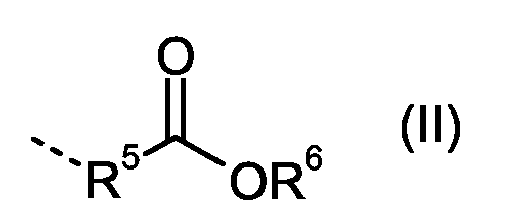
- Hierbei steht der Substituent R5 für einen zweiwertigen Kohlenwasserstoffrest mit 2 bis 20 C-Atomen, welcher gegebenenfalls mindestens ein Heteroatom, insbesondere in Form von Ether-Sauerstoff, aufweist. Der Substituent R6 steht für einen einwertigen Kohlenwasserstoffrest mit 1 bis 20 C-Atomen.
- Weiterhin stehen R2 und R3 entweder unabhängigfür zwei voneinander, je für unabhängige Substituenten, die jeweils einen einwertigen Kohlenwasserstoffrest mit 1 bis 12 C-Atomen darstellen, oder aber sie bilden zusammen einen einzigen Substituenten, der einen zweiwertigen Kohlenwasserstoffrest mit 4 bis 20 C-Atomen darstellt, welcher Teil eines carbocyclischen Rings mit 5 bis 8, bevorzugt 6, C-Atomen, wobei dieser ist carbocyclische Ring gegebenenfalls substituiert ist.
- Weiterhin steht der Substituent R4 für einen (m+y)-wertigen Kohlenwasserstoffrest mit 2 bis 12 C-Atomen, welcher gegebenenfalls mindestens ein Heteroatom, insbesondere in Form von Ether-Sauerstoff oder tertiärem Amin-Stickstoff, enthält.
- Des Weiteren steht X für O, S oder N-R7, wobei hierbei R7 entweder für einen einwertigen Kohlenwasserstoffrest mit 1 bis 20 C-Atomen, welcher gegebenenfalls mindestens eine Carbonsäureester-, Nitril-, Nitro-, Phosphonsäureester-, Sulfon- oder Sulfonsäureestergruppe aufweist, steht, oder für einen Substituenten der Formel (III) steht.

- Hierbei stehen R8 für einen (n+1)-wertigen Kohlenwasserstoffrest, welcher gegebenenfalls Heteroatome, insbesondere in Form von Ether-Sauerstoff oder tertiärem Amin-Stickstoff, und gegebenenfalls aktiven Wasserstoff in Form von Hydroxylgruppen, sekundären Aminogruppen oder Mercaptogruppen enthält, und n für eine ganze Zahl von 1 bis 10'000 steht. Die gestrichelten Linien in den Formeln dieses Dokumentes bezeichnen jeweils die Verbindungsstellen. In einer bevorzugten Ausführungsform ist y =1.
- Das Aldimin der Formel (I) ist herstellbar aus mindestens einem sterisch gehinderten aliphatischen Aldehyd A und mindestens einem aliphatischen Amin B, entsprechend der Formel [H2N]m-R4-[XH]y, welches neben einer oder mehreren primären Aminogruppen noch mindestens eine weitere Reaktivgruppe enthaltend einen aktiven Wasserstoff aufweist. Der Begriff "aktiver Wasserstoff" bezeichnet im vorliegenden Dokument ein deprotonierbares, an ein Stickstoff-, Sauerstoff- oder Schwefelatom gebundenes Wasserstoffatom. Der Begriff "Reaktivgruppe enthaltend einen aktiven Wasserstoff' bezeichnet eine einen aktiven Wasserstoff aufweisende funktionelle Gruppe, insbesondere eine primäre oder sekundäre Aminogruppe, eine Hydroxylgruppe, eine Mercaptogruppe oder eine Harnstoffgruppe.
- Die Umsetzung zwischen dem Aldehyd A und dem Amin B erfolgt in einer Kondensationsreaktion unter Abspaltung von Wasser. Solche Kondensationsreaktionen sind bestens bekannt und beschrieben, beispielsweise in Houben-Weyl, "Methoden der organischen Chemie", Vol. Xl/2, Seite 73ff. Der Aldehyd A wird hierbei in Bezug auf die primären Aminogruppen des Amins B stöchiometrisch oder in stöchiometrischem Überschuss eingesetzt. Üblicherweise werden solche Kondensationsreaktionen in Anwesenheit eines Lösemittels durchgeführt, mittels welchem das bei der Reaktion entstehende Wasser azeotrop entfernt wird. Zur Herstellung der Aldimine der Formel (I) wird jedoch ein Herstellverfahren ohne Verwendung von Lösemitteln bevorzugt, wobei das bei der Kondensation gebildete Wasser direkt mittels Anlegen von Vakuum aus der Reaktionsmischung entfernt wird. Durch die lösemittelfreie Herstellung erübrigt sich ein Abdestillieren des Lösemittels nach erfolgter Herstellung, was den Herstellungsprozess vereinfacht. Zudem ist das Aldimin so frei von Lösemittelrückständen, welche einen störenden Geruch verursachen könnten.
- Für die Herstellung des Aldimins der Formel (I) wird mindestens ein sterisch gehinderter aliphatischer Aldehyd A der Formel (IV) eingesetzt.

- In der Formel (lV) haben R1, R2 und R3 die gleiche Bedeutung wie für Formel (I) beschrieben.
- Der Aldehyd A ist geruchsfrei. Unter einer "geruchsfreien" Substanz wird eine Substanz verstanden, die so geruchsarm ist, dass sie für die meisten menschlichen Individuen nicht riechbar, das heisst mit der Nase nicht wahrnehmbar, ist.
- Der Aldehyd A wird beispielsweise hergestellt aus einer Carbonsäure R1-COOH und einem ß-Hydroxyaldehyd der Formel (V) in einer Veresterungsreaktion. Diese Veresterung kann nach bekannten Methoden erfolgen, beschrieben beispielsweise in Houben-Weyl, "Methoden der organischen Chemie", Vol. VIII, Seiten 516-528. Der ß-Hydroxyaldehyd der Formel (V) wird beispielsweise in einer gekreuzten Aldol-Addition aus Formaldehyd (oder oligomeren Formen von Formaldehyd, wie Paraformaldehyd oder 1,3,5-Trioxan) und einem Aldehyd der Formel (VI) erhalten.


- In den Formeln (V) und (VI) haben R2 und R3 die gleiche Bedeutung wie für Formel (I) beschrieben.
- Die Herstellung des Aldehyds A erfolgt bevorzugt lösemittelfrei. Dabei wird der ß-Hydroxyaldehyd der Formel (V) ohne Verwendung von Lösemitteln direkt mit der Carbonsäure umgesetzt, wobei das bei der Veresterung gebildete Wasser im Vakuum entfernt wird. Es ist weiterhin bevorzugt, die zum Aldehyd A führenden Aldol- und Veresterungsreaktionen aus den Grundstoffen in einem gemeinsamen Prozessschritt, als Eintopfreaktion, auszuführen.
- Als geeignete Carbonsäuren R1-COOH zur Veresterung mit den ß-Hydroxyaldehyden der Formel (V) seien beispielsweise die folgenden erwähnt: gesättigte aliphatische Carbonsäuren wie Oenanthsäure, Caprylsäure, Pelargonsäure, Caprinsäure, Undecansäure, Laurinsäure, Tridecansäure, Myristinsäure, Pentadecansäure, Palmitinsäure, Margarinsäure, Stearinsäure, Nonadecansäure, Arachinsäure; einfach ungesättigte aliphatische Carbonsäuren wie Palmitoleinsäure, Ölsäure, Erucasäure; mehrfach ungesättigte aliphatische Carbonsäuren wie Linolsäure, Linolensäure, Elaeostearinsäure, Arachidonsäure; cycloaliphatische Carbonsäuren wie Cyclohexancarbonsäure; arylaliphatische Carbonsäuren wie Phenylessigsäure; aromatische Carbonsäuren wie Benzoesäure, Naphthoesäure, Toluylsäure, Anissäure; Isomere dieser Säuren; Fettsäuregemische aus der technischen Verseifung von natürlichen Ölen und Fetten wie beispielsweise Rapsöl, Sonnenblumenöl, Leinöl, Ölbaumöl, Kokosnussöl, Ölpalmkernöl und Ölpalmöl; sowie Dicarbonsäuremonoalkyl- und -arylester, wie sie aus der einfachen Veresterung von Dicarbonsäuren wie Bernsteinsäure, Glutarsäure, Adipinsäure, Pimelinsäure, Korksäure, Azelainsäure, Sebacinsäure, 1,12-Dodecandisäure, Maleinsäure, Fumarsäure, Hexahydrophthalsäure, Hexahydroisophthalsäure, Hexahydroterephthalsäure, 3,6,9-Trioxaundecandisäure und ähnliche Derivate von Polyethylenglykol, mit Alkoholen wie Methanol, Ethanol, Propanol, Butanol, höheren Homologen und Isomeren dieser Alkohole erhalten werden.
Bevorzugt sind Caprylsäure, Caprinsäure, Laurinsäure, Myristinsäure, Palmitinsäure, Stearinsäure, Ölsäure, Linolsäure, Linolensäure, die Isomeren dieser Säuren sowie technische Gemische von Fettsäuren, welche diese Säuren enthalten. Besonders bevorzugt ist Laurinsäure. - Geeignete Aldehyde der Formel (VI) zur Umsetzung mit Formaldehyd zu ß-Hydroxyaldehyden der Formel (V) sind beispielsweise Isobutyraldehyd, 2-Methylbutyraldehyd, 2-Ethylbutyraldehyd, 2-Methylvaleraldehyd, 2-Ethylcapronaldehyd, Cyclopentancarboxaldehyd, Cyclohexancarboxaldehyd, 1,2,3,6-Tetrahydrobenzaldehyd, 2-Methyl-3-phenylpropionaldehyd, 2-Phenylpropionaldehyd und Diphenylacetaldehyd. Bevorzugt ist Isobutyraldehyd.
Geeignete ß-Hydroxyaldehyde der Formel (V) sind beispielsweise die Produkte aus der Umsetzung von Formaldehyd mit den vorgängig als geeignet genannten Aldehyden der Formel (VI). Bevorzugt ist 3-Hydroxypivalaldehyd. - Das Amin B ist ein aliphatisches Amin, welches neben einer oder mehreren primären Aminogruppen noch mindestens eine weitere Reaktivgruppe, welche einen aktiven Wasserstoff enthält, aufweist. Der Begriff "primäre Aminogruppe" bezeichnet im vorliegenden Dokument eine NH2-Gruppe, die an einen organischen Rest gebunden ist, während der Begriff "sekundäre Aminogruppe" eine NH-Gruppe bezeichnet, die an zwei organische Reste gebunden ist. Der Begriff "aliphatisches Amin" bezeichnet Verbindungen, die mindestens eine Aminogruppe enthalten, die an einen aliphatischen, cycloaliphatischen oder arylaliphatischen Rest gebunden ist. Sie unterscheiden sich damit von den aromatischen Aminen, in welchen die Aminogruppe direkt an einen aromatischen Rest gebunden ist, wie beispielsweise in Anilin oder 2-Aminopyridin.
- Das Amin B enthält neben einer oder mehreren primären Aminogruppen eine oder mehrere weitere Reaktivgruppen, welche einen aktiven Wasserstoff enthalten.
In einer Ausführungsform enthält das Amin B nur eine weiter derartige Reaktivgruppe.
Als Amine B, welche neben einer oder mehreren primären Aminogruppen nur eine weitere Reaktivgruppe, welche einen aktiven Wasserstoff enthält, aufweisen, eignen sich beispielsweise die im Folgenden genannten Verbindungen: - aliphatische Hydroxyamine wie 2-Aminoethanol, 2-Methylaminoethanol, 1-Amino-2-propanol, 3-Amino-1-propanol, 4-Amino-1-butanol, 4-Amino-2-butanol, 2-Amino-2-methylpropanol, 5-Amino-1-pentanol, 6-Amino-1-hexanol, 7-Amino-1-heptanol, 8-Amino-1-octanol, 10-Amino-1-decanol, 12-Amino-1-dodecanol, 4-(2-Aminoethyl)-2-hydroxyethylbenzol, 3-Aminomethyl-3,5,5-trimethyl-cyclohexanol; eine primäre Aminogruppe tragende Derivate von Glykolen wie Diethylenglykol, Dipropylenglykol, Dibutylenglykol und höheren Oligomeren und Polymeren dieser Glykole, beispielsweise 2-(2-Aminoethoxy)-ethanol, Triethylenglykol-monoamin, α-(2-Hydroxymethylethyl)-ω-(2-aminomethyl-ethoxy)-poly(oxy(methyl-1,2-ethandiyl)); eine Hydroxylgruppe und eine oder mehrere primäre Aminogruppen tragende Derivate von polyalkoxylierten drei-oder höherwertigen Alkoholen oder von polyalkoxylierten Diaminen; Produkte aus der einfachen Cyanoethylierung und anschliessender Hydrierung von Glykolen, beispielsweise 3-(2-Hydroxyethoxy)-propylamin, 3-(2-(2-Hydroxy-ethoxy)-ethoxy)-propylamin, 3-(6-Hydroxyhexyloxy)-propylamin;
- aliphatische Mercaptoamine wie 2-Aminoethanthiol (Cysteamin), 3-Aminopropanthiol, 4-Amino-1-butanthiol, 6-Amino-1-hexanthiol, 8-Amino-1-octanthiol, 10-Amino-1-decanthiol, 12-Amino-1-dodecanthiol; Aminothiozucker wie 2-Amino-2-deoxy-6-thioglucose;
- zwei- oder mehrwertige aliphatische Amine, welche neben einer oder mehreren primären Aminogruppen eine sekundäre Aminogruppe tragen, wie N-Methyl-1,2-ethandiamin, N-Ethyl-1,2-ethandiamin, N-Butyl-1,2-ethandiamin, N-Hexyl-1,2-ethandiamin, N-(2-Ethylhexyl)-1,2-ethandiamin, N-Cyclohexyl-1,2-ethandiamin, 4-Aminomethyl-piperidin, 3-(4-Aminobutyl)-piperidin, N-Aminoethyl-piperazin, Diethylentriamin (DETA), Bis-hexamethylentriamin (BHMT); Di-und Triamine aus der Cyanoethylierung oder Cyanobutylierung von primären Mono- und Diaminen, beispielsweise N-Methyl-1,3-propandiamin, N-Ethyl-1,3-propandiamin, N-Butyl-1,3-propandiamin, N-Hexyl-1,3-propandiamin, N-(2-Ethylhexyl)-1,3-propandiamin, N-Dodecyl-1,3-propandiamin, N-Cyclohexyl-1,3-propandiamin,3-Methylamino-1-pentylamin,3-Ethylamino-1-pentylamin,3-Butyl-amino-1-pentylamin, 3-Hexylamino-1-pentylamin, 3-(2-Ethylhexyl)amino-1-pentylamin,3-Dodecylamino-1-pentylamin,3-Cyclohexylamino-1-pentylamin, Dipropylentriamin (DPTA), N3-(3-Aminopentyl)-1,3-pentandiamin, N5-(3-Amino-propyl)-2-methyl-1,5-pentandiamin, N5-(3-Amino-1-ethylpropyl)-2-methyl-1,5-pentandiamin,und Fettdiamine wie N-Cocoalkyl-1,3-propandiamin, N-Oleyl-1,3-propandiamin, N-Soyaalkyl-1,3-propandiamin, N-Talgalkyl-1,3-propandiamin oder N-(C16-22-Alkyl)-1,3-propandiamin, wie sie beispielsweise unter dem Handelsnamen Duomeen® von Akzo Nobel erhältlich sind; die Produkte aus der Michael-artigen Addition von aliphatischen primären Di- oder Polyaminen mit Acrylnitril, Malein- oder Fumarsäurediestern, Citraconsäurediestern, Acryl- und Methacrylsäureestern und Itaconsäurediestern, umgesetzt im Molverhältnis 1:1;
- trisubstituierte Harnstoffe, welche eine oder mehrere primäre Aminogruppen tragen, wie N-(2-Aminoethyl)-ethylenharnstoff, N-(2-Aminoethyl)-propylenharnstoff oder N-(2-Aminoethyl)-N'-methylharnstoff. Insbesondere geeignete aliphatische Hydroxy- und Mercaptoamine sind solche, in denen die primäre Aminogruppe von der Hydroxyl- beziehungsweise der Mercaptogruppe durch eine Kette von mindestens 5 Atomen, oder durch einen Ring, getrennt sind, wie beispielsweise in 5-Amino-1-pentanol, 6-Amino-1-hexanol, 7-Amino-1-heptanol, 8-Amino-1-octanol, 10-Amino-1-decanol, 12-Amino-1-dodecanol, 4-(2-Aminoethyl)-2-hydroxyethylbenzol, 3-Aminomethyl-3,5,5-trimethyl-cyclohexanol, 2-(2-Aminoethoxy)-ethanol, Triethylenglykol-monoamin, α-(2-Hydroxymethylethyl)-ω-(2-aminomethylethoxy)-poly(oxy(methyl-1,2-ethandiyl)), 3-(2-Hydroxyethoxy)-propylamin, 3-(2-(2-Hydroxyethoxy)-ethoxy)-propylamin, 3-(6-Hydroxyhexyloxy)-propylamin, 6-Amino-1-hexanthiol, 8-Amino-1-octanthiol, 10-Amino-1-decanthiol und 12-Amino-1-dodecanthiol.
- Als Amine B, welche neben einer oder mehreren primären Aminogruppen nur eine weitere Reaktivgruppe enthaltend einen aktiven Wasserstoff aufweisen, bevorzugt sind zwei- oder mehrwertige aliphatische Amine, welche neben einer oder mehreren primären Aminogruppen eine sekundäre Aminogruppe tragen, insbesondere N-Methyl-1,2-ethandiamin, N-Ethyl-1,2-ethan-diamin, N-Cyclohexyl-1,2-ethandiamin, N-Methyl-1,3-propandiamin, N-Ethyl-1,3-propandiamin, N-Butyl-1,3-propandiamin, N-Cyclohexyl-1,3-propandiamin, 4-Aminomethyl-piperidin, 3-(4-Aminobutyl)-piperidin, DETA, DPTA, BHMT und Fettdiamine wie N-Cocoalkyl-1,3-propandiamin, N-Oleyl-1,3-propandiamin, N-Soyaalkyl-1,3-propandiamin und N-Talgalkyl-1,3-propandiamin. Bevorzugt sind auch aliphatische Hydroxy- und Mercaptoamine, in denen die primäre Aminogruppe von der Hydroxy- beziehungsweise der Mercaptogruppe durch eine Kette von mindestens 5 Atomen, oder durch einen Ring, getrennt sind, insbesondere 5-Amino-1-pentanol, 6-Amino-1-hexanol und höhere Homologe davon, 4-(2-Aminoethyl)-2-hydroxyethylbenzol, 3-Aminomethyl-3,5,5-trimethyl-cyclohexanol, 2-(2-Aminoethoxy)-ethanol, Triethylenglykol-monoamin und höhere Oligo- und Polymere davon, 3-(2-Hydroxyethoxy)-propylamin, 3-(2-(2-Hydroxyethoxy)-ethoxy)-propylamin sowie 3-(6-Hydroxyhexyloxy)-propylamin.
- In einer weiteren Ausführungsform enthält das Amin B neben einer oder mehreren primären Aminogruppen weitere Reaktivgruppen, welche einen aktiven Wasserstoff enthalten.
- Als Amine B, welche neben einer oder mehreren primären Aminogruppen mehrere weitere Reaktivgruppen enthaltend einen aktiven Wasserstoff aufweisen, eignen sich beispielsweise die im Folgenden genannten Verbindungen:
- zwei- oder mehrwertige aliphatische Amine, welche neben einer oder mehreren primären Aminogruppen mehr als eine sekundäre Aminogruppe tragen, wie Triethylentetramin (TETA), Tetraethylenpentamin (TEPA), Pentaethylenhexamin und höhere Homologe linearer Polyethylenamine, N,N'-Bis-(3-aminopropyl)-ethylendiamin, sowie Polyethylenimine unterschiedlichen Polymerisationsgrades (Molmassen-Bereich 500 bis 1'000'000 g/mol), wie sie beispielsweise unter dem Handelsnamen Lupasol® von BASF in reiner Form oder als wässrige Lösungen erhältlich sind, wobei diese Polyethylenimine neben primären und sekundären auch tertiäre Aminogruppen enthalten;
- mehr als eine Hydroxylgruppe und eine oder mehrere primäre Aminogruppen tragende Derivate von polyalkoxylierten drei- oder höherwertigen Alkoholen oder von polyalkoxylierten Polyaminen.
Als Amine B, welche neben einer oder mehreren primären Aminogruppen mehrere weitere Reaktivgruppen enthaltend einen aktiven Wasserstoff aufweisen, bevorzugt sind zwei- oder mehrwertige aliphatische Amine, welche neben einer oder mehreren primären Aminogruppen mehr als eine sekundäre Aminogruppe tragen, wie Triethylentetramin, Tetraethylenpentamin, Pentaethylenhexamin und höhere Homologe linearer Polyethylenamine; Hydroxypolyamine wie N-Hydroxyethyl-1,2-ethandiamin, N-Hydroxypropyl-1,2-ethandiamin, N-Hydroxyethyl-1,3-propandiamin, N3-Hydroxyethyl-1,3-pentandiamin; Polyamine aus der mehrfachen Cyanoethylierung oder Cyanobutylierung von primären Di- und Polyaminen und von Hydroxyaminen mit mehreren primären Aminogruppen, wie N,N'-Bis-(3-aminopropyl)-ethylendiamin, N,N'-Bis-(3-aminopropyl)-1,4-diaminobutan, N,N'-Bis-(3-aminopropyl)-2-methyl-1,5-pentandiamin, N,N'-Bis-(3-amino-1-ethylpropyl)-2-methyl-1,5-pentandiamin; sowie verzweigte Polyethylenimine unterschiedlichen Polymerisationsgrades (Molmassen-Bereich 500 bis 1'000'000 g/mol).
Die Umsetzung zwischen einem Aldehyd A und einem Amin B führt dabei zu Hydroxyaldiminen, wenn als Amin B ein Hydroxyamin eingesetzt wird; zu Mercaptoaldiminen, wenn als Amin B ein Mercaptoamin eingesetzt wird; zu Aminoaldiminen, wenn als Amin B ein zwei- oder mehrwertiges Amin, welches neben einer oder mehreren primären Aminogruppen eine oder mehrere sekundäre Aminogruppen trägt, eingesetzt wird; oder zu Harnstoffaldiminen, wenn als Amin B ein trisubstituierter Harnstoff, welcher eine oder mehrere primäre Aminogruppen trägt, eingesetzt wird.
In einer Ausführungsform weisen die Aldimine der Formel (I) einen Substituenten N-R7 als Substituenten X auf. Derartige Aldimine der Formel (I) lassen sich dadurch herstellen, dass mindestens ein sterisch gehinderter aliphatischer Aldehyd A der Formel (IV) mit mindestens einem zwei- oder mehrwertigen aliphatischen primären Amin C der Formel [H2N]m-R4-[NH2]y in einem ersten Schritt zu einem Zwischenprodukt der Formel (VII) umgesetzt wird, welches neben einer oder mehreren Aldiminogruppen noch mindestens eine, bevorzugt eine, primäre Aminogruppe enthält, und dieses Zwischenprodukt anschliessend in einem zweiten Schritt in einer Additionsreaktion mit einem Michael-Akzeptor der Formel (VIII) in einem Verhältnis der Anzahl Doppelbindungen : Anzahl NH2-Gruppen = 1:1 umgesetzt wird. Dabei entsteht ein Aminoaldimin, welches neben einer oder mehreren Aldiminogruppen noch mindestens eine, bevorzugt eine, sekundäre Aminogruppe enthält.

Das Amin C ist ein aliphatisches Amin mit mindestens zwei primären Aminogruppen. Der Begriff "aliphatisches primäres Amin" bezeichnet ein aliphatisches Amin, in welchem die Aminogruppe eine primäre Aminogruppe ist.
Beispiele für geeignete Amine C sind aliphatische Polyamine wie Ethylendiamin, 1,2- und 1,3-Propandiamin, 2-Methyl-1,2-propandiamin, 2,2-Dimethyl-1,3-propandiamin, 1,3- und 1,4-Butandiamin, 1,3- und 1,5-Pentandiamin, 2-Butyl-2-ethyl-1,5-pentandiamin, 1,6-Hexamethylendiamin (HMDA), 2,2,4- und 2,4,4-Trimethylhexamethylendiamin und Mischungen davon (TMD), 1,7-Heptandiamin, 1,8-Octandiamin, 2,4-Dimethyl-1,8-octandiamin, 4-Aminomethyl-1,8-octandiamin, 1,9-Nonandiamin, 2-Methyl-1,9-nonandiamin, 5-Methyl-1,9-nonandiamin, 1,10-Decandiamin, Isodecandiamin, 1,11-Undecandiamin, 1,12-Dodecandiamin, Methyl-bis-(3-aminopropyl)amin, 1,5-Diamino-2-methylpentan (MPMD), 1,3-Diaminopentan(DAMP), 2,5-Dimethyl-1,6-hexamethylendiamin, cycloaliphatische Polyamine wie 1,2-, 1,3- und 1,4-Diaminocyclohexan, Bis-(4-aminocyclohexyl)-methan (H12MDA), Bis-(4-amino-3-methylcyclohexyl)-methan, Bis-(4-amino-3-ethylcyclohexyl)-methan, Bis-(4-amino-3,5-dimethylcyclohexyl)-methan, Bis-(4-amino-3-ethyl-5-methylcyclohexyl)-methan (M-MECA), 1-Amino-3-aminomethyl-3,5,5-trimethylcyclohexan (= Isophorondiamin oder IPDA), 2- und 4-Methyl-1,3-diaminocyclohexan und Mischungen davon, 1,3- und 1,4-Bis-(aminomethyl)cyclohexan, 1,3,5-Tris-(aminomethyl)-cyclohexan, 1-Cyclohexylamino-3-aminopropan, 2,5(2,6)-Bis-(aminomethyl)-bicyclo[2.2.1]heptan (NBDA, hergestellt von Mitsui Chemicals), 3(4),8(9)-Bis-(aminomethyl)-tricyclo[5.2.1.02,6]decan, 1,4-Diamino-2,2,6-trimethylcyclohexan (TMCDA), 3,9-Bis-(3-aminopropyl)-2,4,8,10-tetraoxaspiro[5.5]undecan, arylaliphatische Polyamine wie 1,3-Xylylendiamin (MXDA), 1,4-Xylylendiamin (PXDA), 1,3,5-Tris-(aminomethyl)benzol, Ethergruppen-haltige aliphatische Polyamine wie Bis-(2-aminoethyl)ether, 4,7-Dioxadecan-1,10-diamin, 4,9-Dioxadodecan-1,12-diamin und höhere Oligomere davon, Polyoxyalkylen-Polyamine mit theoretisch zwei oder drei Aminogruppen, erhältlich beispielsweise unter dem Namen Jeffamine® (hergestellt von Huntsman Chemicals). Bevorzugt sind Di-oder Triamine, in denen die primären Aminogruppen durch eine Kette von mindestens 5 Atomen, oder durch einen Ring, getrennt sind, insbesondere 1,5-Diamino-2-methylpentan, 1,6-Hexamethylendiamin, 2,2,4- und 2,4,4-Trimethylhexamethylendiamin und Mischungen davon, 1,10-Decandiamin, 1,12-Dodecandiamin, 1,3- und 1,4-Diaminocyclohexan, Bis-(4-aminocyclohexyl)-methan, Bis-(4-amino-3-methylcyclohexyl)-methan, 1-Amino-3-aminomethyl-3,5,5-trimethylcyclohexan, 1,3- und 1,4-Bis-(aminomethyl)cyclohexan, 2,5(2,6)-Bis-(aminomethyl)-bicyclo[2.2.1]heptan, 3(4),8(9)-Bis-(aminomethyl)-tricyclo-[5.2.1.02,6]decan, 1,4-Diamino-2,2,6-trimethylcyclohexan (TMCDA), 3,9-Bis-(3-aminopropyl)-2,4,8,10-tetraoxaspiro[5.5]undecan, 1,3- und 1,4-Xylylendiamin, 1,3,5-Tris-(aminomethyl)benzol sowie Polyoxyalkylen-Polyamine mit theoretisch zwei oder drei Aminogruppen, erhältlich beispielsweise unter dem Namen Jeffamine® (hergestellt von Huntsman Chemicals).
Beispiele für geeignete Michael-Akzeptoren der Formel (VIII) sind Malein- oder Fumarsäurediester wie Dimethylmaleinat, Diethylmaleinat, Dibutylmaleinat, Diethylfumarat; Citraconsäurediester wie Dimethylcitraconat; Acryl- oder Methacrylsäureester wie Methyl(meth)acrylat, Ethyl(meth)acrylat, Butyl(meth)acrylat, Lauryl(meth)acrylat, Stearyl(meth)acrylat, Tetrahydrofuryl-(meth)acrylat, Isobornyl(meth)acrylat; Itaconsäurediester wie Dimethylitaconat; Zimtsäureester wie Methylcinnamat; Vinylphosphonsäurediester wie Vinylphosphonsäuredimethylester; Vinylsulfonsäureester, insbesondere Vinylsulfonsäurearylester; Vinylsulfone; Vinylnitrile wie Acrylnitril, 2-Pentennitril oder Fumaronitril; 1-Nitroethylene wie β-Nitrostyrol; und Knoevenagel-Kondensationsprodukte, wie beispielsweise solche aus Malonsäurediestern und Aldehyden wie Formaldehyd, Acetaldehyd oder Benzaldehyd. Bevorzugt sind Maleinsäurediester, Acrylsäureester, Phosphonsäurediester und Vinylnitrile.
Die Umsetzung des Aldehyds A mit dem Amin C zum Zwischenprodukt der Formel (VII) erfolgt in einer Kondensationsreaktion unter Abspaltung von Wasser, wie sie weiter oben für die Umsetzung des Aldehyds A mit dem Amin B beschrieben wird. Die Stöchiometrie zwischen dem Aldehyd A und dem Amin C wird dabei so gewählt, dass m mol Aldehyd A für 1 mol Amin C, welches y+m primäre Aminogruppen enthält, eingesetzt werden. Es wird ein lösemittelfreies Herstellverfahren bevorzugt, wobei das bei der Kondensation gebildete Wasser mittels Anlegen von Vakuum aus der Reaktionsmischung entfernt wird. Bevorzugt ist y=1.
Die Umsetzung des Zwischenprodukts der Formel (VII) mit dem Michael-Akzeptor der Formel (VIII) erfolgt beispielsweise dadurch, dass das Zwischenprodukt mit einer stöchiometrischen oder leicht überstöchiometrischen Menge des Michael-Akzeptors der Formel (VIII) gemischt wird und die Mischung bei Temperaturen von 20 bis 110°C bis zum vollständigen Umsatz des Zwischenprodukts zum Aldimin der Formel (I) erwärmt wird. Die Umsetzung erfolgt bevorzugt ohne eine Verwendung von Lösemitteln.
Die Aldimine der Formel (I) können gegebenenfalls im Gleichgewicht stehen mit cyclischen Formen, wie sie in Formel (X) beispielhaft gezeigt sind. Diese cyclischen Formen sind im Fall von Aminoaldiminen cyclische Aminale, beispielsweise Imidazolidine oder Tetrahydropyrimidine; im Fall von Hydroxyaldiminen cyclische Aminoacetale, beispielsweise Oxazolidine oder Tetrahydrooxazine; im Fall von Mercaptoaldiminen cyclische Thioaminale, beispielsweise Thiazolidine oder Tetrahydrothiazine.
Überraschenderweise neigen die meisten Aldimine der Formel (I) nicht zur Cyclisierung. Insbesondere für Aminoaldimine kann mittels IR- und NMRspektroskopischen Methoden gezeigt werden, dass diese Verbindungen überwiegend in der offenkettigen, also der Aldimin-Form, vorliegen, während die cyclische, also die Aminal-Form, nicht oder nur in Spuren vorkommt. Dies steht im Gegensatz zum Verhalten der Aminoaldimine nach dem Stand der Technik, wie sie beispielsweise inUS 4,404,379 undUS 6,136,942 beschrieben werden: jene liegen nämlich hauptsächlich in der Cycloaminal-Form vor. Auch Hydroxy- und Mercaptoamine, in denen die primäre Aminogruppe von der Hydroxy- beziehungsweise der Mercaptogruppe durch eine Kette von mindestens 5 Atomen, oder durch einen Ring, getrennt sind, zeigen kaum Cyclisierung. Die weitgehende Abwesenheit cyclischer Strukturen in den Aldiminen der Formel (I) ist, insbesondere im Hinblick auf deren Verwendung in Isocyanat-haltigen Zusammensetzungen, als Vorteil zu werten, da die Aldimine dadurch weitgehend frei sind von den in Aminalen, Oxazolidinen und Thioaminalen vorkommenden basischen Stickstoffatomen, welche die Lagerstabilität der Isocyanat-haltigen Zusammensetzung herabsetzen könnten.
Die Aldimine der Formel (I) sind geruchsfrei. Sie sind unter geeigneten Bedingungen, insbesondere unter Ausschluss von Feuchtigkeit, lagerstabil. Bei Zutritt von Feuchtigkeit können die Aldiminogruppen der Aldimine über Zwischenstufen formal zu Aminogruppen hydrolysieren, wobei der entsprechende, zur Herstellung des Aldimins verwendete Aldehyd A freigesetzt wird. Da diese Hydrolysereaktion reversibel ist und das chemische Gleichgewicht deutlich auf der Aldiminseite liegt, ist davon auszugehen, dass in Abwesenheit von gegenüber Aminen reaktiven Gruppen nur ein Teil der Aldiminogruppen teilweise oder ganz hydrolysieren.
Die Aldimine der Formel (I) lassen sich sehr breit verwenden. Grundsätzlich lassen sie sich überall dort einsetzen, wo sie als Quelle der Aldehyde der Formel (IV) oder der Amine B dienen können. Insbesondere können sie in der Funktion von geschützten Aminen, beziehungsweise geschützten Aldehyden, in Aldehyd- und/oder oder Amin-reaktiven Systemen eingesetzt werden können und dort bei Bedarf gezielt entschützt werden. Insbesondere finden sie in Systemen Anwendungen, in welchen Verbindungen vorhanden sind, welche mit primären Aminen reagieren. Die Entschützung erfolgt hydrolytisch, beispielsweise durch Kontakt mit Wasser oder Feuchtigkeit, insbesondere Luftfeuchtigkeit.
Andererseits finden die Aldimine der Formel (I) Verwendung beim Aufbau von weiter funktionalisierten Reaktionsprodukten der Aldimine der Formel (I). So können Aldimine der Formel (I) mit Verbindungen umgesetzt werden, welche mit der Gruppe XH reagieren. In der Folge lassen sich diese Reaktionsprodukte bei Bedarf zu Aldehyden der Formel (IV) und Verbindungen mit primären Aminogruppen hydrolysieren, was dann Anlass zu Reaktionen oder Vernetzungen gibt. Durch Reduktion der Aldiminogruppen können die Aldimine der Formel (I) auch zum Aufbau von Verbindungen enthaltend spezielle sekundäre Aminogruppen dienen, welche beispielsweise als Härter für Isocyanat-und/oder Epoxid-haltigen Zusammensetzungen eingesetzt werden können.
Die Aldimine der Formel (I) lassen sich beispielsweise als Bausteine für Kunststoffvorläufer verwenden. Mit dem Begriff "Kunststoffvorläufer" werden im vorliegenden Dokument monomere, oligomere oder polymere organische Verbindungen - oder solche Verbindungen zu einem wesentlichen Teil enthaltende homogene oder heterogene Zusammensetzungen - bezeichnet, welche aufgrund von in ihnen enthaltenen, für Polyreaktionen zugänglichen Reaktivgruppen befähigt sind, mit sich allein oder zusammen mit anderen Molekülen zu hochmolekularen Kunststoffen, das heisst organischen Polymeren, auszureagieren, ein Prozess, der gemeinhin als "Aushärtung" oder auch als "Vernetzung" bezeichnet wird - unabhängig davon, ob die bei der Aushärtung ablaufenden Reaktionen zu kovalent oder andersartig vernetzten Strukturen führen. Der Begriff "Polyreaktionen" umfasst dabei sämtliche Arten von Polyadditions-, Polykondensation- und Polymerisationsreaktionen. Der Begriff "Polymer" umfasst im vorliegenden Dokument sowohl ein Kollektiv von chemisch einheitlichen, sich aber in Bezug auf Polymerisationsgrad, Molmasse und Kettenlänge unterscheidenden Makromolekülen, die durch eine Polyreaktion hergestellt wurden, als auch Derivate eines solchen Kollektivs von Makromolekülen aus Polyreaktionen, Verbindungen also, die durch Umsetzungen, wie beispielsweise Additionen oder Substitutionen, von funktionellen Gruppen an vorgegebenen Makromolekülen erhalten wurden und die chemisch einheitlich oder chemisch uneinheitlich sein können. Die Vorsilbe "Poly" in Substanzbezeichnungen, wie "Polyaldimin", "Polyamin", "Polyisocyanat" oder "Polyol" weist im vorliegenden Dokument darauf hin, dass die jeweilige Substanz formal mehr als eine der in ihrer Bezeichnung vorkommenden funktionellen Gruppe pro Molekül enthält. Attribute von Substanzen wie "Aldimin-haltig" oder "Isocyanathaltig" weisen darauf hin, dass die bezeichneten funktionellen Gruppen, also Aldiminogruppen oder Isocyanatgruppen, in den Substanzen enthalten sind.
In einer ersten bevorzugten Verwendungsart werden Aldimine der Formel (I) zur Herstellung von Aldimin-haltigen Verbindungen eingesetzt, welche beispielsweise als latente Härter oder als Co-Monomere für Kunststoffvorläufer, insbesondere für Isocyanat-haltige Zusammensetzungen, geeignet sind. Ein weiterer Gegenstand der vorliegenden Erfindung stellen Aldimin-haltige Verbindungen AV dar, welche Additionsprodukte darstellen aus der Umsetzung von mindestens einem Aldimin der Formel (I) mit y=1 mit mindestens einer Verbindung D, die mehr als eine Reaktivgruppe trägt, welche mit der Gruppe XH Additionsreaktionen eingehen kann. Die den aktiven Wasserstoff tragende Reaktivgruppe des Aldimins der Formel (I) reagiert dabei in einer Additionsreaktion mit einer oder mehreren Reaktivgruppen der Verbindung D zu einer im Folgenden auch "Additionsprodukt" genannten Aldimin-haltigen Verbindung AV.
Wird die Umsetzung stöchiometrisch geführt, das heisst mit einem Molequivalent aktiven Wasserstoff des Aldimins der Formel (I) auf ein Molequivalent Reaktivgruppen der Verbindung D - wodurch deren Reaktivgruppen vollständig umgesetzt werden -, wird als Aldimin-haltige verbindung AV ein Polyaldimin erhalten. Auf einfache Weise werden so vielfältige Polyaldimine erhalten, ohne dass zu ihrer Herstellung auf die entsprechenden primären Polyamine, welche technisch und kommerziell nur beschränkt zur Verfügung stehen, zurückgegriffen werden müsste. In Abhängigkeit von Struktur, Funktionalität und Molekulargewicht der Verbindungen D und der Aldimine der Formel (I) können diese Polyaldimine höchst unterschiedliche Eigenschaften aufweisen; sie lassen sich also auf die Bedürfnisse einer bestimmten Anwendung massschneidern. Diese Polyaldimine eignen sich insbesondere als latente Härter für Isocyanat-haltige Zusammensetzungen.
Durch geeignete Umsetzung der Aldimine der Formel (I) mit Verbindungen D können auch heterofunktionelle Additionsprodukte hergestellt werden, das heisst, solche Aldimin-haltige Verbindungen AV, welche neben einer oder mehreren Aldiminogruppen noch eine oder mehrere andere, für Polyreaktionen zugängliche Reaktivgruppen aufweisen. Heterofunktionelle Additionsprodukte werden dann erhalten, wenn die Umsetzung zwischen dem Aldimin und einer Verbindung D unterstöchiometrisch, das heisst mit weniger als einem Molequivalent aktiven Wasserstoff des Aldimins auf ein Molequivalent Reaktivgruppen der Verbindung D, geführt wird. Die Verbindung D selbst kann dabei homo- oder heterofunktionell sein. Solche heterofunktionellen Additionsprodukte sind beispielsweise verwendbar als Co-Monomere oder als latente Härter für Kunststoffvorläufer; oder, wenn die Aldiminogruppe als solche oder nach ihrer Hydrolyse mit den anderen im heterofunktionellen Additionsprodukt vorliegenden Reaktivgruppen unter Verknüpfung der Moleküle reagieren kann, auch als Kunststoffvorläufer selbst. Dies trifft insbesondere zu für den Fall von Aldimin-haltigen Verbindungen AV, die zusätzlich Isocyanatgruppen enthalten.
Als Verbindungen D geeignet sind Substanzen, welche mehr als eine der folgenden Reaktivgruppen, welche Additionsreaktionen eingehen können, tragen: Isocyanat-, Isothiocyanat-, Cyclocarbonat-, Epoxid-, Episulfid-, Aziridin-, Acryl-, Methacryl-, 1-Ethinylcarbonyl-, 1-Propinylcarbonyl-, Maleimid-, Citraconimid-, Vinyl-, Isopropenyl- und Allyl-Gruppen, sowie Verbindungen mit verschiedenen der vorgenannten Reaktivgruppen. Bevorzugt sind Isocyanat-, Epoxid-, Acryl-, Maleimid-, Vinyl-, Isopropenyl- und Allylgruppen. Besonders bevorzugt ist die Isocyanatgruppe.
Beispiele für geeignete Verbindungen D sind - zwei- oder mehrwertige, mono- und/oder oligomere aliphatische, cycloaliphatische, arylaliphatische und aromatische Isocyanate (Polyisocyanate) wie 1,6-Hexamethylendiisocyanat (HDI), 2-Methylpentamethylen-1,5-diisocyanat, 2,2,4- und 2,4,4-Trimethyl-1,6-hexamethylendiisocyanat (TMDI), 1,12-Dodecamethylendiisocyanat, Lysin- und Lysinesterdiisocyanat, Cyclohexan-1,3- und -1,4-diisocyanat und beliebige Gemische dieser Isomeren, 1-Isocyanato-3,3,5-trimethyl-5-isocyanatomethyl-cyclohexan (=Isophorondiisocyanat oder IPDI), Perhydro-2,4'- und -4,4'-diphenylmethandiisocyanat (HMDI), 1,4-Diisocyanato-2,2,6-trimethylcyclohexan (TMCDI), 1,3- und 1,4-Bis-(isocyanatomethyl)-cyclohexan, m- und p-Xylylendiisocyanat (m- und p-XDI), 1,3,5-Tris-(isocyanatomethyl)-benzol, m- und p-Tetramethyl-1,3- und -1,4-xylylendiisocyanat (m- und p-TMXDI), Bis-(1-Isocyanato-1-methylethyl)-naphthalin, α,α,α',α',α",α"-Hexamethyl-1,3,5-mesitylentriisocyanat, Dimer- und Trimerfettsäureisocyanate wie 3,6-Bis-(9-isocyanatononyl)-4,5-di-(1-heptenyl)-cyclohexen (Dimeryldiisocyanat), 2,4- und 2,6-Toluylendiisocyanat und beliebige Gemische dieser Isomeren (TDI), 4,4'-, 2,4'- und 2,2'-Diphenylmethandiisocyanat und beliebige Gemische dieser Isomeren (MDI), Gemische aus MDI und MDI-Homologen (polymeres MDI oder PMDI), 1,3- und 1,4-Phenylendiisocyanat, 2,3,5,6-Tetramethyl-1,4-düsocyanatobenzol, Naphthalin-1,5-diisocyanat (NDI), 3,3'-Dimethyl-4,4'-diisocyanatodiphenyl (TODI), Tris-(4-isocyanatophenyl)-methan, Tris-(4-isocyanatophenyl)-thiophosphat; Oligomere dieser Isocyanate enthaltend Uretdion-, Isocyanurat- oder Iminooxadiazindiongruppen; modifizierte zwei- und mehrwertige Isocyanate enthaltend Ester-, Harnstoff-, Urethan-, Biuret-, Allophanat-, Carbodiimid-, Uretonimin- oder Oxadiazintriongruppen; sowie Isocyanat-haltige Polyurethanpolymere, das heisst mehr als eine Isocyanatgruppe aufweisende Umsetzungsprodukte von Polyisocyanaten mit zwei-oder mehr Hydroxylgruppen aufweisenden Substanzen (so genannten "Polyolen"), wie beispielsweise zwei- oder mehrwertigen Alkoholen, Glykolen oder Aminoalkoholen, polyhydroxyfunktionellen Polyethern, Polyestern, Polyacrylaten, Polycarbonaten oder Polykohlenwasserstoffen, insbesondere Polyethern;
- zwei- oder mehrwertige Epoxide (Polyepoxide) wie Bis-(2,3-epoxycyclopentyl)ether, Polyglycidylether von mehrwertigen aliphatischen und cycloaliphatischen Alkoholen wie 1,4-Butandiol, Polypropylenglykolen und 2,2-Bis-(4-hydroxycyclohexyl)-propan; Polyglycidylether von mehrwertigen Phenolen wie Resorcinol, Bis-(4-hydroxyphenyl)-methan (Bisphenol-F), 2,2-Bis-(4-hydroxyphenyl)-propan (Bisphenol-A), 2,2-Bis-(4-hydroxy-3,5-dibromophenyl)-propan, 1,1,2,2-Tetrakis-(4-hydroxyphenyl)-ethan, Kondensationsprodukten von Phenolen mit Formaldehyd, die unter sauren Bedingungen erhalten werden, wie Phenolnovolaken und Kresolnovolaken, sowie mit diesen Alkoholen und Phenolen, oder mit Polycarbonsäuren wie beispielsweise dimeren Fettsäuren, oder einem Gemisch davon, vorverlängerte Polyglycidylether; Polyglycidylester von mehrwertigen Carbonsäuren wie Phthalsäure, Terephthalsäure, Tetrahydrophthalsäure und Hexahydrophthalsäure; N-Glycidyl-Derivate von Aminen, Amiden und heterocyclischen Stickstoffbasen wie N,N-Diglycidylanilin, N,N-Diglycidyltoluidin, N,N,O-Triglycidyl-4-aminophenol, N,N,N',N'-Tetraglycidyl-bis-(4-aminophenyl)-methan, Triglycidylcyanurat und Triglycidylisocyanurat;
- zwei- oder mehrwertige, Acryl-, Methacryl- oder Acrylamidgruppen tragende Verbindungen wie Tris-(2-hydroxyethyl)-isocyanurat-tri(meth)acrylat, Tris-(2-hydroxyethyl)-cyanurat-tri(meth)acrylat, N,N',N"-Tris-(meth)acryloyl-perhydrotriazin; zwei- oder mehrwertige Acrylate und Methacrylate von aliphatischen Polyethern, Polyestern, Novolaken, Phenolen, aliphatischen oder cycloaliphatischen Alkoholen, Glykolen und Polyesterglykolen sowie mono- und polyalkoxylierten Derivaten der vorgenannten Verbindungen, beispielsweise Ethylenglykol-di(meth)acrylat, Tetraethylenglykol-di(meth)acrylat, Tripropylenglykol-di(meth)acrylat, Polyethylenglykol-di(meth)acrylat, Polypropylenglykoldi(meth)acrylat, 1,4-Butandiol-di(meth)acrylat, 1,6-Hexandiol-di(meth)acrylat, Neopentylglykol-di(meth)acrylat, Trimethylolpropan-tri(meth)acrylat, Pentaerithritol-tetra(meth)acrylat, Dipentaerithritol-tetra(meth)acrylat, Dipentaerithritolpenta(meth)acrylat, Dipentaerithritol-hexa(meth)acrylat; zwei- oder mehrwertige Acryl- oder Methacryl-funktionelle Polybutadiene, Polyisoprene oder Block-copolymere davon; Addukte aus zwei- oder mehrwertigen Epoxiden wie die oben genannten Epoxide mit Acryl- und Methacrylsäure; zwei- oder mehrwertige Polyurethan(meth)acrylate; zwei- oder mehrwertige Acrylamide wie N,N'-Methylen-bis-acrylamid;
- zwei- oder mehrwertige, 1-Ethinylcarbonyl- oder 1-Propinylcarbonylgruppen tragende Verbindungen;
- zwei- oder mehrwertige, Maleimid- oder Citraconimidgruppen tragende Verbindungen wie die Bis- und Polykismaleimide aus aliphatischen, cycloaliphatischen oder aromatischen Di- und Polyaminen und Malein- oder Citraconsäureanhydrid, beispielsweise α,ω-Dimerfettsäure-bis(maleimid), 4,4'-Diphenylmethan-bis(maleimid), 1,3-Xylylen-bis(citraconimid); Bis- und Polykismaleimide aus aminoterminierten Butadien/Acrylonitril-Copolymeren (beispielsweise erhältlich unter dem Namen Hycar® ATBN von Noveon) und Malein-oder Citraconsäureanhydrid; zwei- oder mehrwertige Addukte aus Di- und Polyisocyanaten mit N-Hydroxyethylmaleimid; Ester aus zwei- oder mehrwertigen Alkoholen und 6-Maleimidohexansäure;
- zwei- oder mehrwertige, Vinyl- und/oder Isopropenylgruppen tragende Verbindungen wie 1,3- und 1,4-Divinylbenzol,Divinylsulfon,Vinylcrotonat,Diallylidenpentaerythritol-acetal, 1,3-DÜsopropenylbenzol und 1,3,5-Triisopropenylbenzol, 3-(2-Vinyloxyethoxy)-styrol, Divinyldimethylsilan, Trivinylmethylsilan, Trivinylmethoxysilan, Divinyltetramethyldisiloxan, 1,3-Divinyl-1,3-diphenyl-1,3-dimethyldisiloxan, 1,3-Divinyl-tetraethoxydisiloxan, Trivinyl-pentamethyltrisiloxan, 4-Vinyloxybutoxy-trivinylsilan, Tris-(4-vinyloxybutoxy)-vinylsilan; zwei- oder mehrwertige Vinyl- und Isopropenylether wie Divinylether, Isopropenylvinylether, Triethylenglykol-divinylether, Butandiol-divinylether, Hexandiol-divinylether, Octadecandiol-divinylether, Dimerfettsäurediol-divinylether und Divinylbutyral; Divinylester von Dicarbonsäuren, beispielsweise Adipinsäuredivinylester;
- zwei- oder mehrwertige, Allylgruppen tragende Verbindungen wie Triallylcyanurat, Triallylisocyanurat, Triallylphosphat; zwei- oder mehrwertige Allylether von Alkoholen und Glykolen sowie mono- und polyalkoxylierten Derivaten davon, beispielsweise 1,4-Bis-(allyloxy)-butan, 1,6-Bis-(allyloxy)-hexan, Triethylenglykol-diallylether, Bisphenol-A-diallylether, 3,3'-Diallyl-bisphenol-A-diallylether, 3,3'-Diallyl-bisphenol-A, Trimethylolpropan-diallylether, Glycerin-triallylether, Trimethylolpropan-triallylether, Pentaerithritol-tetraallylether; zwei- oder mehrwertige Allylester und -amide von Carbonsäuren, beispielsweise Diallylphthalat, Diallyliso- und -terephthalat, Diallyloxalat, Diallylsebacat, Diallylmaleinat, Diallylfumarat, Diallylitaconat; zweiwertige Allylcarbonate wie Diallylcarbonat, Di- und Triethylenglykol-bis-allylcarbonat; zwei- oder mehrwertige Addukte aus Di- und Polyisocyanaten mit Glycidol, Allylalkohol oder Allylglykolen, beispielsweise 1,6-Hexamethylen-bis-allylcarbamat;
- sowie zwei- oder mehrwertige heterofunktionelle, das heisst mindestens zwei verschiedene der vorgenannten Reaktivgruppen tragende, Verbindungen wie 4-Allyloxy-phenylisocyanat, 1-Alkenylisocyanate wie Vinylisocyanat, Propenylisocyanat und Isopropenylisocyanat, 2-Isocyanatoethyl-methacrylat, 1,2-Dimethyl-3-isocyanatopropyl-acrylat, p-Isocyanatostyrol, m- und p-Isopropenyl-α,α-dimethylbenzylisocyanat (m- und p-TMI), m- und p-Ethenyl-α,α-dimethylbenzylisocyanat, Isopropenyl-α,α,α',α'-tetramethyl-xylylendiisocyanat, Glycidoxy-trivinylsilan, Triglycidoxy-vinylsilan, N-(Trivinylsilyloxymethyl)-maleimid; heterofunktionelle Addukte aus Di- und Polyisocyanaten mit Glycidol, Allylalkohol, Allylglykolen, N-Hydroxyethylmaleimid, hydroxyfunktionellen Acrylat- und Methacrylaten wie 2-Hydroxyethyl-acrylat und -methacrylat; heterofunktionelle Addukte aus Mono- und Polycarbodümiden von Di- und Polyisocyanaten mit Acryl- oder Methacrylsäure; heterofunktionelle Addukte aus zwei-oder mehrwertigen Epoxiden mit Acryl- oder Methacrylsäure, Vinylallylether, Ethylenglykol-vinylallylether, Vinylallylphthalat, Ethylenglykol-(2-allylphenyl)-vinyl-ether, Allyl(meth)acrylat, Vinylacrylat, 2-Vinyloxyethyl-(meth)acrylat.
- Je nach den Reaktivgruppen der Verbindung D und der den aktiven Wasserstoff tragenden Gruppe des Aldimins der Formel (I) kann die zur Aldimin-haltigen Verbindung AV führende Additionsreaktion nucleophil oder radikalisch erfolgen. Aus Gründen der Einfachheit soll der Begriff "Additionsreaktion" im vorliegenden Dokument auch ringöffnende Substitutionsreaktionen, wie sie beispielsweise Epoxide mit Nucleophilen eingehen, umfassen, weil das Ergebnis einer solchen, das Nucleofug nicht als separates Molekül freisetzenden, Substitutionsreaktion dem einer Additionsreaktion gleichkommt. Die Additionsreaktion verläuft nucleophil, wenn die den aktiven Wasserstoff tragende Reaktivgruppe des Aldimins als Nucleophil an eine elektrophile Reaktivgruppe der Verbindung D angreift, beispielsweise im Fall des Angriffs einer Amino- oder Hydroxylgruppe an eine Isocyanatgruppe. Als Beispiel für eine radikalische Additionsreaktion kann die Reaktion einer Mercaptogruppe an eine Acrylgruppe genannt werden, wobei für diese Art der Additionsreaktion im Allgemeinen ein radikalbildender Initiator benötigt wird.
- Die Umsetzung zwischen dem Aldimin der Formel (I) und der Verbindung D zur Aldimin-haltigen Verbindung AV erfolgt unter bekannten Bedingungen, wie sie für Reaktionen zwischen den an der jeweiligen Umsetzung beteiligten Reaktivgruppen typischerweise verwendet werden, beispielsweise bei 20 bis 100°C. Die Umsetzung erfolgt unter Verwendung eines Lösemittels oder bevorzugt lösemittelfrei. Gegebenenfalls können Hilfsstoffe wie beispielsweise Katalysatoren, Initiatoren oder Stabilisatoren mitverwendet werden. Die Umsetzung mit Isocyanaten wird für Aminoaldimine bevorzugt bei Raumtemperatur und ohne Katalysator, für Hydroxy-, Mercapto-und Harnstoffaldimine bei 40 bis 100°C und unter Verwendung eines Katalysators, wie er für die Urethanisierungsreaktion zwischen Isocyanaten und Alkoholen verwendet wird, beispielsweise einer Organozinn-Verbindung, eines Bismutkomplexes, einer tertiären Aminverbindung oder einer Kombination solcher Katalysatoren, durchgeführt.
- Die auf die beschriebene Weise erhaltenen Aldimin-haltigen Verbindungen AV sind, wie die Aldimine der Formel (I), geruchsfrei. Sie sind unter geeigneten Bedingungen, insbesondere unter Ausschluss von Feuchtigkeit, lagerstabil. Heterofunktionelle Aldimin-haltigen Verbindungen AV, die neben Aldiminogruppen zusätzliche, für Polyreaktionen zugängliche Reaktivgruppen enthalten, sind dann lagerstabil, wenn sie überdies von Reaktionen dieser Reaktivgruppen auslösenden Faktoren, wie beispielsweise Hitze oder UV-Strahlung, ferngehalten werden.
Bei Zutritt von Feuchtigkeit können die Aldiminogruppen der Aldimin-haltigen Verbindungen AV über Zwischenstufen formal zu Aminogruppen hydrolysieren, wobei der entsprechende, zur Herstellung des Aldimins verwendete Aldehyd A freigesetzt wird. Da diese Hydrolysereaktion reversibel ist und das chemische Gleichgewicht deutlich auf der Aldiminseite liegt, ist davon auszugehen, dass in Abwesenheit von gegenüber Aminen reaktiven Gruppen nur ein Teil der Aldiminogruppen teilweise oder vollständig hydrolysieren. Im speziellen Fall von heterofunktionellen Aldimin-haltigen Verbindungen AV, die gegenüber Aminen reaktive Gruppen, insbesondere Isocyanatgruppen, enthalten, reagieren die hydrolysierenden Aldiminogruppen hingegen weiter, beispielsweise mit Isocyanatgruppen zu Harnstoffgruppen. In diesem Fall kommt es zur Vernetzung der heterofunktionellen Aldimin-haltigen Verbindung AV, welche auch ohne Beteiligung weiterer Substanzen direkt zu einem hochmolekularen Kunststoff führen kann. Die Reaktion der gegenüber Aminen reaktiven Gruppen mit den hydrolysierenden Aldiminogruppen muss dabei nicht notwendigerweise über Aminogruppen erfolgen. Selbstverständlich sind auch Reaktionen mit Zwischenstufen der Hydrolysereaktion möglich. Beispielsweise ist es denkbar, dass die hydrolysierende Aldiminogruppe in der Form eines Halbaminals direkt mit den gegenüber Aminen reaktiven Gruppen reagiert.
Als Katalysatoren für die Hydrolyse der Aldiminogruppen eignen sich beispielsweise organische Carbonsäuren wie Benzoesäure, Salicylsäure oder 2-Nitrobenzoesäure, organische Carbonsäureanhydride wie Phthalsäureanhydrid oder Hexahydrophthalsäureanhydrid, Silylester von organischen Carbonsäuren, organische Sulfonsäuren wie Methansulfonsäure, p-Toluolsulfonsäure oder 4-Dodecylbenzolsulfonsäure, oder andere organische oder anorganische Säuren, oder Mischungen der vorgenannten Säuren. - Wie bereits erwähnt können die vorgängig beschriebenen Aldimin-haltigen Verbindungen AV zur Herstellung von Kunststoffvorläufern verwendet werden. Geeignete Kunststoffvorläufer, in welchen sich die Aldimin-haltigen Verbindungen AV als Bausteine, beispielsweise als latente Härter oder als Co-Monomere, einsetzen lassen, sind solche, welche Substanzen mit mindestens einem Typ von Reaktivgruppen enthalten, die mit Aldiminen als solchen oder nach deren teilweisen oder vollständigen Hydrolyse Reaktionen eingehen, die für sich allein oder in Kombination mit weiteren Reaktionen zur Vernetzung des Kunststoffvorläufers führen. Beispiele für solche Reaktivgruppen sind Isocyanat-, Isothiocyanat-, Epoxid-, Episulfid- und Cyclocarbonatgruppen. Die Reaktionen dieser Reaktivgruppen mit den Aldiminogruppen können durch Feuchtigkeit und/oder durch Hitze ausgelöst werden. Insbesondere geeignete Reaktivgruppen sind Isocyanatgruppen, Isothiocyanatgruppen und Epoxidgruppen. Als Kunststoffvorläufer geeignet sind auch solche Kunststoffvorläufer, welche neben den Substanzen mit den genannten Reaktivgruppen weitere Substanzen mit für Polyreaktionen zugänglichen Gruppen, wie beispielsweise Aziridin-, Acryl-, Methacryl-, 1-Ethinylcarbonyl-, 1-Propinylcarbonyl-, Maleimid-, Citraconimid-, Vinyl-, Isopropenyl-, Allyl- oder Silanolgruppen, oder zu Silanolgruppen hydrolysierende Gruppen, enthalten.
- Insbesondere geeignete Kunststoffvorläufer, in welchen sich die Aldimin-haltigen Verbindungen AV einsetzen lassen, sind Isocyanat-haltige Zusammensetzungen, das heisst solche Kunststoffvorläufer, welche als Reaktivgruppen ausschliesslich oder zu einem wesentlichen Teil Isocyanatgruppen enthalten, die Bestandteil von Polyurethanpolymeren und/oder von Polyisocyanaten sind.
- Geeignete Kunststoffvorläufer, welche die Aldimin-haltigen Verbindungen AV als Bestandteile enthalten, können einkomponentig oder zweikomponentig sein.
- Als einkomponentige Kunststoffvorläufer insbesondere geeignet sind einkomponentige Isocyanat-haltige Zusammensetzungen, welche mindestens eine Aldimin-haltige Verbindung AV und mindestens ein Isocyanat-haltiges Polyurethanpolymer P, das ein Umsetzungsprodukt aus Polyisocyanaten und Polyolen darstellt, enthalten. Der Begriff "Polyurethanpolymer" umfasst im vorliegenden Dokument sämtliche Polymere, welche nach dem Diisocyanat-Polyadditions-Verfahren hergestellt werden. Dies schliesst auch solche Polymere ein, die nahezu oder gänzlich frei sind von Urethangruppen, wie Polyether-Polyurethane, Polyester-Polyurethane, Polyether-Polyharnstoffe, Polyharnstoffe, Polyester-Polyharnstoffe, Polyisocyanurate, Polycarbodiimide, usw.
- Das Isocyanat-haltige Polyurethanpolymer P wird hergestellt durch Umsetzung von mindestens einem Polyol mit mindestens einem Polyisocyanat. Diese Umsetzung kann dadurch erfolgen, dass das Polyol und das Polyisocyanat mit üblichen Verfahren, beispielsweise bei Temperaturen von 50°C bis 100° C, gegebenenfalls unter Mitverwendung geeigneter Katalysatoren, zur Reaktion gebracht werden, wobei das Polyisocyanat so dosiert ist, dass dessen Isocyanatgruppen im Verhältnis zu den Hydroxylgruppen des Polyols im stöchiometrischen Überschuss vorhanden sind. Der Überschuss an Polyisocyanat wird so gewählt, dass im resultierenden Polyurethanpolymer P nach der Umsetzung aller Hydroxylgruppen des Polyols beispielsweise ein Gehalt an freien Isocyanatgruppen von 0.1 - 15 Gewichts-%, insbesondere 0.5 - 5 Gewichts-%, bezogen auf das gesamte Polyurethanpolymer P, verbleibt. Gegebenenfalls kann das Polyurethanpolymer P unter Mitverwendung von Weichmachern hergestellt werden, wobei die verwendeten Weichmacher keine gegenüber Isocyanaten reaktiven Gruppen enthalten.
Als Polyole für die Herstellung eines solchen Isocyanat-haltigen Polyurethanpolymers P können beispielsweise die folgenden, handelsüblichen Polyole, oder beliebige Mischungen davon, eingesetzt werden: - Polyoxyalkylenpolyole, auch Polyetherpolyole oder Oligoetherole genannt, welche Polymerisationsprodukte von Ethylenoxid, 1,2-Propylenoxid, 1,2- oder 2,3-Butylenoxid, Tetrahydrofuran oder Mischungen davon sind, eventuell polymerisiert mit Hilfe eines Startermoleküls mit zwei oder mehreren aktiven Wasserstoffatomen wie beispielsweise Wasser, Ammoniak oder Verbindungen mit mehreren OH- oder NH-Gruppen wie beispielsweise 1,2-Ethandiol, 1,2- und 1,3-Propandiol, Neopentylglykol, Diethylenglykol, Triethylenglykol, die isomeren Dipropylenglykole und Tripropylenglykole, die isomeren Butandiole, Pentandiole, Hexandiole, Heptandiole, Octandiole, Nonandiole, Decandiole, Undecandiole, 1,3- und 1,4-Cyclohexandimethanol, Bisphenol A, hydriertes Bisphenol A, 1,1,1-Trimethylolethan, 1,1,1-Trimethylolpropan, Glycerin, Anilin, sowie Mischungen der vorgenannten Verbindungen. Eingesetzt werden können sowohl Polyoxyalkylenpolyole, die einen niedrigen Ungesättigtheitsgrad aufweisen (gemessen nach ASTM D-2849-69 und angegeben in Milliequivalent Ungesättigtheit pro Gramm Polyol (mEq/g)), hergestellt beispielsweise mit Hilfe von sogenannten Double Metal Cyanide Complex-Katalysatoren (DMC-Katalysatoren), als auch Polyoxyalkylenpolyole mit einem höheren Ungesättigtheitsgrad, hergestellt beispielsweise mit Hilfe von anionischen Katalysatoren wie NaOH, KOH, CsOH oder Alkalialkoholaten.
Besonders geeignet sind Polyoxyalkylendiole oder Polyoxyalkylentriole, insbesondere Polyoxypropylendiole oder Polyoxypropylentriole. Speziell geeignet sind Polyoxyalkylendiole oder Polyoxyalkylentriole mit einem Ungesättigtheitsgrad tiefer als 0.02 mEq/g und mit einem Molekulargewicht im Bereich von 1 '000 - 30'000 g/mol, sowie Polyoxypropylendiole und -triole mit einem Molekulargewicht von 400 - 8'000 g/mol. Der Begriff "Molekulargewicht" bezeichnet im vorliegenden Dokument das Molekulargewichtsmittel Mn.
Ebenfalls besonders geeignet sind sogenannte Ethylenoxid-terminierte ("EO-endcapped", ethylene oxide-endcapped) Polyoxypropylenpolyole. Letztere sind spezielle Polyoxypropylenpolyoxyethylenpolyole, die beispielsweise dadurch erhalten werden, dass reine Polyoxypropylenpolyole, insbesondere Polyoxypropylendiole und -triole, nach Abschluss der Polypropoxylierungsreaktion mit Ethylenoxid weiter alkoxyliert werden und dadurch primäre Hydroxylgruppen aufweisen. - Styrol-Acrylnitril- oder Acrylnitril-Methylmethacrylat-gepfropfte Polyetherpolyole.
- Polyesterpolyole, auch Oligoesterole genannt, hergestellt beispielsweise aus zwei- bis dreiwertigen Alkoholen wie beispielsweise 1,2-Ethandiol, Diethylenglykol, 1,2-Propandiol, Dipropylenglykol, 1,4-Butandiol, 1,5-Pentandiol, 1,6-Hexandiol, Neopentylglykol, Glycerin, 1,1,1-Trimethylolpropan oder Mischungen der vorgenannten Alkohole mit organischen Dicarbonsäuren oder deren Anhydride oder Ester wie beispielsweise Bernsteinsäure, Glutarsäure, Adipinsäure, Korksäure, Sebacinsäure, Dodecandicarbonsäure, Maleinsäure, Fumarsäure, Phthalsäure, Isophthalsäure, Terephthalsäure und Hexahydrophthalsäure oder Mischungen der vorgenannten Säuren, sowie Polyesterpolyole aus Lactonen wie beispielsweise ε-Caprolacton.
- Polycarbonatpolyole, wie sie durch Umsetzung beispielsweise der oben genannten - zum Aufbau der Polyesterpolyole eingesetzten - Alkohole mit Dialkylcarbonaten, Diarylcarbonaten oder Phosgen zugänglich sind.
- Polyacrylat- und Polymethacrylatpolyole.
- Polykohlenwasserstoffpolyole, auch Oligohydrocarbonole genannt, wie beispielsweise polyhydroxyfunktionelle Ethylen-Propylen-, Ethylen-Butylen-oder Ethylen-Propylen-Dien-Copolymere, wie sie beispielsweise von der Firma Kraton Polymers hergestellt werden, oder polyhydroxyfunktionelle Copolymere aus Dienen wie 1,3-Butandien oder Diengemischen und Vinylmonomeren wie Styrol, Acrylnitril oder Isobutylen, oder polyhydroxyfunktionelle Polybutadienpolyole, wie beispielsweise solche, die durch Copolymerisation von 1,3-Butadien und Allylalkohol hergestellt werden.
- Polyhydroxyfunktionelle Acrylonitril/Polybutadien-Copolymere, wie sie beispielsweise aus Epoxiden oder Aminoalkoholen und carboxylterminierten Acrylonitril/Polybutadien-Copolymeren (kommerziell erhältlich unter dem Namen Hycar® CTBN von Hanse Chemie) hergestellt werden können.
- Diese genannten Polyole weisen ein mittleres Molekulargewicht von 250 - 30'000 g/mol, insbesondere von 1 '000 - 30'000 g/mol, und eine mittlere OH-Funktionalität im Bereich von 1.6 bis 3 auf.
Zusätzlich zu diesen genannten Polyolen können kleine Mengen von niedrigmolekularen zwei- oder mehrwertigen Alkoholen wie beispielsweise 1,2-Ethandiol, 1,2- und 1,3-Propandiol, Neopentylglykol, Diethylenglykol, Triethylenglykol, die isomeren Dipropylenglykole und Tripropylenglykole, die isomeren Butandiole, Pentandiole, Hexandiole, Heptandiole, Octandiole, Nonandiole, Decandiole, Undecandiole, 1,3- und 1,4-Cyclohexandimethanol, hydriertes Bisphenol A, dimere Fettalkohole, 1,1,1-Trimethylolethan, 1,1,1-Trimethylolpropan, Glycerin, Pentaerythrit, Zuckeralkohole wie Xylit, Sorbit oder Mannit, Zucker wie Saccharose, andere höherwertige Alkohole, niedrigmolekulare Alkoxylierungsprodukte der vorgenannten zwei- und mehrwertigen Alkohole, sowie Mischungen der vorgenannten Alkohole bei der Herstellung des Polyurethanpolymers P mitverwendet werden. - Als Polyisocyanate für die Herstellung eines solchen Isocyanat-haltigen Polyurethanpolymers werden die mono- oder oligomeren zwei- oder mehrwertigen Isocyanate verwendet, wie sie als Verbindungen D geeignet genannt wurden. Als Polyisocyanate insbesondere geeignet sind MDI, HDI, TDI und IPDI.
- Der einkomponentige Kunststoffvorläufer enthält mindestens eine Aldimin-haltige Vewrbindung AV, insbesondere in einer der oben bereits im Detail beschriebenen bevorzugten Ausführungsform. Die Aldimin-haltige Verbindung AV kann dabei gesondert hergestellt und als solche in den Kunststoffvorläufer eingearbeitet werden. Sie kann aber auch in situ, das heisst im Zuge der Herstellung des Kunststoffvorläufers, hergestellt werden, indem geeignete Mengen von mindestens einem Aldimin der Formel (I) und mindestens einer Verbindung D in situ, das heisst in Anwesenheit weiterer Bestandteile des Kunststoffvorläufers, zur Aldimin-haltigen Verbindung AV umgesetzt werden. Insbesondere kann zur Herstellung der beschriebenen einkomponentigen Isocyanat-haltigen Zusammensetzungen so vorgegangen werden, dass geeignete Mengen von mindestens einem Aldimin der Formel (I) und mindestens einer Verbindung D in situ umgesetzt werden, wobei die Verbindung D bevorzugt ein Isocyanat-haltiges Polyurethanpolymer darstellt, wie es oben als Polyurethanpolymer P im Detail beschrieben wurde.
- Typischerweise ist die Aldimin-haltige Verbindung AV in einer Menge von 0.1 bis 30 Gewichts-%, bevorzugt 0.5 bis 20 Gewichts-%, und insbesondere 1 bis 10 Gewichts-%, bezogen auf den einkomponentigen Kunststoffvorläufer, insbesondere die einkomponentige Isocyanat-haltige Zusammensetzung, vorhanden.
- Für den Fall, dass die Aldimin-haltige Verbindung AV ein freie Isocyanatgruppen aufweisendes Umsetzungsprodukt aus einem Isocyanat-haltigen Polyurethanpolymer und einem Aldimin der Formel (I) darstellt, kann der Gehalt der Aldimin-haltigen Verbindung AV im einkomponentigen Kunststoffvorläufer auch bis gegen 100 Gewichts-% betragen, da eine derartige Zusammensetzung unter dem Einfluss von Feuchtigkeit vernetzt.
- Es ist vorteilhaft,wenn die einkomponentige Isocyanat-haltige Zusammensetzung zusätzlich zur Aldimin-haltigen Verbindung AV und zum Polyurethanpolymer P mindestens einen Katalysator KAT-1 enthält. Als Katalysator KAT-1 geeignet sind Verbindungen, welche zusammen mit Isocyanatgruppen lagerstabil sind, und welche die zur Aushärtung der Zusammensetzung führenden Reaktionen der Isocyanatgruppen, insbesondere jene mit Aldiminogruppen sowie mit Feuchtigkeit, beschleunigen. Als geeignete Katalysatoren KAT-1 genannt werden sollen Säuren, beispielsweise organische Carbonsäuren wie Benzoesäure, Salicylsäure oder 2-Nitrobenzoesäure, organische Carbonsäureanhydride wie Phthalsäureanhydrid oder Hexahydrophthalsäureanhydrid, Silylester von organischen Carbonsäuren, organische Sulfonsäuren wie Methansulfonsäure, p-Toluolsulfonsäure oder 4-Dodecylbenzolsulfonsäure, oder weitere organische oder anorganische Säuren; Metallverbindungen, beispielsweise Zinnverbindungen, zum Beispiel Dialkylzinn(II)-dicarboxylate wie Dibutylzinndiacetat, Dibutylzinn-bis-(2-ethyl-hexanoat), Dibutylzinndilaurat, Dibutylzinndipalmitat, Dibutylzinndistearat, Dibutylzinndioleat, Dibutylzinndilinolat, Dibutylzinndilinolenat, Dibutylzinndiacetylacetonat, Dibutylzinnmaleat, Dibutylzinn-bis-(octylmaleinat), Dibutylzinnphthalat, Dimethylzinndilaurat, Dioctylzinndiacetat oder Dioctylzinndilaurat, Dialkylzinnmercaptide wie Dibutylzinn-bis-(2-ethylhexyl mercaptoacetat) oder Dioctylzinn-bis-(2-ethylhexyl mercaptoacetat), Dibutylzinndichlorid, Monobutylzinntrichlorid, Alkylzinnthioester, Dibutylzinnoxid, Dioctylzinnoxid, Zinn(II)-carboxylate wie Zinn(II)-octoat, Zinn(II)-2-ethylhexanoat, Zinn(II)-laurat, Zinn(II)-oleat oder Zinn(II)-naphthenat, Stannoxane wie Laurylstannoxan, Bismutverbindungen wie Bismut(III)-octoat, Bismut(III)-neodecanoat oder Bismut(III)-oxinate; schwach basische tertiäre Aminverbindungen wie beispielsweise 2,2'-Dimorpholinodiethylether und andere Morpholinether-Derivate; sowie Kombinationen der genannten Verbindungen, insbesondere von Säuren und Metallverbindungen oder von Metallverbindungen und aminogruppenhaltigen Verbindungen.
- Der einkomponentige Kunststoffvorläufer enthält gegebenenfalls weitere Bestandteile, wie sie nach dem Stand der Technik üblicherweise eingesetzt werden. Insbesondere enthält die einkomponentige Isocyanat-haltige Zusammensetzung gegebenenfalls eines oder mehrere der folgenden Hilfs- und Zusatzmittel:
- Weichmacher, beispielsweise Ester organischer Carbonsäuren oder deren Anhydride, Phthalate, wie beispielsweise Dioctylphthalat oder Diisodecylphthalat, Adipate, wie zum Beispiel Dioctyladipat, Sebacate, Polyole wie beispielsweise Polyoxyalkylenpolyole oder Polyesterpolyole, organische Phosphor- und Sulfonsäureester oder Polybutene;
- Lösemittel, beispielsweise Ketone wie Aceton, Methylethylketon, Diisobutylketon,Acetonylaceton,Mesityloxid,sowie cyclische Ketone wie Methylcyclohexanon und Cyclohexanon; Ester wie Ethylacetat, Propylacetat oder Butylacetat, Formiate, Propionate oder Malonate; Ether wie Ketonether, Esterether und Dialkylether wie Diisopropylether, Diethylether, Dibutylether, Diethylenglykoldiethylether sowie Ethylenglykoldiethylether; aliphatische und aromatische Kohlenwasserstoffe wie Toluol, Xylol, Heptan, Octan sowie unterschiedliche Erdölfraktionen wie Naphtha, White Spirit, Petrolether oder Benzin;halogenierte Kohlenwasserstoffe wie Methylenchlorid; sowie N-alkylierte Lactame wie beispielsweise N-Methylpyrrolidon,N-Cyclohexylpyrrolidon oder N-Dodecylpyrrolidon;
- anorganische und organische Füllstoffe, wie zum Beispiel gemahlene oder gefällte Calciumcarbonate, welche gegebenenfalls mit Stearaten beschichtet sind, insbesondere feinteiliges beschichtetes Calciumcarbonat, Russe, Kaoline, Aluminiumoxide, Kieselsäuren, PVC-Pulver oder Hohlkugeln; Fasern, beispielsweise aus Polyethylen; Pigmente;
- weitere in der Polyurethanchemie übliche Katalysatoren;
- Reaktivverdünner und Vernetzer, beispielsweise Polyisocyanate wie MDI, PMDI, TDI, HDI, 1,12-Dodecamethylendüsocyanat, Cyclohexan-1,3- oder 1,4-diisocyanat, IPDI, Perhydro-2,4'- und -4,4`-diphenylmethandüsocyanat, 1,3-und 1,4-Tetramethylxylylendiisocyanat, Oligomere und Polymere dieser Polyisocyanate, insbesondere Isocyanurate, Carbodiimide, Uretonimine, Biurete, Allophanate und Iminooxadiazindione der genannten Polyisocyanate, Addukte von Polyisocyanaten mit kurzkettigen Polyolen, sowie Adipinsäuredihydrazid und andere Dihydrazide;
- latente Polyamine wie beispielsweise Polyaldimine, Polyketimine, Polyenamine, Polyoxazolidine, an einen Zeolith adsorbierte oder mikroverkapselte Polyamine sowie Amin-Metallkomplexe, bevorzugt Polyaldimine aus der Umsetzung eines primären aliphatischen Polyamins mit einem Aldehyd, insbesondere einem Aldehyd A wie beispielsweise 2,2-Dimethyl-3-acyloxy-propanal, insbesondere 2,2-Dimethyl-3-lauroyloxy-propanal, sowie Komplexe zwischen Methylendianilin (MDA) und Natriumchlorid (erhältlich als Dispersion in Diethylhexylphthalat oder Diisodecylphthalat unter dem Handelsnamen Caytur® 21 von Crompton Chemical);
- Trocknungsmittel, wie beispielsweise p-Tosylisocyanat und andere reaktive Isocyanate, Orthoameisensäureester, Calciumoxid; Vinyltrimethoxysilan oder andere schnell hydrolysierende Silane wie beispielsweise Organoalkoxysilane, welche in α-Stellung zur Silangruppe eine funktionelle Gruppe aufweisen, oder Molekularsiebe;
- Rheologie-Modifizierer wie beispielsweise Verdickungsmittel, zum Beispiel Harnstoffverbindungen, Polyamidwachse, Bentonite oder pyrogene Kieselsäuren;
- Haftvermittler, insbesondere Silane wie beispielsweise Epoxysilane,Vinylsilane, (Meth)acrylsilane, Isocyanatosilane, Carbamatosilane, S-(Alkylcarbonyl)-mercaptosilane und Aldiminosilane, sowie oligomere Formen dieser Silane;
- Stabilisatoren gegen Wärme, Licht- und UV-Strahlung; flammhemmende Substanzen;
- oberflächenaktive Substanzen wie beispielsweise Netzmittel, Verlaufsmittel, Entlüftungsmittel oder Entschäumer;
- Biozide wie beispielsweise Algizide, Fungizide oder das Pilzwachstum hemmende Substanzen;
sowie weitere üblicherweise in einkomponentigen Isocyanat-haltigen Zusammensetzungen eingesetzte Substanzen. - Der einkomponentige Kunststoffvorläufer, insbesondere die einkomponentige Isocyanat-haltige Zusammensetzung, verfügt in Abwesenheit von die Vernetzungsreaktionen der im Kunststoffvorläufer vorhandenen Reaktivgruppen auslösenden Faktoren, insbesondere von Feuchtigkeit, Hitze oder UV-Strahlung, über eine gute Lagerstabilität. Insbesondere verfügt die einkomponentige Isocyanat-haltige Zusammensetzung in Abwesenheit von Feuchtigkeit, beispielsweise in einer klimadichten Verpackung oder Anordnung, wie beispielsweise in einem Fass, einem Beutel oder einer Kartusche, über eine gute Lagerstabilität. Mit den Begriffen "lagerstabil" und "Lagerstabilität" in Zusammenhang mit einem Kunststoffvorläufer wird im vorliegenden Dokument der Sachverhalt bezeichnet, dass die Viskosität des Kunststoffvorläufers bei geeigneter Lagerung in der betrachteten Zeitspanne nicht oder höchstens so stark ansteigt, dass der Kunststoffvorläufer auf die vorgesehene Weise verwendbar bleibt.
- Unter dem Einfluss von Feuchtigkeit, beispielsweise beim Kontakt mit feuchter Luft oder nach dem Zumischen von Wasser, oder bei starker Erwärmung, oder unter dem Einfluss von UV-Strahlung, oder unter dem Einfluss einer Kombination dieser Faktoren, härtet der Kunststoffvorläufer rasch zu einem hochmolekularen Kunststoff aus. Insbesondere härtet die Isocyanat-haltige Zusammensetzung unter dem Einfluss von Feuchtigkeit schnell und vollständig zu einem weitgehend klebefreien Polyurethankunststoff aus. Die Aushärtung verläuft ohne Blasenbildung, da die Isocyanatgruppen teilweise oder vollständig mit den hydrolysierenden Aldiminogruppen reagieren, wobei nur wenig oder gar kein CO2 entsteht. Die Aushärtung wird durch die Anwesenheit von Katalysatoren für die Hydrolyse der Aldiminogruppen, beispielsweise die bereits genannten organischen Carbonsäuren oder Sulfonsäuren, zusätzlich beschleunigt, ohne dass es dabei zur Blasenbildung kommt. Die zur Aushärtung benötigte Feuchtigkeit kann aus der Luft stammen (Luftfeuchtigkeit), wobei der Kunststoffvorläufer durch die Diffusion der Feuchtigkeit von aussen nach innen aushärtet. Der Kunststoffvorläufer kann aber auch mit einer Wasser enthaltenden Komponente in Kontakt gebracht werden, zum Beispiel durch Bestreichen, beispielsweise mit einem Abglättmittel, durch Besprühen oder mittels Eintauchverfahren, oder es kann dem Kunststoffvorläufer eine Wasser enthaltende Komponente zugesetzt werden, zum Beispiel in Form einer wasserhaltigen Paste, die beispielsweise über einen Statikmischer homogen oder heterogen mit dem Kunststoffvorläufer vermischt wird.
- Wie bereits erwähnt, können geeignete Kunststoffvorläufer, welche die beschriebenen Aldimin-haltigen Verbindungen AV als Bestandteile enthalten, auch zweikomponentig sein. Geeignete zweikomponentige Kunststoffvorläufer bestehen aus zwei Komponenten K1 und K2, wobei mindestens eine der Komponenten K1 oder K2 mindestens eine Aldimin-haltige Verbindungen AV enthält, und wobei die Mischung der beiden Komponenten K1 und K2 zu einem hochmolekularen Kunststoff führt.
Als zweikomponentige Kunststoffvorläufer insbesondere geeignet sind zweikomponentige Isocyanat-haltige Zusammensetzungen, in welchen die Komponente K1 mindestens ein Polyisocyanat und/oder mindestens ein Isocyanat-haltiges Polyurethanpolymer P umfasst, und die Komponente K2 mindestens ein Polyol und/oder mindestens ein Polyamin umfasst, und mindestens eine der Komponenten K1 oder K2 mindestens eine Aldimin-haltige Verbindung AV enthält. - Als Polyisocyanat der Komponente K1 geeignet sind die für die Herstellung des Isocyanat-haltigen Polyurethanpolymers P genannten Polyisocyanate. Insbesondere geeignet ist PMDI ("polymeres MDI"), bekannt beispielsweise unter Handelsnamen wie Desmodur® VL, Desmodur® VL 50, Desmodur® VL R 10, Desmodur® VL R 20, Desmodur® VKS 20 F (alle von Bayer), Isonate® M 309, Voranate® M 229, Voranate M® 580 (alle von Dow) oder Lupranat® M 10 R (von BASF), sowie bei Raumtemperatur flüssige Formen von MDI (sogenanntes "modifiziertes MDI"), welche Gemische von MDI mit MDI-Derivaten, wie beispielsweise MDI-Carbodiimiden oder MDI-Uretoniminen, darstellen, bekannt beispielsweise unter Handelsnamen wie Desmodur® CD, Desmodur® PF, Desmodur® PC (alle von Bayer).
- Als Isocyanat-haltige Polyurethan polymere P der Komponente K1 insbesondere geeignet sind solche, welche unter Verwendung von MDI, HDI, TDI oder IPDI hergestellt wurden.
- Als Polyole der Komponente K2 geeignet sind dieselben Polyole, welche bereits als geeignet für die Herstellung des Isocyanat-haltigen Polyurethanpolymers P genannt wurden. Insbesondere geeignet sind hochfunktionelle Polyole, beispielsweise Triole, Tetrole und höherfunktionelle Polyole; aminhaltige bzw. mit Aminen (beispielsweise Ethylendiamin) gestartete Polyetherpolyole; kurzkettige Polyetherpolyole mit Molekulargewichten von 300 bis 2000; hydrophobe Polyole, insbesondere Fettpolyole wie beispielsweise Ricinusöl oder die unter dem Handelsnamen Sovermol® von Cognis bekannten Polyole; ebenso Diol-Kettenverlängerer wie 1,4-Butandiol, 1,6-Hexandiol, Ethylenglykol, Diethylenglykol, Propylenglykol, Dipropylenglykol, 1,4-Bis-(hydroxyethyl)-hydrochinon, 1,4-Cyclohexandiol oder N,N'-Bis-(hydroxyethyl)-piperazin.
Als Polyamine der Komponente K2 geeignet sind zum einen primäre aliphatische Polyamine, wie sie als Amine C beschrieben wurden; zum anderen Polyaminoamide; sekundäre aliphatische Polyamine wie beispielsweise N,N'-Dibutyl-ethylendiamin; N,N'-Di-tert.butyl-ethylendiamin, N,N'-Diethyl-1,6-hexandiamin, 1-(1-Methylethyl-amino)-3-(1-methylethyl-aminomethyl)-3,5,5-trimethylcyclohexan (Jefflink® 754 von Huntsman), N4-Cyclohexyl-2-methyl-N2-(2-methylpropyl)-2,4-pentandiamin, N,N'-Dialkyl-1,3-xylylendiamin, Bis-(4-(N-alkylamino)-cyclohexyl)-methan, N-alkylierte Polyetheramine, Produkte aus der Michael-artigen Addition der beispielhaft erwähnten primären aliphatischen Polyamine an Michaelakzeptoren wie Maleinsäurediester, Fumarsäurediester, Citraconsäurediester, Acrylsäureester, Methacrylsäureester, Zimtsäureester, Itaconsäurediester, Vinylphosphonsäurediester, Vinylsulfonsäurearylester, Vinylsulfone, Vinylnitrile, 1-Nitroethylene oder Knoevenagel-Kondensationsprodukte wie beispielsweise solche aus Malonsäurediestern und Aldehyden wie Formaldehyd, Acetaldehyd oder Benzaldehyd; aliphatische Polyamine mit primären und sekundären Aminogruppen, wie beispielsweise N-Butyl-1,6-hexandiamin; sowie primäre und/oder sekundäre aromatische Polyamine wie beispielsweise m- und p-Phenylendiamin, 4,4'-Diaminodiphenylmethan (MDA), 3,3'-Dichloro-4,4'-diaminodiphenylmethan (MOCA), Mischungen von 3,5-Dimethylthio-2,4- und -2,6-toluylendiamin (erhältlich als Ethacure® 300 von Albemarle), Mischungen von 3,5-Diethyl-2,4- und -2,6-toluylendiamin (DETDA), 3,3',5,5'-Tetraethyl-4,4'-diaminodiphenylmethan (M-DEA), 3,3',5,5'-Tetraethyl-2,2'-dichloro-4,4'-diaminodiphenylmethan (M-CDEA), 3,3'-Diisopropyl-5,5'-dimethyl-4,4'-diaminodiphenylmethan (M-MIPA), 3,3',5,5'-Tetraisopropyl-4,4'-diaminodiphenylmethan (M-DIPA), 4,4'-Diaminodiphenylsulfon (DDS), 4-Amino-N-(4-aminophenyl)-benzolsulfonamid, 5,5'-Methylendianthranilsäure, Dimethyl-(5,5'-Methylendianthranilat), 1,3-Propylen-bis-(4-aminobenzoat), 1,4-Butylen-bis-(4-aminobenzoat), Polytetramethylenoxid-bis-(4-aminobenzoat) (erhältlich als Versalink® von Air Products), 1,2-Bis-(2-aminophenylthio)-ethan, N,N'-Dialkyl-p-phenylendiamin, N,N'-Dialkyl-4,4'-diaminodiphenylmethan, 2-Methylpropyl-(4-chloro-3,5-diaminobenzoat) und tert.Butyl-(4-chloro-3,5-diaminobenzoat.
Es ist auch möglich, Polyamine in Form von Derivaten einzusetzen, in denen alle oder ein Teil der Aminogruppen blockiert sind und erst nach ihrer Aktivierung durch Hydrolyse und/oder Erwärmen mit Isocyanaten reagieren. Beispiele für solche Polyamin-Derivate mit blockierten Aminogruppen sind mehrfunktionelle Aldimine, Ketimine, Enamine, Oxazolidine, Aminale, Ammoniumcarbonate, Amin-Kohlensäure-Salze (Carbamate) oder Amin-Metallkomplexe. Ebenfalls können an Zeolith adsorbierte oder mikroverkapselte Polyamine eingesetzt werden. - Die zweikomponentige Isocyanat-haltige Zusammensetzung enthält mindestens eine Aldimin-haltige Verbindung AV, insbesondere in einer der oben bereits im Detail beschriebenen bevorzugten Ausführungsform.
- Typischerweise ist die Aldimin-haltige Verbindung AV in einer Menge von 0.1 bis 50 Gewichts-%, bevorzugt 0.5 bis 30 Gewichts-%, und insbesondere 1 bis 20 Gewichts-%, bezogen auf die zweikomponentige Isocyanat-haltige Zusammensetzung, vorhanden.
- Es ist vorteilhaft,wenn die zweikomponentige Isocyanat-haltige Zusammensetzung mindestens einen Katalysator KAT-2 enthält.Als Katalysator KAT-2 geeignet sind Verbindungen, welche die Aushärtung der Zusammensetzung beschleunigen. Als geeignete Katalysatoren KAT-2 genannt werden sollen einerseits die bereits genannten Katalysatoren KAT-1, sowie weitere Katalysatoren, beispielsweise Verbindungen von Zink, Mangan, Eisen, Chrom, Cobalt, Kupfer, Nickel, Molybdän, Blei, Cadmium, Quecksilber, Antimon, Vanadium, Titan, Zirconium oder Kalium, wie Zink(II)-acetat, Zink(II)-2-ethylhexanoat, Zink(II)-laurat, Zink(II)-oleat, Zink(II)-naphthenat, Zink(II)-acetylacetonat, Zink(II)-Salicylat, Mangan(II)-2-ethylhexanoat, Eisen(III)-2-ethylhexanoat, Eisen(III)-acetylacetonat, Chrom(III)-2-ethylhexanoat, Cobalt(II)-naphthenat, Cobalt(II)-2-ethylhexanoat, Kupfer(II)-2-ethylhexanoat, Nickel(II)-naphthenat, Phenylquecksilberneodecanoat, Blei(II)-acetat, Blei(II)-2-ethylhexanoat, Blei(II)-neodecanoat, Blei(II)-acetylacetonat, Aluminiumlactat, Aluminiumoleat, Aluminium(III)-acetylacetonat, Diisopropoxytitan-bis-(ethylacetoacetat), Dibutoxytitan-bis-(ethylacetoacetat), Dibutoxytitan-bis-(acetylacetonat), Kalium-acetat, Kalium-octoat; tertiäre Aminverbindungen wie Triethylamin, Tributylamin, N-Ethyl-diisopropylamin, N,N,N',N'-Tetramethyl-ethylendiamin, Pentamethyl-diethylentriamin und höhere Homologe davon, N,N,N',N'-Tetramethyl-propylendiamin, Pentamethyl-dipropylentriamin und höhere Homologe davon, N,N,N',N'-Tetramethyl-1,3-butandiamin, N,N,N',N'-Tetramethyl-1,6-hexandiamin, Bis-(dimethylamino)-methan, N,N-Dimethylbenzylamin, N,N-Dimethylcyclohexylamin, N-Methyl-dicyclohexylamin, N,N-Dimethyl-hexadecylamin, Bis-(N,N-diethylaminoethyl)-adipat, N,N-Dimethyl-2-phenylethylamin, Tris-(3-dimethylaminopropyl)-amin, 1,4-Diazabicyclo[2.2.2]octan, 1,8-Diazabicyclo [5.4.0]undec-7-en (DBU), N-Methylmorpholin, N-Ethylmorpholin, N-Cocomorpholin, N,N'-Dimethylpiperazin, N-Methyl-N'-dimethylaminoethyl-piperazin, Bis-(dimethylaminoethyl)-piperazin, 1,3,5-Tris-(dimethylaminopropyl)-hexahydrotriazin oder Bis-(2-dimethylaminoethyl)-ether; stickstoffaromatische Verbindungen wie 4-Dimethylamino-pyridin, N-Methylimidazol, N-Vinylimidazol oder 1,2-Dimethylimidazol; Amidine und Guanidine wie 1,1,3,3-Tetramethylguanidin; tertiäre Aminverbindungen enthaltend aktive Wasserstoffatome, wie Triethanolamin, Triisopropanolamin, N-Methyldiethanolamin, N,N-Dimethylethanolamin, 3-(Dimethylamino)-propyl-diisopropanolamin, Bis-(3-(dimethylamino)-propyl)-isopropanolamin, Bis-(3-dimethylaminopropyl)amin, 3-(Dimethylamino)-propyl-harnstoff, Mannich-Basen wie 2,4,6-Tris-(dimethylaminomethyl)-phenol oder 2,4,6-Tris-(3-(dimethylamino)-propylaminomethyl)-phenol, N-Hydroxypropylimidazol, N-(3-Aminopropyl)-imidazol, sowie Alkoxylierungs- und Polyalkoxylierungsprodukte dieser Verbindungen, beispielsweise Dimethylaminoethoxyethanol; organische Ammoniumverbindungen wie Benzyltrimethylammoniumhydroxid oder alkoxylierte tertiäre Amine; sogenannte "delayed action"-Katalysatoren, welche Modifizierungen bekannter Metall- oder Aminkatalysatoren darstellen, wie Umsetzungsprodukte aus tertiären Aminen und Carbonsäuren oder Phenolen, beispielsweise aus 1,4-Diazabicyclo[2.2.2]octan oder DBU und Ameisensäure oder Essigsäure; sowie Kombinationen der genannten Verbindungen, insbesondere von Metall-und Aminogruppenhaltigen Verbindungen.
- Zusätzlich zur Aldimin-haltigen Verbindung AV, zum Polyisocyanat oder Isocyanat-haltigen Polyurethanpolymer P, zum Polyol und/oder Polyamin und zum gegebenenfalls vorhandenen Katalysator KAT-2 kann die zweikomponentige Isocyanat-haltige Zusammensetzung weitere Bestandteile enthalten, wobei dieselben Weichmacher, Lösemittel, Füllstoffe, Katalysatoren, Reaktivverdünner und Vernetzer, latente Polyamine, Trocknungsmittel, Rheologiemodifizierer, Haftvermittler, Stabilisatoren, oberflächenaktiven Substanzen und Biocide eingesetzt werden können, welche bereits für die einkomponentige Zusammensetzung genannt wurden, sowie weitere üblicherweise in zweikomponentigen Polyurethanzusammensetzungen eingesetzte Substanzen. Die Aufteilung dieser zusätzlichen Bestandteile auf die Komponenten K1 und K2 erfolgt in der dem Fachmann für zweikomponentige Polyurethanzusammensetzungen bekannten Weise.
- Die Komponenten K1 und K2 sind, getrennt voneinander aufbewahrt, jeweils lagerstabil. Insbesondere die Komponente K1 muss unter Ausschluss von Feuchtigkeit hergestellt und gelagert werden.
- Die beiden Komponenten K1 und K2 werden erst kurz vor der Applikation auf eine geeignete Weise miteinander vermischt, wobei darauf geachtet werden muss, dass beim Mischvorgang möglichst wenig Luft in die gemischte Zusammensetzung gelangt, und dass ein geeignetes Mischungsverhältnis eingehalten wird.Sobald die beiden Komponenten miteinander in Kontakt kommen, beginnen die in ihnen enthaltenen reaktiven Bestandteile miteinander zu reagieren und führen so zur Aushärtung der gemischten zweikomponentigen Zusammensetzung. Insbesondere reagieren die Isocyanatgruppen der Komponente K1 mit den partiell oder vollständig hydrolysierten Aldiminogruppen der Komponente K1 oder K2 sowie mit den Hydroxyl- und/oder Amingruppen der Komponente K2. Die Aushärtung der gemischten zweikomponentigen Zusammensetzung kann bei Raumtemperatur erfolgen; gegebenenfalls kann sie auch durch Zufuhr von Wärme beschleunigt werden, insbesondere dann, wenn die Zusammensetzung langsam reagierende Polyole oder Polyisocyanate enthält, oder wenn sie thermisch latente Polyamine,wie Amin-Metallkomplexe oder mikroverkapselte Polyamine, enthält, welche erst nach Überschreiten einer Aktivierungstemperatur, beispielsweise 80-200°C, mit den Isocyanatgruppen reagieren.
- Das Mischungsverhältnis zwischen den Komponenten K1 und K2 wird üblicherweise so gewählt, dass ein gewisser Überschuss an Isocyanatgruppen in Bezug auf mit Isocyanatgruppen reagierende Gruppen wie Aldimino-, Hydroxyl- und Aminogruppen vorhanden ist. Üblicherweise wird das Mischungsverhältnis so gewählt, dass das Verhältnis ([OH] + [NH]) / [NCO] einen Wert von 0.5 bis 0.95 aufweist. Dadurch wird sichergestellt, dass die gemischte zweikomponentige Zusammensetzung zu einem polymeren Material aushärtet, wobei überschüssige Isocyanatgruppen entweder mit Feuchtigkeit aus der Komponente K2 oder mit Feuchtigkeit aus der Luft reagieren. Ebenfalls muss darauf geachtet werden, dass zwischen dem Vermischen der Komponenten K1 und K2 und dem Applizieren auf eine Oberfläche eines Substrates nicht zuviel Zeit vergeht, da ein zu starkes Vorreagieren vor der Applikation das Ausbilden einer guten Haftung zum Untergrund erschwert.
- In einer weiteren bevorzugten Verwendungsart werden die Aldimine der Formel (I) direkt, das heisst ohne Umsetzung zu Additionsprodukten, als Bestandteile von Kunststoffvorläufern eingesetzt, beispielsweise als latente Härter oder als Co-Monomere, insbesondere für zweikomponentige Isocyanat-haltige Zusammensetzungen. Es hat sich überraschenderweise gezeigt, dass insbesondere solche Aldimine der Formel (I), die mehr als eine sekundäre Aminogruppe tragen, in Isocyanat-haltigen Zusammensetzungen gleichzeitig die Funktionen eines latenten Härters, eines Trocknungsmittels und eines Thixotropiermittels übernehmen können. Insbesondere geeignete zweikomponentige Isocyanat-haltige Zusammensetzungen enthaltend mindestens ein Aldimin der Formel (I) bestehen aus einer Komponente L1, die mindestens ein Polyisocyanat und/oder mindestens ein Isocyanat-haltiges Polyurethanpolymer P umfasst, und einer Komponente L2, die mindestens ein Aldimin der Formel (I) sowie mindestens ein Polyol und/oder mindestens ein Polyamin umfasst. Die Komponente L1 entspricht dabei der oben beschriebenen Komponente K1, ausser dass sie keine Aldimin-haltige Verbindung AV enthalten muss; in der gleichen Weise entspricht auch die Komponente L2 der oben beschriebenen Komponente K2. Folglich entsprechen die als Polyisocyanat, Isocyanat-haltiges Polyurethanpolymer P, Polyol und Polyamin geeigneten Substanzen jenen, wie sie für die zweikomponentige Isocyanat-haltige Zusammensetzung bestehend aus den Komponenten K1 und K2 beschrieben wurden. Weiterhin kann die Zusammensetzung gegebenenfalls weitere Bestandteile enthalten, wobei dieselben Weichmacher, Lösemittel, Füllstoffe, Katalysatoren, Reaktivverdünner und Vernetzer, latente Polyamine, Trocknungsmittel, Rheologiemodifizierer, Haftvermittler, Stabilisatoren, oberflächenaktiven Substanzen und Biocide eingesetzt werden können, welche bereits für die die zweikomponentige Isocyanat-haltige Zusammensetzung bestehend aus den Komponenten K1 und K2 genannt wurden. Für solche zweikomponentigen Isocyanat-haltigen Zusammensetzungen bevorzugte Aldimine der Formel (I) sind solche, welche mehr als einen aktiven Wasserstoff pro Molekül aufweisen. Typischerweise ist das Aldimin der Formel (I) in einer Menge von 0.1 bis 50 Gewichts-%, bevorzugt 0.5 bis 30 Gewichts-%, und insbesondere 1 bis 20 Gewichts-%, bezogen auf die zweikomponentige Isocyanat-haltige Zusammensetzung, vorhanden.
- Aufgrund der Geruchsfreiheit der Aldimine der Formel (I), deren Umsetzungsprodukten wie die vorgängig beschriebenen Aldimin-haltigen Verbindungen AV wie auch der bei der Hydrolyse dieser Substanzen freigesetzten Aldehyde A härten die beschriebenen Kunststoffvorläufer ohne Geruchsbildung aus. Sie können somit auch für Geruchsfreiheit voraussetzende Anwendungen eingesetzt werden, wie beispielsweise für Verklebungen, Abdichtungen, Beschichtungen oder Beläge im Innern von Fahrzeugen oder Gebäuden. Solche Anwendungen sind beispielsweise Klebstoffe, Dichtstoffe, Beschichtungen oder Bodenbeläge in der industriellen Fertigung oder Reparatur oder im Tief- oder Hochbau oder Innenausbau von Transportmitteln oder Bauwerken. Speziell erwähnt werden sollen Anwendungen als elastischer Klebstoff bei der Fertigung von Fahrzeugen zu Wasser oder zu Lande, insbesondere Automobile, Schiffe, Busse, Lastkraftwagen oder Züge, sowie Anwendungen als elastischer Dichtstoff bei der Fertigung von Transportmitteln oder Bauwerken.
- Die Infrarotspektren wurden auf einem FT-IR Gerät 1600 von Perkin-Elmer gemessen (horizontale ATR-Messeinheit mit ZnSe-Kristall); die Proben wurden unverdünnt als Filme aufgetragen. Die Absorptionsbanden sind in Wellenzahlen (cm-1) angegeben (Messfenster: 4000-650 cm-1).
1H-NMR-Spektren wurden gemessen bei 298K auf einem Spektrometer des Typs Bruker DPX-300 bei 300.13 MHz; die chemischen
Verschiebungen δ sind angegeben in ppm relativ zu Tetramethylsilan (TMS), Kopplungskonstanten J sind angegeben in Hz. Die Kopplungsmuster (t, m) wurden angegeben, auch wenn es sich nur um Pseudokopplungsmuster handelt. - Die Viskosität wurde auf einem thermostatisierten Kegel-Platten-Viskosimeter Physica UM (Kegeldurchmesser 20 mm, Kegelwinkel 1°, Kegelspitze-Platten-Abstand 0.05 mm, Schergeschwindigkeit 10 bis 1000 s-1) gemessen.
- Der totale Gehalt an Aldiminogruppen und freien Aminogruppen in den hergestellten Verbindungen ("Amin-Gehalt") wurde titrimetrisch bestimmt (mit 0.1N HClO4 in Eisessig, gegen Kristallviolett) und ist stets angegeben in mmol NH2/g (auch wenn es sich nicht nur um primäre Aminogruppen handelt).
- In einem Rundkolben wurden unter Stickstoffatmosphäre 40.64 g (0.143 mol) 2,2-Dimethyl-3-lauroyloxy-propanal vorgelegt. Unter kräftigem Rühren wurden aus einem Eintropftrichter innerhalb von 5 Minuten 11.68 g (0.133 mol) N-Methyl-1,3-propandiamin zugegeben, wobei die Temperatur des Reaktionsgemisches auf 38°C anstieg. Danach wurden die flüchtigen Bestandteile im Vakuum entfernt (10 mbar, 80°C). Man erhielt 49.8 g einer farblosen, bei Raumtemperatur dünnflüssigen, klaren und geruchlosen Flüssigkeit, die einen Amin-Gehalt von 5.20 mmol NH2/g aufwies. Das Produkt liegt grösstenteils in der offenkettigen (Aldimin-) Form vor.
IR:3329(N-H),2954sh,2922,2852,789,1736(C=O),1668(C=N),1466,1419sh,1392,1374, 1348, 1300, 1249, 1234, 1160, 1112, 1069, 1058, 1021, 996, 938, 886, 876, 820, 722. 1H-NMR (CDCl3, 300 K): δ 7.53 (s, 1 H, CH=N), 4.01 (s, 2 H, CH2O), 3.44 (t, 2 H, CH=NCH 2CH2), 2.58 (t, 2 H, NHCH 2), 2.42 (s, 3 H, CH 3NH), 2.30 (t, 2 H, CH2CO), 1.76 (t, 2 H, CH=NCH2CH 2),1.61 (m, 3 H, CH2CH2CO und CH3NHCH2), 1.27 (m, 16 H, CH3-(CH 2)8-CH2CH2CO), 1.10 (s, 6 H, C(CH 3)2-CH2O), 0.89 (t, 3 H, CH 3-(CH2)10-CO). - In einem Rundkolben wurden unter Stickstoffatmosphäre 30.13 g (0.106 mol) 2,2-Dimethyl-3-lauroyloxy-propanal vorgelegt. Unter kräftigem Rühren wurden aus einem Eintropftrichter innerhalb von 5 Minuten 15.00 g (0.096 mol) N-Cyclohexyl-1,3-propandiamin zugegeben, wobei die Temperatur des Reaktionsgemisches auf 36°C anstieg. Danach wurden die flüchtigen Bestandteile im Vakuum entfernt (10 mbar, 80°C). Man erhielt 43.2 g einer farblosen, bei Raumtemperatur dünnflüssigen, klaren und geruchlosen Flüssigkeit, die einen Amin-Gehalt von 4.39 mmol NH2/g aufwies. Das Produkt liegt grösstenteils in der offenkettigen (Aldimin-) Form vor. IR: 3308 (N-H), 2921, 2851, 2659, 1737 (C=O), 1668 (C=N), 1465, 1449, 1418sh,
1393, 1366, 1346, 1301, 1248, 1158, 1111, 1068, 1020, 1002, 938, 888, 845, 797, 721. 1H-NMR (CDCl3, 300 K): δ 7.53 (s, 1 H, CH=N), 4.01 (s, 2 H, CH2O), 3.43 (t, 2 H, CH=NCH 2CH2), 2.65 (t, 2 H, NHCH 2), 2.40 (s, 1 H, Cy-C1 HNH), 2.29 (t, 2 H, CH2CO), 1.86 (m, 2 H, 2 Cy-H), 1.72 (m, 4 H, 2 Cy-H und CH=NCH2CH 2), 1.60 (m, 3 H, CH 2CH2CO und CH3NHCH2), 1.26 (m, 22 H, CH3-(CH 2)8-CH2CH2CO und 6 Cy-H), 1.09 (s, 6 H, C(CH 3)2-CH2O), 0.88 (t, 3 H, CH 3-(CH2)10-CO). - In einem Rundkolben wurden unter Stickstoffatmosphäre 69.31 g (0.244 mol) 2,2-Dimethyl-3-lauroyloxy-propanal vorgelegt. Unter kräftigem Rühren wurden aus einem Eintropftrichter innerhalb von 5 Minuten 14.72 g (0.112 mol) Dipropylentriamin zugegeben, wobei die Temperatur des Reaktionsgemisches auf 36°C anstieg. Danach wurden die flüchtigen Bestandteile im Vakuum entfernt (10 mbar, 80°C). Man erhielt 79.7 g einer farblosen, bei Raumtemperatur dünnflüssigen, klaren und geruchlosen Flüssigkeit, die einen Amin-Gehalt von 4.17 mmol NH2/g aufwies. Das Produkt liegt grösstenteils in der offenkettigen (Aldimin-) Form vor.
IR:3308(N-H), 2952sh, 2921,2851,1737(C=O), 1667(C=N), 1466, 1418sh, 1393, 1373, 1348, 1301, 1248, 1234, 1159, 1111, 1070, 1019, 1001, 936, 875, 722.
1H-NMR (CDCl3, 300 K): δ 7.53 (s, 2 H, CH=N), 4.01 (s, 4 H, CH2O), 3.42 (t, 4 H, CH=NCH 2CH2), 2.61 (t, 4 H, NHCH 2), 2.29 (t, 4 H, CH2CO), 1.73 (m, 4 H, CH=NCH2CH 2), 1.59 (m, 5 H, CH 2CH2CO und CH2NHCH2), 1.25 (m, 32 H, CH3-(CH 2)8-CH2CH2CO), 1.09 (s, 12 H, C(CH 3)2-CH2O), 0.87 (t, 6 H, CH 3-(CH2)10-CO). - In einem Rundkolben wurden unter Stickstoffatmosphäre 34.15 g (0.120 mol) 2,2-Dimethyl-3-lauroyloxy-propanal vorgelegt. Unter kräftigem Rühren wurden aus einem Eintropftrichter innerhalb von 5 Minuten 12.02 g (0.056 mol) Bis-hexamethylentriamin (BHMT-HP; Invista) zugegeben, wobei die Temperatur des Reaktionsgemisches auf 35°C anstieg. Danach wurden die flüchtigen Bestandteile im Vakuum entfernt (10 mbar, 80°C). Man erhielt 43.6 g einer farblosen, bei Raumtemperatur dünnflüssigen, klaren und geruchlosen Flüssigkeit, die einen Amin-Gehalt von 3.68 mmol NH2/g aufwies. Das Produkt liegt grösstenteils in der offenkettigen (Aldimin-) Form vor.
IR: 2922, 2851, 1737 (C=O), 1668 (C=N), 1465, 1417, 1393, 1373, 1340, 1248, 1234, 1159, 1111, 1020, 1003, 933, 870, 722.
1H-NMR (CDCl3, 300 K): δ 7.52 (s, 2 H, CH=N), 4.02 (s, 4 H, CH2O), 3.36 (t, 4 H, CH=NCH 2CH2), 2.59 (t, 4 H, NHCH 2), 2.29 (t, 4 H, CH2CO), 1.76-1.51 (m, 13 H, CH=NCH2CH 2, NHCH2CH 2, CH 2CH2CO und CH2NHCH2), 1.27 (m, 40 H, CH3-(CH 2)8-CH2CH2CO und NHCH2CH2CH 2), 1.10 (s, 12 H, C(CH 3)2-CH2O), 0.88 (t, 6 H, CH 3-(CH2)10-CO). - In einem Rundkolben wurden unter Stickstoffatmosphäre 30.28 g (0.106 mol) 2,2-Dimethyl-3-lauroyloxy-propanal vorgelegt. Unter kräftigem Rühren wurden aus einem Eintropftrichter innerhalb von 5 Minuten 5.00 g (0.049 mol) Diethylentriamin zugegeben. Danach wurden die flüchtigen Bestandteile im Vakuum entfernt (10 mbar, 80°C). Man erhielt 33.1 g einer farblosen, bei Raumtemperatur dünnflüssigen, klaren und geruchlosen Flüssigkeit, die einen Amin-Gehalt von 4.07 mmol NH2/g aufwies. Das Produkt liegt grösstenteils in der offenkettigen (Aldimin-) Form vor.
IR: 3348 (N-H), 2952, 2921, 2852, 1735 (C=O), 1668 (C=N), 1632, 1465, 1417, 1393, 1373, 1345, 1248, 1232, 1158, 1110, 1056, 1022, 1005, 986, 931, 903, 875, 820, 721. - In einem Rundkolben wurden unter Stickstoffatmosphäre 20.97 g (0.074 mol) 2,2-Dimethyl-3-lauroyloxy-propanal vorgelegt. Unter kräftigem Rühren wurden aus einem Eintropftrichter innerhalb von 5 Minuten 10.00 g (0.067 mol) Triethylenglykol-monoamin (Jeffamine® XTA-250; Huntsman) zugegeben, wobei die Temperatur des Reaktionsgemisches auf 33°C anstieg. Danach wurden die flüchtigen Bestandteile im Vakuum entfernt (10 mbar, 80°C). Man erhielt 29.5 g einer farblosen, bei Raumtemperatur dünnflüssigen, klaren und geruchlosen Flüssigkeit, die einen Amin-Gehalt von 2.21 mmol NH2/g aufwies. Das Produkt liegt grösstenteils in der offenkettigen (Aldimin-) Form vor. IR: 3444br (O-H), 2952sh, 2921, 2852, 1736 (C=O), 1668 (C=N), 1466, 1418, 1394, 1374, 1366, 1350, 1301sh, 1248, 1145sh, 1116, 1067, 1023sh, 998sh, 932, 890, 829, 722.
1H-NMR (CDCl3, 300 K): δ 7.59 (s, 1 H, CH=N), 4.03 (s, 2 H, CH2O), 3.79-3.59 (m, 12 H, HOCH 2CH 2OCH 2CH 2OCH 2CH 2N), 3.47 (s, 1 H, HOCH2), 2.31 (t, 2 H, CH2CO), 1.61 (m, 2 H, CH 2CH2CO), 1.27 (m, 16 H, CH3-(CH 2)8-CH2CH2CO), 1.11 (s, 6 H, C(CH 3)2-CH2O), 0.87 (t, 3 H, CH 3-(CH2)10-CO). - In einem Rundkolben wurden unter Stickstoffatmosphäre 34.48 g (0.121 mol) 2,2-Dimethyl-3-lauroyloxy-propanal vorgelegt. Unter kräftigem Rühren wurden aus einem Eintropftrichter innerhalb von 15 Minuten 20.00 g (0.117 mol) Isophorondiamin (Vestamin® IPD, Degussa) zugegeben. Danach wurden die flüchtigen Bestandteile im Vakuum entfernt (10 mbar, 80°C). Zum so erhaltenen klaren, farblosen Öl gab man bei Raumtemperatur 25.25 g (0.121 mol) Isobornylacrylat (SR-506, Sartomer). Man liess 30 Minuten bei Raumtemperatur rühren, erwärmte die Mischung dann auf 85°C und hielt sie während 24 Stunden bei dieser Temperatur. Darauf wurden die flüchtigen Bestandteile im Hochvakuum entfernt (100°C). Man erhielt 72.0 g einer farblosen, bei Raumtemperatur dünnflüssigen, klaren und geruchlosen Flüssigkeit, die einen Amin-Gehalt von 3.09 mmol NH2/g aufwies. Das Produkt liegt grösstenteils in der offenkettigen (Aldimin-) Form vor.
IR: 3322 (N-H), 2950, 2923, 2871, 2852, 1732 (C=O), 1668 (C=N), 1457, 1418sh, 1388sh, 1377, 1364, 1310, 1294, 1248, 1196, 1165, 1110, 1053, 1015, 987, 969, 942, 931 sh, 914, 893, 863, 840, 796, 722. - In einem Rundkolben wurden unter Stickstoffatmosphäre 48.18 g (0.243 mol) 3-Phenoxybenzaldehyd vorgelegt. Unter kräftigem Rühren wurden aus einem Eintropftrichter innerhalb von 5 Minuten 20.00 g (0.227 mol) N-Methyl-1,3-propandiamin zugegeben, wobei die Temperatur des Reaktionsgemisches auf 40°C anstieg. Danach wurden die flüchtigen Bestandteile im Vakuum entfernt (10 mbar, 80°C). Man erhielt 63.7 g einer hellgelben, bei Raumtemperatur dünnflüssigen, klaren und stark riechenden Flüssigkeit, die einen Amin-Gehalt von 7.08 mmol NH2/g aufwies. Das Produkt liegt mehrheitlich in der cyclischen (Tetrahydropyrimidin-) Form vor.
IR: 3270 (N-H), 3060, 3036, 2978, 2940, 2837, 2773, 2692, 1935, 1865, 1778, 1702, 1645, 1582, 1483, 1456, 1442, 1418, 1370, 1353, 1308, 1236, 1210, 1188, 1163, 1128, 1108, 1072, 1053, 1023, 990, 964, 937, 917, 900, 889, 877, 839, 775, 748, 690. 1H-NMR (CDCl3, 300 K): δ 7.42-7.28 (m, 5 Ar-H), 7.16-7.01 (m, 4 Ar-H), 3.74 (s, 1 H, Ar-CH(NH)N), 3.14 (m, 2 H, HNCHeq Hax und CH3NCHeq Hax), 2.78 (m, 1 H, HNCHeq Hax ), 2.35 (m, 1 H, CH3NCHeq Hax ), 2.06 (s, 3 H, CH 3N), 1.90 (m, 1 H, CH3NCH2CHeq H ax), 1.58 (m, 2 H, CH3NCH2CH eqHax und HNCH2). - In einem Rundkolben wurden unter Stickstoffatmosphäre 39.21 g (0.138 mol) 2,2-Dimethyl-3-lauroyloxy-propanal vorgelegt. Unter kräftigem Rühren wurden aus einem Eintropftrichter innerhalb von 10 Minuten 10.00 g (0.135 mol) 1,3-Diaminopropan zugegeben, wobei die Temperatur des Reaktionsgemisches auf 44°C anstieg. Danach wurden die flüchtigen Bestandteile im Vakuum entfernt (10 mbar, 70°C). Zum so erhaltenen klaren, farblosen Öl gab man bei 70°C 24.20 g (0.141 mol) Diethylmaleinat, liess während einer Stunde rühren, erhöhte die Temperatur auf 100°C und liess weitere drei Stunden rühren. Darauf wurden die flüchtigen Bestandteile im Hochvakuum entfernt (70°C). Man erhielt 68.0 g einer hellgelben, bei Raumtemperatur dünnflüssigen, klaren und geruchlosen Flüssigkeit, die einen Amin-Gehalt von 3.54 mmol NH2/g aufwies. Das Produkt liegt grösstenteils in der offenkettigen (Aldimin-) Form vor.
IR: 3325 (N-H), 2953sh, 2923, 2852, 1732 (C=O), 1668 (C=N), 1466, 1418, 1392, 1368, 1345, 1296, 1256, 1225, 1173sh, 1154, 1112, 1029, 982, 933, 858, 774, 722. - In einem Rundkolben wurden unter Stickstoffatmosphäre 34.48 g (0.121 mol) 2,2-Dimethyl-3-lauroyloxy-propanal vorgelegt. Unter kräftigem Rühren wurden aus einem Eintropftrichter innerhalb von 15 Minuten 20.00 g (0.117 mol) Isophorondiamin (Vestamin® IPD, Degussa) zugegeben. Danach wurden die flüchtigen Bestandteile im Vakuum entfernt (10 mbar, 80°C). Zum so erhaltenen klaren, farblosen Öl gab man bei 70°C 21.30 g (0.124 mol) Diethylmaleinat und liess während 6 Stunden rühren. Darauf wurden die flüchtigen Bestandteile im Hochvakuum entfernt (70°C). Man erhielt 64.6 g einer farblosen, bei Raumtemperatur dünnflüssigen, klaren und geruchlosen Flüssigkeit, die einen Amin-Gehalt von 3.38 mmol NH2/g aufwies. Das Produkt liegt grösstenteils in der offenkettigen (Aldimin-) Form vor.
IR: 3320 (N-H),2948sh,2926,2852,1734(C=O),1667 (C=N), 1463, 1418sh, 1367, 1349, 1296, 1253, 1175, 1158, 1112, 1098sh, 1028, 983, 930, 893, 860, 800, 774, 751, 722. - In einem Rundkolben wurden unter Stickstoffatmosphäre 40.50 g (0.142 mol) 2,2-Dimethyl-3-lauroyloxy-propanal vorgelegt. Unter kräftigem Rühren wurden aus einem Eintropftrichter innerhalb von 10 Minuten 10.00 g (0.133 mol) 3-Amino-1-propanol zugegeben. Danach wurden die flüchtigen Bestandteile im Vakuum entfernt (10 mbar, 80°C). Man erhielt 47.9 g einer farblosen, bei Raumtemperatur dünnflüssigen, klaren und geruchlosen Flüssigkeit, die einen Amin-Gehalt von 2.74 mmol NH2/g aufwies. Das Produkt liegt mehrheitlich (ca. 94% gemäss 1H-NMR) in der cyclischen (Tetrahydrooxazin-) Form vor. IR: 3322 (N-H), 2953sh, 2922, 2852, 1735 (C=O), 1668 (w, C=N), 1465, 1431, 1418, 1394, 1376, 1339sh, 1256sh, 1234, 1219, 1168sh, 1149, 1111, 1064, 1019, 988, 950, 906,878,853,800,762,722.
1H-NMR (CDCl3, 300 K): δ 4.10-3.89 (m, 4 H), 3.70 (t, 1 H), 3.17 (m, 1 H), 2.88 (t, 1 H), 2.32 (t, 2 H, CH2CO), 1.68 (m, 5 H), 1.27 (m, 16 H, CH3-(CH 2)8-CH2CH2CO), 0.95 (s, 6 H, C(CH 3)2-CH2O), 0.88 (t, 3 H, CH 3-(CH2)10-CO). - In einem Rundkolben wurden 10.00 g (0.088 mol) Cysteamin Hydrochlorid in 10 ml Wasser gelöst, unter Stickstoffatmosphäre mit 25.79 g (0.091 mol) 2,2-Dimethyl-3-lauroyloxy-propanal versetzt und gut gerührt. Die organischen Bestandteile wurden mit Ethylacetat extrahiert, über MgSO4 getrocknet und die flüchtigen Bestandteile im Vakuum entfernt (10 mbar, 80°C). Man erhielt 30.9 g einer farblosen, bei Raumtemperatur dünnflüssigen, klaren und geruchlosen Flüssigkeit, die einen Amin-Gehalt von 2.84 mmol NH2/g aufwies. Das Produkt liegt mehrheitlich (ca. 93% gemäss 1H-NMR) in der cyclischen (Thiazolidin-) Form vor.
IR: 3317 (N-H), 2954, 2921, 2852, 1732 (C=O), 1667 (w, C=N), 1466, 1418, 1393, 1375,1351 sh,1317,1248, 1233, 1161, 1108, 1076, 1011, 989sh, 920, 828, 792sh, 721.
1H-NMR (CDCl3, 300 K): δ4.54 (s, 1H, HNCH(C)S), 4.05 (s, 2 H, CH2O), 3.54 (m, 1 H von HNCH 2CH 2S), 2.91 (m, 2 H von HNCH 2CH2S), 2.78 (m, 1 H von HNCH 2CH 2S), 2.30 (t, 2 H, CH2CO), 1.89 (s, 1 H, HNCH2), 1.62 (m, 2 H, CH 2CH2CO), 1.28 (m, 16 H, CH3-(CH 2)8-CH2CH2CO), 1.07 (s, 6 H, C(CH 3)2-CH2O), 0.87 (t, 3H, CH 3-(CH2)10-CO). - In einem Rundkolben wurden unter Stickstoffatmosphäre 28.06 g (0.099 mol) 2,2-Dimethyl-3-lauroyloxy-propanal vorgelegt. Unter kräftigem Rühren wurden aus einem Eintropftrichter innerhalb von 3 Minuten 10.00 g (0.095 mol) 2-(2-Aminoethoxy)-ethanol (Diglycolamine® Agent; Huntsman) zugegeben, wobei die Temperatur des Reaktionsgemisches auf 40°C anstieg. Danach wurden die flüchtigen Bestandteile im Vakuum entfernt (10 mbar, 80°C). Man erhielt 36.3 g einer farblosen, bei Raumtemperatur dünnflüssigen, klaren und geruchlosen Flüssigkeit, die einen Amin-Gehalt von 2.58 mmol NH2/g aufwies. Das Produkt liegt grösstenteils in der offenkettigen (Aldimin-) Form vor.
IR: 3435br (O-H), 2954sh, 2922, 2852, 1736 (C=O), 1668 (C=N), 1466, 1418, 1394, 1375, 1248, 1233, 1160, 1127, 1062, 1022, 933, 893, 813, 721.
1H-NMR (CDCl3, 300 K): δ 7.59 (s, 1 H, CH=N), 4.03 (s, 2 H, CH2O), 3.71 (m, 4 H, HOCH2CH 2OCH 2CH2N), 3.58 (m, 4 H, HOCH 2CH2OCH2CH 2N), 2.44 (br s, 1 H, HOCH2), 2.30 (t, 2 H, CH2CO), 1.61 (m, 2 H, CH 2CH2CO), 1.26 (m, 16 H, CH3-(CH 2)8-CH2CH2CO), 1.11 (s, 6 H, C(CH 3)2-CH2O), 0.88 (t, 3 H, CH 3-(CH2)10-CO). - In einem Rundkolben wurden unter Stickstoffatmosphäre 34.51 g (0.121 mol) 2,2-Dimethyl-3-lauroyloxy-propanal vorgelegt. Unter kräftigem Rühren wurden aus einem Eintropftrichter innerhalb von 5 Minuten 33.39 g N-Oleyl-1,3-propandiamin (Duomeen® O, Akzo Nobel; Aminzahl = 337 mg KOH/g) zugegeben, wobei die Temperatur des Reaktionsgemisches auf 48°C anstieg. Danach wurden die flüchtigen Bestandteile im Vakuum entfernt (10 mbar, 80°C). Man erhielt 65.7 g einer farblosen, bei Raumtemperatur dünnflüssigen, klaren und geruchlosen Flüssigkeit, die einen Amin-Gehalt von 3.07 mmol NH2/g aufwies. Das Produkt liegt grösstenteils in der offenkettigen (Aldimin-) Form vor. IR: 3307 (N-H), 3001sh, 2954sh, 2921, 2851, 1739 (C=O), 1668 (C=N), 1464, 1393,1375,1347,1301,1248,1158, 1114, 1067, 1020, 1000, 968, 935, 889, 721.
1H-NMR (CDCl3, 300 K): δ 7.53 (t, J = 1.2) und 7.51 (s) (total 1 H (Verhältnis ca. 0.85 / 0.15), CH=N), 5.34 (m, 2 H, CH2CH=CHCH2), 4.01 (s, 2 H, CH2O), 3.43 (t, 2 H, CH=NCH 2CH2), 2.60 (m, 4 H, CH=NCH2CH2CH 2 und NHCH 2), 2.30 (t, 2 H, CH2CO), 2.01 (m, 4 H, CH 2CH=CHCH 2), 1.75 (m, 2 H, CH=NCH2CH 2), 1.60 (m, 3 H, CH 2CH2CO und CH2NHCH2), 1.47 (m, 2 H, CH2NHCH2CH 2), 1.26 (m, 38 H, übrige CH2-Gruppen), 1.09 (s, 6 H, C(CH 3)2-CH2O), 0.88 (t, 6 H, beide CH 3CH2CH2). - In einem Rundkolben wurden unter Stickstoffatmosphäre 40.00 g (0.141 mol) 2,2-Dimethyl-3-lauroyloxy-propanal vorgelegt. Unter kräftigem Rühren wurden aus einem Eintropftrichter innerhalb von 5 Minuten 24.00 g (0.128 mol) N-(2-Ethylhexyl)-1,3-propandiamin (BASF) zugegeben, die Mischung auf 80°C erwärmt und gleichzeitig die flüchtigen Bestandteile im Vakuum entfernt (10 mbar). Man erhielt 61.5 g einer farblosen, bei Raumtemperatur dünnflüssigen, klaren und geruchlosen Flüssigkeit, die einen Amin-Gehalt von 4.12 mmol NH2/g aufwies. Das Produkt liegt grösstenteils in der offenkettigen (Aldimin-) Form vor.
IR: 3322(N-H),2955,2922,2870sh,2852,2824sh, 1738 (C=O), 1668 (C=N), 1464, 1393, 1376,1342,1300, 1248, 1235, 1157, 1114, 1069, 1020, 1000, 935, 894, 873, 766, 723. - In einem Rundkolben wurden unter Stickstoffatmosphäre 40.00 g (0.141 mol) 2,2-Dimethyl-3-lauroyloxy-propanal vorgelegt. Unter kräftigem Rühren wurden aus einem Eintropftrichter innerhalb von 5 Minuten 33.19 g destilliertes N-Cocoalkyl-1,3-propandiamin (Duomeen® CD, Akzo Nobel; Aminzahl = 432 mg KOH/g) zugegeben, die Mischung auf 80°C erwärmt und gleichzeitig die flüchtigen Bestandteile im Vakuum entfernt (10 mbar). Man erhielt 70.7 g eines weissen, bei Raumtemperatur festen und geruchlosen Körpers, der einen Amin-Gehalt von 3.62 mmol NH2/g aufwies. Das Produkt liegt grösstenteils in der offenkettigen (Aldimin-) Form vor.
IR: 3314 (N-H),2953,2919,2851,2815sh, 1738 (C=O), 1668 (C=N), 1465, 1393, 1375,1349,1301,1248,1234,1159, 1113, 1070, 1020, 1002, 935, 891, 872, 721. - In einem Rundkolben wurden unter Stickstoffatmosphäre 30.00 g (0.105 mol) 2,2-Dimethyl-3-lauroyloxy-propanal vorgelegt. Unter kräftigem Rühren wurden innerhalb von 5 Minuten portionenweise 35.81 g N-(C16-22-Alkyl)-1,3-propandiamin (Duomeen® M, Akzo Nobel; Aminzahl = 301 mg KOH/g) zugegeben, die Mischung auf 80°C erwärmt und gleichzeitig die flüchtigen Bestandteile im Vakuum entfernt (10 mbar). Man erhielt 65.5 g eines weissen, bei Raumtemperatur festen und geruchlosen Körpers, der einen Amin-Gehalt von 2.99 mmol NH2/g aufwies. Das Produkt liegt grösstenteils in der offenkettigen (Aldimin-) Form vor.
IR: 3314(N-H),2952sh,2917,2849,2812sh,1739 (C=O), 1668 (C=N), 1464, 1393, 1375, 1368,1349,1301,1248,1233,1159,1128sh,1114,1069, 1020, 1000, 936, 890, 871, 720. - In einem Rundkolben wurden unter Stickstoffatmosphäre 35.00 g (0.123 mol) 2,2-Dimethyl-3-lauroyloxy-propanal vorgelegt. Unter kräftigem Rühren wurden innerhalb von 5 Minuten 36.31 g 50°C warmes N-Talgalkyl-1,3-propandiamin (Duomeen® T, Akzo Nobel; Aminzahl = 346 mg KOH/g) zugegeben, die Mischung auf 80°C erwärmt und gleichzeitig die flüchtigen Bestandteile im Vakuum entfernt (10 mbar). Man erhielt 69.2 g eines schmutzigweissen, bei Raumtemperatur festen und geruchlosen Körpers, der einen Amin-Gehalt von 3.20 mmol NH2/g aufwies. Das Produkt liegt grösstenteils in der offenkettigen (Aldimin-) Form vor.
IR: 3316 (N-H), 2954sh, 2919, 2851, 2815sh, 1739 (C=O), 1668 (C=N), 1464, 1393, 1375, 1347, 1300, 1248, 1233, 1158, 1128sh, 1114, 1068, 1021, 1000, 968, 936, 917sh, 889, 873, 721. - In einem Rundkolben wurde unter Stickstoffatmosphäre 33.93g(119 mmol) 2,2-Dimethyl-3-lauroyloxy-propanal vorgelegt. Unter kräftigem Rühren wurden aus einem Eintropftrichter innerhalb von 5 Minuten 10.00g (57mmol) N,N'-Bis-(3-aminopropyl)-ethylendiamin (N4-Amin,BASF) zugegeben, wobei die Temperatur des Reaktionsgemisches auf 40°C anstieg. Danach wurden die flüchtigen Bestandteile im Vakuum entfernt (10 mbar, 80°C). Man erhielt 41.7 g einer farblosen, bei Raumtemperatur dünnflüssigen, klaren und geruchlosen Flüssigkeit, die einen Amin-Gehalt von 5.13 mmol NH2/g aufwies. Das Produkt liegt grösstenteils in der offenkettigen (Aldimin-) Form vor.
IR: 3306(N-H),2954sh,2922,2852,2826sh,1736(C=O),1667(C=N),1465,1419 sh, 1393, 1373, 1345, 1301, 1249, 1158, 1112, 1068, 1020, 997, 936, 869, 722.
1H-NMR (CDCl3, 300 K): δ 7.53 (t, J = 1.2, 2 H, CH=N), 4.01 (s, 4 H, CH2O), 3.43 (t, 4 H, CH=NCH 2CH2), 2.70 (s, 4 H, NHCH 2 CH2 NH), 2.63 (t, 4 H, CH=NCH2CH2CH 2NH), 2.30 (t, 4 H, CH2CO), 1.75 (m, 4 H, CH=NCH2CH 2), 1.60 (m, 6 H, CH 2CH2CO und CH2NHCH2), 1.26 (m, 32 H, CH3-(CH 2)8-CH2CH2CO), 1.09 (s, 12 H, C(CH 3)2-CH20), 0.88 (t, 6 H, CH 3-(CH2)10-CO). - In einem Rundkolben wurden unter Stickstoffatmosphäre 30.00 g (0.105 mol) 2,2-Dimethyl-3-lauroyloxy-propanal vorgelegt. Unter kräftigem Rühren wurden mittels Pipette 10.00 g eines Polyethylenimins mit mittlerem Molekulargewicht 800 (Lupasol® FG, BASF) zugegeben, wobei die Temperatur des Reaktionsgemisches auf 46°C anstieg. Danach wurden die flüchtigen Bestandteile im Vakuum entfernt (10 mbar, 80°C). Man erhielt 38.1 g einer blassgelben, klaren und geruchlosen Flüssigkeit, die eine Viskosität bei 20°C von 1430 mPa·s und einen Amin-Gehalt von ca. 4.7 mmol NH2/g aufwies. Das Produkt liegt grösstenteils in der offenkettigen (Aldimin-) Form vor.
IR: 3314br (N-H), 2952sh, 2922, 2851, 2814sh, 1735 (C=O), 1668 (C=N), 1632sh,
1464, 1419, 1373, 1346, 1249, 1232, 1158, 1112, 1053, 1022, 931, 915, 876, 722. 1H-NMR (CDCl3, 300 K): δ 7.60 und 7.54 (2xs, total 1 H (Verhältnis ca. 1 / 2), CH=N), 4.01 und 4.00 (2×s, total 2 H (Verhältnis ca. 1 / 2), CH2O), 3.52-3.44 (m, 2 H, CH=NCH 2CH2), 3.0-2.5 (m, ca. 6.8 H, alle CH 2NCH 2), 2.30 (t, 2 H, CH2CO), 1.91 (br s, ca. 1 H, CH2NH), 1.61 (m, 2 H, CH 2CH2CO), 1.26 (m, 16 H, CH3-(CH 2)8-CH2CH2CO), 1.10 und 1.09 (2×s, total 6 H (Verhältnis ca. 1 / 2), C(CH 3)2-CH2O), 0.88 (t, 3 H, CH 3-(CH2)10-CO). - In einem Rundkolben wurden unter Stickstoffatmosphäre 20.07 g (0.071 mol) 2,2-Dimethyl-3-lauroyloxy-propanal vorgelegt und mit 13.79 g einer 50-prozentigen wässrigen Lösung eines Polyethylenimins mit mittlerem Molekulargewicht 1300 (Lupasol® G20, BASF) versetzt. Die Mischung wurde unter Rühren auf 80°C erwärmt; danach wurden die flüchtigen Bestandteile im Vakuum entfernt (0.1 mbar, 80°C). Man erhielt 25.8 g einer blassgelben, klaren und geruchlosen Flüssigkeit, die eine Viskosität bei 20°C von 2060 mPa·s aufwies. Das Produkt liegt grösstenteils in der offenkettigen (Aldimin-) Form vor.
IR: 3306br (N-H), 2952, 2921, 2851, 2814sh, 1735 (C=O), 1667 (C=N), 1634, 1464, 1418sh, 1391sh, 1372, 1345, 1249, 1233, 1157, 1111, 1055, 1021, 931, 915sh, 875sh, 765, 744sh, 722. - In einem Rundkolben wurden unter Stickstoffatmosphäre 20.00 g (0.070 mol) 2,2-Dimethyl-3-lauroyloxy-propanal vorgelegt und mit 14.45 g einer 50-prozentigen wässrigen Lösung eines Polyethylenimins mit mittlerem Molekulargewicht 2000 (Lupasol® G35, BASF) versetzt. Die Mischung wurde unter Rühren auf 80°C erwärmt; danach wurden die flüchtigen Bestandteile im Vakuum entfernt (0.1 mbar, 80°C). Man erhielt 26.1 g einer blassgelben, klaren und geruchlosen Flüssigkeit, die eine Viskosität bei 20°C von 2720 mPa·s aufwies. Das Produkt liegt grösstenteils in der offenkettigen (Aldimin-) Form vor.
IR: 3308br(N-H),2954sh,2921, 2851, 2814sh, 1735 (C=O), 1667 (C=N), 1633sh, 1464, 1419sh,1372,1344,1249,1233,1157,1111,1052, 1022, 931, 915sh, 876sh, 762sh, 722. - In einen Rundkolben wurden unter Stickstoffatmosphäre 15.36 g einer 50-prozentigen wässrigen Lösung eines Polyethylenimins mit mittlerem Molekulargewicht 750'000 (Lupasol® P, BASF), 26.52 g Ricinusöl (purum, Fluka) und 20.00 g (0.070 mol) 2,2-Dimethyl-3-lauroyloxy-propanal eingewogen. Die Mischung wurde unter Rühren auf 80°C erwärmt; danach wurden die flüchtigen Bestandteile im Vakuum entfernt (0.1 mbar, 80°C). Man erhielt 53.0 g einer hellgelben, klaren und geruchlosen Flüssigkeit, die eine Viskosität bei 20°C von 18 Pa·s aufwies. Das Produkt liegt grösstenteils in der offenkettigen (Aldimin-) Form vor.
IR:3395br(O-H),3312(N-H),2954sh,2922,2851,1735(C=O),1667(C=N), 1632sh, 1464, 1418, 1372, 1348, 1238, 1156, 1111, 1052, 1022, 931, 914, 868, 722.
Umsetzungssprodukte der Aldimine der Formel (I) mit Verbindungen D (Aldimin-haltige Verbindungen AV) - In einem Rundkolben wurden unter Stickstoffatmosphäre 1.74 g (13.9 mmol NCO) 4,4'-Diphenylmethan-diisocyanat (MDI; Desmodur® 44 MC L, Bayer) vorgelegt und auf 50°C erwärmt. Aus einem Eintropftrichter wurden unter gutem Rühren innerhalb von 5 Minuten 10.00 g (13.9 mmol) Aldimin AL3 zugegeben und die Mischung während einer Stunde bei 50°C gerührt. Man erhielt eine farblose, bei Raumtemperatur dickflüssige, klare und geruchlose Flüssigkeit mit einem Amin-Gehalt von 2.37 mmol NH2/g, die auf einem angefeuchteten pH-Papier neutral reagierte.
IR: 3300 (N-H), 2952sh, 2922, 2851, 1735 (C=O), 1664 (C=N), 1647sh, 1595, 1527sh, 1513, 1466, 1416, 1395, 1375, 1305, 1244, 1215, 1196, 1162, 1112, 1056, 1018, 1000, 939, 918sh, 851, 813, 777, 751, 721. - In einem Rundkolben wurden unter Stickstoffatmosphäre 3.47 g (27.7 mmol NCO) 4,4'-Diphenylmethan-diisocyanat (MDI; Desmodur® 44 MC L, Bayer) vorgelegt und auf 50°C erwärmt. Aus einem Eintropftrichter wurden unter gutem Rühren innerhalb von 5 Minuten 10.00 g (13.9 mmol) Aldimin AL3 zugegeben und die Mischung während einer Stunde bei 50°C gerührt. Man erhielt eine blassgelbe, bei Raumtemperatur dickflüssige, klare und geruchlose Flüssigkeit, die auf einem angefeuchteten pH-Papier neutral reagierte.
IR: 3308 (N-H), 2954sh, 2922, 2852, 2266 (N=C=O), 1735 (C=O), 1665 (C=N), 1596, 1526sh, 1514, 1467, 1415, 1395, 1374, 1306, 1244, 1216, 1197, 1162, 1110, 1059, 1018, 1000, 940, 918sh, 854, 813, 781, 751, 721. - In einem Rundkolben wurden unter Stickstoffatmosphäre 12.94 g (103.4 mmol NCO) 4,4'-Diphenylmethan-diisocyanat (MDI; Desmodur® 44 MC L, Bayer) vorgelegt und auf 50°C erwärmt. Aus einem Eintropftrichter wurden unter gutem Rühren innerhalb von 10 Minuten 42.16 g (51.7 mmol) Aldimin AL4 zugegeben und die Mischung während einer Stunde bei 50°C gerührt. Man erhielt eine hellgelbe, bei Raumtemperatur dickflüssige, klare und geruchlose Flüssigkeit, die auf einem angefeuchteten pH-Papier neutral reagierte.
IR: 3336 (N-H), 2922, 2852, 2265 (N=C=O), 1736 (C=O), 1666 (C=N), 1640, 1594, 1513, 1488, 1465, 1416, 1394, 1373, 1307, 1237, 1169, 1110, 1065, 1018, 1000sh, 932,918sh,848,812,776,754,723. - In einem Rundkolben wurden unter Stickstoffatmosphäre 10.00 g (51.4 mmol NCO) 1,6-Hexamethylendüsocyanat-Trimerisat (Desmodur® N-3300, Bayer; NCO-Gehalt = 21.61 Gewichts-%) in 29.79 g trockenem Diisodecylphthalat (DIDP; Palatinol® Z, BASF) gelöst. Aus einem Eintropftrichter wurden unter gutem Rühren bei Raumtemperatur innerhalb von 10 Minuten 19.79 g (102.9 mmol) Aldimin AL1 zugegeben und die Mischung während einer Stunde gerührt. Man erhielt eine farblose, bei Raumtemperatur dünnflüssige, klare und geruchlose Flüssigkeit mit einem Amin-Gehalt von 0.87 mmol NH2/g, die auf einem angefeuchteten pH-Papier neutral reagierte.
IR: 3423 (N-H), 3326 (N-H), 2954, 2924, 2853, 1726 (C=O), 1688, 1650, 1600, 1579, 1529, 1462, 1377, 1335, 1272, 1164, 1121, 1072, 1039, 985, 965, 948, 764, 742, 704. - In einem Rundkolben wurden unter Stickstoffatmosphäre 10.00 g (51.4 mmol NCO) 1,6-Hexamethylendiisocyanat-Trimerisat (Desmodur® N-3300, Bayer; NCO-Gehalt = 21.61 Gewichts-%) in 47.05 g trockenem Diisodecylphthalat (DIDP; Palatinol® Z, BASF) gelöst. Aus einem Eintropftrichter wurden unter gutem Rühren bei Raumtemperatur innerhalb von 10 Minuten 37.05 g (102.9 mmol) Aldimin AL3 zugegeben und die Mischung während einer Stunde gerührt. Man erhielt eine farblose, bei Raumtemperatur dünnflüssige, klare und geruchlose Flüssigkeit mit einem Amin-Gehalt von 1.11 mmol NH2/g, die auf einem angefeuchteten pH-Papier neutral reagierte.
IR: 3422 (N-H), 3308 (N-H), 2954, 2924, 2853, 1727 (C=O), 1689, 1651, 1600, 1579, 1528, 1462, 1377, 1334, 1272, 1161, 1121, 1072, 1039, 995, 948, 870, 764, 742, 704. - 79.21 g (40.2 mmol OH) Polyoxypropylen-Diol (Acclaim® 4200 N, Bayer; OH-Zahl 28.5 mg KOH/g), 10.79 g (43.1 mmol) 4,4'-Methylendiphenyldiisocyanat (MDI; Desmodur® 44 MC L, Bayer) und 10.00 g Diisodecylphthalat (DIDP; Palatinol® Z, BASF) wurden bei 80°C zu einem NCO-terminierten Polyurethanpolymeren mit einem Gehalt an freien Isocyanat-Gruppen von 1.86 Gewichts-% und einer Viskosität bei 20°C von 24 Pa·s umgesetzt. Zu diesem Polymer wurden bei Raumtemperatur 8.51 g (22.1 mmol) Aldimin AL1 gegeben und die Mischung mittels eines Zentrifugalmischers (SpeedMixer™ DAC 150, FlackTek Inc.) innig vermengt. Man erhielt eine klare, homogene und geruchlose Flüssigkeit mit einer Viskosität bei 20°C von 40 Pa·s.
- 79.21 g (40.2 mmol OH) Polyoxypropylen-Diol (Acclaim® 4200 N, Bayer; OH-Zahl 28.5 mg KOH/g), 10.79 g (43.1 mmol) 4,4'-Methylendiphenyldiisocyanat (MDI; Desmodur® 44 MC L, Bayer) und 10.00 g Diisodecylphthalat (DIDP; Palatinol® Z, BASF) wurden bei 80°C zu einem NCO-terminierten Polyurethanpolymeren mit einem Gehalt an freien Isocyanat-Gruppen von 1.86 Gewichts-% und einer Viskosität bei 20°C von 24 Pa·s umgesetzt. Zu diesem Polymer wurden bei Raumtemperatur 10.62 g (14.8 mmol) Aldimin AL3 gegeben und die Mischung mittels eines Zentrifugalmischers (SpeedMixer™ DAC 150, FlackTek Inc.) innig vermengt. Man erhielt eine klare, homogene und geruchlose Flüssigkeit mit einer Viskosität bei 20°C von 29 Pa·s.
- 79.21 g (40.2 mmol OH) Polyoxypropylen-Diol (Acclaim® 4200 N, Bayer; OH-Zahl 28.5 mg KOH/g), 10.79 g (43.1 mmol) 4,4'-Methylendiphenyldiisocyanat (MDI; Desmodur® 44 MC L, Bayer) und 10.00 g Diisodecylphthalat (DIDP; Palatinol® Z, BASF) wurden bei 80°C zu einem NCO-terminierten Polyurethanpolymeren mit einem Gehalt an freien Isocyanat-Gruppen von 1.86 Gewichts-% und einer Viskosität bei 20°C von 24 Pa·s umgesetzt. Zu diesem Polymer wurden bei Raumtemperatur 17.03 g (44.3 mmol) Aldimin AL1 gegeben und die Mischung mittels eines Zentrifugalmischers (SpeedMixer™ DAC 150, FlackTek Inc.) innig vermengt. Nach 10 Minuten war die NCO-Bande im FT-IR-Spektrum (bei 2265 cm-1) nicht mehr nachweisbar. Man erhielt eine klare, homogene und geruchlose Flüssigkeit mit einer Viskosität bei 20°C von 52 Pa·s und einem Amin-Gehalt von 0.38 mmol NH2/g.
- 79.21 g (40.2 mmol OH) Polyoxypropylen-Diol (Acclaim® 4200 N, Bayer; OH-Zahl 28.5 mg KOH/g), 10.79 g (43.1 mmol) 4,4'-Methylendiphenyldiisocyanat (MDI; Desmodur® 44 MC L, Bayer) und 10.00 g Diisodecylphthalat (DIDP; Palatinol® Z, BASF) wurden bei 80°C zu einem NCO-terminierten Polyurethanpolymeren mit einem Gehalt an freien Isocyanat-Gruppen von 1.86 Gewichts-% und einer Viskosität bei 20°C von 24 Pa·s umgesetzt. Zu diesem Polymer wurden bei Raumtemperatur 31.85 g (44.3 mmol) Aldimin AL3 gegeben und die Mischung mittels eines Zentrifugalmischers (SpeedMixer™ DAC 150, FlackTek Inc.) innig vermengt. Nach 10 Minuten war die NCO-Bande im FT-IR-Spektrum (bei 2265 cm-1) nicht mehr nachweisbar. Man erhielt eine klare, homogene und geruchlose Flüssigkeit mit einer Viskosität bei 20°C von 44 Pa·s und einem Amin-Gehalt von 0.67 mmol NH2/g.
- 25.97 g (13.2 mmol OH) Polyoxypropylen-Diol (Acclaim® 4200 N, Bayer; OH-Zahl 28.5 mg KOH/g), 51.95 g (32.4 mmol OH) Polyol Caradol® MD34-02 (Polypropylenoxidpolyethylenoxid-Triol, OH-Zahl 35.0 mg KOH/g; Shell), 12.08 g (48.3 mmol) 4,4'-Methylendiphenyldiisocyanat (MDI; Desmodur® 44 MC L, Bayer) und 10.00 g Diisodecylphthalat (DIDP; Palatinol® Z, BASF) wurden bei 80°C zu einem NCO-terminierten Polyurethanpolymeren mit einem Gehalt an freien Isocyanat-Gruppen von 2.07 Gewichts-% und einer Viskosität bei 20°C von 48 Pa·s umgesetzt. Zu diesem Polymer wurden bei Raumtemperatur 18.95 g (49.3 mmol) Aldimin AL1 gegeben und die Mischung mittels eines Zentrifugalmischers (SpeedMixer™ DAC 150, FlackTek Inc.) innig vermengt. Nach 10 Minuten war die NCO-Bande im FT-IR-Spektrum (bei 2265 cm-1) nicht mehr nachweisbar. Man erhielt eine klare, homogene und geruchlose Flüssigkeit mit einer Viskosität bei 20°C von 89 Pa·s und einem Amin-Gehalt von 0.41 mmol NH2/g.
- In einem Rundkolben wurden unter Stickstoffatmosphäre 5.85 g (0.052 mol NCO) Isophorondiisocyanat (Vestanat® lPDl, Degussa) vorgelegt. Unter Rühren wurden bei Raumtemperatur aus einem Eintropftrichter innerhalb von 5 Minuten 10.00 g (0.026 mol) Aldimin AL1 zugegeben und die Mischung während 30 Minuten gerührt. Zum so erhaltenen klaren, farblosen Öl gab man bei Raumtemperatur 3.38 g (0.026 mol) 2-Hydroxyethylmethacrylat (HEMA; Bisomer® HEMA, Laporte). Man liess 10 Minuten rühren, gab dann 2 mg Dibutylzinndilaurat zu, erwärmte die Mischung auf 75°C und hielt sie solange bei dieser Temperatur, bis die Isocyanatbande im FT-IR-Spektrum (bei 2253 cm-1) verschwunden war (1 Stunde). Man erhielt eine farblose, dickflüssige, klare und geruchlose Flüssigkeit, die einen Amin-Gehalt von 1.32 mmol NH2/g aufwies. IR: 3334(N-H),2952,2923,2852,1719(C=O),1663sh(C=N),1636(C=C,C=O),1527,1459, 1377, 1364, 1341, 1296, 1234, 1164, 1060, 1044, 1017, 939, 891, 869, 814, 770, 721.
- In einem Rundkolben wurden unter Stickstoffatmosphäre 5.48 g (26.0 mmol NCO) m-Isopropenyl-α,α-dimethylbenzylisocyanat (m-TMI; Cytec) vorgelegt. Unter Rühren wurden bei Raumtemperatur aus einem Eintropftrichter innerhalb von 5 Minuten 10.00 g (26.0 mmol) Aldimin AL1 zugegeben und die Mischung solange gerührt, bis die Isocyanatbande im FT-IR-Spektrum (bei 2255 cm-1) verschwunden war (30 Minuten). Man erhielt eine farblose, dickflüssige, klare und geruchlose Flüssigkeit, die einen Amin-Gehalt von 1.66 mmol NH2/g aufwies.
IR: 3361 (N-H), 2953sh, 2922, 2852, 1736 (C=O), 1689, 1658, 1646, 1600, 1578, 1523, 1483, 1465, 1457, 1440sh, 1417sh, 1375, 1361sh, 1346sh, 1302, 1241, 1218sh, 1162, 1111, 1051, 1015, 1003, 938, 886, 797, 764, 722, 695. - In einem Rundkolben wurden unter Stickstoffatmosphäre eine Mischung von 2.57 g (8.7 mmol) Trimethylolpropan-triacrylat (TMPTA; SR-351, Sartomer) und 10.00 g (26.0 mmol) Aldimin AL1 auf 90°C erwärmt und solange auf dieser Temperatur gehalten, bis die Acrylbande im FT-IR-Spektrum (δC=C-H oop bei 808 cm-1) verschwunden war (3 Stunden). Man erhielt eine farblose, niedrigviskose, klare und geruchlose Flüssigkeit, die einen Amin-Gehalt von 4.06 mmol NH2/g aufwies.
IR: 2952sh, 2922, 2851, 2795sh, 2771sh, 1736 (C=O), 1667 (C=N), 1464, 1419, 1392sh, 1375, 1345, 1300, 1248, 1163, 1120, 1054, 1032, 1009, 934, 876, 783, 722. - In einem Rundkolben wurden unter Stickstoffatmosphäre eine Mischung von 1.37 g (4.6 mmol) Trimethylolpropan-triacrylat (TMPTA; SR-351, Sartomer) und 10.00 g (13.9 mmol) Aldimin AL3 auf 105°C erwärmt und solange auf dieser Temperatur gehalten, bis die Acrylbande im FT-IR-Spektrum (δC=C-H oop bei 808 cm-1) verschwunden war (18 Stunden). Man erhielt eine gelbe, dickflüssige, klare und geruchlose Flüssigkeit, die einen Amin-Gehalt von 3.48 mmol NH2/g aufwies.
IR: 2952sh, 2922, 2851, 1736 (C=O), 1667 (C=N), 1465, 1418, 1392, 1374, 1347, 1300sh, 1246, 1163, 1113, 1054, 1057, 1017, 999, 935, 879, 781, 722. - In einem Rundkolben wurden unter Stickstoffatmosphäre eine Mischung von 9.56 g (52.0 mmol Epoxy) Bisphenol-A-diglycidylether (DGEBA oder BPADGE; Araldite® GY-250, Huntsman) und 20.00 g (52.0 mmol) Aldimin AL1 auf 70°C erwärmt und solange auf dieser Temperatur gehalten, bis die Epoxybanden im FT-IR-Spektrum (νC-Oasy bei 914 und 861 cm-1) verschwunden waren (16 Stunden). Man erhielt eine farblose, hochviskose, klare und geruchlose Flüssigkeit, die einen Amin-Gehalt von 3.50 mmol NH2/g aufwies. IR: 3420 (O-H), 3034, 2922, 2851,2064,1884,1736(C=O),1667(C=N),1607,1580,1509, 1463,1417,1375,1297,1248,1180,1157,1108,1084,1038, 933, 883, 827, 806, 767, 722.
- Für jedes Beispiel wurden 100.0 g Polyurethanpolymer PP1 , dessen Herstellung nachfolgend beschrieben wird, in einen Polypropylenbecher mit Schraubverschluss eingewogen und unter trockenen Stickstoff gestellt. Dazu wurden 0.3 g einer Salicylsäurelösung (5 Gewichts-% in Dioctyladipat) gegeben sowie das der Tabelle 1 aufgeführte Aldimin der Formel (1) in der angegebenen Menge gegeben, die Mischung mittels eines Zentrifugalmischers (SpeedMixer™ DAC 150, FlackTek Inc.) innig vermengt, unmittelbar danach in eine innenlackierte Aluminiumtube abgefüllt und diese luftdicht verschlossen. Die Menge an zugegebenem Aldimin der Formel (I) entspricht für alle Beispiele einem Verhältnis von 1.0 / 0.7 zwischen den Isocyanatgruppen im Polyurethanpolymer und der Summe der Reaktivgruppen (Aldiminogruppen plus Amino-oder Hydroxylgruppen) im Aldimin.
- Das Polyurethanpolymer PP1 wurde wie folgt hergestellt:
1300 g Polyoxypropylen-Diol (Acclaim® 4200 N, Bayer; OH-Zahl 28.5 mg KOH/g), 2600 g Polyoxypropylenpolyoxyethylen-Triol (Caradol® MD34-02, Shell; OH-Zahl 35.0 mg KOH/g), 605 g 4,4'-Methylendiphenyldiisocyanat (MDI; Desmodur® 44 MC L, Bayer) und 500 g Diisodecylphthalat (DIDP; Palatinol® Z, BASF) wurden bei 80°C zu einem NCO-terminierten Polyurethanpolymeren mit einem titrimetrisch bestimmten Gehalt an freien Isocyanat-Gruppen von 2.07 Gewichts-% und einer Viskosität bei 20°C von 48 Pa·s umgesetzt. - Der so erhaltene einkomponentige Kunststoffvorläufer wurde auf Lagerstabilität, Hautbildungszeit, Blasenbildung, Geruch und mechanische Eigenschaften nach Aushärtung geprüft.
Die Lagerstabilität wurde über die Veränderung der Viskosität während der Lagerung in der Wärme bestimmt. Dazu wurde der Kunststoffvorläufer in der verschlossenen Tube im Ofen bei 60°C gelagert und seine Viskosität ein erstes Mal nach 12 Stunden, ein zweites Mal nach 7 Tagen Lagerdauer gemessen. Die Lagerstabilität ergibt sich aus der prozentualen Zunahme des zweiten Viskositätswerts gegenüber dem ersten. - Die Ergebnisse der Prüfungen sind in der Tabelle 1 aufgeführt. Aus Tabelle 1 ist ersichtlich, dass die einkomponentigen Kunststoffvorläufer der Beispiele 39 bis 45, welche Aldimin-haltige Verbindungen AV enthalten, die in situ hergestellte Additionsprodukte aus den erfindungsgemässen Aldiminen AL1 bis AL7 der Formel (I) der Beispiele 1 bis 7 und dem Polyurethanpolymer PP1 darstellen, eine gegenüber dem einkomponentigen Kunststoffvorläufer des Referenzbeispiels, der kein Aldimin enthält, eine vergleichbar grosse Viskositätserhöhung nach Lagerung aufweisen. Dem gegenüber steigt die Viskosität des einkomponentigen Kunststoffvorläufers des Vergleichsbeispiels 46, welcher eine Aldimin-haltige Verbindung nach dem Stand der Technik enthält, die das in situ hergestellte Additionsprodukt aus dem Aldimin AL8 des Vergleichsbeispiels 8 mit dem Polyurethanpolymer PP1 darstellt, deutlich stärker an.
Tabelle 1: Zusammensetzung und Lagerstabilität von einkomponentigen Kunststoffvorläufern. Beispiel Aldimin der Formel (I) Aldimin-zugabe [g] 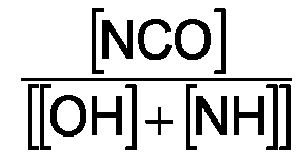
Viskositäts-zunahme [%]a (Ref)b - - - 16 39 AL1 6.6 1.0/0.7 18 40 AL2 7.9 1.0/0.7 26 41 AL3 8.3 1.0/0.7 18 42 AL4 9.4 1.0/0.7 25 43 AL5 8.5 1.0/0.7 27 44 AL6 7.8 1.0/0.7 13 45 AL7 11.2 1.0/0.7 23 46 (Vergleich) AL8 4.9 1.0 / 0.7 42 a = (Viskosität nach 7 d / Viskosität nach 12 Std. - 1) × 100%.
b Referenzbeispiel ohne Aldimin. - Zur Bestimmung der Hautbildungszeit (Zeit bis zur Klebefreiheit, "tack-free time") wurde ein kleiner Teil des während 12 Stunden bei 60°C gelagerten, raumtemperaturwarmen Kunststoffvorläufers in einer Schichtdicke von 3 mm auf Pappkarton aufgetragen und bei 23°C und 50% relativer Luftfeuchtigkeit die Zeit bestimmt, die es dauerte, bis beim leichten Antippen der Polymeroberfläche mittels einer Pipette aus LDPE erstmals keine Polymerrückstände auf der Pipette mehr zurückblieben.
- Zur Bestimmung der mechanischen Eigenschaften nach Aushärtung wurde ein weiterer Teil des während 12 Stunden bei 60°C gelagerten Kunststoffvorläufers als Film von ca. 2 mm Dicke in ein mit PTFE beschichtetes Blech gegossen, worauf man den Film während 7 Tagen bei 23°C und 50% relativer Luftfeuchtigkeit zu einem elastischen Kunststoff aushärten liess. Der so hergestellte Kunststofffilm wurde gemäss DIN EN 53504 auf Zugfestigkeit, Bruchdehnung und E-Modul geprüft (Zuggeschwindigkeit: 200 mm/min).
- Qualitativ beurteilt wurden ausserdem die Blasenbildung (anhand der Menge Blasen, die während der Aushärtung des Films auftraten) sowie der Geruch (durch Riechen mit der Nase in einem Abstand von 10 cm, zuerst am frisch gegossenen Film und wieder am vollständig ausgehärteten Film).
- Die Ergebnisse der Prüfungen sind in der Tabelle 2 aufgeführt.
Tabelle 2: Eigenschaften während und nach der Aushärtung von einkomponentigen Kunststoffvorläufern. Beispiel 39 40 41 42 43 44 45 46 (Vgl) Hautbildung (min.) 35 45 35 50 40 35 45 90 Blasenbildung keine keine keine keine keine keine keine einige Zugfestigkeit (MPa) 0.8 1.0 0.8 0.7 0.7 0.7 1.0 1.0 Bruchdehnung (%) 180 200 60 70 80 130 220 240 E-Modul (MPa)a 1.3 1.4 2.3 1.7 1.6 1.3 1.3 1.1 Geruch kein kein kein kein kein kein kein stark a bei 0.5-5.0% Dehnung. - Aus Tabelle 2 ist ersichtlich, dass die Kunststoffvorläufer der Beispiele 39 bis 45, welche jeweils ein in situ hergestelltes Additionsprodukt der erfindungsgemässen Aldimine AL1 bis AL7 enthalten, rasch und ohne Blasenbildung aushärten, geruchsfrei sind und im ausgehärteten Zustand gute mechanische Eigenschaften besitzen. Demgegenüber härtet der Kunststoffvorläufer des Vergleichsbeispiels 46, welcher ein in situ hergestelltes Additionsprodukt des Aldimins AL8 nach dem Stand der Technik enthält, langsamer und unter partieller Blasenbildung aus und weist einen starken Geruch auf.
- Für jedes Beispiel wurden die in Tabelle 3 angegebenen Gewichtsteile der Bestandteile in der jeweiligen Komponente L1 ohne vorherige Trocknung in einen Polypropylenbecher mit Schraubverschluss eingewogen und mittels eines Zentrifugalmischers (SpeedMixer™ DAC 150, FlackTek Inc.; 2 min. bei 3000 U/min) innig zu einer homogenen Creme vermengt. Dazu wurde für jedes Beispiel die in Tabelle 3 angegebenen Gewichtsteile an PMDI als Komponente L2 zugegeben und erneut innig gemischt (30 sec. bei 3000 U/min). Das Verhältnis zwischen den Isocyanatgruppen der Komponente L2 und der Summe der Reaktivgruppen (Hydroxyl-, Amino- und Aldiminogruppen) der Komponente L1 beträgt für alle Beispiele 1.1 /1.0.
Tabelle 3: Zusammensetzung von zweikomponentigen Kunststoffvorläufern. Beispiel 47 48 49 50 51 (Vgl) Komponente L1: Ricinusöla 19.4 19.9 19.9 15.9 18.5 Dimerfettsäurepolyolb 11.0 16.0 16.0 16.0 14.8 Triolc 5.5 - - - 3.7 Aldimin der Formel (I) AL1,
4.0AL19,
4.0AL20,
4.0AL23,
8.0- Weichmacherd - - - - 3.0 Säurekatalysatore 0.1 0.1 0.1 0.1 - Kreidef 60.0 60.0 60.0 60.0 60.0 Komponente L2: PMDIg 26.3 20.9 25.9 25.9 22.1 a Fluka;OH-Zahl=165 mg KOH/g. b Sovermol® 908,Cognis;OH-Zahl=200 mg KOH/g. c Desmophen® 4011 T, Bayer; OH-Zahl = 550 mg KOH/g.
d Diisodecylphthalat, Palatinol® Z, BASF. e 5 Gew.-% Salicylsäure in Dioctyladipat. f Omyacarb® 5-GU, Omya. g Desmodur® VKS 20 F, Bayer; NCO-Gehalt = 30.0 Gewichts-%. - Die so erhaltenen gemischten zweikomponentigen Kunststoffvorläufer wurden auf Thixotropie, Aushärtegeschwindigkeit und mechanische Eigenschaften geprüft. Die Thixotropie wurde qualitativ anhand des Fliessverhaltens des gemischten zweikomponentigen Kunststoffvorläufers, unmittelbar nach dem Mischen der Komponenten L1 und L2, auf einer LDPE-Unterlage beurteilt. Keine Thixotropie bedeutet starkes Verfliessen, während starke Thixotropie kein Verfliessen bedeutet (Strukturviskosität). Hinweise zur Aushärtegeschwindigkeit wurden zum einen durch Messen der Zeit bis zur Klebefreiheit ("tack-free time") des gemischten zweikomponentigen Kunststoffvorläufers, unmittelbar nach dem Mischen der Komponenten L1 und L2, erhalten. Die Messmethode entspricht jener Methode, wie sie bei Beispiel 39 zur Messung der Hautbildungszeit für einkomponentige Kunststoffvorläufer beschrieben wurde. Zum anderen wurde der weitere Verlauf der Aushärtung durch periodisches Messen der Shore D-Härte nach DIN EN 53505 verfolgt. Zur Prüfung der mechanischen Eigenschaften wurde der gemischte zweikomponentige Kunststoffvorläufer in dünner Schicht in eine plane PTFE-Form gegossen bzw., bei thixotropen Mischungen, gerakelt, der Film während 7 d im Normklima ausgehärtet und nach DIN EN 53504 auf Zugfestigkeit, Bruchdehnung und E-Modul (Zuggeschwindigkeit: 10 mm/min) geprüft. In qualitativer Weise beurteilt wurde ausserdem die Blasenbildung (anhand der Menge Blasen, die während der Aushärtung des Films auftraten).
- Die Ergebnisse dieser Prüfungen sind in Tabelle 4 aufgeführt.
Tabelle 4: Eigenschaften von gemischten zweikomponentigen Kunststoffvorläufern. Beispiel 47 48 49 50 51 (Vgl) Thixotropie keine Wenig Mittel stark keine Klebefreiheit (min.)a 40 37 16 18 85 Shore D nach 1 Tag 52 50 45 41 35 Shore D nach 3 Tagen 68 67 66 61 52 Shore D nach 7 Tagen 75 72 66 65 66 Shore D getempertb 83 84 81 77 85 Zugfestigkeit (MPa) 9.2 9.0 9.0 7.6 7.6 Bruchdehnung (%) 60 60 60 60 60 E-Modul (MPa)c 58 60 39 28 45 Blasenbildung keine Keine Keine keine viele a Zeit bis zur Klebefreiheit (tack-free time) in Minuten.
b 4 h bei 105°C der während 7 Tagen im Normklima ausgehärteten Prüfkörper.
c bei 0.5-5.0% Dehnung. - Aus der Tabelle 4 ist ersichtlich, dass die gemischten zweikomponentigen Kunststoffvorläufer der Beispiele 47 bis 50, welche erfindungsgemässe Aldimine der Formel (I) enthalten, rasch aushärten, dabei trotz ungetrockneten Bestandteilen keine Blasen bilden und im ausgehärteten Zustand gute mechanische Eigenschaften besitzen. Die Beispiele 48 bis 50, welche Aldimine der Formel (I) mit mehr als einer sekundären Aminogruppe enthalten, zeigen zusätzlich thixotropes Verhalten. Demgegenüber härtet der gemischte zweikomponentige Kunststoffvorläufer des Vergleichsbeispiels 51 nach dem Stand der Technik ohne Aldimin langsamer aus und zeigt eine starke Blasenbildung.
Claims (17)
- Aldimin der Formel (I)
 m für eine ganze Zahl von 1 bis 4 steht undy für eine ganze Zahl von 1 bis 4 steht,mit der Massgabe, dass m+y = 2 bis 5 ist;
und wobei
R1 entweder
für einen einwertigen Kohlenwasserstoffrest mit 6 bis 30 C-Atomen, welcher gegebenenfalls mindestens ein Heteroatom, insbesondere in Form von Ether-Sauerstoff, aufweist, steht,
oder
für einen Substituenten der Formel (II) steht
R5 für einen zweiwertigen Kohlenwasserstoffrest mit 2 bis 20 C-Atomen, welcher gegebenenfalls mindestens ein Heteroatom, insbesondere in Form von Ether-Sauerstoff, aufweist, steht,
und
R6 für einen einwertigen Kohlenwasserstoffrest mit 1 bis 20 C-Atomen steht;
und wobei
R2 und R3 entweder,
unabhängig voneinander, je für einen einwertigen
Kohlenwasserstoffrest mit 1 bis 12 C-Atomen stehen;
oder
zusammen einen zweiwertigen Kohlenwasserstoffrest mit 4 bis 20 C-Atomen bilden, der Teil eines, gegebenenfalls substituierten, carbocyclischen Rings mit 5 bis 8, bevorzugt 6, C-Atomen ist;
und wobei
R4 für einen (m+y)-wertigen Kohlenwasserstoffrest mit 2 bis 12 C-Atomen, welcher gegebenenfalls mindestens ein Heteroatom, insbesondere in Form von Ether-Sauerstoff oder einem tertiären Amin-Stickstoff, enthält, steht;
und wobei
X für O, S oder N-R7 steht,
wobei
R7 entweder
für einen einwertigen Kohlenwasserstoffrest mit 1 bis 20 C-Atomen, welcher gegebenenfalls mindestens eine Carbonsäureester-, Nitril-, Nitro-, Phosphonsäureester-, Sulfon- oder Sulfonsäureestergruppe aufweist, steht,
oder
für einen Substituenten der Formel (III) steht
n für eine ganze Zahl von 1 bis 10'000 steht,
R8 für einen (n+1)-wertigen Kohlenwasserstoffrest, welcher gegebenenfalls Heteroatome, insbesondere in Form von Ether-Sauerstoff oder tertiärem Amin-Stickstoff, und gegebenenfalls aktiven Wasserstoff in Form von Hydroxylgruppen, sekundären Aminogruppen oder Mercaptogruppen enthält, steht. - Aldimin gemäss Anspruch 1, dadurch gekennzeichnet, dass y=1 ist.
- Aldimin gemäss Anspruch 1 oder 2, dadurch gekennzeichnet, dass R2 und R3 gleich sind und insbesondere je für eine Methylgruppe stehen.
- Aldimin gemäss einem der vorhergehenden Ansprüche, dadurch gekennzeichnet, dass m+y = 2 oder 3, insbesondere 2, ist.
- Aldimin gemäss einem der vorhergehenden Ansprüche, dadurch gekennzeichnet, dass X für N-R7 steht und R7 für entweder für einen einwertigen Kohlenwasserstoffrest mit 1 bis 20 C-Atomen, oder für einen einwertigen Kohlenwasserstoffrest der Formel (IX) oder (IX') steht
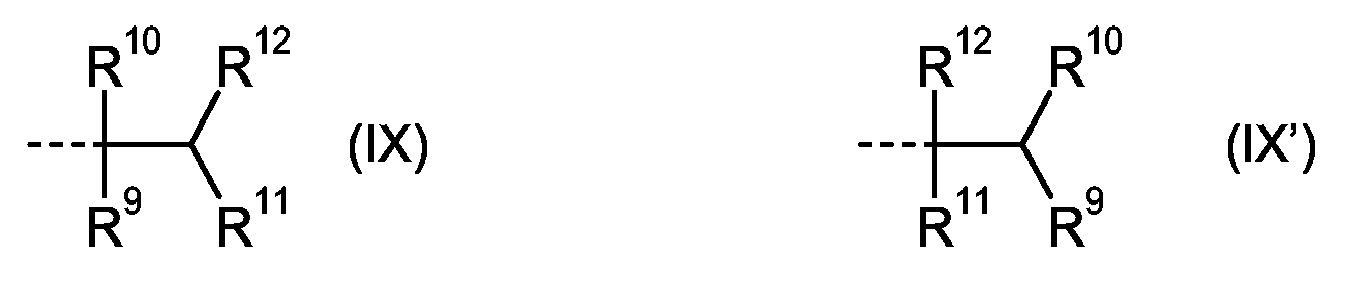
R11 und R12 unabhängig voneinander für ein Wasserstoffatom oder einen Rest ausgewählt aus der Gruppe bestehend aus -R13, -COOR13 und -CN steht, wobei R13 für einen einwertigen Kohlenwasserstoffrest mit 1 bis 20 C-Atomen steht. - Aldimin gemäss einem der vorhergehenden Ansprüche, dadurch gekennzeichnet, dass X für O oder S steht.
- Aldimin der Formel (X),

- Aldimin-haltige Verbindung, dadurch gekennzeichnet, dass diese durch die Umsetzung eines Aldimins der Formel (I) gemäss einem der Ansprüche 2 - 7 mit einer Verbindung D, die mehr als eine Reaktivgruppe trägt, welche mit der Gruppe XH Additionsreaktionen eingehen kann, erhalten wird.
- Aldimin-haltige Verbindung gemäss Anspruch 8, dadurch gekennzeichnet, dass die Verbindung D ein Polyisocyanat ist.
- Aldimin-haltige Verbindung gemäss Anspruch 8, dadurch gekennzeichnet, dass die Verbindung D ein Polyepoxid ist.
- Aldimin-haltige Verbindung gemäss einem der Ansprüche 8-10, dadurch gekennzeichnet, dass das Aldimin der Formel (I) in einem Verhältnis von einem Molequivalent aktiven Wasserstoff des Aldimins auf ein Molequivalent Reaktivgruppen der Verbindung D eingesetzt wird.
- Aldimin-haltige Verbindung gemäss einem der Ansprüche 8 - 10, dadurch gekennzeichnet, dass das Aldimin der Formel (I) in einem Verhältnis von weniger als einem Molequivalent aktiven Wasserstoff des Aldimins auf ein Molequivalent Reaktivgruppen der Verbindung D eingesetzt wird.
- Verwendung eines Aldimins der Formel (I) gemäss einem der Ansprüche 1-7 oder einer Aldimin-haltigen Verbindung gemäss einem der Ansprüche 8 - 12 als Quelle eines Aldehyds der Formel (IV)

- Verwendung eines Aldimins der Formel (I) gemäss einem der Ansprüche 1-7 oder einer Aldimin-haltigen Verbindung gemäss einem der Ansprüche 8 - 12 als Quelle eines Amins der Formel [H2N]m-R4-[XH]y.
- Verfahren der Hydrolyse eines Aldimins der Formel (I) gemäss einem der Ansprüche 1 - 7 oder einer Aldimin-haltigen Verbindung gemäss einem der Ansprüche 8-12.
- Verwendung eines Aldimins der Formel (I) gemäss einem der Ansprüche 1-7 oder einer Aldimin-haltigen Verbindung gemäss einem der Ansprüche 8 - 12 als geschützter Vernetzer für einen Kunststoffvorläufer.
- Zusammensetzung enthaltend ein Aldimin der Formel (I) gemäss einem der Ansprüche 1 - 7 oder eine Aldimin-haltigen Verbindung gemäss einem der Ansprüche 8 - 12.
Priority Applications (11)
| Application Number | Priority Date | Filing Date | Title |
|---|---|---|---|
| EP05109110A EP1772447A1 (de) | 2005-09-30 | 2005-09-30 | Aldimine mit aktivem Wasserstoff aufweisenden Reaktivgruppen sowie deren Verwendung |
| PCT/EP2006/066924 WO2007036571A1 (de) | 2005-09-30 | 2006-09-29 | Aldimine mit aktivem wasserstoff aufweisenden reaktivgruppen sowie deren verwendung |
| ZA200803690A ZA200803690B (en) | 2005-09-30 | 2006-09-29 | Aldimines comprising reactive groups containing active hydrogen, and use thereof |
| JP2008532798A JP2009510029A (ja) | 2005-09-30 | 2006-09-29 | 活性水素を有する反応性基を含むアルジミン及びその使用 |
| US11/992,119 US20090176944A1 (en) | 2005-09-30 | 2006-09-29 | Aldimines Comprising Reactive Groups Containing Active Hydrogen, and Use Thereof |
| RU2008117163/04A RU2432353C2 (ru) | 2005-09-30 | 2006-09-29 | Альдимины, содержащие реакционноспособные группы, включающие активный водород, а также их применение |
| CA002628322A CA2628322A1 (en) | 2005-09-30 | 2006-09-29 | Aldimines comprising reactive groups containing active hydrogen, and use thereof |
| BRPI0616467-6A BRPI0616467A2 (pt) | 2005-09-30 | 2006-09-29 | aldiminas que apresentam grupos reativos com hidrogênio ativo, assim como sua aplicação |
| CNA2006800433660A CN101312942A (zh) | 2005-09-30 | 2006-09-29 | 带有具有活性氢的反应性基团的醛亚胺及其用途 |
| EP06806895A EP1934169A1 (de) | 2005-09-30 | 2006-09-29 | Aldimine mit aktivem wasserstoff aufweisenden reaktivgruppen sowie deren verwendung |
| KR1020087010405A KR20080058448A (ko) | 2005-09-30 | 2006-09-29 | 활성 수소를 함유하는 반응기를 포함하는 알디민과 이알디민의 이용 |
Applications Claiming Priority (1)
| Application Number | Priority Date | Filing Date | Title |
|---|---|---|---|
| EP05109110A EP1772447A1 (de) | 2005-09-30 | 2005-09-30 | Aldimine mit aktivem Wasserstoff aufweisenden Reaktivgruppen sowie deren Verwendung |
Publications (1)
| Publication Number | Publication Date |
|---|---|
| EP1772447A1 true EP1772447A1 (de) | 2007-04-11 |
Family
ID=35898782
Family Applications (2)
| Application Number | Title | Priority Date | Filing Date |
|---|---|---|---|
| EP05109110A Withdrawn EP1772447A1 (de) | 2005-09-30 | 2005-09-30 | Aldimine mit aktivem Wasserstoff aufweisenden Reaktivgruppen sowie deren Verwendung |
| EP06806895A Withdrawn EP1934169A1 (de) | 2005-09-30 | 2006-09-29 | Aldimine mit aktivem wasserstoff aufweisenden reaktivgruppen sowie deren verwendung |
Family Applications After (1)
| Application Number | Title | Priority Date | Filing Date |
|---|---|---|---|
| EP06806895A Withdrawn EP1934169A1 (de) | 2005-09-30 | 2006-09-29 | Aldimine mit aktivem wasserstoff aufweisenden reaktivgruppen sowie deren verwendung |
Country Status (10)
| Country | Link |
|---|---|
| US (1) | US20090176944A1 (de) |
| EP (2) | EP1772447A1 (de) |
| JP (1) | JP2009510029A (de) |
| KR (1) | KR20080058448A (de) |
| CN (1) | CN101312942A (de) |
| BR (1) | BRPI0616467A2 (de) |
| CA (1) | CA2628322A1 (de) |
| RU (1) | RU2432353C2 (de) |
| WO (1) | WO2007036571A1 (de) |
| ZA (1) | ZA200803690B (de) |
Cited By (9)
| Publication number | Priority date | Publication date | Assignee | Title |
|---|---|---|---|---|
| EP1975190A1 (de) * | 2007-03-28 | 2008-10-01 | Sika Technology AG | Aldimine mit aktivem Wasserstoff aufweisenden Reaktivgruppen |
| EP1975187A1 (de) * | 2007-03-28 | 2008-10-01 | Sika Technology AG | Verfahren zur Herstellung von Polyurethanzusammensetzungen mit niedrigem Isocyanat-Monomergehalt |
| EP1975189A1 (de) * | 2007-03-27 | 2008-10-01 | Sika Technology AG | Polyurethanzusammensetzung enthaltend asymmetrisches Dialdimin |
| EP2017260A1 (de) * | 2007-07-16 | 2009-01-21 | Sika Technology AG | Aldimine und Aldimin enthaltende Zusammensetzungen |
| EP2030967A1 (de) * | 2007-08-31 | 2009-03-04 | Sika Technology AG | Hydroxylgruppen aufweisende Aldimine und Aldimin enthaltende Zusammensetzungen |
| US8324340B2 (en) | 2006-10-31 | 2012-12-04 | Sika Technology Ag | Polyurethane composition with good initial strength |
| RU2485143C2 (ru) * | 2007-03-27 | 2013-06-20 | Зика Текнолоджи Аг | Полиуретановая композиция, содержащая асимметричный диальдимин |
| WO2018015552A1 (de) | 2016-07-21 | 2018-01-25 | Sika Technology Ag | Flammhemmende kleb- und dichtstoffe mit verbesserten mechanischen eigenschaften |
| WO2020070207A1 (de) | 2018-10-03 | 2020-04-09 | Sika Technology Ag | Härtbare zusammensetzung mit geringer dichte |
Families Citing this family (21)
| Publication number | Priority date | Publication date | Assignee | Title |
|---|---|---|---|---|
| KR20080071132A (ko) * | 2005-09-30 | 2008-08-01 | 시카 테크놀러지 아게 | 알디민 함유 화합물 |
| EP1975186A1 (de) * | 2007-03-27 | 2008-10-01 | Sika Technology AG | Isocyanat- und Aldiminogruppen aufweisende Zusammensetzung mit niedrigem Isocyanat-Monomergehalt |
| ES2348625T3 (es) | 2007-05-11 | 2010-12-09 | Sika Technology Ag | Cuerpos compuestos estratificados unidos a través de un pegamento de fusión en caliente de poliuretano, así como procedimiento para pegar plásticos con contenido en plastificante. |
| EP2072550A1 (de) | 2007-12-21 | 2009-06-24 | Sika Technology AG | Härtbare Zusammensetzungen mit verminderter Ausgasung |
| JP2010138372A (ja) * | 2008-11-13 | 2010-06-24 | Seiko Epson Corp | 樹脂組成物 |
| DK2194081T3 (da) * | 2008-12-02 | 2011-12-19 | Sika Technology Ag | Polyurethansammensætning, som indeholder hydroxyaldimin |
| DK2194082T3 (da) | 2008-12-02 | 2011-12-19 | Sika Technology Ag | Aldimin og sammensætning, der indeholder aldimin |
| ATE532806T1 (de) * | 2009-03-31 | 2011-11-15 | Sika Technology Ag | Heisshärtende oder hitzeaktivierbare zusammensetzung enthaltend ein oberflächendesaktiviertes polyisocyanat |
| EP2236535A1 (de) | 2009-03-31 | 2010-10-06 | Sika Technology AG | Unter Wärmeeinwirkung beschleunigt aushärtende, feuchtigkeitsreaktive Polyurethanzusammensetzung |
| EP2322571A1 (de) | 2009-11-06 | 2011-05-18 | Sika Technology AG | Zweikomponentige Klebstoff- oder Dichtstoffzusammensetzung mit Beschleunigungskomponente |
| ES2388809T3 (es) * | 2009-12-08 | 2012-10-18 | Sika Technology Ag | Composición de resina epoxídica poco viscosa con bajo " blushing" |
| KR102115142B1 (ko) * | 2012-11-28 | 2020-05-26 | 도소 가부시키가이샤 | 푸마르산디에스테르-계피산에스테르계 공중합체, 그 제조 방법 및 그것을 사용한 필름 |
| AU2014209982A1 (en) * | 2013-01-22 | 2015-06-11 | Sika Technology Ag | Liquid-applied waterproofing membrane for roofs |
| EP2948491B1 (de) * | 2013-01-22 | 2019-12-25 | Sika Technology AG | Flüssig aufgetragene wasserdichte membran für dächer mit trialdimin |
| KR102243167B1 (ko) | 2013-01-22 | 2021-04-22 | 시카 테크놀러지 아게 | 옥사졸리딘 및 알디민을 포함하는 액체 도포 방수막 |
| CN104903378B (zh) * | 2013-01-22 | 2019-05-17 | Sika技术股份公司 | 包含三醛亚胺的屋顶用液体施加的防水膜 |
| US11242428B2 (en) * | 2015-12-21 | 2022-02-08 | Sika Technology Ag | Hydroxyaldimine and curable polyurethane composition with a low monomeric isocyanate content |
| EP3279231A1 (de) * | 2016-08-03 | 2018-02-07 | Sika Technology AG | Zweikomponentiger polyurethanklebstoff mit weitgehend temperaturabhängigen mechanischen eigenschaften und hoher festigkeit |
| CN108546241B (zh) * | 2018-03-29 | 2020-08-11 | 陕西科技大学 | 一种星型磺酸基两性离子化合物及其制备方法 |
| CN108440347B (zh) * | 2018-03-29 | 2020-07-28 | 陕西科技大学 | 一种星型磺酸基两性离子表面活性剂及其制备方法和应用 |
| EP3838891A1 (de) * | 2019-12-19 | 2021-06-23 | Bostik Sa | Aldimine und ihre verwendungen |
Citations (12)
| Publication number | Priority date | Publication date | Assignee | Title |
|---|---|---|---|---|
| US3493543A (en) | 1967-03-20 | 1970-02-03 | Gen Mills Inc | Polyurea compositions and the coating of substrates with such compositions |
| US3554974A (en) | 1967-03-03 | 1971-01-12 | Henri A Mommaerts | Elastomeric linear polyurethane filament formed with chain extension agent comprising dialkylene-triamine/aldehyde reaction product |
| US4108842A (en) | 1976-08-18 | 1978-08-22 | Bayer Aktiengesellschaft | Preparation of polyurethane ureas using as hardeners mixtures of water, amines, aldimines and ketimines |
| US4224417A (en) | 1975-10-17 | 1980-09-23 | Bayer Aktiengesellschaft | High molecular weight polyamines and their use in preparation of polyurethane resins |
| US4404379A (en) | 1977-09-01 | 1983-09-13 | Bayer Aktiengesellschaft | Cycloaminals and a process for their preparation |
| US4469831A (en) | 1981-08-26 | 1984-09-04 | Basf Aktiengesellschaft | Moisture-curing, storage stable, single-component polyurethane systems |
| US4853454A (en) | 1986-07-23 | 1989-08-01 | Basf Aktiengesellschaft | Preparation of storage-stable, moisture-cured, single-component polyurethane systems and their uses |
| EP0469751A1 (de) * | 1990-07-20 | 1992-02-05 | MITSUI TOATSU CHEMICALS, Inc. | Feuchtigkeitshärtende Polyaldimin enthaltende Polyurethanzusammensetzung |
| US6136942A (en) | 1998-04-02 | 2000-10-24 | Sika Ag, Vorm. Kaspar Winkler & Co. | Latent amino groups and isocyanate groups comprising polyurethane prepolymers, method for their production and their use |
| EP1384735A1 (de) * | 2002-07-26 | 2004-01-28 | Sika Technology AG | Polyaldimin enthaltende Polyurethanzusammensetzung |
| WO2004013088A1 (de) | 2002-07-26 | 2004-02-12 | Sika Technology Ag | Polyaldimine |
| EP1544204A1 (de) * | 2003-12-18 | 2005-06-22 | Sika Technology AG | Aldiminoalkylsilane |
Family Cites Families (28)
| Publication number | Priority date | Publication date | Assignee | Title |
|---|---|---|---|---|
| US1780334A (en) * | 1926-02-12 | 1930-11-04 | Du Pont | Aldehyde amine condensation products |
| US2582128A (en) * | 1950-02-11 | 1952-01-08 | Rohm & Haas | Aldimines |
| US3025313A (en) * | 1957-06-28 | 1962-03-13 | Dearborn Chemicals Co | Amino-aldehyde condensation product |
| US4251597A (en) * | 1978-12-01 | 1981-02-17 | Rohm And Haas Company | Coating, impregnating and adhesive compositions curable at ambient temperature, and methods of using them |
| US4303563A (en) * | 1977-12-29 | 1981-12-01 | Emmons William D | Coating, impregnating and adhesive compositions curable at ambient temperature |
| JPS6090284A (ja) * | 1983-10-22 | 1985-05-21 | Japan Synthetic Rubber Co Ltd | シ−ラント組成物 |
| DE3710963A1 (de) * | 1987-04-01 | 1988-10-20 | Bayer Ag | Unter dem einfluss von feuchtigkeit haertbare bindemittelkombinationen, ein verfahren zu ihrer herstellung und ihre verwendung |
| DE3741538A1 (de) * | 1987-12-08 | 1989-06-22 | Bayer Ag | Polyurethanharnstoffe |
| EP0375318A3 (de) * | 1988-12-21 | 1991-01-23 | MITSUI TOATSU CHEMICALS, Inc. | Polyaldiminderivate |
| DE4032751A1 (de) * | 1990-10-16 | 1992-04-23 | Hoechst Ag | Fluessiges beschichtungsmittel |
| DE4210333A1 (de) * | 1992-03-30 | 1993-10-07 | Hoechst Ag | Flüssiges Beschichtungsmittel |
| US5288802A (en) * | 1993-01-25 | 1994-02-22 | Ppg Industries, Inc. | Automotive refinish primer surfacer containing acetoacetate functional polyesterpolyol, a polyacrylate, and an amine functional epoxy resin |
| ES2111933T3 (es) * | 1993-06-22 | 1998-03-16 | Basf Coatings Ag | Lacas acuosas de electroinmersion y procedimiento de lacado de substratos conductores electricos. |
| US5466769A (en) * | 1993-10-26 | 1995-11-14 | Angus Chemical Company | Reactive diluent aldimine oxazolidines |
| CA2136372A1 (en) * | 1993-12-21 | 1995-06-22 | Bayer Corporation | Coating compositions containing polyisocyanates and aldimines which have improved storage stability |
| US6117966A (en) * | 1993-12-21 | 2000-09-12 | Bayer Corporation | Coating compositions containing aldimines and polyisocyanates |
| US5444117A (en) * | 1994-02-09 | 1995-08-22 | Bayer Corporation | Coating compositions containing polyisocyanates and aldimines which have improved storage stability |
| US5489704A (en) * | 1994-08-29 | 1996-02-06 | Bayer Corporation | Polyisocyanate/polyamine mixtures and their use for the production of polyurea coatings |
| US5523376A (en) * | 1994-12-21 | 1996-06-04 | Bayer Corporation | Coating compositions based on aldimines and polyisocyanates containing uretdione groups |
| US5726272A (en) * | 1996-02-08 | 1998-03-10 | Bayer Corporation | Polyurea coating compositions having faster dry times |
| US5955199A (en) * | 1997-09-26 | 1999-09-21 | Ashland Inc. | Imine-containing curative for two component polyurethane structural adhesives |
| US5847195A (en) * | 1998-03-02 | 1998-12-08 | Bayer Corporation | Process for the production of compounds containing aspartate and aldimine groups |
| US6228971B1 (en) * | 1999-06-21 | 2001-05-08 | Ppg Industries Ohio, Inc. | Polymeric imine functional compositions and their use in film-forming compositions |
| EP1470173B1 (de) * | 2002-01-18 | 2017-03-01 | Sika Technology AG | Zweikomponentige polyurethanzusammensetzung mit hoher fr hfe stigkeit |
| KR20080071132A (ko) * | 2005-09-30 | 2008-08-01 | 시카 테크놀러지 아게 | 알디민 함유 화합물 |
| EP1770107A1 (de) * | 2005-09-30 | 2007-04-04 | Sika Technology AG | Feuchtigkeitshärtende Polyurethanzusammensetzung |
| EP1834971A1 (de) * | 2006-03-13 | 2007-09-19 | Sika Technology AG | Feuchtigkeitshärtende Polyurethanzusammensetzung mit gutem Tieftemperaturverhalten |
| EP1918314A1 (de) * | 2006-10-31 | 2008-05-07 | Sika Technology AG | Polyurethanzusammensetzung mit guter Anfangsfestigkeit |
-
2005
- 2005-09-30 EP EP05109110A patent/EP1772447A1/de not_active Withdrawn
-
2006
- 2006-09-29 JP JP2008532798A patent/JP2009510029A/ja active Pending
- 2006-09-29 CN CNA2006800433660A patent/CN101312942A/zh active Pending
- 2006-09-29 KR KR1020087010405A patent/KR20080058448A/ko not_active Withdrawn
- 2006-09-29 WO PCT/EP2006/066924 patent/WO2007036571A1/de not_active Ceased
- 2006-09-29 RU RU2008117163/04A patent/RU2432353C2/ru not_active IP Right Cessation
- 2006-09-29 BR BRPI0616467-6A patent/BRPI0616467A2/pt not_active IP Right Cessation
- 2006-09-29 US US11/992,119 patent/US20090176944A1/en not_active Abandoned
- 2006-09-29 ZA ZA200803690A patent/ZA200803690B/xx unknown
- 2006-09-29 EP EP06806895A patent/EP1934169A1/de not_active Withdrawn
- 2006-09-29 CA CA002628322A patent/CA2628322A1/en not_active Abandoned
Patent Citations (13)
| Publication number | Priority date | Publication date | Assignee | Title |
|---|---|---|---|---|
| US3554974A (en) | 1967-03-03 | 1971-01-12 | Henri A Mommaerts | Elastomeric linear polyurethane filament formed with chain extension agent comprising dialkylene-triamine/aldehyde reaction product |
| US3493543A (en) | 1967-03-20 | 1970-02-03 | Gen Mills Inc | Polyurea compositions and the coating of substrates with such compositions |
| US4224417A (en) | 1975-10-17 | 1980-09-23 | Bayer Aktiengesellschaft | High molecular weight polyamines and their use in preparation of polyurethane resins |
| US4108842A (en) | 1976-08-18 | 1978-08-22 | Bayer Aktiengesellschaft | Preparation of polyurethane ureas using as hardeners mixtures of water, amines, aldimines and ketimines |
| US4404379A (en) | 1977-09-01 | 1983-09-13 | Bayer Aktiengesellschaft | Cycloaminals and a process for their preparation |
| US4469831A (en) | 1981-08-26 | 1984-09-04 | Basf Aktiengesellschaft | Moisture-curing, storage stable, single-component polyurethane systems |
| US4853454A (en) | 1986-07-23 | 1989-08-01 | Basf Aktiengesellschaft | Preparation of storage-stable, moisture-cured, single-component polyurethane systems and their uses |
| EP0469751A1 (de) * | 1990-07-20 | 1992-02-05 | MITSUI TOATSU CHEMICALS, Inc. | Feuchtigkeitshärtende Polyaldimin enthaltende Polyurethanzusammensetzung |
| US5087661A (en) | 1990-07-20 | 1992-02-11 | Mitsui Toatsu Chemicals, Inc. | Moisture curable polyurethane composition comprising polyaldimine |
| US6136942A (en) | 1998-04-02 | 2000-10-24 | Sika Ag, Vorm. Kaspar Winkler & Co. | Latent amino groups and isocyanate groups comprising polyurethane prepolymers, method for their production and their use |
| EP1384735A1 (de) * | 2002-07-26 | 2004-01-28 | Sika Technology AG | Polyaldimin enthaltende Polyurethanzusammensetzung |
| WO2004013088A1 (de) | 2002-07-26 | 2004-02-12 | Sika Technology Ag | Polyaldimine |
| EP1544204A1 (de) * | 2003-12-18 | 2005-06-22 | Sika Technology AG | Aldiminoalkylsilane |
Non-Patent Citations (1)
| Title |
|---|
| "Methoden der organischen Chemie", HOUBEN-WEYL, vol. VIII, pages 516 - 528 |
Cited By (24)
| Publication number | Priority date | Publication date | Assignee | Title |
|---|---|---|---|---|
| US8324340B2 (en) | 2006-10-31 | 2012-12-04 | Sika Technology Ag | Polyurethane composition with good initial strength |
| US9290608B2 (en) | 2007-03-27 | 2016-03-22 | Sika Technology Ag | Asymmetric dialdimine-containing polyurethane composition |
| EP1975189A1 (de) * | 2007-03-27 | 2008-10-01 | Sika Technology AG | Polyurethanzusammensetzung enthaltend asymmetrisches Dialdimin |
| US8816037B2 (en) | 2007-03-27 | 2014-08-26 | Sika Technology Ag | Asymmetric dialdimine-containing polyurethane composition |
| RU2485143C2 (ru) * | 2007-03-27 | 2013-06-20 | Зика Текнолоджи Аг | Полиуретановая композиция, содержащая асимметричный диальдимин |
| WO2008116902A1 (de) * | 2007-03-27 | 2008-10-02 | Sika Technology Ag | Polyurethanzusammensetzung enthaltend asymmetrisches dialdimin |
| CN101646707B (zh) * | 2007-03-28 | 2012-10-03 | Sika技术股份公司 | 具有包含活泼氢的反应性基团的醛亚胺 |
| EP1975187A1 (de) * | 2007-03-28 | 2008-10-01 | Sika Technology AG | Verfahren zur Herstellung von Polyurethanzusammensetzungen mit niedrigem Isocyanat-Monomergehalt |
| WO2008116927A1 (de) * | 2007-03-28 | 2008-10-02 | Sika Technology Ag | Verfahren zur herstellung von polyurethanzusammensetzungen mit niedrigem isocyanat-monomergehalt |
| WO2008116928A1 (de) * | 2007-03-28 | 2008-10-02 | Sika Technology Ag | Aldimine mit aktivem wasserstoff aufweisenden reaktivgruppen |
| EP1975190A1 (de) * | 2007-03-28 | 2008-10-01 | Sika Technology AG | Aldimine mit aktivem Wasserstoff aufweisenden Reaktivgruppen |
| RU2489421C2 (ru) * | 2007-07-16 | 2013-08-10 | Зика Текнолоджи Аг | Альдимины и альдиминсодержащие композиции |
| WO2009010522A1 (de) * | 2007-07-16 | 2009-01-22 | Sika Technology Ag | Aldimine und aldimin enthaltende zusammensetzungen |
| EP2017260A1 (de) * | 2007-07-16 | 2009-01-21 | Sika Technology AG | Aldimine und Aldimin enthaltende Zusammensetzungen |
| US8252859B2 (en) | 2007-07-16 | 2012-08-28 | Sika Technology Ag | Aldimines and compositions comprising aldimine |
| US8519038B2 (en) | 2007-07-16 | 2013-08-27 | Sika Technology Ag | Aldimines and compositions comprising aldimine |
| US8455100B2 (en) | 2007-08-31 | 2013-06-04 | Sika Technology Ag | Aldimines comprising hydroxyl groups, and compositions containing aldimine |
| WO2009027511A1 (de) * | 2007-08-31 | 2009-03-05 | Sika Technology Ag | Hydroxylgruppen aufweisende aldimine und aldimin enthaltende zusammensetzungen |
| EP2030967A1 (de) * | 2007-08-31 | 2009-03-04 | Sika Technology AG | Hydroxylgruppen aufweisende Aldimine und Aldimin enthaltende Zusammensetzungen |
| RU2457199C2 (ru) * | 2007-08-31 | 2012-07-27 | Зика Текнолоджи Аг | Альдимины, имеющие гидроксигруппы, и композиции, содержащие альдимины |
| WO2018015552A1 (de) | 2016-07-21 | 2018-01-25 | Sika Technology Ag | Flammhemmende kleb- und dichtstoffe mit verbesserten mechanischen eigenschaften |
| US11613682B2 (en) | 2016-07-21 | 2023-03-28 | Sika Technology Ag | Flame-retardant adhesive and sealant with improved mechanical properties |
| WO2020070207A1 (de) | 2018-10-03 | 2020-04-09 | Sika Technology Ag | Härtbare zusammensetzung mit geringer dichte |
| US12006394B2 (en) | 2018-10-03 | 2024-06-11 | Sika Technology Ag | Curable composition of low density |
Also Published As
| Publication number | Publication date |
|---|---|
| CN101312942A (zh) | 2008-11-26 |
| JP2009510029A (ja) | 2009-03-12 |
| EP1934169A1 (de) | 2008-06-25 |
| WO2007036571A1 (de) | 2007-04-05 |
| KR20080058448A (ko) | 2008-06-25 |
| CA2628322A1 (en) | 2007-04-05 |
| RU2432353C2 (ru) | 2011-10-27 |
| RU2008117163A (ru) | 2009-11-10 |
| BRPI0616467A2 (pt) | 2011-06-21 |
| US20090176944A1 (en) | 2009-07-09 |
| ZA200803690B (en) | 2009-03-25 |
Similar Documents
| Publication | Publication Date | Title |
|---|---|---|
| EP1934172B1 (de) | Aldimin-haltige verbindungen | |
| EP2178828B1 (de) | Aldimine und aldimin enthaltende zusammensetzungen | |
| EP2200973B1 (de) | Hydroxylgruppen aufweisende aldimine und aldimin enthaltende zusammensetzungen | |
| EP1934169A1 (de) | Aldimine mit aktivem wasserstoff aufweisenden reaktivgruppen sowie deren verwendung | |
| EP1937741B1 (de) | Feuchtigkeitshärtende polyurethanzusammensetzungen enthaltend aldimin-haltige verbindungen | |
| EP2194081B1 (de) | Hydroxyaldimin enthaltende Polyurethanzusammensetzung | |
| EP2132248B1 (de) | Aldimine mit aktivem wasserstoff aufweisenden reaktivgruppen | |
| EP2651876B1 (de) | Polyamine mit sekundären aliphatischen aminogruppen | |
| EP2236533B1 (de) | Heisshärtende oder hitzeaktivierbare Zusammensetzung enthaltend ein oberflächendesaktiviertes Polyisocyanat | |
| EP2220034B1 (de) | Aromatische aldimine und aldimin enthaltende polyurethanzusammensetzungen | |
| EP2072550A1 (de) | Härtbare Zusammensetzungen mit verminderter Ausgasung | |
| EP1975187A1 (de) | Verfahren zur Herstellung von Polyurethanzusammensetzungen mit niedrigem Isocyanat-Monomergehalt | |
| EP2200970B1 (de) | Hydroxylgruppen aufweisende aldehyde | |
| EP2236535A1 (de) | Unter Wärmeeinwirkung beschleunigt aushärtende, feuchtigkeitsreaktive Polyurethanzusammensetzung |
Legal Events
| Date | Code | Title | Description |
|---|---|---|---|
| PUAI | Public reference made under article 153(3) epc to a published international application that has entered the european phase |
Free format text: ORIGINAL CODE: 0009012 |
|
| AK | Designated contracting states |
Kind code of ref document: A1 Designated state(s): AT BE BG CH CY CZ DE DK EE ES FI FR GB GR HU IE IS IT LI LT LU LV MC NL PL PT RO SE SI SK TR |
|
| AX | Request for extension of the european patent |
Extension state: AL BA HR MK YU |
|
| 17P | Request for examination filed |
Effective date: 20071011 |
|
| 17Q | First examination report despatched |
Effective date: 20071109 |
|
| AKX | Designation fees paid |
Designated state(s): AT BE BG CH CY CZ DE DK EE ES FI FR GB GR HU IE IS IT LI LT LU LV MC NL PL PT RO SE SI SK TR |
|
| STAA | Information on the status of an ep patent application or granted ep patent |
Free format text: STATUS: THE APPLICATION IS DEEMED TO BE WITHDRAWN |
|
| 18D | Application deemed to be withdrawn |
Effective date: 20080320 |