EP1755018A2 - Electronic device, data processing method, data control method, and content data processing system - Google Patents
Electronic device, data processing method, data control method, and content data processing system Download PDFInfo
- Publication number
- EP1755018A2 EP1755018A2 EP06254041A EP06254041A EP1755018A2 EP 1755018 A2 EP1755018 A2 EP 1755018A2 EP 06254041 A EP06254041 A EP 06254041A EP 06254041 A EP06254041 A EP 06254041A EP 1755018 A2 EP1755018 A2 EP 1755018A2
- Authority
- EP
- European Patent Office
- Prior art keywords
- data
- reproduction
- reproduction history
- content
- displaying
- Prior art date
- Legal status (The legal status is an assumption and is not a legal conclusion. Google has not performed a legal analysis and makes no representation as to the accuracy of the status listed.)
- Granted
Links
Images



Classifications
-
- G—PHYSICS
- G11—INFORMATION STORAGE
- G11B—INFORMATION STORAGE BASED ON RELATIVE MOVEMENT BETWEEN RECORD CARRIER AND TRANSDUCER
- G11B27/00—Editing; Indexing; Addressing; Timing or synchronising; Monitoring; Measuring tape travel
- G11B27/10—Indexing; Addressing; Timing or synchronising; Measuring tape travel
- G11B27/19—Indexing; Addressing; Timing or synchronising; Measuring tape travel by using information detectable on the record carrier
- G11B27/28—Indexing; Addressing; Timing or synchronising; Measuring tape travel by using information detectable on the record carrier by using information signals recorded by the same method as the main recording
- G11B27/32—Indexing; Addressing; Timing or synchronising; Measuring tape travel by using information detectable on the record carrier by using information signals recorded by the same method as the main recording on separate auxiliary tracks of the same or an auxiliary record carrier
- G11B27/327—Table of contents
- G11B27/329—Table of contents on a disc [VTOC]
-
- G—PHYSICS
- G06—COMPUTING OR CALCULATING; COUNTING
- G06F—ELECTRIC DIGITAL DATA PROCESSING
- G06F16/00—Information retrieval; Database structures therefor; File system structures therefor
- G06F16/40—Information retrieval; Database structures therefor; File system structures therefor of multimedia data, e.g. slideshows comprising image and additional audio data
-
- G—PHYSICS
- G06—COMPUTING OR CALCULATING; COUNTING
- G06F—ELECTRIC DIGITAL DATA PROCESSING
- G06F16/00—Information retrieval; Database structures therefor; File system structures therefor
- G06F16/60—Information retrieval; Database structures therefor; File system structures therefor of audio data
- G06F16/68—Retrieval characterised by using metadata, e.g. metadata not derived from the content or metadata generated manually
-
- G—PHYSICS
- G06—COMPUTING OR CALCULATING; COUNTING
- G06F—ELECTRIC DIGITAL DATA PROCESSING
- G06F16/00—Information retrieval; Database structures therefor; File system structures therefor
- G06F16/60—Information retrieval; Database structures therefor; File system structures therefor of audio data
- G06F16/68—Retrieval characterised by using metadata, e.g. metadata not derived from the content or metadata generated manually
- G06F16/686—Retrieval characterised by using metadata, e.g. metadata not derived from the content or metadata generated manually using information manually generated, e.g. tags, keywords, comments, title or artist information, time, location or usage information, user ratings
-
- G—PHYSICS
- G11—INFORMATION STORAGE
- G11B—INFORMATION STORAGE BASED ON RELATIVE MOVEMENT BETWEEN RECORD CARRIER AND TRANSDUCER
- G11B27/00—Editing; Indexing; Addressing; Timing or synchronising; Monitoring; Measuring tape travel
- G11B27/02—Editing, e.g. varying the order of information signals recorded on, or reproduced from, record carriers
- G11B27/031—Electronic editing of digitised analogue information signals, e.g. audio or video signals
- G11B27/034—Electronic editing of digitised analogue information signals, e.g. audio or video signals on discs
-
- G—PHYSICS
- G11—INFORMATION STORAGE
- G11B—INFORMATION STORAGE BASED ON RELATIVE MOVEMENT BETWEEN RECORD CARRIER AND TRANSDUCER
- G11B27/00—Editing; Indexing; Addressing; Timing or synchronising; Monitoring; Measuring tape travel
- G11B27/10—Indexing; Addressing; Timing or synchronising; Measuring tape travel
- G11B27/34—Indicating arrangements
-
- G—PHYSICS
- G11—INFORMATION STORAGE
- G11B—INFORMATION STORAGE BASED ON RELATIVE MOVEMENT BETWEEN RECORD CARRIER AND TRANSDUCER
- G11B27/00—Editing; Indexing; Addressing; Timing or synchronising; Monitoring; Measuring tape travel
- G11B27/36—Monitoring, i.e. supervising the progress of recording or reproducing
-
- G—PHYSICS
- G06—COMPUTING OR CALCULATING; COUNTING
- G06F—ELECTRIC DIGITAL DATA PROCESSING
- G06F16/00—Information retrieval; Database structures therefor; File system structures therefor
- G06F16/40—Information retrieval; Database structures therefor; File system structures therefor of multimedia data, e.g. slideshows comprising image and additional audio data
- G06F16/48—Retrieval characterised by using metadata, e.g. metadata not derived from the content or metadata generated manually
Definitions
- the present invention contains subject matter related to Japanese Patent Application No. 2005-222934 filed in the Japan Patent Office on August 1, 2005 , the entire contents of which being incorporated herein by reference.
- the present invention relates to an electronic device, data processing method, data control method, and content data processing system for preparing a reproduction list based on a reproduction history.
- an electronic device a data processing method, data control method, and content data processing system enabling a user to manage a list of tracks reproduced in the past as a reproduction history list in units of predetermined time intervals. Further, in order to counter the above disadvantages, it is desirable to provide an electronic device, a data processing method, data control method, and content data processing system enabling a user to bookmark, rate, or delete each track while viewing the reproduction history list.
- an electronic device a data processing method, data control method, and content data processing system enabling a user to prepare a scheduled deletion list without actually deleting track data and make an external computer delete the tracks of the scheduled deletion list when connecting the device to the external computer.
- an electronic device including a reproduction unit configured to reproduce content data; a storage unit storing the data; and a control unit configured to manage reproduction history data of content data in the reproduction unit in units of predetermined time intervals and make the storage unit store the reproduction history data of the predetermined time intervals.
- the electronic device further includes a display for displaying the reproduction history data, and the control unit makes the display display the reproduction history data when receiving an instruction for displaying the reproduction history data.
- control unit makes a reproduction history screen included the reproduction history data display evaluation data for displaying evaluation of the content when receiving the instruction for displaying the reproduction history data and executes evaluation assigning processing based on input content when predetermined evaluation data is input based on an operation of the user.
- the evaluation data comprises a data indicating a rating, bookmark, or deletion of content.
- control unit generates evaluation information based on an imparted evaluation and prepares a new reproduction list based on the evaluation information.
- control unit makes the display display a calendar and, when a predetermined day is designated from the calendar, makes the display display the reproduction history data of that designated predetermined day.
- control unit makes the display display the number of the content data reproduced on each predetermined day at a location corresponding to the predetermined day of the calendar and, when a predetermined date is designated from the calendar, makes the display display the reproduction history data of the designated predetermined day.
- control unit generates the reproduction list data based on the reproduction history data read out from the storing means and selects the content data to be reproduced based on the reproduction list data.
- control unit when making the display to display the reproduction history data, the control unit makes the display display attribute data of the content data for which a delete instruction has been received from the user on the screen displaying the reproduction history data so that it can be identified.
- the device further includes an interface for inputting and outputting data with between an external apparatus, and the control unit transfers the reproduction history data via the interface to the external apparatus.
- an electronic device including an interface configured to transfer data with an external apparatus; a storage unit storing the content data; a reproduction unit configured to reproduction the content data read out from the storage unit; and a control unit configured to transmit delete information indicating content data to be deleted via the interface to the external apparatus when detecting a connection with the external apparatus via the interface.
- a data processing method including the steps of: reproducing content data, managing reproduction history data of the content data in units of predetermined time intervals, and storing the reproduction history data of the predetermined time intervals.
- the method further includes displaying the reproduction history data when receiving an instruction for displaying the reproduction history data.
- the method further comprises displaying evaluation data for displaying an evaluation of content on a reproduction history screen included the reproduction history data when receiving an instruction for displaying the reproduction history data and executing evaluation assigning processing based on the input content when predetermined evaluation data is input based on an operation of a user.
- the evaluation data comprises a data indicating a rating, bookmark, or deletion of content.
- the method further includes generating evaluation information based on the assigned evaluation and preparing a new reproduction list based on the evaluation information.
- the method further includes displaying a calendar and, when a predetermined day is designated from the calendar, displaying the reproduction history data of the designated predetermined day.
- the method further comprises displaying the number of the content data reproduced on each predetermined day at a location corresponding to the predetermined day of the calendar and, when a predetermined date is designated from the calendar, displaying the reproduction history data of the designated predetermined day.
- the method further includes generating the reproduction list data based on the reproduction history data and selecting the content data to be reproduced based on the reproduction list data.
- the method further includes, when displaying the reproduction history data, displaying attribute data of the content data for which a delete instruction has been received from the user on the screen displaying the reproduction history data so that it can be identified.
- the method further includes connecting with an external apparatus through and transferring the reproduction history data.
- a data control method including selecting predetermined content data to be deleted and transmitting delete information indicating the content data to be deleted to an external apparatus via an interface when detecting connection with the external apparatus via the interface.
- a content data processing system including a personal computer and a content player, wherein the content player is configured by an interface configured to transfer data with an external apparatus; a storage unit configured to store the content data; a reproduction unit configured to reproduction the content data read out from the storage unit; and a control unit configured to transmit delete information indicating content data to be deleted via the interface to the personal computer when detecting connection with the personal computer via the interface.
- an electronic device, data processing method, data control method, and content data processing system enabling a user to manage a list of tracks reproduced in the past as a reproduction history list in units of predetermined time intervals. Further, according to the present invention, there are provided an electronic device, data processing method, data control method, and content data processing system enabling a user to bookmark, rate, and delete each track while viewing the reproduction history list. Further, according to the present invention, there are provided an electronic device, data processing method, data control method, and content data processing system enabling a user to prepare a scheduled deletion list without deleting the track data and making an external computer delete the tracks of the scheduled deletion list when connecting the device to the external computer. Further, according to the present invention, there are provided an electronic device, data processing method, data control method, and content data processing system enabling a user to delete track data and display deleted track data distinguished from undeleted track data when displaying the reproduction history list.
- the music data of the present embodiment is an example of the content data of the present invention
- an audio output circuit 12 of the present embodiment is an example of the reproduction unit of the present invention
- an HDD 18 of the present embodiment is an example of the storage unit of the present invention
- a CPU 14 of the present embodiment is an example of the control unit of the present invention
- the reproduction history list of the present embodiment is an example of the reproduction history data of the present invention
- a liquid crystal display (LCD) panel 13 of the present embodiment is an example of the display of the present invention
- the reproduction list data of the present embodiment is an example of the reproduction list data of the present invention.
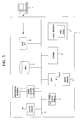
- FIG. 1 is a view of the overall configuration of a portable audio player 1 according to an embodiment of the present invention.
- the portable audio player 1 has for example a headphone terminal 11, audio output circuit 12, LCD panel 13, central processing unit (CPU) 14, input device 15, synchronous dynamic random access memory (SRAM) 16, flash memory 17, hard disk drive (HDD) 18, universal serial bus (USB) interface 19, and clock circuit 20 all connected via for example a data line 10.
- CPU central processing unit
- SRAM synchronous dynamic random access memory
- HDD hard disk drive
- USB universal serial bus
- the audio output circuit 12 outputs track data decoded by the CPU 14 in the form of an audio signal and reproduces the track via the headphone terminal 11.
- the LCD panel 13 is provided on for example the front surface of a case of the portable audio player 1. A variety of screens are displayed on it under the control of the CPU 14. The main screens displayed on the LCD panel 13 include for example a menu screen, track search screen, setup screen, reproduction screen, and reproduction history screen. These screens are switched by operation of the user via the input device 15. Further, the LCD panel 13 has for example a touch panel. A location on the screen touched by the user by his or her finger etc. is detected, and a detected location signal indicating the location is output to the CPU 14.
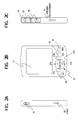
- the input device 15 is. as shown in FIGS. 2A to 2C, configured as various keys provided on the case of the portable audio player 1 and operated by the user. Note that the input device 15 includes the touch panel of the LCD panel 13 explained above.
- FIGS. 2A to 2C are views showing example of the side surfaces and the front surface of the case of the portable audio player 1. That is, FIG. 2A and FIG. 2C are views showing examples of the side surfaces of the portable music player 1, while FIG. 2B is a view showing an example of the front surface of the portable music player 1.
- one side surface of the portable music player 1 is provided with the headphone terminal 11 and a HOLD key 22.
- the front surface of the portable music player 1 is provided with the LCD panel 13, a cross key 27, a BACK key 28, a VIEW key 29, and a MENU key 30.
- the cross key 27 is configured by an up key 27a, a left key 27b, a down key 27c, a right key 27d, and an ENTER key 27e.
- the other side surface of the portable music player 1 is provided with a rewind key 24, a play pause key 25, a forwarding key 26, and a volume adjustment dial 23.
- the SDRAM 16 temporarily stores the data etc. relating to the processing of the CPU 14.
- the flash memory 17 stores for example a program PRG for defining the operation of the CPU 14.
- the HDD 18 has a storage capacity of for example several gigabytes to several tens of gigabytes and stores content data compressed by various compression methods or uncompressed music data etc.
- the track data is written into the HDD 18 from the personal computer 3 via the USB interface 19. Further, the HDD 18 stores various reproduction lists prepared by the CPU 14.
- the USB interface 19 is connected with the personal computer 3 and inputs/outputs data between the device and the personal computer 3.
- the data to be input and output here is for example track data, content data other than track data, and the reproduction history list explained later.
- the clock circuit 20 is a circuit having a clock function and informs the CPU 14 of the present time etc.
- the CPU 14 prepares the reproduction history list etc. explained later based on the time information of the clock circuit 20.
- the CPU 14 centrally controls the operation of the audio player 1 of the present embodiment based on the program PRG read out from the flash memory 17. Further, the CPU 14 decodes the track data selected by the user and outputs it to the audio output circuit 12.
- FIGS. 3A and 3B are views showing the screen for displaying the history of reproduction in the past.
- FIG. 3A shows a reproduction history screen DISP1 for displaying a calendar and numbers of the track data reproduced on the different days and the key operation on the reproduction history screen DISP1.
- the upper numeral in each box in the figure shows the date, and the lower numeral shows the number of the track data reproduced in that day.
- FIG. 3B shows a reproduction history screen DISP2 for displaying the tracks reproduced on a certain specific day in the list state.
- M_1 to M_12 in the figure show titles of tracks reproduced in that day, arranged in the order of reproduction on that day, to form the reproduction history list.
- the CPU 14 stores the reproduction history list as the reproduction list data in the HDD 18.
- the personal computer 3 may form a reproduction list of tracks reproduced in the past by a music player application and writes this into the HDD 18 as the reproduction list data.
- the CPU 14 it is also possible for the CPU 14 to transmit the reproduction history list via the USB interface 19 to the external personal computer 3 and make it store the list or fetch the reproduction history list of another user acquired through the personal computer 3 into the portable audio player 1 via the USB interface 19 and perform the reproduction etc. by utilizing this list.
- the CPU 14 when depressing the cross keys 27a to 27d, the CPU 14 moves a cursor 41 in the directions to which the cross keys 27a to 27d correspond.
- the CPU 14 switches the screen to the reproduction history screen DISP2 of the date on which the cursor is placed at present. Further, when depressing the BACK key 28, the CPU 14 switches the screen to the MENU screen.
- the CPU 14 when depressing the up key 27a and the down key 27c, the CPU 14 moves the cursor 42 upward and downward. Further, the CPU 14 moves the date to the day before the day displayed at present when depressing the left key 27b, while moves the date to the next day when depressing the right key and switches the reproduction history list to be displayed to the list corresponding to the date.
- the CPU reproduces the track data on which the cursor is placed at present and displays the play indicator 43 on the cursor 42. Further, when depressing the BACK key, the CPU 14 switches the reproduction history screen DISP2 at present to the reproduction history screen DISP1.
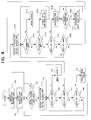
- FIG. 4 is a flow chart showing the example of operation of the portable audio player 1.
- the CPU 14 prepares a reproduction history list based on the reproduction history.
- the personal computer 3 forms a reproduction list of the tracks reproduced in the past by a music player application and writes this into the HDD 18 as the reproduction list data.
- the CPU 14 makes the HDD 18 store the reproduction history list prepared at step ST1.
- the CPU 14 judges whether or not the reproduction history screen DISP1 is to be displayed by the operation of the user and, when judging that the reproduction history screen DISP1 is to be displayed, proceeds to step ST4.
- the CPU 14 displays the reproduction history screen DISP1 on the LCD panel 13.
- the CPU 14 proceeds to step ST6 when there is an operation of the cross keys 27a to 27d by the user, while proceeds to step ST7 when there is no operation.
- the CPU 14 moves the cursor 41 in the direction corresponding to the key operation according to the cross key operation of the user at step ST5.
- the CPU 14 proceeds to step ST10 when there is an operation of the ENTER key 27e by the user, while proceeds to step ST8 when there is no operation.
- the CPU 14 proceeds to step ST9 when there is an operation of the BACK key 27e by the user, while returns to step ST5 when there is no operation.
- the CPU 14 displays the MENU screen, then returns to step ST3.
- the CPU 14 displays the reproduction history screen DISP2, then proceeds to step ST11.
- a track to be deleted is displayed by for example changing its color on the reproduction history screen DISP1.
- the CPU 14 proceeds to step ST12 when there is an input of the up key 27a or the down key 27c of the cross key by the user, while proceeds to step ST13 when there is none.
- the CPU 14 moves the cursor 41 according to the up/down key operation of the user, then returns to step ST11.
- the CPU 14 proceeds to step ST14 when there is an input of the left key 27b or right key 27d of the cross key by the user, while proceeds to step ST15 when there is none.
- the CPU 14 changes the date of the reproduction history list displayed according to the left/right key operation of the user and returns to step ST11.
- the CPU 14 proceeds to step ST16 when there is an operation of the ENTER key 27e by the user, while proceeds to step ST19 when there is no operation.
- the CPU 14 reproduces the music on which the cursor is placed, then proceeds to step ST17.
- the CPU 14 judges whether or not the music being reproduced if finished. It proceeds to step ST18 when judging that the reproduction has ended, while continues the reproduction when judging that the reproduction has not ended.
- the CPU 14 reproduces the next music of the reproduction history list being displayed.
- the track to be deleted is described by changing its color in the reproduction history list, but not reproduced, skipped, and further next track of the list is reproduced.
- the CPU 14 returns to step ST4 when there is an operation of the BACK key 27e by the user, and returns to step ST11 when there is no operation.
- the history of the music reproduced in the past can be managed and displayed in units of days, therefore, a music which has been listened to in the past, but whose title name or artist name is not remembered can be found based on the reproduction history list.
- the first embodiment explained the case where input was by key operation, but all operations may also be carried out from the touch panel of the LCD panel 13.
- the reproduction history was managed in units of days, but this may be managed in units of time other than that, for example, in units of weeks/months, or may be divided between a.m. and p.m.
- the order of music in the reproduction list was the order of reproduction in the past, but the user may freely sort the music by the title name or sort them by the artist name.
- the present embodiment is an example of the second embodiment of the invention.
- a CPU 14a of the present embodiment is an example of the control unit of the present invention. According to the portable audio player 1a of the second embodiment, it becomes able to easily search for favorite track data of the user from among the track data reproduced in the past.
- the portable audio player 1a has the same configuration as that of the portable audio player 1 of the first embodiment except for the CPU 14a and the program PRGa stored in the flash memory 17.
- the CPU 14a of the portable audio player 1a reads out the program PRGa from the flash memory 17 and centrally controls the operation of the portable audio player 1a.
- the CPU 14a displays, for example, as shown in FIG. 5, the rating/bookmark screen DISP3 on the LCD panel 13.
- the rating/bookmark screen DISP3 is a screen switched to by mode switching etc. by for example the MENU button 30 from the reproduction history screen DISP2 of the first embodiment and is for rating/bookmarking based on the reproduction history list.
- the screen for this rating/bookmarking is an embodiment of the screen for evaluation of tracks based on the reproduction history list. It may also be used for setting the content data to be deleted other than for rating/bookmarking.
- FIG. 5 is a view showing an example of the rating/bookmark screen DISP3.
- the rating/bookmark screen DISP3, as shown in FIG. 5, has a bookmark indicator 51, a rating indicator 52, a bookmark designation button 53, rating designation buttons 54, a track list 55, and a date indicator 56.
- the boxes are linked with corresponding portions of the rating indicator 52 and the track list 55 displayed on the right and become ON when the user bookmarks tracks corresponding to certain specific boxes (for example, are lit up, blocked out, or checked).
- the rating indicator 52 indicates the rating of the user (ranking or scoring) with respect to the track related to the specific box.
- the bookmark designation button 53 is a button for switching to the bookmark mode by a touch of the user.
- a track to be bookmarked in the track list 55 can be bookmarked by being touched.
- the bookmark mode is not released even if one track is selected, so it is possible to continuously bookmark other tracks. Further, for example, by touching a portion other than the track list of the screen, the bookmark mode can be released.
- the rating designation button 54 is configured by for example 10 buttons of from 0 to 9. By depressing any one button, the rating mode corresponding to the numeral of the depressed button is designated. In the rating mode, by touching the track to be rated in the track list 55, the score corresponding to the depressed button can be attached to that track. At this time, even if the track is once selected, the rating mode is not released, so it is possible to continuously attach the same score to the other tracks.
- the track list 55 is the reproduction history list of the first embodiment and is a reproduction history list corresponding to the date indicated by the date indicator 56.
- the date indicator 56 indicates the date to which the track list being displayed at present corresponds (date reproduced).
- the CPU 14a prepares a bookmarked music list comprised of bookmarked musics based on bookmarks attached in the bookmark mode and stores it in the HDD 18. Further, the CPU 14a prepares a rated music list collecting for example tracks having a specific score or more based on the ratings attached in the rating mode and stores it in the HDD 18. Further, the portable audio player 1a can transmit the information of the bookmarked and rated music, the bookmarked music list, and the rated music list to the personal computer 3 and receive for example bookmark and rating information, a bookmarked music list, and a rated track list of another user stored on the personal computer via the USB interface 19.
- the personal computer 3 may prepare a bookmark list or the rating list based on the bookmarks or ratings attached by the user in a music player application and write this as the reproduction list data into the HDD 18 via the USB interface 19.
- FIG. 6 is a flow chart showing the example of operation of the portable audio player 1a.
- the CPU 14a generates a reproduction history list.
- the personal computer 3 forms a reproduction list of music reproduced in the past by a music player application and writes this as the reproduction list data into the HDD 18.
- the CPU 14a judges whether the rating/bookmark screen DISP3 is to be displayed according to the operation of the user when judging that this screen is to be displayed, then proceeds to step ST23.
- the CPU 14a displays the rating/bookmark screen DISP3, then proceeds to step ST24.
- the CPU 14a enters into the bookmark mode when the user depresses the bookmark designation button 53, then proceeds to step ST25.
- the bookmark designation button 53 is not depressed, it proceeds to step ST26.
- the CPU 14a performs the bookmark processing for bookmarking a corresponding music according to an operation of the user via the touch panel provided in the LCD panel 13. Further, the CPU 14a prepares a bookmarked music list comprised of bookmarked music based on the bookmarks attached in the bookmark processing and stores the same in the HDD 18. Alternatively, the personal computer 3 prepares a bookmarked music list based on the bookmarks attached by the user in the past by the music player application and writes this into the HDD 18.
- the CPU 14a enters into the rating mode when the user depresses the rating designation button 54, then proceeds to step ST27.
- the CPU 14a proceeds to step ST28.
- the CPU 14a performs rating processing for rating a corresponding track according to an operation of the user via the touch panel provided in the LCD panel 13, prepares a rating list, and stores it in the HDD 18.
- the personal computer 3 prepares a rating list based on the ratings attached by the user by the music player application and writes this into the HDD 18.
- the CPU 14a judges whether or not the rating/bookmark screen DISP3 is to be terminated according to an operation of the user, proceeds to step ST22 when judging that this screen is to be terminated, while returns to step ST24 when judging that this screen is not to be terminated.
- the computer 3 of the present embodiment is an example of the computer of the present invention, while the scheduled deletion list of the present embodiment is an example of the delete information of the designated content data of the present invention.
- a portable audio player 1b of a third embodiment of the present invention will be explained. According to the portable audio player 1b of the present embodiment, when deleting part or all of the track data stored in the HDD 18, the data can be deleted without applying any load upon the portable audio player 1b.
- the portable audio player 1b has the same configuration as that of the portable audio player 1 of the first embodiment except for a CPU 14b and a program PRGb.
- the CPU 14b reads out the program PRGb from the flash memory 17 and centrally controls the operation of the portable audio player 1b. Further, the CPU 14b determines the music to be deleted by operation of the user on the reproduction history screen DISP2 and defines it as a scheduled deleted track. Further, the CPU 14b prepares a list comprised of scheduled deleted tracks, i.e., a scheduled deletion list, and stores this in the HDD 18.
- a scheduled deleted track is specifically selected by the following method. For example, by entering into the delete mode during the display of the reproduction history screen DISP2, many scheduled deleted music can be continuously designated. For example, the MENU key 30 can be depressed on the reproduction history screen DISP2 to select and enter the delete mode.
- FIG. 7 is a diagram showing an example of a delete mode screen DISP4.
- the delete mode screen DISP4 includes a list of musics and scheduled deleted music check boxes 61 corresponding to the musics.
- the user can set a scheduled deleted music by checking the scheduled deleted music check box 61 of the music to be deleted. For example, when the scheduled deleted music is determined by the check operation of the user, the CPU 14 attaches a scheduled deleted music identifier for identifying that the music is a scheduled deleted music (scheduled deletion ID in FIG. 11) to a music determined as a scheduled deleted music. Due to this, the CPU 14 becomes able to recognize which musics are scheduled deleted musics.
- a scheduled deleted music identifier for identifying that the music is a scheduled deleted music (scheduled deletion ID in FIG. 11) to a music determined as a scheduled deleted music. Due to this, the CPU 14 becomes able to recognize which musics are scheduled deleted musics.
- the screen for determining the scheduled deleted music may also be another screen such as for example a reproduction screeen, reproduction list edit screen, album list screen, genre sort list screen, and so on. Further, it is not only possible to determine the scheduled deleted musics one by one, but also possible to select the musics, for example for each album and each genre and put the entire whole album or genre in the scheduled deletion list.
- FIG. 8 is a flow chart showing the example of operation of the portable audio player 1b.
- the CPU 14b judges whether or not it is to enter into the delete mode by an operation of the user and proceeds to step ST32 when judging that it is to enter into the delete mode.
- the CPU 14b determines the music data selected on the delete mode screen DISP4 by the user as scheduled deleted musics and prepares the scheduled deletion list in which scheduled deleted musics are arranged in the order of selection.
- the CPU 14b proceeds to step ST34 when track are to be reproduced, and proceeds to step ST35 in another case.
- the CPU 14b skips scheduled deleted musics without playing them back at the time of the reproduction of the musics. Further, for example, in all track reproduction, random reproduction, and shuffle reproduction, the scheduled deleted musics are deemed out of the scope of reproduction and are skipped without reproduction.
- the CPU 14b proceeds to step ST36 when the device is connected with the personal computer 3 via the USB interface 19, while returns to step ST33 in another case.
- the CPU 14b transmits the scheduled deletion list to the personal computer 3.
- This scheduled deletion list includes at least the content identification data for identifying the delete target content.
- This scheduled deletion list is comprised of music tracks for which the scheduled deletion are set.
- the personal computer 3 receiving the scheduled deletion list accesses the HDD 18 and deletes the scheduled deleted musics from the HDD 18 based on the scheduled deletion list. Due to this, the musics can be deleted without applying any load upon the portable audio player 1b. Further, the personal computer 3 regenerates the reproduction list of the portable audio player 1b omitting the deleted musics, for example, the reproduction history list, and stores it in the HDD 18.
- the personal computer 3 may perform the heavy processing for deleting track data in place of the player.
- the load of the CPU 14b is reduced. Therefore, the disadvantages of for example skipping occurring due to processing for deletion during the reproduction of content, a large amount of the battery power being consumed, and consequently the time for reproduction becoming short are eliminated.
- the CPU 14b per se can be made relatively low speed, so the production cost can be suppressed.
- the processing of deleting the corresponding tracks from the reproduction list stored in the HDD 18, for example, the reproduction history list is carried out on the personal computer side, therefore no useless load is applied upon the CPU 14b of the portable audio player 1b, excess power consumption is suppressed, and quick delete processing may be possible.
- the portable audio player 1b may perform the processing for deleting music data.
- the deletion of the track data disclosed here includes, other than the case of deleting the track data per se from the portable audio player 1b, a case where only the management data for managing the track data is deleted from the audio player 1b and further a case where the content data is transferred from the portable audio player 1b to the personal computer 3 thereby to obtain a state where no content data remains in the portable audio player 1b.
- the delete processing is carried out via the personal computer 3 and the USB interface 19, but the present invention is not limited to this.
- the delete processing may be carried out together with the server etc. distributing the music data via wireless communications such as a wireless LAN.
- the portable audio player 1b may be configured to be connected with the server or the personal computer 3 via a wireless public line network when detecting that the player enters a wireless communication area and then delete the scheduled deleted tracks.
- the judgment of the connection area with the public line network may be carried out according to whether or not a signal from a hot spot can be received. In this case, the scheduled deleted musics are previously selected, then the apparatus is connected with the personal computer 3 via the wireless public line network when the portable audio player 1b intrudes into the hot spot, and the processing of deleting the scheduled deleted track is executed.
- the portable audio player 1c of the fourth embodiment it is possible to delete the music data and display the music data which has been deleted in an easily understandable manner in the reproduction history list.
- the portable audio player 1c has the same configuration as that of the portable audio player 1 of the first embodiment except for a CPU 14c and a program PRGc.
- the CPU 14c reads out the program PRGc stored in the flash memory 17 and centrally controls the operation of the portable audio player 1c. Further, the CPU 14c enters into the delete mode on for example the reproduction history screen DISP2 and deletes the music selected by the user from the HDD 18. Next, the CPU 14c, when displaying the reproduction history screen, displays by for example different colors, as shown in FIG. 8, the tracks whose data has been already deleted and no longer exists in the HDD 18, but which remain listed in the reproduction history list.
- FIG. 9 is a view showing an example of the display of the erased music data on a reproduction history screen DISP2c. As shown in FIG. 9, the deleted music (M_6 and M_11 in FIG. 8) are displayed by for example reversing white and black.
- FIG. 10 is a flow chart showing the example of operation of the portable audio player 1c.
- the CPU 14c prepares a reproduction history list.
- the CPU 14c prepares a scheduled deletion list based on an operation of the user.
- the CPU 14c deletes (erases) the track data of the tracks in the scheduled deletion list from the HDD 18.
- the CPU 14c proceeds to step ST45 when judging that the reproduction history screen is to be displayed by an operation of the user.
- the CPU 14c displays the tracks erased from the HDD 18 on the reproduction history screen DISP2c by black/white inversion.
- the tracks are displayed here by black/white inversion, but may be displayed by for example another color or may be displayed by blinking.
- the reproduction history screen may display the deleted tracks and the scheduled deleted tracks in an identifiable manner. For example, deleted tracks, scheduled deleted track, and tracks held by the portable audio player 1b may be displayed by different colors.
- the deleted tracks can be displayed on the reproduction history list so that they can be seen at a glance, therefore, for example, when editing the reproduction list based on the reproduction history list, the disadvantage of an already deleted track being erroneously selected can be eliminated.
- the present invention is not limited to the above embodiments. Namely, it should be understood by those skilled in the art that various modifications, combinations, sub-combinations, and alterations may occur depending on design requirements and other factors insofar as they are within the scope of the appended claims or the equivalents thereof.
- the LCD panel 13 was used as the display, but as the display, use may also be made of for example an organic EL display (organic electroluminescence display) panel.
- the data is communicated via the personal computer 3 and the USB interface 19, but the present invention is not limited to this.
- data communication can be carried out together with the server etc. distributing the track data via wireless communications such as infrared-ray communication and wireless LAN.
- the music data was explained as an example of the content data, but the present invention is not limited to this.
- the content data may be for example movies, still images, and text data.
- the information displayed on the reproduction screen may include, other than that explained in the above embodiments, the title, main cast, director, genre, country, year of release, production company, distribution company, and so on in for example the case where the content data is moving picture data such as a movie.
- the content data is still image data such as photos
- the information may include the date taken, size, type of photo (scene, picture etc.), and photographer.
- the content data is text data such as with electronic publishing
- the information may include the title, author, genre, publishing company, and so on.
- the music data that is, one of the content data
- the content data may also be stored in a flash memory etc.
- a portable audio player as an example, but the present invention is not limited to this. It may be any electronic device storing content data, performing reproduction, and having a display function. For example, it may be an HDD recorder, electronic book terminal, DVD player, digital camera, or personal computer.
Landscapes
- Engineering & Computer Science (AREA)
- Theoretical Computer Science (AREA)
- Multimedia (AREA)
- Data Mining & Analysis (AREA)
- Databases & Information Systems (AREA)
- Physics & Mathematics (AREA)
- General Engineering & Computer Science (AREA)
- General Physics & Mathematics (AREA)
- Library & Information Science (AREA)
- Management Or Editing Of Information On Record Carriers (AREA)
- Indexing, Searching, Synchronizing, And The Amount Of Synchronization Travel Of Record Carriers (AREA)
- Information Retrieval, Db Structures And Fs Structures Therefor (AREA)
Abstract
Description
- The present invention contains subject matter related to
Japanese Patent Application No. 2005-222934 filed in the Japan Patent Office on August 1, 2005 - The present invention relates to an electronic device, data processing method, data control method, and content data processing system for preparing a reproduction list based on a reproduction history.
- In recent years, the increasingly greater capacity of recording media and advances made in technology for compression of music, movies, still images, etc. have enabled the development of portable storage/reproduction devices able to store enormous amounts of data and be carried around. Since the increasingly greater capacity of the devices has enabled large amounts of content data to be carried around, it has become difficult to find favorite content data from the content data. Various search methods have been devised to deal with this. As one such method, there can be explained the method of searching for track names, album names, and artist names of the content data by their initials. For more details, see
Japanese Patent Publication (A) No. 2004-229241 - In such portable storage/reproduction devices using the above search method, however, there is the disadvantage that it is not possible to find a track whose name cannot be remembered, but was played in the past from among the large amount of content data. Further, in the portable storage/reproduction device using the above search method, there is the disadvantage that a favorite track or a track to be deleted cannot be found from among the tracks which were reproduced in the past. Further, in the conventional portable storage/reproduction device, there are the disadvantages of a very large load when deleting stored content data, the load causing the currently reproduced content to skip, and the operation time to become shorter. Further, when deleting content in the portable storage/reproduction device, there is the disadvantage that the deleted content remains in the reproduction history list etc., therefore it is hard to discriminate which tracks have been deleted and which tracks remain.
- In order to overcome the above disadvantages, it is desirable to provide an electronic device, a data processing method, data control method, and content data processing system enabling a user to manage a list of tracks reproduced in the past as a reproduction history list in units of predetermined time intervals. Further, in order to counter the above disadvantages, it is desirable to provide an electronic device, a data processing method, data control method, and content data processing system enabling a user to bookmark, rate, or delete each track while viewing the reproduction history list. Further, in order to counter the above disadvantages, it is desirable to provide an electronic device, a data processing method, data control method, and content data processing system enabling a user to prepare a scheduled deletion list without actually deleting track data and make an external computer delete the tracks of the scheduled deletion list when connecting the device to the external computer. Further, in order to counter the above disadvantages, it is desirable to provide an electronic device, a data processing method, data control method, and content data processing system enabling a user to delete track data and display deleted track data distinguished from undeleted track data when displaying the reproduction history list.
- According to an embodiment of the invention, there is provided an electronic device including a reproduction unit configured to reproduce content data; a storage unit storing the data; and a control unit configured to manage reproduction history data of content data in the reproduction unit in units of predetermined time intervals and make the storage unit store the reproduction history data of the predetermined time intervals.
- Preferably, the electronic device further includes a display for displaying the reproduction history data, and the control unit makes the display display the reproduction history data when receiving an instruction for displaying the reproduction history data.
- More preferably, the control unit makes a reproduction history screen included the reproduction history data display evaluation data for displaying evaluation of the content when receiving the instruction for displaying the reproduction history data and executes evaluation assigning processing based on input content when predetermined evaluation data is input based on an operation of the user.
- More preferably, the evaluation data comprises a data indicating a rating, bookmark, or deletion of content.
- More preferably, the control unit generates evaluation information based on an imparted evaluation and prepares a new reproduction list based on the evaluation information.
- More preferably, the control unit makes the display display a calendar and, when a predetermined day is designated from the calendar, makes the display display the reproduction history data of that designated predetermined day.
- More preferably, the control unit makes the display display the number of the content data reproduced on each predetermined day at a location corresponding to the predetermined day of the calendar and, when a predetermined date is designated from the calendar, makes the display display the reproduction history data of the designated predetermined day.
- More preferably, the control unit generates the reproduction list data based on the reproduction history data read out from the storing means and selects the content data to be reproduced based on the reproduction list data.
- More preferably, when making the display to display the reproduction history data, the control unit makes the display display attribute data of the content data for which a delete instruction has been received from the user on the screen displaying the reproduction history data so that it can be identified.
- More preferably, the device further includes an interface for inputting and outputting data with between an external apparatus, and the control unit transfers the reproduction history data via the interface to the external apparatus.
- According to a second embodiment of the invention, there is provided an electronic device including an interface configured to transfer data with an external apparatus; a storage unit storing the content data; a reproduction unit configured to reproduction the content data read out from the storage unit; and a control unit configured to transmit delete information indicating content data to be deleted via the interface to the external apparatus when detecting a connection with the external apparatus via the interface.
- According to a third embodiment of the present invention, there is provided a data processing method including the steps of: reproducing content data, managing reproduction history data of the content data in units of predetermined time intervals, and storing the reproduction history data of the predetermined time intervals.
- Preferably, the method further includes displaying the reproduction history data when receiving an instruction for displaying the reproduction history data.
- Preferably, the method further comprises displaying evaluation data for displaying an evaluation of content on a reproduction history screen included the reproduction history data when receiving an instruction for displaying the reproduction history data and executing evaluation assigning processing based on the input content when predetermined evaluation data is input based on an operation of a user.
- More preferably, the evaluation data comprises a data indicating a rating, bookmark, or deletion of content.
- More preferably, the method further includes generating evaluation information based on the assigned evaluation and preparing a new reproduction list based on the evaluation information.
- More preferably, the method further includes displaying a calendar and, when a predetermined day is designated from the calendar, displaying the reproduction history data of the designated predetermined day.
- More preferably, the method further comprises displaying the number of the content data reproduced on each predetermined day at a location corresponding to the predetermined day of the calendar and, when a predetermined date is designated from the calendar, displaying the reproduction history data of the designated predetermined day.
- More preferably, the method further includes generating the reproduction list data based on the reproduction history data and selecting the content data to be reproduced based on the reproduction list data.
- More preferably, the method further includes, when displaying the reproduction history data, displaying attribute data of the content data for which a delete instruction has been received from the user on the screen displaying the reproduction history data so that it can be identified.
- More preferably, the method further includes connecting with an external apparatus through and transferring the reproduction history data.
- According to an embodiment of the invention, there is provided a data control method including selecting predetermined content data to be deleted and transmitting delete information indicating the content data to be deleted to an external apparatus via an interface when detecting connection with the external apparatus via the interface.
- According to an embodiment of the invention, there is provided a content data processing system including a personal computer and a content player, wherein the content player is configured by an interface configured to transfer data with an external apparatus; a storage unit configured to store the content data; a reproduction unit configured to reproduction the content data read out from the storage unit; and a control unit configured to transmit delete information indicating content data to be deleted via the interface to the personal computer when detecting connection with the personal computer via the interface.
- According to the present invention, therefore, there are provided an electronic device, data processing method, data control method, and content data processing system enabling a user to manage a list of tracks reproduced in the past as a reproduction history list in units of predetermined time intervals. Further, according to the present invention, there are provided an electronic device, data processing method, data control method, and content data processing system enabling a user to bookmark, rate, and delete each track while viewing the reproduction history list. Further, according to the present invention, there are provided an electronic device, data processing method, data control method, and content data processing system enabling a user to prepare a scheduled deletion list without deleting the track data and making an external computer delete the tracks of the scheduled deletion list when connecting the device to the external computer. Further, according to the present invention, there are provided an electronic device, data processing method, data control method, and content data processing system enabling a user to delete track data and display deleted track data distinguished from undeleted track data when displaying the reproduction history list.
- These and other objects and features of the present invention will become clearer from the following description of the preferred embodiments given with reference to the attached drawings, wherein:
- FIG. 1 is an overall view of the configuration of a portable audio player according to an embodiment of the present invention;
- FIGS. 2A to 2C are views showing examples of side surfaces and a front surface of the portable audio player;
- FIGS. 3A and 3B are views showing screens for displaying a list of the history of reproduction in the past;
- FIG. 4 is a flow chart showing an example of operation of the portable audio player;
- FIG. 5 is a diagram showing an example of a rating/bookmark screen;
- FIG. 6 is a flow chart showing an example of operation of another portable audio player;
- FIG. 7 is a diagram showing an example of a delete mode screen;
- FIG. 8 is a flow chart showing an example of operation of another portable audio player;
- FIG. 9 is a diagram showing an example of the display of erased track data in a reproduction history screen;
- FIG. 10 is a flow chart showing an example of operation of another portable audio player; and
- FIG. 11 is a diagram showing an example of attribute data.
- Preferred embodiments of the present invention will be described in detail below while referring to the attached figures.
- Below, a portable audio player of a first embodiment of the present invention will be explained. The music data of the present embodiment is an example of the content data of the present invention, an
audio output circuit 12 of the present embodiment is an example of the reproduction unit of the present invention, anHDD 18 of the present embodiment is an example of the storage unit of the present invention, aCPU 14 of the present embodiment is an example of the control unit of the present invention, the reproduction history list of the present embodiment is an example of the reproduction history data of the present invention, a liquid crystal display (LCD)panel 13 of the present embodiment is an example of the display of the present invention, and the reproduction list data of the present embodiment is an example of the reproduction list data of the present invention. - FIG. 1 is a view of the overall configuration of a
portable audio player 1 according to an embodiment of the present invention. As shown in FIG. 1, theportable audio player 1 has for example aheadphone terminal 11,audio output circuit 12,LCD panel 13, central processing unit (CPU) 14,input device 15, synchronous dynamic random access memory (SRAM) 16,flash memory 17, hard disk drive (HDD) 18, universal serial bus (USB)interface 19, andclock circuit 20 all connected via for example adata line 10. - The
audio output circuit 12 outputs track data decoded by theCPU 14 in the form of an audio signal and reproduces the track via theheadphone terminal 11. TheLCD panel 13 is provided on for example the front surface of a case of theportable audio player 1. A variety of screens are displayed on it under the control of theCPU 14. The main screens displayed on theLCD panel 13 include for example a menu screen, track search screen, setup screen, reproduction screen, and reproduction history screen. These screens are switched by operation of the user via theinput device 15. Further, theLCD panel 13 has for example a touch panel. A location on the screen touched by the user by his or her finger etc. is detected, and a detected location signal indicating the location is output to theCPU 14. - The
input device 15 is. as shown in FIGS. 2A to 2C, configured as various keys provided on the case of theportable audio player 1 and operated by the user. Note that theinput device 15 includes the touch panel of theLCD panel 13 explained above. FIGS. 2A to 2C are views showing example of the side surfaces and the front surface of the case of theportable audio player 1. That is, FIG. 2A and FIG. 2C are views showing examples of the side surfaces of theportable music player 1, while FIG. 2B is a view showing an example of the front surface of theportable music player 1. - As shown in FIG. 2A, one side surface of the
portable music player 1 is provided with theheadphone terminal 11 and aHOLD key 22. As shown in FIG. 2B, the front surface of theportable music player 1 is provided with theLCD panel 13, a cross key 27, a BACK key 28, aVIEW key 29, and aMENU key 30. The cross key 27 is configured by an up key 27a, a left key 27b, a down key 27c, a right key 27d, and anENTER key 27e. As shown in FIG. 2C, the other side surface of theportable music player 1 is provided with arewind key 24, aplay pause key 25, a forwardingkey 26, and avolume adjustment dial 23. - The
SDRAM 16 temporarily stores the data etc. relating to the processing of theCPU 14. Theflash memory 17 stores for example a program PRG for defining the operation of theCPU 14. TheHDD 18 has a storage capacity of for example several gigabytes to several tens of gigabytes and stores content data compressed by various compression methods or uncompressed music data etc. The track data is written into theHDD 18 from thepersonal computer 3 via theUSB interface 19. Further, theHDD 18 stores various reproduction lists prepared by theCPU 14. - The
USB interface 19 is connected with thepersonal computer 3 and inputs/outputs data between the device and thepersonal computer 3. The data to be input and output here is for example track data, content data other than track data, and the reproduction history list explained later. - The
clock circuit 20 is a circuit having a clock function and informs theCPU 14 of the present time etc. TheCPU 14 prepares the reproduction history list etc. explained later based on the time information of theclock circuit 20. - The
CPU 14 centrally controls the operation of theaudio player 1 of the present embodiment based on the program PRG read out from theflash memory 17. Further, theCPU 14 decodes the track data selected by the user and outputs it to theaudio output circuit 12. - The
CPU 14 displays the history of the tracks reproduced in the past by the user on theLCD panel 13 as shown in for example FIG. 3A. FIGS. 3A and 3B are views showing the screen for displaying the history of reproduction in the past. FIG. 3A shows a reproduction history screen DISP1 for displaying a calendar and numbers of the track data reproduced on the different days and the key operation on the reproduction history screen DISP1. The upper numeral in each box in the figure shows the date, and the lower numeral shows the number of the track data reproduced in that day. FIG. 3B shows a reproduction history screen DISP2 for displaying the tracks reproduced on a certain specific day in the list state. M_1 to M_12 in the figure show titles of tracks reproduced in that day, arranged in the order of reproduction on that day, to form the reproduction history list. Further, theCPU 14 stores the reproduction history list as the reproduction list data in theHDD 18. Alternatively, thepersonal computer 3 may form a reproduction list of tracks reproduced in the past by a music player application and writes this into theHDD 18 as the reproduction list data. Here, for example, it is also possible for theCPU 14 to transmit the reproduction history list via theUSB interface 19 to the externalpersonal computer 3 and make it store the list or fetch the reproduction history list of another user acquired through thepersonal computer 3 into theportable audio player 1 via theUSB interface 19 and perform the reproduction etc. by utilizing this list. - Next, the key operation on each screen will be explained. First, in the reproduction history screen DISP1, when depressing the
cross keys 27a to 27d, theCPU 14 moves acursor 41 in the directions to which thecross keys 27a to 27d correspond. When depressing theENTER key 27e, theCPU 14 switches the screen to the reproduction history screen DISP2 of the date on which the cursor is placed at present. Further, when depressing the BACK key 28, theCPU 14 switches the screen to the MENU screen. - In the reproduction history screen DISP2, when depressing the up key 27a and the down key 27c, the
CPU 14 moves thecursor 42 upward and downward. Further, theCPU 14 moves the date to the day before the day displayed at present when depressing the left key 27b, while moves the date to the next day when depressing the right key and switches the reproduction history list to be displayed to the list corresponding to the date. When depressing the ENTER key, the CPU reproduces the track data on which the cursor is placed at present and displays theplay indicator 43 on thecursor 42. Further, when depressing the BACK key, theCPU 14 switches the reproduction history screen DISP2 at present to the reproduction history screen DISP1. - Next, an example of the operation of the
portable audio player 1 in the present embodiment will be explained. FIG. 4 is a flow chart showing the example of operation of theportable audio player 1. - The
CPU 14 prepares a reproduction history list based on the reproduction history. Alternatively, thepersonal computer 3 forms a reproduction list of the tracks reproduced in the past by a music player application and writes this into theHDD 18 as the reproduction list data. - The
CPU 14 makes theHDD 18 store the reproduction history list prepared at step ST1. - The
CPU 14 judges whether or not the reproduction history screen DISP1 is to be displayed by the operation of the user and, when judging that the reproduction history screen DISP1 is to be displayed, proceeds to step ST4. - The
CPU 14 displays the reproduction history screen DISP1 on theLCD panel 13. - The
CPU 14 proceeds to step ST6 when there is an operation of thecross keys 27a to 27d by the user, while proceeds to step ST7 when there is no operation. - The
CPU 14 moves thecursor 41 in the direction corresponding to the key operation according to the cross key operation of the user at step ST5. - The
CPU 14 proceeds to step ST10 when there is an operation of theENTER key 27e by the user, while proceeds to step ST8 when there is no operation. - The
CPU 14 proceeds to step ST9 when there is an operation of the BACK key 27e by the user, while returns to step ST5 when there is no operation. - The
CPU 14 displays the MENU screen, then returns to step ST3. - The
CPU 14 displays the reproduction history screen DISP2, then proceeds to step ST11. - Note that, as will be explained in detail in the third embodiment, a track to be deleted is displayed by for example changing its color on the reproduction history screen DISP1.
- The
CPU 14 proceeds to step ST12 when there is an input of the up key 27a or the down key 27c of the cross key by the user, while proceeds to step ST13 when there is none. - The
CPU 14 moves thecursor 41 according to the up/down key operation of the user, then returns to step ST11. - The
CPU 14 proceeds to step ST14 when there is an input of the left key 27b or right key 27d of the cross key by the user, while proceeds to step ST15 when there is none. - The
CPU 14 changes the date of the reproduction history list displayed according to the left/right key operation of the user and returns to step ST11. - The
CPU 14 proceeds to step ST16 when there is an operation of theENTER key 27e by the user, while proceeds to step ST19 when there is no operation. - The
CPU 14 reproduces the music on which the cursor is placed, then proceeds to step ST17. - The
CPU 14 judges whether or not the music being reproduced if finished. It proceeds to step ST18 when judging that the reproduction has ended, while continues the reproduction when judging that the reproduction has not ended. - The
CPU 14 reproduces the next music of the reproduction history list being displayed. - Note that, as will be explained in detail in the third embodiment, the track to be deleted is described by changing its color in the reproduction history list, but not reproduced, skipped, and further next track of the list is reproduced.
- The
CPU 14 returns to step ST4 when there is an operation of the BACK key 27e by the user, and returns to step ST11 when there is no operation. - As explained above, according to the
audio player 1 of the present first embodiment, the history of the music reproduced in the past can be managed and displayed in units of days, therefore, a music which has been listened to in the past, but whose title name or artist name is not remembered can be found based on the reproduction history list. Note that the first embodiment explained the case where input was by key operation, but all operations may also be carried out from the touch panel of theLCD panel 13. Further, in the present embodiment, the reproduction history was managed in units of days, but this may be managed in units of time other than that, for example, in units of weeks/months, or may be divided between a.m. and p.m. - Further, in the present embodiment, the order of music in the reproduction list was the order of reproduction in the past, but the user may freely sort the music by the title name or sort them by the artist name.
- Next, a portable audio player 1a of a second embodiment of the present invention will be explained. The present embodiment is an example of the second embodiment of the invention. A CPU 14a of the present embodiment is an example of the control unit of the present invention. According to the portable audio player 1a of the second embodiment, it becomes able to easily search for favorite track data of the user from among the track data reproduced in the past.
- The portable audio player 1a has the same configuration as that of the
portable audio player 1 of the first embodiment except for the CPU 14a and the program PRGa stored in theflash memory 17. The CPU 14a of the portable audio player 1a reads out the program PRGa from theflash memory 17 and centrally controls the operation of the portable audio player 1a. The CPU 14a displays, for example, as shown in FIG. 5, the rating/bookmark screen DISP3 on theLCD panel 13. The rating/bookmark screen DISP3 is a screen switched to by mode switching etc. by for example theMENU button 30 from the reproduction history screen DISP2 of the first embodiment and is for rating/bookmarking based on the reproduction history list. Note that, the screen for this rating/bookmarking is an embodiment of the screen for evaluation of tracks based on the reproduction history list. It may also be used for setting the content data to be deleted other than for rating/bookmarking. - FIG. 5 is a view showing an example of the rating/bookmark screen DISP3. The rating/bookmark screen DISP3, as shown in FIG. 5, has a
bookmark indicator 51, arating indicator 52, abookmark designation button 53,rating designation buttons 54, atrack list 55, and adate indicator 56. - In the
bookmark indicator 51, the boxes are linked with corresponding portions of therating indicator 52 and thetrack list 55 displayed on the right and become ON when the user bookmarks tracks corresponding to certain specific boxes (for example, are lit up, blocked out, or checked). Therating indicator 52 indicates the rating of the user (ranking or scoring) with respect to the track related to the specific box. - The
bookmark designation button 53 is a button for switching to the bookmark mode by a touch of the user. In the bookmark mode, a track to be bookmarked in thetrack list 55 can be bookmarked by being touched. At this time, the bookmark mode is not released even if one track is selected, so it is possible to continuously bookmark other tracks. Further, for example, by touching a portion other than the track list of the screen, the bookmark mode can be released. - The
rating designation button 54 is configured by for example 10 buttons of from 0 to 9. By depressing any one button, the rating mode corresponding to the numeral of the depressed button is designated. In the rating mode, by touching the track to be rated in thetrack list 55, the score corresponding to the depressed button can be attached to that track. At this time, even if the track is once selected, the rating mode is not released, so it is possible to continuously attach the same score to the other tracks. Thetrack list 55 is the reproduction history list of the first embodiment and is a reproduction history list corresponding to the date indicated by thedate indicator 56. Thedate indicator 56 indicates the date to which the track list being displayed at present corresponds (date reproduced). - Further, the CPU 14a prepares a bookmarked music list comprised of bookmarked musics based on bookmarks attached in the bookmark mode and stores it in the
HDD 18. Further, the CPU 14a prepares a rated music list collecting for example tracks having a specific score or more based on the ratings attached in the rating mode and stores it in theHDD 18. Further, the portable audio player 1a can transmit the information of the bookmarked and rated music, the bookmarked music list, and the rated music list to thepersonal computer 3 and receive for example bookmark and rating information, a bookmarked music list, and a rated track list of another user stored on the personal computer via theUSB interface 19. Alternatively, other than the above method, it is also possible for thepersonal computer 3 to prepare a bookmark list or the rating list based on the bookmarks or ratings attached by the user in a music player application and write this as the reproduction list data into theHDD 18 via theUSB interface 19. - Next, an example of the operation of the portable audio player 1a will be shown. FIG. 6 is a flow chart showing the example of operation of the portable audio player 1a.
- The CPU 14a generates a reproduction history list. Alternatively, the
personal computer 3 forms a reproduction list of music reproduced in the past by a music player application and writes this as the reproduction list data into theHDD 18. - The CPU 14a judges whether the rating/bookmark screen DISP3 is to be displayed according to the operation of the user when judging that this screen is to be displayed, then proceeds to step ST23.
- The CPU 14a displays the rating/bookmark screen DISP3, then proceeds to step ST24.
- The CPU 14a enters into the bookmark mode when the user depresses the
bookmark designation button 53, then proceeds to step ST25. When thebookmark designation button 53 is not depressed, it proceeds to step ST26. - The CPU 14a performs the bookmark processing for bookmarking a corresponding music according to an operation of the user via the touch panel provided in the
LCD panel 13. Further, the CPU 14a prepares a bookmarked music list comprised of bookmarked music based on the bookmarks attached in the bookmark processing and stores the same in theHDD 18. Alternatively, thepersonal computer 3 prepares a bookmarked music list based on the bookmarks attached by the user in the past by the music player application and writes this into theHDD 18. - The CPU 14a enters into the rating mode when the user depresses the
rating designation button 54, then proceeds to step ST27. When therating designation button 54 is not depressed, the CPU 14a proceeds to step ST28. - The CPU 14a performs rating processing for rating a corresponding track according to an operation of the user via the touch panel provided in the
LCD panel 13, prepares a rating list, and stores it in theHDD 18. Alternatively, thepersonal computer 3 prepares a rating list based on the ratings attached by the user by the music player application and writes this into theHDD 18. - The CPU 14a judges whether or not the rating/bookmark screen DISP3 is to be terminated according to an operation of the user, proceeds to step ST22 when judging that this screen is to be terminated, while returns to step ST24 when judging that this screen is not to be terminated.
- As explained above, according to the audio player 1a of the second embodiment, a track list of reproduction in the past is displayed, and the bookmark and rating operations can be directly carried out while viewing that reproduction history list. Therefore, the disadvantage of not being able to learn what kind of tracks the tracks are when rating or bookmarking them while viewing a list sorted by the artist names or album names can be eliminated. Note that, in the second embodiment, the case where all operations were carried out by a touch panel was explained, but all operations can be carried out by utilizing various types of keys as well.
- The
computer 3 of the present embodiment is an example of the computer of the present invention, while the scheduled deletion list of the present embodiment is an example of the delete information of the designated content data of the present invention. Next, a portable audio player 1b of a third embodiment of the present invention will be explained. According to the portable audio player 1b of the present embodiment, when deleting part or all of the track data stored in theHDD 18, the data can be deleted without applying any load upon the portable audio player 1b. The portable audio player 1b has the same configuration as that of theportable audio player 1 of the first embodiment except for a CPU 14b and a program PRGb. - The CPU 14b reads out the program PRGb from the
flash memory 17 and centrally controls the operation of the portable audio player 1b. Further, the CPU 14b determines the music to be deleted by operation of the user on the reproduction history screen DISP2 and defines it as a scheduled deleted track. Further, the CPU 14b prepares a list comprised of scheduled deleted tracks, i.e., a scheduled deletion list, and stores this in theHDD 18. - A scheduled deleted track is specifically selected by the following method. For example, by entering into the delete mode during the display of the reproduction history screen DISP2, many scheduled deleted music can be continuously designated. For example, the MENU key 30 can be depressed on the reproduction history screen DISP2 to select and enter the delete mode.
- FIG. 7 is a diagram showing an example of a delete mode screen DISP4. As shown in FIG. 7, the delete mode screen DISP4 includes a list of musics and scheduled deleted
music check boxes 61 corresponding to the musics. The user can set a scheduled deleted music by checking the scheduled deletedmusic check box 61 of the music to be deleted. For example, when the scheduled deleted music is determined by the check operation of the user, theCPU 14 attaches a scheduled deleted music identifier for identifying that the music is a scheduled deleted music (scheduled deletion ID in FIG. 11) to a music determined as a scheduled deleted music. Due to this, theCPU 14 becomes able to recognize which musics are scheduled deleted musics. Note that the case of determining a scheduled deleted music on the reproduction history screen DISP2 was explained here, but the screen for determining the scheduled deleted music may also be another screen such as for example a reproduction screeen, reproduction list edit screen, album list screen, genre sort list screen, and so on. Further, it is not only possible to determine the scheduled deleted musics one by one, but also possible to select the musics, for example for each album and each genre and put the entire whole album or genre in the scheduled deletion list. - Here, an example of operation of the portable audio player 1b will be explained. FIG. 8 is a flow chart showing the example of operation of the portable audio player 1b.
- The CPU 14b judges whether or not it is to enter into the delete mode by an operation of the user and proceeds to step ST32 when judging that it is to enter into the delete mode.
- The CPU 14b determines the music data selected on the delete mode screen DISP4 by the user as scheduled deleted musics and prepares the scheduled deletion list in which scheduled deleted musics are arranged in the order of selection.
- The CPU 14b, according to the operation of the user, proceeds to step ST34 when track are to be reproduced, and proceeds to step ST35 in another case.
- The CPU 14b skips scheduled deleted musics without playing them back at the time of the reproduction of the musics. Further, for example, in all track reproduction, random reproduction, and shuffle reproduction, the scheduled deleted musics are deemed out of the scope of reproduction and are skipped without reproduction.
- The CPU 14b proceeds to step ST36 when the device is connected with the
personal computer 3 via theUSB interface 19, while returns to step ST33 in another case. - The CPU 14b transmits the scheduled deletion list to the
personal computer 3. This scheduled deletion list includes at least the content identification data for identifying the delete target content. This scheduled deletion list is comprised of music tracks for which the scheduled deletion are set. - The
personal computer 3 receiving the scheduled deletion list accesses theHDD 18 and deletes the scheduled deleted musics from theHDD 18 based on the scheduled deletion list. Due to this, the musics can be deleted without applying any load upon the portable audio player 1b. Further, thepersonal computer 3 regenerates the reproduction list of the portable audio player 1b omitting the deleted musics, for example, the reproduction history list, and stores it in theHDD 18. - As explained above, according to the portable audio player 1b of the present embodiment, the
personal computer 3 may perform the heavy processing for deleting track data in place of the player. In this case, since the music tracks can be processed without applying any load upon the portable audio player 1b, the load of the CPU 14b is reduced. Therefore, the disadvantages of for example skipping occurring due to processing for deletion during the reproduction of content, a large amount of the battery power being consumed, and consequently the time for reproduction becoming short are eliminated. Further, at the time of the production of the portable audio player 1b, the CPU 14b per se can be made relatively low speed, so the production cost can be suppressed. Further, when deleting tracks, the processing of deleting the corresponding tracks from the reproduction list stored in theHDD 18, for example, the reproduction history list is carried out on the personal computer side, therefore no useless load is applied upon the CPU 14b of the portable audio player 1b, excess power consumption is suppressed, and quick delete processing may be possible. - Further, the portable audio player 1b may perform the processing for deleting music data. Note that the deletion of the track data disclosed here includes, other than the case of deleting the track data per se from the portable audio player 1b, a case where only the management data for managing the track data is deleted from the audio player 1b and further a case where the content data is transferred from the portable audio player 1b to the
personal computer 3 thereby to obtain a state where no content data remains in the portable audio player 1b. - Note that, in the present embodiment, the delete processing is carried out via the
personal computer 3 and theUSB interface 19, but the present invention is not limited to this. For example, the delete processing may be carried out together with the server etc. distributing the music data via wireless communications such as a wireless LAN. When the delete processing is executed via wireless communications, the portable audio player 1b may be configured to be connected with the server or thepersonal computer 3 via a wireless public line network when detecting that the player enters a wireless communication area and then delete the scheduled deleted tracks. The judgment of the connection area with the public line network may be carried out according to whether or not a signal from a hot spot can be received. In this case, the scheduled deleted musics are previously selected, then the apparatus is connected with thepersonal computer 3 via the wireless public line network when the portable audio player 1b intrudes into the hot spot, and the processing of deleting the scheduled deleted track is executed. - Next, a portable audio player 1c of the fourth embodiment will be explained. According to the portable audio player 1c of the fourth embodiment, it is possible to delete the music data and display the music data which has been deleted in an easily understandable manner in the reproduction history list. The portable audio player 1c has the same configuration as that of the
portable audio player 1 of the first embodiment except for a CPU 14c and a program PRGc. - The CPU 14c reads out the program PRGc stored in the
flash memory 17 and centrally controls the operation of the portable audio player 1c. Further, the CPU 14c enters into the delete mode on for example the reproduction history screen DISP2 and deletes the music selected by the user from theHDD 18. Next, the CPU 14c, when displaying the reproduction history screen, displays by for example different colors, as shown in FIG. 8, the tracks whose data has been already deleted and no longer exists in theHDD 18, but which remain listed in the reproduction history list. FIG. 9 is a view showing an example of the display of the erased music data on a reproduction history screen DISP2c. As shown in FIG. 9, the deleted music (M_6 and M_11 in FIG. 8) are displayed by for example reversing white and black. - Next, an example of operation of the portable audio player 1c will be explained. FIG. 10 is a flow chart showing the example of operation of the portable audio player 1c.
- The CPU 14c prepares a reproduction history list.
- The CPU 14c prepares a scheduled deletion list based on an operation of the user.
- The CPU 14c deletes (erases) the track data of the tracks in the scheduled deletion list from the
HDD 18. - The CPU 14c proceeds to step ST45 when judging that the reproduction history screen is to be displayed by an operation of the user.
- The CPU 14c displays the tracks erased from the
HDD 18 on the reproduction history screen DISP2c by black/white inversion. - Note that, the tracks are displayed here by black/white inversion, but may be displayed by for example another color or may be displayed by blinking. Further, the reproduction history screen may display the deleted tracks and the scheduled deleted tracks in an identifiable manner. For example, deleted tracks, scheduled deleted track, and tracks held by the portable audio player 1b may be displayed by different colors.
- As explained above, according to the portable audio player 1c of the fourth embodiment, the deleted tracks can be displayed on the reproduction history list so that they can be seen at a glance, therefore, for example, when editing the reproduction list based on the reproduction history list, the disadvantage of an already deleted track being erroneously selected can be eliminated.
- The present invention is not limited to the above embodiments. Namely, it should be understood by those skilled in the art that various modifications, combinations, sub-combinations, and alterations may occur depending on design requirements and other factors insofar as they are within the scope of the appended claims or the equivalents thereof. In the above embodiments according to the present invention, the
LCD panel 13 was used as the display, but as the display, use may also be made of for example an organic EL display (organic electroluminescence display) panel. - Note that, in the above embodiments according to the present invention, further, the data is communicated via the
personal computer 3 and theUSB interface 19, but the present invention is not limited to this. For example, data communication can be carried out together with the server etc. distributing the track data via wireless communications such as infrared-ray communication and wireless LAN. - Further, in the above embodiments according to the present invention, the music data was explained as an example of the content data, but the present invention is not limited to this. The content data may be for example movies, still images, and text data. Further, the information displayed on the reproduction screen may include, other than that explained in the above embodiments, the title, main cast, director, genre, country, year of release, production company, distribution company, and so on in for example the case where the content data is moving picture data such as a movie. Further, when the content data is still image data such as photos, the information may include the date taken, size, type of photo (scene, picture etc.), and photographer. Further, when the content data is text data such as with electronic publishing, the information may include the title, author, genre, publishing company, and so on.
- Further, in the above embodiments, the music data, that is, one of the content data, was stored in the
HDD 18, but the present invention is not limited to this. Namely, the content data may also be stored in a flash memory etc. - Further, the above embodiments were explained with reference to a portable audio player as an example, but the present invention is not limited to this. It may be any electronic device storing content data, performing reproduction, and having a display function. For example, it may be an HDD recorder, electronic book terminal, DVD player, digital camera, or personal computer.
- Further, in the above description, four embodiments were explained as independent embodiments, but the electronic device may have all of the functions explained in the four embodiments or may have any combination of them.
Claims (23)
- An electronic device comprising:a reproduction unit configured to reproduce content data;a storage unit storing data; anda control unit configured to manage reproduction history data of content data in the reproduction unit in units of predetermined time intervals and make the storage unit store the reproduction history data of the predetermined time intervals.
- An electronic device as set forth in claim 1, wherein
the device further comprises a display displaying the reproduction history data, and
the control unit makes the display display the reproduction history data when receiving an instruction for displaying the reproduction history data. - An electronic device as set forth in claim 2, wherein the control unit makes a reproduction history screen the reproduction history data display evaluation data for displaying evaluation of the content when receiving the instruction for displaying the reproduction history data and executes evaluation assigning processing based on input content when predetermined evaluation data is input based on an operation of the user.
- An electronic device as set forth in claim 3, wherein the evaluation data comprises a data indicating a rating, bookmark, or deletion of content.
- An electronic device as set forth in claim 3, wherein the control unit generates evaluation information based on an imparted evaluation and prepares a new reproduction list based on the evaluation information.
- An electronic device as set forth in any preceding claim, wherein the control unit makes the display display a calendar and, when a predetermined day is designated from the calendar, makes the display display the reproduction history data of that designated predetermined day.
- An electronic device as set forth in claim 6, wherein the control unit makes the display display the number of the content data reproduced on each predetermined day at a location corresponding to the predetermined day of the calendar and, when a predetermined date is designated from the calendar, makes the display display the reproduction history data of the designated predetermined day.
- An electronic device as set forth in any preceding claim, wherein the control unit generates the reproduction list data based on the reproduction history data read out from the storage unit and selects the content data to be reproduced based on the reproduction list data.
- An electronic device as set forth in claim 8, wherein, when making the display to display the reproduction history data, the control unit makes the display display attribute data of the content data for which a delete instruction has been received from the user on the screen displaying the reproduction history data so that it can be identified.
- An electronic device as set forth in any preceding claim, wherein
the device further comprises an interface for inputting and outputting data with between an external apparatus, and
the control unit transfers the reproduction history data via the interface to the external apparatus. - An electronic device comprising:an interface configured to transfer data with an external apparatus;a storage unit storing the content data;a reproduction unit configured to reproduce the content data read out from the storage unit; anda control unit configured to transmit delete information indicating content data to be deleted via the interface to the external apparatus when detecting a connection with the external apparatus via the interface.
- A data processing method comprising the steps of reproducing content data,
managing reproduction history data of the content data in units of predetermined time intervals, and
storing the reproduction history data of the predetermined time intervals. - A data processing method as set forth in claim 12, further comprising a step of displaying the reproduction history data when receiving an instruction for displaying the reproduction history data.
- A data processing method as set forth in claim 13, further comprising a step of displaying evaluation data for displaying an evaluation of content on a reproduction history screen comprised of the reproduction history data when receiving an instruction for displaying the reproduction history data and executing evaluation assigning processing based on the input content when predetermined evaluation data is input based on an operation of a user.
- A data processing method as set forth in claim 14, wherein the evaluation data comprises a data indicating a rating, bookmark, or deletion of content.
- A data processing method as set forth in claim 14, further comprising a step of generating evaluation information based on the assigned evaluation and preparing a new reproduction list based on the evaluation information.
- A data processing method as set forth in any of claims 12 to 15, further comprising a step of displaying a calendar and, when a predetermined day is designated from the calendar, displaying the reproduction history data of the designated predetermined day.
- A data processing method as set forth in claim 17, further comprising a step of displaying the number of the content data reproduced on each predetermined day at a location corresponding to the predetermined day of the calendar and, when a predetermined date is designated from the calendar, displaying the reproduction history data of the designated predetermined day.
- A data processing method as set forth in any of claims 12 to 18, further comprising a step of generating the reproduction list data based on the reproduction history data and selecting the content data to be reproduced based on the reproduction list data.
- A data processing method as set forth in claim 19, further comprising, when displaying the reproduction history data, a step of displaying attribute data of the content data for which a delete instruction has been received from the user on the screen displaying the reproduction history data so that it can be identified.
- A data processing method as set forth in any of claims 12 to 20, further comprising connecting with an external apparatus through and transferring the reproduction history data.
- A data control method comprising selecting predetermined content data to be deleted and transmitting delete information indicating the content data to be deleted to an external apparatus via an interface when detecting connection with the external apparatus via the interface.
- A content data processing system comprising a personal computer and a content player, wherein
the content player including
an interface configured to transfer data with an external apparatus;
a storage unit storing the content data;
a reproduction unit configured to reproduction the content data read out from the storage unit; and
a control unit configured to transmit delete information indicating content data to be deleted via the interface to the personal computer when detecting connection with the personal computer via the interface.
Applications Claiming Priority (1)
| Application Number | Priority Date | Filing Date | Title |
|---|---|---|---|
| JP2005222934A JP2007042173A (en) | 2005-08-01 | 2005-08-01 | Electronic device, data processing method and program |
Publications (3)
| Publication Number | Publication Date |
|---|---|
| EP1755018A2 true EP1755018A2 (en) | 2007-02-21 |
| EP1755018A3 EP1755018A3 (en) | 2008-04-02 |
| EP1755018B1 EP1755018B1 (en) | 2020-02-19 |
Family
ID=37648601
Family Applications (1)
| Application Number | Title | Priority Date | Filing Date |
|---|---|---|---|
| EP06254041.4A Ceased EP1755018B1 (en) | 2005-08-01 | 2006-08-01 | Data control method and content data processing system |
Country Status (4)
| Country | Link |
|---|---|
| US (1) | US8700635B2 (en) |
| EP (1) | EP1755018B1 (en) |
| JP (1) | JP2007042173A (en) |
| CN (1) | CN1908884B (en) |
Cited By (2)
| Publication number | Priority date | Publication date | Assignee | Title |
|---|---|---|---|---|
| WO2009009231A3 (en) * | 2007-07-06 | 2009-04-23 | Bose Corp | Intelligent music track selection in a networked environment |
| US8111132B2 (en) | 2004-01-06 | 2012-02-07 | Bose Corporation | Remote controlling |
Families Citing this family (16)
| Publication number | Priority date | Publication date | Assignee | Title |
|---|---|---|---|---|
| WO2005106699A1 (en) * | 2004-05-03 | 2005-11-10 | Lg Electronics Inc. | Method and apparatus for managing bookmark information for content stored in a networked media server |
| JP4544032B2 (en) | 2005-05-19 | 2010-09-15 | ソニー株式会社 | Data processing method, electronic device, and program |
| JP2006343933A (en) * | 2005-06-08 | 2006-12-21 | Sony Corp | Data processing method, electronic device, and program |
| JP4438733B2 (en) * | 2005-10-26 | 2010-03-24 | ソニー株式会社 | Electronic device and electronic device control method |
| JP5073281B2 (en) * | 2006-12-12 | 2012-11-14 | 株式会社Pfu | Sticky note display processing apparatus and sticky note display processing method |
| JP2008225580A (en) * | 2007-03-08 | 2008-09-25 | Sony Corp | Information processing apparatus, information processing method, and information processing program |
| US8627377B2 (en) * | 2008-08-29 | 2014-01-07 | Centurylink Intellectual Property Llc | Method and system for providing usage information for a set-top box |
| JP2011253462A (en) * | 2010-06-03 | 2011-12-15 | Sony Corp | Contents recommendation system, contents recommendation device and contents recommendation method |
| US8694686B2 (en) | 2010-07-20 | 2014-04-08 | Lg Electronics Inc. | User profile based configuration of user experience environment |
| WO2012011639A1 (en) | 2010-07-20 | 2012-01-26 | Lg Electronics Inc. | Electronic device, electronic system, and method of providing information using the same |
| WO2012011630A1 (en) | 2010-07-20 | 2012-01-26 | Lg Electronics Inc. | Selective interaction between networked smart devices |
| WO2012011626A1 (en) * | 2010-07-20 | 2012-01-26 | 엘지전자 주식회사 | Electronic device and information providing method thereof |
| JP6008657B2 (en) | 2012-08-27 | 2016-10-19 | キヤノン株式会社 | Information processing apparatus, control method therefor, and information processing program |
| US20140119554A1 (en) * | 2012-10-25 | 2014-05-01 | Elwha Llc | Methods and systems for non-volatile memory in wireless headsets |
| US8875175B1 (en) * | 2013-08-30 | 2014-10-28 | Sony Corporation | Smart live streaming event ads playback and resume method |
| KR20150033196A (en) * | 2013-09-23 | 2015-04-01 | 삼성전자주식회사 | Method of seaching for contents and device |
Citations (2)
| Publication number | Priority date | Publication date | Assignee | Title |
|---|---|---|---|---|
| WO2004086405A1 (en) | 2003-03-27 | 2004-10-07 | Koninklijke Philips Electronics N.V. | Playlist synchronization |
| JP2005222934A (en) | 2004-02-05 | 2005-08-18 | Au Optronics Corp | Display device for image display |
Family Cites Families (26)
| Publication number | Priority date | Publication date | Assignee | Title |
|---|---|---|---|---|
| JPH08272864A (en) | 1995-03-31 | 1996-10-18 | Fuji Electric Co Ltd | Vending machine for music software |
| JPH10234007A (en) * | 1996-12-18 | 1998-09-02 | Sony Corp | Recording and playback device |
| JP3382184B2 (en) * | 1999-09-09 | 2003-03-04 | 株式会社東芝 | Still image information protection and temporary erasure management system |
| US20040128317A1 (en) * | 2000-07-24 | 2004-07-01 | Sanghoon Sull | Methods and apparatuses for viewing, browsing, navigating and bookmarking videos and displaying images |
| US7180917B1 (en) * | 2000-10-25 | 2007-02-20 | Xm Satellite Radio Inc. | Method and apparatus for employing stored content at receivers to improve efficiency of broadcast system bandwidth use |
| JP3827522B2 (en) | 2000-11-14 | 2006-09-27 | パイオニア株式会社 | Information reproducing apparatus, method of the same, and recording medium on which the method is programmed and recorded |
| JP2002268923A (en) | 2001-03-07 | 2002-09-20 | Pioneer Electronic Corp | Information reproducing apparatus and program information erasing method |
| JP2002288930A (en) * | 2001-03-26 | 2002-10-04 | Clarion Co Ltd | Device for reproducing recording medium |
| KR20030019603A (en) * | 2001-05-23 | 2003-03-06 | 코닌클리케 필립스 일렉트로닉스 엔.브이. | Selection of an item |
| JP2003022655A (en) * | 2001-07-04 | 2003-01-24 | Sony Corp | Recording / reproducing apparatus, reproducing apparatus and registration method |
| US6983312B1 (en) * | 2001-07-16 | 2006-01-03 | At&T Corp. | Method for using scheduled hyperlinks to record multimedia content |
| JP2003084885A (en) * | 2001-09-11 | 2003-03-19 | Sony Corp | Information processing apparatus and method, and program |
| JP2003242038A (en) * | 2002-02-18 | 2003-08-29 | Ntt Comware Corp | Content reproduction device, content copy method in the private use range in the device, copy content creation program, copy content reproduction program, recording medium therefor, content distribution server, content distribution program |
| JP3879545B2 (en) * | 2002-03-12 | 2007-02-14 | ヤマハ株式会社 | Music reproduction control device, music reproduction control program, and recording medium |
| JP2004007155A (en) * | 2002-05-31 | 2004-01-08 | Matsushita Electric Ind Co Ltd | Program recording and playback device |
| EP1420406B1 (en) * | 2002-11-13 | 2010-05-05 | Sony Corporation | Content editing assistance system, computer program and content processing method |
| JP2004199741A (en) * | 2002-12-16 | 2004-07-15 | Sharp Corp | Recording / reproducing method and recording / reproducing apparatus |
| JP2004229241A (en) | 2003-01-27 | 2004-08-12 | Sony Corp | Sound system |
| JP2004294584A (en) | 2003-03-26 | 2004-10-21 | Sony Corp | Music data transfer recording method and music playback device |
| US7080103B2 (en) * | 2003-05-08 | 2006-07-18 | International Business Machines Corporation | Personal information management system and method with audit functionality |
| JP2004336627A (en) * | 2003-05-12 | 2004-11-25 | Matsushita Electric Ind Co Ltd | Data reproducing apparatus and data reproducing method |
| WO2005027512A1 (en) * | 2003-09-11 | 2005-03-24 | Matsushita Electric Industrial Co., Ltd. | Content selection method and content selection device |
| US20050091271A1 (en) * | 2003-10-23 | 2005-04-28 | Kasy Srinivas | Systems and methods that schematize audio/video data |
| JP4478871B2 (en) * | 2004-05-19 | 2010-06-09 | ソニー株式会社 | Content data reproducing device, content data providing device, content data reproducing method, content data providing method, content data reproducing program, and content data providing program |
| US20070162298A1 (en) * | 2005-01-18 | 2007-07-12 | Apple Computer, Inc. | Systems and methods for presenting data items |
| US20060218187A1 (en) * | 2005-03-25 | 2006-09-28 | Microsoft Corporation | Methods, systems, and computer-readable media for generating an ordered list of one or more media items |
-
2005
- 2005-08-01 JP JP2005222934A patent/JP2007042173A/en active Pending
-
2006
- 2006-07-28 US US11/494,894 patent/US8700635B2/en not_active Expired - Fee Related
- 2006-08-01 EP EP06254041.4A patent/EP1755018B1/en not_active Ceased
- 2006-08-01 CN CN2006101091041A patent/CN1908884B/en not_active Expired - Fee Related
Patent Citations (2)
| Publication number | Priority date | Publication date | Assignee | Title |
|---|---|---|---|---|
| WO2004086405A1 (en) | 2003-03-27 | 2004-10-07 | Koninklijke Philips Electronics N.V. | Playlist synchronization |
| JP2005222934A (en) | 2004-02-05 | 2005-08-18 | Au Optronics Corp | Display device for image display |
Cited By (3)
| Publication number | Priority date | Publication date | Assignee | Title |
|---|---|---|---|---|
| US8111132B2 (en) | 2004-01-06 | 2012-02-07 | Bose Corporation | Remote controlling |
| WO2009009231A3 (en) * | 2007-07-06 | 2009-04-23 | Bose Corp | Intelligent music track selection in a networked environment |
| EP2503553A1 (en) * | 2007-07-06 | 2012-09-26 | Bose Corporation | Intelligent music track selection in a networked environment |
Also Published As
| Publication number | Publication date |
|---|---|
| JP2007042173A (en) | 2007-02-15 |
| CN1908884B (en) | 2010-06-02 |
| EP1755018B1 (en) | 2020-02-19 |
| CN1908884A (en) | 2007-02-07 |
| EP1755018A3 (en) | 2008-04-02 |
| US20070027926A1 (en) | 2007-02-01 |
| US8700635B2 (en) | 2014-04-15 |
Similar Documents
| Publication | Publication Date | Title |
|---|---|---|
| EP1755018B1 (en) | Data control method and content data processing system | |
| CN1955908B (en) | Method for displaying information and information processing device | |
| US7900161B2 (en) | Data display apparatus, data display method, data display program and graphical user interface | |
| US20050033758A1 (en) | Media indexer | |
| US20090119614A1 (en) | Method, Apparatus and Computer Program Product for Heirarchical Navigation with Respect to Content Items of a Media Collection | |
| US10642447B2 (en) | Reproduction device and display control method | |
| US20100042595A1 (en) | Playlist search device, playlist search method and program | |
| JP2009140452A (en) | Information processing apparatus and method, and program | |
| US8458616B2 (en) | Data display method and reproduction apparatus | |
| JP2009140453A (en) | Information processing apparatus and method, and program | |
| CN102714051A (en) | Data processing device | |
| CN100473135C (en) | information recording device | |
| US20070005617A1 (en) | Display control method, content data reproduction apparatus, and program | |
| KR101552733B1 (en) | APPARATUS AND METHOD FOR DISPLAYING ADAPTIVE ALBUM ART IN PORTABLE TERMINAL | |
| JP2005026850A (en) | Playback device and recording device | |
| JP5060394B2 (en) | Information processing apparatus and information processing method | |
| US20070025198A1 (en) | Content data recording device and recording control method | |
| JP2006115004A (en) | Information processing system | |
| US20060233521A1 (en) | Content playback method and content player | |
| KR20070015854A (en) | Electronic device, information processing method, data control method and content data processing system | |
| JP2007066370A (en) | Playback apparatus and playback method | |
| JP2007324835A (en) | Broadcast program recording apparatus and program search method | |
| JP2008269781A (en) | Information processing apparatus, information processing method, and information processing program | |
| JP2008269780A (en) | Information processing apparatus, information processing method, and information processing program |
Legal Events
| Date | Code | Title | Description |
|---|---|---|---|
| PUAI | Public reference made under article 153(3) epc to a published international application that has entered the european phase |
Free format text: ORIGINAL CODE: 0009012 |
|
| AK | Designated contracting states |
Kind code of ref document: A2 Designated state(s): AT BE BG CH CY CZ DE DK EE ES FI FR GB GR HU IE IS IT LI LT LU LV MC NL PL PT RO SE SI SK TR |
|
| AX | Request for extension of the european patent |
Extension state: AL BA HR MK YU |
|
| RIC1 | Information provided on ipc code assigned before grant |
Ipc: G11B 27/36 20060101ALI20070214BHEP Ipc: G11B 27/034 20060101ALI20070214BHEP Ipc: G11B 27/32 20060101AFI20070214BHEP |
|
| PUAL | Search report despatched |
Free format text: ORIGINAL CODE: 0009013 |
|
| AK | Designated contracting states |
Kind code of ref document: A3 Designated state(s): AT BE BG CH CY CZ DE DK EE ES FI FR GB GR HU IE IS IT LI LT LU LV MC NL PL PT RO SE SI SK TR |
|
| AX | Request for extension of the european patent |
Extension state: AL BA HR MK YU |
|
| 17P | Request for examination filed |
Effective date: 20080905 |
|
| AKX | Designation fees paid |
Designated state(s): DE FR GB |
|
| 17Q | First examination report despatched |
Effective date: 20081117 |
|
| STAA | Information on the status of an ep patent application or granted ep patent |
Free format text: STATUS: EXAMINATION IS IN PROGRESS |
|
| GRAP | Despatch of communication of intention to grant a patent |
Free format text: ORIGINAL CODE: EPIDOSNIGR1 |
|
| STAA | Information on the status of an ep patent application or granted ep patent |
Free format text: STATUS: GRANT OF PATENT IS INTENDED |
|
| GRAJ | Information related to disapproval of communication of intention to grant by the applicant or resumption of examination proceedings by the epo deleted |
Free format text: ORIGINAL CODE: EPIDOSDIGR1 |
|
| STAA | Information on the status of an ep patent application or granted ep patent |
Free format text: STATUS: EXAMINATION IS IN PROGRESS |
|
| GRAP | Despatch of communication of intention to grant a patent |
Free format text: ORIGINAL CODE: EPIDOSNIGR1 |
|
| STAA | Information on the status of an ep patent application or granted ep patent |
Free format text: STATUS: GRANT OF PATENT IS INTENDED |
|
| INTG | Intention to grant announced |
Effective date: 20190909 |
|
| INTG | Intention to grant announced |
Effective date: 20190919 |
|
| GRAS | Grant fee paid |
Free format text: ORIGINAL CODE: EPIDOSNIGR3 |
|
| GRAA | (expected) grant |
Free format text: ORIGINAL CODE: 0009210 |
|
| STAA | Information on the status of an ep patent application or granted ep patent |
Free format text: STATUS: THE PATENT HAS BEEN GRANTED |
|
| AK | Designated contracting states |
Kind code of ref document: B1 Designated state(s): DE FR GB |
|
| REG | Reference to a national code |
Ref country code: GB Ref legal event code: FG4D |
|
| REG | Reference to a national code |
Ref country code: DE Ref legal event code: R096 Ref document number: 602006059136 Country of ref document: DE |
|
| PGFP | Annual fee paid to national office [announced via postgrant information from national office to epo] |
Ref country code: DE Payment date: 20200819 Year of fee payment: 15 Ref country code: FR Payment date: 20200821 Year of fee payment: 15 Ref country code: GB Payment date: 20200826 Year of fee payment: 15 |
|
| REG | Reference to a national code |
Ref country code: DE Ref legal event code: R097 Ref document number: 602006059136 Country of ref document: DE |
|
| PLBE | No opposition filed within time limit |
Free format text: ORIGINAL CODE: 0009261 |
|
| STAA | Information on the status of an ep patent application or granted ep patent |
Free format text: STATUS: NO OPPOSITION FILED WITHIN TIME LIMIT |
|
| 26N | No opposition filed |
Effective date: 20201120 |
|
| REG | Reference to a national code |
Ref country code: DE Ref legal event code: R119 Ref document number: 602006059136 Country of ref document: DE |
|
| GBPC | Gb: european patent ceased through non-payment of renewal fee |
Effective date: 20210801 |
|
| PG25 | Lapsed in a contracting state [announced via postgrant information from national office to epo] |
Ref country code: GB Free format text: LAPSE BECAUSE OF NON-PAYMENT OF DUE FEES Effective date: 20210801 Ref country code: FR Free format text: LAPSE BECAUSE OF NON-PAYMENT OF DUE FEES Effective date: 20210831 Ref country code: DE Free format text: LAPSE BECAUSE OF NON-PAYMENT OF DUE FEES Effective date: 20220301 |