EP1739919B1 - Verfahren und system zum erbringen von intelligenten diensten für benutzer - Google Patents
Verfahren und system zum erbringen von intelligenten diensten für benutzer Download PDFInfo
- Publication number
- EP1739919B1 EP1739919B1 EP05806955A EP05806955A EP1739919B1 EP 1739919 B1 EP1739919 B1 EP 1739919B1 EP 05806955 A EP05806955 A EP 05806955A EP 05806955 A EP05806955 A EP 05806955A EP 1739919 B1 EP1739919 B1 EP 1739919B1
- Authority
- EP
- European Patent Office
- Prior art keywords
- protocol
- ssf
- intelligent
- intelligent control
- cap
- Prior art date
- Legal status (The legal status is an assumption and is not a legal conclusion. Google has not performed a legal analysis and makes no representation as to the accuracy of the status listed.)
- Expired - Lifetime
Links
Images


Classifications
-
- H—ELECTRICITY
- H04—ELECTRIC COMMUNICATION TECHNIQUE
- H04L—TRANSMISSION OF DIGITAL INFORMATION, e.g. TELEGRAPHIC COMMUNICATION
- H04L65/00—Network arrangements, protocols or services for supporting real-time applications in data packet communication
- H04L65/10—Architectures or entities
- H04L65/1016—IP multimedia subsystem [IMS]
-
- H—ELECTRICITY
- H04—ELECTRIC COMMUNICATION TECHNIQUE
- H04L—TRANSMISSION OF DIGITAL INFORMATION, e.g. TELEGRAPHIC COMMUNICATION
- H04L65/00—Network arrangements, protocols or services for supporting real-time applications in data packet communication
- H04L65/10—Architectures or entities
- H04L65/102—Gateways
- H04L65/1043—Gateway controllers, e.g. media gateway control protocol [MGCP] controllers
-
- H—ELECTRICITY
- H04—ELECTRIC COMMUNICATION TECHNIQUE
- H04L—TRANSMISSION OF DIGITAL INFORMATION, e.g. TELEGRAPHIC COMMUNICATION
- H04L65/00—Network arrangements, protocols or services for supporting real-time applications in data packet communication
- H04L65/1066—Session management
- H04L65/1083—In-session procedures
- H04L65/1095—Inter-network session transfer or sharing
-
- H—ELECTRICITY
- H04—ELECTRIC COMMUNICATION TECHNIQUE
- H04L—TRANSMISSION OF DIGITAL INFORMATION, e.g. TELEGRAPHIC COMMUNICATION
- H04L65/00—Network arrangements, protocols or services for supporting real-time applications in data packet communication
- H04L65/1066—Session management
- H04L65/1096—Supplementary features, e.g. call forwarding or call holding
-
- H—ELECTRICITY
- H04—ELECTRIC COMMUNICATION TECHNIQUE
- H04Q—SELECTING
- H04Q2213/00—Indexing scheme relating to selecting arrangements in general and for multiplex systems
- H04Q2213/13098—Mobile subscriber
-
- H—ELECTRICITY
- H04—ELECTRIC COMMUNICATION TECHNIQUE
- H04Q—SELECTING
- H04Q2213/00—Indexing scheme relating to selecting arrangements in general and for multiplex systems
- H04Q2213/13103—Memory
-
- H—ELECTRICITY
- H04—ELECTRIC COMMUNICATION TECHNIQUE
- H04Q—SELECTING
- H04Q2213/00—Indexing scheme relating to selecting arrangements in general and for multiplex systems
- H04Q2213/13176—Common channel signaling, CCS7
-
- H—ELECTRICITY
- H04—ELECTRIC COMMUNICATION TECHNIQUE
- H04Q—SELECTING
- H04Q2213/00—Indexing scheme relating to selecting arrangements in general and for multiplex systems
- H04Q2213/13204—Protocols
-
- H—ELECTRICITY
- H04—ELECTRIC COMMUNICATION TECHNIQUE
- H04Q—SELECTING
- H04Q2213/00—Indexing scheme relating to selecting arrangements in general and for multiplex systems
- H04Q2213/13345—Intelligent networks, SCP
-
- H—ELECTRICITY
- H04—ELECTRIC COMMUNICATION TECHNIQUE
- H04Q—SELECTING
- H04Q2213/00—Indexing scheme relating to selecting arrangements in general and for multiplex systems
- H04Q2213/13389—LAN, internet
Definitions
- the present invention relates to the Intelligent Network (IN) service triggering technique, and particularly, to a method for providing subscribers of IP Multimedia Subsystem (IMS) with special intelligent services or convergent services of different intelligent platforms.
- IMS IP Multimedia Subsystem
- the concept of IN was brought forward by Bell Communication Inc. and American Technology Corporation in 1984 and standardized by Consultative Committee for International Telephone and Canaly (CCITT) in 1992. It is a system that is able to generate and implement various new services in a fast, convenient, flexible, inexpensive and effective way.
- the objective of the IN is to serve all types of communication networks, including existed fixed communication networks such as a Public Switched Telephone Network (PSTN) and an Integrated Services Digital Network (ISDN) as well as mobile communication networks such as a Global System for Mobile Communication (GSM), a Wideband Code Division Multiple Access (WCDMA) system, a north America Code Division Multiple Access (CDMA) system and a CDMA2000 system.
- PSTN Public Switched Telephone Network
- ISDN Integrated Services Digital Network
- GSM Global System for Mobile Communication
- WCDMA Wideband Code Division Multiple Access
- CDMA North America Code Division Multiple Access
- CDMA2000 Code Division Multiple Access 2000
- the objective of the IN is to provide users with new services in a fast, convenient and inexpensive way.
- a characteristic in design of the IN is to separate service handling process from call handling process.
- every supplementary service for users is implemented through adding corresponding software and hardware in every network node. Therefore, exchangers in the network need to be upgraded accordingly to add or to modify a service.
- SSF Service Switching Function
- SCF Service Control Function
- CAMEL Customized Application for Mobile network Enhanced Logic
- HLR Home Location Register
- VLR Visitor Location Register
- MSC Mobile Switching Center
- GMSC Gateway Mobile Switching Centre
- the gsmSSF is used for receiving instructions from the gsmSCF and reporting information of call status to the gsmSCF;
- the gsmSCF is the core of the mobile IN, which is used for executing CAMEL service logic, controlling call switching and charging etc;
- the gsmSRF is used for providing dedicated resources for services such as playing announcement and collecting user information
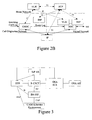
- FIG. 2A The functional architecture of a circuit switched domain that supports CAMEL in a WCDMA network is illustrated in Figure 2A .
- the CAMEL service is implemented through the collaboration of a CAMEL Application Part (CAP) and a Mobile Application Part (MAP).
- the CAP protocol is used for the interaction among the gsmSCF, the gsmSSF and the gsmSRF.
- the CAP protocol is defined based on the INAP, while the capability set it supported in CAMEL Phase 1 to Phase 3 is a subset of IN Capability Set 2 (IN CS2) with special parameters or messages for mobile communication.
- IN CS2 IN Capability Set 2
- CAMEL Phase 4 the definition of Call Party Handling (CPH) capability is introduced, and the call model is developed to be consistent with that of IN CS2.
- the MAP protocol is still used for supporting mobility-related features for users.
- ANSI 41D protocol Similarly, in order to support the IN services, a series of Wireless IN (WIN) protocols were defined by stages on the base of the signaling structure and signaling flow in the ANSI 41D protocol by the Telecommunications Industry Association / Electronics Industry Association (TIA /EIA) of ANSI according to the IN CS2.
- TIA /EIA Telecommunications Industry Association / Electronics Industry Association
- IS771 protocol was put forward in WIN Phase I, it defines technical requirements for WIN and provides services including a Calling Name Presentation (CNAP), a Voice Controlled Services (VCS) and an Incoming Call Screening (ICS); IS826 protocol was put forward in WIN Phase II, it provides WIN capability for Pre-Paid Charging (PPC); and IS848 protocol which is related to WIN Phase II was put forward in WIN Phase III, it mainly defines the services including a Rejection of Undesired Annoying Calls (RUAC), a Premium Rate Charging (PRC), a Freephone Service (FPH) and an Advice Of Charging (AOC). All the above protocols are finally integrated into ANSI 41 E Protocol, which makes the ANSI 41 E Protocol be a core network protocol totally based on the IN.
- CNAP Calling Name Presentation
- VCS Voice Controlled Services
- ICS Incoming Call Screening
- PPC Pre-Paid Charging
- IS848 protocol which is related to WIN Phase II was put forward in WIN Phase
- Both the CDMA ANSI-41 wireless IN and the GSM / WCDMA CAMEL mobile IN are derived from the fixed IN, therefore their system architectures are basically identical to that of the fixed IN: the intelligent layer is separated from the switching layer; service control is accomplished by the intelligent layer; the network includes the SSP (named as the gsmSSF in CAMEL architecture), the SCP (named as the gsmSCF in CAMEL architecture), the IP (named as the gsmSRF in CAMEL architecture), a Service Management System (SMS), a Service Creation Environment (SCE), etc; the functions of their functional entities are identical or similar although the service logics created and executed may be different.
- SSP named as the gsmSSF in CAMEL architecture
- SCP named as the gsmSCF in CAMEL architecture
- IP named as the gsmSRF in CAMEL architecture
- SMS Service Management System
- SCE Service Creation Environment
- the IMS which adopts the IP packet switched domain as the bearer channel for its control signaling and media transmission, and adopts Session Initiation Protocol (SIP) as call control signaling, is introduced as an objective network of the WCDMA mobile network for implementing packet switched voice and packet switched data services and for providing uniform multimedia services and applications.
- SIP Session Initiation Protocol
- IP Multimedia (IM) value-added services are provided for IMS subscribers through various Application Servers (ASs), including an SIP AS, an Open Service Access Service Capability Server (OSA SCS) and an IP Multimedia Service Switching Function (IM-SSF), where, the IM-SSF provides mapping between the SIP protocol in the IMS and the CAP protocol in the circuit switched domain, and the SSP triggering capability, which enables IMS domain subscribers, e.g., subscribers of VoIP service, to seamlessly inherit the intelligent services provided in the WCDMA circuit switched domain.
- ASs Application Servers
- SIP AS Open Service Access Service Capability Server
- IMSSF IP Multimedia Service Switching Function
- FIG. 3 is a schematic diagram illustrating the IM-SSF interfaces.
- the IM-SSF supports three interfaces: a CAP interface, an ISC interface and an Si interface, where, the CAP interface is used for the interaction between the IM-SSF and the CAMEL Service Environment including the gsmSCF enabling the service control of the gsmSCF, and the ISC interface is used for the interaction between the IVI-SSF and a Serving-Call Session Control Function (S-CSCF) enabling the service control of IP multimedia sessions.
- S-CSCF Serving-Call Session Control Function
- the gsmSCF can finally perform corresponding control according to inside intelligent service logic through the IM-SSF over the IP multimedia sessions which are transmitted through the S-CSCF; and the Si interface between the IM-SSF and a Home Subscriber Server (HSS) is based on the MAP, and is used for downloading and updating CAMEL subscription data from the HSS.
- HSS Home Subscriber Server
- the foregoing technology in the prior art enables the IMS subscribers to seamlessly inherit the intelligent services of the WCDMA circuit switched domain through the mapping between the IMS SIP and the CAP protocol in the circuit switched domain and the SSP triggering capability provided by the IM-SSF.
- the intelligent platform of the fixed IN is based on the IN CS2 definition
- the intelligent services due to the limitation of fixed network call control flow, the intelligent services usually can only be triggered by special numbers or prefixes dialed by the subscribers or by special attribute identifiers in the subscriber data separately stored in multiple exchangers.
- This kind of triggering method is limited by the capability of the network entity which is used to save the subscriber data, and lacks of standards, in addition, the single triggering mechanism also affects the service experiences of the subscribers.
- the limitation in the triggering mechanism influences, to some extent, the development of the intelligent services in the fixed IN.
- the major cause of the problem is that the IM-SSF provides only the mapping between the SIP of the IMS and the CAP protocol in the WCDMA circuit switched domain, but the protocols used between the SCP and the SSP in the fixed IN and the ANSI-41 WIN intelligent platform are the INAP and the ANSI-41 MAP protocol respectively.
- the CAP protocol is based on the INAP, they are different after all, and the difference between the CAP protocol and the ANSI-41 MAP protocol is even more obvious.
- Different interface protocols make the IM-SSF unable to trigger the intelligent services of the fixed IN and / or the ANSI-41 WIN, or of other intelligent platforms which adopt intelligent control protocol other than the CAP protocol.
- WO 00/78058 A1 relates to triggering an intelligent network service controlling a basic call state model at a switching point and especially in a situation where an intelligent network service has already been triggered before said triggering.
- the invention is disclosed in independent method claim 1 and independent system claim 11.
- the present invention provides a method and system for providing a subscriber with an intelligent service, which provides the subscriber in the IP Multimedia Subsystem (IMS) domain with special services of intelligent platforms which adopt intelligent control protocol other than Customized Application for Mobile network Enhanced Logic (CAMEL) Application Part (CAP) protocol in interaction, and convergent services controlled by various intelligent platforms jointly, and may entertain the subscriber with richer service experiences and improve the operation and development of the IMS network.
- IMS IP Multimedia Subsystem
- CAMEL Customized Application for Mobile network Enhanced Logic
- CAP Application Part
- a method for providing a subscriber of an Internet Protocol (IP) Multimedia Subsystem (IMS) with an intelligent service wherein, the IMS includes an IP Multimedia Service Switching Function (IM-SSF) entity supports a Customized Application for Mobile network Enhanced Logic, CAMEL, Application Part, CAP, protocol, and an additional intelligent control protocol other than the CAP, the method includes:
- IP Internet Protocol
- IMSSF IP Multimedia Service Switching Function
- a system for providing a subscriber with an intelligent service including:
- the IM-SSF which supports the intelligent control protocol other than the CAP protocol and CAP protocol is introduced into the IMS, and the IM-SSF perform the selection of intelligent control protocol according to the obtained subscription information, and triggers the intelligent services to the SCF of the corresponding intelligent platform through the selected the intelligent control protocol.
- the subscription information can be pre-configured in the IM-SSF, or downloaded from the HSS by the IM-SSF when a subscriber registers or a service request related to a subscriber is handled, e.g., when a request of registration or session establishment correlative with the served subscriber is received by the IM-SSF.
- the IM-SSF is an independent entity that supports one or multiple intelligent control protocols other than the CAP protocol, or an entity supports the CAP protocol and another intelligent control protocol at the same time, or an entity supports the CAP protocol and multiple other intelligent control protocols at the same time.
- the IM-SSF When the IM-SSF supports multiple protocols including the CAP protocol and one or more other intelligent control protocols, or supports multiple intelligent control protocols other than the CAP protocol at the same time, it selectively use one of the supported intelligent control protocols to trigger relevant intelligent services of corresponding intelligent platform according to extended subscription information type, or according to protocol settings corresponding to the service keys or SCF addresses in the subscription information, or according to global protocol settings.
- the IM-SSF can support the intelligent control protocol other than the CAP protocol directly, or through a signaling conversion gateway between the CAP protocol and other intelligent control protocols.
- the present invention provides a solution for the cooperation between the IMS services and the intelligent platforms adopting the intelligent control protocol other than the CAP protocol, e.g., the intelligent platform of the fixed IN and / or the ANSI-41 WIN intelligent platform.
- the solution enables the IMS domain subscribers to obtain not only the GSM / WCDMA CAMEL mobile intelligent services, but also special services provided by the intelligent platforms which adopt intelligent control protocol other than the CAP protocol, such as the fixed IN and / or the ANSI-41 WIN intelligent platform, or convergent services controlled by various intelligent platforms jointly.
- the embodiments of the present invention extends the function of a network element IM-SSF, enables the IM-SSF to support, cither directly or through a gateway, mapping between the SIP and the intelligent control protocol other than the CAP protocol; after function extension, the IM-SSF can support either one intelligent control protocol other than the CAP protocol, or multiple protocols, e.g., multiple intelligent control protocols other than the CAP protocol, or the CAP protocol and another intelligent control protocol, or the CAP protocol and multiple intelligent control protocols.
- the embodiments of the present invention also offer a method for protocol selection for the IM-SSF which supports multiple intelligent protocols, in which the protocols are selected according to extended intelligent service subscription information types, or protocol settings in the IM-SSF for service keys or SCF addresses in the intelligent service subscription information, or global protocol settings in the IM-SSF, so that the IM-SSF can trigger corresponding intelligent services.
- the intelligent control protocols other than the CAP protocol include: the INAP, the ANSI-41 MAP protocol, various CoreINAPs defined by adding different extensions on the base of the INAP (e.g., the CoreINAP compiled by European Telecommunications Standards Institute [ETSI] Technical Committee on Signaling Protocol & Switch Technology in October 1994, the CoreINAP defined by Ericsson, Siemens , etc., by defining their private extensions), or any combination of the above.
- ETSI European Telecommunications Standards Institute
- the present invention is described hereinafter in the aspects of function extension patterns, network element organization forms and protocol selection methods, with reference to an example in which the IM-SSF is able to support the INAP and / or the ANSI-41 MAP protocol.
- the IM-SSF can extend functions to support the INAP and / or the ANSI-41 MAP protocol in two ways.
- the first function extension pattern is extending the local support capability of the IM-SSF: the IM-SSF directly maps multiple SIP messages to multiple Detection Points (DPs) in a Basic Call State Model (BCSM) defined by the INAP and / or the ANSI-41 WIN criteria, and supports the interface to the SCF of the corresponding intelligent platform; under the control of the SCF of the corresponding intelligent platform, the IM-SSF performs the service control over the SIP session triggered by the S-CSCF through the ISC interface.
- BCSM Basic Call State Model
- the CAP protocol is defined on the base of the INAP, in another word, the CAP protocol is similar to the INAP with basically the same definitions on the DPs, and the IM-SSF can support the mapping between the SIP and the CAP in the prior art, therefore, it is easy to be understood that the IM-SSF can directly support the INAP after the above function extension.
- T-BCSM Terminating BCSM
- the CDMA ANSI-41 WIN only defines 5 DPs for triggering the service control: the DPs of a Facility_Selected_and_Available, a Terminating_Answer (T_Answer), a Terminating_Disconnect (T_Disconnect), a Terminating_Busy (T_Busy) and a Terminating_No_Answer (T_No_Answer).
- Every DP in the CDMA ANSI-41 WIN has many triggers, which means a DP is valid only when the DP is equipped with the trigger.
- One DP can be equipped with more than one triggers, which enables the DP to detect various events and send messages to the SCF for many times.
- a DP does not have triggers, and each DP is an estimation condition. Therefore in such situation the IM-SSF which has upgraded to support the ANSI-41 MAP protocol can be further enhanced to support estimation on the special triggers in the CDMA ANSI-41 WIN.
- the second function extension pattern is adopting a signaling conversion gateway which performs the protocol conversion between the CAP protocol and the INAP, and/or between the CAP protocol and the ANSI-41 MAP protocol: the IM-SSF accomplishes the mapping of multiple SIP messages to multiple CAMEL DPs and supports the CAP interface between itself and the gsmSCF, completes the mapping of the CAP protocol to the INAP and / or the ANSI-41 MAP protocol through the corresponding signaling conversion gateway which is logically independent, interacts with the SCF of the corresponding intelligent platform through the gateway, and further achieves the service control over the SIP session triggered by the S-CSCF through the ISC interface under the control of the SCF.
- the gateway can be implemented internally or externally.
- the triggering of the DP is performed exactly according to the GSM / WCDMA CAMEL criteria, therefore only the corresponding triggering capability is provided.
- redundant messages can further be blocked in the gateway.
- the IM-SSF can extend functions to support the INAP and / or the ANSI-41 MAP protocol through either of the two patterns described above without influencing the essence and scope or the present invention.
- the first organization form is combining the IM-SSF which supports interaction with the fixed IN and / or the ANSI-41 WIN intelligent platform and the original IM-SSF which supports interaction with the GSM / WCDMA CAMEL mobile intelligent platform in the IMS network, that is to say, adding the function that supports interaction with the fixed IN and / or the ANSI-41 WIN intelligent platform into the original IM-SSF which supports interaction with the GSM / WCDMA CAMEL mobile intelligent platform, which means, putting two functions in one entity. Then there is a problem of protocol selection for an entity which has at least two protocol functions, which will be described in detail later.
- the SIP message matches an iFC
- the SIP message will be routed to the corresponding AS, and the message can be terminated or modified by the AS and may be returned after the AS finishes processing; if the SIP message does not match an iFC or is returned by the AS, the S-CSCF will match the SIP message with the next iFC in the descending priority sequence and perform the service triggering. If the next iFC also fails to match the SIP message, or the message is returned again by the AS after the triggering, then the S-CSCF will turn to the third iFC in the descending priority sequence and perform the service triggering, and the rest can be deducted by analogy. In this way the service can be triggered to multiple ASs from one node and is controlled in sequence.
- the above method in which the IM-SSF can trigger the intelligent services to the fixed SCP based on the CSI so as to achieve a per-subscription-based and flexible triggering mechanism for the fixed IN, and thus enrich the intelligent service triggering methods in the fixed IN.
- the second protocol selection method is to select the protocols according to the service keys in three existing types of the CSI (the O IM CSI, the D IM CSI and the VT IM CSI). To do so, a match relationship between a specific service key in the CSI and an interface protocol is preset in the IM-SSF which supports two or more protocols.
- the IM-SSF selects a protocol for the interface to the SCF according to the specific service key in the CSI and its local settings of such service key, and further triggers the services to the SCF of the fixed IN and / or the ANSI-41 WIN.
- the HSS and the Si interface are implemented completely according to 3rd Generation Partnership Project (3GPP) standards without any extra extension
- 3GPP 3rd Generation Partnership Project
- the HSS and the Si interface does not need to be extended even if the subscription information needs to be downloaded from the HSS; but the IM-SSF needs extra configuration data to select the protocol for the interface to the SCF according to the specific information in the CSI.
- the third protocol selection method is to select the protocols according to the SCF address in the IM-SSF. To do so, configuration data of the match relationships between the SCF addresses and the interface protocols are added to the IM-SSF which supports two or more protocols.
- the IM-SSF selects the protocol for the interface to the SCF according to the SCF address designated by the original three types of CSIs and its local settings of such SCF address in the IM-SSF, and further triggers the services to the SCF of the fixed IN and / or the ANSI-41 WIN.
- the fourth protocol selection method is to select the protocol through the IM-SSF global settings.
- the global settings are made in the IM-SSF which supports two or more protocols, making the IM-SSF support only one protocol among the protocols it has capability to support in a certain period of time.
- the HSS and the Si interface also can be implemented completely according to the 3GPP standards, and the IM-SSF selects the protocol for the interface to the SCF according to the global settings only.
- the difference between this method and the second and third methods is that the settings are independent from any specific information in the CSI in this method.
- the IM-SSF also supports the CPH capability of the CAP protocol, the INAP and / or the ANSI-41 MAP protocol and maps the intelligent service control process belongs to the CPH capability to corresponding SIP session control process, and thus to achieve richer service control in cooperation with the SCF of the fixed IN and / or the ANSI-41 WIN.
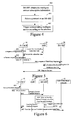
- the working procedure of the IM-SSF platform that is able to trigger the intelligent services of the fixed IN and / or the ANSI-41 WIN can be divided into three parts, which are shown in Figure 4 .
- the IM-SSF obtains the CSI.
- the CSI can be set in the IM-SSF in advance or be downloaded from the HSS, for example, when a subscriber registers or a subscriber service request is handled, the IM-SSF downloads the subscription information of the subscriber upon receiving a request of registration or session establishment correlative with the served subscriber.
- the process in which the IM-SSF downloads the CSI from the HSS is described in details with reference to Figure 5 .
- the protocol or the IM-SSF is selected in Step 401.
- the selection process is distinguished according to different organization forms. If the first organization form is adopted by the platform, in which an IM-SSF supports two or more protocols among the INAP and / or the ANSI-41 MAP protocol and the CAP protocol, the protocol selection should be performed in such an IM-SSF, and the detailed selection procedure is shown in Figure 6 and Figure 7 ; if the second organization form is adopted by the platform, in which different IM-SSFs support different protocols, e.g., as to the two IM-SSFs in the embodiment of the present invention shown in Figure 8 , IM-SSF (1) supports the INAP and / or the ANSI-41 MAP protocol, IM-SSF (2) supports the CAP protocol, an IM-SSF selection is needed. The detailed procedure of the IM-SSF selection is shown in Figure 8 .
- the intelligent service is triggered in Step 402 based on the result of the selection process.
- the technique through which the IM-SSF triggers the service to the GSM / WCDMA CAMEL mobile intelligent platform is in the prior art, therefore the following embodiments of the present invention show only the intelligent service triggering to the fixed IN and / or the ANSI-41 WIN.
- the two methods are related to the function extension pattern of the IM-SSF to support the intelligent service control protocol other than the CAP.
- the IM-SSF directly interacts with the SCP of the fixed IN and / or the ANSI-41 WIN, and the procedure of this pattern is shown in Figure 6 ;
- the second function extension pattern in which the IM-SSF supports the INAP and / or the ANSI-41 MAP protocol through a signaling conversion gateway performing signaling conversion between the CAP protocol and the INAP, and / or between the CAP protocol and the ANSI-41 WIN, the IM-SSF interacts with the SCP of the fixed IN and / or the ANSI-41 WIN through the above mentioned gateway, and the procedure of this pattern is shown in Figure 7 .
- the IM-SSF sends a download request to the HSS for the intelligent service subscription information of the subscriber when it receives from the S-CSCF a request of the Third Party Registration which is initiated based on the iFC evaluation after the subscriber's register is handled, and then the IM-SSF returns a success message to the S-CSCF.
- the detailed steps are described below:
- S-CSCF 10 runs an iFC evaluation on the subscriber data downloaded in Step 505. After that, in Step 506, S-CSCF 10 sends a request of Third Party Registration to the IM-SSF 30 according to the iFC evaluation result.
- IM-SSF 30 Upon obtaining the CSI, IM-SSF 30 returns a success response to S-CSCF 10 in Step 509.
- the above process can be omitted.
- the IM-SSF downloads the intelligent service subscription information upon receiving the request of the Third Party Registration initiated by the S-CSCF.
- the IM-SSF can also perform Step 507 and Step 508 to download the intelligent service subscription information upon receiving the session establish request correlative with the served subscriber.
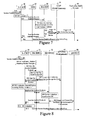
- Figure 6 illustrates the process in which the IM-SSF supports the INAP directly
- Figure 7 illustrates the process in which the IM-SSF supports the INAP through the CAP protocol / the INAP gateway.
- Step 601 the first step of the process is Step 601, in which S-CSCF 10 receives a request of session establishment correlative with the served subscriber. Then S-CSCF 10 runs the iFC evaluation on the subscriber data in Step 602. After that, in Step 603, S-CSCF 10 forwards the session establish request to IM-SSF 30 according to the iFC evaluation result.
- IM-SSF 30 Upon receiving the session establish request, IM-SSF 30 proceeds to Step 604, to select the interface protocol for the intelligent service triggering through one of the four protocol selection methods according to the CSI pre-configured in the IM-SSF or downloaded from the HSS.
- IM-SSF 30 can also download the CSI after the request is received before Step 604.
- the IM-SSF Upon selecting the protocol, the IM-SSF interacts with the corresponding SCF.
- the embodiment here only shows the interaction between the IM-SSF and the fixed IN SCF 40.
- IM-SSF 30 interacts with fixed IN SCF 40 through the INAP to trigger and control the intelligent service.
- IM-SSF 30 continues with the following procedures according to the response from fixed IN SCF 40, i.e., the result of service control according to intelligent service logic; that is to say, IM-SSF 30 returns to S-CSCF 10 the session establish request which is modified according to the service logic, and thus realizing the control of the intelligent service.
- S-CSCF 10 continues to send the session establish request to the called party.
- Step 701 The first step of the procedure is Step 701, in which S-CSCF 10 receives a session establish request. Then S-CSCF 10 runs the iFC evaluation on the subscriber data in Step 702. After that, in Step 703, S-CSCF 10 forwards the session establish request to IM-SSF 30 according to the iFC evaluation result.
- IM-SSF 30 can also download the CSI after the request is received before Step 704.
- IM-SSF 30 sends a service trigger message to CAP protocol / INAP Gateway 50 through the CAP protocol in Step 705.
- CAP protocol / INAP Gateway 50 performs interaction such as service triggering and service controlling with fixed IN SCF 40 through the INAP in Step 706.
- Step 707 CAP protocol / INAP Gateway 50 returns a service control message to IM-SSF 30 through the CAP protocol.
- Step 708 IM-SSF 30 continues with the following procedures according to the service control result, that is to say, IM-SSF 30 returns to S-CSCF 10 the session establish request which is modified according to the service logic, and thus realizing the control of the intelligent service.
- S-CSCF 10 continues to send the session establish request to the called party.
- the IM-SSF selection process is needed.
- the S-CSCF sends the SIP session establish request to an IM-SSF selected according to the iFC evaluation result, or to several IM-SSFs in sequence.
- the IM-SSF selection process in which there are only two IM-SSFs that support the INAP and the CAP protocol respectively is described hereinafter.
- S-CSCF 10 sends the SIP session establish request to the selected one of the two IM-SSFs according to the iFC evaluation result, or to both the IM-SSFs in sequence.
- the flow in which the request is sent to two IM-SSFs in sequence is shown in Figure 8 .
- Step 801 S-CSCF 10 receives the session establish request. Then in Step 802, S-CSCF 10 runs the iFC evaluation according to the priorities of the iFCs in a descending order. Then as a result of successfully matching of the iFC1 with the highest priority, S-CSCF 10 forwards the session establish request to IM-SSF (1) 31 which supports interaction with the intelligent platform of the fixed IN.
- IM-SSF (1) 31 Upon receiving the request, IM-SSF (1) 31 proceeds to Step 804, to run the CSI evaluation and the triggering of the intelligent service according to the CSI pre-configured in the IM-SSF or downloaded from the HSS.
- Step 805 IM-SSF (1) 31 interacts with fixed IN SCF 40 through the INAP to trigger and control the intelligent service.
- Step 806 IM-SSF (1) 31 continues with the following procedures according to the service control result of fixed IN SCF 40, and in this embodiment particularly, IM-SSF (1) 31 returns to S-CSCF 10 the session establish request which is modified according to the service logic, and thus realizing the control of the intelligent service on the fixed IN.
- IM-SSF (2) 32 upon receiving the request, IM-SSF (2) 32 proceeds to Step 809, to run the CSI evaluation and the triggering of the intelligent service according to the CSI pre-configured in the IM-SSF or downloaded from the HSS.
- Step 810 IM-SSF (2) 32 interacts with gsmSCF 60 through the CAP protocol to trigger and control the intelligent service.
- Step 811 IM-SSF (2) 32 continues with the following process according to the service control result of gsmSCF 60, and in this embodiment particularly, IM-SSF (2) 32 returns to S-CSCF 10 the session establish request which is modified according to the service logic, and thus realizing the control of the GSM /WCDMA CAMEL mobile intelligent service.
- the IM-SSF has obtained the CSI when the service request is received, either through pre-configuring in the IM-SSF in advance or through downloading during the subscriber registration.
- the CSI is not pre-configured in the IM-SSF or downloaded by IM-SSF (1) 31 and / or IM-SSF (2) 32 during the subscriber registration, IM-SSF (1) 31 and / or IM-SSF (2) 32 can also download the CSI upon receiving the service request from the S-CSCF respectively before the next step (Step 805 and Step 810 respectively).
- the architecture of the system which provides the intelligent services for the subscribers according to the embodiments of the present invention is illustrated in Figure 9A, Figure 9B and Figure 9C .
- the system includes a home IMS of the subscriber and the intelligent platforms of the fixed IN and / or the ANSI-41 WIN.
Landscapes
- Engineering & Computer Science (AREA)
- Multimedia (AREA)
- Computer Networks & Wireless Communication (AREA)
- Signal Processing (AREA)
- Business, Economics & Management (AREA)
- General Business, Economics & Management (AREA)
- Mobile Radio Communication Systems (AREA)
- Telephonic Communication Services (AREA)
- Financial Or Insurance-Related Operations Such As Payment And Settlement (AREA)
Claims (16)
- Verfahren zum Bereitstellen eines intelligenten Dienstes für einen Teilnehmer eines Internet Protocol bzw. IP Multimedia Subsystem bzw. IMS, wobei das IMS eine Entität der IP Multimedia Service Switching Function IM-SSF umfasst, wobei die IM-SSF ein Protokoll des Customized Application for Mobile Network Enhanced Logic bzw. CAMEL Application Part bzw. CAP und ein von dem CAP verschiedenes zusätzliches intelligentes Steuerprotokoll unterstützt, wobei das Verfahren die folgenden Schritte umfasst:nach dem Empfang einer den Teilnehmer betreffenden Sitzungsherstellungsanforderung wählt die IM-SSF ein intelligentes Steuerprotokoll aus;die IM-SSF triggert den intelligenten Dienst bei einer Entität der Service Control Function bzw. SCF einer entsprechenden intelligenten Plattform durch das ausgewählte intelligente Steuerprotokoll, wenn das ausgewählte intelligente Steuerprotokoll das durch die IM-SSF unterstützte, von dem CAP-Protokoll verschiedene intelligente Steuerprotokoll ist;dadurch gekennzeichnet, dass
das Verfahren zur Auswahl eines intelligenten Steuerprotokolls eines der folgenden ist:Auswählen eines intelligenten Steuerprotokolls gemäß einem erweiterten Typ der CAMEL Subscription Information bzw. CSI, der einer das von dem CAP-Protokoll verschiedene intelligente Steuerprotokoll unterstützenden SCF dediziert definiert ist, durch Ausführen einer vergleichenden Evaluierung des erweiterten CSI-Typs in einem Detection Point bzw. DP; oderAuswählen eines intelligenten Steuerprotokolls gemäß einem Dienstschlüssel in einer Standard-CSI einhergehend mit einer Übereinstimmungsbeziehung zwischen dem Dienstschlüssel und dem im Voraus in der IM-SSF konfigurierten intelligenten Steuerprotokoll; oderAuswählen eines intelligenten Steuerprotokolls gemäß einer SCF-Adresse in einer Standard-CSI einhergehend mit einer Übereinstimmungsbeziehung zwischen der SCF-Adresse und dem im Voraus in der IM-SSF konfigurierten intelligenten Steuerprotokoll; oderAuswählen eines intelligenten Steuerprotokolls gemäß den Einstellungen in der IM-SSF, dass in einem Zeitraum nur ein Protokoll unterstützt wird. - Verfahren nach Anspruch 1, wobei die CSI in der IM-SSF vorkonfiguriert ist oder aus einem Home Subscriber Server HSS des Teilnehmers durch die IM-SSF heruntergeladen wird, wenn sich der Teilnehmer registriert oder wenn die den Teilnehmer betreffende Sitzungsherstellungsanforderung empfangen wird.
- Verfahren nach Anspruch 1, wobei die Unterstützung der IM-SSF gegenüber dem von dem CAP-Protokoll verschiedenen intelligenten Steuerprotokoll Folgendes umfasst:die IM-SSF bildet direkt ein Session Initiation Protocol SIP auf einen Detection Point DP ab, der in dem von dem CAP-Protokoll verschiedenen intelligenten Steuerprotokoll definiert ist, die Schnittstelle zu der SCF der entsprechenden intelligenten Plattform wird unterstützt, und die Dienstkontrolle über die SIP-Sitzung unter der Kontrolle der SCF wird erzielt;oder die Unterstützung der IM-SSF gegenüber dem von dem CAP-Protokoll verschiedenen intelligenten Steuerprotokoll Folgendes umfasst:die IM-SSF bildet das SIP auf einen in dem CAP definierten DP ab, die CAP-Schnittstelle zu einer mobilen SCF wird unterstützt, die Abbildung zwischen der CAP-Schnittstelle und einer Schnittstelle des von dem CAP-Protokoll verschiedenen intelligenten Steuerprotokolls wird durch ein Signalisierungsumsetzungs-Gateway implementiert und die Dienstkontrolle über die SIP-Sitzung wird durch das Signalisierungsumsetzungs-Gateway unter der Kontrolle der SCF der entsprechenden intelligenten Plattform erzielt.
- Verfahren nach Anspruch 1, wobei
das Auswählen eines intelligenten Steuerprotokolls durch die IM-SSF Folgendes umfasst: die IM-SSF wählt aus den Protokollen, die das CAP-Protokoll und von dem CAP-Protokoll verschiedene intelligente Steuerprotokolle umfassen, ein Protokoll aus oder die IM-SSF wählt aus mindestens zwei von dem CAP-Protokoll verschiedenen intelligenten Steuerprotokollen ein Protokoll aus. - Verfahren nach Anspruch 1, wobei, wenn das Verfahren zur Auswahl eines intelligenten Steuerprotokolls gemäß dem erweiterten CSI-Typ ein intelligentes Steuerprotokoll auswählt, der erweiterte CSI-Typ mindestens eine der folgenden Alternativen umfasst:eine Session Originating CSI des Intelligent Network Application Protocol INAP des IMS, eine Dialed Service CSI des IMS INAP und eine Terminating CSI des Visited Mobile Switch Center VMSC des IMS INAP.
- Verfahren nach Anspruch 1, wobei, wenn das Verfahren zur Auswahl eines intelligenten Steuerprotokolls gemäß dem erweiterten CSI-Typ ein intelligentes Steuerprotokoll auswählt, der erweiterte CSI-Typ mindestens eine der folgenden Alternativen umfasst: eine Originating CSI des IMS American National Standard Institute-41 bzw. ANSI-41, eine Dialed Service CSI des IMS ANSI-41 und eine Terminating CSI des IMS ANSI-41 VMSC.
- Verfahren nach Anspruch 1, wobei, wenn das Verfahren zur Auswahl eines intelligenten Steuerprotokolls gemäß dem erweiterten CSI-Typ ein intelligentes Steuerprotokoll auswählt, der zur Evaluierung des erweiterten CSI-Typs verwendete DP mindestens eine der folgenden Alternativen umfasst: einen DP collected_information, einen DP analysed_information, einen DP Route_Select_Failure, ein Terminating_Attempt_Authorised, einen DP Terminating_Busy, DP T_Busy und einen DP Terminating_No_Answer, DP T_No_Answer.
- Verfahren nach Anspruch 1, wobei die IM-SSF eine in dem CAP-Protokoll und anderen intelligenten Steuerprotokollen definierte Fähigkeit des Call Party Handling CPH unterstützt und den zu der CPH-Fähigkeit gehörenden intelligenten Dienststeuerprozess auf den entsprechenden SIP-Sitzungssteuerprozess abbildet.
- Verfahren nach Anspruch 1, wobei das von dem CAP-Protokoll verschiedene intelligente Steuerprotokoll mindestens eine der folgenden Alternativen umfasst:das in der intelligenten Plattform des festen IN angewandte INAP, das in der intelligenten Plattform des ANSI-41 WIN angewandte Protokoll des ANSI-41 MAP und das durch Hinzufügen verschiedener Erweiterungen auf der Basis des INAP definierte CoreINAP.
- Verfahren nach Anspruch 3, wobei der in dem von dem CAP-Protokoll verschiedenen intelligenten Steuerprotokoll definierte DP eine der folgenden Alternativen umfasst:den in dem INAP definierten DP und den in den Kriterien des ANSI-41 WIN definierten DP.
- System zum Bereitstellen eines intelligenten Dienstes für einen Teilnehmer, umfassend:ein Heimat-IMS bzw. Internet Protocol bzw. IP Multimedia Subsystem des Teilnehmers und eine intelligente Plattform, die ein intelligentes Steuerprotokoll verwendet, das von einem Protokoll des Customized Application for Mobile Network Enhanced Logic bzw. CAMEL Application Part bzw. CAP verschieden ist, wobei das IMS mindestens ein Auswahlmodul zum Auswählen eines intelligenten Steuerprotokolls beim Empfang einer den Teilnehmer betreffenden Sitzungsherstellungsanforderung umfasst;eine Entität der IP Multimedia Service Switching Function IM-SSF ein Protokoll des Customized Application for Mobile Network Enhanced Logic bzw. CAMEL Application Part bzw. CAP unterstützt, sowie ein von dem CAP verschiedenes zusätzliches intelligentes Steuerprotokoll zum Triggern des intelligenten Dienstes bei einer Service Control Function SCF einer entsprechenden intelligenten Plattform durch das ausgewählte intelligente Steuerprotokoll, wenn das von der IM-SSF unterstützte von dem CAP-Protokoll verschiedene intelligente Steuerprotokoll ausgewählt wird;dadurch gekennzeichnet, dass:die Auswahl eines intelligenten Steuerprotokolls durch eines der folgenden Mittel durchgeführt wird:ein Mittel zur Auswahl eines intelligenten Steuerprotokolls gemäß einem erweiterten Typ der CAMEL Subscription Information bzw. CSI, der einer das von dem CAP-Protokoll verschiedene intelligente Steuerprotokoll unterstützenden SCF dediziert definiert ist, durch Ausführen einer vergleichenden Evaluierung des erweiterten CSI-Typs in einem Detection Point bzw. DP; oderein Mittel zur Auswahl eines intelligenten Steuerprotokolls gemäß einem Dienstschlüssel in einer Standard-CSI einhergehend mit einer Übereinstimmungsbeziehung zwischen dem Dienstschlüssel und dem im Voraus in der IM-SSF konfigurierten intelligenten Steuerprotokoll; oderein Mittel zur Auswahl eines intelligenten Steuerprotokolls gemäß einer SCF-Adresse in einer Standard-CSI einhergehend mit einer Übereinstimmungsbeziehung zwischen der SCF-Adresse und dem im Voraus in der IM-SSF konfigurierten intelligenten Steuerprotokoll; oderein Mittel zur Auswahl eines intelligenten Steuerprotokolls gemäß den Einstellungen in der IM-SSF, dass in einem Zeitraum nur ein Protokoll unterstützt wird.
- System nach Anspruch 11, wobei die CSI in der IM-SSF vorkonfiguriert ist oder aus einem Home Subscriber Server HSS des Teilnehmers durch die IM-SSF heruntergeladen wird, wenn sich der Teilnehmer registriert oder wenn die den Teilnehmer betreffende Sitzungsherstellungsanforderung empfangen wird.
- System nach Anspruch 11, wobei die IM-SSF zum direkten Abbilden eines Session Initiation Protocol SIP auf einen in dem von dem CAP-Protokoll verschiedenen intelligenten Steuerprotokoll definierten DP und zum Unterstützen einer Schnittstelle zu der SCF der entsprechenden intelligenten Plattform, um die Dienstkontrolle über die SIP-Sitzung unter der Kontrolle der SCF zu erzielen, verwendet wird.
- System nach Anspruch 11, das ferner ein Signalisierungsumsetzungs-Gateway umfasst; wobei
die IM-SSF zum Abbilden des SIP auf einen in einem CAMEL-Kriterium definierten DP, zum Unterstützen der CAP-Schnittstelle zu einer mobilen SCF und zur Interaktion mit der SCF der entsprechenden intelligenten Plattform durch das Signalisierungsumsetzungs-Gateway verwendet wird, um so die Dienstkontrolle über die SIP-Sitzung unter der Kontrolle der SCF der entsprechenden intelligenten Plattform durch das Signalisierungsumsetzungs-Gateway zu erzielen;
das Signalisierungsumsetzungs-Gateway zum Implementieren einer bidirektionalen Abbildung zwischen dem CAP-Protokoll und dem von dem CAP-Protokoll verschiedenen intelligenten Steuerprotokoll verwendet wird. - System nach einem der Ansprüche 11 bis 14, wobei das von dem CAP-Protokoll verschiedene intelligente Steuerprotokoll mindestens eine der folgenden Alternativen umfasst:ein in der intelligenten Plattform eines festen IN angewandtes IN Application Protocol bzw. INAP, ein in der intelligenten Plattform des ANSI-41 WIN angewandtes Protokoll des American National Standard Institute-41 bzw. ANSI-41 Mobile Application Part bzw. MAP und ein durch Hinzufügen verschiedener Erweiterungen auf der Basis des INAP definiertes CoreINAP.
- System nach Anspruch 13, wobei der in dem von dem CAP-Protokoll verschiedenen intelligenten Steuerprotokoll definierte DP mindestens eine der folgenden Alternativen umfasst: den in dem INAP definierten DP und den in den Kriterien des ANSI-41 WIN definierten DP.
Applications Claiming Priority (2)
| Application Number | Priority Date | Filing Date | Title |
|---|---|---|---|
| CN200410094545.XA CN100488220C (zh) | 2004-11-08 | 2004-11-08 | 为用户提供固网智能业务的方法及其系统 |
| PCT/CN2005/001847 WO2006047958A1 (en) | 2004-11-08 | 2005-11-04 | A method and system for providing intelligent service for users |
Publications (3)
| Publication Number | Publication Date |
|---|---|
| EP1739919A1 EP1739919A1 (de) | 2007-01-03 |
| EP1739919A4 EP1739919A4 (de) | 2007-05-02 |
| EP1739919B1 true EP1739919B1 (de) | 2010-08-11 |
Family
ID=36318893
Family Applications (1)
| Application Number | Title | Priority Date | Filing Date |
|---|---|---|---|
| EP05806955A Expired - Lifetime EP1739919B1 (de) | 2004-11-08 | 2005-11-04 | Verfahren und system zum erbringen von intelligenten diensten für benutzer |
Country Status (6)
| Country | Link |
|---|---|
| US (1) | US8626158B2 (de) |
| EP (1) | EP1739919B1 (de) |
| CN (1) | CN100488220C (de) |
| AT (1) | ATE477658T1 (de) |
| DE (1) | DE602005022851D1 (de) |
| WO (1) | WO2006047958A1 (de) |
Cited By (1)
| Publication number | Priority date | Publication date | Assignee | Title |
|---|---|---|---|---|
| WO2011150846A1 (zh) * | 2010-08-19 | 2011-12-08 | 华为技术有限公司 | 数据同步的方法、装置及系统 |
Families Citing this family (25)
| Publication number | Priority date | Publication date | Assignee | Title |
|---|---|---|---|---|
| CN100488220C (zh) | 2004-11-08 | 2009-05-13 | 华为技术有限公司 | 为用户提供固网智能业务的方法及其系统 |
| GB0604537D0 (en) * | 2006-03-07 | 2006-04-12 | Ghost Telecom Ltd | Method and apparatus of interfacing and connecting a wireless device(s) and specific application server(s) for location update(s), in-and out-going call(s)... |
| ATE513418T1 (de) * | 2006-08-17 | 2011-07-15 | Comverse Ltd | Netz-interoperabilität |
| CN101146325B (zh) * | 2006-09-13 | 2010-07-07 | 华为技术有限公司 | 电路域网络获取ims域用户信息的方法及系统 |
| CN101155173B (zh) * | 2006-09-25 | 2011-11-09 | 华为技术有限公司 | 电路域感知ims域多媒体会话媒体信息的方法及系统 |
| ES2451499T3 (es) * | 2006-10-16 | 2014-03-27 | Motorola Mobility Llc | Sistema y procedimiento para proporcionar servicios combinados a partes anónimas que llaman |
| CN101001250B (zh) * | 2006-12-31 | 2010-10-27 | 华为技术有限公司 | 对业务服务器控制下的用户的触发方法 |
| CN100490566C (zh) * | 2007-01-23 | 2009-05-20 | 华为技术有限公司 | 下一代网络中进行智能业务开发的方法及装置 |
| US8489743B2 (en) * | 2007-02-06 | 2013-07-16 | Telefonaktiebolaget Lm Ericsson (Publ) | Method and apparatus for providing administrative registration |
| US8275372B2 (en) * | 2007-02-27 | 2012-09-25 | Roamware, Inc. | Method and system for providing CAMEL services to a home network's outbound roamer without need for CAMEL support or agreement |
| CN101267323B (zh) * | 2007-03-16 | 2010-12-29 | 中兴通讯股份有限公司 | 一种针对ims终端的refer消息扩展实现方法 |
| EP1973289B1 (de) * | 2007-03-23 | 2016-03-09 | Nokia Solutions and Networks GmbH & Co. KG | Verfahren zur bereitstellung von subskriptionen zu paketvermittelten netzen |
| KR100963960B1 (ko) | 2007-10-11 | 2010-06-17 | 주식회사 케이티 | 아이피 멀티미디어 서브시스템에서의 호 처리 방법 및시스템 |
| WO2009103317A1 (en) * | 2008-02-21 | 2009-08-27 | Telefonaktiebolaget Lm Ericsson (Publ) | Method of providing at least one value added service in the packet switched telecommunications network, and method of operating a service interface adapter, a service interface adapter for use in such method, a telecommunications network and a telecommunications service |
| CN101547266B (zh) * | 2008-03-29 | 2011-08-03 | 华为技术有限公司 | 一种提供智能业务的方法、系统及网关 |
| US9094411B2 (en) * | 2008-04-16 | 2015-07-28 | Alcatel Lucent | Mechanism to resume filter criteria at a specific point |
| US20100082972A1 (en) * | 2008-09-29 | 2010-04-01 | Benco David S | Method to allow targeted advertising on mobile phones while maintaining subscriber privacy |
| CN102131240B (zh) * | 2010-01-15 | 2014-12-17 | 中兴通讯股份有限公司 | 一种实现服务质量控制的方法及系统 |
| KR101220745B1 (ko) * | 2010-02-08 | 2013-01-18 | 이창근 | 온라인 정보매칭을 이용한 상거래 시스템 및 그 서비스 방법 |
| CN101867866B (zh) * | 2010-06-09 | 2015-04-01 | 中兴通讯股份有限公司 | 一种多智能业务嵌套触发的方法和系统 |
| CN103369494B (zh) * | 2010-12-30 | 2016-06-08 | 华为技术有限公司 | 一种业务控制方法及装置 |
| WO2013013726A1 (en) * | 2011-07-28 | 2013-01-31 | Telefonaktiebolaget L M Ericsson (Publ) | Inter-domain service provision |
| CN102404651B (zh) * | 2011-12-27 | 2014-12-03 | 中国电信股份有限公司 | 一种在ims网络上实现inap智能业务的方法及系统 |
| WO2014086433A1 (en) * | 2012-12-07 | 2014-06-12 | Telefonaktiebolaget L M Ericsson (Publ) | Default initial filter criteria |
| CN104660545B (zh) * | 2013-11-15 | 2018-06-05 | 华为技术有限公司 | 一种利用服务代理器传输信息的方法及服务代理器 |
Family Cites Families (12)
| Publication number | Priority date | Publication date | Assignee | Title |
|---|---|---|---|---|
| SE511796C2 (sv) * | 1997-02-13 | 1999-11-29 | Telia Ab | Integrerat IP- och IN-nät samt metod för att styra IP- tjänster med hjälp av det intelligenta nätet via en tjänstekopplingsnod |
| DE19832302B4 (de) * | 1998-07-17 | 2006-10-12 | Telefonaktiebolaget Lm Ericsson (Publ) | Dienstvermittlungsvorrichtung und Dienststeuervorrichtung für ein in einem Mobilnetz integriertes intelligentes Netzwerk |
| US6940847B1 (en) * | 1999-01-15 | 2005-09-06 | Telefonaktiebolaget Lm Ericsson (Publ) | System and method for providing access to service nodes from entities disposed in an integrated telecommunications network |
| FI108979B (fi) | 1999-06-14 | 2002-04-30 | Nokia Corp | Ohjaavan palvelun käynnistäminen |
| DE10059647B4 (de) * | 2000-12-01 | 2005-03-24 | Siemens Ag | Verfahren zum Versenden von Kurznachrichten von einem mobilen Endgerät und Verfahren zum Empfangen von Kurznachrichten von einem mobilen Endgerät jeweils in einem Mobilfunknetz |
| CN1167285C (zh) | 2001-09-19 | 2004-09-15 | 华为技术有限公司 | 基于移动智能业务实现移动网一号多机业务的方法 |
| US20040242226A1 (en) * | 2001-10-10 | 2004-12-02 | Jan Bot | Method and computer program for accessing an intelligent network service |
| AU2002224990A1 (en) * | 2002-01-10 | 2003-07-24 | Nokia Corporation | Method and system for proxying a message |
| US7027577B2 (en) * | 2002-08-26 | 2006-04-11 | Telefonaktiebolaget Lm Ericsson (Publ) | Method and system for multi-party call conferencing |
| CN1283088C (zh) | 2002-12-06 | 2006-11-01 | 华为技术有限公司 | 在智能网中实现cph功能的方法 |
| CN100488220C (zh) | 2004-11-08 | 2009-05-13 | 华为技术有限公司 | 为用户提供固网智能业务的方法及其系统 |
| US20070100981A1 (en) * | 2005-04-08 | 2007-05-03 | Maria Adamczyk | Application services infrastructure for next generation networks including one or more IP multimedia subsystem elements and methods of providing the same |
-
2004
- 2004-11-08 CN CN200410094545.XA patent/CN100488220C/zh not_active Expired - Fee Related
-
2005
- 2005-11-04 EP EP05806955A patent/EP1739919B1/de not_active Expired - Lifetime
- 2005-11-04 DE DE602005022851T patent/DE602005022851D1/de not_active Expired - Lifetime
- 2005-11-04 AT AT05806955T patent/ATE477658T1/de not_active IP Right Cessation
- 2005-11-04 WO PCT/CN2005/001847 patent/WO2006047958A1/zh not_active Ceased
-
2006
- 2006-11-14 US US11/599,038 patent/US8626158B2/en active Active
Cited By (1)
| Publication number | Priority date | Publication date | Assignee | Title |
|---|---|---|---|---|
| WO2011150846A1 (zh) * | 2010-08-19 | 2011-12-08 | 华为技术有限公司 | 数据同步的方法、装置及系统 |
Also Published As
| Publication number | Publication date |
|---|---|
| EP1739919A1 (de) | 2007-01-03 |
| US20070133782A1 (en) | 2007-06-14 |
| WO2006047958A1 (en) | 2006-05-11 |
| US8626158B2 (en) | 2014-01-07 |
| EP1739919A4 (de) | 2007-05-02 |
| DE602005022851D1 (de) | 2010-09-23 |
| CN100488220C (zh) | 2009-05-13 |
| CN1774015A (zh) | 2006-05-17 |
| ATE477658T1 (de) | 2010-08-15 |
Similar Documents
| Publication | Publication Date | Title |
|---|---|---|
| EP1739919B1 (de) | Verfahren und system zum erbringen von intelligenten diensten für benutzer | |
| CN100372342C (zh) | 通过分组域为电路域用户提供业务的方法 | |
| CN103763446B (zh) | 使用既有设备的ims网络接入 | |
| CN100531194C (zh) | 分组域业务信号处理系统及其方法 | |
| US8392582B2 (en) | Method and apparatuses for making use of virtual IMS subscriptions coupled with the identity of a non SIP compliant terminal for non-registered subscribers | |
| US20080039104A1 (en) | Method and system for routing control | |
| US20080112395A1 (en) | Method for voice service based on service trigger, and method and system for routing control of voice service based on service trigger | |
| EP2250782B1 (de) | Verfahren zur bereitstellung mindestens eines mehrwertdienstes im paketvermittelten telekommunikationsnetz. | |
| EP2020138A1 (de) | Nummernportabilität für ein ims-netz | |
| CA2672922C (en) | Scp-controlled overlay between gsm and ims | |
| US20020150079A1 (en) | Method and system for distributing and executing service logic | |
| EP2716001B1 (de) | Routen von anrufen in ip-multimedia-subsystem netzwerken für zentralisierte dienste | |
| EP2068517A1 (de) | Verfahren und system zur ausführung von simulationsdiensten, verfahren zur ausführung von vernetzung und einheit zur kontrolle der vernetzung | |
| CN102404233B (zh) | 一种控制ims用户路由查询的方法以及ims网络 | |
| EP1377083B1 (de) | Aufteilung von Netzwerkinformationen | |
| CN101729687A (zh) | 一种呼叫属性判断方法、设备和系统 | |
| CN101431746B (zh) | 预付费业务的计费方法及系统、触发路由改向的通信设备 | |
| Tompros et al. | Provision of Unified IN Functionality in the Context of IMS | |
| US20120287824A1 (en) | Enabling execution of intelligent network services | |
| CN101217604A (zh) | 分组域业务信号处理系统及其方法 |
Legal Events
| Date | Code | Title | Description |
|---|---|---|---|
| PUAI | Public reference made under article 153(3) epc to a published international application that has entered the european phase |
Free format text: ORIGINAL CODE: 0009012 |
|
| 17P | Request for examination filed |
Effective date: 20061115 |
|
| AK | Designated contracting states |
Kind code of ref document: A1 Designated state(s): AT BE BG CH CY CZ DE DK EE ES FI FR GB GR HU IE IS IT LI LT LU LV MC NL PL PT RO SE SI SK TR |
|
| A4 | Supplementary search report drawn up and despatched |
Effective date: 20070330 |
|
| RIC1 | Information provided on ipc code assigned before grant |
Ipc: H04Q 3/00 20060101ALI20070326BHEP Ipc: H04L 29/06 20060101AFI20061027BHEP |
|
| 17Q | First examination report despatched |
Effective date: 20070725 |
|
| DAX | Request for extension of the european patent (deleted) | ||
| GRAP | Despatch of communication of intention to grant a patent |
Free format text: ORIGINAL CODE: EPIDOSNIGR1 |
|
| GRAS | Grant fee paid |
Free format text: ORIGINAL CODE: EPIDOSNIGR3 |
|
| GRAA | (expected) grant |
Free format text: ORIGINAL CODE: 0009210 |
|
| AK | Designated contracting states |
Kind code of ref document: B1 Designated state(s): AT BE BG CH CY CZ DE DK EE ES FI FR GB GR HU IE IS IT LI LT LU LV MC NL PL PT RO SE SI SK TR |
|
| REG | Reference to a national code |
Ref country code: GB Ref legal event code: FG4D |
|
| REG | Reference to a national code |
Ref country code: CH Ref legal event code: EP |
|
| REG | Reference to a national code |
Ref country code: IE Ref legal event code: FG4D |
|
| REF | Corresponds to: |
Ref document number: 602005022851 Country of ref document: DE Date of ref document: 20100923 Kind code of ref document: P |
|
| REG | Reference to a national code |
Ref country code: SE Ref legal event code: TRGR |
|
| REG | Reference to a national code |
Ref country code: NL Ref legal event code: VDEP Effective date: 20100811 |
|
| LTIE | Lt: invalidation of european patent or patent extension |
Effective date: 20100811 |
|
| PG25 | Lapsed in a contracting state [announced via postgrant information from national office to epo] |
Ref country code: AT Free format text: LAPSE BECAUSE OF FAILURE TO SUBMIT A TRANSLATION OF THE DESCRIPTION OR TO PAY THE FEE WITHIN THE PRESCRIBED TIME-LIMIT Effective date: 20100811 Ref country code: FI Free format text: LAPSE BECAUSE OF FAILURE TO SUBMIT A TRANSLATION OF THE DESCRIPTION OR TO PAY THE FEE WITHIN THE PRESCRIBED TIME-LIMIT Effective date: 20100811 Ref country code: LT Free format text: LAPSE BECAUSE OF FAILURE TO SUBMIT A TRANSLATION OF THE DESCRIPTION OR TO PAY THE FEE WITHIN THE PRESCRIBED TIME-LIMIT Effective date: 20100811 Ref country code: NL Free format text: LAPSE BECAUSE OF FAILURE TO SUBMIT A TRANSLATION OF THE DESCRIPTION OR TO PAY THE FEE WITHIN THE PRESCRIBED TIME-LIMIT Effective date: 20100811 |
|
| PG25 | Lapsed in a contracting state [announced via postgrant information from national office to epo] |
Ref country code: CY Free format text: LAPSE BECAUSE OF FAILURE TO SUBMIT A TRANSLATION OF THE DESCRIPTION OR TO PAY THE FEE WITHIN THE PRESCRIBED TIME-LIMIT Effective date: 20100811 Ref country code: IS Free format text: LAPSE BECAUSE OF FAILURE TO SUBMIT A TRANSLATION OF THE DESCRIPTION OR TO PAY THE FEE WITHIN THE PRESCRIBED TIME-LIMIT Effective date: 20101211 Ref country code: BG Free format text: LAPSE BECAUSE OF FAILURE TO SUBMIT A TRANSLATION OF THE DESCRIPTION OR TO PAY THE FEE WITHIN THE PRESCRIBED TIME-LIMIT Effective date: 20101111 Ref country code: PT Free format text: LAPSE BECAUSE OF FAILURE TO SUBMIT A TRANSLATION OF THE DESCRIPTION OR TO PAY THE FEE WITHIN THE PRESCRIBED TIME-LIMIT Effective date: 20101213 Ref country code: SI Free format text: LAPSE BECAUSE OF FAILURE TO SUBMIT A TRANSLATION OF THE DESCRIPTION OR TO PAY THE FEE WITHIN THE PRESCRIBED TIME-LIMIT Effective date: 20100811 Ref country code: PL Free format text: LAPSE BECAUSE OF FAILURE TO SUBMIT A TRANSLATION OF THE DESCRIPTION OR TO PAY THE FEE WITHIN THE PRESCRIBED TIME-LIMIT Effective date: 20100811 |
|
| PG25 | Lapsed in a contracting state [announced via postgrant information from national office to epo] |
Ref country code: LV Free format text: LAPSE BECAUSE OF FAILURE TO SUBMIT A TRANSLATION OF THE DESCRIPTION OR TO PAY THE FEE WITHIN THE PRESCRIBED TIME-LIMIT Effective date: 20100811 Ref country code: GR Free format text: LAPSE BECAUSE OF FAILURE TO SUBMIT A TRANSLATION OF THE DESCRIPTION OR TO PAY THE FEE WITHIN THE PRESCRIBED TIME-LIMIT Effective date: 20101112 Ref country code: BE Free format text: LAPSE BECAUSE OF FAILURE TO SUBMIT A TRANSLATION OF THE DESCRIPTION OR TO PAY THE FEE WITHIN THE PRESCRIBED TIME-LIMIT Effective date: 20100811 |
|
| PG25 | Lapsed in a contracting state [announced via postgrant information from national office to epo] |
Ref country code: DK Free format text: LAPSE BECAUSE OF FAILURE TO SUBMIT A TRANSLATION OF THE DESCRIPTION OR TO PAY THE FEE WITHIN THE PRESCRIBED TIME-LIMIT Effective date: 20100811 |
|
| PG25 | Lapsed in a contracting state [announced via postgrant information from national office to epo] |
Ref country code: RO Free format text: LAPSE BECAUSE OF FAILURE TO SUBMIT A TRANSLATION OF THE DESCRIPTION OR TO PAY THE FEE WITHIN THE PRESCRIBED TIME-LIMIT Effective date: 20100811 Ref country code: EE Free format text: LAPSE BECAUSE OF FAILURE TO SUBMIT A TRANSLATION OF THE DESCRIPTION OR TO PAY THE FEE WITHIN THE PRESCRIBED TIME-LIMIT Effective date: 20100811 Ref country code: SK Free format text: LAPSE BECAUSE OF FAILURE TO SUBMIT A TRANSLATION OF THE DESCRIPTION OR TO PAY THE FEE WITHIN THE PRESCRIBED TIME-LIMIT Effective date: 20100811 Ref country code: CZ Free format text: LAPSE BECAUSE OF FAILURE TO SUBMIT A TRANSLATION OF THE DESCRIPTION OR TO PAY THE FEE WITHIN THE PRESCRIBED TIME-LIMIT Effective date: 20100811 |
|
| PLBE | No opposition filed within time limit |
Free format text: ORIGINAL CODE: 0009261 |
|
| STAA | Information on the status of an ep patent application or granted ep patent |
Free format text: STATUS: NO OPPOSITION FILED WITHIN TIME LIMIT |
|
| PG25 | Lapsed in a contracting state [announced via postgrant information from national office to epo] |
Ref country code: ES Free format text: LAPSE BECAUSE OF FAILURE TO SUBMIT A TRANSLATION OF THE DESCRIPTION OR TO PAY THE FEE WITHIN THE PRESCRIBED TIME-LIMIT Effective date: 20101122 Ref country code: MC Free format text: LAPSE BECAUSE OF NON-PAYMENT OF DUE FEES Effective date: 20101130 |
|
| REG | Reference to a national code |
Ref country code: CH Ref legal event code: PL |
|
| 26N | No opposition filed |
Effective date: 20110512 |
|
| PG25 | Lapsed in a contracting state [announced via postgrant information from national office to epo] |
Ref country code: LI Free format text: LAPSE BECAUSE OF NON-PAYMENT OF DUE FEES Effective date: 20101130 Ref country code: CH Free format text: LAPSE BECAUSE OF NON-PAYMENT OF DUE FEES Effective date: 20101130 |
|
| REG | Reference to a national code |
Ref country code: DE Ref legal event code: R097 Ref document number: 602005022851 Country of ref document: DE Effective date: 20110512 |
|
| PG25 | Lapsed in a contracting state [announced via postgrant information from national office to epo] |
Ref country code: IE Free format text: LAPSE BECAUSE OF NON-PAYMENT OF DUE FEES Effective date: 20101104 |
|
| PG25 | Lapsed in a contracting state [announced via postgrant information from national office to epo] |
Ref country code: HU Free format text: LAPSE BECAUSE OF FAILURE TO SUBMIT A TRANSLATION OF THE DESCRIPTION OR TO PAY THE FEE WITHIN THE PRESCRIBED TIME-LIMIT Effective date: 20110212 Ref country code: LU Free format text: LAPSE BECAUSE OF NON-PAYMENT OF DUE FEES Effective date: 20101104 |
|
| PG25 | Lapsed in a contracting state [announced via postgrant information from national office to epo] |
Ref country code: TR Free format text: LAPSE BECAUSE OF FAILURE TO SUBMIT A TRANSLATION OF THE DESCRIPTION OR TO PAY THE FEE WITHIN THE PRESCRIBED TIME-LIMIT Effective date: 20100811 |
|
| REG | Reference to a national code |
Ref country code: FR Ref legal event code: PLFP Year of fee payment: 11 |
|
| REG | Reference to a national code |
Ref country code: FR Ref legal event code: PLFP Year of fee payment: 12 |
|
| REG | Reference to a national code |
Ref country code: FR Ref legal event code: PLFP Year of fee payment: 13 |
|
| REG | Reference to a national code |
Ref country code: FR Ref legal event code: PLFP Year of fee payment: 14 |
|
| REG | Reference to a national code |
Ref country code: DE Ref legal event code: R079 Ref document number: 602005022851 Country of ref document: DE Free format text: PREVIOUS MAIN CLASS: H04L0029060000 Ipc: H04L0065000000 |
|
| PGFP | Annual fee paid to national office [announced via postgrant information from national office to epo] |
Ref country code: GB Payment date: 20220930 Year of fee payment: 18 |
|
| PGFP | Annual fee paid to national office [announced via postgrant information from national office to epo] |
Ref country code: FR Payment date: 20221010 Year of fee payment: 18 |
|
| PGFP | Annual fee paid to national office [announced via postgrant information from national office to epo] |
Ref country code: SE Payment date: 20221011 Year of fee payment: 18 Ref country code: IT Payment date: 20221011 Year of fee payment: 18 Ref country code: DE Payment date: 20220621 Year of fee payment: 18 |
|
| REG | Reference to a national code |
Ref country code: DE Ref legal event code: R119 Ref document number: 602005022851 Country of ref document: DE |
|
| REG | Reference to a national code |
Ref country code: SE Ref legal event code: EUG |
|
| GBPC | Gb: european patent ceased through non-payment of renewal fee |
Effective date: 20231104 |
|
| PG25 | Lapsed in a contracting state [announced via postgrant information from national office to epo] |
Ref country code: SE Free format text: LAPSE BECAUSE OF NON-PAYMENT OF DUE FEES Effective date: 20231105 |
|
| PG25 | Lapsed in a contracting state [announced via postgrant information from national office to epo] |
Ref country code: DE Free format text: LAPSE BECAUSE OF NON-PAYMENT OF DUE FEES Effective date: 20240601 |
|
| PG25 | Lapsed in a contracting state [announced via postgrant information from national office to epo] |
Ref country code: GB Free format text: LAPSE BECAUSE OF NON-PAYMENT OF DUE FEES Effective date: 20231104 |
|
| PG25 | Lapsed in a contracting state [announced via postgrant information from national office to epo] |
Ref country code: FR Free format text: LAPSE BECAUSE OF NON-PAYMENT OF DUE FEES Effective date: 20231130 |
|
| PG25 | Lapsed in a contracting state [announced via postgrant information from national office to epo] |
Ref country code: GB Free format text: LAPSE BECAUSE OF NON-PAYMENT OF DUE FEES Effective date: 20231104 Ref country code: FR Free format text: LAPSE BECAUSE OF NON-PAYMENT OF DUE FEES Effective date: 20231130 Ref country code: DE Free format text: LAPSE BECAUSE OF NON-PAYMENT OF DUE FEES Effective date: 20240601 |
|
| PG25 | Lapsed in a contracting state [announced via postgrant information from national office to epo] |
Ref country code: IT Free format text: LAPSE BECAUSE OF NON-PAYMENT OF DUE FEES Effective date: 20231104 |
|
| PG25 | Lapsed in a contracting state [announced via postgrant information from national office to epo] |
Ref country code: IT Free format text: LAPSE BECAUSE OF NON-PAYMENT OF DUE FEES Effective date: 20231104 |