EP1735975B1 - Globale internetvorwahlnummernmobilität - Google Patents
Globale internetvorwahlnummernmobilität Download PDFInfo
- Publication number
- EP1735975B1 EP1735975B1 EP05761866A EP05761866A EP1735975B1 EP 1735975 B1 EP1735975 B1 EP 1735975B1 EP 05761866 A EP05761866 A EP 05761866A EP 05761866 A EP05761866 A EP 05761866A EP 1735975 B1 EP1735975 B1 EP 1735975B1
- Authority
- EP
- European Patent Office
- Prior art keywords
- prefix
- mobile platform
- server
- internet
- destination address
- Prior art date
- Legal status (The legal status is an assumption and is not a legal conclusion. Google has not performed a legal analysis and makes no representation as to the accuracy of the status listed.)
- Expired - Lifetime
Links
Images

Classifications
-
- H—ELECTRICITY
- H04—ELECTRIC COMMUNICATION TECHNIQUE
- H04L—TRANSMISSION OF DIGITAL INFORMATION, e.g. TELEGRAPHIC COMMUNICATION
- H04L45/00—Routing or path finding of packets in data switching networks
- H04L45/02—Topology update or discovery
- H04L45/04—Interdomain routing, e.g. hierarchical routing
-
- H—ELECTRICITY
- H04—ELECTRIC COMMUNICATION TECHNIQUE
- H04L—TRANSMISSION OF DIGITAL INFORMATION, e.g. TELEGRAPHIC COMMUNICATION
- H04L61/00—Network arrangements, protocols or services for addressing or naming
- H04L61/50—Address allocation
- H04L61/5084—Providing for device mobility
-
- H—ELECTRICITY
- H04—ELECTRIC COMMUNICATION TECHNIQUE
- H04L—TRANSMISSION OF DIGITAL INFORMATION, e.g. TELEGRAPHIC COMMUNICATION
- H04L45/00—Routing or path finding of packets in data switching networks
- H04L45/54—Organization of routing tables
-
- H—ELECTRICITY
- H04—ELECTRIC COMMUNICATION TECHNIQUE
- H04L—TRANSMISSION OF DIGITAL INFORMATION, e.g. TELEGRAPHIC COMMUNICATION
- H04L61/00—Network arrangements, protocols or services for addressing or naming
- H04L61/50—Address allocation
- H04L61/5007—Internet protocol [IP] addresses
-
- H—ELECTRICITY
- H04—ELECTRIC COMMUNICATION TECHNIQUE
- H04L—TRANSMISSION OF DIGITAL INFORMATION, e.g. TELEGRAPHIC COMMUNICATION
- H04L2101/00—Indexing scheme associated with group H04L61/00
- H04L2101/60—Types of network addresses
- H04L2101/668—Internet protocol [IP] address subnets
Definitions
- the present invention relates generally to the routing of Internet protocol (IP) packets and more specifically to a system and method for routing IP packets to/from a mobile platform where a contiguous network infrastructure may not be available.
- IP Internet protocol
- IP packets and necessary routing information are able to be transferred between autonomous systems by first establishing a communications link between at least the sending terminal and the receiving terminal having a plurality of data routers and sub-networks.
- An Internet routing protocol such as Border Gateway Protocol 4 (BGP-4) can be used to establish communications paths.
- BGP-4 Border Gateway Protocol 4
- a preferred routing path can be determined, for example using BGP-4 by assigning various preference attribute values to each available route and selecting the best route in a multi-step process.
- Mobile platforms including for example aircraft, ships, trains, busses, automobiles, etc. (hereinafter referred to for simplicity as aircraft) can encounter difficulties with IP packet transfer because one or more of the sub-networks must either change as the aircraft changes location, or the preferred route must continuously change, which can result in "flapping" as line update messages continuously change as the preferred route changes.
- One common way to avoid flapping is to "backhaul" all data to the originating sub-network for transfer over the fixed path originally linked. This is often not the most efficient or cost effective way to transfer data.
- United States Patent 6,604,146 to Rempe et al., issued August 5, 2003 discloses a centralized route-server architecture permitting Internet Protocol (IP) services to be offered over satellite mesh networks.
- IP Internet Protocol
- the centralized route-server is implemented on a standard workstation. Routing information is only exchanged between a master terminal and each other terminal in the network. If a connection does not exist to the destination terminal or increased bandwidth is required for the destination terminal, the entry terminal must make a request to the master terminal for a satellite connection or (temporarily) increased bandwidth. If the destination terminal is a moving platform, all routing information must backflow through the master terminal and IP packets are held up pending confirmation of a new route. No allowance is made for an Internet address which changes during a travel segment of a mobile platform.
- IP Internet Protocol
- An Internet Protocol (IP) packet routing table is populated by converting a tail number of the aircraft into a destination subnet address for the aircraft. Forward channel information for a ground router is determined based on the tail number. The method further provides for adding a route entry to the routing table based on the forward channel information and the destination subnet address such that the route entry enables the ground router to deliver IP packets to the aircraft.
- IP Internet Protocol
- a method is provided for operating a mobile platform communications system prefix server, according to claim 1.
- a routing system operable to link a mobile platform to the Internet, according to claim 30.
- the dependent claims 2-29 and 31-35 define various embodiments of the invention.
- a global Internet protocol prefix number mobility system of the present invention provides several advantages. By locating the prefix server of the present invention adjacent to or within the ground based communications link manager, system hardware or software to perform the functions of the prefix server can be removed from the mobile platform and positioned in the ground based portion of the flow path to the Internet. This can reduce mobile platform complexity and cost and permit limited numbers of prefix servers to serve a fleet of mobile platforms. By assigning prefix numbers to a mobile platform using a prefix server ov the present invention, a local pool of prefix numbers can be retained. The use of a prefix server can reduce the total number of prefixes required to serve the fleet of aircraft by performing prefix management functions.
- a travel segment for the mobile platform can be provided with Internet access while permitting switching of the prefix number between communications links during travel if necessary.
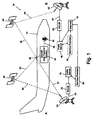
- Figure 1 is a diagrammatic view of a global Internet protocol prefix number mobility system according to a preferred embodiment of the present invention
- Figure 2 is a diagrammatic view showing exemplary Internet system connections for prefix servers of the present invention.
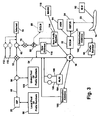
- Figure 3 is a diagrammatic view showing communication and data flow paths of a mobile routing system according to a preferred embodiment of the present invention.
- a mobile routing system 10 of the present invention can include a user electronic device 12 positioned on a mobile platform such as an aircraft 14.
- Internet 16 can be provided with a communication path to user electronic device 12 using a prefix server 18 of the present invention.
- user electronic device 12 can be connected via one or more Internet service providers (ISP) 20 connectable to prefix server 18.
- Prefix server 18 can be in turn connectable to a ground based communication link manager (GCLM) 22.
- GCLM 22 can communicate via a two-way communication path 23 to a ground based transmitter/receiver (GBT/R) 24.
- GBT/R 24 can transmit electronic signals to and from a communications satellite 26 via a signal path 28. These electronic signals can be communicable to an antenna 30 of aircraft 14 via a satellite/aircraft communication path 32.
- communications signals can be transferred to and from an aircraft data transfer system 34 which can transfer or receive signals to/from user electronic device 12 via a signal path 36.
- Signal path 36 can be a hard wired signal path or a radio frequency signal path.
- communication between user electronic device 12 and the Internet 16 can be substantially provided by communications satellite 26.
- communication path 32 may be interrupted or broken due to inability of antenna 30 to receive or transmit signals to or from communications satellite 26.
- a new communications path can be opened between antenna 30 of aircraft 14 and Internet 16. This can be accomplished by transferring signals to or from antenna 30 and a communication satellite 38 via a satellite/aircraft communication path 40. From communication satellite 38 signals can be transferred to and from a GBT/R 42 via a communication path 44.
- GBT/R 42 can be in turn connected to a GCLM 46 via a two-way communication path 47.
- GCLM 46 can be connected to a prefix server 48 which can directly communicate with Internet 16 or alternately can communicate with Internet 16 via one or more Internet service provider(s) 50 (shown in phantom).
- Either GBT/R 24 or GBT/R 42 can also communicate directly with aircraft 14, for example via a direct communication path 51.
- Direct communication path 51 can be used for example when aircraft 14 is preparing for take-off or when aircraft 14 has landed.
- Prefix server 18 can be connected between GCLM 22 and a route reflector 52 via an internal BGP connection 54.
- Route reflector 52 can be in turn connected to a router 56 via an internal BGP connection 58.
- Router 56 can be connected to ISP 20 via an external BGP connection 60.
- Additional external connection for signals transferred to and from route reflector 52 can be via a router 62 connected to route reflector 52 via an internal BGP connection 64.
- Communication signals from GCLM 22 can be transferred to or from communications satellite 26 via a first router 66a connected to a modem 84a associated with a GBT/R 86.
- a second router 66b connected to modem 84b associated with GBT/R 86 can also provide a signal transfer path from GCLM 22 to and from communication satellite 26.
- a second prefix server 68 can transfer communication signals between GCLM 22 and a route reflector 70 via an internal BGP connection 72.
- a router 74 can be connected to route reflector 70 via an internal BGP connection 76. Router 74 is in turn connectable to ISP 50 via an external BGP connection 78.
- ISP 20 forms a first autonomous system "C”.
- ISP 50 forms a second autonomous system “D”.
- a router 80 can be connected to route reflector 70 via an internal BGP connection 82.
- Each of the routers and route reflectors identified in Figure 2 are commonly known in the art.
- Devices 18, 52, 56, 62, 66a, 66b, 68, 70, 74, and 80 can form an autonomous system "E”.
- Each route reflector 52,70 can be cross connected to opposing auxiliary system routers.
- Connections 60, 78 permit communications between the Internet and the ground based network system.
- the external BGP connections 60, 78 permit various routes to be formed between the ground based network system, such as autonomous system "E", Internet service providers (20 or 50), and the Internet 16.
- Each of router 62 and router 80 can communicate with modem 84a and modem 84b, respectively.
- Modem 84a and modem 84b both in turn can communicate with a GBT/R 86.
- GBT/R 86 can provide an alternate communication path to Internet 16 as commonly known.
- Modem 84a and modem 84b are exemplary of a plurality of modems which can be linked to GBT/R 86 from additional autonomous systems (not shown).
- Prefix server 68 can also be connected to a GCLM 88 via an IP traffic tunnel path 90 which may exist within an autonomous system "F". IP tunnel connections are commonly known and can provide global connectivity between individual IP networks.
- prefix server 18 can communicate between ISP 20 and aircraft 14. Initially, each aircraft 14 can be provided with an aircraft unique identification number 92. GCLM 22, prefix server 18, route reflector 52, and router 56 can be provided with an autonomous system number 94. When aircraft 14 initiates the travel segment, a prefix number 96 can be selected from one of at least two sources using prefix server 18. Each autonomous system such as autonomous system "E” can be assigned a local pool of prefix numbers. In this example autonomous system "E" is assigned a local pool of prefix numbers 98.
- Local pool 98 is initially empty and is provided with each of its plurality of prefix numbers generally at the completion of individual travel segments of aircraft 14 or additional aircraft (not shown).
- Local pool 98 includes a volume allowing a predetermined number or limit of prefix numbers associated with it. If local pool 98 is empty of prefix numbers, prefix server 18 can next search a global pool 100 of prefix numbers.
- Global pool 100 can provide a plurality of prefix numbers available from a plurality of autonomous systems. After selecting prefix number 96 from either local pool 98 or global pool 100, prefix server 18 can map the prefix number 96 against the unique identification number 92 of aircraft 14 to a local destination address 102 for aircraft 14.
- Destination address 102 can be subsequently identified by prefix server 18 as an available site to each of the plurality of autonomous systems which form a possible path of communications of data to or from aircraft 14 and Internet 16 via internal BGP connection 54. If two-way communication path 23 is open, a plurality of route data in the form of network layer reachability information (NLRI) 104 can be transmitted to the plurality of autonomous systems via a plurality of route paths.
- network layer reachability information can include for example information such as "NEXT_HOP", “UPDATE”, “KEEP ALIVE”, “LOCAL_PREF”, "AS_PATH” and “NOTIFICATION” messages.
- the plurality of route paths can include a first route path 106, a second route path 108, a third route path 110 connected to Internet 16, and a fourth route path 112 connected to Internet 16. These route paths are exemplary and are indicative of possible route paths for NLRI 104.
- a mobile autonomous system number (MASN) 115 may also be linked to prefix number 96.
- Prefix server 18 uses the MASN 115 to modify NLRI 104.
- Some forms of border gateway protocol may require the originating autonomous system number for a prefix to be generally static in nature.
- MASN 115 provides the prefix server information to modify the AS_PATH to allow for Internet Service Provider 20 to authenticate and authorize the propagation of NLRI information throughout the Internet 16.
- the use of MASN 115 also allows prefix server 18 to aggregate a plurality of routes within Local Pool 98 to reduce the need to propagate an exact NLRI to the Internet 16 for each prefix number 96.
- the use of an aggregate NLRI using MASN 115 also provides for the ability to insert a single NLRI covering all routes within Local Pool 98. A single large prefix number may be preferable by some Internet service providers.
- Prefix server 18 can request a new prefix number 114 by first querying local pool 98 and subsequently querying global pool 100 if new prefix number 114 is not available from local pool 98. Similar to prefix number 96, new prefix number 114 can be mapped with unique identification number 92 to form a new destination address 116. Prior to transmission of new destination address 116, each of the open route paths including route paths 106, 108, 110, and 112 are closed by prefix server 18. New destination address 116 is then identified to the various autonomous systems by prefix server 18 and a plurality of new routes (not shown) are subsequently identified by prefix server 18 to transfer NLRI 104 via the newly open routes. Prefix server 18 returns prefix number 96 to either local pool 98 or global pool 100 when new prefix number 114 is withdrawn.
- prefix number 96 Upon completion of the travel segment (in this example from point "A" to point "B"), prefix number 96 (if still current) or new prefix number 114 are returned to local pool 98 if local pool 98 has not reached its maximum volume. If local pool 98 has reached its maximum volume, the prefix number (96 or 114) is returned to global pool 100. Returning prefix numbers as a first priority to local pool 98 reduces the possibility of external "route flapping" by maintaining the prefix numbers for immediate reuse by the associated autonomous system. It is therefore possible for aircraft 14 to reuse the prefix number just returned to local pool 98 upon initiation of a new travel segment, or another aircraft (not shown) can reuse the prefix number from local pool 98, thus reducing the need to pull prefix numbers from global pool 100.
- the handoff process from GCLM 22 to a subsequent GCLM includes steps in the following order.
- the GCLM at the new ground station (in this example GCLM 46) can notify GCLM 22 that unique identification number 92 is now available via a new destination address (for example 116).
- Prefix server 48 can then inject NLRI 104 as new NLRI via an internal BGP connection.
- GCLM 22 can then notify prefix server 18 that unique identification number 92 is no longer reachable.
- Prefix server 18 can then withdraw the original routes for NLRI 104.
- Border routers can receive the new NLRI from prefix server 48 (or prefix server 68) via IP tunneled connections such as 90. These border routers can announce the new NLRI to other routers (such as routers 56 to autonomous system "C") which reopens the connection for Internet service provider 20 between aircraft 14 and Internet 16.
- the active GCLM (GCLM 22, GCLM 46, or GCLM 88) can notify prefix server 18 of the landed status of aircraft 14.
- Prefix server 18 can return the prefix number (prefix number 96) to either local pool 98 or global pool 100.
- Prefix server 18 can then notify other prefix servers, such as prefix server 68 shown in Figure 2 , that unique identification number 92 mapping is now invalid.
- Prefix servers of the present invention are computer programs performing the functions identified herein. Prefix server programming can be written using existing open source code such as GNU Zebra or other source code. Prefix servers of the present invention are also identified in terms using border gateway protocol 4 (BGP-4). The present invention is not limited to BGP-4 protocol. Other protocols can be used with modifications inherent to the protocol used which are known to a person of skill in the art.
- a global Internet protocol prefix number mobility routing system of the present invention provides several advantages. By locating prefix servers of the present invention adjacent to or within the ground based communications link manager, system hardware or software performing the functions of the prefix server can be removed from the mobile platform and positioned in the ground based portion of the flow path to the Internet. This can reduce mobile platform complexity and cost and permit limited numbers of prefix servers to serve a fleet of mobile platforms. By assigning prefix numbers to a mobile platform using a prefix server of the present invention, a local pool of prefix numbers can be retained. Retaining these prefix numbers can reduce the potential for external route flapping.
- a system of the present invention makes use of existing protocols and does not require modifications to existing Internet infrastructure to support prefix number mobility of the system.
- a prefix server of the present invention acts as an internal BGP route server and a dynamic prefix assignment server.
- Prefix servers of the present invention are therefore capable of adding routes and setting NLRI data such as NEXT_HOP attributes as well as withdrawing routes when an active GCLM signals that the two-way communication path is no longer available.
Landscapes
- Engineering & Computer Science (AREA)
- Computer Networks & Wireless Communication (AREA)
- Signal Processing (AREA)
- Mobile Radio Communication Systems (AREA)
- Data Exchanges In Wide-Area Networks (AREA)
- Radio Relay Systems (AREA)
- Medicines Containing Material From Animals Or Micro-Organisms (AREA)
Claims (35)
- Verfahren zum Betreiben eines Mobilplattform-Kommunikationssystem-Präfixservers (18), umfassend:Signalisieren des Orts einer Mobilplattform-Zieladresse (102) zumindest einem Internetdienstanbieter (20), wobei das Verfahren dadurch gekennzeichnet ist, dass es weiterhin umfasst:Auswählen einer Präfixnummer (96), für eine mobile Plattform für einen Reiseabschnitt der mobilen Plattform, aus einer Mehrzahl von Präfixnummern;Verknüpfen der ausgewählten Präfixnummer (96) mit einer Mobil-Plattform-Identifikationsnummer (92); undVerknüpfen der ausgewählten Präfixnummer (96) mit der Mobil-Plattform-Zieladresse (102).
- Verfahren nach Anspruch 1, umfassend:Hinzufügen von Datenübermittlungsrouten zwischen der Mobil-Plattform-Zieladresse (102) und dem Internetdienstanbieter (20);Bestätigen, falls ein Zwei-Wege-Kommunikationspfad offen ist zwischen einer mobilen Plattform und einer Kommunikationsverbindungs-Verwaltungseinrichtung (22) auf dem Boden; undEntfernen der Datenübermittlungsrouten, wenn der Zwei-Wege-Kommunikationspfad abgebrochen ist.
- Verfahren nach Anspruch 1 oder 2, umfassend das Positionieren des Präfixservers (18) als eine bodenbasierte Einheit.
- Verfahren nach Anspruch 1, 2 oder 3, umfassend das Injizieren einer Mehrzahl von Netzwerkschicht-Erreichbarkeitsinformationen (104) in ein internes Border-Gateway-Protokoll-Netzwerk.
- Verfahren nach einem der Ansprüche 1-4, umfassend das Benachrichtigen einer Mehrzahl von Routenservern über die Präfixnummer (96).
- Verfahren nach einem der Ansprüche 1-5, wobei:Kommunikationskontakt aufrechterhalten wird zwischen der mobilen Plattform und dem Internet (16) während des Reiseabschnitts der mobilen Plattform mittels zumindest einer bodenbasierten Kommunikationsverbindungs-Verwaltungseinrichtung (22);der Präfixserver ein bodenbasierter Präfixserver (18) ist und betriebsfähig ist, um die mobile Plattform und die Kommunikationsverbindungs-Verwaltungseinrichtung (22) kommunikativ zu verbinden; unddie Präfixnummer (96) der mobilen Plattform für den Reiseabschnitt zugeordnet wird; wobei das Verfahren weiterhin umfasst:Signalisieren, via den Präfixserver (18), einer Zieladresse (102) der mobilen Plattform unter Verwendung der via die Kommunikationsverbindungs-Verwaltungseinrichtung (22) übermittelten Präfixnummer (96).
- Verfahren nach Anspruch 6, umfassend:Auswählen einer neuen Präfixnummer (114) nach Beginn eines neuen Reiseabschnitts der mobilen Plattform;Erzeugen einer neuen Zieladresse (116) mittels des Präfixservers (18); undSignalisieren der neuen Zieladresse (116) mittels des Präfixservers (18) während des neuen Reiseabschnitts der mobilen Plattform, um Kommunikation zwischen der mobilen Plattform und dem Internet (16) operativ aufrechtzuerhalten.
- Verfahren nach Anspruch 6 oder 7, umfassend:Herstellen eines Zwei-Wege-Kommunikationspfads (23, 28; 44, 47) zwischen der mobilen Plattform und der Kommunikationsverbindungs-Verwaltungseinrichtung (22); undHinzufügen einer Mehrzahl von Routenpfaden mittels des Präfixservers (18), nachdem die Zwei-Wege-Kommunikation hergestellt ist.
- Verfahren nach Anspruch 6, 7 oder 8, umfassend das Entfernen der Routenpfade, wenn die Zwei-Wege-Kommunikation endet.
- Verfahren nach einem der Ansprüche 6-10, umfassend das Mapping einer einmaligen Luftfahrzeugidentifikationsnummer (92) zur zugeordneten Präfixnummer (96, 114) mittels des Präfixservers (18).
- Verfahren nach einem der Ansprüche 6-10, umfassend das Injizieren einer Mehrzahl von Netzwerkschicht-Erreichbarkeitsinformationen (104) mittels des Präfixservers (18).
- Verfahren nach einem der Ansprüche 6-11, umfassend das Benachrichtigen einer Mehrzahl von Internetroutenservern über die ausgewählte Präfixnummer (96, 114) mittels des Präfixservers (18).
- Verfahren nach einem der Ansprüche 6-12, umfassend das anfängliche Zuteilen der Mehrzahl von Präfixnummern zu einem globalen Pool (100) von Präfixnummern.
- Verfahren nach einem der Ansprüche 6-13, umfassend:Erzeugen eines lokalen Pools (98), der nutzbar ist, um einen ersten Teil der Mehrzahl von Präfixnummern aufzunehmen; undZuordnen des lokalen Pools (98) zu einem autonomen System in funktionsfähiger Kommunikation mit dem Internet (16).
- Verfahren nach einem der Ansprüche 6-14, umfassend das Programmieren des Präfixservers (18), um die Präfixnummer (96, 114) zunächst aus dem lokalen Pool (98) auszuwählen.
- Verfahren nach Anspruch 15, umfassend das Programmieren des Präfixservers (18), um die Präfixnummer (96, 114) aus dem globalen Pool (100) operativ auszuwählen, falls der lokale Pool (98) leer ist.
- Verfahren nach Anspruch 14, 15 oder 16, umfassend das Programmieren des Präfixservers (18), um die Präfixnummer (96, 114) dem lokalen Pool (98) nach Beendigung des Reiseabschnitts hinzuzufügen.
- Verfahren nach Anspruch 17, umfassend:Programmieren des Präfixservers (18), um die Präfixnummer (96, 114) dem globalen Pool (100) nur dann hinzuzufügen, wenn sich der lokale Pool (98) in vollem Zustand befindet; undEntfernen einer Mehrzahl vom Präfixserver (18) wirksam weitergeleiteter Routenpfade nur dann, wenn die Präfixnummer (96, 114) dem globalen Pool (100) hinzugefügt ist.
- Verfahren nach einem der Ansprüche 6-18, wobei das Verfahren weiterhin umfasst:Stellen einer Mobil-Plattform-Anfrage nach der Präfixnummer (96, 114) zu Beginn des Reiseabschnitts; undZuordnen der Präfixnummer (96, 114) zu einer Mobil-Plattform-Identifikationsnummer (92).
- Verfahren nach Anspruch 19, umfassend:Herstellen eines Zwei-Wege-Kommunikationspfads (23, 28; 44, 47) zwischen der mobilen Plattform und der Kommunikationsverbindungs-Verwaltungseinrichtung (22); undHinzufügen einer ersten Mehrzahl von Internetroutenpfaden mittels des Präfixservers (18), nachdem die Zwei-Wege-Kommunikation hergestellt ist.
- Verfahren nach Anspruch 20, umfassend das Entfernen der ersten Mehrzahl von Routenpfaden, wenn die Zwei-Wege-Kommunikation endet.
- Verfahren nach Anspruch 21, umfassend:Auswählen einer neuen Präfixnummer (114) während des Reiseabschnitts der mobilen Plattform, wenn die Zwei-Wege-Kommunikation endet; undErzeugen einer neuen Zieladresse (116) ausgehend von der neuen Präfixnummer (114) mittels des Präfixservers (18).
- Verfahren nach Anspruch 22, umfassend:Herstellen eines neuen Zwei-Wege-Kommunikationspfads (23, 28; 44, 47) zwischen der mobilen Plattform und der Kommunikationsverbindungs-Verwaltungseinrichtung (22);Signalisieren der neuen Zieladresse (116) mittels des Präfixservers (18) während eines neuen Reiseabschnitts der mobilen Plattform, um Kommunikation zwischen der mobilen Plattform und dem Internet (16) operativ aufrechtzuerhalten; undHinzufügen einer zweiten Mehrzahl von Routenpfaden mittels des Präfixservers (18).
- Verfahren nach einem der Ansprüche 19-23, umfassend das Benachrichtigen einer Mehrzahl von Internetroutenservern über die ausgewählte Präfixnummer (96, 114) mittels des Präfixservers (18).
- Verfahren nach einem der Ansprüche 19-24, umfassend das Programmieren des Präfixservers (18), um zumindest einen weiteren Präfixserver (18) aus der Mehrzahl von Präfixservern (18) operativ zu benachrichtigen, dass ein Mapping einer Mobil-Plattform-Identifikationsnummer (92) zu einer Route ungültig ist an einem Ende des Reisesegments.
- Verfahren nach einem der Ansprüche 19-25, umfassend das Verknüpfen einer Nummer (115) eines mobilen autonomen Systems mit der Präfixnummer (96, 114).
- Verfahren nach Anspruch 26, umfassend das Ändern einer Netzwerkschicht-Erreichbarkeitsinformationsmeldung mittels des Präfixservers (18).
- Verfahren nach Anspruch 26 oder 27, umfassend das Aggregieren einer Mehrzahl von Routenpfaden mittels des Präfixservers (18).
- Verfahren nach Anspruch 26, 27 oder 28, umfassend das Einbringen einer einzigen Netzwerkschicht-Erreichbarkeitsinformationsmeldung für eine Mehrzahl von Routenpfaden.
- Routingsystem (10), betriebsfähig, um eine mobile Plattform mit dem Internet (16) zu verbinden, umfassend:eine bodenbasierte Kommunikationsverbindungs-Verwaltungseinrichtung (22), die mit der mobilen Plattform kommunikativ verbindbar ist;zumindest einen bodenbasierten Präfixserver (18) in funktionsfähiger Kommunikation mit der Kommunikationsverbindungs-Verwaltungseinrichtung (22); undeine anfängliche Zieladresse (102), die der mobilen Plattform zuordenbar ist;
wobei das Routingsystem dadurch gekennzeichnet ist, dass es weiterhin umfasstein Präfixserverprogramm, betriebsfähig, um eine Präfixnummer (96, 114) für eine mobile Plattform für einen Reiseabschnitt der mobilen Plattform aus einer Mehrzahl von Präfixnummern auszuwählen; die ausgewählte Präfixnummer mit einer Mobil-Plattform-Identifikationsnummer zu verknüpfen; und die ausgewählte Präfixnummer mit der anfänglichen Zieladresse der mobilen Plattform zu verknüpfen; undum unter Verwendung der Präfixnummer (96, 114) die anfängliche Zieladresse (102) der mobilen Plattform an die Kommunikationsverbindungs-Verwaltungseinrichtung (22) und an das Internet (16) zu übermitteln. - System nach Anspruch 30, umfassend eine aus einer Mehrzahl von Präfixnummern wählbare Präfixnummer (96, 114), wobei die anfängliche Zieladresse (102) der mobilen Plattform ausgehend von der Präfixnummer (96, 114) zuordenbar ist.
- System nach Anspruch 30 oder 31, wobei der Präfixserver (18) und die Kommunikationsverbindungs-Verwaltungseinrichtung (22) in funktionsfähiger Kommunikation mit dem Internet (16) mittels eines globalen Border-Gateway-Protokolls sind.
- System nach Anspruch 30, 31 oder 32, wobei der Präfixserver (18) und die bodenbasierte Kommunikationsverbindungs-Verwaltungseinrichtung in funktionsfähiger Kommunikation mit dem Internet (16) sind, wobei zumindest einer aus einer Mehrzahl von Internetdienstanbietern (20) genutzt wird.
- System nach einem der Ansprüche 30-33, wobei eine neue Zieladresse (116) an das Internet (16) mittels des Präfixservers (18) während eines Reiseabschnitts der mobilen Plattform übermittelbar ist.
- System nach einem der Ansprüche 30-34, wobei die neue Zieladresse (116) an das Internet (16) mittels einer zweiten Kommunikationsverbindungs-Verwaltungseinrichtung (22) operativ übermittelbar ist.
Applications Claiming Priority (2)
| Application Number | Priority Date | Filing Date | Title |
|---|---|---|---|
| US10/826,070 US7440451B2 (en) | 2004-04-16 | 2004-04-16 | Global internet protocol prefix number mobility |
| PCT/US2005/012850 WO2005101764A2 (en) | 2004-04-16 | 2005-04-15 | Global internet protocol prefix number mobility |
Publications (2)
| Publication Number | Publication Date |
|---|---|
| EP1735975A2 EP1735975A2 (de) | 2006-12-27 |
| EP1735975B1 true EP1735975B1 (de) | 2009-06-17 |
Family
ID=34981135
Family Applications (1)
| Application Number | Title | Priority Date | Filing Date |
|---|---|---|---|
| EP05761866A Expired - Lifetime EP1735975B1 (de) | 2004-04-16 | 2005-04-15 | Globale internetvorwahlnummernmobilität |
Country Status (8)
| Country | Link |
|---|---|
| US (1) | US7440451B2 (de) |
| EP (1) | EP1735975B1 (de) |
| JP (1) | JP4827833B2 (de) |
| CN (1) | CN1969513B (de) |
| AT (1) | ATE434318T1 (de) |
| CA (1) | CA2563309C (de) |
| DE (1) | DE602005014959D1 (de) |
| WO (1) | WO2005101764A2 (de) |
Families Citing this family (7)
| Publication number | Priority date | Publication date | Assignee | Title |
|---|---|---|---|---|
| US8081968B2 (en) * | 2000-10-11 | 2011-12-20 | Gogo Llc | System for creating an air-to-ground IP tunnel in an airborne wireless cellular network to differentiate individual passengers |
| US7921442B2 (en) | 2000-08-16 | 2011-04-05 | The Boeing Company | Method and apparatus for simultaneous live television and data services using single beam antennas |
| FR2876853A1 (fr) * | 2004-10-20 | 2006-04-21 | France Telecom | Procede d'adressage d'un reseau ip se connectant a un autre reseau ip |
| US7693073B2 (en) * | 2006-10-13 | 2010-04-06 | At&T Intellectual Property I, L.P. | System and method for routing packet traffic |
| US9397745B2 (en) | 2010-05-18 | 2016-07-19 | Qualcomm Incorporated | Hybrid satellite and mesh network system for aircraft and ship internet service |
| US9692499B2 (en) * | 2014-10-06 | 2017-06-27 | Harris Corporation | Terrestrial based air-to-ground communications system and related methods |
| CN109861736B (zh) * | 2017-11-30 | 2021-06-29 | 北京京东乾石科技有限公司 | 飞行器服务器群组以及飞行器通信方法、服务器和系统 |
Family Cites Families (12)
| Publication number | Priority date | Publication date | Assignee | Title |
|---|---|---|---|---|
| US6604146B1 (en) | 1999-06-15 | 2003-08-05 | Viasat, Inc. | Efficient internet service implementation for mesh satellite networks using centralized router server for distribution of destination tables |
| EP1158742A1 (de) * | 2000-05-24 | 2001-11-28 | Motorola, Inc. | Kommunikationssystem und Verfahren dafür |
| JP4453205B2 (ja) * | 2001-01-15 | 2010-04-21 | ソニー株式会社 | 情報処理装置および方法、記録媒体、並びにプログラム |
| US6643274B2 (en) * | 2001-08-31 | 2003-11-04 | The Boeing Company | Routing IP packets to an aircraft |
| US7454519B2 (en) * | 2002-03-22 | 2008-11-18 | Motorola, Inc. | Method for automatically allocating address prefixes |
| JP3665622B2 (ja) * | 2002-03-29 | 2005-06-29 | 株式会社東芝 | ソースアドレス選択システム、ルータ装置、通信ノード及びソースアドレス選択方法 |
| JP3924502B2 (ja) * | 2002-07-04 | 2007-06-06 | 富士通株式会社 | モバイル通信方法およびモバイル通信システム |
| US7203175B2 (en) * | 2002-08-15 | 2007-04-10 | Cisco Technology, Inc. | Arrangement for router attachments between roaming mobile routers in a mobile network |
| AU2003292796A1 (en) * | 2002-12-26 | 2004-07-22 | Matsushita Electric Industrial Co., Ltd. | Mobile network control device and mobile network control method |
| JP4552449B2 (ja) * | 2003-02-20 | 2010-09-29 | パナソニック株式会社 | 移動ルータ装置、移動ネットワークシステムおよび移動ルータ装置の移動管理方法 |
| US7039035B2 (en) * | 2003-11-10 | 2006-05-02 | Cisco Technology, Inc. | Arrangement in an access router for optimizing mobile router connections based on delegated network prefixes |
| US7873036B2 (en) * | 2004-02-03 | 2011-01-18 | Nokia Siemens Networks Oy | Method and apparatus to provide group management of multiple link identifiers for collective mobility |
-
2004
- 2004-04-16 US US10/826,070 patent/US7440451B2/en active Active
-
2005
- 2005-04-15 JP JP2007508567A patent/JP4827833B2/ja not_active Expired - Lifetime
- 2005-04-15 AT AT05761866T patent/ATE434318T1/de not_active IP Right Cessation
- 2005-04-15 EP EP05761866A patent/EP1735975B1/de not_active Expired - Lifetime
- 2005-04-15 CA CA002563309A patent/CA2563309C/en not_active Expired - Lifetime
- 2005-04-15 WO PCT/US2005/012850 patent/WO2005101764A2/en not_active Ceased
- 2005-04-15 DE DE602005014959T patent/DE602005014959D1/de not_active Expired - Lifetime
- 2005-04-15 CN CN2005800200825A patent/CN1969513B/zh not_active Expired - Lifetime
Also Published As
| Publication number | Publication date |
|---|---|
| EP1735975A2 (de) | 2006-12-27 |
| DE602005014959D1 (de) | 2009-07-30 |
| US20050232280A1 (en) | 2005-10-20 |
| US7440451B2 (en) | 2008-10-21 |
| JP2007533272A (ja) | 2007-11-15 |
| WO2005101764A3 (en) | 2006-01-05 |
| CN1969513B (zh) | 2010-08-18 |
| WO2005101764A2 (en) | 2005-10-27 |
| CN1969513A (zh) | 2007-05-23 |
| JP4827833B2 (ja) | 2011-11-30 |
| ATE434318T1 (de) | 2009-07-15 |
| CA2563309C (en) | 2010-01-12 |
| CA2563309A1 (en) | 2005-10-27 |
Similar Documents
| Publication | Publication Date | Title |
|---|---|---|
| KR101009154B1 (ko) | 멀티홉 패킷 전송을 위한 시스템 및 방법 | |
| KR100745206B1 (ko) | 라우팅 프로토콜들에 대한 모바일 라우터 비용 메트릭 업데이트용 시스템 및 방법 | |
| CN112165725B (zh) | 报文处理的方法及设备 | |
| US20050259631A1 (en) | Route optiminzing in mobile ip providing location privacy | |
| JP5814789B2 (ja) | 通信を行う方法及び装置 | |
| US7965690B2 (en) | Telecommunications system | |
| EP1290857B1 (de) | Kommunikationssystem und verfahren dafür | |
| KR20050044387A (ko) | IPv6 용 이동 라우터 지원 | |
| CA2406051A1 (en) | Satellite routing protocol with dynamic ip addressing | |
| EP1221820A3 (de) | Anordnung von Datenpaketenverbindungen im Bürosystem | |
| CN102594714A (zh) | 一种bgp路由处理方法和bgp路由设备 | |
| KR20050076176A (ko) | IPv6 MANET망에서 외부망과의 통신을 위한 시스템및 방법 | |
| US7894408B2 (en) | System and method for distributing proxying error information in wireless networks | |
| CN109150713B (zh) | 基于bgp+源终端和目的终端之间的路由方法及路由监测方法 | |
| EP1735975B1 (de) | Globale internetvorwahlnummernmobilität | |
| EP3445008B1 (de) | Dynamischer tunnelaufbau in einem mesh-netzwerk | |
| CN101513103A (zh) | 用于多个嵌套移动网络的自主模式 | |
| US20150009811A1 (en) | Method and apparatus for optimizing data route in mobile communication system | |
| US20080165692A1 (en) | Method and system for opportunistic data communication | |
| CN101375171A (zh) | 用于多跳分组转发的系统和方法 | |
| CN116033486B (zh) | 一种iab宿主节点的切换预处理方法、装置、设备及介质 | |
| JP2001522169A (ja) | 遠隔通信システム | |
| Feldmann et al. | A Border Gateway Protocol Extension for Distributing Endpoint Identifier Reachability Information in Delay-tolerant Networks | |
| CN120017581A (zh) | 路由发布方法、报文传输方法及通信装置、通信系统 | |
| CN108777874A (zh) | 一种路由器相互切换的方法及其系统 |
Legal Events
| Date | Code | Title | Description |
|---|---|---|---|
| PUAI | Public reference made under article 153(3) epc to a published international application that has entered the european phase |
Free format text: ORIGINAL CODE: 0009012 |
|
| 17P | Request for examination filed |
Effective date: 20061011 |
|
| AK | Designated contracting states |
Kind code of ref document: A2 Designated state(s): AT BE BG CH CY CZ DE DK EE ES FI FR GB GR HU IE IS IT LI LT LU MC NL PL PT RO SE SI SK TR |
|
| RIN1 | Information on inventor provided before grant (corrected) |
Inventor name: MONTES, CARLOS, M. Inventor name: DAVIS, TERRY, L. Inventor name: SKEEN, BRIAN, L. Inventor name: LETNEY, GORDON, E. Inventor name: BENDER, JOHN, H. Inventor name: DUL, ANDREW, L. |
|
| 17Q | First examination report despatched |
Effective date: 20070606 |
|
| DAX | Request for extension of the european patent (deleted) | ||
| GRAP | Despatch of communication of intention to grant a patent |
Free format text: ORIGINAL CODE: EPIDOSNIGR1 |
|
| GRAS | Grant fee paid |
Free format text: ORIGINAL CODE: EPIDOSNIGR3 |
|
| GRAA | (expected) grant |
Free format text: ORIGINAL CODE: 0009210 |
|
| AK | Designated contracting states |
Kind code of ref document: B1 Designated state(s): AT BE BG CH CY CZ DE DK EE ES FI FR GB GR HU IE IS IT LI LT LU MC NL PL PT RO SE SI SK TR |
|
| REG | Reference to a national code |
Ref country code: GB Ref legal event code: FG4D |
|
| REG | Reference to a national code |
Ref country code: CH Ref legal event code: EP |
|
| REG | Reference to a national code |
Ref country code: IE Ref legal event code: FG4D |
|
| REF | Corresponds to: |
Ref document number: 602005014959 Country of ref document: DE Date of ref document: 20090730 Kind code of ref document: P |
|
| PG25 | Lapsed in a contracting state [announced via postgrant information from national office to epo] |
Ref country code: LT Free format text: LAPSE BECAUSE OF FAILURE TO SUBMIT A TRANSLATION OF THE DESCRIPTION OR TO PAY THE FEE WITHIN THE PRESCRIBED TIME-LIMIT Effective date: 20090617 Ref country code: FI Free format text: LAPSE BECAUSE OF FAILURE TO SUBMIT A TRANSLATION OF THE DESCRIPTION OR TO PAY THE FEE WITHIN THE PRESCRIBED TIME-LIMIT Effective date: 20090617 Ref country code: AT Free format text: LAPSE BECAUSE OF FAILURE TO SUBMIT A TRANSLATION OF THE DESCRIPTION OR TO PAY THE FEE WITHIN THE PRESCRIBED TIME-LIMIT Effective date: 20090617 |
|
| PG25 | Lapsed in a contracting state [announced via postgrant information from national office to epo] |
Ref country code: SI Free format text: LAPSE BECAUSE OF FAILURE TO SUBMIT A TRANSLATION OF THE DESCRIPTION OR TO PAY THE FEE WITHIN THE PRESCRIBED TIME-LIMIT Effective date: 20090617 Ref country code: PL Free format text: LAPSE BECAUSE OF FAILURE TO SUBMIT A TRANSLATION OF THE DESCRIPTION OR TO PAY THE FEE WITHIN THE PRESCRIBED TIME-LIMIT Effective date: 20090617 Ref country code: SE Free format text: LAPSE BECAUSE OF FAILURE TO SUBMIT A TRANSLATION OF THE DESCRIPTION OR TO PAY THE FEE WITHIN THE PRESCRIBED TIME-LIMIT Effective date: 20090917 |
|
| NLV1 | Nl: lapsed or annulled due to failure to fulfill the requirements of art. 29p and 29m of the patents act | ||
| PG25 | Lapsed in a contracting state [announced via postgrant information from national office to epo] |
Ref country code: ES Free format text: LAPSE BECAUSE OF FAILURE TO SUBMIT A TRANSLATION OF THE DESCRIPTION OR TO PAY THE FEE WITHIN THE PRESCRIBED TIME-LIMIT Effective date: 20090928 Ref country code: IS Free format text: LAPSE BECAUSE OF FAILURE TO SUBMIT A TRANSLATION OF THE DESCRIPTION OR TO PAY THE FEE WITHIN THE PRESCRIBED TIME-LIMIT Effective date: 20091017 Ref country code: EE Free format text: LAPSE BECAUSE OF FAILURE TO SUBMIT A TRANSLATION OF THE DESCRIPTION OR TO PAY THE FEE WITHIN THE PRESCRIBED TIME-LIMIT Effective date: 20090617 Ref country code: CZ Free format text: LAPSE BECAUSE OF FAILURE TO SUBMIT A TRANSLATION OF THE DESCRIPTION OR TO PAY THE FEE WITHIN THE PRESCRIBED TIME-LIMIT Effective date: 20090617 Ref country code: RO Free format text: LAPSE BECAUSE OF FAILURE TO SUBMIT A TRANSLATION OF THE DESCRIPTION OR TO PAY THE FEE WITHIN THE PRESCRIBED TIME-LIMIT Effective date: 20090617 |
|
| PG25 | Lapsed in a contracting state [announced via postgrant information from national office to epo] |
Ref country code: BE Free format text: LAPSE BECAUSE OF FAILURE TO SUBMIT A TRANSLATION OF THE DESCRIPTION OR TO PAY THE FEE WITHIN THE PRESCRIBED TIME-LIMIT Effective date: 20090617 Ref country code: NL Free format text: LAPSE BECAUSE OF FAILURE TO SUBMIT A TRANSLATION OF THE DESCRIPTION OR TO PAY THE FEE WITHIN THE PRESCRIBED TIME-LIMIT Effective date: 20090617 Ref country code: SK Free format text: LAPSE BECAUSE OF FAILURE TO SUBMIT A TRANSLATION OF THE DESCRIPTION OR TO PAY THE FEE WITHIN THE PRESCRIBED TIME-LIMIT Effective date: 20090617 |
|
| PG25 | Lapsed in a contracting state [announced via postgrant information from national office to epo] |
Ref country code: BG Free format text: LAPSE BECAUSE OF FAILURE TO SUBMIT A TRANSLATION OF THE DESCRIPTION OR TO PAY THE FEE WITHIN THE PRESCRIBED TIME-LIMIT Effective date: 20090917 Ref country code: PT Free format text: LAPSE BECAUSE OF FAILURE TO SUBMIT A TRANSLATION OF THE DESCRIPTION OR TO PAY THE FEE WITHIN THE PRESCRIBED TIME-LIMIT Effective date: 20091017 |
|
| PLBE | No opposition filed within time limit |
Free format text: ORIGINAL CODE: 0009261 |
|
| STAA | Information on the status of an ep patent application or granted ep patent |
Free format text: STATUS: NO OPPOSITION FILED WITHIN TIME LIMIT |
|
| PG25 | Lapsed in a contracting state [announced via postgrant information from national office to epo] |
Ref country code: DK Free format text: LAPSE BECAUSE OF FAILURE TO SUBMIT A TRANSLATION OF THE DESCRIPTION OR TO PAY THE FEE WITHIN THE PRESCRIBED TIME-LIMIT Effective date: 20090617 |
|
| 26N | No opposition filed |
Effective date: 20100318 |
|
| PG25 | Lapsed in a contracting state [announced via postgrant information from national office to epo] |
Ref country code: GR Free format text: LAPSE BECAUSE OF FAILURE TO SUBMIT A TRANSLATION OF THE DESCRIPTION OR TO PAY THE FEE WITHIN THE PRESCRIBED TIME-LIMIT Effective date: 20090918 |
|
| PG25 | Lapsed in a contracting state [announced via postgrant information from national office to epo] |
Ref country code: MC Free format text: LAPSE BECAUSE OF NON-PAYMENT OF DUE FEES Effective date: 20100430 |
|
| REG | Reference to a national code |
Ref country code: CH Ref legal event code: PL |
|
| PG25 | Lapsed in a contracting state [announced via postgrant information from national office to epo] |
Ref country code: IE Free format text: LAPSE BECAUSE OF NON-PAYMENT OF DUE FEES Effective date: 20100415 |
|
| PG25 | Lapsed in a contracting state [announced via postgrant information from national office to epo] |
Ref country code: CH Free format text: LAPSE BECAUSE OF NON-PAYMENT OF DUE FEES Effective date: 20100430 Ref country code: LI Free format text: LAPSE BECAUSE OF NON-PAYMENT OF DUE FEES Effective date: 20100430 |
|
| PG25 | Lapsed in a contracting state [announced via postgrant information from national office to epo] |
Ref country code: CY Free format text: LAPSE BECAUSE OF FAILURE TO SUBMIT A TRANSLATION OF THE DESCRIPTION OR TO PAY THE FEE WITHIN THE PRESCRIBED TIME-LIMIT Effective date: 20090617 |
|
| PG25 | Lapsed in a contracting state [announced via postgrant information from national office to epo] |
Ref country code: HU Free format text: LAPSE BECAUSE OF FAILURE TO SUBMIT A TRANSLATION OF THE DESCRIPTION OR TO PAY THE FEE WITHIN THE PRESCRIBED TIME-LIMIT Effective date: 20091218 Ref country code: LU Free format text: LAPSE BECAUSE OF NON-PAYMENT OF DUE FEES Effective date: 20100415 |
|
| PG25 | Lapsed in a contracting state [announced via postgrant information from national office to epo] |
Ref country code: TR Free format text: LAPSE BECAUSE OF FAILURE TO SUBMIT A TRANSLATION OF THE DESCRIPTION OR TO PAY THE FEE WITHIN THE PRESCRIBED TIME-LIMIT Effective date: 20090617 |
|
| REG | Reference to a national code |
Ref country code: FR Ref legal event code: PLFP Year of fee payment: 12 |
|
| REG | Reference to a national code |
Ref country code: FR Ref legal event code: PLFP Year of fee payment: 13 |
|
| REG | Reference to a national code |
Ref country code: FR Ref legal event code: PLFP Year of fee payment: 14 |
|
| P01 | Opt-out of the competence of the unified patent court (upc) registered |
Effective date: 20230503 |
|
| PGFP | Annual fee paid to national office [announced via postgrant information from national office to epo] |
Ref country code: GB Payment date: 20240429 Year of fee payment: 20 |
|
| PGFP | Annual fee paid to national office [announced via postgrant information from national office to epo] |
Ref country code: DE Payment date: 20240429 Year of fee payment: 20 |
|
| PGFP | Annual fee paid to national office [announced via postgrant information from national office to epo] |
Ref country code: IT Payment date: 20240422 Year of fee payment: 20 Ref country code: FR Payment date: 20240425 Year of fee payment: 20 |
|
| REG | Reference to a national code |
Ref country code: DE Ref legal event code: R071 Ref document number: 602005014959 Country of ref document: DE |
|
| REG | Reference to a national code |
Ref country code: GB Ref legal event code: PE20 Expiry date: 20250414 |
|
| PG25 | Lapsed in a contracting state [announced via postgrant information from national office to epo] |
Ref country code: GB Free format text: LAPSE BECAUSE OF EXPIRATION OF PROTECTION Effective date: 20250414 |