EP1717343A2 - Method and apparatus for using solution based precursors for atomic layer deposition - Google Patents
Method and apparatus for using solution based precursors for atomic layer deposition Download PDFInfo
- Publication number
- EP1717343A2 EP1717343A2 EP20060252213 EP06252213A EP1717343A2 EP 1717343 A2 EP1717343 A2 EP 1717343A2 EP 20060252213 EP20060252213 EP 20060252213 EP 06252213 A EP06252213 A EP 06252213A EP 1717343 A2 EP1717343 A2 EP 1717343A2
- Authority
- EP
- European Patent Office
- Prior art keywords
- precursor
- solution
- solvent
- vaporizer
- vaporized
- Prior art date
- Legal status (The legal status is an assumption and is not a legal conclusion. Google has not performed a legal analysis and makes no representation as to the accuracy of the status listed.)
- Withdrawn
Links
Images




Classifications
-
- C—CHEMISTRY; METALLURGY
- C23—COATING METALLIC MATERIAL; COATING MATERIAL WITH METALLIC MATERIAL; CHEMICAL SURFACE TREATMENT; DIFFUSION TREATMENT OF METALLIC MATERIAL; COATING BY VACUUM EVAPORATION, BY SPUTTERING, BY ION IMPLANTATION OR BY CHEMICAL VAPOUR DEPOSITION, IN GENERAL; INHIBITING CORROSION OF METALLIC MATERIAL OR INCRUSTATION IN GENERAL
- C23C—COATING METALLIC MATERIAL; COATING MATERIAL WITH METALLIC MATERIAL; SURFACE TREATMENT OF METALLIC MATERIAL BY DIFFUSION INTO THE SURFACE, BY CHEMICAL CONVERSION OR SUBSTITUTION; COATING BY VACUUM EVAPORATION, BY SPUTTERING, BY ION IMPLANTATION OR BY CHEMICAL VAPOUR DEPOSITION, IN GENERAL
- C23C16/00—Chemical coating by decomposition of gaseous compounds, without leaving reaction products of surface material in the coating, i.e. chemical vapour deposition [CVD] processes
- C23C16/44—Chemical coating by decomposition of gaseous compounds, without leaving reaction products of surface material in the coating, i.e. chemical vapour deposition [CVD] processes characterised by the method of coating
- C23C16/455—Chemical coating by decomposition of gaseous compounds, without leaving reaction products of surface material in the coating, i.e. chemical vapour deposition [CVD] processes characterised by the method of coating characterised by the method used for introducing gases into reaction chamber or for modifying gas flows in reaction chamber
- C23C16/45523—Pulsed gas flow or change of composition over time
- C23C16/45525—Atomic layer deposition [ALD]
- C23C16/45544—Atomic layer deposition [ALD] characterized by the apparatus
-
- H—ELECTRICITY
- H10—SEMICONDUCTOR DEVICES; ELECTRIC SOLID-STATE DEVICES NOT OTHERWISE PROVIDED FOR
- H10P—GENERIC PROCESSES OR APPARATUS FOR THE MANUFACTURE OR TREATMENT OF DEVICES COVERED BY CLASS H10
- H10P14/00—Formation of materials, e.g. in the shape of layers or pillars
- H10P14/20—Formation of materials, e.g. in the shape of layers or pillars of semiconductor materials
-
- C—CHEMISTRY; METALLURGY
- C23—COATING METALLIC MATERIAL; COATING MATERIAL WITH METALLIC MATERIAL; CHEMICAL SURFACE TREATMENT; DIFFUSION TREATMENT OF METALLIC MATERIAL; COATING BY VACUUM EVAPORATION, BY SPUTTERING, BY ION IMPLANTATION OR BY CHEMICAL VAPOUR DEPOSITION, IN GENERAL; INHIBITING CORROSION OF METALLIC MATERIAL OR INCRUSTATION IN GENERAL
- C23C—COATING METALLIC MATERIAL; COATING MATERIAL WITH METALLIC MATERIAL; SURFACE TREATMENT OF METALLIC MATERIAL BY DIFFUSION INTO THE SURFACE, BY CHEMICAL CONVERSION OR SUBSTITUTION; COATING BY VACUUM EVAPORATION, BY SPUTTERING, BY ION IMPLANTATION OR BY CHEMICAL VAPOUR DEPOSITION, IN GENERAL
- C23C16/00—Chemical coating by decomposition of gaseous compounds, without leaving reaction products of surface material in the coating, i.e. chemical vapour deposition [CVD] processes
- C23C16/44—Chemical coating by decomposition of gaseous compounds, without leaving reaction products of surface material in the coating, i.e. chemical vapour deposition [CVD] processes characterised by the method of coating
- C23C16/448—Chemical coating by decomposition of gaseous compounds, without leaving reaction products of surface material in the coating, i.e. chemical vapour deposition [CVD] processes characterised by the method of coating characterised by the method used for generating reactive gas streams, e.g. by evaporation or sublimation of precursor materials
-
- C—CHEMISTRY; METALLURGY
- C23—COATING METALLIC MATERIAL; COATING MATERIAL WITH METALLIC MATERIAL; CHEMICAL SURFACE TREATMENT; DIFFUSION TREATMENT OF METALLIC MATERIAL; COATING BY VACUUM EVAPORATION, BY SPUTTERING, BY ION IMPLANTATION OR BY CHEMICAL VAPOUR DEPOSITION, IN GENERAL; INHIBITING CORROSION OF METALLIC MATERIAL OR INCRUSTATION IN GENERAL
- C23C—COATING METALLIC MATERIAL; COATING MATERIAL WITH METALLIC MATERIAL; SURFACE TREATMENT OF METALLIC MATERIAL BY DIFFUSION INTO THE SURFACE, BY CHEMICAL CONVERSION OR SUBSTITUTION; COATING BY VACUUM EVAPORATION, BY SPUTTERING, BY ION IMPLANTATION OR BY CHEMICAL VAPOUR DEPOSITION, IN GENERAL
- C23C16/00—Chemical coating by decomposition of gaseous compounds, without leaving reaction products of surface material in the coating, i.e. chemical vapour deposition [CVD] processes
- C23C16/44—Chemical coating by decomposition of gaseous compounds, without leaving reaction products of surface material in the coating, i.e. chemical vapour deposition [CVD] processes characterised by the method of coating
- C23C16/455—Chemical coating by decomposition of gaseous compounds, without leaving reaction products of surface material in the coating, i.e. chemical vapour deposition [CVD] processes characterised by the method of coating characterised by the method used for introducing gases into reaction chamber or for modifying gas flows in reaction chamber
- C23C16/45523—Pulsed gas flow or change of composition over time
- C23C16/45525—Atomic layer deposition [ALD]
-
- Y—GENERAL TAGGING OF NEW TECHNOLOGICAL DEVELOPMENTS; GENERAL TAGGING OF CROSS-SECTIONAL TECHNOLOGIES SPANNING OVER SEVERAL SECTIONS OF THE IPC; TECHNICAL SUBJECTS COVERED BY FORMER USPC CROSS-REFERENCE ART COLLECTIONS [XRACs] AND DIGESTS
- Y10—TECHNICAL SUBJECTS COVERED BY FORMER USPC
- Y10T—TECHNICAL SUBJECTS COVERED BY FORMER US CLASSIFICATION
- Y10T428/00—Stock material or miscellaneous articles
- Y10T428/8305—Miscellaneous [e.g., treated surfaces, etc.]
Definitions
- the present invention relates to new and useful methods and apparatus for delivery of a broader class of precursors for atomic layer deposition.
- the present invention also relates to atomic layer deposition methods utilizing a new method of delivering precursors.
- Atomic layer deposition is an enabling technology for next generation conductor barrier layers, high-k gate dielectric layers, high-k capacitance layers, capping layers, and metallic gate electrodes in silicon wafer processes- ALD has also been applied in other electronics industries, such as flat panel display, compound semiconductor, magnetic and optical storage, solar cell, nanotechnology and nanomaterials- ALD is used to build ultra thin and highly conformal layers of metal, oxide, nitride, and others one monolayer at a time in a cyclic deposition process. Oxides and nitrides of many main group metal elements and transition metal elements, such as aluminum, titanium, zirconium, hafnium, and tantalum., have been produced by ALD processes using oxidation or nitridation reactions. Pure metallic layers, such as Ru, Cu, Ta, and others may also be deposited using ALD processes through reduction or combustion reactions.
- a typical ALD process uses sequential precursor gas pulses to deposit a film one layer at a time.
- a first precursor gas is introduced into a process chamber and produces a monolayer by reaction at surface of a substrate in the chamber.
- a second precursor is then introduced to react with the first precursor and form a monolayer of film made up of components of both the first precursor and second precursor, on the substrate.
- Each pair of pulses (one cycle) produces exactly one monolayer of film allowing for very accurate control of the final film thickness based on the number of deposition cycles performed.
- high-k materials should have high band gaps and band offsets, high k values, good stability on silicon, minimal SiO 2 interface layer, and high quality interfaces on substrates. Amorphous or high crystalline temperature films are also desirable.
- Some acceptable high-k dielectric materials are listed in Table 1. Among those listed, HfO 2 , Al 2 O 3 , ZrO 2 , and the related ternary high-k materials have received the most attention for use as gate dielectrics.
- HfO 2 and ZrO 2 have higher k values but they also have lower break down fields and crystalline temperatures.
- Y 2 O 3 has high solubility of rare earth materials (e.g. Eu +3 ) and is useful in optical electronics applications. Table 1.
- Transition metals and metal nitrides may be used as diffusion barriers to prevent inter-diffusion of metal and silicon in IC devices. These barrier layers are only a few nm in thickness, and are conformal in trenches and vias. Table 2 shows some properties of ALD grown barriers. Desirable properties include low growth temperature ( ⁇ 400°C) and low film resistivity. For example, Ta/TaN and W/WxN are preferred as copper diffusion barrier systems. ALD metal thin layers, such as Ru, Cu, Pt, and Ta, have also been deposited for use as barrier and seed layer applications. Table 2.
- ALD is an advanced deposition method for high density memory devices when highly conformal and high aspect ratio deposition of high-k dielectric materials and its liners is needed.
- halides perform well in ALD processes with good self-limiting growth behaviors, but are mostly high melting solids that require high source temperatures.
- Another disadvantage of using solid precursors is the risk of particle contamination to the substrate.
- Alkoxides show reduced deposition temperatures in ALD processes, but can decompose in the vapor phase leading to a continuous growth process instead of ALD.
- ⁇ -diketonates are used in MOCVD processes and are generally more stable towards hydrolysis than alkoxides. However, they are less volatile and require high source and substrate temperatures.
- a mixed ligand approach with ⁇ -diketonates and alkoxides has been suggested to improve stability of alkoxide MOCVD precursors. Examples are Zr(acac) 2 (hfip) 2 , Zr(O-t-Pr) 2 (thd) 2 .
- metal nitrate precursors, M(NO 3 ) x , alkylamides, and amidinates show self-limiting growth behavior with very low carbon or halide contamination.
- the stability of nitrates and amides is an issue in production and many cyclopentadienyls are in solid forms.
- ALD precursors should have good volatility and be able to saturate the substrate surface quickly through chemisorptions and surface reactions.
- the ALD half reaction cycles should be completed within 5 seconds, preferably within 1 second.
- the precursors should be stable within the deposition temperature windows, because un-controllable CVD reactions could occur when the precursor decomposes in gas phase.
- the precursors themselves should also be highly reactive so that the surface reactions are fast and complete. In addition, complete reactions yield good purity in films.
- Preferred ALD precursor properties Requirement Class Property Range Primary Good volatility > 0.1 Torr Primary Liquid or gas At room temperatures Primary Good thermal stability > 250°C or > 350°C in gas phase Primary Fast saturation ⁇ 5 sec or ⁇ 1 sec Primary Highly reactive Complete surface reactive cycles Primary Non reactive volatile byproduct No product and reagent reaction Secondary High growth rate Up to a monolayer a cycle Secondary Less shield effect from ligands Free up un-occupied sites Secondary Cost and purity Key impurity: H 2 O, O 2 Secondary Shelf-life > 1-2 years Secondary Halides Free in films Secondary Carbon ⁇ 1% in non carbon containing films
- Direct liquid injection methods have been used in many vapor phase deposition processes.
- US Patent 5,376,409 describes a method of delivering solid precursors that have been dissolved in an appropriate solvent for use in chemical vapor deposition (CVD) techniques.
- US Patent 5,45I , 260 describes a method for providing a liquid precursor solution for direct injection using an ultrasonic nozzle for CVD techniques.
- Beach, et al., in "MOCVD of very thin films of lead lanthanum titanate", MRS symposium proceedings, 415, 225-30 (1996) set forth a CVD method using multiple precursors dissolved in a single solution.
- US published patent application 2003/0056728 discloses a pulsed liquid injection method in an atomic vapor deposition (AVD) process, using a precursor in liquid or dissolved form.
- the liquid dose is too large for ideal ALD operation.
- Min, et al. "Atomic layer deposition of Al2O3 thin films from a 1-methoxy-2-methyl-2-propoxide complex of aluminum and water", Chemistry Materials (to be published in 2005 ), describes a liquid pulsing method for solution precursors, where again the liquid dose is too large for ideal ALD operation.
- using liquid pulse to achieve monolayer coverage is very difficult, because in an ALD operation, the pulse width of a vapor phase reactant is 1 second or less.
- the present invention provides a method of atomic layer deposition comprising:
- the present invention provides unique combinations of solution stabilization and delivery technologies with special ALD operational modes,
- the present invention allows the use of at least one precursor, preferably at least one low-volatility precursor, dissolved in a solvent.
- the precursor is preferably a solid.
- Low-volatility solid precursors are often less expensive and often exhibit very high boiling points. Further, unstable solutes can be stabilized in solution and still retain very high boiling points. This is advantageous because the solutions may be delivered at room temperature. After the solution is vaporized, the vapor-phase mixture of precursor and solvent is pulsed into a deposition chamber to assure a true ALD process.
- Stable ALD precursor solutions may be prepared in suitable solvents.
- the precursor solute can be selected from a wide range of low vapor pressure solutes or solids depending upon specific applications. Precursor concentrations are generally maintained from 0.01 M to 1 M, depending upon the liquid flow rate and the vaporization conditions, i.e., pressure and temperature.
- the precursor solute can be a single molecule or multiple species, wherein the mixture of multiple species is used in making multi-ternary thin films.
- a major component of the solution is a solvent that does not hinder a normal ALD process.
- the solvent is preferably chosen so that its boiling point is high enough to ensure no solvent loss in delivery but low enough to ensure total vaporization in a vaporizer.
- the mixture of the precursor solute in a solvent often will have a higher boiling point than the solvent alone, but the solvent has a high boiling point to prevent any premature separation of solute and solvent during delivery or at the entrance of the vaporizer.
- Stabilizing additives with concentrations at 0.0001 M to 1 M may be added to the solvent to help prevent premature decomposition of the ALD precursors in the vaporizer.
- the stabilizing additives provide similar attributes as ligand parts of a precursor and may prolong the shelf-life of the solution.
- the solution is delivered at room temperature by pumping at pre-selected flow rates. After the solution enters the vaporizer, both solvent and solute are vaporized to form a hot vapor stream. The hot vapor is then switched on and off by a fast action pressure swing mechanism operating at room temperature. This produces normal ALD growth without suffering particle contamination, thermal decomposition or solvent interference.
- the maximum liquid flow rate or maximum vaporizer pressure can be calculated.
- the precursor partial pressure when all molecules are in vapor phase should not exceed the material vapor pressure at the given conditions.
- the selected vaporizer temperature should be below the thermal decomposition temperatures of the precursor and the volume of the vaporizer is selected based on the size of the deposition chamber or substrates being used.
- Metal or non-metal precursors may be selected from those known in the literature and in most cases are readily available commercially at a reasonable cost. Most of these precursors are in solid form, and therefore, are difficult to use directly because of low vapor pressures and high boiling points. In particular, if source temperature is set high to generate enough vapor pressure, the precursor may thermally decompose. In addition, direct use of solid precursors raises the risk of particle contamination or unstable dosage.
- the precursors which may be used in the present invention include halides, alkoxides, ⁇ -diketonates, nitrates, alkylamides, amidinates, cyclopentadienyls, and other forms of (organic or inorganic) (metal or non-metal) compounds.
- Typical concentrations of precursors in a solution are from 0,01 M to 1 M, depending upon the liquid flow rate and the vaporization conditions, i.e., pressure and temperature.
- solutes are given in Table 4, but the present invention is not limited thereto, and any suitable solutes may be used. Table 4.
- ALD precursor solutes Name Formula MW Mp (°C) bp (°C / mmHg) Density (g/mL) Tetrakis(ethylmethylamino)hafnium (TEMAH) Hf[N(EtMe)] 4 410.9 -50 79/0.1 1.324 Hafnuim (IV) Nitrate, anhydrous Hf(NO 3 ) 4 426.51 >300 n/a Hafnuim (IV) Iodide, anhydrous Hfl 4 686.11 400 (subl.) n/a 5.6 Dimethylbis( t -butyl cyclopentadienyl hafnium(IV) [( t -Bu)Cp] 2 HfMe 2 450.96 73-76 n/a Tetrakis(1-methoxy-2-methyl-2-propoxide) hafnium (IV) Hf(O 2 C 5 H 11 ) 4 591 n/a 135/0.0
- precursor solutes include Ta(NMe 2 ) 5 and Ta(NMe 2 ) 3 (NC 9 H 11 ) that can be used as Tantalum film precursors.
- the solvents preferably have reasonable solubility of ALD precursors at room temperature and should be chemically compatible with the precursors.
- the boiling point of the solvent should be high enough to ensure no solvent loss in delivery and low enough to ensure total vaporization in the vaporizer, although the boiling point of the solvent can be either lower or higher than the precursor solute.
- the solvent molecules should not compete with precursor molecules for reaction sites on the substrate surface, e.g., the solvent must not be chemically adsorbed on the surface by reacting with a surface hydroxide group.
- the solvent molecules or their fragments should not be any part of the ALD solid film composition. Examples of solvents useful in the present invention are given in Table 5, but are not limited thereto, as any suitable solvent meeting the above criteria may be used. Table 5.
- Another example of a solvent useful for the present invention is 2,5-dimethylox*trabydrofuran.
- Stabilizing agents to prevent premature decomposition of ,A,LD precursors in the vaporizer and to prolong the shelf-life of the ALD precursor solutions may also be added.
- the precursor in solution is nornnally stable at room temperature with or without the use of stabilizing additives.
- the liquid solutions can be delivered using a liquid metering pump, a mass flow controller, a syringe pump, a capillary tube, a step pump, a micro-step pump or other suitable equipment at room temperature.
- the flow rate is controlled from 10 nl/min to 10 ml/min depending upon the size of the deposition systems, i.e. the flow rate can be scaled up as necessary for larger deposition systems.
- Precisely controlled liquid solution is injected into a vaporizer that may have internal or external heating sources or both.
- the solution can be atomized using a nebulizer, e.g., pneumatic jets or an external energy source, such as inert gas co-axial flow or an ultrasonic source.
- the vaporizer temperature is controlled by a PID loop and the vaporizer is operated to evaporate both solvent and solute within a given pressure range. In general, the temperature is set at between 100°C and 350°C while the pressure is between -14 psig and +10 psig.
- the vaporizer temperature is optimized for specific solute concentration and delivery rate.
- vaporization temperatures are from 150°C to 250°C and flow rates are between 0.1 ⁇ L/min and 100 ⁇ L/min. If the temperature is too low, precursor molecules may condense because of low saturation partial pressure and if the temperature is too high, the precursor molecules may decompose inside the vaporizer chamber. To ensure particle-free vapor phase formation before ALD, the hot precursor and solvent vapor may be passed through a particle filter operated at the same or a higher temperature than the vaporizer temperature.
- the hot precursor and solvent are switched on and off by a fast action pressure swing device consisting of fast switch valves and an inert gas source.
- the valves are operated at room temperature and are not exposed to reactive hot vapor.
- inert gas forms a diffusion barrier to prevent hot vapor from entering the deposition chamber.
- Inert gas is also sent to the deposition chamber to purge out excess precursor and solvent from the previous cycle which can be then carried to an exhaust system.
- the valves are on, hot vapor and inert gas enter the deposition chamber to dose deposition on the substrate surface.
- the ratio of inert gas entering the chamber and going to the exhaust is adjustable by means of metering valves or mass flow controllers.
- precursor A is on for 0.1 to 10 seconds, followed by a purge for 1 to 10 seconds
- precursor B is on for 0.1 to 10 seconds, followed by another purge for 1 to 10 seconds.
- the precursor A could be a metal precursor from the solution vaporizer
- precursor B could be a gas phase reactant such as water, oxygen, ozone, hydrogen, ammonia, silane, disilane, diborane, hydrogen sulfide, organic amines and hydrazines, or other gaseous molecular or plasma or radical sources.
- a stop-and-go delivery method may be used instead of a continuous flow method.
- vaporized precursors may be stored in vessels before delivery into the deposition chamber using a control system including appropriate valves.
- the present invention provides a method of delivering a vaporized solution precursor to an atomic layer deposition chamber, comprising:
- the present invention also relates to the delivery of vaporized solution precursors.
- One preferred method comprises operating at a constant pumping speed from a vacuum chamber to the exit of the vaporizer-
- the liquid flow rate must be kept below an established upper limit.
- a precursor solution of aluminum iso-propoxide has a vapor pressure of about 8 Torr at 140.5°C. If the vaporizer is operated at this temperature, the maximum liquid flow rates for the aluminum iso-propoxide solution at 0.1 M concentration are 48, 242 and 725 raicroliter/min for pumping speeds of 0.01, 0.05 and 0.15 l/min, respectively.
- the vaporizer temperature can be increased up to the thermal decomposition temperature of the precursor solute.
- the present invention provides a method of delivering a vaporized solution precursor to an atomic layer deposition chamber, comprising:
- the second preferred method according to the present invention comprises operating at constant vaporizer pressure. Constant total pressure in the vaporizer can be controlled by pumping speed at the exit of the vaporizer and liquid flow rate at the entrance to the vaporizer. In this method, to achieve the total vaporization of the precursor solution, total vaporizer pressure must be kept below an established upper limit. For example, a precursor solution of aluminum iso-propoxide has a vapor pressure of about 8 Torr at 140.5°C. If the vaporizer is operated at this temperature, the maximum total pressure in the vaporizer for the aluminum iso-propoxide solution at 0.1 M concentration is about 500 Torr when n-Octane is the solvent. To operate at higher total vaporizer pressure for a given precursor solution, the vaporizer temperature can be increased up to the thermal decomposition temperature of the precursor solute
- FIG.1 An ALD deposition system that can be used in the present invention is shown in FIG.1.
- the system includes solution vessel 10, for holding the dissolved precursor solution (precursor A), a liquid pump 20, to pump precursor A to a vaporizer 30, a vessel 40, for holding precursor B, such as water, a deposition chamber 50, having a monitoring device 60, therein, and an exhaust system 70.
- Standard connections and valves may be included as is known in the art to control the method as described above.
- pulses of the vapor phase precursors from vaporizer 30 and vessel 40 are well separated in time as they enter into the deposition chamber 50. Further, certain elements, such as the inert gas source are not shown, but are standard in the industry.
- the ALD system may be used to grow thin films and to operate as a self-limiting ALD process.
- a silicon wafer substrate is provided in the deposition chamber.
- the preferred monitoring device is an in-situ device, such as a quartz crystal microbalance (QCM) that monitors the growth of thin films in real time.
- QCM quartz crystal microbalance
- the growth surface is a blanket electrode, typically gold that may be modified with oxides, or silicon or other metals for a better nucleation step during the initial ALD growth.
- the temperature of the deposition chamber is set from 100°C to 400°C and is precisely controlled within ⁇ 0.1°C variation or less using a PID loop.
- the deposition chamber pressure is set from 0.1 to 10 Torr.
- the ALD deposition chamber can be coupled to the source and delivery systems.
- the deposition chamber can be any suitable type, including, but not limited to, flow through reactors, shower head reactors, and spray/injection head reactors.
- the precursors A and B are carefully separated in the exhaust system to prevent unwanted reactions.
- Each precursor can be trapped in a foreline trap that may operate at different temperatures.
- a room temperature trap with stainless steel filter may be used.
- the separated precursors can be further separated for disposal or recycle.
- Solid aluminum i -propoxide is dissolved in ethylcyclohexane or other solvents as listed in Table 5.
- a stabilizing agent such as oxygen containing organic compounds such as THF, 1,4-dioxane, and DMF can be added.
- the concentration of the aluminum precursor is between 0.1 M and 0.2 M.
- Liquid flow rate is controlled from 10 nl/min to 10 ⁇ l/min. Water is used as a gas phase reactant.
- the temperatures of vaporizer and deposition chamber are set at 150°C -300°C and 250°C - 400°C, respectively.
- Typical pulse times for the Al-solution, purge, water, and purge steps are 0.1-10, 1-10, 0.1-10, and 1-10 seconds, respectively.
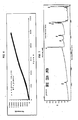
- FIG. 2 shows linear growth of the ALD Al 2 O 3 as a function of cycle number, wherein the Y axis is film thickness io A units.
- the bottom portion of FIG. 2 shows three growth cycles expanded in time domain, where digitized Al solution pulse (A) and water vapor pulse (B) are plotted together with film thickness t( ⁇ ).
- Solid [( t -Bu)Cp] 2 HfMe 2 is dissolved in ethylcyclohexane or other solvents as listed in Table 5.
- a stabilizing agent such as oxygen containing organic compounds such as THF, 1,4-dioxane, DMF, Cp and the like can be added.
- the Hf precursor concentration is set at from 0.1 M to 0.2 M.
- Liquid flow rate is controlled at from 10 nL/min to 10 ⁇ L/min. Water is used as a gas phase reactant.
- the temperatures of vaporizer and deposition chamber are set at 200°C -300°C and 200°C - 400°C, respectively.
- Typical pulse times for the Hf-solation, purge, water, and purge steps are 0.1-10, 1-10, 0.1-10, and 1-10 seconds, respectively.
- the upper portion of FIG. 3 shows linear growth of ALD HfO 2 as a function of cycle number, where the Y axis is film thickness in ⁇ units.
- the three highlighted graphs show different Hf solution pulse times of 0.5, 1 and 10 seconds respectively, with water vapor pulse and N 2 purge times fixed at 1 and 10 seconds.
- FIG. 4 shows an HfO 2 film composition using XPS analysis wherein the top portion is surface XPS with environmental carbon contamination and the bottom portion is ALD film composition after 1 minute sputtering. The results indicate there is no impurity incorporation when using the present invention.
- Self linuted ALD growth is demonstrated in FIG. 5 for each of three different temperature settings where metal precursor pulse length is increased from 0 to 1 seconds to over-saturate the deposition surface.
- the X-axis is Hf precursor pulse length in seconds and the Y-axis is film QCM growth rate in Angstroms per cycle. As shown, growth rates are independent of precursor dosage after saturation and confirm true ALD deposition. Water vapor pulse length was fixed at 1 second during the test. In this example, 0.2 M[( t -Bu)Cp] 2 HfMe 2 is dissolved in Octane.
- the XPS data shows the O/Hf ratio to be 2 and carbon impurity below the detection limit of 0.1%.
- Solid Tetrakis(1-methoxy-2-methyl-2-propoxide)hafnium (IV), Hf (mmp) 4 is dissolved in ethylcyclohexane or other solvents as listed in Table 5.
- a stabilizing agent such as oxygen containing organic compounds such as THF, 1,4-dioxane, DMF, Cp and the like can be added.
- the Hf precursor concentration is set at 0.1 M to 0.2 M.
- Liquid flow rate is controlled from 10 nL/min to 10 ⁇ L/min. Water is used as a gas phase reactant.
- the temperatures of vaporizer and deposition chamber are set at 150°C -300°C and 200°C - 350°C, respectively.
- Typical pulse times for the Hf-solution, purge, water, and purge steps are 0.1-10, 1-10, 0.1-10, and 1-10 seconds, respectivoly.
- FIG. 6 shows linear growth of ALD HfO 2 as a function of cycle number, where the Y axis is film thickness in Angstroms.
- FIG. 7 shows the HfO 2 film composition as formed in this Example, using XPS analysis after two minutes sputtering to remove surface contamination. The results indicate there is no impurity incorporation when using the present invention.
- the XPS data shows the O/Hf ratio to be 2.3 and carbon impurity below the detection limit Of 0.1 %.
- Solids of Ba(O-iPr) 2 , Sr(O-iPr) 2 , and Ti(O-iPr) 4 are dissolved in ethylcyclohexane or other solvents as listed in Table 5 with different mixing ratios.
- Stabilizing agents such as oxygen containing organic compounds such as THF, 1,4-dioxane, and DMF can be added.
- the BST precursor concentration is set at 0. 1 M to 0.2 M for each component.
- Liquid flow rate is controlled from 10 nL/min to 10 ⁇ L/min. Water is used as a gas phase reactant.
- the temperatures of vaporizer and deposition chamber are set at 200°C -350°C and 300°C - 400°C, respectively.
- Typical pulse times for the mix-solution, purge, water, and purge steps are 0.1-10, 1-10, 0.1-10 and 1-10 seconds respectively.
- the upper portion of FIG. 8 shows linear growth of ALD BST as a function of cycle number, where the Y axis is film thickness in ⁇ units.
- the bottom portion of FIG. 8 shows four and a half growth cycles expanded in time domain with digitized BST solution pulse and water vapor pulse plotted together with film thickness t( ⁇ ).
- Solid RuCp 2 is dissolved in dioxane, dioxane/octane or 2,5-dimethyloxytetrahydrofuran/ octane.
- concentration of Ru precursor is set at 0.05 M to 0.2 M.
- a stabilizing agents such as Cp and the like can be added.
- Liquid flow rate is controlled from 10 nL/min to 10 ⁇ L/min.
- Oxygen gas is used as a combustion agent.
- the temperatures of vaporizer and deposition chamber are set at 140°C - 300°C and 300°C - 400°C, respectively.
- Typical pulse times for the Ru-solution, purge, oxygen, and purge steps are 0.1-10, 1-10, 0.1-10, and 1-10 seconds, respectively.
- FIG. 9 shows Ru film composition using XPS analysis after 1.5 minutes sputtering to remove surface contamination. The results indicate there is no impurity incorporation when using the present invention.
- the film resistivity is about 12 micro-Ohm*
Landscapes
- Chemical & Material Sciences (AREA)
- General Chemical & Material Sciences (AREA)
- Chemical Kinetics & Catalysis (AREA)
- Engineering & Computer Science (AREA)
- Materials Engineering (AREA)
- Mechanical Engineering (AREA)
- Metallurgy (AREA)
- Organic Chemistry (AREA)
- Chemical Vapour Deposition (AREA)
- Formation Of Insulating Films (AREA)
Abstract
An ALD deposition system that can be used in the present invention includes solution vessel (10), for holding the dissolved precursor solution (precursor A), a liquid pump (20), to pump precursor A to a vaporizer (30), a vessel (40), for holding precursor B, such as water, a deposition chamber (50), having a monitoring device (60), therein, and an exhaust system (70).
Description
- The present invention relates to new and useful methods and apparatus for delivery of a broader class of precursors for atomic layer deposition. The present invention also relates to atomic layer deposition methods utilizing a new method of delivering precursors.
- Atomic layer deposition (ALD) is an enabling technology for next generation conductor barrier layers, high-k gate dielectric layers, high-k capacitance layers, capping layers, and metallic gate electrodes in silicon wafer processes- ALD has also been applied in other electronics industries, such as flat panel display, compound semiconductor, magnetic and optical storage, solar cell, nanotechnology and nanomaterials- ALD is used to build ultra thin and highly conformal layers of metal, oxide, nitride, and others one monolayer at a time in a cyclic deposition process. Oxides and nitrides of many main group metal elements and transition metal elements, such as aluminum, titanium, zirconium, hafnium, and tantalum., have been produced by ALD processes using oxidation or nitridation reactions. Pure metallic layers, such as Ru, Cu, Ta, and others may also be deposited using ALD processes through reduction or combustion reactions.
- A typical ALD process uses sequential precursor gas pulses to deposit a film one layer at a time. In particular a first precursor gas is introduced into a process chamber and produces a monolayer by reaction at surface of a substrate in the chamber. A second precursor is then introduced to react with the first precursor and form a monolayer of film made up of components of both the first precursor and second precursor, on the substrate. Each pair of pulses (one cycle) produces exactly one monolayer of film allowing for very accurate control of the final film thickness based on the number of deposition cycles performed.
- As semiconductor devices continue to get more densely packed with devices, channel lengths also have to be made smaller and smaller. For future electronic device technologies, it will be necessary to replace SiO2 and SiON gate dielectrics with ultra thin high-k oxides having effective oxide thickness (EOT) less than 1.5 nm. Preferably, high-k materials should have high band gaps and band offsets, high k values, good stability on silicon, minimal SiO2 interface layer, and high quality interfaces on substrates. Amorphous or high crystalline temperature films are also desirable. Some acceptable high-k dielectric materials are listed in Table 1. Among those listed, HfO2, Al2O3, ZrO2, and the related ternary high-k materials have received the most attention for use as gate dielectrics. HfO2 and ZrO2 have higher k values but they also have lower break down fields and crystalline temperatures. The aluminates of Hf and Zr possess the combined benefits of higher k values and higher break down fields. Y2O3 has high solubility of rare earth materials (e.g. Eu+3) and is useful in optical electronics applications.
Table 1. Dielectric properties of ALD high-k gate materials Material K EOT (@ 5nm film) Break down Field E BD (MV/cm @ 1 µA/cm 2 ) Crystalline Temp (°C) HfO2 13-17 1.3 1-5 400-600 Al2O3 7-9 2.44 3-8 900-1000 ZrO 220 0.98 1 <300 * HfxAlyOz 8-20 1.22 N/A 900 ZrxAlyOz 8-20 1.22 N/A . 975 Y2O3 12-15 1.44 4 <600 Ta2O5 23-25 0.81 0.5-1.5 500-700 NbxAlyOz 8 2.44 5 N/A HfxSiyOz N/A N/A N/A 800 TaxTiyOz 27-28 0.71 1 N/A Al2O3/HfO2 N/A N/A N/A N/A Al2O3/TiO2 9-18 1.44 5-7 N/A * as a function of film thickness - Transition metals and metal nitrides may be used as diffusion barriers to prevent inter-diffusion of metal and silicon in IC devices. These barrier layers are only a few nm in thickness, and are conformal in trenches and vias. Table 2 shows some properties of ALD grown barriers. Desirable properties include low growth temperature (< 400°C) and low film resistivity. For example, Ta/TaN and W/WxN are preferred as copper diffusion barrier systems. ALD metal thin layers, such as Ru, Cu, Pt, and Ta, have also been deposited for use as barrier and seed layer applications.
Table 2. Film properties of ALD nitride barrier layer materials Film Metal precursor Other precursors Growth Temp (°C) Resistivity (µΩ*cm) TaN TaCl5 Zn +NH3 400-500 900 TaN TaCl5 H/N plasma 300-400 300-400 TaN(C) TBTDET NH3 250 N/A TaN(C) TBTDET H plasma N/ A 250 TaNx TaF5 H/ N plasma 250 104-103 Ta3N5 TaCl5 NH3 400-500 105-104 W2N WF6 NH3 330-530 4500 TiN TiCl4 NH3 500 250 TiN TiCl4 Zn+NH3 500 50 TiN TiI4 NH3 400-500 380-70 TiN TiCl4 Me2NNH2 350 500 TiN TEMAT NH3 160-320 600 (post annealed) TiN Ti(NMe2)4 NH3 180 5000 - ALD is an advanced deposition method for high density memory devices when highly conformal and high aspect ratio deposition of high-k dielectric materials and its liners is needed. High-k oxides listed in Table 1, such as Al2O3, as well as ferroelectric materials, such as BST, PZT, and SBT layers, have been used as capacitor dielectrics in memory devices.
- Several types of traditional vapor phase deposition precursors have been tested in ALD processes, including halides, alkoxides, β-diketonates, and newer alkylamides and cyclopentadienyls materials. Halides perform well in ALD processes with good self-limiting growth behaviors, but are mostly high melting solids that require high source temperatures. Another disadvantage of using solid precursors is the risk of particle contamination to the substrate. In addition, there is an issue of instability in flux or dosage associated with the solid precursors. Alkoxides show reduced deposition temperatures in ALD processes, but can decompose in the vapor phase leading to a continuous growth process instead of ALD. β-diketonates are used in MOCVD processes and are generally more stable towards hydrolysis than alkoxides. However, they are less volatile and require high source and substrate temperatures. A mixed ligand approach with β-diketonates and alkoxides has been suggested to improve stability of alkoxide MOCVD precursors. Examples are Zr(acac)2(hfip)2, Zr(O-t-Pr)2(thd)2. In addition, metal nitrate precursors, M(NO3)x, alkylamides, and amidinates, show self-limiting growth behavior with very low carbon or halide contamination. However, the stability of nitrates and amides is an issue in production and many cyclopentadienyls are in solid forms.
- In general, ALD precursors should have good volatility and be able to saturate the substrate surface quickly through chemisorptions and surface reactions. The ALD half reaction cycles should be completed within 5 seconds, preferably within 1 second. The exposure dosage should be below 108 Laugmuir (1 Torr*sec = 106 Laugmuir). The precursors should be stable within the deposition temperature windows, because un-controllable CVD reactions could occur when the precursor decomposes in gas phase. The precursors themselves should also be highly reactive so that the surface reactions are fast and complete. In addition, complete reactions yield good purity in films. The preferred properties of ALD precursors are given in Table 3.
Table 3. Preferred ALD precursor properties Requirement Class Property Range Primary Good volatility > 0.1 Torr Primary Liquid or gas At room temperatures Primary Good thermal stability > 250°C or > 350°C in gas phase Primary Fast saturation < 5 sec or < 1 sec Primary Highly reactive Complete surface reactive cycles Primary Non reactive volatile byproduct No product and reagent reaction Secondary High growth rate Up to a monolayer a cycle Secondary Less shield effect from ligands Free up un-occupied sites Secondary Cost and purity Key impurity: H2O, O2 Secondary Shelf-life > 1-2 years Secondary Halides Free in films Secondary Carbon < 1% in non carbon containing films - Because of stringent requirements for ALD precursors as noted in Table 3, new types of ALD precursors are needed that are more stable, exhibit higher volatility, and are better suited for ALD. However, the cost of developing new precursors is a significant obstacle. In this light, the prior art related to chemical vapor deposition (CVD) processes provides some useful background information.
- Direct liquid injection methods have been used in many vapor phase deposition processes. For example,
US Patent 5,376,409 describes a method of delivering solid precursors that have been dissolved in an appropriate solvent for use in chemical vapor deposition (CVD) techniques.US Patent 5,45I ,260 describes a method for providing a liquid precursor solution for direct injection using an ultrasonic nozzle for CVD techniques. Beach, et al., in "MOCVD of very thin films of lead lanthanum titanate", MRS symposium proceedings, 415, 225-30 (1996) set forth a CVD method using multiple precursors dissolved in a single solution. Choi, et al., "Structure stability of metallorganic chenaical vapor deposited (Ba, Sr)RuO3 electrodes for integration of high dielectric constant thin films", Journal of the Electrochemical Society, 149(4), G232-5 (2002), describes a CVD method using liquid injection of a multiple component solution. Zhao, et al., "Metallorganic CVD of high-quality PZT thin films at low temperature with new Zr and Ti precursors having mmp ligands", Journal of the Electrochemical Society, 151(5), C283-91 (2004) discusses another CVD method using a multiple precursor solution liquid delivery system. As noted, each of these references discuss CVD techniques and are interesting only for the discussion of various precursor materials, including solid precursors dissolved in appropriate solvents. - There is also some prior art background material relating to ALD processes. Cho, et al., "Atomic layer deposition (ALD) of Bismuth Titanium oxide thin films using direct liquid injection (DLI) method", Integrated Ferroelectrics, 59, 1483-9, (2003), reports on the use of solid precursors dissolved in a solvent. However, no information is provided concerning the delivery and deposition methods.
-
US published patent application 2003/0056728 discloses a pulsed liquid injection method in an atomic vapor deposition (AVD) process, using a precursor in liquid or dissolved form. The liquid dose is too large for ideal ALD operation. Min, et al., "Atomic layer deposition of Al2O3 thin films from a 1-methoxy-2-methyl-2-propoxide complex of aluminum and water", Chemistry Materials (to be published in 2005), describes a liquid pulsing method for solution precursors, where again the liquid dose is too large for ideal ALD operation. In fact, using liquid pulse to achieve monolayer coverage is very difficult, because in an ALD operation, the pulse width of a vapor phase reactant is 1 second or less. One issue is that the shape of a vaporized liquid pulse is distorted in time space and sharp leading and tailing edges of the liquid pulse can be lost after vaporization. It is therefore difficult to synchronize two well separated reactants to perform self-limiting and sequential ALD growth. The liquid pulse methods described in the two references above do not represent true ALD processes but rather variants of CVD processes. -
US published patent application 2004/0079286 , describes a two-phase delivery system for ALD wherein both vapor and liquid phase coexist in a vaporizer after liquid injection. This process will not work for solution based precursors or multi-component mixtures where material separation would occur. - There remains a need in the art for improvements to ALD precursors and methods of using such precursors in ALD processes.
- In a first aspect, the present invention provides a method of atomic layer deposition comprising:
- alternately delivering a vaporized precursor solution and a vaporized reaction solution to a deposition chamber;
- forming a monolayer of components of the precursor solution and reaction solution on a surface of a substrate in the deposition chamber; and
- repeating until a thin film of a predetermined thickness is formed;
- The present invention provides unique combinations of solution stabilization and delivery technologies with special ALD operational modes, In particular, the present invention allows the use of at least one precursor, preferably at least one low-volatility precursor, dissolved in a solvent. The precursor is preferably a solid. Low-volatility solid precursors are often less expensive and often exhibit very high boiling points. Further, unstable solutes can be stabilized in solution and still retain very high boiling points. This is advantageous because the solutions may be delivered at room temperature. After the solution is vaporized, the vapor-phase mixture of precursor and solvent is pulsed into a deposition chamber to assure a true ALD process.
- Stable ALD precursor solutions may be prepared in suitable solvents. The precursor solute can be selected from a wide range of low vapor pressure solutes or solids depending upon specific applications. Precursor concentrations are generally maintained from 0.01 M to 1 M, depending upon the liquid flow rate and the vaporization conditions, i.e., pressure and temperature. The precursor solute can be a single molecule or multiple species, wherein the mixture of multiple species is used in making multi-ternary thin films. A major component of the solution is a solvent that does not hinder a normal ALD process. The solvent is preferably chosen so that its boiling point is high enough to ensure no solvent loss in delivery but low enough to ensure total vaporization in a vaporizer. The mixture of the precursor solute in a solvent often will have a higher boiling point than the solvent alone, but the solvent has a high boiling point to prevent any premature separation of solute and solvent during delivery or at the entrance of the vaporizer. Stabilizing additives with concentrations at 0.0001 M to 1 M may be added to the solvent to help prevent premature decomposition of the ALD precursors in the vaporizer. In addition, the stabilizing additives provide similar attributes as ligand parts of a precursor and may prolong the shelf-life of the solution. The solution is delivered at room temperature by pumping at pre-selected flow rates. After the solution enters the vaporizer, both solvent and solute are vaporized to form a hot vapor stream. The hot vapor is then switched on and off by a fast action pressure swing mechanism operating at room temperature. This produces normal ALD growth without suffering particle contamination, thermal decomposition or solvent interference.
- In accordance with the present invention, at a given temperature and precursor concentration, the maximum liquid flow rate or maximum vaporizer pressure can be calculated. In particular, to produce a single vapor phase solution precursor, the precursor partial pressure when all molecules are in vapor phase should not exceed the material vapor pressure at the given conditions. The selected vaporizer temperature should be below the thermal decomposition temperatures of the precursor and the volume of the vaporizer is selected based on the size of the deposition chamber or substrates being used.
- Metal or non-metal precursors may be selected from those known in the literature and in most cases are readily available commercially at a reasonable cost. Most of these precursors are in solid form, and therefore, are difficult to use directly because of low vapor pressures and high boiling points. In particular, if source temperature is set high to generate enough vapor pressure, the precursor may thermally decompose. In addition, direct use of solid precursors raises the risk of particle contamination or unstable dosage. The precursors which may be used in the present invention include halides, alkoxides, β-diketonates, nitrates, alkylamides, amidinates, cyclopentadienyls, and other forms of (organic or inorganic) (metal or non-metal) compounds. Typical concentrations of precursors in a solution are from 0,01 M to 1 M, depending upon the liquid flow rate and the vaporization conditions, i.e., pressure and temperature. Examples of solutes are given in Table 4, but the present invention is not limited thereto, and any suitable solutes may be used.
Table 4. Examples of ALD precursor solutes Name Formula MW Mp (°C) bp (°C / mmHg) Density (g/mL) Tetrakis(ethylmethylamino)hafnium (TEMAH) Hf[N(EtMe)]4 410.9 -50 79/0.1 1.324 Hafnuim (IV) Nitrate, anhydrous Hf(NO3)4 426.51 >300 n/a Hafnuim (IV) Iodide, anhydrous Hfl4 686.11 400 (subl.) n/a 5.6 Dimethylbis(t-butyl cyclopentadienyl hafnium(IV) [(t-Bu)Cp]2HfMe2 450.96 73-76 n/a Tetrakis(1-methoxy-2-methyl-2-propoxide) hafnium (IV) Hf(O2C5H11)4 591 n/a 135/0.01 Di(cyclopentadienyl)Hf dichloride Cp2HfCl2 379.58 230-233 n/a Hafnium tert-butoxide Hf(OC4H9)4 470.94 n/a 90/5 Hafnium ethoxide Hf(OC2H5)4 358.73 178-180 180-200/13 Aluminum i-propoxide Al(OC3H7)3 204.25 118.5 140.5/8 1.0346 Lead t-butoxide Pb(OC(CH3)3)2 353.43 Zirconium (IV) t-butoxide Zr(OC(CH3)3)4 383.68 90/5; 81/3 0.985 Titanium (IV) i-propoxide Ti(OCH(CH3)2)4 284.25 20 58/1 0.955 Barium i-propoxide Ba(OC3H7)2 255.52 200 (dec) n/a Strontium i-propoxide Sr(OC3H7)2 205.8 Bis(pentamethylCp) Barium Ba(C5Me5)2 409.8 Bis(tripropylCp) Strontium Sr(C5 i-Pr3H2)2 472.3 (Trimethyl)pentamethylcyclop entadienyl titanium (IV) Ti(C5Me5)(Me3) 228.22 Bis(2,2,6,6-tetramethyl-3,5-he ptanedionato) barium triglyme adduct Ba(thd)2* triglyme 503.85 (682.08) 88 Bis(2,2,6,6-tetramethyl-3,5-he ptanedionato) strontium triglyme adduct Sr(thd)2 * triglyme 454.16 (632.39) 75 Tris(2,2,6,6-tetramethyl-3,5-he ptanedionato) titanium(III) Ti(thd)3 597.7 75/0.1 (sp) Bis(cyclpentadinyl)Ruthenium (II) RuCp2 231.26 200 80-85/0.01 - Other examples of precursor solutes include Ta(NMe2)5 and Ta(NMe2)3(NC9H11) that can be used as Tantalum film precursors.
- The solvents preferably have reasonable solubility of ALD precursors at room temperature and should be chemically compatible with the precursors. The boiling point of the solvent should be high enough to ensure no solvent loss in delivery and low enough to ensure total vaporization in the vaporizer, although the boiling point of the solvent can be either lower or higher than the precursor solute. The solvent molecules should not compete with precursor molecules for reaction sites on the substrate surface, e.g., the solvent must not be chemically adsorbed on the surface by reacting with a surface hydroxide group. The solvent molecules or their fragments should not be any part of the ALD solid film composition. Examples of solvents useful in the present invention are given in Table 5, but are not limited thereto, as any suitable solvent meeting the above criteria may be used.
Table 5. Examples of solvents Name Formula BP@760Torr (°C) Dioxane C4H8O2 101 Toluene C7H8 110.6 n-butyl acetate CH3CO2(n-Bu) 124-126 Octane C8H18 125-127 Ethylcyclohexane C8H16 132 2-Methoxyethyl acetate CH3CO2(CH2)2OCH3 145 Cyclohexanone C6H10O 155 Propylcyclohexane C9H18 156 2-Methoxyethyl Ether (diglyme) (CH3OCH2CH2)2 O 162 Butylcyclohexane C10H20 178 - Another example of a solvent useful for the present invention is 2,5-dimethylox*trabydrofuran.
- Stabilizing agents to prevent premature decomposition of ,A,LD precursors in the vaporizer and to prolong the shelf-life of the ALD precursor solutions may also be added. However, the precursor in solution is nornnally stable at room temperature with or without the use of stabilizing additives.
- Once the solid precursor has been dissolved in the solvent, the liquid solutions can be delivered using a liquid metering pump, a mass flow controller, a syringe pump, a capillary tube, a step pump, a micro-step pump or other suitable equipment at room temperature. The flow rate is controlled from 10 nl/min to 10 ml/min depending upon the size of the deposition systems, i.e. the flow rate can be scaled up as necessary for larger deposition systems.
- An example of one method according to the present invention is described as follows. Precisely controlled liquid solution is injected into a vaporizer that may have internal or external heating sources or both. Optionally, the solution can be atomized using a nebulizer, e.g., pneumatic jets or an external energy source, such as inert gas co-axial flow or an ultrasonic source. The vaporizer temperature is controlled by a PID loop and the vaporizer is operated to evaporate both solvent and solute within a given pressure range. In general, the temperature is set at between 100°C and 350°C while the pressure is between -14 psig and +10 psig. The vaporizer temperature is optimized for specific solute concentration and delivery rate. Preferably, vaporization temperatures are from 150°C to 250°C and flow rates are between 0.1 µL/min and 100 µL/min. If the temperature is too low, precursor molecules may condense because of low saturation partial pressure and if the temperature is too high, the precursor molecules may decompose inside the vaporizer chamber. To ensure particle-free vapor phase formation before ALD, the hot precursor and solvent vapor may be passed through a particle filter operated at the same or a higher temperature than the vaporizer temperature.
- To deposit the ALD layers, the hot precursor and solvent are switched on and off by a fast action pressure swing device consisting of fast switch valves and an inert gas source. The valves are operated at room temperature and are not exposed to reactive hot vapor. When valves are switched off, inert gas forms a diffusion barrier to prevent hot vapor from entering the deposition chamber. Inert gas is also sent to the deposition chamber to purge out excess precursor and solvent from the previous cycle which can be then carried to an exhaust system. When the valves are on, hot vapor and inert gas enter the deposition chamber to dose deposition on the substrate surface. The ratio of inert gas entering the chamber and going to the exhaust is adjustable by means of metering valves or mass flow controllers. Typically, precursor A is on for 0.1 to 10 seconds, followed by a purge for 1 to 10 seconds, precursor B is on for 0.1 to 10 seconds, followed by another purge for 1 to 10 seconds. In such an operation, the precursor A could be a metal precursor from the solution vaporizer, and precursor B could be a gas phase reactant such as water, oxygen, ozone, hydrogen, ammonia, silane, disilane, diborane, hydrogen sulfide, organic amines and hydrazines, or other gaseous molecular or plasma or radical sources. In another embodiment, a stop-and-go delivery method may be used instead of a continuous flow method. In addition, vaporized precursors may be stored in vessels before delivery into the deposition chamber using a control system including appropriate valves.
- In a second aspect, the present invention provides a method of delivering a vaporized solution precursor to an atomic layer deposition chamber, comprising:
- connecting a vaporizer to the atomic layer deposition chamber; and
- delivering vaporized solution precursor from the vaporizer to the chamber at a constant pumping speed.
- The present invention also relates to the delivery of vaporized solution precursors. One preferred method comprises operating at a constant pumping speed from a vacuum chamber to the exit of the vaporizer- In this method, to achieve the total vaporization of the precursor solution, the liquid flow rate must be kept below an established upper limit. For example, a precursor solution of aluminum iso-propoxide has a vapor pressure of about 8 Torr at 140.5°C. If the vaporizer is operated at this temperature, the maximum liquid flow rates for the aluminum iso-propoxide solution at 0.1 M concentration are 48, 242 and 725 raicroliter/min for pumping speeds of 0.01, 0.05 and 0.15 l/min, respectively. To deliver higher liquid flow rates of a given precursor solution, the vaporizer temperature can be increased up to the thermal decomposition temperature of the precursor solute.
- In a third aspect, the present invention provides a method of delivering a vaporized solution precursor to an atomic layer deposition chamber, comprising:
- connecting a vaporizer to the chamber; and
- delivering a vaporized solution precursor from the vaporizer to the chamber, when the vaporizer is operated at a constant pressure.
- The second preferred method according to the present invention comprises operating at constant vaporizer pressure. Constant total pressure in the vaporizer can be controlled by pumping speed at the exit of the vaporizer and liquid flow rate at the entrance to the vaporizer. In this method, to achieve the total vaporization of the precursor solution, total vaporizer pressure must be kept below an established upper limit. For example, a precursor solution of aluminum iso-propoxide has a vapor pressure of about 8 Torr at 140.5°C. If the vaporizer is operated at this temperature, the maximum total pressure in the vaporizer for the aluminum iso-propoxide solution at 0.1 M concentration is about 500 Torr when n-Octane is the solvent. To operate at higher total vaporizer pressure for a given precursor solution, the vaporizer temperature can be increased up to the thermal decomposition temperature of the precursor solute
- Prefered features of the present invention will now be described, by way of example only, with reference to the accompanying drawings, in which:
- FIG. 1 is a schematic diagram of an ALD apparatus used to deliver precursors;
- FIG. 2 is a graph plotting ALD growth of Al2O3 in cycle and time domains;
- FIG. 3 is a graph plotting ALD growth of HfO2 in cycle and time domains at three different precursor dosages;
- FIG. 4 is an XPS. spectrum of surface and thin film composition of an ALD grown HfO2 sample;
- FIG. 5 is a graph plotting ALD growth of HfO2 at different temperatures and pulse lengths;
- FIG. 6 is a graph plotting ALD growth of HfO2;
- FIG. 7 is an XPS spectrum of thin film composition of an ALD grown HfO2 sample;
- FIG. 8 is a graph plotting ALD growth of BST in cycle and time domains; and
- FIG. 9 is an XPS spectrum of thin film composition of an ALD grown Ru sample.
- An ALD deposition system that can be used in the present invention is shown in FIG.1. In particular, the system includes
solution vessel 10, for holding the dissolved precursor solution (precursor A), aliquid pump 20, to pump precursor A to avaporizer 30, avessel 40, for holding precursor B, such as water, adeposition chamber 50, having amonitoring device 60, therein, and anexhaust system 70. Standard connections and valves may be included as is known in the art to control the method as described above. By using the system shown in FIG. 1, pulses of the vapor phase precursors fromvaporizer 30 andvessel 40 are well separated in time as they enter into thedeposition chamber 50. Further, certain elements, such as the inert gas source are not shown, but are standard in the industry. - The ALD system may be used to grow thin films and to operate as a self-limiting ALD process. In operation, a silicon wafer substrate is provided in the deposition chamber. The preferred monitoring device is an in-situ device, such as a quartz crystal microbalance (QCM) that monitors the growth of thin films in real time. For example, a QCM with starting frequency at 6 MHz installed in a tubular reactor may be used. The growth surface is a blanket electrode, typically gold that may be modified with oxides, or silicon or other metals for a better nucleation step during the initial ALD growth. The temperature of the deposition chamber is set from 100°C to 400°C and is precisely controlled within ± 0.1°C variation or less using a PID loop. The deposition chamber pressure is set from 0.1 to 10 Torr. For more continuous production, the ALD deposition chamber can be coupled to the source and delivery systems. The deposition chamber can be any suitable type, including, but not limited to, flow through reactors, shower head reactors, and spray/injection head reactors.
- The precursors A and B are carefully separated in the exhaust system to prevent unwanted reactions. Each precursor can be trapped in a foreline trap that may operate at different temperatures. For example, a room temperature trap with stainless steel filter may be used. The separated precursors can be further separated for disposal or recycle.
- Several examples of the use of solid precursors dissolved in a solvent and used in an ALD process are provided below.
- Solid aluminum i-propoxide is dissolved in ethylcyclohexane or other solvents as listed in Table 5. A stabilizing agent, such as oxygen containing organic compounds such as THF, 1,4-dioxane, and DMF can be added. The concentration of the aluminum precursor is between 0.1 M and 0.2 M. Liquid flow rate is controlled from 10 nl/min to 10 µl/min. Water is used as a gas phase reactant. The temperatures of vaporizer and deposition chamber are set at 150°C -300°C and 250°C - 400°C, respectively. Typical pulse times for the Al-solution, purge, water, and purge steps are 0.1-10, 1-10, 0.1-10, and 1-10 seconds, respectively. The upper portion of FIG. 2 shows linear growth of the ALD Al2O3 as a function of cycle number, wherein the Y axis is film thickness io A units. The bottom portion of FIG. 2 shows three growth cycles expanded in time domain, where digitized Al solution pulse (A) and water vapor pulse (B) are plotted together with film thickness t(Å).
- Solid [(t-Bu)Cp]2HfMe2 is dissolved in ethylcyclohexane or other solvents as listed in Table 5. A stabilizing agent, such as oxygen containing organic compounds such as THF, 1,4-dioxane, DMF, Cp and the like can be added. The Hf precursor concentration is set at from 0.1 M to 0.2 M. Liquid flow rate is controlled at from 10 nL/min to 10 µL/min. Water is used as a gas phase reactant. The temperatures of vaporizer and deposition chamber are set at 200°C -300°C and 200°C - 400°C, respectively. Typical pulse times for the Hf-solation, purge, water, and purge steps are 0.1-10, 1-10, 0.1-10, and 1-10 seconds, respectively. The upper portion of FIG. 3 shows linear growth of ALD HfO2 as a function of cycle number, where the Y axis is film thickness in Å units. The three highlighted graphs show different Hf solution pulse times of 0.5, 1 and 10 seconds respectively, with water vapor pulse and N2 purge times fixed at 1 and 10 seconds. FIG. 4 shows an HfO2 film composition using XPS analysis wherein the top portion is surface XPS with environmental carbon contamination and the bottom portion is ALD film composition after 1 minute sputtering. The results indicate there is no impurity incorporation when using the present invention.
- Self linuted ALD growth is demonstrated in FIG. 5 for each of three different temperature settings where metal precursor pulse length is increased from 0 to 1 seconds to over-saturate the deposition surface. The X-axis is Hf precursor pulse length in seconds and the Y-axis is film QCM growth rate in Angstroms per cycle. As shown, growth rates are independent of precursor dosage after saturation and confirm true ALD deposition. Water vapor pulse length was fixed at 1 second during the test. In this example, 0.2 M[(t-Bu)Cp]2HfMe2 is dissolved in Octane. The XPS data shows the O/Hf ratio to be 2 and carbon impurity below the detection limit of 0.1%.
- Solid Tetrakis(1-methoxy-2-methyl-2-propoxide)hafnium (IV), Hf(mmp)4 is dissolved in ethylcyclohexane or other solvents as listed in Table 5. A stabilizing agent, such as oxygen containing organic compounds such as THF, 1,4-dioxane, DMF, Cp and the like can be added. The Hf precursor concentration is set at 0.1 M to 0.2 M. Liquid flow rate is controlled from 10 nL/min to 10 µL/min. Water is used as a gas phase reactant. The temperatures of vaporizer and deposition chamber are set at 150°C -300°C and 200°C - 350°C, respectively. Typical pulse times for the Hf-solution, purge, water, and purge steps are 0.1-10, 1-10, 0.1-10, and 1-10 seconds, respectivoly. FIG. 6 shows linear growth of ALD HfO2 as a function of cycle number, where the Y axis is film thickness in Angstroms. FIG. 7 shows the HfO2 film composition as formed in this Example, using XPS analysis after two minutes sputtering to remove surface contamination. The results indicate there is no impurity incorporation when using the present invention. The XPS data shows the O/Hf ratio to be 2.3 and carbon impurity below the detection limit Of 0.1 %.
- Solids of Ba(O-iPr)2, Sr(O-iPr)2, and Ti(O-iPr)4 are dissolved in ethylcyclohexane or other solvents as listed in Table 5 with different mixing ratios. Stabilizing agents such as oxygen containing organic compounds such as THF, 1,4-dioxane, and DMF can be added. The BST precursor concentration is set at 0. 1 M to 0.2 M for each component. Liquid flow rate is controlled from 10 nL/min to 10 µL/min. Water is used as a gas phase reactant. The temperatures of vaporizer and deposition chamber are set at 200°C -350°C and 300°C - 400°C, respectively. Typical pulse times for the mix-solution, purge, water, and purge steps are 0.1-10, 1-10, 0.1-10 and 1-10 seconds respectively. The upper portion of FIG. 8 shows linear growth of ALD BST as a function of cycle number, where the Y axis is film thickness in Å units. The bottom portion of FIG. 8 shows four and a half growth cycles expanded in time domain with digitized BST solution pulse and water vapor pulse plotted together with film thickness t(Å).
- Solid RuCp2 is dissolved in dioxane, dioxane/octane or 2,5-dimethyloxytetrahydrofuran/ octane. The concentration of Ru precursor is set at 0.05 M to 0.2 M. A stabilizing agents such as Cp and the like can be added. Liquid flow rate is controlled from 10 nL/min to 10 µL/min. Oxygen gas is used as a combustion agent. The temperatures of vaporizer and deposition chamber are set at 140°C - 300°C and 300°C - 400°C, respectively. Typical pulse times for the Ru-solution, purge, oxygen, and purge steps are 0.1-10, 1-10, 0.1-10, and 1-10 seconds, respectively. FIG. 9 shows Ru film composition using XPS analysis after 1.5 minutes sputtering to remove surface contamination. The results indicate there is no impurity incorporation when using the present invention. The film resistivity is about 12 micro-Ohm*cm by 4-point probe measurement.
- It is anticipated that other embodiments and variations of the present invention will become readily apparent to the skilled artisan in the light of the foregoing description; and it is intended that such embodiments and variations likewise be included within the scope of the invention as set out in the appended claims.
wherein the precursor solution is delivered to a vaporizer at room temperature and vaporized without decomposition or condensation.
Claims (29)
- A method of atomic layer deposition comprising:alternately delivering a vaporized precursor solution and a vaporized reaction solution to a deposition chamber,forming a monolayer of components of the precursor solution and reaction solution on a surface of a substrate in the deposition chamber; andrepeating until a thin film of a predetermined thickness is formed;wherein the vaporized precursor solution comprises one or more precursors dissolved in a solvent; and
wherein the precursor solution is delivered to a vaporizer at room temperature and vaporized without decomposition or condensation. - A method according to claim 1, wherein the precursor is a solid.
- A method according to claim 1, wherein the precursor is selected from the group consisting of halides, alkoxides, β-diketonates, nitrates, alkylamides, amidinates, cyclopentadienyls, and other forms of organic or inorganic metal or non-metal compounds.
- A method according to claim 3, wherein the precursor is selected from the group casting of Hf[N(EtMe)]4, Hf(NO3)4, RfCl4, HfI4, [(t-Bu)Cp]2HfMe2, Hf(O2C5H11)4, Cp2HfCl2, Hf(OC4H9)4, Hf(OC2H5)4, Al(OC3H7)3, Pb(OC(CH3)3)2, Z,r(OC(CH3)3)4, Ti(OCH(CH3)2)4, Ba(OC3H7)2, Sr(OC3H7)2, Ba(C5Me5)2, Sr(C5 i-Pr3H2)2, Ti(C5Me5)(Me3), Ba(thd)2 * triglyme, Sr(thd)2 * triglyme, Ti(thd)3, RuCp2, Ta(NMe2)5 and Ta(NMe2)3(NC9H11).
- A method according to any preceding claim, wherein the concentration of the precursor in the precursor solution is from 0.01 M to 1 M.
- A method according to any preceding claim, wherein the precursor solution further includes stabilizing additives with concentrations from 0.0001 M to 1 M, selected from the group consisting of oxygen containing organic compounds such as THF, 1,4-dioxane, and DMF.
- A method according to any preceding claim, wherein the solvent has a boiling point selected to ensure no solvent loss during vaporization.
- A method according to any preceding claim, wherein the solvent is selected form the group consisting of dioxane, toluene, n-butyl acetate, octane, ethylcyclohexane, 2-methoxyethyl acetate, cyclohexanone, propyleyclohexane, 2-methoxyethyl ether (diglyme), butylcyclohexane and 2,5-dimethyloxyretrahydrofuran.
- A method according to any preceding claim, wherein the reaction solution is selected from the group consisting of water, oxygen, ozone, hydrogen, ammonia, silane, disilane, diborane, hydrogen sulfide, organic amines and hydrazines, or other gaseous molecule or plasma or radical sources.
- A method according to any preceding claim, wherein delivery of the vaporized precursor solution comprises delivery at a flow rate from 10 nl/min to 10 ml/min.
- A method according to any preceding claim wherein the precursor solution is vaporized at a temperature from 100°C and 354°C and a pressure from -14 psig and +10 psig.
- A method according to any preceding claim, further comprising purging the deposition chamber between each alternate delivery of vaporized precursor solution and vaporized reaction solution.
- A method according to claim 12, wherein vaporized precursor solution is delivered for 0.1 to 10 seconds, a first purge is carried out for 1 to 10 seconds, vaporized reaction solution is delivered for 0.1 to 10 seconds, and a second purge is carried out for 1 to 10 seconds.
- A method according to any preceding claim, wherein the combination of precursor, solvent and thin film is selected from the group consisting of precursor aluminum t-propoxide, solvent ethyloyclohexane or octane, thin film Al2O3; precursor [(t-Bu)Cp]2HfMe2, solvent ethylcyclohexane or octane, thin film HfO2; precursor Tetrakis(1-methoxy-2-methyl-2-propoxide) hafnium (IV), solvent ethylcyclohexance or octane, thin film HfO2, precursor hafnium tert-butoxide or hafnium ethoxide, solvent ethylcyclohexane or octane, thin film HfO2; precursor mixture of Ba(O-iPr)2, Sr(O-iPr)2, and Ti(O-iPr)4, solvent ethylcyclohexane or octane, thin film BST; and precursor RuCp2, solvent dioxane, dioxane/octane or 2,5-dimethyloxytetrahydrofuran/octane, thin film Ru.
- A method of delivering a vaporized solution precursor to an atomic layer deposition chamber, comprising:connecting a vaporizer to the atomic layer deposition chamber; anddelivering vaporized solution precursor from the vaporizer to the chamber at a constant pumping speed.
- A method of delivering a vaporized solution precursor to an atomic layer deposition chamber, comprising:connecting a vaporizer to the chamber; anddelivering a vaporized solution precursor from the vaporizer to the chamber, when the vaporizer is operated at a constant pressure.
- A method according to claim 16, wherein constant pressure in the vaporizer is maintained by controlling pumping speed at an exit of the vaporizer and controlling liquid flow rate at the entrance to the vaporizer.
- An apparatus for atomic layer deposition, comprising:a source of precursor solution comprising one or more precursors dissolved in a solvent;a source of a reaction solution;a vaporizer connected to each of the source of precursor solution and the source of reaction solution;an atomic layer deposition chamber connected to the vaporizer, andmeans for maintaining the source of precursor solution at room temperature.
- An apparatus according to claim 18, wherein the precursor is a solid.
- An apparatus according to claim 18 or claim 19, wherein the precursor is selected from the group consisting of halides, alkoxides, β-diketonates, nitrates, alkylamides, amidinates, cyclopentadienyls, and other forms of organic or inorganic metal or non-metal compounds.
- An apparatus according to claim 20, wherein the precursor is selected from the group consisting of Hf[N(EtMe)]4, Hf(NO3)4, HfCl4, HfI4, [(t-Bu)Cp]2HfMe2, Hf(O2C5H11)4, Cp2HfCl2, Hf(OC4H9)4, Hf(OC2H5)4, Al(OC3H7)3, Pb(OC(CH3)3)2, Z,r(OC(CH3)3)4, Ti(OCH(CH3)2)4, Ba(OC3H7)2, Sr(OC3H7)2, Ba(C5Me5)2, Sr(C5 i-Pr3H2)2, Ti(C5Me5)(Me3), Ba(thd)2 * triglyme, Sr(thd)2 * triglyme, Ti(thd)3, RuCp2, Ta(NMe2)5 and Ta(NMe2)3(NC9H11).
- An apparatus according to any of Claims 18 to 21, wherein the concentration of the low volatility precursor in the precursor solution is from 0.01M to 1M.
- An apparatus according to any of Claims 18 to 22, wherein the precursor solution further includes stabilizing additives with concentrations from 0.0001 M to 1 M, selected from the group consisting of oxygen containing organic compounds such as THF, 1,4-dioxane, and DMF.
- An apparatus according to any of Claims 18 to 23, wherein the solvent has a boiling point selected to ensure no solvent loss during vaporization.
- An apparatus according to any of Claims 18 to 24, wherein the solvent is selected form the group consisting of dioxane, toluene, n-butyl acetate, octane, ethylcyclohexane, 2-methoxyethyl acetate, cyclohexanone, propylcyclohexane, 2-methoxyethyl ether (diglyme), butylcyclohexane and 2,5-dimethyloxytetrahydrofuran,
- An apparatus according to any of Claims 18 to 25, wherein the reaction solution is selected from the group consisting of water, oxygen, ozone, hydrogen, ammonia, silane, disilane, diborane, hydrogen sulfide, organic amines and hydrazines, or other gaseous molecule or plasma or radical sources.
- An apparatus according to any of Claims 18 to 26, further comprising a source of purge gas connected with the atomic layer deposition chamber.
- A thin film formed by the method of claim 1.
- A thin film according to claim 28, wherein the thin film is free from impurity contamination.
Priority Applications (2)
| Application Number | Priority Date | Filing Date | Title |
|---|---|---|---|
| EP20100012891 EP2298957A3 (en) | 2005-04-29 | 2006-04-25 | Method and apparatus of using solution based precursors for atomic layer deposition |
| EP20100012892 EP2281922A3 (en) | 2005-04-29 | 2006-04-25 | Method and apparatus of using solution based precursors for atomic layer deposition |
Applications Claiming Priority (2)
| Application Number | Priority Date | Filing Date | Title |
|---|---|---|---|
| US67649105P | 2005-04-29 | 2005-04-29 | |
| US11/400,904 US7514119B2 (en) | 2005-04-29 | 2006-04-10 | Method and apparatus for using solution based precursors for atomic layer deposition |
Publications (2)
| Publication Number | Publication Date |
|---|---|
| EP1717343A2 true EP1717343A2 (en) | 2006-11-02 |
| EP1717343A3 EP1717343A3 (en) | 2007-12-12 |
Family
ID=36809616
Family Applications (3)
| Application Number | Title | Priority Date | Filing Date |
|---|---|---|---|
| EP20100012891 Withdrawn EP2298957A3 (en) | 2005-04-29 | 2006-04-25 | Method and apparatus of using solution based precursors for atomic layer deposition |
| EP20100012892 Withdrawn EP2281922A3 (en) | 2005-04-29 | 2006-04-25 | Method and apparatus of using solution based precursors for atomic layer deposition |
| EP20060252213 Withdrawn EP1717343A3 (en) | 2005-04-29 | 2006-04-25 | Method and apparatus for using solution based precursors for atomic layer deposition |
Family Applications Before (2)
| Application Number | Title | Priority Date | Filing Date |
|---|---|---|---|
| EP20100012891 Withdrawn EP2298957A3 (en) | 2005-04-29 | 2006-04-25 | Method and apparatus of using solution based precursors for atomic layer deposition |
| EP20100012892 Withdrawn EP2281922A3 (en) | 2005-04-29 | 2006-04-25 | Method and apparatus of using solution based precursors for atomic layer deposition |
Country Status (7)
| Country | Link |
|---|---|
| US (2) | US7514119B2 (en) |
| EP (3) | EP2298957A3 (en) |
| JP (2) | JP2006310865A (en) |
| KR (1) | KR101332877B1 (en) |
| CN (2) | CN101818335A (en) |
| SG (2) | SG126910A1 (en) |
| TW (1) | TWI393803B (en) |
Cited By (10)
| Publication number | Priority date | Publication date | Assignee | Title |
|---|---|---|---|---|
| US20090117274A1 (en) * | 2007-11-06 | 2009-05-07 | Ce Ma | Solution based lanthanum precursors for atomic layer deposition |
| WO2009118708A1 (en) * | 2008-03-26 | 2009-10-01 | L'air Liquide-Societe Anonyme Pour L'etude Et L'exploitation Des Procedes Georges Claude | Deposition of ternary oxide films containing ruthenium and alkali earth metals |
| WO2009121318A1 (en) * | 2008-04-01 | 2009-10-08 | Helmholtz-Zentrum Berlin Für Materialien Und Energie Gmbh | Method and arrangement for producing an n-semiconductive indium sulfide thin layer |
| US7906175B2 (en) | 2007-02-21 | 2011-03-15 | Air Liquide Electronics U.S. Lp | Methods for forming a ruthenium-based film on a substrate |
| CN101815807B (en) * | 2007-09-14 | 2012-06-13 | 西格玛-奥吉奇有限责任公司 | Method for preparing thin films by atomic layer deposition using monocyclopentadienyltrialkoxy hafnium and zirconium precursors |
| US8357614B2 (en) | 2010-04-19 | 2013-01-22 | L'air Liquide Societe Anonyme Pour L'etude Et L'exploitation Des Procedes Georges Claude | Ruthenium-containing precursors for CVD and ALD |
| US8404306B2 (en) | 2006-09-22 | 2013-03-26 | L'Air Liquide, Société Anonyme pour l'Etude et l'Exploitation des Procédés George Claude | Method for the deposition of a ruthenium containing film |
| US8852460B2 (en) | 2008-03-19 | 2014-10-07 | Air Liquide Electronics U.S. Lp | Alkali earth metal precursors for depositing calcium and strontium containing films |
| US8859047B2 (en) | 2010-02-23 | 2014-10-14 | L'air Liquide, Societe Anonyme Pour L'etude Et L'exploitation Des Procedes Georges Claude | Use of ruthenium tetroxide as a precursor and reactant for thin film depositions |
| CN110186908A (en) * | 2018-02-23 | 2019-08-30 | Asm Ip控股有限公司 | Equipment for detecting or monitoring precursor in the high temperature environment |
Families Citing this family (39)
| Publication number | Priority date | Publication date | Assignee | Title |
|---|---|---|---|---|
| FI117979B (en) * | 2000-04-14 | 2007-05-15 | Asm Int | Process for making oxide thin films |
| JP2009539237A (en) | 2006-06-02 | 2009-11-12 | レール・リキード−ソシエテ・アノニム・プール・レテュード・エ・レクスプロワタシオン・デ・プロセデ・ジョルジュ・クロード | Method for forming high-k dielectric films based on novel titanium, zirconium and hafnium precursors and their use in semiconductor manufacturing |
| DE102006027932A1 (en) * | 2006-06-14 | 2007-12-20 | Aixtron Ag | Method for the deposition of layers in a process chamber used in the production of electronic components comprises using a first starting material containing two beta-diketones and a diene coordinated with a ruthenium atom |
| US20100036144A1 (en) * | 2006-07-20 | 2010-02-11 | Ce Ma | Methods for atomic layer deposition |
| JP5248025B2 (en) | 2007-03-01 | 2013-07-31 | 東京エレクトロン株式会社 | Method for forming SrTiO3 film and computer-readable storage medium |
| US20080254218A1 (en) | 2007-04-16 | 2008-10-16 | Air Products And Chemicals, Inc. | Metal Precursor Solutions For Chemical Vapor Deposition |
| US8142847B2 (en) * | 2007-07-13 | 2012-03-27 | Rohm And Haas Electronic Materials Llc | Precursor compositions and methods |
| KR101227446B1 (en) * | 2007-07-31 | 2013-01-29 | 삼성전자주식회사 | Method of forming a ferro-electric layer and method of manufacturing a ferro-electric capacitor |
| JP4472008B2 (en) * | 2007-08-30 | 2010-06-02 | 株式会社日立国際電気 | Semiconductor device manufacturing method and substrate processing apparatus |
| KR100958332B1 (en) | 2008-01-28 | 2010-05-18 | (주)디엔에프 | New Ruthenium Compound and Thin Film Deposition Method Using the Same |
| CN101959897A (en) * | 2008-02-27 | 2011-01-26 | 乔治洛德方法研究和开发液化空气有限公司 | Method for forming a titanium-containing layer on a substrate using atomic layer deposition (ALD) |
| TWI447256B (en) * | 2008-03-26 | 2014-08-01 | Air Liquide | Deposition of ternary oxide films containing ruthenium and alkali earth metals |
| WO2009119968A1 (en) * | 2008-03-27 | 2009-10-01 | Industry-Academic Cooperation Foundation, Yonsei University | Oxide semiconductor thin film and fabrication method thereof |
| WO2009118901A1 (en) * | 2008-03-28 | 2009-10-01 | 株式会社日立国際電気 | Method for thin film formation |
| US7816200B2 (en) * | 2008-04-22 | 2010-10-19 | Applied Materials, Inc. | Hardware set for growth of high k and capping material films |
| US8741062B2 (en) * | 2008-04-22 | 2014-06-03 | Picosun Oy | Apparatus and methods for deposition reactors |
| US8261908B2 (en) * | 2008-12-05 | 2012-09-11 | Linde Aktiengesellschaft | Container for precursors used in deposition processes |
| US20100290968A1 (en) * | 2009-05-13 | 2010-11-18 | Ce Ma | Solution based lanthanide and group iii precursors for atomic layer deposition |
| US20100290945A1 (en) * | 2009-05-13 | 2010-11-18 | Ce Ma | Solution based zirconium precursors for atomic layer deposition |
| FR2950080B1 (en) * | 2009-09-17 | 2012-03-02 | Essilor Int | METHOD AND DEVICE FOR GAS PHASE CHEMICAL DEPOSITION OF A POLYMER FILM ON A SUBSTRATE |
| US20110256314A1 (en) * | 2009-10-23 | 2011-10-20 | Air Products And Chemicals, Inc. | Methods for deposition of group 4 metal containing films |
| KR101234019B1 (en) * | 2011-10-11 | 2013-02-18 | 주식회사 에스에프에이 | Laminator for manufacturing oled |
| KR101881894B1 (en) | 2012-04-06 | 2018-07-26 | 삼성디스플레이 주식회사 | Thin film depositing apparatus and the thin film depositing method using the same |
| US9978585B2 (en) * | 2012-06-01 | 2018-05-22 | Versum Materials Us, Llc | Organoaminodisilane precursors and methods for depositing films comprising same |
| US9337018B2 (en) | 2012-06-01 | 2016-05-10 | Air Products And Chemicals, Inc. | Methods for depositing films with organoaminodisilane precursors |
| KR20160036661A (en) | 2013-07-26 | 2016-04-04 | 프레지던트 앤드 펠로우즈 오브 하바드 칼리지 | Metal amides of cyclic amines |
| JP6258657B2 (en) * | 2013-10-18 | 2018-01-10 | 東京エレクトロン株式会社 | Film forming method and film forming apparatus |
| TWI661072B (en) | 2014-02-04 | 2019-06-01 | 荷蘭商Asm Ip控股公司 | Selective deposition of metals, metal oxides, and dielectrics |
| US10428421B2 (en) * | 2015-08-03 | 2019-10-01 | Asm Ip Holding B.V. | Selective deposition on metal or metallic surfaces relative to dielectric surfaces |
| US11081342B2 (en) | 2016-05-05 | 2021-08-03 | Asm Ip Holding B.V. | Selective deposition using hydrophobic precursors |
| JP6704808B2 (en) * | 2016-07-05 | 2020-06-03 | 株式会社Adeka | Raw material for forming thin film and method for producing thin film |
| TW201823501A (en) | 2016-11-16 | 2018-07-01 | 美商陶氏全球科技有限責任公司 | Process for producing thin coatings on film |
| JP6954776B2 (en) | 2017-06-29 | 2021-10-27 | 株式会社Adeka | Raw material for thin film formation and manufacturing method of thin film |
| KR102103346B1 (en) * | 2017-11-15 | 2020-04-22 | 에스케이트리켐 주식회사 | Precursor Solution for Vapor Deposition and Fabrication Method of Thin Film Using the Same |
| EP3575004B1 (en) * | 2018-05-29 | 2023-06-28 | IMEC vzw | Redox atomic layer deposition |
| SE543244C2 (en) | 2019-03-06 | 2020-10-27 | 3Nine Ab | Method and installation for reduction of sulfur dioxides in exhaust gases from a marine diesel engine |
| US11788190B2 (en) * | 2019-07-05 | 2023-10-17 | Asm Ip Holding B.V. | Liquid vaporizer |
| CN111501016A (en) * | 2020-04-09 | 2020-08-07 | 中国科学院微电子研究所 | High-uniformity atomic layer deposition method and application thereof |
| CN118910582A (en) * | 2024-05-31 | 2024-11-08 | 江苏微导纳米科技股份有限公司 | Thin film deposition equipment and deposition method |
Citations (4)
| Publication number | Priority date | Publication date | Assignee | Title |
|---|---|---|---|---|
| US5376409A (en) | 1992-12-21 | 1994-12-27 | The Research Foundation Of State University Of New York | Process and apparatus for the use of solid precursor sources in liquid form for vapor deposition of materials |
| US5451260A (en) | 1994-04-15 | 1995-09-19 | Cornell Research Foundation, Inc. | Method and apparatus for CVD using liquid delivery system with an ultrasonic nozzle |
| US20030056728A1 (en) | 2000-01-28 | 2003-03-27 | Johannes Lindner | Method and device for depositing at least one precursor, which is in liquid or dissolved form, on at least one substrate |
| US20040079286A1 (en) | 2002-07-12 | 2004-04-29 | Sven Lindfors | Method and apparatus for the pulse-wise supply of a vaporized liquid reactant |
Family Cites Families (19)
| Publication number | Priority date | Publication date | Assignee | Title |
|---|---|---|---|---|
| NL9002164A (en) * | 1990-10-05 | 1992-05-06 | Philips Nv | METHOD FOR PROVIDING A SUBSTRATE OF A SURFACE LAYER FROM A VAPOR AND AN APPARATUS FOR APPLYING SUCH A METHOD |
| JPH11111644A (en) * | 1997-09-30 | 1999-04-23 | Japan Pionics Co Ltd | Vaporization supply device |
| JP2000026974A (en) * | 1998-07-08 | 2000-01-25 | Fujitsu Ltd | Thin film forming method and thin film forming apparatus |
| US6821845B1 (en) * | 1998-10-14 | 2004-11-23 | Hitachi, Ltd. | Semiconductor device and method for manufacturing the same |
| US6178925B1 (en) * | 1999-09-29 | 2001-01-30 | Advanced Technology Materials, Inc. | Burst pulse cleaning method and apparatus for liquid delivery system |
| KR20010047128A (en) * | 1999-11-18 | 2001-06-15 | 이경수 | Method of vaporizing a liquid source and apparatus used therefor |
| US6635114B2 (en) * | 1999-12-17 | 2003-10-21 | Applied Material, Inc. | High temperature filter for CVD apparatus |
| US6984591B1 (en) * | 2000-04-20 | 2006-01-10 | International Business Machines Corporation | Precursor source mixtures |
| WO2002027063A2 (en) * | 2000-09-28 | 2002-04-04 | President And Fellows Of Harward College | Vapor deposition of oxides, silicates and phosphates |
| US6664186B1 (en) | 2000-09-29 | 2003-12-16 | International Business Machines Corporation | Method of film deposition, and fabrication of structures |
| WO2002032839A1 (en) * | 2000-10-18 | 2002-04-25 | Jsr Corporation | Ruthenium film and ruthenium oxide film, and method for formation thereof |
| US7005392B2 (en) * | 2001-03-30 | 2006-02-28 | Advanced Technology Materials, Inc. | Source reagent compositions for CVD formation of gate dielectric thin films using amide precursors and method of using same |
| US6420279B1 (en) * | 2001-06-28 | 2002-07-16 | Sharp Laboratories Of America, Inc. | Methods of using atomic layer deposition to deposit a high dielectric constant material on a substrate |
| US6824816B2 (en) * | 2002-01-29 | 2004-11-30 | Asm International N.V. | Process for producing metal thin films by ALD |
| KR100468847B1 (en) * | 2002-04-02 | 2005-01-29 | 삼성전자주식회사 | Chemical vapor deposition method using alcohols for forming metal-oxide thin film |
| JP3670628B2 (en) * | 2002-06-20 | 2005-07-13 | 株式会社東芝 | Film forming method, film forming apparatus, and semiconductor device manufacturing method |
| JP4696454B2 (en) * | 2003-04-24 | 2011-06-08 | 東ソー株式会社 | Novel organic iridium compound, method for producing the same, and method for producing the film |
| US6907897B2 (en) * | 2003-06-26 | 2005-06-21 | Planar Systems, Inc. | Diaphragm valve for high-temperature precursor supply in atomic layer deposition |
| US7107998B2 (en) * | 2003-10-16 | 2006-09-19 | Novellus Systems, Inc. | Method for preventing and cleaning ruthenium-containing deposits in a CVD apparatus |
-
2006
- 2006-04-10 US US11/400,904 patent/US7514119B2/en not_active Expired - Fee Related
- 2006-04-25 EP EP20100012891 patent/EP2298957A3/en not_active Withdrawn
- 2006-04-25 EP EP20100012892 patent/EP2281922A3/en not_active Withdrawn
- 2006-04-25 EP EP20060252213 patent/EP1717343A3/en not_active Withdrawn
- 2006-04-27 SG SG200602842A patent/SG126910A1/en unknown
- 2006-04-27 SG SG201001996-6A patent/SG160432A1/en unknown
- 2006-04-28 KR KR1020060039001A patent/KR101332877B1/en not_active Expired - Fee Related
- 2006-04-28 TW TW95115406A patent/TWI393803B/en not_active IP Right Cessation
- 2006-04-29 CN CN200910258557A patent/CN101818335A/en active Pending
- 2006-04-29 CN CN2006100778013A patent/CN101063196B/en not_active Expired - Fee Related
- 2006-05-01 JP JP2006127186A patent/JP2006310865A/en active Pending
-
2009
- 2009-03-03 US US12/396,806 patent/US20090220374A1/en not_active Abandoned
-
2012
- 2012-07-30 JP JP2012168428A patent/JP2012214909A/en active Pending
Patent Citations (5)
| Publication number | Priority date | Publication date | Assignee | Title |
|---|---|---|---|---|
| US5376409A (en) | 1992-12-21 | 1994-12-27 | The Research Foundation Of State University Of New York | Process and apparatus for the use of solid precursor sources in liquid form for vapor deposition of materials |
| US5376409B1 (en) | 1992-12-21 | 1997-06-03 | Univ New York State Res Found | Process and apparatus for the use of solid precursor sources in liquid form for vapor deposition of materials |
| US5451260A (en) | 1994-04-15 | 1995-09-19 | Cornell Research Foundation, Inc. | Method and apparatus for CVD using liquid delivery system with an ultrasonic nozzle |
| US20030056728A1 (en) | 2000-01-28 | 2003-03-27 | Johannes Lindner | Method and device for depositing at least one precursor, which is in liquid or dissolved form, on at least one substrate |
| US20040079286A1 (en) | 2002-07-12 | 2004-04-29 | Sven Lindfors | Method and apparatus for the pulse-wise supply of a vaporized liquid reactant |
Non-Patent Citations (4)
| Title |
|---|
| CHO ET AL.: "Atomic layer deposition (ALD) of Bismuth Titanium oxide thin films using direct liquid injection (DLI) method", INTEGRATED FERROELECTRICS, vol. 59, 2003, pages 1483 - 9, XP008079570, DOI: doi:10.1080/714040810 |
| CHOI ET AL.: "Structure stability of metallorganic chemical vapor deposited (Ba, Sr)Ru03 electrodes for integration of high dielectric constant thin films", JOURNAL OF THE ELECTROCHEMICAL SOCIETY, vol. 149, no. 4, 2002, pages 232 - 5 |
| CHOI ET AL.: "Structure stability ofmetallorganic chemical vapor deposited (Ba, Sr)Ru03 electrodes for integration of high dielectric constant thin films", JOURNAL OF THE ELECTROCHEMICAL SOCIETY, vol. 149, no. 4, 2002, pages 232 - 5 |
| MIN ET AL.: "Chemistry Materials", 2005, article "Atomic layer deposition of A1203 thin films from a 1-methoxy-2-methyl-2-propoxide complex of aluminum and water" |
Cited By (14)
| Publication number | Priority date | Publication date | Assignee | Title |
|---|---|---|---|---|
| US8404306B2 (en) | 2006-09-22 | 2013-03-26 | L'Air Liquide, Société Anonyme pour l'Etude et l'Exploitation des Procédés George Claude | Method for the deposition of a ruthenium containing film |
| US8753718B2 (en) | 2006-09-22 | 2014-06-17 | L'Air Liquide, Société Anonyme pour l'Etude et l'Exploitation des Procédés Georges Claude | Method for the deposition of a ruthenium-containing film |
| US8435428B2 (en) | 2007-02-21 | 2013-05-07 | Air Liquide Electronics U.S. Lp | Methods for forming a ruthenium-based film on a substrate |
| US7906175B2 (en) | 2007-02-21 | 2011-03-15 | Air Liquide Electronics U.S. Lp | Methods for forming a ruthenium-based film on a substrate |
| CN101815807B (en) * | 2007-09-14 | 2012-06-13 | 西格玛-奥吉奇有限责任公司 | Method for preparing thin films by atomic layer deposition using monocyclopentadienyltrialkoxy hafnium and zirconium precursors |
| US20090117274A1 (en) * | 2007-11-06 | 2009-05-07 | Ce Ma | Solution based lanthanum precursors for atomic layer deposition |
| US8852460B2 (en) | 2008-03-19 | 2014-10-07 | Air Liquide Electronics U.S. Lp | Alkali earth metal precursors for depositing calcium and strontium containing films |
| US8092721B2 (en) | 2008-03-26 | 2012-01-10 | L'air Liquide Societe Anonyme Pour L'etude Et L'exploitation Des Procedes Georges Claude | Deposition of ternary oxide films containing ruthenium and alkali earth metals |
| WO2009118708A1 (en) * | 2008-03-26 | 2009-10-01 | L'air Liquide-Societe Anonyme Pour L'etude Et L'exploitation Des Procedes Georges Claude | Deposition of ternary oxide films containing ruthenium and alkali earth metals |
| US8143145B2 (en) | 2008-04-01 | 2012-03-27 | Helmholtz-Zentrum Berlin Fuer Materialien Und Energie Gmbh | Method and arrangement for producing an N-semiconductive indium sulfide thin layer |
| WO2009121318A1 (en) * | 2008-04-01 | 2009-10-08 | Helmholtz-Zentrum Berlin Für Materialien Und Energie Gmbh | Method and arrangement for producing an n-semiconductive indium sulfide thin layer |
| US8859047B2 (en) | 2010-02-23 | 2014-10-14 | L'air Liquide, Societe Anonyme Pour L'etude Et L'exploitation Des Procedes Georges Claude | Use of ruthenium tetroxide as a precursor and reactant for thin film depositions |
| US8357614B2 (en) | 2010-04-19 | 2013-01-22 | L'air Liquide Societe Anonyme Pour L'etude Et L'exploitation Des Procedes Georges Claude | Ruthenium-containing precursors for CVD and ALD |
| CN110186908A (en) * | 2018-02-23 | 2019-08-30 | Asm Ip控股有限公司 | Equipment for detecting or monitoring precursor in the high temperature environment |
Also Published As
| Publication number | Publication date |
|---|---|
| US7514119B2 (en) | 2009-04-07 |
| JP2012214909A (en) | 2012-11-08 |
| CN101063196B (en) | 2010-08-25 |
| TWI393803B (en) | 2013-04-21 |
| JP2006310865A (en) | 2006-11-09 |
| EP2298957A3 (en) | 2011-06-22 |
| SG126910A1 (en) | 2006-11-29 |
| CN101818335A (en) | 2010-09-01 |
| EP2281922A2 (en) | 2011-02-09 |
| CN101063196A (en) | 2007-10-31 |
| EP1717343A3 (en) | 2007-12-12 |
| EP2298957A2 (en) | 2011-03-23 |
| SG160432A1 (en) | 2010-04-29 |
| TW200710267A (en) | 2007-03-16 |
| EP2281922A3 (en) | 2011-06-22 |
| KR101332877B1 (en) | 2013-11-25 |
| US20060269667A1 (en) | 2006-11-30 |
| KR20060113556A (en) | 2006-11-02 |
| US20090220374A1 (en) | 2009-09-03 |
Similar Documents
| Publication | Publication Date | Title |
|---|---|---|
| US7514119B2 (en) | Method and apparatus for using solution based precursors for atomic layer deposition | |
| EP1907600B1 (en) | Atomic layer deposition using alkaline earth metal beta-diketiminate precursors | |
| US7544389B2 (en) | Precursor for film formation and method for forming ruthenium-containing film | |
| US20100034719A1 (en) | Novel lanthanide beta-diketonate precursors for lanthanide thin film deposition | |
| US20120295038A1 (en) | Method and apparatus for using solution based precursors for atomic layer deposition | |
| JP2005534180A (en) | In-situ formation of metal insulator metal capacitor | |
| US20090117274A1 (en) | Solution based lanthanum precursors for atomic layer deposition | |
| KR100418569B1 (en) | Method for forming high dielectric thin film using atomic layer deposition | |
| KR20120008015A (en) | Method for producing oriented tantalum pentoxide film | |
| KR20120056827A (en) | High dielectric constant films deposited at high temperature by atomic layer deposition | |
| US20120294753A1 (en) | Method and apparatus for using solution based precursors for atomic layer deposition | |
| US20100003532A1 (en) | Beta-diketiminate precursors for metal containing film deposition | |
| US20100055321A1 (en) | Precursors for atomic layer deposition | |
| KR20050015441A (en) | Method for Deposition of Hafnium Oxide Thin Films |
Legal Events
| Date | Code | Title | Description |
|---|---|---|---|
| PUAI | Public reference made under article 153(3) epc to a published international application that has entered the european phase |
Free format text: ORIGINAL CODE: 0009012 |
|
| AK | Designated contracting states |
Kind code of ref document: A2 Designated state(s): AT BE BG CH CY CZ DE DK EE ES FI FR GB GR HU IE IS IT LI LT LU LV MC NL PL PT RO SE SI SK TR |
|
| AX | Request for extension of the european patent |
Extension state: AL BA HR MK YU |
|
| PUAL | Search report despatched |
Free format text: ORIGINAL CODE: 0009013 |
|
| AK | Designated contracting states |
Kind code of ref document: A3 Designated state(s): AT BE BG CH CY CZ DE DK EE ES FI FR GB GR HU IE IS IT LI LT LU LV MC NL PL PT RO SE SI SK TR |
|
| AX | Request for extension of the european patent |
Extension state: AL BA HR MK YU |
|
| 17P | Request for examination filed |
Effective date: 20080408 |
|
| 17Q | First examination report despatched |
Effective date: 20080612 |
|
| AKX | Designation fees paid |
Designated state(s): AT BE BG CH CY CZ DE DK EE ES FI FR GB GR HU IE IS IT LI LT LU LV MC NL PL PT RO SE SI SK TR |
|
| RAP1 | Party data changed (applicant data changed or rights of an application transferred) |
Owner name: LINDE LLC |
|
| STAA | Information on the status of an ep patent application or granted ep patent |
Free format text: STATUS: THE APPLICATION IS DEEMED TO BE WITHDRAWN |
|
| 18D | Application deemed to be withdrawn |
Effective date: 20120522 |