EP1708089A2 - Universeller Speicherbusadapter - Google Patents
Universeller Speicherbusadapter Download PDFInfo
- Publication number
- EP1708089A2 EP1708089A2 EP06006271A EP06006271A EP1708089A2 EP 1708089 A2 EP1708089 A2 EP 1708089A2 EP 06006271 A EP06006271 A EP 06006271A EP 06006271 A EP06006271 A EP 06006271A EP 1708089 A2 EP1708089 A2 EP 1708089A2
- Authority
- EP
- European Patent Office
- Prior art keywords
- volume
- management system
- file management
- controller
- data
- Prior art date
- Legal status (The legal status is an assumption and is not a legal conclusion. Google has not performed a legal analysis and makes no representation as to the accuracy of the status listed.)
- Withdrawn
Links
Images



Classifications
-
- G—PHYSICS
- G06—COMPUTING OR CALCULATING; COUNTING
- G06F—ELECTRIC DIGITAL DATA PROCESSING
- G06F13/00—Interconnection of, or transfer of information or other signals between, memories, input/output devices or central processing units
- G06F13/38—Information transfer, e.g. on bus
- G06F13/382—Information transfer, e.g. on bus using universal interface adapter
- G06F13/385—Information transfer, e.g. on bus using universal interface adapter for adaptation of a particular data processing system to different peripheral devices
-
- G—PHYSICS
- G06—COMPUTING OR CALCULATING; COUNTING
- G06F—ELECTRIC DIGITAL DATA PROCESSING
- G06F3/00—Input arrangements for transferring data to be processed into a form capable of being handled by the computer; Output arrangements for transferring data from processing unit to output unit, e.g. interface arrangements
- G06F3/06—Digital input from, or digital output to, record carriers, e.g. RAID, emulated record carriers or networked record carriers
- G06F3/0601—Interfaces specially adapted for storage systems
- G06F3/0602—Interfaces specially adapted for storage systems specifically adapted to achieve a particular effect
- G06F3/0604—Improving or facilitating administration, e.g. storage management
- G06F3/0607—Improving or facilitating administration, e.g. storage management by facilitating the process of upgrading existing storage systems, e.g. for improving compatibility between host and storage device
-
- G—PHYSICS
- G06—COMPUTING OR CALCULATING; COUNTING
- G06F—ELECTRIC DIGITAL DATA PROCESSING
- G06F3/00—Input arrangements for transferring data to be processed into a form capable of being handled by the computer; Output arrangements for transferring data from processing unit to output unit, e.g. interface arrangements
- G06F3/06—Digital input from, or digital output to, record carriers, e.g. RAID, emulated record carriers or networked record carriers
- G06F3/0601—Interfaces specially adapted for storage systems
- G06F3/0628—Interfaces specially adapted for storage systems making use of a particular technique
- G06F3/0655—Vertical data movement, i.e. input-output transfer; data movement between one or more hosts and one or more storage devices
- G06F3/0661—Format or protocol conversion arrangements
-
- G—PHYSICS
- G06—COMPUTING OR CALCULATING; COUNTING
- G06F—ELECTRIC DIGITAL DATA PROCESSING
- G06F3/00—Input arrangements for transferring data to be processed into a form capable of being handled by the computer; Output arrangements for transferring data from processing unit to output unit, e.g. interface arrangements
- G06F3/06—Digital input from, or digital output to, record carriers, e.g. RAID, emulated record carriers or networked record carriers
- G06F3/0601—Interfaces specially adapted for storage systems
- G06F3/0668—Interfaces specially adapted for storage systems adopting a particular infrastructure
- G06F3/0671—In-line storage system
- G06F3/0683—Plurality of storage devices
- G06F3/0689—Disk arrays, e.g. RAID, JBOD
Definitions
- Computers and other systems have used disk drives for many years to store large amounts of digital information. This is because while computers and other systems may have sufficient main memory (such as random access memory) to perform ongoing computational tasks, when storing large amounts of data, such as an operating system, application programs, or program data, a mass storage device such as a disk drive is usually required.
- main memory such as random access memory
- mass storage devices There are many types of mass storage devices, including floppy disks, hard disks, optical disks (which includes DVD and CD devices), and non-volatile solid state memory devices (such as RAM disk). Those mass storage devices will be generically referred to as mass storage devices. Furthermore, many different technologies have been used to interface with mass storage devices. Today, in the personal computer environment there are two predominant general interface technologies: SCSI (small computer system interface) and IDE (Intelligent Drive Electronics, or Integrated Drive Electronics). Both technologies have numerous implementations within their general interface scheme.
- SCSI small computer system interface
- IDE Intelligent Drive Electronics, or Integrated Drive Electronics
- Other competing systems include fiber channel, internet like fiber channel, external fiber channel, SAS, and so on.
- IDE is a generic term that refers to a disk drive having a built-in controller.
- a built-in controller is a major advantage because a mass storage device manufacturer does not have to make their devices compatible with any particular controller standard. All that is required is an IDE connector that interfaces a motherboard with the mass storage device.
- PCI Peripheral Component Interconnect
- ISA Industry Standard Architecture
- Each type of storage device requires a driver to interface with a host controller of a host computer system.
- Each driver has a transport layer that allows that driver to communicate with its respective storage device.
- All personal computers operate using a Small Computer System Interface SCSI-type format.
- the host controller and the storage device driver translate the SCSI-type format commands to that used by the storage device.
- Serial attached SCSI a new format, includes an optional extension that supports Serial Advanced Technology Attachment (SATA). This allows mixing and matching of serial attached SCSI and SATA storage devices.
- All other protocols are essentially a SCSI protocol encapsulated with some type of transport layer. So, if the transport layer is removed, all devices talk SCSI. However, as described above, the transport layer is required to communicate with the storage device.
- ATA Advanced Technology Attachment
- Parallel ATA is low cost, widely supported, well known and well accepted, and has proven capable of high speed performance. There are several versions of ATA.
- ATA By itself ATA is used interchangeably with IDE, ATA-2 (EIDE/ Fast ATA) supports faster operating modes and multiword DMA modes, supports logical block addressing (LBA) and block transfers; ATA-3, Ultra-ATA (Ultra-DMA, ATA-33, and DMA-33) supports multiword DMA mode 3 running at 33 MBps, ATA/66 doubles ATA's throughput, and ATA/100.
- EIDE/ Fast ATA supports faster operating modes and multiword DMA modes, supports logical block addressing (LBA) and block transfers
- ATA-3 Ultra-ATA (Ultra-DMA, ATA-33, and DMA-33) supports multiword DMA mode 3 running at 33 MBps, ATA/66 doubles ATA's throughput, and ATA/100.
- Serial ATA also known as SATA, a high-performance interface for storage devices, has been developed. Not to be outdone, a serial interface specification for SCSI disk drives also has been developed.
- HBA host bus adapters
- PCI host computer's bus
- AHCI Advanced Host Controller Interface
- a bus to a storage device can be one of several standardized busses, or can even be a custom bus, the host bus adaptor must be matched to the storage device that is used. All computer storage device bus ports essentially operate on a SCSI-like command level.
- a storage device's command protocol was implemented using a software driver that interfaced commands from a dedicated host controller to the storage device. The software driver required the interaction of the host processor. The host controller and the software driver effectively translated the SCSI-type format to the storage device's protocol. With large memory devices in applications that made many file system interactions the host processor spent an inordinate amount of time implementing the software driver. This can be extremely difficult or expensive to do since available storage devices may not be known at the time the HBA is added to a system, can change over time, or can be customized to fit particular applications.
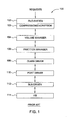
- Figure 1 is a conceptual diagram illustrating how a prior art file management system 100 (or storage stack) interacts with storage device hardware 114.
- File management system 100 implemented both a volume manager 104 that directed file system 102 requests to a particular storage volume and a partition manager 106 that directed file system 102 requests to a particular partition within that storage volume. These can be considered as identifying available storage devices of the host computer system.
- File management system 100 also implemented a class (such as SCSI or IDE) driver 108 to support storage classes and a port driver 110 to enable port I/O operations.
- a bus driver 112 was implemented as required to pass signals on the required busses without bus conflicts, and finally storage device hardware 114 would be connected to a storage bus of the storage device being accessed.
- the class driver 108, port driver 110 and bus driver 112 together, act as the transport layer for the driver associated with the storage device being accessed.
- the file management system 100 could also implement data compression and encryption 103.
- Two drawbacks of the architecture generally illustrated here are that (i) it requires a separate transport layer for each type of storage device used in the host computer system and (ii) upwards of 90% of transactions between the file system 102 (i.e. the operating system) and the various storage devices of the host computer system are READ/WRITE operations - such operations do not typically require the services of layers 103, 106, 108, 110 and 112 of the file management system 100. Processing each transaction through needed intermediate layers is insufficient and time consuming. Therefore, a new type of device that can interface a host computer's bus to multiple storage devices would be beneficial. Even more beneficial would be a universal storage bus adaptor that can interface a host computer's bus to any of multiple storage devices.
- Embodiments of the principles of the present invention provide for a universal storage bus adaptor that can interface a host computer's bus to any of multiple types of storage devices.
- the universal serial bus adaptor provides transport layer functionality in such a way that a separate transport layer does not have to be provided for each type of storage device.
- Embodiments of the present invention include a file management system (or storage stack) that includes a read/write chimney configured to enable a READ/WRITE operation to bypass the exception processing and management functionalities of the file management system. Bypassing these functionalities increases the processing efficiency of READ/WRITE operations. Further, the architecture provides other types of operations access to the services of the exception processing and management layers of the file management system when necessary for processing.
- the principles of the present invention provide for a universal storage bus adaptor that directly interfaces read/write data requests between a host computer's bus and different types of storage devices.
- a universal storage bus adaptor mates a host computer's main bus (PCI) to a memory device bus in such a manner that data can be written to and read from the memory device bus using standardized read/write commands and with little or no host processor interaction.
- PCI main bus
- Embodiments of the present invention can interface multiple types of storage devices using a storage stack having a read/write chimney that bypasses the exception processing and management functionalities of the storage stack.
- FIG. 2 illustrates a computer system 200 that is in accord with the principles of the present invention.
- the system 200 includes a main memory 202 for storing programs and data used by a processor 204.
- the system 200 further includes an auxiliary system that is generically shown as a chipset 206 that includes a universal storage bus adaptor 208.
- the universal storage bus adaptor 208 beneficially includes hardware compression/decompression engine support for RAID drives, and possibly other features.
- the universal storage bus adaptor 208 assists data integration with a disk drive system comprised of disk drives 211, 213, 215, and 217.
- the disk drives 211, 213, 215, and 217 can be, but need not be, part of a RAID storage system.
- disk drives 211, 213, 215, and 217 can be of the same type (for example serial SCSI) or they can be of different types (for example serial SCSI and SATA drives).
- the universal storage bus adaptor 208 is designed and implemented to work with multiple types of storage devices.
- the disk drives 211, 213, 215, and 217 include drive electronics 212, 214, 216, 218, respectively, that control data storing and reading within the individual disk drives.
- Data is passed between the universal storage bus adaptor 208 and the disk drives 211, 213, 215, and 217 via a bi-directional storage bus 219.
- the universal storage device adaptor 208 interfaces the processor 204 via a main bus, typically a PCI bus, to the bi-directional storage bus 219.
- the bi-directional storage bus 219 is connected to one or more of the disk drives 211, 213, 215, and 217 using an interface chip. To enable integration of the various components of the system 200, that system operates under the control of an operating system (not shown).
- the computer system 200 implements a SCSI-based file management system 300 (or storage stack) that includes a read/write bypass to selectively pass READ/WRITE operations along with I/O data directly through the universal storage device adaptor 208 for processing.
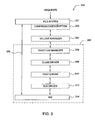
- Figure 3 illustrates the architecture of the file management system 300, according to one embodiment of the present invention. As shown, the file management system 300 includes the exception processing and management layers of the file management system 100 of Figure 1. However, recognizing the predominance of READ/WRITE operations, the file management system 300 includes a read/write chimney 309 that pipelines READ/WRITE operations directly to and from storage device hardware layer 314.
- This architecture allows READ/WRITE operations to bypass compression/encryption layer 302, volume manager 304, partition manager 306, class driver 308, port driver 310 and bus driver 312. Bypassing these exception processing and management layers is highly advantageous when multi-gigabyte storage devices are used since simply managing READ/WRITE operations can consume significant portions of a processor's time. Notwithstanding the foregoing, operations other than READ/WRITE operations may be processed using the services of the exception processing and management layers in accordance with principles of conventional file management system 100 of Figure 1.
- the class driver 308, the port drive 310 and the bus driver 312, which together form the transport layer, are included within the universal storage device adaptor 208.
- moving the functionalities of the transport layer into the universal storage device adaptor 308 enables one SCSI-based transport layer to be used with any type of storage device, regardless of whether that storage device is SCSI-based, SATA-based or otherwise.
- Such an architecture avoids having to create a separate transport layer for each type of storage device, which is significant advancement over prior art systems.
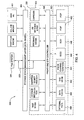
- FIG 4 illustrates an implementation architecture for the file management system 300 and the universal storage device adaptor 208, according to one embodiment of the present invention.
- a storage stack management layer 404 is configured to provide operations transmitted by the file system 301 access to the various services of modules 401.
- the modules 401 include the management functionalities of the compression/encryption layer 302, the volume manager 304 and the partition manager 306 of Figure 3.
- the disclosed architecture is designed such that modules 401 may be added or removed, depending on the functionalities required by the file management system 300.
- the modules 401 and the storage stack management layer 404 are implemented in software.
- a controller 430 is coupled to modules 403 and an interface layer 402.
- the modules 403 are the hardware complements of the modules 401.
- a software module 401 is added or removed, as the case may be, and a corresponding hardware module 403 is added or removed, as the case may be.
- modules 403 are complements of modules 401, modules 403, among other things, include the management functionalities of the compression/encryption layer 302, the volume manager 304 and the partition manager 306 as well.
- the controller 430 includes the transport layer functionalities of the class driver 308, the port driver 310 and the bus driver 312 of Figure 3. Further, in one embodiment, the controller 430 and the interface layer 402 include the functionalities of the storage device hardware layer 314 of Figure 3.
- the interface layer 402 includes various interface modules (e.g., interface modules 438, 440, 442, 444, 446, 448 and 452) that are coupled to corresponding storage devices (not shown). Each interface module is configured for a specific storage device protocol and translates the SCSI-based commands transmitted from file system 301 into that storage device protocol, and vice versa.
- the interface 440 is configured to translate SCSI-based commands into SATA and SATA-based commands into SCSI.
- the functionality of the interface layer 402 is implemented in hardware.
- the interface layer 402 enables the host controller to benefit from the fact that the SAS physical layer 442 is backwardly compatible with the SATA physical layer 440 and thus allows either SAS or SATA disk drives to be directly connected to the universal storage bus controller 430.
- the universal storage bus adaptor 208 which, in one embodiment, includes the modules 403, the controller 430 and the interface layer 402, is configured to be adapted to any type of storage device used with the computer system 200.
- the architecture enables the controller 430 to accept SCSI-type READ/WRITE operations directly from the file system 301 through the read/write chimney 309.
- the controller 430 is configured to process these operations, distributing them to the appropriate storage devices connected to interface layer 402.
- the data associated with the READ/WRITE operations are transferred between the main memory 202 and one or more of the disk drives 211, 213, 215, and 217.
- each of these storage devices is coupled to one of the interface modules of interface layer 402 based on the protocol used by the particular storage device.
- the controller 430 is configured to execute read/write commands (also referred to as controller commands) taken from the main memory 202 of Figure 2.
- the controller 500 executes these commands, which are in the format of (volume X, number of bytes to be transferred, and memory location).
- the controller 430 stores the information taken from each of these commands. It can be seen that the controller command provides the volume, which is a set of partitions to or from which data is to be transferred, the number of bytes to be transferred, and the memory location information that specifies where in main memory 202 the data is to be transferred to or from. More specifically, the memory location information includes a set of physical region descriptions (PRDs) that describe areas in memory space 560 where the data is to be transferred to or from. Controller 430 is configured to write data to or read data from the storage devices 211, 213, 215, 217 of Figure 2 (represented by storage devices 510). These storage devices are typically in a raid array comprising multiple disk drives wherein a volume is identified in partitions found on a plurality of the disks.
- PRDs physical region descriptions
- the controller 430 comprises a plurality of registers, which are defined as a part of the PCI or other standardized interface specification. These registers store control information and configuration information in a region 502, link pointers in a region 504, and a volume pointer in a region 506. Through these registers the said read/write commands are executed. The link pointers and volume pointers will be used in a manner to be described below to execute the controller command. As previously described, a controller command, such as controller command 520, contains the RAID volume to or from which the data is to be transferred. The controller command 520 is written to the volume data structure 514, as indexed by both the volume pointer register in region 506 and the volume table 512, corresponding to the volume specified in the controller command.
- volume data structure 514 may be appended to volume data structure 514 as shown.
- the volume data structure 514 also contains control and status information 515 and information associating disk partitions 516, 518 within said disk volume. This information is used to determine the precise disks and partitions relevant to the volume specified in the controller command 520.
- the universal storage adaptor 208 controls multiple disk storage drives.
- the disk storage drives are distributed on a plurality of physical links. Each physical link may support several disk storage drives.
- For each physical link there is a link pointer 504 in controller 430 that points to a link data structure 530 associated with the particular physical link.
- the link data structure 530 contains a sequence of links that provide the control signals to access the disks associated with the said link.
- the combination of the link data structure 530 and volume data structure 514 provides a sequence of disk data structures 535, 540.
- Every disk partition 516, 518 in the volume data structure 514 points to a disk data structure 535, 540.
- a controller command 520 is converted into one or more disk commands that are used to transfer data to or from the specific storage devices 510.
- the disk commands are sequenced in the appropriate disk data structures, meaning that disk commands for transferring data to or from a given storage device are sequenced in the disk data structure corresponding to that storage device.
- disk command 536 transfers data to or from Disk 0 and therefore resides in disk data structure 535
- disk commands 541, 542 transfer data to or from Disk 1 and therefore reside in disk data structure 540.
- the disk commands are derived from the volume data structure 514 and the link data structure 530.
- each individual disk command contains one or more PRDs that describe the areas in memory space 560 to or from which data is transferred using that disk command.
- the PRDs for the different disk commands correspond to the PRDs included in the memory location information of the controller command 520.
- disk command 536 the components of disk command 536 are shown as three PRDs in the detailed view of the disk command 550.
- disk command 541 contains two PRDs in the detailed view of the disk command 551 and disk command 542 contains one PRD in the detailed view of the disk command 552.
- the disk commands 550, 551, 552 are a sequence of one or more PRDs that access information in the memory space 560 where the data from the disk storage devices 510 is stored or retrieved.
- the link data structure 530 provides the interface to hardware, while the volume data structure 514 identifies the partitions on disks storage devices 510 where the data comprising the entire volume is stored. In this way, any command that needs to be carried out can be defined by the software and then executed in the hardware components, which are associated with the universal storage bus adaptor 208.
- the volume data structure 514 tracks the execution of a particular controller command by counting the number of disk commands that are associated with the corresponding controller command and creating a disk command count equal to that number. As each disk command 536, 541, 542 is executed, the disk data structures 535, 540 communicate back to the volume data structure 514, via the control/status information region 515, the completion of each disk command. The volume data structure 514 decrements the disk count each time a disk command is completed. When the disk command count reaches zero, the volume data structure 514 provides an interrupt for the file system 301 through control/status information region 515 signaling that the controller command has been completely executed.
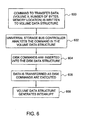
- Figure 6 is a flow chart illustrating the sequence of steps in the operation of the present invention responding to READ/WRITE operations transmitted by file system 301.
- the typical command comprises (volume X, number of bytes to be transferred, and memory location) where X is the volume to be accessed, and the memory location is location in main memory space where the accessed data is to be read from or written to.
- step 600 the controller command 520 is written into the volume data structure 514.
- the volume data structure 514 is determined by the volume pointer 506 which uses the controller command 520 to index into the volume table 512, which points to the correct volume data structure 514.
- the controller command 520 can be either a READ or WRITE command.
- the universal storage bus controller analyzes the controller command 520 in the volume data structure 514.
- the volume data structure 514 and the link data structure 530 together contain the necessary information required to create the individual disk commands 536, 541 and 542 required to support the controller command 520 such as disk/partition relationship, offset of the partition for the beginning of the disk, size of the partition and other volume information.
- step 604 the disk commands 536, 541 and 542 are written into the disk data structures 535 and 540.
- Each disk command contains one or more PRDs that describe areas of main memory into which the data will be written to or read from.
- the disk data structures 535 and 540 are comprised of a plurality of disk commands.
- step 606 data is transferred to/from the disk drive storage devices from/to memory space as each disk command 536, 541 and 542 from the disk data structure is executed.
- the disk data structures 535 and 540 indicate to the volume data structure 514 the completion of each disk command.
Landscapes
- Engineering & Computer Science (AREA)
- Theoretical Computer Science (AREA)
- Physics & Mathematics (AREA)
- General Engineering & Computer Science (AREA)
- General Physics & Mathematics (AREA)
- Human Computer Interaction (AREA)
- Bus Control (AREA)
- Information Retrieval, Db Structures And Fs Structures Therefor (AREA)
- Storage Device Security (AREA)
Applications Claiming Priority (1)
| Application Number | Priority Date | Filing Date | Title |
|---|---|---|---|
| US11/092,170 US7568056B2 (en) | 2005-03-28 | 2005-03-28 | Host bus adapter that interfaces with host computer bus to multiple types of storage devices |
Publications (2)
| Publication Number | Publication Date |
|---|---|
| EP1708089A2 true EP1708089A2 (de) | 2006-10-04 |
| EP1708089A3 EP1708089A3 (de) | 2008-08-06 |
Family
ID=36658817
Family Applications (1)
| Application Number | Title | Priority Date | Filing Date |
|---|---|---|---|
| EP06006271A Withdrawn EP1708089A3 (de) | 2005-03-28 | 2006-03-27 | Universeller Speicherbusadapter |
Country Status (5)
| Country | Link |
|---|---|
| US (2) | US7568056B2 (de) |
| EP (1) | EP1708089A3 (de) |
| JP (1) | JP5128079B2 (de) |
| CN (2) | CN102411547A (de) |
| TW (1) | TWI319532B (de) |
Families Citing this family (30)
| Publication number | Priority date | Publication date | Assignee | Title |
|---|---|---|---|---|
| US20090027383A1 (en) | 2003-11-19 | 2009-01-29 | Lucid Information Technology, Ltd. | Computing system parallelizing the operation of multiple graphics processing pipelines (GPPLs) and supporting depth-less based image recomposition |
| US7808499B2 (en) | 2003-11-19 | 2010-10-05 | Lucid Information Technology, Ltd. | PC-based computing system employing parallelized graphics processing units (GPUS) interfaced with the central processing unit (CPU) using a PC bus and a hardware graphics hub having a router |
| US20080074429A1 (en) | 2003-11-19 | 2008-03-27 | Reuven Bakalash | Multi-mode parallel graphics rendering system (MMPGRS) supporting real-time transition between multiple states of parallel rendering operation in response to the automatic detection of predetermined operating conditions |
| US8497865B2 (en) | 2006-12-31 | 2013-07-30 | Lucid Information Technology, Ltd. | Parallel graphics system employing multiple graphics processing pipelines with multiple graphics processing units (GPUS) and supporting an object division mode of parallel graphics processing using programmable pixel or vertex processing resources provided with the GPUS |
| US8085273B2 (en) | 2003-11-19 | 2011-12-27 | Lucid Information Technology, Ltd | Multi-mode parallel graphics rendering system employing real-time automatic scene profiling and mode control |
| US7961194B2 (en) | 2003-11-19 | 2011-06-14 | Lucid Information Technology, Ltd. | Method of controlling in real time the switching of modes of parallel operation of a multi-mode parallel graphics processing subsystem embodied within a host computing system |
| EP1846834A2 (de) | 2005-01-25 | 2007-10-24 | Lucid Information Technology, Ltd. | Graphikverarbeitungs- und anzeigesystem mit mehreren graphikkernen auf einem silicium-chip von monolithischer bauart |
| US7853741B2 (en) * | 2005-04-11 | 2010-12-14 | Emulex Design & Manufacturing Corporation | Tunneling SATA targets through fibre channel |
| US7464228B2 (en) * | 2006-05-31 | 2008-12-09 | Dell Products L.P. | System and method to conserve conventional memory required to implement serial ATA advanced host controller interface |
| US20080229046A1 (en) * | 2007-03-13 | 2008-09-18 | Microsoft Corporation | Unified support for solid state storage |
| US7917682B2 (en) * | 2007-06-27 | 2011-03-29 | Emulex Design & Manufacturing Corporation | Multi-protocol controller that supports PCIe, SAS and enhanced Ethernet |
| US9128699B2 (en) | 2008-12-22 | 2015-09-08 | Intel Corporation | Method and system for queuing transfers of multiple non-contiguous address ranges with a single command |
| US8239655B2 (en) * | 2010-01-18 | 2012-08-07 | Vmware, Inc. | Virtual target addressing during direct data access via VF of IO storage adapter |
| US8473947B2 (en) * | 2010-01-18 | 2013-06-25 | Vmware, Inc. | Method for configuring a physical adapter with virtual function (VF) and physical function (PF) for controlling address translation between virtual disks and physical storage regions |
| US8312175B2 (en) * | 2010-01-21 | 2012-11-13 | Vmware, Inc. | Virtual machine access to storage via a multi-queue IO storage adapter with optimized cache affinity and PCPU load balancing |
| US8719817B2 (en) * | 2010-03-25 | 2014-05-06 | Vmware, Inc. | Virtualization intermediary/virtual machine guest operating system collaborative SCSI path management |
| US8621261B2 (en) | 2010-11-24 | 2013-12-31 | Cisco Technology, Inc. | Support for virtualized unified communications clients when host server connectivity is lost |
| US9130899B1 (en) | 2011-04-27 | 2015-09-08 | Cisco Technology, Inc. | Integrated user interface for unified communications applications |
| US9225763B2 (en) | 2011-06-07 | 2015-12-29 | Cisco Technology, Inc. | Distributed overlay browser for transparent streaming media support in virtualized desktop environment |
| US8769011B2 (en) | 2011-06-21 | 2014-07-01 | Cisco Technology, Inc. | Survivable browsing in virtualized desktop environment when host connectivity is lost |
| US9009212B2 (en) | 2011-06-29 | 2015-04-14 | Cisco Technology, Inc. | Optimized transfer of applications between computing environments |
| US8990292B2 (en) | 2011-07-05 | 2015-03-24 | Cisco Technology, Inc. | In-network middlebox compositor for distributed virtualized applications |
| CN103092780B (zh) * | 2011-11-02 | 2015-12-16 | 宏碁股份有限公司 | 电子系统与管理方法 |
| US9055139B1 (en) | 2012-03-12 | 2015-06-09 | Cisco Technology, Inc. | Display protocol interception in the network for services and network-based multimedia support for VDI |
| CN102760061B (zh) * | 2012-06-11 | 2016-01-13 | 记忆科技(深圳)有限公司 | 屏蔽固态硬盘存储接口差异的方法及存储系统 |
| US9141563B2 (en) * | 2013-09-11 | 2015-09-22 | Kabushiki Kaisha Toshiba | Memory system |
| US9332046B2 (en) | 2013-10-17 | 2016-05-03 | Cisco Technology, Inc. | Rate-adapted delivery of virtual desktop image elements by an edge server in a computer network environment |
| WO2016130114A1 (en) * | 2015-02-10 | 2016-08-18 | Hewlett Packard Enterprise Development Lp | Chipset reconfiguration based on device detection |
| US10120573B2 (en) | 2015-09-14 | 2018-11-06 | Microsoft Technology Licensing, Llc. | Modular sequential writing of data to data storage devices |
| US11023393B2 (en) | 2019-05-06 | 2021-06-01 | International Business Machines Corporation | Connectivity type detection using a transport protocol and command protocol of the data storage system |
Citations (2)
| Publication number | Priority date | Publication date | Assignee | Title |
|---|---|---|---|---|
| EP1361512A2 (de) * | 2002-04-30 | 2003-11-12 | Microsoft Corporation | Verfahren zum Hochladen und zur Synchronisierung einer ausgelagerten Netzwerkprotokollstapelverbindung mit einem Netzwerkprotokollstapel |
| US20050044162A1 (en) * | 2003-08-22 | 2005-02-24 | Rui Liang | Multi-protocol sharable virtual storage objects |
Family Cites Families (24)
| Publication number | Priority date | Publication date | Assignee | Title |
|---|---|---|---|---|
| US4796176A (en) * | 1985-11-15 | 1989-01-03 | Data General Corporation | Interrupt handling in a multiprocessor computing system |
| WO1991004540A1 (en) * | 1989-09-08 | 1991-04-04 | Auspex Systems, Inc. | Multiple facility operating system architecture |
| US5793997A (en) * | 1996-01-11 | 1998-08-11 | Hewlett-Packard Company | Interface architecture for connection to a peripheral component interconnect bus |
| US6718550B1 (en) * | 1996-06-26 | 2004-04-06 | Sun Microsystems, Inc. | Method and apparatus for improving the performance of object invocation |
| US5956745A (en) * | 1997-04-23 | 1999-09-21 | Novell, Inc. | System and method for automatically resizing a disk drive volume |
| US6006295A (en) * | 1997-06-05 | 1999-12-21 | On Spec Electronic, Inc. | Translator with selectable FIFO for universal hub cables for connecting a PC's PCMCIA or parallel ports to various peripherals using IDE/ATAPI, SCSI, or general I/O |
| US6389479B1 (en) * | 1997-10-14 | 2002-05-14 | Alacritech, Inc. | Intelligent network interface device and system for accelerated communication |
| US6226680B1 (en) * | 1997-10-14 | 2001-05-01 | Alacritech, Inc. | Intelligent network interface system method for protocol processing |
| US6185675B1 (en) * | 1997-10-24 | 2001-02-06 | Advanced Micro Devices, Inc. | Basic block oriented trace cache utilizing a basic block sequence buffer to indicate program order of cached basic blocks |
| US5950203A (en) | 1997-12-31 | 1999-09-07 | Mercury Computer Systems, Inc. | Method and apparatus for high-speed access to and sharing of storage devices on a networked digital data processing system |
| EP1005243A1 (de) * | 1998-11-24 | 2000-05-31 | TELEFONAKTIEBOLAGET LM ERICSSON (publ) | Zugriffsverfahren für Mobilkommunikationssystem |
| US6343324B1 (en) * | 1999-09-13 | 2002-01-29 | International Business Machines Corporation | Method and system for controlling access share storage devices in a network environment by configuring host-to-volume mapping data structures in the controller memory for granting and denying access to the devices |
| US7089562B1 (en) * | 2000-05-04 | 2006-08-08 | International Business Machines Corporation | Universal driver server |
| KR20030066331A (ko) * | 2000-06-05 | 2003-08-09 | 미라링크 코포레이션 | 플렉서블 리모트 데이터 미러링 |
| US7792923B2 (en) * | 2000-10-13 | 2010-09-07 | Zhe Khi Pak | Disk system adapted to be directly attached to network |
| US6862648B2 (en) * | 2000-10-30 | 2005-03-01 | Sun Microsystems, Inc. | Interface emulation for storage devices |
| US20040233910A1 (en) * | 2001-02-23 | 2004-11-25 | Wen-Shyen Chen | Storage area network using a data communication protocol |
| JP3641230B2 (ja) * | 2001-10-22 | 2005-04-20 | 株式会社東芝 | メモリカードを制御するための装置および方法 |
| US7444393B2 (en) | 2001-10-30 | 2008-10-28 | Keicy K. Chung | Read-only storage device having network interface, a system including the device, and a method of distributing files over a network |
| US6775672B2 (en) * | 2001-12-19 | 2004-08-10 | Hewlett-Packard Development Company, L.P. | Updating references to a migrated object in a partition-based distributed file system |
| JP3982265B2 (ja) * | 2002-01-15 | 2007-09-26 | コニカミノルタビジネステクノロジーズ株式会社 | インタフェース処理 |
| AU2003217839A1 (en) * | 2002-04-03 | 2003-10-20 | Advanced Micro Devices, Inc. | Ata/sata combined controller |
| JP4786115B2 (ja) * | 2002-05-10 | 2011-10-05 | 株式会社日立製作所 | 計算機システム |
| US6934769B2 (en) * | 2002-07-29 | 2005-08-23 | Lsi Logic Corporation | Methods and structure for SCSI/IDE translation in a storage subsystem |
-
2005
- 2005-03-28 US US11/092,170 patent/US7568056B2/en active Active
-
2006
- 2006-03-27 EP EP06006271A patent/EP1708089A3/de not_active Withdrawn
- 2006-03-28 TW TW095110739A patent/TWI319532B/zh active
- 2006-03-28 CN CN2011102341115A patent/CN102411547A/zh active Pending
- 2006-03-28 JP JP2006088403A patent/JP5128079B2/ja not_active Expired - Lifetime
- 2006-03-28 CN CN200610058461XA patent/CN1841295B/zh not_active Expired - Fee Related
-
2007
- 2007-12-12 US US11/955,320 patent/US8402171B1/en active Active
Patent Citations (2)
| Publication number | Priority date | Publication date | Assignee | Title |
|---|---|---|---|---|
| EP1361512A2 (de) * | 2002-04-30 | 2003-11-12 | Microsoft Corporation | Verfahren zum Hochladen und zur Synchronisierung einer ausgelagerten Netzwerkprotokollstapelverbindung mit einem Netzwerkprotokollstapel |
| US20050044162A1 (en) * | 2003-08-22 | 2005-02-24 | Rui Liang | Multi-protocol sharable virtual storage objects |
Also Published As
| Publication number | Publication date |
|---|---|
| CN1841295B (zh) | 2011-10-05 |
| TW200705189A (en) | 2007-02-01 |
| TWI319532B (en) | 2010-01-11 |
| US7568056B2 (en) | 2009-07-28 |
| CN1841295A (zh) | 2006-10-04 |
| CN102411547A (zh) | 2012-04-11 |
| JP5128079B2 (ja) | 2013-01-23 |
| US8402171B1 (en) | 2013-03-19 |
| EP1708089A3 (de) | 2008-08-06 |
| JP2006294022A (ja) | 2006-10-26 |
| US20060248241A1 (en) | 2006-11-02 |
Similar Documents
| Publication | Publication Date | Title |
|---|---|---|
| US8402171B1 (en) | Host bus adapter that interfaces with host computer bus to multiple types of storage devices | |
| US6813688B2 (en) | System and method for efficient data mirroring in a pair of storage devices | |
| EP2361404B1 (de) | Verfahren und system zum einreihen von übertragungen aus mehreren nicht angrenzenden bereichen mit einem einzelnen befehl | |
| US8281062B2 (en) | Portable storage device supporting file segmentation and multiple transfer rates | |
| US7620755B2 (en) | Data flow control and bridging architecture enhancing performance of removable data storage systems | |
| EP1389755A2 (de) | Datenspeicheranordnungsarchitektur zum gleichzeitigen Befehl von mehreren Speichermedien | |
| US8516204B2 (en) | Memory control device and method for controlling the same | |
| US20050097263A1 (en) | Flash-memory card-reader to IDE bridge | |
| CN101657801A (zh) | 对固态存储的统一支持 | |
| WO2007117878A1 (en) | Host port redundancy selection | |
| JP2003150322A (ja) | 単一ライブラリ内で仮想ライブラリを使って複数のドライブタイプをサポートする仮想電子データ・ライブラリ | |
| US5996045A (en) | IDE disk drive arrangement that combines the capacity of a master drive and slave drive while hiding the presence of slave drive to a host computer | |
| US20080235404A1 (en) | Storage apparatus and data transfer method thereof | |
| US20090077276A1 (en) | Data transfer device, information processing system, and computer-readable recording medium carrying data transfer program | |
| US7600058B1 (en) | Bypass method for efficient DMA disk I/O | |
| CN101073066A (zh) | 生成奇偶数据的方法、系统和程序 | |
| CN103942007A (zh) | Raid控制器及其命令处理方法 | |
| EP1288774A2 (de) | Integrierte Antriebsteuerungsvorrichtung für Systeme mit integrierter Massenspeicheranordnung | |
| US7676604B2 (en) | Task context direct indexing in a protocol engine | |
| US8667188B2 (en) | Communication between a computer and a data storage device | |
| JP6734058B2 (ja) | 制御装置 | |
| US20070245060A1 (en) | Method and system for handling data by file-system offloading | |
| US20060155888A1 (en) | Request conversion | |
| Yang | Programming for I/O and Storage |
Legal Events
| Date | Code | Title | Description |
|---|---|---|---|
| PUAI | Public reference made under article 153(3) epc to a published international application that has entered the european phase |
Free format text: ORIGINAL CODE: 0009012 |
|
| AK | Designated contracting states |
Kind code of ref document: A2 Designated state(s): AT BE BG CH CY CZ DE DK EE ES FI FR GB GR HU IE IS IT LI LT LU LV MC NL PL PT RO SE SI SK TR |
|
| AX | Request for extension of the european patent |
Extension state: AL BA HR MK YU |
|
| PUAL | Search report despatched |
Free format text: ORIGINAL CODE: 0009013 |
|
| AK | Designated contracting states |
Kind code of ref document: A3 Designated state(s): AT BE BG CH CY CZ DE DK EE ES FI FR GB GR HU IE IS IT LI LT LU LV MC NL PL PT RO SE SI SK TR |
|
| AX | Request for extension of the european patent |
Extension state: AL BA HR MK YU |
|
| RIC1 | Information provided on ipc code assigned before grant |
Ipc: H04L 29/08 20060101ALI20080630BHEP Ipc: G06F 17/30 20060101ALI20080630BHEP Ipc: G06F 3/06 20060101ALI20080630BHEP Ipc: H04L 29/06 20060101AFI20080630BHEP |
|
| 17P | Request for examination filed |
Effective date: 20090107 |
|
| AKX | Designation fees paid |
Designated state(s): DE GB |
|
| 17Q | First examination report despatched |
Effective date: 20090924 |
|
| APBK | Appeal reference recorded |
Free format text: ORIGINAL CODE: EPIDOSNREFNE |
|
| APBN | Date of receipt of notice of appeal recorded |
Free format text: ORIGINAL CODE: EPIDOSNNOA2E |
|
| APBR | Date of receipt of statement of grounds of appeal recorded |
Free format text: ORIGINAL CODE: EPIDOSNNOA3E |
|
| APAF | Appeal reference modified |
Free format text: ORIGINAL CODE: EPIDOSCREFNE |
|
| APAF | Appeal reference modified |
Free format text: ORIGINAL CODE: EPIDOSCREFNE |
|
| APBT | Appeal procedure closed |
Free format text: ORIGINAL CODE: EPIDOSNNOA9E |
|
| STAA | Information on the status of an ep patent application or granted ep patent |
Free format text: STATUS: THE APPLICATION IS DEEMED TO BE WITHDRAWN |
|
| 18D | Application deemed to be withdrawn |
Effective date: 20151001 |