EP1701545B1 - Bildwiedergabevorrichtung, -methode und -programm - Google Patents
Bildwiedergabevorrichtung, -methode und -programm Download PDFInfo
- Publication number
- EP1701545B1 EP1701545B1 EP20050783161 EP05783161A EP1701545B1 EP 1701545 B1 EP1701545 B1 EP 1701545B1 EP 20050783161 EP20050783161 EP 20050783161 EP 05783161 A EP05783161 A EP 05783161A EP 1701545 B1 EP1701545 B1 EP 1701545B1
- Authority
- EP
- European Patent Office
- Prior art keywords
- picture data
- last
- group
- picture
- playback
- Prior art date
- Legal status (The legal status is an assumption and is not a legal conclusion. Google has not performed a legal analysis and makes no representation as to the accuracy of the status listed.)
- Expired - Lifetime
Links
Images





Classifications
-
- H—ELECTRICITY
- H04—ELECTRIC COMMUNICATION TECHNIQUE
- H04N—PICTORIAL COMMUNICATION, e.g. TELEVISION
- H04N5/00—Details of television systems
- H04N5/76—Television signal recording
- H04N5/91—Television signal processing therefor
- H04N5/92—Transformation of the television signal for recording, e.g. modulation, frequency changing; Inverse transformation for playback
-
- H—ELECTRICITY
- H04—ELECTRIC COMMUNICATION TECHNIQUE
- H04N—PICTORIAL COMMUNICATION, e.g. TELEVISION
- H04N5/00—Details of television systems
- H04N5/76—Television signal recording
- H04N5/78—Television signal recording using magnetic recording
- H04N5/782—Television signal recording using magnetic recording on tape
- H04N5/783—Adaptations for reproducing at a rate different from the recording rate
-
- G—PHYSICS
- G11—INFORMATION STORAGE
- G11B—INFORMATION STORAGE BASED ON RELATIVE MOVEMENT BETWEEN RECORD CARRIER AND TRANSDUCER
- G11B20/00—Signal processing not specific to the method of recording or reproducing; Circuits therefor
- G11B20/10—Digital recording or reproducing
-
- G—PHYSICS
- G11—INFORMATION STORAGE
- G11B—INFORMATION STORAGE BASED ON RELATIVE MOVEMENT BETWEEN RECORD CARRIER AND TRANSDUCER
- G11B27/00—Editing; Indexing; Addressing; Timing or synchronising; Monitoring; Measuring tape travel
- G11B27/005—Reproducing at a different information rate from the information rate of recording
-
- G—PHYSICS
- G11—INFORMATION STORAGE
- G11B—INFORMATION STORAGE BASED ON RELATIVE MOVEMENT BETWEEN RECORD CARRIER AND TRANSDUCER
- G11B27/00—Editing; Indexing; Addressing; Timing or synchronising; Monitoring; Measuring tape travel
- G11B27/10—Indexing; Addressing; Timing or synchronising; Measuring tape travel
-
- H—ELECTRICITY
- H04—ELECTRIC COMMUNICATION TECHNIQUE
- H04N—PICTORIAL COMMUNICATION, e.g. TELEVISION
- H04N5/00—Details of television systems
- H04N5/76—Television signal recording
-
- G—PHYSICS
- G11—INFORMATION STORAGE
- G11B—INFORMATION STORAGE BASED ON RELATIVE MOVEMENT BETWEEN RECORD CARRIER AND TRANSDUCER
- G11B2220/00—Record carriers by type
- G11B2220/20—Disc-shaped record carriers
- G11B2220/25—Disc-shaped record carriers characterised in that the disc is based on a specific recording technology
- G11B2220/2537—Optical discs
- G11B2220/2562—DVDs [digital versatile discs]; Digital video discs; MMCDs; HDCDs
-
- H—ELECTRICITY
- H04—ELECTRIC COMMUNICATION TECHNIQUE
- H04N—PICTORIAL COMMUNICATION, e.g. TELEVISION
- H04N5/00—Details of television systems
- H04N5/76—Television signal recording
- H04N5/84—Television signal recording using optical recording
- H04N5/85—Television signal recording using optical recording on discs or drums
-
- H—ELECTRICITY
- H04—ELECTRIC COMMUNICATION TECHNIQUE
- H04N—PICTORIAL COMMUNICATION, e.g. TELEVISION
- H04N9/00—Details of colour television systems
- H04N9/79—Processing of colour television signals in connection with recording
- H04N9/80—Transformation of the television signal for recording, e.g. modulation, frequency changing; Inverse transformation for playback
- H04N9/804—Transformation of the television signal for recording, e.g. modulation, frequency changing; Inverse transformation for playback involving pulse code modulation of the colour picture signal components
- H04N9/8042—Transformation of the television signal for recording, e.g. modulation, frequency changing; Inverse transformation for playback involving pulse code modulation of the colour picture signal components involving data reduction
Definitions
- the present invention relates to image playback apparatuses and methods, and programs. More particularly, the present invention relates to an image playback apparatus and method, and a program for enabling a quick display of a last picture of moving pictures at the end of fast forward playback and a first picture of the moving pictures at the end of fast reverse playback, when the fast forward playback or the fast reverse playback of encoded moving pictures is performed.
- fast forward playback or fast reverse playback of moving pictures in MPEG (Moving Picture Experts Group)2 format recorded on recording media, such as, for example, DVDs (Digital Versatile Discs) is performed.
- MPEG Motion Picture Experts Group
- the moving pictures are played back in a forward direction at a speed faster than a normal playback speed
- the fast reverse playback the moving pictures are played back in a reverse direction at a speed faster than the normal playback speed.
- Fig. 1 shows an example of a structure of moving pictures in MPEG2 format recorded on a DVD or the like.
- a series of the moving pictures consists of a plurality of GOPs (Groups of Pictures).
- the elements of series of GOPs are referred to as GOP#1, GOP#2 , GOP#3, ..., GOP# (N-1) , and GOP#N from the first GOP in a playback order.
- the first picture in the GOP#1 is the first picture of the moving pictures
- the last picture in the GOP#N is the last picture of the moving pictures.
- a single GOP includes a plurality of (for example, 15) pictures, and playback time of the single GOP corresponds to approximately 0.5 second.
- Each picture composing a single GOP is classified into one of an I(Intra-coded)-picture, a P(Predictive-coded)-picture, and a B(Bidirectionally Predictive-coded)-picture.
- Each GOP includes at least one I-picture. However, hereinafter it is assumed that each GOP includes only one I-picture.
- Picture types of the plurality of pictures composing the single GOP are arranged in a playback order of, for example, 2B, 3B, 1I, 5B, 6B, 7P, 8B, 9B, 10P, 11B, 12B, 13P, 14B, and 15B, where numerals preceding "I", "P", or "B” indicate an order in a data stream. In other words, in the data stream, each picture data is arranged in the order of 11, 2B, 3B, 4P, 5B, 6B, 7P, 8B, 9B, 10P, 11B, 12B, 13P, 14B, and 15B.
- MPEG coded video data includes groups of pictures (GOPs). Each group of pictures includes one or more I-frames and a plurality of B- or P-frames.
- GOPs groups of pictures
- Each group of pictures includes one or more I-frames and a plurality of B- or P-frames.
- the coding type of each frame in the MPEG coded video data is identified, and freeze frames are inserted as a predefined function of the identified coding type and as a predefined function of a desired slow down factor.
- n for a slow-down factor of n, for each original I- or P-frame, (n-1) backward-predicted freeze frames are inserted, and for each original B-frame, (n-1) copies of the original B-frames are added, and a selected amount of padding is added to each copy of each original B-frame in order to obtain a normal play bit rate and avoid video buffer overflow or underflow
- the present invention is made in view of these circumstances. Thus, it is an object of the present invention to enable a quick display of the last picture of the moving pictures during the fast forward playback and the first picture of the moving pictures during the fast reverse playback.
- a quick display of the last picture of the moving pictures during the fast forward playback as well as the first picture of the moving pictures during the fast reverse playback is enabled.
- Fig. 2 shows an example configuration of a DVD player to which the present invention is applied.
- This DVD player 1 is configured to display a last picture of moving pictures in fast forward playback and a first picture of the moving pictures in fast reverse playback.
- the DVD player 1 includes a disc drive 12, a stream buffer 13, a demultiplexing-decoding unit 14, an output signal processing unit 15, and a controlling unit 16.
- the disc drive 12 reads out encoded data of the moving pictures from a DVD 11.
- the stream buffer 13 buffers the read out encoded data.
- the demultiplexing-decoding unit 14 reads out the encoded data from the stream buffer 13, separates the encoded data into encoded video data and encoded audio data, and decodes the encoded video/audio data.
- the output signal processing unit 15 performs a predetermined signal processing on video signals and audio signals, i.e., the decoded results, and outputs the processed signals to a subsequent stage.
- the controlling unit 16 controls the disc drive 12, the stream buffer 13, the demultiplexing-decoding unit 14, and the output signal processing unit 15.
- the controlling unit 16 determines whether or not an operation to instruct finishing of the fast forward playback, such as a stop operation, is performed by a user. If the controlling unit 16 determines that the operation to instruct finishing of the fast forward playback is not performed, the process proceeds to STEP S2.
- the controlling unit 16 monitors the demultiplexing-decoding unit 14 and the output signal processing unit 15 to determine whether or not an I-picture included in a last GOP#N has been output from the output signal processing unit 15 to the subsequent stage. If the controlling unit 16 determines that the I-picture has not been output, the process proceeds to STEP S3.
- the disc drive 12 and the stream buffer 13 read out only encoded data corresponding to the I-pictures arranged at the head of each data stream for the corresponding predetermined number of GOPs from the DVD 11.
- the read out encoded data corresponding to the I-pictures is stacked in the stream buffer 13.
- the demultiplexing-decoding unit 16 reads out the encoded data corresponding to the I-pictures stacked in the stream buffer 13 in the stacked order, separates the encoded video data from the encoded data, decodes the separated video data, and outputs I-picture video signals resulting from the decoding to the output signal processing unit 15.
- the output signal processing unit 15 performs the predetermined signal processing on the I-picture video signals, and outputs the processed signals to a television receiver or the like at the subsequent stage.
- the process proceeds to STEP S5.
- the output signal processing unit 15 holds its output signal to the subsequent stage with the current video signal (i.e., the I-picture in the last GOP#N). This maintains a state in which the I-picture in the last GOP#N is displayed on the television receiver or the like at the subsequent stage.
- the demultiplexing-decoding unit 14 stops decoding the encoded data.
- the disc drive 12 and the stream buffer 13 read out the encoded data for all frames in the last GOP#N from the DVD 11.
- the read out encoded data for all the frames in the last GOP#N is stacked in the stream buffer 13.
- the demultiplexing-decoding unit 14 reads out the encoded data for all the frames in the last GOP#N stacked in the stream buffer 13, separates the encoded video data for I-picture and P-pictures included the encoded data, decodes the separated video data, and outputs the video signals for the I-pictures and P-pictures resulting from the decoding to the output signal processing unit 15.
- the controlling unit 36 monitors the demultiplexing-decoding unit 14 to determine whether or not the demultiplexing-decoding unit 14 has decoded the last picture of the moving pictures, and stands by until determining that the last picture has been decoded.
- the process proceeds to STEP S10.
- the output signal processing unit 15 cancels the holding of its output signal to the subsequent stage under the control of the controlling unit 16. This causes the last picture to be displayed on the television receiver or the like at the subsequent stage.
- the demultiplexing-decoding unit 14 stops decoding the encoded data. Accordingly, the fast forward playback processing is finished.
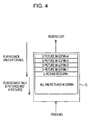
- the encoded video data of the I-pictures in the GOPs from the GOP at which the fast forward playback is started to the last GOP#N is stacked in the stream buffer 13, and is read out and decoded. Then, the encoded video data for all the frames in the last GOP#N is stacked, and the I-picture and the P-pictures are decoded.
- the encoded video data of the I-picture in the last GOP#N is stacked in the stream buffer 13 twice, display of the last picture is delayed by a time period required for superfluous stacking. This prevents a smooth screen switching when the fast forward playback is performed.
- Fig. 5 shows an example configuration of a video player to which the present invention is applied.
- This video player 30 plays back moving pictures (e.g., encoded data that is encoded according to the MPEG2 format or the like) recorded on a recording medium 31, such as an optical disc (including a CD-ROM (Compact Disc-Read Only Memory) disc, a DVD, and a Blu-ray Disc), a magneto-optical disc (including an MD (Mini Disc)), or a semiconductor memory.
- the video player 30 is capable of performing not only normal playback but also special playback, such as fast forward playback and fast reverse playback.
- the video player 30 includes a recording-medium drive 32, a stream buffer 33, a demultiplexing-decoding unit 34, an output signal processing unit 35, and a controlling unit 36.
- the recording-medium drive 32 reads out encoded data of the moving pictures from the recording medium 31.
- the stream buffer 33 buffers the read out encoded data.
- the demultiplexing-decoding unit 34 reads out the encoded data from the stream buffer 33, separates encoded video data and encoded audio data from the encoded data, and decodes the encoded video and audio data.
- the output signal processing unit 35 performs predetermined signal processing on video signals and audio signals resulting from the decoding, and outputs the processed signals to a subsequent stage.
- the controlling unit 36 controls the recording-medium drive 32, the stream buffer 33, the demultiplexing-decoding unit 34, and the output signal processing unit 55.
- the demultiplexing-decoding unit 34 has a full frame decoding mode for decoding I-, P-, and B-pictures composing the moving pictures, an I-picture decoding mode for decoding only the I-pictures, and an I/P-picture decoding mode for decoding the I- and P-pictures. Also, by keeping the decoding modes for each GOP that are specified by the controlling unit 36 beforehand in an internal memory 34-1 and making reference thereto, the demultiplexing-decoding unit 34 can shift among the decoding modes without stopping the decoding processing.
- the controlling unit 36 includes a CPU (Central Processing Unit) or the like, and is connected to an operation inputting unit 38, a RAM 39, a ROM 40, and an input/output interface (I/F) 41 through a bus 37.
- CPU Central Processing Unit
- I/F input/output interface
- the operation inputting unit 38 receives user's operations, and outputs operation signals corresponding to the user's operations to the controlling unit 36 through the bus 37.
- the RAM 39 includes an SRAM, a DRAM, or the like, and is used as a working area for the controlling unit 36.
- the ROM 40 includes a flash memory such as an EEPROM, and keeps control programs executed by the controlling unit 36 therein.
- the input/output interface interface 41 communicates predetermined data (for example, data for updating the control programs kept in the ROM 40, etc.) with external apparatuses not shown.
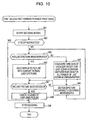
- the controlling unit 36 determines whether or not an operation to instruct finishing of the fast forward playback, such as a stop operation, is performed by the user on the basis of the presence or absence of the operation signal from the operation inputting unit 38. If the controlling unit 36 determines that the operation to instruct finishing of the fast forward playback is not performed, the process proceeds to STEP S22.
- the controlling unit 36 monitors the demultiplexing-decoding unit 34 and the output signal processing unit 35 to determine whether or not an I-picture included in the last GOP#N has been output from the output signal processing unit 15 to a television receiver or the like at the subsequent stage to be displayed. If the controlling unit 36 determines that the I-picture is not displayed, the process proceeds to STEP S23.
- the recording-medium drive 32 reads out the encoded data corresponding to the I-pictures arranged at the head of each data stream for the corresponding predetermined number of GOPs from the recording medium 31 in a playback order.
- the read out encoded data corresponding to the I-pictures is stacked in the stream buffer 33.
- the encoded data for all frames is read out and stacked in the stream buffer 33.
- the controlling unit 36 notifies the demultiplexing-decoding unit 34 to operate in the I-picture decoding mode.
- the demultiplexing-decoding unit 34 reads out the encoded data corresponding to the I-pictures stacked in the stream buffer 33 in the stacked order, separates the encoded video data from the encoded data, decodes the separated encoded video data, and outputs I-picture video signals resulting from the decoding to the output signal processing unit 35.
- the output signal processing unit 35 performs the predetermined signal processing on the I-picture video signals, and outputs the processed signals to the television receiver or the like at the subsequent stage.
- the output signal processing unit 35 holds its output signal to the subsequent stage with the current video signal (i.e., the I-picture in the last GOP#N) . This maintains a state in which the I-picture in the last GOP#N is displayed on the television receiver or the like at the subsequent stage.
- the demultiplexing-decoding unit 34 has operated in the I-picture decoding mode, however, hereafter the demultiplexing-decoding unit 34 shifts to the I/P-picture decoding mode.
- the demultiplexing-decoding unit 34 does not have to stop the decoding processing if the decoding modes for each GOP have been directed in advance.
- the multiplexing-decoding unit 34 has to temporarily stop the decoding. Accordingly, at STEP 526, the demultiplexing-decoding unit 34 stops decoding the encoded data under the control of the controlling unit 36.
- the controlling unit 36 notifies the demultiplexing-decoding unit 34 to operate in the I/P-picture decoding mode.
- the demultiplexing-decoding unit 34 reads out the encoded data for all the frames in the last GOP#N stacked in the stream buffer 33, separates the encoded video data for the I-picture and P-pictures included the encoded data, decodes the separated video data, and outputs the video signals for the I-pictures and P-pictures resulting from the decoding to the output signal processing unit 35.
- the controlling unit 36 monitors the demultiplexing-decoding unit 34 to determine whether or not the last picture of the moving pictures has been decoded, and stands by until determining that the last picture has been decoded.
- the process proceeds to STEP S29.
- the output signal processing unit 35 cancels the holding of its output signal to the subsequent stage under the control of the controlling unit 36. This causes the last picture to be displayed on the television receiver or the like at the subsequent stage.
- the demultiplexing-decoding unit 34 stops decoding the encoded data. Accordingly, the first fast forward playback processing is finished.
- the encoded video data of the I-pictures is stacked in the stream buffer 33. Also, concerning the last GOP#N, the encoded video data for all the frames is stacked in the stream buffer 33.
- a time period required for the display of the last picture can be shortened by a time period necessary for the superfluous stacking.
- the controlling unit 36 determines whether or not an operation to instruct finishing of the fast reverse playback, such as a stop operation, is performed by the user on the basis of the presence or absence of the operation signal from the operation inputting unit 38. If the controlling unit 36 determines that the operation to instruct finishing of the fast reverse playback is not performed, the process proceeds to STEP S42.
- the controlling unit 36 monitors the demultiplexing-decoding unit 34 and the output signal processing unit 35 to determine whether or not the I-picture included in the first GOP#1 has been output from the output signal processing unit 15 to the television receiver or the like at the subsequent stage to be displayed. If the controlling unit 36 determines that the I-picture is not displayed, the process proceeds to STEP S43.
- the recording-medium drive 32 reads out the encoded data corresponding to the I-pictures arranged at the head of each data stream for the corresponding predetermined number of the GOPs from the recording medium 31 in an order of the fast reverse playback.
- the read out encoded data corresponding to the I-pictures is stacked in the stream buffer 33.
- the encoded data for all frames is read out and stacked in the stream buffer 33.
- the controlling unit 36 notifies the demultiplexing-decoding unit 34 to operate in the I-picture decoding mode.
- the demultiplexing-decoding unit 34 reads out the encoded data corresponding to the I-pictures stacked in the stream buffer 33 in the stacked order, separates the encoded video data, decodes the separated video data, and outputs the I-picture video signals resulting from the decoding to the output signal processing unit 35.
- the output signal processing unit 35 performs the predetermined signal processing on the I-picture video signals, and outputs the processed signals to the television receiver or the like at the subsequent stage.
- the output signal processing unit 35 holds its output signal to the subsequent stage with the current video signal (i.e., the I-picture in the first GOP#1). This maintains a state in which the I-picture in the last GOP#N is displayed on the television receiver or the like at the subsequent stage.
- the demultiplexing-decoding unit 34 has operated in the I-picture decoding mode, however, hereafter the demultiplexing-decoding unit 34 shifts to the full frame decoding mode.
- the demultiplexing-decoding unit 34 does not have to stop the decoding processing if the decoding modes for each GOP have been directed in advance.
- the multiplexing-decoding unit 34 has to temporarily stop the decoding. Accordingly, at STEP S46, the multiplexing-decoding unit 34 stops decoding the encoded data under the control of the controlling unit 36.
- the controlling unit 36 notifies the demultiplexing-decoding unit 34 to operate in the full frame decoding mode.
- the demultiplexing-decoding unit 34 reads out the encoded data for all the frames in the first GOP#1 stacked in the stream buffer 33, starts decoding the first picture, and outputs the video signal of the first picture (in current case, the B-picture) resulting from the decoding to the output signal processing unit 35.
- the controlling unit 36 monitors the demultiplexing-decoding unit 34 to determine whether or not the first picture of the moving pictures has been decoded, and stands by until determining that the first picture has been decoded.
- the process proceeds to STEP S49.
- the output signal processing unit 35 cancels the holding of its output signal to the subsequent stage under the control of the controlling unit 36. This causes the first picture to be displayed on the television receiver or the like at the subsequent stage.
- the demultiplexing-decoding unit 34 stops decoding the encoded data. Accordingly, the fast reverse playback processing is finished.
- the encoded video data of the I-pictures is stacked in the stream buffer 33. Also, concerning the first GOP#1, the encoded video data for all the frames is stacked in the stream buffer 33.
- a time period required for the display of the first picture can be shortened by a time period necessary for the superfluous stacking.
- the controlling unit 36 notifies the demultiplexing-decoding unit 34 to operate in the I-picture decoding mode concerning the GOPs to the GOP#(N-1) and the I/P-picture decoding mode concerning the last GOP#N.
- the demultiplexing-decoding unit 34 stores this notification in the internal memory 34-1.
- the controlling unit 36 determines whether or not the operation to instruct finishing of the fast forward playback, such as the stop operation, is performed by the user on the basis of the presence or absence of the operation signal from the operation inputting unit 38. If the controlling unit 36 determines that the operation to instruct finishing of the fast forward playback is not performed, the process proceeds to STEP S63.
- the controlling unit 36 monitors the demultiplexing-decoding unit 34 and the output signal processing unit 35 to determine whether or not the I-picture included in the last GOP#N has been output from the output signal processing unit 15 to the television receiver or the like at the subsequent stage to be displayed. If the controlling unit 36 determines that the I-picture is not displayed, the process proceeds to STEP S64.
- the recording-medium drive 32 reads out the encoded data corresponding to the I-pictures arranged at the head of each data stream for the corresponding predetermined number of GOPs from the recording medium 31 in the playback order.
- the read out encoded data corresponding to the I-pictures is stacked in the stream buffer 33.
- the encoded data for all frames is read out and stacked in the stream buffer 33.
- the demultiplexing-decoding unit 34 reads out the encoded data stacked in the stream buffer 33 in the stacked order, decodes the encoded data according to the decoding modes stored in the memory 34-1, and outputs the video signals resulting from the decoding to the output signal processing unit 35.
- the output signal processing unit 35 performs the predetermined signal processing on the video signals, and outputs the processed signals to the television receiver or the like at the subsequent stage.
- the process returns to STEP S62, thereafter the foregoing process is repeated.
- the controlling unit 36 determines that the operation to instruct finishing of the fast forward playback, such as the stop operat-ion, is performed by the user, the process proceeds to STEP S69.
- the output signal processing unit 35 holds its output signal to the subsequent stage with the current video signal (i.e., the I-picture in the last GOP#N). This maintains a state in which the I-picture in the last GOP#N is displayed on the television receiver or the like at the subsequent stage.
- the demultiplexing-decoding unit 34 continues decoding the I-picture and P-pictures in the GOP#N.
- the controlling unit 36 monitors the demultiplexing-decoding unit 34 to determine whether or not the last picture of the moving pictures has been decoded, and stands by until determining that the last picture has been decoded.
- the process proceeds to STEP S68.
- the output signal processing unit 35 cancels the holding of its output signal to the subsequent stage under the control of the controlling unit 36. This causes the last picture to be displayed on the television receiver or the like at the subsequent stage.
- the demultiplexing-decoding unit 34 stops decoding the encoded data. Accordingly, the second fast forward playback processing is finished.
- the encoded video data of the I-pictures is stacked in the stream buffer 33. Also, concerning the last GOP#N, the encoded video data for all the frames is stacked in the stream buffer 33. Accordingly, the I-picture in the last GOP#N is not read out and stacked twice, and the encoded data for the last GOP#N is decoded only once. Also, the demultiplexing-decoding unit 34 can shift among the decoding modes without stopping the decoding. Thus, compared with the first fast forward playback processing, a time period required for the display of the last picture can be shortened by a time period necessary for performing the aforementioned processing.
- the fast forward playback processing and the fast reverse playback processing described above can be applied, for example, when moving pictures are played back at a speed slower than the normal playback speed or when the moving pictures are played back at the normal playback speed with some frames skipped.
- the present invention can be applied to not only playback-only apparatuses such as DVD players but also recording-playback apparatuses such as DVD recorders, Blu-ray discs, and hard disk recorders.
- the series of processing described above can be executed by hardware or software.
- programs constituting the software are installed to a computer built in dedicated hardware or, for example, a general-purpose personal computer or the like, capable of executing various functions by installing various programs, and are executed.
- the steps executed on the basis of a program include processing that is executed sequentially in the described order, and also include processing that is executed in parallel or individually, not necessarily sequentially.
- a signal computer may process the program, or distribution processing may be executed on the program by using a plurality of computers. Furthermore, the program may be transferred to a remote computer and be executed.
Landscapes
- Engineering & Computer Science (AREA)
- Signal Processing (AREA)
- Multimedia (AREA)
- Television Signal Processing For Recording (AREA)
- Signal Processing For Digital Recording And Reproducing (AREA)
- Compression Or Coding Systems Of Tv Signals (AREA)
- Indexing, Searching, Synchronizing, And The Amount Of Synchronization Travel Of Record Carriers (AREA)
Claims (6)
- Bildwiedergabevorrichtung (30), die Daten bewegter Bilder, die aus einer Reihe von Gruppen von Bilddaten zusammengesetzt sind, die aus mehreren codierten Bilddaten bestehen, in einer Wiedergaberichtung eines Wiedergabebetriebs wiedergibt, wobei die Bildwiedergabevorrichtung Folgendes umfasst:Puffermittel (33) zum Puffern der codierten Daten bewegter Bilder;Decodiermittel (34) zum Auslesen und Decodieren der codierten Daten bewegter Bilder, die in den Puffermitteln gepuffert sind;Ausgabemittel (35) zum Ausgeben der von den Decodiermitteln decodierten Bilder auf eine nachfolgende Stufe; undSteuermittel (36) zumSteuern der Puffermittel durch Bestimmen einer letzten Gruppe der Reihe von Gruppen von Bilddaten, wobei die letzte Gruppe entweder die letzte Gruppe der Reihe von Gruppen ist, wenn die Wiedergaberichtung eine Vorwärtswiedergaberichtung ist, oder die erste Gruppe der Reihe von Gruppen ist, wenn die Wiedergaberichtung eine Rückwärtswiedergaberichtung ist, und durch Puffern aller Bilddaten für die letzte Gruppe und Puffern, betreffend die verbleibenden Gruppen von Bilddaten in der Reihe, nur intracodierter Bilddaten,Steuern der Decodiermittel, um, betreffend die letzte Gruppe von Bilddaten, wenigstens letzte Bilddaten zu decodieren, wobei die letzten Bilddaten die Bilddaten sind, die sich am Ende befinden, wenn alle Bilder in der letzten Gruppe in der Wiedergaberichtung angeordnet sind, und um, betreffend die verbleibenden Gruppen von Bilddaten, nur die intracodierten Bilddaten zu decodieren, und Steuern der Ausgabemittel, um, betreffend die letzte Gruppe von Bilddaten, wenigstens die decodierten letzten Bilddaten auszugeben, und um, betreffend die verbleibenden Gruppen von Bilddaten, nur die decodierten intracodierten Bilddaten auszugeben.
- Bildwiedergabevorrichtung nach Anspruch 1, wobei alle codierten Bilddaten als ein I-Bild (intracodiertes Bild) oder ein P-Bild (prädiktionscodiertes Bild) oder ein B-Bild (bidirektional-prädiktionscodiertes Bild) klassifiziert sind, und wobei dann, wenn die Wiedergaberichtung Wiedergabe in einer Vorwärtsrichtung ist, Steuern der Decodiermittel, um, betreffend die letzte Gruppe von Bilddaten, die Bilddaten zu decodieren, die als 1-Bilder und P-Bilder klassifiziert sind.
- Bildwiedergabevorrichtung nach Anspruch 2, wobei die Steuermittel Bildtypen spezifizieren, die für jede Gruppe von Bilddaten decodiert werden sollen, und die Decodiermittel über die Bildtypen, die decodiert werden sollen, im Voraus benachrichtigen, und wobei die Decodiermittel die Daten bewegter Bilder, die von den Puffermitteln gepuffert sind, gemäß der Benachrichtigung von den Steuermitteln auslesen und decodieren.
- Bildwiedergabeverfahren zum Wiedergeben von Daten bewegter Bilder, die aus einer Reihe von Gruppen von Bilddaten zusammengesetzt sind, die aus mehreren codierten Bilddaten besteht, in einer Wiedergaberichtung eines Wiedergabebetriebs, wobei das Bildwiedergabeverfahren folgende Schritte umfasst:Puffern der codierten Daten bewegter Bilder mit Puffermitteln;Auslesen und Decodieren der codierten Daten bewegter Bilder, die in den Puffermitteln gepuffert sind, mit Decodiermitteln;Ausgeben der Bilder, die von den Decodiermitteln decodiert sind, zu einer nachfolgenden Stufe mit Ausgabemitteln;Steuern der Puffermittel durch Bestimmen einer letzten Gruppe der Reihe von Gruppen von Bilddaten, wobei die letzte Gruppe entweder die letzte Gruppe der Reihe von Gruppen ist, wenn die Wiedergaberichtung eine Vorwärtswiedergaberichtung ist, oder die erste Gruppe der Reihe von Gruppen ist, wenn die Wiedergaberichtung eine Rückwärtswiedergaberichtung ist, und durch Puffern aller Bilddaten für die letzte Gruppe und Puffern, betreffend die verbleibenden Gruppen von Bilddaten in der Reihe, nur intracodierter Bilddaten,Steuern der Decodiermittel, um, betreffend die letzte Gruppe von Bilddaten, wenigstens letzte Bilddaten zu decodieren, wobei die letzten Bilddaten die Bilddaten sind, die sich am Ende befinden, wenn alle Bilder in der letzten Gruppe in der Wiedergaberichtung angeordnet sind, und um, betreffend die verbleibenden Gruppen von Bilddaten, nur die intracodierten Bilddaten zu decodieren, undSteuern der Ausgabemittel, um, betreffend die letzte Gruppe von Bilddaten, wenigstens die decodierten letzten Bilddaten auszugeben, und um, betreffend die verbleibenden Gruppen von Bilddaten, nur die decodierten intracodierten Bilddaten auszugeben.
- Bildwiedergabeverfahren nach Anspruch 4, wobei alle codierten Bilddaten als ein I-Bild (intracodiertes Bild) oder ein P-Bild (prädiktionscodiertes Bild) oder ein B-Bild (bidirektional-prädiktionscodiertes Bild) klassifiziert sind, und wobei dann, wenn die Wiedergaberichtung Wiedergabe in einer Vorwärtsrichtung ist, Steuern der Decodiermittel, um, betreffend die letzte Gruppe von Bilddaten, die Bilddaten zu decodieren, die als 1-Bilder und P-Bilder klassifiziert sind.
- Programm zum Steuern eines Computers, um in einer Wiedergaberichtung eines Wiedergabebetriebs Daten bewegter Bilder wiederzugeben, die aus einer Reihe von Gruppen von Bilddaten zusammengesetzt sind, die aus mehreren codierten Bilddaten bestehen, wobei das Programm Folgendes umfasst:Code zum Puffern der codierten Daten bewegter Bilder mit Puffermitteln;Code zum Auslesen und Decodieren der codierten Daten bewegter Bilder, die in den Puffermitteln gepuffert sind, mit Decodiermitteln;Code zum Ausgeben der Bilder, die von den Decodiermitteln decodiert sind, zu einer nachfolgenden Stufe mit Ausgabemitteln;Code zum Steuern der Puffermittel, um eine letzte Gruppe der Reihe von Gruppen von Bilddaten zu bestimmen, wobei die letzte Gruppe entweder die letzte Gruppe der Reihe von Gruppen ist, wenn die Wiedergaberichtung eine Vorwärtswiedergaberichtung ist, oder die erste Gruppe der Reihe von Gruppen ist, wenn die Wiedergaberichtung eine Rückwärtswiedergaberichtung ist, und um alle Bilddaten für die letzte Gruppe zu puffern und, betreffend die verbleibenden Gruppen von Bilddaten in der Reihe, nur intracodierte Bilddaten zu puffern,Code zum Steuern der Decodiermittel, um, betreffend die letzte Gruppe von Bilddaten, wenigstens die letzten Bilddaten zu decodieren, wobei die letzten Bilddaten die Bilddaten sind, die sich am Ende befinden, wenn alle Bilder in der letzten Gruppe in der Wiedergaberichtung angeordnet sind, und um, betreffend die verbleibenden Gruppen von Bilddaten, nur intracodierte Bilddaten zu decodieren, undCode zum Steuern der Ausgabemittel, um, betreffend die letzte Gruppe von Bilddaten, wenigstens die decodierten letzten Bilddaten auszugeben, und um, betreffend die verbleibenden Gruppen von Bilddaten, nur die decodierten intracodierten Bilddaten auszugeben.
Applications Claiming Priority (2)
| Application Number | Priority Date | Filing Date | Title |
|---|---|---|---|
| JP2004381237A JP4442420B2 (ja) | 2004-12-28 | 2004-12-28 | 画像再生装置および方法、並びにプログラム |
| PCT/JP2005/016819 WO2006070514A1 (ja) | 2004-12-28 | 2005-09-13 | 画像再生装置および方法、並びにプログラム |
Publications (3)
| Publication Number | Publication Date |
|---|---|
| EP1701545A1 EP1701545A1 (de) | 2006-09-13 |
| EP1701545A4 EP1701545A4 (de) | 2011-09-14 |
| EP1701545B1 true EP1701545B1 (de) | 2013-04-17 |
Family
ID=36614641
Family Applications (1)
| Application Number | Title | Priority Date | Filing Date |
|---|---|---|---|
| EP20050783161 Expired - Lifetime EP1701545B1 (de) | 2004-12-28 | 2005-09-13 | Bildwiedergabevorrichtung, -methode und -programm |
Country Status (7)
| Country | Link |
|---|---|
| US (1) | US7856167B2 (de) |
| EP (1) | EP1701545B1 (de) |
| JP (1) | JP4442420B2 (de) |
| KR (1) | KR20070095750A (de) |
| CN (1) | CN100493170C (de) |
| TW (1) | TWI287400B (de) |
| WO (1) | WO2006070514A1 (de) |
Families Citing this family (5)
| Publication number | Priority date | Publication date | Assignee | Title |
|---|---|---|---|---|
| KR100794798B1 (ko) | 2006-09-01 | 2008-01-15 | 삼성전자주식회사 | 시간지연을 완화하면서 역재생하는 영상기기 및 그제어방법 |
| JP4284369B2 (ja) * | 2007-03-07 | 2009-06-24 | 株式会社東芝 | 映像再生装置、制御対象装置、映像再生制御方法及びプログラム |
| US8997161B2 (en) * | 2008-01-02 | 2015-03-31 | Sonic Ip, Inc. | Application enhancement tracks |
| KR101489351B1 (ko) * | 2008-11-28 | 2015-02-03 | 삼성전자 주식회사 | 배터리 잔량에 따른 동영상 재생 가능 시간 표시 방법 및 장치 |
| CA2718447C (en) * | 2009-04-28 | 2014-10-21 | Panasonic Corporation | Image decoding method, image coding method, image decoding apparatus, and image coding apparatus |
Family Cites Families (12)
| Publication number | Priority date | Publication date | Assignee | Title |
|---|---|---|---|---|
| US5535008A (en) * | 1993-03-16 | 1996-07-09 | Victor Company Of Japan, Ltd. | Method for jump-reproducing video data of moving picture coded with high efficiency |
| US5991502A (en) * | 1993-10-04 | 1999-11-23 | Matsushita Electric Industrial Co., Ltd. | Optical recording device which calculates distances between I-frames and records I-frame addresses in a sector |
| JPH0898142A (ja) * | 1994-09-29 | 1996-04-12 | Sony Corp | 画像再生装置 |
| US6415057B1 (en) * | 1995-04-07 | 2002-07-02 | Sony Corporation | Method and apparatus for selective control of degree of picture compression |
| JP3484834B2 (ja) * | 1995-07-28 | 2004-01-06 | ソニー株式会社 | データ符号化/復号化方法および装置 |
| TW305043B (de) * | 1995-09-29 | 1997-05-11 | Matsushita Electric Industrial Co Ltd | |
| JPH1013791A (ja) * | 1996-06-24 | 1998-01-16 | Matsushita Electric Ind Co Ltd | 映像信号復号化方法,及び映像信号復号化装置 |
| JP3772451B2 (ja) * | 1997-03-19 | 2006-05-10 | ソニー株式会社 | 画像復号装置及び画像復号方法 |
| JP2001211405A (ja) * | 1999-11-16 | 2001-08-03 | Sony Corp | データ再生装置及び方法 |
| US6980594B2 (en) * | 2001-09-11 | 2005-12-27 | Emc Corporation | Generation of MPEG slow motion playout |
| JP3951839B2 (ja) * | 2002-07-15 | 2007-08-01 | ソニー株式会社 | 画像データ再生装置及び方法 |
| JP4154207B2 (ja) * | 2002-10-09 | 2008-09-24 | キヤノン株式会社 | 画像処理装置 |
-
2004
- 2004-12-28 JP JP2004381237A patent/JP4442420B2/ja not_active Expired - Fee Related
-
2005
- 2005-09-13 WO PCT/JP2005/016819 patent/WO2006070514A1/ja not_active Ceased
- 2005-09-13 CN CNB200580006131XA patent/CN100493170C/zh not_active Expired - Fee Related
- 2005-09-13 KR KR20067015567A patent/KR20070095750A/ko not_active Ceased
- 2005-09-13 US US10/590,708 patent/US7856167B2/en not_active Expired - Fee Related
- 2005-09-13 EP EP20050783161 patent/EP1701545B1/de not_active Expired - Lifetime
- 2005-09-23 TW TW94133180A patent/TWI287400B/zh not_active IP Right Cessation
Also Published As
| Publication number | Publication date |
|---|---|
| KR20070095750A (ko) | 2007-10-01 |
| WO2006070514A1 (ja) | 2006-07-06 |
| US7856167B2 (en) | 2010-12-21 |
| EP1701545A1 (de) | 2006-09-13 |
| CN1926858A (zh) | 2007-03-07 |
| JP2006186937A (ja) | 2006-07-13 |
| JP4442420B2 (ja) | 2010-03-31 |
| TWI287400B (en) | 2007-09-21 |
| CN100493170C (zh) | 2009-05-27 |
| US20070183755A1 (en) | 2007-08-09 |
| TW200627950A (en) | 2006-08-01 |
| EP1701545A4 (de) | 2011-09-14 |
Similar Documents
| Publication | Publication Date | Title |
|---|---|---|
| JP3491366B2 (ja) | 符号化データの特殊再生方法および特殊再生装置 | |
| TW587392B (en) | Trick mode playback of recorded video | |
| JP4286659B2 (ja) | 非順次走査フレーム構造フォーマットで記録されたビデオ表示のための再生速度の変更 | |
| EP1440576A2 (de) | Ändern einer abspielgeschwindigkeit für eine in einem modifizierten filmformat aufgezeichnete videopräsentation | |
| EP1701545B1 (de) | Bildwiedergabevorrichtung, -methode und -programm | |
| JP3253530B2 (ja) | 動画像記録装置 | |
| JPH1079918A (ja) | 画像情報復号化再生装置および画像情報復号化再生方法 | |
| US6978082B1 (en) | AV decoder control method and AV decoder control apparatus | |
| JP4362510B2 (ja) | 録画再生編集装置 | |
| JP4171414B2 (ja) | シャドー・イントラ・ピクチャの挿入によるビデオ変更方法およびシステム | |
| US7215871B2 (en) | Changing a playback speed for video presentation recorded in a field structure format | |
| CN1290325C (zh) | 通过转换非帧内图像来修改视频信号 | |
| JP2003324690A (ja) | 映像記録再生装置 | |
| JP2006066995A (ja) | 画像再生装置及びその制御方法及びプログラム及び記憶媒体 | |
| JP2002044611A (ja) | ディスク再生装置 | |
| US7532803B2 (en) | Reproducing apparatus | |
| JP3888204B2 (ja) | 記録装置および方法、再生装置および方法、記録媒体、並びにプログラム | |
| JP4784466B2 (ja) | 映像情報再生方法 | |
| JP2004056732A (ja) | 再生装置 |
Legal Events
| Date | Code | Title | Description |
|---|---|---|---|
| PUAI | Public reference made under article 153(3) epc to a published international application that has entered the european phase |
Free format text: ORIGINAL CODE: 0009012 |
|
| 17P | Request for examination filed |
Effective date: 20060725 |
|
| AK | Designated contracting states |
Kind code of ref document: A1 Designated state(s): AT BE BG CH CY CZ DE DK EE ES FI FR GB GR HU IE IS IT LI LT LU LV MC NL PL PT RO SE SI SK TR |
|
| AX | Request for extension of the european patent |
Extension state: AL BA HR MK YU |
|
| DAX | Request for extension of the european patent (deleted) | ||
| RBV | Designated contracting states (corrected) |
Designated state(s): DE GB IT |
|
| A4 | Supplementary search report drawn up and despatched |
Effective date: 20110816 |
|
| RIC1 | Information provided on ipc code assigned before grant |
Ipc: G11B 27/00 20060101ALI20110809BHEP Ipc: H04N 7/32 20060101ALI20110809BHEP Ipc: H04N 5/92 20060101ALI20110809BHEP Ipc: H04N 5/76 20060101ALI20110809BHEP Ipc: G11B 27/10 20060101ALI20110809BHEP Ipc: G11B 20/10 20060101ALI20110809BHEP Ipc: H04N 5/937 20060101AFI20110809BHEP |
|
| 17Q | First examination report despatched |
Effective date: 20120120 |
|
| GRAP | Despatch of communication of intention to grant a patent |
Free format text: ORIGINAL CODE: EPIDOSNIGR1 |
|
| GRAS | Grant fee paid |
Free format text: ORIGINAL CODE: EPIDOSNIGR3 |
|
| GRAA | (expected) grant |
Free format text: ORIGINAL CODE: 0009210 |
|
| AK | Designated contracting states |
Kind code of ref document: B1 Designated state(s): DE GB IT |
|
| REG | Reference to a national code |
Ref country code: GB Ref legal event code: FG4D |
|
| REG | Reference to a national code |
Ref country code: DE Ref legal event code: R096 Ref document number: 602005039152 Country of ref document: DE Effective date: 20130613 |
|
| PLBE | No opposition filed within time limit |
Free format text: ORIGINAL CODE: 0009261 |
|
| STAA | Information on the status of an ep patent application or granted ep patent |
Free format text: STATUS: NO OPPOSITION FILED WITHIN TIME LIMIT |
|
| PG25 | Lapsed in a contracting state [announced via postgrant information from national office to epo] |
Ref country code: IT Free format text: LAPSE BECAUSE OF FAILURE TO SUBMIT A TRANSLATION OF THE DESCRIPTION OR TO PAY THE FEE WITHIN THE PRESCRIBED TIME-LIMIT Effective date: 20130417 |
|
| 26N | No opposition filed |
Effective date: 20140120 |
|
| REG | Reference to a national code |
Ref country code: DE Ref legal event code: R097 Ref document number: 602005039152 Country of ref document: DE Effective date: 20140120 |
|
| GBPC | Gb: european patent ceased through non-payment of renewal fee |
Effective date: 20130913 |
|
| REG | Reference to a national code |
Ref country code: DE Ref legal event code: R119 Ref document number: 602005039152 Country of ref document: DE Effective date: 20140401 |
|
| PG25 | Lapsed in a contracting state [announced via postgrant information from national office to epo] |
Ref country code: GB Free format text: LAPSE BECAUSE OF NON-PAYMENT OF DUE FEES Effective date: 20130913 |
|
| PG25 | Lapsed in a contracting state [announced via postgrant information from national office to epo] |
Ref country code: DE Free format text: LAPSE BECAUSE OF NON-PAYMENT OF DUE FEES Effective date: 20140401 |