EP1693992B1 - Verfahren und System zur Zugriffspriorität für 802.11 Endpunkten mittels DCF Protokoll - Google Patents
Verfahren und System zur Zugriffspriorität für 802.11 Endpunkten mittels DCF Protokoll Download PDFInfo
- Publication number
- EP1693992B1 EP1693992B1 EP06100933A EP06100933A EP1693992B1 EP 1693992 B1 EP1693992 B1 EP 1693992B1 EP 06100933 A EP06100933 A EP 06100933A EP 06100933 A EP06100933 A EP 06100933A EP 1693992 B1 EP1693992 B1 EP 1693992B1
- Authority
- EP
- European Patent Office
- Prior art keywords
- frame
- endpoint
- cts
- window
- time
- Prior art date
- Legal status (The legal status is an assumption and is not a legal conclusion. Google has not performed a legal analysis and makes no representation as to the accuracy of the status listed.)
- Expired - Lifetime
Links
Images


Classifications
-
- A—HUMAN NECESSITIES
- A61—MEDICAL OR VETERINARY SCIENCE; HYGIENE
- A61F—FILTERS IMPLANTABLE INTO BLOOD VESSELS; PROSTHESES; DEVICES PROVIDING PATENCY TO, OR PREVENTING COLLAPSING OF, TUBULAR STRUCTURES OF THE BODY, e.g. STENTS; ORTHOPAEDIC, NURSING OR CONTRACEPTIVE DEVICES; FOMENTATION; TREATMENT OR PROTECTION OF EYES OR EARS; BANDAGES, DRESSINGS OR ABSORBENT PADS; FIRST-AID KITS
- A61F7/00—Heating or cooling appliances for medical or therapeutic treatment of the human body
- A61F7/08—Warming pads, pans or mats; Hot-water bottles
-
- H—ELECTRICITY
- H04—ELECTRIC COMMUNICATION TECHNIQUE
- H04W—WIRELESS COMMUNICATION NETWORKS
- H04W74/00—Wireless channel access
- H04W74/08—Non-scheduled access, e.g. ALOHA
- H04W74/0866—Non-scheduled access, e.g. ALOHA using a dedicated channel for access
- H04W74/0875—Non-scheduled access, e.g. ALOHA using a dedicated channel for access with assigned priorities based access
-
- A—HUMAN NECESSITIES
- A61—MEDICAL OR VETERINARY SCIENCE; HYGIENE
- A61F—FILTERS IMPLANTABLE INTO BLOOD VESSELS; PROSTHESES; DEVICES PROVIDING PATENCY TO, OR PREVENTING COLLAPSING OF, TUBULAR STRUCTURES OF THE BODY, e.g. STENTS; ORTHOPAEDIC, NURSING OR CONTRACEPTIVE DEVICES; FOMENTATION; TREATMENT OR PROTECTION OF EYES OR EARS; BANDAGES, DRESSINGS OR ABSORBENT PADS; FIRST-AID KITS
- A61F7/00—Heating or cooling appliances for medical or therapeutic treatment of the human body
- A61F7/007—Heating or cooling appliances for medical or therapeutic treatment of the human body characterised by electric heating
-
- A—HUMAN NECESSITIES
- A61—MEDICAL OR VETERINARY SCIENCE; HYGIENE
- A61N—ELECTROTHERAPY; MAGNETOTHERAPY; RADIATION THERAPY; ULTRASOUND THERAPY
- A61N5/00—Radiation therapy
- A61N5/06—Radiation therapy using light
-
- A—HUMAN NECESSITIES
- A61—MEDICAL OR VETERINARY SCIENCE; HYGIENE
- A61F—FILTERS IMPLANTABLE INTO BLOOD VESSELS; PROSTHESES; DEVICES PROVIDING PATENCY TO, OR PREVENTING COLLAPSING OF, TUBULAR STRUCTURES OF THE BODY, e.g. STENTS; ORTHOPAEDIC, NURSING OR CONTRACEPTIVE DEVICES; FOMENTATION; TREATMENT OR PROTECTION OF EYES OR EARS; BANDAGES, DRESSINGS OR ABSORBENT PADS; FIRST-AID KITS
- A61F7/00—Heating or cooling appliances for medical or therapeutic treatment of the human body
- A61F2007/0059—Heating or cooling appliances for medical or therapeutic treatment of the human body with an open fluid circuit
-
- A—HUMAN NECESSITIES
- A61—MEDICAL OR VETERINARY SCIENCE; HYGIENE
- A61F—FILTERS IMPLANTABLE INTO BLOOD VESSELS; PROSTHESES; DEVICES PROVIDING PATENCY TO, OR PREVENTING COLLAPSING OF, TUBULAR STRUCTURES OF THE BODY, e.g. STENTS; ORTHOPAEDIC, NURSING OR CONTRACEPTIVE DEVICES; FOMENTATION; TREATMENT OR PROTECTION OF EYES OR EARS; BANDAGES, DRESSINGS OR ABSORBENT PADS; FIRST-AID KITS
- A61F7/00—Heating or cooling appliances for medical or therapeutic treatment of the human body
- A61F2007/0091—Heating or cooling appliances for medical or therapeutic treatment of the human body inflatable
-
- A—HUMAN NECESSITIES
- A61—MEDICAL OR VETERINARY SCIENCE; HYGIENE
- A61F—FILTERS IMPLANTABLE INTO BLOOD VESSELS; PROSTHESES; DEVICES PROVIDING PATENCY TO, OR PREVENTING COLLAPSING OF, TUBULAR STRUCTURES OF THE BODY, e.g. STENTS; ORTHOPAEDIC, NURSING OR CONTRACEPTIVE DEVICES; FOMENTATION; TREATMENT OR PROTECTION OF EYES OR EARS; BANDAGES, DRESSINGS OR ABSORBENT PADS; FIRST-AID KITS
- A61F7/00—Heating or cooling appliances for medical or therapeutic treatment of the human body
- A61F7/02—Compresses or poultices for effecting heating or cooling
- A61F2007/0268—Compresses or poultices for effecting heating or cooling having a plurality of compartments being filled with a heat carrier
- A61F2007/0269—Compresses or poultices for effecting heating or cooling having a plurality of compartments being filled with a heat carrier with separable compartments, e.g. reconnectable
-
- A—HUMAN NECESSITIES
- A61—MEDICAL OR VETERINARY SCIENCE; HYGIENE
- A61N—ELECTROTHERAPY; MAGNETOTHERAPY; RADIATION THERAPY; ULTRASOUND THERAPY
- A61N5/00—Radiation therapy
- A61N5/06—Radiation therapy using light
- A61N2005/0658—Radiation therapy using light characterised by the wavelength of light used
- A61N2005/0659—Radiation therapy using light characterised by the wavelength of light used infrared
- A61N2005/066—Radiation therapy using light characterised by the wavelength of light used infrared far infrared
-
- H—ELECTRICITY
- H04—ELECTRIC COMMUNICATION TECHNIQUE
- H04M—TELEPHONIC COMMUNICATION
- H04M2242/00—Special services or facilities
- H04M2242/04—Special services or facilities for emergency applications
-
- H—ELECTRICITY
- H04—ELECTRIC COMMUNICATION TECHNIQUE
- H04W—WIRELESS COMMUNICATION NETWORKS
- H04W4/00—Services specially adapted for wireless communication networks; Facilities therefor
- H04W4/90—Services for handling of emergency or hazardous situations, e.g. earthquake and tsunami warning systems [ETWS]
-
- H—ELECTRICITY
- H04—ELECTRIC COMMUNICATION TECHNIQUE
- H04W—WIRELESS COMMUNICATION NETWORKS
- H04W72/00—Local resource management
- H04W72/12—Wireless traffic scheduling
-
- H—ELECTRICITY
- H04—ELECTRIC COMMUNICATION TECHNIQUE
- H04W—WIRELESS COMMUNICATION NETWORKS
- H04W74/00—Wireless channel access
- H04W74/08—Non-scheduled access, e.g. ALOHA
- H04W74/0808—Non-scheduled access, e.g. ALOHA using carrier sensing, e.g. carrier sense multiple access [CSMA]
- H04W74/0816—Non-scheduled access, e.g. ALOHA using carrier sensing, e.g. carrier sense multiple access [CSMA] with collision avoidance
-
- H—ELECTRICITY
- H04—ELECTRIC COMMUNICATION TECHNIQUE
- H04W—WIRELESS COMMUNICATION NETWORKS
- H04W76/00—Connection management
- H04W76/50—Connection management for emergency connections
-
- H—ELECTRICITY
- H04—ELECTRIC COMMUNICATION TECHNIQUE
- H04W—WIRELESS COMMUNICATION NETWORKS
- H04W84/00—Network topologies
- H04W84/02—Hierarchically pre-organised networks, e.g. paging networks, cellular networks, WLAN [Wireless Local Area Network] or WLL [Wireless Local Loop]
- H04W84/10—Small scale networks; Flat hierarchical networks
- H04W84/12—WLAN [Wireless Local Area Networks]
Definitions
- the present disclosure relates to wireless communications and networking. More particularly, the present disclosure pertains to an overlay using Distributed Coordination Function (DCF) protocol for providing priority access to emergency calls.
- DCF Distributed Coordination Function
- the IEEE 802.11e draft standard allows preferential channel allocation for traffic with QoS requirements such as multimedia streams. This preferential channel allocation is achieved through new variants for medium access control (MAC), namely extended distributed coordination function (eDCF) and the hybrid coordination function (HCF).
- MAC medium access control
- eDCF extended distributed coordination function
- HCF hybrid coordination function
- the IEEE 802.11e specification will provide QoS enhancement at the medium access control (MAC) layer that allows WLAN systems to efficiently stream audio and video data.
- 802.11 WLAN is based on a cellular architecture where a system is divided into cells. Each cell is called a Basic Service Set (BSS), and is controlled by a base station called an Access Point (AP).
- BSS Basic Service Set
- AP Access Point
- a station such as a terminal device including, for example, mobile phones, PDAs, etc., must first gain access to the medium, which is a radio channel that is shared by all the stations.
- the 802.11 standard defines two forms of medium access, (1) distributed coordination function (DCF), and (2) point coordination function (PCF).
- DCF distributed coordination function
- PCF point coordination function
- DCF is mandatory and based on the CSMA/CA (carrier sense multiple access with collision avoidance) protocol.
- CSMA/CA carrier sense multiple access with collision avoidance
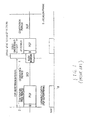
- Fig. 1 is a timing diagram of exemplary PCF/DCF periods.
- PC point coordinator
- DCF and PCF the two access methods
- CFP contention-free period
- CP contention period
- a network allocation vector (NAV) 8 extends the message duration and alerts others in the medium to back off on attempting to gain access to the medium for the duration of the transmission.
- An important aspect of the DCF is a random back-off timer that a station uses when it detects a busy medium. If the channel is in use, the station must wait a random period of time before attempting to access the medium again. This process ensures that multiple stations wanting to send data do not transmit at the same time. The random delay causes stations to wait different periods of time and avoids all of them sensing the medium at exactly the same time, finding the channel idle, transmitting, and colliding with each other.
- the back-off timer significantly reduces the number of collisions and corresponding retransmissions, especially when the number of active users increases.
- a transmitting station cannot listen for collisions while sending data, mainly because the station cannot have its receiver on while transmitting the frame. As a result, the receiving station needs to send an acknowledgement (ACK) if it detects no errors in the received frame. If the sending station does not receive an ACK after a specified period of time, the sending station will assume that there was a collision (or RF interference) and retransmit the frame.
- ACK acknowledgement
- a wireless station waits for a quiet period on the network before transmitting data and detecting any collisions.
- PCF access method goes a step further as it supports time sensitive traffic and splits the time into contention-free and contention period and transmits data during the former.
- Document US 2005/0025176 discloses a medium access control which classifies stations in a CSMA/CA based wireless LAN system into a number of groups according to a transmission priority.
- Fig. 2 shows an 802.11 protocol architectural structure for a typical wired and wireless network including various types or sources of traffic.
- the 802.11 standard specifies a common medium access control (MAC) Layer, which provides a variety of functions that support the operation of 802.11-based wireless LANs.
- the MAC Layer manages and maintains communications between 802.11 stations (radio network cards and access points) by coordinating access to a shared radio channel and utilizing protocols that enhance communications over a wireless medium.
- the 802.11 MAC Layer uses an 802.11 Physical (PHY) Layer, such as 802.11 b or 802.11a, to perform the tasks of carrier sensing, transmitting, and receiving of 802.11 frames.
- the primary 802.11 MAC layer functions are scanning, authentication, association, WEP, RTS/CTS, power save mode and fragmentation.
- the 802.11 MAC Layer checks the value of its network allocation vector (NAV), which is a counter resident at each station that represents the amount of time that the previous station needs to send its frame.
- NAV network allocation vector
- a station Prior to transmitting a frame, a station calculates the amount of time necessary to send the frame based on the frame length and data rate. The station places a value representing this time in the duration field in the header of the frame. When stations receive the frame, they examine this duration field value and use it as the basis for setting their corresponding NAVs. Accordingly, the medium is reserved for the sending station by this process.
- Wi-Fi wireless fidelity
- 802.11e defines a superset of features specified in the 1999 edition of IEEE 802.11. These enhancements distinguish QoS stations (QSTAs) from non-QoS STAs (STAs), and QoS access points (QAP) from non-QoS access points (AP). These features are collectively termed QoS facility.
- non-802.11e terminals When 802.11 e terminals are enabled in the presence of non-802.11e (legacy) terminals, the QoS for non-802.11e (legacy) terminals will, in general, degrade. This is because the non-802.11 e terminals are only able to send traffic in the best effort category which defers to higher priority access categories. This holds true even if the traffic from a non-802.11e terminal is of high priority or has QoS requirements. Consequently, the QoS of Voice over IP (VoIP) calls from non-802.11e terminals tends to degrade in the presence of 802.11e-capable equipment.
- VoIP Voice over IP
- 802.11e significantly increases the complexity of the original 802.11 MAC architecture. Most of the changes in the MAC architecture are logical consequences of introducing HCF with two new channel access functions: EDCA and HCCA. Upgrading from the original 802.11 MAC to 802.11e MAC requires extensive changes to existing functional blocks as well as adding new ones.
- 802.11e requires significant increases in memory, particularly RAM.
- the amount of additional RAM is a function of the increase in the number of transmission queues.
- non-802.11e equipment there are three queues: broadcast, multicast, and unicast.
- 802.11 e equipment there are at least five: broadcast & multicast, and four access categories (AC).
- HCF hybrid coordination function
- HCCA hybrid coordination function controlled channel access
- the number of additional queues for traffic streams varies between 1 to 8 for a QoS enhanced station (QSTA), and 1 to any number for a QoS enhanced access point (QAP) limited by available memory.
- QSTA QoS enhanced station
- QAP QoS enhanced access point
- these queues and the associated buffers could be optimized to reduce the amount of RAM memory required, but the increase is still significant. This also depends on the existing software architecture of the MAC and the operating systems.
- the present disclosure is directed to non-802.11e endpoints (802.11 endpoints) using distributed coordination function (DCF) protocol that provides priority access to non-802.11e endpoints without requiring any client modifications.
- DCF distributed coordination function
- the present disclosure can be used to provide preferential channel access to non-802.11e endpoints in legacy networks (i.e., 802.11 networks that only have non-802.11e equipment), thus allowing the use of non-802.11e equipment to comply with regulatory requirements for providing priority access for emergency calls,
- the exemplary embodiments of the present invention can also be implemented in hybrid networks (i.e., 802.11 networks that have both 802.11e and non-802.11e equipment) using Enhanced Distributed Coordination Access (EDCA) having a notion of "traffic classes" and different traffic classes using different queues and back-off timers.
- EDCA Enhanced Distributed Coordination Access
- non-802.11e endpoints In this case, higher priority traffic seizes a wireless medium quickly and transmits at the expense of lower priority traffic (e.g., non-802.11e endpoints).
- the various embodiments of the present disclosure provide an opportunity for the non-802.11e enabled endpoints to access the wireless medium with priority when the traffic sent from a non-802.11e endpoint is an emergency call, for example.
- a hybrid network can provide preferential channel access to non-802.11e endpoints even in the presence of the 802.11 e-enabled endpoints.
- a method of providing priority access to non-802.11e endpoints in an 802.11 legacy network and an 802.11e/non-802.11e hybrid network functions by positioning a reserved, unoccupied time slot or "quiet window" straddling the expected time when a protected end-point becomes ready to transmit.
- the method uses Clear-To-Send (CTS) frame technique to protect VoIP calls from non-802.11e equipment, and in particular, emergency calls in an 802.11e/non-802.11e hybrid environment.
- CTS Clear-To-Send
- the method for providing priority access to non-802.11e endpoints (802.11 endpoints) includes a first step of sending a Clear To Send (CTS) frame from a designated station without requiring a Request to Send (RTS) frame from a first station, wherein the CTS frame includes a field identifying the first station for commencing transmission and a field indicating a duration, and a second step of deferring any transmissions of stations other than the first station until after the duration indicated in the CTS frame has passed.
- CTS Clear To Send
- RTS Request to Send
- an algorithm provides a method of detecting the transmission of a first frame of a media stream, and identifying a frame that is transmitted without back-off. The identified frame is then used as a reference for scheduling invitation windows for subsequent frames without any collision.
- an algorithm determines whether there are frames queued at an endpoint, particularly in a situation when the signaling traffic is encrypted for security.
- the invention disclosure relates to a method for providing priority access to non-802.11e endpoints (802.11 endpoints) using the 802.11 DCF protocol.
- the exemplary embodiments of the present invention can be used to provide preferential channel access to non-802.11e endpoints in legacy networks (i.e., 802.11 networks that only have non-802.11e equipment) or hybrid networks (i.e., 802.11 networks that have both 802.11 e and non-802.11e equipment).
- legacy networks i.e., 802.11 networks that only have non-802.11e equipment
- hybrid networks i.e., 802.11 networks that have both 802.11 e and non-802.11e equipment.
- the method provides priority wireless channel access to emergency calls sent from non-802.11 e equipment in a hybrid wireless network, enabling compliance with proposed governmental and regulatory requirements for preferential treatment for prioritized calls without complete restructuring of the existing legacy networks.
- a station A In a DCF access process when a station A wants to transmit, it waits for DIFS and senses the medium to be idle before sending a frame. However, if station A wants to start transmitting while the channel is busy, the station enters a contention phase for the medium. Contention is done by choosing an integer random back-off between 0 and a parameter CW which is initially set to CW min . The random back-off determines the number of time slots the station defers its transmission in addition to the DIFS time. If the medium is sensed idle in such a slot, the back-off timer is decreased by one. Once the random back-off has decreased to 0, the station starts transmitting.
- Preferential channel access to non-802.11 e endpoints is provided by synchronization with the media stream with or without signaling information and estimation of frame inter-arrival time.
- a CTS frame sent by an AP is used to provide a transmission opportunity (in a quiet window) for a station A that is a non-802.11e endpoint.
- station A In the event station A does not initiate a RTS, the reception of the CTS addressed at station A will be an unexpected occurrence. As such, a CTS would usually be received as an immediate response to a RTS sent by station A. Normally, if a station had sent an RTS, it would begin its transmission after receiving the CTS and waiting for a short interframe space (SIFS) time. Since station A does not send an RTS, it continues to access the channel in normal contention mode and might go into back-off. However, if the duration indicated in the CTS is greater than or equal to DIFS plus the time needed for contention, station A can send out a frame as all other stations will not access the medium during this period.
- SIFS short interframe space
- Fig. 3 illustrates a process flow diagram for a CTS-Assisted Transmission Scheme for Multimedia Extension over wireless infrastructure in accordance with a preferred embodiment of the invention.
- Step 301 shows a scheduler which indicates to an access point (AP) a time and duration window of a transmission for station A.
- the AP seizes the transmission medium after an ongoing transmission is completed.
- the AP provides a transmission opportunity for station A by transmitting a CTS frame indicating the duration window.
- station A will begin to transmit and complete frame exchange with the AP as shown in step 304, whereas stations associated with this AP other than station A will defer all transmissions until after the duration window indicated in the CTS as shown in step 305.
- endpoints transmit RTP frames at regular intervals known as the packetization interval, T o , also referred to below as inter-arrival time.
- T o packetization interval
- station A is being invited by the AP to transmit.
- the transmit duration field or "invitation window" (w) can be as small as DIFS.
- DIFS transmit duration field or "invitation window”
- station A becomes ready to transmit within this window, it will transmit the frame after waiting an interval of DIFS.
- the next invitation to station A is scheduled at a time To into the future.
- the AP at station A is able to transmit the invitation CTS at the scheduled time, the sequence described above repeats. Even if this is delayed by an ongoing transmission, the AP is able to grab the medium after the current transmission (due to its use of PIFS interframe spacing) and the choice of the window size ensures that the endpoint will start frame transmission within the window.
- the method for providing preferential channel access to non-802.11e endpoints detects the transmission of a first frame of a media stream. For example, when using Session Initiation Protocol (SIP), the first frame is identified as the frame occurring immediately after a frame indicating the successful completion of call setup (e.g., the "SIP OK"). This detection is performed via an algorithm (“Algorithm P") as illustrated in Fig. 4 .
- SIP Session Initiation Protocol
- Algorithm P identifies a frame that is transmitted without back-off and uses that frame as a reference for scheduling invitation windows w for subsequent frames without any collision.
- the duration field of the CTS excludes PIFS and T CTS .
- the duration of the CTS is set to cover the free periods between already scheduled invitations to other voice terminals and is divided into windows of width ⁇ PIFS + T CTS + DIFS + CW min ⁇ tslot Continue this protection until the first media frame from the endpoint is observed.
- Set T sched to be the end of the immediately preceding invitation window for the endpoint in question.
- Step 2 Schedule the next invitation at the beginning of a window of width ⁇ + d starting at a time To- ⁇ /2 - DIFS into the future with respect to T sched , where d is the interval between T sched and the time the frame appeared on the medium.
- Step 3 case 1 If the medium is not busy at T sched , the endpoint will not go into back-off, and the frame will be transmitted DIFS after it becomes ready. In this case, schedule the beginning of the next invitation window, of width ⁇ , at To - ⁇ /2 - DIFS into the future, measuring from the time the frame appeared on the channel.
- case 2 If the medium is busy, the endpoint may have gone into back-off. The AP will grab the medium when the current transmission ends and provide the invitation window. Continue the procedure at step 2.
- Step 4 Schedule subsequent invitations with window width A starting at To from the start of the current window. This is called the steady state.
- Step 5 The procedure is stopped when a SIP BYE is observed, indicating the end of the call.
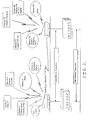
- Fig. 5 illustrates the steps 1 through 5 described above.
- the quiet window for a given endpoint will either straddle the transmit-ready instant or it will provide a full (CW min. t slot + DI FS) time for any back-off countdown to complete.
- the endpoint will be in back-off only if the medium is busy with another transmission at the transmit-ready instant.
- the endpoint would go into back-off after successfully transmitting a data frame.
- the indicator function / (busy) could be suitably redefined to account for this condition.
- Step 1 could put non-CATS traffic at a disadvantage as it essentially suppresses it until the first VoIP transmission occurs. This may not be serious since this happens only once per call. However, once the first frame is transmitted, it guarantees bounded-delay transmission as long as the jitter assumption holds. If the jitter assumption does not hold, the bounded delay will still typically be within the bound with some probability. The magnitude of this probability depends on ⁇ .
- Algorithm P can be easily adapted to also account for missing frames.
- the basic idea is to avoid straying from the original schedule when frames are missed.
- Algorithm P makes the assumption that a network element, for example, an AP that is not an endpoint of a call, can view the signaling frames. This assumption is not valid in some cases, for example, when the signaling traffic is encrypted for security, as discussed in J. Rosenberg, H. Schulzrinne, G. Camarillo, A. Johnston, J. Peterson, R. Sparks, M. Handley, and E. Schooler, "SIP: Session Initiation Protocol," IETF RFC 3261, June 2002.
- the flow information identifying it as such will have to be provided by the signaling server. The possible delay in obtaining emergency-identifying information may cause frames to be queued at the endpoint.
- a below-described algorithm (Algorithm Q) has been devised to address this problem.
- Algorithm Q enables the AP to reserve the transmission medium channel by transmitting CTS frames to the call orignating endpoint.
- the duration of the CTS is set to cover the free periods between already scheduled invitations (w) to other voice terminals as described in Algorithm P.
- the AP continues to issue subsequent invitations. If a frame transmission is observed during the invitation window immediately following the first CTS frame, it could either be due to a) the invitation window having straddled the transmit ready instant or b) a frame waiting in the buffer at the endpoint.
- the actual value of the interval may vary from frame to frame and is the source of the jitter. A measure of this variation is specified by ⁇ . Estimating frame inter-arrival time may also be needed if significant clock drift is anticipated. Technologies for estimating T 0 are set forth below.
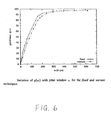
- the AP can estimate the i +1th arrival time, t i+1 to be (t i + T 0 )ms. This is called the fixed algorithm.
- P and Q The descriptions of algorithms P and Q earlier used this method.
- SIP is used as the signaling protocol. It should be noted that the algorithms will operate the same for other signaling protocols as well.
- the present invention was tested using trace-driven simulations with actual VoIP time-stamped sequences.
- the inventors obtained accurate time stamps of when VoIP frames were received at the network interface card (NIC) of the machine on which the frames were generated.
- NIC network interface card
- Fourteen traces of frames were obtained, where each trace consisted of approximately 50 frames that were generated nominally 20ms apart.
- T 0 is a random variable that depends on the system state. This suggests that the technique for estimating when a frame will be ready at the protected terminal is important.
- the objective of the experiments was to understand the effect of the variability of To and the chosen prediction technique on CATS.
- TABLE II CHARACTERISTICS OF THE VoIP TRACE DATA Number of traces 14 Number of frames per trace 48-50 Nominal packetization interval, T O 20ms Range of average inter-arrival times 19.98-20.85ms Range of std. Dev. of inter-arrival times 0.04-7.03ms Average inter-arrival time (all traces together) 20.2ms Std. dev. of inter-arrival time (all traces together) 3.33ms
- the inventors performed a simplified analytical study of the efficiency of CATS. This analysis showed that CATS has more overhead than DCF. The overhead for CATS increases with an increasingly busy channel. The inventors made two observations.
- the experimental results show that very few frames, if any, are lost and hence this should not be an issue in practice (the loss referred to here is between generation of the frame in user space and its reception at the NIC, all within the endpoint).
- the frames may remain in the queue for longer than the packetization interval leading to blocking of the transmission channel. This can be avoided in several ways, e.g., the endpoint discards frames delayed by more than a packetization interval. Such a strategy is reasonable in real time applications since excessively delayed frames will be discarded by the receiver anyway.
- the above description provides a method of providing an AP-based overlay using the 802.11 DCF to provide priority access to non-802.11e endpoints without requiring any client changes using the CTS-assisted transmission scheme (CATS) technique.
- This method can also be deployed to give priority access to VoIP calls originating from 802.11e/non-802.11e hybrid networks.
- the trace-driven experimental validation of CATS indicates that this technique is well suited to provide adequate protection for real-time traffic, in particular for emergency VoIP calls.
- An analysis showed that the use of CATS protection for a small number of endpoints does not have significant impact on the overall channel capacity of a wireless network.
- Access Point based overlay Because the contention function is typically implemented via Access Points, it will be recognized by those of ordinary skill that the embodiments of the present invention do not preclude the use of designated endpoints to perform necessary overlay functions as discussed above. Therefore, in this disclosure, the description of "Access Point based overlay" is solely for the purpose of clarity and simplicity.
Landscapes
- Health & Medical Sciences (AREA)
- Engineering & Computer Science (AREA)
- Biomedical Technology (AREA)
- General Health & Medical Sciences (AREA)
- Veterinary Medicine (AREA)
- Public Health (AREA)
- Life Sciences & Earth Sciences (AREA)
- Animal Behavior & Ethology (AREA)
- Vascular Medicine (AREA)
- Heart & Thoracic Surgery (AREA)
- Computer Networks & Wireless Communication (AREA)
- Signal Processing (AREA)
- Radiology & Medical Imaging (AREA)
- Nuclear Medicine, Radiotherapy & Molecular Imaging (AREA)
- Pathology (AREA)
- Mobile Radio Communication Systems (AREA)
- Small-Scale Networks (AREA)
- Telephonic Communication Services (AREA)
- Communication Control (AREA)
Claims (15)
- Verfahren für die Bereitstellung eines der Version des IEEE 802.11 Standards von 1999 entsprechenden Endpunkts mit Prioritätszugang (priority access) zu einem drahtlosen Medium (MAC)-Standard, um einem Dienstgüte-Standard (QoS) zu entsprechen, umfassend die Schritte:- Detektieren- des Übermittelns eines ersten Rahmens eines Medienstroms durch den Endpunkt, oder- eines Signals an den Endpunkt, das den erfolgreichen Rufaufbau anzeigt;- Senden zu einem Zeitpunkt unmittelbar vor einem Aufforderungsfenster, das heißt ehe der Endpunkt in einen Backoff-Modus gegangen ist, eines Sendbereitschafts-(CTS)-Rahmens von einer designierten Station, ohne einen Sendeanforderungs-(RTS)-Rahmen von dem der Version des IEEE 802.11 Standards von 1999 entsprechenden Endpunkt zu benötigen, wobei der CTS-Rahmen ein den Endpunkt identifizierendes Feld zum Übermittlungsbeginn und ein eine Zeitdauer bezeichnendes Feld umfaßt, wobei die Zeitdauer gemäß folgender Gleichung berechnet wird:

wobei ω der Bereich der symmetrischen Schwankung in dem Paketisierungsintervall T0 und I(busy) eine Indikatorfunktion ist, die, wenn das Medium zum terminierten Beginn des Aufforderungsfensters besetzt ist, 1 und ansonsten 0 ist, und
wobei DIFS der verteilte Koordination-Funktions-Abstand zwischen zwei aufeinander folgenden Rahmen, CWmin die Mindestgröße des Konkurrenzfensters und tslot das Zeitfenster ist, und- Aufschieben aller Übermittlungen von Stationen außer dem der Version des IEEE 802.11 Standards von 1999 entsprechenden Endpunkt, bis daß die in dem CTS-Rahmen angegebenen Zeitdauer verstrichen ist und dadurch Bereitstellen des der Version des IEEE 802.11 Standards von 1999 entsprechenden Endpunkts mit Prioritätszugang zu einem drahtlosen Medium. - Verfahren nach Anspruch 1, wobei die designierte Station eine Basisstation (AP) ist, das Verfahren weiter umfassend die Schritte:Belegen des drahtlosen Mediums durch die AP, undÜbermitteln eines Rahmens nachdem das drahtlose Medium während eines Point Interframe Space (PIFS) im Ruhezustand war unter Verwendung der Koordinationsfunktion zwischen der ersten Station und der designierten Station.
- Verfahren nach Anspruch 2, wobei der Schritt des Belegens des drahtlosen Mediums weiter den Schritt umfaßt, daß der in dem Feld angegebene Zeitabschnitt eine Zeitdauer angibt, daß die designierte Station dem Endpunkt nach dem Abschluß aller laufenden Rahmenaustauschsequenzen auf dem drahtlosen Medium eine Übermittlungsmöglichkeit bereitstellt.
- Verfahren nach Anspruch 1, wobei der Endpunkt ein VoIP-Endpunkt ist, der Rahmen zu regulären Paketisierungsintervallen T0* übermittelt.
- Verfahren nach Anspruch 1, weiter umfassend einen Schritt der Einstellung der Mindestgröße des Konkurrenzfensters (CWmin) auf einen niedrigen Wert.
- Verfahren nach Anspruch 4, weiter umfassend die Schritte:Übermitteln eines Rahmens von dem VoIP-Endpunkt nach Abwarten einer DIFS- Intervallperiode, undTerminieren der nächsten Aufforderung zu dem VoIP-Endpunkt auf eine künftige Zeit T0, die das Paketisierungsintervall ist.
- Verfahren nach Anspruch 6, wobei die designierte Station geeignet ist, einen Aufforderungs-CTS zur terminierten künftigen Zeit TO.i zu übermitteln, weiter umfassend den Schritt des Wiederholens des Verfahrens bis daß alle Rahmen von dem VoIP-Endpunkt übermittelt sind.
- Verfahren nach Anspruch 1, wobei ein Signalisierungsprotokoll verwendet wird, um einen ersten Rahmen einer Übermittlung zu detektieren, weiter die Schritte umfassend:Identifizieren eines ohne Backoff übermittelten Rahmens, indem ein Synchronisationsalgorithmus P verwendet wird, undVerwenden des Rahmens als Referenz beim Terminieren von Aufforderungsfenster für nachfolgende Rahmen, die nach dem Rahmen ohne Kollision vorkommen, wobei der Synchronisationsalgorithmus P die Breite eines Aufforderungsfensters in einem eingeschwungenen Zustand definiert als: Δ = PIFS + TCTS + w,wobei TCTS die Zeit zum Übermitteln eines CTS-Rahmens ist, wobei PIFS der Point Interframe Space in einer Koordinationsfunktion und w ein Aufforderungsfenster ist.
- Verfahren nach Anspruch 1, weiter umfassend die Schritte:Einstellen der Dauer eines CTS, um freie Zeitabschnitte zwischen bereits terminierten Aufforderungen an andere Sprachterminals abzudecken, wobei die Zeitdauer des CTS in Fenster der Breite ≤ PIFS + TCTS + DIFS + CWmin * tslot aufgeteilt sind,Fortsetzen des Schutzes bis ein erster Medienrahmen von dem Endpunkt wahrgenommen wird, undEinstellen von Tsched als das Ende eines unmittelbar vorangehenden Aufforderungsfensters für den Endpunkt.
- Verfahren nach Anspruch 9, weiter umfassend die Schritte:Terminieren eines folgenden Aufforderungsfensters zum Anfang eines neuen terminierten Fensters mit einer Breite Δ + d bei einer Zeit T0 - ω / 2 - DIFS in einen künftigen Tsched, wobei d der Intervall zwischen dem künftigen Tsched ist und der Zeit, bis daß ein erster Medienrahmen auf dem drahtlosen Medium erscheint, undEinstellen des künftigen Tsched auf den Anfang des neuen terminierten Fensters.
- Verfahren nach Anspruch 10, weiter umfassend die Schritte:wobei, wenn das Medium nicht an dem künftigen Tsched nicht besetzt ist, der Endpunkt nicht in einen Backoff-Modus geht, Übermitteln des Rahmens bei DIFS, nachdem das drahtlose Medium bereit wird, undTerminieren des Anfangs des nächsten Aufforderungsfensters der Breite Δ, bei T0 - ω / 2 - DIFS auf eine künftige Zeit, wie von der Zeit aus gemessen, bei der der Rahmen auf dem drahtlosen Medium erschien.
- Verfahren nach Anspruch 11, weiter umfassend die Schritte:wobei, wenn das drahtlose Medium zur künftigen Tsched besetzt ist, und wenn der Endpunkt in Backoff gegangen ist, die designierte Station das drahtlose Medium reserviert, wenn eine laufende Übermittlung endet;die designierte Station dem Endpunkt in der ersten Station das neue terminierte Aufforderungsfenster bereitstellt, undTerminieren eines weiteren nächsten Aufforderungsfensters zum Anfang eines zweiten neuen terminierten Fensters der Breite Δ + d', beginnend mit einer Zeit T0 - ω / 2 - DIFS in eine zweite künftige Tsched, wobei d' der Intervall zwischen der zweiten künftigen Tsched und der Zeit ist, bis daß ein anderer Medienrahmen auf dem drahtlosen Medium erscheint.Einstellen des zweiten künftigen Tsched auf den Anfang des zweiten neuen terminierten Fensters.
- Verfahren nach Anspruch 1, wobei der CTS-Rahmen der designierten Station einen Notruf identifiziert.
- Verfahren nach Anspruch 5, weiter umfassend die Schritte:Schätzen von T0 bei einem Signalisierungsserver, undSchätzen einer Zeit zwischen den Rahmenankünften, wobei der Schritt des Schätzens der Zeit zwischen den Rahmenankünften weiter das Verwenden einer Mart-(Martingal)-Heuristik, einer Wavgeo-(geometrisch gewichteter Durchschnitt)-Heuristik und einer Wavuni-(einheitlich gewichteter Durchschnitt)-Heuristik umfaßt.
- System zur drahtlosen Kommunikation, das konfiguriert ist zur Bereitstellung eines Endpunktes, der der Version des IEEE 802.11 Standards von 1999 entspricht, mit Prioritätszugang zu einem drahtlosen Medium (MAC)-Standard, um einem Dienstgüte-Standard (QoS) zu entsprechen, umfassend:- Mittel zum Detektieren:- das Übermitteln eines ersten Rahmens eines Medienstroms durch den Endpunkt, oder- eines Signals an den Endpunkt, das den erfolgreichen Rufaufbau anzeigt;- eine designierte Station, die konfiguriert ist, zu einem Zeitpunkt unmittelbar vor dem Aufforderungsfenster zu senden, das heißt ehe der Endpunkt in den Back-Off-Modus gegangen ist, ein Sendbereitschafts-(CTS)-Rahmens, ohne einen RTS von dem der Version des IEEE 802.11 Standards von 1999 entsprechenden Endpunkt zu benötigen, wobei der CTS-Rahmen ein den Endpunkt identifizierendes Feld zum Übermittlungsbeginn und ein eine Übermittlungszeitdauer bezeichnendes Feld umfaßt, wobei die Zeitdauer gemäß der Gleichung berechnet wird:

wobei ω der Bereich der symmetrische Schwankung in dem Paketisierungsintervall T0 und I(busy) eine Indikatorfunktion ist, die, wenn das Medium zum festgelegten Start des Aufforderungsfensters besetzt ist, 1 und ansonsten 0 ist, und
wobei DIFS der verteilte Koordinations-Funktions-Abstand zwischen zwei aufeinander folgenden Rahmen ist,
CWmin die Mindestgröße des Konkurrenzfensters und tslot das Zeitfenster ist, und- Mittel zum Aufschieben aller Übermittlungen von Stationen außer dem der Version des IEEE 802.11 Standards von 1999 entsprechenden Endpunkt, bis daß die in dem CTS Rahmen angegebenen Zeitdauer verstrichen ist und dadurch Bereitstellen des der Version des IEEE 802.11 Standards von 1999 entsprechenden Endpunkts mit Prioritätszugang zu dem drahtlosen Medium.
Applications Claiming Priority (1)
| Application Number | Priority Date | Filing Date | Title |
|---|---|---|---|
| US11/062,262 US7826472B2 (en) | 2005-02-18 | 2005-02-18 | Methods and systems for providing priority access to 802.11 endpoints using DCF protocol |
Publications (2)
| Publication Number | Publication Date |
|---|---|
| EP1693992A1 EP1693992A1 (de) | 2006-08-23 |
| EP1693992B1 true EP1693992B1 (de) | 2010-12-01 |
Family
ID=35911306
Family Applications (1)
| Application Number | Title | Priority Date | Filing Date |
|---|---|---|---|
| EP06100933A Expired - Lifetime EP1693992B1 (de) | 2005-02-18 | 2006-01-27 | Verfahren und System zur Zugriffspriorität für 802.11 Endpunkten mittels DCF Protokoll |
Country Status (8)
| Country | Link |
|---|---|
| US (1) | US7826472B2 (de) |
| EP (1) | EP1693992B1 (de) |
| JP (1) | JP2006229982A (de) |
| KR (1) | KR100808836B1 (de) |
| AT (1) | ATE490624T1 (de) |
| AU (1) | AU2006200171B2 (de) |
| CA (1) | CA2532852A1 (de) |
| DE (1) | DE602006018547D1 (de) |
Families Citing this family (52)
| Publication number | Priority date | Publication date | Assignee | Title |
|---|---|---|---|---|
| US20030206532A1 (en) | 2002-05-06 | 2003-11-06 | Extricom Ltd. | Collaboration between wireless lan access points |
| US20060209771A1 (en) * | 2005-03-03 | 2006-09-21 | Extricom Ltd. | Wireless LAN with contention avoidance |
| US20050195786A1 (en) * | 2002-08-07 | 2005-09-08 | Extricom Ltd. | Spatial reuse of frequency channels in a WLAN |
| EP1741064A4 (de) * | 2004-03-23 | 2010-10-06 | Google Inc | Digitales abbildungssystem |
| US7697550B2 (en) * | 2005-06-30 | 2010-04-13 | Netgear, Inc. | Peripheral device with visual indicators |
| US7933897B2 (en) | 2005-10-12 | 2011-04-26 | Google Inc. | Entity display priority in a distributed geographic information system |
| JP4740782B2 (ja) * | 2006-03-30 | 2011-08-03 | 京セラ株式会社 | 通信システム及び携帯無線通信機 |
| US20070230378A1 (en) * | 2006-03-31 | 2007-10-04 | Clifford Tavares | Traffic prediction in wireless communication networks |
| CA2662529A1 (en) * | 2006-10-04 | 2008-04-10 | Prolity Corporation | Voice and data communication devices, methodologies and systems |
| US8111674B2 (en) * | 2006-12-07 | 2012-02-07 | Cisco Technology, Inc. | Maintaining network availability for wireless clients in a wireless local area network |
| KR100958191B1 (ko) * | 2007-02-06 | 2010-05-17 | 엘지전자 주식회사 | 멀티캐스트 가입 단말의 수를 고려한 데이터 전송 방법 및 이를 위한 무선 통신용 베이스 스테이션과 단말기 그리고 이들을 포함한 무선통신 시스템 |
| EP1973277A1 (de) * | 2007-03-23 | 2008-09-24 | NTT DoCoMo, Inc. | Verfahren und Vorrichtung zur Echtzeit-Verkehrskoordination in drahtlosen Netzwerken |
| WO2009022368A1 (ja) * | 2007-08-10 | 2009-02-19 | Fujitsu Limited | 無線通信システムにおける制御情報送信及び受信方法と,これを用いる無線基地局及び無線端末 |
| US8144676B2 (en) * | 2007-09-04 | 2012-03-27 | Conexant Systems, Inc. | Network allocation |
| US20100046488A1 (en) * | 2008-08-20 | 2010-02-25 | Qualcomm Incorporated | Systems and methods for providing a scheduled legacy protection frame |
| US20110044303A1 (en) * | 2009-08-18 | 2011-02-24 | Xuquan Ji | Device, system, and method of adjusting a contention window for wireless transmission |
| US8498275B2 (en) * | 2009-10-30 | 2013-07-30 | Qualcomm Incorporated | Deterministic backoff with dynamic adaptation |
| US8837478B1 (en) * | 2010-07-23 | 2014-09-16 | Marvell International Ltd. | System and method for interference protection in downlink multi-user multiple-input, multiple-output communication |
| US8588844B2 (en) | 2010-11-04 | 2013-11-19 | Extricom Ltd. | MIMO search over multiple access points |
| US8793391B2 (en) * | 2010-11-30 | 2014-07-29 | Deutsche Telekom Ag | Distortion-aware multihomed scalable video streaming to multiple clients |
| WO2013028112A1 (en) * | 2011-08-25 | 2013-02-28 | Telefonaktiebolaget L M Ericsson (Publ) | Procedure latency based admission control node and method |
| US20140219158A1 (en) * | 2011-09-02 | 2014-08-07 | Nec Casio Mobile Communications, Ltd. | Wireless communication system, wireless base station, wireless terminal and wireless communication method |
| US9930592B2 (en) | 2013-02-19 | 2018-03-27 | Mimosa Networks, Inc. | Systems and methods for directing mobile device connectivity |
| US9179336B2 (en) | 2013-02-19 | 2015-11-03 | Mimosa Networks, Inc. | WiFi management interface for microwave radio and reset to factory defaults |
| CN104010378B (zh) * | 2013-02-25 | 2018-05-04 | 华为技术有限公司 | 无线局域网访问方法、接入点及无线局域网系统 |
| WO2014138292A1 (en) | 2013-03-06 | 2014-09-12 | Mimosa Networks, Inc. | Enclosure for radio, parabolic dish antenna, and side lobe shields |
| US9130305B2 (en) | 2013-03-06 | 2015-09-08 | Mimosa Networks, Inc. | Waterproof apparatus for cables and cable interfaces |
| US10742275B2 (en) | 2013-03-07 | 2020-08-11 | Mimosa Networks, Inc. | Quad-sector antenna using circular polarization |
| US9191081B2 (en) | 2013-03-08 | 2015-11-17 | Mimosa Networks, Inc. | System and method for dual-band backhaul radio |
| WO2014193394A1 (en) * | 2013-05-30 | 2014-12-04 | Mimosa Networks, Inc. | Wireless access points providing hybrid 802.11 and scheduled priority access communications |
| US9295103B2 (en) | 2013-05-30 | 2016-03-22 | Mimosa Networks, Inc. | Wireless access points providing hybrid 802.11 and scheduled priority access communications |
| US10938110B2 (en) | 2013-06-28 | 2021-03-02 | Mimosa Networks, Inc. | Ellipticity reduction in circularly polarized array antennas |
| EP3079437B1 (de) | 2013-12-24 | 2018-11-21 | Huawei Technologies Co., Ltd. | Verfahren und vorrichtung für datenübertragung |
| US9001689B1 (en) | 2014-01-24 | 2015-04-07 | Mimosa Networks, Inc. | Channel optimization in half duplex communications systems |
| US9780892B2 (en) | 2014-03-05 | 2017-10-03 | Mimosa Networks, Inc. | System and method for aligning a radio using an automated audio guide |
| US9998246B2 (en) | 2014-03-13 | 2018-06-12 | Mimosa Networks, Inc. | Simultaneous transmission on shared channel |
| US10701729B2 (en) * | 2014-06-03 | 2020-06-30 | Qualcomm Incorporated | Protected CET transmission and reception |
| US9544898B2 (en) | 2014-07-10 | 2017-01-10 | Alcatel Lucent | Coordinating base station downlink transmissions in unlicensed frequency bands |
| US20160014610A1 (en) * | 2014-07-10 | 2016-01-14 | Shin Horng Wong | Licensed Band Feedback for Unlicensed Band Communication |
| US9526111B2 (en) | 2014-07-17 | 2016-12-20 | Qualcomm Incorporated | Clear-to-send signaling to limit WiFi interference in unlicensed spectrum |
| US10958332B2 (en) | 2014-09-08 | 2021-03-23 | Mimosa Networks, Inc. | Wi-Fi hotspot repeater |
| USD752566S1 (en) | 2014-09-12 | 2016-03-29 | Mimosa Networks, Inc. | Wireless repeater |
| EP3038411B1 (de) | 2014-12-23 | 2023-10-11 | IPCom GmbH & Co. KG | Funkkommunikationsgerät und Verfahren zur Übertragung von Ressourcenzuweisung in einem Telekommunikationsnetz |
| US9743309B2 (en) * | 2015-10-17 | 2017-08-22 | Macau University Of Science And Technology | MAC design for wireless hot-spot networks |
| US10749263B2 (en) | 2016-01-11 | 2020-08-18 | Mimosa Networks, Inc. | Printed circuit board mounted antenna and waveguide interface |
| US11251539B2 (en) | 2016-07-29 | 2022-02-15 | Airspan Ip Holdco Llc | Multi-band access point antenna array |
| US10511074B2 (en) | 2018-01-05 | 2019-12-17 | Mimosa Networks, Inc. | Higher signal isolation solutions for printed circuit board mounted antenna and waveguide interface |
| WO2019168800A1 (en) | 2018-03-02 | 2019-09-06 | Mimosa Networks, Inc. | Omni-directional orthogonally-polarized antenna system for mimo applications |
| US11289821B2 (en) | 2018-09-11 | 2022-03-29 | Air Span Ip Holdco Llc | Sector antenna systems and methods for providing high gain and high side-lobe rejection |
| CN109640369B (zh) * | 2018-11-29 | 2022-10-28 | 哈尔滨工程大学 | 一种基于自适应功率的车载网可靠通信方法 |
| US11356900B2 (en) | 2019-07-03 | 2022-06-07 | Sony Group Corporation | Reserving future channel time for handling of real time application (RTA) packets on wireless local area network |
| US20240049285A1 (en) * | 2022-08-04 | 2024-02-08 | Ofinno, Llc | Channel Access Control in Restricted Target Wake Time Operation |
Family Cites Families (27)
| Publication number | Priority date | Publication date | Assignee | Title |
|---|---|---|---|---|
| US6404732B1 (en) * | 1996-07-30 | 2002-06-11 | Agere Systems Guardian Corp. | Digital modulation system using modified orthogonal codes to reduce autocorrelation |
| US6813260B1 (en) * | 2000-03-16 | 2004-11-02 | Ericsson Inc. | Systems and methods for prioritized access in a contention based network |
| US7272119B2 (en) * | 2000-11-02 | 2007-09-18 | Sharp Laboratories Of America, Inc. | Methods and systems for quality of service in networks comprising wireless devices |
| US7095754B2 (en) * | 2000-11-03 | 2006-08-22 | At&T Corp. | Tiered contention multiple access (TCMA): a method for priority-based shared channel access |
| US20020075844A1 (en) * | 2000-12-15 | 2002-06-20 | Hagen W. Alexander | Integrating public and private network resources for optimized broadband wireless access and method |
| US7027462B2 (en) * | 2001-01-02 | 2006-04-11 | At&T Corp. | Random medium access methods with backoff adaptation to traffic |
| US6965942B1 (en) * | 2001-01-12 | 2005-11-15 | 3Com Corporation | Method and system for improving throughput over wireless local area networks with a dynamic contention window |
| JP3987800B2 (ja) | 2001-03-02 | 2007-10-10 | エイ・ティ・アンド・ティ・コーポレーション | 802.11用干渉抑圧方法 |
| EP1386432A4 (de) * | 2001-03-21 | 2009-07-15 | John A Stine | Zugriffs- und routingprotokoll für ad-ho-netzwerke unter verwendung synchroner kollisionsauflösung und knotenzustandsverteilung |
| CN100539519C (zh) * | 2001-04-24 | 2009-09-09 | 诺基亚西门子通信有限责任两合公司 | 将站接入到公共传输媒体的方法和用于实施这种方法的网络站 |
| AU2002314824A1 (en) * | 2001-06-14 | 2003-01-02 | Meshnetworks, Inc. | Routing algorithms in a mobile ad-hoc network |
| US7570656B2 (en) * | 2001-06-18 | 2009-08-04 | Yitran Communications Ltd. | Channel access method for powerline carrier based media access control protocol |
| US7280517B2 (en) * | 2001-11-02 | 2007-10-09 | At&T Corp. | Wireless LANs and neighborhood capture |
| US7653003B2 (en) * | 2002-03-21 | 2010-01-26 | Stine John A | Access protocol for wireless ad hoc networks using synchronous collision resolution |
| KR100891788B1 (ko) * | 2002-07-08 | 2009-04-07 | 삼성전자주식회사 | 실시간 어플리케이션을 위한 액세스 경쟁 방법 및 이를위한 매체 액세스 제어 계층 모듈 |
| US20060209771A1 (en) * | 2005-03-03 | 2006-09-21 | Extricom Ltd. | Wireless LAN with contention avoidance |
| US20040071154A1 (en) * | 2002-10-08 | 2004-04-15 | Wentink Maarten Menzo | Achieving high priority and bandwidth efficiency in a shared communications medium |
| US20040156351A1 (en) * | 2002-12-02 | 2004-08-12 | Samsung Electronics Co., Ltd. | Apparatus and method for making QOS-supporting polling list |
| US7539168B2 (en) * | 2003-02-03 | 2009-05-26 | Avaya Inc. | Emergency call handling in contention-based wireless local-area networks |
| US7801092B2 (en) * | 2003-03-21 | 2010-09-21 | Cisco Technology, Inc. | Method for a simple 802.11e HCF implementation |
| US20040196812A1 (en) | 2003-04-07 | 2004-10-07 | Instant802 Networks Inc. | Multi-band access point with shared processor |
| JP2005020163A (ja) * | 2003-06-24 | 2005-01-20 | Sony Corp | 無線通信システム、無線通信装置及び無線通信方法、並びにコンピュータ・プログラム |
| KR100570830B1 (ko) * | 2003-07-29 | 2006-04-12 | 삼성전자주식회사 | 씨에스엠에이/씨에이에 기반한 무선 랜에서의 매체 접근제어 방법 및 그 장치 |
| KR100934985B1 (ko) * | 2004-01-19 | 2010-01-06 | 삼성전자주식회사 | Dcf를 따르는 무선통신방법 |
| US8682279B2 (en) * | 2004-05-07 | 2014-03-25 | Interdigital Technology Corporation | Supporting emergency calls on a wireless local area network |
| CA2576833C (en) * | 2004-08-12 | 2014-10-28 | Interdigital Technology Corporation | Method and system for controlling access to a wireless communication medium |
| US8149696B2 (en) * | 2004-12-31 | 2012-04-03 | Samsung Electronics Co., Ltd. | Methods and system for admission control and scheduling in ad hoc wireless networks |
-
2005
- 2005-02-18 US US11/062,262 patent/US7826472B2/en active Active
-
2006
- 2006-01-13 CA CA002532852A patent/CA2532852A1/en not_active Abandoned
- 2006-01-17 AU AU2006200171A patent/AU2006200171B2/en not_active Ceased
- 2006-01-27 EP EP06100933A patent/EP1693992B1/de not_active Expired - Lifetime
- 2006-01-27 AT AT06100933T patent/ATE490624T1/de not_active IP Right Cessation
- 2006-01-27 DE DE602006018547T patent/DE602006018547D1/de not_active Expired - Lifetime
- 2006-02-16 JP JP2006039442A patent/JP2006229982A/ja active Pending
- 2006-02-18 KR KR1020060015920A patent/KR100808836B1/ko not_active Expired - Fee Related
Also Published As
| Publication number | Publication date |
|---|---|
| DE602006018547D1 (de) | 2011-01-13 |
| JP2006229982A (ja) | 2006-08-31 |
| US20060187952A1 (en) | 2006-08-24 |
| KR20060093075A (ko) | 2006-08-23 |
| ATE490624T1 (de) | 2010-12-15 |
| EP1693992A1 (de) | 2006-08-23 |
| US7826472B2 (en) | 2010-11-02 |
| AU2006200171A1 (en) | 2006-09-07 |
| AU2006200171B2 (en) | 2010-07-15 |
| KR100808836B1 (ko) | 2008-03-03 |
| CA2532852A1 (en) | 2006-08-18 |
Similar Documents
| Publication | Publication Date | Title |
|---|---|---|
| US7826472B2 (en) | Methods and systems for providing priority access to 802.11 endpoints using DCF protocol | |
| US9319906B2 (en) | Preemptive packet for maintaining contiguity in cyclic prioritized multiple access (CPMA) contention-free sessions | |
| US8064415B2 (en) | Fixed deterministic post-backoff for cyclic prioritized multiple access (CPMA) contention-free sessions | |
| US8699510B2 (en) | ‘Shield’: protecting high priority channel access attempts in overlapped wireless cells | |
| EP1374496B1 (de) | Verfahren fur medium-random-zugriff mit backoff-anpassung an verkehr | |
| US7773625B2 (en) | Access method for periodic contention-free sessions | |
| US7664132B2 (en) | Random medium access methods with backoff adaptation to traffic | |
| EP1826954B1 (de) | Drahtloses Kommunikationsendgerät und drahtloses Kommunikationsverfahren | |
| US7277415B2 (en) | Staggered startup for cyclic prioritized multiple access (CPMA) contention-free sessions | |
| WO2003041343A2 (en) | Fixed deterministic post-backoff for cyclic prioritized multiple access (cpma) contention-free sessions | |
| KR20060064512A (ko) | 무선 랜 기지국장치의 서비스 품질 제어방법 | |
| WO2016072908A1 (en) | Dynamic listen before talk in license-assisted access | |
| US20100315980A1 (en) | Unified contention based period | |
| JP2005064795A (ja) | 通信システム | |
| Kappes et al. | MEOW with CATS: multimedia extensions over wireless with CTS-assisted transmission scheme |
Legal Events
| Date | Code | Title | Description |
|---|---|---|---|
| PUAI | Public reference made under article 153(3) epc to a published international application that has entered the european phase |
Free format text: ORIGINAL CODE: 0009012 |
|
| AK | Designated contracting states |
Kind code of ref document: A1 Designated state(s): AT BE BG CH CY CZ DE DK EE ES FI FR GB GR HU IE IS IT LI LT LU LV MC NL PL PT RO SE SI SK TR |
|
| AX | Request for extension of the european patent |
Extension state: AL BA HR MK YU |
|
| 17P | Request for examination filed |
Effective date: 20070131 |
|
| 17Q | First examination report despatched |
Effective date: 20070301 |
|
| AKX | Designation fees paid |
Designated state(s): AT BE BG CH CY CZ DE DK EE ES FI FR GB GR HU IE IS IT LI LT LU LV MC NL PL PT RO SE SI SK TR |
|
| GRAP | Despatch of communication of intention to grant a patent |
Free format text: ORIGINAL CODE: EPIDOSNIGR1 |
|
| GRAS | Grant fee paid |
Free format text: ORIGINAL CODE: EPIDOSNIGR3 |
|
| GRAA | (expected) grant |
Free format text: ORIGINAL CODE: 0009210 |
|
| AK | Designated contracting states |
Kind code of ref document: B1 Designated state(s): AT BE BG CH CY CZ DE DK EE ES FI FR GB GR HU IE IS IT LI LT LU LV MC NL PL PT RO SE SI SK TR |
|
| REG | Reference to a national code |
Ref country code: GB Ref legal event code: FG4D |
|
| REG | Reference to a national code |
Ref country code: CH Ref legal event code: EP |
|
| REG | Reference to a national code |
Ref country code: IE Ref legal event code: FG4D |
|
| REF | Corresponds to: |
Ref document number: 602006018547 Country of ref document: DE Date of ref document: 20110113 Kind code of ref document: P |
|
| REG | Reference to a national code |
Ref country code: NL Ref legal event code: VDEP Effective date: 20101201 |
|
| PG25 | Lapsed in a contracting state [announced via postgrant information from national office to epo] |
Ref country code: LT Free format text: LAPSE BECAUSE OF FAILURE TO SUBMIT A TRANSLATION OF THE DESCRIPTION OR TO PAY THE FEE WITHIN THE PRESCRIBED TIME-LIMIT Effective date: 20101201 |
|
| LTIE | Lt: invalidation of european patent or patent extension |
Effective date: 20101201 |
|
| PG25 | Lapsed in a contracting state [announced via postgrant information from national office to epo] |
Ref country code: CY Free format text: LAPSE BECAUSE OF FAILURE TO SUBMIT A TRANSLATION OF THE DESCRIPTION OR TO PAY THE FEE WITHIN THE PRESCRIBED TIME-LIMIT Effective date: 20101201 Ref country code: LV Free format text: LAPSE BECAUSE OF FAILURE TO SUBMIT A TRANSLATION OF THE DESCRIPTION OR TO PAY THE FEE WITHIN THE PRESCRIBED TIME-LIMIT Effective date: 20101201 Ref country code: FI Free format text: LAPSE BECAUSE OF FAILURE TO SUBMIT A TRANSLATION OF THE DESCRIPTION OR TO PAY THE FEE WITHIN THE PRESCRIBED TIME-LIMIT Effective date: 20101201 Ref country code: AT Free format text: LAPSE BECAUSE OF FAILURE TO SUBMIT A TRANSLATION OF THE DESCRIPTION OR TO PAY THE FEE WITHIN THE PRESCRIBED TIME-LIMIT Effective date: 20101201 Ref country code: SI Free format text: LAPSE BECAUSE OF FAILURE TO SUBMIT A TRANSLATION OF THE DESCRIPTION OR TO PAY THE FEE WITHIN THE PRESCRIBED TIME-LIMIT Effective date: 20101201 Ref country code: NL Free format text: LAPSE BECAUSE OF FAILURE TO SUBMIT A TRANSLATION OF THE DESCRIPTION OR TO PAY THE FEE WITHIN THE PRESCRIBED TIME-LIMIT Effective date: 20101201 Ref country code: BG Free format text: LAPSE BECAUSE OF FAILURE TO SUBMIT A TRANSLATION OF THE DESCRIPTION OR TO PAY THE FEE WITHIN THE PRESCRIBED TIME-LIMIT Effective date: 20110301 Ref country code: SE Free format text: LAPSE BECAUSE OF FAILURE TO SUBMIT A TRANSLATION OF THE DESCRIPTION OR TO PAY THE FEE WITHIN THE PRESCRIBED TIME-LIMIT Effective date: 20101201 |
|
| RAP2 | Party data changed (patent owner data changed or rights of a patent transferred) |
Owner name: AVAYA INC. |
|
| REG | Reference to a national code |
Ref country code: FR Ref legal event code: TP |
|
| PG25 | Lapsed in a contracting state [announced via postgrant information from national office to epo] |
Ref country code: GR Free format text: LAPSE BECAUSE OF FAILURE TO SUBMIT A TRANSLATION OF THE DESCRIPTION OR TO PAY THE FEE WITHIN THE PRESCRIBED TIME-LIMIT Effective date: 20110302 |
|
| PG25 | Lapsed in a contracting state [announced via postgrant information from national office to epo] |
Ref country code: IS Free format text: LAPSE BECAUSE OF FAILURE TO SUBMIT A TRANSLATION OF THE DESCRIPTION OR TO PAY THE FEE WITHIN THE PRESCRIBED TIME-LIMIT Effective date: 20110401 Ref country code: EE Free format text: LAPSE BECAUSE OF FAILURE TO SUBMIT A TRANSLATION OF THE DESCRIPTION OR TO PAY THE FEE WITHIN THE PRESCRIBED TIME-LIMIT Effective date: 20101201 Ref country code: CZ Free format text: LAPSE BECAUSE OF FAILURE TO SUBMIT A TRANSLATION OF THE DESCRIPTION OR TO PAY THE FEE WITHIN THE PRESCRIBED TIME-LIMIT Effective date: 20101201 Ref country code: ES Free format text: LAPSE BECAUSE OF FAILURE TO SUBMIT A TRANSLATION OF THE DESCRIPTION OR TO PAY THE FEE WITHIN THE PRESCRIBED TIME-LIMIT Effective date: 20110312 Ref country code: PT Free format text: LAPSE BECAUSE OF FAILURE TO SUBMIT A TRANSLATION OF THE DESCRIPTION OR TO PAY THE FEE WITHIN THE PRESCRIBED TIME-LIMIT Effective date: 20110401 Ref country code: BE Free format text: LAPSE BECAUSE OF FAILURE TO SUBMIT A TRANSLATION OF THE DESCRIPTION OR TO PAY THE FEE WITHIN THE PRESCRIBED TIME-LIMIT Effective date: 20101201 |
|
| PG25 | Lapsed in a contracting state [announced via postgrant information from national office to epo] |
Ref country code: MC Free format text: LAPSE BECAUSE OF NON-PAYMENT OF DUE FEES Effective date: 20110131 Ref country code: SK Free format text: LAPSE BECAUSE OF FAILURE TO SUBMIT A TRANSLATION OF THE DESCRIPTION OR TO PAY THE FEE WITHIN THE PRESCRIBED TIME-LIMIT Effective date: 20101201 Ref country code: PL Free format text: LAPSE BECAUSE OF FAILURE TO SUBMIT A TRANSLATION OF THE DESCRIPTION OR TO PAY THE FEE WITHIN THE PRESCRIBED TIME-LIMIT Effective date: 20101201 Ref country code: RO Free format text: LAPSE BECAUSE OF FAILURE TO SUBMIT A TRANSLATION OF THE DESCRIPTION OR TO PAY THE FEE WITHIN THE PRESCRIBED TIME-LIMIT Effective date: 20101201 |
|
| REG | Reference to a national code |
Ref country code: CH Ref legal event code: PL |
|
| PLBE | No opposition filed within time limit |
Free format text: ORIGINAL CODE: 0009261 |
|
| STAA | Information on the status of an ep patent application or granted ep patent |
Free format text: STATUS: NO OPPOSITION FILED WITHIN TIME LIMIT |
|
| REG | Reference to a national code |
Ref country code: IE Ref legal event code: MM4A |
|
| PG25 | Lapsed in a contracting state [announced via postgrant information from national office to epo] |
Ref country code: CH Free format text: LAPSE BECAUSE OF NON-PAYMENT OF DUE FEES Effective date: 20110131 Ref country code: LI Free format text: LAPSE BECAUSE OF NON-PAYMENT OF DUE FEES Effective date: 20110131 Ref country code: DK Free format text: LAPSE BECAUSE OF FAILURE TO SUBMIT A TRANSLATION OF THE DESCRIPTION OR TO PAY THE FEE WITHIN THE PRESCRIBED TIME-LIMIT Effective date: 20101201 |
|
| 26N | No opposition filed |
Effective date: 20110902 |
|
| REG | Reference to a national code |
Ref country code: DE Ref legal event code: R097 Ref document number: 602006018547 Country of ref document: DE Effective date: 20110902 |
|
| PG25 | Lapsed in a contracting state [announced via postgrant information from national office to epo] |
Ref country code: IT Free format text: LAPSE BECAUSE OF FAILURE TO SUBMIT A TRANSLATION OF THE DESCRIPTION OR TO PAY THE FEE WITHIN THE PRESCRIBED TIME-LIMIT Effective date: 20101201 |
|
| PG25 | Lapsed in a contracting state [announced via postgrant information from national office to epo] |
Ref country code: IE Free format text: LAPSE BECAUSE OF NON-PAYMENT OF DUE FEES Effective date: 20110127 |
|
| PGFP | Annual fee paid to national office [announced via postgrant information from national office to epo] |
Ref country code: GB Payment date: 20130123 Year of fee payment: 8 Ref country code: DE Payment date: 20130123 Year of fee payment: 8 Ref country code: FR Payment date: 20130204 Year of fee payment: 8 |
|
| PG25 | Lapsed in a contracting state [announced via postgrant information from national office to epo] |
Ref country code: LU Free format text: LAPSE BECAUSE OF NON-PAYMENT OF DUE FEES Effective date: 20110127 |
|
| PG25 | Lapsed in a contracting state [announced via postgrant information from national office to epo] |
Ref country code: TR Free format text: LAPSE BECAUSE OF FAILURE TO SUBMIT A TRANSLATION OF THE DESCRIPTION OR TO PAY THE FEE WITHIN THE PRESCRIBED TIME-LIMIT Effective date: 20101201 |
|
| PG25 | Lapsed in a contracting state [announced via postgrant information from national office to epo] |
Ref country code: HU Free format text: LAPSE BECAUSE OF FAILURE TO SUBMIT A TRANSLATION OF THE DESCRIPTION OR TO PAY THE FEE WITHIN THE PRESCRIBED TIME-LIMIT Effective date: 20101201 |
|
| REG | Reference to a national code |
Ref country code: DE Ref legal event code: R119 Ref document number: 602006018547 Country of ref document: DE |
|
| GBPC | Gb: european patent ceased through non-payment of renewal fee |
Effective date: 20140127 |
|
| REG | Reference to a national code |
Ref country code: DE Ref legal event code: R119 Ref document number: 602006018547 Country of ref document: DE Effective date: 20140801 |
|
| PG25 | Lapsed in a contracting state [announced via postgrant information from national office to epo] |
Ref country code: DE Free format text: LAPSE BECAUSE OF NON-PAYMENT OF DUE FEES Effective date: 20140801 |
|
| REG | Reference to a national code |
Ref country code: FR Ref legal event code: ST Effective date: 20140930 |
|
| PG25 | Lapsed in a contracting state [announced via postgrant information from national office to epo] |
Ref country code: GB Free format text: LAPSE BECAUSE OF NON-PAYMENT OF DUE FEES Effective date: 20140127 Ref country code: FR Free format text: LAPSE BECAUSE OF NON-PAYMENT OF DUE FEES Effective date: 20140131 |