EP1689886B1 - Molecular marker associated with cmv resistance and use thereof - Google Patents
Molecular marker associated with cmv resistance and use thereof Download PDFInfo
- Publication number
- EP1689886B1 EP1689886B1 EP04793590A EP04793590A EP1689886B1 EP 1689886 B1 EP1689886 B1 EP 1689886B1 EP 04793590 A EP04793590 A EP 04793590A EP 04793590 A EP04793590 A EP 04793590A EP 1689886 B1 EP1689886 B1 EP 1689886B1
- Authority
- EP
- European Patent Office
- Prior art keywords
- primer
- seq
- dna
- cmv
- pcr
- Prior art date
- Legal status (The legal status is an assumption and is not a legal conclusion. Google has not performed a legal analysis and makes no representation as to the accuracy of the status listed.)
- Expired - Lifetime
Links
- 239000003147 molecular marker Substances 0.000 title abstract description 31
- 241000724252 Cucumber mosaic virus Species 0.000 claims abstract description 88
- 239000002773 nucleotide Substances 0.000 claims abstract description 68
- 125000003729 nucleotide group Chemical group 0.000 claims abstract description 68
- 238000000034 method Methods 0.000 claims abstract description 25
- 108020004707 nucleic acids Proteins 0.000 claims abstract description 23
- 102000039446 nucleic acids Human genes 0.000 claims abstract description 23
- 150000007523 nucleic acids Chemical class 0.000 claims abstract description 23
- 108020004414 DNA Proteins 0.000 claims description 156
- 238000004458 analytical method Methods 0.000 claims description 22
- FWMNVWWHGCHHJJ-SKKKGAJSSA-N 4-amino-1-[(2r)-6-amino-2-[[(2r)-2-[[(2r)-2-[[(2r)-2-amino-3-phenylpropanoyl]amino]-3-phenylpropanoyl]amino]-4-methylpentanoyl]amino]hexanoyl]piperidine-4-carboxylic acid Chemical compound C([C@H](C(=O)N[C@H](CC(C)C)C(=O)N[C@H](CCCCN)C(=O)N1CCC(N)(CC1)C(O)=O)NC(=O)[C@H](N)CC=1C=CC=CC=1)C1=CC=CC=C1 FWMNVWWHGCHHJJ-SKKKGAJSSA-N 0.000 claims description 19
- 238000001514 detection method Methods 0.000 claims description 16
- 239000012634 fragment Substances 0.000 claims description 14
- 238000007894 restriction fragment length polymorphism technique Methods 0.000 claims description 11
- 241000722363 Piper Species 0.000 claims description 7
- 108091035242 Sequence-tagged site Proteins 0.000 claims description 7
- 108091060211 Expressed sequence tag Proteins 0.000 claims description 6
- 230000004544 DNA amplification Effects 0.000 claims description 4
- 230000003321 amplification Effects 0.000 claims description 4
- 238000003199 nucleic acid amplification method Methods 0.000 claims description 4
- 238000006467 substitution reaction Methods 0.000 claims description 4
- 235000002566 Capsicum Nutrition 0.000 claims description 3
- 108091092878 Microsatellite Proteins 0.000 claims description 3
- 239000006002 Pepper Substances 0.000 claims description 3
- 235000016761 Piper aduncum Nutrition 0.000 claims description 3
- 235000017804 Piper guineense Nutrition 0.000 claims description 3
- 235000008184 Piper nigrum Nutrition 0.000 claims description 3
- 238000007792 addition Methods 0.000 claims description 3
- 238000012217 deletion Methods 0.000 claims description 3
- 230000037430 deletion Effects 0.000 claims description 3
- 241000196324 Embryophyta Species 0.000 abstract description 81
- 238000007852 inverse PCR Methods 0.000 description 63
- 108091028043 Nucleic acid sequence Proteins 0.000 description 16
- 108091008146 restriction endonucleases Proteins 0.000 description 13
- 108090000623 proteins and genes Proteins 0.000 description 11
- 240000004160 Capsicum annuum Species 0.000 description 10
- 239000000047 product Substances 0.000 description 9
- 238000012408 PCR amplification Methods 0.000 description 7
- 238000011161 development Methods 0.000 description 7
- 239000000499 gel Substances 0.000 description 7
- 235000002567 Capsicum annuum Nutrition 0.000 description 6
- 239000011543 agarose gel Substances 0.000 description 6
- 239000001511 capsicum annuum Substances 0.000 description 6
- 238000006243 chemical reaction Methods 0.000 description 5
- 238000003745 diagnosis Methods 0.000 description 5
- 201000010099 disease Diseases 0.000 description 5
- 208000037265 diseases, disorders, signs and symptoms Diseases 0.000 description 5
- 238000012360 testing method Methods 0.000 description 5
- 208000035240 Disease Resistance Diseases 0.000 description 4
- 238000002105 Southern blotting Methods 0.000 description 4
- 239000003550 marker Substances 0.000 description 4
- 239000000243 solution Substances 0.000 description 4
- 108091032973 (ribonucleotides)n+m Proteins 0.000 description 3
- 102000005234 Adenosylhomocysteinase Human genes 0.000 description 3
- 108020002202 Adenosylhomocysteinase Proteins 0.000 description 3
- 101710132601 Capsid protein Proteins 0.000 description 3
- 101710094648 Coat protein Proteins 0.000 description 3
- 101710125418 Major capsid protein Proteins 0.000 description 3
- 101710141454 Nucleoprotein Proteins 0.000 description 3
- 101710083689 Probable capsid protein Proteins 0.000 description 3
- 239000002253 acid Substances 0.000 description 3
- 150000007513 acids Chemical class 0.000 description 3
- 238000004925 denaturation Methods 0.000 description 3
- 230000036425 denaturation Effects 0.000 description 3
- 125000005842 heteroatom Chemical group 0.000 description 3
- 230000004048 modification Effects 0.000 description 3
- 238000012986 modification Methods 0.000 description 3
- 239000013612 plasmid Substances 0.000 description 3
- 239000000523 sample Substances 0.000 description 3
- 230000009261 transgenic effect Effects 0.000 description 3
- IJGRMHOSHXDMSA-UHFFFAOYSA-N Atomic nitrogen Chemical compound N#N IJGRMHOSHXDMSA-UHFFFAOYSA-N 0.000 description 2
- 235000008534 Capsicum annuum var annuum Nutrition 0.000 description 2
- 235000007862 Capsicum baccatum Nutrition 0.000 description 2
- HEDRZPFGACZZDS-UHFFFAOYSA-N Chloroform Chemical compound ClC(Cl)Cl HEDRZPFGACZZDS-UHFFFAOYSA-N 0.000 description 2
- 241000724253 Cucumovirus Species 0.000 description 2
- 108010076804 DNA Restriction Enzymes Proteins 0.000 description 2
- 238000007400 DNA extraction Methods 0.000 description 2
- KCXVZYZYPLLWCC-UHFFFAOYSA-N EDTA Chemical compound OC(=O)CN(CC(O)=O)CCN(CC(O)=O)CC(O)=O KCXVZYZYPLLWCC-UHFFFAOYSA-N 0.000 description 2
- 102000004190 Enzymes Human genes 0.000 description 2
- 108090000790 Enzymes Proteins 0.000 description 2
- LFQSCWFLJHTTHZ-UHFFFAOYSA-N Ethanol Chemical compound CCO LFQSCWFLJHTTHZ-UHFFFAOYSA-N 0.000 description 2
- KFZMGEQAYNKOFK-UHFFFAOYSA-N Isopropanol Chemical compound CC(C)O KFZMGEQAYNKOFK-UHFFFAOYSA-N 0.000 description 2
- 235000007688 Lycopersicon esculentum Nutrition 0.000 description 2
- TWRXJAOTZQYOKJ-UHFFFAOYSA-L Magnesium chloride Chemical compound [Mg+2].[Cl-].[Cl-] TWRXJAOTZQYOKJ-UHFFFAOYSA-L 0.000 description 2
- 239000004677 Nylon Substances 0.000 description 2
- FAPWRFPIFSIZLT-UHFFFAOYSA-M Sodium chloride Chemical compound [Na+].[Cl-] FAPWRFPIFSIZLT-UHFFFAOYSA-M 0.000 description 2
- 240000003768 Solanum lycopersicum Species 0.000 description 2
- 239000000872 buffer Substances 0.000 description 2
- 239000001728 capsicum frutescens Substances 0.000 description 2
- 235000013399 edible fruits Nutrition 0.000 description 2
- 238000001962 electrophoresis Methods 0.000 description 2
- 238000005516 engineering process Methods 0.000 description 2
- PHTQWCKDNZKARW-UHFFFAOYSA-N isoamylol Chemical compound CC(C)CCO PHTQWCKDNZKARW-UHFFFAOYSA-N 0.000 description 2
- 239000012528 membrane Substances 0.000 description 2
- 239000000203 mixture Substances 0.000 description 2
- 229920001778 nylon Polymers 0.000 description 2
- 244000052769 pathogen Species 0.000 description 2
- 108091033319 polynucleotide Proteins 0.000 description 2
- 102000040430 polynucleotide Human genes 0.000 description 2
- 239000002157 polynucleotide Substances 0.000 description 2
- 239000011541 reaction mixture Substances 0.000 description 2
- QKNYBSVHEMOAJP-UHFFFAOYSA-N 2-amino-2-(hydroxymethyl)propane-1,3-diol;hydron;chloride Chemical compound Cl.OCC(N)(CO)CO QKNYBSVHEMOAJP-UHFFFAOYSA-N 0.000 description 1
- 229920000936 Agarose Polymers 0.000 description 1
- 235000010149 Brassica rapa subsp chinensis Nutrition 0.000 description 1
- 235000000536 Brassica rapa subsp pekinensis Nutrition 0.000 description 1
- 241000499436 Brassica rapa subsp. pekinensis Species 0.000 description 1
- 102000053642 Catalytic RNA Human genes 0.000 description 1
- 108090000994 Catalytic RNA Proteins 0.000 description 1
- 102100029172 Choline-phosphate cytidylyltransferase A Human genes 0.000 description 1
- 101710100763 Choline-phosphate cytidylyltransferase A Proteins 0.000 description 1
- 244000241235 Citrullus lanatus Species 0.000 description 1
- 235000012828 Citrullus lanatus var citroides Nutrition 0.000 description 1
- 229920000742 Cotton Polymers 0.000 description 1
- 241000219112 Cucumis Species 0.000 description 1
- 235000015510 Cucumis melo subsp melo Nutrition 0.000 description 1
- 240000008067 Cucumis sativus Species 0.000 description 1
- 235000010799 Cucumis sativus var sativus Nutrition 0.000 description 1
- 206010011831 Cytomegalovirus infection Diseases 0.000 description 1
- 102000012410 DNA Ligases Human genes 0.000 description 1
- 108010061982 DNA Ligases Proteins 0.000 description 1
- 108020003215 DNA Probes Proteins 0.000 description 1
- 238000007399 DNA isolation Methods 0.000 description 1
- 239000003298 DNA probe Substances 0.000 description 1
- 108700003861 Dominant Genes Proteins 0.000 description 1
- 241001302160 Escherichia coli str. K-12 substr. DH10B Species 0.000 description 1
- 241000219146 Gossypium Species 0.000 description 1
- 244000061176 Nicotiana tabacum Species 0.000 description 1
- 235000002637 Nicotiana tabacum Nutrition 0.000 description 1
- 241000724284 Peanut stunt virus Species 0.000 description 1
- 240000007377 Petunia x hybrida Species 0.000 description 1
- ISWSIDIOOBJBQZ-UHFFFAOYSA-N Phenol Chemical compound OC1=CC=CC=C1 ISWSIDIOOBJBQZ-UHFFFAOYSA-N 0.000 description 1
- 102000006382 Ribonucleases Human genes 0.000 description 1
- 108010083644 Ribonucleases Proteins 0.000 description 1
- 241000220317 Rosa Species 0.000 description 1
- 108010006785 Taq Polymerase Proteins 0.000 description 1
- 241000724280 Tomato aspermy virus Species 0.000 description 1
- 239000007984 Tris EDTA buffer Substances 0.000 description 1
- XSQUKJJJFZCRTK-UHFFFAOYSA-N Urea Chemical compound NC(N)=O XSQUKJJJFZCRTK-UHFFFAOYSA-N 0.000 description 1
- 241000700605 Viruses Species 0.000 description 1
- FJJCIZWZNKZHII-UHFFFAOYSA-N [4,6-bis(cyanoamino)-1,3,5-triazin-2-yl]cyanamide Chemical compound N#CNC1=NC(NC#N)=NC(NC#N)=N1 FJJCIZWZNKZHII-UHFFFAOYSA-N 0.000 description 1
- 239000003242 anti bacterial agent Substances 0.000 description 1
- 238000013459 approach Methods 0.000 description 1
- 238000003556 assay Methods 0.000 description 1
- 230000003115 biocidal effect Effects 0.000 description 1
- 239000004202 carbamide Substances 0.000 description 1
- 239000003153 chemical reaction reagent Substances 0.000 description 1
- 238000010367 cloning Methods 0.000 description 1
- 239000002299 complementary DNA Substances 0.000 description 1
- 238000010276 construction Methods 0.000 description 1
- 230000003247 decreasing effect Effects 0.000 description 1
- 230000000694 effects Effects 0.000 description 1
- 238000004520 electroporation Methods 0.000 description 1
- 239000011536 extraction buffer Substances 0.000 description 1
- 238000009396 hybridization Methods 0.000 description 1
- 208000015181 infectious disease Diseases 0.000 description 1
- 230000003902 lesion Effects 0.000 description 1
- 239000007788 liquid Substances 0.000 description 1
- 229910001629 magnesium chloride Inorganic materials 0.000 description 1
- 238000013507 mapping Methods 0.000 description 1
- 238000010369 molecular cloning Methods 0.000 description 1
- 238000007857 nested PCR Methods 0.000 description 1
- 229910052757 nitrogen Inorganic materials 0.000 description 1
- 230000001717 pathogenic effect Effects 0.000 description 1
- 239000008188 pellet Substances 0.000 description 1
- 238000001556 precipitation Methods 0.000 description 1
- 230000004044 response Effects 0.000 description 1
- 108091092562 ribozyme Proteins 0.000 description 1
- 229940016590 sarkosyl Drugs 0.000 description 1
- 108700004121 sarkosyl Proteins 0.000 description 1
- WBHQBSYUUJJSRZ-UHFFFAOYSA-M sodium bisulfate Chemical compound [Na+].OS([O-])(=O)=O WBHQBSYUUJJSRZ-UHFFFAOYSA-M 0.000 description 1
- 229910000342 sodium bisulfate Inorganic materials 0.000 description 1
- 239000011780 sodium chloride Substances 0.000 description 1
- KSAVQLQVUXSOCR-UHFFFAOYSA-M sodium lauroyl sarcosinate Chemical compound [Na+].CCCCCCCCCCCC(=O)N(C)CC([O-])=O KSAVQLQVUXSOCR-UHFFFAOYSA-M 0.000 description 1
- 239000006228 supernatant Substances 0.000 description 1
- 208000024891 symptom Diseases 0.000 description 1
- 238000010998 test method Methods 0.000 description 1
- 230000009466 transformation Effects 0.000 description 1
- 230000001131 transforming effect Effects 0.000 description 1
- 210000003462 vein Anatomy 0.000 description 1
- 244000000006 viral plant pathogen Species 0.000 description 1
Images


Classifications
-
- C—CHEMISTRY; METALLURGY
- C12—BIOCHEMISTRY; BEER; SPIRITS; WINE; VINEGAR; MICROBIOLOGY; ENZYMOLOGY; MUTATION OR GENETIC ENGINEERING
- C12N—MICROORGANISMS OR ENZYMES; COMPOSITIONS THEREOF; PROPAGATING, PRESERVING, OR MAINTAINING MICROORGANISMS; MUTATION OR GENETIC ENGINEERING; CULTURE MEDIA
- C12N15/00—Mutation or genetic engineering; DNA or RNA concerning genetic engineering, vectors, e.g. plasmids, or their isolation, preparation or purification; Use of hosts therefor
- C12N15/09—Recombinant DNA-technology
- C12N15/11—DNA or RNA fragments; Modified forms thereof; Non-coding nucleic acids having a biological activity
-
- A—HUMAN NECESSITIES
- A01—AGRICULTURE; FORESTRY; ANIMAL HUSBANDRY; HUNTING; TRAPPING; FISHING
- A01H—NEW PLANTS OR NON-TRANSGENIC PROCESSES FOR OBTAINING THEM; PLANT REPRODUCTION BY TISSUE CULTURE TECHNIQUES
- A01H1/00—Processes for modifying genotypes ; Plants characterised by associated natural traits
- A01H1/04—Processes of selection involving genotypic or phenotypic markers; Methods of using phenotypic markers for selection
- A01H1/045—Processes of selection involving genotypic or phenotypic markers; Methods of using phenotypic markers for selection using molecular markers
-
- C—CHEMISTRY; METALLURGY
- C07—ORGANIC CHEMISTRY
- C07K—PEPTIDES
- C07K14/00—Peptides having more than 20 amino acids; Gastrins; Somatostatins; Melanotropins; Derivatives thereof
- C07K14/415—Peptides having more than 20 amino acids; Gastrins; Somatostatins; Melanotropins; Derivatives thereof from plants
-
- C—CHEMISTRY; METALLURGY
- C12—BIOCHEMISTRY; BEER; SPIRITS; WINE; VINEGAR; MICROBIOLOGY; ENZYMOLOGY; MUTATION OR GENETIC ENGINEERING
- C12Q—MEASURING OR TESTING PROCESSES INVOLVING ENZYMES, NUCLEIC ACIDS OR MICROORGANISMS; COMPOSITIONS OR TEST PAPERS THEREFOR; PROCESSES OF PREPARING SUCH COMPOSITIONS; CONDITION-RESPONSIVE CONTROL IN MICROBIOLOGICAL OR ENZYMOLOGICAL PROCESSES
- C12Q1/00—Measuring or testing processes involving enzymes, nucleic acids or microorganisms; Compositions therefor; Processes of preparing such compositions
- C12Q1/68—Measuring or testing processes involving enzymes, nucleic acids or microorganisms; Compositions therefor; Processes of preparing such compositions involving nucleic acids
- C12Q1/6813—Hybridisation assays
- C12Q1/6827—Hybridisation assays for detection of mutation or polymorphism
- C12Q1/683—Hybridisation assays for detection of mutation or polymorphism involving restriction enzymes, e.g. restriction fragment length polymorphism [RFLP]
-
- C—CHEMISTRY; METALLURGY
- C12—BIOCHEMISTRY; BEER; SPIRITS; WINE; VINEGAR; MICROBIOLOGY; ENZYMOLOGY; MUTATION OR GENETIC ENGINEERING
- C12Q—MEASURING OR TESTING PROCESSES INVOLVING ENZYMES, NUCLEIC ACIDS OR MICROORGANISMS; COMPOSITIONS OR TEST PAPERS THEREFOR; PROCESSES OF PREPARING SUCH COMPOSITIONS; CONDITION-RESPONSIVE CONTROL IN MICROBIOLOGICAL OR ENZYMOLOGICAL PROCESSES
- C12Q1/00—Measuring or testing processes involving enzymes, nucleic acids or microorganisms; Compositions therefor; Processes of preparing such compositions
- C12Q1/68—Measuring or testing processes involving enzymes, nucleic acids or microorganisms; Compositions therefor; Processes of preparing such compositions involving nucleic acids
- C12Q1/6876—Nucleic acid products used in the analysis of nucleic acids, e.g. primers or probes
- C12Q1/6888—Nucleic acid products used in the analysis of nucleic acids, e.g. primers or probes for detection or identification of organisms
- C12Q1/6895—Nucleic acid products used in the analysis of nucleic acids, e.g. primers or probes for detection or identification of organisms for plants, fungi or algae
Definitions
- the present invention relates to a cucumber mosaic virus (CMV) resistance-associated molecular marker and the use thereof, and more particularly to a nucleic acid consisting of nucleotide sequences having a very high association with the CMV-resistant character of plants, a primer comprising a portion of the nucleotide sequence of the nucleic acid, and a method for detecting CMV-resistant plants using the nucleic acid or the primer.
- CMV cucumber mosaic virus
- CMV Cucumber Mosaic Virus
- a disease-resistant factor in order to breed a disease-resistant variety, a disease-resistant factor should be introduced by successive backcrossing from other varieties having the factor. In each of the introduction steps, the disease-resistant factor should be selected through a resistance test, and in this selection step, the use of a molecular marker having a close association with the disease-resistant factor will make the selection very convenient.
- methods for the diagnosis of CMV using the molecular marker and various technologies for the development of CMV-resistant varieties by transformation have been developed. For example, Korean Patent Application No.
- 2000-0025699 discloses the nucleotide sequence of a set of gene amplification primers for the diagnosis of cucumovirus, in which the primer set allows the diagnosis of CMV, peanut stunt virus and tomato aspermy virus, which belong to the cucumovirus group, as well as a method for the diagnosis and identification of genes using the primers.
- Korean Patent Registration No. 0293567 discloses a method for developing CMV-resistant tomato lines, which comprises transforming tomatoes with a CMV coat protein gene isolated in Korea.
- Korean Patent Application No. 1993-0029605 discloses a hammerhead-type ribozyme which attacks the RNA of a CMV coat protein gene, in order to produce transgenic crops having resistance to CMV causing diseases in crops.
- WO 03/000906 A2 discloses a polynucleotide comprising a plant nucleotide sequence obtained or isolatable from a gene, the expression of which is altered, either increased or decreased, in response to pathogen infection (a DISR gene).
- the polynucleotide can be used as a marker for some pathogens like CMV.
- the markers differ from the markers as claimed in the present invention.
- EP 0753 248 A1 is directed to a transgenic organism in which the expression of S-adenosylhomocysteine hydrolase (SAHH) gene present in its genomic genes is substantially inhibited.
- SAHH S-adenosylhomocysteine hydrolase
- WO 01/84912 A2 teaches pepper plants containing a single, dominant gene which when expressed, confers resistance to CMV.
- Caranta et al. (Theor. Appl. Genet. (2002), 104: 586-591 ) selected a subset of 184 molecular marks distributed over the pepper genome for QTL mapping and disclosed seven genomic regions to be associated with partial restriction of CMV long-distances movement.
- the present invention has been made to satisfy the above-mentioned need, and it is an object of the present invention to provide a molecular maker consisting of nucleotide sequences having a very high association with a CMV-resistant character, and the use thereof.
- the present invention provides an isolated nucleic acid consisting of a nucleotide sequence set forth in SEQ ID NO: 2 or SEQ ID NO: 22.
- the present invention provides a primer for the detection of CMV-resistant plants, which comprises consecutive nucleotides selected from a nucleotide sequence set forth in SEQ ID NO: 2 or SEQ ID NO: 22.
- the present invention provides a kit for detection of CMV-resistant plant, which comprises the nucleic acid or the primer.
- the present invention provides a method for detecting a CMV-resistant plant and a method for determining the genotype of the plant, the methods comprising analyzing the genomic DNA of a plant in the presence of the nucleic acid or the primer.
- the present invention provides a CMV-resistant plant which reproduce asexually by tissue culture and comprises a nucleic acid consisting of a nucleotide sequence shown SEQ ID NO: 2 or SEQ ID NO: 22, as well as a seed obtained therefrom.
- the present invention provides a molecular marker having a high association with the CMV-resistant character of plants (hereinafter, referred to as "a CMV resistance-associated molecular marker").
- the CMV resistance-associated molecular marker provided in the present invention comprises a nucleic acid consisting of a nucleotide sequence set forth in SEQ ID NO: 2 or SEQ ID NO: 22.
- the nucleic acid includes RNA, DNA and cDNA, and preferably means DNA.
- the inventive molecular marker consists of nucleotide sequences having a close association with a CMV-resistant character, and is placed significantly close to the CMV-resistant gene. For this reason, the use of any polymorphism shown by the nucleotide sequence allows the presence or absence of the CMV resistance in plants to be determined.
- the inventive molecular marker comprises a primer for the detection of CMV-resistant plants, which comprises a series of nucleotides selected from the nucleotide sequence of the nucleic acid.
- the primer may preferably have at least 10 consecutive nucleotides, and more preferably at least 12 consecutive nucleotides, which are selected from the nucleotide sequence set forth in SEQ ID NO: 2 or SEQ ID NO: 22.
- the inventive primer can be so designed that it is suitable for various DNA polymorphism analyses known in the art, such as RFLP (restriction fragment length polymorphism), RAPD (randomly amplified polymorphic DNA), DAF (DNA amplification fingerprinting), AP-PCR (arbitrarily primed PCR), STS (sequence tagged site), EST (expressed sequence tag), SCAR (sequence characterized amplified regions), ISSR (inter-simple sequence repeat amplification), AFLP (amplified fragment length polymorphism), CAPS (cleaved amplified polymorphic sequence), PCR-SSCP (single-strand conformation polymorphism) and the like ( Jordan et al., Theor. Appl.
- RFLP restriction fragment length polymorphism
- RAPD randomly amplified polymorphic DNA
- DAF DNA amplification fingerprinting
- AP-PCR arbitrarily primed PCR
- STS sequence tagged site
- a primer consisting of 5-8 consecutive nucleotides can be designed and used.
- a primer for the STS analysis can be so designed that it coincides with the terminal nucleotide sequence of an RFLP marker
- a primer for the SCAR analysis can be designed based on the terminal nucleotide sequence of an RAPD marker.
- a primer for the CAPS analysis can be so designed that it contains a suitable restriction site.
- the primer provided in the present invention may have a nucleotide sequence selected from the group consisting of SEQ ID NO: 1 and SEQ ID NO: 23 to SEQ ID NO: 26.
- the inventive primer may have modifications (e.g., additions, deletions and/or substitutions) if the modifications have no effect on the detection of polymorphism associated with a CMV-resistant character.
- the inventive primer can be modified by making an addition and/or substitution of any base in at least 12 consecutive nucleotides selected from the nucleotide sequence set forth in SEQ ID NO: 2 or SEQ ID NO: 22.
- the inventive primer may have a nucleotide sequence of SEQ ID NO: 27 or SEQ ID NO: 28.
- the inventive molecular marker can be very useful for the detection of CMV-resistant plants.
- the present invention provides a method for the detection of a CMV-resistant plant, which comprises analyzing the genomic DNA of a plant in the presence of the nucleic acid or the primer. This method may be performed using various DNA polymorphism analyses known in the art.
- Example of the DNA polymorphism analyses which can be used in the present invention include, but are not limited to, RFLP (restriction fragment length polymorphism), RAPD (randomly amplified polymorphic DNA), DAF (DNA amplification fingerprinting), AP-PCR (arbitrarily primed PCR), STS (sequence tagged site), EST (expressed sequence tag), SCAR (sequence characterized amplified regions), ISSR (inter-simple sequence repeat amplification), AFLP (amplified fragment length polymorphism), CAPS (cleaved amplified polymorphic sequence), PCR-SSCP (PCR- single strand conformation polymorphism) and the like ( Jordan et al., Theor. Appl.
- RFLP restriction fragment length polymorphism
- RAPD randomly amplified polymorphic DNA
- DAF DNA amplification fingerprinting
- AP-PCR arbitrarily primed PCR
- STS sequence tagged site
- EST
- the detection method may be performed by the RFLP, RAPD or CAPS analysis.
- the detection method may be performed by the CAPS analysis comprising the steps of:
- the primer in the step (a) may preferably be selected from the group consisting of SEQ ID NO. 23 to SEQ ID NO: 28.
- a primer combination selected from the group consisting of a combination of SEQ ID NO: 23 and SEQ ID NO: 24, a combination of SEQ ID NO: 23 and SEQ ID NO: 25, a combination of SEQ ID NO: 23 and SEQ ID NO: 26, and a combination of SEQ ID NO: 27 and SEQ ID NO: 28, may be used.
- any restriction enzyme present in the nucleotide sequence set forth in SEQ ID NO: 2 or SEQ ID NO: 22 may be used without limitations, and preferably, Xba I or Eco RI may be used.
- the detection method may also be performed by the RAPD analysis comprising the steps of:
- the primer in the step (a) may have all nucleotide sequences which can be designed by a person skilled in the art so as to amplify the nucleic acid set forth in SEQ ID NO: 2.
- the primer may have a nucleotide sequence set forth in SEQ ID NO: 1.
- the detection method may also be performed by the RFLP analysis comprising the steps of:
- restriction enzyme in this method any restriction enzyme known in the art may be used without limitations, and preferably a restriction enzyme causing DNA polymorphism may be used. More preferably, an enzyme selected from the group consisting of Eco RI , Eco RV and Xba I may be used.
- the inventive molecular marker may be used to determine the genotype of the CMV-resistant plant.
- the present invention provides a method for determining the genotype of a CMV-resistant plant, which comprises analyzing the genomic DNA of a plant in the presence of the inventive nucleic acid or primer. This method may be performed by various DNA polymorphism analyses known in the art. Concretely, this method is performed as described for the method for detecting the CMV-resistant plants.
- the plant to which the inventive methods may be applied includes, but is not limited to, cucumber, watermelon, red pepper, melon, Chinese cabbage, tobacco, Petunia, cotton, and rose.
- the present invention provides a kit for the detection of a CMV-resistant plant, which comprises either a nucleic acid consisting of the nucleotide sequence set forth in SEQ ID NO: 2 or SEQ ID NO: 22, or a series of nucleotides selected from the nucleotide sequence of the nucleic acid.
- the inventive kit may additionally comprise various reagents required not only in test procedures (PCR, Southern blot analysis, etc) to detect CMV-resistant plants using the above nucleic acid or primer but also in a procedure to examine the test results.
- the inventive kit may additionally comprise PCR reaction mixture, restriction enzyme, agarose, buffer required for hybridization and/or electrophoresis, etc.
- Example 1 Construction of crossed population for molecular marker development of CMV-resistant red pepper plants and examination of hereditary pattern of CMV resistance
- CMV was inoculated into a variety of red pepper plants so as to screen CMV-resistant plants.
- the results showed that one plant of the elgiencho lines was CMV-resistant.
- the screened plant was named "FP11".
- FP11 In order to test whether the CMV resistance of the screened FP 11 is hereditary or not, a self-pollinated population and a crossed population were constructed. The crossed population was constructed by crossing the plant FP11 with FP 14, a susceptible line. The crossed F1 seeds were sowed and self-pollinated to produce the F2 population, and the F2 plants were self-pollinated to produce F3 plants.
- the F2 and F3 populations were tested for CMV resistance, and the results showed that the CMV resistance was hereditary at a ratio of 3:1 in the F2 population, and the ratio of homo to hetero in the F3 generation was 1:2. This suggests that the CMV resistance is determined by a dominant single gene.
- DNA extraction was performed by a modification to the method of Prince, J. P., et al. ( Prince, J. P., et al., HortScience 32:937-939, 1997 ). Red pepper leaves stored at -80 °C were crushed with liquid nitrogen, and then well mixed 25 ml of DNA extraction buffer (7M urea, 0.35M sodium chloride, 0.05M Tris-HCl pH 8.0, 0.02M EDTA, 0.25% sarkosyl, 5% phenol, 0.2% sodium bisulfate). Thereafter, the mixture was introduced with 0.75 ml of 20% SDS, and incubated at 65 °C for 30 minutes while shaking at intervals of 10 minutes.
- DNA extraction buffer 7M urea, 0.35M sodium chloride, 0.05M Tris-HCl pH 8.0, 0.02M EDTA, 0.25% sarkosyl, 5% phenol, 0.2% sodium bisulfate.
- a solution of chloroform and isoamyl alcohol (24:1) was filled to the end of a 50-ml tube and well mixed for 15 minutes.
- the mixture solution was centrifuged at 5,000 rpm for 15 minutes, and the obtained supernatant was transferred into a fresh 50-ml tube using cheesecloth.
- the same volume of isopropanol was added to the tube and mixed, followed by the precipitation of DNA for 1 hour.
- the precipitated DNA was collected using an U-shaped Pasteur pipette and placed in a 1.5-ml micro-tube to which 70% ethanol was then added to reprecipitate the DNA.
- the resulting DNA was dried at room temperature for 30-40 minutes.
- TE buffer 10 mM Tris-Cl, 1 mM EDTA
- RNase 100 ⁇ g/ml
- RAPD Williams, J. G. K. et al., Nucl. Acids Res. 18, 6531-6535, 1990
- BSA Bulked Segregant Analysis
- RAPD primers about 147 primers causing a good PCR reaction were selected from about 400 primers of Operon RAPD 10-mer kits series A to series T (Operon, Alameda, CA, USA), and the selected primers were used to probe bands showing a specific difference in amplification between the resistant DNA pool and the susceptible DNA pool.
- the PCR reaction mixture consisted of a 25- ⁇ l total volume of 1 X PCR buffer, 60 ng of the template DNA, 0.3 mM dNTP, 0.6 pM primer, 3.5 mM MgCl 2 , and 0.6 Unit Taq DNA polymerase (Takara, Japan).
- the PCR amplification consisted of the following: denaturation of template DNA of 4 minutes at 94 °C; 45 cycles each consisting of 1 minute at 94 °C, 1 minute and 30 seconds at 36 °C, and 1 minute and 50 seconds at 72 °C; and final extension of 5 minutes at 72 °C.
- a molecular marker which had show specificity only to the resistant pool in the PCR reaction with an OPC-07 primer (SEQ ID NO: 1) was selected.
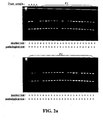
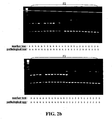
- RAPD analysis was further performed on a resistant plant and a susceptible plant and their F1 generation, and 183 resistant F2 plants and 64 susceptible F2 plants. As shown in FIGS. 2a and 2b , the analysis results showed that the molecular marker was 100% co-segregated.
- the DNA amplified with the OPC-07 primer (10 mer) having a nucleotide sequence set forth in SEQ ID NO: 1 was isolated and purified from gel, and cloned into a pGEM-T vector (Promega).
- the cloned plasmid was introduced into E . coli DH 10B by electroporation, and transformants were screened in an antibiotic-containing medium.
- Recombinant plasmids were isolated from the screened transformants, and the nucleotide sequences of DNAs contained in the plasmids were analyzed.
- the determined nucleotide sequences are set forth in SEQ ID NO: 2.
- Example 5 Southern blot analysis for inverse PCR and conversion into CAPS molecular marker
- the genomic DNA of each of resistant plants and susceptible plants was prepared, and digested with DNA restriction enzymes, Eco RV , Hind III, Xba I and EcoRI, respectively.
- the digested DNA was electrophoresed on agarose gel.
- the DNA was transferred to a nylon membrane and then subjected to Southern blot analysis using a CMV-resistant specific DNA probe (SEQ ID NO: 2) amplified in Example 4.
- SEQ ID NO: 2 CMV-resistant specific DNA probe amplified in Example 4.
- FIG. 3 DNA polymorphism was shown for Eco RI , Xba I , Eco RV but was not shown for Hind III.
- Eco RI , Xba I and Eco RV restriction enzymes were used for inverse PCR and conversion into a CAPS molecular marker.
- Example 5 Based on the results of Example 5 shown in FIG. 3 , the parts of the nucleotide sequence of the RAPD molecular marker analyzed in Example 4 were used to construct primers.
- the nucleotide sequence of each of the constructed primers is given in Table 1 below.
- the genomic DNA digested with Hind III was circularly ligated with T7 DNA ligase.
- the ligated DNA template was then amplified by PCR with a primer combination Of SEQ ID NO: 5 and SEQ ID NO: 6.
- the PCR product was reamplified by nested PCR using a primer combination of SEQ ID NO: 4 and SEQ ID NO: 9, thus obtaining a PCR product with about 900-bp size.
- the nucleotide sequence of the PCR product was analyzed by a primer walking method.
- the nucleotide sequence was linked to a nucleotide sequence of SEQ ID NO: 2, thus obtaining a 1.8-kb nucleotide sequence having Hind III sites at both ends.
- primers of SEQ ID NO: 10 and SEQ ID NO: 11 were constricted.
- the primer combination of SEQ ID NO: 10 and SEQ ID NO: 11 was used to perform inverse PCR using a genomic DNA template which had been digested with Eco RV and circularly ligated.
- the nucleotide sequence of the PCR product was linked to the 1.8-bp nucleotide sequence, thus obtaining a 3.4-kb nucleotide sequence having Eco RV sites at both ends.
- a genomic DNA template which had been digested with XbaI and circularly ligated was subjected to inverse PCR with primers of SEQ ID NO: 13 and SEQ ID NO: 14.
- the nucleotide sequence of the PCR product was analyzed and linked to the 3.4-kb nucleotide sequence. As a result, a nucleotide sequence with about 5.6-kb length containing a nucleotide sequence of SEQ ID NO: 2 was determined. This nucleotide sequence is set forth in SEQ ID NO: 22.
- the genomic DNA was extracted from a resistant plant, a susceptible plant and their F2 population, respectively, and used as a template for PCR.
- the PCR was performed with the DNA template and a primer combination of SEQ ID NO: 23 and SEQ ID NO: 24, a primer combination of SEQ ID NO: 23 and 25, and a combination of SEQ ID NO: 23 and 26, respectively.
- the PCR amplification consisted of the following: initial denaturation of template DNA of 1 minute at 94 °C; 35 cycles each consisting of 1 minute at 94 °C, 1 minute at 58 °C, and 2 minutes at 72 °C; and final extension of 10 minute at 72 °C.
- each of the amplified DNAs was digested with restriction enzymes ( Eco RI, Xba I , Eco RV) selected in Example 6, and electrophoresed on agarose gel so as to examine if the DNA was divided into genotypes, i.e., homo (RR) and hetero (Rr).
- restriction enzymes Eco RI, Xba I , Eco RV
- the results of the PCR amplification performed with the primer combination of SEQ ID NO: 23 and SEQ ID NO: 24 are shown in FIG. 4 .
- the PCR-amplified DNA fragment was 1.0 kb in size.
- the PCR-amplified DNA fragment was digested with Xba I, and the result showed that the band patterns of the susceptible and resistant plants were different from each other. Also, it could be fount that these band patterns were co-segregated with the genotype of the F2 plants, which had been expected by testing the disease resistance of F3 in Example 1.
- the results of the PCR amplification performed with the primer combination of SEQ ID NO: 23 and SEQ ID NO: 25 are shown in FIG. 5 .
- the PCR-amplified DNA fragment was 1,477 bp in size.
- the amplified DNA fragment was digested with each of Eco RI (A) and Xba I (B), and the results showed that the band patterns of the susceptible and resistant plants were different from each other. Also, it could be fount that these band patterns were co-segregated with the disease resistance results shown in Example 1.
- the results of the PCR amplification performed with the primer combination of SEQ ID NO: 23 and SEQ ID NO: 26 are shown in FIG. 6 .
- the PCR-amplified DNA fragment was 1,846 bp in size.
- the amplified DNA fragment was digested with Eco RI, and the results showed that the band patterns of the susceptible and resistant plants were different from each other. Also, it could be found that these band patterns were co-segregated with the disease resistance results shown in Example 1.
- Example 8 Determination of smallest number of consecutive nucleotides which can be converted into CAPS molecular markers
- nucleotide sequence of SEQ ID NO: 23 forward [SCC07S3]: 5'-GTAGTAGGGTACGGACTCATA-3'
- a nucleotide sequence of SEQ ID NO: 27 forward [SCC07S3-change]: 5'-gGTAGTAGGGTACG-3'
- a nucleotide sequence of SEQ ID NO: 25 Reverse [CR1541-3]: 5'-GGAGTTTCATCATATGAAGCC-3'
- SEQ ID NO: 28 Reverse [CR1541-3-change]: 5'-gGGAGTTTCATCAgc-3'.
- the modified primers of SEQ ID NO: 27 and SEQ ID NO: 28 were used to perform PCR amplification.
- the PCR amplification consisted of the following: initial denaturation of template DNA for 1 minute at 94 °C; 40 cycles each consisting of 1 minute at 94 °C, 1 minute at 50, 52, 54, 56 or 58 °C, and 2 minutes at 72 °C; and final extension of 10 minutes at 72 °C.
- the amplified DNA fragment was 1,477 bp in size. Thereafter, the amplified DNA was digested with Eco RI and electrophoresed on agarose gel. As shown in FIG. 7 , the electrophoresis results showed that the band patterns of the susceptible and resistant plants were different from each other and co-segregated with the disease resistance results shown in Example 1.
- the primer obtained by modifying at least 12 consecutive nucleotides selected from the nucleotide sequences set forth in SEQ ID NO: 22 is also useful as a CAPS marker for detecting the CMV resistance.
- the present invention provides the molecular marker which comprises the nucleotide sequence highly linkaged to the CMV-resistance, such that CMV-resistant plants can be effectively diagnosed with little or no diagnostic error.
- the inventive molecular marker and the detection method using the same can detect CMV-resistant plants in a rapid and precise manner without inoculating CMV directly into plants, and also can determine the genotype of CMV-resistant plants.
Landscapes
- Chemical & Material Sciences (AREA)
- Life Sciences & Earth Sciences (AREA)
- Health & Medical Sciences (AREA)
- Organic Chemistry (AREA)
- Genetics & Genomics (AREA)
- Engineering & Computer Science (AREA)
- Proteomics, Peptides & Aminoacids (AREA)
- Molecular Biology (AREA)
- General Health & Medical Sciences (AREA)
- Biophysics (AREA)
- Wood Science & Technology (AREA)
- Biochemistry (AREA)
- Zoology (AREA)
- Botany (AREA)
- Biotechnology (AREA)
- Physics & Mathematics (AREA)
- General Engineering & Computer Science (AREA)
- Analytical Chemistry (AREA)
- Bioinformatics & Cheminformatics (AREA)
- Medicinal Chemistry (AREA)
- Biomedical Technology (AREA)
- Microbiology (AREA)
- Gastroenterology & Hepatology (AREA)
- Immunology (AREA)
- Plant Pathology (AREA)
- Environmental Sciences (AREA)
- Developmental Biology & Embryology (AREA)
- Spectroscopy & Molecular Physics (AREA)
- Mycology (AREA)
- Measuring Or Testing Involving Enzymes Or Micro-Organisms (AREA)
- Polymers With Sulfur, Phosphorus Or Metals In The Main Chain (AREA)
- Breeding Of Plants And Reproduction By Means Of Culturing (AREA)
- Macromolecular Compounds Obtained By Forming Nitrogen-Containing Linkages In General (AREA)
- Laminated Bodies (AREA)
Abstract
Description
- The present invention relates to a cucumber mosaic virus (CMV) resistance-associated molecular marker and the use thereof, and more particularly to a nucleic acid consisting of nucleotide sequences having a very high association with the CMV-resistant character of plants, a primer comprising a portion of the nucleotide sequence of the nucleic acid, and a method for detecting CMV-resistant plants using the nucleic acid or the primer.
- Cucumber Mosaic Virus (hereinafter, referred to as "CMV") is a plant-pathogenic virus having the widest host range of plant viruses, and causes great economic damage to about 900 kinds of dicotyledonous and monocotyledonous plants in the whole world. Plants infected with CMV show mosaic symptoms on leaves, stems and fruits. Particularly, the affected leaves become smaller in size and crumpled, and show lesions along leaf veins. Also, the affected fruits show dark-green mosaic patterns and become uneven, thus reducing product quality.
- Meanwhile, in order to breed a disease-resistant variety, a disease-resistant factor should be introduced by successive backcrossing from other varieties having the factor. In each of the introduction steps, the disease-resistant factor should be selected through a resistance test, and in this selection step, the use of a molecular marker having a close association with the disease-resistant factor will make the selection very convenient. Thus, methods for the diagnosis of CMV using the molecular marker and various technologies for the development of CMV-resistant varieties by transformation have been developed. For example, Korean Patent Application No.
2000-0025699 0293567 1993-0029605 -
WO 03/000906 A2 -
EP 0753 248 A1 is directed to a transgenic organism in which the expression of S-adenosylhomocysteine hydrolase (SAHH) gene present in its genomic genes is substantially inhibited. The SAHH transgenic organism has been found to be resistant to CMV. -
WO 01/84912 A2 - Caranta et al. (Theor. Appl. Genet. (2002), 104: 586-591) selected a subset of 184 molecular marks distributed over the pepper genome for QTL mapping and disclosed seven genomic regions to be associated with partial restriction of CMV long-distances movement.
- As described above, the prior art on the diagnosis of CMV resistance and on the development of CMV-resistant plants targets the CMV coat protein gene, and there is no report of the development of technology concerning a CMV-resistant factor which is inherent in plants.
- Accordingly, there has been an urgent need for the development of a CMV resistance-associated molecular marker from plant lines having the CMV-resistant factor and for the development of a method for diagnosing CMV infection in plants using the developed molecular marker.
- Therefore, the present invention has been made to satisfy the above-mentioned need, and it is an object of the present invention to provide a molecular maker consisting of nucleotide sequences having a very high association with a CMV-resistant character, and the use thereof.
- To achieve the above object, in one aspect, the present invention provides an isolated nucleic acid consisting of a nucleotide sequence set forth in SEQ ID NO: 2 or SEQ ID NO: 22.
- In another aspect, the present invention provides a primer for the detection of CMV-resistant plants, which comprises consecutive nucleotides selected from a nucleotide sequence set forth in SEQ ID NO: 2 or SEQ ID NO: 22.
- In still another aspect, the present invention provides a kit for detection of CMV-resistant plant, which comprises the nucleic acid or the primer.
- In yet another aspect, the present invention provides a method for detecting a CMV-resistant plant and a method for determining the genotype of the plant, the methods comprising analyzing the genomic DNA of a plant in the presence of the nucleic acid or the primer.
- The further another aspect, the present invention provides a CMV-resistant plant which reproduce asexually by tissue culture and comprises a nucleic acid consisting of a nucleotide sequence shown SEQ ID NO: 2 or SEQ ID NO: 22, as well as a seed obtained therefrom.
- Hereinafter, the present invention will be described in detail.
- The present invention provides a molecular marker having a high association with the CMV-resistant character of plants (hereinafter, referred to as "a CMV resistance-associated molecular marker"). The CMV resistance-associated molecular marker provided in the present invention comprises a nucleic acid consisting of a nucleotide sequence set forth in SEQ ID NO: 2 or SEQ ID NO: 22. The nucleic acid includes RNA, DNA and cDNA, and preferably means DNA. The inventive molecular marker consists of nucleotide sequences having a close association with a CMV-resistant character, and is placed significantly close to the CMV-resistant gene. For this reason, the use of any polymorphism shown by the nucleotide sequence allows the presence or absence of the CMV resistance in plants to be determined.
- Also, the inventive molecular marker comprises a primer for the detection of CMV-resistant plants, which comprises a series of nucleotides selected from the nucleotide sequence of the nucleic acid. The primer may preferably have at least 10 consecutive nucleotides, and more preferably at least 12 consecutive nucleotides, which are selected from the nucleotide sequence set forth in SEQ ID NO: 2 or SEQ ID NO: 22. The inventive primer can be so designed that it is suitable for various DNA polymorphism analyses known in the art, such as RFLP (restriction fragment length polymorphism), RAPD (randomly amplified polymorphic DNA), DAF (DNA amplification fingerprinting), AP-PCR (arbitrarily primed PCR), STS (sequence tagged site), EST (expressed sequence tag), SCAR (sequence characterized amplified regions), ISSR (inter-simple sequence repeat amplification), AFLP (amplified fragment length polymorphism), CAPS (cleaved amplified polymorphic sequence), PCR-SSCP (single-strand conformation polymorphism) and the like (Jordan et al., Theor. Appl. Genet., 106:559-567, 2003; Martins M., R. et al., Plant Cell Reports, 22:71-78, 2003; Williams, J. G. K. et al., Nucl. Acids Res., 18:6531-6535, 1990; Michelmore, R. W., et al., Proc. Natl. Acad. Sci. USA. 88:9828-9832, 1991; Martins et al., Plant Cell Rep., 22:71-79, 2003; Orita et al., Proc. Natl. Acad. Sci. USA 86:2766-2770, 1989). For the DAF analysis, a primer consisting of 5-8 consecutive nucleotides can be designed and used. For example, a primer for the STS analysis can be so designed that it coincides with the terminal nucleotide sequence of an RFLP marker, and a primer for the SCAR analysis can be designed based on the terminal nucleotide sequence of an RAPD marker. Also, a primer for the CAPS analysis can be so designed that it contains a suitable restriction site. Preferably, the primer provided in the present invention may have a nucleotide sequence selected from the group consisting of SEQ ID NO: 1 and SEQ ID NO: 23 to SEQ ID NO: 26. Furthermore, the inventive primer may have modifications (e.g., additions, deletions and/or substitutions) if the modifications have no effect on the detection of polymorphism associated with a CMV-resistant character. Preferably, the inventive primer can be modified by making an addition and/or substitution of any base in at least 12 consecutive nucleotides selected from the nucleotide sequence set forth in SEQ ID NO: 2 or SEQ ID NO: 22. For example, the inventive primer may have a nucleotide sequence of SEQ ID NO: 27 or SEQ ID NO: 28.
- The inventive molecular marker can be very useful for the detection of CMV-resistant plants. Thus, the present invention provides a method for the detection of a CMV-resistant plant, which comprises analyzing the genomic DNA of a plant in the presence of the nucleic acid or the primer. This method may be performed using various DNA polymorphism analyses known in the art. Example of the DNA polymorphism analyses which can be used in the present invention include, but are not limited to, RFLP (restriction fragment length polymorphism), RAPD (randomly amplified polymorphic DNA), DAF (DNA amplification fingerprinting), AP-PCR (arbitrarily primed PCR), STS (sequence tagged site), EST (expressed sequence tag), SCAR (sequence characterized amplified regions), ISSR (inter-simple sequence repeat amplification), AFLP (amplified fragment length polymorphism), CAPS (cleaved amplified polymorphic sequence), PCR-SSCP (PCR- single strand conformation polymorphism) and the like (Jordan et al., Theor. Appl. Genet., 106:559-567, 2003; Martins M., R. et al., Plant Cell Reports, 22:71-78, 2003; Williams, J. G. K. et al., Nucl. Acids Res. 18:6531-6535, 1990; Michelmore, R. W., et al., Proc. Natl. Acad. Sci. USA 88-9828-9832 1991: Martins et al., Plant Cell Rep., 22:71-79, 2003; Orita et al., Proc. Natl. Acad. Sci. USA 86:2766-2770, 1989). Preferably, the detection method may be performed by the RFLP, RAPD or CAPS analysis.
- Concretely, the detection method may be performed by the CAPS analysis comprising the steps of:
- (a) performing PCR on each of genomic DNA templates obtained from CMV-resistant plants and CMV-susceptible plants, using a primer comprising a series of nucleotides selected from the nucleotide sequence set forth in SEQ ID NO. 2 or SEQ ID NO. 22;
- (b) digesting the PCR product with a restriction enzyme;
- (c) electrophoresing the digested DNA fragments on agarose gel; and
- (d) performing the comparison between the DNA band patterns of the electrophorsed gel.
- The primer in the step (a) may preferably be selected from the group consisting of SEQ ID NO. 23 to SEQ ID NO: 28. Preferably, a primer combination selected from the group consisting of a combination of SEQ ID NO: 23 and SEQ ID NO: 24, a combination of SEQ ID NO: 23 and SEQ ID NO: 25, a combination of SEQ ID NO: 23 and SEQ ID NO: 26, and a combination of SEQ ID NO: 27 and SEQ ID NO: 28, may be used. Furthermore, as the restriction enzyme in the step (b), any restriction enzyme present in the nucleotide sequence set forth in SEQ ID NO: 2 or SEQ ID NO: 22 may be used without limitations, and preferably, XbaI or EcoRI may be used.
- Moreover, the detection method may also be performed by the RAPD analysis comprising the steps of:
- (a) performing PCR on each of genomic DNA templates obtained from CMV-resistant plants and Cmv-susceptible plants, using a primer capable of amplifying the nucleotide sequence set forth in SEQ ID NO: 2;
- (b) electrophoresing the PCR products on agarose gel; and
- (c) performing the comparison between the DNA band patterns of the electrophoresed gel.
- The primer in the step (a) may have all nucleotide sequences which can be designed by a person skilled in the art so as to amplify the nucleic acid set forth in SEQ ID NO: 2. Preferably, the primer may have a nucleotide sequence set forth in SEQ ID NO: 1.
- In addition, the detection method may also be performed by the RFLP analysis comprising the steps of:
- (a) digesting each of genomic DNA templates obtained from CMV-resistant plants and CMV-susceptible plants with a suitable restriction enzyme;
- (b) electrophoresing the digested DNA fragments on agarose gel;
- (c) transferring the DNA-containing gel to a nylon membrane;
- (d) performing Southern blot analysis for the gel using the nucleic acid having the nucleotide sequence set forth in SEQ ID NO: 2 as a probe; and
- (e) exposing the gel onto an X-ray film to perform the comparison between the DNA band patterns of the gel.
- As the restriction enzyme in this method, any restriction enzyme known in the art may be used without limitations, and preferably a restriction enzyme causing DNA polymorphism may be used. More preferably, an enzyme selected from the group consisting of EcoRI, EcoRV and XbaI may be used.
- Also, the inventive molecular marker may be used to determine the genotype of the CMV-resistant plant. Thus, the present invention provides a method for determining the genotype of a CMV-resistant plant, which comprises analyzing the genomic DNA of a plant in the presence of the inventive nucleic acid or primer. This method may be performed by various DNA polymorphism analyses known in the art. Concretely, this method is performed as described for the method for detecting the CMV-resistant plants.
- The plant to which the inventive methods may be applied includes, but is not limited to, cucumber, watermelon, red pepper, melon, Chinese cabbage, tobacco, Petunia, cotton, and rose.
- Moreover, the present invention provides a kit for the detection of a CMV-resistant plant, which comprises either a nucleic acid consisting of the nucleotide sequence set forth in SEQ ID NO: 2 or SEQ ID NO: 22, or a series of nucleotides selected from the nucleotide sequence of the nucleic acid. The inventive kit may additionally comprise various reagents required not only in test procedures (PCR, Southern blot analysis, etc) to detect CMV-resistant plants using the above nucleic acid or primer but also in a procedure to examine the test results. For example, the inventive kit may additionally comprise PCR reaction mixture, restriction enzyme, agarose, buffer required for hybridization and/or electrophoresis, etc.
-
-
FIG. 1 is a photograph showing the results of RAPD analysis performed using operon primers (OPC-04 to OPC-08 and OPC-10) and using CMV-resistant DNA pool (R) or CMV-susceptible DNA pool (S) as templates. -
FIGS. 2a and2b are photographs showing the results of RAPID analysis performed for resistant plants (R0) and their F1 (R1), susceptible plants (So) and their F2 (S1), resistant plants F2 and susceptible plants F2, using an OPC-07 primer (SEQ ID NO: 1). -
FIG. 3 shows the results of RFLP analysis performed using a DNA fragment (SEQ ID NO: 2) amplify by an OPC-07 primer as a probe.
R: resistant plants
S: susceptible plants -
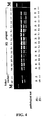
FIG. 4 is a photograph showing the results of CAPS analysis performed using primers of SEQ ID NO: 23 and SEQ ID NO: 24. -
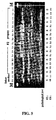
FIG. 5 is a photograph showing the results of CAPS analysis performed using a primer combination of SEQ ID NO: 23 and SEQ ID NO: 25.
A: digested with EcoRI
B: digested with XbaI -
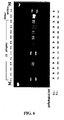
FIG. 6 is a photograph showing the results of CAPS analysis performed using a primer combination of SEQ ID NO: 23 and SEQ ID NO: 26. -
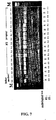
FIG. 7 is a photograph showing the results of CAPS analysis performed using a primer combination of SEQ ID NO: 27 and SEQ ID NO: 28. - Hereinafter, the present invention will be described in further detail by the following examples. It is to be understood, however, that these examples are given for illustrative purpose only and are not intended to limit the scope of the present invention.
- CMV was inoculated into a variety of red pepper plants so as to screen CMV-resistant plants. The results showed that one plant of the elgiencho lines was CMV-resistant. The screened plant was named "FP11". In order to test whether the CMV resistance of the screened
FP 11 is hereditary or not, a self-pollinated population and a crossed population were constructed. The crossed population was constructed by crossing the plant FP11 with FP 14, a susceptible line. The crossed F1 seeds were sowed and self-pollinated to produce the F2 population, and the F2 plants were self-pollinated to produce F3 plants. The F2 and F3 populations were tested for CMV resistance, and the results showed that the CMV resistance was hereditary at a ratio of 3:1 in the F2 population, and the ratio of homo to hetero in the F3 generation was 1:2. This suggests that the CMV resistance is determined by a dominant single gene. - DNA extraction was performed by a modification to the method of Prince, J. P., et al.(Prince, J. P., et al., HortScience 32:937-939, 1997). Red pepper leaves stored at -80 °C were crushed with liquid nitrogen, and then well mixed 25 ml of DNA extraction buffer (7M urea, 0.35M sodium chloride, 0.05M Tris-HCl pH 8.0, 0.02M EDTA, 0.25% sarkosyl, 5% phenol, 0.2% sodium bisulfate). Thereafter, the mixture was introduced with 0.75 ml of 20% SDS, and incubated at 65 °C for 30 minutes while shaking at intervals of 10 minutes.
- A solution of chloroform and isoamyl alcohol (24:1) was filled to the end of a 50-ml tube and well mixed for 15 minutes. The mixture solution was centrifuged at 5,000 rpm for 15 minutes, and the obtained supernatant was transferred into a fresh 50-ml tube using cheesecloth. Next, the same volume of isopropanol was added to the tube and mixed, followed by the precipitation of DNA for 1 hour. The precipitated DNA was collected using an U-shaped Pasteur pipette and placed in a 1.5-ml micro-tube to which 70% ethanol was then added to reprecipitate the DNA. The resulting DNA was dried at room temperature for 30-40 minutes. To the dried DNA pellet, 600-700 µl of TE buffer (10 mM Tris-Cl, 1 mM EDTA) was added, and the DNA solution was incubated at 65 °C for 1 hour. The culture solution was centrifuged three times. Then, the resulting DNA was transferred into a 1.5-ml tube and added with RNase (100 µg/ml) so as to remove RNA. The final concentration of the purified DNA was measured with a fluorometer.
- In order to select a DNA molecular marker associated with a CMV-resistant character, RAPD (Williams, J. G. K. et al., Nucl. Acids Res. 18, 6531-6535, 1990) and BSA (Bulked Segregant Analysis) (Michelmore, R. W. et al., Proc. Nat. Acad. Sci., 88:9828-9832, 1991) were used. Based on the CMV resistance assay results from the F2 population of Example 1, a DNA pool of 10 resistant F2 plants and a DNA pool of 10 susceptible F2 plants were prepared, respectively. The each DNA pool was controlled to a DNA concentration of 20 ng/µl. Then, the PCR was performed using the DNA as a template. In this case, for RAPD primers, about 147 primers causing a good PCR reaction were selected from about 400 primers of Operon RAPD 10-mer kits series A to series T (Operon, Alameda, CA, USA), and the selected primers were used to probe bands showing a specific difference in amplification between the resistant DNA pool and the susceptible DNA pool.
- The PCR reaction mixture consisted of a 25-µl total volume of 1 X PCR buffer, 60 ng of the template DNA, 0.3 mM dNTP, 0.6 pM primer, 3.5 mM MgCl2, and 0.6 Unit Taq DNA polymerase (Takara, Japan). The PCR amplification consisted of the following: denaturation of template DNA of 4 minutes at 94 °C; 45 cycles each consisting of 1 minute at 94 °C, 1 minute and 30 seconds at 36 °C, and 1 minute and 50 seconds at 72 °C; and final extension of 5 minutes at 72 °C. As a result, as shown in
FIG. 1 , a molecular marker which had show specificity only to the resistant pool in the PCR reaction with an OPC-07 primer (SEQ ID NO: 1) was selected. - In order to examine whether the molecular marker is linkaged to a CMV-resistant character, RAPD analysis was further performed on a resistant plant and a susceptible plant and their F1 generation, and 183 resistant F2 plants and 64 susceptible F2 plants. As shown in
FIGS. 2a and2b , the analysis results showed that the molecular marker was 100% co-segregated. - The DNA amplified with the OPC-07 primer (10 mer) having a nucleotide sequence set forth in SEQ ID NO: 1 was isolated and purified from gel, and cloned into a pGEM-T vector (Promega). The cloned plasmid was introduced into E. coli DH 10B by electroporation, and transformants were screened in an antibiotic-containing medium. Recombinant plasmids were isolated from the screened transformants, and the nucleotide sequences of DNAs contained in the plasmids were analyzed. The determined nucleotide sequences are set forth in SEQ ID NO: 2.
- The genomic DNA of each of resistant plants and susceptible plants was prepared, and digested with DNA restriction enzymes, EcoRV, HindIII, XbaI and EcoRI, respectively. The digested DNA was electrophoresed on agarose gel. The DNA was transferred to a nylon membrane and then subjected to Southern blot analysis using a CMV-resistant specific DNA probe (SEQ ID NO: 2) amplified in Example 4. The analysis results are shown in
FIG. 3 . As shown inFIG. 3 , DNA polymorphism was shown for EcoRI, XbaI, EcoRV but was not shown for HindIII. Based on the RFLP analysis results, EcoRI, XbaI and EcoRV restriction enzymes were used for inverse PCR and conversion into a CAPS molecular marker. - Based on the results of Example 5 shown in
FIG. 3 , the parts of the nucleotide sequence of the RAPD molecular marker analyzed in Example 4 were used to construct primers. The nucleotide sequence of each of the constructed primers is given in Table 1 below.Table 1: Primers used in inverse PCR Primer name Nucleotide sequence (5'→ 3') SEQ ID NO CRSCC07a GTC CCG ACG ATA GCC CAA AAG 3 CRINVR65 TTG GCC CTA TGA GTC CGT AC 4 CRINVR125 ACT GAC TAC GAG TTG TCA CC 5 CRINVF629 TAG GGG TTC AAG GAT CAC CC 6 CRINVR796 TAT CCT CTT ATG CAA TGC GC 7 CRINVR840 AAT CCT TGT ACC TCA CAA CG 8 CRINVF975 CGA TGC CAC TTC ATA ATG CC 9 Inv 1030514 R GAC TTG GGC ACT ACA CTG GA 10 Inv 1030514 F ACA TAG GCG TGT GCT CTG GA 11 CR 1541-3 GGA GTT TCA TCA TAT GAA GCC 12 InvXbTopF1010 GGT TCA AGG ATC ACC CAA ATA A 13 InvXbTopR107 TTC ACC TTA GTC CCC AAA CCT A 14 EV Inver F2 AAC CCA AGC CTA TTT TAG CC 15 EV-INV-XbaI GGT AAT AGG GTT CAC CTT AGT C 16 CRINVF5095 CTT TGA GCC AAA GAA TGG AA 17 CRINVR4776 TTT GGT AAT GAC CGG AGA CC 18 INVER0827R ATA GCA GAG GAG CAC CCT AC 19 INVER0827F1 GGT ACA AGG ATT CCC CAA AGT G 20 INVER0827F2 GAT TTA GTC AGT ATG ACG ATG CCA C 21 - The primers set forth in Table 1 above were used to perform inverse PCR on resistant plants according to a method known in the art (Sambrook J. and D. W. Russel. 2001. Molecular Cloning. 3rd ed., Cold Spring Harbor Laboratory Press, Cold Spring Harbor, New York).
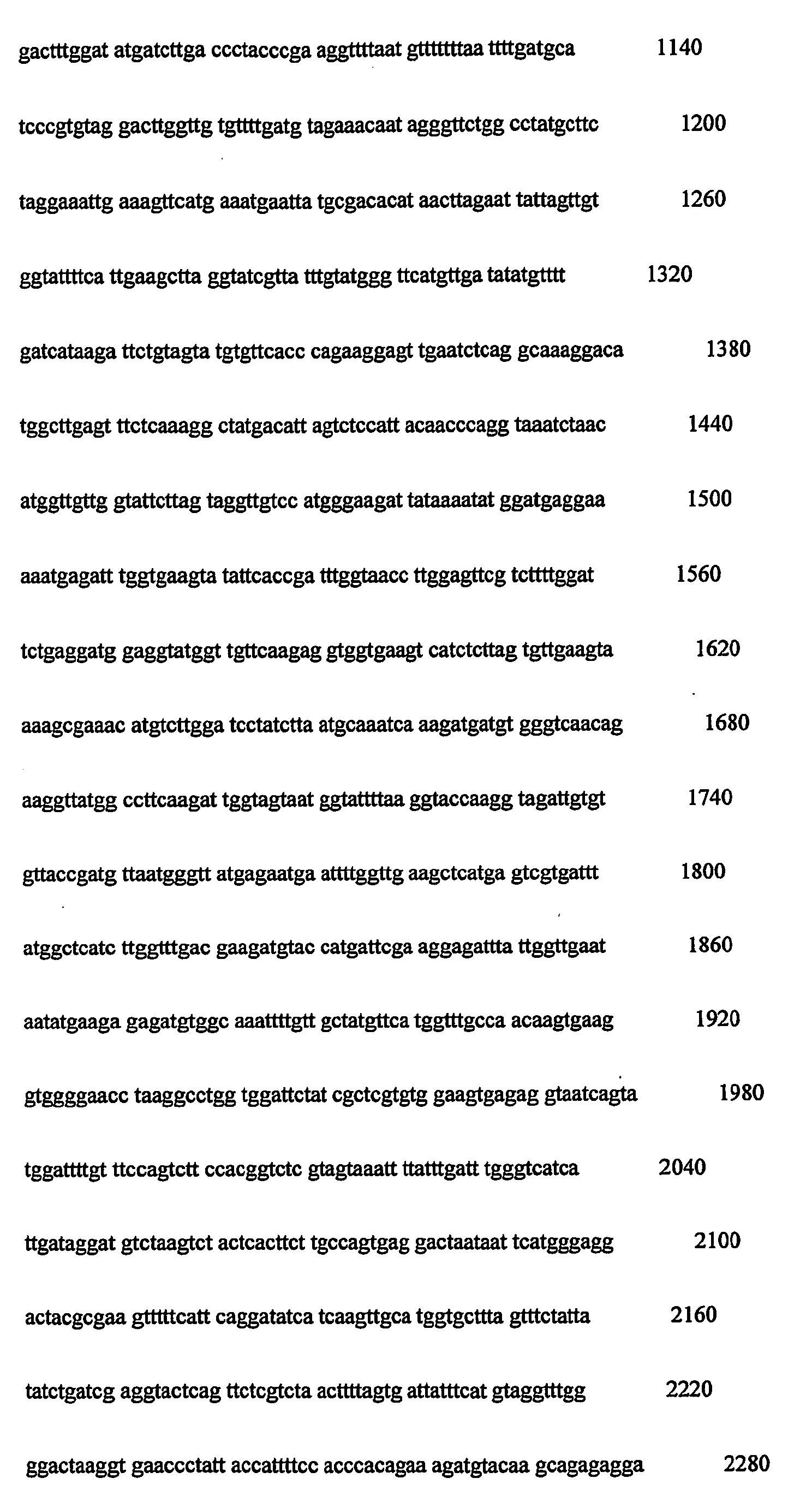
- First, the genomic DNA digested with HindIII was circularly ligated with T7 DNA ligase. The ligated DNA template was then amplified by PCR with a primer combination Of SEQ ID NO: 5 and SEQ ID NO: 6. The PCR product was reamplified by nested PCR using a primer combination of SEQ ID NO: 4 and SEQ ID NO: 9, thus obtaining a PCR product with about 900-bp size. The nucleotide sequence of the PCR product was analyzed by a primer walking method. The nucleotide sequence was linked to a nucleotide sequence of SEQ ID NO: 2, thus obtaining a 1.8-kb nucleotide sequence having HindIII sites at both ends. Thereafter, based on the 1.8-kb nucleotide sequence, primers of SEQ ID NO: 10 and SEQ ID NO: 11 were constricted. The primer combination of SEQ ID NO: 10 and SEQ ID NO: 11 was used to perform inverse PCR using a genomic DNA template which had been digested with EcoRV and circularly ligated. The nucleotide sequence of the PCR product was linked to the 1.8-bp nucleotide sequence, thus obtaining a 3.4-kb nucleotide sequence having EcoRV sites at both ends. Similarly, a genomic DNA template which had been digested with XbaI and circularly ligated was subjected to inverse PCR with primers of SEQ ID NO: 13 and SEQ ID NO: 14. The nucleotide sequence of the PCR product was analyzed and linked to the 3.4-kb nucleotide sequence. As a result, a nucleotide sequence with about 5.6-kb length containing a nucleotide sequence of SEQ ID NO: 2 was determined. This nucleotide sequence is set forth in SEQ ID NO: 22.
- After finding out the DNA restriction enzyme site of DNA nucleotide sequences known in the nucleotide sequences of SEQ ID NO: 22, the restriction enzyme site of genomic DNA of resistant plants was compared with that of susceptible plants. Then, XbaI (T'CTAG_A), EcoRI (G'AATT_C) and EcoRV (GAT'ATC), which are restriction enzymes showing the polymorphism between the two genomic DNAs, were selected as enzymes to be used in CAPS. Then, primers capable of amplifying DNA fragments showing a restriction pattern with suitable length. Namely, 4 primers each consisting of a series of nucleotide sequences selected from the nucleotide sequences set forth in SEQ ID NO: 22 were constructed (see Table 2 below).
Table 2: Primers for development of CAPS molecular marker for examination of CMV resistance No Nucleotide sequence (5'→3') Primer name Direction SEQ ID NO 1 GTAGTAGGGTACGGACTCATA SCC07S3 Forward 23 2 GTCCCGACGATAGCCCAAAAG SCC07a Reverse 24 3 GGAGTTTCATCATATGAAGCC CR1541-3 Reverse 25 4 AGTGGAGCTTGGGGTAGTCC FP5416R Reverse 26 - The genomic DNA was extracted from a resistant plant, a susceptible plant and their F2 population, respectively, and used as a template for PCR. The PCR was performed with the DNA template and a primer combination of SEQ ID NO: 23 and SEQ ID NO: 24, a primer combination of SEQ ID NO: 23 and 25, and a combination of SEQ ID NO: 23 and 26, respectively. The PCR amplification consisted of the following: initial denaturation of template DNA of 1 minute at 94 °C; 35 cycles each consisting of 1 minute at 94 °C, 1 minute at 58 °C, and 2 minutes at 72 °C; and final extension of 10 minute at 72 °C. Thereafter, each of the amplified DNAs was digested with restriction enzymes (EcoRI, XbaI, EcoRV) selected in Example 6, and electrophoresed on agarose gel so as to examine if the DNA was divided into genotypes, i.e., homo (RR) and hetero (Rr).
- The results of the PCR amplification performed with the primer combination of SEQ ID NO: 23 and SEQ ID NO: 24 are shown in
FIG. 4 . The PCR-amplified DNA fragment was 1.0 kb in size. The PCR-amplified DNA fragment was digested with XbaI, and the result showed that the band patterns of the susceptible and resistant plants were different from each other. Also, it could be fount that these band patterns were co-segregated with the genotype of the F2 plants, which had been expected by testing the disease resistance of F3 in Example 1. - The results of the PCR amplification performed with the primer combination of SEQ ID NO: 23 and SEQ ID NO: 25 are shown in
FIG. 5 . The PCR-amplified DNA fragment was 1,477 bp in size. The amplified DNA fragment was digested with each of EcoRI (A) and XbaI (B), and the results showed that the band patterns of the susceptible and resistant plants were different from each other. Also, it could be fount that these band patterns were co-segregated with the disease resistance results shown in Example 1. - The results of the PCR amplification performed with the primer combination of SEQ ID NO: 23 and SEQ ID NO: 26 are shown in
FIG. 6 . The PCR-amplified DNA fragment was 1,846 bp in size. The amplified DNA fragment was digested with EcoRI, and the results showed that the band patterns of the susceptible and resistant plants were different from each other. Also, it could be found that these band patterns were co-segregated with the disease resistance results shown in Example 1. - The above results show that, if a primer constructed from a series of any nucleotides selected from the nucleotide sequences set forth in SEQ ID NO: 22 is used to perform PCR and the resulting PCR product is digested with the restriction enzyme present in SEQ ID NO: 22, the presence or absence of a CMV-resistant gene and its genotype (i.e., homo or hetero) can be determined. Namely, since the nucleotide sequences set forth in SEQ ID NO: 22 significantly approach to CMV-resistant genes, the use of any polymorphism shown by the nucleotide sequences allows the presence or absence of CMV-resistant genes to be determined.
- The following test was performed to determine the smallest number of nucleotide sequences convertible into a CAPS molecular marker, in the nucleotide sequences of SEQ ID NO: 22 determined in Example 6. For this purpose, a nucleotide sequence of SEQ ID NO: 23 (forward [SCC07S3]: 5'-GTAGTAGGGTACGGACTCATA-3') was modified with a nucleotide sequence of SEQ ID NO: 27 (forward [SCC07S3-change]: 5'-gGTAGTAGGGTACG-3'), and a nucleotide sequence of SEQ ID NO: 25 (Reverse [CR1541-3]: 5'-GGAGTTTCATCATATGAAGCC-3') was modified with a nucleotide sequence of SEQ ID NO: 28 (Reverse [CR1541-3-change]: 5'-gGGAGTTTCATCAgc-3'). Here, the small letters represent any deletion or substitution. The modified primers of SEQ ID NO: 27 and SEQ ID NO: 28 were used to perform PCR amplification. The PCR amplification consisted of the following: initial denaturation of template DNA for 1 minute at 94 °C; 40 cycles each consisting of 1 minute at 94 °C, 1 minute at 50, 52, 54, 56 or 58 °C, and 2 minutes at 72 °C; and final extension of 10 minutes at 72 °C. The amplified DNA fragment was 1,477 bp in size. Thereafter, the amplified DNA was digested with EcoRI and electrophoresed on agarose gel. As shown in
FIG. 7 , the electrophoresis results showed that the band patterns of the susceptible and resistant plants were different from each other and co-segregated with the disease resistance results shown in Example 1. - The above results suggest that the primer obtained by modifying at least 12 consecutive nucleotides selected from the nucleotide sequences set forth in SEQ ID NO: 22 is also useful as a CAPS marker for detecting the CMV resistance.
- As described above, the present invention provides the molecular marker which comprises the nucleotide sequence highly linkaged to the CMV-resistance, such that CMV-resistant plants can be effectively diagnosed with little or no diagnostic error. Moreover, the inventive molecular marker and the detection method using the same can detect CMV-resistant plants in a rapid and precise manner without inoculating CMV directly into plants, and also can determine the genotype of CMV-resistant plants.
-
- <110> FnP corp., Ltd
- <120> Molecular marker associated with CMV resistance and use thereof
- <130> OP04-1077
- <150>
KR 2003-75272
<151> 2003-10-27 - <160> 28
- <170> KopatentIn 1.71
- <210> 1
<211> 10
<212> DNA
<213> Artificial Sequence - <220>
<223> RAPD primer (OPC-O7) - <400> 1
gtcccgacga 10 - <210> 2
<211> 1027
<212> DNA
<213> Capsicum annuum - <400> 2


- <210> 3
<211> 21
<212> DNA
<213> Artificial Sequence - <220>
<223> CRSCC07a primer for inverse PCR - <400> 3
gtcccgacga tagcccaaaa g 21 - <210> 4
<211> 20
<212> DNA
<213> Artificial Sequence - <220>
<223> CRINVR65 primer for inverse PCR - <400> 4
ttggccctat gagtccgtac 20 - <210> 5
<211> 20
<212> DNA
<213> Artificial Sequence - <220>
<223> CRINVR125 primer for inverse PCR - <400> 5
actgactacg agttgtcacc 20 - <210> 6
<211> 20
<212> DNA
<213> Artificial Sequence - <220>
<223> CRINVF629 primer for inverse PCR - <400> 6
taggggttca aggatcaccc 20 - <210> 7
<211> 20
<212> DNA
<213> Artificial Sequence - <220>
<223> CRINVR796 primer for inverse PCR - <400> 7
tatcctctta tgcaatgcgc 20 - <210> 8
<211> 20
<212> DNA
<213> Artificial Sequence - <220>
<223> CR1NVR840 primer for inverse PCR - <400> 8
aatccttgta cctcacaacg 20 - <210> 9
<211> 20
<212> DNA
<213> Artificial Sequence - <220>
<223> CRINVF975 primer for inverse PCR - <400> 9
cgatgccact tcataatgcc 20 - <210> 10
<211> 20
<212> DNA
<213> Artificial Sequence - <220>
<223> Inv 1030514 R primer for inverse PCR - <400> 10
gacttgggca ctacactgga 20 - <210> 11
<211> 20
<212> DNA
<213> Artificial Sequence - <220>
<223> Inv 1030514 F primer for inverse PCR - <400> 11
acataggcgt gtgctctgga 20 - <210> 12
<211> 21
<212> DNA
<213> Artificial Sequence - <220>
<223> CR 1541-3 primer for inverse PCR - <400> 12
ggagritcat catatgaagc c 21 - <210> 13
<211> 22
<212> DNA
<213> Artificial Sequence - <220>
<223> InvXbTopF1010 primer for inverse PCR - <400> 13
ggttcaagga tcacccaaat aa 22 - <210> 14
<211> 22
<212> DNA
<213> Artificial Sequence - <220>
<223> InvXbTopR107 primer for inverse PCR - <400> 14
ttcaccttag tccccaaacc ta 22 - <210> 15
<211> 20
<212> DNA
<213> Artificial Sequence - <220>
<223> EV Inver F2 primer for inverse PCR - <400> 15
aacccaagcc tattttagcc 20 - <210> 16
<211> 22
<212> DNA
<213> Artificial Sequence - <220>
<223> EV-INV-XbaI primer for inverse PCR - <400> 16
ggtaataggg ttcaccttag tc 22 - <210> 17
<211> 20
<212> DNA
<213> Artificial Sequence - <220>
<223> CRINVF5095 primer for inverse PCR - <400> 17
ctttgagcca aagaatggaa 20 - <210> 18
<211> 20
<212> DNA
<213> Artificial Sequence - <220>
<223> CRINVR4776 primer for inverse PCR - <400> 18
tttggtaatg accggagacc 20 - <210> 19
<211> 20
<212> DNA
<213> Artificial Sequence - <220>
<223> INVER0827R primer for inverse PCR - <400> 19
atagcagagg agcaccctac 20 - <210> 20
<211> 22
<212> DNA
<213> Artificial Sequence - <220>
<223> INVER0827F1 primer for inverse PCR - <400> 20
ggtacaagga ttccccaaag tg 22 - <210> 21
<211> 25
<212> DNA
<213> Artificial Sequence - <220>
<223> INVER0827F2 primer for inverse PCR - <400> 21
gatttagtca gtatgacgat gccac 25 - <210> 22
<211> 5591
<212> DNA
<213> Capsicum annuum - <400> 22



- <210> 23
<211> 21
<212> DNA
<213> Artificial Sequence - <220>
<223> SCC07S3 primer - <400> 23
gtagtagggt acggactcat a 21 - <210> 24
<211> 21
<212> DNA
<213> Artificial Sequence - <220>
<223> SCC07a primer - <400> 24
gtcccgacga tagcccaaaa g 21 - <210> 25
<211> 21
<212> DNA
<213> Artificial Sequence - <220>
<223> CR1541-3 primer - <400> 25
ggagtttcat catatgaagc c 21 - <210> 26
<211> 20
<212> DNA
<213> Artificial Sequence - <220>
<223> FP5416R primer - <400> 26
agtggagctt ggggtagtcc 20 - <210> 27
<211> 15
<212> DNA
<213> Artificial Sequence - <220>
<223> SCC07S3-change primer - <400> 27
ggtagtagggtacgg 15 - <210> 28
<211> 15
<212> DNA
<213> Artificial Sequence - <220>
<223> CR1541-3-change primer - <400> 28
gggagtttca tcagc 15 -
- <110> KIM, Shin-Je
- <120> Cucumber mosaic virus-resistant plant and method for detecting the plant
- <130> NP03-0171
- <160> 28
- <170> KopatentIn 1.71
- <210>
<211> 10
<212> DNA
<213> Artificial Sequence - <220>
<223> RAPD primer (OPC-O7) - <400> 1
gtcccgacga 10 - <210> 2
<211> 1027
<212> DNA
<213> Capsicum annuum - <400> 2


- <210> 3
<211> 21
<212> DNA
<213> Artificial Sequence - <220>
<223> CRSCC07a primer for inverse PCR - <400> 3
gtcccgacga tagcccaaaa g 21 - <210> 4
<211> 20
<212> DNA
<213> Artificial Sequence - <220>
<223> CRINVR65 primer for inverse PCR - <400> 4
ttggccctat gagtccgtac 20 - <210> 5
<211> 20
<212> DNA
<213> Artificial Sequence - <220>
<223> CRINVR125 primer for inverse PCR - <400> 5
actgactacg agttgtcacc 20 - <210> 6
<211>
<212> DNA
<213> Artificial Sequence - <220>
<223> CRINVF629 primer for inverse PCR - <400> 6
taggggttca aggatcaccc 20 - <210> 7
<211> 20
<212> DNA
<213> Artificial Sequence - <220>
<223> CRINVR796 primer for inverse PCR - <400> 7
tatcctctta tgcaatgcgc 20 - <210> 8
<211> 20
<212> DNA
<213> Artificial Sequence - <220>
<223> CRINVR840 primer for inverse PCR - <400> 8
aatccttgta cctcacaacg 20 - <210> 9
<211> 20
<212> DNA
<213> Artificial Sequence - <220>
<223> CRINVF975 primer for inverse PCR - <400> 9
cgatgccact tcataatgcc 20 - <210> 10
<211> 20
<212> DNA
<213> Artificial Sequence - <220>
<223> Inv 1030514 R primer for inverse PCR - <400> 10
gacttgggca ctacactgga 20 - <210> 11
<211> 20
<212> DNA
<213> Artificial Sequence - <220>
<223> Inv 1030514 F primer for inverse PCR - <400> 11
acataggcgt gtgctctgga 20 - <210> 12
<211> 21
<212> DNA
<213> Artificial Sequence - <220>
<223> CR 1541-3 primer for inverse PCR - <400> 12
ggagtttcat catatgaagc c 21 - <210> 13
<211> 22
<212> DNA
<213> Artificial Sequence - <220>
<223> InvXbTopF1010 primer for inverse PCR - <400> 13
ggttcaagga tcacccaaat aa 22 - <210> 14
<211> 22
<212> DNA
<213> Artificial Sequence
<220>
<223> InvXbTopR107 primer for inverse PCR - <400> 14
ttcaccttag tccccaaacc ta 22 - <210> 15
<211> 20
<212> DNA
<213> Artificial Sequence - <220>
<223> EV Inver F2 primer for inverse PCR - <400> 15
aacccaagcc tattttagcc 20 - <210> 16
<211> 22
<212> DNA
<213> Artificial Sequence - <220>
<223> EV-INV-XbaI primer for inverse PCR - <400> 16
ggtaataggg ttcaccttag tc 22 - <210> 17
<211> 20
<212>DNA
<213> Artificial Sequence - <220>
<223> CRINVF5095 primer for inverse PCR - <400> 17
ctttgagcca aagaatggaa 20 - <210> 18
<211> 20
<212> DNA
<213> Artificial Sequence - <220>
<223> CRINVR4776 primer for inverse PCR - <400> 18
tttggtaatg accggagacc 20 - <210> 19
<211> 20
<212> DNA
<213> Artificial Sequence - <220>
<223> INVER0827R primer for inverse PCR - <400> 19
atagcagagg agcaccctac 20 - <210> 20
<211> 22
<212> DNA
<213> Artificial Sequence - <220>
<223> INVER0827F1 primer for inverse PCR - <400> 20
ggtacaagga ttccccaaag tg 22 - <210> 21
<211> 25
<212> DNA
<213> Artificial Sequence - <220>
<223> INVER0827F2 primer for inverse PCR - <400> 21
gatttagtca gtatgacgat gccac 25 - <210> 22
<211> 5591
<212> DNA
<213> Capsicum annuum - <400> 22
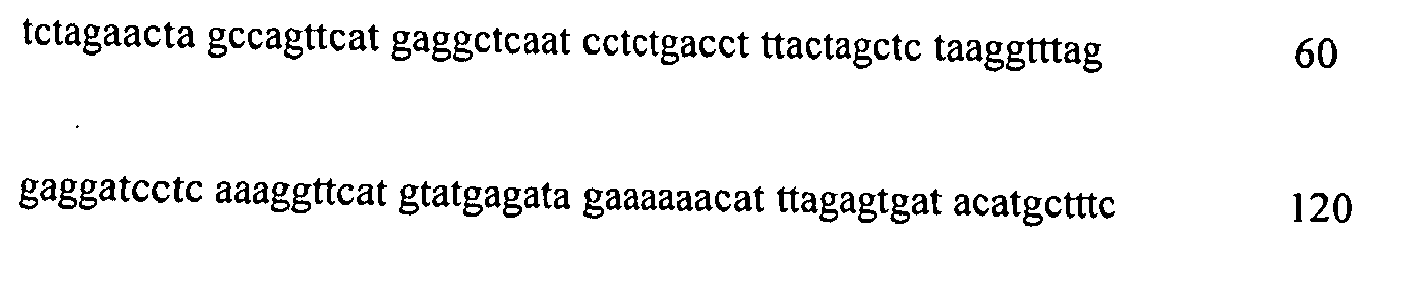


- <210> 23
<211> 21
<212> DNA
<213> Artificial Sequence - <220>
<223> SCC07S3 primer for CAPS - <400> 23
gtagtagggt acggactcat a 21 - <210> 24
<211> 21
<212> DNA
<213> Artificial Sequence - <220>
<223> SCC07a primer for CAPS - <400> 24
gtcccgacga tagcccaaaa g 21 - <210> 25
<211> 21
<212> DNA
<213> Artificial Sequence - <220>
<223> CR1541-3 primer for CAPS - <400> 25
ggagtttcat catatgaagc c 21 - <210> 26
<211> 20
<212> DNA
<213> Artificial Sequence - <220>
<223> FP5416R primer for CAPS - <400> 26
agtggagctt ggggtagtcc 20 - <210> 27
<211> 15
<212> DNA
<213> Artificial Sequence - <220>
<223> SCC07S3-change primer for CAPS - <400> 27
ggtagtaggg tacgg 15 - <210> 28
<211> 15
<212> DNA
<213> Artificial Sequence - <220>
<223> CR1541-3 primer for CAPS - <400> 28
gggagtttca tcagc 15 -
- <110> FnP corp., Ltd
- <120> Molecular marker associated with CMV resistance and use thereof
- <130> OP04-1077
- <150>
KR 2003-75272
<151> 2003-10-27 - <160> 28
- < 170> KopatentIn 1.71
- <210> 1
<211> 10
<212> DNA
<213> Artificial Sequence - <220>
<223> RAPD primer (OPC-O7) - <400> 1
gtcccgacga 10 - <210> 2
<211> 1027
<212> DNA
<213> Capsicum annuum - <400> 2


- <210> 3
<211> 21
<212> DNA
<213> Artificial Sequence - <220>
<223> CRSCC07a primer for inverse PCR - <400> 3
gtcccgacga tagcccaaaa g 21 - <210> 4
<211> 20
<212> DNA
<213> Artificial Sequence - <220>
<223> CRINVR65 primer for inverse PCR - <400> 4
ttggccctat gagtccgtac 20 - <210> 5
<211> 20
<212> DNA
<213> Artificial Sequence - <220>
<223> CRINVR125 primer for inverse PCR - <400> 5
actgactacg agttgtcacc 20 - <210> 6
<211> 20
<212> DNA
<213> Artificial Sequence - <220>
<223> CRINVF629 primer for inverse PCR - <400> 6
taggggttca aggatcaccc 20 - <210> 7
<211> 20
<212> DNA
<213> Artificial Sequence - <220>
<223> CRINVR796 primer for inverse PCR - <400> 7
tatcctctta tgcaatgcgc 20 - <210> 8
<211> 20
<212> DNA
<213> Artificial Sequence - <220>
<223> CRINVR840 primer for inverse PCR - <400> 8
aatccttgta cctcacaacg 20 - <210> 9
<211> 20
<212> DNA
<213> Artificial Sequence - <220>
<223> CRINVF975 primer for inverse PCR - <400> 9
cgatgccact tcataatgcc 20 - <210> 10
<211> 20
<212> DNA
<213> Artificial Sequence - <220>
<223> Inv 1030514 R primer for inverse PCR - <400> 10
gacttgggca ctacactgga 20 - <210> 11
<211> 20
<212> DNA
<213> Artificial Sequence - <220>
<223> Inv 1030514 F primer for inverse PCR - <400> 11
acataggcgt gtgctctgga 20 - <210> 12
<211> 21
<212> DNA
<213> Artificial Sequence - <220>
<223> CR 1541-3 primer for inverse PCR - <400> 12
ggagtttcat catatgaagc c 21 - <210> 13
<211> 22
<212> DNA
<213> Artificial Sequence - <220>
<223> InvXbTopF1010 primer for inverse PCR - <400> 13
ggttcaagga tcacccaaat aa 22 - <210> 14
<211> 22
<212> DNA
<213> Artificial Sequence - <220>
<223> InvXbTopR107 primer for inverse PCR - <400> 14
ttcaccttag tccccaaacc ta 22 - <210> 15
<211> 20
<212> DNA
<213> Artificial Sequence - <220>
<223> EV Inver F2 primer for inverse PCR - <400> 15
aacccaagcc tattttagcc 20 - <210> 16
<211> 22
<212> DNA
<213> Artificial Sequence - <220>
<223> EV-INV-XbaI primer for inverse PCR - <400> 16
ggtaataggg ttcaccttag tc 22 - <210> 17
<211> 20
<212> DNA
<213> Artificial Sequence - <220>
<223> CRINVF5095 primer for inverse PCR - <400> 17
ctttgagcca aagaatggaa 20 - <210> 18
<211> 20
<212> DNA
<213> Artificial Sequence - <220>
<223> CRINVR4776 primer for inverse PCR - <400> 18
tttggtaatg accggagacc 20 - <210> 19
<211> 20
<212> DNA
<213> Artificial Sequence - <220>
<223> INVER0827R primer for inverse PCR - <400> 19
atagcagagg agcaccctac 20 - <210> 20
<211> 22
<212> DNA
<213> Artificial Sequence - <220>
<223> INVER0827F1 primer for inverse PCR - <400> 20
ggtacaagga ttccccaaag tg 22 - <210> 21
<211> 25
<212> DNA
<213> Artificial Sequence - <220>
<223> INVER0827F2 primer for inverse PCR - <400> 21
gatttagtca gtatgacgat gccac 25 - <210> 22
<211> 5591
<212> DNA
<213> Capsicum annuum - <400> 22


- <210> 23
<211> 21
<212> DNA
<213> Artificial Sequence - <220>
<223> SCC07S3 primer - <400> 23
gtagtagggt acggactcat a 21 - <210> 24
<211> 21
<212> DNA
<213> Artificial Sequence - <220>
<223> SCC07a primer - <400> 24
gtcccgacga tagcccaaaa g 21 - <210> 25
<211> 21
<212> DNA
<213> Artificial Sequence - <220>
<223> CR1541-3 primer - <400> 25
ggagtttcat catatgaagc c 21 - <210> 26
<211> 20
<212> DNA
<213> Artificial Sequence - <220>
<223> FP5416R primer - <400> 26
agtggagctt ggggtagtcc 20 - <210> 27
<211> 15
<212> DNA
<213> Artificial Sequence - <220>
<223> SCC07S3-change primer - <400> 27
ggtagtaggg tacgg 15 - <210> 28
<211> 15
<212> DNA
<213> Artificial Sequence - <220>
<223> CR1541-3-change primer - <400> 28
gggagtttca tcagc 15
Claims (8)
- An isolated nucleic acid consisting of a nucleotide sequence set forth in SEQ ID NO: 2 or SEQ ID NO: 22.
- A primer for the detection of cucumber mosaic virus (CMV)-resistant pepper plants which consist of at least 10 consecutive nucleotides selected from a nucleotide sequence set forth in SEQ ID NO: 2 or SEQ ID NO: 22.
- The primer of Claim 2 wherein the primer has a nucleotide sequence selected from SEQ ID NO: 1 and SEQ ID NO:23 to SEQ ID NO: 26.
- A primer for the detection of cucumber mosaic virus (CMV)-resistant pepper plants, which consist of at least 12 nucleotides prepared by the addition, deletion or substitution of any base in at least 12 consecutive nucleotides selected from a nucleotide sequence set forth in SEQ ID NO: 2 or SEQ ID NO: 22.
- The primer of Claim 3 wherein the primer has a nucleotide sequence of SEQ ID NO:27 or SEQ ID NO:28.
- A kit for the detection of a CMV-resistant pepper plant, which comprises any one selected from the group consisting of the nucleic acid of Claim 1, the primer of Claim 2 and the primer of Claim 3.
- A method for the detection of a CMV-resistant pepper, comprising the step of analyzing the genomic DNA of a pepper in the presence of any one selected from the group consisting of the nucleic acid of Claim 1, the primer of Claim 2 and the primer of Claim 3.
- The method of Claim 7, wherein the analysis is performed by any one method selected from the group consisting of RFLP (restriction fragment length polymorphism), RAPD (randomly amplified polymorphic DNA), DAF (DNA amplification fingerprinting), AP-PCR (arbitrarily primed PCR), STS (sequence tagged site), EST (expressed sequence tag), SCAR (sequence characterized amplified regions), ISSR (inter-simple sequence repeat amplification), AFLP (amplified fragment length polymorphism), CAPS (cleaved amplified polymorphic sequence) and PCR-SSCP (PCR-single strand conformation polymorphism).
Applications Claiming Priority (2)
| Application Number | Priority Date | Filing Date | Title |
|---|---|---|---|
| KR20030075272 | 2003-10-27 | ||
| PCT/KR2004/002732 WO2005040426A1 (en) | 2003-10-27 | 2004-10-27 | Molecular marker associated with cmv resistance and use thereof |
Publications (3)
| Publication Number | Publication Date |
|---|---|
| EP1689886A1 EP1689886A1 (en) | 2006-08-16 |
| EP1689886A4 EP1689886A4 (en) | 2008-03-26 |
| EP1689886B1 true EP1689886B1 (en) | 2009-09-02 |
Family
ID=36649209
Family Applications (1)
| Application Number | Title | Priority Date | Filing Date |
|---|---|---|---|
| EP04793590A Expired - Lifetime EP1689886B1 (en) | 2003-10-27 | 2004-10-27 | Molecular marker associated with cmv resistance and use thereof |
Country Status (9)
| Country | Link |
|---|---|
| US (1) | US8026414B2 (en) |
| EP (1) | EP1689886B1 (en) |
| JP (1) | JP4739222B2 (en) |
| KR (1) | KR100520994B1 (en) |
| CN (1) | CN1886521B (en) |
| AT (1) | ATE441728T1 (en) |
| DE (1) | DE602004022972D1 (en) |
| DK (1) | DK1689886T3 (en) |
| WO (1) | WO2005040426A1 (en) |
Families Citing this family (12)
| Publication number | Priority date | Publication date | Assignee | Title |
|---|---|---|---|---|
| KR100804766B1 (en) | 2006-10-17 | 2008-02-18 | 주식회사 농우바이오 | Transformed Peppers Resistant to CMC Pathogenic Infection |
| KR101323515B1 (en) | 2009-12-31 | 2013-10-29 | 주식회사 에프앤피 | Molecular marker for cucumber mosaic virus resistance and detection method using the same |
| MX369795B (en) | 2012-08-23 | 2019-11-21 | Seminis Vegetable Seeds Inc | Multiple-virus-resistant melon. |
| CN105368927B (en) * | 2015-09-16 | 2018-03-09 | 北京市农林科学院 | Molecular labeling genSSR3000 and acquisition, application with capsicum CMV resistant gene close linkages |
| CN105296475B (en) * | 2015-11-06 | 2017-10-17 | 江苏省农业科学院 | Chain molecular labeling and its application with capsicum anti cucumber mosaic virus ospc gene qcmv 21 |
| CN105420406B (en) * | 2016-01-21 | 2024-03-26 | 中国热带农业科学院热带作物品种资源研究所 | SRAP molecular marker primer for identifying common bermuda grass and curved ear bermuda grass, and method and application thereof |
| CN105567676B (en) * | 2016-02-01 | 2018-06-26 | 博奥生物集团有限公司 | A kind of method for extracting nucleic acid and its dedicated kit |
| US10849767B1 (en) | 2016-06-29 | 2020-12-01 | University Of South Florida | Orthotic grippers |
| CN106939351A (en) * | 2017-05-03 | 2017-07-11 | 江苏师范大学 | Dominant molecular labeling of the quick screening cucumber with/without fruit knurl character |
| CN107674922B (en) * | 2017-09-01 | 2020-07-10 | 中国农业科学院蔬菜花卉研究所 | InDel marker of cucumber mosaic virus disease resistance gene cmv and its application |
| KR102142389B1 (en) * | 2019-05-31 | 2020-08-07 | 서울대학교산학협력단 | Molecular marker for discrimination of CMV-P1 resistant pepper cultivar and uses thereof |
| CN112159862B (en) * | 2020-09-16 | 2022-08-02 | 中国农业科学院蔬菜花卉研究所 | SNP marker linked with cucumber mosaic virus resistance gene cmv as well as kit and method thereof |
Family Cites Families (9)
| Publication number | Priority date | Publication date | Assignee | Title |
|---|---|---|---|---|
| JP2687521B2 (en) * | 1988-12-19 | 1997-12-08 | 三菱化学株式会社 | Genomic RNA1 gene of cucumber mosaic virus |
| US5910444A (en) | 1994-11-15 | 1999-06-08 | Japan Tobacco Inc. | Plants in which the expression of S-adenosylhomocysteine hydrolase gene is inhibited |
| EP0871739A1 (en) * | 1994-12-30 | 1998-10-21 | Seminis Vegetable Seeds, Inc. | Plants resistant to c strains of cucumber mosaic virus |
| CN1054160C (en) * | 1995-07-04 | 2000-07-05 | 北京大学 | Method for cultiating tomato with function of anti virus of mosaic of cucumber by gene engineering |
| AUPO060596A0 (en) * | 1996-06-21 | 1996-07-18 | Nineteenth Maybarb Pty Ltd | Mosquito control |
| US6262343B1 (en) * | 1998-07-23 | 2001-07-17 | The Regents Of The University Of California | BS2 resistance gene |
| AU2001250572A1 (en) * | 2000-04-07 | 2001-10-23 | Epigenomics Ag | Detection of single nucleotide polymorphisms (snp's) and cytosine-methylations |
| AU2001253791A1 (en) | 2000-05-05 | 2001-11-20 | Seminis Vegetable Seeds, Inc. | Pepper plants which contain a single, dominant gene and which are resistant to cucumber mosaic virus |
| WO2003000906A2 (en) * | 2001-06-22 | 2003-01-03 | Syngenta Participations Ag | Plant disease resistance genes |
-
2004
- 2004-10-27 KR KR10-2004-0086321A patent/KR100520994B1/en not_active Expired - Fee Related
- 2004-10-27 DE DE602004022972T patent/DE602004022972D1/en not_active Expired - Fee Related
- 2004-10-27 DK DK04793590T patent/DK1689886T3/en active
- 2004-10-27 EP EP04793590A patent/EP1689886B1/en not_active Expired - Lifetime
- 2004-10-27 US US10/577,433 patent/US8026414B2/en not_active Expired - Fee Related
- 2004-10-27 AT AT04793590T patent/ATE441728T1/en not_active IP Right Cessation
- 2004-10-27 WO PCT/KR2004/002732 patent/WO2005040426A1/en not_active Ceased
- 2004-10-27 JP JP2006537876A patent/JP4739222B2/en not_active Expired - Fee Related
- 2004-10-27 CN CN2004800354015A patent/CN1886521B/en not_active Expired - Fee Related
Also Published As
| Publication number | Publication date |
|---|---|
| JP4739222B2 (en) | 2011-08-03 |
| US8026414B2 (en) | 2011-09-27 |
| DE602004022972D1 (en) | 2009-10-15 |
| EP1689886A4 (en) | 2008-03-26 |
| CN1886521A (en) | 2006-12-27 |
| WO2005040426A1 (en) | 2005-05-06 |
| KR100520994B1 (en) | 2005-10-13 |
| EP1689886A1 (en) | 2006-08-16 |
| US20100199390A1 (en) | 2010-08-05 |
| JP2007509626A (en) | 2007-04-19 |
| CN1886521B (en) | 2011-07-06 |
| DK1689886T3 (en) | 2009-11-23 |
| KR20050040771A (en) | 2005-05-03 |
| ATE441728T1 (en) | 2009-09-15 |
Similar Documents
| Publication | Publication Date | Title |
|---|---|---|
| Jarvis et al. | Simple sequence repeat marker development and genetic mapping in quinoa (Chenopodium quinoa Willd.) | |
| Lu et al. | Development of SCAR markers linked to the gene Or5 conferring resistance to broomrape (Orobanche cumana Wallr.) in sunflower | |
| Cekic et al. | The potential of ISSR-PCR primer-pair combinations for genetic linkage analysis using the seasonal flowering locus in Fragaria as a model | |
| WO2007097574A1 (en) | Molecular marker associated with tmv resistance and use thereof | |
| Hernández et al. | Utility of barley and wheat simple sequence repeat (SSR) markers for genetic analysis of Hordeum chilense and tritordeum | |
| KR100984736B1 (en) | Marker for Screening Rice Tolerant Rice Varieties | |
| US8026414B2 (en) | Molecular marker associated with CMV resistance and use thereof | |
| Hernández et al. | A core genetic map of Hordeum chilense and comparisons with maps of barley (Hordeum vulgare) and wheat (Triticum aestivum) | |
| KR100781206B1 (en) | SSR Primer Isolated from Sesame Plant and Its Use | |
| US6028185A (en) | Nucleic acid markers for apospory-specific genomic region | |
| KR101432281B1 (en) | SSR markers and Genetic linkage map using Intraspecific population of Capsicum annuum | |
| KR101432279B1 (en) | SSR markers and Genetic linkage map using Intraspecific population of Capsicum annuum | |
| KR20140040374A (en) | Primer set, method and kit for selecting tswv-resistant pepper cultivar | |
| JPH09313187A (en) | DNA marker located near the cytoplasmic male-sterility recovery gene of rice and DNA diagnostic method | |
| KR101432283B1 (en) | SSR markers and Genetic linkage map using Intraspecific population of Capsicum annuum | |
| KR101432284B1 (en) | SSR markers and Genetic linkage map using Intraspecific population of Capsicum annuum | |
| KR101432290B1 (en) | SSR markers and Genetic linkage map using Intraspecific population of Capsicum annuum | |
| KR101432287B1 (en) | SSR markers and Genetic linkage map using Intraspecific population of Capsicum annuum | |
| JP4574263B2 (en) | Hop variety identification method using microsatellite DNA | |
| KR100707832B1 (en) | Molecular labeling for soybean color | |
| KR101432285B1 (en) | SSR markers and Genetic linkage map using Intraspecific population of Capsicum annuum | |
| KR101323515B1 (en) | Molecular marker for cucumber mosaic virus resistance and detection method using the same | |
| KR101432280B1 (en) | SSR markers and Genetic linkage map using Intraspecific population of Capsicum annuum | |
| KR101432286B1 (en) | SSR markers and Genetic linkage map using Intraspecific population of Capsicum annuum | |
| KR101432282B1 (en) | SSR markers and Genetic linkage map using Intraspecific population of Capsicum annuum |
Legal Events
| Date | Code | Title | Description |
|---|---|---|---|
| PUAI | Public reference made under article 153(3) epc to a published international application that has entered the european phase |
Free format text: ORIGINAL CODE: 0009012 |
|
| 17P | Request for examination filed |
Effective date: 20060519 |
|
| AK | Designated contracting states |
Kind code of ref document: A1 Designated state(s): AT BE BG CH CY CZ DE DK EE ES FI FR GB GR HU IE IT LI LU MC NL PL PT RO SE SI SK TR |
|
| DAX | Request for extension of the european patent (deleted) | ||
| RIN1 | Information on inventor provided before grant (corrected) |
Inventor name: KIM, SUBUNPYEONG JUGONG 2-DANGEE APT. 213-905 Inventor name: KIM, SHINJE,C/O SEOUL NATIONAL UNIVERSITY Inventor name: KIM, GOON-BO Inventor name: HWANG, JU-KWANG |
|
| RIN1 | Information on inventor provided before grant (corrected) |
Inventor name: KIM, SU,SEOUL NATIONAL UNIVERSITY, COLL.AGRI&LIFE Inventor name: KIM, SHINJE,C/O SEOUL NATIONAL UNIVERSITY Inventor name: KIM, GOON-BO Inventor name: HWANG, JU-KWANG |
|
| A4 | Supplementary search report drawn up and despatched |
Effective date: 20080225 |
|
| 17Q | First examination report despatched |
Effective date: 20080617 |
|
| GRAP | Despatch of communication of intention to grant a patent |
Free format text: ORIGINAL CODE: EPIDOSNIGR1 |
|
| GRAS | Grant fee paid |
Free format text: ORIGINAL CODE: EPIDOSNIGR3 |
|
| GRAA | (expected) grant |
Free format text: ORIGINAL CODE: 0009210 |
|
| AK | Designated contracting states |
Kind code of ref document: B1 Designated state(s): AT BE BG CH CY CZ DE DK EE ES FI FR GB GR HU IE IT LI LU MC NL PL PT RO SE SI SK TR |
|
| REG | Reference to a national code |
Ref country code: CH Ref legal event code: EP |
|
| REG | Reference to a national code |
Ref country code: IE Ref legal event code: FG4D |
|
| REF | Corresponds to: |
Ref document number: 602004022972 Country of ref document: DE Date of ref document: 20091015 Kind code of ref document: P |
|
| REG | Reference to a national code |
Ref country code: CH Ref legal event code: NV Representative=s name: URS WEGMANN DIPL.-ING. |
|
| REG | Reference to a national code |
Ref country code: DK Ref legal event code: T3 |
|
| PG25 | Lapsed in a contracting state [announced via postgrant information from national office to epo] |
Ref country code: SE Free format text: LAPSE BECAUSE OF FAILURE TO SUBMIT A TRANSLATION OF THE DESCRIPTION OR TO PAY THE FEE WITHIN THE PRESCRIBED TIME-LIMIT Effective date: 20090902 Ref country code: FI Free format text: LAPSE BECAUSE OF FAILURE TO SUBMIT A TRANSLATION OF THE DESCRIPTION OR TO PAY THE FEE WITHIN THE PRESCRIBED TIME-LIMIT Effective date: 20090902 |
|
| PG25 | Lapsed in a contracting state [announced via postgrant information from national office to epo] |
Ref country code: PL Free format text: LAPSE BECAUSE OF FAILURE TO SUBMIT A TRANSLATION OF THE DESCRIPTION OR TO PAY THE FEE WITHIN THE PRESCRIBED TIME-LIMIT Effective date: 20090902 Ref country code: SI Free format text: LAPSE BECAUSE OF FAILURE TO SUBMIT A TRANSLATION OF THE DESCRIPTION OR TO PAY THE FEE WITHIN THE PRESCRIBED TIME-LIMIT Effective date: 20090902 |
|
| PG25 | Lapsed in a contracting state [announced via postgrant information from national office to epo] |
Ref country code: CY Free format text: LAPSE BECAUSE OF FAILURE TO SUBMIT A TRANSLATION OF THE DESCRIPTION OR TO PAY THE FEE WITHIN THE PRESCRIBED TIME-LIMIT Effective date: 20090902 |
|
| PG25 | Lapsed in a contracting state [announced via postgrant information from national office to epo] |
Ref country code: CZ Free format text: LAPSE BECAUSE OF FAILURE TO SUBMIT A TRANSLATION OF THE DESCRIPTION OR TO PAY THE FEE WITHIN THE PRESCRIBED TIME-LIMIT Effective date: 20090902 Ref country code: PT Free format text: LAPSE BECAUSE OF FAILURE TO SUBMIT A TRANSLATION OF THE DESCRIPTION OR TO PAY THE FEE WITHIN THE PRESCRIBED TIME-LIMIT Effective date: 20100104 Ref country code: ES Free format text: LAPSE BECAUSE OF FAILURE TO SUBMIT A TRANSLATION OF THE DESCRIPTION OR TO PAY THE FEE WITHIN THE PRESCRIBED TIME-LIMIT Effective date: 20091213 Ref country code: EE Free format text: LAPSE BECAUSE OF FAILURE TO SUBMIT A TRANSLATION OF THE DESCRIPTION OR TO PAY THE FEE WITHIN THE PRESCRIBED TIME-LIMIT Effective date: 20090902 Ref country code: RO Free format text: LAPSE BECAUSE OF FAILURE TO SUBMIT A TRANSLATION OF THE DESCRIPTION OR TO PAY THE FEE WITHIN THE PRESCRIBED TIME-LIMIT Effective date: 20090902 |
|
| PG25 | Lapsed in a contracting state [announced via postgrant information from national office to epo] |
Ref country code: MC Free format text: LAPSE BECAUSE OF NON-PAYMENT OF DUE FEES Effective date: 20091031 Ref country code: SK Free format text: LAPSE BECAUSE OF FAILURE TO SUBMIT A TRANSLATION OF THE DESCRIPTION OR TO PAY THE FEE WITHIN THE PRESCRIBED TIME-LIMIT Effective date: 20090902 |
|
| PG25 | Lapsed in a contracting state [announced via postgrant information from national office to epo] |
Ref country code: BE Free format text: LAPSE BECAUSE OF FAILURE TO SUBMIT A TRANSLATION OF THE DESCRIPTION OR TO PAY THE FEE WITHIN THE PRESCRIBED TIME-LIMIT Effective date: 20090902 Ref country code: AT Free format text: LAPSE BECAUSE OF FAILURE TO SUBMIT A TRANSLATION OF THE DESCRIPTION OR TO PAY THE FEE WITHIN THE PRESCRIBED TIME-LIMIT Effective date: 20090902 |
|
| PLBE | No opposition filed within time limit |
Free format text: ORIGINAL CODE: 0009261 |
|
| STAA | Information on the status of an ep patent application or granted ep patent |
Free format text: STATUS: NO OPPOSITION FILED WITHIN TIME LIMIT |
|
| REG | Reference to a national code |
Ref country code: FR Ref legal event code: ST Effective date: 20100630 |
|
| PG25 | Lapsed in a contracting state [announced via postgrant information from national office to epo] |
Ref country code: FR Free format text: LAPSE BECAUSE OF NON-PAYMENT OF DUE FEES Effective date: 20091102 Ref country code: DE Free format text: LAPSE BECAUSE OF NON-PAYMENT OF DUE FEES Effective date: 20100501 |
|
| 26N | No opposition filed |
Effective date: 20100603 |
|
| GBPC | Gb: european patent ceased through non-payment of renewal fee |
Effective date: 20091202 |
|
| PG25 | Lapsed in a contracting state [announced via postgrant information from national office to epo] |
Ref country code: IE Free format text: LAPSE BECAUSE OF NON-PAYMENT OF DUE FEES Effective date: 20091027 Ref country code: GR Free format text: LAPSE BECAUSE OF FAILURE TO SUBMIT A TRANSLATION OF THE DESCRIPTION OR TO PAY THE FEE WITHIN THE PRESCRIBED TIME-LIMIT Effective date: 20091203 |
|
| PG25 | Lapsed in a contracting state [announced via postgrant information from national office to epo] |
Ref country code: GB Free format text: LAPSE BECAUSE OF NON-PAYMENT OF DUE FEES Effective date: 20091202 |
|
| PGFP | Annual fee paid to national office [announced via postgrant information from national office to epo] |
Ref country code: DK Payment date: 20101027 Year of fee payment: 7 Ref country code: NL Payment date: 20101027 Year of fee payment: 7 |
|
| PGFP | Annual fee paid to national office [announced via postgrant information from national office to epo] |
Ref country code: CH Payment date: 20101027 Year of fee payment: 7 |
|
| PG25 | Lapsed in a contracting state [announced via postgrant information from national office to epo] |
Ref country code: BG Free format text: LAPSE BECAUSE OF FAILURE TO SUBMIT A TRANSLATION OF THE DESCRIPTION OR TO PAY THE FEE WITHIN THE PRESCRIBED TIME-LIMIT Effective date: 20091031 Ref country code: IT Free format text: LAPSE BECAUSE OF FAILURE TO SUBMIT A TRANSLATION OF THE DESCRIPTION OR TO PAY THE FEE WITHIN THE PRESCRIBED TIME-LIMIT Effective date: 20090902 |
|
| PGFP | Annual fee paid to national office [announced via postgrant information from national office to epo] |
Ref country code: TR Payment date: 20101122 Year of fee payment: 7 |
|
| PG25 | Lapsed in a contracting state [announced via postgrant information from national office to epo] |
Ref country code: LU Free format text: LAPSE BECAUSE OF NON-PAYMENT OF DUE FEES Effective date: 20091027 |
|
| PG25 | Lapsed in a contracting state [announced via postgrant information from national office to epo] |
Ref country code: HU Free format text: LAPSE BECAUSE OF FAILURE TO SUBMIT A TRANSLATION OF THE DESCRIPTION OR TO PAY THE FEE WITHIN THE PRESCRIBED TIME-LIMIT Effective date: 20100303 |
|
| REG | Reference to a national code |
Ref country code: NL Ref legal event code: V1 Effective date: 20120501 |
|
| REG | Reference to a national code |
Ref country code: CH Ref legal event code: PL |
|
| REG | Reference to a national code |
Ref country code: DK Ref legal event code: EBP |
|
| PG25 | Lapsed in a contracting state [announced via postgrant information from national office to epo] |
Ref country code: NL Free format text: LAPSE BECAUSE OF NON-PAYMENT OF DUE FEES Effective date: 20120501 Ref country code: LI Free format text: LAPSE BECAUSE OF NON-PAYMENT OF DUE FEES Effective date: 20111031 Ref country code: CH Free format text: LAPSE BECAUSE OF NON-PAYMENT OF DUE FEES Effective date: 20111031 |
|
| PG25 | Lapsed in a contracting state [announced via postgrant information from national office to epo] |
Ref country code: DK Free format text: LAPSE BECAUSE OF NON-PAYMENT OF DUE FEES Effective date: 20111031 |
|
| PG25 | Lapsed in a contracting state [announced via postgrant information from national office to epo] |
Ref country code: TR Free format text: LAPSE BECAUSE OF NON-PAYMENT OF DUE FEES Effective date: 20111027 |