EP1678204B1 - Nouvelle proteine de fixation du phosphate, compositions pharmaceutiques la contenant et ses utilisations - Google Patents
Nouvelle proteine de fixation du phosphate, compositions pharmaceutiques la contenant et ses utilisations Download PDFInfo
- Publication number
- EP1678204B1 EP1678204B1 EP04805350A EP04805350A EP1678204B1 EP 1678204 B1 EP1678204 B1 EP 1678204B1 EP 04805350 A EP04805350 A EP 04805350A EP 04805350 A EP04805350 A EP 04805350A EP 1678204 B1 EP1678204 B1 EP 1678204B1
- Authority
- EP
- European Patent Office
- Prior art keywords
- seq
- protein
- sequence
- phosphate
- vitro diagnosis
- Prior art date
- Legal status (The legal status is an assumption and is not a legal conclusion. Google has not performed a legal analysis and makes no representation as to the accuracy of the status listed.)
- Expired - Lifetime
Links
- 239000008194 pharmaceutical composition Substances 0.000 title claims description 8
- 102000006335 Phosphate-Binding Proteins Human genes 0.000 title description 11
- 108010058514 Phosphate-Binding Proteins Proteins 0.000 title description 11
- 108090000623 proteins and genes Proteins 0.000 claims abstract description 92
- 102000004169 proteins and genes Human genes 0.000 claims abstract description 91
- 229910019142 PO4 Inorganic materials 0.000 claims abstract description 43
- 239000010452 phosphate Substances 0.000 claims abstract description 43
- NBIIXXVUZAFLBC-UHFFFAOYSA-K phosphate Chemical compound [O-]P([O-])([O-])=O NBIIXXVUZAFLBC-UHFFFAOYSA-K 0.000 claims abstract description 42
- FWMNVWWHGCHHJJ-SKKKGAJSSA-N 4-amino-1-[(2r)-6-amino-2-[[(2r)-2-[[(2r)-2-[[(2r)-2-amino-3-phenylpropanoyl]amino]-3-phenylpropanoyl]amino]-4-methylpentanoyl]amino]hexanoyl]piperidine-4-carboxylic acid Chemical compound C([C@H](C(=O)N[C@H](CC(C)C)C(=O)N[C@H](CCCCN)C(=O)N1CCC(N)(CC1)C(O)=O)NC(=O)[C@H](N)CC=1C=CC=CC=1)C1=CC=CC=C1 FWMNVWWHGCHHJJ-SKKKGAJSSA-N 0.000 claims description 36
- 108010008184 Aryldialkylphosphatase Proteins 0.000 claims description 27
- 102000006996 Aryldialkylphosphatase Human genes 0.000 claims description 27
- 238000000034 method Methods 0.000 claims description 21
- 208000037265 diseases, disorders, signs and symptoms Diseases 0.000 claims description 16
- 201000010099 disease Diseases 0.000 claims description 15
- 238000003745 diagnosis Methods 0.000 claims description 14
- 201000005991 hyperphosphatemia Diseases 0.000 claims description 14
- 238000000338 in vitro Methods 0.000 claims description 14
- 208000024172 Cardiovascular disease Diseases 0.000 claims description 11
- 238000011282 treatment Methods 0.000 claims description 11
- 230000000694 effects Effects 0.000 claims description 9
- 238000000746 purification Methods 0.000 claims description 8
- 208000029663 Hypophosphatemia Diseases 0.000 claims description 6
- 230000035987 intoxication Effects 0.000 claims description 6
- 231100000566 intoxication Toxicity 0.000 claims description 6
- 239000002773 nucleotide Substances 0.000 claims description 6
- 125000003729 nucleotide group Chemical group 0.000 claims description 6
- 206010003246 arthritis Diseases 0.000 claims description 5
- 210000004369 blood Anatomy 0.000 claims description 5
- 239000008280 blood Substances 0.000 claims description 5
- 239000003795 chemical substances by application Substances 0.000 claims description 5
- 239000002917 insecticide Substances 0.000 claims description 5
- 108090000765 processed proteins & peptides Proteins 0.000 claims description 5
- 238000011321 prophylaxis Methods 0.000 claims description 5
- 238000011002 quantification Methods 0.000 claims description 5
- 241000894006 Bacteria Species 0.000 claims description 4
- DYAHQFWOVKZOOW-UHFFFAOYSA-N Sarin Chemical compound CC(C)OP(C)(F)=O DYAHQFWOVKZOOW-UHFFFAOYSA-N 0.000 claims description 4
- GRXKLBBBQUKJJZ-UHFFFAOYSA-N Soman Chemical compound CC(C)(C)C(C)OP(C)(F)=O GRXKLBBBQUKJJZ-UHFFFAOYSA-N 0.000 claims description 4
- PJVJTCIRVMBVIA-JTQLQIEISA-N [dimethylamino(ethoxy)phosphoryl]formonitrile Chemical compound CCO[P@@](=O)(C#N)N(C)C PJVJTCIRVMBVIA-JTQLQIEISA-N 0.000 claims description 4
- 230000015572 biosynthetic process Effects 0.000 claims description 4
- 239000003814 drug Substances 0.000 claims description 4
- 210000005036 nerve Anatomy 0.000 claims description 4
- 230000007170 pathology Effects 0.000 claims description 4
- 238000002360 preparation method Methods 0.000 claims description 4
- 102000004196 processed proteins & peptides Human genes 0.000 claims description 4
- 241000700605 Viruses Species 0.000 claims description 3
- 229940079593 drug Drugs 0.000 claims description 3
- 238000001962 electrophoresis Methods 0.000 claims description 3
- 230000002265 prevention Effects 0.000 claims description 3
- 206010003210 Arteriosclerosis Diseases 0.000 claims description 2
- 208000037260 Atherosclerotic Plaque Diseases 0.000 claims description 2
- 241000233866 Fungi Species 0.000 claims description 2
- 240000004808 Saccharomyces cerevisiae Species 0.000 claims description 2
- 239000013066 combination product Substances 0.000 claims description 2
- 229940127555 combination product Drugs 0.000 claims description 2
- 239000013612 plasmid Substances 0.000 claims description 2
- 229920001184 polypeptide Polymers 0.000 claims description 2
- 239000004480 active ingredient Substances 0.000 claims 2
- 241000124008 Mammalia Species 0.000 claims 1
- 239000012634 fragment Substances 0.000 abstract description 16
- 150000001413 amino acids Chemical class 0.000 abstract description 8
- 238000006467 substitution reaction Methods 0.000 abstract description 5
- 235000018102 proteins Nutrition 0.000 description 73
- 241000282414 Homo sapiens Species 0.000 description 22
- 239000000499 gel Substances 0.000 description 12
- 239000007983 Tris buffer Substances 0.000 description 11
- FAPWRFPIFSIZLT-UHFFFAOYSA-M Sodium chloride Chemical compound [Na+].[Cl-] FAPWRFPIFSIZLT-UHFFFAOYSA-M 0.000 description 10
- WEVYAHXRMPXWCK-UHFFFAOYSA-N Acetonitrile Chemical compound CC#N WEVYAHXRMPXWCK-UHFFFAOYSA-N 0.000 description 9
- 239000012528 membrane Substances 0.000 description 8
- LENZDBCJOHFCAS-UHFFFAOYSA-N tris Chemical compound OCC(N)(CO)CO LENZDBCJOHFCAS-UHFFFAOYSA-N 0.000 description 8
- 239000000243 solution Substances 0.000 description 7
- 235000001014 amino acid Nutrition 0.000 description 6
- 239000000872 buffer Substances 0.000 description 6
- 239000000203 mixture Substances 0.000 description 6
- 210000002966 serum Anatomy 0.000 description 6
- 238000012360 testing method Methods 0.000 description 6
- 238000007792 addition Methods 0.000 description 5
- 210000004027 cell Anatomy 0.000 description 5
- 230000007062 hydrolysis Effects 0.000 description 5
- 238000006460 hydrolysis reaction Methods 0.000 description 5
- 238000012163 sequencing technique Methods 0.000 description 5
- 239000011780 sodium chloride Substances 0.000 description 5
- 238000001228 spectrum Methods 0.000 description 5
- 239000000020 Nitrocellulose Substances 0.000 description 4
- 241000283973 Oryctolagus cuniculus Species 0.000 description 4
- 102000003992 Peroxidases Human genes 0.000 description 4
- 238000011161 development Methods 0.000 description 4
- 230000018109 developmental process Effects 0.000 description 4
- 230000029087 digestion Effects 0.000 description 4
- 229920001220 nitrocellulos Polymers 0.000 description 4
- 108040007629 peroxidase activity proteins Proteins 0.000 description 4
- QORWJWZARLRLPR-UHFFFAOYSA-H tricalcium bis(phosphate) Chemical compound [Ca+2].[Ca+2].[Ca+2].[O-]P([O-])([O-])=O.[O-]P([O-])([O-])=O QORWJWZARLRLPR-UHFFFAOYSA-H 0.000 description 4
- 208000004434 Calcinosis Diseases 0.000 description 3
- OYPRJOBELJOOCE-UHFFFAOYSA-N Calcium Chemical compound [Ca] OYPRJOBELJOOCE-UHFFFAOYSA-N 0.000 description 3
- 206010008690 Chondrocalcinosis pyrophosphate Diseases 0.000 description 3
- 102000015779 HDL Lipoproteins Human genes 0.000 description 3
- 108010010234 HDL Lipoproteins Proteins 0.000 description 3
- 101710132682 Lysozyme 1 Proteins 0.000 description 3
- 241000699660 Mus musculus Species 0.000 description 3
- 201000009623 Myopathy Diseases 0.000 description 3
- HEMHJVSKTPXQMS-UHFFFAOYSA-M Sodium hydroxide Chemical compound [OH-].[Na+] HEMHJVSKTPXQMS-UHFFFAOYSA-M 0.000 description 3
- 229920004890 Triton X-100 Polymers 0.000 description 3
- 108010009043 arylesterase Proteins 0.000 description 3
- 102000028848 arylesterase Human genes 0.000 description 3
- 230000002308 calcification Effects 0.000 description 3
- 239000011575 calcium Substances 0.000 description 3
- 229910052791 calcium Inorganic materials 0.000 description 3
- 239000001506 calcium phosphate Substances 0.000 description 3
- 229910000389 calcium phosphate Inorganic materials 0.000 description 3
- 235000011010 calcium phosphates Nutrition 0.000 description 3
- 239000002738 chelating agent Substances 0.000 description 3
- 208000002849 chondrocalcinosis Diseases 0.000 description 3
- 150000002500 ions Chemical class 0.000 description 3
- 238000001906 matrix-assisted laser desorption--ionisation mass spectrometry Methods 0.000 description 3
- 210000003205 muscle Anatomy 0.000 description 3
- 230000002285 radioactive effect Effects 0.000 description 3
- 238000002415 sodium dodecyl sulfate polyacrylamide gel electrophoresis Methods 0.000 description 3
- 239000000758 substrate Substances 0.000 description 3
- UAIUNKRWKOVEES-UHFFFAOYSA-N 3,3',5,5'-tetramethylbenzidine Chemical compound CC1=C(N)C(C)=CC(C=2C=C(C)C(N)=C(C)C=2)=C1 UAIUNKRWKOVEES-UHFFFAOYSA-N 0.000 description 2
- 201000001320 Atherosclerosis Diseases 0.000 description 2
- 102000000119 Beta-lactoglobulin Human genes 0.000 description 2
- 102100025698 Cytosolic carboxypeptidase 4 Human genes 0.000 description 2
- 229920002271 DEAE-Sepharose Polymers 0.000 description 2
- 208000019505 Deglutition disease Diseases 0.000 description 2
- 241000588724 Escherichia coli Species 0.000 description 2
- DHMQDGOQFOQNFH-UHFFFAOYSA-N Glycine Chemical compound NCC(O)=O DHMQDGOQFOQNFH-UHFFFAOYSA-N 0.000 description 2
- 101000932590 Homo sapiens Cytosolic carboxypeptidase 4 Proteins 0.000 description 2
- 101000621061 Homo sapiens Serum paraoxonase/arylesterase 2 Proteins 0.000 description 2
- 101000621057 Homo sapiens Serum paraoxonase/lactonase 3 Proteins 0.000 description 2
- 108090000144 Human Proteins Proteins 0.000 description 2
- 102000003839 Human Proteins Human genes 0.000 description 2
- 108010060630 Lactoglobulins Proteins 0.000 description 2
- 101001033003 Mus musculus Granzyme F Proteins 0.000 description 2
- 239000013504 Triton X-100 Substances 0.000 description 2
- XSQUKJJJFZCRTK-UHFFFAOYSA-N Urea Chemical compound NC(N)=O XSQUKJJJFZCRTK-UHFFFAOYSA-N 0.000 description 2
- 238000002835 absorbance Methods 0.000 description 2
- 238000004458 analytical method Methods 0.000 description 2
- 238000005349 anion exchange Methods 0.000 description 2
- 238000003556 assay Methods 0.000 description 2
- 210000000988 bone and bone Anatomy 0.000 description 2
- 239000004202 carbamide Substances 0.000 description 2
- 239000013078 crystal Substances 0.000 description 2
- 238000002425 crystallisation Methods 0.000 description 2
- 230000008025 crystallization Effects 0.000 description 2
- 230000007812 deficiency Effects 0.000 description 2
- 238000012217 deletion Methods 0.000 description 2
- 230000037430 deletion Effects 0.000 description 2
- 238000010828 elution Methods 0.000 description 2
- 238000001914 filtration Methods 0.000 description 2
- 230000000968 intestinal effect Effects 0.000 description 2
- 230000000155 isotopic effect Effects 0.000 description 2
- 238000005259 measurement Methods 0.000 description 2
- BDAGIHXWWSANSR-UHFFFAOYSA-N methanoic acid Natural products OC=O BDAGIHXWWSANSR-UHFFFAOYSA-N 0.000 description 2
- WYMSBXTXOHUIGT-UHFFFAOYSA-N paraoxon Chemical compound CCOP(=O)(OCC)OC1=CC=C([N+]([O-])=O)C=C1 WYMSBXTXOHUIGT-UHFFFAOYSA-N 0.000 description 2
- 229960004623 paraoxon Drugs 0.000 description 2
- 229920002401 polyacrylamide Polymers 0.000 description 2
- 239000002244 precipitate Substances 0.000 description 2
- 239000002243 precursor Substances 0.000 description 2
- 239000000047 product Substances 0.000 description 2
- 230000001629 suppression Effects 0.000 description 2
- GPRLSGONYQIRFK-MNYXATJNSA-N triton Chemical compound [3H+] GPRLSGONYQIRFK-MNYXATJNSA-N 0.000 description 2
- 238000000539 two dimensional gel electrophoresis Methods 0.000 description 2
- 239000003643 water by type Substances 0.000 description 2
- QDZOEBFLNHCSSF-PFFBOGFISA-N (2S)-2-[[(2R)-2-[[(2S)-1-[(2S)-6-amino-2-[[(2S)-1-[(2R)-2-amino-5-carbamimidamidopentanoyl]pyrrolidine-2-carbonyl]amino]hexanoyl]pyrrolidine-2-carbonyl]amino]-3-(1H-indol-3-yl)propanoyl]amino]-N-[(2R)-1-[[(2S)-1-[[(2R)-1-[[(2S)-1-[[(2S)-1-amino-4-methyl-1-oxopentan-2-yl]amino]-4-methyl-1-oxopentan-2-yl]amino]-3-(1H-indol-3-yl)-1-oxopropan-2-yl]amino]-1-oxo-3-phenylpropan-2-yl]amino]-3-(1H-indol-3-yl)-1-oxopropan-2-yl]pentanediamide Chemical compound C([C@@H](C(=O)N[C@H](CC=1C2=CC=CC=C2NC=1)C(=O)N[C@@H](CC(C)C)C(=O)N[C@@H](CC(C)C)C(N)=O)NC(=O)[C@@H](CC=1C2=CC=CC=C2NC=1)NC(=O)[C@H](CCC(N)=O)NC(=O)[C@@H](CC=1C2=CC=CC=C2NC=1)NC(=O)[C@H]1N(CCC1)C(=O)[C@H](CCCCN)NC(=O)[C@H]1N(CCC1)C(=O)[C@H](N)CCCNC(N)=N)C1=CC=CC=C1 QDZOEBFLNHCSSF-PFFBOGFISA-N 0.000 description 1
- ZBMRKNMTMPPMMK-UHFFFAOYSA-N 2-amino-4-[hydroxy(methyl)phosphoryl]butanoic acid;azane Chemical compound [NH4+].CP(O)(=O)CCC(N)C([O-])=O ZBMRKNMTMPPMMK-UHFFFAOYSA-N 0.000 description 1
- OSWFIVFLDKOXQC-UHFFFAOYSA-N 4-(3-methoxyphenyl)aniline Chemical compound COC1=CC=CC(C=2C=CC(N)=CC=2)=C1 OSWFIVFLDKOXQC-UHFFFAOYSA-N 0.000 description 1
- BTJIUGUIPKRLHP-UHFFFAOYSA-N 4-nitrophenol Chemical compound OC1=CC=C([N+]([O-])=O)C=C1 BTJIUGUIPKRLHP-UHFFFAOYSA-N 0.000 description 1
- MXNMAFWEFLFAJN-QBQLSIIBSA-N 7266-47-9 Chemical compound C([C@@H](C(=O)N[C@@H](CO)C(=O)N[C@@H](CCSC)C(=O)N[C@@H](CCC(O)=O)C(=O)N[C@@H](CC=1N=CNC=1)C(=O)N[C@@H](CC=1C=CC=CC=1)C(=O)N[C@@H](CCCNC(N)=N)C(=O)N[C@@H](CC=1C2=CC=CC=C2NC=1)C(=O)NCC(=O)N[C@@H](CCCCN)C(=O)N1[C@@H](CCC1)C(=O)N[C@@H](C(C)C)C(=O)NCC(=O)N[C@@H](CCCCN)C(=O)N[C@@H](CCCCN)C(=O)N[C@@H](CCCNC(N)=N)C(O)=O)NC(=O)[C@@H](N)CO)C1=CC=C(O)C=C1 MXNMAFWEFLFAJN-QBQLSIIBSA-N 0.000 description 1
- 229920000936 Agarose Polymers 0.000 description 1
- 102000005666 Apolipoprotein A-I Human genes 0.000 description 1
- 108010059886 Apolipoprotein A-I Proteins 0.000 description 1
- 108010077805 Bacterial Proteins Proteins 0.000 description 1
- 108010051479 Bombesin Proteins 0.000 description 1
- 102000013585 Bombesin Human genes 0.000 description 1
- 239000000055 Corticotropin-Releasing Hormone Substances 0.000 description 1
- 206010012289 Dementia Diseases 0.000 description 1
- 206010012735 Diarrhoea Diseases 0.000 description 1
- 241000196324 Embryophyta Species 0.000 description 1
- 241000206602 Eukaryota Species 0.000 description 1
- 102000009123 Fibrin Human genes 0.000 description 1
- 108010073385 Fibrin Proteins 0.000 description 1
- BWGVNKXGVNDBDI-UHFFFAOYSA-N Fibrin monomer Chemical compound CNC(=O)CNC(=O)CN BWGVNKXGVNDBDI-UHFFFAOYSA-N 0.000 description 1
- 239000004471 Glycine Substances 0.000 description 1
- 101500024729 Homo sapiens Angiotensin-1 Proteins 0.000 description 1
- 101500024730 Homo sapiens Angiotensin-2 Proteins 0.000 description 1
- 101001094647 Homo sapiens Serum paraoxonase/arylesterase 1 Proteins 0.000 description 1
- 208000037147 Hypercalcaemia Diseases 0.000 description 1
- 206010020669 Hypermagnesaemia Diseases 0.000 description 1
- 208000013038 Hypocalcemia Diseases 0.000 description 1
- CZGUSIXMZVURDU-JZXHSEFVSA-N Ile(5)-angiotensin II Chemical compound C([C@@H](C(=O)N[C@@H]([C@@H](C)CC)C(=O)N[C@@H](CC=1NC=NC=1)C(=O)N1[C@@H](CCC1)C(=O)N[C@@H](CC=1C=CC=CC=1)C([O-])=O)NC(=O)[C@@H](NC(=O)[C@H](CCCNC(N)=[NH2+])NC(=O)[C@@H]([NH3+])CC([O-])=O)C(C)C)C1=CC=C(O)C=C1 CZGUSIXMZVURDU-JZXHSEFVSA-N 0.000 description 1
- FYYHWMGAXLPEAU-UHFFFAOYSA-N Magnesium Chemical compound [Mg] FYYHWMGAXLPEAU-UHFFFAOYSA-N 0.000 description 1
- 208000026680 Metabolic Brain disease Diseases 0.000 description 1
- 206010062190 Metabolic encephalopathy Diseases 0.000 description 1
- 101100137206 Mus musculus Pon1 gene Proteins 0.000 description 1
- 101100191010 Mus musculus Pon2 gene Proteins 0.000 description 1
- 101100191013 Mus musculus Pon3 gene Proteins 0.000 description 1
- 208000021642 Muscular disease Diseases 0.000 description 1
- ISWSIDIOOBJBQZ-UHFFFAOYSA-N Phenol Chemical compound OC1=CC=CC=C1 ISWSIDIOOBJBQZ-UHFFFAOYSA-N 0.000 description 1
- -1 Phosphate phospholipids Chemical class 0.000 description 1
- OAICVXFJPJFONN-UHFFFAOYSA-N Phosphorus Chemical compound [P] OAICVXFJPJFONN-UHFFFAOYSA-N 0.000 description 1
- 208000003251 Pruritus Diseases 0.000 description 1
- 101100137208 Rattus norvegicus Pon1 gene Proteins 0.000 description 1
- 241000700161 Rattus rattus Species 0.000 description 1
- 208000001647 Renal Insufficiency Diseases 0.000 description 1
- 102100022824 Serum paraoxonase/arylesterase 2 Human genes 0.000 description 1
- 102100022833 Serum paraoxonase/lactonase 3 Human genes 0.000 description 1
- 102400000096 Substance P Human genes 0.000 description 1
- 101800003906 Substance P Proteins 0.000 description 1
- 102000004142 Trypsin Human genes 0.000 description 1
- 108090000631 Trypsin Proteins 0.000 description 1
- 101710100170 Unknown protein Proteins 0.000 description 1
- 150000001224 Uranium Chemical class 0.000 description 1
- 238000002441 X-ray diffraction Methods 0.000 description 1
- CRROPKNGCGVIOG-QCOJBMJGSA-N [des-Phe(8), des-Arg(9)]-bradykinin Chemical compound NC(N)=NCCC[C@H](N)C(=O)N1CCC[C@H]1C(=O)N1[C@H](C(=O)NCC(=O)N[C@@H](CC=2C=CC=CC=2)C(=O)N[C@@H](CO)C(=O)N2[C@@H](CCC2)C(O)=O)CCC1 CRROPKNGCGVIOG-QCOJBMJGSA-N 0.000 description 1
- 230000002159 abnormal effect Effects 0.000 description 1
- 238000010521 absorption reaction Methods 0.000 description 1
- 230000001133 acceleration Effects 0.000 description 1
- IPBVNPXQWQGGJP-UHFFFAOYSA-N acetic acid phenyl ester Natural products CC(=O)OC1=CC=CC=C1 IPBVNPXQWQGGJP-UHFFFAOYSA-N 0.000 description 1
- 239000013543 active substance Substances 0.000 description 1
- XAGFODPZIPBFFR-UHFFFAOYSA-N aluminium Chemical compound [Al] XAGFODPZIPBFFR-UHFFFAOYSA-N 0.000 description 1
- 229910052782 aluminium Inorganic materials 0.000 description 1
- WNROFYMDJYEPJX-UHFFFAOYSA-K aluminium hydroxide Chemical compound [OH-].[OH-].[OH-].[Al+3] WNROFYMDJYEPJX-UHFFFAOYSA-K 0.000 description 1
- PRKQVKDSMLBJBJ-UHFFFAOYSA-N ammonium carbonate Chemical class N.N.OC(O)=O PRKQVKDSMLBJBJ-UHFFFAOYSA-N 0.000 description 1
- BFNBIHQBYMNNAN-UHFFFAOYSA-N ammonium sulfate Chemical compound N.N.OS(O)(=O)=O BFNBIHQBYMNNAN-UHFFFAOYSA-N 0.000 description 1
- 229910052921 ammonium sulfate Inorganic materials 0.000 description 1
- 235000011130 ammonium sulphate Nutrition 0.000 description 1
- ORWYRWWVDCYOMK-HBZPZAIKSA-N angiotensin I Chemical compound C([C@@H](C(=O)N[C@@H]([C@@H](C)CC)C(=O)N[C@@H](CC=1NC=NC=1)C(=O)N1[C@@H](CCC1)C(=O)N[C@@H](CC=1C=CC=CC=1)C(=O)N[C@@H](CC=1NC=NC=1)C(=O)N[C@@H](CC(C)C)C(O)=O)NC(=O)[C@@H](NC(=O)[C@H](CCCN=C(N)N)NC(=O)[C@@H](N)CC(O)=O)C(C)C)C1=CC=C(O)C=C1 ORWYRWWVDCYOMK-HBZPZAIKSA-N 0.000 description 1
- 230000002547 anomalous effect Effects 0.000 description 1
- 210000001367 artery Anatomy 0.000 description 1
- 239000011230 binding agent Substances 0.000 description 1
- 230000007321 biological mechanism Effects 0.000 description 1
- 230000033558 biomineral tissue development Effects 0.000 description 1
- DNDCVAGJPBKION-DOPDSADYSA-N bombesin Chemical compound C([C@@H](C(=O)N[C@@H](CC(C)C)C(=O)N[C@@H](CCSC)C(N)=O)NC(=O)CNC(=O)[C@@H](NC(=O)[C@H](C)NC(=O)[C@H](CC=1NC2=CC=CC=C2C=1)NC(=O)[C@H](CCC(N)=O)NC(=O)[C@H](CC(N)=O)NC(=O)CNC(=O)[C@H](CC(C)C)NC(=O)[C@H](CCCNC(N)=N)NC(=O)[C@H](CCC(N)=O)NC(=O)[C@H]1NC(=O)CC1)C(C)C)C1=CN=CN1 DNDCVAGJPBKION-DOPDSADYSA-N 0.000 description 1
- UDSAIICHUKSCKT-UHFFFAOYSA-N bromophenol blue Chemical compound C1=C(Br)C(O)=C(Br)C=C1C1(C=2C=C(Br)C(O)=C(Br)C=2)C2=CC=CC=C2S(=O)(=O)O1 UDSAIICHUKSCKT-UHFFFAOYSA-N 0.000 description 1
- GMRQFYUYWCNGIN-NKMMMXOESA-N calcitriol Chemical compound C1(/[C@@H]2CC[C@@H]([C@]2(CCC1)C)[C@@H](CCCC(C)(C)O)C)=C\C=C1\C[C@@H](O)C[C@H](O)C1=C GMRQFYUYWCNGIN-NKMMMXOESA-N 0.000 description 1
- 229960005084 calcitriol Drugs 0.000 description 1
- 235000020964 calcitriol Nutrition 0.000 description 1
- 239000011612 calcitriol Substances 0.000 description 1
- 159000000007 calcium salts Chemical class 0.000 description 1
- 230000002612 cardiopulmonary effect Effects 0.000 description 1
- 125000002091 cationic group Chemical group 0.000 description 1
- 230000005754 cellular signaling Effects 0.000 description 1
- 238000006243 chemical reaction Methods 0.000 description 1
- 238000007398 colorimetric assay Methods 0.000 description 1
- IDLFZVILOHSSID-OVLDLUHVSA-N corticotropin Chemical compound C([C@@H](C(=O)N[C@@H](CO)C(=O)N[C@@H](CCSC)C(=O)N[C@@H](CCC(O)=O)C(=O)N[C@@H](CC=1NC=NC=1)C(=O)N[C@@H](CC=1C=CC=CC=1)C(=O)N[C@@H](CCCNC(N)=N)C(=O)N[C@@H](CC=1C2=CC=CC=C2NC=1)C(=O)NCC(=O)N[C@@H](CCCCN)C(=O)N1[C@@H](CCC1)C(=O)N[C@@H](C(C)C)C(=O)NCC(=O)N[C@@H](CCCCN)C(=O)N[C@@H](CCCCN)C(=O)N[C@@H](CCCNC(N)=N)C(=O)N[C@@H](CCCNC(N)=N)C(=O)N1[C@@H](CCC1)C(=O)N[C@@H](C(C)C)C(=O)N[C@@H](CCCCN)C(=O)N[C@@H](C(C)C)C(=O)N[C@@H](CC=1C=CC(O)=CC=1)C(=O)N1[C@@H](CCC1)C(=O)N[C@@H](CC(N)=O)C(=O)NCC(=O)N[C@@H](C)C(=O)N[C@@H](CCC(O)=O)C(=O)N[C@@H](CC(O)=O)C(=O)N[C@@H](CCC(O)=O)C(=O)N[C@@H](CO)C(=O)N[C@@H](C)C(=O)N[C@@H](CCC(O)=O)C(=O)N[C@@H](C)C(=O)N[C@@H](CC=1C=CC=CC=1)C(=O)N1[C@@H](CCC1)C(=O)N[C@@H](CC(C)C)C(=O)N[C@@H](CCC(O)=O)C(=O)N[C@@H](CC=1C=CC=CC=1)C(O)=O)NC(=O)[C@@H](N)CO)C1=CC=C(O)C=C1 IDLFZVILOHSSID-OVLDLUHVSA-N 0.000 description 1
- 229960000258 corticotropin Drugs 0.000 description 1
- 235000018417 cysteine Nutrition 0.000 description 1
- 150000001945 cysteines Chemical class 0.000 description 1
- 230000034994 death Effects 0.000 description 1
- 231100000517 death Toxicity 0.000 description 1
- 238000000354 decomposition reaction Methods 0.000 description 1
- 230000018044 dehydration Effects 0.000 description 1
- 238000006297 dehydration reaction Methods 0.000 description 1
- 238000005115 demineralization Methods 0.000 description 1
- 230000002328 demineralizing effect Effects 0.000 description 1
- 229960003964 deoxycholic acid Drugs 0.000 description 1
- 238000000502 dialysis Methods 0.000 description 1
- 238000002050 diffraction method Methods 0.000 description 1
- 230000001079 digestive effect Effects 0.000 description 1
- 238000007598 dipping method Methods 0.000 description 1
- 208000035475 disorder Diseases 0.000 description 1
- 238000009826 distribution Methods 0.000 description 1
- VHJLVAABSRFDPM-QWWZWVQMSA-N dithiothreitol Chemical compound SC[C@@H](O)[C@H](O)CS VHJLVAABSRFDPM-QWWZWVQMSA-N 0.000 description 1
- 230000009977 dual effect Effects 0.000 description 1
- 229950003499 fibrin Drugs 0.000 description 1
- 235000019253 formic acid Nutrition 0.000 description 1
- 238000010438 heat treatment Methods 0.000 description 1
- 102000046977 human PON1 Human genes 0.000 description 1
- 102000046909 human PON2 Human genes 0.000 description 1
- 102000056780 human PON3 Human genes 0.000 description 1
- 230000000148 hypercalcaemia Effects 0.000 description 1
- 208000030915 hypercalcemia disease Diseases 0.000 description 1
- 230000000705 hypocalcaemia Effects 0.000 description 1
- 208000006278 hypochromic anemia Diseases 0.000 description 1
- 208000009300 hypochromic microcytic anemia Diseases 0.000 description 1
- 208000008384 ileus Diseases 0.000 description 1
- 238000003018 immunoassay Methods 0.000 description 1
- 238000011534 incubation Methods 0.000 description 1
- 238000001990 intravenous administration Methods 0.000 description 1
- 238000005040 ion trap Methods 0.000 description 1
- 238000002955 isolation Methods 0.000 description 1
- 201000006370 kidney failure Diseases 0.000 description 1
- 239000011777 magnesium Substances 0.000 description 1
- 229910052749 magnesium Inorganic materials 0.000 description 1
- 230000007257 malfunction Effects 0.000 description 1
- 210000004962 mammalian cell Anatomy 0.000 description 1
- 238000004519 manufacturing process Methods 0.000 description 1
- 239000003550 marker Substances 0.000 description 1
- 238000004949 mass spectrometry Methods 0.000 description 1
- 238000001840 matrix-assisted laser desorption--ionisation time-of-flight mass spectrometry Methods 0.000 description 1
- 230000007246 mechanism Effects 0.000 description 1
- 238000013508 migration Methods 0.000 description 1
- 230000005012 migration Effects 0.000 description 1
- 201000000173 nephrocalcinosis Diseases 0.000 description 1
- 239000002581 neurotoxin Substances 0.000 description 1
- 230000003287 optical effect Effects 0.000 description 1
- 238000012856 packing Methods 0.000 description 1
- 210000001322 periplasm Anatomy 0.000 description 1
- 229940049953 phenylacetate Drugs 0.000 description 1
- WLJVXDMOQOGPHL-UHFFFAOYSA-N phenylacetic acid Chemical compound OC(=O)CC1=CC=CC=C1 WLJVXDMOQOGPHL-UHFFFAOYSA-N 0.000 description 1
- 229910052698 phosphorus Inorganic materials 0.000 description 1
- 239000011574 phosphorus Substances 0.000 description 1
- 229920000642 polymer Polymers 0.000 description 1
- 230000001376 precipitating effect Effects 0.000 description 1
- 230000002685 pulmonary effect Effects 0.000 description 1
- 238000000163 radioactive labelling Methods 0.000 description 1
- 229940020428 renagel Drugs 0.000 description 1
- 238000004366 reverse phase liquid chromatography Methods 0.000 description 1
- 238000000926 separation method Methods 0.000 description 1
- ZNSIZMQNQCNRBW-UHFFFAOYSA-N sevelamer Chemical compound NCC=C.ClCC1CO1 ZNSIZMQNQCNRBW-UHFFFAOYSA-N 0.000 description 1
- 238000005245 sintering Methods 0.000 description 1
- 210000002027 skeletal muscle Anatomy 0.000 description 1
- 210000000813 small intestine Anatomy 0.000 description 1
- 210000002460 smooth muscle Anatomy 0.000 description 1
- FHHPUSMSKHSNKW-SMOYURAASA-M sodium deoxycholate Chemical compound [Na+].C([C@H]1CC2)[C@H](O)CC[C@]1(C)[C@@H]1[C@@H]2[C@@H]2CC[C@H]([C@@H](CCC([O-])=O)C)[C@@]2(C)[C@@H](O)C1 FHHPUSMSKHSNKW-SMOYURAASA-M 0.000 description 1
- 210000004872 soft tissue Anatomy 0.000 description 1
- 229910001220 stainless steel Inorganic materials 0.000 description 1
- 239000010935 stainless steel Substances 0.000 description 1
- 238000007920 subcutaneous administration Methods 0.000 description 1
- 210000001519 tissue Anatomy 0.000 description 1
- 230000014616 translation Effects 0.000 description 1
- TUQOTMZNTHZOKS-UHFFFAOYSA-N tributylphosphine Chemical compound CCCCP(CCCC)CCCC TUQOTMZNTHZOKS-UHFFFAOYSA-N 0.000 description 1
- 239000012588 trypsin Substances 0.000 description 1
- JFALSRSLKYAFGM-UHFFFAOYSA-N uranium(0) Chemical group [U] JFALSRSLKYAFGM-UHFFFAOYSA-N 0.000 description 1
- 238000005406 washing Methods 0.000 description 1
- 238000002424 x-ray crystallography Methods 0.000 description 1
- AFVLVVWMAFSXCK-UHFFFAOYSA-N α-cyano-4-hydroxycinnamic acid Chemical compound OC(=O)C(C#N)=CC1=CC=C(O)C=C1 AFVLVVWMAFSXCK-UHFFFAOYSA-N 0.000 description 1
Images














Classifications
-
- C—CHEMISTRY; METALLURGY
- C07—ORGANIC CHEMISTRY
- C07K—PEPTIDES
- C07K14/00—Peptides having more than 20 amino acids; Gastrins; Somatostatins; Melanotropins; Derivatives thereof
- C07K14/435—Peptides having more than 20 amino acids; Gastrins; Somatostatins; Melanotropins; Derivatives thereof from animals; from humans
- C07K14/46—Peptides having more than 20 amino acids; Gastrins; Somatostatins; Melanotropins; Derivatives thereof from animals; from humans from vertebrates
- C07K14/47—Peptides having more than 20 amino acids; Gastrins; Somatostatins; Melanotropins; Derivatives thereof from animals; from humans from vertebrates from mammals
-
- A—HUMAN NECESSITIES
- A61—MEDICAL OR VETERINARY SCIENCE; HYGIENE
- A61P—SPECIFIC THERAPEUTIC ACTIVITY OF CHEMICAL COMPOUNDS OR MEDICINAL PREPARATIONS
- A61P19/00—Drugs for skeletal disorders
-
- A—HUMAN NECESSITIES
- A61—MEDICAL OR VETERINARY SCIENCE; HYGIENE
- A61P—SPECIFIC THERAPEUTIC ACTIVITY OF CHEMICAL COMPOUNDS OR MEDICINAL PREPARATIONS
- A61P19/00—Drugs for skeletal disorders
- A61P19/02—Drugs for skeletal disorders for joint disorders, e.g. arthritis, arthrosis
-
- A—HUMAN NECESSITIES
- A61—MEDICAL OR VETERINARY SCIENCE; HYGIENE
- A61P—SPECIFIC THERAPEUTIC ACTIVITY OF CHEMICAL COMPOUNDS OR MEDICINAL PREPARATIONS
- A61P3/00—Drugs for disorders of the metabolism
- A61P3/12—Drugs for disorders of the metabolism for electrolyte homeostasis
-
- A—HUMAN NECESSITIES
- A61—MEDICAL OR VETERINARY SCIENCE; HYGIENE
- A61P—SPECIFIC THERAPEUTIC ACTIVITY OF CHEMICAL COMPOUNDS OR MEDICINAL PREPARATIONS
- A61P39/00—General protective or antinoxious agents
- A61P39/02—Antidotes
-
- A—HUMAN NECESSITIES
- A61—MEDICAL OR VETERINARY SCIENCE; HYGIENE
- A61P—SPECIFIC THERAPEUTIC ACTIVITY OF CHEMICAL COMPOUNDS OR MEDICINAL PREPARATIONS
- A61P9/00—Drugs for disorders of the cardiovascular system
-
- A—HUMAN NECESSITIES
- A61—MEDICAL OR VETERINARY SCIENCE; HYGIENE
- A61P—SPECIFIC THERAPEUTIC ACTIVITY OF CHEMICAL COMPOUNDS OR MEDICINAL PREPARATIONS
- A61P9/00—Drugs for disorders of the cardiovascular system
- A61P9/10—Drugs for disorders of the cardiovascular system for treating ischaemic or atherosclerotic diseases, e.g. antianginal drugs, coronary vasodilators, drugs for myocardial infarction, retinopathy, cerebrovascula insufficiency, renal arteriosclerosis
-
- A—HUMAN NECESSITIES
- A61—MEDICAL OR VETERINARY SCIENCE; HYGIENE
- A61K—PREPARATIONS FOR MEDICAL, DENTAL OR TOILETRY PURPOSES
- A61K38/00—Medicinal preparations containing peptides
-
- C—CHEMISTRY; METALLURGY
- C07—ORGANIC CHEMISTRY
- C07K—PEPTIDES
- C07K2299/00—Coordinates from 3D structures of peptides, e.g. proteins or enzymes
Definitions
- the present invention relates to a novel protein derived from human serum, phosphate binding, pharmaceutical compositions containing it and its uses, particularly in the context of the treatment of hyperphosphatemia and cardiovascular diseases or arthritis.
- Phosphate is a very important molecule involved in many biological mechanisms. Phosphate phospholipids, in the mechanism of energy production (ATP, ADP), in cellular signaling processes, in the composition of genetic material in bone (in the form of calcium phosphate) are found in particular.
- Hyperphosphatemia is a pathology linked to an excess of phosphate in the body and causes in particular an increase of the risks of cardiovascular diseases, favoring the processes of atherosclerosis and calcification of the arteries (Dorozhkin and Epple, 2002, Amann et al. 2003, Blazheevich et al., 1975). As calcification occurs in the joints, hyperphosphatemia can also cause arthritis (pseudo-gout).
- the calcium phosphate salts produced in serum during hyperphosphatemia precipitate in the soft tissues with ectopic calcification in different tissues: vessels (stroke or heart), joints (pseudo-gout), crystalline, renal interstitium (nephrocalcinosis) , subcutaneous (pruritus), pulmonary, pancreatic.
- Preparations containing magnesium are limited by the occurrence of digestive disorders (diarrhea) and should be avoided because of the risk of hypermagnesemia.
- the prescription of aluminum hydroxide long used because of its effectiveness, must be avoided, or at least limited to very short periods, because of the risk of aluminum intoxication (hypochromic microcytic anemia, bseomalacia, myopathy, dementia).
- the prescription of calcium salts is the best way to correct both hypocalcemia and hyperphosphoremia, allowing on the one hand to increase the amount of calcium absorbed by the small intestine despite the calcitriol deficiency, and on the other hand, to complex phosphorus in the intestinal lumen in the form of calcium phosphate, which will be eliminated in the stool.
- the major disadvantage of chelants containing calcium is to induce hypercalcemia, which in some series could be noted in 20% of patients. This risk has led to the development of other products that can limit hyperphosphoremia.
- Renagel ® (Ramsdell, 1999). It is a cationic, non-absorbable polymer capable of chelating phosphate.
- sequence SEQ ID NO: 2 corresponds to the human protein for fixing the phosphate.
- This new protein has been isolated from human plasma and its three-dimensional structure shows that it belongs to the class of "phosphate binding proteins” (PBP). It is also called HPBP (human phosphate binding protein).
- sequence SEQ ID NO: 3 corresponds to a homologous protein of the protein of sequence SEQ ID NO: 2, having an identity percentage of approximately 90% with the sequence SEQ ID NO: 2, and having the same binding properties. phosphate than the sequence SEQ ID NO: 2.
- the present invention also relates to a nucleotide sequence encoding a protein as defined above.
- the present invention also relates to a recombinant vector, in particular plasmid, cosmid, phage or virus DNA, containing a nucleotide sequence as defined above.
- the present invention relates to a recombinant vector as defined above, containing the elements necessary for the expression in a host cell of the polypeptides encoded by the nucleotide sequence as defined above, inserted into said vector.
- the present invention also relates to a host cell, chosen in particular from bacteria, viruses, yeasts, fungi, plants or mammalian cells, said host cell being transformed, in particular using a recombinant vector such as defined above.
- the present invention also relates to a pharmaceutical composition
- a pharmaceutical composition comprising as active substance a protein as defined above, in particular SEQ ID NO: 2 or SEQ ID NO: 3, in association with a pharmaceutically acceptable vehicle.
- the present invention also relates to a pharmaceutical composition as defined above, in which the protein of the invention, in particular SEQ ID NO: 2 or SEQ ID NO: 3, is in association with a variant of the protein paraoxonase, having a hydrolysis activity of paraoxon.
- variants of paraoxonase mention may be made of the variants PON1, PON2, PON3, of human or non-human origin, such as SEQ ID NO: 4 (human PON1, Hassett et al., 1991), SEQ ID NO: 5 ( Human PON2, Primo-Parmo et al., 1996), SEQ ID NO: 6 (human PON3, Reddy et al., 2001), SEQ ID NO: 7 (rabbit PON1, Hassett et al., 1991), SEQ ID NO: 8 (rat PON1, Rodrigo et al., 1997), SEQ ID NO: 9 (mouse PON1, Sorenson et al., 1995), SEQ ID NO: 10 (Mouse PON2, Primo-Parmo et al. 1996) and SEQ ID NO: 11 (mouse PON3, Primo-Parmo et al., 1996).
- SEQ ID NO: 4 human PON1, Hassett et al., 1991
- the present invention also relates to the use of a protein as defined above, in particular SEQ ID NO: 2 or SEQ ID NO: 3, for the preparation of a medicament for the prevention or treatment of diseases related to hyperphosphatemia, such as cardiovascular disease and arthritis (pseudo-gout).
- a protein as defined above in particular SEQ ID NO: 2 or SEQ ID NO: 3, for the preparation of a medicament for the prevention or treatment of diseases related to hyperphosphatemia, such as cardiovascular disease and arthritis (pseudo-gout).
- hyperphosphatemia refers to an excess of phosphate in the body. More precisely, hyperphosphatemia is defined by an increase in the plasma phosphate concentration above 1.44 mmol / l (45 mg / l), the said quantity being obtained by assaying total phosphate (the colorimetric assay is carried out after a mineralization process).
- the protein of the invention may be administered in intravenous form so as to fix a maximum amount of phosphate for a long period of the order of the week.
- a large amount of phosphate will be removed quickly. This makes it possible to space and reduce the dialysis times.
- the present invention relates more particularly to the use of a protein as defined above, in particular SEQ ID NO: 2 or SEQ ID NO: 3, in the context of the prevention or treatment of cardiovascular diseases.
- the present invention also relates to the use of a protein according to the invention, in particular of the protein represented by the sequence SEQ ID NO: 2 or SEQ ID NO: 3, in association with a protein such as a variant of the protein paraoxonase, in the context of the prophylaxis or treatment of intoxications caused by insecticides or neurotoxic agents, such as soman, VX, tabun or sarin, or in the treatment of atherosclerosis.
- a protein according to the invention in particular of the protein represented by the sequence SEQ ID NO: 2 or SEQ ID NO: 3, in association with a protein such as a variant of the protein paraoxonase, in the context of the prophylaxis or treatment of intoxications caused by insecticides or neurotoxic agents, such as soman, VX, tabun or sarin, or in the treatment of atherosclerosis.
- the present invention also relates to a combination product comprising at least one protein as defined above, in particular SEQ ID NO: 2 or SEQ ID NO: 3, and at least one variant of the paraoxonase protein, for a simultaneous, separate use. or spread over time for the prophylaxis or treatment of intoxications caused by insecticides or nerve agents, such as soman, VX, tabun or sarin.
- the combined use of the protein of the invention, in particular SEQ ID NO: 2, with a variant of the protein paraoxonase, makes it possible to increase the stability of paraoxonase, in particular in the context of the prophylaxis or the treatment of intoxications caused. by insecticides or nerve agents.
- the above-mentioned assay method uses an ELISA-type immunoassay method (Engvall et al., 1971).
- the present invention also relates to the application of the assay method as defined above in vitro diagnosis of diseases related to hyperphosphatemia especially when the amount of protein as defined above, in particular SEQ ID NO: 2 or SEQ ID NO: 3, determined according to the method as defined above, is less than the amount of this protein normally present in the blood of a healthy individual, or in vitro diagnosis of diseases related to hypophosphatemia especially when the amount of protein as defined above, in particular SEQ ID NO: 2 or SEQ ID NO: 3, determined according to the method as defined above, is greater than the amount of this protein normally present in the blood of a healthy individual, or in vitro diagnosis of a predisposition of an individual to such pathologies.
- the level of the protein according to the invention is an indicator of predisposition to a risk of cardiovascular disease.
- persons with a low level of said protein will have a higher rate of free phosphate which will precipitate with calcium from the plasma to form calcium phosphate plates, which is an aggravating factor including the risk of cardiovascular disease or arthritis.
- An abnormal level of this protein is also a sign of an existing pathology.
- hyperphosphatemia can trigger increased protein production to limit phosphate levels.
- a low rate can also be indicative of a malfunction.
- the present invention also relates to the use as defined above in vitro diagnosis of diseases linked to hyperphosphataemia such as cardiovascular diseases, in particular cardiovascular diseases related to the formation of Atheroma plaques, or in vitro diagnosis of a predisposition of an individual to the development of any of the aforementioned diseases.
- diseases linked to hyperphosphataemia such as cardiovascular diseases, in particular cardiovascular diseases related to the formation of Atheroma plaques, or in vitro diagnosis of a predisposition of an individual to the development of any of the aforementioned diseases.
- the present invention also relates to the use as defined above in vitro diagnosis of diseases linked to hypophosphataemia, or in vitro diagnosis of a predisposition of an individual to the development of these diseases.
- the protein SEQ ID NO: 2 is obtained from human plasma according to the method of Gan et al. (1991) next:
- the protein SEQ ID NO: 2 is purified from frozen plasma bags ( ⁇ 200 ml) provided by the Lyon-Beynost Blood Transfusion Establishment.
- the fibrin clot formed by the addition of 1 M (1% v / v) CaCl 2 to the plasma is separated from the serum by filtration.
- the serum is then mixed with 400 ml of affinity gel (Cibacron 3GA-Agarose, C-1535, Sigma) equilibrated with buffer A (50 mM Tris / HCl, 1 mM CaCl 2 , 4M NaCl, pH 8). Under these conditions, mainly HDL ("high density lipoprotein”: high density lipoproteins) are adsorbed.
- the proteins not adsorbed on the gel are removed by sintering filtration of porosity No. 2. This washing is carried out until no protein is detected in the eluate (UV absorption at 280 nm).
- the gel is then equilibrated with buffer B (50 mM Tris / HCl, 1 mM CaCl 2 , pH 8) and then placed in XK 50/30 column (Pharmacia). Elution is carried out by adding 1 g / l of sodium deoxycholate and 0.1% of triton X-100 to buffer B.
- the fractions showing aryl esterase activity are injected onto 50 ml of an anion-exchange gel (DEAE Sepharose Fast Flow, Pharmacia) arranged in column XK 26/70 (Pharmacia) and equilibrated with buffer B and 0.05% triton X-100. Elution is by NaCl gradient. A first plateau is carried out at 87.5 mM NaCl in order to eliminate apo AI, a protein linked to paraoxonase, and the majority of contaminating proteins. Human paraoxonase (PON1) is approximately eluted at the concentration of 140 mM NaCl.
- PON1 Human paraoxonase
- the paraoxonase activity is measured in a 50 mM glycine / NaOH buffer, 1 mM CaCl 2 , in the presence of 1 M NaCl, pH 10.5, and is determined by means of a double-beam spectrophotometer (Shimadzu UV 160A) thermostatically controlled. 25 ° C.
- the aryl esterase activity is measured in 50mM Tris buffer / HCl, 1mM CaCl 2 , pH 8 and is determined using a dual beam spectrophotometer (Shimadzu UV 160A) thermostated at 25 ° C.
- the structure of the crystallized protein SEQ ID NO: 2 was obtained by X-ray crystallography.
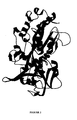
- the structure at 1.9 ⁇ of resolution was obtained by the SIRAS method (Single Isomorphous Replacement and Anomalous Scattering) ( Figure 2 ).
- X-ray diffraction data were collected on the BM30 line of the ESRF (Grenoble).
- a heavy atom salt derivative has been obtained by dipping a crystal in a solution containing uranium salts.
- the CNS programs (BRUNGER, 1998) and SnB (Weeks, 1999) have been used to locate uranium atoms.
- the SHARP program (Copyright ⁇ 2001-2002 The Buster Development Group) was used to obtain the phases using the SIRAS technique.
- the primary sequence of the protein could be assigned with 80% reliability.
- a phosphate molecule could also be located.
- the structure of the protein of the invention shows a very strong homology with the phosphate binding protein of Escherichia coli. This protein in this bacterium is used to transport phosphate through the periplasm. It is found in many prokaryotes but no eukaryotes.
- the electron density also showed that a phosphate molecule was attached to the new protein of the invention, in the same way as in that of Escherichia coli.
- the protein of the invention characterized from human plasma has a very high homology with the bacterial protein and that it is capable of fixing the phosphate and transporting it.
- the paraoxonase-HPBP mixture was separated by electrophoretic gel with SDS-PAGE (without heating). Several bands corresponding to HPBP around 70 kDa have been cut.
- the digestion of the protein contained in these bands was performed by the automatic digestion system, MassPrep Sation (Waters Manchester, UK).
- the gel strips were washed twice with 50 ⁇ l of a 25 mM solution of hydrogenated ammonium carbonate (NH 4 HCO 3 ) and 50 ⁇ l of acetonitrile.
- the cysteines were reduced with 50 ⁇ l of a 10 mM solution of dithiothreitol at 57 ° C. and acylated with 50 ⁇ l of 55 mM iodocacetamide.
- the protein was enzymatically digested with 10 ⁇ l of 12.5 ng / ⁇ l-modified porcine trypsin (Promega, Madisson, WI, USA) or with Lys-C-Lysobacter enzymogenes (Roche Applied Science, Penzberg, Germany) in 25 mM NH 4 HCO 3 . Digestion took place overnight at room temperature. The cleaved peptides were extracted with a 60% acetonitrile solution and 5% formic acid.
- MALDI-TOF mass measurements were performed on an Ultraflex TM TOF / TOF (Bruker, Daltonik GmbH, Bremen, Germany). This instrument has been used with a maximum acceleration potential of 25 KV in the reflectron mode.
- the sample was prepared with the standard preparation of the dried drop on the stainless steel target using ⁇ -cyano-4-hydroxycinnamic acid as template.
- the MS / MS spectra were obtained by the analysis of the metastable ions obtained by "Laser-Induced Decomposition" (LID) of a cut ionic precursor, without additional collision in the gas phase.
- the ionic precursor was accelerated to 8kV and was selected through a time-selective ion trap.
- the fragments were subsequently accelerated to 19 kV in the LIFT cell and their masses measured after their passage over the ion reflector.
- NanoLC-MS / MS analysis was performed using a CapLC (Waters, Manchester, UK) coupled to a time-of-flight mass spectrometer accelerated by an orthogonal Q-TOF II hybrid quadrupole ((Micromass, Manchester, UK).
- the separation by reversed phase chromatography was carried out with capillaries (Pepmap C18, 75 ⁇ m ID, 15 cm long, LC Packings) under a flow rate of 200 nL / min, kept constant thanks to a pre-column of division. Calibration was performed using 2 pmol / ⁇ l of GFP.
- MassLynx program (Micromass, Manchester, G.B.) which automatically switches between MS mode and MS / MS mode.
- the generated MS / MS spectra were individually de novo sequenced to obtain the partial or complete sequence. These interpretations were performed using the PepSeq program (MassLynx, Micromass) and the PEAKS Studio program (Bioinformatics Solutions, Waterloo, Canada) that are able to fully process a .pkl file with automatic de novo sequencing on each MS / MS spectrum. .
- the purified proteins (40 ⁇ g) as in the protocol described above are mixed with 100 ⁇ l of a solution containing 9.8 M urea, 4% (v / v) triton X100, 2 mM tributyl phosphine, 0.2% (v / v) 3-10 ampholine (Bio-Lytes 3 -10; Bio-Rad), and 0.001% (w / v) bromophenol blue.
- Polyacrylamide gel strips (IPG-Strips, Bio-Rad) (T: 4%, C: 3%) are ready for use. Ampholines were covalently attached to the polyacrylamide so as to have a linear gradient of pre-established pH. The pH gradient used is between 3.0 and 10.0.
- the strips are placed in contact with the protein samples in the Protean IEF Cell apparatus (Bio-Rad) and rehydrated actively (50 V constant) for 15 hours at 20 ° C. Isoelectrofocusing is then carried out in 3 steps at 20 ° C. First a low voltage of 250 V is applied for 15 minutes; secondly, a gradient rise of 250 to 4000 V (amperage limited by 50 ⁇ A strip) is programmed for 2 hours. Third, the voltage is kept constant at 4000 V for 4 hours. After migration, the strips are stored at -20 ° C.
- the HPBP protein of the invention is co-purified with human paraoxonase (PON) (Fokine et al., 2003).
- PON human paraoxonase
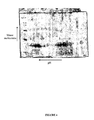
- 2 spots were identified by N-terminal sequencing as being respectively the protein of the invention HPBP and human paraoxonase (see Figure 4 ). Both proteins have approximately the same molecular weight (approximately 40 kDa) and distinct isoelectric points, 6.9-8.5 for HPBP and 4-5 for PON1.
Landscapes
- Health & Medical Sciences (AREA)
- Chemical & Material Sciences (AREA)
- Life Sciences & Earth Sciences (AREA)
- Organic Chemistry (AREA)
- General Health & Medical Sciences (AREA)
- Medicinal Chemistry (AREA)
- Nuclear Medicine, Radiotherapy & Molecular Imaging (AREA)
- Public Health (AREA)
- Veterinary Medicine (AREA)
- Animal Behavior & Ethology (AREA)
- Pharmacology & Pharmacy (AREA)
- General Chemical & Material Sciences (AREA)
- Chemical Kinetics & Catalysis (AREA)
- Bioinformatics & Cheminformatics (AREA)
- Engineering & Computer Science (AREA)
- Toxicology (AREA)
- Zoology (AREA)
- Cardiology (AREA)
- Heart & Thoracic Surgery (AREA)
- Proteomics, Peptides & Aminoacids (AREA)
- Molecular Biology (AREA)
- Gastroenterology & Hepatology (AREA)
- Genetics & Genomics (AREA)
- Biophysics (AREA)
- Biochemistry (AREA)
- Physical Education & Sports Medicine (AREA)
- Rheumatology (AREA)
- Vascular Medicine (AREA)
- Immunology (AREA)
- Diabetes (AREA)
- Hematology (AREA)
- Obesity (AREA)
- Urology & Nephrology (AREA)
- Orthopedic Medicine & Surgery (AREA)
- Medicines That Contain Protein Lipid Enzymes And Other Medicines (AREA)
- Peptides Or Proteins (AREA)
- Investigating Or Analysing Materials By The Use Of Chemical Reactions (AREA)
- Enzymes And Modification Thereof (AREA)
- Measuring Or Testing Involving Enzymes Or Micro-Organisms (AREA)
- Micro-Organisms Or Cultivation Processes Thereof (AREA)
Description
- La présente invention a pour objet une nouvelle protéine, issue du sérum humain, de fixation du phosphate, des compositions pharmaceutiques la contenant ainsi que ses utilisations, notamment dans le cadre du traitement de l'hyperphosphatémie et des maladies cardiovasculaires ou de l'arthrite.
- Le phosphate est une molécule très importante impliquée dans de nombreux mécanismes biologiques. On retrouve notamment le phosphate dans les phospholipides, dans le mécanisme de production d'énergie (ATP, ADP), dans les processus de signalisation cellulaire, dans la composition du matériel génétique dans les os (sous forme de phosphate de calcium).
- L'hyperphosphatémie est une pathologie liée à un excès de phosphate dans l'organisme et provoque notamment une augmentation des risques de maladies cardiovasculaires, en favorisant les processus d'athérosclérose et de calcification des artères (Dorozhkin et Epple, 2002 ; Amann et al., 2003 ; Blazheevich et al., 1975). La calcification s'effectuant au niveau des articulations, l'hyperphosphatémie peut aussi provoquer de l'arthrite (pseudo-goutte).
- Les sels de phosphate de calcium produits dans le sérum lors d'une hyperphosphatémie précipitent dans les tissus mous avec calcification ectopique dans différents tissus : vaisseaux (accidents vasculaires cérébraux ou cardiaques), articulations (pseudo-goutte), cristallin, interstitium rénal (néphrocalcinose), sous-cutanées (prurit), pulmonaires, pancréatiques.
- Ainsi, la moitié des décès chez les personnes souffrant d'insuffisance rénale est due à des maladies cardiovasculaires liées à l'hyperphosphatémie. A cet égard, certains chélateurs du phosphate qui complexent le phosphate dans la lumière intestinale sont actuellement utilisés comme médicament. Cependant, tous ces chélateurs ne sont pas physiologiques. De là découlent certaines complications ou restrictions quant à leur usage.
- Les préparations contenant du magnésium sont limitées par la survenue de troubles digestifs (diarrhée) et sont à proscrire en raison du risque d'hypermagnésémie. De même, la prescription d'hydroxyde d'aluminium, longtemps utilisé du fait de son efficacité, doit être évitée, ou du moins limitée à de très faibles périodes, en raison du risque d'intoxication aluminique (anémie hypochrome microcytaire, bstéomalacie, myopathie, démence).
- La prescription de sels de calcium est le meilleur moyen pour corriger à la fois l'hypocalcémie et l'hyperphosphorémie, permettant d'une part d'augmenter la quantité de calcium absorbée par l'intestin grêle malgré le déficit en calcitriol, et d'autre part de complexer le phosphore dans la lumière intestinale sous forme de phosphate de calcium qui sera éliminé dans les selles. Cependant, l'inconvénient majeur des chélateurs contenant du calcium est d'induire une hypercalcémie, qui, dans certaines séries, a pu être notée chez 20% des malades. Ce risque a conduit à mettre au point d'autres produits capables de limiter l'hyperphosphorémie.
- Le médicament actuellement le plus utilisé est le Renagel® (Ramsdell ; 1999). Il s'agit d'un polymère cationique, non absorbable capable de chélater le phosphate.
- La présente invention a pour but de fournir un nouveau chélateur protéique physiologique se liant au phosphate, ne nécessitant pas l'emploi d'autres ions qui peuvent entraîner des complications et offrant de plus larges perspectives d'utilisation que les chélateurs actuels.
- La présente invention concerne une protéine caractérisée en ce qu'elle comprend ou est constituée par :
- la séquence SEQ ID NO : 1,
- ou toute séquence dérivée de la séquence SEQ ID NO: 1, notamment par substitution, suppression ou addition d'un ou plusieurs acides aminés, sous réserve que ladite séquence dérivée se lie au phosphate,
- ou toute séquence homologue de la séquence SEQ ID NO: 1, ayant de préférence une homologie d'au moins environ 80% avec la séquence SEQ ID NO : 1, sous réserve que ladite séquence homologue se lie au phosphate,
- ou tout fragment d'une des séquences définies ci-dessus, sous réserve que ledit fragment se lie au phosphate, notamment tout fragment étant constitué d'au moins environ 20 acides aminés contigus dans la séquence SEQ ID NO : 1.
- La présente invention concerne une protéine telle que définie ci-dessus, caractérisée en ce qu'elle comprend ou est constituée par :
- la séquence SEQ ID NO : 2 ou la séquence SEQ ID NO : 3,
- ou toute séquence dérivée de la séquence SEQ ID NO : 2 ou SEQ ID NO : 3, notamment par substitution, suppression ou addition d'un ou plusieurs acides aminés, sous réserve que ladite séquence dérivée se lie au phosphate,
- ou toute séquence homologue de la séquence SEQ ID NO: 2 ou SEQ ID NO : 3, ayant de préférence une homologie d'au moins environ 80% avec la séquence SEQ ID NO : 2 ou SEQ ID NO : 3, sous réserve que ladite séquence homologue se lie au phosphate,
- ou tout fragment d'une des séquences définies ci-dessus, sous réserve que ledit fragment se lie au phosphate, notamment tout fragment étant constitué d'au moins environ 20 acides aminés contigus dans la séquence SEQ ID NO : 2 ou SEQ ID NO : 3.
- La séquence SEQ ID NO : 2 correspond à la protéine humaine de fixation du phosphate. Cette nouvelle protéine a été isolée dans le plasma humain et sa structure tridimensionnelle montre qu'elle appartient à la classe des "phosphate binding protein" (protéines de fixation du phosphate : PBP). Elle est également appelée par la suite HPBP (protéine humaine de fixation du phosphate).
- La séquence SEQ ID NO : 3 correspond à une protéine homologue de la protéine de séquence SEQ ID NO : 2, présentant un pourcentage d'identité d'environ 90% avec la séquence SEQ ID NO : 2, et ayant les mêmes propriétés de fixation du phosphate que la séquence SEQ ID NO : 2.
- La propriété de fixation du phosphate des séquences de l'invention peut être vérifiée par le test suivant de fixation du phosphate par marquage radioactif :
- La protéine est fixée sur une membrane de nitrocellulose (dot blot par aspiration). On laisse incuber la membrane dans un tampon radioactif (32P (10 mCi/ml, Amersham-Biosciences) 2M ; Tris 50 mM ; pH 8,0)
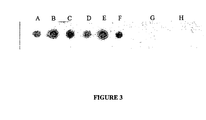
- La membrane est rapidement rincée 2x1 min dans un tampon Tris 50 mM, pH 8,0. En exposant un film photographique avec la membrane (environ 45 min) on peut détecter les zones qui fixent le phosphate radioactif (voir
Figure 3 ci-après). - La présente invention concerne également une séquence nucléotidique codant pour une protéine telle que définie ci-dessus.
- La présente invention concerne également un vecteur recombinant, notamment plasmide, cosmide, phage ou ADN de virus, contenant une séquence nucléotidique telle que définie ci-dessus.
- Selon un mode de réalisation avantageux, la présente invention concerne un vecteur recombinant tel que défini ci-dessus, contenant les éléments nécessaires à l'expression dans une cellule hôte des polypeptides codés par la séquence nucléotidique telle que définie ci-dessus, insérée dans ledit vecteur.
- La présente invention concerne également une cellule hôte, choisie notamment parmi les bactéries, les virus, les levures, les champignons, les plantes ou les cellules de mammifères, ladite cellule hôte étant transformée, notamment à l'aide d'un vecteur recombinant tel que défini ci-dessus.
- La présente invention concerne également une composition pharmaceutique comprenant à titre de substance active une protéine telle que définie ci-dessus, notamment SEQ ID NO : 2 ou SEQ ID NO : 3, en association avec un véhicule pharmaceutiquement acceptable.
- La présente invention concerne également une composition pharmaceutique telle que définie ci-dessus, dans laquelle la protéine de l'invention, notamment SEQ ID NO : 2 ou SEQ ID NO : 3, est en association avec un variant de la protéine paraoxonase, ayant une activité d'hydrolyse du paraoxon.
- Parmi les variants de la paraoxonase, on peut citer les variants PON1, PON2, PON3, d'origine humaine ou non, tels que SEQ ID NO : 4 (PON1 humaine ; Hassett et al., 1991), SEQ ID NO : 5 (PON2 humaine ; Primo-Parmo et al., 1996), SEQ ID NO : 6 (PON3 humaine ; Reddy et al., 2001), SEQ ID NO : 7 (PON1 de lapin ; Hassett et al., 1991), SEQ ID NO : 8 (PON1 de rat ; Rodrigo et al., 1997), SEQ ID NO : 9 (PON1 de souris ; Sorenson et al., 1995), SEQ ID NO : 10 (PON2 de souris ; Primo-Parmo et al., 1996) et SEQ ID NO : 11 (PON3 de souris ; Primo-Parmo et al., 1996).
- La présente invention concerne également l'utilisation d'une protéine telle que définie ci-dessus, notamment SEQ ID NO : 2 ou SEQ ID NO : 3, pour la préparation d'un médicament destiné à la prévention ou au traitement de maladies liées à une hyperphosphatémie, telles que les maladies cardiovasculaires et l'arthrite (pseudo-goutte).
- Le terme "hyperphosphatémie" désigne un excès de phosphate dans l'organisme.
Plus exactement, l'hyperphosphatémie est définie par une augmentation de la concentration plasmatique de phosphate au dessus de 1,44 mmol/l (45 mg/l), ladite quantité étant obtenue par dosage du phosphate total (le dosage par méthode colorimétrique est effectué après un procédé de minéralisation). - Selon un mode de réalisation avantageux, la protéine de l'invention pourra être administrée sous forme intraveineuse pour pouvoir fixer une quantité maximale de phosphate pendant une longue période, de l'ordre de la semaine. En éliminant ultérieurement la protéine, une grande quantité de phosphate sera ainsi éliminée rapidement. Ceci permet d'espacer et diminuer les temps de dialyse.
- La présente invention concerne plus particulièrement l'utilisation d'une protéine telle que définie ci-dessus, notamment SEQ ID NO : 2 ou SEQ ID NO : 3, dans le cadre de la prévention ou du traitement des maladies cardiovasculaires.
- La présente invention concerne également l'utilisation d'une protéine selon l'invention, notamment de la protéine représentée par la séquence SEQ ID NO : 2 ou SEQ ID NO : 3, en association avec une protéine telle qu'un variant de la protéine paraoxonase, dans le cadre de la prophylaxie ou du traitement des intoxications provoquées par des insecticides ou des agents neurotoxiques, tels que le soman, le VX, le tabun ou le sarin, ou dans le cadre du traitement de l'athérosclérose.
- La présente invention concerne également un produit de combinaison comprenant au moins une protéine telle que définie ci-dessus, notamment SEQ ID NO : 2 ou SEQ ID NO : 3, et au moins un variant de la protéine paraoxonase, pour une utilisation simultanée, séparée ou étalée dans le temps destiné à la prophylaxie ou au traitement des intoxications provoquées par des insecticides ou des agents neurotoxiques, tels que le soman, le VX, le tabun ou le sarin.
- L'utilisation combinée de la protéine de l'invention, notamment SEQ ID NO : 2, avec un variant de la protéine paraoxonase, permet d'accroître la stabilité de la paraoxonase, notamment dans le cadre de la prophylaxie ou du traitement des intoxications provoquées par des insecticides ou des agents neurotoxiques.
- La présente invention concerne également une méthode de dosage de la protéine telle que définie ci-dessus, caractérisée en ce qu'elle comprend les étapes suivantes :
- des anticorps monoclonaux de lapin dirigé contre différents épitopes de la protéine de l'invention (anti-HPB) sont fixés sur une plaque et le sérum humain à analyser contenant ladite protéine (HPB) est déposé sur la plaque susmentionnée,
- la plaque est rincée et lavée,
- on dépose sur la plaque des anticorps anti-anticorps de lapin (anti-IGrabbit-per) marqués avec de la peroxydase durant 30 minutes, afin de former un complexe ternaire entre un anticorps monoclonal de lapin, la protéine selon l'invention et un anticorps anti-anticorps de lapin susmentionnés (anti-HPB - HPB - anti-IGrabbit-per),
- la plaque est rincée et lavée,
- on fait réagir la peroxydase fixée sur la plaque avec son substrat (kit disponible en commerce, Chemiluminescent Peroxidase Substrate (Sigma)) et la réaction est arrêtée au bout de 30 minutes avec la 3,3',5,5'-tétraméthylbenzidine (TMB, Sigma),
- la densité optique du produit formé à l'étape précédente est mesurée à 450 nm à l'aide d'un spectrophotomètre, et la comparaison de cette mesure avec une courbe étalon permet de déterminer la concentration de la protéine selon l'invention (HPB) présente dans le sérum.
- Ainsi, la méthode de dosage susmentionnée utilise une méthode par immunodosage du type ELISA (Engvall et al., 1971).
- D'autres méthodes peuvent être utilisées pour doser la concentration de la protéine de l'invention dans le plasma telles que :
- les méthodes électrophorétiques, ou
- la quantification de son activité.
- La présente invention concerne également l'application de la méthode de dosage telle que définie ci-dessus
au diagnostic in vitro de maladies liées à une hyperphosphatémie notamment lorsque la quantité de protéine telle que définie ci-dessus, notamment SEQ ID NO : 2 ou SEQ ID NO : 3, dosée selon la méthode telle que définie ci-dessus, est inférieure à la quantité de cette protéine normalement présente dans le sang d'un individu sain, ou
au diagnostic in vitro de maladies liées à une hypophosphatémie notamment lorsque la quantité de protéine telle que définie ci-dessus, notamment SEQ ID NO : 2 ou SEQ ID NO : 3, dosée selon la méthode telle que définie ci-dessus, est supérieure à la quantité de cette protéine normalement présente dans le sang d'un individu sain, ou
au diagnostic in vitro d'une prédisposition d'un individu à de telles pathologies. - Le taux de la protéine selon l'invention est un indicateur de prédisposition à un risque de maladie cardiovasculaire. Ainsi, les personnes ayant un taux faible de ladite protéine auront un taux plus important de phosphate libre qui précipitera avec le calcium du plasma pour former des plaques de phosphate de calcium, ce qui est un facteur aggravant notamment les risques de maladies cardiovasculaires ou d'arthrite.
- Un taux anormal de cette protéine est aussi le signe d'une pathologie existante. Par exemple une hyperphosphatémie peut déclencher une production accrue de protéine dans le but de limiter le taux de phosphate. Un taux faible peut être lui aussi révélateur d'un dysfonctionnement.
- La présente invention concerne également l'application telle que définie ci-dessus au diagnostic in vitro de maladies liées à une hyperphosphatémie telles que les maladies cardiovasculaires, notamment les maladies cardiovasculaires liées à la formation de plaques d'athéromes, ou au diagnostic in vitro d'une prédisposition d'un individu au développement d'une des maladies susmentionnées.
- La présente invention concerne également l'application telle que définie ci-dessus au diagnostic in vitro de maladies liées à une hypophosphatémie, ou au diagnostic in vitro d'une prédisposition d'un individu au développement de ces maladies.
- Parmi les signes cliniques ou physiologiques caractérisant les maladies liées à une hypophosphatémie, on peut citer :
- une déminéralisation des os,
- les manifestations musculaires de l'hypophosphatémie qui comportent une myopathie proximale affectant le muscle squelettique et une dysphagie et un iléus affectant les muscles lisses,
- des carences cardiopulmonaires par le manque d'ATP, et
- une encéphalopathie métabolique.
-
- La
Figure 1 représente un gel SDS-PAGE des fractions finales dans le cadre de la purification de la paraoxonase humaine et de la protéine de l'invention SEQ ID NO : 2.
La colonne A correspond au marqueur de poids moléculaire et les colonnes B, C et D à trois purifications différentes issues de différentes poches de plasma humain. Elles contiennent toutes les trois la paraoxonase humaine et la protéine de fixation du phosphate. - La
Figure 2 représente la structure schématique de la protéine de l'invention SEQ ID NO : 2 à laquelle est fixée une molécule de phosphate. - La
Figure 3 correspond à un test de fixation du phosphate par la protéine de l'invention SEQ ID NO : 2.
Les colonnes A à F correspondent à différents lots de purification de la protéine de l'invention provenant de différentes poches de plasma humain ; la colonne G au lysozyme 1 mg/ml et la colonne H à la β-lacto globuline. - La
Figure 4 représente un gel bidimensionnel d'électrophorèse du mélange de la protéine de l'invention SEQ ID NO : 2 et de la paraoxonase. - La
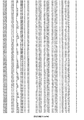
Figure 5 représente les coordonnées moléculaires de la protéine cristallisée de l'invention SEQ ID NO : 2. - La protéine SEQ ID NO : 2 est obtenue à partir du plasma humain selon le procédé de Gan et al. (1991) suivant :
- La protéine SEQ ID NO : 2 est purifiée à partir de poches de plasma congelé (∼200 ml) fournies par l'Etablissement de Transfusion Sanguine de Lyon-Beynost. Le caillot de fibrine, formé par l'ajout de 1 M (1% v/v) de CaCl2 au plasma est séparé du sérum par filtration. Le sérum est alors mélangé à 400 ml de Gel d'affinité (Cibacron 3GA-Agarose, C-1535, Sigma) équilibré avec un tampon A (Tris/HCl 50 mM, CaCl2 1mM, NaCl 4M, pH 8). Dans ces conditions, principalement les HDL ("high density lipoprotein" : lipoprotéines de haute densité) sont adsorbées. Après 6 à 8 heures d'incubation, les protéines non adsorbées sur le gel sont éliminées par filtration sur fritté de porosité n°2. Ce lavage s'effectue jusqu'à ce que l'on ne détecte plus de protéine dans l'éluat (absorption UV à 280 nm). Le gel est ensuite équilibré avec un tampon B (Tris/HCl 50 mM, CaCl2 1mM, pH 8) puis placé en colonne XK 50/30 (Pharmacia). L'élution est réalisée en rajoutant 1g/l de déoxycholate de sodium et 0,1% de triton X-100 au tampon B. Les fractions montrant une activité arylestérase sont injectées sur 50 ml d'un gel échangeur d'anions (DEAE Sepharose Fast Flow, Pharmacia) disposé en colonne XK 26/70 (Pharmacia) et équilibré avec le tampon B et 0,05% de triton X-100. L'élution se fait par gradient de NaCl. Un premier palier est réalisé à 87,5 mM de NaCl afin d'éliminer l'apo A-I, une protéine liée à la paraoxonase, et la majorité des protéines contaminantes. La paraoxonase humaine (PON1) est environ éluée à la concentration de 140 mM de NaCl. Toutes les fractions conservées montrent une activité paraoxonase et arylestérase, ces activités étant vérifiées selon les tests mentionnés plus loin. Les fractions éluées ne sont pas regroupées. Les gels SDS-PAGE des fractions obtenues montrent des bandes comprises entre 38 kDa et 45 kDa (voir
Figure 1 ). Chaque purification n'apporte pas toujours la même distribution de masse apparente. Cette légère hétérogénéité peut s'expliquer par la présence de 2 chaînes glycosylées sur la PON1. - En plus de la PON1 dans ces lots une autre protéine a été isolée par cristallisation, en substituant le triton par le C12-maltoside et en utilisant le sulfate d'ammonium comme agent précipitant. Les cristaux obtenus sont ceux d'une protéine inconnue caractérisée par radiocristallographie et correspondant à la séquence SEQ ID NO : 2 de l'invention. La cristallisation est actuellement le seul procédé existant pour purifier cette protéine.
- L'activité paraoxonase est mesurée dans un tampon Glycine 50 mM/NaOH, CaCl2 1 mM, en présence de 1 M NaCl, pH 10,5 et est déterminée au moyen d'un spectrophotomètre à double faisceau (Shimadzu UV 160A) thermostaté à 25°C. La vitesse d'hydrolyse est déterminée d'après la variation d'absorbance à 412 nm, correspondant à la formation de p-nitrophénol libéré par l'hydrolyse de paraoxon, en fonction du temps, ε = 18290 M-1cm-1 (Smolen, 1991).
- L'activité arylestérase est mesurée dans un tampon tris 50mM/HCl, CaCl2 1mM, pH 8 et est déterminée au moyen d'un spectrophotomètre à double faisceau (Shimadzu UV 160A) thermostaté à 25°C. La vitesse d'hydrolyse est déterminée d'après la variation d'absorbance à 270 nm, correspondant à la formation de phénol libéré par l'hydrolyse de phényl acétate, en fonction du temps, ε = 1310 M-1cm-1 (Smolen, 1991).
- La structure de la protéine cristallisée SEQ ID NO : 2 a été obtenue par cristallographie des rayons X. La structure à 1,9 Å de résolution a été obtenue par la méthode SIRAS (Single Isomorphous Replacement and Anomalous Scattering)(
Figure 2 ). - Les données de diffraction des rayons X ont été collectées sur la ligne BM30 de l'ESRF (Grenoble).
- Un dérivé de sel d'atome lourd a été obtenu en trempant un cristal dans une solution contenant des sels d'uranium.
- Les images ont été intégrées, mises à l'échelle et combinées avec les programmes XDS2000 (Kabsch, 1993) et la suite CCP4 (COLLABORATIVE COMPUTATIONAL PROJECT, NUMBER 4. 1994. "The CCP4 Suite: Programs for Protein Crystallography". Acta Cryst. D50, 760-763).
- Les programmes CNS (BRUNGER, 1998) et SnB (Weeks, 1999) ont été utilisés pour localiser les atomes d'uranium. Le programme SHARP (Copyright © 2001-2002 the Buster Development Group) a été utilisé pour obtenir les phases par la technique SIRAS.
- 372 acides aminés ont été construits automatiquement dans la carte de densité électronique par le programme ARP/wARP (Perrakis, 1997). Ce premier modèle a ensuite été affiné par le programme CNS.
- En raison de la très bonne qualité des cartes de densité électronique, la séquence primaire de la protéine a pu être assignée avec 80% de fiabilité. Une molécule de phosphate a aussi pu être localisée.
- La structure obtenue ne correspond pas du tout à la paraoxonase humaine. Le séquençage obtenu en identifiant les acides aminés à partir de la densité électronique indique que ni cette protéine humaine ni son gène n'ont été décrits auparavant. Il s'agit donc d'une nouvelle protéine.
- La structure de la protéine de l'invention montre une très forte homologie avec la protéine de fixation du phosphate ("phosphate binding") d'Escherichia coli. Cette protéine chez cette bactérie sert à transporter le phosphate à travers le périplasme. On la retrouve chez beaucoup de procaryotes mais chez aucun eucaryote.
- La densité électronique a aussi montré qu'une molécule de phosphate était fixée à la nouvelle protéine de l'invention, de la même façon que dans celle d'Escherichia coli.
- Ainsi, on peut conclure que la protéine de l'invention caractérisée à partir du plasma humain présente une très forte homologie avec la protéine bactérienne et qu'elle est capable de fixer le phosphate et de le transporter.
- Le mélange paraoxonase-HPBP a été séparé par gel électrophorétique avec SDS-PAGE (sans chauffage). Plusieurs bandes correspondant à HPBP aux alentour de 70 kDa ont été découpées.
- La digestion de la protéine contenue dans ces bandes a été effectuée grâce au système automatique de digestion, MassPrep Sation (Waters Manchester, G.B.). Les bandes de gel ont été lavées deux fois avec 50 µl d'une solution à 25 mM de carbonate d'ammonium hydrogéné (NH4HCO3) et 50 µl d'acétonitrile. Les cystéines ont été réduites avec 50 µl d'une solution à 10mM de dithiothréitol à 57°C et acylé avec 50 µl de iodocacétamide à 55 mM. Après déshydratation avec l'acétonitrile, la protéine a été digérée enzymatiquement avec 10 µl de trypsine porcine modifiée à 12,5 ng/µl (Promega, Madisson, WI, U.S.A) ou bien avec lys-C de Lysobacter enzymogenes (Roche Applied Science, Penzberg, Germany) dans 25 mM de NH4HCO3. La digestion s'est opérée une nuit complète à température ambiante. Les peptides clivés ont été extraits avec une solution à 60% d'acétonitrile et 5% d'acide formique.
- Les mesures de masse par MALDI-TOF on été effectuées sur un Ultraflex™ TOF/TOF (Bruker, Daltonik GmbH, Brème, Allemagne). Cet instrument a été utilisé avec un potentiel d'accélération maximum de 25 KV dans le mode reflectron. L'échantillon a été préparé avec la préparation standard de la goutte asséchée sur la cible en acier inoxydable en utilisant comme matrice l'acide α-cyano-4-hydroxycinnamique.
- La calibration externe du spectre MALDI-MS a été effectuée en utilisant seulement les pics des charges mono isotopiques d'une solution connue de peptides (bradykinine 1-7 (m/z=757,400), angiotensine humaine II (m/z=1046,542), angiotensine humaine I (m/z=1296,685), substance P (m/z=1347,735), bombesine (m/z=1619,822), renine (m/z=1758,933), ACTH 1-17 (m/z=2093,087) et ACTH 18-39 (m/z=2465,199)). Les masses des peptides mono isotopiques ont été automatiquement annotées grâce au programme Flexanalysis 2.0.
- Les spectres MS/MS ont été obtenus par l'analyse des ions métastables obtenus par "Laser-Induced Decomposition" (LID) d'un précurseur ioniques sectionné, sans collision additionnelle en phase gazeuse. Le précurseur ionique a été accéléré à 8kV et a été sélectionné grâce à une trappe à ions à sélection temporelle. Les fragments ont été par la suite accélérés à 19 kV dans la cellule LIFT et leurs masses mesurées après leurs passages sur le réflecteur ionique.
- Le séquençage de novo de chacun de ces spectres MS/MS a été effectué avec le programme Full DeNovo Sequencing program (Biotools, Bruker Daltonik GmbH, Brème, Allemagne).
- L'analyse NanoLC-MS/MS a été effectuée en utilisant un CapLC (Waters, Manchester, G.B.) couplé à un spectromètre de masse "temps de vol" accéléré par un quadripôle hybride orthogonal Q-TOF II ((Micromass, Manchester, G.B.). La séparation par chromatographie en phase inverse à été effectuée avec des capillaires (Pepmap C18, 75 µm i.d., 15 cm de long, LC Packings) sous un flux à 200 nL/min, maintenu constant grâce à une pré-colonne de partage. La calibration a été effectuée en utilisant 2pmol/µl de GFP.
- L'acquisition des données de masse a été pilotée par le programme MassLynx (Micromass, Manchester, G.B.) qui bascule automatiquement entre le mode MS et le mode MS/MS.
- Les spectres MS/MS générés ont été individuellement séquencés de novo afin d'obtenir la séquence partielle ou complète. Ces interprétations ont été réalisées en utilisant le programme PepSeq (MassLynx, Micromass) et le programme PEAKS Studio (Bioinformatics Solutions, Waterloo, Canada) qui sont capables de traiter complètement un fichier .pkl avec un séquençage de novo automatique sur chaque spectre MS/MS.
- La fixation du phosphate par la protéine de l'invention SEQ ID NO : 2 a été mise en évidence selon le test suivant :
- On dépose 200 µl de la protéine de l'invention SEQ ID NO : 2 (colonnes A-F de la
Figure 3 ), ou du lysozyme 1 mg/ml (colonne G) ou de la βlacto-globuline sur nitrocellulose (dot blot par aspiration). - L'ensemble est incubé pendant 2 h 30 dans un mélange comprenant : tris 50 mM ; pH 8,0 ; 32P (10 mCi/ml) 2 mM.
- On effectue ensuite un rinçage 2 fois pendant 1 minute avec du tris 50 mM à pH 8,0, puis on expose l'ensemble à température ambiante pendant 45 minutes.
- On constate alors (voir
Figure 3 ) que la protéine de l'invention a fixé le phosphate radioactif (colonnes A à F), alors que les témoins tests ne l'ont pas fixée (colonnes G et H). - Pour doser la concentration de cette protéine dans le plasma les méthodes utilisables sont :
- les methodes électrophorétiques,
- la purification de la protéine,
- la quantification de son activité,
- l'immunodosage de la protéine en utilisant des anticorps polyclonaux/monoclonaux dirigé contre la protéine.
- Les protéines purifiées (40 µg) comme dans le protocole décrit précédemment sont mélangées à 100 µL d'une solution contenant 9,8 M d'urée, 4% (v/v) triton X100, 2 mM tributyl phosphine, 0,2 % (v/v) d'ampholine 3-10 (Bio-Lytes 3 -10 ; Bio-Rad), et 0,001 % (m/v) de bleu de bromophénol. Des bandelettes (IPG-Strips ; Bio-Rad) de gel de polyacrylamide (T : 4 % ; C : 3 %) prêtes à l'emploi sont utilisées. Des ampholines ont été fixées de manière covalente au polyacrylamide de sorte d'avoir un gradient linéaire de pH pré-établi. Le gradient de pH utilisé est entre 3,0 et 10,0.
- Les bandelettes sont placées en contact avec les échantillons protéiques dans l'appareil Protean IEF Cell (Bio-Rad) et réhydratées activement (50 V constant) pendant 15 heures à 20°C. L'isoélectrofocalisation est ensuite réalisée en 3 étapes à 20°C. Premièrement un faible voltage de 250 V est appliqué pendant 15 minutes ; deuxièmement, une montée en gradient de 250 à 4000 V (ampérage limité par bandelette à 50 µA) est programmée sur 2 h. Troisièmement, le voltage est maintenu constant à 4000 V pendant 4 heures. Après migration, les bandelettes sont conservées à -20°C.
- D'après le protocole de purification précédent, la protéine HPBP de l'invention est co-purifiée avec la paraoxonase humaine (PON)(Fokine et al., 2003). En faisant un gel bidimensionnel avec le protocole ci-dessus, 2 spots ont été identifiés par séquençage N-terminal comme étant respectivement la protéine de l'invention HPBP et la paraoxonase humaine (voir
Figure 4 ). Les deux protéines ont approximativement la même masse moléculaire (environ 40 kDa) et des points isoélectriques distincts, 6.9-8.5 pour HPBP et 4-5 pour la PON1. En tenant compte du fait qu'il a fallu utiliser des conditions drastiques pour réussir à séparer sur gel les 2 protéines (9M d'urée et 4% de triton)et que les 2 protéines qui ont des points isoélectriques très différents restent co-purifiées après le passage dans une colonne échangeuse d'anion (DEAE sepharose), on conclut qu'elles sont associées en formant un complexe. -
- Amann K., Tornig J., Kugel B., Gross M.L., Tyralla K., El-Shakmak A., Szabo A., Ritz E. (2003) Kidney Int. 63(4): 1296-1301 ;
- Blazheevich N.V., Spirichev V.B., Pozdniakov A.L. (1975) Kardiologiia. 15(6): 67-71 ;
- Brunger A.T., Adams P.D., Clore G.M., Delano W.L., Gros P., Grosse-Kunstleve R.W., Jiang J.-S., Kuszewski J., Nilges N., Pannu N.S., Read R.J., Rice L.M., Simonson T. et Warren G.L. (1998) Acta Cryst. D54: 905-921 ;
- Dorozhkin S.V., Epple M. (2002) Angew Chem Int Ed Engl. 41(17): 3130-46 ;
- Engvall E., Jonsson K., Perlmann P. (1971) Biochim Biophys Acta. (1971) 251: 427-34 ;
- Fokine A., Morales R., Contreras-Martel C., Carpentier P., Renault F., Rochu D., Chabriere E. (2003) Acta Crystallogr D. 59, 2083-7 ;
- Gan, K.N., Smolen, A., Eckerson, H.W. & La Du, B.N. (1991). Drug Metab Dispos. 19, 100-106 ;
- Hassett, C., Richter, R.J., Humbert, R., Chapline, C., Crabb, J.W., Omiecinski, C.J. et Furlong, C.E. (1991) Biochemistry 30(42), 10141-10149 ;
- Kabsch W. (1993) J. Appl. Cryst. 26: 795-800 ;
- Perrakis, A., Sixma, T. K., Wilson, K.S., et Lamzin, V. S. (1997) Acta Cryst. D53: 448-455 ;
- Primo-Parmo, S.L., Sorenson, R.C., Teiber, J. et La Du, B.N. (1996) Genomics 33(3), 498-507 ;
- Ramsdell R. (1999) Anna J. 26(3): 346-7 ;
- Reddy, S.T., Wadleigh, D.J., Grijalva, V., Ng, C., Hama, S., Gangopadhyay, A., Khorsan, R., Shih, D., Lusis, A.J., Navab, M. et Fogelman,A.M. (2001) Arterioscler Thromb Vasc Biol 21(4):542-7 ;
- Rodrigo, L., Gil, F., Hemandez, A.F., Marina, A., Vazquez, J. et Pla, A. (1997) Biochem. J. 321, 595-601 ;
- Smolen A, Eckerson HW, Gan KN, Hailat N, La Du BN. (1991) Drug Metab Dispos., 19: 107-112 ;
- Sorenson, R.C., Primo-Parmo, S.L., Kuo, C.L., Adkins, S., Lockridge, O. et La Du, B.N. (1995) Proc. Natl. Acad. Sci. U.S.A. 92(16), 7187-7191 ;
- Weeks, C.M. & Miller, R. (1999) J. Appl. Cryst. 32,120-124.
-
- <110> CENTRE NATIONAL DE LA RECHERCHE SCIENTIFIQUE UNIVERSITE HENRI POINCARE DE NANCY
- <120> NOUVELLE PROTEINE DE LIAISON AU PHOSPHATE, COMPOSITIONS PHARMACEUTIQUES LA CONTENANT ET SES UTILISATIONS
- <130> WOB 03 BU CNR HPBP
- <150>
FR 03/12729
<151> 2004-10-30 - <160> 11
- <170> PatentIn version 3.1
- <210> 1
<211> 376
<212> PRT
<213> Homo sapiens - <220>
<221> MISC_FEATURE
<222> (1)..(1)
<223> D ou S - <220>
<221> MISC_FEATURE
<222> (3)..(3)
<223> N ou D - <220>
<221> MISC_FEATURE
<222> (11)..(11)
<223> Q ou E - <220>
<221> MISC_FEATURE
<222> (30)..(30)
<223> V ou T - <220>
<221> MISC_FEATURE
<222> (43)..(43)
<223> K ou S - <220>
<221> MISC_FEATURE
<222> (50)..(50)
<223> D ou N - <220>
<221> MISC_FEATURE
<222> (54)..(54)
<223> N ou D - <220>
<221> MISC_FEATURE
<222> (67)..(67)
<223> T ou S - <220>
<221> MISC_FEATURE
<222> (68)..(68)
<223> E ou Q - <220>
<221> MISC_FEATURE
<222> (75)..(75)
<223> D ou N - <220>
<221> MISC_FEATURE
<222> (77)..(77)
<223> E ou Q - <220>
<221> MISC_FEATURE
<222> (85)..(85)
<223> Q ou E - <220>
<221> MISC_FEATURE
<222> (102)..(102)
<223> A ou G - <220>
<221> MISC_FEATURE
<222> (122)..(122)
<223> D ou N - <220>
<221> MISC_FEATURE
<222> (143)..(143)
<223> S ou V - <220>
<221> MISC_FEATURE
<222> (219)..(219)
<223> T ou S - <220>
<221> MISC_FEATURE
<222> (224)..(224)
<223> D ou N - <220>
<221> MISC_FEATURE
<222> (252)..(252)
<223> V ou S - <220>
<221> MISC_FEATURE
<222> (266)..(266)
<223> D ou N - <400> 1


- <210> 2
<211> 376
<212> PRT
<213> Homo sapiens - <400> 2


- <210> 3
<211> 376
<212> PRT
<213> Homo sapiens - <400> 3


- <210> 4
<211> 355
<212> PRT
<213> Homo sapiens - <400> 4


- <210> 5
<211> 354
<212> PRT
<213> Homo sapiens - <400> 5


- <210> 6
<211> 354
<212> PRT
<213> Homo sapiens - <400> 6


- <210> 7
<211> 359
<212> PRT
<213> Oryctolagus cuniculus - <400> 7


- <210> 8
<211> 355
<212> PRT
<213> Rattus rattus - <400> 8
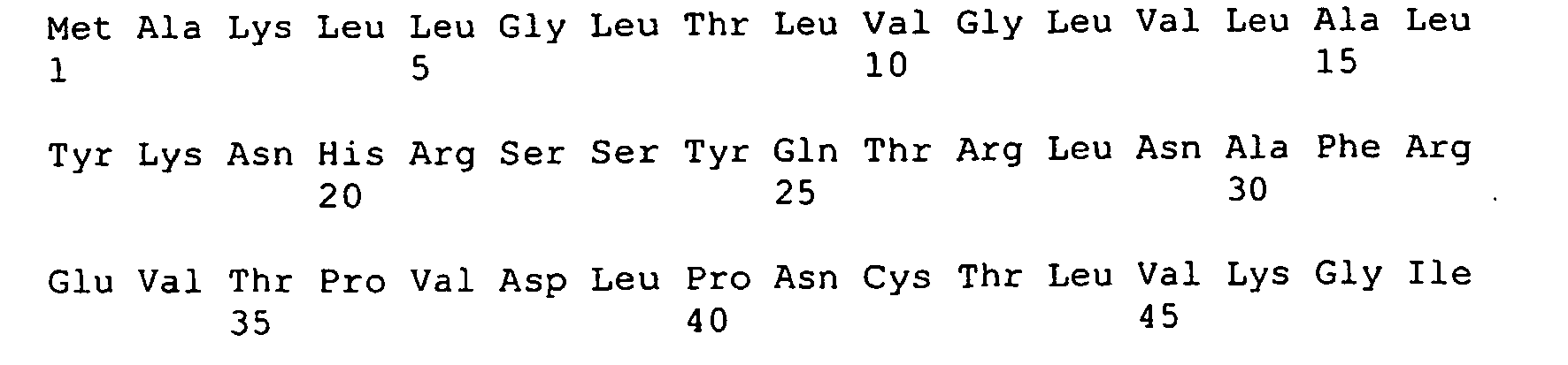
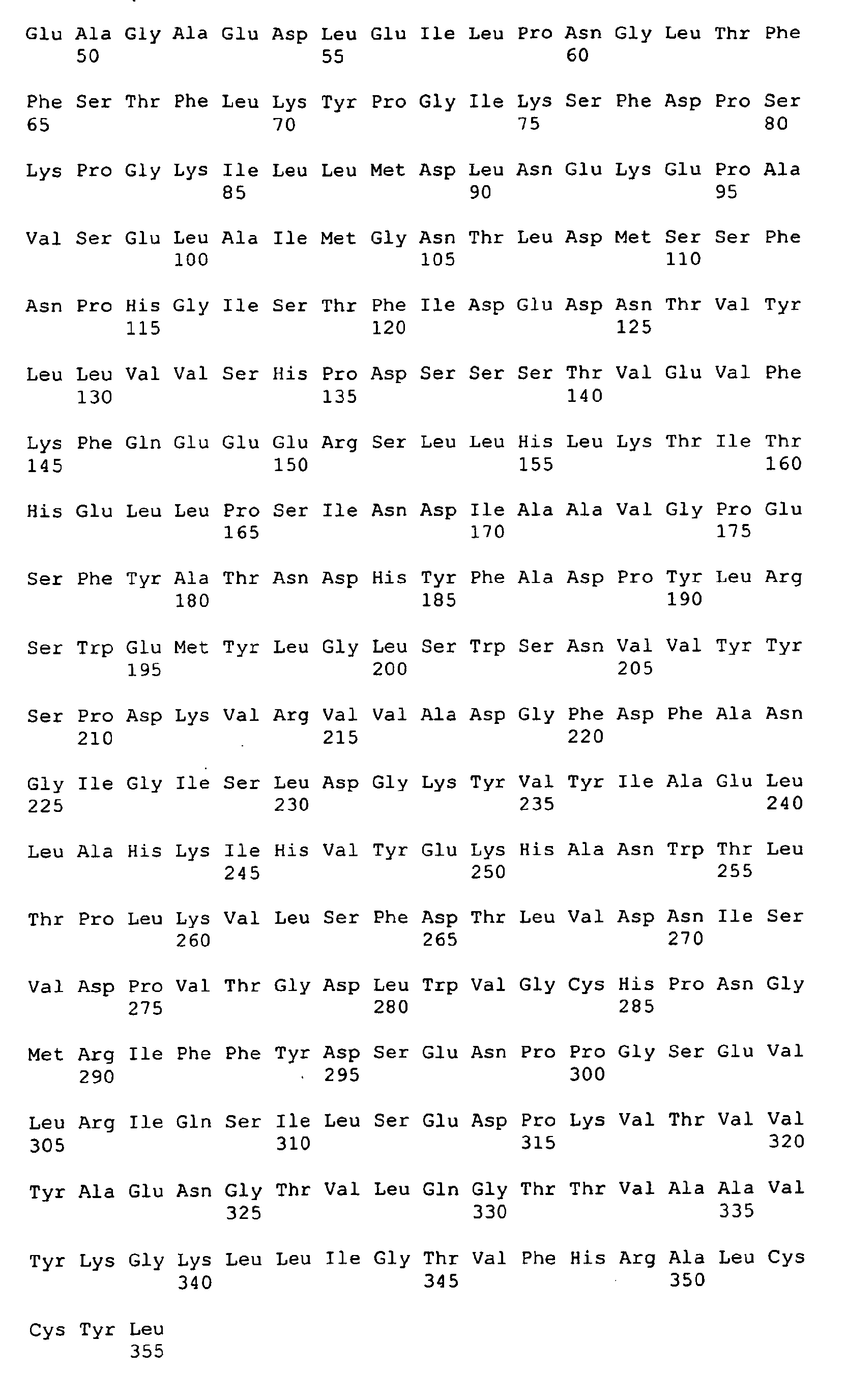
- <210> 9
<211> 355
<212> PRT
<213> Mus musculus - <400> 9


- <210> 10
<211> 354
<212> PRT
<213> Mus musculus - <400> 10


- <210> 11
<211> 354
<212> PRT
<213> Mus musculus - <400> 11


Claims (15)
- Protéine caractérisée en ce qu'elle comprend ou est constituée par :- la séquence SEQ ID NO : 1,- ou toute séquence homologue de la séquence SEQ ID NO : 1, ayant une homologie d'au moins 80% avec la séquence SEQ ID NO : 1, sous réserve que ladite séquence homologue se lie au phosphate.
- Protéine selon la revendication 1, caractérisée en ce qu'elle comprend ou est constituée par :- la séquence SEQ ID NO : 2 ou SEQ ID NO : 3,- ou toute séquence homologue de la séquence SEQ ID NO : 2 ou SEQ ID-NO : 3, ayant une homologie d'au moins 80% avec la séquence SEQ ID NO : 2 ou SEQ ID NO : 3, sous réserve que ladite séquence homologue se lie au phosphate.
- Séquence nucléotidique codant pour une protéine telle que définie dans la revendication 1 ou 2.
- Vecteur recombinant, plasmide, cosmide, phage ou ADN de virus, contenant une séquence nucléotidique selon la revendication 3.
- Vecteur recombinant selon la revendication 4, contenant les éléments nécessaires à l'expression dans une cellule hôte des polypeptides codés par une séquence nucléotidique selon la revendication 3, insérés dans ledit vecteur.
- Cellule hôte isolée, choisie parmi les bactéries, les levures, les cellules de champignons, les cellules de plantes ou les cellules de mammifères, ladite cellule hôte étant transformée à l'aide d'un vecteur recombinant selon l'une des revendications 4 ou 5.
- Composition pharmaceutique comprenant à titre de substance active une protéine selon la revendication 1 ou 2, en association avec un véhicule pharmaceutiquement acceptable.
- Composition pharmaceutique selon la revendication 7, comprenant à titre de substance active une protéine représentée par la séquence SEQ ID NO : 2 ou SEQ ID NO:3.
- Composition pharmaceutique selon la revendication 8, dans laquelle la protéine telle que définie dans la revendication 1 ou 2, est en association avec un variant de la protéine paraoxonase, de SEQ ID NO : 4, SEQ ID NO : 5, SEQ ID NO : 6, SEQ ID NO : 7, SEQ ID NO : 8, SEQ ID NO : 9, SEQ ID NO : 10 ou SEQ ID NO : 11.
- Utilisation d'une protéine selon la revendication 1 ou 2, pour la préparation d'un médicament destiné à la prévention ou au traitement de l'arthrite ou de maladies liées à une hyperphosphatémie, telles que les maladies cardiovasculaires, ou, en association avec un variant de la protéine paraoxonase de SEQ ID NO : 4, SEQ ID NO : 5, SEQ ID NO : 6, SEQ ID NO : 7, SEQ ID NO : 8, SEQ ID NO : 9, SEQ ID NO : 10 ou SEQ ID NO : 11, dans le cadre de la prophylaxie ou du traitement des intoxications provoquées par des insecticides ou des agents neurotoxiques tels que le soman, le VX, le sarin ou le tabun, ou dans le cadre du traitement de l'athérosclérose.
- Produit de combinaison comprenant au moins une protéine selon la revendication 1 ou 2, et au moins un variant de la protéine paraoxonase de SEQ ID NO : 4, SEQ ID NO : 5, SEQ ID NO : 6, SEQ ID NO : 7, SEQ ID NO : 8, SEQ ID NO : 9, SEQ ID NO : 10 ou SEQ ID NO : 11, pour une utilisation simultanée, séparée ou étalée dans le temps destiné à la prophylaxie ou au traitement des intoxications provoquées par des insecticides ou des agents neurotoxiques tels que le soman, le VX, le sarin ou le tabun.
- Méthode de dosage de la protéine telle que définie dans la revendication 1
ou 2, ladite méthode étant choisie parmi- les méthodes électrophorétiques,- la purification de ladite protéine,- la quantification de son activité, et- l'immunodosage de ladite protéine en utilisant des anticorps polyclonaux/monoclonaux dirigé contre ladite protéine. - Application de la méthode de dosage selon la revendication 12- au diagnostic in vitro de maladies liées à une hyperphosphatémie notamment lorsque la quantité de protéine selon la revendication 1 ou 2, dosée selon la méthode de la revendication 12, est inférieure à la quantité de cette protéine normalement présente dans le sang d'un individu sain, ou- au diagnostic in vitro de maladies liées à une hypophosphatémie notamment lorsque la quantité de protéine selon la revendication 1 ou 2, dosée selon la méthode de la revendication 12, est supérieure à la quantité de cette protéine normalement présente dans le sang d'un individu sain, ou- au diagnostic in vitro d'une prédisposition d'un individu à de telles pathologies.
- Application selon la revendication 13 au diagnostic in vitro de maladies liées à une hyperphosphatémie telles que les maladies cardiovasculaires liées à la formation de plaques d'athéromes, ou au diagnostic in vitro d'une prédisposition d'un individu au développement d'une des maladies susmentionnées.
- Application selon la revendication 13 au diagnostic in vitro de maladies liées à une hypophosphatémie, ou au diagnostic in vitro d'une prédisposition d'un individu au développement de ces maladies.
Applications Claiming Priority (2)
| Application Number | Priority Date | Filing Date | Title |
|---|---|---|---|
| FR0312729A FR2861731B1 (fr) | 2003-10-30 | 2003-10-30 | Nouvelle proteine de fixation du phosphate, compositions pharmaceutiques la contenant et ses utilisations |
| PCT/FR2004/002797 WO2005042572A1 (fr) | 2003-10-30 | 2004-10-29 | Nouvelle proteine de fixation du phosphate, compositions pharmaceutiques la contenant et ses utilisations |
Publications (2)
| Publication Number | Publication Date |
|---|---|
| EP1678204A1 EP1678204A1 (fr) | 2006-07-12 |
| EP1678204B1 true EP1678204B1 (fr) | 2010-01-20 |
Family
ID=34429758
Family Applications (1)
| Application Number | Title | Priority Date | Filing Date |
|---|---|---|---|
| EP04805350A Expired - Lifetime EP1678204B1 (fr) | 2003-10-30 | 2004-10-29 | Nouvelle proteine de fixation du phosphate, compositions pharmaceutiques la contenant et ses utilisations |
Country Status (11)
| Country | Link |
|---|---|
| US (1) | US7718773B2 (fr) |
| EP (1) | EP1678204B1 (fr) |
| JP (1) | JP4728246B2 (fr) |
| CN (1) | CN1898261B (fr) |
| AT (1) | ATE455792T1 (fr) |
| CA (1) | CA2543935C (fr) |
| DE (1) | DE602004025265D1 (fr) |
| ES (1) | ES2341174T3 (fr) |
| FR (1) | FR2861731B1 (fr) |
| IL (1) | IL175319A (fr) |
| WO (1) | WO2005042572A1 (fr) |
Families Citing this family (17)
| Publication number | Priority date | Publication date | Assignee | Title |
|---|---|---|---|---|
| UA95602C2 (ru) | 2004-12-30 | 2011-08-25 | Берингер Ингельхейм Ветмедика, Инк. | Иммуногенная композиция цвс2 и способы приготовления такой композиции |
| US7700285B1 (en) | 2005-12-29 | 2010-04-20 | Boehringer Ingelheim Vetmedica, Inc. | PCV2 immunogenic compositions and methods of producing such compositions |
| US7833707B2 (en) * | 2004-12-30 | 2010-11-16 | Boehringer Ingelheim Vetmedica, Inc. | Methods of overexpression and recovery of porcine circovirus type 2 ORF2 |
| EP2275132B1 (fr) | 2005-12-29 | 2021-03-03 | Boehringer Ingelheim Animal Health USA Inc. | Composés immunogénique multivalent de PCV2 et leurs méthodes de préparation |
| MX338626B (es) | 2005-12-29 | 2016-04-26 | Boehringer Ingelheim Vetmed | Uso de una composicion inmunogenica de pcv2 para producir los sintomas clinicos en cerdos. |
| EP2099927A4 (fr) * | 2006-11-22 | 2010-05-05 | Boehringer Ingelheim Vetmed | Procedes de reduction des flambees des maladies associees au circovirus porcin |
| EP2859900A1 (fr) * | 2006-12-11 | 2015-04-15 | Boehringer Ingelheim Vetmedica, Inc. | Procédé efficace de traitement du circovirus porcin et des infections par lawsonia intracellularis |
| BRPI0721083A2 (pt) * | 2006-12-15 | 2014-02-25 | Boehringer Ingelheim Vetmed | Tratamento de porcos com antígeno de pcv2 |
| EP1941903A1 (fr) * | 2007-01-03 | 2008-07-09 | Boehringer Ingelheim Vetmedica Gmbh | Prophylaxie et traitement du PRDC |
| EP1958644A1 (fr) * | 2007-02-13 | 2008-08-20 | Boehringer Ingelheim Vetmedica Gmbh | Prévention et traitement du PCVD subclinique |
| US7829274B2 (en) | 2007-09-04 | 2010-11-09 | Boehringer Ingelheim Vetmedica, Inc. | Reduction of concomitant infections in pigs by the use of PCV2 antigen |
| JP2011508595A (ja) * | 2007-12-31 | 2011-03-17 | ベーリンガー インゲルハイム フェトメディカ インコーポレイテッド | 外来性アミノ酸の挿入を含むpcv2orf2ウイルス様粒子 |
| JP5613061B2 (ja) * | 2008-01-23 | 2014-10-22 | ベーリンガー インゲルハイム フェトメディカ インコーポレイテッド | Pcv2マイコプラズマ・ハイオニューモニエ免疫原性組成物および前記組成物の製造方法 |
| FR2942717B1 (fr) * | 2009-03-04 | 2011-08-12 | Centre Nat Rech Scient | Nouvel agent antiviral |
| TWI627281B (zh) | 2009-09-02 | 2018-06-21 | 百靈佳殷格翰家畜藥品公司 | 降低pcv-2組合物殺病毒活性之方法及具有改良免疫原性之pcv-2組合物 |
| US20140018288A1 (en) * | 2012-07-16 | 2014-01-16 | St. Luke's-Roosevelt Hospital Center | X-DING-CD4 Peptide |
| US9505808B2 (en) | 2013-10-02 | 2016-11-29 | Boehringer Ingelheim Vetmedica, Inc. | PCV2 ORF2 protein variant and virus like particles composed thereof |
Family Cites Families (2)
| Publication number | Priority date | Publication date | Assignee | Title |
|---|---|---|---|---|
| CA2334905A1 (fr) * | 1998-06-12 | 1999-12-23 | Gordon J. Hoover | Proteines de reconnaissance des formes |
| US20030158115A1 (en) * | 2000-03-28 | 2003-08-21 | Toback F. Gary | Methods and compositions for detecting and treating kidney diseases associated with adhesion of crystals to kidney cells |
-
2003
- 2003-10-30 FR FR0312729A patent/FR2861731B1/fr not_active Expired - Fee Related
-
2004
- 2004-10-29 JP JP2006537368A patent/JP4728246B2/ja not_active Expired - Fee Related
- 2004-10-29 AT AT04805350T patent/ATE455792T1/de not_active IP Right Cessation
- 2004-10-29 DE DE602004025265T patent/DE602004025265D1/de not_active Expired - Lifetime
- 2004-10-29 EP EP04805350A patent/EP1678204B1/fr not_active Expired - Lifetime
- 2004-10-29 CN CN2004800382227A patent/CN1898261B/zh not_active Expired - Fee Related
- 2004-10-29 CA CA2543935A patent/CA2543935C/fr not_active Expired - Fee Related
- 2004-10-29 WO PCT/FR2004/002797 patent/WO2005042572A1/fr not_active Ceased
- 2004-10-29 ES ES04805350T patent/ES2341174T3/es not_active Expired - Lifetime
- 2004-10-29 US US10/577,658 patent/US7718773B2/en not_active Expired - Fee Related
-
2006
- 2006-04-30 IL IL175319A patent/IL175319A/en active IP Right Grant
Also Published As
| Publication number | Publication date |
|---|---|
| CA2543935A1 (fr) | 2005-05-12 |
| CA2543935C (fr) | 2014-12-02 |
| US20070196879A1 (en) | 2007-08-23 |
| US7718773B2 (en) | 2010-05-18 |
| DE602004025265D1 (de) | 2010-03-11 |
| WO2005042572A1 (fr) | 2005-05-12 |
| EP1678204A1 (fr) | 2006-07-12 |
| IL175319A (en) | 2013-07-31 |
| ATE455792T1 (de) | 2010-02-15 |
| JP2008502305A (ja) | 2008-01-31 |
| CN1898261A (zh) | 2007-01-17 |
| FR2861731A1 (fr) | 2005-05-06 |
| ES2341174T3 (es) | 2010-06-16 |
| CN1898261B (zh) | 2011-08-17 |
| IL175319A0 (en) | 2006-09-05 |
| FR2861731B1 (fr) | 2006-02-24 |
| JP4728246B2 (ja) | 2011-07-20 |
Similar Documents
| Publication | Publication Date | Title |
|---|---|---|
| CA2543935C (fr) | Nouvelle proteine de fixation du phosphate, compositions pharmaceutiques la contenant et ses utilisations | |
| Hernando et al. | Phosphate transport in epithelial and nonepithelial tissue | |
| Lavatelli et al. | Mass spectrometry characterization of light chain fragmentation sites in cardiac AL amyloidosis: insights into the timing of proteolysis | |
| Fyfe et al. | Defective brush-border expression of intrinsic factor-cobalamin receptor in canine inherited intestinal cobalamin malabsorption | |
| Lash | Mitochondrial glutathione transport: physiological, pathological and toxicological implications | |
| Xu et al. | Mutations of 60 known causative genes in 157 families with retinitis pigmentosa based on exome sequencing | |
| Eto et al. | A racial difference in apolipoprotein E allele frequencies between the Japanese and Caucasian populations | |
| Yadav et al. | Ablation of osteopontin improves the skeletal phenotype of Phospho1−/− mice | |
| Siqueira et al. | Small molecular weight proteins/peptides present in the in vivo formed human acquired enamel pellicle | |
| Zimniak et al. | ATP-dependent transport systems for organic anions | |
| Martin et al. | Compound missense mutations in the sodium/D-glucose cotransporter result in trafficking defects | |
| TIMMERS et al. | Identification of SNAP receptors in rat adipose cell membrane fractions and in SNARE complexes co-immunoprecipitated with epitope-tagged N-ethylmaleimide-sensitive fusion protein | |
| Sacchetto et al. | Crystal structure of sarcoplasmic reticulum Ca2+-ATPase (SERCA) from bovine muscle | |
| Luján et al. | Purification of a Variant-specific Surface Protein of Giardia lamblia and Characterization of its Metal-binding Properties∗ | |
| Gorski et al. | New alternatively spliced form of galectin-3, a member of the β-galactoside-binding animal lectin family, contains a predicted transmembrane-spanning domain and a leucine zipper motif | |
| Nakaura et al. | Effects of missense mutations Phe110Ile and Glu244Asp in human cardiac troponin T on force generation in skinned cardiac muscle fibers | |
| Penniston et al. | Plasma membrane Ca2+ pump: recent developments | |
| Bernstein et al. | The agmatine-degrading enzyme agmatinase: a key to agmatine signaling in rat and human brain? | |
| Karring et al. | Differential expression and processing of transforming growth factor beta induced protein (TGFBIp) in the normal human cornea during postnatal development and aging | |
| Olivieri et al. | Increased membrane protein phosphorylation and anion transport activity in chorea-acanthocytosis | |
| Domanski et al. | Analysis of the Rana catesbeiana tadpole tail fin proteome and phosphoproteome during T3-induced apoptosis: identification of a novel type I keratin | |
| EP1529061B1 (fr) | Procede d'isolation d'une proteine intestinale se liant au cholesterol | |
| CA2446720A1 (fr) | Peptides reactifs a la lipoproteine de haute densite | |
| WO2005116657A2 (fr) | Identification d'un transporteur d'ergothioneine et ses utilisations therapeutiques | |
| US8617624B2 (en) | Compositions, systems and methods for the diagnosis, prevention and treatment of disorders associated with azetidine-2-carboxylic acid |
Legal Events
| Date | Code | Title | Description |
|---|---|---|---|
| PUAI | Public reference made under article 153(3) epc to a published international application that has entered the european phase |
Free format text: ORIGINAL CODE: 0009012 |
|
| 17P | Request for examination filed |
Effective date: 20060426 |
|
| AK | Designated contracting states |
Kind code of ref document: A1 Designated state(s): AT BE BG CH CY CZ DE DK EE ES FI FR GB GR HU IE IT LI LU MC NL PL PT RO SE SI SK TR |
|
| RIN1 | Information on inventor provided before grant (corrected) |
Inventor name: FONTECILLA-CAMPS, JUAN Inventor name: CONTRERAS-MARTEL, CARLOS Inventor name: CHABRIERE, ERIC |
|
| 17Q | First examination report despatched |
Effective date: 20061121 |
|
| DAX | Request for extension of the european patent (deleted) | ||
| GRAP | Despatch of communication of intention to grant a patent |
Free format text: ORIGINAL CODE: EPIDOSNIGR1 |
|
| GRAS | Grant fee paid |
Free format text: ORIGINAL CODE: EPIDOSNIGR3 |
|
| GRAA | (expected) grant |
Free format text: ORIGINAL CODE: 0009210 |
|
| AK | Designated contracting states |
Kind code of ref document: B1 Designated state(s): AT BE BG CH CY CZ DE DK EE ES FI FR GB GR HU IE IT LI LU MC NL PL PT RO SE SI SK TR |
|
| REG | Reference to a national code |
Ref country code: GB Ref legal event code: FG4D Free format text: NOT ENGLISH |
|
| REG | Reference to a national code |
Ref country code: CH Ref legal event code: EP |
|
| REG | Reference to a national code |
Ref country code: IE Ref legal event code: FG4D |
|
| REF | Corresponds to: |
Ref document number: 602004025265 Country of ref document: DE Date of ref document: 20100311 Kind code of ref document: P |
|
| REG | Reference to a national code |
Ref country code: NL Ref legal event code: T3 |
|
| REG | Reference to a national code |
Ref country code: ES Ref legal event code: FG2A Ref document number: 2341174 Country of ref document: ES Kind code of ref document: T3 |
|
| PG25 | Lapsed in a contracting state [announced via postgrant information from national office to epo] |
Ref country code: AT Free format text: LAPSE BECAUSE OF FAILURE TO SUBMIT A TRANSLATION OF THE DESCRIPTION OR TO PAY THE FEE WITHIN THE PRESCRIBED TIME-LIMIT Effective date: 20100120 |
|
| PG25 | Lapsed in a contracting state [announced via postgrant information from national office to epo] |
Ref country code: PT Free format text: LAPSE BECAUSE OF FAILURE TO SUBMIT A TRANSLATION OF THE DESCRIPTION OR TO PAY THE FEE WITHIN THE PRESCRIBED TIME-LIMIT Effective date: 20100520 |
|
| REG | Reference to a national code |
Ref country code: IE Ref legal event code: FD4D |
|
| PG25 | Lapsed in a contracting state [announced via postgrant information from national office to epo] |
Ref country code: SI Free format text: LAPSE BECAUSE OF FAILURE TO SUBMIT A TRANSLATION OF THE DESCRIPTION OR TO PAY THE FEE WITHIN THE PRESCRIBED TIME-LIMIT Effective date: 20100120 Ref country code: PL Free format text: LAPSE BECAUSE OF FAILURE TO SUBMIT A TRANSLATION OF THE DESCRIPTION OR TO PAY THE FEE WITHIN THE PRESCRIBED TIME-LIMIT Effective date: 20100120 Ref country code: FI Free format text: LAPSE BECAUSE OF FAILURE TO SUBMIT A TRANSLATION OF THE DESCRIPTION OR TO PAY THE FEE WITHIN THE PRESCRIBED TIME-LIMIT Effective date: 20100120 |
|
| PG25 | Lapsed in a contracting state [announced via postgrant information from national office to epo] |
Ref country code: IE Free format text: LAPSE BECAUSE OF FAILURE TO SUBMIT A TRANSLATION OF THE DESCRIPTION OR TO PAY THE FEE WITHIN THE PRESCRIBED TIME-LIMIT Effective date: 20100120 Ref country code: GR Free format text: LAPSE BECAUSE OF FAILURE TO SUBMIT A TRANSLATION OF THE DESCRIPTION OR TO PAY THE FEE WITHIN THE PRESCRIBED TIME-LIMIT Effective date: 20100421 Ref country code: CY Free format text: LAPSE BECAUSE OF FAILURE TO SUBMIT A TRANSLATION OF THE DESCRIPTION OR TO PAY THE FEE WITHIN THE PRESCRIBED TIME-LIMIT Effective date: 20100120 Ref country code: EE Free format text: LAPSE BECAUSE OF FAILURE TO SUBMIT A TRANSLATION OF THE DESCRIPTION OR TO PAY THE FEE WITHIN THE PRESCRIBED TIME-LIMIT Effective date: 20100120 Ref country code: SE Free format text: LAPSE BECAUSE OF FAILURE TO SUBMIT A TRANSLATION OF THE DESCRIPTION OR TO PAY THE FEE WITHIN THE PRESCRIBED TIME-LIMIT Effective date: 20100120 Ref country code: RO Free format text: LAPSE BECAUSE OF FAILURE TO SUBMIT A TRANSLATION OF THE DESCRIPTION OR TO PAY THE FEE WITHIN THE PRESCRIBED TIME-LIMIT Effective date: 20100120 |
|
| PLBE | No opposition filed within time limit |
Free format text: ORIGINAL CODE: 0009261 |
|
| STAA | Information on the status of an ep patent application or granted ep patent |
Free format text: STATUS: NO OPPOSITION FILED WITHIN TIME LIMIT |
|
| PG25 | Lapsed in a contracting state [announced via postgrant information from national office to epo] |
Ref country code: SK Free format text: LAPSE BECAUSE OF FAILURE TO SUBMIT A TRANSLATION OF THE DESCRIPTION OR TO PAY THE FEE WITHIN THE PRESCRIBED TIME-LIMIT Effective date: 20100120 Ref country code: CZ Free format text: LAPSE BECAUSE OF FAILURE TO SUBMIT A TRANSLATION OF THE DESCRIPTION OR TO PAY THE FEE WITHIN THE PRESCRIBED TIME-LIMIT Effective date: 20100120 Ref country code: BG Free format text: LAPSE BECAUSE OF FAILURE TO SUBMIT A TRANSLATION OF THE DESCRIPTION OR TO PAY THE FEE WITHIN THE PRESCRIBED TIME-LIMIT Effective date: 20100420 |
|
| 26N | No opposition filed |
Effective date: 20101021 |
|
| PG25 | Lapsed in a contracting state [announced via postgrant information from national office to epo] |
Ref country code: DK Free format text: LAPSE BECAUSE OF FAILURE TO SUBMIT A TRANSLATION OF THE DESCRIPTION OR TO PAY THE FEE WITHIN THE PRESCRIBED TIME-LIMIT Effective date: 20100120 |
|
| BERE | Be: lapsed |
Owner name: UNIVERSITE HENRI POINCARE (NANCY I) Effective date: 20101031 Owner name: CENTRE NATIONAL DE LA RECHERCHE SCIENTIFIQUE Effective date: 20101031 |
|
| PG25 | Lapsed in a contracting state [announced via postgrant information from national office to epo] |
Ref country code: MC Free format text: LAPSE BECAUSE OF NON-PAYMENT OF DUE FEES Effective date: 20101031 |
|
| REG | Reference to a national code |
Ref country code: CH Ref legal event code: PL |
|
| PG25 | Lapsed in a contracting state [announced via postgrant information from national office to epo] |
Ref country code: LI Free format text: LAPSE BECAUSE OF NON-PAYMENT OF DUE FEES Effective date: 20101031 Ref country code: CH Free format text: LAPSE BECAUSE OF NON-PAYMENT OF DUE FEES Effective date: 20101031 |
|
| PG25 | Lapsed in a contracting state [announced via postgrant information from national office to epo] |
Ref country code: BE Free format text: LAPSE BECAUSE OF NON-PAYMENT OF DUE FEES Effective date: 20101031 |
|
| PG25 | Lapsed in a contracting state [announced via postgrant information from national office to epo] |
Ref country code: LU Free format text: LAPSE BECAUSE OF NON-PAYMENT OF DUE FEES Effective date: 20101029 Ref country code: HU Free format text: LAPSE BECAUSE OF FAILURE TO SUBMIT A TRANSLATION OF THE DESCRIPTION OR TO PAY THE FEE WITHIN THE PRESCRIBED TIME-LIMIT Effective date: 20100721 |
|
| PG25 | Lapsed in a contracting state [announced via postgrant information from national office to epo] |
Ref country code: TR Free format text: LAPSE BECAUSE OF FAILURE TO SUBMIT A TRANSLATION OF THE DESCRIPTION OR TO PAY THE FEE WITHIN THE PRESCRIBED TIME-LIMIT Effective date: 20100120 |
|
| REG | Reference to a national code |
Ref country code: FR Ref legal event code: PLFP Year of fee payment: 13 |
|
| REG | Reference to a national code |
Ref country code: FR Ref legal event code: PLFP Year of fee payment: 14 |
|
| REG | Reference to a national code |
Ref country code: FR Ref legal event code: PLFP Year of fee payment: 15 |
|
| PGFP | Annual fee paid to national office [announced via postgrant information from national office to epo] |
Ref country code: NL Payment date: 20180913 Year of fee payment: 15 |
|
| PGFP | Annual fee paid to national office [announced via postgrant information from national office to epo] |
Ref country code: DE Payment date: 20181009 Year of fee payment: 15 |
|
| PGFP | Annual fee paid to national office [announced via postgrant information from national office to epo] |
Ref country code: FR Payment date: 20181030 Year of fee payment: 15 Ref country code: IT Payment date: 20181011 Year of fee payment: 15 Ref country code: GB Payment date: 20181017 Year of fee payment: 15 Ref country code: ES Payment date: 20181126 Year of fee payment: 15 |
|
| REG | Reference to a national code |
Ref country code: DE Ref legal event code: R119 Ref document number: 602004025265 Country of ref document: DE |
|
| REG | Reference to a national code |
Ref country code: NL Ref legal event code: MM Effective date: 20191101 |
|
| PG25 | Lapsed in a contracting state [announced via postgrant information from national office to epo] |
Ref country code: DE Free format text: LAPSE BECAUSE OF NON-PAYMENT OF DUE FEES Effective date: 20200501 |
|
| PG25 | Lapsed in a contracting state [announced via postgrant information from national office to epo] |
Ref country code: NL Free format text: LAPSE BECAUSE OF NON-PAYMENT OF DUE FEES Effective date: 20191101 |
|
| GBPC | Gb: european patent ceased through non-payment of renewal fee |
Effective date: 20191029 |
|
| PG25 | Lapsed in a contracting state [announced via postgrant information from national office to epo] |
Ref country code: FR Free format text: LAPSE BECAUSE OF NON-PAYMENT OF DUE FEES Effective date: 20191031 Ref country code: IT Free format text: LAPSE BECAUSE OF NON-PAYMENT OF DUE FEES Effective date: 20191029 Ref country code: GB Free format text: LAPSE BECAUSE OF NON-PAYMENT OF DUE FEES Effective date: 20191029 |
|
| REG | Reference to a national code |
Ref country code: ES Ref legal event code: FD2A Effective date: 20210302 |
|
| PG25 | Lapsed in a contracting state [announced via postgrant information from national office to epo] |
Ref country code: ES Free format text: LAPSE BECAUSE OF NON-PAYMENT OF DUE FEES Effective date: 20191030 |