EP1677861B1 - System for irrigation and tissue evacuation and collection - Google Patents
System for irrigation and tissue evacuation and collection Download PDFInfo
- Publication number
- EP1677861B1 EP1677861B1 EP04783530A EP04783530A EP1677861B1 EP 1677861 B1 EP1677861 B1 EP 1677861B1 EP 04783530 A EP04783530 A EP 04783530A EP 04783530 A EP04783530 A EP 04783530A EP 1677861 B1 EP1677861 B1 EP 1677861B1
- Authority
- EP
- European Patent Office
- Prior art keywords
- container
- fluid
- collection system
- tissue collection
- irrigation
- Prior art date
- Legal status (The legal status is an assumption and is not a legal conclusion. Google has not performed a legal analysis and makes no representation as to the accuracy of the status listed.)
- Expired - Lifetime
Links
- 230000002262 irrigation Effects 0.000 title claims abstract description 126
- 238000003973 irrigation Methods 0.000 title claims abstract description 126
- 239000012530 fluid Substances 0.000 claims abstract description 167
- 239000011236 particulate material Substances 0.000 claims abstract description 35
- 239000000463 material Substances 0.000 claims description 27
- 239000011148 porous material Substances 0.000 claims description 23
- 238000004891 communication Methods 0.000 claims description 5
- 238000000034 method Methods 0.000 abstract description 10
- 230000007246 mechanism Effects 0.000 description 8
- 210000003932 urinary bladder Anatomy 0.000 description 7
- 239000002245 particle Substances 0.000 description 6
- 230000008878 coupling Effects 0.000 description 5
- 238000010168 coupling process Methods 0.000 description 5
- 238000005859 coupling reaction Methods 0.000 description 5
- 230000037361 pathway Effects 0.000 description 5
- 239000000243 solution Substances 0.000 description 5
- 230000005484 gravity Effects 0.000 description 4
- 238000010926 purge Methods 0.000 description 4
- 239000011521 glass Substances 0.000 description 3
- 229920000642 polymer Polymers 0.000 description 3
- 230000008569 process Effects 0.000 description 3
- FAPWRFPIFSIZLT-UHFFFAOYSA-M Sodium chloride Chemical compound [Na+].[Cl-] FAPWRFPIFSIZLT-UHFFFAOYSA-M 0.000 description 2
- 230000009286 beneficial effect Effects 0.000 description 2
- 230000008901 benefit Effects 0.000 description 2
- 239000008280 blood Substances 0.000 description 2
- 210000004369 blood Anatomy 0.000 description 2
- POIUWJQBRNEFGX-XAMSXPGMSA-N cathelicidin Chemical compound C([C@@H](C(=O)N[C@@H](CCCNC(N)=N)C(=O)N[C@@H](CCCCN)C(=O)N[C@@H](CO)C(=O)N[C@@H](CCCCN)C(=O)N[C@@H](CCC(O)=O)C(=O)N[C@@H](CCCCN)C(=O)N[C@@H]([C@@H](C)CC)C(=O)NCC(=O)N[C@@H](CCCCN)C(=O)N[C@@H](CCC(O)=O)C(=O)N[C@@H](CC=1C=CC=CC=1)C(=O)N[C@@H](CCCCN)C(=O)N[C@@H](CCCNC(N)=N)C(=O)N[C@@H]([C@@H](C)CC)C(=O)N[C@@H](C(C)C)C(=O)N[C@@H](CCC(N)=O)C(=O)N[C@@H](CCCNC(N)=N)C(=O)N[C@@H]([C@@H](C)CC)C(=O)N[C@@H](CCCCN)C(=O)N[C@@H](CC(O)=O)C(=O)N[C@@H](CC=1C=CC=CC=1)C(=O)N[C@@H](CC(C)C)C(=O)N[C@@H](CCCNC(N)=N)C(=O)N[C@@H](CC(N)=O)C(=O)N[C@@H](CC(C)C)C(=O)N[C@@H](C(C)C)C(=O)N1[C@@H](CCC1)C(=O)N[C@@H](CCCNC(N)=N)C(=O)N[C@@H]([C@@H](C)O)C(=O)N[C@@H](CCC(O)=O)C(=O)N[C@@H](CO)C(O)=O)NC(=O)[C@H](CC=1C=CC=CC=1)NC(=O)[C@H](CC(O)=O)NC(=O)CNC(=O)[C@H](CC(C)C)NC(=O)[C@@H](N)CC(C)C)C1=CC=CC=C1 POIUWJQBRNEFGX-XAMSXPGMSA-N 0.000 description 2
- 238000004519 manufacturing process Methods 0.000 description 2
- 238000012986 modification Methods 0.000 description 2
- 230000004048 modification Effects 0.000 description 2
- XLYOFNOQVPJJNP-UHFFFAOYSA-N water Substances O XLYOFNOQVPJJNP-UHFFFAOYSA-N 0.000 description 2
- 208000007536 Thrombosis Diseases 0.000 description 1
- 230000002301 combined effect Effects 0.000 description 1
- 238000007598 dipping method Methods 0.000 description 1
- 230000000694 effects Effects 0.000 description 1
- 239000004744 fabric Substances 0.000 description 1
- 238000001914 filtration Methods 0.000 description 1
- 238000011010 flushing procedure Methods 0.000 description 1
- 239000007924 injection Substances 0.000 description 1
- 238000002347 injection Methods 0.000 description 1
- 230000013011 mating Effects 0.000 description 1
- 239000013618 particulate matter Substances 0.000 description 1
- 230000003252 repetitive effect Effects 0.000 description 1
- 239000012858 resilient material Substances 0.000 description 1
- 230000000717 retained effect Effects 0.000 description 1
- 238000007789 sealing Methods 0.000 description 1
- 239000008174 sterile solution Substances 0.000 description 1
- 239000008223 sterile water Substances 0.000 description 1
- 239000013589 supplement Substances 0.000 description 1
- 239000000725 suspension Substances 0.000 description 1
- 210000003708 urethra Anatomy 0.000 description 1
Images


Classifications
-
- A—HUMAN NECESSITIES
- A61—MEDICAL OR VETERINARY SCIENCE; HYGIENE
- A61M—DEVICES FOR INTRODUCING MEDIA INTO, OR ONTO, THE BODY; DEVICES FOR TRANSDUCING BODY MEDIA OR FOR TAKING MEDIA FROM THE BODY; DEVICES FOR PRODUCING OR ENDING SLEEP OR STUPOR
- A61M3/00—Medical syringes, e.g. enemata; Irrigators
- A61M3/02—Enemata; Irrigators
- A61M3/0229—Devices operating in a closed circuit, i.e. recycling the irrigating fluid
-
- A—HUMAN NECESSITIES
- A61—MEDICAL OR VETERINARY SCIENCE; HYGIENE
- A61M—DEVICES FOR INTRODUCING MEDIA INTO, OR ONTO, THE BODY; DEVICES FOR TRANSDUCING BODY MEDIA OR FOR TAKING MEDIA FROM THE BODY; DEVICES FOR PRODUCING OR ENDING SLEEP OR STUPOR
- A61M1/00—Suction or pumping devices for medical purposes; Devices for carrying-off, for treatment of, or for carrying-over, body-liquids; Drainage systems
- A61M1/64—Containers with integrated suction means
- A61M1/68—Containers incorporating a flexible member creating suction
- A61M1/682—Containers incorporating a flexible member creating suction bulb-type, e.g. nasal mucus aspirators
-
- A—HUMAN NECESSITIES
- A61—MEDICAL OR VETERINARY SCIENCE; HYGIENE
- A61M—DEVICES FOR INTRODUCING MEDIA INTO, OR ONTO, THE BODY; DEVICES FOR TRANSDUCING BODY MEDIA OR FOR TAKING MEDIA FROM THE BODY; DEVICES FOR PRODUCING OR ENDING SLEEP OR STUPOR
- A61M1/00—Suction or pumping devices for medical purposes; Devices for carrying-off, for treatment of, or for carrying-over, body-liquids; Drainage systems
- A61M1/71—Suction drainage systems
- A61M1/77—Suction-irrigation systems
- A61M1/772—Suction-irrigation systems operating alternately
-
- A—HUMAN NECESSITIES
- A61—MEDICAL OR VETERINARY SCIENCE; HYGIENE
- A61M—DEVICES FOR INTRODUCING MEDIA INTO, OR ONTO, THE BODY; DEVICES FOR TRANSDUCING BODY MEDIA OR FOR TAKING MEDIA FROM THE BODY; DEVICES FOR PRODUCING OR ENDING SLEEP OR STUPOR
- A61M1/00—Suction or pumping devices for medical purposes; Devices for carrying-off, for treatment of, or for carrying-over, body-liquids; Drainage systems
- A61M1/71—Suction drainage systems
- A61M1/79—Filters for solid matter
-
- A—HUMAN NECESSITIES
- A61—MEDICAL OR VETERINARY SCIENCE; HYGIENE
- A61M—DEVICES FOR INTRODUCING MEDIA INTO, OR ONTO, THE BODY; DEVICES FOR TRANSDUCING BODY MEDIA OR FOR TAKING MEDIA FROM THE BODY; DEVICES FOR PRODUCING OR ENDING SLEEP OR STUPOR
- A61M3/00—Medical syringes, e.g. enemata; Irrigators
- A61M3/02—Enemata; Irrigators
- A61M3/0204—Physical characteristics of the irrigation fluid, e.g. conductivity or turbidity
-
- A—HUMAN NECESSITIES
- A61—MEDICAL OR VETERINARY SCIENCE; HYGIENE
- A61M—DEVICES FOR INTRODUCING MEDIA INTO, OR ONTO, THE BODY; DEVICES FOR TRANSDUCING BODY MEDIA OR FOR TAKING MEDIA FROM THE BODY; DEVICES FOR PRODUCING OR ENDING SLEEP OR STUPOR
- A61M3/00—Medical syringes, e.g. enemata; Irrigators
- A61M3/02—Enemata; Irrigators
- A61M3/0204—Physical characteristics of the irrigation fluid, e.g. conductivity or turbidity
- A61M3/0212—Physical characteristics of the irrigation fluid, e.g. conductivity or turbidity after use
-
- A—HUMAN NECESSITIES
- A61—MEDICAL OR VETERINARY SCIENCE; HYGIENE
- A61M—DEVICES FOR INTRODUCING MEDIA INTO, OR ONTO, THE BODY; DEVICES FOR TRANSDUCING BODY MEDIA OR FOR TAKING MEDIA FROM THE BODY; DEVICES FOR PRODUCING OR ENDING SLEEP OR STUPOR
- A61M3/00—Medical syringes, e.g. enemata; Irrigators
- A61M3/02—Enemata; Irrigators
- A61M3/0233—Enemata; Irrigators characterised by liquid supply means, e.g. from pressurised reservoirs
- A61M3/0254—Enemata; Irrigators characterised by liquid supply means, e.g. from pressurised reservoirs the liquid being pumped
- A61M3/0262—Enemata; Irrigators characterised by liquid supply means, e.g. from pressurised reservoirs the liquid being pumped manually, e.g. by squeezing a bulb
-
- A—HUMAN NECESSITIES
- A61—MEDICAL OR VETERINARY SCIENCE; HYGIENE
- A61M—DEVICES FOR INTRODUCING MEDIA INTO, OR ONTO, THE BODY; DEVICES FOR TRANSDUCING BODY MEDIA OR FOR TAKING MEDIA FROM THE BODY; DEVICES FOR PRODUCING OR ENDING SLEEP OR STUPOR
- A61M2205/00—General characteristics of the apparatus
- A61M2205/07—General characteristics of the apparatus having air pumping means
- A61M2205/071—General characteristics of the apparatus having air pumping means hand operated
- A61M2205/075—Bulb type
-
- A—HUMAN NECESSITIES
- A61—MEDICAL OR VETERINARY SCIENCE; HYGIENE
- A61M—DEVICES FOR INTRODUCING MEDIA INTO, OR ONTO, THE BODY; DEVICES FOR TRANSDUCING BODY MEDIA OR FOR TAKING MEDIA FROM THE BODY; DEVICES FOR PRODUCING OR ENDING SLEEP OR STUPOR
- A61M2210/00—Anatomical parts of the body
- A61M2210/10—Trunk
- A61M2210/1078—Urinary tract
- A61M2210/1085—Bladder
Definitions
- the present invention relates to an irrigation and tissue evacuation and collection system and method for use in medical procedures.
- a number of medical procedures involve the irrigation of a body cavity. For example, it is necessary to irrigate the urinary bladder during many endoscopic urologic procedures to flush out (and in some cases collect) blood clots, pieces of tissue, and the like.
- the general approach to accomplish this is to introduce a sterile saline solution or water into the bladder and then withdraw the fluid which has mixed and suspended material to be removed. This process needs to be repeated until the withdrawn fluid becomes clear and satisfactorily free of particulate material.
- the Ellik evacuator consists of a clear hourglass-shaped bowl with rubber bulb and nozzle fitted to the upper bowl for circulating solution through the urethra and the bladder.
- the bulb is opaque and oriented at a right angle to the axis of the hourglass. Because of this, one problem with the Ellik evacuator-is the difficulty in fluid filling and air purging. Tissue found in the return flow of solution ideally is collected in the lower chamber. Tissue collects there due to the effects of gravity. Thus, another limitation of the Ellik evacuator is that the entrained tissue must settle by gravity into the lower chamber.
- a squeezable portion of the container forces fluid from the container into the body cavity and by releasing the compressional forces allows the squeezable portion to expand and withdraw the fluid.
- the fluid turbulence generated by this squeezable portion, and specifically the negative pressure generated when releasing the compressional forces is inadequate and does not match those of the Ellik evacuator.
- the present invention relates to a medical irrigation and tissue collection system for introducing fluid into and withdrawing fluid from a body cavity via a fluid line as described in claim 1 .
- the system includes a container having an interior for holding fluid; a pump bulb in fluid communication with the container that may be securely attached using means other than pure friction; a tube having a first end portion connected with the fluid line and a second end portion in fluid communication with the interior of the container; and a collection receptacle for collecting particulate material.
- the collection receptacle is located within the interior of the container and removably connected to the second end portion of the fluid line.
- the collection receptacle is provided with a plurality of openings allowing the passage of fluid and particulate material smaller than a predetermined size.
- the second end portion has a perforated section with a plurality of pores allowing the passage of fluid and particulate material of a given size.
- the relative sizes of the pores and opening can be selected as desired.
- the size of the opening on average, can be larger than the size of the pores, on average.
- smaller and intermediate sized particles can more readily move freely in and out of collection receptacle than through the second end portion of the tube, allowing for the collection of the larger size particles in the collection receptacle.
- a one-way valve can be operatively associated with the tube allowing fluid and particulate material to flow through the tube and pass into the collection receptacle.
- the one-way valve can be coupled to the second end portion of the tube and include a length of tubing collapsible under a pressure differential generated by the pump bulb.
- the collection receptacle can be a basket made of a rigid polymeric material.
- the collection receptacle can be a mesh bag.
- the mesh bag can be collapsible under a pressure differential generated by the pump bulb.
- a cap can be removably coupled to the container with a pump conduit having a first end portion extending from the cap and a second end portion coupled to the pump bulb.
- the pump conduit can extend from the cap at a right angle or downwardly from the cap at a non-orthogonal angle.
- the container has upper and lower portions with the cap removably coupled to the upper portion and the collection receptacle located within the lower portion of the container.
- the upper and lower portions of the container can be configured and dimensioned such that turbulent flow resulting from the pressure generated by compressing the pump bulb is greater in the upper portion of the container compared to the lower portion of the container. Furthermore, the basket can be positioned to experience substantially no turbulent flow from the pressure generated by compressing the pump bulb.
- the cap can define a cap interior such that turbulent flow resulting from the pressure generated by compressing the pump bulb is substantially limited to the cap interior.
- a flow restrictor can be located between the cap interior and the upper portion of the container.
- the flow restrictor is a lipped portion of the cap.
- the flow restrictor is an external flange attached to the interior tube.
- the injection of the irrigation fluid from the medical irrigation and tissue collection device into the body cavity can include creating a positive pressure within the irrigation and tissue collection device into the body cavity. This creates a turbulent flow in an upper portion of the medical irrigation and tissue collection device while maintaining a substantially turbulent free flow in a lower portion of the medical irrigation and tissue collection device.
- the filtering of the evacuated irrigation fluid to isolate the tissue and particulate material within the irrigation fluid can include collecting the tissue and particulate material in the lower portion of the medical irrigation and tissue collection device. The steps can be repeated as desired.
- the present invention provides a system and method for irrigating and collecting tissue from a body cavity in a patient.
- the system includes an irrigation and collection device for injecting an irrigation fluid into the body cavity.
- the irrigation device injects fluid into the body cavity by creating a positive pressure within the device to expel the irrigation fluid from the device into the body cavity.
- the irrigation fluid is evacuated from the body cavity by the resulting negative pressure within the device, drawing the irrigation fluid and any loose tissue or particulate material into the device.
- the irrigation fluid is filtered to collect the evacuated tissue and particulate material in a collection receptacle.
- the positive pressure is created within the device, expelling the irrigation fluid from the device into the body cavity.
- the previously collected tissue and particulate material are retained within the collection receptacle, such that they do not re-enter the body cavity with the expelled irrigation fluid.
- the irrigation fluid is again evacuated from the body cavity by the resulting negative pressure within the device, drawing the irrigation fluid and any loose tissue or particulate material into the device.
- the irrigation fluid is filtered to collect the additional evacuated tissue and particulate material in the collection receptacle. The process can be repeated as desired to remove substantially all of the loose tissue and particulate material from the body cavity.
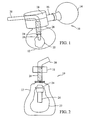
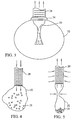
- FIGS. 1 and 2 there is shown in FIGS. 1 and 2 an irrigation and tissue evacuation and collection system 10 of the present invention.
- the irrigation and tissue evacuation and collection system 10 includes a container 12 for holding irrigation fluid.
- the irrigation fluid can be any fluid used for irrigation or lavage, such as a sterile normal saline solution or a sterile water solution.
- a pump bulb 14 is coupled to container 12 via a pump conduit 16.
- pump conduit 16 is shown as attached to container 12, pump conduit 16 could be connected to a removable cap 18.
- Cap 18 is shown as connected to container 12 by threads, but other coupling mechanisms could be used.
- Pump bulb 14 is made of a resilient material such that as pump bulb 14 is squeezed, positive pressure is created to force irrigation fluid from container 12. When the squeezing force is removed, pump bulb 14 returns to its non-compressed state, thereby creating negative pressure to draw irrigation fluid into container 12.
- pump bulb 14 is shown frictionally connected to the pump conduit 16, other coupling mechanism could be used.
- the pump conduit 16 can be internally (or externally) threaded, for threadably receiving the pump bulb 14, which would have corresponding threads. The mating threads may provide a more secure connection than a simple friction fit. This is beneficial since the pump bulb may be the only portion of the device held by the clinician. It should be noted that any suitable pump member could be used as an alternative to pump bulb 14.
- a tube 20 provides the pathway for the irrigation fluid into and out of container 12.
- Tube 20 has a first end coupled to a fluid line (not shown) that is insertable into the patient body cavity that is being treated (for example through the working channel of an endoscope), e.g. a bladder to remove prostatic tissue chips after a transurethral resectioning (TUR) procedure.
- the second end of tube 20 is in fluid communication with the interior of container 12.
- the second end is coupled to a collection bag 22 via a releasable connector 24 (e.g. an o-ring) so that collection bag 22 can be removed.
- a releasable connector 24 e.g. an o-ring
- collection bag 22 is located within the interior of container 12 and is used to obtain samples of particulate materials.
- Collection bag 22 is provided with a plurality of openings allowing the passage of fluid and particulate material of a given size.
- the openings in the collection bag 22 have a size to restrict throughflow of particulate material of a predetermined size.
- As collection bag 22 can be made of a mesh type material, such as a mesh fabric bag, different bags having a range of mesh size openings can be used to suit a particular application. For example, if large tissue particles are desired to be collected, a collection bag having relatively large mesh size openings would be used. Also, a series of collection bags 22 could be used so that samples containing particles of different sizes could be obtained.
- the size and shape of the openings may not necessarily be uniform. This may result in a variety of shapes of the openings and a range of sizes of the openings (for example the cross sectional opening areas). Accordingly and as is customary in the art, the openings in collection bag 22 can be referred to as having an average size.
- Tube 20 also includes a filter 28 such as a fenestrated portion that allows fluid, but not particulate material, to circulate in and out of container 12.
- Filter 28 is provided with a plurality of pores allowing the passage of fluid and particulate material of a given size.
- the pores in filter 28 have a size to restrict throughflow of particulate material of a predetermined size. Similar to collection bag 22, in the manufacture of filter 28, the size and shape of the pores may not necessarily be uniform. This may result in a variety of shapes of the pores and a range of sizes of the pores (for example the cross sectional pore area). Accordingly and as is customary in the art, the pores of filter 28 can be referred to as having an average size.
- the relative sizes of the openings (in collection bag 22) and the pores (in filter 28) can be adjusted as desired to a particular clinical situation.
- the pores on filter 28 can be made to have an average size that is smaller than the average size of the openings on collection bag 22.
- smaller and intermediate sized particles can move more freely in and out of collection bag 22 than through filter 28, allowing for the collection of the larger size particles in collection bag 22.
- the second end of tube 20 terminates in a flow limiter 26 that allows fluid (including any particulate material) to pass into collection bag 22, but not back out into tube 20.
- a flow limiter 26 that can be used is a valve such as a check valve.
- Another flow limiter that can be used is a Penrose drain or other type of pliable length of tubing.
- a check valve may be more restrictive in preventing flow out of collection bag 22, the use of a pliable length of tubing may be beneficial in that the tubing would have no moving parts and is more cost efficient.
- tube 20 includes a pliable tubing 29.
- a pressure differential is created between the irrigation fluid within pliable tubing 29 and the irrigation fluid surrounding pliable tubing 29.
- the irrigation fluid surrounding pliable tubing 29 has greater pressure then the irrigation fluid within pliable tubing 29, causing pliable tubing 29 to collapse within, effectively sealing off collection bag 22 and preventing the collected tissue and particulate material from re-entering the body cavity with the re-circulated irrigation fluid.
- Pliable tubing 29 can be provided with slits to facilitate the opening and closing of its lumen.
- the fluid When the squeezing force is removed from pump bulb 14, creating negative pressure, the fluid is drawn from the body cavity into container 12 through tube 20.
- the drawing of the irrigation fluid through tube 20 into container 12 creates a pressure differential between the irrigation fluid within pliable tubing 29 and the irrigation fluid surrounding pliable tubing 29.
- the irrigation fluid within pliable tubing 29 has a greater pressure then the irrigation fluid surrounding pliable tubing 29 causing pliable tubing 29 to expand, providing access to collection bag 22 to collect and isolate the evacuated tissue and particulate material from the irrigation fluid.
- Collection bag 22 of the present invention can also be made of a pliable material (or as an alternate to pliable tubing).
- a pressure differential is created between the irrigation fluid within collection bag 22 and the irrigation fluid surrounding collection bag 22.
- the irrigation fluid surrounding collection bag 22 has a greater pressure then the irrigation fluid within collection bag 22 causing collection bag 22 to collapse in on itself, preventing the collected tissue and particulate material 25 from re-entering the body cavity.
- the fluid When the squeezing force is removed from pump bulb 14, creating negative pressure, the fluid is drawn into collection bag 22 through tube 20 as shown by the arrows of FIG 4 .
- the drawing of the irrigation fluid into collection bag 22 creates a pressure differential between the irrigation fluid within collection bag 22 and the irrigation fluid surrounding pliable collection bag 22.
- the irrigation fluid within collection bag 22 has a greater pressure then the irrigation fluid surrounding collection bag 22 causing collection bag 22 to expand, providing access to collection bag 22 to collect and isolate the evacuated tissue and particulate material 25 from the irrigation fluid.
- system 10 provides a system for irrigation and tissue evacuation and collection for any body cavity, such as the bladder.
- Container 12 can be filled with irrigation fluid and the entire system can be purged of air.
- purging can be accomplished, for example, by submerging the opened device in a fluid filled basin and repeatedly compressing the bulb, or by repeatedly dipping the nozzle of a closed device into irrigating fluid and aspirating with the bulb until full.
- An endoscope can be used to advance the fluid line to the body cavity (connected to tube 20) of interest.
- irrigation fluid in container 12 is forced through filter 28 out through tube 20 which is connected to the body cavity via the fluid line.
- fluid is sucked back in from the body cavity through the fluid line and through tube 20. Particulate tissue and other material will be trapped in collection bag 22 while the rest of the fluid will refill container 12 and pump bulb 14.
- collection bag 22 can be disconnected and dropped in a specimen jar. In this way, separate specimens can be accurately collected and submitted without the potential for specimen tissue loss or mix-up.
- container 12 or a portion thereof can be made transparent or translucent so that the turbidity of the fluid can be visually examined.
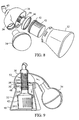
- FIGS. 6-8 another embodiment of an irrigation and tissue evacuation and collection system 30 according to the present invention is shown.
- most of the structure and function of system 30 is like or comparable to the structure of system 10 and, accordingly the same name and an analogous reference numeral are used for like components and discussion of those like components is not believed necessary.
- System 30 includes a container 32 for holding irrigation fluid.
- a pump bulb 34 is coupled to a removable cap 38 via a pump conduit 36.
- pump conduit 36 is attached to container 32.
- conduit 36 extends downwardly at a non-orthogonal angle from cap 38. In addition to improved feel and handling, this configuration also facilitates purging of air with pump bulb 34.
- a tube 40 provides the pathway for the irrigation fluid into and out of container 32.
- One end of tube 40 is removably coupled to a collection basket 42 via a connecting tube 44.
- collection basket 42 can be made of a mesh type material or be perforated to have an array of openings 43, different baskets having a range of mesh size openings can be used to suit a particular application.
- collection basket 42 can be made of a rigid material, such as a suitable polymer.
- Connecting tube 44 flares outwardly to form a flange 46.
- flange 46 is shown as threaded to mate with threads on collection basket 42, other coupling mechanisms could be used.
- connecting tube 44 is provided with pores 45 to restrict throughflow of particulate material above a certain size. As was the case for system 10, the relative sizes (average cross sectional areas) of openings 43 and pores 45 can be varied to suit a particular application.
- Connecting tube 44 is configured and dimensioned and arranged with respect to conduit 36 such that the portion of connecting tube 44 located within and in close proximity to cap 38 experiences higher turbulence and flow compared to other portions (i.e. portions closer to flange 46).
- fluid near the base of container 32 in the vicinity of the bottom of collection basket 42 remains substantially undisturbed and substantially free of turbulent flow. This tends to allow material to settle in collection basket 42, while still providing for adequate circulation of fluid.
- container 32 includes an upper portion 48 and a lower portion 50.
- Container 32 may be configured and dimensioned such that the cross sectional area of lower portion 50 is larger then the cross sectional area of upper portion 48.
- container 32 can have a substantially frusto-conical shape.
- the configuration and dimension of container 32 disperses the turbulent flow as the fluid travels from upper portion 48 to lower portion 50 of container 32.
- HT highly turbulent flow
- LT lower turbulent flow
- fluid in lower portion 50 of container 32 in the vicinity of the bottom of collection basket 42, remains substantially undisturbed and substantially free of turbulent flow (NT). This tends to allow material to settle in collection basket 42, while still providing for adequate circulation of fluid.
- removable cap 38 defines a cap interior 52.
- Cap interior 52 is removably attached to container 32 and defines a fluid interface 54 between upper portion 48 of container 32 and cap interior 52.
- HT highly turbulent flow
- LT lower turbulent flow
- NT turbulent flow
- System 30 optionally includes a flow restrictor 56, which partially segregates cap interior 52 from upper portion 48 of container 32.
- Flow restrictor 56 can be part of removable cap 38.
- flow restrictor 56 can be a lip circumferentially extending from cap 38 to partially segregate cap interior 52 from upper portion 48 of the container 32.
- flow restrictor 52 can be positioned within upper portion 48 of container 32.
- Flow restrictor 56 acts to decrease the cross sectional area of fluid interface 54 between cap interior 52 and upper portion 48 of container 32.
- the restricted fluid interface 54 acts to limit the propagation of the highly turbulent flow (HT), caused by compressing pump bulb 34, from cap interior 52 into lower portion 50 of container 32.
- HT highly turbulent flow
- compressing pump bulb 34 creates highly turbulent flow (HT) in cap interior 52.
- HT highly turbulent flow
- the restricted fluid interface 54 limits the propagation of the highly turbulent flow into upper portion 48 of container 32.
- the increasing cross sectional area of container 32 further disperses the remaining turbulent flow, creating a lower turbulent flow (LT).
- LT lower turbulent flow
- fluid in lower portion 50 of container 32, in the vicinity of the bottom of collection basket 42 remains substantially undisturbed and substantially free of turbulent flow (NT). This tends to allow material to settle in collection basket 42, while still providing for adequate circulation of fluid.
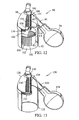
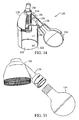
- FIG. 10 another embodiment of an irrigation and tissue evacuation and collection system 60 according to the present invention is shown.
- most of the structure and function of system 60 is like or comparable to the structure of the prior systems and, accordingly the same name and an analogous reference numeral are used for like components and discussion of those like components is not believed necessary.
- System 60 includes a container 62 for holding irrigation fluid.
- a pump bulb 64 is coupled to a removable cap 68 via a pump conduit 66.
- pump conduit 66 is attached to container 62.
- conduit 66 extends downwardly at an angle from cap 68.
- this configuration also facilitates purging of air with pump bulb 64.
- Pump bulb 64 is frictional connected to pump conduit 66, by inserting a portion of pump bulb 64 in conduit 66.
- pump bulb 64 is threadably connected to pump conduit 66.
- a tube 70 provides the pathway for the irrigation fluid into and out of container 62.
- One end of tube 70 is removably coupled to a collection basket 72 via a connecting tube 74.
- collection basket 72 can be made of a mesh type material or be perforated to have an array of openings 73, different baskets having a range of mesh size openings can be used to suit a particular application.
- collection basket 72 can be made of a rigid material, such as a suitable polymer.
- Connecting tube 74 flares outwardly to form a flange 76.
- a flange skirt 78 extends from the flange 76.
- flange skirt 78 is shown as threaded to mate with threads on collection basket 72, other coupling mechanisms could be used.
- connecting tube 74 is provided with pores 75 to restrict throughflow of particulate material above a certain size. As was the case for the prior systems the relative sizes (average cross sectional areas) of openings 73 and pores 75 can be varied to suit a particular application.
- Connecting tube 74 is configured and dimensioned and arranged with respect to conduit 66 such that the portion of connecting tube 74 located within and in close proximity to cap 68 experiences higher turbulence and flow compared to other portions (i.e. portions closer to flange 76).
- fluid near the base of container 62 in the vicinity of the bottom of collection basket 72 remains substantially undisturbed and substantially free of turbulent flow. This tends to allow material to settle in collection basket 72, while still providing for adequate circulation of fluid.
- the container 62 includes an upper portion 80 and a lower portion 82.
- the configuration and dimension of container 62, flange 76, and the flange skirt 78 limit the propagation of the turbulent flow as the fluid travels from upper portion 80 to lower portion 82 of container 62.
- HT highly turbulent flow
- LT lower turbulent flow
- Turbulence is also reduced in lower portion 82 by increasing the distance from pump conduit 66 (i.e.
- fluid in lower portion 82 of container 62 in the vicinity of the collection basket 72 (and in particular near the bottom of collection basket 72), remains substantially undisturbed and substantially free of turbulent flow (NT). This tends to allow material to settle in collection basket 72, while still providing for adequate circulation of fluid.
- removable cap 78 defines a cap interior 84.
- Cap interior 84 is removably attached to container 62 and defines a fluid interface 86 between upper portion 80 of container 62 and cap interior 84.
- irrigation fluid is forced into cap interior 84, creating highly turbulent flow (HT) in cap interior 84 and upper portion 80 of container 62.
- HT highly turbulent flow
- LT lower turbulent flow
- fluid in lower portion 82 of container 62, in the vicinity of the collection basket 72 (and in particular near the bottom of collection basket 72) remains substantially undisturbed and substantially free of turbulent flow (NT). This tends to allow material to settle in collection basket 72, while still providing for adequate circulation of fluid.
- the flange 76 optional includes a lip portion 88, radially extending from the flange 76.
- the lip portion 88 acts to further limit the propagation of the turbulent flow to the bottom portion of the container 72.
- FIG. 12 another embodiment of an irrigation and tissue evacuation and collection system 90 according to the present invention is shown.
- most of the structure and function of system 90 is like or comparable to the structure of systems 10, 30, and 60 and, accordingly the same name and an analogous reference numeral are used for like components and discussion of those like components is not believed necessary.
- System 90 includes a container 92 for holding irrigation fluid.
- a pump bulb 94 is coupled to a removable cap, 98 via a pump conduit 96.
- pump conduit 96 is attached to container 92.
- a tube 100 provides the pathway for the irrigation fluid into and out of container 92.
- One end of tube 100 is removably coupled to a collection basket 102 via a connecting tube 104.
- collection basket 102 can be made of a mesh type material or be perforated to have an array of openings 103, different baskets having a range of mesh size openings can be used to suit a particular application.
- collection basket 102 can be made of a rigid material, such as a suitable polymer.
- Connecting tube 104 flares outwardly to form a flange 106.
- flange 106 is shown as threaded to mate with threads on collection basket 102, other coupling mechanisms could be used.
- connecting tube 104 is provided with pores 105 to restrict throughflow of particulate material above a certain size.
- a restrictor plate 108 radially extends from connection tube 104 and is interposed between the flange 106 and the cap 98.
- Connecting tube 104, flange 106, and restrictor plate 108 are configured, dimensioned and arranged with respect to conduit 96 such that the portion of connecting tube 104 located within and in close proximity to cap 98 experiences higher turbulence and flow compared to other portions (i.e. portions closer to flange 106).
- fluid near the base of container 92 in the vicinity of the collection basket 102 (and in particular near the bottom of collection basket 102) remains substantially undisturbed and substantially free of turbulent flow.
- restrictor plate 108 acts like a shield, directing fluid from pump conduit 96 toward tube 100. The combined effect of these features tends to allow material to settle in collection basket 102, while still providing for adequate circulation of fluid.
- the container 92 includes an upper portion 110 and a lower portion 112.
- the configuration and dimension of container 92, flange 106, and the restrictor plate 108 limit the propagation of the turbulent flow as the fluid travels from upper portion 110 to lower portion 112 of container 92.
- irrigation fluid is forced into container 92, creating highly turbulent flow (HT) in upper portion 110 of container 92.
- HT highly turbulent flow
- the restrictor plate 108 and the flange 106 limit the propagation of the turbulent flow, creating a lower turbulent flow (LT).
- fluid in lower portion 112 of container 92 in the vicinity of the collection basket 102 (and in particular near the bottom of collection basket 102), remains substantially undisturbed and substantially free of turbulent flow (NT). This tends to allow material to settle in collection basket 102, while still providing for adequate circulation of fluid.
- removable cap 98 defines a cap interior 114.
- Cap interior 114 is removably attached to container 92 and defines a fluid interface 116 between upper portion 110 of container 92 and cap interior 114.
- irrigation fluid is forced into cap interior 114, creating highly turbulent flow (HT) in cap interior 114 and upper portion 110 of container 92.
- HT highly turbulent flow
- LT lower turbulent flow
- fluid in lower portion 112 of container 92, in the vicinity of the collection basket 102 (and in particular near the bottom of collection basket 102) remains substantially undisturbed and substantially free of turbulent flow (NT). This tends to allow material to settle in collection basket 102, while still providing for adequate circulation of fluid.
- FIG. 13 another embodiment of an irrigation and tissue evacuation and collection system 120 according to the present invention is shown.
- system 120 is like or comparable to the structure of the prior systems and, accordingly the same name and an analogous reference numeral are used for like components and discussion of those like components is not believed necessary.
- System 120 includes a container 122 for holding irrigation fluid.
- a pump bulb 124 is coupled to a removable cap 128 via a pump conduit 126.
- pump conduit 126 is attached to container 122.
- pump bulb 124 is threadably connected to pump conduit 126.
- a tube 130 provides the pathway for the irrigation fluid into and out of container 122.
- a lower end portion 132 of the tube 130 is removably coupled to a collection bag (not shown) via a connecting tube 134.
- the collection bag can be made of a mesh type material or be perforated to have an array of openings, different bags having a range of mesh size openings can be used to suit a particular application.
- connecting tube 134 is provided with pores 136 to restrict throughflow of particulate material above a certain size.
- the relative sizes (average cross sectional areas) of the collection bag openings and pores 136 can be varied to suit a particular application.
- Connecting tube 134 is configured, dimensioned and arranged with respect to conduit 126 such that the portion of connecting tube 134 located within and in close proximity to cap 128 experiences higher turbulence and flow compared to other portions.
- fluid near the base of container 122 in the vicinity of the collection bag (and in particular near the bottom of the collection bag) remains substantially undisturbed and substantially free of turbulent flow. This tends to allow material to settle in collection bag, while still providing for adequate circulation of fluid.
- connecting tube 134 includes a restrictor plate 138 radially extending out there from.
- Restrictor plate 138 is interposed between the lower end portion 134 of tube 130 and cap 128, and acts like a shield directing fluid from pump conduit 126 toward tube 130. If desired, restrictor plate 138 can snugly fit against the edge of cap 128 to be fluid-tight, thereby serving as a bulkhead so that fluid must pass through connecting tube 134 to reach the lower section of container 122.
- Container 122 includes an upper portion 140 and a lower portion 142.
- the configuration and dimension of container 122 and restrictor plate 138 limits the propagation of the turbulent flow as the fluid travels from upper portion 140 to lower portion 142 of container 122.
- HT highly turbulent flow
- restrictor plate 138 limits the propagation of the turbulent flow, creating a lower turbulent flow (LT).
- LT lower turbulent flow
- fluid in lower portion 142 of container 122 in the vicinity of the collection bag (and in particular near the bottom of the collection bag), remains substantially undisturbed and substantially free of turbulent flow (NT). This tends to allow material to settle in the collection bag, while still providing for adequate circulation of fluid.
- removable cap 128 defines a cap interior 144.
- Cap interior 144 is removably attached to container 122 and defines a fluid interface 146 between upper portion 140 of container 122 and cap interior 144.
- irrigation fluid is forced into cap interior 144, creating highly turbulent flow (HT) in cap interior 144 and upper portion 140 of container 122.
- HT highly turbulent flow
- LT lower turbulent flow
- fluid in lower portion 142 of container 122, in the vicinity of the collection bag (and in particular near the bottom of the collection bag) remains substantially undisturbed and substantially free of turbulent flow (NT). This tends to allow material to settle in collection bag, while still providing for adequate circulation of fluid.
Landscapes
- Health & Medical Sciences (AREA)
- Heart & Thoracic Surgery (AREA)
- Life Sciences & Earth Sciences (AREA)
- Animal Behavior & Ethology (AREA)
- Public Health (AREA)
- Biomedical Technology (AREA)
- Engineering & Computer Science (AREA)
- Hematology (AREA)
- Veterinary Medicine (AREA)
- General Health & Medical Sciences (AREA)
- Anesthesiology (AREA)
- Vascular Medicine (AREA)
- Sustainable Development (AREA)
- Pulmonology (AREA)
- Otolaryngology (AREA)
- Infusion, Injection, And Reservoir Apparatuses (AREA)
- External Artificial Organs (AREA)
- Medicines Containing Material From Animals Or Micro-Organisms (AREA)
Applications Claiming Priority (4)
| Application Number | Priority Date | Filing Date | Title |
|---|---|---|---|
| US50126303P | 2003-09-09 | 2003-09-09 | |
| US55306704P | 2004-03-15 | 2004-03-15 | |
| US10/841,074 US7172579B2 (en) | 2003-09-09 | 2004-05-07 | System and method for irrigation and tissue evacuation and collection |
| PCT/US2004/029312 WO2005023095A2 (en) | 2003-09-09 | 2004-09-09 | Device for tissue irrigation, evacuation and collection |
Publications (3)
| Publication Number | Publication Date |
|---|---|
| EP1677861A2 EP1677861A2 (en) | 2006-07-12 |
| EP1677861A4 EP1677861A4 (en) | 2010-07-07 |
| EP1677861B1 true EP1677861B1 (en) | 2012-02-01 |
Family
ID=56290560
Family Applications (1)
| Application Number | Title | Priority Date | Filing Date |
|---|---|---|---|
| EP04783530A Expired - Lifetime EP1677861B1 (en) | 2003-09-09 | 2004-09-09 | System for irrigation and tissue evacuation and collection |
Country Status (5)
| Country | Link |
|---|---|
| US (2) | US7172579B2 (https=) |
| EP (1) | EP1677861B1 (https=) |
| JP (1) | JP4477005B2 (https=) |
| AT (1) | ATE543526T1 (https=) |
| CA (1) | CA2543373A1 (https=) |
Families Citing this family (31)
| Publication number | Priority date | Publication date | Assignee | Title |
|---|---|---|---|---|
| US7686825B2 (en) | 2004-03-25 | 2010-03-30 | Hauser David L | Vascular filter device |
| US20080294148A1 (en) * | 2007-05-22 | 2008-11-27 | Albert Gardner | System and method for refilling an implanted delivery device |
| US8100874B1 (en) | 2009-05-22 | 2012-01-24 | Donnell Mark Jordan | Tissue refining device |
| US8465471B2 (en) | 2009-08-05 | 2013-06-18 | Rocin Laboratories, Inc. | Endoscopically-guided electro-cauterizing power-assisted fat aspiration system for aspirating visceral fat tissue within the abdomen of a patient |
| US20110213336A1 (en) * | 2009-08-05 | 2011-09-01 | Cucin Robert L | Method of and apparatus for sampling, processing and collecting tissue and reinjecting the same into human patients |
| US8348929B2 (en) | 2009-08-05 | 2013-01-08 | Rocin Laboratories, Inc. | Endoscopically-guided tissue aspiration system for safely removing fat tissue from a patient |
| US9480464B2 (en) | 2011-07-29 | 2016-11-01 | New York University | Tissue collection system |
| US8784434B2 (en) | 2012-11-20 | 2014-07-22 | Inceptus Medical, Inc. | Methods and apparatus for treating embolism |
| US10238406B2 (en) | 2013-10-21 | 2019-03-26 | Inari Medical, Inc. | Methods and apparatus for treating embolism |
| US20150118644A1 (en) * | 2013-10-29 | 2015-04-30 | Bruno Binyamin Cohen Tanugi | Applicator for dispensing materials through a water-jet device |
| CA2931755A1 (en) * | 2013-10-30 | 2015-05-07 | Faculty Physicians And Surgeons Of Loma Linda University School Of Medicine | Controlled pressure endoscopic and percutaneous surgery |
| US10675435B2 (en) | 2015-04-01 | 2020-06-09 | Spinal Singularity, Inc. | Extended-use valved urinary catheter |
| US11065093B2 (en) | 2015-01-23 | 2021-07-20 | Spinal Singularity, Inc. | Catheter mating devices |
| US9775698B2 (en) * | 2015-01-23 | 2017-10-03 | Spinal Singularity, Inc. | Urinary prosthesis systems |
| CN105169511B (zh) * | 2015-08-06 | 2018-10-12 | 复旦大学附属上海市第五人民医院 | 一种抗回吸的膀胱冲洗器 |
| AU2016341439B2 (en) | 2015-10-23 | 2021-07-08 | Inari Medical, Inc. | Intravascular treatment of vascular occlusion and associated devices, systems, and methods |
| WO2018080590A1 (en) | 2016-10-24 | 2018-05-03 | Inari Medical | Devices and methods for treating vascular occlusion |
| EP3618726A1 (en) | 2017-05-02 | 2020-03-11 | Ambu A/S | An endoscope |
| US11696748B2 (en) | 2017-05-02 | 2023-07-11 | Ambu A/S | Set of sampling parts |
| US11547393B2 (en) | 2017-05-02 | 2023-01-10 | Ambu A/S | Endoscope system |
| CN116421876A (zh) | 2017-09-06 | 2023-07-14 | 伊纳里医疗有限公司 | 止血阀及其使用方法 |
| US11154314B2 (en) | 2018-01-26 | 2021-10-26 | Inari Medical, Inc. | Single insertion delivery system for treating embolism and associated systems and methods |
| AU2019321256B2 (en) | 2018-08-13 | 2023-06-22 | Inari Medical, Inc. | System for treating embolism and associated devices and methods |
| EP3917371A1 (en) * | 2019-01-29 | 2021-12-08 | Pawel Wisniewski | Organ flush and drainage unit |
| US12569650B2 (en) | 2019-06-10 | 2026-03-10 | Uroflow Technology, Llc | Urinary catheter with retention features |
| US11864779B2 (en) | 2019-10-16 | 2024-01-09 | Inari Medical, Inc. | Systems, devices, and methods for treating vascular occlusions |
| CN116234508A (zh) | 2020-06-05 | 2023-06-06 | 伊纳里医疗有限公司 | 可再捕获的漏斗导管以及相关联的系统和方法 |
| EP4463083A4 (en) | 2022-01-11 | 2025-12-03 | Inari Medical Inc | DEVICES FOR REMOVING CLOT MATERIAL FROM INTRAVASCULARLY IMPLANTED DEVICES, AND ASSOCIATED SYSTEMS AND METHODS |
| AU2024207180A1 (en) | 2023-01-09 | 2025-07-17 | Inari Medical, Inc. | Catheter for use with clot treatment systems |
| WO2025106851A1 (en) | 2023-11-16 | 2025-05-22 | Inari Medical, Inc. | Automatic locking and unlocking vacuum syringes, and associated systems and methods |
| WO2025235015A1 (en) | 2024-05-10 | 2025-11-13 | Inari Medical, Inc. | Mechanical thrombectomy assemblies with relief features, and associated devices, systems, and methods |
Family Cites Families (63)
| Publication number | Priority date | Publication date | Assignee | Title |
|---|---|---|---|---|
| US246187A (en) * | 1881-08-23 | William p | ||
| US764996A (en) | 1903-07-08 | 1904-07-12 | James S Roseberry | Syringe. |
| US873728A (en) * | 1907-02-27 | 1907-12-17 | Benjamin F Crisenberry | Syringe. |
| US877926A (en) | 1907-05-04 | 1908-02-04 | Edward Hilker | Vaginal syringe. |
| US1015895A (en) | 1911-01-23 | 1912-01-30 | George J Kelley | Vaginal syringe. |
| NL15859C (https=) | 1921-09-02 | |||
| US1484621A (en) | 1921-10-15 | 1924-02-26 | Robert I Bond | Vaginal syringe |
| US1925230A (en) * | 1931-12-30 | 1933-09-05 | Halsey L Buckhout | Syringe |
| US3233609A (en) | 1961-04-06 | 1966-02-08 | Henry Mailman | Irrigation device used during post-operative procedures |
| US3429313A (en) | 1966-02-01 | 1969-02-25 | Ram Domestic Products Co | Medical drainage pump |
| US3636940A (en) | 1967-12-07 | 1972-01-25 | Leland C Gravlee | Method for collecting cellular material by circulating a fluid within a body cavity |
| US3471064A (en) | 1968-06-07 | 1969-10-07 | Leeds & Micallef | Foam generating and dispensing device |
| US3785380A (en) | 1972-02-22 | 1974-01-15 | R Brumfield | Filtering blood sucker |
| US3831605A (en) | 1973-01-26 | 1974-08-27 | E Fournier | Multipurpose applicators |
| US3818907A (en) | 1973-04-23 | 1974-06-25 | M Walton | Double cylinder lavage syringe |
| US3892226A (en) * | 1973-10-29 | 1975-07-01 | Irwin Charles Rosen | Urological irrigation-evacuator |
| US3908660A (en) | 1974-01-02 | 1975-09-30 | Isaac Kaplan | Apparatus for draining a conduit |
| USD246187S (en) | 1975-11-10 | 1977-10-25 | Dearment Samuel W | Double syringe |
| US4221225A (en) * | 1978-11-13 | 1980-09-09 | Sloan Noah H | Body cavity examination device |
| US4282873A (en) | 1980-04-03 | 1981-08-11 | Roth Robert A | Medical irrigation device |
| DE3150500A1 (de) * | 1981-12-21 | 1983-06-30 | Friedrich Gerd 5000 Köln Lauterjung | Saugflasche fuer medizinische zwecke |
| US4519385A (en) | 1982-12-01 | 1985-05-28 | Snyder Laboratories, Inc. | Lavage handpiece |
| GB2136690B (en) | 1983-03-17 | 1986-09-10 | George Thomas Watts | Surgical irrigator/evacuator |
| US4594073A (en) | 1984-10-31 | 1986-06-10 | Stine Charles R | Aspiration syringe holder |
| EP0202384A1 (en) * | 1984-12-27 | 1986-11-26 | Bard Limited | Pump for medical use |
| US4787889A (en) | 1985-09-27 | 1988-11-29 | Coopervision, Inc. | Rigid, transparent fluid conduit for surgical irrigation |
| FR2592584B1 (fr) | 1986-01-03 | 1990-08-17 | Wargnier Dominique | Appareil urologique pour lavage vesical. |
| US4729764A (en) | 1986-06-05 | 1988-03-08 | Gualtier Quentin E | Irrigator and tissue separator |
| GB8615437D0 (en) | 1986-06-24 | 1986-07-30 | Bard Ltd | Pump |
| US4842581A (en) | 1987-09-11 | 1989-06-27 | Davis Richard C | Medical lavage apparatus |
| US4872866A (en) | 1987-09-11 | 1989-10-10 | Davis Richard C | Medical lavage apparatus |
| US4776840A (en) | 1987-09-28 | 1988-10-11 | Alteron, Inc. | Hand-held medical evacuator and irrigation device |
| US4976682A (en) | 1987-11-23 | 1990-12-11 | Lane Perry L | Methods and apparatus for autologous blood recovery |
| DE68913315T2 (de) * | 1988-02-10 | 1994-06-09 | Boston Scient Corp | Blasenevakuator. |
| US5421824A (en) * | 1988-02-10 | 1995-06-06 | Boston Scientific Corporation | Bladder evacuator |
| US4806101A (en) | 1988-03-23 | 1989-02-21 | Gianfranco Rossi | Portable apparatus for removing food remains from the oral cavity |
| US4880408A (en) * | 1988-05-02 | 1989-11-14 | Cumes David M | Medical irrigation device |
| US4968303A (en) | 1988-09-27 | 1990-11-06 | Eli Lilly And Company | Hypodermic syringe holder |
| US5306237A (en) | 1989-11-06 | 1994-04-26 | Mectra Labs, Inc. | Disposable lavage |
| US5338292A (en) | 1989-11-06 | 1994-08-16 | Mectra Labs, Inc. | Disposable lavage with instrument shield |
| US5505210A (en) | 1989-11-06 | 1996-04-09 | Mectra Labs, Inc. | Lavage with tissue cutting cannula |
| US5078690A (en) | 1990-01-11 | 1992-01-07 | Accumed Systems, Incorporated | High pressure syringe |
| US5049141A (en) | 1990-04-25 | 1991-09-17 | Infusaid, Inc. | Programmable valve pump |
| US5250065A (en) | 1990-09-11 | 1993-10-05 | Mectra Labs, Inc. | Disposable lavage tip assembly |
| US5049135A (en) | 1990-09-18 | 1991-09-17 | Code Blue Medical Corporation | Medical lavage apparatus |
| US5115816A (en) | 1991-01-24 | 1992-05-26 | Peter F. Lee, Inc. | Single-hand controlled fine needle aspiration device |
| US5241969A (en) | 1992-06-10 | 1993-09-07 | Carson Jay W | Controlled and safe fine needle aspiration device |
| US5338294A (en) * | 1992-06-19 | 1994-08-16 | Jack Kaufman | Urological evacuator |
| US5254086A (en) | 1992-07-31 | 1993-10-19 | Ballard Medical Products | Medical lavage apparatus and methods |
| US5314406A (en) | 1992-10-09 | 1994-05-24 | Symbiosis Corporation | Endoscopic electrosurgical suction-irrigation instrument |
| JPH0639000U (ja) * | 1992-10-28 | 1994-05-24 | ニチバン株式会社 | 体液排出器 |
| US5492535A (en) | 1994-04-06 | 1996-02-20 | Cordis Corporation | Hand-powered pumping apparatus for perfusion and other fluid catheterization procedures |
| US5511556A (en) | 1994-04-11 | 1996-04-30 | Desantis; Stephen A. | Needle core biopsy instrument |
| US5529463A (en) | 1994-04-19 | 1996-06-25 | Cordis Corporation | Pumping apparatus for perfusion and other fluid catheterization procedures |
| US5647852A (en) | 1995-01-31 | 1997-07-15 | Zimmer, Inc. | Lavage system including a cassette assembly |
| US5746721A (en) | 1995-02-15 | 1998-05-05 | C.R. Bard, Inc. | Pulsed lavage pump with integral power source and variable flow control |
| US5843022A (en) | 1995-10-25 | 1998-12-01 | Scimied Life Systems, Inc. | Intravascular device utilizing fluid to extract occlusive material |
| DK172924B1 (da) * | 1995-12-01 | 1999-10-04 | Maersk Medical As | Indretning til brug ved udskylning af legemshulrum |
| US5941851A (en) | 1996-07-12 | 1999-08-24 | C.R. Bard, Inc. | Pulsed lavage handpiece with improved handle |
| US6090094A (en) | 1996-10-04 | 2000-07-18 | Microgroup, Inc. | Ball valves and uses thereof including endoscopic surgical instruments |
| US5830152A (en) | 1997-02-24 | 1998-11-03 | Tao; Liang-Che | Pencil-grip fine needle aspiration syringe holder |
| US5779702A (en) | 1997-04-09 | 1998-07-14 | Microaire Surgical Instruments, Inc. | High speed pulse lavage surgical hand tool attachment |
| KR100930139B1 (ko) * | 2001-12-07 | 2009-12-07 | 사이토리 테라퓨틱스, 인크. | 처리된 리포애스퍼레이트 세포로 환자를 치료하기 위한시스템 및 방법 |
-
2004
- 2004-05-07 US US10/841,074 patent/US7172579B2/en not_active Expired - Lifetime
- 2004-09-09 AT AT04783530T patent/ATE543526T1/de active
- 2004-09-09 CA CA002543373A patent/CA2543373A1/en not_active Abandoned
- 2004-09-09 JP JP2006526264A patent/JP4477005B2/ja not_active Expired - Fee Related
- 2004-09-09 EP EP04783530A patent/EP1677861B1/en not_active Expired - Lifetime
-
2007
- 2007-02-06 US US11/671,548 patent/US20070213666A1/en not_active Abandoned
Also Published As
| Publication number | Publication date |
|---|---|
| ATE543526T1 (de) | 2012-02-15 |
| EP1677861A4 (en) | 2010-07-07 |
| EP1677861A2 (en) | 2006-07-12 |
| JP4477005B2 (ja) | 2010-06-09 |
| CA2543373A1 (en) | 2005-03-17 |
| JP2007514456A (ja) | 2007-06-07 |
| US7172579B2 (en) | 2007-02-06 |
| US20050054995A1 (en) | 2005-03-10 |
| US20070213666A1 (en) | 2007-09-13 |
Similar Documents
| Publication | Publication Date | Title |
|---|---|---|
| EP1677861B1 (en) | System for irrigation and tissue evacuation and collection | |
| US8100874B1 (en) | Tissue refining device | |
| US3892226A (en) | Urological irrigation-evacuator | |
| US7789872B2 (en) | Tissue transplantation method and apparatus | |
| US8622997B2 (en) | Tissue transfer method and apparatus | |
| US9581942B1 (en) | Tissue transfer method and apparatus | |
| US7794449B2 (en) | Tissue transplantation method and apparatus | |
| US8366694B1 (en) | Tissue refining device | |
| US8062286B2 (en) | Tissue transplantation method and apparatus | |
| US7780649B2 (en) | Tissue transplantation method and apparatus | |
| US10076595B2 (en) | Systems and methods for blood recovery from absorbent surgical materials | |
| US4880408A (en) | Medical irrigation device | |
| CN108348664A (zh) | 脂肪过滤装置 | |
| ITUD960161A1 (it) | Sistema per l'estrazione di fluidi | |
| AU701703B2 (en) | Nasopharyngeal wash collection device | |
| AU2013276103A1 (en) | Novel tubing valve and uses thereof | |
| US11980709B2 (en) | System and related methods for fat harvesting | |
| CN100591374C (zh) | 一种冲洗和排出收集组织的装置 | |
| CN208989347U (zh) | 一种用于眼科手术的液流装置 | |
| WO2005023095A2 (en) | Device for tissue irrigation, evacuation and collection | |
| KR20250013202A (ko) | 지방 이식편을 처리하기 위한 주사기 및 관련 방법 | |
| CN208492831U (zh) | 自动排气、止液、精密过滤器装置 | |
| US20250127976A1 (en) | Filter device for human blood reinfusion | |
| JPH01244764A (ja) | 膀胱用吸引器 | |
| DE8303620U1 (de) | Geraet zur infusion oder transfusion von koerperfluessigkeiten |
Legal Events
| Date | Code | Title | Description |
|---|---|---|---|
| PUAI | Public reference made under article 153(3) epc to a published international application that has entered the european phase |
Free format text: ORIGINAL CODE: 0009012 |
|
| 17P | Request for examination filed |
Effective date: 20060331 |
|
| AK | Designated contracting states |
Kind code of ref document: A2 Designated state(s): AT BE BG CH CY CZ DE DK EE ES FI FR GB GR HU IE IT LI LU MC NL PL PT RO SE SI SK TR |
|
| AX | Request for extension of the european patent |
Extension state: AL HR LT LV MK |
|
| DAX | Request for extension of the european patent (deleted) | ||
| A4 | Supplementary search report drawn up and despatched |
Effective date: 20100607 |
|
| RIC1 | Information provided on ipc code assigned before grant |
Ipc: A61M 5/178 20060101AFI20060118BHEP Ipc: A61M 3/02 20060101ALI20100531BHEP |
|
| 17Q | First examination report despatched |
Effective date: 20110513 |
|
| GRAP | Despatch of communication of intention to grant a patent |
Free format text: ORIGINAL CODE: EPIDOSNIGR1 |
|
| GRAS | Grant fee paid |
Free format text: ORIGINAL CODE: EPIDOSNIGR3 |
|
| GRAA | (expected) grant |
Free format text: ORIGINAL CODE: 0009210 |
|
| RIN1 | Information on inventor provided before grant (corrected) |
Inventor name: BARZELL, WINSTON E. Inventor name: WHITMORE III, WILLET F. |
|
| RTI1 | Title (correction) |
Free format text: SYSTEM FOR IRRIGATION AND TISSUE EVACUATION AND COLLECTION |
|
| AK | Designated contracting states |
Kind code of ref document: B1 Designated state(s): AT BE BG CH CY CZ DE DK EE ES FI FR GB GR HU IE IT LI LU MC NL PL PT RO SE SI SK TR |
|
| REG | Reference to a national code |
Ref country code: GB Ref legal event code: FG4D |
|
| REG | Reference to a national code |
Ref country code: CH Ref legal event code: EP Ref country code: AT Ref legal event code: REF Ref document number: 543526 Country of ref document: AT Kind code of ref document: T Effective date: 20120215 |
|
| REG | Reference to a national code |
Ref country code: DE Ref legal event code: R096 Ref document number: 602004036381 Country of ref document: DE Effective date: 20120329 |
|
| REG | Reference to a national code |
Ref country code: SE Ref legal event code: TRGR |
|
| REG | Reference to a national code |
Ref country code: NL Ref legal event code: VDEP Effective date: 20120201 |
|
| PG25 | Lapsed in a contracting state [announced via postgrant information from national office to epo] |
Ref country code: NL Free format text: LAPSE BECAUSE OF FAILURE TO SUBMIT A TRANSLATION OF THE DESCRIPTION OR TO PAY THE FEE WITHIN THE PRESCRIBED TIME-LIMIT Effective date: 20120201 |
|
| PG25 | Lapsed in a contracting state [announced via postgrant information from national office to epo] |
Ref country code: PT Free format text: LAPSE BECAUSE OF FAILURE TO SUBMIT A TRANSLATION OF THE DESCRIPTION OR TO PAY THE FEE WITHIN THE PRESCRIBED TIME-LIMIT Effective date: 20120601 Ref country code: GR Free format text: LAPSE BECAUSE OF FAILURE TO SUBMIT A TRANSLATION OF THE DESCRIPTION OR TO PAY THE FEE WITHIN THE PRESCRIBED TIME-LIMIT Effective date: 20120502 Ref country code: FI Free format text: LAPSE BECAUSE OF FAILURE TO SUBMIT A TRANSLATION OF THE DESCRIPTION OR TO PAY THE FEE WITHIN THE PRESCRIBED TIME-LIMIT Effective date: 20120201 Ref country code: PL Free format text: LAPSE BECAUSE OF FAILURE TO SUBMIT A TRANSLATION OF THE DESCRIPTION OR TO PAY THE FEE WITHIN THE PRESCRIBED TIME-LIMIT Effective date: 20120201 Ref country code: BE Free format text: LAPSE BECAUSE OF FAILURE TO SUBMIT A TRANSLATION OF THE DESCRIPTION OR TO PAY THE FEE WITHIN THE PRESCRIBED TIME-LIMIT Effective date: 20120201 |
|
| REG | Reference to a national code |
Ref country code: AT Ref legal event code: MK05 Ref document number: 543526 Country of ref document: AT Kind code of ref document: T Effective date: 20120201 |
|
| PG25 | Lapsed in a contracting state [announced via postgrant information from national office to epo] |
Ref country code: CY Free format text: LAPSE BECAUSE OF FAILURE TO SUBMIT A TRANSLATION OF THE DESCRIPTION OR TO PAY THE FEE WITHIN THE PRESCRIBED TIME-LIMIT Effective date: 20120201 |
|
| PG25 | Lapsed in a contracting state [announced via postgrant information from national office to epo] |
Ref country code: RO Free format text: LAPSE BECAUSE OF FAILURE TO SUBMIT A TRANSLATION OF THE DESCRIPTION OR TO PAY THE FEE WITHIN THE PRESCRIBED TIME-LIMIT Effective date: 20120201 Ref country code: DK Free format text: LAPSE BECAUSE OF FAILURE TO SUBMIT A TRANSLATION OF THE DESCRIPTION OR TO PAY THE FEE WITHIN THE PRESCRIBED TIME-LIMIT Effective date: 20120201 Ref country code: CZ Free format text: LAPSE BECAUSE OF FAILURE TO SUBMIT A TRANSLATION OF THE DESCRIPTION OR TO PAY THE FEE WITHIN THE PRESCRIBED TIME-LIMIT Effective date: 20120201 Ref country code: EE Free format text: LAPSE BECAUSE OF FAILURE TO SUBMIT A TRANSLATION OF THE DESCRIPTION OR TO PAY THE FEE WITHIN THE PRESCRIBED TIME-LIMIT Effective date: 20120201 Ref country code: SI Free format text: LAPSE BECAUSE OF FAILURE TO SUBMIT A TRANSLATION OF THE DESCRIPTION OR TO PAY THE FEE WITHIN THE PRESCRIBED TIME-LIMIT Effective date: 20120201 |
|
| PG25 | Lapsed in a contracting state [announced via postgrant information from national office to epo] |
Ref country code: SK Free format text: LAPSE BECAUSE OF FAILURE TO SUBMIT A TRANSLATION OF THE DESCRIPTION OR TO PAY THE FEE WITHIN THE PRESCRIBED TIME-LIMIT Effective date: 20120201 Ref country code: IT Free format text: LAPSE BECAUSE OF FAILURE TO SUBMIT A TRANSLATION OF THE DESCRIPTION OR TO PAY THE FEE WITHIN THE PRESCRIBED TIME-LIMIT Effective date: 20120201 |
|
| PLBE | No opposition filed within time limit |
Free format text: ORIGINAL CODE: 0009261 |
|
| STAA | Information on the status of an ep patent application or granted ep patent |
Free format text: STATUS: NO OPPOSITION FILED WITHIN TIME LIMIT |
|
| 26N | No opposition filed |
Effective date: 20121105 |
|
| PG25 | Lapsed in a contracting state [announced via postgrant information from national office to epo] |
Ref country code: AT Free format text: LAPSE BECAUSE OF FAILURE TO SUBMIT A TRANSLATION OF THE DESCRIPTION OR TO PAY THE FEE WITHIN THE PRESCRIBED TIME-LIMIT Effective date: 20120201 |
|
| REG | Reference to a national code |
Ref country code: DE Ref legal event code: R097 Ref document number: 602004036381 Country of ref document: DE Effective date: 20121105 |
|
| PG25 | Lapsed in a contracting state [announced via postgrant information from national office to epo] |
Ref country code: MC Free format text: LAPSE BECAUSE OF NON-PAYMENT OF DUE FEES Effective date: 20120930 Ref country code: ES Free format text: LAPSE BECAUSE OF FAILURE TO SUBMIT A TRANSLATION OF THE DESCRIPTION OR TO PAY THE FEE WITHIN THE PRESCRIBED TIME-LIMIT Effective date: 20120512 |
|
| REG | Reference to a national code |
Ref country code: CH Ref legal event code: PL |
|
| GBPC | Gb: european patent ceased through non-payment of renewal fee |
Effective date: 20120909 |
|
| REG | Reference to a national code |
Ref country code: IE Ref legal event code: MM4A |
|
| PG25 | Lapsed in a contracting state [announced via postgrant information from national office to epo] |
Ref country code: CH Free format text: LAPSE BECAUSE OF NON-PAYMENT OF DUE FEES Effective date: 20120930 Ref country code: BG Free format text: LAPSE BECAUSE OF FAILURE TO SUBMIT A TRANSLATION OF THE DESCRIPTION OR TO PAY THE FEE WITHIN THE PRESCRIBED TIME-LIMIT Effective date: 20120501 Ref country code: GB Free format text: LAPSE BECAUSE OF NON-PAYMENT OF DUE FEES Effective date: 20120909 Ref country code: IE Free format text: LAPSE BECAUSE OF NON-PAYMENT OF DUE FEES Effective date: 20120909 Ref country code: LI Free format text: LAPSE BECAUSE OF NON-PAYMENT OF DUE FEES Effective date: 20120930 |
|
| PGFP | Annual fee paid to national office [announced via postgrant information from national office to epo] |
Ref country code: SE Payment date: 20130927 Year of fee payment: 10 |
|
| PG25 | Lapsed in a contracting state [announced via postgrant information from national office to epo] |
Ref country code: TR Free format text: LAPSE BECAUSE OF FAILURE TO SUBMIT A TRANSLATION OF THE DESCRIPTION OR TO PAY THE FEE WITHIN THE PRESCRIBED TIME-LIMIT Effective date: 20120201 |
|
| PG25 | Lapsed in a contracting state [announced via postgrant information from national office to epo] |
Ref country code: LU Free format text: LAPSE BECAUSE OF NON-PAYMENT OF DUE FEES Effective date: 20120909 |
|
| PG25 | Lapsed in a contracting state [announced via postgrant information from national office to epo] |
Ref country code: HU Free format text: LAPSE BECAUSE OF FAILURE TO SUBMIT A TRANSLATION OF THE DESCRIPTION OR TO PAY THE FEE WITHIN THE PRESCRIBED TIME-LIMIT Effective date: 20040909 |
|
| REG | Reference to a national code |
Ref country code: SE Ref legal event code: EUG |
|
| PG25 | Lapsed in a contracting state [announced via postgrant information from national office to epo] |
Ref country code: SE Free format text: LAPSE BECAUSE OF NON-PAYMENT OF DUE FEES Effective date: 20140910 |
|
| REG | Reference to a national code |
Ref country code: FR Ref legal event code: PLFP Year of fee payment: 13 |
|
| REG | Reference to a national code |
Ref country code: FR Ref legal event code: PLFP Year of fee payment: 14 |
|
| REG | Reference to a national code |
Ref country code: FR Ref legal event code: PLFP Year of fee payment: 15 |
|
| PGFP | Annual fee paid to national office [announced via postgrant information from national office to epo] |
Ref country code: FR Payment date: 20190927 Year of fee payment: 16 |
|
| PGFP | Annual fee paid to national office [announced via postgrant information from national office to epo] |
Ref country code: DE Payment date: 20190926 Year of fee payment: 16 |
|
| REG | Reference to a national code |
Ref country code: DE Ref legal event code: R119 Ref document number: 602004036381 Country of ref document: DE |
|
| PG25 | Lapsed in a contracting state [announced via postgrant information from national office to epo] |
Ref country code: FR Free format text: LAPSE BECAUSE OF NON-PAYMENT OF DUE FEES Effective date: 20200930 Ref country code: DE Free format text: LAPSE BECAUSE OF NON-PAYMENT OF DUE FEES Effective date: 20210401 |