EP1665681B1 - Spekulatives Vorabrufen eines Protokollsteuerblocks aus einer externen Speichereinheit - Google Patents
Spekulatives Vorabrufen eines Protokollsteuerblocks aus einer externen Speichereinheit Download PDFInfo
- Publication number
- EP1665681B1 EP1665681B1 EP04784552A EP04784552A EP1665681B1 EP 1665681 B1 EP1665681 B1 EP 1665681B1 EP 04784552 A EP04784552 A EP 04784552A EP 04784552 A EP04784552 A EP 04784552A EP 1665681 B1 EP1665681 B1 EP 1665681B1
- Authority
- EP
- European Patent Office
- Prior art keywords
- packet
- control block
- processing engine
- protocol control
- time
- Prior art date
- Legal status (The legal status is an assumption and is not a legal conclusion. Google has not performed a legal analysis and makes no representation as to the accuracy of the status listed.)
- Expired - Lifetime
Links
Images






Classifications
-
- H—ELECTRICITY
- H04—ELECTRIC COMMUNICATION TECHNIQUE
- H04L—TRANSMISSION OF DIGITAL INFORMATION, e.g. TELEGRAPHIC COMMUNICATION
- H04L69/00—Network arrangements, protocols or services independent of the application payload and not provided for in the other groups of this subclass
- H04L69/16—Implementation or adaptation of Internet protocol [IP], of transmission control protocol [TCP] or of user datagram protocol [UDP]
- H04L69/161—Implementation details of TCP/IP or UDP/IP stack architecture; Specification of modified or new header fields
-
- H—ELECTRICITY
- H04—ELECTRIC COMMUNICATION TECHNIQUE
- H04L—TRANSMISSION OF DIGITAL INFORMATION, e.g. TELEGRAPHIC COMMUNICATION
- H04L47/00—Traffic control in data switching networks
- H04L47/50—Queue scheduling
-
- H—ELECTRICITY
- H04—ELECTRIC COMMUNICATION TECHNIQUE
- H04L—TRANSMISSION OF DIGITAL INFORMATION, e.g. TELEGRAPHIC COMMUNICATION
- H04L47/00—Traffic control in data switching networks
- H04L47/50—Queue scheduling
- H04L47/56—Queue scheduling implementing delay-aware scheduling
-
- H—ELECTRICITY
- H04—ELECTRIC COMMUNICATION TECHNIQUE
- H04L—TRANSMISSION OF DIGITAL INFORMATION, e.g. TELEGRAPHIC COMMUNICATION
- H04L49/00—Packet switching elements
- H04L49/90—Buffering arrangements
- H04L49/9063—Intermediate storage in different physical parts of a node or terminal
- H04L49/9068—Intermediate storage in different physical parts of a node or terminal in the network interface card
- H04L49/9073—Early interruption upon arrival of a fraction of a packet
-
- H—ELECTRICITY
- H04—ELECTRIC COMMUNICATION TECHNIQUE
- H04L—TRANSMISSION OF DIGITAL INFORMATION, e.g. TELEGRAPHIC COMMUNICATION
- H04L69/00—Network arrangements, protocols or services independent of the application payload and not provided for in the other groups of this subclass
- H04L69/16—Implementation or adaptation of Internet protocol [IP], of transmission control protocol [TCP] or of user datagram protocol [UDP]
Definitions
- Devices may exchange information via a communication network.
- a server may exchange packets of information with a user device, such as a Personal Computer (PC), via the Internet.
- a single device such as a server, may exchange information with a number of different devices through a number of different connections.
- the device may need to manage the connections and associate each packet that is received (or that is to be transmitted) with an appropriate connection.
- These operations may be time-consuming and might require a significant amount of memory (which can increase the cost of the device) - especially for relatively high-speed networks and/or when a relatively large number of connections can be supported.
- US 6,122,670 discloses a system and method for sending and receiving data with a reliable communication protocol.
- the system includes a computer at a node having a backplane, a CPU board plugged into the backplane, software instructions for the CPU, and a special network board plugged into the backplane.
- the CPU board, software and network card act to implement the TCP/IP protocol suite.
- the network card or board includes an interface to receive data packets from the physical layer, and circuitry to verify the TCP checksum before de-encapsulation and routing of the TCP segment by the network layer software. It also includes circuitry to automatically prepare the acknowledgement signal to be sent by the receiving computer to the sending computer. It additionally includes circuitry to calculate the error detecting code on outgoing signals from the sending computer to the receiving computer.
- US 5,056,058 discloses a protocol high-speed processing method to be used in a first communication control equipment for communications with a second communication equipment connected through a transmission line in accordance with a predetermined communication protocol.
- the communication control equipment predicts the type of communication frame to be received next from the communication line, in accordance with the type of communication frame previously transmitted to or received from said transmission line, and prepares information necessary for a process of receiving said predicted communication frame and information of a part of the communication frame to be transmitted subsequent to the receiving process, to await the reception of a next communication frame.
- the receiving process time and the response process time can be reduced when the actually received communication frame is consistent with the predicted one.
- FIG. 1 is a block diagram of a communication network 100 in which "packets" of information are exchanged between a user device 110 and a server 200.
- a "packet" of information may be exchanged, for example, using Internet Protocol (IP), such as the one defined by the Internet Engineering Task Force (IETF) RFC 2460 entitled “Internet Protocol, Version 6" (December 1998).
- IP Internet Protocol
- the packets may be exchanged in accordance with Transmission Control Protocol (TCP) as defined by the IETF Request For Comment (RFC) 793 entitled “Transmission Control Protocol” (September 1981).
- TCP Transmission Control Protocol
- RRC Request For Comment
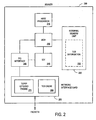
- FIG. 2 is a block diagram of a server 200.
- the server 200 includes a host processor 210 (e . g ., one or more INTEL® PENTIUM® 4 processors) coupled to a memory unit 230 and an Input Output Controller Hub (ICH) 240 through a Memory Controller Hub (MCH) 220, such as the Intel® 82875P.
- the server 200 also includes a Network Interface Card (NIC) 250 that may exchange packets of information in accordance with TCP/IP via a communication network, such as the Internet or a Local Area Network (LAN).
- NIC Network Interface Card
- the server 200 may exchange packets with a number if different devices by establishing one or more "connections" with each device.
- TCP processing is performed on the packet (e . g ., to associate the packet with the appropriate connection).
- the maintenance of TCP connections and the processing of packets may require the use of several variables, referred to as a TCP Protocol control block (TCB).
- the TCB may include local and remote socket numbers, the security and precedence of a connection, pointers to send and receive buffers, and/or pointers to a retransmit queue and to a current segment.
- variables relating to send and receive sequence numbers may be stored in the TCB.
- the TCB information 232 may be stored in the memory unit 230.
- the host processor 210 may perform TCP processing (e . g ., when a packet is received or is to be sent). It may be impractical, however, to have the host processor 210 perform the TCP processing, especially for relatively high-bandwidth networks and/or when a significant number of connections need to be managed ( e . g ., the server 200 may be capable of managing tens of thousands of connections).
- a TCP/IP offload engine 270 may be provided on the NIC 250.
- the TCP/IP offload engine 270 may perform TCP processing when a packet is received or when a packet is ready to be sent. For example, after TCP processing is performed on a received packet, the appropriate information can be stored in the memory unit 230 for use by the host processor 210 ( e . g ., by an application executing on the host processor 210).
- the offload engine 270 may need to fetch from the "external" memory unit 230 (e . g ., external to the NIC 250) the TCB information 232 associated with the appropriate connection.
- the NIC 250 may access information from the external memory unit 230 via a relatively slow interface 260 ( e . g ., as compared to the other MCH 220 interfaces), such as one that operates in accordance with the Peripheral Component Interconnect (PCI) Standards Industry Group (SIG) standards entitled "Conventional PCI 2.2" or "PCI Express 1.0.”
- PCI Peripheral Component Interconnect
- SIG Standards Industry Group
- PCI Express 1.0 Peripheral Component Interconnect
- the PCI interface 260 may receive information directly from the ICH 240.
- the NIC 250 may include a local TCB cache 280 that stores TCB information.
- TCB cache 280 stores TCB information.
- the server 200 is capable of managing a large number of connections, however, it might be impractical to store all of the TCB information 232 in the TCB cache 280 ( e . g ., because of the cost associated with providing the large amount of memory that would be required).
- the NIC 250 may need to frequently access the external memory unit 230.
- FIG. 3 is a timeline 300 that illustrates packet processing.
- the next packet (packet 1) needs to be processed.
- the offload engine 270 may need to fetch from the external memory unit 230 the TCB associated with packet 1's connection.
- the packet can be processed ( e . g ., and, in the case of a received packet, be provided to the host processor 210).
- the offload engine 270 is idle ( e . g ., while the fetch is being performed).
- FIG. 4 is a flow chart of a method according to some embodiments.
- the flow charts described herein do not necessarily imply a fixed order to the actions, and embodiments may be performed in any order that is practicable.
- the method of FIG. 4 may be associated with, for example, the server 200 described with respect to FIG. 2 .
- any of the methods described herein may be performed by hardware, software (including microcode), or a combination of hardware and software.
- a storage medium may store thereon instructions that when executed by a machine result in performance according to any of the embodiments described herein.
- a device predicts or "speculates" that a connection will subsequently have a packet to be processed in accordance with a transmission control protocol (e . g ., TCP).
- a transmission control protocol e . g ., TCP
- the offload engine 270 or host processor 210 may speculate that a particular connection will subsequently have a packet that will be received by (or that will be sent from) the server 200.
- a packet processing engine pre-fetch from an external memory unit a protocol control block associated with the connection.
- a protocol control block associated with the connection.
- the offload engine 270 pre-fetch the appropriate TCB from the external memory unit 230.
- FIG. 5 is a timeline 500 that illustrates packet processing when a TCB is pre-fetched according to some embodiments.
- the offload engine 270 pre-fetches the TCB associated with another packet's connection from the external memory unit 230 ( e . g ., another connection for which it has been predicted that another packet, namely packet 1, will subsequently be received or sent). In this way, the offload engine 270 can continue to process packet 0 while the pre-fetch is being performed ( e . g ., via a relatively slow interface). Thus, periods of time during which the offload engine 270 is idle may be reduced.
- the server 200 may exchange Hyper-Text Transfer Protocol (HTTP) information as defined by the Word Wide Web Consortium (W3C) RFC 2068 entitled "HTTP 1.1" (January 1997).
- HTTP Hyper-Text Transfer Protocol
- W3C Word Wide Web Consortium
- the offload engine 270 may process a large number of packets for a large number of connections, but the size of the TCB cache 280 on the NIC 250 may be limited. As a result, TCB information that is pre-fetched too soon ( e . g ., too long before it is needed) could be lost because it has been overwritten with information for other connections.
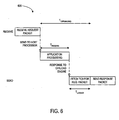
- FIG. 6 is a timeline 600 that illustrates receive packet processing.
- an iSCSI request packet is received through a particular connection and is processed by the offload engine 270, the information is passed to the host processor 210.
- An application executing on the host processor 210 processes the information (e . g ., for a period of time equal to T PROCESS ) and provides an iSCSI response packet to the offload engine 270 for delivery through the same connection.
- the offload engine 270 had pre-fetched the appropriate TCB information for that connection too soon before the iSCSI response packet was ready, the information in the TCB cache 280 may have already been overwritten with information for other connections. The TCB information would then need to be re-fetched for that connection in order to process the iSCSI response packet, resulting in a total turnaround time (T TURNAROUND ) of T PROCESS + T LATENCY . Note also that if the offload engine 270 waits too long before starting to pre-fetch the TCB information for a connection, it may need to remain idle until the pre-fetch from the external memory unit 230 is completed.
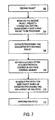
- FIG. 7 is a flow chart of a method of receive packet processing according to some embodiments.
- a packet is received.
- the server 200 may receive the packet at the offload engine 270 or the host processor 210.
- the offload engine 270 may predict that the connection associated with the receive packet will subsequently have a send packet.
- the host processor 210 predicts that the connection will subsequently have a send packet.
- a processing time associated with the receive packet is estimated at 706.
- the offload engine 270 or host processor 210 might estimated how long will take for an application to respond to the receive packet ( e . g ., T PROCESS ).
- a latency associated with pre-fetching the protocol control block from external memory is estimated.
- the offload engine 270 or host processor 210 may estimate how long will take for a TCB pre-fetch to be performed via the PCI interface 260, MCH 220, and/or external memory unit 230 ( e . g ., T LATENCY ).
- a pre-fetch for the predicted send packet is then scheduled at 710 based on the estimated processing time and latency of the pre-fetch.
- the pre-fetch may be scheduled based on T PROCESS - T LATENCY . In this way, the pre-fetch should complete just as the send packet for that connection is ready.
- the pre-fetch is performed.
- the offload engine 270 might pre-fetch the TCB information and store it in the TCB cache 280 as scheduled.
- the send packet is provided from the host processor 210 to the offload engine 270, it can then be processed without waiting for the TCB information to be received from the external memory unit 230 (or without waiting for a significant period of time).
- FIG. 8 is a timeline that illustrates receive packet processing when a protocol control block is pre-fetched according to some embodiments.
- a pre-fetch for that connection is scheduled at a pre-fetch time (T PF ) equal to the estimated T PROCESS reduced by the estimated T LATENCY .
- T PF pre-fetch time
- the pre-fetch may be completed at substantially the same time as associated send packet through that connection is provided from the host processor 210 to the offload engine 270.
- the offload engine 270 may then process and transmit the send packet without unneeded idling ( e . g ., during T LATENCY ).
- T PROCESS could vary for any number of reasons (e . g ., due to the number of connections being handled by the host processor).
- T LATENCY might change over a period of time ( e . g ., because of memory accesses being performed for other reasons).
- these estimated values are dynamically tuned or adjusted ( e . g ., by the offload engine 270 and/or the host processor 210) to improve the performance of the server 200. For example, prior actual values could be used to adjust future estimate values.
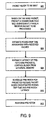
- FIG. 9 is a flow chart of a method of send packet processing according to some embodiments.
- a packet is ready to be sent.
- the server 900 may be ready to send the packet from the offload engine 270 or the host processor 210.
- a connection will subsequently have a receive packet to be processed.
- the offload engine 270 might predict that the connection associated with the send packet will subsequently have a receive packet.
- the host processor 210 predicts that the connection will subsequently have a receive packet.
- a "round-trip" time associated with the send packet is estimated at 906.
- the offload engine 270 or host processor 210 might estimated how long it will take for the send packet to reach a user device through a network, be processed by the user device, and result in a receive packet being received by the server 200 ( e . g ., T ROUND-TRIP ).
- a latency associated with pre-fetching the protocol control block from external memory is estimated.
- the offload engine 270 or host processor 210 might estimate how long will take for a TCB pre-fetch to be performed via the PCI interface 260, MCH 220, and/or external memory unit 230 ( e . g ., T LATENCY ).
- a pre-fetch for the predicted receive packet is then scheduled at 910 based on the estimated round-trip time and latency of the pre-fetch.
- the pre-fetch may be scheduled based on T ROUND-TRIP - T LATENCY . In this way, the pre-fetch should complete at substantially the same time as the send packet for that connection is received from the network.
- the pre-fetch is performed.
- the offload engine 270 may pre-fetch the TCB information and store it in the TCB cache 280 as scheduled.
- the receive packet is then received at the offload engine 270 (from the network), it may be processed without waiting (or without waiting too long) for the TCB information to be received from the external memory unit 230.
- FIG. 10 is a timeline that illustrates send packet processing when a protocol control block is pre-fetched according to some embodiments.
- a pre-fetch for that connection is scheduled at a pre-fetch time (T PF ) equal to the estimated T ROUND-TRIP reduced by the estimated T LATENCY .
- T PF pre-fetch time
- the offload engine 270 may then process and provide the receive packet to the host processor 210 without an unnecessary delay ( e . g ., during T LATENCY ).
- T ROUND-TRIP could vary for any number of reasons (e . g ., due to network congestion). Similarly, T LTENCY might change over a period of time ( e . g ., because of memory accesses being performed for other reasons). As a result, these estimated values might be dynamically adjusted ( e . g ., by the offload engine 270 and/or the host processor 210) to improve the performance of the server 200. For example, information from the TCP/IP stack might be used to dynamically adjust the estimated T ROUND-TRIP for a connection.
- FIG. 11 is a block diagram of a system 1100 according to some embodiments.
- the system 1100 includes a Dynamic Random Access Memory (DRAM) 1130 storing protocol control block information 1132.
- the system 1100 also includes a packet processing engine 1170 to process packets in accordance with any network protocol (e . g ., TCP).
- the packet processing engine 1170 may process a packet, for example, in accordance with a locally stored protocol control block 1180 associated with the connection through which the packet was (or will be) exchanged.
- the locally stored protocol control blocks 1180 are pre-fetched from the protocol control block information 1132 in the external DRAM 1130.
- a pre-fetched protocol control block for a connection predicted to subsequently have a packet to be processed by the packet processing engine 1170 may be received ( e . g ., via an input path) from the DRAM 1130.
- the packet processing engine 1170 might predict the connection and calculate a time when the protocol control block should be pre-fetched from the DRAM 1130. This could be achieved, for example, by keeping timers at the packet processing engine 1170 (or on an associated NIC) with entries for all of the TCB entries that will need to be pre-fetched. This, however, might increase the complexity of the NIC hardware and/or software.
- a host processor predicts the connection and calculates a time when the pre-fetched protocol control block should be "pushed" to the packet processing engine 1170 from the DRAM 1130. For example, the host processor may read the TCB and then push the TCB down through a MCH to the packet processing engine 1170 or the push might be performed through un-cached writes to a NIC followed by a NIC initiated Direct Memory Access (DMA) operation.
- DMA Direct Memory Access
- TCP packet processing may be used in connection with other network protocols, such as User Datagram Protocol (UDP), Transactional TCP (T/TCP), and/or Stream Control Transmission Protocol (SCTP).
- UDP User Datagram Protocol
- T/TCP Transactional TCP
- SCTP Stream Control Transmission Protocol
- protocol control block may refer to any information used when processing a packet in accordance with any network protocol (e . g ., not just TCB information for TCP).
- embodiments have been described with respect to servers, embodiments may be used in connection with other devices, such as a workstation or any other type of network device.
Landscapes
- Engineering & Computer Science (AREA)
- Computer Networks & Wireless Communication (AREA)
- Signal Processing (AREA)
- Computer Security & Cryptography (AREA)
- Data Exchanges In Wide-Area Networks (AREA)
- Communication Control (AREA)
- Memory System Of A Hierarchy Structure (AREA)
Claims (16)
- Verfahren, das die folgenden Schritte umfasst: das Spekulieren auf der Basis eines Empfangspakets, das eine Verbindung in der Folge ein Sendepaket aufweist, das gemäß einem Datenübertragungsprotokoll verarbeitet werden muss; und das Treffen von Maßnahmen, so dass eine Paketverarbeitungsvorrichtung aus einer externen Speichereinheit einen Protokollsteuerblock vorerfasst, der der Verbindung zugeordnet ist; dadurch
gekennzeichnet, dass:der genannte Protokollsteuerblock vorerfasst wird, während die Verarbeitung des genannten Pakets von der genannten Paketverarbeitungsvorrichtung durchgeführt wird, und zu einer Zeit nach Beginn der Verarbeitung des genannten Pakets, berechnet durch das Schätzen einer Verarbeitungszeit für die Verarbeitung des genannten Pakets und durch Reduzieren dieser um eine Zeit, die für die Vorerfassung des genannten Protokollsteuerblocks aus dem Speicher geschätzt wird. - Verfahren, das die folgenden Schritte umfasst: das Spekulieren auf der Basis eines Sendepakets, das eine Verbindung in der Folge ein Empfangspaket aufweist, das gemäß einem Datenübertragungsprotokoll verarbeitet werden muss; und das Treffen von Maßnahmen, so dass eine Paketverarbeitungsvorrichtung aus einer externen Speichereinheit einen Protokollsteuerblock vorerfasst, der der Verbindung zugeordnet ist; dadurch
gekennzeichnet, dass:der genannte Protokollsteuerblock vorerfasst wird von der genannten Paketverarbeitungsvorrichtung, während die genannte Paketverarbeitungsvorrichtung auf das genannte Empfangspaket wartet, zu einer Zeit, die berechnet wird durch das Schätzen einer Umlaufzeit, die dem Sendepaket zugeordnet ist, und durch Reduzieren dieser um eine Zeit, die für die Vorerfassung des genannten Protokollsteuerblocks aus dem Speicher geschätzt wird. - Verfahren nach Anspruch 1, wobei dieses ferner das dynamische Anpassen mindestens einer der folgenden Zeiten umfasst: i) der geschätzten Verarbeitungszeit; und ii) der geschätzten Latenzzeit.
- Verfahren nach Anspruch 2, wobei dieses ferner das dynamische Anpassen mindestens einer der folgenden Zeiten umfasst: i) der geschätzten Umlaufzeit; und ii) der geschätzten Latenzzeit.
- Verfahren nach einem der vorstehenden Ansprüche, wobei die Paketverarbeitungsvorrichtung die Spekulation, Berechnung und/oder Anpassung beeinflusst.
- Verfahren nach einem der Ansprüche 1 bis 4, wobei ein Host-Prozessor Spekulation, Berechnung und/oder Anpassung beeinflusst.
- Verfahren nach einem der vorstehenden Ansprüche, wobei das Treffen von Maßnahmen, so dass eine Paketverarbeitungsvorrichtung aus einer externen Speichereinheit einen Protokollsteuerblock vorerfasst, das Verschieben des Protokollsteuerblocks aus der externen Speichereinheit zu der Paketverarbeitungsvorrichtung umfasst.
- Verfahren nach Anspruch 7, wobei der Host-Prozessor in der Lage ist, eine Zeit für die Vorerfassung des Protokollsteuerblocks festzulegen.
- Verfahren nach einem der vorstehenden Ansprüche, wobei die Paketverarbeitungsvorrichtung einer Netzwerkschnittstellenkarte zugeordnet ist.
- Computerprogramm, das eine Computerprogrammcodeeinrichtung umfasst, die alle Schritte jedes der Ansprüche 1 bis 9 ausführen kann, wenn das Programm auf einem Computer ausgeführt wird.
- Computer, der mit dem Computerprogramm aus Anspruch 10 programmiert ist.
- Vorrichtung (200, 1100), wobei diese folgendes aufweist:eine Paketverarbeitungsvorrichtung (220, 270, 1170),einen Eingangspfad undeinen externen Speicher (230, 280, 1130),dadurch gekennzeichnet, dass:die genannte Paketverarbeitungsvorrichtung in der Lage ist, das Verfahren jedes der Ansprüche 1 bis 9 auszuführen.
- Vorrichtung (200, 1100) nach Anspruch 12, wobei diese ferner einen Host-Prozessor (220) und eine Netzwerkschnittstellenkarte (250) umfasst, denen die Paketverarbeitungsvorrichtung zugeordnet ist, so dass sie als eine Datenübertragungsprotokoll-Offload-Vorrichtung (270) für den genannten Host-Prozessor fungiert.
- Vorrichtung (1100) nach Anspruch 12 oder 13, wobei diese ferner folgendes umfasst:einen Protokollsteuerblock-Cache (280, 1180), der lokal zu der Paketverarbeitungsvorrichtung angeordnet ist, um den vorerfassten Protokollsteuerblock zu speichern.
- Vorrichtung (200, 1100) nach einem der Ansprüche 12 bis 14, wobei diese ferner einen Ausgangspfad umfasst.
- Vorrichtung (1100) nach einem der Ansprüche 12 bis 15, wobei es sich bei dem externen Speicher um eine dynamische Direktzugriffsspeichereinheit (1130) handelt.
Applications Claiming Priority (2)
| Application Number | Priority Date | Filing Date | Title |
|---|---|---|---|
| US10/667,691 US7346680B2 (en) | 2003-09-22 | 2003-09-22 | Speculative prefetch of a protocol control block from an external memory unit |
| PCT/US2004/030709 WO2005032078A1 (en) | 2003-09-22 | 2004-09-17 | Speculative pre-fetch of a protocol control block from an external memory unit |
Publications (2)
| Publication Number | Publication Date |
|---|---|
| EP1665681A1 EP1665681A1 (de) | 2006-06-07 |
| EP1665681B1 true EP1665681B1 (de) | 2008-09-24 |
Family
ID=34313356
Family Applications (1)
| Application Number | Title | Priority Date | Filing Date |
|---|---|---|---|
| EP04784552A Expired - Lifetime EP1665681B1 (de) | 2003-09-22 | 2004-09-17 | Spekulatives Vorabrufen eines Protokollsteuerblocks aus einer externen Speichereinheit |
Country Status (7)
| Country | Link |
|---|---|
| US (2) | US7346680B2 (de) |
| EP (1) | EP1665681B1 (de) |
| CN (1) | CN100555982C (de) |
| AT (1) | ATE409379T1 (de) |
| DE (1) | DE602004016758D1 (de) |
| TW (1) | TWI259685B (de) |
| WO (1) | WO2005032078A1 (de) |
Families Citing this family (18)
| Publication number | Priority date | Publication date | Assignee | Title |
|---|---|---|---|---|
| US7502876B1 (en) | 2000-06-23 | 2009-03-10 | Mips Technologies, Inc. | Background memory manager that determines if data structures fits in memory with memory state transactions map |
| US7058064B2 (en) | 2000-02-08 | 2006-06-06 | Mips Technologies, Inc. | Queueing system for processors in packet routing operations |
| US7082552B2 (en) * | 2000-02-08 | 2006-07-25 | Mips Tech Inc | Functional validation of a packet management unit |
| US7032226B1 (en) * | 2000-06-30 | 2006-04-18 | Mips Technologies, Inc. | Methods and apparatus for managing a buffer of events in the background |
| US7139901B2 (en) * | 2000-02-08 | 2006-11-21 | Mips Technologies, Inc. | Extended instruction set for packet processing applications |
| US7649901B2 (en) * | 2000-02-08 | 2010-01-19 | Mips Technologies, Inc. | Method and apparatus for optimizing selection of available contexts for packet processing in multi-stream packet processing |
| US7155516B2 (en) * | 2000-02-08 | 2006-12-26 | Mips Technologies, Inc. | Method and apparatus for overflowing data packets to a software-controlled memory when they do not fit into a hardware-controlled memory |
| US7165257B2 (en) * | 2000-02-08 | 2007-01-16 | Mips Technologies, Inc. | Context selection and activation mechanism for activating one of a group of inactive contexts in a processor core for servicing interrupts |
| US7042887B2 (en) * | 2000-02-08 | 2006-05-09 | Mips Technologies, Inc. | Method and apparatus for non-speculative pre-fetch operation in data packet processing |
| KR100449806B1 (ko) * | 2002-12-23 | 2004-09-22 | 한국전자통신연구원 | 네트워크를 통해 스트리밍 데이터를 고속으로 송수신하기위한 네트워크-스토리지 연결 장치 |
| US7346680B2 (en) * | 2003-09-22 | 2008-03-18 | Intel Corporation | Speculative prefetch of a protocol control block from an external memory unit |
| US7899913B2 (en) * | 2003-12-19 | 2011-03-01 | Nvidia Corporation | Connection management system and method for a transport offload engine |
| US7698413B1 (en) * | 2004-04-12 | 2010-04-13 | Nvidia Corporation | Method and apparatus for accessing and maintaining socket control information for high speed network connections |
| US7912994B2 (en) * | 2006-01-27 | 2011-03-22 | Apple Inc. | Reducing connection time for mass storage class peripheral by internally prefetching file data into local cache in response to connection to host |
| US7925865B2 (en) * | 2008-06-02 | 2011-04-12 | Oracle America, Inc. | Accuracy of correlation prefetching via block correlation and adaptive prefetch degree selection |
| JP5028339B2 (ja) * | 2008-06-09 | 2012-09-19 | キヤノン株式会社 | 通信装置及び制御方法 |
| US9019854B2 (en) * | 2010-04-26 | 2015-04-28 | Telefonaktiebolaget L M Ericsson (Publ) | Method for setting and adjusting a parameter dependent on a round trip time |
| US20130051257A1 (en) * | 2011-08-31 | 2013-02-28 | International Business Machines Corporation | Scheduling of Packets at Cellular Base Stations |
Family Cites Families (13)
| Publication number | Priority date | Publication date | Assignee | Title |
|---|---|---|---|---|
| JP2986802B2 (ja) * | 1989-03-13 | 1999-12-06 | 株式会社日立製作所 | プロトコル高速処理方法 |
| JP3358254B2 (ja) * | 1993-10-28 | 2002-12-16 | 株式会社日立製作所 | 通信制御装置および通信制御用回路装置 |
| US6208651B1 (en) * | 1997-06-10 | 2001-03-27 | Cornell Research Foundation, Inc. | Method and system for masking the overhead of protocol layering |
| US7174393B2 (en) * | 2000-12-26 | 2007-02-06 | Alacritech, Inc. | TCP/IP offload network interface device |
| US6434620B1 (en) | 1998-08-27 | 2002-08-13 | Alacritech, Inc. | TCP/IP offload network interface device |
| US6122670A (en) * | 1997-10-30 | 2000-09-19 | Tsi Telsys, Inc. | Apparatus and method for constructing data for transmission within a reliable communication protocol by performing portions of the protocol suite concurrently |
| US6393457B1 (en) * | 1998-07-13 | 2002-05-21 | International Business Machines Corporation | Architecture and apparatus for implementing 100 Mbps and GBPS Ethernet adapters |
| US6625149B1 (en) | 1999-11-29 | 2003-09-23 | Lucent Technologies Inc. | Signaled receiver processing methods and apparatus for improved protocol processing |
| JP3841256B2 (ja) * | 2000-02-15 | 2006-11-01 | 三菱電機株式会社 | 通信システム及び通信方法及び送信端末 |
| US6820127B2 (en) | 2001-05-03 | 2004-11-16 | International Business Machines Corporation | Method, system, and product for improving performance of network connections |
| GB2394095A (en) * | 2001-05-31 | 2004-04-14 | Espeed Inc | Securities trading system with multiple levels-of-interest |
| US7240166B2 (en) | 2003-05-01 | 2007-07-03 | International Business Machines Corporation | Method and apparatus for implementing packet work area accesses and buffer sharing |
| US7346680B2 (en) * | 2003-09-22 | 2008-03-18 | Intel Corporation | Speculative prefetch of a protocol control block from an external memory unit |
-
2003
- 2003-09-22 US US10/667,691 patent/US7346680B2/en not_active Expired - Fee Related
-
2004
- 2004-09-17 EP EP04784552A patent/EP1665681B1/de not_active Expired - Lifetime
- 2004-09-17 WO PCT/US2004/030709 patent/WO2005032078A1/en not_active Ceased
- 2004-09-17 CN CNB2004800270819A patent/CN100555982C/zh not_active Expired - Fee Related
- 2004-09-17 DE DE602004016758T patent/DE602004016758D1/de not_active Expired - Lifetime
- 2004-09-17 AT AT04784552T patent/ATE409379T1/de not_active IP Right Cessation
- 2004-09-21 TW TW093128574A patent/TWI259685B/zh not_active IP Right Cessation
-
2008
- 2008-01-18 US US12/016,446 patent/US7627674B2/en not_active Expired - Fee Related
Also Published As
| Publication number | Publication date |
|---|---|
| CN1853387A (zh) | 2006-10-25 |
| DE602004016758D1 (de) | 2008-11-06 |
| US20080112409A1 (en) | 2008-05-15 |
| US7346680B2 (en) | 2008-03-18 |
| ATE409379T1 (de) | 2008-10-15 |
| CN100555982C (zh) | 2009-10-28 |
| TWI259685B (en) | 2006-08-01 |
| US7627674B2 (en) | 2009-12-01 |
| US20050066028A1 (en) | 2005-03-24 |
| TW200524350A (en) | 2005-07-16 |
| WO2005032078A1 (en) | 2005-04-07 |
| EP1665681A1 (de) | 2006-06-07 |
Similar Documents
| Publication | Publication Date | Title |
|---|---|---|
| US7627674B2 (en) | Speculative prefetch of protocol control information from an external memory unit | |
| EP1206100B1 (de) | Kommunikationssystem um Webinhalte abzurufen | |
| US7991918B2 (en) | Transmitting commands and information between a TCP/IP stack and an offload unit | |
| US7860998B2 (en) | Methods and apparatus to increase the efficiency of simultaneous web object fetching over long-latency links | |
| US7813339B2 (en) | Direct assembly of a data payload in an application memory | |
| US20060075119A1 (en) | TCP host | |
| US7573895B2 (en) | Software assisted RDMA | |
| US7103683B2 (en) | Method, apparatus, system, and article of manufacture for processing control data by an offload adapter | |
| HK1094291B (en) | Accelerated tcp (transport control protocol) stack processing | |
| HK1094291A1 (en) | Accelerated tcp (transport control protocol) stack processing |
Legal Events
| Date | Code | Title | Description |
|---|---|---|---|
| PUAI | Public reference made under article 153(3) epc to a published international application that has entered the european phase |
Free format text: ORIGINAL CODE: 0009012 |
|
| 17P | Request for examination filed |
Effective date: 20060303 |
|
| AK | Designated contracting states |
Kind code of ref document: A1 Designated state(s): AT BE BG CH CY CZ DE DK EE ES FI FR GB GR HU IE IT LI LU MC NL PL PT RO SE SI SK TR |
|
| 17Q | First examination report despatched |
Effective date: 20060823 |
|
| DAX | Request for extension of the european patent (deleted) | ||
| GRAP | Despatch of communication of intention to grant a patent |
Free format text: ORIGINAL CODE: EPIDOSNIGR1 |
|
| RTI1 | Title (correction) |
Free format text: SPECULATIVE PRE-FETCH OF A PROTOCOL CONTROL BLOCK FROM AN EXTERNAL MEMORY UNIT |
|
| GRAS | Grant fee paid |
Free format text: ORIGINAL CODE: EPIDOSNIGR3 |
|
| GRAA | (expected) grant |
Free format text: ORIGINAL CODE: 0009210 |
|
| AK | Designated contracting states |
Kind code of ref document: B1 Designated state(s): AT BE BG CH CY CZ DE DK EE ES FI FR GB GR HU IE IT LI LU MC NL PL PT RO SE SI SK TR |
|
| REG | Reference to a national code |
Ref country code: GB Ref legal event code: FG4D |
|
| REG | Reference to a national code |
Ref country code: CH Ref legal event code: EP |
|
| REG | Reference to a national code |
Ref country code: IE Ref legal event code: FG4D |
|
| REF | Corresponds to: |
Ref document number: 602004016758 Country of ref document: DE Date of ref document: 20081106 Kind code of ref document: P |
|
| PG25 | Lapsed in a contracting state [announced via postgrant information from national office to epo] |
Ref country code: AT Free format text: LAPSE BECAUSE OF FAILURE TO SUBMIT A TRANSLATION OF THE DESCRIPTION OR TO PAY THE FEE WITHIN THE PRESCRIBED TIME-LIMIT Effective date: 20080924 Ref country code: FI Free format text: LAPSE BECAUSE OF FAILURE TO SUBMIT A TRANSLATION OF THE DESCRIPTION OR TO PAY THE FEE WITHIN THE PRESCRIBED TIME-LIMIT Effective date: 20080924 Ref country code: SI Free format text: LAPSE BECAUSE OF FAILURE TO SUBMIT A TRANSLATION OF THE DESCRIPTION OR TO PAY THE FEE WITHIN THE PRESCRIBED TIME-LIMIT Effective date: 20080924 |
|
| NLV1 | Nl: lapsed or annulled due to failure to fulfill the requirements of art. 29p and 29m of the patents act | ||
| PG25 | Lapsed in a contracting state [announced via postgrant information from national office to epo] |
Ref country code: BE Free format text: LAPSE BECAUSE OF FAILURE TO SUBMIT A TRANSLATION OF THE DESCRIPTION OR TO PAY THE FEE WITHIN THE PRESCRIBED TIME-LIMIT Effective date: 20080924 |
|
| PG25 | Lapsed in a contracting state [announced via postgrant information from national office to epo] |
Ref country code: BG Free format text: LAPSE BECAUSE OF FAILURE TO SUBMIT A TRANSLATION OF THE DESCRIPTION OR TO PAY THE FEE WITHIN THE PRESCRIBED TIME-LIMIT Effective date: 20081224 Ref country code: ES Free format text: LAPSE BECAUSE OF FAILURE TO SUBMIT A TRANSLATION OF THE DESCRIPTION OR TO PAY THE FEE WITHIN THE PRESCRIBED TIME-LIMIT Effective date: 20090104 |
|
| PG25 | Lapsed in a contracting state [announced via postgrant information from national office to epo] |
Ref country code: NL Free format text: LAPSE BECAUSE OF FAILURE TO SUBMIT A TRANSLATION OF THE DESCRIPTION OR TO PAY THE FEE WITHIN THE PRESCRIBED TIME-LIMIT Effective date: 20080924 Ref country code: SK Free format text: LAPSE BECAUSE OF FAILURE TO SUBMIT A TRANSLATION OF THE DESCRIPTION OR TO PAY THE FEE WITHIN THE PRESCRIBED TIME-LIMIT Effective date: 20080924 Ref country code: CZ Free format text: LAPSE BECAUSE OF FAILURE TO SUBMIT A TRANSLATION OF THE DESCRIPTION OR TO PAY THE FEE WITHIN THE PRESCRIBED TIME-LIMIT Effective date: 20080924 Ref country code: RO Free format text: LAPSE BECAUSE OF FAILURE TO SUBMIT A TRANSLATION OF THE DESCRIPTION OR TO PAY THE FEE WITHIN THE PRESCRIBED TIME-LIMIT Effective date: 20080924 Ref country code: PT Free format text: LAPSE BECAUSE OF FAILURE TO SUBMIT A TRANSLATION OF THE DESCRIPTION OR TO PAY THE FEE WITHIN THE PRESCRIBED TIME-LIMIT Effective date: 20090224 |
|
| PG25 | Lapsed in a contracting state [announced via postgrant information from national office to epo] |
Ref country code: EE Free format text: LAPSE BECAUSE OF FAILURE TO SUBMIT A TRANSLATION OF THE DESCRIPTION OR TO PAY THE FEE WITHIN THE PRESCRIBED TIME-LIMIT Effective date: 20080924 Ref country code: DK Free format text: LAPSE BECAUSE OF FAILURE TO SUBMIT A TRANSLATION OF THE DESCRIPTION OR TO PAY THE FEE WITHIN THE PRESCRIBED TIME-LIMIT Effective date: 20080924 |
|
| PLBE | No opposition filed within time limit |
Free format text: ORIGINAL CODE: 0009261 |
|
| STAA | Information on the status of an ep patent application or granted ep patent |
Free format text: STATUS: NO OPPOSITION FILED WITHIN TIME LIMIT |
|
| PG25 | Lapsed in a contracting state [announced via postgrant information from national office to epo] |
Ref country code: IT Free format text: LAPSE BECAUSE OF FAILURE TO SUBMIT A TRANSLATION OF THE DESCRIPTION OR TO PAY THE FEE WITHIN THE PRESCRIBED TIME-LIMIT Effective date: 20080924 |
|
| 26N | No opposition filed |
Effective date: 20090625 |
|
| PG25 | Lapsed in a contracting state [announced via postgrant information from national office to epo] |
Ref country code: SE Free format text: LAPSE BECAUSE OF FAILURE TO SUBMIT A TRANSLATION OF THE DESCRIPTION OR TO PAY THE FEE WITHIN THE PRESCRIBED TIME-LIMIT Effective date: 20081224 |
|
| PGFP | Annual fee paid to national office [announced via postgrant information from national office to epo] |
Ref country code: DE Payment date: 20090910 Year of fee payment: 6 |
|
| PG25 | Lapsed in a contracting state [announced via postgrant information from national office to epo] |
Ref country code: MC Free format text: LAPSE BECAUSE OF NON-PAYMENT OF DUE FEES Effective date: 20090930 |
|
| REG | Reference to a national code |
Ref country code: CH Ref legal event code: PL |
|
| GBPC | Gb: european patent ceased through non-payment of renewal fee |
Effective date: 20090917 |
|
| PG25 | Lapsed in a contracting state [announced via postgrant information from national office to epo] |
Ref country code: PL Free format text: LAPSE BECAUSE OF FAILURE TO SUBMIT A TRANSLATION OF THE DESCRIPTION OR TO PAY THE FEE WITHIN THE PRESCRIBED TIME-LIMIT Effective date: 20080924 |
|
| REG | Reference to a national code |
Ref country code: FR Ref legal event code: ST Effective date: 20100531 |
|
| PG25 | Lapsed in a contracting state [announced via postgrant information from national office to epo] |
Ref country code: IE Free format text: LAPSE BECAUSE OF NON-PAYMENT OF DUE FEES Effective date: 20090917 Ref country code: FR Free format text: LAPSE BECAUSE OF NON-PAYMENT OF DUE FEES Effective date: 20090930 |
|
| PG25 | Lapsed in a contracting state [announced via postgrant information from national office to epo] |
Ref country code: LI Free format text: LAPSE BECAUSE OF NON-PAYMENT OF DUE FEES Effective date: 20090930 Ref country code: GR Free format text: LAPSE BECAUSE OF FAILURE TO SUBMIT A TRANSLATION OF THE DESCRIPTION OR TO PAY THE FEE WITHIN THE PRESCRIBED TIME-LIMIT Effective date: 20081225 Ref country code: CH Free format text: LAPSE BECAUSE OF NON-PAYMENT OF DUE FEES Effective date: 20090930 |
|
| PG25 | Lapsed in a contracting state [announced via postgrant information from national office to epo] |
Ref country code: GB Free format text: LAPSE BECAUSE OF NON-PAYMENT OF DUE FEES Effective date: 20090917 |
|
| PG25 | Lapsed in a contracting state [announced via postgrant information from national office to epo] |
Ref country code: LU Free format text: LAPSE BECAUSE OF NON-PAYMENT OF DUE FEES Effective date: 20090917 |
|
| PG25 | Lapsed in a contracting state [announced via postgrant information from national office to epo] |
Ref country code: HU Free format text: LAPSE BECAUSE OF FAILURE TO SUBMIT A TRANSLATION OF THE DESCRIPTION OR TO PAY THE FEE WITHIN THE PRESCRIBED TIME-LIMIT Effective date: 20090325 |
|
| REG | Reference to a national code |
Ref country code: DE Ref legal event code: R119 Ref document number: 602004016758 Country of ref document: DE Effective date: 20110401 |
|
| PG25 | Lapsed in a contracting state [announced via postgrant information from national office to epo] |
Ref country code: DE Free format text: LAPSE BECAUSE OF NON-PAYMENT OF DUE FEES Effective date: 20110401 |
|
| PG25 | Lapsed in a contracting state [announced via postgrant information from national office to epo] |
Ref country code: TR Free format text: LAPSE BECAUSE OF FAILURE TO SUBMIT A TRANSLATION OF THE DESCRIPTION OR TO PAY THE FEE WITHIN THE PRESCRIBED TIME-LIMIT Effective date: 20080924 |
|
| PG25 | Lapsed in a contracting state [announced via postgrant information from national office to epo] |
Ref country code: CY Free format text: LAPSE BECAUSE OF FAILURE TO SUBMIT A TRANSLATION OF THE DESCRIPTION OR TO PAY THE FEE WITHIN THE PRESCRIBED TIME-LIMIT Effective date: 20080924 |