EP1662823B1 - Verfahren und Vorrichtung zur Teilnehmer-Umbesetzung in einem digitalen zellularen Kommunikationssystem - Google Patents
Verfahren und Vorrichtung zur Teilnehmer-Umbesetzung in einem digitalen zellularen Kommunikationssystem Download PDFInfo
- Publication number
- EP1662823B1 EP1662823B1 EP04425876A EP04425876A EP1662823B1 EP 1662823 B1 EP1662823 B1 EP 1662823B1 EP 04425876 A EP04425876 A EP 04425876A EP 04425876 A EP04425876 A EP 04425876A EP 1662823 B1 EP1662823 B1 EP 1662823B1
- Authority
- EP
- European Patent Office
- Prior art keywords
- allocation
- pathloss
- users
- carrier
- interference
- Prior art date
- Legal status (The legal status is an assumption and is not a legal conclusion. Google has not performed a legal analysis and makes no representation as to the accuracy of the status listed.)
- Expired - Lifetime
Links
- 238000000034 method Methods 0.000 title claims abstract description 39
- 230000010267 cellular communication Effects 0.000 title claims abstract description 8
- 238000012545 processing Methods 0.000 claims description 23
- 238000013468 resource allocation Methods 0.000 claims description 6
- 238000010187 selection method Methods 0.000 claims description 6
- 230000003247 decreasing effect Effects 0.000 claims description 4
- 230000005540 biological transmission Effects 0.000 claims description 3
- 230000001960 triggered effect Effects 0.000 claims description 3
- 230000001747 exhibiting effect Effects 0.000 claims 3
- 230000008707 rearrangement Effects 0.000 claims 1
- 238000005204 segregation Methods 0.000 description 10
- 239000000969 carrier Substances 0.000 description 9
- 238000000638 solvent extraction Methods 0.000 description 6
- 230000008569 process Effects 0.000 description 5
- 238000005259 measurement Methods 0.000 description 4
- 230000003044 adaptive effect Effects 0.000 description 3
- 238000004364 calculation method Methods 0.000 description 3
- 238000004891 communication Methods 0.000 description 3
- 238000011156 evaluation Methods 0.000 description 3
- 230000001413 cellular effect Effects 0.000 description 2
- 230000007423 decrease Effects 0.000 description 2
- 238000010586 diagram Methods 0.000 description 2
- 238000011176 pooling Methods 0.000 description 2
- 230000003213 activating effect Effects 0.000 description 1
- 238000012512 characterization method Methods 0.000 description 1
- 238000009472 formulation Methods 0.000 description 1
- 230000002452 interceptive effect Effects 0.000 description 1
- 238000012423 maintenance Methods 0.000 description 1
- 239000011159 matrix material Substances 0.000 description 1
- 230000007246 mechanism Effects 0.000 description 1
- 239000000203 mixture Substances 0.000 description 1
- 238000010295 mobile communication Methods 0.000 description 1
- 238000012986 modification Methods 0.000 description 1
- 230000004048 modification Effects 0.000 description 1
- 230000009467 reduction Effects 0.000 description 1
- 230000004044 response Effects 0.000 description 1
- 238000000926 separation method Methods 0.000 description 1
- 239000002699 waste material Substances 0.000 description 1
Images


Classifications
-
- H—ELECTRICITY
- H04—ELECTRIC COMMUNICATION TECHNIQUE
- H04W—WIRELESS COMMUNICATION NETWORKS
- H04W16/00—Network planning, e.g. coverage or traffic planning tools; Network deployment, e.g. resource partitioning or cells structures
- H04W16/02—Resource partitioning among network components, e.g. reuse partitioning
- H04W16/10—Dynamic resource partitioning
-
- H—ELECTRICITY
- H04—ELECTRIC COMMUNICATION TECHNIQUE
- H04W—WIRELESS COMMUNICATION NETWORKS
- H04W72/00—Local resource management
- H04W72/50—Allocation or scheduling criteria for wireless resources
- H04W72/54—Allocation or scheduling criteria for wireless resources based on quality criteria
- H04W72/541—Allocation or scheduling criteria for wireless resources based on quality criteria using the level of interference
-
- H—ELECTRICITY
- H04—ELECTRIC COMMUNICATION TECHNIQUE
- H04W—WIRELESS COMMUNICATION NETWORKS
- H04W72/00—Local resource management
- H04W72/04—Wireless resource allocation
- H04W72/044—Wireless resource allocation based on the type of the allocated resource
- H04W72/0446—Resources in time domain, e.g. slots or frames
-
- H—ELECTRICITY
- H04—ELECTRIC COMMUNICATION TECHNIQUE
- H04W—WIRELESS COMMUNICATION NETWORKS
- H04W72/00—Local resource management
- H04W72/50—Allocation or scheduling criteria for wireless resources
- H04W72/56—Allocation or scheduling criteria for wireless resources based on priority criteria
Definitions
- the present invention refers to digital cellular communications systems and is particularly concerned with a method and an apparatus for users reshuffling in one such system.
- the invention can be applied in digital cellular systems with the following physical layer characterisation:
- UMTS Universal Mobile Telecommunication System
- 3GPP Third Generation Partnership Project
- TD-SCDMA TD-Synchronous CDMA
- CWTS China Wireless Telecommunication System
- radio resources in digital cellular communications systems are limited, like in any radio communication system, and therefore a same frequency can be allotted to different cells according to specific rules depending on the kind of system.
- UEs user equipments
- the signals can be subjected to other kinds of noise and distortion, affecting their quality.
- a radio channel In order to be allocable to a communication, a radio channel must meet certain interference and quality criteria.
- DCA Dynamic Channel Allocation
- priority is a parameter representative of the probability that in a certain channel of a cell the interference generated by other cells or frequencies is lower than a given threshold.
- the invention is focused on that part of DCA that is in charge of allocating radio resources to a UE requesting a service (channel selection).
- channel selection should try to:
- the channel selection algorithm generally allocates to any incoming UE the less interfered channels (i.e. the channels with the highest priority values, with the assumptions made above for the present invention) based on the output provided by the channel segregation.
- An example of such a state of the art is disclosed in EP-A 1 204 287 .
- a contribution to maximising bandwidth exploitation is to allow a reuse, by users located in areas not affected by inter-cell interference, of channels contended among adjacent cells.
- EP-A 1 204 287 discloses a reshuffling procedure for CDMA/TDD systems, according to which procedure an intra-cell handover is performed in response to changes in the resource occupation situation of the system.
- the reshuffling is intended for maintaining the "code pooling" state to optimise channel segregation.
- Code pooling denotes a procedure that aims at attaining a better carrier exploitation efficiency by decreasing the number of slots to be occupied and increasing the number of codes multiplexed for each slot.
- the reshuffling is triggered by a call request/termination or by the elapsing of a given time.
- Channel segregation does not allow a complete radio resource reuse among different cells, so that bandwidth exploitation throughout the system is not optimised. User pathloss is not taken into account.
- EP-A 1 198 964 discloses a user reshuffling based on a pathloss evaluation and intended to allocate to an incoming user a better set of resources in terms of interference and pathloss level.
- the system searches, in higher priority time slots, an ongoing service using the same number of resources, compares the pathloss of the signals of the requesting user and of the ongoing service, if any, found with the search and, consequently, either allocates the service of the requesting user or the ongoing service in that time slot.
- the reshuffling is performed also at each service termination.
- the known method which is performed only at the channel allocation/release and which involves only users that are using the same number of resources as the allocated/released service, is scarcely flexible and it does not lead to a complete radio resource reuse and hence to an optimisation of the bandwidth exploitation.
- the present invention just aims to overcome all these problems, by providing a refined and complete algorithm of users reshuffling that is carried out also independently of the allocation/release procedures, and that does not impose constraints on the resources allotted to the concerned users.
- the method comprises the steps of:
- the apparatus of the invention which is part of the radio transmission control units of the cellular communication system, is connected to a receiver and comprises: means for evaluating and storing values of the pathloss of signals transmitted by the users, and means for evaluating and storing values of an interference-related quantity for the resources allocated or allocable to said users.
- the apparatus further comprises:
- the apparatus for implementing the channel selection used in the invention is generally denoted 100.
- the cellular system in which apparatus 100 is to operate is a TDD multi-carrier, multi-slot cellular communication system, for instance a system conforming to 3GPP or CWTS specifications.
- apparatus 100 is part of the Radio Network Control of the system.
- Apparatus 100 is coupled to the output of a receiver 101, providing the received signal to be suitably processed, e.g. despread, demodulated, etc.
- Suitable separation circuits extract from the received uplink signal flow the information allowing determining the pathloss and the interference of the communication and send such information to a pathloss measuring circuit 102 and an interference measuring circuit 103 in apparatus 100.
- the results of the pathloss measurements are written into a pathloss table 112 through a pathloss table updating circuit 111 and are read by a processing unit 104 (channel selection unit), which is the unit actually implementing the channel selection algorithm.
- a processing unit 104 channel selection unit
- the results of interference measurements are converted by priority calculation circuit 105 into priority values.
- the priority values are written into a priority table 107 through a priority updating circuit 106 and are read by channel selection unit 104.
- the manner in which the priority can be calculated and updated is well known to the skilled in the art and is described for instance in the document by Furuya et al. or in EP-A 1 204 287 mentioned above.
- channel selection unit 104 The manner in which the priority and the pathloss values are exploited by channel selection unit 104 will be explained below.
- Channel selection unit 104 processes the channel selection requests coming from the users and aims at allocating services in the frequency-time-code matrix in such a way that:
- the channel partitioning involves two aspects: carrier partitioning and carrier based user clustering.
- the carrier partitioning aims at splitting whole carriers rather than individual time slots among adjacent cells. Indeed, taking into account that a service request must be serviced by time slots on a single carrier, this choice:
- channel selection shall allocate new services on the carrier with the highest overall priority.
- the carrier based user clustering aims at clustering the users of a cell on a per carrier basis (i.e. the users distribution over the carriers shall be as less uniform as possible), due to the following reasons:
- channel selection shall allocate new services on the carrier with the highest number of allocated users.
- carrier based user clustering is a special case of time slot based user clustering, in the sense that clustering the users on a carrier leads also to a clustering in the individual time slots. This feature makes achieving channel segregation easier.
- unit 104 For identifying a channel, unit 104 must select uplink and downlink time slots (TSs) guaranteeing the service being requested, taking into account that the basic resource units (RUs), i.e. the codes, to be allocated for each direction may belong to different time slots but must be on a same carrier.
- TSs uplink and downlink time slots
- RUs basic resource units
- service allocation Each subset of time slots in the radio frame that can be used for the allocation of a service on a carrier will be referred to in the following description as "service allocation”.
- a service allocation is thus a set of time slots meeting the following conditions:
- a service allocation provides also information about the total number of basic radio resource units to be used in each time slot of the set.
- channel selection unit 104 must compare the service allocations available.
- the channel selection method also takes into account UE-specific requirements concerning the UE spacing constraints at the switching points and the UE multi-slot capabilities in both uplink and downlink direction.
- UE-specific requirements concerning the UE spacing constraints at the switching points and the UE multi-slot capabilities in both uplink and downlink direction.
- suitable allocation will be used in the following description and in the flow charts to denote a service allocation meeting also such UE-specific requirements.
- channel selection unit 104 The information necessary for taking into account those further requirements are extracted by channel selection unit 104 from the channel selection request and are processed in UE-capabilities processing circuit 108.
- channel selection unit 104 For selecting the channel to be allocated to an incoming request, channel selection unit 104 will have to compare the different suitable allocations identified. For such a comparison, unit 104 evaluates the following quantities:
- Quantities RUAP, JP, AVCP, CRJP are calculated by an arithmetic unit 109, which has access for reading to priority table 107 and to a resource table 110, written by channel selection circuit 104 and including e.g. information about the idle/busy status of any resource and, for busy resources, about the active channel currently using them. Moreover, arithmetic unit 109 receives the output of circuit 108 processing the UE capabilities.
- the result of the channel selection is communicated by the Radio Network Control to the Node B and then forwarded to the UE.
- the channel selection algorithm is now disclosed in more detail.
- the algorithm is started by a band request by a user, hereinafter referred to as "new user".
- the request can arrive from either a user becoming active or an already active user needing further resources.
- the algorithm comprises two steps.
- the first step 201 is the determination of the best allocation on each carrier that may support the service, that is the determination of the time slots and the codes.
- the second step 202 is the carrier selection, resulting in the final channel allocation.
- the first step 301 is the identification of the suitable allocations on the carrier.
- step 301 Assuming that more than one suitable allocation has been found at step 301, a priority-based comparison among the different options is effected.
- the suitable allocations returned by step 301 are clustered according to the number of time slots used (step 302), JP is computed for the suitable allocations in a same cluster (step 303) and the suitable allocation with the maximum JP is selected (step 304) for each cluster. If more than one cluster has been built at step 302, and hence more than one suitable allocation has been found at step 304, the allocation with maximum RUAP is selected at step 305 as the best allocation for carrier Ci. The process for carrier Ci is thus terminated (step 306).
- step 301 the search for the best allocation is immediately concluded.
- step 304 gives the best allocation for the carrier.
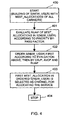
- the algorithm starts (step 400) when the algorithm of Fig. 3 has run for all carriers. If only one allocation has been found, that allocation will be of course the final one.
- step 401 the RUAPs of such allocations are evaluated to create two subsets S1(new_user), S2(new_user) of best allocations.
- S1 (new_user) is the subset of best allocations having a respective RUAP fulfilling the following inequality: RUAP best_allocation Ci ⁇ max j RUAP best_allocation Cj ⁇ ⁇ where ⁇ is an O&M parameter, whose value ranges from 0 to 1.
- S2(new_user) is the subset of the remaining best allocations in S(new_user). The meaning of parameter ⁇ , referred to as "priority by-pass factor" in the flow chart, will be discussed below.
- set S(new_user) is ordered as follows (step 402):
- the first best allocation in S(new_user) according to its ordering is then selected to allocate the service for the new_user (step 403) and the algorithm ends (step 404).
- parameter ⁇ allows the operator to decide whether, and to what extent, to take into account the carrier-related parameters. Otherwise stated, ⁇ allows the operator to "adjust" the trade-off between minimisation of the interference and maximisation of bandwidth exploitation. In general, ⁇ is always set close to 1, which corresponds to allotting the greatest importance to minimisation of interference.
- the invention meets also the channel reuse requirement.
- the basic criterion adopted to achieve reuse is assigning the channels with higher priority values to the UEs with higher pathloss values: this is dictated by the fact that it is likely that such higher pathloss users are farther from the base station, so that they are potentially more subject to inter-cell interference than UEs with low pathloss, which are likely closer to the base station.
- this reshuffling procedure shall be performed at the occurrence of the following triggers:
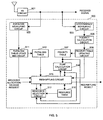
- Apparatus 500 An apparatus performing the reshuffling is shown in Fig. 5, and is denoted 500.
- the reshuffling procedure is based on the evaluation of the pathloss and selects the resources to be allotted to users being reshuffled substantially by means of the channel selection procedure disclosed above.
- Apparatus 500 therefore includes elements shown also in Fig. 1, and such elements are denoted by similar reference numerals, beginning here with digit 5.
- apparatus 500 is coupled to the output of receiver 501 and it includes pathloss measuring circuit 502 with the associated pathloss table 512 and pathloss table updating circuit 511, and interference measuring circuit 503 with the associated priority calculation circuit 505, priority table 507 and priority updating circuit 506.
- updating circuits 506, 511 provide an activating or triggering signal to a processing unit 515 (reshuffling circuit), which is the unit performing the logic operations required by the reshuffling algorithm, disclosed below.
- Circuit 515 receives also, as further triggering signals, the resource allocation or release requests from the users. For performing the algorithm, circuit 515 cooperates with a circuit 516 calculating the resource unit average priority RUAP and with a resource selection circuit 517, and has also access to resource table 510 for writing and reading. The latter is also read by resource selection circuit 517.
- Resource selection circuit 517 substantially performs the tasks of the whole of blocks 104, 108, 110 in Fig. 1, apart from the RUAP calculation that has been allotted to a distinct block 516 (supplying circuit 517 with the calculated RUAP values), since the RUAP evaluation plays an important role in the reshuffling circuit.
- the result of the reshuffling algorithm is the selection of a new allocation for one or more high-pathloss users and, possibly, for a number of low-pathloss users that are to release resources needed by high-pathloss users.
- that result is communicated to the Node B by the Radio Network Control of which apparatus 500 is part, and then forwarded to the concerned UE(s).
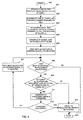
- the reshuffling algorithm is disclosed in detail in Fig. 6 for a single user.
- the start (step 600) is any of the triggers mentioned above.
- the reshuffling process aims at allotting higher-priority channels to higher-pathloss users (likely farther from the base station and potentially more subjected to inter-cell interference). Therefore, the first operations are to select on the one hand high-pathloss users to be reallocated to a better channel and on the other hand low-pathloss users that could in turn be reallocated to leave resources available for high-pathloss users, if necessary.
- the active users whose pathloss PL is higher than a threshold PL_thr are identified by looking at pathloss table 512, and the one with the lowest RUAP value is selected.
- this user be the user_1, allocated on current_allocation(Cw) on carrier Cw.
- the PL_thr parameter should be an O&M attribute, configurable according to the cell radius.
- PL_ratio_factor is an O&M parameter.
- Low_PL_Users_Set(Ci) be the set of users meeting condition (6) on generic carrier Ci.
- the best allocation selection procedure is run for user_1 on the different carriers Cj, according to the algorithm disclosed with reference to Fig. 3.
- the algorithm runs as if the resources used by the users in the relevant Low_PL_Users_Set were available for user_1.
- the suitable allocations among which the search is performed must of course have the same characteristics as the current allocation of user_1, that is they must meet both priority criteria set by the admission control and the requirements in terms of spacing constraints at the switching points and multi-slot capabilities of the concerned user equipment.
- the algorithm returns at most one allocation per carrier, such allocations forming a set S(user_1) that is then ordered according to RUAP value (step 604).
- the algorithm then scans the best allocations in the ordered set S(user_1) according to a decreasing RUAP value criterion and the first best allocation in the ordered set S(user_1) (that is, the allocation with the highest RUAP) is considered (step 605). Then a check is made on whether the considered allocation has better interference characteristics than the current one, namely whether it meets the condition: RUAP best_allocation Cz > RUAP current_allocation Cw (step 606), where Cz is the carrier which the first best allocation found for user_1 belongs to.
- condition (7) is not met, reshuffling is not performed and the algorithm stops (step 610).
- condition (7) is met, there is checked (step 608), by looking at table 510 (Fig. 5), whether the best allocation so found uses resources already in use by some users in Low_PL_Users_Set(Cx), where Cx is the carrier which the best allocation being considered (best_allocation(Cx)) belongs to.
- user_1 is reallocated on best_allocation(Cx) and the algorithm stops (steps 609, 610).
- the algorithm attempts to handover the users occupying such resources (step 611).
- user_1 is reallocated on best_allocation(Cx) and the algorithm stops, as discussed previously in connection with steps 609, 610.
- user_1 is reallocated on the best_allocation over carrier Cx and the algorithm stops.
- step 607 If neither the inter-carrier handover can be performed for any of the users concerned, the algorithm returns to step 607 and again considers the next best allocation fulfilling inequality (7) in the ordered set S(user_1). If such allocation exists, the algorithm is repeated from step 608, otherwise user_1 cannot be reshuffled.
- user_1 could be the same requesting user.
- the algorithm starts after having identified, by the carrier selection procedure shown in Fig. 4, the carrier on which potentially to allocate the service requested. The potential allocation so found would be the current allocation considered in the reshuffling algorithm.
- the algorithm can be repeated for a predetermined number of users, up to a user_n, being n limited by the available computational capacity.
- the reshuffling method is a very general one, which takes into account all changes in the allocation state and in the radio environment of the resources in a cell. It is very flexible, in that the conditions for reallocation of the users, and their number, can be selected by the network operator basing on tuning parameters. Moreover, the resources onto which to reallocate a user are selected on an algorithm that leads to an optimisation of the resource exploitation.
Landscapes
- Engineering & Computer Science (AREA)
- Computer Networks & Wireless Communication (AREA)
- Signal Processing (AREA)
- Quality & Reliability (AREA)
- Mobile Radio Communication Systems (AREA)
- Reduction Or Emphasis Of Bandwidth Of Signals (AREA)
- Radio Relay Systems (AREA)
Claims (22)
- Verfahren zum Umordnen der Zuteilungen aktiver Benutzer auf Funkbetriebsmittel in einer Zelle eines digitalen Mehrträger-Mehrschlitz-Zellularkommunikationssystems mit Zeitmultiplex auf der Basis von Wegverlustwerten, wobei solche aktiven Benutzer jeweils eine Anzahl von Betriebsmitteleinheiten benutzen, die zu einem oder mehreren Aufwärtsstrecken- und Abwärtsstrecken-Zeitschlitzen auf einem selben Träger gehören, dadurch gekennzeichnet, daß das Verfahren die folgenden Schritte umfaßt:- Identifizieren (610) von aktiven Benutzern mit hohen Wegverlusten, die einen Wegverlust erfahren, der eine Wegverlustschwelle übersteigt, und auswählen (601) mindestens eines solcher aktiven Benutzer mit hohen Wegverlusten als einen Kandidaten für Neuzuteilung auf einem Kanal mit besserer Qualität;- Suchen (603) nach in Frage kommenden alternativen Zuteilungen für den gewählten Benutzer;- Auswählen (605) der besten unter den in Frage kommenden alternativen Zuteilungen im Hinblick auf einen ersten Wert einer störungsbezogenen Größe;- Vergleichen (606) der besten in Frage kommenden alternativen Zuteilung und der gerade dem gewählten Benutzer zugewiesenen Zuteilung; und- wenn der Vergleich zeigt, daß die beste in Frage kommende alternative Zuteilung im Hinblick auf den ersten Wert der störungsbezogenen Größe besser als die gerade dem gewählten Benutzer zugewiesene Zuteilung ist, Neuzuteilung (609) des gewählten Benutzers auf die beste in Frage kommende alternative Zuteilung.
- Verfahren nach Anspruch 1, dadurch gekennzeichnet, daß der mindestens eine gewählte Benutzer der ist, der auf Betriebsmittel mit den im Hinblick auf den ersten Wert der störungsbezogenen Größe schlechtesten Kenngrößen zugeteilt ist.
- Verfahren nach Anspruch 1 oder 2, dadurch gekennzeichnet, daß es ferner die folgenden Schritte umfaßt:- auf jedem der Zelle zugewiesenen Träger identifizieren (602) von Benutzern mit niedrigen Wegverlusten, die einen Wegverlust aufweisen, der ausreichend geringer als der Wegverlust des gewählten Benutzers ist;- Prüfen (608), ob die gerade gestestete in Frage kommende alternative Zuteilung Betriebsmittel benutzt, die bereits von den Benutzern mit geringen Wegverlusten benutzt werden;- im negativen Fall, Neuzuteilen (609) des gewählten Benutzers auf die gerade getestete in Frage kommende alternative Zuteilung; und- im positiven Fall, Suchen (611) nach einer neuen Zuteilung, auf die die betreffenden Benutzer mit geringen Wegverlusten zu übergeben sind, und wenn die Suche erfolgreich (612) ist, übergeben der betreffenden Benutzer mit geringen Wegverlusten und Neuzuteilung des gewählten Benutzers auf die gerade getestete in Frage kommende alternative Zuteilung (609).
- Verfahren nach Anspruch 3, dadurch gekennzeichnet, daß, wenn die Suche nach einer neuen Zuteilung, auf die die betreffenden Benutzer mit geringen Wegverlusten zu übergeben sind, erfolglos ist (612), die in Frage kommenden alternativen Zuteilungen, die der gerade getesteten folgen, sukzessive als in Frage kommende alternative Zuteilungen für den gewählten Benutzer getestet werden (607).
- Verfahren nach Anspruch 3 oder 4, dadurch gekennzeichnet, daß zuerst eine Übergabe innerhalb des Trägers der betreffenden Benutzer mit geringen Wegverlusten versucht wird, indem nur die für den gewählten Benutzer zur Verfügung zu stellenden Betriebsmittel geändert werden, und eine Übergabe zwischen Trägern versucht wird, wenn keine Übergabe innerhalb des Trägers möglich ist.
- Verfahren nach einem der Ansprüche 3 bis 5, dadurch gekennzeichnet, daß für die Übergabe die von der aktuellen Zuteilung des gewählten Benutzers benutzen Betriebsmittel als verfügbar betrachtet werden.
- Verfahren nach einem der vorhergehenden Ansprüche, dadurch gekennzeichnet, daß die Suche nach in Frage kommenden alternativen Zuteilungen für den gewählten Benutzer durchgeführt wird, indem auf jedem Träger, auf dem die von dem Benutzer benötigten Betriebsmittel verfügbar sind, die Zuteilung gesucht wird (201), die im Hinblick auf Störungen der betreffenden Zeitschlitze die besten Kenngrößen aufweist, wobei die so gefundenen besten Zuteilungen die in Frage kommenden alternativen Zuteilungen sind.
- Verfahren nach Anspruch 7, dadurch gekennzeichnet, daß die Suche nach der besten Zuteilung auf einem Träger durchgeführt wird, indem die den Benutzern mit geringen Wegverlusten zugeteilten Betriebsmittel als für den gewählten Benutzer verfügbar betrachtet werden.
- Verfahren nach Anspruch 7 oder 8, dadurch gekennzeichnet, daß die Suche nach der besten Zuteilung auf einem Träger durchgeführt wird, indem für jede mögliche Zuteilung auf dem Träger folgendes evaluiert wird:- ein Gesamtwert der störungsbezogenen Größe, wobei der Gesamtwert für in Frage kommende alternative Zuteilungen berechnet wird, die eine selbe Anzahl von Betriebsmitteleinheiten benutzen, und indem alle durch eine Zuteilung betroffenen Zeitschlitze betrachtet werden, und- ein Mittelwert der störungsbezogenen Größe, die über alle durch eine Zuteilung betroffenen Zeitschlitze berechnet und durch die Anzahl der durch die Zuteilung betroffenen Betriebsmitteleinheiten gewichtet wird,wobei die beste Zuteilung diejenige ist, die den besten Gesamtwert und den besten Mittelwert aufweist.
- Verfahren nach Anspruch 1, 2 und 9, dadurch gekennzeichnet, daß der erste Wert der störungsbezogenen Größe der Mittelwert ist.
- Verfahren nach Anspruch 10, dadurch gekennzeichnet, daß die in Frage kommenden alternativen Zuteilungen in einer nach absteigender Reihenfolge des Mittelwerts der störungsbezogenen Größe geordneten Menge gruppiert (604) und dann beginnend mit der ersten in der geordneten Menge getestet werden.
- Verfahren nach einem der vorgehenden Ansprüche, dadurch gekennzeichnet, daß die störungsbezogene Größe die Priorität ist.
- Verfahren nach Anspruch 12, dadurch gekennzeichnet, daß die beste Zuteilung auf einem Träger durch die folgenden Schritte bestimmt wird:- Identifizieren (301) von Mengen von Aufwärtstrecken- und Abwärtsstrecken-Zeitschlitzen, die die notwendige Betriebsmittelverfügbarkeit bieten;- Clustern (302) der Mengen nach Gesamtzahl benutzter Zeitschlitze;- Berechnen (303) des Gesamtwerts der Priorität für jedes Cluster;- für jedes Cluster identifizieren (304) der Menge von Aufwärtsstrecken- und Abwärtsstrecken-Zeitschlitzen mit maximaler Priorität;- unter allen in dem vorigen Schritt identifizierten Mengen auswählen (305) derjenigen, die den Mittelwert der Priorität maximiert.
- Verfahren nach einem der vorhergehenden Ansprüche, dadurch gekennzeichnet, daß es durch ein beliebiges der folgenden Ereignisse getriggert wird;- Betriebsmittelzuteilung;- Betriebsmittelfreigabe;- Aktualisierung des Kanalprioritätswerts;- Benutzer-Wegverlustvariation.
- Verfahren nach Anspruch 14, dadurch gekennzeichnet, daß es durch die Betriebsmittelzuteilung zu einem Benutzer getriggert wird, und der gewählte Benutzer der Benutzer ist, der die Betriebsmittelzuteilung angefordert hat.
- Verfahren nach einem der Ansprüche 1 und 15, dadurch gekennzeichnet, daß es durchgeführt wird, indem als aktuell zugewiesene Zuteilung zu dem gewählten Benutzer die Zuteilung betrachtet wird, die durch eine Kanalauswahlprozedur gefunden wird, die folgendes umfaßt:- die Suche (201) nach der besten Zuteilung im Hinblick auf Gesamt- und mittlere Priorität der betreffenden Zeitschlitze auf jedem Träger, auf dem die benötigten Betriebsmittel verfügbar sind; und- als mögliche Zuteilung die Auswahl (202) derjenigen, die durch den Träger bereitgestellt wird, für den die durch die Suche gefundene beste Zuteilung die besten insgesamten Prioritätskenngrößen für den Träger aufweist und die Trägerbelegung maximiert.
- Verfahren nach einem der vorhergehenden Ansprüche, dadurch gekennzeichnet, daß es für eine vorbestimmte Anzahl von Benutzern mit hohen Wegverlusten durchgeführt wird.
- Vorrichtung, die in Funkübertragungssteuereinheiten eines digitalen Mehrträger-, Mehrschlitz-Zellularkommunikationssystems mit Zeitmultiplex eine Umordnung der Zuteilungen aktiver Benutzer auf Funkbetriebsmittel einer Zelle des Systems auf der Basis von Wegverlustwerten bestimmt, wobei solche aktiven Benutzer jeweils eine Anzahl von Betriebsmitteleinheiten benutzen, die zu einem oder mehreren Aufwärtsstrecken- und Abwärtsstreckenzeitschlitzen auf einem selben Träger gehören, wobei die Vorrichtung (500) Mittel (502, 511, 512) zum Evaluieren und Speichern von Werten der Wegverluste von durch die Benutzer gesendeten Signalen und Mittel (503, 505 506, 507) zum Evaluieren und Speichern von Werten einer störungsbezogenen Größe für die den Benutzern zugeteilten oder zuteilbaren Betriebsmittel umfaßt, wobei die Vorrichtung (500) dadurch gekennzeichnet ist, daß sie folgendes umfaßt:- eine erste Verarbeitungseinheit (515), die mit den Mitteln (511, 512, 506, 507) zum Speichern der Werte der Wegverluste und der störungsbezogenen Größe verbunden und für folgendes ausgelegt ist:und dadurch, daß die erste Verarbeitungseinheit (515) ferner für folgendes ausgelegt ist: Vergleichen der Mittelwerte der störungsbezogenen Größe für die potentielle neue Zuteilung und für die gerade dem gewählten Benutzer zugewiesene Zuteilung und Anfordern der Neuzuteilung des gewählten Benutzers auf die potentielle neue Zuteilung, wenn der Vergleich zeigt, daß der Mittelwert der störungsbezogenen Größe für die potentielle neue Zuteilung besser als für die aktuelle Zuteilung ist.Identifizieren von aktiven Benutzern mit hohen Wegverlusten, die potentiell auf Betriebsmittel besserer Qualität neu zuteilbar sind; wählen mindestens eines solcher aktiven Benutzer mit hohen Wegverlusten als einen Kandidaten für Neuzuteilung; und Anfordern der Neuzuteilung des gewählten Benutzers auf eine neue Zuteilung, die vorbestimmte Störungsanforderungen erfüllt;- eine zweite Verarbeitungseinheit (517), die mit der ersten Verarbeitungseinheit (515) und mit dem Mittel (507) zum Speichern der Werte der störungsbezogenen Größe verbunden und für folgendes ausgelegt ist: Identifizieren von in Frage kommenden alternativen Zuteilungen für den gewählten Benutzer; als potentielle neue Zuteilung für den gewählten Benutzer auswählen der besten im Hinblick auf die störungsbezogene Größe unter den in Frage kommenden alternativen Zuteilungen; und Bereitstellen von Informationen über die gewählte alternative Zuteilung für die erste Verarbeitungseinheit (515); und- eine Arithmetikeinheit (516), die mit dem Mittel (507) zum Speichern der störungsbezogenen Größe und mit der ersten und mit der zweiten Verarbeitungseinheit (515, 517) verbunden und für folgendes ausgelegt ist: Berechnen mindestens eines Mittelwerts der störungsbezogenen Größe sowohl für die als potentielle neue Zuteilung ausgewählte in Frage kommende alternative Zuteilung als auch für eine gerade dem gewählten Benutzer zugewiesene Zuteilung, wobei die Arithmetikeinheit (516) den Mittelwert für jede Zuteilung über alle durch die Zuteilung betroffenen Zeitschlitze berechnet und den Wert durch die Anzahl von durch die Zuteilung betroffenen Betriebsmitteleinheiten gewichtet, und Bereitstellen der berechneten Mittelwerte für die erste und die zweite Verarbeitungseinheit (515, 517);
- Vorrichtung nach Anspruch 18, dadurch gekennzeichnet, daß die erste Verarbeitungseinheit (515) ferner für folgendes ausgelegt ist: auf jedem der Zelle zugewiesenen Träger Identifizieren von Benutzern mit geringen Wegverlusten, die einen Wegverlust aufweisen, der ausreichend geringer als der Wegverlust des gewählten Benutzers ist; wenn die potentielle neue Zuteilung die Benutzung von bereits bestimmten der Benutzer mit geringen Wegverlusten zugewiesenen Betriebsmittel erfordert, Anfordern einer Neuzuteilung der betreffenden Benutzer mit geringen Wegverlusten; und, wenn die Neuzuteilung der Benutzer mit geringen Wegverlusten unmöglich ist, sukzessives Testen von in Frage kommenden alternativen Zuteilungen mit sukzessive abnehmenden Mittelwerten der störungsbezogenen Größe, bis eine in Frage kommende alternative Zuteilung gefunden wird, die keine Betriebsmittel benutzt, die bereits irgendwelchen der Benutzer mit geringen Wegverlusten zugewiesen sind oder die dergestalt sind, daß eine Neuzuteilung der Benutzer mit geringen Wegverlusten erfolgreich ist.
- Vorrichtung nach Anspruch 18 oder 19, dadurch gekennzeichnet, daß die erste Verarbeitungseinheit (515) dafür ausgelegt ist, ihre Verarbeitung zu starten, wenn folgendes erkannt wird: eine Anforderung der Betriebsmittelzuteilung oder -freigabe; eine Benutzer-Wegverlustvariation; oder eine Variation in einer Klassifikation des Kanals auf der Basis der störungsbezogenen Größe.
- Vorrichtung nach einem der Ansprüche 18 bis 20, dadurch gekennzeichnet, daß die Arithmetikeinheit (516) dafür ausgelegt ist, außerdem einen Gesamtwert einer störungsbezogenen Größe zu berechnen, wobei dieser erste Gesamtwert für Zuteilungen, die eine selbe Anzahl von Betriebsmitteleinheiten benutzen, und durch Betrachten aller durch eine Zuteilung betroffenen Zeitschlitze berechnet wird, und die zweite Verarbeitungseinheit (517) dafür ausgelegt ist, auf jedem Träger die Zuteilung zu identifizieren, die den besten Gesamtwert und den besten Mittelwert aufweist, wobei die so identifizierten Zuteilungen die in Frage kommenden alternativen Zuteilungen sind.
- Vorrichtung nach einem der Ansprüche 18 bis 21, dadurch gekennzeichnet, daß die erste Verarbeitungseinheit (515) dafür ausgelegt ist, als Kandidaten für neue Neuzuteilung eine vorbestimmte Vielzahl von Benutzern mit hohen Wegverlusten auszuwählen.
Priority Applications (5)
| Application Number | Priority Date | Filing Date | Title |
|---|---|---|---|
| DE602004011625T DE602004011625T2 (de) | 2004-11-24 | 2004-11-24 | Verfahren und Vorrichtung zur Teilnehmer-Umbesetzung in einem digitalen zellularen Kommunikationssystem |
| AT04425876T ATE385386T1 (de) | 2004-11-24 | 2004-11-24 | Verfahren und vorrichtung zur teilnehmer- umbesetzung in einem digitalen zellularen kommunikationssystem |
| EP04425876A EP1662823B1 (de) | 2004-11-24 | 2004-11-24 | Verfahren und Vorrichtung zur Teilnehmer-Umbesetzung in einem digitalen zellularen Kommunikationssystem |
| TW094141063A TWI369143B (en) | 2004-11-24 | 2005-11-23 | Method and apparatus for users reshuffling in digital cellular communication systems |
| CN2005101373912A CN1826012B (zh) | 2004-11-24 | 2005-11-24 | 数字蜂窝通信系统中用户改组的方法和设备 |
Applications Claiming Priority (1)
| Application Number | Priority Date | Filing Date | Title |
|---|---|---|---|
| EP04425876A EP1662823B1 (de) | 2004-11-24 | 2004-11-24 | Verfahren und Vorrichtung zur Teilnehmer-Umbesetzung in einem digitalen zellularen Kommunikationssystem |
Publications (2)
| Publication Number | Publication Date |
|---|---|
| EP1662823A1 EP1662823A1 (de) | 2006-05-31 |
| EP1662823B1 true EP1662823B1 (de) | 2008-01-30 |
Family
ID=34932905
Family Applications (1)
| Application Number | Title | Priority Date | Filing Date |
|---|---|---|---|
| EP04425876A Expired - Lifetime EP1662823B1 (de) | 2004-11-24 | 2004-11-24 | Verfahren und Vorrichtung zur Teilnehmer-Umbesetzung in einem digitalen zellularen Kommunikationssystem |
Country Status (5)
| Country | Link |
|---|---|
| EP (1) | EP1662823B1 (de) |
| CN (1) | CN1826012B (de) |
| AT (1) | ATE385386T1 (de) |
| DE (1) | DE602004011625T2 (de) |
| TW (1) | TWI369143B (de) |
Families Citing this family (9)
| Publication number | Priority date | Publication date | Assignee | Title |
|---|---|---|---|---|
| JP5231436B2 (ja) * | 2006-11-13 | 2013-07-10 | テレフオンアクチーボラゲット エル エム エリクソン(パブル) | 無線通信システム |
| KR20090126265A (ko) * | 2007-03-01 | 2009-12-08 | 가부시키가이샤 엔티티 도코모 | 기지국장치 및 통신제어방법 |
| KR20090118074A (ko) * | 2007-03-01 | 2009-11-17 | 가부시키가이샤 엔티티 도코모 | 기지국장치 및 통신제어방법 |
| CN101682407B (zh) | 2007-05-30 | 2014-05-14 | 韩国电子通信研究院 | 用于电路模式的无线电资源再分配 |
| CN101971682B (zh) * | 2008-03-14 | 2013-12-25 | 艾利森电话股份有限公司 | 用于优先化信道分配的方法和装置 |
| CN101534272B (zh) * | 2008-03-14 | 2011-11-30 | 中兴通讯股份有限公司 | 一种正交频分复用系统中载波的重排方法和装置 |
| US9130605B2 (en) * | 2009-07-09 | 2015-09-08 | Mediatek Inc. | Systems and methods for coexistence between plurality of wireless communications modules sharing single antenna |
| EP2627140B1 (de) * | 2012-02-09 | 2015-09-16 | Alcatel Lucent | Verfahren zum Planen von Funkressourcen auf Benutzerendgeräten verschiedener Netzwerkanwender, und eine Basisstation dafür |
| JP2013138440A (ja) * | 2013-01-18 | 2013-07-11 | Telefon Ab L M Ericsson | 無線通信システム |
Family Cites Families (3)
| Publication number | Priority date | Publication date | Assignee | Title |
|---|---|---|---|---|
| IT1313314B1 (it) * | 1999-07-30 | 2002-07-17 | Italtel Spa | Procedimento e sistema per l'allocazione dinamica dei canali radionelle reti di telecomunicazione digitale. |
| JP3544641B2 (ja) * | 2000-06-22 | 2004-07-21 | 松下電器産業株式会社 | 基地局装置およびチャネル割当て方法 |
| EP1424865A1 (de) * | 2002-11-29 | 2004-06-02 | Siemens Mobile Communications S.p.A. | Verfahren und Vorrichtung zum Zuweisen von Ressourcen in einem digitalen zellulären Kommunikationssystem |
-
2004
- 2004-11-24 AT AT04425876T patent/ATE385386T1/de not_active IP Right Cessation
- 2004-11-24 EP EP04425876A patent/EP1662823B1/de not_active Expired - Lifetime
- 2004-11-24 DE DE602004011625T patent/DE602004011625T2/de not_active Expired - Lifetime
-
2005
- 2005-11-23 TW TW094141063A patent/TWI369143B/zh not_active IP Right Cessation
- 2005-11-24 CN CN2005101373912A patent/CN1826012B/zh not_active Expired - Fee Related
Also Published As
| Publication number | Publication date |
|---|---|
| DE602004011625T2 (de) | 2009-04-30 |
| CN1826012B (zh) | 2010-07-07 |
| TW200642495A (en) | 2006-12-01 |
| EP1662823A1 (de) | 2006-05-31 |
| CN1826012A (zh) | 2006-08-30 |
| DE602004011625D1 (de) | 2008-03-20 |
| TWI369143B (en) | 2012-07-21 |
| ATE385386T1 (de) | 2008-02-15 |
Similar Documents
| Publication | Publication Date | Title |
|---|---|---|
| US6157627A (en) | Channel allocation for mixed multislot services | |
| CA2176514C (en) | Method of allocating communication resources in a communication system | |
| US5732353A (en) | Automatic control channel planning in adaptive channel allocation systems | |
| US5507034A (en) | Channel selection in a cellular communication system | |
| US6091954A (en) | Channel assignment in enhanced fixed-plan mobile communications systems | |
| US7602761B2 (en) | Call access control method | |
| KR930022756A (ko) | 이동 통신 시스템에서 다이내믹 채널 할당의 분할 방법 | |
| KR19990087406A (ko) | 원격 통신 시스템에서의 적응성 주파수 할당 | |
| US6047187A (en) | Stabilized control channel planning using loosely coupled dedicated traffic channels | |
| EP1662823A1 (de) | Verfahren und Vorrichtung zur Teilnehmer-Umbesetzung in einem digitalen zellularen Kommunikationssystem | |
| Krishna et al. | An efficient approach for distributed dynamic channel allocation with queues for real-time and non-real-time traffic in cellular networks | |
| EP1075157A1 (de) | Verfahren zur beurteilung der zuteilung einer funkverbindung in einem mobilen kommunikationssytem sowie funkverbindungssteuerung | |
| EP1662834B1 (de) | Dynamische Kanalzuteilung basierend auf Interferenz und spektrale Nutzung in einem zellularen Mehrfachträgerkommunikationssystem | |
| KR101825850B1 (ko) | 인지 무선 통신의 채널 할당 방법 및 장치 | |
| JP2699854B2 (ja) | 移動通信システムのチャネル割当て方式 | |
| JP2003289581A (ja) | 無線通信チャネル割当装置および無線通信チャネル割当方法 | |
| KR970008171B1 (ko) | 코드분할 다중접속 셀룰러 시스템에서의 트래픽 채널 할당 방법 | |
| US7130637B2 (en) | Method for implementing fast dynamic channel allocation background interference reduction procedure in radio resource management | |
| JPH11234732A (ja) | 無線通信チャネル割当方法 | |
| CA2217192C (en) | Stabilized control channel planning using loosely coupled dedicated traffic channels | |
| KR20220019407A (ko) | Ran 공유 환경상에서의 자원 할당 방법 및 장치 | |
| Chawla et al. | Dynamic Frequency Allocation Scheme of Mobile Networks Using Priority Assignment Technique | |
| JPH10224854A (ja) | 無線通信チャネル割当方法および装置 | |
| GB2449224A (en) | Method of storing and using a fallback channel in a wireless communication apparatus | |
| JPH1169424A (ja) | 無線通信チャネル割当方法 |
Legal Events
| Date | Code | Title | Description |
|---|---|---|---|
| PUAI | Public reference made under article 153(3) epc to a published international application that has entered the european phase |
Free format text: ORIGINAL CODE: 0009012 |
|
| AK | Designated contracting states |
Kind code of ref document: A1 Designated state(s): AT BE BG CH CY CZ DE DK EE ES FI FR GB GR HU IE IS IT LI LU MC NL PL PT RO SE SI SK TR |
|
| AX | Request for extension of the european patent |
Extension state: AL HR LT LV MK YU |
|
| RAP1 | Party data changed (applicant data changed or rights of an application transferred) |
Owner name: SIEMENS S.P.A. |
|
| 17P | Request for examination filed |
Effective date: 20061129 |
|
| 17Q | First examination report despatched |
Effective date: 20070103 |
|
| AKX | Designation fees paid |
Designated state(s): AT BE BG CH CY CZ DE DK EE ES FI FR GB GR HU IE IS IT LI LU MC NL PL PT RO SE SI SK TR |
|
| GRAP | Despatch of communication of intention to grant a patent |
Free format text: ORIGINAL CODE: EPIDOSNIGR1 |
|
| GRAS | Grant fee paid |
Free format text: ORIGINAL CODE: EPIDOSNIGR3 |
|
| GRAA | (expected) grant |
Free format text: ORIGINAL CODE: 0009210 |
|
| AK | Designated contracting states |
Kind code of ref document: B1 Designated state(s): AT BE BG CH CY CZ DE DK EE ES FI FR GB GR HU IE IS IT LI LU MC NL PL PT RO SE SI SK TR |
|
| REG | Reference to a national code |
Ref country code: GB Ref legal event code: FG4D |
|
| RAP2 | Party data changed (patent owner data changed or rights of a patent transferred) |
Owner name: NOKIA SIEMENS NETWORKS GMBH & CO. KG |
|
| REG | Reference to a national code |
Ref country code: CH Ref legal event code: EP |
|
| REG | Reference to a national code |
Ref country code: IE Ref legal event code: FG4D |
|
| REF | Corresponds to: |
Ref document number: 602004011625 Country of ref document: DE Date of ref document: 20080320 Kind code of ref document: P |
|
| NLT2 | Nl: modifications (of names), taken from the european patent patent bulletin |
Owner name: NOKIA SIEMENS NETWORKS GMBH & CO. KG Effective date: 20080220 |
|
| PG25 | Lapsed in a contracting state [announced via postgrant information from national office to epo] |
Ref country code: IS Free format text: LAPSE BECAUSE OF FAILURE TO SUBMIT A TRANSLATION OF THE DESCRIPTION OR TO PAY THE FEE WITHIN THE PRESCRIBED TIME-LIMIT Effective date: 20080530 Ref country code: LI Free format text: LAPSE BECAUSE OF FAILURE TO SUBMIT A TRANSLATION OF THE DESCRIPTION OR TO PAY THE FEE WITHIN THE PRESCRIBED TIME-LIMIT Effective date: 20080130 Ref country code: FI Free format text: LAPSE BECAUSE OF FAILURE TO SUBMIT A TRANSLATION OF THE DESCRIPTION OR TO PAY THE FEE WITHIN THE PRESCRIBED TIME-LIMIT Effective date: 20080130 Ref country code: CH Free format text: LAPSE BECAUSE OF FAILURE TO SUBMIT A TRANSLATION OF THE DESCRIPTION OR TO PAY THE FEE WITHIN THE PRESCRIBED TIME-LIMIT Effective date: 20080130 Ref country code: ES Free format text: LAPSE BECAUSE OF FAILURE TO SUBMIT A TRANSLATION OF THE DESCRIPTION OR TO PAY THE FEE WITHIN THE PRESCRIBED TIME-LIMIT Effective date: 20080511 |
|
| NLV1 | Nl: lapsed or annulled due to failure to fulfill the requirements of art. 29p and 29m of the patents act | ||
| REG | Reference to a national code |
Ref country code: CH Ref legal event code: PL |
|
| PG25 | Lapsed in a contracting state [announced via postgrant information from national office to epo] |
Ref country code: AT Free format text: LAPSE BECAUSE OF FAILURE TO SUBMIT A TRANSLATION OF THE DESCRIPTION OR TO PAY THE FEE WITHIN THE PRESCRIBED TIME-LIMIT Effective date: 20080130 |
|
| PG25 | Lapsed in a contracting state [announced via postgrant information from national office to epo] |
Ref country code: SI Free format text: LAPSE BECAUSE OF FAILURE TO SUBMIT A TRANSLATION OF THE DESCRIPTION OR TO PAY THE FEE WITHIN THE PRESCRIBED TIME-LIMIT Effective date: 20080130 Ref country code: PL Free format text: LAPSE BECAUSE OF FAILURE TO SUBMIT A TRANSLATION OF THE DESCRIPTION OR TO PAY THE FEE WITHIN THE PRESCRIBED TIME-LIMIT Effective date: 20080130 Ref country code: PT Free format text: LAPSE BECAUSE OF FAILURE TO SUBMIT A TRANSLATION OF THE DESCRIPTION OR TO PAY THE FEE WITHIN THE PRESCRIBED TIME-LIMIT Effective date: 20080630 Ref country code: BE Free format text: LAPSE BECAUSE OF FAILURE TO SUBMIT A TRANSLATION OF THE DESCRIPTION OR TO PAY THE FEE WITHIN THE PRESCRIBED TIME-LIMIT Effective date: 20080130 |
|
| ET | Fr: translation filed | ||
| PG25 | Lapsed in a contracting state [announced via postgrant information from national office to epo] |
Ref country code: CZ Free format text: LAPSE BECAUSE OF FAILURE TO SUBMIT A TRANSLATION OF THE DESCRIPTION OR TO PAY THE FEE WITHIN THE PRESCRIBED TIME-LIMIT Effective date: 20080130 Ref country code: NL Free format text: LAPSE BECAUSE OF FAILURE TO SUBMIT A TRANSLATION OF THE DESCRIPTION OR TO PAY THE FEE WITHIN THE PRESCRIBED TIME-LIMIT Effective date: 20080130 Ref country code: DK Free format text: LAPSE BECAUSE OF FAILURE TO SUBMIT A TRANSLATION OF THE DESCRIPTION OR TO PAY THE FEE WITHIN THE PRESCRIBED TIME-LIMIT Effective date: 20080130 Ref country code: SE Free format text: LAPSE BECAUSE OF FAILURE TO SUBMIT A TRANSLATION OF THE DESCRIPTION OR TO PAY THE FEE WITHIN THE PRESCRIBED TIME-LIMIT Effective date: 20080430 Ref country code: SK Free format text: LAPSE BECAUSE OF FAILURE TO SUBMIT A TRANSLATION OF THE DESCRIPTION OR TO PAY THE FEE WITHIN THE PRESCRIBED TIME-LIMIT Effective date: 20080130 |
|
| PG25 | Lapsed in a contracting state [announced via postgrant information from national office to epo] |
Ref country code: RO Free format text: LAPSE BECAUSE OF FAILURE TO SUBMIT A TRANSLATION OF THE DESCRIPTION OR TO PAY THE FEE WITHIN THE PRESCRIBED TIME-LIMIT Effective date: 20080130 |
|
| PLBE | No opposition filed within time limit |
Free format text: ORIGINAL CODE: 0009261 |
|
| STAA | Information on the status of an ep patent application or granted ep patent |
Free format text: STATUS: NO OPPOSITION FILED WITHIN TIME LIMIT |
|
| 26N | No opposition filed |
Effective date: 20081031 |
|
| PG25 | Lapsed in a contracting state [announced via postgrant information from national office to epo] |
Ref country code: BG Free format text: LAPSE BECAUSE OF FAILURE TO SUBMIT A TRANSLATION OF THE DESCRIPTION OR TO PAY THE FEE WITHIN THE PRESCRIBED TIME-LIMIT Effective date: 20080430 Ref country code: EE Free format text: LAPSE BECAUSE OF FAILURE TO SUBMIT A TRANSLATION OF THE DESCRIPTION OR TO PAY THE FEE WITHIN THE PRESCRIBED TIME-LIMIT Effective date: 20080130 |
|
| PG25 | Lapsed in a contracting state [announced via postgrant information from national office to epo] |
Ref country code: MC Free format text: LAPSE BECAUSE OF NON-PAYMENT OF DUE FEES Effective date: 20081130 |
|
| PG25 | Lapsed in a contracting state [announced via postgrant information from national office to epo] |
Ref country code: CY Free format text: LAPSE BECAUSE OF FAILURE TO SUBMIT A TRANSLATION OF THE DESCRIPTION OR TO PAY THE FEE WITHIN THE PRESCRIBED TIME-LIMIT Effective date: 20080130 |
|
| PG25 | Lapsed in a contracting state [announced via postgrant information from national office to epo] |
Ref country code: IT Free format text: LAPSE BECAUSE OF FAILURE TO SUBMIT A TRANSLATION OF THE DESCRIPTION OR TO PAY THE FEE WITHIN THE PRESCRIBED TIME-LIMIT Effective date: 20080130 |
|
| PG25 | Lapsed in a contracting state [announced via postgrant information from national office to epo] |
Ref country code: IE Free format text: LAPSE BECAUSE OF NON-PAYMENT OF DUE FEES Effective date: 20081124 |
|
| PG25 | Lapsed in a contracting state [announced via postgrant information from national office to epo] |
Ref country code: LU Free format text: LAPSE BECAUSE OF NON-PAYMENT OF DUE FEES Effective date: 20081124 Ref country code: HU Free format text: LAPSE BECAUSE OF FAILURE TO SUBMIT A TRANSLATION OF THE DESCRIPTION OR TO PAY THE FEE WITHIN THE PRESCRIBED TIME-LIMIT Effective date: 20080731 |
|
| PG25 | Lapsed in a contracting state [announced via postgrant information from national office to epo] |
Ref country code: TR Free format text: LAPSE BECAUSE OF FAILURE TO SUBMIT A TRANSLATION OF THE DESCRIPTION OR TO PAY THE FEE WITHIN THE PRESCRIBED TIME-LIMIT Effective date: 20080130 |
|
| PG25 | Lapsed in a contracting state [announced via postgrant information from national office to epo] |
Ref country code: GR Free format text: LAPSE BECAUSE OF FAILURE TO SUBMIT A TRANSLATION OF THE DESCRIPTION OR TO PAY THE FEE WITHIN THE PRESCRIBED TIME-LIMIT Effective date: 20080501 |
|
| REG | Reference to a national code |
Ref country code: DE Ref legal event code: R081 Ref document number: 602004011625 Country of ref document: DE Owner name: NOKIA SOLUTIONS AND NETWORKS GMBH & CO. KG, DE Free format text: FORMER OWNER: NOKIA SIEMENS NETWORKS GMBH & CO. KG, 81541 MUENCHEN, DE Effective date: 20140731 |
|
| REG | Reference to a national code |
Ref country code: FR Ref legal event code: CD Owner name: NOKIA SOLUTIONS AND NETWORKS GMBH & CO.KG, DE Effective date: 20150211 |
|
| REG | Reference to a national code |
Ref country code: FR Ref legal event code: PLFP Year of fee payment: 12 |
|
| REG | Reference to a national code |
Ref country code: FR Ref legal event code: PLFP Year of fee payment: 13 |
|
| REG | Reference to a national code |
Ref country code: FR Ref legal event code: PLFP Year of fee payment: 14 |
|
| PGFP | Annual fee paid to national office [announced via postgrant information from national office to epo] |
Ref country code: DE Payment date: 20181120 Year of fee payment: 15 |
|
| PGFP | Annual fee paid to national office [announced via postgrant information from national office to epo] |
Ref country code: FR Payment date: 20181123 Year of fee payment: 15 Ref country code: GB Payment date: 20181120 Year of fee payment: 15 |
|
| REG | Reference to a national code |
Ref country code: DE Ref legal event code: R119 Ref document number: 602004011625 Country of ref document: DE |
|
| GBPC | Gb: european patent ceased through non-payment of renewal fee |
Effective date: 20191124 |
|
| PG25 | Lapsed in a contracting state [announced via postgrant information from national office to epo] |
Ref country code: GB Free format text: LAPSE BECAUSE OF NON-PAYMENT OF DUE FEES Effective date: 20191124 Ref country code: DE Free format text: LAPSE BECAUSE OF NON-PAYMENT OF DUE FEES Effective date: 20200603 Ref country code: FR Free format text: LAPSE BECAUSE OF NON-PAYMENT OF DUE FEES Effective date: 20191130 |