EP1662079A1 - Vehicle unlocking system - Google Patents
Vehicle unlocking system Download PDFInfo
- Publication number
- EP1662079A1 EP1662079A1 EP04772671A EP04772671A EP1662079A1 EP 1662079 A1 EP1662079 A1 EP 1662079A1 EP 04772671 A EP04772671 A EP 04772671A EP 04772671 A EP04772671 A EP 04772671A EP 1662079 A1 EP1662079 A1 EP 1662079A1
- Authority
- EP
- European Patent Office
- Prior art keywords
- vehicle
- authentication information
- control signal
- set forth
- operative
- Prior art date
- Legal status (The legal status is an assumption and is not a legal conclusion. Google has not performed a legal analysis and makes no representation as to the accuracy of the status listed.)
- Withdrawn
Links
Images


Classifications
-
- B—PERFORMING OPERATIONS; TRANSPORTING
- B60—VEHICLES IN GENERAL
- B60R—VEHICLES, VEHICLE FITTINGS, OR VEHICLE PARTS, NOT OTHERWISE PROVIDED FOR
- B60R25/00—Fittings or systems for preventing or indicating unauthorised use or theft of vehicles
- B60R25/20—Means to switch the anti-theft system on or off
- B60R25/24—Means to switch the anti-theft system on or off using electronic identifiers containing a code not memorised by the user
- B60R25/245—Means to switch the anti-theft system on or off using electronic identifiers containing a code not memorised by the user where the antenna reception area plays a role
-
- B—PERFORMING OPERATIONS; TRANSPORTING
- B60—VEHICLES IN GENERAL
- B60R—VEHICLES, VEHICLE FITTINGS, OR VEHICLE PARTS, NOT OTHERWISE PROVIDED FOR
- B60R25/00—Fittings or systems for preventing or indicating unauthorised use or theft of vehicles
- B60R25/20—Means to switch the anti-theft system on or off
- B60R25/24—Means to switch the anti-theft system on or off using electronic identifiers containing a code not memorised by the user
- B60R25/248—Electronic key extraction prevention
-
- G—PHYSICS
- G07—CHECKING-DEVICES
- G07C—TIME OR ATTENDANCE REGISTERS; REGISTERING OR INDICATING THE WORKING OF MACHINES; GENERATING RANDOM NUMBERS; VOTING OR LOTTERY APPARATUS; ARRANGEMENTS, SYSTEMS OR APPARATUS FOR CHECKING NOT PROVIDED FOR ELSEWHERE
- G07C9/00—Individual registration on entry or exit
- G07C9/00174—Electronically operated locks; Circuits therefor; Nonmechanical keys therefor, e.g. passive or active electrical keys or other data carriers without mechanical keys
- G07C9/00309—Electronically operated locks; Circuits therefor; Nonmechanical keys therefor, e.g. passive or active electrical keys or other data carriers without mechanical keys operated with bidirectional data transmission between data carrier and locks
-
- G—PHYSICS
- G07—CHECKING-DEVICES
- G07C—TIME OR ATTENDANCE REGISTERS; REGISTERING OR INDICATING THE WORKING OF MACHINES; GENERATING RANDOM NUMBERS; VOTING OR LOTTERY APPARATUS; ARRANGEMENTS, SYSTEMS OR APPARATUS FOR CHECKING NOT PROVIDED FOR ELSEWHERE
- G07C9/00—Individual registration on entry or exit
- G07C9/00174—Electronically operated locks; Circuits therefor; Nonmechanical keys therefor, e.g. passive or active electrical keys or other data carriers without mechanical keys
- G07C2009/00753—Electronically operated locks; Circuits therefor; Nonmechanical keys therefor, e.g. passive or active electrical keys or other data carriers without mechanical keys operated by active electrical keys
- G07C2009/00769—Electronically operated locks; Circuits therefor; Nonmechanical keys therefor, e.g. passive or active electrical keys or other data carriers without mechanical keys operated by active electrical keys with data transmission performed by wireless means
- G07C2009/00793—Electronically operated locks; Circuits therefor; Nonmechanical keys therefor, e.g. passive or active electrical keys or other data carriers without mechanical keys operated by active electrical keys with data transmission performed by wireless means by Hertzian waves
Definitions
- the present invention relates to a vehicle unlocking system for unlocking a lock of a vehicle by means of, for example, wireless communication.
- the conventional vehicle unlocking system is operative to selectively lock and unlock a door of the vehicle based on a result of judgment whether or not the verification code received by the receiving antenna is matched with a verification code already stored therein.
- the receiving device and the control means are operative to lock and unlock the door of the vehicle only based on the result of judgment whether or not the verification code transmitted by the transmitting device is matched with the verification code already stored therein.
- the conventional vehicle unlocking system thus constructed as previously mentioned encounters a drawback in that the conventional vehicle unlocking system is required to further comprise a transmitting device, a receiving device, control means, and the like, in order to realize each of functions such as, for example, an engine start function operable to permit an engine to start, a in-vehicle telephone usage permission function operable to permit an in-vehicle telephone to be used, and the like, in addition to the vehicle unlocking function operable to unlock the lock of the vehicle, thereby becoming complicated in construction and increased in cost.
- functions such as, for example, an engine start function operable to permit an engine to start, a in-vehicle telephone usage permission function operable to permit an in-vehicle telephone to be used, and the like, in addition to the vehicle unlocking function operable to unlock the lock of the vehicle, thereby becoming complicated in construction and increased in cost.
- the conventional vehicle unlocking system thus constructed as previously mentioned encounters another drawback in that the conventional vehicle unlocking system cannot allow only a person who is in advance authenticated to use the vehicle, resulting from the fact that the transmitting device has stored therein only the verification code used to verify a vehicle.
- the present invention was made to solve the foregoing drawbacks, and it is therefore an object of the present invention to provide a vehicle unlocking system which can authenticate a user of the vehicle while being simple in construction and reduced in cost even in the case that additional functions are implemented.
- a vehicle control apparatus comprising: antenna means for communicating with an authentication information storage unit having stored therein authentication information used to authenticate a user of a vehicle; retaining means provided in the vehicle and disposed in spaced apart relationship with the antenna means at a predetermined distance to retain the authentication information storage unit; and control means for selectively outputting a first control signal to control a predetermined first device and a second control signal to control a predetermined second device based on the authentication information received by the antenna means, and in which the control means is operative to output the first control signal to the first device under the condition that a lock of the vehicle is locked and the authentication information is matched with predetermined authentication information, and output the second control signal to the second device under the condition that the authentication information is matched with predetermined authentication information after the lock of the vehicle is unlocked and the authentication information storage unit is retained by the retaining means.
- the vehicle control apparatus thus constructed can share the same communication means and control means which are required to control the vehicle unlocking device and the engine start permitting device, resulting from the fact that the control means is operative to output an unlock permission signal to the vehicle unlocking device when the authentication information is matched with the predetermined authentication under the condition that the vehicle lock is locked, and the same control means is operative to output an engine start permission signal to the engine start permitting device under the condition that the authentication information is matched with predetermined authentication information after the lock of the vehicle is unlocked, and the authentication information storage unit is retained by the retaining means.
- the antenna means may be operative to supply electric power to the authentication information storage unit to drive the authentication information storage unit.
- the vehicle control apparatus according to the present invention thus constructed can be reduced in a driving cost and lowered in size, resulting from the fact the authentication information storage device can be driven without a battery.
- the antenna means may be constituted by a film type antenna.
- the vehicle control apparatus according to the present invention thus constructed can be provided even within an exterior mirror unit with ease.
- the antenna means may be provided in an outwardly exposed exterior mirror unit forming part of the vehicle.
- the vehicle control apparatus according to the present invention thus constructed makes it possible for cable lines originally made for controlling the exterior mirror unit to be shared with signal cables for the communication means while designing and installing the cables, thereby eliminating additional design and works, and thus being reduced in costs.
- the vehicle control apparatus according to the present invention thus constructed enables a user of the vehicle to be authenticated with ease using the authentication information storage unit when he or she gets in the vehicle.
- the antenna means may be provided in an outwardly exposed sun visor forming part of the vehicle.
- the vehicle control apparatus thus constructed enables a user of the vehicle to be authenticated with ease using the authentication information storage unit when he or she gets in the vehicle.
- the authentication information storage unit may be constituted by an electronic driver license.
- the vehicle control apparatus thus constructed eliminates a need for a user of the vehicle to carry an authentication information storage unit in addition to a driver license obligated by law to carry while driving the vehicle, as well as enables the user of the driver to unlock a vehicle lock with the electronic driver license alone.
- a vehicle unlocking system comprising: the aforementioned vehicle control apparatus; and a vehicle unlocking device operative to unlock a lock of the vehicle upon receiving the first control signal.
- the vehicle unlocking system thus constructed can unlock the lock of the vehicle when the authentication information is matched with the predetermined authentication under the condition that the authentication information storage unit is not retained by the retaining means.
- vehicle unlocking system may further comprise an engine start permitting device operative to permit an engine forming part of the vehicle to start upon receiving the second control signal.
- the vehicle unlocking system thus constructed can share the same communication means and control means which are required to control the vehicle unlocking device and the engine start permitting device, resulting from the fact that the control means is operative to output an unlock permission signal to the vehicle unlocking device when the authentication information is matched with the predetermined authentication under the condition that the vehicle lock is locked, and the same control means is operative to output an engine start permission signal to the engine start permitting device under the condition that the authentication information is matched with predetermined authentication information after the lock of the vehicle is unlocked and the authentication information storage unit is retained by the retaining means.
- vehicle unlocking system may further comprise an in-vehicle telephone permitting device operative to permit an in-vehicle telephone device to be used upon receiving the second control signal.
- the vehicle unlocking system thus constructed can share the same communication means and control means which are required to control the vehicle unlocking device and the in-vehicle telephone permitting device, resulting from the fact that the control means is operative to output an unlock permission signal to the vehicle unlocking device when the authentication information is matched with the predetermined authentication under the condition that the vehicle lock is locked, and the same control means is operative to output a signal to the in-vehicle telephone permitting device to permit an in-vehicle telephone device to be used under the condition that the authentication information is matched with predetermined authentication information after the lock of the vehicle is unlocked and the authentication information storage unit is retained by the retaining means.
- vehicle unlocking system may further comprise an in-vehicle audio permitting device operative to permit an in-vehicle audio device to be used upon receiving the second control signal.
- the vehicle unlocking system thus constructed can share the same communication means and control means which are required to control the vehicle unlocking device and the in-vehicle audio permitting device, resulting from the fact that the control means is operative to output an unlock permission signal to the vehicle unlocking device when the authentication information is matched with the predetermined authentication under the condition that the vehicle lock is locked, and the same control means is operative to output a signal to the in-vehicle audio permitting device to permit an in-vehicle audio device to be used under the condition that the authentication information is matched with predetermined authentication information after the lock of the vehicle is unlocked and the authentication information storage unit is retained by the retaining means.
- vehicle unlocking system may further comprise a combination meter permitting device operative to permit a combination meter device to be used upon receiving the second control signal.
- the vehicle unlocking system thus constructed can share the same communication means and control means which are required to control the vehicle unlocking device and the combination meter permitting device, resulting from the fact that the control means is operative to output an unlock permission signal to the vehicle unlocking device when the authentication information is matched with the predetermined authentication under the condition that the vehicle lock is locked, and the same control means is operative to output a signal to the combination meter permitting device to permit a combination meter device to be used under the condition that the authentication information is matched with predetermined authentication information after the lock of the vehicle is unlocked and the authentication information storage unit is retained by the retaining means.
- vehicle unlocking system may further comprise an emergency calling permitting device operative to permit an emergency calling device to be used upon receiving the second control signal.
- the vehicle unlocking system thus constructed can share the same communication means and control means which are required to control the vehicle unlocking device and the emergency calling permitting device, resulting from the fact that the control means is operative to output an unlock permission signal to the vehicle unlocking device when the authentication information is matched with the predetermined authentication under the condition that the vehicle lock is locked, and the same control means is operative to output a signal to the emergency calling permitting device to permit a emergency calling device to be used under the condition that the authentication information is matched with predetermined authentication information after the lock of the vehicle is unlocked and the authentication information storage unit is retained by the retaining means.
- vehicle unlocking system may further comprise a road-to-vehicle communication permitting device operative to permit a road-to-vehicle communication device to be used upon receiving the second control signal.
- the vehicle unlocking system thus constructed can share the same communication means and control means which are required to control the vehicle unlocking device and the road-to-vehicle communication permitting device, resulting from the fact that the control means is operative to output an unlock permission signal to the vehicle unlocking device when the authentication information is matched with the predetermined authentication under the condition that the vehicle lock is locked, and the same control means is operative to output a signal to the road-to-vehicle communication permitting device to permit a road-to-vehicle communication device to be used under the condition that the authentication information is matched with predetermined authentication information after the lock of the vehicle is unlocked and the authentication information storage unit is retained by the retaining means.
- the vehicle unlocking system 10 comprising a batteryless noncontact IC (Integrated Circuit) card 20 having stored therein authentication information used to authenticate a user of a vehicle, a vehicle unlocking device 40 for unlocking a vehicle lock, an engine start permitting device 50 for permitting an engine forming part of said vehicle to start, and a vehicle control apparatus 30 for controlling the vehicle unlocking device 40 and the engine start permitting device 50 on the basis of the authentication information.
- a batteryless noncontact IC card 20 provided in the vehicle unlocking system 10 for the purpose of simplifying the description and assisting in understanding about the present embodiment. It is, however, needless to mention that the vehicle unlocking system 10 may comprise a plurality of batteryless noncontact IC cards 20. Further, the batteryless noncontact IC card 20 may be constituted by an electronic driver license.
- the vehicle control apparatus 30 comprises communication means 31 for communicating with the batteryless noncontact IC card 20, control means 32 for authenticating a user of the vehicle, and an IC card holder 33 for retaining the batteryless noncontact IC card 20.
- the batteryless noncontact IC card 20 includes a storage unit for having stored therein authentication information used to authenticate a user of a vehicle, and an antenna, not shown, for communicating with the vehicle control apparatus 30.
- the authentication information is intended to mean information on a user who is permitted by an owner of the vehicle to use the vehicle, and may include for example, ID (Identification) number, an electronic driver license number, and the like.
- the communication means 31 includes a planar antenna 31a operable to communicate with the batteryless noncontact IC card 20, and a signal processing unit 31b operable to process signals transmitted and received through the planar antenna 31a.
- the planar antenna 31a is constituted by a film type antenna made of, for example, a copper plated pattern in the form of a spiral shape, and capable of being mounted on a rounded surface, a spherical surface, a multilevel surface, and the like.
- the planar antenna 31a is preferably waterproof finished if mounted exterior to the vehicle.
- the signal processing unit 31b is constituted by, an oscillation circuit, a modulation circuit, a demodulation circuit, and the like.
- the signal processing unit 31b is designed to supply electric power to operate the batteryless noncontact IC card 20 by means of a carrier wave having a frequency of, for example, 13.56 MHz.
- the signal processing unit 31b is operative to modulate the phase of the carrier wave of, for example, 13.56 MHz, in order to communicate with the batteryless noncontact IC card 20 so as to receive authentication information data from the batteryless noncontact IC card 20 and transmit data to the batteryless noncontact IC card 20.
- the control means 32 includes an authentication unit 32a for authenticating a user of the vehicle, and an authentication information storage unit 32b having stored therein predetermined authentication information.
- the control means 32 is constituted by a microprocessor, a memory, and the like.
- the control means 32 is operative to selectively output an unlock permission signal (first control signal) to the vehicle unlocking device 40 and an engine start permission signal (second control signal) to the engine start permitting device 50 based on the authentication information received by the communication means 31.
- the IC card holder 33 is made of, for example, a plastic material, and designed to retain the batteryless noncontact IC card 20.
- the IC card holder 33 is mounted in an area of the vehicle where the batteryless noncontact IC card 20 can receive electric power through the planar antenna 31a. This means that IC card holder 33 may be disposed spaced apart from the planar antenna 31a at a distance of, for example, 30 cm or less.
- planar antenna 31a The installation examples of the planar antenna 31a and the IC card holder 33 will be described hereinlater.
- FIG. 2A is a view showing an example of an IC card holder 33 mounted in the vicinity of an attaching portion of an outwardly exposed exterior mirror unit 60 and a batteryless noncontact IC card 20 inserted in the IC card holder 33.
- the IC card holder 33 is fixedly connected with an inner wall of a window frame 70 forming part of a driver seat door with screws, adhesive tapes, and the like.
- the user of the vehicle can insert the batteryless noncontact IC card 20 into the IC card holder 33 irrespective of the direction of the batteryless noncontact IC card 20, viz., without regard to, for example, front or rear face, and upper or lower portion of the batteryless noncontact IC card 20.
- FIG. 2B is a view showing a mirror unit support portion 61 and a mirror assembly portion 62 collectively forming part of the exterior mirror unit 60.
- the mirror unit support portion 61 and the mirror assembly portion 62 are shown as being dismounted from each other.
- the mirror unit support portion 61 is made of, for example, a plastic material, and includes a mirror support member 61 a and an arm member 61b.
- the mirror support member 61a includes an actuator 61c for adjusting a mounting angle of the mirror assembly portion 62, and communication means 31.
- the planar antenna 31 a is mounted on a rear face of the actuator 61c, and fixedly connected with an inner wall of the mirror support member 61a with, for example, an adhesive tape, and the like.
- the arm member 61b has formed therein a cable hole 61d through which cables of the planar antenna 31a and the actuator 61c are passing, and a plurality of screw holes 61e through which screws are screwed to secure the exterior mirror unit 60 to the driver seat door.
- the mirror assembly portion 62 includes a mirror member 62a, a mirror holder 62b made of a plastic material to hold the mirror member 62a, and an actuator fixing member 62c to be fixed with the actuator 61 c.
- FIGS. 2A and 2B make it possible for the planar antenna 31a to supply electric power to the batteryless noncontact IC card 20 to drive the batteryless noncontact IC card 20, thereby enabling data communication.
- planar antenna 31 a is shown in FIG 2B as being fixedly connected with an inner wall of the mirror support member 61a
- the planar antenna 31a may be fixedly connected with an inner wall of the arm member 61b, the mirror holder 62b, or the like.
- the signal processing unit 31b forming part of the communication means 31 may be mounted within the exterior mirror unit 60. This construction can reduce a distance between the planar antenna 31a and the signal processing unit 31b, thereby damping influences caused by noise in comparison with the construction, in which the distance between the planar antenna 31a and the signal processing unit 31b is made longer.
- the vehicle unlocking device 40 is operative to carry out an unlock operation of unlocking the vehicle locks including, for example, a door lock and a trunk lock, upon receiving the unlock permission signal from the control means 32.
- the vehicle locks to be unlocked by the unlocking operation may further include other locks such as, for example, locks of a globe box provided in front of a passenger seat and a seat box provided between the driver seat and the passenger seat.
- the engine start permitting device 50 is operative to carry out an engine start permission operation of permitting an engine to start by using an engine start key upon receiving the engine start permission signal from the control means 32.
- the batteryless noncontact IC card 20 constitutes authentication information storage device.
- the planar antenna 31a constitutes antenna means.
- the IC card holder 33 constitutes retaining means.
- the unlock permission signal constitutes a first control signal.
- the engine start permission signal constitutes a second control signal.
- the batteryless noncontact IC card 20 carried by a user of the vehicle is firstly approached in the vicinity of the exterior mirror unit 60 (step S11).
- the communication means 31 is operated to supply electric power to the batteryless noncontact IC card 20, and the batteryless noncontact IC card 20 is operated to transmit a vehicle unlock permission trigger signal so as to start an authenticating operation for unlocking the vehicle lock (step S12), and the control means 32 is operated to receive the vehicle unlock permission trigger signal through the communication means 31.
- the batteryless noncontact IC card 20 is operated to transmit IC card information to the communication means 31 (step S 13), and the control means 32 is operated to receive the IC card information from the communication means 31 (step S14).
- the authentication unit 32a forming part of the control means 32 is operated to read the predetermined authentication information from the authentication information storage unit 32b, and judge whether or not the IC card information is matched with the predetermined authentication information (step S15).
- the control means 32 is operated to output an unlock permission signal, i.e., an unlock instruction, to the vehicle unlocking device 40 (step S16).
- the vehicle unlocking device 40 is operated to carry out the unlock operation (step S17), and a vehicle door is thus unlocked.
- the control means 32 is operated to abort the unlock operation, and the vehicle lock remains locked.
- the communication means 31 is operated to supply electric power to the batteryless noncontact IC card 20, and the batteryless noncontact IC card 20 is operated to transmit an engine start permission trigger signal so as to start an authenticating operation for permitting the engine to start (step S22), and the control means 32 is operated to receive the engine start permission trigger signal through the communication means 31.
- the vehicle control apparatus 30 may be constructed in such a manner that the batteryless noncontact IC card 20 is not regarded as having been inserted into the IC card holder 30 in the step S21 in the case that the door is not opened although the planar antenna 31a enters into a state capable of being communicated with the batteryless noncontact IC card 20.
- the vehicle may be equipped with, for example, a door sensor for sensing an opening or closing position of the door, a seat occupancy sensor on the driver seat, or the like, so as to make the judgment whether or not the door is opened.
- the process to be carried out in the step S22 is not limited to the case that the trigger signal is not transmitted until the batteryless noncontact IC card 20 is completely inserted into and retained by the IC card holder 33.
- the batteryless noncontact IC card 20 may be constructed so as to transmit the trigger signal, for example, while the batteryless noncontact IC card 20 is being inserted into the IC card holder 33.
- the batteryless noncontact IC card 20 is operated to transmit IC card information to the communication means 31 (step S23), and the control means 32 is operated to receive the IC card information from the communication means 31 (step S24).
- the authentication unit 32a forming part of the control means 32 is operated to read the predetermined authentication information from the authentication information storage unit 32b, and judge whether or not the IC card information is matched with the predetermined authentication information (step S25).
- the control means 32 is operated to output an engine start permission signal, i.e., an engine start permission instruction, to the engine start permitting device 50 (step S26).
- the engine start permitting device 50 is operated to carry out the engine start permission operation (step S27). As a result of this, the engine is permitted to start as soon as the engine start key is turned on.
- the engine start permission operation is aborted, and the engine remains prevented from starting even thought the engine start key may be turned on by the holder of the batteryless noncontact IC card 20.
- the batteryless noncontact IC card 20 is operative to transmit the vehicle unlock permission trigger signal in the aforementioned step S12 so as to start an authenticating operation for judging whether or the vehicle lock is to be unlocked
- the batteryless noncontact IC card 20 may transmit any other trigger signal for starting a predetermined authenticating operation, in addition to or in place of the vehicle unlock permission trigger signal.
- vehicle unlocking system 10 may comprise any other in-vehicle permitting device operative to carry out any other permission operation of permitting any other in-vehicle device mounted on the vehicle to be used in addition to or in place of the engine start permission operation.
- the in-vehicle permitting device operative to carry out the permission operation may include, for example, an in-vehicle telephone permitting device for permitting an in-vehicle telephone to be used, an in-vehicle audio permitting device for permitting an in-vehicle audio device to be used, a combination meter permitting device for permitting a combination meter device to be used, an emergency calling permitting device for permitting an emergency calling device to be used, a road-to-vehicle communication permitting device for permitting a road-to-vehicle communication device to be used, and the like.
- the vehicle control apparatus 30 thus constructed as previously mentioned will prevent the in-vehicle device from being used by an unauthorized person who are not registered and cannot be authenticated with his or her IC card information, resulting from the fact that the vehicle control apparatus 30 is operative to permit the aforementioned in-vehicle device to be used under the condition that the batteryless noncontact IC card 20 is inserted into the IC card holder 33, and the IC card information is matched with the predetermined authentication information.
- the vehicle control apparatus 30 thus constructed can protect, for example, registered information stored in the aforementioned in-vehicle device, and prevent from being charged for unauthorized use of the in-vehicle telephone and the road-to-vehicle device, and the like.
- the planar antenna 31a is assumed to be provided in the exterior mirror unit 60 on the side of the driver seat, but this does not limit the present invention.
- the planar antennas 31a may be provided in, for example, exterior mirror units on the both sides of the driver seat and the passenger seat, and the IC card holder 33 may be mounted in the vicinity of the exterior mirror unit on the side of the driver seat.
- the vehicle control apparatus 30 thus constructed enables the user of the vehicle standing on any one of the driver seat side and the passenger seat side to unlock the vehicle lock. This leads to the fact that the vehicle control apparatus 30 thus constructed can further enhance convenience for a person other than the driver, resulting from the fact that the vehicle control apparatus 30 makes it possible for the person to bring baggage into the vehicle as well as get in the vehicle before the driver comes.
- planar antenna 31 a may be provided in any area other than the exterior mirror unit.
- the planar antenna 31a may be provided in, for example, a lower corner of a windshield on the in-vehicle driver seat side, and the IC card holder 33 may be mounted in the vicinity of the planar antenna 31a.
- the planar antenna 31a may be provided in, for example, a sun visor on the driver seat side, and the IC card holder 33 may be integrally formed with a card pocket forming part of the sun visor.
- the card pocket can have an expressway ticket or the like temporarily held therein.
- the IC card holder 33 may be mounted in an upper door portion or in a ceiling portion on the door side in the vicinity of the inner side of the sun visor on the driver seat side, and the planar antenna 31a may be provided in the sun visor on the driver seat side.
- the planar antennas 31a may be provided in the sun visors both on the driver seat side and the passenger seat side.
- FIG. 4A An example of the IC card holder 33 mounted in an upper door portion or in a ceiling portion on the door side in the vicinity of the inner side of the sun visor is shown in FIG. 4A, and an example of a sun visor 34 having provided therein the planar antenna 31a is shown in FIG. 4B.
- the user of the vehicle can unlock the vehicle lock from the outside of the vehicle and start the engine when he or she inserts the batteryless noncontact IC card 20 into the IC card holder 33.
- the present embodiment of the vehicle unlocking system 10 can make the communication means 31 and the control means 32 common to the vehicle unlocking device 40 and the engine start permitting device 50, resulting from the fact that the communication means 31 is capable of communicating with both the vehicle unlocking device 40 and the engine start permitting device 50, and the control means 32 is operative to output an unlock permission signal to the vehicle unlocking device 40 when the authentication information is matched with the predetermined authentication under the condition that the vehicle lock is locked, and the same control means 32 is operative to output an engine start permission signal to the engine start permitting device 50 when the authentication information is matched with the predetermined authentication information under the condition that the vehicle lock is unlocked and the batteryless noncontact IC card 20 is retained by the IC card holder 33.
- the vehicle unlocking system has an effect of authenticating a user of the vehicle while being simple in construction and reduced in cost, and is available as, for example, a control system for controlling the operation of in-vehicle devices by means of wireless communication.
- the present invention can provide a vehicle unlocking system which comprises control means operative to output respective signals different from each other before and after authentication information storage device is retained in retaining means, and has an effect of authenticating a user of the vehicle while being simple in construction and reduced in cost.
Landscapes
- Engineering & Computer Science (AREA)
- Mechanical Engineering (AREA)
- Computer Networks & Wireless Communication (AREA)
- Physics & Mathematics (AREA)
- General Physics & Mathematics (AREA)
- Lock And Its Accessories (AREA)
Abstract
A vehicle control apparatus (30), comprising: antenna means (31a) for communicating with an authentication information storage device (20) having stored therein authentication information used to authenticate a user of a vehicle; retaining means (33) provided in the vehicle in spaced apart relationship with the antenna means (31a) at a predetermined distance to retain the authentication information storage device (20); and control means (32) for selectively outputting a first control signal to control the operation of a predetermined first device and a second control signal to control the operation of a predetermined second device based on the authentication information received by the antenna means (31a), and in which the control means (32) is operative to output the first control signal to the first device under the condition that the vehicle lock is locked, and the authentication information is matched with predetermined authentication information, and output the second control signal to the second device under the condition that the authentication information is matched with predetermined authentication information after the first control signal is outputted to the first device, the vehicle lock is unlocked, and the authentication information storage device (20) is retained by the retaining means (33).
Description
- The present invention relates to a vehicle unlocking system for unlocking a lock of a vehicle by means of, for example, wireless communication.
- Up until now, there have been proposed a wide variety of vehicle unlocking systems for unlocking a lock of a vehicle. One typical example of the conventional vehicle unlocking system is disclosed in Japanese Patent Laid-Open Publication H09-310548 as comprising a transmitting device for transmitting a verification code used to verify a vehicle, a receiving antenna constituted by a column support mounted on the front upper side of a driver seat in the vehicle to support a sun visor, a receiving device for outputting a signal indicative that the door lock mechanism is enabled or not based on the verification code received by the receiving antenna, and control means for controlling a motor to have the motor assume one of operation modes including a lock operation mode having the door lock mechanism lock a door of the vehicle and an unlocking operation mode having the door lock mechanism unlock the door of the vehicle. The conventional vehicle unlocking system thus constructed is operative to selectively lock and unlock a door of the vehicle based on a result of judgment whether or not the verification code received by the receiving antenna is matched with a verification code already stored therein.
- In the conventional vehicle unlocking system thus constructed as previously mentioned, however, the receiving device and the control means are operative to lock and unlock the door of the vehicle only based on the result of judgment whether or not the verification code transmitted by the transmitting device is matched with the verification code already stored therein.
- This means that the conventional vehicle unlocking system thus constructed as previously mentioned encounters a drawback in that the conventional vehicle unlocking system is required to further comprise a transmitting device, a receiving device, control means, and the like, in order to realize each of functions such as, for example, an engine start function operable to permit an engine to start, a in-vehicle telephone usage permission function operable to permit an in-vehicle telephone to be used, and the like, in addition to the vehicle unlocking function operable to unlock the lock of the vehicle, thereby becoming complicated in construction and increased in cost.
- Further, the conventional vehicle unlocking system thus constructed as previously mentioned encounters another drawback in that the conventional vehicle unlocking system cannot allow only a person who is in advance authenticated to use the vehicle, resulting from the fact that the transmitting device has stored therein only the verification code used to verify a vehicle.
- The present invention was made to solve the foregoing drawbacks, and it is therefore an object of the present invention to provide a vehicle unlocking system which can authenticate a user of the vehicle while being simple in construction and reduced in cost even in the case that additional functions are implemented.
- In accordance with a first aspect of the present invention, there is provided a vehicle control apparatus, comprising: antenna means for communicating with an authentication information storage unit having stored therein authentication information used to authenticate a user of a vehicle; retaining means provided in the vehicle and disposed in spaced apart relationship with the antenna means at a predetermined distance to retain the authentication information storage unit; and control means for selectively outputting a first control signal to control a predetermined first device and a second control signal to control a predetermined second device based on the authentication information received by the antenna means, and in which the control means is operative to output the first control signal to the first device under the condition that a lock of the vehicle is locked and the authentication information is matched with predetermined authentication information, and output the second control signal to the second device under the condition that the authentication information is matched with predetermined authentication information after the lock of the vehicle is unlocked and the authentication information storage unit is retained by the retaining means.
- The vehicle control apparatus according to the present invention thus constructed can share the same communication means and control means which are required to control the vehicle unlocking device and the engine start permitting device, resulting from the fact that the control means is operative to output an unlock permission signal to the vehicle unlocking device when the authentication information is matched with the predetermined authentication under the condition that the vehicle lock is locked, and the same control means is operative to output an engine start permission signal to the engine start permitting device under the condition that the authentication information is matched with predetermined authentication information after the lock of the vehicle is unlocked, and the authentication information storage unit is retained by the retaining means. This leads to the fact that the vehicle control apparatus can authenticate a user of the vehicle while being simple in construction and reduced in cost.
- Further, in the vehicle control apparatus according to the present invention, the antenna means may be operative to supply electric power to the authentication information storage unit to drive the authentication information storage unit.
- The vehicle control apparatus according to the present invention thus constructed can be reduced in a driving cost and lowered in size, resulting from the fact the authentication information storage device can be driven without a battery.
- Further, in the vehicle control apparatus according to the present invention, the antenna means may be constituted by a film type antenna.
- The vehicle control apparatus according to the present invention thus constructed can be provided even within an exterior mirror unit with ease.
- Further, in the vehicle control apparatus according to the present invention, the antenna means may be provided in an outwardly exposed exterior mirror unit forming part of the vehicle.
- The vehicle control apparatus according to the present invention thus constructed makes it possible for cable lines originally made for controlling the exterior mirror unit to be shared with signal cables for the communication means while designing and installing the cables, thereby eliminating additional design and works, and thus being reduced in costs. In addition, the vehicle control apparatus according to the present invention thus constructed enables a user of the vehicle to be authenticated with ease using the authentication information storage unit when he or she gets in the vehicle.
- Further, in the vehicle control apparatus according to the present invention, the antenna means may be provided in an outwardly exposed sun visor forming part of the vehicle.
- The vehicle control apparatus according to the present invention thus constructed enables a user of the vehicle to be authenticated with ease using the authentication information storage unit when he or she gets in the vehicle.
- Further, in the vehicle control apparatus according to the present invention, the authentication information storage unit may be constituted by an electronic driver license.
- The vehicle control apparatus according to the present invention thus constructed eliminates a need for a user of the vehicle to carry an authentication information storage unit in addition to a driver license obligated by law to carry while driving the vehicle, as well as enables the user of the driver to unlock a vehicle lock with the electronic driver license alone.
- In accordance with a second aspect of the present invention, there is provided a vehicle unlocking system, comprising: the aforementioned vehicle control apparatus; and a vehicle unlocking device operative to unlock a lock of the vehicle upon receiving the first control signal.
- The vehicle unlocking system according to the present invention thus constructed can unlock the lock of the vehicle when the authentication information is matched with the predetermined authentication under the condition that the authentication information storage unit is not retained by the retaining means.
- Further, the vehicle unlocking system according to the present invention may further comprise an engine start permitting device operative to permit an engine forming part of the vehicle to start upon receiving the second control signal.
- The vehicle unlocking system according to the present invention thus constructed can share the same communication means and control means which are required to control the vehicle unlocking device and the engine start permitting device, resulting from the fact that the control means is operative to output an unlock permission signal to the vehicle unlocking device when the authentication information is matched with the predetermined authentication under the condition that the vehicle lock is locked, and the same control means is operative to output an engine start permission signal to the engine start permitting device under the condition that the authentication information is matched with predetermined authentication information after the lock of the vehicle is unlocked and the authentication information storage unit is retained by the retaining means. This leads to the fact that the vehicle control apparatus can authenticate a user of the vehicle while being simple in construction and reduced in cost.
- Further, the vehicle unlocking system according to the present invention may further comprise an in-vehicle telephone permitting device operative to permit an in-vehicle telephone device to be used upon receiving the second control signal.
- The vehicle unlocking system according to the present invention thus constructed can share the same communication means and control means which are required to control the vehicle unlocking device and the in-vehicle telephone permitting device, resulting from the fact that the control means is operative to output an unlock permission signal to the vehicle unlocking device when the authentication information is matched with the predetermined authentication under the condition that the vehicle lock is locked, and the same control means is operative to output a signal to the in-vehicle telephone permitting device to permit an in-vehicle telephone device to be used under the condition that the authentication information is matched with predetermined authentication information after the lock of the vehicle is unlocked and the authentication information storage unit is retained by the retaining means. This leads to the fact that the vehicle control apparatus can authenticate a user of the vehicle while being simple in construction and reduced in cost.
- Further, the vehicle unlocking system according to the present invention may further comprise an in-vehicle audio permitting device operative to permit an in-vehicle audio device to be used upon receiving the second control signal.
- The vehicle unlocking system according to the present invention thus constructed can share the same communication means and control means which are required to control the vehicle unlocking device and the in-vehicle audio permitting device, resulting from the fact that the control means is operative to output an unlock permission signal to the vehicle unlocking device when the authentication information is matched with the predetermined authentication under the condition that the vehicle lock is locked, and the same control means is operative to output a signal to the in-vehicle audio permitting device to permit an in-vehicle audio device to be used under the condition that the authentication information is matched with predetermined authentication information after the lock of the vehicle is unlocked and the authentication information storage unit is retained by the retaining means. This leads to the fact that the vehicle control apparatus can authenticate a user of the vehicle while being simple in construction and reduced in cost.
- Further, the vehicle unlocking system according to the present invention may further comprise a combination meter permitting device operative to permit a combination meter device to be used upon receiving the second control signal.
- The vehicle unlocking system according to the present invention thus constructed can share the same communication means and control means which are required to control the vehicle unlocking device and the combination meter permitting device, resulting from the fact that the control means is operative to output an unlock permission signal to the vehicle unlocking device when the authentication information is matched with the predetermined authentication under the condition that the vehicle lock is locked, and the same control means is operative to output a signal to the combination meter permitting device to permit a combination meter device to be used under the condition that the authentication information is matched with predetermined authentication information after the lock of the vehicle is unlocked and the authentication information storage unit is retained by the retaining means. This leads to the fact that the vehicle control apparatus can authenticate a user of the vehicle while being simple in construction and reduced in cost.
- Further, the vehicle unlocking system according to the present invention may further comprise an emergency calling permitting device operative to permit an emergency calling device to be used upon receiving the second control signal.
- The vehicle unlocking system according to the present invention thus constructed can share the same communication means and control means which are required to control the vehicle unlocking device and the emergency calling permitting device, resulting from the fact that the control means is operative to output an unlock permission signal to the vehicle unlocking device when the authentication information is matched with the predetermined authentication under the condition that the vehicle lock is locked, and the same control means is operative to output a signal to the emergency calling permitting device to permit a emergency calling device to be used under the condition that the authentication information is matched with predetermined authentication information after the lock of the vehicle is unlocked and the authentication information storage unit is retained by the retaining means. This leads to the fact that the vehicle control apparatus can authenticate a user of the vehicle while being simple in construction and reduced in cost.
- Further, the vehicle unlocking system according to the present invention may further comprise a road-to-vehicle communication permitting device operative to permit a road-to-vehicle communication device to be used upon receiving the second control signal.
- The vehicle unlocking system according to the present invention thus constructed can share the same communication means and control means which are required to control the vehicle unlocking device and the road-to-vehicle communication permitting device, resulting from the fact that the control means is operative to output an unlock permission signal to the vehicle unlocking device when the authentication information is matched with the predetermined authentication under the condition that the vehicle lock is locked, and the same control means is operative to output a signal to the road-to-vehicle communication permitting device to permit a road-to-vehicle communication device to be used under the condition that the authentication information is matched with predetermined authentication information after the lock of the vehicle is unlocked and the authentication information storage unit is retained by the retaining means. This leads to the fact that the vehicle control apparatus can authenticate a user of the vehicle while being simple in construction and reduced in cost.
- The features and advantages of a vehicle unlocking system according to the present invention will be more clearly understood from the following description taken in conjunction with the accompanying drawings in which:
- FIG. 1 is a block diagram showing a preferred embodiment of the vehicle unlocking system according to the present invention;
- FIG. 2 A is a view showing an example of an IC card holder mounted on the side of the driver seat;
- FIG. 2B is an exploded explanatory view showing an exterior mirror with a planar antenna;
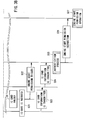
- FIG. 3 is a sequence chart showing an operation of the preferred embodiment of the vehicle unlocking system;
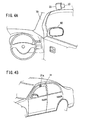
- FIG. 4A is a view showing an example of an IC card holder mounted on the upper side of a driver seat in the vicinity of the inner side of a sun visor; and
- FIG. 4B is a view showing an example of a sun visor with a planar antenna.
- Preferred embodiments of the present invention will be described hereinafter with reference to the drawings.
- The description hereinlater will be directed to the construction of the present embodiment of the vehicle unlocking system.
- Referring to FIG. 1 of the drawings, there is shown a present embodiment of the
vehicle unlocking system 10 comprising a batteryless noncontact IC (Integrated Circuit)card 20 having stored therein authentication information used to authenticate a user of a vehicle, avehicle unlocking device 40 for unlocking a vehicle lock, an engine start permittingdevice 50 for permitting an engine forming part of said vehicle to start, and avehicle control apparatus 30 for controlling thevehicle unlocking device 40 and the engine start permittingdevice 50 on the basis of the authentication information. As will be seen from the drawings, there have been described only one batterylessnoncontact IC card 20 provided in thevehicle unlocking system 10 for the purpose of simplifying the description and assisting in understanding about the present embodiment. It is, however, needless to mention that thevehicle unlocking system 10 may comprise a plurality of batterylessnoncontact IC cards 20. Further, the batterylessnoncontact IC card 20 may be constituted by an electronic driver license. - The
vehicle control apparatus 30 comprises communication means 31 for communicating with the batterylessnoncontact IC card 20, control means 32 for authenticating a user of the vehicle, and anIC card holder 33 for retaining the batterylessnoncontact IC card 20. - The batteryless
noncontact IC card 20 includes a storage unit for having stored therein authentication information used to authenticate a user of a vehicle, and an antenna, not shown, for communicating with thevehicle control apparatus 30. Here, the authentication information is intended to mean information on a user who is permitted by an owner of the vehicle to use the vehicle, and may include for example, ID (Identification) number, an electronic driver license number, and the like. - The communication means 31 includes a
planar antenna 31a operable to communicate with the batterylessnoncontact IC card 20, and asignal processing unit 31b operable to process signals transmitted and received through theplanar antenna 31a. - The
planar antenna 31a is constituted by a film type antenna made of, for example, a copper plated pattern in the form of a spiral shape, and capable of being mounted on a rounded surface, a spherical surface, a multilevel surface, and the like. In addition, theplanar antenna 31a is preferably waterproof finished if mounted exterior to the vehicle. - The
signal processing unit 31b is constituted by, an oscillation circuit, a modulation circuit, a demodulation circuit, and the like. Thesignal processing unit 31b is designed to supply electric power to operate the batterylessnoncontact IC card 20 by means of a carrier wave having a frequency of, for example, 13.56 MHz. Thesignal processing unit 31b is operative to modulate the phase of the carrier wave of, for example, 13.56 MHz, in order to communicate with the batterylessnoncontact IC card 20 so as to receive authentication information data from the batterylessnoncontact IC card 20 and transmit data to the batterylessnoncontact IC card 20. - The control means 32 includes an
authentication unit 32a for authenticating a user of the vehicle, and an authenticationinformation storage unit 32b having stored therein predetermined authentication information. The control means 32 is constituted by a microprocessor, a memory, and the like. The control means 32 is operative to selectively output an unlock permission signal (first control signal) to thevehicle unlocking device 40 and an engine start permission signal (second control signal) to the engine start permittingdevice 50 based on the authentication information received by the communication means 31. - The
IC card holder 33 is made of, for example, a plastic material, and designed to retain the batterylessnoncontact IC card 20. TheIC card holder 33 is mounted in an area of the vehicle where the batterylessnoncontact IC card 20 can receive electric power through theplanar antenna 31a. This means thatIC card holder 33 may be disposed spaced apart from theplanar antenna 31a at a distance of, for example, 30 cm or less. - The installation examples of the
planar antenna 31a and theIC card holder 33 will be described hereinlater. - FIG. 2A is a view showing an example of an
IC card holder 33 mounted in the vicinity of an attaching portion of an outwardly exposedexterior mirror unit 60 and a batterylessnoncontact IC card 20 inserted in theIC card holder 33. TheIC card holder 33 is fixedly connected with an inner wall of awindow frame 70 forming part of a driver seat door with screws, adhesive tapes, and the like. In the present embodiment, the user of the vehicle can insert the batterylessnoncontact IC card 20 into theIC card holder 33 irrespective of the direction of the batterylessnoncontact IC card 20, viz., without regard to, for example, front or rear face, and upper or lower portion of the batterylessnoncontact IC card 20. - FIG. 2B is a view showing a mirror
unit support portion 61 and amirror assembly portion 62 collectively forming part of theexterior mirror unit 60. In FIG. 2B, the mirrorunit support portion 61 and themirror assembly portion 62 are shown as being dismounted from each other. The mirrorunit support portion 61 is made of, for example, a plastic material, and includes amirror support member 61 a and anarm member 61b. Themirror support member 61a includes an actuator 61c for adjusting a mounting angle of themirror assembly portion 62, and communication means 31. - The
planar antenna 31 a is mounted on a rear face of theactuator 61c, and fixedly connected with an inner wall of themirror support member 61a with, for example, an adhesive tape, and the like. Thearm member 61b has formed therein acable hole 61d through which cables of theplanar antenna 31a and theactuator 61c are passing, and a plurality ofscrew holes 61e through which screws are screwed to secure theexterior mirror unit 60 to the driver seat door. - The
mirror assembly portion 62 includes amirror member 62a, amirror holder 62b made of a plastic material to hold themirror member 62a, and anactuator fixing member 62c to be fixed with theactuator 61 c. - The construction as shown in FIGS. 2A and 2B makes it possible for the
planar antenna 31a to supply electric power to the batterylessnoncontact IC card 20 to drive the batterylessnoncontact IC card 20, thereby enabling data communication. - While it has been described in the above that the
planar antenna 31 a is shown in FIG 2B as being fixedly connected with an inner wall of themirror support member 61a, theplanar antenna 31a may be fixedly connected with an inner wall of thearm member 61b, themirror holder 62b, or the like. Further, thesignal processing unit 31b forming part of the communication means 31 may be mounted within theexterior mirror unit 60. This construction can reduce a distance between theplanar antenna 31a and thesignal processing unit 31b, thereby damping influences caused by noise in comparison with the construction, in which the distance between theplanar antenna 31a and thesignal processing unit 31b is made longer. - The
vehicle unlocking device 40 is operative to carry out an unlock operation of unlocking the vehicle locks including, for example, a door lock and a trunk lock, upon receiving the unlock permission signal from the control means 32. The vehicle locks to be unlocked by the unlocking operation may further include other locks such as, for example, locks of a globe box provided in front of a passenger seat and a seat box provided between the driver seat and the passenger seat. - The engine start permitting
device 50 is operative to carry out an engine start permission operation of permitting an engine to start by using an engine start key upon receiving the engine start permission signal from the control means 32. - The batteryless
noncontact IC card 20 constitutes authentication information storage device. Theplanar antenna 31a constitutes antenna means. TheIC card holder 33 constitutes retaining means. The unlock permission signal constitutes a first control signal. The engine start permission signal constitutes a second control signal. - The description hereinlater will be directed to the operation of the present embodiment of the
vehicle unlocking system 10 with reference to FIG 3. - As clearly seen from FIG. 3, the batteryless
noncontact IC card 20 carried by a user of the vehicle is firstly approached in the vicinity of the exterior mirror unit 60 (step S11). As a result of this, the communication means 31 is operated to supply electric power to the batterylessnoncontact IC card 20, and the batterylessnoncontact IC card 20 is operated to transmit a vehicle unlock permission trigger signal so as to start an authenticating operation for unlocking the vehicle lock (step S12), and the control means 32 is operated to receive the vehicle unlock permission trigger signal through the communication means 31. - Further, the batteryless
noncontact IC card 20 is operated to transmit IC card information to the communication means 31 (step S 13), and the control means 32 is operated to receive the IC card information from the communication means 31 (step S14). - The
authentication unit 32a forming part of the control means 32 is operated to read the predetermined authentication information from the authenticationinformation storage unit 32b, and judge whether or not the IC card information is matched with the predetermined authentication information (step S15). When it is judged that the IC card information is matched with the predetermined authentication information, the control means 32 is operated to output an unlock permission signal, i.e., an unlock instruction, to the vehicle unlocking device 40 (step S16). Thevehicle unlocking device 40 is operated to carry out the unlock operation (step S17), and a vehicle door is thus unlocked. - When it is, on the other hand, judged in the step S15 that the IC card information is not matched with the predetermined authentication information, the control means 32 is operated to abort the unlock operation, and the vehicle lock remains locked.
- After the vehicle door is unlocked, the user of the vehicle gets in the vehicle and the batteryless
noncontact IC card 20 is inserted by the user of the vehicle into and retained by the IC card holder 33 (step S21). As a result of this, the communication means 31 is operated to supply electric power to the batterylessnoncontact IC card 20, and the batterylessnoncontact IC card 20 is operated to transmit an engine start permission trigger signal so as to start an authenticating operation for permitting the engine to start (step S22), and the control means 32 is operated to receive the engine start permission trigger signal through the communication means 31. - The
vehicle control apparatus 30 may be constructed in such a manner that the batterylessnoncontact IC card 20 is not regarded as having been inserted into theIC card holder 30 in the step S21 in the case that the door is not opened although theplanar antenna 31a enters into a state capable of being communicated with the batterylessnoncontact IC card 20. The vehicle may be equipped with, for example, a door sensor for sensing an opening or closing position of the door, a seat occupancy sensor on the driver seat, or the like, so as to make the judgment whether or not the door is opened. - The process to be carried out in the step S22 is not limited to the case that the trigger signal is not transmitted until the batteryless
noncontact IC card 20 is completely inserted into and retained by theIC card holder 33. The batterylessnoncontact IC card 20 may be constructed so as to transmit the trigger signal, for example, while the batterylessnoncontact IC card 20 is being inserted into theIC card holder 33. - Further, the batteryless
noncontact IC card 20 is operated to transmit IC card information to the communication means 31 (step S23), and the control means 32 is operated to receive the IC card information from the communication means 31 (step S24). - The
authentication unit 32a forming part of the control means 32 is operated to read the predetermined authentication information from the authenticationinformation storage unit 32b, and judge whether or not the IC card information is matched with the predetermined authentication information (step S25). When it is judged that the IC card information is matched with the predetermined authentication information, the control means 32 is operated to output an engine start permission signal, i.e., an engine start permission instruction, to the engine start permitting device 50 (step S26). The engine start permittingdevice 50 is operated to carry out the engine start permission operation (step S27). As a result of this, the engine is permitted to start as soon as the engine start key is turned on. - When it is, on the other hand, judged in the step S25 that the IC card information is not matched with the predetermined authentication information, the engine start permission operation is aborted, and the engine remains prevented from starting even thought the engine start key may be turned on by the holder of the batteryless
noncontact IC card 20. - While it has been described in the above that the batteryless
noncontact IC card 20 is operative to transmit the vehicle unlock permission trigger signal in the aforementioned step S12 so as to start an authenticating operation for judging whether or the vehicle lock is to be unlocked, the batterylessnoncontact IC card 20 may transmit any other trigger signal for starting a predetermined authenticating operation, in addition to or in place of the vehicle unlock permission trigger signal. - Further, the
vehicle unlocking system 10 may comprise any other in-vehicle permitting device operative to carry out any other permission operation of permitting any other in-vehicle device mounted on the vehicle to be used in addition to or in place of the engine start permission operation. - The in-vehicle permitting device operative to carry out the permission operation may include, for example, an in-vehicle telephone permitting device for permitting an in-vehicle telephone to be used, an in-vehicle audio permitting device for permitting an in-vehicle audio device to be used, a combination meter permitting device for permitting a combination meter device to be used, an emergency calling permitting device for permitting an emergency calling device to be used, a road-to-vehicle communication permitting device for permitting a road-to-vehicle communication device to be used, and the like.
- As described in the above, the
vehicle control apparatus 30 thus constructed as previously mentioned will prevent the in-vehicle device from being used by an unauthorized person who are not registered and cannot be authenticated with his or her IC card information, resulting from the fact that thevehicle control apparatus 30 is operative to permit the aforementioned in-vehicle device to be used under the condition that the batterylessnoncontact IC card 20 is inserted into theIC card holder 33, and the IC card information is matched with the predetermined authentication information. Thevehicle control apparatus 30 thus constructed can protect, for example, registered information stored in the aforementioned in-vehicle device, and prevent from being charged for unauthorized use of the in-vehicle telephone and the road-to-vehicle device, and the like. - Note, in the above description, the
planar antenna 31a is assumed to be provided in theexterior mirror unit 60 on the side of the driver seat, but this does not limit the present invention. Theplanar antennas 31a may be provided in, for example, exterior mirror units on the both sides of the driver seat and the passenger seat, and theIC card holder 33 may be mounted in the vicinity of the exterior mirror unit on the side of the driver seat. Thevehicle control apparatus 30 thus constructed enables the user of the vehicle standing on any one of the driver seat side and the passenger seat side to unlock the vehicle lock. This leads to the fact that thevehicle control apparatus 30 thus constructed can further enhance convenience for a person other than the driver, resulting from the fact that thevehicle control apparatus 30 makes it possible for the person to bring baggage into the vehicle as well as get in the vehicle before the driver comes. - In addition, the
planar antenna 31 a may be provided in any area other than the exterior mirror unit. Theplanar antenna 31a may be provided in, for example, a lower corner of a windshield on the in-vehicle driver seat side, and theIC card holder 33 may be mounted in the vicinity of theplanar antenna 31a. Further, theplanar antenna 31a may be provided in, for example, a sun visor on the driver seat side, and theIC card holder 33 may be integrally formed with a card pocket forming part of the sun visor. The card pocket can have an expressway ticket or the like temporarily held therein. Still further, theIC card holder 33 may be mounted in an upper door portion or in a ceiling portion on the door side in the vicinity of the inner side of the sun visor on the driver seat side, and theplanar antenna 31a may be provided in the sun visor on the driver seat side. In this case, it is needless to mention that theplanar antennas 31a may be provided in the sun visors both on the driver seat side and the passenger seat side. An example of theIC card holder 33 mounted in an upper door portion or in a ceiling portion on the door side in the vicinity of the inner side of the sun visor is shown in FIG. 4A, and an example of asun visor 34 having provided therein theplanar antenna 31a is shown in FIG. 4B. - As will be seen from the above, even in the case that the
planar antenna 31a is provided in an area other than the exterior mirror unit, the user of the vehicle can unlock the vehicle lock from the outside of the vehicle and start the engine when he or she inserts the batterylessnoncontact IC card 20 into theIC card holder 33. - As will be appreciated from the foregoing description, it is to be understood that the present embodiment of the
vehicle unlocking system 10 can make the communication means 31 and the control means 32 common to thevehicle unlocking device 40 and the engine start permittingdevice 50, resulting from the fact that the communication means 31 is capable of communicating with both thevehicle unlocking device 40 and the engine start permittingdevice 50, and the control means 32 is operative to output an unlock permission signal to thevehicle unlocking device 40 when the authentication information is matched with the predetermined authentication under the condition that the vehicle lock is locked, and the same control means 32 is operative to output an engine start permission signal to the engine start permittingdevice 50 when the authentication information is matched with the predetermined authentication information under the condition that the vehicle lock is unlocked and the batterylessnoncontact IC card 20 is retained by theIC card holder 33. This leads to the fact that the present embodiment of thevehicle unlocking system 10 can authenticate a user of the vehicle while being simple in construction and reduced in cost. - From the foregoing description, it will be appreciated that the vehicle unlocking system according to the present invention has an effect of authenticating a user of the vehicle while being simple in construction and reduced in cost, and is available as, for example, a control system for controlling the operation of in-vehicle devices by means of wireless communication.
- The present invention can provide a vehicle unlocking system which comprises control means operative to output respective signals different from each other before and after authentication information storage device is retained in retaining means, and has an effect of authenticating a user of the vehicle while being simple in construction and reduced in cost.
Claims (13)
- A vehicle control apparatus, comprising:antenna means for communicating with an authentication information storage unit having stored therein authentication information used to authenticate a user of a vehicle;retaining means provided in said vehicle and disposed in spaced apart relationship with said antenna means at a predetermined distance to retain said authentication information storage unit; andcontrol means for selectively outputting a first control signal to control a predetermined first device and a second control signal to control a predetermined second device based on said authentication information received by said antenna means, and in whichsaid control means is operative to output said first control signal to said first device under the condition that a lock of said vehicle is locked and said authentication information is matched with predetermined authentication information, and output said second control signal to said second device under the condition that said authentication information is matched with predetermined authentication information after said lock of said vehicle is unlocked and said authentication information storage unit is retained by said retaining means.
- A vehicle control apparatus as set forth in claim 1, in which
said antenna means is operative to supply electric power to said authentication information storage unit to drive said authentication information storage unit. - A vehicle control apparatus as set forth in claim 1 or claim 2, in which
said antenna means is constituted by a film type antenna. - A vehicle control apparatus as set forth in any one of claims 1 through 3, in which
said antenna means is provided in an outwardly exposed mirror unit forming part of said vehicle. - A vehicle control apparatus as set forth in any one of claims 1 through 3, in which
said antenna means is provided in an outwardly exposed sun visor forming part of said vehicle. - A vehicle control apparatus as set forth in any one of claims 1 through 5, in which
said authentication information storage unit is constituted by an electronic driver license. - A vehicle unlocking system, comprising:a vehicle control apparatus as set forth in any one of claims 1 through 6; anda vehicle unlocking device operative to unlock a lock of said vehicle upon receiving said first control signal.
- A vehicle unlocking system as set forth in claim 7, further comprising:an engine start permitting device operative to permit an engine forming part of said vehicle to start upon receiving said second control signal.
- A vehicle unlocking system as set forth in claim 7 or claim 8, further comprising:an in-vehicle telephone permitting device operative to permit an in-vehicle telephone device to be used upon receiving said second control signal.
- A vehicle unlocking system as set forth in any one of claims 7 through 9, further comprising:an in-vehicle audio permitting device operative to permit an in-vehicle audio device to be used upon receiving said second control signal.
- A vehicle unlocking system as set forth in any one of claims 7 through 10, further comprising:a combination meter permitting device operative to permit a combination meter device to be used upon receiving said second control signal.
- A vehicle unlocking system as set forth in any one of claims 7 through 11, further comprising:an emergency calling permitting device operative to permit an emergency calling device to be used upon receiving said second control signal.
- A vehicle unlocking system as set forth in any one of claims 7 through 12, further comprising:a road-to-vehicle communication permitting device operative to permit a road-to-vehicle communication device to be used upon receiving said second control signal.
Applications Claiming Priority (2)
| Application Number | Priority Date | Filing Date | Title |
|---|---|---|---|
| JP2003309071 | 2003-09-01 | ||
| PCT/JP2004/012717 WO2005021905A1 (en) | 2003-09-01 | 2004-08-26 | Vehicle unlocking system |
Publications (2)
| Publication Number | Publication Date |
|---|---|
| EP1662079A1 true EP1662079A1 (en) | 2006-05-31 |
| EP1662079A4 EP1662079A4 (en) | 2009-11-04 |
Family
ID=34269544
Family Applications (1)
| Application Number | Title | Priority Date | Filing Date |
|---|---|---|---|
| EP04772671A Withdrawn EP1662079A4 (en) | 2003-09-01 | 2004-08-26 | VEHICLE UNLOCKING SYSTEM |
Country Status (5)
| Country | Link |
|---|---|
| US (1) | US20070018789A1 (en) |
| EP (1) | EP1662079A4 (en) |
| JP (1) | JPWO2005021905A1 (en) |
| CN (1) | CN1846038A (en) |
| WO (1) | WO2005021905A1 (en) |
Cited By (1)
| Publication number | Priority date | Publication date | Assignee | Title |
|---|---|---|---|---|
| FR3030602A1 (en) * | 2014-12-18 | 2016-06-24 | Renault Sa | AUTOMOTIVE VEHICLE ACCESS CONTROL UNIT, SYSTEM AND METHOD FOR CONTROLLING ACCESS TO THE MOTOR VEHICLE |
Families Citing this family (9)
| Publication number | Priority date | Publication date | Assignee | Title |
|---|---|---|---|---|
| US20090079539A1 (en) * | 2006-09-12 | 2009-03-26 | Linsley A. Johnson | JSI Key |
| US9670694B2 (en) * | 2007-04-12 | 2017-06-06 | Utc Fire & Security Americas Corporation, Inc. | Restricted range lockbox, access device and methods |
| WO2009063406A2 (en) * | 2007-11-14 | 2009-05-22 | Nxp B.V. | Electronic system and method of operating an electronic system |
| US20110192896A1 (en) * | 2010-02-09 | 2011-08-11 | Pauyi Technology Co., Ltd. | Electronic name card and electronic name card system using radio frequency or microwave identification |
| JP5658103B2 (en) | 2011-07-12 | 2015-01-21 | 株式会社東海理化電機製作所 | Power plug lock device |
| JP6211506B2 (en) * | 2014-12-03 | 2017-10-11 | アイシン精機株式会社 | Open / close detection device for vehicle opening / closing body |
| CN104648322A (en) * | 2015-02-04 | 2015-05-27 | 刘波 | Electric automobile key based on encrypted Bluetooth communication and control method of electric automobile key |
| CN107852536A (en) * | 2015-07-22 | 2018-03-27 | 松下知识产权经营株式会社 | Moving body is with information processing system, the server of moving body management, information communication terminal, moving body |
| CN115761944A (en) * | 2022-10-19 | 2023-03-07 | 云度新能源汽车有限公司 | Automobile NFC (near field communication) verification method and system and automobile |
Family Cites Families (24)
| Publication number | Priority date | Publication date | Assignee | Title |
|---|---|---|---|---|
| JPS57119074A (en) * | 1981-01-17 | 1982-07-24 | Makoto Kai | Chain lock device utilizing radio wave |
| JPS60119873A (en) * | 1983-11-29 | 1985-06-27 | 日産自動車株式会社 | Locking controller for vehicle |
| KR900009111B1 (en) * | 1986-11-07 | 1990-12-22 | 야기 안테나 가부시기가이샤 | Antenna devices of film |
| JPS646112U (en) * | 1987-06-26 | 1989-01-13 | ||
| JPH0738503U (en) * | 1993-12-24 | 1995-07-14 | 株式会社アルファ | License type electronic key device and electronic lock device using the same |
| JP3507153B2 (en) * | 1994-11-30 | 2004-03-15 | 株式会社東海理化電機製作所 | Vehicle door lock control device |
| JP3630799B2 (en) * | 1995-10-12 | 2005-03-23 | 株式会社東海理化電機製作所 | Remote control system |
| JP3694883B2 (en) * | 1996-03-19 | 2005-09-14 | ソニー株式会社 | Locking / unlocking control device |
| JPH09282573A (en) * | 1996-04-16 | 1997-10-31 | Sony Corp | Automotive electronics |
| JP3713814B2 (en) * | 1996-05-23 | 2005-11-09 | 株式会社デンソー | Receiving antenna for wireless door lock device of vehicle and wireless door lock device |
| JPH1178708A (en) * | 1997-09-16 | 1999-03-23 | Kyoichi Murata | Side visor for automobile |
| JP3481835B2 (en) * | 1997-10-30 | 2003-12-22 | 株式会社アルファ | Non-contact type lock control device |
| JP4101929B2 (en) * | 1998-05-08 | 2008-06-18 | 株式会社東海理化電機製作所 | Vehicle communication device |
| KR20010023541A (en) * | 1998-07-02 | 2001-03-26 | 마츠시타 덴끼 산교 가부시키가이샤 | Antenna unit, communication system and digital television receiver |
| JP2000038032A (en) * | 1998-07-24 | 2000-02-08 | Nippon Seiki Co Ltd | Starting device for vehicle |
| JP3693823B2 (en) * | 1998-09-01 | 2005-09-14 | アルパイン株式会社 | Dial lock release system for car phone and keyless unit |
| DE19847135B4 (en) * | 1998-10-13 | 2007-10-31 | Texas Instruments Deutschland Gmbh | Method for reading the data stored in a transponder and transponder system for carrying out the method |
| US6275379B1 (en) * | 1999-03-10 | 2001-08-14 | Lear Corporation | Visor docking arrangement for removable transmitter |
| JP4097352B2 (en) * | 1999-03-31 | 2008-06-11 | 松下電器産業株式会社 | Emergency call system |
| JP2000320210A (en) * | 1999-05-07 | 2000-11-21 | Honda Motor Co Ltd | Vehicle and vehicle return / collection control device |
| JP2001336328A (en) * | 2000-05-29 | 2001-12-07 | Yuhshin Co Ltd | Keyless entry device for automobile |
| US6621406B2 (en) * | 2001-04-18 | 2003-09-16 | U-Shin Ltd. | Keyless entry system for vehicle |
| US6859728B2 (en) * | 2002-04-03 | 2005-02-22 | Matsushita Electric Industrial Co., Ltd. | Navigation system |
| JP3973984B2 (en) * | 2002-07-09 | 2007-09-12 | アルプス電気株式会社 | Keyless entry for immobilizer authentication |
-
2004
- 2004-08-26 US US10/570,127 patent/US20070018789A1/en not_active Abandoned
- 2004-08-26 JP JP2005513537A patent/JPWO2005021905A1/en active Pending
- 2004-08-26 WO PCT/JP2004/012717 patent/WO2005021905A1/en not_active Ceased
- 2004-08-26 CN CN200480025116.5A patent/CN1846038A/en active Pending
- 2004-08-26 EP EP04772671A patent/EP1662079A4/en not_active Withdrawn
Cited By (1)
| Publication number | Priority date | Publication date | Assignee | Title |
|---|---|---|---|---|
| FR3030602A1 (en) * | 2014-12-18 | 2016-06-24 | Renault Sa | AUTOMOTIVE VEHICLE ACCESS CONTROL UNIT, SYSTEM AND METHOD FOR CONTROLLING ACCESS TO THE MOTOR VEHICLE |
Also Published As
| Publication number | Publication date |
|---|---|
| CN1846038A (en) | 2006-10-11 |
| EP1662079A4 (en) | 2009-11-04 |
| JPWO2005021905A1 (en) | 2006-10-26 |
| US20070018789A1 (en) | 2007-01-25 |
| WO2005021905A1 (en) | 2005-03-10 |
Similar Documents
| Publication | Publication Date | Title |
|---|---|---|
| JP4358483B2 (en) | Electronic key system | |
| KR100810279B1 (en) | Car lock | |
| EP1184236B1 (en) | Radio system | |
| JP4612173B2 (en) | Hand-free access device and engine starter for automobile | |
| US8947203B2 (en) | Aftermarket sound activated wireless vehicle door unlocker | |
| US9563996B2 (en) | Radio key for a vehicle | |
| EP0767286A2 (en) | Remote keyless entry and immobilization system for automotive use | |
| JP2010216176A (en) | Door handle device for vehicle | |
| US20030107521A1 (en) | Room mirror with built-in antenna | |
| US20080068128A1 (en) | Keyless passive entry system | |
| US10479321B2 (en) | Method for operating a radio-based monitoring system of a transportation vehicle and monitoring system and transmitting and receiving unit for the monitoring system | |
| EP1662079A1 (en) | Vehicle unlocking system | |
| JPH112053A (en) | Passive entry control system for vehicles | |
| US12534045B2 (en) | Vehicle control system | |
| JP2002030844A (en) | Door opening and closing device | |
| JP2005263166A (en) | IC card adapter device and vehicle control device | |
| JP2002242501A (en) | Wireless locking and unlocking device for automobiles | |
| US12365309B2 (en) | Hideable security key using near field communication | |
| JP4561610B2 (en) | In-vehicle communication system | |
| US6563416B1 (en) | Locking device for a motor vehicle having a number of doors | |
| JP2012111413A (en) | Radio communication device of vehicle | |
| JP5590482B2 (en) | Switching system | |
| JP4933226B2 (en) | Keyless system for vehicles | |
| JP2004114890A (en) | Vehicle control device | |
| JP2002236953A (en) | In-vehicle device for short range communication |
Legal Events
| Date | Code | Title | Description |
|---|---|---|---|
| PUAI | Public reference made under article 153(3) epc to a published international application that has entered the european phase |
Free format text: ORIGINAL CODE: 0009012 |
|
| 17P | Request for examination filed |
Effective date: 20060223 |
|
| AK | Designated contracting states |
Kind code of ref document: A1 Designated state(s): DE FR GB |
|
| DAX | Request for extension of the european patent (deleted) | ||
| RBV | Designated contracting states (corrected) |
Designated state(s): DE FR GB |
|
| RAP1 | Party data changed (applicant data changed or rights of an application transferred) |
Owner name: PANASONIC CORPORATION |
|
| A4 | Supplementary search report drawn up and despatched |
Effective date: 20091001 |
|
| STAA | Information on the status of an ep patent application or granted ep patent |
Free format text: STATUS: THE APPLICATION IS DEEMED TO BE WITHDRAWN |
|
| 18D | Application deemed to be withdrawn |
Effective date: 20091231 |