EP1648504B1 - Adjuvanskombinationen von liposomen und mycobakteriellen lipiden für immunisierungszusammensetzungen und impfstoffe - Google Patents
Adjuvanskombinationen von liposomen und mycobakteriellen lipiden für immunisierungszusammensetzungen und impfstoffe Download PDFInfo
- Publication number
- EP1648504B1 EP1648504B1 EP04738985A EP04738985A EP1648504B1 EP 1648504 B1 EP1648504 B1 EP 1648504B1 EP 04738985 A EP04738985 A EP 04738985A EP 04738985 A EP04738985 A EP 04738985A EP 1648504 B1 EP1648504 B1 EP 1648504B1
- Authority
- EP
- European Patent Office
- Prior art keywords
- dda
- lipids
- ag85b
- adjuvant
- esat6
- Prior art date
- Legal status (The legal status is an assumption and is not a legal conclusion. Google has not performed a legal analysis and makes no representation as to the accuracy of the status listed.)
- Expired - Lifetime
Links
- 150000002632 lipids Chemical class 0.000 title claims abstract description 235
- 239000002671 adjuvant Substances 0.000 title claims description 79
- 229960005486 vaccine Drugs 0.000 title claims description 71
- 238000002649 immunization Methods 0.000 title description 54
- 230000003053 immunization Effects 0.000 title description 47
- 239000002502 liposome Substances 0.000 title description 27
- 239000000203 mixture Substances 0.000 title description 26
- 239000000284 extract Substances 0.000 claims abstract description 39
- 239000004094 surface-active agent Substances 0.000 claims abstract description 13
- 206010028980 Neoplasm Diseases 0.000 claims abstract description 7
- 201000011510 cancer Diseases 0.000 claims abstract description 5
- 201000008827 tuberculosis Diseases 0.000 claims description 38
- 238000000034 method Methods 0.000 claims description 15
- KSXTUUUQYQYKCR-LQDDAWAPSA-M 2,3-bis[[(z)-octadec-9-enoyl]oxy]propyl-trimethylazanium;chloride Chemical compound [Cl-].CCCCCCCC\C=C/CCCCCCCC(=O)OCC(C[N+](C)(C)C)OC(=O)CCCCCCC\C=C/CCCCCCCC KSXTUUUQYQYKCR-LQDDAWAPSA-M 0.000 claims description 12
- 229930186217 Glycolipid Natural products 0.000 claims description 11
- 230000000890 antigenic effect Effects 0.000 claims description 11
- HDTRYLNUVZCQOY-UHFFFAOYSA-N α-D-glucopyranosyl-α-D-glucopyranoside Natural products OC1C(O)C(O)C(CO)OC1OC1C(O)C(O)C(O)C(CO)O1 HDTRYLNUVZCQOY-UHFFFAOYSA-N 0.000 claims description 7
- HDTRYLNUVZCQOY-LIZSDCNHSA-N alpha,alpha-trehalose Chemical compound O[C@@H]1[C@@H](O)[C@H](O)[C@@H](CO)O[C@@H]1O[C@@H]1[C@H](O)[C@@H](O)[C@H](O)[C@@H](CO)O1 HDTRYLNUVZCQOY-LIZSDCNHSA-N 0.000 claims description 7
- 239000012634 fragment Substances 0.000 claims description 7
- HDTRYLNUVZCQOY-WSWWMNSNSA-N Trehalose Natural products O[C@@H]1[C@@H](O)[C@@H](O)[C@@H](CO)O[C@@H]1O[C@@H]1[C@H](O)[C@@H](O)[C@@H](O)[C@@H](CO)O1 HDTRYLNUVZCQOY-WSWWMNSNSA-N 0.000 claims description 6
- 241000186359 Mycobacterium Species 0.000 claims description 5
- 239000003093 cationic surfactant Substances 0.000 claims description 5
- HLQGVSDAPGNBGG-ITGKQZKFSA-N phthiocerol A Chemical compound CCCCCCCCCCCCCCCCCC[C@H](O)C[C@H](O)CCCC[C@@H](C)[C@H](CC)OC HLQGVSDAPGNBGG-ITGKQZKFSA-N 0.000 claims description 5
- 241000186366 Mycobacterium bovis Species 0.000 claims description 4
- 241000187479 Mycobacterium tuberculosis Species 0.000 claims description 4
- HIHOWBSBBDRPDW-PTHRTHQKSA-N [(3s,8s,9s,10r,13r,14s,17r)-10,13-dimethyl-17-[(2r)-6-methylheptan-2-yl]-2,3,4,7,8,9,11,12,14,15,16,17-dodecahydro-1h-cyclopenta[a]phenanthren-3-yl] n-[2-(dimethylamino)ethyl]carbamate Chemical compound C1C=C2C[C@@H](OC(=O)NCCN(C)C)CC[C@]2(C)[C@@H]2[C@@H]1[C@@H]1CC[C@H]([C@H](C)CCCC(C)C)[C@@]1(C)CC2 HIHOWBSBBDRPDW-PTHRTHQKSA-N 0.000 claims description 4
- 150000003626 triacylglycerols Chemical class 0.000 claims description 4
- 208000023275 Autoimmune disease Diseases 0.000 claims description 3
- 206010020751 Hypersensitivity Diseases 0.000 claims description 3
- 241000187919 Mycobacterium microti Species 0.000 claims description 3
- 241000187644 Mycobacterium vaccae Species 0.000 claims description 3
- 208000026935 allergic disease Diseases 0.000 claims description 3
- 230000007815 allergy Effects 0.000 claims description 3
- 125000000695 menaquinone group Chemical group 0.000 claims description 3
- ISWSIDIOOBJBQZ-UHFFFAOYSA-N phenol group Chemical group C1(=CC=CC=C1)O ISWSIDIOOBJBQZ-UHFFFAOYSA-N 0.000 claims description 3
- 235000019143 vitamin K2 Nutrition 0.000 claims description 3
- 239000011728 vitamin K2 Substances 0.000 claims description 3
- 241001467553 Mycobacterium africanum Species 0.000 claims description 2
- 150000002989 phenols Chemical class 0.000 claims description 2
- WVXRAFOPTSTNLL-NKWVEPMBSA-N 2',3'-dideoxyadenosine Chemical group C1=NC=2C(N)=NC=NC=2N1[C@H]1CC[C@@H](CO)O1 WVXRAFOPTSTNLL-NKWVEPMBSA-N 0.000 claims 1
- 101150034825 DODA gene Proteins 0.000 claims 1
- 235000005583 doda Nutrition 0.000 claims 1
- HKUFIYBZNQSHQS-UHFFFAOYSA-N n-octadecyloctadecan-1-amine Chemical compound CCCCCCCCCCCCCCCCCCNCCCCCCCCCCCCCCCCCC HKUFIYBZNQSHQS-UHFFFAOYSA-N 0.000 claims 1
- 230000028993 immune response Effects 0.000 abstract description 48
- OKKJLVBELUTLKV-UHFFFAOYSA-N Methanol Chemical compound OC OKKJLVBELUTLKV-UHFFFAOYSA-N 0.000 abstract description 36
- HEDRZPFGACZZDS-UHFFFAOYSA-N Chloroform Chemical compound ClC(Cl)Cl HEDRZPFGACZZDS-UHFFFAOYSA-N 0.000 abstract description 34
- 241001467552 Mycobacterium bovis BCG Species 0.000 abstract description 29
- XLYOFNOQVPJJNP-UHFFFAOYSA-N water Substances O XLYOFNOQVPJJNP-UHFFFAOYSA-N 0.000 abstract description 14
- 238000002360 preparation method Methods 0.000 abstract description 9
- 244000052769 pathogen Species 0.000 abstract description 8
- 230000021633 leukocyte mediated immunity Effects 0.000 abstract description 4
- 238000011282 treatment Methods 0.000 abstract description 2
- 239000012646 vaccine adjuvant Substances 0.000 abstract description 2
- 229940124931 vaccine adjuvant Drugs 0.000 abstract description 2
- VEXZGXHMUGYJMC-UHFFFAOYSA-M Chloride anion Chemical compound [Cl-] VEXZGXHMUGYJMC-UHFFFAOYSA-M 0.000 abstract 1
- 241000124008 Mammalia Species 0.000 abstract 1
- 239000000427 antigen Substances 0.000 description 80
- 108091007433 antigens Proteins 0.000 description 79
- 102000036639 antigens Human genes 0.000 description 79
- 241000699670 Mus sp. Species 0.000 description 67
- 102100037850 Interferon gamma Human genes 0.000 description 34
- 108010074328 Interferon-gamma Proteins 0.000 description 34
- 210000004698 lymphocyte Anatomy 0.000 description 29
- 230000000694 effects Effects 0.000 description 20
- 108090000765 processed proteins & peptides Proteins 0.000 description 20
- 108020001507 fusion proteins Proteins 0.000 description 18
- 102000037865 fusion proteins Human genes 0.000 description 16
- FAPWRFPIFSIZLT-UHFFFAOYSA-M Sodium chloride Chemical compound [Na+].[Cl-] FAPWRFPIFSIZLT-UHFFFAOYSA-M 0.000 description 15
- 102000004196 processed proteins & peptides Human genes 0.000 description 15
- 230000001681 protective effect Effects 0.000 description 15
- 230000004044 response Effects 0.000 description 15
- 206010061218 Inflammation Diseases 0.000 description 14
- 238000009472 formulation Methods 0.000 description 14
- 230000004054 inflammatory process Effects 0.000 description 14
- 230000036039 immunity Effects 0.000 description 13
- 239000000126 substance Substances 0.000 description 13
- 229920001184 polypeptide Polymers 0.000 description 12
- 101710088334 Diacylglycerol acyltransferase/mycolyltransferase Ag85B Proteins 0.000 description 11
- 238000000338 in vitro Methods 0.000 description 11
- 238000002255 vaccination Methods 0.000 description 11
- RTZKZFJDLAIYFH-UHFFFAOYSA-N Diethyl ether Chemical compound CCOCC RTZKZFJDLAIYFH-UHFFFAOYSA-N 0.000 description 10
- 239000006228 supernatant Substances 0.000 description 10
- 101710166488 6 kDa early secretory antigenic target Proteins 0.000 description 9
- 238000002965 ELISA Methods 0.000 description 9
- 210000004027 cell Anatomy 0.000 description 9
- HVYWMOMLDIMFJA-DPAQBDIFSA-N cholesterol Chemical compound C1C=C2C[C@@H](O)CC[C@]2(C)[C@@H]2[C@@H]1[C@@H]1CC[C@H]([C@H](C)CCCC(C)C)[C@@]1(C)CC2 HVYWMOMLDIMFJA-DPAQBDIFSA-N 0.000 description 9
- 150000001875 compounds Chemical class 0.000 description 9
- 238000000605 extraction Methods 0.000 description 9
- 239000011780 sodium chloride Substances 0.000 description 9
- 238000004809 thin layer chromatography Methods 0.000 description 9
- 108091003079 Bovine Serum Albumin Proteins 0.000 description 8
- 210000001744 T-lymphocyte Anatomy 0.000 description 8
- 229940098773 bovine serum albumin Drugs 0.000 description 8
- 230000001939 inductive effect Effects 0.000 description 8
- 210000004072 lung Anatomy 0.000 description 8
- 150000003904 phospholipids Chemical class 0.000 description 8
- 108090000623 proteins and genes Proteins 0.000 description 8
- 102000004169 proteins and genes Human genes 0.000 description 8
- 210000000952 spleen Anatomy 0.000 description 8
- 241000699666 Mus <mouse, genus> Species 0.000 description 7
- 125000000539 amino acid group Chemical group 0.000 description 7
- 208000015181 infectious disease Diseases 0.000 description 7
- 210000002540 macrophage Anatomy 0.000 description 7
- 239000008188 pellet Substances 0.000 description 7
- 210000004180 plasmocyte Anatomy 0.000 description 7
- 210000002966 serum Anatomy 0.000 description 7
- 229940031626 subunit vaccine Drugs 0.000 description 7
- CSCPPACGZOOCGX-UHFFFAOYSA-N Acetone Chemical compound CC(C)=O CSCPPACGZOOCGX-UHFFFAOYSA-N 0.000 description 6
- 241000894006 Bacteria Species 0.000 description 6
- LFQSCWFLJHTTHZ-UHFFFAOYSA-N Ethanol Chemical compound CCO LFQSCWFLJHTTHZ-UHFFFAOYSA-N 0.000 description 6
- 241001646725 Mycobacterium tuberculosis H37Rv Species 0.000 description 6
- 239000012074 organic phase Substances 0.000 description 6
- 239000003208 petroleum Substances 0.000 description 6
- 230000003389 potentiating effect Effects 0.000 description 6
- 239000002904 solvent Substances 0.000 description 6
- XETCRXVKJHBPMK-MJSODCSWSA-N trehalose 6,6'-dimycolate Chemical compound C([C@@H]1[C@H]([C@H](O)[C@@H](O)[C@@H](O[C@@H]2[C@@H]([C@@H](O)[C@H](O)[C@@H](COC(=O)C(CCCCCCCCCCC3C(C3)CCCCCCCCCCCCCCCCCC)C(O)CCCCCCCCCCCCCCCCCCCCCCCCC)O2)O)O1)O)OC(=O)C(C(O)CCCCCCCCCCCCCCCCCCCCCCCCC)CCCCCCCCCCC1CC1CCCCCCCCCCCCCCCCCC XETCRXVKJHBPMK-MJSODCSWSA-N 0.000 description 6
- 239000002253 acid Substances 0.000 description 5
- 210000000577 adipose tissue Anatomy 0.000 description 5
- 230000000240 adjuvant effect Effects 0.000 description 5
- 150000001413 amino acids Chemical class 0.000 description 5
- 238000004458 analytical method Methods 0.000 description 5
- 210000003719 b-lymphocyte Anatomy 0.000 description 5
- 210000004369 blood Anatomy 0.000 description 5
- 239000008280 blood Substances 0.000 description 5
- 238000005119 centrifugation Methods 0.000 description 5
- LOKCTEFSRHRXRJ-UHFFFAOYSA-I dipotassium trisodium dihydrogen phosphate hydrogen phosphate dichloride Chemical compound P(=O)(O)(O)[O-].[K+].P(=O)(O)([O-])[O-].[Na+].[Na+].[Cl-].[K+].[Cl-].[Na+] LOKCTEFSRHRXRJ-UHFFFAOYSA-I 0.000 description 5
- 210000003714 granulocyte Anatomy 0.000 description 5
- 210000002865 immune cell Anatomy 0.000 description 5
- 230000002163 immunogen Effects 0.000 description 5
- 239000000463 material Substances 0.000 description 5
- 239000012071 phase Substances 0.000 description 5
- 239000002953 phosphate buffered saline Substances 0.000 description 5
- 208000035473 Communicable disease Diseases 0.000 description 4
- 241000282412 Homo Species 0.000 description 4
- 241000282414 Homo sapiens Species 0.000 description 4
- 101710164702 Major outer membrane protein Proteins 0.000 description 4
- 241001465754 Metazoa Species 0.000 description 4
- 108010058846 Ovalbumin Proteins 0.000 description 4
- 229910019142 PO4 Inorganic materials 0.000 description 4
- 241000700605 Viruses Species 0.000 description 4
- 230000002238 attenuated effect Effects 0.000 description 4
- 229960000190 bacillus calmette–guérin vaccine Drugs 0.000 description 4
- 125000002091 cationic group Chemical group 0.000 description 4
- 239000003153 chemical reaction reagent Substances 0.000 description 4
- 238000011161 development Methods 0.000 description 4
- 230000018109 developmental process Effects 0.000 description 4
- 230000005847 immunogenicity Effects 0.000 description 4
- 238000002347 injection Methods 0.000 description 4
- 239000007924 injection Substances 0.000 description 4
- -1 lipid compounds Chemical class 0.000 description 4
- 238000004519 manufacturing process Methods 0.000 description 4
- 239000002609 medium Substances 0.000 description 4
- 230000015654 memory Effects 0.000 description 4
- 238000002156 mixing Methods 0.000 description 4
- 210000003205 muscle Anatomy 0.000 description 4
- 230000017074 necrotic cell death Effects 0.000 description 4
- 229940092253 ovalbumin Drugs 0.000 description 4
- 239000010452 phosphate Substances 0.000 description 4
- 230000009467 reduction Effects 0.000 description 4
- 238000002415 sodium dodecyl sulfate polyacrylamide gel electrophoresis Methods 0.000 description 4
- 239000000243 solution Substances 0.000 description 4
- 239000000725 suspension Substances 0.000 description 4
- 210000001519 tissue Anatomy 0.000 description 4
- 241000701161 unidentified adenovirus Species 0.000 description 4
- MWRBNPKJOOWZPW-NYVOMTAGSA-N 1,2-dioleoyl-sn-glycero-3-phosphoethanolamine zwitterion Chemical compound CCCCCCCC\C=C/CCCCCCCC(=O)OC[C@H](COP(O)(=O)OCCN)OC(=O)CCCCCCC\C=C/CCCCCCCC MWRBNPKJOOWZPW-NYVOMTAGSA-N 0.000 description 3
- HVCOBJNICQPDBP-UHFFFAOYSA-N 3-[3-[3,5-dihydroxy-6-methyl-4-(3,4,5-trihydroxy-6-methyloxan-2-yl)oxyoxan-2-yl]oxydecanoyloxy]decanoic acid;hydrate Chemical compound O.OC1C(OC(CC(=O)OC(CCCCCCC)CC(O)=O)CCCCCCC)OC(C)C(O)C1OC1C(O)C(O)C(O)C(C)O1 HVCOBJNICQPDBP-UHFFFAOYSA-N 0.000 description 3
- 241000700198 Cavia Species 0.000 description 3
- 108010041986 DNA Vaccines Proteins 0.000 description 3
- 229940021995 DNA vaccine Drugs 0.000 description 3
- XEKOWRVHYACXOJ-UHFFFAOYSA-N Ethyl acetate Chemical compound CCOC(C)=O XEKOWRVHYACXOJ-UHFFFAOYSA-N 0.000 description 3
- JZNWSCPGTDBMEW-UHFFFAOYSA-N Glycerophosphorylethanolamin Natural products NCCOP(O)(=O)OCC(O)CO JZNWSCPGTDBMEW-UHFFFAOYSA-N 0.000 description 3
- 239000000232 Lipid Bilayer Substances 0.000 description 3
- 101710105759 Major outer membrane porin Proteins 0.000 description 3
- 239000004480 active ingredient Substances 0.000 description 3
- 230000002411 adverse Effects 0.000 description 3
- 239000000443 aerosol Substances 0.000 description 3
- 239000008346 aqueous phase Substances 0.000 description 3
- 230000001580 bacterial effect Effects 0.000 description 3
- 230000015572 biosynthetic process Effects 0.000 description 3
- 238000006243 chemical reaction Methods 0.000 description 3
- 235000012000 cholesterol Nutrition 0.000 description 3
- PSLWZOIUBRXAQW-UHFFFAOYSA-M dimethyl(dioctadecyl)azanium;bromide Chemical compound [Br-].CCCCCCCCCCCCCCCCCC[N+](C)(C)CCCCCCCCCCCCCCCCCC PSLWZOIUBRXAQW-UHFFFAOYSA-M 0.000 description 3
- 201000010099 disease Diseases 0.000 description 3
- 208000037265 diseases, disorders, signs and symptoms Diseases 0.000 description 3
- 238000011156 evaluation Methods 0.000 description 3
- 238000001704 evaporation Methods 0.000 description 3
- 230000008020 evaporation Effects 0.000 description 3
- 238000002474 experimental method Methods 0.000 description 3
- 239000000706 filtrate Substances 0.000 description 3
- 238000011081 inoculation Methods 0.000 description 3
- 230000003834 intracellular effect Effects 0.000 description 3
- 230000001404 mediated effect Effects 0.000 description 3
- 244000005700 microbiome Species 0.000 description 3
- 230000007935 neutral effect Effects 0.000 description 3
- 230000001717 pathogenic effect Effects 0.000 description 3
- 150000008104 phosphatidylethanolamines Chemical class 0.000 description 3
- 150000003905 phosphatidylinositols Chemical class 0.000 description 3
- 239000013641 positive control Substances 0.000 description 3
- 238000001179 sorption measurement Methods 0.000 description 3
- 241000894007 species Species 0.000 description 3
- 210000004988 splenocyte Anatomy 0.000 description 3
- 230000004936 stimulating effect Effects 0.000 description 3
- 239000000829 suppository Substances 0.000 description 3
- 238000012360 testing method Methods 0.000 description 3
- 229960000814 tetanus toxoid Drugs 0.000 description 3
- DCXXMTOCNZCJGO-UHFFFAOYSA-N tristearoylglycerol Chemical compound CCCCCCCCCCCCCCCCCC(=O)OCC(OC(=O)CCCCCCCCCCCCCCCCC)COC(=O)CCCCCCCCCCCCCCCCC DCXXMTOCNZCJGO-UHFFFAOYSA-N 0.000 description 3
- NRJAVPSFFCBXDT-HUESYALOSA-N 1,2-distearoyl-sn-glycero-3-phosphocholine Chemical compound CCCCCCCCCCCCCCCCCC(=O)OC[C@H](COP([O-])(=O)OCC[N+](C)(C)C)OC(=O)CCCCCCCCCCCCCCCCC NRJAVPSFFCBXDT-HUESYALOSA-N 0.000 description 2
- 108090000695 Cytokines Proteins 0.000 description 2
- 102000004127 Cytokines Human genes 0.000 description 2
- IAZDPXIOMUYVGZ-UHFFFAOYSA-N Dimethylsulphoxide Chemical compound CS(C)=O IAZDPXIOMUYVGZ-UHFFFAOYSA-N 0.000 description 2
- 206010024769 Local reaction Diseases 0.000 description 2
- 239000012901 Milli-Q water Substances 0.000 description 2
- 241000223960 Plasmodium falciparum Species 0.000 description 2
- 241001454523 Quillaja saponaria Species 0.000 description 2
- 235000009001 Quillaja saponaria Nutrition 0.000 description 2
- 230000024932 T cell mediated immunity Effects 0.000 description 2
- 230000005867 T cell response Effects 0.000 description 2
- 238000013019 agitation Methods 0.000 description 2
- XAGFODPZIPBFFR-UHFFFAOYSA-N aluminium Chemical compound [Al] XAGFODPZIPBFFR-UHFFFAOYSA-N 0.000 description 2
- 229910052782 aluminium Inorganic materials 0.000 description 2
- 125000000129 anionic group Chemical group 0.000 description 2
- 210000000612 antigen-presenting cell Anatomy 0.000 description 2
- 238000003556 assay Methods 0.000 description 2
- 238000004166 bioassay Methods 0.000 description 2
- 239000000872 buffer Substances 0.000 description 2
- 239000000969 carrier Substances 0.000 description 2
- 238000012512 characterization method Methods 0.000 description 2
- 239000013626 chemical specie Substances 0.000 description 2
- 238000012217 deletion Methods 0.000 description 2
- 230000037430 deletion Effects 0.000 description 2
- 210000004443 dendritic cell Anatomy 0.000 description 2
- HNJDESMFGVZUQY-UHFFFAOYSA-M dimethyl-bis(octadec-1-enyl)azanium;bromide Chemical compound [Br-].CCCCCCCCCCCCCCCCC=C[N+](C)(C)C=CCCCCCCCCCCCCCCCC HNJDESMFGVZUQY-UHFFFAOYSA-M 0.000 description 2
- 229960003983 diphtheria toxoid Drugs 0.000 description 2
- 239000012153 distilled water Substances 0.000 description 2
- 239000000839 emulsion Substances 0.000 description 2
- 235000021588 free fatty acids Nutrition 0.000 description 2
- 230000004927 fusion Effects 0.000 description 2
- PEDCQBHIVMGVHV-UHFFFAOYSA-N glycerol Substances OCC(O)CO PEDCQBHIVMGVHV-UHFFFAOYSA-N 0.000 description 2
- 230000001900 immune effect Effects 0.000 description 2
- 239000002955 immunomodulating agent Substances 0.000 description 2
- 230000003308 immunostimulating effect Effects 0.000 description 2
- 238000011534 incubation Methods 0.000 description 2
- 150000002500 ions Chemical class 0.000 description 2
- 230000005923 long-lasting effect Effects 0.000 description 2
- 230000007774 longterm Effects 0.000 description 2
- HQKMJHAJHXVSDF-UHFFFAOYSA-L magnesium stearate Chemical compound [Mg+2].CCCCCCCCCCCCCCCCCC([O-])=O.CCCCCCCCCCCCCCCCCC([O-])=O HQKMJHAJHXVSDF-UHFFFAOYSA-L 0.000 description 2
- 239000003550 marker Substances 0.000 description 2
- 230000001338 necrotic effect Effects 0.000 description 2
- 239000013642 negative control Substances 0.000 description 2
- 210000000440 neutrophil Anatomy 0.000 description 2
- 150000007523 nucleic acids Chemical group 0.000 description 2
- 239000003960 organic solvent Substances 0.000 description 2
- 238000010647 peptide synthesis reaction Methods 0.000 description 2
- 238000005191 phase separation Methods 0.000 description 2
- 238000000746 purification Methods 0.000 description 2
- 239000000523 sample Substances 0.000 description 2
- 230000028327 secretion Effects 0.000 description 2
- DAEPDZWVDSPTHF-UHFFFAOYSA-M sodium pyruvate Chemical compound [Na+].CC(=O)C([O-])=O DAEPDZWVDSPTHF-UHFFFAOYSA-M 0.000 description 2
- 239000007790 solid phase Substances 0.000 description 2
- 238000000527 sonication Methods 0.000 description 2
- 230000002459 sustained effect Effects 0.000 description 2
- 238000003786 synthesis reaction Methods 0.000 description 2
- 229940021747 therapeutic vaccine Drugs 0.000 description 2
- DGVVWUTYPXICAM-UHFFFAOYSA-N β‐Mercaptoethanol Chemical compound OCCS DGVVWUTYPXICAM-UHFFFAOYSA-N 0.000 description 2
- NHBKXEKEPDILRR-UHFFFAOYSA-N 2,3-bis(butanoylsulfanyl)propyl butanoate Chemical compound CCCC(=O)OCC(SC(=O)CCC)CSC(=O)CCC NHBKXEKEPDILRR-UHFFFAOYSA-N 0.000 description 1
- JKMHFZQWWAIEOD-UHFFFAOYSA-N 2-[4-(2-hydroxyethyl)piperazin-1-yl]ethanesulfonic acid Chemical compound OCC[NH+]1CCN(CCS([O-])(=O)=O)CC1 JKMHFZQWWAIEOD-UHFFFAOYSA-N 0.000 description 1
- UAIUNKRWKOVEES-UHFFFAOYSA-N 3,3',5,5'-tetramethylbenzidine Chemical compound CC1=C(N)C(C)=CC(C=2C=C(C)C(N)=C(C)C=2)=C1 UAIUNKRWKOVEES-UHFFFAOYSA-N 0.000 description 1
- SGOOQMRIPALTEL-UHFFFAOYSA-N 4-hydroxy-N,1-dimethyl-2-oxo-N-phenyl-3-quinolinecarboxamide Chemical compound OC=1C2=CC=CC=C2N(C)C(=O)C=1C(=O)N(C)C1=CC=CC=C1 SGOOQMRIPALTEL-UHFFFAOYSA-N 0.000 description 1
- 206010067484 Adverse reaction Diseases 0.000 description 1
- 229920001817 Agar Polymers 0.000 description 1
- GUBGYTABKSRVRQ-XLOQQCSPSA-N Alpha-Lactose Chemical compound O[C@@H]1[C@@H](O)[C@@H](O)[C@@H](CO)O[C@H]1O[C@@H]1[C@@H](CO)O[C@H](O)[C@H](O)[C@H]1O GUBGYTABKSRVRQ-XLOQQCSPSA-N 0.000 description 1
- ATRRKUHOCOJYRX-UHFFFAOYSA-N Ammonium bicarbonate Chemical compound [NH4+].OC([O-])=O ATRRKUHOCOJYRX-UHFFFAOYSA-N 0.000 description 1
- 229910000013 Ammonium bicarbonate Inorganic materials 0.000 description 1
- 238000011725 BALB/c mouse Methods 0.000 description 1
- 241000193738 Bacillus anthracis Species 0.000 description 1
- 241001647367 Chlamydia muridarum Species 0.000 description 1
- FBPFZTCFMRRESA-KVTDHHQDSA-N D-Mannitol Chemical compound OC[C@@H](O)[C@@H](O)[C@H](O)[C@H](O)CO FBPFZTCFMRRESA-KVTDHHQDSA-N 0.000 description 1
- 238000001061 Dunnett's test Methods 0.000 description 1
- 241000588724 Escherichia coli Species 0.000 description 1
- 101100024440 Globodera rostochiensis MSP-3 gene Proteins 0.000 description 1
- WQZGKKKJIJFFOK-GASJEMHNSA-N Glucose Natural products OC[C@H]1OC(O)[C@H](O)[C@@H](O)[C@@H]1O WQZGKKKJIJFFOK-GASJEMHNSA-N 0.000 description 1
- 206010018691 Granuloma Diseases 0.000 description 1
- 241000700721 Hepatitis B virus Species 0.000 description 1
- 229940124872 Hepatitis B virus vaccine Drugs 0.000 description 1
- WHUUTDBJXJRKMK-VKHMYHEASA-N L-glutamic acid Chemical compound OC(=O)[C@@H](N)CCC(O)=O WHUUTDBJXJRKMK-VKHMYHEASA-N 0.000 description 1
- ZDXPYRJPNDTMRX-VKHMYHEASA-N L-glutamine Chemical compound OC(=O)[C@@H](N)CCC(N)=O ZDXPYRJPNDTMRX-VKHMYHEASA-N 0.000 description 1
- GUBGYTABKSRVRQ-QKKXKWKRSA-N Lactose Natural products OC[C@H]1O[C@@H](O[C@H]2[C@H](O)[C@@H](O)C(O)O[C@@H]2CO)[C@H](O)[C@@H](O)[C@H]1O GUBGYTABKSRVRQ-QKKXKWKRSA-N 0.000 description 1
- 241000239218 Limulus Species 0.000 description 1
- 229930195725 Mannitol Natural products 0.000 description 1
- 108010052285 Membrane Proteins Proteins 0.000 description 1
- 102000018697 Membrane Proteins Human genes 0.000 description 1
- 241001092142 Molina Species 0.000 description 1
- MSFSPUZXLOGKHJ-UHFFFAOYSA-N Muraminsaeure Natural products OC(=O)C(C)OC1C(N)C(O)OC(CO)C1O MSFSPUZXLOGKHJ-UHFFFAOYSA-N 0.000 description 1
- 241000186367 Mycobacterium avium Species 0.000 description 1
- HCUVEUVIUAJXRB-UHFFFAOYSA-N OC1=C(C=C(CNC(CCCC=2SC=CC=2)=O)C=C1)OC Chemical compound OC1=C(C=C(CNC(CCCC=2SC=CC=2)=O)C=C1)OC HCUVEUVIUAJXRB-UHFFFAOYSA-N 0.000 description 1
- 102000015636 Oligopeptides Human genes 0.000 description 1
- 108010038807 Oligopeptides Proteins 0.000 description 1
- 108010013639 Peptidoglycan Proteins 0.000 description 1
- 206010057249 Phagocytosis Diseases 0.000 description 1
- DLFUINXVIXSVJS-UHFFFAOYSA-N Phtiocerol Natural products CCCCCCCCCCCCCCCCCCCCCCCC(O)CC(O)CCCCC(C)C(CC)OC DLFUINXVIXSVJS-UHFFFAOYSA-N 0.000 description 1
- 101710194807 Protective antigen Proteins 0.000 description 1
- 241000589516 Pseudomonas Species 0.000 description 1
- 108010008281 Recombinant Fusion Proteins Proteins 0.000 description 1
- 102000007056 Recombinant Fusion Proteins Human genes 0.000 description 1
- 239000006146 Roswell Park Memorial Institute medium Substances 0.000 description 1
- WINXNKPZLFISPD-UHFFFAOYSA-M Saccharin sodium Chemical compound [Na+].C1=CC=C2C(=O)[N-]S(=O)(=O)C2=C1 WINXNKPZLFISPD-UHFFFAOYSA-M 0.000 description 1
- 241000607142 Salmonella Species 0.000 description 1
- 241000710961 Semliki Forest virus Species 0.000 description 1
- BQCADISMDOOEFD-UHFFFAOYSA-N Silver Chemical compound [Ag] BQCADISMDOOEFD-UHFFFAOYSA-N 0.000 description 1
- 229920002472 Starch Polymers 0.000 description 1
- 241000701093 Suid alphaherpesvirus 1 Species 0.000 description 1
- 108010008038 Synthetic Vaccines Proteins 0.000 description 1
- 230000029662 T-helper 1 type immune response Effects 0.000 description 1
- 239000004809 Teflon Substances 0.000 description 1
- 229920006362 Teflon® Polymers 0.000 description 1
- 239000007983 Tris buffer Substances 0.000 description 1
- 206010053613 Type IV hypersensitivity reaction Diseases 0.000 description 1
- 241000700618 Vaccinia virus Species 0.000 description 1
- ATBOMIWRCZXYSZ-XZBBILGWSA-N [1-[2,3-dihydroxypropoxy(hydroxy)phosphoryl]oxy-3-hexadecanoyloxypropan-2-yl] (9e,12e)-octadeca-9,12-dienoate Chemical compound CCCCCCCCCCCCCCCC(=O)OCC(COP(O)(=O)OCC(O)CO)OC(=O)CCCCCCC\C=C\C\C=C\CCCCC ATBOMIWRCZXYSZ-XZBBILGWSA-N 0.000 description 1
- 150000007513 acids Chemical class 0.000 description 1
- 230000009471 action Effects 0.000 description 1
- 230000000996 additive effect Effects 0.000 description 1
- 229940021704 adenovirus vaccine Drugs 0.000 description 1
- 230000006838 adverse reaction Effects 0.000 description 1
- 239000008272 agar Substances 0.000 description 1
- GUSANBRNBREBPL-TZTIVRRBSA-N alpha-D-Ara-(1->5)-alpha-D-Ara-(1->3)-[alpha-D-Ara-(1->5)]-alpha-D-Ara-(1->5)-alpha-D-Ara-(1->5)-alpha-D-Ara-(1->2)-[alpha-D-Man-(1->6)]-alpha-D-Man-(1->6)-[alpha-D-Man-(1->2)]-alpha-D-Man-(1->6)-alpha-D-Man-(1->6)-alpha-D-Man Chemical compound OC[C@H]1O[C@H](OC[C@H]2O[C@H](O[C@H]3[C@H](O)[C@@H](OC[C@H]4O[C@H](OC[C@H]5O[C@H](O[C@H]6[C@@H](O)[C@H](O)[C@@H](CO[C@H]7O[C@H](CO)[C@@H](O)[C@H](O)[C@@H]7O)O[C@@H]6OC[C@H]6O[C@H](OC[C@H]7O[C@H](OC[C@H]8O[C@H](O)[C@@H](O)[C@@H](O)[C@@H]8O)[C@@H](O)[C@@H](O)[C@@H]7O)[C@@H](O[C@H]7O[C@H](CO)[C@@H](O)[C@H](O)[C@@H]7O)[C@@H](O)[C@@H]6O)[C@@H](O)[C@@H]5O)[C@@H](O)[C@@H]4O)O[C@@H]3CO[C@H]3O[C@H](CO)[C@@H](O)[C@@H]3O)[C@@H](O)[C@@H]2O)[C@@H](O)[C@@H]1O GUSANBRNBREBPL-TZTIVRRBSA-N 0.000 description 1
- AWUCVROLDVIAJX-UHFFFAOYSA-N alpha-glycerophosphate Natural products OCC(O)COP(O)(O)=O AWUCVROLDVIAJX-UHFFFAOYSA-N 0.000 description 1
- 229940037003 alum Drugs 0.000 description 1
- 239000004411 aluminium Substances 0.000 description 1
- 125000003277 amino group Chemical group 0.000 description 1
- 235000012538 ammonium bicarbonate Nutrition 0.000 description 1
- 239000001099 ammonium carbonate Substances 0.000 description 1
- 238000000540 analysis of variance Methods 0.000 description 1
- 238000010171 animal model Methods 0.000 description 1
- 230000000259 anti-tumor effect Effects 0.000 description 1
- 230000005809 anti-tumor immunity Effects 0.000 description 1
- 230000006023 anti-tumor response Effects 0.000 description 1
- 230000000840 anti-viral effect Effects 0.000 description 1
- 230000005875 antibody response Effects 0.000 description 1
- 238000013459 approach Methods 0.000 description 1
- 239000007864 aqueous solution Substances 0.000 description 1
- 239000007900 aqueous suspension Substances 0.000 description 1
- 229940065181 bacillus anthracis Drugs 0.000 description 1
- 239000011230 binding agent Substances 0.000 description 1
- 239000012472 biological sample Substances 0.000 description 1
- 239000012455 biphasic mixture Substances 0.000 description 1
- 244000309466 calf Species 0.000 description 1
- 239000002775 capsule Substances 0.000 description 1
- 150000001768 cations Chemical class 0.000 description 1
- 238000004113 cell culture Methods 0.000 description 1
- 239000013592 cell lysate Substances 0.000 description 1
- 230000005859 cell recognition Effects 0.000 description 1
- 210000002421 cell wall Anatomy 0.000 description 1
- 230000001413 cellular effect Effects 0.000 description 1
- 239000001913 cellulose Substances 0.000 description 1
- 229920002678 cellulose Polymers 0.000 description 1
- 230000008859 change Effects 0.000 description 1
- 239000003795 chemical substances by application Substances 0.000 description 1
- 239000002026 chloroform extract Substances 0.000 description 1
- GCHZQTJYIFBIDC-UHFFFAOYSA-N chloroform methanol propan-2-one hydrate Chemical compound O.OC.CC(C)=O.ClC(Cl)Cl GCHZQTJYIFBIDC-UHFFFAOYSA-N 0.000 description 1
- WORJEOGGNQDSOE-UHFFFAOYSA-N chloroform;methanol Chemical compound OC.ClC(Cl)Cl WORJEOGGNQDSOE-UHFFFAOYSA-N 0.000 description 1
- 238000003776 cleavage reaction Methods 0.000 description 1
- 238000007796 conventional method Methods 0.000 description 1
- 239000012228 culture supernatant Substances 0.000 description 1
- 231100000433 cytotoxic Toxicity 0.000 description 1
- 230000001472 cytotoxic effect Effects 0.000 description 1
- 238000004925 denaturation Methods 0.000 description 1
- 230000036425 denaturation Effects 0.000 description 1
- 239000003599 detergent Substances 0.000 description 1
- 238000009792 diffusion process Methods 0.000 description 1
- XWJDVNOOYSANGI-ATOGVRKGSA-N dihydrosomatostatin Chemical compound C([C@H](NC(=O)[C@H](CC(N)=O)NC(=O)[C@H](CCCCN)NC(=O)[C@H](CS)NC(=O)CNC(=O)[C@@H](N)C)C(=O)N[C@@H](CC=1C=CC=CC=1)C(=O)N[C@@H](CC=1C2=CC=CC=C2NC=1)C(=O)N[C@@H](CCCCN)C(=O)N[C@@H]([C@@H](C)O)C(=O)N[C@@H](CC=1C=CC=CC=1)C(=O)N[C@@H]([C@@H](C)O)C(=O)N[C@@H](CO)C(=O)N[C@@H](CS)C(O)=O)C1=CC=CC=C1 XWJDVNOOYSANGI-ATOGVRKGSA-N 0.000 description 1
- 108700042470 dihydrosomatostatin Proteins 0.000 description 1
- 238000010790 dilution Methods 0.000 description 1
- 239000012895 dilution Substances 0.000 description 1
- REZZEXDLIUJMMS-UHFFFAOYSA-M dimethyldioctadecylammonium chloride Chemical compound [Cl-].CCCCCCCCCCCCCCCCCC[N+](C)(C)CCCCCCCCCCCCCCCCCC REZZEXDLIUJMMS-UHFFFAOYSA-M 0.000 description 1
- FRKBLBQTSTUKOV-UHFFFAOYSA-N diphosphatidyl glycerol Natural products OP(O)(=O)OCC(OP(O)(O)=O)COP(O)(O)=O FRKBLBQTSTUKOV-UHFFFAOYSA-N 0.000 description 1
- 239000006185 dispersion Substances 0.000 description 1
- 239000003814 drug Substances 0.000 description 1
- 238000009510 drug design Methods 0.000 description 1
- 108010072542 endotoxin binding proteins Proteins 0.000 description 1
- 238000005516 engineering process Methods 0.000 description 1
- 230000002708 enhancing effect Effects 0.000 description 1
- 230000007613 environmental effect Effects 0.000 description 1
- 239000012259 ether extract Substances 0.000 description 1
- 239000013613 expression plasmid Substances 0.000 description 1
- 238000004108 freeze drying Methods 0.000 description 1
- 239000000499 gel Substances 0.000 description 1
- 238000001415 gene therapy Methods 0.000 description 1
- 230000002068 genetic effect Effects 0.000 description 1
- 239000011521 glass Substances 0.000 description 1
- 239000008103 glucose Substances 0.000 description 1
- 229930195712 glutamate Natural products 0.000 description 1
- ZDXPYRJPNDTMRX-UHFFFAOYSA-N glutamine Natural products OC(=O)C(N)CCC(N)=O ZDXPYRJPNDTMRX-UHFFFAOYSA-N 0.000 description 1
- 150000002334 glycols Chemical class 0.000 description 1
- 238000010438 heat treatment Methods 0.000 description 1
- 230000028996 humoral immune response Effects 0.000 description 1
- 230000008348 humoral response Effects 0.000 description 1
- 125000001165 hydrophobic group Chemical group 0.000 description 1
- 230000002519 immonomodulatory effect Effects 0.000 description 1
- 230000008073 immune recognition Effects 0.000 description 1
- 210000000987 immune system Anatomy 0.000 description 1
- 230000001571 immunoadjuvant effect Effects 0.000 description 1
- 230000016784 immunoglobulin production Effects 0.000 description 1
- 239000000568 immunological adjuvant Substances 0.000 description 1
- 230000006054 immunological memory Effects 0.000 description 1
- 229940121354 immunomodulator Drugs 0.000 description 1
- 230000002584 immunomodulator Effects 0.000 description 1
- 238000001727 in vivo Methods 0.000 description 1
- 238000010348 incorporation Methods 0.000 description 1
- 230000006698 induction Effects 0.000 description 1
- 239000012678 infectious agent Substances 0.000 description 1
- 230000002757 inflammatory effect Effects 0.000 description 1
- 231100000824 inhalation exposure Toxicity 0.000 description 1
- 229960003130 interferon gamma Drugs 0.000 description 1
- 239000008101 lactose Substances 0.000 description 1
- 210000002414 leg Anatomy 0.000 description 1
- 125000003473 lipid group Chemical group 0.000 description 1
- 239000007788 liquid Substances 0.000 description 1
- 238000011068 loading method Methods 0.000 description 1
- 231100000053 low toxicity Toxicity 0.000 description 1
- 210000001165 lymph node Anatomy 0.000 description 1
- 239000006166 lysate Substances 0.000 description 1
- ZLNQQNXFFQJAID-UHFFFAOYSA-L magnesium carbonate Chemical compound [Mg+2].[O-]C([O-])=O ZLNQQNXFFQJAID-UHFFFAOYSA-L 0.000 description 1
- 239000001095 magnesium carbonate Substances 0.000 description 1
- 229910000021 magnesium carbonate Inorganic materials 0.000 description 1
- 235000019359 magnesium stearate Nutrition 0.000 description 1
- 238000003760 magnetic stirring Methods 0.000 description 1
- 239000000594 mannitol Substances 0.000 description 1
- 235000010355 mannitol Nutrition 0.000 description 1
- 150000008146 mannosides Chemical class 0.000 description 1
- 239000012528 membrane Substances 0.000 description 1
- 210000003936 merozoite Anatomy 0.000 description 1
- 244000000010 microbial pathogen Species 0.000 description 1
- 238000012544 monitoring process Methods 0.000 description 1
- 238000010172 mouse model Methods 0.000 description 1
- FEMOMIGRRWSMCU-UHFFFAOYSA-N ninhydrin Chemical compound C1=CC=C2C(=O)C(O)(O)C(=O)C2=C1 FEMOMIGRRWSMCU-UHFFFAOYSA-N 0.000 description 1
- 238000011275 oncology therapy Methods 0.000 description 1
- 210000000056 organ Anatomy 0.000 description 1
- 230000008506 pathogenesis Effects 0.000 description 1
- 230000002085 persistent effect Effects 0.000 description 1
- 230000008782 phagocytosis Effects 0.000 description 1
- 239000000546 pharmaceutical excipient Substances 0.000 description 1
- 239000006187 pill Substances 0.000 description 1
- 239000013612 plasmid Substances 0.000 description 1
- 238000007747 plating Methods 0.000 description 1
- 239000000843 powder Substances 0.000 description 1
- 230000037452 priming Effects 0.000 description 1
- 230000008569 process Effects 0.000 description 1
- 230000002035 prolonged effect Effects 0.000 description 1
- 230000000069 prophylactic effect Effects 0.000 description 1
- 229940023143 protein vaccine Drugs 0.000 description 1
- 150000003856 quaternary ammonium compounds Chemical class 0.000 description 1
- 150000003242 quaternary ammonium salts Chemical class 0.000 description 1
- 108020003175 receptors Proteins 0.000 description 1
- 238000010188 recombinant method Methods 0.000 description 1
- 229940124551 recombinant vaccine Drugs 0.000 description 1
- 238000009877 rendering Methods 0.000 description 1
- 230000003362 replicative effect Effects 0.000 description 1
- 230000002441 reversible effect Effects 0.000 description 1
- 229960003522 roquinimex Drugs 0.000 description 1
- 150000003839 salts Chemical class 0.000 description 1
- 229930182490 saponin Natural products 0.000 description 1
- 150000007949 saponins Chemical class 0.000 description 1
- 235000017709 saponins Nutrition 0.000 description 1
- 230000007017 scission Effects 0.000 description 1
- 238000012216 screening Methods 0.000 description 1
- 230000003248 secreting effect Effects 0.000 description 1
- 238000000926 separation method Methods 0.000 description 1
- 238000013207 serial dilution Methods 0.000 description 1
- 238000007086 side reaction Methods 0.000 description 1
- 239000004332 silver Substances 0.000 description 1
- 229910052709 silver Inorganic materials 0.000 description 1
- 235000020183 skimmed milk Nutrition 0.000 description 1
- 229940054269 sodium pyruvate Drugs 0.000 description 1
- 239000007787 solid Substances 0.000 description 1
- 239000008107 starch Substances 0.000 description 1
- 235000019698 starch Nutrition 0.000 description 1
- 238000007619 statistical method Methods 0.000 description 1
- 239000008223 sterile water Substances 0.000 description 1
- 238000003756 stirring Methods 0.000 description 1
- 229960005322 streptomycin Drugs 0.000 description 1
- 238000013268 sustained release Methods 0.000 description 1
- 239000012730 sustained-release form Substances 0.000 description 1
- 230000002195 synergetic effect Effects 0.000 description 1
- 239000003826 tablet Substances 0.000 description 1
- 238000012546 transfer Methods 0.000 description 1
- 150000003625 trehaloses Chemical class 0.000 description 1
- LENZDBCJOHFCAS-UHFFFAOYSA-N tris Chemical compound OCC(N)(CO)CO LENZDBCJOHFCAS-UHFFFAOYSA-N 0.000 description 1
- 210000004881 tumor cell Anatomy 0.000 description 1
- 230000005951 type IV hypersensitivity Effects 0.000 description 1
- 208000027930 type IV hypersensitivity disease Diseases 0.000 description 1
- 238000005199 ultracentrifugation Methods 0.000 description 1
- 210000000689 upper leg Anatomy 0.000 description 1
- 239000003981 vehicle Substances 0.000 description 1
- 230000009385 viral infection Effects 0.000 description 1
- 230000000007 visual effect Effects 0.000 description 1
- 238000003260 vortexing Methods 0.000 description 1
- 238000005406 washing Methods 0.000 description 1
Images





Classifications
-
- G—PHYSICS
- G02—OPTICS
- G02B—OPTICAL ELEMENTS, SYSTEMS OR APPARATUS
- G02B5/00—Optical elements other than lenses
- G02B5/30—Polarising elements
-
- A—HUMAN NECESSITIES
- A61—MEDICAL OR VETERINARY SCIENCE; HYGIENE
- A61K—PREPARATIONS FOR MEDICAL, DENTAL OR TOILETRY PURPOSES
- A61K39/00—Medicinal preparations containing antigens or antibodies
- A61K39/02—Bacterial antigens
- A61K39/04—Mycobacterium, e.g. Mycobacterium tuberculosis
-
- A—HUMAN NECESSITIES
- A61—MEDICAL OR VETERINARY SCIENCE; HYGIENE
- A61P—SPECIFIC THERAPEUTIC ACTIVITY OF CHEMICAL COMPOUNDS OR MEDICINAL PREPARATIONS
- A61P31/00—Antiinfectives, i.e. antibiotics, antiseptics, chemotherapeutics
- A61P31/04—Antibacterial agents
-
- A—HUMAN NECESSITIES
- A61—MEDICAL OR VETERINARY SCIENCE; HYGIENE
- A61P—SPECIFIC THERAPEUTIC ACTIVITY OF CHEMICAL COMPOUNDS OR MEDICINAL PREPARATIONS
- A61P31/00—Antiinfectives, i.e. antibiotics, antiseptics, chemotherapeutics
- A61P31/04—Antibacterial agents
- A61P31/06—Antibacterial agents for tuberculosis
-
- A—HUMAN NECESSITIES
- A61—MEDICAL OR VETERINARY SCIENCE; HYGIENE
- A61P—SPECIFIC THERAPEUTIC ACTIVITY OF CHEMICAL COMPOUNDS OR MEDICINAL PREPARATIONS
- A61P35/00—Antineoplastic agents
-
- A—HUMAN NECESSITIES
- A61—MEDICAL OR VETERINARY SCIENCE; HYGIENE
- A61P—SPECIFIC THERAPEUTIC ACTIVITY OF CHEMICAL COMPOUNDS OR MEDICINAL PREPARATIONS
- A61P37/00—Drugs for immunological or allergic disorders
-
- A—HUMAN NECESSITIES
- A61—MEDICAL OR VETERINARY SCIENCE; HYGIENE
- A61P—SPECIFIC THERAPEUTIC ACTIVITY OF CHEMICAL COMPOUNDS OR MEDICINAL PREPARATIONS
- A61P37/00—Drugs for immunological or allergic disorders
- A61P37/02—Immunomodulators
- A61P37/04—Immunostimulants
-
- A—HUMAN NECESSITIES
- A61—MEDICAL OR VETERINARY SCIENCE; HYGIENE
- A61P—SPECIFIC THERAPEUTIC ACTIVITY OF CHEMICAL COMPOUNDS OR MEDICINAL PREPARATIONS
- A61P37/00—Drugs for immunological or allergic disorders
- A61P37/08—Antiallergic agents
-
- A—HUMAN NECESSITIES
- A61—MEDICAL OR VETERINARY SCIENCE; HYGIENE
- A61K—PREPARATIONS FOR MEDICAL, DENTAL OR TOILETRY PURPOSES
- A61K39/00—Medicinal preparations containing antigens or antibodies
- A61K2039/555—Medicinal preparations containing antigens or antibodies characterised by a specific combination antigen/adjuvant
- A61K2039/55511—Organic adjuvants
- A61K2039/55555—Liposomes; Vesicles, e.g. nanoparticles; Spheres, e.g. nanospheres; Polymers
-
- A—HUMAN NECESSITIES
- A61—MEDICAL OR VETERINARY SCIENCE; HYGIENE
- A61K—PREPARATIONS FOR MEDICAL, DENTAL OR TOILETRY PURPOSES
- A61K39/00—Medicinal preparations containing antigens or antibodies
- A61K2039/555—Medicinal preparations containing antigens or antibodies characterised by a specific combination antigen/adjuvant
- A61K2039/55588—Adjuvants of undefined constitution
- A61K2039/55594—Adjuvants of undefined constitution from bacteria
Definitions
- the present invention discloses an adjuvant comprising a surfactant and the total lipid extract of the BCG mycobacterium as well as the apolar fraction thereof and a vaccine comprising said adjuvant and an antigenic substance.
- the first vaccines consisted of live, attenuated pathogens.
- the attenuated forms were either naturally occurring closely related organisms or obtained through serial passages in culture.
- tuberculosis (TB) in man has for many years been combated by vaccination with an attenuated strain of Mycobacterium bovis, the M . bovis BCG vaccine developed more than 80 years ago.
- BCG tuberculosis
- Protective immunity against an intracellular pathogen like M. tuberculosis requires a cell-mediated immune response, and a suitable adjuvant for a subunit vaccine directed against TB should enhance a Th1 response (Lindblad et al, 1997). It is generally believed that antibodies do not play an important role in immunity to TB whereas cell-mediated release of IFN-gamma (interferon gamma) is the most important cytokine involved in protection (Collins & Kaufmann, 2001).
- adjuvants A large number of adjuvants exist but most of these suffer from numerous problems that preclude their use in humans.
- the only adjuvants accepted for human use are aluminum-based adjuvants (AIOH-salts) and MF-59, but they both induce Th2-biased responses, which makes them unsuitable for a TB vaccine (Lindblad et al, 1997).
- QS-21 is a highly purified compound isolated from the bark of the South American tree Quillaja saponaria.
- QS-21 is a potent adjuvant with low toxicity (Kensil et al, 1991). Lack of ease of production and a high price may be an important issue for QS-21 and other novel, promising adjuvant compounds.
- the need for new adjuvant systems is still recognized (Moingeon et al, 2001) and is evident in the paucity of choices available for clinical use.
- liposomes based on cholesterol and 1,2-distearoyl-sn-glycero-3-phosphocholine (DSPC) were mixed with a M. tuberculosis H37Rv total lipid extract. After removing the solvent, the lipids were reconstituted with DDA as an adjuvant in PBS buffer. Guinea pigs immunised with this vaccine did not show significant reduction in bacteria, suggesting that this formulation of liposomes mixed with DDA lack a strong antigen or that the formulation of mycobacterial lipids with Cholesterol: DSPC prevent the adjuvenating effect of DDA.
- DSPC 1,2-distearoyl-sn-glycero-3-phosphocholine
- Purified protein derivative did not induce delayed type hypersensitivity reaction on its own, but when Wax D (a mycobacterial cell wall peptidoglycan fragment-arabinogalactan-mycolic acid complex) was added as adjuvant, a strong reaction was observed (Yamazaki, 1969).
- Wax D a mycobacterial cell wall peptidoglycan fragment-arabinogalactan-mycolic acid complex
- the immunomodulator SSM or Z-100 a lipid arabinomannan extracted from M. tuberculosis, has antitumor activity (Suzuki et al, 1986).
- mycobacterial cell-derived compound is trehalose 6,6'-dimycolate (cord factor; a mycolic acid containing glycolipid) (Saito et al, 1976). Also, trehalose 6,6'-dimycolate (or synthetic analogues) has immunostimulatory effects and has been included in various adjuvant formulations (McBride et al, 1998; Koike et al, 1998). Taken together, several immunostimulating lipid compounds have been isolated from mycobacteria, but the laborious and thereby expensive purification schemes required makes them unlikely to be included in a future TB vaccine.
- Adjuvants exist in many different forms, some of which are surfactant-like and form liposomes, which are vesicles made up of lipid bilayers.
- the liposomes act as carriers of the antigen (either within the vesicles or attached onto the surface) and may form a depot at the site of inoculation allowing slow, continuous release of antigen.
- liposomal presentation ensures that a specific amount of antigen is made available to single antigen-presenting cells (Glück, 1995).
- the adjuvant activity of liposomes applies to a large variety of pathogens (Gregoriadis et al, 2000), and more recently prominent anti-tumor responses characterized by cytotoxic CD8 T cell responses were elicited with therapeutic vaccines adjuvanted with cationic lipids (Siders et al, 2002).
- Dimethyldioctadecylammonium-bromide, -chloride, -phosphate, -acetate or other organic or inorganic salts is a lipophilic quaternary ammonium compound, which forms cationic liposomes in aqueous solutions at temperatures above 40°C. It promotes cell mediated immunity (Hilgers & Snippe, 1992). Combinations of DDA and other immunomodulating agents have been described. Administration of Arquad 2HT, which comprises DDA, in humans were promising and did not induce apparent side effects (Stanfield, 1973). An experimental vaccine based on culture filtrate proteins from M .
- tuberculosis and DDA generated a protective immune response against TB in mice (Andersen, 1994).
- Vaccination of mice with a fusion protein of M . tuberculosis proteins ESAT-6 and Ag85B, and DDA/MPL as adjuvant provides protection similar to that obtained by BCG vaccination (Olsen et al, 2001).
- DDA-based adjuvants are able to induce a protective immune response against TB in mice.
- DDA has been used as an adjuvant for a DNA vaccine against pseudorabies virus leading to enhanced T-cell responses and anti-viral immunity (van Rooij et al, 2002). DDA is therefore a promising choice for development of an adjuvant system for a vaccine against TB and other intracellular pathogens.
- the ideal adjuvant system which is the subject matter of the present invention, is cheap and easy to produce, it generates a long-lasting protective, immune response of the right type (Th1 or Th2 depending on the pathogen), it does not elicit unacceptable local reactions, it offers long-term stable presentation of the antigen (depot effect) and it helps to target immune cells.
- the total lipid extract does not require extensive purification rendering it cheap to produce and therefore appropriate for inclusion in future vaccines suitable for use throughout the world. It is further shown that the apolar fraction of the total lipid extract has a stronger adjuvant effect than the polar fraction when they are mixed with DDA.
- Lipid extracts comprising total, apolar and polar lipids of M . bovis BCG were obtained by extraction with organic solvents. The lipid fractions were characterized by thin layer chromatography. The lipid extract was brought into aqueous suspension and mixed with liposomes of a surfactant, e.g. DDA, and an antigen. It was demonstrated that the majority of antigen was bound to the adjuvant fraction.
- a surfactant e.g. DDA
- the present invention discloses an adjuvant comprising a cationic surfactant and a lipid extract comprising the apolar fraction or parts of the apolar fraction of the total lipid extract of a mycobacterium, e.g. BCG, Mycobacterium microti, M.tuberculosis or M.vaccae.
- the parts of the apolar fraction of the lipid extract can be phthiocerol dimycocerosates, trehalose mycolipenates, glycosylated phenol phthiocerols (including phenolic glycolipids, PGL's), trehalose mycolates, sulfolipids, triacylglycerols or menaquinones.
- the surfactant is preferably dimethyldioctadecylammonium-bromide, -chloride, -phosphate or -acetate (DDA), dimethyldioctadecenylammonium -bromide, -chloride, -phosphate or -acetate (DODA), N-[1-(2,3-Dioleoyloxy)propyl]-N,N,N-trimethylammoniumchloride (DOTAP), Cholesteryl 3b-N-(dimethylaminoethyl)carbamate hydrochloride (DC Chol), 1,2-Dioleoyl-sn-glycero-3-phosphoethanolamine and L-Phosphatidylcholine (DOPE/PC) or DOPE/PC/PG (PG is L-alpha-Phosphatdidyl-DL-glycerol sodium salt).
- DDA dimethyldioctadecylammonium-
- the surfactant is most preferably dimethyldioctadecylammonium-bromide or -chloride (DDA),
- the present invention also discloses a vaccine against infectious diseases, e.g. intracellular pathogens like TB comprising the above mentioned adjuvant and an antigenic substance derived from the infectious agent to be vaccinated against, e.g. a peptide, protein or lysate.
- infectious diseases e.g. intracellular pathogens like TB
- an antigenic substance derived from the infectious agent to be vaccinated against e.g. a peptide, protein or lysate.
- Another embodiment of the invention is a vaccine comprising the adjuvant of the invention for treating cancer.
- Still another embodiment of the invention is a delivery system comprising the adjuvant.
- a general procedure for extraction of total lipids is extraction with chloroform/methanol (2:1) according to Folch (Folch, 1957). In the present disclosure, this method was used for total lipid extraction.
- Polar and apolar lipids were obtained by the methods previously described for analysis of mycobacterial lipids (Dobson et al, 1985).
- a total lipid, an apolar lipid and a polar lipid extract of M . bovis BCG was prepared and characterized by thin layer chromatography. The lipid extracts are suspended in water and a homogenous preparation made by probe sonication. Thereafter, antigen of choice is added and finally combined with a surfactant, e.g. DDA.
- a surfactant e.g. DDA.
- the adjuvant activity of the lipid fractions was tested together with DDA as a TB vaccine in mice.
- the apolar fraction showed a stronger adjuvant effect than the polar fraction when combined with the surfactant DDA.
- liposome forming compounds comprise e.g dimethyldioctadecenylammonium -bromide, -chloride, -phosphate or-acetate (DODA), N-[1-(2,3-Dioleoyloxy)propyl]-N,N,N-trimethylammonium chloride (DOTAP), Cholesteryl 3b-N-(dimethylaminoethyl)carbamate hydrochloride (DC-Chol), 1,2-Dioleoyl-sn-glycero-3-phosphoethanolamine and L-Phosphatidylcholine (DOPE/PC) or DOPE/PC/PG (PG is L-alpha-Phosphatdidyl-DL-glycerol).
- DODA dimethyldioctadecenylammonium -bromide, -chloride, -phosphate or-acetate
- DODA dimethyldioctadecenylam
- the adjuvant is added to the antigenic substance and used as a vaccine.
- the antigenic substance may be any pure chemical species such as a protein or a fragment thereof or artificial mixtures prepared of such species. But it can also be any naturally occurring mixture of chemical species such as e.g. a cell homogenate or fractions thereof, a culture filtrate from microorganisms or cell tissues from multicellular organisms, e.g. higher animals.
- the antigenic substance may be derived from a culture of metabolising Mycobacterium tuberculosis, Mycobacterium bovis and other environmental mycobacteria such as e.g. Mycobacterium avium.
- a particular interesting substance from the filtrate of such Mycobacteria is the ESAT-6 protein (Early Secretory Antigenic Target), which is a dominant target for cell mediated immunity in the early phase of TB in TB patients and in different animal models. It contains 95 amino acid residues and has a deduced molecular mass of approximately 10 kDa. Its immunogenicity per se is low, but in combination with the adjuvant combinations of the present invention it has turned out to be a potent candidate for provoking high and persisting immunity against TB as is demonstrated in the following detailed part of this specification.
- ESAT-6 as well as many other antigens applicable in combination with the adjuvant combinations of the present invention, today can be produced artificially, e.g. synthetically or by genetic recombinant techniques.
- a preferred antigen against TB is the ESAT6-Ag85B fusion protein.
- the adjuvant of the present invention and hence the vaccine comprising this adjuvant, possesses all the characteristics wanted from an ideal adjuvant:
- the memory immunity was extremely prolonged when using a vaccine comprising DDA and the total lipid extract together with a mycobacterial antigen.
- the immunity was effective for more than 6 months in mice (in some mice for 14 months).
- An adjuvant is defined as a substance that non-specifically enhances the immune response to an antigen. Depending on the nature of the adjuvant it can promote either a cell-mediated immune response, a humoral immune response or a mixture of the two. Since the enhancement of the immune response is non-specific, it is well understood in the field that the same adjuvant can be used with different antigens to promote responses against different targets e.g. with an antigen from M . tuberculosis to promote immunity against M . tuberculosis or with an antigen derived from a tumor, to promote immunity against tumors of that specific kind.
- a total mycobacterial lipid extract is a mixture of lipids obtained from a mycobacteria, e.g. BCG, M. microti, M. tuberculosis and M . vaccae, by a chemical or physical process.
- the method used for extraction is the action of organic solvents (as described below), but other possibilities, known to those skilled in the art are possible.
- the apolar lipid fraction is defined as non-polar lipids.
- the apolar lipid fraction is obtained by treating mycobacteria with a biphasic mixture of methanol/saline and petroleum ether.
- the petroleum ether extract is composed of apolar (non-polar) lipids.
- the polar lipid fraction is obtained by addition of chloroform to mycobacteria and the residual aqueous phase.
- the chloroform extract contains the remaining polar lipids.
- the major components in the apolar lipid fraction are phtiocerol dimycocerosates, triacylglycerols, trehalose mycolipenates and menaquinones.
- the major components of the polar lipid fraction are phospholipids such as phosphatidylethanolamine, phosphatidylglycerol, and phosphatidylinositol (including mannosylated species).
- Lipids of intermediate polarity are sulpholipids, trehalose mycolates, glycosylated phenolphthiocerols (including phenolic glycolipids, PGL's) and acylated trehaloses, and they are usually found in the apolar lipid fraction (Dobson et al, 1985).
- a surfactant is a compound such as detergent that can reduce the surface tension of a liquid and may allow it to penetrate e.g. lipid bilayer membranes.
- Surfactants are amphiphilic substances comprising in its molecule, at the same time one or more hydrophilic groups and one or more hydrophobic groups.
- Cationic surfactants are often quaternary ammonium salts and the active part of the molecule is a positive ion (cation).
- Liposomes are aqueous compartments enclosed by a lipid bilayer.
- the lipid components are usually phospholipids or other amphiphiles such as surfactants, often supplemented with cholesterol and other charged lipids. Liposomes are able to entrap water- and lipid-soluble compounds thus allowing the liposome to act as a carrier.
- Liposomes have been used as delivery systems in pharmacology and medicine such as immunoadjuvants, treatment of infectious diseases and inflammations, cancer therapy, and gene therapy (Gregoriadis, 1995).
- Factors which may have an influence on the adjuvant effect of the liposomes are liposomal size, lipid composition, and surface charge.
- antigen location e.g., whether it is adsorbed or covalently coupled to the liposome surface or encapsulated in liposomal aqueous compartments may also be important.
- An antigenic component or substance is a molecule, which reacts with preformed antibody and/or the specific receptors on T and B cells.
- a molecule that can stimulate the development of specific T or B cells leading to the formation of a memory population of immune cells that will promote a faster "memory" response if the antigen is encountered a second time by immune cells. Since memory populations are rarely clonal, in practice this means that an antigen is any molecule or collection of molecules, which can stimulate an increase in immune responses when it is re-encountered by immune cells from an individual who has previously been exposed to it.
- the antigenic component or substance can be a polypeptide or a part of the polypeptide, which elicits an immune response in an animal or a human being, and/or in a biological sample determined by any of the biological assays described herein.
- the immunogenic portion of a polypeptide may be a T-cell epitope or a B-cell epitope.
- T-cell epitopes are linear, deletion mutants of the polypeptide will, if constructed systematically, reveal what regions of the polypeptide are essential in immune recognition, e.g. by subjecting these deletion mutants e.g.
- Another method utilises overlapping oligopeptides (preferably synthetic having a length of e.g. 20 amino acid residues) derived from the polypeptide. These peptides can be tested in biological assays (e.g. the IFN-gamma assay as described herein) and some of these will give a positive response (and thereby be immunogenic) as evidence for the presence of a T cell epitope in the peptide.
- B-cell epitopes can be determined by analysing the B cell recognition to overlapping peptides covering the polypeptide of interest as e.g. described in Harboe et al, 1998.
- the polypeptide fragment of the invention has a length of at least 7 amino acid residues, such as at least 8, at least 9, at least 10, at least 12, at least 14, at least 16, at least 18, at least 20, at least 22, at least 24, and at least 30 amino acid residues.
- the polypeptide fragment has a length of at most 50 amino acid residues, such as at most 40, 35, 30, 25, and 20 amino acid residues. It is expected that the peptides having a length of between 10 and 20 amino acid residues will prove to be most efficient as diagnostic tools, and therefore especially preferred lengths of the polypeptide fragment used in the inventive method are 18, such as 15, 14, 13, 12 and even 11 amino acids.
- a vaccine is defined as a suspension of dead, attenuated, or otherwise modified microorganisms (bacteria, viruses, or rickettsiae) or parts thereof for inoculation to produce immunity to a disease.
- the vaccine can be administered either prophylactic to prevent disease or as a therapeutic vaccine to combat already existing diseases such as cancer or latent infectious diseases but also in connection with allergy and autoimmune diseases.
- the vaccine can be emulsified in a suitable adjuvant for potentiating the immune response.
- the vaccines are administered in a manner compatible with the dosage formulation, and in such amount as will be therapeutically effective and immunogenic.
- the quantity to be administered depends on the subject to be treated, including, e.g., the capacity of the individual's immune system to mount an immune response, and the degree of protection desired.
- Suitable dosage ranges are of the order of several hundred micrograms active ingredient per vaccination with a preferred range from about 0.1 ⁇ g to 1000 ⁇ g, such as in the range from about 1 ⁇ g to 300 ⁇ g, and especially in the range from about 10 ⁇ g to 50 ⁇ g.
- Suitable regimens for initial administration and booster shots are also variable but are typified by an initial administration followed by subsequent inoculations or other administrations.
- the manner of application may be varied widely. Any of the conventional methods for administration of a vaccine are applicable. These are believed to include oral or mucosal application on a solid physiologically acceptable base or in a physiologically acceptable dispersion, parenterally, by injection or the like.
- the dosage of the vaccine will depend on the route of administration and will vary according to the age of the person to be vaccinated and, to a lesser degree, the size of the person to be vaccinated.
- the vaccines are conventionally administered parenterally, by injection, for example, either subcutaneously or intramuscularly.
- Additional formulations which are suitable for other modes of administration include suppositories and, in some cases, oral or mucosal formulations.
- suppositories traditional binders and carriers may include, for example, polyalkalene glycols or triglycerides; such suppositories may be formed from mixtures containing the active ingredient in the range of 0.5% to 10%, preferably 1-2%.
- Oral formulations include such normally employed excipients as, for example, pharmaceutical grades of mannitol, lactose, starch, magnesium stearate, sodium saccharine, cellulose, magnesium carbonate, and the like. These compositions take the form of solutions, suspensions, tablets, pills, capsules, sustained release formulations or powders and advantageously contain 10-95% of active ingredient, preferably 25-70%.
- the vaccine of choice can e.g. be:
- a vaccine composition comprising a polypeptide (or at least one immunogenic portion thereof) or fusion polypeptide.
- the nucleic acid fragments of the invention may be used for generating in vivo expression of antigens, i.e. the nucleic acid fragments may be used in so-called DNA vaccines.
- Loading of antigen to antigen-presenting cells, such as dendritic cells, have shown to be an effective method for generating active T-cells with a role in antitumor immunity.
- BCG total lipids were extracted from 12.7 g (wet weight) M. bovis BCG Danish 1331 heat inactivated for 11 ⁇ 2 hour at 60° C.
- the bacteria were extracted with 30 millilitres Chloroform/Methanol (2:1) for 15 min. at 55° C followed by centrifugation (2,000 g, 10 min.).
- the aqueous phase was removed and the organic phase was collected.
- the extraction of bacteria was repeated, and the organic phase was collected.
- the organic phases from both extractions were washed with 5 millilitres of Milli Q water followed by centrifugation (2,000 g, 10 min). The washing of the organic phase was repeated once.
- the amount of dry lipid material was weighed (approx. 300 milligrams), re-dissolved in Chloroform:Methanol (2:1), and aliquoted into vials, and after evaporation of the solvent the dry material in each vial was weighed and stored at-20° C.
- the lower phase was added 56 millilitres Chloroform: Methanol: 0.3 % NaCl (9:10:3), and extracted by vigorous agitation for one hour followed by centrifugation (750 g, 15 min), and the supernatant was collected.
- the pellet was resuspended in 5.6 millilitres Chloroform:Methanol:0.3 % NaCl (5:10:4), agitated for 30 min. followed by centrifugation (750 g, 15 min), and the supernatant was pooled with the previous supernatant.
- 19.5 millilitres Chloroform:0.3 % NaCl (50:50) was added to the pooled supernatants, followed by mixing for 5 min.
- Non-polar lipids were analysed in the following system: 1 st direction petroleum ether (b.p. 40-60°C):Ethyl acetate (98:2, 3 developments). 2 nd direction petroleum ether (b.p. 40-60°C):Acetone (98:2). Non-polar lipids were detected with 20 % molydophoporic acid in ethanol and heated at 120°C.
- Polar lipids were analysed in the following system: 1 st direction chloroform:methanol:water (60:30:6). 2 nd direction chloroform-acetone-methanol-water (47:25:3:5). Polar lipids were detected with 20 % molydophoporic acid in ethanol and heated at 120°C, Ninhydrin reagent was used to detect lipids with free amino groups, and Phospray (Supelco) was used to detect phospholipids. Glycolipids of intermediate polarity were analysed in the following system: 1 st direction chloroform:methanol:water (100:14:0.8). 2 nd direction chloroform:acetone:methanol:water (50:60:2.5:3). Glycolipids were detected by alpha-naphtol reagent and heating at 110°C for 5 minutes.
- mice Female BALB/C or C57BU6 mice, 8 to 12 weeks old, were obtained from Bomholtgaard (Ry, Denmark). Infected mice were kept in cages contained within a BL-3 laminar flow safety enclosure.
- M. tuberculosis Erdman was grown at 37 °C in modified Sauton medium enriched with 0.5% sodium pyruvate and 0.5% glucose.
- BCG Danish 1331 was obtained as a freeze-dried vaccine from the SSI, Copenhagen, Denmark and was rehydrated with phosphate-buffered saline (PBS).
- PBS phosphate-buffered saline
- M. tuberculosis H37Rv, M. bovis BCG Russia and BCG Pasteur were obtained from the mycobacterial strain collection at Statens Serum Institut.
- M.bovis BCG total lipids, polar or apolar lipids as adjuvants are polar or apolar lipids as adjuvants :
- the antigen was mixed with 0.9% saline and added to total lipids, purified polar, or apolar lipids. In some instances, dimethyldeoctadecylammonium-bromide was added as well, and the final suspension mixed using a vortex mixer. The vaccine was left overnight for incorporation of the antigen.
- Dimethyldeoctadecylammonium-bromide (In the following abbreviated to DDA, Eastman Kodak, Inc., Rochester, N.Y.):
- the antigen of choice and total lipids, polar, or apolar lipids can be mixed with 0.9% saline before the generation of DDA liposomes.
- the mixture of antigen, total lipids, and DDA is only heated to 40 °C to avoid denaturation of the antigen.
- N-[1-(2,3-Dioleoyloxy)propyl]-N,N,N-trimethylammonium chloride (In the following abbreviated to DOTAP, Sigma Aldrich) was dissolved in chloroform, 10 milligrams/milliliter. 1250 micrograms were dried and hydrated with 500 microliters of infection grade water and sonicated in a bath-type sonicator for 30 minutes. Ten micrograms of the antigen in 100 microliters of 50 mM ammoniumbicarbonate buffer and 500 micrograms of total lipids in 500 microliters of infection grade water were added followed by lyophilization. The lipid-antigen mixture was rehydrated by addition of 1000 microliters of saline. For immunization each mouse received 2 micrograms of antigen encapsulated in 250 micrograms of liposome.
- Cholesteryl 3b-N-(dimethylaminoethyl)carbamate hydrochloride (In the following abbreviated to DC Chol, Sigma Aldrich) was dissolved in chloroform, 10 mg/ml. 1250 micrograms were dried and hydrated with 500 microliters of infection grade water and sonicated in a bath-type sonicator for 30 minutes. The antigen was encapsulated as described above for DOTAP.
- Neutral liposomes were made by mixing L-Phosphatidylcholine (In the following abbreviated to PC, Sigma Aldrich) with 1,2-Dioleoyl-sn-glycero-3-phosphoethanolamine (In the following abbreviated to DOPE, Sigma Aldrich) in the molar ratio of 1:0.5.
- PC and DOPE were dissolved in chloroform (10 milligrams/milliliter. 1250 micrograms of total lipid were dried and hydrated with 500 microliters of infection grade water and sonicated in a bath-type sonicator for 30 minutes.
- the antigen was encapsulated as described above for DOTAP.
- Cationic liposomes were made by mixing PC, DOPE and Phosphatdidylglycerol (In the following abbreviated to PG, Sigma Aldrich) in the molar ratio of 1:0.5:0.25.
- PC, DOPE and PG were dissolved in chloroform (10 milligrams/milliliter. 1250 micrograms of total lipid were dried and hydrated with 500 microliters of infection grade water and sonicated in a bath-type sonicator for 30 minutes.
- the antigen was encapsulated as described above for DOTAP.
- the adenovirus construct expressing Ag85B-ESAT6 was produced by amplifying the fusion protein by PCR from an expression plasmid (pMCT6) as a 1322 bp fragment retaining the His-tag.
- Primers forward: 5'-caggatc_ctaGCgaggtttaaatATGg; reverse: 5'-catcacagtatcgtgat_CTagaggcaggg introduced Nhel and XbaI.
- Recombinant replication-defective adenovirus was produced in vitro using the Adeno-X kit (Clontech). Briefly, PCR amplificates were cloned directionally into the corresponding sites in the transfer vector, pShuttle (Clontech), under control of the CMV promoter. Clones were DNA sequenced completely. An expression cassette containing the antigen was excised and ligated with the genomic adenoviral plasmid, pAdeno-X (E1 and E3 deleted serotype Ad5). Screening of recombinants from E . coli was done by restriction analysis and PCR. Correct clones were then transfected into 293 cells (ATCC) using LipofectAmine Plus reagent (LifeTechnologies). Expression was verified by SDS-PAGE on infected cell lysates using an anti-His Ab. Virus was isolated and high titer stocks were produced as previously described [Spector, 1995].
- the fusion protein of Ag85B and ESAT-6 (in the following abbreviated to Ag85B-ESAT6) and Ag85B were produced recombinantly as previously described (Olsen et al, 2001).
- the LPS content was measured by the Limulus amoebocyte lysate test and shown to be below 0.125 EU/millilitre - a concentration having no influence on cellular activity.
- Synthesis of the peptide covering the first 20 amino acids of ESAT-6 (in the following abbreviated ESAT6 1-20 ) was performed in a Teflon filter by solid-phase peptide synthesis as previously described (Chang et al, 1978).
- the fusion protein of the Plasmodium falciparum Glutamate-rich protein and the merozoite surface protein was produced as previously described (Theisenet al, 2004).
- Ovalbumin (In the following abbreviated to OVA) was purchased at Sigma Aldrich.
- Tetanus toxoid and Diphtheria toxoid were purchased from Statens Serum Institut, Copenhagen.
- MOMP major outer membrane protein from Chlamydia muridarum
- mice were immunized subcutaneously (sc) at the base of the tails three times with a two weeks interval between each immunization.
- the vaccines (0.2 millilitre/mice) consisted of 1-2 micrograms of the fusion protein Ag85B-ESAT6 emulsified in 250 micrograms DDA and 100 micrograms of either total lipids, or 0.1-100 micrograms purified polar or apolar lipids.
- the vaccines containing fusion protein was adjuvanted with total lipids alone, 500 micrograms Alhydrogel, or 250 micrograms DDA.
- a single dose of BCG Danish 1331 was injected sc at the base of the tail.
- fusion protein administered in 250 micrograms DDA and 100 micrograms TDB was included in some experiments for comparison.
- 2 micrograms of the fusion protein antigen 85B and ESAT-6 emulsified in 250 micrograms DDA was injected intra-muscularly (i.m.) without or with two different doses of total lipids (a high dose of 250 micrograms as well as a low dose of 20 micrograms).
- a group receiving fusion protein in 70% Montanide ISA720 as well as a control group receiving no immunization was included. All vaccines were injected 3 times in the right and left femur muscle in a volume of 50 microliters in each leg.
- Tissue sections were prepared and stained with hematoxylin-eosin by IN-Lab Medico A/S operating according to GLP-standard. All tissue sections were examined by a pathologist with no knowledge on the nature of the samples.
- mice were challenged 10-25 weeks after the first immunisation by the aerosol route in a Glas-Col inhalation exposure system calibrated to deposit approximately 25 CFU of virulent M . tuberculosis Erdman in the lungs.
- the bacterial load in spleen and lungs were determined six weeks later by plating serial dilutions onto Middlebrook 7H11 agar supplemented with 2 ⁇ l 2-thiphene-carboxylic acid hydrazide per millilitre to selectively inhibit the growth of BCG. Colonies were counted after 2-3 weeks of incubation at 37 °C.
- Blood samples were drawn from mice 7 days after the last immunisation, pooled from 5-6 mice in each group and the blood lymphocytes purified on a density gradient. Spleen lymphocytes were obtained as previously described (Andersen et al, 1991). Cell cultures were performed in triplicate in round-bottomed microtiter wells containing 2 x 10 6 cells in a volume of 200 microlitres RPMI supplemented with 2-mercaptoethanol, glutamine, penicillin-streptomycin, hepes, and 10% foetal calf serum. Mycobacterial antigens (Ag85B-ESAT6, Ag85B, ESAT6 1-20 ) were used in concentrations ranging from 5 to 0.08 micrograms/millilitre.
- ELISA plates (Nunc, Maxisorp) were coated with Ag85B-ESAT6, Glurp-MSP3, or OVA (0.05 micrograms/well) overnight at 4 °C. Free binding sites were blocked with PBS containing 2% skimmed milk. Pooled mouse sera from 18 mice/group were analysed in duplicate in five-fold dilutions at least ten times in PBS with 1% bovine serum albumin. Total IgG (61-6520, diluted 1/1000, Zymed), IgG1 (), or IgG2a antibody was detected by TMB substrate as described by the manufacturer (Kem-en-tec). Antibody titers are expressed as the midpoint titres.
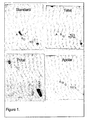
- the apolar lipids identified in the total extract were phthiocerol A dimycocerosate (A), phthiocerol C dimycocerosate (C), and a small amount of phthiocerol B dimycocerosate (B). Large amounts of triacylglycerol (TG) were also detected. These lipids were also detected in the apolar extract as expected. In the polar extract, only a trace of TG and a spot probably representing free fatty acids (FFA) were detected (Fig. 1).
- the total and polar extract contained the following polar lipids: Phosphatidyinositol mannosides, probably triacylated (1) and tetracylated (2) pentamannosides, and triacylated (3) and tetracylated (4) dimannosides.
- Phosphatidylinositol (PI), phosphatidylethanolamine (PE) and diphosphatidylglycerol (cardiolipid, DPG) were major phospholipids.
- Small amounts of L-alpha-Phosphatidyl-DL-glycerol sodium salt (PG) and another phospholipid (7) were also present.
- a glycolipid (8) was also observed in the polar extract. Only the more abundant lipids could be detected in small amounts in the apolar extract (Fig. 2).
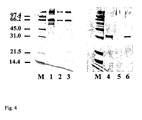
- Two identical tubes were prepared by mixing 0.5 millilitre of the total lipid solution (1 milligrams/millilitre) with antigen: 100 micrograms bovine serum albumin (BSA) or 50 micrograms of Ag85B-ESAT6. Thereafter, 0.5 millilitre of the DDA solution was added to the lipid/antigen mixture. Adsorption was allowed to proceed over night. To study the amount of antigen bound to DDA/lipid, the vaccine preparations were ultracentrifuged (100,000 g, 1 hour). From the first tube, the supernatant was collected and the pellet was resuspended in the original volume (1 millilitre) and analysed by SDS-PAGE ( Figure 4).
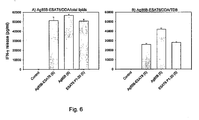
- mice were immunized with experimental vaccines consisting of 1 microgram of fusion protein Ag85B-ESAT6 emulsified in DDA adjuvanted with 100 ⁇ g of total lipids.
- Groups of mice receiving the Ag85B-ESAT6 alone, the Ag85B-ESAT6 and DDA alone, the Ag85B-ESAT6 in combination with the total lipids and a group of na ⁇ ve mice was included as negative controls, while Ag85B-ESAT6/DDA/TDB and a standard BCG vaccine were included as positive controls.
- Th2 prone Balb/C mice (Peltoniemi et al, 2002), as only remarkably potent Th1-inducing adjuvants are capable of switching the immune response of this mouse strain in favour of a response characterized by production of Th1 cytokines such as IFN-gamma.
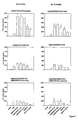
- mice were challenged 10 weeks after the first immunization by the aerosol route.
- Protective efficacies are expressed as the log 10 reduction in bacterial counts in immunized mice in comparison with a group of un-immunized naive animals (Table 1).
- Table 1 The results presented in Table 1 demonstrate that Ag85B-ESAT6/DDA/total lipids was the only subunit vaccine to induce levels of protection comparable to BCG.
- the combination of DDA/total lipids gave rise to significantly superior protection in the spleen compared to total lipids alone (p ⁇ 0.001).
- mice immunized with Ag85B-ESAT6 in DDA/TDB as well as a vaccine based on a priming with Ag85B-ESAT6 in DDA/TDB followed by two immunizations with a non-replicating adenovirus vaccine expressing Ag85B-ESAT6 were included.
- mice immunized with DDA/total lipids give rise to sustained immune responses as shown in figure 7.
- the group receiving DDA/total lipids show IFN-gamma responses three times as high as mice receiving the two other vaccine constructs and even as late as 13 month after immunization, IFN-gamma levels are twice as high in the DDA/total lipid group.
- Ag85B-ESAT6/DDA/total lipids Compared to the low dose of BCG, Ag85B-ESAT6/DDA/total lipids gives significantly higher levels of protection in the lungs (p ⁇ 0.05). These data demonstrates that Ag85B-ESAT6/DDA/total lipids is inducing stable immunological memory superior to that induced by the low dose of the current human vaccine.
- the optimized adjuvant formulation comprising total lipids induced higher level of specific antibodies.
- Table 2 Antigen-specific antibody midpoint titres in serum from Ag85B-ESAT6 immunised Balb/c mice Total IgG a Na ⁇ ve control ⁇ 100 BCG ⁇ 100 Ag85B-ESAT6/Alhydrogel 1100 Ag85B-ESAT6/DDA 1540 Ag85B-ESAT6/DbA/total lipid 2200 a Ag85B-ESAT6 specific IgG levels 5 weeks after the first immunization as measured by ELISA.
- the highest immune response was observed in the range of 20-100 micrograms of total lipids, and 100 micrograms of total lipid was thereafter used in combination with the standard dose of 250 micrograms of DDA.
- total lipids/DDA is capable of inducing an immune response measured as increased levels of antigen-specific antibodies and/or IFN-gamma when used in combination with antigens from different sources as shown in table 6 and 6A. This emphasizes that total lipids/DDA can be used as an adjuvant formulation not only for TB vaccines but also for infectious diseases, allergy, autoimmune diseases or cancer.
- mice The ability of different cationic reagents to enhance immune responses of total lipids was monitored in Balb/C mice. Also, a neutral liposome preparation (consisting of PC and DOPE), anionic liposomes (PC, DOPE, and PG), and a group of na ⁇ ve un-immunized mice were included for comparison. All vaccines contained 250 micrograms of liposomes and were given s.c. in combination with 100 micrograms of total lipids and as vaccine antigen, two micrograms of the fusion-protein Ag85B-ESAT6 was used. As above, immune responses were monitored 5 weeks after the first immunization by in vitro re-stimulation of blood lymphocytes with different concentrations of Ag85B-ESAT6.
- total lipids administered with cationic surfactants such as DDA, DOTAP, and DC-Chol give rise to high levels of IFN-gamma.
- cationic surfactants such as DDA, DOTAP, and DC-Chol
- the combination of total lipids/DDA induced substantial IFN-gamma production.
- apolar and polar lipids were purified from BCG total lipid extract and tested in various different concentrations together with 250 micrograms DDA as vaccine adjuvants. Mice were immunized with the adjuvants in combination with 2 micrograms of Ag85B-ESAT6. As shown in figure 10, immunization with Ag85B-ESAT6/DDA/apolar lipids resulted in significant reduction in number of bacteria in the lungs even with a dose as low as 0.1 microgram apolar lipids.
- a preparation of extractable total polar lipids of Mycobacterium bovis BCG was previously found to promote immune responses to antigen in mice (Sprott WO 03/011336).
- a preparation of chloroform soluble extractable total polar lipids was prepared according to the protocol of Sprott et al. 50 micrograms of these preparations were used for immunization of Balb/C mice with or without the addition of 250 microgram of DDA.
- the fusion protein of Ag85B-ESAT6 was used as the vaccine antigen in a dose of 2 microgram.
- Immune responses measured as IFN- ⁇ release were evaluated in the blood five weeks after the first immunisation by re-stimulation with medium only (control) or 5 microgram/millilitres of Ag85B-ESAT6 (Table 7). Also the fusion protein specific antibody mid- rates was determined in the serum of mice vaccinated 5 weeks previously (Table 8). Table 7. Immunogenicity of various polar, apolar, and total lipid extracts.
- the BCG total lipids containing DDA vesicles were made using the thin lipid film method (Bangham et al 1965). DDA and total lipids were dissolved separately in chloroform methanol (9:1) to a concentration of 10 mg/ml. Specified volumes of each individual compound were mixed in glass test tubes corresponding to the ratios 250 micrograms of DDA and 50 micrograms of total lipids or 250 micrograms of DDA and 100 micrograms of total lipids. The solvent was evaporated using a gentle stream of N 2 and the lipid films were dried overnight under low pressure to remove trace amounts of solvent.
- the prepared DDA/total lipids liposomes were homogenous and could be stored at 4 °C with no change in visual appearance.
- Total lipids extracted from M. bovis BCG Russia, BCG Pasteur, M. tuberculosis H37RV, and BCG 1331 were administered with 250 micrograms of DDA and 2 micrograms of Ag85B-ESAT6 s.c. in Balb/C three times as previously described. Immune responses were monitored in the spleen lymphocytes 5 weeks after the last immunization by re-stimulation in vitro with 5 microgram/millilitres of Ag85B-ESAT6 (Fig. 11). These results clearly demonstrate the unique stimulatory activity of the combination of DDA administered with total lipids is not limited to BCG 1331, but is also observed in other BCG strains as well as the virulent strain M. tuberculosis H37Rv.
Landscapes
- Health & Medical Sciences (AREA)
- Life Sciences & Earth Sciences (AREA)
- General Health & Medical Sciences (AREA)
- Chemical & Material Sciences (AREA)
- Veterinary Medicine (AREA)
- Medicinal Chemistry (AREA)
- Public Health (AREA)
- Pharmacology & Pharmacy (AREA)
- Animal Behavior & Ethology (AREA)
- Immunology (AREA)
- Organic Chemistry (AREA)
- Nuclear Medicine, Radiotherapy & Molecular Imaging (AREA)
- General Chemical & Material Sciences (AREA)
- Chemical Kinetics & Catalysis (AREA)
- Communicable Diseases (AREA)
- Pulmonology (AREA)
- Engineering & Computer Science (AREA)
- Bioinformatics & Cheminformatics (AREA)
- Mycology (AREA)
- Epidemiology (AREA)
- Microbiology (AREA)
- Oncology (AREA)
- Physics & Mathematics (AREA)
- General Physics & Mathematics (AREA)
- Optics & Photonics (AREA)
- Medicines Containing Antibodies Or Antigens For Use As Internal Diagnostic Agents (AREA)
- Polarising Elements (AREA)
Claims (10)
- Adjuvans, umfassend eine kationische oberflächenaktive Substanz und die apolare Fraktion oder einen Teil der apolaren Fraktion des gesamten Lipidextrakts einer Mycobakterie, z.B. den BCG, M.microti, M.tuberculosis oder M.vaccae.
- Adjuvans nach Anspruch 1, wo der Teil der apolaren Fraktion des Lipidextrakts Phthiocerol-Dimycocerosate, Trehalose-Mycolipenate, glycosylierte Phenol-Phthiocerole (hierunter phenolische Glycolipide, PGL's), Trehalose-Mycolate, Sulfolipide, Triacylglycerole oder Menaquinone sein kann.
- Adjuvans nach Anspruch 1-2, wo die oberflächenaktive Substanz DDA, DODA, DC-chol oder DOTAP ist.
- Impfstoff, umfassend ein Adjuvans nach Anspruch 1-3.
- Impfstoff nach Anspruch 4 zur parenteralen oder oralen Verabreichung oder Verabreichung über die Schleimhaut.
- Impfstoff nach Anspruch 5, wo die antigene Komponente ein antigenes Epitop aus einer virulenten Mycobakterie, z.B. Mycobacterium tuberculosis, M. bovis oder M.africanum umfasst.
- Impfstoff nach Anspruch 6, wo die antigene Komponente ein ESAT6-Ag85B-Hybrid oder ein Fragment hiervon ist.
- Impfstoff nach Anspruch 5 zur Behandlung von Krebs, Allergie oder autoimmunen Krankheiten.
- Abgabesystem, umfassend ein Adjuvans nach Anspruch 1-3.
- Verfahren zur Herstellung eines Adjuvans nach Anspruch 1-3 unter Anwendung Dünn-Lipidfilm-Verfahren.
Applications Claiming Priority (3)
| Application Number | Priority Date | Filing Date | Title |
|---|---|---|---|
| DKPA200301046 | 2003-07-09 | ||
| DKPA200301403 | 2003-09-27 | ||
| PCT/DK2004/000488 WO2005004911A2 (en) | 2003-07-09 | 2004-07-07 | Adjuvant combinations of liposomes and mycobacterial lipids for immunization compositions and vaccines |
Publications (2)
| Publication Number | Publication Date |
|---|---|
| EP1648504A2 EP1648504A2 (de) | 2006-04-26 |
| EP1648504B1 true EP1648504B1 (de) | 2007-03-21 |
Family
ID=34066437
Family Applications (1)
| Application Number | Title | Priority Date | Filing Date |
|---|---|---|---|
| EP04738985A Expired - Lifetime EP1648504B1 (de) | 2003-07-09 | 2004-07-07 | Adjuvanskombinationen von liposomen und mycobakteriellen lipiden für immunisierungszusammensetzungen und impfstoffe |
Country Status (10)
| Country | Link |
|---|---|
| US (2) | US20060286128A1 (de) |
| EP (1) | EP1648504B1 (de) |
| KR (1) | KR100992646B1 (de) |
| AT (1) | ATE357254T1 (de) |
| AU (1) | AU2004255393B2 (de) |
| CA (1) | CA2531825C (de) |
| DE (1) | DE602004005460T2 (de) |
| DK (1) | DK1648504T3 (de) |
| ES (1) | ES2285466T3 (de) |
| WO (1) | WO2005004911A2 (de) |
Families Citing this family (19)
| Publication number | Priority date | Publication date | Assignee | Title |
|---|---|---|---|---|
| NZ581306A (en) * | 2004-11-16 | 2011-03-31 | Crucell Holland Bv | Multivalent vaccines comprising recombinant viral vectors |
| US7774539B2 (en) * | 2007-02-07 | 2010-08-10 | Lenovo (Singapore) Pte. Ltd | Preservation of hard drive data via dynamic band boundary definition |
| PL2167124T3 (pl) * | 2007-06-29 | 2012-12-31 | Statens Seruminstitut | Zastosowanie monomikoliloglicerolu (MMG) jako adiuwantu |
| EP4241767B1 (de) | 2008-11-10 | 2024-10-23 | Arbutus Biopharma Corporation | Neuartige lipide und zusammensetzungen zur verabreichung von therapeutika |
| WO2010085896A1 (en) | 2009-01-29 | 2010-08-05 | British Columbia Cancer Agency Branch | Compositions comprising chlamydia antigens |
| WO2011031139A1 (en) | 2009-09-09 | 2011-03-17 | Universiteit Utrecht Holding B.V. | An ataq protein or a part thereof as a vaccine |
| SA110310855B1 (ar) | 2009-11-13 | 2014-09-16 | Laboratories Leti S L Unipersonal | استخدام مصدر l3 و/ أو l5 كلقاح أو كوسيلة تشخيصية لمرض طفيلي |
| JP5986576B2 (ja) | 2010-11-10 | 2016-09-06 | ラボラトリオス レティ,エセ.エレ. | 新規アジュバント |
| WO2013151663A1 (en) | 2012-04-02 | 2013-10-10 | modeRNA Therapeutics | Modified polynucleotides for the production of membrane proteins |
| CN108949772A (zh) | 2012-04-02 | 2018-12-07 | 现代泰克斯公司 | 用于产生与人类疾病相关的生物制剂和蛋白质的修饰多核苷酸 |
| WO2015034925A1 (en) | 2013-09-03 | 2015-03-12 | Moderna Therapeutics, Inc. | Circular polynucleotides |
| US20160194625A1 (en) | 2013-09-03 | 2016-07-07 | Moderna Therapeutics, Inc. | Chimeric polynucleotides |
| EP3349790A1 (de) | 2015-09-18 | 2018-07-25 | Rijksuniversiteit Groningen | Langkettiges inulin zur stimulierung einer immunantwort |
| MD3718565T2 (ro) | 2015-10-22 | 2022-09-30 | Modernatx Inc | Vaccinuri împotriva virusului respirator |
| CN116917470A (zh) | 2020-10-14 | 2023-10-20 | 达冕生物有限公司 | PAN-RAS mRNA癌症疫苗 |
| US20220226465A1 (en) | 2021-01-18 | 2022-07-21 | ConserV Bioscience | Coronavirus Immunogenic Compositions, Methods and Uses Thereof |
| EP4392560B1 (de) | 2021-08-27 | 2026-03-11 | Peking University | Konstrukte und verfahren zur herstellung von zirkulärer rna |
| WO2023161350A1 (en) | 2022-02-24 | 2023-08-31 | Io Biotech Aps | Nucleotide delivery of cancer therapy |
| EP4520345A1 (de) | 2023-09-06 | 2025-03-12 | Myneo Nv | Produkt |
Family Cites Families (9)
| Publication number | Priority date | Publication date | Assignee | Title |
|---|---|---|---|---|
| GB9409985D0 (en) * | 1994-05-18 | 1994-07-06 | Medical Res Council | Vaccine against mycobacterial infections |
| US6218166B1 (en) * | 1994-12-09 | 2001-04-17 | John Wayne Cancer Institute | Adjuvant incorporation into antigen carrying cells: compositions and methods |
| US7037510B2 (en) * | 1997-04-18 | 2006-05-02 | Statens Serum Institut | Hybrids of M. tuberculosis antigens |
| US6248329B1 (en) * | 1998-06-01 | 2001-06-19 | Ramaswamy Chandrashekar | Parasitic helminth cuticlin nucleic acid molecules and uses thereof |
| EP1183044B1 (de) * | 1999-05-12 | 2007-10-10 | Statens Serum Institut | Adjuvanskombinationen zur immunisierung und vakzine |
| AU2001251316A1 (en) * | 2000-04-04 | 2001-10-15 | Antigenics Inc. | Isolated and purified nonpeptide antigens from mycobacterium tuberculosis |
| GB0106985D0 (en) * | 2001-03-20 | 2001-05-09 | Stanford Rook Ltd | Immunotherapeutic agent |
| GB0106986D0 (en) * | 2001-03-20 | 2001-05-09 | Stanford Rook Ltd | Immunotherapeutic agent |
| EP1416959B1 (de) * | 2001-08-03 | 2010-06-23 | National Research Council Of Canada | Aus mycobacterium extrahierbaren lipide hergestellete liposomen |
-
2003
- 2003-12-03 KR KR1020067010858A patent/KR100992646B1/ko not_active Expired - Fee Related
-
2004
- 2004-07-07 DK DK04738985T patent/DK1648504T3/da active
- 2004-07-07 WO PCT/DK2004/000488 patent/WO2005004911A2/en not_active Ceased
- 2004-07-07 US US10/563,731 patent/US20060286128A1/en not_active Abandoned
- 2004-07-07 ES ES04738985T patent/ES2285466T3/es not_active Expired - Lifetime
- 2004-07-07 EP EP04738985A patent/EP1648504B1/de not_active Expired - Lifetime
- 2004-07-07 CA CA2531825A patent/CA2531825C/en not_active Expired - Lifetime
- 2004-07-07 AT AT04738985T patent/ATE357254T1/de not_active IP Right Cessation
- 2004-07-07 DE DE602004005460T patent/DE602004005460T2/de not_active Expired - Lifetime
- 2004-07-07 AU AU2004255393A patent/AU2004255393B2/en not_active Expired
-
2011
- 2011-04-08 US US13/083,385 patent/US8241610B2/en not_active Expired - Fee Related
Also Published As
| Publication number | Publication date |
|---|---|
| KR20060121128A (ko) | 2006-11-28 |
| EP1648504A2 (de) | 2006-04-26 |
| KR100992646B1 (ko) | 2010-11-05 |
| WO2005004911A3 (en) | 2005-02-17 |
| US20060286128A1 (en) | 2006-12-21 |
| AU2004255393A1 (en) | 2005-01-20 |
| ES2285466T3 (es) | 2007-11-16 |
| DK1648504T3 (da) | 2007-07-30 |
| DE602004005460T2 (de) | 2008-05-08 |
| DE602004005460D1 (de) | 2007-05-03 |
| ATE357254T1 (de) | 2007-04-15 |
| WO2005004911A2 (en) | 2005-01-20 |
| US20110250224A1 (en) | 2011-10-13 |
| AU2004255393B2 (en) | 2009-12-10 |
| CA2531825C (en) | 2010-09-07 |
| US8241610B2 (en) | 2012-08-14 |
| CA2531825A1 (en) | 2005-01-20 |
| WO2005004911B1 (en) | 2005-03-17 |
Similar Documents
| Publication | Publication Date | Title |
|---|---|---|
| US8241610B2 (en) | Adjuvant combinations of liposomes and mycobacterial lipids for immunization compositions and vaccines | |
| US6027732A (en) | Iscom or iscom-matrix comprising hydrophobic receptor molecules for antigenic substances | |
| EP2040745B1 (de) | Expansion des t-zell-repertoirs, um subdominante epitope durch impfung mit antigenen, die als proteinfragmente oder peptidcocktails abgegeben werden, aufzunehmen | |
| EP2167124B1 (de) | Verwendung von monomycolyl-glycerol (mmg) als adjuvans | |
| US20080248094A1 (en) | Vaccine adjuvant properties of lipsomes formed at elevated temperatures from the polar chloroform extractable lipids from mycobacterium bovis | |
| CA2454920C (en) | Antigenic compositions | |
| WO1995027508A1 (en) | Composition for use in raising an immune response | |
| BRPI0811796B1 (pt) | Adjuvante ou imunomodulador, vacina e uso de um monomicolil glicerol (mmg) sintético | |
| AU2002326233A1 (en) | Antigenic compositions |
Legal Events
| Date | Code | Title | Description |
|---|---|---|---|
| PUAI | Public reference made under article 153(3) epc to a published international application that has entered the european phase |
Free format text: ORIGINAL CODE: 0009012 |
|
| 17P | Request for examination filed |
Effective date: 20060206 |
|
| AK | Designated contracting states |
Kind code of ref document: A2 Designated state(s): AT BE BG CH CY CZ DE DK EE ES FI FR GB GR HU IE IT LI LU MC NL PL PT RO SE SI SK TR |
|
| GRAP | Despatch of communication of intention to grant a patent |
Free format text: ORIGINAL CODE: EPIDOSNIGR1 |
|
| DAX | Request for extension of the european patent (deleted) | ||
| GRAS | Grant fee paid |
Free format text: ORIGINAL CODE: EPIDOSNIGR3 |
|
| GRAA | (expected) grant |
Free format text: ORIGINAL CODE: 0009210 |
|
| AK | Designated contracting states |
Kind code of ref document: B1 Designated state(s): AT BE BG CH CY CZ DE DK EE ES FI FR GB GR HU IE IT LI LU MC NL PL PT RO SE SI SK TR |
|
| PG25 | Lapsed in a contracting state [announced via postgrant information from national office to epo] |
Ref country code: PL Free format text: LAPSE BECAUSE OF FAILURE TO SUBMIT A TRANSLATION OF THE DESCRIPTION OR TO PAY THE FEE WITHIN THE PRESCRIBED TIME-LIMIT Effective date: 20070321 Ref country code: FI Free format text: LAPSE BECAUSE OF FAILURE TO SUBMIT A TRANSLATION OF THE DESCRIPTION OR TO PAY THE FEE WITHIN THE PRESCRIBED TIME-LIMIT Effective date: 20070321 Ref country code: AT Free format text: LAPSE BECAUSE OF FAILURE TO SUBMIT A TRANSLATION OF THE DESCRIPTION OR TO PAY THE FEE WITHIN THE PRESCRIBED TIME-LIMIT Effective date: 20070321 Ref country code: LI Free format text: LAPSE BECAUSE OF FAILURE TO SUBMIT A TRANSLATION OF THE DESCRIPTION OR TO PAY THE FEE WITHIN THE PRESCRIBED TIME-LIMIT Effective date: 20070321 Ref country code: SI Free format text: LAPSE BECAUSE OF FAILURE TO SUBMIT A TRANSLATION OF THE DESCRIPTION OR TO PAY THE FEE WITHIN THE PRESCRIBED TIME-LIMIT Effective date: 20070321 Ref country code: NL Free format text: LAPSE BECAUSE OF FAILURE TO SUBMIT A TRANSLATION OF THE DESCRIPTION OR TO PAY THE FEE WITHIN THE PRESCRIBED TIME-LIMIT Effective date: 20070321 Ref country code: CH Free format text: LAPSE BECAUSE OF FAILURE TO SUBMIT A TRANSLATION OF THE DESCRIPTION OR TO PAY THE FEE WITHIN THE PRESCRIBED TIME-LIMIT Effective date: 20070321 Ref country code: BE Free format text: LAPSE BECAUSE OF FAILURE TO SUBMIT A TRANSLATION OF THE DESCRIPTION OR TO PAY THE FEE WITHIN THE PRESCRIBED TIME-LIMIT Effective date: 20070321 |
|
| REG | Reference to a national code |
Ref country code: GB Ref legal event code: FG4D |
|
| REG | Reference to a national code |
Ref country code: CH Ref legal event code: EP |
|
| REF | Corresponds to: |
Ref document number: 602004005460 Country of ref document: DE Date of ref document: 20070503 Kind code of ref document: P |
|
| REG | Reference to a national code |
Ref country code: IE Ref legal event code: FG4D |
|
| PG25 | Lapsed in a contracting state [announced via postgrant information from national office to epo] |
Ref country code: SE Free format text: LAPSE BECAUSE OF FAILURE TO SUBMIT A TRANSLATION OF THE DESCRIPTION OR TO PAY THE FEE WITHIN THE PRESCRIBED TIME-LIMIT Effective date: 20070621 |
|
| REG | Reference to a national code |
Ref country code: DK Ref legal event code: T3 |
|
| PG25 | Lapsed in a contracting state [announced via postgrant information from national office to epo] |
Ref country code: PT Free format text: LAPSE BECAUSE OF FAILURE TO SUBMIT A TRANSLATION OF THE DESCRIPTION OR TO PAY THE FEE WITHIN THE PRESCRIBED TIME-LIMIT Effective date: 20070821 |
|
| ET | Fr: translation filed | ||
| REG | Reference to a national code |
Ref country code: CH Ref legal event code: PL |
|
| NLV1 | Nl: lapsed or annulled due to failure to fulfill the requirements of art. 29p and 29m of the patents act | ||
| REG | Reference to a national code |
Ref country code: ES Ref legal event code: FG2A Ref document number: 2285466 Country of ref document: ES Kind code of ref document: T3 |
|
| PG25 | Lapsed in a contracting state [announced via postgrant information from national office to epo] |
Ref country code: SK Free format text: LAPSE BECAUSE OF FAILURE TO SUBMIT A TRANSLATION OF THE DESCRIPTION OR TO PAY THE FEE WITHIN THE PRESCRIBED TIME-LIMIT Effective date: 20070321 |
|
| PG25 | Lapsed in a contracting state [announced via postgrant information from national office to epo] |
Ref country code: CZ Free format text: LAPSE BECAUSE OF FAILURE TO SUBMIT A TRANSLATION OF THE DESCRIPTION OR TO PAY THE FEE WITHIN THE PRESCRIBED TIME-LIMIT Effective date: 20070321 Ref country code: RO Free format text: LAPSE BECAUSE OF FAILURE TO SUBMIT A TRANSLATION OF THE DESCRIPTION OR TO PAY THE FEE WITHIN THE PRESCRIBED TIME-LIMIT Effective date: 20070321 |
|
| PLBE | No opposition filed within time limit |
Free format text: ORIGINAL CODE: 0009261 |
|
| STAA | Information on the status of an ep patent application or granted ep patent |
Free format text: STATUS: NO OPPOSITION FILED WITHIN TIME LIMIT |
|
| 26N | No opposition filed |
Effective date: 20071227 |
|
| PG25 | Lapsed in a contracting state [announced via postgrant information from national office to epo] |
Ref country code: MC Free format text: LAPSE BECAUSE OF NON-PAYMENT OF DUE FEES Effective date: 20070731 Ref country code: GR Free format text: LAPSE BECAUSE OF FAILURE TO SUBMIT A TRANSLATION OF THE DESCRIPTION OR TO PAY THE FEE WITHIN THE PRESCRIBED TIME-LIMIT Effective date: 20070622 |
|
| PG25 | Lapsed in a contracting state [announced via postgrant information from national office to epo] |
Ref country code: IE Free format text: LAPSE BECAUSE OF NON-PAYMENT OF DUE FEES Effective date: 20070709 |
|
| PG25 | Lapsed in a contracting state [announced via postgrant information from national office to epo] |
Ref country code: EE Free format text: LAPSE BECAUSE OF FAILURE TO SUBMIT A TRANSLATION OF THE DESCRIPTION OR TO PAY THE FEE WITHIN THE PRESCRIBED TIME-LIMIT Effective date: 20070321 |
|
| PG25 | Lapsed in a contracting state [announced via postgrant information from national office to epo] |
Ref country code: CY Free format text: LAPSE BECAUSE OF FAILURE TO SUBMIT A TRANSLATION OF THE DESCRIPTION OR TO PAY THE FEE WITHIN THE PRESCRIBED TIME-LIMIT Effective date: 20070321 |
|
| PG25 | Lapsed in a contracting state [announced via postgrant information from national office to epo] |
Ref country code: BG Free format text: LAPSE BECAUSE OF FAILURE TO SUBMIT A TRANSLATION OF THE DESCRIPTION OR TO PAY THE FEE WITHIN THE PRESCRIBED TIME-LIMIT Effective date: 20070621 Ref country code: LU Free format text: LAPSE BECAUSE OF NON-PAYMENT OF DUE FEES Effective date: 20070707 |
|
| PG25 | Lapsed in a contracting state [announced via postgrant information from national office to epo] |
Ref country code: TR Free format text: LAPSE BECAUSE OF FAILURE TO SUBMIT A TRANSLATION OF THE DESCRIPTION OR TO PAY THE FEE WITHIN THE PRESCRIBED TIME-LIMIT Effective date: 20070321 Ref country code: HU Free format text: LAPSE BECAUSE OF FAILURE TO SUBMIT A TRANSLATION OF THE DESCRIPTION OR TO PAY THE FEE WITHIN THE PRESCRIBED TIME-LIMIT Effective date: 20070922 |
|
| REG | Reference to a national code |
Ref country code: FR Ref legal event code: PLFP Year of fee payment: 13 |
|
| REG | Reference to a national code |
Ref country code: FR Ref legal event code: PLFP Year of fee payment: 14 |
|
| REG | Reference to a national code |
Ref country code: FR Ref legal event code: PLFP Year of fee payment: 15 |
|
| P01 | Opt-out of the competence of the unified patent court (upc) registered |
Effective date: 20230522 |
|
| PGFP | Annual fee paid to national office [announced via postgrant information from national office to epo] |
Ref country code: DK Payment date: 20230613 Year of fee payment: 20 |
|
| PGFP | Annual fee paid to national office [announced via postgrant information from national office to epo] |
Ref country code: IT Payment date: 20230714 Year of fee payment: 20 Ref country code: GB Payment date: 20230718 Year of fee payment: 20 Ref country code: ES Payment date: 20230802 Year of fee payment: 20 |
|
| PGFP | Annual fee paid to national office [announced via postgrant information from national office to epo] |
Ref country code: FR Payment date: 20230718 Year of fee payment: 20 Ref country code: DE Payment date: 20230713 Year of fee payment: 20 |
|
| REG | Reference to a national code |
Ref country code: DK Ref legal event code: EUP Expiry date: 20240707 |
|
| REG | Reference to a national code |
Ref country code: ES Ref legal event code: FD2A Effective date: 20240729 |
|
| REG | Reference to a national code |
Ref country code: GB Ref legal event code: PE20 Expiry date: 20240706 |
|
| PG25 | Lapsed in a contracting state [announced via postgrant information from national office to epo] |
Ref country code: GB Free format text: LAPSE BECAUSE OF EXPIRATION OF PROTECTION Effective date: 20240706 |
|
| PG25 | Lapsed in a contracting state [announced via postgrant information from national office to epo] |
Ref country code: ES Free format text: LAPSE BECAUSE OF EXPIRATION OF PROTECTION Effective date: 20240708 |
|
| PG25 | Lapsed in a contracting state [announced via postgrant information from national office to epo] |
Ref country code: GB Free format text: LAPSE BECAUSE OF EXPIRATION OF PROTECTION Effective date: 20240706 Ref country code: ES Free format text: LAPSE BECAUSE OF EXPIRATION OF PROTECTION Effective date: 20240708 |