EP1640870A2 - Device management apparatus and method for monitoring usage of a group of devices - Google Patents
Device management apparatus and method for monitoring usage of a group of devices Download PDFInfo
- Publication number
- EP1640870A2 EP1640870A2 EP05014034A EP05014034A EP1640870A2 EP 1640870 A2 EP1640870 A2 EP 1640870A2 EP 05014034 A EP05014034 A EP 05014034A EP 05014034 A EP05014034 A EP 05014034A EP 1640870 A2 EP1640870 A2 EP 1640870A2
- Authority
- EP
- European Patent Office
- Prior art keywords
- devices
- group
- management apparatus
- device group
- usage information
- Prior art date
- Legal status (The legal status is an assumption and is not a legal conclusion. Google has not performed a legal analysis and makes no representation as to the accuracy of the status listed.)
- Granted
Links
Images


Classifications
-
- G—PHYSICS
- G06—COMPUTING OR CALCULATING; COUNTING
- G06F—ELECTRIC DIGITAL DATA PROCESSING
- G06F11/00—Error detection; Error correction; Monitoring
- G06F11/30—Monitoring
- G06F11/34—Recording or statistical evaluation of computer activity, e.g. of down time, of input/output operation ; Recording or statistical evaluation of user activity, e.g. usability assessment
-
- G—PHYSICS
- G06—COMPUTING OR CALCULATING; COUNTING
- G06F—ELECTRIC DIGITAL DATA PROCESSING
- G06F13/00—Interconnection of, or transfer of information or other signals between, memories, input/output devices or central processing units
- G06F13/14—Handling requests for interconnection or transfer
-
- G—PHYSICS
- G06—COMPUTING OR CALCULATING; COUNTING
- G06F—ELECTRIC DIGITAL DATA PROCESSING
- G06F8/00—Arrangements for software engineering
- G06F8/30—Creation or generation of source code
-
- G—PHYSICS
- G06—COMPUTING OR CALCULATING; COUNTING
- G06F—ELECTRIC DIGITAL DATA PROCESSING
- G06F9/00—Arrangements for program control, e.g. control units
- G06F9/06—Arrangements for program control, e.g. control units using stored programs, i.e. using an internal store of processing equipment to receive or retain programs
- G06F9/44—Arrangements for executing specific programs
- G06F9/445—Program loading or initiating
-
- G—PHYSICS
- G03—PHOTOGRAPHY; CINEMATOGRAPHY; ANALOGOUS TECHNIQUES USING WAVES OTHER THAN OPTICAL WAVES; ELECTROGRAPHY; HOLOGRAPHY
- G03G—ELECTROGRAPHY; ELECTROPHOTOGRAPHY; MAGNETOGRAPHY
- G03G2215/00—Apparatus for electrophotographic processes
- G03G2215/00025—Machine control, e.g. regulating different parts of the machine
- G03G2215/00109—Remote control of apparatus, e.g. by a host
- G03G2215/00113—Plurality of apparatus configured in groups each with its own host
-
- G—PHYSICS
- G06—COMPUTING OR CALCULATING; COUNTING
- G06F—ELECTRIC DIGITAL DATA PROCESSING
- G06F11/00—Error detection; Error correction; Monitoring
- G06F11/30—Monitoring
- G06F11/34—Recording or statistical evaluation of computer activity, e.g. of down time, of input/output operation ; Recording or statistical evaluation of user activity, e.g. usability assessment
- G06F11/3466—Performance evaluation by tracing or monitoring
-
- G—PHYSICS
- G06—COMPUTING OR CALCULATING; COUNTING
- G06F—ELECTRIC DIGITAL DATA PROCESSING
- G06F2201/00—Indexing scheme relating to error detection, to error correction, and to monitoring
- G06F2201/885—Monitoring specific for caches
Definitions
- the present invention relates to technology for managing a plurality of parallel operating devices, and relates more particularly to technology for managing a plurality of devices in groups.
- JAVA POS is an application programming interfacing for building point-of-sale (POS) systems using JAVA (registered trademark).
- JAVA POS also has a function for using device statistics, that is, information relating to usage of devices connected to a POS terminal.
- the JAVA POS standard enables an application running on a POS terminal to acquire and use these device statistics for example as device usage information.
- This usage information is information indicating usage of particular device functions, and in the case of a printer is information relating to the number of lines printed or the number of characters printed, for example.
- the device statistics are individually managed in each of several individual devices, including, for example, a printer, a magnetic ink character reader (MICR), a scanner, and a cash drawer.
- a printer for example, a printer, a magnetic ink character reader (MICR), a scanner, and a cash drawer.
- MICR magnetic ink character reader
- hybrid apparatuses having a printer, an MICR, and a scanner, for example, in a single housing.
- usage statistics that are kept for each of the component devices in this type of hybrid device
- usage information for the hybrid device as a whole may also be needed.
- statistics such as the operating time can be acquired for the individual component devices in a hybrid device according to the prior art, determining the total continuous operating time of the hybrid apparatus in toto is not possible.
- grouping two or more devices together and maintaining the device statistics by device group may also be desirable.
- a device management apparatus adapted to be connected to a plurality of devices which constitute at least one device group, comprising:
- the device management apparatus further comprises a plurality of device drivers, each of which is associated with one of the devices to drive the associated one of the devices.
- One of the device managers creates the usage information when the application instructs the one of the device drivers to drive one of the devices.
- the device management apparatus further comprises:
- the device management apparatus is adapted to be connected to at least one hybrid device including at least two of the devices.
- the usage information includes information pertaining to each of the at least two devices and information pertaining to the hybrid device.
- the device management apparatus may additionally include a multi-group device group manager associated with device managers of individual devices associated with different device groups. Correlations between the device managers and the devices may be dynamically generated. Virtual counters may be associated with the plurality of devices that communicate with the device managers to create the usage information based on predicted usage counts. In this context, the apparatus may additionally include a cumulative counter that accumulates the predicted usage counts for each of the devices
- a device management method comprising:
- the device management method further comprises providing a plurality of device drivers, each of which is associated with one of the devices to drive the associated one of the devices.
- the usage information is created when the application instructs the one of the device drivers to drive one of the devices.
- the device management method further comprises:
- a device management apparatus comprising:
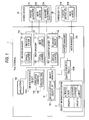
- a POS system has a POS terminal 1 and at least one hybrid device.
- two hybrid devices 2A and 2B are connected to the POS terminal 1.
- the hybrid device 2A has a printer (a-printer) 21A, a MICR (b-MICR) 22A, and a scanner (c-scanner) 23A
- hybrid device 2B has a printer (d-printer) 21 B and MICR (e-MICR) 22B.
- hybrid devices are merely shown by way of example, and the devices (device categories) that are included in the hybrid devices may vary as needed.
- the POS terminal 1 is built using a general purpose computer having a processor and a memory, and the components and functions of the POS terminal 1 described below can be achieved by running a computer program in the POS terminal 1.
- the POS terminal 1 has printer managers 11 (11A, 11 B), MICR managers 12 (12A, 12B), a scanner manager 13 (13A), an object manager 15, a group information storage 17, and at least one application 100.
- the printer managers 11, MICR managers 12, and scanner manager 13 for managing each of the devices in the hybrid devices 2 are also collectively referred to herein as device managers.
- Each device manager manages usage information for the respective managed devices.
- the group information storage 17 stores group information related to groups of plural devices.
- the group information storage 17 stores group names linked to identification information for each device in a group.
- the printer 21A, MICR 22A, and scanner 23A housed in the case of hybrid device 2A form a device group A
- the printer 21 B and MICR 22B housed in the case of hybrid device 2B form a device group B.
- groupings are merely shown by way of example, and a particular application 100 could be used to desirably set and change the group information stored in the group information storage 17. More specifically, a desired combination of devices can be defined as a group, usage information can be managed by group unit, and devices that are part of different hybrid devices 2 can be combined in the same group.
- the object manager 15 generates and manages the data statistics (DS) objects 150 (150A, 150B).
- the data statistics objects 150 are objects for gathering and managing the usage information related to data statistics in the JAVA POS specification.
- One data statistics object 150 manages virtual usage information for each device based on the groups defined by the group information storage 17, and returns the virtual usage information for the devices belonging to a requested group. This virtual usage information is calculated by virtual counters 112, 122, and 132 as described in further detail below.
- the data statistics objects 150 can be dynamically generated as needed and deleted when no longer necessary.
- the object manager 15 also maintains a data statistics object list 151. When a data statistics object 150 is then generated, the object name and other identification information is added to the data statistics object list 151, and deleted when the object 150 is deleted.
- the data statistics objects 150 can also be provided for individual groups. For example, when a request is received from the printer managers 11, the MICR managers 12, or the scanner manager 13, the object manager 15 references the group information storage 17 to find the group containing the devices 21, 22, 23 associated with the manager 11, 12, or 13 that sent the request, and then creates a data statistics object 150 for that group. In the example shown in Fig. 1, data statistics object 150A manages the group A, and data statistics object 150B manages the group B.
- the name of the data statistics object 150 is preferably set so that the group managed by the data statistics object 150 can be identified from the object name.
- the printer manager 11 A, the MICR manager 12A, and the scanner manager 13A are respectively linked to and manage the printer 21A, the MICR 22A, and the scanner 23A of the hybrid device 2A.
- the printer manager 11 B and the MICR manager 12B are likewise respectively linked to and manage the printer 21 B and the MICR 22B of the hybrid device 2B. These correlations of managers and devices can also be dynamically generated. If the printer manager 11 A acquires identification information from the printer 21A when the printer manager 11A is activated or created, for example, the printer manager 11A is configured to manage the printer 21A identified by the received identification information.
- the printer managers 11, the MICR managers 12, and the scanner manager 13 respectively comprise a printer driver 111, a MICR, driver 121, a scanner driver 131 for driving the related device, and a virtual counter 112, 122, 132. Note that the internal driver and the virtual counter are not shown in the printer manager 11 B and the MICR manager 12B in Fig. 1. Note that processors belonging to group A are primarily described below, and that processors belonging to group B are the same.
- the printer driver 111 receives print requests and other commands from the application 100 and drives the printer 21A based on the received commands.
- the MICR driver 121 and the scanner driver 131 likewise drive the MICR 22A and the scanner 23A according to requests from the application 100.
- the virtual counter 112 predicts the expected printer usage, that is, how much the printer 21 A is used when driven. More particularly, when the printer driver 111 drives the printer 21A to print, the virtual counter 112 predicts the number of characters or lines printed by the printer 21A, how much paper is consumed (the paper transportation distance if using a rolled sheet, and how many sheets if using cut sheets), and how many times the rolled sheet is cut. The predicted counts are then reported to the data statistics object 150A.
- the virtual counters 122 and 132 run processes similar to that of the virtual counter 112. More particularly, the virtual counters 122 and 132 predict the counts for predefined usage parameters indicating how much the MICR 22A and the scanner 23A are used when driven by the MICR driver 121 and the scanner driver 131, and send these counts to the data statistics object 150A.
- Predicting usage information for different functions of the printer 21A based on commands sent by the virtual counter 112 to the printer 21A is described below by way of example.
- the virtual counter 112 also counts the actual number of times the printer 21A executes commands corresponding to barcode printing, slip insertion, and reversing the paper (changing the side that is printed).
- the number of home position errors can also be represented by a mechanical error count.
- the virtual counters 112, 122, 132 of the device manager can be omitted. In this arrangement device usage is monitored by reading the internal counters of the individual devices, and the counter readings can be reported to the data statistics object 150.
- the data statistics object 150A also has a cumulative counter 155.
- the cumulative counter 155 accumulates the predicted usage counts (values) for each of the devices 21A, 22A, 23A belonging to the group A.
- a cumulative counter 155 is provided for each device category and counted parameter.
- the data statistics object 150A also stores the creation time 156 denoting when the data statistics object 150A is created.
- the cumulative counter 155 returns the internally stored cumulative count. These read requests could retrieve all parameters for all devices, parameters for a particular device category, or a specific parameter for a specific device. If the data statistics object 150A is requested for the time elapsed since the data statistics object 150A is created, the data statistics object 150A calculates and returns the time elapsed since the data statistics object 150A is created.
- data statistics object 150B also has a cumulative counter and stores the creation time, and has the same functions as the data statistics object 150A.
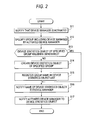
- Fig. 2 is a flow chart of the process of creating a data statistics object.
- the object manager 15 receives a report from the activated device manager (S11). This example assumes that the printer manager 11A is activated.
- the report sent in step S11 contains identification information (a-printer) for the device (printer 21A in this example) linked to the activated printer manager 11A. Based on identification information (a-printer) for the reported device, the object manager 15 references the group information storage 17 to find the group containing the identified device (S12). Group A is thus identified in this example.
- the object manager 15 then references the data statistics object list 151 to determine if a data statistics object 150A for managing the identified group A already exists (S13).
- the object manager 15 creates the data statistics object 150A, assigns a group name identifying the object as a data statistics object for group A, and registers the group name in the data statistics object list 151 (S14, S15).
- steps S14 and S15 are skipped.
- the data statistics object name for group A is then returned to the printer manager 11A that reported being activated (S16).
- the data statistics object 150A is also informed that the printer manager 11A is active by reporting the identification information for the printer 21A, for example (S17), thus completing a two-way relationship between the data statistics object 150A and the activated device manager, i.e., printer manager 11A.
- the process run by the device manager will be described with reference to the flow chart in Fig. 3.
- the printer 21 A and the printer manager 11A are used by way of example below, and other devices and device managers operate in the same way.
- This process starts when the printer manager 11A receives a specific print command sent from the application 100 as a usage information request for the printer 21A (S21).
- the printer driver 111 then drives the printer 21A based on this print command (S22).
- the printer 21A thus operates as controlled by the application 100.
- the virtual counter 112 also interprets the print commands received from the application 100 and predicts usage values for specific items such as the number of characters and number of lines printed by the printer 21 A (S23). These predicted counts are then sent to the data statistics object 150A for the group containing the printer 21A (S24). The data statistics object 150A separately accumulates and stores the reported counts (S25).
- the MICR manager 12A and the scanner manager 13A also run the process shown in Fig. 3.
- the corresponding virtual counters 122, 132 likewise predict the usage counts for specified parameters of the MICR 22A and the scanner 23A, and report these counts to the data statistics object 150A.
- the data statistics object 150A also separately accumulates and stores these reported counts.
- the application 100 can thus reference the data statistics object 150 that manages a particular group to acquire information about all of the devices belonging to that group and the overall operating time for the entire group.
- the data statistics objects in this embodiment thus enable the system to manage device statistics relating to the operation of respective devices in each of the groups.
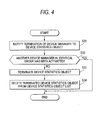
- a process for terminating a data statistics object 150 is described next with reference to the flow chart in Fig. 4.
- the data statistics object 150 determines if another device manager in the same group is still active (S32). If another device manager is still active (YES in S32), this process aborts.
- the data statistics object 150 terminates itself (S33) and sends a corresponding report to the object manager 15.
- the object manager 15 When the object manager 15 receives a report that a data statistics object 150 is terminated, the object manager 15 deletes the corresponding data statistics object record from the data statistics object list 151 (S34).
- a data statistics object 150 stays alive as long as any device manager 11, 12, 13 associated with the group managed by the data statistics object 150 is still active. The data statistics object 150 is terminated when all device managers 11, 12, 13 in the managed group stop operating.
- the data statistics object 150 is created when the device manager that is activated first, the MICR manager 12 in this example, starts operating, and lasts until the last operating device manager, the scanner manager 13 in this example, stops operating.
- the application 100 can determine how long the hybrid device 2A has been continuously operating by querying the data statistics object 150 to get the elapsed time since the data statistics object 150 is created.
Landscapes
- Engineering & Computer Science (AREA)
- Theoretical Computer Science (AREA)
- General Engineering & Computer Science (AREA)
- Physics & Mathematics (AREA)
- General Physics & Mathematics (AREA)
- Software Systems (AREA)
- Computer Hardware Design (AREA)
- Quality & Reliability (AREA)
- Accessory Devices And Overall Control Thereof (AREA)
- Debugging And Monitoring (AREA)
- Computer And Data Communications (AREA)
- Cash Registers Or Receiving Machines (AREA)
Abstract
Description
- The present invention relates to technology for managing a plurality of parallel operating devices, and relates more particularly to technology for managing a plurality of devices in groups.
- JAVA POS is an application programming interfacing for building point-of-sale (POS) systems using JAVA (registered trademark). JAVA POS also has a function for using device statistics, that is, information relating to usage of devices connected to a POS terminal. The JAVA POS standard enables an application running on a POS terminal to acquire and use these device statistics for example as device usage information. This usage information is information indicating usage of particular device functions, and in the case of a printer is information relating to the number of lines printed or the number of characters printed, for example.
- The device statistics are individually managed in each of several individual devices, including, for example, a printer, a magnetic ink character reader (MICR), a scanner, and a cash drawer.
- There are also hybrid apparatuses having a printer, an MICR, and a scanner, for example, in a single housing. In addition to the usage statistics that are kept for each of the component devices in this type of hybrid device, usage information for the hybrid device as a whole may also be needed. However, while statistics such as the operating time can be acquired for the individual component devices in a hybrid device according to the prior art, determining the total continuous operating time of the hybrid apparatus in toto is not possible.
- In addition to managing device statistics by individual device or the hybrid device overall, grouping two or more devices together and maintaining the device statistics by device group may also be desirable.
- It is therefore an object of the present invention to manage the device statistics while associating two or more devices with each other.
- In order to achieve the above object, according to the invention, there is provided a device management apparatus adapted to be connected to a plurality of devices which constitute at least one device group, comprising:
- an application running in the device management apparatus;
- a plurality of device managers, each of which is associated with one of the devices and is operable to create usage information of the associated one of the devices; and
- a device group manager, associated with the device group and coupled to the device managers to receive the usage information from each of the device managers, the device group manager being operable to notify the usage information in response to an inquiry from the application.
- Preferably, the device management apparatus further comprises a plurality of device drivers, each of which is associated with one of the devices to drive the associated one of the devices. One of the device managers creates the usage information when the application instructs the one of the device drivers to drive one of the devices.
- Here, it is preferable that the device management apparatus further comprises:
- a storage component, storing device group information defining the device group; and
- a creator component, which refers, when one of the device drivers is activated, the device group information to specify a device group including one of the devices associated with the activated one of the device drivers, and which dynamically creates a device group manager if no device group manager is associated with the specified device group.
- Preferably, the device management apparatus is adapted to be connected to at least one hybrid device including at least two of the devices. The usage information includes information pertaining to each of the at least two devices and information pertaining to the hybrid device.
- The device management apparatus may additionally include a multi-group device group manager associated with device managers of individual devices associated with different device groups. Correlations between the device managers and the devices may be dynamically generated. Virtual counters may be associated with the plurality of devices that communicate with the device managers to create the usage information based on predicted usage counts. In this context, the apparatus may additionally include a cumulative counter that accumulates the predicted usage counts for each of the devices
- According to the invention, there is also provided a device management method, comprising:
- connecting a device management apparatus to a plurality of devices which constitute at least one device group;
- running an application in the device management apparatus;
- obtaining usage information of one of the devices; and
- notifying the obtained usage information in response to an inquiry from the application.
- Preferably, the device management method further comprises providing a plurality of device drivers, each of which is associated with one of the devices to drive the associated one of the devices. The usage information is created when the application instructs the one of the device drivers to drive one of the devices.
- Here, it is preferable that the device management method further comprises:
- storing device group information defining the at least one device group;
- referring, when one of the device drivers is activated, the device group information to specify a device group including one of the devices associated with the activated one of the device drivers; and
- if no device group manager is associated with the specified device group, creating dynamically a device group manager for notifying the usage information to the application.
- According to the invention, there is also provided a device management apparatus, comprising:
- a general purpose computer having a processor and a memory, the general purpose computer communicating with the devices and running a management application;
- a plurality of device managers, each of which is associated with one of the devices and is operable to create usage information of the associated one of the devices; and
- a device group manager, associated with the at least one device group and coupled to the device managers to receive the usage information from each of the device managers, the device group manager being operable to notify the usage information in response to an inquiry from the application.
- The above objects and advantages of the present invention will become more apparent by describing in detail preferred exemplary embodiments thereof with reference to the accompanying drawings, wherein:
- Fig. 1 is a block diagram of a POS system according to one embodiment of the present invention;
- Fig. 2 is a flow chart of a process for creating a data statistics object executed in the POS system of Fig. 1;
- Fig. 3 is a flow chart of a process for predicting device usage executed in the POS system of Fig. 1;
- Fig. 4 is a flow chart of a process for terminating a data statistics object executed in the POS system of Fig. 1; and
- Fig. 5 is a timing chart showing a relationship between operation time periods of device managers in the POS system of Fig. 1 and an existing time period of the data statistics object.
- Embodiments of the present invention will be described below in detail with reference to the accompanying drawings.
- As shown in Fig. 1, a POS system according to one embodiment of the invention has a POS terminal 1 and at least one hybrid device. In this embodiment, two
hybrid devices hybrid device 2A has a printer (a-printer) 21A, a MICR (b-MICR) 22A, and a scanner (c-scanner) 23A, andhybrid device 2B has a printer (d-printer) 21 B and MICR (e-MICR) 22B. - These hybrid devices are merely shown by way of example, and the devices (device categories) that are included in the hybrid devices may vary as needed.
- The POS terminal 1 is built using a general purpose computer having a processor and a memory, and the components and functions of the POS terminal 1 described below can be achieved by running a computer program in the POS terminal 1.
- The POS terminal 1 has printer managers 11 (11A, 11 B), MICR managers 12 (12A, 12B), a scanner manager 13 (13A), an
object manager 15, agroup information storage 17, and at least oneapplication 100. - The
printer managers 11,MICR managers 12, andscanner manager 13 for managing each of the devices in the hybrid devices 2 are also collectively referred to herein as device managers. Each device manager manages usage information for the respective managed devices. - The
group information storage 17 stores group information related to groups of plural devices. For example, thegroup information storage 17 stores group names linked to identification information for each device in a group. In the example shown in Fig. 1, theprinter 21A, MICR 22A, andscanner 23A housed in the case ofhybrid device 2A form a device group A, and theprinter 21 B and MICR 22B housed in the case ofhybrid device 2B form a device group B. - These groupings are merely shown by way of example, and a
particular application 100 could be used to desirably set and change the group information stored in thegroup information storage 17. More specifically, a desired combination of devices can be defined as a group, usage information can be managed by group unit, and devices that are part of different hybrid devices 2 can be combined in the same group. - The
object manager 15 generates and manages the data statistics (DS) objects 150 (150A, 150B). The data statistics objects 150 are objects for gathering and managing the usage information related to data statistics in the JAVA POS specification. One data statistics object 150, for example, manages virtual usage information for each device based on the groups defined by thegroup information storage 17, and returns the virtual usage information for the devices belonging to a requested group. This virtual usage information is calculated byvirtual counters - The data statistics objects 150 can be dynamically generated as needed and deleted when no longer necessary. In this arrangement the
object manager 15 also maintains a data statistics objectlist 151. When a data statistics object 150 is then generated, the object name and other identification information is added to the data statistics objectlist 151, and deleted when theobject 150 is deleted. - The data statistics objects 150 can also be provided for individual groups. For example, when a request is received from the
printer managers 11, theMICR managers 12, or thescanner manager 13, theobject manager 15 references thegroup information storage 17 to find the group containing the devices 21, 22, 23 associated with themanager - The
printer manager 11 A, theMICR manager 12A, and thescanner manager 13A are respectively linked to and manage theprinter 21A, theMICR 22A, and thescanner 23A of thehybrid device 2A. Theprinter manager 11 B and theMICR manager 12B are likewise respectively linked to and manage theprinter 21 B and theMICR 22B of thehybrid device 2B. These correlations of managers and devices can also be dynamically generated. If theprinter manager 11 A acquires identification information from theprinter 21A when theprinter manager 11A is activated or created, for example, theprinter manager 11A is configured to manage theprinter 21A identified by the received identification information. - The
printer managers 11, theMICR managers 12, and thescanner manager 13 respectively comprise aprinter driver 111, a MICR,driver 121, ascanner driver 131 for driving the related device, and avirtual counter printer manager 11 B and theMICR manager 12B in Fig. 1. Note that processors belonging to group A are primarily described below, and that processors belonging to group B are the same. - The
printer driver 111 receives print requests and other commands from theapplication 100 and drives theprinter 21A based on the received commands. TheMICR driver 121 and thescanner driver 131 likewise drive theMICR 22A and thescanner 23A according to requests from theapplication 100. - When the
printer driver 111 drives theprinter 21A according to a request from theapplication 100, thevirtual counter 112 predicts the expected printer usage, that is, how much theprinter 21 A is used when driven. More particularly, when theprinter driver 111 drives theprinter 21A to print, thevirtual counter 112 predicts the number of characters or lines printed by theprinter 21A, how much paper is consumed (the paper transportation distance if using a rolled sheet, and how many sheets if using cut sheets), and how many times the rolled sheet is cut. The predicted counts are then reported to the data statistics object 150A. - The
virtual counters virtual counter 112. More particularly, thevirtual counters MICR 22A and thescanner 23A are used when driven by theMICR driver 121 and thescanner driver 131, and send these counts to the data statistics object 150A. - Predicting usage information for different functions of the
printer 21A based on commands sent by thevirtual counter 112 to theprinter 21A is described below by way of example. - (1) If the command is a text printing command, the
virtual counter 112 predicts the number of characters and lines printed by theprinter 21A by counting the number of characters and line returns specified by the parameters of the print command. - (2) If the print command is a barcode print command, the
virtual counter 112 counts the number of dots printed by theprinter 21A to print the image data contained in the barcode print command, and converts this dot count to the equivalent number of characters in a specified font. For example, the number of dots per character used for this conversion could be the number of dots in the font size most frequently printed on theprinter 21A (such as 12 dots wide by 24 dots tall), or the average number of dots in one character.
Image data print commands also contain image size and scaling information. Thevirtual counter 112 could thus use this information to determine the height of the image when printed by theprinter 21A, and predict the number of lines printed based on the calculated image height and the predetermined height (line feed distance) of one line. - (3) The
virtual counter 112 also detects escape sequence control commands to predict printer usage. Thevirtual counter 112 could, for example, count the number of times the paper is cut based on the number of times a paper cut command is sent, and count the number of paper cut escape sequences contained in the print command. - The
virtual counter 112 also counts the actual number of times theprinter 21A executes commands corresponding to barcode printing, slip insertion, and reversing the paper (changing the side that is printed). The number of home position errors can also be represented by a mechanical error count. - If the
individual devices virtual counters - The data statistics object 150A also has a
cumulative counter 155. Thecumulative counter 155 accumulates the predicted usage counts (values) for each of thedevices cumulative counter 155 is provided for each device category and counted parameter. The data statistics object 150A also stores thecreation time 156 denoting when the data statistics object 150A is created. - If a read request is then received from the
application 100, thecumulative counter 155 returns the internally stored cumulative count. These read requests could retrieve all parameters for all devices, parameters for a particular device category, or a specific parameter for a specific device. If the data statistics object 150A is requested for the time elapsed since the data statistics object 150A is created, the data statistics object 150A calculates and returns the time elapsed since the data statistics object 150A is created. - Note that like data statistics object 150A, data statistics object 150B also has a cumulative counter and stores the creation time, and has the same functions as the data statistics object 150A.
- Operation of the foregoing system according to this embodiment of the invention is described below with reference to the flow charts in Figs. 2 to 4.
- Fig. 2 is a flow chart of the process of creating a data statistics object. When any one of the device managers, that is, the
printer manager 11A, theMICR manager 12A, or thescanner manager 13A, is activated, theobject manager 15 receives a report from the activated device manager (S11). This example assumes that theprinter manager 11A is activated. - The report sent in step S11 contains identification information (a-printer) for the device (
printer 21A in this example) linked to the activatedprinter manager 11A. Based on identification information (a-printer) for the reported device, theobject manager 15 references thegroup information storage 17 to find the group containing the identified device (S12). Group A is thus identified in this example. - The
object manager 15 then references the data statistics objectlist 151 to determine if a data statistics object 150A for managing the identified group A already exists (S13). - If the corresponding data statistics object 150A has not been created (NO in S13), the
object manager 15 creates the data statistics object 150A, assigns a group name identifying the object as a data statistics object for group A, and registers the group name in the data statistics object list 151 (S14, S15). - If the corresponding data statistics object 150A has already been created (YES in S13), steps S14 and S15 are skipped.
- The data statistics object name for group A is then returned to the
printer manager 11A that reported being activated (S16). The data statistics object 150A is also informed that theprinter manager 11A is active by reporting the identification information for theprinter 21A, for example (S17), thus completing a two-way relationship between the data statistics object 150A and the activated device manager, i.e.,printer manager 11A. - The process run by the device manager will be described with reference to the flow chart in Fig. 3. The
printer 21 A and theprinter manager 11A are used by way of example below, and other devices and device managers operate in the same way. - This process starts when the
printer manager 11A receives a specific print command sent from theapplication 100 as a usage information request for theprinter 21A (S21). Theprinter driver 111 then drives theprinter 21A based on this print command (S22). Theprinter 21A thus operates as controlled by theapplication 100. - The
virtual counter 112 also interprets the print commands received from theapplication 100 and predicts usage values for specific items such as the number of characters and number of lines printed by theprinter 21 A (S23). These predicted counts are then sent to the data statistics object 150A for the group containing theprinter 21A (S24). The data statistics object 150A separately accumulates and stores the reported counts (S25). - The
MICR manager 12A and thescanner manager 13A also run the process shown in Fig. 3. The correspondingvirtual counters MICR 22A and thescanner 23A, and report these counts to the data statistics object 150A. The data statistics object 150A also separately accumulates and stores these reported counts. - The
application 100 can thus reference the data statistics object 150 that manages a particular group to acquire information about all of the devices belonging to that group and the overall operating time for the entire group. The data statistics objects in this embodiment thus enable the system to manage device statistics relating to the operation of respective devices in each of the groups. - A process for terminating a data statistics object 150 is described next with reference to the flow chart in Fig. 4.
- If operation of one of the active device managers stops because the process ended or if a device manager is to be deleted, an appropriate message is sent to the data statistics object 150 (S31).
- When the data statistics object 150 receives an end of operation report from a device manager, the data statistics object 150 determines if another device manager in the same group is still active (S32). If another device manager is still active (YES in S32), this process aborts.
- However, if there is no other active device manager in the same group (S32 returns no), the data statistics object 150 terminates itself (S33) and sends a corresponding report to the
object manager 15. - When the
object manager 15 receives a report that a data statistics object 150 is terminated, theobject manager 15 deletes the corresponding data statistics object record from the data statistics object list 151 (S34). - A data statistics object 150 stays alive as long as any
device manager device managers - Therefore, when the
printer managers 11, theMICR managers 12, and thescanner manager 13 start and stop operation at the timings shown in Fig. 5, the data statistics object 150 is created when the device manager that is activated first, theMICR manager 12 in this example, starts operating, and lasts until the last operating device manager, thescanner manager 13 in this example, stops operating. As a result, theapplication 100 can determine how long thehybrid device 2A has been continuously operating by querying the data statistics object 150 to get the elapsed time since the data statistics object 150 is created. - Although the present invention has been shown and described with reference to specific preferred embodiments, various changes and modifications will be apparent to those skilled in the art from the teachings herein. Such changes and modifications as are obvious are deemed to come within the spirit, scope and contemplation of the invention as defined in the appended claims.
Claims (12)
- A device management apparatus adapted to be connected to a plurality of devices which constitute at least one device group, comprising:an application running in the device management apparatus;a plurality of device managers, each of which is associated with one of the devices and is operable to create usage information of the associated one of the devices; anda device group manager, associated with the device group and coupled to the device managers to receive the usage information from each of the device managers, the device group manager being operable to notify the usage information in response to an inquiry from the application.
- The device management apparatus as set forth in claim 1, further comprising a plurality of device drivers, each of which is associated with one of the devices to drive the associated one of the devices,
wherein one of the device managers creates the usage information when the application instructs the one of the device drivers to drive one of the devices. - The device management apparatus as set forth in claim 2, further comprising:a storage component, storing device group information defining the device group; anda creator component, which refers, when one of the device drivers is activated, the device group information to specify a device group including one of the devices associated with the activated one of the device drivers, and which dynamically creates a device group manager if no device group manager is associated with the specified device group.
- The device management apparatus as set forth in claim 1, wherein:the device management apparatus is adapted to be connected to at least one hybrid device including at least two of the devices; andthe usage information includes information pertaining to each of the at least two devices and information pertaining to the hybrid device.
- The device management apparatus as set forth in claim 1, further comprising a multi-group device group manager associated with device managers of individual devices associated with different device groups.
- The device management apparatus as set forth in claim 1, wherein correlations between the device managers and the devices are dynamically generated.
- The device management apparatus as set forth in claim 1, further comprising virtual counters associated with the plurality of devices, the virtual counters communicating with the device managers to create the usage information based on predicted usage counts.
- The device management apparatus as set forth in claim 7, further comprising a cumulative counter that accumulates the predicted usage counts for each of the devices.
- A device management method, comprising:connecting a device management apparatus to a plurality of devices which constitute at least one device group;running an application in the device management apparatus;obtaining usage information of one of the devices; andnotifying the obtained usage information in response to an inquiry from the application.
- The device management method as set forth in claim 9, further comprising providing a plurality of device drivers, each of which is associated with one of the devices to drive the associated one of the devices,
wherein the usage information is created when the application instructs the one of the device drivers to drive one of the devices. - The device management method as set forth in claim 10, further comprising:storing device group information defining the at least one device group;referring, when one of the device drivers is activated, the device group information to specify a device group including one of the devices associated with the activated one of the device drivers; andif no device group manager is associated with the specified device group, creating dynamically a device group manager for notifying the usage information to the application.
- A device management apparatus adapted to be connected to a plurality of devices which constitute at least one device group, comprising:a general purpose computer having a processor and a memory, the general purpose computer communicating with the devices and running a management application;a plurality of device managers, each of which is associated with one of the devices and is operable to create usage information of the associated one of the devices; anda device group manager, associated with the at least one device group and coupled to the device managers to receive the usage information from each of the device managers, the device group manager being operable to notify the usage information in response to an inquiry from the application.
Applications Claiming Priority (2)
| Application Number | Priority Date | Filing Date | Title |
|---|---|---|---|
| JP2004281556 | 2004-09-28 | ||
| JP2005133884A JP4899336B2 (en) | 2004-09-28 | 2005-05-02 | Composite device management apparatus and method |
Publications (3)
| Publication Number | Publication Date |
|---|---|
| EP1640870A2 true EP1640870A2 (en) | 2006-03-29 |
| EP1640870A3 EP1640870A3 (en) | 2006-11-29 |
| EP1640870B1 EP1640870B1 (en) | 2014-06-18 |
Family
ID=35645719
Family Applications (1)
| Application Number | Title | Priority Date | Filing Date |
|---|---|---|---|
| EP05014034.2A Ceased EP1640870B1 (en) | 2004-09-28 | 2005-06-29 | Device management apparatus and method for monitoring usage of a group of devices |
Country Status (5)
| Country | Link |
|---|---|
| US (1) | US7782475B2 (en) |
| EP (1) | EP1640870B1 (en) |
| JP (1) | JP4899336B2 (en) |
| KR (1) | KR100743449B1 (en) |
| TW (1) | TW200620039A (en) |
Families Citing this family (3)
| Publication number | Priority date | Publication date | Assignee | Title |
|---|---|---|---|---|
| US8126993B2 (en) * | 2006-07-18 | 2012-02-28 | Nvidia Corporation | System, method, and computer program product for communicating sub-device state information |
| JP4792361B2 (en) * | 2006-09-27 | 2011-10-12 | 富士通株式会社 | Response device, response method, and response program |
| US9350615B2 (en) * | 2011-05-23 | 2016-05-24 | Samsung Electronics Co., Ltd. | Management server, management device, and method of management of plural image forming apparatuses |
Family Cites Families (30)
| Publication number | Priority date | Publication date | Assignee | Title |
|---|---|---|---|---|
| US3704363A (en) * | 1971-06-09 | 1972-11-28 | Ibm | Statistical and environmental data logging system for data processing storage subsystem |
| US6631247B1 (en) * | 1999-09-29 | 2003-10-07 | Ricoh Co., Ltd. | Method and system for remote diagnostic, control and information collection based on various communication modes for sending messages to a resource manager |
| JPH05341595A (en) * | 1992-06-08 | 1993-12-24 | Mita Ind Co Ltd | Method and device for controlling premaintenance set value of image forming device |
| JPH06292271A (en) * | 1992-08-17 | 1994-10-18 | Noritz Corp | Multi-device system control method |
| JPH0887252A (en) * | 1994-09-16 | 1996-04-02 | Fujitsu Ltd | Management device |
| KR0152859B1 (en) * | 1995-01-17 | 1998-11-02 | 구자홍 | Control device and method for bidirectional communication of home automation system |
| JPH096582A (en) | 1995-06-20 | 1997-01-10 | Fujitsu Ltd | Application grouping method and apparatus |
| US6977752B1 (en) * | 1995-08-07 | 2005-12-20 | Electronics For Imaging, Inc. | Method and apparatus for determining toner level in electrophotographic print engines |
| US5724260A (en) * | 1995-09-06 | 1998-03-03 | Micron Electronics, Inc. | Circuit for monitoring the usage of components within a computer system |
| JP2000090057A (en) | 1998-09-11 | 2000-03-31 | Omron Corp | Group object and control system |
| JP3645443B2 (en) * | 1999-03-30 | 2005-05-11 | 株式会社リコー | Remote image forming apparatus management system, monitoring terminal apparatus and control method |
| JP2001005629A (en) * | 1999-06-25 | 2001-01-12 | Ricoh Co Ltd | Network system, printer management method, and recording medium |
| US6606162B1 (en) * | 1999-07-21 | 2003-08-12 | Hewlett-Packard Development Company, L.P. | Network printer groups |
| JP2001297045A (en) * | 2000-02-08 | 2001-10-26 | Ricoh Co Ltd | Device management system, management client, management server, usage management method and program |
| EP1191434A4 (en) * | 2000-04-07 | 2003-07-09 | Seiko Epson Corp | CONTROL OF DISTRIBUTED PRINTERS |
| US7293255B2 (en) * | 2000-09-25 | 2007-11-06 | Sun Microsystems, Inc. | Apparatus and method for automated creation of resource types |
| JP2002196996A (en) * | 2000-12-27 | 2002-07-12 | Canon Inc | Information processing apparatus, network system, device management method, and storage medium |
| JP4453203B2 (en) | 2001-01-09 | 2010-04-21 | セイコーエプソン株式会社 | Device environment setting system, device environment setting processing method, and information recording medium |
| US6788946B2 (en) * | 2001-04-12 | 2004-09-07 | Qualcomm Inc | Systems and methods for delivering information within a group communications system |
| JP4024608B2 (en) * | 2001-07-16 | 2007-12-19 | 株式会社リコー | Digital computing device, motion information recording system |
| US7102775B2 (en) * | 2001-08-13 | 2006-09-05 | Hewlett-Packard Development Company, L.P. | Systems and methods for defining printing device groups and collection of usage data therefrom |
| US6961794B2 (en) * | 2001-09-21 | 2005-11-01 | International Business Machines Corporation | System and method for analyzing and optimizing computer system performance utilizing observed time performance measures |
| US7400424B2 (en) * | 2002-03-05 | 2008-07-15 | Hewlett-Packard Development Company, L.P. | Printer option suggestion method and program |
| US7852502B2 (en) * | 2002-04-12 | 2010-12-14 | Canon Kabushiki Kaisha | Management system, image processing apparatus and method for acquiring print job history information |
| DE10233891B4 (en) * | 2002-07-25 | 2006-01-12 | OCé PRINTING SYSTEMS GMBH | Printer or copier having a control device and method for monitoring wear parts |
| US20040021893A1 (en) * | 2002-07-30 | 2004-02-05 | Stevens Chad A. | System for enabling a group of printers to print a document |
| JP2004070708A (en) * | 2002-08-07 | 2004-03-04 | Konica Minolta Holdings Inc | Equipment management system |
| US7243145B1 (en) * | 2002-09-30 | 2007-07-10 | Electronic Data Systems Corporation | Generation of computer resource utilization data per computer application |
| JP2004178322A (en) * | 2002-11-27 | 2004-06-24 | Canon Inc | Information processing method |
| JP2004194219A (en) * | 2002-12-13 | 2004-07-08 | Konica Minolta Holdings Inc | Multifunction system |
-
2005
- 2005-05-02 JP JP2005133884A patent/JP4899336B2/en not_active Expired - Fee Related
- 2005-06-29 EP EP05014034.2A patent/EP1640870B1/en not_active Ceased
- 2005-06-29 TW TW094122003A patent/TW200620039A/en unknown
- 2005-06-30 KR KR1020050058222A patent/KR100743449B1/en not_active Expired - Fee Related
- 2005-06-30 US US11/170,089 patent/US7782475B2/en not_active Expired - Fee Related
Also Published As
| Publication number | Publication date |
|---|---|
| EP1640870B1 (en) | 2014-06-18 |
| JP2006127459A (en) | 2006-05-18 |
| EP1640870A3 (en) | 2006-11-29 |
| TW200620039A (en) | 2006-06-16 |
| US20060066896A1 (en) | 2006-03-30 |
| KR20060049707A (en) | 2006-05-19 |
| US7782475B2 (en) | 2010-08-24 |
| KR100743449B1 (en) | 2007-07-30 |
| JP4899336B2 (en) | 2012-03-21 |
Similar Documents
| Publication | Publication Date | Title |
|---|---|---|
| US9386173B2 (en) | Printing system, printer, job processing method and computer readable recording medium storing job processing program | |
| US9588722B2 (en) | Printer with a web browser for sending status information to a server | |
| US6208428B1 (en) | Printing system and charging method thereof | |
| WO2001063489A1 (en) | Automatic consumables ordering | |
| US20030195917A1 (en) | Management system, information processing apparatus, and management method and program | |
| EP1814022B1 (en) | Inkjet printer, ink billing system, and inkjet printer control method | |
| US6312073B1 (en) | System for detecting an accurate amount of ink consumption in an ink jet recording device | |
| US6982802B2 (en) | Systems and methods for collecting printing device usage data | |
| US7782475B2 (en) | Device management apparatus and device management method | |
| CN100371879C (en) | Job managing apparatus and method and managing system | |
| JP2002092745A (en) | Management system for consumable parts of printing device in POS terminal, management method thereof, computer program product, and information recording medium | |
| US20030056146A1 (en) | Method for suggesting corrective action in response to resource constraint | |
| US20060164660A1 (en) | Method and system for providing predictive paper out status in a print network environment | |
| CN113888074A (en) | Method and device for determining distribution date, electronic equipment and readable storage medium | |
| US20040190050A1 (en) | Method of reporting status of execution of print job | |
| JP4034055B2 (en) | Consumable management system | |
| KR100641748B1 (en) | Pos terminal apparatus | |
| CN100412855C (en) | Equipment management device and equipment management method | |
| US20230202187A1 (en) | Recording apparatus, management server, ordering system, recording method using recording apparatus, and storage medium | |
| US9174456B1 (en) | Printing device, notification method, and ink ribbon cassette | |
| JP2000047905A (en) | Preventive maintenance system and terminal device connected to the preventive maintenance system | |
| JP2003196068A (en) | Consumables management system, consumables management method, and print control device | |
| CN100552734C (en) | POS terminal device | |
| JPH10283131A (en) | Printer | |
| JP2006139454A (en) | Production management system, method and program |
Legal Events
| Date | Code | Title | Description |
|---|---|---|---|
| PUAI | Public reference made under article 153(3) epc to a published international application that has entered the european phase |
Free format text: ORIGINAL CODE: 0009012 |
|
| AK | Designated contracting states |
Kind code of ref document: A2 Designated state(s): AT BE BG CH CY CZ DE DK EE ES FI FR GB GR HU IE IS IT LI LT LU MC NL PL PT RO SE SI SK TR |
|
| AX | Request for extension of the european patent |
Extension state: AL BA HR LV MK YU |
|
| PUAL | Search report despatched |
Free format text: ORIGINAL CODE: 0009013 |
|
| AK | Designated contracting states |
Kind code of ref document: A3 Designated state(s): AT BE BG CH CY CZ DE DK EE ES FI FR GB GR HU IE IS IT LI LT LU MC NL PL PT RO SE SI SK TR |
|
| AX | Request for extension of the european patent |
Extension state: AL BA HR LV MK YU |
|
| 17P | Request for examination filed |
Effective date: 20070222 |
|
| 17Q | First examination report despatched |
Effective date: 20070323 |
|
| AKX | Designation fees paid |
Designated state(s): DE GB IT |
|
| GRAP | Despatch of communication of intention to grant a patent |
Free format text: ORIGINAL CODE: EPIDOSNIGR1 |
|
| INTG | Intention to grant announced |
Effective date: 20140109 |
|
| GRAS | Grant fee paid |
Free format text: ORIGINAL CODE: EPIDOSNIGR3 |
|
| GRAA | (expected) grant |
Free format text: ORIGINAL CODE: 0009210 |
|
| AK | Designated contracting states |
Kind code of ref document: B1 Designated state(s): DE GB IT |
|
| REG | Reference to a national code |
Ref country code: GB Ref legal event code: FG4D |
|
| REG | Reference to a national code |
Ref country code: DE Ref legal event code: R096 Ref document number: 602005043918 Country of ref document: DE Effective date: 20140731 |
|
| REG | Reference to a national code |
Ref country code: DE Ref legal event code: R097 Ref document number: 602005043918 Country of ref document: DE |
|
| PLBE | No opposition filed within time limit |
Free format text: ORIGINAL CODE: 0009261 |
|
| STAA | Information on the status of an ep patent application or granted ep patent |
Free format text: STATUS: NO OPPOSITION FILED WITHIN TIME LIMIT |
|
| 26N | No opposition filed |
Effective date: 20150319 |
|
| PGFP | Annual fee paid to national office [announced via postgrant information from national office to epo] |
Ref country code: DE Payment date: 20190618 Year of fee payment: 15 Ref country code: IT Payment date: 20190620 Year of fee payment: 15 |
|
| PGFP | Annual fee paid to national office [announced via postgrant information from national office to epo] |
Ref country code: GB Payment date: 20190626 Year of fee payment: 15 |
|
| REG | Reference to a national code |
Ref country code: DE Ref legal event code: R119 Ref document number: 602005043918 Country of ref document: DE |
|
| GBPC | Gb: european patent ceased through non-payment of renewal fee |
Effective date: 20200629 |
|
| PG25 | Lapsed in a contracting state [announced via postgrant information from national office to epo] |
Ref country code: GB Free format text: LAPSE BECAUSE OF NON-PAYMENT OF DUE FEES Effective date: 20200629 |
|
| PG25 | Lapsed in a contracting state [announced via postgrant information from national office to epo] |
Ref country code: DE Free format text: LAPSE BECAUSE OF NON-PAYMENT OF DUE FEES Effective date: 20210101 |
|
| PG25 | Lapsed in a contracting state [announced via postgrant information from national office to epo] |
Ref country code: IT Free format text: LAPSE BECAUSE OF NON-PAYMENT OF DUE FEES Effective date: 20200629 |