EP1626538B1 - Wireless LAN communication method and apparatus - Google Patents
Wireless LAN communication method and apparatus Download PDFInfo
- Publication number
- EP1626538B1 EP1626538B1 EP05255022A EP05255022A EP1626538B1 EP 1626538 B1 EP1626538 B1 EP 1626538B1 EP 05255022 A EP05255022 A EP 05255022A EP 05255022 A EP05255022 A EP 05255022A EP 1626538 B1 EP1626538 B1 EP 1626538B1
- Authority
- EP
- European Patent Office
- Prior art keywords
- frame
- station
- mimo
- data
- siso
- Prior art date
- Legal status (The legal status is an assumption and is not a legal conclusion. Google has not performed a legal analysis and makes no representation as to the accuracy of the status listed.)
- Expired - Lifetime
Links
Images




Classifications
-
- H—ELECTRICITY
- H04—ELECTRIC COMMUNICATION TECHNIQUE
- H04B—TRANSMISSION
- H04B7/00—Radio transmission systems, i.e. using radiation field
- H04B7/02—Diversity systems; Multi-antenna system, i.e. transmission or reception using multiple antennas
-
- H—ELECTRICITY
- H04—ELECTRIC COMMUNICATION TECHNIQUE
- H04W—WIRELESS COMMUNICATION NETWORKS
- H04W74/00—Wireless channel access
- H04W74/08—Non-scheduled access, e.g. ALOHA
- H04W74/0808—Non-scheduled access, e.g. ALOHA using carrier sensing, e.g. carrier sense multiple access [CSMA]
- H04W74/0816—Non-scheduled access, e.g. ALOHA using carrier sensing, e.g. carrier sense multiple access [CSMA] with collision avoidance
-
- H—ELECTRICITY
- H04—ELECTRIC COMMUNICATION TECHNIQUE
- H04B—TRANSMISSION
- H04B7/00—Radio transmission systems, i.e. using radiation field
- H04B7/02—Diversity systems; Multi-antenna system, i.e. transmission or reception using multiple antennas
- H04B7/04—Diversity systems; Multi-antenna system, i.e. transmission or reception using multiple antennas using two or more spaced independent antennas
- H04B7/0413—MIMO systems
-
- H—ELECTRICITY
- H04—ELECTRIC COMMUNICATION TECHNIQUE
- H04L—TRANSMISSION OF DIGITAL INFORMATION, e.g. TELEGRAPHIC COMMUNICATION
- H04L1/00—Arrangements for detecting or preventing errors in the information received
- H04L1/12—Arrangements for detecting or preventing errors in the information received by using return channel
- H04L1/16—Arrangements for detecting or preventing errors in the information received by using return channel in which the return channel carries supervisory signals, e.g. repetition request signals
- H04L1/1607—Details of the supervisory signal
-
- H—ELECTRICITY
- H04—ELECTRIC COMMUNICATION TECHNIQUE
- H04L—TRANSMISSION OF DIGITAL INFORMATION, e.g. TELEGRAPHIC COMMUNICATION
- H04L1/00—Arrangements for detecting or preventing errors in the information received
- H04L1/12—Arrangements for detecting or preventing errors in the information received by using return channel
- H04L1/16—Arrangements for detecting or preventing errors in the information received by using return channel in which the return channel carries supervisory signals, e.g. repetition request signals
- H04L1/18—Automatic repetition systems, e.g. Van Duuren systems
- H04L1/1829—Arrangements specially adapted for the receiver end
-
- H—ELECTRICITY
- H04—ELECTRIC COMMUNICATION TECHNIQUE
- H04L—TRANSMISSION OF DIGITAL INFORMATION, e.g. TELEGRAPHIC COMMUNICATION
- H04L1/00—Arrangements for detecting or preventing errors in the information received
- H04L1/12—Arrangements for detecting or preventing errors in the information received by using return channel
- H04L1/16—Arrangements for detecting or preventing errors in the information received by using return channel in which the return channel carries supervisory signals, e.g. repetition request signals
- H04L1/18—Automatic repetition systems, e.g. Van Duuren systems
- H04L1/1867—Arrangements specially adapted for the transmitter end
- H04L1/188—Time-out mechanisms
-
- H—ELECTRICITY
- H04—ELECTRIC COMMUNICATION TECHNIQUE
- H04L—TRANSMISSION OF DIGITAL INFORMATION, e.g. TELEGRAPHIC COMMUNICATION
- H04L27/00—Modulated-carrier systems
- H04L27/26—Systems using multi-frequency codes
- H04L27/2601—Multicarrier modulation systems
- H04L27/2602—Signal structure
-
- H—ELECTRICITY
- H04—ELECTRIC COMMUNICATION TECHNIQUE
- H04L—TRANSMISSION OF DIGITAL INFORMATION, e.g. TELEGRAPHIC COMMUNICATION
- H04L5/00—Arrangements affording multiple use of the transmission path
- H04L5/02—Channels characterised by the type of signal
- H04L5/023—Multiplexing of multicarrier modulation signals, e.g. multi-user orthogonal frequency division multiple access [OFDMA]
-
- H—ELECTRICITY
- H04—ELECTRIC COMMUNICATION TECHNIQUE
- H04W—WIRELESS COMMUNICATION NETWORKS
- H04W74/00—Wireless channel access
- H04W74/002—Transmission of channel access control information
-
- H—ELECTRICITY
- H04—ELECTRIC COMMUNICATION TECHNIQUE
- H04L—TRANSMISSION OF DIGITAL INFORMATION, e.g. TELEGRAPHIC COMMUNICATION
- H04L1/00—Arrangements for detecting or preventing errors in the information received
- H04L1/12—Arrangements for detecting or preventing errors in the information received by using return channel
- H04L1/16—Arrangements for detecting or preventing errors in the information received by using return channel in which the return channel carries supervisory signals, e.g. repetition request signals
- H04L1/1607—Details of the supervisory signal
- H04L1/1671—Details of the supervisory signal the supervisory signal being transmitted together with control information
-
- H—ELECTRICITY
- H04—ELECTRIC COMMUNICATION TECHNIQUE
- H04L—TRANSMISSION OF DIGITAL INFORMATION, e.g. TELEGRAPHIC COMMUNICATION
- H04L1/00—Arrangements for detecting or preventing errors in the information received
- H04L1/12—Arrangements for detecting or preventing errors in the information received by using return channel
- H04L2001/125—Arrangements for preventing errors in the return channel
-
- H—ELECTRICITY
- H04—ELECTRIC COMMUNICATION TECHNIQUE
- H04W—WIRELESS COMMUNICATION NETWORKS
- H04W84/00—Network topologies
- H04W84/02—Hierarchically pre-organised networks, e.g. paging networks, cellular networks, WLAN [Wireless Local Area Network] or WLL [Wireless Local Loop]
- H04W84/10—Small scale networks; Flat hierarchical networks
- H04W84/12—WLAN [Wireless Local Area Networks]
Definitions
- Apparatuses and methods consistent with the present invention relate to wireless local area network (LAN) communications, and more particularly, to wireless LAN (WAN) communications using an improved carrier sensing mechanism.
- LAN local area network
- WAN wireless LAN
- WLANs have various advantages, including wireless networking capability, greater mobility and so on. Accordingly, WLAN markets have been gradually growing.
- the IEEE 802.11g standard which delivers a 6 to 54 Mbps transmission rate in the 56 GHz-National Information Infrastructure (NII) band, uses orthogonal frequency division multiplexing (OFDM) as transmission technology.
- OFDM orthogonal frequency division multiplexing
- Nespot services allow access to the Internet using a WLAN according to IEEE 802.11b, commonly called Wi-Fi representing wireless fidelity.
- Communication standards for wireless data communication systems which have been completed and promulgated or are being researched and discussed, include Wide Code Division Multiple Access (WCDMA), IEEE 802.11x, Bluetooth, IEEE 802.15.3, etc., which are known as 3rd Generation (3G) communication standards.
- WCDMA Wide Code Division Multiple Access
- IEEE 802.11x IEEE 802.11x
- Bluetooth IEEE 802.15.3
- 3G 3rd Generation
- the most widely known, cheapest wireless data communication standard is IEEE 802.11b, a series of IEEE 802.11x.
- An IEEE 802.11b WLAN standard delivers data transmission at a maximum rate of 11 Mbps and utilizes the 2.4 GHz-Industrial, Scientific, and Medical (ISM) band, which can be used at below a predetermined electric field without permission.
- ISM 2.4 GHz-Industrial, Scientific, and Medical
- the Ethernet and the WLAN, which are currently being widely used, botch utilize a carrier sensing multiple access (CSMA) method.
- CSMA carrier sensing multiple access
- a carrier sensing multiple access with collision detection (CSMA/CD) method which is an improvement of the CSMA method, is used in a wired LAN, whereas a carrier sensing multiple access with collision avoidance (CSMA/CA) method is used in packet-based wireless data communications.
- CSMA/CD carrier sensing multiple access with collision detection
- CSMA/CA carrier sensing multiple access with collision avoidance
- a station suspends transmitting signals if a collision is detected during transmission.
- the station suspends transmission of signals when a collision is detected during the transmission of signals and transmits a jam signal to another station to inform it of the occurrence of the collision.
- the station has a random backoff period for delay and restarts transmitting signals.
- the station does not transmit data immediately even after the channel becomes idle and has a random backoff period for a predetermined duration before transmission to avoid collision of signals. If a collision of signals occurs during transmission, the duration of the random backoff period is increased by two times, thereby further lowering a probability of collision.
- SISO single input single output
- a station that adopts the SISO approach receives data from and transmits data to a wireless medium using a single antenna.
- MIMO multiple input multiple output
- a station (hereinafter referred to as an "MIMO station") that adopts the MIMO approach, unlike an SISO station, transmits a plurality of data to a wireless medium via different transmission paths using a plurality of antennas and receives a plurality of data from another MIMO station via different transmission paths using the antennas. Accordingly, an MIMO station achieves higher data rates (data transferring rates) than an SISO station.
- the SISO station may not be able to interpret any data transmitted by the MIMO station. Problems that may arise in such a WLAN will now be described in detail with reference to FIGS. 1 through 3 .
- FIG. 1 is a diagram illustrating the format of an IEEE 802.11a frame.
- the IEEE 802.11a frame is comprised of a physical layer convergence procedure (PLCP) preamble 110, a signal field 120, and a data field 130.
- PLCP physical layer convergence procedure
- the PLCP preamble 110 indicates what data will be transmitted on a current physical layer.
- the signal field 120 which follows the PLCP preamble 110, includes one orthogonal frequency-division multiplexing (OFDM) symbol that is modulated at a lowest data rate using a basic modulation method.
- the data field 130 includes a plurality of OFDM symbols that are modulated at data rates higher than or equal to the data rate at which the OFDM symbol of the signal field 120 is modulated.
- the signal field 120 is comprised of a total of 24 bits.
- the first through fourth bits of the signal field 120 constitute a rate field 142, which specifies how and at what coding rate the data field 130 has been modulated.
- the fifth bit of the signal field 120 is a reserved bit.
- the sixth through seventeenth bits of the signal field 120 constitute a length field 144, which specifies the length of the IEEE 802.11a frame.
- the eighteenth bit of the signal field 120 is a bit used for parity check.
- the nineteenth through twenty fifth bits of the signal field 120 are tail bits.
- the length field 144 specifies the number of bytes constituting a media access control (MAC) frame contained in the data field 130.
- First through sixteenth bits of the data field 130 constitute a service field.
- the signal field 120 and the service field constitute a PLCP header 140.
- the data field 130 also includes a PLCP service data unit (PSDU), six tail bits, and pad bits.
- PSDU corresponds to an MAC frame, which is comprised of an MAC header, an MAC data field, and a frame Check sequence (FCS) used for determining whether the MAC frame is erroneous.
- the data field 130 may be modulated in various manners and at various coding rates. As described above, information regarding how and at what coding rate the data field 130 has been modulated is included in the rate field 142 of the signal field 120.
- FIG. 2 is a diagram illustrating a carrier sensing operation performed in a WLAN.
- a frame 212 which is received by a physical layer 210, is comprised of a PLCP preamble 214, a signal field 216, and a data field 218.
- the physical carrier sensing method enables a station to recognize whether signals are transmitted by a wireless medium.
- the physical layer 210 when the PLCP preamble 214 is input to the physical layer 210, the physical layer 210. notifies an MAC layer 220 that it is currently used by transmitting a busy signal to the MAC layer 220, as marked by 222. Thereafter, when the reception of the PLCP preamble 214 is completed, the physical layer 210 notifies the MAC layer 220 that it is idle by transmitting an idle signal 228 to the MAC layer 220.
- a physical carrier sensing operation may be performed based on a result of interpreting a length field included in the signal field 216.
- the virtual carrier sensing method is a method that enables the MAC layers 220 to determine whether a wireless medium is used based on a result of interpreting a duration value, i.e., a network allocation vector (NAV) value, contained in an MAC frame included in the data field 218. Therefore, for a predetermined period of time specified by the duration value, the MAC layer 220 considers that the wireless, medium is used.
- a station can receive the data field 218 and then read the NAV value from the MAC frame included in the received data field 218.
- NAV network allocation vector
- FIG. 3 is a diagram illustrating a conventional method of transmitting frames in a contention period in a WLAN where three MIMO stations, i.e., first through third MIMO stations, and an SISO station coexist.
- stations are prevented from transmitting frames via a wireless channel when frames are transmitted via the wireless channel by other stations.
- stations In a contention mode, stations cannot transmit a next frame immediately after the wireless channel becomes empty but are required to wait for a predetermined amount of time called a distributed inter-frame space (DIFS) and random back-off time to obtain the opportunity to transmit a frame via the wireless channel.
- DIFS distributed inter-frame space
- the first MIMO station obtains the opportunity to transmit data through channel contention and thus transmits a data frame to the second MIMO station. Since the data frame transmitted by the first MIMO station is an MIMO frame, the third MIMO station as well as the second MIMO station can receive it, but the SISO station cannot receive it. Following a short inter-frame space (SIFS) after receiving the data frame transmitted by the first MIMO station, the second MIMO station transmits an acknowledgment (ACK) frame to the first MIMO frame.
- SISO short inter-frame space
- the second MIMO station Since the SIFS is shorter than the DIFS and the second MIMO station transmits the ACK frame following a short period of time after receiving the data frame transmitted by the first MIMO station, the second and third MIMO stations and the SISO station cannot transmit data until the transmission of the ACK frame is completed. Since the ACK frame is also an MIMO frame, the third MIMO station as well as the first MIMO station can receive it, but the SISO station cannot receive it.
- the first through third MIMO stations can set their respective NAY values based on MIMO data that they receive by performing a virtual carrier sensing operation. Accordingly, the first through third MIMO stations can obtain the opportunity to transmit a next frame the DIFS and back-off time 310 after the transmission of the ACK frame is completed.
- the SISO station cannot receive the MIMO data and thus cannot perform a virtual carrier sensing operation.
- the SISO frame considers that a collision between data frames has occurred. Therefore, the SISO station can obtain the opportunity to transmit a frame following an extended inter-frame space (EIFS) and back-off time 320 after performing a physical carrier sensing operation, and the EIFS is equal two the sum of the SIFS and a predetermined amount of time required for transmitting an ACK frame at a lowest data rate.
- the SISO station must wait a long period of time to obtain the opportunity to transmit a frame in an environment where it exists together with the first through third MIMO stations.
- EIFS extended inter-frame space
- the SISO station is in a disadvantageous position in channel contention with the first through third MIMO stations or other new MIMO stations. Therefore, it is necessary to develop a WLAN communication method that can prevent SISO stations from being discriminated against MIMO stations in an environment where they exist together with the MIMO stations.
- EP-A-1 351 414 discloses a method that includes receiving a MIMO frame at a receiving station, determining whether the frame is erroneous and whether the MIMO frame is destined for the receiving station.
- EP 1553730 published on the 27.07.2005 , hence representing prior art under Article 53(4) EPC, describes a construction of a physical frame, which includes a MAC super-frame payload, which in turn includes a plurality of MAC frames.
- Virtual carrier sensed information is set in the plurality of MAC frames so that a result of carrier is identical to another by virtual carrier based on the plurality of MAC frames in the MAC super-frame payload.
- the present invention provides a WLAN communication method and apparatus using an improved carrier sensing method.
- an MIMO station has two input ports and two output ports.
- the present invention is also applicable to an MIMO station having more than two input ports and more than two output ports and to an SIMO station having a single input port and multiple output ports and an MISO station having multiple input ports and a single output port.
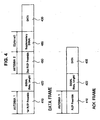
- FIG. 4 is a diagram illustrating the formats of a data frame and an ACK frame according to an exemplary embodiment of the present invention.
- an MIMO data frame is used to facilitate a physical carrier sensing operation
- an SISO ACK frame is used to facilitate a virtual carrier sensing operation even when the MIMO data frame is received.
- a data frame includes a first PLCP preamble 410, a signal field 420, a second PLCP preamble 450, and a data field 430.
- the data frame may optionally include a supplementary signal field 460. OFDM symbols received by antenna 1 of a receiving station and OFDM symbols received by antenna 2 of the receiving station coexist in the data field 430.
- the first PLCP preamble 410 is a signal that antenna 1 is to synchronize itself with
- the second PLCP preamble 450 is a signal that antenna 2 is to synchronize itself with.
- the signal field 420 follows the first PLCP preamble 410.
- the first PLCP preamble 410 and the signal field 420 have the same structures as the first PLCP preamble 110 and the signal field 120, respectively, of FIG. 1 .
- an SISO station can obtain information contained in the signal field 420, for example, information regarding data rate information and frame length.
- the frame length indicates the length in bytes of part of the data frame followings the signal field 420, i.e., the sum of the lengths in bytes of the second PLCP preamble 450, the supplementary signal field 460, and the data field 430.
- a station can obtain the duration of the fields following the signal field 460 by dividing the frame length by the data rate.
- the frame length is calculated in the following manner.
- the duration of each OFDM symbol is four microseconds, and the second PLCP preamble 450 corresponds to two OFDM symbols. Since 216x2 byte-data per OFDM symbol can be transmitted at a data rate of 108 Mbps, it appears that the second PLCP preamble 450 has a length of 432 bytes. Therefore, n + 432 is recorded as the frame length in a length field of the data frame.
- the frame length is calculated in the following manner. As described above, the duration of each OFDM symbol is four microseconds, and the second PLCP preamble 450 corresponds to two OFDM symbols. Since 24x2 byte-data per OFDM symbol can be transmitted at a data rate of 108 Mbps, it appears that the second PLCP preamble 450 is has a length of 48 bytes. Therefore, n + 48 is recorded as the frame length in a length field of the data frame.
- an SISO frame still cannot receive an MIMO frame but can obtain information regarding the data rate and the length of the MIMO frame. Accordingly, an SISO station can perform a physical carrier sensing operation with reference to the frame length information as well as a power level. Therefore, according to the present invention, a station can more efficiently carry out a clear channel assessment (CCA) mechanism.
- CCA clear channel assessment
- an ACK frame The structure of an ACK frame will now be described with reference to FIG. 4 .
- the IEEE 802.11 standard prescribes that an ACK frame or a clear-to-send (CTS) frame must be transmitted at the same data rate as a frame that it follows as a response frame. Therefore, if a station receives an MIMO frame, it must transmit an MIMO ACK frame in response to the received MIMO frame, in which case, an SISO station cannot receive the MIMO ACK frame. Thus, in the present exemplary embodiment, a station is required to transmit an SISO ACK frame in response to a frame input thereto even though the input frame is an MIMO frame.
- an ACK frame includes a PLCP preamble 412 and a signal field 422.
- a block ACK frame based on the IEEE 802.11e standard may also include a data field 432.
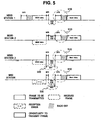
- FIG. 5 illustrates a total of four stations, i.e., first through third MIMO stations (MIMO stations 1 through 3) and an SISO station (SISO station).
- MIMO stations 1 through 3 MIMO stations 1 through 3
- SISO station SISO station
- the first MIMO station obtains the opportunity to transmit data through channel contention and thus transmits a data frame to the second MIMO station. Since the data frame transmitted by the first MIMO station is an MIMO frame, the third MIMO station can receive it, but the SISO station cannot receive it. However, in the present exemplary embodiment, unlike in the prior art, the SISO station can obtain information regarding data rate and frame length from a signal field of the data frame transmitted by the first MIMO station, and thus can efficiently perform a physical carrier sensing operation based on the information regarding data rate and frame length.
- the second MIMO station transmits an ACK frame to the first MIMO station in response to the received data frame.
- the ACK frame transmitted by the second MIMO station is an SISO ACK frame.
- the SISO station as well as the first and third MIMO stations can receive the ACK frame transmitted by the second MIMO station.
- the third MIMO station obtains an MAC frame from the data frame transmitted by the first MIMO station and sets its NAV value 520 by performing a virtual carrier sensing operation.
- the SISO station obtains an MAC frame from the ACK frame transmitted by the second MIMO station and sets its NAV value 530 by performing a virtual carrier sensing operation.
- the first through third LIMO stations and the SISO station may have the opportunity to transmit a frame.
- FIG. 6 is a flowchart illustrating the operation of a sending station according to an exemplary embodiment of the present invention.
- an MAC layer of the sending station receives data from an upper layer.
- the MAC layer of the sending station generates an MAC frame by attaching an MAC header and a frame check sequence (FCS) to the received data.
- FCS frame check sequence
- a physical layer of the sending station receives the MAC. frame and generates a data frame by attaching two PLCP preambles to the received MAC frame.
- the sending station transmits the data frame to a wireless medium.
- the sending station determines whether it has received an ACK frame within a predetermined amount of time. If the sending station has received an ACK frame, the entire process of transmitting the data frame is completed. However, if the sending station has not received an ACK frame, it determines that the transmitting of the data frame in operation S640 was erroneous.
- the sending station doubles the size of a back-off contention window, contends with other stations, and retransmits the data frame to the wireless medium.
- the sending station determines again whether it has received an ACK frame within the predetermined amount of time. If the sending station has received an ACK frame within the predetermined amount of time, the entire process of transmitting the data frame is completed.
- FIG. 7 is a flowchart illustrating the operation of a receiving station according to an exemplary embodiment of the present invention.
- the receiving station detects a first PLCP preamble and then recognizes that a data frame (hereinafter referred to as a "current data frame") is currently input thereto.
- a first antenna of the receiving station is synchronized with the detected first PLCP preamble, the receiving station receives a signal field which contains information regarding a data rate and a frame length.
- the receiving station determines whether the current data frame is an MIMO frame. In operation S740, if the current data frame is an MIMO frame, the receiving station detects a second PLCP preamble, and then a second antenna of the receiving station is synchronized with the detected PLCP preamble. Otherwise, however, the detecting of the second PLCP preamble is skipped.
- the receiving station In operation S750, once the receiving station is synchronized with the current data frame using the first and/or second preambles, it extracts an MAC frame from a data field of the current data frame. In operation S760, the receiving station determines whether the current data frame is erroneous with reference to an FCS of the extracted MAC frame and whether the current data frame is destined for it with reference to an MAC header of the extracted MAC frame.
- the receiving station In operation S770, if the current data frame is not erroneous and is destined for the receiving station, the receiving station generates an ACK frame having one PLCP preamble in response to the current data frame. In operation S780, the receiving station transmits the ACK frame to a wireless medium.
- the receiving station abandons the current data frame in operation S790.
- FIG. 8 is a flowchart illustrating a carrier sensing operation performed by an SISO station according to an exemplary embodiment of the present invention.
- an SISO station when at data frame is received via a wireless medium, an SISO station detects a first PLCP preamble.
- the SISO station receives a signal field.
- the SISO station obtains information regarding data rate and frame length by interpreting the received signal field and then performs a physical carrier sensing operation based on the obtained information.
- the SISO station cannot obtain an MAC frame yet and thus cannot set its NAV value yet by performing a virtual carrier sensing operation.
- the SISO station receives an ACK frame.
- the ACK frame received by the SISO station is an SISO ACK frame, and thus, even the SISO station can receive it.
- the SISO station extracts an MAC frame from the received ACK frame.
- the SISO station obtains information necessary for setting its NAV value from a duration field of an MAC header and sets its NAV value based on the obtained information.
- FIG. 9 is a block diagram of an MIMO station according to an exemplary embodiment of the present invention.
- the MIMO station includes a physical layer 910, an MAC layer 920, and an upper layer 930.
- the physical layer 910 includes an SISO PLCP module 912, an MIMO PLCP module 916, an MIMO codec 914, and a wireless transmission/reception module 918.
- the SISO PLCP module 912 receives an MAC frame from the MAC layer 920 and generates an SISO frame by attaching a PLCP preamble and additional information to the received MAC frame.
- the SISO PLCP module 912 obtains an MAC frame by removing a PLCP header from an SISO frame received by the wireless transmission/reception module 918 and then transmits the obtained MAC frame to the MAC layer 920.
- the MIMO PLCP module 916 obtains MIMO data by coding an MAC frame with the use of the MIMO codec 914 and then generates an MIMO frame by attaching first and second PLCP preambles and additional information to the obtained MIMO data.
- the MIMO PLCP module 916 obtains MIMO data by removing a PLCP header from an MIMO frame received by the wireless transmission/reception module 918 and then provides the obtained MIMO data to the MIMO codec 914.
- the MIMO codec 914 obtains MIMO data by coding an MAC frame received from the MAC layers 920 and provides the obtained MIMO data to the MIMO PLCP module 916. in the process of receiving a data frame, the MIMO codec 914 receives MIMO data from the MIMO PLCP module 916 and provides the received MIMO data to the MAC layer 920.
- the wireless transmission/reception module 918 receives an SISO frame or an MIMO frame and transmits the received SISO or MIMO frame to a wireless medium (not shown). In the process of receiving a data frame, the wireless transmission/reception module 918 receives an SISO frame or an MIMO frame and transmits the received SISO or MIMO frame to the SISO PLCP module 912 or the MIMO PLCP module 916.
- the MAC layer 920 includes an MAC frame generation module 924, an MAC frame interpretation module 926, and an ACK frame generation module 922.
- the MAC frame generation module 924 In the process of transmitting a data frame, the MAC frame generation module 924 generates an MAC frame by attaching an MAC header and an FCS to data received from the upper layer 930 and transmits the generated MAC frame to the physical layer 910. In a case where the MIMO station transmits an MIMO frame, the MAC frame generated by the MAC frame generation module 924 is transmitted to the MIMO codec 914. On the other hand, in a case where the MIMO station transmits an SISO frame, the MAC frame generated by the MAC frame generation module 924 is transmitted to the SISO PLCP module 912.
- the MAC frame interpretation module 926 receives an MAC frame from the physical layer 910 and determines whether the received MAC frame is erroneous with reference to an FCS of the received MAC frame. If the received MAC frame is erroneous, the MAC frame interpretation module 926 abandons the received MAC frame. However, if the received MAC frame is not erroneous, the MAC frame interpretation module 926 determines whether the received MAC frame is destined for the MIMO station with reference to a header of the received MAC frame. If the received MAC frame is destined for the MIMO station, the MAC frame interpretation module 926 transmits an MAC frame MSDU from which the MAC header and the FCS are removed to the upper layer 930. However, if the received MAC frame is not destined for the MIMO station, the MAC frame interpretation module 926 abandons the received MAC frame.
- the ACK frame generation module 922 generates an ACK frame if the received MAC frame is not erroneous and is destined for the MIMO station. Thereafter, the ACK frame generation module 922 transmits the generated ACK frame to the SISO PLCP module 912.
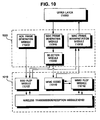
- FIG. 10 is a block diagram of an MIMO station according to another exemplary embodiment of the present invention.
- the MIMO station includes a physical layer 1010, an MAC layer 1020, and an upper layer 1030.
- the physical layer 1010 includes an SISO PLCP module 1012, an MIMO PLCP module 1016, an MEMO codec 1014, and a wireless transmission/reception module 1018.
- the operations of the SISO PLCP module 1012, the MIMO PLCP module 1016, the MIMO codec 1014, and the wireless transmission/reception module 1018 are the same as the operations of the SISO PLCP module 912, the MIMO PLCP module 916, the MIMO codec 914, and the wireless transmission/reception module 918 of FIG. 9 .
- the MAC layer 1020 includes an MAC frame generation module 1024, an MAC frame interpretation module 1026, an ACK frame generation module 1022, and a selection module 1028.
- the operations of the MAC frame generation module 1024, the MAC frame interpretation module 1026, and the ACK frame generation module 1022 are the same as the operations of the MAC frame generation module 924, the MAC frame interpretation module 926, and the ACK frame generation module 922 of FIG. 9 .
- the selection module 1028 decides whether an MAC frame generated by the MAC frame generation module 1024 is to be transmitted in an MIMO approach or in an SISO approach. If the MAC frame is long, the MEMO approach is more efficient than the SISO approach. On the other hand, if the MAC frame is short, the SISO approach is more efficient than the MIMO approach because the MIMO approach achieves two times higher data rates than the SISO approach but incurs more overhead, such as PLCP preambles, than the SISO approach.
- the selection module 1028 decides to transmit a frame to be broadcasted or multicasted, or a control frame or a management frame in the SISO approach because the frame to be broadcasted or multicasted must be received by a plurality of stations and the control frame or the management frame is generally more important than other frames.
- the selection module 1028 decides to transmit the MAC frame in the MEMO approach, it transmits the MAC frame to the MIMO codec 1014. On the other hand, if the selection module 1028 decides to transmit the MAC frame in the SISO approach, it transmits the MAC frame to the SISO PLCP module 1012.
- module means, but is not limited to, a software or hardware component, such as a Field Programmable Gate Array (FPGA) or Application Specific Integrated Circuit (ASIC), which performs certain tasks.
- a module may advantageously be configured to reside on the addressable storage medium and configured to execute on one or more processors.
- a module may include, by way of example, components, such as software components, object-oriented software components, class components and task components, processes, functions, attributes, procedures, subroutines, segments of program code, drivers, firmware, microcode, circuitry, data, databases, data structures, tables, arrays, and variables.
- the functionality provided for in the components and modules may be combined into fewer components and modules or further separated into additional components and modules.
- the components and modules may be implemented such that they are executed one or more computers in a communication system.
- the WLAN communication method and apparatus according to the present invention use an SISO ACK frame, SISO stations are not discriminated against MIMO stations in a WLAN where the SISO stations and the MIMO stations coexist.
- a signal field is interposed between two PLCP preambles of an MIMO frame, even the SISO stations can obtain information necessary for performing a physical carrier sensing operation from the signal field of the MIMO frame.
Landscapes
- Engineering & Computer Science (AREA)
- Signal Processing (AREA)
- Computer Networks & Wireless Communication (AREA)
- Mobile Radio Communication Systems (AREA)
- Radio Transmission System (AREA)
- Small-Scale Networks (AREA)
- Transceivers (AREA)
- Data Exchanges In Wide-Area Networks (AREA)
Priority Applications (3)
| Application Number | Priority Date | Filing Date | Title |
|---|---|---|---|
| EP06113607A EP1681807B1 (en) | 2004-08-13 | 2005-08-12 | Wireless LAN Communication Method and Apparatus |
| EP06113609A EP1681808B1 (en) | 2004-08-13 | 2005-08-12 | Wireless LAN Communication Method and Apparatus |
| EP08170268A EP2040417B1 (en) | 2004-08-13 | 2005-08-12 | Wireless LAN communication apparatus |
Applications Claiming Priority (2)
| Application Number | Priority Date | Filing Date | Title |
|---|---|---|---|
| US60113504P | 2004-08-13 | 2004-08-13 | |
| KR1020040070931A KR100586886B1 (ko) | 2004-08-13 | 2004-09-06 | 무선랜 통신 방법 및 장치 |
Related Child Applications (3)
| Application Number | Title | Priority Date | Filing Date |
|---|---|---|---|
| EP06113607A Division EP1681807B1 (en) | 2004-08-13 | 2005-08-12 | Wireless LAN Communication Method and Apparatus |
| EP06113609A Division EP1681808B1 (en) | 2004-08-13 | 2005-08-12 | Wireless LAN Communication Method and Apparatus |
| EP08170268A Division EP2040417B1 (en) | 2004-08-13 | 2005-08-12 | Wireless LAN communication apparatus |
Publications (2)
| Publication Number | Publication Date |
|---|---|
| EP1626538A1 EP1626538A1 (en) | 2006-02-15 |
| EP1626538B1 true EP1626538B1 (en) | 2009-03-04 |
Family
ID=37045539
Family Applications (4)
| Application Number | Title | Priority Date | Filing Date |
|---|---|---|---|
| EP05255022A Expired - Lifetime EP1626538B1 (en) | 2004-08-13 | 2005-08-12 | Wireless LAN communication method and apparatus |
| EP08170268A Expired - Lifetime EP2040417B1 (en) | 2004-08-13 | 2005-08-12 | Wireless LAN communication apparatus |
| EP06113609A Expired - Lifetime EP1681808B1 (en) | 2004-08-13 | 2005-08-12 | Wireless LAN Communication Method and Apparatus |
| EP06113607A Expired - Lifetime EP1681807B1 (en) | 2004-08-13 | 2005-08-12 | Wireless LAN Communication Method and Apparatus |
Family Applications After (3)
| Application Number | Title | Priority Date | Filing Date |
|---|---|---|---|
| EP08170268A Expired - Lifetime EP2040417B1 (en) | 2004-08-13 | 2005-08-12 | Wireless LAN communication apparatus |
| EP06113609A Expired - Lifetime EP1681808B1 (en) | 2004-08-13 | 2005-08-12 | Wireless LAN Communication Method and Apparatus |
| EP06113607A Expired - Lifetime EP1681807B1 (en) | 2004-08-13 | 2005-08-12 | Wireless LAN Communication Method and Apparatus |
Country Status (12)
| Country | Link |
|---|---|
| US (4) | US20060034178A1 (enExample) |
| EP (4) | EP1626538B1 (enExample) |
| JP (3) | JP2006054889A (enExample) |
| KR (3) | KR100586886B1 (enExample) |
| CN (3) | CN100542119C (enExample) |
| AT (3) | ATE445987T1 (enExample) |
| BR (1) | BRPI0514272A (enExample) |
| CA (1) | CA2575079A1 (enExample) |
| DE (3) | DE602005014610D1 (enExample) |
| MX (1) | MX2007001268A (enExample) |
| RU (1) | RU2354059C2 (enExample) |
| WO (1) | WO2006016742A1 (enExample) |
Families Citing this family (39)
| Publication number | Priority date | Publication date | Assignee | Title |
|---|---|---|---|---|
| KR100688851B1 (ko) * | 2003-06-18 | 2007-03-02 | 니폰덴신뎅와 가부시키가이샤 | 무선패킷통신방법 및 무선패킷통신장치 |
| US7539253B2 (en) * | 2004-09-10 | 2009-05-26 | Intel Corporation | Interpolation in channel state feedback |
| US7492829B2 (en) * | 2004-09-10 | 2009-02-17 | Intel Corporation | Closed loop feedback in MIMO systems |
| US7751374B2 (en) * | 2005-01-18 | 2010-07-06 | Marvell World Trade Ltd. | WLAN TDM protocol |
| US8483190B2 (en) * | 2005-01-18 | 2013-07-09 | Marvell World Trade Ltd. | Wireless local area network (WLAN) time division multiplexed (TDM) interframe space (IFS) time selection protocol |
| US7920530B2 (en) * | 2005-01-18 | 2011-04-05 | Marvell World Trade Ltd. | WLAN TDM IFS time selection protocol |
| US7542454B2 (en) * | 2005-01-21 | 2009-06-02 | Intel Corporation | MIMO channel feedback protocols |
| US8068550B2 (en) * | 2005-01-28 | 2011-11-29 | Broadcom Corporation | Initiation of a MIMO communication |
| KR100677568B1 (ko) | 2005-02-07 | 2007-02-02 | 삼성전자주식회사 | 무선랜 상의 데이터 수신에 대한 제어 응답 프레임의 전송속도 결정 방법 |
| JP4762007B2 (ja) * | 2006-03-03 | 2011-08-31 | パナソニック株式会社 | 中継装置、通信端末、及び通信システム |
| JP4777286B2 (ja) | 2007-03-27 | 2011-09-21 | パナソニック株式会社 | 通信装置、通信システム、および通信制御方法 |
| US8917598B2 (en) | 2007-12-21 | 2014-12-23 | Qualcomm Incorporated | Downlink flow control |
| US8699487B2 (en) * | 2008-02-04 | 2014-04-15 | Qualcomm Incorporated | Uplink delay budget feedback |
| US8656239B2 (en) * | 2008-02-12 | 2014-02-18 | Qualcomm Incorporated | Control of data transmission based on HARQ in a wireless communication system |
| US8625471B2 (en) * | 2008-02-13 | 2014-01-07 | Broadcom Corporation | System and method for carrier deferral for full duplex energy efficient ethernet PHYs |
| EP2104292A1 (en) * | 2008-03-20 | 2009-09-23 | Pantech Co., Ltd. | Method for transmitting and receiving data in multiple-input multiple-output wireless local area network environment, and a system and apparatus for performing the method |
| US9301320B2 (en) * | 2008-04-15 | 2016-03-29 | Broadcom Corporation | Method and system for method and system for carrier sense multiple access with collision avoidance (CSMA/CA) with directional transmission |
| KR101404275B1 (ko) | 2008-05-30 | 2014-06-30 | 엘지전자 주식회사 | Vht 무선랜 시스템에서 ppdu의 채널 할당 방법 및이를 지원하는 스테이션 |
| JP2011109205A (ja) * | 2009-11-13 | 2011-06-02 | Sony Corp | 通信装置及び通信方法、コンピューター・プログラム、並びに通信システム |
| CN102098140A (zh) * | 2009-12-10 | 2011-06-15 | 华为技术有限公司 | 上行多入多出mimo模式下的数据传输方法、设备及系统 |
| CN101741785B (zh) * | 2009-12-21 | 2012-12-19 | 中兴通讯股份有限公司 | 随机接入脉冲信号的识别方法和系统 |
| WO2011118927A2 (en) * | 2010-03-25 | 2011-09-29 | Lg Electronics Inc. | Method and apparatus of transmitting and receiving synchronization signal in a distributed antenna system |
| KR101684971B1 (ko) | 2010-03-25 | 2016-12-09 | 엘지전자 주식회사 | 분산된 안테나 시스템에서 동기 신호 송수신 방법 및 장치 |
| GB2487909B8 (en) | 2011-02-04 | 2015-01-21 | Sca Ipla Holdings Inc | Telecommunications method and system |
| CN103959670B (zh) * | 2011-12-02 | 2018-04-27 | 华为技术有限公司 | 用于在无线网络中进行流量标示和控制的系统和方法 |
| FR2985396A1 (fr) * | 2012-01-04 | 2013-07-05 | France Telecom | Transmission d'acquittement de courte duree |
| US9055468B2 (en) * | 2012-04-02 | 2015-06-09 | Qualcomm Incorporated | Frame formats and timing parameters in sub-1 GHz networks |
| US20130301502A1 (en) * | 2012-04-20 | 2013-11-14 | Futurewei Technologies, Inc. | Method and apparatus for data transmission in a wireless network |
| JP5955627B2 (ja) * | 2012-05-02 | 2016-07-20 | シャープ株式会社 | 無線通信装置、無線通信方法、処理装置、プログラム |
| US9775174B2 (en) | 2013-02-15 | 2017-09-26 | Lg Electronics Inc. | Method and device for transmitting/receiving frame in accordance with bandwidth thereof in WLAN system |
| CA2911038C (en) | 2013-05-02 | 2019-01-22 | Lg Electronics Inc. | Method for sensing channel dynamically in wireless lan system and apparatus therefor |
| US9681386B2 (en) | 2014-03-06 | 2017-06-13 | Apple Inc. | Wi-Fi low energy preamble |
| JP6010824B2 (ja) * | 2014-03-06 | 2016-10-19 | アップル インコーポレイテッド | Wi−Fi低エネルギープリアンブル |
| KR20160018438A (ko) * | 2014-08-08 | 2016-02-17 | 뉴라컴 인코포레이티드 | 고효율 무선랜에서 동적 프레임간 간격 프로세싱 |
| US9794522B2 (en) * | 2015-02-06 | 2017-10-17 | Google Inc. | Systems, methods, and devices for managing coexistence of multiple transceiver devices by optimizing component layout |
| WO2016175329A1 (ja) * | 2015-04-30 | 2016-11-03 | 株式会社 東芝 | 無線通信端末および無線通信方法 |
| WO2016175328A1 (ja) * | 2015-04-30 | 2016-11-03 | 株式会社 東芝 | 無線通信装置 |
| US9876604B2 (en) * | 2015-05-06 | 2018-01-23 | Qualcomm, Incorporated | Channel bonding signaling to in-range devices |
| CN105721257B (zh) * | 2015-10-09 | 2019-03-29 | 武汉中元通信股份有限公司 | 基于单发多收信道的mac层接入方法与平台 |
Citations (1)
| Publication number | Priority date | Publication date | Assignee | Title |
|---|---|---|---|---|
| EP1553730A1 (en) * | 2004-01-09 | 2005-07-13 | Kabushiki Kaisha Toshiba | Communication apparatus, communication method and communication system for physical frame treatment |
Family Cites Families (33)
| Publication number | Priority date | Publication date | Assignee | Title |
|---|---|---|---|---|
| JPH11220497A (ja) | 1998-02-03 | 1999-08-10 | Nippon Telegr & Teleph Corp <Ntt> | 優先度を用いたcsma/ca方法 |
| US6181754B1 (en) * | 1998-06-12 | 2001-01-30 | Cadence Design Systems, Inc. | System and method for modeling mixed signal RF circuits in a digital signal environment |
| JP3618600B2 (ja) * | 1999-09-28 | 2005-02-09 | 株式会社東芝 | 無線通信システム、無線通信方法、無線基地局、および無線端末局 |
| US6760882B1 (en) * | 2000-09-19 | 2004-07-06 | Intel Corporation | Mode selection for data transmission in wireless communication channels based on statistical parameters |
| JP2003087856A (ja) | 2001-06-28 | 2003-03-20 | Sony Corp | 無線基地局、無線端末、通信方法およびプログラム |
| US7099267B2 (en) * | 2001-08-23 | 2006-08-29 | Dsp Group Inc. | Enhanced frequency domain equalization in OFDM communication |
| US7269127B2 (en) | 2001-10-04 | 2007-09-11 | Bae Systems Information And Electronic Systems Integration Inc. | Preamble structures for single-input, single-output (SISO) and multi-input, multi-output (MIMO) communication systems |
| US7248559B2 (en) * | 2001-10-17 | 2007-07-24 | Nortel Networks Limited | Scattered pilot pattern and channel estimation method for MIMO-OFDM systems |
| RU2221335C2 (ru) * | 2001-11-01 | 2004-01-10 | Общество с ограниченной ответственностью "Алгоритм" | Способ передачи информации в беспроводной локальной сети |
| US6977944B2 (en) | 2002-01-12 | 2005-12-20 | Conexant, Inc. | Transmission protection for communications networks having stations operating with different modulation formats |
| US7630403B2 (en) * | 2002-03-08 | 2009-12-08 | Texas Instruments Incorporated | MAC aggregation frame with MSDU and fragment of MSDU |
| US7224704B2 (en) * | 2002-04-01 | 2007-05-29 | Texas Instruments Incorporated | Wireless network scheduling data frames including physical layer configuration |
| US7200178B2 (en) * | 2002-06-12 | 2007-04-03 | Texas Instruments Incorporated | Methods for optimizing time variant communication channels |
| US7095709B2 (en) * | 2002-06-24 | 2006-08-22 | Qualcomm, Incorporated | Diversity transmission modes for MIMO OFDM communication systems |
| US8134976B2 (en) * | 2002-10-25 | 2012-03-13 | Qualcomm Incorporated | Channel calibration for a time division duplexed communication system |
| US8320301B2 (en) | 2002-10-25 | 2012-11-27 | Qualcomm Incorporated | MIMO WLAN system |
| CN100380856C (zh) | 2002-12-03 | 2008-04-09 | 皇家飞利浦电子股份有限公司 | 用于比特交织cofdm-mimo系统的简化解码器 |
| US7039412B2 (en) * | 2003-08-08 | 2006-05-02 | Intel Corporation | Method and apparatus for transmitting wireless signals on multiple frequency channels in a frequency agile network |
| US20050078598A1 (en) * | 2003-08-21 | 2005-04-14 | Anuj Batra | Enhancement to the multi-band OFDM physical layer |
| US8233462B2 (en) | 2003-10-15 | 2012-07-31 | Qualcomm Incorporated | High speed media access control and direct link protocol |
| KR20050075477A (ko) * | 2004-01-15 | 2005-07-21 | 삼성전자주식회사 | Mimo 스테이션 간에 통신하는 방법 |
| JP2007519358A (ja) * | 2004-01-26 | 2007-07-12 | サムスン エレクトロニクス カンパニー リミテッド | 無線ネットワーク通信において仮想キャリアセンスのための情報送受信および情報設定方法とこれを実現する装置 |
| KR100959123B1 (ko) * | 2004-02-11 | 2010-05-25 | 삼성전자주식회사 | 무선 네트워크 통신 방법 |
| US7233773B2 (en) * | 2004-02-13 | 2007-06-19 | Broadcom Corporation | Configuring a MIMO communication |
| US7586881B2 (en) * | 2004-02-13 | 2009-09-08 | Broadcom Corporation | MIMO wireless communication greenfield preamble formats |
| US8169889B2 (en) * | 2004-02-18 | 2012-05-01 | Qualcomm Incorporated | Transmit diversity and spatial spreading for an OFDM-based multi-antenna communication system |
| US20050213576A1 (en) * | 2004-03-29 | 2005-09-29 | Stephens Adrian P | Multicasting in wireless networks |
| US8000223B2 (en) * | 2004-04-12 | 2011-08-16 | Broadcom Corporation | Method and system for multi-antenna preambles for wireless networks preserving backward compatibility |
| JP4086304B2 (ja) | 2004-04-23 | 2008-05-14 | 株式会社東芝 | 通信装置、通信システム、および通信制御プログラム |
| EP1751921A1 (en) | 2004-05-13 | 2007-02-14 | Koninklijke Philips Electronics N.V. | Superframe protocol packet data unit format having multirate packet aggregation for wireless systems |
| US20050288062A1 (en) * | 2004-06-23 | 2005-12-29 | Hammerschmidt Joachim S | Method and apparatus for selecting a transmission mode based upon packet size in a multiple antenna communication system |
| JP4490781B2 (ja) | 2004-10-18 | 2010-06-30 | 株式会社東芝 | 無線通信装置及び無線通信システム |
| US7447185B2 (en) * | 2004-12-29 | 2008-11-04 | Intel Corporation | Transmitting and protecting long frames in a wireless local area network |
-
2004
- 2004-09-06 KR KR1020040070931A patent/KR100586886B1/ko not_active Expired - Lifetime
-
2005
- 2005-07-21 MX MX2007001268A patent/MX2007001268A/es active IP Right Grant
- 2005-07-21 BR BRPI0514272-5A patent/BRPI0514272A/pt not_active IP Right Cessation
- 2005-07-21 WO PCT/KR2005/002358 patent/WO2006016742A1/en not_active Ceased
- 2005-07-21 RU RU2007105224/09A patent/RU2354059C2/ru not_active IP Right Cessation
- 2005-07-21 CA CA002575079A patent/CA2575079A1/en not_active Abandoned
- 2005-08-09 US US11/199,118 patent/US20060034178A1/en not_active Abandoned
- 2005-08-09 CN CNB2006100764326A patent/CN100542119C/zh not_active Expired - Lifetime
- 2005-08-09 CN CNA2005100899884A patent/CN1735064A/zh not_active Withdrawn
- 2005-08-09 CN CNA2006100764241A patent/CN1913478A/zh not_active Withdrawn
- 2005-08-10 JP JP2005232328A patent/JP2006054889A/ja active Pending
- 2005-08-12 AT AT06113607T patent/ATE445987T1/de not_active IP Right Cessation
- 2005-08-12 DE DE602005014610T patent/DE602005014610D1/de not_active Expired - Lifetime
- 2005-08-12 DE DE602005017116T patent/DE602005017116D1/de not_active Expired - Lifetime
- 2005-08-12 DE DE602005013032T patent/DE602005013032D1/de not_active Expired - Lifetime
- 2005-08-12 AT AT05255022T patent/ATE424672T1/de not_active IP Right Cessation
- 2005-08-12 EP EP05255022A patent/EP1626538B1/en not_active Expired - Lifetime
- 2005-08-12 EP EP08170268A patent/EP2040417B1/en not_active Expired - Lifetime
- 2005-08-12 AT AT06113609T patent/ATE432568T1/de not_active IP Right Cessation
- 2005-08-12 EP EP06113609A patent/EP1681808B1/en not_active Expired - Lifetime
- 2005-08-12 EP EP06113607A patent/EP1681807B1/en not_active Expired - Lifetime
- 2005-11-30 KR KR1020050115936A patent/KR100714713B1/ko not_active Expired - Fee Related
- 2005-11-30 KR KR1020050115934A patent/KR100678970B1/ko not_active Expired - Lifetime
-
2006
- 2006-03-22 JP JP2006079547A patent/JP2006262492A/ja active Pending
- 2006-03-22 JP JP2006079548A patent/JP2006238464A/ja active Pending
- 2006-04-07 US US11/399,401 patent/US8594129B2/en not_active Expired - Fee Related
- 2006-04-07 US US11/399,400 patent/US20060182079A1/en not_active Abandoned
-
2013
- 2013-10-11 US US14/052,105 patent/US9654276B2/en not_active Expired - Lifetime
Patent Citations (1)
| Publication number | Priority date | Publication date | Assignee | Title |
|---|---|---|---|---|
| EP1553730A1 (en) * | 2004-01-09 | 2005-07-13 | Kabushiki Kaisha Toshiba | Communication apparatus, communication method and communication system for physical frame treatment |
Also Published As
Similar Documents
| Publication | Publication Date | Title |
|---|---|---|
| EP2040417B1 (en) | Wireless LAN communication apparatus | |
| US8660140B2 (en) | Method and apparatus for transmitting and receiving legacy format data in high throughput wireless network | |
| US7826473B2 (en) | Method and apparatus for transmitting and receiving data in wireless network | |
| JP5279791B2 (ja) | 高速無線ネットワークでレガシー方式のデータを送受信する方法及び装置 | |
| US20060280154A1 (en) | Method and apparatus for receiving data with down compatibility in high throughput wireless network | |
| US20060280153A1 (en) | Method and apparatus for receiving data with down compatibility in high throughput wireless network | |
| KR100586891B1 (ko) | 고속 무선 네트워크에서 하향 호환성을 제공하며 데이터를수신하는 방법 및 장치 | |
| HK1096508A (en) | Data transmission |
Legal Events
| Date | Code | Title | Description |
|---|---|---|---|
| PUAI | Public reference made under article 153(3) epc to a published international application that has entered the european phase |
Free format text: ORIGINAL CODE: 0009012 |
|
| 17P | Request for examination filed |
Effective date: 20050822 |
|
| AK | Designated contracting states |
Kind code of ref document: A1 Designated state(s): AT BE BG CH CY CZ DE DK EE ES FI FR GB GR HU IE IS IT LI LT LU LV MC NL PL PT RO SE SI SK TR |
|
| AX | Request for extension of the european patent |
Extension state: AL BA HR MK YU |
|
| 17Q | First examination report despatched |
Effective date: 20060324 |
|
| AKX | Designation fees paid |
Designated state(s): AT BE BG CH CY CZ DE DK EE ES FI FR GB GR HU IE IS IT LI LT LU LV MC NL PL PT RO SE SI SK TR |
|
| GRAP | Despatch of communication of intention to grant a patent |
Free format text: ORIGINAL CODE: EPIDOSNIGR1 |
|
| RIN1 | Information on inventor provided before grant (corrected) |
Inventor name: ROH, DONG-HWI Inventor name: KIM, JAE-HWA Inventor name: KWON, CHANG-YEUL Inventor name: YANG, CHIL-YOUL |
|
| GRAS | Grant fee paid |
Free format text: ORIGINAL CODE: EPIDOSNIGR3 |
|
| GRAA | (expected) grant |
Free format text: ORIGINAL CODE: 0009210 |
|
| AK | Designated contracting states |
Kind code of ref document: B1 Designated state(s): AT BE BG CH CY CZ DE DK EE ES FI FR GB GR HU IE IS IT LI LT LU LV MC NL PL PT RO SE SI SK TR |
|
| REG | Reference to a national code |
Ref country code: GB Ref legal event code: FG4D |
|
| REG | Reference to a national code |
Ref country code: CH Ref legal event code: EP |
|
| REG | Reference to a national code |
Ref country code: IE Ref legal event code: FG4D |
|
| REF | Corresponds to: |
Ref document number: 602005013032 Country of ref document: DE Date of ref document: 20090416 Kind code of ref document: P |
|
| PG25 | Lapsed in a contracting state [announced via postgrant information from national office to epo] |
Ref country code: SI Free format text: LAPSE BECAUSE OF FAILURE TO SUBMIT A TRANSLATION OF THE DESCRIPTION OR TO PAY THE FEE WITHIN THE PRESCRIBED TIME-LIMIT Effective date: 20090304 Ref country code: LT Free format text: LAPSE BECAUSE OF FAILURE TO SUBMIT A TRANSLATION OF THE DESCRIPTION OR TO PAY THE FEE WITHIN THE PRESCRIBED TIME-LIMIT Effective date: 20090304 Ref country code: FI Free format text: LAPSE BECAUSE OF FAILURE TO SUBMIT A TRANSLATION OF THE DESCRIPTION OR TO PAY THE FEE WITHIN THE PRESCRIBED TIME-LIMIT Effective date: 20090304 |
|
| PG25 | Lapsed in a contracting state [announced via postgrant information from national office to epo] |
Ref country code: SE Free format text: LAPSE BECAUSE OF FAILURE TO SUBMIT A TRANSLATION OF THE DESCRIPTION OR TO PAY THE FEE WITHIN THE PRESCRIBED TIME-LIMIT Effective date: 20090604 Ref country code: PL Free format text: LAPSE BECAUSE OF FAILURE TO SUBMIT A TRANSLATION OF THE DESCRIPTION OR TO PAY THE FEE WITHIN THE PRESCRIBED TIME-LIMIT Effective date: 20090304 Ref country code: LV Free format text: LAPSE BECAUSE OF FAILURE TO SUBMIT A TRANSLATION OF THE DESCRIPTION OR TO PAY THE FEE WITHIN THE PRESCRIBED TIME-LIMIT Effective date: 20090304 Ref country code: AT Free format text: LAPSE BECAUSE OF FAILURE TO SUBMIT A TRANSLATION OF THE DESCRIPTION OR TO PAY THE FEE WITHIN THE PRESCRIBED TIME-LIMIT Effective date: 20090304 |
|
| PG25 | Lapsed in a contracting state [announced via postgrant information from national office to epo] |
Ref country code: BE Free format text: LAPSE BECAUSE OF FAILURE TO SUBMIT A TRANSLATION OF THE DESCRIPTION OR TO PAY THE FEE WITHIN THE PRESCRIBED TIME-LIMIT Effective date: 20090304 |
|
| PG25 | Lapsed in a contracting state [announced via postgrant information from national office to epo] |
Ref country code: PT Free format text: LAPSE BECAUSE OF FAILURE TO SUBMIT A TRANSLATION OF THE DESCRIPTION OR TO PAY THE FEE WITHIN THE PRESCRIBED TIME-LIMIT Effective date: 20090818 Ref country code: ES Free format text: LAPSE BECAUSE OF FAILURE TO SUBMIT A TRANSLATION OF THE DESCRIPTION OR TO PAY THE FEE WITHIN THE PRESCRIBED TIME-LIMIT Effective date: 20090615 Ref country code: EE Free format text: LAPSE BECAUSE OF FAILURE TO SUBMIT A TRANSLATION OF THE DESCRIPTION OR TO PAY THE FEE WITHIN THE PRESCRIBED TIME-LIMIT Effective date: 20090304 Ref country code: CZ Free format text: LAPSE BECAUSE OF FAILURE TO SUBMIT A TRANSLATION OF THE DESCRIPTION OR TO PAY THE FEE WITHIN THE PRESCRIBED TIME-LIMIT Effective date: 20090304 |
|
| PG25 | Lapsed in a contracting state [announced via postgrant information from national office to epo] |
Ref country code: SK Free format text: LAPSE BECAUSE OF FAILURE TO SUBMIT A TRANSLATION OF THE DESCRIPTION OR TO PAY THE FEE WITHIN THE PRESCRIBED TIME-LIMIT Effective date: 20090304 Ref country code: RO Free format text: LAPSE BECAUSE OF FAILURE TO SUBMIT A TRANSLATION OF THE DESCRIPTION OR TO PAY THE FEE WITHIN THE PRESCRIBED TIME-LIMIT Effective date: 20090304 Ref country code: IS Free format text: LAPSE BECAUSE OF FAILURE TO SUBMIT A TRANSLATION OF THE DESCRIPTION OR TO PAY THE FEE WITHIN THE PRESCRIBED TIME-LIMIT Effective date: 20090704 |
|
| PLBE | No opposition filed within time limit |
Free format text: ORIGINAL CODE: 0009261 |
|
| STAA | Information on the status of an ep patent application or granted ep patent |
Free format text: STATUS: NO OPPOSITION FILED WITHIN TIME LIMIT |
|
| PG25 | Lapsed in a contracting state [announced via postgrant information from national office to epo] |
Ref country code: DK Free format text: LAPSE BECAUSE OF FAILURE TO SUBMIT A TRANSLATION OF THE DESCRIPTION OR TO PAY THE FEE WITHIN THE PRESCRIBED TIME-LIMIT Effective date: 20090304 Ref country code: BG Free format text: LAPSE BECAUSE OF FAILURE TO SUBMIT A TRANSLATION OF THE DESCRIPTION OR TO PAY THE FEE WITHIN THE PRESCRIBED TIME-LIMIT Effective date: 20090604 |
|
| 26N | No opposition filed |
Effective date: 20091207 |
|
| PG25 | Lapsed in a contracting state [announced via postgrant information from national office to epo] |
Ref country code: MC Free format text: LAPSE BECAUSE OF NON-PAYMENT OF DUE FEES Effective date: 20090831 |
|
| REG | Reference to a national code |
Ref country code: CH Ref legal event code: PL |
|
| PG25 | Lapsed in a contracting state [announced via postgrant information from national office to epo] |
Ref country code: LI Free format text: LAPSE BECAUSE OF NON-PAYMENT OF DUE FEES Effective date: 20090831 Ref country code: CH Free format text: LAPSE BECAUSE OF NON-PAYMENT OF DUE FEES Effective date: 20090831 |
|
| PG25 | Lapsed in a contracting state [announced via postgrant information from national office to epo] |
Ref country code: IE Free format text: LAPSE BECAUSE OF NON-PAYMENT OF DUE FEES Effective date: 20090812 |
|
| PG25 | Lapsed in a contracting state [announced via postgrant information from national office to epo] |
Ref country code: GR Free format text: LAPSE BECAUSE OF FAILURE TO SUBMIT A TRANSLATION OF THE DESCRIPTION OR TO PAY THE FEE WITHIN THE PRESCRIBED TIME-LIMIT Effective date: 20090605 |
|
| PG25 | Lapsed in a contracting state [announced via postgrant information from national office to epo] |
Ref country code: IT Free format text: LAPSE BECAUSE OF FAILURE TO SUBMIT A TRANSLATION OF THE DESCRIPTION OR TO PAY THE FEE WITHIN THE PRESCRIBED TIME-LIMIT Effective date: 20090304 |
|
| PG25 | Lapsed in a contracting state [announced via postgrant information from national office to epo] |
Ref country code: LU Free format text: LAPSE BECAUSE OF NON-PAYMENT OF DUE FEES Effective date: 20090812 |
|
| PG25 | Lapsed in a contracting state [announced via postgrant information from national office to epo] |
Ref country code: HU Free format text: LAPSE BECAUSE OF FAILURE TO SUBMIT A TRANSLATION OF THE DESCRIPTION OR TO PAY THE FEE WITHIN THE PRESCRIBED TIME-LIMIT Effective date: 20090905 |
|
| PG25 | Lapsed in a contracting state [announced via postgrant information from national office to epo] |
Ref country code: TR Free format text: LAPSE BECAUSE OF FAILURE TO SUBMIT A TRANSLATION OF THE DESCRIPTION OR TO PAY THE FEE WITHIN THE PRESCRIBED TIME-LIMIT Effective date: 20090304 |
|
| PG25 | Lapsed in a contracting state [announced via postgrant information from national office to epo] |
Ref country code: CY Free format text: LAPSE BECAUSE OF FAILURE TO SUBMIT A TRANSLATION OF THE DESCRIPTION OR TO PAY THE FEE WITHIN THE PRESCRIBED TIME-LIMIT Effective date: 20090304 |
|
| REG | Reference to a national code |
Ref country code: FR Ref legal event code: PLFP Year of fee payment: 12 |
|
| REG | Reference to a national code |
Ref country code: FR Ref legal event code: PLFP Year of fee payment: 13 |
|
| REG | Reference to a national code |
Ref country code: FR Ref legal event code: PLFP Year of fee payment: 14 |
|
| PGFP | Annual fee paid to national office [announced via postgrant information from national office to epo] |
Ref country code: NL Payment date: 20240722 Year of fee payment: 20 |
|
| PGFP | Annual fee paid to national office [announced via postgrant information from national office to epo] |
Ref country code: DE Payment date: 20240722 Year of fee payment: 20 |
|
| PGFP | Annual fee paid to national office [announced via postgrant information from national office to epo] |
Ref country code: GB Payment date: 20240723 Year of fee payment: 20 |
|
| PGFP | Annual fee paid to national office [announced via postgrant information from national office to epo] |
Ref country code: FR Payment date: 20240723 Year of fee payment: 20 |
|
| REG | Reference to a national code |
Ref country code: DE Ref legal event code: R071 Ref document number: 602005013032 Country of ref document: DE |
|
| REG | Reference to a national code |
Ref country code: NL Ref legal event code: MK Effective date: 20250811 |
|
| REG | Reference to a national code |
Ref country code: GB Ref legal event code: PE20 Expiry date: 20250811 |