EP1620552B1 - Use of glycodendrimer reagents for inhibiting adhesion by microorganisms - Google Patents
Use of glycodendrimer reagents for inhibiting adhesion by microorganisms Download PDFInfo
- Publication number
- EP1620552B1 EP1620552B1 EP04759876A EP04759876A EP1620552B1 EP 1620552 B1 EP1620552 B1 EP 1620552B1 EP 04759876 A EP04759876 A EP 04759876A EP 04759876 A EP04759876 A EP 04759876A EP 1620552 B1 EP1620552 B1 EP 1620552B1
- Authority
- EP
- European Patent Office
- Prior art keywords
- protease
- glycodendrimeric
- adhesion
- microorganisms
- enzyme
- Prior art date
- Legal status (The legal status is an assumption and is not a legal conclusion. Google has not performed a legal analysis and makes no representation as to the accuracy of the status listed.)
- Expired - Lifetime
Links
- 244000005700 microbiome Species 0.000 title claims description 116
- 230000002401 inhibitory effect Effects 0.000 title claims description 10
- 239000003153 chemical reaction reagent Substances 0.000 title description 15
- 108091005804 Peptidases Proteins 0.000 claims description 110
- 239000004365 Protease Substances 0.000 claims description 110
- 102100037486 Reverse transcriptase/ribonuclease H Human genes 0.000 claims description 98
- 239000000203 mixture Substances 0.000 claims description 90
- 241000894006 Bacteria Species 0.000 claims description 60
- 238000000034 method Methods 0.000 claims description 50
- 210000001519 tissue Anatomy 0.000 claims description 44
- 210000004027 cell Anatomy 0.000 claims description 42
- 230000027455 binding Effects 0.000 claims description 32
- 108090001090 Lectins Proteins 0.000 claims description 27
- 102000004856 Lectins Human genes 0.000 claims description 27
- 239000002523 lectin Substances 0.000 claims description 27
- 108010037362 Extracellular Matrix Proteins Proteins 0.000 claims description 25
- 102000010834 Extracellular Matrix Proteins Human genes 0.000 claims description 25
- 210000000515 tooth Anatomy 0.000 claims description 25
- 210000002744 extracellular matrix Anatomy 0.000 claims description 23
- 241000282414 Homo sapiens Species 0.000 claims description 16
- 208000037265 diseases, disorders, signs and symptoms Diseases 0.000 claims description 16
- 241000206602 Eukaryota Species 0.000 claims description 14
- 241000700605 Viruses Species 0.000 claims description 14
- 241000588724 Escherichia coli Species 0.000 claims description 13
- 239000000606 toothpaste Substances 0.000 claims description 11
- 229940034610 toothpaste Drugs 0.000 claims description 10
- 239000002324 mouth wash Substances 0.000 claims description 9
- 241000186046 Actinomyces Species 0.000 claims description 8
- 201000010099 disease Diseases 0.000 claims description 7
- 229940051866 mouthwash Drugs 0.000 claims description 6
- 239000003814 drug Substances 0.000 claims description 4
- 238000011200 topical administration Methods 0.000 claims description 3
- 241000193422 Bacillus lentus Species 0.000 claims description 2
- 108090000787 Subtilisin Proteins 0.000 claims description 2
- 238000002360 preparation method Methods 0.000 claims description 2
- 125000000837 carbohydrate group Chemical group 0.000 claims 1
- 235000019419 proteases Nutrition 0.000 description 84
- 102000004190 Enzymes Human genes 0.000 description 68
- 108090000790 Enzymes Proteins 0.000 description 68
- 150000001720 carbohydrates Chemical class 0.000 description 43
- 235000014633 carbohydrates Nutrition 0.000 description 36
- 108010037896 heparin-binding hemagglutinin Proteins 0.000 description 32
- 208000015181 infectious disease Diseases 0.000 description 31
- 210000000214 mouth Anatomy 0.000 description 24
- 241001465754 Metazoa Species 0.000 description 23
- 241000124008 Mammalia Species 0.000 description 22
- 108090000623 proteins and genes Proteins 0.000 description 18
- 235000018102 proteins Nutrition 0.000 description 16
- 102000004169 proteins and genes Human genes 0.000 description 16
- 230000001580 bacterial effect Effects 0.000 description 15
- 238000004220 aggregation Methods 0.000 description 14
- 241000233866 Fungi Species 0.000 description 13
- 230000002776 aggregation Effects 0.000 description 13
- 239000003795 chemical substances by application Substances 0.000 description 13
- 102000035195 Peptidases Human genes 0.000 description 12
- 239000000499 gel Substances 0.000 description 12
- 230000000813 microbial effect Effects 0.000 description 12
- 108090000288 Glycoproteins Proteins 0.000 description 10
- 102000003886 Glycoproteins Human genes 0.000 description 10
- 239000000412 dendrimer Substances 0.000 description 10
- 229920000736 dendritic polymer Polymers 0.000 description 10
- 230000000694 effects Effects 0.000 description 10
- 239000000463 material Substances 0.000 description 10
- 239000008194 pharmaceutical composition Substances 0.000 description 10
- 239000007787 solid Substances 0.000 description 10
- 239000000243 solution Substances 0.000 description 10
- XLYOFNOQVPJJNP-UHFFFAOYSA-N water Substances O XLYOFNOQVPJJNP-UHFFFAOYSA-N 0.000 description 10
- 241000186045 Actinomyces naeslundii Species 0.000 description 9
- GUBGYTABKSRVRQ-XLOQQCSPSA-N Alpha-Lactose Chemical compound O[C@@H]1[C@@H](O)[C@@H](O)[C@@H](CO)O[C@H]1O[C@@H]1[C@@H](CO)O[C@H](O)[C@H](O)[C@H]1O GUBGYTABKSRVRQ-XLOQQCSPSA-N 0.000 description 9
- WQZGKKKJIJFFOK-QTVWNMPRSA-N D-mannopyranose Chemical compound OC[C@H]1OC(O)[C@@H](O)[C@@H](O)[C@@H]1O WQZGKKKJIJFFOK-QTVWNMPRSA-N 0.000 description 9
- WQZGKKKJIJFFOK-GASJEMHNSA-N Glucose Natural products OC[C@H]1OC(O)[C@H](O)[C@@H](O)[C@@H]1O WQZGKKKJIJFFOK-GASJEMHNSA-N 0.000 description 9
- GUBGYTABKSRVRQ-QKKXKWKRSA-N Lactose Natural products OC[C@H]1O[C@@H](O[C@H]2[C@H](O)[C@@H](O)C(O)O[C@@H]2CO)[C@H](O)[C@@H](O)[C@H]1O GUBGYTABKSRVRQ-QKKXKWKRSA-N 0.000 description 9
- 230000015572 biosynthetic process Effects 0.000 description 9
- 238000006243 chemical reaction Methods 0.000 description 9
- 208000035475 disorder Diseases 0.000 description 9
- 239000008101 lactose Substances 0.000 description 9
- 0 CC(C)(C)OC(NCCN(CCNC(C*)=O)CCNC(C*)=O)=O Chemical compound CC(C)(C)OC(NCCN(CCNC(C*)=O)CCNC(C*)=O)=O 0.000 description 8
- WQZGKKKJIJFFOK-PHYPRBDBSA-N alpha-D-galactose Chemical compound OC[C@H]1O[C@H](O)[C@H](O)[C@@H](O)[C@H]1O WQZGKKKJIJFFOK-PHYPRBDBSA-N 0.000 description 8
- WQZGKKKJIJFFOK-VFUOTHLCSA-N beta-D-glucose Chemical compound OC[C@H]1O[C@@H](O)[C@H](O)[C@@H](O)[C@@H]1O WQZGKKKJIJFFOK-VFUOTHLCSA-N 0.000 description 8
- 229930182830 galactose Natural products 0.000 description 8
- -1 hydrophobins Proteins 0.000 description 8
- 239000007788 liquid Substances 0.000 description 8
- 241000222120 Candida <Saccharomycetales> Species 0.000 description 7
- SHZGCJCMOBCMKK-UHFFFAOYSA-N D-mannomethylose Natural products CC1OC(O)C(O)C(O)C1O SHZGCJCMOBCMKK-UHFFFAOYSA-N 0.000 description 7
- 241000191940 Staphylococcus Species 0.000 description 7
- 241000194025 Streptococcus oralis Species 0.000 description 7
- 238000003556 assay Methods 0.000 description 7
- 230000015556 catabolic process Effects 0.000 description 7
- 230000007423 decrease Effects 0.000 description 7
- 238000006731 degradation reaction Methods 0.000 description 7
- 239000008103 glucose Substances 0.000 description 7
- 150000004676 glycans Chemical class 0.000 description 7
- 210000005260 human cell Anatomy 0.000 description 7
- 230000007246 mechanism Effects 0.000 description 7
- 229920001282 polysaccharide Polymers 0.000 description 7
- 239000005017 polysaccharide Substances 0.000 description 7
- 108020003175 receptors Proteins 0.000 description 7
- 102000005962 receptors Human genes 0.000 description 7
- 210000001215 vagina Anatomy 0.000 description 7
- LFQSCWFLJHTTHZ-UHFFFAOYSA-N Ethanol Chemical compound CCO LFQSCWFLJHTTHZ-UHFFFAOYSA-N 0.000 description 6
- PNNNRSAQSRJVSB-SLPGGIOYSA-N Fucose Natural products C[C@H](O)[C@@H](O)[C@H](O)[C@H](O)C=O PNNNRSAQSRJVSB-SLPGGIOYSA-N 0.000 description 6
- IAJILQKETJEXLJ-UHFFFAOYSA-N Galacturonsaeure Natural products O=CC(O)C(O)C(O)C(O)C(O)=O IAJILQKETJEXLJ-UHFFFAOYSA-N 0.000 description 6
- PEDCQBHIVMGVHV-UHFFFAOYSA-N Glycerine Chemical compound OCC(O)CO PEDCQBHIVMGVHV-UHFFFAOYSA-N 0.000 description 6
- SHZGCJCMOBCMKK-DHVFOXMCSA-N L-fucopyranose Chemical compound C[C@@H]1OC(O)[C@@H](O)[C@H](O)[C@@H]1O SHZGCJCMOBCMKK-DHVFOXMCSA-N 0.000 description 6
- OVRNDRQMDRJTHS-CBQIKETKSA-N N-Acetyl-D-Galactosamine Chemical compound CC(=O)N[C@H]1[C@@H](O)O[C@H](CO)[C@H](O)[C@@H]1O OVRNDRQMDRJTHS-CBQIKETKSA-N 0.000 description 6
- OVRNDRQMDRJTHS-UHFFFAOYSA-N N-acelyl-D-glucosamine Natural products CC(=O)NC1C(O)OC(CO)C(O)C1O OVRNDRQMDRJTHS-UHFFFAOYSA-N 0.000 description 6
- MBLBDJOUHNCFQT-UHFFFAOYSA-N N-acetyl-D-galactosamine Natural products CC(=O)NC(C=O)C(O)C(O)C(O)CO MBLBDJOUHNCFQT-UHFFFAOYSA-N 0.000 description 6
- OVRNDRQMDRJTHS-FMDGEEDCSA-N N-acetyl-beta-D-glucosamine Chemical compound CC(=O)N[C@H]1[C@H](O)O[C@H](CO)[C@@H](O)[C@@H]1O OVRNDRQMDRJTHS-FMDGEEDCSA-N 0.000 description 6
- MBLBDJOUHNCFQT-LXGUWJNJSA-N N-acetylglucosamine Natural products CC(=O)N[C@@H](C=O)[C@@H](O)[C@H](O)[C@H](O)CO MBLBDJOUHNCFQT-LXGUWJNJSA-N 0.000 description 6
- 108010046016 Peanut Agglutinin Proteins 0.000 description 6
- DNIAPMSPPWPWGF-UHFFFAOYSA-N Propylene glycol Chemical compound CC(O)CO DNIAPMSPPWPWGF-UHFFFAOYSA-N 0.000 description 6
- IAJILQKETJEXLJ-QTBDOELSSA-N aldehydo-D-glucuronic acid Chemical compound O=C[C@H](O)[C@@H](O)[C@H](O)[C@H](O)C(O)=O IAJILQKETJEXLJ-QTBDOELSSA-N 0.000 description 6
- 210000004102 animal cell Anatomy 0.000 description 6
- SQVRNKJHWKZAKO-UHFFFAOYSA-N beta-N-Acetyl-D-neuraminic acid Natural products CC(=O)NC1C(O)CC(O)(C(O)=O)OC1C(O)C(O)CO SQVRNKJHWKZAKO-UHFFFAOYSA-N 0.000 description 6
- 239000000872 buffer Substances 0.000 description 6
- 229940097043 glucuronic acid Drugs 0.000 description 6
- 229950006780 n-acetylglucosamine Drugs 0.000 description 6
- 244000052769 pathogen Species 0.000 description 6
- YBYRMVIVWMBXKQ-UHFFFAOYSA-N phenylmethanesulfonyl fluoride Chemical compound FS(=O)(=O)CC1=CC=CC=C1 YBYRMVIVWMBXKQ-UHFFFAOYSA-N 0.000 description 6
- 239000002953 phosphate buffered saline Substances 0.000 description 6
- 230000009467 reduction Effects 0.000 description 6
- SQVRNKJHWKZAKO-OQPLDHBCSA-N sialic acid Chemical compound CC(=O)N[C@@H]1[C@@H](O)C[C@@](O)(C(O)=O)OC1[C@H](O)[C@H](O)CO SQVRNKJHWKZAKO-OQPLDHBCSA-N 0.000 description 6
- FAPWRFPIFSIZLT-UHFFFAOYSA-M Sodium chloride Chemical compound [Na+].[Cl-] FAPWRFPIFSIZLT-UHFFFAOYSA-M 0.000 description 5
- 241000194019 Streptococcus mutans Species 0.000 description 5
- 239000000443 aerosol Substances 0.000 description 5
- 239000006071 cream Substances 0.000 description 5
- 235000013601 eggs Nutrition 0.000 description 5
- 239000000796 flavoring agent Substances 0.000 description 5
- 239000004088 foaming agent Substances 0.000 description 5
- 239000003906 humectant Substances 0.000 description 5
- 238000004519 manufacturing process Methods 0.000 description 5
- MYWUZJCMWCOHBA-VIFPVBQESA-N methamphetamine Chemical compound CN[C@@H](C)CC1=CC=CC=C1 MYWUZJCMWCOHBA-VIFPVBQESA-N 0.000 description 5
- 150000003839 salts Chemical class 0.000 description 5
- 238000003786 synthesis reaction Methods 0.000 description 5
- MBYLVOKEDDQJDY-UHFFFAOYSA-N tris(2-aminoethyl)amine Chemical compound NCCN(CCN)CCN MBYLVOKEDDQJDY-UHFFFAOYSA-N 0.000 description 5
- 241000222122 Candida albicans Species 0.000 description 4
- 102000008186 Collagen Human genes 0.000 description 4
- 108010035532 Collagen Proteins 0.000 description 4
- 229920001503 Glucan Polymers 0.000 description 4
- 239000011230 binding agent Substances 0.000 description 4
- 229920001436 collagen Polymers 0.000 description 4
- 230000003247 decreasing effect Effects 0.000 description 4
- 235000003599 food sweetener Nutrition 0.000 description 4
- 238000009472 formulation Methods 0.000 description 4
- 210000001035 gastrointestinal tract Anatomy 0.000 description 4
- 239000007943 implant Substances 0.000 description 4
- 210000004072 lung Anatomy 0.000 description 4
- 230000001404 mediated effect Effects 0.000 description 4
- 102000039446 nucleic acids Human genes 0.000 description 4
- 108020004707 nucleic acids Proteins 0.000 description 4
- 150000007523 nucleic acids Chemical class 0.000 description 4
- 238000005498 polishing Methods 0.000 description 4
- 108010038196 saccharide-binding proteins Proteins 0.000 description 4
- 239000004094 surface-active agent Substances 0.000 description 4
- 239000003765 sweetening agent Substances 0.000 description 4
- 208000024891 symptom Diseases 0.000 description 4
- 239000002562 thickening agent Substances 0.000 description 4
- 241000186044 Actinomyces viscosus Species 0.000 description 3
- BHELIUBJHYAEDK-OAIUPTLZSA-N Aspoxicillin Chemical compound C1([C@H](C(=O)N[C@@H]2C(N3[C@H](C(C)(C)S[C@@H]32)C(O)=O)=O)NC(=O)[C@H](N)CC(=O)NC)=CC=C(O)C=C1 BHELIUBJHYAEDK-OAIUPTLZSA-N 0.000 description 3
- 241000271566 Aves Species 0.000 description 3
- 241000605986 Fusobacterium nucleatum Species 0.000 description 3
- 102000000340 Glucosyltransferases Human genes 0.000 description 3
- 108010055629 Glucosyltransferases Proteins 0.000 description 3
- OKKJLVBELUTLKV-UHFFFAOYSA-N Methanol Chemical compound OC OKKJLVBELUTLKV-UHFFFAOYSA-N 0.000 description 3
- 102220594421 NmrA-like family domain-containing protein 1_T14V_mutation Human genes 0.000 description 3
- 241001135221 Prevotella intermedia Species 0.000 description 3
- VYPSYNLAJGMNEJ-UHFFFAOYSA-N Silicium dioxide Chemical compound O=[Si]=O VYPSYNLAJGMNEJ-UHFFFAOYSA-N 0.000 description 3
- 229920002472 Starch Polymers 0.000 description 3
- DTQVDTLACAAQTR-UHFFFAOYSA-N Trifluoroacetic acid Chemical compound OC(=O)C(F)(F)F DTQVDTLACAAQTR-UHFFFAOYSA-N 0.000 description 3
- 108010046334 Urease Proteins 0.000 description 3
- 239000003082 abrasive agent Substances 0.000 description 3
- 230000008901 benefit Effects 0.000 description 3
- 230000003115 biocidal effect Effects 0.000 description 3
- 230000000903 blocking effect Effects 0.000 description 3
- 229940041514 candida albicans extract Drugs 0.000 description 3
- 239000000969 carrier Substances 0.000 description 3
- 150000001875 compounds Chemical class 0.000 description 3
- 239000003405 delayed action preparation Substances 0.000 description 3
- 208000002925 dental caries Diseases 0.000 description 3
- 239000003599 detergent Substances 0.000 description 3
- 238000000502 dialysis Methods 0.000 description 3
- 235000014113 dietary fatty acids Nutrition 0.000 description 3
- 238000010790 dilution Methods 0.000 description 3
- 239000012895 dilution Substances 0.000 description 3
- 239000003937 drug carrier Substances 0.000 description 3
- 210000000959 ear middle Anatomy 0.000 description 3
- 239000000194 fatty acid Chemical class 0.000 description 3
- 229930195729 fatty acid Chemical class 0.000 description 3
- 235000019634 flavors Nutrition 0.000 description 3
- 235000013305 food Nutrition 0.000 description 3
- 230000006870 function Effects 0.000 description 3
- 239000011521 glass Substances 0.000 description 3
- 230000013595 glycosylation Effects 0.000 description 3
- 238000006206 glycosylation reaction Methods 0.000 description 3
- 238000011534 incubation Methods 0.000 description 3
- 230000005764 inhibitory process Effects 0.000 description 3
- 230000003993 interaction Effects 0.000 description 3
- 150000002632 lipids Chemical class 0.000 description 3
- HOVAGTYPODGVJG-VOQCIKJUSA-N methyl beta-D-galactoside Chemical compound CO[C@@H]1O[C@H](CO)[C@H](O)[C@H](O)[C@H]1O HOVAGTYPODGVJG-VOQCIKJUSA-N 0.000 description 3
- HOVAGTYPODGVJG-UHFFFAOYSA-N methyl beta-galactoside Natural products COC1OC(CO)C(O)C(O)C1O HOVAGTYPODGVJG-UHFFFAOYSA-N 0.000 description 3
- 230000003287 optical effect Effects 0.000 description 3
- 230000001717 pathogenic effect Effects 0.000 description 3
- 229920003023 plastic Polymers 0.000 description 3
- 239000004033 plastic Substances 0.000 description 3
- 229920001223 polyethylene glycol Polymers 0.000 description 3
- 239000000843 powder Substances 0.000 description 3
- 239000003755 preservative agent Substances 0.000 description 3
- 210000003491 skin Anatomy 0.000 description 3
- 239000011780 sodium chloride Substances 0.000 description 3
- 239000008107 starch Substances 0.000 description 3
- 235000019698 starch Nutrition 0.000 description 3
- 235000000346 sugar Nutrition 0.000 description 3
- 239000003826 tablet Substances 0.000 description 3
- 238000012360 testing method Methods 0.000 description 3
- 238000002560 therapeutic procedure Methods 0.000 description 3
- 230000000699 topical effect Effects 0.000 description 3
- 210000001635 urinary tract Anatomy 0.000 description 3
- 239000013603 viral vector Substances 0.000 description 3
- 239000012138 yeast extract Substances 0.000 description 3
- VBICKXHEKHSIBG-UHFFFAOYSA-N 1-monostearoylglycerol Chemical compound CCCCCCCCCCCCCCCCCC(=O)OCC(O)CO VBICKXHEKHSIBG-UHFFFAOYSA-N 0.000 description 2
- 241000186041 Actinomyces israelii Species 0.000 description 2
- 241000606749 Aggregatibacter actinomycetemcomitans Species 0.000 description 2
- QGZKDVFQNNGYKY-UHFFFAOYSA-N Ammonia Chemical compound N QGZKDVFQNNGYKY-UHFFFAOYSA-N 0.000 description 2
- VTYYLEPIZMXCLO-UHFFFAOYSA-L Calcium carbonate Chemical compound [Ca+2].[O-]C([O-])=O VTYYLEPIZMXCLO-UHFFFAOYSA-L 0.000 description 2
- 241001631457 Cannula Species 0.000 description 2
- 241000190885 Capnocytophaga ochracea Species 0.000 description 2
- 241000224432 Entamoeba histolytica Species 0.000 description 2
- 102000016359 Fibronectins Human genes 0.000 description 2
- 108010067306 Fibronectins Proteins 0.000 description 2
- 208000019331 Foodborne disease Diseases 0.000 description 2
- 241000287828 Gallus gallus Species 0.000 description 2
- 108010010803 Gelatin Proteins 0.000 description 2
- 241000606768 Haemophilus influenzae Species 0.000 description 2
- MHAJPDPJQMAIIY-UHFFFAOYSA-N Hydrogen peroxide Chemical compound OO MHAJPDPJQMAIIY-UHFFFAOYSA-N 0.000 description 2
- WHUUTDBJXJRKMK-VKHMYHEASA-N L-glutamic acid Chemical compound OC(=O)[C@@H](N)CCC(O)=O WHUUTDBJXJRKMK-VKHMYHEASA-N 0.000 description 2
- TWRXJAOTZQYOKJ-UHFFFAOYSA-L Magnesium chloride Chemical compound [Mg+2].[Cl-].[Cl-] TWRXJAOTZQYOKJ-UHFFFAOYSA-L 0.000 description 2
- 108010090054 Membrane Glycoproteins Proteins 0.000 description 2
- 102000012750 Membrane Glycoproteins Human genes 0.000 description 2
- 102000008300 Mutant Proteins Human genes 0.000 description 2
- 108010021466 Mutant Proteins Proteins 0.000 description 2
- 206010033078 Otitis media Diseases 0.000 description 2
- 229910019142 PO4 Inorganic materials 0.000 description 2
- 241000605862 Porphyromonas gingivalis Species 0.000 description 2
- 241000605951 Prevotella loescheii Species 0.000 description 2
- 108010059712 Pronase Proteins 0.000 description 2
- 241000588770 Proteus mirabilis Species 0.000 description 2
- 241000588767 Proteus vulgaris Species 0.000 description 2
- 241000589517 Pseudomonas aeruginosa Species 0.000 description 2
- 240000004808 Saccharomyces cerevisiae Species 0.000 description 2
- UIIMBOGNXHQVGW-UHFFFAOYSA-M Sodium bicarbonate Chemical compound [Na+].OC([O-])=O UIIMBOGNXHQVGW-UHFFFAOYSA-M 0.000 description 2
- 241000194017 Streptococcus Species 0.000 description 2
- 241000194026 Streptococcus gordonii Species 0.000 description 2
- 241000193996 Streptococcus pyogenes Species 0.000 description 2
- 241000194023 Streptococcus sanguinis Species 0.000 description 2
- 241001505901 Streptococcus sp. 'group A' Species 0.000 description 2
- 102000002689 Toll-like receptor Human genes 0.000 description 2
- 108020000411 Toll-like receptor Proteins 0.000 description 2
- 241000589892 Treponema denticola Species 0.000 description 2
- 239000007983 Tris buffer Substances 0.000 description 2
- 239000002253 acid Substances 0.000 description 2
- 239000013543 active substance Substances 0.000 description 2
- 238000004458 analytical method Methods 0.000 description 2
- 229940088710 antibiotic agent Drugs 0.000 description 2
- 229960005475 antiinfective agent Drugs 0.000 description 2
- 239000004599 antimicrobial Substances 0.000 description 2
- 230000010065 bacterial adhesion Effects 0.000 description 2
- 230000009286 beneficial effect Effects 0.000 description 2
- WERYXYBDKMZEQL-UHFFFAOYSA-N butane-1,4-diol Chemical compound OCCCCO WERYXYBDKMZEQL-UHFFFAOYSA-N 0.000 description 2
- 239000001506 calcium phosphate Substances 0.000 description 2
- 239000006285 cell suspension Substances 0.000 description 2
- 239000001913 cellulose Substances 0.000 description 2
- 229920002678 cellulose Polymers 0.000 description 2
- 235000013330 chicken meat Nutrition 0.000 description 2
- 238000004140 cleaning Methods 0.000 description 2
- 239000003086 colorant Substances 0.000 description 2
- 238000011109 contamination Methods 0.000 description 2
- 229920001577 copolymer Polymers 0.000 description 2
- 239000003085 diluting agent Substances 0.000 description 2
- LOKCTEFSRHRXRJ-UHFFFAOYSA-I dipotassium trisodium dihydrogen phosphate hydrogen phosphate dichloride Chemical compound P(=O)(O)(O)[O-].[K+].P(=O)(O)([O-])[O-].[Na+].[Na+].[Cl-].[K+].[Cl-].[Na+] LOKCTEFSRHRXRJ-UHFFFAOYSA-I 0.000 description 2
- 239000003995 emulsifying agent Substances 0.000 description 2
- 229940012356 eye drops Drugs 0.000 description 2
- 238000000855 fermentation Methods 0.000 description 2
- 230000004151 fermentation Effects 0.000 description 2
- 239000008273 gelatin Substances 0.000 description 2
- 229920000159 gelatin Polymers 0.000 description 2
- 235000019322 gelatine Nutrition 0.000 description 2
- 235000011852 gelatine desserts Nutrition 0.000 description 2
- 230000014509 gene expression Effects 0.000 description 2
- 108090001082 glucan-binding proteins Proteins 0.000 description 2
- 150000002334 glycols Chemical class 0.000 description 2
- 239000008187 granular material Substances 0.000 description 2
- 230000035931 haemagglutination Effects 0.000 description 2
- 229940047650 haemophilus influenzae Drugs 0.000 description 2
- 239000000017 hydrogel Substances 0.000 description 2
- FHBSGPWHCCIQPG-UHFFFAOYSA-N hydroxy-methyl-oxo-sulfanylidene-$l^{6}-sulfane Chemical class CS(S)(=O)=O FHBSGPWHCCIQPG-UHFFFAOYSA-N 0.000 description 2
- 238000001727 in vivo Methods 0.000 description 2
- 210000003734 kidney Anatomy 0.000 description 2
- 230000002147 killing effect Effects 0.000 description 2
- 230000000670 limiting effect Effects 0.000 description 2
- 239000007937 lozenge Substances 0.000 description 2
- HQKMJHAJHXVSDF-UHFFFAOYSA-L magnesium stearate Chemical compound [Mg+2].CCCCCCCCCCCCCCCCCC([O-])=O.CCCCCCCCCCCCCCCCCC([O-])=O HQKMJHAJHXVSDF-UHFFFAOYSA-L 0.000 description 2
- 210000004962 mammalian cell Anatomy 0.000 description 2
- 229910052751 metal Inorganic materials 0.000 description 2
- 239000002184 metal Substances 0.000 description 2
- 239000003094 microcapsule Substances 0.000 description 2
- 230000003278 mimic effect Effects 0.000 description 2
- 238000002156 mixing Methods 0.000 description 2
- 239000002674 ointment Substances 0.000 description 2
- 239000006072 paste Substances 0.000 description 2
- 230000007170 pathology Effects 0.000 description 2
- 230000003239 periodontal effect Effects 0.000 description 2
- 239000000546 pharmaceutical excipient Substances 0.000 description 2
- 239000010452 phosphate Substances 0.000 description 2
- 239000001267 polyvinylpyrrolidone Substances 0.000 description 2
- 229920000036 polyvinylpyrrolidone Polymers 0.000 description 2
- 235000013855 polyvinylpyrrolidone Nutrition 0.000 description 2
- 230000003389 potentiating effect Effects 0.000 description 2
- 230000002265 prevention Effects 0.000 description 2
- 108090000765 processed proteins & peptides Proteins 0.000 description 2
- 230000002797 proteolythic effect Effects 0.000 description 2
- 229940007042 proteus vulgaris Drugs 0.000 description 2
- 230000002829 reductive effect Effects 0.000 description 2
- 238000011012 sanitization Methods 0.000 description 2
- 206010040872 skin infection Diseases 0.000 description 2
- 239000007921 spray Substances 0.000 description 2
- 239000000126 substance Substances 0.000 description 2
- 239000000375 suspending agent Substances 0.000 description 2
- 239000000725 suspension Substances 0.000 description 2
- 239000006188 syrup Substances 0.000 description 2
- 235000020357 syrup Nutrition 0.000 description 2
- DYHSDKLCOJIUFX-UHFFFAOYSA-N tert-butoxycarbonyl anhydride Chemical compound CC(C)(C)OC(=O)OC(=O)OC(C)(C)C DYHSDKLCOJIUFX-UHFFFAOYSA-N 0.000 description 2
- 230000036964 tight binding Effects 0.000 description 2
- 230000024033 toxin binding Effects 0.000 description 2
- 238000012546 transfer Methods 0.000 description 2
- 210000003812 trophozoite Anatomy 0.000 description 2
- 238000004879 turbidimetry Methods 0.000 description 2
- 241000712461 unidentified influenza virus Species 0.000 description 2
- 239000013598 vector Substances 0.000 description 2
- 230000000007 visual effect Effects 0.000 description 2
- DNIAPMSPPWPWGF-VKHMYHEASA-N (+)-propylene glycol Chemical compound C[C@H](O)CO DNIAPMSPPWPWGF-VKHMYHEASA-N 0.000 description 1
- PNVPNXKRAUBJGW-UHFFFAOYSA-N (2-chloroacetyl) 2-chloroacetate Chemical compound ClCC(=O)OC(=O)CCl PNVPNXKRAUBJGW-UHFFFAOYSA-N 0.000 description 1
- KIUKXJAPPMFGSW-DNGZLQJQSA-N (2S,3S,4S,5R,6R)-6-[(2S,3R,4R,5S,6R)-3-Acetamido-2-[(2S,3S,4R,5R,6R)-6-[(2R,3R,4R,5S,6R)-3-acetamido-2,5-dihydroxy-6-(hydroxymethyl)oxan-4-yl]oxy-2-carboxy-4,5-dihydroxyoxan-3-yl]oxy-5-hydroxy-6-(hydroxymethyl)oxan-4-yl]oxy-3,4,5-trihydroxyoxane-2-carboxylic acid Chemical compound CC(=O)N[C@H]1[C@H](O)O[C@H](CO)[C@@H](O)[C@@H]1O[C@H]1[C@H](O)[C@@H](O)[C@H](O[C@H]2[C@@H]([C@@H](O[C@H]3[C@@H]([C@@H](O)[C@H](O)[C@H](O3)C(O)=O)O)[C@H](O)[C@@H](CO)O2)NC(C)=O)[C@@H](C(O)=O)O1 KIUKXJAPPMFGSW-DNGZLQJQSA-N 0.000 description 1
- XMQUEQJCYRFIQS-YFKPBYRVSA-N (2s)-2-amino-5-ethoxy-5-oxopentanoic acid Chemical compound CCOC(=O)CC[C@H](N)C(O)=O XMQUEQJCYRFIQS-YFKPBYRVSA-N 0.000 description 1
- YPFDHNVEDLHUCE-UHFFFAOYSA-N 1,3-propanediol Substances OCCCO YPFDHNVEDLHUCE-UHFFFAOYSA-N 0.000 description 1
- LDGWQMRUWMSZIU-LQDDAWAPSA-M 2,3-bis[(z)-octadec-9-enoxy]propyl-trimethylazanium;chloride Chemical compound [Cl-].CCCCCCCC\C=C/CCCCCCCCOCC(C[N+](C)(C)C)OCCCCCCCC\C=C/CCCCCCCC LDGWQMRUWMSZIU-LQDDAWAPSA-M 0.000 description 1
- DJQYYYCQOZMCRC-UHFFFAOYSA-N 2-aminopropane-1,3-dithiol Chemical group SCC(N)CS DJQYYYCQOZMCRC-UHFFFAOYSA-N 0.000 description 1
- UBLAMKHIFZBBSS-UHFFFAOYSA-N 3-Methylbutyl pentanoate Chemical compound CCCCC(=O)OCCC(C)C UBLAMKHIFZBBSS-UHFFFAOYSA-N 0.000 description 1
- JDXQWYKOKYUQDN-UHFFFAOYSA-N 3-hydroxypyrrolidine-2,5-dione Chemical compound OC1CC(=O)NC1=O JDXQWYKOKYUQDN-UHFFFAOYSA-N 0.000 description 1
- LKDMKWNDBAVNQZ-WJNSRDFLSA-N 4-[[(2s)-1-[[(2s)-1-[(2s)-2-[[(2s)-1-(4-nitroanilino)-1-oxo-3-phenylpropan-2-yl]carbamoyl]pyrrolidin-1-yl]-1-oxopropan-2-yl]amino]-1-oxopropan-2-yl]amino]-4-oxobutanoic acid Chemical compound OC(=O)CCC(=O)N[C@@H](C)C(=O)N[C@@H](C)C(=O)N1CCC[C@H]1C(=O)N[C@H](C(=O)NC=1C=CC(=CC=1)[N+]([O-])=O)CC1=CC=CC=C1 LKDMKWNDBAVNQZ-WJNSRDFLSA-N 0.000 description 1
- 208000030507 AIDS Diseases 0.000 description 1
- 239000005995 Aluminium silicate Substances 0.000 description 1
- 108010011485 Aspartame Proteins 0.000 description 1
- 108010037833 Bacterial Adhesins Proteins 0.000 description 1
- 208000035143 Bacterial infection Diseases 0.000 description 1
- KZMGYPLQYOPHEL-UHFFFAOYSA-N Boron trifluoride etherate Chemical compound FB(F)F.CCOCC KZMGYPLQYOPHEL-UHFFFAOYSA-N 0.000 description 1
- 241000283690 Bos taurus Species 0.000 description 1
- 108091003079 Bovine Serum Albumin Proteins 0.000 description 1
- 102100032912 CD44 antigen Human genes 0.000 description 1
- UXVMQQNJUSDDNG-UHFFFAOYSA-L Calcium chloride Chemical compound [Cl-].[Cl-].[Ca+2] UXVMQQNJUSDDNG-UHFFFAOYSA-L 0.000 description 1
- 241000282472 Canis lupus familiaris Species 0.000 description 1
- 229920002134 Carboxymethyl cellulose Polymers 0.000 description 1
- 206010008631 Cholera Diseases 0.000 description 1
- 241000206575 Chondrus crispus Species 0.000 description 1
- 241000938605 Crocodylia Species 0.000 description 1
- JPVYNHNXODAKFH-UHFFFAOYSA-N Cu2+ Chemical compound [Cu+2] JPVYNHNXODAKFH-UHFFFAOYSA-N 0.000 description 1
- 241000256113 Culicidae Species 0.000 description 1
- FBPFZTCFMRRESA-FSIIMWSLSA-N D-Glucitol Natural products OC[C@H](O)[C@H](O)[C@@H](O)[C@H](O)CO FBPFZTCFMRRESA-FSIIMWSLSA-N 0.000 description 1
- FBPFZTCFMRRESA-JGWLITMVSA-N D-glucitol Chemical compound OC[C@H](O)[C@@H](O)[C@H](O)[C@H](O)CO FBPFZTCFMRRESA-JGWLITMVSA-N 0.000 description 1
- 208000006558 Dental Calculus Diseases 0.000 description 1
- 208000002064 Dental Plaque Diseases 0.000 description 1
- 241000702421 Dependoparvovirus Species 0.000 description 1
- 229920002307 Dextran Polymers 0.000 description 1
- 235000019739 Dicalciumphosphate Nutrition 0.000 description 1
- BWGNESOTFCXPMA-UHFFFAOYSA-N Dihydrogen disulfide Chemical compound SS BWGNESOTFCXPMA-UHFFFAOYSA-N 0.000 description 1
- 206010059866 Drug resistance Diseases 0.000 description 1
- 241000588878 Eikenella corrodens Species 0.000 description 1
- 241000224431 Entamoeba Species 0.000 description 1
- 241000283086 Equidae Species 0.000 description 1
- 241000282326 Felis catus Species 0.000 description 1
- KRHYYFGTRYWZRS-UHFFFAOYSA-M Fluoride anion Chemical compound [F-] KRHYYFGTRYWZRS-UHFFFAOYSA-M 0.000 description 1
- 241000606790 Haemophilus Species 0.000 description 1
- 241000589989 Helicobacter Species 0.000 description 1
- 208000009889 Herpes Simplex Diseases 0.000 description 1
- 241000282412 Homo Species 0.000 description 1
- 101000868273 Homo sapiens CD44 antigen Proteins 0.000 description 1
- 239000004354 Hydroxyethyl cellulose Substances 0.000 description 1
- 229920000663 Hydroxyethyl cellulose Polymers 0.000 description 1
- 206010061598 Immunodeficiency Diseases 0.000 description 1
- 206010021531 Impetigo Diseases 0.000 description 1
- 206010061218 Inflammation Diseases 0.000 description 1
- 241000712431 Influenza A virus Species 0.000 description 1
- SHZGCJCMOBCMKK-JFNONXLTSA-N L-rhamnopyranose Chemical compound C[C@@H]1OC(O)[C@H](O)[C@H](O)[C@H]1O SHZGCJCMOBCMKK-JFNONXLTSA-N 0.000 description 1
- PNNNRSAQSRJVSB-UHFFFAOYSA-N L-rhamnose Natural products CC(O)C(O)C(O)C(O)C=O PNNNRSAQSRJVSB-UHFFFAOYSA-N 0.000 description 1
- 241000186660 Lactobacillus Species 0.000 description 1
- 241000713666 Lentivirus Species 0.000 description 1
- 108010052285 Membrane Proteins Proteins 0.000 description 1
- 102000018697 Membrane Proteins Human genes 0.000 description 1
- 244000024873 Mentha crispa Species 0.000 description 1
- 235000014749 Mentha crispa Nutrition 0.000 description 1
- 244000246386 Mentha pulegium Species 0.000 description 1
- 235000016257 Mentha pulegium Nutrition 0.000 description 1
- 235000004357 Mentha x piperita Nutrition 0.000 description 1
- BAVYZALUXZFZLV-UHFFFAOYSA-N Methylamine Chemical compound NC BAVYZALUXZFZLV-UHFFFAOYSA-N 0.000 description 1
- MSFSPUZXLOGKHJ-UHFFFAOYSA-N Muraminsaeure Natural products OC(=O)C(C)OC1C(N)C(O)OC(CO)C1O MSFSPUZXLOGKHJ-UHFFFAOYSA-N 0.000 description 1
- GXCLVBGFBYZDAG-UHFFFAOYSA-N N-[2-(1H-indol-3-yl)ethyl]-N-methylprop-2-en-1-amine Chemical compound CN(CCC1=CNC2=C1C=CC=C2)CC=C GXCLVBGFBYZDAG-UHFFFAOYSA-N 0.000 description 1
- 206010028980 Neoplasm Diseases 0.000 description 1
- 206010068319 Oropharyngeal pain Diseases 0.000 description 1
- 240000007594 Oryza sativa Species 0.000 description 1
- 235000007164 Oryza sativa Nutrition 0.000 description 1
- 101710116435 Outer membrane protein Proteins 0.000 description 1
- 235000019483 Peanut oil Nutrition 0.000 description 1
- 108010013639 Peptidoglycan Proteins 0.000 description 1
- 208000005888 Periodontal Pocket Diseases 0.000 description 1
- 201000005702 Pertussis Diseases 0.000 description 1
- 201000007100 Pharyngitis Diseases 0.000 description 1
- 239000004952 Polyamide Substances 0.000 description 1
- 239000002202 Polyethylene glycol Substances 0.000 description 1
- 241000335876 Porphyromonas gingivalis W50 Species 0.000 description 1
- 102400001018 Proadrenomedullin N-20 terminal peptide Human genes 0.000 description 1
- 101800000795 Proadrenomedullin N-20 terminal peptide Proteins 0.000 description 1
- 108010076504 Protein Sorting Signals Proteins 0.000 description 1
- 241001354013 Salmonella enterica subsp. enterica serovar Enteritidis Species 0.000 description 1
- UIIMBOGNXHQVGW-DEQYMQKBSA-M Sodium bicarbonate-14C Chemical compound [Na+].O[14C]([O-])=O UIIMBOGNXHQVGW-DEQYMQKBSA-M 0.000 description 1
- WQDUMFSSJAZKTM-UHFFFAOYSA-N Sodium methoxide Chemical compound [Na+].[O-]C WQDUMFSSJAZKTM-UHFFFAOYSA-N 0.000 description 1
- 229920002125 Sokalan® Polymers 0.000 description 1
- 241000295644 Staphylococcaceae Species 0.000 description 1
- 229910000831 Steel Inorganic materials 0.000 description 1
- 208000014151 Stomatognathic disease Diseases 0.000 description 1
- 241000194043 Streptococcus criceti Species 0.000 description 1
- 241000193998 Streptococcus pneumoniae Species 0.000 description 1
- 241000193990 Streptococcus sp. 'group B' Species 0.000 description 1
- CZMRCDWAGMRECN-UGDNZRGBSA-N Sucrose Chemical compound O[C@H]1[C@H](O)[C@@H](CO)O[C@@]1(CO)O[C@@H]1[C@H](O)[C@@H](O)[C@H](O)[C@@H](CO)O1 CZMRCDWAGMRECN-UGDNZRGBSA-N 0.000 description 1
- 229930006000 Sucrose Natural products 0.000 description 1
- 206010044029 Tooth deposit Diseases 0.000 description 1
- 229920001615 Tragacanth Polymers 0.000 description 1
- 208000025865 Ulcer Diseases 0.000 description 1
- 241000251539 Vertebrata <Metazoa> Species 0.000 description 1
- 241000607598 Vibrio Species 0.000 description 1
- 208000036142 Viral infection Diseases 0.000 description 1
- HIHOWBSBBDRPDW-PTHRTHQKSA-N [(3s,8s,9s,10r,13r,14s,17r)-10,13-dimethyl-17-[(2r)-6-methylheptan-2-yl]-2,3,4,7,8,9,11,12,14,15,16,17-dodecahydro-1h-cyclopenta[a]phenanthren-3-yl] n-[2-(dimethylamino)ethyl]carbamate Chemical compound C1C=C2C[C@@H](OC(=O)NCCN(C)C)CC[C@]2(C)[C@@H]2[C@@H]1[C@@H]1CC[C@H]([C@H](C)CCCC(C)C)[C@@]1(C)CC2 HIHOWBSBBDRPDW-PTHRTHQKSA-N 0.000 description 1
- YKTSYUJCYHOUJP-UHFFFAOYSA-N [O--].[Al+3].[Al+3].[O-][Si]([O-])([O-])[O-] Chemical compound [O--].[Al+3].[Al+3].[O-][Si]([O-])([O-])[O-] YKTSYUJCYHOUJP-UHFFFAOYSA-N 0.000 description 1
- 238000002835 absorbance Methods 0.000 description 1
- 238000009825 accumulation Methods 0.000 description 1
- 239000004480 active ingredient Substances 0.000 description 1
- 230000001464 adherent effect Effects 0.000 description 1
- 239000004964 aerogel Substances 0.000 description 1
- 150000001298 alcohols Chemical class 0.000 description 1
- 229920000615 alginic acid Polymers 0.000 description 1
- 235000010443 alginic acid Nutrition 0.000 description 1
- 239000003513 alkali Substances 0.000 description 1
- 230000004075 alteration Effects 0.000 description 1
- PNEYBMLMFCGWSK-UHFFFAOYSA-N aluminium oxide Inorganic materials [O-2].[O-2].[O-2].[Al+3].[Al+3] PNEYBMLMFCGWSK-UHFFFAOYSA-N 0.000 description 1
- 235000012211 aluminium silicate Nutrition 0.000 description 1
- 229910000323 aluminium silicate Inorganic materials 0.000 description 1
- 150000001413 amino acids Chemical group 0.000 description 1
- 229910021529 ammonia Inorganic materials 0.000 description 1
- CKMXBZGNNVIXHC-UHFFFAOYSA-L ammonium magnesium phosphate hexahydrate Chemical compound [NH4+].O.O.O.O.O.O.[Mg+2].[O-]P([O-])([O-])=O CKMXBZGNNVIXHC-UHFFFAOYSA-L 0.000 description 1
- 239000002280 amphoteric surfactant Substances 0.000 description 1
- 125000000129 anionic group Chemical group 0.000 description 1
- 239000003242 anti bacterial agent Substances 0.000 description 1
- 230000000844 anti-bacterial effect Effects 0.000 description 1
- 230000002272 anti-calculus Effects 0.000 description 1
- 230000002882 anti-plaque Effects 0.000 description 1
- 238000013459 approach Methods 0.000 description 1
- 239000007864 aqueous solution Substances 0.000 description 1
- 239000007900 aqueous suspension Substances 0.000 description 1
- 239000008122 artificial sweetener Substances 0.000 description 1
- 235000021311 artificial sweeteners Nutrition 0.000 description 1
- 239000000605 aspartame Substances 0.000 description 1
- IAOZJIPTCAWIRG-QWRGUYRKSA-N aspartame Chemical compound OC(=O)C[C@H](N)C(=O)N[C@H](C(=O)OC)CC1=CC=CC=C1 IAOZJIPTCAWIRG-QWRGUYRKSA-N 0.000 description 1
- 235000010357 aspartame Nutrition 0.000 description 1
- 229960003438 aspartame Drugs 0.000 description 1
- 239000000305 astragalus gummifer gum Substances 0.000 description 1
- QVGXLLKOCUKJST-UHFFFAOYSA-N atomic oxygen Chemical compound [O] QVGXLLKOCUKJST-UHFFFAOYSA-N 0.000 description 1
- 239000002585 base Substances 0.000 description 1
- OGBUMNBNEWYMNJ-UHFFFAOYSA-N batilol Chemical class CCCCCCCCCCCCCCCCCCOCC(O)CO OGBUMNBNEWYMNJ-UHFFFAOYSA-N 0.000 description 1
- 239000011324 bead Substances 0.000 description 1
- 230000004071 biological effect Effects 0.000 description 1
- 230000033228 biological regulation Effects 0.000 description 1
- 229940098773 bovine serum albumin Drugs 0.000 description 1
- DQXBYHZEEUGOBF-UHFFFAOYSA-N but-3-enoic acid;ethene Chemical compound C=C.OC(=O)CC=C DQXBYHZEEUGOBF-UHFFFAOYSA-N 0.000 description 1
- 239000011575 calcium Substances 0.000 description 1
- 229910000019 calcium carbonate Inorganic materials 0.000 description 1
- 239000001110 calcium chloride Substances 0.000 description 1
- 229910001628 calcium chloride Inorganic materials 0.000 description 1
- JUNWLZAGQLJVLR-UHFFFAOYSA-J calcium diphosphate Chemical compound [Ca+2].[Ca+2].[O-]P([O-])(=O)OP([O-])([O-])=O JUNWLZAGQLJVLR-UHFFFAOYSA-J 0.000 description 1
- FUFJGUQYACFECW-UHFFFAOYSA-L calcium hydrogenphosphate Chemical compound [Ca+2].OP([O-])([O-])=O FUFJGUQYACFECW-UHFFFAOYSA-L 0.000 description 1
- 229940043256 calcium pyrophosphate Drugs 0.000 description 1
- 201000011510 cancer Diseases 0.000 description 1
- 229940095731 candida albicans Drugs 0.000 description 1
- 239000002775 capsule Substances 0.000 description 1
- 108091008400 carbohydrate binding proteins Proteins 0.000 description 1
- 102000023852 carbohydrate binding proteins Human genes 0.000 description 1
- 229910052799 carbon Inorganic materials 0.000 description 1
- 125000004432 carbon atom Chemical group C* 0.000 description 1
- 125000003178 carboxy group Chemical group [H]OC(*)=O 0.000 description 1
- 239000001768 carboxy methyl cellulose Substances 0.000 description 1
- 235000010948 carboxy methyl cellulose Nutrition 0.000 description 1
- 239000008112 carboxymethyl-cellulose Substances 0.000 description 1
- 239000004075 cariostatic agent Substances 0.000 description 1
- 235000010418 carrageenan Nutrition 0.000 description 1
- 239000000679 carrageenan Substances 0.000 description 1
- 229920001525 carrageenan Polymers 0.000 description 1
- 229940113118 carrageenan Drugs 0.000 description 1
- 230000003197 catalytic effect Effects 0.000 description 1
- 125000002091 cationic group Chemical group 0.000 description 1
- 230000008568 cell cell communication Effects 0.000 description 1
- 230000001413 cellular effect Effects 0.000 description 1
- 238000005119 centrifugation Methods 0.000 description 1
- 238000012512 characterization method Methods 0.000 description 1
- 229940112822 chewing gum Drugs 0.000 description 1
- 235000015218 chewing gum Nutrition 0.000 description 1
- 239000012459 cleaning agent Substances 0.000 description 1
- 238000010367 cloning Methods 0.000 description 1
- 230000002860 competitive effect Effects 0.000 description 1
- 238000013329 compounding Methods 0.000 description 1
- 238000009833 condensation Methods 0.000 description 1
- 230000005494 condensation Effects 0.000 description 1
- 235000009508 confectionery Nutrition 0.000 description 1
- 229910001431 copper ion Inorganic materials 0.000 description 1
- 238000009109 curative therapy Methods 0.000 description 1
- 125000000151 cysteine group Chemical group N[C@@H](CS)C(=O)* 0.000 description 1
- 235000013365 dairy product Nutrition 0.000 description 1
- 230000000593 degrading effect Effects 0.000 description 1
- 210000003298 dental enamel Anatomy 0.000 description 1
- 239000003975 dentin desensitizing agent Substances 0.000 description 1
- 230000001419 dependent effect Effects 0.000 description 1
- 239000000645 desinfectant Substances 0.000 description 1
- 230000001627 detrimental effect Effects 0.000 description 1
- 238000011161 development Methods 0.000 description 1
- 239000008121 dextrose Substances 0.000 description 1
- 235000019821 dicalcium diphosphate Nutrition 0.000 description 1
- CGMRCMMOCQYHAD-UHFFFAOYSA-J dicalcium hydroxide phosphate Chemical compound [OH-].[Ca++].[Ca++].[O-]P([O-])([O-])=O CGMRCMMOCQYHAD-UHFFFAOYSA-J 0.000 description 1
- NEFBYIFKOOEVPA-UHFFFAOYSA-K dicalcium phosphate Chemical compound [Ca+2].[Ca+2].[O-]P([O-])([O-])=O NEFBYIFKOOEVPA-UHFFFAOYSA-K 0.000 description 1
- 229910000390 dicalcium phosphate Inorganic materials 0.000 description 1
- 229940038472 dicalcium phosphate Drugs 0.000 description 1
- 235000013681 dietary sucrose Nutrition 0.000 description 1
- 230000001079 digestive effect Effects 0.000 description 1
- 150000004683 dihydrates Chemical class 0.000 description 1
- 238000007865 diluting Methods 0.000 description 1
- FSBVERYRVPGNGG-UHFFFAOYSA-N dimagnesium dioxido-bis[[oxido(oxo)silyl]oxy]silane hydrate Chemical compound O.[Mg+2].[Mg+2].[O-][Si](=O)O[Si]([O-])([O-])O[Si]([O-])=O FSBVERYRVPGNGG-UHFFFAOYSA-N 0.000 description 1
- 230000003467 diminishing effect Effects 0.000 description 1
- 206010013023 diphtheria Diseases 0.000 description 1
- 150000002016 disaccharides Chemical class 0.000 description 1
- 239000002270 dispersing agent Substances 0.000 description 1
- VHJLVAABSRFDPM-QWWZWVQMSA-N dithiothreitol Chemical compound SC[C@@H](O)[C@H](O)CS VHJLVAABSRFDPM-QWWZWVQMSA-N 0.000 description 1
- 239000002552 dosage form Substances 0.000 description 1
- 239000000975 dye Substances 0.000 description 1
- 239000003221 ear drop Substances 0.000 description 1
- 229940047652 ear drops Drugs 0.000 description 1
- 238000002330 electrospray ionisation mass spectrometry Methods 0.000 description 1
- 230000008030 elimination Effects 0.000 description 1
- 238000003379 elimination reaction Methods 0.000 description 1
- 239000002158 endotoxin Substances 0.000 description 1
- 229940007078 entamoeba histolytica Drugs 0.000 description 1
- 230000009144 enzymatic modification Effects 0.000 description 1
- 210000002919 epithelial cell Anatomy 0.000 description 1
- 150000002148 esters Chemical class 0.000 description 1
- 239000005038 ethylene vinyl acetate Substances 0.000 description 1
- 238000002474 experimental method Methods 0.000 description 1
- 239000000284 extract Substances 0.000 description 1
- 238000013213 extrapolation Methods 0.000 description 1
- 239000003889 eye drop Substances 0.000 description 1
- 150000004665 fatty acids Chemical class 0.000 description 1
- 239000006052 feed supplement Substances 0.000 description 1
- 210000003495 flagella Anatomy 0.000 description 1
- 235000013312 flour Nutrition 0.000 description 1
- 239000012530 fluid Substances 0.000 description 1
- 235000013355 food flavoring agent Nutrition 0.000 description 1
- 125000000524 functional group Chemical group 0.000 description 1
- 230000002538 fungal effect Effects 0.000 description 1
- 238000001415 gene therapy Methods 0.000 description 1
- 229960002989 glutamic acid Drugs 0.000 description 1
- YQEMORVAKMFKLG-UHFFFAOYSA-N glycerine monostearate Natural products CCCCCCCCCCCCCCCCCC(=O)OC(CO)CO YQEMORVAKMFKLG-UHFFFAOYSA-N 0.000 description 1
- SVUQHVRAGMNPLW-UHFFFAOYSA-N glycerol monostearate Natural products CCCCCCCCCCCCCCCCC(=O)OCC(O)CO SVUQHVRAGMNPLW-UHFFFAOYSA-N 0.000 description 1
- 235000001050 hortel pimenta Nutrition 0.000 description 1
- 230000005745 host immune response Effects 0.000 description 1
- 229920002674 hyaluronan Polymers 0.000 description 1
- 229960003160 hyaluronic acid Drugs 0.000 description 1
- 150000004677 hydrates Chemical class 0.000 description 1
- 239000008309 hydrophilic cream Substances 0.000 description 1
- 229920001600 hydrophobic polymer Polymers 0.000 description 1
- 235000019447 hydroxyethyl cellulose Nutrition 0.000 description 1
- 229910052588 hydroxylapatite Inorganic materials 0.000 description 1
- 239000001863 hydroxypropyl cellulose Substances 0.000 description 1
- 235000010977 hydroxypropyl cellulose Nutrition 0.000 description 1
- 229940071676 hydroxypropylcellulose Drugs 0.000 description 1
- 238000010874 in vitro model Methods 0.000 description 1
- 208000022760 infectious otitis media Diseases 0.000 description 1
- 230000004054 inflammatory process Effects 0.000 description 1
- 239000004615 ingredient Substances 0.000 description 1
- 239000003112 inhibitor Substances 0.000 description 1
- 210000000936 intestine Anatomy 0.000 description 1
- 238000011835 investigation Methods 0.000 description 1
- 230000000155 isotopic effect Effects 0.000 description 1
- NLYAJNPCOHFWQQ-UHFFFAOYSA-N kaolin Chemical compound O.O.O=[Al]O[Si](=O)O[Si](=O)O[Al]=O NLYAJNPCOHFWQQ-UHFFFAOYSA-N 0.000 description 1
- 238000002372 labelling Methods 0.000 description 1
- 238000011005 laboratory method Methods 0.000 description 1
- 229940039696 lactobacillus Drugs 0.000 description 1
- 239000004816 latex Substances 0.000 description 1
- 229920000126 latex Polymers 0.000 description 1
- 229920006008 lipopolysaccharide Polymers 0.000 description 1
- 239000002502 liposome Substances 0.000 description 1
- 239000000314 lubricant Substances 0.000 description 1
- ZLNQQNXFFQJAID-UHFFFAOYSA-L magnesium carbonate Chemical compound [Mg+2].[O-]C([O-])=O ZLNQQNXFFQJAID-UHFFFAOYSA-L 0.000 description 1
- 239000001095 magnesium carbonate Substances 0.000 description 1
- 229910000021 magnesium carbonate Inorganic materials 0.000 description 1
- 235000014380 magnesium carbonate Nutrition 0.000 description 1
- 229910001629 magnesium chloride Inorganic materials 0.000 description 1
- 239000000391 magnesium silicate Substances 0.000 description 1
- 235000019359 magnesium stearate Nutrition 0.000 description 1
- 235000019793 magnesium trisilicate Nutrition 0.000 description 1
- 229940099273 magnesium trisilicate Drugs 0.000 description 1
- 229910000386 magnesium trisilicate Inorganic materials 0.000 description 1
- 238000005259 measurement Methods 0.000 description 1
- 235000013622 meat product Nutrition 0.000 description 1
- 230000010534 mechanism of action Effects 0.000 description 1
- 239000012528 membrane Substances 0.000 description 1
- 125000001827 mesitylenyl group Chemical group [H]C1=C(C(*)=C(C([H])=C1C([H])([H])[H])C([H])([H])[H])C([H])([H])[H] 0.000 description 1
- 150000002739 metals Chemical class 0.000 description 1
- 125000005341 metaphosphate group Chemical group 0.000 description 1
- 229920000609 methyl cellulose Polymers 0.000 description 1
- 125000002496 methyl group Chemical group [H]C([H])([H])* 0.000 description 1
- 239000001923 methylcellulose Substances 0.000 description 1
- 244000000010 microbial pathogen Species 0.000 description 1
- 238000000386 microscopy Methods 0.000 description 1
- 239000002480 mineral oil Substances 0.000 description 1
- 235000010446 mineral oil Nutrition 0.000 description 1
- 230000004048 modification Effects 0.000 description 1
- 238000012986 modification Methods 0.000 description 1
- 238000012544 monitoring process Methods 0.000 description 1
- 239000002088 nanocapsule Substances 0.000 description 1
- 229940100662 nasal drops Drugs 0.000 description 1
- 231100000252 nontoxic Toxicity 0.000 description 1
- 230000003000 nontoxic effect Effects 0.000 description 1
- 235000015097 nutrients Nutrition 0.000 description 1
- 239000003921 oil Substances 0.000 description 1
- 235000019198 oils Nutrition 0.000 description 1
- 239000003883 ointment base Substances 0.000 description 1
- 230000003204 osmotic effect Effects 0.000 description 1
- KZNNRLXBDAAMDZ-UHFFFAOYSA-N oxo(oxoalumanyloxy)alumane trihydrate Chemical compound O.O.O.O=[Al]O[Al]=O KZNNRLXBDAAMDZ-UHFFFAOYSA-N 0.000 description 1
- WOQPIIAJLDWJCH-UHFFFAOYSA-N oxolane-2-thione Chemical compound S=C1CCCO1 WOQPIIAJLDWJCH-UHFFFAOYSA-N 0.000 description 1
- 239000001301 oxygen Substances 0.000 description 1
- 229910052760 oxygen Inorganic materials 0.000 description 1
- 239000003002 pH adjusting agent Substances 0.000 description 1
- 238000004806 packaging method and process Methods 0.000 description 1
- 238000012856 packing Methods 0.000 description 1
- 230000036961 partial effect Effects 0.000 description 1
- 238000009928 pasteurization Methods 0.000 description 1
- 239000000312 peanut oil Substances 0.000 description 1
- 239000001814 pectin Substances 0.000 description 1
- 235000010987 pectin Nutrition 0.000 description 1
- 229920001277 pectin Polymers 0.000 description 1
- XYJRXVWERLGGKC-UHFFFAOYSA-D pentacalcium;hydroxide;triphosphate Chemical compound [OH-].[Ca+2].[Ca+2].[Ca+2].[Ca+2].[Ca+2].[O-]P([O-])([O-])=O.[O-]P([O-])([O-])=O.[O-]P([O-])([O-])=O XYJRXVWERLGGKC-UHFFFAOYSA-D 0.000 description 1
- WXZMFSXDPGVJKK-UHFFFAOYSA-N pentaerythritol Chemical compound OCC(CO)(CO)CO WXZMFSXDPGVJKK-UHFFFAOYSA-N 0.000 description 1
- 208000028169 periodontal disease Diseases 0.000 description 1
- 239000003208 petroleum Substances 0.000 description 1
- 229940124531 pharmaceutical excipient Drugs 0.000 description 1
- 239000000825 pharmaceutical preparation Substances 0.000 description 1
- NBIIXXVUZAFLBC-UHFFFAOYSA-K phosphate Chemical compound [O-]P([O-])([O-])=O NBIIXXVUZAFLBC-UHFFFAOYSA-K 0.000 description 1
- 239000006187 pill Substances 0.000 description 1
- 229920001200 poly(ethylene-vinyl acetate) Polymers 0.000 description 1
- 229920000747 poly(lactic acid) Polymers 0.000 description 1
- 229920000058 polyacrylate Polymers 0.000 description 1
- 239000004584 polyacrylic acid Substances 0.000 description 1
- 229920002647 polyamide Polymers 0.000 description 1
- 229920000728 polyester Polymers 0.000 description 1
- 229920000642 polymer Polymers 0.000 description 1
- 229920005862 polyol Polymers 0.000 description 1
- 150000003077 polyols Chemical class 0.000 description 1
- 229920001184 polypeptide Polymers 0.000 description 1
- 229920000136 polysorbate Polymers 0.000 description 1
- 229920000166 polytrimethylene carbonate Polymers 0.000 description 1
- 239000004800 polyvinyl chloride Substances 0.000 description 1
- 229920000915 polyvinyl chloride Polymers 0.000 description 1
- 229910052573 porcelain Inorganic materials 0.000 description 1
- 235000013613 poultry product Nutrition 0.000 description 1
- 238000009117 preventive therapy Methods 0.000 description 1
- 125000002924 primary amino group Chemical group [H]N([H])* 0.000 description 1
- 239000006041 probiotic Substances 0.000 description 1
- 235000018291 probiotics Nutrition 0.000 description 1
- 230000008569 process Effects 0.000 description 1
- 102000004196 processed proteins & peptides Human genes 0.000 description 1
- 238000000159 protein binding assay Methods 0.000 description 1
- 230000017854 proteolysis Effects 0.000 description 1
- 238000004445 quantitative analysis Methods 0.000 description 1
- 239000011541 reaction mixture Substances 0.000 description 1
- 229920005989 resin Polymers 0.000 description 1
- 239000011347 resin Substances 0.000 description 1
- 235000009566 rice Nutrition 0.000 description 1
- CVHZOJJKTDOEJC-UHFFFAOYSA-N saccharin Chemical compound C1=CC=C2C(=O)NS(=O)(=O)C2=C1 CVHZOJJKTDOEJC-UHFFFAOYSA-N 0.000 description 1
- 235000019204 saccharin Nutrition 0.000 description 1
- 229940081974 saccharin Drugs 0.000 description 1
- 239000000901 saccharin and its Na,K and Ca salt Substances 0.000 description 1
- 230000028327 secretion Effects 0.000 description 1
- 239000008159 sesame oil Substances 0.000 description 1
- 235000011803 sesame oil Nutrition 0.000 description 1
- 239000000741 silica gel Substances 0.000 description 1
- 229910002027 silica gel Inorganic materials 0.000 description 1
- 239000000377 silicon dioxide Substances 0.000 description 1
- 235000020183 skimmed milk Nutrition 0.000 description 1
- 150000003384 small molecules Chemical class 0.000 description 1
- 235000017557 sodium bicarbonate Nutrition 0.000 description 1
- 229910000030 sodium bicarbonate Inorganic materials 0.000 description 1
- RYYKJJJTJZKILX-UHFFFAOYSA-M sodium octadecanoate Chemical compound [Na+].CCCCCCCCCCCCCCCCCC([O-])=O RYYKJJJTJZKILX-UHFFFAOYSA-M 0.000 description 1
- 239000000600 sorbitol Substances 0.000 description 1
- 239000003549 soybean oil Substances 0.000 description 1
- 235000012424 soybean oil Nutrition 0.000 description 1
- 241000894007 species Species 0.000 description 1
- 230000009870 specific binding Effects 0.000 description 1
- 238000002798 spectrophotometry method Methods 0.000 description 1
- 239000003381 stabilizer Substances 0.000 description 1
- 239000010959 steel Substances 0.000 description 1
- 230000001954 sterilising effect Effects 0.000 description 1
- 238000004659 sterilization and disinfection Methods 0.000 description 1
- 210000002784 stomach Anatomy 0.000 description 1
- 229940031000 streptococcus pneumoniae Drugs 0.000 description 1
- 229910052567 struvite Inorganic materials 0.000 description 1
- 239000006190 sub-lingual tablet Substances 0.000 description 1
- 238000006467 substitution reaction Methods 0.000 description 1
- 108010082371 succinyl-alanyl-alanyl-prolyl-phenylalanine-4-nitroanilide Proteins 0.000 description 1
- 239000005720 sucrose Substances 0.000 description 1
- 230000003319 supportive effect Effects 0.000 description 1
- 239000000829 suppository Substances 0.000 description 1
- 238000013268 sustained release Methods 0.000 description 1
- 239000012730 sustained-release form Substances 0.000 description 1
- 230000002194 synthesizing effect Effects 0.000 description 1
- 239000000454 talc Substances 0.000 description 1
- 229910052623 talc Inorganic materials 0.000 description 1
- 230000008685 targeting Effects 0.000 description 1
- 230000001225 therapeutic effect Effects 0.000 description 1
- 230000008719 thickening Effects 0.000 description 1
- 150000003573 thiols Chemical class 0.000 description 1
- 229940100611 topical cream Drugs 0.000 description 1
- 229940100615 topical ointment Drugs 0.000 description 1
- 229940041677 topical spray Drugs 0.000 description 1
- 231100000331 toxic Toxicity 0.000 description 1
- 230000002588 toxic effect Effects 0.000 description 1
- 238000001890 transfection Methods 0.000 description 1
- 230000014621 translational initiation Effects 0.000 description 1
- QORWJWZARLRLPR-UHFFFAOYSA-H tricalcium bis(phosphate) Chemical compound [Ca+2].[Ca+2].[Ca+2].[O-]P([O-])([O-])=O.[O-]P([O-])([O-])=O QORWJWZARLRLPR-UHFFFAOYSA-H 0.000 description 1
- 229940078499 tricalcium phosphate Drugs 0.000 description 1
- 229910000391 tricalcium phosphate Inorganic materials 0.000 description 1
- 235000019731 tricalcium phosphate Nutrition 0.000 description 1
- LENZDBCJOHFCAS-UHFFFAOYSA-N tris Chemical compound OCC(N)(CO)CO LENZDBCJOHFCAS-UHFFFAOYSA-N 0.000 description 1
- 231100000397 ulcer Toxicity 0.000 description 1
- 241000701161 unidentified adenovirus Species 0.000 description 1
- 208000019206 urinary tract infection Diseases 0.000 description 1
- 229960005486 vaccine Drugs 0.000 description 1
- 235000013311 vegetables Nutrition 0.000 description 1
- 230000009385 viral infection Effects 0.000 description 1
- 230000003612 virological effect Effects 0.000 description 1
- 230000001018 virulence Effects 0.000 description 1
- 238000012800 visualization Methods 0.000 description 1
- 239000011782 vitamin Substances 0.000 description 1
- 235000013343 vitamin Nutrition 0.000 description 1
- 229940088594 vitamin Drugs 0.000 description 1
- 229930003231 vitamin Natural products 0.000 description 1
- 238000005406 washing Methods 0.000 description 1
- 238000009736 wetting Methods 0.000 description 1
- 239000000080 wetting agent Substances 0.000 description 1
- 239000002023 wood Substances 0.000 description 1
- 229920001285 xanthan gum Polymers 0.000 description 1
- 239000000230 xanthan gum Substances 0.000 description 1
- 235000010493 xanthan gum Nutrition 0.000 description 1
- 229940082509 xanthan gum Drugs 0.000 description 1
- UHVMMEOXYDMDKI-JKYCWFKZSA-L zinc;1-(5-cyanopyridin-2-yl)-3-[(1s,2s)-2-(6-fluoro-2-hydroxy-3-propanoylphenyl)cyclopropyl]urea;diacetate Chemical compound [Zn+2].CC([O-])=O.CC([O-])=O.CCC(=O)C1=CC=C(F)C([C@H]2[C@H](C2)NC(=O)NC=2N=CC(=CC=2)C#N)=C1O UHVMMEOXYDMDKI-JKYCWFKZSA-L 0.000 description 1
- GFQYVLUOOAAOGM-UHFFFAOYSA-N zirconium(iv) silicate Chemical compound [Zr+4].[O-][Si]([O-])([O-])[O-] GFQYVLUOOAAOGM-UHFFFAOYSA-N 0.000 description 1
- 239000002888 zwitterionic surfactant Substances 0.000 description 1
Images



Classifications
-
- C—CHEMISTRY; METALLURGY
- C07—ORGANIC CHEMISTRY
- C07H—SUGARS; DERIVATIVES THEREOF; NUCLEOSIDES; NUCLEOTIDES; NUCLEIC ACIDS
- C07H5/00—Compounds containing saccharide radicals in which the hetero bonds to oxygen have been replaced by the same number of hetero bonds to halogen, nitrogen, sulfur, selenium, or tellurium
- C07H5/08—Compounds containing saccharide radicals in which the hetero bonds to oxygen have been replaced by the same number of hetero bonds to halogen, nitrogen, sulfur, selenium, or tellurium to sulfur, selenium or tellurium
- C07H5/10—Compounds containing saccharide radicals in which the hetero bonds to oxygen have been replaced by the same number of hetero bonds to halogen, nitrogen, sulfur, selenium, or tellurium to sulfur, selenium or tellurium to sulfur
-
- A—HUMAN NECESSITIES
- A61—MEDICAL OR VETERINARY SCIENCE; HYGIENE
- A61K—PREPARATIONS FOR MEDICAL, DENTAL OR TOILETRY PURPOSES
- A61K38/00—Medicinal preparations containing peptides
- A61K38/16—Peptides having more than 20 amino acids; Gastrins; Somatostatins; Melanotropins; Derivatives thereof
- A61K38/43—Enzymes; Proenzymes; Derivatives thereof
-
- A—HUMAN NECESSITIES
- A61—MEDICAL OR VETERINARY SCIENCE; HYGIENE
- A61K—PREPARATIONS FOR MEDICAL, DENTAL OR TOILETRY PURPOSES
- A61K38/00—Medicinal preparations containing peptides
- A61K38/16—Peptides having more than 20 amino acids; Gastrins; Somatostatins; Melanotropins; Derivatives thereof
- A61K38/43—Enzymes; Proenzymes; Derivatives thereof
- A61K38/46—Hydrolases (3)
- A61K38/48—Hydrolases (3) acting on peptide bonds (3.4)
-
- A—HUMAN NECESSITIES
- A61—MEDICAL OR VETERINARY SCIENCE; HYGIENE
- A61K—PREPARATIONS FOR MEDICAL, DENTAL OR TOILETRY PURPOSES
- A61K38/00—Medicinal preparations containing peptides
- A61K38/16—Peptides having more than 20 amino acids; Gastrins; Somatostatins; Melanotropins; Derivatives thereof
- A61K38/43—Enzymes; Proenzymes; Derivatives thereof
- A61K38/46—Hydrolases (3)
- A61K38/48—Hydrolases (3) acting on peptide bonds (3.4)
- A61K38/482—Serine endopeptidases (3.4.21)
-
- B—PERFORMING OPERATIONS; TRANSPORTING
- B82—NANOTECHNOLOGY
- B82Y—SPECIFIC USES OR APPLICATIONS OF NANOSTRUCTURES; MEASUREMENT OR ANALYSIS OF NANOSTRUCTURES; MANUFACTURE OR TREATMENT OF NANOSTRUCTURES
- B82Y5/00—Nanobiotechnology or nanomedicine, e.g. protein engineering or drug delivery
-
- C—CHEMISTRY; METALLURGY
- C07—ORGANIC CHEMISTRY
- C07K—PEPTIDES
- C07K14/00—Peptides having more than 20 amino acids; Gastrins; Somatostatins; Melanotropins; Derivatives thereof
- C07K14/195—Peptides having more than 20 amino acids; Gastrins; Somatostatins; Melanotropins; Derivatives thereof from bacteria
- C07K14/36—Peptides having more than 20 amino acids; Gastrins; Somatostatins; Melanotropins; Derivatives thereof from bacteria from Actinomyces; from Streptomyces (G)
Definitions
- the present invention is directed to glyodendrimeric proteases, compositions with glycodendrimeric proteases and methods for inhibiting adhesin binding in microorganisms by contacting microorganisms with a glycodendrimeric protease or a composition with a glycodendrimeric protease.
- the invention may be used to treat patients in need of treatment.
- Adhesion can be mediated by microbial surface glycoproteins that act as markers in cell-cell communication events that determine microbial virulence ( Sharon et al., Essays Biochem., 30:59-75 (1995 )), inflammation ( Lasky, Annu. Rev. Biochem., 64:113-139 (1995 ); Weis et al., Annu. Rev. Biochem., 65:441-473 (1996 )), and host immune responses ( Varki, Glycobiol., 3:97-130 (1993 ); Dwek, Chem. Rev., 96:683-720 (1996 )).
- the correct glycosylation of proteins is critical to their expression and folding ( Helenius, Mol. Biol.
- Glycoproteins occur naturally in a number of forms (glycoforms) ( Rademacher et al., Annu. Rev. Biochem., 57:785-838 (1988 )) that possess the same peptide backbone, but differ in both the nature and site of glycosylation.
- Known strategies for reducing adhesion by a microorganism include using carbohydrate analogs to inhibit interactions between an adhesin molecule on a microorganism and a sugar on a host cell or tissue.
- carbohydrate analogs to inhibit interactions between an adhesin molecule on a microorganism and a sugar on a host cell or tissue.
- Streptococcus mutans attaches to glucans deposited on the tooth surface.
- Koga, T. et al., J. Gen. Microbiol. 132:2873-2883 (1986 ) Such attachment is believed to enhance the ability of S . mutans to metabolize dietary sucrose to acid, which then can destroy tooth enamel and eventually result in a carious lesion.
- S . mutans and other oral streptococci use a surface protein called glucan-binding lectin (GBL) to attach to surface-bound glucan.
- GBL glucan-binding lectin
- Drake et al. developed an in vitro model system using soluble high-molecular weight glucans, also know as "dextrans," and whole cell suspensions of S. cricetus to examine GBL binding. ( Drake, D. et al., Infect. Immun. 56:1864-1872 (1988 ); Drake, D. et al., Infect. Immun. 56:2205-2207 (1988 )).
- the glucan binding results in aggregation that is quantifiable with spectrophotometry.
- WO 02/079394 discloses the synthesis of chemically modified mutant protein, called also glycodendrimeric proteases; the subject matter of the application is also disclosed in US 02/10903 .
- the present invention is directed to glyodendrimeric proteases, composition with glycodendrimeric proteases and methods for inhibiting adhesion of microorganisms by contacting microorganisms with a glycodendrimeric protease or a composition with a glycodendrimeric protease.
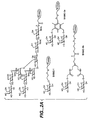
- a first embodiment of the invention comprises a glyodendrimeric protease, the glycodendrimeric protease having a branched or multiply-branched structure that presents a carbohydrate moeity at each branch extremity wherein the glycodendrimeric protease inhibits adhesion of one or more microorganisms to a surface wherein the glycodendrimer protease has the structure shown in Fig. 2A as S156C-2b and wherein the protease is subtilisin Bacillus lentus S156C.
- Other carbohydrates are described in WO 02/079394 .
- the surface may be selected from the group consisting of other bacterial cells, human or animal cells, tissues, extracellular matrix, teeth and prostheses.
- the microorganism may be a prokaryote, a eukaryote, a virus or a combination thereof.
- the prokaryote may be a gram-positive bacterium, a gram-negative bacterium or a gram-variable bacterium.
- the prokaryote may be an Actinomyces, Staphylococcus or an E. coli.
- the eukaryote may be a fungus or protozoan.
- the fungus may be Candida.
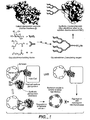
- the glycodendrimeric protease may inhibit adhesion by binding to a microbial adhesin, preferably a lectin, and causing the degradation of the proteinaceous lectin, among other mechanisms.
- Described herein is a method for inhibiting adhesin binding in a microorganism comprising contacting the adhesin with a glycodendrimeric protease having a branched or multiply-branched structure that presents a carbohydrate moeity at each branch extremity wherein the glycodendrimeric protease inhibits adhesion of one or more microorganisms to a surface.
- the carbohydrate moeity is at least one selected from the group consisting of glucose, galactose, fucose, mannose, sialic acid, N-Acetylgalactosamine, N-Acetylglucosamine, and glucuronic acid.
- the surface may be selected from the group consisting of other bacterial cells, human or animal cells, tissues, extracellular matrix, teeth and prostheses.
- the microorganism may be a prokaryote, a eukaryote, a virus or a combination thereof.
- the prokaryote may be a gram-positive bacterium, a gram-negative bacterium or a gram-variable bacterium.
- the prokaryote may be an Actinomyces, Staphylococcus or an E . coli.
- the eukaryote may be a fungus or protozoan.
- the fungus may be Candida.
- the glycodendrimeric protease may inhibit adhesion by binding to a microbial adhesin, preferably a lectin, and causing the degradation of the proteinaceous lectin, among other mechanisms.
- a method of reducing adhesion by a microorganism to mammalian tissues or cells comprising contacting the mammalian tissues or cells with a glycodendrimeric protease having a branched or multiply-branched structure that presents a carbohydrate moeity at each branch extremity wherein the glycodendrimeric protease inhibits adhesion of one or more microorganisms to a surface.
- the carbohydrate moeity is at least one selected from the group consisting of glucose, galactose, fucose, mannose, sialic acid, N-Acetylgalactosamine, N-Acetylglucosamine, and glucuronic acid.
- the surface may be selected from the group consisting of other bacterial cells, human or animal cells, tissues, extracellular matrix, teeth and prostheses.
- the microorganism may be a prokaryote, a eukaryote, a virus or a combination thereof.
- the prokaryote may be a gram-positive bacterium, a gram-negative bacterium or a gram-variable bacterium.
- the prokaryote may be an Actinomyces, Staphylococcus or an E . coli.
- the eukaryote may be a fungus or protozoan.
- the fungus may be Candida.
- the glycodendrimeric protease may inhibit adhesion by binding to a microbial adhesin, preferably a lectin, and causing the degradation of the proteinaceous lectin, among other mechanisms.
- Described herein is a method of treating a disease or disorder of a patient in need of such treatment comprising administering to the patient a glycodendrimeric protease having a branched or multiply-branched structure that presents a carbohydrate moeity at each branch extremity wherein the glycodendrimeric protease inhibits adhesion of one or more microorganisms to a surface.
- the carbohydrate moeity is at least one selected from the group consisting of
- the carbohydrate moeity is at least one selected from the group consisting of glucose, galactose, fucose, mannose, sialic acid, N-Acetylgalactosamine, N-Acetylglucosamine, and glucuronic acid.
- the surface may be selected from the group consisting of other bacterial cells, human or animal cells, tissues, extracellular matrix, teeth and prostheses.
- the microorganism may be a prokaryote, a eukaryote, a virus or a combination thereof.
- the prokaryote may be a gram-positive bacterium, a gram-negative bacterium or a gram-variable bacterium.
- the prokaryote may be an Actinomyces, Staphylococcus or an E. coli.
- the eukaryote may be a fungus or protozoan.
- the fungus may be Candida.
- the glycodendrimeric protease may inhibit adhesion by binding to a microbial adhesin, preferably a lectin, and causing the degradation of the proteinaceous lectin, among other mechanisms.
- the patient may be an animal or a human.
- Administration can be accomplished by any method suitable for delivering the glycodendrimeric protease to the site of the disease or disorder.
- administration of the enzyme to the animal or human can be oral or topical.
- Administration can optionally be targeted to mammalian tissues infected by tissue destroying pathogens, or to the nose, ear, vagina, skin, lungs or digestive tract of the mammal.
- Also described herein is a method for reducing adhesion by a microorganism to mammalian oral tissues or cells or to a dental prosthesis comprising providing glycodendrimeric protease having a branched or multiply-branched structure that presents a carbohydrate moeity at each branch extremity wherein the glycodendrimeric protease inhibits adhesion of one or more microorganisms to a surface.
- the carbohydrate moeity is at least one selected from the group consisting of glucose, galactose, fucose, mannose, sialic acid, N-Acetylgalactosamine, N-Acetylglucosamine, and glucuronic acid.
- the surface may be selected from the group consisting of other bacterial cells, human or animal cells, tissues, extracellular matrix, teeth and prostheses.
- the microorganism may be a prokaryote, a eukaryote, a virus or a combination thereof.
- the prokaryote may be a gram-positive bacterium, a gram-negative bacterium or a gram-variable bacterium.
- the prokaryote may be an Actinomyces, Staphylococcus or an E . coli.
- the eukaryote may be a fungus or protozoan.
- the fungus may be Candida.
- the glycodendrimeric protease may inhibit adhesion by binding to a microbial adhesin, preferably a lectin, and causing the degradation of the proteinaceous lectin, among other mechanisms.
- the patient may be an animal or a human.
- Administration can be accomplished by any method suitable for delivering the glycodendrimeric protease to the site of the disease or disorder.
- administration of the enzyme to the animal or human can be oral or topical.
- Administration can optionally be targeted to mammalian tissues infected by tissue destroying pathogens, or to the nose, ear, vagina, skin, lungs or digestive tract of the mammal.
- the method may include administering to a mammal's oral cavity an oral care composition including an effective amount of the glycodendrimeric protease.
- Advantages of this method can include reducing adhesion by one or more microorganisms to teeth; reducing dental caries, plaque or calculus; reducing co-aggregation of microorganisms; reducing pellicle formation, inhibiting glucosyltransferase or a combination thereof.
- the oral care composition can be used to treat a dental prosthesis, either in the oral cavity or outside the oral cavity.
- a treatment can include applying to a dental prosthesis removed from a mammal's oral cavity an oral care composition including an effective amount of the composition.
- nucleic acids are written left to right in 5' to 3' orientation; amino acid sequences are written left to right in amino to carboxy orientation, respectively. Practitioners are particularly directed to Sambrook et al., 1989, and Ausubel FM et al., 1993, for definitions and terms of the art. It is to be understood that this invention is not limited to the particular methodology, protocols, and reagents described, as these may vary.
- glycodendrimeric protease is an enzyme attached via disulfide linkage to a free thiol of a cysteine residue at one or more pre-seleted sites.
- the glycodendrimeric protease may have a branched or multiply-branched structure that presents a carbohydrate moiety at each branch extremity.
- Carbohydrate moieties may be selected from the group consisting of glucose, galactose, fucose, mannose, sialic acid, N-Acetylgalactosamine, N-Acetylglucosamine, and glucuronic acid.
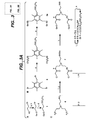
- Useful glycodendrimeric proteases of the invention are shown in Figure 2 . Useful examples can also be found, for example, in WO 02/079394 .
- microorganism refers to microbes including a eukaryote, a prokaryote or a virus and including, but not limited to, a bacterium (either gram positive, gram negative or gram-variable), a fungus, a virus, a protozoan and other microbes or microscopic organisms.
- adheresin molecule or “adhesin” means a molecule or complex of molecules that is typically expressed on the surface of a microorganism and that mediates adhesion by the microorganism to cells, tissues, extracellular matrix, teeth, a dental prosthesis, a medical device or catheter or another surface. Some adhesin molecules bind to a receptor on the surface of the other cell, tissue or extracellular matrix. Some adhesin molecules adhere to polysaccharides that coat teeth, gums, dental prostheses and the other tissues in the oral cavity.
- Adhesin molecules adhere to polysaccharides or other molecules that coat body cavities, and tissues in these cavities, including the middle ear, vagina and the like or to other microorganisms that infect these cavities.
- Adhesins include carbohydrate binding proteins or sites on the surface of microorganisms.
- Adhesin molecules can be found in, on or as parts of lectins, proteins, enzymes, such as glucosyltransferases, hydrophobins, outer membrane proteins, flagella, fimbriae, pili, fibrillae and the like.
- Microorganisms can adhere to carbohydrate portions of extracellular matrix (glyco)proteins; alternatively, bacteria can attach to protein portions of extracellular matrix molecules via microbial carbohydrates.
- a prominent example of this phenomenon is the interaction of the hyaluronic acid capsular polysaccharide of Streptococcus pyogenes with CD44 (protein) molecules on human cells (Courtney).
- CD44 protein
- many conserved carbohydrate-containing bacterial components such as lipopolysaccharide and peptidoglycan (all displaying PAMPs - pathogen associated molecular patterns) have been found to bind toll-like-receptors (TLR's) on a variety of mammalian cells (Kirschning).
- TLR's toll-like-receptors
- a third example is the colonization of teeth by S. mutans, which is in part mediated by the bacterium's association with tooth-anchored glucosytransferases via glucan bound
- TREN refers to tris (2-aminoethyl)amine.
- adheresion by a microorganism refers to the binding of a microorganism to a cell, tissue, extracellular matrix, a tooth, a dental prosthesis or another surface, including hard surfaces that are cleaned by detergents or cleaners.
- the surface can be of a body cavity such as the oral cavity, vagina, middle ear or the like.
- Reduction in adhesion by a microorganism by an amount that is measurable with statistical significance as less than a control value for adhesion by the microorganism can be expressed as "significantly reduced adhesion by a microorganism".
- Significant reduction in adhesion by a microorganism can also be determined by demonstrating a desired biological effect upon treatment of a microorganism with a glycodendrimeric protease, preferably including correlation of this effect with adhesion by the microorganism.
- dental prosthesis refers to a replacement for one or more of a mammal's teeth or another oral structure, including replacement of a single tooth, any type of denture and any type of bridge.
- a dental prosthesis can be either fixed in the mammal's oral cavity or removable from the mammal's oral cavity.
- denture refers to any type of denture including a partial denture, a complete denture, a fixed denture and a removable denture.
- surface refers to any surface to which a microorganism can bind or adhere.
- Surfaces include cells, tissues or extracellular matrix, among others.
- Surfaces also include the surface of any catheter, implant, prosthesis or other man made device that resides or is placed in or on a mammal's body or body cavity.
- Surfaces also include other surfaces to which a microorganism might bind such as a surface of a medical device external to the mammal, but that contacts the mammal or mammalian fluids or tissues, such as a periodontal dialysis apparatus, kidney dialysis apparatus, heart/lung machines and the like.
- Surfaces also include surfaces in other apparatus or equipment to which microorganisms can adhere, such as in brewing apparatus, fermentation apparatus, effluent treatment apparatus and other reactors and apparatus. Surfaces include hard surfaces that are cleaned by detergents or other cleaners.
- treating refers to curative therapy, prophylactic therapy and preventative therapy. Treating, treatment and therapy can reduce or ameliorate the severity or presence of symptoms of a disorder, can reduce or ameliorate the severity or presence of a disorder or can cure the disorder.
- mammal refers to any mammal classified as an animal, including humans, cows, horses, dogs and cats. In a preferred embodiment of the invention, the mammal is a human.
- animal refers to vertebrate animals including birds, mammals, reptiles, amphibians and the like. Preferred animals include mammals and birds.
- composition refers to substances that can be administered to a subject, preferably a mammal, to treat a disorder that may benefit from administering an enzyme, such as a glycodendrimeric protease, to reduce adhesion by one or more microorganisms.
- an enzyme such as a glycodendrimeric protease
- oral care composition refers to a composition suitable for administration to the oral cavity of a subject, preferably a mammal, to treat a disorder of or in the oral cavity that may benefit from administering an enzyme, such as a glycodendrimeric protease, to reduce adhesion by one or more microorganisms.
- an enzyme such as a glycodendrimeric protease
- the term "effective amount” refers to an amount of a glycodendrimeric protease sufficient to reduce or inhibit adhesion by a microorganism to a cell, tissue, extracellular matrix, a tooth, dental prosthesis or another surface, including hard surfaces that are cleaned by detergents or cleaners.
- glycosenor refers to chemically synthesized branching structures bearing carbohydrates on their branch tips. Glycodendrimers can be found, for example, in WO 02/079394 .
- high branched molecules or “dendrimers” or “well-defined branching dendrimers” are synonymous and refer to structures of the invention as herein described.
- Highly branched molecules were first were synthesized by Vögtle in 1978 ( Buhleier et al., Synthesis, 155-158 (1978 )). The attachment of identical building blocks that contain branching sites to a central core may be achieved with a high degree of homogeneity and control.
- Each branch contains a functional group which, after chemical alteration, may be connected to yet another branching building block. In this manner, layer after layer of branching rapidly generates highly-functionalized molecules.
- the dendrimer reagent structures would include methanethiosulfonates with simple branching such as: derived from pentaerythritol (i.e., "Penta-E"), to very complex branched dendrimer reagents (e.g., see Figure 1 ).
- Penta-E pentaerythritol
- a first generation glycodendrimer reagent is synthesized as shown in Figure 7 . This approach can be extended to cover larger dendrimers.
- the remaining arms can be further branched to synthesize highly-functionalized glycodendrimer reagents as shown in Figure 8 .
- Glycodendrimeric proteases are employed to degrade the adhesin, and the enzyme can be modified. Preferred enzymatic modifications employ glycodendrimeric proteases having an appropriate branched structure to optimally present an isomeric form of the carbohydrate moieties selectively recognized by a particular adhesin or lectin . It is believed that the glycodendrimeric protease can act to inhibit cellular adhesion be selectively degrading the adhesion recognition site for attachment to specific cell surface glycoproteins on the host cell surface. Blocking this adhesion prevents a series of events including a tight binding event that can lead to infection and disease. In another scenario, tight binding can lead to the synthesis of components that will facilitate forming supportive biofilms.
- glycodendrimer functions as an anti-infective agent. It is believed that this glycodendrimer anti-infective agent could be effective alone or in combination with other antibiotics to enhance the antibiotic's function by prevention of attachment and/or the formation of biofilms which are believed to render the bacteria more resistant to antibiotic microbials.
- the selectivity of the glycodendrimer proteases may also have additional beneficial properties by targeting harmful bacterial while leaving innocuous and benevolent bacterial unaffected. The growth of innocuous bacterial is in itself potentially beneficial by virtue that these bacterial will compete for available nutrients with harmful bacteria thereby further limiting their growth.
- the methods and compositions can reduce or inhibit binding or adhesion of a microorganism to a cell, tissue or other surface.
- the glycodendrimer comprised of the same carbohydrate recognized by the bacterial adhesin, specifically directs the enzyme to bind at the site which would ordinarily be used by the bacterium to bind the target receptor, such as a carbohydrate, and therefore can be effective in much lower concentrations and have many fewer global effects on the bacterial cell and/or body site in which it is employed.
- the methods include administering effective amounts of the enzyme, for reducing or preventing adhesion by a microorganism, for example, at the site of an infection by a microorganism in an animal's body, including a body cavity, a dental prosthesis, a tissue, a site of catheterization or the like.
- the compositions include effective amounts of a glycodendrimeric protease, in a carrier suitable for maintaining this enzyme in a form active for reducing adhesion by a microorganism.
- the composition includes a pharmaceutical composition, suitable for therapeutic administration to an animal.
- the compositions also include oral care compositions.
- the enzyme employed in the methods or compositions preferentially modifies an adhesin, such as a carbohydrate binding site, on the microorganism.
- an enzyme can catalyze a reaction for modifying an adhesin or other molecule on the microorganism or in the binding site of a lectin or another carbohydrate binding site on the microorganism.
- Adhesion by a microorganism can occur through a variety of mechanisms to a variety of substrata. For example, microorganisms that inhabit an animal's oral cavity can adhere to polysaccharides that coat teeth, gums, tongue, throat, cheeks, a dental prosthesis and the other tissues in the oral cavity.
- the data obtained may yield, for example, regular binding isotherms, Langmuir plots, Scatchard plots and/or analysis of "cooperative" adhesion (Ofek and Doyle, supra).
- the glycodedrimeric protease of the present invention abolish a positive slope of a Scatchard plot of adhesion results, it could be said the enzyme is preventing positive cooperativity.
Landscapes
- Health & Medical Sciences (AREA)
- Chemical & Material Sciences (AREA)
- Life Sciences & Earth Sciences (AREA)
- Engineering & Computer Science (AREA)
- General Health & Medical Sciences (AREA)
- Organic Chemistry (AREA)
- Medicinal Chemistry (AREA)
- Molecular Biology (AREA)
- Gastroenterology & Hepatology (AREA)
- Bioinformatics & Cheminformatics (AREA)
- Pharmacology & Pharmacy (AREA)
- Proteomics, Peptides & Aminoacids (AREA)
- Nanotechnology (AREA)
- Biochemistry (AREA)
- Biophysics (AREA)
- Biotechnology (AREA)
- Genetics & Genomics (AREA)
- Veterinary Medicine (AREA)
- Public Health (AREA)
- Immunology (AREA)
- Animal Behavior & Ethology (AREA)
- Epidemiology (AREA)
- General Engineering & Computer Science (AREA)
- Crystallography & Structural Chemistry (AREA)
- Medical Informatics (AREA)
- Medicines That Contain Protein Lipid Enzymes And Other Medicines (AREA)
- Cosmetics (AREA)
- Pharmaceuticals Containing Other Organic And Inorganic Compounds (AREA)
- Enzymes And Modification Thereof (AREA)
Description
- This application is a continuation-in-part of United States Application Serial Number
09/824,827 filed April 2, 2001 09/347,029 filed on July 2, 1999 Application Serial Number 60/131,446 filed on April 28,1999 Application Serial Number 60/091,687 filed on July 2, 1998 - The present invention is directed to glyodendrimeric proteases, compositions with glycodendrimeric proteases and methods for inhibiting adhesin binding in microorganisms by contacting microorganisms with a glycodendrimeric protease or a composition with a glycodendrimeric protease. The invention may be used to treat patients in need of treatment.
- The emergence of drug-resistance among some pathogenic microorganisms necessitates a search for alternative methods to battle infections. Investigators have discovered and studied agents toxic to infecting microorganisms. Some investigators seek to fight disease by interrupting early stages of infection. Early stages include adhesion by a microorganism to a host tissue, which can be a prerequisite to establishing a harmful infection.
- Adhesion can be mediated by microbial surface glycoproteins that act as markers in cell-cell communication events that determine microbial virulence (Sharon et al., Essays Biochem., 30:59-75 (1995)), inflammation (Lasky, Annu. Rev. Biochem., 64:113-139 (1995); Weis et al., Annu. Rev. Biochem., 65:441-473 (1996)), and host immune responses (Varki, Glycobiol., 3:97-130 (1993); Dwek, Chem. Rev., 96:683-720 (1996)). In addition, the correct glycosylation of proteins is critical to their expression and folding (Helenius, Mol. Biol. Cell, 5:253-265 (1994)) and increases their thermal and proteolytic stability (Opendakker et al., FASEB J., 7:1330-1337 (1993)). Glycoproteins occur naturally in a number of forms (glycoforms) (Rademacher et al., Annu. Rev. Biochem., 57:785-838 (1988)) that possess the same peptide backbone, but differ in both the nature and site of glycosylation.
- Known strategies for reducing adhesion by a microorganism include using carbohydrate analogs to inhibit interactions between an adhesin molecule on a microorganism and a sugar on a host cell or tissue. (Zopf, D. et al., Adv. Exp. Med. Biol. 408:35-8 (1996); Ofek, I. and Doyle R.J., Bacterial Adhesion to Cells and Tissues; Chapman and Hall, New York (1994)). These analogs can be part of a carbohydrate cocktail, which includes carbohydrates having various structures corresponding to the binding specificities of one or more lectins of a microorganism. (Beuth, J. et al., Adv. Exp. Med. Biol. 408:51-56 (1996)). Manipulating gene regulation to prevent phenotype switching by the microorganism to an adhesion-plus variant provides yet another strategy for reducing adhesion by a microorganism. (Kahane, I. et al., Adv. Exp. Med. Biol. 408:107-111 (1996)).
- For example, investigators have reported that, in the oral cavity, Streptococcus mutans attaches to glucans deposited on the tooth surface. (Koga, T. et al., J. Gen. Microbiol. 132:2873-2883 (1986)). Such attachment is believed to enhance the ability of S. mutans to metabolize dietary sucrose to acid, which then can destroy tooth enamel and eventually result in a carious lesion. S. mutans and other oral streptococci use a surface protein called glucan-binding lectin (GBL) to attach to surface-bound glucan. (Gibbons, R. J. et al., J. Bacteriol. 98:341-346 (1969)). Drake et al. developed an in vitro model system using soluble high-molecular weight glucans, also know as "dextrans," and whole cell suspensions of S. cricetus to examine GBL binding. (Drake, D. et al., Infect. Immun. 56:1864-1872 (1988); Drake, D. et al., Infect. Immun. 56:2205-2207 (1988)). The glucan binding results in aggregation that is quantifiable with spectrophotometry.
-
WO 02/079394 US 02/10903 . - Given the prevalence of harm caused by infection with microorganisms, and the medical effort and cost devoted to fighting these infections, there is a need for additional and improved compositions and methods for fighting infection by microorganisms. There is also a need for additional and improved compositions and methods for reducing adhesion by microorganisms to and in animal tissues, and for reducing adhesion by microorganisms to dental prostheses.
- The present invention is directed to glyodendrimeric proteases, composition with glycodendrimeric proteases and methods for inhibiting adhesion of microorganisms by contacting microorganisms with a glycodendrimeric protease or a composition with a glycodendrimeric protease.
- A first embodiment of the invention comprises a glyodendrimeric protease, the glycodendrimeric protease having a branched or multiply-branched structure that presents a carbohydrate moeity at each branch extremity wherein the glycodendrimeric protease inhibits adhesion of one or more microorganisms to a surface wherein the glycodendrimer protease has the structure shown in
Fig. 2A as S156C-2b and wherein the protease is subtilisin Bacillus lentus S156C. Other carbohydrates are described inWO 02/079394 - A second embodiment of the invention is drawn to a composition comprising, the glycodendrimeric protease of the first embodiment.
- Described herein is a method for inhibiting adhesin binding in a microorganism comprising contacting the adhesin with a glycodendrimeric protease having a branched or multiply-branched structure that presents a carbohydrate moeity at each branch extremity wherein the glycodendrimeric protease inhibits adhesion of one or more microorganisms to a surface. The carbohydrate moeity is at least one selected from the group consisting of glucose, galactose, fucose, mannose, sialic acid, N-Acetylgalactosamine, N-Acetylglucosamine, and glucuronic acid. Other preferred carbohydrates can be found, for example, in
WO 02/079394 - Also described herein is a method of reducing binding of a microorganism to a surface comprising contacting the surface with a glycodendrimeric protease having a branched or multiply-branched structure that presents a carbohydrate moeity at each branch extremity wherein the glycodendrimeric protease inhibits adhesion of one or more microorganisms to a surface. The carbohydrate moeity is at least one selected from the group consisting of glucose, galactose, fucose, mannose, sialic acid, N-Acetylgalactosamine, N-Acetylglucosamine, and glucuronic acid. Other preferred carbohydrates can be found, for example, in
WO 02/079394 - Further described herein is a method of reducing adhesion by a microorganism to mammalian tissues or cells comprising contacting the mammalian tissues or cells with a glycodendrimeric protease having a branched or multiply-branched structure that presents a carbohydrate moeity at each branch extremity wherein the glycodendrimeric protease inhibits adhesion of one or more microorganisms to a surface. The carbohydrate moeity is at least one selected from the group consisting of glucose, galactose, fucose, mannose, sialic acid, N-Acetylgalactosamine, N-Acetylglucosamine, and glucuronic acid. Other preferred carbohydrates can be found, for example, in
WO 02/079394 - Described herein is a method of treating a disease or disorder of a patient in need of such treatment comprising administering to the patient a glycodendrimeric protease having a branched or multiply-branched structure that presents a carbohydrate moeity at each branch extremity wherein the glycodendrimeric protease inhibits adhesion of one or more microorganisms to a surface. The carbohydrate moeity is at least one selected from the group consisting of The carbohydrate moeity is at least one selected from the group consisting of glucose, galactose, fucose, mannose, sialic acid, N-Acetylgalactosamine, N-Acetylglucosamine, and glucuronic acid. Other preferred carbohydrates can be found, for example, in
WO 02/079394 - Also described herein is a method for reducing adhesion by a microorganism to mammalian oral tissues or cells or to a dental prosthesis comprising providing glycodendrimeric protease having a branched or multiply-branched structure that presents a carbohydrate moeity at each branch extremity wherein the glycodendrimeric protease inhibits adhesion of one or more microorganisms to a surface. The carbohydrate moeity is at least one selected from the group consisting of glucose, galactose, fucose, mannose, sialic acid, N-Acetylgalactosamine, N-Acetylglucosamine, and glucuronic acid. Other preferred carbohydrates can be found, for example, in
WO 02/079394 - An embodiment of the invention provides an oral care composition comprising an effective amount of glycodendrimeric protease according to the first embodiment. Oral care compositions of the invention include, but are not limited to, a mouthwash, a toothpaste, an implant or a combination thereof, and may optionally be in the form of a solid, a semi-solid, a liquid or an aerosol. Administration of the oral care composition to the mammal's oral cavity can be accomplished by any method suitable for delivering a composition to the oral cavity. For example, administration of the oral care composition can include rinsing with a liquid, applying a semisolid with a toothbrush, swab or syringe, implanting a solid or a combination thereof. Optionally, the oral care composition can be used to treat a dental prosthesis, either in the oral cavity or outside the oral cavity. Such a treatment can include applying to a dental prosthesis removed from a mammal's oral cavity an oral care composition including an effective amount of the composition.
-
-
Figure 1 shows a shows a proposed mechanism of action for glycodendrimeric proteases of the present invention; -
Figure 2 shows a proposed synthesis for glycodendrimeric proteases. 1-4. MTS carbohydrate reagents 1-4 were used to modify the introduced cysteine thiol group (Figure 1a ). One mono-antennary carbohydrate structure 1(21) and four multi-antennary structures 2-4 were constructed (35) To explore the effect of branching substructure the core branching structures of 2-4 were based upon both the conformationally flexible tris(2-aminoethyl)amine (TREN)core 6 to create 2b, 3, 4 and the rigid mesitylene core 5 to create 2a (Figure 2 ). Since our model target pathogen, A. naeslundii, utilizes galactose (Gal)-specific binding adhesins(36) to bind Gal-containing glycoproteins,(37) Gal units were attached to the extremities of these dendrimer cores using 1-thio-®-Dgalactopyranose (Gal-SH) as a reagent. Through appropriate sequential use of the branchedbuilding blocks basic multiantennary structures glycodendrimer reagents reagents tri-antennary reagent 3, designed to mimic the asymmetric carbohydrate display that is observed in tri-antennary N-linked glycoproteins.(38) It is noteworthy that this chemistry was conducted completely without the use of carbohydrate protecting groups; -
Figure 3 shows additional synthetic steps in synthesizing a glycodendrimeric protease.- . A, a, pentaacetyl-Gal, BF3.Et2O, DCM, 76%; b, MeONa, MeOH, 83%; c, NaSSO2CH3, DMF, 78%; see Ref. (21) B, d, NaSSO2CH3, DMF, 56%; e, 2 equiv. Gal-S-Na+, DMF, 0°C 55%. C, f, Boc2O, DCM, -78°C, 68%; g, (ClCH2CO)2O, DCM, 97%; h, 2 equiv. Gal-S-Na+, DMF, 88%; i, CF3COOH, DCM, 91%; j, thiobutyrolactone, dithiothreitol, NaHCO3, water, EtOH, 69% k, NHS-butyl-MTS, DMF, 81%; l, 1 equiv. Gal-S-Na+, DMF, 48%; m, 11 9, DMF, 78%; n, CF3COOH, DCM, 94%; o, NHS-butyl-MTS, DMF, 77%; p, NHS-butyl MTS, DMF, 87%; q, 9, DMF, 81%; r, CF3COOH, DCM, 93%; s, NHS-butyl-MTS, DMF, 72%;
-
Figure 4 shows mass spectrometric characterization of glycoproteins. ESMS analysis confirmed the formation, with correct mass, of the expected glycoproteins S156C-2a, 2b, 3, 4; -
Figure 5 shows percent aggregation of the pathogen A. naeslundii to S. oralis (after 10 min) after treatment with glycoprotein enzyme (1.5µg/mL, 30 min). Most potent inhibition of the binding of A. naeslundii was found following treatment with the biantennary synthetic glycoprotein S156C-2b (IC50 20nM) and is >106 more potent than that of small molecule inhibitor lactose (IC50 33mM); -
Figure 6 shows results from a coaggregation assay used to demonstrate the principle of the invention. Actinomyces naeslunii T14V and Streptococcus oralis 34 were grown in Todd Hewitt broth supplemented with 2% yeast extract and grown at 37 ° C in 5% CO2 and H2:CO2:N2 (10:10:80) respectively, and harvested in mid- to late- exponential phase by centrifugation at 10,000 x g at 4° C for 10 min. Bacteria were washed twice and resuspended to A540 = 1.0 in coaggregation buffer (CB: 1 mM tris (hydroxymethl) aminomethane, 10-4 M CaCl2 , 10-4 M MgCl2, 0.15 M NaCl, pH 7.0).
Cell suspensions of A. naeslundii T14V were incubated with lactose, modified-proteases (S156C (1-4)), native protease, PMSF + S156C (1-4) and PMSF alone at 37°C for 1hr. After incubation an equal volume of S. oralis 34 was added and vortexed for 10 sec. Coaggregation was assessed by turbidity changes at 540 nm over 10 min - decreased turbidity indicating increased aggregation.
This figure displays the concentration dependence of inhibition by theS 156C biantennary glycodendrimer, compared to native protease without galactose substitution. 100 mM lactose (digalactoside) results in no loss of turbidity (i.e. results in an absence of aggregation). Adding 2mM lactose does not block aggregation (i.e., the loss in turbidity is just as extensive as in the control with nothing added). PMSF treatment of the dendrimer results in near-total abrogation of the dendrimer's inhibitory activity since the enzyme has no catalytic activity. This demonstrates that the failure to aggregate is dependent on the proteolytic activity of the glycodendrimer. Note also that 1.5 µg/ml (500nM) of S156C digal is more effective at blocking aggregation than is 15 µg/ml of the native enzyme and that 4.5 µg/ml S 156C-digal is more effective than 50 µg/ml native enzyme. In each case the 10-fold lower concentration of the glycodendrimeric protease yielded less aggregation that the native enzyme at a 10x higher concentration. At 50 µg/ml of S156C-digal (∼1.5µM) we see almost complete elimination of aggregation, the same level seen in the presence of 100mM lactose; -
Figure 7 shows a normal addition synthetic scheme for producing two different first-generation Type A (TREN-type) glycodendrimer reagents, and glycodendriproteins produced from these reagents; -
Figure 8 shows a normal addition synthetic scheme for producing a second generation Type A glycodendrimer reagent; -
Figure 9 shows a visualization of reduced aggregation. Samples of the control aggregation reaction and the reaction containing 15 µg/ml S 156C-digal were transferred to glass slides for microscopic examination. The photmicrographs shown inFigure 9 confirm that decreased turbidity indeed correlates with decreased aggregation. A control is pictured on the left. It displays large aggregates of the two bacterial species. The reaction on the right was that in which A. naeslundii was incubated with the biantennary dendrimer (15 µg/ml) before S. oralis was added. It is clear that the dendrimer could significantly reduce the accumulation of bacteria on surfaces that were already colonized with one of the coaggregating partners. - Unless defined otherwise herein, all technical and scientific terms used herein have the same meaning as commonly understood by one of ordinary skill in the art to which this invention belongs. Singleton, et al., DICTIONARY OF MICROBIOLOGY AND MOLECULAR BIOLOGY, 2D ED., John Wiley and Sons, New York (1994), and Hale & Marham, THE HARPER COLLINS DICTIONARY OF BIOLOGY, Harper Perennial, NY (1991) provide one of skill with a general dictionary of many of the terms used in this invention. Although any methods and materials similar or equivalent to those described herein can be used in the practice or testing of the present invention, the preferred methods and materials are described. Numeric ranges are inclusive of the numbers defining the range. Unless otherwise indicated, nucleic acids are written left to right in 5' to 3' orientation; amino acid sequences are written left to right in amino to carboxy orientation, respectively. Practitioners are particularly directed to Sambrook et al., 1989, and Ausubel FM et al., 1993, for definitions and terms of the art. It is to be understood that this invention is not limited to the particular methodology, protocols, and reagents described, as these may vary.
- The headings provided herein are not limitations of the various aspects or embodiments of the invention which can be had by reference to the specification as a whole. Accordingly, the terms defined immediately below are more fully defined by reference to the specification as a whole
- As used herein, a "glycodenrimeric protease" is an enzyme attached via disulfide linkage to a free thiol of a cysteine residue at one or more pre-seleted sites. The glycodendrimeric protease may have a branched or multiply-branched structure that presents a carbohydrate moiety at each branch extremity. Carbohydrate moieties may be selected from the group consisting of glucose, galactose, fucose, mannose, sialic acid, N-Acetylgalactosamine, N-Acetylglucosamine, and glucuronic acid. Useful glycodendrimeric proteases of the invention are shown in
Figure 2 . Useful examples can also be found, for example, inWO 02/079394 - Such an enzyme preferentially modifies an adhesin on a microorganism, such as a protein, by binding to the adhesin followed by proteolytic degradation of the adhesin. For example, such an enzyme can catalyze a reaction for modifying a molecule on the microorganism. An enzyme employed in a method or composition of the invention can, for example, catalyze a degradation of the binding site of an adhesin, such as a lectin or another carbohydrate binding site, on the microorganism. Preferably, the enzyme has one or more branched dendric antennae presented.
- As used herein, "microorganism" refers to microbes including a eukaryote, a prokaryote or a virus and including, but not limited to, a bacterium (either gram positive, gram negative or gram-variable), a fungus, a virus, a protozoan and other microbes or microscopic organisms.
- As used herein, "adhesin molecule" or "adhesin" means a molecule or complex of molecules that is typically expressed on the surface of a microorganism and that mediates adhesion by the microorganism to cells, tissues, extracellular matrix, teeth, a dental prosthesis, a medical device or catheter or another surface. Some adhesin molecules bind to a receptor on the surface of the other cell, tissue or extracellular matrix. Some adhesin molecules adhere to polysaccharides that coat teeth, gums, dental prostheses and the other tissues in the oral cavity. Some adhesin molecules adhere to polysaccharides or other molecules that coat body cavities, and tissues in these cavities, including the middle ear, vagina and the like or to other microorganisms that infect these cavities. Adhesins include carbohydrate binding proteins or sites on the surface of microorganisms. Adhesin molecules can be found in, on or as parts of lectins, proteins, enzymes, such as glucosyltransferases, hydrophobins, outer membrane proteins, flagella, fimbriae, pili, fibrillae and the like.
- Microorganisms can adhere to carbohydrate portions of extracellular matrix (glyco)proteins; alternatively, bacteria can attach to protein portions of extracellular matrix molecules via microbial carbohydrates. A prominent example of this phenomenon is the interaction of the hyaluronic acid capsular polysaccharide of Streptococcus pyogenes with CD44 (protein) molecules on human cells (Courtney). Also, many conserved carbohydrate-containing bacterial components such as lipopolysaccharide and peptidoglycan (all displaying PAMPs - pathogen associated molecular patterns) have been found to bind to toll-like-receptors (TLR's) on a variety of mammalian cells (Kirschning). A third example is the colonization of teeth by S. mutans, which is in part mediated by the bacterium's association with tooth-anchored glucosytransferases via glucan bound to its surface.
- As used herein, TREN refers to tris (2-aminoethyl)amine.
- As used herein, "adhesion by a microorganism" refers to the binding of a microorganism to a cell, tissue, extracellular matrix, a tooth, a dental prosthesis or another surface, including hard surfaces that are cleaned by detergents or cleaners. The surface can be of a body cavity such as the oral cavity, vagina, middle ear or the like.
- As used herein, "reduce adhesion by a microorganism" or "reducing adhesion by a microorganism" refers to decreasing the amount of adhesion by the microorganism to a cell, tissue, extracellular matrix, a tooth and/or dental prosthesis or to any other surface onto which microorganisms adhere and colonize. The decrease in adhesion can be observed by employing comparison to a control cell, tissue, extracellular matrix, a tooth and/or dental prosthesis or to a control population. Generally, "reduce" or "reducing" can also be expressed as inhibit or inhibiting, diminish or diminishing, abolish or abolishing and like terms. Reduction in adhesion by a microorganism by an amount that is measurable with statistical significance as less than a control value for adhesion by the microorganism can be expressed as "significantly reduced adhesion by a microorganism". Significant reduction in adhesion by a microorganism can also be determined by demonstrating a desired biological effect upon treatment of a microorganism with a glycodendrimeric protease, preferably including correlation of this effect with adhesion by the microorganism.
- As used herein, "dental prosthesis" refers to a replacement for one or more of a mammal's teeth or another oral structure, including replacement of a single tooth, any type of denture and any type of bridge. A dental prosthesis can be either fixed in the mammal's oral cavity or removable from the mammal's oral cavity. As used herein, "denture" refers to any type of denture including a partial denture, a complete denture, a fixed denture and a removable denture.
- As used herein "surface" refers to any surface to which a microorganism can bind or adhere. Surfaces include cells, tissues or extracellular matrix, among others. Surfaces also include the surface of any catheter, implant, prosthesis or other man made device that resides or is placed in or on a mammal's body or body cavity. Surfaces also include other surfaces to which a microorganism might bind such as a surface of a medical device external to the mammal, but that contacts the mammal or mammalian fluids or tissues, such as a periodontal dialysis apparatus, kidney dialysis apparatus, heart/lung machines and the like. Surfaces also include surfaces in other apparatus or equipment to which microorganisms can adhere, such as in brewing apparatus, fermentation apparatus, effluent treatment apparatus and other reactors and apparatus. Surfaces include hard surfaces that are cleaned by detergents or other cleaners.
- As used herein, the terms "treating", "treatment" and "therapy" refer to curative therapy, prophylactic therapy and preventative therapy. Treating, treatment and therapy can reduce or ameliorate the severity or presence of symptoms of a disorder, can reduce or ameliorate the severity or presence of a disorder or can cure the disorder.
- As used herein, the term "mammal" refers to any mammal classified as an animal, including humans, cows, horses, dogs and cats. In a preferred embodiment of the invention, the mammal is a human.
- As used herein, the term "animal" refers to vertebrate animals including birds, mammals, reptiles, amphibians and the like. Preferred animals include mammals and birds.
- As used herein, the term "composition" refers to substances that can be administered to a subject, preferably a mammal, to treat a disorder that may benefit from administering an enzyme, such as a glycodendrimeric protease, to reduce adhesion by one or more microorganisms.
- As used herein, the term "oral care composition" refers to a composition suitable for administration to the oral cavity of a subject, preferably a mammal, to treat a disorder of or in the oral cavity that may benefit from administering an enzyme, such as a glycodendrimeric protease, to reduce adhesion by one or more microorganisms.
- As used herein, the term "effective amount" refers to an amount of a glycodendrimeric protease sufficient to reduce or inhibit adhesion by a microorganism to a cell, tissue, extracellular matrix, a tooth, dental prosthesis or another surface, including hard surfaces that are cleaned by detergents or cleaners.
- As used herein, the term "glycodendrimer" refers to chemically synthesized branching structures bearing carbohydrates on their branch tips. Glycodendrimers can be found, for example, in
WO 02/079394 - As used herein, the terms "highly branched molecules" or "dendrimers" or "well-defined branching dendrimers" are synonymous and refer to structures of the invention as herein described. Highly branched molecules were first were synthesized by Vögtle in 1978 (Buhleier et al., Synthesis, 155-158 (1978)). The attachment of identical building blocks that contain branching sites to a central core may be achieved with a high degree of homogeneity and control. Each branch contains a functional group which, after chemical alteration, may be connected to yet another branching building block. In this manner, layer after layer of branching rapidly generates highly-functionalized molecules.
- For instance, multiple glycosylation, including multiple mannose-containing chemically modified mutant proteins, and varied sugar moieties, can be created. The dendrimer reagent structures would include methanethiosulfonates with simple branching such as:

Figure 1 ). In particular, a first generation glycodendrimer reagent is synthesized as shown inFigure 7 . This approach can be extended to cover larger dendrimers. More specifically, by leaving one "arm" of the glycodendrimer free for conversion to a methanethiosulfonate, the remaining arms can be further branched to synthesize highly-functionalized glycodendrimer reagents as shown inFigure 8 . - Glycodendrimeric proteases are employed to degrade the adhesin, and the enzyme can be modified. Preferred enzymatic modifications employ glycodendrimeric proteases having an appropriate branched structure to optimally present an isomeric form of the carbohydrate moieties selectively recognized by a particular adhesin or lectin . It is believed that the glycodendrimeric protease can act to inhibit cellular adhesion be selectively degrading the adhesion recognition site for attachment to specific cell surface glycoproteins on the host cell surface. Blocking this adhesion prevents a series of events including a tight binding event that can lead to infection and disease. In another scenario, tight binding can lead to the synthesis of components that will facilitate forming supportive biofilms. It is believed that by blocking the adhesion step by eliminating the adhesin recognition sites that the glycodendrimer functions as an anti-infective agent. It is believed that this glycodendrimer anti-infective agent could be effective alone or in combination with other antibiotics to enhance the antibiotic's function by prevention of attachment and/or the formation of biofilms which are believed to render the bacteria more resistant to antibiotic microbials. The selectivity of the glycodendrimer proteases may also have additional beneficial properties by targeting harmful bacterial while leaving innocuous and benevolent bacterial unaffected. The growth of innocuous bacterial is in itself potentially beneficial by virtue that these bacterial will compete for available nutrients with harmful bacteria thereby further limiting their growth.
- Described herein are methods and compositions employing an enzyme, such as a glycodendrmeric protease, for reducing adhesion by a microorganism, preferably without killing or halting the growth of the microorganism. The methods and compositions can reduce or inhibit binding or adhesion of a microorganism to a cell, tissue or other surface. Further, the glycodendrimer, comprised of the same carbohydrate recognized by the bacterial adhesin, specifically directs the enzyme to bind at the site which would ordinarily be used by the bacterium to bind the target receptor, such as a carbohydrate, and therefore can be effective in much lower concentrations and have many fewer global effects on the bacterial cell and/or body site in which it is employed. The methods include administering effective amounts of the enzyme, for reducing or preventing adhesion by a microorganism, for example, at the site of an infection by a microorganism in an animal's body, including a body cavity, a dental prosthesis, a tissue, a site of catheterization or the like. The compositions include effective amounts of a glycodendrimeric protease, in a carrier suitable for maintaining this enzyme in a form active for reducing adhesion by a microorganism. In one embodiment, the composition includes a pharmaceutical composition, suitable for therapeutic administration to an animal. The compositions also include oral care compositions. The compositions also include compositions suitable for applying an enzyme such as a glycodendrimeric protease to a surface of a prosthesis, medical device (e.g. a catheter), a polymeric surface, a metal surface, or the like that can be cleaned with a cleaner or disinfectant.
- The enzyme employed in the methods or compositions preferentially modifies an adhesin, such as a carbohydrate binding site, on the microorganism. Such an enzyme can catalyze a reaction for modifying an adhesin or other molecule on the microorganism or in the binding site of a lectin or another carbohydrate binding site on the microorganism. Adhesion by a microorganism can occur through a variety of mechanisms to a variety of substrata. For example, microorganisms that inhabit an animal's oral cavity can adhere to polysaccharides that coat teeth, gums, tongue, throat, cheeks, a dental prosthesis and the other tissues in the oral cavity. Microorganisms also can adhere to carbohydrates on cells, tissues and extracellular matrix in or on the animal's body or in or on one of the animal's body cavities. The cells can include other microorganisms. Such microorganism to microorganism binding can be referred to as coaggregation. Microorganisms that coaggregate include microorganisms that are early and late colonizers of freshly cleaned teeth. Microorganisms can also adhere (less frequently) to proteins on cells, tissues, and extracellular matrix via microbial carbohydrate residues. In this case, the enzyme employed in the methods or compositions preferentially modifies a camohydrate-binding residue on the host cell.
- Microorganisms frequently employ adhesins, including carbohydrate binding structures such as lectins and glucosyltransferases. Microorganisms that employ adhesin molecules include bacteria, such as Actinobacillus actinomycetemcomitans, Actinomyces israelii, A. naeslundii and A. viscosus, Capnocytophaga ochracea, Eikenella corrodens, Escherichia coli, Fusobacterium nucleatum, Haemophilus influenzae, Porphyromonas gingivalis, Prevotella intermedia, Proteus mirabilis, Proteus vulgaris, Pseudomonas aeruginosa, P. loeschei, Streptococcus gordonii, S. mutans, S. oralis, S sanguis, various group A streptococci, various invasive and antibiotic resistant staphylococci, and Treponema denticola; viruses such as influenza virus; yeasts, such as Candida albicans; and protozoans, such as Entamoeba histolytica. Adhesin molecules of several M5, M6 and M24 positive strains of streptococci have been studied (Dale J.B. et al., Vaccine 14-944-948 (1996); Courtney et al., FEMS Microbiol. Letters 151:65-70 (1997)). P. aeruginosa makes a good model for study as its adhesion can depend on two lectins, PA-1 and PA-2. Furthermore, the bacterium will form biofilms on a variety of surfaces, ranging from glass and steel to human lungs.
- Adhesion by a microorganism can be determined by employing a variety of techniques known to those of skill in the art. These techniques include determining coaggregation of the microorganism of interest with a cell, such as through turbidimetry, determining aggregation of microorganisms with a polysaccharide, such as formation of an aggregate in solution or a pellicle, determining binding of the microorganism to a mammalian cell, monitoring hemagglutination and determining binding of a microorganism to extracellular matrix.
- Typical assays for aggregation or coaggregation including microorganisms can be done in a suitable buffer and can involve visual end-point estimates or kinetic measurements, such as those employing a platelet aggregometer. Visual end-points can be determined by methods known to those of skill in the art, such as those described by Kolenbrander (Kolenbrander, P.E., Meth. Enzymol. 253:385-396 (1995)). A more quantitative method for measuring coaggregation involves mixing the two coaggregating partners together in a test tube and observing the decrease in the optical density of the mixture over time. As aggregates form they settle to the bottom of the tube and the rate and extent of settling can be measured by the decrease in optical density. The decrease is measured continuously in a spectrophotometer and plotted on a graph of optical density vs. time.
- Suitable reaction pairs of microorganisms for measuring coaggregation include:
Contains adhesin molecule: Contains receptor: Control Reaction can Employ Protection by: A. naeslundii T14V S. oralis 34 Lactose Capnocytophaga ochracea A. viscosus Rhamnose F. nucleatum A. israelii Lactose F. nucleatum A. actinomycetemcomitans Unknown Prevotella intermedia 27 A. naeslundii None Prevotella loeschei S. oralis Lactose S. gordonii A. naeslundii None S. sanguis Porphyromonas gingivalis W50 None - Typically, in these pairs of microorganisms, the adhesin molecule is inactivated by heat and/or pronase, indicating that it is a protein, but the receptor is resistant to heat and/or pronase, meaning it is a non-protein, typically, a carbohydrate. These microbes represent early and late colonizers, Gram-positive and Gram-negative, those susceptible to protection by carbohydrates and those resistant to effects of carbohydrates. Nearly always one of the bacterial partners uses a protein to bind to a carbohydrate on its partner bacterium, a type of reaction particularly amenable the current invention. Additional coaggregating pairs have been employed in studies reported, as described in the Figures and Examples provided herein.
- Adhesion of a microorganism to a cell from an animal tissue can be determined by any of a variety of methods known to those of skill in the art. Such methods include, for example, assaying E. coli strains possessing Pap-type fimbriae for adhesion to their substratum, di-galactose, by mixing them with suspensions of latex beads conjugated with the disaccharide (EY Laboratories) according to the procedure of Garcia et al. (Garcia E. et al., Curr. Microbiol. 17:333-337(1988)). For adhesion of the group A streptococci, human laryngeal cells (HEp-2 from ATCC) or sloughed buccal epithelial cells can be used as substrata. For such assays, bacteria can be tested at a variety of densities, starting, for example, at a high of 109/ml with dilutions down to about 107/ml or lower. These ranges can be used to generate a binding isotherm as described in
Chapter 2 of Ofek and Doyle, 1994 supra. The adhesion reaction mixture can be incubated then aspirated and washed with medium to remove non-adherent or adventitiously bound cells. The data obtained may yield, for example, regular binding isotherms, Langmuir plots, Scatchard plots and/or analysis of "cooperative" adhesion (Ofek and Doyle, supra). For example, if the glycodedrimeric protease of the present invention abolish a positive slope of a Scatchard plot of adhesion results, it could be said the enzyme is preventing positive cooperativity. - C. albicans is a fungal microorganism that can infect denture wearers, head-neck irradiated patients, Sjögren's patients, AIDS patients, and other immunocompromised subjects. Adhesion of C. albicans to various substrata can be determined employing the general procedures of Hazen and Glee (Hazen, K.C. and Glee, P.M., Meth. Enzymol. 253:414-424 (1995)) and of Segal and Sandovsky-Losica (Segal, E. and Sandovsky-Losica, H., Meth. Enzymol. 253:439-452 (1995)). C. albicans for adhesion studies can be obtained from exponential (yeast phase) cultures in YE (yeast extract).
- A variety of microorganisms, such as oral bacteria, can adhere to many substrata including various extracellular matrix proteins. Adhesion to extracellular matrix proteins can be measured by a variety of methods known to those of skill in the art. For several oral bacteria, fibronectin is a receptor for their adhesin molecules. For others, collagen serves as a receptor. Other receptors are also known. (Ljungh, A. and Wadström, T. Meth. Enzymol. 253:501-573 (1995)). Bacteria known to adhere to collagen include Actinomyces viscosus, Porphyromonas gingivalis, and Prevotella intermedia. (see, for example, Liu, T., R.J. Gibbons, D.I. Hay, and Z. Skobe, Oral Microbiol Immunol. 6:1-5 (1991); Naito, Y., and R.J. Gibbons, J. Dent. Res. 67:1075-1080; Grenier, D., include S. sanguis, S. pyogenes M5+ protein and Treponema denticola (reviewed in Ofek & Doyle, Bacterial Adhesion to Cells and Tissues. Chapman and Hall, New York. 1994). Adhesion to collagen can be studied by the method described by Grenier 1996 supra; and experiments with fibronectin can be patterned after those with collagen. Microorganisms can adhere to carbohydrate portions of extracellular matrix (glyco)proteins; alternatively, bacteria can attach to protein portions of extracellular matrix molecules via microbial carbohydrates and/or proteins.
- The microorganisms employed in studies of adhesion can be produced and isolated by any of a variety of methods known to those of skill in the art. For example, microorganisms can be purchased, obtained from clinical isolates, or prepared in other ways. Protozoa such as E. histolytica can be grown axenically as described by Petri and Schnaar (Petri, W.A. Jr. and Schnaar, R.L., Meth. Enzymol. 253:98-104 (1995)). The trophozoites can be harvested and washed as described. Adhesion studies can employ trophozoite membranes and hemagglutination to assay for the lectin. Viruses, such as influenza A virus, can be cultured, harvested, and handled according to procedures well known in the art.
- Administering an effective amount of an enzyme, such as a glycodendrimeric protease, to animal tissues, cells, extracellular matrix, teeth and/or dental prosthesis preferably results in a decrease in adhesion by one or more microorganisms sufficient to ameliorate detrimental effects or disease resulting from such adhesion. Effective administration or use of the enzyme, such as a glycodendrimeric protease, in this manner is typically evidenced by prevention or inhibition of infection, reduction or moderation of symptoms of an infection, reduction of adhesion, and the like. Absence or reduction of infection and moderation of symptoms can be determined by common clinical or laboratory methods. Reduction of adhesion can be determined by plate counts, microscopy, aggregometry, turbidimetry, isotopic labeling and other methods standard in the art.
- An enzyme, such as a glycodendrimeric protease, that decreases adhesion can be useful in one or more of a variety of applications including: fighting biofouling, for example in peritoneal dialysis; reducing dental caries; treating symptoms of infection by reducing adhesion of E. coli in an animal's gut; treating infection by reducing adhesion by one or more protozoa, such as Entamoeba; treating ulcers, for example by reducing adhesion of Helicobacter; treating viral infections by reducing adhesion of viruses, such as influenza virus; serving as a birth control agent, since sperm and egg interact via similar lectin-mediated interactions as described for microorganisms; reducing contamination of eggs and/or other poultry products by serving as a chicken feed supplement for reducing levels in the bird of salmonellae; treating infection of periodontal tissue, eye, ear, or throat, such as by reducing adhesion by Haemophilus, Streptococcus, or Candida; as a component of eye or ear drops, of a gargle (e.g. for sore throat), of a gels in a periodontal disease packing; killing mosquito larvae when cloned into Bt; as a probiotics (e.g. by cloning glycodrimeric protease into Lactobacillus); or for fighting skin infections (impetigo) caused by Staphylococcus or Streptococcus or Vibrio cholerae infections (caused by Vibrio toxin binding to CHO) and other bacterial diseases which rely on toxin binding to host tissues, such as whooping cough and diphtheria.
- The methods and compositions described herein can be employed to treat urinary tract infections. Such infections are responsible for 9.6 million physician visits per year. The vast majority of these are caused by E. coli possessing various fimbrial structures. Nearly all E. coli strains
express type 1 fimbriae, and certain allelic variants of the fimbriae are associated with the ability to colonize the lower urinary tract, utilizing mannose on host cells for attachment. P-fimbriated E. coli use digalactose structures for attachment and are strongly associated with upper urinary tract (i.e., kidney) infections. - The methods and compositions described herein can be employed to treat infections at sites of catheters and/or cannulas. Organisms such as Proteus mirabilis, Proteus vulgaris and Pseudomonas aeruginosa frequently colonize catheters, resulting in catheter removal and/or infection in the subject.. Adhesion can lead to encrustation because the ammonia from urease will increase pH enough to precipitate struvite (Mg-NH4-phosphate) and hydroxylapatite (Ca phosphate). It may be that a glycodendrimeric protease can inhibit urease and/or adhesion. Or it may be that the enzymes reduce adhesion but not have any effects on urease. In either case, it is desired to reduce encrustation and prolong the life of the catheter. A model provided in some detail by Tunney et al. (1999, Biofilm and biofilm-related encrustation of urinary tract devices. Meth. Enzymol. 310:558-566) can be employed to demonstrate the effectiveness of an enzyme such as a glycodendrimeric protease against such adhesion related encrustation. Catheters and like instruments can be coated or otherwise treated with an enzyme, such as a glycodendrimeric protease to reduce or delay adhesion and/or encrustation.
- The methods and compositions described herein can be employed to treat infections of body cavities, including the vagina and the middle ear. By treating infections of the vagina, the methods and compositions can also treat infections of newborns. Group B streptococcus is the most common cause of life threatening infections in newborns. The infection is acquired by infants during passage through the birth canal and also during the post-partum period. Reducing adhesion of these microorganisms to the newborn or to the vagina can reduce or treat such infections. Streptococcus pneumoniae and Haemophilus influenzae are the #1 and #2 cause of middle ear infections (otitis media). Disrupting adhesion by these bacteria to epithelial or other cells of the ear can reduce or treat such infections.
- The methods and compositions described herein can be employed to treat infections of nonhuman animals, such as birds, particularly chickens. Compositions of the present inventions include compositions suitable for veterinary use. Treatment of animals used for meat or dairy products can be employed to prevent or reduce the incidence of food borne illnesses. For example, Salmonella-contaminated eggs have been implicated more than any other source as causing food borne illness. Chicks that acquire S. enteritidis have the bacterium for life, leading to egg contamination. Disrupting adhesion by these bacteria to cells of the digestive or egg producing tracts of the chicks can treat such infections. An enzyme that reduces adhesion of a microorganism can be administered to the chick or other food producing animal in water, food, or by other suitable methods. Enzyme administered through food or water is preferably stable in the digestive tract, such as an enteric composition or a stabilized recombinant variant of the enzyme.
- The methods and compositions described herein can also be employed against adhesion of microorganisms to synthetic surfaces, such as those of prostheses, of catheters or cannulas, of other medical devices or equipment, or of apparatus employed in brewing, fermentation, effluent treatment, and the like. Enzymes are commonly employed in cleaning or sanitizing compositions. Enzymes that reduce adhesion by microorganisms, such as a glycodendrimeric protease, can be formulated by methods and in formulations known to those of skill in the art for inclusion in cleaning and/or sanitizing compositions. In certain circumstances such enzymes can be employed during the process or treatment effected by the device or apparatus to reduce adhesion of microorganisms.
- Described herein are pharmaceutical compositions including an enzyme, such as a glycodendrimeric protease. An enzyme, such as a glycodendrimeric protease, can be used in such pharmaceutical compositions, for example, for the treatment of microorganismal pathologies. It is contemplated that the pharmaceutical compositions of the present invention can be used to treat infections by one or more microorganisms that rely upon an adhesin molecule with a binding site.
- The pharmaceutical compositions described herein preferably contain an effective amount of an enzyme, such as a glycodendrimeric protease, to reduce adhesion by a microorganism. Optionally, the pharmaceutical composition may include agent(s) that stabilize or augment the activity of a glycodendrimeric protease. Such agents include, but are not limited to, starch, gelatin, carrageenan, glycols and other agents used to compound pharmaceuticals.
- The pharmaceutical compositions described herein include an enzyme, such as a glycodendrimeric protease, in a pharmaceutically acceptable carrier. Pharmaceutically acceptable carriers are known to those skilled in the art and include materials useful for the purpose of administering a medicament, which are preferably non-toxic, and can be solid, liquid, or gaseous materials, which are otherwise inert and medically acceptable and are compatible with the enzyme, such as a glycodendrimeric protease, and any other active ingredient that is present.
- Water, saline, aqueous dextrose, and glycols are preferred liquid carriers, particularly when isotonic, for injectable solutions. The carrier can be selected from various oils, including those of petroleum, mammal, vegetable or synthetic origin, for example, peanut oil, soybean oil, mineral oil, and sesame oil. Suitable pharmaceutical excipients include starch, cellulose, talc, glucose, lactose, sucrose, gelatin, malt, rice, flour, chalk, silica gel, magnesium stearate, sodium stearate, glycerol monostearate, sodium chloride, dried skim milk, glycerol, propylene glycol, water, and ethanol. The compositions can be subjected to conventional pharmaceutical expedients, such as sterilization, and can contain conventional pharmaceutical additives, such as preservatives, stabilizing agents, wetting, or emulsifying agents, aerosolizing agents, salts for adjusting osmotic pressure, or buffers. Suitable pharmaceutical carriers and their formulations are described in Martin, "Remington's Pharmaceutical Sciences," 15th Ed.; Mack Publishing Co., Easton (1975); see, e.g., pp. 1405-1412 and pp. 1461-1487. Such compositions will, in general, contain an effective amount of an enzyme, such as a glycodendrimeric protease, to reduce adhesion by a microorganism, together with a suitable amount of carrier so as to prepare the proper dosage form for proper administration to the animal.
- The pharmaceutical compositions described herein can be administered by various routes, including orally, used as a suppository or pessary; applied topically as an ointment, cream, aerosol, powder; or given as eye or nose drops, etc., depending on whether the preparation is used to treat internal or external infections by one or more microorganisms. The compositions can contain 0.1% - 99% of the enzyme, such as a glycodendrimeric protease. Preferably, the composition includes about 0.1 wt-% to about 1.0 wt-% of an enzyme, such as a glycodendrimeric protease. The enzymes are usually soluble in pharmaceutical preparations.
- For oral administration, fine powders or granules can contain diluting, dispersing and/or surface active agents, and can be presented in a draught, in water or in a syrup; in capsules or sacnets in the dry state or in a non-aqueous solution or suspension, wherein suspending agents can be included; in tablets or enteric coated pills, wherein binders and lubricants can be included; or in a suspension in water or a syrup. In some cases, the enzyme(s) may be formulated to form aerosols. Where desirable or necessary, flavoring, preserving, suspending, thickening, or emulsifying agents can be included. Tablets and granules are preferred, and these can be coated. A preferred formulation for oral administration includes agents that maintain the activity of an enzyme, such as a glycodendrimeric protease, in the stomach and intestines. Such agents include buffers and "slow release" components.
- For buccal administration, the compositions can take the form of tablets or lozenges formulated in a conventional manner.
- Alternatively, for infections of the skin or other external tissues the compositions are preferably applied to the infected part of the body of the animal as a topical ointment, cream or spray. The enzyme, such as a glycodendrimeric protease, can be presented in an ointment, for instance with a water-soluble ointment base, or in a cream, for instance with an oil in water cream base. Carriers for topical or gel-based forms of include polysaccharides such as methylcellulose; polyvinylpyrrolidone, polyacrylates, polyoxyethylene-polyoxypropylene-block polymers, polyethylene glycol, and wood wax alcohols. For topical administration, an enzyme, such as a glycodendrimeric protease, can be present in the pharmaceutical composition in a concentration of from about 0.01 to 10%, preferably 0.1 to 1.0% w/v. For topical administration, the daily dosage as employed for adult human treatment will range from 0.1 mg to 1000 mg, preferably 0.5 mg to 10 mg. However, it will be appreciated that extensive skin infections can require the use of higher doses.
- For all administrations, conventional depot forms are suitably used. Such forms include, for example, microcapsules, nano-capsules, liposomes, plasters, inhalation forms, nose sprays, sublingual tablets, and sustained-release preparations. The enzyme, such as a glycodendrimeric protease, will typically be formulated in such carriers at a concentration of about 0.1 mg/ml to 100 mg/ml. An enzyme, such as a glycodendrimeric protease, can also be administered in the form of a sustained-release preparation. Suitable examples of sustained-release preparations include semipermeable matrices of solid hydrophobic polymers containing the protein, which matrices are in the form of shaped articles, e.g., films, or microcapsules. Examples of sustained-release matrices that are well known in the art include polyesters, hydrogels, polylactides, copolymers of L-glutamic acid and gamma ethyl-L-glutamate, non-degradable ethylene-vinyl acetate, degradable lactic acid-glycolic acid copolymers, and poly-D-(-)-3-hydroxybutyric acid.
- An enzyme, such as a glycodendrimeric protease, can also be administered employing a composition suitable for gene therapy. For in vivo delivery of a nucleic acid (optionally contained in a vector) into an animal's cells, the nucleic acid is injected directly into the animal, usually at the sites where the polypeptide is required. Known in vivo nucleic acid transfer techniques include transfection with viral or non-viral vectors (such as adenovirus, lentivirus, Herpes simplex I virus, or adeno-associated virus (AAV)) and lipid-based systems (useful lipids for lipid-mediated transfer of the gene are, for example, DOTMA, DOPE, and DC-Chol; see, e.g., Tonkinson et al., Cancer Investigation, 14(1)): 54-65 (1996)). A viral vector typically includes at least one element that controls gene expression, an element that acts as a translation initiation sequence, a packaging signal, long terminal repeats (LTRs) or portions thereof, and positive and negative strand primer binding sites appropriate to the virus used (if these are not already present in the viral vector). In addition, such vector typically includes a signal sequence for secretion of an enzyme, such as a glycodendrimeric protease, from a host cell in which it is produced.
- Described herein are oral care compositions including an enzyme, such as a glycodendrimeric protease. An enzyme, such as a glycodendrimeric protease, can be used in such oral care compositions, for example, for the treatment of pathologies in which a microorganism infects the oral cavity. It contemplates that the oral care compositions of the present invention can be used to treat any infection by one or more microorganisms that rely upon an adhesin molecule.
- The oral care compositions described herein preferably contain an effective amount of an enzyme, such as a glycodendrimeric protease, to reduce adhesion by a microorganism to cells or tissue of the oral cavity or to a dental prosthesis (e.g. a denture). The enzyme, such as a glycodendrimeric protease, is preferably resistant to pasteurization, stable in compounding agents and amenable to formulation as a solid, liquid or aerosol. Optionally, the oral care composition may include agent(s) that stabilize or augment the activity of the enzyme, such as a glycodendrimeric protease. Such agents include trace metals, such as copper ions, and oxygen generating compounds, such as hydrogen peroxide.
- Oral care compositions including an enzyme, such as a glycodendrimeric protease, can be used, for instance; for maintaining and/or improving oral hygiene in the oral cavity of mammals, and/or preventing or treating dental diseases in mammals. The oral care compositions can also be used for reducing adhesion by one or more microorganisms to a dental prosthesis. For example, a denture can be cleaned with an enzyme, such as a glycodendrimeric protease, containing oral care composition either in the wearer's oral cavity or removed from the wearer's oral cavity. Oral care compositions include but are not limited to toothpaste, a dental cream, gel or tooth powder, a mouth wash or rinse, a denture cleaning agent (e.g. a cream or a soak), a chewing gum, a lozenge, and a candy. The oral care composition can be in the form of a solid, a semi-solid (e.g. a gel, a paste, or a viscid liquid), a liquid, or an aerosol.
- Various ingredients that may be included in a tooth paste or gel and a mouth wash or rinse are well known in the art. In addition to an enzyme, such as a glycodendrimeric protease, a toothpaste or gel of the present invention will typically include one or more abrasives or polishing materials, foaming agents, flavoring agents, humectants, binders, thickeners, sweetening agents, or water. An enzyme, such as a glycodendrimeric protease, containing mouth wash or rinse will typically also include a water/alcohol solution and one or more flavors, humectants, sweeteners, foaming agents, and colorants.
- Suitable, known abrasives or polishing materials include alumina and hydrates thereof (e.g. alpha alumina trihydrate), magnesium trisilicate, magnesium carbonate, sodium bicarbonate, kaolin, aluminosilicates (e.g. aluminum silicate), calcium carbonate, zirconium silicate, powdered plastics (e.g. powdered polyvinyl chloride, polyamide, or various resins) xerogels, hydrogels, aerogels, calcium pyrophosphate, water-insoluble alkali metaphosphates, dicalcium phosphate and/or its dihydrate, dicalcium orthophosphate, tricalcium phosphate, particulate hydroxylapatite, and mixtures of these abrasives or polishing materials. Typically, the abrasive or polishing material can be present in from 0 to about 75% by weight, preferably from 1% to about 65%, more preferably, for toothpastes or gels, about 10% to about 55% by weight of the toothpaste or gel.
- Suitable, known humectants, which are typically employed to prevent loss of water from a toothpaste or gel, or other composition, include glycerol, polyol, sorbitol, polyethylene glycols (PEG), propylene glycol, 1,3-propanediol, 1,4-butane-diol, hydrogenated partially hydrolyzed polysaccharides, and mixtures of these humectants. In a toothpaste or gel, humectants are typically at about 0% to about 75%, preferably about 5 to about 55% by weight of the composition.
- Suitable, known thickeners and binders, which maintain stability of an oral care composition include silica, starch, tragacanth gum, xanthan gum, extracts of Irish moss, alginates, pectin, certain cellulose derivatives (e.g. hydroxyethyl cellulose, carboxymethyl cellulose, or hydroxy-propyl cellulose), polyacrylic acid and its salts, and polyvinylpyrrolidone. Typically, a toothpaste or gel includes about 0.1 % to about 20% by weight of one or more thickeners and about 0.01 % to about 10% by weight of one or more binders.
- A suitable foaming agent or surfactant in such oral care compositions will typically not significantly decrease the activity of an enzyme, such as a glycodendrimeric protease, present in the composition. Such foaming agents or surfactants can be selected from anionic, cationic, non-ionic, and amphoteric and/or zwitterionic surfactants. These can include fatty alcohol sulphates, salts of sulphonated mono-glycerides or fatty acids having 10 to 20 carbon atoms, fatty acid-albumin condensation compositions, salts of fatty acids amides, taurines, and/or salts of fatty acid esters of isothionic acid. The foaming agent or surfactant can be at levels in the composition from about 0% to about 15%, preferably from about 0.1 % to about 10%, more preferably from 0.25 to 7% by weight.
- Suitable, known sweeteners include artificial sweeteners such as saccharin and aspartame. Suitable, known flavors include spearmint and peppermint. Such flavors or sweeteners are typically present at levels from about 0.01% to about 5% by weight, or from about 0.1% to about 5%.
- The oral care compositions can also include one or more added antibacterials, anti-calculus agents, anti-plaque agents, compounds which can be used as fluoride source, dyes/colorants, preservatives, vitamins, pH-adjusting agents, anti-caries agents; or desensitizing agents.
- An oral care composition including an enzyme, such as a glycodendrimeric protease, can be applied to the oral cavity of a mammal employing any of numerous methods known in the art for administering oral care compositions. For example, the oral care composition can be applied as any commonly applied toothpaste or mouthwash. The oral care composition can be introduced into the oral cavity, applied to an oral tissue, such as teeth and/or gums, removed from the oral cavity (e.g. by rinsing), and the oral cavity can be rinsed. Alternatively, the oral care composition can be applied to the periodontal pocket as a semi-solid or as a solid implant. A gel, paste, or viscid liquid can be applied with, for example, a toothbrush, a swab, a finger, a syringe, or a dentist's tool. In yet another embodiment, the oral care composition can used to soak a denture.
- Yet another embodiment includes a composition suitable for reducing or inhibiting adhesion or binding of microorganisms to hard surfaces, including dental prostheses, medical devices, implants, counters, porcelain or plastic fixtures, instruments, and the like.
- Also described herein are articles of manufacture. An article of manufacture such as a kit containing an enzyme, such as a glycodendrimeric protease, useful for reducing adhesion by a microorganism, or for the treatment of the disorders described herein, includes at least a container and a label. Suitable containers include, for example, bottles, vials, syringes, and test tubes. The containers may be formed from a variety of materials such as glass or plastic. The container holds a composition that is effective for treating the condition and may have a sterile access port. The active agent in the composition is the enzyme, such as a glycodendrimeric protease. The label on, or associated with, the container indicates that the composition is used for treating the condition of choice. The article of manufacture may further include a second container including a pharmaceutically-acceptable buffer, such as phosphate-buffered saline, Ringer's solution, and dextrose solution. It may further include other materials desirable from a commercial and user standpoint, including other buffers, diluents, filters, needles, syringes, and package inserts with instructions for use. The article of manufacture may also include a second or third container with another active agent as described above.
- The present invention may be better understood with reference to the following examples. These examples are intended to be representative of specific embodiments of the invention, and are not intended as limiting the scope of the invention.
- All incubations were carried out at 37°C. Microtiter plates were coated overnight with peanut agglutinin (PNA) solution (100 ∝L of a 0.1mg/mL solution in phosphate buffered saline pH 7.2 (PBS)). Excess protein was removed by washing (3 · 200∝L of PBS containing 0.05% v/v Tween (PBST)). Coated wells were blocked with bovine serum albumin solution
(150 ∝L of a 1% w/v solution in PBS (PBST)) for 1h. During this period, serial (x2) dilutions of methyl β-D-galactopyranoside were incubated with glycodendriprotease (at a dilution of which had been determined to give A410 of 0.8-1.0 after 20 min). These solutions were then transferred to the blocked plate for an additional 1 h incubation. These plates were subsequently washed (2 · PBST, 1 · PBS) prior to development with suc-AAPF-pNA (50 ∝L of a 10 mM solution in 0.1M Tris, pH 8.6). The absorbance at 410 nm was monitored after a 20 min period. Binding constants are based on A410 in the absence of methyl β-D-galactopyranoside and referenced to the inhibitory potential of an methyl ζ-D-galactopyranoside determined for each plate and assuming a KD = 5.34 10-4 .( G. B. Reddy, V. R. Srinivas, N. Ahmad, A. Surolia, J. Biol. Chem. 274 , 4500-4503 (1999)) All assays were carried out in duplicate. - To assess the ability of these Gal-presenting synthetic glycoproteins we used an enzyme-linked lectin assay (ELLA)(7)(35) that utilized surface-immobilized lectin to mimic the display of surface lectins on bacterial surfaces and the inherent peptidase enzyme activity of SBL as a readout. These revealed a steady increase in affinity for the model Gal-binding lectin peanut agglutinin (PNA) with increasing numbers of Gal-antennae (KD for S156C-1, 2a, 2b, 3,4 ∼ 1.1 □ 10-3, 1.5 □ 10-3, 1.8 □ 10-3, 3.4 □10-4, 1.4 □ 10-7 M, respectively). Once such Gal-specfic lectin binding had been established, we evaluated the ability of these synthetic glycoproteins to inhibit the function of pathogens that depend on Gal-binding.
Peanut Agglutinin Surface Binding Assay Glycodendrimeric protease KD S156C-1‡ 1.1*10-3 M S156C-2a 1.5*10-3 M S156C-2b 1.8*10-3 M S156C-3 3.4*10-4 M S156C-4 1.4*10-7M† ‡Designations correspond to structures shown in Figure 1 .
† Determined by linear extrapolation using various concentration of dendrineric protease and methyl β-D-galactopyranoside. - It can be seen the the affinity of binding to peanut agglutinin follows the number of saccharide moieties attach as sugar presenting antennae following what has been previously observed for surface based glycoprotein recognition by different adhesions.
- It is understood that the examples and embodiments described herein are for illustrative purposes only and that various modifications or changes in light thereof will be suggested to persons skilled in the art, as defined by the appended claims .
Claims (15)
- A glycodendrimeric protease, the glycodendrimeric protease having a branched or multiply-branched structure that presents a carbohydrate moiety at each branch extremity, wherein the glycodendrimer protease inhibits adhesion of one or more microorganisms to a surface,
wherein said glycodendrimer protease has the structure.
- The glycodendrimeric protease of claim 1, wherein the surface is selected from the group consisting of cells, tissues, extracellular matrix, teeth and prostheses.
- The glycodendrimeric protease of claim 1, wherein the microorganism comprises a prokaryote, a eukaryote, a virus or a combination thereof.
- The glycodendrimeric protease of claim 3, wherein the prokaryote is a gram-positive, gram-negative or gram-variable bacterium.
- The glycodendrimeric protease of claim 4, wherein the prokaryote is an Actinomyces or E. coli.
- The glycodendrimeric protease of claim 1, wherein the glycodendrimeric protease inhibits adhesion by binding to a lectin.
- A composition comprising a glycodendrimeric protease according to any one of claims 1 to 6.
- The composition of claim 7, which is an oral care composition.
- The oral care composition of claim 8, wherein said oral care composition is a mouthwash or toothpaste.
- The glycodendrimeric protease according to any one of claims 1 to 6, for use in a method of treatment of a disease in a patient in which it is desired to inhibit adhesion of one or more microorganisms to a surface of a body cavity.
- Use of a glycodendrimeric protease according to any one of claims 1 to 6 in the preparation of a medicament for inhibiting adhesion of microorganisms to a surface.
- Use according to claim 11, wherein the surface is selected from the group consisting of cells, tissues, extracellular matrix, teeth and prostheses.
- Use according to claim 12, wherein the surface is mammalian oral cells or tissues, or a dental prosthesis.
- Use according to claim 13, wherein the mammalian oral tissues or cells or dental prosthesis are those of a human.
- Use according to claim 11, wherein said medicament is for topical administration.
Applications Claiming Priority (2)
| Application Number | Priority Date | Filing Date | Title |
|---|---|---|---|
| US10/417,768 US20040097720A1 (en) | 2001-04-02 | 2003-04-16 | Use of glycodendrimer reagents for inhibiting adhesion by microorganisms |
| PCT/US2004/011605 WO2004093787A2 (en) | 2003-04-16 | 2004-04-14 | Use of glycodendrimer reagents for inhibiting adhesion by microorganisms |
Publications (3)
| Publication Number | Publication Date |
|---|---|
| EP1620552A2 EP1620552A2 (en) | 2006-02-01 |
| EP1620552A4 EP1620552A4 (en) | 2006-06-21 |
| EP1620552B1 true EP1620552B1 (en) | 2012-09-19 |
Family
ID=33309515
Family Applications (1)
| Application Number | Title | Priority Date | Filing Date |
|---|---|---|---|
| EP04759876A Expired - Lifetime EP1620552B1 (en) | 2003-04-16 | 2004-04-14 | Use of glycodendrimer reagents for inhibiting adhesion by microorganisms |
Country Status (3)
| Country | Link |
|---|---|
| US (2) | US20040097720A1 (en) |
| EP (1) | EP1620552B1 (en) |
| WO (1) | WO2004093787A2 (en) |
Families Citing this family (3)
| Publication number | Priority date | Publication date | Assignee | Title |
|---|---|---|---|---|
| AU2002307448A1 (en) * | 2001-04-20 | 2002-11-05 | President And Fellows Of Harvard College | Methods and compositions for the modulation of biofilm formation |
| US8658148B2 (en) | 2007-06-22 | 2014-02-25 | Genzyme Corporation | Chemically modified dendrimers |
| CN103180333A (en) * | 2010-08-24 | 2013-06-26 | 英皇创新有限公司 | Glycodendrimer of polypropyl ether imine |
Family Cites Families (14)
| Publication number | Priority date | Publication date | Assignee | Title |
|---|---|---|---|---|
| US5244791A (en) * | 1984-05-29 | 1993-09-14 | Genecor International, Inc. | Methods of ester hydrolysis |
| US5972682A (en) * | 1984-05-29 | 1999-10-26 | Genencor International, Inc. | Enzymatically active modified subtilisins |
| DK97190D0 (en) * | 1990-04-19 | 1990-04-19 | Novo Nordisk As | OXIDATION STABLE DETERGENT ENZYMER |
| ATE187495T1 (en) * | 1990-08-09 | 1999-12-15 | Genentech Inc | SERINE PROTEASE VARIANTS WITH PEPTIDE LIGASE ACTIVITY |
| US5629173A (en) * | 1990-08-09 | 1997-05-13 | Genentech, Inc. | Methods of use of serine protease variants having peptide ligase activity |
| US5159447A (en) * | 1991-05-23 | 1992-10-27 | At&T Bell Laboratories | Buffer control for variable bit-rate channel |
| US5340735A (en) * | 1991-05-29 | 1994-08-23 | Cognis, Inc. | Bacillus lentus alkaline protease variants with increased stability |
| RU2113220C1 (en) * | 1991-07-24 | 1998-06-20 | Энзакор Пропертиз Лимитед | Composition, method of enteric infection treatment, method of nonspecific stimulation of immune system, method of delivery of biologically active material in intestine upper regions |
| US5361941A (en) * | 1992-03-24 | 1994-11-08 | Froezert Usa Inc. | Chilled product dispensing system |
| US5316935A (en) * | 1992-04-06 | 1994-05-31 | California Institute Of Technology | Subtilisin variants suitable for hydrolysis and synthesis in organic media |
| US6159447A (en) * | 1997-10-16 | 2000-12-12 | Pharmacal Biotechnologies, Llc | Compositions for controlling bacterial colonization |
| CA2331783C (en) * | 1998-07-02 | 2009-12-29 | Genencor International, Inc. | Chemically modified proteins with a carbohydrate moiety |
| WO2000037658A2 (en) * | 1998-12-21 | 2000-06-29 | Genencor International, Inc. | Chemically modified enzymes with multiple charged variants |
| US6627744B2 (en) * | 1999-07-02 | 2003-09-30 | Genencor International, Inc. | Synthesis of glycodendrimer reagents |
-
2003
- 2003-04-16 US US10/417,768 patent/US20040097720A1/en not_active Abandoned
-
2004
- 2004-04-14 WO PCT/US2004/011605 patent/WO2004093787A2/en not_active Ceased
- 2004-04-14 EP EP04759876A patent/EP1620552B1/en not_active Expired - Lifetime
-
2006
- 2006-10-20 US US11/584,158 patent/US20080193389A1/en not_active Abandoned
Also Published As
| Publication number | Publication date |
|---|---|
| WO2004093787A2 (en) | 2004-11-04 |
| US20040097720A1 (en) | 2004-05-20 |
| EP1620552A2 (en) | 2006-02-01 |
| WO2004093787A3 (en) | 2005-10-06 |
| US20080193389A1 (en) | 2008-08-14 |
| EP1620552A4 (en) | 2006-06-21 |
Similar Documents
| Publication | Publication Date | Title |
|---|---|---|
| AU782624B2 (en) | Methods and compositions for inhibiting adhesion by microorganisms | |
| Hajishengallis et al. | Current status of a mucosal vaccine against dental caries | |
| US5395615A (en) | Free amine benzophenanthridine alkaloid compositions | |
| JP2009538614A (en) | Probiotic strains and antimicrobial peptides derived therefrom | |
| US20170247420A1 (en) | Prevention, treatment and diagnosis of p.gingivalis infection | |
| JP5116971B2 (en) | Nucleic acid encoding an adhesion factor for group B streptococci, an adhesion factor for group B streptococci, and uses thereof | |
| US5939279A (en) | Inhibition of bacterial binding by high-mannose oligosaccharides | |
| CN113679632A (en) | Application of antibacterial peptide compound DM80Bu20 in preparation of antibacterial toothpaste | |
| US20080193389A1 (en) | Use of glycodendrimer reagents for inhibiting adhesion by microorganisms | |
| EP1564218B1 (en) | Peptide composition for oral cavity | |
| JP4847341B2 (en) | Antibacterial composition | |
| Levy et al. | Stimulation of oxidative burst in human monocytes by lipoteichoic acids | |
| JP5054914B2 (en) | Oral composition | |
| ES2291896T3 (en) | IMMUNOMODULATOR PRODUCT OBTAINED FROM A BIFIDOBACTERIUM CULTURE AND COMPOSITIONS CONTAINING IT. | |
| CN116120419B (en) | Novel antibacterial peptide and application thereof | |
| JPS61112029A (en) | Preventive for dental caries | |
| JP2008522985A (en) | Signal peptide, nucleic acid molecule and therapeutic method | |
| Strömberg et al. | Anti-adhesion and diagnostic strategies for oro-intestinal bacterial pathogens | |
| JP4721630B2 (en) | Anti-endotoxin agent and composition for oral cavity containing periodontal disease containing the same | |
| US20050207995A1 (en) | Methods and compositions for promoting oral health, and polypeptides useful for same | |
| JP4014330B2 (en) | Viral infection protection agent | |
| JP2000159806A (en) | Carboxymethylated mutan and cosmetics | |
| Tuomanen | Streptococcus pneumoniae | |
| RU2687969C1 (en) | Antimicrobial agent | |
| CN121931088A (en) | Lyase and application thereof |
Legal Events
| Date | Code | Title | Description |
|---|---|---|---|
| PUAI | Public reference made under article 153(3) epc to a published international application that has entered the european phase |
Free format text: ORIGINAL CODE: 0009012 |
|
| 17P | Request for examination filed |
Effective date: 20051006 |
|
| AK | Designated contracting states |
Kind code of ref document: A2 Designated state(s): AT BE BG CH CY CZ DE DK EE ES FI FR GB GR HU IE IT LI LU MC NL PL PT RO SE SI SK TR |
|
| AX | Request for extension of the european patent |
Extension state: AL HR LT LV MK |
|
| A4 | Supplementary search report drawn up and despatched |
Effective date: 20060524 |
|
| DAX | Request for extension of the european patent (deleted) | ||
| 17Q | First examination report despatched |
Effective date: 20080508 |
|
| GRAP | Despatch of communication of intention to grant a patent |
Free format text: ORIGINAL CODE: EPIDOSNIGR1 |
|
| RAP1 | Party data changed (applicant data changed or rights of an application transferred) |
Owner name: THE GOVERNING COUNCIL OF THE UNIVERSITY OF TORONTO Owner name: DANISCO US INC. Owner name: THE CHANCELLOR, MASTERS AND SCHOLARS OF THE UNIVER |
|
| GRAS | Grant fee paid |
Free format text: ORIGINAL CODE: EPIDOSNIGR3 |
|
| GRAA | (expected) grant |
Free format text: ORIGINAL CODE: 0009210 |
|
| AK | Designated contracting states |
Kind code of ref document: B1 Designated state(s): AT BE BG CH CY CZ DE DK EE ES FI FR GB GR HU IE IT LI LU MC NL PL PT RO SE SI SK TR |
|
| REG | Reference to a national code |
Ref country code: GB Ref legal event code: FG4D |
|
| REG | Reference to a national code |
Ref country code: CH Ref legal event code: EP |
|
| REG | Reference to a national code |
Ref country code: IE Ref legal event code: FG4D |
|
| REG | Reference to a national code |
Ref country code: AT Ref legal event code: REF Ref document number: 576047 Country of ref document: AT Kind code of ref document: T Effective date: 20121015 |
|
| REG | Reference to a national code |
Ref country code: DE Ref legal event code: R096 Ref document number: 602004039380 Country of ref document: DE Effective date: 20121115 |
|
| PG25 | Lapsed in a contracting state [announced via postgrant information from national office to epo] |
Ref country code: CY Free format text: LAPSE BECAUSE OF FAILURE TO SUBMIT A TRANSLATION OF THE DESCRIPTION OR TO PAY THE FEE WITHIN THE PRESCRIBED TIME-LIMIT Effective date: 20120919 Ref country code: FI Free format text: LAPSE BECAUSE OF FAILURE TO SUBMIT A TRANSLATION OF THE DESCRIPTION OR TO PAY THE FEE WITHIN THE PRESCRIBED TIME-LIMIT Effective date: 20120919 |
|
| REG | Reference to a national code |
Ref country code: NL Ref legal event code: VDEP Effective date: 20120919 |
|
| REG | Reference to a national code |
Ref country code: AT Ref legal event code: MK05 Ref document number: 576047 Country of ref document: AT Kind code of ref document: T Effective date: 20120919 |
|
| PG25 | Lapsed in a contracting state [announced via postgrant information from national office to epo] |
Ref country code: SE Free format text: LAPSE BECAUSE OF FAILURE TO SUBMIT A TRANSLATION OF THE DESCRIPTION OR TO PAY THE FEE WITHIN THE PRESCRIBED TIME-LIMIT Effective date: 20120919 Ref country code: GR Free format text: LAPSE BECAUSE OF FAILURE TO SUBMIT A TRANSLATION OF THE DESCRIPTION OR TO PAY THE FEE WITHIN THE PRESCRIBED TIME-LIMIT Effective date: 20121220 Ref country code: SI Free format text: LAPSE BECAUSE OF FAILURE TO SUBMIT A TRANSLATION OF THE DESCRIPTION OR TO PAY THE FEE WITHIN THE PRESCRIBED TIME-LIMIT Effective date: 20120919 |
|
| PG25 | Lapsed in a contracting state [announced via postgrant information from national office to epo] |
Ref country code: CZ Free format text: LAPSE BECAUSE OF FAILURE TO SUBMIT A TRANSLATION OF THE DESCRIPTION OR TO PAY THE FEE WITHIN THE PRESCRIBED TIME-LIMIT Effective date: 20120919 Ref country code: BE Free format text: LAPSE BECAUSE OF FAILURE TO SUBMIT A TRANSLATION OF THE DESCRIPTION OR TO PAY THE FEE WITHIN THE PRESCRIBED TIME-LIMIT Effective date: 20120919 Ref country code: RO Free format text: LAPSE BECAUSE OF FAILURE TO SUBMIT A TRANSLATION OF THE DESCRIPTION OR TO PAY THE FEE WITHIN THE PRESCRIBED TIME-LIMIT Effective date: 20120919 Ref country code: EE Free format text: LAPSE BECAUSE OF FAILURE TO SUBMIT A TRANSLATION OF THE DESCRIPTION OR TO PAY THE FEE WITHIN THE PRESCRIBED TIME-LIMIT Effective date: 20120919 Ref country code: ES Free format text: LAPSE BECAUSE OF FAILURE TO SUBMIT A TRANSLATION OF THE DESCRIPTION OR TO PAY THE FEE WITHIN THE PRESCRIBED TIME-LIMIT Effective date: 20121230 Ref country code: NL Free format text: LAPSE BECAUSE OF FAILURE TO SUBMIT A TRANSLATION OF THE DESCRIPTION OR TO PAY THE FEE WITHIN THE PRESCRIBED TIME-LIMIT Effective date: 20120919 |
|
| PG25 | Lapsed in a contracting state [announced via postgrant information from national office to epo] |
Ref country code: SK Free format text: LAPSE BECAUSE OF FAILURE TO SUBMIT A TRANSLATION OF THE DESCRIPTION OR TO PAY THE FEE WITHIN THE PRESCRIBED TIME-LIMIT Effective date: 20120919 Ref country code: PT Free format text: LAPSE BECAUSE OF FAILURE TO SUBMIT A TRANSLATION OF THE DESCRIPTION OR TO PAY THE FEE WITHIN THE PRESCRIBED TIME-LIMIT Effective date: 20130121 Ref country code: PL Free format text: LAPSE BECAUSE OF FAILURE TO SUBMIT A TRANSLATION OF THE DESCRIPTION OR TO PAY THE FEE WITHIN THE PRESCRIBED TIME-LIMIT Effective date: 20120919 |
|
| PG25 | Lapsed in a contracting state [announced via postgrant information from national office to epo] |
Ref country code: AT Free format text: LAPSE BECAUSE OF FAILURE TO SUBMIT A TRANSLATION OF THE DESCRIPTION OR TO PAY THE FEE WITHIN THE PRESCRIBED TIME-LIMIT Effective date: 20120919 |
|
| PLBE | No opposition filed within time limit |
Free format text: ORIGINAL CODE: 0009261 |
|
| STAA | Information on the status of an ep patent application or granted ep patent |
Free format text: STATUS: NO OPPOSITION FILED WITHIN TIME LIMIT |
|
| PG25 | Lapsed in a contracting state [announced via postgrant information from national office to epo] |
Ref country code: DK Free format text: LAPSE BECAUSE OF FAILURE TO SUBMIT A TRANSLATION OF THE DESCRIPTION OR TO PAY THE FEE WITHIN THE PRESCRIBED TIME-LIMIT Effective date: 20120919 Ref country code: BG Free format text: LAPSE BECAUSE OF FAILURE TO SUBMIT A TRANSLATION OF THE DESCRIPTION OR TO PAY THE FEE WITHIN THE PRESCRIBED TIME-LIMIT Effective date: 20121219 |
|
| 26N | No opposition filed |
Effective date: 20130620 |
|
| PG25 | Lapsed in a contracting state [announced via postgrant information from national office to epo] |
Ref country code: IT Free format text: LAPSE BECAUSE OF FAILURE TO SUBMIT A TRANSLATION OF THE DESCRIPTION OR TO PAY THE FEE WITHIN THE PRESCRIBED TIME-LIMIT Effective date: 20120919 |
|
| REG | Reference to a national code |
Ref country code: DE Ref legal event code: R097 Ref document number: 602004039380 Country of ref document: DE Effective date: 20130620 |
|
| PG25 | Lapsed in a contracting state [announced via postgrant information from national office to epo] |
Ref country code: MC Free format text: LAPSE BECAUSE OF FAILURE TO SUBMIT A TRANSLATION OF THE DESCRIPTION OR TO PAY THE FEE WITHIN THE PRESCRIBED TIME-LIMIT Effective date: 20120919 |
|
| REG | Reference to a national code |
Ref country code: CH Ref legal event code: PL |
|
| REG | Reference to a national code |
Ref country code: IE Ref legal event code: MM4A |
|
| PG25 | Lapsed in a contracting state [announced via postgrant information from national office to epo] |
Ref country code: LI Free format text: LAPSE BECAUSE OF NON-PAYMENT OF DUE FEES Effective date: 20130430 Ref country code: CH Free format text: LAPSE BECAUSE OF NON-PAYMENT OF DUE FEES Effective date: 20130430 |
|
| REG | Reference to a national code |
Ref country code: FR Ref legal event code: ST Effective date: 20131231 |
|
| PG25 | Lapsed in a contracting state [announced via postgrant information from national office to epo] |
Ref country code: FR Free format text: LAPSE BECAUSE OF NON-PAYMENT OF DUE FEES Effective date: 20130430 |
|
| PG25 | Lapsed in a contracting state [announced via postgrant information from national office to epo] |
Ref country code: IE Free format text: LAPSE BECAUSE OF NON-PAYMENT OF DUE FEES Effective date: 20130414 |
|
| PG25 | Lapsed in a contracting state [announced via postgrant information from national office to epo] |
Ref country code: TR Free format text: LAPSE BECAUSE OF FAILURE TO SUBMIT A TRANSLATION OF THE DESCRIPTION OR TO PAY THE FEE WITHIN THE PRESCRIBED TIME-LIMIT Effective date: 20120919 |
|
| PG25 | Lapsed in a contracting state [announced via postgrant information from national office to epo] |
Ref country code: HU Free format text: LAPSE BECAUSE OF FAILURE TO SUBMIT A TRANSLATION OF THE DESCRIPTION OR TO PAY THE FEE WITHIN THE PRESCRIBED TIME-LIMIT; INVALID AB INITIO Effective date: 20040414 Ref country code: LU Free format text: LAPSE BECAUSE OF NON-PAYMENT OF DUE FEES Effective date: 20130414 |
|
| PGFP | Annual fee paid to national office [announced via postgrant information from national office to epo] |
Ref country code: GB Payment date: 20150520 Year of fee payment: 12 Ref country code: DE Payment date: 20150519 Year of fee payment: 12 |
|
| REG | Reference to a national code |
Ref country code: DE Ref legal event code: R119 Ref document number: 602004039380 Country of ref document: DE |
|
| GBPC | Gb: european patent ceased through non-payment of renewal fee |
Effective date: 20160414 |
|
| PG25 | Lapsed in a contracting state [announced via postgrant information from national office to epo] |
Ref country code: DE Free format text: LAPSE BECAUSE OF NON-PAYMENT OF DUE FEES Effective date: 20161101 Ref country code: GB Free format text: LAPSE BECAUSE OF NON-PAYMENT OF DUE FEES Effective date: 20160414 |