EP1596545A2 - Verbindung von WPAN Piconetzen - Google Patents
Verbindung von WPAN Piconetzen Download PDFInfo
- Publication number
- EP1596545A2 EP1596545A2 EP20050252278 EP05252278A EP1596545A2 EP 1596545 A2 EP1596545 A2 EP 1596545A2 EP 20050252278 EP20050252278 EP 20050252278 EP 05252278 A EP05252278 A EP 05252278A EP 1596545 A2 EP1596545 A2 EP 1596545A2
- Authority
- EP
- European Patent Office
- Prior art keywords
- network
- information
- wireless
- network communication
- communication device
- Prior art date
- Legal status (The legal status is an assumption and is not a legal conclusion. Google has not performed a legal analysis and makes no representation as to the accuracy of the status listed.)
- Withdrawn
Links
Images




Classifications
-
- H—ELECTRICITY
- H04—ELECTRIC COMMUNICATION TECHNIQUE
- H04W—WIRELESS COMMUNICATION NETWORKS
- H04W84/00—Network topologies
- H04W84/18—Self-organising networks, e.g. ad-hoc networks or sensor networks
- H04W84/22—Self-organising networks, e.g. ad-hoc networks or sensor networks with access to wired networks
-
- H—ELECTRICITY
- H04—ELECTRIC COMMUNICATION TECHNIQUE
- H04L—TRANSMISSION OF DIGITAL INFORMATION, e.g. TELEGRAPHIC COMMUNICATION
- H04L45/00—Routing or path finding of packets in data switching networks
-
- H—ELECTRICITY
- H04—ELECTRIC COMMUNICATION TECHNIQUE
- H04L—TRANSMISSION OF DIGITAL INFORMATION, e.g. TELEGRAPHIC COMMUNICATION
- H04L67/00—Network arrangements or protocols for supporting network services or applications
- H04L67/50—Network services
- H04L67/56—Provisioning of proxy services
-
- H—ELECTRICITY
- H04—ELECTRIC COMMUNICATION TECHNIQUE
- H04L—TRANSMISSION OF DIGITAL INFORMATION, e.g. TELEGRAPHIC COMMUNICATION
- H04L67/00—Network arrangements or protocols for supporting network services or applications
- H04L67/50—Network services
- H04L67/56—Provisioning of proxy services
- H04L67/565—Conversion or adaptation of application format or content
-
- H—ELECTRICITY
- H04—ELECTRIC COMMUNICATION TECHNIQUE
- H04W—WIRELESS COMMUNICATION NETWORKS
- H04W8/00—Network data management
- H04W8/22—Processing or transfer of terminal data, e.g. status or physical capabilities
- H04W8/24—Transfer of terminal data
-
- H—ELECTRICITY
- H04—ELECTRIC COMMUNICATION TECHNIQUE
- H04W—WIRELESS COMMUNICATION NETWORKS
- H04W92/00—Interfaces specially adapted for wireless communication networks
- H04W92/02—Inter-networking arrangements
-
- H—ELECTRICITY
- H04—ELECTRIC COMMUNICATION TECHNIQUE
- H04W—WIRELESS COMMUNICATION NETWORKS
- H04W8/00—Network data management
- H04W8/26—Network addressing or numbering for mobility support
-
- H—ELECTRICITY
- H04—ELECTRIC COMMUNICATION TECHNIQUE
- H04W—WIRELESS COMMUNICATION NETWORKS
- H04W84/00—Network topologies
- H04W84/18—Self-organising networks, e.g. ad-hoc networks or sensor networks
Definitions
- the present invention relates to a system and method for a wireless network, and more particularly, to communication between wireless networks in a coordinator-based wireless environment through connection to a wired network.
- a wired network environment using wired media such as coaxial or optical cables is evolving into a wireless one using wireless signals in various frequency bands.
- a computing device that contains a wireless interface module enables mobility, and performs specific functions by processing various information (“a wireless network device") is being developed and wireless technologies that enable effective communication between wireless devices on a wireless network are emerging.
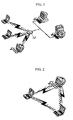
- the infrastructure network contains an access point (AP) as shown in FIG. 1 whereas the ad-hoc network requires no AP for communication as shown in FIG. 2.
- AP access point
- an AP In an infrastructure mode, an AP not only has connectivity to the wired network but also provides communication among wireless network devices within a wireless network. Thus, all data traffic in the infrastructure network is relayed through the AP.
- wireless network devices within a single wireless network can directly communicate with one another without using an AP.
- Such wireless networks can be further classified into two types based on the presence of a coordinator.
- a coordinator-based wireless network a randomly selected wireless device acts as a coordinator that assigns channel time to other wireless devices within the same wireless network for data transmission, and then the other wireless devices are allowed to transmit data only at the assigned time.
- the other type of network allows all network devices to transmit data at any time desired without using a coordinator.
- the coordinator-based wireless network is a single independent coordinator-centered network. When there are multiple coordinator-based wireless networks within a certain area, each network has a unique ID to distinguish itself from others.
- wireless devices can transmit/receive data to/from other network devices during channel time assigned by the coordinator on a coordinator-based network where they belong, they are not allowed to communicate with wireless devices belonging to another coordinator-based network.
- wireless network-1 310, wireless network-2 320, and wireless network-3 330 are built in a first-floor living room, a second-floor schoolroom, and a first-floor bedroom, respectively.
- a user desires to watch movies stored on a media server 315 in the living room using a portable moving picture player 325 in the schoolroom, then the user cannot watch movies since there is no way to communicate between the wireless network-1 310 and the wireless network-2 320. Thus, to see the movies, the user has to go downstairs to the living room.
- This problem may arise due to restriction on range of radio waves, absence of information on another coordinator-based wireless network, and channel time allocation.
- Preferred embodiments of the present invention provide a system and method for enabling data transmission and reception between wireless network devices belonging to different coordinator-based wireless networks by connecting a plurality of different coordinator-based wireless networks via a wired backbone.
- a network device configured to allow a first network communication device belonging to a first wireless network to communicate with a second network communication devices belonging to a second wireless network
- the network device comprising: a controller that creates a wireless packet carrying a predetermined protocol data unit consisting of a data frame region and an information frame region, the protocol data unit including first and second device identification (ID) information identifying the first and second network communication devices, respectively, and first and second network ID information identifying the first and second wireless networks, respectively; and a transmitter that transmits the created wireless packet.
- ID device identification
- the protocol data unit may comprise a medium access control (MAC) protocol data unit for controlling an access between the network communication devices.
- MAC medium access control
- the information frame region preferably includes the first and second device ID information and the first network ID information, and the data frame region comprises the second network ID information.
- the wireless packet is compliant with the IEEE 802.1.5.3 standard.
- the protocol data unit may further include transfer mode information indicating whether the first and second network communication devices belong to the same network.
- the transfer mode information is preferably contained in the information frame region.
- the transfer mode information may include a first transfer mode in which the first and second network communication devices have the same network ID information and a second transfer mode in which the first and second network communication devices have different network ID information.
- a network bridging device configured to allow a first network communication device belonging to a first wireless network to communicate with second network communication devices belonging to a second wireless network connected via a wired network
- the network bridging device comprising: a wireless network interface that receives a wireless packet carrying a predetermined protocol data unit consisting of a data frame region and an information frame region from the first network communication device, the protocol data unit including first and second device identification (ID) information identifying the first and second network communication devices, respectively, and first and second network ID information identifying the first and second wireless networks, respectively; a controller that converts the wireless packet into a wired packet that conforms to a protocol used to operate the wired network; and a wired network interface that transmits the wired packet to the wired network.
- ID device identification
- the protocol data unit may comprise a medium access control (MAC) protocol data unit for controlling access between the network communication devices.
- MAC medium access control
- the information frame region may include the first and second, device ID information and the first network ID information, and the data frame region comprises the second network ID information.
- the wireless packet is preferably compliant with the IEEE 802.15.3 standard.
- the protocol data unit may further include transfer mode information indicating whether the first and second network communication devices belong to the same network.
- the transfer mode information is preferably contained in the information frame region.
- the transfer mode information may include a first transfer mode in which the first and second network communication devices have the same network ID information and a second transfer mode in which the first and second network communication devices have different network ID information.
- the controller may discard the wireless packet received from the wireless network interface when transfer mode information is a first transfer mode.
- the controller converts the wireless packet received from the wireless network interface into the wired packet that conforms to the protocol used to operate the wired network when transfer mode information is a second transfer mode.
- the wired network interface may receive a wired packet from the wired network, the controller may convert the received wired packet into a wireless packet that conforms to a protocol used to operate the first wireless network, and the wireless network interface may transmit the wireless packet to the first network communication device.
- a network communication method comprising: transmitting a wireless packet comprising a predetermined protocol data unit consisting of a data frame region and an information frame region in a wireless device, wherein the protocol data unit comprises first device identification (ID) information identifying a first wireless network communication device that transmits the wireless packet, second device ID information identifying a second wireless network communication device that receives the wireless packet, and first and second network ID information identifying first and second wireless networks where the first and second network communication devices belong, respectively; receiving the wireless packet in a bridging device connected to a wired network; converting the wireless packet into a wired packet that conforms to a protocol used to operate the wired network in the bridging device; and transmitting the wired packet to the wired network.
- ID device identification
- the protocol data unit may comprise a medium access control (MAC) protocol data unit for controlling access between the network communication devices.
- MAC medium access control
- the information frame region may include the first and second device ID information and the first network ID information, and the data frame region comprises the second network ID information.
- the wireless packet is preferably compliant with the IEEE 802.15.3 standard.
- the protocol data unit may further include transfer mode information indicating whether the first and second network communication devices belong to the same network.
- the transfer mode information is preferably contained in the information frame region.
- the transfer mode information may include a first transfer mode in which the first and second network communication devices have the same network ID information and a second transfer mode in which the first and second network communication devices have different network ID information.
- the converting of the wireless packet into the wired packet may comprise causing the bridging device to convert the wireless packet into the wired packet that conforms to the protocol used to operate the wired network.
- These computer program instructions may also be stored in a computer usable or computer-readable memory that can direct a computer or other programmable data processing apparatus to function in a particular manner, such that the instructions stored in the computer usable or computer-readable memory produce an article of manufacture including instruction means that implement the function specified in the flowchart block or blocks.
- the computer program instructions may also be loaded onto a computer or other programmable data processing apparatus to cause a series of operational steps to be performed on the computer or other programmable apparatus to produce a computer implemented process such that the instructions that execute on the computer or other programmable apparatus provide steps for implementing the functions specified in the flowchart block or blocks.
- the Institute of Electrical and Electronics Engineers (IEEE) 802.15.3 standard proposes standards for a PHY layer corresponding to Physical Layer of the seven layers of the Open System Interconnection (OSI) network model developed by the International Organization for Standardization (ISO) for wireless networks, and a Medium Access Control (MAC) layer corresponding to a Data-link Layer.
- OSI Open System Interconnection
- MAC Medium Access Control
- a wireless personal area network compliant with the IEEE 802.15.3, and more particularly, a network system for enabling data communication between wireless network devices belonging to different WPANs by connecting multiple WPANs via a wired backbone at a MAC layer will now be described as an exemplary embodiment of a coordinator-based wireless network.
- a wireless network device and a single network created by one or more devices are hereinafter referred to aa a 'device' and a 'piconet', respectively, as defined in a WPAN.
- FIG. 4 is a diagram of a network system according to an embodiment of the present invention.
- a network system 400 is comprised of multiple piconets 420, 460, and 480, a wired network 440 connected to the piconets 420, 460, and 480, and repeaters 422, 462, and 482 that connect the piconets 420, 460, and 480 with the wired network 440, respectively.
- the piconets 420, 460, and 480 are hereinafter called first, second, and third piconets 420, 460, and 480, respectively.
- a device acting as a coordinator may be selected among devices belonging to each of the first through third piconets 420, 460, and 480, which is hereinafter called a 'Piconet coordinator' or 'PNC'.
- each of the first through third repeaters 422, 462, and 482 may include a router, a wired/wireless bridge, a device, or a PNC depending on the type of a network topology.
- the network system 400 may create an IP subnet such as '192.168.9.x', and each of the first through third piconets 420, 460, and 480 can be identified by its own ID.
- the wired network 440 can conform to any wired network protocol based on a communication medium such as coax cable, optical cable, power line, or phone line.
- the protocol for the wired network 440 may vary depending on a physical environment where the present invention is applied.
- a device-1_1 430 desires to communicate with a device-1_2 435, i.e., a communication is made with the same piconet, it has only to comply with a conventional IEEE 802.15.3 standard.
- the device-1_1 430 wishes to communicate with a device-2_1 465 belonging to the second piconet 460, first, the first repeater 422 receives a wireless packet transmitted by the device-1_1 430 and then generates a wired packet with a structure that is capable of transmitting information contained in the wireless packet. This is because a change in the structure of a communication protocol due to the characteristics of a transmission medium may also cause the structure of a packet to change.
- the wired packet generated by the first repeater 422 is forwarded to the second repeater 462 through the wired network 440.
- the first repeater 422 may broadcast or multicast the wired packet to the second repeater 462 or directly transmit the same only to the second repeater 462.
- the second repeater 462 then converts the wired packet received from the first repeater 422 back into the form of a wireless packet compliant with the IEEE 802.15.3 standard, allocates channel time defined in the same standard, and forwards the wireless packet to the device-2 1 465.
- a response to the packet transmitted by the device-1_1 430 can be performed between the device-1_1 430 and the first repeater 422, the first repeater 422 and the second repeater 462, the second repeater 462 and the device-2_1 465, or between the device-1_1 430 and the device-2_1 465.
- FIG. 5 is a diagram of a data format according to an exemplary embodiment of the present invention.
- the conventional frame format needs to be modified.
- the extent of modifications to the frame format may vary according to the type of the first through third repeaters 422, 462, and 482.
- the present invention proposes a new frame format when the first through third repeaters 422, 462, and 482 are a wired/wireless bridge. All piconets and wired backbone that has or will be described later has a. single IP subnet.
- the wired/wireless bridge may act as a device or PNC within a piconet to which the wired/wireless bridge belongs.
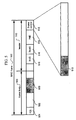
- FIG. 5 illustrates a modified format of a MAC frame defined in the IEEE 802.15.3 according to an exemplary embodiment of the present invention.
- the frame contains newly created 'PNID_b' information field 523 of a frame body 520 and 'Reserved' area 513 of a 'frame control' information field in a header 510.
- a MAC frame 500 mainly consists of a frame body 520 and a header 510 containing various types of information of the MAC frame.
- the frame body 520 contains a payload 522 carrying protocol data unit (PDU) from a layer above a MAC layer in a protocol suite conforming to the IEEE 802.15.3 and a Frame Check Sum (FCS) information field 524 that indicates an error in transmission of a frame.
- PDU protocol data unit
- FCS Frame Check Sum
- the header 510 contains a 'Piconet Identifier' (PNID) information field 514 that specifies an identifier able to identify the appropriate piconet, a 'SrcID' information field 518 to identify a device that transmits the MAC frame, and a 'DestID' information field 516 to identify a destination device that receives the MAC frame.
- PNID 'Piconet Identifier'
- An IEEE 802.15.3-compliant wireless communication scheme allows communication only between devices within the same piconet identified by the 'PNID' information field 514.
- a separate 'PNID' information field 523 is placed in the frame body 520 and 'PNID' information contained in the frame body 520 is denoted by 'PNID_b' to distinguish itself from that contained in the header 510.
- each wired/wireless bridge needs to determine whether the final destination of a packet received on a piconet where it belongs is a device within the same or different piconet.
- the 'PNID' and 'PNID_b' information fields 514 and 523 may be predefined as source and destination piconet IDs, respectively, or vice versa.
- the transfer mode information indicates whether a packet is transmitted to or received from devices belonging to the same or a different piconet.
- the same information may be specified in the 'Reserved' area 513 of the 'frame control' information field 512 contained in the header 510.
- the IEEE 802.15.3 defines the 'frame control' field and allocates 5 bits for the 'Reserved' area 513.
- 2 bits in the 'Reserved" area 513 are used to represent a piconet ID.
- the 'PNID' and 'PNID_b' information fields 514 and 523 may specify the designation and source piconet IDs, respectively.
- the 'SrcID' information field 518 and the 'DestID' information field 516 specify IDs of destination and source devices belonging to piconets identified by the 'PNID' and 'PNID_b' information fields 514 and 523, respectively.
- the 'PNID' and 'PNID_b' information fields 514 and 523 may contain the source and designation piconet IDs, respectively.
- the 'SrcID' information field 518 and the 'DestID' information field 516 may contain IDs of source and destination devices belonging to piconets identified by the 'PNID' and 'PNID_b' information fields 514 and 523, respectively.
- the 'PNID' and 'PNID_b' information fields 514 and 523 may contain the same piconet ID, which means that transmission and reception of a packet is made between devices within the same piconet.
- the wired/wireless bridges 600 use only transfer mode information to determine whether the received wireless packets will be transmitted to other piconets or discarded.
- the 'SrcID' information field 518 and the 'DestID' information field 516 may contain IDs of source and destination devices belonging to piconets identified by the 'PNID' and 'PNID_b' information fields 514 and 523, respectively.
- FIG. 6 is an exemplary diagram illustrating the configurations of a device 670 and a wired/wireless bridge 600 according to an embodiment of the present invention.
- the wired/wireless bridge 600 includes a wireless network interface 605 that transmits and receives a wireless packet via a piconet, a wired network interface 610 that is connected to a wired network 650 and transmits and receives a wired packet, a transfer mode determiner 625 that receives the wireless packet from the wireless network interface 605 and determines a transfer mode based on information carried in the wireless packet, a packet converter 630 that converts the wireless packet into a wired packet in order to transmit the same to another piconet through the wired network 650, a storage 620 that stores ID information about other piconets and information about other wired/wireless bridges, and a controller 615 hat manages a process occurring among the wireless network interface 605, the wired network interface 610, the transfer mode determiner 625, the packet converter 630, and the storage 620.
- the transfer mode determiner 625, the packet converter 630, and the controller 615 may be implemented with a single integrated circuit chip.
- the device 670 includes a device controller 672 that creates a wireless packet carrying a MAC protocol data unit consisting of a data frame region and an information frame region, and a transceiver 674 that transmits the created wireless packet.
- reception of a wireless packet from a piconet by the wired/wireless bridge 600 and reception of a wired packet through the wired network 650 will now be described.
- the transfer mode information contains the same as that described with reference to FIG. 5.
- a process for allocating channel time conforms to the IEEE 802.15.3 standard, and it is assumed that channel time has been allocated before the wired/wireless bridge 600 receives the wireless packet from the piconet.
- the entire network system has the same architecture as shown in FIG. 4.
- the device controller 672 of the device 670 sets the value of the 'Reserved' area 513 of the 'frame control' information field 512 contained in the header 510 of the MAC frame 500 to '11' and defines an ID of the first piconet 420 where the device 670 and the device-1_2 435 belong in the 'PNID_b' and 'PNID' information fields 523 and 514, respectively.
- the device controller 672 also specifies IDs identifying the device-1_2 435 and the device 670 in the 'DestID' information field 516 and the 'SrcID' information field 518, respectively.
- the transceiver 674 of the device 670 then broadcasts the wireless packet carrying the MAC frame 500 defined as above, which is then transmitted to the wireless network interface 605 of the wired/wireless bridge 600.
- the transfer mode determiner 625 extracts the transfer mode information from the wireless packet and then discards the wireless packet since the transfer mode information is represented by '11'. Since the wired/wireless bridge 600 is used for communication with a different piconet, a method for communication within the same piconet 420 preferably complies with the IEEE 802.15.3 standard.
- the device-1_1 430 desires to communicate with the device-2_1 465 belonging to the second piconet 460, it is assumed that the device-1_1 430 and the first repeater 422 are the device 670 and the wired/wireless bridge 600 shown in FIG. 6, respectively.
- the device controller 672 of the device 670 sets the value of the 'Reserved' area 513 of the 'frame control' information field 512 to '01' and defines an ID of the first piconet 420 where the device 670 belongs and an ID of the second piconet 460 where the device-2_1 465 belongs in the 'PNID_b' and 'PNID' information fields 523 and 514, respectively.
- the device controller 672 also specifies IDs identifying the device-2_1 465 and the device 670 in the 'DestID' information field 516 and the 'SrcID' information field 518, respectively.
- the transceiver 674 of the device 670 then broadcasts the wireless packet carrying the MAC frame 500 set as above, which is then transmitted to the wireless network interface 605 of the wired/wireless bridge 600.
- the transfer mode determiner 625 extracts the transfer mode information from the wireless packet and then transmits the wireless packet to the packet converter 630 since the transfer mode information is represented by '01'.
- the packet converter 630 then converts the wireless packet to a wired packet that conforms to a protocol used to operate the wired network 650.
- the wired packet contains information on the header 510 and the payload 522 and is transmitted to the wired network interface 610 that in turn transmits the same to wired network 650.
- the wired packet may be multicasted or broadcasted or directly transmitted to a wired/wireless bridge in the second piconet 460.
- the device-1_1 430 and the first repeater 422 are the device 670 and the wired/wireless bridge 600 shown in FIG. 6, respectively.
- the wired network interface 610 of the wired/wireless bridge 600 receives a wired packet from the wired network 650 and transmits the same to the packet converter 630.
- the packet converter 630 extracts the transfer mode information from the wired packet, and when the extracted transfer mode information is represented by '01', extracts 'PNID' information from the wired packet in order to check whether it is the same as ID information about a piconet where the wired/wireless bridge 600 belongs. If the two IDs are not identical, the packet converter 630 converts the wired packet into a wireless packet that is then transmitted to the wireless network interface 605.
- the wireless network interface 605 transmits the wireless packet to the target device 670. In this case, channel time must be allocated for data transmission.
- the IEEE 802,15,3 standard dictates that only a transmitting device be allowed to request allocation of channel time, when transmitting and receiving devices belong to different piconets, a mechanism for allocating channel time for data reception is needed.
- the structure of a 'MLME-CREATE-STREAM.request' message can be modified to perform this mechanism. The message is invoked upon receipt of a request for channel time allocation that has been made according to the IEEE 802.15.3 standard.
- a conventional 'MLME-CREATE-STREAM.request' message contains only a 'TrgtID' parameter representing a receiving device in addition to information for channel time allocation, only a transmitting device is allowed to request channel time allocation.
- the receiving device is then permitted to request the same.
- the receiving device receives various types of information on the channel time allocation in advance from a middleware or application operating at a layer above a MAC layer.
- the IEEE 802.15-compliant channel time request command is comprised of multiple channel time request blocks, and each block has 'CTRq control' information field with a 1-bit 'Reserved' area.
- the 1-bit 'Reserved' area may contain bit information indicating whether a device that requests channel time allocation is a transmitting or receiving device.
- the receiving device is allowed to request channel time allocation.
- each wired/wireless bridge 600 Since each piconet connected to the wired network 650 is in a position to independently generate its own PNID information, the PNID information may be duplicated. Thus, to prevent the creation of this duplicate information, each wired/wireless bridge 600 periodically broadcast a packet carrying ID information on piconet where it belongs and device information and receives the broadcasted packet in order to store the same information on the storage 620 in the form of tables or update the same. If the duplicate PNID exists, the appropriate PNID value may be modified using a predetermined method.
- Each wired/wireless bridge 600 may keep its own piconet periodically informed of information residing in the storage 620 so that the appropriate device becomes aware of ID information about other piconets and information about other devices.
- each wired/wireless bridge 600 may receive a packet that is periodically transmitted by a piconet where it belongs. If its PNID is modified, the modified PNID information is carried in the packet. Thus, in this case, the wired/wireless bridge 600 extracts the modified PNID information and stores the same on the storage 620.
- FIG. 7 is a schematic flowchart illustrating the operation of a repeater according to an embodiment of the present invention.
- step S700 the repeaters 422, 462, and 482 periodically check whether a wired or wireless packet has been received.
- the check may be performed by a processor that operates when the repeaters 422, 462, and 482 begin their operation.
- the processor creates a child-processor that processes the received packet based on information contained in the packet in step S750.
- the child processor informs the parent processor that it finishes processing of the received packet and terminates. That is, from the standpoint of software, a module for checking reception of a packet operates separately from a module for processing the received packet.
- FIG. 8 is a detailed flowchart illustrating the operation of a repeater according to an embodiment of the present invention.
- step S805 or S830 the controller 615 shown in FIG. 6 periodically checks whether a packet has been received by the wired network interface 610 or the wireless network interface 605.
- FIG. 8 has illustrated that reception of a wireless packet is checked after reception of a wired packet has been checked for easier explanation, the order of the process may be reversed.
- step S810 once the wired packet has been received, the packet converter 630 or the controller 615 checks the type of the received packet. When the packet is periodically received and contains PNID information broadcasted by each repeater 422, 462, or 482, the controller 615 updates a PNID information table stored for each piconet on the storage 620 using the PNID information in step S815. Then, in step S830, the controller 615 checks whether the wireless packet has been received.
- the packet converter 630 converts the wired packet into a wireless packet in step S820, and the wireless network interface 605 transmits the wireless packet to a destination device during preallocated channel time in step S825. Then, in step S830, the controller 615 checks whether the wireless packet has been received.
- step S835 once the wireless packet has been received, the transfer mode determiner 625 or the controller 615 checks the type of the wireless packet.
- the controller 615 updates a PNID information table stored on the storage 620 using the PNID information in step S840. Then, in step S805, the controller 615 checks whether a wired packet has been received.
- step S833 when the packet received in the step S833 is a non-periodically received packet, it is checked whether a device has transmitted the packet that is intended for transmission to another device within the same piconet using the transfer mode information in step S845. When the packet is intended for transmission to another device within the same piconet, the packet is discarded in step S860.
- a method for communication within the same piconet preferably complies with the IEEE 802.15.3 standard.
- the packet converter 630 converts the wireless packet into a wired packet in step S850, and the wired network interface 610 transmits the wired packet to a repeater within a destination piconet in step S855. Then, in step S805, the controller 615 checks whether a wired packet has been received.
- the present invention allows communication between wireless devices belonging to different wireless networks using a wired backbone.
Landscapes
- Engineering & Computer Science (AREA)
- Computer Networks & Wireless Communication (AREA)
- Signal Processing (AREA)
- Databases & Information Systems (AREA)
- Mobile Radio Communication Systems (AREA)
- Small-Scale Networks (AREA)
- Communication Control (AREA)
Applications Claiming Priority (2)
| Application Number | Priority Date | Filing Date | Title |
|---|---|---|---|
| KR20040025415A KR100654432B1 (ko) | 2004-04-13 | 2004-04-13 | 조정자 기반의 무선 네트워크 장치 및 방법 |
| KR2004025415 | 2004-04-13 |
Publications (1)
| Publication Number | Publication Date |
|---|---|
| EP1596545A2 true EP1596545A2 (de) | 2005-11-16 |
Family
ID=34940786
Family Applications (1)
| Application Number | Title | Priority Date | Filing Date |
|---|---|---|---|
| EP20050252278 Withdrawn EP1596545A2 (de) | 2004-04-13 | 2005-04-12 | Verbindung von WPAN Piconetzen |
Country Status (5)
| Country | Link |
|---|---|
| US (1) | US20050226206A1 (de) |
| EP (1) | EP1596545A2 (de) |
| JP (1) | JP2005304042A (de) |
| KR (1) | KR100654432B1 (de) |
| CN (1) | CN1684442A (de) |
Families Citing this family (19)
| Publication number | Priority date | Publication date | Assignee | Title |
|---|---|---|---|---|
| US6842459B1 (en) | 2000-04-19 | 2005-01-11 | Serconet Ltd. | Network combining wired and non-wired segments |
| IL159838A0 (en) | 2004-01-13 | 2004-06-20 | Yehuda Binder | Information device |
| IL161869A (en) | 2004-05-06 | 2014-05-28 | Serconet Ltd | A system and method for carrying a signal originating is wired using wires |
| SE0402794D0 (sv) * | 2004-11-15 | 2004-11-15 | Karl-Axel Aahl | W wc |
| US8184062B2 (en) * | 2005-03-09 | 2012-05-22 | Xirrus, Inc. | Wireless local area network antenna array |
| US20070058671A1 (en) * | 2005-09-13 | 2007-03-15 | Hart Thomas B | Method and apparatus for packetization of data frames |
| US7813451B2 (en) | 2006-01-11 | 2010-10-12 | Mobileaccess Networks Ltd. | Apparatus and method for frequency shifting of a wireless signal and systems using frequency shifting |
| KR100881462B1 (ko) * | 2006-06-07 | 2009-02-06 | 삼성전자주식회사 | 백본네트워크의 서브네트워크 간 릴레이 전송이 가능한네트워크 토폴로지 구축방법 |
| JP2009033490A (ja) * | 2007-07-27 | 2009-02-12 | Rohm Co Ltd | 情報通信端末、無線通信装置および無線通信ネットワーク |
| WO2009053910A2 (en) | 2007-10-22 | 2009-04-30 | Mobileaccess Networks Ltd. | Communication system using low bandwidth wires |
| US8175649B2 (en) | 2008-06-20 | 2012-05-08 | Corning Mobileaccess Ltd | Method and system for real time control of an active antenna over a distributed antenna system |
| WO2010089719A1 (en) | 2009-02-08 | 2010-08-12 | Mobileaccess Networks Ltd. | Communication system using cables carrying ethernet signals |
| SG193432A1 (en) * | 2011-03-21 | 2013-10-30 | Univ Nanyang Tech | An apparatus, a method and a computer program for interconnecting multiple computer networks |
| WO2013142662A2 (en) | 2012-03-23 | 2013-09-26 | Corning Mobile Access Ltd. | Radio-frequency integrated circuit (rfic) chip(s) for providing distributed antenna system functionalities, and related components, systems, and methods |
| KR101454879B1 (ko) * | 2014-05-22 | 2014-11-04 | (주) 위즈네트 | 복수의 통신 인터페이스를 구비한 통신 장치 및 복수의 통신 인터페이스에서의 데이터 처리 방법 |
| CN105450613B (zh) * | 2014-09-01 | 2019-03-12 | 展讯通信(上海)有限公司 | 一种数据识别系统及方法 |
| US9184960B1 (en) | 2014-09-25 | 2015-11-10 | Corning Optical Communications Wireless Ltd | Frequency shifting a communications signal(s) in a multi-frequency distributed antenna system (DAS) to avoid or reduce frequency interference |
| EP3288219A1 (de) * | 2016-08-22 | 2018-02-28 | NTT DoCoMo, Inc. | Funkzugangsnetzwerkknotenanordnung, funkkommunikationsvorrichtung und verfahren zur verarbeitung mehrerer dateneinheiten |
| DE102016218758B4 (de) * | 2016-09-28 | 2020-02-13 | Fraunhofer-Gesellschaft zur Förderung der angewandten Forschung e.V. | Vorrichtung und verfahren zur durchgängigen und medienübergreifenden übertragung von kommunikationsprotokollen ohne protokollumsetzung |
Family Cites Families (4)
| Publication number | Priority date | Publication date | Assignee | Title |
|---|---|---|---|---|
| JP3097581B2 (ja) * | 1996-12-27 | 2000-10-10 | 日本電気株式会社 | アドホックローカルエリアネットワークの構成方法、通信方法及び端末 |
| JP3141820B2 (ja) * | 1997-07-18 | 2001-03-07 | 日本電気株式会社 | アドホックローカルエリアネットワーク |
| US6775258B1 (en) * | 2000-03-17 | 2004-08-10 | Nokia Corporation | Apparatus, and associated method, for routing packet data in an ad hoc, wireless communication system |
| EP1514379A2 (de) * | 2002-05-31 | 2005-03-16 | Koninklijke Philips Electronics N.V. | Nachrichtenleitweglenkung in einem funknetz |
-
2004
- 2004-04-13 KR KR20040025415A patent/KR100654432B1/ko not_active Expired - Fee Related
-
2005
- 2005-04-12 EP EP20050252278 patent/EP1596545A2/de not_active Withdrawn
- 2005-04-12 US US11/103,501 patent/US20050226206A1/en not_active Abandoned
- 2005-04-12 JP JP2005115160A patent/JP2005304042A/ja not_active Withdrawn
- 2005-04-13 CN CNA2005100641872A patent/CN1684442A/zh active Pending
Also Published As
| Publication number | Publication date |
|---|---|
| JP2005304042A (ja) | 2005-10-27 |
| KR20050100211A (ko) | 2005-10-18 |
| CN1684442A (zh) | 2005-10-19 |
| US20050226206A1 (en) | 2005-10-13 |
| KR100654432B1 (ko) | 2006-12-06 |
Similar Documents
| Publication | Publication Date | Title |
|---|---|---|
| US7376137B2 (en) | Method and system for communication between coordinator-based wireless networks | |
| KR100621587B1 (ko) | 백본 네트워크로 연결된 조정자 기반 무선망과 이종의네트워크간의 통신방법 및 장치 | |
| EP1596545A2 (de) | Verbindung von WPAN Piconetzen | |
| KR100678932B1 (ko) | 백본 네트워크로 연결된 조정자 기반 무선망간의 통신방법및 장치 | |
| EP1601144B1 (de) | Verfahren für die Kommunikation zwischen koordinatorbasierten Funknetzen | |
| US7417998B2 (en) | Wireless network device and communication method using the wireless network device | |
| KR100678931B1 (ko) | 백본 네트워크로 연결된 조정자 기반 무선망간의 통신방법및 장치 | |
| US7450597B2 (en) | Wireless network device and method for reassociation between wireless networks using the wireless network device | |
| KR100664918B1 (ko) | 조정자 기반 무선 네트워크에 있어서, 채널 시간 할당을 요청하는 장치 및 할당된 채널 시간 동안 데이터를 수신하는 방법 | |
| JP4195456B2 (ja) | 調整子基盤無線ネットワークにおけるチャンネル時間割り当てを要請する装置及び割り当てられたチャンネル時間の間にデータを受信する方法 | |
| JP2005312037A (ja) | 調整子基盤無線網において、データを中継するためのシステム及びデータ中継方法 | |
| CA2563970A1 (en) | Method for transceiving data in coordinator-based wireless network and wireless network device employing the same | |
| KR20050100770A (ko) | 조정자 기반 무선 네트워크에 있어서, 채널 시간 할당을요청하는 장치 및 방법 |
Legal Events
| Date | Code | Title | Description |
|---|---|---|---|
| PUAI | Public reference made under article 153(3) epc to a published international application that has entered the european phase |
Free format text: ORIGINAL CODE: 0009012 |
|
| 17P | Request for examination filed |
Effective date: 20050429 |
|
| AK | Designated contracting states |
Kind code of ref document: A2 Designated state(s): AT BE BG CH CY CZ DE DK EE ES FI FR GB GR HU IE IS IT LI LT LU MC NL PL PT RO SE SI SK TR |
|
| AX | Request for extension of the european patent |
Extension state: AL BA HR LV MK YU |
|
| STAA | Information on the status of an ep patent application or granted ep patent |
Free format text: STATUS: THE APPLICATION HAS BEEN WITHDRAWN |
|
| 18W | Application withdrawn |
Effective date: 20070712 |