EP1588709A1 - Vitamin mit pyrolochinolinchinon und seine verwendung - Google Patents
Vitamin mit pyrolochinolinchinon und seine verwendung Download PDFInfo
- Publication number
- EP1588709A1 EP1588709A1 EP04706352A EP04706352A EP1588709A1 EP 1588709 A1 EP1588709 A1 EP 1588709A1 EP 04706352 A EP04706352 A EP 04706352A EP 04706352 A EP04706352 A EP 04706352A EP 1588709 A1 EP1588709 A1 EP 1588709A1
- Authority
- EP
- European Patent Office
- Prior art keywords
- pqq
- lysine
- aminoadipate
- coenzyme
- pyrroloquinoline quinone
- Prior art date
- Legal status (The legal status is an assumption and is not a legal conclusion. Google has not performed a legal analysis and makes no representation as to the accuracy of the status listed.)
- Withdrawn
Links
Images




Classifications
-
- C—CHEMISTRY; METALLURGY
- C07—ORGANIC CHEMISTRY
- C07D—HETEROCYCLIC COMPOUNDS
- C07D471/00—Heterocyclic compounds containing nitrogen atoms as the only ring hetero atoms in the condensed system, at least one ring being a six-membered ring with one nitrogen atom, not provided for by groups C07D451/00 - C07D463/00
- C07D471/02—Heterocyclic compounds containing nitrogen atoms as the only ring hetero atoms in the condensed system, at least one ring being a six-membered ring with one nitrogen atom, not provided for by groups C07D451/00 - C07D463/00 in which the condensed system contains two hetero rings
- C07D471/04—Ortho-condensed systems
-
- A—HUMAN NECESSITIES
- A61—MEDICAL OR VETERINARY SCIENCE; HYGIENE
- A61K—PREPARATIONS FOR MEDICAL, DENTAL OR TOILETRY PURPOSES
- A61K31/00—Medicinal preparations containing organic active ingredients
- A61K31/33—Heterocyclic compounds
- A61K31/395—Heterocyclic compounds having nitrogen as a ring hetero atom, e.g. guanethidine or rifamycins
- A61K31/435—Heterocyclic compounds having nitrogen as a ring hetero atom, e.g. guanethidine or rifamycins having six-membered rings with one nitrogen as the only ring hetero atom
- A61K31/47—Quinolines; Isoquinolines
- A61K31/4738—Quinolines; Isoquinolines ortho- or peri-condensed with heterocyclic ring systems
- A61K31/4745—Quinolines; Isoquinolines ortho- or peri-condensed with heterocyclic ring systems condensed with ring systems having nitrogen as a ring hetero atom, e.g. phenantrolines
-
- A—HUMAN NECESSITIES
- A61—MEDICAL OR VETERINARY SCIENCE; HYGIENE
- A61P—SPECIFIC THERAPEUTIC ACTIVITY OF CHEMICAL COMPOUNDS OR MEDICINAL PREPARATIONS
- A61P3/00—Drugs for disorders of the metabolism
- A61P3/02—Nutrients, e.g. vitamins, minerals
-
- A—HUMAN NECESSITIES
- A61—MEDICAL OR VETERINARY SCIENCE; HYGIENE
- A61P—SPECIFIC THERAPEUTIC ACTIVITY OF CHEMICAL COMPOUNDS OR MEDICINAL PREPARATIONS
- A61P43/00—Drugs for specific purposes, not provided for in groups A61P1/00-A61P41/00
Definitions
- the present invention relates to pyrroloquinoline quinone acting as a coenzyme for 2-aminoadipate 6-semialdehyde dehydrogenase and a use thereof.
- nicotinamide compounds NAD and NADP
- flavin compounds FAD and FMN
- PQQ pyrroloquinoline quinone
- PQQ functions as a coenzyme for dehydrogenases of various prokaryotes such as Escherichi ⁇ coli.
- PQQ is contained not only in prokaryotes but also in plants (vegetables) and animals (meats).
- PQQ-deficient mice have fragility in the skin, osteolathyrism-like skeletal abnormality, and a decrease in immune response.
- the present invention provides a method of using pyrroloquinoline quinone as a coenzyme for 2-aminoadipate 6-semialdehyde dehydrogenase.
- the present invention provides a method for converting 2-aminoadipate 6-semialdehyde into 2-aminoadipic acid, which comprises allowing 2-aminoadipate 6-semialdehyde dehydrogenase to act on 2-aminoadipate 6-semialdehyde in the presence of pyrroloquinoline quinone.
- the present invention provides a vitamin preparation which comprises pyrroloquinoline quinone as a coenzyme for 2-aminoadipate 6-semialdehyde dehydrogenase.
- Figure 1 shows a lysine metabolic pathway in a mammal and yeast.
- lysine degradative pathway Two pathways, that are, a saccharopine route (upper) and a pipecolate route (lower), exist in a lysine degradative pathway (filled arrows) in the mammal.
- the lysine degradative pathway in the yeast is indicated with open arrows. Double-headed arrows represent autonomic reactions.
- 2-aminoadipate 6-semialdehyde (AAS) and ⁇ 1 -piperideine-6-carboxylate (P6C) are in an equilibrium state in living bodies.
- LYS2 is post-translationally 4'-phosphopantetheinylated catalyzed by LYS5.
- AASS represents AAS synthetase
- AASDH represents AAS dehydrogenase
- mLYS5 represents a mammalian homologue of yeast LYS5.
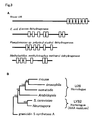
- FIG. 2 shows the structure of mouse U26.
- An adenylation domain (Pfam00501), a thiolation domain (Pfam00550), and a PQQ-binding motif (Pfam01011) are indicated with pink, green, and light blue, respectively.
- Figure 3 shows a comparison between the mouse U26 protein and other types of related proteins.
- Figure 4 shows a tissue distribution of the expression of mU26 mRNA.
- a blot was purchased from Clontech, and 32 P-labeled mU26 cDNA was used as a probe. 2 ⁇ g of poly(A) + RNA was electrophoresed in each lane.
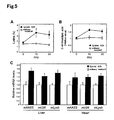
- Figure 5 shows the effects of high lysine feedstuff on the mRNA level of a lysine metabolic enzyme.
- Figure 6 shows the level of lysine in blood and the level of 2-aminoadipic acid in blood in PQQ-deficient mice.
- AAS dehydrogenase AAS dehydrogenase
- AASDH 2-aminoadipate 6-semialdehyde
- AAA 2-aminoadipic acid
- PQQ has not generally been considered as vitamin.
- the present inventors have demonstrated that the AAA concentration in blood is significantly low in PQQ-deficient mice. This fact shows that PQQ is essential for the activity of AASDH, and thus, the biochemical role of PQQ (namely, an oxidization-reduction coenzyme essential for lysine metabolism), which had remained unknown to date, has been clarified. From these results, it can be said that PQQ is ready for being considered as a novel vitamin.
- 2-aminoadipate 6-semialdehyde dehydrogenase has been identified for the first time as an enzyme that utilizes pyrroloquinoline quinone as a coenzyme.
- the present invention includes all methods of using pyrroloquinoline quinone as a coenzyme for 2-aminoadipate 6-semialdehyde dehydrogenase.
- a specific example of the aforementioned methods of using pyrroloquinoline quinone may be a method for converting 2-aminoadipate 6-semialdehyde into 2-aminoadipic acid, which comprises allowing 2-aminoadipate 6-semialdehyde dehydrogenase to act on 2-aminoadipate 6-semialdehyde in the presence of pyrroloquinoline quinone.
- Such a reaction includes both the case of performing the reaction in vivo, and the case of performing the reaction in vitro (that is, including both the case of performing the reaction in cells, and the case of performing it in a test tube).
- 2-aminoadipate 6-semialdehyde is a known substance. This substance is described, for example, in Aspen A.J. et al., The preparation and some properties of ⁇ -aminoadipic- ⁇ -semialdehyde ( ⁇ 1 -piperideine-6-carboxylic acid), Biochemistry 1, 600-605 (1962); Sacksteder K. A. et al., Identification of the ⁇ -aminoadipic semialdehyde synthase gene, which is defective in familial hyperlysinemia, Am. J. Hum. Genet. 66, 1736-1743 (2000); etc.
- pyrroloquinoline quinone is also a known substance, and is available from Sigma-Aldrich Japan K. K., Wako Pure Chemical Industries, Ltd., or other companies.
- nucleotide sequence of 2-aminoadipate 6-semialdehyde dehydrogenase and the amino acid sequence thereof have been registered in public database. These sequences are shown in SEQ ID NOS: 1 and 2 in the sequence listing of the present specification, respectively.
- 2-aminioadipate 6-semialdehyde dehydrogenase When the isolated and purified 2-aminioadipate 6-semialdehyde dehydrogenase is required, that is, when the aforementioned conversion reaction of the present invention is carried out in a test tube for example, a gene encoding the above enzyme is cloned, the cloned gene is incorporated into an expression vector, and the vector is then introduced into a host, so as to transform it. Thereafter, the obtained transformant is cultured, and 2-aminoadipate 6-semialdehyde dehydrogenase is recovered, isolated and purified from the obtained culture according to common methods.
- a recombinant protein according to the aforementioned gene recombination technique can be carried out by methods that have been known to persons skilled in the art.
- a conversion reaction of the present invention when carried out in living bodies or in cells, such a conversion reaction may be carried out using 2-aminoadipate 6-semialdehyde dehydrogenase that has originally existed in such living bodies or cells.
- the present invention provides a vitamin preparation which comprises pyrroloquinoline quinone as a coenzyme for 2-aminoadipate 6-semialdehyde dehydrogenase.
- vitamin means a group of substances essential for normal metabolism, growth and development, or the control of cell functions, which function together with enzymes, coenzymes, or other substances.
- vitamin is a trace amount of nutrient, and the amount required thereof cannot be fully synthesized in vivo. Thus, it must be taken from food or the like.
- the dosage form of the vitamin preparation of the present invention is not particularly limited.
- An appropriate dosage form can be selected from dosage forms for oral administration or parenteral administration.
- Examples of a dosage form suitable for oral administration may include a tablet, a capsule, a powder, a granule, a parvule, a syrup, a solution, an emulsion, a suspension, and a chewable tablet.
- Examples of a dosage form suitable for parenteral administration may include an injection (for example, a subcutaneous injection, an intramuscular injection, an intravenous injection, etc.), a drop, and a medicine for external use (for example, percutaneous absorption agents such as an ointment, an adhesive preparation, or tapes).
- Preferred dosage forms may include those suitable for drop administration (central venous hyperalimentation), percutaneous administration, and oral administration.
- Liquid preparations suitable for oral administration such as a solution, an emulsion, or a syrup, can be produced using water, sugars such as sucrose, sorbit or fructose, glycols such as polyethylene glycol or propylene glycol, oils such as sesame oil, olive oil or soybean oil, antiseptics such as p-hydroxybenzoic acid esters, or flavors such as strawberry flavor or peppermint flavor.
- sugars such as sucrose, sorbit or fructose
- glycols such as polyethylene glycol or propylene glycol
- oils such as sesame oil, olive oil or soybean oil
- antiseptics such as p-hydroxybenzoic acid esters
- flavors such as strawberry flavor or peppermint flavor.
- solid preparations such as a capsule, a tablet, a powder, or a granule can be produced by using excipients such as lactose, glucose, sucrose, or mannite, disintegrators such as starch or sodium alginate, lubricants such as magnesium stearate or talc, binders such as polyvinyl alcohol, hydroxypropylcellulose, or gelatin, surfactants such as fatty acid ester, plasticizers such as glycerin, and so on.
- excipients such as lactose, glucose, sucrose, or mannite
- disintegrators such as starch or sodium alginate
- lubricants such as magnesium stearate or talc
- binders such as polyvinyl alcohol, hydroxypropylcellulose, or gelatin
- surfactants such as fatty acid ester
- plasticizers such as glycerin, and so on.
- drops or preparations for external use which are suitable for parenteral administration, preferably comprise, as an active ingredient, PQQ that is dissolved or suspended in a sterilized water-type medium.
- a solution can be prepared by using an aqueous medium that is a saline solution, a glucose solution, or a mixture consisting of a saline solution and a glucose solution.
- One or more supplementary components selected from the group consisting of glycols, oils, flavors, antiseptics, excipients, disintegrators, lubricants, binders, surfactants, and plasticizers may be added to preparations used for parenteral administration.
- vitamin preparation of the present invention known vitamins that are used for various types of pharmaceuticals, quasi drugs, or food products may also be added to the vitamin preparation of the present invention.
- the following components may be added to the vitamin preparation of the present invention: retinol acetate, retinol palmitate, vitamin A oil, cod liver oil, extra-strong cod liver oil, ergocalciferol, cholecalciferol, d- ⁇ -tocopherol acetate, dl- ⁇ -tocopherol acetate, d- ⁇ -tocopherol, dl- ⁇ -tocopherol, flavin adenin dinucleotide sodium, riboflavin, riboflavin sodium phosphate, riboflavin tetrabutyrate, pyridoxine hydrochloride, pyridoxal phosphate, hydroxocobalamin hydrochloride, hydroxocobalamin acetate, cyanocobalamin, hydroxocobalamin, nicotinic acid
- the ratio of pyrroloquinoline quinone (PQQ) contained in the vitamin preparation of the present invention is not particularly limited. It is generally approximately between 0.0001% and 10% by weight, and preferably approximately between 0.0002% and 0.5% by weight.
- the amount of pyrroloquinoline quinone (PQQ) contained in a single vitamin preparation is within a range generally approximately between 0.001 and 10 mg, and preferably approximately between 0.002 and 5 mg.
- the dosage of the vitamin preparation of the present invention and the number of administrations thereof can appropriately be determined depending on various factors such as the age, body weight, and symptoms of a patient.
- the dosage of pyrroloquinoline quinone (PQQ) as an active ingredient is generally approximately between 5 and 1,000 ⁇ g/kg of body weight, and preferably approximately between 15 and 500 ⁇ g/kg of body weight, per day.
- the vitamin preparation of the present invention can be administered to humans and other types of any given animals (for example, mammals, birds, etc.).
- Pyrroloquinoline quinone (PQQ) used in the present invention is not only singly used as a vitamin preparation, but also it can be mixed into drinkable preparations such as nutritional drinks, or into health food as a food additive.
- Specific examples of a product comprising pyrroloquinoline quinone (PQQ) may include health foods and supplementary foods including beverages, which are generally called soft drink, drinkable preparation, health food, specified health food, functional food, function activating food, nutritional supplementary food, supplement, feed, feed additive, etc.
- foods and beverages may include all types of foods and beverages including: confectioneries such as chewing gum, chocolate, candy, confection, jelly, cookie, biscuit, or yogurt; frozen desserts such as ice cream or ice lolly; beverages such as tea, soft drink (including juice, coffee, cocoa, etc.), nutritional drink, or drink used in beauty treatment; bread; ham; soup; jam; spaghetti; and frozen foods.
- confectioneries such as chewing gum, chocolate, candy, confection, jelly, cookie, biscuit, or yogurt
- frozen desserts such as ice cream or ice lolly
- beverages such as tea, soft drink (including juice, coffee, cocoa, etc.), nutritional drink, or drink used in beauty treatment; bread; ham; soup; jam; spaghetti; and frozen foods.
- pyrroloquinoline quinone PQQ
- PQ can also be added to condiments or food additives.
- PQQ can be used for skin care products and hair care products such as cosmetics, shampoos, or hair growth agents. Still further, it can also be used for products for maintaining oral hygiene
- pyrroloquinoline quinone as a coenzyme for 2-aminoadipate 6-semialdehyde dehydrogenase are exhibited, and various symptoms caused by the absence of PQQ can be thereby prevented, alleviated, or treated.
- symptoms caused by the absence of PQQ may include fragility in the skin, osteolathyrism-like skeletal abnormality, and a decrease in immune response.
- LYS2 that is 2-aminoadipic acid (AAA) reductase of yeast (S. cerevisiae) has an adenylation (A) domain and a thiolation (T) domain.
- A adenylation
- T thiolation
- NRPS non-ribosome peptide synthetase
- PQQ is a molecule, which is used as a coenzyme that causes oxidization (receiving electrons) for dehydrogenase of bacteria (Goodwin, P.M. et al. (1998) Adv. Microb. Physiol. 40, 1-80). From the fact that U26 has A/T domains and PQQ-binding motifs, it was assumed that U26 is aminoadipate 6-semialdehyde dehydrogenase (AASDH) of Drosophila melanogaster. However, since there was only a little information regarding lysine metabolism in insects, mammalian homologues of Drosophila melanogaster U26 (dU26) were studied.
- AASDH aminoadipate 6-semialdehyde dehydrogenase
- the cDNA of mouse U26 encodes a protein of 1,100 amino acid residues.
- mU26 also has a single A domain and a single T domain on the N-terminal side thereof, and has consecutive PQQ-binding sequences on the C-terminal side thereof ( Figure 2).
- Figure 2A the A/T domains of mU26, dU26, and yeast LYS2 were aligned and compared.
- Example 2 AAS-AAA oxidoreductase family is present in phylogenetic analysis
- U26 homologues of mouse, Drosophila melanogaster, Caenorhabditis elegans, and Arabidopsis thaliana were classified into a single cluster.
- AAA reductase formed another cluster. This pattern of dendrogram of being divided into branches corresponds to the pattern of phylogeny of eukaryotes. This shows that the U26 homologue and the AAA reductase have a common ancestral gene. This analysis suggested that a group of these proteins including the U26 homologue forms a novel enzyme family that catalyzes an oxidization-reduction reaction AAS ⁇ AAA.
- Example 3 mU26 is transcribed in many tissues of mouse
- AAS synthetase that converts lysine into AAS is transcribed in many organ tissues (Papes, F. et al. (1999) Biochem. J. 344, 555-563; and Sacksteder, K. A. et al. (2000) Am. J. Hum. Genet. 66, 1736-1743; refer to Figure 1). It was examined whether or not the gene expression of mU26 also exhibits a wide tissue distribution. Northern blotting analysis was carried out using poly(A) + RNA extracted from various tissues (wherein a block sheet was purchased from Clontech). As a result, it was found that the mU26 gene was expressed in all the examined tissues ( Figure 4).
- the cDNA probe of mU26 labeled with the radioisotope 32 P was hybridized with 3 types of transcribed products with different lengths in all the tissues. Since mRNA comprising a large deletion in the translation region thereof had not been detected in the RT-PCR experiment (data is not shown), it was considered that these 3 types of transcribed products are splice variants in the 3'-non-translation region.
- the overall expression pattern of mU26 was similar to that of AASS, and their mRNA was expressed at a high level in the heart, liver, and kidney.
- Example 4 Expression of mU26 is enhanced by inception of high lysine feedstuff
- mice Whether or not mU26 is associated with lysine metabolism in mammals was examined using mice. Whether or not mU26 mRNA is increased by inception of feedstuff containing a large amount of lysine was analyzed. Feedstuff containing free lysine at an amount 2,000 times larger than that contained in ordinary feedstuff (obtained by adding 40 mg of L-lysine-hydrochloride to 1 g of ordinary feedstuff) was given to mice. Ten days after inception of such high lysine feedstuff, the amounts of lysine and AAA in blood were significantly increased, and such high level was maintained even on the 20 th day ( Figures 5A, B). The amounts of lysine and AAA in blood were measured as follows.
- the peripheral blood (15 ⁇ l) was collected from the tail of a mouse, and trichloroacetic acid (final concentration: 4%) was added thereto.
- the mixture was centrifuged (18,000 x g), and the obtained supernatant was subjected to an amino acid analyzer (L-8500A; Hitachi), so as to quantify ordinary amino acids including lysine.
- an amino acid analyzer L-8500A; Hitachi
- the supernatant obtained after centrifugation was hydrolyzed in the presence of 5 M hydrochloric acid (110°C, 2 hours), and it was then exsiccated.
- the resultant was dissolved in diluted hydrochloric acid, and it was then subjected to an amino acid analyzer again.
- Saccharopine and AAS contained in the blood were not detected with the amino acid analyzer using a ninhydrin reaction, probably because the amounts were extremely small.
- AAS has extremely high reactivity (unstable) under conditions in living bodies (Basso, L.V. et al. (1962) J. Biol. Chem. 237, 2239-2245), it is considered that detection of AAS in blood would be most difficult.
- the mRNA level of mU26 in the liver and heart was measured on the 20 th day after the mice had been fed with high lysine feedstuff.
- the mRNA level was quantified by the real-time PCR method (ABI 7000) using SYBR Green PCR Master Mix available from Applied Biosystems. The following primers were used for PCR.
- mGAPDH real-time PCR method
- mice fed with high lysine feedstuff was 1.6 times (in the liver) and 1.4 times (in the heart) higher than that of mice fed with ordinary feedstuff (Figure 5C).
- the mRNA level of mAASS and that of mLys5 were measured at the same time.
- both the mRNA levels were increased in the liver and heart of the mice fed with high lysine feedstuff.
- Example 5 The level of aminoadipic acid in blood is decreased in PQQ-deficient mice
- feedstuff containing no PQQ was given to mice, and such influence was examined.
- Chemically defined feedstuff (to which no PQQ was added or 100 ng PQQ ⁇ 2Na was added per gram of feedstuff) was produced in accordance with the publication (Killgore, J. et al. (1989) Science 245, 850-852; Steinberg, F. M. et al. (1994) J. Nutr. 124, 744-753).
- the thus produced feedstuff was given to virgin female mice (ICR, 4-week-old) for 20 days.
- the levels of various amino acids and AAA in blood were measured by the above-described method.
- 2-aminoadipate 6-semialdehyde hydrogenase has been identified as an enzyme that utilizes pyrroloquinoline quinone (PQQ) as a coenzyme in mammals.
- PQQ pyrroloquinoline quinone
- an oxidization-reduction reaction, with which PQQ is associated as a coenzyme in vivo, has been specified, and the biochemical role of PQQ in vivo has been clarified.
- a novel vitamin preparation can be provided by using PQQ.
Landscapes
- Health & Medical Sciences (AREA)
- Chemical & Material Sciences (AREA)
- Organic Chemistry (AREA)
- Life Sciences & Earth Sciences (AREA)
- Veterinary Medicine (AREA)
- Public Health (AREA)
- General Health & Medical Sciences (AREA)
- Medicinal Chemistry (AREA)
- Animal Behavior & Ethology (AREA)
- Pharmacology & Pharmacy (AREA)
- General Chemical & Material Sciences (AREA)
- Nuclear Medicine, Radiotherapy & Molecular Imaging (AREA)
- Engineering & Computer Science (AREA)
- Chemical Kinetics & Catalysis (AREA)
- Bioinformatics & Cheminformatics (AREA)
- Epidemiology (AREA)
- Nutrition Science (AREA)
- Diabetes (AREA)
- Hematology (AREA)
- Obesity (AREA)
- Enzymes And Modification Thereof (AREA)
- Nitrogen Condensed Heterocyclic Rings (AREA)
- Pharmaceuticals Containing Other Organic And Inorganic Compounds (AREA)
Applications Claiming Priority (3)
| Application Number | Priority Date | Filing Date | Title |
|---|---|---|---|
| JP2003021499 | 2003-01-30 | ||
| JP2003021499A JP2004345954A (ja) | 2003-01-30 | 2003-01-30 | ピロロキノリンキノンからなるビタミンおよびその用途 |
| PCT/JP2004/000870 WO2004093877A1 (ja) | 2003-01-30 | 2004-01-29 | ピロロキノリンキノンからなるビタミンおよびその用途 |
Publications (1)
| Publication Number | Publication Date |
|---|---|
| EP1588709A1 true EP1588709A1 (de) | 2005-10-26 |
Family
ID=33307859
Family Applications (1)
| Application Number | Title | Priority Date | Filing Date |
|---|---|---|---|
| EP04706352A Withdrawn EP1588709A1 (de) | 2003-01-30 | 2004-01-29 | Vitamin mit pyrolochinolinchinon und seine verwendung |
Country Status (5)
| Country | Link |
|---|---|
| US (1) | US20060194828A1 (de) |
| EP (1) | EP1588709A1 (de) |
| JP (1) | JP2004345954A (de) |
| CN (1) | CN1771038A (de) |
| WO (1) | WO2004093877A1 (de) |
Cited By (1)
| Publication number | Priority date | Publication date | Assignee | Title |
|---|---|---|---|---|
| EP3199154A4 (de) * | 2014-09-22 | 2018-02-28 | National University Corporation Nagoya University | Neuartiges lebensverlängerndes mittel, lebensverlängerndes verfahren mit verwendung davon, neuartiger dualoxidaseaktivator, verfahren zur aktivierung der dualoxidase, herstellung eines lebensverlängernden mittels und herstellung eines dualoxidaseaktivators |
Families Citing this family (6)
| Publication number | Priority date | Publication date | Assignee | Title |
|---|---|---|---|---|
| CN101228963B (zh) * | 2008-01-25 | 2011-09-28 | 上海医学生命科学研究中心有限公司 | 一种含有吡咯并喹啉醌的强化食品 |
| CN103239451A (zh) * | 2012-02-10 | 2013-08-14 | 上海医学生命科学研究中心有限公司 | 吡咯并喹啉醌在治疗和/或预防肝纤维化中的应用 |
| CN104644552B (zh) * | 2015-02-06 | 2018-01-09 | 中国农业科学院饲料研究所 | 一种促进肉鸡生长的胚内给养补剂及其应用 |
| CN105816344B (zh) * | 2015-12-28 | 2018-08-17 | 天津伊瑞雅生物科技有限公司 | 一种含有吡咯并喹啉醌和n-乙酰基神经氨酸的组合物 |
| CN111537788A (zh) * | 2020-05-25 | 2020-08-14 | 珠海格力电器股份有限公司 | 变频电机功率修正方法及用电设备 |
| CN114990043B (zh) * | 2022-06-28 | 2024-04-30 | 滨州医学院 | 代谢赖氨酸的工程菌及其构建方法与应用 |
-
2003
- 2003-01-30 JP JP2003021499A patent/JP2004345954A/ja active Pending
-
2004
- 2004-01-29 US US10/543,594 patent/US20060194828A1/en not_active Abandoned
- 2004-01-29 CN CNA2004800090341A patent/CN1771038A/zh active Pending
- 2004-01-29 EP EP04706352A patent/EP1588709A1/de not_active Withdrawn
- 2004-01-29 WO PCT/JP2004/000870 patent/WO2004093877A1/ja not_active Ceased
Non-Patent Citations (1)
| Title |
|---|
| See references of WO2004093877A1 * |
Cited By (2)
| Publication number | Priority date | Publication date | Assignee | Title |
|---|---|---|---|---|
| EP3199154A4 (de) * | 2014-09-22 | 2018-02-28 | National University Corporation Nagoya University | Neuartiges lebensverlängerndes mittel, lebensverlängerndes verfahren mit verwendung davon, neuartiger dualoxidaseaktivator, verfahren zur aktivierung der dualoxidase, herstellung eines lebensverlängernden mittels und herstellung eines dualoxidaseaktivators |
| US10053459B2 (en) | 2014-09-22 | 2018-08-21 | National University Corporation Nagoya University | Life-extending agent, life extension method using the life-extending agent, novel dual oxidase activator, method for activating dual oxidase, production of life-extending agent, and production of dual oxidase activator |
Also Published As
| Publication number | Publication date |
|---|---|
| US20060194828A1 (en) | 2006-08-31 |
| CN1771038A (zh) | 2006-05-10 |
| WO2004093877A1 (ja) | 2004-11-04 |
| JP2004345954A (ja) | 2004-12-09 |
Similar Documents
| Publication | Publication Date | Title |
|---|---|---|
| Chien et al. | Probiotic, Bacillus subtilis E20 alters the immunity of white shrimp, Litopenaeus vannamei via glutamine metabolism and hexosamine biosynthetic pathway | |
| Vaidya et al. | Mitochondrial evolution and functions in malaria parasites | |
| Santos et al. | Pseudovitamin is the corrinoid produced by Lactobacillus reuteri CRL1098 under anaerobic conditions | |
| Pacheco-Alvarez et al. | Biotin in metabolism and its relationship to human disease | |
| EP3868866A1 (de) | Saccharomyces cerevisiae kwon p-1,2,3, die aldehyd-dehydrogenase und glutathion produzieren | |
| BR112017004712B1 (pt) | Hospedeiro recombinante que produz um precursor de glicosídeo de esteviol, métodos para produzir um precursor de glicosídeo de esteviol, um esteviol ou um ou mais glicosídeos de esteviol, cultura do dito hospedeiro e lisado da cultura do dito hospedeiro | |
| EP2484355B1 (de) | Zusammensetzung zur stimulation der laminin-332-produktion | |
| Clarke | New advances in coenzyme Q biosynthesis | |
| Yuasa et al. | The evolution of three types of indoleamine 2, 3 dioxygenases in fungi with distinct molecular and biochemical characteristics | |
| EP1588709A1 (de) | Vitamin mit pyrolochinolinchinon und seine verwendung | |
| JP7449526B2 (ja) | エクオール誘導体の産生のための組成物 | |
| KR20230023376A (ko) | 레티놀 탈수소효소를 암호화하는 유전자가 도입된 재조합 효모 및 이의 제조방법 | |
| WO2000057871A2 (en) | Methods for identifying agents that inhibit serum aging factors and uses and compositions thereof | |
| TWI865739B (zh) | 耶氏酵母菌屬變體及其用於製備脂肪的方法 | |
| US20230042430A1 (en) | Therapeutic Engineered Microbial Cell System and Methods for Treating Hyperuricemia and Gout | |
| JP2023022363A (ja) | 細胞保護用剤 | |
| Jonassen et al. | 12 Genetic Analysis of Coenzyme Q Biosynthesis | |
| US6878514B1 (en) | Methods for identifying agents that inhibit serum aging factors and uses and compositions thereof | |
| KR20210142692A (ko) | 칼슘의 흡수를 촉진하는 신규 락트산 박테리아 균주 - 펩티드 및 연관 생성물 | |
| KR20190120779A (ko) | 폴리아민 고함유 효모 및 이를 포함하는 음식품 조성물 | |
| KR20190056179A (ko) | 해조류 유래 아가로트리오스의 제조방법 및 프리바이오틱로서의 용도 | |
| RU2845853C1 (ru) | Штамм saccharomyces cerevisiae kwon p-1, который продуцирует альдегиддегидрогеназу и глутатион | |
| RU2817101C1 (ru) | Вариант из рода yarrowia и способ получения жира с его использованием | |
| Toyama | Pyrroloquinoline quinone (PQQ) | |
| Cox | Hereditary fructose intolerance |
Legal Events
| Date | Code | Title | Description |
|---|---|---|---|
| PUAI | Public reference made under article 153(3) epc to a published international application that has entered the european phase |
Free format text: ORIGINAL CODE: 0009012 |
|
| 17P | Request for examination filed |
Effective date: 20050728 |
|
| AK | Designated contracting states |
Kind code of ref document: A1 Designated state(s): AT BE BG CH CY CZ DE DK EE ES FI FR GB GR HU IE IT LI LU MC NL PT RO SE SI SK TR |
|
| AX | Request for extension of the european patent |
Extension state: AL LT LV MK |
|
| DAX | Request for extension of the european patent (deleted) | ||
| STAA | Information on the status of an ep patent application or granted ep patent |
Free format text: STATUS: THE APPLICATION HAS BEEN WITHDRAWN |
|
| 18W | Application withdrawn |
Effective date: 20080212 |