EP1585078A2 - system and method for determining whether a resident is at home or away - Google Patents
system and method for determining whether a resident is at home or away Download PDFInfo
- Publication number
- EP1585078A2 EP1585078A2 EP05252176A EP05252176A EP1585078A2 EP 1585078 A2 EP1585078 A2 EP 1585078A2 EP 05252176 A EP05252176 A EP 05252176A EP 05252176 A EP05252176 A EP 05252176A EP 1585078 A2 EP1585078 A2 EP 1585078A2
- Authority
- EP
- European Patent Office
- Prior art keywords
- home
- sensors
- motion
- signal
- activity
- Prior art date
- Legal status (The legal status is an assumption and is not a legal conclusion. Google has not performed a legal analysis and makes no representation as to the accuracy of the status listed.)
- Granted
Links
Images



Classifications
-
- G—PHYSICS
- G08—SIGNALLING
- G08B—SIGNALLING SYSTEMS, e.g. PERSONAL CALLING SYSTEMS; ORDER TELEGRAPHS; ALARM SYSTEMS
- G08B21/00—Alarms responsive to a single specified undesired or abnormal condition and not otherwise provided for
- G08B21/02—Alarms for ensuring the safety of persons
- G08B21/04—Alarms for ensuring the safety of persons responsive to non-activity, e.g. of elderly persons
- G08B21/0438—Sensor means for detecting
- G08B21/0469—Presence detectors to detect unsafe condition, e.g. infrared sensor, microphone
-
- G—PHYSICS
- G08—SIGNALLING
- G08B—SIGNALLING SYSTEMS, e.g. PERSONAL CALLING SYSTEMS; ORDER TELEGRAPHS; ALARM SYSTEMS
- G08B21/00—Alarms responsive to a single specified undesired or abnormal condition and not otherwise provided for
- G08B21/02—Alarms for ensuring the safety of persons
- G08B21/0202—Child monitoring systems using a transmitter-receiver system carried by the parent and the child
- G08B21/028—Communication between parent and child units via remote transmission means, e.g. satellite network
-
- G—PHYSICS
- G08—SIGNALLING
- G08B—SIGNALLING SYSTEMS, e.g. PERSONAL CALLING SYSTEMS; ORDER TELEGRAPHS; ALARM SYSTEMS
- G08B21/00—Alarms responsive to a single specified undesired or abnormal condition and not otherwise provided for
- G08B21/02—Alarms for ensuring the safety of persons
- G08B21/0202—Child monitoring systems using a transmitter-receiver system carried by the parent and the child
- G08B21/028—Communication between parent and child units via remote transmission means, e.g. satellite network
- G08B21/0283—Communication between parent and child units via remote transmission means, e.g. satellite network via a telephone network, e.g. cellular GSM
-
- G—PHYSICS
- G08—SIGNALLING
- G08B—SIGNALLING SYSTEMS, e.g. PERSONAL CALLING SYSTEMS; ORDER TELEGRAPHS; ALARM SYSTEMS
- G08B21/00—Alarms responsive to a single specified undesired or abnormal condition and not otherwise provided for
- G08B21/02—Alarms for ensuring the safety of persons
- G08B21/04—Alarms for ensuring the safety of persons responsive to non-activity, e.g. of elderly persons
- G08B21/0407—Alarms for ensuring the safety of persons responsive to non-activity, e.g. of elderly persons based on behaviour analysis
- G08B21/0415—Alarms for ensuring the safety of persons responsive to non-activity, e.g. of elderly persons based on behaviour analysis detecting absence of activity per se
-
- G—PHYSICS
- G08—SIGNALLING
- G08B—SIGNALLING SYSTEMS, e.g. PERSONAL CALLING SYSTEMS; ORDER TELEGRAPHS; ALARM SYSTEMS
- G08B21/00—Alarms responsive to a single specified undesired or abnormal condition and not otherwise provided for
- G08B21/18—Status alarms
- G08B21/22—Status alarms responsive to presence or absence of persons
Definitions
- the invention relates generally to a system and method for monitoring activity within a home. More particularly, the invention relates to a system and method for determining, through the monitoring of in-home movement, whether a resident of a home is at home or has left the home.
- Such technological systems that assist persons in their home include Personal Emergency Response Systems.
- the elderly or disabled individual wears a watch, pendant or other like device and presses a button in the event of an emergency, such as a fall.
- the depressed button enables an alarm signal.
- a central monitoring facility provides assistance by responding to the alarm signal and calls the individual to identify the problem.
- the facility calls a predetermined list of contacts, such as relatives, neighbors or emergency services, as required by the context of the situation. While a valuable service, these systems only identify problems that occur when the individual is able to press the emergency button.
- the invention is directed to a system and method for ascertaining whether a resident of a monitored home is at home or has left the home.
- a system for determining whether a resident of a home is inactive within the home or away from the home includes at least one motion sensor positioned to detect a first activity and to transmit a first signal indicative of the first activity and at least one exterior door sensor positioned to detect motion of an exterior door of the home and to transmit a second signal indicative of the motion. Further, the system includes a monitoring center in communication with the at least one motion sensor and the at least one exterior door sensor. The monitoring center is adapted to determine whether a resident of the home is inactive within the home or is away from the home based upon the timing of the first signal relative to the second signal.
- the at least one motion sensor is a wireless motion sensor that includes a timer adapted to run a pre-selected time period after the detection of the first activity.
- the at least one exterior door sensor includes at least one wireless exterior door sensor positioned to detect motion of an exterior door of the home and to transmit a second signal indicative of the motion.
- the monitoring center is adapted to determine whether the home is in an active state, a quiet state, or an away state based upon the timing of the first signal relative to the second signal.
- Another exemplary embodiment of the invention is a method for determining a state of activity within a home.
- the method includes providing at least one motion sensor to detect an activity event within a home and to transmit a first signal indicative of the activity event and providing at least one exterior door sensor to detect an exterior door movement event at the home and to transmit a second signal indicative of the exterior door movement event. Further, the method includes determining, with a central processing unit adapted to utilize information from the first and second signals in a state model, whether the home is in an active state, a quiet state, or an away state based upon the timing of the first signal relative to the second signal.
- Another exemplary method embodiment of the invention is a method for determining whether a resident is within a home or away from the home.
- the method includes the steps of sensing motion within the home, wirelessly sending a first signal to a central monitoring center indicating the home is in an active state, and starting a timer for a pre-determined period of time. Upon expiration of the pre-determined period of time without sensing any further motion within the home, a second signal is wirelessly sent to the central monitoring center indicating the home is in a quiet state. Further, the method senses movement of an exterior door to the home and sends a third signal to the central monitoring center indicative of the movement of the exterior door. Finally, the method compares a time of the third signal with the time of the second signal to determine whether a resident of the home has left the home or is inactive within the home.
- FIG. 1 a wireless motion sensor 10 constructed in accordance with an exemplary embodiment of the invention.
- the motion sensor 10 includes a transmitter 12, a processor 14, and a timer 16.
- the processor 14 includes logic portions of the sensor 10.
- the motion sensor 10 further includes a detector section 18.
- the detector section 18 includes a hardware portion 20 and a signal processor 22.
- the hardware portion 20 includes a sensing portion that detects motion.
- the hardware portion 20 serves to pass an amplified and filtered version of the output of the sensing portion to the signal processor 22.
- the signal processor 22 includes necessary logic to determine if the signal coming from the hardware portion 20 constitutes a human activity.
- the hardware portion 20 preferably includes a passive infrared motion detector mechanism.
- the hardware portion may include ultrasonic, microwave, radar, or infrared motion detectors, or any combinations of these, such as, for example, infrared with microwave or infrared with radar.
- the signal processor 22 takes signals from the hardware portion 20 and determines what is motion.
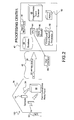
- an activity monitoring system 100 including the motion sensor 10, is illustrated.
- the activity monitoring system 100 includes, in addition to one or more motion sensors 10, one or more exterior door sensors 32, a communication relay panel 36, and a remote processing or monitoring center 42.
- the activity monitoring system 100 lacks mechanisms to intervene in the home 30 or any subsystems (appliances, water, lights, etc.) of the home 30. Intervention in the home 30, if any, may arrive through a communication with the resident of the home 30 from outside the home, such as via a telephone call or a visit from a caregiver or other suitable person, such as an emergency response professional.
- the motion sensors 10 may include sensors positioned about the home 30 to detect activity of the resident, or may be inside door sensors, cabinet sensors, kitchen and appliance sensors, and any other sensors suitable for collecting and communicating data regarding activities on-going in the home 30. Further, the motion sensors 10 may take any suitable form, such as, for example, a module attached to a wall, interior door, appliance, or cabinet drawer.
- the motion sensors 10 may take the form of a pad placed upon a bed, couch or chair to monitor a resident's use of same.
- the exterior door sensors 32 may be one or more sensors positioned on or near doors providing ingress and egress from the home 30.
- the sensors 10, 32 are wireless sensors capable of wirelessly communicating signals 34, which include data collected, to the communications relay panel 36. It should be appreciated, however, that the sensors 10, 32 instead may be sensors hardwired to the communications relay panel 36.
- the communications relay panel 36 communicates the sensor data collected from the sensors 10, 32 by sending a data signal 38 containing the sensor data to the remote monitoring center 42 by way of a suitable wired or wireless communications platform 40, such as, for example, wired telephone, wireless telephone, two-way walkie-talkie, pager, cable, the Internet, or any other suitable wired or wireless communication platform.
- a suitable wired or wireless communications platform 40 such as, for example, wired telephone, wireless telephone, two-way walkie-talkie, pager, cable, the Internet, or any other suitable wired or wireless communication platform.
- the data signals 38 may be sent in near real-time or may be sent at discrete, irregular intervals.
- near real-time is meant within the range of almost instantaneously to up to three minutes.
- data signals 38 may be sent in near real-time via wireless telephone, two-way walkie-talkie, pager, cable, the Internet or any other wireless communication platform. If a wired telephone communication platform is utilized, the data signals 38 may be buffered
- the monitoring center 42 which is remote from the home 30, includes a database 46, a programmable event detector 48, a continuous status report generator 50, a PERS 52, a central processing unit (CPU) 54, and a State Model 56.
- the database 46 serves as a collection vessel for the sensor data communicated via the signals 38.
- a search mechanism 44 is used for searching the database 46.
- the sensor data is forwarded from the database 46 to the continuous status report generator 50.
- the status report generator 50 communicates a near real-time status signal to a personal computer of the caregiver.
- near real-time is meant anywhere in the range of almost instantaneously to up to three minutes.
- the amount of time required for the communication can be between two and three minutes.
- the status report generator 50 may be programmed to update the report for each home 30 at a certain interval, such as, for example, every ten minutes.
- the status signal includes a report generated by the continuous status report generator 50. The format and substance of the report are dependent upon the request of the caregiver and can be modified at the request of the caregiver. It should be appreciated that the signal can instead be communicated via a personal digital assistant (PDA), a pager, a facsimile machine, cable, or a telephone or voice-mail account instead of via the personal computer.
- PDA personal digital assistant
- the caregiver 38 can also select certain activities that, if they occur in the home 30, would be considered an event.
- An event in general, would include an activity or any important transition occurrence, such as a state transition (the change from one state to another, such as, for example, from active to quiet), of which a caregiver would want to be apprised. For example, use of an exterior door may be considered an important activity or state transition occurrence.
- the caregiver communicates the parameters of what constitutes an event to the remote monitoring center 42, such as, for example, setting the parameters via a website. While the caregiver does not determine whether an event has occurred, the caregiver can select from a set of predefined activities that constitutes an event. Further, the caregiver sets the parameters to configure the events to match the normal activity of the resident in the home 30.
- the caregiver does not define what constitutes, for example, "wake up", but the caregiver can define when "wake up” would be considered late.
- the sensor data is stored and processed at the monitoring center 42. If the data indicates the occurrence of an event, a signal is sent to the caregiver via any suitable communication medium, such as, for example, wired or wireless telephone, PDA, pager, facsimile, cable, two-way walkie-talkie, e-mail, or other Internet-supported communication media, such as, for example, through a pop-up announcement format.
- the caregiver is then provided the opportunity to open a communication pathway with the person residing in the home 30.
- the communication pathway may be through a wired or wireless telephone line, the Internet browser (i.e., e-mail or other Internet-sponsored communication tool), cable, PDA, pager, or personal, such as a visit by the caregiver or another suitable person.
- the sensors 10, 32 can be positioned in various locations throughout the home 30.
- the sensors 10, 32 may be categorized by types, for example, as motion, exterior door (sensor 32), food, or automobile sensors. It should be appreciated that the number of sensors 10, 32 used may depend upon the layout of the home 30, as well as other factors.
- Step 160 the motion sensor watches for any detectable sign of motion or activity. When motion is detected, an "Open" signal is transmitted at Step 162.
- Step 164 the motion sensor continues to watch until no further motion has been seen for about three to four seconds.
- the sensor may optionally transmit a "Close” at Step 166. The sensor, regardless of whether Step 166 occurs, then goes to sleep, or temporarily becomes inactive, for about three minutes at Step 168.
- a resident may open an exterior door, such as a door off of the kitchen to put out the garbage, put out the garbage and close the door and move to the bedroom within a time span of less than three or four minutes.
- the conventional motion sensor has reported an open at Step 162, and then gone into the sleep mode at Step 168.
- the resident has ample time to close the exterior door, go to his bedroom and go to bed. Under such a scenario, the system will sense no further movement within the home, thus leading the system to conclude that the resident has left the home.
- the motion sensors 10 within the activity monitoring system 100 utilize a different logic scheme to address the disadvantages of the approximately four-minute long sleep period experienced by conventional motion sensors.
- the detector 18 of the motion sensor 10 watches for any detectable sign of motion or activity. While the motion sensor 10 watches for activity, the timer 16 (FIG. 1) is running. If the motion sensor 10 sees motion at Step 66, the processor 14 initiates a query 68 as to whether the timer 16 is running. Upon seeing motion for the first time, the timer 16 will not be running, and thus, at Step 70 an open is reported via a first signal from the transmitter 12. By open is meant that the detector 18 has detected activity. The detector 18 of the motion sensor 10 will continue to watch; however, no further motion will be reported, as continuous reporting takes up battery power.
- Step 72 the timer 16 is restarted at zero. If the timer 16 is not running and after the open has been reported, the timer 16 is started at zero at Step 72. After Step 72, the logic returns to Step 60 and the motion sensor 10 watches for renewed motion. Typically, motion occurs intermittently, and so if the detector 18 sees motion again at Step 66 before the timer expires at Step 62, the answer to the query at Step 68 will be yes, and that will be followed by a restarting of the timer 16 at zero at Step 72.
- Step 64 Upon expiration of the timer 16, which was started or restarted at Step 72 and which occurs after N minutes at Step 62, at Step 64 a close is reported via a second signal from the transmitter 12.
- close is meant that no activity has been detected within the N time period.
- the N time period for which the timer 16 runs before expiring is about four minutes. It should be appreciated, however, that any amount of time should be suitable as long as the N time period is known. Longer N time periods may be useful in diminishing radio traffic and increasing battery life of the sensors 10, 32. After reporting a close at Step 64, the logic returns to Step 60.
- the open and the close are both reported by transmitting the first and second signals to the monitoring center 42.
- An algorithm is utilized to calculate the actual close time of the timer 16, thus providing an actual time that activity ceased within the home 30.
- an accurate determination as to whether inactivity within the home 30 is due to the resident being away from the home 30 can be made.
- whether inactivity within the home 30 is due to the resident ceasing to move also can be more accurately determined.
- the Quiet State 200 is a state of inactivity within the home 30, meaning total inactivity of all the sensors 10, 32 in the home 30 for a certain period of time.
- Event 202a which depicts the opening of an outer door as monitored by the external door sensors 32, moves the home 30 from the Quiet State 200 to the Door Open State 204. If sensors 10 monitor further activity in the home 30, as depicted by Event 212b, then the home 30 moves to the Active State 216.
- the home 30 reverts back to the Quiet State 200.
- the pre-determined period of time is configurable. If instead the door sensors 32 monitor the outer door being closed, as depicted at Event 206, the home 30 will instead change to the Door Close State 208.
- the door sensors 32 can time out at Event 210b, sending the home back into the Quiet State 200.
- the time out period is a configurable, pre-determined period of time. If the outer door opens again, as depicted by Event 210a, the home 30 reverts to the Door Open State 204. From the Door Close State 208, if the sensors 10 monitor opening of the outer door, as depicted by Event 214b, then the home 30 moves to the Active State 216.
- the home 30 can move to the Quiet State 200 by the sensors 10 timing out, as depicted by the Event 218b. It should be appreciated that the amount of time for the time out depicted in the Event State 218b may be pre-selected and may be hardwired into the sensors 10 at, for example, about four minutes.
- the home 30 can then move back to the Active State by the sensors 10 monitoring movement in the home 30, as depicted by the Event 218a. Further, the home 30 can move from the Active State 216 to the Door Open State 204 by the door sensors 32 monitoring opening of an outer door, as depicted by Event 212a. Finally, from the Active State 216, the home 30 can revert to the Door Close State 208 by the door sensors 32 monitoring the outer door closing, as depicted by the Event 214a.
- the state diagram of FIG. 5 illustrates a first step in the methodology of the system 100 in determining whether a resident of the home 30 has left the residence or is merely inactive within the home 30. For example, if the home 30 moves from the Active State 216 to the Quiet State 200 without passing through the Door Open State 204, then the system 100 presumes that the resident is within the home 30 and merely inactive. If, on the other hand, the home 30 moves from the Active State 216 to the Door Open State 204, then to the Door Close State 208 and finally to the Quiet State 200, the system 100 presumes the resident has left the home 30. Additional transitions may also lead to the presumption that the resident has left the home 30, such as Active, Door Open, Active, Quiet, Door Close.
- FIG. 6 illustrates a higher level abstraction of the state diagram of FIG. 5, and it occurs later in time than the state diagram of FIG. 5.
- the higher level of abstraction includes a Quiet State 300, an Active State 316 and an Away State 220.
- the Quiet State 300 is a state of complete quiet (no monitored activity) for an extended period of time. For example, if the Quiet State 200 represents a four minute period of time for which no activity has been monitored, the Quiet State 300 may represent a ten to fifteen minute period of time for which no activity has been monitored.
- the Active State 316 may represent a ten to fifteen minute period of time that, on the whole, exhibits monitored activity, even though there may be some quiet stretches within. If the home 30 is in the Active State 316 and the sensors 10 time out (Quiet State 200) and no further activity is monitored for an extended period of time, the home 30 moves into the Quiet State 300. Conversely, if the home 30 is in the Quiet State 300, and activity is monitored by the sensors 10 (Active State 216), the home 30 moves into the Active State 316.
- the door sensors 32 monitor the opening of the outer door (Door Open 204)
- the home 30 moves from the Active State 316 to the Away State 220. If, while in the Away State 220, the door sensors 32 monitor the opening and closing of the outer door (Door Open 204 and Door Close 208) and the sensors 10 monitor activity (Active State 216), the home 30 moves to the Active State 316.
- the State Model 56 (FIG. 2) includes algorithms including the logic of the state diagrams of FIGS. 5 and 6.
- the CPU 54 computes the algorithms of the State Model 56 and submits output to a User Interface 58.
- the User Interface 58 is used by the caregiver to monitor the activity within the home 30 in an unobtrusive manner.
Landscapes
- Health & Medical Sciences (AREA)
- General Health & Medical Sciences (AREA)
- Physics & Mathematics (AREA)
- General Physics & Mathematics (AREA)
- Business, Economics & Management (AREA)
- Emergency Management (AREA)
- Child & Adolescent Psychology (AREA)
- Gerontology & Geriatric Medicine (AREA)
- Engineering & Computer Science (AREA)
- Human Computer Interaction (AREA)
- Psychiatry (AREA)
- Psychology (AREA)
- Social Psychology (AREA)
- Alarm Systems (AREA)
- Emergency Alarm Devices (AREA)
- Measuring And Recording Apparatus For Diagnosis (AREA)
Abstract
Description
Claims (9)
- A system (100) for determining whether a resident of a home (30) is inactive within the home or away from the home, comprising:at least one motion sensor (10) positioned to detect a first activity and to transmit a first signal (38) indicative of the first activity;at least one exterior door sensor (32) positioned to detect motion of an exterior door of the home and to transmit a second signal (38) indicative of the motion; anda monitoring center (42) in communication with the at least one motion sensor and the at least one exterior door sensor, wherein the monitoring center is adapted to determine whether a resident of the home is inactive within the home or is away from the home based upon the timing of the first signal relative to the second signal.
- The system of claim 1, wherein the at least one motion sensor comprises a timer (16) adapted to run a pre-selected time period after the detection of the first activity.
- The system of claim 2, wherein the pre-selected time period is no greater than five minutes.
- The system of claim 1, further comprising a communications relay panel (36) for relaying the first and second signals to the monitoring center.
- The system of claim 4, wherein the at least one motion sensor comprises a wireless sensor.
- The system of claim 4, wherein the at least one exterior door sensor comprises a wireless sensor.
- The system of claim 1, wherein the at least one motion sensor comprises one or more sensors from the group consisting of inside door sensors, cabinet sensors, kitchen sensors, appliance sensors, cabinet drawer sensors, bed sensors, couch sensors, and chair sensors.
- The system of claim 1, wherein the at least one motion sensor comprises:a detector (18) for detecting activity, the detector comprising a processor (22) and a sensing portion (20); anda transmitter (12) for transmitting the first signal indicative of the first activity.
- The system of claim 8, wherein the sensing portion comprises at least one sensing mechanism utilizing a sensing technique from the group consisting of passive infrared, ultrasound, microwave, radar, infrared, and any combinations thereof.
Applications Claiming Priority (2)
| Application Number | Priority Date | Filing Date | Title |
|---|---|---|---|
| US822234 | 1986-01-24 | ||
| US10/822,234 US7154399B2 (en) | 2004-04-09 | 2004-04-09 | System and method for determining whether a resident is at home or away |
Publications (3)
| Publication Number | Publication Date |
|---|---|
| EP1585078A2 true EP1585078A2 (en) | 2005-10-12 |
| EP1585078A3 EP1585078A3 (en) | 2006-06-28 |
| EP1585078B1 EP1585078B1 (en) | 2008-10-15 |
Family
ID=34912739
Family Applications (1)
| Application Number | Title | Priority Date | Filing Date |
|---|---|---|---|
| EP05252176A Expired - Lifetime EP1585078B1 (en) | 2004-04-09 | 2005-04-07 | system and method for determining whether a resident is at home or away |
Country Status (5)
| Country | Link |
|---|---|
| US (1) | US7154399B2 (en) |
| EP (1) | EP1585078B1 (en) |
| CN (1) | CN100405409C (en) |
| AT (1) | ATE411583T1 (en) |
| DE (1) | DE602005010322D1 (en) |
Cited By (8)
| Publication number | Priority date | Publication date | Assignee | Title |
|---|---|---|---|---|
| WO2007079154A1 (en) | 2005-12-30 | 2007-07-12 | Healthsense, Inc. | Rule based system and method for monitoring activity of an individual |
| WO2009115934A2 (en) | 2008-02-13 | 2009-09-24 | Blanch Puig Jose Juan | System and method for monitoring the activity of a person in a compound, and sensor for detecting a person in a predefined area |
| EP2184724A1 (en) * | 2008-11-05 | 2010-05-12 | Nederlandse Organisatie voor toegepast-natuurwetenschappelijk Onderzoek TNO | A system for tracking a presence of persons in a building, a method and a computer program product |
| US8026820B2 (en) | 2005-12-09 | 2011-09-27 | Seniortek Oy | Method and system for guarding a person in a building |
| US8577392B1 (en) | 2012-06-13 | 2013-11-05 | Apple Inc. | System and method of determining location of wireless communication devices/persons for controlling/adjusting operation of devices based on the location |
| WO2014091073A2 (en) | 2012-12-10 | 2014-06-19 | Seniortek Oy | Monitoring system and method |
| US9396646B2 (en) | 2005-12-30 | 2016-07-19 | Healthsense, Inc. | Monitoring activity of an individual |
| CN111080966A (en) * | 2018-10-22 | 2020-04-28 | Tidi制品公司 | Electronic tumble monitoring system |
Families Citing this family (30)
| Publication number | Priority date | Publication date | Assignee | Title |
|---|---|---|---|---|
| US7163263B1 (en) | 2002-07-25 | 2007-01-16 | Herman Miller, Inc. | Office components, seating structures, methods of using seating structures, and systems of seating structures |
| US20070195703A1 (en) * | 2006-02-22 | 2007-08-23 | Living Independently Group Inc. | System and method for monitoring a site using time gap analysis |
| US7612681B2 (en) * | 2007-02-06 | 2009-11-03 | General Electric Company | System and method for predicting fall risk for a resident |
| US20080297365A1 (en) * | 2007-05-30 | 2008-12-04 | Gainspan, Inc. | Method and system of guising communication using a chatter signal |
| US8577711B2 (en) * | 2008-01-25 | 2013-11-05 | Herman Miller, Inc. | Occupancy analysis |
| US7855650B2 (en) * | 2008-04-15 | 2010-12-21 | The General Electric Company | System and method for monitoring the cognitive ability of a person |
| US20120085831A1 (en) * | 2010-10-07 | 2012-04-12 | Energy Eye, Inc. | Systems and methods for controlling the temperature of a room based on occupancy |
| US9094786B2 (en) * | 2011-02-24 | 2015-07-28 | At&T Intellectual Property I, L.P. | Devices, systems, and methods for presence determination |
| CN103093581B (en) * | 2011-11-08 | 2015-09-09 | 云辰电子开发股份有限公司 | Personnel monitoring system and method |
| CA2832062A1 (en) * | 2013-11-01 | 2015-05-01 | Saskatchewan Telecommunications | Centrally managed lone worker monitoring system and method |
| US9989942B2 (en) | 2013-12-30 | 2018-06-05 | Qualcomm Incorporated | Preemptively triggering a device action in an Internet of Things (IoT) environment based on a motion-based prediction of a user initiating the device action |
| US9671121B2 (en) * | 2014-02-19 | 2017-06-06 | Enlighted, Inc. | Motion tracking |
| GB201403373D0 (en) * | 2014-02-26 | 2014-04-09 | Arc Informatics Ltd | Detecting personal activity |
| US10515372B1 (en) | 2014-10-07 | 2019-12-24 | State Farm Mutual Automobile Insurance Company | Systems and methods for managing building code compliance for a property |
| US10032366B2 (en) * | 2015-10-12 | 2018-07-24 | The Chamberlain Group, Inc. | Remotely configurable sensor system and method of use |
| US10325471B1 (en) | 2017-04-28 | 2019-06-18 | BlueOwl, LLC | Systems and methods for detecting a medical emergency event |
| CN108459533B (en) * | 2018-01-22 | 2020-10-30 | 佛山市汇凯达科技有限公司 | Interactive automatic control method |
| US10825318B1 (en) | 2018-04-09 | 2020-11-03 | State Farm Mutual Automobile Insurance Company | Sensing peripheral heuristic evidence, reinforcement, and engagement system |
| JP7274081B2 (en) * | 2019-03-07 | 2023-05-16 | 日立グローバルライフソリューションズ株式会社 | Monitoring device, monitoring method and monitoring program |
| US11894129B1 (en) | 2019-07-03 | 2024-02-06 | State Farm Mutual Automobile Insurance Company | Senior living care coordination platforms |
| US12170143B1 (en) | 2019-07-03 | 2024-12-17 | State Farm Mutual Automobile Insurance Company | Multi-sided match making platforms |
| US20250349419A1 (en) | 2019-08-19 | 2025-11-13 | State Farm Mutual Automobile Insurance Company | Senior living engagement and care support platforms |
| US12518871B2 (en) | 2020-07-09 | 2026-01-06 | State Farm Mutual Automobile Insurance Company | Systems and methods for home health evaluation and remediation |
| CN112071047A (en) * | 2020-07-13 | 2020-12-11 | 国网北京市电力公司 | Resident home leaving and returning behavior judgment method |
| US11935651B2 (en) | 2021-01-19 | 2024-03-19 | State Farm Mutual Automobile Insurance Company | Alert systems for senior living engagement and care support platforms |
| US20220245593A1 (en) | 2021-01-29 | 2022-08-04 | State Farm Mutual Automobile Insurance Company | Senior living engagement and care support platforms with chatbot and list integration |
| US11804121B2 (en) * | 2021-04-01 | 2023-10-31 | Lenovo (Singapore) Pte. Ltd. | Human presence detector device |
| US12452474B1 (en) | 2021-10-29 | 2025-10-21 | State Farm Mutual Automobile Insurance Company | Systems and methods for relational video data storage |
| EP4361976A1 (en) * | 2022-10-25 | 2024-05-01 | Quadient Technologies France | Parcel locker system with improved autonomous clusters of compartments |
| CN119169764A (en) * | 2024-09-03 | 2024-12-20 | 浙江大学 | An intelligent anti-fall reminder bracelet based on behavior assessment reminder and its application |
Family Cites Families (17)
| Publication number | Priority date | Publication date | Assignee | Title |
|---|---|---|---|---|
| US5309146A (en) * | 1988-05-03 | 1994-05-03 | Electronic Environmental Controls Inc. | Room occupancy indicator means and method |
| US5045839A (en) * | 1990-03-08 | 1991-09-03 | Rand G. Ellis | Personnel monitoring man-down alarm and location system |
| JP2928359B2 (en) * | 1990-09-07 | 1999-08-03 | 住友金属鉱山株式会社 | Indoor body presence detection device having door |
| US5476221A (en) * | 1994-01-28 | 1995-12-19 | Seymour; Richard L. | Easy-to-install thermostatic control system based on room occupancy |
| US6002994A (en) * | 1994-09-09 | 1999-12-14 | Lane; Stephen S. | Method of user monitoring of physiological and non-physiological measurements |
| US5692215A (en) * | 1994-12-23 | 1997-11-25 | Gerotech, Inc. | System for generating periodic reports, generating trend analysis, and intervention in accordance with trend analysis from a detection subsystem for monitoring daily living activity |
| US5701117A (en) * | 1996-01-18 | 1997-12-23 | Brian Page Platner | Occupancy detector |
| US5905436A (en) * | 1996-10-24 | 1999-05-18 | Gerontological Solutions, Inc. | Situation-based monitoring system |
| US5861806A (en) * | 1997-03-19 | 1999-01-19 | James A. Bondell | Occupied room indicator |
| US6587049B1 (en) * | 1999-10-28 | 2003-07-01 | Ralph W. Thacker | Occupant status monitor |
| HK1049223A1 (en) * | 2000-09-26 | 2003-05-02 | Panasonic Corporation | Object status detector, object status detecting method, home electric appliances, network adopter, and media |
| US6540674B2 (en) * | 2000-12-29 | 2003-04-01 | Ibm Corporation | System and method for supervising people with mental disorders |
| US6611206B2 (en) * | 2001-03-15 | 2003-08-26 | Koninklijke Philips Electronics N.V. | Automatic system for monitoring independent person requiring occasional assistance |
| US6400265B1 (en) * | 2001-04-24 | 2002-06-04 | Microstrategy, Inc. | System and method for monitoring security systems by using video images |
| US6850159B1 (en) * | 2001-05-15 | 2005-02-01 | Brian P. Platner | Self-powered long-life occupancy sensors and sensor circuits |
| CN1420680A (en) * | 2001-11-20 | 2003-05-28 | 骆俊光 | Human health monitoring or home security devices that can be transmitted over a wireless network |
| GB0207207D0 (en) * | 2002-03-27 | 2002-05-08 | Smith Simon L | Activity and behavioural monitor and alarm device |
-
2004
- 2004-04-09 US US10/822,234 patent/US7154399B2/en not_active Expired - Fee Related
-
2005
- 2005-04-07 AT AT05252176T patent/ATE411583T1/en not_active IP Right Cessation
- 2005-04-07 DE DE602005010322T patent/DE602005010322D1/en not_active Expired - Lifetime
- 2005-04-07 EP EP05252176A patent/EP1585078B1/en not_active Expired - Lifetime
- 2005-04-08 CN CNB2005100657194A patent/CN100405409C/en not_active Expired - Fee Related
Cited By (22)
| Publication number | Priority date | Publication date | Assignee | Title |
|---|---|---|---|---|
| US8026820B2 (en) | 2005-12-09 | 2011-09-27 | Seniortek Oy | Method and system for guarding a person in a building |
| US9396646B2 (en) | 2005-12-30 | 2016-07-19 | Healthsense, Inc. | Monitoring activity of an individual |
| US7589637B2 (en) | 2005-12-30 | 2009-09-15 | Healthsense, Inc. | Monitoring activity of an individual |
| US10475331B2 (en) | 2005-12-30 | 2019-11-12 | GreatCall, Inc. | Monitoring activity of an individual |
| WO2007079154A1 (en) | 2005-12-30 | 2007-07-12 | Healthsense, Inc. | Rule based system and method for monitoring activity of an individual |
| US10115294B2 (en) | 2005-12-30 | 2018-10-30 | Healthsense, Inc. | Monitoring activity of an individual |
| WO2009115934A2 (en) | 2008-02-13 | 2009-09-24 | Blanch Puig Jose Juan | System and method for monitoring the activity of a person in a compound, and sensor for detecting a person in a predefined area |
| WO2009115934A3 (en) * | 2008-02-13 | 2009-12-17 | Blanch Puig Jose Juan | System and method for monitoring the activity of a person in a compound, and sensor for detecting a person in a predefined area |
| ES2334617A1 (en) * | 2008-02-13 | 2010-03-12 | Jose Juan Blanch Puig | System and method for monitoring the activity of a person in a compound, and sensor for detecting a person in a predefined area |
| ES2334617B1 (en) * | 2008-02-13 | 2011-02-10 | Jose Juan Blanch Puig | SYSTEM AND PROCEDURE FOR MONITORING THE ACTIVITY OF A PERSON IN AN ENCLOSURE, AND SENSOR TO DETECT A PERSON IN A DEFAULT AREA. |
| EP2184724A1 (en) * | 2008-11-05 | 2010-05-12 | Nederlandse Organisatie voor toegepast-natuurwetenschappelijk Onderzoek TNO | A system for tracking a presence of persons in a building, a method and a computer program product |
| WO2010053362A1 (en) * | 2008-11-05 | 2010-05-14 | Nederlandse Organisatie Voor Toegepast-Natuurwetenschappelijk Onderzoek Tno | A system for tracking a presence of persons in a building, a method and a computer program product |
| EP2675137A1 (en) * | 2012-06-13 | 2013-12-18 | Apple Inc. | System and method of determining location of wireless communication devices / persons for controlling / adjusting operation of devices based on the location |
| AU2013205564B2 (en) * | 2012-06-13 | 2015-08-06 | Apple Inc. | Integrative and multi-purpose location estimation |
| EP3522497A1 (en) * | 2012-06-13 | 2019-08-07 | Apple Inc. | System and method of determining location of wireless communication devices / persons for controlling / adjusting operation of devices based on the location |
| US8577392B1 (en) | 2012-06-13 | 2013-11-05 | Apple Inc. | System and method of determining location of wireless communication devices/persons for controlling/adjusting operation of devices based on the location |
| EP4064653A1 (en) * | 2012-06-13 | 2022-09-28 | Apple Inc. | System and method of determining location of wireless communication devices / persons for controlling / adjusting operation of devices based on the location |
| WO2014091073A3 (en) * | 2012-12-10 | 2014-08-28 | Seniortek Oy | Monitoring system and method |
| EP2929517A4 (en) * | 2012-12-10 | 2016-08-31 | Seniortek Oy | CONTROL SYSTEM AND METHOD |
| WO2014091073A2 (en) | 2012-12-10 | 2014-06-19 | Seniortek Oy | Monitoring system and method |
| CN111080966A (en) * | 2018-10-22 | 2020-04-28 | Tidi制品公司 | Electronic tumble monitoring system |
| CN111080966B (en) * | 2018-10-22 | 2023-12-22 | Tidi制品公司 | Electronic fall monitoring system |
Also Published As
| Publication number | Publication date |
|---|---|
| CN1691077A (en) | 2005-11-02 |
| CN100405409C (en) | 2008-07-23 |
| DE602005010322D1 (en) | 2008-11-27 |
| EP1585078B1 (en) | 2008-10-15 |
| ATE411583T1 (en) | 2008-10-15 |
| US7154399B2 (en) | 2006-12-26 |
| EP1585078A3 (en) | 2006-06-28 |
| US20050237206A1 (en) | 2005-10-27 |
Similar Documents
| Publication | Publication Date | Title |
|---|---|---|
| EP1585078B1 (en) | system and method for determining whether a resident is at home or away | |
| US7242305B2 (en) | Device and method for monitoring movement within a home | |
| CN1914654B (en) | Method for remote monitoring of the activity of a dwelling of a person living alone | |
| US7855650B2 (en) | System and method for monitoring the cognitive ability of a person | |
| US7091865B2 (en) | System and method for determining periods of interest in home of persons living independently | |
| El-Bendary et al. | Fall detection and prevention for the elderly: A review of trends and challenges | |
| US7589637B2 (en) | Monitoring activity of an individual | |
| EP0903707B1 (en) | In-bed state detection system | |
| US20100141397A1 (en) | System for activity recognition | |
| JP6670777B2 (en) | Watching system and life support proposal system | |
| JP2000090366A (en) | Living behavior remote confirmation device and living behavior remote confirmation system | |
| JP4058310B2 (en) | Sleep state determination device and bedtime monitoring system | |
| JP2005124858A (en) | Activity state determination device, watching support system, and activity state determination method | |
| CN102209106A (en) | Housebound elderly monitoring system based on wireless sensing network | |
| JP2004174168A (en) | Health condition monitoring system | |
| JP2919326B2 (en) | Helper system | |
| CN110246301A (en) | A kind of system for monitoring old solitary people indoor activity exception | |
| JP2001195678A (en) | Life management support system for aged person and handicapped person | |
| GB2348726A (en) | Monitoring elderly people | |
| EP4038595B1 (en) | System and method for monitoring an individual | |
| KR20090116509A (en) | Method and system for providing editorial services | |
| JP3760334B2 (en) | Reliable reporting system | |
| KR20210137632A (en) | Devices and methods for monitoring people living alone | |
| EP2194515A1 (en) | Subject monitoring |
Legal Events
| Date | Code | Title | Description |
|---|---|---|---|
| PUAI | Public reference made under article 153(3) epc to a published international application that has entered the european phase |
Free format text: ORIGINAL CODE: 0009012 |
|
| AK | Designated contracting states |
Kind code of ref document: A2 Designated state(s): AT BE BG CH CY CZ DE DK EE ES FI FR GB GR HU IE IS IT LI LT LU MC NL PL PT RO SE SI SK TR |
|
| AX | Request for extension of the european patent |
Extension state: AL BA HR LV MK YU |
|
| PUAL | Search report despatched |
Free format text: ORIGINAL CODE: 0009013 |
|
| AK | Designated contracting states |
Kind code of ref document: A3 Designated state(s): AT BE BG CH CY CZ DE DK EE ES FI FR GB GR HU IE IS IT LI LT LU MC NL PL PT RO SE SI SK TR |
|
| AX | Request for extension of the european patent |
Extension state: AL BA HR LV MK YU |
|
| 17P | Request for examination filed |
Effective date: 20061228 |
|
| AKX | Designation fees paid |
Designated state(s): AT BE BG CH CY CZ DE DK EE ES FI FR GB GR HU IE IS IT LI LT LU MC NL PL PT RO SE SI SK TR |
|
| 17Q | First examination report despatched |
Effective date: 20070508 |
|
| GRAP | Despatch of communication of intention to grant a patent |
Free format text: ORIGINAL CODE: EPIDOSNIGR1 |
|
| GRAS | Grant fee paid |
Free format text: ORIGINAL CODE: EPIDOSNIGR3 |
|
| GRAA | (expected) grant |
Free format text: ORIGINAL CODE: 0009210 |
|
| AK | Designated contracting states |
Kind code of ref document: B1 Designated state(s): AT BE BG CH CY CZ DE DK EE ES FI FR GB GR HU IE IS IT LI LT LU MC NL PL PT RO SE SI SK TR |
|
| REG | Reference to a national code |
Ref country code: CH Ref legal event code: EP Ref country code: GB Ref legal event code: FG4D |
|
| REG | Reference to a national code |
Ref country code: IE Ref legal event code: FG4D |
|
| REF | Corresponds to: |
Ref document number: 602005010322 Country of ref document: DE Date of ref document: 20081127 Kind code of ref document: P |
|
| NLV1 | Nl: lapsed or annulled due to failure to fulfill the requirements of art. 29p and 29m of the patents act | ||
| PG25 | Lapsed in a contracting state [announced via postgrant information from national office to epo] |
Ref country code: AT Free format text: LAPSE BECAUSE OF FAILURE TO SUBMIT A TRANSLATION OF THE DESCRIPTION OR TO PAY THE FEE WITHIN THE PRESCRIBED TIME-LIMIT Effective date: 20081015 Ref country code: ES Free format text: LAPSE BECAUSE OF FAILURE TO SUBMIT A TRANSLATION OF THE DESCRIPTION OR TO PAY THE FEE WITHIN THE PRESCRIBED TIME-LIMIT Effective date: 20090126 Ref country code: LT Free format text: LAPSE BECAUSE OF FAILURE TO SUBMIT A TRANSLATION OF THE DESCRIPTION OR TO PAY THE FEE WITHIN THE PRESCRIBED TIME-LIMIT Effective date: 20081015 Ref country code: BG Free format text: LAPSE BECAUSE OF FAILURE TO SUBMIT A TRANSLATION OF THE DESCRIPTION OR TO PAY THE FEE WITHIN THE PRESCRIBED TIME-LIMIT Effective date: 20090115 |
|
| PG25 | Lapsed in a contracting state [announced via postgrant information from national office to epo] |
Ref country code: IS Free format text: LAPSE BECAUSE OF FAILURE TO SUBMIT A TRANSLATION OF THE DESCRIPTION OR TO PAY THE FEE WITHIN THE PRESCRIBED TIME-LIMIT Effective date: 20090215 Ref country code: PL Free format text: LAPSE BECAUSE OF FAILURE TO SUBMIT A TRANSLATION OF THE DESCRIPTION OR TO PAY THE FEE WITHIN THE PRESCRIBED TIME-LIMIT Effective date: 20081015 Ref country code: FI Free format text: LAPSE BECAUSE OF FAILURE TO SUBMIT A TRANSLATION OF THE DESCRIPTION OR TO PAY THE FEE WITHIN THE PRESCRIBED TIME-LIMIT Effective date: 20081015 Ref country code: NL Free format text: LAPSE BECAUSE OF FAILURE TO SUBMIT A TRANSLATION OF THE DESCRIPTION OR TO PAY THE FEE WITHIN THE PRESCRIBED TIME-LIMIT Effective date: 20081015 Ref country code: SI Free format text: LAPSE BECAUSE OF FAILURE TO SUBMIT A TRANSLATION OF THE DESCRIPTION OR TO PAY THE FEE WITHIN THE PRESCRIBED TIME-LIMIT Effective date: 20081015 Ref country code: PT Free format text: LAPSE BECAUSE OF FAILURE TO SUBMIT A TRANSLATION OF THE DESCRIPTION OR TO PAY THE FEE WITHIN THE PRESCRIBED TIME-LIMIT Effective date: 20090316 |
|
| PG25 | Lapsed in a contracting state [announced via postgrant information from national office to epo] |
Ref country code: EE Free format text: LAPSE BECAUSE OF FAILURE TO SUBMIT A TRANSLATION OF THE DESCRIPTION OR TO PAY THE FEE WITHIN THE PRESCRIBED TIME-LIMIT Effective date: 20081015 Ref country code: RO Free format text: LAPSE BECAUSE OF FAILURE TO SUBMIT A TRANSLATION OF THE DESCRIPTION OR TO PAY THE FEE WITHIN THE PRESCRIBED TIME-LIMIT Effective date: 20081015 Ref country code: DK Free format text: LAPSE BECAUSE OF FAILURE TO SUBMIT A TRANSLATION OF THE DESCRIPTION OR TO PAY THE FEE WITHIN THE PRESCRIBED TIME-LIMIT Effective date: 20081015 Ref country code: BE Free format text: LAPSE BECAUSE OF FAILURE TO SUBMIT A TRANSLATION OF THE DESCRIPTION OR TO PAY THE FEE WITHIN THE PRESCRIBED TIME-LIMIT Effective date: 20081015 |
|
| PLBE | No opposition filed within time limit |
Free format text: ORIGINAL CODE: 0009261 |
|
| STAA | Information on the status of an ep patent application or granted ep patent |
Free format text: STATUS: NO OPPOSITION FILED WITHIN TIME LIMIT |
|
| PG25 | Lapsed in a contracting state [announced via postgrant information from national office to epo] |
Ref country code: SE Free format text: LAPSE BECAUSE OF FAILURE TO SUBMIT A TRANSLATION OF THE DESCRIPTION OR TO PAY THE FEE WITHIN THE PRESCRIBED TIME-LIMIT Effective date: 20090115 Ref country code: IT Free format text: LAPSE BECAUSE OF FAILURE TO SUBMIT A TRANSLATION OF THE DESCRIPTION OR TO PAY THE FEE WITHIN THE PRESCRIBED TIME-LIMIT Effective date: 20081015 Ref country code: CZ Free format text: LAPSE BECAUSE OF FAILURE TO SUBMIT A TRANSLATION OF THE DESCRIPTION OR TO PAY THE FEE WITHIN THE PRESCRIBED TIME-LIMIT Effective date: 20081015 |
|
| 26N | No opposition filed |
Effective date: 20090716 |
|
| PG25 | Lapsed in a contracting state [announced via postgrant information from national office to epo] |
Ref country code: SK Free format text: LAPSE BECAUSE OF FAILURE TO SUBMIT A TRANSLATION OF THE DESCRIPTION OR TO PAY THE FEE WITHIN THE PRESCRIBED TIME-LIMIT Effective date: 20081015 |
|
| REG | Reference to a national code |
Ref country code: CH Ref legal event code: PL |
|
| REG | Reference to a national code |
Ref country code: FR Ref legal event code: ST Effective date: 20091231 |
|
| PG25 | Lapsed in a contracting state [announced via postgrant information from national office to epo] |
Ref country code: LI Free format text: LAPSE BECAUSE OF NON-PAYMENT OF DUE FEES Effective date: 20090430 Ref country code: CH Free format text: LAPSE BECAUSE OF NON-PAYMENT OF DUE FEES Effective date: 20090430 |
|
| REG | Reference to a national code |
Ref country code: IE Ref legal event code: MM4A |
|
| PG25 | Lapsed in a contracting state [announced via postgrant information from national office to epo] |
Ref country code: IE Free format text: LAPSE BECAUSE OF NON-PAYMENT OF DUE FEES Effective date: 20090407 Ref country code: MC Free format text: LAPSE BECAUSE OF NON-PAYMENT OF DUE FEES Effective date: 20090430 Ref country code: FR Free format text: LAPSE BECAUSE OF NON-PAYMENT OF DUE FEES Effective date: 20091222 |
|
| PG25 | Lapsed in a contracting state [announced via postgrant information from national office to epo] |
Ref country code: GR Free format text: LAPSE BECAUSE OF FAILURE TO SUBMIT A TRANSLATION OF THE DESCRIPTION OR TO PAY THE FEE WITHIN THE PRESCRIBED TIME-LIMIT Effective date: 20090116 |
|
| PG25 | Lapsed in a contracting state [announced via postgrant information from national office to epo] |
Ref country code: LU Free format text: LAPSE BECAUSE OF NON-PAYMENT OF DUE FEES Effective date: 20090407 |
|
| PG25 | Lapsed in a contracting state [announced via postgrant information from national office to epo] |
Ref country code: HU Free format text: LAPSE BECAUSE OF FAILURE TO SUBMIT A TRANSLATION OF THE DESCRIPTION OR TO PAY THE FEE WITHIN THE PRESCRIBED TIME-LIMIT Effective date: 20090416 |
|
| PG25 | Lapsed in a contracting state [announced via postgrant information from national office to epo] |
Ref country code: TR Free format text: LAPSE BECAUSE OF FAILURE TO SUBMIT A TRANSLATION OF THE DESCRIPTION OR TO PAY THE FEE WITHIN THE PRESCRIBED TIME-LIMIT Effective date: 20081015 |
|
| PG25 | Lapsed in a contracting state [announced via postgrant information from national office to epo] |
Ref country code: CY Free format text: LAPSE BECAUSE OF FAILURE TO SUBMIT A TRANSLATION OF THE DESCRIPTION OR TO PAY THE FEE WITHIN THE PRESCRIBED TIME-LIMIT Effective date: 20081015 |
|
| PGFP | Annual fee paid to national office [announced via postgrant information from national office to epo] |
Ref country code: GB Payment date: 20140428 Year of fee payment: 10 |
|
| PGFP | Annual fee paid to national office [announced via postgrant information from national office to epo] |
Ref country code: DE Payment date: 20140429 Year of fee payment: 10 |
|
| REG | Reference to a national code |
Ref country code: DE Ref legal event code: R119 Ref document number: 602005010322 Country of ref document: DE |
|
| GBPC | Gb: european patent ceased through non-payment of renewal fee |
Effective date: 20150407 |
|
| PG25 | Lapsed in a contracting state [announced via postgrant information from national office to epo] |
Ref country code: DE Free format text: LAPSE BECAUSE OF NON-PAYMENT OF DUE FEES Effective date: 20151103 Ref country code: GB Free format text: LAPSE BECAUSE OF NON-PAYMENT OF DUE FEES Effective date: 20150407 |