EP1584575A2 - Verfahren zur Reduzierung von Frost-Auftau Hohlräumen in nichtgehärteten Klebern - Google Patents
Verfahren zur Reduzierung von Frost-Auftau Hohlräumen in nichtgehärteten Klebern Download PDFInfo
- Publication number
- EP1584575A2 EP1584575A2 EP05006798A EP05006798A EP1584575A2 EP 1584575 A2 EP1584575 A2 EP 1584575A2 EP 05006798 A EP05006798 A EP 05006798A EP 05006798 A EP05006798 A EP 05006798A EP 1584575 A2 EP1584575 A2 EP 1584575A2
- Authority
- EP
- European Patent Office
- Prior art keywords
- container
- adhesive
- walls
- syringe
- thickness
- Prior art date
- Legal status (The legal status is an assumption and is not a legal conclusion. Google has not performed a legal analysis and makes no representation as to the accuracy of the status listed.)
- Withdrawn
Links
Images

Classifications
-
- B—PERFORMING OPERATIONS; TRANSPORTING
- B65—CONVEYING; PACKING; STORING; HANDLING THIN OR FILAMENTARY MATERIAL
- B65D—CONTAINERS FOR STORAGE OR TRANSPORT OF ARTICLES OR MATERIALS, e.g. BAGS, BARRELS, BOTTLES, BOXES, CANS, CARTONS, CRATES, DRUMS, JARS, TANKS, HOPPERS, FORWARDING CONTAINERS; ACCESSORIES, CLOSURES, OR FITTINGS THEREFOR; PACKAGING ELEMENTS; PACKAGES
- B65D83/00—Containers or packages with special means for dispensing contents
- B65D83/76—Containers or packages with special means for dispensing contents for dispensing fluent contents by means of a piston
-
- E—FIXED CONSTRUCTIONS
- E02—HYDRAULIC ENGINEERING; FOUNDATIONS; SOIL SHIFTING
- E02D—FOUNDATIONS; EXCAVATIONS; EMBANKMENTS; UNDERGROUND OR UNDERWATER STRUCTURES
- E02D29/00—Independent underground or underwater structures; Retaining walls
- E02D29/12—Manhole shafts; Other inspection or access chambers; Accessories therefor
- E02D29/14—Covers for manholes or the like; Frames for covers
- E02D29/1427—Locking devices
-
- B—PERFORMING OPERATIONS; TRANSPORTING
- B65—CONVEYING; PACKING; STORING; HANDLING THIN OR FILAMENTARY MATERIAL
- B65D—CONTAINERS FOR STORAGE OR TRANSPORT OF ARTICLES OR MATERIALS, e.g. BAGS, BARRELS, BOTTLES, BOXES, CANS, CARTONS, CRATES, DRUMS, JARS, TANKS, HOPPERS, FORWARDING CONTAINERS; ACCESSORIES, CLOSURES, OR FITTINGS THEREFOR; PACKAGING ELEMENTS; PACKAGES
- B65D85/00—Containers, packaging elements or packages, specially adapted for particular articles or materials
- B65D85/70—Containers, packaging elements or packages, specially adapted for particular articles or materials for materials not otherwise provided for
-
- E—FIXED CONSTRUCTIONS
- E02—HYDRAULIC ENGINEERING; FOUNDATIONS; SOIL SHIFTING
- E02D—FOUNDATIONS; EXCAVATIONS; EMBANKMENTS; UNDERGROUND OR UNDERWATER STRUCTURES
- E02D2300/00—Materials
- E02D2300/0004—Synthetics
- E02D2300/0006—Plastics
-
- E—FIXED CONSTRUCTIONS
- E02—HYDRAULIC ENGINEERING; FOUNDATIONS; SOIL SHIFTING
- E02D—FOUNDATIONS; EXCAVATIONS; EMBANKMENTS; UNDERGROUND OR UNDERWATER STRUCTURES
- E02D2600/00—Miscellaneous
- E02D2600/20—Miscellaneous comprising details of connection between elements
-
- Y—GENERAL TAGGING OF NEW TECHNOLOGICAL DEVELOPMENTS; GENERAL TAGGING OF CROSS-SECTIONAL TECHNOLOGIES SPANNING OVER SEVERAL SECTIONS OF THE IPC; TECHNICAL SUBJECTS COVERED BY FORMER USPC CROSS-REFERENCE ART COLLECTIONS [XRACs] AND DIGESTS
- Y10—TECHNICAL SUBJECTS COVERED BY FORMER USPC
- Y10T—TECHNICAL SUBJECTS COVERED BY FORMER US CLASSIFICATION
- Y10T428/00—Stock material or miscellaneous articles
- Y10T428/13—Hollow or container type article [e.g., tube, vase, etc.]
- Y10T428/1352—Polymer or resin containing [i.e., natural or synthetic]
-
- Y—GENERAL TAGGING OF NEW TECHNOLOGICAL DEVELOPMENTS; GENERAL TAGGING OF CROSS-SECTIONAL TECHNOLOGIES SPANNING OVER SEVERAL SECTIONS OF THE IPC; TECHNICAL SUBJECTS COVERED BY FORMER USPC CROSS-REFERENCE ART COLLECTIONS [XRACs] AND DIGESTS
- Y10—TECHNICAL SUBJECTS COVERED BY FORMER USPC
- Y10T—TECHNICAL SUBJECTS COVERED BY FORMER US CLASSIFICATION
- Y10T428/00—Stock material or miscellaneous articles
- Y10T428/24—Structurally defined web or sheet [e.g., overall dimension, etc.]
- Y10T428/24355—Continuous and nonuniform or irregular surface on layer or component [e.g., roofing, etc.]
Definitions
- This invention relates to a method for reducing the number of freeze thaw voids in uncured adhesives and to containers for storing uncured adhesives at temperatures near or below the freezing point of the adhesive.
- uncured adhesive is commonly shipped in syringes under temperature conditions below the freezing point of the adhesive. If air voids form within the uncured adhesive, the voids can cause incomplete dispense patterns and tailing when the adhesive is dispensed. This type of void is commonly referred to as a freeze-thaw void (FTV).
- FTV freeze-thaw void
- Another problem that can occur during the freeze/thaw cycle is cracking within the bulk of the adhesive. When this happens, air can be introduced into the cracks. Upon thaw, the air accumulates into micro bubbles that cause the same issues as FTVs, however in this case the air is scattered throughout the bulk adhesive.
- This invention comprises a solution to the above problem by providing a container that mechanically or chemically increases the bonding strength of the frozen, uncured adhesive to the walls of the container, and/or that is sufficiently compliant to allow the adhesive to remain in contact with the container walls during freeze-thaw cycles.
- This invention is a method for reducing the level of freeze-thaw voids in an uncured adhesive subjected to freezing and thawing comprising storing the adhesive in a container in which the walls of the container are a thermoplastic material and (i) have a thickness of 0.0254 mm to 0.762 mm (1 to 30 mils) or (ii) have a thickness of 0.0254 to 1.524 mm (1 to 60 mils) and are roughened to have a mean roughness value of greater than 0.3 ⁇ m.
- this invention is a container suitable for containing an uncured adhesive at a temperature near or below the freezing point of the adhesive in which the walls of the container are a thermoplastic material and (i) have a thickness of 0.0254 mm to 0.762 (1 to 30 mils) or (ii) have a thickness of 0.0254 to 1.524 mm (1 to 60 mils) and are roughened to have a mean roughness value of greater than 0.3 ⁇ m.
- the container is a syringe.
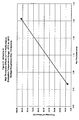
- Figure 1 shows the effects of roughening on the FTV performance of adhesive A while using a syringe with a wall thickness of 0.762 mm.
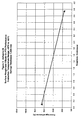
- Figure 2 shows the effects of wall thickness on the FTV performance of adhesive A while maintaining a roughness (Ra) of 2.9 microns.
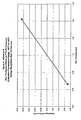
- Figure 3 shows the effects of roughening on the FTV performance of adhesive B while using a syringe with a wall thickness of 1.524 mm.
- Figure 4 shows the effects of wall thickness on the FTV performance of adhesive B while maintaining a roughness (Ra) of 2.9 microns.
- the thinness of the walls of the container makes the container more compliant or flexible. As thawing of the adhesive occurs, the walls of the container expand faster than the adhesive. The added flexibility allows the container to move with the adhesive and inhibit the creation of space between the adhesive and the walls. Similarly, a very compliant syringe material will be more likely to conform to the adhesive as it shrinks and expands than a less compliant syringe material, thus reducing the likelihood of delamination and the formation of FTVs.
- the roughness of the inside walls of the container increases mechanical bonding of the adhesive to the walls.
- the mean roughness value (R a ) is the surface texture of the walls of the container as measured with a surface profilometer.
- the R a value should be greater than 0.3 ⁇ m for containers prepared of thermoplastic materials.
- Roughening or adding contours to the inside container walls can be accomplished by any method effective for obtaining the necessary R a value, for example, by adding contours to the interior walls of the container during fabrication, mechanical abrasion, plasma etching, chemical etching or corona discharge, either during or after construction of the container.
- the syringe mold can be made rougher, resulting in a rougher syringe surface, by reducing the level of polish used on the mold surface or by adding contours or bumps to the syringe wall surfaces.
- Mechanical abrasion can be accomplished, for example, by rubbing the inside of the syringe with sand paper, sandblasting it, or scraping or scoring it with a tool, as well as any other method of abrasion that would result in an increased surface roughness.
- Plasma etching could be performed on the container using a variety of gasses, including SF 6 , O 2 , Ar, CF 4 , CHF 3 , and O 3 .
- the container could be treated via corona discharge using conditions known in the art, at an intensity and duration dictated by the desired level of roughening.
- the roughening can be accomplished by chemically etching the surface using a chromic acid solution, in which the container would be immersed in the solution for 60-90 minutes at ambient temperature or 1-2 minutes at 65-70°C.
- the chromic acid solution should be composed of sodium dichromate (15 parts/weight), distilled water (24 parts/weight), and concentrated sulfuric acid (300 parts/weight).
- adhesion can be enhanced chemically by coating the inside of the container with a primer for plastic material.
- Suitable primers for polypropylene-based containers include chlorinated polypropylene primers such as SUPERCHLON S-3199 available from Nippon Unipac Holding Group, non-chlorinated primers such as Eastman AP 440-1 available from Eastman Chemical Company, and acrylic enamels such as Abrex 44-series acrylic enamels available from Abrex Paint and Chemical Ltd.
- Suitable primers for polyethylene-based containers include primers such as Eastman chlorinated polyolefin CP 153 available from Eastman Chemical Company and acrylic enamels such as Abrex 44-series acrylic enamels available from Abrex Paint and Chemical Ltd. Such primers may be applied by spraying or brushing it on, by spin coating, or by dipping.
- thermoplastic materials are injection moldable and have a flexural modulus of less than or equal to 1240 MPa (180,000 psi).
- Suitable materials are selected from the group consisting of polypropylene, polyethylene, ethylene-ethyl acrylate copolymer, ethylene-vinyl acetate copolymer, high density polyethylene, low density polyethylene, ethylene-octene copyolymer, ethylene-hexene copolymer, ethylene-butene copolymer, polypropylene homopolymer, polypropylene copolymer, and polypropylene random copolymer. These materials are commercially available and can be obtained, for example, from The Dow Chemical Company, E.I. du Pont de Nemours and Company, ExxonMobil, or Union Carbide Corporation.
- Embodiments of the invention can vary as the dispensing needs dictate.
- the preferred thermoplastic container is a thermoplastic syringe.
- the preferred thermoplastic container is a compliant syringe used within a more rigid sleeve.
- Adhesive A was ABLEFILL UF8822 underfill encapsulant, which is based on moisture-resistant cyanate ester chemistry and has a freezing point of -17°C.
- Adhesive B was ABLEBOND 84-3MVBTI adhesive, which is based on epoxy chemistry and has a freezing point of -38°C. Both adhesives are commercially available from Ablestik Laboratories. The syringes were placed in a variety of freezers to achieve a range of storage temperatures below the freezing point of the adhesive.
- Syringe temperature was measured using a thermocouple attached to the side of the syringe in the middle of the length of the barrel. The material was allowed to remain frozen for a minimum of 2 hours and was then removed from the freezer and allowed to set at room temperature (20 - 25°C) until the temperature of the syringe was at the freezing point of the adhesive. The syringe was then visually examined for cracks, freeze/thaw voids, or delamination. After the adhesive reached room temperature the syringe was visually examined for freeze-thaw voids. Any level of cracking, delamination, or freeze-thaw voids was considered a failure for that specimen. Ten specimens were tested for each data point and the percentage of specimen failure was recorded.
- Figure 1 shows the effects of roughening on the FTV performance of adhesive A while using a syringe with a wall thickness of 0.762 mm.
- increasing the roughness (Ra) from 0.1 microns to 2.9 microns decreased the number of failed syringes from 100% to less than 10% for the temperature range between -67°C to -36°C.
- Figure 2 shows the effects of wall thickness on the FTV performance of adhesive A while maintaining a roughness (Ra) of 2.9 microns.
- Ra roughness
- Figure 3 shows the effects of roughening on the FTV performance of adhesive B while using a syringe with a wall thickness of 1.524 mm. As the roughness was increased, the percentage of failed syringes decreases. In the example below, increasing the roughness (Ra) from 0.1 microns to 2.9 microns decreased the number of failed syringes from approximately 65% to less than 20% for the temperature range between -65°C to -45°C.
- Figure 4 shows the effects of wall thickness on the FTV performance of adhesive B while maintaining a roughness (Ra) of 2.9 microns.
- Ra roughness
Landscapes
- Engineering & Computer Science (AREA)
- Mechanical Engineering (AREA)
- Structural Engineering (AREA)
- Environmental & Geological Engineering (AREA)
- Mining & Mineral Resources (AREA)
- Paleontology (AREA)
- Civil Engineering (AREA)
- General Engineering & Computer Science (AREA)
- Life Sciences & Earth Sciences (AREA)
- General Life Sciences & Earth Sciences (AREA)
- Infusion, Injection, And Reservoir Apparatuses (AREA)
- Medical Preparation Storing Or Oral Administration Devices (AREA)
- Adhesives Or Adhesive Processes (AREA)
- Containers Having Bodies Formed In One Piece (AREA)
- Tubes (AREA)
- Packaging Of Annular Or Rod-Shaped Articles, Wearing Apparel, Cassettes, Or The Like (AREA)
- Wrappers (AREA)
Applications Claiming Priority (2)
| Application Number | Priority Date | Filing Date | Title |
|---|---|---|---|
| US816093 | 1986-01-03 | ||
| US10/816,093 US20050221035A1 (en) | 2004-04-01 | 2004-04-01 | Method for reducing freeze-thaw voids in uncured adhesives |
Publications (2)
| Publication Number | Publication Date |
|---|---|
| EP1584575A2 true EP1584575A2 (de) | 2005-10-12 |
| EP1584575A3 EP1584575A3 (de) | 2008-07-02 |
Family
ID=34912673
Family Applications (1)
| Application Number | Title | Priority Date | Filing Date |
|---|---|---|---|
| EP05006798A Withdrawn EP1584575A3 (de) | 2004-04-01 | 2005-03-29 | Verfahren zur Reduzierung von Frost-Auftau Hohlräumen in nichtgehärteten Klebern |
Country Status (7)
| Country | Link |
|---|---|
| US (2) | US20050221035A1 (de) |
| EP (1) | EP1584575A3 (de) |
| JP (1) | JP2005320067A (de) |
| KR (1) | KR20060044869A (de) |
| CN (1) | CN1840432B (de) |
| SG (1) | SG115810A1 (de) |
| TW (1) | TWI406795B (de) |
Families Citing this family (5)
| Publication number | Priority date | Publication date | Assignee | Title |
|---|---|---|---|---|
| US20050221035A1 (en) * | 2004-04-01 | 2005-10-06 | Derek Wyatt | Method for reducing freeze-thaw voids in uncured adhesives |
| US7677419B2 (en) * | 2004-04-21 | 2010-03-16 | Nordson Corporation | Syringes and methods of syringe manufacturing |
| JP4089718B2 (ja) * | 2005-08-31 | 2008-05-28 | ブラザー工業株式会社 | 画像処理装置、およびプログラム |
| US8231568B2 (en) | 2007-10-16 | 2012-07-31 | Nordson Corporation | Syringes with a reduced susceptibility to freeze-thaw void formation and methods of manufacturing such syringes |
| JP6105063B2 (ja) * | 2012-08-03 | 2017-03-29 | エルジー・ケム・リミテッド | 接着フィルム及びこれを利用した有機電子装置の封止製品 |
Family Cites Families (18)
| Publication number | Priority date | Publication date | Assignee | Title |
|---|---|---|---|---|
| SE458986B (sv) * | 1985-03-29 | 1989-05-29 | Draco Ab | Dosfoerpackning |
| US4979656A (en) * | 1989-03-23 | 1990-12-25 | Olin Looker | Disposable container/dispenser for RTV silicon rubber products |
| US5016784A (en) * | 1990-02-15 | 1991-05-21 | Dexus Research Inc. | Applicator for highly reactive materials |
| RU2096277C1 (ru) * | 1990-08-01 | 1997-11-20 | Х.Б.Фуллер Лайсенсинг энд Файнэнсинг Инк. | Способ упаковки клеящей композиции (варианты) и упакованная клеящая композиция (варианты) |
| US5229061A (en) * | 1991-12-16 | 1993-07-20 | Gam-Med Packaging Corporation | Mold and method for producing a hollow tube component for a dispensing applicator |
| DE4209436A1 (de) * | 1992-02-05 | 1993-08-12 | Henkel Kgaa | Duennwandige kunststoffflasche mit strukturierter oberflaeche |
| DE19513240C1 (de) * | 1995-04-07 | 1996-06-27 | Henkel Kgaa | Kartusche |
| JPH1016992A (ja) * | 1996-07-04 | 1998-01-20 | Toagosei Co Ltd | 接着剤用容器 |
| US6376057B1 (en) * | 1998-11-19 | 2002-04-23 | Fuji Photo Film, Co., Ltd. | Packaging material for photographic photosensitive material |
| SI1151007T1 (sl) * | 1999-02-12 | 2006-10-31 | Baxter Ag | Postopek za pripravo pripravka na osnovi fibrinogena in fibronektina in proteinski sestavki, ki jihlahko dobimo po tem postopku |
| US6558764B2 (en) * | 1999-03-05 | 2003-05-06 | General Electric Company | Single layered polypropylene containers and their use |
| KR20020063300A (ko) * | 2000-01-21 | 2002-08-01 | 미쓰이 가가쿠 가부시키가이샤 | 올레핀계 블록 공중합체, 그 제조방법 및 그 용도 |
| US6616019B2 (en) * | 2001-07-18 | 2003-09-09 | Closure Medical Corporation | Adhesive applicator with improved applicator tip |
| CA2458934C (en) * | 2001-08-31 | 2009-09-15 | Yoshino Kogyosho Co., Ltd. | Pouring vessel |
| DE20117778U1 (de) * | 2001-10-31 | 2003-03-20 | Sulzer Chemtech Ag, Winterthur | Kartuschenkolben mit Entlüftung |
| AU2003240018A1 (en) * | 2002-05-31 | 2003-12-19 | Dow Corning Toray Silicone Co., Ltd. | Cartridge for moisture-curable sealant |
| US20050221035A1 (en) * | 2004-04-01 | 2005-10-06 | Derek Wyatt | Method for reducing freeze-thaw voids in uncured adhesives |
| US7677419B2 (en) * | 2004-04-21 | 2010-03-16 | Nordson Corporation | Syringes and methods of syringe manufacturing |
-
2004
- 2004-04-01 US US10/816,093 patent/US20050221035A1/en not_active Abandoned
-
2005
- 2005-03-28 KR KR1020050025636A patent/KR20060044869A/ko not_active Withdrawn
- 2005-03-29 EP EP05006798A patent/EP1584575A3/de not_active Withdrawn
- 2005-03-29 SG SG200501884A patent/SG115810A1/en unknown
- 2005-03-31 JP JP2005100716A patent/JP2005320067A/ja active Pending
- 2005-03-31 TW TW094110163A patent/TWI406795B/zh not_active IP Right Cessation
- 2005-04-01 CN CN2005100697844A patent/CN1840432B/zh not_active Expired - Fee Related
-
2006
- 2006-05-30 US US11/402,170 patent/US20060210748A1/en not_active Abandoned
Also Published As
| Publication number | Publication date |
|---|---|
| KR20060044869A (ko) | 2006-05-16 |
| SG115810A1 (en) | 2005-10-28 |
| EP1584575A3 (de) | 2008-07-02 |
| TWI406795B (zh) | 2013-09-01 |
| CN1840432B (zh) | 2010-12-08 |
| US20060210748A1 (en) | 2006-09-21 |
| JP2005320067A (ja) | 2005-11-17 |
| US20050221035A1 (en) | 2005-10-06 |
| CN1840432A (zh) | 2006-10-04 |
| TW200613197A (en) | 2006-05-01 |
Similar Documents
| Publication | Publication Date | Title |
|---|---|---|
| Kim et al. | Reversible dry micro-fibrillar adhesives with thermally controllable adhesion | |
| He et al. | Design and preparation of sandwich-like polydimethylsiloxane (PDMS) sponges with super-low ice adhesion | |
| US8231568B2 (en) | Syringes with a reduced susceptibility to freeze-thaw void formation and methods of manufacturing such syringes | |
| TWI421322B (zh) | Cutting tapes for semiconductor processing | |
| EP1584575A2 (de) | Verfahren zur Reduzierung von Frost-Auftau Hohlräumen in nichtgehärteten Klebern | |
| KR102475284B1 (ko) | 복합 필러 구조물 | |
| US20100043608A1 (en) | Method for processing, in particular, thin rear sides of a wafer, wafer-carrier arrangement and method for producing said type of wafer-carrier arrangement | |
| CN100590039C (zh) | 注射器和注射器制造方法 | |
| CN103442887A (zh) | 成型用包装材料和电池用外壳 | |
| US20100075151A1 (en) | Method for controlling and limiting adhesive migration using anti wetting agent | |
| US4158085A (en) | Electrode with separator beads embedded therein | |
| Montméat et al. | Study of a silicon/glass bonded structure with a UV-curable adhesive for temporary bonding applications | |
| US4452456A (en) | Article weighting method | |
| CN116206801B (zh) | 一种应用于低温高湿环境的持久性防冰导线及制备方法 | |
| KR101855874B1 (ko) | 압력 용기 | |
| US3697630A (en) | Bonding or repairing process | |
| HK1095799A (en) | Method for reducing freeze-thaw voids in uncured adhesives | |
| US11911937B2 (en) | Method of post manufacture processing of 3D printed parts | |
| KR200490186Y1 (ko) | 단열패널 | |
| EP3380736B1 (de) | Verbundene anordnung und verbindungsverfahren | |
| JP2004052415A (ja) | 充填装置 | |
| Yi et al. | Bonding strengths at plastic encapsulant–gold-plated copper leadframe interface | |
| JP2020175343A (ja) | エアレータ | |
| JP2019043604A (ja) | 積層剥離容器 | |
| KR200492469Y1 (ko) | 단열패널 |
Legal Events
| Date | Code | Title | Description |
|---|---|---|---|
| PUAI | Public reference made under article 153(3) epc to a published international application that has entered the european phase |
Free format text: ORIGINAL CODE: 0009012 |
|
| AK | Designated contracting states |
Kind code of ref document: A2 Designated state(s): AT BE BG CH CY CZ DE DK EE ES FI FR GB GR HU IE IS IT LI LT LU MC NL PL PT RO SE SI SK TR |
|
| AX | Request for extension of the european patent |
Extension state: AL BA HR LV MK YU |
|
| PUAL | Search report despatched |
Free format text: ORIGINAL CODE: 0009013 |
|
| AK | Designated contracting states |
Kind code of ref document: A3 Designated state(s): AT BE BG CH CY CZ DE DK EE ES FI FR GB GR HU IE IS IT LI LT LU MC NL PL PT RO SE SI SK TR |
|
| AX | Request for extension of the european patent |
Extension state: AL BA HR LV MK YU |
|
| 17P | Request for examination filed |
Effective date: 20081202 |
|
| AKX | Designation fees paid |
Designated state(s): AT BE BG CH CY CZ DE DK EE ES FI FR GB GR HU IE IS IT LI LT LU MC NL PL PT RO SE SI SK TR |
|
| RAP1 | Party data changed (applicant data changed or rights of an application transferred) |
Owner name: HENKEL AG & CO. KGAA |
|
| 17Q | First examination report despatched |
Effective date: 20100329 |
|
| STAA | Information on the status of an ep patent application or granted ep patent |
Free format text: STATUS: THE APPLICATION IS DEEMED TO BE WITHDRAWN |
|
| 18D | Application deemed to be withdrawn |
Effective date: 20100810 |