EP1579185B1 - Verfahren und einrichtung zur kontinuierlichen bestimmung der abnutzung von systemen für die nachbehandlung von wärmemotor-abgasen - Google Patents
Verfahren und einrichtung zur kontinuierlichen bestimmung der abnutzung von systemen für die nachbehandlung von wärmemotor-abgasen Download PDFInfo
- Publication number
- EP1579185B1 EP1579185B1 EP03814477A EP03814477A EP1579185B1 EP 1579185 B1 EP1579185 B1 EP 1579185B1 EP 03814477 A EP03814477 A EP 03814477A EP 03814477 A EP03814477 A EP 03814477A EP 1579185 B1 EP1579185 B1 EP 1579185B1
- Authority
- EP
- European Patent Office
- Prior art keywords
- post
- fuel
- additive
- lubricating oil
- oil
- Prior art date
- Legal status (The legal status is an assumption and is not a legal conclusion. Google has not performed a legal analysis and makes no representation as to the accuracy of the status listed.)
- Expired - Lifetime
Links
- 239000007789 gas Substances 0.000 title claims abstract description 30
- 238000000034 method Methods 0.000 title claims description 30
- 230000006866 deterioration Effects 0.000 title claims description 10
- 239000000446 fuel Substances 0.000 claims abstract description 63
- 239000000654 additive Substances 0.000 claims abstract description 59
- 230000000996 additive effect Effects 0.000 claims abstract description 45
- 239000010687 lubricating oil Substances 0.000 claims abstract description 42
- 239000003921 oil Substances 0.000 claims abstract description 42
- 239000000700 radioactive tracer Substances 0.000 claims abstract description 39
- 239000002245 particle Substances 0.000 claims abstract description 19
- 238000005259 measurement Methods 0.000 claims abstract description 17
- 229910052791 calcium Inorganic materials 0.000 claims abstract description 13
- 230000002285 radioactive effect Effects 0.000 claims abstract description 13
- 230000005855 radiation Effects 0.000 claims abstract description 12
- 239000003054 catalyst Substances 0.000 claims abstract description 11
- GKLVYJBZJHMRIY-OUBTZVSYSA-N Technetium-99 Chemical compound [99Tc] GKLVYJBZJHMRIY-OUBTZVSYSA-N 0.000 claims abstract description 10
- 229940056501 technetium 99m Drugs 0.000 claims abstract description 10
- 239000000203 mixture Substances 0.000 claims abstract description 7
- 230000000717 retained effect Effects 0.000 claims abstract description 7
- DGAQECJNVWCQMB-PUAWFVPOSA-M Ilexoside XXIX Chemical compound C[C@@H]1CC[C@@]2(CC[C@@]3(C(=CC[C@H]4[C@]3(CC[C@@H]5[C@@]4(CC[C@@H](C5(C)C)OS(=O)(=O)[O-])C)C)[C@@H]2[C@]1(C)O)C)C(=O)O[C@H]6[C@@H]([C@H]([C@@H]([C@H](O6)CO)O)O)O.[Na+] DGAQECJNVWCQMB-PUAWFVPOSA-M 0.000 claims abstract description 5
- 239000011734 sodium Substances 0.000 claims abstract description 5
- 229910052708 sodium Inorganic materials 0.000 claims abstract description 5
- 229910052725 zinc Inorganic materials 0.000 claims abstract description 5
- 239000007864 aqueous solution Substances 0.000 claims abstract description 4
- 229910052698 phosphorus Inorganic materials 0.000 claims abstract description 4
- 229910052717 sulfur Inorganic materials 0.000 claims abstract description 4
- UGFAIRIUMAVXCW-UHFFFAOYSA-N Carbon monoxide Chemical class [O+]#[C-] UGFAIRIUMAVXCW-UHFFFAOYSA-N 0.000 claims abstract description 3
- 229910002090 carbon oxide Inorganic materials 0.000 claims abstract description 3
- 239000002816 fuel additive Substances 0.000 claims abstract 2
- 238000010348 incorporation Methods 0.000 claims abstract 2
- 238000002485 combustion reaction Methods 0.000 claims description 19
- 230000000694 effects Effects 0.000 claims description 14
- 239000011575 calcium Substances 0.000 claims description 12
- 238000007254 oxidation reaction Methods 0.000 claims description 12
- 230000003647 oxidation Effects 0.000 claims description 9
- OYPRJOBELJOOCE-UHFFFAOYSA-N Calcium Chemical compound [Ca] OYPRJOBELJOOCE-UHFFFAOYSA-N 0.000 claims description 8
- 239000000567 combustion gas Substances 0.000 claims description 7
- 239000000523 sample Substances 0.000 claims description 7
- CIOAGBVUUVVLOB-OIOBTWANSA-N strontium-85 Chemical group [85Sr] CIOAGBVUUVVLOB-OIOBTWANSA-N 0.000 claims description 7
- 230000002596 correlated effect Effects 0.000 claims description 6
- 238000001514 detection method Methods 0.000 claims description 6
- GNPVGFCGXDBREM-AHCXROLUSA-N germanium-69 Chemical compound [69Ge] GNPVGFCGXDBREM-AHCXROLUSA-N 0.000 claims description 5
- 239000003599 detergent Substances 0.000 claims description 4
- 229910052712 strontium Inorganic materials 0.000 claims description 4
- CPELXLSAUQHCOX-NJFSPNSNSA-N bromine-82 Chemical compound [82BrH] CPELXLSAUQHCOX-NJFSPNSNSA-N 0.000 claims description 3
- 230000015556 catabolic process Effects 0.000 abstract description 23
- 238000006731 degradation reaction Methods 0.000 abstract description 23
- 230000005865 ionizing radiation Effects 0.000 abstract description 4
- 230000001590 oxidative effect Effects 0.000 abstract 1
- 241000894007 species Species 0.000 description 30
- HCHKCACWOHOZIP-IGMARMGPSA-N Zinc-65 Chemical compound [65Zn] HCHKCACWOHOZIP-IGMARMGPSA-N 0.000 description 15
- FVAUCKIRQBBSSJ-UHFFFAOYSA-M sodium iodide Chemical compound [Na+].[I-] FVAUCKIRQBBSSJ-UHFFFAOYSA-M 0.000 description 13
- 238000009825 accumulation Methods 0.000 description 10
- 238000012544 monitoring process Methods 0.000 description 10
- 238000012805 post-processing Methods 0.000 description 9
- 238000012360 testing method Methods 0.000 description 7
- 230000004913 activation Effects 0.000 description 6
- 239000000314 lubricant Substances 0.000 description 6
- MWUXSHHQAYIFBG-UHFFFAOYSA-N nitrogen oxide Inorganic materials O=[N] MWUXSHHQAYIFBG-UHFFFAOYSA-N 0.000 description 6
- 239000011701 zinc Substances 0.000 description 6
- -1 calcium sulfonates Chemical class 0.000 description 4
- 239000013078 crystal Substances 0.000 description 4
- 239000011777 magnesium Substances 0.000 description 4
- 229910052749 magnesium Inorganic materials 0.000 description 4
- 239000010705 motor oil Substances 0.000 description 4
- 235000009518 sodium iodide Nutrition 0.000 description 4
- 230000003197 catalytic effect Effects 0.000 description 3
- 229910052732 germanium Inorganic materials 0.000 description 3
- 229930195733 hydrocarbon Natural products 0.000 description 3
- 150000002430 hydrocarbons Chemical class 0.000 description 3
- 230000008569 process Effects 0.000 description 3
- 230000009467 reduction Effects 0.000 description 3
- 239000000126 substance Substances 0.000 description 3
- OKTJSMMVPCPJKN-UHFFFAOYSA-N Carbon Chemical compound [C] OKTJSMMVPCPJKN-UHFFFAOYSA-N 0.000 description 2
- GNPVGFCGXDBREM-FTXFMUIASA-N Germanium-68 Chemical compound [68Ge] GNPVGFCGXDBREM-FTXFMUIASA-N 0.000 description 2
- FYYHWMGAXLPEAU-UHFFFAOYSA-N Magnesium Chemical compound [Mg] FYYHWMGAXLPEAU-UHFFFAOYSA-N 0.000 description 2
- HCHKCACWOHOZIP-UHFFFAOYSA-N Zinc Chemical compound [Zn] HCHKCACWOHOZIP-UHFFFAOYSA-N 0.000 description 2
- GDTBXPJZTBHREO-UHFFFAOYSA-N bromine Substances BrBr GDTBXPJZTBHREO-UHFFFAOYSA-N 0.000 description 2
- 229910052794 bromium Inorganic materials 0.000 description 2
- 229910052799 carbon Inorganic materials 0.000 description 2
- 230000009849 deactivation Effects 0.000 description 2
- 238000000354 decomposition reaction Methods 0.000 description 2
- 239000003085 diluting agent Substances 0.000 description 2
- 238000005516 engineering process Methods 0.000 description 2
- 229910052736 halogen Inorganic materials 0.000 description 2
- 150000002367 halogens Chemical class 0.000 description 2
- 230000003116 impacting effect Effects 0.000 description 2
- 229910052751 metal Inorganic materials 0.000 description 2
- 239000002184 metal Substances 0.000 description 2
- 238000002156 mixing Methods 0.000 description 2
- 231100000572 poisoning Toxicity 0.000 description 2
- 230000000607 poisoning effect Effects 0.000 description 2
- 238000012545 processing Methods 0.000 description 2
- 230000008929 regeneration Effects 0.000 description 2
- 238000011069 regeneration method Methods 0.000 description 2
- 239000007787 solid Substances 0.000 description 2
- CIOAGBVUUVVLOB-UHFFFAOYSA-N strontium atom Chemical compound [Sr] CIOAGBVUUVVLOB-UHFFFAOYSA-N 0.000 description 2
- WMYJOZQKDZZHAC-UHFFFAOYSA-H trizinc;dioxido-sulfanylidene-sulfido-$l^{5}-phosphane Chemical compound [Zn+2].[Zn+2].[Zn+2].[O-]P([O-])([S-])=S.[O-]P([O-])([S-])=S WMYJOZQKDZZHAC-UHFFFAOYSA-H 0.000 description 2
- IJGRMHOSHXDMSA-UHFFFAOYSA-N Atomic nitrogen Chemical compound N#N IJGRMHOSHXDMSA-UHFFFAOYSA-N 0.000 description 1
- WKBOTKDWSSQWDR-UHFFFAOYSA-N Bromine atom Chemical compound [Br] WKBOTKDWSSQWDR-UHFFFAOYSA-N 0.000 description 1
- BHPQYMZQTOCNFJ-UHFFFAOYSA-N Calcium cation Chemical compound [Ca+2] BHPQYMZQTOCNFJ-UHFFFAOYSA-N 0.000 description 1
- 239000004215 Carbon black (E152) Substances 0.000 description 1
- 229910052684 Cerium Inorganic materials 0.000 description 1
- RYGMFSIKBFXOCR-UHFFFAOYSA-N Copper Chemical compound [Cu] RYGMFSIKBFXOCR-UHFFFAOYSA-N 0.000 description 1
- MQHWFIOJQSCFNM-UHFFFAOYSA-L Magnesium salicylate Chemical class [Mg+2].OC1=CC=CC=C1C([O-])=O.OC1=CC=CC=C1C([O-])=O MQHWFIOJQSCFNM-UHFFFAOYSA-L 0.000 description 1
- ZOKXTWBITQBERF-UHFFFAOYSA-N Molybdenum Chemical compound [Mo] ZOKXTWBITQBERF-UHFFFAOYSA-N 0.000 description 1
- OAICVXFJPJFONN-UHFFFAOYSA-N Phosphorus Chemical compound [P] OAICVXFJPJFONN-UHFFFAOYSA-N 0.000 description 1
- ZLMJMSJWJFRBEC-UHFFFAOYSA-N Potassium Chemical compound [K] ZLMJMSJWJFRBEC-UHFFFAOYSA-N 0.000 description 1
- NINIDFKCEFEMDL-UHFFFAOYSA-N Sulfur Chemical compound [S] NINIDFKCEFEMDL-UHFFFAOYSA-N 0.000 description 1
- 241000256856 Vespidae Species 0.000 description 1
- JXLHNMVSKXFWAO-UHFFFAOYSA-N azane;7-fluoro-2,1,3-benzoxadiazole-4-sulfonic acid Chemical compound N.OS(=O)(=O)C1=CC=C(F)C2=NON=C12 JXLHNMVSKXFWAO-UHFFFAOYSA-N 0.000 description 1
- 229910052788 barium Inorganic materials 0.000 description 1
- DSAJWYNOEDNPEQ-UHFFFAOYSA-N barium atom Chemical compound [Ba] DSAJWYNOEDNPEQ-UHFFFAOYSA-N 0.000 description 1
- VBIGULIJWJPALH-UHFFFAOYSA-L calcium;2-carboxyphenolate Chemical class [Ca+2].OC1=CC=CC=C1C([O-])=O.OC1=CC=CC=C1C([O-])=O VBIGULIJWJPALH-UHFFFAOYSA-L 0.000 description 1
- 238000009924 canning Methods 0.000 description 1
- 239000000919 ceramic Substances 0.000 description 1
- ZMIGMASIKSOYAM-UHFFFAOYSA-N cerium Chemical compound [Ce][Ce][Ce][Ce][Ce][Ce][Ce][Ce][Ce][Ce][Ce][Ce][Ce][Ce][Ce][Ce][Ce][Ce][Ce][Ce][Ce][Ce][Ce][Ce][Ce][Ce][Ce][Ce][Ce][Ce][Ce][Ce][Ce][Ce][Ce][Ce][Ce][Ce] ZMIGMASIKSOYAM-UHFFFAOYSA-N 0.000 description 1
- 230000008859 change Effects 0.000 description 1
- 238000006243 chemical reaction Methods 0.000 description 1
- 150000001875 compounds Chemical class 0.000 description 1
- 230000001143 conditioned effect Effects 0.000 description 1
- 239000010949 copper Substances 0.000 description 1
- 229910052802 copper Inorganic materials 0.000 description 1
- 230000007423 decrease Effects 0.000 description 1
- 230000008021 deposition Effects 0.000 description 1
- 238000010586 diagram Methods 0.000 description 1
- 230000008030 elimination Effects 0.000 description 1
- 238000003379 elimination reaction Methods 0.000 description 1
- 229910052731 fluorine Inorganic materials 0.000 description 1
- 239000011737 fluorine Substances 0.000 description 1
- YCKRFDGAMUMZLT-BJUDXGSMSA-N fluorine-18 atom Chemical compound [18F] YCKRFDGAMUMZLT-BJUDXGSMSA-N 0.000 description 1
- 230000004907 flux Effects 0.000 description 1
- 238000001730 gamma-ray spectroscopy Methods 0.000 description 1
- GNPVGFCGXDBREM-UHFFFAOYSA-N germanium atom Chemical compound [Ge] GNPVGFCGXDBREM-UHFFFAOYSA-N 0.000 description 1
- 239000007788 liquid Substances 0.000 description 1
- 239000003879 lubricant additive Substances 0.000 description 1
- 210000004072 lung Anatomy 0.000 description 1
- WPBNNNQJVZRUHP-UHFFFAOYSA-L manganese(2+);methyl n-[[2-(methoxycarbonylcarbamothioylamino)phenyl]carbamothioyl]carbamate;n-[2-(sulfidocarbothioylamino)ethyl]carbamodithioate Chemical compound [Mn+2].[S-]C(=S)NCCNC([S-])=S.COC(=O)NC(=S)NC1=CC=CC=C1NC(=S)NC(=O)OC WPBNNNQJVZRUHP-UHFFFAOYSA-L 0.000 description 1
- 239000011733 molybdenum Substances 0.000 description 1
- 229910052750 molybdenum Inorganic materials 0.000 description 1
- 239000013618 particulate matter Substances 0.000 description 1
- 239000011574 phosphorus Substances 0.000 description 1
- 239000011591 potassium Substances 0.000 description 1
- 229910052700 potassium Inorganic materials 0.000 description 1
- 239000000047 product Substances 0.000 description 1
- 238000005096 rolling process Methods 0.000 description 1
- 239000004065 semiconductor Substances 0.000 description 1
- 239000002904 solvent Substances 0.000 description 1
- 238000004611 spectroscopical analysis Methods 0.000 description 1
- 239000011593 sulfur Substances 0.000 description 1
- 229910052713 technetium Inorganic materials 0.000 description 1
- 230000002123 temporal effect Effects 0.000 description 1
- 238000011144 upstream manufacturing Methods 0.000 description 1
- 238000009423 ventilation Methods 0.000 description 1
Images



Classifications
-
- G—PHYSICS
- G01—MEASURING; TESTING
- G01M—TESTING STATIC OR DYNAMIC BALANCE OF MACHINES OR STRUCTURES; TESTING OF STRUCTURES OR APPARATUS, NOT OTHERWISE PROVIDED FOR
- G01M15/00—Testing of engines
- G01M15/04—Testing internal-combustion engines
- G01M15/10—Testing internal-combustion engines by monitoring exhaust gases or combustion flame
- G01M15/102—Testing internal-combustion engines by monitoring exhaust gases or combustion flame by monitoring exhaust gases
-
- G—PHYSICS
- G01—MEASURING; TESTING
- G01M—TESTING STATIC OR DYNAMIC BALANCE OF MACHINES OR STRUCTURES; TESTING OF STRUCTURES OR APPARATUS, NOT OTHERWISE PROVIDED FOR
- G01M15/00—Testing of engines
-
- Y—GENERAL TAGGING OF NEW TECHNOLOGICAL DEVELOPMENTS; GENERAL TAGGING OF CROSS-SECTIONAL TECHNOLOGIES SPANNING OVER SEVERAL SECTIONS OF THE IPC; TECHNICAL SUBJECTS COVERED BY FORMER USPC CROSS-REFERENCE ART COLLECTIONS [XRACs] AND DIGESTS
- Y10—TECHNICAL SUBJECTS COVERED BY FORMER USPC
- Y10T—TECHNICAL SUBJECTS COVERED BY FORMER US CLASSIFICATION
- Y10T436/00—Chemistry: analytical and immunological testing
- Y10T436/13—Tracers or tags
Definitions
- the present invention relates to a method and a device for the continuous determination of the degradation of the aftertreatment systems of the engine exhaust gases. More specifically, the invention aims to continuously monitor the incidence of lubricants and / or fuels on the degradation of such post-processing systems.
- exhaust gas aftertreatment systems including systems for retaining particulate matter and / or eliminating nitrogen oxides, carbon oxides and residual hydrocarbons, have become indispensable elements for combustion engines, to limit releases that are harmful to the environment and, in particular, to air quality.
- the efficiency of a post-treatment system is not constant and it decreases during its use and varies depending on the nature and quantity of the combustion gases treated. Indeed, some elements of the gases tend to settle within the post-treatment system and thus degrade its effectiveness.
- the loss of efficiency of the aftertreatment system can have an impact on the operation of the engine such as to reduce its performance and increase fuel consumption, particularly in the case of a fuel filter. particles deteriorated.
- the method proposed by the present invention aims to measure the continuous impact of the lubricating oil, fuel and / or additives used, found as such or as residual products in the exhaust gas, on the degradation of or after-treatment systems of the engine.
- residual products particular mention may be made of traces of oil, fuel and / or additives, decomposition and combustion products of the oil and additives, and fuel combustion products. .
- the invention consists in modifying the lubricating oil, the fuel and / or the additive (s) with a radiotracer, in order to measure, downstream of the engine, the radioactivity of the combustion gases accumulated in the post system. treatment with a probe sensitive to ionizing radiation, in order to deduce the amount of residual products present and therefore the degree of degradation of said post-treatment system.
- the continuous implementation of this method has many advantages that will emerge from the present description.
- the method according to the invention makes it possible in particular to more easily determine the service life of a post-treatment system as a function of the oil, the fuel and / or the additive used, and therefore of anticipate its replacement or regeneration.
- the process according to the invention makes it possible to choose, in a simple and relatively fast manner, the lubricants, fuels and / or additives best suited to a given post-treatment system. Those skilled in the art will thus be able to use the method according to the invention to minimize the impact of the residual products on the degradation of the post-treatment systems and to prolong their service life accordingly.
- the radiotracer used in the context of the invention is selected in such a way that the quantity found in the post-treatment system is proportional to the quantity of oil, fuel and / or additive present (s) such (s) ) or in the form of residual products in that system.
- the measured amount of radiotracer accumulated in the post-treatment system accurately reflects the degree of degradation caused by the lubricating oil, the fuel and / or the additive.
- radiotracer for effective monitoring depends in particular on the nature of the radiotracer (type and radiation energy), the positioning of the detector with respect to the post-processing system, the geometry of the detector and that of the system. post-processing and any screens and shields.
- the radiotracer used in the process according to the invention is generally based on an activatable species, which that is, an initially non-radioactive species requiring activation, which may be performed before or after mixing with the engine oil, fuel or additive.
- This activation can be carried out neutronally, by means of irradiation carried out by a neutron source, or by a proton beam, using a particle accelerator, under appropriate conditions known to the human being. job.
- One of the possible options for activation is to incorporate the species to be activated in an appropriate amount of a vector (e.g. a solvent or diluent such as a diluent oil, etc.) and then to subject the resulting mixture to to the proper activation and finally mix it with the engine oil, fuel or additive, the latter may be contained in the oil or fuel.
- a vector e.g. a solvent or diluent such as a diluent oil, etc.
- the radiotracer is necessarily chosen so that its radiation is measurable and it can be very diverse in nature, as it is incorporated in the lubricating oil or fuel.
- a first embodiment of the method of the invention relates to the monitoring of the impact of a specific additive Adh for lubricating oil on the degradation of a post-treatment system.
- the radiotracer may be chosen from at least one activatable EAhi species whose composition is identical to that of the additive Adh.
- the amount of activated species EAhi introduced into the oil replaces an identical amount of the additive Adh, so as not to modify the performance of the oil.
- EAhi and / EAhii species that may be labeled are, in particular, elements such as zinc, bromine, sodium, molybdenum, phosphorus, sulfur, copper, calcium and magnesium, or products containing at least one of these elements.
- strontium which, when incorporated in detergents containing calcium , for example calcium sulfonates, behaves like the calcium element at the post-treatment system and reflects the impact of calcium on it.
- Known products may also constitute the activatable species EAhi, and there may be mentioned, among these products, the families of usual additives for lubricants known to those skilled in the art, for example, zinc dithiophosphate, calcium sulfonates , magnesium sulfonates, calcium phenates, phenates of magnesium, calcium salicylates, magnesium salicylates, etc.
- a second form of implementation of the method of the invention relates to the monitoring of the impact of the engine lubricating oil on the degradation of a post-treatment system.
- the radiotracer incorporated in the oil is chosen from activatable species. EHi selected by those skilled in the art such that the amount found in the post-treatment system is proportional to the impact of the oil on said system (examples: traces of oils and products of combustion and decomposition of oil).
- the activatable species EHi capable of being labeled are selected from the activatable species EAhi and / or EAhii already mentioned.
- the radioactivity measured at the level of the post-treatment system can reflect both the impact of the oil, the impact of a given additive Adh thereof or both at the same time.
- the amount of activated species EAhi introduced into the oil replaces an identical amount of additive oil Adh.
- activated Ehi species are, for example, isotopes of halogens, such as, for example, fluorine-18 and bromine-82, germanium-68, germanium-69, and technetium-99-m.
- halogens such as, for example, fluorine-18 and bromine-82, germanium-68, germanium-69, and technetium-99-m.
- Ehi can be used alone or in the form of products containing said element and can be incorporated into a vector.
- technetium 99-m can be incorporated in the oil in the form of an aqueous solution of sodium pertechnetate NaTcO 4 .
- germanium-68 and germanium-69 may be added to the lubricating oil, for example in the form of tetraalkylgermanes containing at least one of these isotopes.
- a third embodiment of the method of the invention relates to monitoring the impact of a given additive Adc for fuel (gasoline or gas oil) on the degradation of a post-treatment system.
- the radiotracer can be chosen from at least one activatable EAci species, whose composition is identical to that of the additive Adc.
- the quantity of EAci species introduced into the oil replaces an identical amount of additive Adc in order not to modify the performance of the fuel.
- EAcii species that may be used are, for example, the EAhii species already mentioned as radiotracers for monitoring the impact of lubricant additives.
- EAci and / or EAcii species that may be labeled are, for example, the following elements: manganese, cerium, potassium, barium and calcium, as well as products containing at least one of these elements.
- a fourth form of implementation of the method of the invention relates to the monitoring of the impact of the fuel on the degradation of a post-processing system.
- the radiotracer incorporated in the fuel is selected from activatable species ECi, these species being selected by those skilled in the art such that the amount found in the post-treatment system is proportional to the impact of the fuel. on said system.
- the ECi species that can be labeled are advantageously selected from the activatable species EAci already mentioned above for monitoring the impact of the additives fuel or among the active EAcii species, usable for the same purpose, without impacting the properties of the fuel.
- the radioactivity measured at the level of the post-treatment system may reflect the impact of the fuel, the impact of a given additive Adc or advantageously both at the same time.
- ECii species can also be used without impacting the fuel utilization properties and the amount collected at the exhaust outlet remains correlated with the impact of the fuel on the post-treatment system.
- the halogen isotopes such as, for example, 82-bromine and 18-fluorine, 68-germanium, 69-germanium, and 99-technetium, will be mentioned again among them.
- radioactive elements can be used alone or in the form of products containing the element in question, and can be incorporated into a vector.
- technetium 99-m can be incorporated in the fuel in the form of an aqueous solution of sodium pertechnetate NaTcO 4 or in the form of particles of nanometric dimensions and isolated from the atmosphere by carbon.
- radioactive elements with a short half-life such as bromine 82, germanium-69 or technetium-99-m.
- species comprising more conventional radioactive elements such as Sr, Zn, Ca, S, P and Mg, can be used by employing appropriate removal methods, eg trapping downstream of the post-treatment system (s).
- the particulate filters of one of the presently developed technologies comprise at least one filter element consisting of a porous structure filter support, fixed in a metal casing, which is connected to the gas line. exhaust.
- the filter support disposed in the metal shell of the filter (called “canning") may be constituted by porous ceramic elements.
- the filter medium is traversed by the exhaust gas between an inlet end and an outlet end of the filter, and it can retain the particles of radiotracers residual products contained in the exhaust gas.
- the detector of the radiotracer particles retained by the post-treatment system can advantageously be arranged in close proximity to the latter, which considerably facilitates the measurements.
- This detector is a detection probe for ionizing radiation (beta, X or gamma rays) which can be either of the liquid or solid scintillator type [sodium iodide crystal NaI (T1), BGO crystal] or of the semiconductor type [crystal germanium, CZT crystal].
- the detector can simultaneously detect the presence of various tracers modifying the oil, the fuel or the additive (s) and their respective amounts in the combustion gases; This makes it possible to relate the quantity of each of the radiolabeled species to the impact of the oil, the fuel and / or the additive (s) on the post-treatment system.
- the detected signals are then processed by a series of means for calculating the impact of the lubricating oil, the fuel and / or the additive.
- These means comprise, in particular, a means of processing the detected signal (for example with an amplifier, a filter and an analog / digital converter DAC), a means for analyzing the pulse heights (for example a multichannel analyzer) and a means for storing and detecting the signal. processing of the acquired data (for example a PC type computer).
- the post-treatment system liable to be degraded by the residual products of the lubricating oil, fuel and / or additives can be placed downstream of the engine, in any position allowing it to be in contact with the combustion gases. . It can thus be located on the exhaust line of the engine gases.
- the engine can be coupled to more than one post-processing system.
- a diesel engine may include a two-way catalytic oxidation system and a particulate filter
- a gasoline engine may include a three-way catalytic system and an NO x removal system.
- the after-treatment system Before the exhaust gas is released into the atmosphere, if the after-treatment system is not itself a particulate filter, such a filter must necessarily be provided downstream of this system, on the exhaust line. , in order to trap the remaining radioactive species.
- a line 3 for introducing a predetermined quantity of the same lubricating oil supplemented with at least one radioactive tracer.
- the combustion products of the engine 2 are discharged via line 4 to an exhaust gas aftertreatment system 7, which may be of any of the types mentioned above and in which can be deposited radioactive tracer particles present in the exhaust gas.
- an ionizing radiation detection probe 10 which makes it possible to measure continuously the quantity present in the system 7 of particles of the radiotracer incorporated in the lubricating oil.
- the measurements made by the probe 10 are transmitted to a computer 11, able to convert these measurements into the degree of degradation of the post-treatment system 7 under the effect of the lubricating oil.
- radiotracer of the lubricating oil
- a radioactive compound with a short half-life especially technetium-99m.
- the degradation of two separate post-processing systems placed on the exhaust line of a four-stroke engine is continuously determined.
- the engine used in these tests is a motorcycle engine HONDA (registered trademark), known under the trade name HORNET, of 600 cm 3 .
- HONDA registered trademark
- HORNET 600 cm 3
- the engine has been configured in such a way that its oil consumption is close to 1 liter / hour at a speed of 6000 rpm, the original engine oil consumption being very low.
- Four-stroke engine oil is a motorcycle oil marketed under the ELF brand, type 4 DXRatio.
- the activated additive is a secondary DTPZn (Zinc DiThioPhosphate), irradiated for several hours under a thermal neutron flux.
- the reaction partially transforms stable Zn-64 into radioactive zinc-65 ( 65 Zn).
- the finished oil is prepared by mixing all the additives, including the labeled additive, according to the manufacturer's specifications.
- the specific activity of the reconstituted oil is 240 kBq / liter.
- Gamma radiation detection systems have been installed near post-treatment systems to continuously measure the accumulation of the labeled element (zinc-65). These are standard 7.62 x 7.62 cm (3 x 3 inch) NaI (T1) sodium iodide detectors with integrated photomultiplier tube, the other elements of the measurement chain being a 2007P model charge preamplifier Canberra brand, a spectroscopy amplifier 2020 (Canberra), a model 8087 ADC converter (Canberra), and a multichannel model S100 (Canberra).
- the software implemented during these tests is the "Genie 2000” software (Canberra) for gamma spectrometry, as well as the “IDSWear” multi-channel scaling (MCS) analysis software marketed by Atlantic Nuclear Services (ANS). ), Canada.
- This software makes it possible to follow the temporal evolution of the counting rate of each detector in predefined energy windows (in the occurrence of the 1115 keV peak of zinc-65 in the context of the tests carried out).
- Figure 2 illustrates zinc-65 accumulation in both post-treatment systems during testing.
- the X axis indicates the duration of the test in minutes and the Y axis indicates the number of gamma rays detected per second (counts / s) at the oxidation catalyst and the particle filter.
- the oxidation catalyst retained about 6% of the load 65 Zn released by the engine.
- This example relates to the monitoring of the accumulation of ash residues from the lubricant at a particle filter type diesel after-treatment system.
- the oil thus marked is introduced into the crankcase of the 2.2L turbo-diesel engine of a Renault Website, equipped with an exhaust particulate filter.
- the engine used is uncontaminated and is fueled with non-activated fuel.
- Six oil changes were made after 10,000 km, and a change was made after 20,000 km.
- the strontium-85 tracer was only added after 60,000 km of rolling.
- the particulate filter is disassembled after a regeneration phase that has allowed the combustion of all organic residues and is weighed. Knowing the initial mass of the filter, the mass of accumulated inorganic residues (called ash residues) is calculated.
- the zinc-65 and Sr-85 activity of the filter is also measured, the detection system being similar to that described in Example 1.
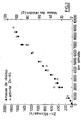
- Figure 3 shows the tracking of ash accumulation in the filter (open circles) and the tracking of Zn-65 accumulation in the filter (solid circles) as a function of vehicle mileage.
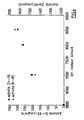
- Figure 4 shows the tracking of accumulation in the filter of Zn-65 (full rounds) and Sr-85 (round voids) depending on the mileage of the vehicle. Given the chemical form of Zn-65 and Sr-85 described higher in this example, this makes it possible to highlight the fact that the zinc of the DTPZn and the calcium of the detergents are accumulated in identical proportions in the particulate filter (none of these components is accumulated preferentially in the filter ).
- Figure 5 shows the relationship between the mass of ash residue accumulated in the filter and the Zn-65 activity of the same filter during the running of the vehicle. This example therefore clearly shows that the monitoring of the accumulation of Zn-65, used in the form of activated DTPZn, at the level of the particulate filter is representative of the accumulation of ash residues in the particle filter resulting from the combustion. oil.
- the measurement of activity at the level of the particle filter is possible continuously, so it is possible to determine continuously and precisely, even for short periods, the deterioration of the particulate filter related to the accumulation of ash residues from the combustion of the lubricant.
Landscapes
- Chemical & Material Sciences (AREA)
- Engineering & Computer Science (AREA)
- Combustion & Propulsion (AREA)
- Physics & Mathematics (AREA)
- General Physics & Mathematics (AREA)
- Testing Of Engines (AREA)
- Exhaust Gas After Treatment (AREA)
- Lubrication Details And Ventilation Of Internal Combustion Engines (AREA)
- Testing Of Devices, Machine Parts, Or Other Structures Thereof (AREA)
- Measurement Of Radiation (AREA)
- Analysing Materials By The Use Of Radiation (AREA)
- Investigating Or Analyzing Materials Using Thermal Means (AREA)
Claims (15)
- Verfahren zur kontinuierlichen Bestimmung der Abnutzung zumindest eines Systems (7) zur Nachbehandlung von Abgasen eines Verbrennungsmotors (2) aufgrund eines Schmieröls, eines Treibstoffs, und/oder zumindest eines Zusatzstoffs des verwendeten Schmieröls und/oder Treibstoffs,
dadurch gekennzeichnet, dass(i) das Schmieröl, der Treibstoff und/oder der Zusatzstoff, dessen Einfluss auf das System zur Nachbehandlung (7) gemessen werden soll, mit einer vorbestimmten Menge zumindest eines Radioindikators verändert wird,(ii) auf dem Niveau des Systems zur Nachbehandlung (7) die angesammelte, von den Abgasen abgegebene Menge des Radioindikators gemessen wird, wobei diese Messung mittels eines Detektors (10) durchgeführt wird, der empfänglich für eine Strahlung ist, die von dem durch das System zur Nachbehandlung (7) zurückgehaltenen Radioindikator abgegeben wird,(iii) die von diesem Detektor (10) durchgeführten Messungen zu einem programmierten Rechner (11) übertragen werden, der in der Lage ist, diese Messungen in den Abnutzungsgrad des Systems zur Nachbehandlung aufgrund des Schmieröls, des Treibstoffs und/oder der Zusatzstoffe umzuwandeln. - Verfahren nach Anspruch 1, dadurch gekennzeichnet, dass das Schmieröl, der Treibstoff und/oder der Zusatzstoff, dessen Einfluss auf das System zur Nachbehandlung gemessen werden soll, mit einer vorbestimmten Menge zumindest eines Radioindikators verändert wird, der Sr, Zn, S, P und/oder Mg enthält.
- Verfahren nach Anspruch 1, dadurch gekennzeichnet, dass das Schmieröl, der Treibstoff und/oder der Zusatzstoff, dessen Einfluss auf das System zur Nachbehandlung gemessen werden soll, mit einer vorbestimmten Menge zumindest eines Radioindikators verändert wird, der ein radioaktives Element mit kurzer Halbwertszeit enthält, insbesondere Brom-82, Germanium-69 oder Technetium-99-m.
- Verfahren nach Anspruch 3, dadurch gekennzeichnet, dass das Technetium-99-m in dem Öl oder dem Treibstoff in Form einer wässrigen Lösung von Natriumpertechnetat NaTcO4 enthalten ist.
- Verfahren nach Anspruch 3, dadurch gekennzeichnet, dass das Germanium-69 in dem Öl oder dem Treibstoff in Form von Tetra-Alkylgerman enthalten ist.
- Verfahren nach Anspruch 1 oder 2, dadurch gekennzeichnet, dass der Radioindikator durch einen Neutronenstrahl und/oder durch ein Protonenbündel vor einem Einbringen in das Öl aktiviert wird.
- Verfahren nach Anspruch 1 oder 2, dadurch gekennzeichnet, dass die kontinuierliche Bestimmung der Abnutzung zumindest eines Systems (7) zur Nachbehandlung von Abgasen eines Verbrennungsmotors (2) aufgrund eines Zusatzstoffs des Schmieröls Adh durchgeführt wird durch Einbringen einer Menge einer aktivierbaren Sorte EAhi mit identischem Aufbau wie der Zusatzstoff Adh in das Schmieröl und das Ersetzen einer identischen Menge des Zusatzstoffs Adh.
- Verfahren nach Anspruch 1 oder 2, dadurch gekennzeichnet, dass die kontinuierliche Bestimmung der Abnutzung zumindest eines Systems (7) zur Nachbehandlung von Abgasen eines Verbrennungsmotors (2) aufgrund eines Zusatzstoffs des Schmieröls Adh durchgeführt wird durch Einbringen einer Menge einer aktivierbaren Sorte EAhii ohne Einfluss auf die Verwendungseigenschaften des Öls in das Schmieröl, deren wiedergefundene und gemessene Menge in dem System zur Nachbehandlung mit dem Einfluss des Zusatzstoffs Adh in Korrelation gebracht wird.
- Verfahren nach Anspruch 8, dadurch gekennzeichnet, dass der Zusatzstoff Adh ein Reinigungsmittel ist, das Kalzium enthält, und dass die Sorte EAhii in aktivierter Form Strontium-85 ist.
- Verfahren nach Anspruch 1 oder 2, dadurch gekennzeichnet, dass die kontinuierliche Bestimmung der Abnutzung zumindest eines Systems (7) zur Nachbehandlung von Abgasen eines Verbrennungsmotors (2) aufgrund eines Treibstoffs durchgeführt wird durch Einbringen einer Menge einer aktivierbaren Sorte EAci mit identischem Aufbau wie ein Zusatzstoff Adc des Treibstoffs in den Treibstoff und das Ersetzen einer identischen Menge des Zusatzstoffs Adc in dem Treibstoff.
- Verfahren nach Anspruch 1 oder 2, dadurch gekennzeichnet, dass die kontinuierliche Bestimmung der Abnutzung zumindest eines Systems zur Nachbehandlung von Abgasen eines Verbrennungsmotors (2) aufgrund des Schmiermittels durchgeführt wird durch Einbringen einer Menge einer aktivierbaren Sorte EAhi oder AEhii in das Schmieröl.
- Vorrichtung zur kontinuierlichen Bestimmung der Abnutzung zumindest eines Systems (7) zur Nachbehandlung von Abgasen eines Verbrennungsmotors (2) aufgrund eines Schmieröls, eines Treibstoffs, und/oder zumindest eines Zusatzstoffs des verwendeten Schmieröls und/oder Treibstoffs,
wobei die Vorrichtung enthält:ein Mittel (3) zum Einbringen einer vorbestimmten Menge zumindest eines Radioindikators in das Schmieröl oder den Treibstoff undein System (7) zur Nachbehandlung der von dem Motor abgegebenen Verbrennungsgase hinter dem Motor(2),dadurch gekennzeichnet, dass die Vorrichtung enthält:(i) einen Detektors (10), der empfänglich für eine Strahlung des Radioindikators ist, in der Nähe des Systems (7) zur Nachbehandlung und in einem Abstand von diesem, der es ermöglicht, eine Strahlung zu messen, die von den durch das System zurückgehaltenen Partikeln des Indikators abgegeben wird, und(ii) einen programmierten Rechner (11) in funktioneller Verbindung mit dem Detektor (10), der zum Rechnen in der Lage ist,um die durch den Detektor durchgeführten Messungen in den Abnutzungsgrad des Systems zur Nachbehandlung aufgrund des Schmieröls, des Treibstoffs und/oder der Zusatzstoffe umzuwandeln. - Vorrichtung nach Anspruch 12, dadurch gekennzeichnet, dass das System zur Nachbehandlung (7) gewählt ist aus der Gruppe der Systeme mit Oxidationskatalysator, der Systeme zum Entfernen oder Verringern der Kohlenstoffoxide und der Systeme mit Partikelfilter.
- Vorrichtung nach Anspruch 12 oder 13, dadurch gekennzeichnet, dass der Detektor (10) eine Sonde zum Erfassen ionisierender Strahlen ist.
- Vorrichtung nach einem der Ansprüche 12 bis 14, dadurch gekennzeichnet, dass sie ein Filter (9) enthält, das an der Auslassleitung der Verbrennungsgase zwischen dem System zur Nachbehandlung (7) und dem Ort des Abgebens dieser Gase an die Atmosphäre angeordnet ist.
Applications Claiming Priority (3)
| Application Number | Priority Date | Filing Date | Title |
|---|---|---|---|
| FR0215906A FR2848668B1 (fr) | 2002-12-16 | 2002-12-16 | Procede et dispositif pour la determination en continu de la degradation des systemes de post-traitement des gaz d'echappement de moteur thermique |
| FR0215906 | 2002-12-16 | ||
| PCT/FR2003/003738 WO2004061406A1 (fr) | 2002-12-16 | 2003-12-16 | Procede et dispositif pour la determination en continu de la degradation des systemes de post-traitement des gaz d’echappement de moteur thermique |
Publications (2)
| Publication Number | Publication Date |
|---|---|
| EP1579185A1 EP1579185A1 (de) | 2005-09-28 |
| EP1579185B1 true EP1579185B1 (de) | 2006-08-16 |
Family
ID=32338821
Family Applications (1)
| Application Number | Title | Priority Date | Filing Date |
|---|---|---|---|
| EP03814477A Expired - Lifetime EP1579185B1 (de) | 2002-12-16 | 2003-12-16 | Verfahren und einrichtung zur kontinuierlichen bestimmung der abnutzung von systemen für die nachbehandlung von wärmemotor-abgasen |
Country Status (10)
| Country | Link |
|---|---|
| US (1) | US7402800B2 (de) |
| EP (1) | EP1579185B1 (de) |
| JP (1) | JP4327098B2 (de) |
| KR (1) | KR20050084323A (de) |
| AT (1) | ATE336709T1 (de) |
| AU (1) | AU2003300619A1 (de) |
| DE (1) | DE60307678T2 (de) |
| ES (1) | ES2271702T3 (de) |
| FR (1) | FR2848668B1 (de) |
| WO (1) | WO2004061406A1 (de) |
Families Citing this family (12)
| Publication number | Priority date | Publication date | Assignee | Title |
|---|---|---|---|---|
| JP3938584B2 (ja) * | 2005-04-08 | 2007-06-27 | 株式会社神戸製鋼所 | 爆破処理容器の余寿命予測装置、余寿命予測方法、及び爆破処理施設 |
| FR2844358B1 (fr) * | 2002-09-06 | 2004-12-03 | Totalfinaelf France | Procede et dispositif pour la determination en continu de la consommation d'un moteur a combustion interne en huile lubrifiante. |
| FR2848668B1 (fr) * | 2002-12-16 | 2005-03-18 | Totalfinaelf France | Procede et dispositif pour la determination en continu de la degradation des systemes de post-traitement des gaz d'echappement de moteur thermique |
| US7793537B2 (en) * | 2008-09-10 | 2010-09-14 | Detroit Diesel Corporation | Method of engine oil consumption |
| CN102121876B (zh) * | 2010-12-17 | 2012-11-07 | 杭州银轮科技有限公司 | 一种模拟柴油机排气的后处理装置试验台 |
| FR2990213B1 (fr) | 2012-05-04 | 2015-04-24 | Total Raffinage Marketing | Composition lubrifiante pour moteur |
| KR101350415B1 (ko) * | 2012-07-19 | 2014-01-14 | 한국전력기술 주식회사 | 방사능입자의 손실 없이 방사능을 계측하는 방사능 계측장치 |
| FR2998303B1 (fr) | 2012-11-16 | 2015-04-10 | Total Raffinage Marketing | Composition lubrifiante |
| FR3018079B1 (fr) | 2014-02-28 | 2017-06-23 | Total Marketing Services | Composition lubrifiante a base de nanoparticules metalliques |
| US10400647B2 (en) * | 2017-01-20 | 2019-09-03 | Tenneco Automotive Operating Company Inc. | Method for urea conversion efficiency measurement |
| CN108035825B (zh) * | 2017-12-12 | 2023-09-05 | 中国汽车技术研究中心 | 用于缸内直喷汽油机gpf老化的机油掺烧装置及方法 |
| JP7064378B2 (ja) * | 2018-05-21 | 2022-05-10 | 株式会社Subaru | 排ガス分析方法及び排ガス分析システム |
Family Cites Families (30)
| Publication number | Priority date | Publication date | Assignee | Title |
|---|---|---|---|---|
| US2957986A (en) * | 1955-04-22 | 1960-10-25 | Phillips Petroleum Co | Means of studying oil consumption in an engine |
| US3471696A (en) * | 1967-03-16 | 1969-10-07 | Gen Motors Corp | Method of measuring oil consumption in an engine |
| US4153418A (en) * | 1971-05-10 | 1979-05-08 | Haas Rudy M | Chemical tracer method of and structure for determination of instantaneous and total mass and volume fluid flow |
| DE2515960C2 (de) * | 1975-04-11 | 1982-09-30 | Kernforschungszentrum Karlsruhe Gmbh, 7500 Karlsruhe | Verfahren und Einrichtungen zur Messung des Ölverbrauchs von Brennkraftmaschinen |
| DE2536897B1 (de) * | 1975-08-19 | 1977-01-27 | Kraftwerk Union Ag | Verfahren zur nuklidspezifischen bestimmung der aktivitaetskonzentration der in gasstroemen enthaltenen radionuklide mit hilfe der gammaspektroskopie |
| US4338520A (en) * | 1979-05-18 | 1982-07-06 | Rolls Royce Limited | Method of and apparatus for analyzing gas flows inside hollow bodies |
| US4421982A (en) * | 1980-06-16 | 1983-12-20 | The United States Of America As Represented By The United States Department Of Energy | Apparatus and method for downhole injection of radioactive tracer |
| DE3145046C2 (de) * | 1980-11-15 | 1985-08-29 | Rolls-Royce Ltd., London | Verfahren und Einrichtung zum Erzeugen einer Darstellung der räumlichen Verteilung einer Flüssigkeitsströmung innerhalb einer Hohlkörperstruktur |
| US4321056A (en) * | 1980-12-29 | 1982-03-23 | Cummins Engine Company, Inc. | Measurement of engine oil consumption |
| DE3324523A1 (de) * | 1983-07-07 | 1985-01-17 | Kernforschungszentrum Karlsruhe Gmbh, 7500 Karlsruhe | Einrichtung zum nachweis von jodisotopen |
| GB8628055D0 (en) | 1986-11-24 | 1986-12-31 | Atomic Energy Authority Uk | Flow measurement |
| US4743761A (en) | 1986-12-19 | 1988-05-10 | Conoco Inc. | Natural tracer for secondary recovery water injection process |
| US5069455A (en) * | 1988-08-08 | 1991-12-03 | Thomas William F | Golf putting trainer |
| DE3904168A1 (de) * | 1989-02-11 | 1990-08-23 | Honeywell Elac Nautik Gmbh | Gasdetektor |
| US4990780A (en) * | 1989-06-19 | 1991-02-05 | General Motors Corporation | Method for determining fuel and engine oil comsumption using tunable diode laser spectroscopy |
| US5184017A (en) * | 1989-09-12 | 1993-02-02 | Sensors, Inc. | Method and apparatus for detecting a component gas in a sample |
| US5067455A (en) * | 1989-11-04 | 1991-11-26 | Nippondenso Co., Ltd. | Method and apparatus for adding additives to lubricating oil |
| US5129257A (en) * | 1990-12-26 | 1992-07-14 | Ford Motor Company | System for measuring engine exhaust constituents |
| US5117680A (en) * | 1990-12-26 | 1992-06-02 | Ford Motor Company | Method and control circuit for measuring trace constituents in automotive engine exhaust |
| GB9315918D0 (en) * | 1993-07-31 | 1993-09-15 | Lucas Ind Plc | Method of and apparatus for monitoring operation of a catalyst |
| US5445964A (en) * | 1994-05-11 | 1995-08-29 | Lee; Peter S. | Dynamic engine oil and fuel consumption measurements using tunable diode laser spectroscopy |
| DE19741335C1 (de) * | 1997-09-19 | 1999-06-10 | Bosch Gmbh Robert | Sensormembran einer Optode sowie Verfahren, Vorrichtung und deren Verwendung zur Bestimmung von Gasen in Gasgemischen |
| US6114700A (en) * | 1998-03-31 | 2000-09-05 | Anatel Corporation | NDIR instrument |
| US6227038B1 (en) * | 1999-04-12 | 2001-05-08 | General Motors Corporation | Radiotracer method for measuring leakage of engine coolant |
| US6294389B1 (en) * | 1999-11-01 | 2001-09-25 | General Motors Corporation | Furnace for an engine exhaust measurement system |
| US6715473B2 (en) * | 2002-07-30 | 2004-04-06 | Infineum International Ltd. | EGR equipped diesel engines and lubricating oil compositions |
| FR2844358B1 (fr) * | 2002-09-06 | 2004-12-03 | Totalfinaelf France | Procede et dispositif pour la determination en continu de la consommation d'un moteur a combustion interne en huile lubrifiante. |
| FR2848668B1 (fr) * | 2002-12-16 | 2005-03-18 | Totalfinaelf France | Procede et dispositif pour la determination en continu de la degradation des systemes de post-traitement des gaz d'echappement de moteur thermique |
| US7031828B1 (en) * | 2003-08-28 | 2006-04-18 | John M. Thompson | Engine misfire detection system |
| FR2864240B1 (fr) * | 2003-12-23 | 2006-03-17 | Total France | Procede et dispositif de suivi de la dilution de l'huile lubrifiante par le carburant dans un moteur a combustion interne |
-
2002
- 2002-12-16 FR FR0215906A patent/FR2848668B1/fr not_active Expired - Fee Related
-
2003
- 2003-12-16 US US10/539,374 patent/US7402800B2/en not_active Expired - Fee Related
- 2003-12-16 AU AU2003300619A patent/AU2003300619A1/en not_active Abandoned
- 2003-12-16 ES ES03814477T patent/ES2271702T3/es not_active Expired - Lifetime
- 2003-12-16 WO PCT/FR2003/003738 patent/WO2004061406A1/fr not_active Ceased
- 2003-12-16 KR KR1020057011018A patent/KR20050084323A/ko not_active Abandoned
- 2003-12-16 DE DE60307678T patent/DE60307678T2/de not_active Expired - Lifetime
- 2003-12-16 AT AT03814477T patent/ATE336709T1/de not_active IP Right Cessation
- 2003-12-16 JP JP2004564276A patent/JP4327098B2/ja not_active Expired - Fee Related
- 2003-12-16 EP EP03814477A patent/EP1579185B1/de not_active Expired - Lifetime
Also Published As
| Publication number | Publication date |
|---|---|
| AU2003300619A8 (en) | 2004-07-29 |
| ATE336709T1 (de) | 2006-09-15 |
| JP4327098B2 (ja) | 2009-09-09 |
| US7402800B2 (en) | 2008-07-22 |
| ES2271702T3 (es) | 2007-04-16 |
| EP1579185A1 (de) | 2005-09-28 |
| FR2848668B1 (fr) | 2005-03-18 |
| JP2006510030A (ja) | 2006-03-23 |
| KR20050084323A (ko) | 2005-08-26 |
| AU2003300619A1 (en) | 2004-07-29 |
| US20060237640A1 (en) | 2006-10-26 |
| DE60307678D1 (de) | 2006-09-28 |
| WO2004061406A1 (fr) | 2004-07-22 |
| FR2848668A1 (fr) | 2004-06-18 |
| DE60307678T2 (de) | 2007-09-06 |
Similar Documents
| Publication | Publication Date | Title |
|---|---|---|
| EP1579185A1 (de) | Verfahren und einrichtung zur kontinuierlichen bestimmung einerbeschädigung an systemen zur nachbehandlung von wärmemotor-abgasen | |
| EP1723320B1 (de) | Verfahren und vorrichtung zur echtzeitmessung des ölverbrauchs von einem motoröltrennsystem unter verwendung von radioaktiven tracern | |
| EP1540289B1 (de) | Verfahren und vorrichtung zur kontinuierlichen bestimmung des ölverbrauchs einer brennkraftmaschine | |
| FR2952124A1 (fr) | Procede et dispositif pour surveiller une installation de nettoyage des gaz d'echappement | |
| EP2354484B1 (de) | Verfahren zur funktionsdiagnose eines russsensors | |
| EP2932059B1 (de) | Verfahren zur diagnose einer stickoxidfalle | |
| WO2005064143A1 (fr) | Procede de determination en temps reel de la masse de particules presente dans un filtre a particules de vehicule automobile | |
| EP1697740B1 (de) | Verfahren und vorrichtung zur überwachung der verdünnung des schmieröls mit dem brennstoff in einem verbrennungsmotor | |
| FR2987075A1 (fr) | Procede de determination d'une quantite d'agent reducteur transferee vers une cartouche de stockage d'un systeme de reduction catalytique | |
| FR3068896A1 (fr) | Mélange pour réduire les émissions, les dépôts de carbone et la consommation de carburant | |
| Szailer et al. | Advanced catalyst solutions for hydrocarbon emissions control during rich operation of lean NOx trap systems | |
| FR3052369A1 (fr) | Procede de generation d'un catalyseur defaillant d'un point de vue d'un systeme obd | |
| FR2927363A1 (fr) | Procede de diagnostic de l'etat d'un filtre a particules de moteur thermique | |
| FR3078549A1 (fr) | Procede de protection contre une retention d’eau d’un element positionne dans une ligne d’echappement de moteur | |
| WO2007060351A1 (fr) | Systeme de regeneration periodique d'un dispositif de piegeage catalytique d'oxydes d'azote | |
| JP2016036763A (ja) | ディーゼル排ガス中のpm(微小粒子状物質)除去システム |
Legal Events
| Date | Code | Title | Description |
|---|---|---|---|
| PUAI | Public reference made under article 153(3) epc to a published international application that has entered the european phase |
Free format text: ORIGINAL CODE: 0009012 |
|
| 17P | Request for examination filed |
Effective date: 20050527 |
|
| AK | Designated contracting states |
Kind code of ref document: A1 Designated state(s): AT BE BG CH CY CZ DE DK EE ES FI FR GB GR HU IE IT LI LU MC NL PT RO SE SI SK TR |
|
| AX | Request for extension of the european patent |
Extension state: AL LT LV MK |
|
| GRAP | Despatch of communication of intention to grant a patent |
Free format text: ORIGINAL CODE: EPIDOSNIGR1 |
|
| DAX | Request for extension of the european patent (deleted) | ||
| RTI1 | Title (correction) |
Free format text: METHOD AND DEVICE FOR THE CONTINUOUS DETERMINATION OF THE DETERIORATION OF SYSTEMS USED FOR THE POST-TREATMENT OF HEAT ENGINE EXHAUST GASES |
|
| GRAS | Grant fee paid |
Free format text: ORIGINAL CODE: EPIDOSNIGR3 |
|
| GRAA | (expected) grant |
Free format text: ORIGINAL CODE: 0009210 |
|
| AK | Designated contracting states |
Kind code of ref document: B1 Designated state(s): AT BE BG CH CY CZ DE DK EE ES FI FR GB GR HU IE IT LI LU MC NL PT RO SE SI SK TR |
|
| PG25 | Lapsed in a contracting state [announced via postgrant information from national office to epo] |
Ref country code: IE Free format text: LAPSE BECAUSE OF FAILURE TO SUBMIT A TRANSLATION OF THE DESCRIPTION OR TO PAY THE FEE WITHIN THE PRESCRIBED TIME-LIMIT Effective date: 20060816 Ref country code: FI Free format text: LAPSE BECAUSE OF FAILURE TO SUBMIT A TRANSLATION OF THE DESCRIPTION OR TO PAY THE FEE WITHIN THE PRESCRIBED TIME-LIMIT Effective date: 20060816 Ref country code: RO Free format text: LAPSE BECAUSE OF FAILURE TO SUBMIT A TRANSLATION OF THE DESCRIPTION OR TO PAY THE FEE WITHIN THE PRESCRIBED TIME-LIMIT Effective date: 20060816 Ref country code: SI Free format text: LAPSE BECAUSE OF FAILURE TO SUBMIT A TRANSLATION OF THE DESCRIPTION OR TO PAY THE FEE WITHIN THE PRESCRIBED TIME-LIMIT Effective date: 20060816 Ref country code: AT Free format text: LAPSE BECAUSE OF FAILURE TO SUBMIT A TRANSLATION OF THE DESCRIPTION OR TO PAY THE FEE WITHIN THE PRESCRIBED TIME-LIMIT Effective date: 20060816 |
|
| REG | Reference to a national code |
Ref country code: GB Ref legal event code: FG4D Free format text: NOT ENGLISH |
|
| REG | Reference to a national code |
Ref country code: CH Ref legal event code: EP |
|
| REG | Reference to a national code |
Ref country code: IE Ref legal event code: FG4D Free format text: LANGUAGE OF EP DOCUMENT: FRENCH |
|
| REF | Corresponds to: |
Ref document number: 60307678 Country of ref document: DE Date of ref document: 20060928 Kind code of ref document: P |
|
| PG25 | Lapsed in a contracting state [announced via postgrant information from national office to epo] |
Ref country code: DK Free format text: LAPSE BECAUSE OF FAILURE TO SUBMIT A TRANSLATION OF THE DESCRIPTION OR TO PAY THE FEE WITHIN THE PRESCRIBED TIME-LIMIT Effective date: 20061116 Ref country code: BG Free format text: LAPSE BECAUSE OF FAILURE TO SUBMIT A TRANSLATION OF THE DESCRIPTION OR TO PAY THE FEE WITHIN THE PRESCRIBED TIME-LIMIT Effective date: 20061116 |
|
| REG | Reference to a national code |
Ref country code: SE Ref legal event code: TRGR |
|
| GBT | Gb: translation of ep patent filed (gb section 77(6)(a)/1977) |
Effective date: 20061115 |
|
| PG25 | Lapsed in a contracting state [announced via postgrant information from national office to epo] |
Ref country code: MC Free format text: LAPSE BECAUSE OF NON-PAYMENT OF DUE FEES Effective date: 20061231 |
|
| REG | Reference to a national code |
Ref country code: CH Ref legal event code: NV Representative=s name: FREI PATENTANWALTSBUERO Ref country code: CH Ref legal event code: PUE Owner name: TOTALFINAELF FRANCE Free format text: DELTA SERVICES INDUSTRIELS SPRL#54, RESIDENCE DES MOTTES#7503 FROYENNES (BE) $ TOTALFINAELF FRANCE#TOUR TOTAL, 24, COURS MICHELET#92800 PUTEAUX (FR) -TRANSFER TO- TOTALFINAELF FRANCE#TOUR TOTAL, 24, COURS MICHELET#92800 PUTEAUX (FR) |
|
| PG25 | Lapsed in a contracting state [announced via postgrant information from national office to epo] |
Ref country code: PT Free format text: LAPSE BECAUSE OF FAILURE TO SUBMIT A TRANSLATION OF THE DESCRIPTION OR TO PAY THE FEE WITHIN THE PRESCRIBED TIME-LIMIT Effective date: 20070116 |
|
| REG | Reference to a national code |
Ref country code: HU Ref legal event code: AG4A Ref document number: E001012 Country of ref document: HU |
|
| REG | Reference to a national code |
Ref country code: IE Ref legal event code: FD4D |
|
| REG | Reference to a national code |
Ref country code: ES Ref legal event code: FG2A Ref document number: 2271702 Country of ref document: ES Kind code of ref document: T3 |
|
| PLBE | No opposition filed within time limit |
Free format text: ORIGINAL CODE: 0009261 |
|
| STAA | Information on the status of an ep patent application or granted ep patent |
Free format text: STATUS: NO OPPOSITION FILED WITHIN TIME LIMIT |
|
| 26N | No opposition filed |
Effective date: 20070518 |
|
| PG25 | Lapsed in a contracting state [announced via postgrant information from national office to epo] |
Ref country code: GR Free format text: LAPSE BECAUSE OF FAILURE TO SUBMIT A TRANSLATION OF THE DESCRIPTION OR TO PAY THE FEE WITHIN THE PRESCRIBED TIME-LIMIT Effective date: 20061117 |
|
| PG25 | Lapsed in a contracting state [announced via postgrant information from national office to epo] |
Ref country code: EE Free format text: LAPSE BECAUSE OF FAILURE TO SUBMIT A TRANSLATION OF THE DESCRIPTION OR TO PAY THE FEE WITHIN THE PRESCRIBED TIME-LIMIT Effective date: 20060816 |
|
| PG25 | Lapsed in a contracting state [announced via postgrant information from national office to epo] |
Ref country code: LU Free format text: LAPSE BECAUSE OF NON-PAYMENT OF DUE FEES Effective date: 20061216 Ref country code: TR Free format text: LAPSE BECAUSE OF FAILURE TO SUBMIT A TRANSLATION OF THE DESCRIPTION OR TO PAY THE FEE WITHIN THE PRESCRIBED TIME-LIMIT Effective date: 20060816 |
|
| PG25 | Lapsed in a contracting state [announced via postgrant information from national office to epo] |
Ref country code: CY Free format text: LAPSE BECAUSE OF FAILURE TO SUBMIT A TRANSLATION OF THE DESCRIPTION OR TO PAY THE FEE WITHIN THE PRESCRIBED TIME-LIMIT Effective date: 20060816 |
|
| REG | Reference to a national code |
Ref country code: FR Ref legal event code: CD |
|
| PGFP | Annual fee paid to national office [announced via postgrant information from national office to epo] |
Ref country code: SK Payment date: 20101216 Year of fee payment: 8 |
|
| PGFP | Annual fee paid to national office [announced via postgrant information from national office to epo] |
Ref country code: CZ Payment date: 20111201 Year of fee payment: 9 Ref country code: HU Payment date: 20111205 Year of fee payment: 9 Ref country code: CH Payment date: 20111124 Year of fee payment: 9 Ref country code: NL Payment date: 20111228 Year of fee payment: 9 |
|
| PGFP | Annual fee paid to national office [announced via postgrant information from national office to epo] |
Ref country code: GB Payment date: 20121220 Year of fee payment: 10 Ref country code: IT Payment date: 20121219 Year of fee payment: 10 |
|
| PGFP | Annual fee paid to national office [announced via postgrant information from national office to epo] |
Ref country code: ES Payment date: 20121226 Year of fee payment: 10 |
|
| REG | Reference to a national code |
Ref country code: NL Ref legal event code: V1 Effective date: 20130701 |
|
| PG25 | Lapsed in a contracting state [announced via postgrant information from national office to epo] |
Ref country code: CZ Free format text: LAPSE BECAUSE OF NON-PAYMENT OF DUE FEES Effective date: 20121216 |
|
| REG | Reference to a national code |
Ref country code: CH Ref legal event code: PL |
|
| REG | Reference to a national code |
Ref country code: SK Ref legal event code: MM4A Ref document number: E 1844 Country of ref document: SK Effective date: 20121216 |
|
| PG25 | Lapsed in a contracting state [announced via postgrant information from national office to epo] |
Ref country code: CH Free format text: LAPSE BECAUSE OF NON-PAYMENT OF DUE FEES Effective date: 20121231 Ref country code: HU Free format text: LAPSE BECAUSE OF NON-PAYMENT OF DUE FEES Effective date: 20121217 Ref country code: LI Free format text: LAPSE BECAUSE OF NON-PAYMENT OF DUE FEES Effective date: 20121231 Ref country code: SK Free format text: LAPSE BECAUSE OF NON-PAYMENT OF DUE FEES Effective date: 20121216 Ref country code: NL Free format text: LAPSE BECAUSE OF NON-PAYMENT OF DUE FEES Effective date: 20130701 |
|
| PGFP | Annual fee paid to national office [announced via postgrant information from national office to epo] |
Ref country code: SE Payment date: 20131125 Year of fee payment: 11 |
|
| GBPC | Gb: european patent ceased through non-payment of renewal fee |
Effective date: 20131216 |
|
| PG25 | Lapsed in a contracting state [announced via postgrant information from national office to epo] |
Ref country code: GB Free format text: LAPSE BECAUSE OF NON-PAYMENT OF DUE FEES Effective date: 20131216 |
|
| REG | Reference to a national code |
Ref country code: ES Ref legal event code: FD2A Effective date: 20150327 |
|
| PG25 | Lapsed in a contracting state [announced via postgrant information from national office to epo] |
Ref country code: ES Free format text: LAPSE BECAUSE OF NON-PAYMENT OF DUE FEES Effective date: 20131217 |
|
| PG25 | Lapsed in a contracting state [announced via postgrant information from national office to epo] |
Ref country code: SE Free format text: LAPSE BECAUSE OF NON-PAYMENT OF DUE FEES Effective date: 20141217 |
|
| REG | Reference to a national code |
Ref country code: SE Ref legal event code: EUG |
|
| PG25 | Lapsed in a contracting state [announced via postgrant information from national office to epo] |
Ref country code: IT Free format text: LAPSE BECAUSE OF NON-PAYMENT OF DUE FEES Effective date: 20131231 |
|
| PG25 | Lapsed in a contracting state [announced via postgrant information from national office to epo] |
Ref country code: IT Free format text: LAPSE BECAUSE OF NON-PAYMENT OF DUE FEES Effective date: 20131216 |
|
| REG | Reference to a national code |
Ref country code: FR Ref legal event code: PLFP Year of fee payment: 14 |
|
| REG | Reference to a national code |
Ref country code: FR Ref legal event code: PLFP Year of fee payment: 15 |
|
| PGFP | Annual fee paid to national office [announced via postgrant information from national office to epo] |
Ref country code: FR Payment date: 20201125 Year of fee payment: 18 Ref country code: DE Payment date: 20201211 Year of fee payment: 18 |
|
| PGFP | Annual fee paid to national office [announced via postgrant information from national office to epo] |
Ref country code: BE Payment date: 20201221 Year of fee payment: 18 |
|
| REG | Reference to a national code |
Ref country code: DE Ref legal event code: R119 Ref document number: 60307678 Country of ref document: DE |
|
| REG | Reference to a national code |
Ref country code: BE Ref legal event code: MM Effective date: 20211231 |
|
| PG25 | Lapsed in a contracting state [announced via postgrant information from national office to epo] |
Ref country code: DE Free format text: LAPSE BECAUSE OF NON-PAYMENT OF DUE FEES Effective date: 20220701 |
|
| PG25 | Lapsed in a contracting state [announced via postgrant information from national office to epo] |
Ref country code: FR Free format text: LAPSE BECAUSE OF NON-PAYMENT OF DUE FEES Effective date: 20211231 Ref country code: BE Free format text: LAPSE BECAUSE OF NON-PAYMENT OF DUE FEES Effective date: 20211231 |