EP1574565A1 - Method of selecting escherichia coli strain overexpressing foreign gene, escherichia coli mutant thus selected and process for producing enzyme and compound using the same - Google Patents
Method of selecting escherichia coli strain overexpressing foreign gene, escherichia coli mutant thus selected and process for producing enzyme and compound using the same Download PDFInfo
- Publication number
- EP1574565A1 EP1574565A1 EP03780728A EP03780728A EP1574565A1 EP 1574565 A1 EP1574565 A1 EP 1574565A1 EP 03780728 A EP03780728 A EP 03780728A EP 03780728 A EP03780728 A EP 03780728A EP 1574565 A1 EP1574565 A1 EP 1574565A1
- Authority
- EP
- European Patent Office
- Prior art keywords
- escherichia coli
- strain
- exogenous gene
- coli strain
- highly expresses
- Prior art date
- Legal status (The legal status is an assumption and is not a legal conclusion. Google has not performed a legal analysis and makes no representation as to the accuracy of the status listed.)
- Granted
Links
Images

Classifications
-
- C—CHEMISTRY; METALLURGY
- C12—BIOCHEMISTRY; BEER; SPIRITS; WINE; VINEGAR; MICROBIOLOGY; ENZYMOLOGY; MUTATION OR GENETIC ENGINEERING
- C12N—MICROORGANISMS OR ENZYMES; COMPOSITIONS THEREOF; PROPAGATING, PRESERVING, OR MAINTAINING MICROORGANISMS; MUTATION OR GENETIC ENGINEERING; CULTURE MEDIA
- C12N9/00—Enzymes; Proenzymes; Compositions thereof; Processes for preparing, activating, inhibiting, separating or purifying enzymes
- C12N9/88—Lyases (4.)
-
- C—CHEMISTRY; METALLURGY
- C12—BIOCHEMISTRY; BEER; SPIRITS; WINE; VINEGAR; MICROBIOLOGY; ENZYMOLOGY; MUTATION OR GENETIC ENGINEERING
- C12P—FERMENTATION OR ENZYME-USING PROCESSES TO SYNTHESISE A DESIRED CHEMICAL COMPOUND OR COMPOSITION OR TO SEPARATE OPTICAL ISOMERS FROM A RACEMIC MIXTURE
- C12P13/00—Preparation of nitrogen-containing organic compounds
- C12P13/04—Alpha- or beta- amino acids
Definitions
- the present invention relates to a method for selecting Escherichia coli strain which highly expresses an exogenous gene, Escherichia coli selected by this selecting method, and a process for producing an enzyme and a compound using this strain. More specifically, it relates to a method for selecting from a transformant group having introduced therein an enzyme gene whose expression is unstable in Escherichia coli, a mutant strain in which the gene is highly expressed stably, a mutant strain selected thereby which highly expresses an exogenous gene, and a process for producing an enzyme and a compound, especially an ammonia lyase and an amino acid using this strain.
- Escherichia coli strain which has been used most frequently in studies of molecular biology is a strain derived from K12 strain (Swartz, 1996, In Escherichia coli and Salmonella, Cellular and Molecular Biology, 2nd edition, ASM Press Washington, p.p. 1693-1711).
- a strain derived from Escherichia coli B strain such as BL21 has been often used, and a list of strains which have been most frequently used for production of recombinant proteins has been presented by Wingfield, 1997 (Current Protocols in Protein Science, Coligan et al., Ed. John Wiley & Sons, Inc. 5.0.1-5.0.3).
- An expression system comprises a promoter, its regulator, a ribosome immobilization site, a restriction site in whose downstream a useful gene can be introduced, a structure which can serve as a transcription terminator, a gene which is arbitrarily present in order to improve qualities of a super-expressed useful protein by simultaneous expression, and one or more vectors capable of introducing a combination of these into a host.
- the present inventors invented a process for producing L-amino acids from various cinnamic acids using an amino group addition reaction of an enzyme ammonia lyase, and filed a patent application directed to the invention (JP-A-2003-225092).
- JP-A-2003-225092 a phenomenon that when Escherichia coli was transformed to express an enzyme ammonia lyase, activity of the transformant was decreased with each passage. This decrease in activity with passage is not attributed to methylation of an expression control site, plasmid loss, plasmid mutation and the like as generally mentioned as causes for decreased activity, and it cannot be avoided by any known information.
- the objects of the invention are to provide an Escherichia coli mutant strain useful in obtaining a sufficient amount of protein from an exogenous gene unstably expressed whose expression amount tends to decrease during subculture or storage and to provide a process for producing an industrially important chemical substance using the strain.
- the invention provides an Escherichia coli mutant strain in which expression of an exogenous gene apt to decrease due to causes other than loss, mutation and modification of a plasmid is stabilized and a process for producing an industrially important chemical substance using the strain.
- the invention provides an Escherichia coli mutant strain in which expression of a plant-derived phenylalanine ammonia lyase gene having a strong tendency to decrease in Escherichia coli without being accompanied by a defective plasmid is stabilized and a process for producing industrially important amino acids using the strain.
- the present inventors have assiduously conducted investigations to achieve the foregoing objects, and have consequently found that by selecting an Escherichia coli strain using as an index hydrogen peroxide decomposition activity which is a stress resistance property having no direct relation with protein production, a mutant strain in which gene expression amount does not decrease during subculture can be obtained, and completed the invention based on this finding.
- the invention is to provide an Escherichia coli mutant strain useful in obtaining a sufficient amount of protein from an exogenous gene which tends to be unstably expressed and decrease in expression amount during subculture or storage, and a process for producing an industrially important chemical substance using the strain.
- the invention provides, as stated below, a method for selecting an Escherichia coli strain, Escherichia coli strain selected thereby, a process for producing an enzyme using the same, and a process for producing a useful compound using the enzyme.
- an Escherichia coli strain which highly expresses an exogenous gene stably refers to a strain whose expression amount is relatively large when an exogenous gene is introduced into Escherichia coli by an ordinary method and whose expression is stable.
- An exogenous gene to be expressed is not particularly limited, and the invention is especially useful when introducing "an exogenous gene hard to express".
- an exogenous gene hard to express refers to an exogenous gene whose expression amount decreases during subculture when it is introduced into Escherichia coli for transformation and the transformant Escherichia coli is subcultured. More specifically, it refers to an exogenous gene whose expression amount decreases due to causes other than loss or mutation of a plasmid.
- a process for producing an Escherichia coli mutant strain is described. Selection of the mutant strain is conducted using a transformant obtained by transforming host Escherichia coli with a recombinant vector having a gene hard to express.
- a transformant obtained by transforming host Escherichia coli with a recombinant vector having a gene hard to express.
- an expression plasmid having a sequence necessary for control of expression in Escherichia coli, for example, commercially available one such as pET, pTrc99A, pKK233 or pUC18 can be used.
- a recombinant vector having a gene hard to express introduced in an appropriate site of such an expression plasmid is constructed, i.e., an Escherichia coli recombinant vector comprising a hard-to-express gene present in series with a ribosome binding site, a structure capable of functioning as a transcription terminator, a marker gene and the like in the downstream of an Escherichia coli promoter and its regulator, preferably, a hybrid promoter such as lac promoter, Trp promoter or Tac promoter, T5 promoter or T7 promoter is constructed.
- a hybrid promoter such as lac promoter, Trp promoter or Tac promoter, T5 promoter or T7 promoter is constructed.
- the Escherichia coli strain to be transformed in the invention is not particularly limited. K12 strain, B strain and the like are preferably used. In view of biological containment, K12 strain is advantageously used. Strains which are widely used as an Escherichia coli host with stable form and properties can be used, and examples thereof include commercially available products such as XL1-Blue strain (Stratagene; which can be procured from TOYOBO in Japan (Bullock, Fernandez & Short, 1987, Biotechniques, 5:376-378), JM109 strain (which can be procured from TAKARA SHUZO CO., LTD.) and HB101 strain.
- XL1-Blue strain which can be procured from TOYOBO in Japan (Bullock, Fernandez & Short, 1987, Biotechniques, 5:376-378
- JM109 strain which can be procured from TAKARA SHUZO CO., LTD.
- HB101 strain HB101 strain.
- a transformant is spread on an agar plate medium, preferably an M9 glucose plate, obtained by adding to an ordinary medium capable of growing Escherichia coli, an appropriate amount of a transformant selection substance (for example, antibiotics such as ampicillin) in accordance with a recombinant vector to be used, and further adding agar for plating.
- Culture is conducted from 20 °C to 40 °C, preferably from 25°C to 35°C, more preferably from 25 °C for 16 to 72 hours until colonies are clearly formed, preferably from 24 to 48 hours.
- a transformant having a gene hard to express forms non-uniform colonies in many cases.
- selection is conducted from among the transformant strains using intensity of stress response as an index.
- the type of stress response which can be used is not particularly limited. Examples thereof include hydrogen peroxide decomposition activity and growth recovery after heat treatment (heat resistance). Of these, hydrogen peroxide decomposition activity is preferable because when colonies are reacted with a trace amount of a hydrogen peroxide solution, intensity of stress response can visually be estimated according to an amount of oxygen generated by decomposing hydrogen peroxide.
- Selection may further be repeated, as required, using the same index as in the first selection.
- selection among strains showing stress response, it is preferable that strains with its colony color close to white as compared to other strains and strains with its colony diameter significantly small be selected.
- selection may be conducted by combinationally using analysis of the resulting proteins by a known method.
- a recombinant vector used in selection can be dropped by subculturing the resulting mutant strain on a medium without chemical stress to thereby obtain a host Escherichia coli mutant strain.
- Subculture stability of the obtained host Escherichia coli mutant strain can be evaluated by observing expression of an exogenous gene after subculturing the strain under ordinary growth conditions for a strain without causing selective pressures by chemicals until divisions are repeated a predetermined number of times. For example, if a test strain is inoculated on a nutrient medium such as LB broth in such an amount that initial turbidity becomes 0.1, and cultured until turbidity becomes 3 or more, the passage number will be of approximately 5 generations. Strains with 30-generation passage can be obtained by repeating the culture 6 times under the same conditions.
- the expression of an exogenous gene of the strain can be evaluated, for example, by using a production amount of protein derived from the exogenous gene as an index.
- mutant strain it is not necessary in particular to conduct mutation treatment.
- ordinary mutation treatment such as ultraviolet irradiation or mutation agent treatment.
- the thus-obtained Escherichia coli mutant strain of the invention is not different from its parent strain in growth rate, transformation method, storage method and the like, and it can be treated in a usual nutrient medium by a usual procedure in a temperature range of 25 °C to 37 °C.
- the invention provides an Escherichia coli strain selected by the foregoing method.
- the Escherichia coli strain selected by the invention is, as noted above, an Escherichia coli strain which highly expresses an exogenous gene stably in an arbitrary transformant strain of a substantially arbitrary Escherichia coli strain.
- Examples of the thus-obtained mutant strain include Escherichia coli SD840 strain.
- This is an Escherichia coli strain which allows high expression stably and which is selected by the foregoing method from a transformant obtained by using XL1-Blue strain as a parent strain and introducing a plant phenylalanine ammonia lyase gene therein.
- This strain produces an exogenous gene-derived protein in an amount 10 or more times larger than the amount of the protein produced by a parent XL1-Blue strain, and allows stable expression without change by passage of 30 generations of the transformant.
- Escherichia coli SD840 strain was deposited in International Patent Organization Depositary, National Institute of Advanced Industrial Science and Technology, AIST Tsukuba Central 6, 1-1-1 Higashi, Tsukuba, Ibaraki, Japan (postal cord 305-8566) (deposit date: September 27, 2002, Deposit No. FERM P-19047), and transferred to International Depositary on November 10, 2003 (International Deposit No. FERM BP-08546).
- SD840 strain one of Escherichia coli mutant strains obtained by the selection method of the invention, are listed below in comparison to those of the parent strain.
- the properties of the Escherichia coli mutant strains of the invention are also shown, as a result of genomic analysis of a latter growth phase (after a stationary phase), by characteristic genes which allow high expression in comparison to the parent strain.
- the genes include those whose function is not yet identified. They include those which are causes of stable expression of hard-to-express genes and those which are results of stable expression of hard-to-express genes, which shows characteristics of SD840 strain as one of the mutant strains in the invention.
- Characteristic genes which exhibits significantly high expression include oppA, ompA, tufB, tufA, fusA, gapA, rpsA, ahpC, infC, katE, ydiH, lacI, icdA, oppC, rpoB, ynhA, ompX, dnaJ, oppB, yceD, dnaK, aco2, cld, zipA, minC, galF, gnd, yafK, fabB, trmD, cysK, cydA, hslV, pepN, oppF, rpoC, ompF, rpoA, pheS, rpsB, oppD, pepD, serS, topA, grpE, yeaF, asnB, serC, ppiB, tolB, yc
- the invention further provides a process for producing an exogenous protein, typically, an enzyme using the Escherichia coli mutant strain.
- the Escherichia coli mutant strain is cultured, and expression is induced when necessary.
- a method for culturing a transformant a conventional method is used, and a medium may be either a nutrient medium or a synthetic medium.
- a culture temperature is arbitrarily selected in the range from 20 to 42°C. A temperature around 30 °C is most preferable.
- Recovery and purification of an exogenous protein from the Escherichia coli mutant strain can be conducted by a process where a transformant is disrupted and centrifuged, and a supernatant is recovered and purification is performed by an ordinary method used for purification of proteins, such as gel filtration or various kinds of column chromatography (for example, see “Current Protocols in Protein Science” (ed. Coligan, J. E. et al.), John Wiley and Sons, Inc., Chapter 6).
- purification can be conducted by referring to the Willsky et al. method (J. Bacteriol., 127, 595-609 (1976)).
- the production method according to the invention can be applied to any enzymes and other exogenous proteins that can be produced by a gene introduced into Escherichia coli, and it is especially useful as a method for producing enzymes and other exogenous proteins which are produced by expression of genes whose expression in Escherichia coli has been so far difficult.
- a plant phenylalanine ammonia lyase and the like are mentioned.
- a plant phenylalanine ammonia lyase for example, is quite a desirable example, because it is produced as an exogenous gene-derived protein, in SD840 strain in an amount of 10 or more times the amount of the protein produced with the parent strain XL1-Blue strain and in stability without changing by subculture of the transformant through 30 generations.
- the amount of the enzyme and other proteins produced by expression of the gene can be determined by ordinary SDS-PAGE, a western blotting method using an antibody or the like.
- the quantitative determination may be conducted by measurement of activity or the like.
- the invention further provides a process for producing a useful substance using the Escherichia coli mutant strain.
- the Escherichia coli mutant strain is cultured by the foregoing method, and expression is induced as required.
- Significantly efficient production of a substance can be conducted in comparison to the use of a wild strain by reacting the Escherichia coli mutant strain obtained from the culture solution or its treated product with a substrate that gives a desired substance to obtain the substance.
- the useful substance produced by the invention varies with the type of the enzyme that the Escherichia coli mutant strain produces.
- the enzyme is a catabolic enzyme
- a decomposed product of a substrate is obtained.
- the enzyme is a transferase
- a compound in which a predetermined group is added to a substrate or a compound in which a predetermined group is removed from a substrate is obtained.
- an amino acid is formed by adding ammonia to an unsaturated bond of an unsaturated carboxylic acid in the presence of ammonia.
- a reaction with cinnamic acids is conducted in the presence of ammonia using SD840 strain that highly expresses a plant phenylalanine ammonia lyase, whereby various corresponding optically active amino acids can be produced.
- SD840 strain is free from a problem such as a decrease in expression with passage or the like, making it possible to realize stable high production in scale-up production requiring multiple passages, which was impossible with the parent strain.
- an amount of an enzyme that liberates cinnamic acid in an amount of 1 ⁇ mole/min at 30°C in the presence of a 0.1 M sodium borate buffer solution pH 8.5 and 10 mM L-phenylalanine as a substrate was defined as 1 unit (U).
- An amount of an enzyme protein was determined by a biuret method using bovine serum albumin as a standard.
- reaction solution was separated and determined by HPLC under the following conditions.
- M9 medium 0.6 % disodium hydrogenphosphate, 0.3 % potassium dihydrogenphosphate, 0.05 % sodium chloride, 0.1 % ammonium chloride, 0.1 % glucose, 1 mM magnesium sulfate, 0.001% thiamine hydrochloride and 0.1 mM calcium chloride, pH 7.4
- LB medium 1 % polypeptone, 0.5 % yeast extract and 1 % sodium chloride
- the enzymatic activity of the transformant was measured as follows. Cells were collected by centrifugation from a culture solution obtained by culture in 5 to 100 ml of the above-described medium at 25°C for 38 hours or more. The resulting cells were washed with a physiological saline solution in the same volume as that of the culture solution, and then suspended in a reaction solution (4M ammonia/ammonium carbonate (pH 10.3)) of a volume half the volume of the culture solution. A substrate at a final concentration of 0.2% (2,000 mg/L) was added thereto, and the reaction was conducted at 30°C with shaking. A part of the reaction solution was taken in an appropriate time (usually between 2 and 6 hours), and cells were removed by centrifugation. The supernatant was analyzed by HPLC to determine an amount of a product.
- Example 1 Formation of a recombinant vector
- JP-A-2003-225092 A method for obtaining a plant phenylalanine ammonia lyase gene used in this Example is described in detail in a prior application (JP-A-2003-225092) of the present inventors.
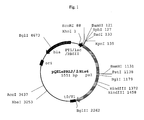
- JP-A-2003-225092 the recombinant vector described in JP-A-2003-225092 could be used, plasmid pQEPAL2/ ⁇ His6 (refer to Fig. 1) obtainedbydeletingHis-tag coding sequence from recombinant vector pQEPAL2 described in the Yazaki et al. report (Biosci. Biotech. Biochem. (1997), 61 (12), 1995-2003) was prepared, and used here.
- PT5 T5 promoter
- lac lac operator
- RBSII synthetic ribosome binding site
- pal phenylalanine ammonia lyase gene
- t0/T1 transcription terminator
- 6xHis His-tag coding sequence
- ORI origin of replication
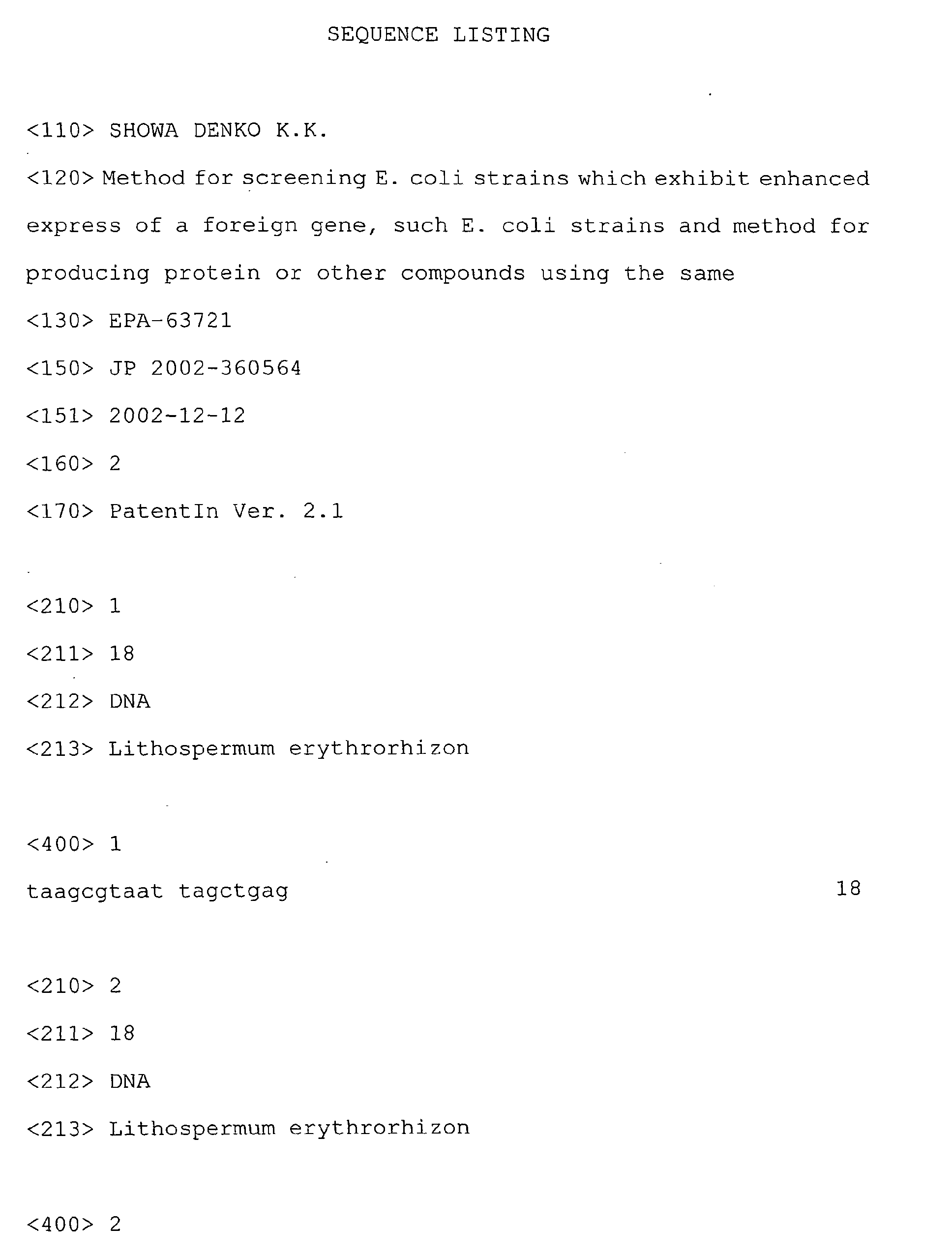
- a primer described in SEQ ID No. 1 (5' side; 18-mer oligonucleotide) and a primer described in SEQ ID No. 2 (3' side; 18-mer oligonucleotide) corresponding to positions before and after His-tag coding sequence of a recombinant vector were synthesized, the portions except His-tag coding sequence were amplified by PCR under the following conditions, and after blunt-ending and phosphorylation, self-ligation was conducted.
- the following primer of SEQ ID No. 1 was subjected to single base substitution in order for one Hind III site derived from the vector to disappear by which a desired product could easily be recognized.
- Plasmids were prepared from the resulting six colonies using QIAprep Miniprep Kit (manufactured by QIAGEN, Inc.), and a cut pattern was examined with restriction enzyme Hind III. As a result, it was confirmed that all of the plasmids extracted from the six colonies were desired plasmids with His-tag coding sequence removed therefrom.
- Example 2 Formation of a transformant showing PAL (phenylalanine ammonia lyase) activity
- Escherichia coli XL1-Blue strain transformed with pQEPAL2/ ⁇ His6 obtained in Example 1 was plated on LB agar plate medium containing 0.1 mM isopropyl- ⁇ -D-thiogalactopyranoside (IPTG) and 100 ppm ampicillin, and cultured at 25°C for 48 hours to form colonies of various sizes. From these colonies, 24 strains were arbitrarily selected, and cultured in 5 ml of LB medium. After 34 hours from the start-up of culture, isopropyl- ⁇ -D-thiogalactopyranoside (IPTG) was added to the culture solution in an amount of 0.1 mM, and the mixture was further cultured for 4 hours.
- IPTG isopropyl- ⁇ -D-thiogalactopyranoside
- Example 3 Activity of a transformant after separation and subculture of single colonies
- Example 2 All of the 24 colony strains obtained in Example 2 were streaked on LB agar plate medium containing 0.1 mM isopropyl- ⁇ -D-thiogalactopyranoside (IPTG) and 100 ppm ampicillin, and cultured at 25°C for 48 hours. In the same manner as in Example 2, the separated colonies were cultured, and the activities thereof were measured. Consequently, strains with activities changed appeared as shown in Table 3. Colony No.
- IPTG isopropyl- ⁇ -D-thiogalactopyranoside
- strains showing high activities in the activity measurement were compared with the other strains. No.7 colony was poor in growth. However, No. 8 strain, No. 10 strain and No. 23 strain all showed a color tone of significantly whitish with surface gloss, and were different in shape.
- Example 4 Method for identifying a high-activity strain by stress response
- hydrogen peroxide decomposition activity and growth recovery after heat treatment were measured for each strain.
- hydrogen peroxide decomposition activity several microliters of a hydrogen peroxide aqueous solution were added to the streak-cultured cells on the LB agar plate medium, and a condition of bubble occurrence on the plate was observed.
- the cells on the agar plate were cultured on the M9 medium for 16 hours, then collected by centrifugation, suspended in a physiological saline solution, and gently shaken for 8 hours to form stationary cells.
- the stationary cells were treated at 55°C for 2 hours, then streaked on LB agar plate medium containing 100 ppm ampicillin, and cultured at 25 °C.
- Escherichia coli XL1-Blue strain transformed with pQEPAL2/ ⁇ His6 was plated on LB agar plate medium containing 0.1 mM isopropyl- ⁇ -D-thiogalactopyranoside (IPTG) and 100 ppm ampicillin, and cultured at 25°C for 48 hours. 1 ⁇ l of a 30% hydrogen peroxide aqueous solution was added such that the solution was brought into contact with a part of each colony formed, and bubbling by decomposition was observed. Consequently, vigorous bubbling was observed in some colonies. Of these, 24 colony strains were isolated, inoculated in M9 agar plate medium containing 100 ppm ampicillin, and cultured at 25°C for 48 hours.
- IPTG isopropyl- ⁇ -D-thiogalactopyranoside
- Example 2 In the same manner as in Example 2, the isolated 24 strains were cultured, and the activities thereof were measured. As a result, the high activities were observed in all of the strains as shown in Table 4. Of these, three strains were selected which were relatively good in growth condition and clear in colony formation. Colony No. Relative activity unseparated 1.0 1 5.9 2 5.6 3 5.7 4 6.1 5 6.2 6 5.5 7 5.6 8 6.0 9 6.1 10 5.4 11 5.8 12 5.2 13 6.2 14 6.1 15 5.3 16 6.3 17 5.9 18 5.6 19 6.2 20 6.3 21 6.3 22 5.7 23 5.9 24 5.4
- Each of high-activity strains Nos. 16, 20 and 21 selected was streaked on LB agar plate medium containing 100 ppm ampicillin, and cultured at 25 °C for 48 hours.
- the cultured cells were streak-cultured in the same LB agar plate medium five times.
- the cells were cultured as in Example 2, and change in activity was observed in each subculture.
- the two (Nos. 16 and 20) of these strains were low in change in activity due to the subculture, and were confirmed to show high activities as a stable character.
- Example 7 Confirmation of a plasmid of-a high-activity strain
- No. 16 strain was selected from the two strains found to show stable high activity, and its holding plasmid was prepared. The entire base sequence (approximately 5.5 kb) thereof and the activity of the re-transformant were examined.
- the plasmid was extracted using QIAprep Spin Miniprep Kit (manufactured by QIAGEN Inc.), and the entire base sequence was decoded by gene walking analysis of both chains.
- the sequence was determined by a standard use method of DNA sequencer model 377 ver. 3.0, namely a standard PCR reaction and electrophoresis data analytical method. Binding of partial sequences determined was conducted with a nucleic acid sequence automatic binding software GENETYX-WIN/ATSQ (manufactured by Software Development Co., Ltd.). As a result, it was confirmed that abnormality such as substitution or loss was not observed in the entire sequence.
- Escherichia coli XL1-Blue strain was transformed with the foregoing plasmid.
- the transformant was plated on LB agar plate medium containing 0.1 mM isopropyl- ⁇ -D-thiogalactopyranoside (IPTG) and 100 ppm ampicillin, and cultured at 25 °C for 48 hours. Consequently, colonies having various sizes were formed as described in Example 2. From the colonies, 24 strains were arbitrarily selected, and cultured and measured for activity as in Example 2. As a result, the transformants showed various relative activities in the range of from 0 to 3 on condition that the activity of the unseparated transformant was defined as 1.
- Example 8 Confirmation of protein production by a high-activity strain
- High-activity strain No. 16 obtained in Example 6 and colony Nos. 24 and 12 of Example 7 were cultured on 5 ml of LB medium containing 100 ppm ampicillin according to the method described in Example 2. After 34 hours of the culture, 0.1 mM isopropyl- ⁇ -D-thiogalactopyranoside (IPTG) was added, and the mixture was further cultured for 4 hours. Turbidity (660 nm) of the resulting culture solution was measured, and it was confirmed to be approximately the same turbidity. Then, 0.1 ml of the culture solution was centrifuged to collect cells.
- IPTG isopropyl- ⁇ -D-thiogalactopyranoside
- the cells were suspended in 0.15 ml of a physiological saline solution, and 0.05 ml of a 4 x SDS electrophoresis sample treating solution (obtained by mixing 2.1 ml of 1 M Tris-HCl (pH 6.8), 860 mg of SDS, 2 ml of 2-mercaptoethanol, 2.8 ml of glycerol and 1 mg of BPB and adjusting the mixture to 10 ml with deionized water) was added thereto and mixed well therewith. The mixture was then boiled at 100°C for 5 minutes.
- a 4 x SDS electrophoresis sample treating solution obtained by mixing 2.1 ml of 1 M Tris-HCl (pH 6.8), 860 mg of SDS, 2 ml of 2-mercaptoethanol, 2.8 ml of glycerol and 1 mg of BPB and adjusting the mixture to 10 ml with deionized water
- the treated solution was centrifuged (12, 000 rpm x 5 minutes) to remove a precipitate, and 10 ⁇ l of the resulting supernatant was subjected to 10 to 20 % polyacrylamide gel electrophoresis (twice) .
- PAL phenylalanine ammonia lyase
- High-activity strain No. 16 obtained in Example 6 was cultured on 5 ml of LB medium containing 20 ppm tetracycline at 35 °C for 24 hours, and a part of the culture solution was inoculated and subcultured under the same conditions. This procedure was repeated for 10 days. The culture solution on day 10 was plated on LB agar plate medium, and cultured at 35 °C for 24 hours to form colonies.
- Example 10 Reaction using a high-activity strain
- High-activity strain No. 16 obtained in Example 6 was cultured on 100 ml of LB medium containing 100 ppm ampicillin according to the method described in Example 2. This culture solution was further inoculated in 5 L jar fermenter containing 100 ppm ampicillin and 0.1 mM isopropyl- ⁇ -D-thiogalactopyranoside (IPTG), and subjected to aerated agitation culture at 30 °C and 800 rpm for 38 hours by aeration at 1 ml/min.
- IPTG isopropyl- ⁇ -D-thiogalactopyranoside
- Escherichia coli which expresses an exogenous gene stably at a high level especially Escherichia coli which expresses a gene hard to express in Escherichia coli stably at a high level can be selected easily and surely.
- a plant-derived ammonia lyase has been considered as a gene hard to express in Escherichia coli .
- a plant-derived ammonia lyase gene can highly be expressed stably. It is therefore useful for synthesizing compounds such as L-amino acids and anthocyanin by addition of an amino group to various unsaturated carboxylic acids.
Landscapes
- Chemical & Material Sciences (AREA)
- Life Sciences & Earth Sciences (AREA)
- Organic Chemistry (AREA)
- Zoology (AREA)
- Engineering & Computer Science (AREA)
- Wood Science & Technology (AREA)
- Health & Medical Sciences (AREA)
- Genetics & Genomics (AREA)
- Bioinformatics & Cheminformatics (AREA)
- Microbiology (AREA)
- General Engineering & Computer Science (AREA)
- Biotechnology (AREA)
- General Health & Medical Sciences (AREA)
- Biochemistry (AREA)
- Medicinal Chemistry (AREA)
- Molecular Biology (AREA)
- Biomedical Technology (AREA)
- Chemical Kinetics & Catalysis (AREA)
- General Chemical & Material Sciences (AREA)
- Micro-Organisms Or Cultivation Processes Thereof (AREA)
- Enzymes And Modification Thereof (AREA)
- Preparation Of Compounds By Using Micro-Organisms (AREA)
- Measuring Or Testing Involving Enzymes Or Micro-Organisms (AREA)
Abstract
Description
| Characteristics | XL1-Blue | SD840 strain |
| Dyeing | + (pale yellow) | - (white) |
| Colony gloss | rough | glossy |
| Glycerol assimilation | + | - |
| Succinic acid assimilation | + | - |
| Hydrogen peroxide decomposition activity in logarithmic growth phase | low | high |
| [PCR conditions] | |
| Composition of a reaction solution: | |
| | 1 µg |
| primer | 100 pmol each |
| | 1 mM each |
| 10 x reaction buffer | 10 µl |
| ExTaqDNA polymerase (manufactured by Takara Shuzo Co., Ltd.) 2.5 U | 50 µl in total |
| Reaction conditions: | |
| thermal denaturation | 94 °C, 30 seconds |
| annealing | 55 °C, 60 seconds |
| elongation | 72 °C, 300 seconds |
| cycle number | 30 |
| Colony No. | Relative activity |
| unseparated | 1.0 |
| 1 | 1.3 |
| 2 | 1.0 |
| 3 | 0.6 |
| 4 | 0.2 |
| 5 | 0.2 |
| 6 | 0.2 |
| 7 | 3.0 |
| 8 | 3.7 |
| 9 | 0 |
| 10 | 2.8 |
| 11 | 0.3 |
| 12 | 0 |
| 13 | 1.0 |
| 14 | 1.4 |
| 15 | 1.3 |
| 16 | 0 |
| 17 | 0.9 |
| 18 | 1.5 |
| 19 | 1.9 |
| 20 | 0.9 |
| 21 | 1.0 |
| 22 | 0.3 |
| 23 | 3.7 |
| 24 | 0.3 |
| Colony No. | Relative activity | Behavior |
| unseparated | 1.0 | |
| 1 | 1.2 | → |
| 2 | 0.9 | ↓ |
| 3 | 0.6 | → |
| 4 | 0 | → |
| 5 | 0.2 | → |
| 6 | 0.2 | → |
| 7 | 5.6 | ↑ |
| 8 | 5.8 | ↑ |
| 9 | 0 | → |
| 10 | 5.5 | ↑ |
| 11 | 0.1 | ↓ |
| 12 | 0 | ↓ |
| 13 | 0.9 | ↓ |
| 14 | 1.2 | ↓ |
| 15 | 1.0 | ↓ |
| 16 | 0 | ↓ |
| 17 | 0.7 | ↓ |
| 18 | 1.5 | → |
| 19 | 2.6 | ↑ |
| 20 | 0.8 | ↓ |
| 21 | 0.9 | → |
| 22 | 0.3 | → |
| 23 | 5.8 | ↑ |
| 24 | 0.3 | → |
| Colony No. | Relative activity |
| unseparated | 1.0 |
| 1 | 5.9 |
| 2 | 5.6 |
| 3 | 5.7 |
| 4 | 6.1 |
| 5 | 6.2 |
| 6 | 5.5 |
| 7 | 5.6 |
| 8 | 6.0 |
| 9 | 6.1 |
| 10 | 5.4 |
| 11 | 5.8 |
| 12 | 5.2 |
| 13 | 6.2 |
| 14 | 6.1 |
| 15 | 5.3 |
| 16 | 6.3 |
| 17 | 5.9 |
| 18 | 5.6 |
| 19 | 6.2 |
| 20 | 6.3 |
| 21 | 6.3 |
| 22 | 5.7 |
| 23 | 5.9 |
| 24 | 5.4 |
| Colony No. | Relative activity | |||||
| Number of subcultures | at the start- | 1 | 2 | 3 | 4 | 5 |
| unseparated | 1.0 | 0.5 | ||||
| 16 | 6.3 | 5.8 | 6.0 | 6.1 | 6.0 | 5.9 |
| 20 | 6.3 | 6.3 | 5.9 | 6.2 | 6.1 | 6.3 |
| 21 | 6.3 | 5.9 | 5.8 | 5.5 | 5.0 | 5.2 |
| Colony No. | Relative activity |
| unseparated | 1.0 |
| 1 | 0 |
| 2 | 1.2 |
| 3 | 0.2 |
| 4 | 0.4 |
| 5 | 1.7 |
| 6 | 2.7 |
| 7 | 3.2 |
| 8 | 0 |
| 9 | 2.2 |
| 10 | 2.8 |
| 11 | 0.1 |
| 12 | 1.0 |
| 13 | 0.8 |
| 14 | 1.9 |
| 15 | 2.9 |
| 16 | 0 |
| 17 | 0.5 |
| 18 | 0.2 |
| 19 | 0 |
| 20 | 0.1 |
| 21 | 1.7 |
| 22 | 3.1 |
| 23 | 1.1 |
| 24 | 0 |

Claims (19)
- Amethod for selecting an Escherichia coli strain which highly expresses an exogenous gene, comprising selection using the intensity of stress response as an index.
- The selection method according to claim 1, wherein the stress response is hydrogen peroxide decomposition activity.
- The selection method according to claim 1 or 2, wherein the strain to be selected is one where an exogenous gene whose expression tends to decrease by causes other than loss or mutation of a plasmid when introduced into an Escherichia coli is highly expressed.
- An Escherichia coli strain which highly expresses an exogenous gene, the strain being selected using the intensity of stress response as an index.
- The Escherichia coli strain which highly expresses an exogenous gene according to claim 4, wherein the stress response is hydrogen peroxide decomposition activity.
- The Escherichia coli strain which highly expresses an exogenous gene according to claim 4 or 5, wherein an exogenous gene whose expression tends to decrease by causes other than loss or mutation of a plasmid when introduced into an Escherichia coli is highly expressed.
- The Escherichia coli strain which highly expresses an exogenous gene according to any one of claims 4 to 6, wherein the initial amount of gene expression is maintained or enhanced during subculture when a gene, whose expression amount in other Escherichia coli strains is reduced to half the initial expression amount during 30 subculture generations, is expressed in the strain.
- The Escherichia coli strain which highly expresses an exogenous gene according to claim 6 or 7, wherein the exogenous gene whose expression decreases by causes other than loss or mutation of a plasmid is a gene of an ammonia lyase.
- The Escherichia coli strain which highly expresses an exogenous gene according to claim 8, wherein the expression gene of an ammonia lyase is a gene of phenylalanine ammonia lyase.
- The Escherichia coli strain which highly expresses an exogenous gene according to claim 9, wherein the gene of phenylalanine ammonia lyase is derived from a plant.
- The Escherichia coli strain which highly expresses an exogenous gene according to claim 10, wherein the plant is Lithospermum erythrorhizon.
- The Escherichia coli strain which highly expresses an exogenous gene according to any of claims 4 to 11, wherein the Escherichia coli strain is derived from K12 strain.
- The Escherichia coli strain which highly expresses an exogenous gene according to claim 12, wherein the Escherichia coli strain is derived from XL1-Blue strain.
- The Escherichia coli strain which highly expresses an exogenous gene according to claim 13, wherein the Escherichia coli strain is Escherichia coli SD840 strain.
- The Escherichia coli strain which highly expresses an exogenous gene according to claim 14, wherein the Escherichia coli strain is a derivative strain obtained from Escherichia coli SD840 strain by clone selection or gene manipulation.
- Escherichia coli SD840 strain (Deposit No. FERM BP-08546).
- A process for producing an enzyme, comprising expressing the exogenous gene of the Escherichia coli strain which highly expresses the exogenous gene according to any one of claims 4 to 15.
- A process for producing a compound, comprising reacting a treating solution containing the Escherichia coli strain which highly expresses the exogenous gene according to any one of claims 4 to 15 or an enzyme thereby produced with a substrate of the enzyme.
- The process for producing a compound according to claim 18, wherein the enzyme is an ammonia lyase, the substrate is an unsaturated carboxylic acid, and the resulting compound is an L-amino acid and/or its derivatives.
Applications Claiming Priority (3)
| Application Number | Priority Date | Filing Date | Title |
|---|---|---|---|
| JP2002360564 | 2002-12-12 | ||
| JP2002360564 | 2002-12-12 | ||
| PCT/JP2003/015882 WO2004053111A1 (en) | 2002-12-12 | 2003-12-11 | Method of selecting escherichia coli strain overexpressing foreign gene, escherichia coli mutant thus selected and process for producing enzyme and compound using the same |
Publications (3)
| Publication Number | Publication Date |
|---|---|
| EP1574565A1 true EP1574565A1 (en) | 2005-09-14 |
| EP1574565A4 EP1574565A4 (en) | 2006-01-18 |
| EP1574565B1 EP1574565B1 (en) | 2010-05-05 |
Family
ID=32500993
Family Applications (1)
| Application Number | Title | Priority Date | Filing Date |
|---|---|---|---|
| EP03780728A Expired - Lifetime EP1574565B1 (en) | 2002-12-12 | 2003-12-11 | Method of selecting escherichia coli strain overexpressing foreign gene, escherichia coli mutant thus selected and process for producing enzyme and compound using the same |
Country Status (7)
| Country | Link |
|---|---|
| US (1) | US7494801B2 (en) |
| EP (1) | EP1574565B1 (en) |
| JP (1) | JPWO2004053111A1 (en) |
| AT (1) | ATE466929T1 (en) |
| AU (1) | AU2003289324A1 (en) |
| DE (1) | DE60332487D1 (en) |
| WO (1) | WO2004053111A1 (en) |
Families Citing this family (9)
| Publication number | Priority date | Publication date | Assignee | Title |
|---|---|---|---|---|
| US8647642B2 (en) | 2008-09-18 | 2014-02-11 | Aviex Technologies, Llc | Live bacterial vaccines resistant to carbon dioxide (CO2), acidic PH and/or osmolarity for viral infection prophylaxis or treatment |
| JP2014036576A (en) * | 2010-12-10 | 2014-02-27 | Ajinomoto Co Inc | Method for producing l-amino acids |
| JP2013146235A (en) * | 2012-01-20 | 2013-08-01 | Tosoh Corp | Method for producing avian myeloblastoma virus reverse transcriptase |
| US10676723B2 (en) | 2015-05-11 | 2020-06-09 | David Gordon Bermudes | Chimeric protein toxins for expression by therapeutic bacteria |
| US11129906B1 (en) | 2016-12-07 | 2021-09-28 | David Gordon Bermudes | Chimeric protein toxins for expression by therapeutic bacteria |
| US11180535B1 (en) | 2016-12-07 | 2021-11-23 | David Gordon Bermudes | Saccharide binding, tumor penetration, and cytotoxic antitumor chimeric peptides from therapeutic bacteria |
| CN114015670B (en) * | 2020-09-14 | 2023-01-03 | 山东阳成生物科技有限公司 | Histone alcohol phosphate aminotransferase mutant 138, engineering bacteria and application |
| CN112662607A (en) * | 2021-01-07 | 2021-04-16 | 上海陶宇晟生物技术有限责任公司 | Engineering probiotics with surface display of phenylalanine ammonia lyase |
| CN114717237B (en) * | 2022-06-10 | 2022-08-19 | 北京中科伊品生物科技有限公司 | EP6 promoter and related biological material and application thereof |
Family Cites Families (8)
| Publication number | Priority date | Publication date | Assignee | Title |
|---|---|---|---|---|
| GB9303988D0 (en) * | 1993-02-26 | 1993-04-14 | Health Lab Service Board | Bi-functional expression systems |
| JPH08140671A (en) | 1994-11-25 | 1996-06-04 | H S P Kenkyusho:Kk | E. coli mutant |
| CA2226399A1 (en) * | 1997-03-19 | 1998-09-19 | Hsp Research Institute, Inc. | Escherichia coli mutant |
| JP3325512B2 (en) | 1997-03-19 | 2002-09-17 | 株式会社エイチ・エス・ピー研究所 | Escherichia coli mutant |
| WO2001066776A2 (en) * | 2000-03-10 | 2001-09-13 | Institut für Molekulare Biotechnologie E.V. | Novel l-form bacterial strains, method for producing same and the use thereof for producing gene products |
| DE10011728B4 (en) * | 2000-03-10 | 2005-02-10 | Andreas Schmid | Method for increasing the performance of microbial systems |
| WO2003000915A1 (en) * | 2001-06-25 | 2003-01-03 | Showa Denko K.K. | Method for producing l-amino acids |
| JP2003225092A (en) | 2001-06-25 | 2003-08-12 | Showa Denko Kk | Method for producing l-amino acid |
-
2003
- 2003-12-11 WO PCT/JP2003/015882 patent/WO2004053111A1/en not_active Ceased
- 2003-12-11 EP EP03780728A patent/EP1574565B1/en not_active Expired - Lifetime
- 2003-12-11 US US10/538,291 patent/US7494801B2/en not_active Expired - Fee Related
- 2003-12-11 JP JP2004558478A patent/JPWO2004053111A1/en active Pending
- 2003-12-11 DE DE60332487T patent/DE60332487D1/en not_active Expired - Lifetime
- 2003-12-11 AU AU2003289324A patent/AU2003289324A1/en not_active Abandoned
- 2003-12-11 AT AT03780728T patent/ATE466929T1/en not_active IP Right Cessation
Also Published As
| Publication number | Publication date |
|---|---|
| EP1574565A4 (en) | 2006-01-18 |
| WO2004053111A1 (en) | 2004-06-24 |
| EP1574565B1 (en) | 2010-05-05 |
| DE60332487D1 (en) | 2010-06-17 |
| ATE466929T1 (en) | 2010-05-15 |
| US7494801B2 (en) | 2009-02-24 |
| JPWO2004053111A1 (en) | 2006-04-13 |
| AU2003289324A1 (en) | 2004-06-30 |
| US20060234331A1 (en) | 2006-10-19 |
Similar Documents
| Publication | Publication Date | Title |
|---|---|---|
| JP5486029B2 (en) | Increased lysine production by gene amplification | |
| JP5980580B2 (en) | Modified glyoxylate shunt for improved production of aspartic acid-derived amino acids and chemicals | |
| CN100357431C (en) | Novel lysine decarboxylase gene and process for producing L-lysine | |
| CN100582220C (en) | Escherichia coli mutant containing a mutant gene related to tryptophan biosynthesis and method for producing tryptophan using the mutant | |
| US20070020634A1 (en) | Composition of orthogonal glutamyl-trna and aminoacyl-trna synthetase pairs and uses thereof | |
| US7494801B2 (en) | Method of selecting Escherichia coli strain which highly expresses exogenous genes, Escherichia coli mutant strains selected by this method and process for producing enzymes and compounds using the same | |
| TWI832275B (en) | NOVEL YhhS VARIANT AND METHOD FOR PRODUCING O-PHOSPHOSELINE, CYSTEINE AND DERIVATIVE OF CYSTEINE USING THE SAME | |
| EP3686277B1 (en) | Method for the fermentative production of l-lysine | |
| EP3594355A1 (en) | Method for the fermentative production of l-lysine | |
| CN111770993A (en) | Modulation of CSR systems to produce lysine and lysine-derived products | |
| KR20220062542A (en) | O-phosphoserine excreting protein variant and method for producing O-phosphoserine, cysteine and derivatives thereof using the same | |
| CN120330119B (en) | An engineered strain producing high levels of transglutaminase, its construction method, and its application. | |
| CN119570708B (en) | Application of L-amino acid transporter or its encoding gene in improving the ability of Escherichia coli to produce L-amino acids | |
| CN115927264B (en) | Keratinase, compound enzyme preparation of keratinase and eucommia ulmoides leaf extract and bile acid and application of compound enzyme preparation | |
| RU2851144C2 (en) | NEW VARIANT OF YhhS AND METHOD FOR OBTAINING O-PHOSPHOSERINE, CYSTEINE AND CYSTEINE DERIVATIVE USING IT | |
| CN117402846B (en) | L-alanine dehydrogenase mutant and preparation method and application thereof | |
| KR100837842B1 (en) | L-Threonine Producing Microorganisms with Increased Aspartate Semialdehyde Dehydrogenase Activity and Method for Producing L-Threonine Using the Same | |
| JP2005500852A (en) | Method for producing vitamin B12 | |
| CN119504960A (en) | DUF2283 domain-containing protein mutant and its application | |
| JPWO2003085108A1 (en) | Recombinant DNA having hydantoinase gene and carbamylase gene, and method for producing amino acid | |
| JPWO2001077345A1 (en) | Plasmids used for chromosomal recombination in Escherichia coli |
Legal Events
| Date | Code | Title | Description |
|---|---|---|---|
| PUAI | Public reference made under article 153(3) epc to a published international application that has entered the european phase |
Free format text: ORIGINAL CODE: 0009012 |
|
| 17P | Request for examination filed |
Effective date: 20050707 |
|
| AK | Designated contracting states |
Kind code of ref document: A1 Designated state(s): AT BE BG CH CY CZ DE DK EE ES FI FR GB GR HU IE IT LI LU MC NL PT RO SE SI SK TR |
|
| AX | Request for extension of the european patent |
Extension state: AL LT LV MK |
|
| A4 | Supplementary search report drawn up and despatched |
Effective date: 20051206 |
|
| RIC1 | Information provided on ipc code assigned before grant |
Ipc: C12N 15/60 19900101ALI20051201BHEP Ipc: C12N 1/21 19900101AFI20040630BHEP Ipc: C12N 9/88 19800101ALI20051201BHEP Ipc: C12P 13/04 19800101ALI20051201BHEP |
|
| DAX | Request for extension of the european patent (deleted) | ||
| 17Q | First examination report despatched |
Effective date: 20070502 |
|
| GRAP | Despatch of communication of intention to grant a patent |
Free format text: ORIGINAL CODE: EPIDOSNIGR1 |
|
| GRAS | Grant fee paid |
Free format text: ORIGINAL CODE: EPIDOSNIGR3 |
|
| GRAA | (expected) grant |
Free format text: ORIGINAL CODE: 0009210 |
|
| AK | Designated contracting states |
Kind code of ref document: B1 Designated state(s): AT BE BG CH CY CZ DE DK EE ES FI FR GB GR HU IE IT LI LU MC NL PT RO SE SI SK TR |
|
| REG | Reference to a national code |
Ref country code: GB Ref legal event code: FG4D |
|
| REG | Reference to a national code |
Ref country code: CH Ref legal event code: EP |
|
| REG | Reference to a national code |
Ref country code: IE Ref legal event code: FG4D |
|
| REF | Corresponds to: |
Ref document number: 60332487 Country of ref document: DE Date of ref document: 20100617 Kind code of ref document: P |
|
| REG | Reference to a national code |
Ref country code: NL Ref legal event code: VDEP Effective date: 20100505 |
|
| PG25 | Lapsed in a contracting state [announced via postgrant information from national office to epo] |
Ref country code: ES Free format text: LAPSE BECAUSE OF FAILURE TO SUBMIT A TRANSLATION OF THE DESCRIPTION OR TO PAY THE FEE WITHIN THE PRESCRIBED TIME-LIMIT Effective date: 20100816 Ref country code: NL Free format text: LAPSE BECAUSE OF FAILURE TO SUBMIT A TRANSLATION OF THE DESCRIPTION OR TO PAY THE FEE WITHIN THE PRESCRIBED TIME-LIMIT Effective date: 20100505 Ref country code: SE Free format text: LAPSE BECAUSE OF FAILURE TO SUBMIT A TRANSLATION OF THE DESCRIPTION OR TO PAY THE FEE WITHIN THE PRESCRIBED TIME-LIMIT Effective date: 20100505 |
|
| PG25 | Lapsed in a contracting state [announced via postgrant information from national office to epo] |
Ref country code: FI Free format text: LAPSE BECAUSE OF FAILURE TO SUBMIT A TRANSLATION OF THE DESCRIPTION OR TO PAY THE FEE WITHIN THE PRESCRIBED TIME-LIMIT Effective date: 20100505 Ref country code: AT Free format text: LAPSE BECAUSE OF FAILURE TO SUBMIT A TRANSLATION OF THE DESCRIPTION OR TO PAY THE FEE WITHIN THE PRESCRIBED TIME-LIMIT Effective date: 20100505 Ref country code: SI Free format text: LAPSE BECAUSE OF FAILURE TO SUBMIT A TRANSLATION OF THE DESCRIPTION OR TO PAY THE FEE WITHIN THE PRESCRIBED TIME-LIMIT Effective date: 20100505 |
|
| PG25 | Lapsed in a contracting state [announced via postgrant information from national office to epo] |
Ref country code: CY Free format text: LAPSE BECAUSE OF FAILURE TO SUBMIT A TRANSLATION OF THE DESCRIPTION OR TO PAY THE FEE WITHIN THE PRESCRIBED TIME-LIMIT Effective date: 20100505 Ref country code: GR Free format text: LAPSE BECAUSE OF FAILURE TO SUBMIT A TRANSLATION OF THE DESCRIPTION OR TO PAY THE FEE WITHIN THE PRESCRIBED TIME-LIMIT Effective date: 20100806 |
|
| PG25 | Lapsed in a contracting state [announced via postgrant information from national office to epo] |
Ref country code: DK Free format text: LAPSE BECAUSE OF FAILURE TO SUBMIT A TRANSLATION OF THE DESCRIPTION OR TO PAY THE FEE WITHIN THE PRESCRIBED TIME-LIMIT Effective date: 20100505 Ref country code: EE Free format text: LAPSE BECAUSE OF FAILURE TO SUBMIT A TRANSLATION OF THE DESCRIPTION OR TO PAY THE FEE WITHIN THE PRESCRIBED TIME-LIMIT Effective date: 20100505 Ref country code: PT Free format text: LAPSE BECAUSE OF FAILURE TO SUBMIT A TRANSLATION OF THE DESCRIPTION OR TO PAY THE FEE WITHIN THE PRESCRIBED TIME-LIMIT Effective date: 20100906 |
|
| PGFP | Annual fee paid to national office [announced via postgrant information from national office to epo] |
Ref country code: FR Payment date: 20101224 Year of fee payment: 8 |
|
| PG25 | Lapsed in a contracting state [announced via postgrant information from national office to epo] |
Ref country code: SK Free format text: LAPSE BECAUSE OF FAILURE TO SUBMIT A TRANSLATION OF THE DESCRIPTION OR TO PAY THE FEE WITHIN THE PRESCRIBED TIME-LIMIT Effective date: 20100505 Ref country code: RO Free format text: LAPSE BECAUSE OF FAILURE TO SUBMIT A TRANSLATION OF THE DESCRIPTION OR TO PAY THE FEE WITHIN THE PRESCRIBED TIME-LIMIT Effective date: 20100505 Ref country code: CZ Free format text: LAPSE BECAUSE OF FAILURE TO SUBMIT A TRANSLATION OF THE DESCRIPTION OR TO PAY THE FEE WITHIN THE PRESCRIBED TIME-LIMIT Effective date: 20100505 Ref country code: BE Free format text: LAPSE BECAUSE OF FAILURE TO SUBMIT A TRANSLATION OF THE DESCRIPTION OR TO PAY THE FEE WITHIN THE PRESCRIBED TIME-LIMIT Effective date: 20100505 |
|
| PLBE | No opposition filed within time limit |
Free format text: ORIGINAL CODE: 0009261 |
|
| STAA | Information on the status of an ep patent application or granted ep patent |
Free format text: STATUS: NO OPPOSITION FILED WITHIN TIME LIMIT |
|
| PG25 | Lapsed in a contracting state [announced via postgrant information from national office to epo] |
Ref country code: IT Free format text: LAPSE BECAUSE OF FAILURE TO SUBMIT A TRANSLATION OF THE DESCRIPTION OR TO PAY THE FEE WITHIN THE PRESCRIBED TIME-LIMIT Effective date: 20100505 |
|
| PGFP | Annual fee paid to national office [announced via postgrant information from national office to epo] |
Ref country code: GB Payment date: 20101208 Year of fee payment: 8 |
|
| 26N | No opposition filed |
Effective date: 20110208 |
|
| REG | Reference to a national code |
Ref country code: DE Ref legal event code: R097 Ref document number: 60332487 Country of ref document: DE Effective date: 20110207 |
|
| PGFP | Annual fee paid to national office [announced via postgrant information from national office to epo] |
Ref country code: DE Payment date: 20101208 Year of fee payment: 8 |
|
| PG25 | Lapsed in a contracting state [announced via postgrant information from national office to epo] |
Ref country code: MC Free format text: LAPSE BECAUSE OF NON-PAYMENT OF DUE FEES Effective date: 20101231 |
|
| REG | Reference to a national code |
Ref country code: CH Ref legal event code: PL |
|
| PG25 | Lapsed in a contracting state [announced via postgrant information from national office to epo] |
Ref country code: LI Free format text: LAPSE BECAUSE OF NON-PAYMENT OF DUE FEES Effective date: 20101231 Ref country code: CH Free format text: LAPSE BECAUSE OF NON-PAYMENT OF DUE FEES Effective date: 20101231 Ref country code: IE Free format text: LAPSE BECAUSE OF NON-PAYMENT OF DUE FEES Effective date: 20101211 |
|
| GBPC | Gb: european patent ceased through non-payment of renewal fee |
Effective date: 20111211 |
|
| REG | Reference to a national code |
Ref country code: FR Ref legal event code: ST Effective date: 20120831 |
|
| PG25 | Lapsed in a contracting state [announced via postgrant information from national office to epo] |
Ref country code: HU Free format text: LAPSE BECAUSE OF FAILURE TO SUBMIT A TRANSLATION OF THE DESCRIPTION OR TO PAY THE FEE WITHIN THE PRESCRIBED TIME-LIMIT Effective date: 20101106 Ref country code: LU Free format text: LAPSE BECAUSE OF NON-PAYMENT OF DUE FEES Effective date: 20101211 Ref country code: BG Free format text: LAPSE BECAUSE OF FAILURE TO SUBMIT A TRANSLATION OF THE DESCRIPTION OR TO PAY THE FEE WITHIN THE PRESCRIBED TIME-LIMIT Effective date: 20100505 |
|
| REG | Reference to a national code |
Ref country code: DE Ref legal event code: R119 Ref document number: 60332487 Country of ref document: DE Effective date: 20120703 |
|
| PG25 | Lapsed in a contracting state [announced via postgrant information from national office to epo] |
Ref country code: TR Free format text: LAPSE BECAUSE OF FAILURE TO SUBMIT A TRANSLATION OF THE DESCRIPTION OR TO PAY THE FEE WITHIN THE PRESCRIBED TIME-LIMIT Effective date: 20100505 Ref country code: DE Free format text: LAPSE BECAUSE OF NON-PAYMENT OF DUE FEES Effective date: 20120703 Ref country code: GB Free format text: LAPSE BECAUSE OF NON-PAYMENT OF DUE FEES Effective date: 20111211 |
|
| PG25 | Lapsed in a contracting state [announced via postgrant information from national office to epo] |
Ref country code: FR Free format text: LAPSE BECAUSE OF NON-PAYMENT OF DUE FEES Effective date: 20120102 |
|
| PG25 | Lapsed in a contracting state [announced via postgrant information from national office to epo] |
Ref country code: BG Free format text: LAPSE BECAUSE OF FAILURE TO SUBMIT A TRANSLATION OF THE DESCRIPTION OR TO PAY THE FEE WITHIN THE PRESCRIBED TIME-LIMIT Effective date: 20100805 |