EP1569414B1 - Information-processing apparatus, information-processing method, and computer program - Google Patents
Information-processing apparatus, information-processing method, and computer program Download PDFInfo
- Publication number
- EP1569414B1 EP1569414B1 EP05250829A EP05250829A EP1569414B1 EP 1569414 B1 EP1569414 B1 EP 1569414B1 EP 05250829 A EP05250829 A EP 05250829A EP 05250829 A EP05250829 A EP 05250829A EP 1569414 B1 EP1569414 B1 EP 1569414B1
- Authority
- EP
- European Patent Office
- Prior art keywords
- client
- list
- server
- deletion
- approval
- Prior art date
- Legal status (The legal status is an assumption and is not a legal conclusion. Google has not performed a legal analysis and makes no representation as to the accuracy of the status listed.)
- Expired - Lifetime
Links
Images


Classifications
-
- H—ELECTRICITY
- H04—ELECTRIC COMMUNICATION TECHNIQUE
- H04L—TRANSMISSION OF DIGITAL INFORMATION, e.g. TELEGRAPHIC COMMUNICATION
- H04L9/00—Cryptographic mechanisms or cryptographic arrangements for secret or secure communications; Network security protocols
- H04L9/32—Cryptographic mechanisms or cryptographic arrangements for secret or secure communications; Network security protocols including means for verifying the identity or authority of a user of the system or for message authentication, e.g. authorization, entity authentication, data integrity or data verification, non-repudiation, key authentication or verification of credentials
-
- H—ELECTRICITY
- H04—ELECTRIC COMMUNICATION TECHNIQUE
- H04L—TRANSMISSION OF DIGITAL INFORMATION, e.g. TELEGRAPHIC COMMUNICATION
- H04L63/00—Network architectures or network communication protocols for network security
- H04L63/10—Network architectures or network communication protocols for network security for controlling access to devices or network resources
- H04L63/101—Access control lists [ACL]
-
- H—ELECTRICITY
- H04—ELECTRIC COMMUNICATION TECHNIQUE
- H04L—TRANSMISSION OF DIGITAL INFORMATION, e.g. TELEGRAPHIC COMMUNICATION
- H04L12/00—Data switching networks
- H04L12/02—Details
- H04L12/22—Arrangements for preventing the taking of data from a data transmission channel without authorisation
-
- H—ELECTRICITY
- H04—ELECTRIC COMMUNICATION TECHNIQUE
- H04L—TRANSMISSION OF DIGITAL INFORMATION, e.g. TELEGRAPHIC COMMUNICATION
- H04L63/00—Network architectures or network communication protocols for network security
- H04L63/10—Network architectures or network communication protocols for network security for controlling access to devices or network resources
- H04L63/108—Network architectures or network communication protocols for network security for controlling access to devices or network resources when the policy decisions are valid for a limited amount of time
-
- H—ELECTRICITY
- H04—ELECTRIC COMMUNICATION TECHNIQUE
- H04L—TRANSMISSION OF DIGITAL INFORMATION, e.g. TELEGRAPHIC COMMUNICATION
- H04L67/00—Network arrangements or protocols for supporting network services or applications
- H04L67/01—Protocols
- H04L67/12—Protocols specially adapted for proprietary or special-purpose networking environments, e.g. medical networks, sensor networks, networks in vehicles or remote metering networks
-
- H—ELECTRICITY
- H04—ELECTRIC COMMUNICATION TECHNIQUE
- H04L—TRANSMISSION OF DIGITAL INFORMATION, e.g. TELEGRAPHIC COMMUNICATION
- H04L67/00—Network arrangements or protocols for supporting network services or applications
- H04L67/2866—Architectures; Arrangements
- H04L67/30—Profiles
- H04L67/303—Terminal profiles
-
- H—ELECTRICITY
- H04—ELECTRIC COMMUNICATION TECHNIQUE
- H04L—TRANSMISSION OF DIGITAL INFORMATION, e.g. TELEGRAPHIC COMMUNICATION
- H04L67/00—Network arrangements or protocols for supporting network services or applications
- H04L67/2866—Architectures; Arrangements
- H04L67/30—Profiles
- H04L67/306—User profiles
-
- H—ELECTRICITY
- H04—ELECTRIC COMMUNICATION TECHNIQUE
- H04L—TRANSMISSION OF DIGITAL INFORMATION, e.g. TELEGRAPHIC COMMUNICATION
- H04L9/00—Cryptographic mechanisms or cryptographic arrangements for secret or secure communications; Network security protocols
- H04L9/30—Public key, i.e. encryption algorithm being computationally infeasible to invert or user's encryption keys not requiring secrecy
-
- G—PHYSICS
- G06—COMPUTING OR CALCULATING; COUNTING
- G06F—ELECTRIC DIGITAL DATA PROCESSING
- G06F2221/00—Indexing scheme relating to security arrangements for protecting computers, components thereof, programs or data against unauthorised activity
- G06F2221/21—Indexing scheme relating to G06F21/00 and subgroups addressing additional information or applications relating to security arrangements for protecting computers, components thereof, programs or data against unauthorised activity
- G06F2221/2117—User registration
-
- H—ELECTRICITY
- H04—ELECTRIC COMMUNICATION TECHNIQUE
- H04L—TRANSMISSION OF DIGITAL INFORMATION, e.g. TELEGRAPHIC COMMUNICATION
- H04L63/00—Network architectures or network communication protocols for network security
- H04L63/10—Network architectures or network communication protocols for network security for controlling access to devices or network resources
- H04L63/104—Grouping of entities
-
- H—ELECTRICITY
- H04—ELECTRIC COMMUNICATION TECHNIQUE
- H04L—TRANSMISSION OF DIGITAL INFORMATION, e.g. TELEGRAPHIC COMMUNICATION
- H04L69/00—Network arrangements, protocols or services independent of the application payload and not provided for in the other groups of this subclass
- H04L69/30—Definitions, standards or architectural aspects of layered protocol stacks
- H04L69/32—Architecture of open systems interconnection [OSI] 7-layer type protocol stacks, e.g. the interfaces between the data link level and the physical level
- H04L69/322—Intralayer communication protocols among peer entities or protocol data unit [PDU] definitions
- H04L69/329—Intralayer communication protocols among peer entities or protocol data unit [PDU] definitions in the application layer [OSI layer 7]
Definitions
- the present invention relates to an information-processing apparatus, an information-processing method, and a computer program.
- the popularization of a network referred to as the Internet in recent years has been leading to frequent utilization of the Internet as a network for distributing a variety of digital contents in the form of mainly computer files.
- a broad-band communication network such as the xDSL (x Digital Subscriber Line), the CATV (Cable TV) and a radio network is also bringing about a prepared state of a mechanism capable of distributing music data, picture data and digital data including electronic print-outs as well as rich contents such as moving pictures to users without stress.
- a distributed content is digital data, which can be subjected to illegal operations such as copying and interpolation with ease.
- illegal operations such as operations to copy and interpolate contents are carried out frequently nowadays.
- the illegal operations are a main cause of damaging profits of digital-content vendors.
- a vicious cycle occurs as an economical phenomenon in which the prices of the contents must be raised but high prices of digital contents are inevitably a popularization barrier, which requires that the prices be increased further.
- a variety of home information appliances at a home is connected to each other through a home network.
- the home information appliances are information apparatus such as personal computers and PDAs (Personal Digital Assistants) as well as television receivers and video reproduction apparatus.
- PDAs Personal Digital Assistants
- a home network is also connected through a router to an external wide-area network represented mainly by the Internet.
- a content acquired legally from an external server on the Internet is stored in an internal server provided at a home as a server connected to the home network.
- the internal server provided at a home as a server connected to the home network is referred to hereafter as a home server.
- the content is distributed to another terminal provided at the home by way of the home network.
- the other terminal provided at the home is referred to as a client.
- a copyright law protects a content as a copyrighted work against illegal use such as copying and interpolation of the content.
- the copyright law allows an authorized user of a copyrighted work to copy the work for the purpose of using the copy privately or the purpose of using the copy within a limited domain conforming to private use, use at a home or other similar use.
- the copyright law refers to Article 30 of the copyright law.
- a client terminal connected to the home network is assumed to be a terminal used privately or used in the domain of the home.
- a content acquired legally in the home server can be used with a high degree of freedom by any terminal connected to the home server.
- the home network is connected to an external network through a router in a connection based on an IP protocol.
- the home network it is difficult to clearly determine the actual location of a client making an access to the home server.
- the home server provides a content to a remote or external terminal making an access to the content, the utilization of the content becomes all but unrestricted.
- the unrestricted utilization of the content is equivalent to a state of giving no protection to the copyright for the content.
- the author of the content loses the eagerness to create further contents.
- a client terminal may log in to a plurality of home networks at different times so that contents can be utilized all but exhaustedly.
- the user may utilize information acquired from the network by copying the information.
- a method of easily obtaining understanding from a person holding the copyright of a content For details of the method, refer to Japanese Patent Laid-open No. 2002-73861 .
- the method classifies users in accordance with levels of relations between the users and owners of copyrights of information and the information is distributed by adoption of a distribution method, which varies in dependence on the levels of relations.
- the proposed method is not a method to determine how far the domain of the private use covers locations in the network.
- a protocol serving as the base of a home network nowadays for example, a UPnP (a trademark) is known.
- a network can be constructed with ease without carrying out complicated operations, and a service of providing contents to users can be rendered without carrying out cumbersome operations and with no settings between apparatus connected to the network.
- the UPnP has merits that the protocol is independent of the OS (Operating System) and an apparatus can be added with ease.
- UPnP a definition file prescribed in an XML (eXtensible Markup Language) format is exchanged between apparatus connected to the network in order for the apparatus to authenticate each other.
- XML eXtensible Markup Language
- a service applying an apparatus (device) connected to the network can be provided and received.
- An apparatus newly connected to the network acquires a device ID by carrying out the addressing processing and acquires information on other devices connected to the network by carrying out the discovery processing.
- a request for a service can be made.
- a content stored in the home server can be accessed by another apparatus connected to the home network.
- an apparatus executing the UPnP is capable of acquiring a content.
- the content is video or audio data
- a TV, a player or the like is capable of acquiring the movie or the music to be enjoyed by the user.
- An access made by an apparatus of a user owning a license or a right to utilize a content as an access to the content is naturally permitted.
- a home network connected to an external network through a home router it is quite within the bounds of possibility that a user having no license is capable of entering the home network.
- a home server keeps a list of clients each allowed to make an access to the server. Every time a client makes an access to the home server, the client is collated with those on the list. In this way, an access made by a client not on the list can be rejected.
- MAC (Media Access Control) address filtering is known as a typical technique to get rid of an illegal access.
- a MAC address is a physical address assigned to every communication apparatus as an address unique to the apparatus.
- a list of MAC addresses of apparatus allowed to make accesses to a home network is created as a list used in the MAC address filtering.
- a list of MAC addresses of apparatus allowed to make accesses to a home network is stored in a router or a gateway in advance. The router or the gateway separates an internal network (or a subnetwork) such as the home network from an external network. Then, when a packet representing an access is received, a MAC address included in the packet is compared with MAC addresses put on the list. An access made by an apparatus having a MAC address not registered on the list in advance is turned down. It is to be noted that a technology of this type is described in documents such as Japanese Patent Laid-open No. Hei 10-271154 .
- a process to add a new apparatus to a home network is carried out frequently. If the user must obtain the MAC address of a new apparatus each time a process to add the new apparatus to a home network is carried out, the easiness to construct the network is obstructed.
- an apparatus having a communication function is capable of intruding into the radio LAN from the outside of the LAN with ease.
- an illegal access to an apparatus connected to the network can be made more easily and, in addition, it is more and more quite within the bounds of possibility that illegitimate processes such as exploitation of secret information obtained through an illegal access and an illegal operation to fetch a content are carried out.
- illegitimate processes such as exploitation of secret information obtained through an illegal access and an illegal operation to fetch a content are carried out.
- TAESOMBUT N ET AL "A secure registration protocol for media appliances in wireless home networks", MULTIMEDIA AND EXPO, 2003, PROCEEDINGS 2003 INTERNATIONAL CONFERENCE ON 6-9 JULY 2003, PISCATAWAY, NJ, USA, IEEE, vo1.3, 6 July 2003, pages 109-112, XP010651172 ISBN: 0-7803-7965-9 , discloses an information-processing apparatus functioning as a content-utilization management server of a home network.
- the server can automatically recognize, register and play content on new media devices as soon as they are powered on.
- the device and the server authenticate one another.
- a device forming part of another network is not allowed to receive data from the server of the network in question.
- US Patent No US-A-5 822 434 discloses a computer system in which an access control list is established, the list containing a time-to-live value for a target host.
- the present invention provides an information-processing apparatus according to claim 1 hereof, an information-processing method according to claim 6 hereof, and a computer program according to claim 11 hereof.
- the computer program can be presented to typically a computer system capable of executing a variety of program codes.
- the computer program is presented to the computer system by storing the program in a recording medium such as CD, an FD and an MO or by downloading the program through a communication medium such as a network in a form readable to the computer system.
- a recording medium such as CD, an FD and an MO
- downloading the program through a communication medium such as a network in a form readable to the computer system.
- the computer system is capable of carrying out pieces of processing corresponding to the programs.
- system means the configuration of a logical confluence comprising a plurality of apparatus, which are not necessarily accommodated in the same housing.
- a server carries out a process to register a client to serve as a member client on a list of member clients, which are each a client having a right to utilize a content, on condition that two results of confirmation indicate that a client making a request for registration of the client to serve as a member client is a client in the same local network as the server and indicate that a user of the server has given an approval of the requested registration of the client to serve as a member client.
- the server turns down a request for registration of a client to serve as a member client on the list of member clients if the request is based on an access made by a client outside the same home network as the server or the request is not approved clearly by the user.
- strict management of members can be executed.
- the utilization of a content is limited to a client in the same local network as the server, and it is therefore possible to get rid of illegal utilization of a content.
- a server carries out a process to delete a client already serving as a member client from a list of member clients, which are each a client having a right to utilize a content, as a member on condition that two results of confirmation indicate that the client making a request for deletion of the client already serving as a member client is a client having no license with a remaining validity time period and that a user of the server has given an approval of the requested deletion of the client already serving as a member client.
- embodiments of the present invention can turn down a request for deletion of a client already serving as a member client from the list of member clients if the request is based on an access made by a client having a license with a remaining validity time period or the request is not approved clearly by the user.
- strict management of members can be executed and the utilization of a content is limited to a member client recognized by the server, and it is therefore possible to get rid of illegal utilization of a content.
- Embodiments of the invention can provide an information-processing apparatus, an information-processing method, and a computer program capable of avoiding illegal use of a content stored in a server by carrying out a process to strictly check a client in registration of the client to serve as a member client, which is allowed to utilize the content, and deregistration of the client already serving as a member client in the environment of a local network such as a home network.
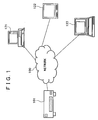
- the configuration of the network comprises a server 101, a personal computer (PC) 121, a monitor 122 and another PC 123, which are connected to each other by a network 100.
- the server 101 carries out processing in accordance with a variety of processing requests such as a request received from a client apparatus as a request for acquisition of a content.
- the PC 121 functions as a client apparatus issuing a request for processing to the server 101.
- An example of the network shown in the figure is a home network.
- the client apparatus can also be any of a plurality of electronic apparatus or any of a plurality of electric home appliances.
- Processing carried out by the server 101 in accordance with requests made by clients connected to the network 100 used as a home network includes a process to provide a client with a content stored in a storage unit such as a hard disk employed in the server 101 and a data-processing service rendered by execution of an application program executable by the server 101.
- the server 101 is shown by being deliberately distinguished from the client apparatus. It is to be noted, however, that a server is defined as an apparatus for rendering services to clients in accordance with requests made by the clients.
- any client apparatus providing its own data-processing service to another client apparatus can be regarded as a server. That is to say, such a client apparatus connected to the network 100 shown in Fig. 1 is also capable of functioning as a server.
- the network 100 can be a wire or radio network. Apparatus connected to the network 100 exchange communication packets such as Ethernet (a trademark) frames by way of the network 100. That is to say, a client can request the server 101 to carry out processing of data by transmitting an Ethernet frame including information on a request for the processing of data in a data portion of the frame to the server 101. Receiving the request for the processing of data, the server 101 caries out the processing of data and, if necessary, transmits a result of the data processing to the client by storing the result in the data portion of a communication packet.
- Ethernet trademark
- An apparatus connected to the network 100 is typically an apparatus conforming to the UPnP. Thus, a new apparatus can be added to the network 100 with ease and an existing apparatus can be detached from the network 100 easily as well. An apparatus newly added to the network 100 can receive a service rendered by another apparatus connected to the network 100 by execution of the following processing procedure:
- FIG. 2 A typical hardware configuration of a PC is explained by referring to Fig. 2 .
- the PC functions as the server 101 or an information-processing apparatus used as a client in the configuration of the network 100 shown in Fig. 1 .
- a CPU Central Processing Unit
- a RAM Random Access Memory
- a program being executed by the CPU 201 and storing data.
- the CPU 201, the ROM 202, the RAM 203 and the HDD 204 are connected to each other through a bus 205.
- the bus 205 is also connected to an input/output interface 206.
- the input/output interface 206 is connected to an input unit 207 and an output unit 208.
- the input unit 207 comprises a keyboard, switches, buttons and a mouse, which are operated by the user.
- the output unit 208 comprises an LCD, a CRT and a speaker, which are used for displaying and outputting various kinds of information to the user.
- the input/output interface 206 is also connected to a communication unit 209 and a drive 210.
- the communication unit 209 functions as a data transmission/reception unit.
- the drive 210 is a component for reading out data from a removable recording medium 211 and writing data onto the removable recording medium 211. Examples of the removable recording medium 211 are a magnetic disk, an optical disk, a magneto-optical disk and a semiconductor memory.
- the configuration shown in Fig. 2 is a typical configuration of the server 101 or a PC serving as an apparatus connected to the network 100 shown in Fig. 1 .
- apparatus connected to the network 100 are not limited to PCs. That is to say, as shown in Fig. 1 , the apparatus can be a mobile phone, a portable communication terminal such as a PDA and various kinds of other electronic equipment such as a reproduction apparatus and a display apparatus or an information-processing apparatus.
- Each of the apparatus connected to the network 100 can have its unique hardware configuration and carries out processing conforming to the hardware.
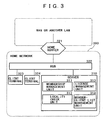
- Fig. 3 is a diagram showing a model of the configuration of a home network 300 implemented by an embodiment of the present invention.
- the home network 300 built at a home is connected to a WAN such as the Internet or another LAN through a home router 321.
- a default gateway of the home network 300 is set at the home router 321.
- the home network 300 is built from a hub 322 and LAN cables connecting the hub 322 to host apparatus such as a home server 310 and client terminals 323 and 324.
- the host apparatus such as the home server 310, the client terminals 323 and 324 and the home router 321 in the home network 300 and host apparatus of an external network each have a MAC address unique to the apparatus.
- a host apparatus exchanges a packet such as an Ethernet (a trademark) frame with another host apparatus by way of networks.
- the packet includes head information comprising the MAC addresses of the packet sender and the packet recipient.
- the host apparatus such as the home server 310, the client terminals 323 and 324 and the home router 321 in the home network 300 are each an apparatus conforming to the UPnP.
- the apparatus can be added to and removed from the home network 300 with ease.
- an apparatus newly added to the home network 300 can receive a service such as a content utilization service rendered in the home network 300 by execution of a procedure comprising (1) addressing processing, (2) discovery processing and (3) service request processing.
- the home server 310 legitimately acquires a content from a content server on an external network through the home router 321 and stores the content for later distribution. Then, each of the client terminals 323 and 324 is allowed to request the home server 310 to transmit a desired content and utilize the acquired content.
- each of the client terminals 323 and 324 acquires a content from the home server 310 and utilizes the content by, for example, copying or streaming the content.
- Each of the client terminals 323 and 324 is also capable of taking the acquired content out to the outside of the local environment. For example, each of the client terminals 323 and 324 is allowed to take the acquired content out to a remote environment.
- the home server 310 comprises a membership management unit 311, a locality check unit 312, a license management unit 313 and a member-client list management unit 314.
- the home server 310 receives a request from a client as a request to transmit a content managed by the home server 310 to the client or a request to register the client to serve as a member client, the home server 310 checks the client by determining whether or not the client pertains to the home network 300. That is to say, the locality check unit 312 checks locality of the client by determining whether or not the client pertains to the home network 300. If the home server 310 determines that the client pertains to the home network 300, the home server 310 processes the request. If a request is received from an external request maker through the home router 321, the request is turned down.
- the home server 310 acquires the MAC address of a default gateway in advance from the home router 321.
- the MAC address of the default gateway is the MAC address of the home router 321.
- the locality check unit 312 employed in the home server 310 receiving a request for an access fetches the MAC address of a client making the request from a packet received from the client as a packet containing the request.
- the locality check unit 312 compares the fetched MAC address with the MAC address of the default gateway, that is, the MAC address previously acquired by the home server 310 itself. If the access has been made by a client connected to the home network 300, the MAC address fetched from the packet is the MAC address of a client making the request.
- a MAC address included in the packet as the MAC address of the access maker is replaced with the MAC address of the home router 321 serving as the default gateway in the course of the packet transmission.
- the access is determined to be an access made by an external access maker. If the fetched MAC address is found different from the previously acquired MAC address of the default gateway, on the other hand, the access is determined to be an access made by an internal access maker connected to the home network 300.
- the home server 310 is capable of easily determining whether or not a client making a request is located in the home network 300, that is, the local environment. If the client making a request is located in the local environment, the requested content is transmitted to the client and a license including information on a limit on the content utilization is issued to the client. If the client making a request is located outside the local environment, on the other hand, the request is turned down. Thus, only a client located in a local environment created in this way is correctly allowed to utilize a content. As a result, illegal distribution of contents can be suppressed effectively.
- the processing carried out by the locality check unit 312 to check locality of a client does not have to be carried out in the way described above. That is to say, another method can be adopted.
- secret information shared by apparatus in the home network 300 is set and included in a packet exchanged between the apparatus.
- the home server 310 receiving a packet compares secret information included in the packet with the secret information held by the home network 300 itself. If the secret information included in the packet matches its own secret information, the packet is determined to be a packet transmitted by an apparatus in the home network 300.
- the secret information shared by apparatus in the home network 300 typically, the MAC address of the home router 321 is used.
- secret information stored in a local-environment management apparatus provided in the home network 300 or the MAC address of the local-environment management apparatus can be used.
- Typical concrete processing is explained as follows. Before each of the client terminals 323 and 324 makes an access to the home server 310, for example, first of all, the client terminal acquires the MAC address of the default gateway from the home router 321 as secret information shared by apparatus in the home network 300. Then, the client terminal writes the acquired MAC address into a packet of a request for the access and transmits the packet to the home server 310. Receiving the packet, the home server 310 compares the secret information included in the packet, that is, the MAC address of the default gateway, with secret information held by the home server 310 itself. If the secret information included in the packet matches the secret information held by the home server 310 itself, the received packet is determined to be a packet transmitted by a client terminal in the home network 300.
- the membership management unit 311 employed in the home server 310 executes management of membership of clients on the basis of a list of member clients.
- the list of member clients is a list of apparatus each connected to the home network 300 as an apparatus having a right to acquire a content.
- the list of member clients is managed by the member-client list management unit 314.
- the list of member clients is a list of identifiers each identifying an apparatus connected to the home network 300 as a client having a right to acquire a content.
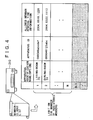
- Fig. 4 is a diagram showing a typical list of member clients as a member-client list managed by the member-client list management unit 314.
- the list of member clients comprises a plurality of lines each provided for an apparatus already serving as a member client, which is a client allowed to utilize a content managed by the home server 310.
- Each line of the member-client list includes a name identifying the apparatus, an ID assigned to the apparatus and information on an allowed member removal time at which the apparatus already serving as a member client can be removed.
- the name of an apparatus is an apparatus name that can be recognized by the user with ease. Examples of the apparatus name are a living-room PC and a dining-room TV.
- the name of an apparatus is optional information though.
- An apparatus ID assigned to an apparatus is an ID unique to the apparatus.
- the MAC address of an apparatus is a typical ID assigned to the apparatus. It is to be noted that the server 310 acquires the MAC address of an apparatus from the apparatus in a process carried out by the server 310 to register the apparatus as a member client on the list of member clients. It is also to be noted that a detailed sequence of a member registration will be described later.
- the member-removal time information indicating a member removal time at which the apparatus already serving as a member client can be removed is typically the latest date among dates each indicating a validity limit of a content provided to the apparatus.
- the client stores the content and a license for the content in typically a hard disk or a flash memory employed in the client terminal as a storage unit.
- a condition for utilizing the content is set.
- An example of the condition is information on a time limit of the content utilization.
- a member client is allowed to utilize a content till a time limit set for the content. As a validity time period set by the time limit of the content utilization expires, the member client is allowed to update the time limit or again acquire the content by making an access to the home server 310. However, a client, which has a content with a validity time period not expired yet but gave up its membership, should not be allowed to utilize the content due to the lost membership. This is because it is feared that, for example, a client no longer pertaining to a particular home network deviates from the normal private utilization of a content.
- a license management unit 313 employed in the home server 310 refers to the list of member clients in carrying out a license check process to determine whether or not the validity time period of contents provided to the client has expired. If the validity time period of contents provided to the client has not expired yet, the termination of the membership is not permitted or a process to request the client to return the contents is carried out.
- the server 310 carries out a process to terminate the membership of a client after confirming that the validity time period of contents provided to the client has expired. It is to be noted that a detailed sequence to remove a member of the list of member clients will be described later.
- the upper limit on the number of member clients than can be registered on the list of member clients is set in advance at N, where N is typically 5, 10, 15, 63 or another number.
- N is typically 5, 10, 15, 63 or another number.
- a new client can always be registered on the list of member clients as long as the number of member clients actually cataloged on the list has not reached the upper limit N.
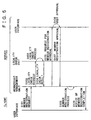
- FIG. 5 is a diagram showing a sequence of processes to register a member client on the list of client members.
- Fig. 5 shows processes carried out by a client making a request to register the client itself to serve as a member client on the list of member clients and processes carried out by a server for processing the request received from the client.
- the processes carried out by the server comprise processes performed by the membership management unit, the locality check unit and a server-side user interface.
- the client passes on the request to the server.
- the request for a process to register the client to serve as a member client on the list of member clients is transmitted by carrying out a process to transmit a packet including the identifier (ID) of the client.
- ID the identifier
- the MAC address of the client can be used as the client ID.
- the membership management unit requests the locality check unit to carry out a locality check process to check locality of the client.
- the locality check unit carries out the locality check process to check locality of the client and, at the following step, the locality check unit reports a result of the locality check process to the membership management unit.
- the locality check process of the locality check unit is carried out by execution of the same procedure as a locality check process for a request made by a client as a request for a content as will be described later.
- the locality check unit fetches the MAC address of a transmission originator from a request packet received from the client and compares the fetched MAC address with a MAC address acquired in advance by the server and stored in the server as the MAC address of the default gateway. If an access is made by a client of the same network, the MAC address included in the packet of the access as the MAC address of the access maker remains unchanged as it is. If an access is made by a client outside the network through a router, on the other hand, the MAC address included in the packet of the access as the MAC address of the access maker is replaced with the MAC address of the default gateway, which is the router, in the course of the packet transmission.
- the locality check unit is capable of determining whether the client making the access is a client of the same network, that is, a client in the same environment, or a client outside the network.
- the locality check unit carries out the locality check process by comparison of common secrete information included in the packet with common secrete information stored in advance in the server instead of comparing MAC addresses.
- the locality check unit reports a result of the locality check process carried out at the step S103 to the membership management unit. If the locality check unit determines that the client making the request to register the client is not a client of the same network, that is, not a client in the same environment, the execution of the sequence of processes is ended without registering the client to serve as a member client on the list of member clients. Note that, in this case, it is also possible to provide a configuration in which the membership management unit transmits a message indicating that the process to register the client is impossible to the client.
- the flow of the sequence of processes goes on to a step S105 at which the membership management unit requests the server-side user interface to output a request for an approval of an operation to register the client to serve as a member client on the list of member clients.
- the server-side user interface is requested to display a user-input request screen on a display unit to the user of the server as a screen requesting the user to enter an input indicating an approval or a disapproval of an operation to register the client to serve as a member client on the list of member clients.
- the flow of the sequence of processes goes on to a step S107 at which the server-side user interface passes on the approval to the membership management unit. If the user does not enter an input indicating an approval of an operation to register the client to serve as a member client on the list of member clients at the step S106, on the other hand, the execution of the sequence of processes is ended without registering the client to serve as a member client on the list of member clients. Note that, in this case, it is also possible to provide a configuration in which the membership management unit transmits a message indicating that the process to register the client to serve as a member client cannot be carried out to the client.
- the flow of the sequence of processes goes on to a step S108 at which the membership management unit registers the client to serve as a member client on the list of member clients. That is to say, a process is carried out to add an entry describing information on the client to the member-client list described earlier by referring to Fig. 4 .
- the list of member clients has an upper limit on the number of member clients that can be registered on the list.
- the membership management unit registers the client to serve as a member client on the list of member clients only if the number of member clients actually cataloged on the list has not reached the upper limit. If the number of member clients actually cataloged on the list has reached the upper limit, on the other hand, the membership management unit does not register the client to serve as a member client on the list of member clients.
- step S108 As the process carried out at the step S108 to register the client to serve as a member client on the list of member clients is completed, the flow of the sequence of processes goes on to a step S109 at which the membership management unit transmits a message to the client as a message informing the client that the process to register the client to serve as a member client on the list of member clients has been completed, and the processing is ended.
- the server verifies the following two things:
- the server carries out the operation to register the client to serve as a member client on the list of member clients on condition that the above two things have been verified.
- a client is prevented from being registered to serve as a member client on the list of member clients in accordance with a request to register the client on the basis of an access made by a request maker outside the same home network of the server, or prevented from being registered to serve as a member client on the list of member clients without a clear approval given by the user of the server.
- strict management of membership can be executed.
- utilization of a content is limited to clients connected to the same network as the server so that illegal utilization of the content can be avoided.
- FIG. 6 is a diagram showing the processing to delete a client already serving as a member client from the list of member clients.
- Fig. 6 shows processes carried out by a client making a request to delete the client itself as a member client from the list of member clients and processes carried out by a server for processing the request received from the client.
- the processes carried out by the server include processes performed by the membership management unit, the license management unit and a server-side user interface.
- the client passes on the request to the server.
- the request for a process to deregister the client already serving as a member client from the list of member clients is transmitted by carrying out a process to transmit a packet including the identifier (ID) of the client.
- ID the identifier
- the MAC address of the client can be used as the client ID.
- the membership management unit requests the license management unit to carry out a license validity period check process to check the license of the client by checking the validity period of the license.
- the license management unit carries out the license validity period check process to check the license of the client and, at the following step, the license management unit reports a result of the license validity period check process to the membership management unit.
- the license validity period check process of the license management unit is carried out on the basis of the list of member clients explained earlier by referring to Fig. 4 .
- the list of member clients includes a plurality of lines each provided for an apparatus serving as a member client, which is a client allowed to utilize a content managed by the server 310.
- Each line of the member-client list includes a name identifying the apparatus, an ID assigned to the apparatus and information on an allowed member removal time at which the apparatus serving as a member client can be deleted.
- the member removal time information indicating a member removal time at which the apparatus serving as a member client can be deleted is typically the latest date among dates each indicating a validity limit of a content provided to the apparatus.
- the server 310 When the server 310 carries out a process to provide a content to a member client, the server 310 also provides a license to the member client as well. In the license, a condition for utilizing the content is set. An example of the condition is information on a time limit of the content utilization. In this process, the information on a time limit of the content utilization is stored in the list of member clients as the allowed member removal time.
- the allowed member removal time stored in the list of member clients includes the time limit of the content utilization for each content.
- the allowed member removal time stored in the list of member clients includes only the latest date among dates each indicating a validity limit of a content provided to the client.
- the license management unit carries out the license validity period check process to check the license of the client by determining whether or not the client making a request for deletion of the client already serving as a member client is a client having no license with a remaining validity time period. That is to say, the license management unit extracts an entry of the client making a request for deletion of the client already serving as a member client from the list of member clients and examines the allowed member removal time stored in the extracted entry to determine whether or not the validity time periods of all contents provided to the client have expired.
- the license management unit determines that the validity time periods of all contents provided to the client making a request for deletion of the client already serving as a member client have expired, the client already serving as a member client is determined to be a client that can be deleted. Then, at the next step S204, the license management unit informs the membership management unit that the client making a request for deletion of the client is a client that can be deleted. If the license management unit determines that the validity time periods of contents provided to the client making a request for deletion of the client already serving as a member client have not all expired, on the other hand, the client already serving as a member client is determined to be a client that cannot be deleted. In this case, at the step S204, the license management unit informs the membership management unit that the client making a request for deletion of the client is a client that cannot be deleted.
- the license management unit finds out that the validity time periods of contents provided to the client making a request for deletion of the client already serving as a member client have not all expired, determining that the client already serving as a member client is a client that cannot be deleted and, at the step S204, the license management unit informs the membership management unit that the client making a request for deletion of the client is a client that cannot be deleted, the membership management unit informs the client making a request for deletion of the client already serving as a member client that the client cannot be deleted.
- the membership management unit requests the client making a request for deletion of the client already serving as a member client to return contents provided to the client.
- the license management unit finds out that the validity time periods of contents provided to the client making a request for deletion of the client already serving as a member client have all expired, determining that the client already serving as a member client is a client that can be deleted and, at the step S204, the license management unit informs the membership management unit that the client making a request for deletion of the client is a client that can be deleted, on the other hand, the flow of the sequence of processes goes on to a step S205 at which the membership management unit requests the server-side user interface to output a request for an approval of an operation to delete the client already serving as a member client from the list of member clients.
- the server-side user interface is requested to display a user-input request screen on a display unit to the user of the server as a screen requesting the user to enter an input indicating an approval or a disapproval of an operation to delete the client already serving as a member client from the list of member clients.
- the flow of the sequence of processes goes on to a step S207 at which the server-side user interface passes on the approval to the membership management unit. If the user does not enter an input indicating an approval of an operation to register the client already serving as a member client on the list of member clients at the step S206, on the other hand, the execution of the sequence of processes is ended without deleting the client already serving as a member client from the list of member clients. Note that, in this case, it is also possible to provide a configuration in which the membership management unit transmits a message indicating that the process to delete the client already serving as a member client cannot be carried out to the client.
- the flow of the sequence of processes goes on to a step S208 at which the membership management unit deletes the client already serving as a member client from the list of member clients. That is to say, a process is carried out to delete an entry describing information on the client from the member-client list described earlier by referring to Fig. 4 .
- the flow of the sequence of processes goes on to a step S209 at which the membership management unit transmits a message to the client as a message informing the client that the process to delete the client already serving as a member client from the list of member clients has been completed.
- the server verifies the following two things:
- the server carries out the operation to delete the client already serving as a member client from the list of member clients on condition that the above two things have been verified.
- the client making a request for deletion of the client already serving as a member client is a client having a license with a remaining validity time period of a content provided by the server
- the client is prevented from being deleted from the list of member clients or, even if the client making a request for deletion of the client already serving as a member client is a client having no license with a remaining validity time period of a content provided by the server, the client is also prevented from being deleted as a member client from the list of member clients unless a clear approval is given by the user of the server.
- utilization of a content is limited to member clients recognized by the server so that illegal utilization of the content can be avoided.
- the hardware configurations of the server and a client apparatus have been explained by referring to Fig. 2 .
- the various kinds of processing described above are carried out by the CPUs employed in the server and the client apparatus as control units through execution of programs stored in advance in storage units employed in the server and the client apparatus respectively.
- Typical pieces of processing carried out by the CPU employed in the server include a process to receive a request from a client as a request for registration of the client to serve as a member client or a request for deletion of the client already serving as a member client.
- the server then carries out processing including a process to check locality of the client, a process to obtain an approval of the registration or the deletion of the client from the user of the server, and a process to update the list of member clients.
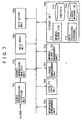
- Fig. 7 is an explanatory block diagram showing a configuration including main functional elements of the server.
- a packet transmission/reception unit 701 is an element for exchanging a packet with a client serving as a communication partner.
- a packet generation/analysis unit 702 is an element for generating a packet to be transmitted and analyzing a received packet. To be more specific, the packet generation/analysis unit 702 carries out processing including operations to set an address of a generated packet, recognize an address of a received packet, store data into a data storage portion of a packet to be transmitted, and read out data from the data storage portion of a received packet.
- a data input unit 703 includes a keyboard used by the user to enter data inputs and a user interface.
- a data output unit 704 is an output unit including a display unit for displaying message data or the like. The data output unit 104 displays the screen to request the user to enter an input indicating an approval of member registration or deletion.
- a membership management unit 705 is an element for managing membership of clients. To put it in detail, the membership management unit 705 executes management of members on the basis of a member-client list 711 stored in a storage unit 709 in a format shown in Fig. 4 .
- the membership management unit 705 executes general control of the processing to register a client to serve as a member client as shown in Fig. 5 and the processing to delete a client already serving as a member client as shown in Fig. 6 only if predetermined conditions are satisfied.
- the locality check unit 706 is an element for checking the locality of a client in the processing to register a client to serve as a member client as shown in Fig. 5 . That is to say, the locality check unit 706 determines whether or not the client is located in the same home network as the server on the basis of the MAC address of a transmission source or on the basis of common secret information.
- a license management unit 707 is an element for verifying that a client making a request for deletion of the client already serving as a member client is a client having no license with a remaining validity time period of a content provided by the server. To put it concretely, the license management unit 707 refers to an allowed member removal time stored in the list of member clients 711 stored in a storage unit 709 to determine whether or not the validity time periods of all contents provided to the client have expired.
- a member-client list management unit 708 is an element for managing the member-client list 711.
- the storage unit 709 is an element for storing the member-client list 711, data-processing programs 712, contents 713, which is utilizable by clients, and license information 714 for each of the contents 713.
- the data-processing programs 712 are programs prescribing the processing to register a client to serve as a member client as shown in Fig. 5 and the processing to delete a client already serving as a member client as shown in Fig. 6 .
- the server has functions shown as the functional blocks of Fig. 7 .
- the server executes the data-processing programs 712 under control executed by the CPU employed in the server as shown in Fig. 2 .
- a series of processes explained in this specification can be implemented by hardware, software or a combination of hardware and software. If the processing is implemented by software, a software program prescribing the sequence of the processing can be installed in a memory employed in a special-purpose computer embedded in dedicated hardware for later execution. As an alternative, the program to be executed is installed in a memory employed in a general-purpose computer capable of carrying out various kinds of processing.
- the memory employed in the computer as a memory for installing the program is typically a hard disk. Instead of installing a program into a hard disk, the program can also be stored in advance in the hard disk. A program installed or stored in advance in the hard disk is then loaded into a RAM for execution by the CPU. Instead of using the hard disk for installing a program or storing the program in advance, the program can also be stored in advance in a ROM (Read Only Memory) in a state of being readily executable by the CPU.
- ROM Read Only Memory
- a program is installed into a hard disk from a removable recording medium such as a flexible disk, a CD-ROM (Compact-Disk Read Only Memory), an MO (Magneto Optical) disk, a DVD (Digital Versatile Disk), a magnetic disk or a semiconductor memory.
- a removable recording medium such as a flexible disk, a CD-ROM (Compact-Disk Read Only Memory), an MO (Magneto Optical) disk, a DVD (Digital Versatile Disk), a magnetic disk or a semiconductor memory.
- the program is stored (or recorded) in advance in the removable recording medium temporarily or permanently.
- a program stored (or recorded) in advance in the removable recording medium is presented to the user as the so-called package software.
- the program can also be downloaded from a download site to the computer through radio communication, or through wire communication by way of a network such as a LAN (Local Area Network) or the Internet.
- the computer receives the downloaded program and installs the program into a memory such as a hard disk.
- a server carries out a process to register a client to serve as a member client on a list of member clients, which are each having a right to utilize a content, on condition that two results of confirmation indicate that a client making a request for registration of the client to serve as a member client is a client in the same local network as the server and indicate that a user of the server has given an approval of the requested registration of the client to serve as a member client.
- the server turns down a request for registration of a client to serve as a member client on the list of member clients if the request is based on an access made by a client outside the same home network as the server or the request is not approved clearly by the user.
- strict management of members can be executed.
- the utilization of a content is limited to a client in the same local network as the server, and it is therefore possible to get rid of illegal utilization of a content.
- a server carries out a process to delete a client already serving as a member client from a list of member clients, which are each having a right to utilize a content, on condition that two results of confirmation indicate that the client making a request for deletion of the client already serving as a member client is a client having no license with a remaining validity time period and that a user of the server has given an approval of the requested deletion of the client already serving as a member client.
- the server turns down a request for deletion of a client already serving as a member client from the list of member clients if the request is based on an access made by a client having a license with a remaining validity time period or the request is not approved clearly by the user.
- strict management of members can be executed and the utilization of a content is limited to a member client recognized by the server, and it is therefore possible to get rid of illegal utilization of a content.
Landscapes
- Engineering & Computer Science (AREA)
- Computer Networks & Wireless Communication (AREA)
- Signal Processing (AREA)
- Computer Security & Cryptography (AREA)
- Computing Systems (AREA)
- General Engineering & Computer Science (AREA)
- Computer Hardware Design (AREA)
- Health & Medical Sciences (AREA)
- General Health & Medical Sciences (AREA)
- Medical Informatics (AREA)
- Theoretical Computer Science (AREA)
- Storage Device Security (AREA)
- Information Transfer Between Computers (AREA)
- Management, Administration, Business Operations System, And Electronic Commerce (AREA)
- Computer And Data Communications (AREA)
Applications Claiming Priority (2)
| Application Number | Priority Date | Filing Date | Title |
|---|---|---|---|
| JP2004049615A JP4682520B2 (ja) | 2004-02-25 | 2004-02-25 | 情報処理装置、および情報処理方法、並びにコンピュータ・プログラム |
| JP2004049615 | 2004-02-25 |
Publications (2)
| Publication Number | Publication Date |
|---|---|
| EP1569414A1 EP1569414A1 (en) | 2005-08-31 |
| EP1569414B1 true EP1569414B1 (en) | 2009-02-18 |
Family
ID=34747467
Family Applications (1)
| Application Number | Title | Priority Date | Filing Date |
|---|---|---|---|
| EP05250829A Expired - Lifetime EP1569414B1 (en) | 2004-02-25 | 2005-02-14 | Information-processing apparatus, information-processing method, and computer program |
Country Status (6)
| Country | Link |
|---|---|
| US (1) | US7523211B2 (enExample) |
| EP (1) | EP1569414B1 (enExample) |
| JP (1) | JP4682520B2 (enExample) |
| KR (1) | KR101105581B1 (enExample) |
| CN (1) | CN100488098C (enExample) |
| DE (1) | DE602005012744D1 (enExample) |
Families Citing this family (15)
| Publication number | Priority date | Publication date | Assignee | Title |
|---|---|---|---|---|
| KR100677152B1 (ko) * | 2004-11-17 | 2007-02-02 | 삼성전자주식회사 | 사용자 바인딩을 이용한 홈 네트워크에서의 콘텐츠 전송방법 |
| JP4042759B2 (ja) * | 2005-05-17 | 2008-02-06 | コニカミノルタビジネステクノロジーズ株式会社 | データファイル管理装置,データファイル管理プログラム及び該プログラムを記録した記録媒体 |
| FI20051061A0 (fi) * | 2005-10-21 | 2005-10-21 | Nokia Corp | Vertaisyhteyden luominen |
| JP2007324921A (ja) * | 2006-05-31 | 2007-12-13 | Toshiba Corp | ネットワーク接続機器及び提供サービス制御プログラム |
| US20080077650A1 (en) * | 2006-08-29 | 2008-03-27 | Jared Matthew A | Method and apparatus for transferring data between a home networked device and a storage system |
| JP4751296B2 (ja) * | 2006-10-26 | 2011-08-17 | 株式会社日立ソリューションズ | 電子メール送受信システム |
| KR20080047946A (ko) * | 2006-11-27 | 2008-05-30 | 삼성전자주식회사 | 어드레스 관리방법 및 이를 적용한 영상기기 |
| JP5684176B2 (ja) * | 2012-03-13 | 2015-03-11 | 株式会社東芝 | アクセス装置、システム及びプログラム |
| JP5485485B1 (ja) * | 2013-08-22 | 2014-05-07 | 楽天株式会社 | 情報処理装置、情報処理方法、プログラム、記憶媒体 |
| JP5485484B1 (ja) * | 2013-08-22 | 2014-05-07 | 楽天株式会社 | 情報処理装置、情報処理方法、プログラム、記憶媒体 |
| US10171577B2 (en) | 2013-12-12 | 2019-01-01 | Wififace Llc | Local area networking system |
| US9560158B2 (en) | 2013-12-12 | 2017-01-31 | Hassen Damon Alhandy | Social networking using local area networks |
| US9449187B2 (en) * | 2014-08-11 | 2016-09-20 | Document Dynamics, Llc | Environment-aware security tokens |
| US10554683B1 (en) * | 2016-05-19 | 2020-02-04 | Board Of Trustees Of The University Of Alabama, For And On Behalf Of The University Of Alabama In Huntsville | Systems and methods for preventing remote attacks against transportation systems |
| JP7659378B2 (ja) * | 2020-10-08 | 2025-04-09 | シャープ株式会社 | 管理システム、権限管理方法及びプログラム |
Family Cites Families (26)
| Publication number | Priority date | Publication date | Assignee | Title |
|---|---|---|---|---|
| US5603081A (en) * | 1993-11-01 | 1997-02-11 | Telefonaktiebolaget Lm Ericsson | Method for communicating in a wireless communication system |
| US5822434A (en) * | 1996-06-19 | 1998-10-13 | Sun Microsystems, Inc. | Scheme to allow two computers on a network to upgrade from a non-secured to a secured session |
| JPH10271154A (ja) | 1997-03-21 | 1998-10-09 | Nec Eng Ltd | 不正アクセス防止方法およびシステム |
| US6308212B1 (en) * | 1998-05-29 | 2001-10-23 | Hewlett-Packard Company | Web user interface session and sharing of session environment information |
| US6275695B1 (en) * | 1998-10-08 | 2001-08-14 | Nortel Networks Limited | Spectrum yield management in a wireless communication system |
| US7003546B1 (en) * | 1998-10-13 | 2006-02-21 | Chris Cheah | Method and system for controlled distribution of contact information over a network |
| US20020038348A1 (en) * | 2000-01-14 | 2002-03-28 | Malone Michael K. | Distributed globally accessible information network |
| JP3749817B2 (ja) * | 2000-03-30 | 2006-03-01 | 株式会社東芝 | 送信装置およびその送信方法 |
| JP2002073861A (ja) | 2000-08-24 | 2002-03-12 | Matsushita Electric Ind Co Ltd | 情報配信制御方法 |
| US7035911B2 (en) * | 2001-01-12 | 2006-04-25 | Epicrealm, Licensing Llc | Method and system for community data caching |
| US7013303B2 (en) * | 2001-05-04 | 2006-03-14 | Sun Microsystems, Inc. | System and method for multiple data sources to plug into a standardized interface for distributed deep search |
| US20020173981A1 (en) * | 2001-05-18 | 2002-11-21 | Stewart Brett B. | Domain place registration system and method for registering for geographic based services |
| US7590684B2 (en) * | 2001-07-06 | 2009-09-15 | Check Point Software Technologies, Inc. | System providing methodology for access control with cooperative enforcement |
| WO2003017055A2 (en) * | 2001-08-15 | 2003-02-27 | Visa International Service Association | Method and system for delivering multiple services electronically to customers via a centralized portal architecture |
| US20050021467A1 (en) * | 2001-09-07 | 2005-01-27 | Robert Franzdonk | Distributed digital rights network (drn), and methods to access operate and implement the same |
| JP2003224556A (ja) * | 2002-01-28 | 2003-08-08 | Toshiba Corp | 通信装置及び通信制御方法 |
| US7532340B2 (en) * | 2002-04-19 | 2009-05-12 | Toshiba Tec Kabushiki Kaisha | Document management system rule-based automation |
| AU2003267764A1 (en) * | 2002-10-22 | 2004-05-13 | Koninklijke Philips Electronics N.V. | Method and device for authorizing content operations |
| JP2004151778A (ja) * | 2002-10-28 | 2004-05-27 | Toshiba Corp | コンテンツ送信装置、コンテンツ受信装置及びコンテンツ送受信システム |
| JP3826100B2 (ja) * | 2002-11-27 | 2006-09-27 | 株式会社東芝 | 通信中継装置、通信システム及び通信制御プログラム |
| JP3821775B2 (ja) * | 2002-11-29 | 2006-09-13 | 株式会社東芝 | コンテンツ送受信システム、コンテンツ送信装置及びコンテンツ受信装置 |
| AU2003298797A1 (en) * | 2002-12-04 | 2004-06-23 | Entriq Inc. | Multiple content provider user interface |
| US20040117490A1 (en) * | 2002-12-13 | 2004-06-17 | General Instrument Corporation | Method and system for providing chaining of rules in a digital rights management system |
| US20040250129A1 (en) * | 2003-06-03 | 2004-12-09 | James Clough | Systems and methods for managing a network-based service |
| JP4647903B2 (ja) * | 2003-07-09 | 2011-03-09 | 株式会社東芝 | 情報通信装置、通信システム及びデータ伝送制御プログラム |
| US20050066353A1 (en) * | 2003-09-18 | 2005-03-24 | Robert Fransdonk | Method and system to monitor delivery of content to a content destination |
-
2004
- 2004-02-25 JP JP2004049615A patent/JP4682520B2/ja not_active Expired - Fee Related
-
2005
- 2005-02-14 EP EP05250829A patent/EP1569414B1/en not_active Expired - Lifetime
- 2005-02-14 DE DE602005012744T patent/DE602005012744D1/de not_active Expired - Lifetime
- 2005-02-23 US US11/063,498 patent/US7523211B2/en active Active
- 2005-02-23 KR KR1020050014805A patent/KR101105581B1/ko not_active Expired - Fee Related
- 2005-02-25 CN CNB2005100521118A patent/CN100488098C/zh not_active Expired - Fee Related
Also Published As
| Publication number | Publication date |
|---|---|
| JP2005242542A (ja) | 2005-09-08 |
| EP1569414A1 (en) | 2005-08-31 |
| US20050198293A1 (en) | 2005-09-08 |
| KR101105581B1 (ko) | 2012-01-17 |
| CN1661962A (zh) | 2005-08-31 |
| CN100488098C (zh) | 2009-05-13 |
| JP4682520B2 (ja) | 2011-05-11 |
| DE602005012744D1 (de) | 2009-04-02 |
| US7523211B2 (en) | 2009-04-21 |
| KR20060043101A (ko) | 2006-05-15 |
Similar Documents
| Publication | Publication Date | Title |
|---|---|---|
| US7840688B2 (en) | Information processing device, server client system, method, and computer program | |
| CN100358308C (zh) | 信息处理装置和访问控制处理方法 | |
| US20050198322A1 (en) | Information-processing method, information-processing apparatus and computer program | |
| CN1992594B (zh) | 一种适用于流媒体系统的url扩展方法 | |
| US8219643B2 (en) | Server/client system for managing the transmission and use of copyrighted content, information processing unit, information processing method, and computer program | |
| US7523211B2 (en) | Information processing apparatus, information processing method, and computer-readable storage medium | |
| US20020049679A1 (en) | Secure digital content licensing system and method | |
| CN102025749A (zh) | 移动流媒体业务防盗用方法 | |
| JP2004152249A (ja) | 機器認証装置、機器認証方法、および情報処理装置、情報処理方法、並びにコンピュータ・プログラム | |
| WO2002088991A1 (en) | Method of protecting and managing digital contents and system for using thereof | |
| CN1701567B (zh) | 设备间认证系统、方法、通信装置 | |
| CN101321168A (zh) | 版权对象获取方法和系统 | |
| JP2005250881A (ja) | 情報処理装置、および情報処理方法、並びにコンピュータ・プログラム | |
| WO2006011388A1 (ja) | 伝送履歴依存処理装置 | |
| CN101842783B (zh) | 用于管理数字版权管理权利对象的方法和装置 | |
| JP4778250B2 (ja) | コンテンツ配信システム及び方法並びにプログラム | |
| US8234714B2 (en) | Method and system for registering domain | |
| US20060047973A1 (en) | Method of preventing multimedia copy | |
| KR20040073265A (ko) | 주문형 멀티미디어 콘텐츠 제공 시스템 및 그 방법 | |
| KR101190946B1 (ko) | 무선 등록을 이용한 디지털 콘텐츠 권한 관리 방법 및시스템 | |
| JP2002049376A (ja) | データ提供装置、データ提供システム、及びデータ提供方法 |
Legal Events
| Date | Code | Title | Description |
|---|---|---|---|
| PUAI | Public reference made under article 153(3) epc to a published international application that has entered the european phase |
Free format text: ORIGINAL CODE: 0009012 |
|
| AK | Designated contracting states |
Kind code of ref document: A1 Designated state(s): AT BE BG CH CY CZ DE DK EE ES FI FR GB GR HU IE IS IT LI LT LU MC NL PL PT RO SE SI SK TR |
|
| AX | Request for extension of the european patent |
Extension state: AL BA HR LV MK YU |
|
| 17P | Request for examination filed |
Effective date: 20060213 |
|
| AKX | Designation fees paid |
Designated state(s): DE FR GB |
|
| GRAP | Despatch of communication of intention to grant a patent |
Free format text: ORIGINAL CODE: EPIDOSNIGR1 |
|
| GRAS | Grant fee paid |
Free format text: ORIGINAL CODE: EPIDOSNIGR3 |
|
| GRAA | (expected) grant |
Free format text: ORIGINAL CODE: 0009210 |
|
| AK | Designated contracting states |
Kind code of ref document: B1 Designated state(s): DE FR GB |
|
| REG | Reference to a national code |
Ref country code: GB Ref legal event code: FG4D |
|
| REF | Corresponds to: |
Ref document number: 602005012744 Country of ref document: DE Date of ref document: 20090402 Kind code of ref document: P |
|
| PLBE | No opposition filed within time limit |
Free format text: ORIGINAL CODE: 0009261 |
|
| STAA | Information on the status of an ep patent application or granted ep patent |
Free format text: STATUS: NO OPPOSITION FILED WITHIN TIME LIMIT |
|
| 26N | No opposition filed |
Effective date: 20091119 |
|
| REG | Reference to a national code |
Ref country code: GB Ref legal event code: 746 Effective date: 20120703 |
|
| REG | Reference to a national code |
Ref country code: DE Ref legal event code: R084 Ref document number: 602005012744 Country of ref document: DE Effective date: 20120614 |
|
| REG | Reference to a national code |
Ref country code: FR Ref legal event code: PLFP Year of fee payment: 12 |
|
| REG | Reference to a national code |
Ref country code: FR Ref legal event code: PLFP Year of fee payment: 13 |
|
| REG | Reference to a national code |
Ref country code: FR Ref legal event code: PLFP Year of fee payment: 14 |
|
| PGFP | Annual fee paid to national office [announced via postgrant information from national office to epo] |
Ref country code: FR Payment date: 20210120 Year of fee payment: 17 |
|
| PGFP | Annual fee paid to national office [announced via postgrant information from national office to epo] |
Ref country code: DE Payment date: 20210120 Year of fee payment: 17 Ref country code: GB Payment date: 20210120 Year of fee payment: 17 |
|
| REG | Reference to a national code |
Ref country code: DE Ref legal event code: R079 Ref document number: 602005012744 Country of ref document: DE Free format text: PREVIOUS MAIN CLASS: H04L0029060000 Ipc: H04L0065000000 |
|
| REG | Reference to a national code |
Ref country code: DE Ref legal event code: R119 Ref document number: 602005012744 Country of ref document: DE |
|
| GBPC | Gb: european patent ceased through non-payment of renewal fee |
Effective date: 20220214 |
|
| PG25 | Lapsed in a contracting state [announced via postgrant information from national office to epo] |
Ref country code: FR Free format text: LAPSE BECAUSE OF NON-PAYMENT OF DUE FEES Effective date: 20220228 |
|
| PG25 | Lapsed in a contracting state [announced via postgrant information from national office to epo] |
Ref country code: GB Free format text: LAPSE BECAUSE OF NON-PAYMENT OF DUE FEES Effective date: 20220214 Ref country code: DE Free format text: LAPSE BECAUSE OF NON-PAYMENT OF DUE FEES Effective date: 20220901 |