EP1568188B1 - Verfahren und Vorrichtung zur Protokollübersetzung in einem modularen System bestehend aus Netzwerkknoten und einem Koppelfeld - Google Patents
Verfahren und Vorrichtung zur Protokollübersetzung in einem modularen System bestehend aus Netzwerkknoten und einem Koppelfeld Download PDFInfo
- Publication number
- EP1568188B1 EP1568188B1 EP03781950A EP03781950A EP1568188B1 EP 1568188 B1 EP1568188 B1 EP 1568188B1 EP 03781950 A EP03781950 A EP 03781950A EP 03781950 A EP03781950 A EP 03781950A EP 1568188 B1 EP1568188 B1 EP 1568188B1
- Authority
- EP
- European Patent Office
- Prior art keywords
- packet
- protocol
- communication protocol
- csix
- spi
- Prior art date
- Legal status (The legal status is an assumption and is not a legal conclusion. Google has not performed a legal analysis and makes no representation as to the accuracy of the status listed.)
- Expired - Lifetime
Links
- 238000000034 method Methods 0.000 title claims abstract description 35
- 238000013519 translation Methods 0.000 title claims abstract description 20
- 239000004744 fabric Substances 0.000 title claims description 49
- 238000004891 communication Methods 0.000 claims description 94
- 238000013507 mapping Methods 0.000 claims description 23
- 101000701853 Rattus norvegicus Serine protease inhibitor A3N Proteins 0.000 claims 4
- 238000012545 processing Methods 0.000 description 10
- 238000013461 design Methods 0.000 description 6
- 238000010586 diagram Methods 0.000 description 4
- 230000007246 mechanism Effects 0.000 description 2
- 230000003287 optical effect Effects 0.000 description 2
- 230000008569 process Effects 0.000 description 2
- 230000000903 blocking effect Effects 0.000 description 1
- 238000004364 calculation method Methods 0.000 description 1
- 230000008859 change Effects 0.000 description 1
- 238000006243 chemical reaction Methods 0.000 description 1
- 125000004122 cyclic group Chemical group 0.000 description 1
- 238000013500 data storage Methods 0.000 description 1
- 230000003247 decreasing effect Effects 0.000 description 1
- 230000001419 dependent effect Effects 0.000 description 1
- 238000005538 encapsulation Methods 0.000 description 1
- 239000012634 fragment Substances 0.000 description 1
- 238000007726 management method Methods 0.000 description 1
- 238000012986 modification Methods 0.000 description 1
- 230000004048 modification Effects 0.000 description 1
- 230000008520 organization Effects 0.000 description 1
- 230000002093 peripheral effect Effects 0.000 description 1
- 238000012552 review Methods 0.000 description 1
- 238000006467 substitution reaction Methods 0.000 description 1
Images


Classifications
-
- H—ELECTRICITY
- H04—ELECTRIC COMMUNICATION TECHNIQUE
- H04L—TRANSMISSION OF DIGITAL INFORMATION, e.g. TELEGRAPHIC COMMUNICATION
- H04L69/00—Network arrangements, protocols or services independent of the application payload and not provided for in the other groups of this subclass
- H04L69/08—Protocols for interworking; Protocol conversion
-
- H—ELECTRICITY
- H04—ELECTRIC COMMUNICATION TECHNIQUE
- H04L—TRANSMISSION OF DIGITAL INFORMATION, e.g. TELEGRAPHIC COMMUNICATION
- H04L49/00—Packet switching elements
Definitions
- a modular system may comprise a number of network nodes connected by a switching fabric.
- the network nodes may communicate information to each other via the switching fabric using one or more communication protocols.
- the switching fabric and network nodes may not be configured to use the same communication protocols. Consequently, certain nodes may only work with certain switching fabrics. Accordingly, there may be need for improvements in techniques to communicate information in heterogeneous environments.
- a wireless gateway which comprises a plurality of communication modules that are each operable to receive and transmit communication in a particular communication protocol.
- the wireless gateway further includes a means for translating between each of the communication protocols that are utilized to communicate external to said wireless gateway and an intermediary protocol utilized to communicate internally within the gateway.
- a message interworking unit is further included for routing, in the intermediary protocol, communication received by a communication module to at least one other of the communication modules determined to be proper for transmitting such communication to one or more target devices.
- the communication module to which the communication is routed is capable of translating the intermediary protocol to its corresponding external protocol, and then transmit the communication to a target device in such external protocol.
- Embodiments of the invention may comprise a method and apparatus to perform protocol translation. For example, in one embodiment of the invention at least one first packet created in accordance with a first protocol may be received. A packet type for the first packet may be determined. A second protocol may be selected based on the packet type. The first packet may be translated to at least one second packet in accordance with the second protocol.
- a network node may comprise in part a network processor and a fabric interface chip (FIC).
- the FIC may be configured to translate packets of varying protocols between the switching fabric and network processor.
- varying network processors may communicate with varying switching fabrics leading to a more robust and flexible modular system design.
- the FIC may also perform protocol translation for packet communicated between the network processor and other ports of the network node, such as an adjunct or ingress port.
- An adjunct port may refer to a port through which a packet is transferred to an adjunct processor.
- An ingress (respectively egress) port may be a port through which packets enter (respectively exit) a system.
- each packet may be of a particular type, referred to herein as a packet type.
- the packet type may be assigned, or alternatively, may be determined from a set of criteria, such as the packet format, port assignments, predetermined flags, protocol fields and so forth.
- Each packet type may have an associated protocol that is particularly suitable for communication with the switching fabric or network processor.
- the FIC may determine a packet type and select the appropriate protocol to use for protocol translation. The FIC may then translate the packet to the selected protocol. This selective mapping procedure may result in more efficient packet processing and communication, and further, may allow the FIC to perform translation services for any number of system elements.
- any reference in the specification to "one embodiment” or “an embodiment” means that a particular feature, structure, or characteristic described in connection with the embodiment is included in at least one embodiment of the invention.
- the appearances of the phrase “in one embodiment” in various places in the specification are not necessarily all referring to the same embodiment.
- FIG. 1 illustrates a modular system according to one embodiment of the invention.
- FIG. 1 may illustrate a modular system 100 comprising one or more network nodes or "blades" 102 connected via a switching fabric 104.
- the term "blade” as used herein may refer to a device implemented as a single board, such as a single board computer (SBC) with a processor or controller, a router, a switch, a storage system, a network appliance, a private branch exchange (PBX), an application server, a computer/telephony (CT) appliance, and so forth.
- SBC single board computer
- PBX private branch exchange
- CT computer/telephony
- Each blade may include an interface to connect with the switching fabric, and may communicate with other blades via switching fabric 104.
- Switching fabric 104 may be, for example, a layer 2 switching fabric comprising a communications circuit board having a plurality of blade interfaces. Each blade interface may provide a common interconnect for modules connected thereto. In one embodiment of the invention, the blade interfaces are in electrical communication with each other and with, for example, a system management bus of switching fabric 104.
- switching fabric 104 may be based on a form factor as set forth by the Peripheral Component Interconnect (PCI) Industrial Computer Manufacturers Group (PICMG), such as the CompactPCI specification version 2.6 (“CompactPCI Specification”), wherein the blade interfaces are CompactPCI slots or connectors, or the AdvancedTCA (ATCA) PICMG 3.0 Draft Specification version 9.0, dated November 11, 2002, although the embodiments are not limited in this context.
- PCI Peripheral Component Interconnect
- PICMG Peripheral Component Interconnect
- CompactPCI Specification CompactPCI specification version 2.6
- ATCA AdvancedTCA
- Each blade connected to switching fabric 104 may communicate with other blades and system resources via switching fabric 104.
- Each blade may have one or more layer 2 network addresses, and therefore each blade may communicate information to any other blade in the system.
- Switching fabric 104 and blades 102 may each communicate information in accordance with any number of communication protocols, such as layer 2 communication protocols.
- modular system 100 may communicate information using a protocol defined by the Common Switch Interface Specification (CSIX) Forum titled “CSIX-L1: Common Switch Interface Specification-L1,” version 1.0, dated 8/5/2000 ("CSIX Specification”), the Infiniband Trade Association document titled “Infiniband Architecture Specification Volume 1," release 0.8, dated December 1999 ("Infiniband Specification”), the Optical Internetworking Forum (OIF) document titled “System Packet Interface Level 3 (SPI-3): OC-48 System Interface for Physical and Link Layer Devices," dated June 2000 (“SPI-3 Specification”), the OIF document titled “System Packet Interface 4 (SPI-4) Phase 2: OC-192 System Interface for Physical and Link Layer Devices," OIF-SPI4-02.0, dated January 2001 (“SPI-4 Specification”), the PCI Express Base and Advanced Switching (ExB/AS) Specification, Review Draft Revision 0.5 (“ExB/AS Specification”), and the Rapid Input/Output Trade Association document titled "Rapider Inter
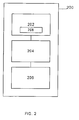
- FIG. 2 illustrates a block diagram of a processing system in accordance with one embodiment of the invention.
- FIG. 2 may illustrate a processing system 200 that incorporates functionality that may be implemented as software executed by a processor, hardware circuits or structures, or a combination of both.
- the processor may be a general-purpose or dedicated processor, such as a processor from the family of processors made by Intel Corporation, Motorola Incorporated, Sun Microsystems Incorporated and others.
- the software may comprise programming logic, instructions or data to implement certain functionality for an embodiment of the invention.
- the software may be stored in a medium accessible by a machine or computer-readable medium, such as read-only memory (ROM), random-access memory (RAM), magnetic disk (e.g. , floppy disk and hard drive), optical disk (e.g.
- ROM read-only memory
- RAM random-access memory
- magnetic disk e.g. , floppy disk and hard drive
- optical disk e.g.
- the media may store programming instructions in a compressed and/or encrypted format, as well as instructions that may have to be compiled or installed by an installer before being executed by the processor.
- an embodiment of the invention may be implemented as specific hardware components that contain hard-wired logic for performing the recited functionality, or by any combination of programmed general-purpose computer components and custom hardware components.
- processing system 200 may comprise a blade designed to work as a modular component of modular system 100.
- Blade 200 may represent, for example, any of blades 102.
- blade 200 may include interconnects designed in accordance with the ATCA Specification or CompactPCI Specification. It may be appreciated, however, that any suitable interface standard may be utilized and still fall within the scope of the invention.
- blade 200 may comprise a FIC 202, a network processor 204 and an input/output (I/O) physical interface 206.
- FIC 202 may further comprise, for example, a Protocol Translation Module (PTM) 208.
- PTM Protocol Translation Module
- An example of network processor 204 may include a network processor made by IntelTM Corporation, such as the IXP 2800TM.
- I/O physical interface 206 may be any physical interface for communicating information, such as the Ethernet Express Pro 100 compatible, Intel 82559 Fast Ethernet Multifunction PCI Controller, made by Intel Corporation (“82559 Controller").
- the 82559 Controller may include both a Media Access Controller (MAC) and a physical layer (PHY) interface combined into a single component solution.
- MAC Media Access Controller
- PHY physical layer
- I/O physical interface 206 may also include physical connectors, such as RJ-45 connectors on the faceplate of blade 200.
- the faceplate may also include status light emitting diodes (LED) to indicate the status of each channel.
- Blade 200 may also comprise various other elements as desired for a particular implementation, such as a power supply for the processor's unique voltage requirements, a temperature sensor, system memory (e.g, L2 cache), core logic required to bridge the processor to the standard system buses, system controllers and so forth.
- FIC 202 may translate protocols from switching fabric 104 to network processor 204.
- switching fabric 104 may communicate packets in accordance with the Infiniband Specification, while network processor 204 may prefer to operate on packets communicated in accordance with the CSIX Specification or SPI-4 Specification.
- FIC 202 may translate an Infiniband (IBA) packet to a CSIX packet or SPI-4 packet on behalf of network processor 204.
- IBA Infiniband
- FIC 202 may translate a CSIX packet or SPI-4 packet to an IBA packet on behalf of switching fabric 104.
- translating may refer to taking information carried by a packet or a series of packets and placing the information into another packet or a series of packets. It can be appreciated that these protocols are provided only as examples. The embodiments of the invention are not limited in this context, as illustrated in more detail below.
- FIG. 3 may include a particular programming logic, it can be appreciated that the programming logic merely provides an example of how the general functionality described herein can be implemented. Further, each operation within a given programming logic does not necessarily have to be executed in the order presented unless otherwise indicated.
- FIG. 3 illustrates a block flow diagram of the programming logic for a Protocol Translation Module (PTM) in accordance with one embodiment of the invention.
- PTM Protocol Translation Module
- this and other modules may refer to the software and/or hardware used to implement the functionality for one or more embodiments as described herein.
- the PTM may be implemented as part of a processing system, such as FIC 202 of processing system 200. It can be appreciated that this functionality, however, may be implemented by any device, or combination of devices, located anywhere in a communication path and still fall within the scope of the invention.
- FIG. 3 illustrates a programming logic 300 for a PTM in accordance with one embodiment of the invention. More particularly, programming logic 300 illustrates operations to translate a protocol or set of protocols. For example, at least one first packet created in accordance with a first protocol may be received at block 302. A packet type for the first packet may be determined at block 304. A second protocol may be selected based on the packet type at block 306. The at least one first packet may be translated to at least one second packet in accordance with the second protocol.
- each packet may have an associated packet type.
- the packet type may represent the type or class of a particular packet.
- the Infiniband Specification defines a packet type referred to as a Backward Event Congestion Notification (BECN) packet.
- BECN Backward Event Congestion Notification
- each packet type may have a protocol associated with it, with the associated protocol indicating the protocol to which a received packet should be converted.
- the first protocol may be the IBA protocol
- the packet type may be a BECN packet.
- the BECN packet type may have a protocol associated with it, such as the CSIX protocol.
- the CSIX protocol may be, for example, the second protocol. Accordingly, whenever PTM 208 receives a BECN packet, it will know to translate the BECN packet to a CSIX packet.
- PTM 208 may translate the first packet from a BECN packet to a CSIX packet. This may be accomplished, for example, by retrieving a Local Route Header (LRH) having BECN information in a BECN message field from the first packet.
- LLRH Local Route Header
- Network address and congestion control information may be retrieved from the BECN information, with the congestion control information having a first portion and a second portion.
- the term "network address" as used herein may refer to any layer 2 address information, such as a destination address, a source address, a port identifier, a MAC address and so forth.
- the network address may be mapped to a CSIX destination address field of the second packet.
- the first portion may be mapped to a CSIX speed field of the second packet.
- the second portion may be mapped to a CSIX class field of the second packet.
- the packet type may comprise an IBA data packet.
- the second protocol associated with the IBA data packet may comprise a protocol in accordance with the SPI-4 Specification.
- the first packet may comprise header information and payload information.
- PTM 208 may translate the IBA data packet to one or more SPI-4 packets. This may be accomplished by, for example, mapping the header information and a portion of the payload information into at least one SPI-4 packet. Any remaining payload information may be mapped into additional SPI-4 packets until the payload information has been completely mapped.
- Each SPI-4 packet may include a SPI-4 header in accordance with the SPI-4 Specification.
- the packet type may comprise a Multi-Protocol Label Format (MPLF) packet.
- MPLF Multi-Protocol Label Format
- the MPLF packet may be, for example, MPLF information encapsulated in a raw IBA data packet.
- the second protocol associated with the MPLF packet may comprise a protocol as described by the CSIX Specification.
- the first packet may comprise LRH information, MPLF header information, and payload information.
- PTM 208 may translate the MPLF packet to one or more CSIX packets. This may be accomplished by, for example, mapping the MPLF header information and a portion of the payload information into a CSIX packet. Any remaining payload information may be mapped into additional CSIX packets until the payload information has been completely mapped.
- a CSIX header may be added to each CSIX packet in accordance with the CSIX Specification. At least a portion of the LRH information may be mapped into each CSIX header.
- the LRH information may be mapped into each CSIX header by retrieving service level information, length information and a network address from the LRH information.
- the service level information may be mapped to a CSIX class field.
- the length information may be mapped to a CSIX length field.
- a first portion of the network address may be mapped to a CSIX destination address field.
- a second portion of the network address may be mapped to a CSIX reserved field.
- the first protocol may be a protocol as defined by the SPI-4 Specification.
- the packet type may be one of a BECN packet, an Infiniband data packet or a Multi-Protocol Label Format (MPLF) packet.
- MPLF Multi-Protocol Label Format
- the second protocol may comprise a protocol in accordance with the Infiniband Specification.
- PTM 208 may translate one or more SPI-4 packets to the appropriate packet type. For example, if the packet type was a BECN packet, then the SPI-4 packets may be translated to one or more BECN packets. This may be accomplished by, for example, retrieving header information and a portion of payload information from the first packet. Any remaining payload information from additional SPI-4 packets in the sequence may also be retrieved. At least one second packet may be created using the retrieved header information and payload information.
- the embodiments of the invention may apply to any number of protocols and packet types and still fall within the scope of the invention.
- the first protocol may comprise a protocol as defined by the ExB/AS Specification.
- the second protocol may be a protocol such as the CSIX protocol and/or SPI-4 protocol.
- network processor 204 comprises a network processor optimized to process CSIX packets. This may be desirable since the CSIX Specification is a fabric-neutral standard supported by many access and ingress interfaces.
- switching fabric 104 is an IBA switching fabric incorporating, for example, inter-node flow control and intra-node congestion control techniques.
- System traffic at this point may comprise "normal" IBA data packets, IBA congestion control packets (e.g., BECN packets), and MPLF packets encapsulated into raw IBA data packets.
- a "normal" IBA data packet may refer to a local or global IBA data packet.
- blade 200 processes SPI-3 packets communicated on an adjunct port, and S-RIO and ExB/AS packets communicated on an ingress port.
- FIC 202 of blade 200 may need to translate packets of varying protocols between various elements connected to blade 200.
- network processor 204 and switching fabric 104 may communicate with each other using varying protocols. It may be desirable, therefore, to select a protocol translation algorithm that optimizes system performance under a number of different design constraints for each system element. For example, assume network processor 204 has the following processing requirements:
- modular system 100 may be to operate with a number of different standards. For example, assume modular system 100 desires to conform to the following requirements:
- modular system 100 may also have protocol flow requirements. For purposes of this example, assume that modular system 100 has a design constraint that all flows into any virtual lane of modular system 100 shall be contiguous. This may mean, for example, that even if a packet formed at a higher protocol layer than the transport layer is longer than the mini-packet length configured into the system, the packet should be segmented and transported in contiguous mini-packet segments through modular system 100. Further, the mini-packets should be received in the same order as sent, with no extraneous mini-packets interpolated into the mini-packet stream.
- modular system 100 may also have MPLF related requirements.
- MPLF is a packet format designed to support uniform access to varying switch fabrics. MPLF may be thought of as a "shim" layer on top of IBA and various other switch fabric packet formats. Consequently, an MPLF header may be treated as a payload by switch fabric 104 and FIC 202, since it is network processor 204 that interprets the MPLF header.
- a packet format comparison may be performed to identify and address any mapping issues.
- a comparison of packet formats as described by the IBA Specification, CSIX Specification and SPI-4 Specification may be summarized in Table 1 below.
- the IBA header may refer to the LRH, which is an 8-byte field whose contents are shown in column 1 of the table.
- the CSIX header may be a concatenation of the CSIX Base Header and either the CSIX Base Extension Header or the CSIX Flow Control Header, as shown in columns 2, 2a, and 2b, respectively.
- the SPI-4 header also referred to as the "Packet Control Word,” may be a 16-bit element describing the meaning of the following payload and indicating how many padding bytes appear at the end of the payload.
- IBA Infiniband
- SPI-4 Payload Control VL 4 bits. Specifies a virtual lane to be used for a packet. This field identifies which receive buffer and which receive flow control credits should be used for the received packet. This value is set to the VL on which the packet is sent. It may change from link to link in a subnet. This field is not included in the Invariant CRC field. Ready Field: 2 bits. Indicates when the transmitting entity is also ready to receive data.
- Control Word Type 1 bit. Indicates whether the data immediately following the control word is payload or a training-control word.
- End of Packet (BOP) Status 2 bits. Indicates whether the following payload represents the end of a packet, and how many of the final bytes in the payload (1 or 2) are valid data.
- NB Packet length is not encoded, as the standard does not specify a packet length.
- SOP Start of Packet
- Type Field (4 bits). Indicates the type of Cframe (e.g.
- CSIX base header 8 bits. 8-bit port address of the payload directly following the control word.
- LVer 4 bits. Link Version specifies the version of the Local Routing Header used for this packet. It shall be set to 0. If a receiving device does not support the Link Version specified then the packet is discarded.
- Payload Length (8 bits): number of bytes in the payload of the message, not counting the padding between the end of the data and the vertical parity field. For data Cframes, 0 means that the payload is 256 bytes.
- Rsv2 2 bits. Transmitted as 0x00 and not changed Diagonal Interleaved Parity (DIP): 4 bits Link Next Header (LNH): 2 bits. Specifies what headers follow the LRH. The first bit indicates whether IBA transport is used. The second bit indicates whether GRH/IPv6 header is present.
- CSIX unicast extension header (CSIX flow control header) Destination Local Identifier: 16 bits. Specifies the LID of the port to which the subnet delivers the packet.
- LIDs are unique within a subnet. Class (8 bits). Represents up to 256 isolated classes for every destination address. Private (2 bits).
- FC Entry Type (2 bits) CSIX Reserved (6 bits) Class wildcard (1 bit). If set to 1, then flow control is intended to apply to all classes associated with the destination address. Port wildcard (1 bit). If set to 1, then flow control is intended to apply to all destination ports. Speed (4 bits). Reserve5: 5 bits. transmitted as 00000 and ignored on receive.
- CSIX Reserved (4 bits) Private (2 bits) CSIX private (2 bits) Packet Length: 11 bits. The number of 4-byte words contained in the packet, starting with the first byte of the LRH and the last byte before the Variant CRC, inclusive, divided by 4.
- Destination address (12 bits). Represents a destination traffic manager (TM) (e.g., network processor) port.
- TM destination traffic manager
- Source Local Identifier 16 bits.
- the SLID shall be a LID of the port that injected the packet onto the subnet.
- Table 1 may help to illustrate the differences in arrangement of data elements and also in the content of the data elements. With respect to the content differences, Table 1 highlights the following differences:
- CSIX may accommodate extension "shims" without much difficulty. This may be because CSIX is essentially an interface between a traffic manager and a switch fabric. IBA may not have that ability, since it is a protocol used by switches and endpoints. Thus, CSIX could be extended in those cases where corresponding IBA fields have more bits of information content. For corresponding fields where CSIX has more information content, the additional information may be encoded in the packet payload. This may require Cyclic Redundancy Check (CRC) calculations, however, upon conversion between CSIX and IBA packet formats.
- CRC Cyclic Redundancy Check
- Table 1 may also illustrate that certain CSIX fields do not have a corresponding equivalent IBA field.
- the CSIX -Class field which corresponds to the IBA-SL field in IBA, has more bits. If it were not possible to map the CSIX-Class field to the IBA-SL field and vice-versa, assigning a correct service/class level to a packet upon arrival at its destination may require provisioning a service level mapping table at every point in the network. This may be a particularly complex solution.
- One alternative may be to restrict the number of different CSIX-Class levels to be supported in modular system 100. This is allowed by the CSIX standard, since no more bits of CSIX-Class need be carried than are available in the switch fabric with which it interoperates.
- CSIX packet format is not suitable for IBA data packets.
- Table 1 illustrates that there are certain IBA fields that do not have a corresponding equivalent CSIX field.
- IBA encodes both source and destination ports and uses 16 bits of resolution
- CSIX encodes only the destination port and only 12 bits of resolution.
- the CSIX-Reserved field of the CSIX extension header may be used to extend the CSIX-Destination Address field.
- the CSIX-Destination Address field is undefined by the standard when received at a destination, and therefore may be used for the source address by FIC 202. In those cases where both a source and destination address is desired (e.g., with data packets), however, the CSIX packet format may not be suitable. Another limitation of the CSIX packet format is that payload sizes are restricted to 64 bytes. This is more restrictive than IBA, thus potentially leading to decreased performance. It may also be more restrictive than the packet length constraints of network processor 204.
- packets coming from switch fabric 104 to network processor 204 may be in the form of IBA packets. Those IBA packets having a packet type of BECN packet or MPLF packet, may be converted to a CSIX packet format. Those IBA packets having a packet type of IBA data packet may be converted to SPI-4 packets.
- network processor 204 may receive packets from an adjunct port of blade 200 in the form of SPI-3 packets, and packets from an ingress port of blade 200 in the form of S-RIO and ExB/AS packets. These packet types may be converted to SPI-4 packets as well, and delivered to network processor 204.
- those packets originating from network processor 204 may be created as SPI-4 packets, and converted by FIC 202 into the appropriate packet type, e.g., BECN packet, MPLF packet or IBA data packet. The converted packets may then be sent to the appropriate destination via switching fabric 104.
- FIC 202 e.g., BECN packet, MPLF packet or IBA data packet.
- a BECN packet may comprise a standard IBA packet with a LHR containing the BECN message information.
- BECN packets are carried in a high-priority virtual lane in modular system 100.
- PTM 208 of FIC 202 may determine that the received packet type is a BECN packet, and that it should be translated into a CSIX flow control message. In this mapping, the source address contained in the BECN Message part of the IBA header overloads the CSIX-Destination Address and CSIX-Reserved fields.
- the remainder of the BECN Message providing specific congestion control information may be transparently mapped to the CSIX-Class and CSIX-Speed fields, for later interpretation by network processor 204. It is worthy to note that since the size of a BECN message is relatively short, the mapping of the BECN message may be accomplished using a single CSIX flow control message.
- FIC 202 receives an IBA data packet.
- IBA data packets do not map well to CSIX packets. This also applies to S-RIO, ExB/AS and SPI-3 packets as well.
- PTM 208 may determine that the received packet type is an IBA data packet, and that it should be translated to a sequence of SPI-4 packets, where the individual SPI-4 packets are constructed to satisfy the packet size constraints configured into network processor 204.
- modular system 100 assumes that packets formed at a higher protocol layer are transported in contiguous segments through the system.
- FIC 202 may segment the arriving packet into a contiguous sequence of mini-packets encoded as SPI-4 packets.
- the IBA/S-RIO/ExB/AS header of the inbound packet is preserved intact as part of the payload of the first SPI-4 packet of a sequence.
- the remainder of the first SPI-4 packet may be padded with contiguous data from the inbound data packet.
- the remainder of the inbound data payload is segmented into SPI-4 payloads, such that each of the resulting SPI-4 packets except possibly the last is of the configured length of network processor 204.
- IBA encapsulates MPLF messages using an IBA Raw Mode packet format. They may, in general, be of any length supported by switch fabric 104, and may therefore be longer than packet length configured in network processor 204.
- the MPLF messages may therefore be segmented into mini-packets similar to IBA data packets.
- MPLF exists as a shim layer above switch fabric 104, the routing fields are considered payload information with respect to IBA, and are interpreted by network processor 204 and not FIC 202. Examples of the routing fields may include the source and destination addresses. Therefore, in contrast to the case of the IBA data packets, MPLF packets may be segmented into CSIX packets.
- the IBA LRH is mapped into the CSIX header as in the case of IBA BECN messages.
- the MPLF header may be loaded into the first CSIX packet of the sequence, and the remainder of the payload is segmented into uniform-sized CSIX packets, except for perhaps the last packet in the sequence.
- FIC 202 receives a SPI-3 packet from the adjunct node, or a S-RIO or ExB/AS from the ingress node. Because it can be inferred that these packets have a header and a payload size possibly larger than the packet size configured in network processor 204, they may be treated in the same manner as 1BA data packets, i.e., segmented into a sequence SPI-4 packets.
- FIC 202 receives packets from network processor 204 for transport by switching fabric 104.
- network processor 204 creates a mini-packet and sends it to some possible destination, the mini-packet may by definition pass through FIC 202.
- Network processor 204 may know a priori whether the destination is an adjunct port, an ingress port, or a switch fabric port, and therefore the type of packet that is appropriate to create for the destination.
- network processor 204 may still be constrained by its packet-handling hardware to deal with a fixed packet size. The mapping of packets outbound from network processor 204 therefore may take place in two operations.
- Network processor 204 may perform the first operation by creating a SPI-4 mini-packet sequence, where the sequence encapsulates an outbound message.
- the first mini-packet in the message may contain a header directly after the SPI-4 header, and the remaining mini-packets in the sequence may contain contiguous lengths of the payload.
- FIC 202 may perform the second operation by identifying the packet header provided in the first mini-packet of the sequence, and mapping it into an appropriate packet type header, e.g, SPI-3, S-RIO/ExB/AS. FIC 202 may perform this translation by reversing the relevant mapping procedures described above. FIC 202 may then construct the payload by reassembling its fragments from the remaining mini-packets of the mini-packet sequence into a contiguous packet, and then routing it to the appropriate destination port.
- an appropriate packet type header e.g, SPI-3, S-RIO/ExB/AS.
Landscapes
- Engineering & Computer Science (AREA)
- Computer Networks & Wireless Communication (AREA)
- Signal Processing (AREA)
- Computer Security & Cryptography (AREA)
- Data Exchanges In Wide-Area Networks (AREA)
- Communication Control (AREA)
- Mobile Radio Communication Systems (AREA)
Claims (37)
- Verfahren zur Kommunikationsprotokollübersetzung zwischen einem Koppelfeld (104) und einem Netzwerkknoten (102; 200) eines Systems, wobei das Koppelfeld (104) dafür ausgelegt ist, Pakete gemäß einem von mehreren Kommunikationsprotokollen zu übermitteln, und der Netzwerkknoten (102; 200) dafür ausgelegt ist, Pakete gemäß einem anderen von mehreren Kommunikationsprotokolle zu übermitteln, wobei das Verfahren die Ausführung folgender Schritte in dem Netzwerkknoten (102; 200) umfasst:Empfangen mindestens eines ersten Paketes, das gemäß einem ersten Kommunikationsprotokoll für das Koppelfeld (104) oder den Netzwerkknoten (102-200) erzeugt wurde; wobei das Verfahren gekennzeichnet ist durch:Bestimmen eines Pakettyps für das erste Paket;Feststellen eines zweiten Kommunikationsprotokolls, das zum Übersetzen aus dem ersten Kommunikationsprotokoll geeignet ist, wobei das Feststellen auf der Grundlage eines vergleichs des Pakettyps des ersten Kommunikationsprotokolls und der Pakettypen der mehreren Kommunikationsprotokolle des anderen des Koppelfeldes (104) und des Netzwerkknotens (102, 200) geschieht; undÜbersetzen des mindestens einen ersten Paketes in mindestens ein zweites Paket gemäß dem festgestellten zweiten Kommunikationsprotokoll.
- Verfahren nach Anspruch 1, wobei das Feststellen eines zweiten Kommunikationsprotokolls, das zum Übersetzen geeignet ist, das Vergleichen von Feldern in den Paketen der jeweiligen Kommunikationsprotokolle umfasst.
- Verfahren nach Anspruch 2, wobei das Feststellen eines zweiten Kommunikationsprotokolls, das zum Übersetzen geeignet ist, das Bestimmen eines zweiten Kommunikationsprotokolls umfasst, das dem ersten Kommunikationprotokoll entsprechende äquivalente Felder aufweist.
- Verfahren nach Anspruch 1, wobei das erste Kommunikationsprotokoll ein durch eine Infiniband-Spezifikation definiertes Protokoll umfasst.
- Verfahren nach Anspruch 4, wobei der Pakettyp ein Backward Event Congestion Notification (BECN)-Paket umfasst.
- Verfahren nach Anspruch 5, wobei das zweite Kommunikationsprotokoll ein Kommunikationsprotokoll gemäß einer CSIX-Spezifikation umfasst.
- Verfahren nach Anspruch 6, wobei das Übersetzen Folgendes umfasst:Abrufen eines Local Route Header (LRH), das BECN-Informationen in einem BECN-Nachrichtenfeld aus dem ersten Paket aufweist;Abrufen einer Netzwerkadresse und von Überlastungssteuerungsinformationen aus den BECN-Informatioren,wobei die Überlastungssteuerungsinformationen einen ersten Abschnitt und einen zweiten Abschnitt aufweisen;Abbilden der Netzwerkadresse auf ein CSIX-Zieladressfeld des zweiten Paketes;Abbilden des ersten Abschnitts auf ein CSIX-Geschwindigkeitsfeld des zweiten Paketes; undAbbilden des zweiten Abschnitts auf ein CSIX-Klassen-Feld des zweiten Paketes.
- Verfahren nach Anspruch 4, wobei der Pakettyp ein Infiniband-Datenpaket umfasst.
- Verfahren nach Anspruch 8, wobei das zweite Kommunikationsprotokoll ein Kommunikationsprotokoll gemäß einer SPI-4-Spezifikation umfasst.
- Verfahren nach Anspruch 9, wobei das erste Paket Header-Informationen und Nutzinformationen umfasst, und wobei das Übersetzen Folgendes umfasst:Abbilden der Header-Informationen und eines Abschnitts der Nutzinformationen in das mindestens eine zweite Paket;Abbilden aller übrigen Nutzinformationen in weitere Pakete, bis die Nutzinformationen abgebildet sind; undHinzufügen eines SPI-4-Headers zu jedem zweiten Paket und den weiteren Paketen.
- Verfahren nach Anspruch 4, wobei der Pakettyp ein Multi-Protocol Label Format (MPLF)-Paket umfasst.
- Verfahren nach Anspruch 11, wobei das zweite Kommunikationsprotokoll ein Kommunikationsprotokoll gemäß einer CSIX-Spezifikation umfasst.
- Verfahren nach Anspruch 12, wobei das erste Paket Local Route Header (LRH)-Informationen, MPLF-Header-Informationen und Nutzinformationen umfasst, und wobei das Übersetzen Folgendes umfasst:Abbilden der MPLF-Header-Informationen und eines Abschnitts der Nutzinformationen in das zweite Paket;Abbilden aller übrigen Nutzinformationen in weitere Pakete, bis die Nutzinformationen abgebildet sind;Hinzufügen eines CSIX-Header-Feldes zu jedem zweiten Paket und den weiteren Paketen; undAbbilden mindestens eines Abschnitts der LRH-Informationen in jedes CSEX-Header-Feld.
- Verfahren nach Anspruch 13, wobei das Abbilden mindestens des Abschnitts der LRH-Informationen Folgendes umfasst:Abrufen von Service-Level-Informationen, Längeninformationen und einer Netzwerkadresse aus den LRH-Informationen; undAbbilden der Service-Level-Informationen auf ein CSIX-Klassen-Feld, der Längeninformationen auf ein CSIX-Längen-Feld, eines ersten Abschnitts der Netzwerkadresse auf ein CSIX-Zieladressfeld und eines zweiten Abschnitts der Netzwerkadresse auf ein CSIX-reserviertes Feld.
- Verfahren nach Anspruch 1, wobei das erste Kommunikationsprotokoll ein durch eine SPI-4-Spezifikation definiertes Kommunikationsprotokoll ist.
- Verfahren nach Anspruch 15, wobei der Pakettyp ein Backward Event Congestion Notification (BECN)-Paket, ein Infiniband-Datenpaket oder ein Multi-Protocol Label Format (MPLP)-Paket umfasst.
- Verfahren nach Anspruch 16, wobei das zweite Kommunikationsprotokoll ein Kommunikationsprotokoll gemäß einer Infiniband-Spezifikation umfasst.
- Verfahren nach Anspruch 17, wobei das erste Paket ein SPI-4-Paket in einer Sequenz von SPI-4-Paketen ist, und wobei das Übersetzen Folgendes umfasst:Abrufen von Header-Informationen und eines Abschnitts von Nutzinformationen aus dem ersten Paket;Abrufen aller übrigen Nutzinformationen aus weiteren SPI-4-Paketen in der Sequenz; undErzeugen des mindestens einen zweiten Paketes unter Verwendung der Header-Informationen und der Nutzinformationen.
- Verfahren nach Anspruch 1, wobei das erste Kommunikationsprotokoll ein durch die EXB/AS-Spezifikation definiertes Kommunikationsprotokoll ist.
- Verfahren nach Anspruch 19, wobei das zweite Kommunikationsprotokoll ein Protokoll gemäß der CSIX-Spezifikation oder der SPI-4-Spezifikation ist.
- Gegenstand, der Folgendes umfasst:ein Speichermedium;wobei das Speichermedium gespeicherte Anweisungen enthält, die, wenn sie durch einen Prozessor ausgeführt werden, zum Übersetzen eines Kommunikationsprotokolls mittels des Verfahrens nach einem der Ansprüche 1 bis 20 führen.
- System, das Folgendes umfasst:ein Koppelfeld (104), das dafür ausgelegt ist, Pakete gemäß einem von mehreren Kommunikationsprotokollen zu übermitteln;mindestens einen Netzwerkknoten (102, 200), der mit dem Koppelfeld (104) verbunden ist und dafür ausgelegt ist, Pakete gemäß einem anderen von mehreren Kommunikationsprotokollen zu übermitteln, wobei der Netzwerkknoten (102, 200) Folgendes umfasst:ein Mittel (206) zum Empfangen mindestens eines ersten Paketes, das gemäß einem ersten Kommunikationsprotokoll für das Koppelfeld (104) oder den Netzwerkknoten (102; 200) erzeugt wurde;ein Mittel (202, 204) zur Kommunikationsprotokollübersetzung zwischen dem Koppelfeld (104) und dem Netzwerkknoten (202, 204) aus dem ersten Kommunikationsprotokoll in ein zweites Kommunikationsprotokoll für das andere des Koppelfeldes (104) und des Netzwerkknotens (102; 200), wobei das Mittel (202, 204) zur Kommunikationsprotokollübersetzung gekennzeichnet ist durch:ein Mittel (202, 204) zum Bestimmen eines Pakettyps für das erste Paket;ein Mittel (202, 204) zum Feststellen eines zweiten Kommunikationsprotokolls, das zum Übersetzen aus dem ersten Kommunikationsprotokoll geeignet ist, wobei das Feststellen auf der Grundlage eines Vergleichs der Pakettypen des ersten Kommunikationsprotokolls und des Pakettyps der mehreren Kommunikationsprotokolle des anderen des Koppelfeldes (104) und des Netzwerkknotens (102, 200) geschieht; undein Mittel (202, 204) zum Übersetzen des mindestens einen ersten Paketes in mindestens ein zweites Paket gemäß dem festgestellten zweiten Kommunikationsprotokoll.
- System nach Anspruch 22, wobei das Mittel zum Feststellen eines zweiten Kommunikationsprotokolls dafür ausgelegt ist, ein zweites Kommunikationsprotokoll auf der Grundlage eines Vergleichs von Feldern in den Paketen der jeweiligen Kommunikatioxisprotokolle festzustellen.
- System nach Anspruch 22, wobei das Mittel zum Feststellen eines zweiten Kommunikationsprotokolls ein Mittel zum Bestimmen eines Paares der mehreren Protokolle umfasst, das entsprechende äquivalente Felder aufweist.
- System nach Anspruch 22, wobei der Netzwerkknoten des Weiteren einen Eingangsport und einen Adjunktionsport umfasst, und das Mittel zum Übersetzen (202, 204) dafür ausgelegt ist, ein oder mehrere Pakete, die zwischen dem Netzwerkknoten und den Ports übermittelt werden, auf der Grundlage des Pakettyps aus einem ersten Kommunikationsprotokoll in ein zweites Kommunikationsprotokoll zu übersetzen.
- System nach Anspruch 25, wobei das erste Kommunikationsprotokoll ein Infiniband-Protokoll ist, der Pakettyp ein Backward Event Congestion Notification (BECN)-Paket ist und das zweite Kommunikationsprotokoll ein CSIX-Protakoll ist.
- System nach Anspruch 25, wobei das erste Kommunikationsprotokoll ein Infiniband-Protokoll ist, der Pakettyp ein Multi-Protocol Label Format (MPLF)-Paket ist und das zweite Kommunikationsprotokoll ein CSIX-Protokoll ist.
- System nach Anspruch 25, wobei das erste Kommunikationsprotokoll ein Infiniband-Protokoll ist, der Pakettyp ein IBA-Datenpaket ist und das zweite Kommunikationsprotokoll ein SPI-4-Protokoll ist.
- System nach Anspruch 25, wobei das erste Kommunikationsprotokoll SPI-3-Protokoll ist, der Pakettyp ein SPI-3-Paket ist und das zweite Kommunikationsprotokoll ein SPI-4-Protokoll ist.
- System nach Anspruch 25, wobei das erste Kommunikationsprotokoll ein S-RIO Protokoll ist, der Pakettyp ein S-RIO-Paket ist und das zweite Kommunikationsprotokoll ein SPI-4-Protokoll ist.
- System nach Anspruch 25, wobei das erste Kommunikationsprotokoll ein ExB/AS-Protokoll ist, der Pakettyp ein ExB/AS-Paket ist und das zweite Kommunikationsprotokoll ist ein SPI-4-Protokoll ist.
- System nach Anspruch 25, wobei das erste Kommunikationsprotokoll ein SPI-4-Protokoll ist, der Protokolltyp ein BECN-Paket ist und das zweite Kommunikationsprotokoll ein Infiniband-Protokoll ist.
- System nach Anspruch 25, wobei das erste Kommunikationsprotokoll ein SPI-4-Protokoll ist, der Protokolltyp ein MPLF-Paket ist und das zweite Kommunikationsprotokoll ein Infiniband-Protokoll ist.
- System nach Anspruch 25, wobei das erste Kommunikationsprotokoll ein SPI-4-Protokoll ist, der Protokolltyp ein IBA-Datenpaket ist und das zweite Kommunikationsprotokoll ein Infiniband-Protokoll ist.
- System nach Anspruch 25, wobei das erste Kommunikationsprotokoll ein SPI-4-Protokoll ist, der Protokolltyp ein SPI-3-Paket ist und das zweite Kammunikationeprotokoll ein SPI-3-Protokoll ist.
- System nach Anspruch 25, wobei das erste Kommuaikationsprotokoll ein SPI-4-Protokoll ist, der Protokolltyp ein S-RIC-Paket ist und das zweite Kommunikationsprotokoll ein S-RIO-Protokoll ist.
- System nach Anspruch 25, wobei das erste Kommunikationsprotokoll ein SPI-4-Protokoll ist, der Protokolltyp ein ExB/AS-Paket ist und das zweite Kommunikationsprotokoll ein ExB/AS-Protokoll ist.
Applications Claiming Priority (3)
| Application Number | Priority Date | Filing Date | Title |
|---|---|---|---|
| US313783 | 2002-12-05 | ||
| US10/313,783 US7573876B2 (en) | 2002-12-05 | 2002-12-05 | Interconnecting network processors with heterogeneous fabrics |
| PCT/US2003/036449 WO2004054203A1 (en) | 2002-12-05 | 2003-11-12 | Method and apparatus to perform translation in a modular system comprising network nodes and a switching fabric |
Publications (2)
| Publication Number | Publication Date |
|---|---|
| EP1568188A1 EP1568188A1 (de) | 2005-08-31 |
| EP1568188B1 true EP1568188B1 (de) | 2010-08-18 |
Family
ID=32468344
Family Applications (1)
| Application Number | Title | Priority Date | Filing Date |
|---|---|---|---|
| EP03781950A Expired - Lifetime EP1568188B1 (de) | 2002-12-05 | 2003-11-12 | Verfahren und Vorrichtung zur Protokollübersetzung in einem modularen System bestehend aus Netzwerkknoten und einem Koppelfeld |
Country Status (8)
| Country | Link |
|---|---|
| US (3) | US7573876B2 (de) |
| EP (1) | EP1568188B1 (de) |
| KR (1) | KR100740405B1 (de) |
| CN (2) | CN1514622B (de) |
| AT (1) | ATE478508T1 (de) |
| AU (1) | AU2003287649A1 (de) |
| DE (1) | DE60333862D1 (de) |
| WO (1) | WO2004054203A1 (de) |
Families Citing this family (61)
| Publication number | Priority date | Publication date | Assignee | Title |
|---|---|---|---|---|
| US7573876B2 (en) * | 2002-12-05 | 2009-08-11 | Intel Corporation | Interconnecting network processors with heterogeneous fabrics |
| US7046668B2 (en) | 2003-01-21 | 2006-05-16 | Pettey Christopher J | Method and apparatus for shared I/O in a load/store fabric |
| US7836211B2 (en) * | 2003-01-21 | 2010-11-16 | Emulex Design And Manufacturing Corporation | Shared input/output load-store architecture |
| US7953074B2 (en) * | 2003-01-21 | 2011-05-31 | Emulex Design And Manufacturing Corporation | Apparatus and method for port polarity initialization in a shared I/O device |
| US8102843B2 (en) * | 2003-01-21 | 2012-01-24 | Emulex Design And Manufacturing Corporation | Switching apparatus and method for providing shared I/O within a load-store fabric |
| US7103064B2 (en) * | 2003-01-21 | 2006-09-05 | Nextio Inc. | Method and apparatus for shared I/O in a load/store fabric |
| US7617333B2 (en) * | 2003-01-21 | 2009-11-10 | Nextio Inc. | Fibre channel controller shareable by a plurality of operating system domains within a load-store architecture |
| US7664909B2 (en) | 2003-04-18 | 2010-02-16 | Nextio, Inc. | Method and apparatus for a shared I/O serial ATA controller |
| US7698483B2 (en) * | 2003-01-21 | 2010-04-13 | Nextio, Inc. | Switching apparatus and method for link initialization in a shared I/O environment |
| US8346884B2 (en) | 2003-01-21 | 2013-01-01 | Nextio Inc. | Method and apparatus for a shared I/O network interface controller |
| US8032659B2 (en) * | 2003-01-21 | 2011-10-04 | Nextio Inc. | Method and apparatus for a shared I/O network interface controller |
| US7917658B2 (en) * | 2003-01-21 | 2011-03-29 | Emulex Design And Manufacturing Corporation | Switching apparatus and method for link initialization in a shared I/O environment |
| US7512695B2 (en) * | 2003-05-07 | 2009-03-31 | Avago Technologies General Ip (Singapore) Pte. Ltd. | Method and system to control the communication of data between a plurality of interconnect devices |
| FR2857539B1 (fr) * | 2003-07-11 | 2005-09-30 | Cit Alcatel | Description de contenu de paquets dans un reseau de communication par paquets |
| US7111102B2 (en) * | 2003-10-06 | 2006-09-19 | Cisco Technology, Inc. | Port adapter for high-bandwidth bus |
| US20050262269A1 (en) * | 2004-05-20 | 2005-11-24 | Pike Jimmy D | System and method for information handling system PCI express advanced switching |
| US8249106B2 (en) * | 2004-08-23 | 2012-08-21 | Alcatel Lucent | Extended cellular telephony protocol |
| US7573879B2 (en) * | 2004-09-03 | 2009-08-11 | Intel Corporation | Method and apparatus for generating a header in a communication network |
| KR100687749B1 (ko) | 2004-09-06 | 2007-02-27 | 한국전자통신연구원 | 범용 패킷 처리 장치 |
| US20060092928A1 (en) * | 2004-10-15 | 2006-05-04 | Dell Products L.P. | System and method for providing a shareable input/output device in a PCI express environment |
| US7573896B2 (en) * | 2004-10-15 | 2009-08-11 | Integrated Device Technology, Inc. | Method and apparatus for generic interface, packet cut-through, overbooking, queue concatenation, and logical identification priority for a system packet interface device |
| US20060123401A1 (en) * | 2004-12-02 | 2006-06-08 | International Business Machines Corporation | Method and system for exploiting parallelism on a heterogeneous multiprocessor computer system |
| KR100612250B1 (ko) * | 2004-12-23 | 2006-08-14 | 삼성전자주식회사 | Gmii와 spi-3 인터페이스 변환 시스템 및 그 방법 |
| US7464174B1 (en) | 2005-03-07 | 2008-12-09 | Pericom Semiconductor Corp. | Shared network-interface controller (NIC) using advanced switching (AS) turn-pool routing field to select from among multiple contexts for multiple processors |
| KR101106751B1 (ko) | 2005-03-18 | 2012-01-18 | 삼성전자주식회사 | Spi4.2와 공통 스위치 인터페이스 정합 장치 및 방법 |
| US7580386B2 (en) * | 2005-04-19 | 2009-08-25 | Intel Corporation | Cooperative scheduling of master and slave base station transmissions to provide coexistence between networks |
| US20060245358A1 (en) * | 2005-04-29 | 2006-11-02 | Beverly Harlan T | Acceleration of data packet transmission |
| US7805560B2 (en) * | 2005-08-31 | 2010-09-28 | Ati Technologies Inc. | Methods and apparatus for translating messages in a computing system |
| US7698493B2 (en) * | 2005-08-31 | 2010-04-13 | Ati Technologies, Inc. | Methods and apparatus for translating write request messages in a computing system |
| KR100655599B1 (ko) * | 2005-11-04 | 2006-12-08 | 한국전자통신연구원 | 노드별 20Gbps 패킷 스위칭 대역폭을 지원하는ATCA 플랫폼 장치 |
| KR100745674B1 (ko) * | 2005-12-06 | 2007-08-02 | 한국전자통신연구원 | 다중 스위칭 포트 지원 구조의 패킷 처리장치, 방법 및 그장치를 적용한 패킷 처리시스템 |
| KR100745675B1 (ko) * | 2005-12-07 | 2007-08-02 | 한국전자통신연구원 | Atca 플랫폼을 위한 고성능 패킷 스위칭 장치 및 방법 |
| KR100678962B1 (ko) * | 2006-01-10 | 2007-02-06 | 삼성전자주식회사 | Xht 프로토콜 분석 장치 및 방법 |
| US20080123677A1 (en) * | 2006-08-31 | 2008-05-29 | Honeywell International Inc. | System management bus port switch |
| US7580426B2 (en) * | 2006-09-28 | 2009-08-25 | Agere Systems Inc. | Interface with multilevel packet preemption based on balancing of start and end indicators |
| US20080084886A1 (en) * | 2006-10-09 | 2008-04-10 | Honeywell International Inc. | System management bus port router |
| US7987229B1 (en) * | 2007-06-28 | 2011-07-26 | Emc Corporation | Data storage system having plural data pipes |
| KR100929234B1 (ko) | 2007-12-11 | 2009-12-01 | 한국전자통신연구원 | 에스피아이브리지와, 패킷처리장치 및 그 방법 |
| CN101635932B (zh) * | 2008-07-21 | 2012-08-29 | 华为技术有限公司 | 信道检测和上报方法及系统、终端、管理中心 |
| KR101475584B1 (ko) * | 2010-04-30 | 2014-12-22 | 인터디지탈 패튼 홀딩스, 인크 | 네트워크 통신에서의 경량 프로토콜 및 에이전트 |
| CN101854402B (zh) * | 2010-05-31 | 2015-05-20 | 中兴通讯股份有限公司 | 接口转换装置及流控实现方法 |
| US8687649B2 (en) | 2011-03-08 | 2014-04-01 | International Business Machines Corporation | Message forwarding toward a source end node in a converged network environment |
| US9397960B2 (en) * | 2011-11-08 | 2016-07-19 | Mellanox Technologies Ltd. | Packet steering |
| US8856420B2 (en) * | 2011-12-27 | 2014-10-07 | Intel Corporation | Multi-protocol I/O interconnect flow control |
| KR101953122B1 (ko) * | 2012-01-06 | 2019-02-28 | 삼성전자주식회사 | 프로토콜 변환 장치 및 방법 |
| US9042304B2 (en) * | 2012-06-05 | 2015-05-26 | Vmware, Inc. | Controlling a paravirtualized wireless interface from a guest virtual machine |
| US10454991B2 (en) | 2014-03-24 | 2019-10-22 | Mellanox Technologies, Ltd. | NIC with switching functionality between network ports |
| US9503552B2 (en) * | 2014-05-09 | 2016-11-22 | Google Inc. | System and method for adapting to network protocol updates |
| EP3026570A1 (de) * | 2014-11-28 | 2016-06-01 | Gemalto Sa | Kommunikationssystem mit Vollduplex-Schnittstelle mit einem Mechanismus zur Einleitung eines Datenaustauschs |
| EP3026569A1 (de) * | 2014-11-28 | 2016-06-01 | Gemalto Sa | Kommunikationssystem mit einer rahmenbasierten Kommunikationsschnittstelle |
| DE102015016616A1 (de) * | 2015-12-22 | 2017-06-22 | Giesecke & Devrient Gmbh | Vorrichtung und Verfahren zur Verbindung einer Produktionsvorrichtung mit einem Netzwerk |
| US10257152B2 (en) * | 2017-03-10 | 2019-04-09 | Nicira, Inc. | Suppressing ARP broadcasting in a hypervisor |
| US10530902B2 (en) * | 2017-11-30 | 2020-01-07 | Gregory Bullock | Method of operating a protocol translator |
| US11764948B1 (en) * | 2018-04-30 | 2023-09-19 | Amazon Technologies, Inc. | Cryptographic service interface |
| US11711451B2 (en) | 2018-12-10 | 2023-07-25 | Intwine Connect, Llc | Connected gateway |
| EP4418632A1 (de) * | 2019-12-13 | 2024-08-21 | IHI Terrasun Solutions Inc. | System und verfahren zur autonomen überwachung und wiederherstellung in einem hybriden energiemanagement |
| US11398979B2 (en) | 2020-10-28 | 2022-07-26 | Mellanox Technologies, Ltd. | Dynamic processing trees |
| WO2022147792A1 (zh) * | 2021-01-08 | 2022-07-14 | 华为技术有限公司 | 一种交换系统、交换网络和交换节点 |
| US12045178B2 (en) * | 2022-02-10 | 2024-07-23 | Mellanox Technologies, Ltd. | Devices, methods, and systems for disaggregated memory resources in a computing environment |
| CN115001627B (zh) * | 2022-05-30 | 2023-06-09 | 山东省计算中心(国家超级计算济南中心) | 一种InfiniBand网络子网管理报文处理方法及系统 |
| US12562983B2 (en) * | 2023-09-19 | 2026-02-24 | Cisco Technology, Inc. | Service routing using IP encapsulation |
Family Cites Families (32)
| Publication number | Priority date | Publication date | Assignee | Title |
|---|---|---|---|---|
| JP2802088B2 (ja) * | 1989-02-06 | 1998-09-21 | 株式会社日立製作所 | プロトコル選択切替方法 |
| US5943422A (en) | 1996-08-12 | 1999-08-24 | Intertrust Technologies Corp. | Steganographic techniques for securely delivering electronic digital rights management control information over insecure communication channels |
| US5751731A (en) * | 1995-10-18 | 1998-05-12 | Telefonaktiebolaget Lm Ericsson | Simplifying decoding of codewords in a wireless communication system |
| US5832236A (en) | 1996-05-20 | 1998-11-03 | Compaq Computer Corporation | High speed frame translation for computer networks |
| US5894478A (en) * | 1996-07-24 | 1999-04-13 | Lucent Technologies Inc. | Protocol converter and router for multi-mode wireless data communications |
| US6321270B1 (en) * | 1996-09-27 | 2001-11-20 | Nortel Networks Limited | Method and apparatus for multicast routing in a network |
| US6101545A (en) * | 1996-10-21 | 2000-08-08 | Hughes Electronics Corporation | Message handling system for different message delivery types |
| US6278697B1 (en) | 1997-07-29 | 2001-08-21 | Nortel Networks Limited | Method and apparatus for processing multi-protocol communications |
| US6108350A (en) * | 1998-03-09 | 2000-08-22 | 3Com Corporation | Method and apparatus for detecting the protocol used by an end station and negotiating a protocol used by the endpoint |
| US6298446B1 (en) | 1998-06-14 | 2001-10-02 | Alchemedia Ltd. | Method and system for copyright protection of digital images transmitted over networks |
| US6707792B1 (en) * | 1998-06-30 | 2004-03-16 | Cisco Technology, Inc. | Overload reduction in a communication system |
| US6233389B1 (en) | 1998-07-30 | 2001-05-15 | Tivo, Inc. | Multimedia time warping system |
| US6327652B1 (en) | 1998-10-26 | 2001-12-04 | Microsoft Corporation | Loading and identifying a digital rights management operating system |
| US6330670B1 (en) | 1998-10-26 | 2001-12-11 | Microsoft Corporation | Digital rights management operating system |
| US6502135B1 (en) * | 1998-10-30 | 2002-12-31 | Science Applications International Corporation | Agile network protocol for secure communications with assured system availability |
| EP1225729A3 (de) * | 1999-02-23 | 2002-08-28 | Alcatel Internetworking, Inc. | Mehrdienstnetzwerkvermittlung mit Zugriffsqualität |
| US6463056B1 (en) | 1999-03-18 | 2002-10-08 | Excel Switching Corp. | Arrangement for providing network protocol data independence in an expandable telecommunications system |
| US6353173B1 (en) | 1999-06-17 | 2002-03-05 | Roxio, Inc. | Compressed audio data format and file system structures |
| US6446073B1 (en) | 1999-06-17 | 2002-09-03 | Roxio, Inc. | Methods for writing and reading compressed audio data |
| DE60016583T2 (de) | 2000-02-17 | 2005-10-06 | Mitsubishi Denki K.K. | Verfahren und vorrichtung zur protokollkonvertierung |
| US20030099254A1 (en) * | 2000-03-03 | 2003-05-29 | Richter Roger K. | Systems and methods for interfacing asynchronous and non-asynchronous data media |
| JP4347497B2 (ja) * | 2000-04-03 | 2009-10-21 | 株式会社日立製作所 | 通信制御装置及びパケット変換方法 |
| EP2259191B1 (de) * | 2000-08-24 | 2015-09-30 | 2Wire, Inc. | System und Verfahren zum selektiven Überbrücken und Routen von pppoe Datenpaketen zwischen mehreren Netzwerken |
| WO2002028123A2 (en) | 2000-09-29 | 2002-04-04 | Lifelink, Inc. | Wireless gateway capable of communicating according to a plurality of protocols |
| US6407680B1 (en) | 2000-12-22 | 2002-06-18 | Generic Media, Inc. | Distributed on-demand media transcoding system and method |
| US6372974B1 (en) | 2001-01-16 | 2002-04-16 | Intel Corporation | Method and apparatus for sharing music content between devices |
| US20020101880A1 (en) * | 2001-01-30 | 2002-08-01 | Byoung-Jo Kim | Network service for adaptive mobile applications |
| US7149206B2 (en) * | 2001-02-08 | 2006-12-12 | Electronic Data Systems Corporation | System and method for managing wireless vehicular communications |
| US7145914B2 (en) * | 2001-12-31 | 2006-12-05 | Maxxan Systems, Incorporated | System and method for controlling data paths of a network processor subsystem |
| US7536462B2 (en) * | 2002-06-11 | 2009-05-19 | Pandya Ashish A | Memory system for a high performance IP processor |
| US7752334B2 (en) * | 2002-10-15 | 2010-07-06 | Nomadix, Inc. | Intelligent network address translator and methods for network address translation |
| US7573876B2 (en) | 2002-12-05 | 2009-08-11 | Intel Corporation | Interconnecting network processors with heterogeneous fabrics |
-
2002
- 2002-12-05 US US10/313,783 patent/US7573876B2/en active Active
-
2003
- 2003-11-12 EP EP03781950A patent/EP1568188B1/de not_active Expired - Lifetime
- 2003-11-12 KR KR1020057010143A patent/KR100740405B1/ko not_active Expired - Fee Related
- 2003-11-12 AU AU2003287649A patent/AU2003287649A1/en not_active Abandoned
- 2003-11-12 WO PCT/US2003/036449 patent/WO2004054203A1/en not_active Ceased
- 2003-11-12 AT AT03781950T patent/ATE478508T1/de not_active IP Right Cessation
- 2003-11-12 DE DE60333862T patent/DE60333862D1/de not_active Expired - Lifetime
- 2003-12-03 CN CN2003101170730A patent/CN1514622B/zh not_active Expired - Fee Related
- 2003-12-03 CN CN201310090156.9A patent/CN103188262B/zh not_active Expired - Fee Related
-
2009
- 2009-07-08 US US12/499,366 patent/US8254397B2/en not_active Expired - Fee Related
-
2012
- 2012-08-15 US US13/586,326 patent/US8705547B2/en not_active Expired - Lifetime
Also Published As
| Publication number | Publication date |
|---|---|
| US20040109473A1 (en) | 2004-06-10 |
| US8705547B2 (en) | 2014-04-22 |
| WO2004054203A1 (en) | 2004-06-24 |
| AU2003287649A1 (en) | 2004-06-30 |
| CN103188262B (zh) | 2016-08-17 |
| US8254397B2 (en) | 2012-08-28 |
| CN103188262A (zh) | 2013-07-03 |
| US20100118875A1 (en) | 2010-05-13 |
| CN1514622A (zh) | 2004-07-21 |
| CN1514622B (zh) | 2013-04-24 |
| US20130177028A1 (en) | 2013-07-11 |
| US7573876B2 (en) | 2009-08-11 |
| DE60333862D1 (de) | 2010-09-30 |
| ATE478508T1 (de) | 2010-09-15 |
| EP1568188A1 (de) | 2005-08-31 |
| KR100740405B1 (ko) | 2007-07-16 |
| KR20050088101A (ko) | 2005-09-01 |
Similar Documents
| Publication | Publication Date | Title |
|---|---|---|
| US7573876B2 (en) | Interconnecting network processors with heterogeneous fabrics | |
| EP1128609B1 (de) | Paketklassifizierungsautomat | |
| US8908704B2 (en) | Switch with dual-function management port | |
| US5742604A (en) | Interswitch link mechanism for connecting high-performance network switches | |
| US5251207A (en) | Combined terminal adapter for SMDS and frame relay high speed data services | |
| US20210051045A1 (en) | Communication switching apparatus for switching data in multiple protocol data frame formats | |
| US5732080A (en) | Method and apparatus for controlling data flow within a switching device | |
| US5487064A (en) | Network layer packet structure | |
| US5566170A (en) | Method and apparatus for accelerated packet forwarding | |
| EP0836781B1 (de) | Verfahren und vorrichtung zur synchronisierung von datenubertragungen mit wahlverbindungen in einem netzwerk | |
| US5999541A (en) | Transmission of token-ring packets over ethernet by tunneling | |
| EP2100406B1 (de) | Verfahren und Vorrichtung zur Implementierung von Multicast-Routing | |
| US7940772B2 (en) | Methods, systems, and computer program products for transporting ATM cells in a device having an ethernet switching fabric | |
| JP4547349B2 (ja) | ネットワーク型ルーティング機構 | |
| JP2005012381A (ja) | データ転送装置及びその方法並びにそれを用いたデータ通信システム及びプログラム | |
| CN1611040A (zh) | 基于lan的单元间通信 | |
| US7787461B2 (en) | System and a method for processing field frames for multiprotocol use in a communications network | |
| EP1858213B1 (de) | Verfahren zur implementierung einer mpls-nachrichten-weiterleitung und vorrichtung dafür | |
| US7912084B2 (en) | Method of transmitting IEEE 1394 data over a wireless link and apparatus implementing the method | |
| US20080123657A1 (en) | Port Addressing Method and Apparatus for Link Layer Interface | |
| US10819631B2 (en) | Network device supporting trill protocol and communication method thereof | |
| JP2002026958A (ja) | マルチレイヤスイッチのアドレス管理システム |
Legal Events
| Date | Code | Title | Description |
|---|---|---|---|
| PUAI | Public reference made under article 153(3) epc to a published international application that has entered the european phase |
Free format text: ORIGINAL CODE: 0009012 |
|
| 17P | Request for examination filed |
Effective date: 20050629 |
|
| AK | Designated contracting states |
Kind code of ref document: A1 Designated state(s): AT BE BG CH CY CZ DE DK EE ES FI FR GB GR HU IE IT LI LU MC NL PT RO SE SI SK TR |
|
| AX | Request for extension of the european patent |
Extension state: AL LT LV MK |
|
| REG | Reference to a national code |
Ref country code: HK Ref legal event code: DE Ref document number: 1078199 Country of ref document: HK |
|
| DAX | Request for extension of the european patent (deleted) | ||
| 17Q | First examination report despatched |
Effective date: 20060103 |
|
| GRAP | Despatch of communication of intention to grant a patent |
Free format text: ORIGINAL CODE: EPIDOSNIGR1 |
|
| RTI1 | Title (correction) |
Free format text: METHOD AND APPARATUS TO PERFORM PROTOCOL TRANSLATION IN A MODULAR SYSTEM COMPRISING NETWORK NODES AND A SWITCHING FABRIC |
|
| GRAS | Grant fee paid |
Free format text: ORIGINAL CODE: EPIDOSNIGR3 |
|
| GRAA | (expected) grant |
Free format text: ORIGINAL CODE: 0009210 |
|
| AK | Designated contracting states |
Kind code of ref document: B1 Designated state(s): AT BE BG CH CY CZ DE DK EE ES FI FR GB GR HU IE IT LI LU MC NL PT RO SE SI SK TR |
|
| REG | Reference to a national code |
Ref country code: GB Ref legal event code: FG4D |
|
| REG | Reference to a national code |
Ref country code: CH Ref legal event code: EP |
|
| REG | Reference to a national code |
Ref country code: IE Ref legal event code: FG4D |
|
| REF | Corresponds to: |
Ref document number: 60333862 Country of ref document: DE Date of ref document: 20100930 Kind code of ref document: P |
|
| REG | Reference to a national code |
Ref country code: NL Ref legal event code: VDEP Effective date: 20100818 |
|
| PG25 | Lapsed in a contracting state [announced via postgrant information from national office to epo] |
Ref country code: FI Free format text: LAPSE BECAUSE OF FAILURE TO SUBMIT A TRANSLATION OF THE DESCRIPTION OR TO PAY THE FEE WITHIN THE PRESCRIBED TIME-LIMIT Effective date: 20100818 Ref country code: AT Free format text: LAPSE BECAUSE OF FAILURE TO SUBMIT A TRANSLATION OF THE DESCRIPTION OR TO PAY THE FEE WITHIN THE PRESCRIBED TIME-LIMIT Effective date: 20100818 |
|
| PG25 | Lapsed in a contracting state [announced via postgrant information from national office to epo] |
Ref country code: CY Free format text: LAPSE BECAUSE OF FAILURE TO SUBMIT A TRANSLATION OF THE DESCRIPTION OR TO PAY THE FEE WITHIN THE PRESCRIBED TIME-LIMIT Effective date: 20100818 Ref country code: BG Free format text: LAPSE BECAUSE OF FAILURE TO SUBMIT A TRANSLATION OF THE DESCRIPTION OR TO PAY THE FEE WITHIN THE PRESCRIBED TIME-LIMIT Effective date: 20101118 Ref country code: SI Free format text: LAPSE BECAUSE OF FAILURE TO SUBMIT A TRANSLATION OF THE DESCRIPTION OR TO PAY THE FEE WITHIN THE PRESCRIBED TIME-LIMIT Effective date: 20100818 Ref country code: PT Free format text: LAPSE BECAUSE OF FAILURE TO SUBMIT A TRANSLATION OF THE DESCRIPTION OR TO PAY THE FEE WITHIN THE PRESCRIBED TIME-LIMIT Effective date: 20101220 |
|
| PG25 | Lapsed in a contracting state [announced via postgrant information from national office to epo] |
Ref country code: NL Free format text: LAPSE BECAUSE OF FAILURE TO SUBMIT A TRANSLATION OF THE DESCRIPTION OR TO PAY THE FEE WITHIN THE PRESCRIBED TIME-LIMIT Effective date: 20100818 Ref country code: GR Free format text: LAPSE BECAUSE OF FAILURE TO SUBMIT A TRANSLATION OF THE DESCRIPTION OR TO PAY THE FEE WITHIN THE PRESCRIBED TIME-LIMIT Effective date: 20101119 Ref country code: SE Free format text: LAPSE BECAUSE OF FAILURE TO SUBMIT A TRANSLATION OF THE DESCRIPTION OR TO PAY THE FEE WITHIN THE PRESCRIBED TIME-LIMIT Effective date: 20100818 Ref country code: BE Free format text: LAPSE BECAUSE OF FAILURE TO SUBMIT A TRANSLATION OF THE DESCRIPTION OR TO PAY THE FEE WITHIN THE PRESCRIBED TIME-LIMIT Effective date: 20100818 |
|
| PG25 | Lapsed in a contracting state [announced via postgrant information from national office to epo] |
Ref country code: DK Free format text: LAPSE BECAUSE OF FAILURE TO SUBMIT A TRANSLATION OF THE DESCRIPTION OR TO PAY THE FEE WITHIN THE PRESCRIBED TIME-LIMIT Effective date: 20100818 |
|
| PG25 | Lapsed in a contracting state [announced via postgrant information from national office to epo] |
Ref country code: IT Free format text: LAPSE BECAUSE OF FAILURE TO SUBMIT A TRANSLATION OF THE DESCRIPTION OR TO PAY THE FEE WITHIN THE PRESCRIBED TIME-LIMIT Effective date: 20100818 Ref country code: CZ Free format text: LAPSE BECAUSE OF FAILURE TO SUBMIT A TRANSLATION OF THE DESCRIPTION OR TO PAY THE FEE WITHIN THE PRESCRIBED TIME-LIMIT Effective date: 20100818 Ref country code: EE Free format text: LAPSE BECAUSE OF FAILURE TO SUBMIT A TRANSLATION OF THE DESCRIPTION OR TO PAY THE FEE WITHIN THE PRESCRIBED TIME-LIMIT Effective date: 20100818 Ref country code: RO Free format text: LAPSE BECAUSE OF FAILURE TO SUBMIT A TRANSLATION OF THE DESCRIPTION OR TO PAY THE FEE WITHIN THE PRESCRIBED TIME-LIMIT Effective date: 20100818 Ref country code: SK Free format text: LAPSE BECAUSE OF FAILURE TO SUBMIT A TRANSLATION OF THE DESCRIPTION OR TO PAY THE FEE WITHIN THE PRESCRIBED TIME-LIMIT Effective date: 20100818 |
|
| PLBE | No opposition filed within time limit |
Free format text: ORIGINAL CODE: 0009261 |
|
| STAA | Information on the status of an ep patent application or granted ep patent |
Free format text: STATUS: NO OPPOSITION FILED WITHIN TIME LIMIT |
|
| PG25 | Lapsed in a contracting state [announced via postgrant information from national office to epo] |
Ref country code: MC Free format text: LAPSE BECAUSE OF NON-PAYMENT OF DUE FEES Effective date: 20101130 Ref country code: ES Free format text: LAPSE BECAUSE OF FAILURE TO SUBMIT A TRANSLATION OF THE DESCRIPTION OR TO PAY THE FEE WITHIN THE PRESCRIBED TIME-LIMIT Effective date: 20101129 |
|
| REG | Reference to a national code |
Ref country code: CH Ref legal event code: PL |
|
| 26N | No opposition filed |
Effective date: 20110519 |
|
| PG25 | Lapsed in a contracting state [announced via postgrant information from national office to epo] |
Ref country code: LI Free format text: LAPSE BECAUSE OF NON-PAYMENT OF DUE FEES Effective date: 20101130 Ref country code: CH Free format text: LAPSE BECAUSE OF NON-PAYMENT OF DUE FEES Effective date: 20101130 |
|
| REG | Reference to a national code |
Ref country code: FR Ref legal event code: ST Effective date: 20110801 |
|
| REG | Reference to a national code |
Ref country code: DE Ref legal event code: R097 Ref document number: 60333862 Country of ref document: DE Effective date: 20110519 |
|
| PG25 | Lapsed in a contracting state [announced via postgrant information from national office to epo] |
Ref country code: FR Free format text: LAPSE BECAUSE OF NON-PAYMENT OF DUE FEES Effective date: 20101130 Ref country code: IE Free format text: LAPSE BECAUSE OF NON-PAYMENT OF DUE FEES Effective date: 20101112 |
|
| REG | Reference to a national code |
Ref country code: HK Ref legal event code: WD Ref document number: 1078199 Country of ref document: HK |
|
| PG25 | Lapsed in a contracting state [announced via postgrant information from national office to epo] |
Ref country code: HU Free format text: LAPSE BECAUSE OF FAILURE TO SUBMIT A TRANSLATION OF THE DESCRIPTION OR TO PAY THE FEE WITHIN THE PRESCRIBED TIME-LIMIT Effective date: 20110219 Ref country code: LU Free format text: LAPSE BECAUSE OF NON-PAYMENT OF DUE FEES Effective date: 20101112 |
|
| PG25 | Lapsed in a contracting state [announced via postgrant information from national office to epo] |
Ref country code: TR Free format text: LAPSE BECAUSE OF FAILURE TO SUBMIT A TRANSLATION OF THE DESCRIPTION OR TO PAY THE FEE WITHIN THE PRESCRIBED TIME-LIMIT Effective date: 20100818 |
|
| PGFP | Annual fee paid to national office [announced via postgrant information from national office to epo] |
Ref country code: DE Payment date: 20141105 Year of fee payment: 12 |
|
| REG | Reference to a national code |
Ref country code: DE Ref legal event code: R119 Ref document number: 60333862 Country of ref document: DE |
|
| PG25 | Lapsed in a contracting state [announced via postgrant information from national office to epo] |
Ref country code: DE Free format text: LAPSE BECAUSE OF NON-PAYMENT OF DUE FEES Effective date: 20160601 |
|
| PGFP | Annual fee paid to national office [announced via postgrant information from national office to epo] |
Ref country code: GB Payment date: 20181107 Year of fee payment: 16 |
|
| GBPC | Gb: european patent ceased through non-payment of renewal fee |
Effective date: 20191112 |
|
| PG25 | Lapsed in a contracting state [announced via postgrant information from national office to epo] |
Ref country code: GB Free format text: LAPSE BECAUSE OF NON-PAYMENT OF DUE FEES Effective date: 20191112 |