EP1566720A2 - Processeur d'information, méthode de traitement d'information, programme et support de stockage - Google Patents
Processeur d'information, méthode de traitement d'information, programme et support de stockage Download PDFInfo
- Publication number
- EP1566720A2 EP1566720A2 EP05251029A EP05251029A EP1566720A2 EP 1566720 A2 EP1566720 A2 EP 1566720A2 EP 05251029 A EP05251029 A EP 05251029A EP 05251029 A EP05251029 A EP 05251029A EP 1566720 A2 EP1566720 A2 EP 1566720A2
- Authority
- EP
- European Patent Office
- Prior art keywords
- contents
- application
- copy
- prohibited
- information
- Prior art date
- Legal status (The legal status is an assumption and is not a legal conclusion. Google has not performed a legal analysis and makes no representation as to the accuracy of the status listed.)
- Withdrawn
Links
Images










Classifications
-
- G—PHYSICS
- G06—COMPUTING OR CALCULATING; COUNTING
- G06F—ELECTRIC DIGITAL DATA PROCESSING
- G06F21/00—Security arrangements for protecting computers, components thereof, programs or data against unauthorised activity
- G06F21/10—Protecting distributed programs or content, e.g. vending or licensing of copyrighted material ; Digital rights management [DRM]
-
- G—PHYSICS
- G06—COMPUTING OR CALCULATING; COUNTING
- G06F—ELECTRIC DIGITAL DATA PROCESSING
- G06F21/00—Security arrangements for protecting computers, components thereof, programs or data against unauthorised activity
- G06F21/60—Protecting data
- G06F21/62—Protecting access to data via a platform, e.g. using keys or access control rules
- G06F21/6218—Protecting access to data via a platform, e.g. using keys or access control rules to a system of files or objects, e.g. local or distributed file system or database
-
- G—PHYSICS
- G06—COMPUTING OR CALCULATING; COUNTING
- G06F—ELECTRIC DIGITAL DATA PROCESSING
- G06F2221/00—Indexing scheme relating to security arrangements for protecting computers, components thereof, programs or data against unauthorised activity
- G06F2221/21—Indexing scheme relating to G06F21/00 and subgroups addressing additional information or applications relating to security arrangements for protecting computers, components thereof, programs or data against unauthorised activity
- G06F2221/2101—Auditing as a secondary aspect
Definitions
- the present invention relates to an information processor, an information processing method, a program and a storage medium for preventing illegal copying of copy-prohibited contents.
- Figs. 1 and 2 are schematic diagrams showing the structures of conventional illegal copy preventive systems.
- a conventional illegal copy preventive computer system is realized by including illegal copy preventive logic in all application programs (applications A and B) handling contents.
- applications A and B application programs
- Such computer has limitations in that an application program (application C) not guaranteed to have the illegal copy preventive logic is not supposed to exist, or as shown in Fig. 2, the application C is not given the writing authority in the first place.
- the Japanese Patent Application laid open No. 2001-184081 discloses an information processor which extracts a recording limit information for limiting recording from contents and, based on the extracted limit information, converts the digital data composing contents to recording-ineffective digital data.
- the Japanese Patent Application laid open No. 2002-7214 discloses an information processor which is capable of preventing software from rewriting a nonvolatile storage device illegally by rewriting the write protect bit in a control resister when an interrupt handler determines that the access by a ROM rewriting program is not authorized.
- the Japanese Patent Application laid open No. 2003-44297 discloses an information processor which captures an operation request from the process or the OS and the operation request is denied when the process or the OS does not have the access right to designated computer resources.
- copy prohibited contents contents prohibited from being illegally copied or redistributed such as fare-paying contents
- copy prohibited contents because it is necessary for all application programs in the computer to correctly include such logic as not copying copy prohibited contents (hereinafter referred to as illegal copy preventive logic)
- application programs not guaranteed to include correctly the illegal copy preventive logic has the limitation that they can not be installed into the computer to prevent illegal copying. Even if the installation is allowed, such application program must be subject to strict limitations as, for example, to be prohibited from all writing operations. That causes unavailability for users because the freedom of the application program is limited.
- OS basic software
- an information processor comprising a controller for controlling applications, a contents storage for storing a plurality of contents, a reading discrimination unit for determining whether or not an application has read copy prohibited contents in the contents storage, and a reading history memory for memorizing that the application has read the copy prohibited contents, wherein the controller prohibits the writing operation of the application having the history of copy prohibited contents read.
- an information processor comprising a controller for controlling at least one application, a contents storage for storing a plurality of contents, and a writing prohibition data addition unit for adding writing prohibition data indicating the prohibition of writing operation to an application when the application is going to read copy prohibited contents from the contents storage, wherein the controller prohibits the writing operation of the application to which the writing prohibition data is added.
- an information processor comprising a controller for controlling at least one application to which a designated security attribute is assigned, an information storage for storing at least one piece of attribute information about a designated attribute and at least one piece of conversion information for converting a designated security attribute, a contents storage for storing a plurality of contents, and a copy prohibited contents discrimination unit for determining whether or not contents requested by an application for reading are copy prohibited, wherein the controller converts the designated security attribute based on the conversion information and controls the operation of the application based on the converted attribute information in the case that the copy prohibited contents discrimination unit has determined that the contents in the contents storage requested by the application for reading are copy prohibited contents.
- the information processor further comprises a connector for connecting to an external device via a network, and the controller converts the designated security attribute based on the conversion information and controls the operation of an application based on the converted attribute information in the case that the copy prohibited contents discrimination unit has determined that the contents in the external device requested by the application for reading via the connector are copy prohibited contents.
- an information processor comprising a controller for controlling at least one application to which a designated security attribute is assigned, an information storage for storing at least one piece of attribute information about a designated attribute and at least one piece of conversion information for converting a designated security attribute, and a connector for connecting to an external device via a network, and the controller converts the designated security attribute based on the conversion information and controls the operation of an application based on the converted attribute information in the case that the copy prohibited contents discrimination unit has determined that the contents in the external device requested by the application for reading via the connector are copy prohibited contents.
- the controller converts a security attribute of a correspondent application based on the conversion information in the case that a writing operation is performed in communication between applications having different security attributes.
- the information processor further comprises a memory area for storing a plurality of contents and a copy prohibited memory area discrimination unit for determining whether or not contents in the memory area requested by an application for reading are in a copy prohibited memory area of the memory area, and the controller converts the designated security attribute based on the conversion information and controls the operation of the application based on the converted attribute information in the case that the copy prohibited memory area discrimination unit has determined that the contents in the memory area requested by the application for reading are stored in the copy prohibited memory area.
- the reading request by the application is for a storage medium, a common memory, a network communication, and communication between applications.
- the reading request by the application is the transmission of signals to another application.
- an information processing method comprising the steps of determining whether or not an application has read copy prohibited contents, memorizing that the application has read the copy prohibited contents, and prohibiting the writing operation of the application having the history of copy prohibited contents read.
- an information processing method comprising the steps of adding writing prohibition data indicating the prohibition of writing operation to an application and prohibiting the writing operation of the application to which the writing prohibition data is added.
- an information processing method comprising the steps of, when an application requests for reading of contents, determining whether or not the contents to be read are copy prohibited contents, when the contents requested for reading has been determined to be copy prohibited contents, converting a security attribute based on conversion information and controlling the operation of the application based on the converted security attribute.
- the information processing method further comprises the steps of, when an application requests for reading of contents in an external device connected via a network and the contents to be read has been determined to be copy prohibited contents, converting the security attribute based on the conversion information and controlling the operation of the application based on the converted security attribute.
- a security attribute of a correspondent application is converted based on the conversion information in the case that a writing operation is performed in communication between applications having different security attributes.
- the information processing method further comprises the steps of, when an application requests for reading of contents in a memory area storing a plurality of contents and the contents to be read has been determined to be stored in a copy prohibited memory area in the memory area, converting the security attribute based on the conversion information and controlling the operation of the application based on the converted security attribute.
- the reading request by the application is for a storage medium, a common memory, a network communication, and communication between applications.
- the reading request by the application is the transmission of signals to another application.
- the program makes a computer to perform the processes of, when an application requests for reading of contents in an external device connected via a network and the contents to be read has determined to be copy prohibited contents, converting the security attribute based on the conversion information and controlling the operation of the application based on the converted security attribute.
- the program makes a computer to perform the process of converting a security attribute of a correspondent application based on the conversion information in the case that a writing operation is performed in communication between applications having different security attributes.
- the program makes a computer to perform the processes of, when an application requests for reading of contents in a memory area storing a plurality of contents and the contents to be read has been determined to be stored in a copy prohibited memory area in the memory area, converting the security attribute based on the conversion information and controlling the operation of the application based on the converted security attribute.
- the reading request by the application is for a storage medium, a common memory, a network communication, and communication between applications.
- the reading request by the application is the transmission of signals to another application.
- a storage medium storing the program stored above.
- the present invention employs such OS (Operating System) as a SELinux (http://www.nsa.gov/selinax/) which can control functions being used by an application process based on its security attribute as basic software on a computer, and further, as a function of the OS, a discrimination function for determining whether or not contents which the application process is going to handle are copy prohibited is added.
- OS Operating System
- SELinux http://www.nsa.gov/selinax/
- this OS converts the security attribute of the application process to the security attribute which prevents writing function.
- FIG. 3 shows the hardware structure of an information processing terminal of the present invention.
- Examples of the information processing terminal include a commonly used computer, a game console, and a multifunction copying machine.
- a CPU shown in Fig. 3 reads an application process, an operating system is made to perform control processing of the first embodiment described hereinafter.
- the processing is not restricted to program processing performed only by the operation system being software as described above, but also may be performed by respective units being hardware provided to the information processing terminal as shown in Fig. 4.
- a controller 300 performs security management processing as described below by controlling each unit.
- An information storage 301 includes a security attribute database and a conversion rule database described below.
- a contents storage 302 is a nonvolatile storage storing various contents.
- a copy prohibited contents discrimination unit 303 performs copy prohibited contents discrimination processing as described below.
- the controller 300 and the contents storage 302 are a CPU (Central Processing Unit), they may be independent units.
- an information processor of the first embodiment of the present invention comprises an operating system (OS) 110, the contents storage 302, an application process (application program) 130 not guaranteed to have an illegal copy preventive logic, and an application process (application program) 140 guaranteed to have the illegal copy preventive logic.
- the application process 130 not guaranteed to have an illegal copy preventive logic means, for example, an application process which is not factory-installed in a computer, but is installed by a user from an external device via a network, etc. and not familiar to the computer (unrecognizable as to whether to have an illegal copy preventive logic).
- the application process 140 guaranteed to have an illegal copy preventive logic means, for example, an application process which is factory-installed in a computer and familiar to the computer (recognizable as to whether to have an illegal copy preventive logic).
- the operating system 110 is an OS, which can limit functions available for the application process depending on a security attribute of the process, and performs security management processing 111 and copy prohibited contents discrimination processing 112.
- the OS 110 determines by the copy prohibited contents discrimination processing 112 whether or not the contents to be read are copy prohibited contents.
- the OS 110 monitors in the security management processing 111 the operation and prevents the prohibited operations when the application process is actually executed.
- the OS 110 performs in the security management processing 111 processing based on the conversion rules.
- the security attribute of the application A130 is converted to a copy prohibited attribute based on the conversion rules.
- the security attributes "A” and “S” are attributes allowing reading operation and writing operation.
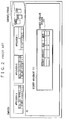
- Fig. 7 (a) a description will be given of an operation flow at the time of contents reading request.
- the application process 130 not guaranteed to have an illegal copy preventive logic issues a contents reading request to the OS 110 (step S1 in Fig. 7(a)).
- the OS 110 performs the security management processing 111 when the application process 130 issues the contents reading request.
- the OS 110 refers to the security attribute database 201 and checks whether or not the security attribute (in this case "A") of the application process which has issued the contents reading request allows reading operation (step S2 in Fig. 7(a)).
- the OS 110 refers to in the security management processing 111 the conversion rule about the security attribute of the application process and checks whether or not the attribute meets the conversion rule.
- the conversion rule of this embodiment has the condition that " at the instant an application process having an attribute other than S tries to read copy prohibited contents stored in the contents storage 302, the security attribute of the application process which tries to read is converted to X".
- the operation system 110 performs the copy prohibited contents discrimination processing 112 to check whether or not the contents to be read are copy prohibited contents (step S3 in Fig. 7(a)).
- the contents to be read is the copy prohibited contents and also the security attribute of the application process having issued the reading request is not "S", as shown in Fig. 6, the security attribute of the application A130 is converted to "X" (steps S4 and S5 in Fig. 7(a)).
- the operating system 110 reads the requested contents (step S6 in Fig. 7(a)).
- the security attribute of the application A130 which has issued the reading request, is converted to "X".
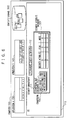
- the OS 110 refers to in the security management processing 111 the security attribute database 201 and checks whether or not the security attribute (already converted to "X") of the application A130 having issued the writing request permits writing operation (step S12 in Fig. 7(b)).
- the writing operation is not only for the contents stored in the contents storage 302 but also for the contents handled in all storage mediums, common memories, network communication, and communication between application processes. Further, the transmission of signals to another process is qualified as a kind of writing operation.
- the operating system prevents the illegal copy by converting the security attribute of the application process, even if an application process not guaranteed to have an illegal copy preventive logic exists on a computer system, it is possible to ensure the prevention of illegal copy.
- the application whose security attribute has converted is, for example, capable of displaying image data contents on a terminal but incapable of duplicating the contents.
- the functions of the application process are not limited unless the application process tries to read the copy prohibited contents, and therefore it is possible to maintain the freedom of the application process.
- Fig. 8 is a block diagram showing the hardware structure of an information processor of the present invention.
- the information processor include, but are not limited to, a commonly used computer, a game console, a multifunction copying machine or the like.
- the information processing terminal device of this embodiment may be any terminal device capable of installing contents from an external device directly or via a network.
- a CPU shown in Fig. 8 reads an application process, an operating system performs control processing of the second embodiment described below.
- the information processing terminal of the second embodiment has basically the same structure as that described previously for the first embodiment as shown in Fig. 8, except for the presence of an external storage connector and a card slot.
- the processing of the second embodiment is not restricted to program processing performed by the operating system being software, but may be performed by respective units being hardware provided to the information processing terminal as shown in Fig. 9.
- the second embodiment differs from the first embodiment in that the information processing terminal includes as an interface for reading contents from an external device such as an external storage an external device connector 305 such as an external storage connector or a card slot.
- the information processing terminal may be provided with either or both of the contents storage 302 and the external device connector 305. Because other units are of the same structure as those of the first embodiment, the description of them will be omitted here.
- a computer 100 or information processor of the second embodiment has the same structure as that described previously for the first embodiment except for the presence of an external storage medium 250 and another computer 270 connected via a network 260.
- the structure of the second embodiment not only contents in the contents storage 302 but also contents in the external storage medium 250 or another computer 270 connected via the network 260 are controlled. Accordingly, even if there are copy prohibited contents in the external storage medium 250 or another computer 270 on the network 260, it is possible to prevent the application process 130 from illegally copying these copy prohibited contents.
- a network system preventing illegal copy can be provided.
- the processing operation of the second embodiment is the same as that in the above-mentioned first embodiment.
- Fig. 11 is a block diagram showing the hardware structure of an information processor.
- the information processor include, but are not limited to, a commonly used computer, a game console, a multifunction copying machine or the like.
- the information processing terminal device of this embodiment may be any terminal device capable of installing contents from an external device directly or via a network.
- the information processing terminal device when a CPU shown in Fig. 11 reads an application process, an operating system performs control processing of the third embodiment described below.
- the information processing terminal device may include an external storage unit (not shown).
- a card slot shown in Fig. 11 has functions not only for connecting to external devices but also for reading contents from detachable external storage mediums.
- the processing of the third embodiment is not restricted to program processing performed by the operating system being software, but may be performed by respective units being hardware provided to the information processing terminal.
- the basic structure of hardware is the same as that of the first embodiment shown in Fig. 4, and in the case that an external storage connector is included, the structure is the same as that of the second embodiment shown in Fig. 9.
- the terminal may be provided with either or both of the contents storage 302 and the external device connector 305. Because other units are of the same structure as those of the first and the second embodiments, the description of them will be omitted here.
- a computer 100 or an information processor of the third embodiment of the present invention has basically the same structure as that previously described for the first embodiment, in the security management processing, the computer 100 of this embodiment employs a plurality of conversion rules in the conversion rule database 202, and further, the security attribute information in the security attribute database 201 is different.
- the application having the security attribute X can write normal contents by communication between application processes.
- an added conversion rule when the application having the security attribute X performs writing operation in communication with an application process having the security attribute other than S, the security attribute of the correspondent application process is also converted to X.
- the added conversion rule (hereinafter referred to as additional conversion rule) is applied as the second rule after the first applied rule (shown above in Fig. 12).
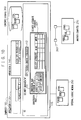
- the operating system 110 performs the security management processing 111 and the copy prohibited contents discrimination processing 112 to convert the security attribute of the application A130 from A to X (shown in Fig. 13).
- the application A130 whose security attribute has been converted to X communicates with the application S140, based on the additional conversion rule "when the application process whose security attribute is X communicates with an application whose security attribute is other than S, the security attribute of the correspondent application is converted to X", the security attribute A of the correspondent application S140 is converted to X (shown in Fig. 14).
- the structure of hardware of the information processing terminal is the same as that of the second embodiment described above (shown in Fig. 8).
- the information processing terminal device of the fourth embodiment may be, for example, a commonly used computer, a game console, multifunction copying machine or the like. Further, the information processing terminal device of this embodiment may be any terminal device capable of installing contents from an external device directly or via a network. In such information processing terminal device, when the CPU shown in Fig. 8 reads the application process, the operating system performs control processing of the fourth embodiment described below.
- the processing operation of the fourth embodiment is not restricted to program processing performed by the operating system being software, but may be performed by respective units being hardware provided to the information processing terminal.
- the information processing terminal device of this embodiment has essentially the same structure as those of the previous embodiments except for the presence of a copy prohibited area discrimination unit 304 in stead of the copy prohibited contents discrimination unit.
- the copy prohibited area discrimination unit 304 determines whether or not contents are present in a copy prohibited area.
- the external device connector 305 an interface for reading contents from an external device such as an external storage, is optionally provided. Accordingly, in this embodiment, the information processing terminal device may be provided with either or both of the contents storage 302 and the external device connector 305. Because other units are of the same structure as those of the first to third embodiments, the description of them will be omitted here.
- the OS 110 performs copy prohibited memory area discrimination processing 413 when the computer 100 having the structure of the first embodiment further includes a memory 450.
- the fourth embodiment of the present invention not only copy prohibited contents in the contents storage 302 but also contents stored in a part of a memory area, for example, a copy prohibited memory area are protected. Accordingly, even if another application process read the copy prohibited contents and the other application process reads the contents deployed on the memory, it is possible to prevent illegal copy. Further, in a built-in computer having a reading function of contents over a network, in the case that the copy prohibited contents are not in a file format but just deployed on a memory, it is also possible to prevent illegal copy.
- the memory area includes VRAM (Video Random Access Memory), a memory for storing screen information, a sound buffer, a memory for storing voice, or the like.
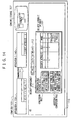
- the application process A130 not guaranteed to have an illegal copy preventive logic shown in Fig. 16 requests the OS 110 to read contents (step S21 in Fig. 17).
- the OS 110 performs security management processing 111 just after the reading request from the application process A130.
- security management processing 111 the OS 110 checks whether or not the security attribute (here, "A") of the application process having issued the reading request (reading request source) allows reading operation (step S22 in Fig. 17) by referring to the security attribute database 201.
- the operating system 110 checks whether or not the security attribute of the application process applies to the conversion rule by referring to the conversion rule for the security attribute of the application process.
- the conversion rule is "at the point copy prohibited contents in the memory 450 is read by an application process whose security process is other than S, the security attribute of the application process is converted to X" as shown in Fig. 16.
- the operating system 110 checks whether or not the contents requested for reading are in the copy prohibited memory area (step S23 in Fig. 17).
- the contents request for reading are in the copy prohibition area and also the security attribute of the application process having requested for reading of the contents is other than "S" (step S24 in Fig. 17)
- the security attribute of the application A130 having requested for reading is converted to "X" (step S25 in Fig. 17).
- the operating system 110 performs the reading operation of the contents requested for reading (step S26 in Fig.9).
- the hardware structure of the information processing terminal of this embodiment is the same as those of the second and fourth embodiments (shown in Fig. 8).
- the information processing terminal device of this embodiment may be, for example, a commonly used computer, a game console, a multifunction copying machine or the like and further, any kind of terminal device capable of installing contents from an external device directly or via a network.
- the CPU shown in Fig. 8 read the application process, the operating system performs control processing of the fifth embodiment described below.
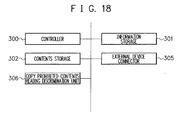
- the processing operation of the fifth embodiment is not restricted to program processing performed by the operating system being software, but may be performed by an information processing terminal provided with respective units being hardware shown in Fig. 18.
- the contents storage 302 is a nonvolatile memory for storing contents.
- the copy prohibited contents discrimination unit 303 performs copy prohibited contents discrimination processing.
- the external device connector 305 is an interface for reading contents from an external device such as an external storage.
- a copy prohibited contents reading discrimination unit 306 determines whether or not an application process has read copy prohibited contents.
- the information storage 301 memorizes that the application process has read copy prohibited contents.
- the controller 300 controls each unit to prevent writing operations of the application process having the history of copy prohibited contents read and the application process to which is added data indicating the writing operation prohibition is possible.
- the controller 300 adds, based on the conversion rule, data indicating the prohibition of the writing operation to the application process regardless of the security attribute.
- the information processing terminal needs either or both of the contents storage 302 and the external device connector 305.
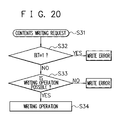
- bit data "0" is assigned for the application A130 and "1" for the application S140. These bit data indicate whether or not the prohibition of the writing operation of the application process is possible and are added to the application process. In this embodiment, "0" indicates writing operation possible and "1" indicates writing operation impossible.
- the conversion rule of the fifth embodiment is "when an application process whose attribute is other than S reads copy prohibited contents, the bit data 1 which prohibits writing operation is added to the application process". Accordingly, in this embodiment, when the application S140 tries to read copy prohibited contents from the contents storage 302, the bit data 1 which prohibits writing operation is added to the application process S140 based on the conversion rule regardless of the security attribute.
- the operating system 110 checks whether or not the bit data 1 is added to the application S140 (step S32 in Fig. 20), and prohibits the writing operation without converting the security attribute in the case that the bit data assigned to the application S140 is 1.
- the bit data is other than 1, and is 0 for example, the operating system 110 refers to the security attribute database 201 to check whether or not the writing operation is possible (step S33 in Fig. 20).
- the security attribute of the application is other than S, the operating system 110 performs the same processing as previously described for the first embodiment based on the conversion rule to prohibit writing operation.
- bit data which prohibits the writing operation is used to prohibit the writing operation, it is also possible to prohibit the writing operation of an application process which has the history of copy prohibited contents read by determining whether or not the application process has read copy prohibited contents and memorizes that the application process has read copy prohibited contents.
- the writing operation is not only for the contents stored in the contents storage 302 but also for the contents used in all kind of storage mediums, common memories, network communication and communication between application processes, and further, the transmission of signals is also qualified as a kind of writing operation.
- the copy prohibited contents may be simply stored without being in a file format in a memory.
- Fig. 21 is a diagram showing the hardware structure of the mobile terminal device of the present invention.
- the mobile terminal device may be a mobile communication terminal having a radio unit, for example, a cell phone, a PDA (Personal Digital Assistant) or the like.
- the mobile terminal device of this embodiment may be any terminal device having a radio unit capable of installing contents directly or via a network from an external device.
- a CPU shown in Fig. 21 reads an application process, the CPU makes an operating system perform control processing described previously for the first to fifth embodiments.
- the processing in the first to fifth embodiments are program processing performed by the operating system, a software, it may also be performed by the respective units shown in Fig. 22 provided to the mobile terminal.
- the controller 300 performs the security management processing described above.
- the information storage 301 includes a security attribute database, a conversion rule database and a flag database.
- the contents storage 302 is a nonvolatile memory storing contents.
- the copy prohibited contents discrimination unit 303 performs discrimination processing of copy prohibited contents of the embodiments described above.
- the copy prohibited area discrimination unit 304 determines whether or not contents are present in a copy prohibited area as in the fourth embodiment.
- the external device connector 305 is an interface for reading contents from external device such as an external storage.
- the mobile terminal may be provided with either or both of the contents storage 302 and the external device connector 305. Also, the mobile terminal may be provided with either or both of the copy prohibited contents discrimination unit 303 and a copy prohibited area discrimination unit 304.
- the mobile terminal may include a reading discrimination unit (not shown) for determining whether or not the application process has read copy prohibited contents and a reading history memory (not shown) for memorizing that copy prohibited contents have been read so that the controller 300 may prohibit the writing operation of the application process which has read copy prohibited contents.
- the mobile terminal may be provided with a writing prohibition data additional unit for adding bit data which prohibits writing operation based on the conversion rule regardless of the security attribute when an application tries to read copy prohibited contents from the contents storage so that the controller 300 may prohibit the writing operation of the application process with writing prohibition data.
- the seventh embodiment can easily achieve the prevention of illegal copy on the whole in a general information processor even if there is an application program not guaranteed to have an illegal copy preventive logic by realizing a recording medium for making a computer execute the programs of the first to fifth embodiments. In other words, it is possible to assure the prevention of illegal copy without assuring that all of application programs have the illegal copy preventive logic.
- an operation system converts the security attribute of an application process.
- illegal copy can be prevented easily even if an application program not guaranteed to have the illegal copy preventive logic is present in a computer (information processor).
- the prevention of illegal copy is achieved without certifying that all applications in a computer system have the illegal copy preventive logic.
- an operation system converts the security attribute of the application program to control the subsequent operation of the application program.
- writing operation of an application process not guaranteed to have the illegal copy preventive logic is not limited unless the application process reads copy prohibited contents. Accordingly, even if a computer installs an application program which is not familiar to the computer, the freedom of functions of the application program can be maintained.
- the original security attribute of an application process guaranteed to have the illegal copy preventive logic is set to an attribute by which the application process can be recognized as the one guaranteed to have the illegal copy preventive logic to exclude the application process from the subject of writing operation prohibition.
- an operating system does not limit the operation of an application process guaranteed to have the illegal copy preventive logic.
- the present invention can be applied in the case that a computer which has to guarantee the prevention of illegal copy installs a program not certified as having an illegal copy preventive logic to execute the program. Further, the present invention can also be applied to a personal computer, a built-in computer of a movable communication terminal such as a cell phone and a PDA, a game console and a multifunction copying machine.
- An information processor includes: a controller for controlling at least one application to which a designated security attribute is assigned; information storage for storing at least one piece of attribute information indicating a designated attribute, and at least one piece of conversion information for converting the designated security attribute; a contents storage for storing a plurality of contents; and , a copy-prohibited-contents discrimination unit for determining whether contents requested for reading by an application are copy-prohibited contents.
- the controller converts the designated security attribute based on the conversion information, and controls the operation of an application based on the converted attribute information in a case where the copy-prohibited-contents discrimination unit has determined that the contents in the contents storage requested for reading by the application is copy-prohibited contents.
Landscapes
- Engineering & Computer Science (AREA)
- Theoretical Computer Science (AREA)
- Software Systems (AREA)
- General Engineering & Computer Science (AREA)
- Computer Hardware Design (AREA)
- Computer Security & Cryptography (AREA)
- Physics & Mathematics (AREA)
- General Physics & Mathematics (AREA)
- General Health & Medical Sciences (AREA)
- Bioethics (AREA)
- Health & Medical Sciences (AREA)
- Databases & Information Systems (AREA)
- Multimedia (AREA)
- Technology Law (AREA)
- Storage Device Security (AREA)
Applications Claiming Priority (2)
| Application Number | Priority Date | Filing Date | Title |
|---|---|---|---|
| JP2004046242 | 2004-02-23 | ||
| JP2004046242A JP2005235071A (ja) | 2004-02-23 | 2004-02-23 | 情報処理装置、情報処理方法、プログラム及び記録媒体 |
Publications (2)
| Publication Number | Publication Date |
|---|---|
| EP1566720A2 true EP1566720A2 (fr) | 2005-08-24 |
| EP1566720A3 EP1566720A3 (fr) | 2006-05-24 |
Family
ID=34709174
Family Applications (1)
| Application Number | Title | Priority Date | Filing Date |
|---|---|---|---|
| EP05251029A Withdrawn EP1566720A3 (fr) | 2004-02-23 | 2005-02-23 | Processeur d'information, méthode de traitement d'information, programme et support de stockage |
Country Status (4)
| Country | Link |
|---|---|
| US (1) | US20050188168A1 (fr) |
| EP (1) | EP1566720A3 (fr) |
| JP (1) | JP2005235071A (fr) |
| CN (1) | CN1304965C (fr) |
Cited By (1)
| Publication number | Priority date | Publication date | Assignee | Title |
|---|---|---|---|---|
| WO2009095413A3 (fr) * | 2008-01-31 | 2010-04-29 | International Business Machines Corporation | Procédé et système d'accès à un fichier crypté |
Families Citing this family (2)
| Publication number | Priority date | Publication date | Assignee | Title |
|---|---|---|---|---|
| JP2010267135A (ja) * | 2009-05-15 | 2010-11-25 | Toshiba Corp | メモリコントローラ |
| US20230222217A1 (en) * | 2022-01-07 | 2023-07-13 | Xilinx, Inc. | Adaptive integrity levels in electronic and programmable logic systems |
Citations (1)
| Publication number | Priority date | Publication date | Assignee | Title |
|---|---|---|---|---|
| US5699428A (en) | 1996-01-16 | 1997-12-16 | Symantec Corporation | System for automatic decryption of file data on a per-use basis and automatic re-encryption within context of multi-threaded operating system under which applications run in real-time |
Family Cites Families (10)
| Publication number | Priority date | Publication date | Assignee | Title |
|---|---|---|---|---|
| JP3853387B2 (ja) * | 1994-11-15 | 2006-12-06 | 富士通株式会社 | データ独立型コンピュータシステムにおけるデータアクセス権管理方式 |
| CN100393091C (zh) * | 1997-10-22 | 2008-06-04 | 英国电讯有限公司 | 在智能通信网络中提供信息服务的节点及其方法 |
| JP3937548B2 (ja) * | 1997-12-29 | 2007-06-27 | カシオ計算機株式会社 | データアクセス制御装置およびそのプログラム記録媒体 |
| US6330670B1 (en) * | 1998-10-26 | 2001-12-11 | Microsoft Corporation | Digital rights management operating system |
| JP4719957B2 (ja) * | 2000-05-24 | 2011-07-06 | 株式会社日立製作所 | 記憶制御装置及び記憶システム並びに記憶システムのセキュリティ設定方法 |
| JP3561211B2 (ja) * | 2000-06-27 | 2004-09-02 | 株式会社東芝 | 情報処理装置および不揮発性記憶装置の書き換え制御方法 |
| JP2003044297A (ja) * | 2000-11-20 | 2003-02-14 | Humming Heads Inc | コンピュータリソースの制御を行なう情報処理方法および装置、情報処理システム及びその制御方法並びに記憶媒体、プログラム |
| JP3927376B2 (ja) * | 2001-03-27 | 2007-06-06 | 日立ソフトウエアエンジニアリング株式会社 | データ持ち出し禁止用プログラム |
| JP4145118B2 (ja) * | 2001-11-26 | 2008-09-03 | 松下電器産業株式会社 | アプリケーション認証システム |
| JP4000916B2 (ja) * | 2002-05-31 | 2007-10-31 | 日本電気株式会社 | データ管理装置及びデータ管理プログラム |
-
2004
- 2004-02-23 JP JP2004046242A patent/JP2005235071A/ja not_active Withdrawn
-
2005
- 2005-02-22 CN CNB2005100083787A patent/CN1304965C/zh not_active Expired - Fee Related
- 2005-02-22 US US11/063,219 patent/US20050188168A1/en not_active Abandoned
- 2005-02-23 EP EP05251029A patent/EP1566720A3/fr not_active Withdrawn
Patent Citations (1)
| Publication number | Priority date | Publication date | Assignee | Title |
|---|---|---|---|---|
| US5699428A (en) | 1996-01-16 | 1997-12-16 | Symantec Corporation | System for automatic decryption of file data on a per-use basis and automatic re-encryption within context of multi-threaded operating system under which applications run in real-time |
Non-Patent Citations (4)
| Title |
|---|
| "Copy Protection Technology Is Doomed", COMPUTER, vol. 34, no. 10, October 2001 (2001-10-01), pages 48 - 49 |
| CHRISTIAN WENZ: "CT Magazin Fuer Computer Technik", 10 March 2003, HEISE ZEITSCHRIFTEN VERLAG, article "Ohren auf den Schienen", pages: 1 - 2 |
| FRASER T.: "LOMAC: Low Water-Mark integrity protection for COTS environments", SECURITY AND PRIVACY 2000 IEEE SYMPOSIUM, 17 May 2000 (2000-05-17), BERKELEY, CA, USA * |
| TIMOTHY FRASER: "LOMAC: Low Water-Mark Integrity Protection for COTS Environments", SECURITY AND PRIVACY 2000 IEEE SYMPOSIUM, 17 May 2000 (2000-05-17) |
Cited By (2)
| Publication number | Priority date | Publication date | Assignee | Title |
|---|---|---|---|---|
| WO2009095413A3 (fr) * | 2008-01-31 | 2010-04-29 | International Business Machines Corporation | Procédé et système d'accès à un fichier crypté |
| US8352735B2 (en) | 2008-01-31 | 2013-01-08 | International Business Machines Corporation | Method and system for encrypted file access |
Also Published As
| Publication number | Publication date |
|---|---|
| JP2005235071A (ja) | 2005-09-02 |
| EP1566720A3 (fr) | 2006-05-24 |
| CN1661575A (zh) | 2005-08-31 |
| US20050188168A1 (en) | 2005-08-25 |
| CN1304965C (zh) | 2007-03-14 |
Similar Documents
| Publication | Publication Date | Title |
|---|---|---|
| EP1662356A2 (fr) | Procédé, dispositif et programme prévenant la fuite d'information | |
| US6871277B1 (en) | Apparatus and method for preventing disclosure of protected information | |
| JP2006523347A (ja) | 周辺装置アクセス保護を有するデータ処理システムおよびその方法 | |
| WO2009110275A1 (fr) | Système de prévention de fuite d'informations classées et procédé de prévention de fuite d'informations classées | |
| US20100017893A1 (en) | System for Securing Register Space and Method of Securing the Same | |
| CN102096642A (zh) | 信息处理装置及存储器保护方法 | |
| KR20050061595A (ko) | 디지털 권리 관리 | |
| EP1331600B1 (fr) | Carte à mémoire | |
| JP2005284679A (ja) | リソース利用ログ取得プログラム | |
| CN101213561B (zh) | 安全对策应用的机密文件保护方法及机密文件保护装置 | |
| WO1997036241A1 (fr) | Procede permettant de proteger des donnees a l'aide de valeurs de verrouillage dans un systeme informatique et appareil correspondant | |
| CN104794390A (zh) | 一种联系人信息访问控制方法及装置 | |
| GB2447154A (en) | Information processing device, information processing method, and program | |
| EP1566720A2 (fr) | Processeur d'information, méthode de traitement d'information, programme et support de stockage | |
| JP4507569B2 (ja) | 情報処理装置および情報処理方法、プログラム、並びに記録媒体 | |
| JP2004302995A (ja) | ファイルアクセス制限プログラム | |
| JP5482781B2 (ja) | 情報処理システム及び情報処理システムの動作方法 | |
| CN101208704B (zh) | 用于保护包括多个设备的至少一个装置的完整性的安全系统及方法 | |
| JP4972692B2 (ja) | Dma制御装置およびデータ転送方法 | |
| JP2007310822A (ja) | 情報処理システムおよび情報管理プログラム | |
| JP5082647B2 (ja) | 加入者識別モジュール、加入者識別モジュール用プログラム | |
| US8677498B2 (en) | Apparatus and method of managing security data | |
| CN108121922B (zh) | 信息显示方法及电子设备 | |
| CN119066691B (zh) | 文件保护的方法和电子设备 | |
| US20050240761A1 (en) | Write control method and computer system |
Legal Events
| Date | Code | Title | Description |
|---|---|---|---|
| PUAI | Public reference made under article 153(3) epc to a published international application that has entered the european phase |
Free format text: ORIGINAL CODE: 0009012 |
|
| AK | Designated contracting states |
Kind code of ref document: A2 Designated state(s): AT BE BG CH CY CZ DE DK EE ES FI FR GB GR HU IE IS IT LI LT LU MC NL PL PT RO SE SI SK TR |
|
| AX | Request for extension of the european patent |
Extension state: AL BA HR LV MK YU |
|
| PUAL | Search report despatched |
Free format text: ORIGINAL CODE: 0009013 |
|
| AK | Designated contracting states |
Kind code of ref document: A3 Designated state(s): AT BE BG CH CY CZ DE DK EE ES FI FR GB GR HU IE IS IT LI LT LU MC NL PL PT RO SE SI SK TR |
|
| AX | Request for extension of the european patent |
Extension state: AL BA HR LV MK YU |
|
| 17P | Request for examination filed |
Effective date: 20060509 |
|
| 17Q | First examination report despatched |
Effective date: 20060630 |
|
| AKX | Designation fees paid |
Designated state(s): GB IT |
|
| REG | Reference to a national code |
Ref country code: DE Ref legal event code: 8566 |
|
| 17Q | First examination report despatched |
Effective date: 20060630 |
|
| STAA | Information on the status of an ep patent application or granted ep patent |
Free format text: STATUS: THE APPLICATION HAS BEEN WITHDRAWN |
|
| 18W | Application withdrawn |
Effective date: 20100630 |