EP1564633A2 - Zusammenklappbare Liste mit halb-zusammengeklappter Ansicht - Google Patents
Zusammenklappbare Liste mit halb-zusammengeklappter Ansicht Download PDFInfo
- Publication number
- EP1564633A2 EP1564633A2 EP05100951A EP05100951A EP1564633A2 EP 1564633 A2 EP1564633 A2 EP 1564633A2 EP 05100951 A EP05100951 A EP 05100951A EP 05100951 A EP05100951 A EP 05100951A EP 1564633 A2 EP1564633 A2 EP 1564633A2
- Authority
- EP
- European Patent Office
- Prior art keywords
- data
- semi
- collapsed
- view
- user
- Prior art date
- Legal status (The legal status is an assumption and is not a legal conclusion. Google has not performed a legal analysis and makes no representation as to the accuracy of the status listed.)
- Withdrawn
Links
Images



Classifications
-
- A—HUMAN NECESSITIES
- A47—FURNITURE; DOMESTIC ARTICLES OR APPLIANCES; COFFEE MILLS; SPICE MILLS; SUCTION CLEANERS IN GENERAL
- A47G—HOUSEHOLD OR TABLE EQUIPMENT
- A47G19/00—Table service
- A47G19/22—Drinking vessels or saucers used for table service
- A47G19/2205—Drinking glasses or vessels
- A47G19/2227—Drinking glasses or vessels with means for amusing or giving information to the user
-
- G—PHYSICS
- G06—COMPUTING OR CALCULATING; COUNTING
- G06F—ELECTRIC DIGITAL DATA PROCESSING
- G06F3/00—Input arrangements for transferring data to be processed into a form capable of being handled by the computer; Output arrangements for transferring data from processing unit to output unit, e.g. interface arrangements
- G06F3/01—Input arrangements or combined input and output arrangements for interaction between user and computer
- G06F3/048—Interaction techniques based on graphical user interfaces [GUI]
- G06F3/0484—Interaction techniques based on graphical user interfaces [GUI] for the control of specific functions or operations, e.g. selecting or manipulating an object, an image or a displayed text element, setting a parameter value or selecting a range
- G06F3/0485—Scrolling or panning
-
- G—PHYSICS
- G06—COMPUTING OR CALCULATING; COUNTING
- G06F—ELECTRIC DIGITAL DATA PROCESSING
- G06F3/00—Input arrangements for transferring data to be processed into a form capable of being handled by the computer; Output arrangements for transferring data from processing unit to output unit, e.g. interface arrangements
- G06F3/01—Input arrangements or combined input and output arrangements for interaction between user and computer
- G06F3/048—Interaction techniques based on graphical user interfaces [GUI]
- G06F3/0481—Interaction techniques based on graphical user interfaces [GUI] based on specific properties of the displayed interaction object or a metaphor-based environment, e.g. interaction with desktop elements like windows or icons, or assisted by a cursor's changing behaviour or appearance
- G06F3/0482—Interaction with lists of selectable items, e.g. menus
Definitions
- the present invention relates generally to information viewing system(s), and more particularly, to a user interface system and method of displaying lists of information using a squeezed/semi-collapsed state of a group.
- Information viewing system(s) e.g., file viewer(s) which allow grouping can permit group(s) to be collapsible such that the contents of a group can be individually shown or hidden.
- group When the contents are shown, the group is said to be “expanded”; when the contents are collapsed, the group is said to be "collapsed.”
- the present invention facilitates an improved user interface system and method of displaying lists of information using a squeezed/semi-collapsed state of the group that shows, for example, a portion of the group (e.g., only the first few items of the group).
- the squeezed/semi-collapsed state takes up less room on the screen than an open state but gives the user more information about the group than the closed state, allowing more groups to be visible simultaneously while still providing detailed information about the contents of the group.
- a data set can include for example, a logical and/or physical grouping of data item(s). The grouping can be based, for example, upon physical location (e . g ., disk drive), author, creation time/date, modification time/date, data item size, data item type, data item category and/or user criteria ( e.g . , based on content of data item).
- a data item can be, for example, a file ( e.g., image and/or data).
- the system includes a set component that identifies sets of data, and, a display component that displays the sets of data.
- the display component can display at least one data set in a squeezed/semi-collapsed state.
- the system can provide a mechanism for a user to rapidly scan and evaluate very long lists of information more quickly than existing mechanisms.
- the system can further provide architectural support for optimizing the computational cost of displaying large lists.
- the system is employed as a file viewer, used for examining the contents of a hard drive in a graphical fashion.
- the system facilitates a displaying a squeezed/semi-collapsed state (e.g. , only the first few items of the group).
- the squeezed/semi-collapsed state group takes up less room on the screen than an open state, but gives the user more information about the group than the closed state. This allows more groups to be visible simultaneously while still providing detailed information about the contents of the group. A user can quickly evaluate the groups in a large set of items, which in turn provides more efficient evaluation and manipulation of large groups of items.
- Information displayed in the semi-collapsed view can be based, at least in part, for example, upon a user's preference. For example, a first user can prefer that substantially all display regions are viewed in the squeezed/semi-collapsed state, while, another a second user can prefer that a particular data set is displayed in the squeezed/semi-collapsed state. Further, information displayed in the semi-collapsed view can be based, at least in part, upon inference of a user's preference and/or user selection.
- information can be displayed in the semi-collapsed view based, at least in part, upon a user state.
- a user having a word processing application instantiated can view word processing application document(s) displayed in the squeeze/semi-collapsed state to facilitate easier selection of relevant document(s).
- a history of a user can be employed to determine information displayed in the semi-collapsed view. For example, a user that has historically preferred image file(s) displayed can have image file(s) displayed in the semi-collapsed state.
- a user's focus of attention can be employed to determine information displayed in the semi-collapsed view.
- a user working with image based applications can have image file(s) displayed in the semi-collapsed view.
- information displayed in the semi-collapsed view can be color-coded to facilitate the user's viewing experience.
- a quantity of data items displayed in the semi-collapsed view can be based, at least in part, upon a function of available display area, for example, to maximize relevant information presented to the user.
- a component may be, but is not limited to being, a process running on a processor, a processor, an object, an executable, a thread of execution, a program, and/or a computer.
- an application running on a server and the server can be a component.
- One or more components may reside within a process and/or thread of execution and a component may be localized on one computer and/or distributed between two or more computers. Also, these components can execute from various computer readable media having various data structures stored thereon.
- the components may communicate via local and/or remote processes such as in accordance with a signal having one or more data packets (e.g., data from one component interacting with another component in a local system, distributed system, and/or across a network such as the Internet with other systems via the signal).
- Computer components can be stored, for example, on computer readable media including, but not limited to, an ASIC (application specific integrated circuit), CD (compact disc), DVD (digital video disk), ROM (read only memory), floppy disk, hard disk, EEPROM (electrically erasable programmable read only memory) and memory stick in accordance with the present invention.
- Information viewing system(s) e.g. , file viewer(s) which allow grouping can permit group(s) to be collapsible such that the contents of a group can be individually shown or hidden.
- group(s) When the contents are shown, the group is said to be “expanded”; when the contents are collapsed, the group is said to be “collapsed.”
- the present invention facilitates an improved user interface system and method of displaying long lists of information using a third squeezed/semi-collapsed state of the group that shows, for example, a portion of the group ( e.g. , only the first few items of the group).
- a single button is clicked repeatedly to cycle between the expanded, squeezed/semi-collapsed, and collapsed states.
- the squeezed/semi-collapsed state takes up less room on the screen than an open state but gives the user more information about the group than the closed state, allowing more groups to be visible simultaneously while still providing detailed information about the contents of the group. While the present invention is generally described with respect to files, those skilled in the art will recognize that any item (e.g.
- file(s) and/or image(s), such as photograph(s)) can be displayed in accordance with the present invention. It is to be appreciated that any type of item suitable for display by the system and/or method of the present invention can be employed and all such types of item(s) are intended to fall within the scope of the hereto appended claims.
- FIG. 1 an information viewer system 100 in accordance with an aspect of the present invention is illustrated.
- the system 100 can facilitate viewing of data set(s) in a semi-collapsed state.
- a data set can include for example, a logical and/or physical grouping of data item(s). The grouping can be based, for example, upon physical location (e.g. , disk drive), author, creation time/date, modification time/date, data item size, data item type, data item category and/or user criteria ( e.g. , based on content of data item).
- a data item can be, for example, a file ( e.g. , image and/or data).
- the data item can be associated with an image (e.g. , photograph) with the semi-collapsed view displaying a collage photo thumbnails and the expanded view displaying larger photos ( e.g. , with additional information).
- the system 100 includes a set component 110 that identifies sets of data, and, a display component 120 that displays the sets of data.
- the display component 120 can display at least one data set in a squeezed/semi-collapsed state.
- the system 100 can provide a mechanism for a user to rapidly scan and evaluate very long lists of information more quickly than existing mechanisms.
- the system 100 can further provide architectural support for optimizing the computational cost of displaying large lists.
- the system 100 is employed as a file viewer, used for examining the contents of a hard drive in a graphical fashion.
- a file viewer used for examining the contents of a hard drive in a graphical fashion.
- the contents of a directory or of a file search is displayed as a continuous list of items.
- Some conventional file viewers have allowed grouping of items - separated into sections - according to a common attribute such as date or author.
- groups can be "collapsible" - the contents of a group may be individually shown or hidden. When the contents are shown, the group is said to be “expanded”; when the contents are collapsed, the group is said to be “collapsed.”
- the system 100 facilitates a third state which shows a squeezed/semi-collapsed state (e.g. , only the first few items of the group).
- a single button is clicked repeatedly to cycle between the expanded, squeezed, and collapsed states.
- An advantage of the squeezed/semi-collapsed state is that the group takes up less room on the screen than an open state, but gives the user more information about the group than the closed state. This allows more groups to be visible simultaneously while still providing detailed information about the contents of the group. A user can quickly evaluate the groups in a large set of items, which in turn provides more efficient evaluation and manipulation of large groups of items.
- Information displayed in the semi-collapsed view can be based, at least in part, for example, upon a user's preference. For example, a first user can prefer that substantially all display regions are viewed in the squeezed/semi-collapsed state, while, another a second user can prefer that a particular data set is displayed in the squeezed/semi-collapsed state. Further, information displayed in the semi-collapsed view can be based, at least in part, upon inference of a user's preference and/or user selection.
- information can be displayed in the semi-collapsed view based, at least in part, upon a user state.
- a user having a word processing application instantiated can view word processing application document(s) displayed in the squeeze/semi-collapsed state to facilitate easier selection of relevant document(s).
- a history of a user can be employed to determine information displayed in the semi-collapsed view. For example, a user that has historically preferred image file(s) displayed can have image file(s) displayed in the semi-collapsed state.
- a user's focus of attention can be employed to determine information displayed in the semi-collapsed view.
- a user working with image based applications can have image file(s) displayed in the semi-collapsed view.
- information displayed in the semi-collapsed view can be color-coded to facilitate the user's viewing experience.
- a quantity of data items displayed in the semi-collapsed view can be based, at least in part, upon a function of available display area, for example, to maximize relevant information presented to the user.
- system 100 the set component 110 and/or the display component 120 can be computer components as that term is defined herein.
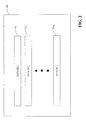
- a user interface 200 displaying a plurality of data sets 210 is illustrated.
- the data sets 210 are displayed in a collapsed state such that information associated with individual item(s) of the data sets 210 is not displayed.
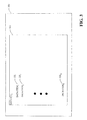
- a user interface 300 displaying a data set 310 is illustrated.
- the data set 310 is displayed in an expanded state such that information associated with data item(s) 320 is displayed.
- the data item(s) can be, for example, file(s) with the information associated with the data item(s) 320 including a type of file, category of file, physical and/or logical location of the file, and, date/time associated with the file.
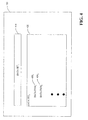
- the user interface 400 includes a first data set 410 displayed in a collapsed state and a second data set 420 displayed in a squeezed/semi-expanded state. In the squeezed/semi-expanded state, some of the data items 430 that comprise the second data set 420 are displayed while other data items that comprise the second data set 420 are not displayed.
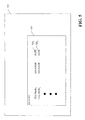
- the user interface 500 includes a data set 510 in a squeezed/semi-expanded state.
- file name, location and date are displayed for data items 520 that are visible in the squeezed/semi-expanded state.
- User interface(s) and/or input device(s) can be employed to facilitate navigation of data set(s) displayed in the squeezed/semi-expanded state.
- input device(s) e.g., mouse and/or keyboard
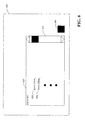
- FIG. 6 an exemplary user interface 600 in accordance with an aspect of the present invention is illustrated.
- a scroll bar 610 facilitates navigation through a data set 620 having a plurality of data items 630.
- the scroll bar can allow viewing of data item(s) hidden by the squeeze/semi-expanded state.
- the user interface 600 can further include a control 640 that facilitates scrolling through the plurality of data items 630.
- a control 640 that facilitates scrolling through the plurality of data items 630.
- the data set 620 can be presented (e.g., scrolled).
- the speed of the presentation can be based, for example, up a user's preference and/or upon a length of time that the control 640 has been active.
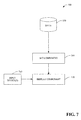
- the system 700 includes a set component 110, a display component 120 and input device(s) 710.
- the input device(s) 710 can facilitate viewing of data set(s) in a semi-collapsed state.
- arrow and/or cursor key(s) on a keyboard allow a viewer to show previously hidden items in the group by selecting a visible item and pressing a cursor key to select the next or previous item in the group. As hidden items are selected, they are moved vertically in the group to become visible.
- system 700 and/or the input device(s) 710 can be computer components as that term is defined herein.
- Fig. 8 a methodology that may be implemented in accordance with the present invention are illustrated. While, for purposes of simplicity of explanation, the methodologies are shown and described as a series of blocks, it is to be understood and appreciated that the present invention is not limited by the order of the blocks, as some blocks may, in accordance with the present invention, occur in different orders and/or concurrently with other blocks from that shown and described herein. Moreover, not all illustrated blocks may be required to implement the methodologies in accordance with the present invention.
- program modules include routines, programs, objects, data structures, etc. that perform particular tasks or implement particular abstract data types.
- functionality of the program modules may be combined or distributed as desired in various embodiments.
- a method that facilitates access to data 800 in accordance with an aspect of the present invention is illustrated.
- sets of data items are identified (e . g ., by a set component 110).
- at 820 at least one of the sets is displayed in a semi-collapsed state ( e.g. , by a display component 120).
- Fig. 9 and the following discussion are intended to provide a brief, general description of a suitable operating environment 910 in which various aspects of the present invention may be implemented. While the invention is described in the general context of computer-executable instructions, such as program modules, executed by one or more computers or other devices, those skilled in the art will recognize that the invention can also be implemented in combination with other program modules and/or as a combination of hardware and software. Generally, however, program modules include routines, programs, objects, components, data structures, etc . that perform particular tasks or implement particular data types.
- the operating environment 910 is only one example of a suitable operating environment and is not intended to suggest any limitation as to the scope of use or functionality of the invention.
- an exemplary environment 910 for implementing various aspects of the invention includes a computer 912.
- the computer 912 includes a processing unit 914, a system memory 916, and a system bus 918.
- the system bus 918 couples system components including, but not limited to, the system memory 916 to the processing unit 914.
- the processing unit 914 can be any of various available processors. Dual microprocessors and other multiprocessor architectures also can be employed as the processing unit 914.
- the system bus 918 can be any of several types of bus structure(s) including the memory bus or memory controller, a peripheral bus or external bus, and/or a local bus using any variety of available bus architectures including, but not limited to, an 8-bit bus, Industrial Standard Architecture (ISA), Micro-Channel Architecture (MSA), Extended ISA (EISA), Intelligent Drive Electronics (IDE), VESA Local Bus (VLB), Peripheral Component Interconnect (PCI), Universal Serial Bus (USB), Advanced Graphics Port (AGP), Personal Computer Memory Card International Association bus (PCMCIA), and Small Computer Systems Interface (SCSI).
- ISA Industrial Standard Architecture
- MSA Micro-Channel Architecture
- EISA Extended ISA
- IDE Intelligent Drive Electronics
- VLB VESA Local Bus
- PCI Peripheral Component Interconnect
- USB Universal Serial Bus
- AGP Advanced Graphics Port
- PCMCIA Personal Computer Memory Card International Association bus
- SCSI Small Computer Systems Interface
- the system memory 916 includes volatile memory 920 and nonvolatile memory 922.
- the basic input/output system (BIOS) containing the basic routines to transfer information between elements within the computer 912, such as during start-up, is stored in nonvolatile memory 922.
- nonvolatile memory 922 can include read only memory (ROM), programmable ROM (PROM), electrically programmable ROM (EPROM), electrically erasable ROM (EEPROM), or flash memory.
- Volatile memory 920 includes random access memory (RAM), which acts as external cache memory.
- RAM is available in many forms such as synchronous RAM (SRAM), dynamic RAM (DRAM), synchronous DRAM (SDRAM), double data rate SDRAM (DDR SDRAM), enhanced SDRAM (ESDRAM), Synchlink DRAM (SLDRAM), and direct Rambus RAM (DRRAM).
- SRAM synchronous RAM
- DRAM dynamic RAM
- SDRAM synchronous DRAM
- DDR SDRAM double data rate SDRAM
- ESDRAM enhanced SDRAM
- SLDRAM Synchlink DRAM
- DRRAM direct Rambus RAM
- Disk storage 924 includes, but is not limited to, devices like a magnetic disk drive, floppy disk drive, tape drive, Jaz drive, Zip drive, LS-100 drive, flash memory card, or memory stick.
- disk storage 924 can include storage media separately or in combination with other storage media including, but not limited to, an optical disk drive such as a compact disk ROM device (CD-ROM), CD recordable drive (CD-R Drive), CD rewritable drive (CD-RW Drive) or a digital versatile disk ROM drive (DVD-ROM).
- an optical disk drive such as a compact disk ROM device (CD-ROM), CD recordable drive (CD-R Drive), CD rewritable drive (CD-RW Drive) or a digital versatile disk ROM drive (DVD-ROM).
- a removable or non-removable interface is typically used such as interface 926.
- Fig 9 describes software that acts as an intermediary between users and the basic computer resources described in suitable operating environment 910.
- Such software includes an operating system 928.
- Operating system 928 which can be stored on disk storage 924, acts to control and allocate resources of the computer system 912.
- System applications 930 take advantage of the management of resources by operating system 928 through program modules 932 and program data 934 stored either in system memory 916 or on disk storage 924. It is to be appreciated that the present invention can be implemented with various operating systems or combinations of operating systems.
- Input devices 936 include, but are not limited to, a pointing device such as a mouse, trackball, stylus, touch pad, keyboard, microphone, joystick, game pad, satellite dish, scanner, TV tuner card, digital camera, digital video camera, web camera, and the like. These and other input devices connect to the processing unit 914 through the system bus 918 via interface port(s) 938.
- Interface port(s) 938 include, for example, a serial port, a parallel port, a game port, and a universal serial bus (USB).
- Output device(s) 940 use some of the same type of ports as input device(s) 936.
- a USB port may be used to provide input to computer 912, and to output information from computer 912 to an output device 940.
- Output adapter 942 is provided to illustrate that there are some output devices 940 like monitors, speakers, and printers among other output devices 940 that require special adapters.
- the output adapters 942 include, by way of illustration and not limitation, video and sound cards that provide a means of connection between the output device 940 and the system bus 918. It should be noted that other devices and/or systems of devices provide both input and output capabilities such as remote computer(s) 944.
- Computer 912 can operate in a networked environment using logical connections to one or more remote computers, such as remote computer(s) 944.
- the remote computer(s) 944 can be a personal computer, a server, a router, a network PC, a workstation, a microprocessor based appliance, a peer device or other common network node and the like, and typically includes many or all of the elements described relative to computer 912. For purposes of brevity, only a memory storage device 946 is illustrated with remote computer(s) 944.
- Remote computer(s) 944 is logically connected to computer 912 through a network interface 948 and then physically connected via communication connection 950.
- Network interface 948 encompasses communication networks such as local-area networks (LAN) and wide-area networks (WAN).
- LAN technologies include Fiber Distributed Data Interface (FDDI), Copper Distributed Data Interface (CDDI), Ethernet/IEEE 802.3, Token Ring/IEEE 802.5 and the like.
- WAN technologies include, but are not limited to, point-to-point links, circuit switching networks like Integrated Services Digital Networks (ISDN) and variations thereon, packet switching networks, and Digital Subscriber Lines (DSL).
- ISDN Integrated Services Digital Networks
- DSL Digital Subscriber Lines
- Communication connection(s) 950 refers to the hardware/software employed to connect the network interface 948 to the bus 918. While communication connection 950 is shown for illustrative clarity inside computer 912, it can also be external to computer 912.
- the hardware/software necessary for connection to the network interface 948 includes, for exemplary purposes only, internal and external technologies such as, modems including regular telephone grade modems, cable modems and DSL modems, ISDN adapters, and Ethernet cards.
Landscapes
- Engineering & Computer Science (AREA)
- General Engineering & Computer Science (AREA)
- Theoretical Computer Science (AREA)
- Human Computer Interaction (AREA)
- Physics & Mathematics (AREA)
- General Physics & Mathematics (AREA)
- User Interface Of Digital Computer (AREA)
Applications Claiming Priority (2)
| Application Number | Priority Date | Filing Date | Title |
|---|---|---|---|
| US776825 | 2004-02-11 | ||
| US10/776,825 US7472356B2 (en) | 2004-02-11 | 2004-02-11 | Collapsible container with semi-collapsed view |
Publications (2)
| Publication Number | Publication Date |
|---|---|
| EP1564633A2 true EP1564633A2 (de) | 2005-08-17 |
| EP1564633A3 EP1564633A3 (de) | 2012-02-01 |
Family
ID=34701366
Family Applications (1)
| Application Number | Title | Priority Date | Filing Date |
|---|---|---|---|
| EP05100951A Withdrawn EP1564633A3 (de) | 2004-02-11 | 2005-02-10 | Zusammenklappbare Liste mit halb-zusammengeklappter Ansicht |
Country Status (5)
| Country | Link |
|---|---|
| US (1) | US7472356B2 (de) |
| EP (1) | EP1564633A3 (de) |
| JP (1) | JP2005228348A (de) |
| KR (1) | KR101143048B1 (de) |
| CN (1) | CN100437477C (de) |
Families Citing this family (24)
| Publication number | Priority date | Publication date | Assignee | Title |
|---|---|---|---|---|
| US8117553B2 (en) | 2004-05-17 | 2012-02-14 | Sap Aktiengesellschaft | Method and system to maintain a user interface context |
| US7984388B2 (en) * | 2004-12-10 | 2011-07-19 | International Business Machines Corporation | System and method for partially collapsing a hierarchical structure for information navigation |
| DE102005003680A1 (de) * | 2005-01-21 | 2006-07-27 | Siemens Ag | Verfahren zur Steuerung eines Geräts |
| US7737995B2 (en) * | 2005-02-28 | 2010-06-15 | Microsoft Corporation | Graphical user interface system and process for navigating a set of images |
| US7432928B2 (en) * | 2005-06-14 | 2008-10-07 | Microsoft Corporation | User interface state reconfiguration through animation |
| US20070136678A1 (en) * | 2005-11-23 | 2007-06-14 | Brown Michael W | Software process and method that allows a computer program to run in memory, but display as a digital graphic or text window |
| US7451407B2 (en) * | 2005-11-30 | 2008-11-11 | Microsoft Corporation | Presentation of groups of items |
| US7779370B2 (en) | 2006-06-30 | 2010-08-17 | Google Inc. | User interface for mobile devices |
| US8775953B2 (en) * | 2007-12-05 | 2014-07-08 | Apple Inc. | Collage display of image projects |
| US9779181B2 (en) * | 2007-12-14 | 2017-10-03 | Bmc Software, Inc. | Dynamic folding of listed items for display |
| US20090228826A1 (en) * | 2008-03-04 | 2009-09-10 | Microsoft Corporation | Group filtering of items in a view |
| US20120174030A1 (en) * | 2010-12-29 | 2012-07-05 | Motorola-Mobility, Inc. | Navigating among higher-level and lower-level windows on a computing device |
| CN102629181A (zh) * | 2012-02-20 | 2012-08-08 | 百度在线网络技术(北京)有限公司 | 一种在移动终端中的信息处理方法与装置 |
| CN102646120A (zh) * | 2012-02-20 | 2012-08-22 | 百度在线网络技术(北京)有限公司 | 一种用于移动终端的文件查看方法与装置 |
| CN103092473A (zh) * | 2013-02-05 | 2013-05-08 | 楼永坚 | 一种基于一级目录的动态图形用户界面实现方法 |
| US9866526B2 (en) * | 2013-10-10 | 2018-01-09 | Go Daddy Operating Company, LLC | Presentation of candidate domain name stacks in a user interface |
| US20150106234A1 (en) * | 2013-10-10 | 2015-04-16 | Go Daddy Operating Company, LLC | System and method for grouping name assets for display |
| US9613374B2 (en) * | 2013-10-10 | 2017-04-04 | Go Daddy Operating Company, LLC | Presentation of candidate domain name bundles in a user interface |
| US9953105B1 (en) | 2014-10-01 | 2018-04-24 | Go Daddy Operating Company, LLC | System and method for creating subdomains or directories for a domain name |
| CN104391626B (zh) | 2014-10-29 | 2020-10-09 | 小米科技有限责任公司 | 设备列表动态显示的方法及装置 |
| KR102314109B1 (ko) * | 2015-01-05 | 2021-10-18 | 삼성전자주식회사 | 디스플레이 장치 및 디스플레이 방법 |
| US11163830B2 (en) * | 2015-04-21 | 2021-11-02 | International Business Machines Corporation | Augmenting the display of data in a tree format |
| CN106909365A (zh) | 2016-08-30 | 2017-06-30 | 阿里巴巴集团控股有限公司 | 资讯信息的展示方法和装置 |
| CN114048173B (zh) * | 2021-11-12 | 2026-03-27 | 成都统信软件技术有限公司 | 一种文件折叠方法、计算设备和存储介质 |
Family Cites Families (15)
| Publication number | Priority date | Publication date | Assignee | Title |
|---|---|---|---|---|
| US6035309A (en) * | 1993-02-09 | 2000-03-07 | International Business Machines Corporation | System and method for editing and viewing a very wide flat file |
| CA2097232C (en) * | 1993-05-28 | 1999-01-19 | Phillip J. Beaudet | Displaying partial graphs by expanding and collapsing nodes |
| US5838319A (en) * | 1994-12-13 | 1998-11-17 | Microsoft Corporation | System provided child window control for displaying items in a hierarchical fashion |
| US5878410A (en) * | 1996-09-13 | 1999-03-02 | Microsoft Corporation | File system sort order indexes |
| US5874961A (en) * | 1997-03-19 | 1999-02-23 | International Business Machines Corporation | Scroll bar amplification apparatus and method |
| CA2201276C (en) * | 1997-03-27 | 2000-01-25 | Ibm Canada Limited-Ibm Canada Limitee | Indirect hierarchical views for software application management |
| US5968176A (en) * | 1997-05-29 | 1999-10-19 | 3Com Corporation | Multilayer firewall system |
| US6281896B1 (en) * | 1998-03-31 | 2001-08-28 | International Business Machines Corporation | Data processor controlled interface with multiple tree of elements views expandable into individual detail views |
| US6192367B1 (en) * | 1998-11-23 | 2001-02-20 | International Business Machines Corporation | Data file editor presenting semi-formatted view |
| US6448985B1 (en) * | 1999-08-05 | 2002-09-10 | International Business Machines Corporation | Directory tree user interface having scrollable subsections |
| JP3882479B2 (ja) | 2000-08-01 | 2007-02-14 | コクヨ株式会社 | プロジェクト活動支援システム |
| US20020149623A1 (en) * | 2001-01-26 | 2002-10-17 | Alan West | State and data driven dynamic menu and toolbar architecture |
| US6883143B2 (en) * | 2001-12-18 | 2005-04-19 | Stanley W. Driskell | Computer interface toolbar for acquiring most frequently accessed options using short cursor traverses |
| US7191411B2 (en) * | 2002-06-06 | 2007-03-13 | Moehrle Armin E | Active path menu navigation system |
| US7242413B2 (en) * | 2003-05-27 | 2007-07-10 | International Business Machines Corporation | Methods, systems and computer program products for controlling tree diagram graphical user interfaces and/or for partially collapsing tree diagrams |
-
2004
- 2004-02-11 US US10/776,825 patent/US7472356B2/en not_active Expired - Fee Related
-
2005
- 2005-02-10 EP EP05100951A patent/EP1564633A3/de not_active Withdrawn
- 2005-02-11 KR KR1020050011667A patent/KR101143048B1/ko not_active Expired - Fee Related
- 2005-02-14 JP JP2005036836A patent/JP2005228348A/ja active Pending
- 2005-02-16 CN CNB2005100094936A patent/CN100437477C/zh not_active Expired - Fee Related
Also Published As
| Publication number | Publication date |
|---|---|
| KR101143048B1 (ko) | 2012-05-08 |
| KR20060041883A (ko) | 2006-05-12 |
| CN100437477C (zh) | 2008-11-26 |
| JP2005228348A (ja) | 2005-08-25 |
| US7472356B2 (en) | 2008-12-30 |
| CN1658160A (zh) | 2005-08-24 |
| EP1564633A3 (de) | 2012-02-01 |
| US20050177801A1 (en) | 2005-08-11 |
Similar Documents
| Publication | Publication Date | Title |
|---|---|---|
| US7472356B2 (en) | Collapsible container with semi-collapsed view | |
| CN101385028B (zh) | 新对象搜索ui和拖动对象结果 | |
| EP2983077B1 (de) | Anzeigesteuerungsvorrichtung, anzeigesteuerungsverfahren und anzeigesteuerungsprogramm | |
| US8205172B2 (en) | Graphical web browser history toolbar | |
| US20050210416A1 (en) | Interactive preview of group contents via axial controller | |
| JP4825869B2 (ja) | アプリケーションウインドウのグループ化および管理のための方法および装置 | |
| US8261205B2 (en) | User interface for presenting a list of thumbnail items associated with media items | |
| CN102203769B (zh) | 用于选项卡式文档界面的可组合的选项卡 | |
| US5959621A (en) | System and method for displaying data items in a ticker display pane on a client computer | |
| US20070186182A1 (en) | Progressive loading | |
| US8352524B2 (en) | Dynamic multi-scale schema | |
| JP2005025728A (ja) | 理想的な情報抽象化、隠蔽および順序付けによって、視覚的複雑さおよび検索労力を低減するためのモデルおよび方法 | |
| US20130174023A1 (en) | Presentation of rich search results in delineated areas | |
| US7743343B2 (en) | Combined representation of a hierarchical data item collection | |
| JP2008027001A (ja) | コンテンツ閲覧システムおよびプログラム | |
| CN112035026B (zh) | 信息显示方法、装置、电子设备和存储介质 | |
| JP7796909B2 (ja) | ビデオ推奨のための方法、装置、デバイス、及び記憶媒体 | |
| TWI539299B (zh) | 使用用於線上探究的結構化資料 | |
| Patel et al. | An evaluation of techniques for browsing photograph collections on small displays | |
| Tashman et al. | WindowScape: Lessons learned from a task-centric window manager | |
| US7490133B1 (en) | Context-sensitive content level semantic information propagation system and method | |
| US20140047003A1 (en) | Processing data entities associated to descriptors | |
| US12346548B2 (en) | Method for displaying content, method for analyzing content, and device for implementing the same method | |
| CN101630220A (zh) | 具有分类区块及应用程序优先次序化的计算机系统 | |
| US20090204912A1 (en) | Geneeral purpose infinite display canvas |
Legal Events
| Date | Code | Title | Description |
|---|---|---|---|
| PUAI | Public reference made under article 153(3) epc to a published international application that has entered the european phase |
Free format text: ORIGINAL CODE: 0009012 |
|
| AK | Designated contracting states |
Kind code of ref document: A2 Designated state(s): AT BE BG CH CY CZ DE DK EE ES FI FR GB GR HU IE IS IT LI LT LU MC NL PL PT RO SE SI SK TR |
|
| AX | Request for extension of the european patent |
Extension state: AL BA HR LV MK YU |
|
| PUAL | Search report despatched |
Free format text: ORIGINAL CODE: 0009013 |
|
| AK | Designated contracting states |
Kind code of ref document: A3 Designated state(s): AT BE BG CH CY CZ DE DK EE ES FI FR GB GR HU IE IS IT LI LT LU MC NL PL PT RO SE SI SK TR |
|
| AX | Request for extension of the european patent |
Extension state: AL BA HR LV MK YU |
|
| RIC1 | Information provided on ipc code assigned before grant |
Ipc: G06F 3/033 20060101AFI20111229BHEP |
|
| 17P | Request for examination filed |
Effective date: 20120801 |
|
| AKX | Designation fees paid |
Designated state(s): AT BE BG CH CY CZ DE DK EE ES FI FR GB GR HU IE IS IT LI LT LU MC NL PL PT RO SE SI SK TR |
|
| RAP1 | Party data changed (applicant data changed or rights of an application transferred) |
Owner name: MICROSOFT TECHNOLOGY LICENSING, LLC |
|
| STAA | Information on the status of an ep patent application or granted ep patent |
Free format text: STATUS: THE APPLICATION IS DEEMED TO BE WITHDRAWN |
|
| 18D | Application deemed to be withdrawn |
Effective date: 20160901 |