EP1560386B1 - Procédé pour la transmission et la réception de données Ethernet dans un système basé sur la convergence broadcast/communication - Google Patents
Procédé pour la transmission et la réception de données Ethernet dans un système basé sur la convergence broadcast/communication Download PDFInfo
- Publication number
- EP1560386B1 EP1560386B1 EP04020161A EP04020161A EP1560386B1 EP 1560386 B1 EP1560386 B1 EP 1560386B1 EP 04020161 A EP04020161 A EP 04020161A EP 04020161 A EP04020161 A EP 04020161A EP 1560386 B1 EP1560386 B1 EP 1560386B1
- Authority
- EP
- European Patent Office
- Prior art keywords
- ethernet data
- data
- ethernet
- data frame
- frame
- Prior art date
- Legal status (The legal status is an assumption and is not a legal conclusion. Google has not performed a legal analysis and makes no representation as to the accuracy of the status listed.)
- Expired - Lifetime
Links
Images






Classifications
-
- B—PERFORMING OPERATIONS; TRANSPORTING
- B65—CONVEYING; PACKING; STORING; HANDLING THIN OR FILAMENTARY MATERIAL
- B65D—CONTAINERS FOR STORAGE OR TRANSPORT OF ARTICLES OR MATERIALS, e.g. BAGS, BARRELS, BOTTLES, BOXES, CANS, CARTONS, CRATES, DRUMS, JARS, TANKS, HOPPERS, FORWARDING CONTAINERS; ACCESSORIES, CLOSURES, OR FITTINGS THEREFOR; PACKAGING ELEMENTS; PACKAGES
- B65D83/00—Containers or packages with special means for dispensing contents
- B65D83/14—Containers for dispensing liquid or semi-liquid contents by internal gaseous pressure, i.e. aerosol containers comprising propellant
- B65D83/16—Actuating means
- B65D83/164—Actuators comprising a manually operated valve and being attachable to the aerosol container, e.g. downstream a valve fitted to the container; Actuators associated to container valves with valve seats located outside the aerosol container
-
- H—ELECTRICITY
- H04—ELECTRIC COMMUNICATION TECHNIQUE
- H04Q—SELECTING
- H04Q11/00—Selecting arrangements for multiplex systems
- H04Q11/0001—Selecting arrangements for multiplex systems using optical switching
- H04Q11/0062—Network aspects
- H04Q11/0067—Provisions for optical access or distribution networks, e.g. Gigabit Ethernet Passive Optical Network (GE-PON), ATM-based Passive Optical Network (A-PON), PON-Ring
-
- B—PERFORMING OPERATIONS; TRANSPORTING
- B65—CONVEYING; PACKING; STORING; HANDLING THIN OR FILAMENTARY MATERIAL
- B65D—CONTAINERS FOR STORAGE OR TRANSPORT OF ARTICLES OR MATERIALS, e.g. BAGS, BARRELS, BOTTLES, BOXES, CANS, CARTONS, CRATES, DRUMS, JARS, TANKS, HOPPERS, FORWARDING CONTAINERS; ACCESSORIES, CLOSURES, OR FITTINGS THEREFOR; PACKAGING ELEMENTS; PACKAGES
- B65D83/00—Containers or packages with special means for dispensing contents
- B65D83/14—Containers for dispensing liquid or semi-liquid contents by internal gaseous pressure, i.e. aerosol containers comprising propellant
- B65D83/28—Nozzles, nozzle fittings or accessories specially adapted therefor
-
- B—PERFORMING OPERATIONS; TRANSPORTING
- B65—CONVEYING; PACKING; STORING; HANDLING THIN OR FILAMENTARY MATERIAL
- B65D—CONTAINERS FOR STORAGE OR TRANSPORT OF ARTICLES OR MATERIALS, e.g. BAGS, BARRELS, BOTTLES, BOXES, CANS, CARTONS, CRATES, DRUMS, JARS, TANKS, HOPPERS, FORWARDING CONTAINERS; ACCESSORIES, CLOSURES, OR FITTINGS THEREFOR; PACKAGING ELEMENTS; PACKAGES
- B65D83/00—Containers or packages with special means for dispensing contents
- B65D83/14—Containers for dispensing liquid or semi-liquid contents by internal gaseous pressure, i.e. aerosol containers comprising propellant
- B65D83/38—Details of the container body
-
- H—ELECTRICITY
- H04—ELECTRIC COMMUNICATION TECHNIQUE
- H04L—TRANSMISSION OF DIGITAL INFORMATION, e.g. TELEGRAPHIC COMMUNICATION
- H04L12/00—Data switching networks
- H04L12/64—Hybrid switching systems
-
- H—ELECTRICITY
- H04—ELECTRIC COMMUNICATION TECHNIQUE
- H04Q—SELECTING
- H04Q11/00—Selecting arrangements for multiplex systems
- H04Q11/0001—Selecting arrangements for multiplex systems using optical switching
- H04Q11/0062—Network aspects
- H04Q2011/0064—Arbitration, scheduling or medium access control aspects
Definitions
- the present invention relates to a system based on broadcast/communication convergence, and more particularly to a TDMA system including an optical network unit for multiplexing and transmitting broadcast data and Ethernet data and a subscriber set-top box for receiving and processing the multiplexed data.
- broadcast transmission is unidirectional transmission that is received by a number of unspecified receivers according to the characteristics of the broadcast.
- Service and network providers for the broadcast are typically identical.
- Communication is bidirectional and is based on one-to-one transmission and reception operations according to the characteristics of the communication. In this case, service and network providers for the communication typically are not identical.
- the communication data and broadcast data are time division multiplexed and the broadcast data is transmitted in the form of a multi-program transport stream (MPTS).
- MPTS multi-program transport stream
- Ethernet data is transmitted in packets.
- a seamlessly continuous signal In the case of a broadcast transmission, a seamlessly continuous signal must be provided.
- the broadcast data must be transmitted in packets wherein preceding and following packets can be linked to each other after the packetizing operation. It is thus necessary that a buffer and delay time are required for the packet processing operation.
- a processing operation based on the time division multiplexing is required wherein the broadcast data is provided by a seamlessly continuous signal in real time.
- a communication network using conventional Ethernet equipment is a packet communication network, and is based on a local area network (LAN) or Internet communication network.
- a configuration of the Ethernet communication network used by subscribers typically uses a 10Megabit/sec transmission (referred to as 10 Mbase-T). This is used in many LANs and is used in companies and schools. Recently, a 100-Mbps Internet communication service of 100 Mbase-T is being provided to subscriber homes using an unshielded twisted pair (UTP) cable referred to as a metro Ethernet communication network.
- an Ethernet signal is a signal based on a unit of a packet consisting of frames. In order for the Ethernet signal to be multiplexed into a continuous bit stream, an operation for processing various information units such as packet information is needed. For this reason, overhead (O/H) increases and an additional operation must be carried out.
- TDM time division multiplexer
- FIG. 1 illustrates a conventional system for providing a broadcast/communication convergence service.
- the system includes an optical line terminal (OLT) 10 for electro-optically converting broadcast data from a broadcast provider (not shown) and transferring the electro-optically converted broadcast data through an optical signal that can be transmitted and provided to subscribers, an optical network unit (ONU) 20 serving as a user side device for transferring information received from the OLT 10 to a subscriber set-top box 30, and an optical cable connected between the OLT 10 and the ONU 20.
- OLT optical line terminal
- ONU optical network unit
- the ONU 20 When the broadcast/communication data from a service provider (not shown) is transmitted to the ONU 20 through the OLT 10, the ONU 20 receives a service request from a terminal of a service user and carries out a time division multiplexing operation for the broadcast/communication data, such that a corresponding service is provided.
- FIG. 2 is a block diagram illustrating an example of a conventional time division multiplexing and demultiplexing operation in a broadcast/communication convergence system.
- the broadcast/communication convergence system multiplexes broadcast signals and a communication signal into a single signal according to known time division multiplexing methods, and then transmits the multiplexed single signal.
- the system converts the communication signal into a media independent interface (MII) signal that is equivalent to a broadcast stream by means of a physical layer (PHY) transceiver 23.
- the converted communication signal and the broadcast signals are applied to a time division multiplexer (TDM) 21 such that the TDM 21 carries out the time division multiplexing operation on the inputted signals and causes to be transmitted the single signal 25.
- the Ethernet MII signal is 4-bit parallel signal that are discontinuously received with packet lengths varying between a minimum of 64 bytes and a maximum of 1518 bytes.
- the received signal is provided to time division demultiplexer (TDDM) 31 so that the TDDM 31 carries out a time division demultiplexing operation.
- the broadcast/communication convergence system transmits an optical signal to a customer, e.g., a consecutive digital broadcast or Video on Demand (VoD) signal
- the transmission is unidirectionally, and any Ethernet communication signal is transmitted and received in a burst mode.
- the Ethernet packet length is variable, information of an Ethernet packet length is extracted and an idle signal is generated for a section in which Ethernet data is not present.
- a buffering operation is required to be carried out before the multiplexing operation is performed.
- the Ethernet data when the ONU 20 multiplexes 5-bit Ethernet packet data and a broadcast digital stream and transmits the resultant multiplexed signal, the Ethernet data must be converted into, for example, 4-bit data (100M) based on a media access control (MAC) format having xMII through the PHY transceiver 23.
- MAC media access control
- the Ethernet data encoded into 5-bit data 125M
- 4-bit data 100M
- the 5-bit data includes control codes indicating a start and end of the data packet or is converted into the 4-bit data so that true Ethernet data can be generated.
- IP Internet protocol
- a digital logic device such as a field programmable gate array (FPGA) can further be provided downstream of the PHY transceiver so that a 4-bit code can be encoded into a 5-bit code.
- the 5-bit code in the FPGA can use 16 control codes, but the bandwidth is increased by 25%.
- the bandwidth required is excessively increased.
- the 5-bit code is not appropriate for a relatively slow logic device such as the FPGA.
- WO 03/007515 A2 discloses a passive optical network (PON) that transmits there through both telephony traffic and packet-based traffic, each in their native formats i. e. without any processing (such as segmentation and reassembly) of either kind of traffic.
- PON passive optical network
- an optical line terminal (OLT) transmits in a portion of a time slot of fixed duration a provisionable number frames of fixed size (e. g. TI frames or E1 frames), and also transmits in a remaining portion of the time slot a number of frames of variable size that carry Ethernet frames.
- EP 1 311 137 A2 discloses a GE-PON (Gigabit Ethernet frame Passive Optical Network) system in a PON system which is provided having an ODN, as of an optical splitter, that includes: an OLT for (1) transmitting a downstream window containing both a control frame having timeslot position and size information in association with at least two ONUs and Ethernet frames to the ODNs, for (2) analyzing contents of RAUs (Request Access Units) in an upstream window which is transmitted from the ONUs according to a TDMA method and received from the ODN, and for (3) determining timeslot position and size corresponding to each of the ONUs.
- RAUs Request Access Units
- the above object and other aspects can be accomplished by the provisions of a method for transmitting and receiving Ethernet data in a system based on broadcast/communication convergence, wherein the system is equipped with an optical network unit for carrying out a time division multiplexing operation for the Ethernet data switched by a network switch and a plurality of broadcast data units, transmitting a result of the time division multiplexing operation to a corresponding subscriber set-top box, and providing data from the subscriber set-top box to the network switch, the method comprising the steps of (a) producing a length of an Ethernet data frame provided from the network switch, (b) carrying out an encapsulation operation by generating data length information and inserting the generated length information into the Ethernet data frame, (c) transmitting encapsulated Ethernet data to the subscriber set-top box, (d) allowing the subscriber set-top box to carry out a time division demultiplexing operation for a signal transmitted from the optical network unit and separate the signal into the Ethernet data and broadcast data, (e) detecting
- the above can be accomplished by the provisions of a system based on broadcast/communication convergence, the system comprising an optical transmitter for transmitting Ethernet data and broadcast data from a server computer through an optical signal, an optical network unit for producing a length of the Ethernet data based on a media independent interface (MII) format provided from a network switch switching the Ethernet data from the optical transmitter, carrying out an encapsulation operation by inserting length information into an Ethernet data frame, and carrying out a time division multiplexing operation on a result of the encapsulation operation and the broadcast data, and a set-top box for carrying out a time division demultiplexing operation for data transmitted from the optical network unit, separating the transmitted data into the Ethernet data and the broadcast data, extracting the length information from the Ethernet data frame according to a result of the separation, and recognizing and processing the Ethernet data on the basis of the extracted length information.
- MII media independent interface
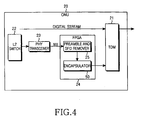
- FIG. 4 is a block diagram illustrating an internal configuration of the ONU 20 in accordance with the present invention
- FIG. 5 is a block diagram illustrating the internal configuration of encapsulator 50 shown in FIG. 4 .
- ONU 20 includes an L2 switch 22, a physical layer (PRY) transceiver 23 coupled to L2 switch 22 for converting serial Ethernet data of 5 bits into a 4-bit signal based on a media independent interface (MII) format, a field programmable gate array (FPGA) 24 serving as a frame regenerator for receiving Ethernet data based on the MII format provided from the PHY transceiver 23, and a time division multiplexer (TDM) 21 for carrying out a time division multiplexing operation for the Ethernet data outputted from the FPGA 24 and broadcast digital stream(s).
- MII media independent interface
- FPGA field programmable gate array
- TDM time division multiplexer
- FPGA 24 performs an encapsulation operation by inserting data length information into the Ethernet frame to generate a new format of an Ethernet frame.
- the FPGA 24 stores a program for converting the Ethernet data provided from the PHY transceiver 23 into Ethernet data processable in a physical layer of the well-known OSI model.
- FPGA 24 includes a preamble and start-of-field delimiter (SFD) remover 25 for removing a preamble and an SFD from the Ethernet data outputted by the PHY transceiver 23 and an encapsulator 50 for carrying out an encapsulation operation by inserting a framing bit and length information into the Ethernet data to generate new frame data, as will be described with regard to FIG. 7 .
- SFD start-of-field delimiter
- FIG. 5 is a block diagram illustrating in more detail the encapsulator 50 shown in FIG. 4 .
- Encapsulator 50 includes a first-in first-out (FIFO) buffer 51 for buffering Ethernet data provided from the preamble and SFD remover 25, a packet length information generator 54 for enabling a packet length counter 52 to count true Ethernet data and generate length information, and a framing bit generator 53 for generating a framing bit.
- the framing bit indicates a start of a frame.
- FIG. 6 is a block diagram illustrating an internal configuration of the subscriber set-top box 30 in accordance with the present invention.
- the subscriber set-top box 30 includes a time division demultiplexer (TDDM) 31 for carrying out a time division demultiplexing operation on data transmitted from the ONU 20, a field programmable gate array (FPGA) 32 serving as a frame recovery device for receiving demultiplexed Ethernet data, and a physical layer (PHY) transceiver 33 for receiving demultiplexed Ethernet data based on a media independent interface (MII) format.
- TDDM time division demultiplexer
- FPGA field programmable gate array
- PHY physical layer
- FPGA 32 serving as the frame recovery device, includes a counter 36 for counting the Ethernet data outputted from the TDDM 31, a functional block 35 for detecting a framing bit and removing the framing bit and a length information field, and a functional block 34 for inserting a preamble and a start-of-field delimiter (SFD) into the Ethernet data to recover original Ethernet data.
- the Ethernet data recovered by the preamble and SFD inserter 34 is provided to a network card of a user computer (not shown) through the PHY transceiver 33.
- This format includes a start-of-field delimiter (SFD) 41, a preamble 42 for clocking and synchronization, a destination address field into which a media access control (MAC) address of a destination device to receive a packet is inserted, a source address field into which a MAC address of a transmitting side's device is inserted, a type field, an Internet protocol (IP) data field 45, and a frame check sum (FCS) field 46.
- SFD start-of-field delimiter
- preamble 42 for clocking and synchronization
- MAC media access control
- source address field into which a MAC address of a transmitting side's device is inserted
- type field into which a MAC address of a transmitting side's device is inserted
- FCS frame check sum
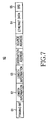
- FIG. 7 shows the format of an encapsulated Ethernet data frame in accordance with the present invention.
- Ethernet data frame 60 includes a framing bit 61, two length-information fields 62 and 63, Ethernet data 64 and an end-of-frame delimiter (EFD) field 65.
- EFD end-of-frame delimiter
- the framing bit 61 is used for allowing the receiving side to determine whether received data is Ethernet data.
- Two length information fields 62 and 63 are provided to correctly discriminate the framing bit and length information when the framing bit is the same as a code.
- the use of length information fields 62 and 63 is advantageous as indicating the length of Ethernet data allows the Ethernet data to be processed in a physical layer of the OSI model and a processing operation in a data link layer can be omitted.
- FIG. 8 is a flowchart illustrating a method for carrying out an encapsulation operation in the ONU 20 in accordance with the present invention.
- the FPGA 24 serving as the frame regenerator in accordance with the present invention receives the Ethernet frame 60 based on the MII format switched by the L2 switch at step 801.
- the FPGA 24 removes a preamble and an SFD from the Ethernet frame at step 802.
- the encapsulator 50 of the FPGA 24 counts the Ethernet data, other than the preamble and the SFD, using the counter at step 803.
- the encapsulator 50 of the FPGA 24 inserts 11-bit length information indicating the maximum length of Ethernet data into the Ethernet frame at step 804.
- the encapsulator 50 of the FPGA 24 repeatedly inserts the length information necessary for discriminating the Ethernet data and the length information into the Ethernet frame at step 805. This is for the case when the Ethernet data is the same as the length information.
- a framing bit is inserted before the length information field and an encapsulation operation is completed at step 806.
- the encapsulator 50 inserts a 4-bit EFD into an end of a newly generated Ethernet frame at step 807.
- the TDM 21 carries out a time division multiplexing operation for the Ethernet frame generated by the encapsulator 50 and broadcast data and transmits the resultant signal to the subscriber set-top box 30 through an optical transmitter (not shown) at step 808.
- FIG. 9 is a flowchart illustrating a method for recovering an Ethernet frame in the subscriber set-top box 30 in accordance with the present invention.
- the subscriber set-top box 30 receives data from the ONU 20, enables the TDDM 31 to carry out a time division demultiplexing operation for the received data so that the received data can be separated into broadcast data and Ethernet data at step 901.
- the FPGA 32 (see FIG. 6 ) detects a framing bit from the Ethernet data at step 902. When the framing bit is detected, the FPGA 32 checks two consecutive length information bits in the Ethernet frame at step 903. Then, the FPGA 32 enables the counter to count a data field, and recognizes Ethernet data corresponding to the checked length information at step 904.
- the length information field and framing bit remover 35 removes the length information bits and the framing bit, and the preamble and SFD inserter 34 inserts an Ethernet preamble and an SFD into the Ethernet data, such that original Ethernet data is recovered and processed at step 906.
Landscapes
- Engineering & Computer Science (AREA)
- Computer Networks & Wireless Communication (AREA)
- Chemical & Material Sciences (AREA)
- Dispersion Chemistry (AREA)
- Mechanical Engineering (AREA)
- Signal Processing (AREA)
- Small-Scale Networks (AREA)
- Data Exchanges In Wide-Area Networks (AREA)
- Two-Way Televisions, Distribution Of Moving Picture Or The Like (AREA)
- Time-Division Multiplex Systems (AREA)
- Optical Communication System (AREA)
Claims (22)
- Procédé de transmission et de réception de données Ethernet dans un système basé sur une convergence de diffusion/communication, le système étant équipé d'une unité de réseau optique (20) pour effectuer une opération de multiplexage à répartition temporelle pour les données Ethernet commutées par un commutateur de réseau (22) et une pluralité d'unités de données de diffusion, transmettre un résultat de l'opération de multiplexage à répartition temporelle à un décodeur d'abonné correspondant (30), et procurer des données du décodeur d'abonné au commutateur de réseau, le procédé comprenant les étapes consistant à :éliminer (802) un bit de préambule et un délimiteur de début de champ d'une trame de données Ethernet fournie par le commutateur de réseau à l'unité de réseau optique ;produire (803) une longueur de données de la trame de données Ethernet éliminée (64), dans lequel la trame de données Ethernet éliminée comprend des données excluant le bit de préambule et le délimiteur de début de champ de la trame de données Ethernet ;effectuer (804) une opération d'encapsulation, dans laquelle une information de longueur de données (62) comprenant la longueur de données de la trame de données Ethernet éliminée (64) est déterminée etinsérée dans la trame de données Ethernet (60) ;transmettre (808) la trame de données Ethernet encapsulée (60) au décodeur d'abonné ;effectuer (901) une opération de démultiplexage à répartition temporelle dans le décodeur d'abonné pour un signal transmis par l'unité de réseau optique et séparer le signal en données Ethernet eten données de diffusion ;détecter (902) un bit de tramage dans la trame de données Ethernet sur base d'un résultat de la séparation et détecter l'information de longueur dans la trame de données Ethernet ;compter la trame de données Ethernet sur base de l'information de longueur détectée et reconnaître (904) les données Ethernet ; etinsérer (906) le bit de préambule et le délimiteur de début de champ dans les données Ethernet reconnues et récupérer et traiter des données Ethernet originales.
- Procédé selon la revendication 1, dans lequel l'étape de l'opération d'encapsulation comprend en outre l'étape consistant à :insérer (907) le bit de tramage (61) et un délimiteur de fin de champ (65) dans la trame de données Ethernet (60).
- Procédé selon l'une des revendications 1 ou 2, dans lequel l'étape de l'opération d'encapsulation comprend en outre l'étape consistant à :insérer de manière répétée (905) l'information de longueur (63) dans la trame de données Ethernet (60).
- Procédé selon l'une des revendications 1 à 3, dans lequel l'étape d'insertion du bit de préambule et du délimiteur de début de champ comprend en outre l'étape consistant à :éliminer le bit de tramage et l'information de longueur de la trame de données Ethernet après la reconnaissance des données Ethernet.
- Procédé de transmission de données Ethernet (64) dans une unité de réseau optique (20), où l'unité de réseau optique effectue une opération de multiplexage à répartition temporelle pour les données Ethernet commutées par un commutateur de réseau (22) et une pluralité d'unités de données de diffusion, transmet un résultat de l'opération de multiplexage à répartition temporelle à un décodeur d'abonné correspondant (30), et procure des données du décodeur d'abonné au commutateur de réseau, le procédé comprenant les étapes consistant à :éliminer (802) un bit de préambule et un délimiteur de début de champ d'une trame de données Ethernet (60) fournie par le commutateur de réseau à l'unité de réseau optique ;produire (803) une longueur de données de la trame de données Ethernet éliminée (64) en utilisant un compteur, dans lequel la trame de données Ethernet éliminée comprend des données excluant le bit de préambule et le délimiteur de début de champ de la trame de données Ethernet ;effectuer (804) une opération d'encapsulation en générant une information de longueur (62) comprenant la longueur de données de la trame de données Ethernet éliminée (64) et insérer un bit de tramage (61), l'information de longueur de données (62) et un délimiteur de fin de champ (65) dans la trame de données Ethernet (60) ; ettransmettre (808) la trame de données Ethernet encapsulée (60) au décodeur d'abonné.
- Procédé selon la revendication 5, dans lequel l'étape de l'opération d'encapsulation comprend en outre l'étape consistant à :insérer de manière répétée (905) l'information de longueur (63) dans la trame de données Ethernet (60).
- Procédé de réception de données Ethernet (64) dans un décodeur d'abonné (30), le décodeur d'abonné étant équipé d'un terminal d'entrée dans lequel des données de diffusion par multiplexage à répartition temporelle et des données Ethernet transmises par une unité de réseau optique (20) sont reçues, le procédé comprenant les étapes consistant à :effectuer (901) une opération de démultiplexage à répartition temporelle pour le signal reçu, dans lequel les données Ethernet et les données de diffusion sont séparées ;détecter (902) un bit de tramage (61) dans une trame (60) des données Ethernet et détecter de l'information de longueur (62) dans la trame de données Ethernet (60) ;compter la trame de données Ethernet sur base de l'information de longueur détectée et reconnaître (904) les données Ethernet (64) ; etinsérer (906) un bit de préambule et un délimiteur de début de champ dans les données Ethernet reconnues et récupérer et traiter des données Ethernet originales.
- Procédé selon la revendication 7, dans lequel l'étape d'insertion du bit de préambule et du délimiteur de début de champ comprend en outre l'étape consistant à :éliminer (906) le bit de tramage (61) et l'information de longueur (62) de la trame de données Ethernet (60).
- Système de convergence de diffusion/communication, comprenant :un transmetteur optique (10) pour transmettre des données Ethernet (64) et des données de diffusion ;une unité de réseau optique (20) pour :éliminer un bit de préambule et un délimiteur de début de champ d'une trame de données Ethernet fournie par commutation des données Ethernet du transmetteur optique via un commutateur de réseau ;produire une longueur de données de la trame de données Ethernet éliminée (64) sur base d'un format d'interface indépendant du support, procuré par le commutateur de réseau (22), dans lequel la trame de données Ethernet éliminée comprend des données excluant le bit de préambule et le délimiteur de début de champ de la trame de données Ethernet ;effectuer une opération d'encapsulation en insérant de l'information de longueur (62) comprenant la longueur de données de la trame de données Ethernet éliminée dans une trame de données Ethernet (60) ; eteffectuer une opération de multiplexage à répartition temporelle sur un résultat (60) de l'opération d'encapsulation et des données de diffusion ; etun décodeur (30) pour :effectuer une opération de démultiplexage à répartition temporelle pour des données transmises par l'unité de réseau optique (20) ;séparer les données transmises en données Ethernet et en données de diffusion, et extraire l'information de longueur (62) de la trame de données Ethernet (60) en fonction d'un résultat de la séparation ; etreconnaître et traiter les données Ethernet (64) sur base de l'information de longueur extraite.
- Système selon la revendication 9, dans lequel l'unité de réseau optique comprend :un multiplexeur à répartition temporelle (21) ; etun générateur de trame (24).
- Système selon la revendication 10, dans lequel le générateur de trame comprend :un éliminateur de champ (25) pour éliminer des champs de préambule et de délimiteur de début de champ ; etun encapsuleur (50) pour compter la longueur de données de la trame de données Ethernet éliminée (64), générer l'information de longueur (62) comprenant la longueur de données de la trame de données Ethernet, et insérer l'information de longueur générée dans les données Ethernet (60).
- Système selon la revendication 11, dans lequel l'encapsuleur (50) comprend :une mémoire tampon (51) pour stocker les données Ethernet (64) dont le préambule est éliminé ;un compteur (52) pour compter la longueur de données de la trame de données Ethernet (64) ;un générateur d'information de longueur (54) pour générer l'information de longueur sur base d'une valeur de comptage du compteur ; etun générateur de bit de tramage (53) pour générer un bit de tramage (61) nécessaire pour différentier un début de la trame de données Ethernet, et pour insérer le bit de tramage généré et un délimiteur de fin de champ (65) dans les données Ethernet (60) dont le préambule est éliminé.
- Système selon la revendication 11 ou 12, dans lequel l'encapsuleur insère de manière répétée l'information de longueur (63) dans la trame de données Ethernet.
- Système selon l'une des revendications 9 à 13, dans lequel le décodeur d'abonné comprend :un dispositif logique numérique (32) comprenant :un compteur (36) ;un éliminateur d'information de longueur (35) pour compter la trame de données Ethernet sortie par un démultiplexeur à répartition temporelle au moyen du compteur, et pour éliminer un champ d'information de longueur (62), un bit de tramage (61) et un délimiteur de fin de champ (65) ; etun dispositif d'insertion de préambule (34) pour insérer un préambule et un délimiteur de début de champ dans la trame de données Ethernet dont le champ d'information de longueur est éliminé.
- Unité de réseau optique (20) pour effectuer une opération de multiplexage à répartition temporelle de données Ethernet (64) commutées par un commutateur de réseau (22) et une pluralité d'unités de données de diffusion, transmettre un résultat de l'opération de multiplexage à répartition temporelle à un décodeur d'abonné correspondant (30), et procurer des données par le décodeur d'abonné au commutateur de réseau, comprenant :un générateur de trames (24) pour :éliminer un bit de préambule et un délimiteur de début de champ d'une trame de données Ethernet (60) fournie par la commutation des données Ethernet provenant d'un transmetteur optique via un commutateur de réseau ;produire une longueur de données de la trame de données Ethernet éliminée (64) sur base d'un format d'interface indépendant du support, procuré par le commutateur de réseau, dans lequel la trame de données Ethernet éliminée comprend des données excluant le bit de préambule et le délimiteur de début de champ de la trame de données Ethernet ; eteffectuer une opération d'encapsulation en produisant et en insérant de l'information de longueur comprenant la longueur de données de la trame de données Ethernet éliminée dans la trame de données Ethernet ; etun multiplexeur à répartition temporelle (21) pour effectuer l'opération de multiplexage à répartition temporelle pour les données Ethernet encapsulées par le générateur de trame et les données de diffusion.
- Unité de réseau optique selon la revendication 15, dans laquelle le générateur de trame comprend :un éliminateur de champ (25) pour éliminer des champs de préambule et de délimiteur de début de champ ; etun encapsuleur (50) pour compter la longueur de données de la trame de données Ethernet éliminée, générer l'information de longueur et insérer l'information de longueur générée dans la trame de données Ethernet.
- Unité de réseau optique selon la revendication 16, dans laquelle l'encapsuleur comprend :une mémoire tampon (51) pour stocker les données Ethernet dont le préambule est éliminé ;un compteur (52) pour compter la longueur de données de la trame de données Ethernet ;un générateur d'information de longueur (54) pour générer l'information de longueur sur base d'une valeur de comptage du compteur ; etun générateur de bit de tramage (53) pour générer un bit de tramage nécessaire pour différentier un début de la trame de données Ethernet et pour insérer le bit de tramage généré dans les données Ethernet dont le préambule est éliminé.
- Unité de réseau optique selon la revendication 16 ou 17, dans laquelle l'encapsuleur insère de manière répétée l'information de longueur (63) dans la trame de données Ethernet.
- Décodeur d'abonné (30) équipé d'un terminal d'entrée dans lequel des données de diffusion à multiplexage à répartition temporelle et des données Ethernet transmises par une unité de réseau optique (20) sont entrées, comprenant :un démultiplexeur à répartition temporelle (31) pour démultiplexer un signal procuré par l'unité de réseau optique et pour séparer le signal en données de diffusion et données Ethernet ; etun dispositif de récupération de trame (32) pour extraire un champ d'information de longueur (62) dans une trame (60) des données Ethernet selon un résultat de la séparation, pour compter et reconnaître un champ de données (64) de la trame de données Ethernet sur base des champs d'information de longueur extraits (62), pour insérer des données de préambule et un délimiteur de début de champ dans des données reconnues, et pour récupérer des données Ethernet originales.
- Décodeur d'abonné selon la revendication 19, comprenant en outre :un commutateur Ethernet pour commuter les données Ethernet récupérées et procurer les données Ethernet récupérées commutées à un ordinateur correspondant.
- Décodeur d'abonné selon la revendication 19 ou 20, dans lequel le dispositif de récupération de trame (32) reconnaît les données Ethernet (64) et élimine un bit de tramage (61), de l'information de longueur (62) et un délimiteur de fin de champ (65) dans la trame de données Ethernet.
- Décodeur d'abonné selon la revendication 21, dans lequel le dispositif de récupération de trame comprend :un compteur (36) pour compter la trame de données Ethernet (64) ;un éliminateur (35) pour éliminer le champ d'information de longueur (62) et le bit de tramage (61) des données Ethernet (60) démultiplexées par le démultiplexeur à répartition temporelle (31) ; etun dispositif d'insertion (34) pour insérer les données de préambule et le délimiteur de début de champ dans les données dont le champ d'information de longueur et le bit de tramage sont éliminés.
Applications Claiming Priority (2)
| Application Number | Priority Date | Filing Date | Title |
|---|---|---|---|
| KR2004006150 | 2004-01-30 | ||
| KR1020040006150A KR100617684B1 (ko) | 2004-01-30 | 2004-01-30 | 방송통신 융합 시스템에서 이더넷 데이터를 송수신하는 방법 |
Publications (3)
| Publication Number | Publication Date |
|---|---|
| EP1560386A2 EP1560386A2 (fr) | 2005-08-03 |
| EP1560386A3 EP1560386A3 (fr) | 2009-12-23 |
| EP1560386B1 true EP1560386B1 (fr) | 2011-10-12 |
Family
ID=34651538
Family Applications (1)
| Application Number | Title | Priority Date | Filing Date |
|---|---|---|---|
| EP04020161A Expired - Lifetime EP1560386B1 (fr) | 2004-01-30 | 2004-08-25 | Procédé pour la transmission et la réception de données Ethernet dans un système basé sur la convergence broadcast/communication |
Country Status (4)
| Country | Link |
|---|---|
| US (1) | US7388888B2 (fr) |
| EP (1) | EP1560386B1 (fr) |
| JP (1) | JP4476819B2 (fr) |
| KR (1) | KR100617684B1 (fr) |
Families Citing this family (11)
| Publication number | Priority date | Publication date | Assignee | Title |
|---|---|---|---|---|
| CN101243647A (zh) * | 2004-04-28 | 2008-08-13 | 泰克诺沃斯公司 | 用来在以太无源光网络中l3-感知交换的方法和设备 |
| JP2006279326A (ja) * | 2005-03-28 | 2006-10-12 | Naohiko Yasui | パケット送受信装置 |
| US7697566B2 (en) * | 2005-12-30 | 2010-04-13 | Video Products Group, Inc. | Method and apparatus for enabling transport of ethernet data over a serial digital interface transport service |
| US7970281B2 (en) * | 2007-01-26 | 2011-06-28 | Fujitsu Limited | System and method for managing different transmission architectures in a passive optical network |
| CN101572833B (zh) * | 2008-04-28 | 2010-11-10 | 华为技术有限公司 | 无源光网络系统中发送上行突发数据的方法、装置及系统 |
| US8538258B2 (en) * | 2008-05-08 | 2013-09-17 | Alcatel Lucent | Burst-mode data recovery for multi-gigabit passive optical networks |
| CN101778040B (zh) * | 2009-12-31 | 2012-09-05 | 中兴通讯股份有限公司 | 一种实现时分复用数据传输的方法及装置 |
| US8140533B1 (en) * | 2010-01-26 | 2012-03-20 | Google Inc. | Harvesting relational tables from lists on the web |
| US10541769B2 (en) * | 2017-10-06 | 2020-01-21 | Cisco Technology, Inc. | Maintaining synchronization in wireless networks |
| KR102131920B1 (ko) * | 2020-03-04 | 2020-07-08 | 주식회사 케빅 | 네트워크디지털 통합방송시스템 |
| CN112738259A (zh) * | 2020-12-31 | 2021-04-30 | 广州航天海特系统工程有限公司 | 一种以太网数据传输方法、装置、设备及存储介质 |
Family Cites Families (16)
| Publication number | Priority date | Publication date | Assignee | Title |
|---|---|---|---|---|
| US6680940B1 (en) * | 1999-05-19 | 2004-01-20 | 3Com Corporation | System for transporting ethernet frames over very high speed digital subscriber lines |
| US6608834B1 (en) * | 1999-05-26 | 2003-08-19 | 3 Com Corporation | System for encapsulating Ethernet frames over very high speed digital subscriber lines |
| US20020199021A1 (en) * | 2001-06-26 | 2002-12-26 | Niels Beier | Method and apparatus for using the type/length field in an ethernet mac header for carrying generic tags/labels |
| AU2002329216A1 (en) | 2001-07-10 | 2003-01-29 | Salira Optical Network Systems, Inc | Passive optical network and time division multiplexed system |
| JP2003069642A (ja) | 2001-08-27 | 2003-03-07 | Ando Electric Co Ltd | レイヤ2トンネリング装置における複数パケット連結伝送方式 |
| JP3522247B2 (ja) * | 2001-09-26 | 2004-04-26 | 日本電気株式会社 | 多重転送システム及び装置 |
| KR100547722B1 (ko) * | 2001-11-10 | 2006-02-01 | 삼성전자주식회사 | 기가비트 이더넷 수동 광 네트워크 시스템 및 그 매체접속 제어 방법 |
| JP2003152753A (ja) | 2001-11-13 | 2003-05-23 | Ando Electric Co Ltd | イーサネット(登録商標)フレームのカプセリング方法及びシステム |
| JP2003298643A (ja) | 2002-04-03 | 2003-10-17 | Nippon Telegr & Teleph Corp <Ntt> | 加入者伝送方式、加入者伝送方法、加入者終端装置、および加入者宅内装置 |
| KR100640464B1 (ko) * | 2002-10-31 | 2006-10-30 | 삼성전자주식회사 | Oam 패킷 데이터 전송 방법 및 이를 위한 컨트롤멀티플렉서를 포함하는 이더넷 수동형광가입자망 |
| KR100456675B1 (ko) * | 2002-11-26 | 2004-11-10 | 한국전자통신연구원 | 이더넷 pon의 매체접근제어 계층에서의 이더넷 데이터처리방법 및 장치 |
| KR100448635B1 (ko) * | 2002-11-27 | 2004-09-13 | 한국전자통신연구원 | 이더넷 기반의 수동 광통신망에서의 통신 노드 시스템,제어 노드 시스템, 및 이를 이용한 통신 시스템 |
| US7570643B2 (en) * | 2003-02-12 | 2009-08-04 | Cisco Technology, Inc. | Efficient framing procedure for variable length packets |
| KR100566257B1 (ko) * | 2003-05-16 | 2006-03-29 | 삼성전자주식회사 | 방송 통신 융합 서비스에 적용되는 가입자 광 분배기 |
| US6967949B2 (en) * | 2003-09-15 | 2005-11-22 | Teknovus, Inc. | Method and apparatus for forwarding packets in an ethernet passive optical network |
| US7590124B2 (en) * | 2003-09-30 | 2009-09-15 | Intel Corporation | Encapsulation technique |
-
2004
- 2004-01-30 KR KR1020040006150A patent/KR100617684B1/ko not_active Expired - Fee Related
- 2004-06-04 US US10/861,058 patent/US7388888B2/en not_active Expired - Fee Related
- 2004-08-25 EP EP04020161A patent/EP1560386B1/fr not_active Expired - Lifetime
-
2005
- 2005-01-19 JP JP2005011144A patent/JP4476819B2/ja not_active Expired - Fee Related
Also Published As
| Publication number | Publication date |
|---|---|
| JP2005218090A (ja) | 2005-08-11 |
| US20050169302A1 (en) | 2005-08-04 |
| US7388888B2 (en) | 2008-06-17 |
| KR100617684B1 (ko) | 2006-08-28 |
| EP1560386A2 (fr) | 2005-08-03 |
| KR20050078050A (ko) | 2005-08-04 |
| EP1560386A3 (fr) | 2009-12-23 |
| JP4476819B2 (ja) | 2010-06-09 |
Similar Documents
| Publication | Publication Date | Title |
|---|---|---|
| US7031343B1 (en) | Point-to-multipoint passive optical network that utilizes variable-length packets | |
| CA2212050C (fr) | Branchements d'abonne de services a large bande point a multipoint avec canal de retour a creneaux temporels multiples pour equipement sur les lieux d'abonnes | |
| US6944163B2 (en) | 10 Gigabit ethernet mappings for a common LAN/WAN PMD interface with a simple universal physical medium dependent interface | |
| CN110768742B (zh) | Oam消息的传输方法、发送设备、接收设备及可读存储介质 | |
| EP1014612A2 (fr) | Unité de réseau optique universelle pour utilisation dans les réseaux d'accès à bandes large et étroite | |
| US20020085563A1 (en) | Packet processing method and engine | |
| US9184862B2 (en) | Method, apparatus and system for transmitting SDH/Sonet section overhead bytes | |
| US7590139B2 (en) | Method and apparatus for accommodating TDM traffic in an ethernet passive optical network | |
| US7373084B2 (en) | Optical network termination device for use in passive optical network based on WDM/SCM scheme | |
| JP4238223B2 (ja) | 放送/通信融合信号の送受信システム及び送受信方法 | |
| CN101465805A (zh) | 集合的客户端分组的传输 | |
| EP1560386B1 (fr) | Procédé pour la transmission et la réception de données Ethernet dans un système basé sur la convergence broadcast/communication | |
| CN1484933A (zh) | 使用可变长度封包和可变长度上行时隙的单点对多点的无源光网络 | |
| EP1246413B1 (fr) | Procédé, dispositif et système pour signalisation dans un réseau y compris Ethernet | |
| EP1124355B1 (fr) | Mappage de 10 Gigabit-Ethernet pour une interface commune DMP LAN/WAN | |
| EP1887722A1 (fr) | Dispositif d'acces ethernet et son procede | |
| JP2003078540A (ja) | 多重化伝送システム及びそのデータ転送方法 | |
| JP3962406B2 (ja) | 異なる同期信号を多重化するための時分割多重化フレーム及びその送受信方法 | |
| CN1863013B (zh) | 无源光网络中的网络终端装置及其数据处理方法 | |
| KR100704111B1 (ko) | 수동광분기망에서 전송수렴계층 기능을 위한 데이터 처리장치 및 그 방법 | |
| KR100663556B1 (ko) | 방송통신융합 송수신 시스템 및 그 방법 | |
| KR100498939B1 (ko) | 방송 통신 융합 시스템에서 방송 신호와 통신 신호를 시간분할 다중화하는 방법 | |
| HK1030498A (en) | Universal optical network unit for use in narrowband and broadband access networks. |
Legal Events
| Date | Code | Title | Description |
|---|---|---|---|
| PUAI | Public reference made under article 153(3) epc to a published international application that has entered the european phase |
Free format text: ORIGINAL CODE: 0009012 |
|
| 17P | Request for examination filed |
Effective date: 20040825 |
|
| AK | Designated contracting states |
Kind code of ref document: A2 Designated state(s): AT BE BG CH CY CZ DE DK EE ES FI FR GB GR HU IE IT LI LU MC NL PL PT RO SE SI SK TR |
|
| AX | Request for extension of the european patent |
Extension state: AL HR LT LV MK |
|
| PUAL | Search report despatched |
Free format text: ORIGINAL CODE: 0009013 |
|
| AK | Designated contracting states |
Kind code of ref document: A3 Designated state(s): AT BE BG CH CY CZ DE DK EE ES FI FR GB GR HU IE IT LI LU MC NL PL PT RO SE SI SK TR |
|
| AX | Request for extension of the european patent |
Extension state: AL HR LT LV MK |
|
| RIC1 | Information provided on ipc code assigned before grant |
Ipc: H04L 12/64 20060101ALI20091116BHEP Ipc: H04Q 11/00 20060101AFI20091116BHEP Ipc: H04N 5/00 20060101ALI20091116BHEP |
|
| 17Q | First examination report despatched |
Effective date: 20100204 |
|
| AKX | Designation fees paid |
Designated state(s): DE FR GB |
|
| GRAP | Despatch of communication of intention to grant a patent |
Free format text: ORIGINAL CODE: EPIDOSNIGR1 |
|
| GRAC | Information related to communication of intention to grant a patent modified |
Free format text: ORIGINAL CODE: EPIDOSCIGR1 |
|
| GRAS | Grant fee paid |
Free format text: ORIGINAL CODE: EPIDOSNIGR3 |
|
| GRAA | (expected) grant |
Free format text: ORIGINAL CODE: 0009210 |
|
| AK | Designated contracting states |
Kind code of ref document: B1 Designated state(s): DE FR GB |
|
| REG | Reference to a national code |
Ref country code: GB Ref legal event code: FG4D |
|
| REG | Reference to a national code |
Ref country code: DE Ref legal event code: R096 Ref document number: 602004034787 Country of ref document: DE Effective date: 20111215 |
|
| PLBE | No opposition filed within time limit |
Free format text: ORIGINAL CODE: 0009261 |
|
| STAA | Information on the status of an ep patent application or granted ep patent |
Free format text: STATUS: NO OPPOSITION FILED WITHIN TIME LIMIT |
|
| 26N | No opposition filed |
Effective date: 20120713 |
|
| REG | Reference to a national code |
Ref country code: DE Ref legal event code: R097 Ref document number: 602004034787 Country of ref document: DE Effective date: 20120713 |
|
| REG | Reference to a national code |
Ref country code: FR Ref legal event code: ST Effective date: 20130430 |
|
| PG25 | Lapsed in a contracting state [announced via postgrant information from national office to epo] |
Ref country code: FR Free format text: LAPSE BECAUSE OF NON-PAYMENT OF DUE FEES Effective date: 20120831 |
|
| PGFP | Annual fee paid to national office [announced via postgrant information from national office to epo] |
Ref country code: GB Payment date: 20170720 Year of fee payment: 14 Ref country code: DE Payment date: 20170720 Year of fee payment: 14 |
|
| REG | Reference to a national code |
Ref country code: DE Ref legal event code: R119 Ref document number: 602004034787 Country of ref document: DE |
|
| GBPC | Gb: european patent ceased through non-payment of renewal fee |
Effective date: 20180825 |
|
| PG25 | Lapsed in a contracting state [announced via postgrant information from national office to epo] |
Ref country code: DE Free format text: LAPSE BECAUSE OF NON-PAYMENT OF DUE FEES Effective date: 20190301 |
|
| PG25 | Lapsed in a contracting state [announced via postgrant information from national office to epo] |
Ref country code: GB Free format text: LAPSE BECAUSE OF NON-PAYMENT OF DUE FEES Effective date: 20180825 |