EP1559214B1 - Verfahren zum multiplexen logischer kanäle in einem mobilkommunikationssystem und vorrichtung dafür - Google Patents
Verfahren zum multiplexen logischer kanäle in einem mobilkommunikationssystem und vorrichtung dafür Download PDFInfo
- Publication number
- EP1559214B1 EP1559214B1 EP20030810707 EP03810707A EP1559214B1 EP 1559214 B1 EP1559214 B1 EP 1559214B1 EP 20030810707 EP20030810707 EP 20030810707 EP 03810707 A EP03810707 A EP 03810707A EP 1559214 B1 EP1559214 B1 EP 1559214B1
- Authority
- EP
- European Patent Office
- Prior art keywords
- common
- common logical
- logical channels
- channel
- type
- Prior art date
- Legal status (The legal status is an assumption and is not a legal conclusion. Google has not performed a legal analysis and makes no representation as to the accuracy of the status listed.)
- Expired - Lifetime
Links
- 238000010295 mobile communication Methods 0.000 title claims abstract description 17
- 238000000034 method Methods 0.000 title claims description 34
- 230000005540 biological transmission Effects 0.000 claims description 14
- 238000013507 mapping Methods 0.000 claims description 14
- 238000012545 processing Methods 0.000 claims description 6
- 238000010586 diagram Methods 0.000 description 20
- 230000006870 function Effects 0.000 description 17
- 238000012546 transfer Methods 0.000 description 10
- 238000004891 communication Methods 0.000 description 8
- 238000005516 engineering process Methods 0.000 description 4
- 238000011161 development Methods 0.000 description 2
- 230000018109 developmental process Effects 0.000 description 2
- 230000006835 compression Effects 0.000 description 1
- 238000007906 compression Methods 0.000 description 1
- 238000012423 maintenance Methods 0.000 description 1
- 238000012986 modification Methods 0.000 description 1
- 230000004048 modification Effects 0.000 description 1
- 230000008450 motivation Effects 0.000 description 1
- 230000011218 segmentation Effects 0.000 description 1
- 230000011664 signaling Effects 0.000 description 1
- 230000005477 standard model Effects 0.000 description 1
Images






Classifications
-
- H—ELECTRICITY
- H04—ELECTRIC COMMUNICATION TECHNIQUE
- H04W—WIRELESS COMMUNICATION NETWORKS
- H04W28/00—Network traffic management; Network resource management
- H04W28/02—Traffic management, e.g. flow control or congestion control
- H04W28/06—Optimizing the usage of the radio link, e.g. header compression, information sizing, discarding information
-
- H—ELECTRICITY
- H04—ELECTRIC COMMUNICATION TECHNIQUE
- H04W—WIRELESS COMMUNICATION NETWORKS
- H04W72/00—Local resource management
- H04W72/30—Resource management for broadcast services
-
- H—ELECTRICITY
- H04—ELECTRIC COMMUNICATION TECHNIQUE
- H04W—WIRELESS COMMUNICATION NETWORKS
- H04W74/00—Wireless channel access
Definitions
- the present invention relates to a mobile communication system, and more particularly, to a method of multiplexing logical channels and apparatus thereof.
- a universal mobile telecommunication system is a third generation mobile communication system that has evolved from a European standard known as Global System for Mobile communications (GSM) that aims to provide an improved mobile communication service based upon a GSM core network and wideband code division multiple access (W-CDMA) wireless connection technology.
- GSM Global System for Mobile communications
- W-CDMA wideband code division multiple access
- TSG technical specification groups
- TSG-RAN radio access network
- UTRAN UMTS terrestrial radio access network
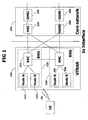
- FIG. 1 illustrates an exemplary basic structure of a general UMTS network. As shown in FIG. 1 , the UMTS is roughly divided into a terminal (or user equipment: UE), a UTRAN 100, and a core network (CN) 200.
- UE user equipment
- UTRAN UT Radio Access
- CN core network
- the UTRAN 100 includes one or more radio network sub-systems (RNS) 110, 120.
- RNS 110, 120 includes a radio network controller (RNC) 111, and a plurality of Node-Bs 112, 113 managed by the RNC 111.
- the RNC 111 handles the assigning and managing of radio resources, and operates as an access point with respect to the core network 200.
- the Node-Bs 112, 113 receive information sent by the physical layer of the terminal through an uplink, and transmit data to the terminal through a downlink.
- the Node-Bs 112, 113 thus, operate as access points of the UTRAN 100 for the terminal.
- a primary function of the UTRAN 100 is forming and maintaining a radio access bearer (RAB) to allow communication between the terminal and the core network 200.
- the core network 200 applies end-to-end quality of service (QoS) requirements to the RAB, and the RAB supports the QoS requirements set by the core network 200.
- QoS quality of service
- the RAB service can be further divided into an lu bearer service and a radio bearer service.
- the lu bearer service supports a reliable transmission of user data between boundary nodes of the UTRAN 100 and the core network 200.
- the core network 200 includes a mobile switching center (MSC) 210 and a gateway mobile switching center (GMSC) 220 connected together for supporting a circuit switched (CS) service, and a serving GPRS support node (SGSN) 230 and a gateway GPRS support node 240 connected together for supporting a packet switched (PS) service.
- MSC mobile switching center
- GMSC gateway mobile switching center
- SGSN serving GPRS support node
- PS packet switched
- the services provided to a specific terminal are roughly divided into the circuit switched (CS) services and the packet switched (PS) services.
- CS circuit switched
- PS packet switched
- a general voice conversation service is a circuit switched service
- a Web browsing service via an Internet connection is classified as a packet switched (PS) service.
- the RNCs 111 are connected to the MSC 210 of the core network 200, and the MSC 210 is connected to the GMSC 220 that manages the connection with other networks.
- the RNCs 111 are connected to the SGSN 230 and the GGSN 240 of the core network 200.
- the SGSN 230 supports the packet communications going toward the RNCs 111, and the GGSN 240 manages the connection with other packet switched networks, such as the Internet.
- An interface between the RNC 111 and the core network 200 is defined as an lu interface.
- the lu interface between the RNCs 111 and the core network 200 for packet switched systems is defined as "lu-PS”
- the lu interface between the RNCs 111 and the core network 200 for circuit switched systems is defined as "lu-CS.”
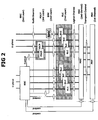
- FIG. 2 illustrates a structure of a radio interface protocol between the terminal and the UTRAN according to the 3GPP radio access network standards.
- the radio interface protocol has horizontal layers comprising a physical layer, a data link layer, and a network layer, and has vertical planes comprising a user plane (U-plane) for transmitting user data and a control plane (C-plane) for transmitting control information.
- U-plane user plane
- C-plane control plane
- the user plane is a region that handles traffic information of the user, such as voice or Internet protocol (IP) packets
- the control plane is a region that handles control information for an interface of a network, maintenance and management of a call, and the like.
- the protocol layers in Figure 2 can be divided into a first layer (L1), a second layer (L2), and a third layer (L3) based on the three lower layers of an open system interconnection (OSI) standard model.
- L1 first layer
- L2 second layer
- L3 third layer
- OSI open system interconnection
- the first layer (L1) namely, the physical layer, provides an information transfer service to an upper layer by using various radio transmission techniques.
- the physical layer is connected to an upper layer called a medium access control (MAC) layer, via a transport channel.
- MAC medium access control
- the MAC layer and the physical layer send and receive data with one another via the transport channel.
- the second layer (L2) includes a MAC layer, a radio link control (RLC) layer, a broadcast/multicast control (BMC) layer, and a packet data convergence protocol (PDCP) layer.
- RLC radio link control
- BMC broadcast/multicast control
- PDCP packet data convergence protocol
- the MAC layer provides an allocation service of the MAC parameters for allocation and re-allocation of radio resources.
- the MAC layer is connected to an upper layer called the radio link control (RLC) layer, via a logical channel.
- RLC radio link control
- Various logical channels are provided according to the kind of transmitted information.
- a control channel is used.
- a traffic channel is used.
- the MAC layer can be divided into a MAC-b sub-layer, a MAC-d sub-layer, a MAC-c/sh sub-layer, and a MAC-hs sub-layer according to the type of transport channel to be managed.
- the MAC-b sub-layer manages a BCH (Broadcast Channel), which is a transport channel handling the broadcasting of system information.
- BCH Broadcast Channel
- the MAC-d sub-layer manages a dedicated channel (DCH), which is a dedicated transport channel for a specific terminal. Accordingly, the MAC-d sub-layer of the UTRAN is located in a serving radio network controller (SRNC) that manages a corresponding terminal, and one MAC-d sub-layer also exists within each terminal (UE).
- DCH dedicated channel
- SRNC serving radio network controller
- the MAC-c/sh sub-layer manages a common transport channel, such as a forward access channel (FACH) or a downlink shared channel (DSCH), which is shared by a plurality of terminals.
- FACH forward access channel
- DSCH downlink shared channel
- the MAC-c/sh sub-layer is located in a controlling radio network controller (CRNC).
- CRNC radio network controller
- the RLC layer supports reliable data transmissions, and performs a segmentation and concatenation function on a plurality of RLC service data units (RLC SDUs) delivered from an upper layer.
- RLC SDUs RLC service data units
- the RLC layer adjusts the size of each RLC SDU in an appropriate manner upon considering processing capacity, and then creates certain data units with header information added thereto.
- the created data units are called protocol data units (PDUs), which are then transferred to the MAC layer via a logical channel.
- the RLC layer includes a RLC buffer for storing the RLC SDUs and/or the RLC PDUs.
- the BMC layer schedules a cell broadcast message (referred to as a 'CB message', hereinafter) received from the core network, and broadcasts the CB messages to terminals located in a specific cell(s).
- the BMC layer of the UTRAN generates a broadcast / multicast control (BMC) message by adding information, such as a message ID (identification), a serial number, and a coding scheme to the CB message received from the upper layer, and transfers the BMC message to the RLC layer.
- the BMC messages are transferred from the RLC layer to the MAC layer through a logical channel, i.e., the CTCH (Common Traffic Channel).
- the CTCH is mapped to a transport channel, i.e., a FACH, which is mapped to a physical channel, i.e., a S-CCPCH (Secondary Common Control Physical Channel).
- the PDCP (Packet Data Convergence Protocol) layer allows the data transmitted through a network protocol (such as an IPv4 or IPv6) to be effectively transmitted on a radio interface with a relatively small bandwidth.
- a network protocol such as an IPv4 or IPv6
- the PDCP layer performs the function of reducing unnecessary control information used for a wired network, and this type of function is called, header compression.
- the RRC layer is defined only in the control plane, and handles the controlling of logical channels, transport channels, and physical channels with respect to setting, resetting, and releasing of radio bearers.
- the radio bearer service refers to a service that the second layer (L2) provides for data transmission between the terminal and the UTRAN, and in general, setting the radio bearer refers to defining the protocol layers and the channel characteristics of the channels required for providing a specific service, as well as respectively setting substantial parameters and operation methods.
- the RLC layer can belong to the user plane or to the control plane depending upon the type of layer connected at the upper layer of the RLC layer. That is, if the RLC layer receives data from the RRC layer, the RLC layer belongs to the control plane. Otherwise, the RLC layer belongs to the user plane.
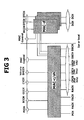
- Figure 3 shows a structure of a MAC layer for the UTRAN.
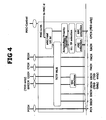
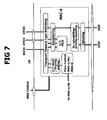
- Figures 4 to 7 show structures of the MAC-d and MAC-c/sh sublayer of the UTRAN, in which the square blocks show each function of the MAC layer. The primary functions thereof will now be described.
- the MAC layer exists between the RLC and physical layers and its major function is to map the logical channels and transport channels to each other.
- the MAC layer needs such channel mapping because a channel handling method of a higher layer of the MAC layer is different from that of a lower layer of the MAC layer. Namely, in the higher layer of the MAC layer, channels are divided into control channels of the control plane and traffic channels of the user plane according to the content of data transferred on the channel. However, in the lower layer of the MAC layer, channels are divided into common channels and dedicated channels according to how the channels are shared. Therefore, channel mapping between the higher and lower layers of the MAC layer is very significant. The relationship of channel mapping is shown in FIG. 4 , which illustrates a diagram of the channel mapping in a UE.
- the MAC layer Another major function of the MAC layer is logical channel multiplexing.
- the MAC layer multiplexes several logical channels into one transport channel, so that a multiplexing gain is attained. Multiplexing gain is significant for intermittently transmitted traffic, such as signaling information or packet data. For circuit data, multiplexing is generally not used because data is continuously transferred, and as a result, the multiplexing gain is relatively not so high.
- the channel mapping and logical channel multiplexing functions of the MAC layer are advantageous in increasing both the flexibility of channel selection and the efficiency of channel resources, but to support these advantages, certain kinds of identification functions are required.
- Identification is classified into two types; UE identification and logical channel identification.
- UE identification is needed for a common transport channel, since it is shared by a plurality of UEs.
- logical channel identification is needed when several logical channel are multiplexed into one transport channel.
- the MAC layer inserts a TCTF (target channel type field), UE-Id Type, UE-Id and/or C/T (Control/Traffic) fields into the header of a MAC PDU.
- TCTF target channel type field
- UE-Id Type UE-Id
- C/T Control/Traffic
- UE identification is required when dedicated logical channel such as DCCH or DTCH is mapped to common transport channel such as CPCH, DSCH, or USCH.
- the MAC layer adds a RNTI (radio network temporary identity) to UE-ID field of MAC PDU header.
- RNTI radio network temporary identity
- three kinds of RNTI such as U-RNTI (UTRAN RNTI), C-RNTI (cell RNTI), and DSCH-RNTI are used to identify a specific UE. Since there are three kinds of RNTI that are used, a UE-ID type field informing which RNTI is used is also added to MAC PDU header.
- the first level is logical channel type identification provided by the TCTF (target channel type field), and the second level is dedicated logical channel identification provided by the C/T (Control/Traffic) field.
- the TCTF is required for a common transport channel like the FACH and RACH on which several types of logical channels are multiplexed.
- the BCCH, CCCH, CTCH, and one or more dedicated logical channels can be mapped on the FACH simultaneously, and the CCCH and one or more dedicated logical channels can be mapped on RACH simultaneously. Therefore, the TCTF provides logical channel type identification on the FACH and RACH, i.e. whether the received data on the FACH or RACH belongs to the BCCH, CCCH, CTCH, or one of the dedicated logical channels.
- the TCTF identifies the type of logical channel, it does not identify each of the logical channels.
- the TCTF is required for the transport channel when a dedicated logical channel can be mapped together with other logical channels. Thus, the TCTF identifies whether the logical channel is a dedicated logical channel or other logical channel.
- the TCTF also provides logical channel identification in the case of common logical channels.
- more than one dedicated logical channel can be mapped to the FACH or RACH at the same time.
- several DCCHs or DTCHs can be mapped to the FACH or RACH. Therefore, for dedicated logical channels, identification of each dedicated logical channel is needed in addition to the identification of the type of logical channel, and the C/T field serves this purpose.
- Identification of each dedicated logical channel is performed by using the C/T field due to the following reasons.
- a dedicated logical channel is handled by the MAC-d in the SRNC, whereas the other common logical channels are handled by the MAC-c/sh.
- a plurality of the dedicated logical channels that are mapped to the same transport channel have their logical channel identities, respectively. Additionally, such value is used as a C/T field value. If only one dedicated logical channel exists for the transport channel, the C/T field is not used.
- Table 1 below shows the different identifiers of a MAC header that are used according to the mapping relationship between logical channels and transport channels for FDD.
- a C/T field exists when several dedicated logical channels (DCCH or DTCH) are mapped.
- N indicates that there is no header
- - indicates that there is no mapping relationship
- UE-ID indicates that both a UE-ID field and a UE-ID type field exist.
- a UE-ID field always exists together with a UE-ID type field.
- MBMS Multimedia Broadcast/Multicast Service
- PS Packet Switched domain service of transferring multimedia data such as audio, pictures, video, etc. to a plurality of terminals using a unidirectional point-to-multipoint bearer service.
- MBMS Since MBMS data is shared by multiple users, it should be transmitted through a common logical channel as in the related art. However, since MBMS is a multimedia service, multiple services of different QoS or multiple streams of different QoS in the same service may be provided to a single UE. That is, it is expected that multiple common logical channels of the same type need to be mapped to the same transport channel when providing MBMS.
- WO 2004/028041 A1 describes a method for transmitting multicast data through a downlink channel, wherein a logical channel indicator is added in service data mapped to a shared channel so that a terminal can discriminate a type of service data transmitted through the shared channel.
- This prior art document falls within the terms of A.54(3) EPC 1973.
- the present invention is directed to a method of multiplexing logical channels and an apparatus thereof that substantially obviates one or more problems due to limitations and disadvantages of the related art.
- An object of the present invention is to provide a method of multiplexing logical channels and an apparatus thereof, by which two or more common logical channels of the same type are multiplexed to the same transport channel in a mobile communication system providing multimedia services.
- the multimedia service is a multimedia broadcast service or a multimedia multicast service.
- the common logical channels transmit different types of media data, and each media data has a different quality of service (QoS).
- QoS quality of service
- the multiplexing step is performed in a media access control (MAC) layer
- the MAC is a common MAC
- the MAC is a layer managing a common transport channel including a multimedia broadcast transport channel or a multimedia multicast transport channel.
- MAC media access control
- the mobile communication system allocates an identifier identifying the common logical channel to each common logical channel, and allocation of an identifier is handled by a radio resource control (RRC) layer of a radio access network.
- RRC radio resource control
- each common logical channel receives a data unit of an entity of a specific radio link control (RLC) layer.
- RLC radio link control
- a method of multiplexing logical channels comprising: multiplexing data units of two or more common logical channels to the same transport channel; and adding an identifier to each multiplexed data unit and transmitting them.
- the identifier identifies a specific common logical channel among the same type of common logical channels.
- the mobile communication system allocates an identifier identifying the common logical channel to each common logical channel.
- the identifier is allocated by a RRC (Radio Resource Control) layer of a radio access network.
- RRC Radio Resource Control
- the multiplexing step is performed in a MAC layer managing common transport channels including a broadcast or multicast transport channel.
- the multiplexing step comprises: multiplexing data received via a plurality of common logical channels of the same type; attaching an identifier to a header of the received data to generate a protocol data unit (PDU); and transmitting the generated PDU through a specific transport channel.
- PDU protocol data unit
- the de-multiplexing step comprises: receiving data through a specific transport channel; checking the identifier of the received data and de-multiplexing the received data; and transmitting each received data to a higher layer through the common logical channel identified by the identifier.
- the de-multiplexing step is performed in the MAC layer managing common transport channels including a broadcast or a multicast transport channel.
- the present invention is characterized in that a CLI (Common Logical channel Identifier) field (that does not exist in the related art, but newly defined by the present invention) is inserted in header of a corresponding data unit in the MAC-c/sh when several common logical channels of the same type are mapped to one transport channel. Moreover, different CLI fields can be allocated to different common logical channels, respectively. Here, one CLI field can be used in discerning the common logical channels multiplexed to the same transport channel only.
- CLI Common Logical channel Identifier
- FIG. 13 is a diagram of data transmission according to one embodiment of the present invention.
- a method of multiplexing logical channels includes the steps of multiplexing data units of two or more common logical channels to a same transport channel (S110 to S130), transmitting the multiplexed data units to a terminal (S140); and de-multiplexing the transmitted data units to the common logical channels (steps S150 to S170).
- the multiplexing step includes the steps of multiplexing data received via a plurality of the common logical channels (S110 and S120), attaching identity to a header of the received data to generate protocol data unit (PDU) (not shown in the drawing), and transmitting the generated PDU through a specific transport channel (S130).
- PDU protocol data unit
- the de-multiplexing step further includes the steps of receiving the data through the specific transport channel, checking the identity of the received data and de-multiplexing the received data (S150), and transmitting each of the received data to a higher layer through the common logical channel designated by the identity (S160, S170).
- FIG. 9A and FIG. 9B are diagrams of a MAC PDU format according to one embodiment of the present invention, in which the MAC PDU format is used when data of a common logical channel such as the PCCH, CCCH, or CTCH is transferred through a common transport channel such as the FACH or DSCH, and in which the TCTF and CLI field comprise a header of MAC PDU, and the MAC SDU is a payload of the MAC PDU.
- a common logical channel such as the PCCH, CCCH, or CTCH
- the TCTF and CLI field comprise a header of MAC PDU
- the MAC SDU is a payload of the MAC PDU.
- FIG. 9A and FIG. 9B there are two types of MAC PDU formats.
- the first type is that the MAC PDU header is composed of TCTF and CLI fields, which is used when the transport channel carries different types of logical channels (Ref. FIG. 9A ).
- the TCTF field identifies the type of logical channel
- the CLI field identifies the specific common logical channel among the common logical channels of the type identified by the TCTF field.
- the second type is that the MAC PDU header is composed of only a CLI field (a TCTF field is not included), which is used when the transport channel carries only the specific type of common logical channels (see FIG. 9B ).
- the CLI field is included in the header as in the first type, but the TCTF field is not needed since the transport channel itself identifies the type of logical channel.
- the first type is applied to a MAC PDU transferred through a common transport channel like the FACH where several types of logical channels like the CCCH or CTCH can be mapped
- the second type is applied to a MAC PDU transferred through a common transport channel like the PCH where only one type of logical channel (PCCH) can be mapped.
- PCCH logical channel
- a TCTF field is present in the MAC PDU header when the transport channel can carry more than one type of logical channels
- a CLI field is present in the MAC PDU header when more than one common logical channels of the same type are multiplexed to the transport channel.
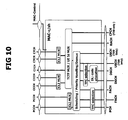
- FIG. 10 is a diagram of an architecture of a MAC-c/sh of the UTRAN according to one embodiment of the present invention
- FIG. 11 is a diagram of an architecture of the MAC-c/sh of the terminal according to one embodiment of the present invention.
- the MAC-c/sh when common logical channels such as the CCCH, PCCH, and CTCH are multiplexed, the MAC-c/sh performs a CLI multiplexing (MUX) function. Namely, when a plurality of common logical channels of the same type are multiplexed to one transport channel, the MAC-c/sh performs the CLI MUX function.
- the CLI MUX function of the MAC-c/sh in the transmitting end is to insert a CLI field for designating a specific common logical channel in a header of the corresponding MAC PDU.
- the CLI MUX function of the MAC-c/sh in the receiving end is to remove the CLI field from the MAC PDU after reading CLI field information designating the specific common logical channel from the header of the received MAC PDU. It should be noted that in the present invention, if the UTRAN is the transmitting end, then the terminal is the receiving end, and vice versa.
- FIG. 12 is a diagram of the allocation of CLI field values according to one embodiment of the present invention, in which the RRC layer of the UTRAN handles the bundling of several common logical channels to multiplex to one transport channel and allocating a CLI field value to each of the common logical channels.
- FIG. 13 is a diagram of data transmission according to one embodiment of the present invention.
- common logical channels CTCH#1. and CTCH#2 are multiplexed to one common transport channel, the FACH.
- transmitting and receiving ends are a UTRAN and a terminal, respectively.
- the peer of the RLC entity #1 at the transmitting end is the RLC entity #1 at the receiving end
- the peer of the RLC entity #2 at the transmitting end is the RLC entity #2 at the receiving end.
- the MAC-c/sh performs the multiplexing and de-multiplexing functions for common logical channels of the same type and a newly proposed CLI field is used to identify each of the common logical channels, whereby multiplexing of multiple common logical channels of the same type to the same transport channel becomes possible. Consequently, multiple services of different QoS or multiple streams of different QoS in the same service can be provided to a single UE, which is an essential feature for next generation mobile communication systems. As such, the motivation to apply the teachings and suggestions of the present invention to various types of radio (wireless) communication schemes would be clearly understood by those having ordinary skill in the art.
Landscapes
- Engineering & Computer Science (AREA)
- Computer Networks & Wireless Communication (AREA)
- Signal Processing (AREA)
- Mobile Radio Communication Systems (AREA)
Claims (33)
- Verfahren zum Senden von Daten in einem mobilen Kommunikationssystem, wobei Dateneinheiten über verschiedene Typen gemeinsamer Logikkanäle übermittelt werden können, wobei wenigstens zwei der gemeinsamen Logikkanäle von einem ersten Typ sind, wobei das Verfahren umfasst:Abbilden von zwei oder mehr gemeinsamen Logikkanälen des ersten Typs auf einen gemeinsamen Transportkanal mit Zuweisung wenigstens eines Identifizierers eines gemeinsamen Logikkanals zu Dateneinheiten der zwei oder mehr gemeinsamen Logikkanäle des ersten Typs; undÜbertragen der Dateneinheiten, die den wenigstens einen Identifizierer eines gemeinsamen Logikkanals haben, der diesem zugewiesen ist, über den gemeinsamen Transportkanal,wobei die zwei oder mehr gemeinsamen Logikkanäle des ersten Typs gleiche gemeinsame Logikkanäle sind, die denselben Typ von Informationen übertragen,wobei die zwei oder mehr gemeinsamen Logikkanäle des ersten Typs Multicast-Verkehrskanäle (MTCHs) sind, undwobei der gemeinsame Transportkanal ein Vorwärtszugriffskanal (FACH) ist.
- Verfahren nach Anspruch 1, wobei der Abbildungsschritt ferner umfasst:Multiplexieren der Dateneinheiten der gemeinsamen Logikkanäle für den gemeinsamen Transportkanal, auf den sie abgebildet sind.
- Verfahren nach Anspruch 2, das ferner umfasst:Senden der übertragenen Dateneinheiten auf einem physikalischen Kanal, wobei die gemeinsamen Logikkanäle anhand des wenigstens einen Identifizierers eines gemeinsamen logischen Kanals, der ihnen zugewiesen ist, unterscheidbar sind.
- Verfahren nach Anspruch 3, wobei die Schritte des Abbildens, Übertragens und Sendens das Senden mehrerer Multimediadienste mit unterschiedlicher Dienstqualität (QoS) oder das Senden mehrerer Datenströme mit unterschiedlicher QoS in einem einzigen Multimediadienst ermöglichen.
- Verfahren zum Empfangen von Daten in einem mobilen Kommunikationssystem, wobei Dateneinheiten über verschiedene Typen von gemeinsamen Logikkanälen übermittelt werden können, wobei wenigstens zwei der gemeinsamen Logikkanäle von einem ersten Typ sind, wobei das Verfahren umfasst:Empfangen von Dateneinheiten von zwei oder mehr gemeinsamen Logikkanälen des ersten Typs, die auf einen gemeinsamen Transportkanal abgebildet wurden, wobei die Dateneinheiten wenigstens einen Identifizierer eines gemeinsamen Logikkanals besitzen, der diesem zugewiesen ist; undVerarbeiten der empfangenen Dateneinheiten in Übereinstimmung mit dem wenigstens einen Identifizierer eines gemeinsamen Logikkanals,wobei die zwei oder mehr gemeinsamen Logikkanäle des ersten Typs gleiche gemeinsame Kanäle sind, die denselben Typ von Informationen übertragen,wobei die zwei oder mehr gemeinsamen Logikkanäle des ersten Typs Multicast-Verkehrskanäle (MTCHs) sind undwobei der gemeinsame Transportkanal ein Vorwärtszugriffskanal (FACH) ist.
- Verfahren nach Anspruch 5, wobei die Dateneinheiten der gemeinsamen Logikkanäle für den gemeinsamen Transportkanal, auf den sie abgebildet werden, multiplexiert worden sind.
- Verfahren nach Anspruch 5, wobei der Verarbeitungsschritt ferner umfasst:Prüfen des Identifizierers des gemeinsamen Logikkanals der empfangenen Dateneinheiten;Demultiplexieren der empfangenen Dateneinheiten; undAusgeben jeder demultiplexierten Dateneinheit zu einer höheren Schicht über einen gemeinsamen Logikkanal, der durch den Identifizierer des gemeinsamen Logikkanals bezeichnet wird.
- Verfahren nach Anspruch 5, wobei die Schritte des Empfangens und Verarbeitens das Empfangen mehrerer Multimediadienste mit unterschiedlicher Dienstqualität (QoS) oder das Empfangen mehrerer Datenströme mit unterschiedlicher QoS in einem einzigen Multimediadienst ermöglichen.
- Verfahren nach Anspruch 1 oder 5, wobei die Dateneinheiten auf einen oder mehrere Multimediadienste bezogen sind, die einen Punkt-zu-Mehrpunkt-Trägerdienst verwenden.
- Verfahren nach Anspruch 1 oder 5, wobei der wenigstens eine Identifizierer des gemeinsamen Logikkanals in einem Kopfsatz einer entsprechenden Dateneinheit vorhanden ist.
- Netzvorrichtung zum Ausführen eines Verfahrens zum Senden von Daten in einem mobilen Kommunikationssystem, wobei Dateneinheiten über verschiedene Typen gemeinsamer Logikkanäle übermittelt werden können, wobei wenigstens zwei der gemeinsamen Logikkanäle von einem ersten Typ sind, wobei die Vorrichtung umfasst:eine Funkbetriebsmittelsteuerungs-Schicht (RRC-Schicht), eine Funkverbindungssteuerungs-Schicht (RLC-Schicht), eine Mediumzugriffsteuerungs-Schicht (MAC-Schicht) und eine physikalische Schicht (PHY-Schicht), wobei die RLC-Schicht und die MAC-Schicht zwischen sich Logikkanäle besitzen, wobei die MAC-Schicht und die PHY-Schicht zwischen sich Transportkanäle besitzen und wobei der PHY-Schicht physikalische Kanäle zugeordnet sind und die RRC-Schicht, die RLC-Schicht, die MAC-Schicht und die PHY-Schicht für die Ausführung der folgenden Schritte geeignet sind und dabei zusammenwirken:Abbilden von zwei oder mehr gemeinsamen Logikkanälen des ersten Typs auf einen gemeinsamen Transportkanal mit Zuweisung wenigstens eines Identifizierers des gemeinsamen Logikkanals zu Dateneinheiten der zwei oder mehr gemeinsamen Logikkanäle des ersten Typs; undÜbertragen der Dateneinheiten, die den Identiflzierer des wenigstens einen gemeinsamen Logikkanals, der diesem zugewiesen ist, haben, über den gemeinsamen Transportkanal,wobei die zwei oder mehr gemeinsamen Logikkanäle des ersten Typs gleiche gemeinsame Logikkanäle sind, die denselben Typ von Informationen übertragen,wobei die zwei oder mehr gemeinsamen Logikkanäle des ersten Typs Multicast-Verkehrskanäle (MTCHs) sind undwobei der gemeinsame Transportkanal ein Vorwärtszugriffskanal (FACH) ist.
- Vorrichtung nach Anspruch 11, wobei der Abbildungsschritt ferner umfasst:Multiplexieren der Dateneinheiten der gemeinsamen Logikkanäle für den gemeinsamen Transportkanal, auf den sie abgebildet sind.
- Vorrichtung nach Anspruch 12, die dazu ausgelegt ist, die übertragenen Dateneinheiten auf einem physikalischen Kanal zu senden, wobei die gemeinsamen Logikkanäle anhand des wenigstens einen Identifizierers eines gemeinsamen Logikkanals, der ihnen zugewiesen ist, unterscheidbar sind.
- Vorrichtung nach Anspruch 13, wobei die Schritte des Abbildens, Übertragens und Sendens das Senden mehrerer Multimediadienste mit unterschiedlicher Dienstqualität (QoS) oder das Senden mehrerer Datenströme mit unterschiedlicher QoS in einem einzigen Multimediadienst ermöglichen.
- Anwendergerätvorrichtung zum Ausführen eines Verfahrens zum Empfangen von Daten in einem mobilen Kommunikationssystem, wobei die Dateneinheiten über verschiedene Typen gemeinsamer Logikkanäle übermittelt werden können, wobei wenigstens zwei der gemeinsamen Logikkanäle von einem ersten Typ sind, wobei die Vorrichtung umfasst:eine Funkbetriebsmittelsteuerungs-Schicht (RRC-Schicht), eine Funkverbindungssteuerungs-Schicht (RLC-Schicht), eine Mediumzugriffsteuerungs-Schicht (MAC-Schicht) und eine physikalische Schicht (PHY-Schicht), wobei die RLC-Schicht und die MAC-Schicht zwischen sich Logikkanäle besitzen, wobei die MAC-Schicht und die PHY-Schicht zwischen sich Transportkanäle besitzen und wobei der PHY-Schicht physikalische Kanäle zugeordnet sind und die RRC-Schicht, die RLC-Schicht, die MAC-Schicht und die PHY-Schicht für die Ausführung der folgenden Schritte geeignet sind und dabei zusammenwirken:Empfangen von Dateneinheiten von zwei oder mehr gemeinsamen Logikkanälen des ersten Typs, die auf einen gemeinsamen Transportkanal abgebildet wurden, wobei die Dateneinheiten wenigstens einen Identifizierer eines gemeinsamen Logikkanals besitzen, dem sie zugewiesen sind; undVerarbeiten der empfangenen Dateneinheiten gemäß dem wenigstens einen Identifizierer des gemeinsamen Logikkanals,wobei die zwei oder mehr gemeinsamen Logikkanäle des ersten Typs gleiche gemeinsame Logikkanäle sind, die den gleichen Typ von Informationen übertragen,wobei die zwei oder mehr gemeinsamen Logikkanäle des ersten Typs Multicast-Verkehrskanäle (MTCHs) sind undwobei der gemeinsame Transportkanal ein Vorwärtszugriffskanal (FACH) ist.
- Vorrichtung nach Anspruch 15, wobei die Dateneinheiten der gemeinsamen Logikkanäle für den gemeinsamen Transportkanal, auf den sie abgebildet sind, multiplexiert worden sind.
- Vorrichtung nach Anspruch 15, wobei der Verarbeitungsschritt ferner umfasst:Prüfen des Identifizierers des gemeinsamen Logikkanals der empfangenen Dateneinheiten;Demultiplexieren der empfangenen Dateneinheiten; undAusgeben jeder demultiplexierten Dateneinheit zu einer höheren Schicht über einen gemeinsamen Logikkanal, der durch den Identifizierer des gemeinsamen Logikkanals bezeichnet wird.
- Vorrichtung nach Anspruch 13 oder 17, wobei die Dateneinheiten auf einen oder mehrere Multimediadienste bezogen sind, die einen Punkt-zu-Mehrpunkt-Trägerdienst verwenden.
- Vorrichtung nach Anspruch 11 oder 15, wobei der wenigstens eine Identifizierer des gemeinsamen Logikkanals in einem Kopfsatz einer entsprechenden Dateneinheit vorhanden ist.
- Verfahren nach Anspruch 1 oder 5, wobei ein Typ der gemeinsamen Logikkanäle ein Paging-Steuerkanaltyp, ein Rundsende-Steuerkanaltyp, ein gemeinsamer Steuerkanaltyp oder ein gemeinsamer Verkehrskanaltyp ist.
- Verfahren nach Anspruch 1 oder 5, wobei ein Identifizierer eines Logikkanals mit Zielkanaltyp-Feld (TCTF-Logikkanalidentifizierer) verwendet wird, um einen Typ eines Logikkanals unter verschiedenen Typen gemeinsamer Logikkanäle zu identifizieren.
- Verfahren nach Anspruch 10, wobei die entsprechende Dateneinheit eine MAC-Protokolldateneinheit (Mediumzugriffssteuerungs-PDU) ist.
- Verfahren nach Anspruch 10, wobei der Kopfsatz einen Logikkanalidentifizierer mit Zielkanaltyp-Feld (TCTF-Logikkanalidentifizierer) enthält, der verwendet wird, um einen Typ des Logikkanals unter verschiedenen Typen gemeinsamer Logikkanäle zu identifizieren.
- Verfahren nach Anspruch 1 oder 5, wobei die gemeinsamen Logikkanäle verschiedene Typen von Mediendaten senden, wobei sämtliche Mediendaten vorzugsweise eine unterschiedliche Dienstqualität (QoS) haben.
- Verfahren nach Anspruch 1 oder 5, wobei der wenigstens eine Identifizierer des gemeinsamen Logikkanals durch eine Funkbetriebsmittelsteuerungs-Schicht (RRC-Schicht) zugewiesen wird.
- Verfahren nach Anspruch 25, wobei die RRC-Schicht in einem Netz vorhanden ist.
- Vorrichtung nach Anspruch 11 oder 15, wobei ein Typ der gemeinsamen Logikkanäle entweder ein Paging-Steuerkanaltyp, ein Rundsende-Steuerkanaltyp, ein gemeinsamer Steuerkanaltyp oder ein gemeinsamer Verkehrskanaltyp ist.
- Vorrichtung nach Anspruch 11 oder 15, wobei ein Logikkanalidentifizierer mit Zielkanaltyp-Feld (TCTF-Logikkanalidentifizierer) verwendet wird, um einen Typ eines Logikkanals unter verschiedenen Typen gemeinsamer Logikkanäle zu identifizieren.
- Vorrichtung nach Anspruch 19, wobei die entsprechende Dateneinheit eine MAC-Protokolldateneinheit (Mediumzugriffsteuerungs-PDU) ist.
- Vorrichtung nach Anspruch 19, wobei der Kopfsatz einen Logikkanalidentifizierer mit Zielkanaltyp-Feld (TCTF) enthält, der verwendet wird, um einen Typ eines Logikkanals unter verschiedenen Typen gemeinsamer Logikkanäle zu identifizieren.
- Vorrichtung nach Anspruch 11 oder 15, wobei die gemeinsamen Logikkanäle verschiedene Typen von Mediendaten senden, wobei alle Medien vorzugsweise eine unterschiedliche Dienstqualität (QoS) haben.
- Vorrichtung nach Anspruch 11 oder 15, wobei der wenigstens eine Identifizierer eines gemeinsamen Logikkanals durch eine Funkbetriebsmittelsteuerungs-Schicht (RRC-Schicht) zugewiesen wird.
- Vorrichtung nach Anspruch 32, wobei die RRC-Schicht in einem Netz vorhanden ist.
Applications Claiming Priority (3)
| Application Number | Priority Date | Filing Date | Title |
|---|---|---|---|
| KR20020068924A KR100889865B1 (ko) | 2002-11-07 | 2002-11-07 | 무선 이동통신 시스템의 통신방법 |
| KR2002068924 | 2002-11-07 | ||
| PCT/KR2003/002366 WO2004042964A1 (en) | 2002-11-07 | 2003-11-06 | Method of multiplexing logical channels in mobile communication system and apparatus thereof |
Publications (3)
| Publication Number | Publication Date |
|---|---|
| EP1559214A1 EP1559214A1 (de) | 2005-08-03 |
| EP1559214A4 EP1559214A4 (de) | 2006-01-25 |
| EP1559214B1 true EP1559214B1 (de) | 2011-03-16 |
Family
ID=32310824
Family Applications (1)
| Application Number | Title | Priority Date | Filing Date |
|---|---|---|---|
| EP20030810707 Expired - Lifetime EP1559214B1 (de) | 2002-11-07 | 2003-11-06 | Verfahren zum multiplexen logischer kanäle in einem mobilkommunikationssystem und vorrichtung dafür |
Country Status (11)
| Country | Link |
|---|---|
| US (1) | US20040156330A1 (de) |
| EP (1) | EP1559214B1 (de) |
| JP (1) | JP4181548B2 (de) |
| KR (1) | KR100889865B1 (de) |
| CN (1) | CN100559774C (de) |
| AT (1) | ATE502450T1 (de) |
| AU (1) | AU2003276746B2 (de) |
| DE (1) | DE60336413D1 (de) |
| MX (1) | MXPA04007276A (de) |
| RU (1) | RU2280951C2 (de) |
| WO (1) | WO2004042964A1 (de) |
Families Citing this family (85)
| Publication number | Priority date | Publication date | Assignee | Title |
|---|---|---|---|---|
| KR100860581B1 (ko) | 2002-05-18 | 2008-09-26 | 엘지전자 주식회사 | 멀티캐스트 데이터 전송 방법 |
| KR20030097559A (ko) | 2002-06-22 | 2003-12-31 | 엘지전자 주식회사 | 무선이동통신 시스템의 멀티미디어 서비스 방법 |
| KR20050018050A (ko) * | 2003-08-12 | 2005-02-23 | 삼성전자주식회사 | 이동통신시스템에서 방송 서비스를 위한 헤더 정보 설정방법 |
| KR100975745B1 (ko) * | 2003-10-02 | 2010-08-12 | 삼성전자주식회사 | 멀티캐스트/방송 서비스를 지원하는 이동통신 시스템에식별자 할당 장치 및 방법 |
| KR100651344B1 (ko) * | 2004-02-19 | 2006-11-29 | 삼성전자주식회사 | 고속 순방향 패킷 접속 방식을 사용하는 이동 통신시스템에서 데이터 처리 속도를 향상시키는 방법 및 그이동통신시스템 |
| US7394778B2 (en) * | 2004-04-12 | 2008-07-01 | Lg Electronics Inc. | Mapping of point of multipoint service identifications |
| KR100889866B1 (ko) * | 2004-06-14 | 2009-03-24 | 엘지전자 주식회사 | 무선 프로토콜 계층의 데이터 송수신 시스템에서 전송데이터 유닛 처리 방법 |
| KR101049904B1 (ko) * | 2004-06-14 | 2011-07-15 | 엘지전자 주식회사 | Mbms 서비스 수신방법 |
| KR101059876B1 (ko) * | 2004-06-16 | 2011-08-29 | 엘지전자 주식회사 | 이동통신 시스템의 서비스 품질 보장을 위한 데이터전송량 선택 방법 |
| KR100921241B1 (ko) * | 2004-06-16 | 2009-10-12 | 엘지전자 주식회사 | 통신 시스템의 데이터 유닛 처리 시스템 |
| US7885245B2 (en) * | 2004-07-19 | 2011-02-08 | Interdigital Technology Corporation | Method and apparatus for enhanced uplink multiplexing |
| RU2340118C1 (ru) * | 2004-09-30 | 2008-11-27 | Самсунг Электроникс Ко., Лтд. | Способ и устройство частичного комбинирования для услуги мультимедийной широковещательной/групповой передачи |
| KR101141650B1 (ko) * | 2004-09-30 | 2012-05-17 | 엘지전자 주식회사 | 매체접속제어 계층에서의 데이터 처리 방법 및 이동통신용단말 |
| WO2006075042A1 (en) * | 2005-01-11 | 2006-07-20 | Nokia Corporation | Method for indicating and detecting transmission resource allocations in a multi-user communication system |
| KR101041814B1 (ko) * | 2005-02-15 | 2011-06-17 | 엘지전자 주식회사 | 무선 이동통신 시스템에서 점대다 멀티미디어 서비스 제공방법 |
| KR101189945B1 (ko) * | 2005-08-23 | 2012-10-12 | 엘지전자 주식회사 | 이동통신 시스템의 mbms서비스 전송방법 |
| US20070234385A1 (en) * | 2006-03-31 | 2007-10-04 | Rajendra Bopardikar | Cross-layer video quality manager |
| CN101170415B (zh) * | 2006-10-26 | 2010-12-29 | 杭州华三通信技术有限公司 | 以太网物理层的交叉级联系统、传输方法及其应用的芯片 |
| WO2008033072A1 (en) | 2006-09-13 | 2008-03-20 | Telefonaktiebolaget Lm Ericsson (Publ) | Method for mapping logical channel on shared channel |
| US8144793B2 (en) * | 2006-12-12 | 2012-03-27 | Microsoft Corporation | Cognitive multi-user OFDMA |
| AU2007332200B2 (en) | 2006-12-15 | 2011-04-21 | Telefonaktiebolaget Lm Ericsson (Publ) | Improved MAC-d Multiplexing in UTRAN HSDPA Wireless Networks |
| RU2009127537A (ru) | 2006-12-28 | 2011-02-10 | НТТ ДоСоМо, Инк. (JP) | Передающее устройство, приемное устройство, мобильная станция, базовая радиостанция, система мобильной связи и способ мобильной связи |
| BRPI0720330A2 (pt) | 2007-01-05 | 2013-12-31 | Interdigital Tech Corp | Método e aparelho de transmissão e recepção de transmissões em canal lógico comum e canal lógico dedicado por meio de um canal compartilhado em link inferior em alta velocidade |
| CN104836644A (zh) | 2007-01-09 | 2015-08-12 | 华为技术有限公司 | 基站装置、移动台装置、控制信息发送方法、控制信息接收方法及程序 |
| EP2129137B1 (de) * | 2007-01-30 | 2015-09-09 | ZTE Corporation | Verfahren zur Herstellung eines IP-Trägers eines Mobilkommunikationssystems |
| US8503423B2 (en) | 2007-02-02 | 2013-08-06 | Interdigital Technology Corporation | Method and apparatus for versatile MAC multiplexing in evolved HSPA |
| RU2443065C2 (ru) * | 2007-02-02 | 2012-02-20 | Интердиджитал Текнолоджи Корпорейшн | Способ и устройство для универсального мультиплексирования на уровне управления доступом к среде передачи (мас) в эволюционированной технологии высокоскоростного пакетного доступа (evolved hspa) |
| US20080232401A1 (en) * | 2007-03-20 | 2008-09-25 | Sassan Ahmadi | LOGICAL AND TRANSPORT CHANNEL STRUCTURES FOR MOBILE WiMAX WIRELESS SYSTEMS |
| GB2447673A (en) * | 2007-03-21 | 2008-09-24 | Siemens Ag | Identification of multiplexed multimedia broadcast multicast service from a central node to a UMTS evolved Node B (eNB) |
| ES2432166T3 (es) | 2007-05-07 | 2013-12-02 | Nokia Solutions And Networks Oy | Canales de control en sistemas de red de comunicación |
| KR101486352B1 (ko) * | 2007-06-18 | 2015-01-26 | 엘지전자 주식회사 | 무선 통신 시스템의 단말에서의 상향링크 동기 상태 제어방법 |
| KR101341515B1 (ko) * | 2007-06-18 | 2013-12-16 | 엘지전자 주식회사 | 무선 통신 시스템에서의 반복 전송 정보 갱신 방법 |
| KR101470637B1 (ko) * | 2007-06-18 | 2014-12-08 | 엘지전자 주식회사 | 이동통신 시스템에서의 무선자원 향상 방법, 상태정보 보고방법 및 수신장치 |
| WO2008156314A2 (en) * | 2007-06-20 | 2008-12-24 | Lg Electronics Inc. | Effective system information reception method |
| US8149768B2 (en) * | 2007-06-20 | 2012-04-03 | Lg Electronics Inc. | Method of transmitting data in mobile communication system |
| US9554312B2 (en) * | 2007-06-25 | 2017-01-24 | Nokia Solutions And Networks Oy | Message transfer for in-band signaling messages in radio access networks |
| WO2009022837A1 (en) * | 2007-08-10 | 2009-02-19 | Lg Electronics Inc. | A control method for uplink connection of idle terminal |
| US8160012B2 (en) | 2007-08-10 | 2012-04-17 | Lg Electronics Inc. | Methods of setting up channel in wireless communication system |
| KR20090016431A (ko) * | 2007-08-10 | 2009-02-13 | 엘지전자 주식회사 | 무선 통신 시스템에서 채널품질 보고 수행 방법 |
| US9008006B2 (en) | 2007-08-10 | 2015-04-14 | Lg Electronics Inc. | Random access method for multimedia broadcast multicast service(MBMS) |
| KR20090016412A (ko) * | 2007-08-10 | 2009-02-13 | 엘지전자 주식회사 | 무선 통신 시스템에서의 데이터 통신 방법 |
| US8594030B2 (en) | 2007-08-10 | 2013-11-26 | Lg Electronics Inc. | Method for controlling HARQ operation in dynamic radio resource allocation |
| KR101490253B1 (ko) | 2007-08-10 | 2015-02-05 | 엘지전자 주식회사 | 무선 통신 시스템에서의 제어정보 전송 및 수신 방법 |
| KR101514841B1 (ko) | 2007-08-10 | 2015-04-23 | 엘지전자 주식회사 | 효율적인 랜덤 액세스 재시도를 수행하는 방법 |
| KR101495913B1 (ko) * | 2007-08-10 | 2015-02-25 | 엘지전자 주식회사 | 이동통신 시스템에서 pdcp 계층의 제어 데이터 전송방법, 수신 방법, 그 송신장치 및 수신장치 |
| WO2009022805A1 (en) * | 2007-08-10 | 2009-02-19 | Lg Electronics Inc. | Method of reporting measurement result in wireless communication system |
| KR101479341B1 (ko) | 2007-08-10 | 2015-01-05 | 엘지전자 주식회사 | Mbms 서비스를 제공하는 무선 통신 시스템에서효율적인 수신 방법 |
| KR101392697B1 (ko) | 2007-08-10 | 2014-05-19 | 엘지전자 주식회사 | 이동통신 시스템에서의 보안 오류 검출방법 및 장치 |
| WO2009022877A2 (en) | 2007-08-14 | 2009-02-19 | Lg Electronics Inc. | A method of transmitting and processing data block of specific protocol layer in wireless communication system |
| KR100937432B1 (ko) | 2007-09-13 | 2010-01-18 | 엘지전자 주식회사 | 무선 통신 시스템에서의 무선자원 할당 방법 |
| JP4950338B2 (ja) * | 2007-09-13 | 2012-06-13 | エルジー エレクトロニクス インコーポレイティド | 無線通信システムにおける無線リソース割当方法 |
| KR101461970B1 (ko) | 2007-09-13 | 2014-11-14 | 엘지전자 주식회사 | 무선 통신 시스템에서의 폴링 과정 수행 방법 |
| KR101396062B1 (ko) | 2007-09-18 | 2014-05-26 | 엘지전자 주식회사 | 헤더 지시자를 이용한 효율적인 데이터 블록 전송방법 |
| KR101513033B1 (ko) | 2007-09-18 | 2015-04-17 | 엘지전자 주식회사 | 다중 계층 구조에서 QoS를 보장하기 위한 방법 |
| KR101591824B1 (ko) | 2007-09-18 | 2016-02-04 | 엘지전자 주식회사 | 무선 통신 시스템에서의 폴링 과정 수행 방법 |
| KR101435844B1 (ko) * | 2007-09-18 | 2014-08-29 | 엘지전자 주식회사 | 무선 통신 시스템에서의 데이터 블록 전송 방법 |
| WO2009038377A2 (en) * | 2007-09-20 | 2009-03-26 | Lg Electronics Inc. | Method of effectively transmitting radio resource allocation request in mobile communication system |
| US9572089B2 (en) * | 2007-09-28 | 2017-02-14 | Interdigital Patent Holdings, Inc. | Method and apparatus for supporting home Node B services |
| KR20090041323A (ko) * | 2007-10-23 | 2009-04-28 | 엘지전자 주식회사 | 데이터 블록 구성함에 있어서 단말의 식별 정보를 효과적으로 전송하는 방법 |
| KR101487557B1 (ko) * | 2007-10-23 | 2015-01-29 | 엘지전자 주식회사 | 공통제어채널의 데이터를 전송하는 방법 |
| US8416678B2 (en) * | 2007-10-29 | 2013-04-09 | Lg Electronics Inc. | Method for repairing an error depending on a radio bearer type |
| US8422466B2 (en) * | 2007-11-26 | 2013-04-16 | Nokia Corporation | Multiple network connections |
| US9215731B2 (en) * | 2007-12-19 | 2015-12-15 | Qualcomm Incorporated | Method and apparatus for transfer of a message on a common control channel for random access in a wireless communication network |
| US20090190544A1 (en) * | 2008-01-25 | 2009-07-30 | Qualcomm Incorporated | Method and apparatus for channel identification in a wireless communication system |
| EP3410623B1 (de) | 2008-01-31 | 2021-07-28 | LG Electronics Inc. | Verfahren zum senden von statusinformationen in einem mobiltelekommunikationssystem und empfänger von mobiltelekommunikationen |
| KR101594359B1 (ko) | 2008-01-31 | 2016-02-16 | 엘지전자 주식회사 | 랜덤 접속에서 백오프 정보를 시그널링하는 방법 |
| EP2086276B1 (de) | 2008-01-31 | 2016-11-02 | LG Electronics Inc. | Verfahren zum signalisieren von back-off-informationen bei direktzugriff |
| KR101163275B1 (ko) * | 2008-03-17 | 2012-07-05 | 엘지전자 주식회사 | Pdcp 상태 보고 전송 방법 |
| EP2266224B1 (de) | 2008-03-17 | 2017-06-14 | LG Electronics Inc. | Verfahren zum übertragen von rlc-daten |
| WO2010016151A1 (ja) * | 2008-08-08 | 2010-02-11 | 富士通株式会社 | 通信装置、送信データ生成プログラム、および送信データ生成方法 |
| KR101501167B1 (ko) * | 2008-10-20 | 2015-03-10 | 삼성전자주식회사 | 다중 모뎀을 구비한 이동통신 단말기에서 다중 운용 체제를운용하기 위한 장치 및 방법 |
| JP4435254B1 (ja) * | 2008-10-22 | 2010-03-17 | 株式会社エヌ・ティ・ティ・ドコモ | 移動通信方法及び交換局 |
| US8761813B2 (en) * | 2008-11-26 | 2014-06-24 | Alcatel Lucent | Fast signaling services for E-UTRAN based wireless systems |
| TWI384845B (zh) * | 2008-12-31 | 2013-02-01 | Inventec Appliances Corp | 可攜式通訊裝置及其來電告知控制方法 |
| US8553574B2 (en) * | 2009-03-16 | 2013-10-08 | Htc Corporation | Method of handling packet error in a wireless communication system and related communication device |
| WO2010125803A1 (ja) | 2009-05-01 | 2010-11-04 | 日本電気株式会社 | 無線伝送装置及びmacフレーム伝送方法 |
| EP2257090A1 (de) * | 2009-05-28 | 2010-12-01 | Lg Electronics Inc. | Dateneinheitsempfangsverwaltungsverfahren und zugehöriges System und Vorrichtung |
| IT1400169B1 (it) * | 2010-05-24 | 2013-05-17 | Selex Communications Spa | Procedimento e sistema di controllo di banda per il rispetto di una predeterminata qualità di servizio presso un punto di accesso ad una rete di comunicazioni operante una aggregazione di flussi di traffico eterogenei. |
| CN101951685B (zh) * | 2010-08-26 | 2013-01-30 | 华为技术有限公司 | 给ue提供差异化服务的方法和装置 |
| WO2015035618A1 (zh) * | 2013-09-13 | 2015-03-19 | 华为技术有限公司 | 传输数据的方法和装置 |
| RU2543565C1 (ru) * | 2013-09-20 | 2015-03-10 | Общество с ограниченной ответственностью "м.Текнолоджис" | Способ формирования канала передачи данных |
| US10594652B2 (en) | 2014-10-16 | 2020-03-17 | Qualcomm Incorporated | Wireless communication utilizing a unified air interface |
| US20160112488A1 (en) * | 2014-10-20 | 2016-04-21 | Ssh Communications Security Oyj | Providing Information of Data Streams |
| CN107113908B (zh) * | 2015-05-29 | 2020-06-16 | 华为技术有限公司 | 一种数据发送、数据处理方法和设备 |
| WO2019024105A1 (zh) | 2017-08-04 | 2019-02-07 | Oppo广东移动通信有限公司 | 支持数据重复的方法、发射端设备和接收端设备 |
Family Cites Families (50)
| Publication number | Priority date | Publication date | Assignee | Title |
|---|---|---|---|---|
| SU1683027A1 (ru) * | 1989-10-16 | 1991-10-07 | Институт Радиотехники И Электроники Ан Ссср | Устройство межмашинной св зи |
| US5457808A (en) * | 1992-02-04 | 1995-10-10 | Nec Corporation | Point-to-multipoint communication network capable of retransmitting a multicast signal |
| US6041047A (en) * | 1992-10-05 | 2000-03-21 | Telefonaktiebolaget Lm Ericsson | Digital control channels having logical channels supporting broadcast SMS |
| US5459725A (en) * | 1994-03-22 | 1995-10-17 | International Business Machines Corporation | Reliable multicasting over spanning trees in packet communications networks |
| KR100222660B1 (ko) * | 1997-04-15 | 1999-10-01 | 서정욱 | 이동통신망에서 폐쇄 사용자 그룹(Closed User Group) 서비스 제공 방법 |
| JP2002505544A (ja) * | 1998-02-27 | 2002-02-19 | シーメンス アクチエンゲゼルシヤフト | 符号多重化および時分割多重化に基づき無線遠隔通信を移動および/または定置の送信機器/受信機器間で行う遠隔通信システム |
| US6104709A (en) * | 1998-07-17 | 2000-08-15 | Motorola, Inc. | Channel assignment within a broad-band communication system |
| US6252874B1 (en) * | 1998-07-20 | 2001-06-26 | D-Link Corporation | Ethernet card and ethernet card improvement methods |
| WO2000016435A2 (en) * | 1998-09-14 | 2000-03-23 | Samsung Electronics Co., Ltd. | Method for processing data to be transmitted over common channel |
| KR100563592B1 (ko) * | 1998-10-01 | 2006-09-22 | 엘지전자 주식회사 | 이동통신시스템에서의 데이터 분기방법 |
| JP3022530B1 (ja) * | 1998-12-07 | 2000-03-21 | 日本電気株式会社 | Cdma無線通信システムにおけるマルチキャスト通信方式 |
| JP3715533B2 (ja) * | 1999-02-05 | 2005-11-09 | 株式会社東芝 | ストリーム情報の情報記憶媒体、その記録方法、再生方法、記録装置および再生装置 |
| KR100323770B1 (ko) * | 1999-03-08 | 2002-02-19 | 서평원 | 멀티캐스트 서비스를 위한 채널 구조 및 이를 이용한 서비스 운용 방법 |
| FI107487B (fi) * | 1999-03-08 | 2001-08-15 | Nokia Mobile Phones Ltd | Datalähetyksen salausmenetelmä radiojärjestelmässä |
| JP2002539694A (ja) * | 1999-03-08 | 2002-11-19 | ノキア ネットワークス オサケ ユキチュア | ユーザ装置と無線ネットワークとの間に通信を確立する方法 |
| US6839348B2 (en) * | 1999-04-30 | 2005-01-04 | Cisco Technology, Inc. | System and method for distributing multicasts in virtual local area networks |
| KR100346781B1 (ko) * | 1999-06-17 | 2002-08-01 | 한국전자통신연구원 | 이동단말 및 서비스 식별자 할당방법 및 그 장치 |
| JP3704003B2 (ja) * | 1999-08-16 | 2005-10-05 | 株式会社東芝 | 無線基地局装置、無線端末装置及び情報通信方法 |
| KR100305295B1 (ko) * | 1999-09-04 | 2001-11-05 | 정규석 | 이동통신망에서 매체접근제어계층 구현방법 및 이를 이용한 데이터 송수신방법 |
| FI109320B (fi) * | 1999-11-02 | 2002-06-28 | Nokia Corp | Signalointimenetelmä |
| JP2001165032A (ja) * | 1999-12-07 | 2001-06-19 | Mitsubishi Heavy Ind Ltd | 風力発電装置 |
| EP1148687A1 (de) * | 2000-04-20 | 2001-10-24 | Telefonaktiebolaget L M Ericsson (Publ) | Kommunikationsapparat |
| WO2002033937A1 (en) * | 2000-10-19 | 2002-04-25 | Samsung Electronics Co., Ltd. | Device and method for transmitting multimedia data in mobile communication system |
| US6804528B1 (en) * | 2000-11-03 | 2004-10-12 | Lucent Technologies, Inc. | Apparatus and method for use in the multicast of traffic data in wireless multiple access communications systems |
| US6847623B1 (en) * | 2000-11-15 | 2005-01-25 | Qualcomm Incorporated | Method and apparatus for allocating data streams onto a single channel |
| US20020124069A1 (en) * | 2000-12-28 | 2002-09-05 | Hatalkar Atul N. | Broadcast communication system with dynamic client-group memberships |
| GB2371174A (en) * | 2001-01-11 | 2002-07-17 | Ericsson Telefon Ab L M | Controlling packet data flows in a telecommunications network |
| DE10107700A1 (de) * | 2001-02-19 | 2002-08-29 | Siemens Ag | Verfahren und Vorrichtung zum Multiplexen und/oder Demultiplexen sowie entsprechende Computerprogramme und ein entsprechendes Computerprogramm-Erzeugnis |
| CA2380039C (en) * | 2001-04-03 | 2008-12-23 | Samsung Electronics Co., Ltd. | Method of transmitting control data in cdma mobile communication system |
| GB2380104B (en) * | 2001-07-06 | 2003-09-10 | Samsung Electronics Co Ltd | Method for resetting MAC layer entity in a communication system |
| KR100811364B1 (ko) * | 2001-10-06 | 2008-03-07 | 엘지전자 주식회사 | 이동통신 시스템에서 하향공유채널에 대한 제어정보전송방법 |
| EP1436946B1 (de) * | 2001-10-19 | 2007-02-28 | Nokia Corporation | Übertragung von multicast und broadcast multimedia diensten über eine funkschnittstelle |
| US7937118B2 (en) * | 2001-10-30 | 2011-05-03 | Unwired Technology Llc | Wireless audio distribution system with range based slow muting |
| US6701155B2 (en) * | 2002-01-11 | 2004-03-02 | Nokia Corporation | Network initialized packet data protocol context activation for multicast/broadcast services |
| US6839565B2 (en) * | 2002-02-19 | 2005-01-04 | Nokia Corporation | Method and system for a multicast service announcement in a cell |
| JP4002204B2 (ja) * | 2002-04-09 | 2007-10-31 | 三星電子株式会社 | 移動通信システムにおけるマルチメディア放送/マルチキャストサービスのための制御情報伝送装置及びその方法 |
| US7177658B2 (en) * | 2002-05-06 | 2007-02-13 | Qualcomm, Incorporated | Multi-media broadcast and multicast service (MBMS) in a wireless communications system |
| US6684081B2 (en) * | 2002-05-10 | 2004-01-27 | Nokia Corporation | Method and system for separating control information and user data from multicast and broadcast services |
| KR100860581B1 (ko) * | 2002-05-18 | 2008-09-26 | 엘지전자 주식회사 | 멀티캐스트 데이터 전송 방법 |
| KR20030097559A (ko) * | 2002-06-22 | 2003-12-31 | 엘지전자 주식회사 | 무선이동통신 시스템의 멀티미디어 서비스 방법 |
| KR100678181B1 (ko) * | 2002-07-31 | 2007-02-01 | 삼성전자주식회사 | 이동통신 시스템에서 멀티미디어 방송 멀티 캐스트 서비스 데이터를 제공하는 장치 및 방법 |
| GB0217976D0 (en) * | 2002-08-02 | 2002-09-11 | Eastman Kodak Co | Method for the preparation of a printing plate |
| KR100893070B1 (ko) * | 2002-09-19 | 2009-04-17 | 엘지전자 주식회사 | 무선통신 시스템의 멀티캐스트 서비스 제공 및 수신 방법, 그리고 그 장치 |
| AU2002350456A1 (en) * | 2002-09-24 | 2004-04-19 | Telefonaktiebolaget Lm Ericsson (Publ) | Method and devices for error tolerant data transmission, wherein retransmission of erroneous data is performed up to the point where the remaining number of errors is acceptable |
| FI20021755A0 (fi) * | 2002-10-02 | 2002-10-02 | Nokia Corp | Menetelmä ja järjestely yleislähetyksen vastaanottoedellytysten ilmaisemiseksi |
| JP2004221760A (ja) * | 2003-01-10 | 2004-08-05 | Nec Corp | 移動通信システム、無線制御装置、無線端末及びそのデータ配信方法並びにそのプログラム |
| US8694869B2 (en) * | 2003-08-21 | 2014-04-08 | QUALCIMM Incorporated | Methods for forward error correction coding above a radio link control layer and related apparatus |
| US20050076369A1 (en) * | 2003-10-06 | 2005-04-07 | Zhijun Cai | Method and apparatus for assigning temporary mobile group identity in a multimedia broadcast/multicast service |
| US8521139B2 (en) * | 2004-02-11 | 2013-08-27 | Qualcomm Incorporated | Transmission of notifications for broadcast and multicast services |
| KR100983277B1 (ko) * | 2005-02-15 | 2010-09-24 | 엘지전자 주식회사 | 멀티미디어 방송/멀티캐스트 서비스 송수신 방법 |
-
2002
- 2002-11-07 KR KR20020068924A patent/KR100889865B1/ko not_active Expired - Fee Related
-
2003
- 2003-11-06 JP JP2004549696A patent/JP4181548B2/ja not_active Expired - Fee Related
- 2003-11-06 AU AU2003276746A patent/AU2003276746B2/en not_active Ceased
- 2003-11-06 WO PCT/KR2003/002366 patent/WO2004042964A1/en not_active Ceased
- 2003-11-06 AT AT03810707T patent/ATE502450T1/de not_active IP Right Cessation
- 2003-11-06 EP EP20030810707 patent/EP1559214B1/de not_active Expired - Lifetime
- 2003-11-06 RU RU2004125292A patent/RU2280951C2/ru not_active IP Right Cessation
- 2003-11-06 CN CNB2003801006575A patent/CN100559774C/zh not_active Expired - Fee Related
- 2003-11-06 US US10/703,793 patent/US20040156330A1/en not_active Abandoned
- 2003-11-06 DE DE60336413T patent/DE60336413D1/de not_active Expired - Lifetime
-
2004
- 2004-07-28 MX MXPA04007276A patent/MXPA04007276A/es active IP Right Grant
Also Published As
| Publication number | Publication date |
|---|---|
| KR100889865B1 (ko) | 2009-03-24 |
| RU2004125292A (ru) | 2006-01-27 |
| CN1692582A (zh) | 2005-11-02 |
| WO2004042964A1 (en) | 2004-05-21 |
| ATE502450T1 (de) | 2011-04-15 |
| EP1559214A4 (de) | 2006-01-25 |
| KR20040040725A (ko) | 2004-05-13 |
| MXPA04007276A (es) | 2004-10-29 |
| AU2003276746A1 (en) | 2004-06-07 |
| RU2280951C2 (ru) | 2006-07-27 |
| JP2006505209A (ja) | 2006-02-09 |
| CN100559774C (zh) | 2009-11-11 |
| DE60336413D1 (de) | 2011-04-28 |
| EP1559214A1 (de) | 2005-08-03 |
| AU2003276746B2 (en) | 2006-09-28 |
| US20040156330A1 (en) | 2004-08-12 |
| JP4181548B2 (ja) | 2008-11-19 |
Similar Documents
| Publication | Publication Date | Title |
|---|---|---|
| EP1559214B1 (de) | Verfahren zum multiplexen logischer kanäle in einem mobilkommunikationssystem und vorrichtung dafür | |
| US7394778B2 (en) | Mapping of point of multipoint service identifications | |
| KR100926707B1 (ko) | 이동통신 시스템의 데이터 통신방법 | |
| AU2003264959B2 (en) | Multicast service providing method in mobile communication system | |
| AU2005330412B2 (en) | Mapping of MBMS service identifications | |
| HK1077422B (en) | Mbms (multimedia broadcast/multicast service) service providing method in mobile communication system |
Legal Events
| Date | Code | Title | Description |
|---|---|---|---|
| PUAI | Public reference made under article 153(3) epc to a published international application that has entered the european phase |
Free format text: ORIGINAL CODE: 0009012 |
|
| 17P | Request for examination filed |
Effective date: 20050121 |
|
| AK | Designated contracting states |
Kind code of ref document: A1 Designated state(s): AT BE BG CH CY CZ DE DK EE ES FI FR GB GR HU IE IT LI LU MC NL PT RO SE SI SK TR |
|
| AX | Request for extension of the european patent |
Extension state: AL LT LV MK |
|
| A4 | Supplementary search report drawn up and despatched |
Effective date: 20051213 |
|
| RIC1 | Information provided on ipc code assigned before grant |
Ipc: H04L 29/06 19900101ALI20051207BHEP Ipc: H04B 7/26 19740701AFI20040527BHEP |
|
| DAX | Request for extension of the european patent (deleted) | ||
| 17Q | First examination report despatched |
Effective date: 20080124 |
|
| GRAP | Despatch of communication of intention to grant a patent |
Free format text: ORIGINAL CODE: EPIDOSNIGR1 |
|
| GRAS | Grant fee paid |
Free format text: ORIGINAL CODE: EPIDOSNIGR3 |
|
| GRAA | (expected) grant |
Free format text: ORIGINAL CODE: 0009210 |
|
| AK | Designated contracting states |
Kind code of ref document: B1 Designated state(s): AT BE BG CH CY CZ DE DK EE ES FI FR GB GR HU IE IT LI LU MC NL PT RO SE SI SK TR |
|
| REG | Reference to a national code |
Ref country code: GB Ref legal event code: FG4D |
|
| REG | Reference to a national code |
Ref country code: CH Ref legal event code: EP |
|
| REG | Reference to a national code |
Ref country code: IE Ref legal event code: FG4D |
|
| RAP2 | Party data changed (patent owner data changed or rights of a patent transferred) |
Owner name: LG ELECTRONICS INC. |
|
| REF | Corresponds to: |
Ref document number: 60336413 Country of ref document: DE Date of ref document: 20110428 Kind code of ref document: P |
|
| REG | Reference to a national code |
Ref country code: DE Ref legal event code: R096 Ref document number: 60336413 Country of ref document: DE Effective date: 20110428 |
|
| REG | Reference to a national code |
Ref country code: NL Ref legal event code: T3 |
|
| PG25 | Lapsed in a contracting state [announced via postgrant information from national office to epo] |
Ref country code: GR Free format text: LAPSE BECAUSE OF FAILURE TO SUBMIT A TRANSLATION OF THE DESCRIPTION OR TO PAY THE FEE WITHIN THE PRESCRIBED TIME-LIMIT Effective date: 20110617 Ref country code: ES Free format text: LAPSE BECAUSE OF FAILURE TO SUBMIT A TRANSLATION OF THE DESCRIPTION OR TO PAY THE FEE WITHIN THE PRESCRIBED TIME-LIMIT Effective date: 20110627 Ref country code: SE Free format text: LAPSE BECAUSE OF FAILURE TO SUBMIT A TRANSLATION OF THE DESCRIPTION OR TO PAY THE FEE WITHIN THE PRESCRIBED TIME-LIMIT Effective date: 20110316 |
|
| PG25 | Lapsed in a contracting state [announced via postgrant information from national office to epo] |
Ref country code: SI Free format text: LAPSE BECAUSE OF FAILURE TO SUBMIT A TRANSLATION OF THE DESCRIPTION OR TO PAY THE FEE WITHIN THE PRESCRIBED TIME-LIMIT Effective date: 20110316 Ref country code: CY Free format text: LAPSE BECAUSE OF FAILURE TO SUBMIT A TRANSLATION OF THE DESCRIPTION OR TO PAY THE FEE WITHIN THE PRESCRIBED TIME-LIMIT Effective date: 20110316 Ref country code: BG Free format text: LAPSE BECAUSE OF FAILURE TO SUBMIT A TRANSLATION OF THE DESCRIPTION OR TO PAY THE FEE WITHIN THE PRESCRIBED TIME-LIMIT Effective date: 20110616 Ref country code: AT Free format text: LAPSE BECAUSE OF FAILURE TO SUBMIT A TRANSLATION OF THE DESCRIPTION OR TO PAY THE FEE WITHIN THE PRESCRIBED TIME-LIMIT Effective date: 20110316 Ref country code: FI Free format text: LAPSE BECAUSE OF FAILURE TO SUBMIT A TRANSLATION OF THE DESCRIPTION OR TO PAY THE FEE WITHIN THE PRESCRIBED TIME-LIMIT Effective date: 20110316 |
|
| PG25 | Lapsed in a contracting state [announced via postgrant information from national office to epo] |
Ref country code: BE Free format text: LAPSE BECAUSE OF FAILURE TO SUBMIT A TRANSLATION OF THE DESCRIPTION OR TO PAY THE FEE WITHIN THE PRESCRIBED TIME-LIMIT Effective date: 20110316 |
|
| PG25 | Lapsed in a contracting state [announced via postgrant information from national office to epo] |
Ref country code: PT Free format text: LAPSE BECAUSE OF FAILURE TO SUBMIT A TRANSLATION OF THE DESCRIPTION OR TO PAY THE FEE WITHIN THE PRESCRIBED TIME-LIMIT Effective date: 20110718 Ref country code: EE Free format text: LAPSE BECAUSE OF FAILURE TO SUBMIT A TRANSLATION OF THE DESCRIPTION OR TO PAY THE FEE WITHIN THE PRESCRIBED TIME-LIMIT Effective date: 20110316 |
|
| PG25 | Lapsed in a contracting state [announced via postgrant information from national office to epo] |
Ref country code: RO Free format text: LAPSE BECAUSE OF FAILURE TO SUBMIT A TRANSLATION OF THE DESCRIPTION OR TO PAY THE FEE WITHIN THE PRESCRIBED TIME-LIMIT Effective date: 20110316 Ref country code: SK Free format text: LAPSE BECAUSE OF FAILURE TO SUBMIT A TRANSLATION OF THE DESCRIPTION OR TO PAY THE FEE WITHIN THE PRESCRIBED TIME-LIMIT Effective date: 20110316 Ref country code: CZ Free format text: LAPSE BECAUSE OF FAILURE TO SUBMIT A TRANSLATION OF THE DESCRIPTION OR TO PAY THE FEE WITHIN THE PRESCRIBED TIME-LIMIT Effective date: 20110316 |
|
| PLBE | No opposition filed within time limit |
Free format text: ORIGINAL CODE: 0009261 |
|
| STAA | Information on the status of an ep patent application or granted ep patent |
Free format text: STATUS: NO OPPOSITION FILED WITHIN TIME LIMIT |
|
| 26N | No opposition filed |
Effective date: 20111219 |
|
| PG25 | Lapsed in a contracting state [announced via postgrant information from national office to epo] |
Ref country code: DK Free format text: LAPSE BECAUSE OF FAILURE TO SUBMIT A TRANSLATION OF THE DESCRIPTION OR TO PAY THE FEE WITHIN THE PRESCRIBED TIME-LIMIT Effective date: 20110316 |
|
| REG | Reference to a national code |
Ref country code: DE Ref legal event code: R097 Ref document number: 60336413 Country of ref document: DE Effective date: 20111219 |
|
| PG25 | Lapsed in a contracting state [announced via postgrant information from national office to epo] |
Ref country code: IT Free format text: LAPSE BECAUSE OF FAILURE TO SUBMIT A TRANSLATION OF THE DESCRIPTION OR TO PAY THE FEE WITHIN THE PRESCRIBED TIME-LIMIT Effective date: 20110316 |
|
| PG25 | Lapsed in a contracting state [announced via postgrant information from national office to epo] |
Ref country code: MC Free format text: LAPSE BECAUSE OF NON-PAYMENT OF DUE FEES Effective date: 20111130 |
|
| REG | Reference to a national code |
Ref country code: CH Ref legal event code: PL |
|
| PG25 | Lapsed in a contracting state [announced via postgrant information from national office to epo] |
Ref country code: CH Free format text: LAPSE BECAUSE OF NON-PAYMENT OF DUE FEES Effective date: 20111130 Ref country code: LI Free format text: LAPSE BECAUSE OF NON-PAYMENT OF DUE FEES Effective date: 20111130 |
|
| REG | Reference to a national code |
Ref country code: IE Ref legal event code: MM4A |
|
| PG25 | Lapsed in a contracting state [announced via postgrant information from national office to epo] |
Ref country code: IE Free format text: LAPSE BECAUSE OF NON-PAYMENT OF DUE FEES Effective date: 20111106 |
|
| PG25 | Lapsed in a contracting state [announced via postgrant information from national office to epo] |
Ref country code: LU Free format text: LAPSE BECAUSE OF NON-PAYMENT OF DUE FEES Effective date: 20111106 |
|
| PG25 | Lapsed in a contracting state [announced via postgrant information from national office to epo] |
Ref country code: TR Free format text: LAPSE BECAUSE OF FAILURE TO SUBMIT A TRANSLATION OF THE DESCRIPTION OR TO PAY THE FEE WITHIN THE PRESCRIBED TIME-LIMIT Effective date: 20110316 |
|
| PG25 | Lapsed in a contracting state [announced via postgrant information from national office to epo] |
Ref country code: HU Free format text: LAPSE BECAUSE OF FAILURE TO SUBMIT A TRANSLATION OF THE DESCRIPTION OR TO PAY THE FEE WITHIN THE PRESCRIBED TIME-LIMIT Effective date: 20110316 |
|
| REG | Reference to a national code |
Ref country code: FR Ref legal event code: PLFP Year of fee payment: 13 |
|
| PGFP | Annual fee paid to national office [announced via postgrant information from national office to epo] |
Ref country code: DE Payment date: 20151028 Year of fee payment: 13 Ref country code: GB Payment date: 20151023 Year of fee payment: 13 |
|
| PGFP | Annual fee paid to national office [announced via postgrant information from national office to epo] |
Ref country code: FR Payment date: 20151026 Year of fee payment: 13 Ref country code: NL Payment date: 20151022 Year of fee payment: 13 |
|
| REG | Reference to a national code |
Ref country code: DE Ref legal event code: R119 Ref document number: 60336413 Country of ref document: DE |
|
| REG | Reference to a national code |
Ref country code: NL Ref legal event code: MM Effective date: 20161201 |
|
| GBPC | Gb: european patent ceased through non-payment of renewal fee |
Effective date: 20161106 |
|
| REG | Reference to a national code |
Ref country code: FR Ref legal event code: ST Effective date: 20170731 |
|
| PG25 | Lapsed in a contracting state [announced via postgrant information from national office to epo] |
Ref country code: NL Free format text: LAPSE BECAUSE OF NON-PAYMENT OF DUE FEES Effective date: 20161201 |
|
| PG25 | Lapsed in a contracting state [announced via postgrant information from national office to epo] |
Ref country code: FR Free format text: LAPSE BECAUSE OF NON-PAYMENT OF DUE FEES Effective date: 20161130 |
|
| PG25 | Lapsed in a contracting state [announced via postgrant information from national office to epo] |
Ref country code: DE Free format text: LAPSE BECAUSE OF NON-PAYMENT OF DUE FEES Effective date: 20170601 Ref country code: GB Free format text: LAPSE BECAUSE OF NON-PAYMENT OF DUE FEES Effective date: 20161106 |