EP1559006B1 - Verfahren zur unterstützung applikationspezifischer zugriffskontrolle mit einem separaten server. - Google Patents
Verfahren zur unterstützung applikationspezifischer zugriffskontrolle mit einem separaten server. Download PDFInfo
- Publication number
- EP1559006B1 EP1559006B1 EP03781809.3A EP03781809A EP1559006B1 EP 1559006 B1 EP1559006 B1 EP 1559006B1 EP 03781809 A EP03781809 A EP 03781809A EP 1559006 B1 EP1559006 B1 EP 1559006B1
- Authority
- EP
- European Patent Office
- Prior art keywords
- application
- privileges
- data
- server
- specific operation
- Prior art date
- Legal status (The legal status is an assumption and is not a legal conclusion. Google has not performed a legal analysis and makes no representation as to the accuracy of the status listed.)
- Expired - Lifetime
Links
Images

Classifications
-
- G—PHYSICS
- G06—COMPUTING OR CALCULATING; COUNTING
- G06F—ELECTRIC DIGITAL DATA PROCESSING
- G06F21/00—Security arrangements for protecting computers, components thereof, programs or data against unauthorised activity
- G06F21/60—Protecting data
- G06F21/62—Protecting access to data via a platform, e.g. using keys or access control rules
- G06F21/629—Protecting access to data via a platform, e.g. using keys or access control rules to features or functions of an application
-
- G—PHYSICS
- G06—COMPUTING OR CALCULATING; COUNTING
- G06F—ELECTRIC DIGITAL DATA PROCESSING
- G06F21/00—Security arrangements for protecting computers, components thereof, programs or data against unauthorised activity
- G06F21/60—Protecting data
- G06F21/62—Protecting access to data via a platform, e.g. using keys or access control rules
- G06F21/6218—Protecting access to data via a platform, e.g. using keys or access control rules to a system of files or objects, e.g. local or distributed file system or database
-
- G—PHYSICS
- G06—COMPUTING OR CALCULATING; COUNTING
- G06F—ELECTRIC DIGITAL DATA PROCESSING
- G06F21/00—Security arrangements for protecting computers, components thereof, programs or data against unauthorised activity
- G06F21/60—Protecting data
- G06F21/62—Protecting access to data via a platform, e.g. using keys or access control rules
- G06F21/6218—Protecting access to data via a platform, e.g. using keys or access control rules to a system of files or objects, e.g. local or distributed file system or database
- G06F21/6227—Protecting access to data via a platform, e.g. using keys or access control rules to a system of files or objects, e.g. local or distributed file system or database where protection concerns the structure of data, e.g. records, types, queries
-
- G—PHYSICS
- G06—COMPUTING OR CALCULATING; COUNTING
- G06F—ELECTRIC DIGITAL DATA PROCESSING
- G06F2221/00—Indexing scheme relating to security arrangements for protecting computers, components thereof, programs or data against unauthorised activity
- G06F2221/21—Indexing scheme relating to G06F21/00 and subgroups addressing additional information or applications relating to security arrangements for protecting computers, components thereof, programs or data against unauthorised activity
- G06F2221/2113—Multi-level security, e.g. mandatory access control
-
- G—PHYSICS
- G06—COMPUTING OR CALCULATING; COUNTING
- G06F—ELECTRIC DIGITAL DATA PROCESSING
- G06F2221/00—Indexing scheme relating to security arrangements for protecting computers, components thereof, programs or data against unauthorised activity
- G06F2221/21—Indexing scheme relating to G06F21/00 and subgroups addressing additional information or applications relating to security arrangements for protecting computers, components thereof, programs or data against unauthorised activity
- G06F2221/2141—Access rights, e.g. capability lists, access control lists, access tables, access matrices
-
- Y—GENERAL TAGGING OF NEW TECHNOLOGICAL DEVELOPMENTS; GENERAL TAGGING OF CROSS-SECTIONAL TECHNOLOGIES SPANNING OVER SEVERAL SECTIONS OF THE IPC; TECHNICAL SUBJECTS COVERED BY FORMER USPC CROSS-REFERENCE ART COLLECTIONS [XRACs] AND DIGESTS
- Y10—TECHNICAL SUBJECTS COVERED BY FORMER USPC
- Y10S—TECHNICAL SUBJECTS COVERED BY FORMER USPC CROSS-REFERENCE ART COLLECTIONS [XRACs] AND DIGESTS
- Y10S707/00—Data processing: database and file management or data structures
- Y10S707/953—Organization of data
- Y10S707/956—Hierarchical
Definitions
- the present invention relates to controlling user access to operations of an application; and, in particular, to controlling, with a server distinct from the application, user access to operations of the application.
- the client-server model of computer process interaction is widely used.
- a client process sends a message including a request to a server process, and the server process responds by providing a service.
- the server process may also return a message with a response to the client process.
- client process and server process execute on different computer devices, called hosts, and communicate via a network using one or more protocols for network communications.
- server is conventionally used to refer to the process that provides the service, or the host computer on which the process operates.
- client is conventionally used to refer to the process that makes the request, or the host computer on which the process operates.
- server refers to the processes, rather than the host computers, unless otherwise clear from the context.
- a database server provides database services in response to requests from a database client. For example, the database server writes data received in the request into one or more data containers in a particular database managed by the database server; or, the database server retrieves data from one or more of those containers that satisfy conditions specified in the request; or, it does both.
- the database client is a mid-tier application, distinct from the database server, which performs other services, such as accounting services, for one or more application users.
- the application itself may be configured for client-server operations, so that application users operate application clients that make application requests to an application server.
- the access controls are often implemented as privileges to perform database operations, with a set of one or more privileges associated with each user of the database for a particular data item or group of data items in the database.
- basic privileges are defined for performing basic database operations, such as operations to read, insert, delete data of a data item, which may reside in a database object such as a table, or operations to create, modify or delete database objects themselves.
- a privilege to perform a basic database operation may be associated with a particular level of the several levels of the database.
- the levels of a database include, for example, a level of a data item, a level of a database object of several data items, a level of a node of a hierarchy of several database objects, and a level of a parent node of several descendent nodes of database objects.
- the privilege may apply to all items at that level.
- a hierarchy of privileges may be defined, each node in the hierarchy representing the privilege to perform a certain combination of basic operations on one or more levels of the database.
- the database servers in some database management systems provide infrastructure to describe privileges, to associate users and data items with privileges, and to efficiently store and retrieve information in a fast memory cache about the privileges to determine quickly whether the database user may perform a requested database operation on a requested data item or database object.
- An infrastructure that supports access control to a database based on privileges to perform database operations provides the access control at the granularity of database operations.
- the ability to provide access control at the database-operation level of granularity is not particularly useful when one wants to control access based on operations defined in an application that uses the database. Such operations are referred to herein as "application-specific" operations.
- application-specific operations include: creating a new purchase order, approving the purchase order, issuing the purchase order to make a purchase, associating an invoice with a particular purchase order, confirming acceptance of an order delivered, and clearing the purchase order by paying the associated invoice.
- access control must be provided at the application-specific-operation level of granularity. Since this level of granularity of access control is not provided by the database server, the developer of each application that uses application-specific-operation privileges must design and implement access control software that manages different privileges for different users.
- administrators of multiple applications with independently developed access control mechanisms may have to contend with disparate interfaces for expressing the hierarchy of privileges and expressing the associations of application users and data items with those privileges. If the same access control infrastructure were available across multiple applications, the administrator for those multiple applications could more readily enter information about privileges and associated users and data items, with less concentration and fewer errors.
- U.S. Patent No. 6,449,652 discloses a method and apparatus for managing access to one of a plurality of raw storage devices in a computer system.
- the raw storage device has associated access privileges information, which is compared with information descriptive of the requester.
- the request is granted when the access privileges information associated with the raw storage device indicates that the requester is privileged to perform the action on the raw storage device.
- the application uses the database server not only to store data for the application, but also to support access controls for operations that are not database operations, but instead are operations specific to the application.
- Embodiments of the invention are not limited to this context, but may include any application relying on any separate server to support access controls on application-specific operations.
- the application and server are separate processes, in some embodiments both may execute on the same computer host.
- access control for application-specific operations is achieved by the application sending to a server data that describes a first hierarchy of privileges for performing a first set of application-specific operations.
- the application also sends the server data that associates a first user of the application with a privilege in the first hierarchy of privileges.
- the application sends a request to the server.
- the request indicates the particular user and the particular application-specific operation.
- the server determines, based on the data previously received from the application, whether a particular user may have the application perform a particular application-specific operation.
- a response is sent to the application. The response indicates whether the particular user may have the application perform the particular application-specific operation.
- the data sent to the server by the application associates the first user of the application with a privilege in the first hierarchy for a specific type of data item that is stored in the server.
- the application may provide to the server privilege information for several different users, or several different data items, or both.
- Access controls can generally be expressed as a hierarchy of privileges to perform operations.
- Hierarchies are well-known mathematical constructs. In general, a hierarchy is composed of nodes at multiple levels. The nodes at each level are each linked to one or more nodes at a different level. Each node at a level below the top level is a child node of one or more of the parent nodes at a level above. In a tree hierarchy, each child node has only one parent node, but a parent node may have multiple child nodes. In a tree hierarchy, a node that has no parent node linked to it is the root node, and a node that has no child nodes linked to it is a leaf node.
- a tree hierarchy typically has a single root node. Tree hierarchies can be used to describe parent privileges that include one or more child privileges.
- each leaf node corresponds to a privilege to perform one application-specific operation for which access is to be controlled.
- a privilege to perform more than one application-specific operation corresponds to an ancestor node in the hierarchy for the leaf nodes that correspond to the more than one application-specific operations.
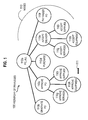
- FIG. 1 is a block diagram that illustrates an example hierarchy 100 of privileges to perform application-specific operations for an application that manages purchase orders (POs) of an enterprise.
- each node 110 corresponds to a privilege to perform one or more application-specific operations related to purchase orders (POs).
- Ellipsis 111 represents additional nodes representing additional privileges, if any.
- a hierarchy of privileges may have more or fewer nodes at more or fewer levels.
- Each leaf node in hierarchy 100 corresponds to each privilege to perform one of the application-specific operations for which access is to be controlled.
- the privileges for single application-specific operations, and the corresponding leaf nodes are listed in Table 1. Any of these privileges may be granted to any user of the application, at the discretion of an administrator for the application. Table 1. Example hierarchy of privileges.
- Approve_Services provide authorization to use a PO for purchase of services 110h
- Approve_Equipment provide authorization to use a PO for purchase of capital equipment 1101
- Approve_Supplies provide authorization to use a PO for purchase of supplies 110d Purchase make a purchase from a vendor by sending an approved purchase order to the vendor 110j Accept_Services indicate that services delivered under a PO are acceptable 110k Accept_Equipment indicate that capital equipment delivered under a PO are acceptable 1101 Accept_Supplies indicate that supplies delivered under a PO are acceptable 110f Pay_under_PO send payment for accepted deliveries under a PO to the vendor
- the hierarchy 100 also includes parent nodes that represent privileges for more than one application-specific operation.
- the privilege named Approve_PO at parent node 110c includes the privileges at nodes 110g, 110h, 110i to approve services, equipment, and supplies, respectively.
- the privilege named Accept_Delivery at parent node 110e includes the privileges at nodes 110j, 110k, 1101 to accept delivered services, equipment, and supplies, respectively. Privileges at such parent nodes may be granted to certain supervisory users of the application, such as department heads.
- the privilege for PO_ALL at node 110a includes the privileges at nodes 110b, 110c, 110d, 110e, 110f to generate POs, approve POs, make purchases with approved POs, accept deliveries of purchases under POs, and make payments for delivered purchases under POs, respectively.
- the privilege for PO_ALL includes the privileges to perform all the application-specific operations regarding purchase orders.
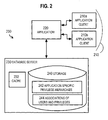
- FIG. 2 is a block diagram that illustrates a system 200 for supporting access controls on application-specific operations with a separate database server, according to an embodiment.
- the system 200 includes application 220, application clients 210, and database server 230.
- Application 220 performs one or more application-specific operations in response to one or more commands from one or more application clients 210.
- Database server 230 manages a database of one or more database objects for application 220.
- Database server 230 includes persistent storage 240 and a cache 232 in the fast but volatile memory of the database server 230.
- database server 230 is a process.
- the persistent storage 240 and cache 232 are portions of the host persistent storage and host memory that are allocated to the database server process 230.
- application 220 and database server 230 may execute on the same host using different portions of the host's persistent storage and different portions of the host's memory or the same portions of the host's memory at different times.
- the database server 230 stores one or more data structures 242, 244 and one or more data items in one or more database objects (not shown).
- Data structure 242 holds data that represents one or more privilege hierarchies for application 220.
- Data structure 244 holds data that associates one or more users of application 220 and one or more data items with one or more privileges in the one or more privilege hierarchies represented in data structure 242 for application 220. Although shown as two data structures in FIG. 2 , in other embodiments the data in data structures 242, 244 may be stored in more or fewer data structures.
- application 220 before application 220 performs, for a client, an application-specific operation for which access is controlled, application 220 sends a request to database server 230 to determine whether a user associated with the client has a privilege that allows the application 220 to perform the application-specific operation on a particular data item. Based on the request and information stored in data structures 242, 244, the database server 230 returns a response to the application 220.
- the response includes data that indicates whether the user has a privilege that allows the application 220 to perform the application-specific operation on the particular data item.
- An administrator for the application 220 provides the information in data structures 242, 244.
- the application administrator uses an extensible Markup Language (XML) document to store data that describe the hierarchies.
- XML is a well-known and widely-used markup language defined by standards promulgated by the World Wide Web Consortium (W3C) for describing structured data, and allows an arbitrary tree hierarchy of data elements.
- W3C World Wide Web Consortium
- the application administrator then interacts with an interface provided by database server 230.
- the interface allows the application administrator to indicate the XML document that describes the hierarchies that apply to each data item or group of data items, and to indicate one or more privileges in each hierarchy, which apply to each user of the application 220.
- each of several privilege hierarchies for one application is associated with corresponding types of data items upon which the application-specific operations operate.
- the privilege hierarchy 100 is associated with data items that represent purchase orders for an enterprise, but not with data items that represent personnel records for the same enterprise. Privileges to operate on personnel records are indicated in a second privilege hierarchy (not shown) different from privilege hierarchy 100.
- the data in data structure 242 associates each privilege hierarchy with one or more types of data items upon which operate the operations allowed by those privileges.
- an application administrator generates an extensible Markup Language (XML) document that describes the hierarchy of privileges for application-specific operations on purchase order objects.
- XML extensible Markup Language
- other structured data formats may be used to represent a hierarchy of privileges.
- each XML element corresponds to a node representing a privilege in the hierarchy of privileges.
- Table 2 illustrates portions of an example XML document that describes the example hierarchy 100 illustrated in FIG. 1 .
- Table 2. Portion of XML document describing example hierarchy of privileges. Line number XML line 1 ...
- each XML element has a name.
- the beginning of an XML element is represented by the symbols " ⁇ " ">” that bracket the name of the XML element.
- the end of an XML element is represented by the symbols " ⁇ /" ">”that bracket the name of the XML element.
- All children elements of a parent element are included between the symbols representing the beginning and the end of the parent element. When an element has no children it can be represented, optionally, by the name of the element bracketed by the symbols " ⁇ " "/>.”
- the ellipses depicted in lines 1 and 17 of Table 2 represent XML lines in the XML document that precede or follow lines 2 through 16.
- the XML lines 2-16 indicate the XML element named "PO_ALL" that corresponds to the PO_ALL privilege.
- the PO_ALL element includes five child elements: Generate_PO in line 3; Approve_PO in lines 4-8; Purchase in line 9; Accept_Delivery in lines 10-14; and Pay_under_PO in line 15.
- the Approve_PO element in lines 4-8 includes three child elements: Approve_Services in line 5; Approve_Equipment in line 6; and Approve_Supplies in line 7.
- the Accept_Delivery element in lines 10-14 includes three child elements: Accept_Services in line 11; Accept_Equipment in line 12; and Accept_Supplies in line 13.
- Table 2 describes the hierarchy 110 of privileges for purchase order operations depicted in FIG. 1 .
- the server receives data indicating a hierarchy of privileges for performing application-specific operations on types of data items. Any method for receiving the hierarchy of privileges may be used.
- an application administrator forms the XML document with the lines shown in Table 2, stores the document in the file POprivileges.xml, and employs the database server access control interface to indicate application-specific access controls should be supported by the database server using the hierarchy of privileges in file POprivileges.xml.
- the database server access control interface is a graphical user interface, such as a HyperText Markup Language (HTML) page, well-known in the art, that prompts a user for input to specify application-specific access controls.
- HTML HyperText Markup Language
- the database server access control interface is an application programming interface (API) well-known in the art, that comprises names and types of routines and parameters that are invoked to perform database server access control functions.
- API application programming interface
- other interfaces to a server are employed.
- more than one privilege hierarchy is received for the same application.
- the application may include not only a hierarchy of privileges for a purchase order system, but also a hierarchy of privileges for other systems, such as a human resources system, a facilities management system, a product fabrication tracking system, and a wholesale sales system.
- the hierarchies that apply to the various systems often refer to application-specific operations on different types of data items stored by the application in the database.
- the hierarchy of privileges depicted in FIG. 1 refer to operations listed in Table 1 that operate on purchase order database objects in the database
- a hierarchy of privileges for human resources refer to operations on personnel database objects in the database.
- each privilege hierarchy is associated with a type of data item, and the type of data item is also received with the data that indicates the hierarchy of privileges.
- the hierarchy indicated by the XML lines in Table 2 is associated with purchase order database objects in a database managed for the application by the database server 230.
- the association is made within the XML document; in some embodiments, the association is made at the interface to the database server access control system.
- different hierarchies for the same application are distinguished by other means, such as a hierarchy name.
- the server receives data indicating privileges for each user and data item or group of data items. Any method for receiving such data may be used.
- an application administrator forms a second XML document associating a user identification ("user ID") with one or more privileges in the hierarchy 100 of privileges, and employs the database server access control interface to indicate the second XML document associates users with privileges.
- the interface may be a graphical user interface, such as a HTML page, an API, or some other interface for supplying data to the server.
- the XML document specifies an access control list (ACL) for the Uniform Access Control System of Murthy , using XML lines such as those shown below in Table 3.
- ACL access control list
- each ACL includes one or more access control elements (ACE).
- Each ACE includes one principal element, naming a principal, and one privileges element.
- the privileges element includes a list of one or more privileges that are identified by their names in the hierarchy of privileges.
- the ellipses in lines 1 and 19 indicate other XML lines before and after the ACL.
- the ellipsis in line 17 indicates other XML lines specifying other ACEs. Table 3. Portion of XML document describing privileges for each user.
- the privileges of a user in each of the hierarchies are specified during step 320. For example, if ACLs are used, there would be one set of ACLs specifying privileges in the purchase order hierarchy that applies to purchase order data items and another set of ACLs specifying privileges in a human resources hierarchy that applies to human resource data items.
- the server receives an access control request from the application.
- the request includes data that indicates a particular user and a particular application-specific operation and the data item on which the operation is to be performed.
- the data item may be omitted.
- the privilege hierarchy to be used is inferred from the data item based on the type of the data item.
- a type of a data item indicates one or more data items or database objects.
- the data indicating the particular application-specific operation is data that indicates a particular privilege for one or more of the application-specific operations.
- user SCOTT operates application 220 through client 210a
- user PETER operates application 220 through client 210b
- user SCOTT has attempted to approve a particular purchase order, designated hereinafter as "PO12345,” which user SCOTT has just generated for office supplies.
- PO12345 a particular purchase order
- This causes the application 220 to generate an access control request including data that indicates the user SCOTT is attempting to perform, on a purchase order data item PO12345, an application-specific operation that requires the Approve_Services privilege.
- the database server receives the request during step 340.
- the server determines whether the application may perform the particular operation for the particular user based on the privileges associated with the particular user for the particular data item. For example, database server 230 determines whether the application 220 may perform the operation that requires the Approve_Services privilege for SCOTT based on the privileges associated with SCOTT for purchase order data items in the hierarchy associated with purchase order data items.
- the server determines the appropriate hierarchy. For example, database server 230 determines that PO12345 is a purchase order type database object based on database metadata maintained by the database server 230. Database server 230 then determines that the hierarchy of privileges received during step 310, in the XML document partially listed in Table 2, is the appropriated hierarchy.
- the server determines whether the user has the privilege indicated in the request. For example, the database server 230 determines that the user SCOTT appears in the ACL listed in Table 3 in the ACE at lines 3-9 for purchase order data items, but that the privilege Approve_Services is not listed among the privileges listed in lines 5-8. Therefore, the user SCOTT does not have the privilege to perform this application-specific operation.
- the server returns a response to the application.
- the response includes data that indicates whether the application may perform the particular operation for the particular user.
- database server 230 returns to application 220 a response indicating that the application 220 should not perform the approve services operations for user SCOTT associated with client 210a.
- the application does not perform the operation.
- the application sends a message to the user's client that the user is not allowed to perform the application-specific operation, based on this response.
- the application 220 sends a message to client 210a that the user SCOTT is not allowed to approve a purchase order for services.
- the server determines whether the user has the privilege indicated in the request. It is advantageous to maintain privileges of users operating active clients of the application in a cache of fast memory. The more user privileges stored in cache, the more rapidly the server can respond to requests to support access control of application-specific operations. The more compactly the user privileges can be represented, the more users may be stored in the cache. According to an embodiment, the server represents the privileges associated with each user in cache using bitmaps. For example, database server 230 stores user privileges in cache 232 using bitmaps.
- the server associates each leaf node in a hierarchy with a bit position.
- the nine leaf nodes listed in Table 1 for hierarchy 100 are associated with bit positions 1 through 9.
- the server receives data indicating the privileges granted to a particular user (including reading such data from persistent storage)
- the server sets bits that correspond to the granted privileges to an "ON" value, e.g. "1,” and sets bits that correspond to privileges not granted to an "OFF" value, e.g., "0.”
- the bits corresponding to all leaf nodes that are descendents of that parent node are set to the ON value.
- the privileges granted to users SCOTT and PETER in the XML lines listed in Table 3 are represented by the bitmaps listed in Table 4, where bit positions count from right (least significant bit) to left (most significant). Table 4.
- User ID Bitmap SCOTT 010000001 PETER 100001110 SCOTT is granted the privilege to generate a PO, the first leaf node 110b, so the ON value "1" is set in the first (rightmost) bit.
- SCOTT is also granted the privilege to accept delivered supplies, the eighth leaf node 1101, so the ON value "1" is set in the 8 th bit from the right.
- PETER is granted the privilege to approve POs, which is a parent node for the leaf nodes 110g, 110h, 110i to approve services, equipment, and supplies, respectively. Therefore, the bits corresponding to the three leaf node 110g, 110h, 110i are set to the ON value "1.” These bits are in the second through fourth positions of the bitmap from the right. PETER is also granted the privilege to pay for deliveries, the ninth leaf node 110f, so the ON value "1" is set in the 9 th bit from the right, i.e., the leftmost bit.
- leaf nodes of all the hierarchies are assembled into a single bitmap. In other embodiments, leaf nodes of different hierarchies are assembled in different bitmaps. In some embodiments, bit positions may be determined using a hash function based on the hierarchy name and the privilege name.
- the database server 230 determines if the bitmap of a particular user for a particular data item is already in cache 232. If so, an operation to retrieve the bitmap from data stored on permanent storage 240 can be avoided. If not, a bitmap for the user is retrieved from permanent storage 240 and added to cache 232. If there is not sufficient space in cache 232 to place the retrieved bitmap, then space in cache is freed using any method known in the art. For example, the memory allocated to the least recently used bitmap is made available for the bitmap of the particular user.
- the database server 230 determines the bit position associated with the privilege for the application-specific operation, or privilege, indicated in the access control request received in step 340. For example, using the hierarchy represented in Table 2, the database server determines that the approve services operation associated with the Approve_Services privilege is associated with the second leaf node and therefore the second bit of the bitmap.
- the database server 230 determines whether the bit in that bit position is set to the ON value. For example, the database server determines that the second bit is not set to the ON value in the bitmap for SCOTT listed in Table 4. Therefore, the database server determines that SCOTT does not have the privilege to approve services.
- the database server 230 determines that the second bit is set to the ON value in the bitmap for PETER listed in Table 4. Therefore, the database server determines that PETER does have the privilege to approve services
- cache 232 and bitmaps for determining the privileges of a user is very efficient.
- An application developer may make use of such efficient determinations of privileges by a separate server, such as a database or content management server, without extensive software development.
- An application administrator simply provides the hierarchy of privileges and user privileges to the separate server one time, often using an interface already built for the separate server.
- a new application is developed, or an existing application is modified, simply to send access control requests to the separate server.
- the application does not need to be developed to efficiently determine whether privileges are available for an application-specific operation. For example, the application does not need to be developed to manage cache 232 or to form bitmaps of user privileges.
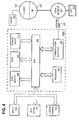
- FIG. 4 is a block diagram that illustrates a computer system 400 upon which an embodiment of the invention may be implemented.
- Computer system 400 includes a bus 402 or other communication mechanism for communicating information, and a processor 404 coupled with bus 402 for processing information.
- Computer system 400 also includes a main memory 406, such as a random access memory (RAM) or other dynamic storage device, coupled to bus 402 for storing information and instructions to be executed by processor 404.
- Main memory 406 also may be used for storing temporary variables or other intermediate information during execution of instructions to be executed by processor 404.
- Computer system 400 further includes a read only memory (ROM) 408 or other static storage device coupled to bus 402 for storing static information and instructions for processor 404.
- ROM read only memory
- a storage device 410 such as a magnetic disk or optical disk, is provided and coupled to bus 402 for storing information and instructions.
- Computer system 400 may be coupled via bus 402 to a display 412, such as a cathode ray tube (CRT), for displaying information to a computer user.
- a display 412 such as a cathode ray tube (CRT)
- An input device 414 is coupled to bus 402 for communicating information and command selections to processor 404.
- cursor control 416 is Another type of user input device
- cursor control 416 such as a mouse, a trackball, or cursor direction keys for communicating direction information and command selections to processor 404 and for controlling cursor movement on display 412.
- This input device typically has two degrees of freedom in two axes, a first axis (e.g., x) and a second axis (e.g., y), that allows the device to specify positions in a plane.
- the invention is related to the use of computer system 400 for implementing the techniques described herein. According to one embodiment of the invention, those techniques are performed by computer system 400 in response to processor 404 executing one or more sequences of one or more instructions contained in main memory 406. Such instructions may be read into main memory 406 from another computer-readable medium, such as storage device 410. Execution of the sequences of instructions contained in main memory 406 causes processor 404 to perform the process steps described herein. In alternative embodiments, hard-wired circuitry may be used in place of or in combination with software instructions to implement the invention. Thus, embodiments of the invention are not limited to any specific combination of hardware circuitry and software.
- Non-volatile media includes, for example, optical or magnetic disks, such as storage device 410.
- Volatile media includes dynamic memory, such as main memory 406.
- Transmission media includes coaxial cables, copper wire and fiber optics, including the wires that comprise bus 402. Transmission media can also take the form of acoustic or light waves, such as those generated during radio-wave and infra-red data communications.
- Computer-readable media include, for example, a floppy disk, a flexible disk, hard disk, magnetic tape, or any other magnetic medium, a CD-ROM, any other optical medium, punchcards, papertape, any other physical medium with patterns of holes, a RAM, a PROM, and EPROM, a FLASH-EPROM, any other memory chip or cartridge, a carrier wave as described hereinafter, or any other medium from which a computer can read.
- Various forms of computer readable media may be involved in carrying one or more sequences of one or more instructions to processor 404 for execution.
- the instructions may initially be carried on a magnetic disk of a remote computer.
- the remote computer can load the instructions into its dynamic memory and send the instructions over a telephone line using a modem.
- a modem local to computer system 400 can receive the data on the telephone line and use an infra-red transmitter to convert the data to an infra-red signal.
- An infra-red detector can receive the data carried in the infra-red signal and appropriate circuitry can place the data on bus 402.
- Bus 402 carries the data to main memory 406, from which processor 404 retrieves and executes the instructions.
- the instructions received by main memory 406 may optionally be stored on storage device 410 either before or after execution by processor 404.
- Computer system 400 also includes a communication interface 418 coupled to bus 402.
- Communication interface 418 provides a two-way data communication coupling to a network link 420 that is connected to a local network 422.
- communication interface 418 may be an integrated services digital network (ISDN) card or a modem to provide a data communication connection to a corresponding type of telephone line.
- ISDN integrated services digital network
- communication interface 418 maybe a local area network (LAN) card to provide a data communication connection to a compatible LAN.
- LAN local area network
- Wireless links may also be implemented.
- communication interface 418 sends and receives electrical, electromagnetic or optical signals that carry digital data streams representing various types of information.
- Network link 420 typically provides data communication through one or more networks to other data devices.
- network link 420 may provide a connection through local network 422 to a host computer 424 or to data equipment operated by an Internet Service Provider (ISP) 426.
- ISP 426 in turn provides data communication services through the world wide packet data communication network now commonly referred to as the "Internet" 428.
- Internet 428 uses electrical, electromagnetic or optical signals that carry digital data streams.
- the signals through the various networks and the signals on network link 420 and through communication interface 418, which carry the digital data to and from computer system 400, are exemplary forms of carrier waves transporting the information.
- Computer system 400 can send messages and receive data, including program code, through the network(s), network link 420 and communication interface 418.
- a server 430 might transmit a requested code for an application program through Internet 428, ISP 426, local network 422 and communication interface 418.
- the received code may be executed by processor 404 as it is received, and/or stored in storage device 410, or other non-volatile storage for later execution. In this manner, computer system 400 may obtain application code in the form of a carrier wave.
Landscapes
- Engineering & Computer Science (AREA)
- Theoretical Computer Science (AREA)
- Computer Security & Cryptography (AREA)
- Bioethics (AREA)
- General Health & Medical Sciences (AREA)
- Computer Hardware Design (AREA)
- Health & Medical Sciences (AREA)
- Software Systems (AREA)
- Physics & Mathematics (AREA)
- General Engineering & Computer Science (AREA)
- General Physics & Mathematics (AREA)
- Databases & Information Systems (AREA)
- Information Transfer Between Computers (AREA)
- Information Retrieval, Db Structures And Fs Structures Therefor (AREA)
- Storage Device Security (AREA)
Claims (19)
- Verfahren zum Steuern des Zugangs zu anwendungsspezifischen Vorgängen, die durch ein Anwendungsprogramm definiert sind, mit den Schritten:Empfangen von Berechtigungsinformationen bei einem Server, der sich von dem Anwendungsprogramm unterscheidet, wobei die Berechtigungsinformationen eine Berechtigungsdefinition enthalten, wobei die Berechtigungsdefinition definiert:die anwendungsspezifischen Vorgänge;für jeden anwendungsspezifischen Vorgang, eine jeweilige Berechtigung zum Ausführen des anwendungsspezifischen Vorgangs;wobei die anwendungsspezifischen Vorgänge einen bestimmten anwendungsspezifischen Vorgang enthalten;nach dem Empfang der Berechtigungsinformationen empfängt der Server eine Zugangssteueranforderung von dem Anwendungsprogramm betreffend die Ausführung des bestimmten anwendungsspezifischen Vorgangs für einen bestimmten Benutzer;ansprechend auf den Empfang der Zugangssteueranforderung führt der Server beruhend auf den Berechtigungsinformationen eine Bestimmung durch, ob das Anwendungsprogramm den bestimmten anwendungsspezifischen Vorgang für den bestimmten Benutzer ausführen darf; undder Server wird dazu veranlasst, an das Anwendungsprogramm eine Angabe zu übermitteln, ob das Anwendungsprogramm den bestimmten anwendungsspezifischen Vorgang für den bestimmten Benutzer ausführen darf.
- Verfahren nach Anspruch 1, bei dem der Schritt des Empfangens von Berechtigungsinformationen weiter aufweist, dass bei dem Server zweite Daten empfangen werden, die Benutzer des Anwendungsprogramms mit einer oder mehreren Berechtigungen in dem bestimmten Satz von Berechtigungen in Beziehung setzen.
- Verfahren nach Anspruch 1, ferner mit den Schritten:ansprechend auf den Empfang einer Anforderung von dem Anwendungsprogramm beim Server, die einen bestimmten Benutzer und einen bestimmten anwendungsspezifischen Vorgang angibt, wird bestimmt, ob der bestimmte Benutzer das Anwendungsprogramm veranlassen darf, den bestimmten anwendungsspezifischen Vorgang auszuführen, und zwar beruhend auf den Berechtigungsinformationen; undwobei der Schritt des Veranlassens des Servers, an das Anwendungsprogramm eine Angabe zu übermitteln, den Schritt umfasst, dass an das Anwendungsprogramm eine Antwort gesendet wird, die angibt, ob der bestimmte Benutzer das Anwendungsprogramm veranlassen darf, den bestimmten anwendungsspezifischen Vorgang auszuführen.
- Verfahren nach Anspruch 3, bei dem:der Schritt des Empfangens von Berechtigungsinformationen ferner umfasst, dass erste Daten empfangen werden, die einen ersten Satz von Berechtigungen in Beziehung mit einer ersten Art von Datenelementen setzen, mit denen die Mehrzahl anwendungsspezifischer Vorgänge arbeitet; undder Schritt des Empfangs der Anforderung ferner umfasst, dass eine Anforderung empfangen wird, die auch ein bestimmtes Datenelement angibt; undder Schritt des Bestimmens, ob der bestimmte Benutzer das Anwendungsprogramm veranlassen darf, den bestimmten anwendungsspezifischen Vorgang auszuführen, ferner umfasst, dass bestimmt wird, ob das bestimmte Datenelement zu der ersten Art von Datenelementen gehört.
- Verfahren nach Anspruch 4, bei dem:das Verfahren ferner umfasst, dass bei dem Server zweite Daten erhalten werden, die einen zweiten Satz von Berechtigungen zum Ausführen einer zweiten Mehrzahl von anwendungsspezifischen Vorgängen unter Verwendung einer zweiten Art von Datenelementen, die sich von der ersten Art von Datenelementen unterscheidet, beschreiben; undder Schritt des Bestimmens, ob der bestimmte Benutzer das Anwendungsprogramm veranlassen darf, den bestimmten anwendungsspezifischen Vorgang auszuführen, teilweise auf der bestimmten Art des bestimmten Datenelements beruht.
- Verfahren nach Anspruch 1, bei dem der Schritt des Empfangens von Berechtigungsinformationen umfasst, dass ein Dokument in erweiterbarer Auszeichnungssprache (XML = Extensible Markup Language) empfangen wird.
- Verfahren nach Anspruch 3, bei dem der Schritt des Bestimmens, ob der bestimmte Benutzer das Anwendungsprogramm veranlassen darf, den bestimmten anwendungsspezifischen Vorgang auszuführen, ferner den Schritt umfasst, dass ein Cache-Speicher in einem schnellen Speicher verwaltet wird, um Informationen zu speichern, die jeden von einem oder mehreren Benutzern in Beziehung mit einer oder mehreren Berechtigungen in jedem von einem oder mehreren Sätzen von Berechtigungen setzt.
- Verfahren nach Anspruch 7, bei dem der Schritt des Verwaltens des Cache-Speichers ferner den Schritt umfasst, dass Daten in dem Cache-Speicher gespeichert werden, die eine Art eines jedem Benutzer zugeordneten Datenelements angeben.
- Verfahren nach Anspruch 1, bei dem der bestimmte Satz von Berechtigungen eine erste Hierarchie mit zwei oder mehr Berechtigungsstufen bildet.
- Verfahren nach Anspruch 7, bei dem der Schritt des Verwaltens des Cache-Speichers ferner den Schritt aufweist, in dem Cache-Speicher für jeden Benutzer ein Bitmuster (Bitmap) zu speichern, wobei:jeder Satz von Berechtigungen eine Hierarchie mit einer oder mehreren Berechtigungsstufen bildet;jede unterschiedliche Position in dem Bitmuster einem unterschiedlichen Blattknoten in jeder Hierarchie des einen Satzes oder der mehreren Sätze von Berechtigungen entspricht; undein Blattknoten ein Knoten einer Hierarchie ist, der keine Kindknoten besitzt.
- Verfahren zum Steuern des Zugangs zu anwendungsspezifischen Vorgängen, die durch ein Anwendungsprogramm definiert sind, mit den Schritten:Übermitteln von Berechtigungsinformationen an einen Server, der sich von dem Anwendungsprogramm unterscheidet, wobei die Berechtigungsinformationen eine Berechtigungsdefinition enthalten, wobei die Berechtigungsdefinition definiert:die anwendungsspezifischen Vorgänge;erste Daten, die einen ersten Satz von Berechtigungen betreffend das Ausführen einer ersten Mehrzahl von anwendungsspezifischen Vorgängen beschreiben,wobei die Mehrzahl von anwendungsspezifischen Vorgängen einen bestimmten anwendungsspezifischen Vorgang enthält;nach dem Empfang der Berechtigungsinformationen empfängt der Server eine Zugangssteueranforderung von dem Anwendungsprogramm betreffend die Ausführung des bestimmten anwendungsspezifischen Vorgangs für einen bestimmten Benutzer;ansprechend auf den Empfang der Zugangssteueranforderung führt der Server beruhend auf den Berechtigungsinformationen eine Bestimmung aus, ob das Anwendungsprogramm den bestimmten anwendungsspezifischen Vorgang für den bestimmten Benutzer ausführen darf;Empfangen einer Angabe von dem Server, ob das Anwendungsprogramm den bestimmten anwendungsspezifischen Vorgang für den bestimmten Benutzer ausführen darf; unddas Anwendungsprogramm führt den bestimmten anwendungsspezifischen Vorgang nur dann aus, wenn der Server angegeben hat, dass der anwendungsspezifische Vorgang zugelassen worden ist.
- Verfahren nach Anspruch 11, bei dem:der Schritt des Übermittelns von Berechtigungsinformationen an einen Server aufweist:Senden von zweiten Daten an einen Server, der sich von dem Anwendungsprogramm unterscheidet, wobei die zweiten Daten einen ersten Benutzer des Anwendungsprogramms in Beziehung zu einer Berechtigung in dem ersten Satz von Berechtigungen setzen.
- Verfahren nach Anspruch 12, das ferner die Schritte aufweist:Empfangen, bei dem Anwendungsprogramm, eines Befehls von einem bestimmten Benutzer, wobei der Befehl mit sich bringt, dass das Anwendungsprogramm einen bestimmten anwendungsspezifischen Vorgang ausführt;Senden einer Anforderung an den Server, die den bestimmten Benutzer und den bestimmten anwendungsspezifischen Vorgang angibt;wobei der Schritt des Empfangens einer Angabe von dem Server, ob der bestimmte anwendungsspezifische Vorgang zugelassen worden ist, umfasst, dass eine Antwort von dem Server empfangen wird, die angibt, ob der bestimmte Benutzer das Anwendungsprogramm veranlassen darf, den bestimmten anwendungsspezifischen Vorgang auszuführen, und zwar beruhend auf den ersten Daten und den zweiten Daten; undAusführen des bestimmten anwendungsspezifischen Vorgangs nur dann, wenn die Antwort angibt, dass der bestimmte Benutzer das Anwendungsprogramm veranlassen darf, den bestimmten anwendungsspezifischen Vorgang auszuführen.
- Verfahren nach Anspruch 12, bei dem:der Schritt des Sendens der ersten Daten ferner umfasst, dass erste Daten gesendet werden, die auch den ersten Satz von Berechtigungen in Beziehung mit einer ersten Art von Datenelementen setzen, bezüglich derer die Mehrzahl von anwendungsspezifischen Vorgängen arbeitet; undder Schritt des Sendens der Anforderung ferner umfasst, dass die Anforderung, die auch ein bestimmtes Datenelement aufweist, gesendet wird; undder Schritt des Empfangens der Antwort beruhend auf den ersten und zweiten Daten ferner umfasst, dass die Antwort empfangen wird, die auch darauf beruht, ob das bestimmte Datenelement zu der ersten Art von Datenelementen gehört.
- Verfahren nach Anspruch 14, bei dem:das Verfahren ferner umfasst, dass dritte Daten an den Server gesendet werden, die einen unterschiedlichen zweiten Satz von Berechtigungen betreffend die Ausführung einer zweiten Mehrzahl von anwendungsspezifischen Vorgängen unter Verwendung einer unterschiedlichen zweiten Art von Datenelementen beschreiben; undder Schritt des Sendens der zweiten Daten ferner umfasst, dass zweite Daten gesendet werden, die auch einen zweiten Benutzer des Anwendungsprogramms in Beziehung zu einer Berechtigung in einer zweiten Hierarchie von Berechtigungen setzen; undder Schritt des Empfangens der Antwort beruhend auf den ersten Daten und den zweiten Daten ferner umfasst, dass die Antwort empfangen wird, die auch darauf beruht, ob eine bestimmte Art des bestimmten Datenelements einem bestimmten Satz von Berechtigungen betreffend eine bestimmte Mehrzahl von anwendungsspezifischen Vorgängen, die den bestimmten anwendungsspezifischen Vorgang umfassen, zugeordnet ist.
- Verfahren nach Anspruch 11, bei dem der Schritt des Übermittelns von Berechtigungsinformationen ferner umfasst, dass ein Dokument in erweiterbarer Auszeichnungssprache (XML = Extensible Markup Language) gesendet wird.
- Verfahren nach Anspruch 12, bei dem das Anwendungsprogramm keinen Cache-Speicher in einem schnellen Speicher zum Speichern von Informationen verwaltet, die jeden von einem oder mehreren Benutzern in Beziehung zu einer oder mehreren Berechtigungen in jedem von einem oder mehreren Sätzen von Berechtigungen, einschließlich des ersten Satzes von Berechtigungen, setzen.
- Verfahren nach Anspruch 11, bei dem der erste Satz von Berechtigungen eine erste Hierarchie mit zwei oder mehr Berechtigungsstufen bildet.
- Computerlesbares Medium, das eine oder mehrere Befehlssequenzen aufweist, die, wenn sie von einem oder mehreren Prozessoren ausgeführt werden, den einen oder die mehreren Prozessoren dazu veranlassen, das Verfahren gemäß einem der Ansprüche 1-18 auszuführen.
Applications Claiming Priority (5)
| Application Number | Priority Date | Filing Date | Title |
|---|---|---|---|
| US364610 | 1999-07-29 | ||
| US42454302P | 2002-11-06 | 2002-11-06 | |
| US424543P | 2002-11-06 | ||
| US10/364,610 US7020653B2 (en) | 2002-11-06 | 2003-02-10 | Techniques for supporting application-specific access controls with a separate server |
| PCT/US2003/035494 WO2004044738A2 (en) | 2002-11-06 | 2003-11-06 | Techniques for supporting application-specific access controls with a separate server |
Publications (2)
| Publication Number | Publication Date |
|---|---|
| EP1559006A2 EP1559006A2 (de) | 2005-08-03 |
| EP1559006B1 true EP1559006B1 (de) | 2015-08-05 |
Family
ID=32179549
Family Applications (1)
| Application Number | Title | Priority Date | Filing Date |
|---|---|---|---|
| EP03781809.3A Expired - Lifetime EP1559006B1 (de) | 2002-11-06 | 2003-11-06 | Verfahren zur unterstützung applikationspezifischer zugriffskontrolle mit einem separaten server. |
Country Status (6)
| Country | Link |
|---|---|
| US (1) | US7020653B2 (de) |
| EP (1) | EP1559006B1 (de) |
| JP (1) | JP4787617B2 (de) |
| AU (1) | AU2003287565C1 (de) |
| CA (1) | CA2505156C (de) |
| WO (1) | WO2004044738A2 (de) |
Cited By (1)
| Publication number | Priority date | Publication date | Assignee | Title |
|---|---|---|---|---|
| EP4264453A4 (de) * | 2020-12-16 | 2024-11-27 | National Association of Convenience Stores | High-fidelity-datenverwaltung für domänenübergreifende analytik |
Families Citing this family (24)
| Publication number | Priority date | Publication date | Assignee | Title |
|---|---|---|---|---|
| US7020653B2 (en) | 2002-11-06 | 2006-03-28 | Oracle International Corporation | Techniques for supporting application-specific access controls with a separate server |
| US20050063524A1 (en) * | 2002-12-11 | 2005-03-24 | Leader Technologies, Inc. | Communication system and method |
| US7925246B2 (en) | 2002-12-11 | 2011-04-12 | Leader Technologies, Inc. | Radio/telephony interoperability system |
| US20070127400A1 (en) * | 2002-12-11 | 2007-06-07 | Leader Technologies, Inc. | Professional Services Communications Architecture |
| US8195714B2 (en) | 2002-12-11 | 2012-06-05 | Leaper Technologies, Inc. | Context instantiated application protocol |
| US8775468B2 (en) | 2003-08-29 | 2014-07-08 | International Business Machines Corporation | Method and system for providing path-level access control for structured documents stored in a database |
| US20050132054A1 (en) * | 2003-12-10 | 2005-06-16 | International Business Machines Corporation | Fine-grained authorization by traversing generational relationships |
| US7546640B2 (en) * | 2003-12-10 | 2009-06-09 | International Business Machines Corporation | Fine-grained authorization by authorization table associated with a resource |
| US7346617B2 (en) * | 2004-01-23 | 2008-03-18 | Oracle International Corporation | Multi-table access control |
| US20050203850A1 (en) * | 2004-01-29 | 2005-09-15 | Peter Heussi-Pfleger | Output data management |
| US8074288B2 (en) * | 2005-07-15 | 2011-12-06 | Microsoft Corporation | Isolation of application-specific data within a user account |
| US7996439B2 (en) * | 2006-01-18 | 2011-08-09 | Echosign, Inc. | Automatic document exchange and execution management |
| US7895166B2 (en) * | 2006-01-18 | 2011-02-22 | Echosign, Inc. | Automatic document exchange with archiving capability |
| US7996367B2 (en) | 2006-01-18 | 2011-08-09 | Echosign, Inc. | Automatic document exchange with document searching capability |
| US8407289B2 (en) * | 2007-01-08 | 2013-03-26 | Cisco Technology, Inc. | Methods and apparatuses for dynamically suggesting an application based on a collaboration session |
| US20090157686A1 (en) * | 2007-12-13 | 2009-06-18 | Oracle International Corporation | Method and apparatus for efficiently caching a system-wide access control list |
| US20100223320A1 (en) * | 2009-02-27 | 2010-09-02 | He Huang | Data distribution efficiency for online collaborative computing sessions |
| US8538990B2 (en) * | 2011-03-04 | 2013-09-17 | International Business Machines Corporation | Scalable mechanism for resolving cell-level access from sets of dimensional access rules |
| US20150134719A1 (en) * | 2013-11-13 | 2015-05-14 | Kaseya International Limited | Third party application delivery via an agent portal |
| US9535610B2 (en) * | 2014-02-21 | 2017-01-03 | International Business Machines Corporation | Optimizing peer-to-peer remote copy (PPRC) transfers for partial write operations using a modified sectors bitmap |
| US9600277B2 (en) | 2014-02-21 | 2017-03-21 | International Business Machines Corporation | Asynchronous cleanup after a peer-to-peer remote copy (PPRC) terminate relationship operation |
| US9507527B2 (en) | 2014-02-21 | 2016-11-29 | International Business Machines Corporation | Efficient cache management of multi-target peer-to-peer remote copy (PPRC) modified sectors bitmap |
| US20150295852A1 (en) * | 2014-04-15 | 2015-10-15 | Ntt Innovation Institute, Inc. | Protecting and tracking network state updates in software-defined networks from side-channel access |
| US9628555B2 (en) * | 2015-06-18 | 2017-04-18 | Live Nation Entertainment, Inc | Enhanced load processing using linked hierarchical data structures |
Family Cites Families (48)
| Publication number | Priority date | Publication date | Assignee | Title |
|---|---|---|---|---|
| WO1990014626A1 (en) * | 1989-05-15 | 1990-11-29 | Dallas Semiconductor Corporation | Systems with data-token/one-wire-bus |
| US5226137A (en) * | 1989-05-15 | 1993-07-06 | Dallas Semiconductor Corp. | Electronic key with multiple password protected sub-keys using address and translation to implement a block data move between public and protected sub-keys |
| US4993025A (en) * | 1989-11-21 | 1991-02-12 | Picker International, Inc. | High efficiency image data transfer network |
| US5257365A (en) * | 1990-03-16 | 1993-10-26 | Powers Frederick A | Database system with multi-dimensional summary search tree nodes for reducing the necessity to access records |
| US5577209A (en) * | 1991-07-11 | 1996-11-19 | Itt Corporation | Apparatus and method for providing multi-level security for communication among computers and terminals on a network |
| JPH05225057A (ja) * | 1992-02-14 | 1993-09-03 | Casio Comput Co Ltd | キャッシュメモリ制御装置 |
| JPH0667951A (ja) | 1992-05-20 | 1994-03-11 | Nec Corp | データベース管理システム |
| US5463772A (en) | 1993-04-23 | 1995-10-31 | Hewlett-Packard Company | Transparent peripheral file systems with on-board compression, decompression, and space management |
| US5893109A (en) * | 1996-03-15 | 1999-04-06 | Inso Providence Corporation | Generation of chunks of a long document for an electronic book system |
| US5893104A (en) * | 1996-07-09 | 1999-04-06 | Oracle Corporation | Method and system for processing queries in a database system using index structures that are not native to the database system |
| US6208993B1 (en) * | 1996-07-26 | 2001-03-27 | Ori Software Development Ltd. | Method for organizing directories |
| US6023765A (en) * | 1996-12-06 | 2000-02-08 | The United States Of America As Represented By The Secretary Of Commerce | Implementation of role-based access control in multi-level secure systems |
| JP3698851B2 (ja) * | 1997-02-20 | 2005-09-21 | 株式会社日立製作所 | データベースのセキュリティ管理方法及びシステム |
| GB2329044B (en) | 1997-09-05 | 2002-10-09 | Ibm | Data retrieval system |
| US6141655A (en) * | 1997-09-23 | 2000-10-31 | At&T Corp | Method and apparatus for optimizing and structuring data by designing a cube forest data structure for hierarchically split cube forest template |
| US5974407A (en) * | 1997-09-29 | 1999-10-26 | Sacks; Jerome E. | Method and apparatus for implementing a hierarchical database management system (HDBMS) using a relational database management system (RDBMS) as the implementing apparatus |
| JPH11161536A (ja) * | 1997-11-26 | 1999-06-18 | Nec Inf Service Ltd | 利用者制限装置およびその方法 |
| US6192476B1 (en) * | 1997-12-11 | 2001-02-20 | Sun Microsystems, Inc. | Controlling access to a resource |
| US6430549B1 (en) * | 1998-07-17 | 2002-08-06 | Electronic Data Systems Corporation | System and method for selectivety defining access to application features |
| US6487546B1 (en) * | 1998-08-27 | 2002-11-26 | Oracle Corporation | Apparatus and method for aggregate indexes |
| US6279007B1 (en) | 1998-11-30 | 2001-08-21 | Microsoft Corporation | Architecture for managing query friendly hierarchical values |
| US6704739B2 (en) | 1999-01-04 | 2004-03-09 | Adobe Systems Incorporated | Tagging data assets |
| US6449652B1 (en) * | 1999-01-04 | 2002-09-10 | Emc Corporation | Method and apparatus for providing secure access to a computer system resource |
| US6370537B1 (en) * | 1999-01-14 | 2002-04-09 | Altoweb, Inc. | System and method for the manipulation and display of structured data |
| US6427123B1 (en) | 1999-02-18 | 2002-07-30 | Oracle Corporation | Hierarchical indexing for accessing hierarchically organized information in a relational system |
| JP2000250872A (ja) * | 1999-03-02 | 2000-09-14 | Mitsubishi Electric Corp | 業務処理システムの統合管理方式 |
| HK1020419A2 (en) | 1999-03-16 | 2000-03-17 | Piu Joseph Fong Shi | Frame model for universal database in database reengineering and integration |
| US6542898B1 (en) * | 1999-05-12 | 2003-04-01 | Motive Communications, Inc. | Technical support chain automation with guided self-help capability using active content developed for specific audiences |
| US6496842B1 (en) * | 1999-05-28 | 2002-12-17 | Survol Interactive Technologies | Navigating heirarchically organized information |
| US6470344B1 (en) * | 1999-05-29 | 2002-10-22 | Oracle Corporation | Buffering a hierarchical index of multi-dimensional data |
| US6721727B2 (en) | 1999-12-02 | 2004-04-13 | International Business Machines Corporation | XML documents stored as column data |
| EP1275054A1 (de) | 2000-02-11 | 2003-01-15 | Acta Technologies, Inc. | Vernestetes relationales datenmodell |
| US7072896B2 (en) | 2000-02-16 | 2006-07-04 | Verizon Laboratories Inc. | System and method for automatic loading of an XML document defined by a document-type definition into a relational database including the generation of a relational schema therefor |
| US20020056025A1 (en) | 2000-11-07 | 2002-05-09 | Qiu Chaoxin C. | Systems and methods for management of memory |
| US6785718B2 (en) * | 2000-10-23 | 2004-08-31 | Schneider Logistics, Inc. | Method and system for interfacing with a shipping service |
| US6542911B2 (en) | 2001-03-01 | 2003-04-01 | Sun Microsystems, Inc. | Method and apparatus for freeing memory from an extensible markup language document object model tree active in an application cache |
| JP2002259215A (ja) * | 2001-03-06 | 2002-09-13 | Kyocera Communication Systems Co Ltd | アクセス制御システム |
| JP2002324053A (ja) * | 2001-04-24 | 2002-11-08 | Nec Corp | 利用権限管理システム、利用権限管理方法および利用権限管理プログラム |
| US6968334B2 (en) * | 2001-05-15 | 2005-11-22 | Nokia Corporation | Method and business process to maintain privacy in distributed recommendation systems |
| US6725212B2 (en) * | 2001-08-31 | 2004-04-20 | International Business Machines Corporation | Platform-independent method and system for graphically presenting the evaluation of a query in a database management system |
| AU2002334721B2 (en) | 2001-09-28 | 2008-10-23 | Oracle International Corporation | An index structure to access hierarchical data in a relational database system |
| US7487168B2 (en) * | 2001-11-01 | 2009-02-03 | Microsoft Corporation | System and method for loading hierarchical data into relational database systems |
| US9374451B2 (en) * | 2002-02-04 | 2016-06-21 | Nokia Technologies Oy | System and method for multimodal short-cuts to digital services |
| US7570943B2 (en) * | 2002-08-29 | 2009-08-04 | Nokia Corporation | System and method for providing context sensitive recommendations to digital services |
| US7020653B2 (en) | 2002-11-06 | 2006-03-28 | Oracle International Corporation | Techniques for supporting application-specific access controls with a separate server |
| US7308474B2 (en) | 2002-11-06 | 2007-12-11 | Oracle International Corporation | Techniques for scalably accessing data in an arbitrarily large document by a device with limited resources |
| US7634480B2 (en) * | 2003-05-08 | 2009-12-15 | Microsoft Corporation | Declarative rules for metadirectory |
| US20040230896A1 (en) * | 2003-05-16 | 2004-11-18 | Dethe Elza | Method and system for enabling collaborative authoring of hierarchical documents with unique node identifications |
-
2003
- 2003-02-10 US US10/364,610 patent/US7020653B2/en not_active Expired - Lifetime
- 2003-11-06 EP EP03781809.3A patent/EP1559006B1/de not_active Expired - Lifetime
- 2003-11-06 WO PCT/US2003/035494 patent/WO2004044738A2/en not_active Ceased
- 2003-11-06 CA CA2505156A patent/CA2505156C/en not_active Expired - Lifetime
- 2003-11-06 JP JP2005507103A patent/JP4787617B2/ja not_active Expired - Lifetime
- 2003-11-06 AU AU2003287565A patent/AU2003287565C1/en not_active Expired
Cited By (1)
| Publication number | Priority date | Publication date | Assignee | Title |
|---|---|---|---|---|
| EP4264453A4 (de) * | 2020-12-16 | 2024-11-27 | National Association of Convenience Stores | High-fidelity-datenverwaltung für domänenübergreifende analytik |
Also Published As
| Publication number | Publication date |
|---|---|
| AU2003287565A1 (en) | 2004-06-03 |
| US20040088340A1 (en) | 2004-05-06 |
| US7020653B2 (en) | 2006-03-28 |
| CA2505156C (en) | 2011-07-05 |
| JP2006505877A (ja) | 2006-02-16 |
| WO2004044738A2 (en) | 2004-05-27 |
| AU2003287565B2 (en) | 2006-11-09 |
| AU2003287565C1 (en) | 2008-07-31 |
| AU2003287565A2 (en) | 2005-07-07 |
| WO2004044738A3 (en) | 2005-02-24 |
| EP1559006A2 (de) | 2005-08-03 |
| JP4787617B2 (ja) | 2011-10-05 |
| CA2505156A1 (en) | 2004-05-27 |
Similar Documents
| Publication | Publication Date | Title |
|---|---|---|
| EP1559006B1 (de) | Verfahren zur unterstützung applikationspezifischer zugriffskontrolle mit einem separaten server. | |
| US8887271B2 (en) | Method and system for managing object level security using an object definition hierarchy | |
| US6535868B1 (en) | Method and apparatus for managing metadata in a database management system | |
| US7124354B1 (en) | Enterprise application transactions as shared active documents | |
| US7051038B1 (en) | Method and system for a reporting information services architecture | |
| EP2414955B1 (de) | Erweiterung von zusammenarbeitskapazitäten auf externe daten | |
| CA2369958C (en) | Server agent system | |
| US7493311B1 (en) | Information server and pluggable data sources | |
| US7484219B2 (en) | Synchronizing centralized data store from distributed independent data stores using fixed application programming interfaces | |
| US7827591B2 (en) | Management of hierarchical reference data | |
| US20020032775A1 (en) | System and method for transmitting and retrieving data via a distributed persistence framework | |
| EP1623558B1 (de) | Datenzugriff in einem computernetzwerk | |
| EP1484675A2 (de) | System und Methode für die Generierung von Skripten zum Definieren von Datenbankobjekten | |
| US20080201333A1 (en) | State transition controlled attributes | |
| US20090234880A1 (en) | Remote storage and management of binary object data | |
| CA2348889A1 (en) | Apparatus and system for an adaptive data management architecture | |
| US6925646B1 (en) | Inheritance of object's properties and out of different application contexts in properties file objects | |
| US20040122946A1 (en) | Delegation of administrative operations in user enrollment tasks | |
| US20070006209A1 (en) | Multi-level patching operation | |
| US7917467B2 (en) | Processing of data sets in a computer network | |
| US7225202B2 (en) | Method and apparatus for generating query and response statements at runtime from generic requests | |
| US20040073532A1 (en) | Method, system, and program for retrieving an object graph | |
| US20060248058A1 (en) | Method, apparatus, and system for unifying heterogeneous data sources for access from online applications | |
| US20030217164A1 (en) | Method and apparatus for maintaining data integrity | |
| US7146385B1 (en) | System and method for application-transparent synchronization with a persistent data store |
Legal Events
| Date | Code | Title | Description |
|---|---|---|---|
| PUAI | Public reference made under article 153(3) epc to a published international application that has entered the european phase |
Free format text: ORIGINAL CODE: 0009012 |
|
| 17P | Request for examination filed |
Effective date: 20050503 |
|
| AK | Designated contracting states |
Kind code of ref document: A2 Designated state(s): AT BE BG CH CY CZ DE DK EE ES FI FR GB GR HU IE IT LI LU MC NL PT RO SE SI SK TR |
|
| AX | Request for extension of the european patent |
Extension state: AL LT LV MK |
|
| REG | Reference to a national code |
Ref country code: HK Ref legal event code: DE Ref document number: 1077103 Country of ref document: HK |
|
| DAX | Request for extension of the european patent (deleted) | ||
| RBV | Designated contracting states (corrected) |
Designated state(s): DE FR GB NL |
|
| RIN1 | Information on inventor provided before grant (corrected) |
Inventor name: MURTHY, RAVI Inventor name: AGARWAL, NIPUN Inventor name: IDICULA, SAM |
|
| 17Q | First examination report despatched |
Effective date: 20091023 |
|
| GRAP | Despatch of communication of intention to grant a patent |
Free format text: ORIGINAL CODE: EPIDOSNIGR1 |
|
| INTG | Intention to grant announced |
Effective date: 20150216 |
|
| GRAS | Grant fee paid |
Free format text: ORIGINAL CODE: EPIDOSNIGR3 |
|
| GRAA | (expected) grant |
Free format text: ORIGINAL CODE: 0009210 |
|
| AK | Designated contracting states |
Kind code of ref document: B1 Designated state(s): DE FR GB NL |
|
| REG | Reference to a national code |
Ref country code: GB Ref legal event code: FG4D |
|
| REG | Reference to a national code |
Ref country code: DE Ref legal event code: R096 Ref document number: 60347890 Country of ref document: DE |
|
| REG | Reference to a national code |
Ref country code: NL Ref legal event code: MP Effective date: 20150805 |
|
| PG25 | Lapsed in a contracting state [announced via postgrant information from national office to epo] |
Ref country code: NL Free format text: LAPSE BECAUSE OF FAILURE TO SUBMIT A TRANSLATION OF THE DESCRIPTION OR TO PAY THE FEE WITHIN THE PRESCRIBED TIME-LIMIT Effective date: 20150805 |
|
| REG | Reference to a national code |
Ref country code: DE Ref legal event code: R097 Ref document number: 60347890 Country of ref document: DE |
|
| PLBE | No opposition filed within time limit |
Free format text: ORIGINAL CODE: 0009261 |
|
| STAA | Information on the status of an ep patent application or granted ep patent |
Free format text: STATUS: NO OPPOSITION FILED WITHIN TIME LIMIT |
|
| 26N | No opposition filed |
Effective date: 20160509 |
|
| REG | Reference to a national code |
Ref country code: FR Ref legal event code: ST Effective date: 20160729 |
|
| PG25 | Lapsed in a contracting state [announced via postgrant information from national office to epo] |
Ref country code: FR Free format text: LAPSE BECAUSE OF NON-PAYMENT OF DUE FEES Effective date: 20151130 |
|
| PGFP | Annual fee paid to national office [announced via postgrant information from national office to epo] |
Ref country code: GB Payment date: 20220930 Year of fee payment: 20 |
|
| PGFP | Annual fee paid to national office [announced via postgrant information from national office to epo] |
Ref country code: DE Payment date: 20220930 Year of fee payment: 20 |
|
| P01 | Opt-out of the competence of the unified patent court (upc) registered |
Effective date: 20230410 |
|
| REG | Reference to a national code |
Ref country code: DE Ref legal event code: R071 Ref document number: 60347890 Country of ref document: DE |
|
| REG | Reference to a national code |
Ref country code: GB Ref legal event code: PE20 Expiry date: 20231105 |
|
| PG25 | Lapsed in a contracting state [announced via postgrant information from national office to epo] |
Ref country code: GB Free format text: LAPSE BECAUSE OF EXPIRATION OF PROTECTION Effective date: 20231105 |
|
| PG25 | Lapsed in a contracting state [announced via postgrant information from national office to epo] |
Ref country code: GB Free format text: LAPSE BECAUSE OF EXPIRATION OF PROTECTION Effective date: 20231105 |
|
| REG | Reference to a national code |
Ref country code: HK Ref legal event code: WD Ref document number: 1077103 Country of ref document: HK |