EP1558922B1 - Identifizieren therapeutischer verbindungen auf grundlage ihrer physikalisch-chemischen eigenschaften - Google Patents
Identifizieren therapeutischer verbindungen auf grundlage ihrer physikalisch-chemischen eigenschaften Download PDFInfo
- Publication number
- EP1558922B1 EP1558922B1 EP03781483A EP03781483A EP1558922B1 EP 1558922 B1 EP1558922 B1 EP 1558922B1 EP 03781483 A EP03781483 A EP 03781483A EP 03781483 A EP03781483 A EP 03781483A EP 1558922 B1 EP1558922 B1 EP 1558922B1
- Authority
- EP
- European Patent Office
- Prior art keywords
- potential
- physical
- parameter
- oxidation
- compounds
- Prior art date
- Legal status (The legal status is an assumption and is not a legal conclusion. Google has not performed a legal analysis and makes no representation as to the accuracy of the status listed.)
- Expired - Lifetime
Links
- GZCJJOLJSBCUNR-UHFFFAOYSA-N Oc(cc1)cc2c1OCCC2 Chemical compound Oc(cc1)cc2c1OCCC2 GZCJJOLJSBCUNR-UHFFFAOYSA-N 0.000 description 1
Images



Classifications
-
- G—PHYSICS
- G01—MEASURING; TESTING
- G01N—INVESTIGATING OR ANALYSING MATERIALS BY DETERMINING THEIR CHEMICAL OR PHYSICAL PROPERTIES
- G01N33/00—Investigating or analysing materials by specific methods not covered by groups G01N1/00 - G01N31/00
- G01N33/48—Biological material, e.g. blood, urine; Haemocytometers
- G01N33/50—Chemical analysis of biological material, e.g. blood, urine; Testing involving biospecific ligand binding methods; Immunological testing
- G01N33/68—Chemical analysis of biological material, e.g. blood, urine; Testing involving biospecific ligand binding methods; Immunological testing involving proteins, peptides or amino acids
- G01N33/6893—Chemical analysis of biological material, e.g. blood, urine; Testing involving biospecific ligand binding methods; Immunological testing involving proteins, peptides or amino acids related to diseases not provided for elsewhere
- G01N33/6896—Neurological disorders, e.g. Alzheimer's disease
-
- A—HUMAN NECESSITIES
- A61—MEDICAL OR VETERINARY SCIENCE; HYGIENE
- A61P—SPECIFIC THERAPEUTIC ACTIVITY OF CHEMICAL COMPOUNDS OR MEDICINAL PREPARATIONS
- A61P1/00—Drugs for disorders of the alimentary tract or the digestive system
- A61P1/04—Drugs for disorders of the alimentary tract or the digestive system for ulcers, gastritis or reflux esophagitis, e.g. antacids, inhibitors of acid secretion, mucosal protectants
-
- A—HUMAN NECESSITIES
- A61—MEDICAL OR VETERINARY SCIENCE; HYGIENE
- A61P—SPECIFIC THERAPEUTIC ACTIVITY OF CHEMICAL COMPOUNDS OR MEDICINAL PREPARATIONS
- A61P11/00—Drugs for disorders of the respiratory system
-
- A—HUMAN NECESSITIES
- A61—MEDICAL OR VETERINARY SCIENCE; HYGIENE
- A61P—SPECIFIC THERAPEUTIC ACTIVITY OF CHEMICAL COMPOUNDS OR MEDICINAL PREPARATIONS
- A61P11/00—Drugs for disorders of the respiratory system
- A61P11/08—Bronchodilators
-
- A—HUMAN NECESSITIES
- A61—MEDICAL OR VETERINARY SCIENCE; HYGIENE
- A61P—SPECIFIC THERAPEUTIC ACTIVITY OF CHEMICAL COMPOUNDS OR MEDICINAL PREPARATIONS
- A61P13/00—Drugs for disorders of the urinary system
- A61P13/08—Drugs for disorders of the urinary system of the prostate
-
- A—HUMAN NECESSITIES
- A61—MEDICAL OR VETERINARY SCIENCE; HYGIENE
- A61P—SPECIFIC THERAPEUTIC ACTIVITY OF CHEMICAL COMPOUNDS OR MEDICINAL PREPARATIONS
- A61P13/00—Drugs for disorders of the urinary system
- A61P13/12—Drugs for disorders of the urinary system of the kidneys
-
- A—HUMAN NECESSITIES
- A61—MEDICAL OR VETERINARY SCIENCE; HYGIENE
- A61P—SPECIFIC THERAPEUTIC ACTIVITY OF CHEMICAL COMPOUNDS OR MEDICINAL PREPARATIONS
- A61P15/00—Drugs for genital or sexual disorders; Contraceptives
- A61P15/08—Drugs for genital or sexual disorders; Contraceptives for gonadal disorders or for enhancing fertility, e.g. inducers of ovulation or of spermatogenesis
-
- A—HUMAN NECESSITIES
- A61—MEDICAL OR VETERINARY SCIENCE; HYGIENE
- A61P—SPECIFIC THERAPEUTIC ACTIVITY OF CHEMICAL COMPOUNDS OR MEDICINAL PREPARATIONS
- A61P17/00—Drugs for dermatological disorders
-
- A—HUMAN NECESSITIES
- A61—MEDICAL OR VETERINARY SCIENCE; HYGIENE
- A61P—SPECIFIC THERAPEUTIC ACTIVITY OF CHEMICAL COMPOUNDS OR MEDICINAL PREPARATIONS
- A61P17/00—Drugs for dermatological disorders
- A61P17/02—Drugs for dermatological disorders for treating wounds, ulcers, burns, scars, keloids, or the like
-
- A—HUMAN NECESSITIES
- A61—MEDICAL OR VETERINARY SCIENCE; HYGIENE
- A61P—SPECIFIC THERAPEUTIC ACTIVITY OF CHEMICAL COMPOUNDS OR MEDICINAL PREPARATIONS
- A61P17/00—Drugs for dermatological disorders
- A61P17/08—Antiseborrheics
-
- A—HUMAN NECESSITIES
- A61—MEDICAL OR VETERINARY SCIENCE; HYGIENE
- A61P—SPECIFIC THERAPEUTIC ACTIVITY OF CHEMICAL COMPOUNDS OR MEDICINAL PREPARATIONS
- A61P17/00—Drugs for dermatological disorders
- A61P17/12—Keratolytics, e.g. wart or anti-corn preparations
-
- A—HUMAN NECESSITIES
- A61—MEDICAL OR VETERINARY SCIENCE; HYGIENE
- A61P—SPECIFIC THERAPEUTIC ACTIVITY OF CHEMICAL COMPOUNDS OR MEDICINAL PREPARATIONS
- A61P17/00—Drugs for dermatological disorders
- A61P17/14—Drugs for dermatological disorders for baldness or alopecia
-
- A—HUMAN NECESSITIES
- A61—MEDICAL OR VETERINARY SCIENCE; HYGIENE
- A61P—SPECIFIC THERAPEUTIC ACTIVITY OF CHEMICAL COMPOUNDS OR MEDICINAL PREPARATIONS
- A61P17/00—Drugs for dermatological disorders
- A61P17/16—Emollients or protectives, e.g. against radiation
-
- A—HUMAN NECESSITIES
- A61—MEDICAL OR VETERINARY SCIENCE; HYGIENE
- A61P—SPECIFIC THERAPEUTIC ACTIVITY OF CHEMICAL COMPOUNDS OR MEDICINAL PREPARATIONS
- A61P19/00—Drugs for skeletal disorders
- A61P19/02—Drugs for skeletal disorders for joint disorders, e.g. arthritis, arthrosis
-
- A—HUMAN NECESSITIES
- A61—MEDICAL OR VETERINARY SCIENCE; HYGIENE
- A61P—SPECIFIC THERAPEUTIC ACTIVITY OF CHEMICAL COMPOUNDS OR MEDICINAL PREPARATIONS
- A61P19/00—Drugs for skeletal disorders
- A61P19/08—Drugs for skeletal disorders for bone diseases, e.g. rachitism, Paget's disease
-
- A—HUMAN NECESSITIES
- A61—MEDICAL OR VETERINARY SCIENCE; HYGIENE
- A61P—SPECIFIC THERAPEUTIC ACTIVITY OF CHEMICAL COMPOUNDS OR MEDICINAL PREPARATIONS
- A61P21/00—Drugs for disorders of the muscular or neuromuscular system
-
- A—HUMAN NECESSITIES
- A61—MEDICAL OR VETERINARY SCIENCE; HYGIENE
- A61P—SPECIFIC THERAPEUTIC ACTIVITY OF CHEMICAL COMPOUNDS OR MEDICINAL PREPARATIONS
- A61P21/00—Drugs for disorders of the muscular or neuromuscular system
- A61P21/04—Drugs for disorders of the muscular or neuromuscular system for myasthenia gravis
-
- A—HUMAN NECESSITIES
- A61—MEDICAL OR VETERINARY SCIENCE; HYGIENE
- A61P—SPECIFIC THERAPEUTIC ACTIVITY OF CHEMICAL COMPOUNDS OR MEDICINAL PREPARATIONS
- A61P25/00—Drugs for disorders of the nervous system
-
- A—HUMAN NECESSITIES
- A61—MEDICAL OR VETERINARY SCIENCE; HYGIENE
- A61P—SPECIFIC THERAPEUTIC ACTIVITY OF CHEMICAL COMPOUNDS OR MEDICINAL PREPARATIONS
- A61P25/00—Drugs for disorders of the nervous system
- A61P25/08—Antiepileptics; Anticonvulsants
-
- A—HUMAN NECESSITIES
- A61—MEDICAL OR VETERINARY SCIENCE; HYGIENE
- A61P—SPECIFIC THERAPEUTIC ACTIVITY OF CHEMICAL COMPOUNDS OR MEDICINAL PREPARATIONS
- A61P25/00—Drugs for disorders of the nervous system
- A61P25/14—Drugs for disorders of the nervous system for treating abnormal movements, e.g. chorea, dyskinesia
-
- A—HUMAN NECESSITIES
- A61—MEDICAL OR VETERINARY SCIENCE; HYGIENE
- A61P—SPECIFIC THERAPEUTIC ACTIVITY OF CHEMICAL COMPOUNDS OR MEDICINAL PREPARATIONS
- A61P25/00—Drugs for disorders of the nervous system
- A61P25/14—Drugs for disorders of the nervous system for treating abnormal movements, e.g. chorea, dyskinesia
- A61P25/16—Anti-Parkinson drugs
-
- A—HUMAN NECESSITIES
- A61—MEDICAL OR VETERINARY SCIENCE; HYGIENE
- A61P—SPECIFIC THERAPEUTIC ACTIVITY OF CHEMICAL COMPOUNDS OR MEDICINAL PREPARATIONS
- A61P25/00—Drugs for disorders of the nervous system
- A61P25/28—Drugs for disorders of the nervous system for treating neurodegenerative disorders of the central nervous system, e.g. nootropic agents, cognition enhancers, drugs for treating Alzheimer's disease or other forms of dementia
-
- A—HUMAN NECESSITIES
- A61—MEDICAL OR VETERINARY SCIENCE; HYGIENE
- A61P—SPECIFIC THERAPEUTIC ACTIVITY OF CHEMICAL COMPOUNDS OR MEDICINAL PREPARATIONS
- A61P27/00—Drugs for disorders of the senses
- A61P27/02—Ophthalmic agents
-
- A—HUMAN NECESSITIES
- A61—MEDICAL OR VETERINARY SCIENCE; HYGIENE
- A61P—SPECIFIC THERAPEUTIC ACTIVITY OF CHEMICAL COMPOUNDS OR MEDICINAL PREPARATIONS
- A61P29/00—Non-central analgesic, antipyretic or antiinflammatory agents, e.g. antirheumatic agents; Non-steroidal antiinflammatory drugs [NSAID]
-
- A—HUMAN NECESSITIES
- A61—MEDICAL OR VETERINARY SCIENCE; HYGIENE
- A61P—SPECIFIC THERAPEUTIC ACTIVITY OF CHEMICAL COMPOUNDS OR MEDICINAL PREPARATIONS
- A61P3/00—Drugs for disorders of the metabolism
- A61P3/08—Drugs for disorders of the metabolism for glucose homeostasis
- A61P3/10—Drugs for disorders of the metabolism for glucose homeostasis for hyperglycaemia, e.g. antidiabetics
-
- A—HUMAN NECESSITIES
- A61—MEDICAL OR VETERINARY SCIENCE; HYGIENE
- A61P—SPECIFIC THERAPEUTIC ACTIVITY OF CHEMICAL COMPOUNDS OR MEDICINAL PREPARATIONS
- A61P31/00—Antiinfectives, i.e. antibiotics, antiseptics, chemotherapeutics
- A61P31/04—Antibacterial agents
-
- A—HUMAN NECESSITIES
- A61—MEDICAL OR VETERINARY SCIENCE; HYGIENE
- A61P—SPECIFIC THERAPEUTIC ACTIVITY OF CHEMICAL COMPOUNDS OR MEDICINAL PREPARATIONS
- A61P37/00—Drugs for immunological or allergic disorders
- A61P37/02—Immunomodulators
-
- A—HUMAN NECESSITIES
- A61—MEDICAL OR VETERINARY SCIENCE; HYGIENE
- A61P—SPECIFIC THERAPEUTIC ACTIVITY OF CHEMICAL COMPOUNDS OR MEDICINAL PREPARATIONS
- A61P37/00—Drugs for immunological or allergic disorders
- A61P37/08—Antiallergic agents
-
- A—HUMAN NECESSITIES
- A61—MEDICAL OR VETERINARY SCIENCE; HYGIENE
- A61P—SPECIFIC THERAPEUTIC ACTIVITY OF CHEMICAL COMPOUNDS OR MEDICINAL PREPARATIONS
- A61P43/00—Drugs for specific purposes, not provided for in groups A61P1/00-A61P41/00
-
- A—HUMAN NECESSITIES
- A61—MEDICAL OR VETERINARY SCIENCE; HYGIENE
- A61P—SPECIFIC THERAPEUTIC ACTIVITY OF CHEMICAL COMPOUNDS OR MEDICINAL PREPARATIONS
- A61P9/00—Drugs for disorders of the cardiovascular system
- A61P9/04—Inotropic agents, i.e. stimulants of cardiac contraction; Drugs for heart failure
-
- A—HUMAN NECESSITIES
- A61—MEDICAL OR VETERINARY SCIENCE; HYGIENE
- A61P—SPECIFIC THERAPEUTIC ACTIVITY OF CHEMICAL COMPOUNDS OR MEDICINAL PREPARATIONS
- A61P9/00—Drugs for disorders of the cardiovascular system
- A61P9/10—Drugs for disorders of the cardiovascular system for treating ischaemic or atherosclerotic diseases, e.g. antianginal drugs, coronary vasodilators, drugs for myocardial infarction, retinopathy, cerebrovascula insufficiency, renal arteriosclerosis
-
- G—PHYSICS
- G01—MEASURING; TESTING
- G01N—INVESTIGATING OR ANALYSING MATERIALS BY DETERMINING THEIR CHEMICAL OR PHYSICAL PROPERTIES
- G01N33/00—Investigating or analysing materials by specific methods not covered by groups G01N1/00 - G01N31/00
- G01N33/48—Biological material, e.g. blood, urine; Haemocytometers
- G01N33/50—Chemical analysis of biological material, e.g. blood, urine; Testing involving biospecific ligand binding methods; Immunological testing
- G01N33/68—Chemical analysis of biological material, e.g. blood, urine; Testing involving biospecific ligand binding methods; Immunological testing involving proteins, peptides or amino acids
- G01N33/6893—Chemical analysis of biological material, e.g. blood, urine; Testing involving biospecific ligand binding methods; Immunological testing involving proteins, peptides or amino acids related to diseases not provided for elsewhere
-
- G—PHYSICS
- G01—MEASURING; TESTING
- G01N—INVESTIGATING OR ANALYSING MATERIALS BY DETERMINING THEIR CHEMICAL OR PHYSICAL PROPERTIES
- G01N2500/00—Screening for compounds of potential therapeutic value
-
- G—PHYSICS
- G01—MEASURING; TESTING
- G01N—INVESTIGATING OR ANALYSING MATERIALS BY DETERMINING THEIR CHEMICAL OR PHYSICAL PROPERTIES
- G01N2800/00—Detection or diagnosis of diseases
- G01N2800/52—Predicting or monitoring the response to treatment, e.g. for selection of therapy based on assay results in personalised medicine; Prognosis
Definitions
- the present invention is directed to novel methods for Identifying therapeutic compounds based on their structural and physlcal-chemical properties.
- novel drugs are Identified by screening compound libraries and determining which compounds have the highest therapeutic properties, and optimizing such properties by synthesizing structurally related analogs.
- the limitation of such an approach is that it is possible to synthesize and test only a very small subset of all possible molecules thereby resulting in a high probability that the most efficacious molecules will be missed.
- SAR activity by NMR as described In US 5,698,401 relates to a process for Identifying compounds which bind to a specific target molecule.
- the physical structure of a target protein is determined by nuclear magnetic resonance analysis (NMR) and the small molecule building blocks are Identified that bind to the protein at nearby points on the protein surface. Adjacently binding small molecules are then coupled together with a linker in order to obtain compounds that bind to the target protein with higher affinity that the unlinked compounds alone.
- NMR nuclear magnetic resonance analysis
- the "rule of 5" states that poor absorption or permeation are more likely when there are more than 5-H bond donors (expressed as the sum of OHs and NHs); more than 10 H-bond acceptors (expressed as the sum of Ns and Os); the molecular weight is over 500; and the log P is greater than 5.
- Cyclic voltammetry has been used for the detection of compounds In different solutions, see for example, Kilmartin, P. Antioxidants and Redox Signaling, 3, (6), 941-955, 2001 , and in a redox control and monitoring high throughput screening platform used In conjunction with another detector, (see US Application 2002/0123069 ), but heretofore cyclic voltammetry has not been used for the a priori identification of possible therapeutic candidates.
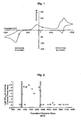
- the interaction of a molecule with a biological target may not be limited to structural recognition alone. Other types of interaction may occur, and some of them may involve the exchange of one or more charges. Because of their distinct electronic distribution, molecules exhibit different physical-chemical profiles, particularly redox profiles, i.e. the measure of an ability to give or accept charges, the number of charges exchanged, the kinetics of the process, and the subsequent molecular mechanisms that follow the addition or subtraction of charges. Various electroanalytical techniques can be employed to determine the physical-chemical profile. Cyclic voltammetry is a technique that yields quantitative information on the above parameters. The redox profile of a molecule is well characterized by its cyclic voltammogram.
- electroanalytical techniques may also be used to measure redox profile, such as for example single cyclic voltammetry, continuous cyclic voltammetry (with and without the integration of current), square wave voltammetry, square wave stripping voltammetry, AC voltammetry, choromoamperometry, chronocoulometry, chronopotentiometry, as well as various potentiostatic and galvanostatic techniques can be employed.
- a description of various electroanalytical techniques can be found in numerous textbooks, such as. Monk S, Fundamentals of Electroanalytical Chemistry, Wiley & Sons, New York,. 156-175, 2001 or Bard A.J. et al, Electrochemical Methods, Wiley & Sons, New York, Ch. 6, , 1980 .
- the above stated electroanalytical techniques should not be considered as limiting the scope of the invention, but merely as being illustrative and representative thereof.
- Cyclic voltammetry is a simple and direct method for measuring the formal potential of a half reaction when both oxidized and reduced forms are stable during the time required to obtain the current-potential curve.
- the resulting plot of current versus potential is termed a cyclic voltammogram.
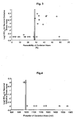
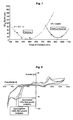
- a cyclic voltammogram is a complicated, time-dependent function of a large number of physical and chemical parameters. It will give information on the anodic and cathodic peak potentials, the half-peak potential of the oxidation wave, the peak separation, the potential midway between the anodic and the cathodic peak. Only in the case where a redox system remains in equilibrium throughout the potential scan is the voltammogram reversible.
- the shape of a voltammogram can be significantly altered if there are coupled chemical reactions either before or after the electrochemical process.
- the mechanism, the rate, and the equilibrium constants of the process can all play a part in the final shape of the voltammogram that characterizes a certain molecule.
- Cyclic voltammetry is a powerful tool for the determination of formal redox potentials, detection of chemical reactions that precede or follow the electrochemical reaction, and evaluation of electron transfer kinetics.
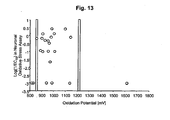
- a cyclic voltammogram yields data on the ability of the molecule to shed one or more electrons measured by the oxidation potential, the relative number of electrons exchanged measured by the oxidation current, the reversibility of the oxidation process measured by the ratio of the oxidation current to the corresponding reduction current, and the kinetics of the oxidized species measured through variation of the scan rate; as well as the ability of the molecule to accept one or more electrons measured by the reduction potential, the number of electrons exchanged measured by the reduction current, the reversibility of the reduction process measured by the ratio of the reduction current to the corresponding oxidation current; and the stability of the reduced species measured through variation of the scan rate.
- Electrodes at which the competing redox reactions such as, for example, the hydrogen evolution reaction or oxygen evolution reaction, do not interfere.
- This can be achieved by employing electrodes characterized by sufficiently high overpotential towards the competing reactions, such as but not limited to platinum, gold and glassy carbon.
- the working electrode may be stationary or rotating, of any geometry, and can Include convective mixing.
- the measurements can be done in a variety of systems including but not limited to oxygenated or non-oxygenated environments, and protonated and non-protonated environments.
- the electro-chemical measurement effected herein is typically conducted in a three-electrode system (working electrode/counter electrode/reference electrode) or, possibly a two electrode system (working electrode/counter electrode).
- the area of the counter electrode may typically be larger than that of the measuring electrode.
- the energy profile of a molecule can be acquired from its optical values such as linear emission, linear absorption and non-linear absorption.
- Linear emission is measured by the wavelength of maximum fluorescence ⁇ em , i.e . the radiating energy released by the stabilization of an electron from a high energy level (LUMO) to a lower energy level (HOMO); and/or by quantum yield of fluorescence ⁇ , i.e . the probability of the molecule to stabilize an electron from its high energy level (LUMO) to a lower energy level (HOMO).
- Linear absorption is measured by the wavelength of maximum absorption ⁇ max, i.e .
- Polarizability ⁇ pol is measured by the ability of the electron cloud of the molecule to be shaped by an external electromagnetic field. Polarizability measurements are conducted by solvatochromism, measuring the shift in wavelength of maximum absorption as a function of solvent polarity (e.g. between octanol and DMSO).
- the transport profile of a molecule can be acquired from its partition coefficient, and/or diffusion constant, and/or molecular weight, and/or melting point.
- the biological activity of the small subset of compounds can be assessed by any assay deemed relevant to the target of interest.
- the biological activity of some of these compounds was determined using an in vitro model well recognized in the art for determining the degree of dysfunction of the cells when exposed to stress.
- In vitro models of ischemia approximate oxygen and glucose deprivation that mimic in vivo conditions, for example, by placing neuronal cultures into large anaerobic of hypoxic chambers and exchanging culture medium with de-oxygenated and defined ionic composition media.
- NMDA N-methyl-D-aspartate
- Oxidative stress has emerged as one of the major factors in the neurodegenerative disease and may contribute to neuronal damage from ischemia (see e.g., Coyle J. T. et al., Science 262, 689 -695, 1993 ; or Beal M. F, Curr. Opin. Neurobiol.; 6, 661-666, 1996 ).
- Reactive oxygen species ROS
- ROS reactive oxygen species
- HGOS glutarnate-Induced oxidative stress
- the cytotoxic effect of glutamate is not due to excitotoxicity, as this cell line is devoid of inotropic glutamate receptors. Rather, the glutamate-induced toxicity of dopaminergic cells is associated with an inhibition of cystine transport ( Murphy T. H., et al., Neuron 2,1547 -1558, 1989 ), which subsequently leads to depletion of intracellular glutathione (GSH) levels ( Murphy T. H., et al. Neuron 2,1547 -1558, 1989 ), activation of neuronal 12-lipoxygenase (U, Y.
- inflammation assays for example e-selectin (also named Endothelial Leukocyte Adhesion Molecule or ELAM) or C-reactive protein (CRP), or myocyte calcium-contractility assay or in vivo assays such as the rat middle cerebral artery occlusion (MCAO) model of cerebral ischemia assay, the rat paw edema assay or the mouse ear inflammation response to topical arachidonic acid assay or a skin protection assay may also be used.
- MCAO middle cerebral artery occlusion
- MCAO rat middle cerebral artery occlusion
- MCAO rat paw edema assay
- mouse ear inflammation response to topical arachidonic acid assay or a skin protection assay may also be used.
- Persons well skilled in the art will readily be able to determine what assays to use to establish activity of a compound targeting a defined disorder.
- the above stated assays should not be considered as limiting the scope of
- compositions for treating a condition characterized by oxidative stress comprise a redox-active molecule characterized by an oxidation potential, an oxidative reversibility, a reduction potential and the ability to protect energetically competent cells as described herein, said molecules being identified by the method of the present invention.
- ischemia includes but is not limited to central nervous system ischemia resulting from cardiac arrest, hypoxemia, transient Ischemic attack, stroke or severe hypotension; cerebral ischemia including stroke which may result in some degree of brain damage; ischemic heart disease (myocardial ischemia); spinal cord ischemia and paraplegia; retinal ischemia including age-related macular degeneration (ARMD); hepatic ischemia; renal ischemia; dermal ischemia; penile ischemia; pulmonary ischemia; gastric ischemia; Intestinal ischemia; splenic ischemia; pancreatic ischemia; skeletal muscle ischemia; and ischemia associated with diabetic ulcers, gangrenous conditions, post-trauma syndrome, benign prostatic hyperplasia of hypertrophy (BPH), post prostate cancer surgery, cardiac arrest resuscitation, peripheral nerve damage or neuropathies.
- ischemic heart disease myocardial ischemia
- neurodegenerative diseases or disorders refer to diseases or disorders characterized by a loss of neurons and may or may not include an inflammatory process.
- Neurodegenerative diseases or disorders include stroke, head trauma, cerebral hypoxia, spinal cord injury, epilepsy, senile dementia, Alzheimer's disease, amyotrophic lateral sclerosis (ALS), cerebral amyloid angiopathy, HIV-related dementia, Parkinson's disease, Friedreich's ataxia or other degenerative ataxias, amyloidoses, Leber's hereditary optic neuropathy (LHON), Huntington's disease, prion diseases, myasthenia gravis, Down's syndrome, prion diseases including Creutzfeldt-Jakob disease, Tay-Sach's disease, diabetic neuropathy, neuropathic pain, encephalitis, meningitis, and Duchenne's muscular dystrophy.
- profile includes one or more parameters or measurements.
- terapéuticaally effective amount means an amount of a compound or composition effective to reduce or alleviate the symptoms of interest.
- treatment means any treatment of a syndrome, disease or disorder in a mammal, including: preventing or protecting against the syndrome, disease or disorder, that is causing the clinical symptoms of the disease to develop; inhibiting the disease, that is, arresting or suppressing the development of clinical symptoms; and/or relieving the disease, that is, causing the regression of clinical symptoms.
- a “flavonoid core structure” is a scaffold of the following structure:
- quercetin Some examples within this group are quercetin, luteolin, hesperetin, 8-acetyl quercetin, 6,8-dibromo-quercetin, anthocyanidin, and 8-(2-hydroxy)-ethyl quercetin.
- quinone core is a scaffold including a cyclohexadiene-dione moiety.
- the term “quinone core” includes but is not limited to the o-quinone scaffold, the p-quinone scaffold, the naphthoquinone scaffold and the anthraquinone scaffold.
- stilbene core is a scaffold of the following structure:
- disorder means any disease, condition, symptom, or indication.
- compositions described herein may be administered by any number of routes Including but not limited to, oral, intravenous, Intramuscular, intra-arterial, intramedullary, intrathecal, intraventricular, transdermal, subcutaneous, Intraperitoneal, Intranasal, enteral, topical, sublingual or rectal means.
- these pharmaceutical compositions may contain suitable therapeutically acceptable carriers comprising excipients and auxiliaries which facilitate processing of the active compounds into preparations which can be used pharmaceutically, therapeutically, or neutraceutically. Further detail on technique for formulation and administration may be found in the latest edition of Remington's Pharmaceutical Sciences (Mack Publishing Co., Easton, Pa ).
- compositions described herein include compositions wherein the active Ingredients are contained in an effective amount to achieve the intended purpose.
- the determination of an effective dose is well within the capability of those skilled in the art.
- the therapeutically effective dose can be estimated initially either in cell culture assays, e.g. neuronal cells, or in animal models, usually mice or rats.
- the animal model may also be used to determine the appropriate concentration range and route of administration. Such information can then be used to determine useful doses and routes of administration.
- Administration of the compositions can be via any of the accepted modes of administration for agents that serve similar utilities.
- the therapeutically acceptable composition will contain about 0.1% to 90%, preferably about 0.5% to 50%, by weight of a redox-active molecule, the remainder being suitable pharmaceutical excipients, carriers, etc.
- a therapeutically acceptable, non-toxic composition is formed by the incorporation of any of the normally employed excipients, such as, for example, mannitol, lactose, starch, magnesium stearate, sodium saccharine, talcum, cellulose, sodium crosscarmellose, glucose, gelatin, sucrose, magnesium carbonate, and the like.
- excipients such as, for example, mannitol, lactose, starch, magnesium stearate, sodium saccharine, talcum, cellulose, sodium crosscarmellose, glucose, gelatin, sucrose, magnesium carbonate, and the like.
- Such compositions take the form of solutions, suspensions, tablets, dispersible tablets, pills, capsules, powders, sustained release formulations and the like.
- Liquid therapeutically administrable compositions can, for example, be prepared by dissolving, dispersing, etc. a redox-active compound and optional pharmaceutical adjuvants in a carrier, such as, for example, water, saline, aqueous dextrose, glycerol, glycols, ethanol, and the like, to thereby form a solution or suspension.
- a carrier such as, for example, water, saline, aqueous dextrose, glycerol, glycols, ethanol, and the like
- the pharmaceutical composition to be administered may also contain minor amounts of nontoxic auxiliary substances such as wetting agents, emulsifying agents, or solubilizing agents, pH buffering agents and the like, for example, sodium acetate, sodium citrate, cyclodextrine derivatives, sorbitan monolaurate, triethanolamine acetate, triethanolamine oleate, etc.
- Dosage forms or compositions containing active ingredient in the range of 0.005% to 95% with the balance made up from non-toxic carrier may be prepared.
- a therapeutically acceptable non-toxic composition is formed by the incorporation of any of the normally employed excipients, such as, for example pharmaceutical grades of mannitol, lactose, starch, magnesium stearate, talcum, cellulose derivatives, sodium crosscarmellose, glucose, sucrose, magnesium carbonate, sodium saccharin, talcum and the like.
- excipients such as, for example pharmaceutical grades of mannitol, lactose, starch, magnesium stearate, talcum, cellulose derivatives, sodium crosscarmellose, glucose, sucrose, magnesium carbonate, sodium saccharin, talcum and the like.
- Such compositions take the form of solutions, suspensions, tablets, capsules, powders, sustained release formulations and the like.
- Such compositions may contain 0.01%-95% active ingredient, preferably 0.1-50%.
- the solution or suspension in for example propylene carbonate, vegetable oils or triglycerides, is preferably encapsulated in a gelatin capsule.
- a gelatin capsule Such diester solutions, and the preparation and encapsulation thereof, are disclosed in U.S. Patents Nos. 4,328,245 ; 4,409,239 ; and 4,410,545 .
- the solution e.g. in a polyethylene glycol, may be diluted with a sufficient quantity of a therapeutically acceptable liquid carrier, e.g. water, to be easily measured for administration.
- liquid or semi-solid oral formulations may be prepared by dissolving or dispersing the redox-active compound in vegetable oils, glycols, triglycerides, propylene glycol esters (e.g. propylene carbonate) and the like, and encapsulating these solutions or suspensions in hard or soft gelatin capsule shells.
- the formulation can be administered in a single unit dosage form for continuous treatment or in a single unit dosage form ad libitum when relief of symptoms is specifically required.
- the formulation may be administered as a bolus or as a continuous intravenous infusion after onset of symptoms of stroke, myocardial infarction or chronic heart failure.
- Parenteral administration is generally characterized by injection, either subcutaneously, intramuscularly or intravenously.
- Injectables can be prepared in conventional forms, either as liquid solutions or suspensions, solid forms suitable for solution or suspension in liquid prior to injection, or as emulsions.
- Suitable excipients are, for example, water, saline, dextrose, glycerol, ethanol or the like.
- the pharmaceutical compositions to be administered may also contain minor amounts of non-toxic auxiliary substances such as wetting or emulsifying agents, pH buffering agents, solubility enhancers, and the like, such as for example, sodium acetate, sorbitan monolaurate, triethanolamine oleate, cyclodextrins, etc.
- parenteral administration employs the implantation of a slow-release or sustained-release system, such that a constant level of dosage is maintained. See, e.g., U.S. Patent No. 3,710,795 .
- the percentage of active compound contained in such parenteral compositions is highly dependent on the specific nature thereof, as well as the activity of the compound and the needs of the subject. However, percentages of active ingredient of 0.01% to 10% in solution are employable, and will be higher if the composition is a solid which will be subsequently diluted to the above percentages.
- the composition will comprise 0.2-2% of the active agent in solution. Nasal solutions of the active compound alone or in combination with other therapeutically acceptable excipients can also be administered.
- the cyclic voltammetry measurement was conducted in a three-electrode system comprising a microelectrode made from platinum (a disk of 1.6mm 2 area), a counter electrode made from a coiled platinum wire and a silver/silver chloride reference electrode, on a voltammetric analyzer Epsilon with a C-3 cell , all from Bioanalytical Systems (West Lafayette, IN).
- TBAP tetrabutyl ammonium perchlorate
- DMF N, N-dimethyl formamide
- the reference electrode was kept in a 3 M solution of NaCl in distilled water.
- the reference electrode was rinsed with water, then methanol, and dried by air blow.
- the reference electrode was gently shaken, if necessary, to remove any air bubble within the base.
- the auxiliary electrode was rinsed with water, then methanol and dried by air blow.
- the working electrode was polished on a nylon pad coated with a 1 ⁇ -meter diamond slurry in oil, then rinsed thoroughly with methanol. It is then polished on a corduroy pad coated with a 0.15 ⁇ -meter alumina slurry in water, then rinsed thoroughly with water and methanol, then dried by air blow.
- the electrochemical cell Prior to beginning a measurement and when changing compound solutions, the electrochemical cell was thoroughly cleaned with methanol, including glass reservoir, Teflon cap, and purge lines. Likewise, all electrodes were cleaned with methanol upon removal for any reason, including prior to polishing the working electrode between runs. While the working electrode was being polished, the reference electrode was removed from the test solution, rinsed with methanol and water, and stored in aqueous 3M NaCl solution.
- the solution containing the compound was transferred into the cell, where the three electrodes were immersed.
- the solution was stirred and purged with dry argon for at least 1 minute to remove any oxygen, after which a blanket of argon was kept above the solution to prevent any diffusion of oxygen. Stirring was halted prior to collecting data. Care was taken to ensure there were no bubbles attached to any of the electrodes prior to beginning electrochemical measurements.
- the solution is not a perfect conductor, and its resistance R introduces a voltage drop when a current flows between the working to the auxiliary electrode. This voltage drop introduces an error between the nominal voltage imposed by the voltammetric analyzer and the actual voltage between the working and auxiliary electrodes.
- the instrument can automatically measure and compensate for this iR drop, using the "iR Compensation" feature of the software. Normal values are the following:
- the cyclic voltammogram was recorded. After each cyclic voltammogram was recorded, the working electrode was polished again, as indicated above, to regenerate a clean, electroactive surface.
- the square wave voltammetry measurement was conducted in a three-electrode system comprising a microelectrode made from platinum (a disk of 1.6mm 2 area), a counter electrode made from coiled platinum wire and a silver/silver chloride reference electrode, on a voltammetric analyzer CV-50W with a C-3 cell , all from Bioanalytical Systems (West Lafayette, IN).
- TBAP tetrabutyl ammonium perchlorate
- DMF N,N-dimethyl formamide
- the solution is stirred and sonicated if necessary to make sure that the compound is dissolved to the best of its ability.
- the reference electrode is kept in a 3 M solution of NaCl in distilled water.
- the reference electrode is rinsed with water, then methanol, and dried by air blow.
- the reference electrode is gently shaken, if necessary, to remove any air bubble at the base.
- the auxiliary electrode is rinsed with water, then methanol and dried by air blow.
- the working electrode is polished on a nylon pad coated with a 1 ⁇ -meter diamond slurry in oil, then rinsed thoroughly with methanol. It is then polished on a corduroy pad coated with a 0.15 ⁇ -meter alumina slurry in water, then rinsed thoroughly with water and methanol, then dried by air blow.
- the electrochemical cell Prior to beginning and when changing compound solutions, the electrochemical cell should be thoroughly cleaned with methanol including the glass reservoir, Teflon cap, and purge lines. Likewise, all electrodes should be promptly cleaned with methanol upon removal for any reason, including prior to polishing the working electrode between runs. While the working electrode is being polished, the reference electrode should be removed from the test solution, rinsed with methanol and water, and stored in aqueous 3M NaCl solution.
- the solution containing the compound is transferred into the cell, where the three electrodes are immersed.
- the solution is stirred and purged with dry argon for at least 1 minute to remove any oxygen, after which a blanket of argon is kept above the solution to prevent any diffusion of oxygen. Stirring is halted prior to collecting data. Care must be taken to ensure there are no bubbles attached to any of the electrodes prior to beginning electrochemical measurements.
- the voltammogram can then be recorded. After each square wave voltammogram is recorded, the working electrode is polished again, as indicated above, to regenerate a clean, electroactive surface.
- Endothelial-Leukocyte Adhesion Molecule also known as E-selectin, is expressed on the surface of endothelial cells.
- LPS lipopolysaccharide
- IL-1 ⁇ IL-1 ⁇
- test agents were tested for their abilities to reduce this expression, in accordance with studies showing that reduction of leukocyte adhesion to endothelial cell surface was associated with decreased cellular damage (e.g., Takada, M. et al., Transplantation 64: 1520-25, 1997 ; Steinberg, J.B. et al., J. Heart Lung Trans. 13:306-313, 1994 ).
- Endothelial cells may be selected from any of a number of sources and cultured according to methods known in the art; including, for example, coronary artery endothelial cells, human brain microvascular endothelial cells (HBMEC; Hess, D.C. et al., Neurosci. Lett. 213(1): 37-40, 1996 ), or lung endothelial cells.
- HBMEC human brain microvascular endothelial cells
- HBMEC human brain microvascular endothelial cells
- IL-1 ⁇ lung endothelial cells.
- Endothelial cells may be selected from any of a number of sources and cultured according to methods known in the art; including, for example, coronary artery endothelial cells, human brain microvascular endothelial cells (HBMEC; Hess, D.C. et al., Neurosci. Lett. 213(1): 37-40, 1996 ), or lung endothelial cells.
- Cells were conveniently cultured
- Treatment buffer was removed and replaced with pre-warmed Fixing Solution® (100 ⁇ L/well) for 25 minutes at room temperature. Cells were then washed 3X, then incubated with Blocking Buffer (PBS + 2% FBS) for 25 minutes at room temperature. Blocking Buffer containing Monoclonal E-Selectin Antibody (1:750, Sigma Catalog #S-9555) was added to each well. Plates were sealed and stored at 4° overnight. Plates were washed 4X with 160 ⁇ L Blocking Buffer per well. Second Antibody-HRP diluted 1:5000 in Blocking Buffer was then added (100 ⁇ L/well), and plates were incubated at room temperature (protected from light) for two hours.
- Blocking Buffer PBS + 2% FBS
- This assay was used to induce ischemia by anoxia-reoxygenation in cultured hippocampal neuronal cells. Test compounds were added to assess potency and efficacy against ischemia-induced neuronal cell injury and cell death.
- Neurobasal/B27i Neurobasal medium (available from Invitrogen, San Diego, CA) with 1x B27 supplement (Invitrogen), 0.5 ⁇ M L-glutamine, 25 ⁇ M L-glutamic acid, and 1 x Penicillin/Streptomycin.
- HSS Hank's Basic Salt Solution
- Ca/Mg-free Hank's Basic Salt Solution
- HEPES 10 mM, pH 7.3
- sodium bicarbonate 0.5%
- 1X Penicillin/Streptomycin 1 mM MEM sodium pyruvate.
- Poly-D-lysine (Sigma, St. Louis, MO), 50 ⁇ g/ml solution.
- Plastic Culture Flasks T75 cm 2 ) or 24-well cell culture plates treated with Poly-D-Lysine (Sigma, St. Louis, MO).
- a pregnant female mouse (E18-E19) was euthanized with CO 2 followed by removal of the uterus, which was then placed in a sterile plastic petri dish.
- the embryos were removed from the sac, and the embryonic brains removed and immersed in cold (4°C) Buffered Salt Solution (HBSS; Ca/Mg free; Life Technologies) in a small petri dish.
- HBSS cold (4°C) Buffered Salt Solution
- Hippocampi were then removed from the brains under a dissecting microscope and placed on a paraffin-covered dish.
- the meninges were stripped away and the dissected hippocampi were collected in a small petri dish in HBSS.
- the hippocampi were transferred to a 15-ml centrifuge tube (normally 10-12 brains) filled with HBSS.
- the tube containing the brains was centrifuged at 1000 rpm for 2 min in a tabletop centrifuge. The supernatant was removed, 2 ml of HBSS was added to the hippocampi in the tube, and the resulting suspension was triturated 2 times each with long-tipped siliconized glass pipettes having progressively smaller apertures, starting with a pipette with a standard size opening (approximately 1.0 mm diameter), following with one having an aperture of half standard size (approximately 0.5 mm diameter), then with one having an aperture about one-half that size (0.25 mm diameter).
- the suspension was then centrifuged again at 1000 rpm for 2 min in a tabletop centrifuge, the supernatant was discarded, and 2 ml of Neurobasal/B27i (with antibiotics) was added to the tube. The trituration procedure described above was then repeated on this suspension.
- the density of cells was determined on a small aliquot of cells using standard counting procedures and correcting for cell viability by trypan blue stain exclusion. Using this procedure, the expected yield is 3 ⁇ 10 5 - 6 ⁇ 10 5 cells/brain.
- Cells were then added to PDL-coated 24 well plates, flasks or MetTek dishes in Neurobasal/B271 at a density of about 1.5 ⁇ 10 6 cells (T75 flask) or about 100,000 cells/well of a 24-well plate. Plated cells were incubated at 37°C in an atmosphere of 5 % CO 2 / 95 % O 2 .
- Neurobasal media NoG neurobasal media, B27 supplement and B27 Supplement minus AO (Invitrogen).
- Neurobasal/B27 medium is prepared with 2X B27 minus AO supplement, 0.5 mM L-glutamine and 0.25X penicillin/streptomycin.
- Cell Tracker Green was obtained from Molecular Probes and a fresh 5 ⁇ M solution was prepared from 10 mM stock just before use.
- NoG-Neurobasal contains NoG neurobasal medium plus 0.5 mM glucose, 0.1 mM L-glutamine and 0.25X Penicillin/Streptomycin.
- Primary hippocampal neuronal cells were prepared according to the methods described above and were cultured in poly-D-lysine coated 24 well plates for 10-11 days prior to use.
- LoG-Neurobasal medium 100 ml was prepared by pre-equilibrating the medium in a T150 cm 2 flask in a hypoxic chamber overnight. Following pre-incubation under hypoxic conditions, the LoG-Neurobasal media was lightly bubbled with 100% N 2 for 30 min to completely deoxygenate the media. An additional 20 ml LoG-Neurobasal was pre-equilibrated in a T75 cm 2 flask and 100 ml Neurobasal/B27AO was incubated in a normal incubator (5% CO 2 overnight. Reoxygenated medium was prepared by placing medium overnight in the culture incubator (5% CO 2 /95% O 2 ) prior to use.
- normoxia controls pre-equilibrated normoxic LoG-Neurobasal medium was added to each well of cells, and the plate was replaced in the normal culture incubator for 5 hr. After 5 hr of hypoxia, the existing media was carefully aspirated off, and 2mL of new, re-oxygenated (pre-equilibrated) Neurobasal/B27AO was added to each well. The same test compounds (in the same the concentrations) were added back into the corresponding wells. Plates were placed in the cell culture incubator (5% CO 2 /95% O 2 ) and reoxygenated for 20-24 hr. After reoxygenation for 20-24 hr, live neurons were quantitated using the cell tracker green fluorescence method, described below.
- HBSS pH 7.4, pre-warmed to 30-37°C
- 5 ⁇ M Cell Tracker Green fluorescent dye dissolved in HBSS. Plates were placed in the dark at room temperature for 15 minutes, and are then washed with two milliliters of HBSS. One milliliter of HBSS was then added to each well, and fluorescent cells were counted using a fluorescent microscope. Significantly increased cell viability compared to control cells was indicative of a protective compound.
- HGOS High Glutamate-Induced Oxidative Stress Assay
- HGOS high glutamate-induced oxidative stress
- the cells were seeded into 96-well plates at a density of 2000 per well and left to grow for 72 hours in a 33°C incubator with 5% CO 2 in air atmosphere.
- the passage number of the cells for each assay experiment were no later than p11 in order to minimize experimental variation.
- VWRBrand DyNA Block 1000 deep well mother plates (VWR Cat. # 40002-008) were used for the preparation of the test compounds.
- DMEM-No Glu containing 1mM glucose, 30 mM glutamate and 1x Pen/Strep.
- DMEM-No Glu with 1mM glucose and 1x P/S was used as the negative control
- DMEM-No Glucose with 1 mM glucose, 100 M glutamate was used as a positive control and 100 ⁇ M Glutathione was added to the positive control as a standard. All of the procedures for this involving the making and dilution of compounds were performed using aseptic conditions and with minimal light.
- the plates were removed from the incubator and examined under the microscope for morphological appearance and density. Using an aseptic technique and an 8-channel aspirator the media was carefully removed from the cells and replaced with 200 ⁇ l of 1x HBSS. This was done as quickly as possible to prevent the cells drying out. The plates were then placed in the humidified 37°C incubators of the Biomek 2000 Side Loader. Four plates were washed at a time so as to minimize the time that the cells were sitting in 1x HBSS prior to addition of the compound test solution.
- the Beckman Biomek workstations were used to load the compounds and controls from the mother plates onto the cell plates that were prewashed with HBSS under sterile conditions.
- the plates were incubated in the upper HTS incubator at 37°C in 5% CO 2 for exactly 16 hrs. The following day, using the Beckman Biomek workstations, the plates were removed from the incubator. Using Cell Tracker Addition, the compounds were removed from the plates, washed once with 200 ⁇ M of pre-warmed 1x HBSS and then 100 ⁇ L of 5 ⁇ M Cell Tracker Green was added to each well.
- the plates were incubated at 37°C for 30 min to allow the dye to enter the cell and be cleaved by the esterases. After washing the cells twice with prewarmed 1x HBSS, the plates were read with the 485 excitation; 538 emission filter pair on a Fluoroskan.
Landscapes
- Health & Medical Sciences (AREA)
- Life Sciences & Earth Sciences (AREA)
- Engineering & Computer Science (AREA)
- Chemical & Material Sciences (AREA)
- General Health & Medical Sciences (AREA)
- Medicinal Chemistry (AREA)
- Bioinformatics & Cheminformatics (AREA)
- Public Health (AREA)
- Animal Behavior & Ethology (AREA)
- Chemical Kinetics & Catalysis (AREA)
- General Chemical & Material Sciences (AREA)
- Veterinary Medicine (AREA)
- Nuclear Medicine, Radiotherapy & Molecular Imaging (AREA)
- Organic Chemistry (AREA)
- Pharmacology & Pharmacy (AREA)
- Biomedical Technology (AREA)
- Immunology (AREA)
- Urology & Nephrology (AREA)
- Neurology (AREA)
- Hematology (AREA)
- Neurosurgery (AREA)
- Molecular Biology (AREA)
- Dermatology (AREA)
- Physical Education & Sports Medicine (AREA)
- Biotechnology (AREA)
- Biochemistry (AREA)
- Pathology (AREA)
- General Physics & Mathematics (AREA)
- Analytical Chemistry (AREA)
- Physics & Mathematics (AREA)
- Food Science & Technology (AREA)
- Microbiology (AREA)
- Cell Biology (AREA)
- Proteomics, Peptides & Aminoacids (AREA)
- Orthopedic Medicine & Surgery (AREA)
- Diabetes (AREA)
- Rheumatology (AREA)
- Pulmonology (AREA)
- Cardiology (AREA)
- Reproductive Health (AREA)
Claims (18)
- Verfahren zum Identifizieren und Auswählen therapeutischer Verbindungen, die eine vorbestimmte Kernstruktur haben, wobei das Verfahren umfasst:Entwickeln einer Beziehung zwischen physikalischchemischem Profil und biologischer Aktivität; wobei das physikalisch-chemische Profil einen oder mehrere Parameter, ausgewählt aus Einsetzen von Oxidation, Oxidationspotential, Reduktionspotential, Umkehrbarkeit von Oxidation, Umkehrbarkeit von Reduktion, Oxidationsstrom oder Reduktionsstrom, umfasst und wobei die biologische Aktivität in einem Assay gemessen wird, der beim Detektieren von Verbindungen für die Behandlung einer targetierten Störung wirksam ist;Testen weiterer potentieller therapeutischer Kandidaten mit der Kernstruktur auf ihre physikalisch-chemischen Eigenschaften undAuswählen therapeutischer Verbindungen basierend auf ihren physikalisch-chemischen Parametern, die in einen Bereich fallen, der durch die physikalisch-chemische/biologische Beziehung der vorher getesteten Untergruppe von Verbindungen vordefiniert wurde,wobei die vorbestimmte Kernstruktur aus einer Chinon-Kernstruktur ausgewählt ist, die targetierte Störung oxidativer Stress, Entzündung, Ischämie, Neurodegeneration oder Alzheimersche Krankheit ist und das physikalisch-chemische Profil der Verbindungen einen Parameter für die gesamte Umkehrbarkeit von Reduktion von 75% oder mehr umfasst, wobei der Parameter für die Umkehrbarkeit von Reduktion, der ein Verhältnis von Reduktionswellenmaximumstrom zu Oxidationswellenmaximumstrom ist, 0,75 oder mehr ist;oder wobei die vorbestimmte Kernstruktur ausgewählt ist aus einer Kernstruktur der Formel I:

(I-a) zusätzliche Substitution an den Phenylringen der Kernstruktur der Formel I keine Nitrogruppe umfasst und das physikalisch-chemische Profil der Verbindungen den Parameter für das Potential der ersten Oxidationswelle umfasst, wobei das Potential unter 1000 mV gegen eine Silber/Silberchlorid-Referenzelektrode fällt, oder
(I-b) zusätzliche Substitution an den Phenylringen der Kernstruktur der Formel I eine Nitrogruppe umfasst und das physikalisch-chemische Profil der Verbindungen einen oder mehrere Parameter, ausgewählt aus dem Parameter für das Potential der ersten Oxidationswelle, wobei das Potential zwischen 950 mV und 1250 mV gegen eine Silber/Silberchlorid-Referenzelektrode fällt, und dem Parameter für Umkehrbarkeit der ersten Oxidationswelle, der mehr als 20% misst, wobei der Parameter für Umkehrbarkeit der ersten Oxidationswelle, der das Verhältnis des ersten Oxidationswellenmaximumstroms zu Reduktionswellenmaximumstrom ist, 0,2 oder mehr ist;
oder wobei die vorbestimmte Kernstruktur aus einer Kernstruktur der Formel III ausgewählt ist:
(III-a) das physikalisch-chemische Profil der Verbindungen den Parameter für das Potential der ersten Oxidationswelle umfasst, wobei das Potential unter 1250 mV gegen eine Silber/Silberchlorid-Referenzelektrode fällt, oder
(III-b) das physikalisch-chemische Profil der Verbindungen den Parameter für das Potential der ersten Reduktion umfasst, wobei das Potential negativer als -790 mV gegen eine Silber/Silberchlorid-Referenzelektrode ist;
oder wobei die vorbestimmte Kernstruktur aus einer Kernstruktur der Formel IV ausgewählt ist:
wobei (IV-a) das physikalisch-chemische Profil der Verbindungen den Parameter für das Oxidationspotential umfasst, wobei das Potential zwischen 850 mV und 1200 mV gegen eine Silber/Silberchlorid-Referenzelektrode fällt. - Verfahren gemäß Anspruch 1, wobei das physikalisch-chemische Profil ein zyklisches voltammetrisches Profil umfasst.
- Verfahren gemäß Anspruch 1, wobei das physikalisch-chemische Profil den Parameter für das Einsetzen von Oxidation umfasst.
- Verfahren gemäß Anspruch 1, wobei das physikalisch-chemische Profil den Parameter für das Potential einer Oxidationswelle umfasst.
- Verfahren gemäß Anspruch 1, wobei das physikalisch-chemische Profil den Parameter für Umkehrbarkeit einer oder mehrerer Oxidationswelle(n) umfasst.
- Verfahren gemäß Anspruch 1, wobei das physikalisch-chemische Profil den Parameter für Umkehrbarkeit einer oder mehrerer Reduktionswelle(n) umfasst.
- Verfahren gemäß Anspruch 1, wobei das physikalisch-chemische Profil den Parameter für das Potential einer Reduktionswelle umfasst.
- Verfahren gemäß einem der vorangehenden Ansprüche, wobei der Assay ein zellbasierter Assay ist, umfassend einen Assay oder mehrere Assays, ausgewählt aus dem Assay auf durch hohes Glutamat induzierten oxidativen Stress (HGOS), wobei die Verbindungen in der vorher getesteten Untergruppe von Verbindungen die Fähigkeit haben, wenigstens 30% energetisch kompetenter Zellen gegen Stressor-induzierten Zelltod zu schützen, und dem E-Selectin (ELAM)-Assay, bei dem die Verbindungen in der vorher getesteten Untergruppe von Verbindungen eine EC50 von niedriger als 30 µM aufweisen.
- Verfahren gemäß Anspruch 8, wobei die therapeutische Verbindung ausgewählt wird, wenn sie eine Stilben-Kernstruktur umfasst und wenn ihr physikalisch-chemisches Profil einen oder mehrere Parameter, ausgewählt aus dem Parameter für das Potential der ersten Oxidationswelle, wobei das Oxidationspotential zwischen 800 mV und 1400 mV gegen eine Silber/Silberchlorid-Referenzelektrode fällt, und dem Parameter für Umkehrbarkeit der ersten Oxidationswelle, der 20% oder mehr misst, umfasst.
- Verfahren gemäß Anspruch 8, wobei die therapeutische Verbindung ausgewählt wird, wenn sie eine Kernstruktur der Formel I umfasst:
 (a) zusätzliche Substitution an den Phenylringen keine Nitrogruppe umfasst;
und wenn ihr physikalisch-chemisches Profil den Parameter für das Potential der ersten Oxidationswelle umfasst, das Potential unter 1000 mV gegen eine Silber/Silberchlorid-Referenzelektrode fällt; oder(b) zusätzliche Substitution an den Phenylringen eine Nitrogruppe umfasst;
und wenn ihr physikalisch-chemisches Profil einen oder mehrere Parameter umfasst, die ausgewählt sind aus dem Parameter für das Potential der ersten Oxidationswelle, wobei das Potential zwischen 950 mV und 1250 mV gegen eine Silber/Silberchlorid-Referenzelektrode fällt, und dem Parameter für Umkehrbarkeit der ersten Oxidationswelle, der mehr als 20% misst. - Verfahren gemäß Anspruch 3, wobei das physikalisch-chemische Profil den Parameter für das Einsetzen von Oxidation umfasst und der Assay den zellbasierten E-Selectin (ELAM)-Assay umfasst, der Verbindungen mit einer EC50 von niedriger als 30 µM detektiert.
- Verfahren gemäß Anspruch 4, wobei das physikalisch-chemische Profil den Parameter für das Potential einer Oxidationswelle umfasst und der zellbasierte Assay den Assay auf Hippocampus-Anoxie-Reoxygenationszelltod umfasst, schützend wenigstens 30% der Zellen gegen durch Stressor induzierten Zelltod.
- Verfahren gemäß Anspruch 4, wobei das physikalisch-chemische Profil den Parameter für das Potential der ersten Oxidationswelle umfasst und der Assay der Thioflavin-T-Bindungsassay ist, der die Reduzierung der Amyloid-β-Fibrillenbildung misst.
- Verfahren gemäß Anspruch 13, wobei die Verbindung ausgewählt wird, wenn sie einen Apomorphin-Kern der Formel III umfasst:
 (a) das physikalisch-chemische Profil den Parameter für das Potential der ersten Oxidationswelle umfasst, wobei das Potential unter 1250 mV gegen eine Silber/Silberchlorid-Referenzelektrode fällt, oder(b) das physikalisch-chemische Profil den Parameter für das Potential der ersten Reduktion umfasst, wobei das Potential negativer als -790 mV gegen eine Silber/Silberchlorid-Referenzelektrode ist.
 - Verfahren gemäß Anspruch 6, wobei das physikalisch-chemische Profil den Parameter für Umkehrbarkeit der Reduktionswelle umfasst und der Assay den zellbasierten E-Selectin (ELAM)-Assay umfasst, der Verbindungen mit einer EC50 von niedriger als 30 µM detektiert.
- Verfahren gemäß Anspruch 15, wobei die therapeutische Verbindung ausgewählt wird, wenn sie eine Chinon-Kernstruktur umfasst und wenn ihr physikalisch-chemisches Profil einen Parameter für die gesamte Umkehrbarkeit von Reduktion von 75% oder mehr umfasst.
- Verfahren gemäß Anspruch 12, wobei die therapeutische Verbindung ausgewählt wird, wenn sie eine Chroman-Kernstruktur der Formel IV

- Verfahren gemäß einem der vorangehenden Ansprüche, wobei das physikalisch-chemische Profil außerdem einen oder mehrere Parameter, ausgewählt aus Energieprofilparametern und Transportprofilparametern, umfasst.
Applications Claiming Priority (5)
| Application Number | Priority Date | Filing Date | Title |
|---|---|---|---|
| US42272702P | 2002-10-30 | 2002-10-30 | |
| US422727P | 2002-10-30 | ||
| US48773403P | 2003-07-16 | 2003-07-16 | |
| US487734P | 2003-07-16 | ||
| PCT/US2003/034420 WO2004042353A2 (en) | 2002-10-30 | 2003-10-29 | Identifying therapeutic compounds based on their physical-chemical properties |
Publications (3)
| Publication Number | Publication Date |
|---|---|
| EP1558922A2 EP1558922A2 (de) | 2005-08-03 |
| EP1558922A4 EP1558922A4 (de) | 2008-08-06 |
| EP1558922B1 true EP1558922B1 (de) | 2013-02-27 |
Family
ID=32314462
Family Applications (1)
| Application Number | Title | Priority Date | Filing Date |
|---|---|---|---|
| EP03781483A Expired - Lifetime EP1558922B1 (de) | 2002-10-30 | 2003-10-29 | Identifizieren therapeutischer verbindungen auf grundlage ihrer physikalisch-chemischen eigenschaften |
Country Status (6)
| Country | Link |
|---|---|
| US (3) | US7491312B2 (de) |
| EP (1) | EP1558922B1 (de) |
| JP (1) | JP4599292B2 (de) |
| AU (2) | AU2003287250B9 (de) |
| CA (1) | CA2504334A1 (de) |
| WO (1) | WO2004042353A2 (de) |
Cited By (1)
| Publication number | Priority date | Publication date | Assignee | Title |
|---|---|---|---|---|
| US12529134B1 (en) | 2023-01-04 | 2026-01-20 | Rhythmlink International, Llc | Methods of making silver/silver chloride electrodes by vapor deposition techniques |
Families Citing this family (34)
| Publication number | Priority date | Publication date | Assignee | Title |
|---|---|---|---|---|
| WO2004042353A2 (en) * | 2002-10-30 | 2004-05-21 | Galileo Pharmaceuticals, Inc. | Identifying therapeutic compounds based on their physical-chemical properties |
| CA2580584C (en) | 2003-09-19 | 2015-07-28 | Galileo Pharmaceuticals, Inc. | Use of alpha-tocotrienol for treatment of mitochondrial diseases |
| US8088773B2 (en) | 2005-05-12 | 2012-01-03 | The Texas A&M University System | Therapeutic compositions and methods |
| CA2610152C (en) | 2005-06-01 | 2018-04-10 | Edison Pharmaceuticals, Inc. | Redox-active therapeutics for treatment of mitochondrial diseases and other conditions and modulation of energy biomarkers |
| JP5368792B2 (ja) | 2005-07-29 | 2013-12-18 | レスバーロジックス コーポレイション | 複合疾患の予防および処置のための薬学的組成物および挿入可能な医療用デバイスによるその送達 |
| ES2823728T3 (es) | 2005-09-15 | 2021-05-10 | Ptc Therapeutics Inc | Variantes de cola de agentes terapéuticos con actividad redox para el tratamiento de enfermedades mitocondriales y otras afecciones y la modulación de biomarcadores de energía |
| EA019675B1 (ru) | 2006-02-22 | 2014-05-30 | Эдисон Фармасьютикалз, Инк. | Редокс-активные терапевтические средства для лечения митохондриальных заболеваний и модуляции биомаркера коэнзима q |
| EP3018122B1 (de) | 2007-11-06 | 2018-10-10 | BioElectron Technology Corporation | 4-(p-quinonyl)-2-hydroxybutanamid-derivate zur behandlung von mitochondrialen erkrankungen |
| CA2708961C (en) | 2008-01-08 | 2017-03-28 | Ptc Therapeutics, Inc. | (het)aryl-p-quinone derivatives for treatment of mitochondrial diseases |
| WO2009111576A2 (en) | 2008-03-05 | 2009-09-11 | Edison Pharmaceuticals, Inc. | 2-SUBSTITUTED-p-QUINONE DERIVATIVES FOR TREATMENT OF OXIDATIVE STRESS DISEASES |
| WO2009158348A1 (en) * | 2008-06-25 | 2009-12-30 | Edison Pharmaceuticals, Inc. | 2-heterocyclylaminoalkyl-(p-quinone) derivatives for treatment of oxidative stress diseases |
| BRPI0918139B1 (pt) | 2008-09-10 | 2024-04-30 | Ptc Therapeutics, Inc | Composição, alimento medicinal ou funcional, suplemento alimentar ou dietético para tratamento de distúrbios de desenvolvimento pervasivos com terapêuticos redox-ativos |
| CA2740773A1 (en) | 2008-10-14 | 2010-04-22 | Edison Pharmaceuticals, Inc. | Treatment of oxidative stress disorders including contrast nephropathy, radiation damage and disruptions in the function of red cells |
| CN102264730B (zh) | 2008-10-28 | 2016-04-13 | 爱迪生药物公司 | 用于生产生育三烯酚及衍生物的方法 |
| JP2012525399A (ja) | 2009-04-28 | 2012-10-22 | エジソン ファーマシューティカルズ, インコーポレイテッド | トコトリエノールキノンを用いる、レーバー遺伝性視神経症および優性遺伝性視神経萎縮症の治療 |
| SI2470168T1 (en) * | 2009-08-26 | 2018-05-31 | Bioelectron Technology Corporation | Procedures for the prevention and treatment of brain ischemia |
| JP2011106954A (ja) * | 2009-11-17 | 2011-06-02 | Mitsui Eng & Shipbuild Co Ltd | 多価フェノール類の濃度のモニタリング方法 |
| WO2011113018A1 (en) * | 2010-03-12 | 2011-09-15 | Ampere Life Sciences, Inc. | Measurement and control of biological time |
| WO2012174286A1 (en) | 2011-06-14 | 2012-12-20 | Edison Pharmaceuticals, Inc. | Catechol derivatives for treatment of oxidative stress diseases |
| JP2014520894A (ja) | 2011-07-19 | 2014-08-25 | エジソン ファーマシューティカルズ, インコーポレイテッド | 非アルファトコトリエノールの存在下でのアルファトコトリエノールの選択的酸化のための方法 |
| US9254287B2 (en) | 2012-06-11 | 2016-02-09 | Macuclear, Inc. | Therapeutic formulation and methods of treatment |
| CA2883879A1 (en) | 2012-09-07 | 2014-03-13 | Edison Pharmaceuticals, Inc. | Quinone derivatives for use in the modulation of redox status of individuals |
| US9868711B2 (en) | 2013-03-15 | 2018-01-16 | Bioelectron Technology Corporation | Phenazine-3-one and phenothiazine-3-one derivatives for treatment of oxidative stress disorders |
| US9670170B2 (en) | 2013-03-15 | 2017-06-06 | Bioelectron Technology Corporation | Resorufin derivatives for treatment of oxidative stress disorders |
| US9296712B2 (en) | 2013-03-15 | 2016-03-29 | Edison Pharmaceuticals, Inc. | Resorufin derivatives for treatment of oxidative stress disorders |
| CA2906145A1 (en) | 2013-03-15 | 2014-09-18 | Ptc Therapeutics, Inc. | Alkyl-heteroaryl substituted quinone derivatives for treatment of oxidative stress disorders |
| WO2016100579A1 (en) | 2014-12-16 | 2016-06-23 | Edison Pharmaceuticals, Inc., | Polymorphic and amorphous forms of (r)-2-hydroxy-2-methyl-4-(2,4,5-trimethyl-3,6-dioxocyclohexa-1,4-dienyl)butanamide |
| US10702571B2 (en) | 2015-12-03 | 2020-07-07 | The University Of North Carolina At Pembroke | Materials for cathepsin B enhancement and methods of use |
| WO2017106786A1 (en) | 2015-12-16 | 2017-06-22 | Bioelectron Technology Corporation | Improved methods for enriching alpha-tocotrienol from mixed tocol compositions |
| CN113024369A (zh) | 2015-12-17 | 2021-06-25 | Ptc医疗公司 | 用于治疗氧化应急障碍的化合物 |
| JP2018083799A (ja) | 2016-11-15 | 2018-05-31 | バイオエレクトロン テクノロジー コーポレイション | 2−置換アミノ−ナフト[1,2−d]イミダゾール−5−オン化合物またはその製薬学上許容される塩 |
| WO2018201251A1 (en) * | 2017-05-02 | 2018-11-08 | The University Of British Columbia | Apparatus, systems and methods for in situ measurement of an oxidation / reduction potential and ph of a solution |
| JP7586815B2 (ja) | 2018-10-17 | 2024-11-19 | ピーティーシー セラピューティクス, インコーポレイテッド | α-シヌクレイノパチー、タウオパチー、および他の障害を抑制および処置するための2,3,5-トリメチル-6-ノニルシクロヘキサ-2,5-ジエン-1,4-ジオン |
| CN118175991A (zh) | 2021-07-08 | 2024-06-11 | Ptc医疗公司 | 包含2,3,5-三甲基-6-壬基环己-2,5-二烯-1,4-二酮的药物组合物 |
Family Cites Families (17)
| Publication number | Priority date | Publication date | Assignee | Title |
|---|---|---|---|---|
| US4997526A (en) * | 1985-03-19 | 1991-03-05 | Eic Laboratories, Inc. | Assaying for a biologically active component |
| ES2149168T3 (es) * | 1991-02-04 | 2000-11-01 | Ks Biomedix Ltd | Derivados de naftoquinona para el tratamiento de la inflamacion cronica. |
| JPH09505603A (ja) | 1993-11-26 | 1997-06-03 | ヘンドリー,ローレンス,ビー. | レセプター−リガンド−dna相互作用に係わる薬剤の設計 |
| US5463564A (en) * | 1994-09-16 | 1995-10-31 | 3-Dimensional Pharmaceuticals, Inc. | System and method of automatically generating chemical compounds with desired properties |
| KR100264348B1 (ko) * | 1994-12-28 | 2000-08-16 | 디르크 반테 | 항-죽종형성제로서 네비볼롤을 함유하는 조성물 |
| US5716928A (en) * | 1995-06-07 | 1998-02-10 | Avmax, Inc. | Use of essential oils to increase bioavailability of oral pharmaceutical compounds |
| US5807708A (en) * | 1996-07-30 | 1998-09-15 | Millennium Pharmaceuticals, Inc. | Conservin nucleic acid molecules and compositions |
| WO1998020437A2 (en) * | 1996-11-04 | 1998-05-14 | 3-Dimensional Pharmaceuticals, Inc. | System, method and computer program product for identifying chemical compounds having desired properties |
| US6372772B1 (en) * | 1997-08-01 | 2002-04-16 | Prolx Pharmaceuticals Corporation | Inhibitors of redox signaling and methods of using same |
| US6344330B1 (en) * | 1998-03-27 | 2002-02-05 | The Regents Of The University Of California | Pharmacophore recombination for the identification of small molecule drug lead compounds |
| GB2360007A (en) * | 2000-03-10 | 2001-09-12 | Chen Yang Shiau | Welded heat sink/heat pipe for CPU |
| US6387945B2 (en) * | 2000-04-11 | 2002-05-14 | The Regents Of The University Of California | Lipoic acid analogs |
| AU6627201A (en) * | 2000-05-03 | 2001-11-12 | Mbt Munich Biotechnology Gmbh | Cationic diagnostic, imaging and therapeutic agents associated with activated vascular sites |
| US7182853B2 (en) * | 2000-09-22 | 2007-02-27 | University Of Dayton | Redox control/monitoring platform for high throughput screening/drug discovery applications |
| CA2430415A1 (en) * | 2000-12-15 | 2002-06-20 | Galileo Laboratories, Inc. | Use of tocopherol, metabolites or derivatives thereof or flavonoid metabolites or derivatives thereof in the manufacture of a medicament for the treatment of tissue ischemia |
| WO2002053152A1 (en) | 2001-01-08 | 2002-07-11 | Imperial College Of Science, Technology & Medicine | Composition containing flavonoids for treatment brain disorders |
| WO2004042353A2 (en) * | 2002-10-30 | 2004-05-21 | Galileo Pharmaceuticals, Inc. | Identifying therapeutic compounds based on their physical-chemical properties |
-
2003
- 2003-10-29 WO PCT/US2003/034420 patent/WO2004042353A2/en not_active Ceased
- 2003-10-29 AU AU2003287250A patent/AU2003287250B9/en not_active Ceased
- 2003-10-29 JP JP2005502210A patent/JP4599292B2/ja not_active Expired - Fee Related
- 2003-10-29 US US10/696,752 patent/US7491312B2/en not_active Expired - Fee Related
- 2003-10-29 CA CA002504334A patent/CA2504334A1/en not_active Abandoned
- 2003-10-29 EP EP03781483A patent/EP1558922B1/de not_active Expired - Lifetime
-
2008
- 2008-12-16 US US12/336,449 patent/US20090162890A1/en not_active Abandoned
- 2008-12-24 US US12/344,025 patent/US20090163529A1/en not_active Abandoned
-
2009
- 2009-10-22 AU AU2009227912A patent/AU2009227912A1/en not_active Abandoned
Non-Patent Citations (2)
| Title |
|---|
| KILMARTIN: "Electrochemical detection of natural antioxidants; principles and protocols", ANTIOXIDANTS AND REDOX SIGNALING, vol. 3, 2001, pages 941 - 955 * |
| LASHUEL ET AL.: "New class of inhibitors of amyloid-beta fibril formation. Inplications for the mechanism of pathogenesis in Alzheimer diseases.", THE JOURNAL OF THE BIOLOGICAL CHEMISTRY, vol. 277, 2002, pages 42881 - 42890 * |
Cited By (1)
| Publication number | Priority date | Publication date | Assignee | Title |
|---|---|---|---|---|
| US12529134B1 (en) | 2023-01-04 | 2026-01-20 | Rhythmlink International, Llc | Methods of making silver/silver chloride electrodes by vapor deposition techniques |
Also Published As
| Publication number | Publication date |
|---|---|
| WO2004042353A8 (en) | 2005-07-07 |
| US20090163529A1 (en) | 2009-06-25 |
| AU2003287250B9 (en) | 2010-01-28 |
| AU2003287250B2 (en) | 2009-07-23 |
| US20040105817A1 (en) | 2004-06-03 |
| JP4599292B2 (ja) | 2010-12-15 |
| CA2504334A1 (en) | 2004-05-21 |
| JP2006517398A (ja) | 2006-07-27 |
| WO2004042353A3 (en) | 2004-08-19 |
| AU2003287250A1 (en) | 2004-06-07 |
| AU2009227912A1 (en) | 2009-11-12 |
| WO2004042353A2 (en) | 2004-05-21 |
| EP1558922A2 (de) | 2005-08-03 |
| US20090162890A1 (en) | 2009-06-25 |
| US7491312B2 (en) | 2009-02-17 |
| EP1558922A4 (de) | 2008-08-06 |
Similar Documents
| Publication | Publication Date | Title |
|---|---|---|
| US7491312B2 (en) | Identifying therapeutic compounds based on their physical-chemical properties | |
| Gu et al. | Detection of endogenous hydrogen peroxide in living cells with para-nitrophenyl oxoacetyl rhodamine as turn-on mitochondria-targeted fluorescent probe | |
| Lan et al. | Detection techniques of carboxylesterase activity: An update review | |
| Fu et al. | A highly sensitive red-emitting probe for the detection of viscosity changes in living cells, zebrafish, and human blood samples | |
| Nadanaciva et al. | Mitochondrial impairment by PPAR agonists and statins identified via immunocaptured OXPHOS complex activities and respiration | |
| JP4908215B2 (ja) | 疾患の治療法 | |
| Aicher et al. | Substituted Tetrahydropyrrolo [2, 1-b] oxazol-5 (6 H)-ones and Tetrahydropyrrolo [2, 1-b] thiazol-5 (6 H)-ones as Hypoglycemic Agents | |
| CN104342488A (zh) | 葡萄糖醛酸转移酶ugt1a1的特异性荧光探针及其应用 | |
| Hong et al. | Isothiocyanate can be used as a highly specific recognition site for fluorescent cysteine probes | |
| US11519893B2 (en) | Therapeutic drug for lipid-peroxidation-induced diseases and screening method for therapeutic drugs for lipid-peroxidation-induced diseases | |
| Vijayabharathi et al. | Interaction studies of resistomycin from Streptomyces aurantiacus AAA5 with calf thymus DNA and bovine serum albumin | |
| Zhou et al. | A sensitive pH fluorescent probe based on triethylenetetramine bearing double dansyl groups in aqueous solutions and its application in cells | |
| Li et al. | A dual functional cardioinyocyte-based hybrid-biosensor for the detection of diarrhetic shellfish poisoning and paralytic shellfish poisoning toxins | |
| Kothari et al. | Novel molecular hybrids of EGCG and quinoxaline: potent multi-targeting antidiabetic agents that inhibit α-glucosidase, α-amylase, and oxidative stress | |
| Ge et al. | Rapid and high-throughput testing of antifungal susceptibility using an AIEgen-based analytical system | |
| Xu et al. | Cyanine-based 1-amino-1-deoxyglucose as fluorescent probes for glucose transporter mediated bioimaging | |
| Gouleni et al. | Novel styryl-thiazole hybrids as potential anti-Alzheimer's agents | |
| Zhou et al. | Hypoxia-activated prodrugs with dual COX-2/CA inhibitory effects on attenuating cardiac inflammation under hypoxia | |
| Dai et al. | Decreased lysosomal polarity during acute alcoholic liver injury revealed by a near-infrared fluorescent probe | |
| Liu et al. | Engineering a highly selective leucine aminopeptidase near-infrared fluorescence probe for early diagnosis of diabetic nephropathy | |
| Inoue et al. | Design and synthesis of novel fluorene derivatives as inhibitors of pyruvate dehydrogenase kinase | |
| Ouyang et al. | An activatable fluorescent probe for imaging endogenous nitric oxide via the eNOS enzymatic pathway | |
| CN105378456B (zh) | 用于评价化学心脏毒性的免标记方法 | |
| Janovská et al. | Fluorescence of sanguinarine: spectral changes on interaction with amino acids | |
| Ruzza et al. | In vitro pharmacological characterization of standard and new lysophosphatidic acid receptor antagonists using dynamic mass redistribution assay |
Legal Events
| Date | Code | Title | Description |
|---|---|---|---|
| PUAI | Public reference made under article 153(3) epc to a published international application that has entered the european phase |
Free format text: ORIGINAL CODE: 0009012 |
|
| 17P | Request for examination filed |
Effective date: 20050517 |
|
| AK | Designated contracting states |
Kind code of ref document: A2 Designated state(s): AT BE BG CH CY CZ DE DK EE ES FI FR GB GR HU IE IT LI LU MC NL PT RO SE SI SK TR |
|
| AX | Request for extension of the european patent |
Extension state: AL LT LV MK |
|
| DAX | Request for extension of the european patent (deleted) | ||
| RIN1 | Information on inventor provided before grant (corrected) |
Inventor name: MILLER, GUY Inventor name: BINYAMIN, GARY Inventor name: GILAT, SYLVAIN |
|
| RAP1 | Party data changed (applicant data changed or rights of an application transferred) |
Owner name: EDISON PHARMACEUTICALS, INC. |
|
| A4 | Supplementary search report drawn up and despatched |
Effective date: 20080709 |
|
| 17Q | First examination report despatched |
Effective date: 20081111 |
|
| RAP1 | Party data changed (applicant data changed or rights of an application transferred) |
Owner name: EDISON PHARMACEUTICALS, INC. |
|
| RAP1 | Party data changed (applicant data changed or rights of an application transferred) |
Owner name: AMPERE LIFE SCIENCES, INC. |
|
| GRAC | Information related to communication of intention to grant a patent modified |
Free format text: ORIGINAL CODE: EPIDOSCIGR1 |
|
| GRAJ | Information related to disapproval of communication of intention to grant by the applicant or resumption of examination proceedings by the epo deleted |
Free format text: ORIGINAL CODE: EPIDOSDIGR1 |
|
| GRAP | Despatch of communication of intention to grant a patent |
Free format text: ORIGINAL CODE: EPIDOSNIGR1 |
|
| GRAC | Information related to communication of intention to grant a patent modified |
Free format text: ORIGINAL CODE: EPIDOSCIGR1 |
|
| GRAC | Information related to communication of intention to grant a patent modified |
Free format text: ORIGINAL CODE: EPIDOSCIGR1 |
|
| GRAP | Despatch of communication of intention to grant a patent |
Free format text: ORIGINAL CODE: EPIDOSNIGR1 |
|
| GRAS | Grant fee paid |
Free format text: ORIGINAL CODE: EPIDOSNIGR3 |
|
| GRAA | (expected) grant |
Free format text: ORIGINAL CODE: 0009210 |
|
| AK | Designated contracting states |
Kind code of ref document: B1 Designated state(s): AT BE BG CH CY CZ DE DK EE ES FI FR GB GR HU IE IT LI LU MC NL PT RO SE SI SK TR |
|
| REG | Reference to a national code |
Ref country code: GB Ref legal event code: FG4D |
|
| REG | Reference to a national code |
Ref country code: CH Ref legal event code: EP |
|
| REG | Reference to a national code |
Ref country code: AT Ref legal event code: REF Ref document number: 598751 Country of ref document: AT Kind code of ref document: T Effective date: 20130315 |
|
| REG | Reference to a national code |
Ref country code: IE Ref legal event code: FG4D |
|
| REG | Reference to a national code |
Ref country code: DE Ref legal event code: R096 Ref document number: 60343396 Country of ref document: DE Effective date: 20130425 |
|
| REG | Reference to a national code |
Ref country code: AT Ref legal event code: MK05 Ref document number: 598751 Country of ref document: AT Kind code of ref document: T Effective date: 20130227 |
|
| PG25 | Lapsed in a contracting state [announced via postgrant information from national office to epo] |
Ref country code: SE Free format text: LAPSE BECAUSE OF FAILURE TO SUBMIT A TRANSLATION OF THE DESCRIPTION OR TO PAY THE FEE WITHIN THE PRESCRIBED TIME-LIMIT Effective date: 20130227 Ref country code: AT Free format text: LAPSE BECAUSE OF FAILURE TO SUBMIT A TRANSLATION OF THE DESCRIPTION OR TO PAY THE FEE WITHIN THE PRESCRIBED TIME-LIMIT Effective date: 20130227 Ref country code: BG Free format text: LAPSE BECAUSE OF FAILURE TO SUBMIT A TRANSLATION OF THE DESCRIPTION OR TO PAY THE FEE WITHIN THE PRESCRIBED TIME-LIMIT Effective date: 20130527 Ref country code: ES Free format text: LAPSE BECAUSE OF FAILURE TO SUBMIT A TRANSLATION OF THE DESCRIPTION OR TO PAY THE FEE WITHIN THE PRESCRIBED TIME-LIMIT Effective date: 20130607 |
|
| REG | Reference to a national code |
Ref country code: NL Ref legal event code: VDEP Effective date: 20130227 |
|
| PG25 | Lapsed in a contracting state [announced via postgrant information from national office to epo] |
Ref country code: BE Free format text: LAPSE BECAUSE OF FAILURE TO SUBMIT A TRANSLATION OF THE DESCRIPTION OR TO PAY THE FEE WITHIN THE PRESCRIBED TIME-LIMIT Effective date: 20130227 Ref country code: FI Free format text: LAPSE BECAUSE OF FAILURE TO SUBMIT A TRANSLATION OF THE DESCRIPTION OR TO PAY THE FEE WITHIN THE PRESCRIBED TIME-LIMIT Effective date: 20130227 Ref country code: SI Free format text: LAPSE BECAUSE OF FAILURE TO SUBMIT A TRANSLATION OF THE DESCRIPTION OR TO PAY THE FEE WITHIN THE PRESCRIBED TIME-LIMIT Effective date: 20130227 Ref country code: PT Free format text: LAPSE BECAUSE OF FAILURE TO SUBMIT A TRANSLATION OF THE DESCRIPTION OR TO PAY THE FEE WITHIN THE PRESCRIBED TIME-LIMIT Effective date: 20130627 Ref country code: GR Free format text: LAPSE BECAUSE OF FAILURE TO SUBMIT A TRANSLATION OF THE DESCRIPTION OR TO PAY THE FEE WITHIN THE PRESCRIBED TIME-LIMIT Effective date: 20130528 |
|
| PG25 | Lapsed in a contracting state [announced via postgrant information from national office to epo] |
Ref country code: EE Free format text: LAPSE BECAUSE OF FAILURE TO SUBMIT A TRANSLATION OF THE DESCRIPTION OR TO PAY THE FEE WITHIN THE PRESCRIBED TIME-LIMIT Effective date: 20130227 Ref country code: DK Free format text: LAPSE BECAUSE OF FAILURE TO SUBMIT A TRANSLATION OF THE DESCRIPTION OR TO PAY THE FEE WITHIN THE PRESCRIBED TIME-LIMIT Effective date: 20130227 Ref country code: NL Free format text: LAPSE BECAUSE OF FAILURE TO SUBMIT A TRANSLATION OF THE DESCRIPTION OR TO PAY THE FEE WITHIN THE PRESCRIBED TIME-LIMIT Effective date: 20130227 Ref country code: CZ Free format text: LAPSE BECAUSE OF FAILURE TO SUBMIT A TRANSLATION OF THE DESCRIPTION OR TO PAY THE FEE WITHIN THE PRESCRIBED TIME-LIMIT Effective date: 20130227 Ref country code: RO Free format text: LAPSE BECAUSE OF FAILURE TO SUBMIT A TRANSLATION OF THE DESCRIPTION OR TO PAY THE FEE WITHIN THE PRESCRIBED TIME-LIMIT Effective date: 20130227 Ref country code: SK Free format text: LAPSE BECAUSE OF FAILURE TO SUBMIT A TRANSLATION OF THE DESCRIPTION OR TO PAY THE FEE WITHIN THE PRESCRIBED TIME-LIMIT Effective date: 20130227 |
|
| PG25 | Lapsed in a contracting state [announced via postgrant information from national office to epo] |
Ref country code: CY Free format text: LAPSE BECAUSE OF FAILURE TO SUBMIT A TRANSLATION OF THE DESCRIPTION OR TO PAY THE FEE WITHIN THE PRESCRIBED TIME-LIMIT Effective date: 20130227 |
|
| PG25 | Lapsed in a contracting state [announced via postgrant information from national office to epo] |
Ref country code: IT Free format text: LAPSE BECAUSE OF FAILURE TO SUBMIT A TRANSLATION OF THE DESCRIPTION OR TO PAY THE FEE WITHIN THE PRESCRIBED TIME-LIMIT Effective date: 20130227 |
|
| PLBE | No opposition filed within time limit |
Free format text: ORIGINAL CODE: 0009261 |
|
| STAA | Information on the status of an ep patent application or granted ep patent |
Free format text: STATUS: NO OPPOSITION FILED WITHIN TIME LIMIT |
|
| 26N | No opposition filed |
Effective date: 20131128 |
|
| REG | Reference to a national code |
Ref country code: DE Ref legal event code: R097 Ref document number: 60343396 Country of ref document: DE Effective date: 20131128 |
|
| PG25 | Lapsed in a contracting state [announced via postgrant information from national office to epo] |
Ref country code: MC Free format text: LAPSE BECAUSE OF FAILURE TO SUBMIT A TRANSLATION OF THE DESCRIPTION OR TO PAY THE FEE WITHIN THE PRESCRIBED TIME-LIMIT Effective date: 20130227 |
|
| REG | Reference to a national code |
Ref country code: CH Ref legal event code: PL |
|
| GBPC | Gb: european patent ceased through non-payment of renewal fee |
Effective date: 20131029 |
|
| REG | Reference to a national code |
Ref country code: DE Ref legal event code: R119 Ref document number: 60343396 Country of ref document: DE Effective date: 20140501 |
|
| REG | Reference to a national code |
Ref country code: IE Ref legal event code: MM4A |
|
| PG25 | Lapsed in a contracting state [announced via postgrant information from national office to epo] |
Ref country code: CH Free format text: LAPSE BECAUSE OF NON-PAYMENT OF DUE FEES Effective date: 20131031 Ref country code: GB Free format text: LAPSE BECAUSE OF NON-PAYMENT OF DUE FEES Effective date: 20131029 Ref country code: LI Free format text: LAPSE BECAUSE OF NON-PAYMENT OF DUE FEES Effective date: 20131031 |
|
| REG | Reference to a national code |
Ref country code: FR Ref legal event code: ST Effective date: 20140630 |
|
| PG25 | Lapsed in a contracting state [announced via postgrant information from national office to epo] |
Ref country code: FR Free format text: LAPSE BECAUSE OF NON-PAYMENT OF DUE FEES Effective date: 20131031 Ref country code: DE Free format text: LAPSE BECAUSE OF NON-PAYMENT OF DUE FEES Effective date: 20140501 |
|
| PG25 | Lapsed in a contracting state [announced via postgrant information from national office to epo] |
Ref country code: IE Free format text: LAPSE BECAUSE OF NON-PAYMENT OF DUE FEES Effective date: 20131029 |
|
| PG25 | Lapsed in a contracting state [announced via postgrant information from national office to epo] |
Ref country code: TR Free format text: LAPSE BECAUSE OF FAILURE TO SUBMIT A TRANSLATION OF THE DESCRIPTION OR TO PAY THE FEE WITHIN THE PRESCRIBED TIME-LIMIT Effective date: 20130227 |
|
| PG25 | Lapsed in a contracting state [announced via postgrant information from national office to epo] |
Ref country code: HU Free format text: LAPSE BECAUSE OF FAILURE TO SUBMIT A TRANSLATION OF THE DESCRIPTION OR TO PAY THE FEE WITHIN THE PRESCRIBED TIME-LIMIT; INVALID AB INITIO Effective date: 20031029 Ref country code: LU Free format text: LAPSE BECAUSE OF NON-PAYMENT OF DUE FEES Effective date: 20131029 |