EP1557982B1 - Verfahren und System zur Zulassungssteuerung in Kommunikationsnetzwerken - Google Patents
Verfahren und System zur Zulassungssteuerung in Kommunikationsnetzwerken Download PDFInfo
- Publication number
- EP1557982B1 EP1557982B1 EP04001540A EP04001540A EP1557982B1 EP 1557982 B1 EP1557982 B1 EP 1557982B1 EP 04001540 A EP04001540 A EP 04001540A EP 04001540 A EP04001540 A EP 04001540A EP 1557982 B1 EP1557982 B1 EP 1557982B1
- Authority
- EP
- European Patent Office
- Prior art keywords
- network
- access point
- flow
- stb
- new
- Prior art date
- Legal status (The legal status is an assumption and is not a legal conclusion. Google has not performed a legal analysis and makes no representation as to the accuracy of the status listed.)
- Expired - Lifetime
Links
- 238000000034 method Methods 0.000 title claims description 39
- 238000004891 communication Methods 0.000 title claims description 3
- 230000005540 biological transmission Effects 0.000 claims description 22
- 230000002452 interceptive effect Effects 0.000 claims description 15
- 238000012544 monitoring process Methods 0.000 claims description 11
- 230000006870 function Effects 0.000 claims description 8
- 230000000903 blocking effect Effects 0.000 claims description 7
- 238000004590 computer program Methods 0.000 claims description 3
- 238000013467 fragmentation Methods 0.000 claims description 3
- 238000006062 fragmentation reaction Methods 0.000 claims description 3
- 238000009499 grossing Methods 0.000 claims description 3
- 238000007493 shaping process Methods 0.000 claims description 3
- 238000010586 diagram Methods 0.000 description 9
- 230000000694 effects Effects 0.000 description 9
- 230000007246 mechanism Effects 0.000 description 8
- 230000011664 signaling Effects 0.000 description 8
- 230000008569 process Effects 0.000 description 5
- OVGWMUWIRHGGJP-WVDJAODQSA-N (z)-7-[(1s,3r,4r,5s)-3-[(e,3r)-3-hydroxyoct-1-enyl]-6-thiabicyclo[3.1.1]heptan-4-yl]hept-5-enoic acid Chemical compound OC(=O)CCC\C=C/C[C@@H]1[C@@H](/C=C/[C@H](O)CCCCC)C[C@@H]2S[C@H]1C2 OVGWMUWIRHGGJP-WVDJAODQSA-N 0.000 description 4
- 101000988961 Escherichia coli Heat-stable enterotoxin A2 Proteins 0.000 description 4
- 238000013459 approach Methods 0.000 description 3
- 230000006399 behavior Effects 0.000 description 3
- 230000007423 decrease Effects 0.000 description 3
- 230000006855 networking Effects 0.000 description 3
- 230000007727 signaling mechanism Effects 0.000 description 3
- 101100161473 Arabidopsis thaliana ABCB25 gene Proteins 0.000 description 2
- 101100096893 Mus musculus Sult2a1 gene Proteins 0.000 description 2
- 101150081243 STA1 gene Proteins 0.000 description 2
- 230000008901 benefit Effects 0.000 description 2
- 238000012937 correction Methods 0.000 description 2
- 238000005516 engineering process Methods 0.000 description 2
- 230000000977 initiatory effect Effects 0.000 description 2
- 238000012545 processing Methods 0.000 description 2
- 238000012546 transfer Methods 0.000 description 2
- 239000002699 waste material Substances 0.000 description 2
- 241000577415 Lanthus Species 0.000 description 1
- 230000002411 adverse Effects 0.000 description 1
- 230000009286 beneficial effect Effects 0.000 description 1
- 230000002146 bilateral effect Effects 0.000 description 1
- 230000003111 delayed effect Effects 0.000 description 1
- 238000001514 detection method Methods 0.000 description 1
- 230000004069 differentiation Effects 0.000 description 1
- 238000005538 encapsulation Methods 0.000 description 1
- 230000002708 enhancing effect Effects 0.000 description 1
- 238000007689 inspection Methods 0.000 description 1
- 230000003993 interaction Effects 0.000 description 1
- 238000013507 mapping Methods 0.000 description 1
- 230000004048 modification Effects 0.000 description 1
- 238000012986 modification Methods 0.000 description 1
- 230000004043 responsiveness Effects 0.000 description 1
- 238000001228 spectrum Methods 0.000 description 1
Images


Classifications
-
- H—ELECTRICITY
- H04—ELECTRIC COMMUNICATION TECHNIQUE
- H04L—TRANSMISSION OF DIGITAL INFORMATION, e.g. TELEGRAPHIC COMMUNICATION
- H04L67/00—Network arrangements or protocols for supporting network services or applications
- H04L67/14—Session management
-
- H—ELECTRICITY
- H04—ELECTRIC COMMUNICATION TECHNIQUE
- H04W—WIRELESS COMMUNICATION NETWORKS
- H04W72/00—Local resource management
- H04W72/50—Allocation or scheduling criteria for wireless resources
- H04W72/54—Allocation or scheduling criteria for wireless resources based on quality criteria
-
- H—ELECTRICITY
- H04—ELECTRIC COMMUNICATION TECHNIQUE
- H04L—TRANSMISSION OF DIGITAL INFORMATION, e.g. TELEGRAPHIC COMMUNICATION
- H04L69/00—Network arrangements, protocols or services independent of the application payload and not provided for in the other groups of this subclass
- H04L69/30—Definitions, standards or architectural aspects of layered protocol stacks
- H04L69/32—Architecture of open systems interconnection [OSI] 7-layer type protocol stacks, e.g. the interfaces between the data link level and the physical level
- H04L69/322—Intralayer communication protocols among peer entities or protocol data unit [PDU] definitions
- H04L69/329—Intralayer communication protocols among peer entities or protocol data unit [PDU] definitions in the application layer [OSI layer 7]
-
- H—ELECTRICITY
- H04—ELECTRIC COMMUNICATION TECHNIQUE
- H04L—TRANSMISSION OF DIGITAL INFORMATION, e.g. TELEGRAPHIC COMMUNICATION
- H04L67/00—Network arrangements or protocols for supporting network services or applications
- H04L67/50—Network services
- H04L67/60—Scheduling or organising the servicing of application requests, e.g. requests for application data transmissions using the analysis and optimisation of the required network resources
-
- H—ELECTRICITY
- H04—ELECTRIC COMMUNICATION TECHNIQUE
- H04W—WIRELESS COMMUNICATION NETWORKS
- H04W28/00—Network traffic management; Network resource management
- H04W28/02—Traffic management, e.g. flow control or congestion control
- H04W28/06—Optimizing the usage of the radio link, e.g. header compression, information sizing, discarding information
- H04W28/065—Optimizing the usage of the radio link, e.g. header compression, information sizing, discarding information using assembly or disassembly of packets
-
- H—ELECTRICITY
- H04—ELECTRIC COMMUNICATION TECHNIQUE
- H04W—WIRELESS COMMUNICATION NETWORKS
- H04W28/00—Network traffic management; Network resource management
- H04W28/16—Central resource management; Negotiation of resources or communication parameters, e.g. negotiating bandwidth or QoS [Quality of Service]
- H04W28/24—Negotiating SLA [Service Level Agreement]; Negotiating QoS [Quality of Service]
-
- H—ELECTRICITY
- H04—ELECTRIC COMMUNICATION TECHNIQUE
- H04W—WIRELESS COMMUNICATION NETWORKS
- H04W84/00—Network topologies
- H04W84/02—Hierarchically pre-organised networks, e.g. paging networks, cellular networks, WLAN [Wireless Local Area Network] or WLL [Wireless Local Loop]
- H04W84/10—Small scale networks; Flat hierarchical networks
- H04W84/12—WLAN [Wireless Local Area Networks]
Definitions
- the present invention relates to techniques for admission control in communication networks.
- the invention was devised by paying specific attention to the possible application to local area networks (LANs) such as e.g. a wireless LAN.
- LANs local area networks
- the invention is also adapted for use e.g. in non-wireless networks (such as the Ethernet), other types of wireless networks (UltraWideBand), or mobile telephone networks including terminals equipped with a WLAN interface.
- non-wireless networks such as the Ethernet
- other types of wireless networks such as the Ethernet
- UltraWideBand other types of wireless networks
- mobile telephone networks including terminals equipped with a WLAN interface.
- Wireless LANs are becoming increasingly popular not just for data transmission but also for real time streaming applications.
- IEEE802.11b (see IEEE802.1lb standard, “Wireless LAN Medium Access Control (MAC) and Physical Layer (PHY) specifications", 1999 edition) running at 11 Mbps is widely used nowadays, while higher speed IEEE802.11g at 54 Mbps is being gradually introduced. Consumer electronics manufacturers are interested in using a domestic WLAN to distribute audiovisual content among entertainment devices and PC's.
- QoS quality of service
- Streaming media over a Wireless LAN is relatively simple in the ideal case of a channel with a limited error rate and without interference.
- the attenuation of the signal caused by walls and multipath effects of a closed environment such as a home. environment sometimes result in a high (and variable) bit error rate.
- wireless equipment in the 2.4 and 5 GHz ISM bands is becoming commonplace, multiple users may be sharing the same radio spectrum in an uncoordinated way, thereby producing mutual interference.
- FIG. 1 For immediate reference, an exemplary home WLAN networking scenario is depicted in Figure 1 .
- a set-top box STB is shown receiving a stream from a personal computer PC through a Wireless LAN (WLAN).
- WLAN Wireless LAN
- a laptop LT is accessing the Internet (NET) through the WLAN access point AP, which has a broadband connection.
- NET Internet
- the TCP/IP (Transport Control Protocol/Internet Protocol) connection could use a significant portion of the radio bandwidth, especially if the Internet connection is broadband. This situation results in a decrease of the bandwidth available for the real time stream.
- the video source cannot adapt the source coding rate to the variable channel capacity, a loss of packets is experienced at the receiver, with an unacceptable video quality. This phenomenon may be burst-like and largely unpredictable.
- the IEEE802.11e draft standard adds QoS capabilities to the 802.11 MAC layer by introducing the following features:
- new MAC frame formats are defined as well as specific signalling in the access point beacon.
- the IEEE802.11e addendum will introduce new features in the MAC layer to address this problem; however, significant effort will be required to make use of the new QoS features in a standardized way.
- API Application Programmers' Interface
- RSVP Reservation Protocol
- IP layer The Reservation Protocol
- RSVP is a signaling protocol at the IP layer, which enables a node to request a certain QoS for a traffic flow. If resources to support such QoS are available in all the intermediate nodes, a path is reserved for that flow.
- This protocol is part of the so-called "IntServ" QoS Internet architecture but suffers from scalability problems. Routers must store a considerable amount of information for each QoS-enabled flow, which makes RSVP hardly applicable in the "big” Internet. This scalability problem does not hold for a home networking scenario, so RSVP may play a role here. However, recent announcements from certain OS vendors indicate that RSVP adoption is at risk also in restricted environments.
- the present invention relates to a method for admission control in a network according to the preamble of Claim 1, which is known, e.g. from WO 01/156228 A .
- Documents US 2002/07844 A1 , US 2002/119783 A1 , US 2002/093930 A1 , and US 6 606 482 B1 may also be of interest for the instant invention.
- the invention also relates to a corresponding system, a related network as well as a related computer program product, loadable in the memory of at least one computer and including software code portions for performing the steps of the method of the invention when the product is run on a computer.
- a computer program product is intended to be equivalent to reference to a computer-readable medium containing instructions for controlling a computer system to coordinate the performance of the method of the invention.
- the term "computer” also encompasses i.a. embedded devices such as access points, home gateways or set-top boxes. Reference to "at least one computer” is evidently intended to highlight the possibility for the present invention to be implemented in a distributed/ modular fashion.
- a preferred embodiment of the invention thus provides an arrangement for WLAN A/V streaming that does not require any explicit signalling among devices.
- the WLAN access point constantly monitors all the traffic among stations and autonomously understands the priority of each flow (real time vs. data streams).
- a user-defined admission control policy can be applied each time a new traffic flow is detected by the AP, which may result in the new traffic flow not being serviced by the AP.
- This policy leaves more bandwidth available for the privileged traffic flows like real time flows.
- the AP checks if there is sufficient bandwidth for all the traffic flows. In case of congestion, i.e. when the new traffic flow could hamper an ongoing real time transmission, the AP drops all the packets belonging to the identified interfering flow, thereby blocking such interfering traffic.
- the arrangement described herein thus presents a new approach for limiting such effects. Specifically a procedure is introduced that runs in the residential gateway (or access point) and keeps track of ongoing transmissions. When new TCP/IP sessions that could deteriorate the quality of the audiovisual stream(s) are detected, the algorithm selectively discards interfering packets. In that way a call admission control function is performed, which does not need specific signalling mechanisms to be introduced in the other terminals of the Wireless LAN, thereby reducing complexity.
- the blocks 110 to 112 are representative of the following steps/actions:
- the access point AP can detect a real time audiovisual stream by:
- the arrangement described herein takes advantage of the fact that according to IEEE802.1d a LAN access point is an Ethernet learning bridge.
- WLAN stations that are actively sending and receiving traffic can be identified in the AP by looking at the MAC addresses in the bridge forwarding table, which is specified in the bridge MIB. Because of the soft-state nature of this table, the MAC addresses of stations that have not been exchanging frames for a while are deleted after a specified timeout.
- Detecting data traffic flows that could potentially interfere with the real time audiovisual stream can be recognized by the access point AP by looking at the content of the Ethernet frames it forwards. Since the dominant protocol is TCP/IP, the access point AP in most cases only needs to recognize this protocol.
- a three-way handshake is performed between the client and the server.
- the access point AP can easily recognize this sequence, insert the "tuple" ⁇ IP source address, IP destination address, TCP source port, TCP destination port ⁇ in a list and apply a specific policy to this flow, as identified by the tuple.
- Another approach for identifying a data flow is based on MAC header information instead of IP header information or a combination of the above.
- One possible solution is monitoring of the number of packet retransmissions for a given link. An abrupt increase of such an indicator may correspond to other devices that are transmitting in the same band.
- the access point AP should record this event and decrease the amount of available bandwidth.
- the amount of frame retransmissions considerably reduces the overall available bandwidth in the WLAN.
- the AP may decide to drop the connection with the specific station and remove the cause of bandwidth waste in case of congestion.
- the access point AP calculates its bit rate and, depending on the wireless channel conditions for each of the stations connected, it calculates the remaining available bandwidth.
- the bandwidth occupied by the real time traffic flow depends on:
- the procedure must take into account the average bit error rate of each of the wireless links, which affects the number of frame retransmissions (and hence the radio bandwidth).
- the access point AP may decide to apply a suitable fragmentation threshold so that shorter packets are transmitted that have a smaller retransmission probability.
- the access point AP can estimate the bandwidth that can be made available to other traffic flows.
- C is the channel capacity
- B R,i is the bitrate of the i-th real time flow
- ⁇ L,i is the efficiency of the i-th link (that takes retransmissions into account)
- B D,i is the average bitrate of the i-th data flow.
- FIG. 3 A state diagram that describes the CAC algorithm on the access point is depicted in figure 3 .
- the access point AP is normally in the network monitoring state 200, where it tracks flows bitrates as well as wireless link conditions. In this state, no limitations to admitted traffic flows are applied.
- a real time (RT) stream is detected (step 201)
- the AP enters a classification state 202, where the characteristics of such a flow are estimated (mainly the bandwidth it requires).
- a user-defined call admission control policy is applied (state 204), which can specify if the flow is to be admitted or not.
- the access point AP In the latter case, all the packets belonging to the stream will be discarded (dropped) by the access point AP, thereby freeing some bandwidth.
- This part of the processing is performed in the network protection state designated 206. In this state the AP keeps monitoring the network and the wireless link conditions, but selectively discards packet that belong to non-admitted flows.
- the flow classification state 202 is entered again. In the period of time where the new flow is being classified, there is a probability that the bandwidth is not sufficient for both flows and interference effects are experienced.
- the user-defined CAC for the first flow may dictate that new flows should not even be evaluated for admission.
- the state machine goes from the network protection state 206 back to the normal network monitoring state 200.
- the flow may be admitted to the network or not given the estimated available bandwidth and the call admission control policy. Even in the latter case, the access point AP needs some time to estimate the statistical characteristics of the data flow.
- This CAC policy is represented in the diagram of figure 3 by the state 209, from which the machine switches back to the network protection state 206.
- the access point AP may perform traffic shaping by smoothing packet inter transmission times: this requires resources in terms of memory in the AP but has the effect of reducing interference with an audiovisual real time flow.
- the effects of packet dropping in the access point AP may be evaluated by considering that, when a traffic flow is not admitted in the network, the access point AP simply does not forward its packets (either towards the wired network or inside the WLAN). However, this does not prevent the station from transmitting data, so the consequences vary depending on the traffic flows that are being denied.
- the sender transmits data without waiting for acknowledgements until a transmission window is reached.
- the transmission rate depends on the ACK (Acknowledgemnt Message) interarrival times.
- the TCP sender retransmits packets after the retransmission timeout expires.
- the TCP/IP connection is finally dropped.
- the ACK signalling mechanism also causes retransmissions at the TCP sender, which follow an exponential backoff scheme. Furthermore, the normal transmission rate is reduced.
- the AP can in any case interrupt the three-way handshake process by dropping either TCP-SYN, TCP-SYN-ACK or TCP-ACK messages. Details of this specific procedure are known in the art (see, e.g., D. Comer: “Internetworking with TCP/IP Volume 1: Principles, Protocols and Architecture", 4th edition, 2000, ISBN 0-13-018380-6 ).
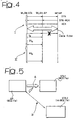
- WLAN STA is indicative of any station in the WLAN considered, while WLAN AP is indicative of the corresponding Access Point AP.
- I represents as a whole those transactions that would lead to establishing the usual TCP/IP connection.
- the double pointed arrow is representative of (bilateral) data flow, while II generally represents the effect of the intervention of the access point AP in interrupting the establishment of the TCP/IP connection.
- the enforcement of the CAC policy enforcement at the access point AP is effective for data flows. The same may not apply to real-time flows that the AP wants to inhibit, since there is typically no transport control mechanism that use acknowledgements from the receiver back to the transmitter.
- the access point AP may send ICMP error messages back to the station that is generating traffic but the consequences depend on the applications that manage the real time data transmission.
- the access point AP takes into account the background traffic that can always be found in a network, such as ARP requests. Such traffic, in fact, is generated by WLAN stations and cannot be blocked by the access point AP.
- Blocking interfering flows by MAC-layer disassociation is another mechanism that the access point AP may use to prevent non-admitted stations to generate traffic. In that way, stations are disconnected by the access point AP and, at least momentarily, stop sending frames.
- Effectiveness of the proposed method in networks with 802.11e terminals can be examined by referring to a scenario where the access point AP runs the proposed admission control procedure: consequently it also has IEEE802.11e traffic differentiation support feature in its WLAN card.
- high-priority traffic between two 802.1le-enabled devices can be adversely affected by a legacy 802.11b/g terminal.
- IEEE802.11b/g interfering frames have a lower probability of getting access to the channel compared to higher priority traffic generated by 802.11e nodes, they can still occupy the channel for long periods of time, especially when the link conditions are not good (high bit error rate) and therefore many retransmissions are necessary to correctly deliver frames to their destinations.
- FIG. 5 This scenario is depicted in figure 5 .
- the station STA1 is an 802.11e station while the station STA2 is a non-802.11e station (e.g. an 802.11b/g terminal).
- the admission control procedure described herein is able to autonomously detect the condition where STA2 is interfering with higher priority traffic and consequently disconnect STA2.
- admission control procedure described herein can be beneficial also when prospected QoS enhancements in the IEEE802.11 MAC layer will be made available.
- the access point AP may send some information back to the station.
- the access point AP can send a redirect message back to the station so that a suitable Web page is shown in the client browser.
- FIGS. 6 and 7 provide some details of possible embodiment of an access point AP according to the arrangement described herein.
- figure 6 is a simplified block diagram of the structure of an the access point AP including an Ethernet card 10, one or more Wireless LAN card(s) 12, a CPU 14, a Flash memory 16 and dynamic memory 18.
- the elements mentioned are usually connected via a bus 20.
- the WLAN and Ethernet cards 10 and 12 may be connected through a PCI bridge (not shown in the picture for simplicity).
- the structure of the CPU 14 (which usually boots an operating system from flash memory upon startup) is highlighted in the right hand portion of figure 6 .
- device drivers 141 and 142 take care of handling Ethernet frames both in transmission and reception by preparing/checking their headers and copying their payload into data structures specific to an Operating System (OS) 143.
- OS Operating System
- bridging modules 144 in the access point AP takes care of forwarding frames from one network interface to another.
- the AP usually includes an SNMP (Simple Network Management Protocol) agent 145 that enables remote control of the device, an authentication module 146 to give access only to allowed clients, an IP stack 147 (to enable remote monitoring through SNMP) and a Web browser 148 for configuration purposes.
- SNMP Simple Network Management Protocol
- the Call Admission Control procedure described invention runs as a stand-alone process/module 149 (designated "QoS agent") and controls the behaviour of the Ethernet bridge by using information coming from the device drivers. This can be accomplished by using the well-known socket interface (see once again, e.g., D. Comer: “Internetworking with TCP/IP Volume 1: Principles, Protocols and Architecture", 4th edition, 2000, ISBN 0-13-018380-6 ) and private "ioctl" commands.
- a QoS agent can also be conceived that does not influence the bridging software but only interacts with the device drivers. In that case, a small modification in the WLAN device driver could enable dropping specific packets under control of the QoS agent.
- the present invention is applicable not only to traditional WLAN access points, but also to such devices as Set-top boxes, TV sets, personal computers or other equipment configured to act as a WLAN access point.
- the CAC procedure considered is based on the inspection of the content of each MAC frame by the access point AP. This may turn out to be a heavy task especially for high data rates. Some sort of optimisation may thus be introduced. For example, a dedicated hardware block could take care of packet classification by comparing header fields against a look-up-table (LUT).
- LUT look-up-table
- This hardware block could be programmed by the CPU at boot time and the look up table could be accessible by the CPU through memory mapped I/O.
- references 14, 16, and 20 designate the same elements shown in figure 6 , namely the CPU, the dynamic memory and the bus.
- Reference 22 indicates the packet classifier considered in the foregoing, including a LUT 22a.
- References 24 and 26 designate the WLAN MAC and PHY layers, and the Ethernet, respectively
- Table 1 Packet classifier look up table structure. Flow No. SRC MAC DST MAC SRC IP DST IP A/V SRC port DST port admitted 1 00:08:74:B2:A2:BE 00:02:2D:68:2D:3C A B yes 1234 1234 Yes 2 00:08:02:6A:75:08 00:08:74:B2:A2:BE C D no X 80 No 3 00:02:2D:68:2D:3C 00:08:02:6A:75:08 B C no X 80 Yes
- the comparison between the relevant frame header fields and the rows in the LUT are performed by dedicated hardware in the packet classifier.
- An arrangement has been described to protect audiovisual streams from interfering data traffic in a WLAN. Such an arrangement performs call admission control without requiring any signalling among WLAN stations and only runs in the access point. This is a major advantage with respect to the prior art.
- the access point continuously estimates the wireless network conditions and can block data traffic that could interfere with real time streams, according to user selectable policies.
- LANs local area networks
- a wireless LAN must not be construed in a limiting sense of the scope of the invention.
- the invention is also adapted for use e.g. in non-wireless networks (such as the Ethernet), other types of wireless networks (UltraWideBand), or mobile telephone networks including terminals equipped with a WLAN interface.
- non-wireless networks such as the Ethernet
- other types of wireless networks such as the Ethernet
- UltraWideBand other types of wireless networks
- mobile telephone networks including terminals equipped with a WLAN interface.
- access point is used herein to designate any point providing access to a network.
Landscapes
- Engineering & Computer Science (AREA)
- Computer Networks & Wireless Communication (AREA)
- Signal Processing (AREA)
- Quality & Reliability (AREA)
- Computer Security & Cryptography (AREA)
- Mobile Radio Communication Systems (AREA)
- Small-Scale Networks (AREA)
Claims (29)
- Verfahren für Zulassungssteuerung in einem Netzwerk, das dafür ausgelegt ist, einen Satz von Stationen (PC, STB, LT) zu bedienen sowie Echtzeitübertragung und TCP/IP-Sitzungen zu verwalten, wobei das Verfahren folgende Schritte aufweist:- wenn sich dem Netzwerk entweder eine neue Station (PC, STB, LT) anschließt oder eine neue TCP/IP-Sitzung initiiert wird, Überprüfen, ob in dem Netzwerk ausreichende Bandbreite für den neuen Verkehrsfluss verfügbar ist, der der neuen Station (PC, STB, LT) oder TCP/IP-Sitzung zugeordnet ist, ohne eine bereits stattfindende Echtzeitübertragung in dem Netzwerk zu stören, und- falls festgestellt wird, dass keine ausreichende Bandbreite verfügbar ist, wodurch der neue Verkehrsfluss die bereits stattfindende Echtzeitübertragung stören könnte, Blockieren des neuen Verkehrsflusses,
dadurch gekennzeichnet, dass es den Schritt des Bestimmens der verbleibenden verfügbaren Bandbreite in dem Netzwerk aufweist als eine Funktion von:- der Echtzeitfluss-Bitrate- den relativen Positionen eines Zugangspunkts (AP) im Verhältnis zu dem Netzwerk und den anderen Stationen (PC, STB) in dem Satz- die Anwesenheit anderer störender Gerätschaft in dem gleichen ISM-Band. - Verfahren nach Anspruch 1, dadurch gekennzeichnet, dass es den Schritt des Detektierens von Echtzeit-Audio/Videostreamingflüssen in dem Netzwerk durch mindestens eine der folgenden Aktionen aufweist:- Prüfen der Quellen- und Ziel-MAC-Header der weitergeleiteten Ethernet-Rahmen- Überprüfen des IP-Header-Protokoll-Typs- Überprüfen der UDP-Nutzdaten und Erkennen von RTP-Headern- Untersuchen der Zwischanankunftszeitstatistiken von aufeinander folgenden Paketen, die zu dem gleichen Fluss gehören, und der Fluss-Durchschnitts-Bitrate.
- Verfahren nach Anspruch 1, dadurch gekennzeichnet, dass es folgende Schritte aufweist:- Bereitstellen eines Zugangspunkts (AP) in dem Netzwerk, der als eine Ethernet-Lembrücke konfiguriert ist, und- Detektieren aktiver Stationen in dem Satz (PC, STB, LT) durch Überwachen der MAC-Adressen in der Weiterleitungstabelle der Brücke.
- Verfahren nach Anspruch 1, dadurch gekennzeichnet, dass es die Schritte aufweist, jedes Mal, wenn eine neue TCP/IP-Sitzung initiiert wird, Erkennen der zugehörigen Sequenz, Einfügen eines entsprechenden Tupels in eine Liste und Anwenden einer entsprechenden Verwaltungspolitik auf den Sitzungsfluss, wie sie von dem Tupel identifiziert ist.
- Verfahren nach Anspruch 1, dadurch gekennzeichnet, dass es den Schritt des Bestimmens der Anwesenheit jeglicher der störenden Flüsse durch Überwachen der Anzahl von Paketübertragungswiederholungen für eine gegebene Verbindung in dem Netzwerk auf weist.
- Verfahren nach Anspruch 1, dadurch gekennzeichnet, dass es den Schritt des Bestimmens der verbleibenden verfügbaren Bandbreite in dem Netzwerk, jedes Mal, wenn eine neue TCP/IP-Sitzung initiiert wird, aufweist.
- Verfahren nach einem der Ansprüche 1 oder 6, dadurch gekennzeichnet, dass es folgende Schritte aufweist:- sobald Echtzeitverkehr in dem Netzwerk erkannt wurde, Berechnen von dessen Bitrate, und- Bestimmen der verbleibenden verfügbaren Bandbreite als eine Funktion der Zustände drahtloser Kanäle für die Stationen (PC, STB, LT) in dem Satz.
- Verfahren nach Anspruch 1, dadurch gekennzeichnet, dass es den Schritt aufweist, im Fall von hohen Bitfehlerraten oder Störungen auf der Verbindung zwischen einem Zugangspunkt (AP) und dem Netzwerk und irgendeiner der Stationen des Satzes (PC, STB, LT) einen Fragmentierungsschwellenwert anzuwenden, um kürzere Pakete mit einer geringeren Übertragungswiederholungswahrscheinlichkeit zu übertragen.
- Verfahren nach Anspruch 1, dadurch gekennzeichnet, dass es den Schritt des Bereitstellens eines Zugangspunkts (AP) zu dem Netzwerk als eine Zustandsmaschine aufweist, die zulässt:- einen Netzwerküberwachungszustand (200), wobei der Zugangspunkt (AP) Fluss-Bitraten und Zustände drahtloser Verbindungen verfolgt,- einen Klassifizierungszustand (202), wobei die Eigenschaften der Flüsse geschätzt werden,- eine Rufzulassungssteuerpolitik (Zustand 204), um festzulegen, ob der neue Verkehrsfluss blockiert werden soll, und- einen Netzwerkschutzzustand (206), wobei der Zugangspunkt (AP) das Netzwerk überwacht.
- Verfahren nach Anspruch 1, dadurch gekennzeichnet, dass es den Schritt aufweist, im Fall von burst-artigem eingehendem Verkehr Traffic-Shaping durch Glätten von Packetzwischenübertragungszeiten auszuführen.
- Verfahren nach Anspruch 1, dadurch gekennzeichnet, dass es den Schritt des Blockierens des neuen Verkehrs durch MAC-Schicht-Disassoziierung aufweist.
- Verfahren nach einem der vorhergehenden Ansprüche, dadurch gekennzeichnet, dass es den Schritt des Auswählens des Netzwerks als ein drahtloses lokales Netzwerk (WLAN) aufweist.
- System für Zulassungssteuerung in einem Netzwerk, das dafür ausgelegt ist, einen Satz von Stationen (PC, STB, LT) zu bedienen sowie Echtzeitübertragung und TCP/IP-Sitzungen zu verwalten, wobei das System einen Zugangspunkt (AP) aufweist, der dafür konfiguriert ist:- wenn sich dem Netzwerk entweder eine neue Station (PC, STB, LT) anschließt oder eine neue TCP/IP-Sitzung initiiert wird, Überprüfen, ob in dem Netzwerk ausreichende Bandbreite für den neuen Verkehrsfluss verfügbar ist, der der neuen Station (PC, STB, LT) oder TCP/IP-Sitzung zugeordnet ist, ohne eine bereits stattfindende Echtzeitübertragung in dem Netzwerk zu stören, und- falls festgestellt wird, dass keine ausreichende Bandbreite verfügbar ist, wodurch der neue Verkehrsfluss die bereits stattfindende Echtzeitübertragung stören könnte, Blockieren des neuen Verkehrsflusses,
dadurch gekennzeichnet, dass der Zugangspunkt (AP) dafür konfiguriert ist, die verbleibende verfügbare Bandbreite in dem Netzwerk zu bestimmen als eine Funktion von:- i) der Echtzeitfluss-Bitrate- ii) den relativen Positionen des Zugangspunkts (AP) und der anderen Stationen (PC, STB) in dem Satz- iii) der Anwesenheit anderer störender Gerätschaft in dem gleichen ISM-Band. - System nach Anspruch 13, dadurch gekennzeichnet, dass der Zugangspunkt (AP) für das Detektieren von Echtzeit-Audio/Videostreamingflüssen in dem Netzwerk durch mindestens eine der folgenden Aktionen konfiguriert ist:- Prüfen der Quellen- und Ziel-MAC-Header der weitergeleiteten Ethernet-Rahmen- Überprüfen des IP-Header-Protokoll-Typs- Überprüfen der UDP-Nutzdaten und Erkennen von RTP-Headern- Untersuchen der Zwischanankunftszeitstatistiken von aufeinander folgenden Paketen, die zu dem gleichen Fluss gehören, und der Fluss-Durchschnitts-Bitrate.
- System nach Anspruch 13, dadurch gekennzeichnet, dass der Zugangspunkt (AP) eine Ethernet-Lernbrücke ist, die dafür konfiguriert ist, aktive Stationen in dem Satz (PC, STB, LT) durch Überwachen der MAC-Adressen in der Weiterleitungstabelle der Brücke zu detektieren.
- System nach Anspruch 13, dadurch gekennzeichnet, dass der Zugangspunkt (AP) konfiguriert ist zum, jedes Mal, wenn eine neue TCP/IP-Sitzung initiiert wird, Erkennen der zugehörigen Sequenz, Einfügen eines entsprechenden Tupels in eine Liste und Anwenden einer entsprechenden Verwaltungspolitik auf den Sitzungsfluss, wie sie von dem Tupel identifiziert ist.
- System nach Anspruch 13, dadurch gekennzeichnet, dass der Zugangspunkt (AP) für das Bestimmen der Anwesenheit jeglicher der störenden Flüsse durch Überwachen der Anzahl von Paketübertragungswiederholungen für eine gegebene Verbindung in dem Netzwerk konfiguriert ist.
- System nach Anspruch 13, dadurch gekennzeichnet, dass der Zugangspunkt (AP) dafür konfiguriert ist, die verbleibende verfügbare Bandbreite in dem Netzwerk, jedes Mal wenn eine neue TCP/IP-Sitzung initiiert wird, zu bestimmen.
- System nach einem der Ansprüche 13 oder 18, dadurch gekennzeichnet, dass der Zugangspunkt (AP) konfiguriert ist für:- Erkennen von Echtzeitverkehr in dem Netzwerk,- Berechnen der Bitrate davon, und- Bestimmen der verbleibenden verfügbaren Bandbreite als eine Funktion der Zustände drahtloser Kanäle für die Stationen (PC, STB, LT) in dem Satz.
- System nach Anspruch 13, dadurch gekennzeichnet, dass der Zugangspunkt (AP) zum Anwenden eines Fragmentierungsschwellenwerts konfiguriert ist, um im Falle von hohen Bit-Fehlerraten oder Störungen auf der Verbindung von dem Zugangspunkt (AP) und irgendeiner der Stationen des Satzes (PC, STB, LT) kürzere Pakete mit einer kleineren Übertragungswiederholungswahrscheinlichkeit zu übertragen.
- System nach Anspruch 13, dadurch gekennzeichnet, dass der Zugangspunkt (AP) als eine Zustandsmaschine konfiguriert ist, die zulässt:- einen Netzwerküberwachungszustand (200), wobei der Zugangspunkt (AP) Fluss-Bitraten und Zustände drahtloser Verbindungen verfolgt,- einen Klassifizierungszustand (202), wobei die Eigenschaften der Flüsse geschätzt werden,- eine Rufzulassungssteuerungspolitik (Zustand 204), um festzulegen, ob der neue Verkehrsfluss blockiert werden soll, und- einen Netzwerkschutzzustand (206), wobei der Zugangspunkt (AP) das Netzwerk überwacht.
- System nach Anspruch 13, dadurch gekennzeichnet, dass der Zugangspunkt (AP) zum Ausführen von Traffic-Shaping durch Glätten von Paketzwischenübertragungszeiten im Fall von burst-artigem eingehendem Verkehr konfiguriert ist.
- System nach Anspruch 13, dadurch gekennzeichnet, dass der Zugangspunkt (AP) zum Blockieren des neuen Verkehrs durch MAC-Schicht-Disassoziierung konfiguriert ist.
- System nach einem der Ansprüche 13 bis 23, dadurch gekennzeichnet, dass der Zugangspunkt (AP) einigen der Stationen in dem Satz (PC, STB, LT) zugeordnet ist.
- System nach einem der Ansprüche 13 bis 23, dadurch gekennzeichnet, dass der Zugangspunkt (AP) einem Apparat zugeordnet ist, der aus der Gruppe ausgewählt ist, die aus einem Personalcomputer (PC), einer Set-Top-Box (STB), einem Fernsehapparat und einem Laptop-Computer besteht.
- System nach einem der Ansprüche 13 bis 25, dadurch gekennzeichnet, dass der Zugangspunkt (AP) einen zugeordneten Paketklassifikator (22) aufweist, der zum Ausführen von Paketklassifizierung durch Vergleichen von Header-Feldern mit einer Lookup-Tabelle (22a) konfiguriert ist.
- Kommunikationsnetzwerk, aufweisend des System nach einem der Ansprüche 13 bis 26.
- Netzwerk nach Anspruch 27, dadurch gekennzeichnet, dass das Netzwerk ein drahtloses lokales Netzwerk (WLAN) ist.
- In den Speicher eines digitalen Computers ladbares Computerprogrammprodukt, aufweisend Softwarecodeabschnitte zum Ausführen der Schritte des Verfahrens nach einem der Ansprüche 1 bis 12, wenn das Produkt auf einem Computer läuft.
Priority Applications (2)
| Application Number | Priority Date | Filing Date | Title |
|---|---|---|---|
| EP04001540A EP1557982B1 (de) | 2004-01-26 | 2004-01-26 | Verfahren und System zur Zulassungssteuerung in Kommunikationsnetzwerken |
| US11/041,507 US7471629B2 (en) | 2004-01-26 | 2005-01-21 | Method and system for admission control in communication networks, related network and computer program product therefor |
Applications Claiming Priority (1)
| Application Number | Priority Date | Filing Date | Title |
|---|---|---|---|
| EP04001540A EP1557982B1 (de) | 2004-01-26 | 2004-01-26 | Verfahren und System zur Zulassungssteuerung in Kommunikationsnetzwerken |
Publications (2)
| Publication Number | Publication Date |
|---|---|
| EP1557982A1 EP1557982A1 (de) | 2005-07-27 |
| EP1557982B1 true EP1557982B1 (de) | 2011-05-11 |
Family
ID=34626506
Family Applications (1)
| Application Number | Title | Priority Date | Filing Date |
|---|---|---|---|
| EP04001540A Expired - Lifetime EP1557982B1 (de) | 2004-01-26 | 2004-01-26 | Verfahren und System zur Zulassungssteuerung in Kommunikationsnetzwerken |
Country Status (2)
| Country | Link |
|---|---|
| US (1) | US7471629B2 (de) |
| EP (1) | EP1557982B1 (de) |
Families Citing this family (66)
| Publication number | Priority date | Publication date | Assignee | Title |
|---|---|---|---|---|
| US7747244B2 (en) | 2003-01-23 | 2010-06-29 | Research In Motion Limited | Methods and apparatus for re-establishing communication for a wireless communication device after a communication loss in a wireless communication network |
| US7512689B2 (en) * | 2003-07-02 | 2009-03-31 | Intel Corporation | Plug and play networking architecture with enhanced scalability and reliability |
| US9432848B2 (en) | 2004-03-23 | 2016-08-30 | Aruba Networks, Inc. | Band steering for multi-band wireless clients |
| US7969937B2 (en) * | 2004-03-23 | 2011-06-28 | Aruba Networks, Inc. | System and method for centralized station management |
| US7925727B2 (en) * | 2004-07-29 | 2011-04-12 | Nortel Networks Limited | Method and apparatus for efficient communication of management data in a telecommunications network |
| KR100612449B1 (ko) * | 2004-10-05 | 2006-08-16 | 삼성전자주식회사 | 근거리 무선 통신 및 음성 통화 기능을 제공하는 아이피셋톱박스 |
| US20060215596A1 (en) * | 2005-03-23 | 2006-09-28 | Intel Corporation | Network aware cross-layer protocol methods and apparatus |
| US7720462B2 (en) * | 2005-07-21 | 2010-05-18 | Cisco Technology, Inc. | Network communications security enhancing |
| US8370583B2 (en) | 2005-08-12 | 2013-02-05 | Silver Peak Systems, Inc. | Network memory architecture for providing data based on local accessibility |
| US8171238B1 (en) | 2007-07-05 | 2012-05-01 | Silver Peak Systems, Inc. | Identification of data stored in memory |
| US8095774B1 (en) | 2007-07-05 | 2012-01-10 | Silver Peak Systems, Inc. | Pre-fetching data into a memory |
| US8392684B2 (en) | 2005-08-12 | 2013-03-05 | Silver Peak Systems, Inc. | Data encryption in a network memory architecture for providing data based on local accessibility |
| GB0517304D0 (en) | 2005-08-23 | 2005-10-05 | Netronome Systems Inc | A system and method for processing and forwarding transmitted information |
| US8929402B1 (en) | 2005-09-29 | 2015-01-06 | Silver Peak Systems, Inc. | Systems and methods for compressing packet data by predicting subsequent data |
| US8811431B2 (en) | 2008-11-20 | 2014-08-19 | Silver Peak Systems, Inc. | Systems and methods for compressing packet data |
| US8489562B1 (en) | 2007-11-30 | 2013-07-16 | Silver Peak Systems, Inc. | Deferred data storage |
| DE102005052207A1 (de) * | 2005-11-02 | 2007-05-03 | Deutsche Thomson-Brandt Gmbh | Verfahren zum Übertragen von einem Datenstrom von einer Datenquelle zu einer Datensenke sowie Datensenkengerät, Datenquellgerät und Gerät zur Durchführung des Verfahrens |
| JP4047887B2 (ja) * | 2005-11-11 | 2008-02-13 | Necインフロンティア株式会社 | 無線lanシステムの通信制御方法および中継装置 |
| US7688724B2 (en) * | 2005-12-23 | 2010-03-30 | Avaya Inc. | Call admission control for mobility-capable telecommunications terminals |
| US7640577B2 (en) * | 2006-02-14 | 2009-12-29 | Sony Corporation | System and method for authenticating components in wireless home entertainment system |
| JP4781880B2 (ja) * | 2006-03-31 | 2011-09-28 | 富士通株式会社 | 中継装置、中継方法、中継プログラムおよび通信システム |
| US8437352B2 (en) * | 2006-05-30 | 2013-05-07 | Broadcom Corporation | Method and system for power control based on application awareness in a packet network switch |
| US20070294292A1 (en) * | 2006-06-14 | 2007-12-20 | Microsoft Corporation | Advertising transfer and playback on portable devices |
| US8045457B1 (en) * | 2006-06-29 | 2011-10-25 | Symantec Corporation | Dropping packets to prevent unauthorized data transfer through multimedia tunnels |
| US8902839B2 (en) | 2006-07-05 | 2014-12-02 | Nokia Corporation | Service/mobility domain with handover for private short-range wireless networks |
| US9148823B2 (en) | 2006-07-05 | 2015-09-29 | Nokia Technologies Oy | Ensuring quality of service for private short-range wireless networks |
| US8254253B2 (en) | 2006-07-05 | 2012-08-28 | Nokia Corporation | Conditional utilization of private short-range wireless networks for service provision and mobility |
| US8139552B1 (en) * | 2006-07-07 | 2012-03-20 | Rockstar Bidco, LP | Access category enforcement in wireless local area networks |
| US7706341B2 (en) * | 2006-08-02 | 2010-04-27 | Avaya Inc. | Accounting for telecommunications terminal mobility in call admission control |
| US8885632B2 (en) | 2006-08-02 | 2014-11-11 | Silver Peak Systems, Inc. | Communications scheduler |
| US8755381B2 (en) | 2006-08-02 | 2014-06-17 | Silver Peak Systems, Inc. | Data matching using flow based packet data storage |
| JP5194021B2 (ja) * | 2006-11-10 | 2013-05-08 | トムソン ライセンシング | 復旧方法及びサービス予約システム |
| US8351380B2 (en) * | 2007-05-09 | 2013-01-08 | Samsung Electronics Co., Ltd | Method and apparatus for layer 2 ARQ for packets |
| US7907562B2 (en) * | 2007-06-20 | 2011-03-15 | Microsoft Corporation | Managing dense wireless access point infrastructures in wireless local area networks |
| US20080320108A1 (en) * | 2007-06-20 | 2008-12-25 | Microsoft Corporation | Management Policies For Dense Wireless Access Point Infrastructures in Wireless Local Area Networks |
| US8307115B1 (en) | 2007-11-30 | 2012-11-06 | Silver Peak Systems, Inc. | Network memory mirroring |
| US8442052B1 (en) | 2008-02-20 | 2013-05-14 | Silver Peak Systems, Inc. | Forward packet recovery |
| US10164861B2 (en) | 2015-12-28 | 2018-12-25 | Silver Peak Systems, Inc. | Dynamic monitoring and visualization for network health characteristics |
| US9717021B2 (en) | 2008-07-03 | 2017-07-25 | Silver Peak Systems, Inc. | Virtual network overlay |
| US8743683B1 (en) | 2008-07-03 | 2014-06-03 | Silver Peak Systems, Inc. | Quality of service using multiple flows |
| US10805840B2 (en) | 2008-07-03 | 2020-10-13 | Silver Peak Systems, Inc. | Data transmission via a virtual wide area network overlay |
| US8903413B2 (en) * | 2009-03-20 | 2014-12-02 | Qualcomm Incorporated | Hybrid cell management in wireless networks |
| US9246764B2 (en) * | 2010-12-14 | 2016-01-26 | Verizon Patent And Licensing Inc. | Network service admission control using dynamic network topology and capacity updates |
| US8644177B2 (en) | 2010-12-16 | 2014-02-04 | Blackberry Limited | Methods and apparatus for use in controlling data traffic for a wireless mobile terminal using a wireless access point (AP) |
| US20130170342A1 (en) * | 2011-02-03 | 2013-07-04 | King Saud University | Data communication systems and methods |
| CN102175953A (zh) * | 2011-02-28 | 2011-09-07 | 长沙理工大学 | 输电线路绝缘子放电在线监测故障定位方法 |
| US9130991B2 (en) | 2011-10-14 | 2015-09-08 | Silver Peak Systems, Inc. | Processing data packets in performance enhancing proxy (PEP) environment |
| US9626224B2 (en) | 2011-11-03 | 2017-04-18 | Silver Peak Systems, Inc. | Optimizing available computing resources within a virtual environment |
| CN104813702A (zh) * | 2013-06-09 | 2015-07-29 | 华为技术有限公司 | 控制无线局域网流量的方法和无线局域网网关 |
| US9564986B2 (en) | 2013-11-06 | 2017-02-07 | At&T Intellectual Property I, L.P. | Latency reduction and range extension system for radio networks |
| US20170070950A1 (en) * | 2014-02-28 | 2017-03-09 | Mediatek Inc. | Method for bss transition |
| US9948496B1 (en) | 2014-07-30 | 2018-04-17 | Silver Peak Systems, Inc. | Determining a transit appliance for data traffic to a software service |
| US9875344B1 (en) | 2014-09-05 | 2018-01-23 | Silver Peak Systems, Inc. | Dynamic monitoring and authorization of an optimization device |
| US10432484B2 (en) | 2016-06-13 | 2019-10-01 | Silver Peak Systems, Inc. | Aggregating select network traffic statistics |
| US9967056B1 (en) | 2016-08-19 | 2018-05-08 | Silver Peak Systems, Inc. | Forward packet recovery with constrained overhead |
| US10771394B2 (en) | 2017-02-06 | 2020-09-08 | Silver Peak Systems, Inc. | Multi-level learning for classifying traffic flows on a first packet from DNS data |
| US10892978B2 (en) | 2017-02-06 | 2021-01-12 | Silver Peak Systems, Inc. | Multi-level learning for classifying traffic flows from first packet data |
| US10257082B2 (en) | 2017-02-06 | 2019-04-09 | Silver Peak Systems, Inc. | Multi-level learning for classifying traffic flows |
| US11044202B2 (en) | 2017-02-06 | 2021-06-22 | Silver Peak Systems, Inc. | Multi-level learning for predicting and classifying traffic flows from first packet data |
| US11212210B2 (en) | 2017-09-21 | 2021-12-28 | Silver Peak Systems, Inc. | Selective route exporting using source type |
| US10637721B2 (en) | 2018-03-12 | 2020-04-28 | Silver Peak Systems, Inc. | Detecting path break conditions while minimizing network overhead |
| US11146577B2 (en) * | 2018-05-25 | 2021-10-12 | Oracle International Corporation | Methods, systems, and computer readable media for detecting and mitigating effects of abnormal behavior of a machine type communication (MTC) device |
| CN111083792B (zh) * | 2018-10-22 | 2021-09-07 | 华为技术有限公司 | WiFi网络中的数据传输方法、装置及设备 |
| US11381955B2 (en) | 2020-07-17 | 2022-07-05 | Oracle International Corporation | Methods, systems, and computer readable media for monitoring machine type communications (MTC) device related information |
| US11700510B2 (en) | 2021-02-12 | 2023-07-11 | Oracle International Corporation | Methods, systems, and computer readable media for short message delivery status report validation |
| CN116418602B (zh) * | 2023-06-09 | 2023-08-25 | 武汉大学 | 一种基于可信硬件的元数据保护匿名通信方法及系统 |
Family Cites Families (37)
| Publication number | Priority date | Publication date | Assignee | Title |
|---|---|---|---|---|
| US5761191A (en) * | 1995-11-28 | 1998-06-02 | Telecommunications Techniques Corporation | Statistics collection for ATM networks |
| US6259916B1 (en) * | 1996-08-06 | 2001-07-10 | Conexant Systems, Inc. | Method and apparatus for minimizing perceptible impact on an interrupted call prior to hand-off |
| JPH10126842A (ja) * | 1996-10-18 | 1998-05-15 | Matsushita Electric Ind Co Ltd | 移動通信システム |
| US5987331A (en) * | 1996-11-20 | 1999-11-16 | Motorola, Inc. | Communication system to communication system gateway method and apparatus |
| US6292484B1 (en) * | 1997-06-11 | 2001-09-18 | Data Race, Inc. | System and method for low overhead multiplexing of real-time and non-real-time data |
| US6081536A (en) * | 1997-06-20 | 2000-06-27 | Tantivy Communications, Inc. | Dynamic bandwidth allocation to transmit a wireless protocol across a code division multiple access (CDMA) radio link |
| US6069871A (en) * | 1997-07-21 | 2000-05-30 | Nortel Networks Corporation | Traffic allocation and dynamic load balancing in a multiple carrier cellular wireless communication system |
| US6028851A (en) * | 1997-09-26 | 2000-02-22 | Telefonaktiebolaget L M Ericsson (Publ) | System and method for mobile assisted admission control |
| US6377548B1 (en) * | 1997-10-14 | 2002-04-23 | Lucent Technologies Inc. | Method for admitting new connections based on measured quantities in a multiple access system for communications networks |
| US6456849B1 (en) * | 1998-07-31 | 2002-09-24 | Nokia Corporation | Apparatus and associated method, for allocating resources in a radio communication system to perform a communication service |
| US6505255B1 (en) * | 1999-04-29 | 2003-01-07 | Mitsubishi Electric Information Technology Center America, Inc. (Ita) | Method for formatting and routing data between an external network and an internal network |
| WO2000033589A1 (en) * | 1998-11-30 | 2000-06-08 | Nokia Networks Oy | Air interface capacity scheduling method |
| US6765909B1 (en) * | 1999-04-22 | 2004-07-20 | Nortel Networks Limited | Method and apparatus for providing support for multiple QoS levels within a third generation packet data session |
| US6747968B1 (en) * | 2000-01-14 | 2004-06-08 | Nokia Ip Inc. | Methods and systems for weighted PCF polling lists for WLAN QoS support |
| AU2001229612A1 (en) * | 2000-01-25 | 2001-08-07 | Sharewave, Inc. | Stream connection management in wireless computer networks |
| EP1150523A3 (de) * | 2000-04-25 | 2002-06-12 | Lucent Technologies Inc. | IP Unterstützung auf der Abis Schnittstelle |
| KR20030059075A (ko) * | 2000-07-14 | 2003-07-07 | 에이티 앤드 티 코포레이션 | Qos-구동 무선 랜들을 위한 프레임 분류 |
| US7039032B1 (en) * | 2000-07-14 | 2006-05-02 | At&T Corp. | Multipoll for QoS-Driven wireless LANs |
| US6606482B1 (en) * | 2000-09-22 | 2003-08-12 | Mobilnet Corporation | Adaptive personal routing in a wireless communication network |
| WO2002037730A2 (en) * | 2000-10-31 | 2002-05-10 | Firebit Ltd. | A router-based system for providing multi-level data filtering and security services in a broadband environment |
| US7031738B2 (en) * | 2001-01-19 | 2006-04-18 | Raze Technologies, Inc. | Apparatus for reallocating communication resources to establish a priority call in a fixed wireless access communication system |
| US20020075844A1 (en) * | 2000-12-15 | 2002-06-20 | Hagen W. Alexander | Integrating public and private network resources for optimized broadband wireless access and method |
| AU2002235258A1 (en) * | 2000-12-27 | 2002-07-08 | Ensemble Communications, Inc. | Adaptive call admission control for use in a wireless communication system |
| US20020093948A1 (en) * | 2001-01-16 | 2002-07-18 | Motorola, Inc. | Packet-based multimedia communications system having one or more wireless links |
| US7002985B2 (en) * | 2001-01-16 | 2006-02-21 | Motorola, Inc. | Method and apparatus for organizing and scheduling multimedia data transfers over a wireless channel |
| US7027523B2 (en) * | 2001-06-22 | 2006-04-11 | Qualcomm Incorporated | Method and apparatus for transmitting data in a time division duplexed (TDD) communication system |
| US7191468B2 (en) * | 2001-07-17 | 2007-03-13 | The Boeing Company | System and method for multidimensional data compression |
| US20030032433A1 (en) * | 2001-07-26 | 2003-02-13 | Yoaz Daniel | Resource management in cellular networks |
| US7085249B2 (en) * | 2001-12-14 | 2006-08-01 | Nortel Networks Limited | Dynamic QoS for integrated voice and data CDMA/1XRTT networks |
| US6842621B2 (en) * | 2001-12-21 | 2005-01-11 | Motorola, Inc. | Method and apparatus for splitting control and media content from a cellular network connection |
| US20030130005A1 (en) * | 2002-01-04 | 2003-07-10 | Weisshaar Bernhard P. | Method of selecting a communication interface to transmit data in a wireless communication network |
| KR100547852B1 (ko) * | 2002-01-09 | 2006-02-01 | 삼성전자주식회사 | 이동통신 시스템에서 호 수락 방법 |
| JP3898965B2 (ja) * | 2002-03-06 | 2007-03-28 | 株式会社エヌ・ティ・ティ・ドコモ | 無線リソース割り当て方法及び基地局 |
| US6791962B2 (en) * | 2002-06-12 | 2004-09-14 | Globespan Virata, Inc. | Direct link protocol in wireless local area networks |
| US6801528B2 (en) * | 2002-07-03 | 2004-10-05 | Ericsson Inc. | System and method for dynamic simultaneous connection to multiple service providers |
| US7286474B2 (en) * | 2002-07-12 | 2007-10-23 | Avaya Technology Corp. | Method and apparatus for performing admission control in a communication network |
| US20040100903A1 (en) * | 2002-11-25 | 2004-05-27 | Seung-Jae Han | Quality of service mechanisms for mobility access device |
-
2004
- 2004-01-26 EP EP04001540A patent/EP1557982B1/de not_active Expired - Lifetime
-
2005
- 2005-01-21 US US11/041,507 patent/US7471629B2/en active Active
Also Published As
| Publication number | Publication date |
|---|---|
| US20050220019A1 (en) | 2005-10-06 |
| EP1557982A1 (de) | 2005-07-27 |
| US7471629B2 (en) | 2008-12-30 |
Similar Documents
| Publication | Publication Date | Title |
|---|---|---|
| US7471629B2 (en) | Method and system for admission control in communication networks, related network and computer program product therefor | |
| US10511991B2 (en) | Adapting communication parameters to link conditions, traffic types, and/or priorities | |
| US8169911B2 (en) | Method for transmitting a data stream with anticipation of acknowledgments, correspondence input device and computer-readable storage medium | |
| KR101644215B1 (ko) | 신뢰성 있는 데이터 통신을 위한 네트워크 추상화 계층을 파싱하는 방법 및 장치 | |
| CN101023633B (zh) | 提高网络服务质量的系统和方法 | |
| US20110044338A1 (en) | Throughput in a lan by managing tcp acks | |
| US20040179475A1 (en) | Apparatus and method for transmitting packets in a communication system | |
| EP2278832B1 (de) | Mappage basé sur MAC dans communications IP | |
| CN108234338B (zh) | 报文传输方法及混合接入网关 | |
| JP4721286B2 (ja) | ネットワークにおけるトラフィック分離に基づいた帯域幅予約機構 | |
| JP2006511140A (ja) | 無線ネットワークにおけるリアルタイムデータの保護 | |
| US9084177B2 (en) | Adaptive time allocation in a TDMA MAC layer | |
| Choi et al. | Leader-based multicast service in IEEE 802.11 v networks | |
| CN113424578B (zh) | 一种传输控制协议加速方法和装置 | |
| Pau et al. | A cross-layer framework for wireless LAN QoS support | |
| CN101741752B (zh) | 视频流传输的方法、装置和系统 | |
| JP2013013093A (ja) | Tcpackの管理によるlanにおけるスループット改善 | |
| US20060133302A1 (en) | Apparatus and method for controlling traffic between wireless LAN device and access point in a wireless LAN system | |
| Daldoul | Reliable Multicast transport of the video over the WiFi network | |
| Seshadri et al. | Improving quality of services from TCP/IP performance degradation | |
| El-Bazzal et al. | Improving the performance of Transport Control Protocol over 802.11 wireless networks | |
| JP2009278256A (ja) | 中継装置および中継方法 | |
| JP2004312501A (ja) | パケット受信方法およびパケット受信装置 | |
| Casey | Greediness control algorithm for multimedia streaming in wireless local area networks | |
| Peart et al. | Improved quality of service utilising high priority traffic in HCF in a dynamically changing wireless networks |
Legal Events
| Date | Code | Title | Description |
|---|---|---|---|
| PUAI | Public reference made under article 153(3) epc to a published international application that has entered the european phase |
Free format text: ORIGINAL CODE: 0009012 |
|
| AK | Designated contracting states |
Kind code of ref document: A1 Designated state(s): AT BE BG CH CY CZ DE DK EE ES FI FR GB GR HU IE IT LI LU MC NL PT RO SE SI SK TR |
|
| AX | Request for extension of the european patent |
Extension state: AL LT LV MK |
|
| 17P | Request for examination filed |
Effective date: 20050926 |
|
| AKX | Designation fees paid |
Designated state(s): DE FR GB IT |
|
| 17Q | First examination report despatched |
Effective date: 20090930 |
|
| RAP1 | Party data changed (applicant data changed or rights of an application transferred) |
Owner name: STMICROELECTRONICS SRL |
|
| RIC1 | Information provided on ipc code assigned before grant |
Ipc: H04W 72/00 20090101ALN20100816BHEP Ipc: H04W 48/06 20090101AFI20100816BHEP Ipc: H04W 24/00 20090101ALN20100816BHEP |
|
| GRAP | Despatch of communication of intention to grant a patent |
Free format text: ORIGINAL CODE: EPIDOSNIGR1 |
|
| GRAS | Grant fee paid |
Free format text: ORIGINAL CODE: EPIDOSNIGR3 |
|
| GRAA | (expected) grant |
Free format text: ORIGINAL CODE: 0009210 |
|
| AK | Designated contracting states |
Kind code of ref document: B1 Designated state(s): DE FR GB IT |
|
| REG | Reference to a national code |
Ref country code: GB Ref legal event code: FG4D |
|
| REG | Reference to a national code |
Ref country code: DE Ref legal event code: R096 Ref document number: 602004032610 Country of ref document: DE Effective date: 20110622 |
|
| PLBE | No opposition filed within time limit |
Free format text: ORIGINAL CODE: 0009261 |
|
| STAA | Information on the status of an ep patent application or granted ep patent |
Free format text: STATUS: NO OPPOSITION FILED WITHIN TIME LIMIT |
|
| 26N | No opposition filed |
Effective date: 20120214 |
|
| PG25 | Lapsed in a contracting state [announced via postgrant information from national office to epo] |
Ref country code: IT Free format text: LAPSE BECAUSE OF FAILURE TO SUBMIT A TRANSLATION OF THE DESCRIPTION OR TO PAY THE FEE WITHIN THE PRESCRIBED TIME-LIMIT Effective date: 20110511 |
|
| REG | Reference to a national code |
Ref country code: DE Ref legal event code: R097 Ref document number: 602004032610 Country of ref document: DE Effective date: 20120214 |
|
| REG | Reference to a national code |
Ref country code: FR Ref legal event code: ST Effective date: 20120928 |
|
| PG25 | Lapsed in a contracting state [announced via postgrant information from national office to epo] |
Ref country code: FR Free format text: LAPSE BECAUSE OF NON-PAYMENT OF DUE FEES Effective date: 20120131 |
|
| PGFP | Annual fee paid to national office [announced via postgrant information from national office to epo] |
Ref country code: GB Payment date: 20131223 Year of fee payment: 11 |
|
| GBPC | Gb: european patent ceased through non-payment of renewal fee |
Effective date: 20150126 |
|
| PG25 | Lapsed in a contracting state [announced via postgrant information from national office to epo] |
Ref country code: GB Free format text: LAPSE BECAUSE OF NON-PAYMENT OF DUE FEES Effective date: 20150126 |
|
| PGFP | Annual fee paid to national office [announced via postgrant information from national office to epo] |
Ref country code: DE Payment date: 20221220 Year of fee payment: 20 |
|
| REG | Reference to a national code |
Ref country code: DE Ref legal event code: R071 Ref document number: 602004032610 Country of ref document: DE |