EP1553492A2 - Anwendungskatalog auf einem Gerät aktualisiert von Verwaltungsservern - Google Patents
Anwendungskatalog auf einem Gerät aktualisiert von Verwaltungsservern Download PDFInfo
- Publication number
- EP1553492A2 EP1553492A2 EP05000251A EP05000251A EP1553492A2 EP 1553492 A2 EP1553492 A2 EP 1553492A2 EP 05000251 A EP05000251 A EP 05000251A EP 05000251 A EP05000251 A EP 05000251A EP 1553492 A2 EP1553492 A2 EP 1553492A2
- Authority
- EP
- European Patent Office
- Prior art keywords
- application
- catalog
- push message
- mobile device
- receiving
- Prior art date
- Legal status (The legal status is an assumption and is not a legal conclusion. Google has not performed a legal analysis and makes no representation as to the accuracy of the status listed.)
- Ceased
Links
Images






Classifications
-
- A—HUMAN NECESSITIES
- A45—HAND OR TRAVELLING ARTICLES
- A45D—HAIRDRESSING OR SHAVING EQUIPMENT; EQUIPMENT FOR COSMETICS OR COSMETIC TREATMENTS, e.g. FOR MANICURING OR PEDICURING
- A45D33/00—Containers or accessories specially adapted for handling powdery toiletry or cosmetic substances
- A45D33/34—Powder-puffs, e.g. with installed container
-
- G—PHYSICS
- G06—COMPUTING OR CALCULATING; COUNTING
- G06F—ELECTRIC DIGITAL DATA PROCESSING
- G06F8/00—Arrangements for software engineering
- G06F8/60—Software deployment
- G06F8/61—Installation
- G06F8/62—Uninstallation
-
- A—HUMAN NECESSITIES
- A45—HAND OR TRAVELLING ARTICLES
- A45D—HAIRDRESSING OR SHAVING EQUIPMENT; EQUIPMENT FOR COSMETICS OR COSMETIC TREATMENTS, e.g. FOR MANICURING OR PEDICURING
- A45D34/00—Containers or accessories specially adapted for handling liquid toiletry or cosmetic substances, e.g. perfumes
- A45D34/04—Appliances specially adapted for applying liquid, e.g. using roller or ball
-
- A—HUMAN NECESSITIES
- A45—HAND OR TRAVELLING ARTICLES
- A45D—HAIRDRESSING OR SHAVING EQUIPMENT; EQUIPMENT FOR COSMETICS OR COSMETIC TREATMENTS, e.g. FOR MANICURING OR PEDICURING
- A45D40/00—Casings or accessories specially adapted for storing or handling solid or pasty toiletry or cosmetic substances, e.g. shaving soaps or lipsticks
- A45D40/26—Appliances specially adapted for applying pasty paint, e.g. using roller, using a ball
-
- G—PHYSICS
- G06—COMPUTING OR CALCULATING; COUNTING
- G06F—ELECTRIC DIGITAL DATA PROCESSING
- G06F8/00—Arrangements for software engineering
- G06F8/60—Software deployment
- G06F8/61—Installation
-
- G—PHYSICS
- G06—COMPUTING OR CALCULATING; COUNTING
- G06F—ELECTRIC DIGITAL DATA PROCESSING
- G06F9/00—Arrangements for program control, e.g. control units
- G06F9/06—Arrangements for program control, e.g. control units using stored programs, i.e. using an internal store of processing equipment to receive or retain programs
- G06F9/44—Arrangements for executing specific programs
- G06F9/445—Program loading or initiating
- G06F9/44505—Configuring for program initiating, e.g. using registry, configuration files
-
- A—HUMAN NECESSITIES
- A45—HAND OR TRAVELLING ARTICLES
- A45D—HAIRDRESSING OR SHAVING EQUIPMENT; EQUIPMENT FOR COSMETICS OR COSMETIC TREATMENTS, e.g. FOR MANICURING OR PEDICURING
- A45D33/00—Containers or accessories specially adapted for handling powdery toiletry or cosmetic substances
- A45D2033/001—Accessories
-
- A—HUMAN NECESSITIES
- A45—HAND OR TRAVELLING ARTICLES
- A45D—HAIRDRESSING OR SHAVING EQUIPMENT; EQUIPMENT FOR COSMETICS OR COSMETIC TREATMENTS, e.g. FOR MANICURING OR PEDICURING
- A45D34/00—Containers or accessories specially adapted for handling liquid toiletry or cosmetic substances, e.g. perfumes
- A45D2034/002—Accessories
-
- A—HUMAN NECESSITIES
- A45—HAND OR TRAVELLING ARTICLES
- A45D—HAIRDRESSING OR SHAVING EQUIPMENT; EQUIPMENT FOR COSMETICS OR COSMETIC TREATMENTS, e.g. FOR MANICURING OR PEDICURING
- A45D40/00—Casings or accessories specially adapted for storing or handling solid or pasty toiletry or cosmetic substances, e.g. shaving soaps or lipsticks
- A45D2040/0006—Accessories
-
- Y—GENERAL TAGGING OF NEW TECHNOLOGICAL DEVELOPMENTS; GENERAL TAGGING OF CROSS-SECTIONAL TECHNOLOGIES SPANNING OVER SEVERAL SECTIONS OF THE IPC; TECHNICAL SUBJECTS COVERED BY FORMER USPC CROSS-REFERENCE ART COLLECTIONS [XRACs] AND DIGESTS
- Y10—TECHNICAL SUBJECTS COVERED BY FORMER USPC
- Y10S—TECHNICAL SUBJECTS COVERED BY FORMER USPC CROSS-REFERENCE ART COLLECTIONS [XRACs] AND DIGESTS
- Y10S206/00—Special receptacle or package
- Y10S206/823—Cosmetic, toilet, powder puff
-
- Y—GENERAL TAGGING OF NEW TECHNOLOGICAL DEVELOPMENTS; GENERAL TAGGING OF CROSS-SECTIONAL TECHNOLOGIES SPANNING OVER SEVERAL SECTIONS OF THE IPC; TECHNICAL SUBJECTS COVERED BY FORMER USPC CROSS-REFERENCE ART COLLECTIONS [XRACs] AND DIGESTS
- Y10—TECHNICAL SUBJECTS COVERED BY FORMER USPC
- Y10S—TECHNICAL SUBJECTS COVERED BY FORMER USPC CROSS-REFERENCE ART COLLECTIONS [XRACs] AND DIGESTS
- Y10S707/00—Data processing: database and file management or data structures
- Y10S707/99931—Database or file accessing
-
- Y—GENERAL TAGGING OF NEW TECHNOLOGICAL DEVELOPMENTS; GENERAL TAGGING OF CROSS-SECTIONAL TECHNOLOGIES SPANNING OVER SEVERAL SECTIONS OF THE IPC; TECHNICAL SUBJECTS COVERED BY FORMER USPC CROSS-REFERENCE ART COLLECTIONS [XRACs] AND DIGESTS
- Y10—TECHNICAL SUBJECTS COVERED BY FORMER USPC
- Y10S—TECHNICAL SUBJECTS COVERED BY FORMER USPC CROSS-REFERENCE ART COLLECTIONS [XRACs] AND DIGESTS
- Y10S707/00—Data processing: database and file management or data structures
- Y10S707/99941—Database schema or data structure
- Y10S707/99944—Object-oriented database structure
- Y10S707/99945—Object-oriented database structure processing
Definitions
- the present invention relates generally to the field of computer software and more particularly to distributing software to one or more mobile computing device.
- a wide variety of mobile computing devices such as cellular telephones, pagers, Personal Digital Assistants (PDAs), and others are commonly in use.
- Software available for use on these mobile devices includes a wide range of applications such as games, phonebooks, calendars, email, web browsers, and others. These applications may be distributed preloaded on the mobile device.
- a cellular telephone typically includes software for maintaining a phonebook.
- the software may be installed on the device by the user after purchase of the mobile device.
- a user may use a personal computer or other, similar computing device to locate and download some desired software. For example, the user may browse an online catalog of available applications and select one or more for download. Once the application is downloaded to the user's computer, the user then uses a docking cradle, cable, infrared beaming, a wireless network, or other means to connect the mobile device with the personal computer and synchronize or otherwise transfer the software from the personal computer to the mobile device. Finally, the user executes an installation or setup program on the mobile device to install the software and make it available for execution on the mobile device.
- a docking cradle cable, infrared beaming, a wireless network, or other means to connect the mobile device with the personal computer and synchronize or otherwise transfer the software from the personal computer to the mobile device.
- the user executes an installation or setup program on the mobile device to install the software and make it available for execution on the mobile device.
- the mobile device may have browser software installed that allows the user to "surf" or browse one or more online catalogs for available software. This method requires the user to browse through a potentially large number of software selections, locate, and download a desired selection. Once the application has been downloaded, the user executes an installation or setup program on the mobile device.
- a catalog server in response to some request for an application stored on an application server, generates a push message to one or more mobile devices.
- the push message contains data from the application catalog on the catalog server to inform the users of the mobile devices of the available software. If accepted, the application can be downloaded, i.e. pulled, from the application server and installed on the mobile device and an on-device application catalog can be updated to reflect the availability of that application for execution on the mobile device.
- the present invention relates to a method of providing software applications to a mobile device.
- the method comprises receiving a request for an application identified in an application catalog stored on a catalog server.
- a push message is generated based on the request for the application and containing data from the application catalog stored on the catalog server.
- the push message is sent to a mobile device designated in the request for the application. Responsive to receiving an acceptance of the push message or a pull request from the mobile device, the application is sent to the mobile device.
- a method of updating an on-device application catalog in a mobile device comprises receiving a push message from a catalog server indicating availability of an application for download and containing information from an application catalog of the catalog server related to the application.
- the push message is read.
- the application is requested and received from an application server.
- the application is installed and the on-device application catalog is updated to indicate the availability of the application for execution on the mobile device.
- the present invention relates to a system for providing software applications to a mobile device.
- the system comprises a processor and a memory coupled with and readable by the processor.
- the memory contains a series of instructions that, when executed by the processor, cause the processor to receive a request for an application identified in an application catalog stored on a catalog server.
- a push message is generated based on the request for the application and containing data from the application catalog stored on the catalog server.
- the push message is sent to a mobile device designated in the request for the application. Responsive to receiving an acceptance of the push message or a pull request from the mobile device, the application is sent to the mobile device.
- the present invention relates to a mobile device for updating an on-device application catalog.
- the mobile device comprises a processor and a memory coupled with and readable by the processor.
- the memory contains a series of instructions that, when executed by the processor, cause the processor to receive a push message from a catalog server indicating availability of an application for download and containing information from an application catalog of the catalog server related to the application.
- the push message is read.
- Responsive to acceptance of the push message the application is requested and received from an application server.
- the application is installed and the on-device application catalog is updated to indicate the availability of the application for execution on the mobile device.
- the invention may be implemented as a computer process, a computing system or as an article of manufacture such as a computer program product or computer readable media.
- the computer program product may be a computer storage media readable by a computer system and encoding a computer program of instructions for executing a computer process.
- the computer program product may also be a propagated signal on a carrier readable by a computing system and encoding a computer program of instructions for executing a computer process.
- FIG. 1 illustrates at a high level a system for updating an on-device application catalog on a mobile device according to one embodiment of the present invention.
- This example shows a system 100 including a catalog server 105 , an application server 106, a network operator system 115, a user's system 120, and a number of mobile devices 130-140 .
- the network operator system 115 maintains a wireless network 125 through which the mobile devices 130-140 may communicate.
- the mobile devices 130-140 may include cellular telephones, Personal Digital Assistants (PDAs), pagers, and other types of devices capable of communicating over a wireless network. Through the wireless network 125, the mobile devices 130-140 may communicate with one another.
- PDAs Personal Digital Assistants
- pagers Through the wireless network 125, the mobile devices 130-140 may communicate with one another.
- the network operator system 115 may provide access to other networks with which the mobile devices 130-140 may connect and communicate.
- a network operator system 115 typically provides access to land based telephone systems (not shown here).
- the network operator system 115 also provides a connection to the Internet 110. Through this connection, the mobile devices 130-140 may browse and access information available on servers connected with the Internet 105 .
- the mobile devices 130-140 may access a catalog server 105 connected with the Internet 110 that provides information about content that may include application software for use on the mobile devices 130-140.
- the catalog server 105 may provide information describing applications such as games, organizers, databases, word processors, spreadsheets, etc as well as a variety of add-ons, upgrades, and other content.
- the applications or other content may be located on an application server 106. While shown as separate components here, the catalog server 105 and application server 106 may in practice be maintained by the same physical machine.
- the catalog server 105 and application server 106 maybe maintained by the operator of the wireless network 125, by an Independent Software Vendor (ISV), or by some other third party. Additionally, while only one catalog server 105 and one application server 106 are illustrated here, any number of servers may be available.
- ISV Independent Software Vendor
- the catalog server 105 may maintain an application catalog 145 reflecting the applications that are currently available on that catalog server 105.
- the application catalog 145 may contain information relating to each application such as title, author, a brief description, reviews, cost, a thumbnail screenshot, etc. As will be seen below, this information is useful in selecting applications for download to the mobile devices 130-140.
- Each mobile device 130-140 also maintains an on-device application catalog 150 that is similar to the application catalog 145 maintained by the catalog server 105. However, the on-device application catalog 150 reflects those application available on that mobile device.
- a mobile device 130 may browse the application catalog 145 on the catalog server 105 and select one of the applications for download.
- the catalog server 105 upon receiving this request, may then, immediately or at a later time, request the application server 106 to download the selected application to the mobile device 130.
- the mobile device 130 once it receives the application, may install the application and update the on-device application catalog 150 to reflect that applications availability.
- a user of one mobile device may select an application from the application catalog of the catalog server and choose to send it to a different mobile device.
- a user of mobile device 130 may browse the application catalog 145 of the catalog server 105 and select an application to download on another mobile device 135. That is, the user of an originating device such as mobile device 130, while browsing the application catalog 145 of the catalog server 105, may select an application, and select a "Send-to-a-Friend" option presented by the catalog server 105 .
- the catalog server 105 may then query the user of the originating device 130 for information identifying the destination device such as mobile device 135 .
- the identifying information may include information such as the phone number, user name, IP address, or other unique identifying information of the destination device or "friend.” Additionally, more than one destination device may be indicated.
- the catalog server 105 then generates a push message to the destination device 135 to notify the destination device 135 of the availability of the application. If the push message is acknowledged or the application is accepted by the destination device 135, the application may be downloaded from the application server 106 to the destination device 135. In this manner, one mobile device may initiate a download of an application to a different mobile device. It should be noted that, the destination device 135 may belong to the same individual that owns the originating device 130 or another individual.
- the "Send-to-a-Friend'' option may be invoked on a mobile device 130 while browsing the on-device application catalog 150.
- a user of mobile device 130 while browsing the on-device application catalog 150 of that mobile device 130 may select one of the applications from the on-device application catalog 150 .
- the user may then select a "Send-to-a-Friend" option through the user interface of the mobile device 130.
- the mobile device 130 may then query the user for information identifying the destination device such as mobile device 135.
- the identifying information may include information such as the phone number, user name, IP address, or other unique identifying information of the destination device or "friend.” Additionally, more than one destination device may be indicated.
- the mobile device 130 then generates a push message to the destination device 135 to notify the destination device 135 of the availability of the application.
- a user of a personal computer such as user system 120 or another device connected with the Internet 110 but not the wireless network 125 may browse the application catalog 145 of the catalog server 105 and select an application to download to one of the mobile devices 130-140. Similar to the previous example, a user of user system 120 may browse the application catalog 145 of the catalog server 105 and select an application to download to a mobile device 130. Therefore, in this example the user system 120 is an originating device rather than mobile device 130 as in the previous example. While browsing the application catalog 145 of the catalog server 105 the user of the user system 120 may select an application and select a "Send-to-a-Friend" option presented by the catalog server 105.
- the catalog server 105 queries the user system 120 for information identifying one or more destination devices such as mobile device 130.
- the catalog server 105 then generates a push message to the destination device 130 to notify the destination device 130 of the availability of the application. If the application is accepted by the destination device 130, the application may be downloaded from the application server 106 to the destination device 130. In this manner, a system that is not connected with the wireless network may initiate a download of an application to a mobile device.
- the user of the user system 120 may be the owner of the destination device 130 or another individual.
- the catalog server itself may select an application or other content to download to one or more mobile devices.
- the catalog server may initiate a download in response to an application upgrade becoming available.
- the catalog server 105 may record which mobile devices have downloaded a particular application.
- the catalog server 105 may generate a push message to each mobile device that has downloaded that application.
- the mobile device may accept the message and download the application as described above.
- mobile device 130 may periodically check the application catalog 145 of the catalog server 105 for available updates to applications in the application catalog 150 of the mobile device 130 .
- the catalog server 105 may notify one or more mobile devices 130-140 of an available application.
- the push message may include information from the application catalog 145 maintained by the catalog server 105 and related to an available application on the application server 106.
- the mobile devices 130-140 upon receiving the push message may then use the information from the application catalog 105 of the catalog server 145 to determine whether to download or pull the application from the application server 106.
- the mobile devices 130-140 then may install the application and update the on-device application catalog 150 to reflect the applications availability on that mobile device.
- each mobile device 130 may provide additional functions related to the on-device application catalog 150.
- the mobile device 130 may provide a "vault" function that allows the mobile device 130 to select one or more of the applications from the on-device application catalog 150 to be placed into a vault.
- the vault can be used to store data related to the application such as licensing information, high scores, a user's personal information, etc that may later be used to restore the application.
- placing an application into the vault comprises selecting an application from the on-device application catalog 150, selecting a vault function, saving in a vault folder a set of permanent data related to the application, uninstalling the application, and deleting the application. Additional details of the vault function will be described below with reference to FIG. 9.
- the mobile device 130 may also provide a search function that utilizes information provided to the on-device application catalog 150 by the catalog server 105.
- the catalog server 105 may periodically generate a list of categories for available applications such as games, entertainment, productivity, etc. Information related to these categories may be collected from the application catalog 145 on the catalog server 105 and placed into a push message to be sent to one or more mobile devices.
- the mobile devices may be configured to automatically accept and cache such content. Then, a user of the mobile device may search the contents of these categories and use associated links to download applications from the application server 106. Details of the search function will be discussed below with reference to FIG. 11.
- FIG. 2 illustrates an example of a suitable computing system environment on which embodiments of the invention may be implemented.
- This system 200 is representative of one that may be used to serve as a catalog server, application server, a user system or other system.
- system 200 typically includes at least one processing unit 202 and memory 204.
- memory 204 may be volatile (such as RAM), non-volatile (such as ROM, flash memory, etc.) or some combination of the two.
- This most basic configuration is illustrated in FIG. 2 by dashed line 206. Additionally, system 200 may also have additional features/functionality.
- device 200 may also include additional storage (removable and/or non-removable) including, but not limited to, magnetic or optical disks or tape.
- additional storage is illustrated in FIG. 2 by removable storage 208 and non-removable storage 210.
- Computer storage media includes volatile and nonvolatile, removable and non-removable media implemented in any method or technology for storage of information such as computer readable instructions, data structures, program modules or other data.
- Memory 204, removable storage 208 and non-removable storage 210 are all examples of computer storage media.
- Computer storage media includes, but is not limited to, RAM, ROM, EEPROM, flash memory or other memory technology, CD-ROM, digital versatile disks (DVD) or other optical storage, magnetic cassettes, magnetic tape, magnetic disk storage or other magnetic storage devices, or any other medium which can be used to store the desired information and which can accessed by system 200. Any such computer storage media may be part of system 200.
- System 200 may also contain communications connection(s) 212 that allow the system to communicate with other devices.
- Communications connection(s) 212 is an example of communication media.
- Communication media typically embodies computer readable instructions, data structures, program modules or other data in a modulated data signal such as a carrier wave or other transport mechanism and includes any information delivery media.
- modulated data signal means a signal that has one or more of its characteristics set or changed in such a manner as to encode information in the signal.
- communication media includes wired media such as a wired network or direct-wired connection, and wireless media such as acoustic, RF, infrared and other wireless media.
- the term computer readable media as used herein includes both storage media and communication media.
- System 200 may also have input device(s) 214 such as keyboard, mouse, pen, voice input device, touch input device, etc.
- Output device(s) 216 such as a display, speakers, printer, etc. may also be included. All these devices are well know in the art and need not be discussed at length here.
- a computing device such as system 200, typically includes at least some form of computer-readable media.
- Computer readable media can be any available media that can be accessed by the system 200.
- Computer-readable media might comprise computer storage media and communication media.
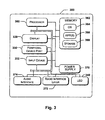
- FIG. 3 illustrates an example of a mobile device upon which embodiments of the invention may be implemented.
- the mobile device 300 may be a variety of possible devices including a cellular telephone, PDA, pager, or other device capable of communicating over a wireless network.
- the mobile device 300 includes a processor 360, a memory 362, a display 328, peripheral device port 330, and an input device 332.
- the memory 362 generally includes both volatile memory (e.g., RAM) and non-volatile memory (e.g., ROM, Flash Memory, or the like).
- the mobile device 300 includes an operating system 364, such as the Windows CE operating system from Microsoft Corporation or other operating system, which is resident in the memory 362 and executes on the processor 360.
- the input device 332 may be a push button numeric dialing pad (such as on a typical telephone), a multi-key keyboard (such as a conventional keyboard), or other type of input device.
- the display 328 may be a liquid crystal display, or any other type of display commonly used in mobile devices.
- the display 328 may be touch-sensitive, and would then also act as an input device.
- the peripheral device port 330 may be of the type to accept additional memory cards, game cards, modem cards, or other peripheral devices.
- One or more application programs 366 are loaded into memory 362 and run on the operating system 364. Examples of application programs include phone dialer programs, installation wizard programs, email programs, scheduling programs, PIM (personal information management) programs, word processing programs, spreadsheet programs, Internet browser programs, and so forth.
- the mobile device 300 also includes non-volatile storage 368 within the memory 362. The non-volatile storage 368 may be used to store persistent information which should not be lost if the mobile device 300 is powered down.
- the applications 366 may use and store information in the storage 368, such as e-mail or other messages used by an e-mail application, contact information used by a PIM, appointment information used by a scheduling program, documents used by a word processing program, device driver programs, and the like.
- the mobile device 300 has a power supply 370, which may be implemented as one or more batteries.
- the power supply 370 might further include an external power source, such as an AC adapter or a powered docking cradle that supplements or recharges the batteries.
- the mobile device 300 is also shown with two types of external notification mechanisms: an LED 340 and an audio interface 374. These devices may be directly coupled to the power supply 370 so that when activated, they remain on for a duration dictated by the notification mechanism even though the processor 360 and other components might shut down to conserve battery power.
- the LED 340 may be programmed to remain on indefinitely until the user takes action to indicate the powered-on status of the device.
- the audio interface 374 is used to provide audible signals to and receive audible signals from the user.
- the audio interface 374 may be coupled to a speaker for providing audible output and to a microphone for receiving audible input, such as to facilitate a telephone conversation.
- the mobile device 300 also includes a radio interface layer 372 that performs the function of transmitting and receiving radio frequency communications.
- the radio interface layer 372 facilitates wireless connectivity between the mobile device 300 and the outside world, via a communications carrier or service provider. Transmissions to and from the radio interface layer 372 are conducted under control of the operating system 364. In other words, communications received by the radio interface layer 372 may be disseminated to application programs 366 via the operating system 364, and vice versa.
- FIG. 4 illustrates the main functional components of a system for updating an on-device application catalog according to an embodiment of the present invention.
- This example includes a catalog server/application server 405, a network operator system 410 , and a mobile device 415.
- the mobile device 415 is connected with the network operator system 410 via the wireless network 425.
- the network operator system 410 in turn provides a connection to the Internet 420 through which the mobile device may communicate with the catalog server/application server 405 .
- the catalog server and application server are illustrated as a combined unit.
- the catalog server and application server may be one physical machine or a plurality of machines depending upon the implementation.
- the catalog server/application server 405 comprises an application catalog database 435, a push service module 430, and a website service module 440.
- the application catalog database 435 contains information related to the applications that are currently available on that catalog server/application server 405.
- the application catalog 435 may contain information such as title, author, a brief description, reviews, cost, a thumbnail screenshot, etc.
- the files containing each application such as the executable file or a compressed file containing the executable, may also be stored in the application catalog database 435.
- the files containing each application may be stored in another database within the catalog server/application server 405 or even external to but accessible by the catalog server/application server 405.
- the website service module 440 of the catalog server/application server 405 provides a number of web pages through which the application catalog database 435 may be accessed. That is, through one or more web pages presented by the website service module 440 a user of a mobile device or other system connected with the catalog server/application server 405 via the Internet 420 may browse, search, or perform other functions using the application catalog database 435 . For example, one web page presented by the website service module 440 may present a list of categories for applications in the application catalog database 435. Another web page may provide for a search of the application catalog database 435 using a keyword. One or even all of the pages may provide a "Send-to-a-Friend" option to send information about an application to one or more mobile devices.
- the push service module 430 of the catalog server/application server 405 may generate push messages to the mobile device 415 to initiate a download of an application from the application catalog database 435.
- the catalog server/application server 405 may receive a request for an application in a variety of ways. For example, the request may be automatically generated by the catalog server itself in response to some event happening. In other cases, a request may be received from a mobile device or other device accessing the application catalog database 435 via the website service module 440 . Once the request for an application has been received, the push service module 430 generates a push message based on the request and containing information from the application catalog database 435.
- the push message may include a destination phone number, user name, address and/or other information collected from the request as well as an application title, description, cost, thumbnail, etc. collected from the application catalog database 435.
- the push service module Once the push service module has generated the push message, it sends the message to the network operator system 410 through the website service module 440 and Internet 420.
- the network operator system 410 routes the push message to the mobile device 415 or devices for which it is intended. For example, the network operator system 410 may read the phone number or other identifying information in the push message in order to identify and location the mobile device 410 to which that message is addressed. The network operator system 410 may then transmit the push message over the wireless network 425 to the mobile device 415 .
- the mobile device 415 comprises an operating system 445, a browser 465, an application catalog 450, a vault module 455 and a search module 460.
- the operating system 445 of the mobile device 445 receives the push message and may notify the user of its receipt. For example, once the push message is received, the operating system 445 may open a window or provide another indication on a user interface of the mobile device 415 with a message that a new application is available. The user may then be allowed to view the information from the application catalog database 435 that was included in the push message by the catalog server/application server 405 and accept or reject the application. If the application is accepted, the operating system 445 will contact the catalog server/application server 405 and download or "pull" the application. Once the download is complete, the operating system 445 may install the application and update the on-device application catalog 450.
- the browser 465 that is executed on the operating system 445 of the mobile device 415 allows the user of the mobile device 415 to access the web pages provided by the website service module 440 of the catalog server/application server 405. Through the browser 465 a user of the mobile device 415 may view the contents of the application catalog database 435 and select an application for download. As mentioned above, the catalog server/application server 405, through the web pages presented by the website service module 440 may also allow the user of the mobile device 415 to select a "Send-to-a-Friend" option to cause the push message to be sent to a different mobile device. In this way, one mobile device can initiate a download of an application to a different mobile device or even multiple devices.
- the vault module 455 of the mobile device 415 provide a ''vault'' function that allows the user of the mobile device 415 to select one or more of the applications from the on-device application catalog 450 to be placed into a vault.
- the vault can be used to store data related to the application such as licensing information, high scores, a user's personal information, etc that may later be used to restore the application to a previous condition.
- placing an application into the vault comprises selecting an application from the on-device application catalog 450 , selecting a vault function, saving in a vault folder a set of permanent data related to the application, uninstalling the application, and deleting the application. Additional details of the vault function will be described below with reference to FIG. 9.
- the search module 460 of the mobile device 415 provides a search function that utilizes information provided to the on-device application catalog 450 by the catalog server/application server 405.
- the catalog server/application server 405 may periodically generate a list of categories for available applications such as games, entertainment, productivity, etc. Information related to these categories may be collected from the application catalog 435 on the catalog server/application server 405 and placed into a push message to be sent to one or more mobile devices.
- the mobile devices may be configured to automatically accept and cache such content. Then, a user of the mobile device may search the contents of these categories and use associated links to download applications from the catalog server. Details of the search function will be discussed below with reference to FIG. 11.
- a user of the mobile device 415 may browse and select an application from the on-device application catalog 450.
- the selected application catalog entry may then be "Sent-to-a-Friend" or other mobile device by the operating system 445 as will be discussed below.
- the logical operations of the various embodiments of the present invention are implemented (1) as a sequence of computer implemented acts or program modules running on a computing system and/or (2) as interconnected machine logic circuits or circuit modules within the computing system.
- the implementation is a matter of choice dependent on the performance requirements of the computing system implementing the invention. Accordingly, the logical operations making up the embodiments of the present invention described herein are referred to variously as operations, structural devices, acts or modules. It will be recognized by one skilled in the art that these operations, structural devices, acts and modules may be implemented in software, in firmware, in special purpose digital logic, and any combination thereof without deviating from the spirit and scope of the present invention as recited within the claims attached hereto.
- FIG. 5 is a flowchart illustrating updating an on-device application catalog according to an embodiment of the present invention.
- operation begins with receive operation 500 on the catalog server/application server.
- the catalog server and application server may be implemented separately as well.
- Receive operation 500 receives a request for an application identified in the application catalog stored on a catalog server.
- the request for an application may originate in a variety of ways.
- the catatog server may originate the request in response to the occurrence of some event.
- the request may be in response to a user selecting a "Send-to-a-Friend" option as will be described below with reference to FIG. 8.
- generate operation 505 generates a push message based on the request for the application and containing data from the application catalog stored on the catalog server.
- the push message may include a destination phone number, user name, address and/or other information collected from the request as well as an application title, description, cost, thumbnail, etc. collected from the application catalog database.
- Send operation 510 then sends the push message to one or more mobile devices designated in the request for the application.
- the catalog server sends the push message to the network operator which in turn transmits the message to the devices via thee wireless network.
- receive operation 515 receives the push message from the catalog server via the wireless network.
- read operation 520 reads the contents of the push message. Details of read operation 520 will be discussed below with reference to FIG. 7. Generally speaking, read operation 520 reads the application catalog data from the catalog server contained in the push message.
- Query operation 525 determines whether the application indicated by the push message should be accepted. This determination may be based on querying a user of the mobile device or may be made automatically by the mobile deice based on the nature of the push message. For example, if the push message indicates that the application is an upgrade for an application already installed on the mobile device, the mobile device may be configured to accept the application without querying the user. In another example, the device may be configured to pre-cache some content such as a list of the "Top Ten" applications, a list of application categories, or a list of applications based on a set of user preferences. Responsive to determining that the application should not be accepted, operation ends.
- request operation 530 sends a request for the application to the catalog server. In other words, the mobile device then pulls the application indicated in the push message.
- the application server upon receiving the pull message from the mobile device, the application server sends or downloads the application.
- the mobile device receives the application from a catalog server at receive operation 540.
- the mobile device installs the downloaded application.
- the installation may be initiated automatically upon completion of the download or may be done in response to a user command or acknowledgement of the download. However, in some cases, no installation is performed. For example, if pre-caching some content, the installation may be postponed until a user has a chance to accept or reject the content.
- Update operation 550 then updates the on-device application catalog to indicate the availability of the application for execution on the mobile device.
- FIG. 6 is a flowchart illustrating generating a push message according to the embodiment illustrated in FIG. 5.
- These operations may be performed by the catalog server or by a mobile device using the on-device application catalog.
- Read operation 600 reads request information indicating the application and a destination device for the push message. That is, a request for an application, regardless of where or how it originated, may be associated with a specific application. Further, the request also indicates the mobile device to which the push message will be sent. For example, if the request originated from a Send-to-a-Friend function, as will be described below, the user making the request selected an application an provided destination information.
- Read operation 605 then reads data from the application catalog related to the application. That is, the entry in the application catalog related to the selected application is read.
- generate operation 610 generates a push message header indicating the destination device for the push message.
- the push message may be in many different formats.
- the header of the message contains an indication of the destination mobile device such as a phone number or address. This data, from the request, will be added to the push message.
- Add operation 615 then adds the data from the application catalog to a body of the push message. That is, the application catalog data related to the requested application is added to the push message. In some cases all of the application catalog data will be added. In other cases only a portion of the application catalog data is added. In such a case, the mobile device receiving the push message may later read additional data as needed.
- FIG. 7 is a flowchart illustrating handling a push message according to the embodiment illustrated in FIG. 5.
- operation begins with read operation 700.
- Read operation 700 reads the information from the application catalog contained in the push message. That is, read operation 700 reads the application catalog data from the catalog server or on-device application catalog of another mobile device that was added to the push message.
- optional notification operation 705 presents the information from the application catalog read from the push message to a user of the mobile device for acceptance. That is, notification operation may open a window or provide another indication on a user interface of the mobile device with a message that a new application is available. The user may then be allowed to view the information that was included in the push message by the catalog server or other mobile device.
- the mobile device may be configured to accept some or all applications without notifications. For example, upgrades to previously installed application or information to be pre-cahced may be automatically accepted without any notification.
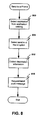
- FIG. 8 is a flowchart illustrating a "Send-to-a-Friend" feature for updating an on-device application catalog according to an embodiment of the present invention.
- These operations may be performed by the catalog server or by a mobile device to send information from an application catalog database on the catalog server or an on-device application catalog on the mobile device.
- operation begins with select operation 800.
- Select operation 800 receiving an indication of a selected application to be downloaded. That is, a user viewing a web page presented by the catalog server or the on-device application catalog of the user's mobile device may select an application from the application catalog by clicking a link, checking a checkbox, or manipulating some other type of control.
- select operation 805 receives an indication of selection of a send-to-a-friend option.
- the web pages presented by the catalog server for browsing, searching, or viewing the application catalog or the user interface of the mobile device may include a link, button, or other control for selecting a "Send-to-a-Friend" option. Select operation 805 detects the selection of such a control.
- Collect operation 810 collects destination information for the selected application to be downloaded. This collection may be performed by querying the user for information regarding the destination. For example, identifying information related to the destination mobile device such as a phone number, address, user name or other unique, identifying information may be collected through a form presented on a web page or through one or more pop-up windows, or in another manner.
- request/send operation 815 generates a request for the application through the catalog server or generates and sends a push message from the mobile device. That is, a message is generated, a routine is executed, a call is made, or in another way the catalog server is signaled that a request for an application has been received. This in turn may trigger the application download and updating of an on-device application catalog as described above with reference to FIG. 5.
- the catalog server generates a push message to the destination mobile device. If performed on a mobile device rather than a catalog server, the mobile device generates and sends the push message to the other mobile device
- FIG. 9 is a flowchart illustrating a "vault" feature for saving an application in an on-device application catalog according to an embodiment of the present invention.
- operation begins with select operation 900.
- Select operation 900 receives a selection of an application from the on-device application catalog. That is, the user of the mobile device selects from the on-device application catalog one or more of the applications to be moved to the vault.
- Copy operation 905 then copies permanent information from the selected application to a vault folder. That is, information related to the application that a user may wish to retain such as licensing information, high scores for games, set up information, etc. is copied to the vault. Also copied to the vault is a link to the original application on the catalog server. This link may later be used to download the application if the user chooses to reinstall the application.
- the vault folder may be part of the on-device application catalog or may be located in an application catalog database on a catalog server. That is, copying permanent information from the selected application to the vault folder may include sending that application to the catalog server. This allows information from the vault to be restored to a replacement mobile device in the event an original mobile device is lost or destroyed.
- Information to be saved in the vault folder may be configurable per application. That is, the application may, through various means, identify information to be saved. Alternatively, a comparison of the current files and keys for the application may be compared to an install manifest set when the application was first installed to determine which files and keys have changed. The changed files and keys may then be identified as those to be saved in the vault folder.
- uninstall operation 910 uninstalls the selected application and delete operation 915 deletes the application.
- an application selected from the on-device application catalog may be removed from the mobile device while retaining a set of permanent information. Then, if a user chooses to reinstall the application, operation may continue as shown in FIG. 10.
- FIG. 10 is a flowchart illustrating a vault feature for restoring an application in an on-device application catalog according to an embodiment of the present invention.
- Select operation 1000 receives a selection of a deleted application from the vault portion of the on-device application catalog. That is, while the application has been deleted, it may still be listed in the application catalog as "available.” Alternatively, deleted applications may be listed separate from the rest of the on-device application catalog or even listed as part of an application catalog database on a catalog server. Regardless of exactly how the applications are presented to the user, the user selects the application to be reinstalled.
- Download operation 1005 then downloads the selected application from the application server. Since the link to the application was saved in the vault, the mobile device can locate and download the application from the application server.
- install operation 1010 installs the application downloaded from the application server and copy operation 1015 copies the permanent information from the vault folder to the application. In this way, the application is restored to the same conditions it was in prior to the application being deleted.
- a catalog server may periodically, or in response to some event, generate and send a push message to one or more mobile devices.
- the catalog server may automatically generate a push message containing a list of categories for applications stored in the application catalog of the catalog server.
- information may be pre-cached on the mobile device in the on-device application catalog. This pre-cached information may then be conveniently used to search or browse rather than repeated accessing the catalog server application catalog.
- Pre-cached information may include a list of categories for available applications, a list of popular applications such as a "Top Ten" list, a list of new or recently added applications, a list of highlighted applications based on preferences of the user determined by his past downloads, etc. This information can then be used for an expedited search.
- FIG. 11 is a flowchart illustrating a search feature for use in connection with an on-device application catalog according to an embodiment of the present invention.
- operation begins with query operation 1105 .
- Query operation 1105 makes a determination as to whether to a search is to be performed based on pre-cached data or by one or more keywords. This determination may be made based on user input such as a user selecting a menu item. If a determination is made to search pre-cached data, search operation 1110 browses or searches the pre-cached data of the on-device application catalog.
- a search of the catalog server application catalog is performed in operations 1115-1135. These operations include input operation 1115 that receives a keyword or words from a user. A request message or query string is generated using the keyword(s) at generate operation 1020. Next, at send operation 1025, the request is sent to the catalog server. Receive operation 1030 receives search results from the catalog server and the results are displayed at display operation 1035.
Landscapes
- Engineering & Computer Science (AREA)
- Software Systems (AREA)
- Theoretical Computer Science (AREA)
- General Engineering & Computer Science (AREA)
- Physics & Mathematics (AREA)
- General Physics & Mathematics (AREA)
- Information Transfer Between Computers (AREA)
- Stored Programmes (AREA)
Applications Claiming Priority (2)
| Application Number | Priority Date | Filing Date | Title |
|---|---|---|---|
| US754878 | 1991-09-04 | ||
| US10/754,878 US7257583B2 (en) | 2004-01-09 | 2004-01-09 | System and method for updating an on-device application catalog in a mobile device receiving a push message from a catalog server indicating availability of an application for download |
Publications (2)
| Publication Number | Publication Date |
|---|---|
| EP1553492A2 true EP1553492A2 (de) | 2005-07-13 |
| EP1553492A3 EP1553492A3 (de) | 2007-10-31 |
Family
ID=34592608
Family Applications (1)
| Application Number | Title | Priority Date | Filing Date |
|---|---|---|---|
| EP05000251A Ceased EP1553492A3 (de) | 2004-01-09 | 2005-01-07 | Anwendungskatalog auf einem Gerät aktualisiert von Verwaltungsservern |
Country Status (5)
| Country | Link |
|---|---|
| US (1) | US7257583B2 (de) |
| EP (1) | EP1553492A3 (de) |
| JP (1) | JP4404781B2 (de) |
| KR (1) | KR100999267B1 (de) |
| CN (1) | CN1649300B (de) |
Cited By (4)
| Publication number | Priority date | Publication date | Assignee | Title |
|---|---|---|---|---|
| WO2007035548A1 (en) * | 2005-09-15 | 2007-03-29 | Qualcomm Incorporated | Techniques for managing applications in a portable communication device |
| WO2007086982A1 (en) * | 2006-01-25 | 2007-08-02 | The Boeing Company | Method for restoring software applications on desktop computers |
| WO2008029261A3 (en) * | 2006-09-06 | 2008-05-29 | Network Box Corp Ltd | A push update system |
| US9477944B2 (en) | 2012-04-30 | 2016-10-25 | International Business Machines Corporation | Asynchronous serialization for aggregating process results |
Families Citing this family (108)
| Publication number | Priority date | Publication date | Assignee | Title |
|---|---|---|---|---|
| JP2005267596A (ja) * | 2004-02-17 | 2005-09-29 | Kenji Fukuoka | 携帯電話のネットワーク接続システム |
| US7783729B1 (en) * | 2004-03-19 | 2010-08-24 | Single Touch Interactive, Inc. | Transmitting mobile device data |
| DK1786821T3 (da) * | 2004-07-19 | 2009-12-14 | Intercasting Corp | Dynamisk videnbaseret netværkningssystem og fremgangsmåde |
| US7254411B2 (en) * | 2004-09-24 | 2007-08-07 | Benq Corporation | Wireless data communication method |
| US20060101110A1 (en) * | 2004-10-14 | 2006-05-11 | Michael Grossman | Data interchange device |
| KR100615521B1 (ko) * | 2004-10-20 | 2006-08-25 | 삼성전자주식회사 | 실시간 오디오 파일 다운로드를 위한 이동 통신 단말 및그 방법 |
| JP2006135907A (ja) * | 2004-11-09 | 2006-05-25 | Nec Corp | 携帯電話機、携帯電話システム、メッセージ種別制御方法、メッセージ種別制御プログラム |
| ATE510376T1 (de) * | 2005-02-22 | 2011-06-15 | Nextair Corp | Ermöglichung von mobilgeräte-bewusstheit über die verfügbarkeit neuer oder aktualisierter serverseitiger anwendungen |
| US7822972B2 (en) * | 2005-04-05 | 2010-10-26 | Mcafee, Inc. | Remotely configurable bridge system and method for use in secure wireless networks |
| US7757274B2 (en) * | 2005-04-05 | 2010-07-13 | Mcafee, Inc. | Methods and systems for exchanging security information via peer-to-peer wireless networks |
| US7606370B2 (en) * | 2005-04-05 | 2009-10-20 | Mcafee, Inc. | System, method and computer program product for updating security criteria in wireless networks |
| US7761710B2 (en) | 2005-04-05 | 2010-07-20 | Mcafee, Inc. | Captive portal system and method for use in peer-to-peer networks |
| DE602006016763D1 (de) * | 2005-04-18 | 2010-10-21 | Research In Motion Ltd | Verfahren und system zur zentralisierten benutzerbenachrichtigung und anwendungsausführungssteuerung |
| JP2009509210A (ja) * | 2005-07-26 | 2009-03-05 | ラネトロ ゼド、ソシエダ アノニマ | アプリケーションを起動する方法 |
| KR100727993B1 (ko) * | 2005-10-04 | 2007-06-14 | 삼성전자주식회사 | 데이터 풀 방식을 이용한 데이터 푸시 서비스 방법 및시스템 |
| US9489187B2 (en) * | 2005-11-07 | 2016-11-08 | Yahoo, Inc. | Adaptive deployment of applications for mobile devices |
| US20070169079A1 (en) * | 2005-11-08 | 2007-07-19 | Microsoft Corporation | Software update management |
| JP2007226740A (ja) * | 2006-02-27 | 2007-09-06 | Kyocera Corp | 通信システム、ソフトウェア更新方法、通信装置、管理サーバ装置、およびプログラム |
| CN101449332B (zh) * | 2006-04-05 | 2012-09-26 | 晟碟以色列有限公司 | 数字内容操作的系统和方法 |
| US7636728B2 (en) * | 2006-06-22 | 2009-12-22 | Microsoft Corporation | Media difference files for compressed catalog files |
| US9418367B2 (en) * | 2006-08-21 | 2016-08-16 | International Business Machines Corporation | Context-aware code provisioning for mobile devices |
| TW200830181A (en) * | 2007-01-12 | 2008-07-16 | An Chen Comp Co Ltd | Mobile service device |
| US8156201B2 (en) * | 2007-02-20 | 2012-04-10 | Microsoft Corporation | Unifying discoverability of a website's services |
| US8065675B2 (en) * | 2007-03-21 | 2011-11-22 | Yahoo! Inc. | In-page installer |
| US8595186B1 (en) * | 2007-06-06 | 2013-11-26 | Plusmo LLC | System and method for building and delivering mobile widgets |
| US8726260B2 (en) * | 2007-11-26 | 2014-05-13 | Lenovo (Singapore) Pte Ltd | Techniques for providing software patches to a computer system |
| US8413138B2 (en) * | 2008-02-06 | 2013-04-02 | Mformation Software Technologies, Inc. | System and method to securely load a management client from a stub client to facilitate remote device management |
| US9753712B2 (en) | 2008-03-20 | 2017-09-05 | Microsoft Technology Licensing, Llc | Application management within deployable object hierarchy |
| US8099332B2 (en) | 2008-06-06 | 2012-01-17 | Apple Inc. | User interface for application management for a mobile device |
| US8266612B2 (en) * | 2008-10-03 | 2012-09-11 | Microsoft Corporation | Dynamic, customizable and configurable notification mechanism |
| EP2175614B1 (de) * | 2008-10-08 | 2013-04-10 | Research In Motion Limited | System und Verfahren zur Konfiguration einer Aktualisierungsfrequenz für Anwendungsaktualisierungen mobiler drahtloser Kommunikationsvorrichtungen und zugehörige Verfahren |
| CA2675351C (en) | 2008-10-08 | 2015-05-19 | Research In Motion Limited | Server for sending new application portions to mobile wireless communications devices and related methods |
| US20100088696A1 (en) * | 2008-10-08 | 2010-04-08 | Research In Motion Limited | Mobile wireless communications system providing downloading and installation of mobile device applications upon registration and related methods |
| US8745153B2 (en) | 2009-02-09 | 2014-06-03 | Apple Inc. | Intelligent download of application programs |
| KR101590188B1 (ko) * | 2009-05-08 | 2016-01-29 | 삼성전자주식회사 | 휴대단말기에서 소프트웨어 패키지의 무결성을 검증하는 방법 |
| JP4871373B2 (ja) | 2009-06-19 | 2012-02-08 | 任天堂株式会社 | 情報処理システムおよび情報処理装置 |
| US8521809B2 (en) * | 2009-07-31 | 2013-08-27 | Z2Live, Inc. | Mobile device notification controls system and method |
| WO2011021908A2 (en) * | 2009-08-21 | 2011-02-24 | Samsung Electronics Co., Ltd. | Application downloading method, application providing method, user terminal using the same |
| JP5674296B2 (ja) | 2009-09-09 | 2015-02-25 | 任天堂株式会社 | 情報処理システムおよび情報処理装置 |
| WO2011053312A1 (en) * | 2009-10-30 | 2011-05-05 | Hewlett-Packard Development Company, L.P. | Systems and methods of creating a restorable computer installation |
| US20110154135A1 (en) | 2009-12-22 | 2011-06-23 | Research In Motion Limited | Method, system and apparatus for installing software on a mobile electronic device via a proxy server |
| US8676991B2 (en) * | 2010-01-13 | 2014-03-18 | Qualcomm Incorporated | Signaling mechanisms and systems for enabling, transmitting and maintaining interactivity features on mobile devices in a mobile broadcast communication system |
| US20110177775A1 (en) * | 2010-01-13 | 2011-07-21 | Qualcomm Incorporated | Signaling mechanisms, templates and systems for creation and delivery of interactivity events on mobile devices in a mobile broadcast communication system |
| US20110177774A1 (en) * | 2010-01-13 | 2011-07-21 | Qualcomm Incorporated | Dynamic generation, delivery, and execution of interactive applications over a mobile broadcast network |
| US9032466B2 (en) * | 2010-01-13 | 2015-05-12 | Qualcomm Incorporated | Optimized delivery of interactivity event assets in a mobile broadcast communication system |
| US9485535B2 (en) * | 2010-01-13 | 2016-11-01 | Qualcomm Incorporated | Notification of interactivity event asset delivery sources in a mobile broadcast communication system |
| EP2378739B1 (de) | 2010-04-15 | 2015-04-01 | BlackBerry Limited | Verfahren und System zur Übertragung einer Anwendung an eine Vorrichtung |
| US8560299B2 (en) * | 2010-04-29 | 2013-10-15 | International Business Machines Corporation | Opening a message catalog file for a language that is not installed |
| CN102238017B (zh) * | 2010-05-07 | 2016-08-03 | 腾讯科技(深圳)有限公司 | 实现本地软件更新提醒的方法及系统 |
| US8914471B2 (en) | 2010-05-28 | 2014-12-16 | Qualcomm Incorporated | File delivery over a broadcast network using file system abstraction, broadcast schedule messages and selective reception |
| JP2011250874A (ja) | 2010-05-31 | 2011-12-15 | Nintendo Co Ltd | 情報処理プログラム、情報処理装置、情報処理システム及び情報処理方法 |
| JP5593566B2 (ja) | 2010-06-10 | 2014-09-24 | 任天堂株式会社 | 情報処理システム、情報処理装置、情報処理装置の制御方法および情報処理装置の制御プログラム |
| JP5677811B2 (ja) * | 2010-06-11 | 2015-02-25 | 任天堂株式会社 | 携帯型情報端末、携帯情報システム、携帯型情報端末制御プログラム |
| JP2012018657A (ja) | 2010-06-11 | 2012-01-26 | Nintendo Co Ltd | 情報処理端末、情報処理システム、情報処理プログラム |
| US9672022B2 (en) * | 2010-06-23 | 2017-06-06 | Microsoft Technology Licensing, Llc | Applications including multiple experience modules |
| JP4999213B2 (ja) | 2010-09-17 | 2012-08-15 | 任天堂株式会社 | 情報処理プログラム、携帯端末装置、システム、情報処理方法及び通信システム |
| US20120124561A1 (en) * | 2010-11-17 | 2012-05-17 | Sap Ag | Obtaining Notes for Software Objects |
| US9424002B2 (en) | 2010-12-03 | 2016-08-23 | Microsoft Technology Licensing, Llc | Meta-application framework |
| JP4882022B1 (ja) | 2010-12-28 | 2012-02-22 | 任天堂株式会社 | 通信システム、情報処理プログラム、情報処理方法、情報処理装置、情報処理システム |
| CN102694822A (zh) * | 2011-03-21 | 2012-09-26 | 联想(北京)有限公司 | 应用提供方法、应用下载方法、服务器设备和终端设备 |
| KR101233263B1 (ko) * | 2011-05-16 | 2013-02-14 | 에스케이텔레콤 주식회사 | 피드백 메시지를 이용한 푸시 서비스 제공 시스템 및 방법 |
| US20130013419A1 (en) * | 2011-07-08 | 2013-01-10 | Electronics And Telecommunications Research Institute | Application execution apparatus, application providing apparatus, and application distribution method using chaining of applications |
| US8707289B2 (en) | 2011-07-20 | 2014-04-22 | Google Inc. | Multiple application versions |
| US8856685B2 (en) * | 2011-07-28 | 2014-10-07 | Qualcomm Incorporated | Method and system for providing web content on a mobile device |
| US8788881B2 (en) * | 2011-08-17 | 2014-07-22 | Lookout, Inc. | System and method for mobile device push communications |
| US8701125B2 (en) | 2011-09-06 | 2014-04-15 | The Nielsen Company (Us), Llc | Methods and apparatus to detect uninstallation of an on-device meter |
| US9530156B2 (en) | 2011-09-29 | 2016-12-27 | Amazon Technologies, Inc. | Customizable uniform control user interface for hosted service images |
| US10147123B2 (en) | 2011-09-29 | 2018-12-04 | Amazon Technologies, Inc. | Electronic marketplace for hosted service images |
| US8776043B1 (en) * | 2011-09-29 | 2014-07-08 | Amazon Technologies, Inc. | Service image notifications |
| US9626700B1 (en) | 2011-09-29 | 2017-04-18 | Amazon Technologies, Inc. | Aggregation of operational data for merchandizing of network accessible services |
| GB201117052D0 (en) * | 2011-10-04 | 2011-11-16 | Daybees Ltd | Automated diary population |
| KR20130052374A (ko) * | 2011-11-11 | 2013-05-22 | 삼성전자주식회사 | 애플리케이션 정보 공유 시스템 및 방법 |
| KR101844512B1 (ko) * | 2011-11-18 | 2018-05-21 | 삼성전자주식회사 | 어플리케이션 이용 방법, 그를 이용한 게이트웨이, 그를 이용한 단말기, 및 그를 이용한 통신 시스템 |
| US9503520B2 (en) * | 2012-02-06 | 2016-11-22 | Conduit Ltd. | Application synchronization among multiple computing devices |
| US20140007215A1 (en) * | 2012-06-15 | 2014-01-02 | Lockheed Martin Corporation | Mobile applications platform |
| WO2014030199A1 (ja) * | 2012-08-20 | 2014-02-27 | 富士通株式会社 | シームレスアプリプッシュシステム及びその方法 |
| CN102983609B (zh) * | 2012-12-17 | 2015-07-15 | 百灵时代传媒集团有限公司 | 一种智能手持终端充电及软件更新方法及装置 |
| US20140172927A1 (en) * | 2012-12-19 | 2014-06-19 | Htc Corporation | File information processing method and portable device |
| CN103888934B (zh) * | 2012-12-21 | 2018-06-22 | 腾讯科技(深圳)有限公司 | 一种移动终端缓存管理装置及管理方法 |
| KR20140080923A (ko) * | 2012-12-21 | 2014-07-01 | 가온미디어 주식회사 | 개방형 앱스토어 기반의 통일화된 앱 정보 표시 방법 및 이를 위한 컴퓨터로 판독가능한 기록매체 |
| CN103092658B (zh) * | 2013-01-30 | 2016-08-03 | 广东欧珀移动通信有限公司 | 一种智能移动通信终端的应用程序安装方法、系统 |
| CN103152392B (zh) * | 2013-02-04 | 2016-04-27 | 小米科技有限责任公司 | 安装包提供方法、获取方法、设备及系统 |
| CN103279540A (zh) * | 2013-06-04 | 2013-09-04 | 北京小米科技有限责任公司 | 推送应用的方法和装置 |
| US9525991B2 (en) * | 2013-06-25 | 2016-12-20 | Actiontec Electronics, Inc. | Systems and methods for sharing digital information between mobile devices of friends and family using embedded devices |
| CN103338254B (zh) | 2013-06-28 | 2015-05-27 | 腾讯科技(深圳)有限公司 | 跨终端的应用推送方法、装置、终端及系统 |
| KR101370770B1 (ko) * | 2013-07-10 | 2014-03-06 | 주식회사 바이오스페이스 | 어플리케이션 다운로드 방법 및 시스템 |
| US9311407B2 (en) * | 2013-09-05 | 2016-04-12 | Google Inc. | Native application search results |
| US9507609B2 (en) | 2013-09-29 | 2016-11-29 | Taplytics Inc. | System and method for developing an application |
| CN103744691A (zh) * | 2013-12-10 | 2014-04-23 | 北京奇虎科技有限公司 | 用户终端间应用更新方法及装置、服务器、应用更新系统 |
| KR101651854B1 (ko) * | 2013-12-26 | 2016-08-30 | 주식회사 엘지유플러스 | 푸시 메시지를 이용한 소프트웨어 업그레이드 방법 및 장치 |
| US10540063B2 (en) * | 2014-01-27 | 2020-01-21 | Microsoft Technology Licensing, Llc | Processing actionable notifications |
| US10802681B2 (en) | 2014-01-27 | 2020-10-13 | Microsoft Technology Licensing, Llc | Actionable notifications |
| US9817646B1 (en) | 2014-03-17 | 2017-11-14 | Google Llc | Multiplatform and multichannel distribution of web applications across devices |
| CN103957234B (zh) * | 2014-03-31 | 2018-05-04 | 北京奇虎科技有限公司 | 浏览器中下载文件的发送方法和浏览器装置 |
| US10802811B2 (en) | 2015-04-14 | 2020-10-13 | Sony Corporation | Information processing device, information processing method, computer program, and server device |
| US9819670B2 (en) | 2015-06-18 | 2017-11-14 | Airwatch Llc | Distributing security codes through a restricted communications channel |
| US9851965B2 (en) | 2015-06-19 | 2017-12-26 | Microsoft Technology Licensing, Llc | Storing optimization for customization resources |
| US9843572B2 (en) * | 2015-06-29 | 2017-12-12 | Airwatch Llc | Distributing an authentication key to an application installation |
| US11567962B2 (en) * | 2015-07-11 | 2023-01-31 | Taascom Inc. | Computer network controlled data orchestration system and method for data aggregation, normalization, for presentation, analysis and action/decision making |
| US10069940B2 (en) | 2015-09-10 | 2018-09-04 | Microsoft Technology Licensing, Llc | Deployment meta-data based applicability targetting |
| US9965604B2 (en) | 2015-09-10 | 2018-05-08 | Microsoft Technology Licensing, Llc | De-duplication of per-user registration data |
| US9986054B2 (en) | 2015-11-19 | 2018-05-29 | Movren Management Limited | Enhanced push notification for alerts |
| US11012322B2 (en) * | 2018-06-29 | 2021-05-18 | Apple Inc. | Notification of service availability on a device |
| CN111367550A (zh) * | 2020-03-02 | 2020-07-03 | 深圳前海达闼云端智能科技有限公司 | 物联网管理系统、方法和设备 |
| JP6855621B1 (ja) * | 2020-05-07 | 2021-04-07 | 株式会社ヤプリ | アプリケーション管理プログラム、情報処理装置及びアプリケーション管理システム |
| KR102875308B1 (ko) | 2020-06-29 | 2025-10-23 | 바이두 온라인 네트웍 테크놀러지 (베이징) 캄파니 리미티드 | 애플릿의 음성 제어방법, 기기 및 저장매체 |
| CN112118134B (zh) * | 2020-09-11 | 2023-03-21 | 成都明途科技有限公司 | 一种消息推送方法及系统 |
| CN112925788B (zh) * | 2021-01-27 | 2025-03-14 | 上海商汤智能科技有限公司 | 一种数据集管理方法及系统、装置、电子设备和存储介质 |
Citations (5)
| Publication number | Priority date | Publication date | Assignee | Title |
|---|---|---|---|---|
| EP1248188A1 (de) | 2001-01-31 | 2002-10-09 | NTT DoCoMo, Inc. | SYSTEM ZUM SENDEN EINES PROGRAMMS ZU EINEM SPEICHERMODUL VON MOBILEN ENDGERäTE |
| US20020165976A1 (en) * | 2001-05-02 | 2002-11-07 | Jean-Charles Gonthier | Software deployment in a data communications network |
| WO2003010932A2 (en) | 2001-07-26 | 2003-02-06 | Kyocera Wireless Corporation | System and method for peer-to-peer handset communication |
| US20030032417A1 (en) | 2001-08-13 | 2003-02-13 | Brian Minear | System and method for temporary application component deletion and reload on a wireless device |
| US20050222918A1 (en) * | 2002-11-01 | 2005-10-06 | Marko Vanska | Disposable mini-applications |
Family Cites Families (41)
| Publication number | Priority date | Publication date | Assignee | Title |
|---|---|---|---|---|
| US6463463B1 (en) * | 1998-05-29 | 2002-10-08 | Research In Motion Limited | System and method for pushing calendar event messages from a host system to a mobile data communication device |
| US6708206B1 (en) * | 1999-06-15 | 2004-03-16 | Nokia Corporation | Apparatus, and associated method, for providing a client with messages |
| US6654755B1 (en) * | 2000-01-31 | 2003-11-25 | Nokia Corporation | Information management technique |
| US7065559B1 (en) * | 2000-02-17 | 2006-06-20 | Organon Wireless, Inc. | Media bridge method and apparatus |
| US7415537B1 (en) * | 2000-04-07 | 2008-08-19 | International Business Machines Corporation | Conversational portal for providing conversational browsing and multimedia broadcast on demand |
| US6996599B1 (en) * | 2000-06-21 | 2006-02-07 | Microsoft Corporation | System and method providing multi-tier applications architecture |
| JP4004776B2 (ja) * | 2000-11-27 | 2007-11-07 | シャープ株式会社 | 移動通信環境下のsmsと結合した無線受信機、無線プロトコルシステム、およびインターネット・コンテンツの配信方法 |
| JP2004530958A (ja) * | 2000-11-28 | 2004-10-07 | フォースパス インコーポレイテッド | 無線アプリケーションを保持および配信する方法およびシステム |
| US7529235B2 (en) * | 2000-12-06 | 2009-05-05 | Franklin Zhigang Zhang | Internet based time distributed message network system and personal mobile access device |
| EP1344353B1 (de) * | 2000-12-22 | 2014-11-19 | BlackBerry Limited | Drahtloses routersystem und verfahren |
| US7024382B2 (en) * | 2001-02-13 | 2006-04-04 | Jack Nelson | System and method for managing retail and wholesale operations |
| US6778834B2 (en) * | 2001-02-27 | 2004-08-17 | Nokia Corporation | Push content filtering |
| US6908389B1 (en) * | 2001-03-07 | 2005-06-21 | Nokia Corporation | Predefined messages for wireless multiplayer gaming |
| WO2002073926A1 (de) * | 2001-03-09 | 2002-09-19 | Ascio Technologies, Inc. | A system and a method for managing identities |
| US6915328B2 (en) * | 2001-03-17 | 2005-07-05 | Hewlett-Packard Development Company, L.P. | Web content format for mobile devices |
| US20020142763A1 (en) * | 2001-03-28 | 2002-10-03 | Kolsky Amir David | Initiating a push session by dialing the push target |
| US6983425B2 (en) * | 2001-03-30 | 2006-01-03 | Catherine Lin-Hendel | Short-cut icon vault |
| US6965913B2 (en) * | 2001-04-10 | 2005-11-15 | Virtel Corporation | System for pseudo-interactive internet access |
| EP1410601B1 (de) * | 2001-07-10 | 2017-02-08 | BlackBerry Limited | System und methode zum sicheren speichern von verschlüsselungsschlüsseln in einem mobilen kommunikationsgerät |
| US6990534B2 (en) * | 2001-07-20 | 2006-01-24 | Flowfinity Wireless, Inc. | Method for a proactive browser system for implementing background frame maintenance and asynchronous frame submissions |
| WO2003014867A2 (en) * | 2001-08-03 | 2003-02-20 | John Allen Ananian | Personalized interactive digital catalog profiling |
| US20030065738A1 (en) * | 2001-10-01 | 2003-04-03 | Thumb Logic, Inc. | Wireless information systems and methods |
| GB0128243D0 (en) * | 2001-11-26 | 2002-01-16 | Cognima Ltd | Cognima patent |
| WO2003079626A1 (en) * | 2002-03-20 | 2003-09-25 | Research In Motion Limited | System and method for checking digital certificate status |
| EP1347623A1 (de) * | 2002-03-22 | 2003-09-24 | Nokia Corporation | Herunterladen von Anwendungssoftware für eine Zusatzvorrichtung in ein mobiles Endgerät |
| JP2004021547A (ja) * | 2002-06-14 | 2004-01-22 | Buffalo Inc | 無線lan装置 |
| US20040203681A1 (en) * | 2002-07-01 | 2004-10-14 | Ross David J. | Application catalog on an application server for wireless devices |
| AU2003247009A1 (en) * | 2002-07-31 | 2004-02-23 | Truecontext Corporation | Contextual computing system |
| US20040078395A1 (en) * | 2002-10-17 | 2004-04-22 | Rinkevich Debora B. | System and method for synchronizing data between a mobile computing device and a remote server |
| US6941134B2 (en) * | 2002-12-19 | 2005-09-06 | Cingular Wireless Ii, Llc | Automated device behavior management based on preset preferences |
| US7139372B2 (en) * | 2003-03-07 | 2006-11-21 | July Systems, Inc | Authorized distribution of digital content over mobile networks |
| US7062260B2 (en) * | 2003-03-27 | 2006-06-13 | Nokia Corporation | Fetching application and driver for extension device from network |
| NO20031501L (no) * | 2003-04-02 | 2004-10-04 | Celljump Ltd | Frittstaende applikasjonsmodul |
| US20040259577A1 (en) * | 2003-04-30 | 2004-12-23 | Jonathan Ackley | System and method of simulating interactivity with a broadcoast using a mobile phone |
| EP1654640B1 (de) * | 2003-06-04 | 2018-08-01 | Qualcomm Incorporated | Netzwerk mit konfiguriebaren generatoren von software-aktualisierungen und mit mobilen elektronischen geräten, die ein konfigurierbares programm zum aktualisieren von software besitzen |
| US7130615B2 (en) * | 2003-09-10 | 2006-10-31 | Hewlett-Packard Development Company, L.P. | Software authentication for mobile communication devices |
| GB0321337D0 (en) * | 2003-09-11 | 2003-10-15 | Massone Mobile Advertising Sys | Method and system for distributing advertisements |
| EP1751999A1 (de) * | 2004-04-14 | 2007-02-14 | LG Electronics Inc. | System und verfahren für zusammenarbeitsmeldungen zwischen monilkommunikationsendgeräten |
| ATE381850T1 (de) * | 2004-07-16 | 2008-01-15 | Research In Motion Ltd | System und verfahren zur verwaltung von informationsobjekten in einem mobilgerät |
| US20060274869A1 (en) * | 2005-06-07 | 2006-12-07 | Yahoo! Inc. | Dynamically generating content based on capabilities of a mobile device |
| CA2513014A1 (en) * | 2005-07-22 | 2007-01-22 | Research In Motion Limited | A method of controlling delivery of multi-part content from an origin server to a mobile device browser via a proxy server |
-
2004
- 2004-01-09 US US10/754,878 patent/US7257583B2/en not_active Expired - Lifetime
-
2005
- 2005-01-06 KR KR1020050001080A patent/KR100999267B1/ko not_active Expired - Fee Related
- 2005-01-07 EP EP05000251A patent/EP1553492A3/de not_active Ceased
- 2005-01-10 CN CN2005100040601A patent/CN1649300B/zh not_active Expired - Lifetime
- 2005-01-11 JP JP2005004311A patent/JP4404781B2/ja not_active Expired - Lifetime
Patent Citations (5)
| Publication number | Priority date | Publication date | Assignee | Title |
|---|---|---|---|---|
| EP1248188A1 (de) | 2001-01-31 | 2002-10-09 | NTT DoCoMo, Inc. | SYSTEM ZUM SENDEN EINES PROGRAMMS ZU EINEM SPEICHERMODUL VON MOBILEN ENDGERäTE |
| US20020165976A1 (en) * | 2001-05-02 | 2002-11-07 | Jean-Charles Gonthier | Software deployment in a data communications network |
| WO2003010932A2 (en) | 2001-07-26 | 2003-02-06 | Kyocera Wireless Corporation | System and method for peer-to-peer handset communication |
| US20030032417A1 (en) | 2001-08-13 | 2003-02-13 | Brian Minear | System and method for temporary application component deletion and reload on a wireless device |
| US20050222918A1 (en) * | 2002-11-01 | 2005-10-06 | Marko Vanska | Disposable mini-applications |
Cited By (9)
| Publication number | Priority date | Publication date | Assignee | Title |
|---|---|---|---|---|
| WO2007035548A1 (en) * | 2005-09-15 | 2007-03-29 | Qualcomm Incorporated | Techniques for managing applications in a portable communication device |
| US7454607B2 (en) | 2005-09-15 | 2008-11-18 | Qualcomm Incorporated | Techniques for managing applications in a portable communication device |
| WO2007086982A1 (en) * | 2006-01-25 | 2007-08-02 | The Boeing Company | Method for restoring software applications on desktop computers |
| US8261253B2 (en) | 2006-01-25 | 2012-09-04 | The Boeing Company | Method for restoring software applications on desktop computers |
| US9213534B2 (en) | 2006-01-25 | 2015-12-15 | The Boeing Company | Method for restoring software applications on desktop computers |
| WO2008029261A3 (en) * | 2006-09-06 | 2008-05-29 | Network Box Corp Ltd | A push update system |
| AU2007293154B2 (en) * | 2006-09-06 | 2012-06-14 | Network Box Corporation Limited | A push update system |
| US8321540B2 (en) | 2006-09-06 | 2012-11-27 | Network Box Corporation Limited | Push update system |
| US9477944B2 (en) | 2012-04-30 | 2016-10-25 | International Business Machines Corporation | Asynchronous serialization for aggregating process results |
Also Published As
| Publication number | Publication date |
|---|---|
| US7257583B2 (en) | 2007-08-14 |
| KR20050073552A (ko) | 2005-07-14 |
| CN1649300B (zh) | 2013-06-12 |
| CN1649300A (zh) | 2005-08-03 |
| JP2005251167A (ja) | 2005-09-15 |
| US20050154759A1 (en) | 2005-07-14 |
| KR100999267B1 (ko) | 2010-12-07 |
| JP4404781B2 (ja) | 2010-01-27 |
| EP1553492A3 (de) | 2007-10-31 |
Similar Documents
| Publication | Publication Date | Title |
|---|---|---|
| US7257583B2 (en) | System and method for updating an on-device application catalog in a mobile device receiving a push message from a catalog server indicating availability of an application for download | |
| RU2608668C2 (ru) | Система и способ управления и организации кэша веб-браузера для обеспечения автономного просмотра | |
| CN101611422B (zh) | web数据使用平台 | |
| US9098363B2 (en) | Search extensibility to third party applications | |
| CN1799051B (zh) | 使用页面存储文件浏览内容的方法 | |
| CN112765104B (zh) | 文件保存方法、装置、设备及存储介质 | |
| CN101490679B (zh) | 个性化搜索标引的方法 | |
| US20180373685A9 (en) | Distributed document co-authoring and processing | |
| US20090055398A1 (en) | Retrieving mobile user context information using tokenized virtual dictionaries | |
| US7130871B2 (en) | Method and apparatus for representing deleted data in a synchronizable database | |
| WO2008141583A1 (en) | Character input method, input system and method for updating word lexicon | |
| EP2553613A1 (de) | Verfahren und vorrichtung für einen tragbaren index auf einem entnehmbaren speichermedium | |
| US8589376B2 (en) | Method and apparatus to search data and notify and update a user | |
| US20070157100A1 (en) | System and method for organization and retrieval of files | |
| CN101116254B (zh) | 具有管理文件和文件夹功能的移动终端 | |
| US8825717B2 (en) | Configurable offline data store | |
| CN113760349B (zh) | 镜像升级方法和装置 | |
| KR100699779B1 (ko) | 사용자 단말기의 바탕화면에 설치된 아이콘을 갱신하는방법 및 그 시스템 | |
| CN114896206B (zh) | 一种对象存储文件系统的检索方法和装置 | |
| CN109918153B (zh) | 页面打开方法和装置、页面内容检索方法和装置 | |
| JP2003016100A (ja) | 情報送受信システム及び情報送受信プログラムを記録した記録媒体 | |
| KR101240096B1 (ko) | 이동통신 단말기의 자바 애플리케이션 관리 방법 | |
| CN120144542A (zh) | 一种日志检索方法、设备、介质及计算机程序产品 | |
| JP2023176448A (ja) | 情報処理装置、情報処理システム、情報処理方法及びプログラム | |
| CN116048601A (zh) | 软件版本信息同步方法、系统及装置 |
Legal Events
| Date | Code | Title | Description |
|---|---|---|---|
| PUAI | Public reference made under article 153(3) epc to a published international application that has entered the european phase |
Free format text: ORIGINAL CODE: 0009012 |
|
| AK | Designated contracting states |
Kind code of ref document: A2 Designated state(s): AT BE BG CH CY CZ DE DK EE ES FI FR GB GR HU IE IS IT LI LT LU MC NL PL PT RO SE SI SK TR |
|
| AX | Request for extension of the european patent |
Extension state: AL BA HR LV MK YU |
|
| PUAL | Search report despatched |
Free format text: ORIGINAL CODE: 0009013 |
|
| AK | Designated contracting states |
Kind code of ref document: A3 Designated state(s): AT BE BG CH CY CZ DE DK EE ES FI FR GB GR HU IE IS IT LI LT LU MC NL PL PT RO SE SI SK TR |
|
| AX | Request for extension of the european patent |
Extension state: AL BA HR LV MK YU |
|
| 17P | Request for examination filed |
Effective date: 20071119 |
|
| AKX | Designation fees paid |
Designated state(s): AT BE BG CH CY CZ DE DK EE ES FI FR GB GR HU IE IS IT LI LT LU MC NL PL PT RO SE SI SK TR |
|
| 17Q | First examination report despatched |
Effective date: 20110418 |
|
| RAP1 | Party data changed (applicant data changed or rights of an application transferred) |
Owner name: MICROSOFT TECHNOLOGY LICENSING, LLC |
|
| STAA | Information on the status of an ep patent application or granted ep patent |
Free format text: STATUS: THE APPLICATION HAS BEEN REFUSED |
|
| 18R | Application refused |
Effective date: 20181209 |