EP1549079B1 - Appareil et méthode pour la dissimulation d'un bloc perdu dans un système de transmission d'images - Google Patents
Appareil et méthode pour la dissimulation d'un bloc perdu dans un système de transmission d'images Download PDFInfo
- Publication number
- EP1549079B1 EP1549079B1 EP20040029464 EP04029464A EP1549079B1 EP 1549079 B1 EP1549079 B1 EP 1549079B1 EP 20040029464 EP20040029464 EP 20040029464 EP 04029464 A EP04029464 A EP 04029464A EP 1549079 B1 EP1549079 B1 EP 1549079B1
- Authority
- EP
- European Patent Office
- Prior art keywords
- block
- lost block
- cos
- lost
- value
- Prior art date
- Legal status (The legal status is an assumption and is not a legal conclusion. Google has not performed a legal analysis and makes no representation as to the accuracy of the status listed.)
- Expired - Lifetime
Links
Images

Classifications
-
- H—ELECTRICITY
- H04—ELECTRIC COMMUNICATION TECHNIQUE
- H04N—PICTORIAL COMMUNICATION, e.g. TELEVISION
- H04N19/00—Methods or arrangements for coding, decoding, compressing or decompressing digital video signals
- H04N19/85—Methods or arrangements for coding, decoding, compressing or decompressing digital video signals using pre-processing or post-processing specially adapted for video compression
- H04N19/89—Methods or arrangements for coding, decoding, compressing or decompressing digital video signals using pre-processing or post-processing specially adapted for video compression involving methods or arrangements for detection of transmission errors at the decoder
- H04N19/895—Methods or arrangements for coding, decoding, compressing or decompressing digital video signals using pre-processing or post-processing specially adapted for video compression involving methods or arrangements for detection of transmission errors at the decoder in combination with error concealment
-
- H—ELECTRICITY
- H04—ELECTRIC COMMUNICATION TECHNIQUE
- H04N—PICTORIAL COMMUNICATION, e.g. TELEVISION
- H04N19/00—Methods or arrangements for coding, decoding, compressing or decompressing digital video signals
- H04N19/10—Methods or arrangements for coding, decoding, compressing or decompressing digital video signals using adaptive coding
- H04N19/134—Methods or arrangements for coding, decoding, compressing or decompressing digital video signals using adaptive coding characterised by the element, parameter or criterion affecting or controlling the adaptive coding
- H04N19/136—Incoming video signal characteristics or properties
- H04N19/137—Motion inside a coding unit, e.g. average field, frame or block difference
-
- H—ELECTRICITY
- H04—ELECTRIC COMMUNICATION TECHNIQUE
- H04N—PICTORIAL COMMUNICATION, e.g. TELEVISION
- H04N19/00—Methods or arrangements for coding, decoding, compressing or decompressing digital video signals
- H04N19/10—Methods or arrangements for coding, decoding, compressing or decompressing digital video signals using adaptive coding
- H04N19/134—Methods or arrangements for coding, decoding, compressing or decompressing digital video signals using adaptive coding characterised by the element, parameter or criterion affecting or controlling the adaptive coding
- H04N19/142—Detection of scene cut or scene change
-
- H—ELECTRICITY
- H04—ELECTRIC COMMUNICATION TECHNIQUE
- H04N—PICTORIAL COMMUNICATION, e.g. TELEVISION
- H04N19/00—Methods or arrangements for coding, decoding, compressing or decompressing digital video signals
- H04N19/10—Methods or arrangements for coding, decoding, compressing or decompressing digital video signals using adaptive coding
- H04N19/134—Methods or arrangements for coding, decoding, compressing or decompressing digital video signals using adaptive coding characterised by the element, parameter or criterion affecting or controlling the adaptive coding
- H04N19/164—Feedback from the receiver or from the transmission channel
- H04N19/166—Feedback from the receiver or from the transmission channel concerning the amount of transmission errors, e.g. bit error rate [BER]
-
- H—ELECTRICITY
- H04—ELECTRIC COMMUNICATION TECHNIQUE
- H04N—PICTORIAL COMMUNICATION, e.g. TELEVISION
- H04N19/00—Methods or arrangements for coding, decoding, compressing or decompressing digital video signals
- H04N19/10—Methods or arrangements for coding, decoding, compressing or decompressing digital video signals using adaptive coding
- H04N19/169—Methods or arrangements for coding, decoding, compressing or decompressing digital video signals using adaptive coding characterised by the coding unit, i.e. the structural portion or semantic portion of the video signal being the object or the subject of the adaptive coding
- H04N19/17—Methods or arrangements for coding, decoding, compressing or decompressing digital video signals using adaptive coding characterised by the coding unit, i.e. the structural portion or semantic portion of the video signal being the object or the subject of the adaptive coding the unit being an image region, e.g. an object
- H04N19/176—Methods or arrangements for coding, decoding, compressing or decompressing digital video signals using adaptive coding characterised by the coding unit, i.e. the structural portion or semantic portion of the video signal being the object or the subject of the adaptive coding the unit being an image region, e.g. an object the region being a block, e.g. a macroblock
-
- H—ELECTRICITY
- H04—ELECTRIC COMMUNICATION TECHNIQUE
- H04N—PICTORIAL COMMUNICATION, e.g. TELEVISION
- H04N19/00—Methods or arrangements for coding, decoding, compressing or decompressing digital video signals
- H04N19/50—Methods or arrangements for coding, decoding, compressing or decompressing digital video signals using predictive coding
- H04N19/503—Methods or arrangements for coding, decoding, compressing or decompressing digital video signals using predictive coding involving temporal prediction
- H04N19/51—Motion estimation or motion compensation
Definitions
- the present invention relates to a video processing technique, and more particularly to an apparatus and method for recovering a lost block of an image processing system that applies a different error concealment method according to characteristics of a lost block.
- Video includes several frames each with different screen characteristics and motion degree. Further, each frame includes macroblocks with a size of 16x16 pixels, for example, which is the unit of image coding.
- video is compressed using a DCT (Discrete Cosine Transform) technique, a variable length coding technique, a motion compensation coding technique, etc. and if a video block is lost due to an error generated during the coding process or during the transmission process, the picture quality of a restored image is degraded.
- DCT Discrete Cosine Transform
- one object of the present invention is to at least address the above-noted and other objects.
- Another object of the present invention is to automatically determine the characteristics of an image block lost during transmission and apply an error concealment method most suitable for the characteristics of an image block by a receiving side.
- the present invention provides a novel apparatus for recovering a lost block according to independent apparatus claim.
- the present invention also provides a novel method for processing a lost block according to the independent method claim.
- Figure 1 is a block diagram of an apparatus for recovering a lost block of an image processing system according to the present invention.
- the apparatus includes a lost block detector 10 for determining whether there is a lost block in transmitted video blocks; a pixel difference calculator 20 for calculating a temporal difference value (cos t 1 ) between adjacent pixels of a current frame and a previous frame when a lost block is detected by the lost block detector 10; and a variance value calculator 30 for calculating a variance value (cos t 2 ) with respect to a motion vector of a neighboring block with respect to the lost block when the lost block is detected by the lost block detector 10.
- a block characteristic determining unit 40 for determining the characteristics of the lost block by comparing the inter-pixel temporal difference value (cos t 1 ) and the motion vector variance value (cos t 2 ) with a pre-set threshold value; and a lost block recovering unit 50 for recovering the corresponding lost block by applying an error concealment method according to the characteristics of the lost block determined in the block characteristics determining unit 40.
- the pixel difference calculator 20 calculates the temporal difference value (cos t 1 ) between the adjacent pixels of the lost block from the current frame and the previous frame using equations (1) and (2) shown below.
- the cost function is defined by the number of pixels, adjacent to the lost block, that are greater than a certain threshold value when pixels of a previous frame and pixels of a current frame are compared.
- Diff i Diff i ⁇ 1 if ⁇ curr i - prev i ⁇ Threshold diff 1 0 otherwise 2
- curr i is pixel values around the lost block and prev i is pixel values around a block placed at the same position as the current lost block of the previous frame.
- a small temporal difference value (cos t 1 ) between pixels means there is not much change in the lost block in the previous frame and the current frame.
- a large temporal difference value (cos t 1 ) between the pixels means the motion of the lost block is big or a screen switch has occurred.
- a small motion vector variance value (cos t 2 ) means that seven motion vectors around the lost block have similar values and a large motion vector variance value (cos t 2 ) means that motion vectors are distributed so wide that a motion of a neighboring block is not uniform.
- the block characteristics determining unit 40 determines characteristics of the lost block by comparing the temporal difference value (cos t 1 ) between pixels and the motion vector variance value (cos t 2 ) with a pre-set threshold value.
- the characteristics of the lost block can be classified into five types, for example, including 'scene change', 'object moving', 'no movement', 'camera moving' and 'otherwise' types.
- the 'scene change' type is a block where a scene change has occurred between frames
- the 'object moving' type is a block where there is a subject moving without directionality.
- the 'no movement' type is a block where there is little motion like the background of a still camera image
- the 'camera moving' type is a block where an image has a similar motion on the whole as if the camera moved.
- the 'otherwise' type is a block that does not belong to the above four classification types.
- Table 1 shows threshold values of making a reference in determining characteristics of a lost block by the block characteristics determining unit 40. Each threshold value is statistically calculated value using the above equations (1) (4).
- Table 1 COS t 1 COS t 2 Scene change COS t 1 ⁇ 60 - Camera moving COS t 1 ⁇ 30 COS t 2 ⁇ 50 Object moving COS t 1 ⁇ 30 COS t 2 ⁇ 150 No movement COS t 1 ⁇ 25 COS t 2 ⁇ 25 Otherwise Otherwise Otherwise Otherwise
- the block characteristics determining unit 40 calculates the inter-pixel temporal difference value (cos t 1 ) of the lost block and the motion vector variance value (cos t 2 ), and then determines whether a threshold value range cost function is identical to determine the characteristics of the lost block.
- Figure 2 is a graph showing a distribution of the characteristics of each lost block defined in Table 1. As shown, a lost block having a little motion or a little difference between a current frame and a previous frame is distributed at a lower portion of the left side, and a lost block having a large motion or a large temporal difference between screens is distributed at an upper portion of the right side. The characteristics for the 'object moving' and 'camera moving' types are also shown.
- the lost block recovering unit 50 recovers a corresponding lost block by applying an optimum error concealment method according to characteristics of the lost block determined in the block characteristics determining unit 40.
- the error concealment method conceals an error using neighboring information of the lost block during a processing of decoding image data and classified into temporal replacement concealment, spatial concealment, and motion compensated temporal concealment depending on the type of information.
- Table 2 shows examples of optimum error concealment methods according to characteristics of the lost block. Table 2 Characteristics of lost blocks Error concealment Scene change Spatial concealment Camera moving Motion compensated temporal concealment Object moving Spatial concealment No movement Temporal replacement concealment Otherwise Motion compensated temporal concealment
- the corresponding lost block is recovered using the spatial concealment method. Further, if the characteristic of the lost block is the 'no movement' type, the lost block is recovered using the temporal replacement concealment method, and if the lost block is the 'camera moving' type, the error of the corresponding lost block is recovered using the motion compensated temporal concealment method.
- the spatial concealment method is applied, while if there is much correlation between image screens, the temporal replacement concealment method is applied.
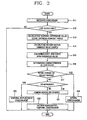
- FIG. 3 is a flowchart of a method for recovering a lost block of an image processing system according to the present invention. As shown, when an image frame is received from a sending side (not shown) (step S11), the lost block detector 10 determines whether there. is a lost block in the image frame (step S12).
- a lost block of the image frame is detected (yes in step S12), a temporal difference value (cos t 1 ) between pixels adjacent to the lost block of the current image frame and pixels existing at the same positions of the previous image frame is calculated (step S13). Then, a motion vector variance value (cos t 2 ) of a neighboring block with respect to the lost block in a current image frame (step S14) is calculated.
- the inter-pixel temporal difference value (cos t 1 ) is calculated using equations (1) and (2), while the motion vector variance value (cos t 2 ) is calculated using equations (3) and (4).
- the block characteristics determining unit 40 determines the characteristics of the lost block (step S16) by comparing the temporal difference value (cos t 1 ) between pixels and the variance value (cos t 2 ) of the motion vector with the pre-set threshold values (step S15).
- the pre-set threshold value may be obtained by statistically analyzing a relation between the characteristics of the four types of lost blocks and the cost function through experimentation, for example.
- the pre-set threshold values are as shown in Table 1.
- the characteristics of the lost block is determined as a 'no movement' type. If the inter-pixel temporal difference value (cos t 1 ) is equal to or smaller than a second threshold value (T2) and the variance value (cos t 2 ) of the motion vector is equal to or smaller than a third threshold value (T3), the characteristics of the lost block is determined as a 'camera moving' type.
- the inter-pixel temporal difference value (cos t 1 ) is equal to or greater than the second threshold value (T2) and the variance value (cos t 2 ) of the motion vector is equal to or greater than a fifth threshold value (T5), the characteristics of the lost block is determined as a 'object moving' type. Also, if the inter-pixel temporal difference value (cos t 1 ) is equal to or greater than a fourth threshold value (T4), the characteristics of the lost block is determined as a 'screen change' type (T1 ⁇ T2 ⁇ T3 ⁇ T4 ⁇ T5).
- the lost block recovering unit 50 then recovers the corresponding lost block by applying the optimum error concealment method according to characteristics of the lost block determined by the block characteristics determining unit.
- the optimum error concealment method by characteristics of the lost block is as shown in Table 2.
- the corresponding lost block is recovered using the spatial concealment (step S18). If the characteristics of the lost block is determined as a 'no movement' (yes in step S19), the corresponding lost block is recovered using the temporal replacement concealment method (step S20), because the block of the current frame and the block of the previous frame are quite similar. If the characteristics of the lost block is determined as a 'camera moving' type (step S21), an error of the corresponding lost block is recovered using the motion compensated temporal concealment method (step S22), because the motion of the lost block and the motion of the neighboring blocks are almost the same.
- the spatial concealment is a method for recovering the lost block through linear interpolation from adjacent pixels of the lost block
- the temporal replacement concealment is a method for recovering the lost block by substituting it with a block placed at the same position of the previous frame.
- the motion compensated temporal concealment is a method for recovering the lost block by searching a block at the most suitable position in the previous frame using a motion vector that can be restored around the lost block and substituting it with the corresponding suitable block.
- the motion vector of a neighboring block of the lost block is detected, and an intermediate value between the motion vectors is calculated and set as a motion vector of the lost block.
- the spatial concealment method has a high efficiency of error recovery when there is little correlation between image screens, while the temporal replacement concealment method has a high efficiency of error recovery when there is much correlation between image screens.
- the optimum error concealment method is applied according to such characteristics of the lost block.
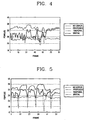
- FIGS 4 to 5 show a simulation result comparing a performance of the apparatus and method for recovering a lost block of an image processing system according to the present invention.
- an H.263 code was used, the size of an image was QCIF and CIF, and the target bit rates of QCIF and CIF were 112 Kbps and 322 Kbps, respectively.
- Figure 4 is a graph showing PSNRs (Peak Signal-to-Noise Ratios) of each frame of a foreman image, in which the temporal replacement concealment and the spatial concealment methods where flexibly applied.
- PSNRs Peak Signal-to-Noise Ratios
- the performance of the temporal replacement concealment is good in most frames but the performance of the spatial concealment method is good in some frames with big motion.
- the spatial concealment method not the temporal replacement concealment method, is applied to the frame where performance of the spatial concealment method is good.
- the PSNR indicates an objective evaluation of picture quality of a restored image, which means that the higher the PNSR, the higher the preservation rate of an origination image.
- Figure 5 is a graph showing PSNRs of each frame of a mixed image, in which the portion where the PSNR changes rapidly is where a 'scene change' occurs.
- the spatial concealment method is applied, and the temporal replacement concealment method is applied to the remaining portions.
- the apparatus and method for recovering a lost block of an image processing system of the present invention has many advantages.
Landscapes
- Engineering & Computer Science (AREA)
- Multimedia (AREA)
- Signal Processing (AREA)
- Compression Or Coding Systems Of Tv Signals (AREA)
- Compression, Expansion, Code Conversion, And Decoders (AREA)
Claims (15)
- Appareil pour la récupération d'un bloc perdu d'une image comprenant :un détecteur de bloc perdu configuré pour déterminer s'il y a un bloc perdu dans un bloc d'image reçu ;un calculateur de différence de pixels configuré pour calculer une valeur de différence temporelle (cost 1) entre pixels adjacents au bloc perdu d'une trame courante et les pixels adjacents à un bloc d'une trame précédente et placé à la même position que le bloc perdu dans la trame courante ;un calculateur de valeur de variance configuré pour calculer une valeur de variance de vecteur de mouvement (cost 2) de blocs adjacents au bloc perdu ;une unité de détermination de caractéristiques de bloc configurée pour déterminer des caractéristiques du bloc perdu en comparant la valeur de différence temporelle (cost 1) et la valeur de variance de vecteur de mouvement (cost 2) avec une valeur de seuil prédéfini ; etune unité de récupération de bloc perdu configurée pour récupérer le bloc perdu en appliquant un procédé de dissimulation d'erreur sur la base des caractéristiques déterminées du bloc perdu ;dans lequel le calculateur de différence de pixels est configuré pour calculer la valeur de différence temporelle (cost 1) entre les pixels en utilisant les équations suivantes :

et dans lesquelles curri est une valeur de pixels autour du bloc perdu et previ est la valeur de pixels autour du bloc de la trame précédente placé à la même position que le bloc perdu dans la trame courante ;dans lequel l'appareil est adapté de telle manière que si la valeur de différence temporelle (cost 1) entre les pixels et la valeur de variance de vecteur de mouvement (cost 2) sont égales ou inférieures à une première valeur de seuil (T1), l'unité de détermination de caractéristiques de bloc détermine les caractéristiques du bloc perdu comme un premier type ;si la valeur de différence temporelle (cost 1) entre les pixels est égale ou supérieure à une deuxième valeur de seuil (T2) et la valeur de variance de vecteur de mouvement (cost 2) est égale ou inférieure à une troisième valeur de seuil (T3), l'unité de détermination de caractéristiques de bloc détermine les caractéristiques du bloc perdu comme un deuxième type ;si la valeur de différence temporelle (cost 1) entre les pixels est égale ou supérieure à la deuxième valeur de seuil (T2) et la valeur de variance de vecteur de mouvement (cost 2) est égale ou supérieure à une cinquième valeur de seuil (T5), l'unité de détermination de caractéristiques de bloc détermine les caractéristiques du bloc perdu comme un troisième type ; etsi la valeur de différence temporelle (cost 1) entre les pixels est égale ou supérieure à une quatrième valeur de seuil (T4), l'unité de détermination de caractéristiques de bloc détermine les caractéristiques du bloc perdu comme un quatrième type ;où T1 < T2 < T3 < T4 < T5;dans lequel le premier type est un bloc avec peu de mouvement, le deuxième type est un bloc ayant une image avec un mouvement similaire globalement, le troisième type est un bloc ayant un sujet se déplaçant sans orientation certaine, et le quatrième type est un bloc dans lequel un changement de scène a eu lieu entre trames d'images ; etdans lequel le procédé de dissimulation d'erreur comprend :un premier procédé pour récupérer le bloc perdu en utilisant un procédé temporel ;un deuxième procédé pour récupérer le bloc perdu en utilisant un procédé spatial ; etun troisième procédé pour récupérer le bloc perdu en utilisant un procédé temporel de dissimulation d'erreur en considérant le mouvement.
 - Appareil selon la revendication 1, dans lequel le calculateur de valeur de variance est adapté à calculer la valeur de variance de vecteur de mouvement en utilisant les équations suivantes :

et
dans lesquelles MVix et MViy sont des composantes horizontale et verticale de MVi, respectivement. - Appareil selon la revendication 1 ou 2, dans lequel T1 est 25, T2 est 30, T3 est 50, T4 est 60 et/ou T5 est 150.
- Appareil selon l'une quelconque des revendications 1 à 3, dans lequel l'unité de récupération de bloc perdu est en outre adaptée à appliquer le premier procédé lorsque le bloc perdu a peu de mouvement.
- Appareil selon l'une quelconque des revendications 1 à 4, dans lequel l'unité de récupération de bloc perdu est en outre adaptée à appliquer le deuxième procédé lorsque le bloc perdu a un sujet se déplaçant sans orientation certaine ou bien le bloc perdu est un bloc dans lequel un changement de scène a lieu entre les trames d'images.
- Appareil selon l'une quelconque des revendications 1 à 5, dans lequel l'unité de récupération de bloc perdu est en outre adaptée à appliquer le troisième procédé lorsque le bloc perdu a une image ayant un mouvement similaire globalement.
- Procédé pour la récupération d'un bloc perdu d'une image comprenant :le contrôle s'il y a un bloc perdu dans une trame d'image transmise ;le calcul d'une valeur de différence temporelle (cost 1) entre pixels adjacents au bloc perdu d'une trame courante et les pixels adjacents à un bloc d'une trame précédente et placé à la même position que le bloc perdu dans la trame courante ;le calcul d'une valeur de variance de vecteur de mouvement (cost 2) d'un bloc voisin du bloc perdu ;la comparaison de la valeur de différence temporelle (cost 1) entre les pixels et la valeur de variance de vecteur de mouvement (cost 2) avec une valeur de seuil prédéfini ;la détermination de caractéristiques du bloc perdu en fonction d'un résultat de la comparaison de la valeur de différence temporelle (cost 1) et de la valeur de variance de vecteur de mouvement (cost 2) avec le seuil prédéfini ; etla récupération du bloc perdu correspondant en appliquant un procédé de dissimulation d'erreur sur la base des caractéristiques déterminées du bloc perdu ;dans lequel la valeur de différence temporelle (cost 1) entre les pixels est calculée en utilisant les équations suivantes :
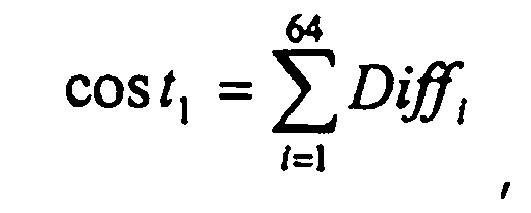
et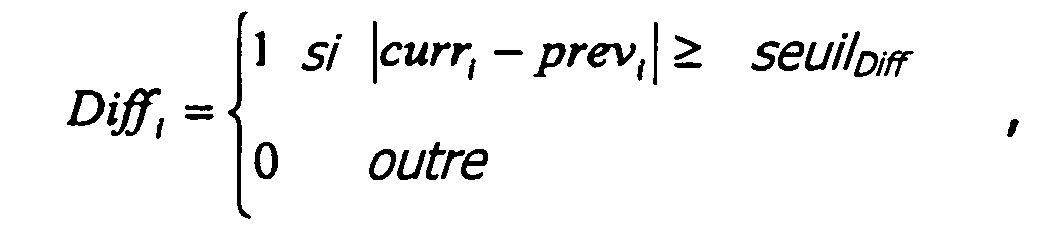 dans lesquelles curri est une valeur de pixels autour du bloc perdu et prev¡ est la valeur de pixels autour du bloc de la trame précédente placé à la même position que le bloc perdu dans la trame courante ;dans lequel la détermination des caractéristiques du bloc perdu comprend :la détermination des caractéristiques du bloc perdu comme un premier type si la valeur de différence temporelle (cost 1) entre les pixels et la valeur de variance de vecteur de mouvement (cost 2) sont égales ou inférieures à une première valeur de seuil (T1) ;la détermination des caractéristiques du bloc perdu comme un deuxième type si la valeur de différence temporelle (cost 1) entre les pixels est égale ou supérieure à une deuxième valeur de seuil (T2) et la valeur de variance de vecteur de mouvement (cost 2) est égale ou inférieure à une troisième valeur de seuil (T3) ;la détermination des caractéristiques du bloc perdu comme un troisième type si la valeur de différence temporelle (cost 1) entre les pixels est égale ou supérieure à la deuxième valeur de seuil (T2) et la valeur de variance de vecteur de mouvement (cost 2) est égale ou supérieure à une cinquième valeur de seuil (T5) ; etla détermination des caractéristiques du bloc perdu comme un quatrième type si la valeur de différence temporelle (cost 1) entre les pixels est égale ou supérieure à la quatrième valeur de seuil (T4) ;où T1 < T2 < T3 < T4 < T5;dans lequel le premier type est un bloc avec peu de mouvement, le deuxième type est un bloc ayant une image avec un mouvement similaire globalement, le troisième type est un bloc ayant un sujet se déplaçant sans orientation certaine, et le quatrième type est un bloc dans lequel un changement de scène a eu lieu entre trames d'images ;dans lequel le procédé de dissimulation d'erreur comprend :un premier procédé pour récupérer le bloc perdu en utilisant un procédé temporel ;un deuxième procédé pour récupérer le bloc perdu en utilisant un procédé spatial ; etun troisième procédé pour récupérer le bloc perdu en utilisant un procédé temporel de dissimulation d'erreur en considérant le mouvement.
 - Procédé selon la revendication 7, dans lequel la valeur de variance de vecteur de mouvement est calculée en utilisant les équations suivantes :

et
dans lesquelles MVix et MViy sont des composantes horizontale et verticale de MVi , respectivement. - Procédé selon la revendication 7 ou 8, dans lequel T1 est 25, T2 est 30, T3 est 50, T4 est 60 et/ou T5 est 150.
- Procédé selon l'une quelconque des revendications 7 à 9, dans lequel la récupération du bloc perdu comprend :la récupération du bloc perdu par l'intermédiaire du premier procédé si le bloc perdu est le premier type ;la récupération du bloc perdu par l'intermédiaire du deuxième procédé si le bloc perdu est le troisième type ou le quatrième type ; etla récupération du bloc perdu par l'intermédiaire du troisième procédé si le bloc perdu est le deuxième type.
- Procédé selon la revendication 10, comprenant en outre :la récupération du bloc perdu par l'intermédiaire du troisième procédé si le bloc perdu a d'autres caractéristiques que les premier au quatrième types.
- Procédé selon l'une quelconque des revendications 7 à 11, dans lequel le premier procédé est un procédé temporel pour remplacer le bloc perdu par un bloc placé à la même position que dans la trame précédente.
- Procédé selon l'une quelconque des revendications 7 à 12, dans lequel le deuxième procédé est un procédé spatial pour récupérer le bloc perdu en effectuant une interpolation linéaire à partir des pixels adjacents du bloc perdu.
- Procédé selon l'une quelconque des revendications 7 à 13, dans lequel le troisième procédé est un procédé temporel de dissimulation d'erreur basé sur un mouvement pour remplacer le bloc perdu par un bloc placé en une position la plus appropriée de la trame précédente en utilisant un vecteur de mouvement de blocs voisins du bloc perdu.
- Procédé selon la revendication 14, dans lequel le procédé temporel de dissimulation d'erreur basé sur le mouvement comprend :le calcul d'une valeur intermédiaire des vecteurs de mouvement voisin du bloc perdu ;la fixation de la valeur intermédiaire des vecteurs de mouvement comme un vecteur de mouvement du bloc perdu ; etle calcul d'un bloc de la position la plus appropriée de la trame précédente et le remplacement du bloc perdu.
Applications Claiming Priority (2)
| Application Number | Priority Date | Filing Date | Title |
|---|---|---|---|
| KR2003096868 | 2003-12-24 | ||
| KR20030096868A KR100621005B1 (ko) | 2003-12-24 | 2003-12-24 | 영상 오류 복구장치 및 방법 |
Publications (3)
| Publication Number | Publication Date |
|---|---|
| EP1549079A2 EP1549079A2 (fr) | 2005-06-29 |
| EP1549079A3 EP1549079A3 (fr) | 2005-12-21 |
| EP1549079B1 true EP1549079B1 (fr) | 2011-09-21 |
Family
ID=34545909
Family Applications (1)
| Application Number | Title | Priority Date | Filing Date |
|---|---|---|---|
| EP20040029464 Expired - Lifetime EP1549079B1 (fr) | 2003-12-24 | 2004-12-13 | Appareil et méthode pour la dissimulation d'un bloc perdu dans un système de transmission d'images |
Country Status (6)
| Country | Link |
|---|---|
| US (1) | US7684492B2 (fr) |
| EP (1) | EP1549079B1 (fr) |
| JP (1) | JP4104593B2 (fr) |
| KR (1) | KR100621005B1 (fr) |
| CN (1) | CN100562124C (fr) |
| AT (1) | ATE525860T1 (fr) |
Families Citing this family (20)
| Publication number | Priority date | Publication date | Assignee | Title |
|---|---|---|---|---|
| US20050001935A1 (en) * | 2003-07-03 | 2005-01-06 | Shinya Kiuchi | Image processing device, image display device, and image processing method |
| KR100692600B1 (ko) * | 2005-02-22 | 2007-03-13 | 삼성전자주식회사 | 움직임 추정 장치 및 방법 |
| US20080232477A1 (en) * | 2005-09-01 | 2008-09-25 | Koninklijke Philips Electronics, N.V. | Method and Device For Coding and Decoding of Video Error Resilience |
| US7916796B2 (en) * | 2005-10-19 | 2011-03-29 | Freescale Semiconductor, Inc. | Region clustering based error concealment for video data |
| KR100771138B1 (ko) * | 2005-12-29 | 2007-10-29 | 엠텍비젼 주식회사 | 촬영 장치 및 영상 보정 방법 |
| JP4730183B2 (ja) * | 2006-04-17 | 2011-07-20 | 株式会社日立製作所 | 映像表示装置 |
| KR100834625B1 (ko) * | 2006-07-27 | 2008-06-02 | 삼성전자주식회사 | 비디오 인코딩 데이터율 제어를 위한 실시간 장면 전환검출 방법 |
| KR100801155B1 (ko) * | 2006-08-24 | 2008-02-05 | 한양대학교 산학협력단 | H.264에서의 저복잡도를 가지는 공간적 에러 은닉방법 |
| US8509313B2 (en) * | 2006-10-10 | 2013-08-13 | Texas Instruments Incorporated | Video error concealment |
| KR101490521B1 (ko) * | 2007-10-10 | 2015-02-06 | 삼성전자주식회사 | 동영상 부호화 데이터율 제어를 위한 실시간 장면 전환검출 방법, 이를 이용한 영상통화 품질 향상 방법, 및영상통화 시스템 |
| KR100943068B1 (ko) * | 2008-02-29 | 2010-02-18 | 전남대학교산학협력단 | 곡선 보간을 이용한 에러복원방법 |
| US20110249127A1 (en) * | 2010-04-07 | 2011-10-13 | Cisco Technology, Inc. | Estimating Video Quality Corruption in Lossy Networks |
| US8976873B2 (en) * | 2010-11-24 | 2015-03-10 | Stmicroelectronics S.R.L. | Apparatus and method for performing error concealment of inter-coded video frames |
| KR101910110B1 (ko) | 2011-09-26 | 2018-12-31 | 삼성디스플레이 주식회사 | 표시 장치 및 그 구동 방법 |
| US9865226B2 (en) * | 2014-09-05 | 2018-01-09 | International Business Machines Corporation | Image color correction for electronic displays |
| US10291931B2 (en) * | 2016-10-13 | 2019-05-14 | Ati Technologies Ulc | Determining variance of a block of an image based on a motion vector for the block |
| CN107657591A (zh) * | 2017-09-05 | 2018-02-02 | 维沃移动通信有限公司 | 一种图像处理方法及移动终端 |
| US10992938B2 (en) * | 2018-09-28 | 2021-04-27 | Ati Technologies Ulc | Spatial block-level pixel activity extraction optimization leveraging motion vectors |
| KR102791186B1 (ko) * | 2021-12-24 | 2025-04-07 | 아진산업(주) | 자율주행자동차용 적응형 카메라 시스템 |
| KR102791191B1 (ko) * | 2022-11-30 | 2025-04-07 | 아진산업(주) | 자율주행자동차용 적응형 카메라 시스템 및 이의 카메라 오염 검출 기능의 평가 방법 |
Family Cites Families (10)
| Publication number | Priority date | Publication date | Assignee | Title |
|---|---|---|---|---|
| JPH05244468A (ja) * | 1992-02-28 | 1993-09-21 | Mitsubishi Electric Corp | 画像受信装置 |
| US5247363A (en) * | 1992-03-02 | 1993-09-21 | Rca Thomson Licensing Corporation | Error concealment apparatus for hdtv receivers |
| US5943444A (en) * | 1993-03-31 | 1999-08-24 | Canon Kabushiki Kaisha | Image reproducing apparatus |
| US5621467A (en) * | 1995-02-16 | 1997-04-15 | Thomson Multimedia S.A. | Temporal-spatial error concealment apparatus and method for video signal processors |
| KR100197368B1 (ko) | 1995-12-23 | 1999-06-15 | 전주범 | 영상 에러 복구 장치 |
| KR100388802B1 (ko) | 1998-11-16 | 2003-10-22 | 엘지전자 주식회사 | 오류은폐장치및방법 |
| KR100587280B1 (ko) * | 1999-01-12 | 2006-06-08 | 엘지전자 주식회사 | 오류 은폐방법 |
| US7110454B1 (en) * | 1999-12-21 | 2006-09-19 | Siemens Corporate Research, Inc. | Integrated method for scene change detection |
| KR100774453B1 (ko) | 2001-03-15 | 2007-11-08 | 엘지전자 주식회사 | 인터넷의 실시간 영상 전송을 위한 에러 은닉 방법 |
| US20050033505A1 (en) * | 2002-12-05 | 2005-02-10 | Premier Wireless, Inc. | Traffic surveillance and report system |
-
2003
- 2003-12-24 KR KR20030096868A patent/KR100621005B1/ko not_active Expired - Fee Related
-
2004
- 2004-12-08 US US11/006,562 patent/US7684492B2/en not_active Expired - Fee Related
- 2004-12-13 AT AT04029464T patent/ATE525860T1/de not_active IP Right Cessation
- 2004-12-13 EP EP20040029464 patent/EP1549079B1/fr not_active Expired - Lifetime
- 2004-12-21 JP JP2004370253A patent/JP4104593B2/ja not_active Expired - Fee Related
- 2004-12-24 CN CNB2004100997740A patent/CN100562124C/zh not_active Expired - Fee Related
Also Published As
| Publication number | Publication date |
|---|---|
| ATE525860T1 (de) | 2011-10-15 |
| JP2005192218A (ja) | 2005-07-14 |
| CN1665308A (zh) | 2005-09-07 |
| JP4104593B2 (ja) | 2008-06-18 |
| KR20050065104A (ko) | 2005-06-29 |
| KR100621005B1 (ko) | 2006-09-08 |
| EP1549079A2 (fr) | 2005-06-29 |
| EP1549079A3 (fr) | 2005-12-21 |
| US7684492B2 (en) | 2010-03-23 |
| CN100562124C (zh) | 2009-11-18 |
| US20050141622A1 (en) | 2005-06-30 |
Similar Documents
| Publication | Publication Date | Title |
|---|---|---|
| EP1549079B1 (fr) | Appareil et méthode pour la dissimulation d'un bloc perdu dans un système de transmission d'images | |
| US6037986A (en) | Video preprocessing method and apparatus with selective filtering based on motion detection | |
| US5351083A (en) | Picture encoding and/or decoding system | |
| US7720148B2 (en) | Efficient multi-frame motion estimation for video compression | |
| US8750372B2 (en) | Treating video information | |
| WO2003010952A2 (fr) | Procede de surveillance et de correction automatique de qualite video numerique par prediction de trame inverse | |
| US20080144958A1 (en) | Method for removing noise in image using statistical information and system thereof | |
| EP1809041A1 (fr) | Masquage d'erreur pour le codage vidéo échelonnable | |
| US7295711B1 (en) | Method and apparatus for merging related image segments | |
| US6351494B1 (en) | Classified adaptive error recovery method and apparatus | |
| US8031770B2 (en) | Systems and methods for objective video quality measurements | |
| EP1659802A1 (fr) | Procédé et dispositif de compensation d'erreur des vecteurs mouvement dans des données d'image | |
| EP1222614B1 (fr) | Procede et appareil permettant de choisir des valeurs de classe de facon adaptative en fonction d'une classification multiple | |
| Park et al. | Content-based adaptive spatio-temporal methods for MPEG repair | |
| JP4837909B2 (ja) | 画像処理システムの損失ブロック特性判断装置及びその方法 | |
| WO2000048341A2 (fr) | Procede et dispositif d'elargissement de prise de filtre | |
| US6671420B1 (en) | Method for processing saturated intervals in video sequences | |
| Chung et al. | A novel intra-fame error concealment algorithm for H. 264 AVC | |
| Zhou et al. | Efficient adaptive MRF-MAP error concealment of video sequences | |
| Zhao et al. | MATHEMATICAL MODELS FOR QUALITY ANALYSIS OF MOBILE VIDEO. | |
| Iu et al. | Noise reduction using multi-frame motion estimation, with outlier rejection and trajectory correction | |
| Nemethova et al. | Error concealment method for video transmission over wireless networks Fehlerverschleierungsmethoden für Videoübertragung über mobile Funknetze | |
| Rupp et al. | Video Quality Evaluation | |
| Seth et al. | Fast motion vector recovery algorithm in H. 264 video streams |
Legal Events
| Date | Code | Title | Description |
|---|---|---|---|
| PUAI | Public reference made under article 153(3) epc to a published international application that has entered the european phase |
Free format text: ORIGINAL CODE: 0009012 |
|
| AK | Designated contracting states |
Kind code of ref document: A2 Designated state(s): AT BE BG CH CY CZ DE DK EE ES FI FR GB GR HU IE IS IT LI LT LU MC NL PL PT RO SE SI SK TR |
|
| AX | Request for extension of the european patent |
Extension state: AL BA HR LV MK YU |
|
| PUAL | Search report despatched |
Free format text: ORIGINAL CODE: 0009013 |
|
| AK | Designated contracting states |
Kind code of ref document: A3 Designated state(s): AT BE BG CH CY CZ DE DK EE ES FI FR GB GR HU IE IS IT LI LT LU MC NL PL PT RO SE SI SK TR |
|
| AX | Request for extension of the european patent |
Extension state: AL BA HR LV MK YU |
|
| RIC1 | Information provided on ipc code assigned before grant |
Ipc: 7H 04N 7/26 B Ipc: 7H 04N 7/68 A Ipc: 7H 04N 7/50 B |
|
| RIN1 | Information on inventor provided before grant (corrected) |
Inventor name: SEO, KWANG-DEOK |
|
| 17P | Request for examination filed |
Effective date: 20060317 |
|
| AKX | Designation fees paid |
Designated state(s): AT BE BG CH CY CZ DE DK EE ES FI FR GB GR HU IE IS IT LI LT LU MC NL PL PT RO SE SI SK TR |
|
| 17Q | First examination report despatched |
Effective date: 20090810 |
|
| GRAP | Despatch of communication of intention to grant a patent |
Free format text: ORIGINAL CODE: EPIDOSNIGR1 |
|
| RAP1 | Party data changed (applicant data changed or rights of an application transferred) |
Owner name: LG ELECTRONICS, INC. |
|
| GRAS | Grant fee paid |
Free format text: ORIGINAL CODE: EPIDOSNIGR3 |
|
| RAP1 | Party data changed (applicant data changed or rights of an application transferred) |
Owner name: LG ELECTRONICS, INC. |
|
| GRAA | (expected) grant |
Free format text: ORIGINAL CODE: 0009210 |
|
| AK | Designated contracting states |
Kind code of ref document: B1 Designated state(s): AT BE BG CH CY CZ DE DK EE ES FI FR GB GR HU IE IS IT LI LT LU MC NL PL PT RO SE SI SK TR |
|
| REG | Reference to a national code |
Ref country code: GB Ref legal event code: FG4D |
|
| REG | Reference to a national code |
Ref country code: CH Ref legal event code: EP |
|
| REG | Reference to a national code |
Ref country code: IE Ref legal event code: FG4D |
|
| REG | Reference to a national code |
Ref country code: DE Ref legal event code: R096 Ref document number: 602004034414 Country of ref document: DE Effective date: 20111124 |
|
| REG | Reference to a national code |
Ref country code: NL Ref legal event code: VDEP Effective date: 20110921 |
|
| PG25 | Lapsed in a contracting state [announced via postgrant information from national office to epo] |
Ref country code: SE Free format text: LAPSE BECAUSE OF FAILURE TO SUBMIT A TRANSLATION OF THE DESCRIPTION OR TO PAY THE FEE WITHIN THE PRESCRIBED TIME-LIMIT Effective date: 20110921 Ref country code: FI Free format text: LAPSE BECAUSE OF FAILURE TO SUBMIT A TRANSLATION OF THE DESCRIPTION OR TO PAY THE FEE WITHIN THE PRESCRIBED TIME-LIMIT Effective date: 20110921 Ref country code: LT Free format text: LAPSE BECAUSE OF FAILURE TO SUBMIT A TRANSLATION OF THE DESCRIPTION OR TO PAY THE FEE WITHIN THE PRESCRIBED TIME-LIMIT Effective date: 20110921 |
|
| LTIE | Lt: invalidation of european patent or patent extension |
Effective date: 20110921 |
|
| PG25 | Lapsed in a contracting state [announced via postgrant information from national office to epo] |
Ref country code: AT Free format text: LAPSE BECAUSE OF FAILURE TO SUBMIT A TRANSLATION OF THE DESCRIPTION OR TO PAY THE FEE WITHIN THE PRESCRIBED TIME-LIMIT Effective date: 20110921 Ref country code: CY Free format text: LAPSE BECAUSE OF FAILURE TO SUBMIT A TRANSLATION OF THE DESCRIPTION OR TO PAY THE FEE WITHIN THE PRESCRIBED TIME-LIMIT Effective date: 20110921 Ref country code: SI Free format text: LAPSE BECAUSE OF FAILURE TO SUBMIT A TRANSLATION OF THE DESCRIPTION OR TO PAY THE FEE WITHIN THE PRESCRIBED TIME-LIMIT Effective date: 20110921 Ref country code: GR Free format text: LAPSE BECAUSE OF FAILURE TO SUBMIT A TRANSLATION OF THE DESCRIPTION OR TO PAY THE FEE WITHIN THE PRESCRIBED TIME-LIMIT Effective date: 20111222 |
|
| REG | Reference to a national code |
Ref country code: AT Ref legal event code: MK05 Ref document number: 525860 Country of ref document: AT Kind code of ref document: T Effective date: 20110921 |
|
| PG25 | Lapsed in a contracting state [announced via postgrant information from national office to epo] |
Ref country code: BE Free format text: LAPSE BECAUSE OF FAILURE TO SUBMIT A TRANSLATION OF THE DESCRIPTION OR TO PAY THE FEE WITHIN THE PRESCRIBED TIME-LIMIT Effective date: 20110921 |
|
| PG25 | Lapsed in a contracting state [announced via postgrant information from national office to epo] |
Ref country code: CZ Free format text: LAPSE BECAUSE OF FAILURE TO SUBMIT A TRANSLATION OF THE DESCRIPTION OR TO PAY THE FEE WITHIN THE PRESCRIBED TIME-LIMIT Effective date: 20110921 Ref country code: IS Free format text: LAPSE BECAUSE OF FAILURE TO SUBMIT A TRANSLATION OF THE DESCRIPTION OR TO PAY THE FEE WITHIN THE PRESCRIBED TIME-LIMIT Effective date: 20120121 Ref country code: SK Free format text: LAPSE BECAUSE OF FAILURE TO SUBMIT A TRANSLATION OF THE DESCRIPTION OR TO PAY THE FEE WITHIN THE PRESCRIBED TIME-LIMIT Effective date: 20110921 |
|
| PG25 | Lapsed in a contracting state [announced via postgrant information from national office to epo] |
Ref country code: EE Free format text: LAPSE BECAUSE OF FAILURE TO SUBMIT A TRANSLATION OF THE DESCRIPTION OR TO PAY THE FEE WITHIN THE PRESCRIBED TIME-LIMIT Effective date: 20110921 Ref country code: RO Free format text: LAPSE BECAUSE OF FAILURE TO SUBMIT A TRANSLATION OF THE DESCRIPTION OR TO PAY THE FEE WITHIN THE PRESCRIBED TIME-LIMIT Effective date: 20110921 Ref country code: PT Free format text: LAPSE BECAUSE OF FAILURE TO SUBMIT A TRANSLATION OF THE DESCRIPTION OR TO PAY THE FEE WITHIN THE PRESCRIBED TIME-LIMIT Effective date: 20120123 Ref country code: NL Free format text: LAPSE BECAUSE OF FAILURE TO SUBMIT A TRANSLATION OF THE DESCRIPTION OR TO PAY THE FEE WITHIN THE PRESCRIBED TIME-LIMIT Effective date: 20110921 Ref country code: IT Free format text: LAPSE BECAUSE OF FAILURE TO SUBMIT A TRANSLATION OF THE DESCRIPTION OR TO PAY THE FEE WITHIN THE PRESCRIBED TIME-LIMIT Effective date: 20110921 Ref country code: PL Free format text: LAPSE BECAUSE OF FAILURE TO SUBMIT A TRANSLATION OF THE DESCRIPTION OR TO PAY THE FEE WITHIN THE PRESCRIBED TIME-LIMIT Effective date: 20110921 |
|
| PLBE | No opposition filed within time limit |
Free format text: ORIGINAL CODE: 0009261 |
|
| STAA | Information on the status of an ep patent application or granted ep patent |
Free format text: STATUS: NO OPPOSITION FILED WITHIN TIME LIMIT |
|
| PG25 | Lapsed in a contracting state [announced via postgrant information from national office to epo] |
Ref country code: DK Free format text: LAPSE BECAUSE OF FAILURE TO SUBMIT A TRANSLATION OF THE DESCRIPTION OR TO PAY THE FEE WITHIN THE PRESCRIBED TIME-LIMIT Effective date: 20110921 Ref country code: MC Free format text: LAPSE BECAUSE OF NON-PAYMENT OF DUE FEES Effective date: 20111231 |
|
| REG | Reference to a national code |
Ref country code: CH Ref legal event code: PL |
|
| 26N | No opposition filed |
Effective date: 20120622 |
|
| REG | Reference to a national code |
Ref country code: IE Ref legal event code: MM4A |
|
| REG | Reference to a national code |
Ref country code: DE Ref legal event code: R097 Ref document number: 602004034414 Country of ref document: DE Effective date: 20120622 |
|
| PG25 | Lapsed in a contracting state [announced via postgrant information from national office to epo] |
Ref country code: LI Free format text: LAPSE BECAUSE OF NON-PAYMENT OF DUE FEES Effective date: 20111231 Ref country code: IE Free format text: LAPSE BECAUSE OF NON-PAYMENT OF DUE FEES Effective date: 20111213 Ref country code: CH Free format text: LAPSE BECAUSE OF NON-PAYMENT OF DUE FEES Effective date: 20111231 |
|
| PG25 | Lapsed in a contracting state [announced via postgrant information from national office to epo] |
Ref country code: ES Free format text: LAPSE BECAUSE OF FAILURE TO SUBMIT A TRANSLATION OF THE DESCRIPTION OR TO PAY THE FEE WITHIN THE PRESCRIBED TIME-LIMIT Effective date: 20120101 |
|
| PG25 | Lapsed in a contracting state [announced via postgrant information from national office to epo] |
Ref country code: LU Free format text: LAPSE BECAUSE OF NON-PAYMENT OF DUE FEES Effective date: 20111213 |
|
| PG25 | Lapsed in a contracting state [announced via postgrant information from national office to epo] |
Ref country code: BG Free format text: LAPSE BECAUSE OF FAILURE TO SUBMIT A TRANSLATION OF THE DESCRIPTION OR TO PAY THE FEE WITHIN THE PRESCRIBED TIME-LIMIT Effective date: 20111221 |
|
| PG25 | Lapsed in a contracting state [announced via postgrant information from national office to epo] |
Ref country code: TR Free format text: LAPSE BECAUSE OF FAILURE TO SUBMIT A TRANSLATION OF THE DESCRIPTION OR TO PAY THE FEE WITHIN THE PRESCRIBED TIME-LIMIT Effective date: 20110921 |
|
| PG25 | Lapsed in a contracting state [announced via postgrant information from national office to epo] |
Ref country code: HU Free format text: LAPSE BECAUSE OF FAILURE TO SUBMIT A TRANSLATION OF THE DESCRIPTION OR TO PAY THE FEE WITHIN THE PRESCRIBED TIME-LIMIT Effective date: 20110921 |
|
| REG | Reference to a national code |
Ref country code: FR Ref legal event code: PLFP Year of fee payment: 12 |
|
| REG | Reference to a national code |
Ref country code: FR Ref legal event code: PLFP Year of fee payment: 13 |
|
| PGFP | Annual fee paid to national office [announced via postgrant information from national office to epo] |
Ref country code: GB Payment date: 20161110 Year of fee payment: 13 Ref country code: DE Payment date: 20161107 Year of fee payment: 13 Ref country code: FR Payment date: 20161114 Year of fee payment: 13 |
|
| REG | Reference to a national code |
Ref country code: DE Ref legal event code: R119 Ref document number: 602004034414 Country of ref document: DE |
|
| GBPC | Gb: european patent ceased through non-payment of renewal fee |
Effective date: 20171213 |
|
| REG | Reference to a national code |
Ref country code: FR Ref legal event code: ST Effective date: 20180831 |
|
| PG25 | Lapsed in a contracting state [announced via postgrant information from national office to epo] |
Ref country code: DE Free format text: LAPSE BECAUSE OF NON-PAYMENT OF DUE FEES Effective date: 20180703 Ref country code: FR Free format text: LAPSE BECAUSE OF NON-PAYMENT OF DUE FEES Effective date: 20180102 |
|
| PG25 | Lapsed in a contracting state [announced via postgrant information from national office to epo] |
Ref country code: GB Free format text: LAPSE BECAUSE OF NON-PAYMENT OF DUE FEES Effective date: 20171213 |