EP1548947B1 - Verfahren und Vorrichtung zum Auslesen Tastaturtasten - Google Patents
Verfahren und Vorrichtung zum Auslesen Tastaturtasten Download PDFInfo
- Publication number
- EP1548947B1 EP1548947B1 EP03079008A EP03079008A EP1548947B1 EP 1548947 B1 EP1548947 B1 EP 1548947B1 EP 03079008 A EP03079008 A EP 03079008A EP 03079008 A EP03079008 A EP 03079008A EP 1548947 B1 EP1548947 B1 EP 1548947B1
- Authority
- EP
- European Patent Office
- Prior art keywords
- columns
- rows
- scanning pattern
- keys
- column
- Prior art date
- Legal status (The legal status is an assumption and is not a legal conclusion. Google has not performed a legal analysis and makes no representation as to the accuracy of the status listed.)
- Expired - Lifetime
Links
- 238000000034 method Methods 0.000 title claims abstract description 28
- 238000012795 verification Methods 0.000 claims abstract description 21
- 238000012544 monitoring process Methods 0.000 claims description 11
- 239000011159 matrix material Substances 0.000 claims description 6
- 238000012790 confirmation Methods 0.000 claims 1
- 238000012545 processing Methods 0.000 description 14
- 230000004913 activation Effects 0.000 description 2
- 238000012986 modification Methods 0.000 description 2
- 230000004048 modification Effects 0.000 description 2
- 230000005855 radiation Effects 0.000 description 2
- 230000001960 triggered effect Effects 0.000 description 2
- 238000001514 detection method Methods 0.000 description 1
- 230000000977 initiatory effect Effects 0.000 description 1
- 238000003780 insertion Methods 0.000 description 1
- 230000037431 insertion Effects 0.000 description 1
- 230000000873 masking effect Effects 0.000 description 1
- 238000006386 neutralization reaction Methods 0.000 description 1
- 230000009897 systematic effect Effects 0.000 description 1
Images
Classifications
-
- H—ELECTRICITY
- H03—ELECTRONIC CIRCUITRY
- H03M—CODING; DECODING; CODE CONVERSION IN GENERAL
- H03M11/00—Coding in connection with keyboards or like devices, i.e. coding of the position of operated keys
- H03M11/20—Dynamic coding, i.e. by key scanning
Definitions
- the present invention relates to a method for reading out keys of a keyboard, in particular a keyboard of an automatic teller machine, said keys being arranged according to a row and column set-up of a matrix, wherein a first scanning pattern for reading out said keys is applied to said keyboard, said method comprises a first series of steps consisting in :
- the invention relates also to a device for reading out keyboard keys.
- Such a method and such a device are known from EP-A-0 368 520.
- the known method is for example used in automatic teller machines or point-of-sale terminals.
- the keys are generally set up as rows and columns of a matrix. In order to detect a particular key being activated, the rows and columns are scanned after application of a randomly generated scanning pattern. The detection of a modification in the applied scanning pattern indicates that a key has been activated. Indeed, the activation of a key will cause a cross-link between the row and column on which the selected key is located. By randomly generating the scanning pattern it is more difficult for unauthorised users to pick up the signal of the applied scanning pattern and, thus, acquire information about the activated keys.
- a drawback of the known method or device is that the rows and columns are sequentially scanned and that it is not possible to change the row and column sequence otherwise than among either the columns or the row sequence in itself. This limits the possibilities of masking the data input by means of the keyboard.
- a method for reading out keys of a keyboard according to the present invention is characterised in that said method further comprises :
- a first preferred embodiment of a method according to the invention is characterised in that said first and second time period are randomly determined.
- a second preferred embodiment of the method according to the present invention is characterised in that said monitoring is interrupted upon establishing that the actual values of the monitored rows and columns correspond to those applied by the second scanning pattern, said interruption being followed by a return to said first series of steps. This would indicate that either the key has been released, or that an error occurred during the preceding step. In any way, this signifies that it is no longer necessary to continue the present monitoring operation. If the key is released it is no longer necessary to verify if the monitored key has been activated. If the key would have been activated by error or due to a disturbance, it is not necessary any more to monitor this key.
- the invention also relates to a device for implementing the method.
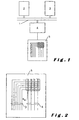
- the data processing unit shown schematically in figure 1 comprises a bus 1 to which a processing member 2, for example a microprocessor, is connected.
- a memory 3 is further connected to the bus.
- the memory is provided for storing processing data and programs to be carried out under control of the processing member 3.
- An interface 4 is also connected to the bus 1.
- a keyboard 5 is connected to the interface in order to input user data.
- the data processing unit is part of an ATM (Automatic Teller Machine) or any terminal provided for processing secure data, the keyboard will be used for entering secure data such as a PIN (Personal Identification Number) code.
- PIN Personal Identification Number
- the keys 6r,c of the keyboard 5 are arranged according to a row and column set-up of a matrix.
- the rows are each time connected to a line of the first set of lines 7, whereas the columns are each time connected to a line of the second set of lines 8.
- the classical manner to read out the keys is to apply a first scanning pattern to the columns and to read out the lines. So, when a key is selected, be it via a pressure applied on the key or via a touch screen, the key will act as a switch connecting to each other the row and the column on which the selected key is located. The latter read-out method is appropriate for data, which need not to be secured.
- the present invention proposes to change the scanning pattern applied onto the keys of the keyboard. This change implies that, instead of applying each time for each read-out operation cycle an identical pattern, a different, randomly generated pattern is applied.
- the applied scanning pattern is each time for each read-out cycle changed by each time generating the pattern randomly.
- the same randomly generated scanning pattern could also be applied during a predetermined number, or even randomly generated number, of subsequent scanning periods. For example during ten subsequent periods a same scanning pattern could be applied. Since the read out periods are generally short, less than 3 seconds, even if the same pattern is applied for a number of subsequent periods, it will still be very difficult to pick up the scanning pattern without a physical intrusion in the keyboard or the processing unit. Nevertheless, if the unauthorised user would try to break open the device, this would generate a tamper condition leading to a neutralisation of the device.
- the randomly generated scanning pattern enables to vary a large number of parameters. So, the specific read-out values applied onto the rows or columns can vary, for example between the logic values 0 or 1, or even values higher than logic 1 could be applied.
- the manner in which the rows and columns are triggered can vary, so for example during one cycle, the rows can be used as input and the columns as output, whereas in a subsequent cycle the columns are used as input and the rows as output. Alternatively, some rows and some columns could be used as input and the remaining ones as output.
- the time period during which the scanning pattern is applied onto the keys can be changed by randomly generating a time period. Just as for the application of the scanning pattern, also the time period could be the same for a predetermined or randomly determined subsequent number of cycles.
- the keyboard is placed in a secured mode. This is for example triggered by the insertion of a bank card or by touching one of the keys of the keyboard for initiating an operation.
- the switch to a secured mode is for example realised by interrupting the normal read-out procedure and by starting the secure procedure by means of an interrupt signal.
- the processing member will trigger the scanning pattern generator, which comprises a random generator for randomly generating (11; RG1 SP) a first scanning pattern and a first minimum time period and apply it during at least said first minimum time period to the keys of the keyboard.
- the random generation of the first time period is used in a preferred embodiment, as it increases the security level. However the present method is also applicable when a predetermined time period would be used. This minimum period is for example 1 ms and can run until 2ms.
- the first scanning pattern comprises for each row and column a first read-out value to be applied onto said rows respectively columns.
- the processing member After application of the first scanning pattern, the processing member will apply a verification routine by means of a verification member, which is part of the data processing unit.
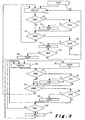
- the verification routine which comprises a first series of steps (11,12,13,14,15,16), will first check the columns (12, VMC) in order to verify if the actual value applied onto the columns by the first scanning is still present. Indeed, if no key on the scanned column has been activated (12; N) the actual value on that column will correspond to the one applied by the first scanning pattern.
- the verification routine If the verification routine has detected that a column has been selected (12; Y) it will verify (13; VVC) if it is a valid column. This is, for example, realised by verifying if the actual value is acceptable within the scope of the applied read-out value or by verifying if at the present stage of the operation the verified column should be active. So, for example, the OK key could have been selected by error upon entering a PIN code. If the column corresponding to the OK key would then have been identified, it would nevertheless not be considered as a valid column at this stage as only columns linked to number keys are considered valid.
- a counter for the identified column is incremented and there is checked whether the amount indicated by the counter has reached a predetermined number. This predetermined number will depend on the time period during which the first pattern is applied. The shorter the time period is, the higher will be the number. If the counter has reached the predetermined number (13,Y), the considered column is identified (14; SVC) as being a valid column and this identification data is stored temporarily in the memory. If, on the other hand, the counter did not reach (13,N) the predetermined number, the column is not identified as a valid column.
- the use of a counter allows repeating the verification routine several times, thereby increasing the reliability of the key identification. The verification routine is repeated either by using the same first scanning pattern a number of times or by generating randomly each time a new scanning pattern and a new time period.
- a row is checked by the verification routine (18; VRC) if both a row and column have been identified. This is for example realised by reading the memory in which the identified row and column are stored. If this is the case, a pointer to the identified row and column and thus to the identified key is stored (19,G2SP). If no valid row or column has been identified, the first series of steps is repeated.
- the read-out routine will need, once a row and a column have been identified and a pointer stored, a second series of steps in order to unambiguously determine the activated key. If a pointer has been stored, a second scanning pattern is generated and applied (20; A2SP) to the keys during a second minimum time period. In an analogous manner as for the first series of steps, the second scanning pattern is randomly generated and preferably the second minimum time period too. Steps 21 (VMC), 22 (VVC), 23 (SVC), 24 (VMR), 25 (VVR), 26 (SVR) and 27 (VRC) are analogous to the steps 12, 13, 14, 15, 16, 17 and 18 of the first series, with the difference, however, that now the second scanning pattern and the second time period are used. Furthermore only the rows and columns pointed to are preferably taken into consideration. It could however also be possible to apply the second series to all rows and columns.
- the first scanning pattern it is verified if a valid column and row can be identified. This is used in order to monitor if the key pointed to by the pointers is still activated.
- the routine establishes that no valid row or column can be identified (21; N) and (25;N)
- the routine is started again as from (11; RG1SP).
- the monitoring routine establishes, on the other hand, that a valid row and column can be identified, the monitoring routine is restarted and a further scanning pattern is generated (29; RGFSP) and applied to the pointed key for a further minimum time period. This restart is repeated until the counter has reached its predetermined value.
- the key is confirmed as activated (28; SK) and this information is supplied to the processing member for further processing.
- the release of the pointed key as a way to confirm that the pointed key has been activated. This could be realised by verifying if, for the key pointed to, the actual value corresponds to the applied value. Indeed if the pointed key has been released the key no longer acts as a switch and the applied scanning pattern will be recognised. Thus the presence of the applied scanning pattern is an indication that the pointed key has been released.
Landscapes
- Engineering & Computer Science (AREA)
- Theoretical Computer Science (AREA)
- Input From Keyboards Or The Like (AREA)
- User Interface Of Digital Computer (AREA)
Claims (6)
- Verfahren zum Auslesen von Tasten einer Tastatur (5), insbesondere einer Tastatur eines Geldautomaten, wobei die Tasten in einer Matrix aus horizontalen und vertikalen Reihen angeordnet sind, wobei ein erstes Abtastmuster zum Auslesen der Tasten auf die Tastatur angewendet wird, wobei das Verfahren eine erste Reihe von Schritten umfasst, die aus Folgendem bestehen :- Erzeugen des ersten Abtastmusters nach dem Zufallsprinzip (11, RG1SP), das für jede der horizontalen und vertikalen Reihen einen ersten Auslesewert umfasst, der auf die horizontale bzw. die vertikale Reihe anzuwenden ist;- Anwenden des ersten Abtastmusters auf die horizontalen und vertikalen Reihen während wenigstens eines ersten Mindestzeitraums;- Anwenden einer Verifizierungsroutine (12, VMC; 13, VMR), um zu bestimmen, ob die tatsächlichen Werte jeder horizontalen und vertikalen Reihe jenen entsprechen, die durch das erste Abtastmuster angewendet wurden, und um jene horizontalen und vertikalen Reihen zu identifizieren, bei denen der tatsächliche Wert nicht jenem entspricht, der durch das erste Muster angewendet wurde;- nachdem der erste Zeitraum verstrichen ist, Wiederholen der ersten Reihe von Schritten, wenn keine horizontalen und vertikalen Reihen durch die Verifizierungsroutine identifiziert wurden;dadurch gekennzeichnet, dass das Verfahren des Weiteren Folgendes umfasst :- zeitweiliges Speichern eines Zeigers, der auf die horizontalen und vertikalen Reihen zeigt, die während der Verifizierungsroutine identifiziert wurden;- Anwenden einer zweiten Reihe von Schritten, die nach dem Speichern des Zeigers begonnen wird, wobei die zweite Reihe von Schritten Folgendes umfasst :- nachdem der erste Zeitraum verstrichen ist, Erzeugen eines zweiten Abtastmusters nach dem Zufallsprinzip (19, G2SP), das für mindestens jede der horizontalen und vertikalen Reihen, auf die der Zeiger verweist, einen zweiten Auslesewert umfasst, der auf die horizontalen und vertikalen Reihen anzuwenden ist;- Anwenden des zweiten Abtastmusters auf die horizontalen und vertikalen Reihen während wenigstens eines zweiten Mindestzeitraums;- Überwachen der identifizierten horizontalen und vertikalen Reihen unter Verwendung des zweiten Musters, um als aktivierte Tasten jene Tasten zu bestätigen, die sich in den identifizierten horizontalen und vertikalen Reihen befinden.
- Verfahren nach Anspruch 1, dadurch gekennzeichnet, dass der erste und der zweite Zeitraum nach dem Zufallsprinzip festgelegt werden.
- Verfahren nach Anspruch 1 oder 2, dadurch gekennzeichnet, dass die erste Reihe von Schritten anschließend eine zuvor festgelegte Anzahl von Malen angewendet wird und dass jedes Mal, nachdem die Verifikationsroutine während des anschließenden Anwendens der ersten Reihe von Schritten eine horizontale und eine vertikale Reihe identifiziert hat, ein Zähler für die identifizierte horizontale und vertikale Reihe inkrementiert wird, wobei der Zähler den Zweck hat, ein Speichersignal zu erzeugen, sobald eine zuvor festgelegte Zahl erreicht ist, wobei der Zeiger unter der Steuerung des Speichersignals gespeichert wird.
- Verfahren nach Anspruch 1, 2 oder 3, dadurch gekennzeichnet, dass das Überwachen unterbrochen wird, wenn festgestellt wird, dass die tatsächlichen Werte der überwachten horizontalen und vertikalen Reihen jenen entsprechen, die durch das zweite Abtastmuster angewendet wurden, wobei auf das Unterbrechen eine Rückkehr zu der ersten Reihe von Schritten folgt.
- Verfahren nach einem der Ansprüche 1 bis 4, dadurch gekennzeichnet, dass die Bestätigung durch Anwenden einer weiteren Verifikationsroutine realisiert wird, um zu bestimmen, ob die tatsächlichen Werte wenigstens jener horizontalen und vertikalen Reihen, auf die durch die Zeiger verwiesen wird, jenen Werten entsprechen, die durch das zweite Abtastmuster angewendet wurden, und um jene horizontalen und vertikalen Reihen zu identifizieren, bei denen der tatsächliche Wert nicht jenem entspricht, der durch das zweite Muster angewendet wurde.
- Vorrichtung zum Auslesen von Tasten einer Tastatur (5), insbesondere einer Tastatur eines Geldautomaten, wobei die Tasten in einer Matrix aus horizontalen und vertikalen Reihen angeordnet sind, wobei die Vorrichtung einen Abtastmustergenerator umfasst, der den Zweck hat, ein erstes Abtastmuster zu erzeugen, das es ermöglicht, die Tasten auszulesen, wobei die Vorrichtung des Weiteren ein erstes Mittel umfasst, um das erste Abtastmuster während mindestens eines ersten Mindestzeitraums auf die Tasten anzuwenden, wobei die Vorrichtung des Weiteren einen Zufallsgenerator umfasst, der den Zweck hat, das erste Abtastmuster nach dem Zufallsprinzip zu erzeugen, das für jede der horizontalen und vertikalen Reihen einen ersten Auslesewert umfasst, der auf die horizontale bzw. die vertikale Reihe anzuwenden ist, wobei die Vorrichtung des Weiteren ein Verifizierungselement umfasst, das den Zweck hat, eine Verifizierungsroutine anzuwenden, die eine Verifizierung umfasst, ob der tatsächliche Wert jeder horizontalen und vertikalen Reihe jenem entspricht, der durch das erste Muster angewendet wurde, und die eine Identifizierung jener horizontalen und vertikalen Reihen umfasst, bei denen der tatsächliche Wert nicht jenem entspricht, der durch das erste Muster angewendet wurde, dadurch gekennzeichnet, dass die Verifizierungsroutine des Weiteren eine zeitweilige Speicherung eines Zeigers zu den identifizierten horizontalen und vertikalen Reihen und ihrem tatsächlichen Wert umfasst, wobei der Abtastmustergenerator des Weiteren den Zweck hat, nachdem der erste Zeitraum verstrichen ist, nach dem Zufallsprinzip ein zweites Abtastmuster zu erzeugen, das für mindestens jede der horizontalen und vertikalen Reihen, auf die der Zeiger verweist, einen zweiten Auslesewert umfasst, der auf die horizontale bzw die vertikale Reihe anzuwenden ist, wobei das erste Mittel des Weiteren den Zweck hat, das zweite Abtastmuster während wenigstens eines zweiten Mindestzeitraums auf die Tasten anzuwenden, wobei das Verifizierungselement des Weiteren den Zweck hat, die identifizierten horizontalen und vertikalen Reihen unter Verwendung des zweiten Musters zu überwachen, um als aktivierte Tasten jene Tasten zu bestätigen, die sich in den identifizierten horizontalen und vertikalen Reihen befinden.
Priority Applications (5)
| Application Number | Priority Date | Filing Date | Title |
|---|---|---|---|
| DE60312876T DE60312876T2 (de) | 2003-12-22 | 2003-12-22 | Verfahren und Vorrichtung zum Auslesen von Tastaturtasten |
| AT03079008T ATE358355T1 (de) | 2003-12-22 | 2003-12-22 | Verfahren und vorrichtung zum auslesen tastaturtasten |
| EP03079008A EP1548947B1 (de) | 2003-12-22 | 2003-12-22 | Verfahren und Vorrichtung zum Auslesen Tastaturtasten |
| CA2490558A CA2490558C (en) | 2003-12-22 | 2004-12-21 | A method and a device for reading out keyboard keys |
| US11/017,926 US7330135B2 (en) | 2003-12-22 | 2004-12-22 | Method and a device for reading out keyboard keys |
Applications Claiming Priority (1)
| Application Number | Priority Date | Filing Date | Title |
|---|---|---|---|
| EP03079008A EP1548947B1 (de) | 2003-12-22 | 2003-12-22 | Verfahren und Vorrichtung zum Auslesen Tastaturtasten |
Publications (2)
| Publication Number | Publication Date |
|---|---|
| EP1548947A1 EP1548947A1 (de) | 2005-06-29 |
| EP1548947B1 true EP1548947B1 (de) | 2007-03-28 |
Family
ID=34530751
Family Applications (1)
| Application Number | Title | Priority Date | Filing Date |
|---|---|---|---|
| EP03079008A Expired - Lifetime EP1548947B1 (de) | 2003-12-22 | 2003-12-22 | Verfahren und Vorrichtung zum Auslesen Tastaturtasten |
Country Status (5)
| Country | Link |
|---|---|
| US (1) | US7330135B2 (de) |
| EP (1) | EP1548947B1 (de) |
| AT (1) | ATE358355T1 (de) |
| CA (1) | CA2490558C (de) |
| DE (1) | DE60312876T2 (de) |
Families Citing this family (2)
| Publication number | Priority date | Publication date | Assignee | Title |
|---|---|---|---|---|
| CN101452340A (zh) * | 2007-11-30 | 2009-06-10 | 鸿富锦精密工业(深圳)有限公司 | 键盘 |
| CN106998207A (zh) * | 2017-01-20 | 2017-08-01 | 艾体威尔电子技术(北京)有限公司 | 一种应用于pos系统的扫描按键方法 |
Family Cites Families (6)
| Publication number | Priority date | Publication date | Assignee | Title |
|---|---|---|---|---|
| GB2223115B (en) * | 1988-09-22 | 1992-02-05 | Bollmann Limited H | Improvements in or relating to a keyboard arrangement |
| GB8826340D0 (en) * | 1988-11-10 | 1988-12-14 | Ncr Co | Data entry keyboard apparatus |
| US5754652A (en) * | 1994-12-14 | 1998-05-19 | Lucent Technologies Inc. | Method and apparatus for secure pin entry |
| US6054940A (en) * | 1998-02-09 | 2000-04-25 | Gilbarco Inc. | Keypad scanning security system |
| EP1141504A1 (de) * | 1999-01-06 | 2001-10-10 | MAS-HAMILTON GROUP, Inc. | Elektronisches schlosssystem mit hauptschloss und untergeordnetem schloss |
| US6246769B1 (en) * | 2000-02-24 | 2001-06-12 | Michael L. Kohut | Authorized user verification by sequential pattern recognition and access code acquisition |
-
2003
- 2003-12-22 EP EP03079008A patent/EP1548947B1/de not_active Expired - Lifetime
- 2003-12-22 DE DE60312876T patent/DE60312876T2/de not_active Expired - Lifetime
- 2003-12-22 AT AT03079008T patent/ATE358355T1/de not_active IP Right Cessation
-
2004
- 2004-12-21 CA CA2490558A patent/CA2490558C/en not_active Expired - Lifetime
- 2004-12-22 US US11/017,926 patent/US7330135B2/en not_active Expired - Lifetime
Also Published As
| Publication number | Publication date |
|---|---|
| DE60312876T2 (de) | 2009-07-16 |
| US7330135B2 (en) | 2008-02-12 |
| EP1548947A1 (de) | 2005-06-29 |
| DE60312876D1 (de) | 2007-05-10 |
| CA2490558A1 (en) | 2005-06-22 |
| CA2490558C (en) | 2012-10-30 |
| US20050179566A1 (en) | 2005-08-18 |
| ATE358355T1 (de) | 2007-04-15 |
Similar Documents
| Publication | Publication Date | Title |
|---|---|---|
| US5832206A (en) | Apparatus and method to provide security for a keypad processor of a transaction terminal | |
| US7206938B2 (en) | Key sequence rhythm recognition system and method | |
| US20110247058A1 (en) | On-demand personal identification method | |
| US8918679B2 (en) | Apparatus and method for checking an error detection functionality of a data processor | |
| CN107977568B (zh) | Mcu安全保护身份认证装置及方法 | |
| EP1542180B1 (de) | Elektronische Datenverarbeitungseinrichtung | |
| CN109117616A (zh) | 验证方法和装置、电子设备、计算机可读存储介质 | |
| US5948102A (en) | Method and device to improve the security of an integrated circuit | |
| US6959391B1 (en) | Protection of the core part of computer against external manipulation | |
| EP1548947B1 (de) | Verfahren und Vorrichtung zum Auslesen Tastaturtasten | |
| US4667183A (en) | Keyboard hold-down functions for a multi-zone intrusion detection system | |
| AU2019280627B2 (en) | Device and method for secure identification of a user | |
| EP0236412B1 (de) | Gesichertes rechnersystem | |
| EP3756173B1 (de) | Verfahren zum erfassen einer smart card cloning device in einem automatischen zahlungs- und / oder rücknahmeterminal und jedem automatischen zahlungs- und / oder rücknahmeterminal | |
| US20080219520A1 (en) | Sensor monitoring | |
| JP2000105622A (ja) | セキュリティー装置と方法 | |
| JP2000181870A (ja) | 携帯電子装置、故障検出方法 | |
| EP0954822A1 (de) | Verfahren zur echtheitsüberprüfung einer elektrischen schaltungsanordnung | |
| US20110202990A1 (en) | Computer information security system and operation method thereof | |
| CN117560232A (zh) | 一种检测装置和芯片 | |
| JP3925786B2 (ja) | 電子投票システム | |
| GB2542753A (en) | Password authentication apparatus | |
| CN120277645A (zh) | 可验证用户的服务器系统及其控制方法 | |
| JPS6191788A (ja) | 硬貨検査装置 | |
| JPS60252956A (ja) | 電気および電子装置の保護装置および方法 |
Legal Events
| Date | Code | Title | Description |
|---|---|---|---|
| PUAI | Public reference made under article 153(3) epc to a published international application that has entered the european phase |
Free format text: ORIGINAL CODE: 0009012 |
|
| AK | Designated contracting states |
Kind code of ref document: A1 Designated state(s): AT BE BG CH CY CZ DE DK EE ES FI FR GB GR HU IE IT LI LU MC NL PT RO SE SI SK TR |
|
| AX | Request for extension of the european patent |
Extension state: AL LT LV MK |
|
| 17P | Request for examination filed |
Effective date: 20051215 |
|
| AKX | Designation fees paid |
Designated state(s): AT BE BG CH CY CZ DE DK EE ES FI FR GB GR HU IE IT LI LU MC NL PT RO SE SI SK TR |
|
| 17Q | First examination report despatched |
Effective date: 20060201 |
|
| GRAP | Despatch of communication of intention to grant a patent |
Free format text: ORIGINAL CODE: EPIDOSNIGR1 |
|
| GRAS | Grant fee paid |
Free format text: ORIGINAL CODE: EPIDOSNIGR3 |
|
| GRAA | (expected) grant |
Free format text: ORIGINAL CODE: 0009210 |
|
| AK | Designated contracting states |
Kind code of ref document: B1 Designated state(s): AT BE BG CH CY CZ DE DK EE ES FI FR GB GR HU IE IT LI LU MC NL PT RO SE SI SK TR |
|
| PG25 | Lapsed in a contracting state [announced via postgrant information from national office to epo] |
Ref country code: FI Free format text: LAPSE BECAUSE OF FAILURE TO SUBMIT A TRANSLATION OF THE DESCRIPTION OR TO PAY THE FEE WITHIN THE PRESCRIBED TIME-LIMIT Effective date: 20070328 Ref country code: SI Free format text: LAPSE BECAUSE OF FAILURE TO SUBMIT A TRANSLATION OF THE DESCRIPTION OR TO PAY THE FEE WITHIN THE PRESCRIBED TIME-LIMIT Effective date: 20070328 Ref country code: LI Free format text: LAPSE BECAUSE OF FAILURE TO SUBMIT A TRANSLATION OF THE DESCRIPTION OR TO PAY THE FEE WITHIN THE PRESCRIBED TIME-LIMIT Effective date: 20070328 Ref country code: AT Free format text: LAPSE BECAUSE OF FAILURE TO SUBMIT A TRANSLATION OF THE DESCRIPTION OR TO PAY THE FEE WITHIN THE PRESCRIBED TIME-LIMIT Effective date: 20070328 Ref country code: NL Free format text: LAPSE BECAUSE OF FAILURE TO SUBMIT A TRANSLATION OF THE DESCRIPTION OR TO PAY THE FEE WITHIN THE PRESCRIBED TIME-LIMIT Effective date: 20070328 Ref country code: BE Free format text: LAPSE BECAUSE OF FAILURE TO SUBMIT A TRANSLATION OF THE DESCRIPTION OR TO PAY THE FEE WITHIN THE PRESCRIBED TIME-LIMIT Effective date: 20070328 Ref country code: CH Free format text: LAPSE BECAUSE OF FAILURE TO SUBMIT A TRANSLATION OF THE DESCRIPTION OR TO PAY THE FEE WITHIN THE PRESCRIBED TIME-LIMIT Effective date: 20070328 |
|
| REG | Reference to a national code |
Ref country code: GB Ref legal event code: FG4D |
|
| REG | Reference to a national code |
Ref country code: CH Ref legal event code: EP |
|
| REF | Corresponds to: |
Ref document number: 60312876 Country of ref document: DE Date of ref document: 20070510 Kind code of ref document: P |
|
| REG | Reference to a national code |
Ref country code: IE Ref legal event code: FG4D |
|
| PG25 | Lapsed in a contracting state [announced via postgrant information from national office to epo] |
Ref country code: ES Free format text: LAPSE BECAUSE OF FAILURE TO SUBMIT A TRANSLATION OF THE DESCRIPTION OR TO PAY THE FEE WITHIN THE PRESCRIBED TIME-LIMIT Effective date: 20070709 |
|
| REG | Reference to a national code |
Ref country code: SE Ref legal event code: TRGR |
|
| PG25 | Lapsed in a contracting state [announced via postgrant information from national office to epo] |
Ref country code: PT Free format text: LAPSE BECAUSE OF FAILURE TO SUBMIT A TRANSLATION OF THE DESCRIPTION OR TO PAY THE FEE WITHIN THE PRESCRIBED TIME-LIMIT Effective date: 20070828 |
|
| ET | Fr: translation filed | ||
| REG | Reference to a national code |
Ref country code: CH Ref legal event code: PL |
|
| NLV1 | Nl: lapsed or annulled due to failure to fulfill the requirements of art. 29p and 29m of the patents act | ||
| PG25 | Lapsed in a contracting state [announced via postgrant information from national office to epo] |
Ref country code: SK Free format text: LAPSE BECAUSE OF FAILURE TO SUBMIT A TRANSLATION OF THE DESCRIPTION OR TO PAY THE FEE WITHIN THE PRESCRIBED TIME-LIMIT Effective date: 20070328 |
|
| PG25 | Lapsed in a contracting state [announced via postgrant information from national office to epo] |
Ref country code: CZ Free format text: LAPSE BECAUSE OF FAILURE TO SUBMIT A TRANSLATION OF THE DESCRIPTION OR TO PAY THE FEE WITHIN THE PRESCRIBED TIME-LIMIT Effective date: 20070328 Ref country code: RO Free format text: LAPSE BECAUSE OF FAILURE TO SUBMIT A TRANSLATION OF THE DESCRIPTION OR TO PAY THE FEE WITHIN THE PRESCRIBED TIME-LIMIT Effective date: 20070328 |
|
| PG25 | Lapsed in a contracting state [announced via postgrant information from national office to epo] |
Ref country code: DK Free format text: LAPSE BECAUSE OF FAILURE TO SUBMIT A TRANSLATION OF THE DESCRIPTION OR TO PAY THE FEE WITHIN THE PRESCRIBED TIME-LIMIT Effective date: 20070328 |
|
| PLBE | No opposition filed within time limit |
Free format text: ORIGINAL CODE: 0009261 |
|
| STAA | Information on the status of an ep patent application or granted ep patent |
Free format text: STATUS: NO OPPOSITION FILED WITHIN TIME LIMIT |
|
| RAP2 | Party data changed (patent owner data changed or rights of a patent transferred) |
Owner name: ATOS WORLDLINE S.A. |
|
| 26N | No opposition filed |
Effective date: 20080102 |
|
| PG25 | Lapsed in a contracting state [announced via postgrant information from national office to epo] |
Ref country code: IT Free format text: LAPSE BECAUSE OF FAILURE TO SUBMIT A TRANSLATION OF THE DESCRIPTION OR TO PAY THE FEE WITHIN THE PRESCRIBED TIME-LIMIT Effective date: 20070328 Ref country code: GR Free format text: LAPSE BECAUSE OF FAILURE TO SUBMIT A TRANSLATION OF THE DESCRIPTION OR TO PAY THE FEE WITHIN THE PRESCRIBED TIME-LIMIT Effective date: 20070629 |
|
| PG25 | Lapsed in a contracting state [announced via postgrant information from national office to epo] |
Ref country code: MC Free format text: LAPSE BECAUSE OF NON-PAYMENT OF DUE FEES Effective date: 20071231 |
|
| PG25 | Lapsed in a contracting state [announced via postgrant information from national office to epo] |
Ref country code: IE Free format text: LAPSE BECAUSE OF NON-PAYMENT OF DUE FEES Effective date: 20071224 |
|
| PG25 | Lapsed in a contracting state [announced via postgrant information from national office to epo] |
Ref country code: EE Free format text: LAPSE BECAUSE OF FAILURE TO SUBMIT A TRANSLATION OF THE DESCRIPTION OR TO PAY THE FEE WITHIN THE PRESCRIBED TIME-LIMIT Effective date: 20070328 |
|
| PG25 | Lapsed in a contracting state [announced via postgrant information from national office to epo] |
Ref country code: CY Free format text: LAPSE BECAUSE OF FAILURE TO SUBMIT A TRANSLATION OF THE DESCRIPTION OR TO PAY THE FEE WITHIN THE PRESCRIBED TIME-LIMIT Effective date: 20070328 |
|
| PG25 | Lapsed in a contracting state [announced via postgrant information from national office to epo] |
Ref country code: BG Free format text: LAPSE BECAUSE OF FAILURE TO SUBMIT A TRANSLATION OF THE DESCRIPTION OR TO PAY THE FEE WITHIN THE PRESCRIBED TIME-LIMIT Effective date: 20070628 Ref country code: LU Free format text: LAPSE BECAUSE OF NON-PAYMENT OF DUE FEES Effective date: 20071222 |
|
| PG25 | Lapsed in a contracting state [announced via postgrant information from national office to epo] |
Ref country code: HU Free format text: LAPSE BECAUSE OF FAILURE TO SUBMIT A TRANSLATION OF THE DESCRIPTION OR TO PAY THE FEE WITHIN THE PRESCRIBED TIME-LIMIT Effective date: 20070929 Ref country code: TR Free format text: LAPSE BECAUSE OF FAILURE TO SUBMIT A TRANSLATION OF THE DESCRIPTION OR TO PAY THE FEE WITHIN THE PRESCRIBED TIME-LIMIT Effective date: 20070328 |
|
| PGFP | Annual fee paid to national office [announced via postgrant information from national office to epo] |
Ref country code: SE Payment date: 20141211 Year of fee payment: 12 |
|
| REG | Reference to a national code |
Ref country code: FR Ref legal event code: PLFP Year of fee payment: 13 |
|
| REG | Reference to a national code |
Ref country code: SE Ref legal event code: EUG |
|
| PG25 | Lapsed in a contracting state [announced via postgrant information from national office to epo] |
Ref country code: SE Free format text: LAPSE BECAUSE OF NON-PAYMENT OF DUE FEES Effective date: 20151223 |
|
| REG | Reference to a national code |
Ref country code: FR Ref legal event code: PLFP Year of fee payment: 14 |
|
| REG | Reference to a national code |
Ref country code: FR Ref legal event code: PLFP Year of fee payment: 15 |
|
| PGFP | Annual fee paid to national office [announced via postgrant information from national office to epo] |
Ref country code: DE Payment date: 20200227 Year of fee payment: 17 |
|
| REG | Reference to a national code |
Ref country code: DE Ref legal event code: R119 Ref document number: 60312876 Country of ref document: DE |
|
| PG25 | Lapsed in a contracting state [announced via postgrant information from national office to epo] |
Ref country code: DE Free format text: LAPSE BECAUSE OF NON-PAYMENT OF DUE FEES Effective date: 20210701 |
|
| REG | Reference to a national code |
Ref country code: GB Ref legal event code: 732E Free format text: REGISTERED BETWEEN 20220721 AND 20220727 |
|
| PGFP | Annual fee paid to national office [announced via postgrant information from national office to epo] |
Ref country code: GB Payment date: 20221222 Year of fee payment: 20 Ref country code: FR Payment date: 20221230 Year of fee payment: 20 |
|
| REG | Reference to a national code |
Ref country code: GB Ref legal event code: PE20 Expiry date: 20231221 |
|
| PG25 | Lapsed in a contracting state [announced via postgrant information from national office to epo] |
Ref country code: GB Free format text: LAPSE BECAUSE OF EXPIRATION OF PROTECTION Effective date: 20231221 |
|
| PG25 | Lapsed in a contracting state [announced via postgrant information from national office to epo] |
Ref country code: GB Free format text: LAPSE BECAUSE OF EXPIRATION OF PROTECTION Effective date: 20231221 |