EP1548520A2 - Tonercartridge with unique reloading and method therefor - Google Patents
Tonercartridge with unique reloading and method therefor Download PDFInfo
- Publication number
- EP1548520A2 EP1548520A2 EP04300947A EP04300947A EP1548520A2 EP 1548520 A2 EP1548520 A2 EP 1548520A2 EP 04300947 A EP04300947 A EP 04300947A EP 04300947 A EP04300947 A EP 04300947A EP 1548520 A2 EP1548520 A2 EP 1548520A2
- Authority
- EP
- European Patent Office
- Prior art keywords
- cartridge
- container
- refill
- toner
- frame
- Prior art date
- Legal status (The legal status is an assumption and is not a legal conclusion. Google has not performed a legal analysis and makes no representation as to the accuracy of the status listed.)
- Granted
Links
Images


Classifications
-
- G—PHYSICS
- G03—PHOTOGRAPHY; CINEMATOGRAPHY; ANALOGOUS TECHNIQUES USING WAVES OTHER THAN OPTICAL WAVES; ELECTROGRAPHY; HOLOGRAPHY
- G03G—ELECTROGRAPHY; ELECTROPHOTOGRAPHY; MAGNETOGRAPHY
- G03G15/00—Apparatus for electrographic processes using a charge pattern
- G03G15/06—Apparatus for electrographic processes using a charge pattern for developing
- G03G15/08—Apparatus for electrographic processes using a charge pattern for developing using a solid developer, e.g. powder developer
-
- G—PHYSICS
- G03—PHOTOGRAPHY; CINEMATOGRAPHY; ANALOGOUS TECHNIQUES USING WAVES OTHER THAN OPTICAL WAVES; ELECTROGRAPHY; HOLOGRAPHY
- G03G—ELECTROGRAPHY; ELECTROPHOTOGRAPHY; MAGNETOGRAPHY
- G03G15/00—Apparatus for electrographic processes using a charge pattern
- G03G15/06—Apparatus for electrographic processes using a charge pattern for developing
- G03G15/08—Apparatus for electrographic processes using a charge pattern for developing using a solid developer, e.g. powder developer
- G03G15/0822—Arrangements for preparing, mixing, supplying or dispensing developer
- G03G15/0848—Arrangements for testing or measuring developer properties or quality, e.g. charge, size, flowability
- G03G15/0849—Detection or control means for the developer concentration
- G03G15/0855—Detection or control means for the developer concentration the concentration being measured by optical means
-
- G—PHYSICS
- G03—PHOTOGRAPHY; CINEMATOGRAPHY; ANALOGOUS TECHNIQUES USING WAVES OTHER THAN OPTICAL WAVES; ELECTROGRAPHY; HOLOGRAPHY
- G03G—ELECTROGRAPHY; ELECTROPHOTOGRAPHY; MAGNETOGRAPHY
- G03G15/00—Apparatus for electrographic processes using a charge pattern
- G03G15/06—Apparatus for electrographic processes using a charge pattern for developing
- G03G15/08—Apparatus for electrographic processes using a charge pattern for developing using a solid developer, e.g. powder developer
- G03G15/0822—Arrangements for preparing, mixing, supplying or dispensing developer
- G03G15/0865—Arrangements for supplying new developer
-
- G—PHYSICS
- G03—PHOTOGRAPHY; CINEMATOGRAPHY; ANALOGOUS TECHNIQUES USING WAVES OTHER THAN OPTICAL WAVES; ELECTROGRAPHY; HOLOGRAPHY
- G03G—ELECTROGRAPHY; ELECTROPHOTOGRAPHY; MAGNETOGRAPHY
- G03G15/00—Apparatus for electrographic processes using a charge pattern
- G03G15/06—Apparatus for electrographic processes using a charge pattern for developing
- G03G15/08—Apparatus for electrographic processes using a charge pattern for developing using a solid developer, e.g. powder developer
- G03G15/0822—Arrangements for preparing, mixing, supplying or dispensing developer
- G03G15/0865—Arrangements for supplying new developer
- G03G15/0875—Arrangements for supplying new developer cartridges having a box like shape
-
- G—PHYSICS
- G03—PHOTOGRAPHY; CINEMATOGRAPHY; ANALOGOUS TECHNIQUES USING WAVES OTHER THAN OPTICAL WAVES; ELECTROGRAPHY; HOLOGRAPHY
- G03G—ELECTROGRAPHY; ELECTROPHOTOGRAPHY; MAGNETOGRAPHY
- G03G15/00—Apparatus for electrographic processes using a charge pattern
- G03G15/06—Apparatus for electrographic processes using a charge pattern for developing
- G03G15/08—Apparatus for electrographic processes using a charge pattern for developing using a solid developer, e.g. powder developer
- G03G15/0894—Reconditioning of the developer unit, i.e. reusing or recycling parts of the unit, e.g. resealing of the unit before refilling with toner
-
- G—PHYSICS
- G03—PHOTOGRAPHY; CINEMATOGRAPHY; ANALOGOUS TECHNIQUES USING WAVES OTHER THAN OPTICAL WAVES; ELECTROGRAPHY; HOLOGRAPHY
- G03G—ELECTROGRAPHY; ELECTROPHOTOGRAPHY; MAGNETOGRAPHY
- G03G2215/00—Apparatus for electrophotographic processes
- G03G2215/06—Developing structures, details
- G03G2215/066—Toner cartridge or other attachable and detachable container for supplying developer material to replace the used material
- G03G2215/0663—Toner cartridge or other attachable and detachable container for supplying developer material to replace the used material having a longitudinal rotational axis, around which at least one part is rotated when mounting or using the cartridge
- G03G2215/0665—Generally horizontally mounting of said toner cartridge parallel to its longitudinal rotational axis
Definitions
- the present invention relates to a refillable toner cartridge system unique for use in a printing device of the type printer or fax machine.
- This cartridge system has a toner cartridge which, when empty, can be reloaded only once times by a refill adapted to this cartridge.
- the invention also relates to a method for implementing this system.
- the invention finds applications in the field of digital printing.
- it finds applications in the field of printing by devices such as printers, photocopiers or fax.
- this toner is placed in a cartridge located inside the device.
- Each toner cartridge is intended for a limited number of printed pages, for example 3000 or 5000 pages.
- the cartridge is empty, there are two possibilities for the user to the device: either it replaces the empty cartridge with a new cartridge full, or it refills the cartridge with bottled toner.
- the change of a cartridge has the disadvantage of presenting a cost relatively high. Indeed, an entire cartridge has a significantly higher cost important than bottled toner. Also, most users choose to fill the cartridge with toner sold in bottle. In this case, to fill the cartridge, the user must open the cartridge, open the toner bottle and pour the toner directly into the cartridge. Now, the Toner is a fine powder that flakes easily, especially when is transferred from one container to another container. In addition, this fine powder is colored. So it messes up the elements around the cartridge to fill as well as the hands and clothes of the user. In addition, the fact to open the cap of the cartridge also causes dirt on the user's hands and toner vapor inhalations that can affect the health of the user. the opening of the cap can, in addition, deteriorate the plug. This technique is therefore not only messy, but in addition it is relatively long to implement.
- this technique does not make it possible to control the duration of life of the cartridge components and, in particular, rollers of the cartridge that can get dirty and deteriorate the print quality, even make the printing device unusable.
- US-5 594 535 discloses a refillable toner cartridge using plastic bags. soft plastics containing toner. The plastic bag containing the toner is placed, upside down, in the cartridge and, when opening the cap from this bag, the toner flows into the cartridge.
- This cartridge can receive several stacked toner bags, that is, placed one above the other others as the previous bag is empty. However, to open each of these bags, it is necessary to pull on a tab sealing (called seal, in English terms). Now, one side of this tongue is in direct contact with the toner. This tongue is toner and can make the user dirty when the user removes it.
- tongues are relatively fragile and they are often break when the user pulls it to open the refill. The user is then obliged to remove the refill from the cartridge, with all the disadvantages that this entails, in particular if the recharge has been part opened by the tongue.
- US-A-5,907,747 describes another type of refill for toner cartridge.
- This refill has a shape substantially identical to the shape of the cartridge and it fits into the receptacle of the cartridge. The lid of the cartridge is then fixed above the refill to seal the whole. When the cartridge is closed, with the charging inside, the user has to pull a tab to open the refill.
- This recharge therefore has the same disadvantages than those previously stated.
- the invention proposes single toner refill cartridge system having a cartridge full of toner and a refill to insert into the cartridge, so simple and clean, when the cartridge is empty.
- This cartridge system recharging makes it possible to reload a toner cartridge without having to pull a tab or other element that may be toner-filled.
- the toner refill comprises a container inside which find, initially, the toner.
- This container is rotatable in the cartridge of so that, in a closed position, the toner is contained within the container and, in an open position, the toner is evacuated to the receptacle of the cartridge.
- the transition from the closed position to the open position of container is realized by simple support, by the user, on the container.
- This single-refill cartridge system recharges the cartridge in a clean way, without the user being in any moment in direct contact with the toner. It also ensures a complete recycling of the cartridge and refill assembly since, when the recharge has been introduced into the cartridge, it can no longer be removed from the cartridge. Also, when the refill is empty, the user returns the cartridge and refill assembly to the manufacturer who has at his disposal all "dirty" items requiring recycling.
- This system also has the advantage of allowing the manufacturer to check the service life of the components and, in particular, their clogging by limiting the possible number of printed pages. In other words, if the manufacturer knows that the components have a life of 10000 pages it adapts the amount of toner in the cartridge and recharges it so that the number of pages does not exceed 10000.
- This system also has the advantage of being less expensive for the user only two cartridges, for the same number of pages with a good guarantee of printing.
- the refill container has a closed position in which the toner is contained in the container and an open position in which the container is empty, the toner being in the receptacle of the cartridge.
- the system of the invention comprises a toner cartridge which, empty, can be refilled using a suitable toner refill.
- FIG. 1A represents a perspective view of the cartridge of the invention.
- This cartridge 1 comprises a receptacle 10 intended to receive toner.
- This receptacle 10 is surmounted by a frame 11 fixed on the receptacle.
- a lid close the cartridge.
- This lid is removably attached to the frame 11 of the cartridge 1. It is easily removable by the user. Indeed, this cover must be removed from the cartridge when a refill is square. Therefore, this lid is not shown in Figure 1 A.
- FIG 1B shows a refill of the system of the invention.
- This refill 2 of Figure 1 B is adapted to be inserted into the cartridge of Figure 1 A. It comprises a frame 20 and a rotating container 22 in the chassis 20.
- the frame 20 of the refill 2 comprises a collar 21 forming a recess on the upper part of the chassis. This collar 21 serves as stop at refill 2, when it is inserted into the cartridge 1.
- the container 22 is pivotally mounted about an axis of rotation longitudinal, fixed on the chassis. An example of shape of the container 22 will be described later.
- This container 22 may comprise a notch 23, made on the opposite side to the axis of rotation, to indicate to the user the location where the support must be to open the container.
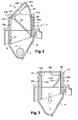
- FIG. 2 represents a side view in section of the system of cartridge and refill of the invention.
- This figure shows the cartridge 1 with its receptacle 10 at the bottom of which are one or more rollers 4 spreading toner output 5 of the receptacle 10. These rollers are identical to those of conventional printing devices.
- the receptacle 10 contains the toner. When the cartridge is new, this receptacle is initially filled with toner. When the cartridge is reloaded, it is filled with the toner initially contained in the container. In other words, the toner contained in the container 22 of the recharge is intended to be poured into the receptacle 10 of the cartridge 1.
- the receptacle 10 is surmounted by a frame 11 fixed to the receptacle by any known means, such as glue. It can also be overmolded on the 10. Initially, when the cartridge is new, the frame 11 is closed by a cover placed and fixed on said frame 11. In the second using the cartridge, ie when the cartridge is refilled, the cover is removed and it is the refill that is supported on the frame 11.
- Figure 2 shows the preferred shape for the container 22 of the 2.
- the container has a section substantially triangular.
- the container has three sides 22a, 22b and 22c.
- the side 22a forms the base of the triangle, opposite the top 22.
- the sides 22b and 22c meet around the axis of rotation 3.
- the side 22c forms an arc 22d around the axis 3 to facilitate the rotation of the container in the cartridge.
- the container side 22b forms an angle of approximately 45 ° with the chassis surface; it is understood that this angle may vary, in function, in particular, the shape of the container, while remaining lower than 90 °.
- the base 22a is partially open, along the entire length of the refill. In other words, the base 22a does not close the container completely 22.
- the container 22 is closed by the frame 20 of the refill. So, as it will be seen in more detail later, the container 22 has a position closed, which is the one shown in FIG. 2, in which the toner is contained entirely in the container closed by the chassis.
- a position open which will be described later, makes it possible to rotate the container around the axis 3 and thus to tilt said container so that the opening in the base 22a is facing the receptacle of the cartridge.
- the frame 20 of the refill 2 has vertical walls 20a and 20b can be of different lengths.
- the walls 20a and 20b end, at their upper end, by a collar 21.
- This collar 21 may be uniform over the entire outline of the refill.
- She can also have different shapes depending on the considered faces of the refill.
- the flange 21 may form a right angle with the wall 20a of the chassis, as shown by reference 21 a.
- She can also form a half U with the wall 20b of the frame, as shown by reference 21 b.
- the collar 21 has the role of providing abutment support on the frame of the cartridge. Charging can not be introduced too much deep in the cartridge by the user.
- the wall 20a of the frame can be covered with a waterproof material 26, for example a foam, ensuring the tightness of the container, when the latter is in the closed position. Of this way, the toner is contained inside the container, tightly.
- a waterproof material 26 for example a foam
- This antidemontage device 12, 27, called also anti-return comprises at least one lug 12 located inside the receptacle 10 of the cartridge and at least one orifice 27 made in the wall 20b of the frame 20 of the refill.
- the lug 12 is intended to fit into the orifice 27 so as to prevent disassembly of the refill once that it has been inserted into the cartridge. Only one recharge can be introduced into the cartridge. Once the toner of the refill has been fully used, it is mechanically impossible for the user to take the refill out of the cartridge.
- the lug 12 is a rack, molded on the inside of the receptacle and directed towards the the bottom of the receptacle 10.
- the rack 12 is easily introduced into orifice 27 when the refill is pushed towards the bottom of the receptacle.
- the rack 12 is in abutment against the part of the wall 20b surrounding orifice 27, which prevents the recharge from being drawn to the top of the cartridge.
- the container 22 has a shape whose section is substantially triangular.
- the base 22a of the container is convex which allows to increase the interior volume of the container. It is understood that other forms may be envisaged for the container, such as example a straight base.
- top 22e of the container 22 is shown with a partially rounded shape, in half U, which is inserted in the flange 21 around the axis of rotation 3. It should be noted that the shape of the top 22d and collar 21b may differ depending on modes of realization.
- FIG. 3 diagrammatically shows a side view in cutting the system of the invention, when the container of the refill is in open position.
- the side 22b of the container 22 forms, with the surface of the flange 21, a flat angle.
- the side 22c of the container 22 is then parallel to the wall 20b of the frame.
- the base 22a is inside the frame. The convex shape of the base 22a ensures a good flow of the toner to the receptacle 10 without any toner hold.
- the toner escapes over the entire length of the container. So, it breaks down so homogeneous in the receptacle. So there is no need, before positioning refill in the cartridge, shake the refill to distribute the toner. Indeed, the refill is usually full. Also, when it evacuates container, the toner is evenly and evenly distributed in the receptacle at the moment of opening of the container.
- the container 22 In the open position, the container 22 is fully inserted into the cartridge and the outer shape of the cartridge is identical to the shape a new cartridge.
- the cartridge can therefore be reused, for the user, just like a new cartridge.
- the system of refill cartridge of the invention is clean since there is no contact with emanation of toner when transferring it from the refill to the cartridge.
- the new cartridge may have a protective film sealed on the frame of the cartridge.
- this film is located under the cover of the cartridge. So when the user removes the lid of the cartridge, especially before the cartridge is completely empty, it can not be in contact with no residual toner.
- This protective film can be realized in a plastic material, such as a very thin polycarbonate, or in aluminum. At the beginning of inserting the refill into the cartridge, the film is pierced by the chassis of the refill. For easier drilling, the edges of the frame can beveled, facilitating the cutting of the film.
- the protective film may also have reduced areas easy to pierce, so that when it is placed in the cartridge, the recharge pierces this protective film at predetermined locations, for example in the center of the film. Once the film pierced, the pieces of the film are distributed around the recharge so as not to interfere the evacuation of the toner.
- FIGS. 4A and 4B show a locking device the container of the refill. Indeed, it is interesting that the recharge does not can not be opened until it is fully inserted in the cartridge, that is to say before the collar of the refill is in support on the frame of the cartridge.
- this device for locking comprises a deformable locking finger 6.
- This finger of locking 6 can be made in the same material as the refill, that is, ABS or PS.
- the container 22 forms a recess 22 '.
- the side 22c of the container is locally perpendicular to the foam 26, as shown by the reference 22 '.
- the dotted lines show the general shape of container 22, out of proximity locking finger.
- the locking finger 6 is fixed and deforms as the passage of the refill in the cartridge receptacle. It can have two positions: an external position in which it is partly outside the receptacle and an inner position in which it is entirely housed in the receptacle.
- the locking finger 6 has been shown, when it is in its outer position, that is to say, partly out of the receptacle of the cartridge. In this position, the locking finger has a curved shape which has the effect that the finger retains the side 22c of the container.
- the container does not can not open. As long as the recharge is not installed correctly in the cartridge, the locking finger holds the container in its closed position. There is therefore no possible evacuation of the toner.
- the cartridge can be reloaded without being removed from its slot in the printing device. Indeed, like most printing device open at the top, by a hood to open or a part of the device to remove, reloading the cartridge from the top allows the reloading can be done in place in the device, without necessarily take the cartridge out of its slot.
- a user who commands a cartridge receives both a new cartridge and a refill.
- he uses the cartridge alone to make his impressions.
- the cartridge When the cartridge is empty of any toner, it can fill it by means of the refill. He must then remove the cover of the cartridge, easy to disassemble.
- the lid As there is no more toner in the cartridge, the lid is clean, in particularly if the cartridge has a protective film. The lid can so be thrown into the trash without any difficulty.
- the user introduce the refill into the cartridge and press the refill until the frame comes to rest on the frame of the cartridge. At this moment recharge is in its correct position and the user can press the prominent part of the container thus passing the container of its closed position in its open position.
- the toner then evacuates homogeneous, as and when the container is opened in the receptacle of the cartridge.
- the user then only has to use the cartridge as a new cartridge. Indeed, the dimensions of the refill are planned for the refill to fit in the cartridge and that it retains the same dimension as a new cartridge, the thickness of the chassis flange then replacing the thickness of the lid of the new cartridge.
- This cartridge system recharge has the advantage of being simple and quick to implement.
Landscapes
- Physics & Mathematics (AREA)
- General Physics & Mathematics (AREA)
- Life Sciences & Earth Sciences (AREA)
- Sustainable Development (AREA)
- Dry Development In Electrophotography (AREA)
Abstract
L'invention concerne un système de cartouche à recharge de toner, comportant :
- une cartouche (1) comprenant un réceptacle (10) surmonté d'un cadre (11 ),
- une recharge de toner (2) apte à être insérée dans le réceptacle de la cartouche et comportant un container (22) contenant le toner,
- a cartridge (1) comprising a receptacle (10) surmounted by a frame (11),
- a toner refill (2) adapted to be inserted into the cartridge receptacle and having a container (22) containing the toner,
L'invention concerne aussi un procédé de mise en oeuvre
de ce système.

Description
L'invention concerne un système de cartouche de toner à recharge unique destiné à être utilisé dans un dispositif d'impression du type imprimante ou télécopieur. Ce système de cartouche comporte une cartouche de toner qui, lorsqu'elle est vide, peut être rechargée une seule fois par une recharge adaptée à cette cartouche. L'invention concerne aussi un procédé pour mettre en oeuvre ce système.The present invention relates to a refillable toner cartridge system unique for use in a printing device of the type printer or fax machine. This cartridge system has a toner cartridge which, when empty, can be reloaded only once times by a refill adapted to this cartridge. The invention also relates to a method for implementing this system.
D'une façon générale, l'invention trouve des applications dans le domaine de l'impression numérique. Elle trouve, en particulier, des applications dans le domaine de l'impression par des dispositifs informatiques tels que des imprimantes, des photocopieurs ou des télécopieurs.In general, the invention finds applications in the field of digital printing. In particular, it finds applications in the field of printing by devices such as printers, photocopiers or fax.
Actuellement, la plupart des dispositifs d'impression de type informatique utilisent une encre sèche, colorée ou noire, réduite en fines particules et contenant une résine sensible à la chaleur, qui se fixe par chauffage sur le support d'impression utilisé, par exemple, du papier. Cette encre est appelée généralement toner.Currently, most type printing devices computers use dry ink, colored or black, reduced to fines particles and containing a heat-sensitive resin, which attaches by heating on the print medium used, for example, paper. This ink is generally called toner.
Pour une utilisation efficace, ce toner est placé dans une cartouche située à l'intérieur de l'appareil. Chaque cartouche de toner est prévue pour un nombre limité de pages imprimées, par exemple 3000 ou 5000 pages. Lorsque la cartouche est vide, deux possibilités s'offrent à l'utilisateur de l'appareil : soit il remplace la cartouche vide par une nouvelle cartouche pleine, soit il remplit à nouveau la cartouche avec du toner en bouteille.For effective use, this toner is placed in a cartridge located inside the device. Each toner cartridge is intended for a limited number of printed pages, for example 3000 or 5000 pages. When the cartridge is empty, there are two possibilities for the user to the device: either it replaces the empty cartridge with a new cartridge full, or it refills the cartridge with bottled toner.
Le changement d'une cartouche a l'inconvénient de présenter un coût relativement élevé. En effet, une cartouche entière a un coût nettement plus important que du toner en bouteille. Aussi, la plupart des utilisateurs choisissent de remplir la cartouche avec du toner vendu en bouteille. Dans ce cas, pour remplir la cartouche, l'utilisateur doit ouvrir la cartouche, ouvrir la bouteille de toner et verser directement le toner dans la cartouche. Or, le toner est une fine poudre qui s'envole facilement, en particulier lorsqu'elle est transvasée d'un récipient vers un autre récipient. De plus, cette fine poudre est colorée. Elle salit donc les éléments situés autour de la cartouche à remplir ainsi que les mains et les vêtements de l'utilisateur. En outre, le fait d'ouvrir le bouchon de la cartouche entraíne également des salissures sur les mains de l'utilisateur et de inhalations de vapeur de toner qui peuvent nuire à la santé de l'utilisateur. l'ouverture du bouchon peut, en plus, détériorer le bouchon. Cette technique est donc, non seulement salissante, mais en plus elle est relativement longue à mettre en oeuvre.The change of a cartridge has the disadvantage of presenting a cost relatively high. Indeed, an entire cartridge has a significantly higher cost important than bottled toner. Also, most users choose to fill the cartridge with toner sold in bottle. In this case, to fill the cartridge, the user must open the cartridge, open the toner bottle and pour the toner directly into the cartridge. Now, the Toner is a fine powder that flakes easily, especially when is transferred from one container to another container. In addition, this fine powder is colored. So it messes up the elements around the cartridge to fill as well as the hands and clothes of the user. In addition, the fact to open the cap of the cartridge also causes dirt on the user's hands and toner vapor inhalations that can affect the health of the user. the opening of the cap can, in addition, deteriorate the plug. This technique is therefore not only messy, but in addition it is relatively long to implement.
Par ailleurs, cette technique ne permet pas de contrôler la durée de vie des composants de la cartouche et, en particulier, des rouleaux de la cartouche qui peuvent s'encrasser et détériorer la qualité de l'impression, voire rendre le dispositif d'impression inutilisable.Moreover, this technique does not make it possible to control the duration of life of the cartridge components and, in particular, rollers of the cartridge that can get dirty and deteriorate the print quality, even make the printing device unusable.
Pour résoudre ces problèmes, il existe des recharges de toner destinées à être placées dans la cartouche de toner vide. Le document US-5 594 535 décrit une cartouche de toner rechargeable au moyen de sacs en plastique souples contenant du toner. Le sac en plastique contenant le toner est placé, tête en bas, dans la cartouche et, lors de l'ouverture du bouchon de ce sac, le toner s'écoule dans la cartouche. Cette cartouche peut recevoir plusieurs sacs de toner superposés, c'est-à-dire placés les uns au-dessus des autres au fur et à mesure que le sac précédent est vide. Cependant, pour ouvrir chacun de ces sacs, il est nécessaire de tirer sur une languette d'étanchéité (appelée seal, en termes anglo-saxons). Or, une face de cette languette est en contact direct avec le toner. Cette languette est donc couverte de toner et peut salir l'utilisateur au moment où celui-ci la retire. De plus, de telles languettes sont relativement fragiles et il est fréquent qu'elles se cassent au moment où l'utilisateur tire dessus pour ouvrir la recharge. L'utilisateur est alors obligé de retirer la recharge de la cartouche, avec tous les inconvénients que cela entraíne, en particulier si la recharge a été en partie ouverte par la languette.To solve these problems, there are toner refills to be placed in the empty toner cartridge. US-5 594 535 discloses a refillable toner cartridge using plastic bags. soft plastics containing toner. The plastic bag containing the toner is placed, upside down, in the cartridge and, when opening the cap from this bag, the toner flows into the cartridge. This cartridge can receive several stacked toner bags, that is, placed one above the other others as the previous bag is empty. However, to open each of these bags, it is necessary to pull on a tab sealing (called seal, in English terms). Now, one side of this tongue is in direct contact with the toner. This tongue is toner and can make the user dirty when the user removes it. Of Moreover, such tongues are relatively fragile and they are often break when the user pulls it to open the refill. The user is then obliged to remove the refill from the cartridge, with all the disadvantages that this entails, in particular if the recharge has been part opened by the tongue.
Le document US-A-5 907 747 décrit un autre type de recharge pour cartouche de toner. Cette recharge a une forme sensiblement identique à la forme de la cartouche et elle vient s'insérer dans le réceptacle de la cartouche. Le couvercle de la cartouche vient ensuite se fixer au-dessus de la recharge afin de sceller l'ensemble. Lorsque la cartouche est refermée, avec la recharge à l'intérieur, l'utilisateur doit tirer sur une languette pour ouvrir la recharge. Cette recharge présente donc les mêmes inconvénients que ceux énoncés précédemment.US-A-5,907,747 describes another type of refill for toner cartridge. This refill has a shape substantially identical to the shape of the cartridge and it fits into the receptacle of the cartridge. The lid of the cartridge is then fixed above the refill to seal the whole. When the cartridge is closed, with the charging inside, the user has to pull a tab to open the refill. This recharge therefore has the same disadvantages than those previously stated.
Par ailleurs, lorsque l'utilisateur a ouvert la recharge, il se retrouve avec une languette, couverte de toner, dont il ne sait que faire. Généralement, l'utilisateur met alors cette languette dans une poubelle. Or, en France et dans de nombreux pays, la législation impose, aux fabricants de cartouches de toner et de recharges de toner, de récupérer les emballages sales, c'est-à-dire comportant du toner, afin de les recycler. En conséquence, les fabricants de cartouches et de recharges de toner demandent aux utilisateurs de renvoyer la cartouche et/ou la recharge une fois que celle-ci a été utilisée. Cependant, si la plupart des utilisateurs renvoient généralement les éléments principaux, ils ne renvoient pas la languette couverte de toner pour la simple raison qu'ils seraient obligés de stocker la languette sale tant que la cartouche ou la recharge n'est pas vide.Moreover, when the user has opened the recharge, he finds himself with a tongue, covered with toner, which he does not know what to do. Generally, the user then puts this tab in a bin. Gold, In France and in many countries, legislation imposes on manufacturers of toner cartridges and toner refills, to recover the dirty packages, that is to say containing toner, for recycling. In As a result, the manufacturers of toner cartridges and refills ask users to return the cartridge and / or the recharge a once it has been used. However, if most users usually return the main elements, they do not return the tongue covered with toner for the simple reason that they would be forced to store the dirty tab as long as the cartridge or refill is not empty.
L'invention a justement pour but de remédier aux inconvénients des techniques exposées précédemment. A cette fin, l'invention propose système de cartouche à recharge de toner unique comportant une cartouche pleine de toner et une recharge à insérer dans la cartouche, de manière simple et propre, lorsque la cartouche est vide. Ce système de cartouche à recharge permet, en effet, de recharger une cartouche de toner sans avoir à tirer une languette ou tout autre élément pouvant être empreint de toner. Pour cela, la recharge de toner comporte un container à l'intérieur duquel se trouve, initialement, le toner. Ce container est rotatif dans la cartouche de sorte que, dans une position fermée, le toner est contenu à l'intérieur du container et, dans une position ouverte, le toner s'évacue vers le réceptacle de la cartouche. Le passage de la position fermée à la position ouverte du container est réalisé par simple appui, par l'utilisateur, sur le container.The purpose of the invention is precisely to remedy the drawbacks of techniques previously discussed. For this purpose, the invention proposes single toner refill cartridge system having a cartridge full of toner and a refill to insert into the cartridge, so simple and clean, when the cartridge is empty. This cartridge system recharging makes it possible to reload a toner cartridge without having to pull a tab or other element that may be toner-filled. For this purpose, the toner refill comprises a container inside which find, initially, the toner. This container is rotatable in the cartridge of so that, in a closed position, the toner is contained within the container and, in an open position, the toner is evacuated to the receptacle of the cartridge. The transition from the closed position to the open position of container is realized by simple support, by the user, on the container.
Ce système de cartouche à recharge unique permet de recharger la cartouche de façon propre, sans que l'utilisateur ne soit à un quelconque moment en contact direct avec le toner. Il permet également d'assurer un recyclage complet de l'ensemble cartouche et recharge puisque, lorsque la recharge a été introduite dans la cartouche, elle ne peut plus être retirée de la cartouche. Aussi, lorsque la recharge est vide, l'utilisateur renvoie l'ensemble cartouche et recharge au fabricant qui a alors, à sa disposition, tous les éléments «sales » nécessitant un recyclage.This single-refill cartridge system recharges the cartridge in a clean way, without the user being in any moment in direct contact with the toner. It also ensures a complete recycling of the cartridge and refill assembly since, when the recharge has been introduced into the cartridge, it can no longer be removed from the cartridge. Also, when the refill is empty, the user returns the cartridge and refill assembly to the manufacturer who has at his disposal all "dirty" items requiring recycling.
Ce système présente aussi l'avantage de permettre au fabricant de contrôler la durée de vie des composants et, notamment, leur encrassement en limitant le nombre possible de pages imprimées. En d'autres termes, si le fabricant sait que les composants ont une durée de vie de 10000 pages, il adapte la quantité de toner dans la cartouche et la recharge de façon à ce que le nombre de pages ne dépasse pas 10000.This system also has the advantage of allowing the manufacturer to check the service life of the components and, in particular, their clogging by limiting the possible number of printed pages. In other words, if the manufacturer knows that the components have a life of 10000 pages it adapts the amount of toner in the cartridge and recharges it so that the number of pages does not exceed 10000.
Ce système a, en outre, l'avantage d'être moins coûteux pour l'utilisateur que deux cartouches, pour un nombre de pages identique avec une bonne garantie d'impression.This system also has the advantage of being less expensive for the user only two cartridges, for the same number of pages with a good guarantee of printing.
De façon plus précise, l'invention concerne un système de cartouche à recharge de toner, comportant :
- une cartouche comprenant un réceptacle surmonté d'un cadre,
- une recharge de toner apte à être insérée dans le réceptacle de la cartouche et comportant un container contenant le toner,
- a cartridge comprising a receptacle surmounted by a frame,
- a toner refill suitable for insertion into the receptacle of the cartridge and comprising a container containing the toner,
Le container de la recharge a une position fermée dans laquelle le toner est contenu dans le container et une position ouverte dans laquelle le container est vide, le toner étant dans le réceptacle de la cartouche.The refill container has a closed position in which the toner is contained in the container and an open position in which the container is empty, the toner being in the receptacle of the cartridge.
L'invention concerne également un procédé de mise en oeuvre du système de cartouche à recharge de l'invention. Ce procédé se caractérise par le fait qu'il comporte les opérations suivantes :
- enlèvement d'un couvercle de la cartouche,
- insertion de la recharge dans la cartouche jusqu'à ce que la partie supérieure du châssis de la recharge soit en appui sur le cadre de la cartouche,
- appui sur la paroi supérieure du container de la recharge pour faire pivoter ledit container de la position fermée à la position ouverte.
- removing a lid from the cartridge,
- insertion of the refill in the cartridge until the upper part of the frame of the refill bears on the frame of the cartridge,
- pressing on the upper wall of the container of the refill to rotate said container from the closed position to the open position.
Le système de l'invention comporte une cartouche de toner qui, une
fois vide, peut être rechargée au moyen d'une recharge de toner adaptée. La
figure 1 A représente une vue en perspective de la cartouche du système de
l'invention. Cette cartouche 1 comporte un réceptacle 10 destiné à recevoir
du toner. Ce réceptacle 10 est surmonté d'un cadre 11 fixé sur le réceptacle.The system of the invention comprises a toner cartridge which,
empty, can be refilled using a suitable toner refill. The
FIG. 1A represents a perspective view of the cartridge of the
the invention. This cartridge 1 comprises a
A l'origine, c'est-à-dire lorsque la cartouche est neuve, un couvercle
ferme la cartouche. Ce couvercle est fixé de manière amovible sur le cadre
11 de la cartouche 1. Il est facilement démontable par l'utilisateur. En effet,
ce couvercle doit être retiré de la cartouche lorsqu'une recharge est mise en
place. C'est pourquoi, ce couvercle n'est pas représenté sur la figure 1 A.At the origin, that is to say when the cartridge is new, a lid
close the cartridge. This lid is removably attached to the
La figure 1 B représente une recharge du système de l'invention. Cette
recharge 2 de la figure 1 B est adaptée pour être insérée dans la cartouche
de la figure 1 A. Elle comporte un châssis 20 et un container 22 rotatif dans le
châssis 20.Figure 1B shows a refill of the system of the invention. This
Le châssis 20 de la recharge 2 comporte une collerette 21 formant un
décrochement sur la partie supérieure du châssis. Cette collerette 21 sert de
butée à la recharge 2, lorsque celle-ci est insérée dans la cartouche 1. The
Le container 22 est monté pivotant autour d'un axe de rotation
longitudinal, fixé sur le châssis. Un exemple de forme du container 22 sera
décrit ultérieurement. Ce container 22 peut comporter une encoche 23,
réalisée sur le coté opposé à l'axe de rotation, pour indiquer à l'utilisateur
l'emplacement où doit se faire l'appui pour ouvrir le container.The
La figure 2 représente une vue de côté en coupe du système de
cartouche et de recharge de l'invention. Cette figure montre la cartouche 1
avec son réceptacle 10 au fond duquel se trouvent un ou plusieurs rouleaux
4 assurant l'étalement du toner en sortie 5 du réceptacle 10. Ces rouleaux
sont identiques à ceux des dispositifs d'impression classiques.FIG. 2 represents a side view in section of the system of
cartridge and refill of the invention. This figure shows the cartridge 1
with its
Le réceptacle 10 contient le toner. Lorsque la cartouche est neuve, ce
réceptacle est rempli initialement avec du toner. Lorsque la cartouche est
rechargée, elle est remplie avec le toner initialement contenu dans le
container. Autrement dit, le toner contenu dans le container 22 de la
recharge est destiné à être déversé dans le réceptacle 10 de la cartouche 1.The
Le réceptacle 10 est surmonté d'un cadre 11 fixé sur le réceptacle par
tout moyen connu, comme la colle. Il peut aussi être surmoulé sur le
réceptacle 10. Initialement, lorsque la cartouche est neuve, le cadre 11 est
fermé par un couvercle posé et fixé sur ledit cadre 11. Lors de la seconde
utilisation de la cartouche, c'est-à-dire lorsque la cartouche est rechargée, le
couvercle est retiré et c'est la recharge qui est en appui sur le cadre 11.The
La figure 2 montre la forme préférée pour le container 22 de la
recharge 2. Dans ce mode de réalisation, le container a une section
sensiblement triangulaire. Autrement dit, le container comporte trois cotés
22a, 22b et 22c. Le coté 22a forme la base du triangle, opposée au sommet
22e. Les cotés 22b et 22c se rejoignent autour de l'axe de rotation 3. Dans le
cas de la figure 2, le coté 22c forme un arc de cercle 22d autour de l'axe 3
pour faciliter la rotation du container dans la cartouche. Dans le mode de
réalisation de la figure 2, le coté 22b du container forme un angle d'environ
45° avec la surface du châssis ; il est entendu que cet angle peut varier, en
fonction, notamment, de la forme du container, tout en restant inférieur à
90°.Figure 2 shows the preferred shape for the
La base 22a est en partie ouverte, sur toute la longueur de la
recharge. Autrement dit, la base 22a ne ferme pas entièrement le container
22. Le container 22 est fermé par le châssis 20 de la recharge. Ainsi, comme
on le verra plus en détail par la suite, le container 22 comporte une position
fermée, qui est celle montrée sur la figure 2, dans laquelle le toner est
contenu entièrement dans le container fermé par le châssis. Une position
ouverte, qui sera décrite ultérieurement, permet de faire pivoter le container
autour de l'axe 3 et donc de faire basculer ledit container de façon à ce que
l'ouverture dans la base 22a soit face au réceptacle de la cartouche.The
Le châssis 20 de la recharge 2 comporte des parois verticales 20a et
20b pouvant être de longueurs différentes. Les parois 20a et 20b se
terminent, à leur extrémité supérieure, par une collerette 21. Cette collerette
21 peut être uniforme sur tout le contour de la recharge. Elle peut aussi avoir
des formes différentes selon les faces considérées de la recharge. Par
exemple, la collerette 21 peut former un angle droit avec la paroi 20a du
châssis, comme montré par la référence 21 a. Elle peut aussi former un demi
U avec la paroi 20b du châssis, comme montré par la référence 21 b. Quelle
que soit sa forme, la collerette 21 a pour rôle d'assurer un appui en butée
sur le cadre de la cartouche. La recharge ne peut donc être introduite trop
profondément dans la cartouche par l'utilisateur.The
Comme on le voit sur cette figure 2, la paroi 20a du châssis peut être
recouverte d'un matériau étanche 26, par exemple une mousse, assurant
l'étanchéité du container, lorsque celui-ci est en position fermée. De cette
façon, le toner est contenu à l'intérieur du container, de façon étanche.As can be seen in this FIG. 2, the
Sur la figure 2, on a représenté un exemple de dispositif d'anti-démontage
de la recharge. Ce dispositif d'antidémontage 12, 27, appelé
aussi anti-retour, comporte au moins un ergot 12 situé à l'intérieur du
réceptacle 10 de la cartouche et au moins un orifice 27 réalisé dans la paroi
20b du châssis 20 de la recharge. L'ergot 12 est destiné à s'emboíter dans
l'orifice 27 de façon à empêcher le démontage de la recharge une fois
qu'elle a été insérée dans la cartouche. Une seule recharge peut donc être
introduite dans la cartouche. Une fois que le toner de la recharge a été
entièrement utilisé, il est mécaniquement impossible à l'utilisateur de
ressortir la recharge hors de la cartouche.In Figure 2, there is shown an example of anti-disassembly device
recharge. This
Dans le mode de réalisation de la figure 2, l'ergot 12 est une
crémaillère, moulée sur la face intérieure du réceptacle et dirigée vers le
fond du réceptacle 10. Ainsi, la crémaillère 12 s'introduit facilement dans
l'orifice 27 lorsque la recharge est poussée vers le fond du réceptacle. Par
contre, la crémaillère 12 se trouve en butée contre la partie de la paroi 20b
entourant l'orifice 27, ce qui empêche que la recharge puisse être tirée vers
le haut de la cartouche.In the embodiment of FIG. 2, the
Dans le mode de réalisation qui vient d'être décrit, le container 22 a
une forme dont la section est sensiblement triangulaire. Toutefois, comme
on le voit sur la figure 2, pour permettre une plus grande capacité
d'emmagasinement de toner, la base 22a du container est convexe ce qui
permet d'augmenter le volume intérieur du container. Il est bien entendu que
d'autres formes peuvent être envisagées pour le container, comme par
exemple une base droite.In the embodiment that has just been described, the
De même, sur la figure 2, on montre le sommet 22e du container 22
avec une forme en partie arrondie, en demi U, qui vient s'insérer dans la
collerette 21 autour de l'axe de rotation 3. Il est à noter que la forme du
sommet 22d et de la collerette 21 b peuvent différer en fonction des modes
de réalisation.Similarly, in FIG. 2, the top 22e of the
Sur la figure 3, on a représenté schématiquement une vue de coté en
coupe du système de l'invention, lorsque le container de la recharge est en
position ouverte. Dans cette position, le coté 22b du container 22 forme,
avec la surface de la collerette 21, un angle plat. Le coté 22c du container 22
est alors parallèle à la paroi 20b du châssis. La base 22a est à l'intérieur du
châssis. La forme convexe de la base 22a assure un bon écoulement du
toner vers le réceptacle 10, sans aucune retenue de toner.FIG. 3 diagrammatically shows a side view in
cutting the system of the invention, when the container of the refill is in
open position. In this position, the
Pour passer de la position fermée du container 22, montrée sur la
figure 2, à la position ouverte du container, montrée sur la figure 3,
l'utilisateur a simplement à appuyer sur le coté 22b du container, de
préférence sur l'encoche 23. Cette pression a pour effet de faire pivoter le
container vers le bas, mettant la partie ouverte de la base 22a face au
réceptacle 10 de la cartouche. Le toner s'échappe alors du container 22
suivant la flèche représentée sur la figure 3.To move from the closed position of the
En passant de la position fermée à la position ouverte, le toner s'échappe sur toute la longueur du container. Ainsi, il se répartit de façon homogène dans le réceptacle. Il n'y a donc pas besoin, avant de positionner la recharge dans la cartouche, de secouer la recharge pour répartir le toner. En effet, la recharge est généralement pleine. Aussi, lorsqu'il s'évacue du container, le toner se répartit de façon homogène et régulière dans le réceptacle au moment de l'ouverture du container.Moving from the closed position to the open position, the toner escapes over the entire length of the container. So, it breaks down so homogeneous in the receptacle. So there is no need, before positioning refill in the cartridge, shake the refill to distribute the toner. Indeed, the refill is usually full. Also, when it evacuates container, the toner is evenly and evenly distributed in the receptacle at the moment of opening of the container.
En position ouverte, le container 22 est totalement inséré dans la
cartouche et la forme extérieure de la cartouche est identique à la forme
d'une cartouche neuve. La cartouche peut donc être réutilisée, par
l'utilisateur, exactement comme une cartouche neuve.In the open position, the
L'utilisateur a ainsi rechargé sa cartouche sans se salir, car il n'est jamais en contact direct avec le toner. Autrement dit, le système de cartouche à recharge de l'invention est propre puisqu'il n'y a aucun contact avec émanation de toner lors du transfert de celui-ci de la recharge vers la cartouche.The user has thus reloaded his cartridge without getting dirty because he is not never in direct contact with the toner. In other words, the system of refill cartridge of the invention is clean since there is no contact with emanation of toner when transferring it from the refill to the cartridge.
Pour assurer encore une meilleure protection contre les émanations de toner et pour ne pas salir le couvercle, la cartouche neuve peut comporter un film de protection scellé sur le cadre de la cartouche. Lorsque la cartouche est neuve, ce film est situé sous le couvercle de la cartouche. Ainsi, lorsque l'utilisateur retire le couvercle de la cartouche, en particulier avant que la cartouche ne soit complètement vide, il ne peut être en contact avec aucun résidu éventuel de toner. Ce film de protection peut être réalisé dans une matière plastique , comme un polycarbonate très fin, ou bien dans de l'aluminium. Au début de l'insertion de la recharge dans la cartouche, le film est percé par le châssis de la recharge. Pour un percement plus aisé, les bords du châssis peuvent être biseautés, facilitant le découpage du film. Le film de protection peut aussi comporter des zones amoindries faciles à percer, de façon à ce que, lors de sa mise en place dans la cartouche, la recharge perce ce film de protection à des emplacements prédéterminés, par exemple au centre du film. Une fois le film percé, les morceaux du film se répartissent tout autour de la recharge de façon à ne pas gêner l'évacuation du toner.To ensure even better protection against fumes toner and to avoid dirtying the lid, the new cartridge may have a protective film sealed on the frame of the cartridge. When the cartridge is new, this film is located under the cover of the cartridge. So when the user removes the lid of the cartridge, especially before the cartridge is completely empty, it can not be in contact with no residual toner. This protective film can be realized in a plastic material, such as a very thin polycarbonate, or in aluminum. At the beginning of inserting the refill into the cartridge, the film is pierced by the chassis of the refill. For easier drilling, the edges of the frame can be beveled, facilitating the cutting of the film. The protective film may also have reduced areas easy to pierce, so that when it is placed in the cartridge, the recharge pierces this protective film at predetermined locations, for example in the center of the film. Once the film pierced, the pieces of the film are distributed around the recharge so as not to interfere the evacuation of the toner.
Sur les figures 4A et 4B, on a représenté un dispositif de verrouillage
du container de la recharge. En effet, il est intéressant que la recharge ne
puisse pas être ouverte avant d'être entièrement insérée dans la cartouche,
c'est-à-dire avant que la collerette de la recharge ne soit en appui sur le
cadre de la cartouche. Selon un mode de réalisation, ce dispositif de
verrouillage comporte un doigt de verrouillage 6 déformable. Ce doigt de
verrouillage 6 peut être réalisé dans le même matériau que la recharge,
c'est-à-dire en ABS ou en PS.FIGS. 4A and 4B show a locking device
the container of the refill. Indeed, it is interesting that the recharge does not
can not be opened until it is fully inserted in the cartridge,
that is to say before the collar of the refill is in support on the
frame of the cartridge. According to one embodiment, this device for
locking comprises a
A proximité de ce doigt de verrouillage, le container 22 forme un
décrochement 22'. Autrement dit, le coté 22c du container est localement
perpendiculaire à la mousse 26, comme montré par la référence 22'. Les
traits en pointillés montrent la forme générale du container 22, hors proximité
du doigt de verrouillage.In the vicinity of this locking finger, the
Le doigt de verrouillage 6 est fixe et se déforme au passage de la
recharge dans le réceptacle de la cartouche. Il peut avoir deux positions :
une position extérieure dans laquelle il est en partie en extérieur du
réceptacle et une position intérieure dans laquelle il se trouve entièrement
logé dans le réceptacle.The locking
Sur la figure 4A, on a montré le doigt de verrouillage 6, lorsqu'il est
dans sa position extérieure, c'est-à-dire en partie hors du réceptacle de la
cartouche. Dans cette position, le doigt de verrouillage a une forme courbe
qui a pour effet que le doigt retient le coté 22c du container. Le container ne
peut alors pas s'ouvrir. Tant que la recharge n'est pas installée correctement
dans la cartouche, le doigt de verrouillage retient le container dans sa
position fermée. Il n'y a donc aucune évacuation possible du toner.In FIG. 4A, the locking
Lorsque la recharge est correctement insérée dans la cartouche,
c'est-à-dire que le coté 22c du container atteint le réceptacle, comme montré
sur la figure 4B, alors le doigt de verrouillage est enfoncé dans un logement
7 du réceptacle. Le container peut alors s'ouvrir.When the refill is properly inserted into the cartridge,
that is to say that the
Avec le système de cartouche à recharge qui vient d'être décrit, la cartouche peut être rechargée sans être sortie de son emplacement dans le dispositif d'impression. En effet, comme la plupart des dispositif d'impression s'ouvrent par le haut, par un capot à ouvrir ou une partie du dispositif à retirer, le fait de recharger la cartouche par le haut permet que le rechargement puisse se faire en place dans le dispositif, sans nécessairement sortir la cartouche de son logement.With the refill cartridge system just described, the cartridge can be reloaded without being removed from its slot in the printing device. Indeed, like most printing device open at the top, by a hood to open or a part of the device to remove, reloading the cartridge from the top allows the reloading can be done in place in the device, without necessarily take the cartridge out of its slot.
Avec le système qui vient d'être décrit, un utilisateur qui commande une cartouche reçoit à la fois une cartouche neuve et une recharge. Dans un premier temps, il utilise la cartouche seule pour réaliser ses impressions. Lorsque la cartouche est vide de tout toner, il peut la remplir au moyen de la recharge. Il doit alors retirer le couvercle de la cartouche, simple à démonter. Comme il n'y a plus de toner dans la cartouche, le couvercle est propre, en particulier si la cartouche comporte un film de protection. Le couvercle peut donc être jeté dans la poubelle sans aucune difficulté. Ensuite, l'utilisateur introduit la recharge dans la cartouche et enfonce la recharge jusqu'à ce que le châssis vienne en appui sur le cadre de la cartouche. A ce moment, la recharge est dans sa position correcte et l'utilisateur peut appuyer sur la partie proéminente du container faisant ainsi passer le container de sa position fermée à sa position ouverte. Le toner s'évacue alors, de façon homogène, au fur et à mesure de l'ouverture du container dans le réceptacle de la cartouche. L'utilisateur n'a alors plus qu'à utiliser la cartouche comme une cartouche neuve. En effet, les dimensions de la recharge sont prévues pour que la recharge s'adapte dans la cartouche et que celle-ci conserve la même dimension qu'une cartouche neuve, l'épaisseur du rebord du châssis venant alors remplacer l'épaisseur du couvercle de la cartouche neuve.With the system that has just been described, a user who commands a cartridge receives both a new cartridge and a refill. In one first time, he uses the cartridge alone to make his impressions. When the cartridge is empty of any toner, it can fill it by means of the refill. He must then remove the cover of the cartridge, easy to disassemble. As there is no more toner in the cartridge, the lid is clean, in particularly if the cartridge has a protective film. The lid can so be thrown into the trash without any difficulty. Then the user introduce the refill into the cartridge and press the refill until the frame comes to rest on the frame of the cartridge. At this moment recharge is in its correct position and the user can press the prominent part of the container thus passing the container of its closed position in its open position. The toner then evacuates homogeneous, as and when the container is opened in the receptacle of the cartridge. The user then only has to use the cartridge as a new cartridge. Indeed, the dimensions of the refill are planned for the refill to fit in the cartridge and that it retains the same dimension as a new cartridge, the thickness of the chassis flange then replacing the thickness of the lid of the new cartridge.
Une fois que cette cartouche avec sa recharge a été utilisée, l'utilisateur renvoie le tout, c'est-à-dire la cartouche avec la recharge à l'intérieur, au fabricant qui peut alors la recycler. Ce système de cartouche à recharge a l'avantage d'être simple et rapide à mettre en oeuvre.Once this cartridge with its refill has been used, the user returns the whole thing, that is to say the cartridge with the refill to inside, to the manufacturer who can then recycle it. This cartridge system recharge has the advantage of being simple and quick to implement.
Claims (14)
Applications Claiming Priority (2)
| Application Number | Priority Date | Filing Date | Title |
|---|---|---|---|
| FR0351183 | 2003-12-23 | ||
| FR0351183A FR2864263B1 (en) | 2003-12-23 | 2003-12-23 | SINGLE RECHARGE TONER CARTRIDGE SYSTEM AND METHOD FOR IMPLEMENTING SAME |
Publications (3)
| Publication Number | Publication Date |
|---|---|
| EP1548520A2 true EP1548520A2 (en) | 2005-06-29 |
| EP1548520A3 EP1548520A3 (en) | 2010-09-15 |
| EP1548520B1 EP1548520B1 (en) | 2012-02-22 |
Family
ID=34531406
Family Applications (1)
| Application Number | Title | Priority Date | Filing Date |
|---|---|---|---|
| EP04300947A Expired - Lifetime EP1548520B1 (en) | 2003-12-23 | 2004-12-23 | Tonercartridge with unique reloading and method therefor |
Country Status (4)
| Country | Link |
|---|---|
| EP (1) | EP1548520B1 (en) |
| AT (1) | ATE546761T1 (en) |
| ES (1) | ES2381044T3 (en) |
| FR (1) | FR2864263B1 (en) |
Family Cites Families (8)
| Publication number | Priority date | Publication date | Assignee | Title |
|---|---|---|---|---|
| US4307763A (en) * | 1979-11-29 | 1981-12-29 | International Business Machines Corporation | Toner container |
| DK418883A (en) * | 1982-09-21 | 1984-03-22 | Xerox Corp | PARTICLE MATERIAL TRANSMISSION DEVICE |
| US4523834A (en) * | 1984-01-09 | 1985-06-18 | Pitney Bowes Inc. | Dry toner replenishing apparatus |
| DE3641077A1 (en) * | 1986-12-02 | 1988-06-09 | Eisbein Develop | Toner station for a copying device or the like |
| EP0483440B1 (en) * | 1990-10-30 | 1994-06-01 | BULL HN INFORMATION SYSTEMS ITALIA S.p.A. | Electrophotographic toner cartridge |
| JPH05289515A (en) * | 1992-04-15 | 1993-11-05 | Konica Corp | Image forming device |
| US5832343A (en) * | 1995-04-03 | 1998-11-03 | Canon Kabushiki Kaisha | Toner supply method, toner accommodation container, process cartridge and electrophotographic image forming apparatus |
| US5907747A (en) * | 1998-02-02 | 1999-05-25 | Ward Sealing, Inc. | Prefilled, presealed toner cartridge insert |
-
2003
- 2003-12-23 FR FR0351183A patent/FR2864263B1/en not_active Expired - Fee Related
-
2004
- 2004-12-23 ES ES04300947T patent/ES2381044T3/en not_active Expired - Lifetime
- 2004-12-23 AT AT04300947T patent/ATE546761T1/en active
- 2004-12-23 EP EP04300947A patent/EP1548520B1/en not_active Expired - Lifetime
Also Published As
| Publication number | Publication date |
|---|---|
| EP1548520A3 (en) | 2010-09-15 |
| EP1548520B1 (en) | 2012-02-22 |
| ATE546761T1 (en) | 2012-03-15 |
| FR2864263A1 (en) | 2005-06-24 |
| ES2381044T3 (en) | 2012-05-22 |
| FR2864263B1 (en) | 2006-04-07 |
Similar Documents
| Publication | Publication Date | Title |
|---|---|---|
| EP3016707B1 (en) | Fluid or powdery product dispensing device | |
| EP3016705B1 (en) | Fluid or powdery product dispensing device | |
| FR2750642A1 (en) | INK CARTRIDGE AND ITS LOADING MECHANISM | |
| FR2688197A1 (en) | DISTRIBUTOR CLOSURE WITH TIP COLLAR. | |
| EP0910273A1 (en) | Paper dispenser containing a removable case | |
| EP1188684B1 (en) | Refill container for food product and device for receiving such a container | |
| EP0658489A1 (en) | Device for the delivery of spherical products of the same dimensions, such as pills | |
| FR2502591A1 (en) | CONNECTION ASSEMBLY FOR TWO-COMPONENT SYSTEMS | |
| FR2496915A1 (en) | DEVICE FOR LOADING "TONER" IN THE TONER RESERVOIR OF A MACHINE | |
| FR2627293A1 (en) | FILM COIL STORAGE BOX | |
| WO2007125241A1 (en) | Stopper member, fluid product dispenser comprising such a member and method of producing such a dispenser | |
| FR2901373A3 (en) | TONER CARTRIDGE | |
| EP1216928A1 (en) | Device for storing and applying a liquid product | |
| FR2827577A1 (en) | FLUID PRODUCT DISPENSER | |
| EP1548520B1 (en) | Tonercartridge with unique reloading and method therefor | |
| EP1548519A2 (en) | Cartridge system with toner reload and method therefor | |
| EP1510363A1 (en) | Paint can closure device with improved fastening means | |
| EP4337561A1 (en) | Fluid product dispenser | |
| FR3041219A1 (en) | ||
| FR2653381A1 (en) | PAINTING / WRITING INSTRUMENT. | |
| FR3037260A1 (en) | RECHARGEABLE DEVICE FOR FRAGRANCE AND COSMETIC PRODUCTS | |
| EP3393298B1 (en) | Cosmetic pot comprising a system for pressurising a product supply container | |
| FR3116047A1 (en) | Device for filling a container such as a capsule, in particular a capsule for a coffee machine | |
| EP2731888B1 (en) | Stopper element and dispenser comprising such an element | |
| EP0675050A1 (en) | Sealing device for flexible walled container |
Legal Events
| Date | Code | Title | Description |
|---|---|---|---|
| PUAI | Public reference made under article 153(3) epc to a published international application that has entered the european phase |
Free format text: ORIGINAL CODE: 0009012 |
|
| AK | Designated contracting states |
Kind code of ref document: A2 Designated state(s): AT BE BG CH CY CZ DE DK EE ES FI FR GB GR HU IE IS IT LI LT LU MC NL PL PT RO SE SI SK TR |
|
| AX | Request for extension of the european patent |
Extension state: AL BA HR LV MK YU |
|
| RAP1 | Party data changed (applicant data changed or rights of an application transferred) |
Owner name: SAGEM COMMUNICATION |
|
| RAP1 | Party data changed (applicant data changed or rights of an application transferred) |
Owner name: SAGEM COMMUNICATIONS |
|
| RAP1 | Party data changed (applicant data changed or rights of an application transferred) |
Owner name: SAGEM COMMUNICATIONS SAS |
|
| RAP1 | Party data changed (applicant data changed or rights of an application transferred) |
Owner name: SAGEM COMMUNICATIONS |
|
| RAP1 | Party data changed (applicant data changed or rights of an application transferred) |
Owner name: SAGEM COMMUNICATIONS SAS |
|
| PUAL | Search report despatched |
Free format text: ORIGINAL CODE: 0009013 |
|
| AK | Designated contracting states |
Kind code of ref document: A3 Designated state(s): AT BE BG CH CY CZ DE DK EE ES FI FR GB GR HU IE IS IT LI LT LU MC NL PL PT RO SE SI SK TR |
|
| AX | Request for extension of the european patent |
Extension state: AL BA HR LV MK YU |
|
| RAP1 | Party data changed (applicant data changed or rights of an application transferred) |
Owner name: SAGEMCOM DOCUMENTS SAS |
|
| 17P | Request for examination filed |
Effective date: 20110207 |
|
| AKX | Designation fees paid |
Designated state(s): AT BE BG CH CY CZ DE DK EE ES FI FR GB GR HU IE IS IT LI LT LU MC NL PL PT RO SE SI SK TR |
|
| GRAP | Despatch of communication of intention to grant a patent |
Free format text: ORIGINAL CODE: EPIDOSNIGR1 |
|
| GRAS | Grant fee paid |
Free format text: ORIGINAL CODE: EPIDOSNIGR3 |
|
| GRAA | (expected) grant |
Free format text: ORIGINAL CODE: 0009210 |
|
| AK | Designated contracting states |
Kind code of ref document: B1 Designated state(s): AT BE BG CH CY CZ DE DK EE ES FI FR GB GR HU IE IS IT LI LT LU MC NL PL PT RO SE SI SK TR |
|
| REG | Reference to a national code |
Ref country code: GB Ref legal event code: FG4D Free format text: NOT ENGLISH |
|
| REG | Reference to a national code |
Ref country code: CH Ref legal event code: EP |
|
| REG | Reference to a national code |
Ref country code: AT Ref legal event code: REF Ref document number: 546761 Country of ref document: AT Kind code of ref document: T Effective date: 20120315 |
|
| REG | Reference to a national code |
Ref country code: IE Ref legal event code: FG4D Free format text: LANGUAGE OF EP DOCUMENT: FRENCH |
|
| REG | Reference to a national code |
Ref country code: DE Ref legal event code: R096 Ref document number: 602004036576 Country of ref document: DE Effective date: 20120419 |
|
| REG | Reference to a national code |
Ref country code: ES Ref legal event code: FG2A Ref document number: 2381044 Country of ref document: ES Kind code of ref document: T3 Effective date: 20120522 |
|
| REG | Reference to a national code |
Ref country code: NL Ref legal event code: VDEP Effective date: 20120222 |
|
| LTIE | Lt: invalidation of european patent or patent extension |
Effective date: 20120222 |
|
| PG25 | Lapsed in a contracting state [announced via postgrant information from national office to epo] |
Ref country code: LT Free format text: LAPSE BECAUSE OF FAILURE TO SUBMIT A TRANSLATION OF THE DESCRIPTION OR TO PAY THE FEE WITHIN THE PRESCRIBED TIME-LIMIT Effective date: 20120222 Ref country code: IS Free format text: LAPSE BECAUSE OF FAILURE TO SUBMIT A TRANSLATION OF THE DESCRIPTION OR TO PAY THE FEE WITHIN THE PRESCRIBED TIME-LIMIT Effective date: 20120622 Ref country code: NL Free format text: LAPSE BECAUSE OF FAILURE TO SUBMIT A TRANSLATION OF THE DESCRIPTION OR TO PAY THE FEE WITHIN THE PRESCRIBED TIME-LIMIT Effective date: 20120222 |
|
| PG25 | Lapsed in a contracting state [announced via postgrant information from national office to epo] |
Ref country code: FI Free format text: LAPSE BECAUSE OF FAILURE TO SUBMIT A TRANSLATION OF THE DESCRIPTION OR TO PAY THE FEE WITHIN THE PRESCRIBED TIME-LIMIT Effective date: 20120222 Ref country code: GR Free format text: LAPSE BECAUSE OF FAILURE TO SUBMIT A TRANSLATION OF THE DESCRIPTION OR TO PAY THE FEE WITHIN THE PRESCRIBED TIME-LIMIT Effective date: 20120523 Ref country code: PT Free format text: LAPSE BECAUSE OF FAILURE TO SUBMIT A TRANSLATION OF THE DESCRIPTION OR TO PAY THE FEE WITHIN THE PRESCRIBED TIME-LIMIT Effective date: 20120622 |
|
| REG | Reference to a national code |
Ref country code: IE Ref legal event code: FD4D |
|
| REG | Reference to a national code |
Ref country code: AT Ref legal event code: MK05 Ref document number: 546761 Country of ref document: AT Kind code of ref document: T Effective date: 20120222 |
|
| PG25 | Lapsed in a contracting state [announced via postgrant information from national office to epo] |
Ref country code: CY Free format text: LAPSE BECAUSE OF FAILURE TO SUBMIT A TRANSLATION OF THE DESCRIPTION OR TO PAY THE FEE WITHIN THE PRESCRIBED TIME-LIMIT Effective date: 20120222 |
|
| PG25 | Lapsed in a contracting state [announced via postgrant information from national office to epo] |
Ref country code: SI Free format text: LAPSE BECAUSE OF FAILURE TO SUBMIT A TRANSLATION OF THE DESCRIPTION OR TO PAY THE FEE WITHIN THE PRESCRIBED TIME-LIMIT Effective date: 20120222 Ref country code: RO Free format text: LAPSE BECAUSE OF FAILURE TO SUBMIT A TRANSLATION OF THE DESCRIPTION OR TO PAY THE FEE WITHIN THE PRESCRIBED TIME-LIMIT Effective date: 20120222 Ref country code: CZ Free format text: LAPSE BECAUSE OF FAILURE TO SUBMIT A TRANSLATION OF THE DESCRIPTION OR TO PAY THE FEE WITHIN THE PRESCRIBED TIME-LIMIT Effective date: 20120222 Ref country code: IE Free format text: LAPSE BECAUSE OF FAILURE TO SUBMIT A TRANSLATION OF THE DESCRIPTION OR TO PAY THE FEE WITHIN THE PRESCRIBED TIME-LIMIT Effective date: 20120222 Ref country code: EE Free format text: LAPSE BECAUSE OF FAILURE TO SUBMIT A TRANSLATION OF THE DESCRIPTION OR TO PAY THE FEE WITHIN THE PRESCRIBED TIME-LIMIT Effective date: 20120222 Ref country code: SE Free format text: LAPSE BECAUSE OF FAILURE TO SUBMIT A TRANSLATION OF THE DESCRIPTION OR TO PAY THE FEE WITHIN THE PRESCRIBED TIME-LIMIT Effective date: 20120222 Ref country code: PL Free format text: LAPSE BECAUSE OF FAILURE TO SUBMIT A TRANSLATION OF THE DESCRIPTION OR TO PAY THE FEE WITHIN THE PRESCRIBED TIME-LIMIT Effective date: 20120222 Ref country code: DK Free format text: LAPSE BECAUSE OF FAILURE TO SUBMIT A TRANSLATION OF THE DESCRIPTION OR TO PAY THE FEE WITHIN THE PRESCRIBED TIME-LIMIT Effective date: 20120222 |
|
| PG25 | Lapsed in a contracting state [announced via postgrant information from national office to epo] |
Ref country code: SK Free format text: LAPSE BECAUSE OF FAILURE TO SUBMIT A TRANSLATION OF THE DESCRIPTION OR TO PAY THE FEE WITHIN THE PRESCRIBED TIME-LIMIT Effective date: 20120222 |
|
| PLBE | No opposition filed within time limit |
Free format text: ORIGINAL CODE: 0009261 |
|
| STAA | Information on the status of an ep patent application or granted ep patent |
Free format text: STATUS: NO OPPOSITION FILED WITHIN TIME LIMIT |
|
| 26N | No opposition filed |
Effective date: 20121123 |
|
| PG25 | Lapsed in a contracting state [announced via postgrant information from national office to epo] |
Ref country code: AT Free format text: LAPSE BECAUSE OF FAILURE TO SUBMIT A TRANSLATION OF THE DESCRIPTION OR TO PAY THE FEE WITHIN THE PRESCRIBED TIME-LIMIT Effective date: 20120222 |
|
| REG | Reference to a national code |
Ref country code: DE Ref legal event code: R097 Ref document number: 602004036576 Country of ref document: DE Effective date: 20121123 |
|
| BERE | Be: lapsed |
Owner name: SAGEMCOM DOCUMENTS SAS Effective date: 20121231 |
|
| PG25 | Lapsed in a contracting state [announced via postgrant information from national office to epo] |
Ref country code: MC Free format text: LAPSE BECAUSE OF NON-PAYMENT OF DUE FEES Effective date: 20121231 Ref country code: BG Free format text: LAPSE BECAUSE OF FAILURE TO SUBMIT A TRANSLATION OF THE DESCRIPTION OR TO PAY THE FEE WITHIN THE PRESCRIBED TIME-LIMIT Effective date: 20120522 |
|
| REG | Reference to a national code |
Ref country code: CH Ref legal event code: PL |
|
| REG | Reference to a national code |
Ref country code: DE Ref legal event code: R082 Ref document number: 602004036576 Country of ref document: DE Representative=s name: BEETZ & PARTNER PATENT- UND RECHTSANWAELTE, DE |
|
| PG25 | Lapsed in a contracting state [announced via postgrant information from national office to epo] |
Ref country code: BE Free format text: LAPSE BECAUSE OF NON-PAYMENT OF DUE FEES Effective date: 20121231 |
|
| REG | Reference to a national code |
Ref country code: DE Ref legal event code: R081 Ref document number: 602004036576 Country of ref document: DE Owner name: FUNAI ELECTRIC CO., LTD., JP Free format text: FORMER OWNER: SAGEM S.A., PARIS, FR Effective date: 20120224 Ref country code: DE Ref legal event code: R081 Ref document number: 602004036576 Country of ref document: DE Owner name: FUNAI ELECTRIC CO., LTD., JP Free format text: FORMER OWNER: SAGEMCOM DOCUMENTS SAS, RUEIL MALMAISON, FR Effective date: 20130823 Ref country code: DE Ref legal event code: R082 Ref document number: 602004036576 Country of ref document: DE Representative=s name: BEETZ & PARTNER PATENT- UND RECHTSANWAELTE, DE Effective date: 20130823 Ref country code: DE Ref legal event code: R082 Ref document number: 602004036576 Country of ref document: DE Representative=s name: BEETZ & PARTNER MBB PATENT- UND RECHTSANWAELTE, DE Effective date: 20130823 Ref country code: DE Ref legal event code: R081 Ref document number: 602004036576 Country of ref document: DE Owner name: FUNAI ELECTRIC CO., LTD., DAITO-SHI, JP Free format text: FORMER OWNER: SAGEM S.A., PARIS, FR Effective date: 20120224 Ref country code: DE Ref legal event code: R081 Ref document number: 602004036576 Country of ref document: DE Owner name: FUNAI ELECTRIC CO., LTD., DAITO-SHI, JP Free format text: FORMER OWNER: SAGEMCOM DOCUMENTS SAS, RUEIL MALMAISON, FR Effective date: 20130823 Ref country code: DE Ref legal event code: R082 Ref document number: 602004036576 Country of ref document: DE Representative=s name: BEETZ & PARTNER MBB PATENTANWAELTE, DE Effective date: 20130823 |
|
| PG25 | Lapsed in a contracting state [announced via postgrant information from national office to epo] |
Ref country code: CH Free format text: LAPSE BECAUSE OF NON-PAYMENT OF DUE FEES Effective date: 20121231 Ref country code: LI Free format text: LAPSE BECAUSE OF NON-PAYMENT OF DUE FEES Effective date: 20121231 |
|
| REG | Reference to a national code |
Ref country code: FR Ref legal event code: TP Owner name: FUNAI ELECTRIC CO., LTD., JP Effective date: 20131001 |
|
| REG | Reference to a national code |
Ref country code: GB Ref legal event code: 732E Free format text: REGISTERED BETWEEN 20131017 AND 20131023 |
|
| PG25 | Lapsed in a contracting state [announced via postgrant information from national office to epo] |
Ref country code: TR Free format text: LAPSE BECAUSE OF FAILURE TO SUBMIT A TRANSLATION OF THE DESCRIPTION OR TO PAY THE FEE WITHIN THE PRESCRIBED TIME-LIMIT Effective date: 20120222 |
|
| PG25 | Lapsed in a contracting state [announced via postgrant information from national office to epo] |
Ref country code: LU Free format text: LAPSE BECAUSE OF NON-PAYMENT OF DUE FEES Effective date: 20121223 |
|
| PG25 | Lapsed in a contracting state [announced via postgrant information from national office to epo] |
Ref country code: HU Free format text: LAPSE BECAUSE OF FAILURE TO SUBMIT A TRANSLATION OF THE DESCRIPTION OR TO PAY THE FEE WITHIN THE PRESCRIBED TIME-LIMIT Effective date: 20041223 |
|
| REG | Reference to a national code |
Ref country code: ES Ref legal event code: PC2A Owner name: FUNAI ELECTRIC CO.LTD Effective date: 20150116 |
|
| REG | Reference to a national code |
Ref country code: FR Ref legal event code: PLFP Year of fee payment: 12 |
|
| PGFP | Annual fee paid to national office [announced via postgrant information from national office to epo] |
Ref country code: GB Payment date: 20151223 Year of fee payment: 12 Ref country code: DE Payment date: 20151215 Year of fee payment: 12 |
|
| PGFP | Annual fee paid to national office [announced via postgrant information from national office to epo] |
Ref country code: ES Payment date: 20151112 Year of fee payment: 12 Ref country code: FR Payment date: 20151110 Year of fee payment: 12 |
|
| PGFP | Annual fee paid to national office [announced via postgrant information from national office to epo] |
Ref country code: IT Payment date: 20151221 Year of fee payment: 12 |
|
| REG | Reference to a national code |
Ref country code: DE Ref legal event code: R119 Ref document number: 602004036576 Country of ref document: DE |
|
| GBPC | Gb: european patent ceased through non-payment of renewal fee |
Effective date: 20161223 |
|
| REG | Reference to a national code |
Ref country code: FR Ref legal event code: ST Effective date: 20170831 |
|
| PG25 | Lapsed in a contracting state [announced via postgrant information from national office to epo] |
Ref country code: IT Free format text: LAPSE BECAUSE OF NON-PAYMENT OF DUE FEES Effective date: 20161223 Ref country code: FR Free format text: LAPSE BECAUSE OF NON-PAYMENT OF DUE FEES Effective date: 20170102 |
|
| PG25 | Lapsed in a contracting state [announced via postgrant information from national office to epo] |
Ref country code: DE Free format text: LAPSE BECAUSE OF NON-PAYMENT OF DUE FEES Effective date: 20170701 Ref country code: GB Free format text: LAPSE BECAUSE OF NON-PAYMENT OF DUE FEES Effective date: 20161223 |
|
| PG25 | Lapsed in a contracting state [announced via postgrant information from national office to epo] |
Ref country code: ES Free format text: LAPSE BECAUSE OF NON-PAYMENT OF DUE FEES Effective date: 20161224 |
|
| REG | Reference to a national code |
Ref country code: ES Ref legal event code: FD2A Effective date: 20181116 |