EP1548111A1 - Verfahren zur herstellung von liganden-bindungsprotein unter verwendung eines zellfreien proteinsynthesesystems und nutzung davon - Google Patents
Verfahren zur herstellung von liganden-bindungsprotein unter verwendung eines zellfreien proteinsynthesesystems und nutzung davon Download PDFInfo
- Publication number
- EP1548111A1 EP1548111A1 EP03797560A EP03797560A EP1548111A1 EP 1548111 A1 EP1548111 A1 EP 1548111A1 EP 03797560 A EP03797560 A EP 03797560A EP 03797560 A EP03797560 A EP 03797560A EP 1548111 A1 EP1548111 A1 EP 1548111A1
- Authority
- EP
- European Patent Office
- Prior art keywords
- protein
- ligand
- target
- candidate
- cell
- Prior art date
- Legal status (The legal status is an assumption and is not a legal conclusion. Google has not performed a legal analysis and makes no representation as to the accuracy of the status listed.)
- Withdrawn
Links
Images
Classifications
-
- C—CHEMISTRY; METALLURGY
- C12—BIOCHEMISTRY; BEER; SPIRITS; WINE; VINEGAR; MICROBIOLOGY; ENZYMOLOGY; MUTATION OR GENETIC ENGINEERING
- C12P—FERMENTATION OR ENZYME-USING PROCESSES TO SYNTHESISE A DESIRED CHEMICAL COMPOUND OR COMPOSITION OR TO SEPARATE OPTICAL ISOMERS FROM A RACEMIC MIXTURE
- C12P21/00—Preparation of peptides or proteins
- C12P21/02—Preparation of peptides or proteins having a known sequence of two or more amino acids, e.g. glutathione
-
- G—PHYSICS
- G01—MEASURING; TESTING
- G01N—INVESTIGATING OR ANALYSING MATERIALS BY DETERMINING THEIR CHEMICAL OR PHYSICAL PROPERTIES
- G01N2500/00—Screening for compounds of potential therapeutic value
- G01N2500/04—Screening involving studying the effect of compounds C directly on molecule A (e.g. C are potential ligands for a receptor A, or potential substrates for an enzyme A)
Definitions
- the invention relates to a method for producing a ligand-binding protein in a cell-free protein synthesis system. More specifically, the invention relates to a method for producing the ligand-binding protein in a cell-free protein synthesis system to which a ligand capable of binding to the ligand-binding protein is preliminarily added, and a method for screening a ligand and a method for screening a ligand-binding protein, using the production method, and the like.
- a protein needs a ligand to form its three dimensional structure (folding) or to maintain its folded state, it is difficult to achieve the purpose to form a normally folded state of the protein, even when the ligand is added to the protein that has been synthesized without any such ligand.
- a ligand-binding protein could not be expressed at a soluble state to form an accurate three dimensional structure.
- the inventors made various investigations. Consequently, the inventors found that the above problems concerning the incorporation efficiency of ligand and protein decomposition can be overcome by synthesizing a ligand-binding protein in the presence of a ligand capable of binding to the ligand-binding protein using a cell-free protein synthesis system, to obtain a desired protein in a soluble state with the accurate three dimensional structure thereof, as well as a protein domain thereof.
- the invention has been completed.
- a method of producing a ligand-binding protein or a domain thereof in a cell-free protein synthesis system to which a ligand capable of binding to the protein or the domain thereof is preliminarily added.
- the ligand is a substance selected from the group consisting of DNAs, RNAs, nucleosides, nucleotides, proteins, peptides, amino acids, lipids, carbohydrates and derivatives thereof, alkaloids, terpenes, low molecular weight compounds, coenzymes, low molecular weight metal complexes and metal ions, while the ligand-binding protein or the ligand-binding domain thereof is synthesized as a soluble protein.
- a method for screening a ligand capable of binding to a target protein comprising the steps of (a) preparing a candidate ligand, (b) synthesizing the target protein in a cell-free protein synthesis system in the presence and absence of the candidate ligand, and (c) evaluating one or more properties selected from the group consisting of the synthetic rates, solubilities, specific activities, and the formations of higher structure of the resulting target protein under the respective conditions, where the method suggests that the candidate ligand binds to the target protein when the presence of the candidate ligand improves the synthetic rate and/or solubility of the target protein; the presence thereof improves or reduces the specific activity of the target protein; or the presence thereof leads to the formation of a desired higher structure.
- the reason of the increase of the synthetic rate (yield or amount) and/or the solubility of the target protein bound with the ligand probably lies in the stabilization of the three dimensional structure of the protein through the binding with the ligand, leading to the suppression of the decomposition thereof and also lies in the suppression of the insolubilization and aggregation of the protein due to the formation of the accurate three dimensional structure.
- the target protein is a protein of unknown function or a polypeptide domain thereof, or the protein is a receptor, a transporter, a DNA-binding protein, a protein interactive with another protein, a cytoskeletal protein, an oxidoreductase, a chromoprotein or a ligand-binding domain thereof.
- the ligand capable of binding to the target protein is an activator or inhibitor of the target protein.
- a method for screening a protein capable of binding to a target ligand comprising the steps of (a) preparing a polynucleotide encoding a candidate protein, (b) expressing the polynucleotide in a cell-free protein system in the presence and absence of the target ligand, and (c) evaluating one or more properties selected from the group consisting of the synthetic rates, solubilities, specific activities, and the formations of higher structure of the resulting candidate protein under the respective conditions, where the method suggests that the candidate protein binds to the target ligand when the added target ligand improves or deteriorates one or more properties selected from the properties described above or when a desired higher structure is formed.
- the target ligand is a substance selected from the group consisting of DNAs, RNAs, nucleosides, nucleotides, proteins, peptides, amino acids, lipids, carbohydrates and derivatives thereof, alkaloids, terpenes, low molecular weight compounds, coenzymes, low molecular weight metal complexes and metal ions, where the protein is a protein of unknown function or a polypeptide domain thereof.
- the invention provides a method for screening a novel target for drug creation by using a ligand with pharmacological activity or a protein known as a target for drug creation.
- protein sometimes means one or two or more proteins.
- proteins in biological organisms form complexes to interact with specific ligands such as other proteins, DNAs, RNAs or low molecular weight compounds and low molecular weight metal complexes to exert their functions in metabolic pathway or signal transduction pathway.
- the proteins are, for example, specific antibodies against various antigens, receptors, GTP-binding proteins (G-proteins), metal-binding proteins, phosphorylated proteins, enzyme proteins for specific substrates, inhibitor proteins of enzymes, and DNA-binding proteins.
- G-proteins GTP-binding proteins
- metal-binding proteins metal-binding proteins
- phosphorylated proteins enzyme proteins for specific substrates
- inhibitor proteins of enzymes and DNA-binding proteins.
- the term "low molecular weight compound” means a compound with a molecular weight of 1,000 or less, such as naturally occurring organic compounds and synthetic organic compounds.
- the terms "low molecular weight metal complexes" or “metal complexes” mean, for example, porphyrin metal complexes and phthalocyanine
- GPCR G-protein-coupled receptor
- transporter transporter
- ion channel capable of binding to low molecular weight ligands
- the target includes, for example, adrenalin receptor, acetylcholine receptor, histamine receptor, dopamine receptor, serotonin receptor, glutamate receptor, serotonin transporter, estrogen receptor, Ca 2+ channel, Na + channel, and Cl - channel.
- the receptor is extracellularly dimerized when bound with a ligand protein, so that the structure of the receptor is modified to cause the relative change of the structure of the transmembrane domain, leading to the modification of the structure of the intracellular domain.
- Metal-binding proteins include, for example, transferrin and ferritin adjusting the amount of iron in vivo, and metallothionein capable of binding with heavy metals such as zinc. Additionally, among enzymes, many metal enzymes require metal ions for activity exertion and the stabilization of the structures.
- the metal species for use as a ligand may be dissolved in the reaction system even when it is at a low concentration and includes, for example, but is not limited to calcium, cadmium, zinc and iron.
- the DNA-binding protein includes, for example, proteins capable of relatively strongly binding to chromosomal DNA to be involved in the retention of the higher structure of chromosome (for example, histone), proteins binding to double-stranded DNA to be involved in the expression and regulation of gene (for example, transcription factor), proteins capable of binding to double-stranded DNA or single-stranded DNA and having enzyme activities for cleavage and repair (for example, restriction enzyme), proteins capable of binding to single-stranded DNA to be involved in replication, repair, recombination or expression and regulation of some genes (for example, single-stranded DNA-binding protein), proteins catalyzing the change of DNA structure and topology (for example, DNA helicase).
- proteins capable of relatively strongly binding to chromosomal DNA to be involved in the retention of the higher structure of chromosome for example, histone
- proteins binding to double-stranded DNA to be involved in the expression and regulation of gene for example, transcription factor
- Protein with protein-protein interaction includes, for example, various proteins for intracellular transduction of a signal from a ligand bound to the receptor described above and the like.
- G-protein is one of particular importance.
- G-protein includes three peptides, namely ⁇ subunit capable of binding to GTP to hydrolyze GTP, and ⁇ and ⁇ subunits forming a dimer strongly bound wi th non-covalent bond.
- GDP binds to ⁇ subunit
- the ⁇ subunit binds to the ⁇ complex, to form an inactive trimer, which binds to the C terminus of the receptor.
- the ligand binds to the receptor, the structure of the cytoplasmic domain of the receptor changes.
- the structure of the GDP-binding ⁇ subunit changes, so that the affinity with GDP is reduced to dissociate GDP from the active site of the ⁇ subunit. Because the intracellular GTP concentration is about 10 fold that of GDP, GTP immediately binds to the active site.
- the ⁇ subunit bound with GTP forms an activated structure, so that the ⁇ subunit is dissociated from both the receptor and the ⁇ complex to activate other effector molecules to intracellularly transmit the information from the receptor.
- the effector molecules to be activated by the G-protein include, for example, adenylate cyclase, phospholipase C (PLC), phospholipase A 2 (PLA 2 ), phosphoinositide 3-kinase (PI 3 kinase) and ⁇ -adrenergic receptor kinase ( ⁇ ARK).
- PLC phospholipase C
- PLA 2 phospholipase A 2
- PI 3 kinase phosphoinositide 3-kinase
- ⁇ ARK ⁇ -adrenergic receptor kinase
- the protein with protein-protein interaction also includes proteins involved in intracellular signal transduction mechanism.
- the intracellular signal transduction mechanism requires fundamental factors such as 1) serine/threonine kinase, tyrosine kinase, serine/threonine phosphatase, tyrosine phosphatase, 2) second messenger, 3) G proteins of ⁇ , ⁇ , ⁇ subunit types, 4) low molecular weightGTP-binding protein. These fundamental factors essentially are modified into active type, upon receiving upstream signal. After transmitting the signal to the downstream, the factors are back again to inactive type. Such procedures are repeatedly carried out to transmit signal.
- Proteins involved in them include, for example, kinase A and kinase C as serine/threonine kinase, epidermal growth factor receptor and Src family member as tyrosine kinase, phosphatase 1, 2A, 2B and 2C as serine/threonine phosphatase, and CD45 and LAR as tyrosine phosphatase.
- the G proteins of ⁇ , ⁇ , ⁇ subunit types include Gs and Gq coupling receptors with adenylate cyclase and phospholipase C, while low molecular weight GTP binding proteins include Ras, Rho and Rabn.
- Cytoskeletal proteins include tubulin forming microtubule, actin forming actin filament, and vimentin, keratin and lamin, etc. forming intermediate filament. These proteins bind to, for example, ATP and GTP to be associated with each other or with other proteins to form a cytoskeleton, so that the cell itself changes its shape or migrates or transfers the organelle (intracellular small organ) in cytoplasm or separates chromosome at the M phase.
- Oxidoreductases include, for example, oxidoreductase and oxigenase and interact, for example, with coenzymes such as NAD and NADP, quinones and cytochrome.
- Chromoproteins includes, for example, opsin constituting visual dye, phytochrome as plant dye protein, phototropin, and phycocyanine as a convergent chromoprotein in relation with photosynthesis. These proteins interact with individual dyes as prosthetic groups in various binding modes (coordination bond, ion bond, hydrogen bond and the like).
- the ligand-binding protein or a ligand-binding domain thereof is expressed in a cell-free protein synthesis system containing a ligand capable of binding to the protein or the domain.
- the polynucleotide for the expression in the cell-free protein synthesis system may be prepared by appropriate methods having been known.
- the polynucleotide may be DNA or RNA. Additionally, the polynucleotide may be labeled with fluorescent substances, may be methylated, may have a cap structure added, and may be substituted with nucleotide analogs and the like.
- DNA is generally double-stranded but may be circular double-stranded or linear double-stranded, and is transcribed and translated in the cell-free protein synthesis system.
- the method for preparing these template DNAs is well known to a person skilled in the art.
- Such template DNA may be prepared by recombinant DNA technique using Escherichia coli and the like as hosts. Otherwise, such template DNA may be prepared by in vitro DNA amplification technique such as PCR, without any transformation of host cell.
- RNA is generally used as single-stranded mRNA and is translated in the cell-free protein synthesis system. These techniques are described in, for example, Sambrook et al ., Molecular Cloning: A Laboratory Manual, Second Edition, 1989; D. N. Glover (ed.), DNA Cloning, Volumes I and II, 1985; M. J. Gait (ed.), Oligonucleotide Synthesis, 1984, etc.
- sequence required for the transcription and translation in the cell-free synthesis system includes sequences of, for example, strong promoter such as T7 promoter, ribosome binding site, and T7 terminator. Additionally, the sequence of a fusion protein such as GST and the tag sequence such as histidines may be added for efficiently purifying expressed fusion proteins.
- the target ligand-binding protein or a ligand-binding domain thereof may be expressed singly or as a fusion protein with another protein, or may be expressed as a protein with added tag.
- another protein for example, glutathione S-transferase (GST), maltose-binding protein (MBP), protein A, or protein G is used.
- GST glutathione S-transferase
- MBP maltose-binding protein
- protein A protein A
- protein G protein G
- protein G glutathione S-transferase
- MBP maltose-binding protein
- protein A protein A
- protein G protein G
- protein G protein G
- protein G glutathione S-transferase
- MBP maltose-binding protein
- protein A protein A
- protein G protein G
- protein G protein G
- protein G glutathione S-transferase
- MBP maltose-binding protein
- protein A protein A
- the ligand-binding protein or a ligand-binding domain thereof can be expressed as a fusion protein with thioredoxin.
- the thioredoxin for use in this embodiment includes not only an E. coli thioredoxin (Lunn, C. A. et al., J. Biol. Chem. 259, 10469-10474 (1984)) but also a mammalian thioredoxin (Wollman, E. E. et al., J. Biol. Chem. 263, 15506-15512 (1988)), an yeast thioredoxin, and a thioredoxin domain of protein disulfide isomerase (Edman, J.
- thioredoxin is fused to the N terminus or C terminus of the ligand-binding protein or the thioredoxin sequence is inserted between the domains constituting the protein, to express the fusion protein.
- a plasmid vector carrying a multi-cloning site in the vicinity of the thioredoxin sequence is preferably used for preparing a template DNA in a cell-free protein synthesis system, by inserting the gene of the target ligand-binding protein.
- a specific sequence to be cleaved with protease such as enterokinase is particularly preferably inserted in the interface region with thioredoxin.
- a polynucleotide prepared as described above is expressed in a cell-free protein synthesis system.
- the cell-free protein synthesis system according to the invention is a system in which a protein is synthesized in vitro using a cell extract, and such a system may be a cell-free translation system in which information of mRNA is read and a protein is synthesized on a ribosome, or a system involving both of a cell-free transcription system and a cell-free translation system in which DNA is employed as a template to synthesize RNA.
- an amplification reaction in vitro such as PCR allows a large number of template DNAs to be prepared simultaneously and rapidly without employing a complicated procedure such as a cloning required conventionally.
- a cell extract mentioned above may be an extract solution from a eukaryotic or prokaryotic cell containing components required for synthesizing a protein, such as ribosome and tRNA.
- a eukaryotic or prokaryotic cell can be employed, including E.coli , thermophilic bacteria, wheat germ, rabbit reticulocyte, mouse L cell, Ehrlich's ascitic cancer cell, HeLa cell, CHO cell and budding yeast and the like, with an E.coli -derived one (such as E.coli S30 cell extract) or highly thermophilic bacteria (Thermus thermophilus) -derived one being preferred for the purpose of obtaining a high synthetic yield.
- E.coli S30 cell extract can be prepared from E.
- a ligand capable of binding to a protein or a domain thereof is added to the cell-free protein synthesis system.
- the ligand varies depending on the protein or the domain thereof to be expressed.
- the ligand is any one or more types of ligands selected from the group consisting of DNAs, RNAs, nucleosides, nucleotides, proteins, peptides, amino acids, lipids, carbohydrates and derivatives thereof, alkaloids, terpenes, low molecular weight compounds, coenzymes, low molecular weight metal complexes and metal ions.
- the amount of the ligand to be added is an amount equivalent to one- to 10-fold the amount of the calculated amount of a synthesized protein in the synthesis system.
- Such ligand is added at a concentration of 1 ⁇ M to 100 mM, preferably 1 ⁇ M to 1000 ⁇ M.
- the synthetic rate (yield) of the protein or the domain thereof expressed in the cell-free protein synthesis system can be assayed by various methods.
- SDS polyacrylamide gel electrophoresis SDS-PAGE is the most common analysis method.
- SDS-PAGE SDS polyacrylamide gel electrophoresis
- electrophoresis on SDS- containing polyacrylamide gel can separate protein, based on the molecular weight as a result of the molecular sieving action, so that a target protein can be detected, using the molecular weight thereof as an index.
- SDS-PAGE is classified into a continuous buffer system employing a buffer solution at a single pH and a non-continuous buffer system employing a buffer solution at plural pHs.
- electrophoresis on a gel at low BIS concentration, gradient-gel electrophoresis, tricine-SDS-PAGE and the like can be used.
- the separated protein can generally be stained and assayed with Coomassie Blue.
- the protein By silver staining method, the protein can be identified at sensitivity 20- to 100-fold that ofCoomassie bluestaining. Otherwise, the protein can be detected highly sensitively on gel, using commercially available fluorescent reagents such as SYPRO Ruby and SYPRO Orange (Patton, W. F. Electrophoresis, 21, 1123-1144 (2000)). Additionally, the protein when labeled with radioactivity can be detected by autoradiography and fluorography.
- detecting a target protein using the molecular weight as the marker include various methods known to a person skilled in the art, such as gel filtration chromatography, capillary electrophoresis and mass spectrometry but not limited thereto.
- Concerning mass spectrometry see for example Yates, JR., III, J. Mass Spectrum. 1998, Vol. 33, pp. 1-19 about the principle of protein analysis by ionization and mass spectrometry and the protein identification using MALDI (matrix-assisted laser desorption ionization) and electrospray ionization (ESI).
- MALDI matrix-assisted laser desorption ionization
- ESI electrospray ionization
- a method of screening a ligand including preparing a candidate ligand of such target protein, synthesizing the target protein in the presence and absence of the candidate ligand in a cell-free protein synthesis system, and evaluating the synthetic rate, solubility, specific activity and/or the formation of the higher structure of the target protein synthesized under the respective conditions, where the method suggests that the candidate ligand binds to the target protein when the presence of the candidate ligand improves the synthetic rate and solubility of the target protein, improves or reduces the specific activity thereof and/or allows the formation of desired higher structure of the target protein.
- the term “synthetic rate” means any of the amount of the protein synthesized per unit volume of the cell-free protein synthesis system or the amount of the protein synthesized per unit time. Additionally, the term “solubility” means the amount of the protein to be recovered in a soluble fraction among the total proteins synthesized in the cell-free synthesis system.
- various ligands may be suggested as the candidate ligand and include, for example, substances selected from the group consisting of DNAs, RNAs, nucleosides, nucleotides, proteins, peptides, amino acids, lipids, carbohydrates and derivatives thereof, alkaloids, terpenes, low molecular weight compounds, coenzymes, low molecular weight metal complexes and metal ions.
- a compound or molecule belonging to them is added singly or in combination of two or more thereof to the cell-free protein synthesis system.
- the synthetic rate and solubility of such protein can be assayed with SDS-PAGE or Tricine-SDS-PAGE.
- the synthetic rate and solubility of such protein in the cell-free protein synthesis system can be assayed by preparing a fusion protein with a reporter protein.
- a reporter protein for example, the ⁇ -galactosidase gene ( lac Z) derived from Escherichia coli is frequently used as a reporter gene in the transformation of various cells.
- the substrate of the enzyme in viv o is lactose.
- the enzyme can hydrolyze almost all types of ⁇ -galactoside. For example, ONPG as a colorless substrate is hydrolyzed to yellow o-nitrophenol with optical absorption at 420 nm. Additionally, x-gal is decomposed with the enzyme to exert the chromogenic reaction of indigo blue.
- Alkaline phosphatase is an enzyme with extremely high catalytic activities of molecules. Because various fluorescent and luminous substrates have been developed therefor, the enzyme is preferable for highly sensitive assay.
- Firefly luciferase catalyzes the oxidation of luciferin in the presence of ATP. Accordingly, the luciferase catalyzes the chemiluminescence reaction generating photons. Generally, sharp spike-wave light is radiated and rapidly reduced. When coenzyme A is added to the reaction system, more uniform luminescence can be obtained.
- green fluorescent protein is particularly preferably used.
- GFP is a fluorescent protein discovered in Aequorea victoria and the like. It is known that the protein energetically transform the blue chemiluminescence of aequorin that concurrently exists as a luminescent protein, to green (Prasher, D., et al., Gene 11, 229-233, 1992).
- the GFP can automatically form a fluorophore on the apo-protein thereof without any requirement of a specific fluorophore, as is required by aequorin and luciferase.
- GFP has been expressed in bacteria, yeast, fungal cells, plant cells, insect cells and animal cells using cloned GFP cDNA, for use as a marker of gene expression.
- several mutations are introduced into the GFP gene by various methods, to prepare numerous GFP derivatives. It has been reported that some of the derivatives among them can exert higher fluorescent intensities than those of the wild type GFP or can emit fluorescence of different wavelengths (see Ehrig, T., O'Kane, D., and Prendergast, F. FEBS Lett. 367, 163-166, 1995; and Crameri, A., Whitehom, E., Tate, E., and Stemmer, W. Nature Biotech. 14, 315-319, 1996).
- the synthetic rate of the protein in the cell-free protein synthesis system can be assayed rapidly in a simple manner by using these GFP types or derivatives thereof.
- the specific activity of the target protein or the formation of the higher structure thereof canbe evaluated instead of the synthesis rate and solubility of the target protein, to identify whether or not the protein can bind to the candidate ligand.
- General biochemical assay methods of activity are used in a manner dependent on the characteristic properties of each protein, as the assay method of the activity of the target protein.
- various methods can be used for evaluating the formation of the higher structure of protein.
- the term "higher structure" means, for example, secondary structures including ⁇ -helix, ⁇ -sheet structure and random coil, tertiary structure prepared by folding such secondary structure in space, and quaternary structure formed by the accumulation of plural such units as subunit components in some protein.
- Desired higher structure means any of the higher structures as required for the protein to exert the functions in vivo. These higher structures can be analyzed, using spectrometric methods such as circular dichroism, X-ray crystal structure analysis and nuclear magnetic resonance (NMR). NMR is widely applied as an analytical method of the three dimensional structures of biological polymers such as protein and nucleic acid, together with X-ray crystal structure analysis method. NMR analysis is preferably carried out for molecules with molecular weights of 20,000 to 30,000 or less. Such molecules are appropriate for the ligand-binding domains as a unit. NMR signal sharply reflects the local environmental change of molecules (binding with ligand, structural change, etc.).
- NMR signal can specifically detect the structure of the protein at the binding state to the ligand.
- 15 N- 1 H HSQC spectrum using a protein uniformly labeled with 15 N is used, only the NMR signal of the protein can be observed.
- ligand-binding protein examples include receptors, transporters, DNA-binding proteins, proteins with protein-protein interaction, cytoskeletal proteins, oxidoreductases, chromoproteins or ligand-binding domains thereof. It is known that when the binding of a receptor and a ligand is abnormal, a biologically diseased condition emerges. Screening a substance that activates a receptor more strongly than the essential ligand, or screening a molecule that inhibits receptor-ligand binding, is a very important method for the development of pharmaceutical product. By the method of the invention, an activating agent or an inhibitor of the target protein such as receptor can be screened.
- a method for screening a protein capable of binding to a target ligand including preparing a polynucleotide encoding a candidate protein for the target ligand, expressing the polynucleotide in the presence and absence of the target ligand in a cell-free protein synthesis system, and evaluating one or more properties selected from the group consisting of the expression rates, solubilities, specific activities and the formations of the higher structure of the candidate protein expressed under the respective conditions.
- the screening method suggests that the candidate protein binds to the target ligand.
- the target ligand includes DNAs, RNAs, nucleosides, nucleotides, proteins, peptides, amino acids, lipids, carbohydrates and derivatives thereof, alkaloids, terpenes, low molecular weight compounds, co-enzymes, low molecular weight metal complexes and metal ions and also includes physiologically active substances or drugs belonging to them.
- various immunosuppressants bind to intracellular specific receptors, to prepare complexes and that the resulting complexes inhibit the activation of a transcription factor mediating the signal transduction pathway, to suppress the activation of T cell as an immune cell.
- the method of the invention can be used for drugs such as immunosuppressants with unknown mechanisms, to screen a receptor to which these drugs can bind directly and to elucidate the action mechanism, leading to the development of a novel pharmaceutical product.
- these protein domains may have DNA-binding activity and zinc-binding activity, based on the homology analysis thereof with other DNA-binding proteins and the zinc finger protein in terms of amino acid sequence, using homology retrieval programs such as BLAST.
- homology retrieval programs such as BLAST.
- the invention is not limited to these
- DNA fragments were prepared using the two-step polymerase chain reaction (two-step PCR) method (see International Publication WO 03/004703), where T7 promoter, SD sequence and T7 terminator were added to the SPL9-DBD and SPL12-DBD genes.
- a first PCR was carried out, using a liquid recombinant Escherichia coli culture (used as 10-fold dilution) containing a plasmid where cDNA RAFL04-13-I11 encoding SPL9-DBD was cloned in the plasmid pBluescript SK+, and the following primers:
- Table 1 shows the composition of the PCR reaction mixture, while Table 2 shows the PCR reaction program.
- Composition of primary PCR reaction solution Composition Concentration Amount added Final concentration Recombinant E. coli culture containing template plasmid ( ⁇ 1/10) 3 ⁇ l ( ⁇ 3/200) 5' primer atr001003851.66FW 0.25 ⁇ M 4 ⁇ l 0.05 ⁇ M 3' primer atr001003851.151RV 0.25 ⁇ M 4 ⁇ l 0.05 ⁇ M dNTPs (Toyobo) 2 mM 2 ⁇ l 0.2 mM Expand HiFi buffer (containing 15 mM magnesium chloride) (Roche) (10 ⁇ ) 2 ⁇ l (1 ⁇ ) Sterile distilled water 4.85 ⁇ l DNA polymerase (Roche) 3.5 U/ ⁇ l 0.15 ⁇ l 0.02625 U/ ⁇ l Total 20 ⁇ l Programs of primary and secondary PCR reactions STEP 1 94 °C 30 sec STEP 2 60 °C 30 sec STEP 3 72 °C 2
- composition of secondary PCR reaction solution Composition Concentration Amount Final First PCR product (template) ( ⁇ 1/5) 5 ⁇ l ( ⁇ 1/20) 5' primer T7P-DM2-NHis 2 ⁇ M 0.5 ⁇ l 0.05 ⁇ M 3' primer T7T-DM5 2 ⁇ M 0.5 ⁇ l 0.05 ⁇ M Universal primer: U2 100 ⁇ M 0.2 ⁇ l 1 ⁇ M dNTPs (Toyobo) 2 mM 2 ⁇ l 0.2 mM Expand HiFi buffer (containing 15 mM magnesium chloride) (Roche) (10 ⁇ ) 2 ⁇ l (1 ⁇ ) Sterile distilled water 9.65 ⁇ l DNA polymerase (Roche) 3.5 U/ ⁇ l 0.15 ⁇ l 0.02625 U/ ⁇ l Total 20 ⁇ l
- a first PCR was carried out, using a liquid recombinant Escherichia coli culture (used as 10-fold dilution) containing a plasmid where cDNA RAFL09-41-M16 encoding SPL12-DBD was cloned in the plasmid pBluescriptIISK+, and the following primers: and
- the composition of the PCR reaction mixture and the PCR reaction program in Tables 1 and 2, respectively are used as the composition of the PCR reaction mixture and the PCR reaction program (herein, the 5' primer and 3' primer are as follows: 5' primer: atr001004282.124FW and 3' primer: atr001004282.205RV) .
- a second PCR was carried out, using the first PCR product obtained through the reaction and the 5' primer with the His tag sequence downstream the T7 promoter (T7P-DM2-NHis; SEQ ID No. 7), 3' primer with the T7 terminator sequence (T7T-DM5; SEQ ID No. 8) and universal primer (U2; SEQ ID No. 9).
- the composition of the PCR reaction mixture and the program in Tables 3 and 2 respectively are used.
- E. coli S30 extract was prepared from E. coli strain BL21 codon plus according to the method of Zubay, et al. (Annu. Rev. Geneti., 7, 267-287, 1973).
- the protein synthesis reaction was performed by dialyzing a reaction solution of the composition shown below in Table 4 against a dialysis solution of the composition in Table 5, at 30°C for 8 hours.
- the reaction scale was as follows; zinc or other metal compounds were added both to 30 ⁇ l of the reaction solution and 300 ⁇ l of the dialysis solution at a final concentration of 50 ⁇ M. At a control test, the synthesis reaction was done without these metal compounds added.
- composition of protein synthesis reaction Composition Concentration HEPES-KOH, pH 7.5 58.0 mM Dithiothreitol (DTT) 1.8 mM ATP 1.2 mM CTP, GTP, UTP 0.8 mM each Creatine phosphate 80.0 mM Creatine kinase 0.25 mg/ml Polyethylene glycol 8000 4.0 % 3', 5'-cAMP 0.64 mM L(-)-5'-Formyl-5,6,7,8-tetrahydrofolic acid 68 ⁇ M E.
- DTT Dithiothreitol
- Template DNA (expression vector P011126-01 or 1 ⁇ g/ml expression vector P011126-05) Composition of dialysis solution Composition Concentration HEPES-KOH, pH 7.5 58.0 mM Dithiothreitol (DTT) 1.8 mM ATP 1.2 mM CTP, GTP, UTP 0.8 mM each Creatine phosphate 80.0 mM Creatine kinase 0.25 mg/ml Polyethylene glycol 8000 4.0 % 3', 5'-cAMP 0.64 mM L(-)-5'-Formyl-5,6,7,8-tetrahydrofolic acid 68 ⁇ M Potassium glutamate 210.0 mM Ammonium acetate 27.5 mM Magnesium acetate 14.9 mM Amino acids (20 types) 1.5 mM each Sodium azide 0.05 % Tris-acetate (pH 8.2) 3 mM Potassium acetate 18 mM
- the precipitate was dried with a centrifuge evaporator, to which 30 ⁇ l of an SDS - PAGE sample buffer was added for boiling, to prepare a sample for electrophoresis. 10 ⁇ l of each of the samples for electrophoresis was subjected to Tricine-SDS-PAGE on a 20 to 15% gradient gel, which was then stained with Coomassie Brilliant Blue (CBB) to evaluate the synthetic rate of the synthesized protein domain and the solubility thereof.
- CBB Coomassie Brilliant Blue
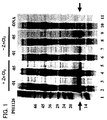
- lane 1 shows molecular weight marker
- lanes 2 to 9 samples after synthesis reaction using expression vector P011126-01 or P011126-05 in the presence or absence of zinc chloride
- lanes 10 and 11 samples after synthesis reaction with no addition of template DNA.
- the soluble fraction is shown on even lanes in lanes 2 through 11, while the insoluble fraction is shown in odd lanes therein.
- the amount of the synthesized protein is reduced when zinc is added.
- the SPL9-DBD domain in the sample after synthesis reaction using the expression vector P011126-01 however, the amount of the soluble protein was remarkably improved by addition of zinc.
- the SPL12-DBD domain in the sample after synthesis reaction using the expression vector P011126-05 was synthesized at an insoluble state with no zinc addition. With zinc addition, however, the solubility thereof was distinctly improved, together with the increase of the amount of the synthesized protein.
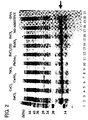
- Fig.2 shows the results of the protein synthesis in the presence of various metal compounds, using the expression vector P011126-05.
- lane 1 shows molecular weight marker
- the soluble fraction is shown on even lanes in the lanes 2 through 21, while the insoluble fraction is shown in odd lanes therein.
- the expression of the SPL12-DBD was observed mostly in the insoluble fraction in case of no addition of metal ions, while the expression thereof was observed more or less in the soluble fraction in case of addition of copper ion and iron ion. With zinc addition, the amount of the protein in the soluble fraction was distinctly increased.
- a ligand-binding protein can be synthesized in a cell-free protein synthesis system highly efficiently in a very simple manner.
- the synthesized protein highly possibly forms the accurate three dimensional structure.
- the protein can be used for the analysis of the structure and function thereof.
- interactions of biological molecules mainly including protein can be elucidated collectively and systematically at a high through-put.
- the method is very useful for the understanding of various biological phenomena at cellular level and for the development of a drug for activating or inhibiting such protein interactions.
Landscapes
- Life Sciences & Earth Sciences (AREA)
- Chemical & Material Sciences (AREA)
- Organic Chemistry (AREA)
- Engineering & Computer Science (AREA)
- Wood Science & Technology (AREA)
- Health & Medical Sciences (AREA)
- Zoology (AREA)
- General Chemical & Material Sciences (AREA)
- Bioinformatics & Cheminformatics (AREA)
- Microbiology (AREA)
- Proteomics, Peptides & Aminoacids (AREA)
- Chemical Kinetics & Catalysis (AREA)
- Biotechnology (AREA)
- Biochemistry (AREA)
- Molecular Biology (AREA)
- General Engineering & Computer Science (AREA)
- General Health & Medical Sciences (AREA)
- Genetics & Genomics (AREA)
- Measuring Or Testing Involving Enzymes Or Micro-Organisms (AREA)
- Investigating Or Analysing Biological Materials (AREA)
- Preparation Of Compounds By Using Micro-Organisms (AREA)
- Peptides Or Proteins (AREA)
Applications Claiming Priority (3)
| Application Number | Priority Date | Filing Date | Title |
|---|---|---|---|
| JP2002271375 | 2002-09-18 | ||
| JP2002271375A JP2004105070A (ja) | 2002-09-18 | 2002-09-18 | 無細胞タンパク質合成系を用いたリガンド結合タンパク質の製造方法及びその使用 |
| PCT/JP2003/011474 WO2004027059A1 (ja) | 2002-09-18 | 2003-09-09 | 無細胞タンパク質合成系を用いたリガンド結合タンパク質の製造方法及びその使用 |
Publications (2)
| Publication Number | Publication Date |
|---|---|
| EP1548111A1 true EP1548111A1 (de) | 2005-06-29 |
| EP1548111A4 EP1548111A4 (de) | 2006-12-20 |
Family
ID=32024876
Family Applications (1)
| Application Number | Title | Priority Date | Filing Date |
|---|---|---|---|
| EP03797560A Withdrawn EP1548111A4 (de) | 2002-09-18 | 2003-09-09 | Verfahren zur herstellung von liganden-bindungsprotein unter verwendung eines zellfreien proteinsynthesesystems und nutzung davon |
Country Status (5)
| Country | Link |
|---|---|
| US (1) | US20050221356A1 (de) |
| EP (1) | EP1548111A4 (de) |
| JP (1) | JP2004105070A (de) |
| CA (1) | CA2499644A1 (de) |
| WO (1) | WO2004027059A1 (de) |
Cited By (1)
| Publication number | Priority date | Publication date | Assignee | Title |
|---|---|---|---|---|
| WO2008100961A2 (en) | 2007-02-12 | 2008-08-21 | Proteonova, Inc. | GENERATION OF LIBRARY OF SOLUBLE RANDOM POLYPEPTIDES LINKED TO mRNA |
Families Citing this family (2)
| Publication number | Priority date | Publication date | Assignee | Title |
|---|---|---|---|---|
| JP6150349B2 (ja) * | 2012-06-04 | 2017-06-21 | 国立研究開発法人理化学研究所 | タンパク質の合成方法、およびタンパク質の合成キット |
| CN107002074B (zh) | 2015-06-10 | 2021-08-10 | 公立大学法人富山县立大学 | 活性型突变酶的制造方法及活性型突变酶、以及可溶性化突变蛋白的制造方法 |
Family Cites Families (4)
| Publication number | Priority date | Publication date | Assignee | Title |
|---|---|---|---|---|
| US5283173A (en) * | 1990-01-24 | 1994-02-01 | The Research Foundation Of State University Of New York | System to detect protein-protein interactions |
| US6406921B1 (en) * | 1998-07-14 | 2002-06-18 | Zyomyx, Incorporated | Protein arrays for high-throughput screening |
| JP3942431B2 (ja) * | 1999-08-31 | 2007-07-11 | 三菱化学株式会社 | タンパク質−分子間相互作用解析法 |
| AU2001278613B2 (en) * | 2000-08-15 | 2006-09-07 | Discerna Limited | Functional protein arrays |
-
2002
- 2002-09-18 JP JP2002271375A patent/JP2004105070A/ja not_active Withdrawn
-
2003
- 2003-09-09 CA CA002499644A patent/CA2499644A1/en not_active Abandoned
- 2003-09-09 WO PCT/JP2003/011474 patent/WO2004027059A1/ja not_active Ceased
- 2003-09-09 EP EP03797560A patent/EP1548111A4/de not_active Withdrawn
-
2005
- 2005-03-17 US US11/081,914 patent/US20050221356A1/en not_active Abandoned
Non-Patent Citations (5)
| Title |
|---|
| FEDOROV ALEXEY N ET AL: "Contribution of cotranslational folding to the rate of formation of native protein structure" PROCEEDINGS OF THE NATIONAL ACADEMY OF SCIENCES OF THE UNITED STATES OF AMERICA, vol. 92, no. 4, 1995, pages 1227-1231, XP002403100 ISSN: 0027-8424 * |
| KEEFE A D ET AL: "Functional proteins from a random-sequence library" NATURE, NATURE PUBLISHING GROUP, LONDON, GB, vol. 410, no. 6829, 5 April 2001 (2001-04-05), pages 715-718, XP002903482 ISSN: 0028-0836 * |
| KOMAR ANTON A ET AL: "Cotranslational heme binding to nascent globin chains" FEBS (FEDERATION OF EUROPEAN BIOCHEMICAL SOCIETIES) LETTERS, vol. 326, no. 1-3, 1993, pages 261-263, XP002403099 ISSN: 0014-5793 * |
| See also references of WO2004027059A1 * |
| TSALKOVA TAMARA ET AL: "GroEL and GroES increase the specific enzymatic activity of newly-synthesized rhodanese if present during in vitro transcription/translation" BIOCHEMISTRY, vol. 32, no. 13, 1993, pages 3377-3380, XP002403107 ISSN: 0006-2960 * |
Cited By (4)
| Publication number | Priority date | Publication date | Assignee | Title |
|---|---|---|---|---|
| WO2008100961A2 (en) | 2007-02-12 | 2008-08-21 | Proteonova, Inc. | GENERATION OF LIBRARY OF SOLUBLE RANDOM POLYPEPTIDES LINKED TO mRNA |
| EP2118344A4 (de) * | 2007-02-12 | 2011-08-03 | Proteonova Inc | Erzeugung von bibliotheken aus mit mrna verknüpften löslichen zufallspeptiden |
| US9080256B2 (en) | 2007-02-12 | 2015-07-14 | Proteonova, Inc. | Generation of library of soluble random polypeptides linked to mRNA |
| US9920453B2 (en) | 2007-02-12 | 2018-03-20 | Proteonova, Inc. | Generation of library of soluble random polypeptides linked to mRNA |
Also Published As
| Publication number | Publication date |
|---|---|
| CA2499644A1 (en) | 2004-04-01 |
| EP1548111A4 (de) | 2006-12-20 |
| WO2004027059A1 (ja) | 2004-04-01 |
| JP2004105070A (ja) | 2004-04-08 |
| US20050221356A1 (en) | 2005-10-06 |
Similar Documents
| Publication | Publication Date | Title |
|---|---|---|
| Harbers | Wheat germ systems for cell-free protein expression | |
| Hsieh et al. | A ribosome-associated chaperone enables substrate triage in a cotranslational protein targeting complex | |
| EP2044219B1 (de) | Nachweisbare nukleinsäuremarkierung | |
| EP1088233B9 (de) | Biolumineszentes resonanz-energie-transfersystem (bret) und seine anwendung | |
| JP4262778B2 (ja) | 生体分子相互作用を検出するためのタンパク質断片相補性アッセイ | |
| US8685667B2 (en) | Nucleic acid encoding a self-assembling split-fluorescent protein system | |
| US8101364B2 (en) | Fragments of fluorescent proteins for protein fragment complementation assays | |
| JP7362153B2 (ja) | 複数種のタンパク質をインビトロで定量的に共発現させる方法およびその応用 | |
| CN104781401B (zh) | 人工生物发光酶 | |
| JP2006518853A (ja) | ハイスループットおよびハイコンテント・スクリーニングのための蛋白質断片の相補性アッセイ | |
| Zhang et al. | Ribosome-bound Get4/5 facilitates the capture of tail-anchored proteins by Sgt2 in yeast | |
| RS54004A (sr) | Fotoprotein sa poboljšanom bioluminescencijom | |
| US7855167B2 (en) | In vivo screening of protein-protein interactions with protein-fragment complementation assays | |
| EP1507003B1 (de) | Verfahren zur proteinherstellung in einem zellfreien proteinsynthesesystem unter verwendung eines thioredoxinfusionsprotein-expressionsvektors | |
| EP1548111A1 (de) | Verfahren zur herstellung von liganden-bindungsprotein unter verwendung eines zellfreien proteinsynthesesystems und nutzung davon | |
| CN119156449A (zh) | 荧光素酶突变体及其应用 | |
| JP2002508515A (ja) | 複合生物学的材料中の新規な生物学的に活性な化合物を検出するための毛管電気泳動法 | |
| US7670787B2 (en) | Protein forming complex with c-Fos protein, nucleic acid encoding the same and method of using the same | |
| JP2004053416A (ja) | C末端標識タンパク質を用いるタンパク質−分子間相互作用の解析方法 | |
| JPWO2005050518A1 (ja) | 遺伝子および/又は蛋白質のデータベースを用いた相互作用マップの作成方法、ならびに、それを実現するためのソフトウエアおよび装置 | |
| US12613237B2 (en) | Biosensors for detecting arrestin signaling | |
| Lewis et al. | Fluorescence binding assay for a small peptide based on a GFP fusion protein | |
| Morse | Multi-perspective Imaging of Elongation Factor Tu on the Ribosome During Translation | |
| Enterina | A fluorescent protein exchange strategy for detecting protein-protein interactions and discovering proteinaceous inhibitors in Escherichia coli | |
| Mirasoli et al. | Cloning and expression of an endothelin-1-aequorin fusion protein as bioluminescent a tracer for endothelin-1 immunoassays |
Legal Events
| Date | Code | Title | Description |
|---|---|---|---|
| PUAI | Public reference made under article 153(3) epc to a published international application that has entered the european phase |
Free format text: ORIGINAL CODE: 0009012 |
|
| 17P | Request for examination filed |
Effective date: 20050321 |
|
| AK | Designated contracting states |
Kind code of ref document: A1 Designated state(s): AT BE BG CH CY CZ DE DK EE ES FI FR GB GR HU IE IT LI LU MC NL PT RO SE SI SK TR |
|
| AX | Request for extension of the european patent |
Extension state: AL LT LV MK |
|
| DAX | Request for extension of the european patent (deleted) | ||
| RIC1 | Information provided on ipc code assigned before grant |
Ipc: G01N 33/68 20060101ALI20061106BHEP Ipc: G01N 33/566 20060101ALI20061106BHEP Ipc: G01N 33/53 20060101ALI20061106BHEP Ipc: C12Q 1/00 20060101ALI20061106BHEP Ipc: C12N 15/09 20060101ALI20061106BHEP Ipc: C12P 21/02 20060101AFI20061106BHEP |
|
| A4 | Supplementary search report drawn up and despatched |
Effective date: 20061120 |
|
| STAA | Information on the status of an ep patent application or granted ep patent |
Free format text: STATUS: THE APPLICATION HAS BEEN WITHDRAWN |
|
| 18W | Application withdrawn |
Effective date: 20070618 |