EP1547273B1 - Procedes, systemes et produits programmes informatiques destines a demander des niveaux de puissance re ue sur la base de taux d'erreur sur les blocs re us, au moyen d'une procedure anti-perte et/ou d'une procedure d'urgence - Google Patents
Procedes, systemes et produits programmes informatiques destines a demander des niveaux de puissance re ue sur la base de taux d'erreur sur les blocs re us, au moyen d'une procedure anti-perte et/ou d'une procedure d'urgence Download PDFInfo
- Publication number
- EP1547273B1 EP1547273B1 EP03757873A EP03757873A EP1547273B1 EP 1547273 B1 EP1547273 B1 EP 1547273B1 EP 03757873 A EP03757873 A EP 03757873A EP 03757873 A EP03757873 A EP 03757873A EP 1547273 B1 EP1547273 B1 EP 1547273B1
- Authority
- EP
- European Patent Office
- Prior art keywords
- value
- sir value
- error rate
- block error
- reference sir
- Prior art date
- Legal status (The legal status is an assumption and is not a legal conclusion. Google has not performed a legal analysis and makes no representation as to the accuracy of the status listed.)
- Expired - Lifetime
Links
- 238000000034 method Methods 0.000 title claims abstract description 47
- 238000004590 computer program Methods 0.000 title claims description 12
- 238000004891 communication Methods 0.000 claims abstract description 46
- 238000005259 measurement Methods 0.000 claims 17
- 238000011156 evaluation Methods 0.000 claims 13
- 230000005540 biological transmission Effects 0.000 description 14
- 238000010586 diagram Methods 0.000 description 12
- 230000006870 function Effects 0.000 description 7
- 238000012545 processing Methods 0.000 description 6
- 230000001413 cellular effect Effects 0.000 description 5
- 238000001914 filtration Methods 0.000 description 2
- 208000037918 transfusion-transmitted disease Diseases 0.000 description 2
- 241001481828 Glyptocephalus cynoglossus Species 0.000 description 1
- 125000004122 cyclic group Chemical group 0.000 description 1
- 238000013461 design Methods 0.000 description 1
- 238000013101 initial test Methods 0.000 description 1
- 238000004519 manufacturing process Methods 0.000 description 1
- 238000010295 mobile communication Methods 0.000 description 1
- 238000011017 operating method Methods 0.000 description 1
- 230000002035 prolonged effect Effects 0.000 description 1
- 230000003068 static effect Effects 0.000 description 1
- 238000012360 testing method Methods 0.000 description 1
Images


Classifications
-
- H—ELECTRICITY
- H04—ELECTRIC COMMUNICATION TECHNIQUE
- H04W—WIRELESS COMMUNICATION NETWORKS
- H04W52/00—Power management, e.g. Transmission Power Control [TPC] or power classes
- H04W52/04—Transmission power control [TPC]
- H04W52/06—TPC algorithms
- H04W52/12—Outer and inner loops
-
- H—ELECTRICITY
- H04—ELECTRIC COMMUNICATION TECHNIQUE
- H04W—WIRELESS COMMUNICATION NETWORKS
- H04W52/00—Power management, e.g. Transmission Power Control [TPC] or power classes
- H04W52/04—Transmission power control [TPC]
- H04W52/18—TPC being performed according to specific parameters
- H04W52/20—TPC being performed according to specific parameters using error rate
Definitions
- This invention relates to communications systems, such as wireless communications systems, and operating methods therefor, and more particularly to the control of power levels for uplink and/or downlink communications.
- the transmission power may be adjusted by the receiving system requesting an increase in transmission power from the transmitting system.
- a mobile terminal may request that a base station increase its transmission power if the signal-to-interference ratio (SIR) of the received signal is below a predefined threshold.
- SIR signal-to-interference ratio
- the term "mobile terminal” encompasses a wide variety of portable wireless devices that can access a cellular system.
- Mobile terminals include, but are not restricted to, a cellular radiotelephone with or without a multi-line display, a Personal Communications System (PCS) terminal that may combine a cellular radiotelephone with data processing, facsimile and/or data communications capabilities, a Personal Digital Assistant (PDA) that can include a radiotelephone, pager, Internet/intranet access, Web browser, organizer, calendar and/or a Global Positioning System (GPS) receiver, and conventional laptop, palmtop and/or pervasive computing devices that include wireless receivers.
- PCS Personal Communications System
- PDA Personal Digital Assistant
- GPS Global Positioning System
- transmitted data is organized such that a number of data bits are collected in a transport block.
- transport blocks are, typically, contained in a transmission time interval (TTI).
- TTI transmission time interval
- CRC Cyclic redundancy check
- the CRC bits have special coding properties such that if the CRC bits are found to be wrong, the bits in the transport block are almost certainly decoded incorrectly. Similarly, if the CRC bits are found to be correct, the bits in the transport block are almost certainly decoded correctly.
- the block error rate (BLER) for a transport channel may, therefore, be estimated by filtering CRC error flags (CRCef) of the decoded transport blocks.
- an inner loop and an outer loop of the power control system are provided.
- the outer loop sets a reference SIR value based on the deviation of a measured BLER from a reference BLER.
- the inner loop compares the measured SIR to the reference SIR. If the reference SIR is below the measured SIR a request is made to increase the received power, and vice versa.
- the inner loop may be updated at about 1500 Hz and the outer loop updated between about 10 and about 100 Hz.
- the reference SIR value when requests for increased power are not granted, when the base station finally grants the requested increase in power the measured BLER may be very high. If a proportional integral derivative (PID) controller is utilized as the outer loop power controller, the reference SIR value could increase at a rate larger than the time to observe the change in the measured BLER as a result of increases in power from the base station. As a result, an unnecessary amount of power may be requested from the base station.
- PID proportional integral derivative
- EP 1 067 706 shows a method for improving performance of a mobile radio communication system using a power control loop, in which power is controlled according to a transmission quality target value that is adjusted in an adjustment process using closed-loop power control.
- the closed loop runs on a fast basis in order to adjust the transmission quality around the transmission quality target value by sending appropriate power control commands back to the transmitter.
- the transmission quality target value is adjusted in an outer loop running at a slower basis in order to adjust the quality of service around a quality of service target value.
- WO 00/65748 shows a power control system in a CDMA mobile communication system using two nested control loops.
- the outer (slower) power control loop controls e.g. a SIR target value for use in the inner (faster) closed power control loop so that the actual Quality of Service is close to the negotiated Quality of Service.
- the inner power control loop estimates the SIR of the forward transmission channel, compares the estimated SIR to the SIR target value. Based on the results of the comparison power control commands are transmitted on the reverse transmission channel, which advise the transmitter on the forward channel whether to increase or decrease its transmission power level.
- Embodiments of the present invention provide methods, systems and/or computer program products for determining a reference signal to interference ratio (SIR) value for use in requesting changes in a transmitted power level of a received signal of a communications channel as recited in the independent claims by determining the reference SIR value based on a current estimated block error rate of the communications channel, a reference block error rate and a measured SIR value of the received signal of the communications channel.
- the term "reference SIR value” refers to a single SIR value and/or a range of approved SIR values corresponding to a reference SIR value.
- references to updating a reference SIR value or moving a reference SIR value may refer to updating or moving a single reference SIR value and/or a range of approved SIR values corresponding to a reference SIR value.
- the reference SIR. value is determined by comparing the measured SIR value to a predefined range of values associated with a current reference SIR value.
- the reference SIR value is selectively updated based on the current estimated block error rate, the reference block error rate and the comparison of the measured SIR value to the predefined range.
- the reference SIR value may be selectively updated by updating of the reference SIR value if the measured SIR value is within the predefined range.
- the reference SIR value could also be selectively updated by updating the reference SIR value if the measured SIR value is outside the predefined range and the update of the reference SIR value moves the reference SIR value closer to the measured SIR value.
- the reference SIR value may be determined utilizing a proportional integral derivative (PID) determination.
- PID proportional integral derivative
- the current estimated block error rate is reset if it is determined that the reference SIR value was not updated in an immediately prior attempt to update the reference SIR value.
- the current estimated block error rate may be updated by bounding the current estimated block error rate with respect to at least one of a reference block error rate and/or a previous estimated block error rate.
- the current estimated block error rate may be stored if a previous determination of whether to update the reference SIR value determined not to update the reference SIR value.
- the current estimated block error rate may be stored by storing the current estimated block error rate if an immediately prior determination of whether to update the reference SIR value updated the reference SIR value and a current determination of whether to update the reference SIR value does not update the reference SIR value.
- the current estimated block error rate may be updated by setting the current estimated block error rate to a lowest one of a value based on a reference block error rate, a value based on the stored estimated block error rate and a value based on the current estimated block error rate.
- the present invention may be embodied as methods, systems, computer program products and/or control circuits. Furthermore, particular embodiments of the present invention may provide mobile terminals and/or base stations.
- These computer program instructions may be provided to a processor of a general purpose computer, special purpose computer, digital signal processor, and/or other programmable data processing apparatus, for example, in a mobile terminal or base station, such that the instructions, which execute via the processor of the computer and/or other programmable data processing apparatus, create a circuit and/or means for implementing the functions/acts specified in the block diagrams and/or flowchart block or blocks.
- These computer program instructions may also be stored in a computer-readable memory that can direct a mobile terminal to function in a particular manner, such that the instructions stored in the computer-readable memory produce an article of manufacture including instructions which implement the functions/acts specified in the block diagrams and/or flowchart block or blocks.
- the computer program instructions may also be loaded onto a computer or other programmable data processing apparatus to cause a series of operational steps to be performed on the computer or other programmable apparatus to produce a computer-implemented process such that the instructions which execute on the computer or other programmable apparatus provide steps for implementing the functions/acts specified in the block diagrams and/or flowchart block or blocks.
- the functions/acts noted in the blocks may occur out of the order noted in the flowcharts. For example, two blocks shown in succession may in fact be executed substantially concurrently or the blocks may sometimes be executed in the reverse order, depending upon the functionality/acts involved.
- FIG. 1 illustrates a device 100 that may comprise a network transceiver 125, and a memory 130 that communicates with a processor 140.
- the communications device 100 may also include one or more of a keyboard/keypad 105, a display 110, a speaker 115 and/or a microphone 120.
- the network transceiver 125 typically includes a transmitter circuit 150 and a receiver circuit 145, which respectively transmit outgoing radio frequency signals to/from a base station or wireless terminal and receive incoming radio frequency signals to/from the base station or wireless terminal via an antenna 165. While a single antenna 165 is shown in Figure 1 , it is to be understood that multiple antennas and/or different types of antennas may be utilized based on the types of signals being received.
- the radio frequency signals transmitted between the communications 100 and a base station/mobile terminal may comprise both traffic and control signals (e.g ., paging signals/messages for incoming calls), which are used to establish and maintain communication with another party or destination, and may provide uplink and/or downlink communications. However, the present invention is not limited to such two-way communication systems.
- the term "mobile terminal” may include, but is not limited to, a cellular radiotelephone with or without a multi-line display; a Personal Communications System (PCS) terminal that may combine a cellular radiotelephone with data processing, facsimile and data communications capabilities; a Personal Data Assistant (PDA) that can include a radiotelephone, pager, Internet/intranet access, Web browser, organizer, calendar and/or a global positioning system (GPS) receiver; and a conventional laptop and/or palmtop receiver or other appliance that includes a radiotelephone transceiver.
- Mobile terminals may also be referred to as "pervasive computing" devices.
- the present invention may be embodied in communication devices or systems, such as the communications device 100, the present invention is not limited to such devices and/or systems. Instead, the present invention may be embodied in any method, transmitter, communication device, communication system, or computer program product that utilizes network initiated subsequent provisioning messages.
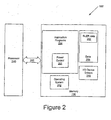
- FIG. 2 is a block diagram of embodiments of a communications device 100' that illustrates systems, methods, and computer program products in accordance with embodiments of the present invention.
- the processor 240 communicates with the memory 236 via an address/data bus 248.
- the processor 240 can be any commercially available or custom microprocessor including, for example, a digital signal processor.
- the memory 236 is representative of the overall hierarchy of memory devices containing the software and data used to implement the functionality of the communications device 100'.
- the memory 236 can include one or more of, but is not limited to, the following types of devices: cache, ROM, PROM, EPROM, EEPROM, flash memory, SRAM, and DRAM.
- the memory 236 may include several categories of software and/or data used in the communications device 100': the operating system 252 ; the application programs 254 ; the input/output (I/O) device drivers 258; and the data 256 .
- the operating system 252 may be any operating system suitable for use with a mobile terminal and/or base station, such as OS/2, AIX or System390 from International Business Machines Corporation, Armonk, NY, WindowsCE, Windows95, Windows98, Windows2000, WindowsNT or WindowsXP from Microsoft Corporation, Redmond, WA, Unix, Linux, Palm OS, custom or proprietary operating systems.
- the operating systems may be configured to support an IP-based or other such network communication protocol connection.
- the I/O device drivers 258 typically include software routines accessed through the operating system 252 by the application programs 254 to communicate with devices such as transceiver 125 and certain memory 236 components.
- the application programs 254 are illustrative of the programs that implement the various features of the mobile terminal 100 and preferably include at least one application that supports operations according to embodiments of the present invention.
- the data 256 represents the static and dynamic data used by the application programs 254, the operating system 252, the I/O device drivers 258, and other software programs that may reside in the memory 236.
- the application programs 254 may include a power control module 261.
- the power control module 261 may carry out the operations described herein for determining if a different transmission power is to be requested by the communications device 100.
- the data portion 256 of the memory 236, as shown in the embodiments of Figure 2 may include BLER data 262 that stores BLER information as described herein.
- the present invention is illustrated, for example, with reference to the power control module 261 being an application program in Figure 2 , as will be appreciated by those of skill in the art, other configurations may also be utilized while still benefiting from the teachings of the present invention.
- the power control module 261 may also be incorporated into the operating system 252, the I/O device drivers 258 or other such logical division of the communications device 100.
- the present invention should not be construed as limited to the configuration of Figure 2 but is intended to encompass any configuration capable of carrying out the operations described herein.
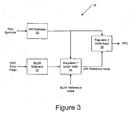
- FIG 3 is a block diagram of a power control system 10, such as may, for example, be provided by the power control module 261, according to certain embodiments of the present invention.
- the power control system 10 receives as inputs pilot symbols from which an estimate of the SIR of the received signal is determined by the SIR estimator 20.
- the SIR estimation from pilot symbols is known to those of skill in the art and the SIR estimator 20 may be a conventional SIR estimator such as those utilized in conventional power control systems. Thus, the SIR estimator 20 will not be described in further detail herein.
- the power control system 10 also receives as an input CRC error flags (CRCef) that are provided to a block error rate (BLER) estimator 22.
- CRC error flags CRC error flags
- BLER block error rate estimator 22
- the BLER estimator 22 may carry out operations as described herein for estimating the block error rate of the communications channel based on CRC error flags.
- the BLER is provided to an outer loop control regulator, regulator 1 24 , which also receives a BLER reference value.
- the regulator 1 24 determines an SIR reference value based on the BLER from the BLER estimator 22, the measured SIR value and the BLER reference value and provides the SIR reference value to an inner loop control regulator, regulator 2 26 .
- the SIR reference value may be generated by the regulator 1 24 based on a filtered block error rate.
- the regulator 2 26 generates a transmission power control (TPC) signal based on the relationship between the measured SIR value provided by the SIR estimator 20 and the SIR reference value provided by the regulator 1 24 .
- TPC transmission power control
- Operations of the inner loop control regulator to generate the TPC signal based on the measured SIR value and the reference SIR value may be carried out in a conventional manner and, therefore, will not be described further herein.
- CRC error flags for the transport channel may be denoted as CRCef b for b from zero to B -1.
- the last slot of the n th TTI may be designated k_n .
- the SIR reference value may be designated SIR ref and the filtered measured SIR value in the last slot of the n th TTI may be designated SIR filt,k_n .
- the filtered block error rate at the end of the n th TTI may be designated BLER n and the reference block error rate may be designated BLER ref .
- the filtered block error rate of the n th TTI, BLER n then is given by ⁇ B for the constant ⁇ , that may depend on the reference block error rate BLER ref .
- ⁇ may range from about BLER ref /40 to about BLER ref /5.
- ⁇ is BLER ref /20.
- K is the controlling constant, as described, for example, in ⁇ strom et al ., "Computer-Controlled Systems, Theory and Design," 2 nd edition, Prentice Hall, 1984.
- K may be from about 1/8 to about 2 and in certain embodiments K is 0.5.
- an anti-windup procedure for updating the reference SIR value is provided by selectively updating SIR ref based on the relationship of the measured SIR to the reference SIR.
- the measured SIR is a filtered SIR value for the last slot of the n th TTI. This value may be compared to a predefined range of values associated with the reference SIR value and the reference SIR value is updated if the measured SIR value is within the predefined range or if the update to the reference SIR value would move the reference SIR value closer to the measured SIR value.
- the values for e n , SIR filt,k_n , BLER n may be determined as described above. It may then be determined if c 1 SIR filt,k_n is greater than the current reference SIR value ( SIR ref,n-1 ) and if c 1 SIR ref,n is greater than SIR filt,k_n . If both conditions are met, then the filtered measured SIR value is within 10log c 1 dB of the reference value and the reference SIR value is updated, either with a value based on the current reference SIR value, the measured block error rate and the reference block error rate or, in certain embodiments, a value based on the current reference SIR value as described below with regard to the emergency procedure. In the present example, c 1 may be 2. Furthermore, the filtered measured SIR value may be utilized rather than the instantaneous measured SIR value because the instantaneous value may be associated with a high level of noise.
- c 1 SIR filt,k_n is less than or equal to the current reference SIR value (SIR ref,n-1 ) and if e n is less than zero. If so, then the filtered measured SIR value is 10log c 1 dB or greater away from (less than) the current reference SIR value and the change in the reference SIR value resulting from e n ( i.e. the measured block error rate is less than the reference block error rate) moves the reference SIR value closer to being within 10log c 1 dB of the filtered measured SIR value. If so, then the reference SIR value is updated as described above.
- SIR filt,k_n is greater than or equal to c 1 SIR ref,n-1 and if e n is greater than zero. If so, then the filtered measured SIR value is 10 log c 1 dB or more away from (greater than) the current reference SIR value and the change in the reference SIR value resulting from e n (i.e. the measured block error rate is greater than the reference block error rate) moves the reference SIR value closer to being within 10 log c 1 dB of the filtered measured SIR value. If so, then the reference SIR value is updated as described above.
- an anti-windup procedure for the measured block error rate is provided.
- Such a block error rate anti-windup procedure may be utilized alone or in combination with the reference SIR anti-windup procedure.
- the block error rate anti-windup procedure selectively sets the block error rate utilized in updating the reference SIR value based on whether the SIR anti-windup has been used for the preceding TTI. If so, the current block error rate utilized to determine the reference SIR value may be adjusted to prevent unbounded increases in the reference SIR value. For example, the current block error rate may be limited to the lesser of a weighted reference block error rate, a weighted current block error rate and a weighted previously stored block error rate.
- BLER n may be set to: min ⁇ c 2 1 ⁇ BLER freeze , c 2 2 ⁇ B ⁇ LER n - 1 , c 2 3 ⁇ BLER ref , where , and are constants associated with the respective BLER values and where BLER freeze is the BLER value from the previous attempt to update the reference SIR value.
- the constant values may be set to , , and 2.
- the BLER value is limited to no more than twice BLER ref .
- an emergency procedure is provided if more than a specified number of consecutive transport blocks have a number of CRC errors that is greater than a predefined threshold.
- the reference SIR value may be set to a value based on the current SIR reference value without reference to the block error rate so as to take into account severe error conditions in the communications channel.
- the quality of the propagation channel may be checked by determining if the number of transport blocks having CRC errors is greater than a threshold value for a series of successive TTI's.
- the CRC error flags in a TTI may be counted to determine if at least c 3 B error flags were set, where c 3 is a value from 0 to 1.
- c 3 may be 0.5. If the threshold number of error flags are set for a TTI, the number of consecutive TTI's with the threshold level of error flags may be counted and, if a sufficiently high number ( c 4 ) is reached, the emergency procedures may be carried out.
- the threshold value c 4 may be fixed or variable.
- the value of c 4 could vary depending on the reference BLER value.
- the reference SIR value may be set to c 5 SIR ref,n -1 , where c 5 may be equal to 2 or other such value that may, for example, be empirically determined.
- the value of BLER n may also be adjusted.
- BLER n may be set as , where and are constants, such as .
- Figure 4 is a flowchart of operations incorporating reference SIR anti-windup, BLER anti-windup and emergency procedures according to embodiments of the present invention.
- a filtered measured SIR value SIR filt,k_n a BLER n value and an e n value are determined (block 200 ). These values may be determined as described above.
- the filtered measured SIR value and/or the e n value are evaluated to determine if the filtered measured SIR value is within a predefined range of the reference SIR value and/or if the filtered measured SIR value is outside the range but that the change in the reference SIR value would result in the filtered measured SIR value being closer to the range (block 202 ). Such a determination may be made as described above. If the conditions for the filtered measured SIR value and/or the e n value are not met (block 202 ), the reference SIR value is not updated (block 204 ).
- the BLER anti-windup flag (bler_windup) is evaluated to determine if it is set (block 210 ). If not, a determination is made if a predefined number of consecutive TTIs ( c 4 ) have reported more than a threshold value ( c 3 B ) of CRC errors (block 212 ). If so, the emergency procedure is utilized to update the reference SIR value (block 214 ).
- the reference SIR value may be set to a value proportional to the current reference SIR value as described above. The relationship between the updated reference SIR value and the current reference SIR value may be fixed or variable.
- the reference SIR value is updated utilizing, for example, the PID determination or other suitable regulator.
- the BLER anti-windup procedure is carried out by the BLER value being reset to limit the range of the BLER value and the BLER anti-windup flag is reset (block 218 ).
- the reference SIR value is updated using the reset BLER value utilizing the PID determination (block 216 ).
- the BLER value may, for example, be reset to limit the range of the BLER value by determining as described above.
- Pseudo-code for certain embodiments of the present invention incorporating both anti-windup procedures and the emergency procedure is provided below. Such operations may, for example, be carried out by an outer loop control regulator of a two loop power control circuit, such as regulator 1 24 of Figure 1 .
- an outer loop control regulator of a two loop power control circuit such as regulator 1 24 of Figure 1 .
- values for e n , SIR filt,k_n , BLER n are determine prior to the beginning of the pseudo-code.
- the value of bler_windup should be initialized to zero.
- the outer "if" statement provides the SIR anti-windup and the initial test for the BLER anti-windup.
- the "else" portion of the outer “if” statement sets SIR ref,n to SIR ref,n -1 so as to prevent the update if the conditions are not met and also sets the flag bler_windup to indicate that an attempt at updating the reference SIR value failed to update the reference SIR value.
- the first inner “if” statement determines the count of TTI's that have had blocks with CRC errors over a predefined threshold for the emergency procedure.
- the second inner “if” statement tests to determine the BLER anti-windup flag is set and if so, the BLER value is updated. If not, then the emergency procedure threshold c 4 is tested by the next "if" statement to determine if the emergency threshold has been met and, if so, the emergency procedure is carried out. If not, the reference SIR is updated using the PID control value.
- Embodiments of the present invention have been described with reference to measured values, such as SIR and BLER.
- measured values such as SIR and BLER.
- such a term is used in a general sense and includes values that are estimated based on received signals and/or transport blocks and values that are directly or indirectly measured.
- the term measured is also intended to include values that have been further processed, for example, by filtering or other processing.
- embodiments of the present invention may also include multiple transport channels.
- a reference SIR value may be associated with each transport channel.
- a final reference SIR value could be determined based on the multiple reference SIR values, for example, by selecting a maximum value, by a linear combination of the reference SIR values or by other combinations of reference SIR values.
Landscapes
- Engineering & Computer Science (AREA)
- Computer Networks & Wireless Communication (AREA)
- Signal Processing (AREA)
- Mobile Radio Communication Systems (AREA)
- Two-Way Televisions, Distribution Of Moving Picture Or The Like (AREA)
Claims (30)
- Procédé de détermination d'une première valeur de mesure de qualité de référence à utiliser pour demander des changements d'un niveau de puissance transmise d'un signal reçu d'un canal de communication, comprenant les étapes consistant à:comparer (202) une première valeur de mesure de qualité mesurée avec une plage prédéfinie de valeurs associées à une première valeur de mesure de qualité de référence actuelle ;mettre à jour (216) la première valeur de mesure de qualité de référence sur la base d'une seconde mesure de qualité estimée actuelle et d'une seconde mesure de qualité de référence si la première valeur de mesure de qualité mesurée est comprise dans la plage prédéfinie ; etmettre à jour (216) la première valeur de mesure de qualité de référence sur la base de la seconde mesure de qualité estimée actuelle et de la seconde mesure de qualité de référence si la première valeur de mesure de qualité mesurée est en dehors de la plage prédéfinie et la mise à jour de la première valeur de mesure de qualité de référence rapproche la première valeur de mesure de qualité de référence de la première valeur de mesure de qualité mesurée.
- Procédé selon la revendication 1, dans lequel la première mesure de qualité comprend un rapport signal sur interférence (SIR) et la première mesure de qualité de référence comprend une valeur SIR de référence et la seconde mesure de qualité comprend un taux d'erreur de bloc.
- Procédé selon la revendication 2, comprenant en outre de :déterminer su la valeur SIR de référence n'a pas été mise à jour dans une évaluation immédiatement antérieure pour déterminer si la valeur SIR de référence doit être mise à jour ; etmettre à jour le taux d'erreur de bloc estimé actuel si il est déterminé que la valeur SIR de référence n'a pas été mise à jour dans une évaluation immédiatement antérieure pour déterminer si la valeur SIR de référence doit être mise à jour.
- Procédé selon la revendication 3, dans lequel la mise à jour du taux d'erreur de bloc estimé actuel comprend de délimiter le taux d'erreur de bloc estimé actuel par rapport à au moins un d'un taux d'erreur de bloc de référence et/ou un taux d'erreur de bloc estimé précédent.
- Procédé selon la revendication 4, comprenant en outre de mémoriser le taux d'erreur de bloc estimé actuel si l'évaluation pour déterminer su la valeur SIR de référence est mise à jour n'entraîne pas une mise à jour de la valeur SIR de référence.
- Procédé selon la revendication 5, dans lequel la mémorisation du taux d'erreur de bloc estimé actuel comprend la mémorisation du taux d'erreur de bloc estimé actuel su une évaluation immédiatement antérieure pour déterminer su la valeur SIR de référence doit être mise à jour entraîne une mise à jour de la valeur SIR de référence et une évaluation actuelle pour déterminer su la valeur SIR de référence doit être mise à jour n'entraîne pas une mise à jour de la valeur SIR de référence.
- Procédé selon la revendication 5, dans lequel la mise à jour du taux d'erreur de bloc estimé actuel comprend de régler le taux d'erreur de bloc estimé actuel sur une valeur plus basse d'une base basée sur un taux d'erreur de bloc de référence, une valeur basée sur le taux d'erreur de bloc estimé mémorisé et une valeur basée sur le taux d'erreur de bloc estimé actuel.
- Procédé selon la revendication 2, comprenant en outre de :déterminer su une pluralité d'intervalles de temps de transmission (TTIs) successifs ont une valeur supérieure à une valeur seuil de blocs de transport ayant des conditions d'erreur ; etdans lequel la détermination de la valeur SIR de référence comprend de régler la valeur SIR de référence sur une valeur indépendante du taux d'erreur de bloc estimé si il est déterminé qu'une pluralité de TTIs successifs ont une valeur supérieure à une valeur seuil des blocs de transport ayant des conditions d'erreur.
- Procédé selon la revendication 8, dans lequel le réglage de la valeur SIR de référence comprend de régler la valeur SIR de référence en mettant à l'échelle la valeur de référence SIR actuelle avec une valeur constante si il est déterminé q'une pluralité de TTIs successifs ont une valeur supérieure à une valeur seuil de blocs de transport ayant des conditions d'erreur.
- Procédé selon la revendication 8, dans lequel la détermination de la valeur SIR de référence comprend de :déterminer la valeur de référence en utilisant une détermination de dérivée intégrale proportionnelle (PID) si il n'est pas déterminé qu'une pluralité de TTIs successifs ont une valeur supérieure à une valeur seuil de blocs de transport ayant des conditions d'erreur ; etdéterminer la valeur de référence sans utilisation la détermination PID si il est déterminé qu'une pluralité de TTIs successifs ont une valeur supérieure à une valeur seuil de blocs de transport ayant des conditions d'erreur.
- Procédé selon la revendication 2, dans lequel la mise à jour de la valeur SIR de référence comprend de mettre à jour le SIT de référence en utilisant une détermination de dérivée intégrale proportionnelle.
- Procédé selon la revendication 2, dans lequel la valeur SIR mesurée comprend une pluralité de valeurs SIR mesurées pour des canaux de transport différents, le procédé comprenant en outre de mettre à jour la valeur SIR de référence sur la base de la pluralité de valeurs SIR mesurées.
- Circuit de commande de puissance (10) d'un dispositif de communication comprenant :une boucle de commande intérieure (26) configurée pour demander des changements d'une puissance transmise sur la base d'une valeur de rapport signal sur interférence (SIR) mesurée et d'une valeur SIR de référence ; etune boucle de commande extérieure (24) configurée pour fournir la valeur SIR de référence à la boucle de commande intérieure, la boucle de commande extérieure comprenant :un régulateur de commande configuré pour comparer la valeur SIR mesurée avec une plage de valeurs prédéfinie associée à une valeur SIR de référence actuelle et mettre à jour sélectivement la valeur SIR de référence sur la base du taux d'erreur de bloc estimé actuel, du taux d'erreur de bloc de référence et de la comparaison de la valeur SIR mesurée avec la plage prédéfinie, pour mettre à jour la valeur SIR de référence si la valeur SIR mesurée est comprise dans la plage prédéfinie et pour mettre à jour la valeur SIR de référence si la valeur SIR mesurée est en dehors de la plage prédéfinie et la mise à jour de la valeur SIR de référence rapproche la valeur SIR de référence de la valeur SIR mesurée.
- Circuit de commande de puissance selon la revendication 13, dans lequel le régulateur de commande est en outre configuré afin de mettre à jour la valeur SIR de référence en utilisant une détermination de dérivée intégrale proportionnelle.
- Circuit de commande de puissance selon la revendication 13, dans lequel le régulateur de commande est en outre configuré afin de déterminer si la valeur SIR de référence n'a pas été mise à jour dans une évaluation immédiatement antérieure pour déterminer si la valeur SIR de référence doit être mise à jour et mettre à jour le taux d'erreur de bloc estimé actuel si il est déterminé que la valeur SIR de référence n'a pas été mise à jour en conséquence de l'évaluation immédiatement antérieure.
- Circuit de commande de puissance selon la revendication 15, dans lequel le régulateur de commande est configuré afin de mettre à jour le taux d'erreur de bloc estimé actuel en délimitant le taux d'erreur de bloc estimé actuel par rapport à au moins un d'un taux d'erreur de bloc de référence et/ou un taux d'erreur de bloc estimé précédent.
- Circuit de commande de puissance selon la revendication 15, dans lequel le régulateur de commande est en outre configuré afin de mémoriser le taux d'erreur de bloc estimé actuel si une évaluation pour déterminer su la valeur SIR de référence doit être mise à jour n'entraîne pas une mise à jour de la valeur SIR de référence.
- Circuit de commande de puissance selon la revendication 17, dans lequel le régulateur de commande est en outre configuré afin de mémoriser le taux d'erreur de bloc estimé actuel si une évaluation immédiatement antérieure pour déterminer si la valeur SIR de référence doit être mise à jour entraîne une mise à jour de 1 valeur SIR de référence et une évaluation actuelle pour déterminer si la valeur SIR de référence doit être mise à jour n'entraîne pas une mise à jur de la valeur SIR de référence.
- Circuit de commande de puissance selon la revendication 17, dans lequel le régulateur de commande est en outre configuré afin de régler le taux d'erreur de bloc estimé actuel à une valeur la plus basse d'une valeur basée sur un taux d'erreur de bloc de référence, une valeur basée sur le taux d'erreur de bloc estimé mémorisé et une valeur basée sur le taux d'erreur de bloc estimé actuel.
- Circuit de commande de puissance selon la revendication 13, dans lequel le régulateur de commande est en outre configuré afin de déterminer si une pluralité d'intervalles de temps de transmission (TTIs) successifs ont une valeur supérieure à une valeur seuil de blocs de transport ayant des conditions d'erreur ; et
régler la valeur SIR de référence sur une valeur indépendante du taux d'erreur de bloc estimé si il est déterminé qu'une pluralité de TTIs successifs ont une valeur supérieure à une valeur seuil de blocs de transport ayant des conditions d'erreur. - Circuit de commande de puissance selon la revendication 20, dans lequel le régulateur de commande est en outre configuré afin de régler la valeur SIR de référence en mettant à l'échelle la valeur de référence SIR actuelle avec une valeur constante si il est déterminé qu'une pluralité de TTIs successifs ont une valeur supérieure à une valeur seuil de blocs de transport ayant des conditions d'erreur.
- Circuit de commande de puissance selon la revendication 20, dans lequel le régulateur de commande est en outre configuré afin de déterminer la valeur de référence en utilisant une détermination de dérivée intégrale proportionnelle (PID) si il n'est pas déterminé qu'une pluralité de TTIs successifs ont une valeur supérieure à une valeur seuil de blocs de transport ayant des conditions d'erreur et déterminer la valeur de référence sans utiliser la détermination PUD si il est déterminé qu'une pluralité de TTIs successifs ont une valeur supérieure à une valeur seuil de blocs de transport ayant des conditions d'erreur.
- Circuit de commande de puissance selon la revendication 13, dans lequel le dispositif de communication comprend un terminal mobile.
- Circuit de commande de puissance selon la revendication 13, dans lequel le dispositif de communication comprend une station de base sans fil.
- Système pour déterminer une valeur de rapport signal sur interférence (SIR) de référence à utiliser pour demander des changements d'un niveau de puissance transmise d'un signal reçu d'un canal de communication, comprenant :un moyen pour déterminer une valeur SIR mesurée du signal reçu du canal de communication ;un moyen pour comparer la valeur SIR mesurée avec une plage prédéfinie de valeurs associée à une valeur SIR de référence actuelle ;un moyen pour mettre à jour la valeur SIR de référence sur la base d'un taux d'erreur de bloc estimé actuel et d'un taux d'erreur de bloc de référence su la valeur SIR mesurée est comprise dans la plage prédéfinie ; etun moyen pour mettre à jour la valeur SIR de référence sur la base du taux d'erreur de bloc estimé actuel et du taux d'erreur de bloc de référence si la valeur SIR mesurée est en dehors de la plage prédéfinie et la mise à jour de la valeur SIR de référence rapproche la valeur SIR de référence de la valeur SIR mesurée.
- Système selon la revendication 25, comprenant en outre :un moyen pour déterminer su la valeur SIR de référence n'a pas été mise à jour dans une tentative immédiatement antérieure pour mettre à jour la valeur SIR de référence ; etun moyen pour mettre à jour le taux d'erreur de bloc estimé actuel si il est déterminé que la valeur SIR de référence n'a pas été mise à jour en conséquence d'une évaluation immédiatement antérieure pour déterminer si la valeur SIR de référence doit être mise à jour.
- Système selon la revendication 25, comprenant en outre :un moyen pour déterminer su une pluralité d'intervalles de temps de transmission (TTIs) successifs ont une valeur supérieure à une valeur seuil de blocs de transport ayant es conditions d'erreur ; etdans lequel le moyen pour déterminer la valeur SIR de référence comprend en outre un moyen pour régler la valeur SIR de référence sur une valeur indépendante du taux d'erreur de bloc estimé si il est déterminé qu'une pluralité de TTIs successifs ont une valeur supérieure à une valeur seuil de blocs de transport ayant des conditions d'erreur.
- Produit de programme informatique pour déterminer une valeur de rapport signal sur interférence (SIR) de référence à utiliser pour demander des changements d'un niveau de puissance transmise d'un signal reçu d'un canal de communication, comprenant :un support lisible par ordinateur comportant un code de programme lisible par ordinateur constituant un mode de réalisation de l'invention, le code de programme lisible par ordinateur comprenant :un code de programme lisible par ordinateur configuré pour déterminer une valeur SIR mesurée du signal reçu du canal de communication ;un code de programme lisible par ordinateur configuré afin de déterminer une valeur SIR mesurée du signal reçu du canal de communication ;un code de programme lisible par ordinateur configuré afin de comparer ka valeur SIR mesurée avec une plage prédéfinie de valeurs associée à une valeur SIR de référence actuelle ;un code de programme lisible par ordinateur configuré afin de mette à jour la valeur SIR de référence sur la base d'un taux d'erreur de bloc estimé actuel et d'un taux d'erreur de bloc de référence si la valeur SIR mesurée est comprise dans la plage prédéfinie ; etun code de programme lisible par ordinateur configuré afin de mettre à jour la valeur SIR de référence sur la base du taux d'erreur de bloc estimé actuel et du taux d'erreur de bloc de référence si la valeur SIR mesurée est en dehors de la plage prédéfinie et la mise à jour de la valeur SIR de référence rapproche la valeur SIR de référence de la valeur SIR mesurée.
- Produit de programme informatique selon la revendication 28, comprenant en outre :un code de programme lisible par ordinateur configuré afin de déterminer si la valeur SIR de référence n'a as été mise à jour en conséquence d'une évaluation immédiatement antérieure pour déterminer su la valeur SIR de référence doit être mise à jour ; etun code de programme lisible par ordinateur configuré afin de mettre à jour le taux d'erreur de bloc estimé actuel si il est déterminé que la valeur SIR de référence n'a pas été mise à jour en conséquence d'une évaluation immédiatement antérieure pour déterminer su la valeur SIR de référence doit être mise à jour.
- Produit de programme informatique selon la revendication 28, comprenant en outre :un code de programme lisible par ordinateur configuré afin de déterminer si une pluralité d'intervalles de temps de transmission (TTis) successifs ont une valeur supérieure à une valeur seuil de blocs de transport ayant des conditions d'erreur ; etdans lequel le code de programme lisible par ordinateur configuré afin de déterminer la valeur SIR de référence comprend en outre un code de programme lisible par ordinateur configuré afin de régler la valeur SIR de référence sur une valeur indépendante du taux d'erreur de bloc estimé si il est déterminé qu'une pluralité de TTIs successifs ont une valeur supérieure à une valeur seuil de blocs de transport ayant des conditions d'erreur.
Applications Claiming Priority (5)
| Application Number | Priority Date | Filing Date | Title |
|---|---|---|---|
| US41289702P | 2002-09-23 | 2002-09-23 | |
| US412897P | 2002-09-23 | ||
| US10/368,873 US7162262B2 (en) | 2002-09-23 | 2003-02-19 | Methods, systems and computer program products for requesting received power levels based on received block error rates utilizing an anti-windup and/or emergency procedure |
| US368873 | 2003-02-19 | ||
| PCT/EP2003/010462 WO2004028028A1 (fr) | 2002-09-23 | 2003-09-19 | Procedes, systemes et produits programmes informatiques destines a demander des niveaux de puissance reçue sur la base de taux d'erreur sur les blocs reçus, au moyen d'une procedure anti-perte et/ou d'une procedure d'urgence |
Publications (2)
| Publication Number | Publication Date |
|---|---|
| EP1547273A1 EP1547273A1 (fr) | 2005-06-29 |
| EP1547273B1 true EP1547273B1 (fr) | 2011-03-02 |
Family
ID=31997101
Family Applications (1)
| Application Number | Title | Priority Date | Filing Date |
|---|---|---|---|
| EP03757873A Expired - Lifetime EP1547273B1 (fr) | 2002-09-23 | 2003-09-19 | Procedes, systemes et produits programmes informatiques destines a demander des niveaux de puissance re ue sur la base de taux d'erreur sur les blocs re us, au moyen d'une procedure anti-perte et/ou d'une procedure d'urgence |
Country Status (6)
| Country | Link |
|---|---|
| US (1) | US7162262B2 (fr) |
| EP (1) | EP1547273B1 (fr) |
| AT (1) | ATE500657T1 (fr) |
| AU (1) | AU2003273908A1 (fr) |
| DE (1) | DE60336245D1 (fr) |
| WO (1) | WO2004028028A1 (fr) |
Families Citing this family (23)
| Publication number | Priority date | Publication date | Assignee | Title |
|---|---|---|---|---|
| US8306562B2 (en) * | 2003-05-29 | 2012-11-06 | Texas Instruments Incorporated | Signal-to-interference ratio target control for multi-data-rate communication systems |
| US7664519B2 (en) * | 2003-12-30 | 2010-02-16 | Qualcomm Incorporated | Power control for multiple transport channels in a wireless communication system |
| FI20031934A0 (fi) * | 2003-12-31 | 2003-12-31 | Nokia Corp | Lähetystehon kontrollointimenetelmä ja radiojärjestelmä |
| JP4458251B2 (ja) * | 2004-07-13 | 2010-04-28 | 日本電気株式会社 | 移動通信システム、移動通信システムにおける送信電力制御方法及び移動局 |
| ATE474381T1 (de) * | 2004-12-20 | 2010-07-15 | Ericsson Telefon Ab L M | Verfahren und vorrichtung zur sendeleistungsregelung |
| US7515579B2 (en) * | 2005-02-09 | 2009-04-07 | Alcatel-Lucent Usa Inc. | Dynamic switching of a transmission time interval in a wireless system |
| TWI388151B (zh) * | 2005-08-10 | 2013-03-01 | Koninkl Philips Electronics Nv | 操作一通信裝置與系統的方法,通信裝置及包含該通信裝置之系統 |
| ES2250009B1 (es) * | 2005-08-17 | 2007-05-16 | T.O.P. Optimized Technologies, S.L. | Metodo y aparato de control de potencia por lazo externo para sistemas de comunicacion inalambrica. |
| BRPI0616542B1 (pt) | 2005-08-24 | 2019-07-16 | Interdigital Technology Corporation | Método e aparelho de ajuste do período de retroalimentação do indicador de qualidade de canais para aumentar a capacidade do link superior |
| JP4326561B2 (ja) * | 2006-12-18 | 2009-09-09 | 株式会社エヌ・ティ・ティ・ドコモ | 移動通信端末及び送信電力制御方法 |
| US8811335B2 (en) | 2007-04-20 | 2014-08-19 | Qualcomm Incorporated | Method and apparatus for dynamic adjustment of uplink transmission time |
| US7886200B1 (en) * | 2008-03-21 | 2011-02-08 | Symantec Corporation | Measuring catastrophic failure rates in updates |
| KR101481549B1 (ko) * | 2008-09-18 | 2015-01-13 | 엘지전자 주식회사 | 다중사용자 mimo에서 전송 전력값 전달 및 확인 방법 |
| KR101624907B1 (ko) * | 2010-03-16 | 2016-06-08 | 삼성전자주식회사 | 광대역 무선통신 시스템에서 실내 기지국의 송신 전력 제어 장치 및 방법 |
| WO2011119075A1 (fr) * | 2010-03-23 | 2011-09-29 | Telefonaktiebolaget L M Ericsson (Publ) | Prédiction de charge de liaison montante à l'aide de filtres de kalman |
| US8155540B2 (en) | 2010-06-02 | 2012-04-10 | Xerox Corporation | Optimized limit gain compensation for dispense time accumulators of toner concentration control |
| CN103546953B (zh) * | 2012-07-10 | 2016-12-21 | 联芯科技有限公司 | 基于tpc调度命令的信干比调整方法及终端设备 |
| CN103546954B (zh) * | 2012-07-10 | 2017-03-08 | 联芯科技有限公司 | 外环功控中基于误块率统计的信干比调整方法及终端设备 |
| CN105430675A (zh) * | 2015-11-05 | 2016-03-23 | 江苏鑫软图无线技术股份有限公司 | 基于td-lte网络频谱感知的智能基站的优化方法 |
| US10674389B2 (en) * | 2016-12-01 | 2020-06-02 | Qualcomm Incorporated | Access terminal radio link monitoring (RLM) on a shared communication medium |
| US10917856B2 (en) * | 2018-09-07 | 2021-02-09 | Parallel Wireless, Inc. | Statistical projection for controlling BLER |
| DE102020214945A1 (de) * | 2020-11-27 | 2022-06-02 | Robert Bosch Gesellschaft mit beschränkter Haftung | Verfahren zum Überprüfen einer Nachricht in einem Kommunikationssystem |
| CN113495485B (zh) * | 2021-07-22 | 2022-11-01 | 中国船舶集团有限公司第七一一研究所 | 一种主动控制系统的抗饱和控制方法和主动控制系统 |
Family Cites Families (15)
| Publication number | Priority date | Publication date | Assignee | Title |
|---|---|---|---|---|
| US6292519B1 (en) | 1998-03-11 | 2001-09-18 | Telefonaktiebolaget Lm Ericsson (Publ) | Correction of signal-to-interference ratio measurements |
| JP3028802B2 (ja) | 1998-05-28 | 2000-04-04 | 日本電気株式会社 | Cdma移動通信システムにおける呼出捕捉時の電力制御方法 |
| US6356898B2 (en) | 1998-08-31 | 2002-03-12 | International Business Machines Corporation | Method and system for summarizing topics of documents browsed by a user |
| US6373823B1 (en) | 1999-01-28 | 2002-04-16 | Qualcomm Incorporated | Method and apparatus for controlling transmission power in a potentially transmission gated or capped communication system |
| US6639934B1 (en) | 1999-04-26 | 2003-10-28 | Telefonaktiebolaget Lm Ericsson (Publ) | Power control in a CDMA mobile communication system |
| EP1054518B1 (fr) | 1999-05-21 | 2004-04-28 | Alcatel Alsthom Compagnie Generale D'electricite | Procédé d'amélioration des performances d'un système de communication radio mobile utilisant contrôle de puissance |
| ES2216459T3 (es) | 1999-05-21 | 2004-10-16 | Alcatel | Metodo para mejorar las prestaciones de un sistema movil de radiocomunicacion utilizando la evaluacion de convergencia del bucle de control de potencia. |
| GB9914977D0 (en) | 1999-06-25 | 1999-08-25 | Glaxo Group Ltd | Chemical compounds |
| EP1578028B1 (fr) | 1999-07-13 | 2009-03-25 | Alcatel Lucent | Méthode pour ameliore les performances d' un système mobile de radiocommunication en utilisant un algorithme de commande de puissance |
| US6587447B1 (en) | 1999-09-29 | 2003-07-01 | Nortel Networks Limited | Method and system for performing outer loop power control in discontinuous transmission mode |
| US6754506B2 (en) | 2000-06-13 | 2004-06-22 | At&T Wireless Services, Inc. | TDMA communication system having enhanced power control |
| JP3738205B2 (ja) * | 2000-08-12 | 2006-01-25 | 三星電子株式会社 | ネットワークの伝送電力最適化装置及びその方法 |
| WO2002017511A2 (fr) | 2000-08-21 | 2002-02-28 | Koninklijke Philips Electronics N.V. | Procede de transmission d'informations et appareil faisant appel audit procede |
| US7010321B2 (en) | 2002-02-04 | 2006-03-07 | Qualcomm Inc. | Power control avoiding outer loop wind-up |
| JP4025979B2 (ja) * | 2002-04-24 | 2007-12-26 | 日本電気株式会社 | Cdma移動通信方式における送信電力制御方法および無線基地局とcdma通信システム |
-
2003
- 2003-02-19 US US10/368,873 patent/US7162262B2/en not_active Expired - Lifetime
- 2003-09-19 WO PCT/EP2003/010462 patent/WO2004028028A1/fr not_active Ceased
- 2003-09-19 DE DE60336245T patent/DE60336245D1/de not_active Expired - Lifetime
- 2003-09-19 AU AU2003273908A patent/AU2003273908A1/en not_active Abandoned
- 2003-09-19 AT AT03757873T patent/ATE500657T1/de not_active IP Right Cessation
- 2003-09-19 EP EP03757873A patent/EP1547273B1/fr not_active Expired - Lifetime
Also Published As
| Publication number | Publication date |
|---|---|
| ATE500657T1 (de) | 2011-03-15 |
| AU2003273908A1 (en) | 2004-04-08 |
| EP1547273A1 (fr) | 2005-06-29 |
| DE60336245D1 (de) | 2011-04-14 |
| US7162262B2 (en) | 2007-01-09 |
| US20040058699A1 (en) | 2004-03-25 |
| WO2004028028A1 (fr) | 2004-04-01 |
Similar Documents
| Publication | Publication Date | Title |
|---|---|---|
| EP1547273B1 (fr) | Procedes, systemes et produits programmes informatiques destines a demander des niveaux de puissance re ue sur la base de taux d'erreur sur les blocs re us, au moyen d'une procedure anti-perte et/ou d'une procedure d'urgence | |
| US8688054B2 (en) | Wireless communication method and apparatus for adaptively biasing channel quality indicators to maintain a desired block error rate | |
| US6535723B1 (en) | Method of power control for a wireless communication system having multiple information rates | |
| US7050760B2 (en) | Terminal station controls transmission power of a base station | |
| EP1456966B1 (fr) | Procede et dispositif pour diversite de selection des sites a base de valeurs cible de mesure de qualite | |
| US20100157829A1 (en) | Method and a device for improved channel quality reporting | |
| CA2500971A1 (fr) | Signalisation d'estimation de taux d'erreur de bloc pour reglage du rapport cible signal sur interference | |
| US7616660B2 (en) | Common rate control method for reverse link channels in CDMA networks | |
| EP1164716A2 (fr) | Procédé de commande de puissance ameliorée en variant de façon adaptative un échelon de valeur du rapport signal sur bruit souhaité | |
| JPH11177488A (ja) | 移動通信システムの基地局における送信電力制御方法並びに移動通信システムにおける基地局及び移動機 | |
| US7215929B2 (en) | Method and apparatus for maintaining desired link quality when no data is transmitted on transport channels having quality targets | |
| US7493134B2 (en) | Transmission power control apparatus and radio base station | |
| US20040203462A1 (en) | Method and apparatus for setting the threshold of a power control target in a spread spectrum communication system | |
| US6298220B1 (en) | Power control system for communications channels | |
| US20080207250A1 (en) | Apparatus and method for reverse power control in mobile communication system | |
| US20040209636A1 (en) | Smooth method for adjusting downlink transmitted power | |
| US7603134B2 (en) | Power control method for a mobile communication system | |
| US8036694B2 (en) | Method and device for power control in a wireless communication system | |
| ES2361244T3 (es) | Métodos, sistemas y productos de programa de ordenador para solicitar niveles de potencia recibidos basandose en tasas de error de bloque recibidas utilizando un procedimiento anti-saturación y/o un procedimiento de emergencia. | |
| EP2239984B1 (fr) | Procédé pour l'amélioration de la détermination de la cible sir dans un mécanisme de contrôle de puissance en boucle externe d'un équipement utilisateur de système de télécommunication mobile universel | |
| US20050059423A1 (en) | Method for outer loop power control when no cyclic redundancy check results are available on the coded composite transport channel | |
| US20040180684A1 (en) | Hybrid method for adjusting downlink transmitted power |
Legal Events
| Date | Code | Title | Description |
|---|---|---|---|
| PUAI | Public reference made under article 153(3) epc to a published international application that has entered the european phase |
Free format text: ORIGINAL CODE: 0009012 |
|
| 17P | Request for examination filed |
Effective date: 20050325 |
|
| AK | Designated contracting states |
Kind code of ref document: A1 Designated state(s): AT BE BG CH CY CZ DE DK EE ES FI FR GB GR HU IE IT LI LU MC NL PT RO SE SI SK TR |
|
| AX | Request for extension of the european patent |
Extension state: AL LT LV MK |
|
| DAX | Request for extension of the european patent (deleted) | ||
| 17Q | First examination report despatched |
Effective date: 20100312 |
|
| GRAP | Despatch of communication of intention to grant a patent |
Free format text: ORIGINAL CODE: EPIDOSNIGR1 |
|
| GRAS | Grant fee paid |
Free format text: ORIGINAL CODE: EPIDOSNIGR3 |
|
| GRAA | (expected) grant |
Free format text: ORIGINAL CODE: 0009210 |
|
| AK | Designated contracting states |
Kind code of ref document: B1 Designated state(s): AT BE BG CH CY CZ DE DK EE ES FI FR GB GR HU IE IT LI LU MC NL PT RO SE SI SK TR |
|
| REG | Reference to a national code |
Ref country code: GB Ref legal event code: FG4D |
|
| REG | Reference to a national code |
Ref country code: CH Ref legal event code: EP |
|
| REG | Reference to a national code |
Ref country code: IE Ref legal event code: FG4D |
|
| REF | Corresponds to: |
Ref document number: 60336245 Country of ref document: DE Date of ref document: 20110414 Kind code of ref document: P |
|
| REG | Reference to a national code |
Ref country code: DE Ref legal event code: R096 Ref document number: 60336245 Country of ref document: DE Effective date: 20110414 |
|
| REG | Reference to a national code |
Ref country code: ES Ref legal event code: FG2A Ref document number: 2361244 Country of ref document: ES Kind code of ref document: T3 Effective date: 20110615 |
|
| REG | Reference to a national code |
Ref country code: NL Ref legal event code: VDEP Effective date: 20110302 |
|
| PG25 | Lapsed in a contracting state [announced via postgrant information from national office to epo] |
Ref country code: GR Free format text: LAPSE BECAUSE OF FAILURE TO SUBMIT A TRANSLATION OF THE DESCRIPTION OR TO PAY THE FEE WITHIN THE PRESCRIBED TIME-LIMIT Effective date: 20110603 Ref country code: SE Free format text: LAPSE BECAUSE OF FAILURE TO SUBMIT A TRANSLATION OF THE DESCRIPTION OR TO PAY THE FEE WITHIN THE PRESCRIBED TIME-LIMIT Effective date: 20110302 |
|
| PG25 | Lapsed in a contracting state [announced via postgrant information from national office to epo] |
Ref country code: CY Free format text: LAPSE BECAUSE OF FAILURE TO SUBMIT A TRANSLATION OF THE DESCRIPTION OR TO PAY THE FEE WITHIN THE PRESCRIBED TIME-LIMIT Effective date: 20110302 Ref country code: FI Free format text: LAPSE BECAUSE OF FAILURE TO SUBMIT A TRANSLATION OF THE DESCRIPTION OR TO PAY THE FEE WITHIN THE PRESCRIBED TIME-LIMIT Effective date: 20110302 Ref country code: NL Free format text: LAPSE BECAUSE OF FAILURE TO SUBMIT A TRANSLATION OF THE DESCRIPTION OR TO PAY THE FEE WITHIN THE PRESCRIBED TIME-LIMIT Effective date: 20110302 Ref country code: BG Free format text: LAPSE BECAUSE OF FAILURE TO SUBMIT A TRANSLATION OF THE DESCRIPTION OR TO PAY THE FEE WITHIN THE PRESCRIBED TIME-LIMIT Effective date: 20110602 Ref country code: AT Free format text: LAPSE BECAUSE OF FAILURE TO SUBMIT A TRANSLATION OF THE DESCRIPTION OR TO PAY THE FEE WITHIN THE PRESCRIBED TIME-LIMIT Effective date: 20110302 Ref country code: SI Free format text: LAPSE BECAUSE OF FAILURE TO SUBMIT A TRANSLATION OF THE DESCRIPTION OR TO PAY THE FEE WITHIN THE PRESCRIBED TIME-LIMIT Effective date: 20110302 |
|
| PG25 | Lapsed in a contracting state [announced via postgrant information from national office to epo] |
Ref country code: BE Free format text: LAPSE BECAUSE OF FAILURE TO SUBMIT A TRANSLATION OF THE DESCRIPTION OR TO PAY THE FEE WITHIN THE PRESCRIBED TIME-LIMIT Effective date: 20110302 |
|
| PG25 | Lapsed in a contracting state [announced via postgrant information from national office to epo] |
Ref country code: PT Free format text: LAPSE BECAUSE OF FAILURE TO SUBMIT A TRANSLATION OF THE DESCRIPTION OR TO PAY THE FEE WITHIN THE PRESCRIBED TIME-LIMIT Effective date: 20110704 Ref country code: EE Free format text: LAPSE BECAUSE OF FAILURE TO SUBMIT A TRANSLATION OF THE DESCRIPTION OR TO PAY THE FEE WITHIN THE PRESCRIBED TIME-LIMIT Effective date: 20110302 |
|
| PG25 | Lapsed in a contracting state [announced via postgrant information from national office to epo] |
Ref country code: RO Free format text: LAPSE BECAUSE OF FAILURE TO SUBMIT A TRANSLATION OF THE DESCRIPTION OR TO PAY THE FEE WITHIN THE PRESCRIBED TIME-LIMIT Effective date: 20110302 Ref country code: SK Free format text: LAPSE BECAUSE OF FAILURE TO SUBMIT A TRANSLATION OF THE DESCRIPTION OR TO PAY THE FEE WITHIN THE PRESCRIBED TIME-LIMIT Effective date: 20110302 Ref country code: CZ Free format text: LAPSE BECAUSE OF FAILURE TO SUBMIT A TRANSLATION OF THE DESCRIPTION OR TO PAY THE FEE WITHIN THE PRESCRIBED TIME-LIMIT Effective date: 20110302 |
|
| PLBE | No opposition filed within time limit |
Free format text: ORIGINAL CODE: 0009261 |
|
| STAA | Information on the status of an ep patent application or granted ep patent |
Free format text: STATUS: NO OPPOSITION FILED WITHIN TIME LIMIT |
|
| 26N | No opposition filed |
Effective date: 20111205 |
|
| PG25 | Lapsed in a contracting state [announced via postgrant information from national office to epo] |
Ref country code: DK Free format text: LAPSE BECAUSE OF FAILURE TO SUBMIT A TRANSLATION OF THE DESCRIPTION OR TO PAY THE FEE WITHIN THE PRESCRIBED TIME-LIMIT Effective date: 20110302 |
|
| REG | Reference to a national code |
Ref country code: DE Ref legal event code: R097 Ref document number: 60336245 Country of ref document: DE Effective date: 20111205 |
|
| PG25 | Lapsed in a contracting state [announced via postgrant information from national office to epo] |
Ref country code: MC Free format text: LAPSE BECAUSE OF NON-PAYMENT OF DUE FEES Effective date: 20110930 |
|
| REG | Reference to a national code |
Ref country code: CH Ref legal event code: PL |
|
| REG | Reference to a national code |
Ref country code: DE Ref legal event code: R082 Ref document number: 60336245 Country of ref document: DE Representative=s name: ANDREAS TONSCHEIDT, DE Ref country code: DE Ref legal event code: R082 Ref document number: 60336245 Country of ref document: DE Representative=s name: TONSCHEIDT, ANDREAS, DIPL.-PHYS. DR. RER. NAT., DE |
|
| PG25 | Lapsed in a contracting state [announced via postgrant information from national office to epo] |
Ref country code: IT Free format text: LAPSE BECAUSE OF FAILURE TO SUBMIT A TRANSLATION OF THE DESCRIPTION OR TO PAY THE FEE WITHIN THE PRESCRIBED TIME-LIMIT Effective date: 20110302 |
|
| REG | Reference to a national code |
Ref country code: IE Ref legal event code: MM4A |
|
| REG | Reference to a national code |
Ref country code: FR Ref legal event code: ST Effective date: 20120531 |
|
| PG25 | Lapsed in a contracting state [announced via postgrant information from national office to epo] |
Ref country code: CH Free format text: LAPSE BECAUSE OF NON-PAYMENT OF DUE FEES Effective date: 20110930 Ref country code: IE Free format text: LAPSE BECAUSE OF NON-PAYMENT OF DUE FEES Effective date: 20110919 Ref country code: LI Free format text: LAPSE BECAUSE OF NON-PAYMENT OF DUE FEES Effective date: 20110930 |
|
| PG25 | Lapsed in a contracting state [announced via postgrant information from national office to epo] |
Ref country code: FR Free format text: LAPSE BECAUSE OF NON-PAYMENT OF DUE FEES Effective date: 20110930 |
|
| PG25 | Lapsed in a contracting state [announced via postgrant information from national office to epo] |
Ref country code: LU Free format text: LAPSE BECAUSE OF NON-PAYMENT OF DUE FEES Effective date: 20110919 |
|
| PG25 | Lapsed in a contracting state [announced via postgrant information from national office to epo] |
Ref country code: TR Free format text: LAPSE BECAUSE OF FAILURE TO SUBMIT A TRANSLATION OF THE DESCRIPTION OR TO PAY THE FEE WITHIN THE PRESCRIBED TIME-LIMIT Effective date: 20110302 |
|
| PG25 | Lapsed in a contracting state [announced via postgrant information from national office to epo] |
Ref country code: HU Free format text: LAPSE BECAUSE OF FAILURE TO SUBMIT A TRANSLATION OF THE DESCRIPTION OR TO PAY THE FEE WITHIN THE PRESCRIBED TIME-LIMIT Effective date: 20110302 |
|
| PGFP | Annual fee paid to national office [announced via postgrant information from national office to epo] |
Ref country code: GB Payment date: 20150928 Year of fee payment: 13 Ref country code: ES Payment date: 20150928 Year of fee payment: 13 |
|
| PGFP | Annual fee paid to national office [announced via postgrant information from national office to epo] |
Ref country code: DE Payment date: 20150929 Year of fee payment: 13 |
|
| REG | Reference to a national code |
Ref country code: DE Ref legal event code: R119 Ref document number: 60336245 Country of ref document: DE |
|
| GBPC | Gb: european patent ceased through non-payment of renewal fee |
Effective date: 20160919 |
|
| PG25 | Lapsed in a contracting state [announced via postgrant information from national office to epo] |
Ref country code: GB Free format text: LAPSE BECAUSE OF NON-PAYMENT OF DUE FEES Effective date: 20160919 Ref country code: DE Free format text: LAPSE BECAUSE OF NON-PAYMENT OF DUE FEES Effective date: 20170401 |
|
| PG25 | Lapsed in a contracting state [announced via postgrant information from national office to epo] |
Ref country code: ES Free format text: LAPSE BECAUSE OF NON-PAYMENT OF DUE FEES Effective date: 20160920 |
|
| REG | Reference to a national code |
Ref country code: ES Ref legal event code: FD2A Effective date: 20181126 |