EP1543830A1 - Antiseptic bactericides and cosmetics, drugs and foods containing the antiseptic bactericides - Google Patents
Antiseptic bactericides and cosmetics, drugs and foods containing the antiseptic bactericides Download PDFInfo
- Publication number
- EP1543830A1 EP1543830A1 EP03753952A EP03753952A EP1543830A1 EP 1543830 A1 EP1543830 A1 EP 1543830A1 EP 03753952 A EP03753952 A EP 03753952A EP 03753952 A EP03753952 A EP 03753952A EP 1543830 A1 EP1543830 A1 EP 1543830A1
- Authority
- EP
- European Patent Office
- Prior art keywords
- alkanediol
- antiseptic
- cosmetics
- antiseptic disinfectant
- toiletries
- Prior art date
- Legal status (The legal status is an assumption and is not a legal conclusion. Google has not performed a legal analysis and makes no representation as to the accuracy of the status listed.)
- Granted
Links
Images





Classifications
-
- A—HUMAN NECESSITIES
- A61—MEDICAL OR VETERINARY SCIENCE; HYGIENE
- A61K—PREPARATIONS FOR MEDICAL, DENTAL OR TOILETRY PURPOSES
- A61K8/00—Cosmetics or similar toiletry preparations
- A61K8/18—Cosmetics or similar toiletry preparations characterised by the composition
- A61K8/30—Cosmetics or similar toiletry preparations characterised by the composition containing organic compounds
- A61K8/33—Cosmetics or similar toiletry preparations characterised by the composition containing organic compounds containing oxygen
- A61K8/34—Alcohols
- A61K8/345—Alcohols containing more than one hydroxy group
-
- A—HUMAN NECESSITIES
- A23—FOODS OR FOODSTUFFS; TREATMENT THEREOF, NOT COVERED BY OTHER CLASSES
- A23B—PRESERVATION OF FOODS, FOODSTUFFS OR NON-ALCOHOLIC BEVERAGES; CHEMICAL RIPENING OF FRUIT OR VEGETABLES
- A23B2/00—Preservation of foods or foodstuffs, in general
- A23B2/70—Preservation of foods or foodstuffs, in general by treatment with chemicals
- A23B2/725—Preservation of foods or foodstuffs, in general by treatment with chemicals in the form of liquids or solids
- A23B2/729—Organic compounds; Microorganisms; Enzymes
- A23B2/742—Organic compounds containing oxygen
-
- A—HUMAN NECESSITIES
- A23—FOODS OR FOODSTUFFS; TREATMENT THEREOF, NOT COVERED BY OTHER CLASSES
- A23B—PRESERVATION OF FOODS, FOODSTUFFS OR NON-ALCOHOLIC BEVERAGES; CHEMICAL RIPENING OF FRUIT OR VEGETABLES
- A23B2/00—Preservation of foods or foodstuffs, in general
- A23B2/70—Preservation of foods or foodstuffs, in general by treatment with chemicals
- A23B2/725—Preservation of foods or foodstuffs, in general by treatment with chemicals in the form of liquids or solids
- A23B2/729—Organic compounds; Microorganisms; Enzymes
- A23B2/742—Organic compounds containing oxygen
- A23B2/746—Organic compounds containing oxygen with singly-bound oxygen
-
- A—HUMAN NECESSITIES
- A23—FOODS OR FOODSTUFFS; TREATMENT THEREOF, NOT COVERED BY OTHER CLASSES
- A23B—PRESERVATION OF FOODS, FOODSTUFFS OR NON-ALCOHOLIC BEVERAGES; CHEMICAL RIPENING OF FRUIT OR VEGETABLES
- A23B2/00—Preservation of foods or foodstuffs, in general
- A23B2/70—Preservation of foods or foodstuffs, in general by treatment with chemicals
- A23B2/725—Preservation of foods or foodstuffs, in general by treatment with chemicals in the form of liquids or solids
- A23B2/729—Organic compounds; Microorganisms; Enzymes
- A23B2/742—Organic compounds containing oxygen
- A23B2/75—Organic compounds containing oxygen with doubly-bound oxygen
-
- A—HUMAN NECESSITIES
- A61—MEDICAL OR VETERINARY SCIENCE; HYGIENE
- A61K—PREPARATIONS FOR MEDICAL, DENTAL OR TOILETRY PURPOSES
- A61K31/00—Medicinal preparations containing organic active ingredients
- A61K31/01—Hydrocarbons
- A61K31/015—Hydrocarbons carbocyclic
-
- A—HUMAN NECESSITIES
- A61—MEDICAL OR VETERINARY SCIENCE; HYGIENE
- A61K—PREPARATIONS FOR MEDICAL, DENTAL OR TOILETRY PURPOSES
- A61K31/00—Medicinal preparations containing organic active ingredients
- A61K31/045—Hydroxy compounds, e.g. alcohols; Salts thereof, e.g. alcoholates
-
- A—HUMAN NECESSITIES
- A61—MEDICAL OR VETERINARY SCIENCE; HYGIENE
- A61K—PREPARATIONS FOR MEDICAL, DENTAL OR TOILETRY PURPOSES
- A61K31/00—Medicinal preparations containing organic active ingredients
- A61K31/045—Hydroxy compounds, e.g. alcohols; Salts thereof, e.g. alcoholates
- A61K31/047—Hydroxy compounds, e.g. alcohols; Salts thereof, e.g. alcoholates having two or more hydroxy groups, e.g. sorbitol
-
- A—HUMAN NECESSITIES
- A61—MEDICAL OR VETERINARY SCIENCE; HYGIENE
- A61K—PREPARATIONS FOR MEDICAL, DENTAL OR TOILETRY PURPOSES
- A61K31/00—Medicinal preparations containing organic active ingredients
- A61K31/045—Hydroxy compounds, e.g. alcohols; Salts thereof, e.g. alcoholates
- A61K31/05—Phenols
-
- A—HUMAN NECESSITIES
- A61—MEDICAL OR VETERINARY SCIENCE; HYGIENE
- A61K—PREPARATIONS FOR MEDICAL, DENTAL OR TOILETRY PURPOSES
- A61K31/00—Medicinal preparations containing organic active ingredients
- A61K31/075—Ethers or acetals
- A61K31/08—Ethers or acetals acyclic, e.g. paraformaldehyde
-
- A—HUMAN NECESSITIES
- A61—MEDICAL OR VETERINARY SCIENCE; HYGIENE
- A61K—PREPARATIONS FOR MEDICAL, DENTAL OR TOILETRY PURPOSES
- A61K31/00—Medicinal preparations containing organic active ingredients
- A61K31/075—Ethers or acetals
- A61K31/085—Ethers or acetals having an ether linkage to aromatic ring nuclear carbon
-
- A—HUMAN NECESSITIES
- A61—MEDICAL OR VETERINARY SCIENCE; HYGIENE
- A61K—PREPARATIONS FOR MEDICAL, DENTAL OR TOILETRY PURPOSES
- A61K31/00—Medicinal preparations containing organic active ingredients
- A61K31/21—Esters, e.g. nitroglycerine, selenocyanates
- A61K31/215—Esters, e.g. nitroglycerine, selenocyanates of carboxylic acids
- A61K31/22—Esters, e.g. nitroglycerine, selenocyanates of carboxylic acids of acyclic acids, e.g. pravastatin
-
- A—HUMAN NECESSITIES
- A61—MEDICAL OR VETERINARY SCIENCE; HYGIENE
- A61K—PREPARATIONS FOR MEDICAL, DENTAL OR TOILETRY PURPOSES
- A61K47/00—Medicinal preparations characterised by the non-active ingredients used, e.g. carriers or inert additives; Targeting or modifying agents chemically bound to the active ingredient
- A61K47/06—Organic compounds, e.g. natural or synthetic hydrocarbons, polyolefins, mineral oil, petrolatum or ozokerite
- A61K47/08—Organic compounds, e.g. natural or synthetic hydrocarbons, polyolefins, mineral oil, petrolatum or ozokerite containing oxygen, e.g. ethers, acetals, ketones, quinones, aldehydes, peroxides
-
- A—HUMAN NECESSITIES
- A61—MEDICAL OR VETERINARY SCIENCE; HYGIENE
- A61K—PREPARATIONS FOR MEDICAL, DENTAL OR TOILETRY PURPOSES
- A61K47/00—Medicinal preparations characterised by the non-active ingredients used, e.g. carriers or inert additives; Targeting or modifying agents chemically bound to the active ingredient
- A61K47/06—Organic compounds, e.g. natural or synthetic hydrocarbons, polyolefins, mineral oil, petrolatum or ozokerite
- A61K47/08—Organic compounds, e.g. natural or synthetic hydrocarbons, polyolefins, mineral oil, petrolatum or ozokerite containing oxygen, e.g. ethers, acetals, ketones, quinones, aldehydes, peroxides
- A61K47/10—Alcohols; Phenols; Salts thereof, e.g. glycerol; Polyethylene glycols [PEG]; Poloxamers; PEG/POE alkyl ethers
-
- A—HUMAN NECESSITIES
- A61—MEDICAL OR VETERINARY SCIENCE; HYGIENE
- A61K—PREPARATIONS FOR MEDICAL, DENTAL OR TOILETRY PURPOSES
- A61K47/00—Medicinal preparations characterised by the non-active ingredients used, e.g. carriers or inert additives; Targeting or modifying agents chemically bound to the active ingredient
- A61K47/06—Organic compounds, e.g. natural or synthetic hydrocarbons, polyolefins, mineral oil, petrolatum or ozokerite
- A61K47/08—Organic compounds, e.g. natural or synthetic hydrocarbons, polyolefins, mineral oil, petrolatum or ozokerite containing oxygen, e.g. ethers, acetals, ketones, quinones, aldehydes, peroxides
- A61K47/14—Esters of carboxylic acids, e.g. fatty acid monoglycerides, medium-chain triglycerides, parabens or PEG fatty acid esters
-
- A—HUMAN NECESSITIES
- A61—MEDICAL OR VETERINARY SCIENCE; HYGIENE
- A61K—PREPARATIONS FOR MEDICAL, DENTAL OR TOILETRY PURPOSES
- A61K8/00—Cosmetics or similar toiletry preparations
- A61K8/18—Cosmetics or similar toiletry preparations characterised by the composition
- A61K8/30—Cosmetics or similar toiletry preparations characterised by the composition containing organic compounds
- A61K8/33—Cosmetics or similar toiletry preparations characterised by the composition containing organic compounds containing oxygen
-
- A—HUMAN NECESSITIES
- A61—MEDICAL OR VETERINARY SCIENCE; HYGIENE
- A61K—PREPARATIONS FOR MEDICAL, DENTAL OR TOILETRY PURPOSES
- A61K8/00—Cosmetics or similar toiletry preparations
- A61K8/18—Cosmetics or similar toiletry preparations characterised by the composition
- A61K8/30—Cosmetics or similar toiletry preparations characterised by the composition containing organic compounds
- A61K8/33—Cosmetics or similar toiletry preparations characterised by the composition containing organic compounds containing oxygen
- A61K8/34—Alcohols
-
- A—HUMAN NECESSITIES
- A61—MEDICAL OR VETERINARY SCIENCE; HYGIENE
- A61K—PREPARATIONS FOR MEDICAL, DENTAL OR TOILETRY PURPOSES
- A61K8/00—Cosmetics or similar toiletry preparations
- A61K8/18—Cosmetics or similar toiletry preparations characterised by the composition
- A61K8/30—Cosmetics or similar toiletry preparations characterised by the composition containing organic compounds
- A61K8/33—Cosmetics or similar toiletry preparations characterised by the composition containing organic compounds containing oxygen
- A61K8/34—Alcohols
- A61K8/347—Phenols
-
- A—HUMAN NECESSITIES
- A61—MEDICAL OR VETERINARY SCIENCE; HYGIENE
- A61K—PREPARATIONS FOR MEDICAL, DENTAL OR TOILETRY PURPOSES
- A61K8/00—Cosmetics or similar toiletry preparations
- A61K8/18—Cosmetics or similar toiletry preparations characterised by the composition
- A61K8/30—Cosmetics or similar toiletry preparations characterised by the composition containing organic compounds
- A61K8/33—Cosmetics or similar toiletry preparations characterised by the composition containing organic compounds containing oxygen
- A61K8/37—Esters of carboxylic acids
-
- A—HUMAN NECESSITIES
- A61—MEDICAL OR VETERINARY SCIENCE; HYGIENE
- A61K—PREPARATIONS FOR MEDICAL, DENTAL OR TOILETRY PURPOSES
- A61K9/00—Medicinal preparations characterised by special physical form
- A61K9/0012—Galenical forms characterised by the site of application
- A61K9/0014—Skin, i.e. galenical aspects of topical compositions
-
- A—HUMAN NECESSITIES
- A61—MEDICAL OR VETERINARY SCIENCE; HYGIENE
- A61P—SPECIFIC THERAPEUTIC ACTIVITY OF CHEMICAL COMPOUNDS OR MEDICINAL PREPARATIONS
- A61P17/00—Drugs for dermatological disorders
-
- A—HUMAN NECESSITIES
- A61—MEDICAL OR VETERINARY SCIENCE; HYGIENE
- A61P—SPECIFIC THERAPEUTIC ACTIVITY OF CHEMICAL COMPOUNDS OR MEDICINAL PREPARATIONS
- A61P31/00—Antiinfectives, i.e. antibiotics, antiseptics, chemotherapeutics
- A61P31/04—Antibacterial agents
-
- A—HUMAN NECESSITIES
- A61—MEDICAL OR VETERINARY SCIENCE; HYGIENE
- A61P—SPECIFIC THERAPEUTIC ACTIVITY OF CHEMICAL COMPOUNDS OR MEDICINAL PREPARATIONS
- A61P43/00—Drugs for specific purposes, not provided for in groups A61P1/00-A61P41/00
-
- A—HUMAN NECESSITIES
- A61—MEDICAL OR VETERINARY SCIENCE; HYGIENE
- A61Q—SPECIFIC USE OF COSMETICS OR SIMILAR TOILETRY PREPARATIONS
- A61Q17/00—Barrier preparations; Preparations brought into direct contact with the skin for affording protection against external influences, e.g. sunlight, X-rays or other harmful rays, corrosive materials, bacteria or insect stings
- A61Q17/005—Antimicrobial preparations
Definitions
- the present invention relates to an antiseptic disinfectant, and cosmetics and toiletries, medicine or food containing the same.
- the purpose of the present invention is to provide the antiseptic disinfectant, and cosmetics and toiletries, medicine or food containing the same which enhance the antibacterial activity that 1, 2-alkanediol originally have against a broad range of strains by compounding 1,2-alkanediol with 5 - 10 carbons and a certain fragrance component.
- Paraben, benzoic acid, salicylic acid and so on have been used for the antiseptic disinfectants in the cosmetics and toiletries (including quasi drugs), medicine or food.
- conventional irritant disinfectants have low degree in their safety because of the high skin acrimony etc., they have a defect that the range of the concentration for use tends to be limited.
- the restricted concentration of paraben and benzoate for use is 1 %
- the restricted concentration of benzoic acid and salicylic acid for use is 0.2 %.
- the antiseptic disinfectant containing 1,2-alkanediol referring to publication No. 11-322591 of Published Japanese patent application
- moisturizing bacteriostatic for detergent or nondetergent cosmetics and toiletries containing 1,2-octanediol referring to publication No. 2001-48720 of Published Japanese patent application
- 1,2-alkanediol such as 1,2-octanediol solely for the antiseptic disinfectant
- 1,2-alkanediol has to be compounded in a large amount if the nonionic surfactant exists in the compound.
- the 1,2-alkanediol has a peculiar odor of its material, it causes the problem of the odor when compounded in cosmetics and toiletries, etc.
- fragrance compositions are generally compounded in the cosmetics and toiletries and food etc. to give rich smell to the products. It is known since a long time ago that the fragrance compositions theirselves have antibacterial action, and for example, the fragrance composition such as cresyl acetate, methyl eugenol, heliotropin and ethyl salicylate is disclosed as anticaries that has antibacterial action against mutans (referring to Published Japanese patent publication No. 5-67608). However, there has been a problem that the antibacterial action only by the fragrance composition does not give enough antiseptic disinfectant effect for cosmetics, toiletries and so on.
- the invention described in claim 1 relates to an antiseptic disinfectant including 1,2-alkanediol with 5-10 carbons, and one or more materials selected from a group of thymol, eugenol, citronellal, terpinyl acetate, citronellol and ⁇ -pinene.
- the invention described in claim 2 relates to an antiseptic disinfectant described in claim 1, characterized in that said 1,2-alkanediol is 1,2-hexanediol and/or 1,2-octanediol.
- the invention described in claim 3 relates to an antiseptic disinfectant described in claim 1, characterized in that said 1,2-alkanediol is 1,2-octanediol.
- the invention described in claim 4 relates to cosmetics and toiletries including the antiseptic disinfectant described in any one of the claims 1-3.
- the invention described in claim 5 relates to medicine including the antiseptic disinfectant described in any one of the claims 1-3.
- the invention described in claim 6 relates to food including the antiseptic disinfectant described in any one of the claims 1-3.
- the antiseptic disinfectant of the present invention contains 1,2-alkanediol with 5-10 carbons, and one or more materials selected from a group of thymol, eugenol, citronellal, terpinyl acetate, citronellol and ⁇ -pinene.
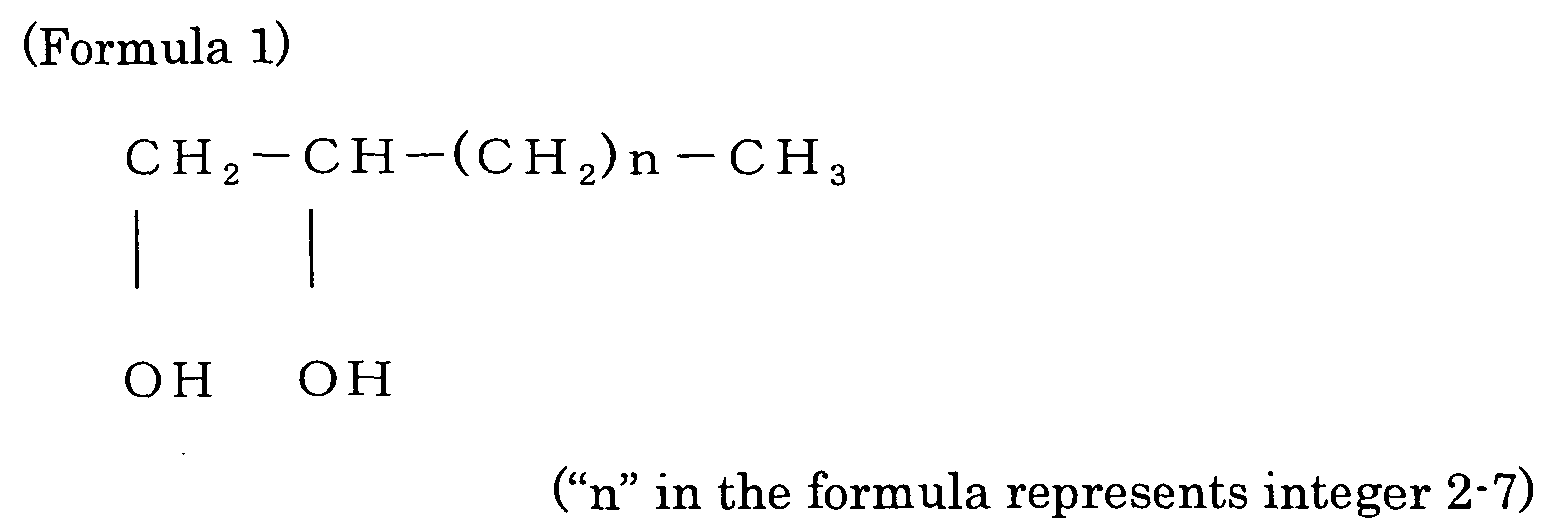
- the first component of the antiseptic disinfectant of the present invention is 1,2-alkanediol with 5-10 carbons as indicated in the following chemical formula 1, and more specifically, it can be 1,2-pentanediol, 1,2-hexanediol, 1,2-heptanediol, 1,2-octanediol, 1,2-nonanediol, or 1,2-decanediol.
- one of the above-mentioned 1,2-alkanediols can be used solely, or two or more of those can be compounded.
- 1,2-alkanediol itself has a fine antibacterial activity, and takes effect of enhancing the antibacterial activity of the antiseptic disinfectant.
- 1,2-hexanediol or 1,2-octanediol out of 1,2-alkanediols with 5-10 carbons as they have superior antibacterial activity against Eumycetes such as bacteria, yeast, Fungi and so on. It would be more preferable to use 1,2-octanediol.
- the second component of the antiseptic disinfectant of the present invention is one or more materials selected from a group of thymol, eugenol, citronellal, terpinyl acetate, citronellol and ⁇ -pinene.
- the second component is the fragrance composition which not only masks the peculiar odor of 1,2-alkanediol but also enhances the antibacterial activity.
- Thymol is achromatic crystal or crystalline which has a molecular formula of C 10 H 14 O, aromatic odor like thyme oil and acrid taste. Thymol also has a fine antiseptic and bactericidal activity. Thymol can be obtained by extracting from essential oil such as ajowan oil and the like, or by the reaction of m-cresol at the existence of isopropyl chloride and aluminium chloride under cooled condition.
- Eugenol is light yellow-colored liquid which has a molecular formula of C 10 H 12 O 2 and the aromatic odor like clove oil.
- Eugenol is included in essential oil such as clove oil, cassia oil, pimento oil, bay oil, camphor oil and so on.
- Eugenol can be obtained by extracting phenol from the essential oil by means of dilute alkaline solution and neutralizing it by means of mineral acid or carbons dioxide.
- Citronellal is achromatic or light yellow-colored liquid which has a molecular formula of C 10 H 18 O and the aromatic odor like lemon. It is included in citronella oil, melissa oil and so on. It can be obtained by the process of fractional distillation of the essential oil, processing with acid sodium sulfite to prepare the crystalline addition compound, cleaning with flux to remove adulterants, decomposing it with alkali carbonsate, and refining after steam distillation and vacuum distillation.
- Terpinyl acetate is achromatic liquid which has a molecular formula of C 12 H 20 O 2 and the strong aromatic odor like bergamot and lavender. It can be obtained by heating pinene for many hours with excessive amount of acetic acid, or by boiling terpineol diluted by dimethylbenzene using a reflux condenser of acetic anhydride and sodium acetate.
- Citronellol is achromatic liquid which has a molecular formula of C 10 H 20 O and the aromatic odor like roses. It is included in citronella oil, Geranium oil, rose oil and so on. It can be obtained by reduction of citronellal.
- ⁇ -pinene is achromatic liquid which has a molecular formula of C 10 H 16 . It is important as a starting raw material for synthetic perfumes, and is included in terpentine oil.
- one material from a group of thymol, eugenol, citronellal, terpinyl acetate, citronellol and ⁇ -pinene can be used solely, or two or more of those can be compounded.
- the content of both of the first component 1,2-alkanediol with 5-10 carbons and the second component fragrance compositions are not limited, but it would be preferred that they are compounded to satisfy the weight ratio to be between 0.5:1 and 100:1, more preferably between 1:1 and 10:1. It is not preferable to compound 1,2-alkanediol over 100 times as much as fragrance components by weight because the effect of enhancing antibacterial activity cannot be expected in the condition, while it is not preferable to compound 1,2-alkanediol under 0.5 times as much by weight because the aromatic odor increases to much in the condition.
- the antiseptic disinfectant includes 1,2-alkanediol as the first component, and one or more materials selected from a group of thymol, eugenol, citronellal, terpinyl acetate, citronellol and ⁇ -pinene as the second component, it masks the raw material odor of 1,2-alkanediol.
- fine antiseptic disinfectant activity against bacteria, yeast, fungi and so on can be shown because of the multiplier effect by the first and second components as indicated in the test mentioned below. Consequently, it is not necessary to compound the conventional antiseptic disinfectant such as paraben, benzoic acid and salicylic acid, thereby the high level of safety is secured.
- the above-mentioned antiseptic disinfectant of the present invention can be used for the composition of cosmetics and toiletries, medicine, or food.
- skin cosmetics and toiletries such as facial cleansing, skin lotion, emulsion, cream, foundation, mascara, nail enamel and rouge
- hair cosmetics and toiletries such as shampoo, hair treatment, hair growth stimulant, hair cream, hair lotion, hair foam, permanent wave agent, for medicinal cosmetics (quasi drugs) for a definite purpose such as chloasma or ephelides, for medicine such as curative medicine for acne, collutorium or troches, and further for food such as chewing gums, candies or beverages.
- the compositions which are usually contained in the cosmetics, toiletries, medicine or food can optionally be compounded within the amount that does not spoil the effect of the present invention.
- fat, cere, higher fatty acid, lower alcohol, higher alcohol, sterol, fatty acid ester, humectant agent, surfactant, high molecular compound, inorganic pigment, coloring matter, fragrance composition, antioxidant, ultraviolet absorber, vitamin, astringent, skin whitening agent, extract from animals and plants, sequestering agent, purified water and so on would be enumerated for cosmetics, toiletries or medicine (including quasi drugs).
- the content of the antiseptic disinfectant is not limited, but the composition contains 0.01-20 percent by weight of the antiseptic disinfectant, and, more preferably, contains 0.05-5 percent by weight of it. If more than 20 percent by weight of the antiseptic disinfectant is contained, additional effect would not be expected. While, if contained under 0.01 percent by weight, it would not be preferable because the enough antibacterial effect cannot be obtained.
- Candida albicans IFO1594 mycotic stomatitis
- Staphylococcus aureus IFO13276 Staphylococcus aureus
- Pseudomonas aeruginosa IFO13275 Pseudomonas
- Staphylococcus aureus and Pseudomonas are incubated at 35°C in the agar medium, and further incubated at 35°C after transferred into the bouillon medium.
- the inoculating bacteria is prepared by diluting the obtained culture solution to about 10 8 inoculating cell /ml.
- the inoculating bacteria is prepared by incubating the yeast in the same way as Staphylococcus aureus and Pseudomonas at 30°C and diluting the yeast to about 10 7 cell /ml.
- 1,2-octanediol solution of 5, 4, 3, 2.5, 2.25, 2, 1.75, 1.5, 1.25 and 1w/v% are prepared.
- the dilution series are prepared by doubling diluting the 20w/v% solution.
- Staphylococcus aureus and Pseudomonas were incubated at 35°C, and it was judged whether or not the bacteria had grown two days later.
- the yeast was incubated at 25°C, and it was judged whether or not the bacteria had grown three days later.
- the minimum concentration in which the bacteria did not grow is MIC.
- antibacterial activity can be evaluated by the MIC.
- concentration of the test material When the concentration of the test material is low, it does not effect the microbes. As the concentration gets higher, growth inhibition occurs. Further, as the concentration gets higher, the growth inhibition progresses, eventually to stop growth. The concentration at the point is shown as MIC. Accordingly, when the concentration goes above MIC, microbes die.
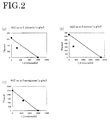
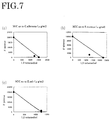
- Each MIC of the obtained 1,2-octanediol, thymol, and the 50:50 mixture by weight of 1,2-octanediol and thymol corresponding the compounding amount of 1,2-octanediol and thymol is plotted to make out the dual minimum inhibitory concentration.
- Action and effect in case that two kinds of antibacterial materials are compounded can be judged by the dual minimum inhibitory concentration. More specifically, the actions caused by compounding two antibacterial materials are roughly classified into synergistic action, additive action and counteraction.
- Synergistic action is the action in that two kinds of agent act synergistically, to enhance the antibacterial activity that the agents originally have.
- the additive action is the action in that the antibacterial activities of the agents are put together.
- the counteraction is the action in that one agent cancels the antibacterial activity of the other agent.
- the method using dual minimum inhibitory concentration is the method to measure MICs as to material A and Material B at different proportions of them and to judge the result in view of the graph.
- a line is drawn to connect MIC (point A) in using only material A to MIC (point B) in using only material B.
- the MIC (point C) in using both materials is inside the line, it is judged to be Synergistic action that antibacterial activity was strengthened by the combined use.
- the MIC (point D) is on the line, it can be judged to be the additive action.
- the MIC (point E) is in the outside of the line, it is judged to be the counteraction that cancels antibacterial activity of one or both of the materials to decrease the antibacterial activity.
- the dual minimum inhibitory concentration diagram as to the thymol is shown in Fig. 2.
- 1,2-alkanediol in combination with other fragrance component such as isobornyl acetate or guaiac acetate does not enhance the antibacterial activity against a broad range of strains.
- ⁇ Formulation example 1 Humidity retention cream> deca glyceryl monolaurate 1.0 POE (15) glyceryl monostearate 1.0 soybean phosphatide for hydrogenation 1.0 stearic acid 4.0 cetanol 2.0 behenyl alcohol 2.0 paraffin 3.0 squalane 12.0 jojoba oil 4.0 methyl polysiloxane 0.2 1,3 - butylene glycol 3.0 L- arginine 0.1 xanthan gum 0.001 1,2- octanediol 0.25 eugenol 0.1 purified water proper quantity total 100 percent by weight
- ⁇ Formulation example 2 hydrophilic ointment> ascorbic acid 0.5 polyoxyethylene cetyl ether 2.0 soybean phosphatide for hydrogenation 1.0 stearic acid 4.0 glyceric monostearate 10.0 liquid paraffin 10.0 Vas
- the antiseptic disinfectant of the present invention enhances the antibacterial activity that 1,2-alkanediol originally have against a broad range of the strains. Accordingly, it is not necessary to compound the conventional antiseptic disinfectant, and high degree of safety can be obtained.
- the cosmetics and toiletries, medicine or food of the present invention do not need to contain the conventional antiseptic disinfectant such as salicylic acid, benzoic acid or paraben, and the antiseptic disinfectant of the present invention has a excellent antibacterial activity. Accordingly, the compounding rate of the antiseptic disinfectant itself can be low, and the safety is extremely high.
- the conventional antiseptic disinfectant such as salicylic acid, benzoic acid or paraben
- the antiseptic disinfectant of the present invention enhances the antibacterial activity that 1,2-alkanediol originally have against a broad range of the strains, and has high degree of safety. Therefore, it can be suitably used as the antiseptic disinfectant for cosmetics and toiletries, medicine or food.
Landscapes
- Health & Medical Sciences (AREA)
- Life Sciences & Earth Sciences (AREA)
- Chemical & Material Sciences (AREA)
- Veterinary Medicine (AREA)
- Public Health (AREA)
- General Health & Medical Sciences (AREA)
- Animal Behavior & Ethology (AREA)
- Epidemiology (AREA)
- Medicinal Chemistry (AREA)
- Pharmacology & Pharmacy (AREA)
- Engineering & Computer Science (AREA)
- Emergency Medicine (AREA)
- Birds (AREA)
- General Chemical & Material Sciences (AREA)
- Chemical Kinetics & Catalysis (AREA)
- Wood Science & Technology (AREA)
- Zoology (AREA)
- Oil, Petroleum & Natural Gas (AREA)
- Food Science & Technology (AREA)
- Polymers & Plastics (AREA)
- Dermatology (AREA)
- Organic Chemistry (AREA)
- Nuclear Medicine, Radiotherapy & Molecular Imaging (AREA)
- Bioinformatics & Cheminformatics (AREA)
- Oncology (AREA)
- Communicable Diseases (AREA)
- Agricultural Chemicals And Associated Chemicals (AREA)
- Cosmetics (AREA)
- Food Preservation Except Freezing, Refrigeration, And Drying (AREA)
- Acyclic And Carbocyclic Compounds In Medicinal Compositions (AREA)
- Medicinal Preparation (AREA)
Abstract
Description
- ○ :
- There is synergistic action in the antibacterial effect.
- Δ :
- There is additive action in the antibacterial effect.
- × :
- There is counteraction in the antibacterial effect.
| fragrance component | C.albicans | S.aureus | P.aeruginosa | |
| Embodiment 1 | Thymol | ○ | ○ | ○ |
| | Eugenol | ○ | ○ | ○ |
| Comparative example 1 | isobornyl acetate | × | ○ | × |
| Comparative example 2 | guaiac acetate | × | ○ | × |
| fragrance component | C.albicans | S.aureus | |
| Embodiment 3 | citronellal | ○ | ○ |
| Embodiment 4 | terpinyl acetate | ○ | ○ |
| Comparative example 1 | isobornyl acetate | × | ○ |
| Comparative example 2 | guaiac acetate | × | ○ |
| fragrance component | C.albicans | S.aureus | E.coli | |
| Embodiment 1 | citronellol | ○ | ○ | ○ |
| | β -pinene | ○ | ○ | Δ |
| Comparative example 1 | isobornyl acetate | × | ○ | × |
| Comparative example 2 | guaiac acetate | × | ○ | × |
| <Formulation example 1: Humidity retention cream> | |
| deca glyceryl monolaurate | 1.0 |
| POE (15) glyceryl monostearate | 1.0 |
| soybean phosphatide for hydrogenation | 1.0 |
| stearic acid | 4.0 |
| cetanol | 2.0 |
| behenyl alcohol | 2.0 |
| paraffin | 3.0 |
| squalane | 12.0 |
| jojoba oil | 4.0 |
| methyl polysiloxane | 0.2 |
| 1,3 - butylene glycol | 3.0 |
| L- arginine | 0.1 |
| xanthan gum | 0.001 |
| 1,2- octanediol | 0.25 |
| eugenol | 0.1 |
| purified water | proper quantity |
| total | 100 percent by weight |
| <Formulation example 2: hydrophilic ointment> | |
| ascorbic acid | 0.5 |
| polyoxyethylene cetyl ether | 2.0 |
| soybean phosphatide for hydrogenation | 1.0 |
| stearic acid | 4.0 |
| glyceric monostearate | 10.0 |
| liquid paraffin | 10.0 |
| Vaseline | 4.0 |
| cetanol | 5.0 |
| propylene glycol | 5.0 |
| 1,2- hexanediol | 0.5 |
| citronellal | 0.2 |
| purified water | proper quantity |
| total | 100 percent by weight |
| <Formulation example 3: beverage> | |
| dextrose syrup | 33.0 |
| grapefruit juice | 64.0 |
| 1,2-pentanedio | 0.5 |
| citronellol | 0.01 |
| fragrance | 0.5 |
| acidulant | proper quantity |
| total | 100 percent by weight |
Claims (6)
- An antiseptic disinfectant containing 1,2-alkanediol with 5-10 carbons, and one or more materials selected from a group of thymol, eugenol, citronellal, terpinyl acetate, citronellol and β-pinene.
- An antiseptic disinfectant described in claim 1, characterized in that said 1,2-alkanediol is 1,2-hexanediol and/or 1,2-octanediol.
- An antiseptic disinfectant described in claim 1, characterized in that said 1,2-alkanediol is 1,2-octanediol.
- Cosmetics and toiletries containing the antiseptic disinfectant described in any one of the claims 1-3.
- Medicine containing the antiseptic disinfectant described in any one of the claims 1-3.
- Food containing the antiseptic disinfectant described in any one of the claims 1-3.
Applications Claiming Priority (3)
| Application Number | Priority Date | Filing Date | Title |
|---|---|---|---|
| JP2002281678 | 2002-09-26 | ||
| JP2002281678 | 2002-09-26 | ||
| PCT/JP2003/012288 WO2004028520A1 (en) | 2002-09-26 | 2003-09-25 | Antiseptic bactericides and cosmetics, drugs and foods containing the antiseptic bactericides |
Publications (3)
| Publication Number | Publication Date |
|---|---|
| EP1543830A1 true EP1543830A1 (en) | 2005-06-22 |
| EP1543830A4 EP1543830A4 (en) | 2007-12-19 |
| EP1543830B1 EP1543830B1 (en) | 2012-03-28 |
Family
ID=32040520
Family Applications (1)
| Application Number | Title | Priority Date | Filing Date |
|---|---|---|---|
| EP03753952A Expired - Lifetime EP1543830B1 (en) | 2002-09-26 | 2003-09-25 | Antiseptic bactericides and cosmetics, drugs and foods containing the antiseptic bactericides |
Country Status (6)
| Country | Link |
|---|---|
| US (2) | US7754774B2 (en) |
| EP (1) | EP1543830B1 (en) |
| JP (1) | JP3625214B2 (en) |
| AT (1) | ATE551053T1 (en) |
| AU (1) | AU2003272892A1 (en) |
| WO (1) | WO2004028520A1 (en) |
Cited By (6)
| Publication number | Priority date | Publication date | Assignee | Title |
|---|---|---|---|---|
| FR2866564A1 (en) * | 2004-02-23 | 2005-08-26 | Mandom Corp | ANTISEPTIC DISINFECTANT AND COSMETIC PRODUCT, PHARMACEUTICAL PRODUCT OR FOOD CONTAINING THE SAME |
| WO2008046796A3 (en) * | 2006-10-20 | 2008-06-12 | Symrise Gmbh & Co Kg | Use of c10-c14-alkane-1,2-diols in the preparation of a composition for the prophylaxis and/or treatment of dermatophyte infections |
| WO2013034581A1 (en) * | 2011-09-09 | 2013-03-14 | Unilever N.V. | Antimicrobial composition comprising thymol and a terpinyl derivative |
| US9192559B2 (en) | 2006-12-15 | 2015-11-24 | Givaudan Sa | Compositions |
| EP3501488A1 (en) | 2017-12-21 | 2019-06-26 | Momentive Performance Materials GmbH | Aqueous silicone polymer compositions |
| WO2023067179A1 (en) * | 2021-10-22 | 2023-04-27 | Expressions Parfumees | Fragrancing complex, fragrancing composition and fragranced aqueous composition of natural origin |
Families Citing this family (37)
| Publication number | Priority date | Publication date | Assignee | Title |
|---|---|---|---|---|
| US7854940B2 (en) * | 2004-09-16 | 2010-12-21 | Arch Chemicals, Inc. | Broad spectrum preservation blends |
| JP4781680B2 (en) * | 2005-01-17 | 2011-09-28 | 株式会社Adeka | Preservative composition |
| JO2769B1 (en) | 2005-10-26 | 2014-03-15 | جانسين فارماسوتيكا ان. في | Fast Dissociting Dopamine 2 Receptor Antagonists |
| JO2642B1 (en) * | 2006-12-08 | 2012-06-17 | جانسين فارماسوتيكا ان. في | Fast Dissociating Dopamine 2 Receptor Antagonists |
| JO2849B1 (en) * | 2007-02-13 | 2015-03-15 | جانسين فارماسوتيكا ان. في | Fast -Dissociating Dopamine 2 Receptor Antagonists |
| JP5431305B2 (en) * | 2007-04-23 | 2014-03-05 | ジヤンセン・フアーマシユーチカ・ナームローゼ・フエンノートシヤツプ | 4-Alkoxypyridazine derivatives as fast dissociating dopamine 2 receptor antagonists |
| RU2489431C2 (en) * | 2007-04-23 | 2013-08-10 | Янссен Фармацевтика Н.В. | Thia(dia)zoles as quick-dissociating antagonists of dopamine 2 receptor |
| AU2008240727C1 (en) * | 2007-04-23 | 2013-10-03 | Janssen Pharmaceutica N.V. | Pyridine derivatives as fast dissociating dopamine 2 receptor antagonists |
| JP5721159B2 (en) * | 2008-02-26 | 2015-05-20 | 御木本製薬株式会社 | Method for producing composition and composition produced by the method |
| US10111425B2 (en) | 2008-04-08 | 2018-10-30 | Laboratoire M2 | Disinfectant formulation |
| US8691292B2 (en) * | 2008-04-08 | 2014-04-08 | Laboratoire M2 | Disinfectant formulation |
| JP5417439B2 (en) * | 2008-07-03 | 2014-02-12 | ジヤンセン・フアーマシユーチカ・ナームローゼ・フエンノートシヤツプ | Substituted 6- (1-piperazinyl) -pyridazines as 5-HT6 receptor antagonists |
| US20100016219A1 (en) * | 2008-07-19 | 2010-01-21 | Jerry Zhang | Ophthalmic compositions containing solubilized cyclosporin |
| EA019048B1 (en) * | 2008-07-31 | 2013-12-30 | Янссен Фармацевтика Нв | Piperazin-1-yl-trifluoromethyl-substituted pyridines as fast dissociating dopamine 2 receptor antagonists |
| KR101632091B1 (en) * | 2008-10-20 | 2016-06-20 | 유니레버 엔.브이. | An antimicrobial composition |
| US20100158821A1 (en) * | 2008-12-22 | 2010-06-24 | Eastman Chemical Company | Antimicrobial agents, compositions and products containing the same, and methods of using the compositions and products |
| US8106111B2 (en) * | 2009-05-15 | 2012-01-31 | Eastman Chemical Company | Antimicrobial effect of cycloaliphatic diol antimicrobial agents in coating compositions |
| WO2010137354A1 (en) * | 2009-05-27 | 2010-12-02 | 大洋香料株式会社 | Antiseptic agent composition |
| AU2010202421B2 (en) | 2009-06-15 | 2014-05-08 | Gojo Industries, Inc. | Method and compositions for use with gel dispensers |
| WO2011036048A1 (en) | 2009-09-24 | 2011-03-31 | Unilever Nv | Disinfecting agent comprising eugenol, terpineol and thymol |
| JP5804307B2 (en) * | 2010-03-03 | 2015-11-04 | サンスター株式会社 | Oral composition |
| US8992901B2 (en) | 2010-05-31 | 2015-03-31 | Conopco, Inc. | Skin treatment composition |
| US8933134B2 (en) | 2010-06-09 | 2015-01-13 | L'oreal | Compositions containing agar and a softening agent |
| US9826736B2 (en) | 2010-08-12 | 2017-11-28 | Professional Disposables International, Inc. | Quaternary ammonium caprylyl glycol disinfectant wipes |
| BR112013013085B1 (en) | 2010-12-07 | 2018-02-14 | Unilever N.V. | Oral Care Composition, Mouth Rinse, Toothpaste, Toothpaste, Method for Disinfecting Oral Cavity and Use of a Composition |
| EA024551B1 (en) | 2011-11-03 | 2016-09-30 | Юнилевер Н.В. | Personal cleaning composition |
| CN104684920A (en) | 2012-02-24 | 2015-06-03 | Gojo工业公司 | Antimicrobial and foamable alcoholic compositions |
| WO2015042410A1 (en) | 2013-09-19 | 2015-03-26 | Skirdle, Llc | Antimicrobial compositions |
| WO2018057861A1 (en) * | 2016-09-23 | 2018-03-29 | Skirdle, Llc | Disinfecting compositions having improved antimicrobial efficacy |
| CN108064847B (en) * | 2016-11-15 | 2021-08-17 | 斯科德有限责任公司 | Bactericidal compositions with improved antimicrobial efficacy |
| EP3606343B1 (en) | 2017-04-04 | 2026-06-03 | Gojo Industries Inc | Methods and compounds for increasing virucidal efficacy in hydroalcoholic systems |
| KR102149973B1 (en) * | 2018-05-23 | 2020-08-31 | (주)에스디생명공학 | Antimicrobial and Antifungal Composition Comprising Eugenol and Gallic Acid as Active Ingredient |
| PL4096618T3 (en) * | 2020-12-09 | 2025-08-11 | Symrise Ag | A mixture comprising 1,2-alkanediols |
| CN116867476A (en) | 2021-02-16 | 2023-10-10 | 联合利华知识产权控股有限公司 | Antibacterial systems with naturally derived ingredients and compositions containing the same |
| US20250049676A1 (en) | 2021-12-27 | 2025-02-13 | Conopco, Inc., D/B/A Unilever | Antimicrobial system with indole alkaloid and phenolic acid and compositions comprising them |
| CN118414085A (en) | 2021-12-27 | 2024-07-30 | 联合利华知识产权控股有限公司 | Antimicrobial systems with beta carboline alkaloids and phenolic acids and compositions containing them |
| US20250151728A1 (en) | 2021-12-27 | 2025-05-15 | Conopco, Inc., D/B/A Unilever | Antimicrobial system with beta carboline alkaloid and indole alkaloid and compositions comprising them |
Family Cites Families (24)
| Publication number | Priority date | Publication date | Assignee | Title |
|---|---|---|---|---|
| US2550255A (en) * | 1946-04-05 | 1951-04-24 | Swift & Co | Preservation of food products |
| JPS59175423A (en) | 1983-03-26 | 1984-10-04 | Kanebo Shokuhin Kk | Cariostatic agent |
| JPH04304887A (en) | 1991-03-29 | 1992-10-28 | Nakano Vinegar Co Ltd | Lysozyme-guar gum enzymic hydrolyzate complex and its production |
| JPH0567608A (en) | 1991-09-05 | 1993-03-19 | Oki Electric Ind Co Ltd | Wiring pattern in semiconductor device |
| DE4230268A1 (en) * | 1992-09-10 | 1994-03-17 | Bayer Ag | Preservatives for injection formulations |
| US5403587A (en) * | 1993-04-22 | 1995-04-04 | Eastman Kodak Company | Disinfectant and sanitizing compositions based on essential oils |
| US5630847A (en) * | 1995-03-30 | 1997-05-20 | The Procter & Gamble Company | Perfumable dry cleaning and spot removal process |
| US6348187B1 (en) * | 1996-01-24 | 2002-02-19 | Warner-Lambert Company | Peroxide/essential oils containing mouthwash compositions and two-part mouthwash systems |
| JP3657395B2 (en) | 1996-05-27 | 2005-06-08 | 株式会社資生堂 | Composition for external use |
| DE69607178T2 (en) * | 1996-11-13 | 2000-12-14 | The Procter & Gamble Company, Cincinnati | Microemulsion disinfectant composition |
| JPH11193208A (en) * | 1997-09-25 | 1999-07-21 | Shiseido Co Ltd | Fragrance solubilizing composition and external composition containing the same |
| JP4418976B2 (en) * | 1998-02-24 | 2010-02-24 | 株式会社マンダム | Antiseptic disinfectant and cosmetic composition |
| JP5062708B2 (en) | 1998-02-24 | 2012-10-31 | 株式会社マンダム | Antiseptic disinfectant and human body composition |
| JP2001048720A (en) | 1999-08-06 | 2001-02-20 | Asahi Denka Kogyo Kk | Moisturizing bacteriostatic agent for cosmetics |
| JP2001048781A (en) | 1999-08-09 | 2001-02-20 | Taisho Pharmaceut Co Ltd | External composition |
| DE19945503A1 (en) | 1999-09-23 | 2001-04-05 | Henkel Kgaa | Multi-phase cleaning agent with an antimicrobial effect |
| GB0001129D0 (en) * | 2000-01-18 | 2000-03-08 | Unilever Plc | Anti-microbial aerosol compositions |
| JP2001302475A (en) | 2000-04-24 | 2001-10-31 | Lion Corp | Oral composition |
| JP2002206097A (en) * | 2001-01-11 | 2002-07-26 | Pola Chem Ind Inc | Aesthetic perfume composition and cosmetic |
| JP2002302422A (en) * | 2001-03-30 | 2002-10-18 | Lion Corp | Hair cosmetics |
| JP2003073229A (en) * | 2001-09-03 | 2003-03-12 | Asahi Kasei Corp | Spray containing cellulose |
| JP2003081736A (en) | 2001-09-14 | 2003-03-19 | Lion Corp | External preparation composition |
| JP3821222B2 (en) | 2002-04-05 | 2006-09-13 | ライオン株式会社 | Rosmarinic acid-containing composition |
| JP2004010497A (en) | 2002-06-03 | 2004-01-15 | Lion Corp | Oral composition |
-
2003
- 2003-09-25 AU AU2003272892A patent/AU2003272892A1/en not_active Abandoned
- 2003-09-25 WO PCT/JP2003/012288 patent/WO2004028520A1/en not_active Ceased
- 2003-09-25 AT AT03753952T patent/ATE551053T1/en active
- 2003-09-25 JP JP2004539545A patent/JP3625214B2/en not_active Expired - Lifetime
- 2003-09-25 EP EP03753952A patent/EP1543830B1/en not_active Expired - Lifetime
- 2003-09-25 US US10/500,358 patent/US7754774B2/en not_active Expired - Lifetime
-
2006
- 2006-05-19 US US11/436,510 patent/US7632871B2/en not_active Expired - Lifetime
Cited By (10)
| Publication number | Priority date | Publication date | Assignee | Title |
|---|---|---|---|---|
| FR2866564A1 (en) * | 2004-02-23 | 2005-08-26 | Mandom Corp | ANTISEPTIC DISINFECTANT AND COSMETIC PRODUCT, PHARMACEUTICAL PRODUCT OR FOOD CONTAINING THE SAME |
| WO2008046796A3 (en) * | 2006-10-20 | 2008-06-12 | Symrise Gmbh & Co Kg | Use of c10-c14-alkane-1,2-diols in the preparation of a composition for the prophylaxis and/or treatment of dermatophyte infections |
| US9192559B2 (en) | 2006-12-15 | 2015-11-24 | Givaudan Sa | Compositions |
| WO2013034581A1 (en) * | 2011-09-09 | 2013-03-14 | Unilever N.V. | Antimicrobial composition comprising thymol and a terpinyl derivative |
| EP3501488A1 (en) | 2017-12-21 | 2019-06-26 | Momentive Performance Materials GmbH | Aqueous silicone polymer compositions |
| WO2023067179A1 (en) * | 2021-10-22 | 2023-04-27 | Expressions Parfumees | Fragrancing complex, fragrancing composition and fragranced aqueous composition of natural origin |
| FR3128374A1 (en) * | 2021-10-22 | 2023-04-28 | Expressions Parfumees | perfuming complex, perfuming composition and perfuming aqueous composition of natural origin |
| AU2022370167B2 (en) * | 2021-10-22 | 2024-05-09 | Expressions Parfumees | Fragrancing complex, fragrancing composition and fragranced aqueous composition of natural origin |
| KR20240075912A (en) * | 2021-10-22 | 2024-05-29 | 엑스프레씨옹 빠르퓌메 | Naturally derived fragrance complexes, fragrance compositions and water-based fragrance compositions |
| US12290583B2 (en) | 2021-10-22 | 2025-05-06 | Expressions Parfumées | Perfuming complex, perfuming composition and perfumed aqueous composition of natural origin |
Also Published As
| Publication number | Publication date |
|---|---|
| WO2004028520A1 (en) | 2004-04-08 |
| ATE551053T1 (en) | 2012-04-15 |
| AU2003272892A1 (en) | 2004-04-19 |
| JP3625214B2 (en) | 2005-03-02 |
| EP1543830A4 (en) | 2007-12-19 |
| US20050106191A1 (en) | 2005-05-19 |
| US7632871B2 (en) | 2009-12-15 |
| EP1543830B1 (en) | 2012-03-28 |
| JPWO2004028520A1 (en) | 2006-01-19 |
| US20060210593A1 (en) | 2006-09-21 |
| US7754774B2 (en) | 2010-07-13 |
Similar Documents
| Publication | Publication Date | Title |
|---|---|---|
| EP1543830B1 (en) | Antiseptic bactericides and cosmetics, drugs and foods containing the antiseptic bactericides | |
| US7384646B2 (en) | Antiseptic disinfectant, and cosmetics and toiletries, medicine or food containing the same | |
| JP4091559B2 (en) | Antiseptic disinfectant and cosmetics, pharmaceuticals and foods containing the antiseptic disinfectant | |
| CA3018131C (en) | An antimicrobial composition comprising thymol, terpineol and a cationic phospholipid | |
| JP4294505B2 (en) | Antiseptic disinfectant and cosmetics, pharmaceuticals and foods containing the antiseptic disinfectant | |
| JP4091557B2 (en) | Antiseptic disinfectant and cosmetics, pharmaceuticals and foods containing the antiseptic disinfectant | |
| JP2005029535A (en) | Antiseptic bactericide, and cosmetic, medicine and food compounded therewith | |
| JP4044005B2 (en) | Antiseptic disinfectant and cosmetics, pharmaceuticals and foods containing the antiseptic disinfectant | |
| JP4999321B2 (en) | Drugs containing antiseptic disinfectant and antiseptic disinfection method | |
| JP5013765B2 (en) | Antiseptic disinfectant, cosmetics, pharmaceuticals or foods containing the antiseptic disinfectant | |
| JP2005232012A (en) | Antiseptic disinfectant and cosmetics, pharmaceuticals and foods containing the antiseptic disinfectant | |
| JP4091553B2 (en) | Antiseptic disinfectant and cosmetics, pharmaceuticals and foods containing the antiseptic disinfectant | |
| JP3635578B2 (en) | Antiseptic disinfectant and cosmetics, pharmaceuticals and foods containing the antiseptic disinfectant | |
| JP2005232014A (en) | Antiseptic disinfectant and cosmetics, pharmaceuticals and foods containing the antiseptic disinfectant | |
| JP4086758B2 (en) | Antiseptic disinfectant and cosmetics, pharmaceuticals and foods containing the antiseptic disinfectant | |
| JP4535744B2 (en) | Antiseptic disinfectant and cosmetics, pharmaceuticals and foods containing the antiseptic disinfectant | |
| JP3635579B2 (en) | Antiseptic disinfectant and cosmetics, pharmaceuticals and foods containing the antiseptic disinfectant | |
| JP3643373B2 (en) | Antiseptic disinfectant and cosmetics, pharmaceuticals and foods containing the antiseptic disinfectant | |
| JP2005232011A (en) | Antiseptic disinfectant and cosmetics, pharmaceuticals and foods containing the antiseptic disinfectant | |
| JP4890141B2 (en) | Antiseptic disinfectant and cosmetics, pharmaceuticals and foods containing the antiseptic disinfectant | |
| JP2005104881A (en) | Antiseptic disinfectant and cosmetics, pharmaceuticals and foods containing the antiseptic disinfectant | |
| JP2005213175A (en) | Antiseptic germicide and cosmetic, pharmaceutical and food wherein the antiseptic germicide is compounded | |
| JP2007145749A (en) | Antiseptic disinfectant, cosmetic, pharmaceutical or food containing the antiseptic disinfectant, and antiseptic disinfection method | |
| JP2005104882A (en) | Antiseptic disinfectant and cosmetics, pharmaceuticals and foods containing the antiseptic disinfectant |
Legal Events
| Date | Code | Title | Description |
|---|---|---|---|
| PUAI | Public reference made under article 153(3) epc to a published international application that has entered the european phase |
Free format text: ORIGINAL CODE: 0009012 |
|
| 17P | Request for examination filed |
Effective date: 20040629 |
|
| AK | Designated contracting states |
Kind code of ref document: A1 Designated state(s): AT BE BG CH CY CZ DE DK EE ES FI FR GB GR HU IE IT LI LU MC NL PT RO SE SI SK TR |
|
| AX | Request for extension of the european patent |
Extension state: AL LT LV MK |
|
| DAX | Request for extension of the european patent (deleted) | ||
| TPAC | Observations filed by third parties |
Free format text: ORIGINAL CODE: EPIDOSNTIPA |
|
| A4 | Supplementary search report drawn up and despatched |
Effective date: 20071120 |
|
| 17Q | First examination report despatched |
Effective date: 20080918 |
|
| RIC1 | Information provided on ipc code assigned before grant |
Ipc: A61K 8/33 20060101ALI20110825BHEP Ipc: A61K 47/14 20060101ALI20110825BHEP Ipc: A61K 31/047 20060101AFI20110825BHEP Ipc: A61K 8/37 20060101ALI20110825BHEP Ipc: A61P 43/00 20060101ALI20110825BHEP Ipc: A23L 3/3481 20060101ALI20110825BHEP Ipc: A61K 47/08 20060101ALI20110825BHEP Ipc: A61Q 17/00 20060101ALI20110825BHEP Ipc: A61P 31/04 20060101ALI20110825BHEP Ipc: A61K 47/10 20060101ALI20110825BHEP Ipc: A61K 8/34 20060101ALI20110825BHEP Ipc: A61P 17/00 20060101ALI20110825BHEP Ipc: A23L 3/3499 20060101ALI20110825BHEP Ipc: A23L 3/349 20060101ALI20110825BHEP |
|
| GRAP | Despatch of communication of intention to grant a patent |
Free format text: ORIGINAL CODE: EPIDOSNIGR1 |
|
| GRAS | Grant fee paid |
Free format text: ORIGINAL CODE: EPIDOSNIGR3 |
|
| GRAA | (expected) grant |
Free format text: ORIGINAL CODE: 0009210 |
|
| AK | Designated contracting states |
Kind code of ref document: B1 Designated state(s): AT BE BG CH CY CZ DE DK EE ES FI FR GB GR HU IE IT LI LU MC NL PT RO SE SI SK TR |
|
| REG | Reference to a national code |
Ref country code: GB Ref legal event code: FG4D |
|
| REG | Reference to a national code |
Ref country code: CH Ref legal event code: EP |
|
| REG | Reference to a national code |
Ref country code: AT Ref legal event code: REF Ref document number: 551053 Country of ref document: AT Kind code of ref document: T Effective date: 20120415 |
|
| REG | Reference to a national code |
Ref country code: IE Ref legal event code: FG4D |
|
| REG | Reference to a national code |
Ref country code: DE Ref legal event code: R096 Ref document number: 60340429 Country of ref document: DE Effective date: 20120524 |
|
| REG | Reference to a national code |
Ref country code: NL Ref legal event code: VDEP Effective date: 20120328 |
|
| PG25 | Lapsed in a contracting state [announced via postgrant information from national office to epo] |
Ref country code: FI Free format text: LAPSE BECAUSE OF FAILURE TO SUBMIT A TRANSLATION OF THE DESCRIPTION OR TO PAY THE FEE WITHIN THE PRESCRIBED TIME-LIMIT Effective date: 20120328 Ref country code: GR Free format text: LAPSE BECAUSE OF FAILURE TO SUBMIT A TRANSLATION OF THE DESCRIPTION OR TO PAY THE FEE WITHIN THE PRESCRIBED TIME-LIMIT Effective date: 20120629 |
|
| REG | Reference to a national code |
Ref country code: AT Ref legal event code: MK05 Ref document number: 551053 Country of ref document: AT Kind code of ref document: T Effective date: 20120328 |
|
| PG25 | Lapsed in a contracting state [announced via postgrant information from national office to epo] |
Ref country code: CY Free format text: LAPSE BECAUSE OF FAILURE TO SUBMIT A TRANSLATION OF THE DESCRIPTION OR TO PAY THE FEE WITHIN THE PRESCRIBED TIME-LIMIT Effective date: 20120328 |
|
| PG25 | Lapsed in a contracting state [announced via postgrant information from national office to epo] |
Ref country code: BE Free format text: LAPSE BECAUSE OF FAILURE TO SUBMIT A TRANSLATION OF THE DESCRIPTION OR TO PAY THE FEE WITHIN THE PRESCRIBED TIME-LIMIT Effective date: 20120328 Ref country code: EE Free format text: LAPSE BECAUSE OF FAILURE TO SUBMIT A TRANSLATION OF THE DESCRIPTION OR TO PAY THE FEE WITHIN THE PRESCRIBED TIME-LIMIT Effective date: 20120328 Ref country code: SI Free format text: LAPSE BECAUSE OF FAILURE TO SUBMIT A TRANSLATION OF THE DESCRIPTION OR TO PAY THE FEE WITHIN THE PRESCRIBED TIME-LIMIT Effective date: 20120328 Ref country code: SE Free format text: LAPSE BECAUSE OF FAILURE TO SUBMIT A TRANSLATION OF THE DESCRIPTION OR TO PAY THE FEE WITHIN THE PRESCRIBED TIME-LIMIT Effective date: 20120328 Ref country code: RO Free format text: LAPSE BECAUSE OF FAILURE TO SUBMIT A TRANSLATION OF THE DESCRIPTION OR TO PAY THE FEE WITHIN THE PRESCRIBED TIME-LIMIT Effective date: 20120328 Ref country code: CZ Free format text: LAPSE BECAUSE OF FAILURE TO SUBMIT A TRANSLATION OF THE DESCRIPTION OR TO PAY THE FEE WITHIN THE PRESCRIBED TIME-LIMIT Effective date: 20120328 |
|
| PG25 | Lapsed in a contracting state [announced via postgrant information from national office to epo] |
Ref country code: SK Free format text: LAPSE BECAUSE OF FAILURE TO SUBMIT A TRANSLATION OF THE DESCRIPTION OR TO PAY THE FEE WITHIN THE PRESCRIBED TIME-LIMIT Effective date: 20120328 Ref country code: PT Free format text: LAPSE BECAUSE OF FAILURE TO SUBMIT A TRANSLATION OF THE DESCRIPTION OR TO PAY THE FEE WITHIN THE PRESCRIBED TIME-LIMIT Effective date: 20120730 |
|
| PLBI | Opposition filed |
Free format text: ORIGINAL CODE: 0009260 |
|
| PLBI | Opposition filed |
Free format text: ORIGINAL CODE: 0009260 |
|
| 26 | Opposition filed |
Opponent name: HENKEL AG & CO. KGAA Effective date: 20121213 |
|
| PG25 | Lapsed in a contracting state [announced via postgrant information from national office to epo] |
Ref country code: DK Free format text: LAPSE BECAUSE OF FAILURE TO SUBMIT A TRANSLATION OF THE DESCRIPTION OR TO PAY THE FEE WITHIN THE PRESCRIBED TIME-LIMIT Effective date: 20120328 Ref country code: NL Free format text: LAPSE BECAUSE OF FAILURE TO SUBMIT A TRANSLATION OF THE DESCRIPTION OR TO PAY THE FEE WITHIN THE PRESCRIBED TIME-LIMIT Effective date: 20120328 Ref country code: AT Free format text: LAPSE BECAUSE OF FAILURE TO SUBMIT A TRANSLATION OF THE DESCRIPTION OR TO PAY THE FEE WITHIN THE PRESCRIBED TIME-LIMIT Effective date: 20120328 |
|
| PLAB | Opposition data, opponent's data or that of the opponent's representative modified |
Free format text: ORIGINAL CODE: 0009299OPPO |
|
| PLAX | Notice of opposition and request to file observation + time limit sent |
Free format text: ORIGINAL CODE: EPIDOSNOBS2 |
|
| 26 | Opposition filed |
Opponent name: HENKEL AG & CO. KGAA Effective date: 20121213 Opponent name: POTT, THOMAS Effective date: 20121221 Opponent name: BEIERSDORF AG Effective date: 20121221 |
|
| PG25 | Lapsed in a contracting state [announced via postgrant information from national office to epo] |
Ref country code: IT Free format text: LAPSE BECAUSE OF FAILURE TO SUBMIT A TRANSLATION OF THE DESCRIPTION OR TO PAY THE FEE WITHIN THE PRESCRIBED TIME-LIMIT Effective date: 20120328 |
|
| R26 | Opposition filed (corrected) |
Opponent name: POTT, THOMAS Effective date: 20121221 Opponent name: HENKEL AG & CO. KGAA Effective date: 20121213 Opponent name: BEIERSDORF AG Effective date: 20121221 |
|
| REG | Reference to a national code |
Ref country code: DE Ref legal event code: R026 Ref document number: 60340429 Country of ref document: DE Effective date: 20121213 |
|
| PG25 | Lapsed in a contracting state [announced via postgrant information from national office to epo] |
Ref country code: MC Free format text: LAPSE BECAUSE OF NON-PAYMENT OF DUE FEES Effective date: 20120930 Ref country code: ES Free format text: LAPSE BECAUSE OF FAILURE TO SUBMIT A TRANSLATION OF THE DESCRIPTION OR TO PAY THE FEE WITHIN THE PRESCRIBED TIME-LIMIT Effective date: 20120709 |
|
| REG | Reference to a national code |
Ref country code: CH Ref legal event code: PL |
|
| PLAF | Information modified related to communication of a notice of opposition and request to file observations + time limit |
Free format text: ORIGINAL CODE: EPIDOSCOBS2 |
|
| REG | Reference to a national code |
Ref country code: IE Ref legal event code: MM4A |
|
| PG25 | Lapsed in a contracting state [announced via postgrant information from national office to epo] |
Ref country code: LI Free format text: LAPSE BECAUSE OF NON-PAYMENT OF DUE FEES Effective date: 20120930 Ref country code: CH Free format text: LAPSE BECAUSE OF NON-PAYMENT OF DUE FEES Effective date: 20120930 Ref country code: BG Free format text: LAPSE BECAUSE OF FAILURE TO SUBMIT A TRANSLATION OF THE DESCRIPTION OR TO PAY THE FEE WITHIN THE PRESCRIBED TIME-LIMIT Effective date: 20120628 Ref country code: IE Free format text: LAPSE BECAUSE OF NON-PAYMENT OF DUE FEES Effective date: 20120925 |
|
| PLBB | Reply of patent proprietor to notice(s) of opposition received |
Free format text: ORIGINAL CODE: EPIDOSNOBS3 |
|
| PLBP | Opposition withdrawn |
Free format text: ORIGINAL CODE: 0009264 |
|
| PG25 | Lapsed in a contracting state [announced via postgrant information from national office to epo] |
Ref country code: TR Free format text: LAPSE BECAUSE OF FAILURE TO SUBMIT A TRANSLATION OF THE DESCRIPTION OR TO PAY THE FEE WITHIN THE PRESCRIBED TIME-LIMIT Effective date: 20120328 |
|
| PG25 | Lapsed in a contracting state [announced via postgrant information from national office to epo] |
Ref country code: LU Free format text: LAPSE BECAUSE OF NON-PAYMENT OF DUE FEES Effective date: 20120925 |
|
| PG25 | Lapsed in a contracting state [announced via postgrant information from national office to epo] |
Ref country code: HU Free format text: LAPSE BECAUSE OF FAILURE TO SUBMIT A TRANSLATION OF THE DESCRIPTION OR TO PAY THE FEE WITHIN THE PRESCRIBED TIME-LIMIT Effective date: 20030925 |
|
| PLCK | Communication despatched that opposition was rejected |
Free format text: ORIGINAL CODE: EPIDOSNREJ1 |
|
| APBM | Appeal reference recorded |
Free format text: ORIGINAL CODE: EPIDOSNREFNO |
|
| APBP | Date of receipt of notice of appeal recorded |
Free format text: ORIGINAL CODE: EPIDOSNNOA2O |
|
| APAH | Appeal reference modified |
Free format text: ORIGINAL CODE: EPIDOSCREFNO |
|
| APBQ | Date of receipt of statement of grounds of appeal recorded |
Free format text: ORIGINAL CODE: EPIDOSNNOA3O |
|
| REG | Reference to a national code |
Ref country code: FR Ref legal event code: PLFP Year of fee payment: 13 |
|
| REG | Reference to a national code |
Ref country code: DE Ref legal event code: R100 Ref document number: 60340429 Country of ref document: DE |
|
| APBU | Appeal procedure closed |
Free format text: ORIGINAL CODE: EPIDOSNNOA9O |
|
| PLBD | Termination of opposition procedure: decision despatched |
Free format text: ORIGINAL CODE: EPIDOSNOPC1 |
|
| PLBM | Termination of opposition procedure: date of legal effect published |
Free format text: ORIGINAL CODE: 0009276 |
|
| 27C | Opposition proceedings terminated |
Effective date: 20151221 |
|
| PLBN | Opposition rejected |
Free format text: ORIGINAL CODE: 0009273 |
|
| STAA | Information on the status of an ep patent application or granted ep patent |
Free format text: STATUS: OPPOSITION REJECTED |
|
| 27O | Opposition rejected |
Effective date: 20160107 |
|
| REG | Reference to a national code |
Ref country code: FR Ref legal event code: PLFP Year of fee payment: 14 |
|
| REG | Reference to a national code |
Ref country code: FR Ref legal event code: PLFP Year of fee payment: 15 |
|
| REG | Reference to a national code |
Ref country code: FR Ref legal event code: PLFP Year of fee payment: 16 |
|
| PGFP | Annual fee paid to national office [announced via postgrant information from national office to epo] |
Ref country code: GB Payment date: 20220920 Year of fee payment: 20 Ref country code: DE Payment date: 20220920 Year of fee payment: 20 |
|
| PGFP | Annual fee paid to national office [announced via postgrant information from national office to epo] |
Ref country code: FR Payment date: 20220922 Year of fee payment: 20 |
|
| REG | Reference to a national code |
Ref country code: DE Ref legal event code: R071 Ref document number: 60340429 Country of ref document: DE |
|
| REG | Reference to a national code |
Ref country code: GB Ref legal event code: PE20 Expiry date: 20230924 |
|
| PG25 | Lapsed in a contracting state [announced via postgrant information from national office to epo] |
Ref country code: GB Free format text: LAPSE BECAUSE OF EXPIRATION OF PROTECTION Effective date: 20230924 |