EP1538520B1 - Speichersteuergerät, Speichersystem, und Speichersystemsteuerungsverfahren - Google Patents
Speichersteuergerät, Speichersystem, und Speichersystemsteuerungsverfahren Download PDFInfo
- Publication number
- EP1538520B1 EP1538520B1 EP04257431A EP04257431A EP1538520B1 EP 1538520 B1 EP1538520 B1 EP 1538520B1 EP 04257431 A EP04257431 A EP 04257431A EP 04257431 A EP04257431 A EP 04257431A EP 1538520 B1 EP1538520 B1 EP 1538520B1
- Authority
- EP
- European Patent Office
- Prior art keywords
- storage
- day
- data
- logical unit
- control apparatus
- Prior art date
- Legal status (The legal status is an assumption and is not a legal conclusion. Google has not performed a legal analysis and makes no representation as to the accuracy of the status listed.)
- Expired - Lifetime
Links
Images



Classifications
-
- G—PHYSICS
- G06—COMPUTING OR CALCULATING; COUNTING
- G06F—ELECTRIC DIGITAL DATA PROCESSING
- G06F3/00—Input arrangements for transferring data to be processed into a form capable of being handled by the computer; Output arrangements for transferring data from processing unit to output unit, e.g. interface arrangements
- G06F3/06—Digital input from, or digital output to, record carriers, e.g. RAID, emulated record carriers or networked record carriers
- G06F3/0601—Interfaces specially adapted for storage systems
- G06F3/0602—Interfaces specially adapted for storage systems specifically adapted to achieve a particular effect
- G06F3/0604—Improving or facilitating administration, e.g. storage management
- G06F3/0605—Improving or facilitating administration, e.g. storage management by facilitating the interaction with a user or administrator
-
- G—PHYSICS
- G06—COMPUTING OR CALCULATING; COUNTING
- G06F—ELECTRIC DIGITAL DATA PROCESSING
- G06F3/00—Input arrangements for transferring data to be processed into a form capable of being handled by the computer; Output arrangements for transferring data from processing unit to output unit, e.g. interface arrangements
- G06F3/06—Digital input from, or digital output to, record carriers, e.g. RAID, emulated record carriers or networked record carriers
- G06F3/0601—Interfaces specially adapted for storage systems
- G06F3/0628—Interfaces specially adapted for storage systems making use of a particular technique
- G06F3/0646—Horizontal data movement in storage systems, i.e. moving data in between storage devices or systems
- G06F3/0647—Migration mechanisms
- G06F3/0649—Lifecycle management
-
- G—PHYSICS
- G06—COMPUTING OR CALCULATING; COUNTING
- G06F—ELECTRIC DIGITAL DATA PROCESSING
- G06F3/00—Input arrangements for transferring data to be processed into a form capable of being handled by the computer; Output arrangements for transferring data from processing unit to output unit, e.g. interface arrangements
- G06F3/06—Digital input from, or digital output to, record carriers, e.g. RAID, emulated record carriers or networked record carriers
- G06F3/0601—Interfaces specially adapted for storage systems
- G06F3/0628—Interfaces specially adapted for storage systems making use of a particular technique
- G06F3/0662—Virtualisation aspects
- G06F3/0664—Virtualisation aspects at device level, e.g. emulation of a storage device or system
-
- G—PHYSICS
- G06—COMPUTING OR CALCULATING; COUNTING
- G06F—ELECTRIC DIGITAL DATA PROCESSING
- G06F3/00—Input arrangements for transferring data to be processed into a form capable of being handled by the computer; Output arrangements for transferring data from processing unit to output unit, e.g. interface arrangements
- G06F3/06—Digital input from, or digital output to, record carriers, e.g. RAID, emulated record carriers or networked record carriers
- G06F3/0601—Interfaces specially adapted for storage systems
- G06F3/0628—Interfaces specially adapted for storage systems making use of a particular technique
- G06F3/0662—Virtualisation aspects
- G06F3/0665—Virtualisation aspects at area level, e.g. provisioning of virtual or logical volumes
-
- G—PHYSICS
- G06—COMPUTING OR CALCULATING; COUNTING
- G06F—ELECTRIC DIGITAL DATA PROCESSING
- G06F3/00—Input arrangements for transferring data to be processed into a form capable of being handled by the computer; Output arrangements for transferring data from processing unit to output unit, e.g. interface arrangements
- G06F3/06—Digital input from, or digital output to, record carriers, e.g. RAID, emulated record carriers or networked record carriers
- G06F3/0601—Interfaces specially adapted for storage systems
- G06F3/0668—Interfaces specially adapted for storage systems adopting a particular infrastructure
- G06F3/067—Distributed or networked storage systems, e.g. storage area networks [SAN], network attached storage [NAS]
-
- G—PHYSICS
- G06—COMPUTING OR CALCULATING; COUNTING
- G06F—ELECTRIC DIGITAL DATA PROCESSING
- G06F3/00—Input arrangements for transferring data to be processed into a form capable of being handled by the computer; Output arrangements for transferring data from processing unit to output unit, e.g. interface arrangements
- G06F3/06—Digital input from, or digital output to, record carriers, e.g. RAID, emulated record carriers or networked record carriers
- G06F3/0601—Interfaces specially adapted for storage systems
- G06F3/0602—Interfaces specially adapted for storage systems specifically adapted to achieve a particular effect
- G06F3/0608—Saving storage space on storage systems
-
- H—ELECTRICITY
- H04—ELECTRIC COMMUNICATION TECHNIQUE
- H04L—TRANSMISSION OF DIGITAL INFORMATION, e.g. TELEGRAPHIC COMMUNICATION
- H04L67/00—Network arrangements or protocols for supporting network services or applications
- H04L67/01—Protocols
- H04L67/10—Protocols in which an application is distributed across nodes in the network
- H04L67/1097—Protocols in which an application is distributed across nodes in the network for distributed storage of data in networks, e.g. transport arrangements for network file system [NFS], storage area networks [SAN] or network attached storage [NAS]
-
- Y—GENERAL TAGGING OF NEW TECHNOLOGICAL DEVELOPMENTS; GENERAL TAGGING OF CROSS-SECTIONAL TECHNOLOGIES SPANNING OVER SEVERAL SECTIONS OF THE IPC; TECHNICAL SUBJECTS COVERED BY FORMER USPC CROSS-REFERENCE ART COLLECTIONS [XRACs] AND DIGESTS
- Y10—TECHNICAL SUBJECTS COVERED BY FORMER USPC
- Y10S—TECHNICAL SUBJECTS COVERED BY FORMER USPC CROSS-REFERENCE ART COLLECTIONS [XRACs] AND DIGESTS
- Y10S707/00—Data processing: database and file management or data structures
- Y10S707/99931—Database or file accessing
- Y10S707/99932—Access augmentation or optimizing
-
- Y—GENERAL TAGGING OF NEW TECHNOLOGICAL DEVELOPMENTS; GENERAL TAGGING OF CROSS-SECTIONAL TECHNOLOGIES SPANNING OVER SEVERAL SECTIONS OF THE IPC; TECHNICAL SUBJECTS COVERED BY FORMER USPC CROSS-REFERENCE ART COLLECTIONS [XRACs] AND DIGESTS
- Y10—TECHNICAL SUBJECTS COVERED BY FORMER USPC
- Y10S—TECHNICAL SUBJECTS COVERED BY FORMER USPC CROSS-REFERENCE ART COLLECTIONS [XRACs] AND DIGESTS
- Y10S707/00—Data processing: database and file management or data structures
- Y10S707/99951—File or database maintenance
- Y10S707/99952—Coherency, e.g. same view to multiple users
- Y10S707/99953—Recoverability
Definitions
- the present invention is related to a storage control apparatus, a storage system, and a control method for controlling the storage system.
- Aims include the provision of new and useful storage control apparatus, a storage system, and a control method for controlling the storage system, capable of managing data under safe condition.
- US 2003/0204690 A1 discloses user data backup functions realized through a computer, which is located on the management service provider corporation side and interferes between a user side computer environment and a storage service side computer environment to support storage service.
- This computer selects plural storage devices which meet the user side conditions from a plurality of empty storage devices owned by the storage service side computer environment, receives user data from the user side computer environment, divides the user data into records of a predetermined size and transmits the records to the storage service side computer environment so that the records are to be distributed and stored to the selected plural storage devices.
- An aspect of the present invention provides a storage control apparatus for reading/writing data with respect to a storage device in response to a data input/output request transmitted from an information processing apparatus, adapted to be used in a storage system arranged by containing a plurality of storage control apparatus which are connected via an IP (Internet Protocol) network to each other under communicable condition, the storage control apparatus comprising:
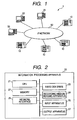
- Fig. 1 schematically shows an arrangement of a storage system 1 which is explained as an embodiment of the present invention.
- This storage system 1 is arranged by containing a plurality of disk array apparatus 10 (namely, storage control apparatus), and one set, or more sets of information processing apparatus 20.
- Both the disk array apparatus 10 and the information processing apparatus 20 are connected to a communication network (will be referred to as "IP network 60" hereinafter), and thus, the respective disk array apparatus 10 and the information processing apparatus 20 are brought into communicable conditions among them.
- IP network 60 employs as a communication protocol, the TCP/IP (Transmission Control Protocol/Internet Protocol) (registered trademark) protocol.
- TCP/IP Transmission Control Protocol/Internet Protocol
- the information processing apparatus 20 corresponds to a computer, for instance, a personal computer, a workstation, a server, a main frame, and the like.
- Fig. 2 illustratively indicates a hardware structure of the information processing apparatus 20.
- the information processing apparatus 20 is arranged by employing a CPU (Central Processing Unit) 21, a memory (ROM, RAM) 22, a hard disk drive 23, a recording medium reading apparatus 24, a network interface 25, an input apparatus 26, and an output apparatus 27.
- the recording medium reading apparatus 24 reads data and a program from a recording medium such as a CD-ROM and a DVD-ROM.
- the input apparatus 26 corresponds to a keyboard, a mouse, and the like.
- the output apparatus 24 corresponds to a display, a printer, and the like.
- the network interface 25 performs a communication between the disk apparatus 10 and other information processing apparatus 20 via the IP network 60 in accordance with the TCP/IP protocol.
- the disk array apparatus 10 functions as a storage used for data which is processed by an application program, and the like, which are executed in the information processing apparatus 20.
- the information processing apparatus 20 transmits a data input/output request by way of a block
- the disk array apparatus 10 may also function as an NAS (Network Attached Storage) which accepts a data input/output request by way of a file name designation from the information processing apparatus 20 in accordance with such a protocol as NFS (Network File System).
- NFS Network File System
- the above-described data input/output request corresponds to the data input/output request by the file name designation, and a file name is set to the above-described data input/output request as such an information used to specify data stored in a storage device.
- other storage control apparatus such as semiconductor disk apparatus may be employed instead of the disk array apparatus 10.
- the disk array apparatus 10 receives a data input/output request which is transmitted from the information processing apparatus 20 via the IP network 60.
- the data input/output request corresponds to, for instance, a request for reading data (data reading request) and a request for writing data (data writing request).
- the disk array apparatus 10 performs to read and write data with respect to a storage device in response to a received data input/output request.
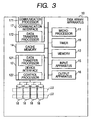
- Fig. 3 shows a hardware structure of the disk array apparatus 10.
- the disk array apparatus 10 is equipped with a microprocessor 11, a device interface 12, a memory (RAM, ROM) 13, a cache memory 14, an input apparatus 15 such as an operation panel, an output apparatus 16 such as a display, a communication interface 17, a hard disk device 18 functioning as a storage device, a timer 19 for producing present day/time, and the like.
- the hard disk drive 18 may be stored in the same housing into which other structural elements of the disk array apparatus 10 are stored, or may be alternatively stored in another housing which is different from the first-mentioned housing.
- the communication interface 17 receives a data input/output request which is transmitted from the information processing apparatus 20 via the IP network 60, and notifies the received data input/output request to the microprocessor 11.
- the communication interface 17 is arranged by containing a communication processor 171, and a data transfer processor 172.
- the communication processor 171 is communicated via the IP network 60 with respect to the information processing apparatus 20 and another disk array apparatus 10.
- the communication processor 171 is communicated with another disk array apparatus 10 via the IP network 60 in accordance with an iSCSI (Internet Small Computer System Interface) protocol (see, for example, RFC (Request for Comments) 3347).
- iSCSI Internet Small Computer System Interface
- the data transfer processor 172 is realized by employing, for instance, a DMA (Direct Memory Access) processor.
- the data transfer processor 172 performs a data transfer operation in a high efficiency between the communication interface 17 and the cache memory 14.
- the communication interface 17 receives the write data transmitted from the information processing apparatus 20, and then writes this write data into the cache memory 14.
- the communication interface 17 reads the read data which has been written into the cache memory 14, and then transmits the read data to the information processing apparatus 20.
- the microprocessor 11 controls an entire arrangement of the disk array apparatus 10 in a unification manner.
- the microprocessor 11 may realize various sorts of functions which are provided by the disk array apparatus 10 by executing a program stored in the memory 13.
- the communication interface 17 writes the write data into the cache memory 14
- the microprocessor 11 notifies this data writing operation to the device interface 12.
- the device interface 12 writes the read data into the cache memory 14, the microprocessor 11 notifies this data writing operation to the communication interface 17.
- Both the memory 13 and the cache memory 14 are constituted by employing a RAM, or the like.
- the memory 13 is used as a storage place of data supplied from the microprocessor 11.
- the cache memory 14 may play a role of buffering an access speed with respect to the hard disk drive 18, and may improve a response speed with respect to the information processing apparatus 20.
- the device interface 12 is arranged by containing a control processor 121 and a data transfer processor 122.
- the control processor 121 controls an entire structure of the device interface 12 related to the data reading/writing operations with respect to the hard disk drive 18.
- the device interface 12 may be provided with a function for controlling the hard disk drive 18 based upon a RAID level, for instance, 0, 1, and 5 in the RAID (Redundant Array of Inexpensive Disks) system.
- the control processor 122 reads and writes data with respect to the hard disk drive 18 in accordance with the received command.
- the device interface 12 reads the data from the hard disk drive 18 in response to the data reading command, and then, writes the read data into the cache memory 14.
- the device interface 12 reads the data which has been written in the cache memory 14, and then, writes the read data into the hard disk drive 18.
- the information processing apparatus 20 recognizes a storage area provided by the disk array apparatus 10, while a logical unit "LU" (Logical Unit) corresponding to a logical storage area is used as a unit.
- LU Logical Unit
- the logical unit is defined in correspondence with a device file (Device File).
- the logical unit is defined in correspondence with a drive letter (drive name, drive identifier).
- drive letter drive name, drive identifier
- An LUN is set to, for example, a data input/output request transmitted from the information processing apparatus 20 to the disk array apparatus 10, and, the information processing apparatus 20 designates the LUN so as to specify the logical unit.
- the disk array apparatus 10 recognizes a physically-set storage area (will be referred to as "physical storage area” hereinafter) of the hard disk drive 18, while such a logical device LDEV (Logical Device) corresponding to a storage area which is logically set by using this storage area is used as a unit.
- LDEV Logical Device
- the disk array apparatus 10 is provided with a system capable of holding data under safe condition which has been stored in the hard disk drive 18 as to a required term.
- each of the disk array apparatus 10 manages such information as to necessary storage expiration, first guarantee expiration, second guarantee expiration, and the like.
- the necessary storage expiration is an expiration that data which has been stored in the storage area provided by the hard disk drive 18 is required to be held under safe condition.
- the first guarantee expiration corresponds such an expiration capable of guaranteeing that a logical unit (first logical unit, first storage area) stores therein data under normal condition.
- the second guarantee expiration corresponds to an expiration capable of guaranteeing that another logical unit (second logical unit, second storage area) of another disk array apparatus 10 connected to the IP network 60 stores therein data under normal condition.
- a life period of the hard disk drive 18 is used.
- a life period of the disk array apparatus 10 may be employed, which manages this logical unit.
- Fig. 4 shows various sorts of functions employed in the disk array apparatus 10.
- a data move managing unit 410 judges as to whether or not necessary storage expiration of data which has been stored in the logical unit (first logical unit) is expired after the first guarantee expiration. Then, in the case that the necessary storage expiration of the data which has been stored in the logical unit (first logical unit) is expired after the first guarantee expiration, the data move managing unit 410 transfers the data stored in the logical unit (first logical unit) via the IP network 60 to the logical unit (second logical unit) having the second guarantee expiration after the first guarantee expiration.
- the data move managing unit 410 may alternatively transfer the data which has been stored in the logical unit (first logical unit) with respect to such a logical unit (second logical unit) having a second guarantee expiration subsequent to the above-explained necessary storage expiration among the logical units (second logical units) of other disk array apparatus 10.
- the data move managing unit 410 may manage the data which has been stored in the logical unit (first logical unit) of the disk array apparatus 10 of the data transfer source under safe condition until the necessary storage expiration thereof.
- the data move managing unit 410 executes the transfer operation of the data which has been stored in the logical unit (first logical unit) before the guarantee expiration (first guarantee expiration) of this logical unit (first logical unit) is expired.
- the apparatus detecting unit 411 detects other disk array apparatus 10 which are present on the IP network 60.
- This apparatus detecting operation by the apparatus detecting unit 411 is carried out by way of, for example, either a broadcasting operation or a multi-casting operation with respect to the IP network 60 so as to request a response sent from an iSCSI device of a communication counter party.
- the apparatus detecting unit 44 may perform the above-described apparatus detecting operation by executing a discovery process in accordance with the iSNS.
- the move destination logical unit managing unit 412 (second guarantee expiration managing unit) manages the move destination logical unit management table 500.
- the move destination logical unit management table 500 is stored in, for example, the memory 13, or the hard disk drive 18.
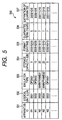
- Fig. 5 shows an example of the above-explained move destination logical unit management table 500.
- this move destination logical unit management table 500 an information has been registered. This information is related to the logical unit (second logical unit) of another disk array apparatus 10, which may constitute a move destination candidate of the data which has been stored in the logical unit (first logical unit).
- an apparatus ID which has been applied to the disk array apparatus 10 constituting the move destination candidate is set to a column 531 of the apparatus ID.
- this apparatus ID for example, an IP address; a combination between an IP address and a communication port ID provided on the side of another disk array apparatus 10 used to access a logical unit; an iSCSI-name (iSCSI name); and an apparatus number which has been applied to the disk array apparatus 10 when the manufacturer thereof ships this disk array apparatus 10 are employed.
- An LUN which has been applied to this logical unit is set to a column 532 of LUN.
- An emulation type implies information indicative of a specification of a logical unit. For instance, a storage capacity, a track size, a cylinder number, a maximum block number, and the like are set every emulation type to the emulation type column 533.
- a storage capacity of this logical unit is set to a storage capacity column 534 of the move destination logical unit management table 500.
- a format day/time column 535 day and time when this logical unit has been formatted (initialized) are set. It should also be noted that when a logical unit has not yet been formatted, this format day/time column 535 becomes blank.
- a guarantee term (second guarantee term) is set to a guarantee term column 536, which can guarantee that the logical unit (second logical unit) stores thereinto data under normal condition.
- This guarantee term is determined based upon, for example, the life period of the hard disk drive 18.
- the logical unit (second logical unit) is constituted by employing storage areas of plural sets of the hard disk drives 18, for instance, an averaged value of life periods of the respective hard disk drives 18 is set as this guarantee term.
- Guarantee expiration (second guarantee expiration) is set to a guarantee expiration column 537, which may guarantee that a logical unit stores therein data under normal condition.
- the guarantee expiration may be calculated by adding the guarantee term (second guarantee term) set to the guarantee term column 536 to the day/time set to the format day/time. It should also be noted that when format day/time cannot be acquired from another disk array apparatus 10, a value is set to the guarantee expiration column 537, this value being calculated by adding the guarantee term (second guarantee term) set to the guarantee term column 536 to a day/time when a second storage area of another disk array apparatus 10 can be accessed.
- the logical unit managing unit 413 (necessary storage expiration managing unit, first guarantee expiration managing unit) shown in Fig. 4 manages a logical unit management table 600.
- Fig. 6 shows an example of the logical unit management table 600.
- the logical unit management table 600 is stored in, for example, the memory 13, or the hard disk drive 18.
- Information related to a logical unit (first logical unit) has been registered in the logical unit management table 600.
- an LUN which has been applied to this logical unit (first logical unit) is set to an LUN column 631.
- An emulation type of this logical unit (first logical unit) is set to an emulation type column 632.
- a storage capacity of this logical unit (first logical unit) is set to a storage capacity column 633.
- a necessary storage term is set to a necessary storage term column 634, and this necessary storage term corresponds to a term that data stored in this logical unit (first logical unit) is required to be stored under safe condition.
- a day/time when data was firstly written in this logical unit (first logical unit) is set to a writing start day/time column 635.
- Necessary storage expiration is set to a necessary storage expiration column 636, and this necessary storage expiration corresponds to such an expiration that data stored in this logical unit (first logical unit) is required to be stored under safe condition.
- the necessary storage expiration may be calculated by adding the value set to the necessary storage term column 634 to the day/time set to the writing start day/time column 635.
- Guarantee expiration (first guarantee expiration) is set to a guarantee expiration column 637, which corresponds to such a guarantee expiration that this logical unit (first logical unit) can store data under normal condition.
- the guarantee expiration (first guarantee expiration) of each of the logical units may be calculated by adding the guarantee term (first guarantee term) to the day/time when this logical unit was formatted. This first guarantee term implies a term that this logical unit (first logical unit) can store the data under normal condition.
- a flag (0: move is required, 1: move is not required) is set. This flag indicates as to whether or not data which has been stored in a logical unit (first logical unit) is required to be moved to another logical unit (second logical unit) of another disk array apparatus 10. A value of this flag is determined by comparing the necessary storage expiration set to the necessary storage expiration column 636 of the logical unit management table 600 with the guarantee expiration (first guarantee expiration) set to the guarantee expiration column 637. In the case that the necessary storage expiration is expired after the guarantee expiration (first guarantee expiration), "1" corresponding to the flag for indicating that move is required is set to the move required/not required column 638.
- An apparatus ID of another disk array apparatus 10 having a selected logical unit is set to a move destination apparatus ID column 639.
- this apparatus ID for example, an IP address (otherwise, combination between IP address and communication port ID provided on the side of another disk array apparatus 10 used to access to logical unit), an iSCSI-name (iSCSI name), and an apparatus number may be used. This apparatus number is applied to the disk array apparatus 10 when the manufacture thereof ships this disk array apparatus 10.
- a logical unit number (LUN) of such a logical unit (second logical unit) which may constitute a candidate of a move destination among logical units (second logical unit) which have been registered in the move management table 500 is set to a move destination logical unit column 640.
- the logical unit management unit 413 selects such a logical unit which may constitute a candidate of a move destination from among the logical units (second logical units) which have been registered in the move destination logical unit management table 500 as to each of the logical units (first logical units) to the move required/not required column 638 of which the move required "1" has been set, among the logical units (first logical units) which have been registered in the logical unit management table 600.
- a fact as to whether or not a logical unit (second logical unit) which has been registered in the move destination logical unit management table 500 can constitute a candidate of a move destination is determined by judging as to whether or not guarantee expiration (second guarantee expiration) of the logical unit which has been registered in the move destination logical unit management table 500 is expired after the guarantee expiration (first guarantee expiration) of the logical unit (first logical unit) of the logical unit management table 600.
- the logical unit managing unit 413 selects a logical unit (second logical unit) as the candidate of the move destination, the guarantee expiration (second guarantee expiration) of which is expired after the guarantee expiration (first guarantee expiration), from the among logical units (second logical units) which have been registered in the move destination logical unit management table 500. It should also be noted that when the necessary storage expiration is expired after the guarantee expiration (second guarantee expiration), a data which has been again thereafter stored in the logical unit (second logical unit) must be transferred to a logical unit having a guarantee expiration which is expired later than the second guarantee expiration at a time instant before the second guarantee expiration has elapsed.
- a logical unit (second logical unit) may be selected as the candidate of the move destination, the guarantee expiration (second guarantee expiration) of which is expired after the necessary storage expiration set to the necessary storage expiration column 636 of the logical unit management table 600.
- a total number of logical unit (second logical unit) which is selected by the logical unit managing unit 413 is not always a single logical unit. That is to say, as to the logical unit (first logical unit) which has been registered in the logical unit management table 600, a plurality of logical units (second logical units) may be alternatively selected from the move destination logical unit management table 500. Conversely, there is a certain possibility that none of such a logical unit (second logical unit) which may constitute the candidate of the move destination is selected. In this case, both the move destination apparatus ID column 639 and the move destination logical unit column 640 become blank columns.
- the various sorts of functions shown in Fig. 4 have been executed by the disk array apparatus 10 in the above descriptions.
- these functions may be carried out by an apparatus (will be referred to as "managing server 30" hereinafter, see Fig. 1) other than the disk array apparatus 10 connected to the IP network 60.
- the managing server 30 may also store thereinto both the move destination logical unit management table 500 and the logical unit management table 600.
- the managing server 30 transmits a message to the disk array apparatus 10 in the case that necessary storage expiration of a logical unit (first logical unit) of a certain disk array apparatus 10 is expired after the guarantee expiration (first guarantee expiration) of this logical unit (first logical unit), otherwise, in the case that the second guarantee expiration thereof is expired after the necessary storage expiration.
- This message instructs that data stored in this logical unit is transferred to another logical unit (second logical unit) of another disk array apparatus 10 which owns a guarantee expiration (second guarantee expiration) expired after the guarantee expiration (first guarantee expiration), otherwise, the guarantee expiration (second guarantee expiration) of which is expired after the necessary management expiration.
- the disk array which has received the message transfers the data in accordance with the message.
- Fig. 7A is a flow chart for explaining process operations related to an updating operation of the move destination unit management table 500, which is carried out by the data move managing unit 410 of the disk array apparatus 10.
- the apparatus detecting unit 411 of the disk array apparatus 10 (will also be referred to as “own apparatus 10" hereinafter) detects another disk array apparatus 10 (will also be referred to as “another apparatus 10” hereinafter) which is connected to the IP network 60 (step S711). It should be understood that a disk array apparatus 10 detected by the apparatus detecting unit 411 may be limited to a predetermined range in order that such disk array apparatus 10 may not be detected which need not be originally detected.
- the apparatus detecting unit 411 may alternatively detect only such a disk array apparatus 10 specified by this stored information.
- the data move managing unit 410 of the own apparatus 10 checks as to whether or not the detected another apparatus 10 corresponds to such a disk array apparatus for managing the logical unit management table 600 (step S712). In this step, this judgement may be carried out by, for example, such a manner that the own apparatus 10 inquires as to whether or not the logical unit management table 600 is managed by another apparatus 10. In this alternative case, for instance, the own apparatus 10 may make this inquiry via the IP network 60 in accordance with the iSCSI protocol.
- such a fact as to whether or not the detected another apparatus 10 corresponds to the disk array apparatus for managing the logical unit management table 600 may be judged by previously storing such an information into the respective disk array apparatus 10 without using the iSCSI protocol, while this information indicates as to whether or not another apparatus 10 manages the logical unit management table 600. Furthermore, such a fact may also be judged by checking as to whether or not a disk array apparatus 10 corresponds to such a disk array apparatus 10 manufactured by the same maker, or corresponds to such a disk array apparatus 10 having the same model number.
- step S712 when the apparatus detecting unit 411 judges that another apparatus 10 corresponds to such a disk array apparatus for managing the logical unit management table 600 ("YES" of step S712), the data move managing unit 410 requests the detected another apparatus 10 to transmit the logical unit management table 600. Then, another apparatus 10 transmits the logical unit management table 600 to the own apparatus 10 in response to the above-explained response (steps S714 and S715). The own apparatus 10 receives the transmitted logical unit management table 600 (step S716).
- Fig. 7B is a flow chart for explaining a process operation which is executed in accordance with the iSCSI protocol while the own apparatus 10 acquires the logical unit management table 600 itself, or acquires a portion of information registered in the logical unit management table 600 from another apparatus 10.
- the own apparatus 10 requests either a portion of the information stored in the logical unit management table 600 or the logical unit management table 600 itself from another apparatus 10.
- the own apparatus 10 firstly executes a log-in process operation with respect to another apparatus in accordance with the log-in sequence of the iSCSI protocol (steps S751 to S754).
- a procedure at the SCSI protocol level is commenced.
- a READ command of the SCSI protocol is transmitted from the own apparatus 10 to another apparatus 10 (step S755).
- another apparatus 10 checks as to whether or not this READ command corresponds to such a command for requesting either the logical unit management table 600 itself or a portion of the information registered in the logical unit management table 600 (step S757). This judgement is carried out by checking information which has been set to a predetermined field of the READ command.
- step S757 when the above-described READ command is such a command which requires either the logical unit management table 600 itself or a portion of the information registered in the logical unit management table 600 (step S757 : YES), another apparatus 10 transmits either the logical unit management table 600 itself or a portion of the information registered in the logical unit management table 600 with respect to the own apparatus 10 (step S758). Then, the own apparatus 10 receives either the transmitted logical unit management table 600 or a portion of the information registered in the logical unit management table 600 (step S759).
- step S757 when the above-described READ command is not such a command which requires either the logical unit management table 600 itself or a portion of the information registered in the logical unit management table 600 (step S757 : NO), another apparatus 10 executes a process operation of the READ command in accordance with the normal SCSI protocol (step S760).
- step S712 of Fig. 7A in the case that the apparatus detecting unit 411 judges that another apparatus 10 corresponds to such a disk array apparatus which does not manage the logical unit management table 600 (step S712 : NO), the own apparatus 10 executes a log-in process operation in accordance with the iSCSI protocol with respect to the detected another apparatus 10 (steps S717 and S718). After the log-in process operation, the own apparatus 10 requests another apparatus 10 to send information related to an iSCSI name, a size of a logical unit, and the like (steps S719 and S720), and the own apparatus 10 receives such an information transmitted from another apparatus 10 in response to the request (steps S721 and S722).
- the own apparatus 10 updates the move destination logical unit management table 500 based upon the logical unit management table 600 and the information as to the iSCSI name and the size of the logical unit, which are received from the detected another apparatus 10.
- another apparatus 10 corresponds to such a disk array apparatus 10 which is supplied from a maker different from the maker of this another apparatus 10, there are some possibilities that information related to a format day/time, a guarantee term, and guarantee expiration cannot be acquired from another apparatus 10.
- the own apparatus 10 predicts that, for instance, such a day/time is equal to guarantee expiration (second guarantee expiration) of a logical unit of another apparatus 10, while this day/time is calculated by adding the life period of another apparatus 10 to such a day/time when the own apparatus 10 can access the logical unit of another apparatus 10.
- the own apparatus 10 performs this assumption, the own apparatus 10 notifies such a message that such an assumption has been carried out to the output apparatus 16 such as a display, and prompts a user, or the like to enter such a confirmation as to whether or not the data is moved to the input apparatus 15 when moving of this data is carried out. Only when the confirmation is entered, the own apparatus 10 transfers the data.
- the content of the move destination logical unit management table 500 is updated. It should also be noted that the updating operation of the move destination logical unit management table 500 is properly carried out in real time, or at pre-scheduled timing.
- Fig. 8 is a flow chart for explaining both a process operation for judging as to whether or not data stored in the logical unit (first logical unit) of the disk array apparatus 10 is required to be moved, and another process operation for selecting such a logical unit (second logical unit) which constitutes a candidate of a move destination as to the logical unit (first logical unit) storing the data the movement of which has been judged to be required.
- the data move managing unit 410 of the own apparatus 10 monitors that data which has been stored in each of the logical units (first logical units) employed in the own apparatus 10 is required to be moved to another logical unit (second logical unit) of another apparatus 10 (step S811). In this step S811, the data monitoring operation is properly carried out in real time, or at prescheduled timing.
- the data move managing unit 410 checks as to whether or not necessary storage expiration of data which has been stored in a storage area of a logical unit (first logical unit) is expired after guarantee expiration (first guarantee expiration) of this logical unit (first logical unit).
- the data move managing unit 410 determines as to whether or not movement as to the data stored in this logical unit (first logical unit) is required.
- the data move managing unit 410 sets "1" to the move required/not required column 637 of the logical unit management table 600 of the logical unit (first logical unit) which has been judged as "move being required”, and this flag indicates that the data is required to be moved (step S812).
- the data move managing unit 410 selects such a logical unit (second logical unit) which may constitute a candidate of a move destination (step S813).
- the selecting operation of the logical unit (second logical unit) is carried out by comparing the guarantee expiration (first guarantee expiration) with the guarantee expiration (second guarantee expiration).
- the first guarantee expiration has been set to the guarantee expiration column 637 of the logical unit (first logical unit) which has been judged as "move being required.”
- the second guarantee expiration has been set to the guarantee expiration column 537 of the logical unit (second logical unit) which has been registered in the move destination logical unit management table 500.
- the selecting operation of the logical unit (second logical unit) which may constitute the candidate of the move destination may be carried out by comparing the necessary storage expiration with the guarantee expiration (second guarantee expiration).
- the necessary storage expiration has been stored in the necessary storage expiration column 636 of each of the logical units which have been judged as "move being required.”
- the second guarantee expiration has been set to the guarantee expiration column 537 of each of the logical units which have been registered in the move destination logical unit management table 500.
- the data move managing unit 410 selects such a logical unit that the second guarantee expiration is expired after the first guarantee expiration (otherwise, second guarantee expiration is expired after necessary storage expiration) from the above-described move destination logical unit management table 500. Then, the data move management unit 410 sets a logical unit number (LUN) of the selected logical unit (second logical unit) to the move destination logical unit column 640 of the logical unit management table 600. Also, the data move managing unit 410 sets an apparatus ID of another apparatus 10 which provides the selected logical unit (second logical unit) to the move destination apparatus ID column 639 of the logical unit management table 600.
- LUN logical unit number
- the disk array apparatus 10 automatically has executed the judging operation as to whether or not the move of the data is required, and the selecting operation as to whether or not the move destination of the logical unit is selected.
- both the judging operation and the selecting operation may be manually set by a user, or the like by operating both the input apparatus 15 and the output apparatus 16 as user interfaces.
- the user, or the like may set values by manipulating the input apparatus 15 to the move required/not required column 638 of the logical unit management table 600, the move destination apparatus ID column 639 thereof, and the move destination logical unit column 640 thereof, respectively, which are displayed on the output apparatus 16 such as the display.
- the content of the move distance logical unit management table 500 may be displayed on the output apparatus 15.
- the user, or the like may alternatively set the values to all of the move required/not required column 638, the move destination apparatus ID column 639, and the move destination logical unit column 640, or may manually set the value only to the move required/not required column 638.
- the user may manually set the value only to the move required/not required column 638 and the move destination apparatus ID column 639. Since such various setting methods are prepared, the setting operation suitable for the operation mode of the user, or the like may be set.
- the data move managing unit 410 automatically sets both the content of the move destination apparatus ID column 639 and the content of the move destination logical unit column 640. Also, in the case that values have been set only to the move required/not required column 638, and the move destination apparatus ID column 639, the data move managing unit 410 automatically sets the logical unit of the disk array apparatus 10 which has been set to the move destination apparatus ID column 639 to the move destination logical unit column 640. It should also be understood that a concrete process of a system capable of automatically selecting a candidate of a move destination is similar to that of the above-explained case.
- Fig. 9 is a flow chart for explaining a process operation related to a move of data, which is carried out in each of the disk array apparatus 10 connected to the IP network 60.
- This data moving process operation is properly carried out in either real time or at prescheduled timing.
- the data move managing unit 410 refers to the move required/not required column 637 of the logical unit management table 600, and determines such a logical unit (second logical unit) of another apparatus 10 as to another logical unit (first logical unit) in which a flag "1" indicative of "move being required” has been set.
- This second logical unit constitutes a move destination of data which has been stored in this logical unit (first logical unit).
- the data move managing unit 410 determines the second logical unit of another apparatus 10
- the data move managing unit 411 firstly checks as to whether or not a logical unit (second logical unit) which may constitute a candidate of a move destination has been set to the move destination logical unit of the logical unit management table 600 (step S911).
- the candidate of the logical unit (second logical unit) which may constitute the move destination has been set (step S911 : YES)
- the data move managing unit 410 checks as to whether or not the logical unit (second logical unit) which has been set to the move destination logical unit column 640 corresponds to a single logical unit.
- step S912 the data move managing unit 410 determines this single logical unit (second logical unit) as the logical unit of the move destination (step S913).
- step S912 when a plurality of logical units (second logical units) have been set to the move destination logical unit column 640 (step S912 : NO), the data move managing unit 410 focuses on a logical unit (second logical unit) of a move destination under predetermined condition (step S914).
- this predetermined condition for instance, the following conditions may be conceived: a condition as to whether or not this guarantee expiration (second guarantee expiration) is expired after necessary storage expiration of a logical unit (first logical unit) of a move source [note that this condition is applied to such a case that selecting condition of candidate corresponds to such a condition that guarantee expiration (second guarantee expiration) is expired after guarantee expiration (first guarantee expiration)]; a condition as to whether or not this logical unit (second logical unit) has a sufficiently large remaining capacity capable of storing data which has been stored in the logical unit (first logical unit) of the move source (remaining capacity is acquired, for example, by making inquiry from own apparatus 10 to another apparatus 10); and a condition as to whether or not an emulation type of a logical unit set to the move destination logical unit column 640 is identical to the emulation type of the logical unit of the move source.
- the data move managing unit 410 focuses on such a logical unit (second logical unit) of a move destination by being selected from the plural logical units which have been selected under the predetermined condition for, for example, the largest storage capacities, the latest expiration of guarantee expiration (second guarantee expiration).
- the number of logical units (second logical units) which are finally focused on may become single, or plural.
- the logical units which constitute the candidates of the move destinations are informed to the output apparatus 16, the user, or the like may designate the logical unit from the input apparatus 15.
- such a logical unit which may constitute the candidate of the move destination may be set in response to needs of the user, or the like.
- step S911 in the case that the candidate of the logical unit (second logical unit) which may constitute the move destination is not set to the move destination logical unit column 640 of the logical unit management table 600 (step S911 : NO), the data move managing unit 410 inquiries another apparatus 10 which has been detected by the apparatus detecting unit 411 so as to acquire information related to the logical unit (second logical unit) of another apparatus 10 (steps S915 to S918).
- the data move managing unit 410 acquires the information related to the logical unit (second logical unit)
- the data move managing unit 410 determines such a logical unit of a move destination based upon the acquired information (step S919).
- the data move managing unit 410 focuses on the logical unit (second logical unit) of the move destination based upon the following predetermined conditions: a condition as to whether or not the guarantee expiration (second guarantee expiration) thereof is expired after the necessary storage term of the logical unit (first logical unit) of the move source (otherwise, whether or not second guarantee expiration is expired after first guarantee expiration of logical unit of move source); a condition as to whether or not this second logical unit owns such an empty storage capacity larger than, or equal to data size of data which has been stored in the logical unit (.first logical unit) of the move source; and a condition as to whether or not an emulation type of this second logical unit is identical to an emulation type of the logical unit (first logical unit).
- the data move managing unit 410 focuses on such a logical unit (second logical unit) of a move destination by being selected from the plural logical units which have been selected under the predetermined condition based upon the following condition for, for example, the largest storage capacities, the latest expiration of the guarantee expiration (second guarantee expiration).
- the data move managing unit 410 transfers the data which has been stored in the logical unit (first logical unit) of the move source to such a logical unit (second logical unit) which has been determined as the move destination (step S920).
- an LUN of a logical unit (second logical unit) which constitutes the transfer destination of this data is attached.
- the logical unit (second logical unit) of the move destination may be informed to the output apparatus 16, so that the user, or the like is prompted to enter such a confirmation as to whether or not the data transfer operation is carried out.
- the user, or the like may finally make such a confirmation, so that it is possible to avoid that the data is transferred irrespective of, for example, operation condition by the user.
- this data move managing unit 410 stores the received data into the relevant logical unit (second logical unit) having the LUN attached to this received data (step S921).
- the data move managing unit 410 of the disk array apparatus 10 of the move destination updates the content of the necessary storage term column 634 contained in the logical unit management table 600 of the disk array apparatus 10 of the move destination in order that the necessary storage term of the moved data can be managed in a correct manner (step S922).
- the data move managing unit 410 employed in the disk array apparatus 10 having the logical unit (second logical unit) of the move destination sets such a value to the necessary storage term column 634 of the logical unit management table 600 of the move destination.
- This set value is calculated by subtracting such a term during which the above-explained moved data has been stored in the disk array apparatus 10 of the move source from the content of the necessary storage term of the logical unit management table 600 of the move source.
- the term during which the above-explained moved data has been stored in the disk array apparatus 10 of the move source may be obtained as such a term defined from, for example, the day/time set to the writing start day/time column 635 of the logical unit management table 600 up to day/time when the above-described data was moved.
- the necessary storage expiration equal to the expiration which requires that the data stored in the storage area (first storage area) of the disk array apparatus 10 is stored under the safe condition is ended after the first guarantee expiration of the relevant logical unit
- the above-explained data stored in the first storage area is transferred in either the automatic mode or the semiautomatic mode to another storage area (second storage area) of another disk array apparatus 10 having the second guarantee expiration expired after the first guarantee expiration (otherwise, after necessary storage expiration).
- the data can be managed under safe condition.
- the process operation can be quickly carried out, as compared with such a case that the back-up data is stored in the magnetic tape, or the like. Also, since such an apparatus as a magnetic tape apparatus for reading/writing data from a storage medium such as a magnetic tape is not separately employed, the management load and the cost can be decreased. Further, since the installation space for installing a magnetic tape apparatus, or the like is no longer required, space saving effects may be achieved.
- the second storage area of another disk array apparatus 10 is utilized.
- the storage areas provided by the respective disk apparatus 10 which are connected to the storage system 1 can be effectively used as the entire storage area of the storage system 1.
Landscapes
- Engineering & Computer Science (AREA)
- Theoretical Computer Science (AREA)
- Human Computer Interaction (AREA)
- Physics & Mathematics (AREA)
- General Engineering & Computer Science (AREA)
- General Physics & Mathematics (AREA)
- Information Retrieval, Db Structures And Fs Structures Therefor (AREA)
Claims (20)
- Speichersteuervorrichtung (10) zum Lesen bzw. Schreiben von Daten bezüglich einer Speichervorrichtung (18) in Reaktion auf eine von einer Informationsverarbeitungsvorrichtung (20) ausgesandte Dateneingabe- bzw. -ausgabeanforderung, wobei die Speichersteuervorrichtung zur Verwendung in einem Speichersystem (1) eingerichtet ist, das eingerichtet ist, mehrere Speichersteuervorrichtungen zu enthalten, die zur Kommunikation über ein IP (Internet-Protokoll)-Netz (60) miteinander verbunden sind, und wobei die Speichersteuervorrichtung folgendes aufweist:eine Speichernotwendigkeitsablauf-Verwaltungseinheit, um darin einen ersten Speichertag- bzw. -zeitwert (636) zu speichern, der gleich dem Tag bzw. der Zeit ist, bis zu dem bzw. der Daten unter sicheren Bedingungen gespeichert sein müssen, wobei die Daten in einem ersten Speicherbereich gespeichert sind, der einem Speicherbereich der Speichervorrichtung entspricht, an dem die Speichersteuervorrichtung die Daten liest bzw. schreibt, undeine erste Garantieablauf-Verwaltungseinheit, um darin einen zweiten Speichertag- bzw. -zeitwert (637) zu speichern, der gleich dem Tag bzw. der Zeit ist, bis zu dem bzw. der der erste Speicherbereich die Daten unter normalen Bedingungen garantiert speichert,dadurch gekennzeichnet, dass die Speichersteuervorrichtung außerdem aufweist:eine zweite Garantieablauf-Verwaltungseinheit, um darin einen dritten Speichertag- bzw. -zeitwert (547) zu speichern, der gleich dem Tag bzw. der Zeit ist, bis zu dem bzw. der ein zweiter Speicherbereich die Daten unter normalen Bedingungen garantiert speichert, wobei der zweite Speicherbereich gleich einem Speicherbereich der Speichervorrichtung ist, an dem eine andere im Speichersystem enthaltene Speichersteuervorrichtung Daten liest bzw. schreibt, undeine Datenbewegungs-Verwaltungseinheit (410), die eingerichtet ist, so zu arbeiten, dass dann, wenn der erste Speichertag- bzw. -zeitwert (636) des ersten Speicherbereichs nach dem zweiten Speichertag- bzw. -zeitwert (637) der im ersten Speicherbereich gespeicherten Daten abläuft, die Datenbewegungs-Verwaltungseinheit (410) eingerichtet ist, innerhalb des zweiten Speicherbereichs der anderen Speichersteuervorrichtung einen zweiten Speicherbereich mit einem dritten Speichertag- bzw. -zeitwert (537) zu wählen, der nach dem zweiten Speichertag- bzw. -zeitwert (637) abläuft, und die im ersten Speicherbereich gespeicherten Daten zum gewählten zweiten Speicherbereich zu übertragen.
- Vorrichtung nach Anspruch 1, wobei
dann, wenn der erste Speichertag- bzw. -zeitwert (636) nach dem zweiten Speichertag- bzw. -zeitwert (637) des ersten Speicherbereichs abläuft, die Datenbewegungs-Verwaltungseinheit (410) eingerichtet ist, innerhalb des zweiten Speicherbereichs der anderen Speichersteuervorrichtung einen zweiten Speicherbereich zu wählen, dessen dritter Speichertag- bzw. -zeitwert (537) nach dem ersten Speichertag- bzw.-zeitwert (636) abläuft, und die im ersten Speicherbereich gespeicherten Daten zum gewählten zweiten Speicherbereich zu übertragen. - Speichersteuervorrichtung nach Anspruch 1, wobei
die Datenbewegungs-Speichereinheit (410) eingerichtet ist, den Datenübertragungsvorgang auszuführen, bevor der zweite Speichertag- bzw. -zeitwert (637) abläuft. - Vorrichtung nach Anspruch 1, wobei
in der ersten Speicherablauf-Verwaltungseinheit eine erste Speicherfrist (634) gespeichert ist, die einer Frist entspricht, während der die im ersten Speicherbereich gespeicherten Daten unter sicheren Bedingungen gespeichert sein müssen, und
in der Speichernotwendigkeitsablauf-Verwaltungseinheit als erster Speichertag- bzw. -zeitwert (636) ein Tag bzw. eine Zeit gespeichert ist, der bzw. die durch Addieren der ersten Speicherfrist (634) zum Tag bzw. zur Zeit (635), wann Daten zuerst in den ersten Speicherbereich geschrieben wurden, berechnet ist. - Vorrichtung nach Anspruch 1, wobei
in der ersten Garantieablauf-Verwaltungseinheit eine zweite Speicherfrist gespeichert ist, die einer Frist entspricht, während der der erste Speicherbereich die Daten unter normalen Bedingungen garantiert speichert, und
in der ersten Garantieablauf-Verwaltungseinheit als zweiter Speichertag- bzw. -zeitwert (637) ein Tag bzw. eine Zeit gespeichert ist, der bzw. die durch Addieren der zweiten Speicherfrist zum Tag bzw. zur Zeit, wann der erste Speicherbereich formatiert wurde, berechnet ist. - Vorrichtung nach Anspruch 1, wobei
in der zweiten Garantieablauf-Verwaltungseinheit eine dritte Speicherfrist (536) gespeichert ist, die einer Frist entspricht, während der der zweite Speicherbereich die Daten unter normalen Bedingungen garantiert speichert, und
in der zweiten Garantieablauf-Verwaltungseinheit als dritter Speichertag- bzw. -zeitwert (537) ein Tag bzw. eine Zeit gespeichert ist, der bzw. die durch Addieren der dritten Speicherfrist zum Tag bzw. zur Zeit (535), wann der zweite Speicherbereich formatiert wurde, berechnet ist. - Vorrichtung nach Anspruch 1, wobei
in der zweiten Garantieablauf-Verwaltungseinheit eine dritte Speicherfrist (536) gespeichert ist, die einer Frist entspricht, während der der zweite Speicherbereich die Daten unter normalen Bedingungen garantiert speichert, und
in der zweiten Garantieablauf-Verwaltungseinheit als dritter Speichertag- bzw. -zeitwert (537) ein Tag bzw. eine Zeit gespeichert ist, der bzw. die durch Addieren der dritten Speicherfrist (636) zum Tag bzw. zur Zeit, wann die Speichersteuervorrichtung auf den zweiten Speicherbereich zugreifen konnte, berechnet ist. - Vorrichtung nach Anspruch 1, wobei
der zweite Speichertag- bzw. -zeitwert (637) einem Tag bzw. einer Zeit entspricht, bis zu dem bzw. der garantiert ist, dass die erste Speichersteuervorrichtung unter normalen Bedingungen betrieben wird, und
der dritte Speichertag- bzw. -zeitwert (537) einem Tag bzw. einer Zeit entspricht, bis zu dem bzw. der garantiert ist, dass die zweite Speichersteuervorrichtung unter normalen Bedingungen betrieben wird. - Vorrichtung nach Anspruch 1, wobei
die Speichersteuervorrichtung außerdem folgendes aufweist:eine Vorrichtungserkennungseinheit (411) zum Erkennen der mit dem IP-Netz (60) verbundenen anderen Speichersteuervorrichtung, undwobei der zweite Speicherbereich dem Speicherbereich der von der Vorrichtungserkennungseinheit erkannten anderen Speichersteuervorrichtung entspricht. - Speichersteuervorrichtung nach Anspruch 9, wobei
die Vorrichtungserkennungseinheit (411) eingerichtet ist, die mit dem IP-Netz verbundene andere Speichersteuereinheit durch einen Auffindprozess entsprechend einem iSNS (Internet Storage Name Server)-Protokoll zu erkennen. - Vorrichtung nach Anspruch 1, wobei
die Speichersteuervorrichtung außerdem aufweist:eine Logikeinheits-Verwaltungseinheit (413) zum Bereitstellen des Speicherbereichs der Speichersteuervorrichtung, während als Einheit eine logische Einheit (LU) verwendet wird und die logische Einheit gleich einem Speicherbereich ist, der unter Verwendung eines von der Speichervorrichtung zur Verfügung gestellten physikalischen Speicherbereichs logisch eingerichtet ist,in der Speichernotwendigkeitsablauf-Verwaltungseinheit der erste Speichertag- bzw. -zeitwert (636) in Entsprechung zur logischen Einheit gespeichert ist,in der ersten Garantieablauf-Verwaltungseinheit der zweite Speichertag- bzw. -zeitwert (637) in Entsprechung zur logischen Einheit gespeichert ist,in der zweiten Garantieablauf-Verwaltungseinheit der dritte Speichertag- bzw. -zeitwert (537) in Entsprechung zur logischen Einheit gespeichert ist, unddann, wenn der erste Speichertag- bzw. -zeitwert (636) der ersten logischen Einheit als erstem Speicherbereich nach dem zweiten Speichertag- bzw. -zeitwert (637) der ersten logischen Einheit abläuft, die Datenbewegungs-Verwaltungseinheit (410) eingerichtet ist, aus den zweiten logischen Einheiten als genanntem zweiten Speicherbereich der anderen Speichersteuervorrichtung eine zweite logische Einheit zu wählen, deren dritter Speichertag- bzw. -zeitwert (537) nach dem zweiten Speichertag- bzw. -zeitwert (637) abläuft, und die in der ersten logischen Einheit gespeicherten Daten an die gewählte zweite logische Einheit zu übertragen. - Vorrichtung nach Anspruch 11, wobei
die Datenbewegungs-Verwaltungseinheit (410) eingerichtet ist, für jede der logischen Einheiten eine Speicherkapazität (534, 633) aufzunehmen, und
dann, wenn der erste Speichertag- bzw. -zeitwert (636) der ersten logischen Einheit nach dem zweiten Speichertag- bzw. -zeitwert (637) der ersten logischen Einheit abläuft, die Datenbewegungs-Verwaltungseinheit (410) eingerichtet ist, aus den zweiten logischen Einheiten die genannte zweite logische Einheit zu wählen, die den dritten Speichertag- bzw.-zeitwert (537) besitzt, der nach dem zweiten Speichertag- bzw. -zeitwert (637) abläuft, und eine größere oder die gleiche Speicherkapazität wie die erste logische Einheit aufweist, und die Datenbewegungs-Verwaltungseinheit (410) eingerichtet ist, die in der ersten logischen Einheit gespeicherten Daten an die gewählte zweite logische Einheit zu übertragen. - Vorrichtung nach Anspruch 11, wobei
die Datenbewegungs-Verwaltungseinheit (410) eingerichtet ist, mehrere der zweiten logischen Einheiten zu verwalten, und
dann, wenn der erste Speichertag- bzw. -zeitwert (636) der ersten logischen Einheit nach dem zweiten Speichertag- bzw. -zeitwert (637) der ersten logischen Einheit abläuft, die Datenbewegungs-Verwaltungseinheit (410) eingerichtet ist, die zweite logische Einheit zu wählen, die den dritten Speichertag- bzw. -zeitwert (537) besitzt, der nach der zweiten Speicherzeitspanne abläuft, und die die größte Speicherkapazität aufweist, und die Datenbewegungs-Verwaltungseinheit (410) eingerichtet ist, die in der ersten logischen Einheit gespeicherten Daten an die gewählte zweite logische Einheit zu übertragen. - Vorrichtung nach Anspruch 11, wobei
die Datenbewegungs-Verwaltungseinheit (410) eingerichtet ist, sowohl einen Emulationstyp (632) der ersten logischen Einheit als auch einen Emulationstyp (533) der zweiten logischen Einheit aufzunehmen, und
dann, wenn der erste Speichertag- bzw. -zeitwert (636) des ersten Speicherbereichs nach dem zweiten Speichertag- bzw. -zeitwert (637) des ersten Speicherbereichs abläuft, die Datenbewegungs-Verwaltungseinheit (410) eingerichtet ist, die im ersten Speicherbereich gespeicherten Daten bezüglich derjenigen zweiten logischen Einheit zu übertragen, deren Emulationstyp identisch zu dem der ersten logischen Einheit ist, und
dann, wenn der erste Speichertag- bzw. -zeitwert (636) der ersten logischen Einheit nach dem zweiten Speichertag- bzw. -zeitwert (637) der ersten logischen Einheit abläuft, die Datenbewegungs-Verwaltungseinheit (410) eingerichtet ist, diejenige zweite logische Einheit zu wählen, deren Emulationstyp zu demjenigen der ersten logischen Einheit identisch ist und die den dritten Speichertag- bzw. -zeitwert (537) besitzt, der nach dem zweiten Speichertag- bzw. -zeitwert (637) abläuft, und die Datenbewegungs-Verwaltungseinheit (410) eingerichtet ist, die in der ersten logischen Einheit gespeicherten Daten zur gewählten zweiten logischen Einheit zu übertragen. - Vorrichtung nach Anspruch 1, wobei
die Speichersteuervorrichtung (10) außerdem aufweist:eine Ausgabevorrichtung (16) zum Zeigen des zweiten Speicherbereichs, der ein Bewegungsziel der Daten darstellt, wenn die Daten von der Datenbewegungs-Verwaltungseinheit übertragen werden, undeine Eingabevorrichtung (15) zum Bezeichnen, ob der Datenübertragungsvorgang ausgeführt wird, unddie Datenbewegungs-Verwaltungseinheit (410) eingerichtet ist, den Datenübertragungsvorgang dann auszuführen, wenn in die Eingabevorrichtung (15) ein Befehl zur Ausführung des Datenübertragungsvorgangs eingegeben wird. - Vorrichtung nach Anspruch 1, wobei
die Speichersteuervorrichtung (10) außerdem folgendes aufweist:eine Ausgabevorrichtung (16) zum Zeigen mehrerer zweiter Speicherbereiche, die Kandidaten für ein Bewegungsziel der Daten darstellen, undeine Eingabevorrichtung (15) zur Annahme von Informationen zum Angeben des genannten zweiten Speicherbereichs unter den mehreren zweiten Speicherbereichen, die auf der Ausgabevorrichtung wiedergegeben werden, und wobeidie Datenbewegungs-Verwaltungseinheit (410) eingerichtet ist, den Datenübertragungsvorgang bezüglich des von der angenommenen Information bezeichneten zweiten Speicherbereichs auszuführen. - Vorrichtung nach Anspruch 1, wobei
der Datenübertragungsvorgang von der Datenbewegungs-Verwaltungseinheit (410) nach dem iSCSI-Protokoll ausgeführt wird. - Vorrichtung nach Anspruch 17, wobei
die Datenbewegungs-Verwaltungseinheit (410) eingerichtet ist, Informationen zur Angabe der Speichersteuervorrichtung aufzunehmen, die die genannte andere Speichersteuervorrichtung bilden kann, und den Datenübertragungsvorgang bezüglich der aufgrund der darin gespeicherten Information angegebenen zweiten Speichersteuervorrichtung auszuführen. - Speichersystem (1), das so eingerichtet ist, dass es mehrere Speichersteuervorrichtungen (10) nach einem der vorhergehenden Ansprüche zum Lesen bzw. Schreiben von Daten bezüglich einer Speichervorrichtung (18) in Reaktion auf eine von einer Informationsverarbeitungsvorrichtung (20) ausgesandte Dateneingabe- bzw. -ausgabeanforderung enthält, wobei die Speichersteuervorrichtungen zur Kommunikation über ein IP-Netz (60) miteinander verbunden sind.
- Verfahren zum Steuern eines Speichersystems (1), das eingerichtet ist, mehrere Speichersteuervorrichtungen (10) zum Lesen bzw. Schreiben von Daten bezüglich einer Speichervorrichtung in Reaktion auf eine von einer Informationsverarbeitungsvorrichtung (20) ausgesandte Dateneingabe- bzw.-ausgabeanforderung zu enthalten, wobei die Speichersteuervorrichtungen zur Kommunikation über ein IP-Netz (60) miteinander verbunden sind, wobei
eine Speichersteuervorrichtung einen ersten Speichertag- bzw. -zeitwert (636) gleich einem Tag bzw. einer Zeit, bis zu dem bzw. der Daten unter sicheren Bedingungen gespeichert sein müssen, wobei die Daten in einem ersten Speicherbereich gespeichert sind, der einem Speicherbereich der Speichervorrichtung entspricht, an dem die Speichersteuervorrichtung Daten liest bzw. schreibt, und einen zweiten Speichertag- bzw. -zeitwert (637) gleich einem Tag bzw. einer Zeit, bis zu dem bzw. der der erste Speicherbereich die Daten unter normalen Bedingungen garantiert speichert, aufnimmt,
dadurch gekennzeichnet, dass die Speichersteuervorrichtung einen dritten Speichertag- bzw. -zeitwert (537) gleich einem Tag bzw. einer Zeit, bis zu dem bzw. der ein zweiter Speicherbereich die Daten unter normalen Bedingungen garantiert speichert, aufnimmt, wobei der zweite Speicherbereich gleich einem Speicherbereich der Speichervorrichtung ist, an dem eine andere im Speichersystem enthaltene SpeicherSteuervorrichtung die Daten liest bzw. schreibt, und
dann, wenn der erste Speichertag- bzw. -zeitwert (636) des ersten Speicherbereichs nach dem zweiten Speichertag- bzw. -zeitwert (637) des ersten Speicherbereichs abläuft, die Speichersteuervorrichtung innerhalb des zweiten Speicherbereichs der anderen Speichersteuervorrichtung den genannten zweiten Speicherbereich mit einem dritten Speichertag- bzw.-zeitwert (537), der nach dem zweiten Speichertag- bzw. -zeitwert (637) abläuft, wählt und die im ersten Speicherbereich gespeicherten Daten an den gewählten zweiten Speicherbereich überträgt.
Applications Claiming Priority (2)
| Application Number | Priority Date | Filing Date | Title |
|---|---|---|---|
| JP2003401417 | 2003-12-01 | ||
| JP2003401417A JP2005165516A (ja) | 2003-12-01 | 2003-12-01 | ストレージ制御装置、ストレージシステム、及びストレージシステムの制御方法 |
Publications (3)
| Publication Number | Publication Date |
|---|---|
| EP1538520A2 EP1538520A2 (de) | 2005-06-08 |
| EP1538520A3 EP1538520A3 (de) | 2005-11-23 |
| EP1538520B1 true EP1538520B1 (de) | 2008-01-09 |
Family
ID=34463922
Family Applications (1)
| Application Number | Title | Priority Date | Filing Date |
|---|---|---|---|
| EP04257431A Expired - Lifetime EP1538520B1 (de) | 2003-12-01 | 2004-11-30 | Speichersteuergerät, Speichersystem, und Speichersystemsteuerungsverfahren |
Country Status (4)
| Country | Link |
|---|---|
| US (3) | US7058772B2 (de) |
| EP (1) | EP1538520B1 (de) |
| JP (1) | JP2005165516A (de) |
| DE (1) | DE602004011175T2 (de) |
Families Citing this family (18)
| Publication number | Priority date | Publication date | Assignee | Title |
|---|---|---|---|---|
| US7392234B2 (en) * | 1999-05-18 | 2008-06-24 | Kom, Inc. | Method and system for electronic file lifecycle management |
| US9361243B2 (en) | 1998-07-31 | 2016-06-07 | Kom Networks Inc. | Method and system for providing restricted access to a storage medium |
| US7263521B2 (en) * | 2002-12-10 | 2007-08-28 | Caringo, Inc. | Navigation of the content space of a document set |
| US7895224B2 (en) * | 2002-12-10 | 2011-02-22 | Caringo, Inc. | Navigation of the content space of a document set |
| CN100524153C (zh) * | 2003-02-21 | 2009-08-05 | 卡林戈公司 | 在数据库中添加、检索计算机文件的方法 |
| JP2006350599A (ja) * | 2005-06-15 | 2006-12-28 | Hitachi Ltd | ストレージシステム及びストレージシステムのデータマイグレーション方法 |
| US7783833B2 (en) * | 2006-09-28 | 2010-08-24 | Hitachi, Ltd. | Storage system, method for managing the same, and storage controller |
| JP2008084094A (ja) * | 2006-09-28 | 2008-04-10 | Hitachi Ltd | 記憶システム及びその管理方法並びに記憶制御装置 |
| US7552298B2 (en) * | 2006-09-28 | 2009-06-23 | Broadcom Corporation | Method and system for deferred pinning of host memory for stateful network interfaces |
| US8555021B1 (en) * | 2006-09-29 | 2013-10-08 | Emc Corporation | Systems and methods for automating and tuning storage allocations |
| SE533007C2 (sv) * | 2008-10-24 | 2010-06-08 | Ilt Productions Ab | Distribuerad datalagring |
| US8171060B2 (en) * | 2008-12-03 | 2012-05-01 | Hitachi, Ltd. | Storage system and method for operating storage system |
| US9740704B2 (en) * | 2010-01-28 | 2017-08-22 | Hewlett Packard Enterprise Development Lp | Method and apparatus for random access of data stored in a sequential manner |
| JP5504936B2 (ja) * | 2010-02-03 | 2014-05-28 | 富士通株式会社 | ストレージ装置およびデータ格納制御方法 |
| JP5313980B2 (ja) * | 2010-08-30 | 2013-10-09 | 株式会社エヌ・ティ・ティ・ドコモ | ディスク管理システム、ディスク管理装置、ディスク管理方法 |
| WO2016067327A1 (ja) * | 2014-10-27 | 2016-05-06 | 株式会社日立製作所 | ストレージシステム |
| US11645012B1 (en) * | 2022-01-18 | 2023-05-09 | Dell Products, L.P. | Method and apparatus for distributing read operations between emulations in a storage engine |
| US12079477B2 (en) * | 2022-07-20 | 2024-09-03 | Dell Products, L.P. | Optimizing backend workload processing in a storage system |
Family Cites Families (8)
| Publication number | Priority date | Publication date | Assignee | Title |
|---|---|---|---|---|
| US5991753A (en) * | 1993-06-16 | 1999-11-23 | Lachman Technology, Inc. | Method and system for computer file management, including file migration, special handling, and associating extended attributes with files |
| US7392234B2 (en) | 1999-05-18 | 2008-06-24 | Kom, Inc. | Method and system for electronic file lifecycle management |
| JP2002288105A (ja) | 2001-03-26 | 2002-10-04 | Hitachi Ltd | ストレージエリアネットワークシステム、その運用方法、ストレージ、データ転送量監視装置 |
| JP2003316635A (ja) | 2002-04-26 | 2003-11-07 | Hitachi Ltd | データのバックアップ方法及びそのプログラム |
| US20040024954A1 (en) | 2002-07-30 | 2004-02-05 | Rust Robert A. | Time stamp management system for disk arrays |
| US7478096B2 (en) | 2003-02-26 | 2009-01-13 | Burnside Acquisition, Llc | History preservation in a computer storage system |
| US6988110B2 (en) | 2003-04-23 | 2006-01-17 | International Business Machines Corporation | Storage system class distinction cues for run-time data management |
| US7461140B2 (en) * | 2003-12-19 | 2008-12-02 | Lsi Corporation | Method and apparatus for identifying IPsec security policy in iSCSI |
-
2003
- 2003-12-01 JP JP2003401417A patent/JP2005165516A/ja not_active Withdrawn
-
2004
- 2004-03-09 US US10/795,435 patent/US7058772B2/en not_active Expired - Fee Related
- 2004-11-30 EP EP04257431A patent/EP1538520B1/de not_active Expired - Lifetime
- 2004-11-30 DE DE602004011175T patent/DE602004011175T2/de not_active Expired - Lifetime
-
2005
- 2005-12-12 US US11/298,469 patent/US7308544B2/en not_active Expired - Fee Related
-
2007
- 2007-10-31 US US11/979,223 patent/US7519783B2/en not_active Expired - Fee Related
Also Published As
| Publication number | Publication date |
|---|---|
| US7519783B2 (en) | 2009-04-14 |
| US7308544B2 (en) | 2007-12-11 |
| JP2005165516A (ja) | 2005-06-23 |
| EP1538520A2 (de) | 2005-06-08 |
| US20080086606A1 (en) | 2008-04-10 |
| DE602004011175D1 (de) | 2008-02-21 |
| US20050120188A1 (en) | 2005-06-02 |
| EP1538520A3 (de) | 2005-11-23 |
| US20060090047A1 (en) | 2006-04-27 |
| DE602004011175T2 (de) | 2009-01-15 |
| US7058772B2 (en) | 2006-06-06 |
Similar Documents
| Publication | Publication Date | Title |
|---|---|---|
| US7519783B2 (en) | Storage control apparatus, storage system, and control method for storage system | |
| EP1769329B1 (de) | Dynamisches laden von virtuellen volumendaten in einem virtuellen bandserver | |
| US6199146B1 (en) | Storage management system and method for increasing capacity utilization of nonvolatile storage devices using partially filled substitute storage devices for continuing write operations | |
| US6978325B2 (en) | Transferring data in virtual tape server, involves determining availability of small chain of data, if large chain is not available while transferring data to physical volumes in peak mode | |
| US7930506B2 (en) | Information processing system and management device for managing relocation of data based on a change in the characteristics of the data over time | |
| JP5922061B2 (ja) | 複数のストレージ装置タイプをサポートするネットワーク接続ストレージシステム、装置、および方法 | |
| US7886109B2 (en) | Storage system coupled to management server and a monitoring method of a stopped device executed by the storage system | |
| US8566517B1 (en) | System, method and computer program product for optimization of tape performance using distributed file copies | |
| US7996635B2 (en) | Offsite management using disk based tape library and vault system | |
| KR100615794B1 (ko) | 소형 컴퓨터 시스템 인터페이스 타입 메모리 장치의 에뮬레이트 방법, 컴퓨터 시스템 및 컴퓨터 독출 가능 저장 매체 | |
| US7249218B2 (en) | Method, system, and program for managing an out of available space condition | |
| JP4764909B2 (ja) | Raidレベルマイグレーション方法とシステム | |
| US9128619B2 (en) | System, method and computer program product for optimization of tape performance | |
| JP4497953B2 (ja) | 情報処理システム、および情報処理方法 | |
| US20050262296A1 (en) | Selective dual copy control of data storage and copying in a peer-to-peer virtual tape server system | |
| CN100401296C (zh) | 配置信息存储和检索系统的方法和系统 | |
| US7587552B2 (en) | Computer system and performance tuning method | |
| JP2015014937A (ja) | ストレージ制御装置、ストレージ制御プログラム、及びストレージ制御方法 | |
| JP5594942B2 (ja) | 好適なゾーン・スケジューリング | |
| US7251709B2 (en) | Storage device having a lateral storage director | |
| CN100440213C (zh) | 验证信息存储和检索系统的配置的方法和系统 | |
| US20050154984A1 (en) | Interface manager and methods of operation in a storage network | |
| US7634647B2 (en) | Data storage system for setting operation parameter of host system according to operating system of host system | |
| JP4379836B2 (ja) | 入出力制御装置 | |
| Blendermann et al. | Virtual Storage Manager |
Legal Events
| Date | Code | Title | Description |
|---|---|---|---|
| PUAI | Public reference made under article 153(3) epc to a published international application that has entered the european phase |
Free format text: ORIGINAL CODE: 0009012 |
|
| 17P | Request for examination filed |
Effective date: 20041220 |
|
| AK | Designated contracting states |
Kind code of ref document: A2 Designated state(s): AT BE BG CH CY CZ DE DK EE ES FI FR GB GR HU IE IS IT LI LU MC NL PL PT RO SE SI SK TR |
|
| AX | Request for extension of the european patent |
Extension state: AL HR LT LV MK YU |
|
| PUAL | Search report despatched |
Free format text: ORIGINAL CODE: 0009013 |
|
| AK | Designated contracting states |
Kind code of ref document: A3 Designated state(s): AT BE BG CH CY CZ DE DK EE ES FI FR GB GR HU IE IS IT LI LU MC NL PL PT RO SE SI SK TR |
|
| AX | Request for extension of the european patent |
Extension state: AL HR LT LV MK YU |
|
| AKX | Designation fees paid |
Designated state(s): DE FR GB |
|
| 17Q | First examination report despatched |
Effective date: 20060530 |
|
| GRAP | Despatch of communication of intention to grant a patent |
Free format text: ORIGINAL CODE: EPIDOSNIGR1 |
|
| GRAS | Grant fee paid |
Free format text: ORIGINAL CODE: EPIDOSNIGR3 |
|
| GRAA | (expected) grant |
Free format text: ORIGINAL CODE: 0009210 |
|
| AK | Designated contracting states |
Kind code of ref document: B1 Designated state(s): DE FR GB |
|
| REG | Reference to a national code |
Ref country code: GB Ref legal event code: FG4D |
|
| REF | Corresponds to: |
Ref document number: 602004011175 Country of ref document: DE Date of ref document: 20080221 Kind code of ref document: P |
|
| ET | Fr: translation filed | ||
| PLBE | No opposition filed within time limit |
Free format text: ORIGINAL CODE: 0009261 |
|
| STAA | Information on the status of an ep patent application or granted ep patent |
Free format text: STATUS: NO OPPOSITION FILED WITHIN TIME LIMIT |
|
| PGFP | Annual fee paid to national office [announced via postgrant information from national office to epo] |
Ref country code: FR Payment date: 20080919 Year of fee payment: 5 |
|
| 26N | No opposition filed |
Effective date: 20081010 |
|
| REG | Reference to a national code |
Ref country code: FR Ref legal event code: ST Effective date: 20100730 |
|
| PG25 | Lapsed in a contracting state [announced via postgrant information from national office to epo] |
Ref country code: FR Free format text: LAPSE BECAUSE OF NON-PAYMENT OF DUE FEES Effective date: 20091130 |
|
| PGFP | Annual fee paid to national office [announced via postgrant information from national office to epo] |
Ref country code: GB Payment date: 20141126 Year of fee payment: 11 Ref country code: DE Payment date: 20141125 Year of fee payment: 11 |
|
| REG | Reference to a national code |
Ref country code: DE Ref legal event code: R119 Ref document number: 602004011175 Country of ref document: DE |
|
| GBPC | Gb: european patent ceased through non-payment of renewal fee |
Effective date: 20151130 |
|
| PG25 | Lapsed in a contracting state [announced via postgrant information from national office to epo] |
Ref country code: DE Free format text: LAPSE BECAUSE OF NON-PAYMENT OF DUE FEES Effective date: 20160601 Ref country code: GB Free format text: LAPSE BECAUSE OF NON-PAYMENT OF DUE FEES Effective date: 20151130 |