EP1537752B1 - Mobilfunkendgerät mit Kommunikationspartnerauswahl - Google Patents
Mobilfunkendgerät mit Kommunikationspartnerauswahl Download PDFInfo
- Publication number
- EP1537752B1 EP1537752B1 EP03794924A EP03794924A EP1537752B1 EP 1537752 B1 EP1537752 B1 EP 1537752B1 EP 03794924 A EP03794924 A EP 03794924A EP 03794924 A EP03794924 A EP 03794924A EP 1537752 B1 EP1537752 B1 EP 1537752B1
- Authority
- EP
- European Patent Office
- Prior art keywords
- mobile terminal
- mobile
- communication partners
- mobile radio
- selection list
- Prior art date
- Legal status (The legal status is an assumption and is not a legal conclusion. Google has not performed a legal analysis and makes no representation as to the accuracy of the status listed.)
- Expired - Lifetime
Links
Images
Classifications
-
- H—ELECTRICITY
- H04—ELECTRIC COMMUNICATION TECHNIQUE
- H04L—TRANSMISSION OF DIGITAL INFORMATION, e.g. TELEGRAPHIC COMMUNICATION
- H04L67/00—Network arrangements or protocols for supporting network services or applications
- H04L67/01—Protocols
- H04L67/04—Protocols specially adapted for terminals or networks with limited capabilities; specially adapted for terminal portability
-
- H—ELECTRICITY
- H04—ELECTRIC COMMUNICATION TECHNIQUE
- H04L—TRANSMISSION OF DIGITAL INFORMATION, e.g. TELEGRAPHIC COMMUNICATION
- H04L67/00—Network arrangements or protocols for supporting network services or applications
- H04L67/2866—Architectures; Arrangements
- H04L67/30—Profiles
- H04L67/306—User profiles
-
- H—ELECTRICITY
- H04—ELECTRIC COMMUNICATION TECHNIQUE
- H04L—TRANSMISSION OF DIGITAL INFORMATION, e.g. TELEGRAPHIC COMMUNICATION
- H04L67/00—Network arrangements or protocols for supporting network services or applications
- H04L67/50—Network services
- H04L67/54—Presence management, e.g. monitoring or registration for receipt of user log-on information, or the connection status of the users
-
- H—ELECTRICITY
- H04—ELECTRIC COMMUNICATION TECHNIQUE
- H04L—TRANSMISSION OF DIGITAL INFORMATION, e.g. TELEGRAPHIC COMMUNICATION
- H04L67/00—Network arrangements or protocols for supporting network services or applications
- H04L67/50—Network services
- H04L67/75—Indicating network or usage conditions on the user display
-
- H—ELECTRICITY
- H04—ELECTRIC COMMUNICATION TECHNIQUE
- H04M—TELEPHONIC COMMUNICATION
- H04M1/00—Substation equipment, e.g. for use by subscribers
- H04M1/26—Devices for calling a subscriber
- H04M1/27—Devices whereby a plurality of signals may be stored simultaneously
- H04M1/274—Devices whereby a plurality of signals may be stored simultaneously with provision for storing more than one subscriber number at a time, e.g. using toothed disc
- H04M1/2745—Devices whereby a plurality of signals may be stored simultaneously with provision for storing more than one subscriber number at a time, e.g. using toothed disc using static electronic memories, e.g. chips
- H04M1/27453—Directories allowing storage of additional subscriber data, e.g. metadata
- H04M1/2746—Sorting, e.g. according to history or frequency of use
-
- H—ELECTRICITY
- H04—ELECTRIC COMMUNICATION TECHNIQUE
- H04L—TRANSMISSION OF DIGITAL INFORMATION, e.g. TELEGRAPHIC COMMUNICATION
- H04L69/00—Network arrangements, protocols or services independent of the application payload and not provided for in the other groups of this subclass
- H04L69/30—Definitions, standards or architectural aspects of layered protocol stacks
- H04L69/32—Architecture of open systems interconnection [OSI] 7-layer type protocol stacks, e.g. the interfaces between the data link level and the physical level
- H04L69/322—Intralayer communication protocols among peer entities or protocol data unit [PDU] definitions
- H04L69/329—Intralayer communication protocols among peer entities or protocol data unit [PDU] definitions in the application layer [OSI layer 7]
-
- H—ELECTRICITY
- H04—ELECTRIC COMMUNICATION TECHNIQUE
- H04M—TELEPHONIC COMMUNICATION
- H04M1/00—Substation equipment, e.g. for use by subscribers
- H04M1/72—Mobile telephones; Cordless telephones, i.e. devices for establishing wireless links to base stations without route selection
- H04M1/724—User interfaces specially adapted for cordless or mobile telephones
-
- H—ELECTRICITY
- H04—ELECTRIC COMMUNICATION TECHNIQUE
- H04W—WIRELESS COMMUNICATION NETWORKS
- H04W8/00—Network data management
- H04W8/18—Processing of user or subscriber data, e.g. subscribed services, user preferences or user profiles; Transfer of user or subscriber data
Definitions
- Such mobile terminals are already widely used in mobile networks.
- the mobile devices now work almost all on a digital basis. They therefore require data processing means for processing the resulting data, in particular those of communication partners. Basically, the data processing then takes place via a processor (CPU), which stores the data in suitable memory units.
- CPU central processing unit
- the mobile stations have a display. The operation of the mobile station is usually via an alphanumeric keyboard or ten-key keyboard with optional letter function or a microphone of the user interface.
- Each mobile terminal which is used in a radio network, for example according to the GSM standard (Global System Mobile), must be identified there. This is necessary in order to be recognized even in the radio network and to be selectable. The identification takes place via an individual SIM card, which is normally issued by the radio network provider.
- GSM Global System Mobile
- a mobile terminal When a mobile station is turned on, it is registered in the wireless network with the network operator. This process is referred to as "login”. A mobile terminal must also log in if it comes from a foreign mobile network or from a radio hole. In this state, it is almost considered as switched off. As long as the mobile station is turned on, it is "online”. As soon as the mobile station is switched off, it is written off from the radio network. The operator now knows that the mobile station is "offline”. The radio network operator can determine the conditions "online” and offline "at any time and also passes this information on to other communication subscribers.It is known that these means are already provided in the mobile radio terminals and mobile radio networks.
- a list of networked communication partners can be displayed to select the one to contact, for example to communicate (chat) with it.
- chat chat
- the user can create a list or a kind of "phone book” of the contact persons with whom he wants to communicate at all. This list is also known as the "best friend list”.
- the speed dial device provides a database for preferred communication partners, which is generated from information about incoming and outgoing phone calls. Here are each next to a name and a Number also records the frequency and duration of these calls. The frequency and duration of calls are used to sort the preferred communication partners in the database for presentation to a user.
- WO 99/34628 describes a system for notifying a mobile radio subscriber whether other mobile radio subscribers are currently reachable or online via a mobile radio network or not.
- the mobile subscriber turns on their mobile station, it sends a signal to a service in the mobile network to signal that the mobile subscriber is online.
- the service checks the online status of mobile terminals of a predefined first list and communicates the result to the mobile station.
- Mobile terminals of a second predefined list are informed that the mobile station is online.
- the first list of mobile stations together with the information whether these mobile devices are online or offline, presented to the mobile subscriber.
- the object of the invention is therefore to eliminate the disadvantages of the prior art and to provide a mobile terminal, in which the visible selection list for the communication partners is restricted in order to obtain the desired communication partner as quickly as possible.
- an order can be set, as the communication partners have to appear on the display.
- the order can also change dynamically.
- This sequence of the communication partners to be displayed is set automatically based on a list of criteria.
- the criteria list will be created beforehand. For example, one criterion could be the frequency with which one communicates with one another. This would be a dynamic criterion because the selection list of participants can change constantly.
- the order of combinations of different criteria is formed. A combination would be given, for example, if the communication partner communicates very often via the mobile radio device and at the same time belongs to a specific company. Then it will be displayed on the screen.
- a static list of criteria for the order can be created by each communication partner of the selection list or the telephone book is assigned an individual priority, with which they are displayed.
- the priority may then, in a preferred embodiment of the invention, be designed via a weighting that can be set by the user.
- One aspect of the invention is therefore to set the priority of communication partners so that the communication partner or partners are never automatically displayed on the display.
- Another possible variant of the invention consists in designing the mobile radio terminal in such a way that a communication partner of the selection list can communicate with the mobile radio terminal via a fixed network system.
- the mobile network should have a signaling device which notifies the mobile station that the communication partner is online. In this way, fixed network subscribers can easily communicate via the mobile station.
- the selection list is preferably processed completely or partially directly in the detection unit of the mobile radio terminal.
- a variant of this is that the selection list is completely or partially processed centrally in a central computer of a mobile network provider.
- the selection list can be stored in whole or in part on a SIM card.
- the SIM card can be used with the selection list in various mobile terminals.
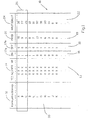
- a selection list 10 for communication partners 12 is shown in a schematic diagram. Such a selection list is stored in digital form in a memory which, for example, is located on the SIM card of a mobile terminal, not shown, and is used to display communication partners 12 on a display 26 automatically according to specific criteria.
- the selection list 10 is processed in a known manner by a processor.
- the communication partners 12 are represented as a synonym for each individual in this figure continuously alphabetically in a first column 13.
- Each subscriber A, B, C... Is assigned an individual subscriber number 14 analogously to a conventional telephone directory, which is designated "XXX" for the sake of simplicity and is shown in a second column 15.
- a third column 16 records whether a communication partner 12 is "online" 17a (ON). Accordingly, in a fourth column 18, the state is stored when the communication partner is "offline” 17b (OFF), i. his mobile terminal has not turned on or e.g. is in an area that is not covered by the mobile network.
- Each communication partner 12 is also assigned a priority 20 in column 19. The higher the value, the higher its priority.
- the frequency 24 of a communication setup with a communication partner 12 is stored as an additional criterion. While frequency 24 and whether a subscriber is "online” or “offline” are dynamic criteria, priority 20 is set once and can only be changed manually by the user a static criterion.
- the selection list 10 is sorted and processed by a processor according to the predetermined criteria, so that the first three communication partners 12 are displayed on a display 26 of the mobile station.
- Each of the criteria can optionally be weighted differently for the creation of the order.
- the criterion of whether a communication partner 12 is "online" 17a or "offline" 17b enjoys the highest weighting. This is followed by the priority that the user has set for the communication partner. The lowest weighting in the present example suffers from the frequency 24 of the communication setup.
Landscapes
- Engineering & Computer Science (AREA)
- Signal Processing (AREA)
- Computer Networks & Wireless Communication (AREA)
- Library & Information Science (AREA)
- Mobile Radio Communication Systems (AREA)
- Transceivers (AREA)
Description
- Die Erfindung betrifft ein Mobilfunkendgerät für Mobilfunknetze, z.B. GSM- und UMTS-Funknetze, enthaltend:
- (a) Datenenverarbeitungsmittel, insbesondere zur Verarbeitung von Daten von Kommunikationspartnern, wobei die Datenverarbeitungsmittel
- einen Prozessor,
- Speichereinheiten,
- eine Anzeige und
- eine Anwenderschnittstelle aufweisen,
- (b) Identifikationsmittel zum Identifizieren des Mobilfunkendgeräts in dem Mobilfunknetz,
- (c) eine Signaleinrichtung zum Signalisieren, ob das Mobilfunkendgerät im Mobilfunknetz online ist,
- (d) eine Erfassungseinheit, die Kommunikationspartner erfaßt, welche im Mobilfunknetz online sind,
- (e) eine Auswahlliste bevorzugter Kommunikationspartner,
- (f) Auswahlmittel, die bevorzugte Kommunikationspartner der Auswahlliste nach bevorzugten Kriterien auf der Anzeige darstellen, wobei die Kriterien durch den Anwender des Mobilfunkendgeräts aus einer Kriterienliste festlegbar sind.
- Solche Mobilfunkendgeräte werden in Mobilfunknetzen bereits zahlreich verwendet. Die Mobilfunkendgeräte arbeiten mittlerweile fast alle auf digitaler Basis. Sie benötigen daher Datenenverarbeitungsmittel zur Verarbeitung der anfallenden Daten, insbesondere die von Kommunikationspartnern. Grundsätzlich erfolgt die Datenverarbeitung dann über einen Prozessor (CPU), der die Daten in geeigneten Speichereinheiten ablegt. Zur Darstellung von Daten weisen die Mobilfunkendgeräte eine Anzeige auf. Die Bedienung des Mobilfunkendgeräts erfolgt üblicherweise über eine alphanumerische Tastatur bzw. Zehner-Tastatur mit optionaler Buchstabenfunktion oder über ein Mikrophon der Anwenderschnittstelle.
- Jedes Mobilfunkendgerät, welches in einem Funknetz beispielsweise nach dem GSM-Standard (Global System Mobile) verwendet wird, muß sich dort identifizieren. Dies ist notwendig, um selbst im Funknetz erkannt zu werden und anwählbar zu sein. Die Identifizierung erfolgt über eine individuelle SIM-Karte, die normalerweise vom Funknetzanbieter ausgegeben werden.
- Wenn ein Mobilfunkendgerät eingeschaltet wird, wird es im Funknetz beim Netzwerkbetreiber angemeldet. Dieser Vorgang wird mit "Einbuchen" bezeichnet. Ein Mobilfunkendgerät muß sich auch einbuchen, wenn es von einem fremden Mobilfunknetz oder aus einem Funkloch kommt. In diesem Zustand gilt es quasi als ausgeschaltet. Solange das Mobilfunkendgerät eingeschaltet ist, ist es "online". Sobald das Mobilfunkendgerät ausgeschaltet ist, wird es aus dem Funknetz ausgebucht. Der Betreiber weiß nun, daß das Mobilfunkendgerät "offline" ist. Der Funknetzwerkbetreiber kann die Zustände "online" und offline" jederzeit feststellen und gibt diese Information an andere Kommunikationsteilnehmer auch weiter. Es ist bekannt, daß diese Mittel in den Mobilfunkendgeräten und Mobilfunknetzen bereits vorgesehen sind.
- Fast jedes Mobilfunkendgerät besitzt eine Auswahlliste bevorzugter Kommunikationspartner in Form eines Telefonbuches mit den Namen und Telefonnummern von gespeicherten Kommunikationspartnern. Der Anwender des Mobilfunkendgeräts kann auf diese Weise in dem Telefonbuch "blättern", um mit dem gewünschten Kommunikationspartner zu kommunizieren. Oft sind die Telefonlisten sehr lang, so daß der Anwender sich erst durch zahlreiche Namen durcharbeiten muß, bis er den Kommunikationspartner gefunden hat, mit dem er kommunizieren möchte. Dies wird zudem durch die kleine Anzeige der Mobilfunkendgeräte erschwert.
- Schließlich weiß der Anwender immer noch nicht, ob der Kommunikationspartner sein Gerät "online" oder "offline" hat, also erreichbar ist. Um diese lange Liste einzuschränken werden bei einigen Geräten nur die Kommunikationspartner angezeigt, welche online sind. Die Information, ob ein Kommunikationspartner online ist, wird vom Mobilfunknetzbetreiber bereitgestellt. Das Mobilfunkendgerät wertet diese Information aus und sortiert das Telefonbuch danach. Nachteil bei diesen Auswahllisten ist, daß es auch hier zu sehr langen Listen kommen kann, da oft die Mobilfunkendgeräte ununterbrochen "online" sind.
- Aus dem Bereich der Vernetzung von Personal Computern (PC), insbesondere des Internets sind Anwendungen vorhanden, bei denen festgestellt wird, ob ein möglicher Kommunikationspartner sich "online" im Netzwerk befindet. Eine Liste der sich im Netz befindlichen Kommunikationspartner kann angezeigt werden, um denjenigen auszuwählen, mit dem Kontakt aufgenommen werden soll, um beispielsweise mit diesem im Dialog zu kommunizieren (chatten). Hierbei kann sich der Anwender eine Liste bzw. eine Art "Telefonbuch" von den Kontaktpersonen anlegen, mit denen er überhaupt kommunizieren möchte. Diese Liste wird auch als "Best-Friend-Liste" bezeichnet.
- Problem ist, das die Auswahllisten wegen vieler geschäftlicher und privater Kontakte schnell und unübersichtlich anwachsen. Das Durchblättern dieser Listen zum Auffinden der Nummer einer bestimmten Kontaktperson nimmt zudem unnötige Zeit in Anspruch. Bei einem Monitor mag dies vielleicht noch akzeptabel sein. Bei der klein dimensionierten Anzeige und Tastatur eines Mobilfunkendgeräts ist das Suchen in langen Auswahllisten jedoch nicht anwenderfreundlich.
- In dem US-Patent
US 6.249.579 B1 wird eine Kurzwahlvorrichtung und ein korrespondierendes Verfahren für ein Endgerät eines Telekommunikationsnetzes offenbart. Die Kurzwahlvorrichtung sieht eine Datenbank für bevorzugte Kommunikationspartner vor, welche aus Informationen über ein- und ausgehende Telefonate generiert wird. Dabei werden jeweils neben einem Namen und einer Rufnummer auch eine Häufigkeit und eine Dauer dieser Anrufe festgehalten. Mit Hilfe der Häufigkeit und der Dauer von Anrufen erfolgt eine Sortierung der bevorzugten Kommunikationspartner in der Datenbankfür eine Darstellung für einen Benutzer. - Die WO 99/34628 beschreibt ein System zur Benachrichtigung eines Mobilfunkteilnehmers, ob andere Mobilfunkteilnehmer zurzeit über ein Mobilfunknetz erreichbar bzw. online sind oder nicht. Wenn der Mobilfunkteilnehmer sein Mobilfunkendgerät einschaltet, sendet dieses ein Signal an einen Dienst in dem Mobilfunknetz, um zu Signalisieren, dass der Mobilfunkteilnehmer online ist. Der Dienst überprüft den Online-Status von Mobilfunkendgeräten einer vordefinierte ersten Liste und teilt das Ergebnis dem Mobilfunkendgerät mit. Mobilfunkendgeräte einer zweiten vordefinierten Liste werden darüber informiert, dass das Mobilfunkendgerät online ist. Auf dem Mobilfunkendgerät wird anschließend die erste Liste von Mobilfunkendgeräten zusammen mit der Information, ob diese Mobilfunkendgeräte online oder offline sind, für den Mobilfunkteilnehmer dargestellt.
- Aufgabe der Erfindung ist es daher, die Nachteile des Standes der Technik zu beseitigen und ein Mobilfunkendgerät zu schaffen, bei dem die sichtbare Auswahlliste für die Kommunikationspartner eingeschränkt wird, um möglichst schnell den gewünschten Kommunikationspartner zu erhalten.
- Erfindungsgemäß wird die Aufgabe dadurch gelöst, daß bei einem Mobilfunkendgerät für Mobilfunknetze der eingangs genannten Art
- (g) nur Kommunikationspartner der Auswahlliste in der Anzeige dargestellt werden, die online sind.
- Durch diese Maßnahme wird gegenüber dem Stand der Technik erzielt, daß bereits beim Erzeugen eines Telefonbuchs eine Reihenfolge festgelegt werden kann, wie die Kommunikationspartner auf der Anzeige zu erscheinen haben. Die Reihenfolge kann sich dabei auch dynamisch verändern. Diese Reihenfolge der anzuzeigenden Kommunikationspartner wird anhand einer Kriterienliste automatisch eingestellt. Die Kriterienliste wird dazu zuvor angelegt. Ein Kriterium könnte beispielsweise die Häufigkeit sein, mit der untereinander kommuniziert wird. Dies wäre ein dynamisches Kriterium, da sich die Auswahlliste der Teilnehmer ständig ändern kann. Es gehört ebenfalls zur Erfindung, daß die Reihenfolge nach Kombinationen aus verschiedenen Kriterien gebildet wird. Eine Kombination wäre beispielsweise gegeben, wenn der Kommunikationspartner zum einen sehr häufig über das Mobilfunkengerät kommuniziert und gleichzeitig einer bestimmten Firma angehört. Dann wird er auf der Anzeige dargestellt. Weiterhin läßt sich eine statische Kriterienliste für die Reihenfolge erstellen, indem jedem Kommunikationspartner der Auswahllist bzw. des Telefonbuchs eine individuelle Priorität zugeordnet wird, mit der sie dargestellt werden. Die Priorität kann dann, in einer bevorzugten Ausbildung der Erfindung, über eine Gewichtung, für den Anwender einstellbar, ausgebildet sein.
- Bei dem erfindungsgemäßen Mobiljünkendgerät werden diejenigen Kommunikationspartner der Auswahlliste auf der Anzeige dargestellt, deren Mobilfunkendgeräte jeweils signalisieren, daß sie online sind. Damit werden diejenigen gespeicherten Teilnehmer bereits nicht berücksichtigt, die nicht erreichbar sind. Die Auswahlliste wird durch diese Maßnahme bereits eingeschränkt.
- Vorteilhafterweise werden nur Kommunikationspartner der Auswahlliste in der Anzeige dargestellt werden, die online sind. Wegen der geringen Größe der Anzeige lassen sich so bereits weitere potentielle Kommunikationspartner ausschließen.
- Oft möchte der Anwender des Mobilfunkendgeräts einen Teilnehmer lediglich speichern. Er möchte diesen Teilnehmer aber nicht zugleich automatisch auf der Anzeige dargestellt haben. Ein Aspekt der Erfindung ist es daher die Priorität von Kommunikationspartnern so zu setzen, daß der oder die Kommunikationspartner nie automatisch auf der Anzeige dargestellt werden.
- Eine weitere mögliche Variante der Erfindung besteht darin, das Mobilfunkendgerät derart auszubilden, daß ein Kommunikationspartner der Auswahlliste über eine Festnetzanlage mit dem Mobilfunkendgerät kommunizieren kann. Dabei sollte das Mobilfunknetz eine Signaleinrichtung aufweist, welche dem Mobilfunkendgerät mitteilt, daß der Kommunikationspartner online ist. Auf diese Weise können auch Festnetzteilnehmer problemlos über das Mobilfunkendgerät kommunizieren.
- Vorzugsweise wird die Auswahlliste ganz oder teilweise unmittelbar in der Erfassungseinheit des Mobilfunkendgeräts bearbeitet. Eine Variante dazu besteht darin, das die Auswahlliste ganz oder teilweise auch zentral in einem Zentralrechner eines Mobilfunknetzwerkanbieters bearbeitet wird.
- Um die Auswahlliste ggf. systemunabhängig zu machen kann die Auswahlliste ganz oder teilweise auf einer SIM-Karte gespeichert werden. Auf diese Weise kann die SIM-Karte mit der Auswahlliste in verschiedenen Mobilfunkendgeräten verwendet werden.
- Weitere Vorteile ergeben sich aus dem Gegenstand der Unteransprüche.
-
- Fig. 1
- zeigt in einer Prinzipskizze eine Auswahlliste für Kommunikationspartner mit einstellbaren Auswahlkriterien.
- In
Fig. 1 wird in einer Prinzipskizze eine Auswahlliste 10 für Kommunikationspartner 12 dargestellt. Eine solche Auswahlliste ist in digitaler Form in einem Speicher, welcher beispielsweise auf der SIM-Karte liegt, eines nicht dargestellten Mobilfunkendgeräts gespeichert und wird dazu verwendet, nach bestimmten Kriterien, automatisch Kommunikationspartner 12 auf einer Anzeige 26 darzustellen. Die Auswahlliste 10 wird dazu in bekannter Weise von einem Prozessor abgearbeitet. Die Kommunikationspartner 12 werden als Synonym für jeden einzelnen in dieser Abbildung fortlaufend alphabetisch in einer ersten Spalte 13 dargestellt. Jedem Teilnehmer A, B, C... wird analog zu einem herkömmlichen Telefonbuch eine individuelle Teilnehmernummer 14 zugeordnet, die der Einfachheit halber mit "XXX" bezeichnet wird und in einer zweiten Spalte 15 dargestellt ist. - In einer dritten Spalte 16 wird festgehalten, ob ein Kommunikationspartner 12 "online" 17a (ON) ist. Entsprechend wird in einer vierten Spalte 18 der Zustand gespeichert, wenn der Kommunikationspartner "offline" 17b (OFF) ist, d.h. sein Mobilfunkendgerät nicht eingeschaltet hat oder z.B. sich in einem Bereich befindet der durch das Mobilfunknetz nicht abgedeckt wird.
- Jedem Kommunikationspartner 12 ist ferner in Spalte 19 eine Priorität 20 zugeordnet. Je höher der Wert ist, desto höher ist seine Priorität. Ein Kommunikationspartner, dessen Priorität auf Null gesetzt ist, wie es im vorliegenden Ausführungsbeispiel bei den Kommunikationspartnern "J" und "K" der Fall ist, soll schließlich überhaupt nicht angezeigt werden.
- In Spalte 22 wird als zusätzliches Kriterium die Häufigkeit 24 eines Kommunikationsaufbaus mit einem Kommunikationspartner 12 gespeichert. Während es sich bei der Häufigkeit 24 und bei der Frage, ob ein Teilnehmer "online" oder "offline ist, um dynamische Kriterien handelt, wird die Priorität 20 einmal festgelegt und kann von dem Anwender nur manuell wieder geändert werden. Hierbei handelt es sich um ein statisches Kriterium.
- Die Auswahlliste 10 wird durch einen Prozessor nach den vorgegebenen Kriterien sortiert und verarbeitet, so daß die ersten drei Kommunikationspartner 12 auf einer Anzeige 26 des Mobilfunkendgeräts dargestellt werden. Jedes der Kriterien kann ggf. noch für die Erstellung der Reihenfolge unterschiedlich gewichtet werden. Im vorliegenden Ausführungsbeispiel genießt das Kriterium, ob ein Kommunikationspartner 12 "online" 17a oder "offline" 17b ist, die höchste Gewichtung. Danach folgt die Priorität die der Anwender für den Kommunikationspartner gesetzt hat. Die geringste Gewichtung geniest im vorliegenden Beispiel die Häufigkeit 24 des Kommunikationsaufbaus.
Claims (8)
- Mobilfunkendgerät für Mobilfunknetze, z.B. GSM- und UMTS-Funknetze, enthaltend:(a) Datenenverarbeitungsmittel, insbesondere zur Verarbeitung von Daten von Kommunikationspartnern, wobei die Datenverarbeitungsmittel- einen Prozessor,- Speichereinheiten,- eine Anzeige und- eine Anwenderschnittstelle aufweisen,(b) Identifikationsmittel zum Identifizieren des Mobilfunkendgeräts in dem Mobilfunknetz,(c) eine Signaleinrichtung zum Signalisieren, ob das Mobilfunkendgerät im Mobilfunknetz online ist,(d) eine Erfassungseinheit, die Kommunikationspartner erfaßt, welche im Mobilfunknetz online sind,(e) eine Auswahlliste (10) bevorzugter Kommunikationspartner,(f) Auswahlmittel, die bevorzugte Kommunikationspartner (12) der Auswahlliste (10) nach bevorzugten Kriterien (17, 19, 20, 24) auf der Anzeige (26) darstellen, wobei die Kriterien (17a, 17b, 20, 24) durch den Anwender des Mobilfunkendgeräts aus einer Kriterienliste (16, 18, 19, 22) festlegbar sind,
dadurch gekennzeichnet, dass(g) nur Kommunikationspartner (12) der Auswahlliste (10) in der Anzeige (26) dargestellt werden, die online (17a) sind. - Mobilfunkendgerät nach Anspruch 1, dadurch gekennzeichnet, daß Kommunikationspartnern (12) der Auswahlliste (10) eine unterschiedliche Priorität (20) zugeordnet wird, mit der sie dargestellt werden.
- Mobilfunkendgerät für Mobilfunknetze nach Anspruch 2, dadurch gekennzeichnet, daß die Priorität (20) über eine Gewichtung für den Anwender einstellbar ausgebildet ist.
- Mobilfunkendgerät für Mobilfunknetze nach einem der Ansprüche 2 oder 3, dadurch gekennzeichnet, daß die Priorität (20) von Kommunikationspartnern (12) so gesetzt werden kann, daß die Kommunikationspartner (12) nie automatisch auf der Anzeige (26) dargestellt werden.
- Mobilfunkendgerät für Mobilfunknetze nach einem der Ansprüche 1 bis 4, dadurch gekennzeichnet, daß ein Kommunikationspartner (12) der Auswahlliste (10) über eine Festnetzanlage mit dem Mobilfunkendgerät kommuniziert, wobei das Mobilfunknetz eine Signaleinrichtung aufweist, welche dem Mobilfunkendgerät mitteilt, daß der Kommunikationspartner online (17a) ist.
- Mobilfunkendgerät für Mobilfunknetze nach einem der Ansprüche 1 bis 5, dadurch gekennzeichnet, daß die Auswahlliste (10) ganz oder teilweise zentral in einer Verarbeitungseinheit eines Mobilfunknetzes bearbeitet wird.
- Mobilfunkendgerät für Mobilfunknetze nach einem der Ansprüche 1 bis 6, dadurch gekennzeichnet, daß die Auswahlliste (10) ganz oder teilweise in dem Mobilfunkendgerät bearbeitet wird.
- Mobilfunkendgerät für Mobilfunknetze nach einem der Ansprüche 1 bis 7, dadurch gekennzeichnet, daß die Auswahlliste (10) auf einer SIM-Karte gespeichert wird.
Priority Applications (1)
| Application Number | Priority Date | Filing Date | Title |
|---|---|---|---|
| EP10181864A EP2285078A3 (de) | 2002-09-06 | 2003-08-22 | Mobilfunkendgerät mit Kommunikationspartnerauswahl |
Applications Claiming Priority (3)
| Application Number | Priority Date | Filing Date | Title |
|---|---|---|---|
| DE10241809 | 2002-09-06 | ||
| DE10241809.8A DE10241809B4 (de) | 2002-09-06 | 2002-09-06 | Mobilfunkendgerät mit Kommunikationspartnerauswahl |
| PCT/EP2003/009343 WO2004025970A2 (de) | 2002-09-06 | 2003-08-22 | Mobilfunkendgerät mit kommunikationspartnerauswahl |
Related Child Applications (1)
| Application Number | Title | Priority Date | Filing Date |
|---|---|---|---|
| EP10181864.9 Division-Into | 2010-09-29 |
Publications (2)
| Publication Number | Publication Date |
|---|---|
| EP1537752A2 EP1537752A2 (de) | 2005-06-08 |
| EP1537752B1 true EP1537752B1 (de) | 2012-12-26 |
Family
ID=31724584
Family Applications (2)
| Application Number | Title | Priority Date | Filing Date |
|---|---|---|---|
| EP10181864A Withdrawn EP2285078A3 (de) | 2002-09-06 | 2003-08-22 | Mobilfunkendgerät mit Kommunikationspartnerauswahl |
| EP03794924A Expired - Lifetime EP1537752B1 (de) | 2002-09-06 | 2003-08-22 | Mobilfunkendgerät mit Kommunikationspartnerauswahl |
Family Applications Before (1)
| Application Number | Title | Priority Date | Filing Date |
|---|---|---|---|
| EP10181864A Withdrawn EP2285078A3 (de) | 2002-09-06 | 2003-08-22 | Mobilfunkendgerät mit Kommunikationspartnerauswahl |
Country Status (5)
| Country | Link |
|---|---|
| EP (2) | EP2285078A3 (de) |
| AU (1) | AU2003264091A1 (de) |
| DE (1) | DE10241809B4 (de) |
| ES (1) | ES2401497T3 (de) |
| WO (1) | WO2004025970A2 (de) |
Families Citing this family (4)
| Publication number | Priority date | Publication date | Assignee | Title |
|---|---|---|---|---|
| KR100640420B1 (ko) | 2005-04-06 | 2006-10-30 | 삼성전자주식회사 | 이동통신 단말기에서 콜 정보 디스플레이 장치 및 방법 |
| DE602005018330D1 (de) * | 2005-05-20 | 2010-01-28 | Research In Motion Ltd | Kontaktliste mit Teilnehmern von Kalenderereignissen |
| US20070162862A1 (en) * | 2005-07-06 | 2007-07-12 | Gemini Mobile Technologies, Inc. | Selective user monitoring in an online environment |
| FR2897500A1 (fr) * | 2006-02-10 | 2007-08-17 | France Telecom | Procede, systeme et terminal de communication pour proposer un ecran d'accueil a un utilisateur |
Family Cites Families (8)
| Publication number | Priority date | Publication date | Assignee | Title |
|---|---|---|---|---|
| CH677978A5 (de) * | 1989-05-11 | 1991-07-15 | Ascom Zelcom Ag | |
| WO1999011023A2 (de) * | 1997-08-21 | 1999-03-04 | Siemens Aktiengesellschaft | Verfahren zum ermitteln der technischen adresse eines kommunikationspartners und telekommunikationsgerät |
| US6032051A (en) * | 1997-12-01 | 2000-02-29 | Telefonaktiebolaget L/M Ericsson | Wireless mobile comunication devices for group use |
| US6512930B2 (en) * | 1997-12-30 | 2003-01-28 | Telefonaktiebolaget Lm Ericsson (Publ) | On-line notification in a mobile communications system |
| US6249579B1 (en) * | 1998-05-29 | 2001-06-19 | Lucent Technologies Inc. | Apparatus, method and system for personal telecommunication speed calling utilizing an affinity database |
| US6301609B1 (en) * | 1999-07-07 | 2001-10-09 | Lucent Technologies Inc. | Assignable associate priorities for user-definable instant messaging buddy groups |
| KR20010021111A (ko) * | 1999-07-23 | 2001-03-15 | 스테븐 디.피터스 | 무선 통신장치에 대한 메시징 및 상태 표시 |
| DE10001355A1 (de) * | 2000-01-14 | 2001-07-19 | Faist Entpr Ag Unterengstringe | Verfahren zur Erfassung von Teilnehmern eines Kommunikationsnetzes und Vorrichtung zur Durchführung des Verfahrens |
-
2002
- 2002-09-06 DE DE10241809.8A patent/DE10241809B4/de not_active Expired - Fee Related
-
2003
- 2003-08-22 EP EP10181864A patent/EP2285078A3/de not_active Withdrawn
- 2003-08-22 AU AU2003264091A patent/AU2003264091A1/en not_active Abandoned
- 2003-08-22 EP EP03794924A patent/EP1537752B1/de not_active Expired - Lifetime
- 2003-08-22 WO PCT/EP2003/009343 patent/WO2004025970A2/de not_active Ceased
- 2003-08-22 ES ES03794924T patent/ES2401497T3/es not_active Expired - Lifetime
Also Published As
| Publication number | Publication date |
|---|---|
| DE10241809B4 (de) | 2015-04-02 |
| WO2004025970A3 (de) | 2004-04-22 |
| AU2003264091A1 (en) | 2004-04-30 |
| EP1537752A2 (de) | 2005-06-08 |
| AU2003264091A8 (en) | 2004-04-30 |
| ES2401497T3 (es) | 2013-04-22 |
| WO2004025970A2 (de) | 2004-03-25 |
| EP2285078A3 (de) | 2011-03-23 |
| DE10241809A1 (de) | 2004-03-18 |
| EP2285078A2 (de) | 2011-02-16 |
Similar Documents
| Publication | Publication Date | Title |
|---|---|---|
| DE60218899T2 (de) | Benutzerschnittstelle und verfahren zum betrachten von einheitlichen kommunikationsereignissen in einem mobilen gerät | |
| DE19622347B4 (de) | Verfahren zur Bereitstellung eines Kommunikationsdienstes | |
| DE60021761T2 (de) | System zur speicherung und bereitstellung von mobilkommunikations - adress - informationen | |
| DE19832433A1 (de) | Einrichtung zum Erstellen und Aufrufen von Benutzerprofilen in einem Nachrichtensystem | |
| DE102010013575A1 (de) | Dynamischer IVR-Dialog auf der Basis von Analytikdaten | |
| EP2922015A1 (de) | Verfahren und Vorrichtung zur Steuerung einer Konferenz | |
| DE60111224T2 (de) | Kommunikationsverfahren und gerät | |
| EP0817458A2 (de) | Vorrichtung zur Ermöglichung einer kostenoptimierten Telekommunikation | |
| DE10241809B4 (de) | Mobilfunkendgerät mit Kommunikationspartnerauswahl | |
| EP1126660A1 (de) | Verfahren zur übermittlung einer Nachricht sowie Gateway | |
| WO2002035808A2 (de) | Rechnervorrichtung, verfahren zum betrieb einer rechnervorrichtung, sowie computerprogrammprodukt | |
| DE19912782A1 (de) | Privates Telefonbuch | |
| WO2001080513A2 (de) | Kommunikationssystem, zentraler computer, sowie verfahren zum übertragen einer url oder einer elektronischen postadresse | |
| DE10126600C2 (de) | Verfahren zur Steuerung von wählbaren Funktionen von Telekommunikationsgeräten sowie Telekommunikationsanlage | |
| EP1795016B1 (de) | Vermarktungsverfahren und kommunikationssystem zur durchführung des vermarktungsverfahrens | |
| DE10111970A1 (de) | Verfahren und Vorrichtung zum Ermöglichen der zeitlich abwechselnden Anzeige von Inhalten auf einem Mobilfunkendgerät | |
| DE102008053352B4 (de) | Vorrichtung und Verfahren zur Ortsermittlung | |
| EP1265406B1 (de) | WAP-Telefonbuch für virtuelle private Netzwerke | |
| DE10200550B4 (de) | Verfahren zur intuitiven Identifizierung und Nutzung von mobilen Telekommunikationsdiensten aus einem breiten Diensteportfolio über mobile Telekommunikationsendgeräte | |
| DE602004000358T2 (de) | Verfahren und System für das Lokalisieren von Einrichtungen in der Nähe einer Benutzereinheit | |
| DE102005029781A1 (de) | Verfahren zum Auffinden und/oder Abrufen von Informationen und/oder Daten zur Anzeige auf dem Display eines Telekommunikationsendgerätes | |
| EP1284090A1 (de) | Mobilfunknetz-seitiger server für ein mobilfunkendgerät-menü | |
| DE10035089C5 (de) | Verfahren, Vorrichtung und System zur Übermittlung von Informationen an Mobil-Telefone | |
| DE20023508U1 (de) | Rechnervorrichtung sowie Computerprogrammprodukt | |
| DE10065961A1 (de) | Rechnervorrichtung, Verfahren zum Betrieb einer Rechnervorrichtung, sowie Computerprogrammprodukt |
Legal Events
| Date | Code | Title | Description |
|---|---|---|---|
| PUAI | Public reference made under article 153(3) epc to a published international application that has entered the european phase |
Free format text: ORIGINAL CODE: 0009012 |
|
| 17P | Request for examination filed |
Effective date: 20050406 |
|
| AK | Designated contracting states |
Kind code of ref document: A2 Designated state(s): AT BE BG CH CY CZ DE DK EE ES FI FR GB GR HU IE IT LI LU MC NL PT RO SE SI SK TR |
|
| AX | Request for extension of the european patent |
Extension state: AL LT LV MK |
|
| DAX | Request for extension of the european patent (deleted) | ||
| 17Q | First examination report despatched |
Effective date: 20080102 |
|
| REG | Reference to a national code |
Ref country code: DE Ref legal event code: R079 Ref document number: 50314643 Country of ref document: DE Free format text: PREVIOUS MAIN CLASS: H04Q0007000000 Ipc: H04M0001274500 |
|
| GRAP | Despatch of communication of intention to grant a patent |
Free format text: ORIGINAL CODE: EPIDOSNIGR1 |
|
| RIC1 | Information provided on ipc code assigned before grant |
Ipc: H04W 8/18 20090101ALN20120905BHEP Ipc: H04M 1/2745 20060101AFI20120905BHEP Ipc: H04L 29/06 20060101ALI20120905BHEP Ipc: H04L 29/08 20060101ALI20120905BHEP |
|
| RIC1 | Information provided on ipc code assigned before grant |
Ipc: H04L 29/08 20060101ALI20120927BHEP Ipc: H04L 29/06 20060101ALI20120927BHEP Ipc: H04W 8/18 20090101ALN20120927BHEP Ipc: H04M 1/2745 20060101AFI20120927BHEP |
|
| GRAS | Grant fee paid |
Free format text: ORIGINAL CODE: EPIDOSNIGR3 |
|
| GRAA | (expected) grant |
Free format text: ORIGINAL CODE: 0009210 |
|
| AK | Designated contracting states |
Kind code of ref document: B1 Designated state(s): AT BE BG CH CY CZ DE DK EE ES FI FR GB GR HU IE IT LI LU MC NL PT RO SE SI SK TR |
|
| REG | Reference to a national code |
Ref country code: GB Ref legal event code: FG4D Free format text: NOT ENGLISH |
|
| REG | Reference to a national code |
Ref country code: CH Ref legal event code: EP |
|
| REG | Reference to a national code |
Ref country code: AT Ref legal event code: REF Ref document number: 590976 Country of ref document: AT Kind code of ref document: T Effective date: 20130115 |
|
| REG | Reference to a national code |
Ref country code: DE Ref legal event code: R096 Ref document number: 50314643 Country of ref document: DE Effective date: 20130228 |
|
| REG | Reference to a national code |
Ref country code: ES Ref legal event code: FG2A Ref document number: 2401497 Country of ref document: ES Kind code of ref document: T3 Effective date: 20130422 |
|
| PG25 | Lapsed in a contracting state [announced via postgrant information from national office to epo] |
Ref country code: SE Free format text: LAPSE BECAUSE OF FAILURE TO SUBMIT A TRANSLATION OF THE DESCRIPTION OR TO PAY THE FEE WITHIN THE PRESCRIBED TIME-LIMIT Effective date: 20121226 Ref country code: FI Free format text: LAPSE BECAUSE OF FAILURE TO SUBMIT A TRANSLATION OF THE DESCRIPTION OR TO PAY THE FEE WITHIN THE PRESCRIBED TIME-LIMIT Effective date: 20121226 |
|
| REG | Reference to a national code |
Ref country code: NL Ref legal event code: VDEP Effective date: 20121226 |
|
| PG25 | Lapsed in a contracting state [announced via postgrant information from national office to epo] |
Ref country code: SI Free format text: LAPSE BECAUSE OF FAILURE TO SUBMIT A TRANSLATION OF THE DESCRIPTION OR TO PAY THE FEE WITHIN THE PRESCRIBED TIME-LIMIT Effective date: 20121226 Ref country code: GR Free format text: LAPSE BECAUSE OF FAILURE TO SUBMIT A TRANSLATION OF THE DESCRIPTION OR TO PAY THE FEE WITHIN THE PRESCRIBED TIME-LIMIT Effective date: 20130327 |
|
| PG25 | Lapsed in a contracting state [announced via postgrant information from national office to epo] |
Ref country code: SK Free format text: LAPSE BECAUSE OF FAILURE TO SUBMIT A TRANSLATION OF THE DESCRIPTION OR TO PAY THE FEE WITHIN THE PRESCRIBED TIME-LIMIT Effective date: 20121226 Ref country code: BG Free format text: LAPSE BECAUSE OF FAILURE TO SUBMIT A TRANSLATION OF THE DESCRIPTION OR TO PAY THE FEE WITHIN THE PRESCRIBED TIME-LIMIT Effective date: 20130326 Ref country code: CZ Free format text: LAPSE BECAUSE OF FAILURE TO SUBMIT A TRANSLATION OF THE DESCRIPTION OR TO PAY THE FEE WITHIN THE PRESCRIBED TIME-LIMIT Effective date: 20121226 Ref country code: EE Free format text: LAPSE BECAUSE OF FAILURE TO SUBMIT A TRANSLATION OF THE DESCRIPTION OR TO PAY THE FEE WITHIN THE PRESCRIBED TIME-LIMIT Effective date: 20121226 Ref country code: CY Free format text: LAPSE BECAUSE OF FAILURE TO SUBMIT A TRANSLATION OF THE DESCRIPTION OR TO PAY THE FEE WITHIN THE PRESCRIBED TIME-LIMIT Effective date: 20121226 |
|
| PG25 | Lapsed in a contracting state [announced via postgrant information from national office to epo] |
Ref country code: RO Free format text: LAPSE BECAUSE OF FAILURE TO SUBMIT A TRANSLATION OF THE DESCRIPTION OR TO PAY THE FEE WITHIN THE PRESCRIBED TIME-LIMIT Effective date: 20121226 Ref country code: PT Free format text: LAPSE BECAUSE OF FAILURE TO SUBMIT A TRANSLATION OF THE DESCRIPTION OR TO PAY THE FEE WITHIN THE PRESCRIBED TIME-LIMIT Effective date: 20130426 Ref country code: NL Free format text: LAPSE BECAUSE OF FAILURE TO SUBMIT A TRANSLATION OF THE DESCRIPTION OR TO PAY THE FEE WITHIN THE PRESCRIBED TIME-LIMIT Effective date: 20121226 |
|
| REG | Reference to a national code |
Ref country code: DE Ref legal event code: R082 Ref document number: 50314643 Country of ref document: DE Representative=s name: RING & WEISBRODT PATENTANWALTSGESELLSCHAFT MBH, DE |
|
| PG25 | Lapsed in a contracting state [announced via postgrant information from national office to epo] |
Ref country code: DK Free format text: LAPSE BECAUSE OF FAILURE TO SUBMIT A TRANSLATION OF THE DESCRIPTION OR TO PAY THE FEE WITHIN THE PRESCRIBED TIME-LIMIT Effective date: 20121226 |
|
| PLBE | No opposition filed within time limit |
Free format text: ORIGINAL CODE: 0009261 |
|
| STAA | Information on the status of an ep patent application or granted ep patent |
Free format text: STATUS: NO OPPOSITION FILED WITHIN TIME LIMIT |
|
| 26N | No opposition filed |
Effective date: 20130927 |
|
| REG | Reference to a national code |
Ref country code: DE Ref legal event code: R097 Ref document number: 50314643 Country of ref document: DE Effective date: 20130927 |
|
| BERE | Be: lapsed |
Owner name: VODAFONE HOLDING G.M.B.H. Effective date: 20130831 |
|
| REG | Reference to a national code |
Ref country code: CH Ref legal event code: PL |
|
| PG25 | Lapsed in a contracting state [announced via postgrant information from national office to epo] |
Ref country code: LI Free format text: LAPSE BECAUSE OF NON-PAYMENT OF DUE FEES Effective date: 20130831 Ref country code: MC Free format text: LAPSE BECAUSE OF FAILURE TO SUBMIT A TRANSLATION OF THE DESCRIPTION OR TO PAY THE FEE WITHIN THE PRESCRIBED TIME-LIMIT Effective date: 20121226 Ref country code: CH Free format text: LAPSE BECAUSE OF NON-PAYMENT OF DUE FEES Effective date: 20130831 |
|
| REG | Reference to a national code |
Ref country code: IE Ref legal event code: MM4A |
|
| PG25 | Lapsed in a contracting state [announced via postgrant information from national office to epo] |
Ref country code: BE Free format text: LAPSE BECAUSE OF NON-PAYMENT OF DUE FEES Effective date: 20130831 |
|
| PG25 | Lapsed in a contracting state [announced via postgrant information from national office to epo] |
Ref country code: IE Free format text: LAPSE BECAUSE OF NON-PAYMENT OF DUE FEES Effective date: 20130822 |
|
| REG | Reference to a national code |
Ref country code: AT Ref legal event code: MM01 Ref document number: 590976 Country of ref document: AT Kind code of ref document: T Effective date: 20130822 |
|
| PG25 | Lapsed in a contracting state [announced via postgrant information from national office to epo] |
Ref country code: AT Free format text: LAPSE BECAUSE OF NON-PAYMENT OF DUE FEES Effective date: 20130822 |
|
| PG25 | Lapsed in a contracting state [announced via postgrant information from national office to epo] |
Ref country code: TR Free format text: LAPSE BECAUSE OF FAILURE TO SUBMIT A TRANSLATION OF THE DESCRIPTION OR TO PAY THE FEE WITHIN THE PRESCRIBED TIME-LIMIT Effective date: 20121226 |
|
| PG25 | Lapsed in a contracting state [announced via postgrant information from national office to epo] |
Ref country code: HU Free format text: LAPSE BECAUSE OF FAILURE TO SUBMIT A TRANSLATION OF THE DESCRIPTION OR TO PAY THE FEE WITHIN THE PRESCRIBED TIME-LIMIT; INVALID AB INITIO Effective date: 20030822 Ref country code: LU Free format text: LAPSE BECAUSE OF NON-PAYMENT OF DUE FEES Effective date: 20130822 |
|
| REG | Reference to a national code |
Ref country code: FR Ref legal event code: PLFP Year of fee payment: 13 |
|
| REG | Reference to a national code |
Ref country code: FR Ref legal event code: PLFP Year of fee payment: 14 |
|
| REG | Reference to a national code |
Ref country code: FR Ref legal event code: PLFP Year of fee payment: 15 |
|
| REG | Reference to a national code |
Ref country code: FR Ref legal event code: PLFP Year of fee payment: 16 |
|
| PGFP | Annual fee paid to national office [announced via postgrant information from national office to epo] |
Ref country code: IT Payment date: 20220825 Year of fee payment: 20 Ref country code: GB Payment date: 20220822 Year of fee payment: 20 Ref country code: DE Payment date: 20220819 Year of fee payment: 20 |
|
| PGFP | Annual fee paid to national office [announced via postgrant information from national office to epo] |
Ref country code: FR Payment date: 20220823 Year of fee payment: 20 |
|
| PGFP | Annual fee paid to national office [announced via postgrant information from national office to epo] |
Ref country code: ES Payment date: 20221024 Year of fee payment: 20 |
|
| REG | Reference to a national code |
Ref country code: DE Ref legal event code: R071 Ref document number: 50314643 Country of ref document: DE |
|
| REG | Reference to a national code |
Ref country code: ES Ref legal event code: FD2A Effective date: 20230829 |
|
| REG | Reference to a national code |
Ref country code: GB Ref legal event code: PE20 Expiry date: 20230821 |
|
| PG25 | Lapsed in a contracting state [announced via postgrant information from national office to epo] |
Ref country code: GB Free format text: LAPSE BECAUSE OF EXPIRATION OF PROTECTION Effective date: 20230821 Ref country code: ES Free format text: LAPSE BECAUSE OF EXPIRATION OF PROTECTION Effective date: 20230823 |