EP1537308B1 - Motorkühlsysteme - Google Patents
Motorkühlsysteme Download PDFInfo
- Publication number
- EP1537308B1 EP1537308B1 EP03793848A EP03793848A EP1537308B1 EP 1537308 B1 EP1537308 B1 EP 1537308B1 EP 03793848 A EP03793848 A EP 03793848A EP 03793848 A EP03793848 A EP 03793848A EP 1537308 B1 EP1537308 B1 EP 1537308B1
- Authority
- EP
- European Patent Office
- Prior art keywords
- return flow
- heater
- inlet
- valve
- cooling system
- Prior art date
- Legal status (The legal status is an assumption and is not a legal conclusion. Google has not performed a legal analysis and makes no representation as to the accuracy of the status listed.)
- Expired - Lifetime
Links
Images


Classifications
-
- F—MECHANICAL ENGINEERING; LIGHTING; HEATING; WEAPONS; BLASTING
- F01—MACHINES OR ENGINES IN GENERAL; ENGINE PLANTS IN GENERAL; STEAM ENGINES
- F01P—COOLING OF MACHINES OR ENGINES IN GENERAL; COOLING OF INTERNAL-COMBUSTION ENGINES
- F01P7/00—Controlling of coolant flow
- F01P7/14—Controlling of coolant flow the coolant being liquid
- F01P7/16—Controlling of coolant flow the coolant being liquid by thermostatic control
- F01P7/165—Controlling of coolant flow the coolant being liquid by thermostatic control characterised by systems with two or more loops
-
- F—MECHANICAL ENGINEERING; LIGHTING; HEATING; WEAPONS; BLASTING
- F01—MACHINES OR ENGINES IN GENERAL; ENGINE PLANTS IN GENERAL; STEAM ENGINES
- F01P—COOLING OF MACHINES OR ENGINES IN GENERAL; COOLING OF INTERNAL-COMBUSTION ENGINES
- F01P7/00—Controlling of coolant flow
- F01P7/14—Controlling of coolant flow the coolant being liquid
- F01P7/16—Controlling of coolant flow the coolant being liquid by thermostatic control
-
- F—MECHANICAL ENGINEERING; LIGHTING; HEATING; WEAPONS; BLASTING
- F01—MACHINES OR ENGINES IN GENERAL; ENGINE PLANTS IN GENERAL; STEAM ENGINES
- F01P—COOLING OF MACHINES OR ENGINES IN GENERAL; COOLING OF INTERNAL-COMBUSTION ENGINES
- F01P7/00—Controlling of coolant flow
- F01P7/14—Controlling of coolant flow the coolant being liquid
- F01P2007/146—Controlling of coolant flow the coolant being liquid using valves
-
- F—MECHANICAL ENGINEERING; LIGHTING; HEATING; WEAPONS; BLASTING
- F01—MACHINES OR ENGINES IN GENERAL; ENGINE PLANTS IN GENERAL; STEAM ENGINES
- F01P—COOLING OF MACHINES OR ENGINES IN GENERAL; COOLING OF INTERNAL-COMBUSTION ENGINES
- F01P2037/00—Controlling
- F01P2037/02—Controlling starting
-
- F—MECHANICAL ENGINEERING; LIGHTING; HEATING; WEAPONS; BLASTING
- F01—MACHINES OR ENGINES IN GENERAL; ENGINE PLANTS IN GENERAL; STEAM ENGINES
- F01P—COOLING OF MACHINES OR ENGINES IN GENERAL; COOLING OF INTERNAL-COMBUSTION ENGINES
- F01P2060/00—Cooling circuits using auxiliaries
- F01P2060/04—Lubricant cooler
-
- F—MECHANICAL ENGINEERING; LIGHTING; HEATING; WEAPONS; BLASTING
- F01—MACHINES OR ENGINES IN GENERAL; ENGINE PLANTS IN GENERAL; STEAM ENGINES
- F01P—COOLING OF MACHINES OR ENGINES IN GENERAL; COOLING OF INTERNAL-COMBUSTION ENGINES
- F01P2060/00—Cooling circuits using auxiliaries
- F01P2060/04—Lubricant cooler
- F01P2060/045—Lubricant cooler for transmissions
-
- F—MECHANICAL ENGINEERING; LIGHTING; HEATING; WEAPONS; BLASTING
- F01—MACHINES OR ENGINES IN GENERAL; ENGINE PLANTS IN GENERAL; STEAM ENGINES
- F01P—COOLING OF MACHINES OR ENGINES IN GENERAL; COOLING OF INTERNAL-COMBUSTION ENGINES
- F01P2060/00—Cooling circuits using auxiliaries
- F01P2060/08—Cabin heater
-
- F—MECHANICAL ENGINEERING; LIGHTING; HEATING; WEAPONS; BLASTING
- F01—MACHINES OR ENGINES IN GENERAL; ENGINE PLANTS IN GENERAL; STEAM ENGINES
- F01P—COOLING OF MACHINES OR ENGINES IN GENERAL; COOLING OF INTERNAL-COMBUSTION ENGINES
- F01P2060/00—Cooling circuits using auxiliaries
- F01P2060/10—Fuel manifold
Definitions
- This invention relates to engine cooling systems particularly but not exclusively for motor vehicles having a liquid cooled engine.
- an engine cooling system comprising a primary cooling circuit having a radiator for cooling liquid coolant for the engine, a pump to circulate the coolant through an engine supply line to the engine, from the engine to the radiator and from the radiator back to the pump through a pump return line, an auxiliaries cooling circuit having at least one auxiliary heat exchanger for cooling one or more further liquids and arranged so that coolant can flow from the engine supply line through the or each auxiliary heat exchanger and be returned as an auxiliaries return flow into the pump return line and a heater circuit having a heater comprising a liquid to air heat exchanger and arranged so that coolant can flow from the engine supply line through the engine and then through the heater and be returned as a heater return flow into the pump return line, wherein a common control valve is provided between the or each auxiliary heat exchanger and the pump return line and between the heater and the pump return line to control both the auxiliaries return flow and the heater return flow and that the common control valve comprises a housing defining a valve chamber,
- the common control valve is operable to prevent the auxiliaries return flow until the heater return flow reaches a first pre-determined temperature.
- the common control valve may be operable to restrict the heater return flow when the heater return flow exceeds a second pre-determined temperature.
- the common control valve may be operable to restrict the heater return flow when a combination of the auxiliaries return flow and the heater return flow exceeds a second pre-determined temperature. In either case there may be substantially no heater return flow allowed when the heater return flow exceeds the second predetermined temperature.
- This second pre-determined temperature is usually an indication that no heat output is being taken from the heater so this can be used to optimise the performance of the or each auxiliary heat exchanger.
- the common control valve comprises a thermally-responsive actuator having a temperature sensitive portion that is exposed to at least one of said return flows, in which case the temperature sensitive portion may be exposed to only the heater return flow when the heater return flow is below the first pre-determined temperature.
- the temperature sensitive portion may be exposed to both the heater return flow and the auxiliaries return flow.
- the auxiliaries return and the heater return flows may be mixed prior to reaching said temperature sensitive portion so that the temperature sensed by the temperature sensitive portion is dependent upon a combination of the temperature and the flow rate of the heater return flow and the temperature and flow rate of the auxiliaries return flow.
- the auxiliaries cooling circuit may comprise two or more of said auxiliary heat exchangers arranged in parallel.
- the auxiliary heat exchangers include an engine oil cooler, one or more transmission oil coolers and/or a fuel cooler.
- the common control valve comprises a housing defining a valve chamber, a first inlet connecting the heater to the valve chamber for the heater return flow, a second inlet connecting the or each auxiliary heat exchanger to the valve chamber for the auxiliaries return flow, an outlet connected to the pump return line and a valve assembly mounted in the valve chamber, the valve assembly comprising a valve shuttle and a biasing means to bias the valve shuttle towards an auxiliaries closed position in which heater return flow through the first inlet to the outlet is substantially unrestricted while auxiliaries return flow through the second inlet is prevented.
- valve assembly may further comprise the thermally-responsive actuator, the thermally-responsive actuator being arranged to urge the valve shuttle against the biasing means to allow auxiliaries return flow through the second inlet to the outlet when the heater return flow reaches the first predetermined temperature while continuing to allow the heater return flow from the first inlet through to the outlet.
- the valve shuttle may be arranged so that with increasing temperature of the heater return flow, it moves further against the biasing means to obstruct heater return flow through the first inlet when the heater return flow reaches the second predetermined temperature while continuing to allow the auxiliaries return flow from the second inlet through to the outlet.
- the valve shuttle may have a main valve member which cooperates with the housing to close the second inlet and to obstruct the first inlet.
- the valve shuttle (24, 124,224) may have a main valve member which cooperates with the housing to close the second inlet and an ancillary valve member which cooperates with the housing to obstruct the first inlet.
- the thermally-responsive actuator may comprises an actuator body fast with the valve shuttle and a pushrod extending from one end of the valve shuttle for cooperation with an abutment on the housing, the actuator body including said temperature sensitive portion.
- the abutment is in the second inlet.
- the biasing means may be a helical spring which may be axially guided by the housing and may be located in the first inlet.
- the valve shuttle may have a fluted end portion which is engaged within the helical spring so that the valve shuttle is axially guided by the helical spring.
- the valve shuttle is shaped to allow coolant to directly contact the temperature sensitive portion of the actuator body.
- valve shuttle may be shaped to allow coolant to directly contact the temperature sensitive portion on the side of the main valve member towards the first inlet and on the side of the main valve member towards the second inlet.
- the valve shuttle may be shaped to allow coolant to directly contact the temperature sensitive portion of the actuator body between the main valve member and the ancillary valve member and on the side of the main valve member towards the first inlet.
- the invention also provides, according to a second aspect thereof, a common control valve when used in an engine cooling system according to a said first aspect
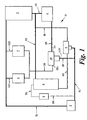
- a motor vehicle cooling system 10 comprises a primary cooling circuit having an air-cooled radiator 8 for cooling a liquid coolant for the engine 3.
- a pump 2 circulates the coolant through the engine 3 and then to the radiator 8 or to a bypass BL through an engine return line ER and back to the pump 2 through a primary flow control valve 5 and a pump return line RL.
- the primary flow control valve 5 is usually simply referred to as the thermostat.
- the main thermostat 5 to avoid any confusion with other parts of the cooling system.
- An appropriate main thermostat 5 is described in EP-A-0794327 although conventional thermostats may be used.
- the bypass BL is arranged in parallel to the radiator 8 between the engine return line ER and the main thermostat 5.
- Coolant that has been cooled by the radiator 8 passes along a radiator return line RR to the main thermostat 5 and then back to the pump 2 through a pump return line RL.
- the main thermostat 5 controls the flow through the radiator 8, preventing flow until the engine 3 has reached an appropriate running temperature. However, as with most valves of this type, the main thermostat 5 also controls the flow in the bypass line BL.
- An expansion tank 9 is connected at an upper end to the top of the radiator 8 by a degas supply line DS and is connected at a lower end to the return line RL by a degas return line DR.
- the engine cooling system 10 also includes an auxiliaries cooling circuit which comprises first and second liquid to liquid auxiliary heat exchangers in the form of a transmission oil cooler 6 and an engine oil cooler 7 connected in parallel between the engine supply line SL and a common control valve 20, more conveniently referred to as the heater diverter valve. Coolant is supplied to the transmission oil cooler 6 through a first cooler supply line CS1 and to the engine oil cooler 7 through a second cooler supply line CS2. The coolant outputs from the transmission oil cooler 6 and the engine oil cooler 7 are combined and fed as a coolers or auxiliaries return flow to the heater diverter valve 20 through a coolers return line CR.
- an auxiliaries cooling circuit which comprises first and second liquid to liquid auxiliary heat exchangers in the form of a transmission oil cooler 6 and an engine oil cooler 7 connected in parallel between the engine supply line SL and a common control valve 20, more conveniently referred to as the heater diverter valve. Coolant is supplied to the transmission oil cooler 6 through a first cooler supply line CS1 and to the engine oil cooler 7 through
- a heater circuit comprising a heater 4 having a liquid to air heat exchanger for vehicle cabin heating.
- the heater 4 is connected by a heater supply line HS to the engine return line ER between the engine 3 and the radiator 8. After flowing through the heater 4, the coolant is returned to the heater diverter valve 20 as a heater return flow through a heater return line HR.
- the coolers return flow and the heater return flow are returned to the primary cooling circuit at the pump return line RL through a secondaries return line SR.
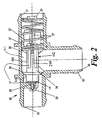
- the heater diverter valve 20 comprises a housing 30 made as a one-piece plastics moulding defining a valve chamber 41.
- a first inlet 31 connects the valve chamber 41 to the heater return line HR and a second inlet 32 connect the valve chamber 41 to the coolers return line CR.
- An outlet 33 is connected to the secondaries return line SR to return coolant to the primary cooling circuit.
- the housing 30 is in the form of a conventional tee-piece for connection to flexible hoses, the first and second inlets 31 and 32 being axially aligned and the outlet 33 having its axis perpendicular to that of the inlets.
- a valve assembly 42 is carried in the valve chamber 41 and comprises a valve shuttle 24 formed as a plastics moulding and a thermally-responsive actuator 19 carried within the shuttle 24.
- a biasing means in the form of a helical spring 22 acts to bias the shuttle 24 towards the second inlet 32.
- the valve chamber 41 is formed as an extension of the bore of the first inlet 31 and at a step of this bore with the smaller bore of the second inlet 32 a chamfered valve seat 43 is formed for cooperation with a corresponding valve seat on a main valve member 25 formed as a collar integral with the shuttle 24.
- the thermally-responsive actuator 19 is a generally conventional wax actuator (generally referred to as wax capsule) having an actuator or capsule body 21 and a pushrod 28 extending towards the second inlet 32 for cooperation with an abutment 29 in the second inlet 32.
- the abutment 29 is carried on three spokes and is formed as an integral part of the housing 30.
- the capsule body 21 has a metal casing which forms a temperature sensitive portion which can transmit heat to wax for driving the pushrod 28.
- the capsule body 21 is cylindrical, being a push fit in a bore of the shuttle 24 so that the capsule body is almost entirely within the shuttle 24.
- the shuttle 24 has four radial fins 27 which form a fluted end portion at is end adjacent the first inlet 31.
- Each fin 27 is aligned with a corresponding longitudinal rib 27A, the bore intersecting the ribs 27A to define four apertures 24A to the side of the main valve member 25 which is towards the first inlet 31. These apertures 24A allow heater return flow to directly contact the capsule casing 21.
- Each fin 27 has a step 26 to provide a reaction surface for the helical spring 22.
- the helical spring 22 is a sliding fit on the fins 27 while the spring 22 is a sliding fit in the bore of first inlet 31. Hence the helical spring 22 acts as a guide for the valve shuttle 24.
- a ladder-shaped retainer 23 extends across the first inlet 31 through diametrically opposed windows in the housing 30 to provide a reaction surface for the helical spring 22.
- Operation of the primary cooling circuit is conventional and thus will be described relatively briefly.
- the main thermostat 5 prevents any coolant flowing through the radiator 8 while allowing flow through the bypass BL.
- the main thermostat 5 starts to close off the bypass BL to allow coolant to begin flowing through the radiator 8 and prevent the engine 3 from overheating.
- Operation of the heater diverter valve 20 is as follows. Following a cold start of the engine 3, the valve 20 is in the state shown in Fig.2 .
- the main valve member 25 is held on the seat 43 by the spring 22 to shut off the coolers return flow from the second inlet 32 while the heater return flow through the first inlet 31 into the valve chamber 41 and through the outlet 33 is unrestricted.
- the temperature of the heater return flow is sensed by the capsule body 21 so that as the temperature of the heater return flow increases, the pushrod 28 starts to generate a force in opposition to the preload of the spring 22.
- the coolers return flow remains blocked while the coolant entering the chamber is below a first pre-determined temperature, in this case 74°C.
- the force generated by the pushrod 28 overcomes the pre-load of the spring 22 and the shuttle 24 starts to move away from the second inlet 32 to allow the coolers return flow from the second inlet 32 to the outlet 33 while continuing to allow the heater return flow from the first inlet 31 to the outlet 33.
- the force generated by the wax actuator continues to increase and the shuttle 24 is moved further and further away from the second inlet 32, as shown in Fig.3 .
- the pushrod 28 When the heater return flow reaches or exceeds a second pre-determined temperature, in this case 86°C, the pushrod 28 is fully extended and the valve member 25 is positioned more or less in the middle of the outlet 33. In this position it provides some restriction on the heater return flow from the first inlet 31 while allowing the least restriction to the coolers return flow from the second inlet 32.
- a second pre-determined temperature in this case 86°C
- the cooling system By preventing coolers return flow following a cold start of the engine 3 until the temperature of the heater return flow reaches 74°C, the cooling system provides as much heat as possible to the heater 4 so that the occupants of the motor vehicle can obtain the maximum benefit from the heater 4.
- the transmission oil cooler 6 and the engine oil cooler 7 are effectively isolated and do not absorb any of the heat being generated by the engine 3.
- the time for the engine 3 to warm up is reduced, further helping the heater 4 to become effective more quickly.
- the usual situation following a cold start is that the temperature of the coolant in the engine supply line SL is above the temperatures of the oils flowing through the transmission oil cooler 6 and the engine oil cooler 7, even when the temperature of the heater return flow has risen above 74°C and the heater diverter valve 20 has started to allow coolers return flow through the coolers return line CR.
- the warmer coolant flowing through the auxiliaries cooling circuit heats these oils, thereby helping to reduce friction losses in the transmission and the engine 3.
- the temperature of the coolers return flow becoming greater than that of the engine return flow in the engine supply line SL and the coolers 6 and 7 act to extract heat from the oils.
- the pressure drop across the heater 4 is reduced so that the rate of coolant flow through the radiator 8 is increased.
- the temperature of the heater return flow is approximately 12°C below the temperature when no heat is being supplied and this difference in temperatures can be used when designing the cooling system to determine the second pre-determined temperature of the heater return flow.
- the pressure of the coolant in the engine supply line SL increases with engine speed, thereby increasing both the flows and the pressure differences in the various parts of the cooling system. If for some reason the heater diverter valve 20 became inoperative (perhaps through failure of the wax capsule 21) so that the second inlet 32 remains closed there is a possibility that the engine and transmission oils would become of overheated.
- the pre-load of the helical spring can be set such that at low to moderate engine speeds the pre-load is sufficient to prevent flow through the second inlet 32 but at higher engine speeds the shuttle 24 is moved by the increasing pressure at the second inlet to allow some coolant flow through the oil coolers 6 and 7.
- a cooling system which uses a heater diverter valve which has such a spring loaded valve shuttle without the thermally responsive actuator may provide a useful improvement over known cooling systems.
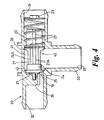
- the main difference between the modified heater diverter valve 120 and the heater diverter valve 20 shown in Figs.2 and 3 is that the shuttle 124 is longer and has apertures 140 on the side of the valve member 125 to expose the capsule body 121 to the coolers return flow from the second inlet 132.
- the pushrod 128 has a longer travel so that when it is at its maximum extension it pushes the valve member 125 a small distance into the bore of the first inlet 131.
- this modified heater diverter valve 120 differs from that of the heater diverter valve 20 in that when the heater return flow from the first inlet 131 rises above the first predetermined temperature to unseat the valve member 125 and allow coolers return flow from the second inlet 132, then the capsule body 121 can draw significant heat from the coolers return flow as well as the heater return flow.
- the wax capsule 119 thus becomes responsive to a combination of the temperature and flow of the coolant entering through the first inlet 131 and the temperature and flow of the coolant entering through the second inlet. Before the valve member 125 becomes unseated, the coolant in the second inlet 132 is stagnant so the capsule 119 is at this stage responsive to only the temperature of the heater return flow entering through the first inlet 131.
- the capsule body may be inserted in the bore of the shuttle 124 so that an end part adjacent the pushrod 128 remains exposed.
- a similar modification can be made to the heater diverter valves shown in Figs. 2 and 3 and in Fig.4 and can be readily made simply by inserting a spacer in the end of the bore of the shuttle 24.
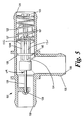
- the shuttle 224 has an ancillary valve member 225A spaced from the main valve member 225 and has apertures 240 between the main valve member 225 and the ancillary valve member 225A to expose the capsule body 221 to the coolant in the valve chamber 241 in the region between the valve members 225 and 225A.
- Operation of the heater diverter valve 220 differs from that of the valve 20 in that when the heater return flow from the first inlet 231 rises above the first predetermined temperature to unseat the main valve member 225 and allow coolers return flow from the second inlet 232, then the capsule body 221 can draw some heat from the coolers return flow as well as the heater return flow.
- the capsule 219 thus becomes responsive to a combination of the temperature and flow of the coolant entering through the first inlet 231 and the temperature and flow of the coolant entering through the second inlet 232. As the temperatures of the heater return flow and the coolers return flow continue to rise, the shuttle 224 moves further away from the second inlet 232.
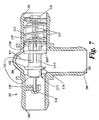
- the pushrod 228 When the coolant in the valve chamber 241 reaches or exceeds the second pre-determined temperature the pushrod 228 is fully extended so that the ancillary valve member 225A is engaged with the bore of the first inlet 231 as is shown in respect of the further modification shown in Fig.7 .
- the ancillary valve member 225A At this extent of travel of the shuttle 219, the ancillary valve member 225A substantially shuts-off the heater return flow while the main valve member 225 allows unrestricted coolers return flow. There may be a small flow through the first inlet 231 due to clearance between the ancillary valve member 225A and the bore of the first inlet 231.
- the heater diverter valves 20, 120, 220 as described above all use a wax capsule type of thermally-responsive actuator
- the actuator could be of some other thermally-responsive type, e.g. those using bi-metallic expansion or vapour pressure.
- the sensing of temperatures could be done through thermocouples or other temperature sensing means located to sense either heater return flow only or both the heater return flow and the coolers return flow and the control could be by means of a servo valve, either directly connected to the thermocouples or indirectly through an electronic control unit.
Landscapes
- Engineering & Computer Science (AREA)
- Chemical & Material Sciences (AREA)
- Combustion & Propulsion (AREA)
- Mechanical Engineering (AREA)
- General Engineering & Computer Science (AREA)
- Temperature-Responsive Valves (AREA)
Claims (18)
- Motorkühlsystem (10), mit einem Primärkühlkreislauf mit einem Kühler (8) zum Kühlen von flüssigem Kühlmittel für den Motor (3), einer Pumpe (2) zum Zirkulieren des Kühlmittels durch eine Motorversorgungsleitung (SL) zum Motor, von dem Motor zu dem Kühler und von dem Kühler durch eine Pumpenrückführleitung (RL) zu der Pumpe zurück, einem Nebenaggregatkühlreislauf mit mindestens einem Zusatzwärmetauscher (6, 7) zum Kühlen einer oder mehrerer weiterer Flüssigkeiten und derart angeordnet, dass Kühlmittel von der Motorversorgungsleitung durch den oder jeden Zusatzwärmetauscher fließen und als ein Nebenaggregatrückstrom in die Pumpenrückführleitung zurückgeführt werden kann, und einem Heizkreislauf mit einer Heizvorrichtung (4), die einen Flüssigkeits-Luft-Wärmetauscher umfasst und so angeordnet ist, dass Kühlmittel von der Motorversorgungsleitung durch den Motor und dann durch die Heizvorrichtung fließen und als ein Heizvorrichtungsrückstrom in die Pumpenrückführleitung zurückgeführt werden kann, wobei ein gemeinsames Steuerventil (20, 120, 220) zwischen dem oder jedem Zusatzwärmetauscher (6, 7) und der Pumpenrückführleitung (RL) und zwischen der Heizvorrichtung (4) und der Pumpenrückführleitung vorgesehen ist, um sowohl den Nebenaggregatrückstrom als auch den Heizvorrichtungsrückstrom zu steuern, und wobei das gemeinsame Steuerventil (20, 120, 220) ein Gehäuse (30, 130, 230), das eine Ventilkammer (41, 141, 241) definiert, einen Auslass (33, 133, 233), der mit der Pumpenrückführleitung (RL) verbunden ist und eine Ventilanordnung (42, 142, 242), die in der Ventilkammer angebracht ist, umfasst, dadurch gekennzeichnet, dass das gemeinsame Steuerventil weiterhin einen ersten Einlass (31, 131, 231), der die Heizvorrichtung (4) für den Heizvorrichtungsrückstrom mit der Ventilkammer verbindet, und einen zweiten Einlass (32, 132, 232), der den oder jeden Zusatzwärmetauscher (6, 7) für den Nebenaggregatrückstrom mit der Ventilkammer verbindet, umfasst.
- Kühlsystem nach Anspruch 1, wobei das gemeinsame Steuerventil (20, 120, 220) dahingehend betätigbar ist, den Nebenaggregatrückstrom zu verhindern, bis der Heizvorrichtungsrückstrom eine erste Vorbestimmte Temperatur erreicht.
- Kühlsystem nach Anspruch 1 oder 2, wobei das gemeinsame Steuerventil (20, 120, 220) dahingehend betätigbar ist, den Heizvorrichtungsrückstrom zu begrenzen, wenn der Heizvorrichtungsrückstrom eine zweite Vorbestimmte Temperatur übertrifft.
- Kühlsystem nach Anspruch 1 oder 2, wobei das gemeinsame Steuerventil (20, 120, 220) dahingehend betätigbar ist, den Heizvorrichtungsrückstrom zu begrenzen, wenn eine Kombination aus dem Nebenaggregatrückstrom und dem Heizvorrichtungsrückstrom eine zweite Vorbestimmte Temperatur übertrifft.
- Kühlsystem nach Anspruch 2 oder einem davon abhängigen Anspruch, wobei das gemeinsame Steuerventil (20, 120, 220) einen thermisch ansprechenden Aktuator (19, 119, 219) umfasst, der einen temperaturempfindlichen Teil (21, 121, 221) aufweist, welcher dem Heizvorrichtungsrückstrom ausgesetzt ist, wenn der Heizvorrichtungsrückstrom unter der ersten Vorbestimmten Temperatur liegt.
- Kühlsystem nach Anspruch 5, wobei der temperaturempfindliche Teil (21, 121, 221) sowohl dem Heizvorrichtungsrückstrom als auch dem Nebenaggregatrückstrom ausgesetzt ist.
- Kühlsystem nach Anspruch 5 oder 6, wobei, wenn das gemeinsame Steuerventil (20, 120, 220) sowohl den Nebenaggregatrückstrom als auch den Heizvorrichtungsrückstrom zulässt, der Nebenaggregatrückstrom und der Heizvorrichtungsrückstrom vor Erreichen des temperaturempfindlichen Teils (21, 121, 221) vermischt werden, so dass die durch den temperaturempfindlichen Teil erfasste Temperatur von einer Kombination aus der Temperatur und der Durchflussrate des Heizvorrichtungsrückstroms und der Temperatur und des Durchflusses des Nebenaggregatrückstroms abhängig ist.
- Kühlsystem nach einem vorhergehenden Anspruch, wobei die Ventilanordnung einen Ventilschieber (24, 124, 224) und ein Vorspannmittel (22, 122, 222) zur Vorspannung des Ventilschiebers in eine geschlossene Nebenaggregatposition umfasst, in der der Heizvorrichtungsrückstrom durch den ersten Einlass zu dem Auslass im Wesentlichen nicht begrenzt ist, während der Nebenaggregatrückstrom durch den zweiten Einlass verhindert wird.
- Kühlsystem nach Anspruch 8, sofern von Anspruch 5 abhängig, wobei die Ventilanordnung (42, 142, 242) weiterhin den thermisch ansprechenden Aktuator (19, 119, 219) umfasst, wobei der thermisch ansprechende Aktuator dazu angeordnet ist, den Ventilschieber (24, 124, 224) gegen das Vorspannmittel (22, 122, 222) zu drücken, um Nebenaggregatrückstrom durch den zweiten Einlass (32, 132, 232) zu dem Auslass (33, 133, 233) zu gestatten, wenn der Heizvorrichtungsrückstrom die erste Vorbestimmte Temperatur erreicht, nährend er weiterhin den Heizvorrichtungsrückstrom von dem ersten Einlass (31, 131, 231) durch den Auslass gestattet.
- Kühlsystem nach Anspruch 9, sofern von Anspruch 3 oder Anspruch 4 abhängig, wobei mit zunehmender Temperatur des Heizvorrichtungsrückstroms der Ventilschieber (124, 224) sich weiter gegen das Vorspannmittel (122, 222) bewegt, um den Heizvorrichtungsrückstrom durch den ersten Einlass (131, 231) zu sperren, wenn die Heizvorrichtungsrückstromtemperatur die zweite Vorbestimmte Temperatur erreicht, nährend er weiterhin den Nebenaggregatrückstrom von dem zweiten Einlass (132, 232) weiter zum Auslass (133, 233) gestattet.
- Kühlsystem nach Anspruch 9 oder 10, wobei der Ventilschieber (24, 124, 224) ein Hauptventilglied (25, 125, 225) aufweist, das mit dem Gehäuse (30, 130, 230) zusammenwirkt, um den zweiten Einlass (32, 132, 232) zu schließen und den ersten Einlass (31, 131, 231) zu sperren.
- Kühlsystem nach einem der Ansprüche 10 bis 11, wobei der Ventilschieber (224) ein Hauptventilglied (225), das mit dem Gehäuse (230) zusammenwirkt, um den zweiten Einlass (232) zu schließen, und ein Nebenventilglied (225A), das mit dem Gehäuse (230) zusammenwirkt, um den ersten Einlass (231) zu sperren, aufweist.
- Kühlsystem nach einem der Ansprüche 8 bis 12, sofern von Anspruch 6 abhängig, wobei der thermisch ansprechende Aktuator (19, 119, 219) einen Aktuatorkörper umfasst, der fest mit dem Ventilschieber (24, 124, 224) und einer Schubstange (28, 128, 228) verbunden ist, die sich von einem Ende des Ventilschiebers (24, 124, 224) erstreckt, um mit einer Stoßfläche (29, 129, 229) am Gehäuse (30, 130, 230) zusammenzuwirken, wobei der Aktuatorkörper den temperaturempfindlichen Teil (21, 121, 221) enthält.
- Kühlsystem nach einem der Ansprüche 8 bis 13, wobei das Vorspannmittel eine Schraubenfeder (22, 122, 222) ist, die durch das Gehäuse (30, 130, 230) axial geführt wird und in dem ersten Einlass (31, 131, 231) positioniert ist.
- Kühlsystem nach Anspruch 14, wobei der Ventilschieber (24, 124, 224) einen genuteten Endteil (27, 127, 227) aufweist, der in der Schraubenfeder (22, 122, 222) in Eingriff steht, so dass der Ventilschieber (24, 124, 224) durch die Schraubenfeder axial geführt wird.
- Kühlsystem nach Anspruch 13, wobei der Ventilschieber (24, 124, 224) dahingehend geformt ist, zu gestatten, dass Kühlmittel den temperaturempfindlichen Teil (21, 121, 221) des Aktuatorkörpers direkt berührt.
- Kühlsystem nach Anspruch 16, sofern von Anspruch 11 abhängig, wobei der Ventilschieber (124) dahingehend geformt ist, zu gestatten, dass Kühlmittel den temperaturempfindlichen Teil (121) des Aktuatorkörpers auf der Seite des Hauptventilglieds (125) zu dem ersten Einlass (131) und auf der Seite des Hauptventilglieds zu dem zweiten Einlass (132) direkt berührt.
- Kühlsystem nach Anspruch 16, sofern von Anspruch 12 abhängig, wobei der Ventilschieber (224) dahingehend geformt ist, zu gestatten, dass Kühlmittel den temperaturempfindlichen Teil (221) des Aktuatorkörpers zwischen dem Hauptventilglied (225) und dem Nebenventilglied (225A) und auf der Seite des Hauptventilglieds zu dem ersten Einlass (231) direkt berührt.
Applications Claiming Priority (3)
| Application Number | Priority Date | Filing Date | Title |
|---|---|---|---|
| GBGB0220521.9A GB0220521D0 (en) | 2002-09-04 | 2002-09-04 | A motor vehicle and a thermostatically controlled valve therefor |
| GB0220521 | 2002-09-04 | ||
| PCT/GB2003/003587 WO2004022941A1 (en) | 2002-09-04 | 2003-08-18 | Engine cooling systems |
Publications (2)
| Publication Number | Publication Date |
|---|---|
| EP1537308A1 EP1537308A1 (de) | 2005-06-08 |
| EP1537308B1 true EP1537308B1 (de) | 2011-10-12 |
Family
ID=9943468
Family Applications (1)
| Application Number | Title | Priority Date | Filing Date |
|---|---|---|---|
| EP03793848A Expired - Lifetime EP1537308B1 (de) | 2002-09-04 | 2003-08-18 | Motorkühlsysteme |
Country Status (4)
| Country | Link |
|---|---|
| US (1) | US7069880B2 (de) |
| EP (1) | EP1537308B1 (de) |
| GB (2) | GB0220521D0 (de) |
| WO (1) | WO2004022941A1 (de) |
Families Citing this family (25)
| Publication number | Priority date | Publication date | Assignee | Title |
|---|---|---|---|---|
| GB0310122D0 (en) * | 2003-05-02 | 2003-06-04 | Ford Global Tech Llc | Temperature responsive flow control valves for engine cooling systems |
| JP4557756B2 (ja) * | 2005-03-11 | 2010-10-06 | トヨタ自動車株式会社 | 電動機の冷却装置およびその制御方法並びに冷却装置の起動時の異常判定方法 |
| DE102005048286B4 (de) * | 2005-10-08 | 2007-07-19 | Itw Automotive Products Gmbh & Co. Kg | Verfahren zum Betrieb eines Kühlsystems für eine Verbrennungskraftmaschine |
| JP4631652B2 (ja) * | 2005-10-25 | 2011-02-16 | トヨタ自動車株式会社 | 冷却システムおよびその制御方法並びに自動車 |
| FR2904856B1 (fr) * | 2006-08-09 | 2008-11-14 | Peugeot Citroen Automobiles Sa | Dispositif permettant de commander un circuit de circulation d'un liquide de refroidissement ainsi qu'un circuit de circulation d'huile de lubrification d'un moteur thermique de vehicule |
| US20080115747A1 (en) * | 2006-10-31 | 2008-05-22 | International Engine Intellectual Property Company, Llc | Coolant controller for an internal combustion engine |
| JP4877057B2 (ja) * | 2007-05-07 | 2012-02-15 | 日産自動車株式会社 | 内燃機関の冷却系装置 |
| US20090078220A1 (en) * | 2007-09-25 | 2009-03-26 | Ford Global Technologies, Llc | Cooling System with Isolated Cooling Circuits |
| CN101860178B (zh) * | 2010-05-21 | 2012-05-30 | 上海海立特种制冷设备有限公司 | 一种风力发电机组冷却系统温控阀块的改良结构 |
| KR101316463B1 (ko) * | 2011-06-09 | 2013-10-08 | 현대자동차주식회사 | 차량의 통합 열관리 시스템 및 이를 이용한 열관리 제어방법 |
| SE536185C2 (sv) * | 2011-11-29 | 2013-06-18 | Scania Cv Ab | System för reglering av vätskeflödet i ett fordon |
| FR2996595B1 (fr) * | 2012-10-08 | 2015-07-17 | Renault Sa | Agencement pour vehicule automobile a moteur dispose a l'arriere, systeme de repartition d'un fluide de refroidissement du moteur |
| US10035404B2 (en) * | 2012-10-15 | 2018-07-31 | Ford Global Technologies, Llc | Thermostatically-controlled multi-mode coolant loops |
| KR101394051B1 (ko) * | 2012-12-17 | 2014-05-09 | 현대자동차 주식회사 | 차량용 엔진 냉각 시스템 및 그 제어방법 |
| US8944017B2 (en) * | 2013-05-30 | 2015-02-03 | GM Global Technology Operations LLC | Powertrain cooling system with cooling and heating modes for heat exchangers |
| DE102013221574A1 (de) * | 2013-10-23 | 2015-04-23 | Behr Thermot-Tronik Gmbh | Thermostatventil |
| US9796244B2 (en) | 2014-01-17 | 2017-10-24 | Honda Motor Co., Ltd. | Thermal management system for a vehicle and method |
| WO2015179776A1 (en) | 2014-05-22 | 2015-11-26 | Cummins Inc. | Electrically driven cooling system for vehicular applications |
| US20160059672A1 (en) * | 2014-08-26 | 2016-03-03 | CNH Industrial America, LLC | Cooling system for a work vehicle |
| US9964019B2 (en) | 2014-11-19 | 2018-05-08 | Ford Global Technologies, Llc | Method and system for a dual loop coolant system |
| US10132403B1 (en) * | 2017-05-18 | 2018-11-20 | Ford Global Technologies, Llc | Engine and transmission temperature control system |
| US10520075B2 (en) * | 2017-05-31 | 2019-12-31 | Mahle International Gmbh | Apparatus for controlling the temperature of an oil cooler in a motor vehicle |
| GB2570695B (en) * | 2018-02-02 | 2020-02-26 | Ford Global Tech Llc | A connector |
| FR3093535B1 (fr) * | 2019-03-04 | 2021-06-25 | Illinois Tool Works | Circuit de refroidissement d’un vehicule automobile |
| JP7464504B2 (ja) * | 2020-11-16 | 2024-04-09 | 日本サーモスタット株式会社 | サーモバルブ及びサーモバルブ連結体 |
Family Cites Families (13)
| Publication number | Priority date | Publication date | Assignee | Title |
|---|---|---|---|---|
| US2797875A (en) * | 1955-04-11 | 1957-07-02 | Dole Valve Co | Thermal sensing car heater valve |
| FR2043151A5 (de) | 1969-04-16 | 1971-02-12 | Tubi Metallici Flessibil | |
| DE4121379A1 (de) * | 1990-07-11 | 1992-01-16 | Volkswagen Ag | Verfahren zum betreiben einer kuehleinrichtung fuer eine brennkraftmaschine und kuehleinrichtung zur durchfuehrung des verfahrens |
| GB2290123B (en) | 1994-06-09 | 1997-10-29 | Rover Group | A combined bypass and thermostat assembly |
| DE19508102C1 (de) * | 1995-03-08 | 1996-07-25 | Volkswagen Ag | Verfahren zur Regelung eines Kühlkreislaufes eines Verbrennungskraftmotors, insbesondere für Kraftfahrzeuge |
| GB9626047D0 (en) | 1996-12-14 | 1997-01-29 | Rover Group | A combined bypass and thermostat assembly |
| JP3374715B2 (ja) | 1997-09-09 | 2003-02-10 | トヨタ自動車株式会社 | 内燃機関の冷却水循環装置 |
| JPH11117739A (ja) * | 1997-10-09 | 1999-04-27 | Toyota Motor Corp | 内燃機関の冷却水循環装置 |
| DE59803065D1 (de) | 1998-05-26 | 2002-03-21 | Ford Global Tech Inc | Heizung für einen Kraftfahrzeug-Fahrgastraum |
| GB2366365B (en) | 2000-08-26 | 2004-07-21 | Land Rover Group Ltd | Engine Cooling Systems |
| DE10145735B4 (de) * | 2000-09-18 | 2011-01-20 | DENSO CORPORATION, Kariya-shi | Kühlvorrichtung für flüssigkeitsgekühlten Verbrennungsmotor |
| JP2002227646A (ja) | 2001-01-30 | 2002-08-14 | Isuzu Motors Ltd | Egrクーラ付きエンジン |
| FR2820371B1 (fr) * | 2001-02-06 | 2003-05-09 | Valeo Thermique Moteur Sa | Dispositif de refroidissement et de chauffage de vehicule |
-
2002
- 2002-09-04 GB GBGB0220521.9A patent/GB0220521D0/en not_active Ceased
-
2003
- 2003-08-18 EP EP03793848A patent/EP1537308B1/de not_active Expired - Lifetime
- 2003-08-18 WO PCT/GB2003/003587 patent/WO2004022941A1/en not_active Ceased
- 2003-08-21 GB GB0319608A patent/GB2394277B/en not_active Expired - Fee Related
-
2005
- 2005-03-07 US US11/077,539 patent/US7069880B2/en not_active Expired - Lifetime
Also Published As
| Publication number | Publication date |
|---|---|
| US20050199193A1 (en) | 2005-09-15 |
| WO2004022941A1 (en) | 2004-03-18 |
| GB0319608D0 (en) | 2003-09-24 |
| EP1537308A1 (de) | 2005-06-08 |
| GB0220521D0 (en) | 2002-10-09 |
| US7069880B2 (en) | 2006-07-04 |
| GB2394277A (en) | 2004-04-21 |
| GB2394277B (en) | 2005-10-26 |
Similar Documents
| Publication | Publication Date | Title |
|---|---|---|
| EP1537308B1 (de) | Motorkühlsysteme | |
| US7124715B2 (en) | Engine cooling systems | |
| US7082903B2 (en) | Temperature responsive flow control valves for engine cooling systems | |
| CN103291435B (zh) | 冷却水控制阀装置 | |
| US6401670B2 (en) | Device for regulating the temperature of oil | |
| WO2003095810A1 (en) | Electronically controlled thermostat | |
| KR101018538B1 (ko) | 차량의 냉각 장치 | |
| EP1382813B1 (de) | Thermostat | |
| US4410133A (en) | Two way fluid switchover valve with crossover protection | |
| EP1537307B1 (de) | Motorkühlsysteme | |
| US8047450B2 (en) | Temperature responsive flow control valve for an engine cooling system | |
| KR100482547B1 (ko) | 엔진 냉각 시스템 | |
| CN108361100A (zh) | 用于内燃机的冷却系统和恒温器装置 | |
| US5787845A (en) | Combined bypass and thermostat assembly | |
| EP3444461B1 (de) | Thermostat für das kühlsystem eines verbrennungsmotors | |
| JP2007291928A (ja) | エンジンの冷却装置 | |
| WO1997033078A1 (en) | An engine and a cooling system therefor | |
| GB2455339A (en) | Temperature responsive flow control valve | |
| US10920654B2 (en) | Connector | |
| KR101047752B1 (ko) | 유체의 열 교환용 밸브 | |
| JP2005214075A (ja) | 内燃機関の冷却装置 |
Legal Events
| Date | Code | Title | Description |
|---|---|---|---|
| PUAI | Public reference made under article 153(3) epc to a published international application that has entered the european phase |
Free format text: ORIGINAL CODE: 0009012 |
|
| 17P | Request for examination filed |
Effective date: 20050404 |
|
| AK | Designated contracting states |
Kind code of ref document: A1 Designated state(s): AT BE BG CH CY CZ DE DK EE ES FI FR GB GR HU IE IT LI LU MC NL PT RO SE SI SK TR |
|
| RBV | Designated contracting states (corrected) |
Designated state(s): DE FR |
|
| RAP1 | Party data changed (applicant data changed or rights of an application transferred) |
Owner name: FORD GLOBAL TECHNOLOGIES, LLC. |
|
| 17Q | First examination report despatched |
Effective date: 20100920 |
|
| GRAP | Despatch of communication of intention to grant a patent |
Free format text: ORIGINAL CODE: EPIDOSNIGR1 |
|
| GRAS | Grant fee paid |
Free format text: ORIGINAL CODE: EPIDOSNIGR3 |
|
| GRAA | (expected) grant |
Free format text: ORIGINAL CODE: 0009210 |
|
| AK | Designated contracting states |
Kind code of ref document: B1 Designated state(s): DE FR |
|
| REG | Reference to a national code |
Ref country code: DE Ref legal event code: R096 Ref document number: 60338767 Country of ref document: DE Effective date: 20111208 |
|
| PLBE | No opposition filed within time limit |
Free format text: ORIGINAL CODE: 0009261 |
|
| STAA | Information on the status of an ep patent application or granted ep patent |
Free format text: STATUS: NO OPPOSITION FILED WITHIN TIME LIMIT |
|
| 26N | No opposition filed |
Effective date: 20120713 |
|
| REG | Reference to a national code |
Ref country code: DE Ref legal event code: R097 Ref document number: 60338767 Country of ref document: DE Effective date: 20120713 |
|
| REG | Reference to a national code |
Ref country code: FR Ref legal event code: PLFP Year of fee payment: 14 |
|
| REG | Reference to a national code |
Ref country code: FR Ref legal event code: PLFP Year of fee payment: 15 |
|
| REG | Reference to a national code |
Ref country code: FR Ref legal event code: PLFP Year of fee payment: 16 |
|
| PGFP | Annual fee paid to national office [announced via postgrant information from national office to epo] |
Ref country code: FR Payment date: 20190717 Year of fee payment: 17 |
|
| PGFP | Annual fee paid to national office [announced via postgrant information from national office to epo] |
Ref country code: DE Payment date: 20200713 Year of fee payment: 18 |
|
| PG25 | Lapsed in a contracting state [announced via postgrant information from national office to epo] |
Ref country code: FR Free format text: LAPSE BECAUSE OF NON-PAYMENT OF DUE FEES Effective date: 20200831 |
|
| REG | Reference to a national code |
Ref country code: DE Ref legal event code: R119 Ref document number: 60338767 Country of ref document: DE |
|
| PG25 | Lapsed in a contracting state [announced via postgrant information from national office to epo] |
Ref country code: DE Free format text: LAPSE BECAUSE OF NON-PAYMENT OF DUE FEES Effective date: 20220301 |