EP1537178B1 - Verfahren zur herstellung von thermoplastische polyesterformmassen - Google Patents
Verfahren zur herstellung von thermoplastische polyesterformmassen Download PDFInfo
- Publication number
- EP1537178B1 EP1537178B1 EP03757766A EP03757766A EP1537178B1 EP 1537178 B1 EP1537178 B1 EP 1537178B1 EP 03757766 A EP03757766 A EP 03757766A EP 03757766 A EP03757766 A EP 03757766A EP 1537178 B1 EP1537178 B1 EP 1537178B1
- Authority
- EP
- European Patent Office
- Prior art keywords
- weight
- acid
- hydroxyphenyl
- monomers
- component
- Prior art date
- Legal status (The legal status is an assumption and is not a legal conclusion. Google has not performed a legal analysis and makes no representation as to the accuracy of the status listed.)
- Expired - Lifetime
Links
- 229920000728 polyester Polymers 0.000 title claims abstract description 26
- 229920001169 thermoplastic Polymers 0.000 title claims abstract description 11
- 239000004416 thermosoftening plastic Substances 0.000 title claims abstract description 11
- 238000000034 method Methods 0.000 title claims description 16
- 238000000465 moulding Methods 0.000 title description 10
- 238000002360 preparation method Methods 0.000 title description 4
- 239000000203 mixture Substances 0.000 claims abstract description 35
- 239000002667 nucleating agent Substances 0.000 claims abstract description 6
- 239000000654 additive Substances 0.000 claims abstract description 5
- 239000000314 lubricant Substances 0.000 claims abstract description 5
- 238000009757 thermoplastic moulding Methods 0.000 claims abstract description 5
- XLYOFNOQVPJJNP-UHFFFAOYSA-N water Substances O XLYOFNOQVPJJNP-UHFFFAOYSA-N 0.000 claims description 12
- 125000003178 carboxy group Chemical group [H]OC(*)=O 0.000 claims description 11
- 238000004519 manufacturing process Methods 0.000 claims description 7
- 239000000454 talc Substances 0.000 claims description 7
- 229910052623 talc Inorganic materials 0.000 claims description 7
- 238000002156 mixing Methods 0.000 claims description 6
- 238000001816 cooling Methods 0.000 claims description 3
- 238000013329 compounding Methods 0.000 claims 1
- 238000007599 discharging Methods 0.000 claims 1
- 238000005453 pelletization Methods 0.000 claims 1
- 239000000178 monomer Substances 0.000 description 28
- 229920001971 elastomer Polymers 0.000 description 27
- -1 aromatic dicarboxylic acids Chemical class 0.000 description 20
- 150000001875 compounds Chemical class 0.000 description 17
- 239000005060 rubber Substances 0.000 description 15
- 125000003118 aryl group Chemical group 0.000 description 12
- 125000004432 carbon atom Chemical group C* 0.000 description 12
- 239000000806 elastomer Substances 0.000 description 12
- 150000002148 esters Chemical class 0.000 description 11
- KAKZBPTYRLMSJV-UHFFFAOYSA-N Butadiene Chemical compound C=CC=C KAKZBPTYRLMSJV-UHFFFAOYSA-N 0.000 description 10
- 229920001707 polybutylene terephthalate Polymers 0.000 description 10
- CERQOIWHTDAKMF-UHFFFAOYSA-N Methacrylic acid Chemical compound CC(=C)C(O)=O CERQOIWHTDAKMF-UHFFFAOYSA-N 0.000 description 9
- RFFLAFLAYFXFSW-UHFFFAOYSA-N 1,2-dichlorobenzene Chemical compound ClC1=CC=CC=C1Cl RFFLAFLAYFXFSW-UHFFFAOYSA-N 0.000 description 8
- RRHGJUQNOFWUDK-UHFFFAOYSA-N Isoprene Chemical compound CC(=C)C=C RRHGJUQNOFWUDK-UHFFFAOYSA-N 0.000 description 8
- 229920001283 Polyalkylene terephthalate Polymers 0.000 description 8
- 229920001577 copolymer Polymers 0.000 description 8
- LYCAIKOWRPUZTN-UHFFFAOYSA-N Ethylene glycol Chemical compound OCCO LYCAIKOWRPUZTN-UHFFFAOYSA-N 0.000 description 7
- CQEYYJKEWSMYFG-UHFFFAOYSA-N butyl acrylate Chemical compound CCCCOC(=O)C=C CQEYYJKEWSMYFG-UHFFFAOYSA-N 0.000 description 7
- 239000011521 glass Substances 0.000 description 7
- 239000008187 granular material Substances 0.000 description 7
- PPBRXRYQALVLMV-UHFFFAOYSA-N Styrene Chemical compound C=CC1=CC=CC=C1 PPBRXRYQALVLMV-UHFFFAOYSA-N 0.000 description 6
- KKEYFWRCBNTPAC-UHFFFAOYSA-N Terephthalic acid Chemical compound OC(=O)C1=CC=C(C(O)=O)C=C1 KKEYFWRCBNTPAC-UHFFFAOYSA-N 0.000 description 6
- NIXOWILDQLNWCW-UHFFFAOYSA-N acrylic acid group Chemical group C(C=C)(=O)O NIXOWILDQLNWCW-UHFFFAOYSA-N 0.000 description 6
- QQVIHTHCMHWDBS-UHFFFAOYSA-N isophthalic acid Chemical compound OC(=O)C1=CC=CC(C(O)=O)=C1 QQVIHTHCMHWDBS-UHFFFAOYSA-N 0.000 description 6
- 229910052751 metal Inorganic materials 0.000 description 6
- 239000002184 metal Substances 0.000 description 6
- 239000012071 phase Substances 0.000 description 6
- 239000004417 polycarbonate Substances 0.000 description 6
- 229920000139 polyethylene terephthalate Polymers 0.000 description 6
- 239000005020 polyethylene terephthalate Substances 0.000 description 6
- SMZOUWXMTYCWNB-UHFFFAOYSA-N 2-(2-methoxy-5-methylphenyl)ethanamine Chemical compound COC1=CC=C(C)C=C1CCN SMZOUWXMTYCWNB-UHFFFAOYSA-N 0.000 description 5
- 229920002943 EPDM rubber Polymers 0.000 description 5
- UFHFLCQGNIYNRP-UHFFFAOYSA-N Hydrogen Chemical compound [H][H] UFHFLCQGNIYNRP-UHFFFAOYSA-N 0.000 description 5
- OFOBLEOULBTSOW-UHFFFAOYSA-N Malonic acid Chemical compound OC(=O)CC(O)=O OFOBLEOULBTSOW-UHFFFAOYSA-N 0.000 description 5
- 125000001931 aliphatic group Chemical group 0.000 description 5
- 125000003700 epoxy group Chemical group 0.000 description 5
- 229910052739 hydrogen Inorganic materials 0.000 description 5
- 239000001257 hydrogen Substances 0.000 description 5
- 229920000642 polymer Polymers 0.000 description 5
- 150000004756 silanes Chemical class 0.000 description 5
- VZCYOOQTPOCHFL-UHFFFAOYSA-N trans-butenedioic acid Natural products OC(=O)C=CC(O)=O VZCYOOQTPOCHFL-UHFFFAOYSA-N 0.000 description 5
- VGGSQFUCUMXWEO-UHFFFAOYSA-N Ethene Chemical compound C=C VGGSQFUCUMXWEO-UHFFFAOYSA-N 0.000 description 4
- 239000005977 Ethylene Substances 0.000 description 4
- VZCYOOQTPOCHFL-OWOJBTEDSA-N Fumaric acid Chemical compound OC(=O)\C=C\C(O)=O VZCYOOQTPOCHFL-OWOJBTEDSA-N 0.000 description 4
- BAPJBEWLBFYGME-UHFFFAOYSA-N Methyl acrylate Chemical compound COC(=O)C=C BAPJBEWLBFYGME-UHFFFAOYSA-N 0.000 description 4
- ISWSIDIOOBJBQZ-UHFFFAOYSA-N Phenol Chemical compound OC1=CC=CC=C1 ISWSIDIOOBJBQZ-UHFFFAOYSA-N 0.000 description 4
- VYPSYNLAJGMNEJ-UHFFFAOYSA-N Silicium dioxide Chemical compound O=[Si]=O VYPSYNLAJGMNEJ-UHFFFAOYSA-N 0.000 description 4
- GWEVSGVZZGPLCZ-UHFFFAOYSA-N Titan oxide Chemical compound O=[Ti]=O GWEVSGVZZGPLCZ-UHFFFAOYSA-N 0.000 description 4
- 239000002253 acid Substances 0.000 description 4
- 150000007513 acids Chemical class 0.000 description 4
- 150000001408 amides Chemical class 0.000 description 4
- 150000001991 dicarboxylic acids Chemical class 0.000 description 4
- 150000001993 dienes Chemical class 0.000 description 4
- NAQMVNRVTILPCV-UHFFFAOYSA-N hexane-1,6-diamine Chemical compound NCCCCCCN NAQMVNRVTILPCV-UHFFFAOYSA-N 0.000 description 4
- FPYJFEHAWHCUMM-UHFFFAOYSA-N maleic anhydride Chemical compound O=C1OC(=O)C=C1 FPYJFEHAWHCUMM-UHFFFAOYSA-N 0.000 description 4
- 239000012764 mineral filler Substances 0.000 description 4
- 239000002245 particle Substances 0.000 description 4
- PNJWIWWMYCMZRO-UHFFFAOYSA-N pent‐4‐en‐2‐one Natural products CC(=O)CC=C PNJWIWWMYCMZRO-UHFFFAOYSA-N 0.000 description 4
- 238000012545 processing Methods 0.000 description 4
- 239000000243 solution Substances 0.000 description 4
- 239000000126 substance Chemical group 0.000 description 4
- 125000001424 substituent group Chemical group 0.000 description 4
- NLHHRLWOUZZQLW-UHFFFAOYSA-N Acrylonitrile Chemical compound C=CC#N NLHHRLWOUZZQLW-UHFFFAOYSA-N 0.000 description 3
- 239000005995 Aluminium silicate Substances 0.000 description 3
- 239000004908 Emulsion polymer Substances 0.000 description 3
- JIGUQPWFLRLWPJ-UHFFFAOYSA-N Ethyl acrylate Chemical compound CCOC(=O)C=C JIGUQPWFLRLWPJ-UHFFFAOYSA-N 0.000 description 3
- PEDCQBHIVMGVHV-UHFFFAOYSA-N Glycerine Chemical compound OCC(O)CO PEDCQBHIVMGVHV-UHFFFAOYSA-N 0.000 description 3
- QIGBRXMKCJKVMJ-UHFFFAOYSA-N Hydroquinone Chemical compound OC1=CC=C(O)C=C1 QIGBRXMKCJKVMJ-UHFFFAOYSA-N 0.000 description 3
- DNIAPMSPPWPWGF-UHFFFAOYSA-N Propylene glycol Chemical compound CC(O)CO DNIAPMSPPWPWGF-UHFFFAOYSA-N 0.000 description 3
- 235000012211 aluminium silicate Nutrition 0.000 description 3
- 239000006229 carbon black Substances 0.000 description 3
- 150000001735 carboxylic acids Chemical class 0.000 description 3
- 238000010276 construction Methods 0.000 description 3
- 238000004132 cross linking Methods 0.000 description 3
- 238000001125 extrusion Methods 0.000 description 3
- 150000002431 hydrogen Chemical class 0.000 description 3
- 125000004464 hydroxyphenyl group Chemical group 0.000 description 3
- 229910052500 inorganic mineral Inorganic materials 0.000 description 3
- NLYAJNPCOHFWQQ-UHFFFAOYSA-N kaolin Chemical compound O.O.O=[Al]O[Si](=O)O[Si](=O)O[Al]=O NLYAJNPCOHFWQQ-UHFFFAOYSA-N 0.000 description 3
- CPLXHLVBOLITMK-UHFFFAOYSA-N magnesium oxide Inorganic materials [Mg]=O CPLXHLVBOLITMK-UHFFFAOYSA-N 0.000 description 3
- VZCYOOQTPOCHFL-UPHRSURJSA-N maleic acid Chemical compound OC(=O)\C=C/C(O)=O VZCYOOQTPOCHFL-UPHRSURJSA-N 0.000 description 3
- 239000011976 maleic acid Substances 0.000 description 3
- 238000005259 measurement Methods 0.000 description 3
- 150000002734 metacrylic acid derivatives Chemical class 0.000 description 3
- 239000011707 mineral Substances 0.000 description 3
- 235000010755 mineral Nutrition 0.000 description 3
- 239000012778 molding material Substances 0.000 description 3
- RPQRDASANLAFCM-UHFFFAOYSA-N oxiran-2-ylmethyl prop-2-enoate Chemical compound C=CC(=O)OCC1CO1 RPQRDASANLAFCM-UHFFFAOYSA-N 0.000 description 3
- 229920006393 polyether sulfone Polymers 0.000 description 3
- 238000006116 polymerization reaction Methods 0.000 description 3
- GHMLBKRAJCXXBS-UHFFFAOYSA-N resorcinol Chemical compound OC1=CC=CC(O)=C1 GHMLBKRAJCXXBS-UHFFFAOYSA-N 0.000 description 3
- LJQVLJXQHTULEP-UHFFFAOYSA-N (3-hydroxyphenyl)-(4-hydroxyphenyl)methanone Chemical compound C1=CC(O)=CC=C1C(=O)C1=CC=CC(O)=C1 LJQVLJXQHTULEP-UHFFFAOYSA-N 0.000 description 2
- 125000006832 (C1-C10) alkylene group Chemical group 0.000 description 2
- MYRTYDVEIRVNKP-UHFFFAOYSA-N 1,2-Divinylbenzene Chemical compound C=CC1=CC=CC=C1C=C MYRTYDVEIRVNKP-UHFFFAOYSA-N 0.000 description 2
- QHZLMUACJMDIAE-UHFFFAOYSA-N 1-monopalmitoylglycerol Chemical compound CCCCCCCCCCCCCCCC(=O)OCC(O)CO QHZLMUACJMDIAE-UHFFFAOYSA-N 0.000 description 2
- HECLRDQVFMWTQS-RGOKHQFPSA-N 1755-01-7 Chemical compound C1[C@H]2[C@@H]3CC=C[C@@H]3[C@@H]1C=C2 HECLRDQVFMWTQS-RGOKHQFPSA-N 0.000 description 2
- YIYBRXKMQFDHSM-UHFFFAOYSA-N 2,2'-Dihydroxybenzophenone Chemical compound OC1=CC=CC=C1C(=O)C1=CC=CC=C1O YIYBRXKMQFDHSM-UHFFFAOYSA-N 0.000 description 2
- VXHYVVAUHMGCEX-UHFFFAOYSA-N 2-(2-hydroxyphenoxy)phenol Chemical compound OC1=CC=CC=C1OC1=CC=CC=C1O VXHYVVAUHMGCEX-UHFFFAOYSA-N 0.000 description 2
- BLDLRWQLBOJPEB-UHFFFAOYSA-N 2-(2-hydroxyphenyl)sulfanylphenol Chemical compound OC1=CC=CC=C1SC1=CC=CC=C1O BLDLRWQLBOJPEB-UHFFFAOYSA-N 0.000 description 2
- XSVZEASGNTZBRQ-UHFFFAOYSA-N 2-(2-hydroxyphenyl)sulfinylphenol Chemical compound OC1=CC=CC=C1S(=O)C1=CC=CC=C1O XSVZEASGNTZBRQ-UHFFFAOYSA-N 0.000 description 2
- QUWAJPZDCZDTJS-UHFFFAOYSA-N 2-(2-hydroxyphenyl)sulfonylphenol Chemical compound OC1=CC=CC=C1S(=O)(=O)C1=CC=CC=C1O QUWAJPZDCZDTJS-UHFFFAOYSA-N 0.000 description 2
- GOXQRTZXKQZDDN-UHFFFAOYSA-N 2-Ethylhexyl acrylate Chemical compound CCCCC(CC)COC(=O)C=C GOXQRTZXKQZDDN-UHFFFAOYSA-N 0.000 description 2
- XBQRPFBBTWXIFI-UHFFFAOYSA-N 2-chloro-4-[2-(3-chloro-4-hydroxyphenyl)propan-2-yl]phenol Chemical compound C=1C=C(O)C(Cl)=CC=1C(C)(C)C1=CC=C(O)C(Cl)=C1 XBQRPFBBTWXIFI-UHFFFAOYSA-N 0.000 description 2
- 125000003903 2-propenyl group Chemical group [H]C([*])([H])C([H])=C([H])[H] 0.000 description 2
- YMTYZTXUZLQUSF-UHFFFAOYSA-N 3,3'-Dimethylbisphenol A Chemical compound C1=C(O)C(C)=CC(C(C)(C)C=2C=C(C)C(O)=CC=2)=C1 YMTYZTXUZLQUSF-UHFFFAOYSA-N 0.000 description 2
- ODJUOZPKKHIEOZ-UHFFFAOYSA-N 4-[2-(4-hydroxy-3,5-dimethylphenyl)propan-2-yl]-2,6-dimethylphenol Chemical compound CC1=C(O)C(C)=CC(C(C)(C)C=2C=C(C)C(O)=C(C)C=2)=C1 ODJUOZPKKHIEOZ-UHFFFAOYSA-N 0.000 description 2
- NIRYBKWMEWFDPM-UHFFFAOYSA-N 4-[3-(4-hydroxyphenyl)-3-methylbutyl]phenol Chemical compound C=1C=C(O)C=CC=1C(C)(C)CCC1=CC=C(O)C=C1 NIRYBKWMEWFDPM-UHFFFAOYSA-N 0.000 description 2
- SDDLEVPIDBLVHC-UHFFFAOYSA-N Bisphenol Z Chemical compound C1=CC(O)=CC=C1C1(C=2C=CC(O)=CC=2)CCCCC1 SDDLEVPIDBLVHC-UHFFFAOYSA-N 0.000 description 2
- WKBOTKDWSSQWDR-UHFFFAOYSA-N Bromine atom Chemical compound [Br] WKBOTKDWSSQWDR-UHFFFAOYSA-N 0.000 description 2
- IRIAEXORFWYRCZ-UHFFFAOYSA-N Butylbenzyl phthalate Chemical compound CCCCOC(=O)C1=CC=CC=C1C(=O)OCC1=CC=CC=C1 IRIAEXORFWYRCZ-UHFFFAOYSA-N 0.000 description 2
- 229920000049 Carbon (fiber) Polymers 0.000 description 2
- ZAMOUSCENKQFHK-UHFFFAOYSA-N Chlorine atom Chemical compound [Cl] ZAMOUSCENKQFHK-UHFFFAOYSA-N 0.000 description 2
- CAWFQMQBSLHCAC-UHFFFAOYSA-N ClC=1C(=C(C(=C(C1)Cl)O)C(C)(C)C1=C(C(=CC(=C1O)Cl)Cl)O)O Chemical compound ClC=1C(=C(C(=C(C1)Cl)O)C(C)(C)C1=C(C(=CC(=C1O)Cl)Cl)O)O CAWFQMQBSLHCAC-UHFFFAOYSA-N 0.000 description 2
- PIICEJLVQHRZGT-UHFFFAOYSA-N Ethylenediamine Chemical compound NCCN PIICEJLVQHRZGT-UHFFFAOYSA-N 0.000 description 2
- UQSXHKLRYXJYBZ-UHFFFAOYSA-N Iron oxide Chemical compound [Fe]=O UQSXHKLRYXJYBZ-UHFFFAOYSA-N 0.000 description 2
- VQTUBCCKSQIDNK-UHFFFAOYSA-N Isobutene Chemical compound CC(C)=C VQTUBCCKSQIDNK-UHFFFAOYSA-N 0.000 description 2
- CSNNHWWHGAXBCP-UHFFFAOYSA-L Magnesium sulfate Chemical compound [Mg+2].[O-][S+2]([O-])([O-])[O-] CSNNHWWHGAXBCP-UHFFFAOYSA-L 0.000 description 2
- VVQNEPGJFQJSBK-UHFFFAOYSA-N Methyl methacrylate Chemical compound COC(=O)C(C)=C VVQNEPGJFQJSBK-UHFFFAOYSA-N 0.000 description 2
- LRHPLDYGYMQRHN-UHFFFAOYSA-N N-Butanol Chemical compound CCCCO LRHPLDYGYMQRHN-UHFFFAOYSA-N 0.000 description 2
- IPRJXAGUEGOFGG-UHFFFAOYSA-N N-butylbenzenesulfonamide Chemical compound CCCCNS(=O)(=O)C1=CC=CC=C1 IPRJXAGUEGOFGG-UHFFFAOYSA-N 0.000 description 2
- 239000004695 Polyether sulfone Substances 0.000 description 2
- QYKIQEUNHZKYBP-UHFFFAOYSA-N Vinyl ether Chemical class C=COC=C QYKIQEUNHZKYBP-UHFFFAOYSA-N 0.000 description 2
- VXTCGLOHVOYPOD-UHFFFAOYSA-N [2-(2-hydroxybenzoyl)phenyl]-(2-hydroxyphenyl)methanone Chemical compound OC1=CC=CC=C1C(=O)C1=CC=CC=C1C(=O)C1=CC=CC=C1O VXTCGLOHVOYPOD-UHFFFAOYSA-N 0.000 description 2
- 150000001252 acrylic acid derivatives Chemical class 0.000 description 2
- WNLRTRBMVRJNCN-UHFFFAOYSA-N adipic acid Chemical compound OC(=O)CCCCC(O)=O WNLRTRBMVRJNCN-UHFFFAOYSA-N 0.000 description 2
- 150000001298 alcohols Chemical class 0.000 description 2
- 150000001412 amines Chemical class 0.000 description 2
- 125000000732 arylene group Chemical group 0.000 description 2
- TZCXTZWJZNENPQ-UHFFFAOYSA-L barium sulfate Chemical compound [Ba+2].[O-]S([O-])(=O)=O TZCXTZWJZNENPQ-UHFFFAOYSA-L 0.000 description 2
- VCCBEIPGXKNHFW-UHFFFAOYSA-N biphenyl-4,4'-diol Chemical group C1=CC(O)=CC=C1C1=CC=C(O)C=C1 VCCBEIPGXKNHFW-UHFFFAOYSA-N 0.000 description 2
- IISBACLAFKSPIT-UHFFFAOYSA-N bisphenol A Chemical compound C=1C=C(O)C=CC=1C(C)(C)C1=CC=C(O)C=C1 IISBACLAFKSPIT-UHFFFAOYSA-N 0.000 description 2
- GDTBXPJZTBHREO-UHFFFAOYSA-N bromine Substances BrBr GDTBXPJZTBHREO-UHFFFAOYSA-N 0.000 description 2
- 229910052794 bromium Inorganic materials 0.000 description 2
- WERYXYBDKMZEQL-UHFFFAOYSA-N butane-1,4-diol Chemical compound OCCCCO WERYXYBDKMZEQL-UHFFFAOYSA-N 0.000 description 2
- 235000012241 calcium silicate Nutrition 0.000 description 2
- 229910052918 calcium silicate Inorganic materials 0.000 description 2
- OYACROKNLOSFPA-UHFFFAOYSA-N calcium;dioxido(oxo)silane Chemical compound [Ca+2].[O-][Si]([O-])=O OYACROKNLOSFPA-UHFFFAOYSA-N 0.000 description 2
- KBPLFHHGFOOTCA-UHFFFAOYSA-N caprylic alcohol Natural products CCCCCCCCO KBPLFHHGFOOTCA-UHFFFAOYSA-N 0.000 description 2
- 239000004917 carbon fiber Substances 0.000 description 2
- 239000000460 chlorine Substances 0.000 description 2
- 229910052801 chlorine Inorganic materials 0.000 description 2
- ZSWFCLXCOIISFI-UHFFFAOYSA-N cyclopentadiene Chemical compound C1C=CC=C1 ZSWFCLXCOIISFI-UHFFFAOYSA-N 0.000 description 2
- GHVNFZFCNZKVNT-UHFFFAOYSA-N decanoic acid Chemical compound CCCCCCCCCC(O)=O GHVNFZFCNZKVNT-UHFFFAOYSA-N 0.000 description 2
- 235000014113 dietary fatty acids Nutrition 0.000 description 2
- UKMSUNONTOPOIO-UHFFFAOYSA-N docosanoic acid Chemical compound CCCCCCCCCCCCCCCCCCCCCC(O)=O UKMSUNONTOPOIO-UHFFFAOYSA-N 0.000 description 2
- POULHZVOKOAJMA-UHFFFAOYSA-N dodecanoic acid Chemical compound CCCCCCCCCCCC(O)=O POULHZVOKOAJMA-UHFFFAOYSA-N 0.000 description 2
- 125000001495 ethyl group Chemical group [H]C([H])([H])C([H])([H])* 0.000 description 2
- 238000002474 experimental method Methods 0.000 description 2
- 239000000194 fatty acid Substances 0.000 description 2
- 229930195729 fatty acid Natural products 0.000 description 2
- 150000004665 fatty acids Chemical class 0.000 description 2
- 239000012765 fibrous filler Substances 0.000 description 2
- 239000000945 filler Substances 0.000 description 2
- 239000001530 fumaric acid Substances 0.000 description 2
- 239000003365 glass fiber Substances 0.000 description 2
- 230000009477 glass transition Effects 0.000 description 2
- UHUSDOQQWJGJQS-UHFFFAOYSA-N glycerol 1,2-dioctadecanoate Chemical compound CCCCCCCCCCCCCCCCCC(=O)OCC(CO)OC(=O)CCCCCCCCCCCCCCCCC UHUSDOQQWJGJQS-UHFFFAOYSA-N 0.000 description 2
- 125000003055 glycidyl group Chemical group C(C1CO1)* 0.000 description 2
- VOZRXNHHFUQHIL-UHFFFAOYSA-N glycidyl methacrylate Chemical compound CC(=C)C(=O)OCC1CO1 VOZRXNHHFUQHIL-UHFFFAOYSA-N 0.000 description 2
- 229920000578 graft copolymer Polymers 0.000 description 2
- RBTKNAXYKSUFRK-UHFFFAOYSA-N heliogen blue Chemical compound [Cu].[N-]1C2=C(C=CC=C3)C3=C1N=C([N-]1)C3=CC=CC=C3C1=NC([N-]1)=C(C=CC=C3)C3=C1N=C([N-]1)C3=CC=CC=C3C1=N2 RBTKNAXYKSUFRK-UHFFFAOYSA-N 0.000 description 2
- KEMQGTRYUADPNZ-UHFFFAOYSA-N heptadecanoic acid Chemical compound CCCCCCCCCCCCCCCCC(O)=O KEMQGTRYUADPNZ-UHFFFAOYSA-N 0.000 description 2
- PYGSKMBEVAICCR-UHFFFAOYSA-N hexa-1,5-diene Chemical compound C=CCCC=C PYGSKMBEVAICCR-UHFFFAOYSA-N 0.000 description 2
- IPCSVZSSVZVIGE-UHFFFAOYSA-N hexadecanoic acid Chemical compound CCCCCCCCCCCCCCCC(O)=O IPCSVZSSVZVIGE-UHFFFAOYSA-N 0.000 description 2
- XXMIOPMDWAUFGU-UHFFFAOYSA-N hexane-1,6-diol Chemical compound OCCCCCCO XXMIOPMDWAUFGU-UHFFFAOYSA-N 0.000 description 2
- 238000001746 injection moulding Methods 0.000 description 2
- 125000000959 isobutyl group Chemical group [H]C([H])([H])C([H])(C([H])([H])[H])C([H])([H])* 0.000 description 2
- 239000000395 magnesium oxide Substances 0.000 description 2
- 125000002496 methyl group Chemical group [H]C([H])([H])* 0.000 description 2
- 239000010445 mica Substances 0.000 description 2
- 229910052618 mica group Inorganic materials 0.000 description 2
- SLCVBVWXLSEKPL-UHFFFAOYSA-N neopentyl glycol Chemical compound OCC(C)(C)CO SLCVBVWXLSEKPL-UHFFFAOYSA-N 0.000 description 2
- BDJRBEYXGGNYIS-UHFFFAOYSA-N nonanedioic acid Chemical compound OC(=O)CCCCCCCC(O)=O BDJRBEYXGGNYIS-UHFFFAOYSA-N 0.000 description 2
- FBUKVWPVBMHYJY-UHFFFAOYSA-N nonanoic acid Chemical compound CCCCCCCCC(O)=O FBUKVWPVBMHYJY-UHFFFAOYSA-N 0.000 description 2
- UTOPWMOLSKOLTQ-UHFFFAOYSA-N octacosanoic acid Chemical compound CCCCCCCCCCCCCCCCCCCCCCCCCCCC(O)=O UTOPWMOLSKOLTQ-UHFFFAOYSA-N 0.000 description 2
- GLDOVTGHNKAZLK-UHFFFAOYSA-N octadecan-1-ol Chemical compound CCCCCCCCCCCCCCCCCCO GLDOVTGHNKAZLK-UHFFFAOYSA-N 0.000 description 2
- WXZMFSXDPGVJKK-UHFFFAOYSA-N pentaerythritol Chemical compound OCC(CO)(CO)CO WXZMFSXDPGVJKK-UHFFFAOYSA-N 0.000 description 2
- 125000001997 phenyl group Chemical group [H]C1=C([H])C([H])=C(*)C([H])=C1[H] 0.000 description 2
- 239000012994 photoredox catalyst Substances 0.000 description 2
- 239000000049 pigment Substances 0.000 description 2
- 239000004033 plastic Substances 0.000 description 2
- 229920003023 plastic Polymers 0.000 description 2
- 229920000515 polycarbonate Polymers 0.000 description 2
- 125000002924 primary amino group Chemical group [H]N([H])* 0.000 description 2
- 229960001755 resorcinol Drugs 0.000 description 2
- 229920006395 saturated elastomer Polymers 0.000 description 2
- CXMXRPHRNRROMY-UHFFFAOYSA-N sebacic acid Chemical compound OC(=O)CCCCCCCCC(O)=O CXMXRPHRNRROMY-UHFFFAOYSA-N 0.000 description 2
- 235000014214 soft drink Nutrition 0.000 description 2
- 125000000999 tert-butyl group Chemical group [H]C([H])([H])C(*)(C([H])([H])[H])C([H])([H])[H] 0.000 description 2
- VMPHSYLJUKZBJJ-UHFFFAOYSA-N trilaurin Chemical compound CCCCCCCCCCCC(=O)OCC(OC(=O)CCCCCCCCCCC)COC(=O)CCCCCCCCCCC VMPHSYLJUKZBJJ-UHFFFAOYSA-N 0.000 description 2
- DCXXMTOCNZCJGO-UHFFFAOYSA-N tristearoylglycerol Chemical compound CCCCCCCCCCCCCCCCCC(=O)OCC(OC(=O)CCCCCCCCCCCCCCCCC)COC(=O)CCCCCCCCCCCCCCCCC DCXXMTOCNZCJGO-UHFFFAOYSA-N 0.000 description 2
- 239000010456 wollastonite Substances 0.000 description 2
- 229910052882 wollastonite Inorganic materials 0.000 description 2
- DNIAPMSPPWPWGF-VKHMYHEASA-N (+)-propylene glycol Chemical compound C[C@H](O)CO DNIAPMSPPWPWGF-VKHMYHEASA-N 0.000 description 1
- OJOWICOBYCXEKR-APPZFPTMSA-N (1S,4R)-5-ethylidenebicyclo[2.2.1]hept-2-ene Chemical compound CC=C1C[C@@H]2C[C@@H]1C=C2 OJOWICOBYCXEKR-APPZFPTMSA-N 0.000 description 1
- RRKODOZNUZCUBN-CCAGOZQPSA-N (1z,3z)-cycloocta-1,3-diene Chemical class C1CC\C=C/C=C\C1 RRKODOZNUZCUBN-CCAGOZQPSA-N 0.000 description 1
- WYTZZXDRDKSJID-UHFFFAOYSA-N (3-aminopropyl)triethoxysilane Chemical compound CCO[Si](OCC)(OCC)CCCN WYTZZXDRDKSJID-UHFFFAOYSA-N 0.000 description 1
- PRBHEGAFLDMLAL-GQCTYLIASA-N (4e)-hexa-1,4-diene Chemical compound C\C=C\CC=C PRBHEGAFLDMLAL-GQCTYLIASA-N 0.000 description 1
- 125000000008 (C1-C10) alkyl group Chemical group 0.000 description 1
- 125000004178 (C1-C4) alkyl group Chemical group 0.000 description 1
- 125000004169 (C1-C6) alkyl group Chemical group 0.000 description 1
- 125000004209 (C1-C8) alkyl group Chemical group 0.000 description 1
- VMEZXMFPKOMWHR-UHFFFAOYSA-N (dimethylamino)methyl prop-2-enoate Chemical compound CN(C)COC(=O)C=C VMEZXMFPKOMWHR-UHFFFAOYSA-N 0.000 description 1
- QNRATNLHPGXHMA-XZHTYLCXSA-N (r)-(6-ethoxyquinolin-4-yl)-[(2s,4s,5r)-5-ethyl-1-azabicyclo[2.2.2]octan-2-yl]methanol;hydrochloride Chemical compound Cl.C([C@H]([C@H](C1)CC)C2)CN1[C@@H]2[C@H](O)C1=CC=NC2=CC=C(OCC)C=C21 QNRATNLHPGXHMA-XZHTYLCXSA-N 0.000 description 1
- YPFDHNVEDLHUCE-UHFFFAOYSA-N 1,3-propanediol Substances OCCCO YPFDHNVEDLHUCE-UHFFFAOYSA-N 0.000 description 1
- OKMWKBLSFKFYGZ-UHFFFAOYSA-N 1-behenoylglycerol Chemical compound CCCCCCCCCCCCCCCCCCCCCC(=O)OCC(O)CO OKMWKBLSFKFYGZ-UHFFFAOYSA-N 0.000 description 1
- QFGCFKJIPBRJGM-UHFFFAOYSA-N 12-[(2-methylpropan-2-yl)oxy]-12-oxododecanoic acid Chemical compound CC(C)(C)OC(=O)CCCCCCCCCCC(O)=O QFGCFKJIPBRJGM-UHFFFAOYSA-N 0.000 description 1
- DSAYAFZWRDYBQY-UHFFFAOYSA-N 2,5-dimethylhexa-1,5-diene Chemical compound CC(=C)CCC(C)=C DSAYAFZWRDYBQY-UHFFFAOYSA-N 0.000 description 1
- STMDPCBYJCIZOD-UHFFFAOYSA-N 2-(2,4-dinitroanilino)-4-methylpentanoic acid Chemical compound CC(C)CC(C(O)=O)NC1=CC=C([N+]([O-])=O)C=C1[N+]([O-])=O STMDPCBYJCIZOD-UHFFFAOYSA-N 0.000 description 1
- JJRUAPNVLBABCN-UHFFFAOYSA-N 2-(ethenoxymethyl)oxirane Chemical compound C=COCC1CO1 JJRUAPNVLBABCN-UHFFFAOYSA-N 0.000 description 1
- AAAWJUMVTPNRDT-UHFFFAOYSA-N 2-methylpentane-1,5-diol Chemical compound OCC(C)CCCO AAAWJUMVTPNRDT-UHFFFAOYSA-N 0.000 description 1
- SJECZPVISLOESU-UHFFFAOYSA-N 3-trimethoxysilylpropan-1-amine Chemical compound CO[Si](OC)(OC)CCCN SJECZPVISLOESU-UHFFFAOYSA-N 0.000 description 1
- VPWNQTHUCYMVMZ-UHFFFAOYSA-N 4,4'-sulfonyldiphenol Chemical compound C1=CC(O)=CC=C1S(=O)(=O)C1=CC=C(O)C=C1 VPWNQTHUCYMVMZ-UHFFFAOYSA-N 0.000 description 1
- JLBJTVDPSNHSKJ-UHFFFAOYSA-N 4-Methylstyrene Chemical compound CC1=CC=C(C=C)C=C1 JLBJTVDPSNHSKJ-UHFFFAOYSA-N 0.000 description 1
- RIBPTGQSXYJRBQ-UHFFFAOYSA-N 4-[2,5-di(propan-2-yl)phenyl]phenol Chemical compound CC(C)C1=CC=C(C(C)C)C(C=2C=CC(O)=CC=2)=C1 RIBPTGQSXYJRBQ-UHFFFAOYSA-N 0.000 description 1
- SWDDLRSGGCWDPH-UHFFFAOYSA-N 4-triethoxysilylbutan-1-amine Chemical compound CCO[Si](OCC)(OCC)CCCCN SWDDLRSGGCWDPH-UHFFFAOYSA-N 0.000 description 1
- RBVMDQYCJXEJCJ-UHFFFAOYSA-N 4-trimethoxysilylbutan-1-amine Chemical compound CO[Si](OC)(OC)CCCCN RBVMDQYCJXEJCJ-UHFFFAOYSA-N 0.000 description 1
- OJOWICOBYCXEKR-UHFFFAOYSA-N 5-ethylidenebicyclo[2.2.1]hept-2-ene Chemical compound C1C2C(=CC)CC1C=C2 OJOWICOBYCXEKR-UHFFFAOYSA-N 0.000 description 1
- DMGCMUYMJFRQSK-UHFFFAOYSA-N 5-prop-1-en-2-ylbicyclo[2.2.1]hept-2-ene Chemical compound C1C2C(C(=C)C)CC1C=C2 DMGCMUYMJFRQSK-UHFFFAOYSA-N 0.000 description 1
- HRPVXLWXLXDGHG-UHFFFAOYSA-N Acrylamide Chemical compound NC(=O)C=C HRPVXLWXLXDGHG-UHFFFAOYSA-N 0.000 description 1
- NIXOWILDQLNWCW-UHFFFAOYSA-M Acrylate Chemical compound [O-]C(=O)C=C NIXOWILDQLNWCW-UHFFFAOYSA-M 0.000 description 1
- 229920002126 Acrylic acid copolymer Polymers 0.000 description 1
- 229910052582 BN Inorganic materials 0.000 description 1
- 235000021357 Behenic acid Nutrition 0.000 description 1
- PZNSFCLAULLKQX-UHFFFAOYSA-N Boron nitride Chemical compound N#B PZNSFCLAULLKQX-UHFFFAOYSA-N 0.000 description 1
- 239000005632 Capric acid (CAS 334-48-5) Substances 0.000 description 1
- 239000004215 Carbon black (E152) Substances 0.000 description 1
- 208000015943 Coeliac disease Diseases 0.000 description 1
- MQIUGAXCHLFZKX-UHFFFAOYSA-N Di-n-octyl phthalate Natural products CCCCCCCCOC(=O)C1=CC=CC=C1C(=O)OCCCCCCCC MQIUGAXCHLFZKX-UHFFFAOYSA-N 0.000 description 1
- 239000004641 Diallyl-phthalate Substances 0.000 description 1
- MYMOFIZGZYHOMD-UHFFFAOYSA-N Dioxygen Chemical group O=O MYMOFIZGZYHOMD-UHFFFAOYSA-N 0.000 description 1
- 239000004593 Epoxy Substances 0.000 description 1
- LFQSCWFLJHTTHZ-UHFFFAOYSA-N Ethanol Chemical compound CCO LFQSCWFLJHTTHZ-UHFFFAOYSA-N 0.000 description 1
- KRHYYFGTRYWZRS-UHFFFAOYSA-M Fluoride anion Chemical compound [F-] KRHYYFGTRYWZRS-UHFFFAOYSA-M 0.000 description 1
- PXGOKWXKJXAPGV-UHFFFAOYSA-N Fluorine Chemical compound FF PXGOKWXKJXAPGV-UHFFFAOYSA-N 0.000 description 1
- 239000004609 Impact Modifier Substances 0.000 description 1
- 239000005639 Lauric acid Substances 0.000 description 1
- GYCMBHHDWRMZGG-UHFFFAOYSA-N Methylacrylonitrile Chemical compound CC(=C)C#N GYCMBHHDWRMZGG-UHFFFAOYSA-N 0.000 description 1
- REYJJPSVUYRZGE-UHFFFAOYSA-N Octadecylamine Chemical compound CCCCCCCCCCCCCCCCCCN REYJJPSVUYRZGE-UHFFFAOYSA-N 0.000 description 1
- 235000021314 Palmitic acid Nutrition 0.000 description 1
- 239000005643 Pelargonic acid Substances 0.000 description 1
- 239000004952 Polyamide Substances 0.000 description 1
- 239000004698 Polyethylene Substances 0.000 description 1
- 229910004298 SiO 2 Inorganic materials 0.000 description 1
- 235000021355 Stearic acid Nutrition 0.000 description 1
- XTXRWKRVRITETP-UHFFFAOYSA-N Vinyl acetate Chemical compound CC(=O)OC=C XTXRWKRVRITETP-UHFFFAOYSA-N 0.000 description 1
- 239000005083 Zinc sulfide Substances 0.000 description 1
- OCKWAZCWKSMKNC-UHFFFAOYSA-N [3-octadecanoyloxy-2,2-bis(octadecanoyloxymethyl)propyl] octadecanoate Chemical compound CCCCCCCCCCCCCCCCCC(=O)OCC(COC(=O)CCCCCCCCCCCCCCCCC)(COC(=O)CCCCCCCCCCCCCCCCC)COC(=O)CCCCCCCCCCCCCCCCC OCKWAZCWKSMKNC-UHFFFAOYSA-N 0.000 description 1
- YIMQCDZDWXUDCA-UHFFFAOYSA-N [4-(hydroxymethyl)cyclohexyl]methanol Chemical compound OCC1CCC(CO)CC1 YIMQCDZDWXUDCA-UHFFFAOYSA-N 0.000 description 1
- 238000010521 absorption reaction Methods 0.000 description 1
- 125000004018 acid anhydride group Chemical group 0.000 description 1
- 239000001361 adipic acid Substances 0.000 description 1
- 235000011037 adipic acid Nutrition 0.000 description 1
- 125000003158 alcohol group Chemical group 0.000 description 1
- 150000001335 aliphatic alkanes Chemical class 0.000 description 1
- 150000007933 aliphatic carboxylic acids Chemical class 0.000 description 1
- 125000003545 alkoxy group Chemical group 0.000 description 1
- 125000000217 alkyl group Chemical group 0.000 description 1
- 125000002947 alkylene group Chemical group 0.000 description 1
- XYLMUPLGERFSHI-UHFFFAOYSA-N alpha-Methylstyrene Chemical compound CC(=C)C1=CC=CC=C1 XYLMUPLGERFSHI-UHFFFAOYSA-N 0.000 description 1
- 125000003368 amide group Chemical group 0.000 description 1
- 238000004458 analytical method Methods 0.000 description 1
- 150000008064 anhydrides Chemical class 0.000 description 1
- 150000004056 anthraquinones Chemical class 0.000 description 1
- 239000004760 aramid Substances 0.000 description 1
- 229920006231 aramid fiber Polymers 0.000 description 1
- 239000010425 asbestos Substances 0.000 description 1
- IRERQBUNZFJFGC-UHFFFAOYSA-L azure blue Chemical compound [Na+].[Na+].[Na+].[Na+].[Na+].[Na+].[Na+].[Na+].[Al+3].[Al+3].[Al+3].[Al+3].[Al+3].[Al+3].[S-]S[S-].[O-][Si]([O-])([O-])[O-].[O-][Si]([O-])([O-])[O-].[O-][Si]([O-])([O-])[O-].[O-][Si]([O-])([O-])[O-].[O-][Si]([O-])([O-])[O-].[O-][Si]([O-])([O-])[O-] IRERQBUNZFJFGC-UHFFFAOYSA-L 0.000 description 1
- 239000011324 bead Substances 0.000 description 1
- 229940116226 behenic acid Drugs 0.000 description 1
- 230000015572 biosynthetic process Effects 0.000 description 1
- BJQHLKABXJIVAM-UHFFFAOYSA-N bis(2-ethylhexyl) phthalate Chemical compound CCCCC(CC)COC(=O)C1=CC=CC=C1C(=O)OCC(CC)CCCC BJQHLKABXJIVAM-UHFFFAOYSA-N 0.000 description 1
- ZPOLOEWJWXZUSP-AATRIKPKSA-N bis(prop-2-enyl) (e)-but-2-enedioate Chemical compound C=CCOC(=O)\C=C\C(=O)OCC=C ZPOLOEWJWXZUSP-AATRIKPKSA-N 0.000 description 1
- ZPOLOEWJWXZUSP-WAYWQWQTSA-N bis(prop-2-enyl) (z)-but-2-enedioate Chemical compound C=CCOC(=O)\C=C/C(=O)OCC=C ZPOLOEWJWXZUSP-WAYWQWQTSA-N 0.000 description 1
- QUDWYFHPNIMBFC-UHFFFAOYSA-N bis(prop-2-enyl) benzene-1,2-dicarboxylate Chemical compound C=CCOC(=O)C1=CC=CC=C1C(=O)OCC=C QUDWYFHPNIMBFC-UHFFFAOYSA-N 0.000 description 1
- 229920001400 block copolymer Polymers 0.000 description 1
- 150000001639 boron compounds Chemical class 0.000 description 1
- 239000000378 calcium silicate Substances 0.000 description 1
- 125000002915 carbonyl group Chemical group [*:2]C([*:1])=O 0.000 description 1
- 239000003054 catalyst Substances 0.000 description 1
- YACLQRRMGMJLJV-UHFFFAOYSA-N chloroprene Chemical compound ClC(=C)C=C YACLQRRMGMJLJV-UHFFFAOYSA-N 0.000 description 1
- 229910052804 chromium Inorganic materials 0.000 description 1
- PMMYEEVYMWASQN-IMJSIDKUSA-N cis-4-Hydroxy-L-proline Chemical compound O[C@@H]1CN[C@H](C(O)=O)C1 PMMYEEVYMWASQN-IMJSIDKUSA-N 0.000 description 1
- 238000003776 cleavage reaction Methods 0.000 description 1
- 239000011248 coating agent Substances 0.000 description 1
- 238000000576 coating method Methods 0.000 description 1
- 239000003086 colorant Substances 0.000 description 1
- 238000007796 conventional method Methods 0.000 description 1
- 238000007334 copolymerization reaction Methods 0.000 description 1
- 239000003431 cross linking reagent Substances 0.000 description 1
- 239000013078 crystal Substances 0.000 description 1
- 150000001924 cycloalkanes Chemical class 0.000 description 1
- 125000002993 cycloalkylene group Chemical group 0.000 description 1
- MGNZXYYWBUKAII-UHFFFAOYSA-N cyclohexa-1,3-diene Chemical class C1CC=CC=C1 MGNZXYYWBUKAII-UHFFFAOYSA-N 0.000 description 1
- QYQADNCHXSEGJT-UHFFFAOYSA-N cyclohexane-1,1-dicarboxylate;hydron Chemical class OC(=O)C1(C(O)=O)CCCCC1 QYQADNCHXSEGJT-UHFFFAOYSA-N 0.000 description 1
- 125000002704 decyl group Chemical group [H]C([H])([H])C([H])([H])C([H])([H])C([H])([H])C([H])([H])C([H])([H])C([H])([H])C([H])([H])C([H])([H])C([H])([H])* 0.000 description 1
- 230000001419 dependent effect Effects 0.000 description 1
- UCVPKAZCQPRWAY-UHFFFAOYSA-N dibenzyl benzene-1,2-dicarboxylate Chemical compound C=1C=CC=C(C(=O)OCC=2C=CC=CC=2)C=1C(=O)OCC1=CC=CC=C1 UCVPKAZCQPRWAY-UHFFFAOYSA-N 0.000 description 1
- 150000001990 dicarboxylic acid derivatives Chemical class 0.000 description 1
- ISRJTGUYHVPAOR-UHFFFAOYSA-N dihydrodicyclopentadienyl acrylate Chemical compound C1CC2C3C(OC(=O)C=C)C=CC3C1C2 ISRJTGUYHVPAOR-UHFFFAOYSA-N 0.000 description 1
- VVYDVQWJZWRVPE-UHFFFAOYSA-L dimethyltin(2+);diiodide Chemical compound C[Sn](C)(I)I VVYDVQWJZWRVPE-UHFFFAOYSA-L 0.000 description 1
- 150000002009 diols Chemical class 0.000 description 1
- NJLLQSBAHIKGKF-UHFFFAOYSA-N dipotassium dioxido(oxo)titanium Chemical compound [K+].[K+].[O-][Ti]([O-])=O NJLLQSBAHIKGKF-UHFFFAOYSA-N 0.000 description 1
- 238000009826 distribution Methods 0.000 description 1
- TVIDDXQYHWJXFK-UHFFFAOYSA-N dodecanedioic acid Chemical class OC(=O)CCCCCCCCCCC(O)=O TVIDDXQYHWJXFK-UHFFFAOYSA-N 0.000 description 1
- 238000001035 drying Methods 0.000 description 1
- 239000000975 dye Substances 0.000 description 1
- 239000003995 emulsifying agent Substances 0.000 description 1
- 238000007720 emulsion polymerization reaction Methods 0.000 description 1
- KCWGHIAGIBAKFB-UHFFFAOYSA-N ethane-1,2-diamine;octadecanoic acid Chemical compound NCCN.CCCCCCCCCCCCCCCCCC(O)=O.CCCCCCCCCCCCCCCCCC(O)=O KCWGHIAGIBAKFB-UHFFFAOYSA-N 0.000 description 1
- HQQADJVZYDDRJT-UHFFFAOYSA-N ethene;prop-1-ene Chemical group C=C.CC=C HQQADJVZYDDRJT-UHFFFAOYSA-N 0.000 description 1
- 229920001038 ethylene copolymer Polymers 0.000 description 1
- 239000010433 feldspar Substances 0.000 description 1
- 239000000835 fiber Substances 0.000 description 1
- 239000003063 flame retardant Substances 0.000 description 1
- 229910052731 fluorine Inorganic materials 0.000 description 1
- 239000011737 fluorine Substances 0.000 description 1
- 235000011389 fruit/vegetable juice Nutrition 0.000 description 1
- 125000000524 functional group Chemical group 0.000 description 1
- 229910052736 halogen Inorganic materials 0.000 description 1
- 150000002367 halogens Chemical class 0.000 description 1
- QVTWBMUAJHVAIJ-UHFFFAOYSA-N hexane-1,4-diol Chemical compound CCC(O)CCCO QVTWBMUAJHVAIJ-UHFFFAOYSA-N 0.000 description 1
- 229930195733 hydrocarbon Natural products 0.000 description 1
- 150000002430 hydrocarbons Chemical class 0.000 description 1
- 230000003301 hydrolyzing effect Effects 0.000 description 1
- 125000002887 hydroxy group Chemical group [H]O* 0.000 description 1
- 239000011261 inert gas Substances 0.000 description 1
- 239000001023 inorganic pigment Substances 0.000 description 1
- 125000001449 isopropyl group Chemical group [H]C([H])([H])C([H])(*)C([H])([H])[H] 0.000 description 1
- 239000011777 magnesium Substances 0.000 description 1
- ZLNQQNXFFQJAID-UHFFFAOYSA-L magnesium carbonate Chemical compound [Mg+2].[O-]C([O-])=O ZLNQQNXFFQJAID-UHFFFAOYSA-L 0.000 description 1
- 239000001095 magnesium carbonate Substances 0.000 description 1
- 229910000021 magnesium carbonate Inorganic materials 0.000 description 1
- 235000014380 magnesium carbonate Nutrition 0.000 description 1
- HCWCAKKEBCNQJP-UHFFFAOYSA-N magnesium orthosilicate Chemical compound [Mg+2].[Mg+2].[O-][Si]([O-])([O-])[O-] HCWCAKKEBCNQJP-UHFFFAOYSA-N 0.000 description 1
- 239000000391 magnesium silicate Substances 0.000 description 1
- 229910052919 magnesium silicate Inorganic materials 0.000 description 1
- 235000019792 magnesium silicate Nutrition 0.000 description 1
- 229910052943 magnesium sulfate Inorganic materials 0.000 description 1
- 235000019341 magnesium sulphate Nutrition 0.000 description 1
- AXZKOIWUVFPNLO-UHFFFAOYSA-N magnesium;oxygen(2-) Chemical compound [O-2].[Mg+2] AXZKOIWUVFPNLO-UHFFFAOYSA-N 0.000 description 1
- 229910052748 manganese Inorganic materials 0.000 description 1
- 239000000463 material Substances 0.000 description 1
- 239000000155 melt Substances 0.000 description 1
- 238000002844 melting Methods 0.000 description 1
- 230000008018 melting Effects 0.000 description 1
- 238000001465 metallisation Methods 0.000 description 1
- FQPSGWSUVKBHSU-UHFFFAOYSA-N methacrylamide Chemical compound CC(=C)C(N)=O FQPSGWSUVKBHSU-UHFFFAOYSA-N 0.000 description 1
- 125000005397 methacrylic acid ester group Chemical group 0.000 description 1
- 238000012986 modification Methods 0.000 description 1
- 230000004048 modification Effects 0.000 description 1
- TVMXDCGIABBOFY-UHFFFAOYSA-N n-Octanol Natural products CCCCCCCC TVMXDCGIABBOFY-UHFFFAOYSA-N 0.000 description 1
- WQEPLUUGTLDZJY-UHFFFAOYSA-N n-Pentadecanoic acid Natural products CCCCCCCCCCCCCCC(O)=O WQEPLUUGTLDZJY-UHFFFAOYSA-N 0.000 description 1
- 125000004108 n-butyl group Chemical group [H]C([H])([H])C([H])([H])C([H])([H])C([H])([H])* 0.000 description 1
- GOQYKNQRPGWPLP-UHFFFAOYSA-N n-heptadecyl alcohol Natural products CCCCCCCCCCCCCCCCCO GOQYKNQRPGWPLP-UHFFFAOYSA-N 0.000 description 1
- 125000004123 n-propyl group Chemical group [H]C([H])([H])C([H])([H])C([H])([H])* 0.000 description 1
- RXOHFPCZGPKIRD-UHFFFAOYSA-N naphthalene-2,6-dicarboxylic acid Chemical compound C1=C(C(O)=O)C=CC2=CC(C(=O)O)=CC=C21 RXOHFPCZGPKIRD-UHFFFAOYSA-N 0.000 description 1
- HYBLFDUGSBOMPI-UHFFFAOYSA-N octa-1,4-diene Chemical compound CCCC=CCC=C HYBLFDUGSBOMPI-UHFFFAOYSA-N 0.000 description 1
- QIQXTHQIDYTFRH-UHFFFAOYSA-N octadecanoic acid Chemical compound CCCCCCCCCCCCCCCCCC(O)=O QIQXTHQIDYTFRH-UHFFFAOYSA-N 0.000 description 1
- OQCDKBAXFALNLD-UHFFFAOYSA-N octadecanoic acid Natural products CCCCCCCC(C)CCCCCCCCC(O)=O OQCDKBAXFALNLD-UHFFFAOYSA-N 0.000 description 1
- 238000010943 off-gassing Methods 0.000 description 1
- 239000003921 oil Substances 0.000 description 1
- 239000012860 organic pigment Substances 0.000 description 1
- 229910052760 oxygen Inorganic materials 0.000 description 1
- 239000001301 oxygen Substances 0.000 description 1
- QYZLKGVUSQXAMU-UHFFFAOYSA-N penta-1,4-diene Chemical compound C=CCC=C QYZLKGVUSQXAMU-UHFFFAOYSA-N 0.000 description 1
- 150000002979 perylenes Chemical class 0.000 description 1
- 125000000843 phenylene group Chemical group C1(=C(C=CC=C1)*)* 0.000 description 1
- 229910052615 phyllosilicate Inorganic materials 0.000 description 1
- 239000004014 plasticizer Substances 0.000 description 1
- 229920002647 polyamide Polymers 0.000 description 1
- 238000006068 polycondensation reaction Methods 0.000 description 1
- 229920000573 polyethylene Polymers 0.000 description 1
- 229920000166 polytrimethylene carbonate Polymers 0.000 description 1
- 229910052700 potassium Inorganic materials 0.000 description 1
- 238000004313 potentiometry Methods 0.000 description 1
- 238000002203 pretreatment Methods 0.000 description 1
- FBCQUCJYYPMKRO-UHFFFAOYSA-N prop-2-enyl 2-methylprop-2-enoate Chemical compound CC(=C)C(=O)OCC=C FBCQUCJYYPMKRO-UHFFFAOYSA-N 0.000 description 1
- QTECDUFMBMSHKR-UHFFFAOYSA-N prop-2-enyl prop-2-enoate Chemical compound C=CCOC(=O)C=C QTECDUFMBMSHKR-UHFFFAOYSA-N 0.000 description 1
- 125000001436 propyl group Chemical group [H]C([*])([H])C([H])([H])C([H])([H])[H] 0.000 description 1
- PNXMTCDJUBJHQJ-UHFFFAOYSA-N propyl prop-2-enoate Chemical compound CCCOC(=O)C=C PNXMTCDJUBJHQJ-UHFFFAOYSA-N 0.000 description 1
- AOHJOMMDDJHIJH-UHFFFAOYSA-N propylenediamine Chemical compound CC(N)CN AOHJOMMDDJHIJH-UHFFFAOYSA-N 0.000 description 1
- 238000000746 purification Methods 0.000 description 1
- 239000010453 quartz Substances 0.000 description 1
- 150000003254 radicals Chemical class 0.000 description 1
- 229910052895 riebeckite Inorganic materials 0.000 description 1
- 230000007017 scission Effects 0.000 description 1
- 238000004062 sedimentation Methods 0.000 description 1
- 238000000926 separation method Methods 0.000 description 1
- 229910000077 silane Inorganic materials 0.000 description 1
- 239000000377 silicon dioxide Substances 0.000 description 1
- 229920002379 silicone rubber Polymers 0.000 description 1
- 239000002893 slag Substances 0.000 description 1
- 239000007790 solid phase Substances 0.000 description 1
- 239000003381 stabilizer Substances 0.000 description 1
- 239000007858 starting material Substances 0.000 description 1
- 239000008117 stearic acid Substances 0.000 description 1
- 125000000472 sulfonyl group Chemical group *S(*)(=O)=O 0.000 description 1
- 229910052717 sulfur Chemical group 0.000 description 1
- 125000004434 sulfur atom Chemical group 0.000 description 1
- 238000010557 suspension polymerization reaction Methods 0.000 description 1
- ISXSCDLOGDJUNJ-UHFFFAOYSA-N tert-butyl prop-2-enoate Chemical compound CC(C)(C)OC(=O)C=C ISXSCDLOGDJUNJ-UHFFFAOYSA-N 0.000 description 1
- 150000003509 tertiary alcohols Chemical class 0.000 description 1
- 230000008646 thermal stress Effects 0.000 description 1
- 229920001187 thermosetting polymer Polymers 0.000 description 1
- 239000010936 titanium Substances 0.000 description 1
- 229910052719 titanium Inorganic materials 0.000 description 1
- 239000004408 titanium dioxide Substances 0.000 description 1
- 238000004448 titration Methods 0.000 description 1
- 239000011573 trace mineral Substances 0.000 description 1
- 235000013619 trace mineral Nutrition 0.000 description 1
- UFTFJSFQGQCHQW-UHFFFAOYSA-N triformin Chemical compound O=COCC(OC=O)COC=O UFTFJSFQGQCHQW-UHFFFAOYSA-N 0.000 description 1
- 235000013799 ultramarine blue Nutrition 0.000 description 1
- 229920001567 vinyl ester resin Polymers 0.000 description 1
- 125000000391 vinyl group Chemical group [H]C([*])=C([H])[H] 0.000 description 1
- 230000000007 visual effect Effects 0.000 description 1
- 239000002699 waste material Substances 0.000 description 1
- 229910052984 zinc sulfide Inorganic materials 0.000 description 1
- DRDVZXDWVBGGMH-UHFFFAOYSA-N zinc;sulfide Chemical compound [S-2].[Zn+2] DRDVZXDWVBGGMH-UHFFFAOYSA-N 0.000 description 1
Classifications
-
- C—CHEMISTRY; METALLURGY
- C08—ORGANIC MACROMOLECULAR COMPOUNDS; THEIR PREPARATION OR CHEMICAL WORKING-UP; COMPOSITIONS BASED THEREON
- C08L—COMPOSITIONS OF MACROMOLECULAR COMPOUNDS
- C08L67/00—Compositions of polyesters obtained by reactions forming a carboxylic ester link in the main chain; Compositions of derivatives of such polymers
- C08L67/02—Polyesters derived from dicarboxylic acids and dihydroxy compounds
-
- C—CHEMISTRY; METALLURGY
- C08—ORGANIC MACROMOLECULAR COMPOUNDS; THEIR PREPARATION OR CHEMICAL WORKING-UP; COMPOSITIONS BASED THEREON
- C08K—Use of inorganic or non-macromolecular organic substances as compounding ingredients
- C08K3/00—Use of inorganic substances as compounding ingredients
- C08K3/34—Silicon-containing compounds
Definitions
- Blends of polyesters of different viscosity are known. During processing, however, stability problems often arise, which are usually influenced by the addition of different stabilizers. In applications as automotive headlamps, in addition to a high heat resistance and dimensional stability, a very low fogging behavior is required and a cost-effective metallizability of the molded parts is desired.
- Under fogging behavior refers to the formation of deposits on the headlight lens, which can arise after thermal stress on the headlamp reflector or -Blende by outgassing volatile volatile fractions.
- the headlight covers used in the automotive sector consist of bulk molded compounds (BMC), thermoplastics such as polycarbonate, polyethersulfone, polyamide, (PA6 + PA66), high-temperature polycarbonate.
- BMC bulk molded compounds
- thermoplastics such as polycarbonate, polyethersulfone, polyamide, (PA6 + PA66), high-temperature polycarbonate.
- Object of the present invention was therefore to provide polyester molding compositions available, the o.g. Minimize disadvantages and are easy to produce.
- the molding materials which can be prepared according to the invention contain from 10 to 89.9, preferably from 20 to 85 and in particular from 30 to 80,% by weight of a thermoplastic polyester having a viscosity number of at least 145 ml / g, preferably at least 150 and in particular at least. 155 ml / g.
- polyesters A) based on aromatic dicarboxylic acids and an aliphatic or aromatic dihydroxy compound are used.
- a first group of preferred polyesters are polyalkylene terephthalates, in particular those having 2 to 10 carbon atoms in the alcohol part.
- Such polyalkylene terephthalates are known per se and described in the literature. They contain an aromatic ring in the main chain derived from the aromatic dicarboxylic acid.
- the aromatic ring may also be substituted, for example by halogen, such as chlorine and bromine, or by C 1 -C 4 -alkyl groups, such as methyl, ethyl, i- or n-propyl and n, i and t-butyl groups ,
- polyalkylene terephthalates can be prepared by reacting aromatic dicarboxylic acids, their esters or other ester-forming derivatives with aliphatic dihydroxy compounds in a manner known per se.
- Preferred dicarboxylic acids are 2,6-naphthalenedicarboxylic acid, terephthalic acid and isophthalic acid or mixtures thereof. Up to 30 mol%, preferably not more than 10 mol% of the aromatic dicarboxylic acids can be replaced by aliphatic or cycloaliphatic dicarboxylic acids such as adipic acid, azelaic acid, sebacic acid, dodecanedioic acids and cyclohexanedicarboxylic acids.
- aliphatic dihydroxy compounds are diols having 2 to 6 carbon atoms, in particular 1,2-ethanediol, 1,3-propanediol, 1,4-butanediol, 1,6-hexanediol, 1,4-hexanediol, 1,4-cyclohexanediol, 1 , 4-cyclohexanedimethanol and neopentyl glycol or mixtures thereof.
- polyesters (A) are polyalkylene terephthalates which are derived from alkanediols having 2 to 6 C atoms. Of these, particularly preferred are polyethylene terephthalate, polypropylene terephthalate and polybutylene terephthalate or mixtures thereof. Preference is furthermore given to PET and / or PBT which contain up to 1% by weight, preferably up to 0.75% by weight, of 1,6-hexanediol and / or 2-methyl-1,5-pentanediol as further monomer units.
- the viscosity number of the polyesters (A) is generally measured in a 0.5% by weight solution in a phenol / o-dichlorobenzene mixture (weight ratio 1: 1 at 25 ° C.) according to ISO 1628.
- polyesters whose carboxyl end group content is greater than 15 meq / kg, particularly preferably greater than 18 meq / kg.
- Such polyesters can be prepared, for example, by the process of DE-A 44 01 055.
- the carboxyl end group content is usually determined by titration methods (e.g., potentiometry).
- PET recyclates also termed scrap PET
- PBT polyalkylene terephthalates
- Both types of recycled material can be present either as regrind or in the form of granules. In the latter case, the slag cyclates after separation and purification are melted in an extruder and granulated. This usually facilitates the handling, the flowability and the metering for further processing steps.
- the maximum edge length should be 6 mm, preferably less than 5 mm.
- the residual moisture content after drying is preferably ⁇ 0.2%, in particular ⁇ 0.05%.
- Suitable aromatic dicarboxylic acids are the compounds already described for the polyalkylene terephthalates. Preference is given to using mixtures of from 5 to 100 mol% of isophthalic acid and from 0 to 95 mol% of terephthalic acid, in particular mixtures of about 80% of terephthalic acid with 20% of isophthalic acid to approximately equivalent mixtures of these two acids.
- the aromatic dihydroxy compounds preferably have the general formula in which Z represents an alkylene or cycloalkylene group having up to 8 C atoms, an arylene group having up to 12 C atoms, a carbonyl group, a sulfonyl group, an oxygen or sulfur atom or a chemical bond and in the m is the value 0 to 2 has.
- the compounds may also carry C 1 -C 6 -alkyl or alkoxy groups and fluorine, chlorine or bromine as substituents on the phenylene groups.
- polyalkylene terephthalates and wholly aromatic polyesters. These generally contain from 20 to 98% by weight of the polyalkylene terephthalate and from 2 to 80% by weight of the wholly aromatic polyester.
- polyester block copolymers such as copolyetheresters may also be used.
- Such products are known per se and are known in the literature, e.g. in US Pat. No. 3,651,014. Also in the trade, corresponding products are available, e.g. Hytrel® (DuPont).
- the molding materials which can be prepared according to the invention contain from 10 to 89.9, preferably from 20 to 85 and in particular from 30 to 80,% by weight of a thermoplastic polyester having a viscosity number of at most 135 ml / g, preferably not more than 133 and in particular not more than 130 ml / G.
- the VZ of the polyester B is generally measured in a 0.5% by weight solution in a phenol / o-dichlorobenzene mixture (w / w ratio 1: 1 at 25 ° C. according to ISO 1628.
- the VZ of component B) is at least 90 ml / g, preferably at least 100 ml / g and in particular at least 107 ml / g.
- Particularly preferred ratios A) to B) are 70:30 to 30:70 and most preferably 40:60 to 60:40.
- the difference in the VZ from A) to B) is preferably 10, in particular 25-35 ml / g.
- the carboxyl group content of component B) is preferably up to 30 meq / kg and in particular up to 28 meq / kg.
- Particularly preferred mixtures are PET with PBT and PBT as components A) and B).
- the molding materials which can be prepared according to the invention contain from 0.01 to 5% by weight, preferably from 0.05 to 1% by weight and in particular from 0.1 to 0.5% by weight, of a nucleating agent.
- Suitable nucleating agents are all known compounds, for example boron compounds such as boron nitride, silica, pigments such as Heliogen Blue® (copper phthalocyanine pigment, registered trademark of BASF Aktiengesellschaft), Russian, magnesium sulfate, mica, magnesium oxide, titanium dioxide rutile and anatase modification.
- the nucleating agent used is talc, which is a hydrated magnesium silicate of the composition Mg 3 [(OH) 2 / Si 4 O 10 ] or 3 MgO.4 SiO 2 .H 2 O.
- talc a hydrated magnesium silicate of the composition Mg 3 [(OH) 2 / Si 4 O 10 ] or 3 MgO.4 SiO 2 .H 2 O.
- talc whose particle sizes are 100% ⁇ 20 ⁇ m.
- the particle size distribution is usually determined by sedimentation analysis and is preferably: ⁇ 20 ⁇ m 100% by weight ⁇ 10 ⁇ m 99% by weight ⁇ 5 ⁇ m 85% by weight ⁇ 3 ⁇ m 60% by weight ⁇ 2 ⁇ m 43% by weight
- Micro-Talc I.T. Extra (Norwegian Talc Minerals) available.
- the molding compositions according to the invention can contain from 0 to 5, in particular 0.01 to 5, preferably 0.05 to 1 and in particular 0.1 to 0.5 wt .-% of at least one lubricant.
- Preferred lubricants are esters or amides of saturated or unsaturated aliphatic carboxylic acids having 10 to 40, preferably 16 to 22 carbon atoms with aliphatic saturated alcohols or amines having 2 to 40, preferably 2 to 6 carbon atoms.
- the carboxylic acids can be 1- or 2-valent. Examples which may be mentioned are pelargonic acid, palmitic acid, lauric acid, margaric acid, dodecanedioic acid, behenic acid and particularly preferably stearic acid, capric acid and montanic acid (mixture of fatty acids having 30 to 40 carbon atoms).
- the aliphatic alcohols can be 1 to 4 valent.
- examples of alcohols are n-butanol, n-octanol, stearyl alcohol, ethylene glycol, propylene glycol, neopentyl glycol, pentaerythritol, with ethylene glycol, glycerol and pentaerythritol being preferred.
- the aliphatic amines can be monohydric to trihydric. Examples of these are stearylamine, ethylenediamine, propylenediamine, hexamethylenediamine, di (6-aminohexyl) amine, with ethylenediamine and hexamethylenediamine being particularly preferred.
- Preferred esters or Accordingly, amides are glycerol distearate, glycerol tristearate, ethylenediamine distearate, glycerol monopalmitate, glycerol trilaurate, glycerol monobehenate and pentaerythritol tetrastearate.
- the molding compositions of the invention may contain up to 70, preferably up to 40 and in particular up to 30 wt .-% of further additives E).
- additives E) are, for example, in amounts of up to 40, preferably up to 30 wt .-% rubber-elastic polymers (often also referred to as impact modifiers, elastomers or rubbers).
- these are copolymers which are preferably composed of at least two of the following monomers: ethylene, propylene, butadiene, isobutene, isoprene, chloroprene, vinyl acetate, styrene, acrylonitrile and acrylic or methacrylic acid esters having 1 to 18 C atoms in the alcohol component.
- EPM ethylene-propylene
- EPDM ethylene-propylene-diene
- EPM rubbers generally have virtually no double bonds, while EPDM rubbers can have 1 to 20 double bonds / 100 carbon atoms.
- diene monomers for EPDM rubbers for example, conjugated dienes such as isoprene and butadiene, non-conjugated dienes having 5 to 25 carbon atoms such as penta-1,4-diene, hexa-1,4-diene, hexa-1,5 -diene, 2,5-dimethylhexa-1,5-diene and octa-1,4-diene, cyclic dienes such as cyclopentadiene, cyclohexadienes, cyclooctadienes and dicyclopentadiene and alkenylnorbornenes such as 5-ethylidene-2-norbornene, 5-butylidene-2 norbornene, 2-methallyl-5-norbornene, 2-isopropenyl-5-norbornene and tricyclodienes such as 3-methyl-tri-cyclo (5.2.1.0.2.6) -3,8-decadiene or mixtures thereof.
- the diene content of the EPDM rubbers is preferably 0.5 to 50, in particular 1 to 8 wt .-%, based on the total weight of the rubber.
- EPM or EPDM rubbers may preferably also be grafted with reactive carboxylic acids or their derivatives.
- reactive carboxylic acids or their derivatives e.g. Acrylic acid, methacrylic acid and its derivatives, e.g. Glycidyl (meth) acrylate, and called maleic anhydride.
- Another group of preferred rubbers are copolymers of ethylene with acrylic acid and / or methacrylic acid and / or the esters of these acids.
- the rubbers may also contain dicarboxylic acids such as maleic acid and fumaric acid or derivatives of these acids, for example esters and anhydrides, and / or monomers containing epoxy groups.
- dicarboxylic acid derivatives or monomers containing epoxy groups are preferably incorporated into the rubber by addition of monomers containing dicarboxylic acid or epoxy groups of the general formulas I or II or III or IV to the monomer mixture
- R 1 -C (COOR 2 ) C (COOR 3 )
- R 4 (I) wherein R 1 to R 9 represent hydrogen or alkyl groups having 1 to 6 carbon atoms and m is an integer of 0 to 20, g is an integer of 0 to 10 and p is an integer of 0 to 5.
- the radicals R 1 to R 9 preferably denote hydrogen, where m is 0 or 1 and g is 1.
- the corresponding compounds are maleic acid, fumaric acid, maleic anhydride, allyl glycidyl ether and vinyl glycidyl ether.
- Preferred compounds of formulas I, II and IV are maleic acid, maleic anhydride and epoxy group-containing esters of acrylic acid and / or methacrylic acid, such as glycidyl acrylate, glycidyl methacrylate and the esters with tertiary alcohols, such as t-butyl acrylate. Although the latter have no free carboxyl groups, their behavior is close to the free acids and are therefore termed monomers with latent carboxyl groups.
- the copolymers consist of 50 to 98 wt .-% of ethylene, 0.1 to 20 wt .-% of monomers containing epoxy groups and / or methacrylic acid and / or monomers containing acid anhydride groups and the remaining amount of (meth) acrylic acid esters.
- esters of acrylic and / or methacrylic acid are the methyl, ethyl, propyl and i- or t-butyl esters.
- vinyl esters and vinyl ethers can also be used as comonomers.
- the ethylene copolymers described above can be prepared by methods known per se, preferably by random copolymerization under high pressure and elevated temperature. Corresponding methods are generally known.
- Preferred elastomers are also emulsion polymers whose preparation is described, for example, in Blackley in the monograph "Emulsion Polymerization".
- the emulsifiers and catalysts which can be used are known per se.
- homogeneously constructed elastomers or those with a shell structure can be used.
- the shell-like structure is determined by the order of addition of the individual monomers; the morphology of the polymers is also influenced by this order of addition.
- acrylates such as e.g. N-butyl acrylate and 2-ethylhexyl acrylate, corresponding methacrylates, butadiene and isoprene and their mixtures called.
- monomers for the preparation of the rubber portion of the elastomers acrylates such as e.g. N-butyl acrylate and 2-ethylhexyl acrylate, corresponding methacrylates, butadiene and isoprene and their mixtures called.
- monomers may be reacted with other monomers such as e.g. Styrene, acrylonitrile, vinyl ethers and other acrylates or methacrylates such as methyl methacrylate, methyl acrylate, ethyl acrylate and propyl acrylate are copolymerized.
- the soft or rubber phase (with a glass transition temperature below 0 ° C) of the elastomers may be the core, the outer shell, or a middle shell (for elastomers having more than two shell construction); in the case of multi-shell elastomers, it is also possible for a plurality of shells to consist of a rubber phase.
- one or more hard components having glass transition temperatures of more than 20 ° C.
- these are generally prepared by polymerization of styrene, acrylonitrile, methacrylonitrile, ⁇ -methylstyrene, p-methylstyrene, acrylic esters and methacrylates such as methyl acrylate, ethyl acrylate and methyl methacrylate produced as main monomers.
- acrylic esters and methacrylates such as methyl acrylate, ethyl acrylate and methyl methacrylate produced as main monomers.
- smaller proportions of other comonomers can also be used here.
- the graft monomers described in EP-A 208 187 are also suitable for introducing reactive groups on the surface.
- acrylamide methacrylamide and substituted esters of acrylic acid or methacrylic acid, such as (Nt-butylamino) -ethyl methacrylate, (N, N-dimethylamino) ethyl acrylate, (N, N-dimethylamino) -methyl acrylate and (N, N-diethylamino) called ethyl acrylate.
- the particles of the rubber phase can also be crosslinked.
- monomers acting as crosslinking agents are buta-1,3-diene, divinylbenzene, diallyl phthalate and dihydrodicyclopentadienyl acrylate, and also the compounds described in EP-A 50 265.
- graftlinking monomers ie monomers having two or more polymerizable double bonds which react at different rates during the polymerization.
- the different polymerization rates bring a certain proportion of unsaturated double bonds in the rubber with it. If a further phase is then grafted onto such a rubber, then react the double bonds present in the rubber at least partially with the graft monomers to form chemical bonds, ie the grafted phase is at least partially linked via chemical bonds with the graft.
- graft-crosslinking monomers examples include allyl-containing monomers, in particular allyl esters of ethylenically unsaturated carboxylic acids such as allyl acrylate, allyl methacrylate, diallyl maleate, diallyl fumarate, diallyl itaconate or the corresponding monoallyl compounds of these dicarboxylic acids.
- allyl-containing monomers in particular allyl esters of ethylenically unsaturated carboxylic acids such as allyl acrylate, allyl methacrylate, diallyl maleate, diallyl fumarate, diallyl itaconate or the corresponding monoallyl compounds of these dicarboxylic acids.
- allyl-containing monomers in particular allyl esters of ethylenically unsaturated carboxylic acids such as allyl acrylate, allyl methacrylate, diallyl maleate, diallyl fumarate, diallyl itaconate or the corresponding monoally
- the proportion of these crosslinking monomers in the impact-modifying polymer is up to 5% by weight, preferably not more than 3% by weight, based on the impact-modifying polymer.
- graft polymers having a multi-shell structure instead of graft polymers having a multi-shell structure, homogeneous, i. single-shell elastomers of buta-1,3-diene, isoprene and n-butyl acrylate or copolymers thereof are used. These products can also be prepared by concomitant use of crosslinking monomers or monomers having reactive groups.
- emulsion polymers examples include n-butyl acrylate / (meth) acrylic acid copolymers, n-butyl acrylate / glycidyl acrylate or n-butyl acrylate / glycidyl methacrylate copolymers, graft polymers having an inner core of n-butyl acrylate or butadiene-based and an outer shell of the above copolymers and copolymers of ethylene with comonomers which provide reactive groups.
- the described elastomers may also be prepared by other conventional methods, e.g. by suspension polymerization.
- Silicone rubbers as described in DE-A 37 25 576, EP-A 235 690, DE-A 38 00 603 and EP-A 319 290, are likewise preferred.
- fibrous or particulate fillers are carbon fibers, glass fibers, glass beads, amorphous silica, asbestos, calcium silicate, calcium metasilicate, magnesium carbonate, kaolin, chalk, powdered quartz, mica, barium sulfate and feldspar called in amounts up to 50 wt .-%, in particular 1 to 50%, preferably 5 to 40 and in particular 15 to 35 wt .-% are used.
- Preferred fibrous fillers are carbon fibers, aramid fibers and potassium titanate fibers, glass fibers being particularly preferred as E glass. These can be used as rovings or cut glass in the commercial forms.
- the fibrous fillers can be surface-pretreated for better compatibility with the thermoplastic with a silane compound.
- Preferred silane compounds are aminopropyltrimethoxysilane, aminobutyltrimethoxysilane, aminopropyltriethoxysilane, aminobutyltriethoxysilane and the corresponding silanes which contain a glycidyl group as substituent X.
- the silane compounds are generally used in amounts of 0.05 to 5, preferably 0.5 to 1.5 and in particular 0.8 to 1 wt .-% (based on C) for surface coating.
- acicular mineral fillers are also suitable.
- needle-shaped mineral fillers are understood to mean a mineral filler with a pronounced needle-like character.
- An example is acicular wollastonite.
- the mineral has an L / D (length to diameter) ratio of 8: 1 to 35: 1, preferably from 8: 1 to 11: 1.
- the mineral filler may optionally be pretreated with the silane compounds mentioned above; however, pretreatment is not essential.
- Kaolin, calcined kaolin, wollastonite, talc and chalk are mentioned as further fillers.
- inorganic pigments such as ultramarine blue, iron oxide, titanium dioxide, zinc sulfide and carbon black
- organic pigments such as phthalocyanines, quinacridones, perylenes and dyes, such as nigrosine and anthraquinones, as colorants and also any flame retardants which are familiar to the person skilled in the art.
- plasticizers are dioctyl phthalate, dibenzyl phthalate, butyl benzyl phthalate, hydrocarbon oils, N- (n-butyl) benzenesulfonamide.
- thermoplastic molding compositions according to the invention can be prepared by processes known per se, in which mixing the starting components in conventional mixing devices such as screw extruders, Brabender mills or Banbury mills and then extruded. After extrusion, the extrudate can be cooled and comminuted. It is also possible to premix individual components and then to add the remaining starting materials individually and / or likewise mixed. In a preferred embodiment, in particular the components A) and B) can be mixed in advance as granules.
- the production process according to the invention additionally reduces the fogging tendency and is characterized in that components A) to C) and optionally D) and / or E) are mixed, prepared in the presence of water, degassed, cooled and granulated.
- the addition of water in amounts of 0.1 to 2, preferably from 0.1 to 1.5 wt .-%, based on 100 wt .-% of components A) and B).
- the addition of water to the already homogenized melt of the other components is usually 230 to 290 ° C.
- components C) to E) can be mixed, compounded and granulated with a polyester prepolymer A) or B).
- the granules obtained are then in the solid phase under inert gas continuously or discontinuously at a temperature below the melting point the component A) or B) condensed to the desired viscosity.
- thermoplastic molding compositions which can be prepared according to the invention are distinguished by good dimensional stability and high heat resistance and low fogging behavior. Therefore, these are particularly suitable for applications in the automotive sector, with a particularly preferred application headlight screens are called.
- Component A Polybutylene terephthalate (PBT) with a viscosity number (VZ) of 157 ml / g and a carboxyl end group content of 33 meq / kg (VZ measured in 0.5% strength by weight solution of phenol / o-dichlorobenzene, 1: 1 Mixture at 25 ° C according to ISO 1628).
- PBT Polybutylene terephthalate
- VZ Viscosity number
- Component B Polybutylene terephthalate (PBT) having a viscosity number of 130 ml / g and a carboxyl end group content of 25 meq / kg (VZ measured in 0.5 wt .-% solution of phenol / o-dichlorobenzene, 1: 1 mixture at 25 ° C according to ISO 1628).
- PBT Polybutylene terephthalate
- Component C Talc
- the components A) to E) were mixed in the proportions shown in the table on an extruder at 260 ° C, homogenized, granulated and dried. Components A and B were premixed at RT as granules.
- the impact strength was measured at 23 ° C according to ISO 179 / 1eU.
- the modulus of elasticity was measured according to ISO 527-2.
- the heat distortion temperature was determined according to ISO 75A and ISO 75 B and the Vicat softening temperature according to ISO 306.
- the fogging was determined as follows:
- the lamps was a 2 mm thick metal plate.
- a temperature sensor was installed, with which the heat in the interior was controlled.
- the metal box was covered by an approximately 4 mm thick glass plate.
- the granules (10 g) or sample plate (30x60x2 mm at 260 ° C melt temperature and 60 ° C manufactured product temperature) were heated in the apparatus at 200 ° C and maintained at 200 ° C for 1 h.
- the glass cover of the apparatus was weighed at the beginning of the experiment and at the end after cooling. The difference in mass corresponded to the fogging surface.
- Example I was carried out without addition of water and Examples II, III, IV with 0.5%, 1% and 1.5% of water (based on the total amount used 100 wt .-% of components A) and B)). The addition was carried out by means of a pump in the melt of components A) to E).
- the covering thickness was determined on the granules of the first visual and the second following method:
- the lamps was a 2 mm thick metal plate.
- a temperature sensor was installed, with which the heat in the interior was controlled.
- the metal box was covered by an approximately 4 mm thick glass plate.
- the granules (10 g) or sample plate (30x60x2 mm at 260 ° C melt temperature and 60 ° C manufactured product temperature) were heated in the apparatus at 200 ° C and maintained at 200 ° C for 1 h.
- the glass cover of the apparatus was weighed at the beginning of the experiment and at the end after cooling. The difference in mass corresponded to the fogging surface.
Landscapes
- Chemical & Material Sciences (AREA)
- Health & Medical Sciences (AREA)
- Chemical Kinetics & Catalysis (AREA)
- Medicinal Chemistry (AREA)
- Polymers & Plastics (AREA)
- Organic Chemistry (AREA)
- Compositions Of Macromolecular Compounds (AREA)
- Polyesters Or Polycarbonates (AREA)
- Processes Of Treating Macromolecular Substances (AREA)
- Non-Portable Lighting Devices Or Systems Thereof (AREA)
Description
- Die Erfindung betrifft ein Verfahren zur Herstellung von thermoplastischen Formmassen enthaltend
- A) 10 bis 89,9 Gew.-% eines thermoplastischen Polyesters mit einer Viskositätszahl (VZ) von mindestens 145 ml/g
- B) 10 bis 89,99 Gew.-% eines thermoplastischen Polyesters mit einer Viskositätszahl (VZ) von maximal 135 ml/g
- C) 0,01 bis 5 Gew.-% mindestens eines Nukleierungsmittels
- D) 0 ist 5 Gew.-% mindestens eines Schmiermittels
- E) 0 bis 70 Gew.-% weiterer Zusatzstoffe, wobei die Summe der Gewichtsprozente der Komponenten A) bis E) 100 % ergibt, dadurch gekennzeichnet, dass man die Komponenten A) bis C) sowie gegebenenfalls D) und/oder E) mischt, in Gegenwart von Wasser konfektioniert, entgast, austrägt, abkühlt oder granuliert.
- Mischungen aus Polyestern unterschiedlicher Viskosität sind bekannt. Bei der Verarbeitung treten jedoch oft Probleme bezüglich der Stabilität auf, welche durch Zugabe unterschiedlicher Stabilisatoren meist beeinflußt wird. Bei Anwendungen als Automobilscheinwerfer werden neben einer hohen Wärmeformbeständigkeit und Dimensionsstabilität ein sehr geringes fogging Verhalten gefordert sowie eine kostengünstige Metallisierbarkeit der Formteile gewünscht.
- Unter fogging Verhalten versteht man die Belagbildung auf der Scheinwerferlinse, die nach thermischer Belastung des Scheinwerferreflektors bzw. -Blende durch Ausgasung leichtflüchtiger fester Anteile entstehen kann.
- Bislang bestehen die im KFZ-Bereich verwendeten Scheinwerferblenden aus bulk molded compounds (BMC), Thermoplasten wie Polycarbonat, Polyethersulfon, Polyamid, (PA6 + PA66), Hochtemperatur-Polycarbonat.
- Nachteilig bei diesen Blenden ist
- bei BMC die hohe Ausschußquote aufgrund mangelnder Prozeßanpassungsmöglichkeit bei Duroplasten
- mangelnde Dimensionsstabilität durch Wasseraufnahme bei PA
- HT-PC und PC erfordern eine Vorbehandlung des Spritzlings vor Metallisierung
- Polyethersulfon weist höhere Dichte auf.
- Aufgabe der vorliegenden Erfindung war es daher, Polyesterformmassen zur Verfügung zu stellen, die die o.g. Nachteile minimieren und einfach herstellbar sind.
- Demgemäß wurde das eingangs definierte Verfahren zur Herstellung von Formmassen gefunden. Bevorzugte Ausführungsformen sind den Unteransprüchen zu entnehmen.
- Als Komponente (A) enthalten die erfindungsgemäß herstellbaren Formmassen 10 bis 89,9, bevorzugt 20 bis 85 und insbesondere 30 bis 80 Gew.-% eines thermoplastischen Polyesters mit einer Viskositätszahl von mindestens 145 ml/g, bevorzugt mind. 150 und insbesondere mind. 155 ml/g.
- Allgemein werden Polyester A) auf Basis von aromatischen Dicarbonsäuren und einer aliphatischen oder aromatischen Dihydroxyverbindung verwendet.
- Eine erste Gruppe bevorzugter Polyester sind Polyalkylenterephthalate, insbesondere solche mit 2 bis 10 C-Atomen im Alkoholteil.
- Derartige Polyalkylenterephthalate sind an sich bekannt und in der Literatur beschrieben. Sie enthalten einen aromatischen Ring in der Hauptkette, der von der aromatischen Dicarbonsäure stammt. Der aromatische Ring kann auch substituiert sein, z.B. durch Halogen wie Chlor und Brom oder durch C1-C4-Alkylgruppen wie Methyl-, Ethyl-, i- bzw. n-Propyl- und n-, i- bzw. t-Butylgruppen.
- Diese Polyalkylenterephthalate können durch Umsetzung von aromatischen Dicarbonsäuren, deren Estern oder anderen esterbildenden Derivaten mit aliphatischen Dihydroxyverbindungen in an sich bekannter Weise hergestellt werden.
- Als bevorzugte Dicarbonsäuren sind 2,6-Naphthalindicarbonsäure, Terephthalsäure und Isophthalsäure oder deren Mischungen zu nennen. Bis zu 30 mol-%, vorzugsweise nicht mehr als 10 mol-% der aromatischen Dicarbonsäuren können durch aliphatische oder cycloaliphatische Dicarbonsäuren wie Adipinsäure, Azelainsäure, Sebacinsäure, Dodecandisäüren und Cyclohexandicarbonsäuren ersetzt werden.
- Von den aliphatischen Dihydroxyverbindungen werden Diole mit 2 bis 6 Kohlenstoffatomen, insbesondere 1,2-Ethandiol, 1,3-Propandiol, 1,4-Butandiol, 1,6-Hexandiol, 1,4-Hexandiol, 1,4-Cyclohexandiol, 1,4-Cyclohexandimethanol und Neopentylglykol oder deren Mischungen bevorzugt.
- Als besonders bevorzugte Polyester (A) sind Polyalkylenterephthalate, die sich von Alkandiolen mit 2 bis 6 C-Atomen ableiten, zu nennen. Von diesen werden insbesondere Polyethylenterephthalat, Polypropylenterephthalat und Polybutylenterephthalat oder deren Mischungen bevorzugt. Weiterhin bevorzugt sind PET und/oder PBT, welche bis zu 1 Gew.-%, vorzugsweise bis zu 0,75 Gew.-% 1,6-Hexandiol und/oder 2-Methyl-1,5-Pentandiol als weitere Monomereinheiten enthalten.
- Die Viskositätszahl der Polyester (A) wird im allgemeinen in einer 0,5 gew.-%igen Lösung in einem Phenol/o-Dichlorbenzolgemisch (Gew.-Verh. 1:1 bei 25°C) gemäß ISO 1628 gemessen.
- Bevorzugt sind Polyester, deren Carboxylendgruppengehalt größer als 15 mval/kg, insbesondere bevorzugt größer als 18 mval/kg beträgt. Derartige Polyester können beispielsweise nach dem Verfahren der DE-A 44 01 055 hergestellt werden. Der Carboxylendgruppengehalt wird üblicherweise durch Titrationsverfahren (z.B. Potentiometrie) bestimmt.
- Weiterhin ist es vorteilhaft PET Rezyklate (auch scrap-PET genannt) gegebenenfalls in Mischung mit Polyalkylenterephthalaten wie PBT einzusetzen.
- Unter Rezyklaten versteht man im allgemeinen:
- 1) sog. Post Industrial Rezyklat: hierbei handelt es sich um Produktionsabfälle bei der Polykondensation oder bei der Verarbeitung z.B. Angüsse bei der Spritzgußverarbeitung, Anfahrware bei der Spritzgußverarbeitung oder Extrusion oder Randabschnitte von extrudierten Platten oder Folien.
- 2) Post Consumer Rezyklat: hierbei handelt es sich um Kunststoffartikel, die nach der Nutzung durch den Endverbraucher gesammelt und aufbereitet werden. Der mengenmäßig bei weitem dominierende Artikel sind blasgeformte PET Flaschen für Mineralwasser, Softdrinks und Säfte.
- Beide Arten von Rezyklat können entweder als Mahlgut oder in Form von Granulat vorliegen. Im letzteren Fall werden die Rohrezyklate nach der Auftrennung und Reinigung in einem Extruder aufgeschmolzen und granuliert. Hierdurch wird meist das Handling, die Rieselfähigkeit und die Dosierbarkeit für weitere Verarbeitungsschritte erleichtert.
- Sowohl granulierte als auch als Mahlgut vorliegende Rezyklate können zum Einsatz kommen, wobei die maximale Kantenlänge 6 mm, vorzugsweise kleiner 5 mm betragen sollte.
- Aufgrund der hydrolytischen Spaltung von Polyestern bei der Verarbeitung (durch Feuchtigkeitsspuren) empfiehlt es sich, das Rezyklat vorzutrocknen. Der Restfeuchtegehalt nach der Trocknung beträgt vorzugsweise <0,2 %, insbesondere <0,05 %.
- Als weitere Gruppe sind voll aromatische Polyester zu nennen, die sich von aromatischen Dicarbonsäuren und aromatischen Dihydroxyverbindungen ableiten.
- Als aromatische Dicarbonsäuren eignen sich die bereits bei den Polyalkylenterephthalaten beschriebenen Verbindungen. Bevorzugt werden Mischungen aus 5 bis 100 mol-% Isophthalsäure und 0 bis 95 mol-% Terephthalsäure, insbesondere Mischungen von etwa 80 % Terephthalsäure mit 20 % Isophthalsäure bis etwa äquivalente Mischungen dieser beiden Säuren verwendet.
- Die aromatischen Dihydroxyverbindungen haben vorzugsweise die allgemeine Formel

- Als Stammkörper dieser Verbindungen seinen beispielsweise
- Dihydroxydiphenyl,
- Di-(hydroxyphenyl)alkan,
- Di-(hydroxyphenyl)cycloalkan,
- Di-(hydroxyphenyl)sulfid,
- Di-(hydroxyphenyl)ether,
- Di-(hydroxyphenyl)keton,
- di-(hydroxyphenyl)sulfoxid,
- α,α'-Di-(hydroxyphenyl)-dialkylbenzol,
- Di-(hydroxyphenyl)sulfon, Di-(hydroxybenzoyl)benzol
- Resorcin und
- Hydrochinon sowie deren kernalkylierte oder kernhalogenierte Derivate genannt.
- Von diesen werden
- 4,4'-Dihydroxydiphenyl,
- 2,4-Di-(4'-hydroxyphenyl)-2-methylbutan
- α,α'-Di-(4-hydroxyphenyl)-p-diisopropylbenzol,
- 2,2-Di-(3'-methyl-4'-hydroxyphenyl)propan und
- 2,2-Di-(3'-chlor-4'-hydroxyphenyl)propan,
- 2,2-Di-(4'-hydroxyphenyl)propan
- 2,2-Di-(3',5-dichlordihydroxyphenyl)propan,
- 1,1-Di-(4'-hydroxyphenyl)cyclohexan,
- 3,4'-Dihydroxybenzophenon,
- 4,4'-Dihydroxydiphenylsulfon und
- 2,2-Di(3',5'-dimethyl-4'-hydroxyphenyl)propan
- Selbstverständlich kann man auch Mischungen von Polyalkylenterephthalaten und vollaromatischen Polyestern einsetzen. Diese enthalten im allgemeinen 20 bis 98 Gew.-% des Polyalkylenterephthalates und 2 bis 80 Gew.-% des vollaromatischen Polyesters.
- Selbstverständlich können auch Polyesterblockcopolymere wie Copolyetherester verwendet werden. Derartige Produkte sind an sich bekannt und in der Literatur, z.B. in der US-A 3 651 014, beschrieben. Auch im Handel sind entsprechende Produkte erhältlich, z.B. Hytrel® (DuPont).
- Als Komponente B) enthalten die erfindungsgemäß herstellbaren Formmassen 10 bis 89,9, vorzugsweise 20 bis 85 und insbesondere 30 bis 80 Gew.-% eines thermoplastischen Polyesters mit einer Viskositätszahl von maximal 135 ml/g, bevorzugt maximal 133 und insbesondere maximal 130 ml/g.
- Aufbau und Herstellung der Komponente B) entsprechen den Ausführungen zu Komponente A), weshalb wegen weiterer Einzelheiten auf diese Ausführungen verwiesen sei.
- Die VZ der Polyester B wird im allgemeinen in einer 0,5 gew.-%igen Lösung in einem Phenol/o-Dichlorbenzolgemisch (Gew.-Verhalten 1:1 bei 25°C gemäß ISO 1628 gemessen. Die VZ der Komponente B) beträgt mindestens 90 ml/g, bevorzugt mindestens 100 ml/g und insbesondere mindestens 107 ml/g.
- Insbesondere bevorzugte Verhältnisse A) zu B) betragen 70:30 bis 30:70 und ganz besonders bevorzugt 40:60 bis 60:40.
- Die Differenz der VZ von A) zu B) beträgt vorzugsweise 10, insbesondere 25 - 35 ml/g.
- Der Carboxylgruppengehalt der Komponente B) beträgt vorzugsweise bis zu 30 mval/kg und insbesondere bis zu 28 mval/kg.
- Besonders bevorzugte Mischungen sind PET mit PBT und PBT als Komponenten A) und B).
- Als Komponente C) enthalten die erfindungsgemäß herstellbaren Formmassen 0,01 bis 5 Gew.-%, vorzugsweise 0,05 bis 1 Gew.-% und insbesondere 0,1 bis 0,5 Gew.-% eines Nukleierungsmittels.
- Als Nukleierungsmittel kommen alle bekannten Verbindungen in Frage, beispielsweise Borverbindungen wie Bornitrid, Kieselsäure, Pigmente wie z.B. Heliogenblau ® (Kupferphthalocyaninpigment; eingetragene Marke der BASF Aktiengesellschaft), Russe, Magnesiumsulfat, Glimmer, Magnesiumoxid, Titandioxid-Rutil und Anatas-Modifikation.
- Insbesondere wird als Nukleierungsmittel Talkum verwendet, welches ein hydratisiertes Magnesiumsilikat der Zusammensetzung Mg3[(OH)2/Si4O10] oder 3 MgO · 4 SiO2 · H2O ist. Diese sogenannten Drei-Schicht-Phyllosilikate weisen einen triklinen, monoklinen oder rhombischen Kristallaufbau auf mit blättchenförmigem Erscheinungsbild. An weiteren Spurenelementen können Mn, Ti, Cr, Ni, Na und K anwesend sein, wobei die OH-Gruppe teilweise durch Fluorid ersetzt sein kann.
- Besonders bevorzugt wird Talkum eingesetzt, dessen Teilchengrößen zu 100 % < 20 µm beträgt. Die Teilchengrößenverteilung wird üblicherweise durch Sedimentationsanalyse bestimmt und beträgt vorzugsweise:
< 20 µm 100 Gew.-% < 10 µm 99 Gew.-% < 5 µm 85 Gew.-% < 3 µm 60 Gew.-% < 2 µm 43 Gew.-% - Derartige Produkte sind im Handel als Micro-Talc I.T. extra (Fa. Norwegian Talc Minerals) erhältlich.
- Als Komponente D) können die erfindungsgemäß herstellbaren Formmassen 0 bis 5, insbesondere 0,01 bis 5, vorzugsweise 0,05 bis 1 und insbesondere 0,1 bis 0,5 Gew.-% mindestens eines Schmiermittels enthalten. Bevorzugte Schmiermittel sind Ester oder Amide gesättigter oder ungesättigter aliphatischer Carbonsäuren mit 10 bis 40, bevorzugt 16 bis 22 C-Atomen mit aliphatischen gesättigten Alkoholen oder Aminen mit 2 bis 40, vorzugsweise 2 bis 6 C-Atomen enthalten.
- Die Carbonsäuren können 1- oder 2-wertig sein. Als Beispiele seien Pelargonsäure, Palmitinsäure, Laurinsäure, Margarinsäure, Dodecandisäure, Behensäure und besonders bevorzugt Stearinsäure, Caprinsäure sowie Montansäure (Mischung von Fettsäuren mit 30 bis 40 C-Atomen) genannt.
- Die aliphatischen Alkohole können 1- bis 4-wertig sein. Beispiele für Alkohole sind n-Butanol, n-Octanol, Stearylalkohol, Ethylenglykol, Propylenglykol, Neopentylglykol, Pentaerythrit, wobei Ethylenglykol, Glycerin und Pentaerythrit bevorzugt sind.
- Die aliphatischen Amine können 1- bis 3-wertig sein. Beispiele hierfür sind Stearylamin, Ethylendiamin, Propylendiamin, Hexamethylendiamin, Di(6-Aminohexyl)amin, wobei Ethylendiamin und Hexamethylendiamin besonders bevorzugt sind. Bevorzugte Ester oder Amide sind entsprechend Glycerindistearat, Glycerintristearat, Ethylendiamindistearat, Glycerinmonopalmitrat, Glycerintrilaurat, Glycerinmonobehenat und Pentaerythrittetrastearat.
- Es können auch Mischungen verschiedener Ester oder Amide oder Ester mit Amiden in Kombination eingesetzt werden, wobei das Mischungsverhältnis beliebig ist.
- Die erfindungsgemäßen Formmassen können bis zu 70, vorzugsweise bis zu 40 und insbesondere bis zu 30 Gew.-% weiterer Zusatzstoffe E) enthalten.
- Weitere Zusatzstoffe E) sind beispielsweise in Mengen bis zu 40, vorzugsweise bis zu 30 Gew.-% kautschukelastische Polymerisate (oft auch als Schlagzähmodifier, Elastomere oder Kautschuke bezeichnet).
- Ganz allgemein handelt es sich dabei um Copolymerisate die bevorzugt aus mindestens zwei der folgenden Monomeren aufgebaut sind: Ethylen, Propylen, Butadien, Isobuten, Isopren, Chloropren, Vinylacetat, Styrol, Acrylnitril und Acryl- bzw. Methacrylsäureester mit 1 bis 18 C-Atomen in der Alkoholkomponente.
- Derartige Polymere werden z.B. in Houben-Weyl, Methoden der organischen Chemie, Bd. 14/1 (Georg-Thieme-Verlag, Stuttgart, 1961). Seiten 392 bis 406 und in der Monographie von C.B. Bucknall, "Toughened Plastics" (Applied Science Publishers, London, 1977) beschrieben.
- Im folgenden werden einige bevorzugte Arten solcher Elastomerer vorgestellt.
- Bevorzugte Arten von solchen Elastomeren sind die sog. Ethylen-Propylen (EPM) bzw. Ethylen-Propylen-Dien-(EPDM)-Kautschuke.
- EPM-Kautschuke haben im allgemeinen praktisch keine Doppelbindungen mehr, während EPDM-Kautschuke 1 bis 20 Doppelbindungen/100 C-Atome aufweisen können.
- Als Dien-Monomere für EPDM-Kautschuke seien beispielsweise konjugierte Diene wie Isopren und Butadien, nicht-konjugierte Diene mit 5 bis 25 C-Atomen wie Penta-1,4-dien, Hexa-1,4-dien, Hexa-1,5-dien, 2,5-Dimethylhexa-1,5-dien und Octa-1,4-dien, cyclische Diene wie Cyclopentadien, Cyclohexadiene, Cyclooctadiene und Dicyclopentadien sowie Alkenylnorbornene wie 5-Ethyliden-2-norbornen, 5-Butyliden-2-norbornen, 2-Methallyl-5-norbornen, 2-Isopropenyl-5-norbornen und Tricyclodiene wie 3-Methyl-tri-cyclo(5.2.1.0.2.6)-3,8-decadien oder deren Mischungen genannt. Bevorzugt werden Hexa-1,5-dien, 5-Ethylidennorbornen und Dicyclopentadien. Der Diengehalt der EPDM-Kautschuke beträgt vorzugsweise 0,5 bis 50, insbesondere 1 bis 8 Gew.-%, bezogen auf das Gesamtgewicht des Kautschuks.
- EPM- bzw. EPDM-Kautschuke können vorzugsweise auch mit reaktiven Carbonsäuren oder deren Derivaten gepfropft sein. Hier seien z.B. Acrylsäure, Methacrylsäure und deren Derivate, z.B. Glycidyl(meth)acrylat, sowie Maleinsäureanhydrid genannt.
- Eine weitere Gruppe bevorzugter Kautschuke sind Copolymere des Ethylens mit Acrylsäure und/oder Methacrylsäure und/oder den Estern dieser Säuren. Zusätzlich können die Kautschuke noch Dicarbonsäuren wie Maleinsäure und Fumarsäure oder Derivate dieser Säuren, z.B. Ester und Anhydride, und/oder Epoxy-Gruppen enthaltende Monomere enthalten. Diese Dicarbonsäurederivate bzw. Epoxygruppen enthaltende Monomere werden vorzugsweise durch Zugabe von Dicarbonsäure- bzw. Epoxygruppen enthaltenden Monomeren der allgemeinen Formeln I oder II oder III oder IV zum Monomerengemisch in den Kautschuk eingebaut
R1-C (COOR2) =C (COOR3) R4 (I)


- Vorzugsweise bedeuten die Reste R1 bis R9 Wasserstoff, wobei m für 0 oder 1 und g für 1 steht. Die entsprechenden Verbindungen sind Maleinsäure, Fumarsäure, Maleinsäureanhydrid, Allylglycidylether und Vinylglycidylether.
- Bevorzugte Verbindungen der Formeln I, II und IV sind Maleinsäure, Maleinsäureanhydrid und Epoxygruppen-enthaltende Ester der Acrylsäure und/oder Methacrylsäure, wie Glycidylacrylat, Glycidylmethacrylat und die Ester mit tertiären Alkoholen, wie t-Butylacrylat. Letztere weisen zwar keine freien Carboxylgruppen auf, kommen in ihrem Verhalten aber den freien Säuren nahe und werden deshalb als Monomere mit latenten Carboxylgruppen bezeichnet.
- Vorteilhaft bestehen die Copolymeren aus 50 bis 98 Gew.-% Ethylen, 0,1 bis 20 Gew.-% Epoxygruppen enthaltenden Monomeren und/oder Methacrylsäure und/oder Säureanhydridgruppen enthaltenden Monomeren sowie der restlichen Menge an (Meth)acrylsäureestern.
- Besonders bevorzugt sind Copolymerisate aus
50 bis 98, insbesondere 55 bis 95 Gew.-% Ethylen, 0,1 bis 40, insbesondere 0,3 bis 20 Gew.-% Glycidylacrylat und/ oder Glycidylmethacrylat, (Meth)acrylsäure und/oder Maleinsäureanhydrid, und 1 bis 45, insbesondere 10 bis 40 Gew.-% n-Butylacrylat und/oder 2-Ethylhexylacrylat. - Weitere bevorzugte Ester der Acryl- und/oder Methacrylsäure sind die Methyl-, Ethyl-, Propyl- und i- bzw. t-Butylester.
- Daneben können auch Vinylester und Vinylether als Comonomere eingesetzt werden.
- Die vorstehend beschriebenen Ethylencopolymeren können nach an sich bekannten Verfahren hergestellt werden, vorzugsweise durch statistische Copalymerisation unter hohem Druck und erhöhter Temperatur. Entsprechende Verfahren sind allgemein bekannt.
- Bevorzugte Elastomere sind auch Emulsionspolymerisate, deren Herstellung z.B. bei Blackley in der Monographie "Emulsion Polymerization" beschrieben wird. Die verwendbaren Emulgatoren und Katalystoren sind an sich bekannt.
- Grundsätzlich können homogen aufgebaute Elastomere oder aber solche mit einem Schalenaufbau eingesetzt werden. Der schalenartige Aufbau wird durch die Zugabereihenfolge der einzelnen Monomeren bestimmt; auch die Morphologie der Polymeren wird von dieser Zugabereihenfolge beeinflußt.
- Nur stellvertretend seien hier als Monomere für die Herstellung des Kautschukteils der Elastomeren Acrylate wie z.B. n-Butylacrylat und 2-Ethylhexylacrylat, entsprechende Methacrylate, Butadien und Isopren sowie deren Mischungen genannt. Diese Monomeren können mit weiteren Monomeren wie z.B. Styrol, Acrylnitril, Vinylethern und weiteren Acrylaten oder Methacrylaten wie Methylmethacrylat, Methylacrylat, Ethylacrylat und Propylacrylat copolymerisiert werden.
- Die Weich- oder Kautschukphase (mit einer Glasübergangstemperatur von unter 0°C) der Elastomeren kann den Kern, die äußere Hülle oder eine mittlere Schale (bei Elastomeren mit mehr als zweischaligem Aufbau) darstellen; bei mehrschaligen Elastomeren können auch mehrere Schalen aus einer Kautschukphase bestehen.
- Sind neben der Kautschukphase noch eine oder mehrere Hartkomponenten (mit Glasübergangstemperaturen von mehr als 20°C) am Aufbau des Elastomeren beteiligt, so werden diese im allgemeinen durch Polymerisation von Styrol, Acrylnitril, Methacrylnitril, α-Methylstyrol, p-Methylstyrol, Acrylsäureestern und Methacrylsäureestern wie Methylacrylat, Ethylacrylat und Methylmethacrylat als Hauptmonomeren hergestellt. Daneben können auch hier geringere Anteile an weiteren Comonomeren eingesetzt werden.
- In einigen Fällen hat es sich als vorteilhaft herausgestellt, Emulsionspolymerisate einzusetzen, die an der Oberfläche reaktive Gruppen aufweisen. Derartige Gruppen sind z.B. Epoxy-, Carboxyl-, latente Carboxyl-, Amino- oder Amidgruppen sowie funktionelle Gruppen, die durch Mitverwendung von Monomeren der allgemeinen Formel

wobei die Substituenten folgende Bedeutung haben können: - R10
- Wasserstoff oder eine C1- bis C4-Alkylgruppe,
- R11
- Wasserstoff, eine C1- bis C8-Alkylgruppe oder eine Arylgruppe, insbesondere Phenyl,
- R12
- Wasserstoff, eine C1- bis C10-Alkyl-, eine C6- bis C12-Arylgruppe oder -OR13
- R13
- eine C1- bis C8-Alkyl- oder C6- bis C12-Arylgruppe, die gegebenenfalls mit O- oder N-haltigen Gruppen substituiert sein können,
- X
- eine chemische Bindung, eine C1- bis C10-Alkylen- oder C6-C12-Arylengruppe oder

- Y
- O-Z oder NH-Z und
- Z
- eine C1- bis C10-Alkylen- oder C6- bis C12-Arylengruppe.
- Auch die in der EP-A 208 187 beschriebenen Pfropfmonomeren sind zur Einführung reaktiver Gruppen an der Oberfläche geeignet.
- Als weitere Beispiele seien noch Acrylamid, Methacrylamid und substituierte Ester der Acrylsäure oder Methacrylsäure wie (N-t-Butylamino)-ethylmethacrylat, (N,N-Dimethylamino)ethylacrylat, (N,N-Dimethylamino)-methylacrylat und (N,N-Diethylamino)ethylacrylat genannt.
- Weiterhin können die Teilchen der Kautschukphase auch vernetzt sein. Als Vernetzer wirkende Monomere sind beispielsweise Buta-1,3-dien, Divinylbenzol, Diallylphthalat und Dihydrodicyclopentadienylacrylat sowie die in der EP-A 50 265 beschriebenen Verbindungen.
- Ferner können auch sogenannten pfropfvernetzende Monomere (graftlinking monomers) verwendet werden, d.h. Monomere mit zwei oder mehr polymerisierbaren Doppelbindungen, die bei der Polymerisation mit unterschiedlichen Geschwindigkeiten reagieren. Vorzugsweise werden solche Verbindungen verwendet, in denen mindestens eine reaktive Gruppe mit etwa gleicher Geschwindigkeit wie die übrigen Monomeren polymerisiert, während die andere reaktive Gruppe (oder reaktive Gruppen) z.B. deutlich langsamer polymerisiert (polymerisieren). Die unterschiedlichen Polymerisationsgeschwindigkeiten bringen einen bestimmten Anteil an ungesättigten Doppelbindungen im Kautschuk mit sich. Wird anschließend auf einen solchen Kautschuk eine weitere Phase aufgepfropft, so reagieren die im Kautschuk vorhandenen Doppelbindungen zumindest teilweise mit den Pfropfmonomeren unter Ausbildung von chemischen Bindungen, d.h. die aufgepfropfte Phase ist zumindest teilweise über chemische Bindungen mit der Pfropfgrundlage verknüpft.
- Beispiele für solche pfropfvernetzende Monomere sind Allylgruppen enthaltende Monomere, insbesondere Allylester von ethylenisch ungesättigten Carbonsäuren wie Allylacrylat, Allylmethacrylat, Diallylmaleat, Diallylfumarat, Diallylitaconat oder die entsprechenden Monoallylverbindungen dieser Dicarbonsäuren. Daneben gibt es eine Vielzahl weiterer geeigneter pfropfvernetzender Monomerer; für nähere Einzelheiten sei hier beispielsweise auf die US-PS 4 148 846 verwiesen.
- Im allgemeinen beträgt der Anteil dieser vernetzenden Monomeren an dem schlagzäh modifizierenden Polymer bis zu 5 Gew.-%, vorzugsweise nicht mehr als 3 Gew.-%, bezogen auf das schlagzäh modifizierende Polymere.
- Anstelle von Pfropfpolymerisaten mit einem mehrschaligen Aufbau können auch homogene, d.h. einschalige Elastomere aus Buta-1,3-dien, Isopren und n-Butylacrylat oder deren Copolymeren eingesetzt werden. Auch diese Produkte können durch Mitverwendung von vernetzenden Monomeren oder Monomeren mit reaktiven Gruppen hergestellt werden.
- Beispiele für bevorzugte Emulsionspolymerisate sind n-Butylacrylat/(Meth)acrylsäure-Copolymere, n-Butylacrylat/Glycidylacrylat- oder n-Butylacrylat/Glycidylmethacrylat-Copolymere, Pfropfpolymerisate mit einem inneren Kern aus n-Butylacrylat oder auf Butadienbasis und einer äußeren Hülle aus den vorstehend genannten Copolymeren und Copolymere von Ethylen mit Comonomeren, die reaktive Gruppen liefern.
- Die beschriebenen Elastomere können auch nach anderen üblichen Verfahren, z.B. durch Suspensionspolymerisation, hergestellt werden.
- Siliconkautschuke, wie in der DE-A 37 25 576, der EP-A 235 690, der DE-A 38 00 603 und der EP-A 319 290 beschrieben, sind ebenfalls bevorzugt.
- Selbstverständlich können auch Mischungen der vorstehend aufgeführten Kautschuktypen eingesetzt werden.
- Als faser- oder teilchenförmige Füllstoffe (Komponente E)) seien Kohlenstoffasern, Glasfasern, Glaskugeln, amorphe Kieselsäure, Asbest, Calciumsilicat, Calciummetasilicat, Magnesiumcarbonat, Kaolin, Kreide, gepulverter Quarz, Glimmer, Bariumsulfat und Feldspat genannt, die in Mengen bis zu 50 Gew.-%, insbesondere 1 bis 50 %, vorzugsweise 5 bis 40 und insbesondere 15 bis 35 Gew.-% eingesetzt werden.
- Als bevorzugte faserförmige Füllstoffe seien Kohlenstoffasern, Aramid-Fasern und Kaliumtitanat-Fasern genannt, wobei Glasfasern als E-Glas besonders bevorzugt sind. Diese können als Rovings oder Schnittglas in den handelsüblichen Formen eingesetzt werden.
- Die faserförmigen Füllstoffe können zur besseren Verträglichkeit mit dem Thermoplasten mit einer Silanverbindung oberflächlich vorbehandelt sein.
- Geeignete Silanverbindungen sind solche der allgemeinen Formel
(X- (CH2)n)k-Si-(O-CmH2m+1)4-k
in der die Substituenten folgende Bedeutung haben: - X
- NH2-,
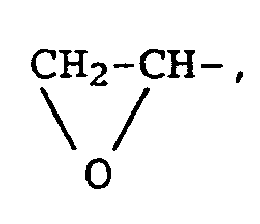
- n
- eine ganze Zahl von 2 bis 10, bevorzugt 3 bis 4
- m
- eine ganze Zahl von 1 bis 5, bevorzugt 1 bis 2
- k
- eine ganze Zahl von 1 bis 3, bevorzugt 1
- Bevorzugte Silanverbindungen sind Aminopropyltrimethoxysilan, Aminobutyltrimethoxysilan, Aminopropyltriethoxysilan, Aminobutyltriethoxysilan sowie die entsprechenden Silane, welche als Substituent X eine Glycidylgruppe enthalten.
- Die Silanverbindungen werden im allgemeinen in Mengen von 0,05 bis 5, vorzugsweise 0,5 bis 1,5 und insbesondere 0,8 bis 1 Gew.-% (bezogen auf C) zur Oberflächenbeschichtung eingesetzt.
- Geeignet sind auch nadelförmige mineralische Füllstoffe.
- Unter nadelförmigen mineralischen Füllstoffen wird im Sinne der Erfindung ein mineralischer Füllstoff mit stark ausgeprägtem nadelförmigen Charakter verstanden. Als Beispiel sei nadelförmiger Wollastonit genannt. Vorzugsweise weist das Mineral ein L/D-(Länge Durchmesser)-Verhältnis von 8 : 1 bis 35 : 1, bevorzugt von 8 : 1 bis 11 : 1 auf. Der mineralische Füllstoff kann gegebenenfalls mit den vorstehend genannten Silanverbindungen vorbehandelt sein; die Vorbehandlung ist jedoch nicht unbedingt erforderlich.
- Als weitere Füllstoffe seien Kaolin, calciniertes Kaolin, Wollastonit, Talkum und Kreide genannt.
- Es können anorganische Pigmente, wie Ultramarinblau, Eisenoxid, Titandioxid, Zinksulfid und Ruß, weiterhin organische Pigmente, wie Phthalocyanine, Chinacridone, Perylene sowie Farbstoffe, wie Nigrosin und Anthrachinone als Farbmittel zugesetzt werden sowie beliebige Flammschutzmittel, welche dem Fachmann geläufig sind.
- Als Beispiele für Weichmacher seien Phthalsäuredioctylester, Phthalsäuredibenzylester, Phthalsäurebutylbenzylester, Kohlenwasserstofföle, N-(n-Butyl)benzolsulfonamid genannt.
- Die erfindungsgemäßen thermoplastischen Formmassen können nach an sich bekannten Verfahren hergestellt werden, in dem man die Ausgangskomponenten in üblichen Mischvorrichtungen wie Schneckenextrudern, Brabender-Mühlen oder Banbury-Mühlen mischt und anschließend extrudiert. Nach der Extrusion kann das Extrudat abgekühlt und zerkleinert werden. Es können auch einzelne Komponenten vorgemischt werden und dann die restlichen Ausgangsstoffe einzeln und/oder ebenfalls gemischt hinzugegeben werden. In einer bevorzugten Ausführungsform können insbesondere die Komponenten A) und B) vorab als Granulat gemischt werden.
- Das erfindungsgemäße Herstellverfahren verringert zusätzlich die Fogging-Neigung und ist dadurch gekennzeichnet, daß man die Komponenten A) bis C) sowie gegebenenfalls D) und/oder E) mischt, in Gegenwart von Wasser konfektioniert, entgast austrägt, abkühlt und granuliert. Bevorzugt erfolgt die Zugabe von Wasser in Mengen von 0,1 bis 2, vorzugsweise von 0,1 bis 1,5 Gew.-%, bezogen auf 100 Gew.-% der Komponenten A) und B).
- Insbesondere bevorzugt erfolgt die Zugabe von Wasser zur bereits homogenisierten Schmelze der übrigen Komponenten. Die Mischtemperaturen liegen in der Regel bei 230 bis 290°C.
- Nach einer bevorzugten Arbeitsweise können die Komponenten C) bis E) mit einem Polyesterpräpolymeren A) oder B) gemischt, konfektioniert und granuliert werden. Das erhaltene Granulat wird in fester Phase anschließend unter Inertgas kontinuierlich oder diskontinuierlich bei einer Temperatur unterhalb des Schmelzpunktes der Komponente A) bzw. B) bis zur gewünschten Viskosität kondensiert.
- Die erfindungsgemäß herstellbaren thermoplastischen Formmassen zeichnen sich durch gute Dimensionsstabilität und hohe Wärmeformbeständigkeit sowie geringes Fogging-Verhalten aus. Daher eignen diese sich insbesondere für Anwendungen im KFZ-Bereich, wobei als besonders bevorzugte Anwendung Scheinwerferblenden genannt seien.
- Komponente A: Polybutylenterephthalat (PBT)mit einer Viskositätszahl (VZ) von 157 ml/g und einem Carboxylendgruppengehalt von 33 mval/kg (VZ gemessen in 0,5 gew.-%iger Lösung aus Phenol/o-Dichlorbenzol, 1:1-Mischung bei 25°C gemäß ISO 1628).
- Komponente B: Polybutylenterephthalat (PBT)mit einer Viskositätszahl von 130 ml/g und einem Carboxylendgruppengehalt von 25 mval/kg (VZ gemessen in 0,5 gew.-%iger Lösung aus Phenol/o-Dichlorbenzol, 1:1-Mischung bei 25°C gemäß ISO 1628).
-
- Komponente D1: Glycerindistearat (Loxiol® VPG 1206 der Firma Cognis GmbH)
- Komponente D2: Triglycerid mit Fettsäuren (Loxiol® EP 218 der Firma Cognis GmbH)
- Kompente E1: Batch aus 20 Gew.-% Ruß (mittlere Teilchengröße d50 < 20 µm) und 80 Gew.-% PBT mit VZ 130 ml/g
- Komponente E2: Batch aus 40 Gew.-% Ruß und 60 Gew.-% Polyethylen
- Die Komponente A) bis E) wurden in den in der Tabelle angegebenen Mengenverhältnissen auf einem Extruder bei 260°C gemischt, homogenisiert, granuliert und getrocknet. Komponenten A und B wurden bei RT als Granulat vorgemischt.
- Es wurden folgende Messungen durchgeführt
- Die Schlagzähigkeit wurde bei 23°C gemäß ISO 179/1eU gemessen. Der E-Modul wurde gemäß ISO 527-2 gemessen.
- Die Wärmeformbeständigkeit wurde gemäß ISO 75A und ISO 75 B bestimmt und die Vicat Erweichungstemperatur gemäß ISO 306.
- Die Belagbildung (fogging) wurde wie folgt bestimmt:
- Die Apparatur bestand aus einem Metallkasten (I = 100 mm; b = 72 mm; h = 120 mm) in deren Boden sich links und rechts je eine H1 (24V, 60W)-Birne befindet. Diese waren angeschlossen an ein 0 bis 30V einstellbares, 10A-Netzgerät.
- Über den Lampen befand sich eine 2 mm-dicke Metallplatte. Im Probenraum war ein Temperaturfühler angebracht, mit dem die Hitze im Innenraum kontrolliert wurde. Der Metallkasten wurde abgedeckt von einer ca. 4 mm-dicken Glasplatte.
- Das Granulat (10 g) oder Musterplatte (30x60x2 mm bei 260°C Massetemperatur und 60°C Werzeugtemperatur hergestellt) wurden in der Apparatur auf 200°C erhitzt und 1 h bei 200°C gehalten. Die Glasabdeckung der Apparatur wurde zu Beginn des Versuchs und am Ende nach Abkühlung gewogen. Die Differenz der Massen entsprach dem Fogging-Belag.
- Die Zusammensetzungen der Formmassen und die Ergebnisse der Messungen sind der Tabelle 1 zu entnehmen.

- Die Komponenten A) bis E) wurden in den in der Tabelle 2 angegebenen Mengenverhältnissen wie bereits vorstehend beschrieben konfektioniert. Beispiel I wurde ohne Wasserzugabe und die Beispiele II, III, IV mit 0,5 %, 1 % und 1,5 % Wasser (bezogen auf die Gesamteinsatzmenge 100 Gew.-% der Komponenten A) und B)) durchgeführt. Die Zugabe erfolgte mittels einer Pumpe in die Schmelze der Komponenten A) bis E).
- Die Belagstärke wurde am Granulat 1. visuell und 2. nachfolgender Methode bestimmt:
- Die Apparatur bestand aus einem Metallkasten (I = 100 mm; b = 72 mm; h = 120 mm) in deren Boden sich links und rechts je eine H1 (24V, 60W)-Birne befindet. Diese waren angeschlossen an ein 0 bis 30V einstellbares, 10A-Netzgerät.
- Über den Lampen befand sich eine 2 mm-dicke Metallplatte. Im Probenraum war ein Temperaturfühler angebracht, mit dem die Hitze im Innenraum kontrolliert wurde. Der Metallkasten wurde abgedeckt von einer ca. 4 mm-dicken Glasplatte.
- Das Granulat (10 g) oder Musterplatte (30x60x2 mm bei 260°C Massetemperatur und 60°C Werzeugtemperatur hergestellt) wurden in der Apparatur auf 200°C erhitzt und 1 h bei 200°C gehalten. Die Glasabdeckung der Apparatur wurde zu Beginn des Versuchs und am Ende nach Abkühlung gewogen. Die Differenz der Massen entsprach dem Fogging-Belag.
- Die Zusammensetzungen der Formmassen und die Ergebnisse der Messungen sind der Tabelle 2 zu entnehmen.

Claims (6)
- Verfahren zur Herstellung von thermoplastischen Formmassen enthaltendA) 10 bis 89,9 Gew.-% eines thermoplastischen Polyesters mit einer Viskositätszahl (VZ) von mindestens 145 ml/gB) 10 bis 89,99 Gew.-% eines thermoplastischen Polyesters mit einer Viskositätszahl (VZ) von maximal 135 ml/gC) 0,01 bis 5 Gew.-% mindestens eines NukleierungsmittelsD) 0 ist 5 Gew.-% mindestens eines SchmiermittelsE) 0 bis 70 Gew.-% weiterer Zusatzstoffe, wobei die Summe der Gewichtsprozente der Komponenten A) bis E) 100 % ergibt,dadurch gekennzeichnet, dass man die Komponenten A) bis C) sowie gegebenenfalls D) und/oder E) mischt, in Gegenwart von Wasser konfektioniert, entgast, austrägt, abkühlt und granuliert.
- Verfahren nach Anspruch 1, dadurch gekennzeichnet, dass man 0,1 bis 2 Gew.-% Wasser einsetzt, bezogen auf 100 Gew.-% der Komponenten A) und B).
- Verfahren nach den Ansprüchen 1 oder 2, dadurch gekennzeichnet, dass die Komponente B) eine VZ von mindestens 90 ml/g aufweist.
- Verfahren nach den Ansprüchen 1 bis 3, dadurch gekennzeichnet, dass die Komponente C) aus Talkum aufgebaut ist.
- Verfahren nach den Ansprüchen 1 bis 4, dadurch gekennzeichnet, dass die Komponente A) eine Carboxylendgruppenzahl von größer 15 mval/kg aufweist.
- Verfahren nach den Ansprüchen 1 bis 5, dadurch gekennzeichnet, dass die Komponente B) eine COOH-Endgruppenzahl von kleiner 30 mval/kg aufweist.
Applications Claiming Priority (3)
| Application Number | Priority Date | Filing Date | Title |
|---|---|---|---|
| DE10241297A DE10241297A1 (de) | 2002-09-04 | 2002-09-04 | Thermoplastische Polyesterformmassen |
| DE10241297 | 2002-09-04 | ||
| PCT/EP2003/009598 WO2004022648A1 (de) | 2002-09-04 | 2003-08-29 | Thermoplastische polyesterformmassen |
Publications (2)
| Publication Number | Publication Date |
|---|---|
| EP1537178A1 EP1537178A1 (de) | 2005-06-08 |
| EP1537178B1 true EP1537178B1 (de) | 2006-05-03 |
Family
ID=31724425
Family Applications (1)
| Application Number | Title | Priority Date | Filing Date |
|---|---|---|---|
| EP03757766A Expired - Lifetime EP1537178B1 (de) | 2002-09-04 | 2003-08-29 | Verfahren zur herstellung von thermoplastische polyesterformmassen |
Country Status (12)
| Country | Link |
|---|---|
| US (1) | US20060167162A1 (de) |
| EP (1) | EP1537178B1 (de) |
| JP (1) | JP2005537375A (de) |
| KR (1) | KR20050057044A (de) |
| CN (1) | CN1678683A (de) |
| AT (1) | ATE325163T1 (de) |
| AU (1) | AU2003273804A1 (de) |
| CA (1) | CA2496884A1 (de) |
| DE (2) | DE10241297A1 (de) |
| MX (1) | MXPA05001414A (de) |
| PL (1) | PL375401A1 (de) |
| WO (1) | WO2004022648A1 (de) |
Families Citing this family (4)
| Publication number | Priority date | Publication date | Assignee | Title |
|---|---|---|---|---|
| JP4526865B2 (ja) * | 2004-04-30 | 2010-08-18 | Sabicイノベーティブプラスチックスジャパン合同会社 | ポリエステル樹脂製光反射体 |
| JP5553607B2 (ja) * | 2006-11-03 | 2014-07-16 | ビーエーエスエフ ソシエタス・ヨーロピア | 低放出ポリマー成形材料 |
| US8178208B2 (en) * | 2006-12-01 | 2012-05-15 | Sabic Innovative Plastives IP B.V. | Polyester compositions, methods of manufacture, and uses thereof |
| US20100210775A1 (en) * | 2009-02-13 | 2010-08-19 | Eastman Chemical Company | Reinforced polyester compositions having improved toughness |
Family Cites Families (12)
| Publication number | Priority date | Publication date | Assignee | Title |
|---|---|---|---|---|
| US5251064A (en) * | 1991-03-08 | 1993-10-05 | Southwall Technologies Inc. | Lighting fixture reflector containing ultraviolet absorber |
| US5424013A (en) * | 1993-08-09 | 1995-06-13 | Lieberman; Mark | Thermoplastic closed loop recycling process |
| DE4442724A1 (de) * | 1994-12-01 | 1996-06-05 | Basf Ag | Stabilisierte Polyesterformmassen |
| US5663290A (en) * | 1995-07-21 | 1997-09-02 | Eastman Chemical Company | Process for crystallization of poly(ethylenenaphthalenedicarboxylate) |
| US5597891A (en) * | 1995-08-01 | 1997-01-28 | Eastman Chemical Company | Process for producing polyester articles having low acetaldehyde content |
| US6099778A (en) * | 1996-10-28 | 2000-08-08 | Eastman Chemical Company | Process for producing pet articles with low acetaldehyde |
| US5968429A (en) * | 1997-03-20 | 1999-10-19 | Eastman Chemical Company | Apparatus and method for molding of polyester articles directly from a melt |
| US5980797A (en) * | 1997-03-20 | 1999-11-09 | Eastman Chemical Company | Apparatus and method for molding polyester articles having low acetaldehyde content directly from the melt formation using flash tank devoltatilization |
| DE10058133A1 (de) * | 2000-11-22 | 2002-05-23 | Basf Ag | Verfahren zur Herstellung kautschukhaltiger thermoplastischer Formmassen |
| JP2002179895A (ja) * | 2000-12-15 | 2002-06-26 | Toyobo Co Ltd | ポリエステル樹脂組成物 |
| US6762235B2 (en) * | 2001-04-24 | 2004-07-13 | Mitsubishi Engineering-Plastics Corporation | Polybutylene terephthalate resin and compositions and molded articles comprising the resin |
| US20060100330A1 (en) * | 2004-11-10 | 2006-05-11 | Natarajan Kavilipalayam M | Composition for use in forming an article |
-
2002
- 2002-09-04 DE DE10241297A patent/DE10241297A1/de not_active Withdrawn
-
2003
- 2003-08-29 US US10/526,379 patent/US20060167162A1/en not_active Abandoned
- 2003-08-29 CA CA002496884A patent/CA2496884A1/en not_active Abandoned
- 2003-08-29 EP EP03757766A patent/EP1537178B1/de not_active Expired - Lifetime
- 2003-08-29 JP JP2004533422A patent/JP2005537375A/ja not_active Withdrawn
- 2003-08-29 MX MXPA05001414A patent/MXPA05001414A/es unknown
- 2003-08-29 DE DE50303233T patent/DE50303233D1/de not_active Expired - Fee Related
- 2003-08-29 AU AU2003273804A patent/AU2003273804A1/en not_active Abandoned
- 2003-08-29 KR KR1020057003475A patent/KR20050057044A/ko not_active Withdrawn
- 2003-08-29 CN CNA038210029A patent/CN1678683A/zh active Pending
- 2003-08-29 PL PL03375401A patent/PL375401A1/xx not_active Application Discontinuation
- 2003-08-29 WO PCT/EP2003/009598 patent/WO2004022648A1/de not_active Ceased
- 2003-08-29 AT AT03757766T patent/ATE325163T1/de not_active IP Right Cessation
Also Published As
| Publication number | Publication date |
|---|---|
| US20060167162A1 (en) | 2006-07-27 |
| EP1537178A1 (de) | 2005-06-08 |
| MXPA05001414A (es) | 2005-04-11 |
| JP2005537375A (ja) | 2005-12-08 |
| CN1678683A (zh) | 2005-10-05 |
| CA2496884A1 (en) | 2004-03-18 |
| DE50303233D1 (de) | 2006-06-08 |
| PL375401A1 (en) | 2005-11-28 |
| KR20050057044A (ko) | 2005-06-16 |
| WO2004022648A1 (de) | 2004-03-18 |
| DE10241297A1 (de) | 2004-03-18 |
| AU2003273804A1 (en) | 2004-03-29 |
| ATE325163T1 (de) | 2006-06-15 |
Similar Documents
| Publication | Publication Date | Title |
|---|---|---|
| EP0736571B1 (de) | Flammgeschützte thermoplastische Formmassen | |
| DE10304341A1 (de) | Hydrolysebeständige Polyester | |
| EP1511808B1 (de) | Flammgeschützte schwarze thermoplastische formmassen | |
| EP1412429B1 (de) | Flammgeschützte thermoplastische formmassen | |
| DE19956539A1 (de) | Thermisch stabile Polyesterformmassen | |
| EP1192221B1 (de) | Polyester/polycarbonat blends | |
| WO2008052998A1 (de) | Emissionsarme polyesterformmassen | |
| EP1409577B1 (de) | Flammgeschützte thermoplastische formmassen | |
| EP2976385B1 (de) | Polyester für profilextrusion und/oder rohrextrusion | |
| EP3044255B1 (de) | Flammgeschützte polyester | |
| WO1998017719A1 (de) | Flammgeschützte formmassen | |
| EP1537178A1 (de) | Thermoplastische polyesterformmassen | |
| WO2013189779A1 (de) | Flammgeschützte polyester mit polyacrylnitrilhomopolymerisaten | |
| EP1917308B1 (de) | Scheinwerferteile aus Polyester | |
| WO2009101026A1 (de) | Mineralgefüllte polyester | |
| EP2683765A1 (de) | Lasertransparente polyester mit anorganischen salzen | |
| WO2007090781A1 (de) | Emissionsarmes pbt durch spritzguss mit entgasungsvorrichtung | |
| DE102004036583A1 (de) | Stecker, Steckerteile, Steckerverbinder und Filmscharniere aus Polyestern | |
| WO2000068317A1 (de) | Halogenhaltige flammgeschützte polyester | |
| WO2000046295A1 (de) | Schlagzähe polyesterformmassen | |
| WO2000041470A2 (de) | Verfahren zur herstellung von polyesterblends | |
| DE19913987A1 (de) | Dimensionsstabile Polyester/Polycarbonat Blends | |
| DE19840274A1 (de) | Glasverstärkte Polyesterformmassen | |
| WO2007088125A1 (de) | Polyesterformmassen enthaltend maleinimid-copolymere |
Legal Events
| Date | Code | Title | Description |
|---|---|---|---|
| PUAI | Public reference made under article 153(3) epc to a published international application that has entered the european phase |
Free format text: ORIGINAL CODE: 0009012 |
|
| 17P | Request for examination filed |
Effective date: 20050404 |
|
| AK | Designated contracting states |
Kind code of ref document: A1 Designated state(s): AT BE BG CH CY CZ DE DK EE ES FI FR GB GR HU IE IT LI LU MC NL PT RO SE SI SK TR |
|
| AX | Request for extension of the european patent |
Extension state: AL LT LV MK |
|
| 17Q | First examination report despatched |
Effective date: 20050607 |
|
| GRAP | Despatch of communication of intention to grant a patent |
Free format text: ORIGINAL CODE: EPIDOSNIGR1 |
|
| RTI1 | Title (correction) |
Free format text: PROCESS FOR THE PREPARATION OF THERMOPLASTIC POLYESTER MOULDING MASSES |
|
| DAX | Request for extension of the european patent (deleted) | ||
| GRAS | Grant fee paid |
Free format text: ORIGINAL CODE: EPIDOSNIGR3 |
|
| GRAA | (expected) grant |
Free format text: ORIGINAL CODE: 0009210 |
|
| AK | Designated contracting states |
Kind code of ref document: B1 Designated state(s): AT BE BG CH CY CZ DE DK EE ES FI FR GB GR HU IE IT LI LU MC NL PT RO SE SI SK TR |
|
| PG25 | Lapsed in a contracting state [announced via postgrant information from national office to epo] |
Ref country code: FI Free format text: LAPSE BECAUSE OF FAILURE TO SUBMIT A TRANSLATION OF THE DESCRIPTION OR TO PAY THE FEE WITHIN THE PRESCRIBED TIME-LIMIT Effective date: 20060503 Ref country code: IE Free format text: LAPSE BECAUSE OF FAILURE TO SUBMIT A TRANSLATION OF THE DESCRIPTION OR TO PAY THE FEE WITHIN THE PRESCRIBED TIME-LIMIT Effective date: 20060503 Ref country code: RO Free format text: LAPSE BECAUSE OF FAILURE TO SUBMIT A TRANSLATION OF THE DESCRIPTION OR TO PAY THE FEE WITHIN THE PRESCRIBED TIME-LIMIT Effective date: 20060503 Ref country code: SI Free format text: LAPSE BECAUSE OF FAILURE TO SUBMIT A TRANSLATION OF THE DESCRIPTION OR TO PAY THE FEE WITHIN THE PRESCRIBED TIME-LIMIT Effective date: 20060503 Ref country code: SK Free format text: LAPSE BECAUSE OF FAILURE TO SUBMIT A TRANSLATION OF THE DESCRIPTION OR TO PAY THE FEE WITHIN THE PRESCRIBED TIME-LIMIT Effective date: 20060503 |
|
| REG | Reference to a national code |
Ref country code: GB Ref legal event code: FG4D Free format text: NOT ENGLISH |
|
| REG | Reference to a national code |
Ref country code: CH Ref legal event code: EP Ref country code: CH Ref legal event code: NV Representative=s name: SCHMAUDER & PARTNER AG PATENTANWALTSBUERO |
|
| REF | Corresponds to: |
Ref document number: 50303233 Country of ref document: DE Date of ref document: 20060608 Kind code of ref document: P |
|
| REG | Reference to a national code |
Ref country code: IE Ref legal event code: FG4D Free format text: LANGUAGE OF EP DOCUMENT: GERMAN |
|
| PG25 | Lapsed in a contracting state [announced via postgrant information from national office to epo] |
Ref country code: SE Free format text: LAPSE BECAUSE OF FAILURE TO SUBMIT A TRANSLATION OF THE DESCRIPTION OR TO PAY THE FEE WITHIN THE PRESCRIBED TIME-LIMIT Effective date: 20060803 Ref country code: DK Free format text: LAPSE BECAUSE OF FAILURE TO SUBMIT A TRANSLATION OF THE DESCRIPTION OR TO PAY THE FEE WITHIN THE PRESCRIBED TIME-LIMIT Effective date: 20060803 |
|
| PGFP | Annual fee paid to national office [announced via postgrant information from national office to epo] |
Ref country code: FR Payment date: 20060808 Year of fee payment: 4 |
|
| PGFP | Annual fee paid to national office [announced via postgrant information from national office to epo] |
Ref country code: AT Payment date: 20060811 Year of fee payment: 4 |
|
| PG25 | Lapsed in a contracting state [announced via postgrant information from national office to epo] |
Ref country code: ES Free format text: LAPSE BECAUSE OF FAILURE TO SUBMIT A TRANSLATION OF THE DESCRIPTION OR TO PAY THE FEE WITHIN THE PRESCRIBED TIME-LIMIT Effective date: 20060814 |
|
| PGFP | Annual fee paid to national office [announced via postgrant information from national office to epo] |
Ref country code: TR Payment date: 20060823 Year of fee payment: 4 |
|
| PGFP | Annual fee paid to national office [announced via postgrant information from national office to epo] |
Ref country code: DE Payment date: 20060824 Year of fee payment: 4 |
|
| PGFP | Annual fee paid to national office [announced via postgrant information from national office to epo] |
Ref country code: LU Payment date: 20060830 Year of fee payment: 4 |
|
| PG25 | Lapsed in a contracting state [announced via postgrant information from national office to epo] |
Ref country code: MC Free format text: LAPSE BECAUSE OF NON-PAYMENT OF DUE FEES Effective date: 20060831 |
|
| PGFP | Annual fee paid to national office [announced via postgrant information from national office to epo] |
Ref country code: IT Payment date: 20060831 Year of fee payment: 4 |
|
| GBT | Gb: translation of ep patent filed (gb section 77(6)(a)/1977) |
Effective date: 20060822 |
|
| PG25 | Lapsed in a contracting state [announced via postgrant information from national office to epo] |
Ref country code: PT Free format text: LAPSE BECAUSE OF FAILURE TO SUBMIT A TRANSLATION OF THE DESCRIPTION OR TO PAY THE FEE WITHIN THE PRESCRIBED TIME-LIMIT Effective date: 20061003 |
|
| PGFP | Annual fee paid to national office [announced via postgrant information from national office to epo] |
Ref country code: BE Payment date: 20061016 Year of fee payment: 4 |
|
| ET | Fr: translation filed | ||
| REG | Reference to a national code |
Ref country code: IE Ref legal event code: FD4D |
|
| PLBE | No opposition filed within time limit |
Free format text: ORIGINAL CODE: 0009261 |
|
| STAA | Information on the status of an ep patent application or granted ep patent |
Free format text: STATUS: NO OPPOSITION FILED WITHIN TIME LIMIT |
|
| 26N | No opposition filed |
Effective date: 20070206 |
|
| BERE | Be: lapsed |
Owner name: *BASF A.G. Effective date: 20070831 |
|
| REG | Reference to a national code |
Ref country code: CH Ref legal event code: PL |
|
| GBPC | Gb: european patent ceased through non-payment of renewal fee |
Effective date: 20070829 |
|
| PG25 | Lapsed in a contracting state [announced via postgrant information from national office to epo] |
Ref country code: CH Free format text: LAPSE BECAUSE OF NON-PAYMENT OF DUE FEES Effective date: 20070831 Ref country code: GR Free format text: LAPSE BECAUSE OF FAILURE TO SUBMIT A TRANSLATION OF THE DESCRIPTION OR TO PAY THE FEE WITHIN THE PRESCRIBED TIME-LIMIT Effective date: 20060804 Ref country code: LI Free format text: LAPSE BECAUSE OF NON-PAYMENT OF DUE FEES Effective date: 20070831 Ref country code: NL Free format text: LAPSE BECAUSE OF NON-PAYMENT OF DUE FEES Effective date: 20080301 |
|
| PGFP | Annual fee paid to national office [announced via postgrant information from national office to epo] |
Ref country code: CZ Payment date: 20060728 Year of fee payment: 4 |
|
| NLV4 | Nl: lapsed or anulled due to non-payment of the annual fee |
Effective date: 20080301 |
|
| PG25 | Lapsed in a contracting state [announced via postgrant information from national office to epo] |
Ref country code: CZ Free format text: LAPSE BECAUSE OF NON-PAYMENT OF DUE FEES Effective date: 20070829 |
|
| PG25 | Lapsed in a contracting state [announced via postgrant information from national office to epo] |
Ref country code: BG Free format text: LAPSE BECAUSE OF FAILURE TO SUBMIT A TRANSLATION OF THE DESCRIPTION OR TO PAY THE FEE WITHIN THE PRESCRIBED TIME-LIMIT Effective date: 20060803 Ref country code: EE Free format text: LAPSE BECAUSE OF FAILURE TO SUBMIT A TRANSLATION OF THE DESCRIPTION OR TO PAY THE FEE WITHIN THE PRESCRIBED TIME-LIMIT Effective date: 20060503 Ref country code: AT Free format text: LAPSE BECAUSE OF NON-PAYMENT OF DUE FEES Effective date: 20070829 |
|
| REG | Reference to a national code |
Ref country code: FR Ref legal event code: ST Effective date: 20080430 |
|
| PG25 | Lapsed in a contracting state [announced via postgrant information from national office to epo] |
Ref country code: DE Free format text: LAPSE BECAUSE OF NON-PAYMENT OF DUE FEES Effective date: 20080301 Ref country code: HU Free format text: LAPSE BECAUSE OF FAILURE TO SUBMIT A TRANSLATION OF THE DESCRIPTION OR TO PAY THE FEE WITHIN THE PRESCRIBED TIME-LIMIT Effective date: 20061104 |
|
| PG25 | Lapsed in a contracting state [announced via postgrant information from national office to epo] |
Ref country code: BE Free format text: LAPSE BECAUSE OF NON-PAYMENT OF DUE FEES Effective date: 20070831 |
|
| PG25 | Lapsed in a contracting state [announced via postgrant information from national office to epo] |
Ref country code: FR Free format text: LAPSE BECAUSE OF NON-PAYMENT OF DUE FEES Effective date: 20070831 |
|
| PG25 | Lapsed in a contracting state [announced via postgrant information from national office to epo] |
Ref country code: GB Free format text: LAPSE BECAUSE OF NON-PAYMENT OF DUE FEES Effective date: 20070829 Ref country code: CY Free format text: LAPSE BECAUSE OF FAILURE TO SUBMIT A TRANSLATION OF THE DESCRIPTION OR TO PAY THE FEE WITHIN THE PRESCRIBED TIME-LIMIT Effective date: 20060503 |
|
| PG25 | Lapsed in a contracting state [announced via postgrant information from national office to epo] |
Ref country code: LU Free format text: LAPSE BECAUSE OF NON-PAYMENT OF DUE FEES Effective date: 20070829 |
|
| PG25 | Lapsed in a contracting state [announced via postgrant information from national office to epo] |
Ref country code: TR Free format text: LAPSE BECAUSE OF FAILURE TO SUBMIT A TRANSLATION OF THE DESCRIPTION OR TO PAY THE FEE WITHIN THE PRESCRIBED TIME-LIMIT Effective date: 20060503 Ref country code: IT Free format text: LAPSE BECAUSE OF NON-PAYMENT OF DUE FEES Effective date: 20070829 |